



A round face and a lob can be a beautiful match, or a weird one, and the difference usually comes down to where the line hits. Put a long bob at the chin and it can make the face look wider than it is. Drop it to the collarbone, keep the front pieces below the cheekbone, and the whole cut starts doing quiet work in the mirror.
That’s why lob haircuts for round faces deserve more than a throwaway “shoulder-length is flattering” answer. They are not all the same. Some use a diagonal line to pull the eye down. Some use fringe to break up width at the cheeks. Some stay blunt and clean because a strong edge can make a face look more sculpted than a wispy one ever will.
I keep coming back to this length because it has range. It can look sleek, air-dried, wavy, tucked, flipped, curly, or softly broken up, and the shape still holds. That matters on a round face, where the wrong detail can add width in a hurry and the right one can make the whole cut feel lighter without losing weight.
Why These 16 Lobs Keep Working on Round Faces
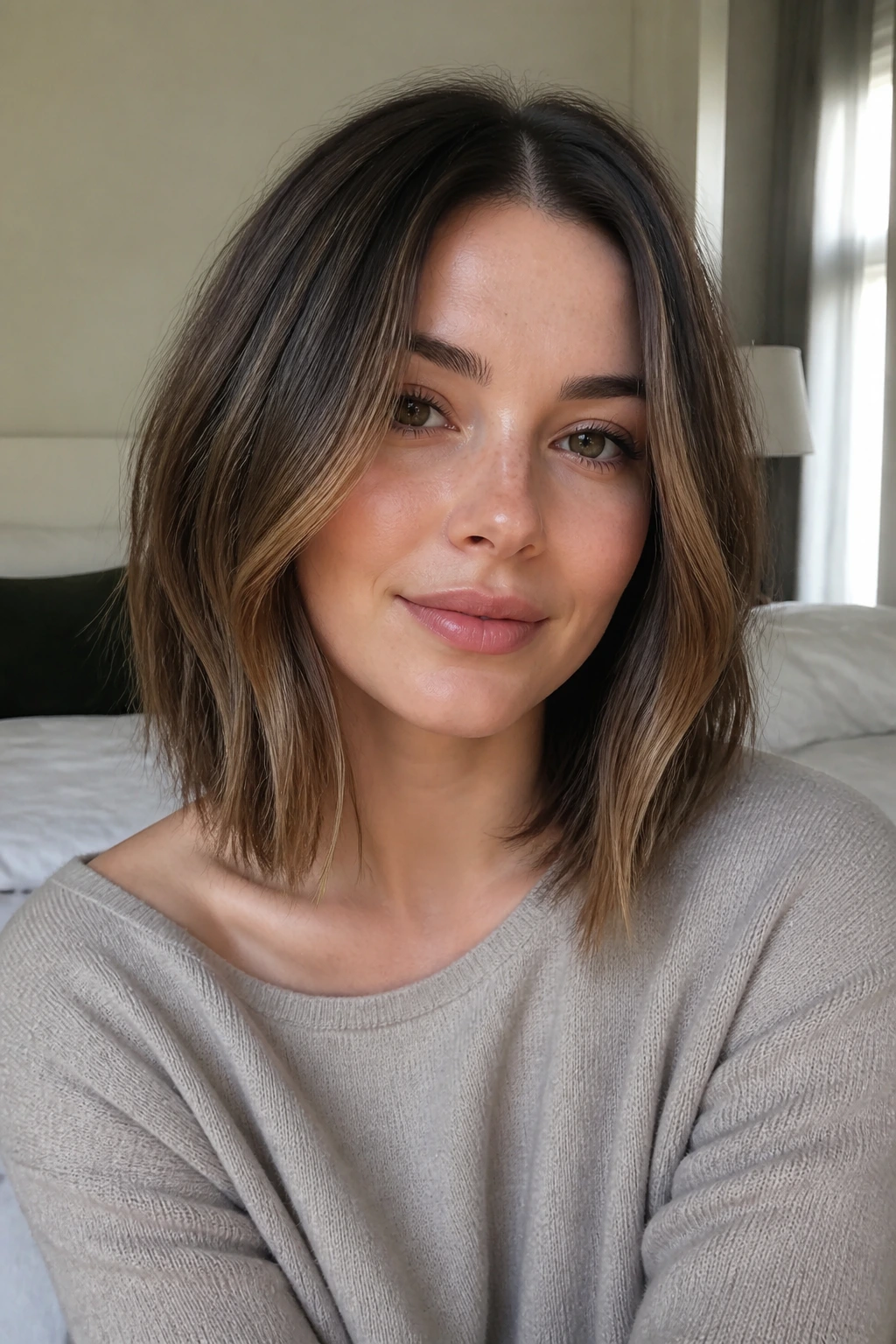
-
They stretch the eye vertically: A lob that lands at the collarbone or below the jaw gives the face more downward movement, which matters when the cheek area is already the widest point.
-
They leave room for movement: A good lob doesn’t sit like a helmet. It bends, flips, or breaks at the ends, and that movement keeps the cut from adding extra width at the sides.
-
They use shape, not tricks: You do not need giant volume or aggressive layers. A clean perimeter, a slight angle, or a well-placed fringe usually does more work than a bunch of fluffy styling.
-
They grow out better than a short bob: A lob that starts just below the chin can drift a little and still look intentional. That’s a small mercy if you hate the “awkward in-between” stage.
-
They adapt to different textures: Straight, wavy, curly, thick, fine — the same length can be tuned a dozen ways, which is why lob haircuts for round faces show up so often in salon chairs.
-
They can look polished or undone: Some days you want a sharp line. Other days you want pieces moving around your jaw. A lob gives you both without asking for a whole new cut.
How the Right Lob Changes the Shape of a Round Face

A round face usually has soft angles, fuller cheeks, and a width-to-length ratio that sits close together. That does not mean you need to fight your face shape. It means you need to place the cut with some care.
The sweet spot is lower than most people think
The most forgiving lobs land below the cheekbone and usually below the chin. If the shortest front piece stops right at the widest part of the face, the eye gets stuck there. If it falls past that point, the cut gives the face breathing room.
Volume belongs at the crown, not the sides
A little lift on top lengthens the face. A lot of bulk beside the cheeks does the opposite. That is the part many people miss when they ask for “more body.” Body is fine. Puff is not.
The part changes the mood fast
A center part can work on a round face, but it asks for cleaner length and some lift at the roots. A side part is easier if your hair naturally falls flat or if your cheeks carry most of the width. The line of the part matters because it changes where the eye starts traveling.
If you remember one thing, make it this: the cut should move the eye down, not stop it at the widest point. That one rule explains most of the good lob choices here.
1. Collarbone Lob With Soft Ends
This is the lob I’d recommend to someone who wants to play it safe without looking boring. The length skims the collarbone, so the ends sit low enough to pull the face down, and the soft finish keeps it from feeling heavy or boxy. It’s the kind of cut that looks calm in the morning and still behaves after a bad hair day.
What makes it work on a round face is the distance between the cheek and the line of the hem. That gap matters. It gives the face room before the cut begins to frame it, which is exactly what you want if your cheeks are full or your jawline is soft.
I like this version for straight or slightly wavy hair because the shape reads cleanly. If your hair is thick, ask for a little internal weight removal near the back so the ends do not kick out in a blunt shelf. If your hair is fine, keep the perimeter a touch fuller so the shape does not disappear by lunchtime.
The styling move is simple: blow-dry with a medium round brush and give the last inch of hair a soft bend under. Not a curl. Just a bend. That little detail keeps the cut from looking like it was chopped straight across with no thought.
2. Long Angled Lob
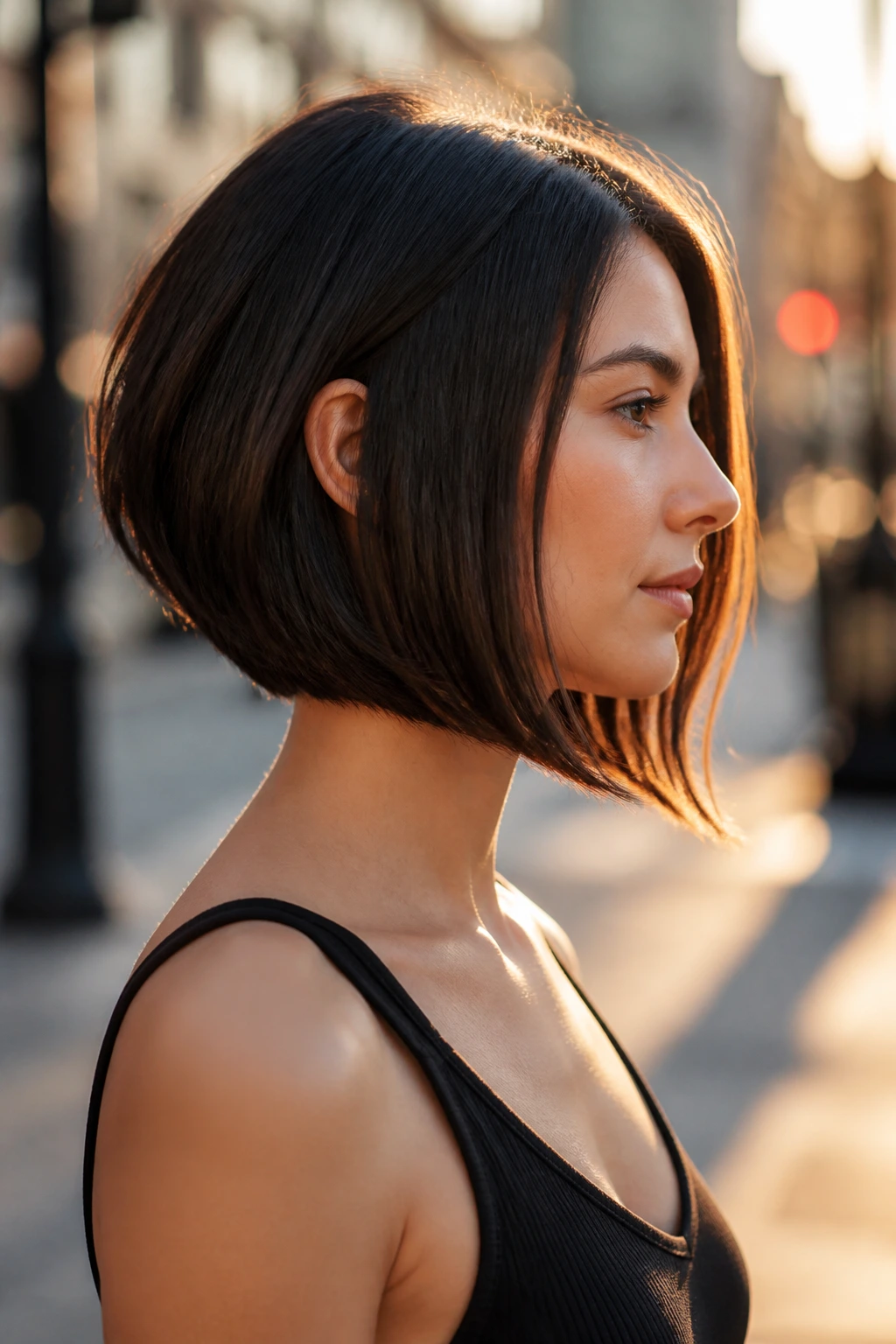
A gentle angle from back to front does a surprising amount of work. The back sits a little shorter, the front drops lower, and the whole cut sends the eye diagonally instead of horizontally. Diagonal lines are your friend when you want a round face to read a little longer.
This is not a dramatic A-line bob with sharp drama at the jaw. That can look harsh if the angle is too steep. The version I like keeps the difference modest — maybe an inch or two from back to front, enough to register but not enough to shout.
The payoff shows up in profile. The front pieces land below the chin, often near the collarbone, while the back keeps the neck clean and airy. You get lift without the haircut turning into a wedge.
Best on hair that falls with some natural bend. Straight hair shows the line crisply, which is nice. Wavy hair softens the angle, which is also nice. If your hair is very thick, make sure the stylist does not stack too much at the back, because a piled-up nape can widen the head shape instead of slimming it.
3. Deep Side-Part Lob

Middle parts get all the attention, but a deep side part can be a quieter fix for a round face. It shifts volume off center, breaks up symmetry, and gives the forehead and cheek area a little asymmetry, which the eye reads as length.
The trick is not to make the part look theatrical. Start it near the arch of the eyebrow, then let the heavier side fall across the cheek in one smooth line. The other side can tuck behind the ear or sit closer to the face. That contrast is what does the work.
I reach for this when a lob feels too neat or too evenly balanced. A round face often benefits from a little unevenness. Not chaos. Just enough tilt to keep the cut from echoing the face shape.
If your hair is flat at the root, clip the heavy side while it cools after blow-drying. That tiny habit helps the root set in the direction you want. If you skip it, the part can collapse and the whole cut loses its shape by noon.
4. Curtain Bang Lob

Can bangs work on a round face? Yes, if they’re cut with some restraint. Curtain bangs that open in the middle and sweep toward the cheekbones can frame the face without boxing it in. The safest version starts longer than people expect and blends into the lob instead of sitting on top of it like a separate piece.
The shortest point should usually graze around brow length, not forehead-short. The outer pieces should fall toward the cheekbone or even slightly below it. That creates a soft vertical path along the sides of the face, which helps if your cheeks are full.
I prefer this with a collarbone lob rather than a short one. The extra length below keeps the whole shape from getting crowded around the middle of the face. It also gives you room to style the fringe with a round brush or a quick Velcro roller set while the hair is still warm.
This is one of those cuts that looks casual but is secretly quite specific. If the fringe is too heavy, it closes the face. If it’s too short, it can make the forehead feel compressed. Keep it light, airy, and a little longer than your first instinct.
5. Textured Wavy Lob

If you want a lob that feels alive instead of posed, this is the one. The texture gives the hair movement, but the important part is where the movement starts. You want the bends to begin below the cheekbone, not right at the cheeks, or the width creeps back in.
A round face usually benefits from a wave pattern that drops down the sides of the face rather than puffing out at them. That means loose bends, broken ends, and a little separation near the bottom. Not beachy fluff. Not tight curl pattern. Just enough wave to keep the cut from lying flat like a sheet.
This version is especially good if your hair is fine and wants body, because the texture gives the illusion of fullness without needing a blunt, heavy perimeter. On thicker hair, the same waves can keep the cut from feeling too solid. It is a rare middle ground that behaves.
I like using a one-inch iron or a fast bend with a flat iron, then brushing the waves out once they cool. Brushing after cooling matters. If you try to smooth them while they’re warm, they collapse into a blur.
6. Blunt Lob Below the Jaw
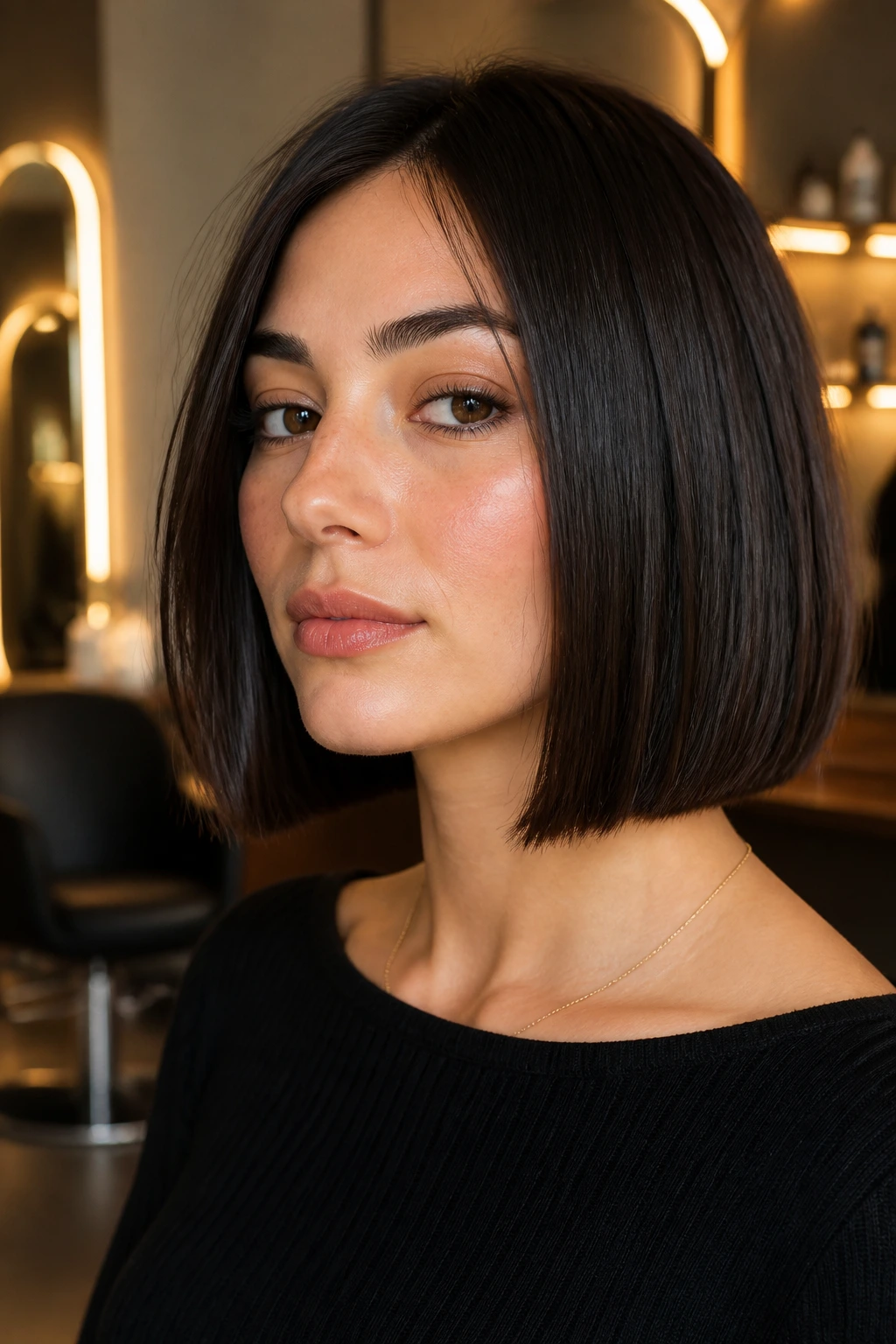
Blunt does not always mean harsh. On a round face, a blunt lob can actually look sharper and slimmer than a soft, layered one, if the length sits below the jaw. That “if” matters. A chin-length blunt cut can make a round face look fuller. A collarbone blunt cut does the opposite.
The clean edge gives the hair a strong finish. It also creates contrast. The face appears narrower by comparison because the haircut becomes a clear frame instead of a fuzzy halo.
I’d choose this if your hair is straight, medium in thickness, and not prone to puffing at the sides. If you have very thick hair, ask your stylist to remove some bulk from the inside so the outline stays solid but the body does not balloon out. If your hair is fine, keep the line dense enough that it doesn’t go see-through.
There’s a reason this cut keeps showing up in good salons. It’s blunt, yes, but not fussy. It just needs to sit in the right place. Chin-level is the trap. Below-jaw is the move.
7. Layered Face-Framing Lob
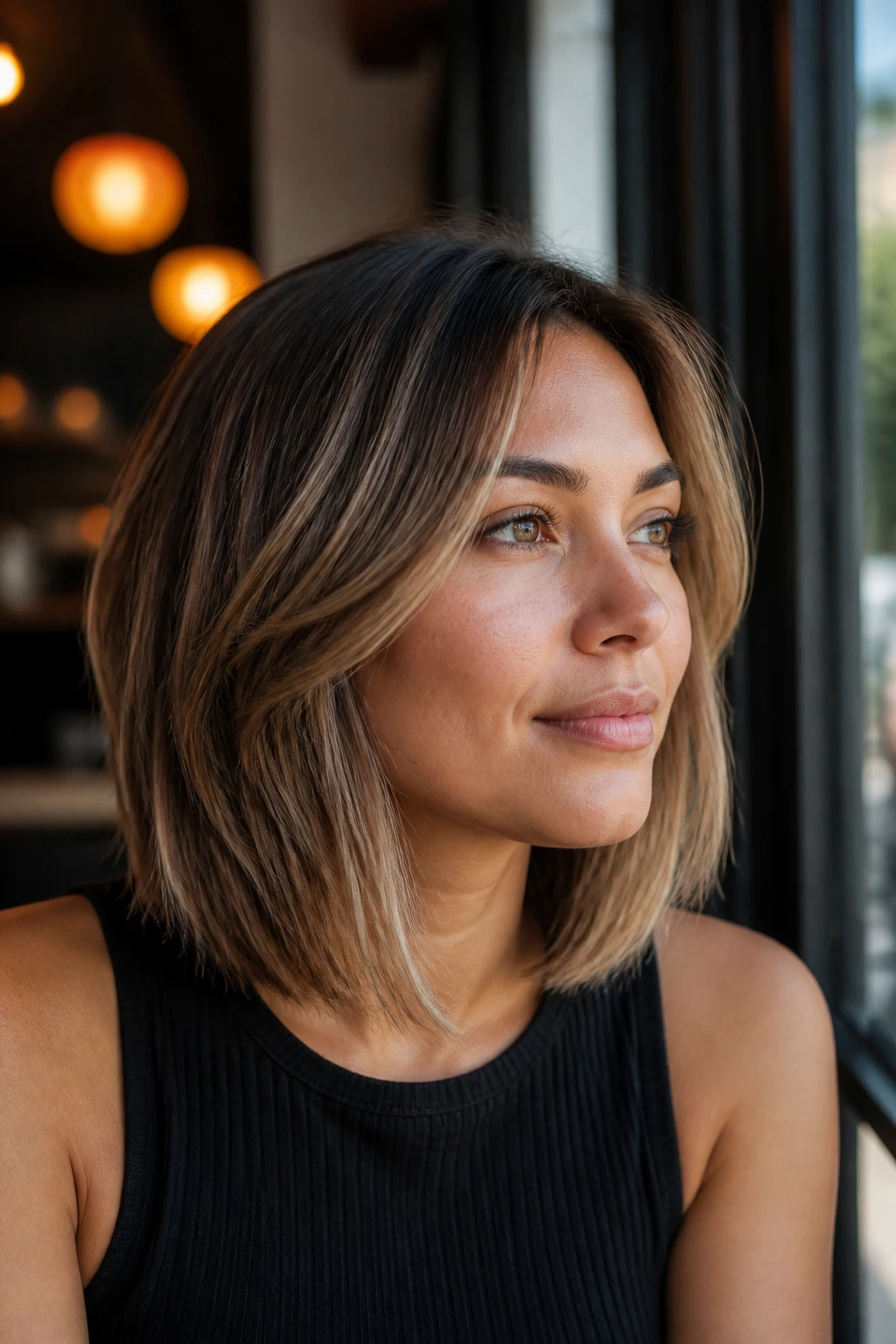
A face-framing lob can be lovely on a round face, but the layers need a low starting point. The first layer should usually begin below the cheekbone, often closer to the mouth or just under the jaw, so the cut doesn’t add volume right where the face is widest.
That placement is the whole trick. Layers at the temples can make the face read wider. Layers that fall and taper lower can make the face look longer and softer. Same haircut. Very different result.
Where the first layer should hit
I like the first face-frame piece to hit somewhere between the lip and the chin, then melt into the collarbone length. That gives a clean diagonal and avoids the little mushroom effect that happens when layers are too short.
This style works especially well for thick hair because it removes bulk without sacrificing shape. It also helps if your hair naturally swings forward and sits heavy around the cheeks. The layers give it somewhere else to go.
If your stylist reaches for the thinning shears too quickly, slow them down. You want shape, not frizzed-up ends. Point cutting and low-starting layers usually give a cleaner result.
8. Asymmetrical Lob
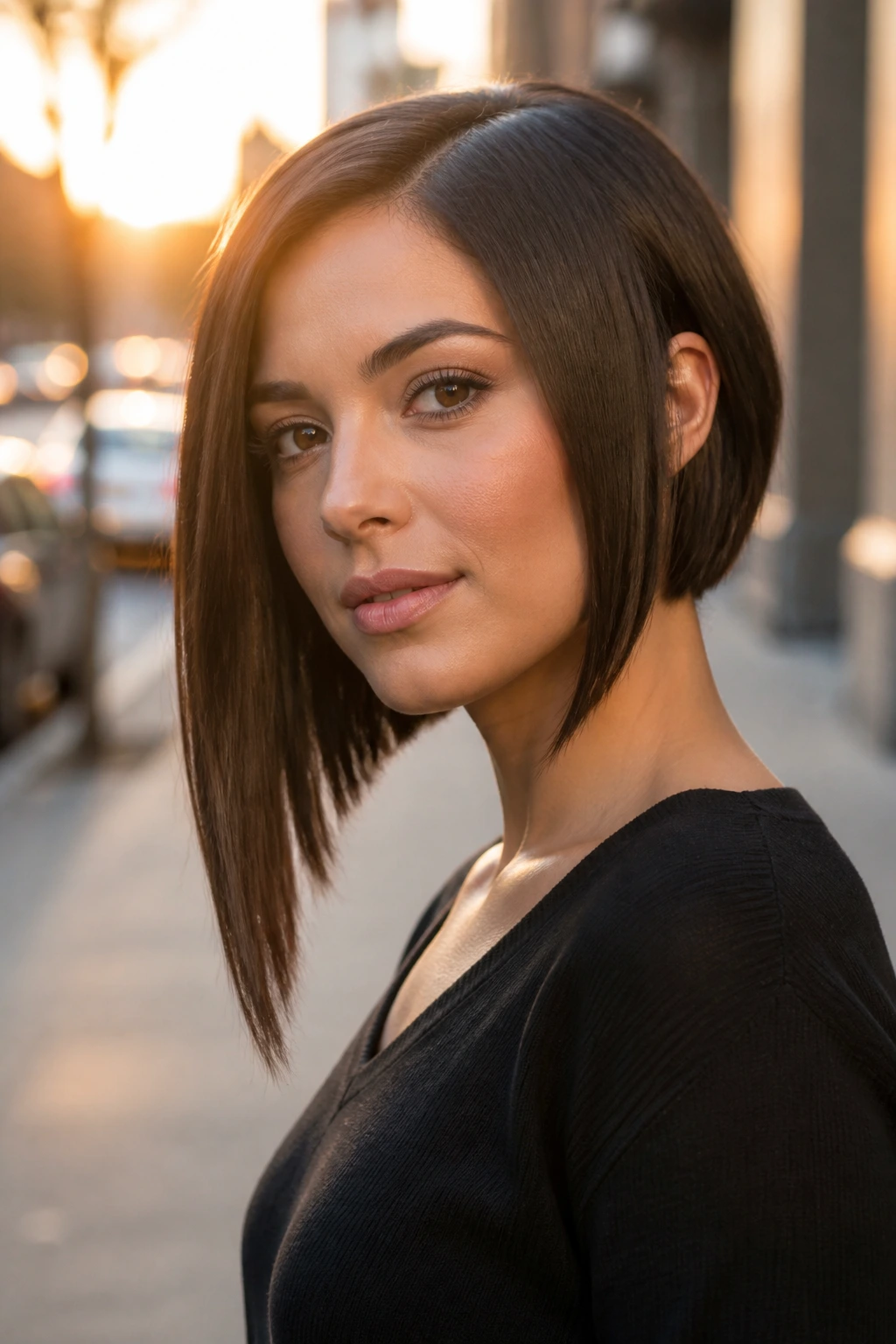
Want a cut with a little more edge? Go asymmetrical. One side sits a bit longer than the other, and that slight imbalance breaks the circle of a round face in a very practical way. The eye gets interrupted. That interruption is useful.
I’m not talking about a dramatic one-side-longer situation that announces itself from across a room. Keep it subtle — maybe half an inch to an inch of difference. Enough to create a diagonal, not enough to look like you lost a bet with a razor.
This style is good when you want the haircut to feel sharp without relying on heavy layering. The line itself does the work. It’s also a smart choice if you always tuck one side behind the ear, because the asymmetry keeps the cut from looking accidental when you do it.
If your hair is straight, the effect is crisp. If it’s wavy, the difference looks softer and more casual. Either way, the slope away from the fuller side of the face helps move attention downward and outward instead of straight across the cheeks.
9. Shaggy Razor-Cut Lob

A shaggy lob can rescue hair that puffs up the second it hits shoulder length. The razor-cut texture breaks up the line, so the ends don’t sit like a blunt shelf around the face. That said, this is one of the easiest cuts to overdo.
Too many layers around the cheeks and you get width. Too much razoring on fine hair and you get fuzz. So the haircut has to be controlled. I like it best when the crown gets a little lift, the ends stay piecey, and the face-framing bits fall longer than the cheekbone.
This version suits wavy or dense hair that needs movement badly. If your hair is naturally smooth and thin, I’d be cautious. A shag can look cool, but it can also start looking stringy if the cut takes too much weight away from the perimeter.
The appeal is the looseness. It feels worn-in from day one. You can scrunch it with a small amount of cream or mousse and let the shape do the work. No severe styling, no perfect blowout, no helmet head. Good haircuts know how to leave a little air in them.
10. Sleek Middle-Part Lob
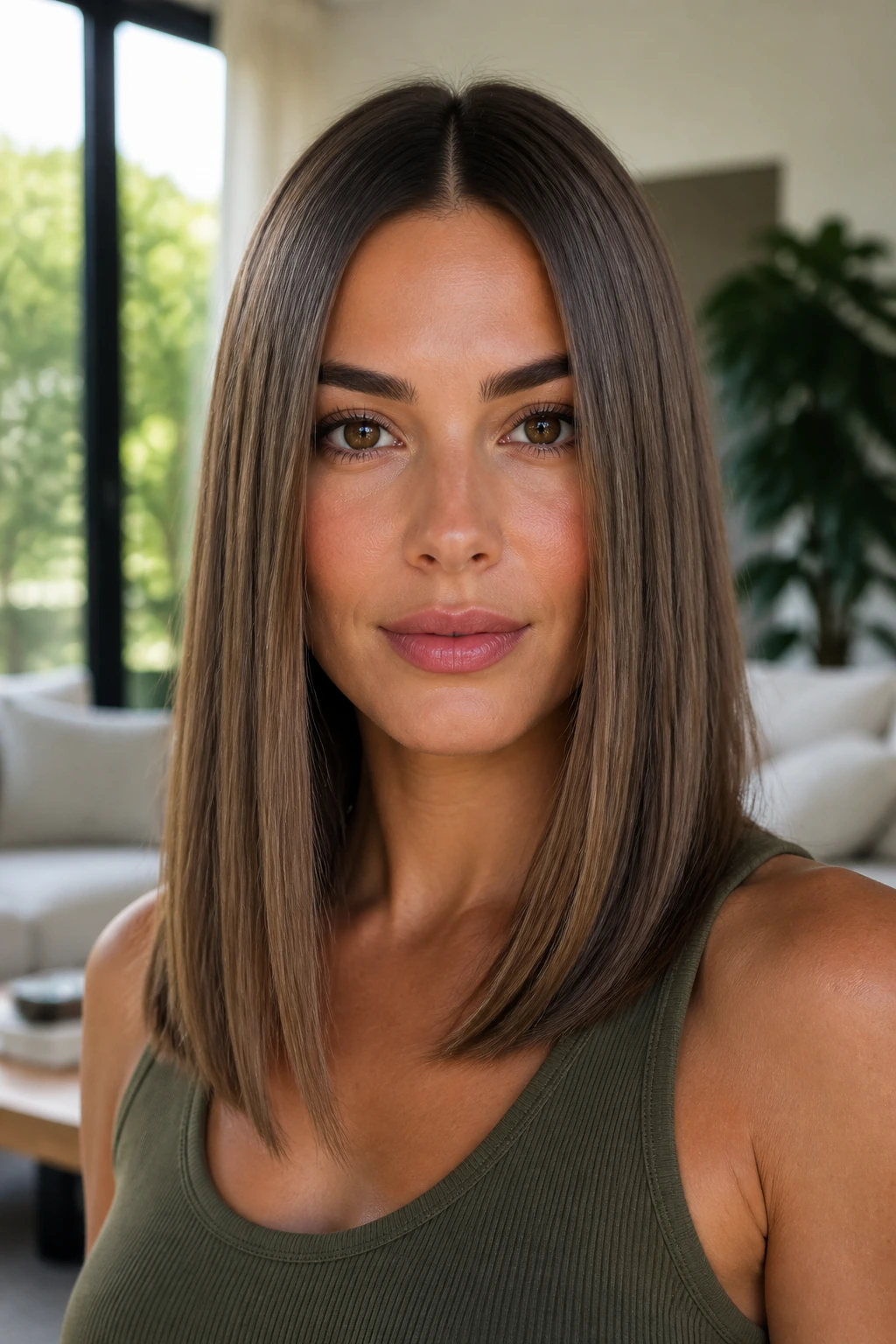
A middle part can work on a round face, despite the number of people who act like it’s forbidden. The secret is length and control. If the lob sits below the collarbone and the sides don’t puff outward, the center part can create a long, clean line down the middle of the head.
That line is powerful. It splits the face evenly and encourages the eye to move downward. The key is not to let the hair flare at the cheeks. Flat roots and a tidy perimeter matter here more than on a messier cut.
I like this version when the hair is naturally straight or can be straightened without looking stiff. Add a slight bend at the ends, not a hard flip, so the line stays modern instead of severe. If the hair is thick, a small amount of internal debulking helps the shape lie flatter near the face.
A center part on a chin-length cut can be brutal on a round face. A center part on a longer lob is a different animal. One looks boxed in. The other looks clean and deliberate.
11. Bottleneck Bang Lob

Bottleneck bangs sit in that nice middle ground between curtain bangs and a full fringe. They start narrower at the center, then widen and soften as they move toward the temples. On a round face, that shape can frame the forehead without cutting the face in half.
The best part is the blend. Bottleneck bangs melt into the lob more naturally than blunt fringe, which means you get a little softness around the eyes and cheeks without turning the haircut into a full-on statement bang moment.
This is a smart pick if you want face-framing but don’t want to commit to the maintenance of a full curtain fringe. The fringe can be pushed slightly aside, styled with a round brush, or left to fall piecey and loose. It has more flexibility than it looks like it should.
Keep the center pieces short enough to register, but not so short they stop at the forehead. Let the side pieces lengthen as they move out. That sweep is what helps a round face look a little more oval.
12. Curly Lob With Internal Layers
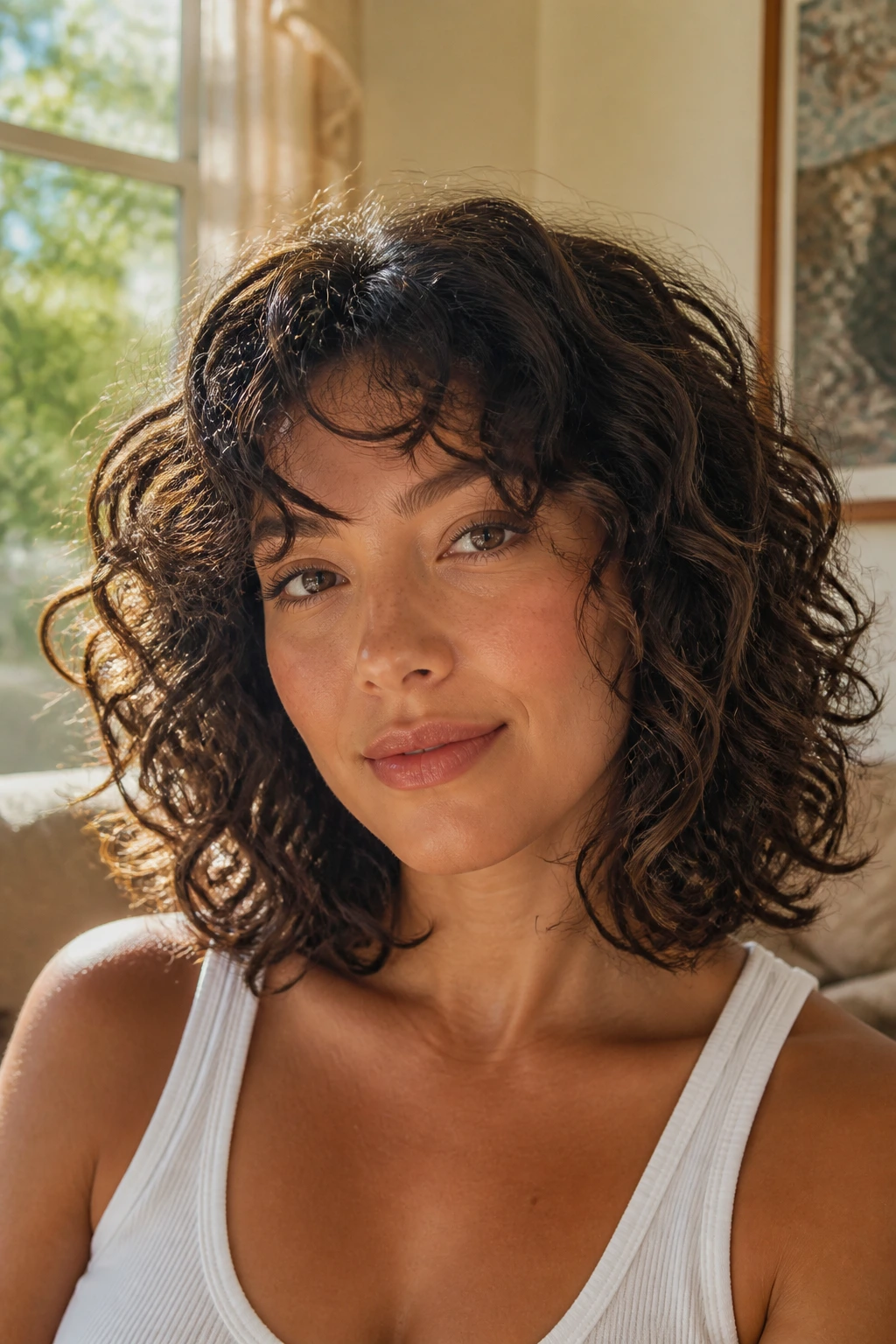
Curly hair needs a lob that respects shrinkage. If you cut curls too short on a round face, they can bounce up and sit right at the cheeks, which is the last thing you want. A collarbone or slightly longer length gives the curl room to spring without crowding the face.
Internal layers are the move here. Not a choppy surface layer situation. Internal shaping. It removes bulk from inside the mass so the outline stays round in a good way, not triangular or puffy at the sides.
I prefer this cut dry or mostly dry, because curls behave differently when they’re stretched wet. A stylist who cuts curly hair by guessing at the final bounce is asking for trouble. The shortest curls should still sit below the cheekbone once they dry fully.
This cut can be gorgeous when the perimeter is a little longer in front than in back. That extra length gives the curls room to drop. And if your curls are coarse or dense, a few hidden layers can keep the whole shape from building out instead of down.
13. Inverted Lob
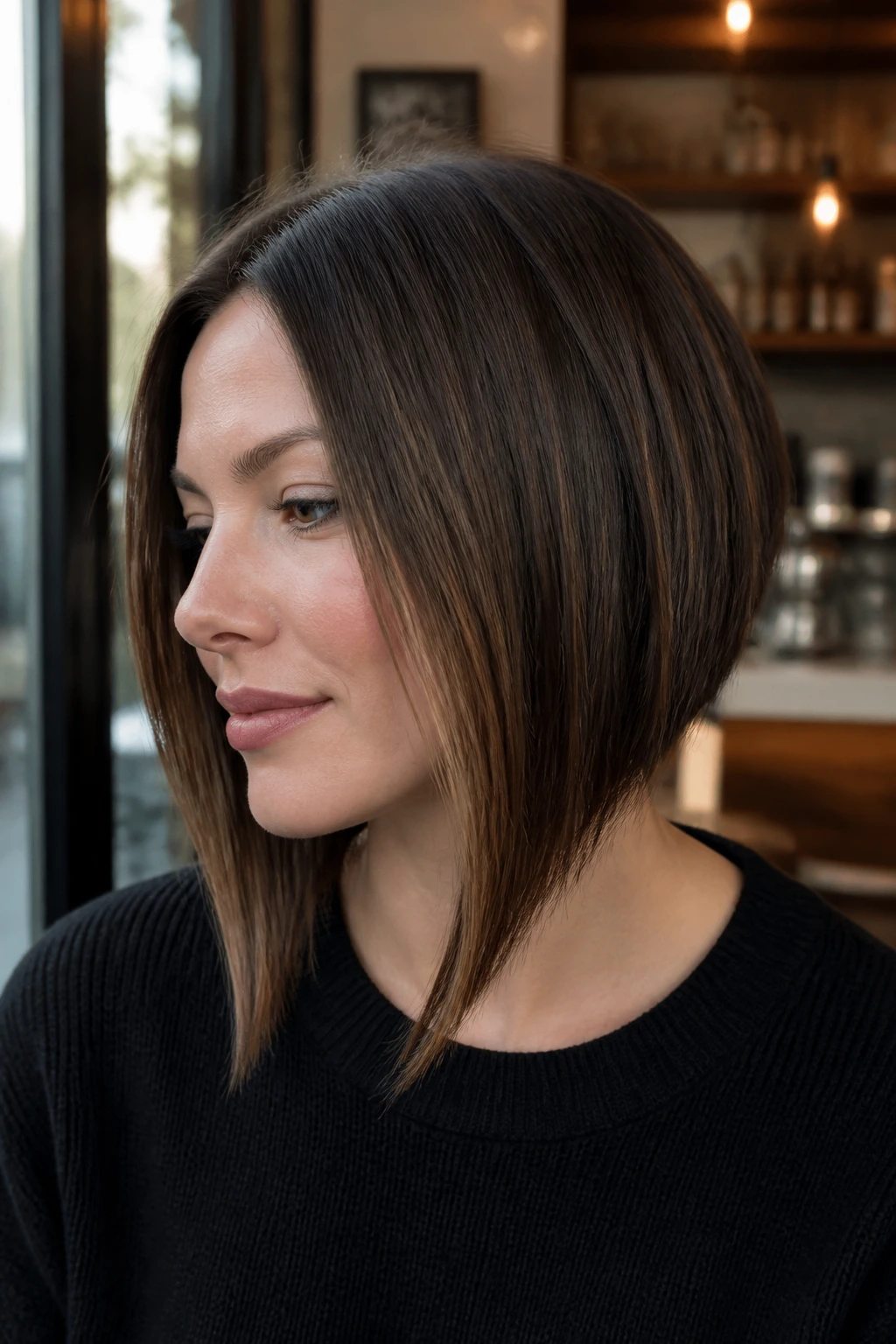
The inverted lob is a classic for a reason. The back is shorter, the front length drops lower, and the cut moves forward in a way that naturally stretches the face. On a round face, that forward angle is doing real work.
But here’s the catch: too much stack in the back can widen the head shape. You want subtle graduation, not a full pyramid. The nape should stay neat, and the front should be the point of interest.
I’d choose this if you want a little structure without going sharp or severe. It’s polished. It also gives you a nice neck line, which can be useful if your face carries most of its width through the cheeks rather than the jaw.
This cut looks especially good when it’s smoothed into a soft curve around the collarbone. You can wear it sleek or with a loose bend. Either way, the diagonal shape keeps the eye moving forward and down.
14. Flipped-End Lob
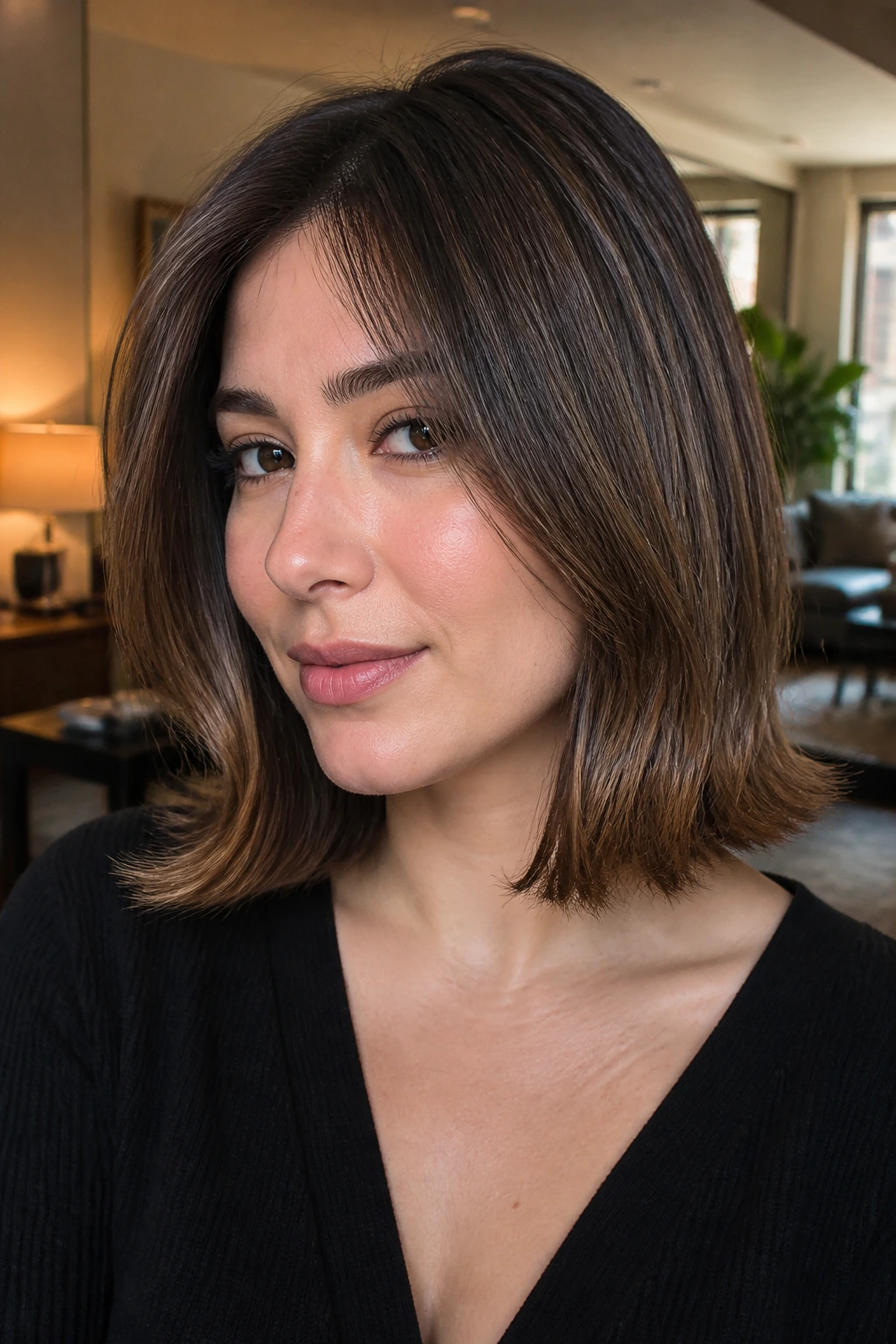
There’s a reason flipped ends keep coming back. When the ends turn away from the face at the bottom of a lob, the haircut gains movement without losing the long line that flatters a round face. It feels a little retro, a little polished, and not nearly as fussy as people assume.
The flip should happen low, near the collarbone or just below it. If the ends flick out at cheek level, the shape gets wide. If they turn at the bottom, the motion sits where it helps.
I like this on hair that holds a bend well. A quick blowout with a round brush can do it, or a flat iron can create that soft outward flick on the last inch. The point is not curl. It’s motion.
A blunt lob with flipped ends can look cleaner than a heavily layered one, especially on round faces. The line stays strong, but the finish keeps it from feeling boxy. That balance is why this cut is more useful than it gets credit for.
15. Invisible-Layer Lob
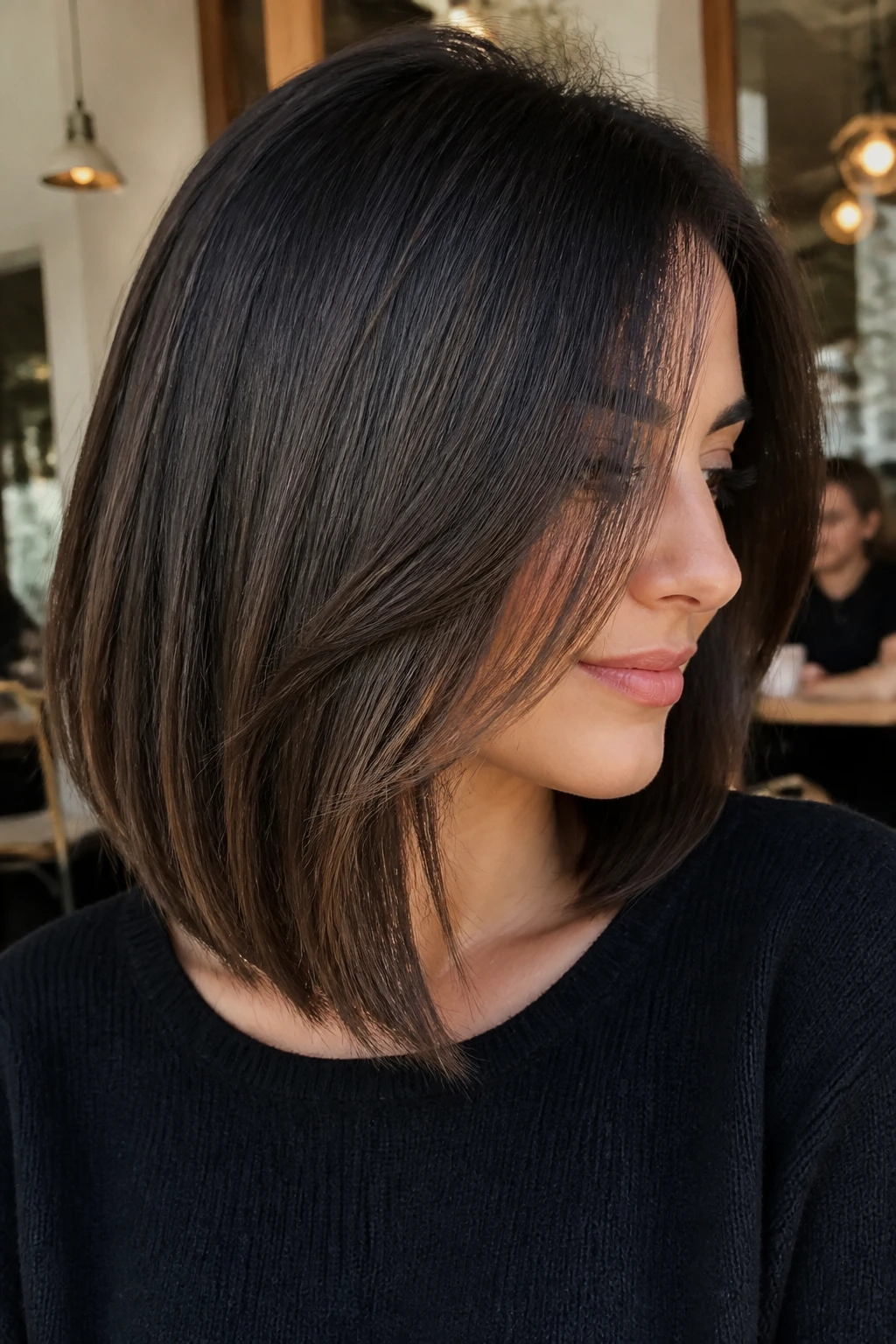
Invisible layers are the ones nobody notices at first glance, which is exactly the point. The perimeter still reads clean, but the inside has been lightened enough that the hair does not sit like one thick sheet around the cheeks. For a round face, that softness matters.
This is one of my favorite choices for thick hair. The outer shape stays strong, but the cut sheds that heavy, mushroom-like feeling at the sides. It also helps coarse hair move instead of clamping into one solid shape.
When this version shines
If you like polished hair but hate seeing bulk at the jaw, this cut gives you some relief. It’s also good when you want to wear the hair tucked behind the ear on one side and still keep the outline neat.
Fine hair needs a lighter touch here. Too many hidden layers can leave the ends looking thin and distracted. Thick hair, though? Hidden layers can be the difference between “heavy” and “clean.”
16. Side-Swept Fringe Lob
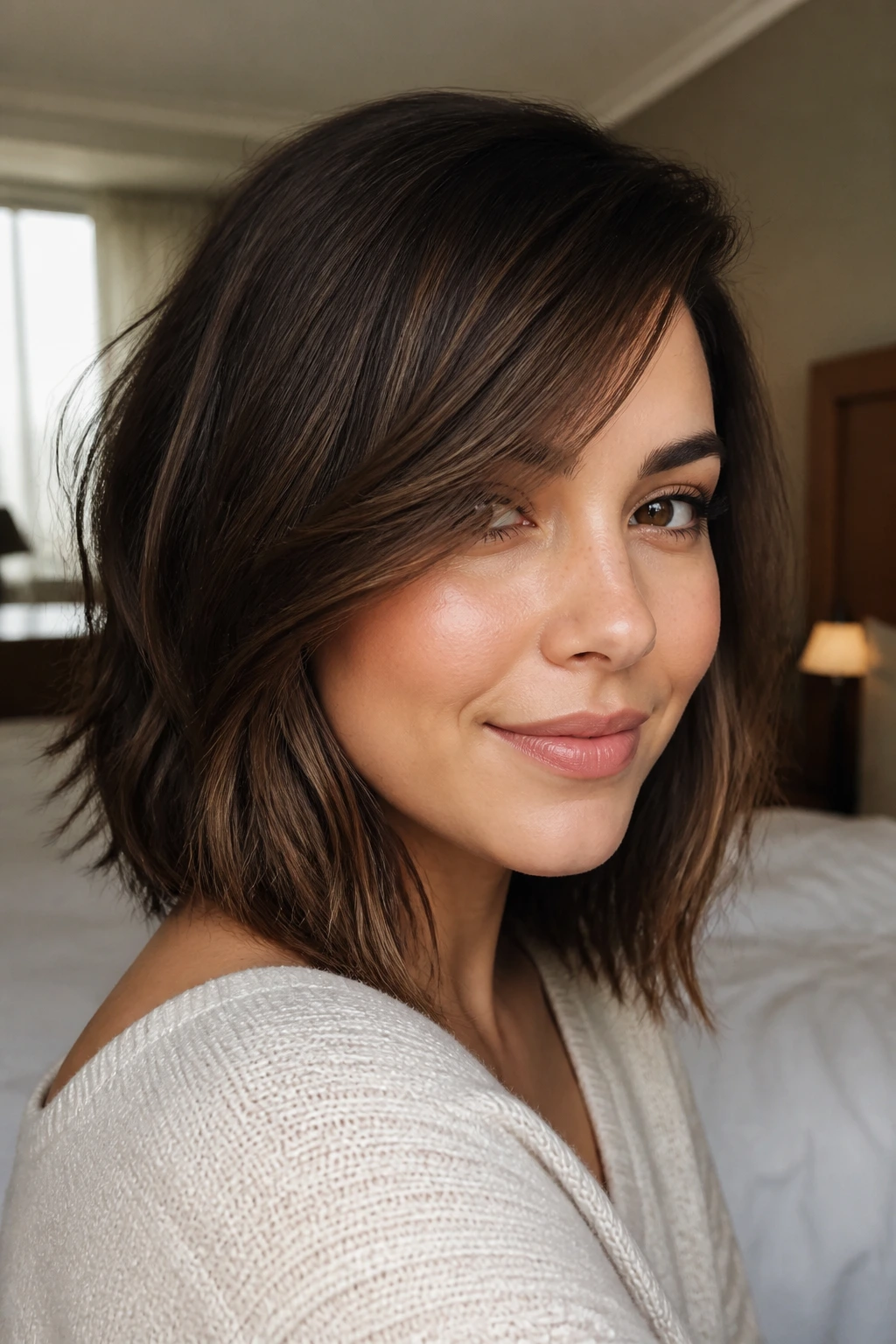
A side-swept fringe is the quiet sibling of curtain bangs. It gives you forehead coverage without creating a hard line across the face, and it works especially well when you want the haircut to feel softer and less deliberate.
On a round face, the diagonal sweep is the useful part. It pulls attention from the center of the face toward the outer edge, which makes the face read a little longer. The fringe should blend into the lob instead of sitting on top of it.
I like this option for people who want a little movement near the eyes but do not want to maintain a full bang shape. It also plays well with a side part, which gives you two angles instead of one broad horizontal line.
Keep the shortest piece long enough to brush the brow and let the longest piece drift toward the cheekbone. That range gives the haircut a soft slant, and that slant is exactly what a round face likes.
What to Tell Your Stylist Before the First Snip
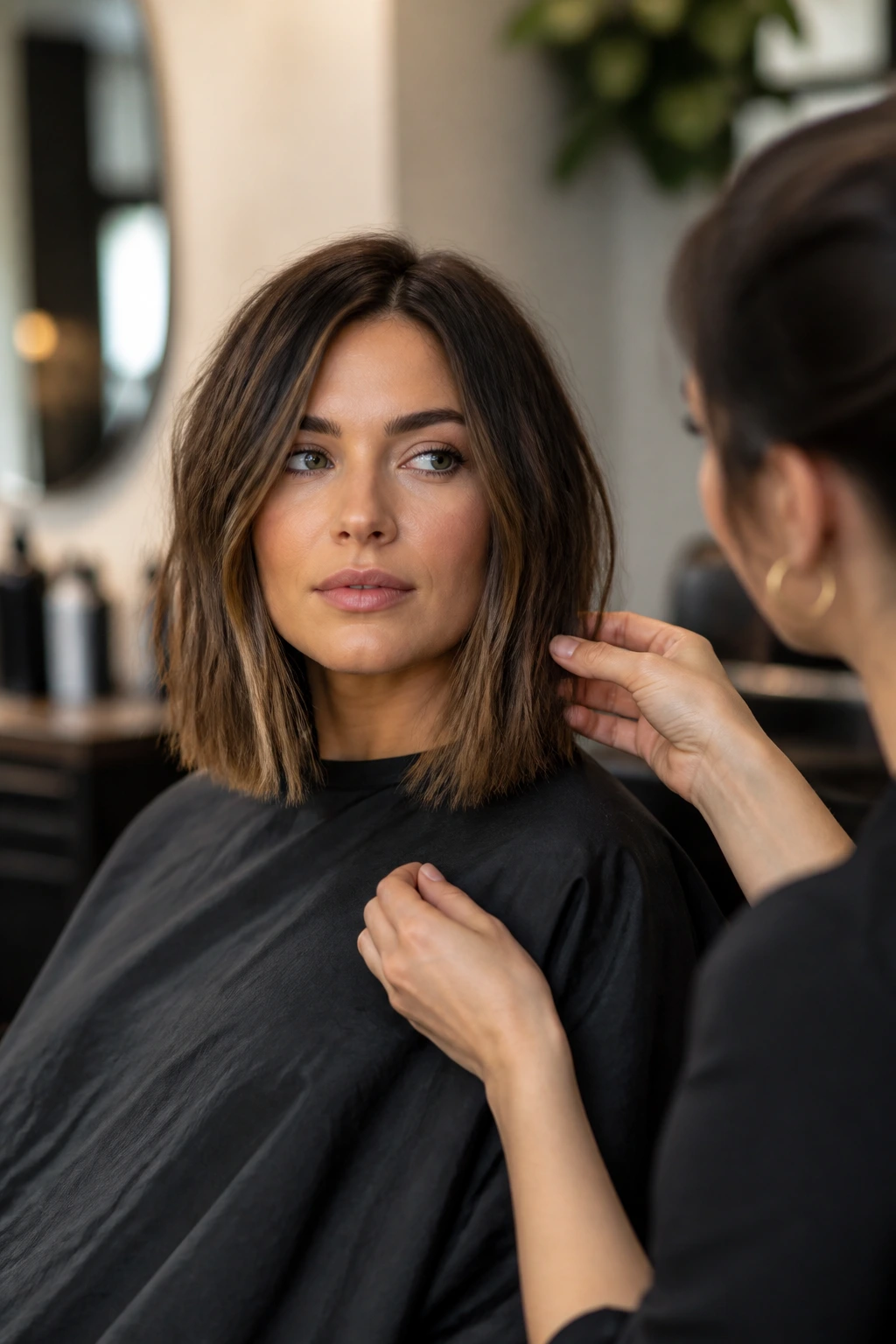
A good lob starts with a clear conversation. The word “lob” tells a stylist the general family, but it does not say where the line should sit, how much weight should stay in the ends, or what the front needs to do around your face. Those details matter more than the label.
Bring photos, yes, but talk in landmarks too. Say where you want the front to hit — chin, jaw, collarbone, or a little below. Tell them whether you wear a middle part, a deep side part, or both. And if your hair puffs at the sides or goes flat at the roots, say that out loud. That single sentence can change the shape of the cut.
A few phrases help:
- “Keep the shortest front piece below my cheekbone.”
- “I want the front to land around my collarbone.”
- “Remove bulk from the inside, not the outline.”
- “I style this with a blowout / air-dry / flat iron.”
- “My hair expands at the sides when it dries.”
Also mention cowlicks, especially near the part or the nape. A stylist can work with them, but only if they know they’re there. Hidden cowlicks have ruined more great lob ideas than bad photos ever have.
The Tools That Make a Lob Easier to Wear
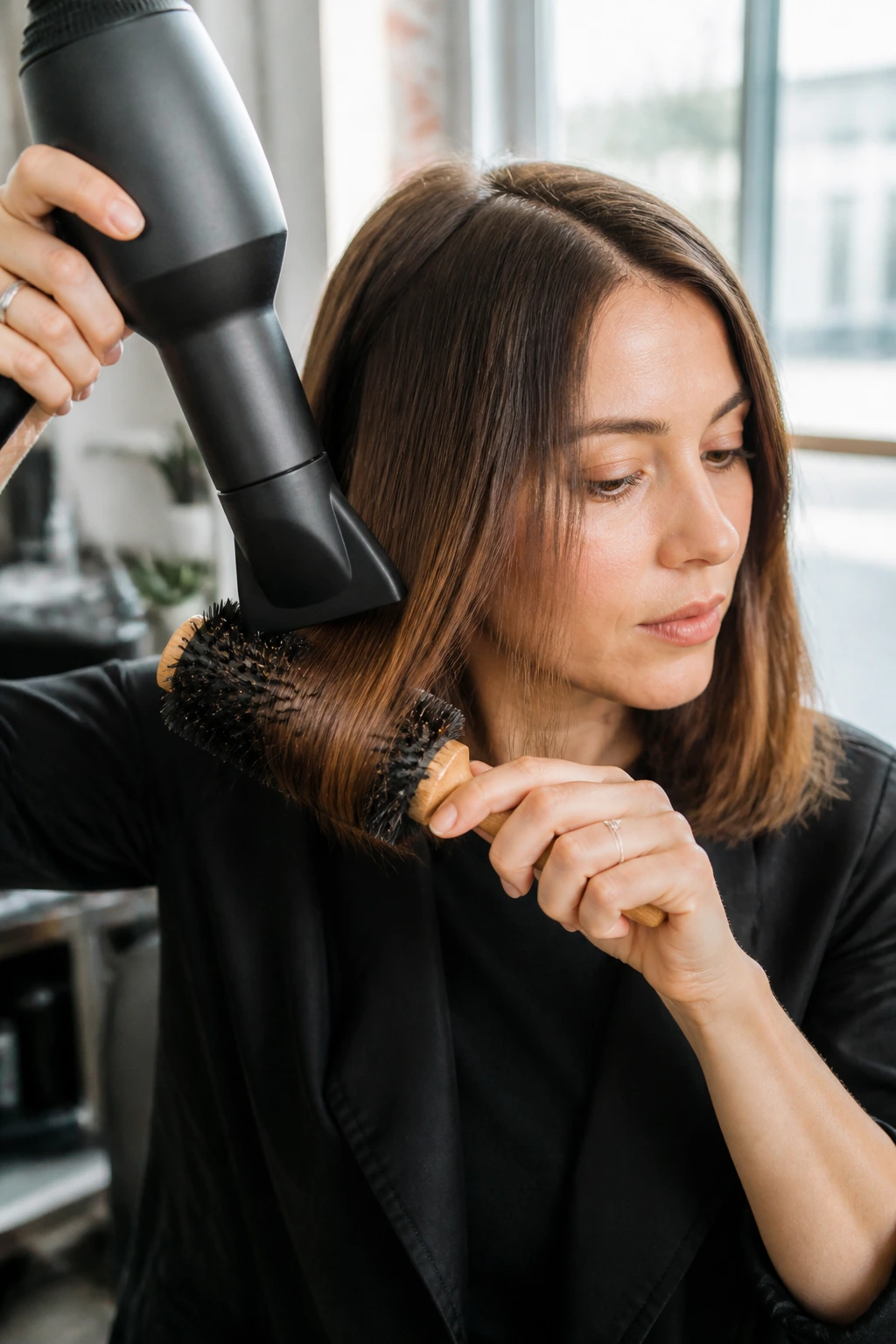
A lob doesn’t need a suitcase of gear, but a few tools make the cut behave better day to day.
-
A 1 to 1.5-inch round brush: Good for bending the ends under, flipping them out, or adding root lift around the crown.
-
A blow dryer with a nozzle attachment: The nozzle matters. It keeps the airflow directional, which helps the hair sit smoother at the cheek line.
-
A 1-inch flat iron: Best for creating slight bends, smoothing the perimeter, or softening a side-swept fringe without making it stiff.
-
Heat protectant spray: Non-negotiable if you style with heat more than once a week. It keeps the ends from drying out and looking ragged.
-
Texturizing spray or light mousse: Useful for wavy and shaggy lobs, especially if you want movement without crunch.
-
Duckbill clips or sectioning clips: These help the roots set while they cool, which matters more than people think for keeping a part in place.
-
A wide-tooth comb: Better than yanking through damp waves with a brush. It preserves the shape instead of stretching it flat.
-
Silk or satin pillowcase: Not glamorous, but it saves the ends from friction and helps a lob look less exploded by morning.
How to Style and Keep the Shape Between Cuts
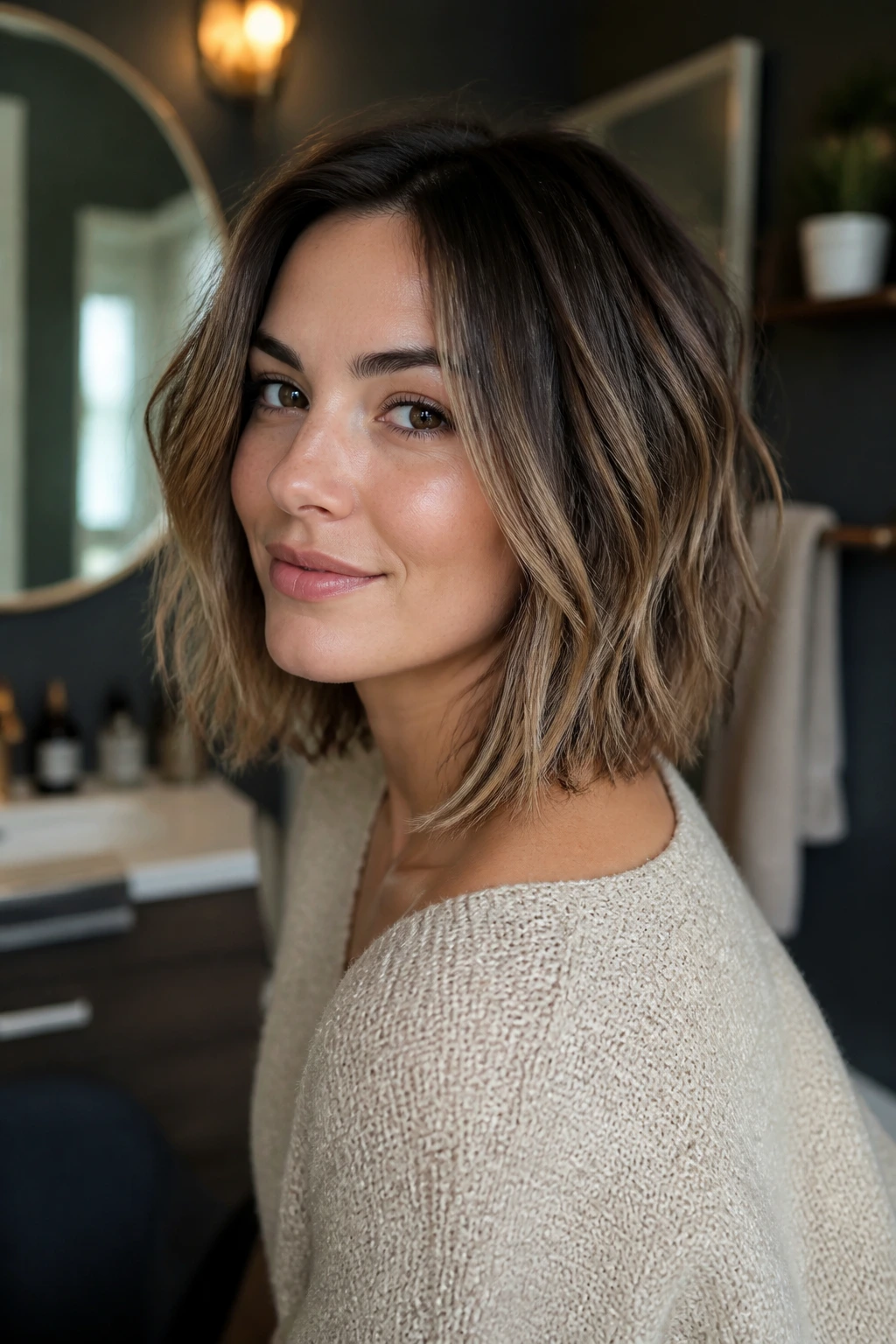
The styling rule for a round face is simple: keep the lift where it stretches the face and the bulk where it supports the line. That sounds neat, but in practice it means different things for different textures.
Straight hair
Straight hair usually needs root lift and a small bend at the ends. Blow-dry the top first, then work the mid-lengths. If the ends look too sharp, soften them with a flat iron so they curve in a little or flick just slightly outward.
Wavy hair
Wavy hair can go flat at the top and wide at the sides, which is the exact opposite of what a round face wants. Use mousse at the roots, then scrunch or diffuse from underneath. Stop adding wave once the hair starts to balloon near the cheeks. That’s the line you don’t want to cross.
Curly hair
Curly lobs need moisture and shape, not overmanipulation. A leave-in, a curl cream, and a little diffuse time usually do more than a pile of products. Let the curls settle before you decide where they sit, because shrinkage can move the line up an inch or two.
Day-two hair
Day-two lob hair often looks better than day-one hair if you refresh the roots and leave the ends alone. A tiny hit of dry shampoo at the crown and a quick re-bend on the front pieces can bring the whole cut back to life. I’d skip soaking the entire head again unless the shape has collapsed.
Keeping the Shape Between Appointments

A lob earns its keep when it still looks intentional six weeks in. That means the perimeter needs attention before it starts turning into a vague shoulder-length thing with no edge.
For blunt and inverted versions, a trim every 6 to 8 weeks keeps the line from losing its shape. Shaggy or heavily textured lobs can usually go 8 to 10 weeks because the grow-out is softer. If you have bangs, plan on a fringe tidy every 2 to 4 weeks or the front can swallow your face.
Night habits matter too. Sleep with the hair loose in a low clip or soft scrunchie if it tangles easily. A satin pillowcase helps the ends stay smoother, especially if the lob is blunt or straightened. And if your hair tends to flip at weird angles while you sleep, mist the ends lightly in the morning, twist them around your fingers, and let them cool for a minute.
Dry shampoo is useful, but don’t bury the roots in it. A light spray at the crown is enough. Too much product makes the top look dusty, and dusted roots age a lob fast.
Common Mistakes That Make a Lob Sit Too Wide
-
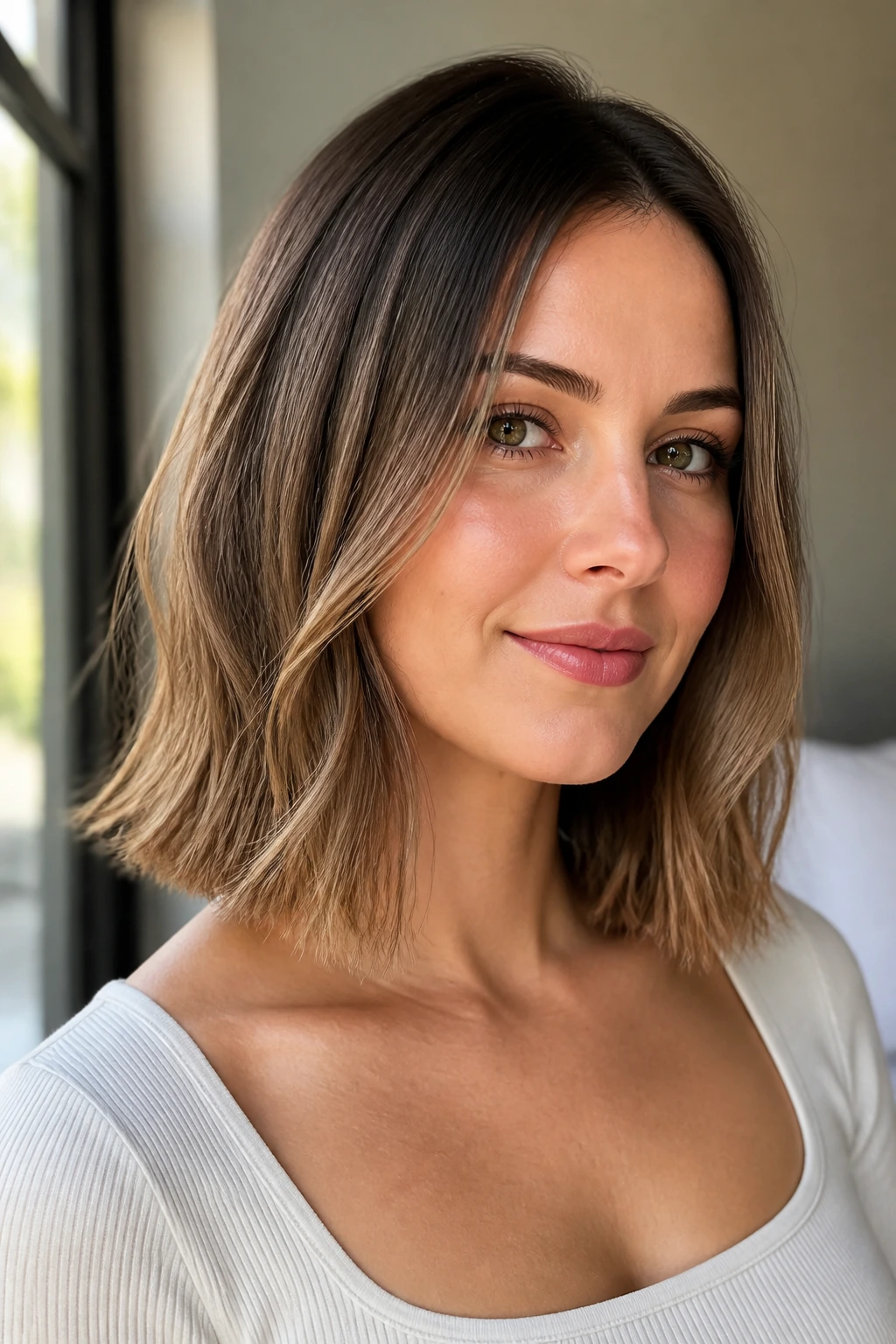
Ending the cut at the chin: That’s the fastest way to widen a round face. Move the perimeter lower, closer to the collarbone or at least below the jaw.
-
Building too much volume at the sides: Big side volume creates a wider silhouette. Keep the lift at the crown and let the sides lie closer to the head.
-
Using short layers around the cheeks: If the first layer hits the cheekbone, the haircut can frame the widest part of the face instead of softening it. Start lower.
-
Going too blunt on very thick hair without internal removal: The line can turn into a shelf. The fix is removing weight inside the cut while leaving the outline clean.
-
Styling every day with the same flat bend inward: The result can look heavy and dated. Mix in a slight curve, a soft flip, or a side part so the shape keeps moving.
-
Ignoring your growth pattern: Cowlicks, a stubborn widow’s peak, or a flat crown can change the way a lob sits. A good cut works with those quirks instead of pretending they do not exist.
Ways to Adapt the Cut Without Losing the Shape

Fine-Hair Airy Lob
Keep the outline a touch blunt but use very light internal layers so the ends do not look thin. A subtle side part and root lift spray keep the cut from collapsing around the cheeks.
Thick-Hair Weight-Removed Lob
Ask for internal debulking and a perimeter that stays solid. This stops the cut from ballooning out at the sides while keeping the shape clean enough to flatter a round face.
Curly Shrinkage Lob
Leave extra length to account for curl bounce. The shortest curl should still land below the cheekbone when dry, or the cut can sit too high and widen the face.
Low-Maintenance Air-Dry Lob
Keep the layers long, the shape soft, and the ends slightly blunt. This is the version that looks good with a little cream and no heat, which is worth its weight in gold on busy mornings.
Polished Blowout Lob
Ask for a perimeter that bends under easily and holds a smooth line. This version shines when you want sleekness without the haircut turning stiff or severe.
Frequently Asked Questions
Does a lob make a round face look wider?
It can, if the cut stops at the chin or builds too much width at the sides. A lob that sits at the collarbone, with the shortest front piece below the cheekbone, usually does the opposite and gives the face more vertical room.
Are blunt bangs a bad idea for round faces?
Not always, but they’re risky if they’re short and heavy. Softer fringe shapes like curtain bangs, bottleneck bangs, or a long side-swept fringe usually sit better because they break up width without closing the forehead.
Is a middle part okay on a round face?
Yes, if the lob is long enough and the hair doesn’t puff out near the cheeks. A sleek middle-part lob works best when the perimeter stays below the chin and the crown has a little lift.
What’s the safest lob length for a round face?
Collarbone length is the safest starting point for most people. It gives the face space and leaves enough length for styling, tucking, or adding movement without cutting the line too high.
Can curly hair wear a lob on a round face?
Absolutely, but the cut needs to account for shrinkage. Curly lobs look best when they’re shaped dry or mostly dry and when the shortest curls still fall below the cheekbone once they spring back.
How often should I trim a lob?
Every 6 to 8 weeks keeps blunt and inverted versions in shape. Textured, shaggy, or wavier lobs can stretch a little longer, but bangs will usually need their own trim sooner.
What should I avoid if my face is very round?
Avoid chin-length cuts, heavy side bulk, and short layers that start right at the cheeks. Those details tend to widen the face instead of elongating it.
Can I tuck a lob behind my ear without ruining the shape?
Yes, and that’s one reason lobs are so practical. A slight asymmetry or a longer front piece keeps the cut looking intentional when one side is tucked and the other side falls forward.
The Lob That Lands in the Right Place
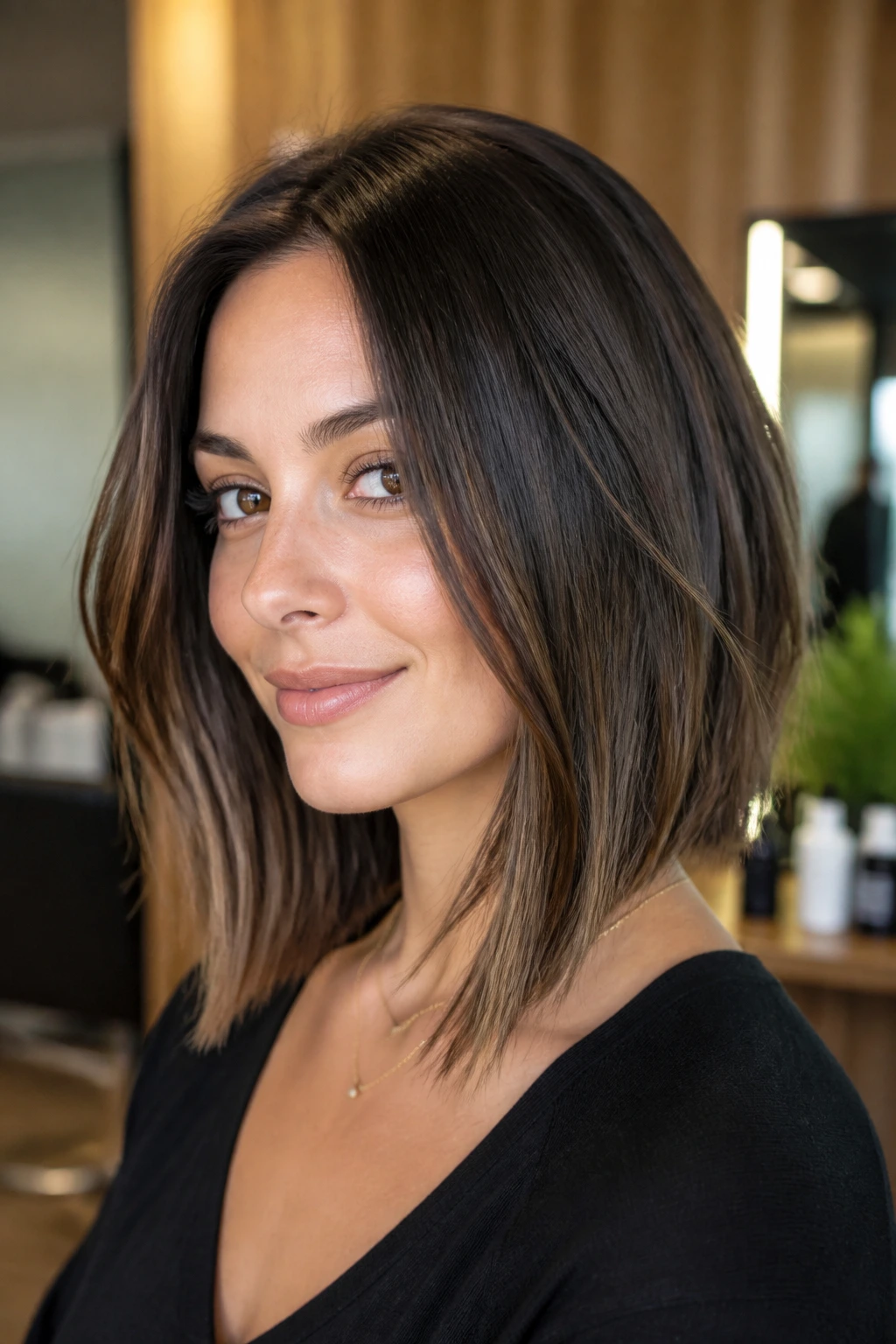
A good lob on a round face is not about hiding anything. It’s about placing the line where it gives the face a little more length, a little more angle, and a little less width at the cheeks. That can happen with a blunt edge, a side part, a fringe, or a soft bend at the ends. The haircut family is broad. The placement is what makes it work.
I like lob haircuts for round faces because they leave room for personality. You can go sleek, shaggy, curly, angled, or softly layered and still keep the shape honest. The cut has to sit in the right spot first. After that, the fun part begins.
If you’re choosing between two versions, pick the one that puts the shortest front piece lower, not higher. That one decision usually saves the haircut from turning boxy, and it’s the reason the best lob keeps looking better the longer you wear it.
