



Straight hair can be brutally honest. Give it a blunt cut with no movement and it hangs there like a ruler; give it a choppy lob, and the same hair suddenly gets swing, bend, and a little attitude at the ends. That’s the whole trick, and it’s why choppy lob cuts for straight hair keep showing up in stylist chairs: they solve the “my hair is too flat” problem without forcing you into layers that feel fussy or overworked.
The best versions don’t depend on curls, mousse mountains, or a daily battle with a round brush. They use shape. A bit of point cutting at the ends. A subtle angle through the front. Interior weight removed where straight hair tends to puff. Sometimes the cut is barely messy. Sometimes it’s almost severe, with a sharp line and just enough broken edge to keep it from looking boxy.
What matters most is restraint. Straight hair shows every decision, which is exactly why this haircut can be so satisfying when it’s done right. The wrong chop looks accidental. The right one looks deliberate, clean, and a little cool in that effortless way people pretend not to work at. And yes, there are many ways to wear it—soft, sharp, airy, tucked, side-parted, fringe-heavy, grown-out, polished—so the versions below cover the range instead of recycling the same idea over and over.
Why These Cuts Work on Straight Hair
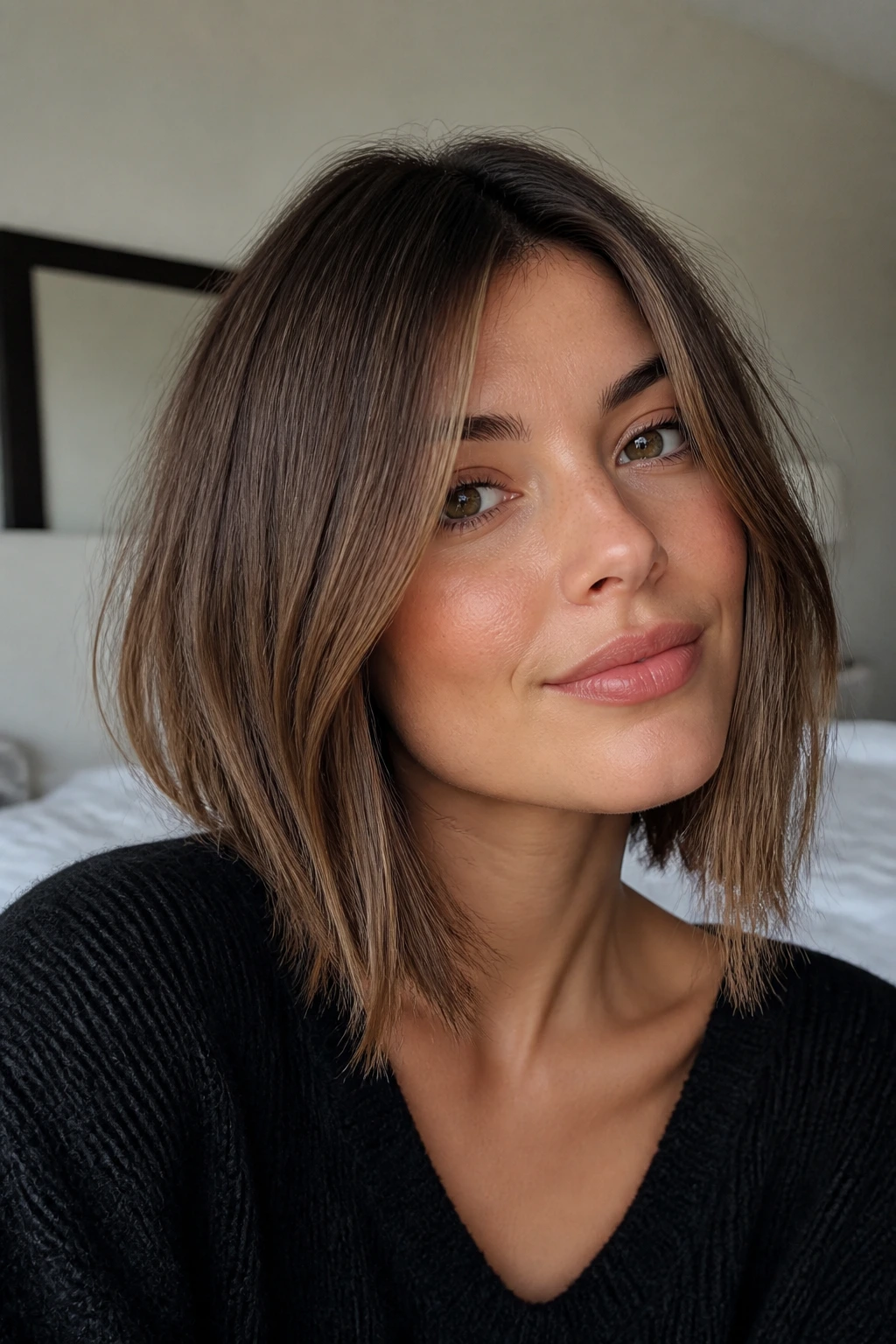
- They break the hard line: Straight hair tends to hang in one uninterrupted sheet, and choppy ends interrupt that line so the cut moves when you turn your head.
- They keep the length useful: A lob still reaches the collarbone or grazes it, which means you can tuck it, pin it, and grow it out without that awkward triangle stage.
- They handle fine hair differently than thick hair: The right version can keep fine hair looking dense at the bottom while taking weight out of thicker strands that want to balloon outward.
- They make part changes matter: A center part, side part, or off-center part can completely change the mood of the same cut.
- They work with minimal styling: Even a quick bend at the ends or a rough blow-dry can make the choppy shape show up.
- They age well as they grow: A lob with some texture usually softens gracefully, which beats a precision cut that falls apart after two inches of growth.
1. Blunt Choppy Lob with Soft Point-Cut Ends
This is the cut for someone who wants the cleanest possible outline with just enough broken edge to keep straight hair from looking stiff. The perimeter still reads blunt, but the ends are point-cut so the last half-inch doesn’t sit like a solid shelf. That tiny bit of irregularity is the difference between “nice bob” and “there’s actual movement here.”
Why It Reads Clean, Not Heavy
The shape works because the blunt line gives structure while the choppy finish keeps the bottom from feeling sealed shut. On straight hair, that matters more than people expect.
- Collarbone length keeps the cut flexible.
- Point-cut ends soften the outline.
- A middle part makes it feel modern; a side part makes it feel sharper.
- Best for straight hair that goes flat but still has decent density.
Best tip: ask for texture only in the last inch or so if you want the cut to stay crisp.
2. Center-Part Piecey Lob with Barely There Layers
A center part can make straight hair look severe in a good way, but only if the cut has enough broken texture to keep it from reading like a helmet. This version keeps the shape long and narrow, then adds microscopic layers through the ends so the hair separates into pieces instead of one flat sheet.
What Makes It Different
The beauty of this cut is how little it asks from you. A quick pass with a flat iron or even an air-dry with a dab of cream can make the ends fall into defined sections.
- Keeps the face open.
- Works especially well on hair that parts itself down the middle anyway.
- Needs little more than a smoothing serum.
- Looks best when the front pieces skim the jaw instead of ending right at it.
If you hate volume but want some edge, this is a strong place to start.
3. Side-Part Swing Lob with Longer Fronts
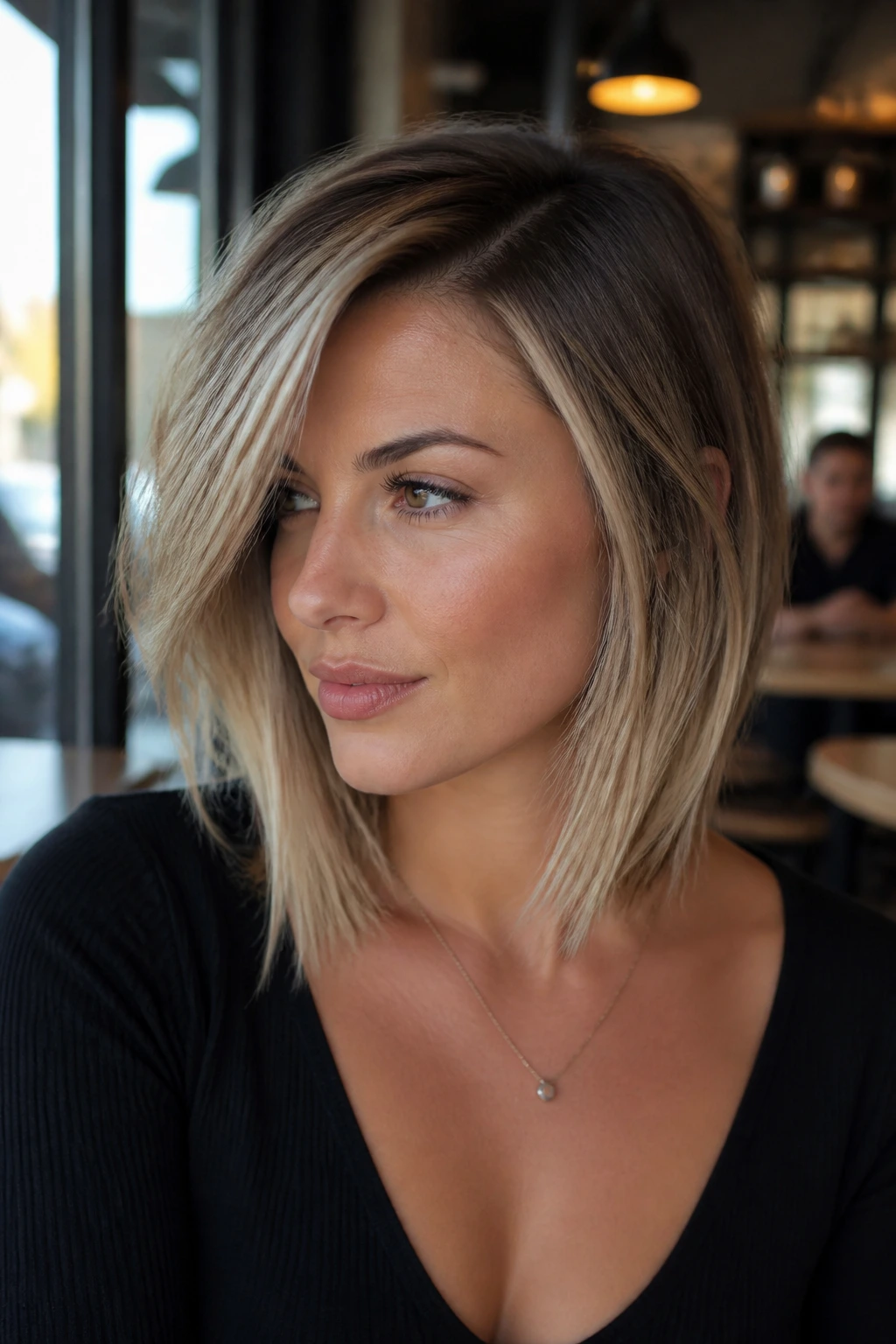
Why do some lobs suddenly look expensive the second you move the part? Because the side part gives the front pieces a chance to swing, and on straight hair that swing becomes the whole show. This version keeps one side slightly longer so the line drapes forward instead of dropping evenly.
How to Use It
The longer front section helps the haircut move when you tuck one side behind your ear. That little asymmetry keeps the shape from feeling too polite.
- Ask for a soft angle from nape to front.
- Keep the back at collarbone length.
- Let the longest front hit just below the collarbone.
- Use a lightweight bend at the ends, not tight curls.
If your hair falls flat at the crown, a side part usually fixes more than people realize.
4. Collarbone Lob with Hidden Interior Debulking

Straight, thick hair can look gorgeous at lob length and still turn into a blunt block if nobody removes weight from the inside. This cut keeps the outside line tidy while taking bulk out from underneath, so the shape sits closer to the head instead of jutting out like a shelf.
Why It’s Smart for Thick Hair
The trick is hidden work. You do not want obvious short layers on the surface; you want strategic debulking under the top layer so the outline stays smooth.
That means the hair moves when you turn your head. It also means the ends can flip a little without the whole cut exploding outward. If your stylist reaches for thinning shears, pause and ask whether point cutting or slide cutting can do the same job more cleanly.
5. Razor-Cut French Lob with Airy Ends

There’s a specific softness that a razor can give straight hair when the ends are dense and a little stubborn. This version leans into that: shoulder-grazing length, airy edges, and a slightly undone finish that keeps the whole cut from feeling too formal.
The Science Behind It
A razor removes weight while leaving a wispy finish on the ends, which helps straight hair break up into softer sections. It works best when the hair is healthy and not prone to splitting.
A blunt scissor cut can look heavier here. A razor cut gives a bit of movement that feels more relaxed.
6. Grown-Out Bob with a Soft A-Line

This is what happens when a bob grows into a lob and nobody panics. The back stays a touch shorter, the front stays a touch longer, and straight hair gets a graceful slope instead of a hard box. It’s one of the easiest choppy lob cuts to live with because it never looks like you’re overdue for a trim.
It suits people who tuck their hair often. The front pieces still show length against the jawline, while the back stays light and neat.
7. Face-Framing Lob with Curtain Fringe

A lob with curtain fringe can soften straight hair fast, especially if your face is angular or your hairline is strong. The fringe splits in the middle, then drops into longer face-framing pieces that blend into the length. That blend is what keeps it from looking like two separate haircuts.
What to Ask For
Keep the fringe longer than you think you need. Straight hair does not hide short bangs well, and a curtain fringe that’s cut too high can feel fussy for weeks.
- Let the shortest point sit near the cheekbone.
- Blend the fringe into the front layers.
- Style with a round brush or a large roller for a bend, not a curl.
- Works beautifully with both center and off-center parts.
8. Angled Lob with Tucked-Behind-the-Ear Front
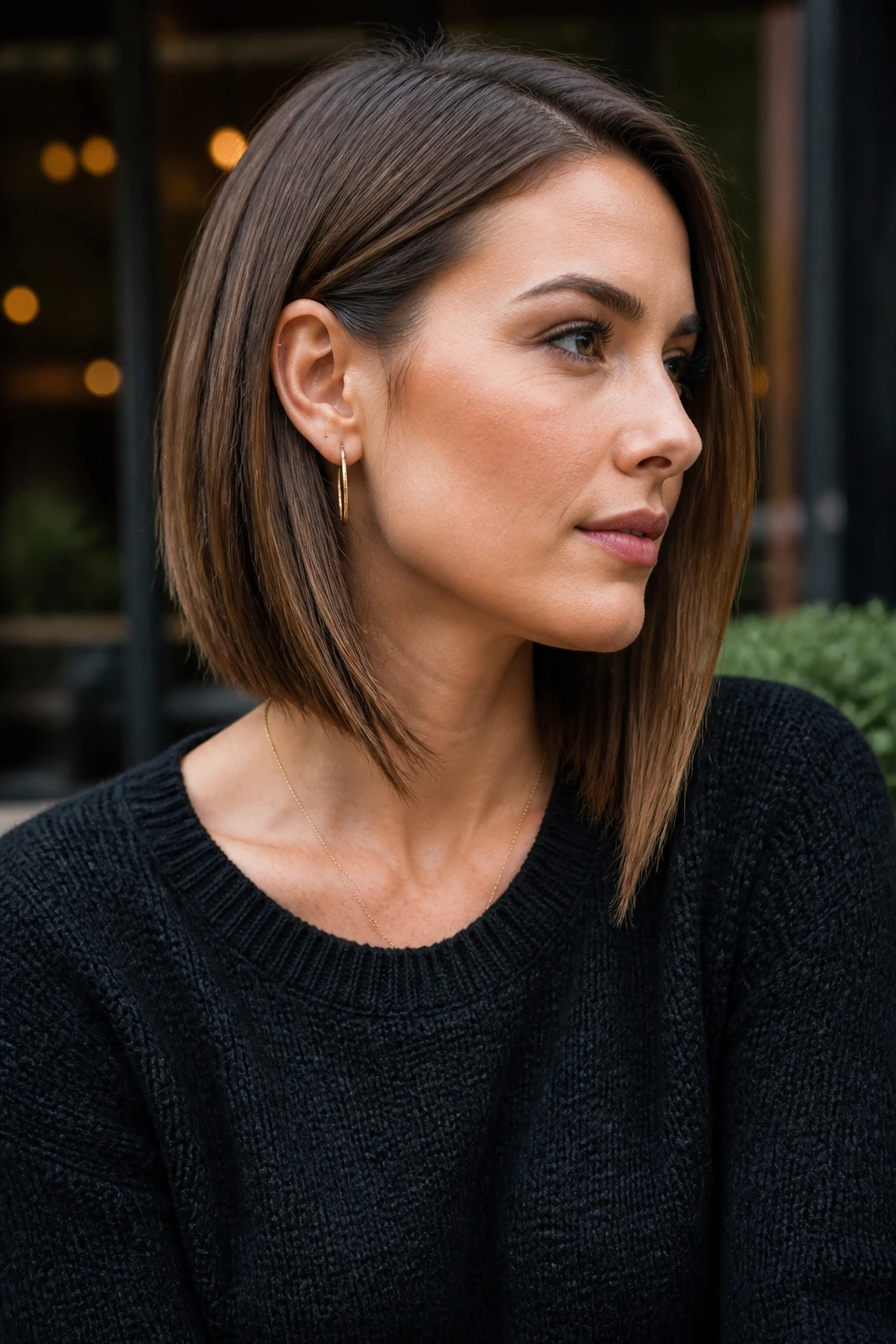
This one has attitude without trying too hard. The angle is subtle in the back, stronger in the front, and the haircut gains its personality from the way the front pieces move when one side is tucked back. Straight hair shows that line cleanly, which is part of the appeal.
A small amount of texture at the ends keeps the angle from looking like a sharp triangle. Think neat, not severe.
9. Air-Dried Choppy Lob with Natural Bend

If your straight hair has even a little bend once it dries, this is the cut that lets it show off. The outline stays loose, the ends are broken up enough to catch natural movement, and you can skip the blow-dryer more often than not.
How to Wear It
Work a pea-sized amount of cream through damp hair, scrunch the ends once or twice, then leave it alone. Touching it too much while it dries makes the top puffier than the bottom, which is a bad trade.
This version is especially good for people who want texture without a polished finish.
10. Glassy Straight Lob with Broken Ends
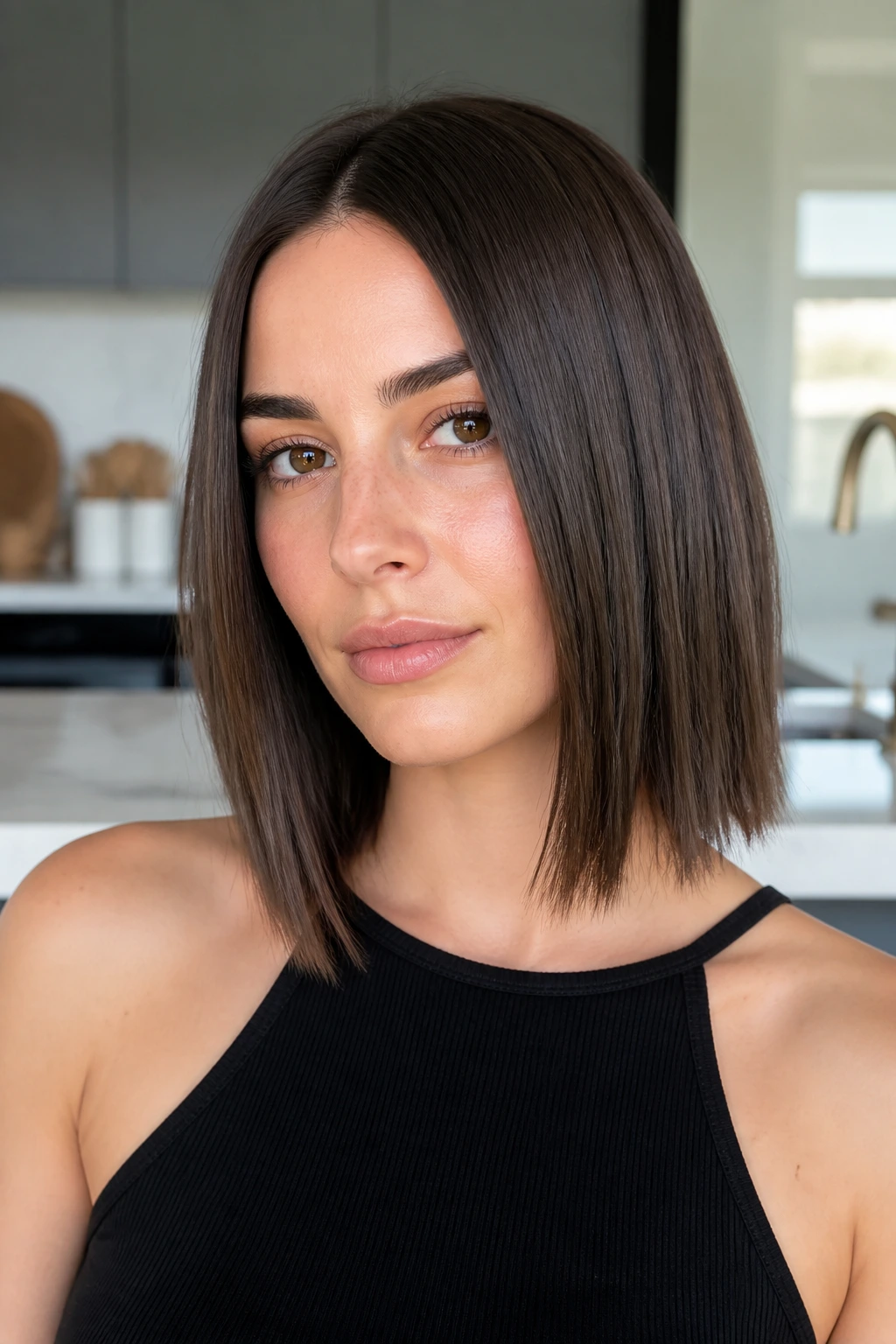
Shiny straight hair and a choppy finish can coexist. In fact, that contrast is part of what makes this cut interesting. The surface stays sleek and reflective, while the last inch or so gets broken up with point cutting so the line doesn’t feel frozen.
A flat iron set low—around 300°F if your hair tolerates heat—can sharpen the top layer. Just keep the ends a little rough. That tiny imperfection gives the cut life.
11. Tousled Lob with S-Bend Waves

This version leans into the fact that straight hair often prefers a soft bend over a full curl. The cut is slightly layered, the ends are thinned just enough to separate, and the styling uses a loose S-bend instead of a tight wave.
The result feels casual. Not sloppy. There’s a difference.
How to Get the Most From It
Use a flat iron to bend sections away from and toward the face, alternating every few pieces. Brush them out once they cool.
- Heat protectant first.
- Sections no wider than 1 inch.
- Stop the bend before the ends curve too much.
- Finish with a dry texture spray.
12. Root-Lifted Lob for Fine Straight Hair

Fine straight hair can look beautiful in a lob, but it needs lift at the root or the whole cut flattens by noon. This version keeps the ends light and the body compact, so the hair doesn’t get stringy when it moves.
A mousse at the crown and a blow-dry with a lift at the roots do more here than heavy layering ever will. Too many short layers can make fine hair look thin. This cut avoids that trap.
13. Jaw-Skimming Lob with Longer Back Length

This is one of those cuts that looks sharper than its name sounds. The front pieces skim the jaw, which gives straight hair a clean frame, while the back stays a little longer and softer. The shape is tidy from the front and quietly relaxed from the side.
It’s especially good if you want your hair to sit nicely with coats, scarves, and high necklines. The jawline framing matters there more than people think.
14. Micro-Layered Lob for Dense Straight Hair
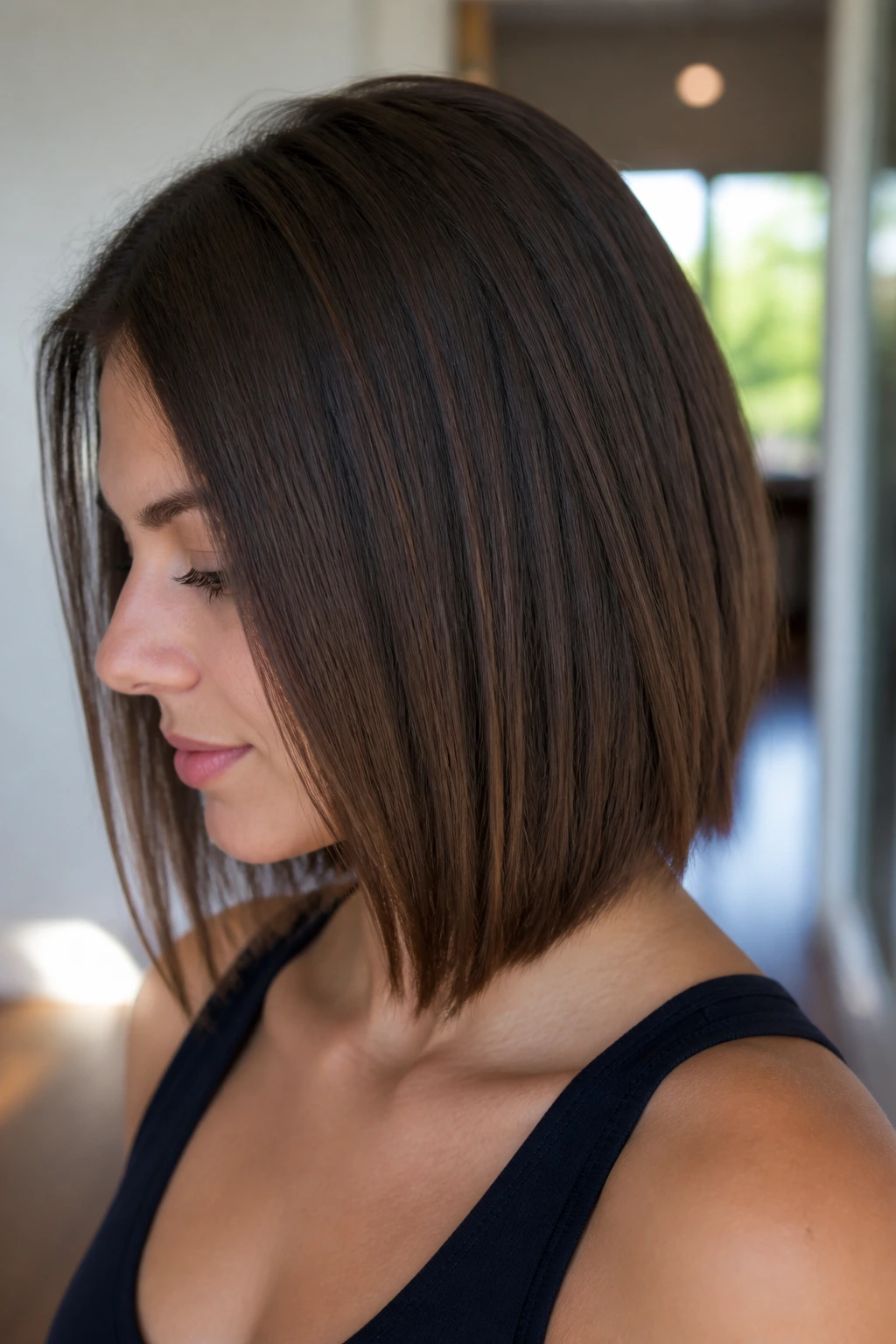
Dense straight hair often needs less “style” and more removal of excess bulk. Micro-layers do that without turning the haircut into a shag. They sit inside the shape, not on top of it, which keeps the outline smooth.
What Makes It Work
The layers are small enough that you may not see them at first, but you feel them every time the hair falls closer to the head instead of flaring out.
Ask for:
- weight removal only through the interior
- a preserved perimeter
- soft ends, not razor-chopped chunks
- a dry check at the chair if your hair shrinks a little when styled
15. Heavy-Bottom Lob with Pointy Perimeter
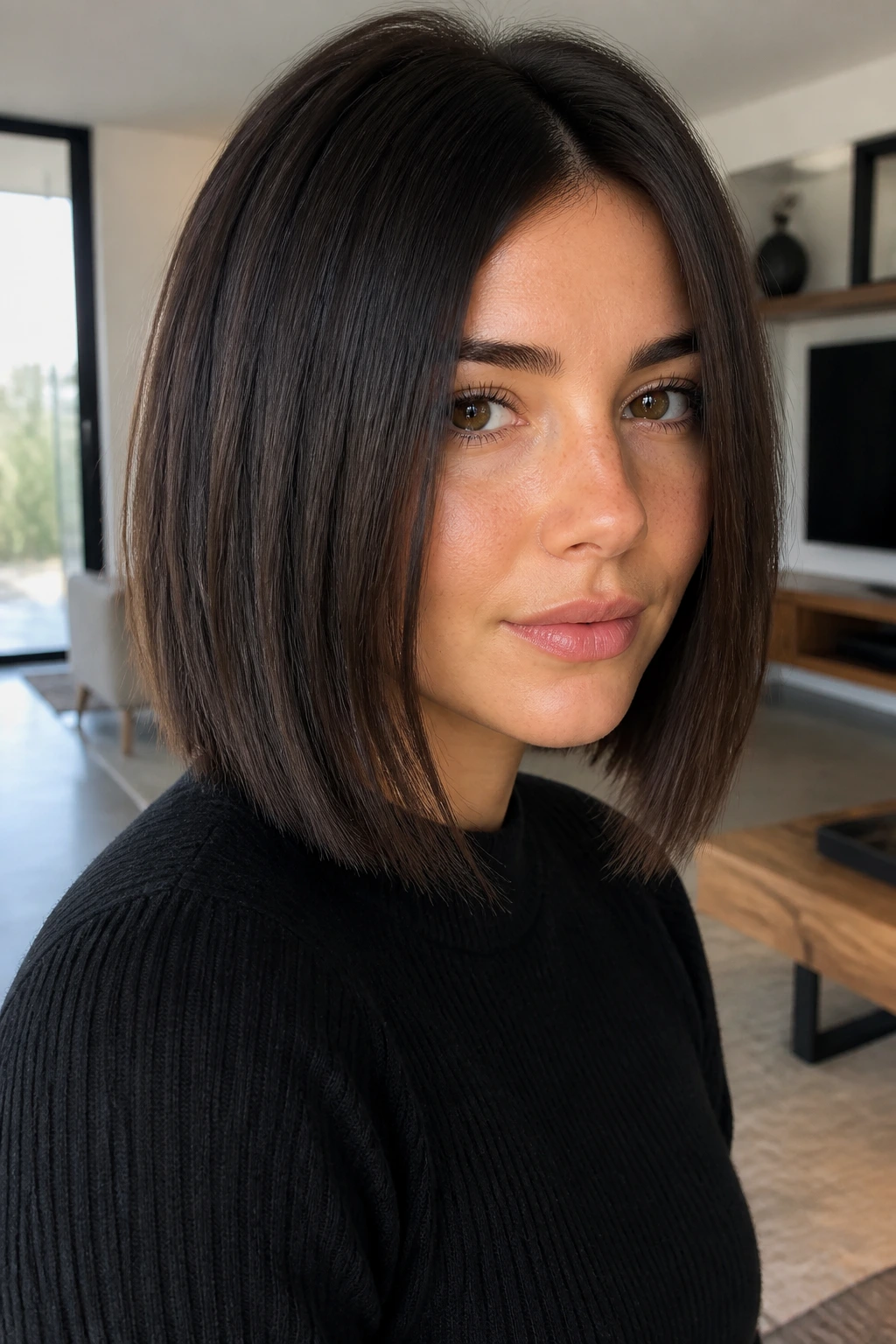
Not every choppy lob has to be airy. Sometimes the best move is to keep the bottom visually weighty and just rough up the perimeter enough that it doesn’t look squared off. Straight hair benefits from that grounded feel when it grows thick.
This cut is for people who like bluntness but hate the hard, obvious line that a truly blunt cut can create. The pointy perimeter keeps it from feeling rigid.
16. Long Fringe Lob with Soft Bang Drop

A long fringe can change a lob instantly, especially on straight hair that tends to fall in one direction all day. The fringe gives the cut a front-loaded focus, while the lob length keeps the rest from looking too busy.
The key is blending. If the fringe ends abruptly, the haircut looks disconnected. If it flows into the sides, it looks intentional and easy to wear.
17. Off-Center Part Lob with Lift at the Crown

A half-inch off the center can matter more than a whole new haircut. This lob uses that trick to create lift at the crown and a little asymmetry through the front. Straight hair often wakes up when you move the part just enough to break the symmetry.
It’s a good choice if your hair lies too flat against the scalp. The off-center part makes the root area work harder, which is half the battle.
18. Shag-Inspired Lob with Crown Texture

This is the choppy lob for people who like a little rock-and-roll in the cut. The crown gets some texture, the ends stay broken, and the whole shape looks more alive than a standard lob. On straight hair, that extra crown work keeps the top from sitting helmet-flat.
Not for everyone. If you want sleek precision, skip it. If you want motion and a bit of grit, it’s a good one.
19. Minimalist Lob with Just Enough Movement

Some of the best straight-hair cuts are almost boring in the chair and excellent in daily life. This one keeps the shape simple and only adds enough texture to prevent the ends from freezing into a straight line.
It’s the quiet option. Good for people who want their haircut to behave at work, after a workout, or on a day when they do not want to think about styling at all.
20. Chunky Piecey Lob with Separated Ends
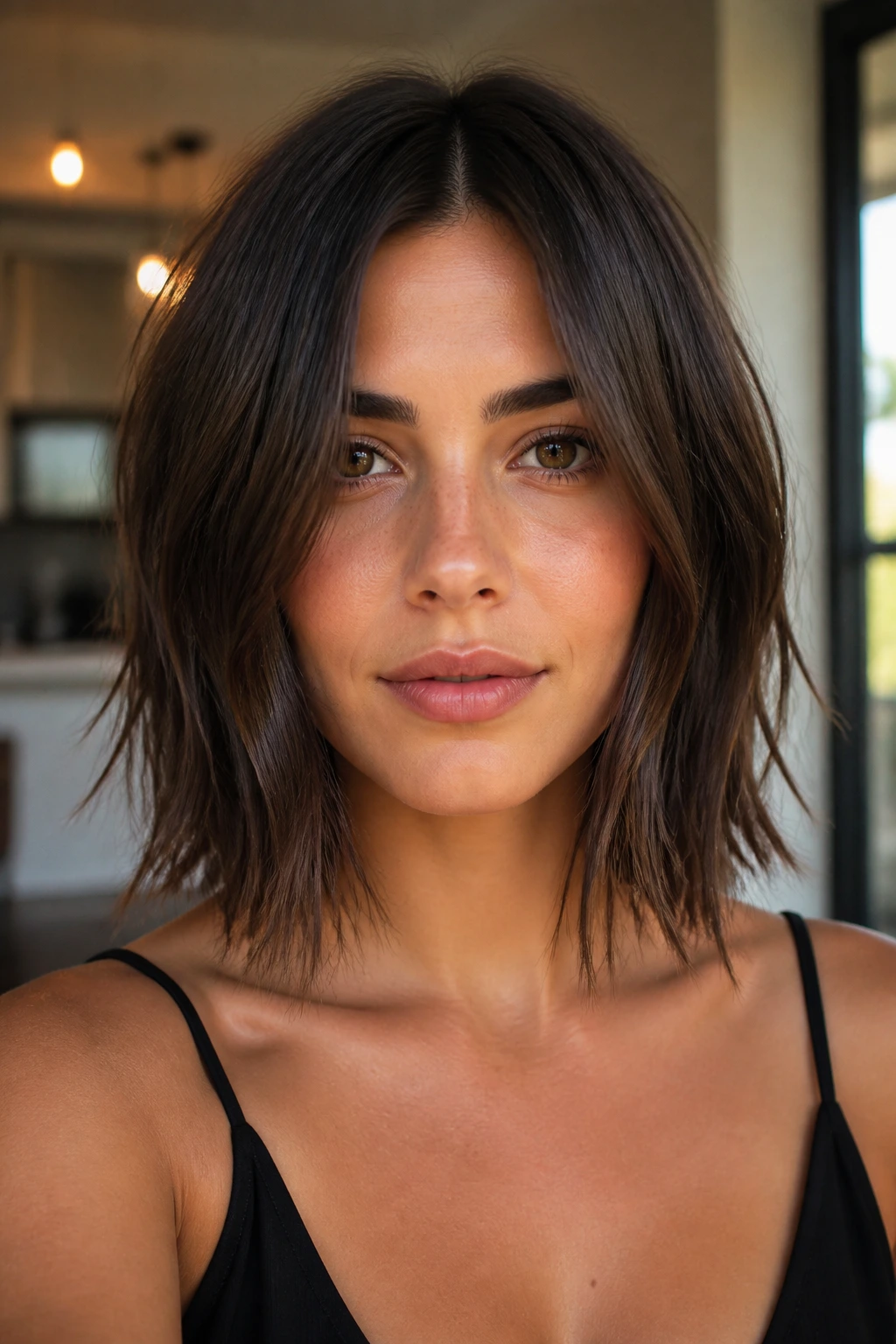
If you like texture you can actually see, this is the cut. The ends are separated into visible pieces, and the styling usually includes a little paste or cream to keep those pieces distinct. Straight hair can hold that piecey look well because it doesn’t blur into curls or waves.
How to Use It
Work product through the last third of the hair, then twist a few sections between your fingers while it dries.
- Best for medium-density straight hair.
- Needs regular trims to keep the pieces fresh.
- Looks strong with a center part or a deep side part.
- Avoid heavy oils; they collapse the separation.
21. Sleek Lob with Hidden Weight Line
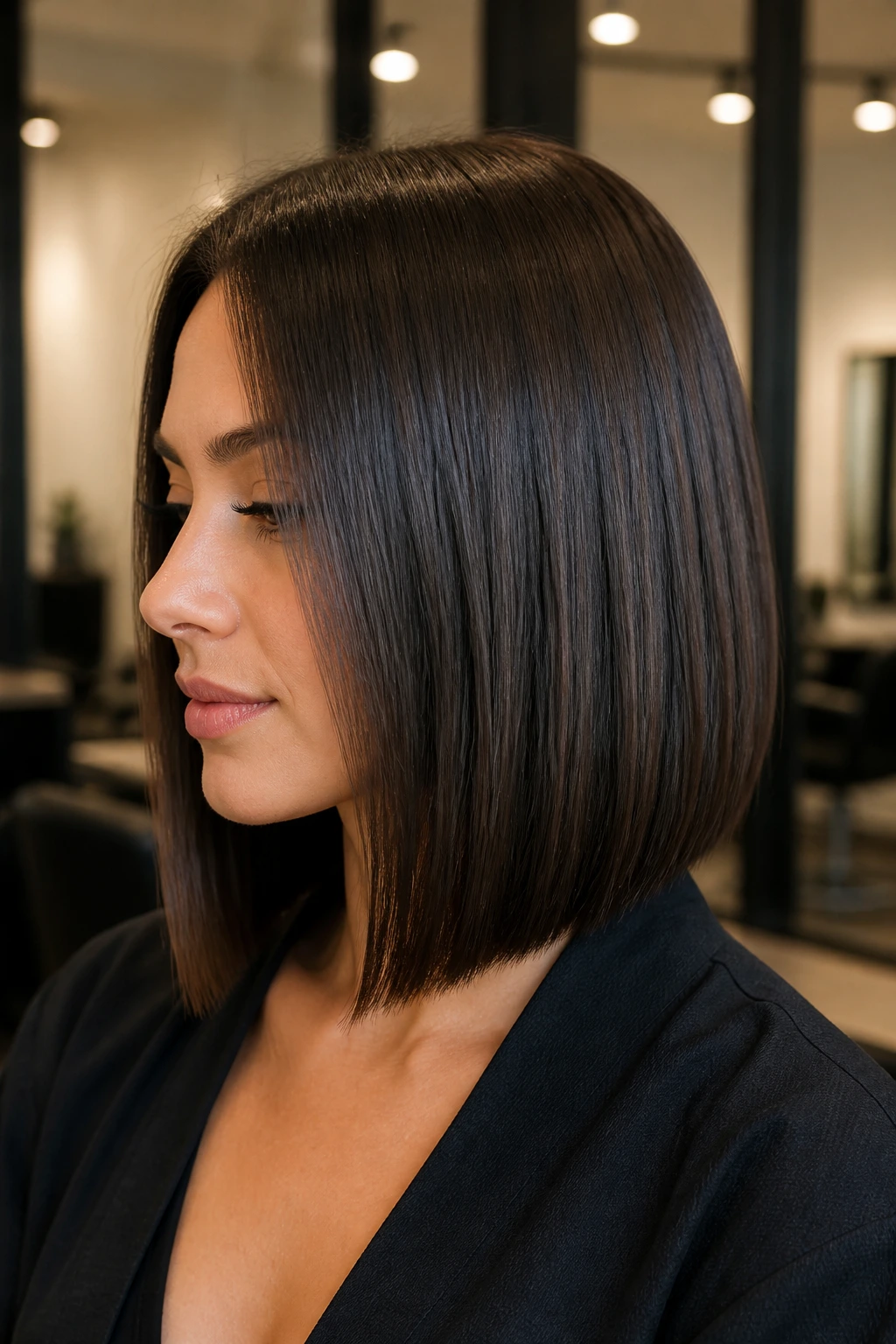
The clean surface of this cut is the point. Underneath, though, a stylist removes weight where the hair tends to bulge, so the straight outline lies flatter and cleaner. That hidden work matters if your hair looks thick on top but puffs at the ends.
It’s a smart choice for anyone who wants polished rather than messy. The texture stays subtle; the shape does the talking.
22. Wispy Lob for Thick Straight Hair

Thick straight hair can take a lot of abuse in the wrong haircut. This version keeps the perimeter softer and the ends wispy, so the weight doesn’t land in one solid block. It’s especially useful if your hair has a lot of body but not much natural bend.
A stylist who over-thins this kind of hair can leave it frayed. Ask for softness, not shredding.
23. Choppy Lob with Bottleneck Bangs

Bottleneck bangs and a choppy lob are a good pair because both shapes taper. The bangs start a touch fuller in the center, then soften toward the temples, which suits straight hair that needs movement near the face more than everywhere else.
The haircut works when the fringe is cut with the lob in mind. If the bangs are too short, they fight the rest of the shape. Too long, and they disappear into the sides.
24. Collarbone Flip Lob

This version makes the ends flip out just a little, which sounds minor until you see it in motion. Straight hair that naturally kicks outward at the collarbone can look sharp with a cut that encourages the flip rather than suppresses it.
A round brush or a quick pass with a flat iron helps set the bend. Keep it soft. A cartoonish flip is not the goal.
25. Disconnected Lob with Sharp Internal Layers
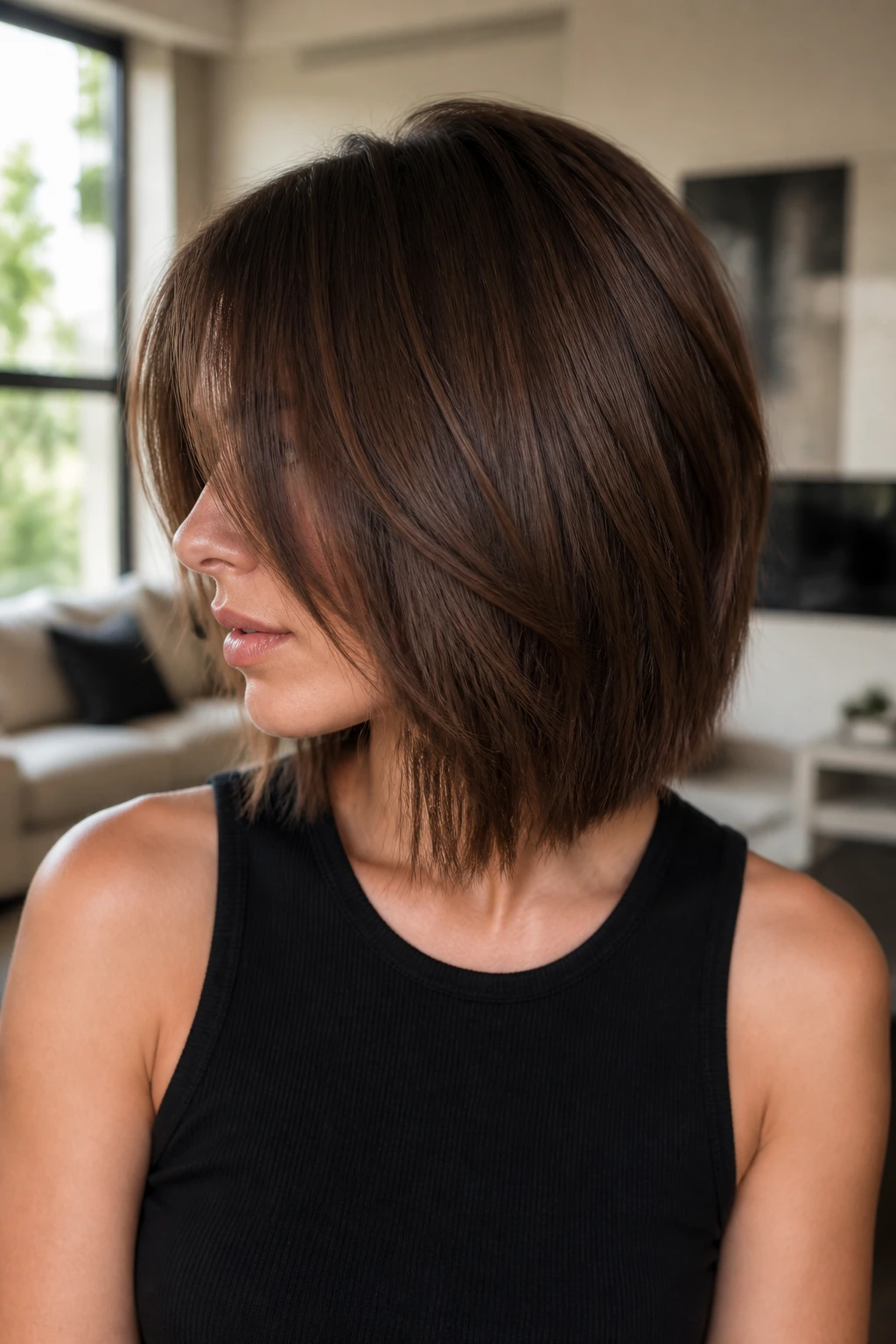
A disconnected lob sounds dramatic, but it does not have to be loud. The internal layers sit far enough away from the perimeter that the outline stays clean while the inside gains movement. Straight hair benefits from that separation because it prevents the bottom from feeling heavy.
This one is best for people who like shape with a little edge. It reads modern without needing a lot of styling products.
26. Smooth Blowout Lob
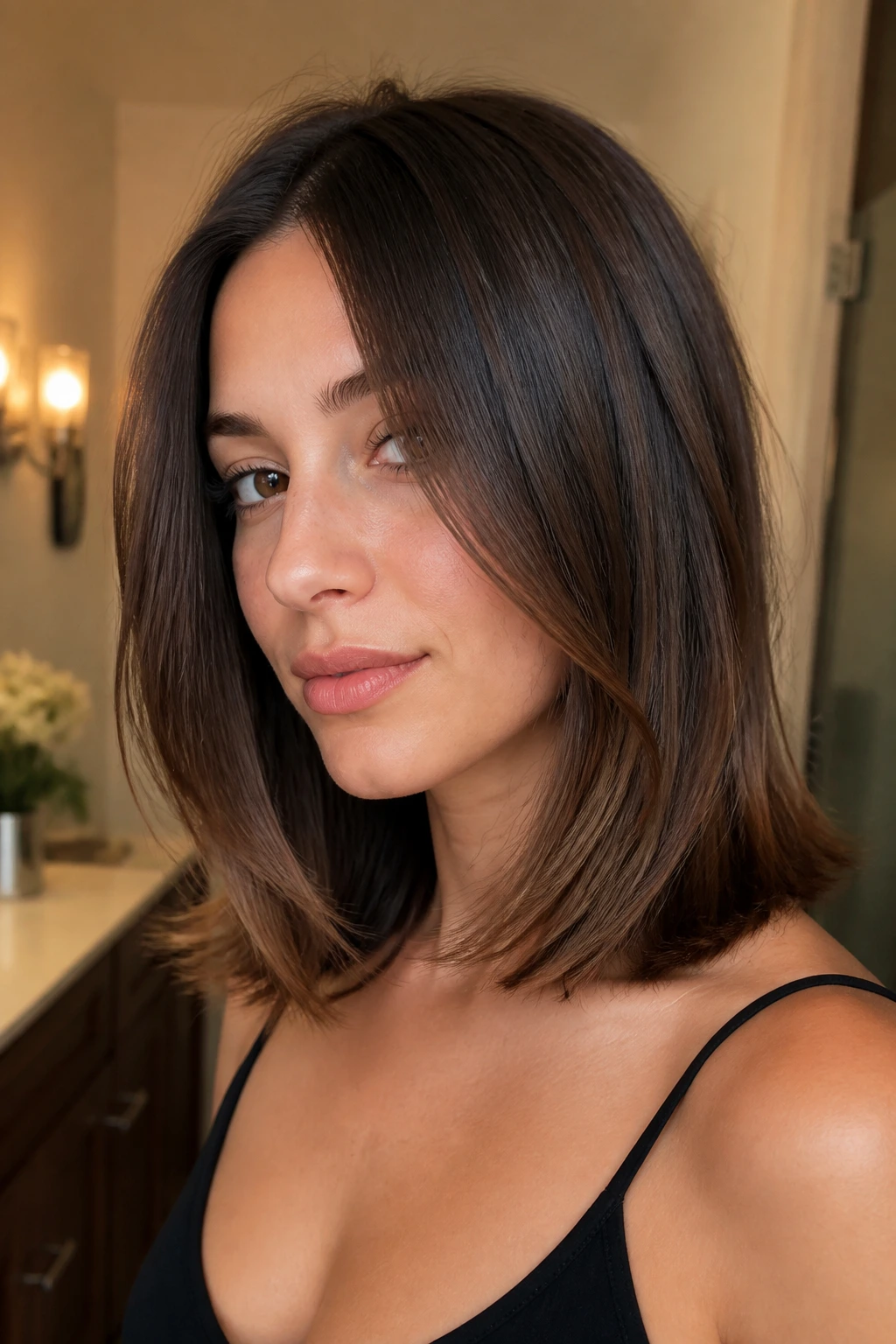
This is the salon-finish version of a choppy lob. The cut has texture at the ends, but the styling smooths everything into a controlled blowout with body through the mids and a soft bend at the bottom. Straight hair often looks best in this middle ground, not pin-straight and not too undone.
A round brush and a nozzle attachment matter here. If the brush is too big, you lose movement. Too small, and the hair turns curly instead of smooth.
27. Slight A-Line Lob

A tiny A-line can make straight hair look more intentional almost instantly. The back sits a touch shorter, the front stays longer, and the shape gives the jaw and neck a cleaner line. A little choppiness at the ends keeps the angle from feeling too severe.
It’s one of the best options if you want a lob that still feels structured from every angle. The side view is where it earns its keep.
28. Tuckable Lob with Skimming Sides

Some haircuts are built around how people actually wear their hair, and this is one of them. The sides are cut to skim the jaw and neck, which makes tucking one side behind the ear look easy instead of clunky.
Straight hair loves that kind of simplicity. The texture stays concentrated at the perimeter, where it matters most.
29. Deep Side-Part Lob with Drama at the Front

A deep side part changes the whole mood. The front side gets lift and sweep, the other side stays closer to the face, and the choppy ends keep the shape from falling flat. On straight hair, that contrast is enough to make the cut feel styled even when it isn’t.
If your crown is flat, this is a strong option. The part does half the work.
30. Feathered Lob with Soft Edge Work
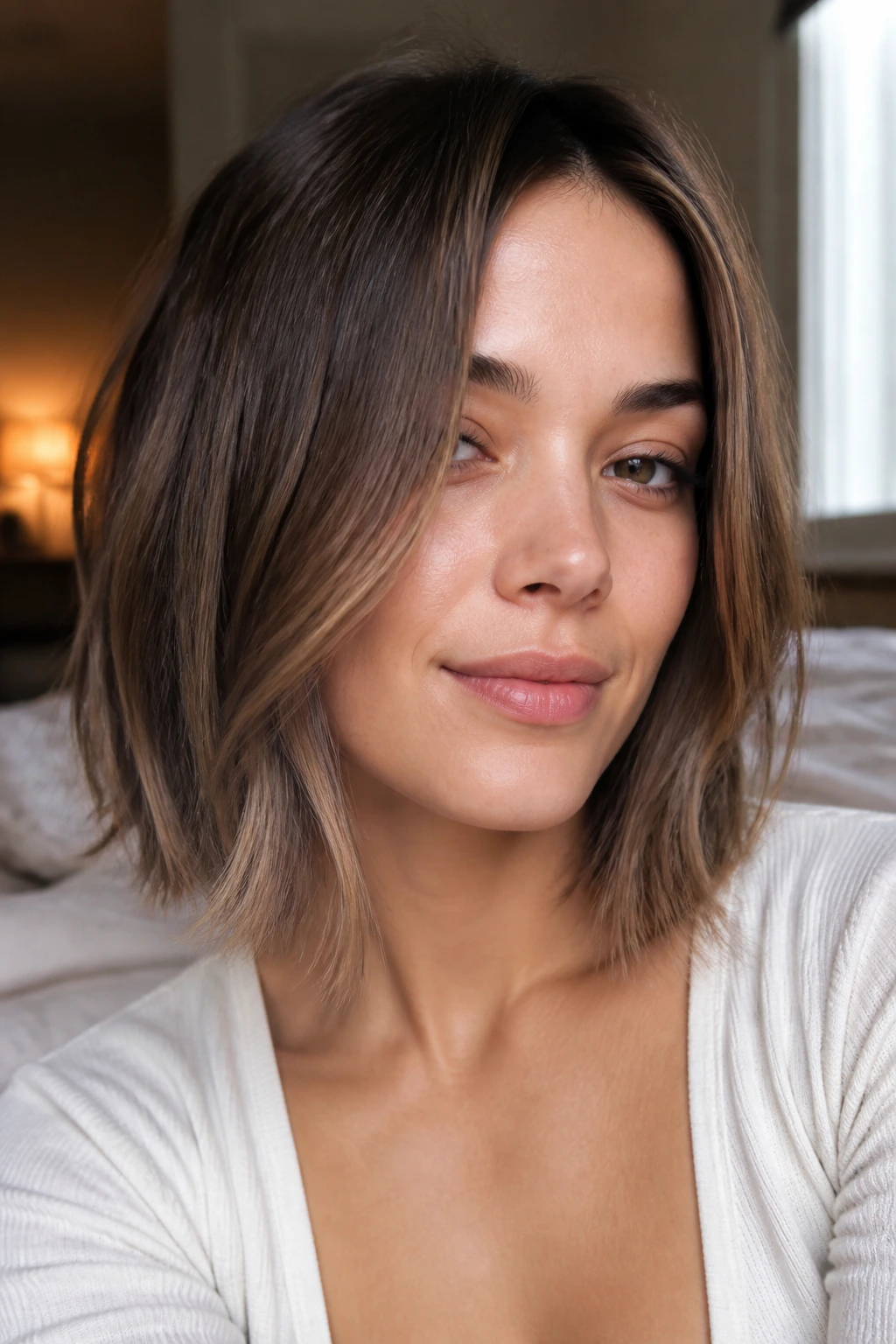
Feathering at the edges gives straight hair a lighter finish than blunt cutting does. The line remains visible, but the ends don’t sit in one hard row, which keeps the lob from feeling heavy on the shoulders.
This cut is good for people who want movement without obvious layers. It’s subtle, and that’s the point.
31. Razor-Refined Lob for Dense Hair
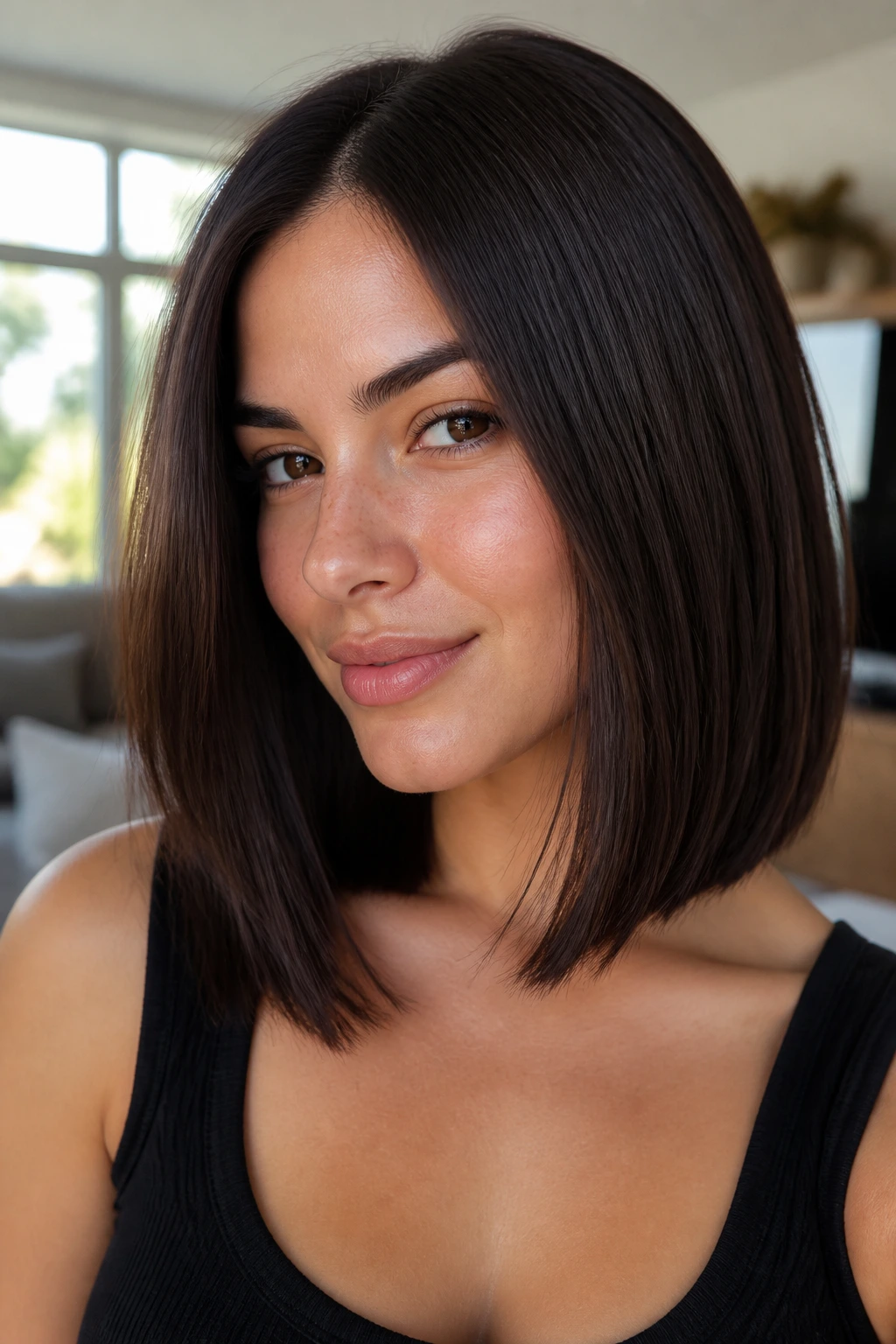
Dense straight hair often needs refinement more than length removal. A razor-refined lob takes some of the mass out of the perimeter and the interior, but it keeps the overall shape controlled. The finish should look smooth, not shredded.
What to Watch For
A heavy hand with the razor can leave ends that fray too fast. That’s the risk.
- Works best on healthy hair.
- Needs a stylist who knows how to keep the outline tidy.
- Pair with smoothing cream or light serum.
- Trim every 6 to 8 weeks if the ends start feeling rough.
32. Low-Maintenance Grow-Out Lob

This is the lob you choose when you want the cut to stay good for months, not just the week after the appointment. The front length is forgiving, the texture lives mostly at the ends, and the overall shape softens rather than collapses as it grows.
It’s one of the smartest choices for straight hair because the grow-out phase looks intentional. That’s rare.
33. Editorial Lob with End Bend

This version leans a little more fashion-y. The outline is sleek, the ends bend just enough to show the choppy finish, and the whole haircut looks sharper than a standard everyday lob. Straight hair gives it a crisp surface that makes the bent ends stand out.
Use a flat iron or a blow-dryer brush to shape the bend. Keep the bend controlled, not curly.
34. Volume-First Lob for Flat Roots
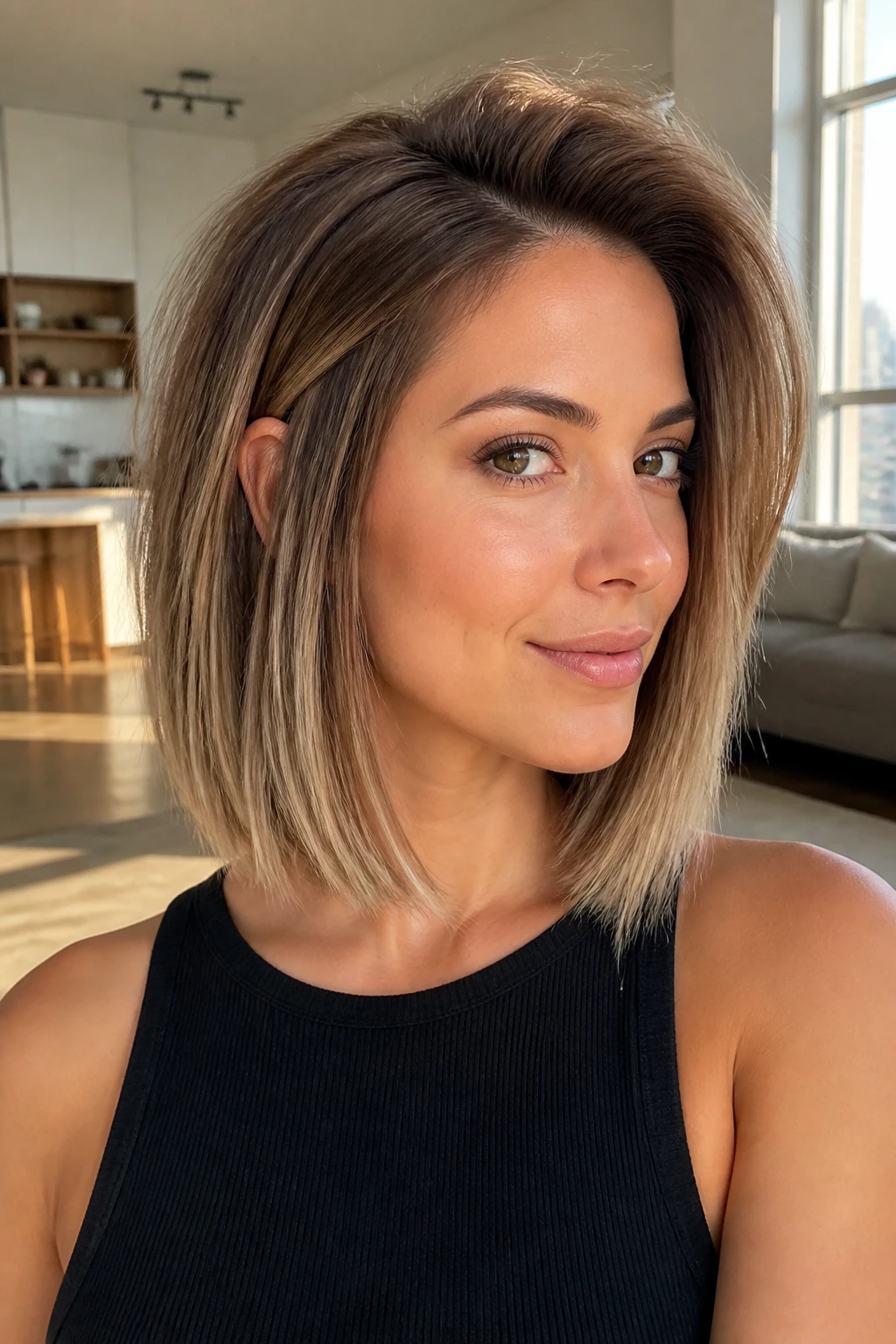
If the problem is not the ends but the roots, this cut keeps the lower half light and builds the illusion of fullness up top. Slight internal layering and a well-placed part help the crown sit with lift instead of plastered down.
That makes it a strong fix for straight hair that always looks thinner when it’s longer. The length stays useful, but the top stops acting tired.
35. Polished Everyday Lob with Rough Ends

This is the workhorse version. The line is neat enough for clean styling, but the ends have enough texture to keep the hair from feeling stiff or overdone. It can go from air-dried to brushed smooth without fighting you.
For a lot of people, this is the sweet spot. Not too soft. Not too sharp. Just enough grit in the ends that the haircut keeps its shape on day two.
Why Straight Hair Loves a Choppy Lob Line

Straight hair shows every edge, and that is exactly why this cut can look so good. A choppy lob keeps the outline visible but softens the places where straight hair tends to go rigid: the ends, the front line, the section around the jaw. When those spots are handled well, the haircut looks finished even on a lazy air-dry.
The other reason it works is weight. Straight strands carry weight down the shaft, so a little interior removal changes how the hair sits on the head. Too much, and the cut turns wispy in the wrong places. Too little, and it becomes a block. The best versions land in the middle, where the movement feels deliberate and the perimeter still reads clean.
A good choppy lob also buys you options. Middle part today, side part tomorrow. Bend the ends with a flat iron, or leave them rough and dry. Tuck one side behind the ear. Clip the front pieces back and it still looks like a haircut with a plan. That flexibility is the whole reason it earns its place on straight hair.
The Tools That Make the Cut Behave
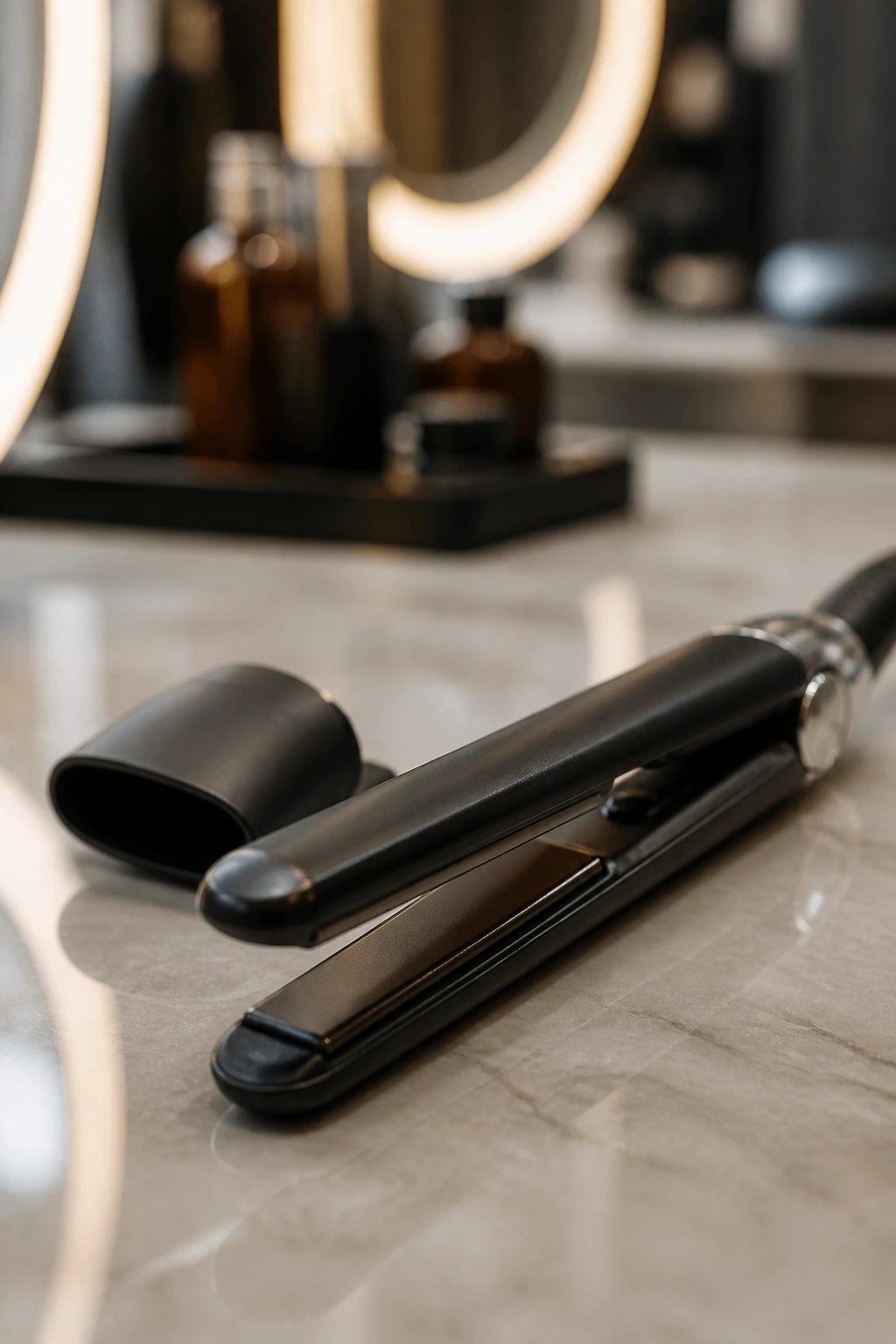
- Blow-dryer with a nozzle attachment: The nozzle keeps air focused so straight hair doesn’t scatter before you shape it.
- Medium round brush, 1.25 to 1.75 inches: Small enough to bend the ends, large enough to avoid tight curls.
- Flat iron with rounded edges: Helpful for soft bends and tucked-under ends without harsh creases.
- Heat protectant spray: Straight hair shows heat damage fast, especially around the ends.
- Lightweight mousse or root spray: Useful if the crown goes limp halfway through the day.
- Texture spray or dry shampoo: Adds grit to piecey lob styles without making them sticky.
- Wide-tooth comb and sectioning clips: Keeps wet hair under control while you shape the cut.
- Finishing serum: A pea-sized amount smooths frizz without flattening the lob.
How to Ask for the Right Version at the Salon
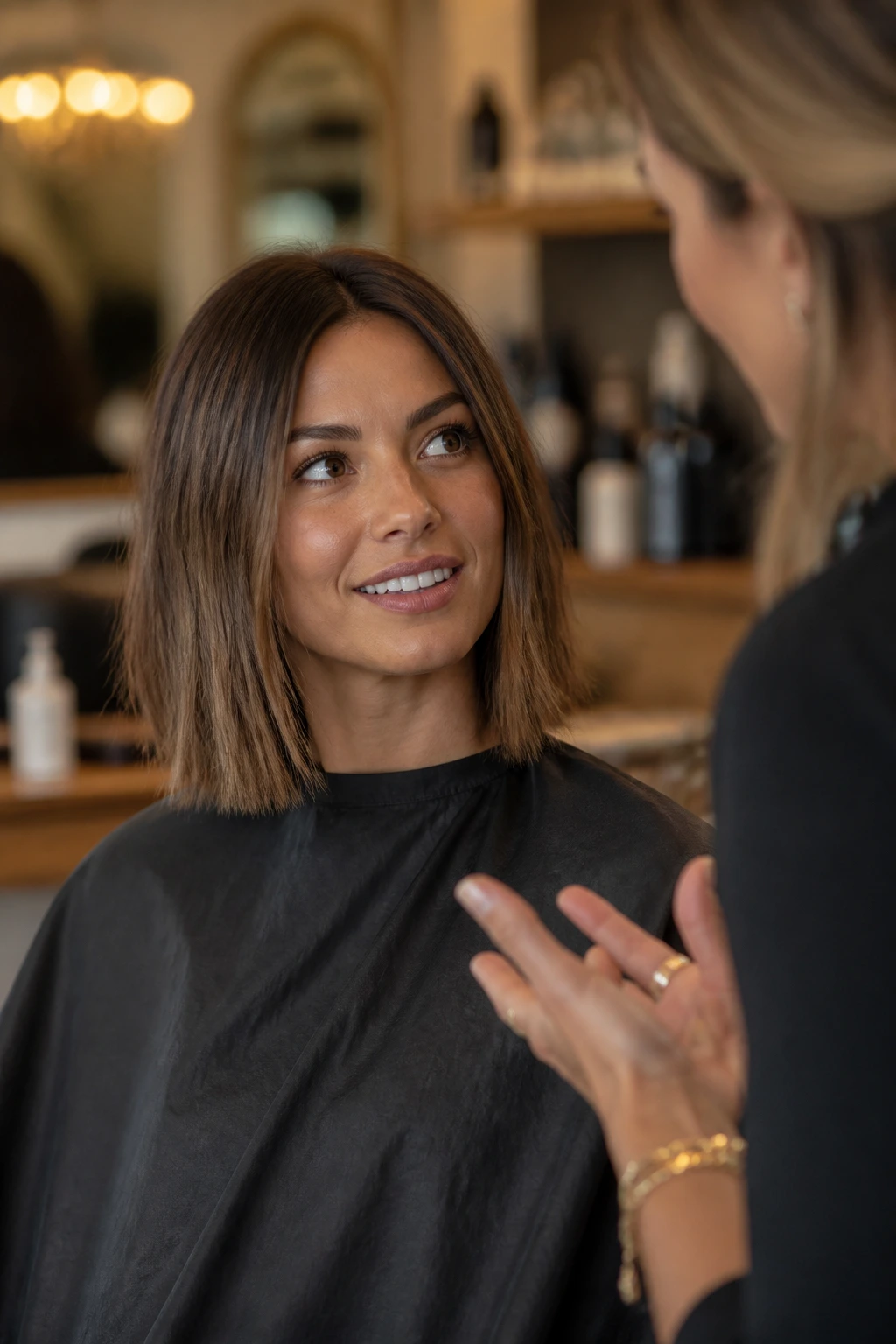
Bring photos, but bring the right kind. A photo of a curly lob tells your stylist almost nothing about how your straight hair will fall. You want straight-hair references, or at least cuts with a clear perimeter and visible texture at the ends.
Say where you want the longest point to hit—jaw, chin, or collarbone. Then say how much movement you want. If you like a cleaner edge, ask for point cutting at the ends only. If your hair is thick, ask where the bulk should be removed and where it should stay full.
One more thing. If your hair dries pin-straight, ask for a quick dry check before you leave. Wet hair can lie to everyone in the chair. That’s especially true with lobs, where half an inch can change the whole mood.
How to Wear These Cuts Day to Day

Air-Dried Texture: Work a small amount of cream or foam through damp hair and let the ends fall where they want. Scrunch once, then stop touching it. Straight hair gets frizzy fastest when it’s fussed over.
Blown-Straight Finish: Use a brush to tuck the ends under slightly, then bend a few front sections away from the face. The goal is polish with movement, not pageant-hair shine.
Flat-Iron Bend: Twist the iron half a turn at the mid-lengths and release before the last inch. Leaving the ends a touch rough keeps the choppy lob from looking overstyled.
Part Changes: A center part sharpens the line. A deep side part softens it. An off-center part is the easy middle ground when you want to change the mood without changing the cut.
Small Styling Tweaks That Matter More Than You’d Think
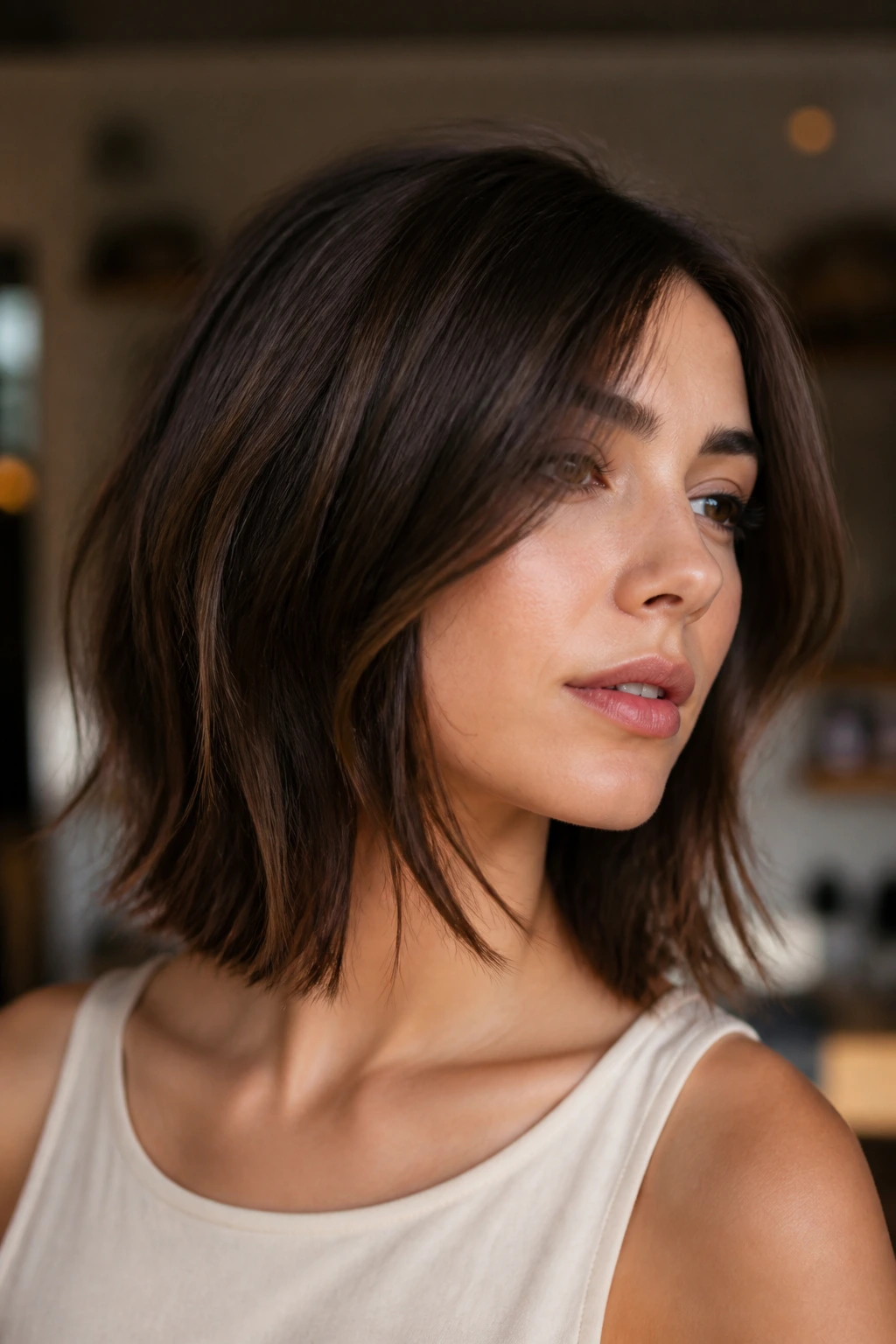
Texture Boost: Mist dry shampoo into clean roots even if your hair isn’t oily yet. It gives straight hair some grip before the ends start falling flat.
Volume Trick: Blow-dry the crown first, with the head tipped slightly forward, then smooth the top layer last. That order keeps the roots from collapsing under their own weight.
Finish Note: Use a serum only from the ears down. If it touches the roots, the lob loses its shape fast.
Make-It-Yours: If you like softer hair, stop at cream and skip spray. If you like sharper separation, add a tiny bit of paste to the ends after everything is dry.
Wash-Day, Trim Schedule, and Grow-Out Notes

Straight hair in a choppy lob usually looks best when it’s cleaned before the roots get greasy enough to clump. For many people, that means washing every 2 to 4 days, then refreshing the mids and ends with dry shampoo or a light mist of water and leave-in. If you over-wash, the ends can get dry and split faster than they should.
Trims matter here more than in a one-length cut. Every 6 to 8 weeks keeps the shape honest, especially if the ends are point-cut or razor-finished. If you’re growing it out, stretch that to 8 to 10 weeks, but don’t wait so long that the texture gets ragged.
At night, a loose clip or a satin pillowcase helps the ends stay smoother. Straight hair shows creases in the morning faster than wavy hair does, and a choppy lob with bent ends can lose its shape if you sleep on it roughly. A quick blast with a brush in the morning usually brings it back.
Variations to Try if You Want a Different Mood

Fine-Hair Feather Edit: Keep the layers tiny and the perimeter clean. This version adds movement without stripping out too much density at the bottom.
Thick-Hair Bulk Breaker: Ask for interior weight removal and a soft, not shredded, finish. It keeps straight hair from puffing into a triangle at the shoulders.
Fringe + Lob Combo: Curtain bangs or a long bottleneck fringe make the front of the haircut feel fuller and more intentional. They also change the mood fast without touching the length.
Grow-Out Friendly Shape: Leave the front longer than you think you need and keep the back only slightly shorter. The line softens gracefully as it grows.
Sleek Office Version: Keep the outline sharper, the texture quieter, and the ends lightly point-cut. It reads polished with minimal styling time.
Common Mistakes That Make the Cut Look Wrong
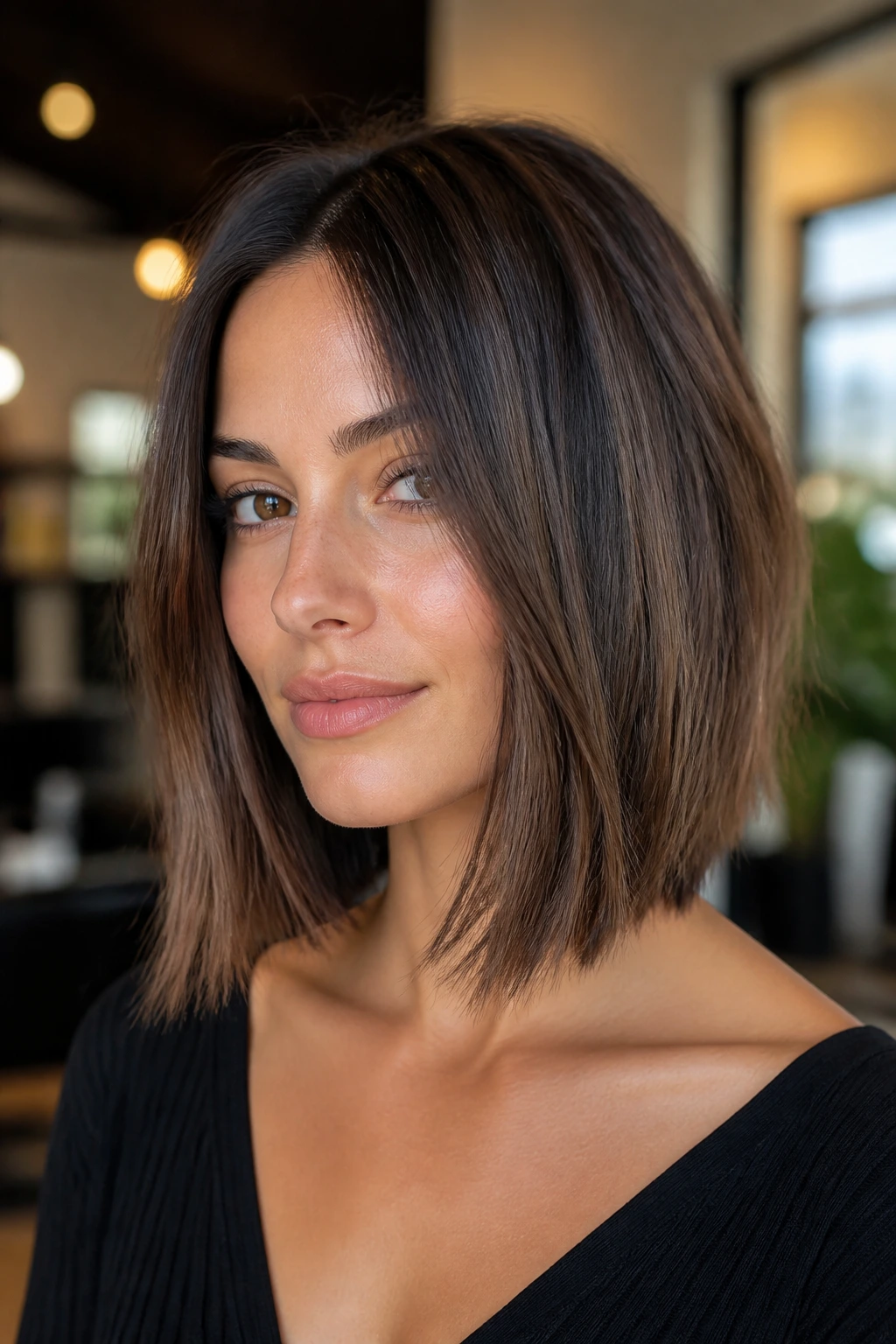
- Too much thinning near the ends: The haircut turns wispy and see-through, especially on fine straight hair. Keep the texture controlled and mostly inside the shape.
- A blunt cut with no texture at all: On straight hair, this can look heavy and boxy by the second day. A little point cutting keeps it alive.
- Cutting too short in the front: If the front misses the jawline by a lot, the lob can lose that collarbone movement that makes it useful. Ask for the front length before anyone picks up scissors.
- Using heavy oil everywhere: Straight hair doesn’t hide over-product. Use a tiny amount on the last few inches only.
- Ignoring your part: A cut can look flat or lopsided depending on where the hair naturally falls. Shape the lob around that, not against it.
FAQ
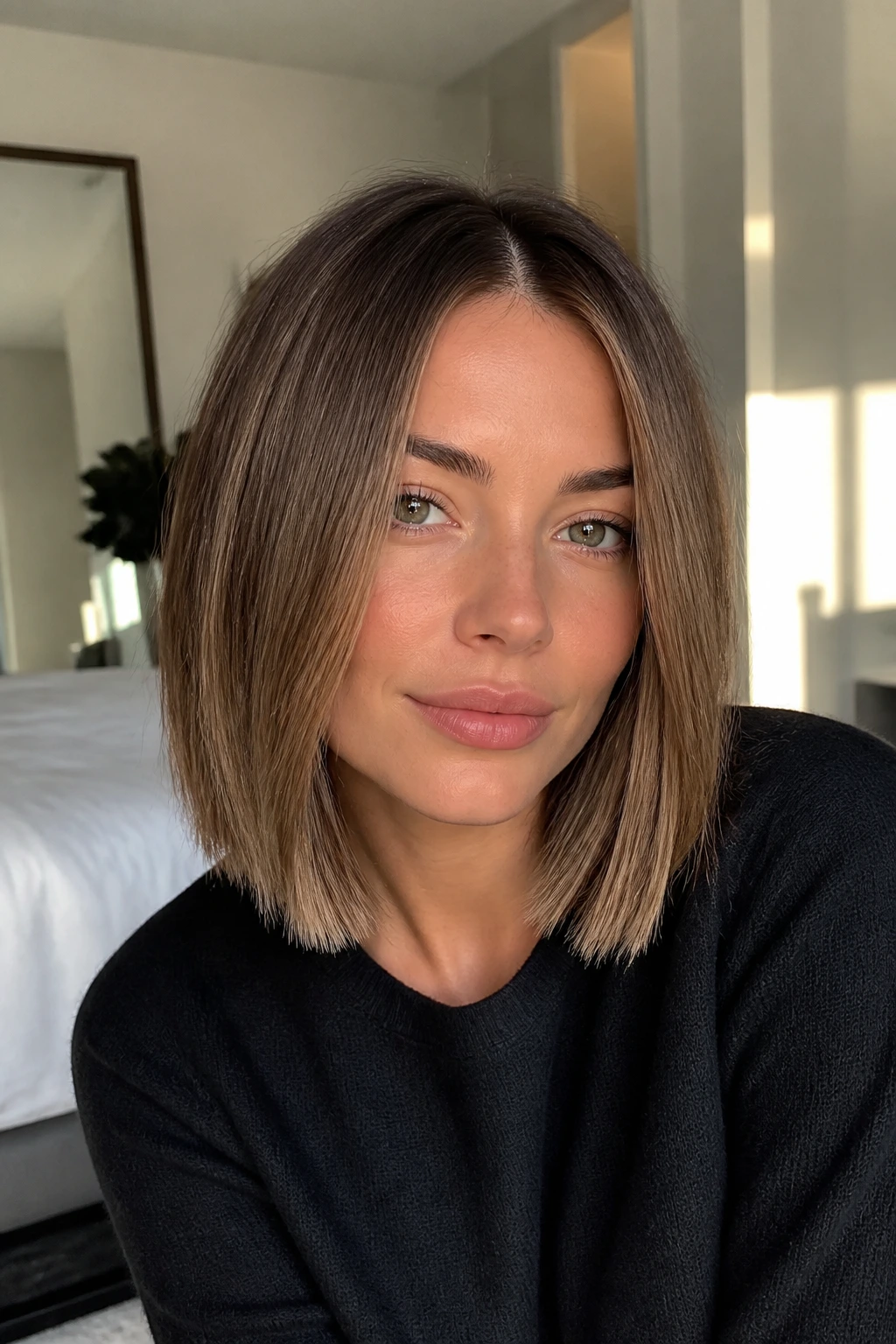
Will a choppy lob work on very fine straight hair?
Yes, if the texture is subtle and the weight stays near the bottom. Fine hair usually needs a denser outline with a little broken edge, not a heavily layered haircut that removes too much from the mids.
Is a choppy lob good for thick straight hair?
It can be one of the best cuts for thick straight hair, as long as the stylist removes bulk inside the shape instead of shredding the ends. The goal is movement, not frizz.
Do I need layers, or just point-cut ends?
That depends on your density and how flat your hair falls. Many straight-hair lobs work well with only point-cut ends, while thicker hair often benefits from interior debulking as well.
How often should I trim it?
Most versions stay neat with trims every 6 to 8 weeks. If you’re growing it out, 8 to 10 weeks can work, but the ends may start feeling rough sooner if you use heat often.
Can I wear bangs with a choppy lob?
Absolutely. Curtain bangs, bottleneck bangs, and long fringe all pair well because they soften the front without fighting the lob length. Short blunt bangs are harder to balance on straight hair unless the rest of the cut is very precise.
What if the ends flip out in a weird way?
That usually means the perimeter is too blunt for your hair’s natural bend, or the iron was angled too aggressively. Ask for a softer edge at the next trim and style with a smaller bend, not a hard curl.
Can I air-dry this cut and still have it look intentional?
Yes, but the cut needs enough shape in the ends to dry well on its own. A bit of cream or foam, plus leaving the hair alone while it dries, usually gives the best result.
What face shapes suit a choppy lob best?
Most face shapes can wear one version or another, but the placement changes. Round faces usually like a longer front, square faces often benefit from softer face-framing, and longer faces tend to do well with a fuller perimeter and maybe a fringe.
The Shape That Keeps Moving

The reason these cuts work is simple: straight hair doesn’t need more drama, it needs better shape. A choppy lob gives it that shape without asking you to wrestle with curls, endless heat styling, or a cut that falls apart the second it grows an inch.
Bring a few photos, know where you want the longest point to land, and pay attention to how much weight stays in the bottom third of the cut. That’s where the difference lives. Get that part right, and the rest tends to behave.
