



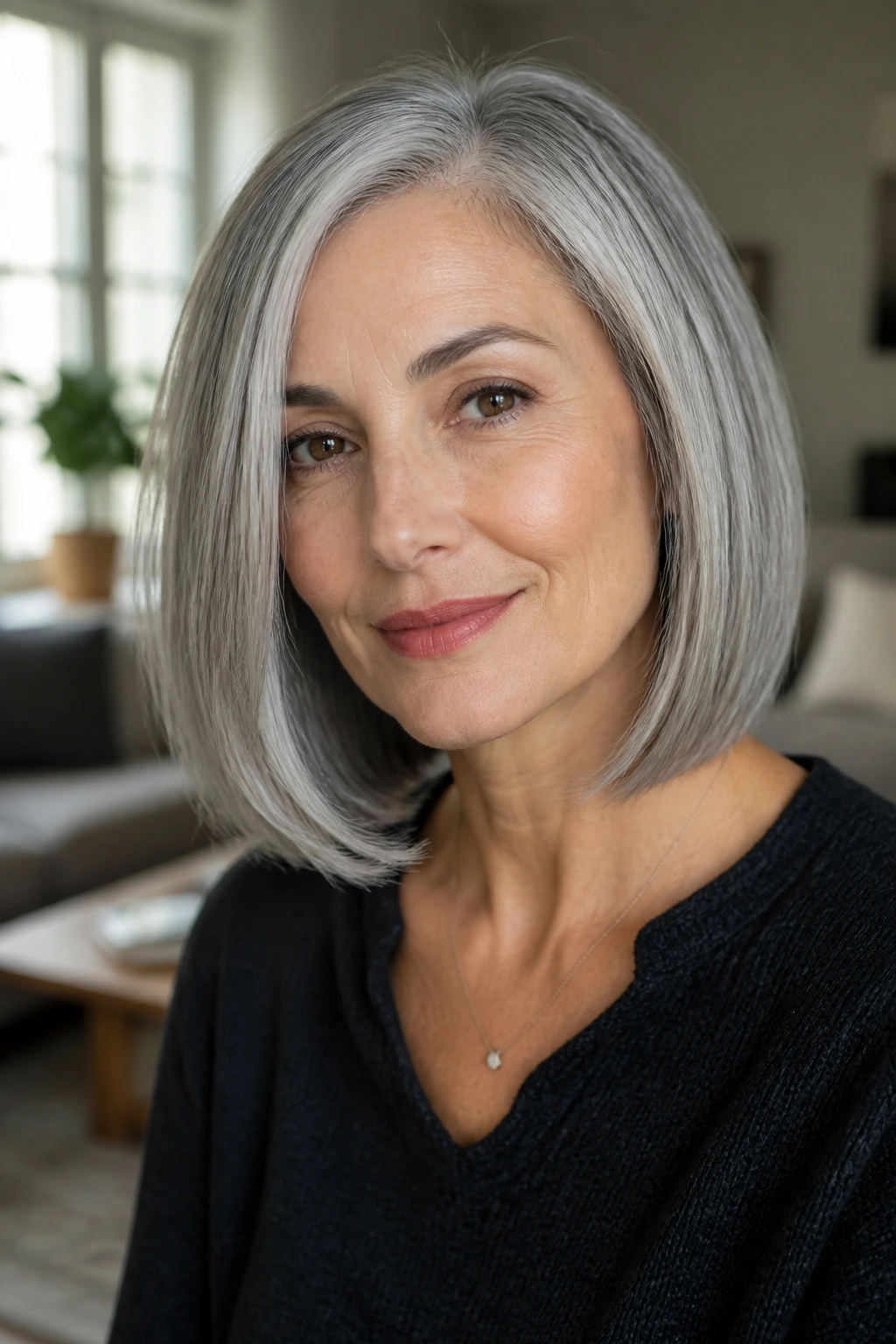
A gray lob haircut has a way of making silver hair look deliberate instead of apologetic. The length sits in that useful strip between chin and collarbone, which means the shape has enough movement to feel modern but enough structure to keep gray strands from reading thin, frayed, or hard to style. On a good day, it swings. On a less cooperative day, it still looks clean.
That’s the part people miss. Gray hair does not need to be hidden, and it does not need to be fussed into something younger-looking. It needs a cut that gives it a line, a little lift, and a finish that lets the color do the talking. A lob does that better than most lengths because it gives silver hair room to shine without dragging it down into the heavy, all-one-length shape that can make the ends look sparse.
And there’s a practical bonus hiding in plain sight. A lob grows out gracefully. You can tuck it, wave it, straighten it, clip one side back, or let it air-dry into something softer, and the cut still holds together. That flexibility is why gray lob haircuts keep showing up on women who want polish without spending half the morning negotiating with a round brush.
Why These Gray Lob Haircuts Work So Well
-
The length keeps silver hair from looking wispy at the ends. A lob gives gray strands enough perimeter to look full, especially when the hair is fine or naturally softer at the tips.
-
The shape makes the color look intentional. Silver, pewter, graphite, and salt-and-pepper tones read cleaner when they sit inside a cut with a definite edge.
-
It works with straight, wavy, and curly texture. A lob can be blunt, layered, angled, or shaggy, which means you can match the haircut to the hair you actually have.
-
It grows out without turning awkward fast. That matters. A good lob still looks like a cut at six or eight weeks, not like something you’ve been avoiding.
-
It gives you room to style or not style. A quick bend at the ends is enough. If you want a sleeker finish, the length responds well to a flat iron and a little serum.
-
It flatters gray transitions. If you’re blending dyed lengths into natural silver, the lob gives that transition a softer landing zone instead of an obvious line.
1. Blunt Center-Part Silver Lob
A blunt center-part lob is the haircut I reach for when someone wants gray hair to look crisp without looking stiff. The line sits around the collarbone or just above it, and the ends stay clean enough to make silver strands catch the light in a single, tidy band. It’s especially good on straight or slightly wavy hair that has decent density at the bottom.
What makes this version work is the honesty of it. No fluffy layering, no over-texturing, no little wisps trying to prove a point. The blunt edge gives gray hair a sense of weight, which is useful when the hair has lost some natural thickness with age. If your hair is fine, the line can make it look fuller. If your hair is thick, it looks sharp and expensive in the old-fashioned sense of the word — polished, not precious.
Keep the part dead center if your face can take it. That straight line draws attention to the eyes and cheekbones, and it gives the silver finish a very modern, editorial feel. I like this cut most with a smooth blowout and a slight bend tucked under at the ends. Too much curl can blur the line, and the line is the whole point here.
2. Soft Layered Smoky Lob
The soft layered smoky lob is for anyone who likes movement but hates the choppy, overdone look some layers create. The trick is invisible layering — enough to remove weight through the ends, not so much that the cut starts flaring out like a triangle. On gray hair, that softness keeps the color from feeling flat.
Why the Layers Matter
Gray strands can be coarser or more resistant in odd places, then strangely soft in others. That’s why a lob with gentle layers tends to behave better than a fully one-length cut on medium to thick hair. The layers let the hair fall instead of puffing up at the bottom, and they help the silver tone look smoky rather than blocky.
This version shines when you want a little bend through the mid-lengths. A round brush, a large curling iron, or even a quick twist with a diffuser can give it enough shape to move. If you wear glasses, this cut is a strong choice; the softness around the face keeps the frame of the glasses from competing with the haircut.
What to Ask For
- A lob that hits between the collarbone and top of the shoulder
- Light internal layers, not short choppy ones
- Ends that stay soft instead of razor-thin
- Face-framing pieces that start below the cheekbone
That last part matters. If the front pieces start too high, the whole thing can feel dated in a hurry. Keep the movement low and easy.
3. Angled Gray Lob with a Longer Front
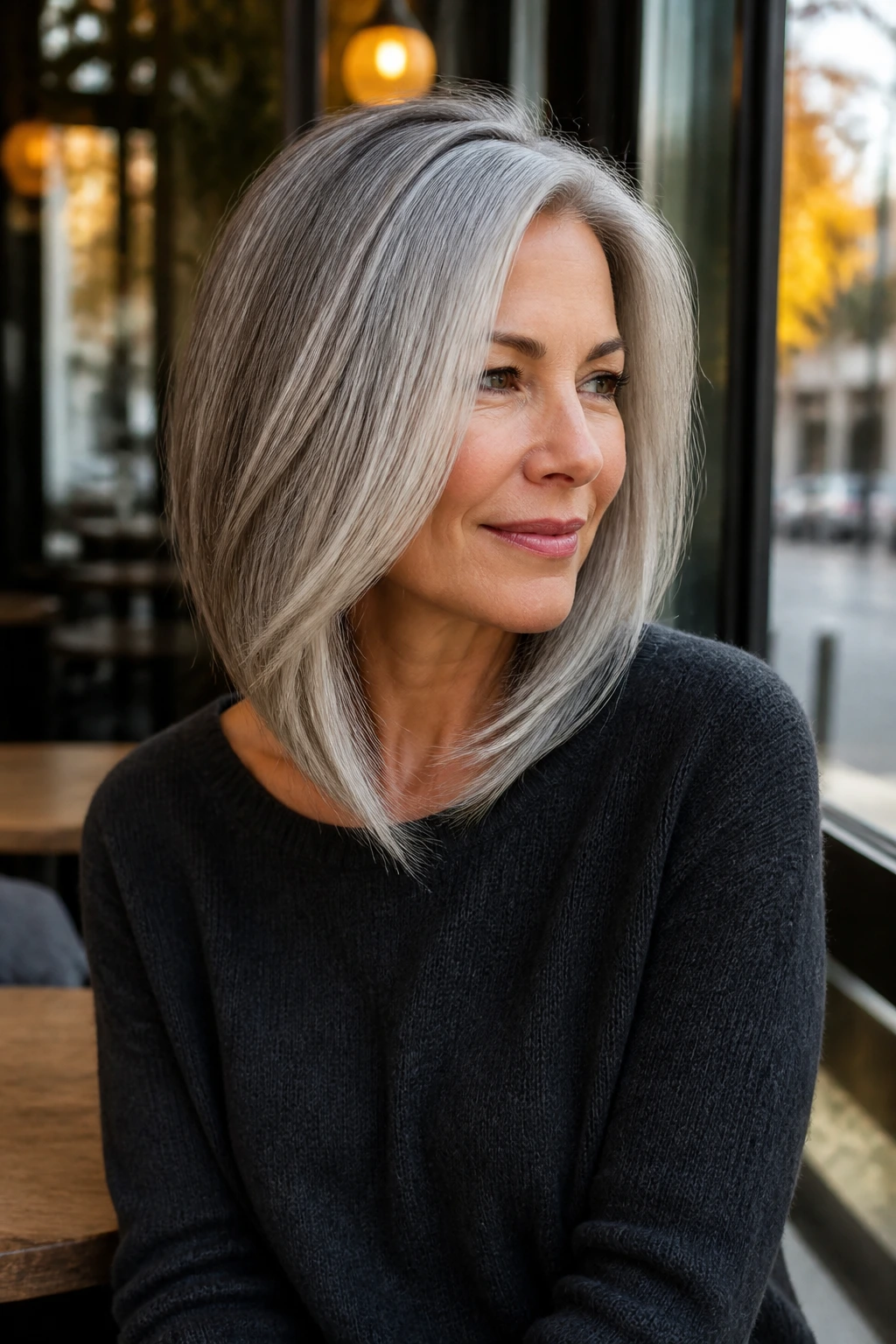
Do you want a lob that subtly changes your face shape without looking like it’s trying too hard? This is the one. The angled gray lob keeps the back a touch shorter and lets the front skim longer, usually somewhere between the collarbone and the top of the chest.
That tiny slope does a lot of work. It lengthens a round face, softens a square jaw, and gives thick silver hair a cleaner fall through the front. I like this shape especially when the gray has multiple tones — white at the temples, pewter through the mids, darker silver underneath — because the angle lets all those tones show in motion.
Wear it smooth if you want the geometry to show. Wear it with loose bends if you want the cut to feel less severe. Either way, the front pieces should move away from the face, not curl inward and crowd it. When the front is cut correctly, the shape feels confident. When it’s overdone, it can look like a hair helmet from the wrong decade.
4. Curtain Bang Lob in Pewter Gray
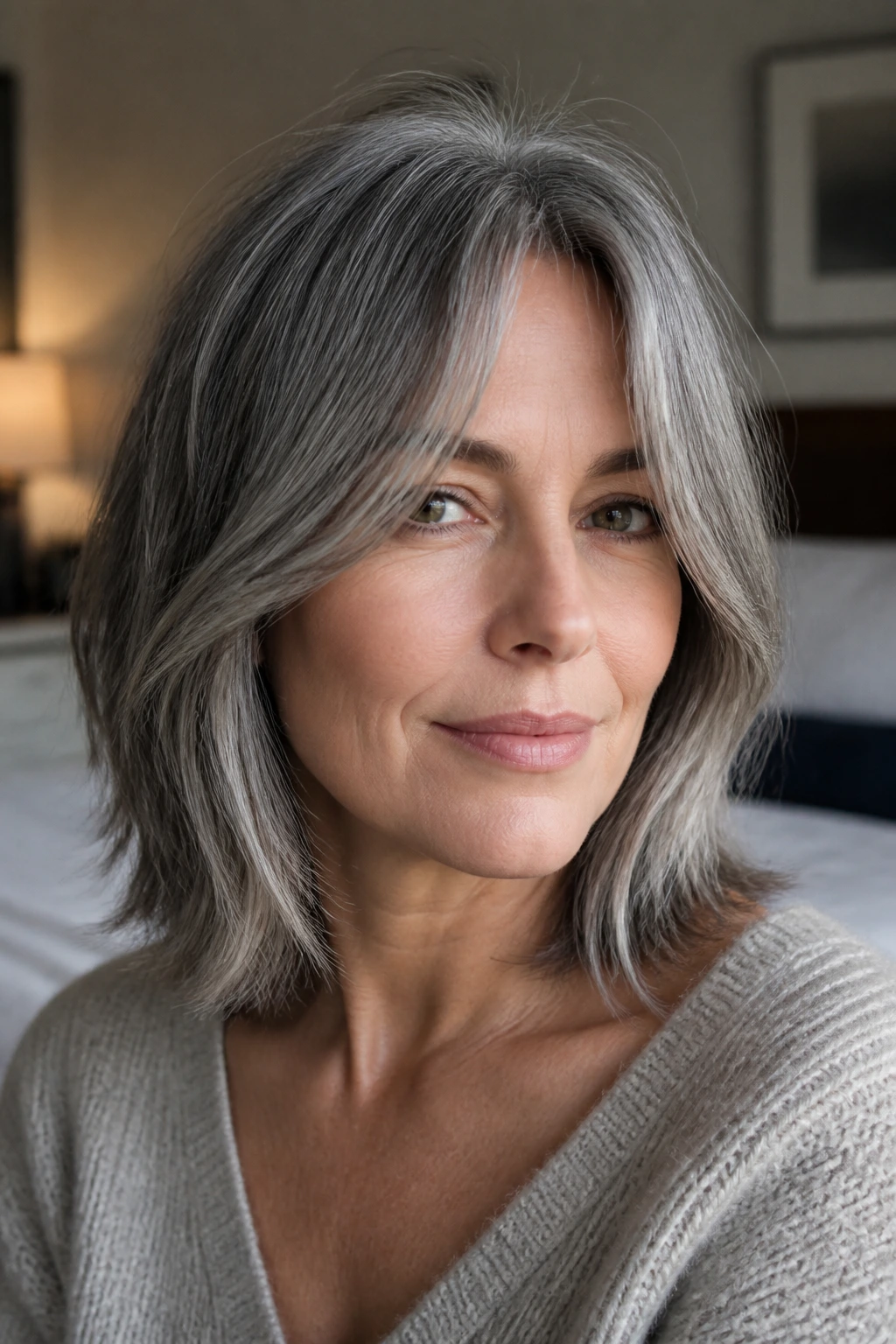
Curtain bangs and a gray lob are one of those combinations that make sense the second you see them. The bangs split softly at the center, brush the cheekbones, and drop into the lob without a hard line. On pewter gray or cool silver, the whole look reads easy, not fussy.
I like this cut on foreheads that feel a little too open with a center part, and on faces that need some movement around the eyes. Curtain bangs can also take the edge off a blunt lob, which matters if you love structure but still want softness around the face. The trick is to keep the bangs long enough to tuck behind the ears on off days. Short curtain bangs are cute for a week. Longer ones are useful.
A few things make this version worth the effort:
- Blow-dry the bangs first, with a small round brush, so they don’t split in strange places.
- Keep the lob itself mostly simple; too many layers compete with the fringe.
- Use a light spray or cream, not a heavy serum, near the bang area.
- Trim the fringe before it starts falling into the cheeks and eyes.
This is the cut that looks casual but is quietly engineered. That’s the sweet spot.
5. Wavy Air-Dried Salt-and-Pepper Lob
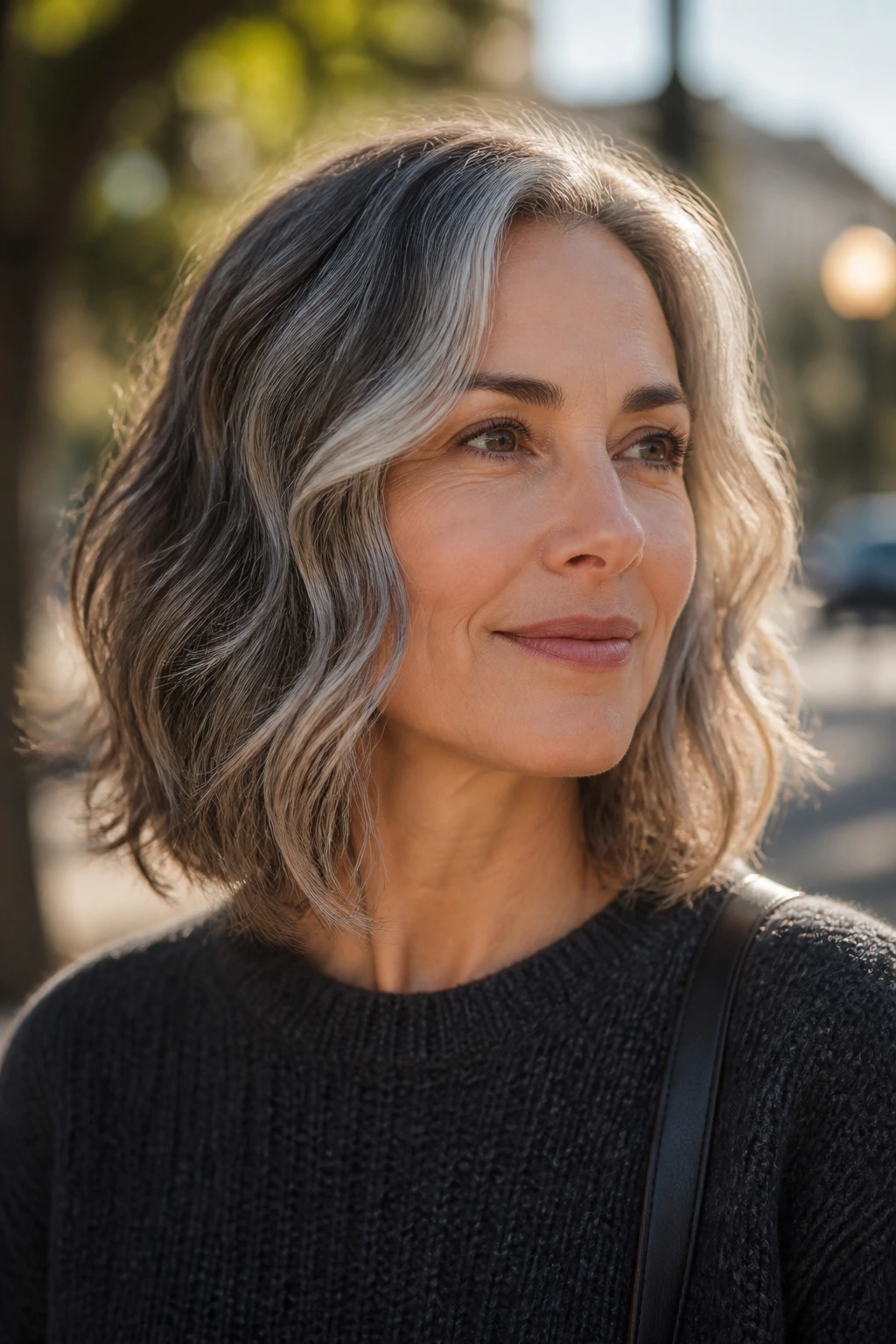
Some gray lob haircuts look best when they are not over-styled at all. The wavy air-dried salt-and-pepper lob is one of them. It works with natural bend, lets the color show in mixed bands, and avoids the stiff shine that can make salt-and-pepper hair look lacquered in a bad way.
If your hair has a wave pattern anywhere between loose and medium, this cut can be a gift. The length is long enough to let the wave gather, but short enough that it doesn’t collapse into a triangle when it dries. A little leave-in conditioner, a pea-sized amount of mousse, and a scrunch is often enough. That’s it. Not glamorous. Effective.
Best When You Want Low Effort
This lob is especially good for people who do not want to spend twenty minutes making their hair look “done” before it can leave the bathroom. The natural texture does the work. A center part gives it a softer, beachier feel; a side part makes it look fuller at the crown.
The caution is simple: don’t overload it with cream. Gray hair can show product buildup faster than darker hair, and too much product flattens the wave into limp ribbons. Use enough to define the bend, then stop.
6. Feathered Gray Lob with a Side Part
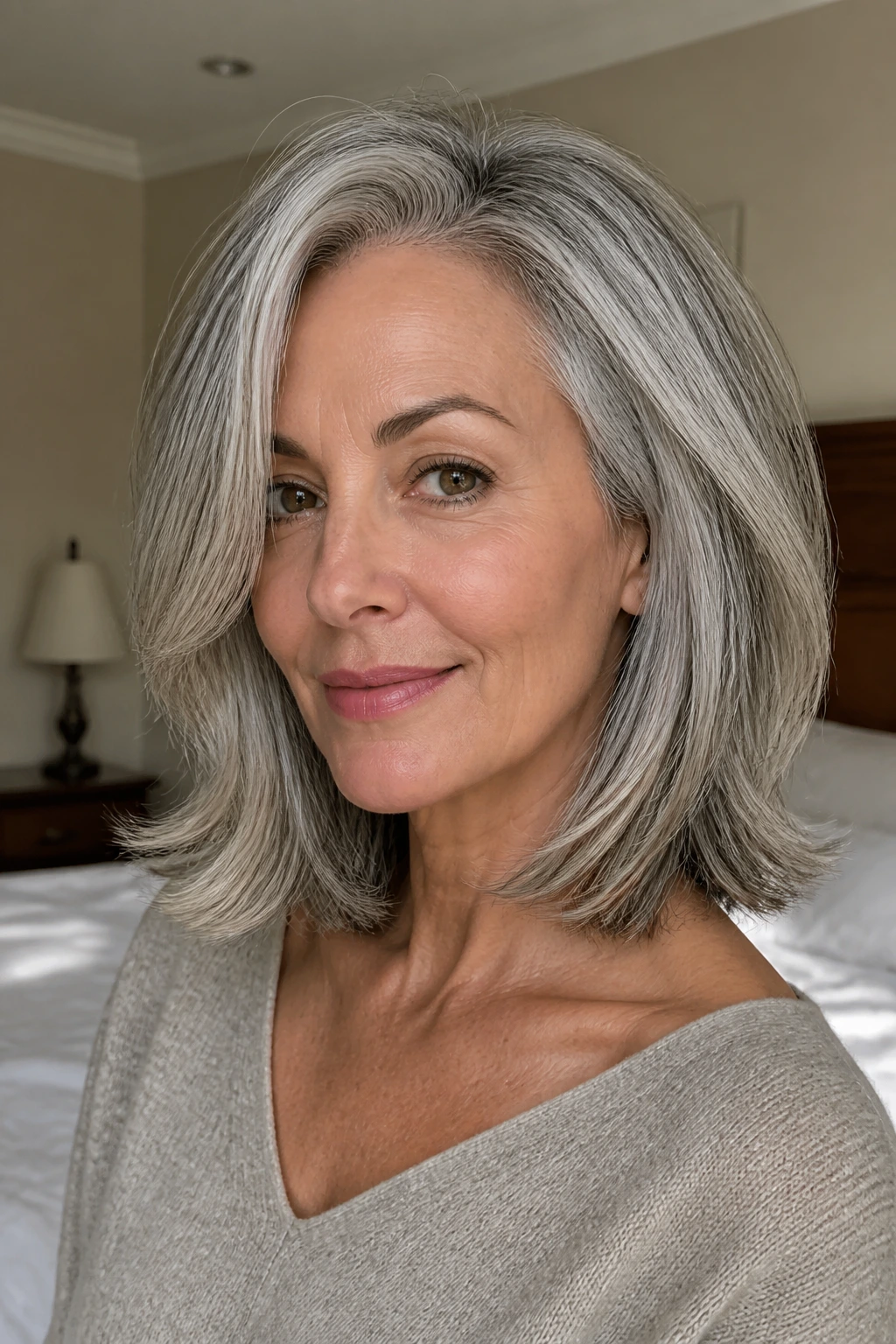
A feathered gray lob with a side part has a gentler mood than the blunt styles, and I think that’s why so many people return to it. The ends are lightly feathered, the top has a bit of lift, and the part shifts the weight enough to soften the face. It’s especially flattering when the hair has medium density and a little natural body.
Why It Flatters So Many Faces
The side part creates an immediate diagonal, and diagonals are kinder than straight lines when hair gets a little coarser or face shape needs softening. Feathered ends keep the haircut from sitting like a block. The result is movement without frizz, which is a harder balance to get than people admit.
This cut also plays nicely with silver streaks and gray blending because the feathering lets the color shift show at the edges. If you wear earrings, this style is a nice one. The hair sits back just enough to reveal the line of the jaw and the earlobes, and that clean space around the face does a lot.
A round brush at the crown and a flat iron just on the ends are usually enough. Do not flip the ends out too much. One tiny bend away from the neck is fine. A full retro flip can tip the whole thing into costume territory.
7. Tucked-Under Glossy Silver Lob
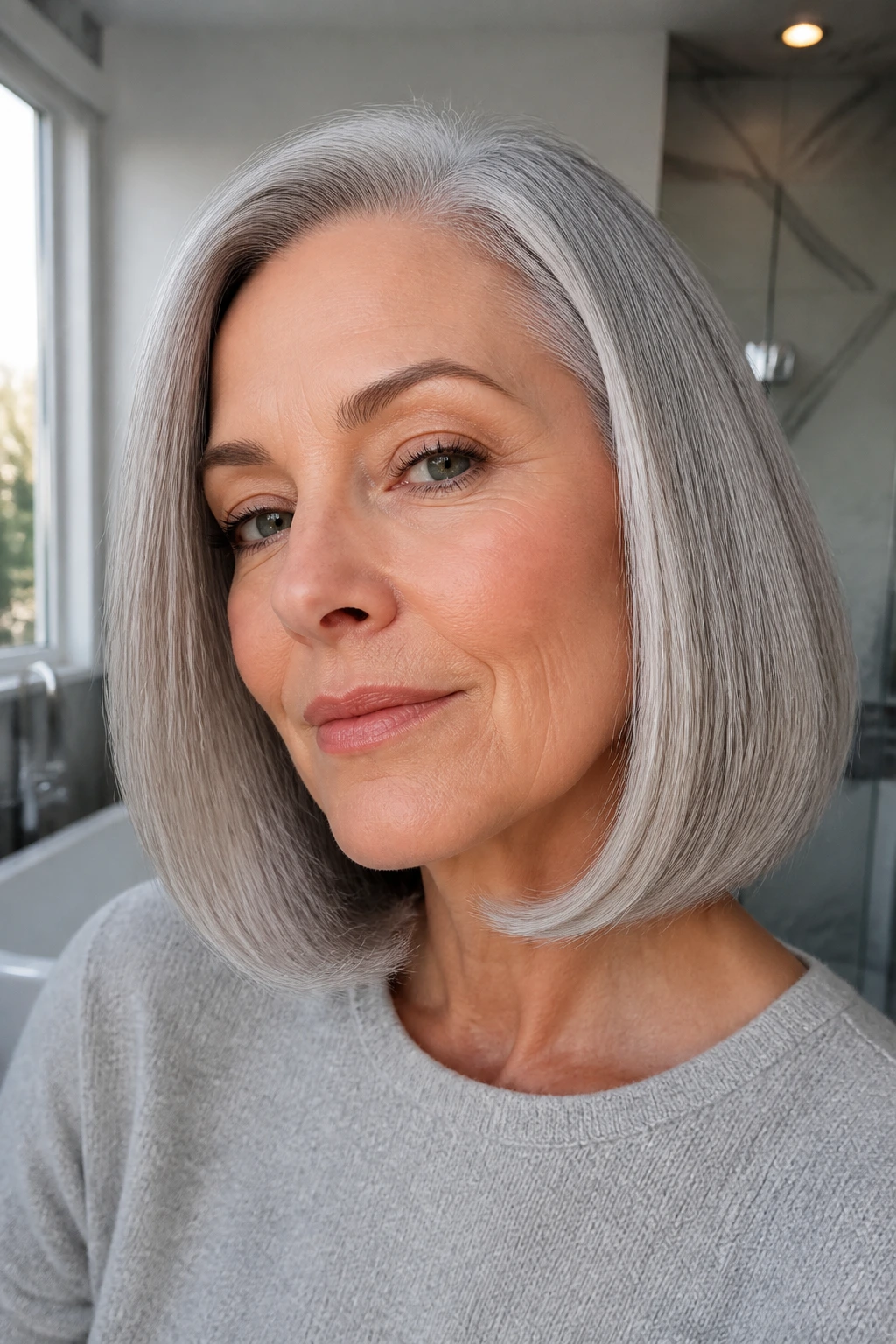
There is something very satisfying about a lob that curves under at the ends and gleams like polished metal. The tucked-under glossy silver lob is that haircut. It looks controlled, but not severe, and it turns gray hair into something sleek rather than simply tidy.
This cut loves shine. A smooth blow-dry, a boar-bristle brush, and a touch of finishing oil on the last inch or two of the ends will do more for this style than any complicated product stack. The line should be clean enough that the ends look deliberately folded under, not bent by accident. If your hair has a little natural wave, you may need a flat iron pass through the lower half to sharpen the shape.
The style is especially useful for people who want gray hair to look expensive without spending forever on it. That sounds shallow, maybe, but it’s real. A glossy gray lob can make a plain sweater look better. It can make earrings stand out. It can also make the face look brighter because the smooth surface reflects light toward the cheekbones.
8. Choppy Textured Lob with Piecey Ends
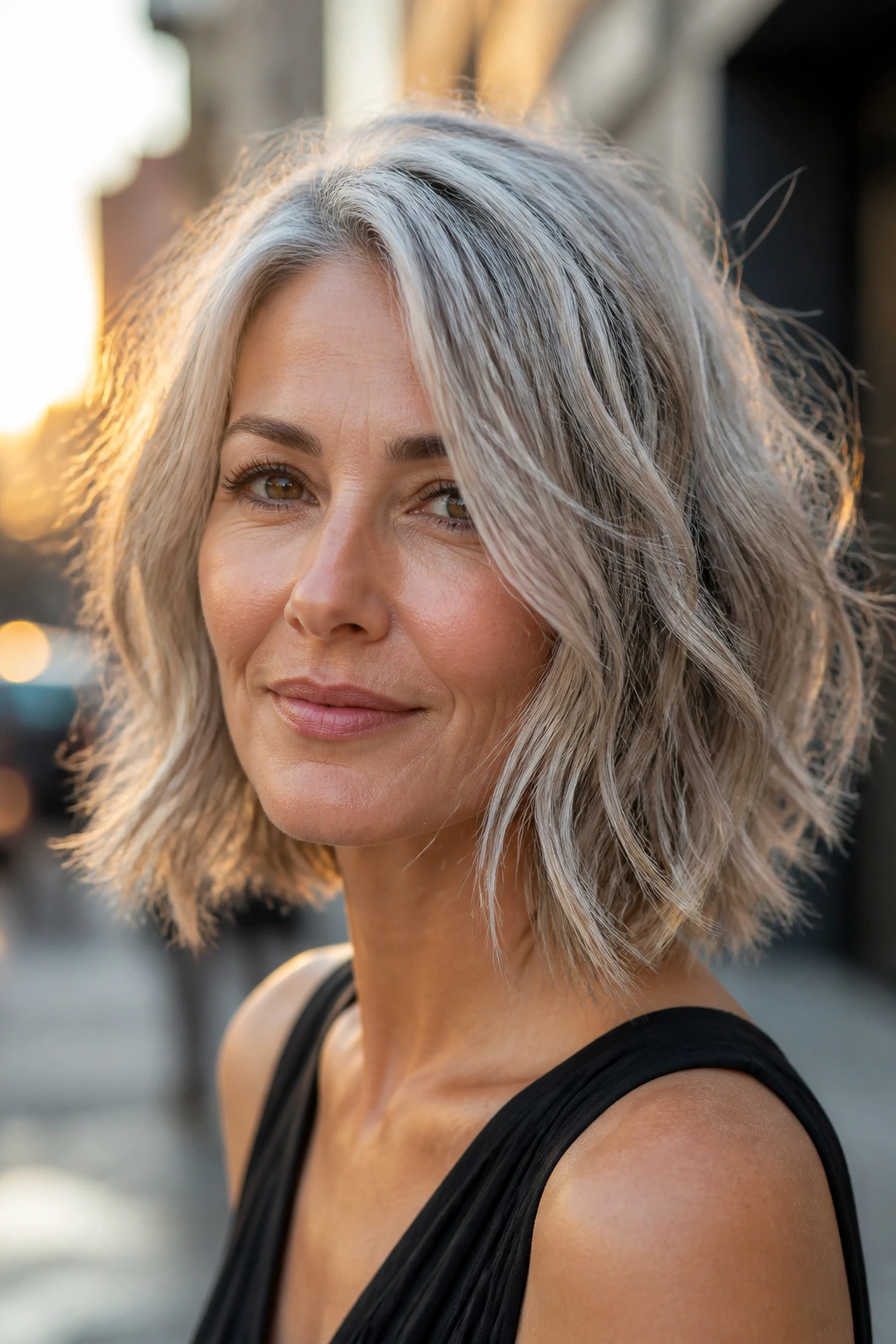
The choppy textured lob is not for someone who wants hair that behaves. It is for someone who wants hair that moves. The ends are deliberately piecey, the shape feels a little broken up, and the whole cut has a modern, slightly undone edge that works especially well with darker silver or graphite gray.
What Makes It Different
This style gives thick or resistant hair a place to go. Instead of letting the bottom collapse into a heavy shelf, the choppy ends keep the perimeter light. That can be a lifesaver if your hair poofs at the bottom when it’s cut blunt, or if you hate the feeling of a solid curtain around the jaw.
Use a matte texturizing spray or a light wax, but only on the mid-lengths and ends. The temptation is to keep adding product until the whole cut looks “piecey.” Don’t. The best version of this lob still has clean shape at the top and texture only where the hair needs it.
- Best on medium to thick hair
- Good with a side part or loose off-center part
- Stronger when the ends are cut with point cutting or a razor
- Easier to wear when the gray color has dimension
The cut has attitude. Let it.
9. French-Girl Gray Lob with a Soft Fringe

This one leans more romantic than sharp. The French-girl gray lob usually sits a little below the jaw and pairs with a soft, airy fringe that brushes the eyebrows or skims just above them. It looks lived-in even when freshly cut, which is part of the appeal.
The fringe is the trick. Too blunt, and the whole thing gets heavy. Too wispy, and it disappears. You want a fringe with enough body to frame the face but enough softness to avoid a hard block across the forehead. On gray hair, that softness keeps the look from feeling severe, especially if your natural texture is fine.
I like this cut with a bit of bend through the ends and a loose, imperfect finish. The hair should look like it moved during the day, not like it was shellacked into place. A little dry shampoo at the roots can help keep the fringe from slipping flat by lunchtime. That’s a small thing, but small things matter in fringe land.
If your style tends toward linen shirts, simple earrings, and clothes that don’t fuss for attention, this cut fits right in.
10. Sleek Deep Side-Part Silver Lob
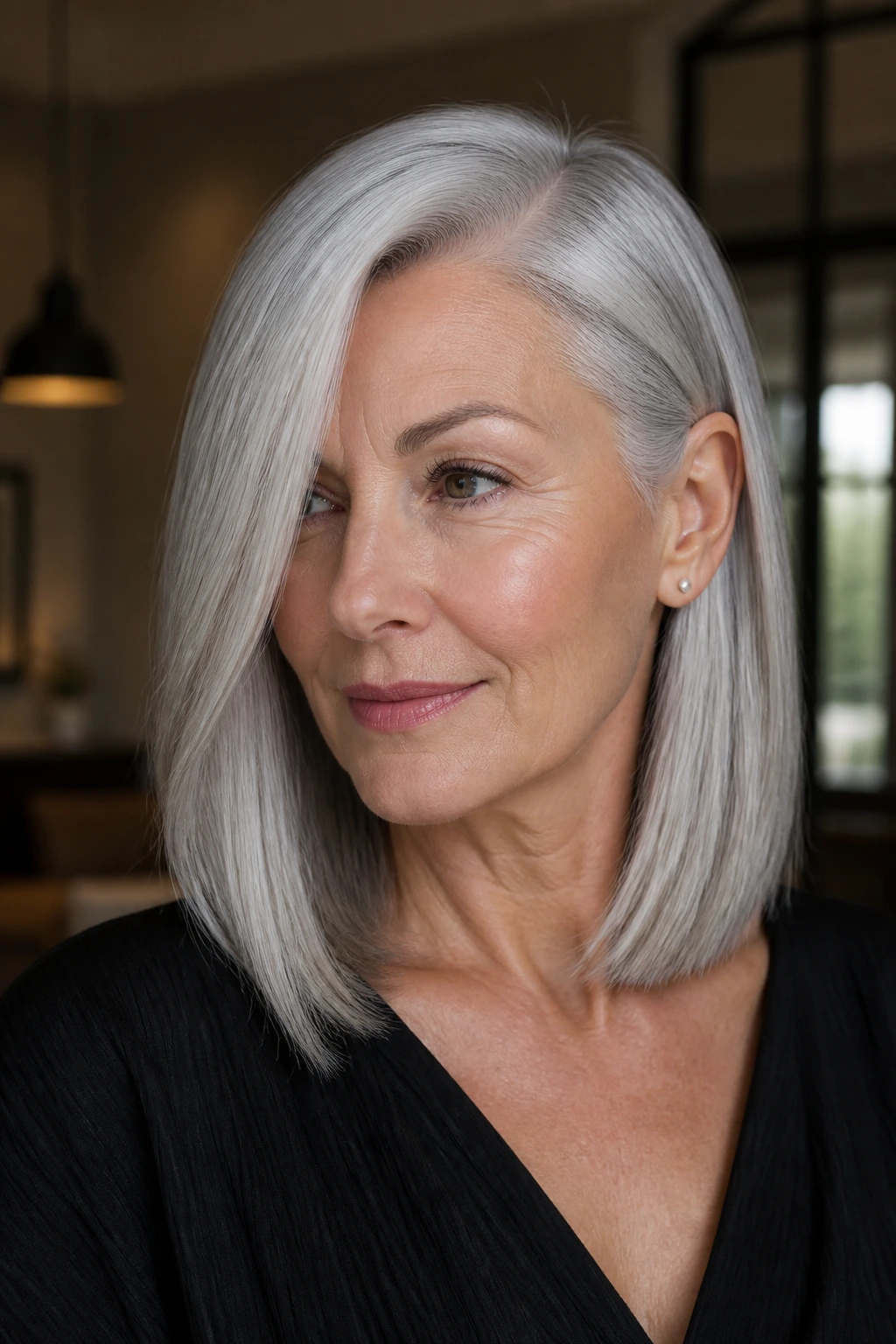
A deep side-part silver lob has drama without requiring actual drama. The part starts far to one side, the crown gets a little lift, and the longer sweep across the forehead creates instant shape. On silver hair, the asymmetry shows off shine in a way that a center part sometimes can’t.
This is one of my favorites for fine hair that needs body up top. The side sweep makes the root area feel fuller, and the sleek finish makes the ends look denser. If the hair is naturally straight, you can get away with little more than a blow-dry and a smoothing cream. If it bends or frizzes, a quick pass with a flat iron through the surface layers will clean it up.
Where It Really Helps
- Lengthens the face
- Adds lift at the crown
- Makes thin gray hair look more substantial
- Works well for formal settings without turning fussy
The catch? You need to keep the ends healthy. A deep side part draws attention to the shape of the cut, and split ends show up fast on silver hair. Trim it before it starts to look fuzzy at the bottom. Waiting too long ruins the whole illusion.
11. Collarbone Lob with Face-Framing Slides
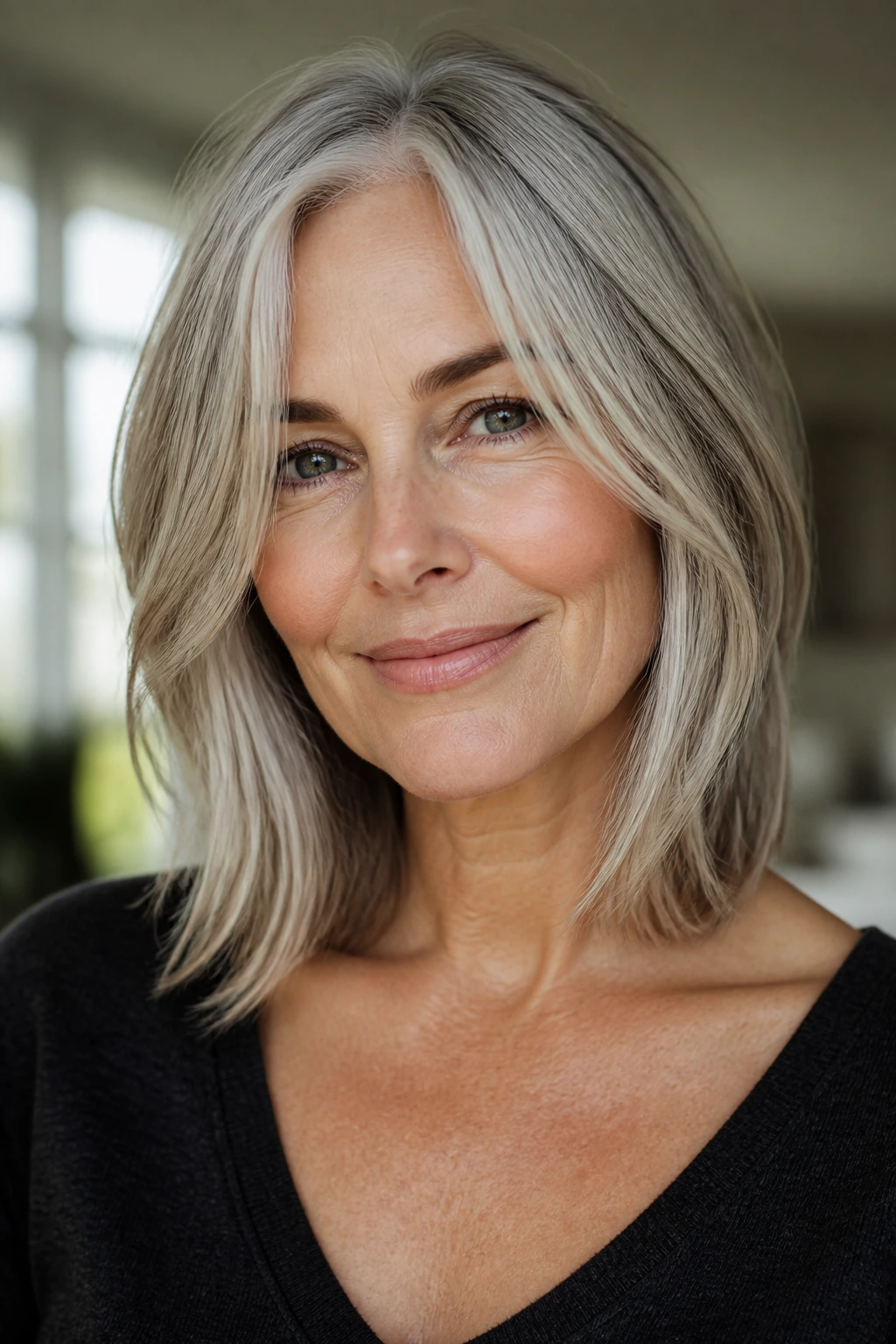
Some gray lob haircuts are about the silhouette. This one is about the front. The collarbone lob sits right where the name says it does, and the face-framing pieces are cut in a soft slide rather than a hard line. That gives you movement around the cheeks without losing the length that makes the style feel modern.
This is a good choice if your hair falls flat when it’s cut too blunt but goes puffy when it’s layered too heavily. The slides remove enough weight to keep the front from sitting like a wall. They also soften the transition if you’re blending older color into natural gray, because the front can carry a little more dimension without looking striped.
It’s also one of the best lob shapes for people who wear their hair tucked behind one ear half the day. The longer front pieces stay elegant even when pinned, and the rest of the cut holds together without needing constant fixing. That sounds minor until you’re the one checking the mirror every hour.
12. Graduated Gray Lob for Fine Hair
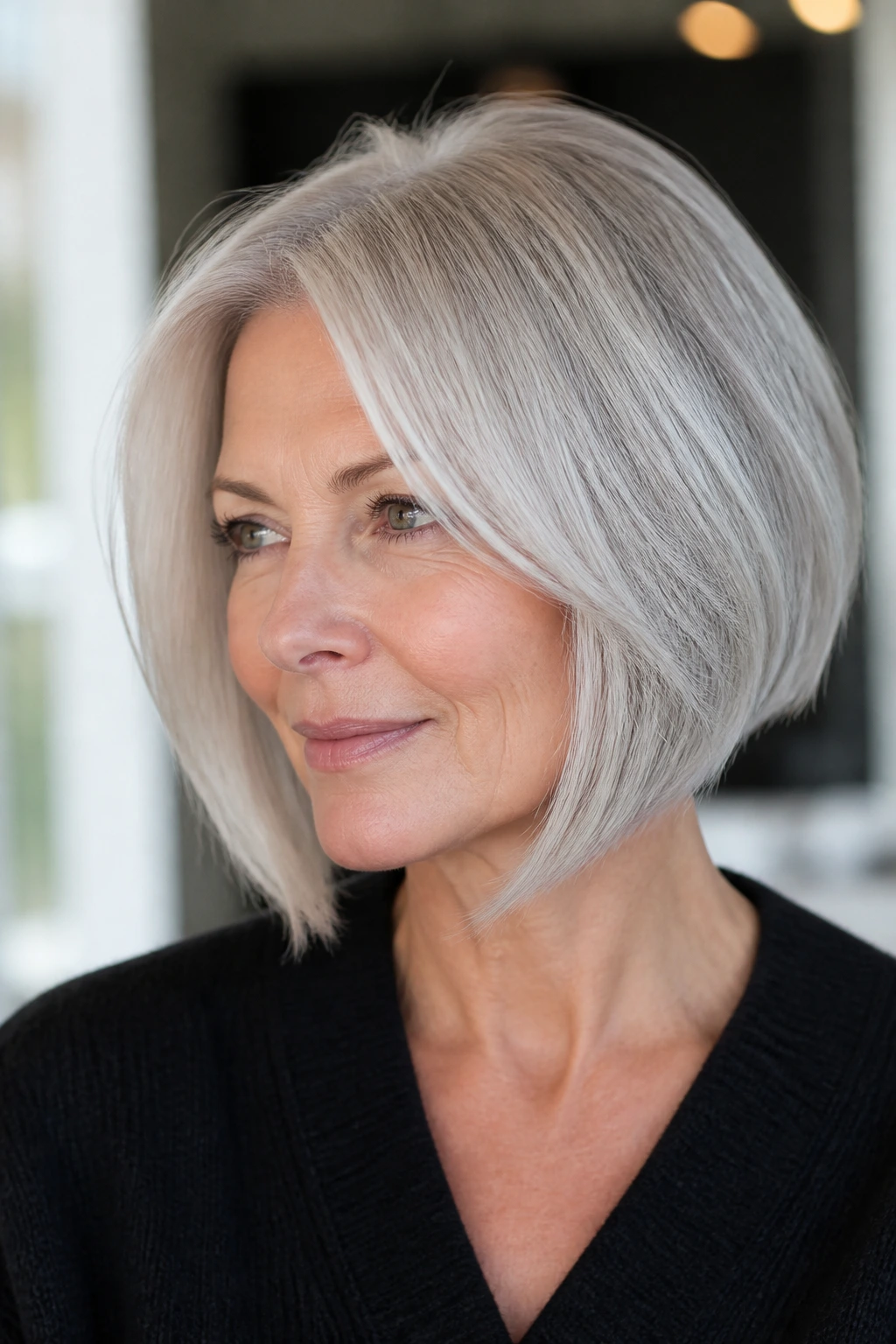
Why do some gray lob haircuts make fine hair look fuller while others seem to drain the life out of it? The graduated lob is the answer more often than not. It keeps a little more length in the front and a touch more lift in the back, which creates a cleaner shape through the crown and jawline.
The graduation should be subtle. You are not building a stacked bob from the early part of the century. You want a quiet rise in the back, enough to support the hair so it doesn’t cling to the neck. Fine silver hair often needs that kind of architecture. Without it, the shape collapses by noon.
A small round brush, root-lifting spray, and careful blow-drying at the crown are the friends of this cut. Skip heavy oils. They flatten the lift you just paid for. And if your hair is very fine, ask for the back to stay slightly longer than you think you need. Fine hair shrinks visually when it dries, and a lob that looks right wet can end up too short after styling.
13. Shaggy Silver Lob with Wispy Layers
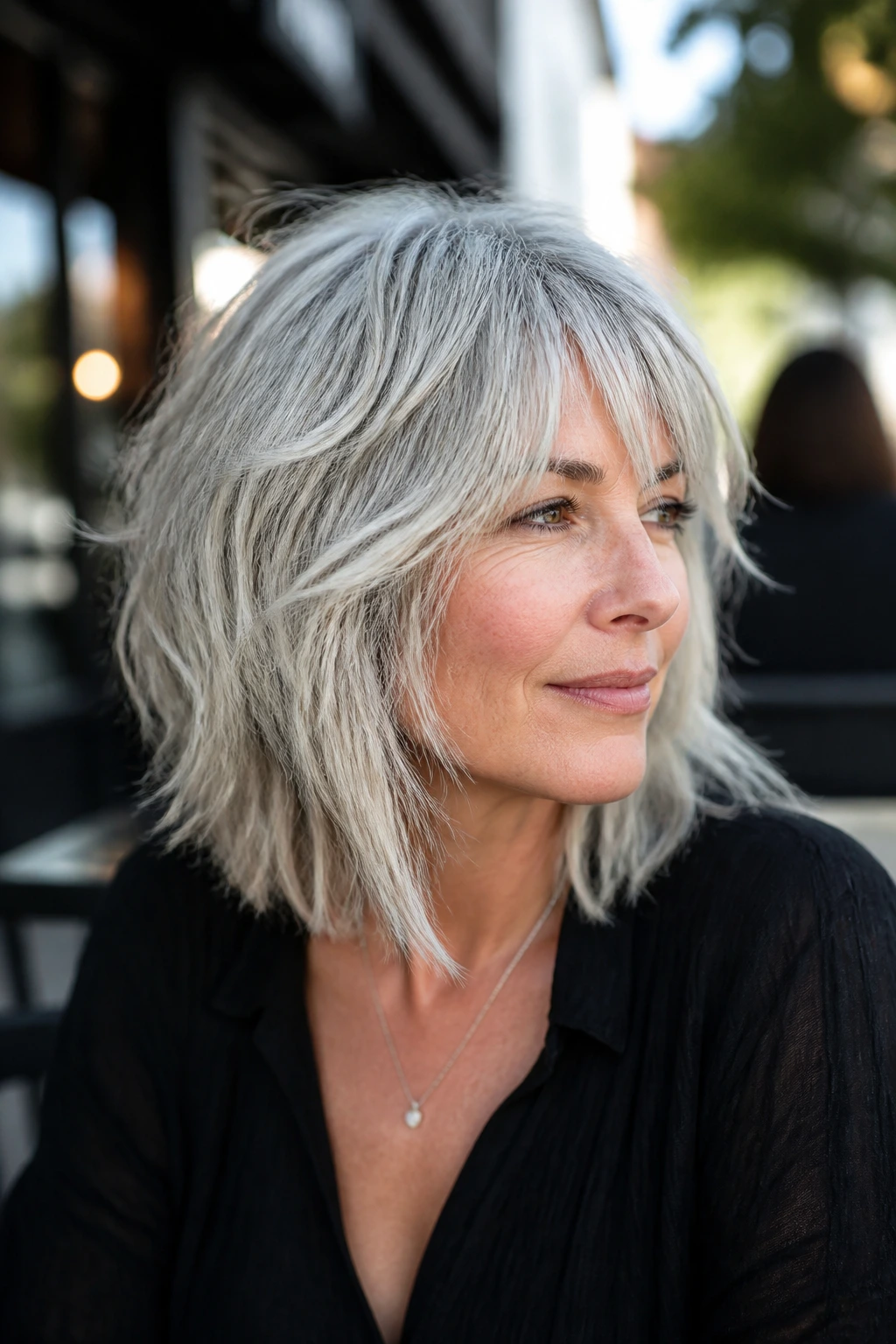
The shaggy silver lob is what happens when a lob decides it wants a little personality. Wispy layers through the crown and mid-lengths give the cut a looser shape, and the ends stay touchable instead of blunt. It’s a strong choice for wavy hair, curly hair, or anyone whose gray comes in with a bit of natural bend and wants to keep that energy.
This cut thrives on imperfect styling. Air-drying with curl cream, diffuser drying on low heat, or adding a couple of random bends with a curling wand all work. What matters is that the layers do not get too short around the crown, or the silhouette can go triangular. That is the enemy of a good shaggy lob. The pieces should feel airy, not float away from the head like a startled fringe.
I like this style for people who want gray hair to feel relaxed, not formal. It has a bit of rock-and-roll in it. A little grit. The kind of haircut that looks better when the coat collar has rubbed it a little.
14. Soft Black-to-Silver Transition Lob
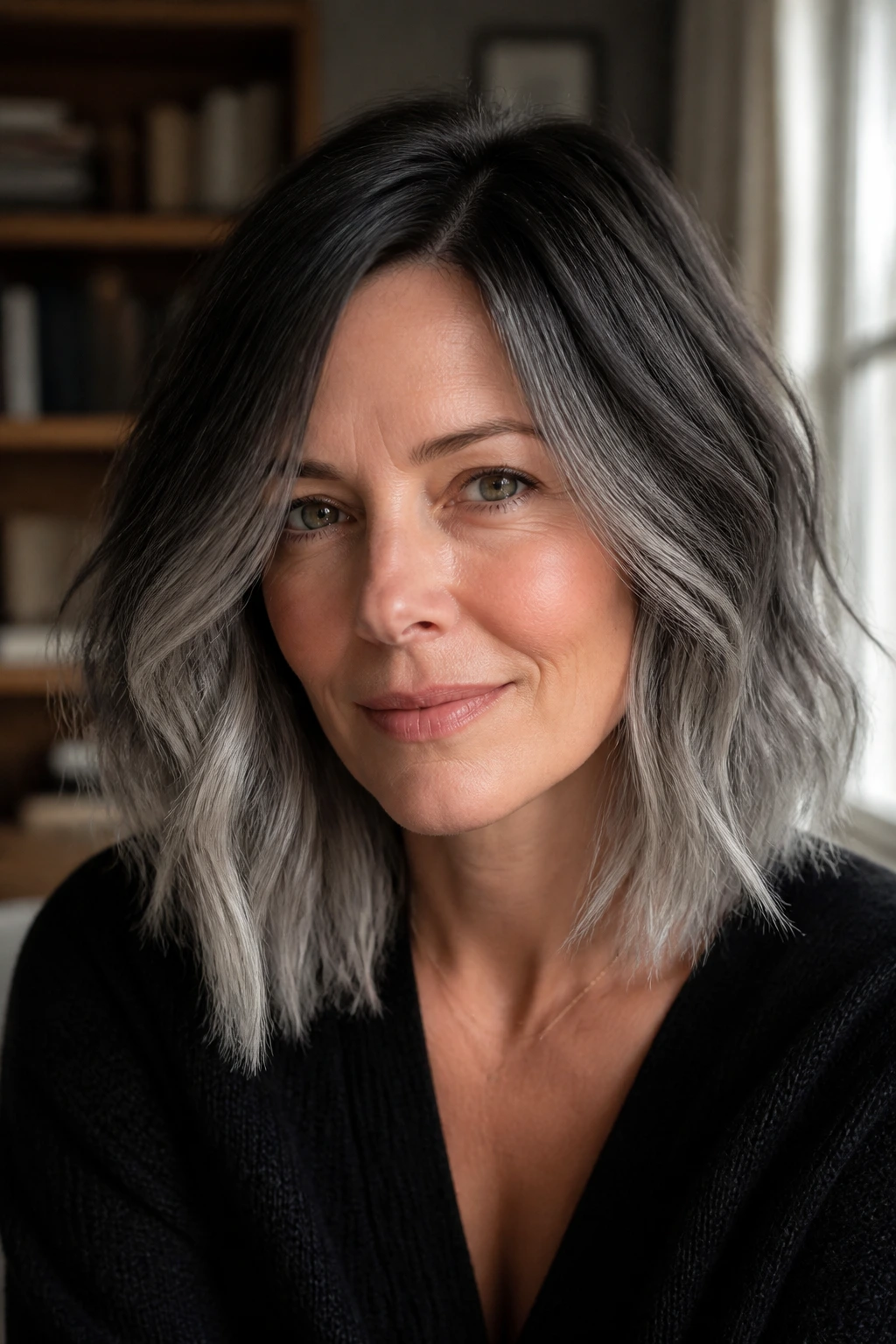
This is the one for anyone growing out natural gray from darker color and refusing to take the dramatic chop. The soft black-to-silver transition lob gives the blend a place to live. The length lands in that forgiving zone where the darker roots, smoky mid-tones, and silver ends can all coexist without the transition looking abrupt.
The key is dimension. A subtle lob with lightly textured ends keeps the line from showing every color shift as a separate stripe. If the cut is too blunt, the transition can look heavy and obvious. If it’s too layered, the different tones scatter in a way that can read patchy instead of blended.
A gloss between color appointments helps here, especially if the silver ends need brightness and the darker sections need a little shine. Ask for a cut that keeps the perimeter clean but allows enough movement through the mids to make the blend feel intentional. That word matters. Intentional. Not masked. Not hidden. Intentional.
15. Curled-Under Vintage Gray Lob
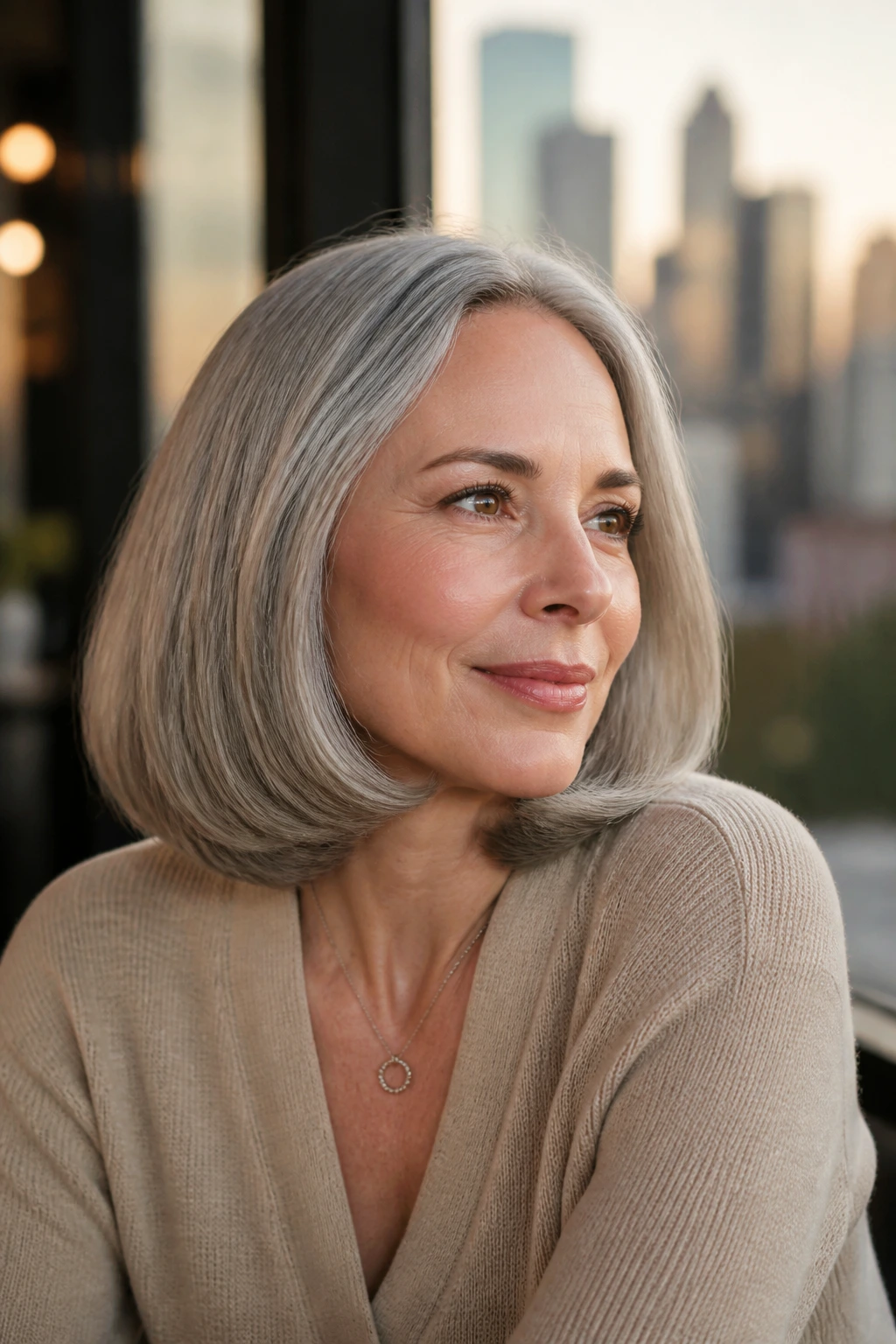
This cut leans polished, and I mean polished in the best sense. The curled-under vintage gray lob uses a smooth, round-brush finish or a soft iron bend so the ends roll under the jaw. It gives gray hair an old-school neatness that can look incredibly fresh when paired with modern clothes or a strong lip.
Why the Curved Edge Works
The curve creates a boundary. Gray hair, especially if it’s fine or porous, can look a little fuzzy at the ends when left straight and dry. Curling the bottom half under creates a cleaner finish, and that clean finish reflects light more evenly. The cut looks deliberate from across the room.
This is also a great lob for people who like their hair to stay off the neck a bit. The tucked-under edge keeps the perimeter tidy, which feels nice on coats, scarves, and high collars. It’s a small pleasure, but those are often the reasons we stick with a haircut.
Use a medium round brush, not a giant one. If the brush is too large, the curve turns lazy and the ends lose their shape before lunch.
16. Razor-Cut Smoky Lob
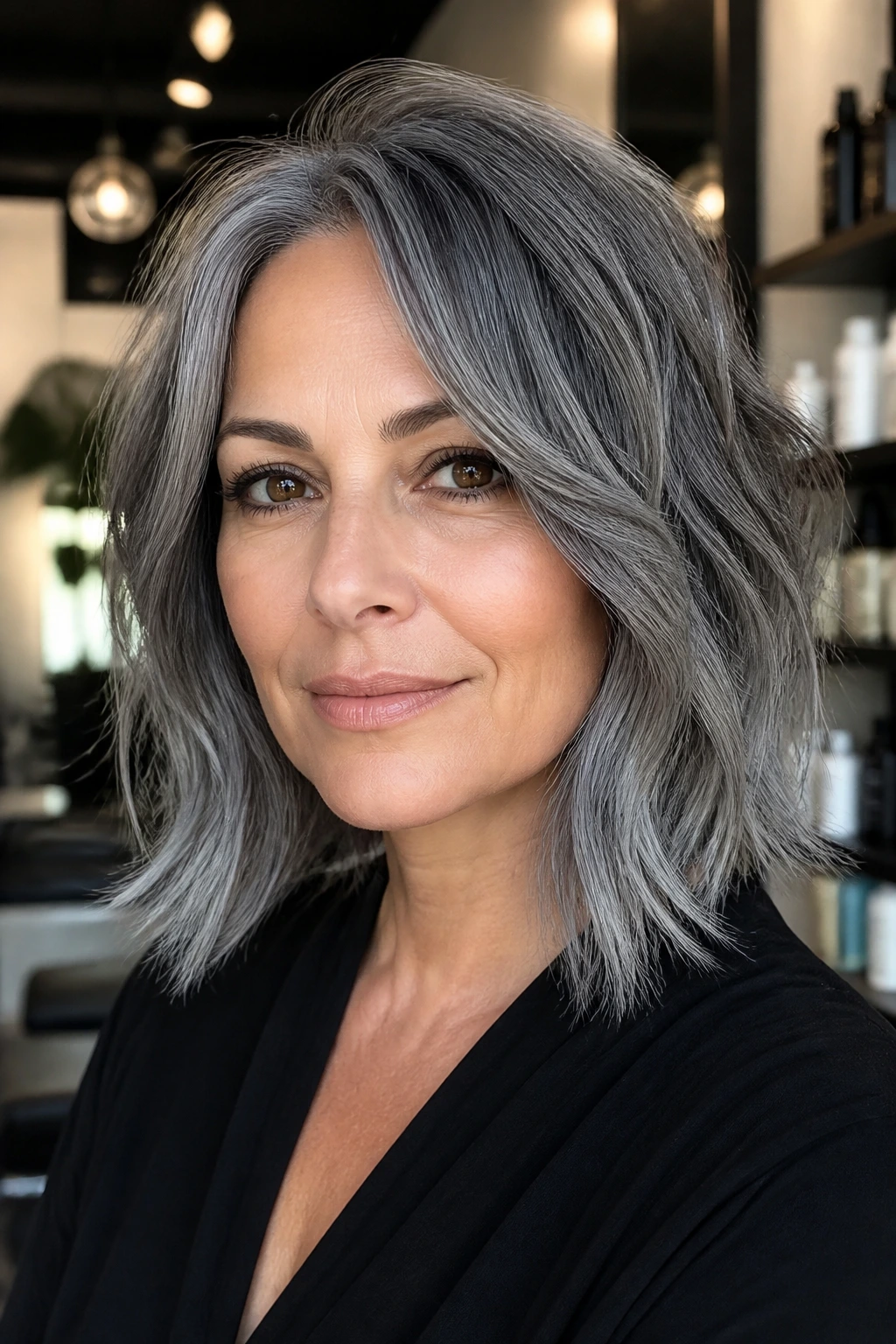
A razor-cut smoky lob has a softer edge than a blunt cut and a little more grit than a traditional layered cut. The razor removes weight from the ends, which makes the silver tones look airy instead of heavy. On medium-density hair, that softness can be the difference between movement and a blocky outline.
The cut is best when the razor work is controlled. Too much and the ends fray. Too little and you might as well have asked for a blunt line. This is not a haircut to hand over to someone who loves thinning shears a little too much. The goal is feathered edges that still look healthy.
It works well with cool gray and smoky charcoal tones because the texture helps the color shift. You see pieces, not one solid sheet. If your hair takes on a bit of static, a light anti-frizz cream on the last inch or two will calm it without killing the airy effect. That balance is the whole trick.
17. Thick-Hair Layered Gray Lob
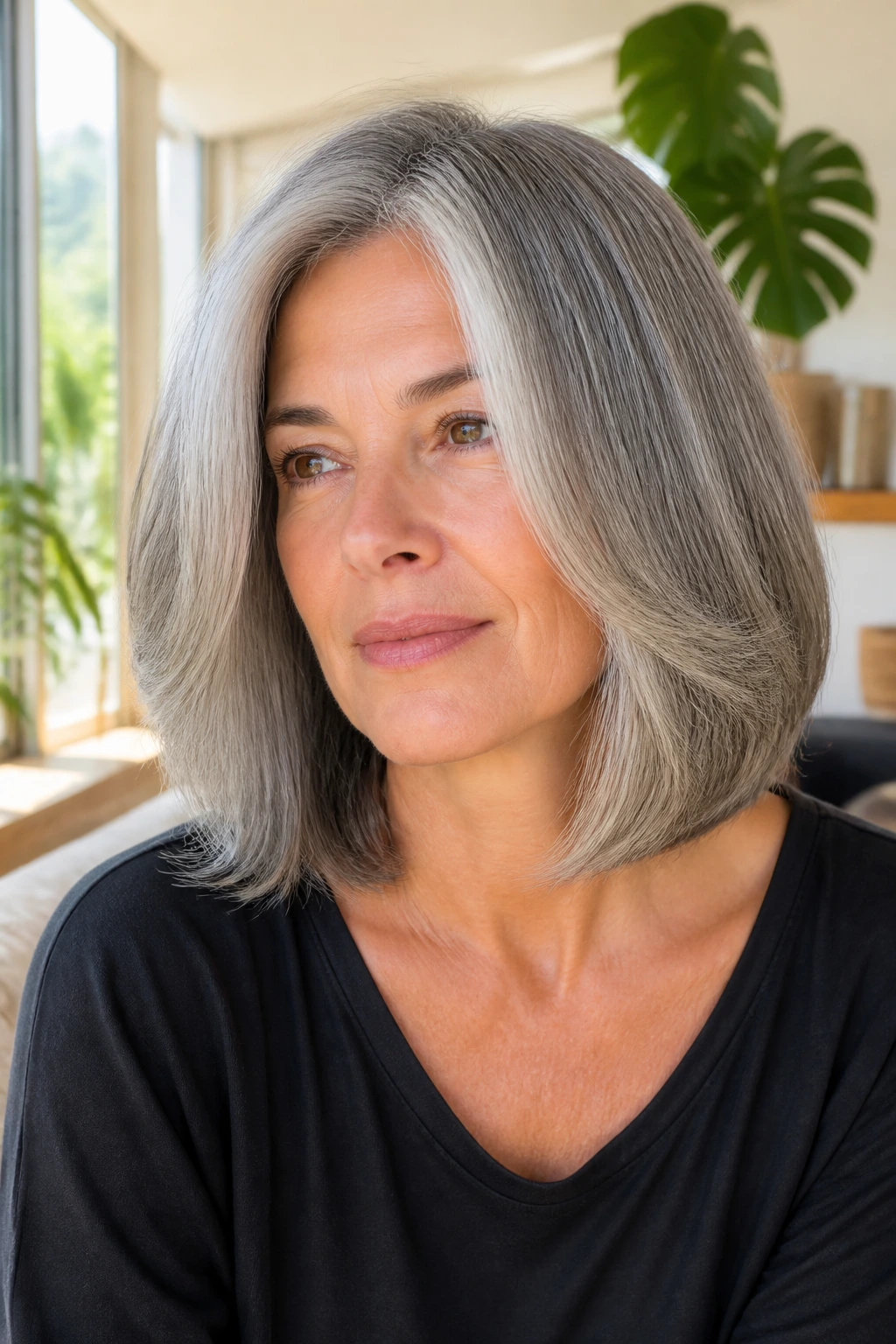
Thick gray hair needs a lob that respects the bulk without making the ends look scraggly. This version does exactly that. The layers are placed to remove weight inside the cut, not to carve the perimeter to pieces. The result is a shape that falls instead of sitting like a shelf.
The Practical Part
If you have thick hair, you already know the bottom can swell if the cut is wrong. A layered lob keeps the width under control, especially around the nape and the sides of the jaw. It also keeps the gray tone from looking too heavy in one solid mass.
A few details matter here:
- Ask for internal layers rather than short external choppiness.
- Keep the longest length near the collarbone for weight.
- Let the front pieces stay long enough to narrow the face, if needed.
- Use a smoothing cream only on the surface, not inside the layers.
That last point matters more than people think. Thick hair can swallow product and turn limp fast. Keep the inside of the cut clean and the outside smooth. That’s how you get shape without puff.
18. Asymmetrical Silver Lob
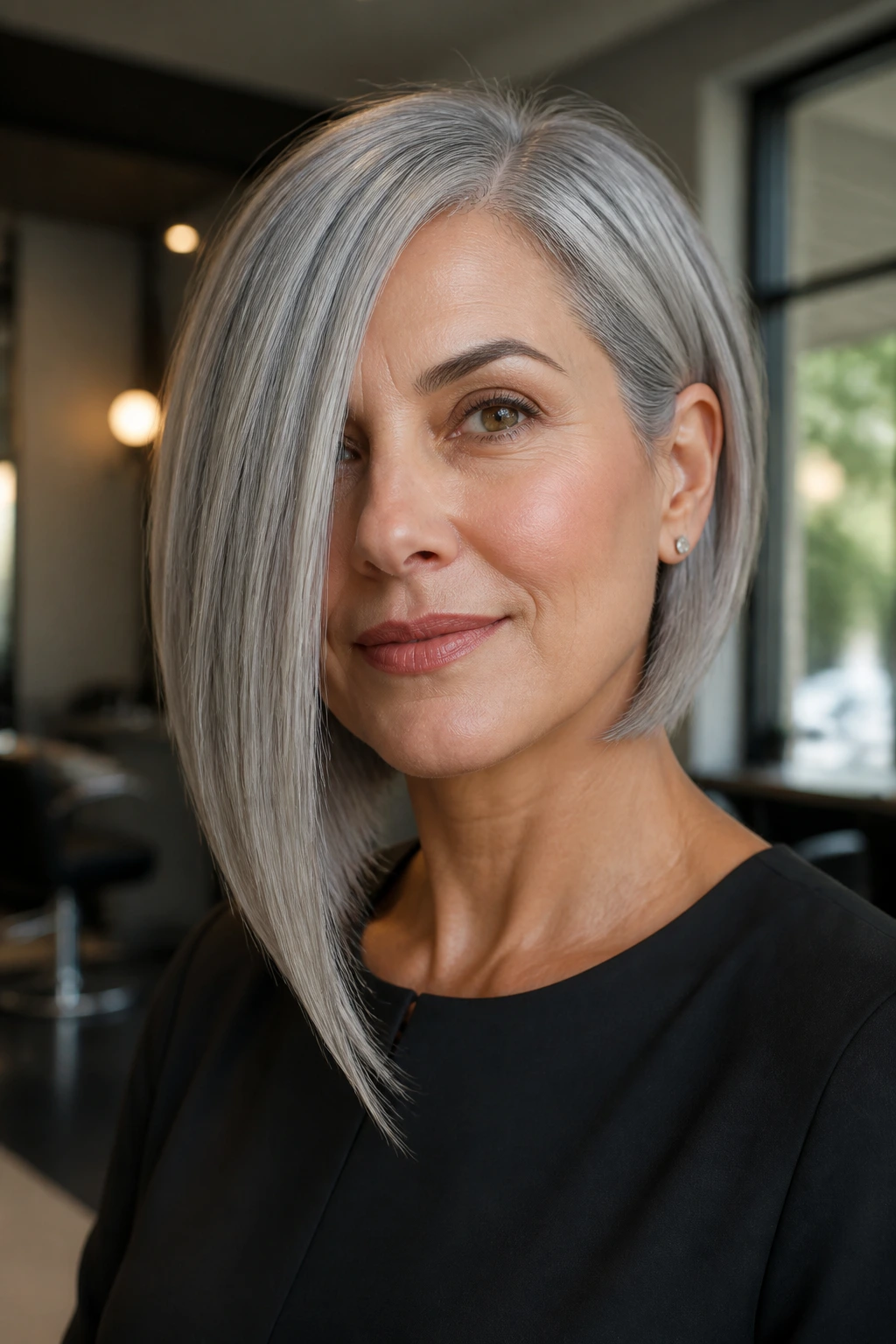
The asymmetrical silver lob is the bold one in the group, but it doesn’t need to scream to be noticed. One side sits a little longer than the other, or the front angle shifts enough to create a visible slant. On silver hair, that small imbalance looks sharp and very modern.
The best version is subtle. If the asymmetry is exaggerated, it can feel costume-like. If it’s quiet, it just looks like someone with good taste made a more interesting choice than everyone else in the room. I prefer it with smooth styling so the shape reads clearly. Waves can soften it too much unless the asymmetry is strong enough to survive the texture.
This cut flatters people who like structure but want something less expected than a standard lob. It also works well with a tucked-behind-one-ear habit, because the longer side gains a little extra drama when it moves.
19. Grown-Out Bob with Blended Gray Highlights
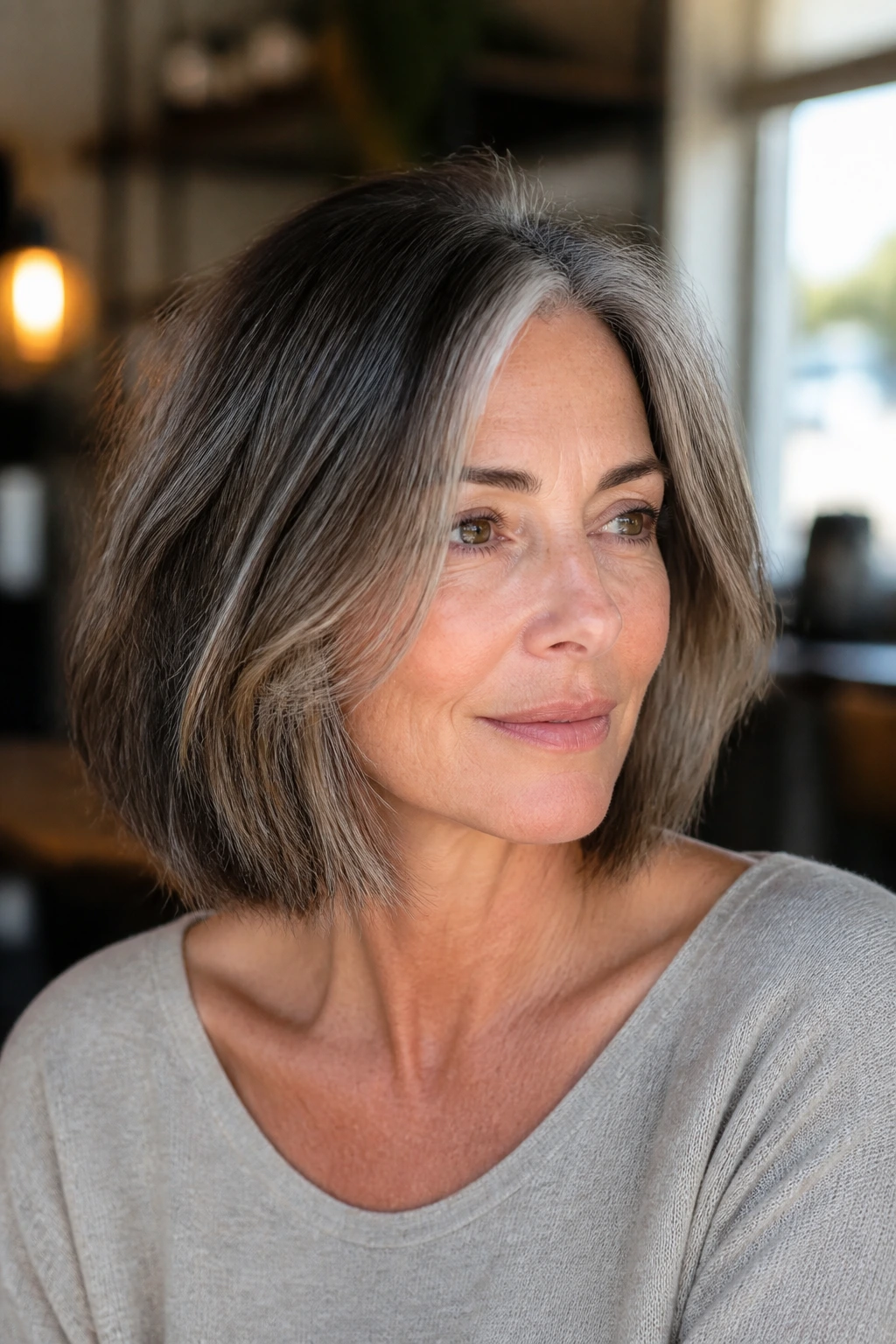
A grown-out bob sounds like a compromise, but it can be the smartest-looking move in the entire gray lob category. The length sits between bob and lob, which means the shape keeps enough body to feel current while the blended gray highlights knit the color together. It’s especially useful if you’re in the middle of letting natural silver take over.
This is a forgiving haircut. The blend hides the grow-out, the length covers a few imperfect weeks between trims, and the shape works whether you air-dry or blow-dry. If your hair changes texture from season to season or from hormonal shifts — yes, that happens — this style gives you room to adjust without starting from scratch.
A subtle side part can make the highlights pop more at the crown, while a center part keeps the transition calmer. The whole point is softness. Not mushiness. Softness. There’s a difference, and the difference is whether the ends still look like they were cut on purpose.
20. Blended Natural-Gray Lob with Root Shadow
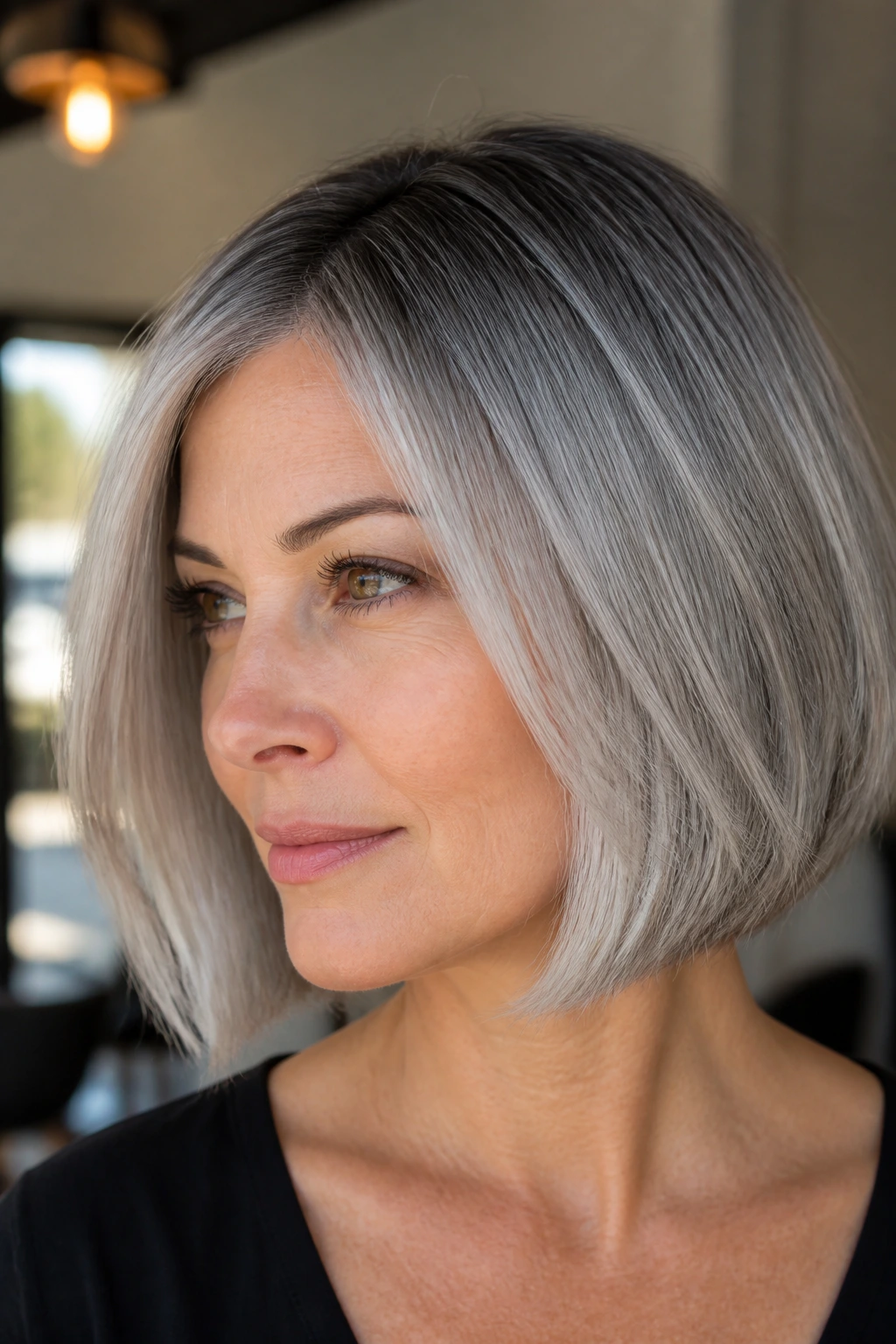
This is the most low-key option in the set, and honestly, one of the smartest. A blended natural-gray lob with root shadow uses your own growth pattern as part of the design. The darker root area stays soft, the mid-lengths carry the silver, and the lob shape keeps the whole thing from looking flat or unfinished.
The root shadow matters because it gives gray hair depth. Pure silver can look a little one-note if the cut is too simple. A soft root area creates contrast at the scalp, which makes the lighter lengths stand out more. That contrast is especially useful if your natural gray is mixed with white and charcoal strands rather than a single clean silver.
Keep the ends blunt or only lightly textured. The beauty of this style is the ease of it. You do not need to force brightness everywhere. Let the root shadow do its quiet work, let the lob hold the line, and let the silver show where it wants to show.
What Makes a Gray Lob Look Intentional Instead of Flat
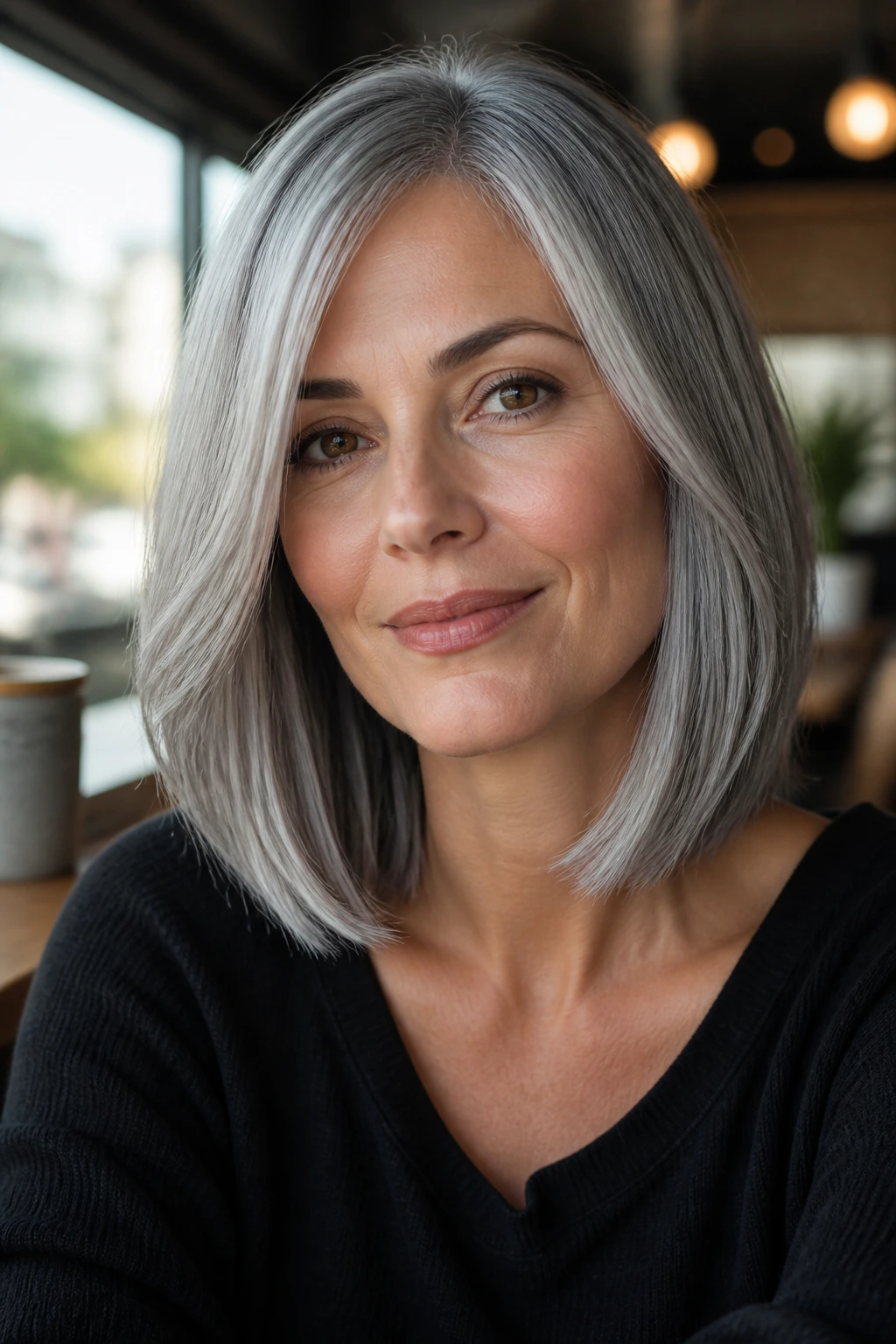
A gray lob works because it gives silver hair a shape with edges, not because it tries to hide anything. The cut needs to be clean enough to define the color and soft enough to let the texture breathe. That balance sounds simple. It isn’t. Most bad lobs fail because they ignore one side of the equation.
Essential Tools for These Gray Lob Haircuts
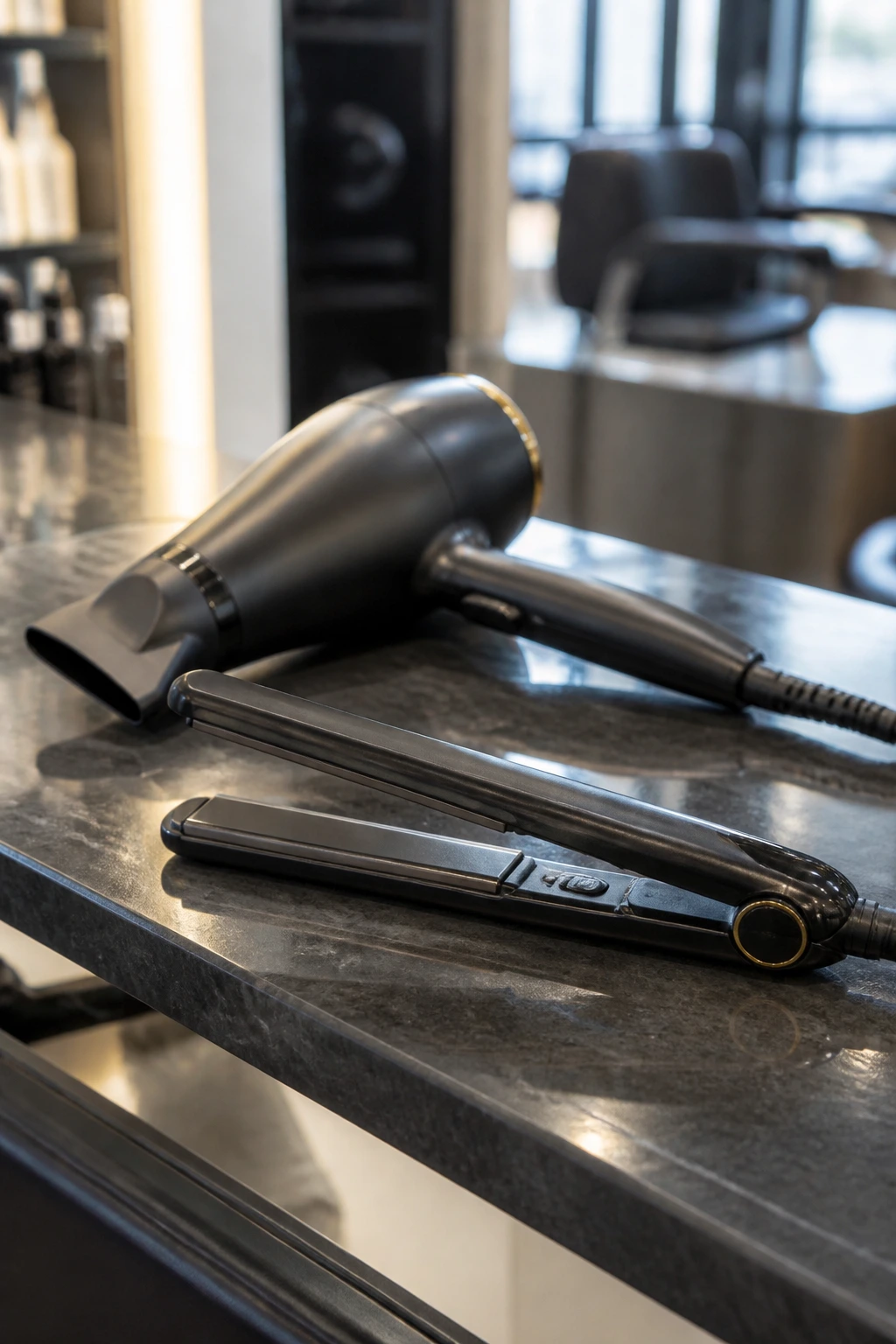
- A good blow dryer with a nozzle attachment: The nozzle keeps the airflow directed, which helps you smooth the cut without blowing the shape apart.
- A medium round brush: This is the workhorse for tucked-under ends, crown lift, and soft bends through the front.
- A flat iron with narrow plates: Better for smoothing a lob than a giant iron that leaves awkward bends halfway down the section.
- A 1 to 1.25-inch curling iron or wand: Useful for loose waves and piecey movement without turning the cut into curls that overpower the line.
- Heat protectant spray: Gray hair can look dry fast under heat, and this is the thing that keeps the finish from going dull.
- Purple or blue toning shampoo: Pick one based on whether the gray pulls yellow or orange; use it sparingly so the hair doesn’t go flat or over-toned.
- Light styling cream or serum: A pea-sized amount on the ends calms frizz and gives silver hair a smoother finish.
- Sectioning clips: They make the difference between a decent blow-dry and a crowded mess at the back of the head.
- Wide-tooth comb: Handy for detangling without roughing up the cuticle, especially on hair that’s coarse or color-treated.
How to Choose the Right Gray Tone and Lob Shape
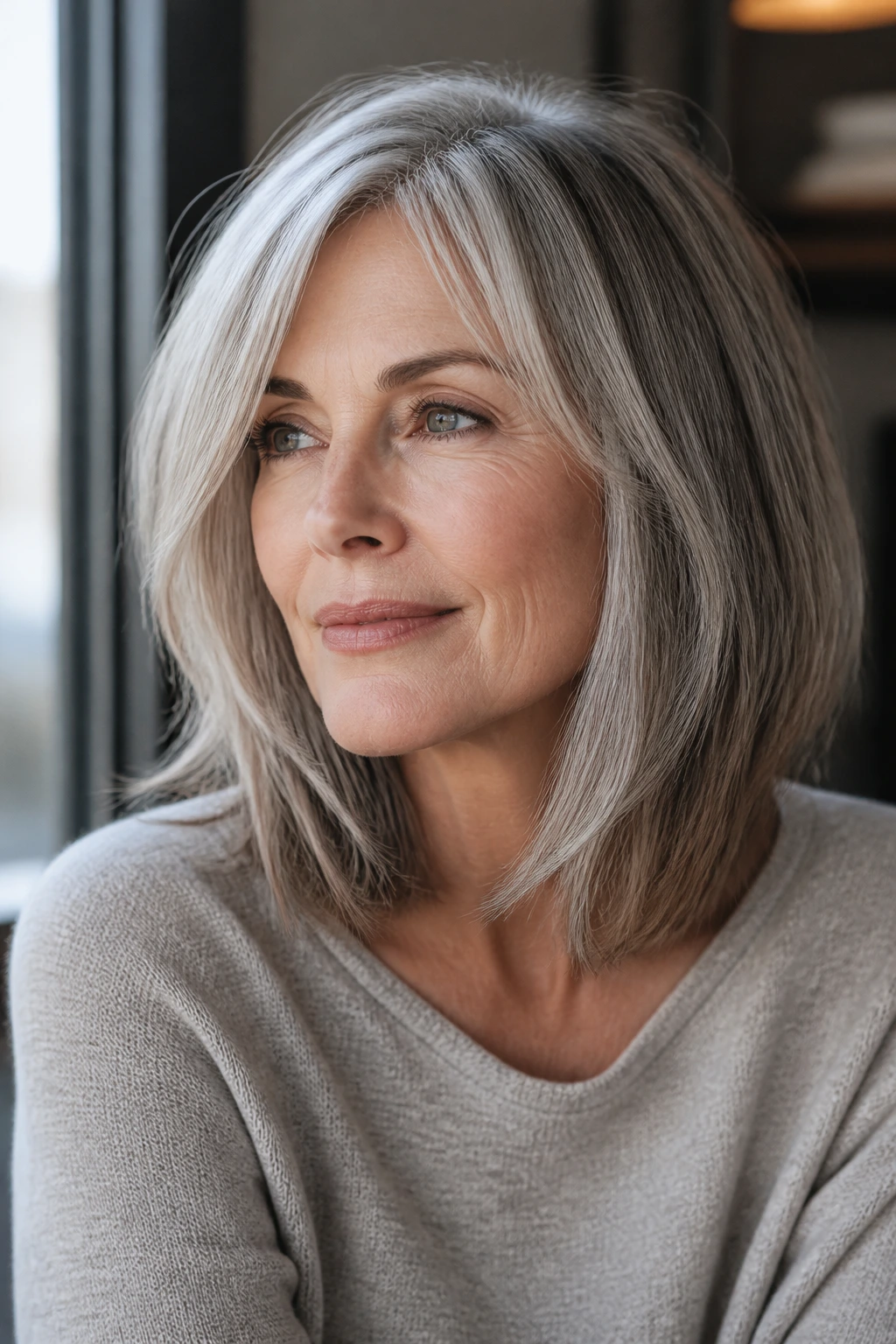
The best gray lob haircut starts with honesty about your hair, not a Pinterest fantasy. If your gray is cool and silvery, a blunt or sleek cut tends to make it look sharper. If your hair has warmer silver or pewter undertones, soft layers and movement usually keep it from reading muddy. That’s a color-and-shape match, not a rule, and it matters more than most people realize.
Density changes the equation too. Fine hair often needs a cleaner edge or a subtle graduation to look full. Thick hair usually behaves better with internal layers or a bit of asymmetry so the perimeter doesn’t feel like a block. Wavy hair can handle more texture; straight hair often looks richer with a blunt or tucked-under line.
If you are growing out dye, ask for a shape that softens the transition rather than shouting it. A collarbone lob with face-framing pieces or a rooted silver lob with soft ends lets the color evolve without that harsh line of demarcation around the temples. That’s the quiet fix. And quiet is good here.
Quick Styling Moves That Keep a Gray Lob Looking Fresh
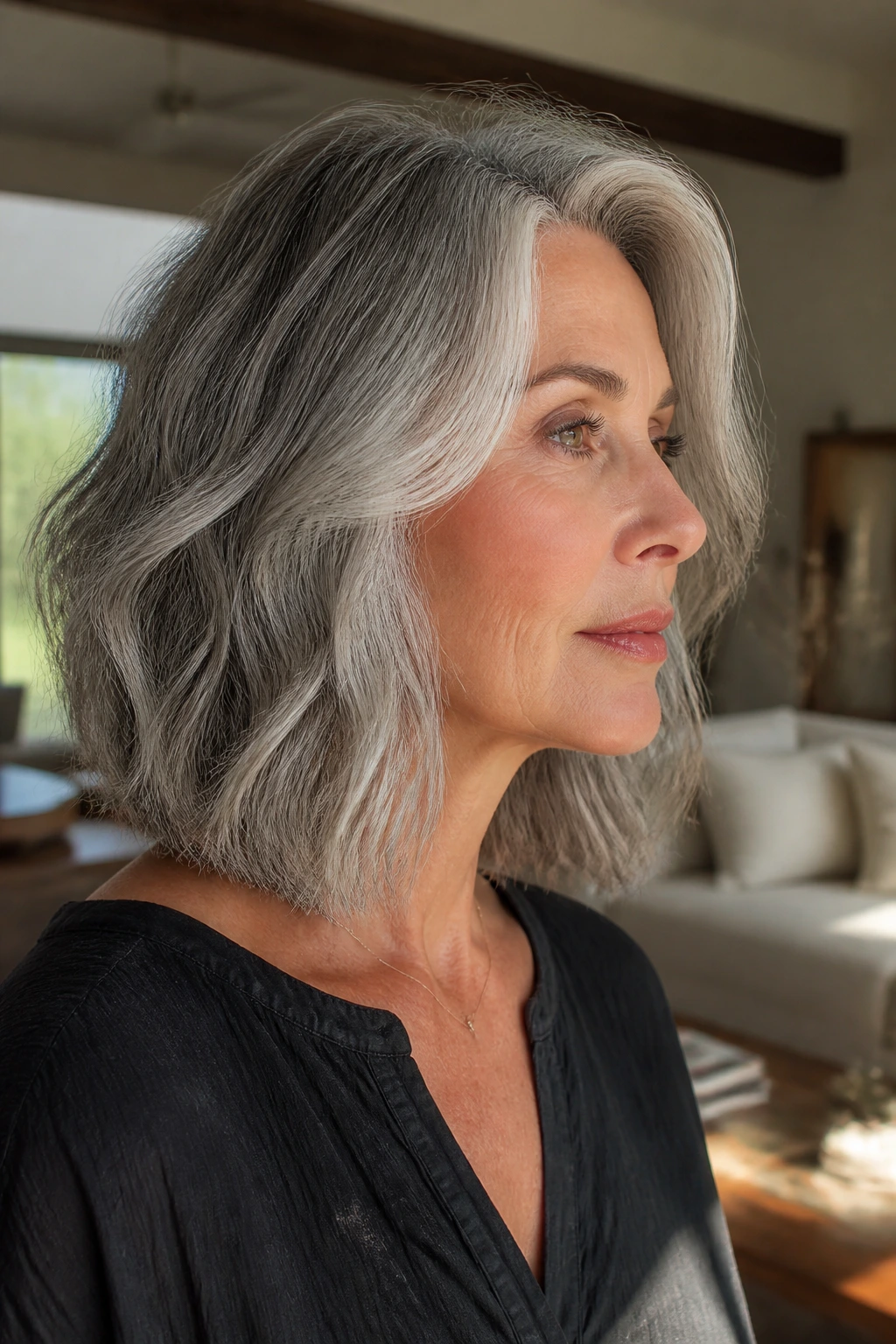
Fast and polished: Blow-dry with a nozzle, use a round brush just on the ends, and finish with a light serum on the last inch. That keeps the perimeter smooth without killing movement.
Soft and airy: Let the hair dry about 80 percent on its own, then add a few bends with a curling wand on random sections around the face and the crown. The randomness matters; too many matching waves look forced.
Straight and sharp: Use a flat iron on low to medium heat, keep the sections thin, and bend the wrist slightly at the ends so the line doesn’t look severed. Gray hair shows heat damage fast, so don’t crank the temperature out of laziness.
For roots that fall flat: Apply a root-lifting spray at the crown before blow-drying, then clip the top section up while the hair cools. Cooling while lifted helps the shape hold longer than a hot blast ever will.
Common Mistakes That Make Gray Lob Haircuts Fall Flat
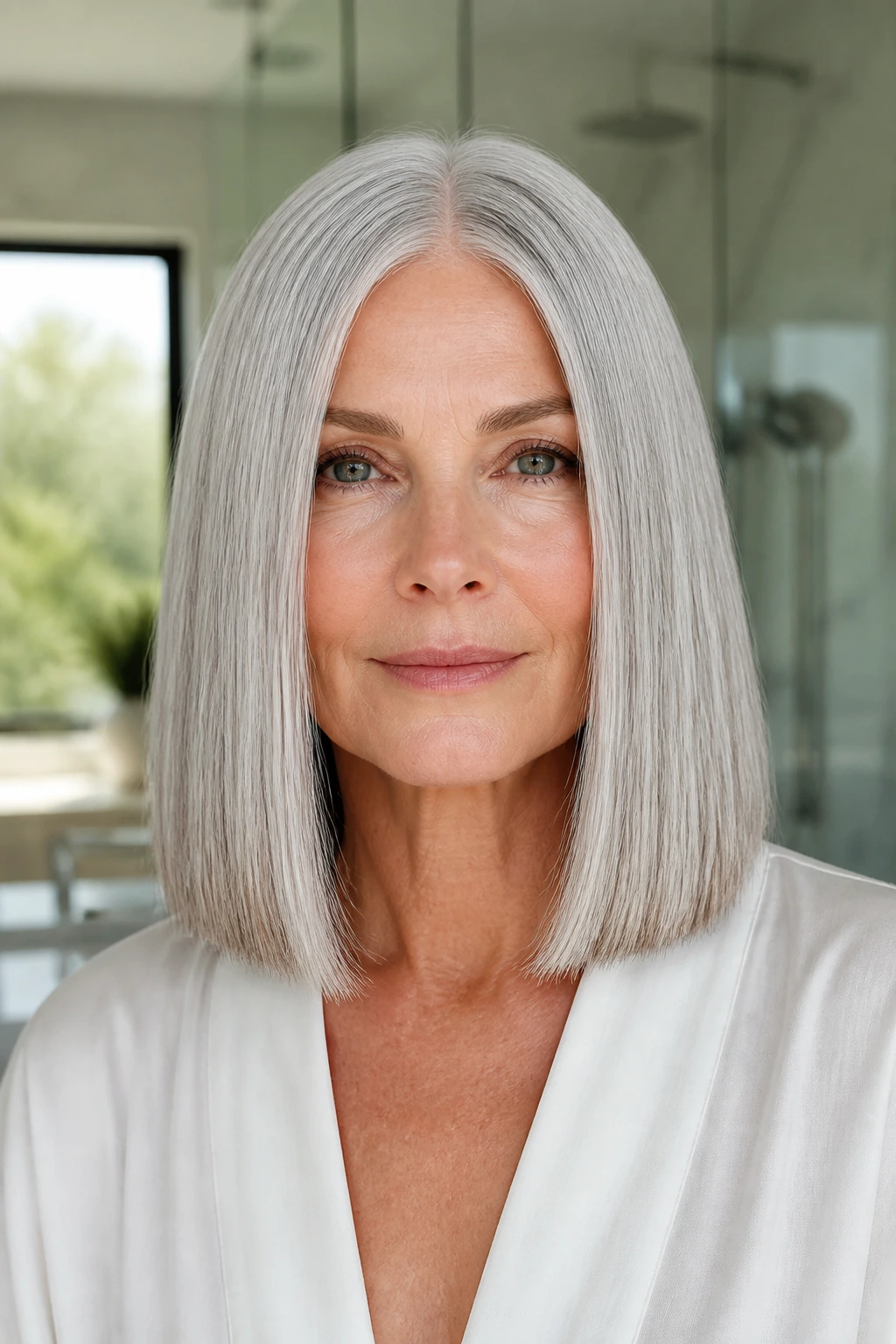
- Over-layering fine gray hair: The ends start to look stringy, and the whole cut loses weight. Fix it with a blunt perimeter and only a few soft internal layers.
- Going too blunt on very thick hair: The cut can puff out at the bottom and sit like a shelf. Ask for internal weight removal so the perimeter stays controlled.
- Using purple shampoo too often: The hair can pick up a dull cast and lose shine. Use it only when the silver starts to look yellow, then switch back to a gentle shampoo.
- Ignoring the part line: A lob that fights your natural part will spend the day collapsing and re-setting itself. Work with the part your hair wants, then adjust the shape around it.
- Skipping trims for too long: Gray hair shows split ends faster than people expect, and a lob depends on a clean edge. A small trim keeps it looking intentional.
- Heat-styling without protection: The finish gets rough, and rough silver hair reads dry in a hurry. A heat protectant is not optional if you use hot tools.
Additional Tips and Shape Boosters
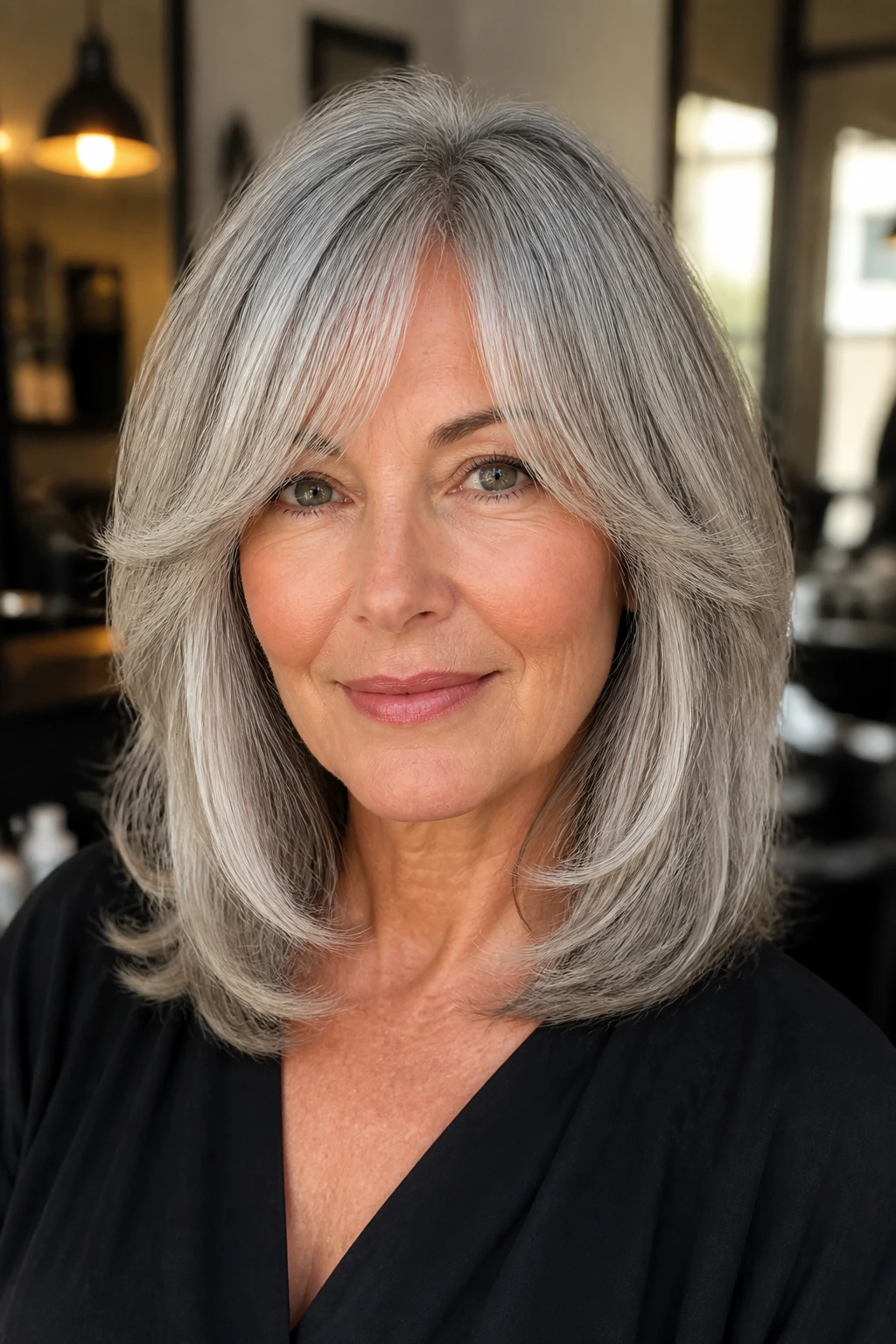
Flavor Enhancement: If the gray tone looks a little dull, ask for a clear gloss or soft toner instead of piling on more purple shampoo. A gloss can restore shine without changing the cut.
Customization: For a lob that feels softer, add curtain bangs or long face-framing pieces. For a sharper version, keep the perimeter blunt and the front pieces long enough to tuck behind the ears.
Serving Suggestions: Yes, hair can have serving suggestions, and here they are: a tucked side, a clean center part, a single strong wave at the front, or a glossy finish with a tiny bit of serum. Those four details change the whole mood faster than a full restyle.
Make-It-Yours: If your hair is curly, keep the lob a little longer so the curl pattern can bounce up without shrinking too high. If it’s straight and fine, ask for a subtle graduation through the back. If it’s thick, remove weight internally, not at the perimeter.
Keeping the Shape Between Salon Visits
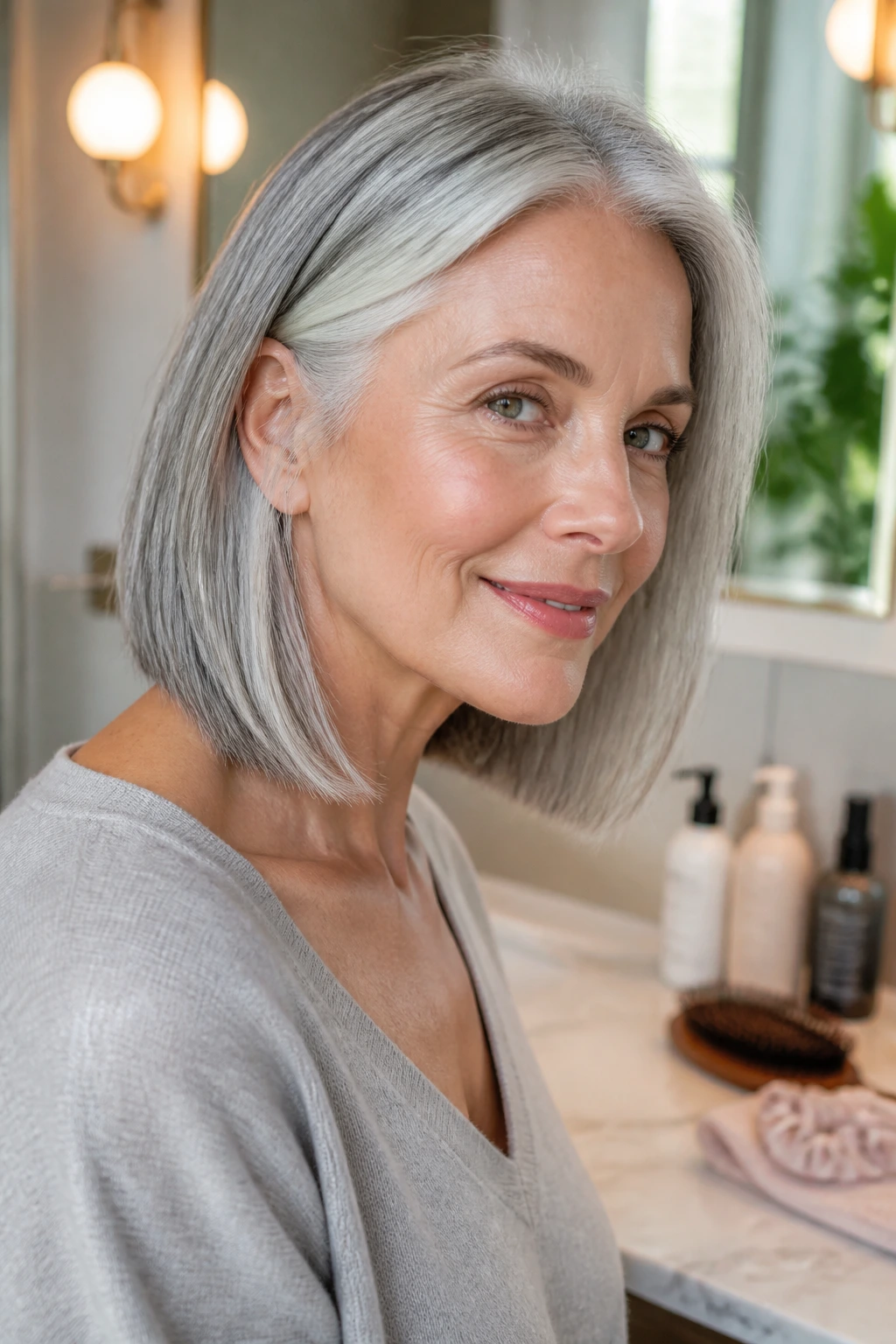
A gray lob stays at its best with trims every 6 to 8 weeks if the cut is blunt or sleek, and closer to 8 to 10 weeks if it’s shaggy or layered. That difference matters. A blunt line loses its edge quickly, while a textured cut can buy you a little extra time before it looks shaggy in the wrong way.
Wash schedule matters too. If your gray hair tends to yellow, use a toning shampoo about every second or third wash, not daily. Daily use can leave the hair dry and flat. Pair it with a moisturizing conditioner on the mids and ends, and keep the conditioner off the roots if your hair gets limp easily.
Sleep makes a difference. A silk or satin pillowcase helps reduce frizz at the nape and keeps the ends from getting roughed up overnight. If your lob bends weirdly while you sleep, tuck the ends into a loose low clip or braid it lightly before bed. Nothing tight. No weird creases. Just enough control to keep the shape from fighting you in the morning.
For heat styling, aim for the lowest setting that still gets the job done. Gray hair can burn dull before it burns visibly, and once the shine is gone, the haircut looks older than it is.
Variations and Adaptations to Try
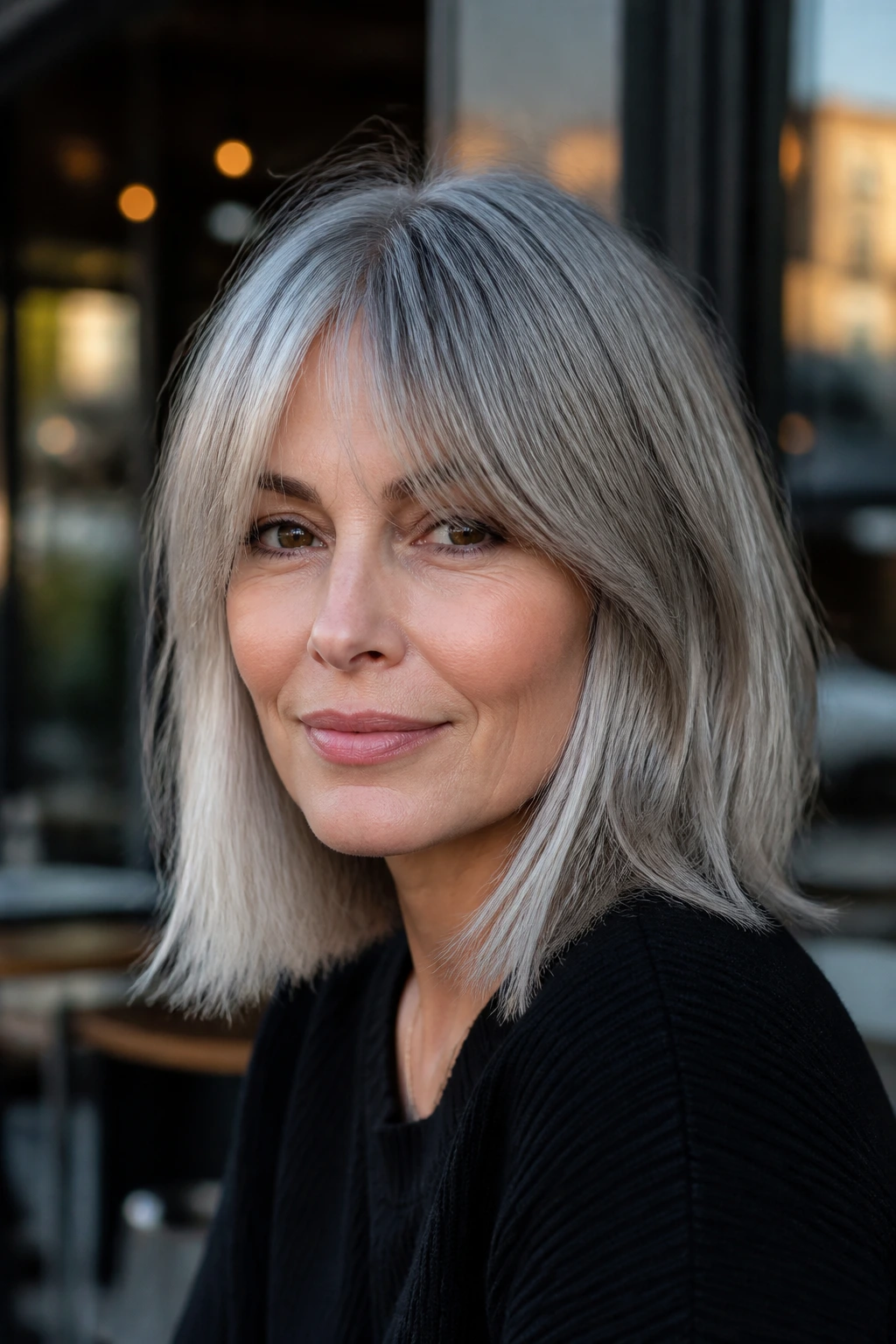
Glossy Ice-Silver Finish: Pair a blunt or angled lob with a cooler gloss every few weeks. The cut stays simple, but the color gets a brighter, more reflective surface that looks especially clean with black, white, or navy clothing.
Soft Smoke Shadow: Keep a deeper root shadow and allow the silver through the mids and ends. This is one of the easiest ways to make a grow-out look intentional, especially if your natural gray comes in patchy.
Air-Dried Wave Version: Ask for a lob with gentle internal layers and no heavy front pieces. Then let the texture do the work with leave-in conditioner and a small amount of mousse. It’s the least fussy path, and a lot of people need that more than they admit.
Fringe-Forward Cut: Add curtain bangs or a soft micro-fringe if you want to shift attention upward. This works well when the face needs more framing or when the forehead feels too exposed with a center part.
Curl-Enhanced Lob: Keep the length a touch longer so curls have room to spring up, and shape the perimeter with a soft rounded line. It’s a better choice than a sharp blunt cut for hair that refuses to stay straight anyway.
Frequently Asked Questions
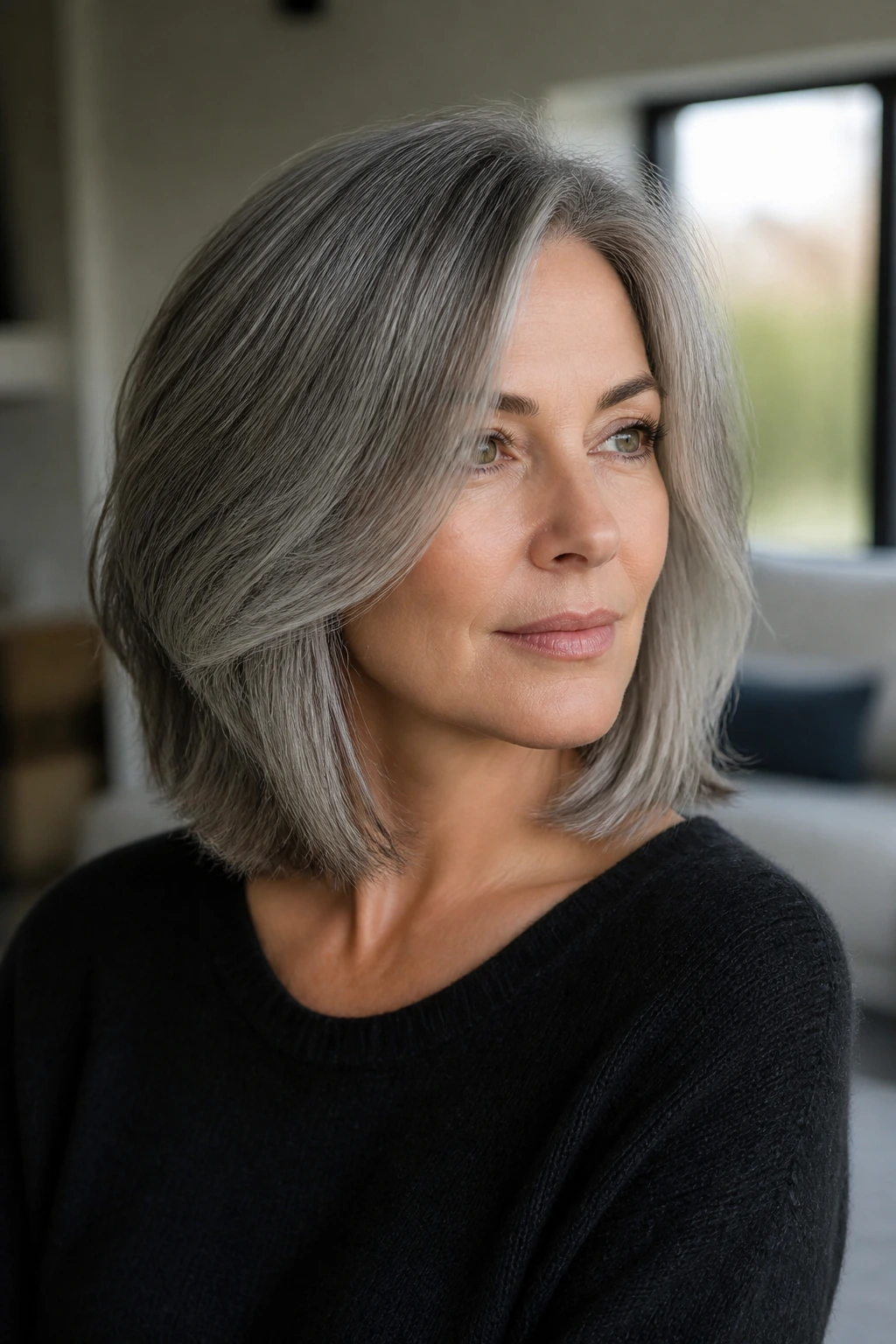
Will a lob make gray hair look thinner?
Not if the cut is shaped correctly. A blunt perimeter or subtle graduation can make fine gray hair look fuller, while too many short layers can do the opposite and leave the ends wispy.
What face shape works best with a gray lob?
Almost any face shape can wear one, but the details change. Round faces often look great with an angled front or deep side part, while square jaws usually soften nicely with curtain bangs or face-framing pieces.
Should gray lob haircuts be blunt or layered?
That depends on density and texture. Fine hair usually benefits from a cleaner edge, thick hair often needs internal layers, and wavy hair can take more texture without losing shape.
How often should I tone silver or gray hair?
Use toning shampoo only when the color starts to pick up yellow warmth, usually once every few washes rather than every wash. If the hair starts to look dull or dry, back off and use a moisturizing shampoo instead.
Can I wear a lob if my gray hair is curly?
Yes, and curly gray hair can look especially good at this length because the curl has room to move without ballooning into a triangle. Keep the cut a bit longer than you would for straight hair so the curls can shrink naturally.
What if my gray is still mixed with dark hair?
That’s where a root shadow or soft blending cut helps. A lob gives the contrast room to live, and the length softens the transition so the mix looks dimensional rather than patchy.
Do I need to blow-dry a gray lob every time?
No. A lot of these cuts look better with a mix of air-drying and light styling than with a full polished blowout every day. If you want the ends smooth, just hit the front pieces and perimeter with a brush and let the rest stay a little natural.
How do I stop the ends from looking dry?
Trim them on schedule, keep heat low, and use a small amount of serum only on the last inch or two. Gray hair can look thirsty fast, and overloading it with product often makes the dryness look worse, not better.
The Silver Sweet Spot
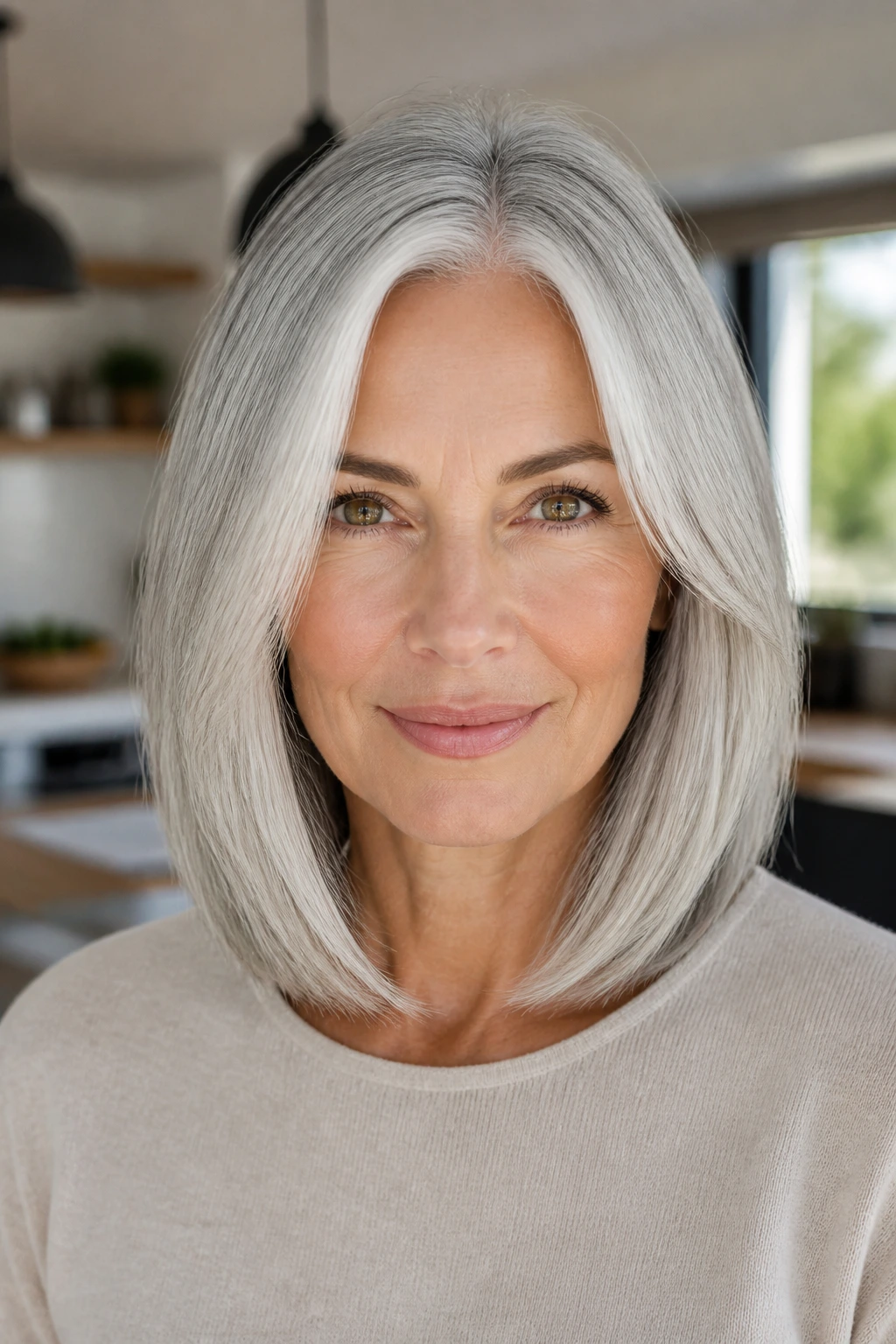
A good gray lob haircut does not hide silver hair. It frames it. That is the whole appeal, really. The cut gives the color a line to live in, and once that line is right, the hair stops looking like a problem to solve and starts looking like a choice.
The best part is how practical the cut can be. You can go blunt, shaggy, angled, air-dried, glossy, or softly layered, and the length still stays useful. That kind of flexibility is rare. If you’ve been looking for a shape that keeps silver hair modern without demanding a full-time styling job, a lob is one of the few cuts that can keep up.
Pick the version that matches your texture, your density, and the amount of effort you’re willing to put in on a Tuesday morning. The right one will do the rest.
