



A round face does not need to be hidden. It needs a sharper shape, a little lift at the crown, and short layers that stop the hair from sitting like a perfect circle around the cheeks.
That’s the part most bad haircut advice misses. A short cut is not the enemy here. The wrong silhouette is. A blunt chin-length line that ends right where the face is widest can make the whole thing look boxy, while the right layered shape breaks the outline, opens up the sides, and pulls the eye upward instead of sideways. Small change. Big difference.
The best layered short cuts for round faces do one or more of three things: they add vertical movement, they create diagonal lines across the forehead and jaw, or they keep bulk away from the cheeks. You’ll see all three show up below, sometimes in polished bobs, sometimes in shaggy little crops that look best when they’re slightly messed up. Good hair. Slightly rebellious. That’s the sweet spot.
Why These Layered Short Cuts Work on Round Faces
-
Crown height changes the whole read: A little lift at the top makes the face look longer because the eye travels upward first, not out to the sides.
-
Diagonal lines beat horizontal ones: Side-swept bangs, angled fronts, and off-center parts break up the roundness better than a straight-across edge.
-
The jawline needs breathing room: Cuts that skim past the widest part of the cheek or stay a touch below the chin keep the silhouette from getting squat.
-
Layers remove bulk without making the cut thin: Internal layers and soft texture stop short hair from puffing out at the sides, which is where round faces can start looking wider than they are.
-
Movement matters more than length: A cut with broken, piecey ends feels lighter and more vertical than a perfectly smooth bob that sits like a helmet.
-
Texture can do the flattering work for you: Waves, bends, and soft flips create irregular lines. That irregularity is your friend.
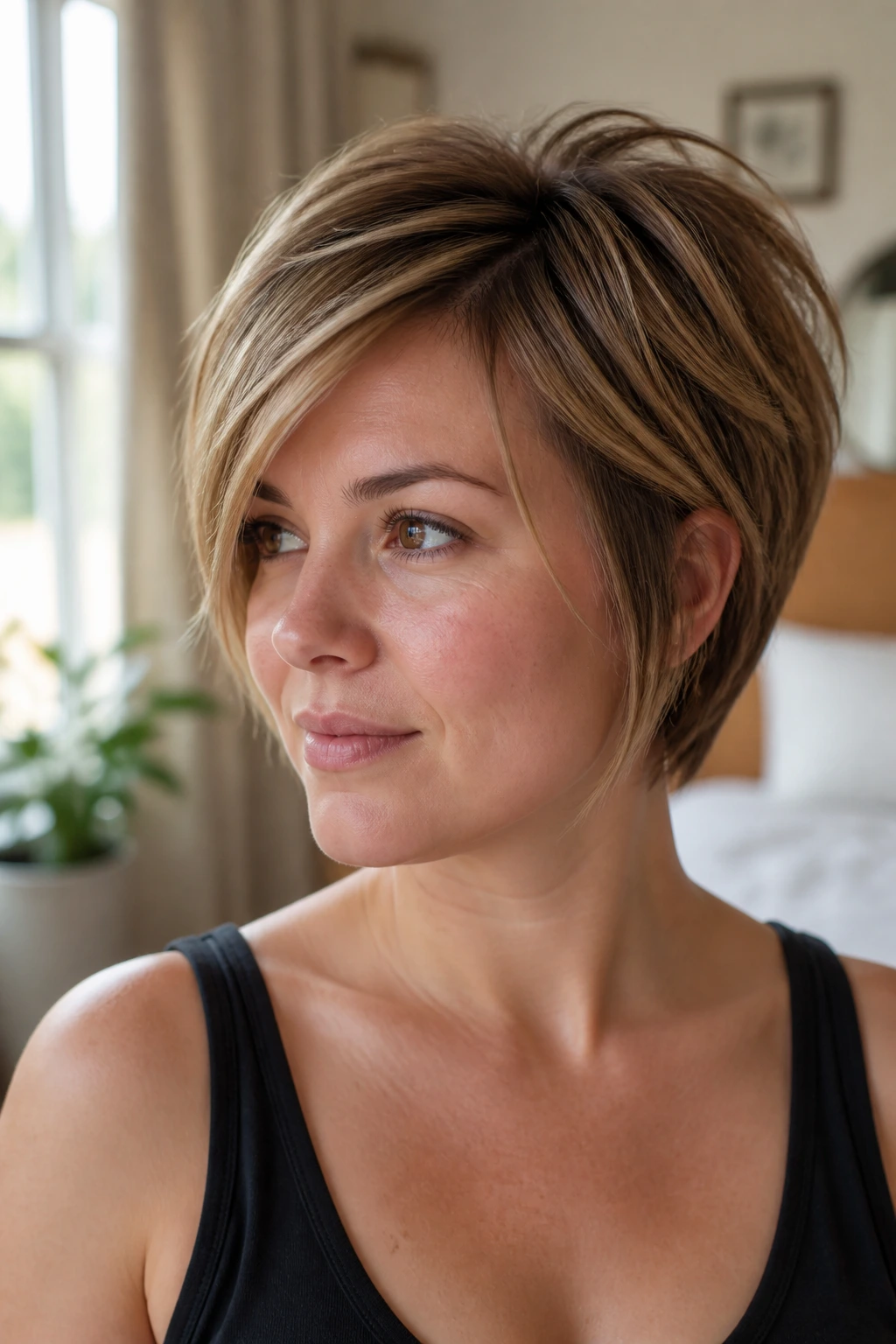
1. Textured Pixie Bob
A textured pixie bob sits in that sweet middle ground between a crop and a bob, which is why it works so well on a round face. The back stays neat, the top carries a little lift, and the front pieces can be left long enough to skim the cheekbone instead of sitting dead center on it. It feels modern without being fussy.
What I like about this cut is the balance. You get the openness of a pixie, but you keep enough length around the face to steer the eye downward in soft lines. Ask for choppy top layers, not a blunt stack, and keep the ends around the temples light instead of bulky. A quick blow-dry with mousse at the roots is usually enough.
2. Choppy French Bob
This one has attitude. The choppy French bob lands around the jaw or just under it, but the ends are broken up enough that it never looks like a hard shelf. On a round face, that matters. A blunt French bob can be gorgeous, but the choppy version gives you more room around the cheeks and more movement through the bottom edge.
Why It Flatters
The charm is in the looseness. The shape keeps the center of the face open while the scattered ends create small vertical interruptions instead of one wide line. A bit of fringe, especially one that parts in the middle or drapes to the side, helps even more.
If your hair is straight or slightly wavy, this cut is especially easy to live with. Air-dry it with a light cream, then rough it up with your fingers once it’s dry. Done too neatly, it can look stiff. This cut wants a little mess.
3. Side-Swept Layered Crop
A side-swept layered crop is one of the safest bets if you want short hair but don’t want your face to read fuller. The deep side part creates a diagonal line across the forehead, and that diagonal is doing real work. It breaks the symmetry that makes a round face look wider.
The layers should start higher on the crown and taper softly toward the temples. That keeps the sides from blooming outward in a puff. I’d ask for a fringe that can tuck behind the ear on one side and sweep across the brow on the other. It’s a small detail, but it changes the whole cut.
4. Feathered Bixie
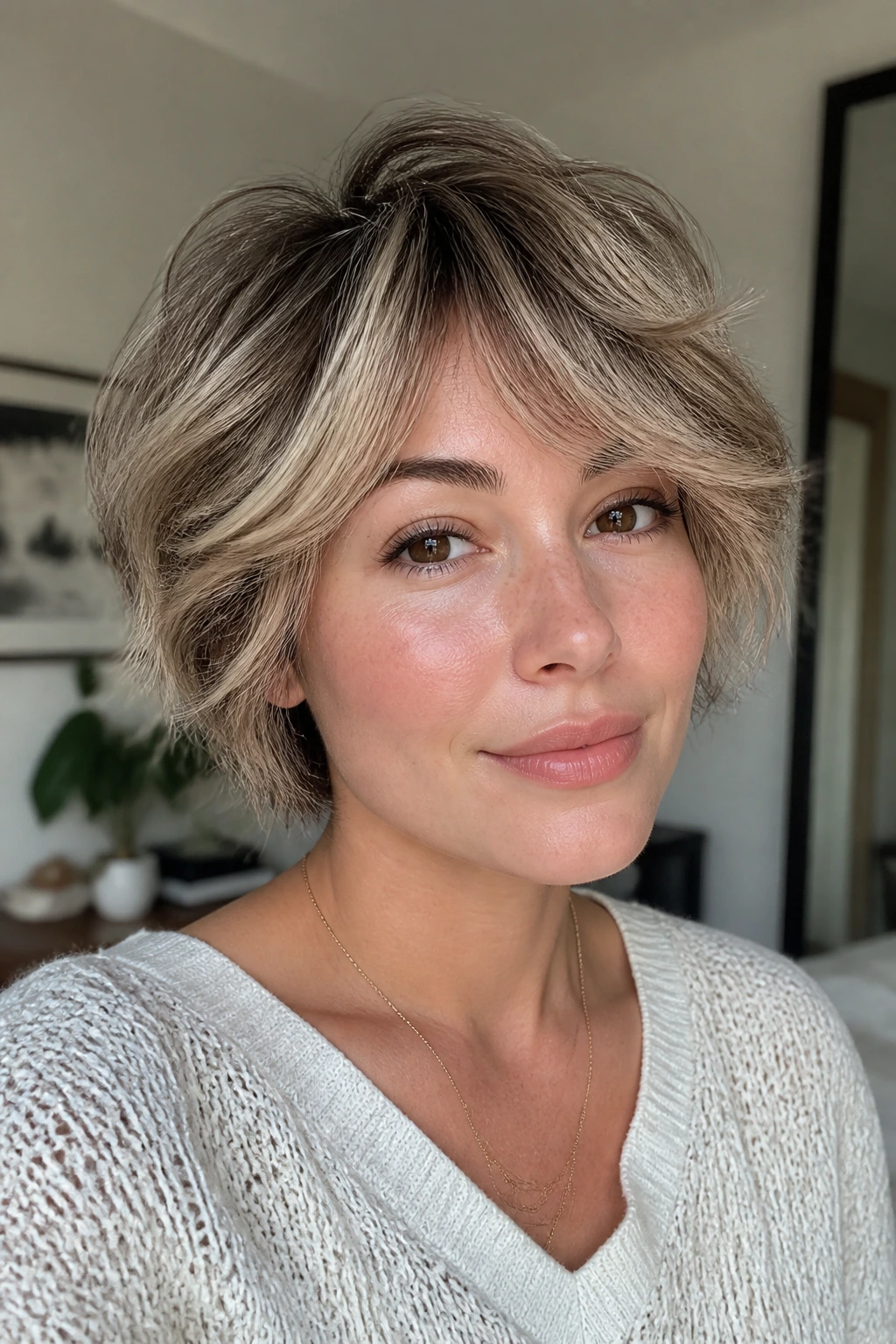
The bixie—part bob, part pixie—was made for people who want short hair with a little softness around the edges. Feathering matters here because it keeps the cut from clinging too close to the cheeks. Instead of one solid shape, you get airy layers that move when you turn your head.
Thicker hair usually loves this cut. The feathering removes weight, especially around the crown and mid-lengths, so the shape sits closer to the head instead of ballooning out. Style it with a light cream or smoothing milk and a round brush if you want polish. If you want it undone, a dab of texture paste is enough.
5. Angled Bob with Long Front Pieces
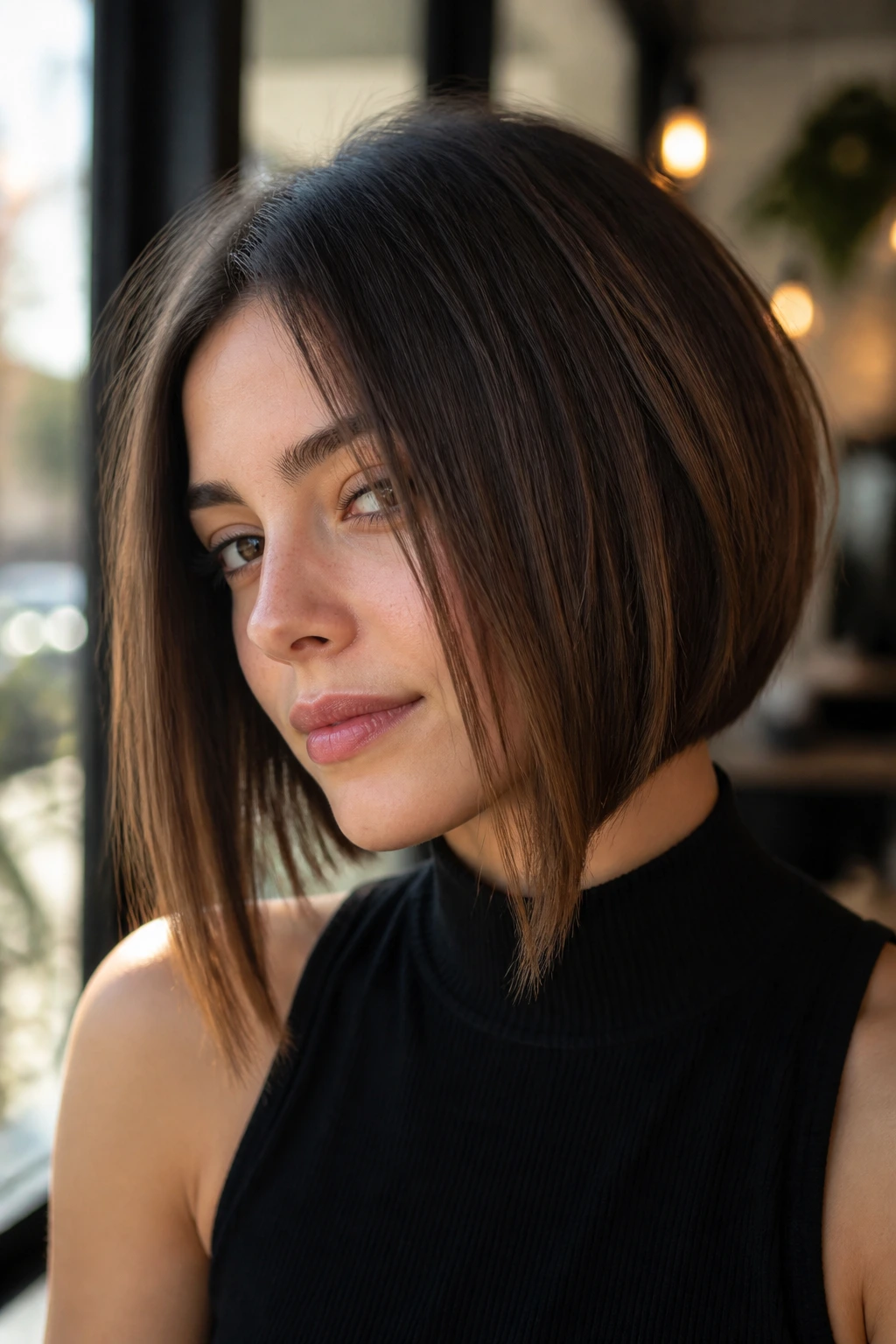
This is a blunt bob’s smarter cousin. The back is shorter, the front is longer, and the whole silhouette leans forward in a way that quietly lengthens the face. On a round face, those longer front pieces are the anchor. They drag the eye down past the chin instead of stopping it at the cheek.
You do want the angle to be obvious enough to matter. If the difference between back and front is too small, the cut loses the point. Ask your stylist to keep the front grazing the lips or the collarbone, not the cheek. That extra inch or two is doing more than people think.
6. Curly Layered Crop
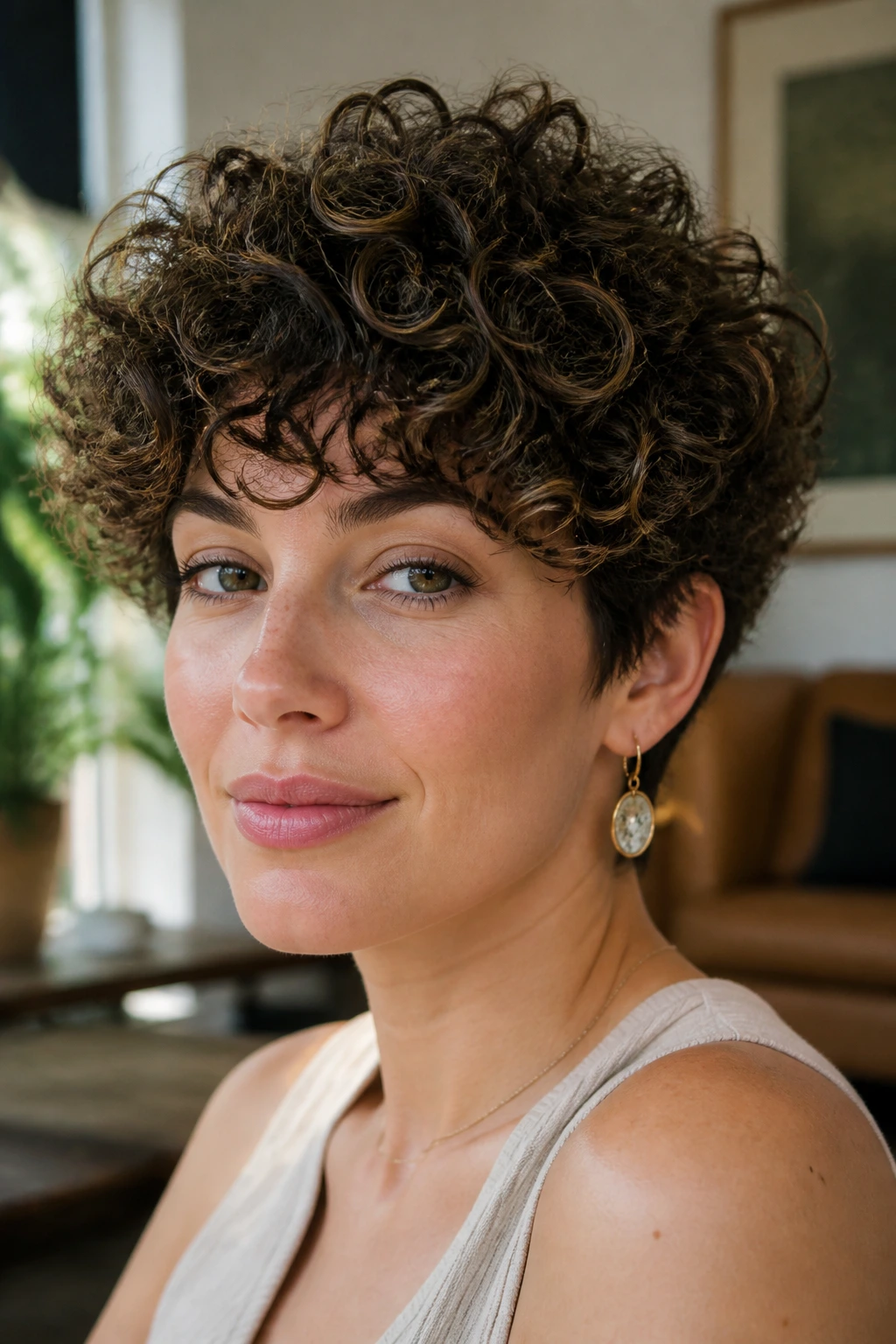
Curls need a different kind of thinking. A curly layered crop is not about making the hair smaller; it’s about placing the layers so the curls stack in a shape that rises a little at the top and stays controlled at the sides. A round face and a halo of side volume can become too much, fast.
Dry cutting or careful curl-by-curl shaping usually works best. You want the shortest layers to sit high enough to build shape without landing right on the cheek. Leave enough length around the perimeter so the curls don’t spring up into a ring that widens the face. Diffuser, low heat, touch it less than you want to. That last part is always the hardest.
7. Shaggy Bob
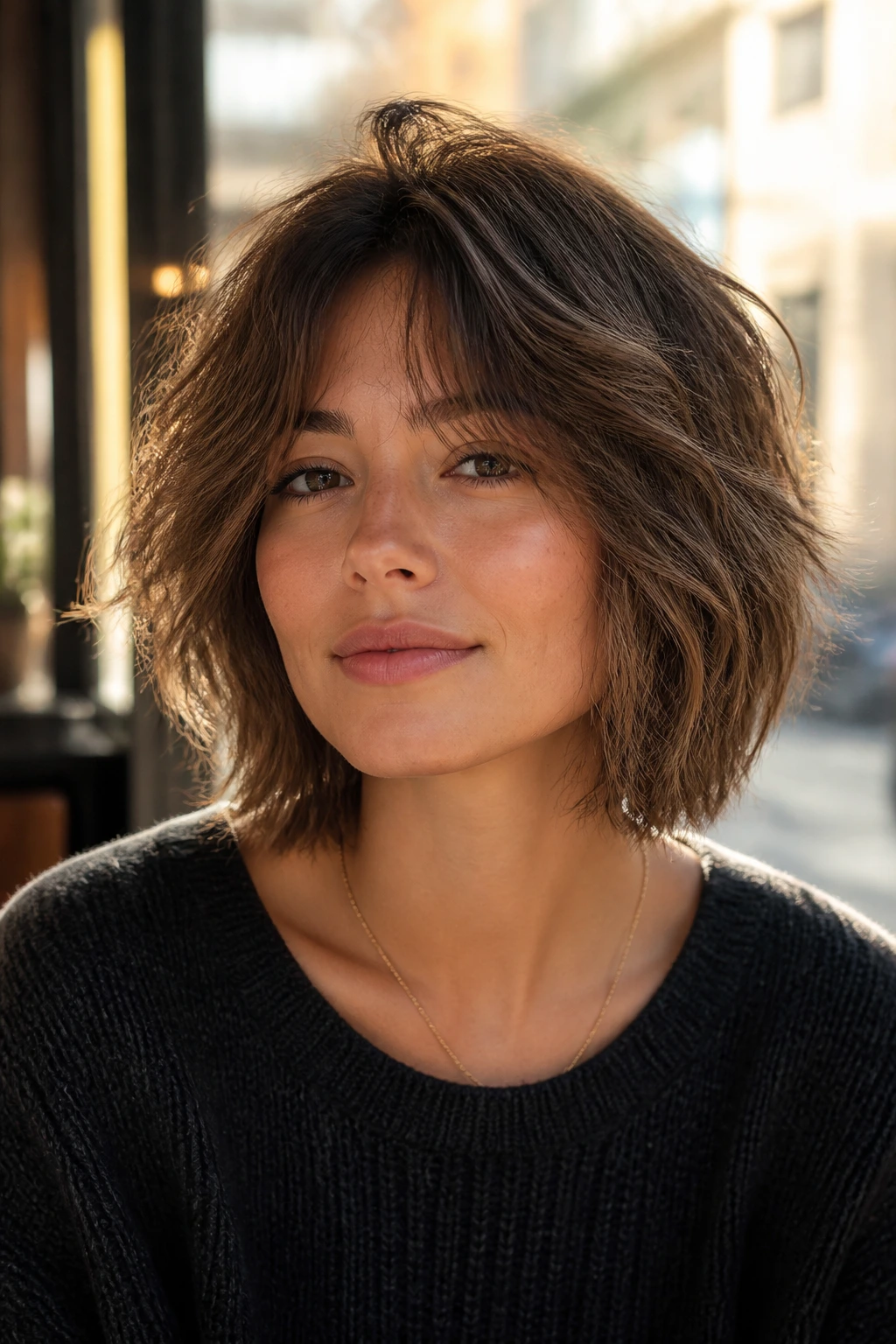
A shaggy bob has that lived-in thing people chase but don’t always know how to ask for. The layers are broken, the ends are roughened, and the crown has enough lift to keep the whole cut from sitting flat against the face. For a round face, the irregular line is the win.
This cut is especially good if your hair has a natural bend. Straight hair can wear it too, but it usually needs a little help from a wave spray or a soft bend with a flat iron. Keep the perimeter slightly longer than a classic bob, and do not let the layers bunch up at cheek level. That’s where the roundness creeps back in.
8. Rounded Bob with a Tapered Nape
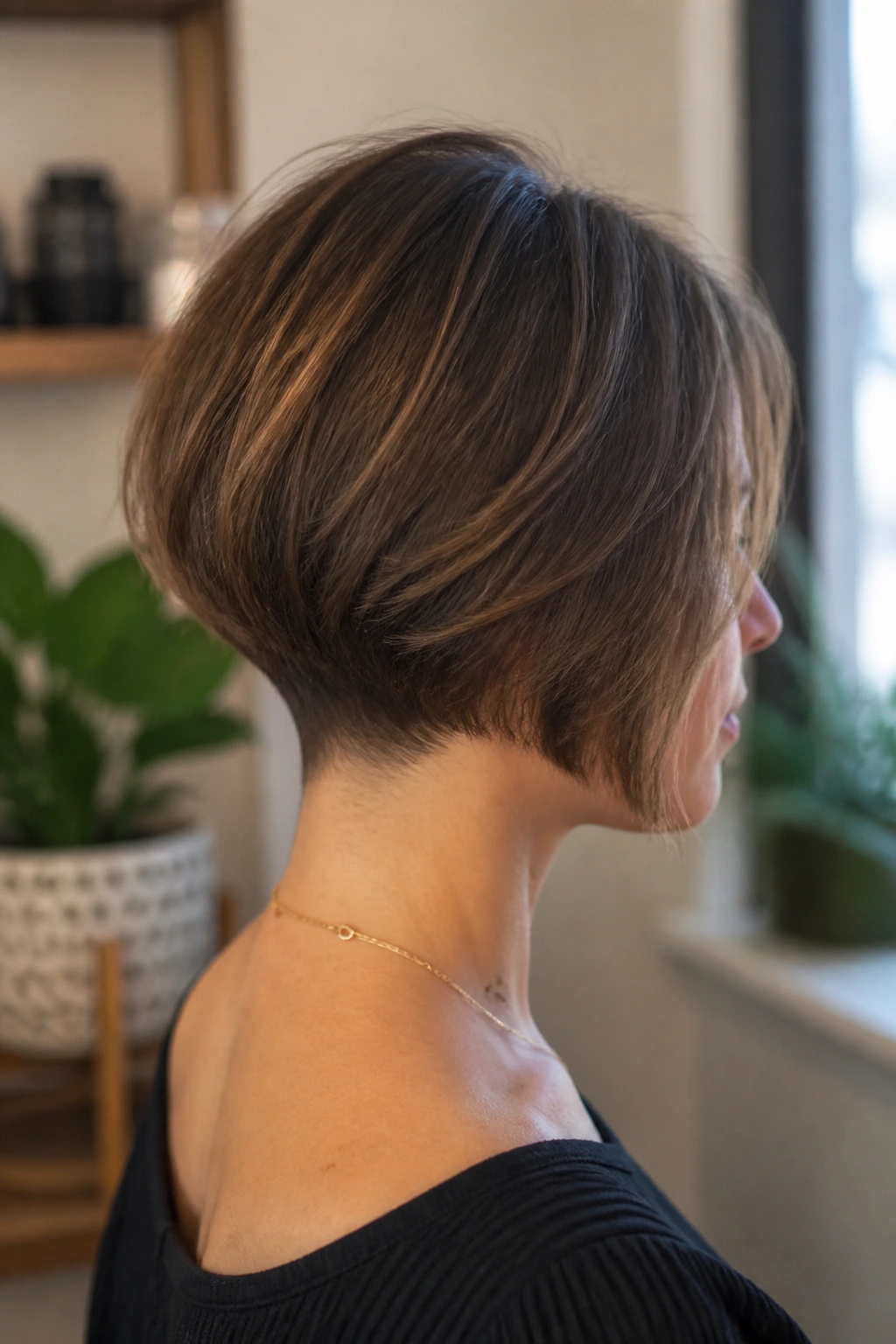
Yes, a rounded bob can work on a round face. The trick is that the roundness has to live in the back and nape, not at the cheeks. A tapered nape keeps the neckline neat, while the front stays longer and softer so the face doesn’t get boxed in.
Best For
- Hair that grows thick at the back of the head
- People who want a polished shape without a blunt edge
- Anyone who likes to tuck one side behind the ear
What makes this cut different is the restraint. You are not piling width onto the sides. You are building a curve that collapses inward under the chin. That sounds small. It is not. Ask for internal weight removal, not extra layering on the outside.
9. Asymmetrical Layered Bob

Asymmetry is one of the easiest ways to nudge a round face into looking more elongated. One side sits a little longer, the part shifts off-center, and the whole cut gains a directional pull. Your eye does not sit still on a haircut like this.
The best version is subtle, not dramatic enough to scream for attention every time you blink. One side can graze the jaw while the other stops higher. That difference creates movement without losing balance. If your hair falls straight and flat, this shape gives it an edge it would not otherwise have.
10. Curtain-Bang Bob
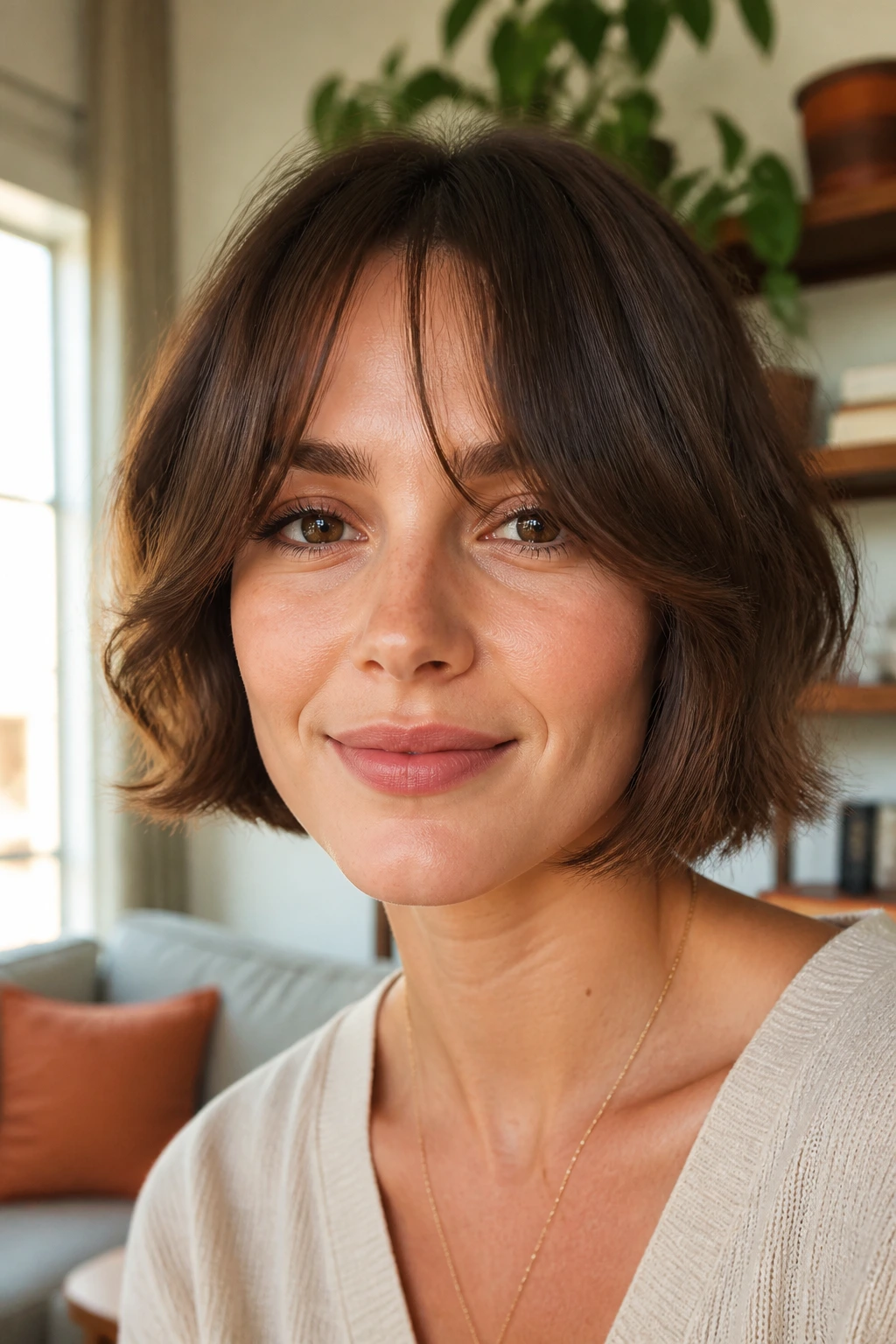
Curtain bangs can be fantastic on a round face when they are cut with enough openness. You do not want a thick, heavy curtain that lands right over the cheeks. You want a softer split that starts shorter near the center and drapes away toward the sides.
The bob underneath can stay chin-length or a touch longer. That way, the fringe frames the eyes while the length carries the line downward. The whole look feels airy if the bangs are styled with a round brush and a little bend at the ends. Flat curtain bangs are a miss here. They can shorten the face and make the midsection look wider.
11. Piecey Crop with Long Top Layers
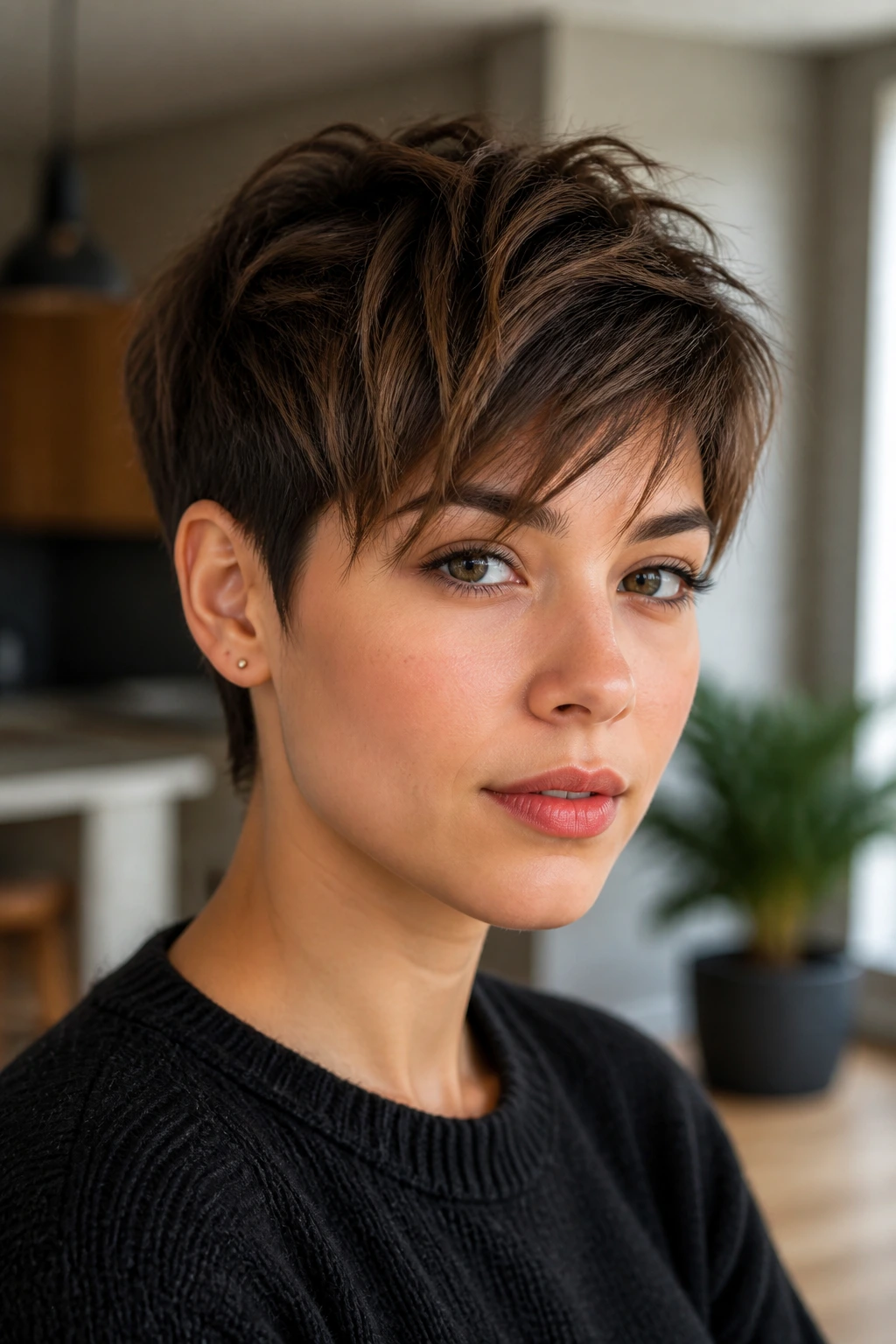
This cut is all about contrast. The sides stay tight and clean, while the top layers hold more length so you can push them forward, upward, or slightly off to one side. On a round face, that top-heavy shape works because it creates height where you want it most.
A piecey crop can look almost tough when it’s cut right. The good kind of tough. Not harsh. The ends should be broken, not buzzed to a finish that feels too severe. Use a bit of matte paste and pinch the top into small segments. That separation keeps the cut from becoming one soft blob.
12. Soft Wolf Cut Short
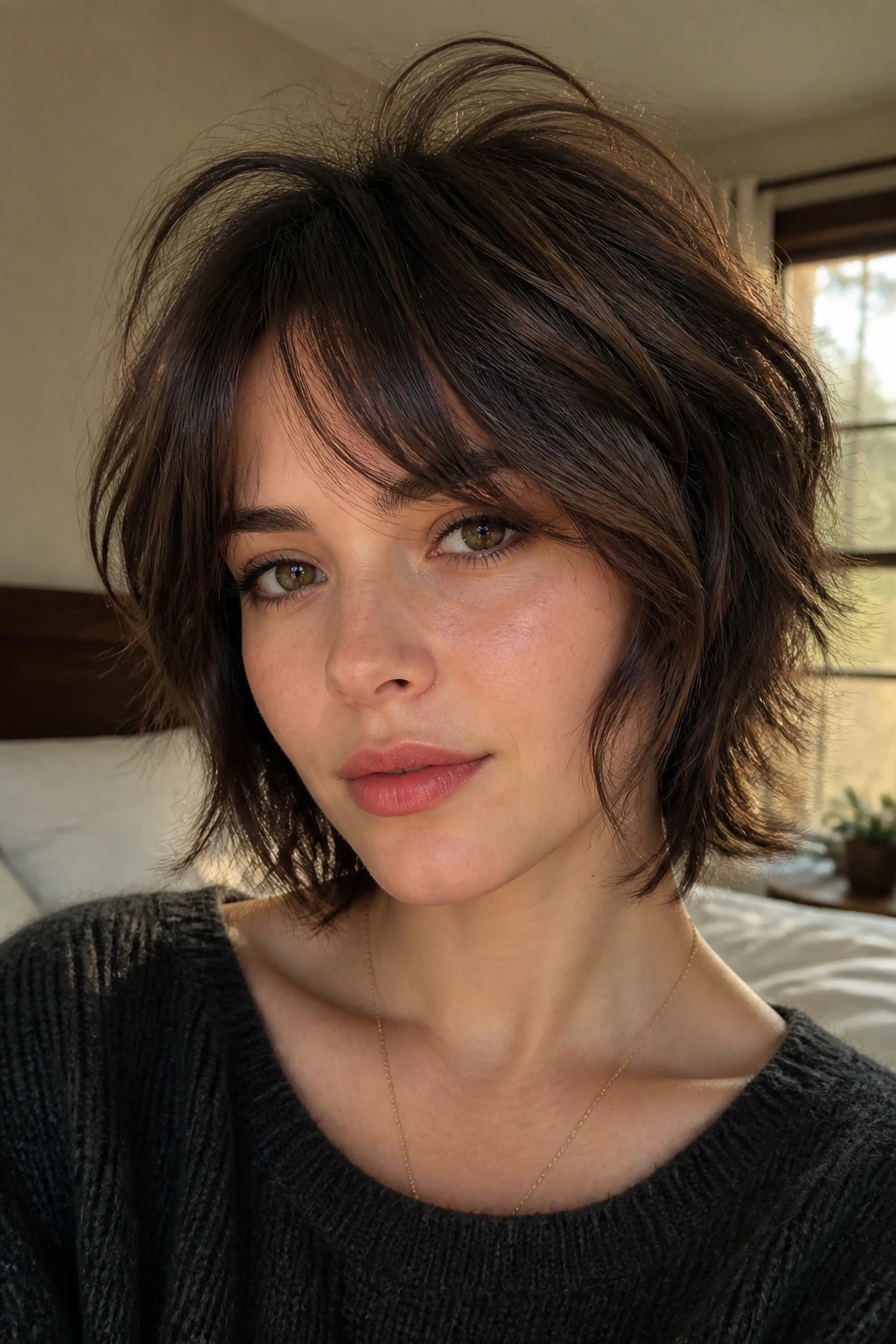
The short wolf cut takes the shag idea and makes it a little wilder, but the best versions for round faces are softer than the social-media photos suggest. You want disconnected layers, yes, but you also want the front to fall in a way that opens the cheeks instead of crowding them.
What I love here is how much attitude you get with not much length. The crown can be lifted for height, the nape stays lighter, and the front pieces can curve away from the widest part of the face. If your hair has wave, this cut almost styles itself. If it’s straight, expect to spend a few extra minutes bending the ends with heat.
13. Tucked-In Layered Lob

A lob sounds longer than “short cut,” and fair enough, but a tucked-in layered lob still belongs in this conversation because it’s one of the safest transitions if you are nervous about going too short. The layers are subtle, the perimeter stays soft, and the length usually sits around the collarbone or a little above.
This length helps a round face because it skips past the widest cheek area and gives the neck some visual space. Tuck one side behind the ear, leave the other loose, and the asymmetry does half the work for you. It’s also one of the easiest cuts to grow out without regret. That matters more than people admit.
14. Razor-Textured Pixie
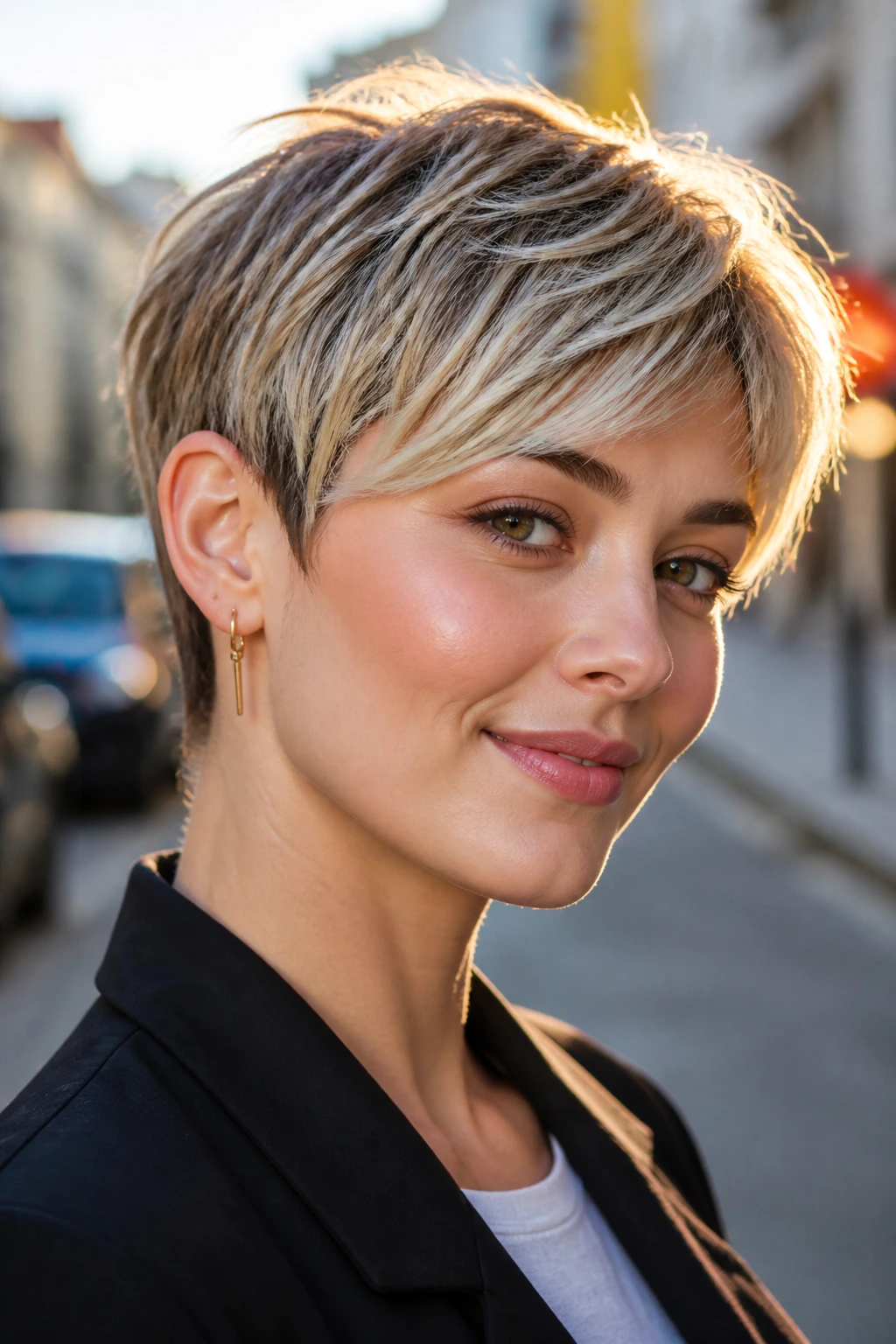
A razor-textured pixie has a lighter edge than a scissor-cut pixie. The razor softens the perimeter and creates little slivers of movement, which keeps the sides from feeling too dense. For a round face, that softness is useful, but it needs to be controlled. Too much slicing and the cut can look wispy instead of shaped.
Ask for more length on top than you think you need. The crown is what keeps this style from collapsing into a round little cap. A side-swept front helps too, especially if your forehead is on the shorter side. One of those cuts that looks easy and actually took some thought. Always a good sign.
15. Layered Undercut Bob
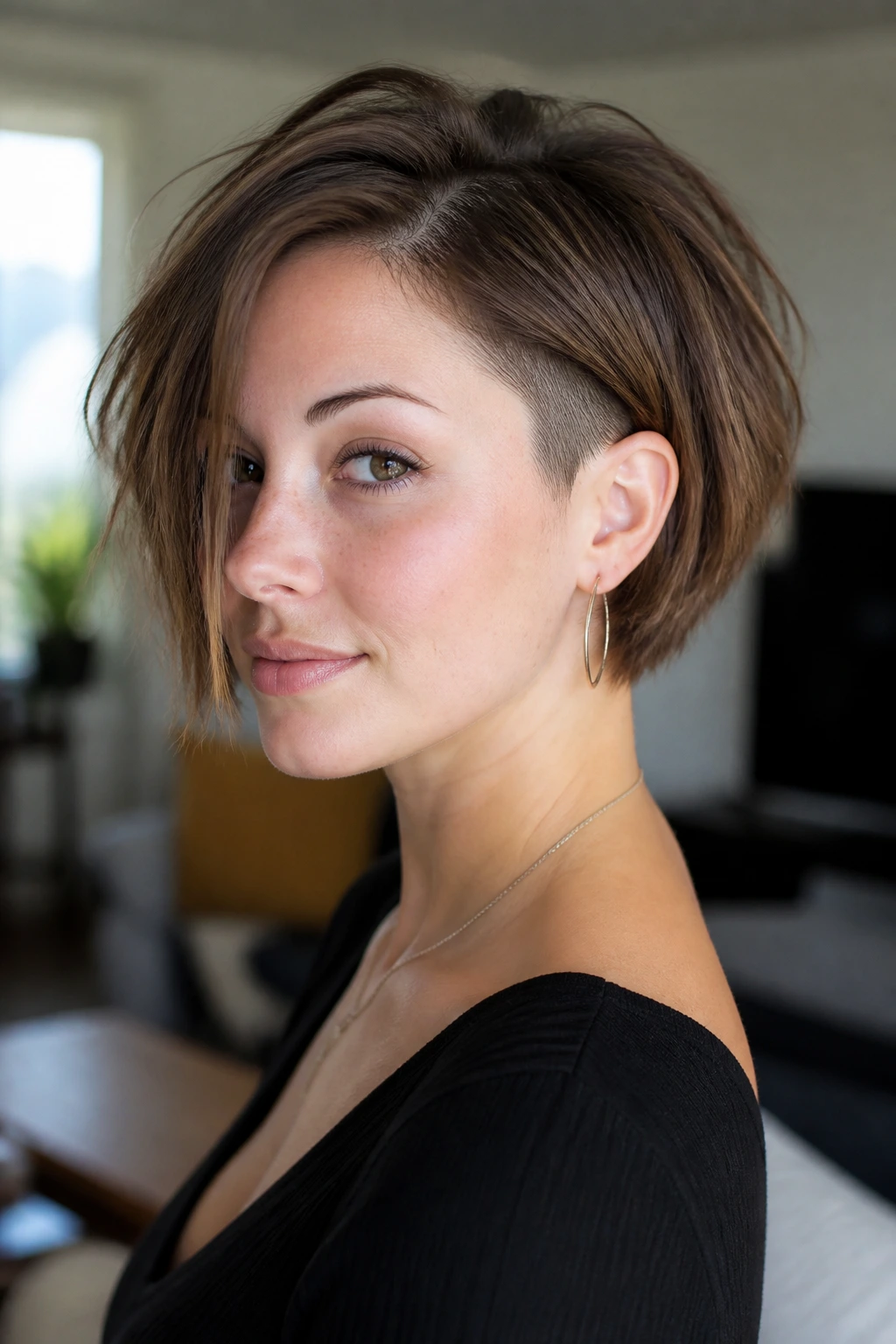
This is the move for thick hair that wants to expand into a triangle every time humidity shows up. A layered undercut bob removes hidden bulk underneath while leaving the outer shape clean and elegant. The result is less puff at the cheeks, which is exactly what a round face needs.
The undercut does not have to be dramatic or visible. It can live at the nape, behind the ears, or under the back section where the weight tends to collect. The visible layers then sit closer to the head and move better. If your hair is heavy and you hate spending ten minutes just trying to get it to lie down, this one is worth bringing to the salon.
16. Soft Mullet Crop
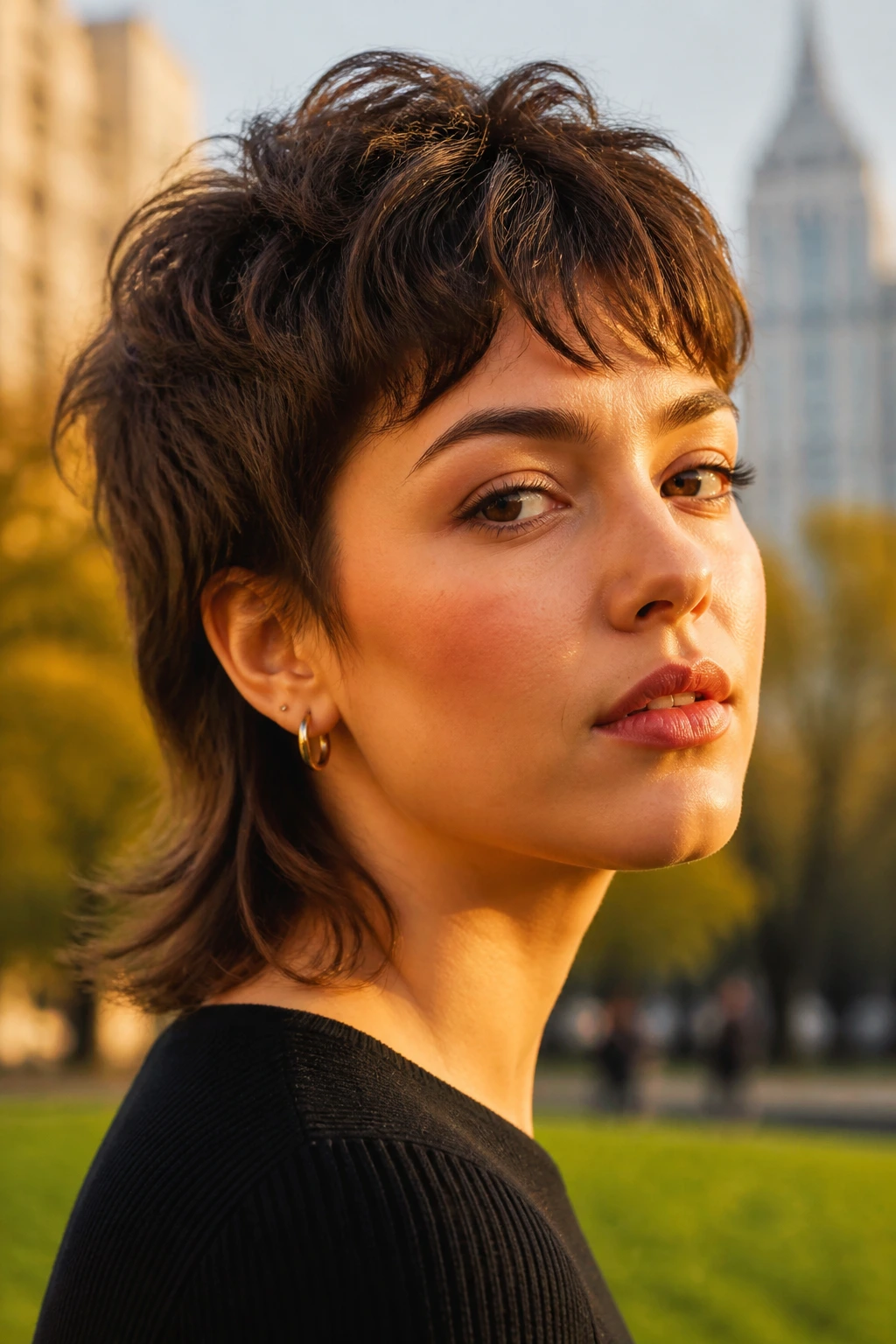
The modern mullet gets a bad rap because people picture the old-school version with a hard disconnect and too much attitude in the wrong places. The soft crop version is smarter. Shorter around the top and sides, a little longer through the back, and layered enough to keep the shape from turning lopsided.
On a round face, the slight elongation in the back helps. It pulls the silhouette down and away from the cheeks. Keep the top fluffy enough for lift but not so short that it stands straight up. This cut is better with a bit of bend and a little grit. Perfectly smooth hair can make it feel too severe.
17. Chin-Length Flip Bob
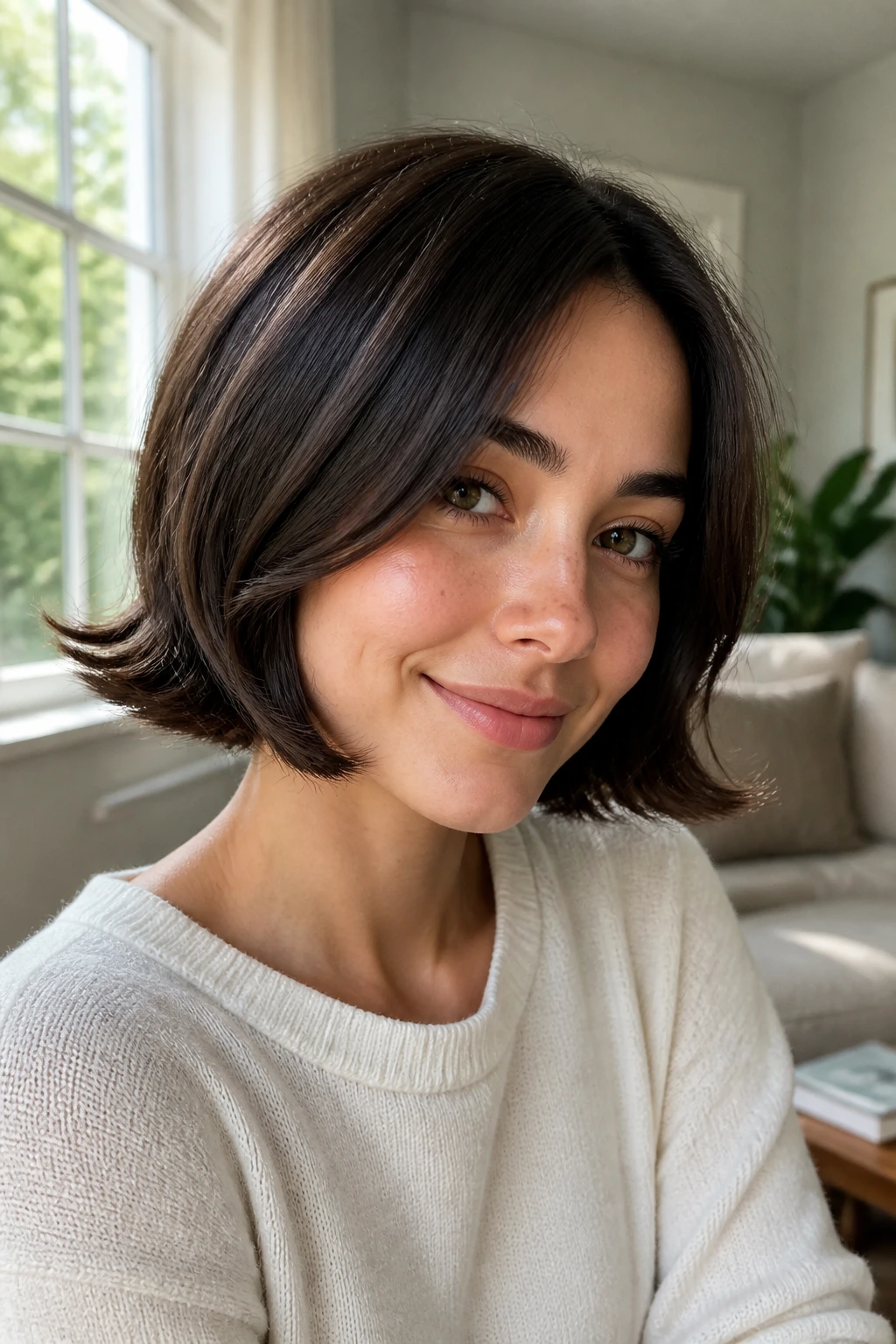
A chin-length bob can be tricky on a round face, but if the ends flip outward instead of curling inward, the whole thing changes. The outward flip moves the focus away from the jaw and keeps the lower edge from sitting like a shelf. That little motion matters.
The shape works best when the flip starts just below the chin and doesn’t bulk up at the sides. A round brush or a quick pass with a flat iron can set the ends away from the face. If your hair naturally kicks out, even better. I’d avoid this one if your hair tends to puff at the temples, because the flip can make that worse.
18. Wavy Razor Bob
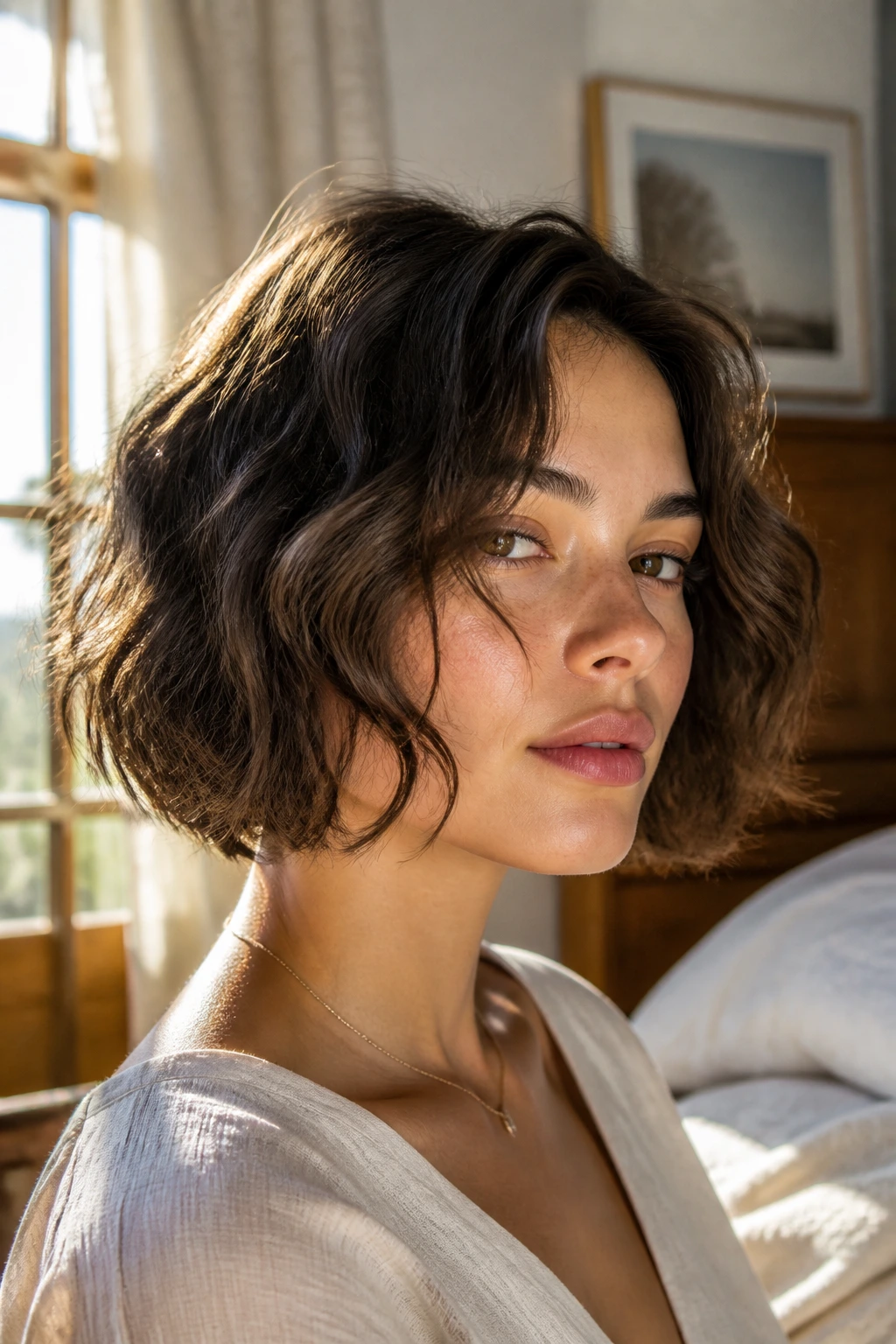
This is the relaxed cousin of the clean bob. The razor creates softer edges, and the wave gives the cut enough irregularity to avoid that too-perfect roundness that can make a face feel wider. It’s especially good on hair that gets a little texture when air-dried.
The best part is how the waves disrupt the line. A round face likes that. You want the hair to move in small, uneven turns instead of sitting in one exact curve around the jaw. Use a heat protectant, bend a few sections loosely, and leave the ends a little imperfect. Clean is fine. Overdone is not.
19. Inverted Bob with Crown Volume
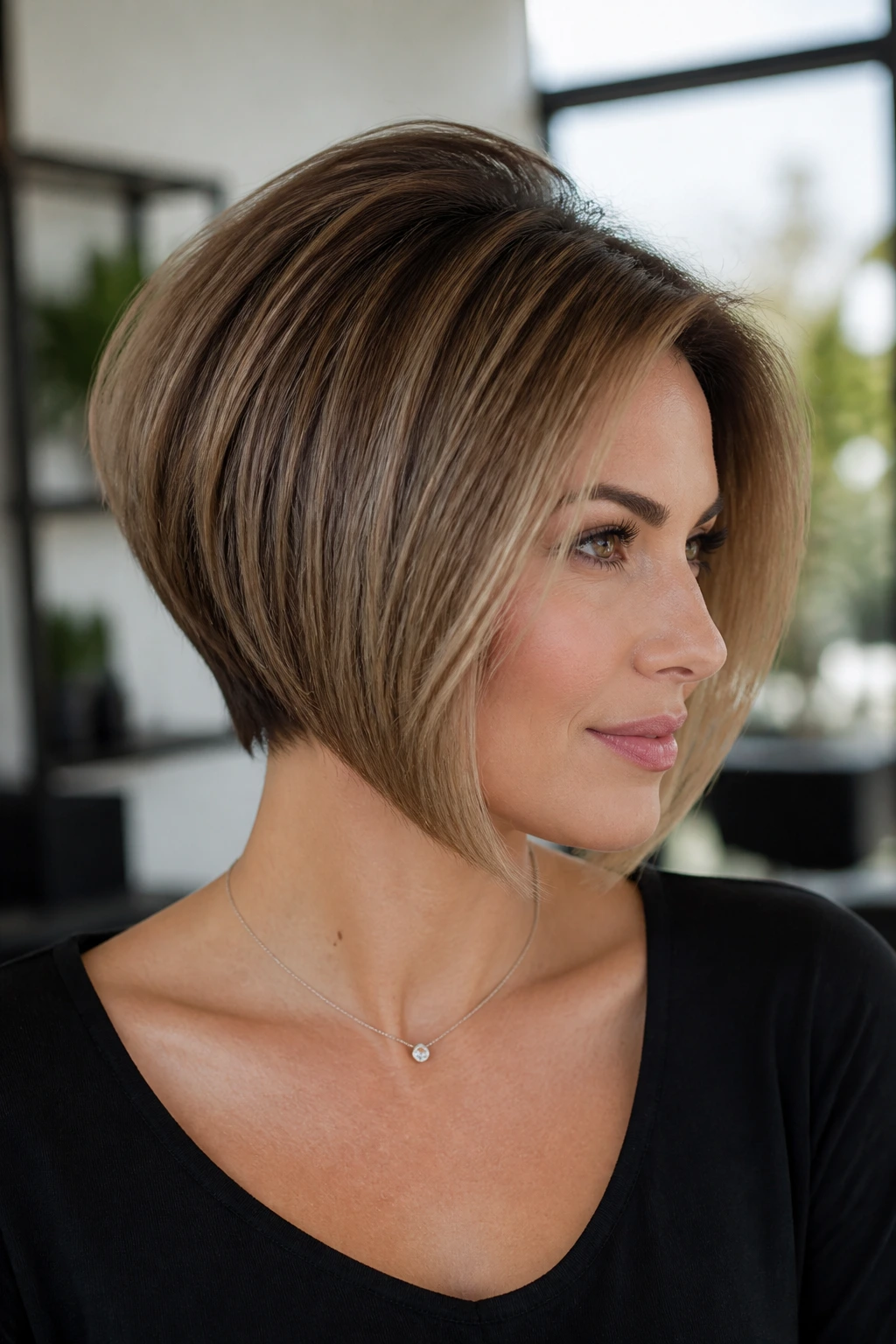
An inverted bob builds the shape where you want it. Shorter in the back, longer in the front, and lifted through the crown, it creates a line that angles down instead of out. On a round face, that angle is pure gold.
The secret is keeping the back stacked without making the sides too puffed. A heavy stack can add bulk right where the face already has fullness. Ask for the crown to be full but controlled, and the front to land below the chin. If you like a neat cut that still has some energy, this is one of the strongest options on the list.
20. Sliced Bob with a Deep Side Part
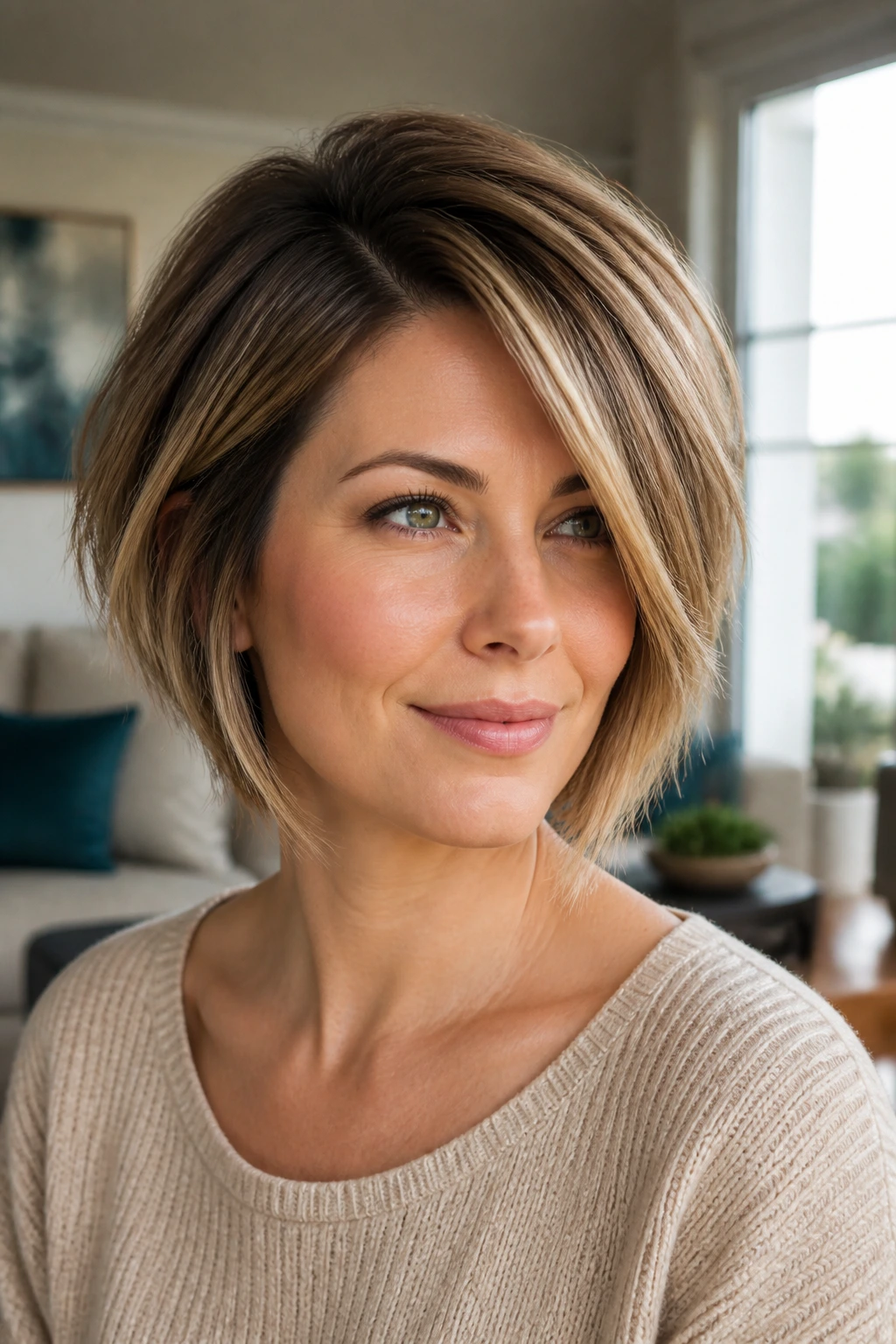
The deep side part does a lot of work here, but the sliced layers are what keep the cut from feeling rigid. “Sliced” means the layers are separated with intention, so the ends don’t clump into one block. That separation keeps the hair moving and helps the face look longer.
This style is useful if you want something polished enough for work but not plain. The side part creates lift at the root, and the layers fall in a direction that feels slimmer through the cheeks. It’s a very practical haircut. Not flashy. Just smart.
21. Tousled Crop with Wispy Fringe

A tousled crop with a wispy fringe has a softer, more casual feel than some of the sharper cuts above. The fringe is light, so it does not cut the face in half, and the texture on top keeps the shape from sitting low and wide. It is the haircut version of rolling your sleeves up and looking better for it.
This works especially well if you hate a lot of styling. A little salt spray, a quick scrunch, and you’re done. The fringe should be thin enough to show skin between the pieces. That space matters on a round face. Dense bangs across the forehead tend to shorten everything.
22. Collarbone Short Shag

The collarbone short shag gives you short layers without committing to a super-short cut. It lives in the in-between zone, which is often where round faces look best because the hair can still fall past the cheeks while keeping plenty of motion near the face.
The layers should start high enough to build lift at the crown and then fall in broken pieces around the jaw and neck. If your hair is thick, this is a very forgiving shape. If it’s fine, ask for softer layers so the ends don’t get too transparent. I like this cut for people who want movement first and shape second. You get both, but movement leads.
23. Graduated Bob with Internal Layers
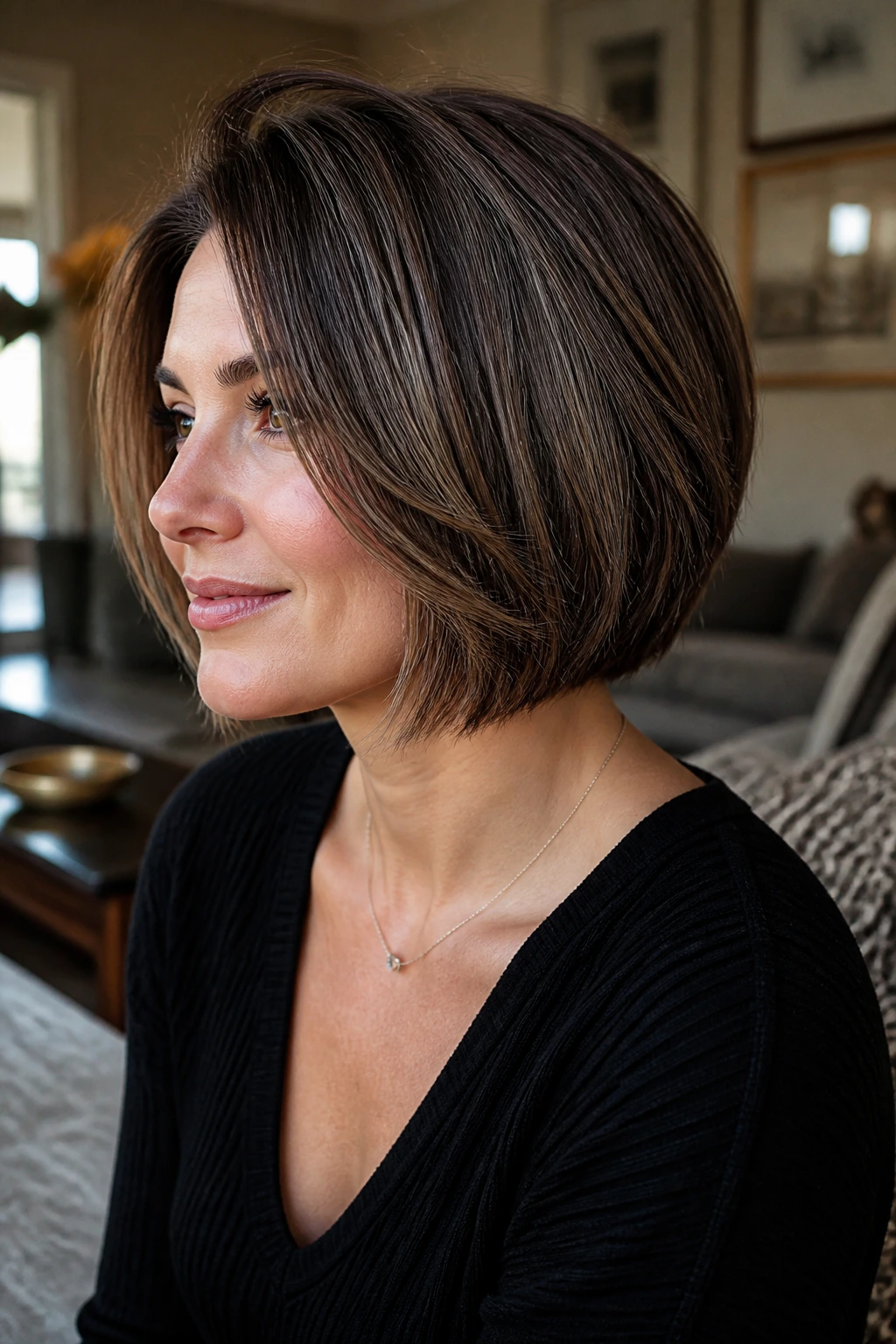
A graduated bob sounds formal, but the internal layers make it much more useful than a stiff salon-board version. The exterior line stays smooth, while the hidden layers remove bulk from the inside. That means less puff at the cheeks and more control overall.
For a round face, this is a sneaky strong choice because it gives you structure without a hard outer line. The front can be slightly longer to keep the face open. If you want neat hair that still has breathing room, this is one of the cleanest solutions. It looks expensive when it is cut properly. More importantly, it behaves.
24. Choppy Pageboy Bob
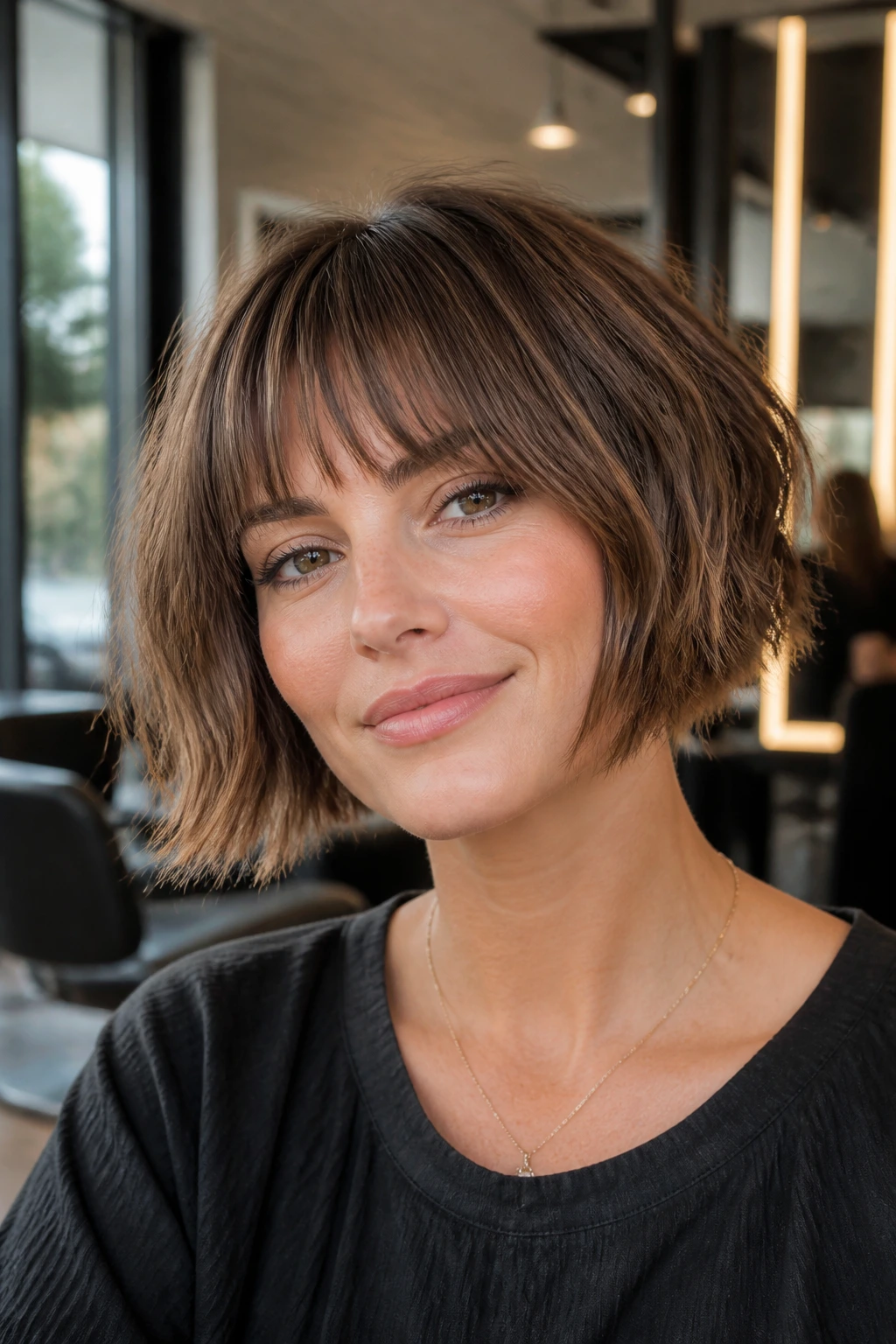
A modern pageboy bob can be a little surprising on a round face because the old version was famously rounded. The updated version fixes that by adding choppy ends, a softer edge, and a slightly longer front. The shape keeps the vintage feel without the old helmet effect.
What saves it is the texture. If the perimeter is too smooth and too curved, the whole cut can echo the roundness of the face in the wrong way. Break it up. Let the ends flick a little. Keep the crown lifted and the fringe airy. Then it starts to feel directional instead of circular.
25. Bouncy Layered Crop with Swoopy Bangs
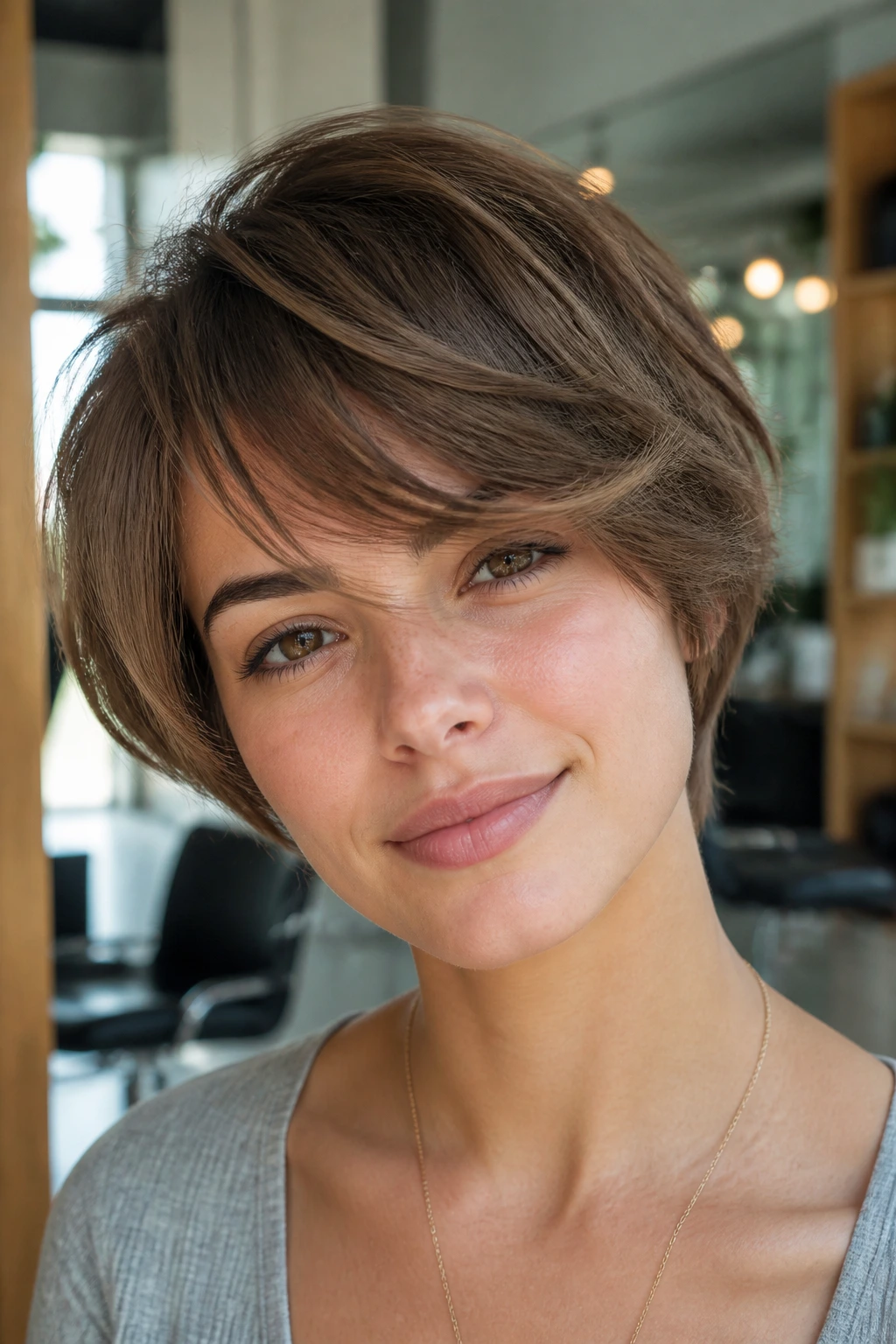
This cut has a little energy in it. The bangs sweep across the forehead instead of sitting straight, and that swoop pulls the eye diagonally, which is exactly what round faces need. The rest of the crop stays layered and bouncy so the cut does not collapse into one flat shape.
If your hair has natural volume, you may barely need to style it. If it lies flat, a round brush at the roots and a quick bend through the bang area will change the shape fast. The swoop should start high and curve away from the cheek, not drop into the widest part of the face. That small move is the whole haircut.
26. Ear-Grazing Crop with an Elongated Fringe
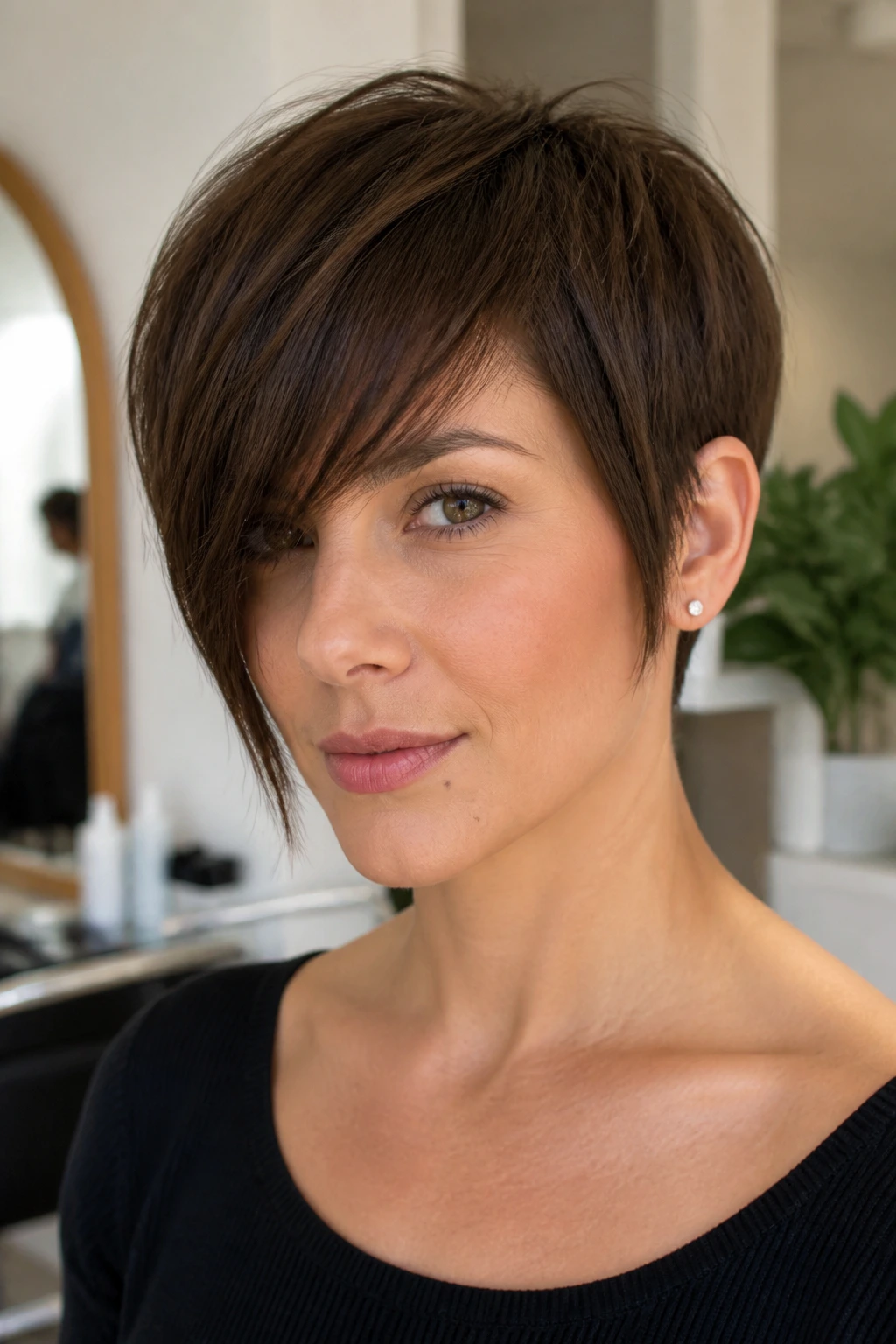
An ear-grazing crop can be very flattering when the fringe is kept longer. The short sides show off the face, but the elongated front piece creates the vertical line that keeps the shape from spreading out. It feels sharp in a good way.
This is one of the more confident options on the list. There’s no hiding behind extra length, so the cut has to be precise. The ears can be partly covered or fully exposed, depending on how bold you want to go, but the longer fringe should always be there to keep the eye moving. If you wear earrings, this cut gives them room to matter. Nice bonus.
27. Mini Lob with Long Side Framing
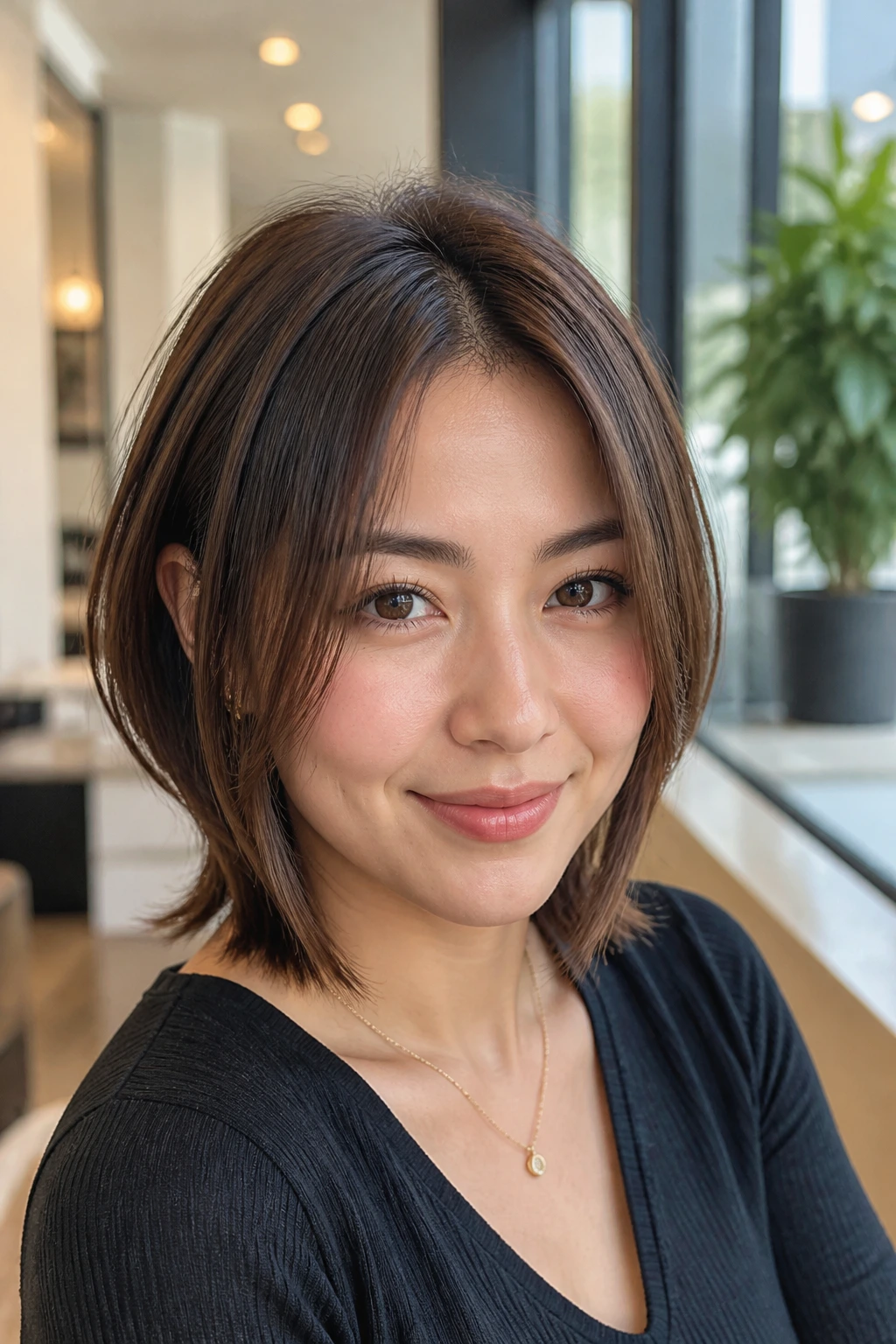
A mini lob is the easiest short cut to wear if you still want enough length to tuck, bend, and pin. The long side-framing pieces are what make it work on a round face. They break the width at the cheeks and give the cut a slightly tapered feel without making it severe.
I like this one for people who want an actual haircut, not a “I woke up and chopped my hair off” moment. It’s neat, but not stiff. Long enough to pull back on hot days, short enough to feel lighter at the neck, and flexible enough to wear straight, wavy, or air-dried. That flexibility is half the appeal.
The Shape Logic Behind Short Layers
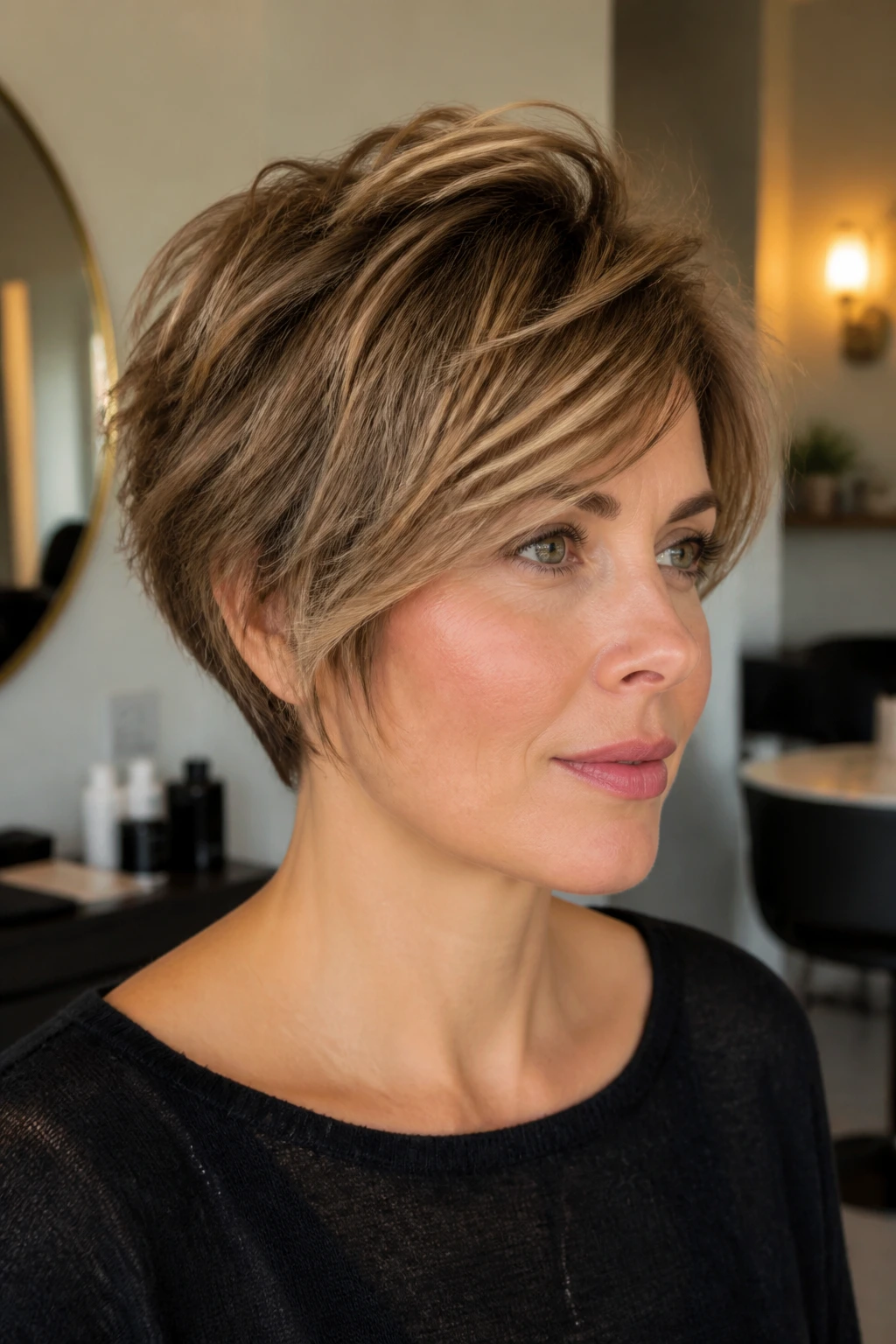
Short layered cuts succeed on a round face when they change where the eye lands. That’s the whole game. If the silhouette is widest at the cheeks and ends right there, the face can look broader. If the haircut builds at the crown, breaks up the sides, or angles forward below the jaw, the face starts reading longer and leaner.
There’s a second piece people miss. Weight placement matters more than length alone. A short haircut with too much width at the temples can look heavier than a slightly longer one with slimmer sides. So when you talk to a stylist, don’t ask for “more layers” as a vague fix. Ask where the weight should live, because that’s the real question.
A round face usually looks strongest with one or more of these moves: a side part, an angled front, a lifted crown, or soft length below the widest point of the cheeks. Not all at once. A clean combination is better than a pile of tricks. You want shape, not confusion.
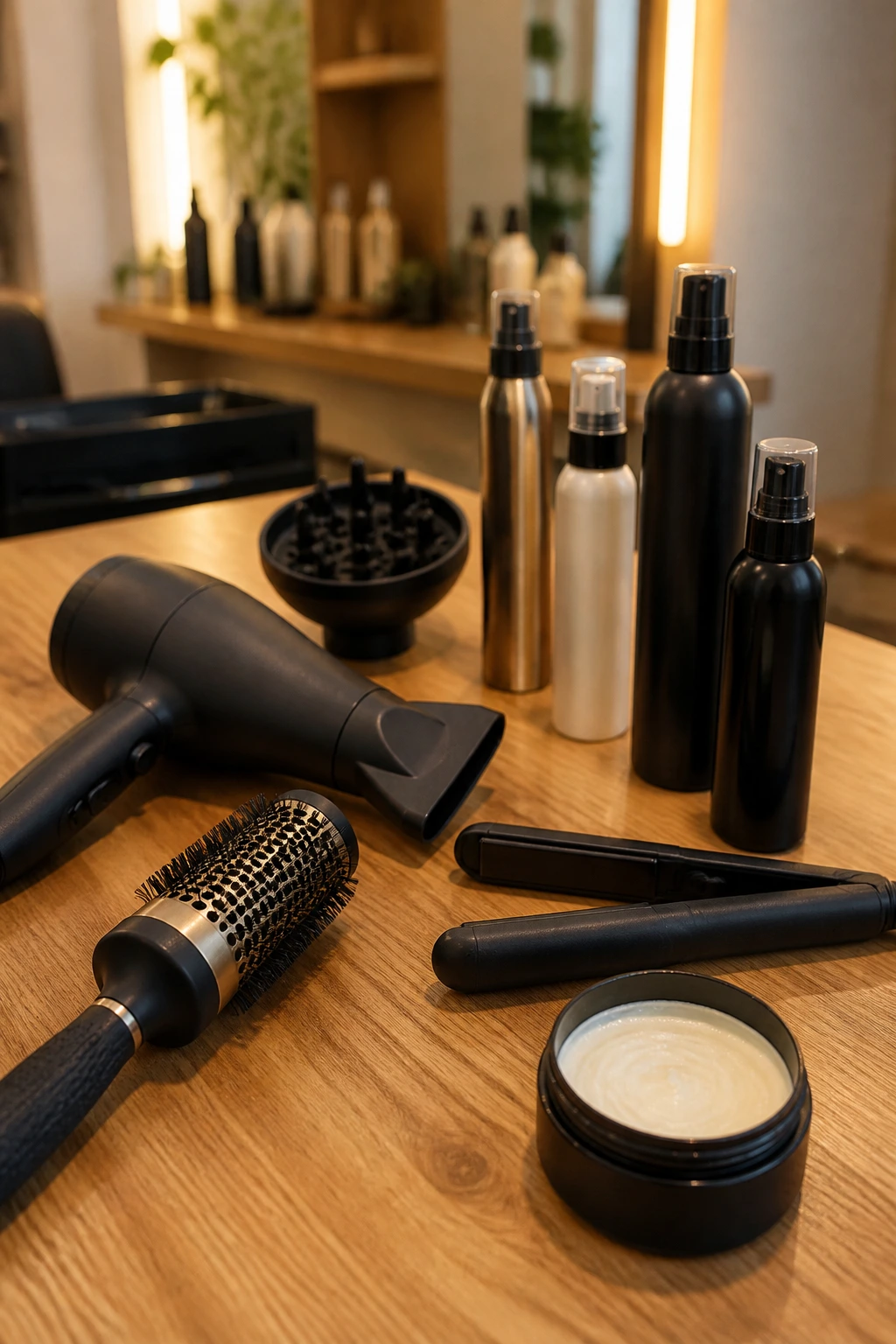
Essential Tools for Styling These Cuts
-
Blow dryer with a concentrator nozzle: It gives you more control at the roots and keeps the airflow aimed where you want lift.
-
1-inch round brush: Best for short layers, bang bends, and flipping the ends away from the cheeks.
-
Diffuser: A must if your hair is wavy or curly and you want the layers to hold their shape without frizzing up.
-
Lightweight mousse: Adds root support without making short hair feel sticky or stiff.
-
Texture spray: Useful for piecey crops, shags, and bobs that need separation through the ends.
-
Heat protectant: Non-negotiable if you’re using a brush dryer or flat iron on the same sections again and again.
-
Small flat iron: Handy for bending fringe, shaping a side piece, or giving straight hair a slight curve.
-
Root-lift spray: Good for fine hair that collapses at the crown an hour after drying.
-
Matte paste or soft pomade: Best for pixies, bixies, and choppy crops where you want definition instead of shine.
-
Duckbill clips: Small but useful for setting the top while the rest dries, especially if your hair likes to fall flat.
How to Pick the Right Cut for Your Hair Texture
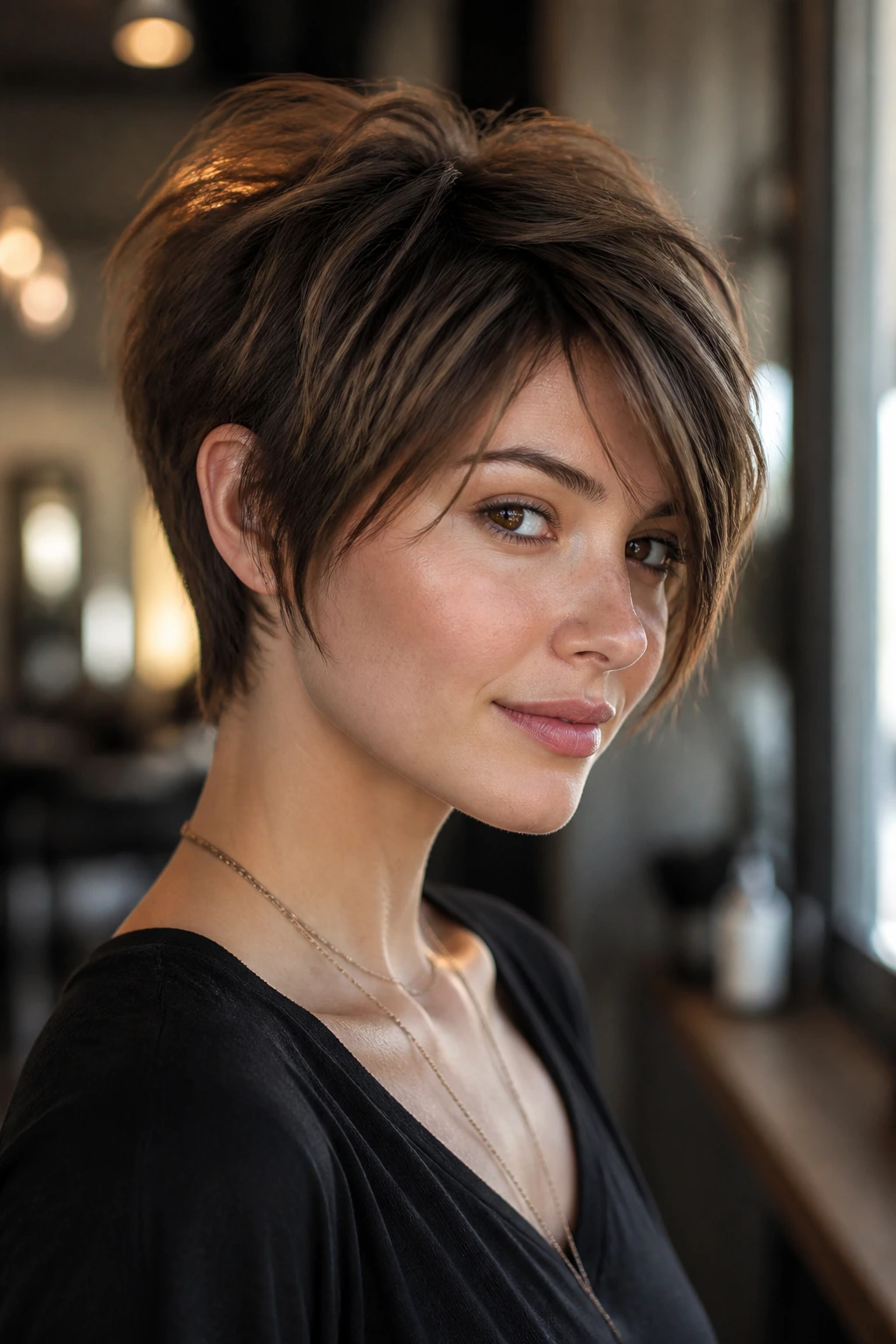
Fine hair needs shape more than it needs lots of aggressive layering. Too much texturizing can leave the ends see-through and make the cut wobble around the face in a weak way. The safest choices are the textured pixie bob, the inverted bob, and the side-swept crop, because they build lift at the crown without thinning the perimeter too much.
Thick hair needs weight control. Otherwise the sides puff out and push the face wider. That’s where the layered undercut bob, feathered bixie, and graduated bob shine. They take the bulk out from inside the shape, which keeps the outline clean and stops the haircut from turning into a triangle.
Wavy hair often gets the easiest win. Movement does half the work already. A shaggy bob, wavy razor bob, or soft wolf cut short can look effortless without actually being careless. The trick is keeping the wave direction from flaring out at cheek level. If the waves sit too wide, they need a shorter top and a slightly longer front.
Curly hair needs respect for shrinkage. A crop cut too short in a round shape can spring up and widen the face before you ever leave the chair. Ask for curls to be shaped in their natural fall, and keep enough length around the chin or collarbone to preserve a vertical line. Straight hair is the easiest to cut and the hardest to fake texture on, which means the line has to be doing the flattering work from the start. A good part, a bit of bend, and a strong perimeter are not optional.
How to Style These Cuts on a Busy Morning

Parting: Start with an off-center or deep side part if your face feels full through the cheeks. A center part can work, but only when the cut has enough height on top and enough length in front to keep the middle from looking wide.
Lift: Put root-lift spray or mousse on damp hair, then rough-dry the crown first. That’s not fancy, but it matters. If the top goes flat, the whole haircut loses its vertical line.
Texture: Use a small amount of cream, paste, or texture spray depending on the cut. Pixies and crops usually need definition at the ends, while bobs need a lighter hand so the perimeter does not swell out.
Finish: Tuck one side behind the ear, leave a front piece loose, or bend the fringe away from the cheek with a brush. Small asymmetries read as slimming without looking engineered.
Second-day save: A mist of water, a touch of dry shampoo at the roots, and a quick pass with a round brush can bring a flat cut back to life. Short hair often looks better on day two anyway. A little less perfection helps.
Extra Tips and Small Upgrades
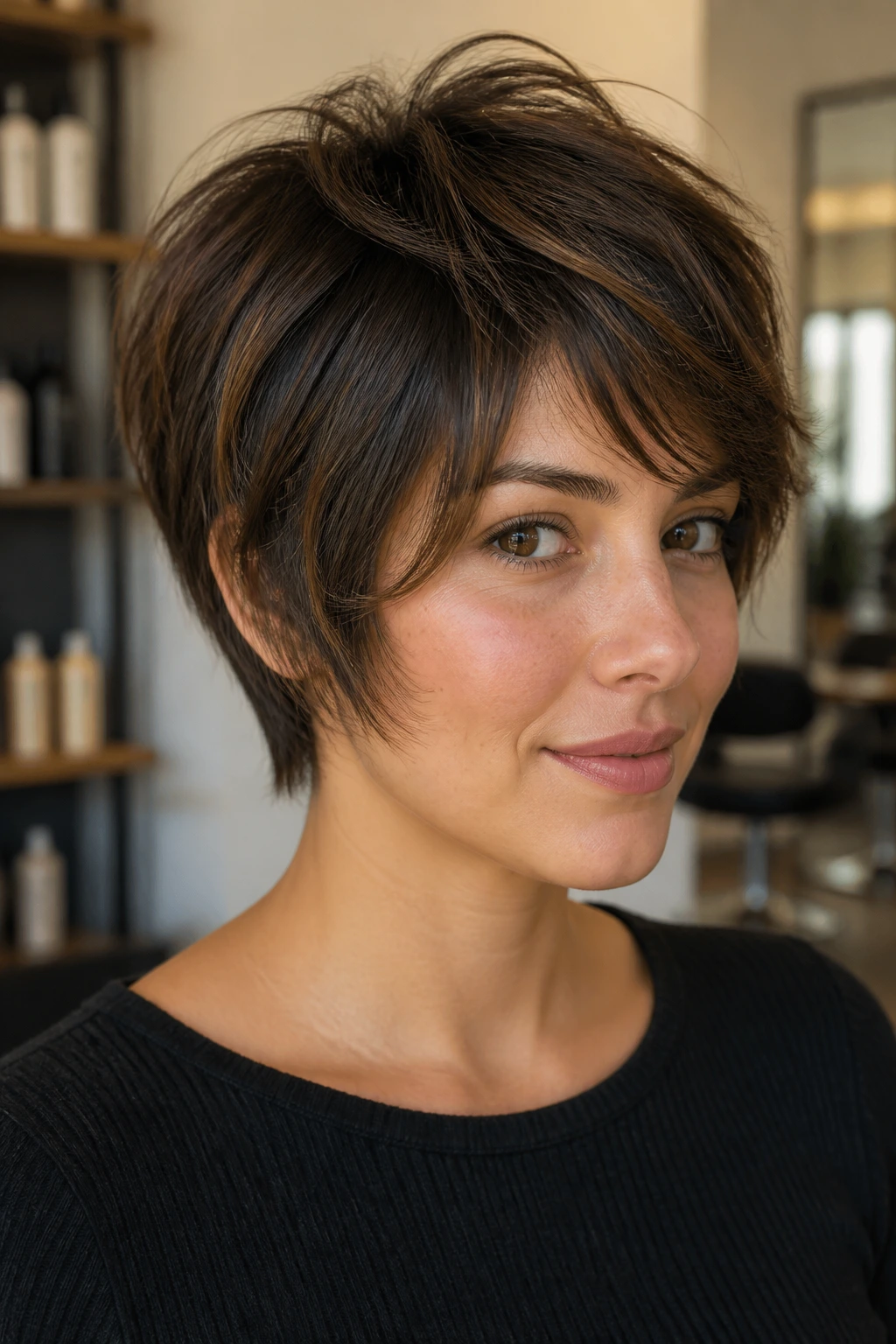
Face-Slimming Boost: Keep the shortest layers above the cheekbone or below the jaw, not right on the widest part of the face. That tiny bit of spacing keeps the haircut from sitting on the face like a frame.
Texture Upgrade: If your ends look too neat, scrunch a pea-sized amount of paste or cream through them while the hair is still warm. Clean edges can be nice. Too-clean edges often lose the shape.
Low-Effort Volume: Flip the crown section in the opposite direction while blow-drying, then switch it back at the end. That little reset gives short layers more lift without a lot of teasing.
Wear-It-Your-Way Move: If you wear glasses, keep fringe piecey and stop it just above the frame or let it sweep off to the side. Heavy bangs and big frames tend to compete.
Color Note: A few lighter pieces around the top and front can make the layers stand out more, especially on dark hair. Not streaks. Just enough contrast to show the cut’s movement.
Common Mistakes That Make a Round Face Look Wider
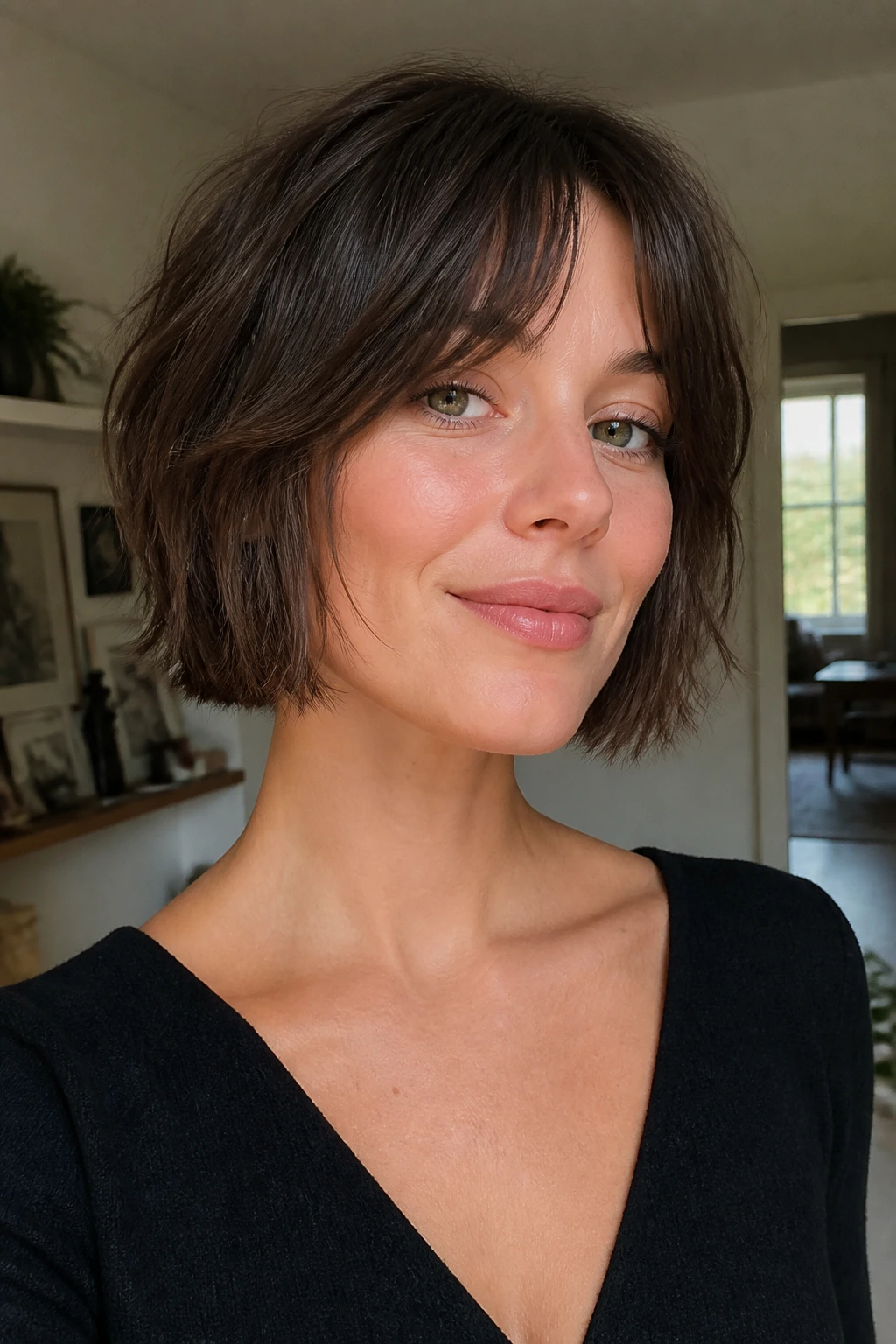
Ending the bob right at the cheek: That’s the easiest way to widen the face visually. The fix is either angle the front longer or move the perimeter lower, closer to the jaw or collarbone.
Building too much volume at the sides: Big side puff makes a round face read even rounder. Keep the lift at the crown and the silhouette narrower through the temples.
Cutting heavy blunt bangs too low: Straight-across fringe can shorten the face in a hurry. If you want bangs, go side-swept, curtain-style, or wispy enough to show some forehead.
Over-layering fine hair: Too many layers can make short hair sit flat in random spots and then flare out at the sides. Ask for controlled layering, not a shredded finish.
Ignoring your growth pattern: Cowlicks at the front, strong side growth, and a flat crown can all change how the cut sits. If your hair pushes one way, the haircut has to work with that motion, not against it.
Skipping styling entirely on a shape that needs direction: Some of these cuts air-dry fine. Others do not. If the haircut depends on lift or a bend at the fringe, give it the five minutes it asks for.
Variations and Texture Tweaks to Try
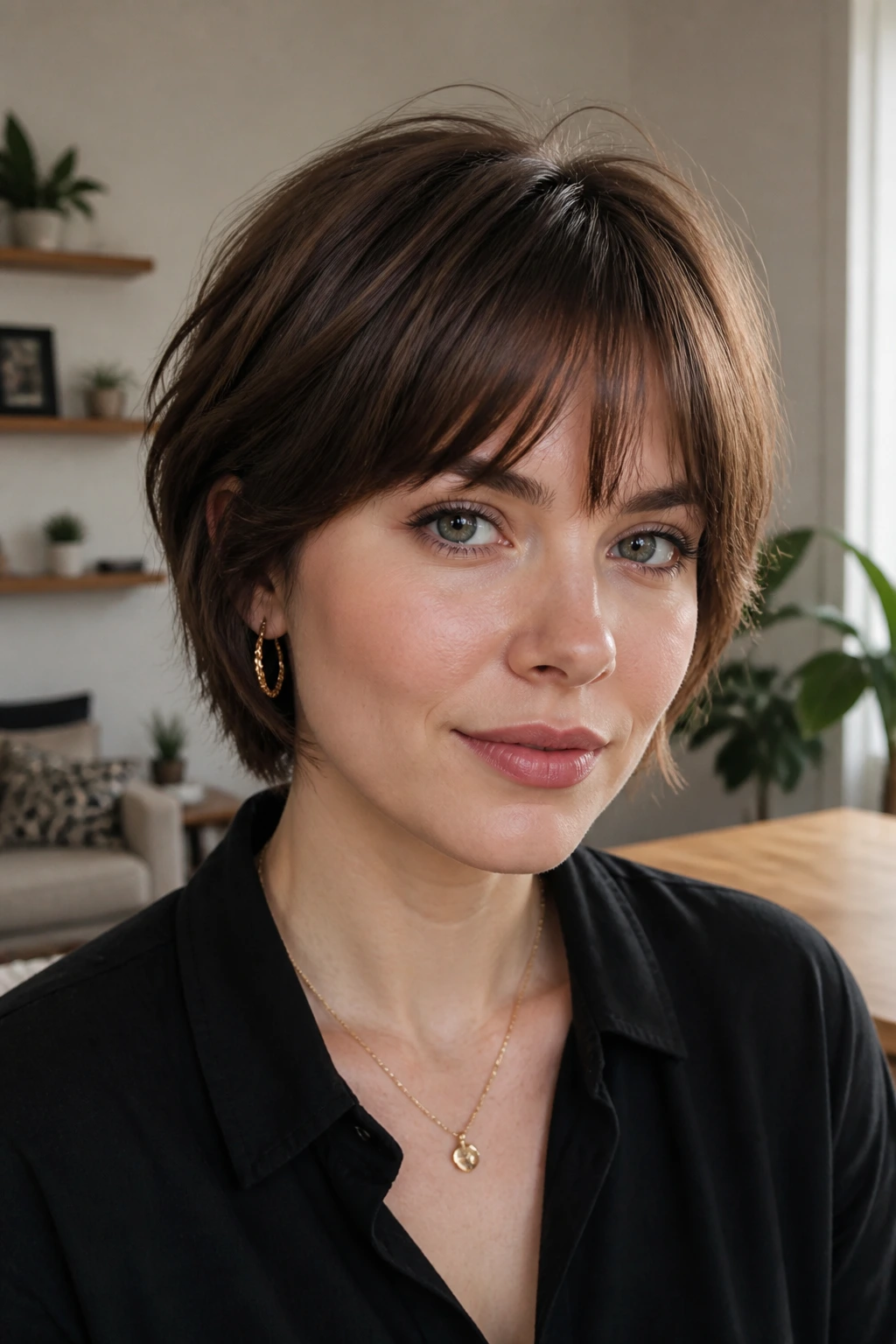
The Fine-Hair Airlift: Keep the layers light, preserve a stronger perimeter, and use root-lift spray at the crown. This version works best in a pixie bob, inverted bob, or side-swept crop where the shape can stay compact.
The Thick-Hair Debulked Shape: Add an undercut, internal layers, or a tapered nape so the hair does not balloon at the cheeks. This is the version I’d pick for anyone whose hair turns triangular by lunch.
The Curl-Safe Shape: Leave more length than you think you need and cut the layers to follow the curl pattern, not fight it. The goal is vertical movement, not a puff around the face.
The Frame-Friendly Fringe: If you wear glasses or have a short forehead, choose a wispy bang or a side sweep that lands above the frame line. Heavy fringe tends to compete with the face instead of opening it.
The Low-Maintenance Grow-Out: Ask for softer layers and a less severe angle. The haircut will lose its sharpness more slowly, which buys you time between trims.
The Bold Asymmetry Edit: Go deeper on the side part and let one front piece sit a little longer than the other. This is a good pick if you want the face to read more oval without losing the short length.
Keeping the Shape Between Salon Visits
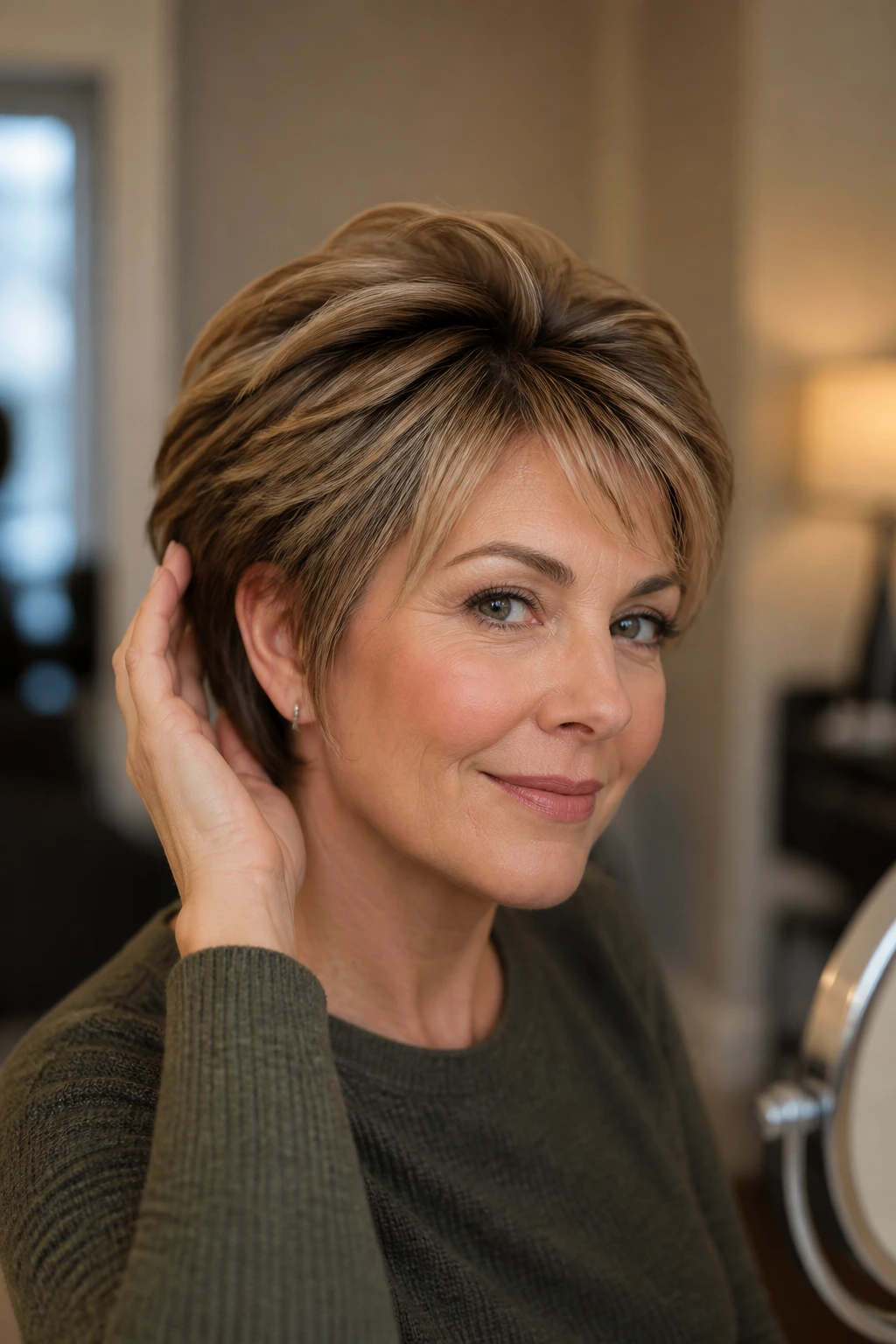
Short layered cuts do not stay nice on autopilot. They shift fast, especially around the nape and fringe. Pixies and bixies usually need a trim every 4 to 6 weeks if you want the shape to stay crisp. Bobs can stretch a little longer, often 6 to 8 weeks, but once the front starts hitting the cheek in the wrong place, the whole line changes.
The fringe needs its own attention. Side-swept bangs can often be tidied in 3 to 4 weeks, sometimes sooner if your hair grows fast or the part starts drifting. That part is not vanity. It’s math. A grown-out bang can shove width back onto the face, and then the haircut starts working against you.
At home, keep the crown lifted and the sides controlled. A small round brush, a touch of mousse, and a quick bend through the front are usually enough. If you sleep on a cotton pillowcase and wake up with flattened roots, try clipping the top section up loosely before bed or switching to a smoother pillowcase. Small fix. Less morning frustration.
Frequently Asked Questions
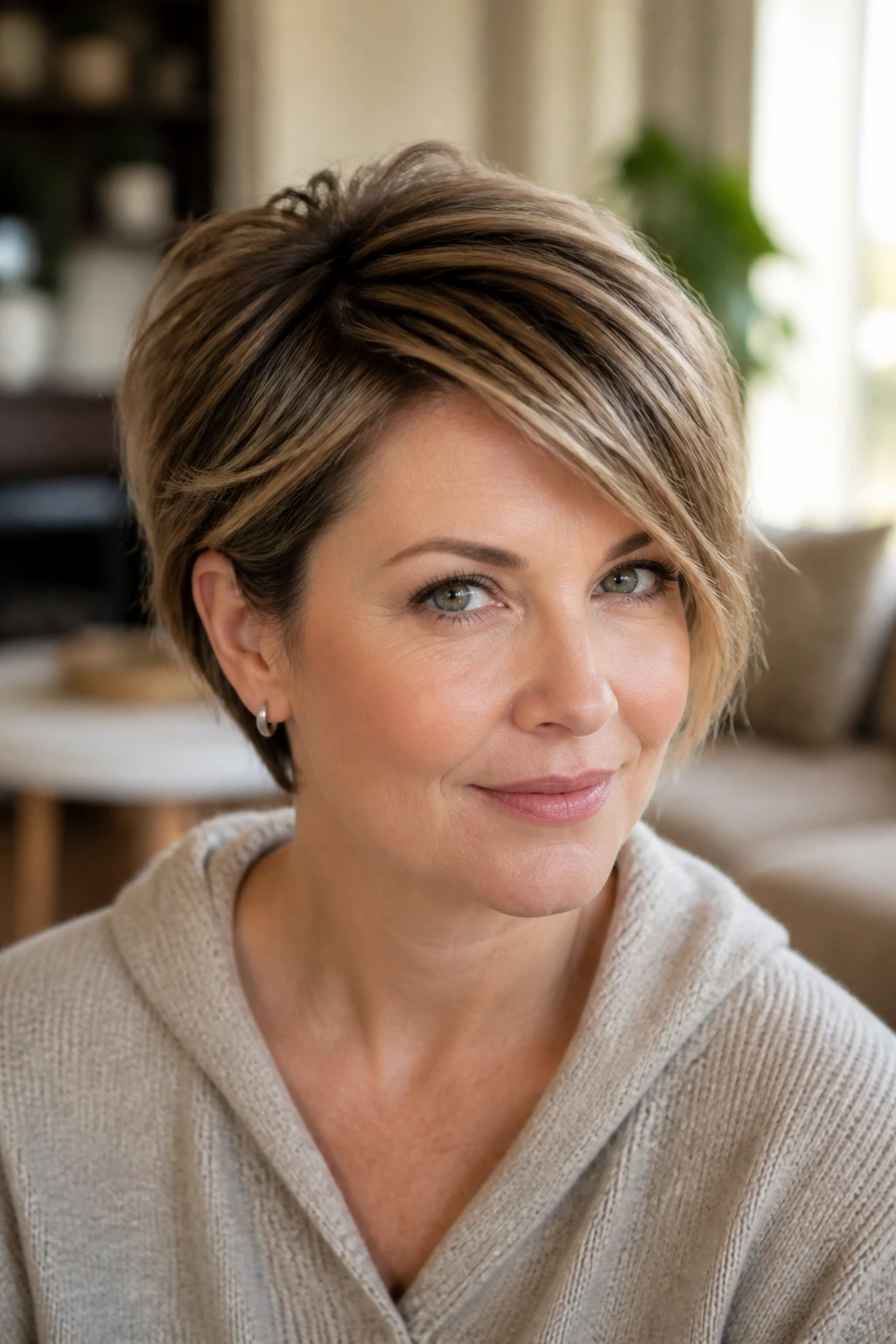
Can a round face wear a pixie cut?
Yes, and often very well, as long as the pixie has some height at the crown and a little length through the fringe. The mistake is cutting the sides too bulky or leaving a blunt fringe that lands right across the widest part of the face.
Are bangs a bad idea for round faces?
No, but heavy straight bangs can shorten the face if they sit too low and too dense. Side-swept bangs, curtain bangs with space in the middle, and wispy fringe usually work better because they create diagonal movement.
What short haircut makes a round face look slimmer?
An angled bob, a side-swept crop, or a pixie bob with lift at the crown are all strong choices. The common thread is that they keep the sides from expanding and they extend the visual line downward.
Should I avoid a center part?
Not automatically. A center part can work if the cut has enough front length and enough crown height to keep the face from looking wide. If you want the easier route, though, an off-center part usually gives a round face a cleaner line.
What if my hair is very thick?
Ask for internal layers, weight removal in the right spots, and possibly a hidden undercut. Thick hair can look beautiful short, but if the bulk sits at the cheeks or nape, it will fight the face shape and the style will puff up fast.
What if my hair is fine and flat?
Choose a cut with structure: a textured pixie bob, an inverted bob, or a side-swept layered crop. Then use mousse or root-lift spray at the crown, because a great cut still needs a little help if the hair collapses flat.
Can curly hair work with these shorter styles?
Absolutely. Curly hair just needs room for shrinkage and layers placed with the curl pattern in mind. A dry cut or a curl-by-curl shape often gives better results than a random wet cut pulled too short.
How often should I get it trimmed?
Short crops usually need attention every 4 to 6 weeks. Bobs and lobs can stretch closer to 6 to 8 weeks, but once the front starts landing exactly at the cheek, the shape can stop flattering the face.
What should I tell the stylist if I want a flattering result?
Ask for lift at the crown, softer weight around the cheeks, and a front shape that angles past the widest part of your face. Bring a photo, yes, but also point out where you part your hair and whether you want the ears covered or exposed.
The Short Cuts That Keep Their Shape
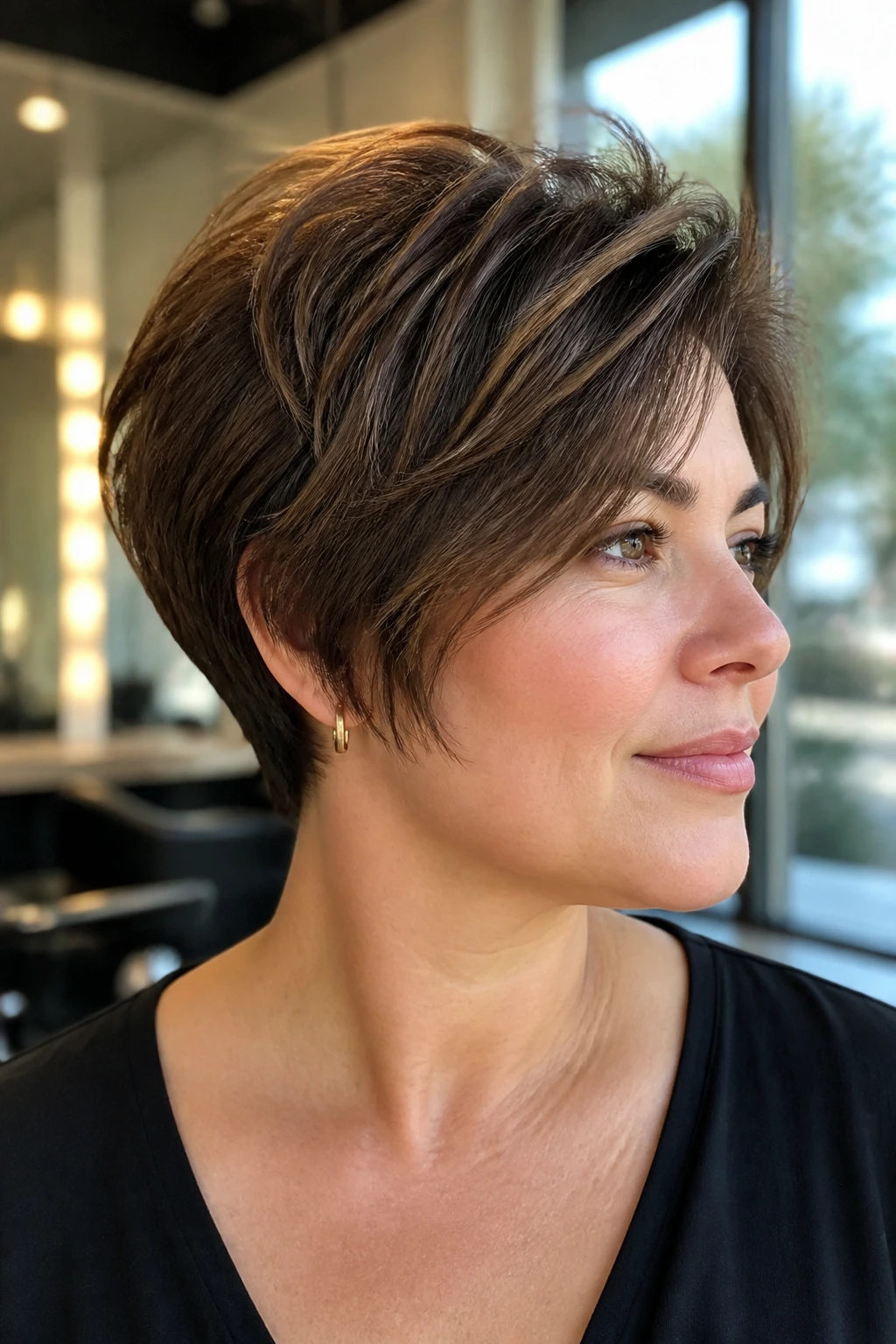
The best layered short cuts for round faces do not hide the face. They redirect it. A clean angle, a little root lift, and the right amount of softness around the sides can change the whole balance without pushing you into a haircut that feels high-maintenance or severe.
That’s why these styles keep showing up in one form or another. They work with movement instead of against it. They give you room around the cheeks, a little height where it counts, and enough shape to make short hair feel deliberate instead of accidental.
Bring photos. Bring your usual part. And if your stylist suggests a tiny bit more length in the front than you planned, listen. That extra inch is often the difference between “cute haircut” and “why does my face suddenly look so good?”
