



A platinum long bob can do a lot of heavy lifting on older women. It lifts the face, cleans up the neckline, and keeps enough length to tuck behind an ear, swing across the jaw, or soften a strong chin without sliding into “too short, too severe” territory. The trick is choosing the right version. Too blunt in the wrong hair and it can sit like a helmet. Too layered and the ends vanish.
What makes the cut interesting is the color. Platinum blonde, silver-white, pearl blonde, icy beige — all of those shades sit close to gray, which means the grow-out can look intentional instead of neglected when the root area is handled well. I’ve always liked that about this look. It has attitude, but not in a loud way. It can read polished, spare, and a little bit sharp, which is a nice combination when you want hair that feels current without begging for attention.
The 19 ideas below are not just different lengths with different names. Some are built for fine hair that needs a stronger line. Some soften glasses, some work with waves, and some are better if you want to blend natural gray instead of fighting it. Read them the way you’d read a menu in a good restaurant: pay attention to the details, because the difference between a flattering lob and a merely average one usually lives in the last half-inch.
Why These Platinum Long Bobs Work So Well
- Face lift without a hard chop: A lob that lands between the jaw and collarbone keeps the face from looking dragged down, which matters when the hair around the temples has thinned a little.
- Platinum makes gray blending easier: Cool blonde, silver, and pearl tones sit close to natural gray, so a shadow root or soft lowlight can make regrowth look deliberate.
- The length still gives you options: You can tuck it, wave it, flatten it, or bend it under. A shorter bob doesn’t give you that same range.
- Fine hair gets a better edge: A blunt or softly beveled lob can make thin ends look fuller instead of wispy.
- Older features usually like softness around the jaw: Collarbone length and face-framing pieces keep the look from feeling boxy, especially with glasses or a strong chin.
- It photographs cleanly in real life: The platinum tone shows shape fast, so even a simple blow-dry looks finished instead of flat.
1. Ice-Glass Blunt Lob with a Clean Center Part
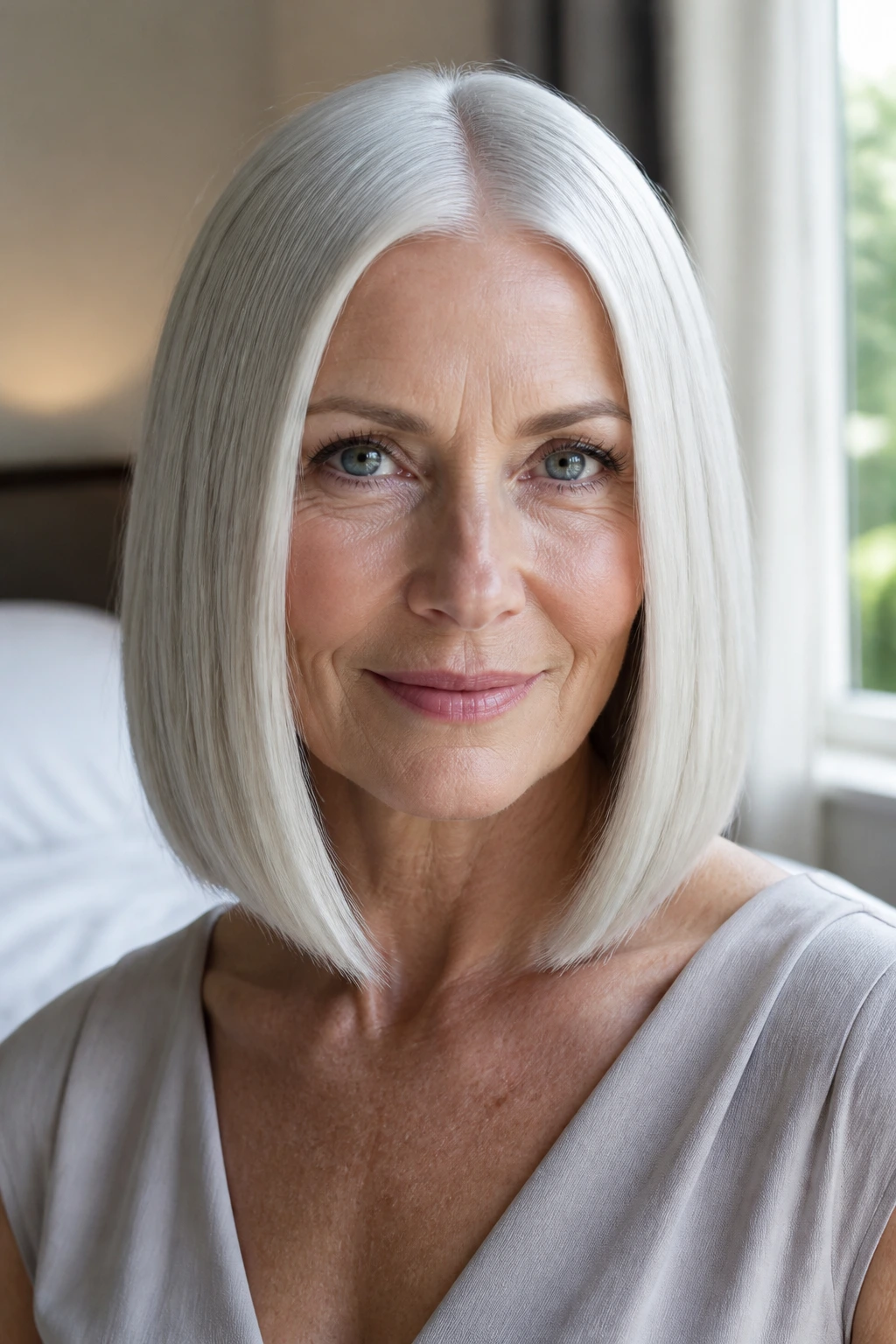
This is the one I reach for when someone wants the sharpest possible outline without going short. The blunt edge gives platinum color a hard, bright line, and the center part keeps the whole thing symmetrical enough that it feels deliberate, not precious. On straight or lightly wavy hair, the ends sit like a sheet of satin. Clean. Cool. Exact.
For older women, that exactness can be a real advantage. It tightens the look around the eyes and cheekbones, which is useful if the lower face has softened over time. The caveat is density. If the hair is very fine, ask for a blunt perimeter with only a whisper of internal shaping so the ends don’t look threadbare by noon.
Why It Works
The blunt line holds weight at the bottom, and weight is what keeps platinum hair from floating away visually. A center part also creates two equal panels, which is handy if one side of your hair has a stubborn bend or a cowlick that likes to misbehave.
Use a smoothing cream on damp hair, blow-dry with a nozzle, and finish with a flat iron only on the outer half-inch if needed. You want sheen, not a pin-straight press that looks stiff.
- Best on naturally straight to softly wavy hair
- Ask for the last half-inch cut blunt, not razored
- Tuck one side behind the ear to break up the symmetry
Best tip: If your hair flips at the collarbone, bend just the bottom inch under with a round brush and leave the rest sleek.
2. Soft Feathered Platinum Lob for Fine Hair
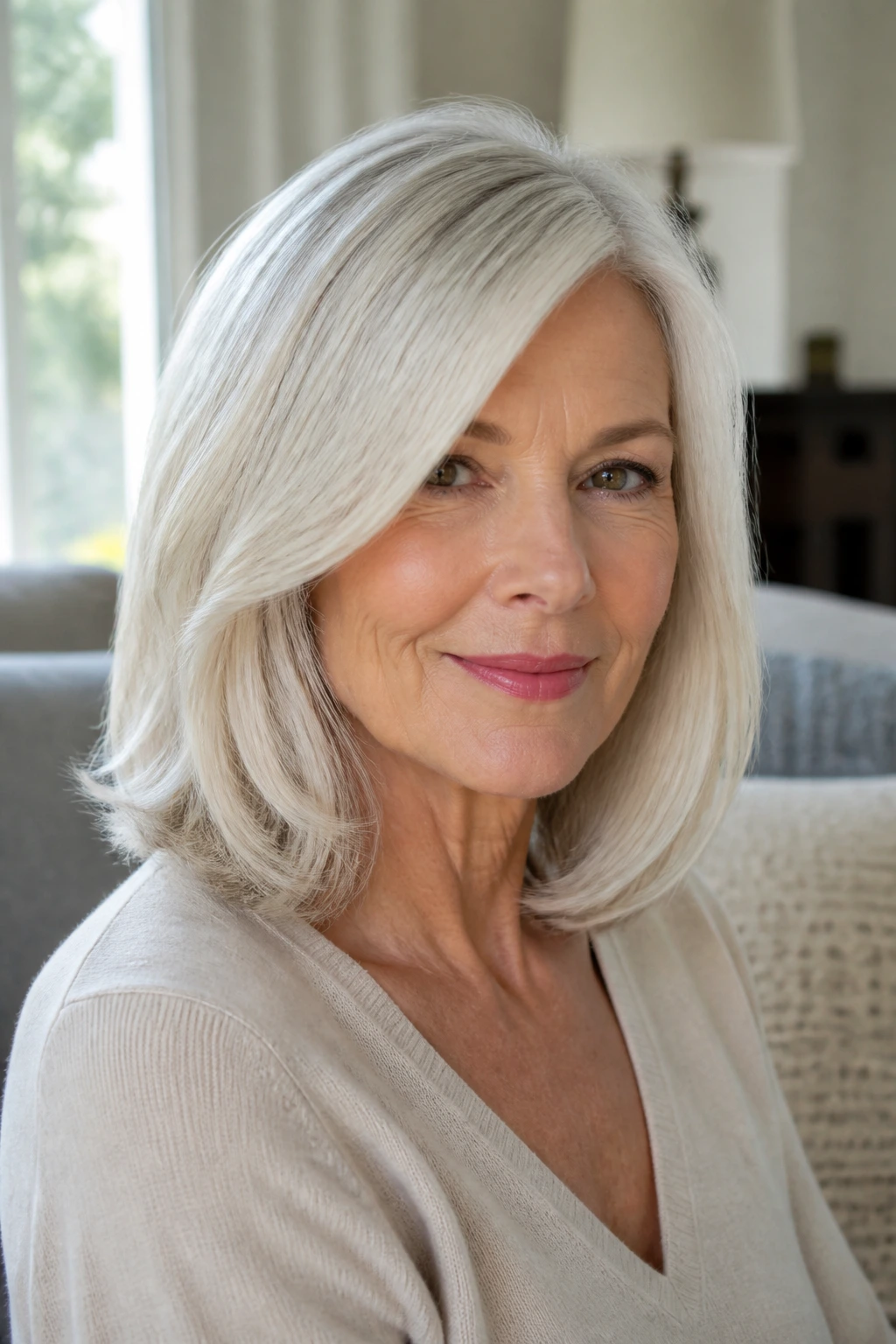
Fine hair loves a little feathering, and this cut gives it without stealing the shape. The ends are lightly beveled, so the line stays present, but the interior has enough movement to stop the hair from looking like a single flat panel. On silver-blonde shades, that movement catches the light in a way that makes the whole head look fuller.
Do you have hair that collapses after a few hours? This is the one to look at. It doesn’t rely on big curls or heavy layering. Instead, it uses small shifts in length — almost invisible from the front — to keep the silhouette airy and alive.
What Makes It Different
A feathered lob is not the same as a shag. The shape still reads neat. It just has softer edges and a little lift through the mid-lengths, which can help if your crown is flatter than it used to be.
Blow-dry with a small round brush and lift the roots at the crown for ten seconds longer than feels necessary. That little extra lift matters. So does a lightweight mousse, not a heavy cream that drags the shape down.
This cut suits women who like polish but do not want to spend twenty minutes fighting their hair into place.
3. Side-Swept Platinum Lob with a Deep Part
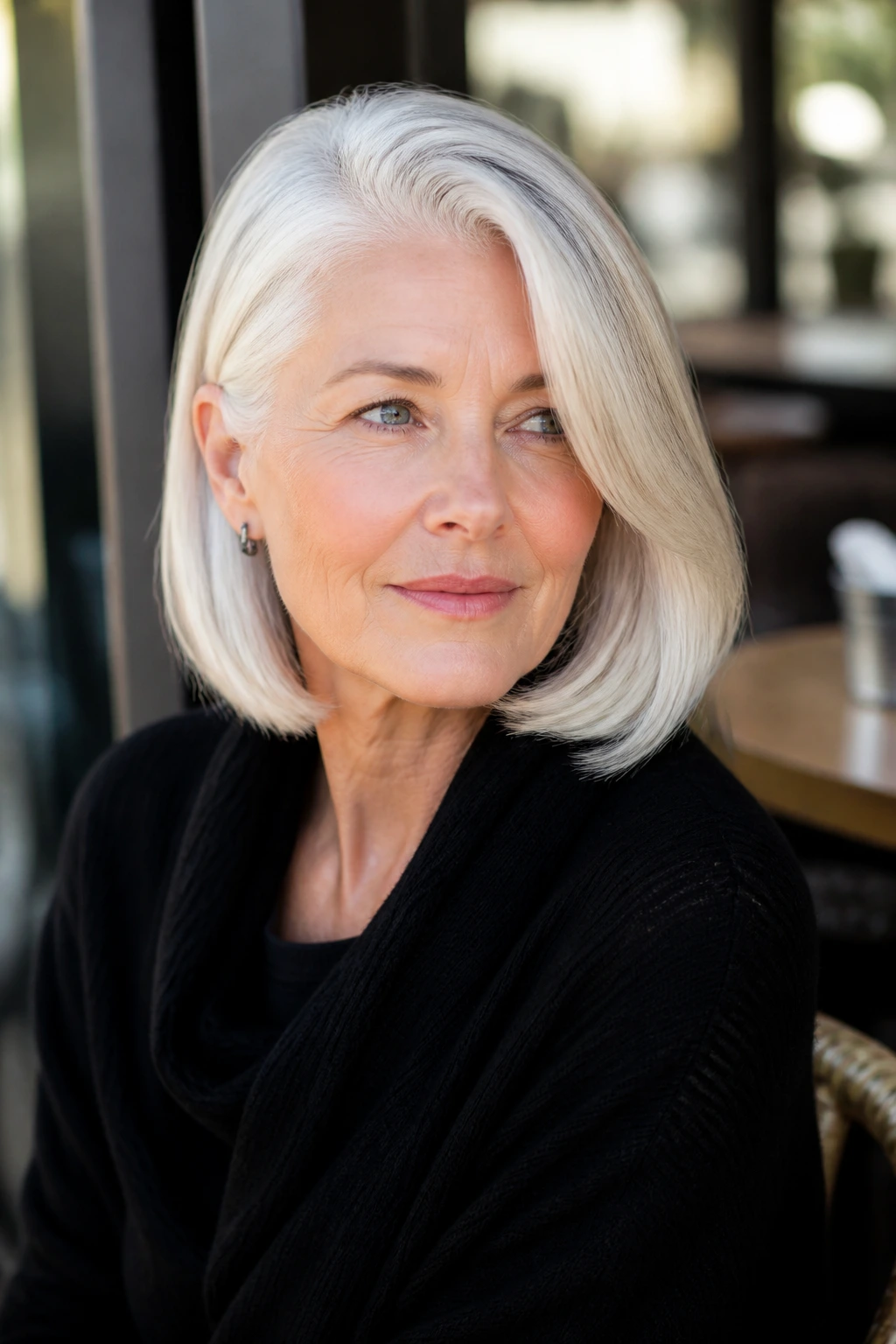
A deep side part can do more face work than people give it credit for. It adds instant height at the crown, sweeps the platinum color across the forehead in a softer line, and gives the haircut a bit of drama without making it fussy. If a center part feels too blunt or exposes a thinning hairline, this is the safer, prettier move.
The side-swept version also plays well with earrings and glasses. One side of the hair sits close to the cheek; the other creates a little lift and movement. That asymmetry breaks up a straight face shape fast.
Why Older Women Often Like This One
The deep part pulls the eye diagonally, which can soften a broad forehead or a square jaw. It also makes the haircut look intentional even on day two, when the roots have settled and the blowout has lost some volume.
A root-lifting spray at the front hairline helps a lot here. Blow the lifted side up and away from the face first, then let it fall naturally. Don’t over-smooth it. The point is to create a bend, not a helmet.
If your hair grows in with a stubborn cowlick, this cut works with it instead of against it.
4. Rooted Platinum Lob with Shadow Depth
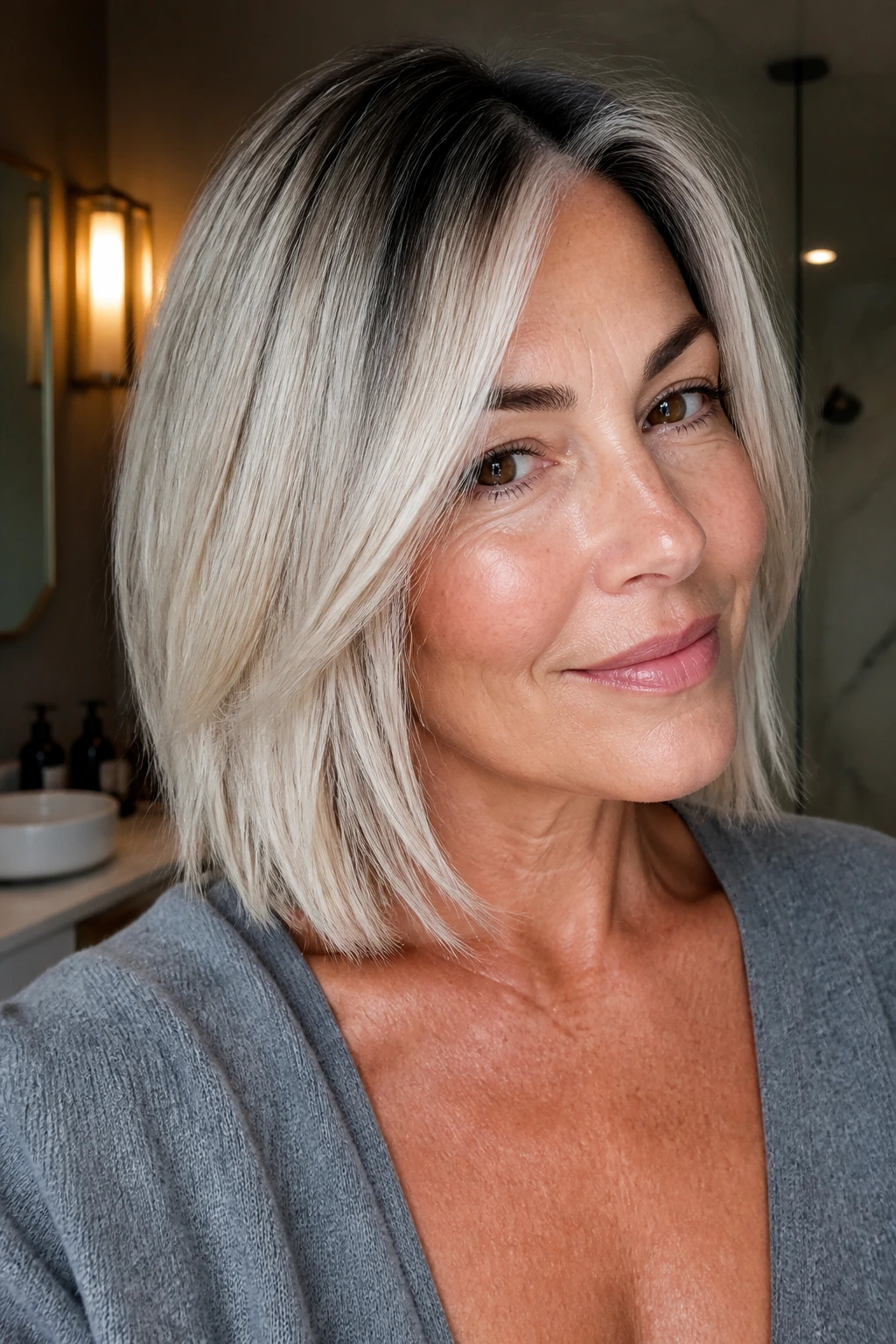
This is the easiest platinum lob to live with, and I mean that in the best possible way. The root stays deeper — maybe a smoky blonde, taupe, or soft beige — while the mids and ends go bright platinum. That little shift makes grow-out softer, especially for women whose natural color is already silver, white, or salt-and-pepper.
A shadow root also keeps the cut from looking flat and one-note. Platinum can be a bit unforgiving if every strand is the same brightness from scalp to tip. A darker root gives the eye a place to rest. It also buys you time between salon visits, which is a decent trade.
Who It Suits Best
If you’re trying to blend gray instead of covering it hard, this is one of the smartest choices. It looks expensive when the transition from root to blonde is soft and narrow — not striped, not chunky.
Ask for a root that is one to two levels deeper than the mids. More than that and the contrast starts to feel harsh. Less than that and you lose the benefit.
I like this cut on women with textured hair, too. The deeper root makes every bend and wave look a little richer.
5. Curved-Under Lob That Hugs the Collarbone
There’s something quietly flattering about a lob that curves under at the ends. The shape touches the collarbone, then rounds in just enough to create a clean frame around the neck and jaw. It is polished without being severe, and on platinum hair the curve keeps the ends from looking dry or broken.
This is a smart cut for women who like a neat outline and do not want a lot of layers competing with it. It works especially well if your hair has medium density. Too thin, and the curve disappears. Too thick, and you need the internal weight removed carefully so the bend doesn’t puff outward.
The Small Details Matter Here
Ask your stylist to bevel the ends instead of cutting them blunt and then hoping the brush does all the work. The shape should be built into the haircut, not forced on every morning.
A 1.5-inch round brush is usually enough to create the under-curl at home. Aim the dryer down the hair shaft, then wrap just the last two inches around the brush. That gives you control without making the finish too done.
It’s a simple look. Not boring. Simple.
6. Textured Shag Lob with Choppy Ends
If a sleek bob feels too proper, this is the antidote. The textured shag lob has choppy ends, a little lift around the crown, and enough broken-up movement to keep the platinum color from sitting like a solid block. On older women, it can feel lighter around the face in a way that’s flattering rather than cute-for-the-sake-of-cute.
The key is restraint. You want texture, not a mess. The haircut should still have a recognizable line, even if the ends are piecey.
What Makes It Different
A shag lob is useful when hair is getting finer but still has enough body to hold a bend. The layers help the hair collapse in a more interesting way, which is not a glamorous phrase, but it’s true.
Work a pea-sized amount of texture paste through the ends and pinch a few pieces dry. Don’t rake it through the whole head. That’s how a good cut turns into a fuzzy one.
This shape also hides the occasional bad hair day better than a blunt lob. That matters more than people admit.
7. Beachy Platinum Lob with Face-Framing Waves
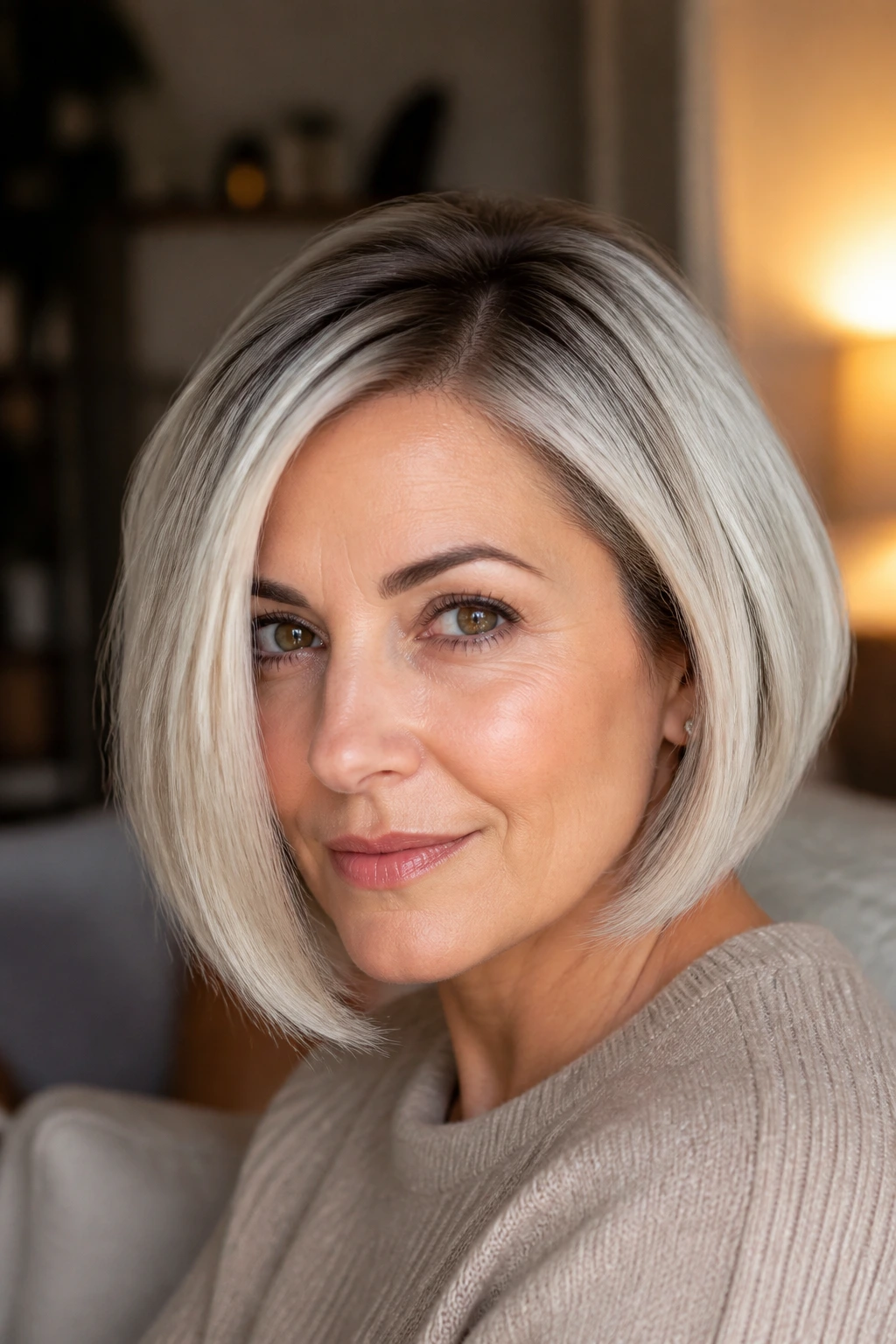
Beachy does not have to mean young, and it does not have to mean careless. On a platinum lob, soft waves around the face can make the whole cut feel relaxed while still looking finished. The trick is keeping the wave pattern loose and low, not crimped or over-curled. Think one-inch bends, not ringlets.
Face-framing pieces are doing a lot of the work here. They skim the cheekbones, soften a prominent jaw, and make glasses look like part of the style instead of something the style has to compete with.
How to Wear It Without Overdoing It
Wrap only the front sections around a curling wand, leaving the ends out for a straighter finish. Then brush the wave out with your fingers or a wide-tooth comb. If the hair starts to look too “styled,” stop. A little irregularity is what keeps this shape alive.
This is a good option if your hair has natural bend but loses structure after washing. A salt spray can help, but use it sparingly; platinum hair gets rough fast if you pile on too much grit.
I like this one best when the waves start below the eyes. Higher than that, and the shape can look dated.
8. Angled Lob with a Longer Front
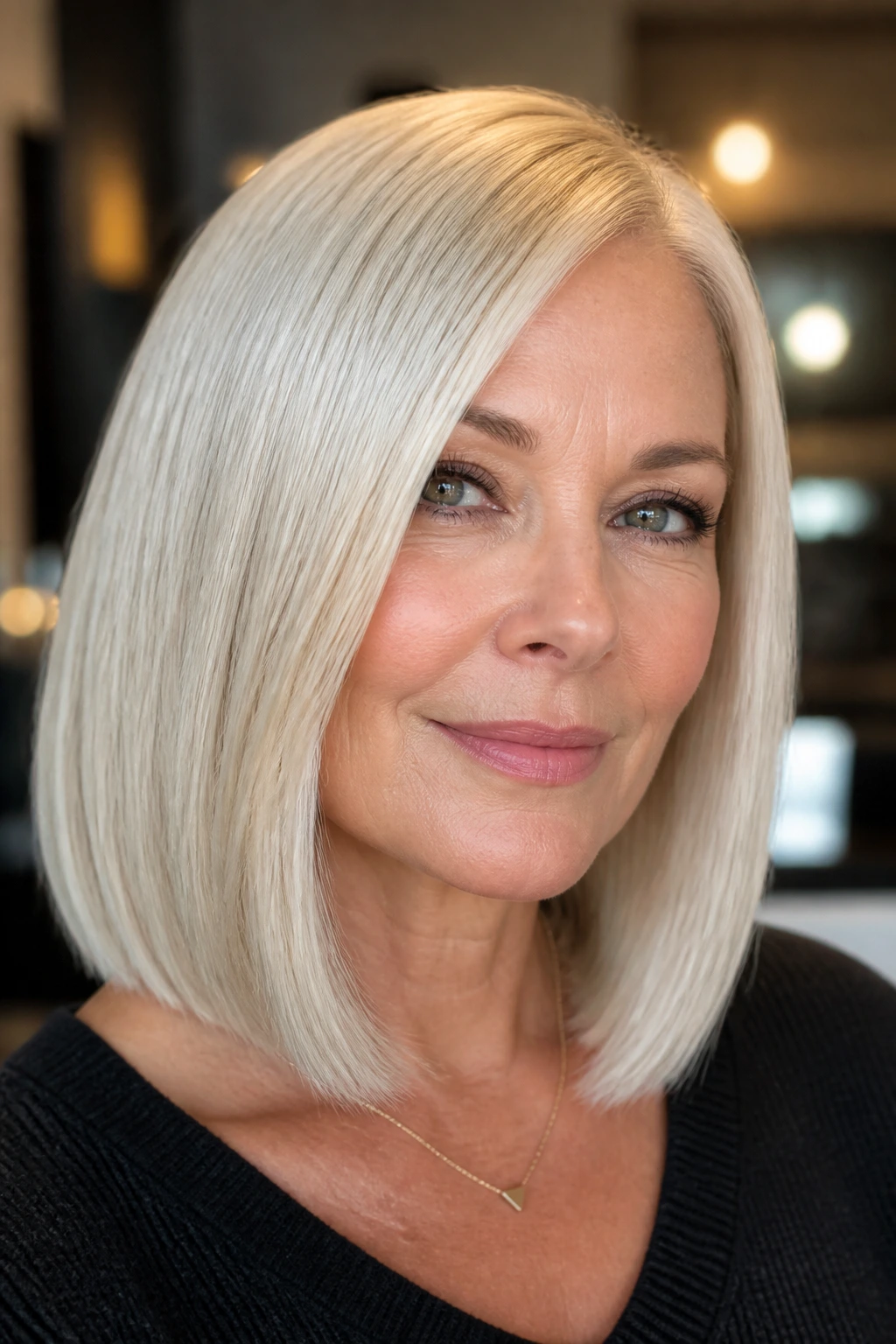
The angled lob is one of those cuts that looks subtle from the front and smarter from the side. The back sits a touch shorter, while the front grazes closer to the collarbone, which gives the hair forward motion and makes the jawline look more defined. On platinum blonde, that diagonal line looks clean and modern.
For older women, the angle can be a friend if the neck is a feature you’d rather soften than spotlight. It also gives you a little lift at the back, which helps when the crown has flattened over time.
Best Styling Move
Blow-dry the back first, using a paddle brush to keep the nape smooth. Then bend the front pieces forward with a round brush so the longer sections fall toward the clavicle. That contrast between short and long is what makes the cut work.
If your hair is thick, ask for the angle to be gentle. Too steep and it starts to feel dated fast.
A sharp angle can be handsome. A soft one is usually prettier.
9. Sleek Center-Part Lob with Glassy Shine
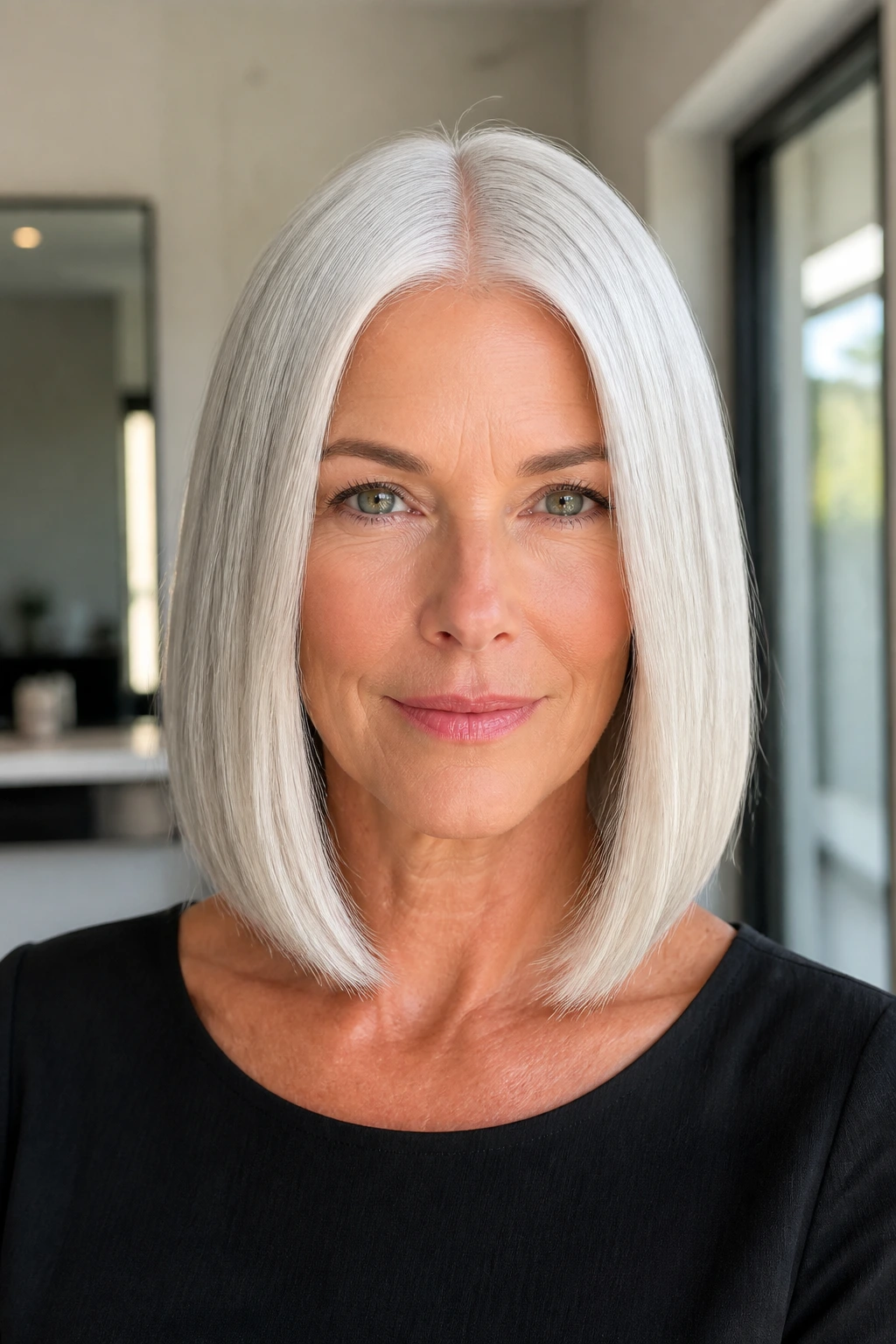
This cut is for women who like discipline in their hair. Not rigid discipline — just enough. The center part and smooth surface let the platinum color look expensive because every strand has a place to go. When the shine is right, the haircut almost feels like a sheet of light.
It’s a strong choice for straight hair or hair that straightens easily. You don’t need big layers here. In fact, too many layers will interrupt the sleek line and make the whole style lose its point.
What to Watch For
Shine is not the same as grease. Use a lightweight serum on the mids and ends, then leave the scalp alone. That one distinction saves the look.
A flat iron pass on small sections can sharpen the ends, but keep the temperature moderate. Platinum hair that has been lightened too far can get brittle fast, and brittle ends ruin the effect.
This is one of my favorites for women who wear tailored clothes. It has the same clean edge.
10. Curtain-Bang Lob with Soft Movement
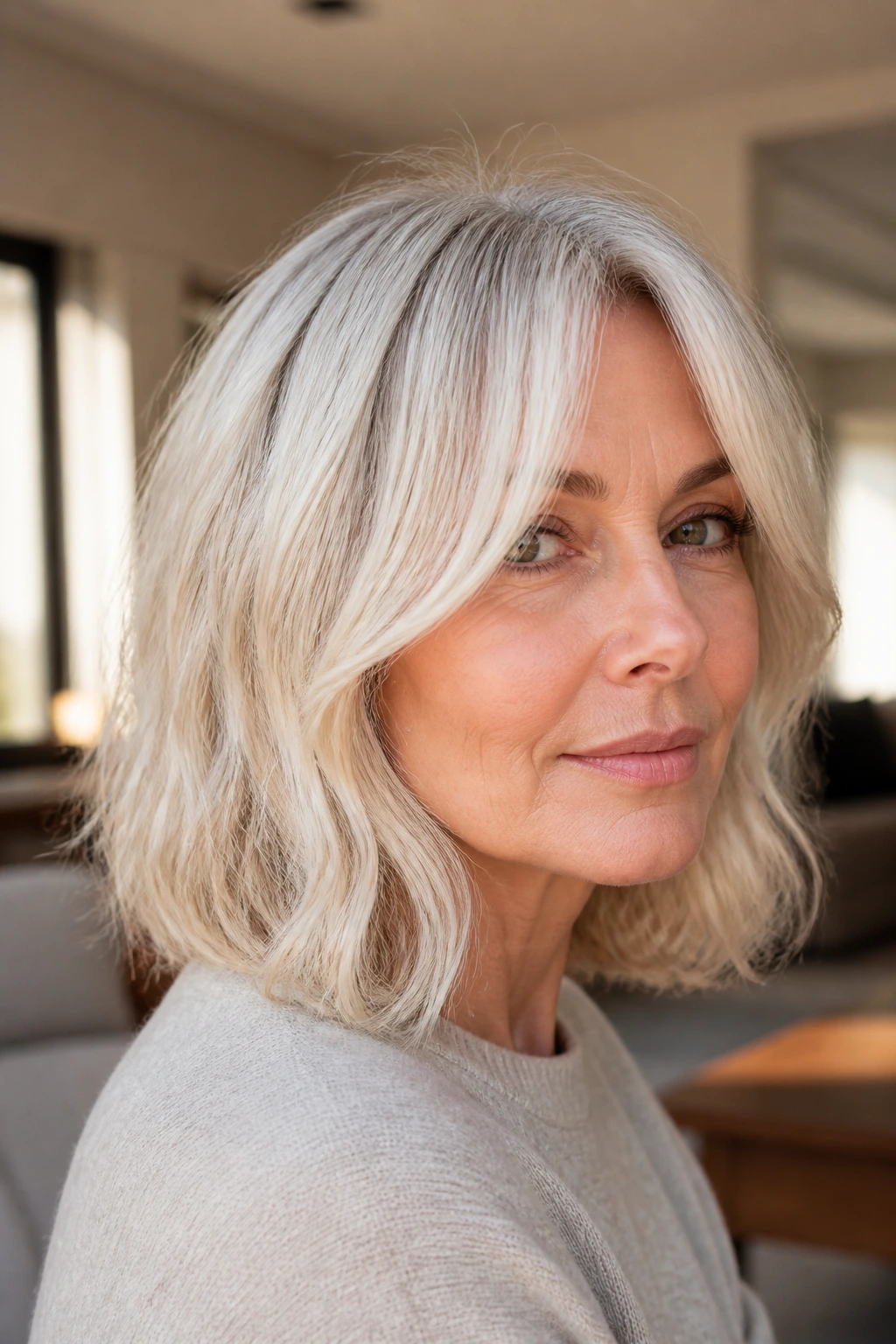
Curtain bangs can soften a platinum lob in a way that feels easy rather than cute. They open at the center, skim the sides of the face, and drop into the longer bob without a hard line. The result is gentle, which is useful if you want to ease the focus off the forehead or soften the transition from fringe to cheekbone.
The beauty of this cut is that it grows out better than a blunt bang. That matters. Nobody wants to be trapped in a six-week trim cycle just to keep a fringe behaving.
How to Style It
Dry the bangs first, using your fingers or a small round brush to guide them away from the face. If they dry flat and stubborn, they’ll stay that way. A little root lift at the center helps the part fall open naturally.
Keep the rest of the lob simple. Soft bends through the ends are enough. If the hair gets too curly, the bangs can start to look detached from the cut.
This shape is friendly to women with high foreheads, but it also works if you just want a bit more movement around the eyes.
11. Chin-Skimming Platinum Lob with Polished Ends
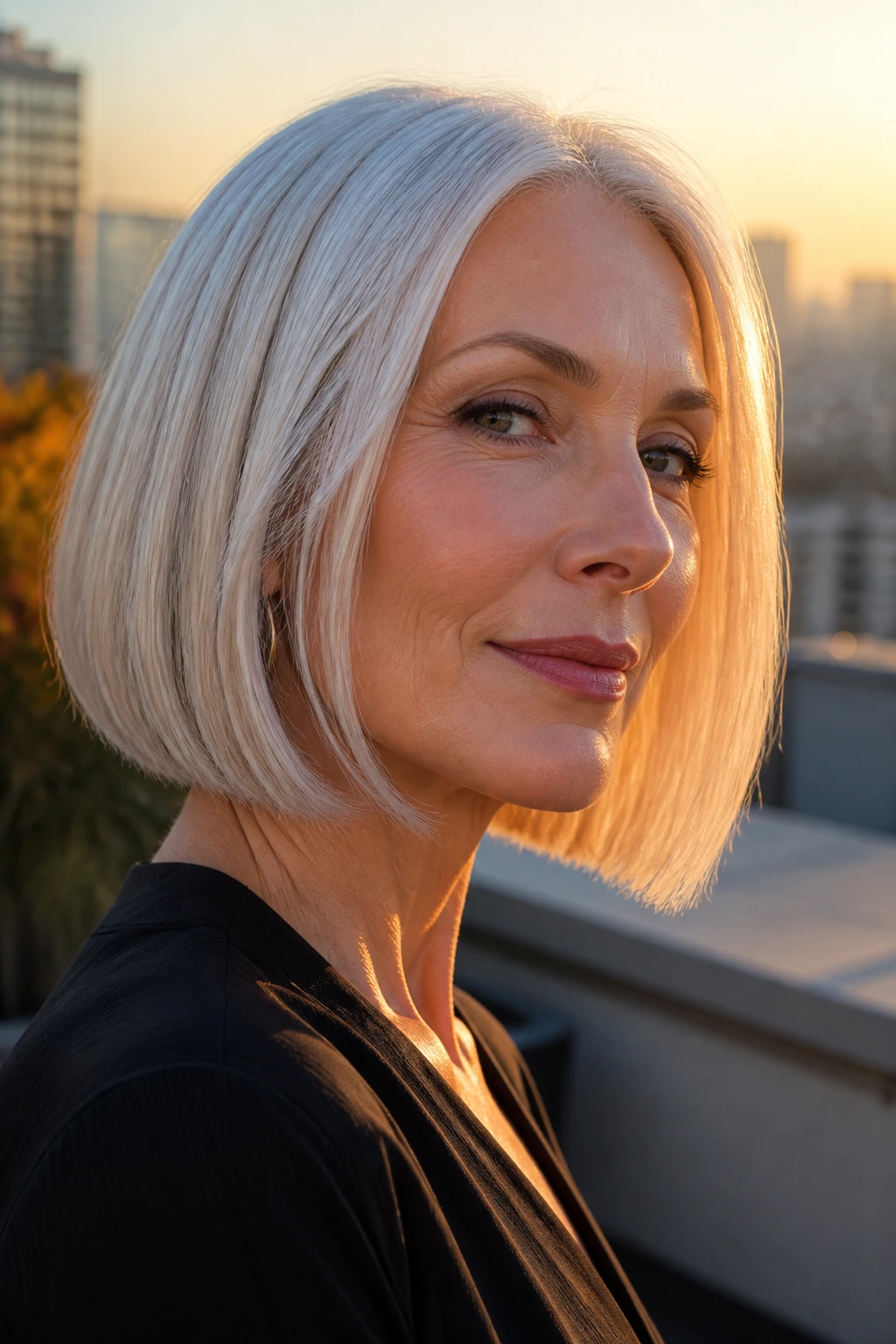
A chin-skimming lob can sound bold, but it’s one of the nicest ways to sharpen a face without going too short. The length draws attention to the jaw and mouth area, then polished ends keep the whole look neat instead of severe. On platinum hair, the line looks crisp and bright.
This version works best when the hair has enough body to hold its edge. If the strands are very fine, the ends can start to separate. If the hair is very thick, the line can sit heavy unless it’s beveled a little.
Why It Still Feels Like a Lob
The overall length stays long enough to tuck, wave, or curve under. That matters. Once you can still move the hair around your face, the cut keeps its lob identity.
A smoothing balm and a medium round brush are usually enough to finish it. Don’t chase every single hair into place. A little movement keeps the cut from looking like a salon display head.
I’d pick this one for someone who wants to show off bone structure. It’s not shy.
12. Air-Dried Platinum Lob for Natural Texture
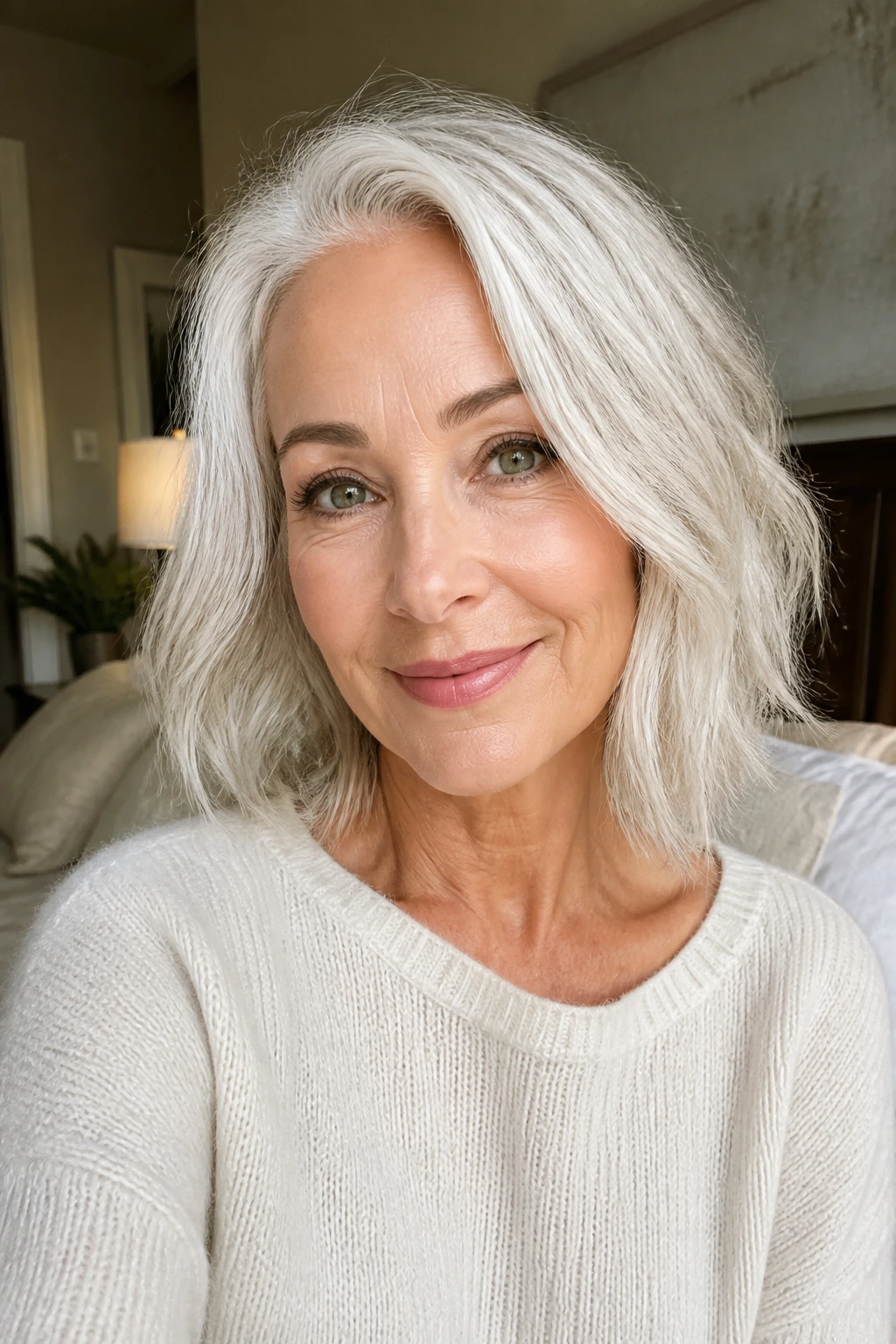
Not every platinum lob needs a blowout. If your hair has a natural wave, a good cut can let it dry on its own and still hold shape. That’s the charm here. The ends stay a little soft, the bends settle in a believable way, and the platinum tone picks up the irregular texture instead of fighting it.
Older women often like this option because it does not demand a full styling session every day. It asks for the right cut, a decent leave-in, and a little patience while the hair finds its own shape.
How to Make Air-Drying Look Intentional
Scrunch in a lightweight cream on damp hair, part it while wet, then leave it alone. If you keep touching it, you’ll break up the wave and create frizz where you wanted movement.
A diffuser helps if the crown needs lift. Use low heat and stop before the hair gets fully dry — let the last bit air-dry so it keeps its softness.
This is one of those styles that looks better when you don’t overthink it. Which, honestly, is a relief.
13. Piecey Layered Lob with Lift at the Crown
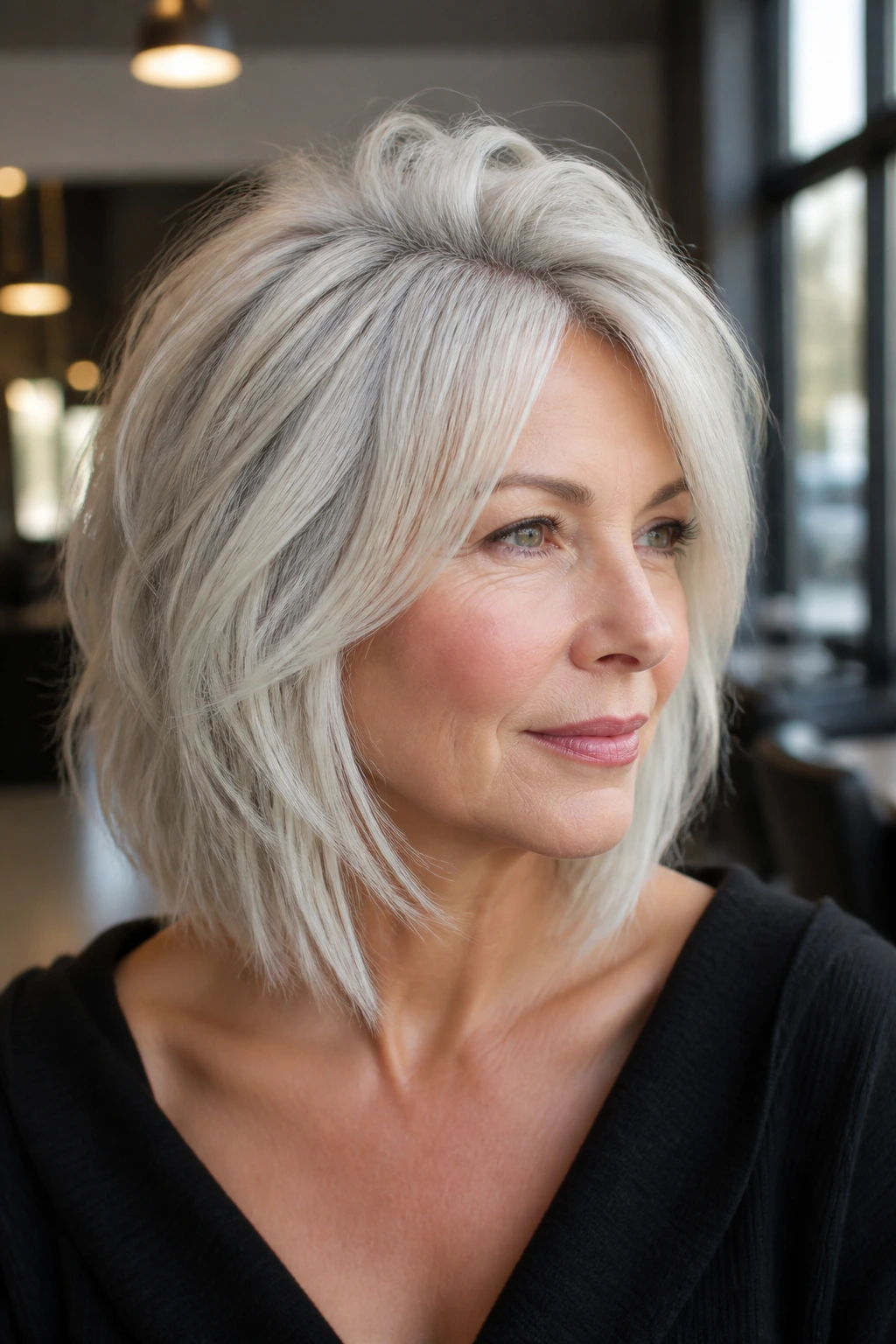
A piecey layered lob is useful when the crown has gone flat and the mid-lengths need a little break in the shape. The layers are not heavy; they’re cut just enough to create separation, so the hair falls in small, movable sections instead of one solid sheet. That pieceiness looks especially good in platinum because the light catches the different lengths.
I like this on women who want movement but do not want shag levels of texture. It keeps a neat perimeter, which stops the style from feeling messy.
The Best Way to Style It
Lift at the crown first. Always. If the top is flat, the whole cut looks tired no matter what the ends are doing.
A volumizing mousse at the roots, then a small round brush or velcro rollers at the crown, gives the hair enough push to hold through the day. The ends can stay a little undone. That’s the point.
If your hair is color-treated and slightly dry, avoid heavy dry shampoo right at the part. It can make the platinum tone look dusty.
14. Wispy-Fringe Lob That Lightens the Forehead
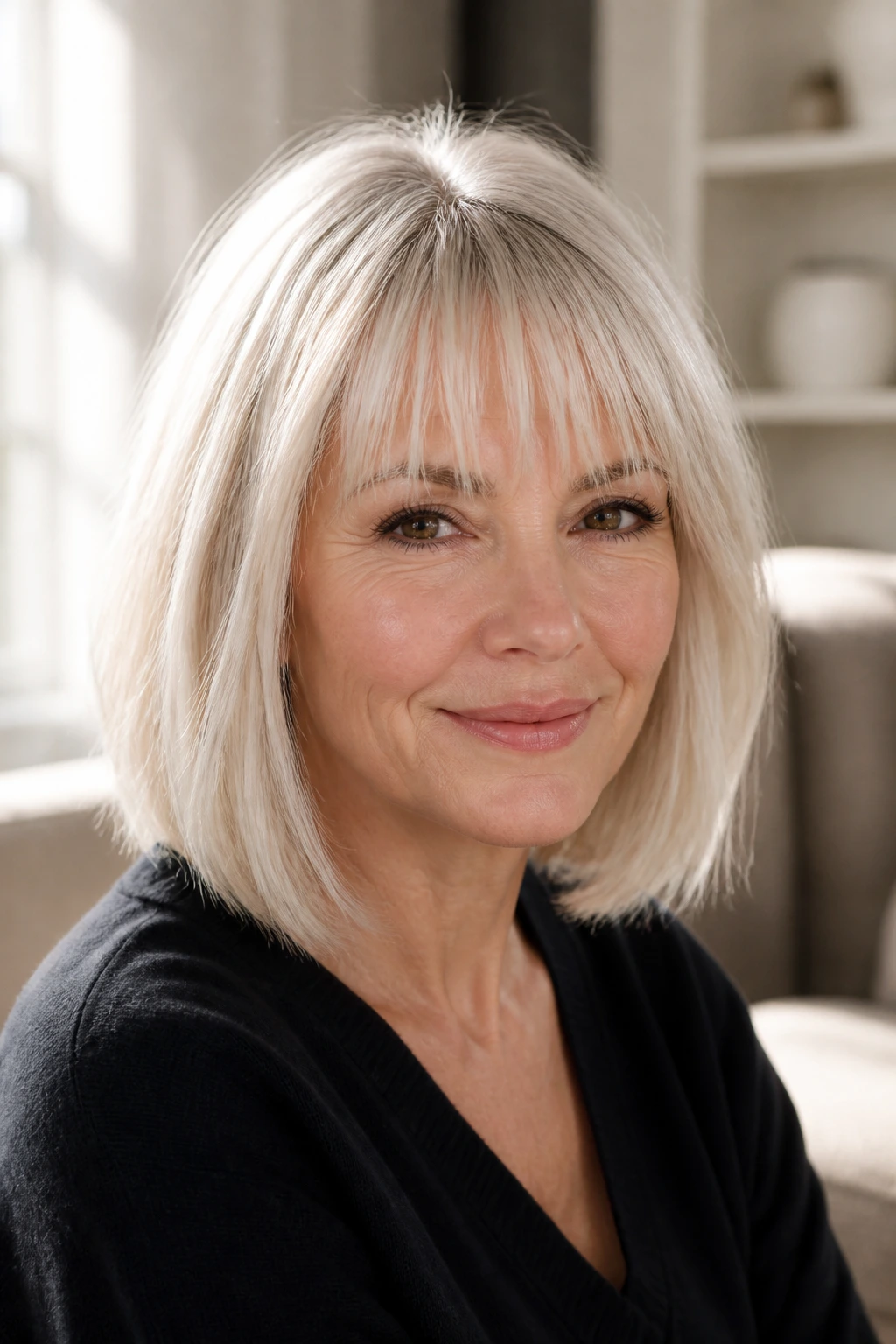
This version is all about softening the front. A wispy fringe paired with a long bob takes weight off the forehead without creating a full curtain or a blunt bang. It’s gentler, especially on women who want coverage without losing openness around the eyes.
The fringe should be thin enough to move. Not sparse. Thin enough to shift when you turn your head. That detail matters because heavy fringe on platinum hair can feel wig-like fast.
Who Should Try It
Women with strong brows, deeper-set eyes, or a forehead they’d like to soften tend to like this shape. It also works well if you wear glasses and don’t want hair sitting too hard against the frames.
Ask for point-cut ends in the fringe so the pieces break up instead of forming a straight line. The rest of the lob can stay mostly clean and simple.
A tiny amount of texture spray through the front is enough. Too much and the fringe gets sticky, which is the fastest way to ruin the effect.
15. Platinum Lob with Salt-and-Pepper Blending
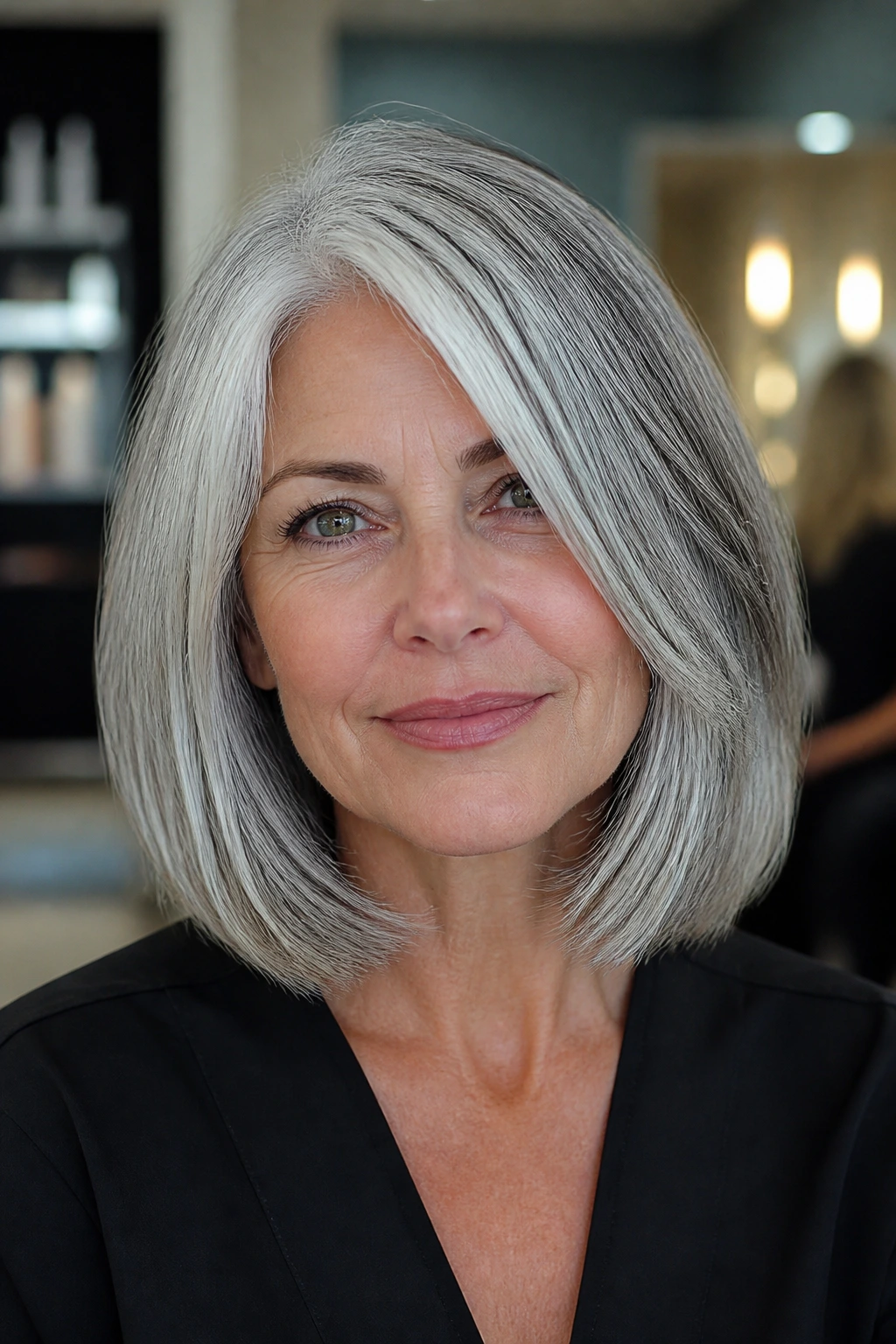
This one is quietly clever. Instead of pretending the hair is one pure shade, it works with the natural silver, white, and deeper strands already there. The result is a platinum lob that feels believable and low-key elegant, not over-processed. On older women, that often reads better than an all-over bleach job.
The color placement matters more than people think. Lighter pieces around the face, softer depth near the underside, and a cool gloss over the top can make the whole cut look rich instead of flat. It is one of the few platinum looks that actually gets easier if you stop trying to make every strand identical.
Why It’s a Smart Choice
This approach grows out softly and doesn’t scream for root retouches every few weeks. That’s the practical part. The visual part is even better: the mix of tones gives the lob texture before you even style it.
A soft root melt and a shine glaze help the blend look seamless. Ask your colorist to keep the silver areas bright, not chalky. There’s a difference, and it’s a big one.
If your natural gray comes in silver at the temples, this may be the cleanest route to platinum.
16. Blunt Lob with Minimal Layers and Big Shine
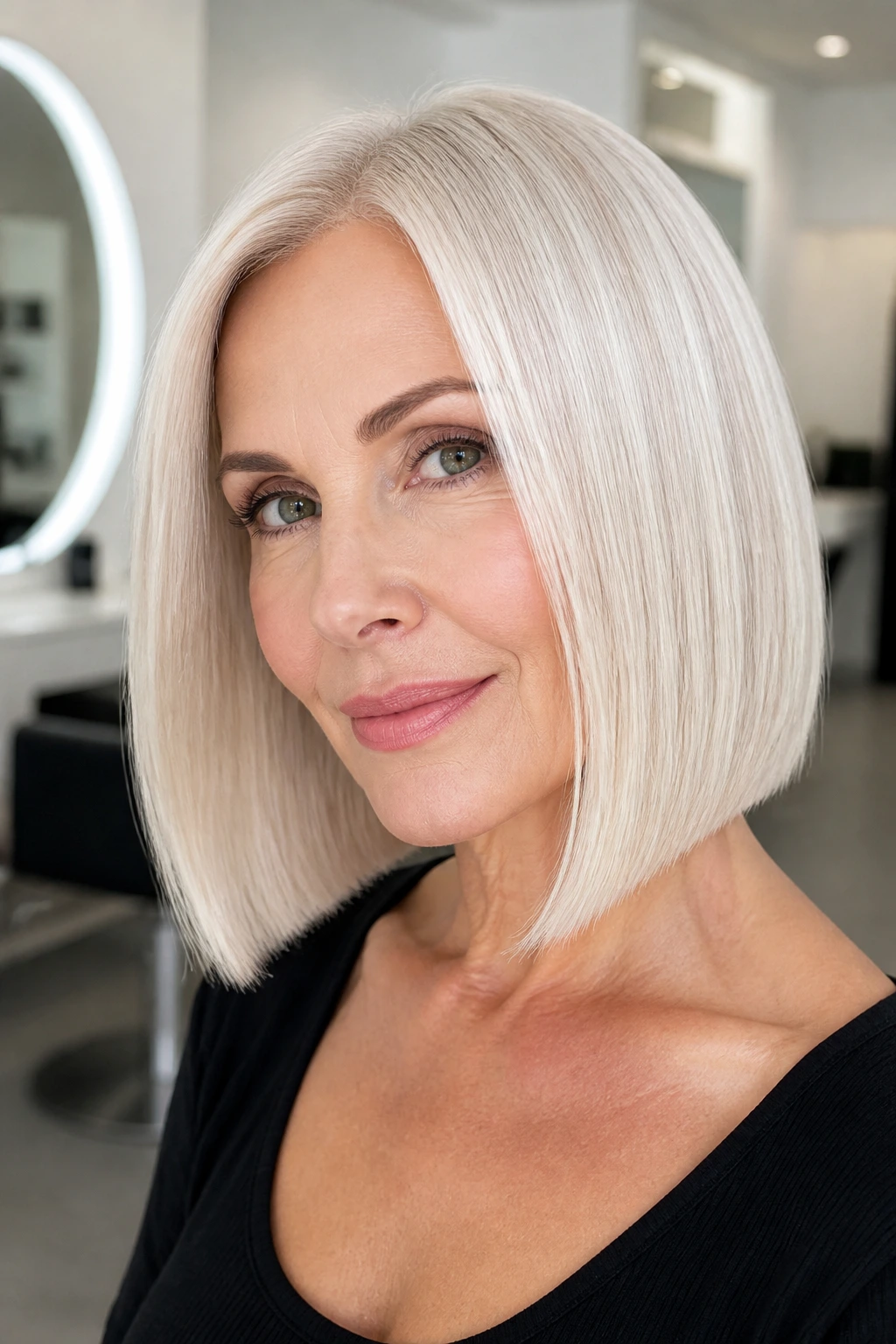
A blunt lob with minimal layers is the haircut equivalent of a white shirt with perfect tailoring. Nothing extra. Just a clear line, bright platinum color, and a finish that looks smooth enough to reflect light. It’s not fussy, which is part of why it works so well.
This cut flatters women who like structure more than softness. It can make the neck look long and the face look lifted, but only if the ends are kept healthy. Splitting or dry ends break the whole illusion.
The Maintenance Detail People Skip
Keep the perimeter trimmed regularly. A blunt lob loses its shape fast once the ends start to fray, and platinum hair shows that damage quicker than darker hair.
A gloss or toner helps the color read clean. If the tone goes brassy, the line suddenly feels harsher. That’s why I’d rather see this cut with a cool beige-platinum than an icy tone that has gone yellow.
Pair it with simple clothes and one good earring. Let the haircut do the talking.
17. Flip-End Lob That Kicks Out at the Jaw
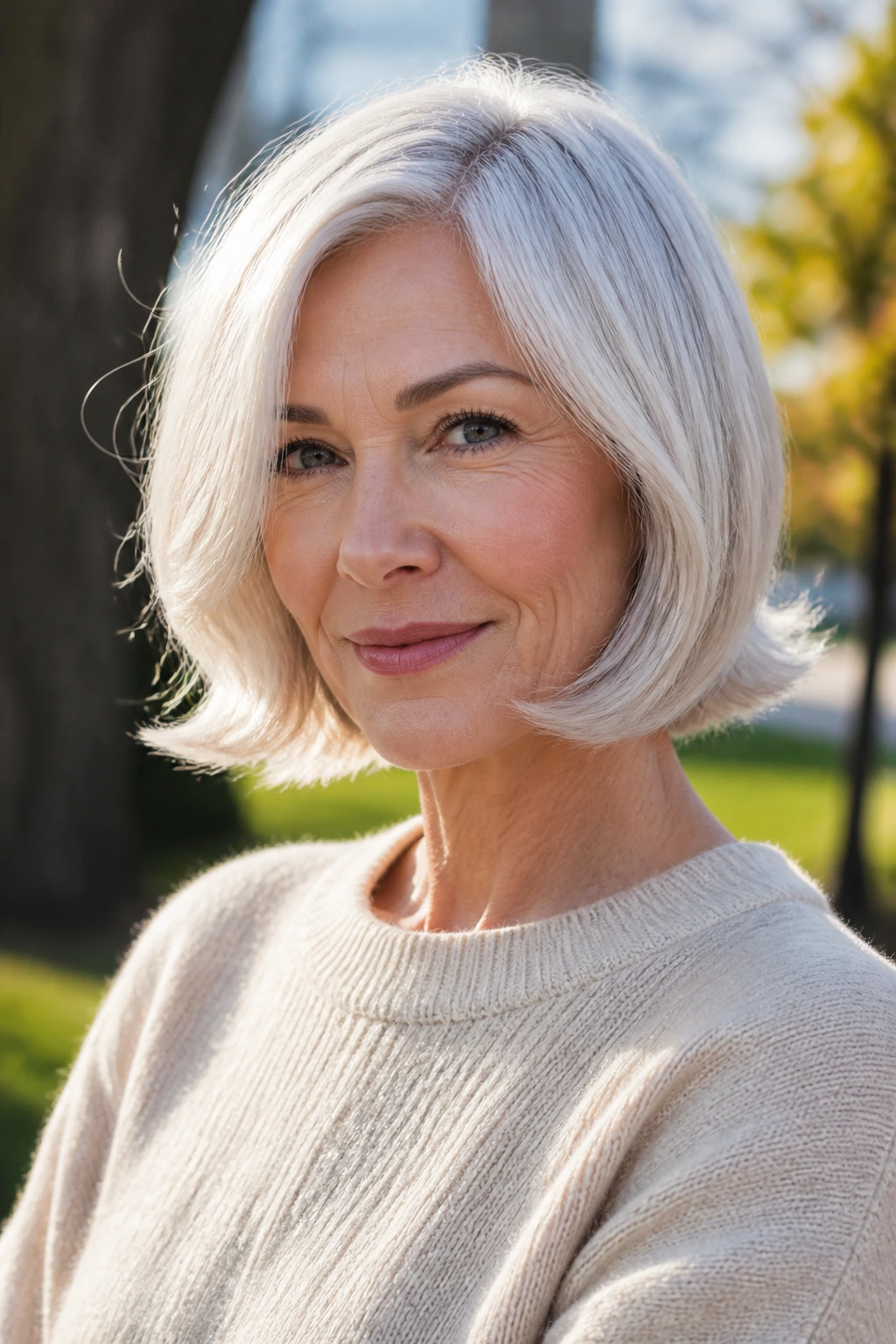
A little flip at the ends can make a platinum lob feel lighter and less formal. Instead of curling under, the hair flicks outward just enough to frame the jaw. It’s a small change, but it changes the whole mood of the cut. The line feels friendlier, more open.
This is especially useful if your hair naturally bends away from the face. Fighting that bend every morning is a waste of time. Sometimes the better move is to keep it and shape it on purpose.
How to Keep the Flip Clean
Use a medium round brush or a flat iron to bend only the last inch outward. That keeps the flip controlled. If the whole head turns outward, the cut starts to feel dated.
This is one of those looks that pairs well with a side part or a deep tuck behind one ear. It gives the flip room to show without turning the style into a retro costume.
If your jawline is a little square, the outward kick softens it in a nice way.
18. Soft Blowout Lob with Bouncy Ends
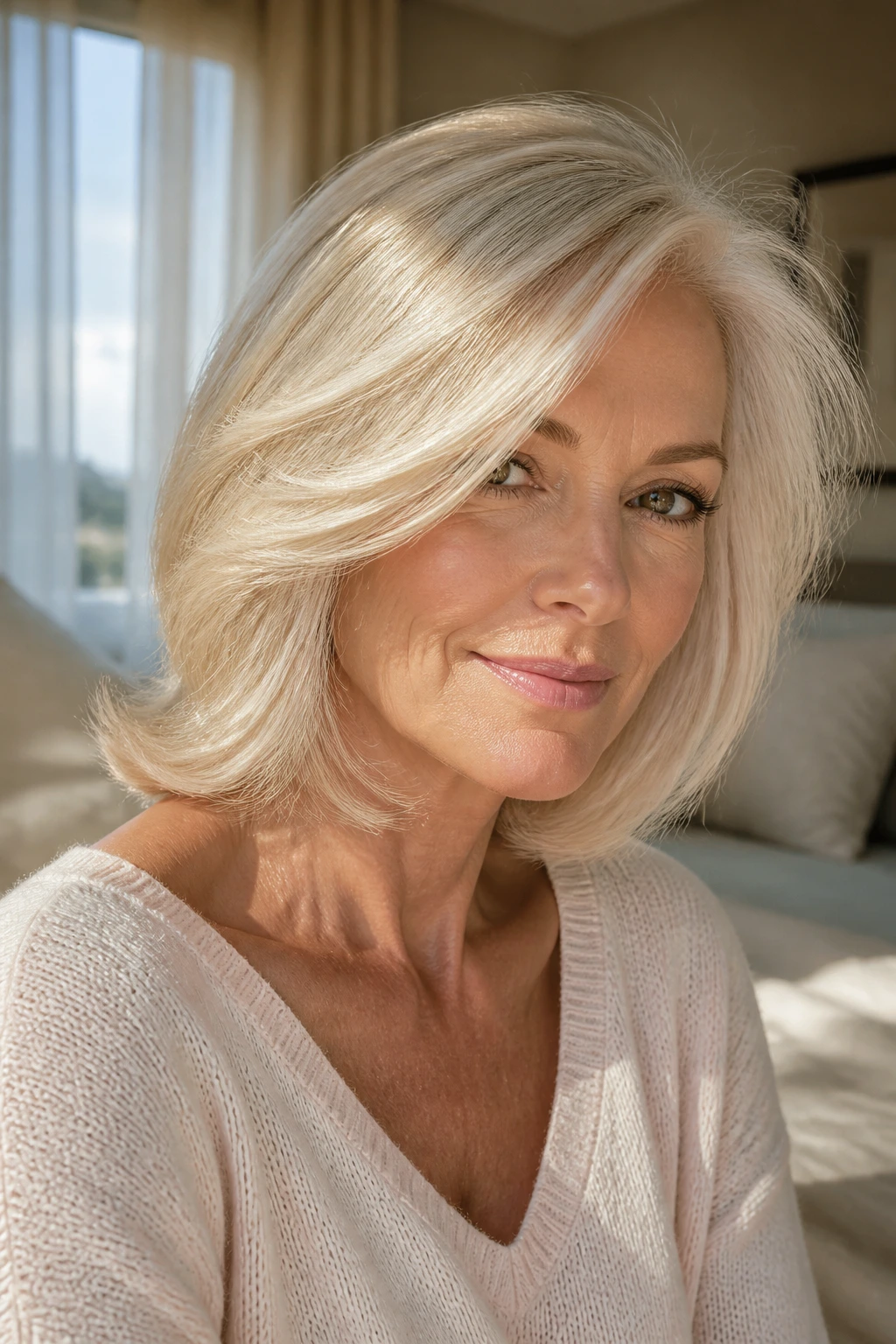
This is the salon-style version of a long bob, but it doesn’t need to be overdone. The blowout creates body through the mids, then the ends roll softly around the shoulders. On platinum hair, that bounce gives the cut a lift that can make the whole face look more awake.
I like this version for women who want hair that feels finished on day one and still wearable on day three. It’s smoother than beach waves, less severe than a blunt bob, and a good middle ground if you’re not in the mood for anything too styled.
What Makes It Last
Set the roots with clips while the hair cools. That one step does more than most products. It helps the crown keep height and stops the style from collapsing before lunch.
A medium-hold spray on the mid-lengths, not the ends, gives movement without crunch. Then let the brush do the rest. No need to overwork it.
This is the cut I’d hand to someone who likes a neat silhouette but does not want a stiff finish.
19. Collarbone Lob with a Long, Face-Slimming Line
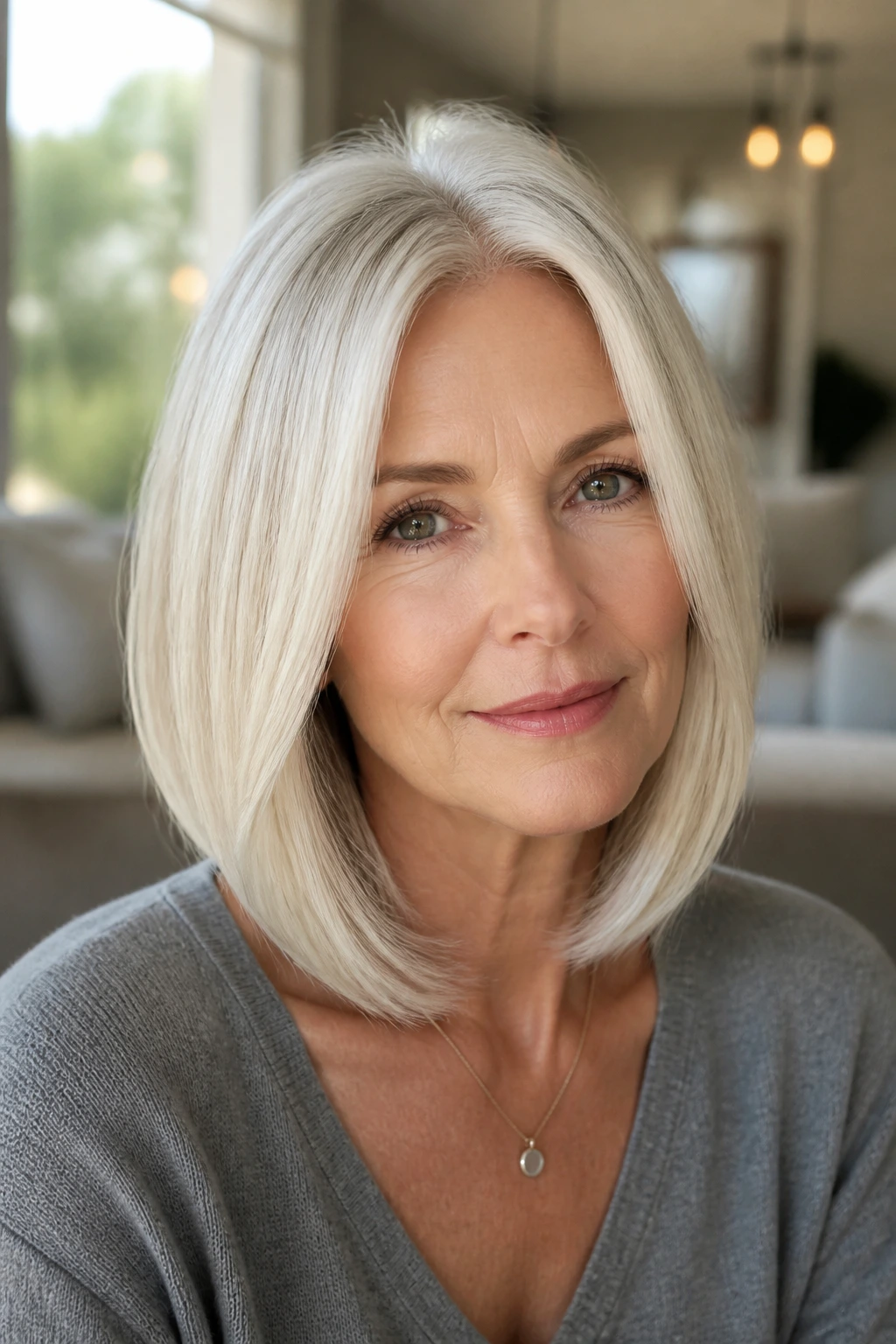
If you want the longest-feeling version of the platinum lob, this is it. The line skims the collarbone and stays soft around the front, which creates a narrow, vertical frame for the face. On older women, that can be flattering without feeling obvious. It lengthens. It softens. It leaves room for earrings, scarves, and the occasional bad hair day.
This cut is especially useful if you are transitioning from longer hair and want a shape that still feels familiar. It gives you the movement of a lob without the shock of a big chop.
Why It’s the Quiet Winner
A collarbone length bob is forgiving. You can wear it straight, wave it, bend it under, or clip one side back and it still looks like the same haircut. That flexibility matters when you want something that fits real life, not just a mirror.
Ask for soft face-framing pieces that start near the cheekbone and taper to the collarbone. That keeps the front from looking too heavy. A light shine spray at the end can keep the platinum from looking dry in bright light.
If you only try one version from this list, I’d start here.
Why the Platinum Lob Flatters Mature Hair So Well
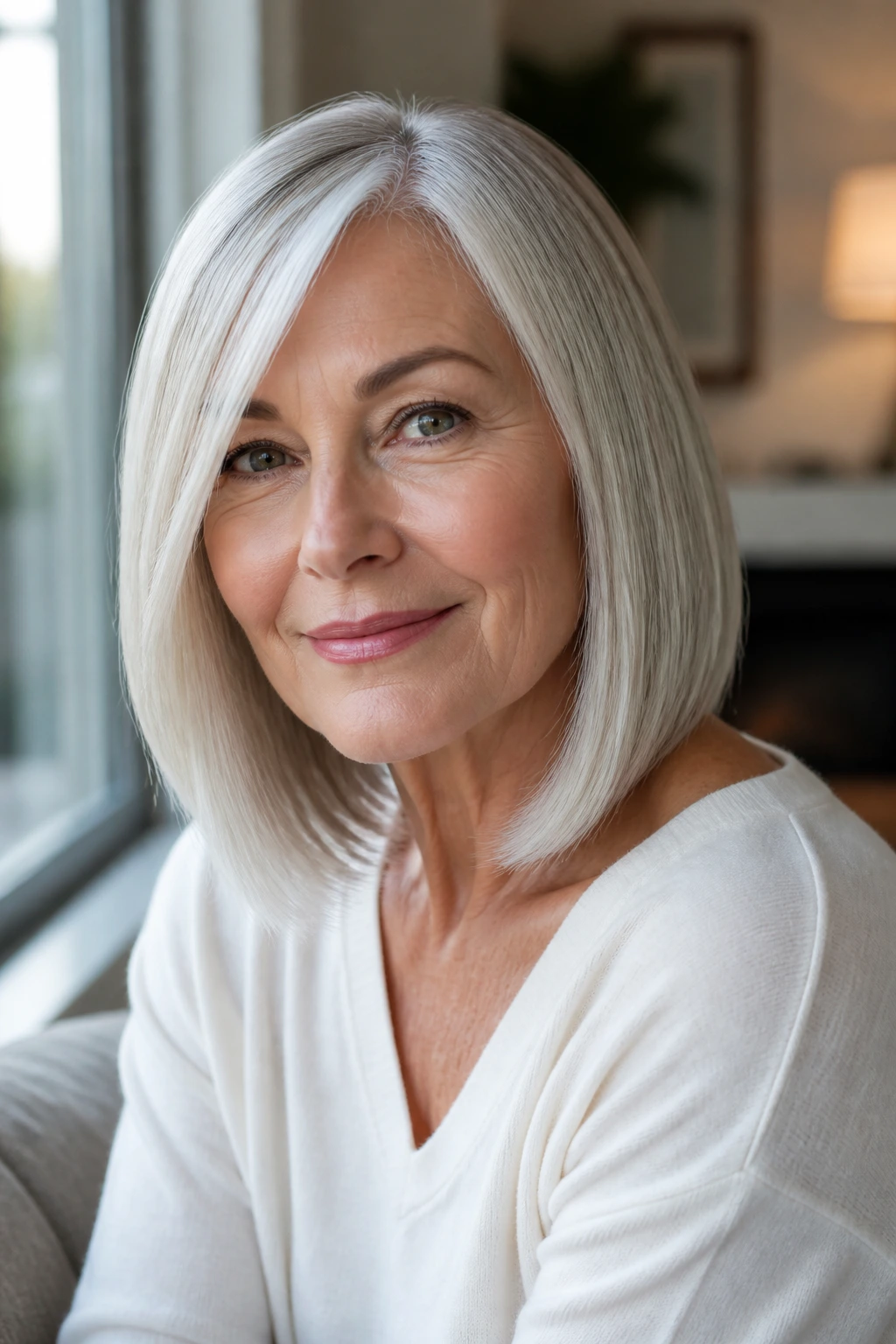
The long bob earns its keep on older women because it respects the hair’s new habits. Hair often gets finer at the temples, drier at the ends, and a little less obedient at the crown. A good lob works around those changes instead of pretending they never happened. The length gives weight where the hair needs it, and the cut can be adjusted to sit right on the jaw, the collarbone, or a touch below.
Platinum color adds a second advantage. Light, cool tones make the shape read clearly, which is useful when the cut is meant to look clean and exact. Silver-blonde, pearl, and icy beige tones can also blend naturally with gray, especially when the root area is softened. That’s why this look can feel less high-maintenance than it sounds. The color may be bright, but the grow-out can be forgiving if it is planned with purpose.
There’s also a simple visual reason it works. Long bobs create a frame, and frames are helpful. They pull attention back to the eyes and cheekbones, away from the neck, the jaw, or the spots where hair has thinned. I keep coming back to that because it matters. A haircut should do some quiet editing for you.
The Tools That Make a Platinum Lob Behave
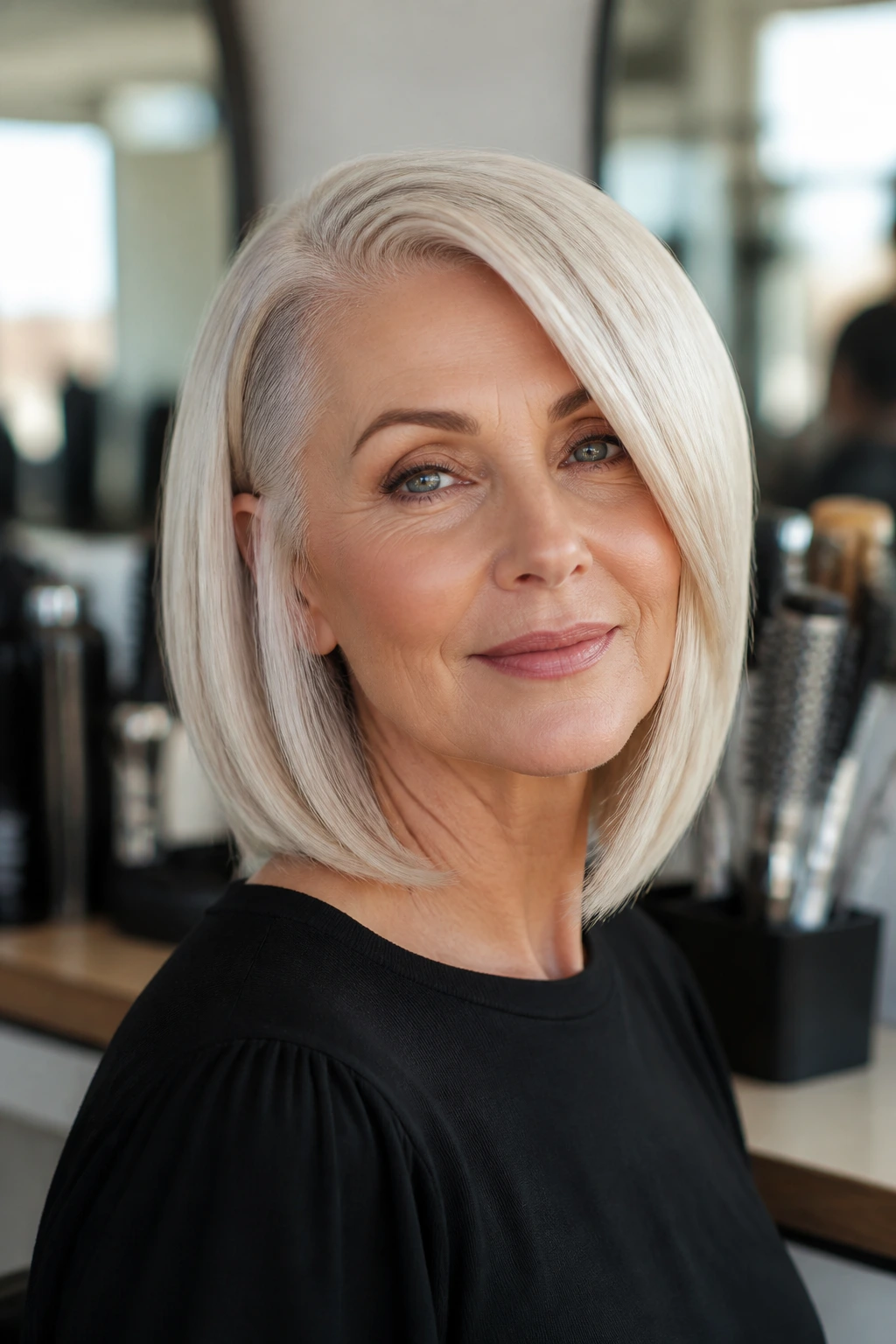
A platinum long bob looks easy when the right tools are in reach. Without them, even a good cut can collapse into frizz, flat roots, or ends that kick in every direction. A small kit goes a long way here.
- 1.5-inch round brush: Good for smoothing the ends under or adding a soft bend without creating tight curls.
- Paddle brush: Best for straight blow-drying and keeping the cut sleek from root to tip.
- Blow dryer with a nozzle: The nozzle matters. It directs airflow and keeps the finish smoother.
- Flat iron: Use it only where needed; a few strategic passes on the outer layer usually beat ironing the whole head.
- Purple shampoo: Helpful for keeping platinum tones from turning yellow, but don’t overuse it or the hair can look dull.
- Lightweight mousse or root-lift spray: Adds structure at the crown without making the ends sticky.
- Heat protectant: Non-negotiable if you’re using a dryer or iron more than once a week.
- Smoothing serum or shine spray: Use a tiny amount on the mids and ends; a dab too much turns clean shine into limp grease.
- Sectioning clips: Not glamorous, but they make the blowout much neater.
- Wide-tooth comb: Useful on damp hair if you want to keep waves intact instead of pulling them out.
Smart Color Choices and Salon Requests That Save the Cut
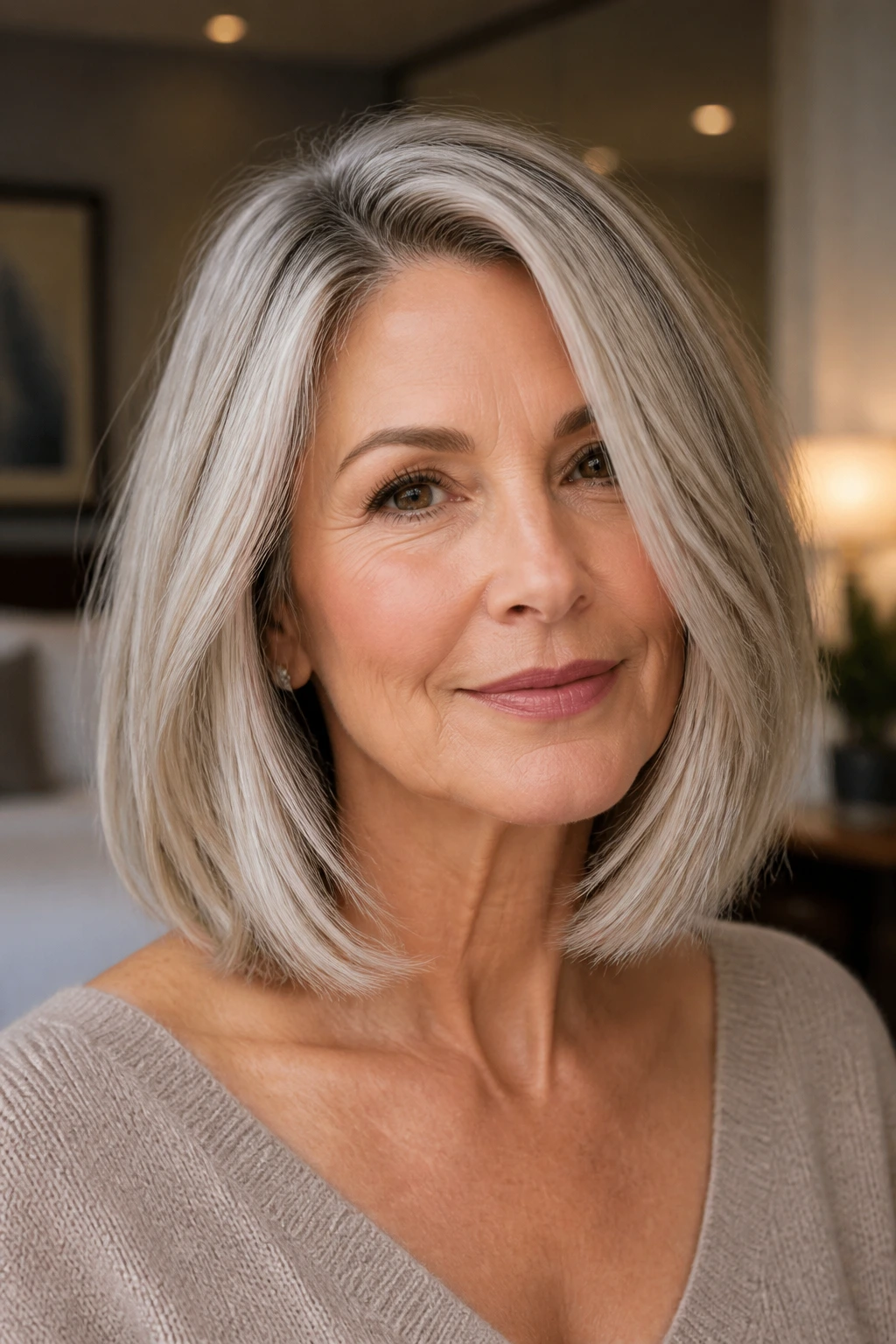
The best platinum lob starts before the scissors come out. Bring reference photos, yes, but also explain what your hair does on its own. Does it puff at the sides? Go flat at the crown? Split at the ends? Those details matter more than a single glamorous picture.
Ask for the cut in terms of movement, not just length. Say whether you want the perimeter blunt, beveled, or lightly textured. If you have fine hair, ask that the layers stay internal and minimal. If your hair is thick, ask where weight should be removed so the shape does not balloon outward.
Color matters just as much. A pure white platinum can be striking, but it can also make dryness visible fast. A cool beige or silver-platinum blend is often kinder on older hair. Root shadow, lowlights, and a soft toner can all help the color read rich instead of chalky.
I’m a fan of asking for a gloss service if the hair gets porous. It smooths the look in a way that a flat iron never can.
How to Wear These Platinum Long Bobs Day to Day

Presentation: Keep the silhouette clear. Whether the lob is sleek, waved, or softly curved, the shape should be easy to read from the front and side. A bit of movement at the ends usually looks better than a stiff, frozen finish.
Best Styling Match: Choose a center part for symmetry, a deep side part for lift, or a soft off-center part if you want the easiest middle ground. The part changes the whole mood of the cut more than most people expect.
Accessory Pairing: Glasses, hoops, scarf knots, and small clips all work well with a platinum lob because the cut sits close enough to the face to frame them. If you wear bold frames, keep the front pieces softer so the haircut and glasses don’t compete.
Occasion Fit: A polished blowout version works for dressier settings, while the textured and air-dried versions feel better for everyday wear. The same cut can do both if you don’t overload it with product.
Extra Tweaks That Make the Color and Cut Look Richer
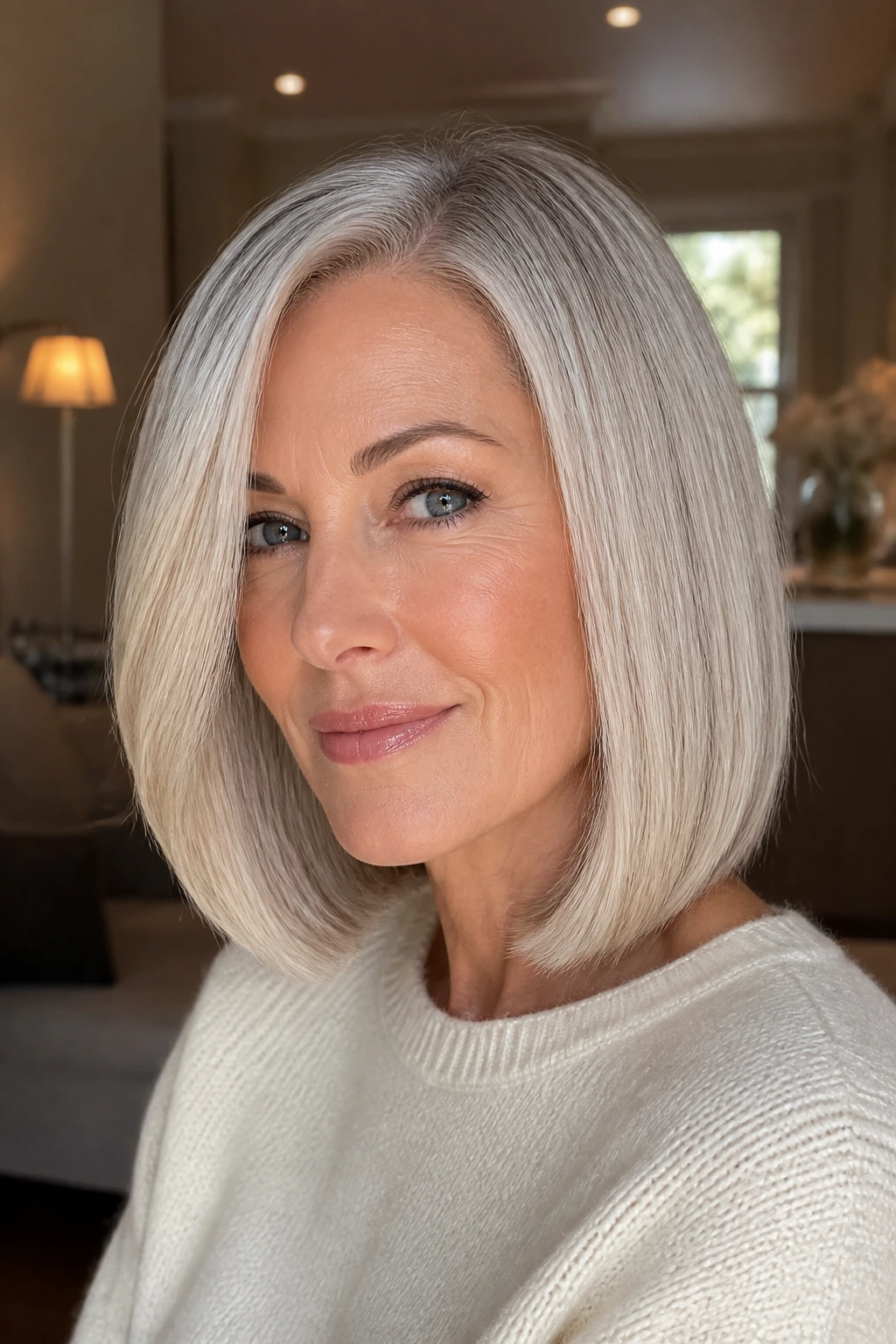
Shine Boost: A pea-sized amount of serum on dry ends can make platinum hair look smoother, especially if the cut is blunt or curved under. Use it sparingly. Too much and the shape falls flat.
Customization: If you want less upkeep, keep a soft root shadow and ask for face-framing pieces that start just below the cheekbone. If you want more drama, move the part deeper and sharpen the ends a little more.
Serving Suggestions: A tucked side, a single ear cuff, or a soft bend at the front can change the whole feel of the lob without changing the cut. Tiny adjustments matter here. They keep the style from looking copied and pasted.
Make-It-Yours: For fine hair, favor blunt or beveled ends. For wavy hair, ask for a looser perimeter and fewer interior layers. For gray blending, let the silver show through near the temples instead of hiding every strand.
Common Mistakes That Make a Platinum Lob Look Off

The first mistake is chasing too much texture. Platinum hair shows every rough edge, and if the ends are shredded with a razor or over-thinned, the haircut starts looking dry and tired fast. The fix is simple: keep the perimeter clean and ask for soft point-cutting only where movement is needed.
Another common problem is over-toning. Purple shampoo has its place, but if you use it every wash, the platinum can turn dull and flat. Once or twice a week is usually enough. Let a normal moisturizing shampoo do the rest.
People also cut the front too short. A lob that lands above the jaw can lose its softness and start behaving like a regular bob. If you want a long bob, keep enough length to skim the collarbone or at least touch the lower jaw.
And then there’s the crown. Flat roots make the whole haircut feel older than it is. A little root lift, a clip while the hair cools, or a light volumizing spray can change that in ten minutes.
Variations and Adaptations to Try
The Root-Melt Lob: Keep the roots one or two levels deeper than the mids, then fade into a cool platinum finish. It’s the easiest choice if you want softer grow-out and less salon maintenance.
The Feather-Edge Lob: Ask for softly feathered ends instead of a blunt perimeter. This works well for fine or thinning hair because it keeps the shape airy without making the cut look sparse.
The Curly Platinum Lob: Let the length sit a touch longer than you think you need, then shape it around your natural curl pattern. Curly platinum can look gorgeous, but it needs room to move or the shrinkage will surprise you.
The Gray-Blend Lob: Use platinum highlights, silver gloss, and subtle lowlights to weave in natural gray instead of covering it. This is especially smart if the temples are already bright and the crown is darker.
The Glass-Shine Lob: Keep the cut sleek, the layers minimal, and the finish smooth. This version suits women who like a sharp outline and do not want piecey texture fighting the color.
Keeping the Shape and Tone in Good Shape
Platinum hair and long bob haircuts both need a little maintenance, and pretending otherwise only leads to frustration. For the cut, a trim every 6 to 8 weeks helps the ends stay blunt or beveled instead of frayed. If you prefer a softer, layered lob, you can sometimes stretch that to 8 to 10 weeks, but the shape should still be checked before the edges get stringy.
Color needs its own rhythm. A toner or gloss usually holds for about 4 to 6 weeks, sometimes longer if your hair is porous and sometimes less if you wash often. Purple shampoo once or twice a week is enough for most people. Use a deep conditioner or bond-building mask weekly if the hair has been lightened to a pale platinum, because that brightness comes with a price.
At home, a silk pillowcase or a loose satin wrap can help the style last another day. So can a quick refresh with a round brush at the ends and a cool shot from the dryer at the crown. You do not need to rebuild the whole haircut every morning.
Questions People Ask Before Going Platinum Long Bob
Will a platinum long bob make thin hair look thinner?
Not if the cut is handled correctly. A blunt or softly beveled lob often makes thin hair look fuller at the ends, while too many layers can expose every weak spot. The shape matters more than the color.
Is a platinum lob hard to maintain on older hair?
It can be, if the hair is already dry and overprocessed. A rooted platinum or gray-blend version is easier to live with than an all-over white blonde, because you get softer grow-out and fewer harsh regrowth lines.
What face shapes suit a long bob best?
Most of them can work, but the parting and front length should change. Round faces usually like a little elongation, square jaws often benefit from softness around the chin, and long faces usually do better with some width or fringe.
Can I wear this cut with glasses?
Yes, and it often looks better with glasses than people expect. Keep the front pieces soft enough that they don’t fight the frames, and avoid bangs that sit too thick right at the brow line unless that’s the point.
How do I stop platinum hair from looking yellow?
Use a purple shampoo sparingly, not daily, and keep heat tools on the lower side that still works for your hair. Yellowing often shows up faster when the hair is dry, so a good moisture mask helps more than most people think.
Should the ends be blunt or layered?
If you want a sharper, fuller look, go blunt. If your hair is thick or you want movement, ask for light internal layering or soft beveling. Heavy layers can make the lob feel fragmented.
What if my hair has a strong natural wave?
Work with it. Ask for a lob that keeps enough length for the wave to settle, then style with a diffuser or air-dry cream. Cutting it too short can make the wave puff outward instead of forming a clean shape.
A Bright Cut That Still Feels Easy
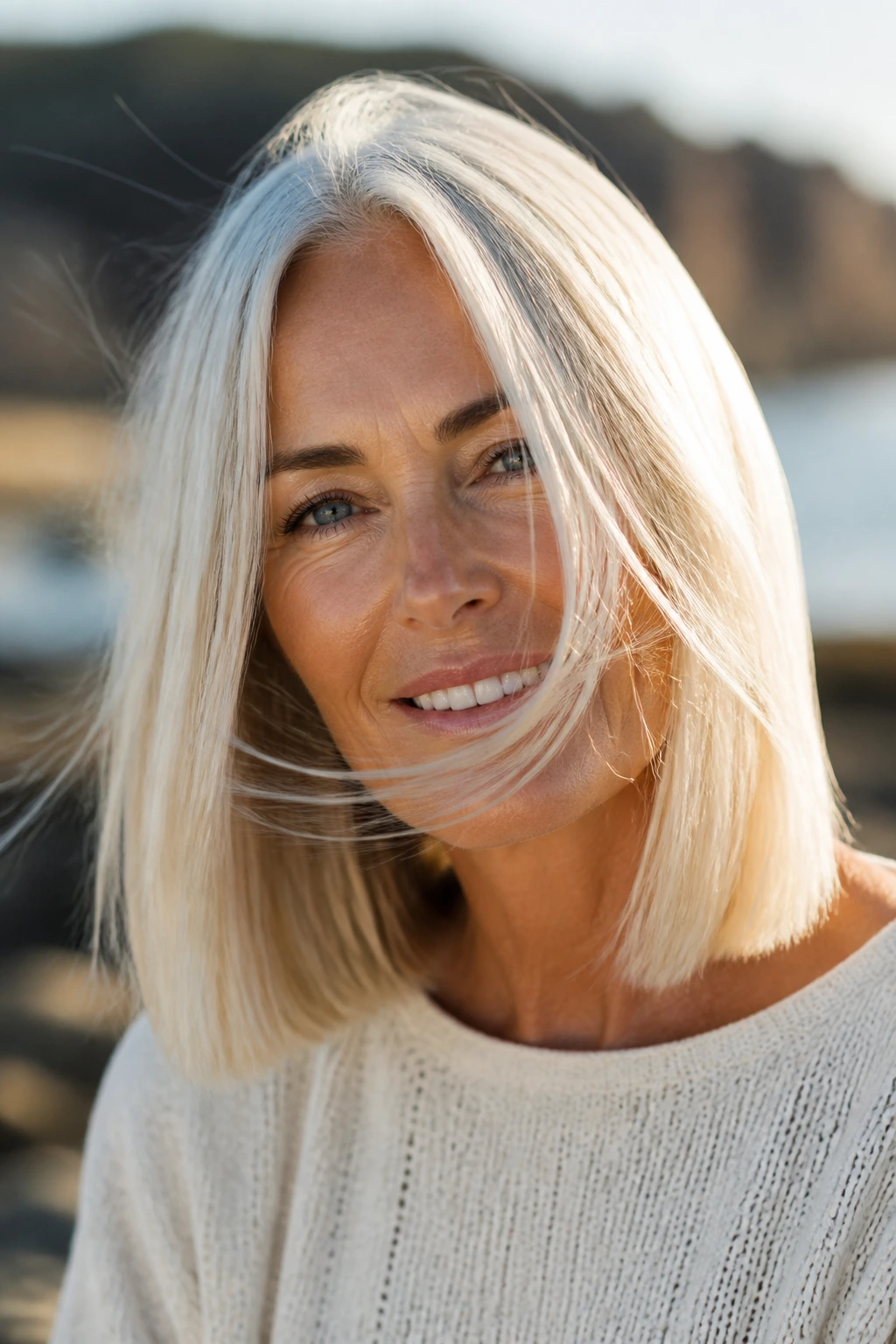
The best platinum long bob is the one that works with the hair you actually have, not the hair you wish showed up after washing. That’s the real secret, if there is one worth naming. A blunt edge, a soft root melt, a bit of movement at the jaw — each one changes how the cut sits on the face, and each one can make older hair look purposeful instead of overworked.
I keep coming back to this shape because it gives you room. Room for gray blending, room for texture, room for days when you do not want to fight a brush for half an hour. A good lob should move when you turn your head and still make sense when you let it air-dry. That’s the sweet spot.
Pick the version that matches your hair’s habits, not the one that looks loudest in a photo, and the cut will do its job quietly for a long time.
