



Long bob hairstyles with layers for volume solve a very specific hair problem: the cut that looks great for about forty minutes, then settles into a flat, sleepy shape that hangs from the head instead of moving with it. Collarbone length is tricky like that. Too blunt, and it can feel heavy. Too heavily layered, and the ends go wispy while the sides puff out in all the wrong places.
The sweet spot is a lob that keeps enough weight at the perimeter to look full, while the layers do the hidden work—lifting at the crown, softening the cheek area, and giving the ends a little swing. That balance is why layered lobs stay interesting. They can be polished, rough-dried, waved, straightened, or air-dried and still hold a shape that looks deliberate.
I’m fussy about this cut for a reason. A good layered lob doesn’t need constant rescue. It just needs the layers placed in the right spots, and the volume shows up where you actually want it: near the top, around the face, and through the mid-lengths, not in a puffy triangle or a limp sheet. That’s where the real difference lives, and the styles below show how many directions a lob can take once the layers start doing more than decoration.
Why Layered Lobs Keep Their Shape
-
They lift the crown without chopping off length: The layers take some weight out of the top section, which helps hair rise instead of sliding flat against the scalp.
-
They keep the ends from looking stringy: A solid perimeter gives the haircut something to hold on to, so the shape still looks full even after a long day.
-
They work with more than one texture: Fine hair, thick hair, straight hair, waves, and curls all need different layer placement, but the lob length gives each one a useful middle ground.
-
They make face framing look softer: A few well-placed pieces around the cheekbones or jawline can change how the whole cut sits, even before you touch a styling tool.
-
They grow out better than shorter bobs: When the cut slips a little between trims, it usually turns into a longer lob instead of a lopsided mess.
1. The Cheekbone-Frame Lob

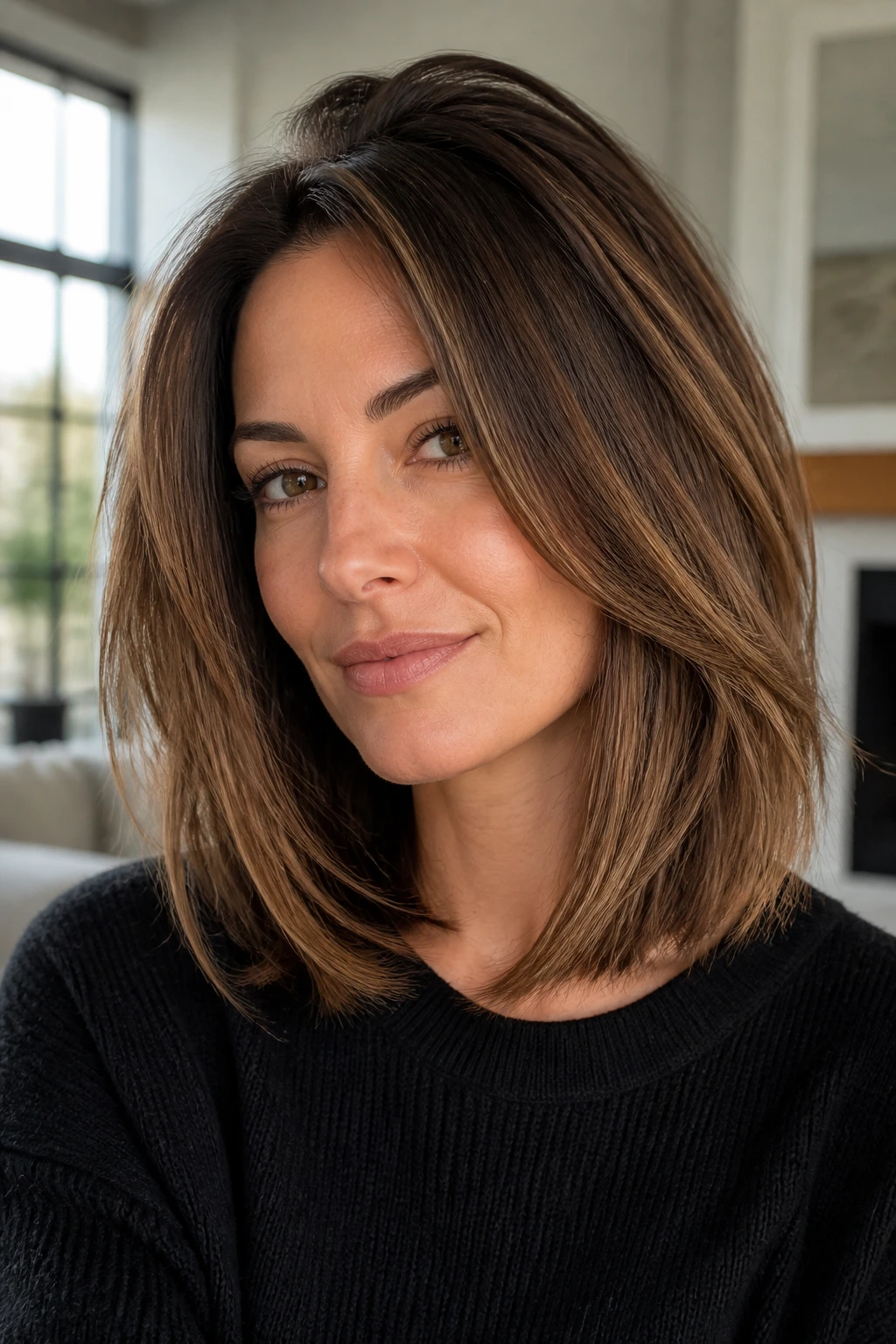
This is the one I recommend when someone wants movement near the face without committing to a shag. The shortest layers land around the cheekbone, so the hair opens up where your features are already doing the work. It gives a little lift to the front without stripping the body out of the back.
Why it works: The cheekbone is a smart starting point because it avoids the heavy curtain effect you get when all the layers begin too low. The hair still reads as full, but it no longer hangs in one straight block. If you tuck one side behind the ear, the shape gets even sharper.
A clean middle part makes this version feel modern. A soft side part makes it look more lived-in. Either way, the cut keeps enough line that it doesn’t collapse into fluff.
2. The Feathered Collarbone Lob
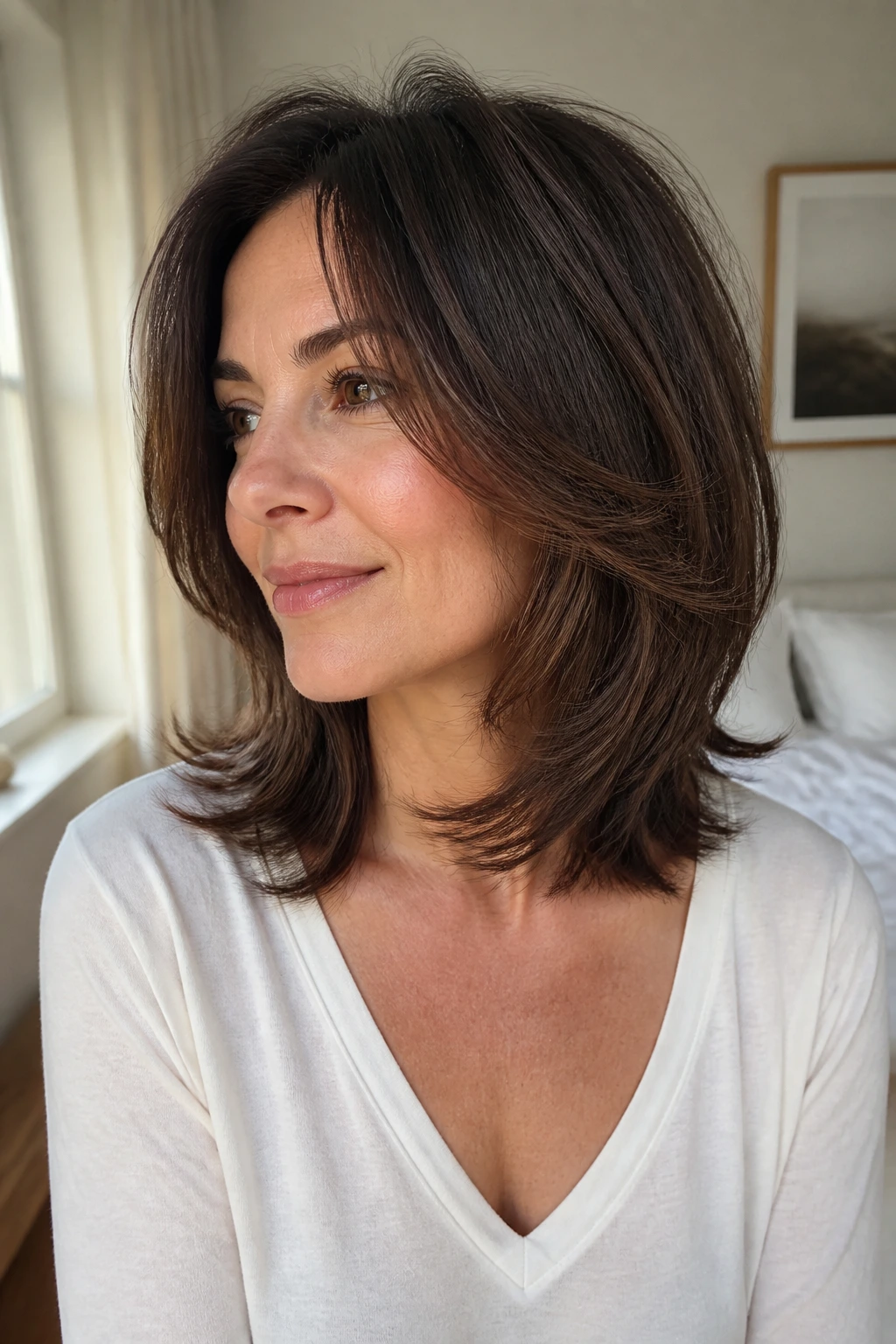
Want movement without the choppy, over-layered look? This is the softer answer. The layers are feathered downward from around the collarbone area, so the ends flick instead of stopping dead. Thick hair benefits a lot here because the shape loses bulk without losing its outline.
- Best for: dense hair that sits heavy at the jaw or shoulders.
- Styling note: a 1.25-inch round brush gives the ends that soft bend.
- Shape note: ask for the layers to stay long enough to keep the perimeter looking full.
Feathering is a very specific kind of softness. It should look like the hair has been encouraged to move, not chopped into pieces. If the layers start shouting, the cut is too high.
3. The Razor-Soft Lob With Airy Ends

A razor-soft lob has a cleaner swing than a blunt cut and a less obvious edge than a heavily textured shag. The ends feel light, almost airy, and straight hair especially likes this because the shape stops looking like a sheet of fabric. It moves.
That said, razor work is not a free-for-all. On coarse or frizzy hair, too much razoring can leave the ends looking fuzzy instead of soft. I like this version best when the hair already has some smoothness and needs movement more than it needs bulk removal.
What makes it different
The lift here comes from the softness of the perimeter, not from dramatic layering. You still keep enough length to tuck the front pieces or curl them under with a brush, but the outline doesn’t feel blunt or boxy. It’s the sort of lob that looks especially good after a quick bend with a flat iron.
4. The Curtain-Bang Lob

Curtain bangs change everything around the face. They pull attention upward, split the front in a flattering way, and blend into the layers so the haircut reads as one shape instead of two separate ideas. If you want a lob that looks full around the cheeks and eyes, this is one of the easiest ways to get there.
The trick is keeping the bangs long enough to travel. Too short, and they sit apart from the lob. Long curtain bangs that fall somewhere between the cheekbone and jawline link the front pieces to the rest of the cut and make the whole style feel intentional.
This version is especially good if you like wearing your hair down most of the time. It gives you face framing without needing a lot of daily styling, and the grow-out is less annoying than a blunt fringe.
5. The Deep Side-Part Lob
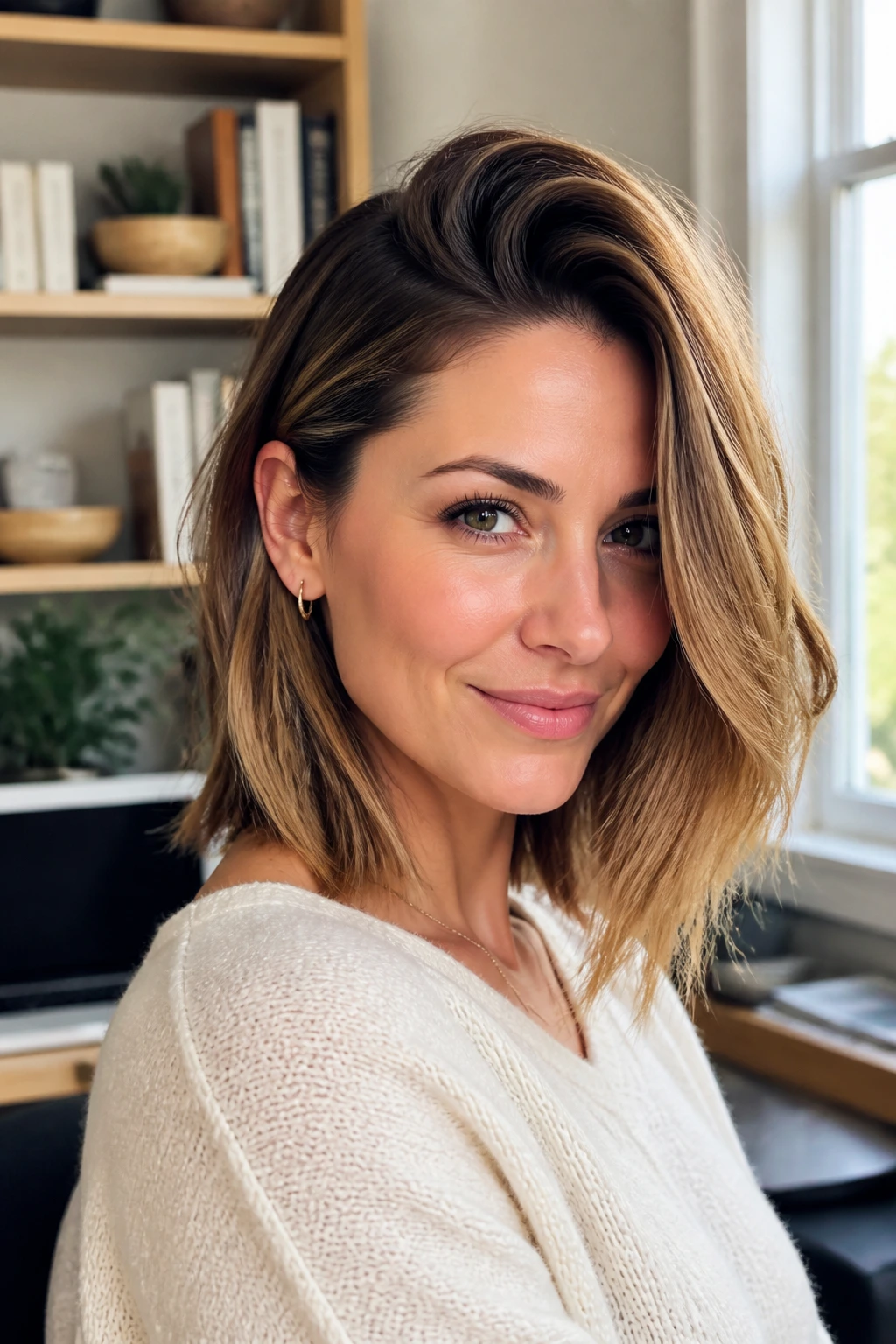
If your crown goes flat by midmorning, stop fighting it with more spray and try a deep side part instead. A shifted part creates lift at the root almost instantly, and on a layered lob it makes the whole cut look more awake. One side gets a little drama. The other side gets softness.
The best thing about this shape is that it doesn’t need a complicated cut to work. Even a simple lob with long internal layers can look fuller when the part is moved several inches over from the middle. If you want extra height, clip the heavier side while the hair is still warm from the blow-dryer and let it cool that way.
It’s a tiny adjustment. Huge payoff.
6. The Loose Wave Lob With Hidden Layers
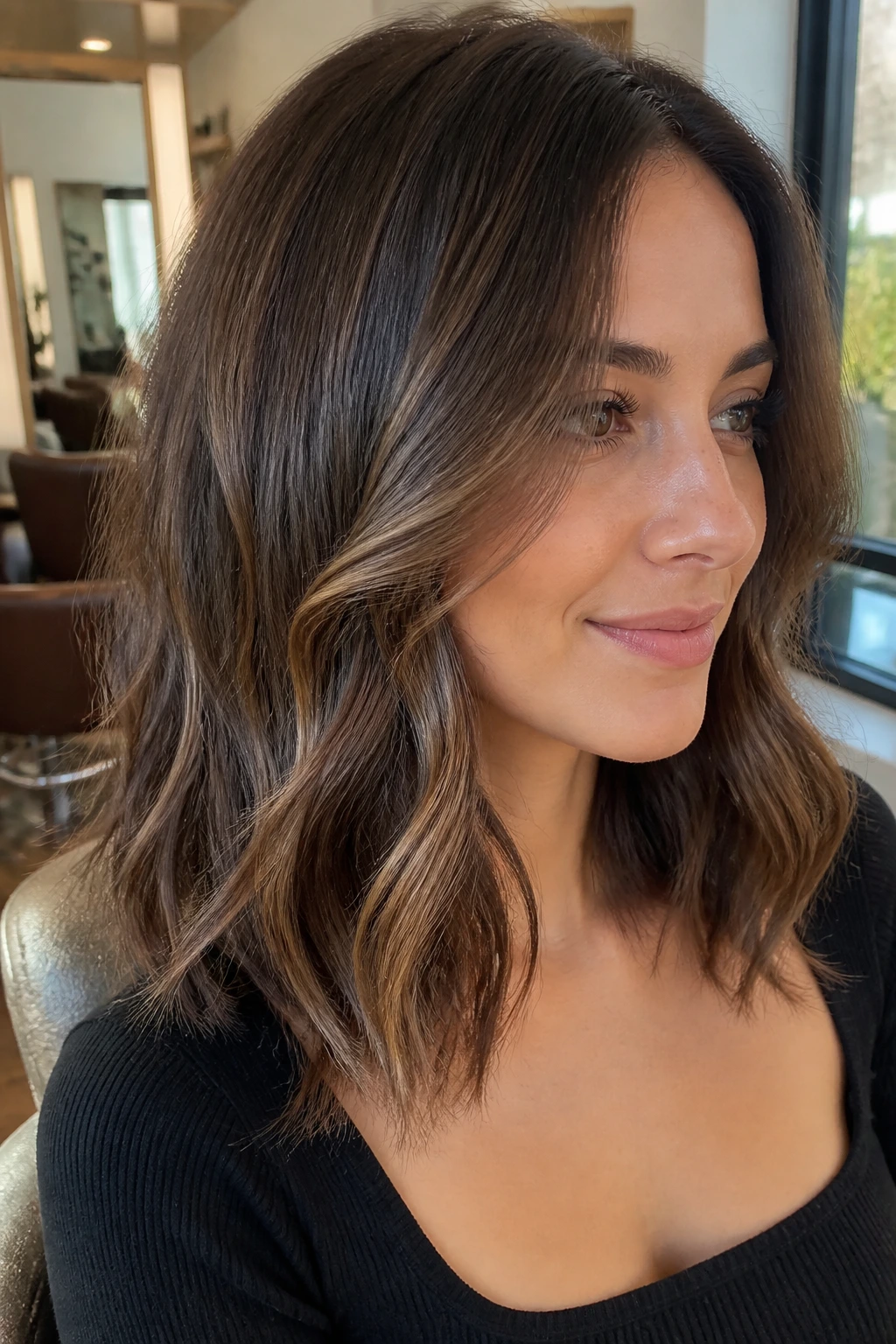
This is the lob for people who like hair that bends instead of behaving. The top section stays smooth enough to show the cut, while the hidden layers underneath create the lift and movement. You get that loose, slightly undone wave that never looks overworked.
Why the hidden layers matter
The layers sit under the surface, so you don’t get obvious steps in the hair. Instead, the wave falls over a fuller base and the ends flick in different directions, which gives the style a lot more energy than a straight lob would.
- Best for: medium-density hair that needs movement but not a lot of texture removal.
- Style it with: a curling wand, leaving the last inch out for a softer bend.
- Finish with: a light texturizing spray, not a heavy paste.
I like this shape because it holds up when the weather is a little humid but doesn’t look crunchy. That matters.
7. The Choppy Textured Lob
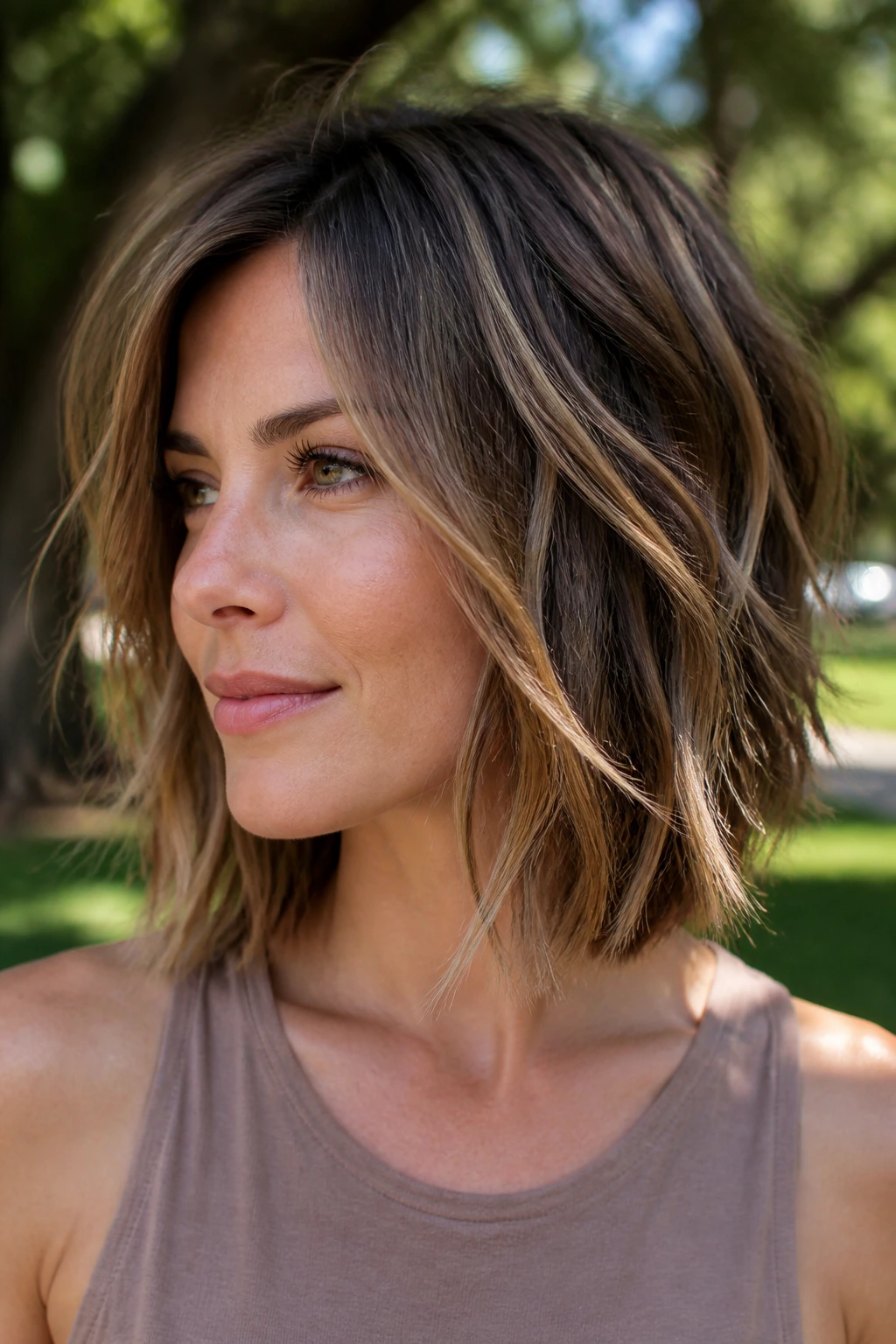
A choppy lob is not shy. The layers are more visible, the ends are more piecey, and the shape has that slightly broken-up look that makes hair seem fuller because every section catches the eye. It works best when you want the haircut to do some of the styling before you even pick up a tool.
- Great if: your hair falls flat when it’s one length.
- Better with: a matte texturizing spray or a small amount of styling paste.
- Not ideal if: you want a sleek, glassy finish every day.
The danger here is overdoing the chop. If the layers are too short, the hair can start to look frayed at the bottom. Keep the layers long enough to hold a line, and the texture will read as intentional instead of messy.
8. The Blunt-Base Lob With Hidden Layers
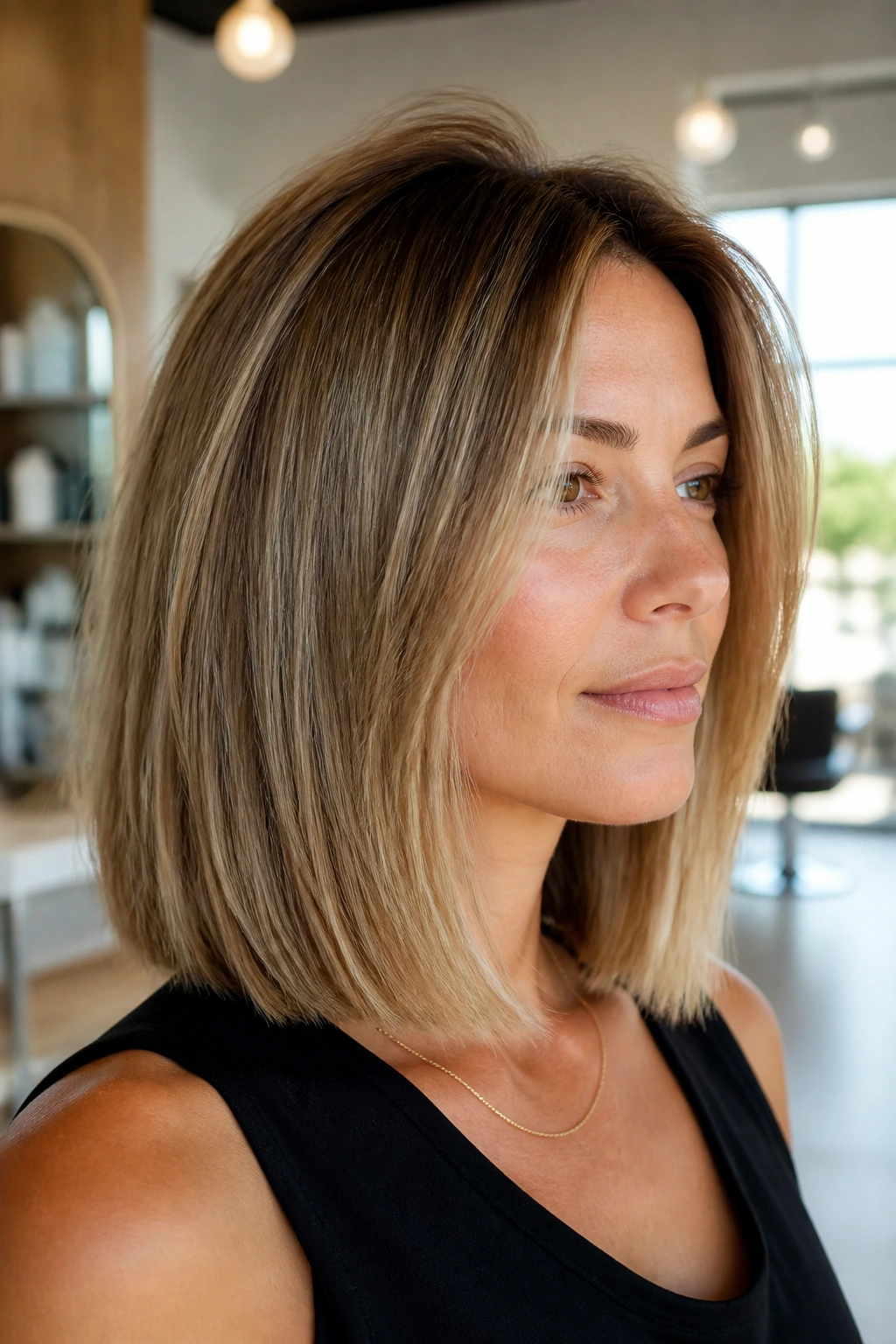
This is one of my favorite tricks for fine hair. The perimeter stays blunt, so the cut still looks dense and clean, but the interior has hidden layers that lift the crown and stop the style from lying like a helmet. From the outside, it looks polished. Inside, the haircut is doing the heavy lifting.
What I love here is the contrast. A blunt edge gives you the illusion of thickness at the ends, and the hidden layers keep the top from collapsing. If your hair is too fine for visible chopping, this is the version to ask about.
Don’t let anyone take a pair of thinning shears to the ends just because you said “volume.” That usually makes the bottom look see-through.
9. The Long Internal-Layer Lob

Thick hair needs a different kind of help. Long internal layers remove weight from inside the haircut, so the shape falls better without exposing too much of the ends. You still keep a full-looking outline, but the mid-lengths stop ballooning out.
This is the lob I’d choose for someone whose hair gets big at the bottom and heavy at the top. The layers should start low and stay long. You want the cut to breathe, not explode.
A center part looks clean with this one, but a soft off-center part can make the whole thing move more easily. Either way, the goal is the same: reduce bulk, keep the perimeter, let the hair swing.
10. The Fine-Hair Lob With a Crown Lift

Can fine hair wear layers without ending up sparse? Yes, if the layers stay long and the lift comes from the roots, not from aggressive cutting. This version keeps the shortest pieces controlled and places the volume where it matters most—at the crown and around the front.
A little mousse at the roots helps here. So does a round brush and a cool shot from the dryer at the end. Fine hair usually needs a haircut that creates the idea of thickness, not a haircut that removes half of what’s there.
What to ask for
Tell your stylist you want a lob that keeps the ends full, with soft internal movement and a little extra elevation at the crown. That phrasing matters. It keeps the scissors from traveling too high.
11. The Thick-Hair Debulking Lob
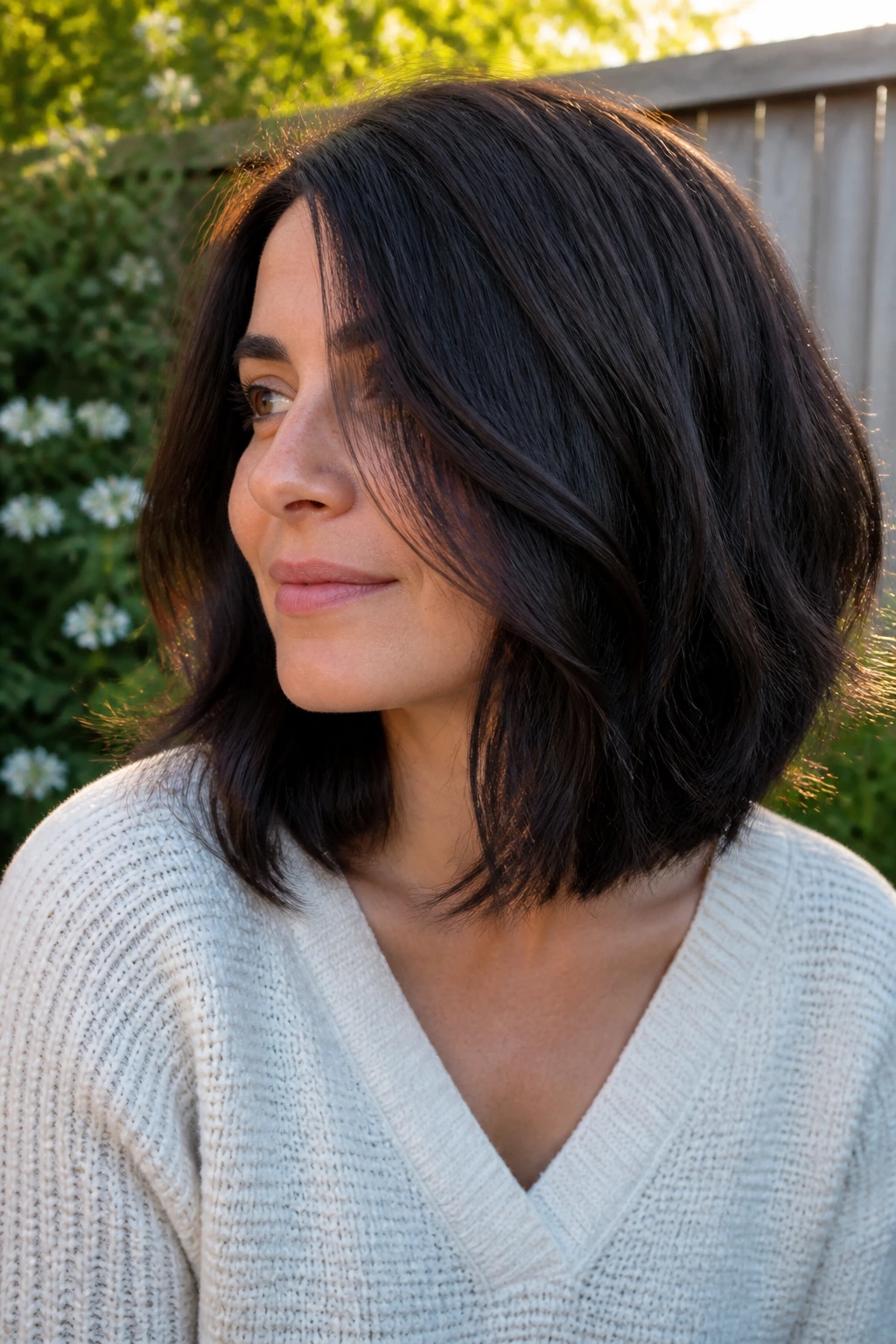
When hair is very dense or coarse, a lob can feel boxy fast. The answer is not more short layers everywhere. The answer is strategic debulking—usually through the interior and around the lower back of the shape—so the haircut settles instead of puffing out.
This cut behaves best when the layers are long enough to keep the body, but detailed enough to stop the shape from turning into a cube. I like a little point cutting at the ends, too. It gives thick hair a softer finish without making it wispy.
A good debulking lob should still look full on day three. If the cut only looks good fresh out of the salon, it wasn’t controlled well enough.
12. The Curly Rounded Lob

Curly lob haircuts live or die by shape. Too much layering and you get a halo that blooms out at the sides. Too little and the curls pile up into a triangle. A rounded lob fixes that by keeping the silhouette soft while the layers encourage the curls to stack in a controlled way.
The shape should follow the curl pattern, not fight it. Long layers help the curls spring upward without bunching at the bottom, and the ends should be cut so the line feels rounded instead of boxy.
If you diffuse this cut, use low heat and stop when the curls are about 80 percent dry. Over-drying can stretch the curl pattern and make the layers look uneven.
13. The Sleek Blowout Lob
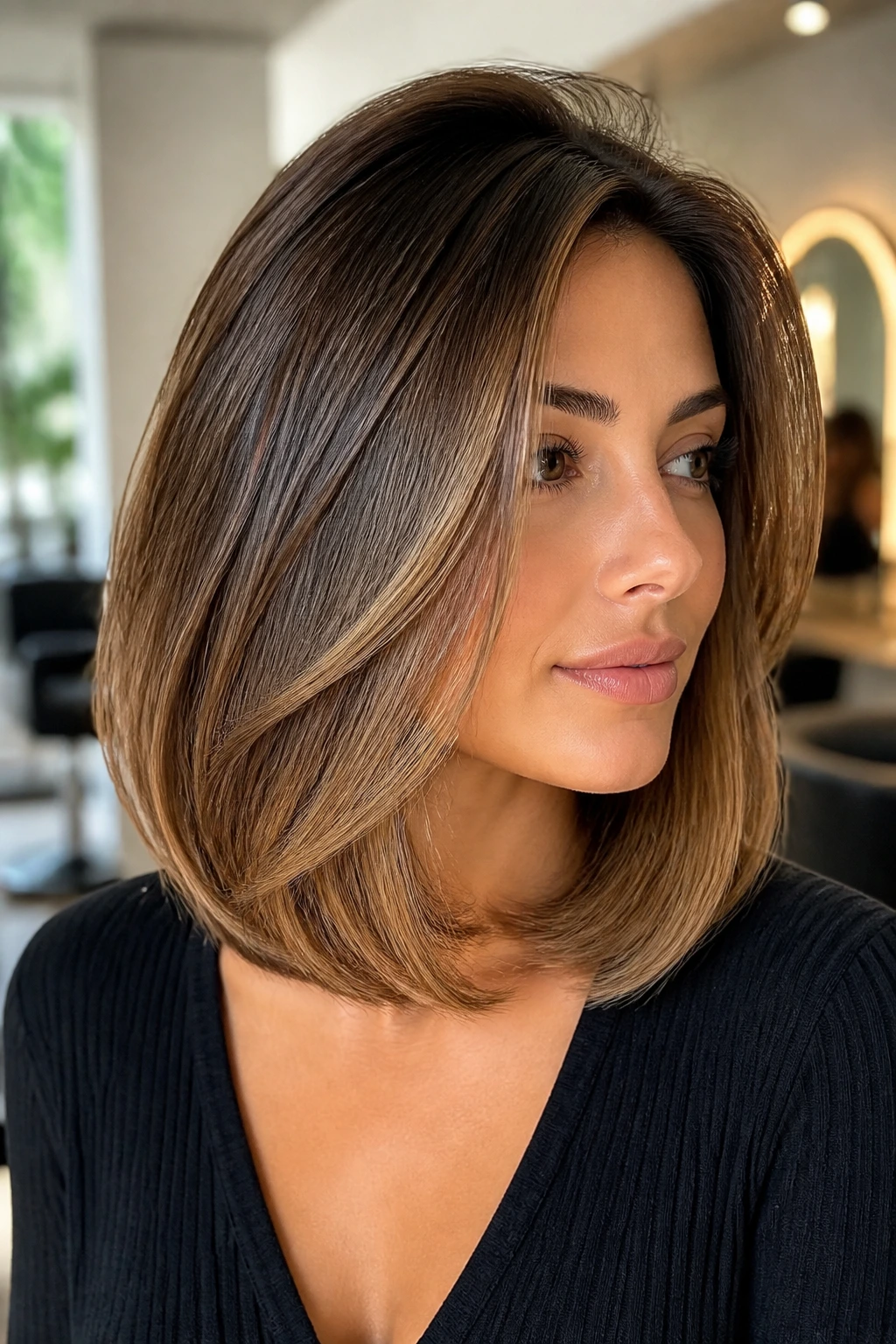
This is for people who like smooth hair but don’t want it to lie flat as paper. The blowout version uses layers to create a rounded, lifted finish, usually with the front pieces turned slightly under and the crown given a bit of air. It’s polished without looking stiff.
The best part is that it doesn’t need huge curls. A 1.25-inch round brush, a nozzle on the dryer, and a small bend at the ends are usually enough. The layers supply the movement; the styling just makes it visible.
A sleek lob can go wrong when the roots are flattened too hard. Leave a little lift at the crown and the haircut keeps its shape for hours longer.
14. The Inverted Lob

Shorter in the back, longer in the front. Simple idea, big effect. An inverted lob naturally gives the illusion of lift because the nape sits tighter and the front pieces sweep forward with more motion. If your hair tends to drag down around the shoulders, this shape can wake it up fast.
It’s a clean cut, but it’s not boring. The front length still gives you the choice to tuck, wave, or wear it straight, while the shorter back keeps the haircut from feeling heavy. I especially like it on straight or slightly wavy hair, where the angle shows clearly.
If you want the back to look soft instead of stacked, keep the graduation gentle. Too much angle and the cut starts reading more like a classic bob than a lob.
15. The Shaggy Fringe Lob

This one has attitude, but not the kind that needs a lot of explaining. The fringe is soft and broken up, the layers are more visible, and the whole haircut leans into movement. It’s the lob for people who want texture first and neatness second.
The nice thing about a shaggy fringe is that it takes pressure off the rest of the haircut. You don’t need every section to behave. A few pieces falling forward, a little bend through the sides, and the cut already looks complete.
Best used when
Your hair likes air-drying, or you don’t mind a bit of texture spray. This is not the lob for someone who wants crisp edges and a tight silhouette. It’s for someone who likes the hair to look touched, not over-managed.
16. The French-Girl Center-Part Lob

A center-part lob can look very clean when the layers are soft and the ends have just enough bend to move. The shape sits close to the face, but the volume comes from the way the layers fall away from the cheeks and into the collarbone area. It’s easy to wear and harder to overstyle.
What gives this version its charm is restraint. You’re not chasing big barrel curls or obvious waves. A little bend, a little separation, and a little lift at the roots are enough. The result feels relaxed without looking unfinished.
This cut is especially nice if you like hair that can go from tucked behind the ears to loose and face-framing in a few seconds. That little shift changes the whole mood.
17. The Air-Dried Natural Lob
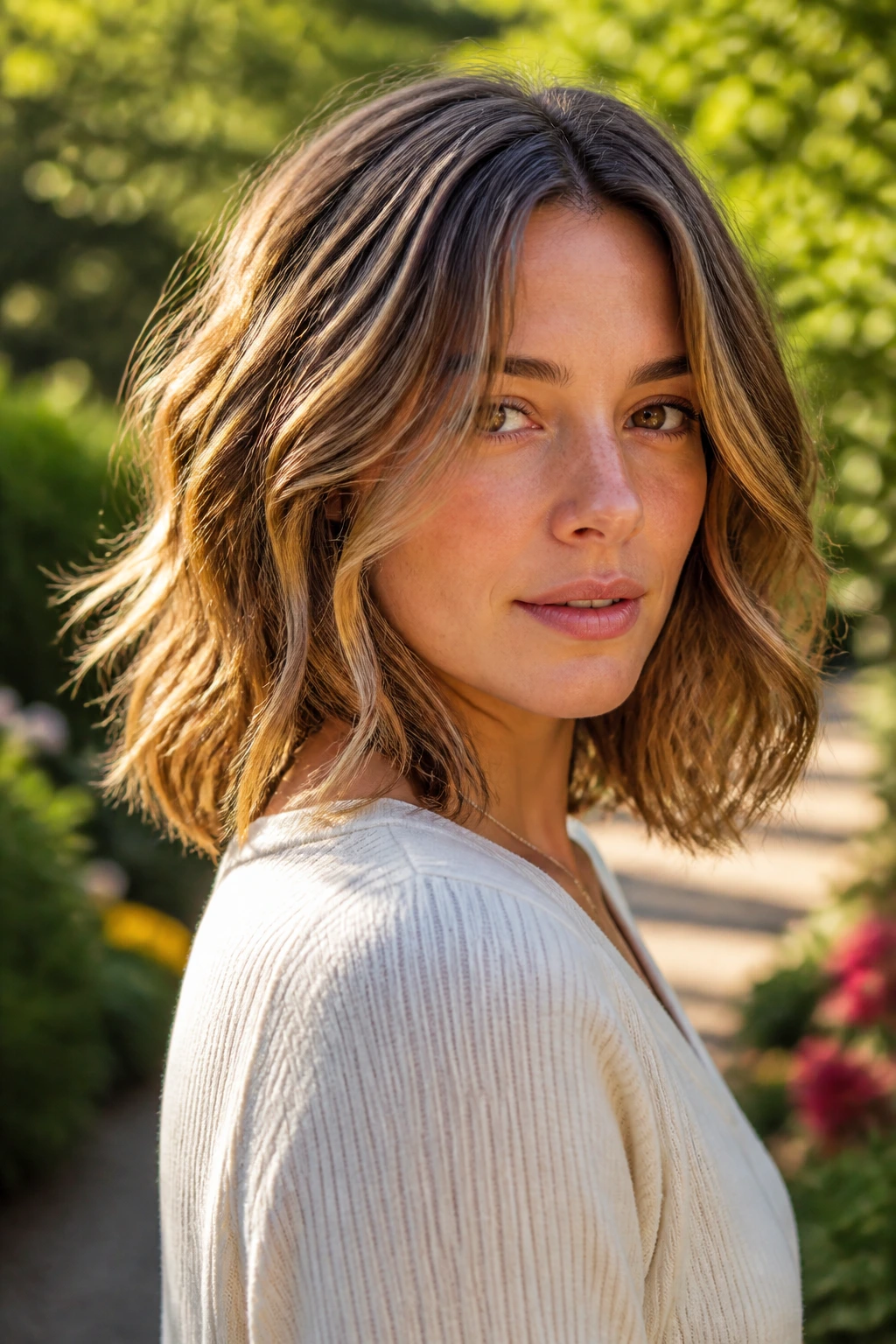
What if you want volume without heat? Then the haircut has to do more of the work. An air-dried lob should have enough layering to keep the roots from weighing down the top, but not so much that the ends start to fray when the hair dries on its own.
- Good for: waves, loose curls, and hair with a bit of natural bend.
- Product choice: a light cream or gel, depending on how much definition you want.
- Drying tip: scrunch near the roots and avoid flattening the crown while it dries.
I like this version because it doesn’t pretend every head of hair needs a hot tool. Some hair just behaves better when it’s left alone. The trick is giving it a shape that still looks finished once the water is gone.
18. The Asymmetrical Lob
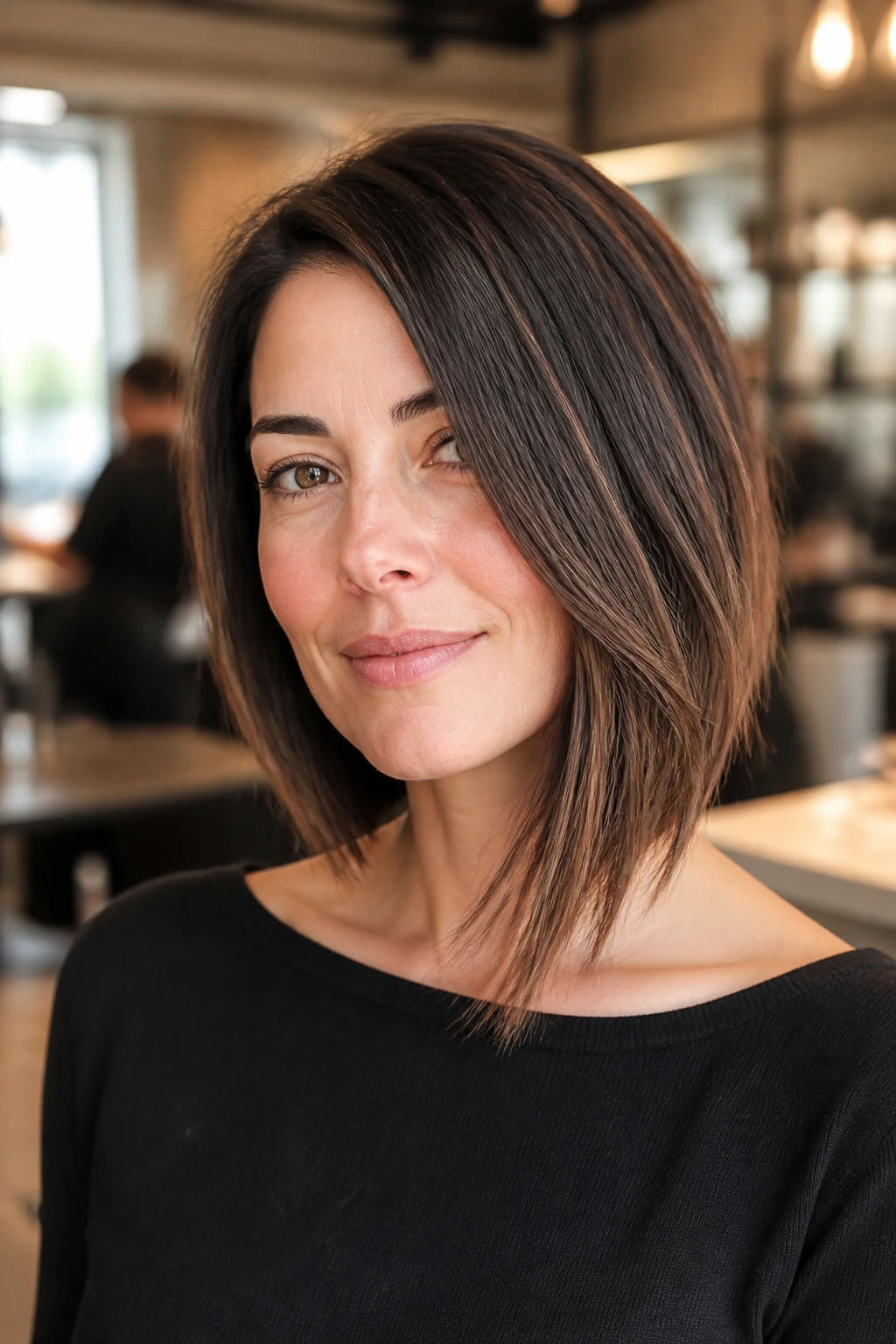
An asymmetrical lob gives you volume through imbalance, which sounds odd until you see it. One side sits a little longer, so the eye keeps moving across the shape instead of reading one static line. That movement can make the whole haircut feel fuller.
This is the cut for someone who wants a little edge without going full avant-garde. The difference in length does not need to be dramatic. Even a subtle off-balance shape can make the lob look more animated, especially when it’s tucked on one side or bent with a brush.
If your hair naturally parts in a stubborn way, this cut can work with that instead of against it. Sometimes that’s the whole trick.
19. The Side-Swept Lob For Rounder Faces

If you want more height at the crown and more openness around the cheekbones, a side-swept lob does that neatly. The diagonal line from the part through the front pieces creates lift, and the longer sweep across the forehead helps the face feel a little less boxed in.
This shape is good when you want the cut to look softer without losing structure. The side part keeps the roots from lying flat in the center, while the layers travel downward instead of widening the sides. It’s a smart move on medium-density hair that needs shape, not volume in every direction.
A deep tuck on the shorter side can make the profile even cleaner. Small detail. Big effect.
20. The Collarbone Lob With Bent Ends
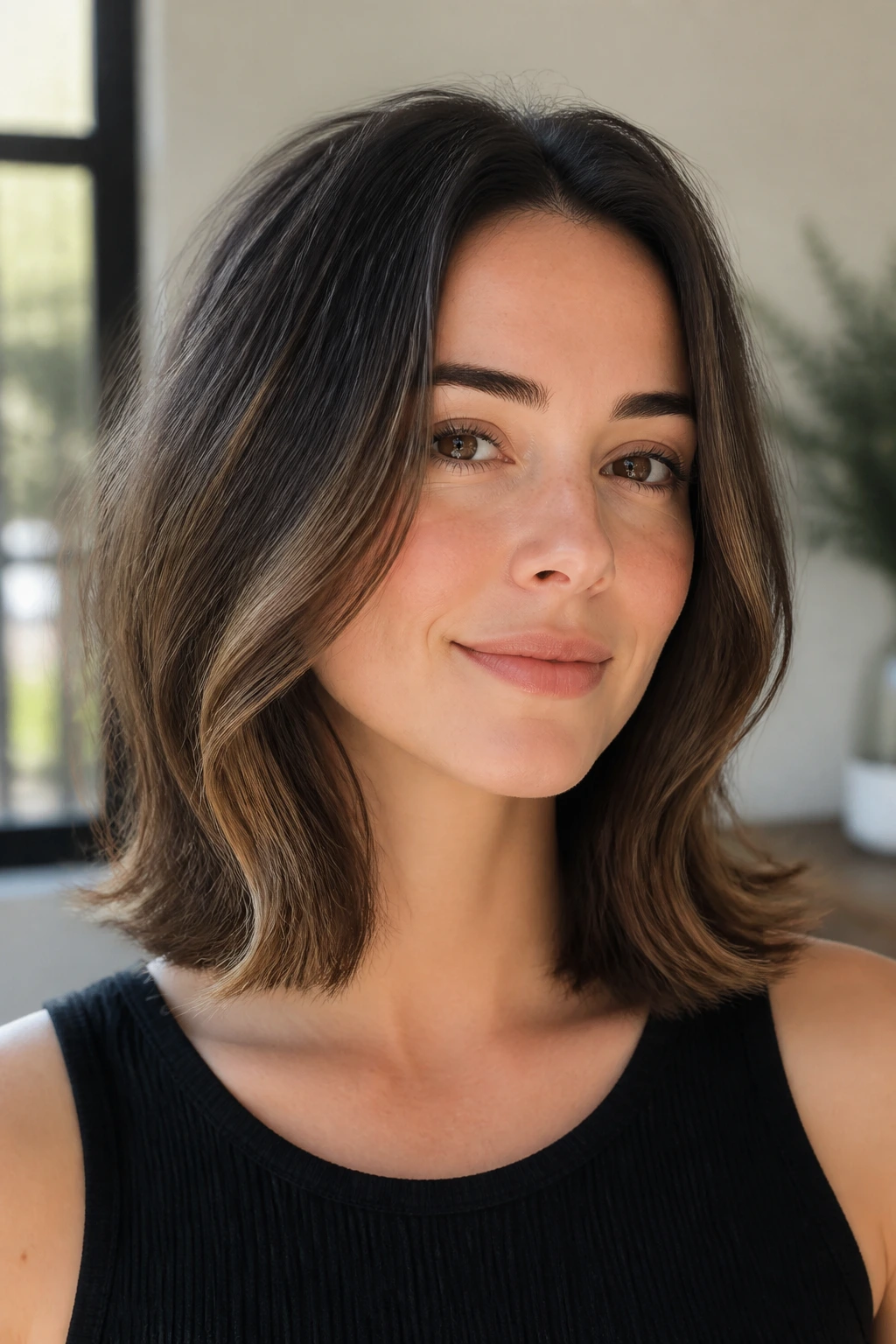
Sometimes the simplest move is the right one. A collarbone lob with bent ends keeps the haircut’s line clear, then adds movement only at the bottom. The ends can flip inward, kick outward, or make a soft S-curve, and that tiny bend is enough to keep the whole style from feeling stiff.
I like this for people who wear a lot of tailored clothes or just prefer hair that looks calm instead of messy. The layers are there, but they’re quiet. The cut still has volume because the ends never fall dead straight.
A flat iron or curling wand can do this in minutes. Leave the top smooth, bend the lower third, and stop before the whole head turns into a curl set.
21. The Tucked-Back Lob With Long Temple Layers
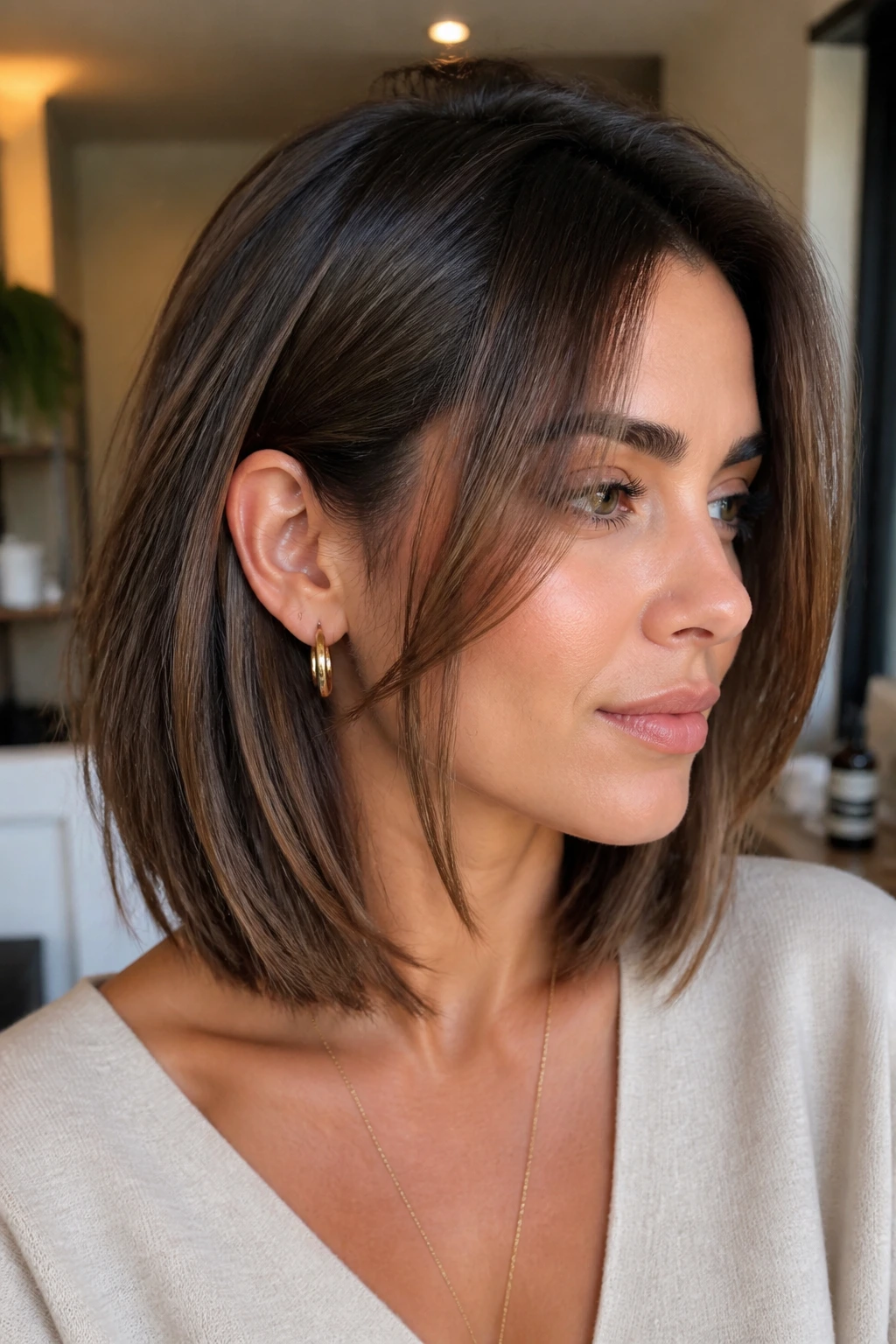
This one works on a small move that changes the whole silhouette: tuck one side behind the ear and let the long temple layers frame the front. The tucked side looks neat and lifted, while the loose side keeps enough fullness to balance the shape. It’s easy, but it doesn’t look lazy.
The long temple layers are the key. They need to be long enough to fall forward when released, so the style can shift from polished to soft without a full restyle. If the pieces are too short, the tuck just exposes the face too much and the balance goes off.
It’s a good haircut for people who are always tucking, twisting, or moving hair out of the way. You might as well make the habit look intentional.
22. The Low-Maintenance Grown-Out Lob
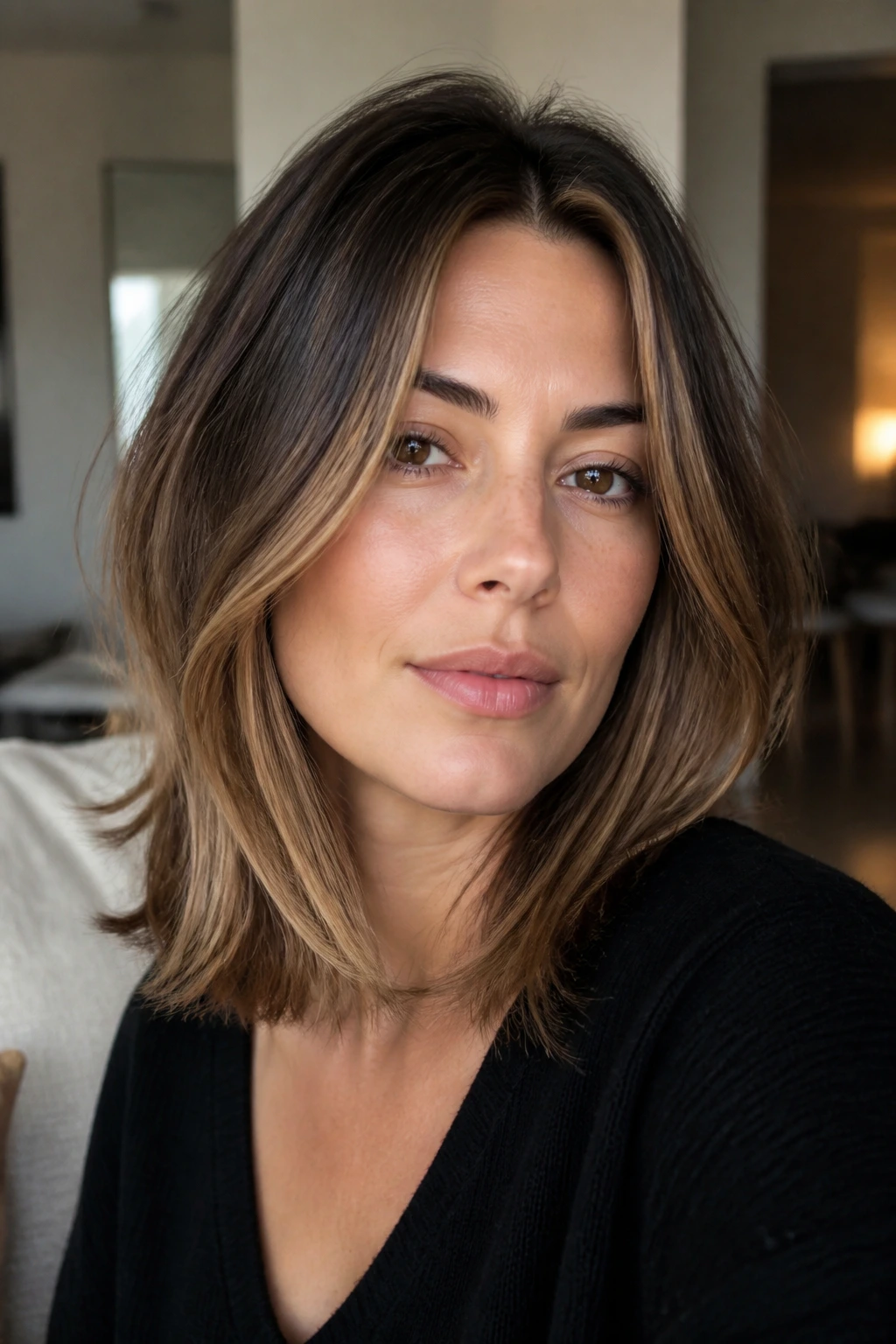
Not every layered lob needs a salon calendar taped to the fridge. A grown-out version uses soft layers, a stable perimeter, and no harsh bangs, so it still looks good even when it passes that six-week window and starts to relax. The shape just gets a little looser, not bad.
This is the cut for people who want movement but hate obvious regrowth lines. The layers should be soft enough to survive a few extra weeks, and the ends should stay thick enough that the lob doesn’t look tired as it lengthens. It’s the least fussy option in the group, and that’s a real strength.
You can dress it up with waves or wear it straight. Either way, it doesn’t demand perfection.
23. The Soft Stacked-Back Lob
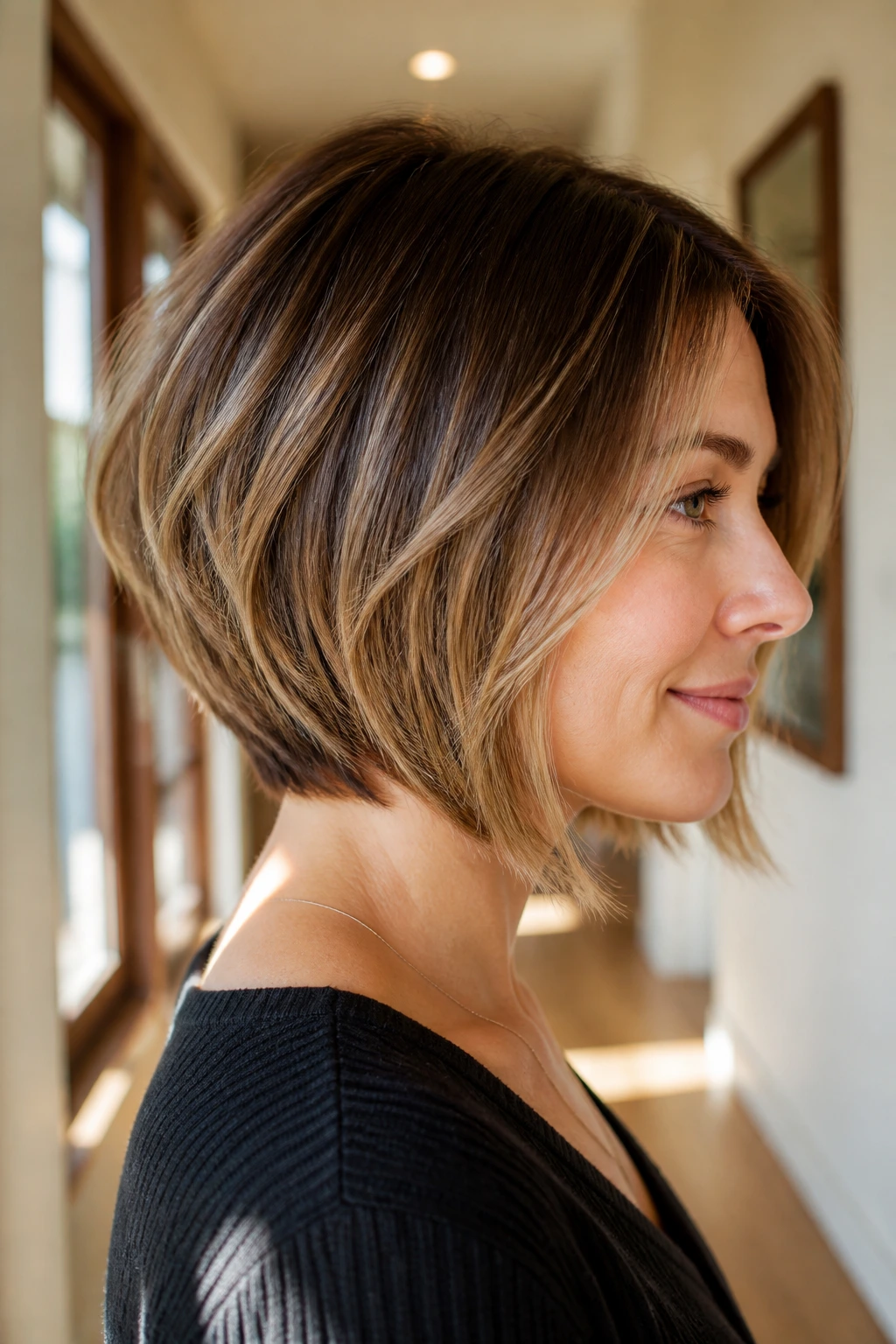
A stacked-back lob gives the nape a little extra lift without tipping into the severe, old-school stacked bob territory. The graduation is subtle, the back sits cleaner, and the front keeps enough length to stay versatile. It’s one of the easiest ways to get volume that seems to come from the cut itself.
The stack should be soft. If the angle gets too steep, the front starts to look disconnected, and the haircut loses that easy collarbone swing. Keep the transition smooth and the result feels modern instead of dated.
This is a strong pick for straight hair that needs shape or wavy hair that needs a little direction. It gives the back some structure, which is often where lobs go flat first.
Why Layers Change a Lob So Much
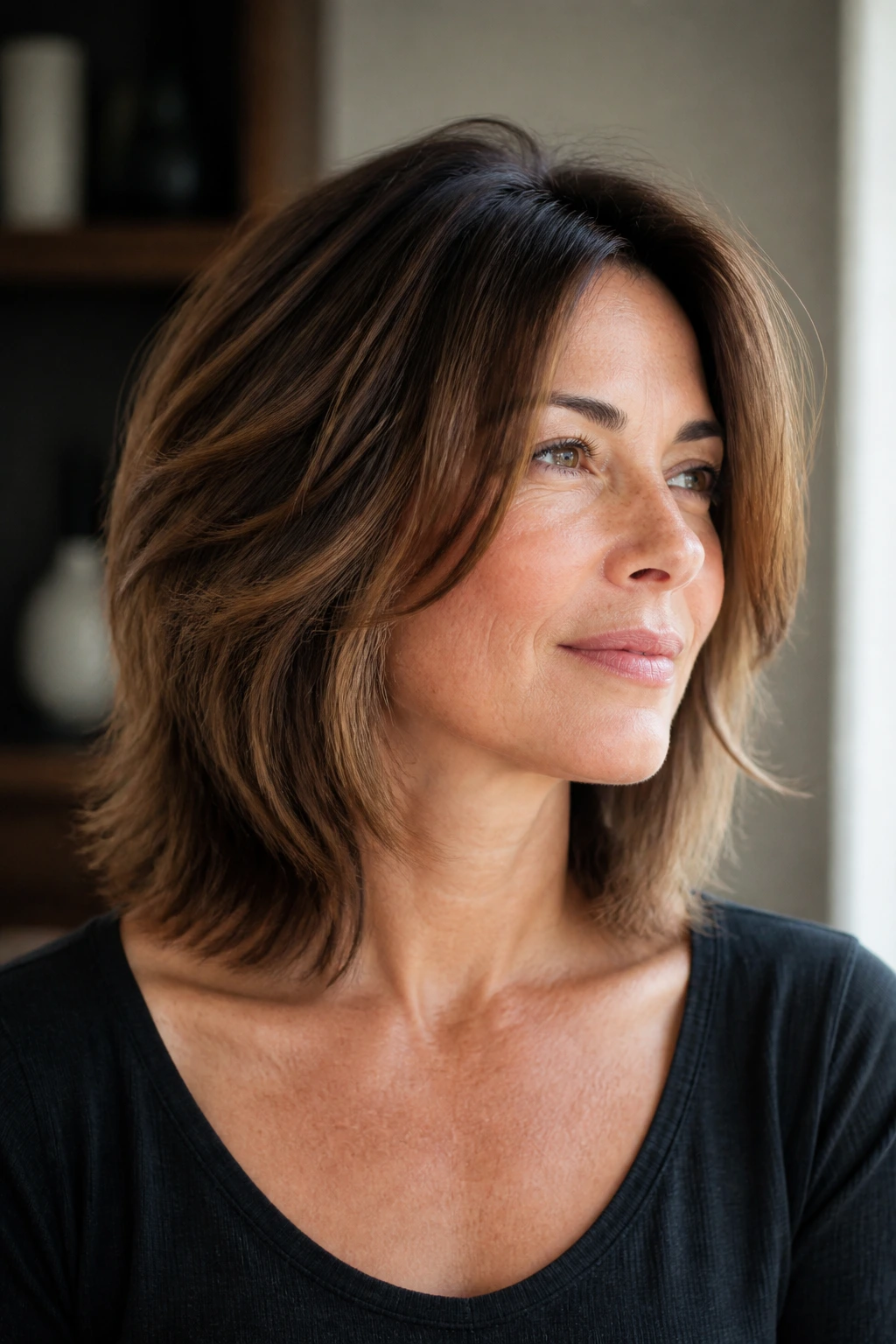
A lob is one of those cuts that can look expensive or forgettable based on a quarter-inch of placement. That sounds dramatic, but it’s true. Move the layers too high and the cut can get fluffy. Leave them too low and the hair lies down like it gave up.
The real job of layers is weight control. Hair sits the way it does because of how much mass is left in each section. Shorter pieces near the crown help the roots rise. Longer internal layers lighten the mid-lengths. A strong perimeter keeps the ends from disappearing. When those three things cooperate, the haircut keeps volume without looking teased.
Where the lift actually comes from
Lift does not just come from product. Product helps, sure, but it cannot rescue a shape that is too heavy in the wrong spots. A layered lob gets its bounce from the haircut itself, then from the way you dry and finish it.
That’s why the placement matters more than the buzzwords. If you have fine hair, you usually want longer layers and more root support. If you have thick hair, you often want weight removal inside the cut so the outside line stays clean. Curly hair needs enough shape to stop the triangle. Straight hair needs enough interior movement to avoid looking like a curtain.
The Styling Tools That Actually Matter
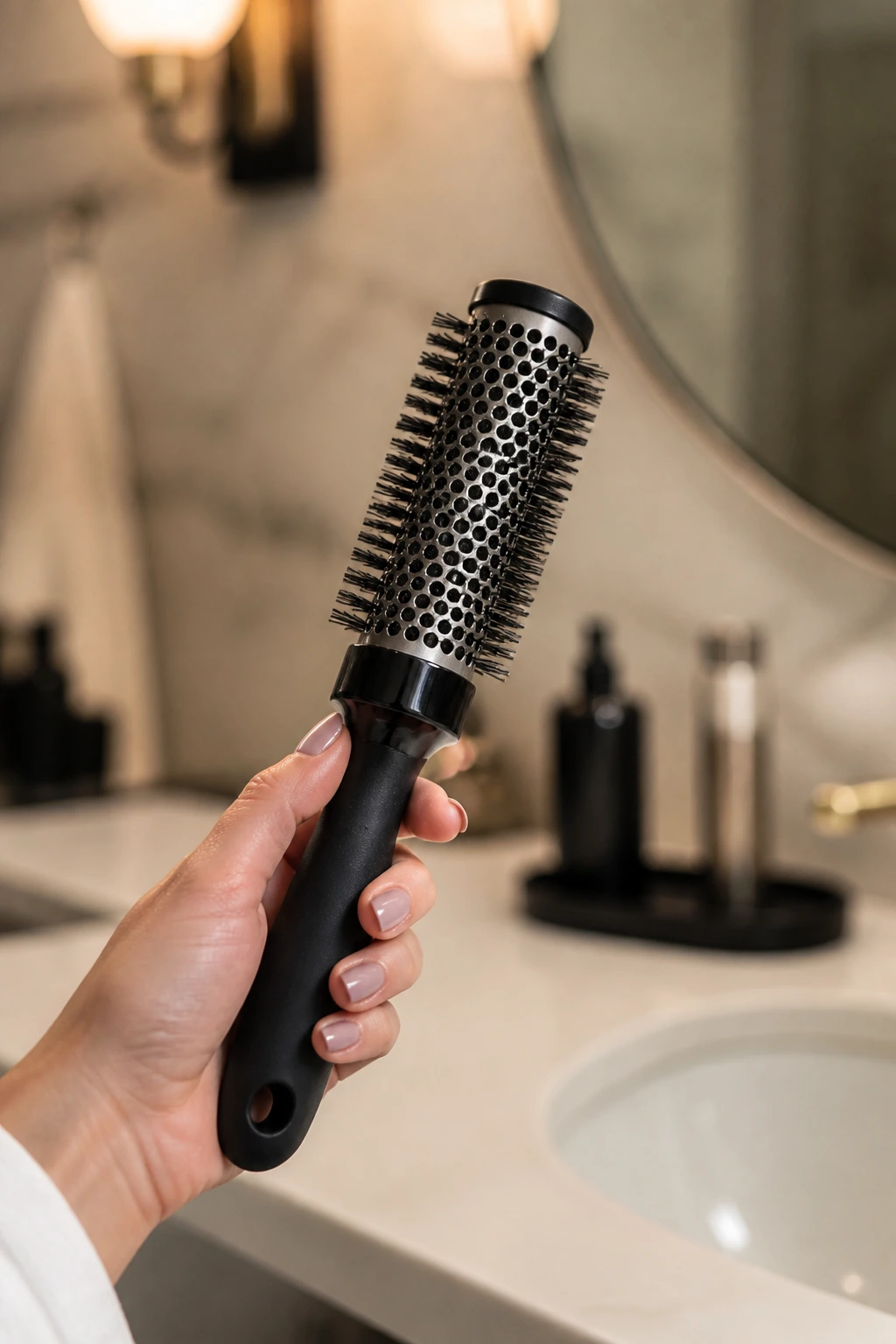
You do not need a drawer full of gadgets to make a layered lob behave. A few good tools do more than a lot of small ones.
- Blow dryer with a concentrator nozzle: Gives you directional airflow, which matters if you want the roots to lift instead of puff randomly.
- 1.25-inch round brush: The sweet spot for turning the ends under or out without creating tiny curls.
- Tail comb: Useful for clean parts and sectioning the top so it doesn’t dry in the wrong direction.
- Section clips: Keep the crown and front separated while you work on the underneath layers.
- Heat protectant spray: Worth using every time you heat-style; it keeps the ends from feeling fried after repeated blowouts.
- Root-lifting mousse: Best on damp roots before blow-drying. A golf-ball-sized amount is usually enough for shoulder-length hair.
- Texturizing spray: Adds grip and separation after styling, especially on fine or slippery hair.
- Dry shampoo: Good for day two and day three; it gives the roots a little grit and keeps the top from collapsing.
- Flexible-hold hairspray: Holds the shape without turning the ends hard.
If you only buy three things, make them the heat protectant, the mousse, and the round brush. The rest is helpful, not magic.
What to Tell Your Stylist Before the Scissors Come Out
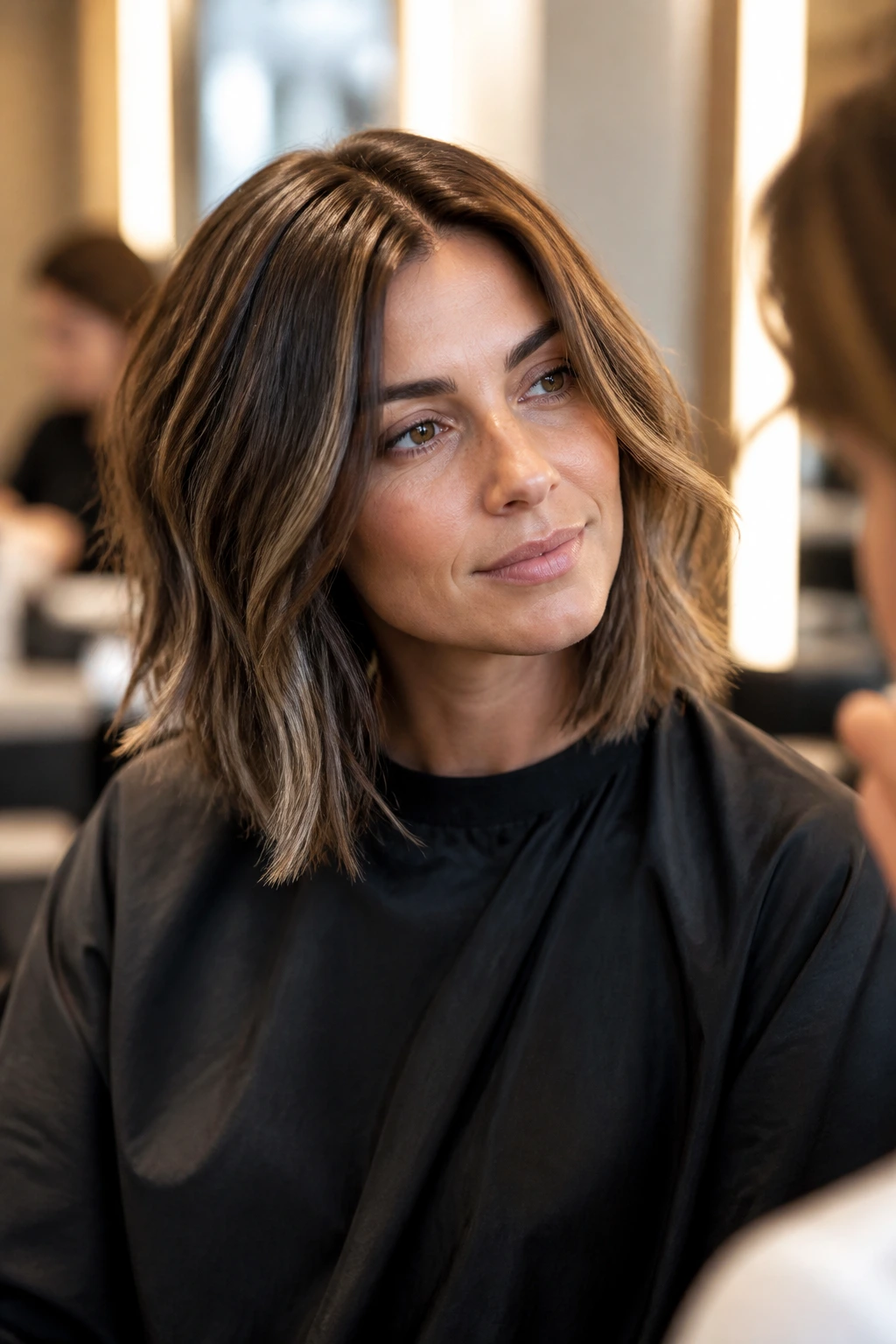
The phrase “I want layers” is too vague. It can mean a soft face frame, a shag, a feathered lob, or a haircut that removes so much weight the ends look tired. Be specific. Tell your stylist where you want the movement and where you want the density to stay.
If you like the cut in this article, ask for a collarbone-length lob with long layers starting around the cheekbone or jawline. That gives you volume without breaking the silhouette apart. If your hair is thick, say you want internal layering to remove bulk while keeping the perimeter full. If your hair is fine, say the opposite: keep the outline blunt and make the layers subtle.
Bring two photos if you can. One should show the shape you want from the front. The other should show the texture you want on the ends. Those are not the same thing, and mixing them up is how people leave the salon annoyed.
One more thing. If you have a cowlick at the crown, say so. That little spiral can change where the shortest layer should start. A stylist who knows what they’re doing will adjust for it.
How to Style a Layered Lob on a Normal Morning

Root Prep: Start with damp hair and work a volumizing mousse or root spray through the crown and upper sides. Keep the heavier cream or oil away from the scalp. A pea-sized amount near the roots can flatten the whole haircut before you’ve even picked up the dryer.
Drying Direction: Rough-dry the hair about 80 percent of the way first, then switch to a round brush or paddle brush for the final pass. Direct the airflow up and away from the scalp at the roots, then down the hair shaft through the ends. That one change gives the cut more body than blasting it straight downward.
Bend, Don’t Curl Everything: A layered lob usually looks best with a soft bend instead of a full curl set. Wrap only the mid-lengths around a wand, leave the last inch out, and alternate direction every other section. The result is movement, not ringlets.
Finish Lightly: Let the hair cool before you touch it. Then mist a little texturizing spray through the mid-lengths and the very ends, not the top. If the crown looks too clean, a little dry shampoo at the roots can give it grip and a touch of lift.
Heatless Day: On no-heat days, clip the crown up while the hair is still drying or set it in large Velcro rollers for 10 to 15 minutes once it’s mostly dry. That tiny bit of shape at the top keeps the layers from lying dead flat.
Common Mistakes That Make a Lob Go Flat
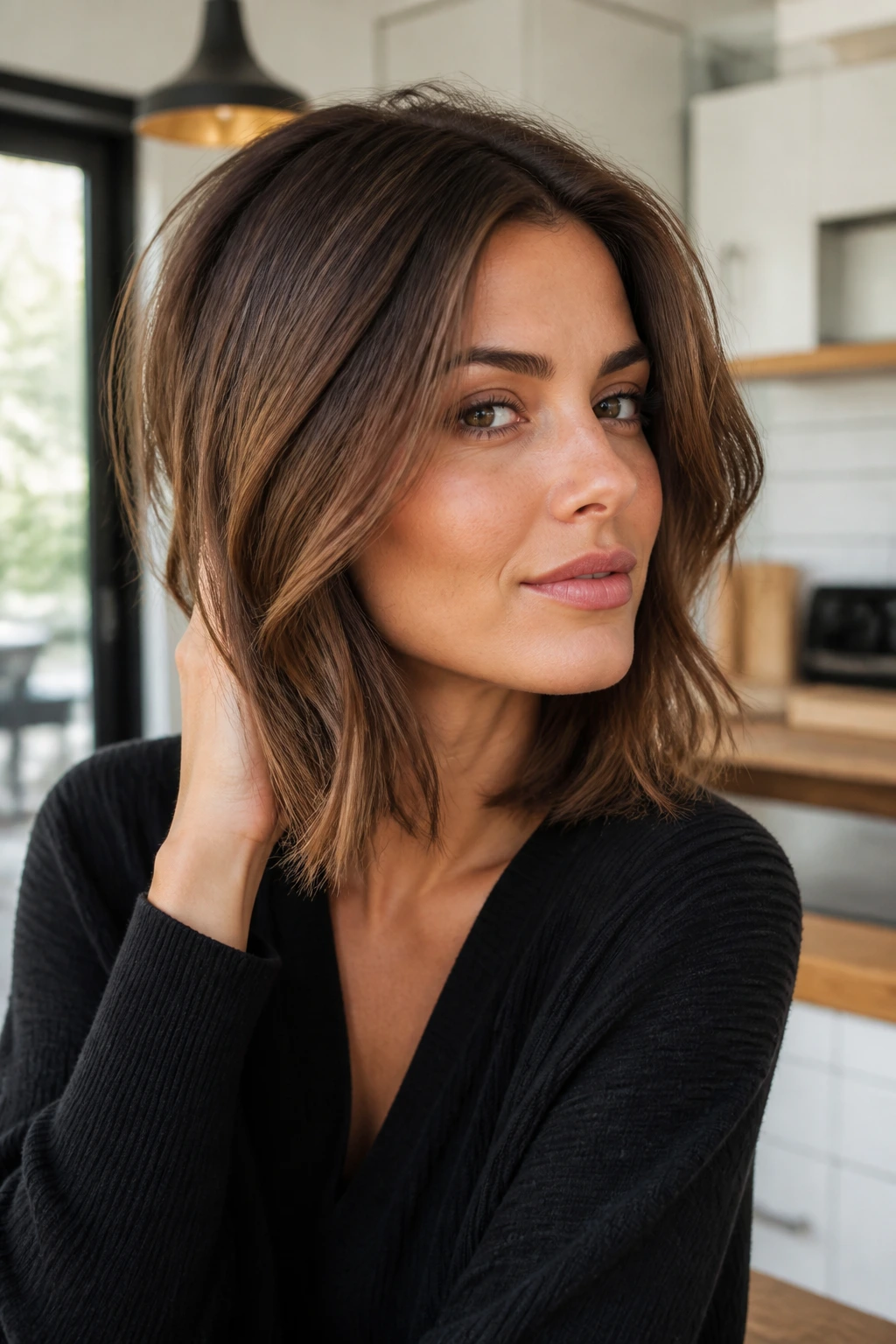
The first mistake is asking for too many short layers near the top. It sounds like it should create more volume, but the shape often turns wide at the sides and thin at the ends. The fix is simple: keep the shortest pieces longer and let the lift come from the crown, not from chopped-up sides.
Another one is loading oil or serum near the roots. Fine hair especially can go limp fast when the scalp area gets coated. Put smoothing products only from mid-shaft down, and use the smallest amount possible.
People also pull the brush straight down while blow-drying. That stretches the roots flat and strips out the body you were trying to keep. Aim the brush slightly upward at the crown and use tension only on the mid-lengths.
Then there’s the neglected back. A lob can look great from the front and strange from behind if the nape grows too heavy. Get the back dusted or shaped before it turns into a shelf.
Last one: skipping trims for too long. Layers lose their purpose when the ends fray and the outline disappears.
Variations and Alternatives to Try
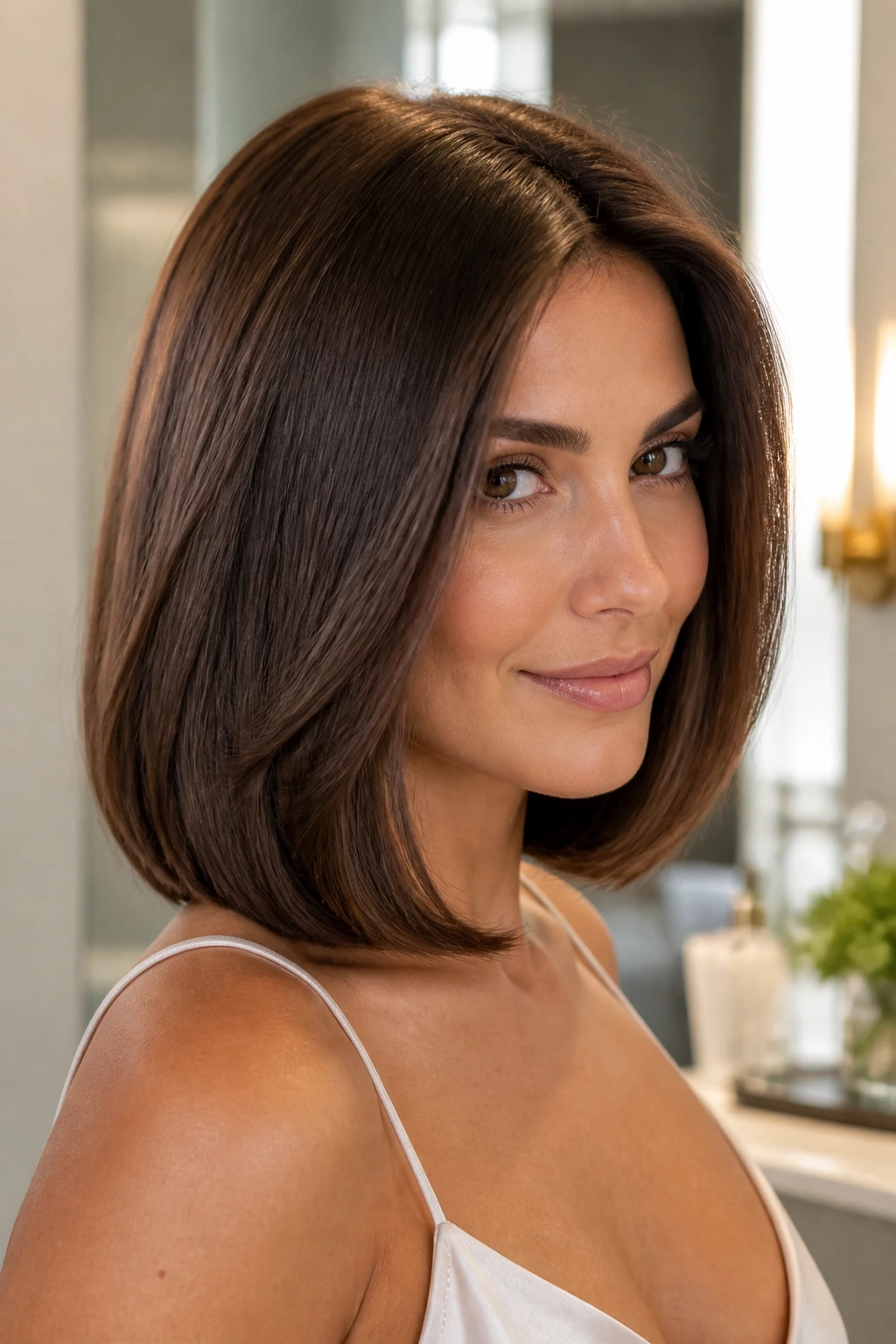
The Polished Blowout Lob: Keep the layers soft, then style the whole cut with a round brush and a little inward bend at the ends. This version reads clean and put-together, especially if you wear a lot of simple clothes and want the hair to do less shouting.
The Air-Dry Lob: Use a light cream or gel on damp hair, scrunch the crown, and leave the rest to dry naturally. This works best on hair that already has some wave or curl. The cut needs soft layers so the texture can settle instead of puffing out.
The Curly Cloud Lob: Add longer layers and diffuse on low heat to keep curls rounded. This version is for hair that wants to spring upward and hold its shape without a lot of fiddling.
The Shag-Lite Lob: Borrow the movement of a shag, but keep the perimeter cleaner. The fringe can stay soft and the layers can be a little more visible, while the overall shape still feels wearable.
The Soft Stack Lob: Ask for a gentle rise at the nape and a little extra length in the front. It gives you lift in the back and a clean line around the collarbone without the hard angle of a classic inverted bob.
Keeping the Cut Fresh Between Trims
A layered lob usually wants a trim every 6 to 8 weeks if you want the shape to stay crisp. If the cut is softer and grown-out on purpose, you can usually stretch that to 8 to 10 weeks without it looking tired. Bangs, if you have them, often need attention sooner.
Between appointments, dry shampoo does more than absorb oil. It gives the roots a little grit, which helps the top hold its shape. Use it at the crown and just behind the part, then wait a minute before you brush it through. Spraying and brushing immediately tends to flatten the lift.
Night care matters too. A silk pillowcase or a loose top clip can keep the front from getting smashed while you sleep. If you wake up with a bent side, mist the area lightly with water and re-bend it with your fingers or a quick pass of the brush.
If the lob starts drifting into triangle territory, the back probably needs a dusting. If the ends feel see-through, you waited too long or the layers were cut too aggressively. Both are fixable. Neither is mysterious.
Frequently Asked Questions

Are long bob hairstyles with layers for volume good for fine hair?
Yes, if the layers stay long and the perimeter stays full. Fine hair usually looks better with hidden movement and root lift than with a lot of short, obvious chopping.
Do layered lobs work on thick hair?
They do, but the cut has to remove weight from the right places. Long internal layers and soft debulking usually work better than short layers all over the head.
How short should the shortest layer be?
For most people, somewhere around the cheekbone or jawline is a safe place to start. Going much shorter can make the sides puff out and leave the ends too thin.
Can I wear a layered lob straight and still get volume?
Absolutely. Straight styles usually need a round brush at the roots and a little bend at the ends so the haircut doesn’t fall into a flat curtain. The cut matters just as much as the styling.
What face shape works best with a layered lob?
Most face shapes can wear one if the layers are placed well. Rounder faces often like side parts and longer front pieces, while square faces usually benefit from softer face framing around the jaw.
How do I keep my lob from flipping out at the ends?
Use a round brush or a flat iron to guide the ends in the same direction while they cool. If the hair is one length and heavy at the bottom, a stylist may need to soften the perimeter a bit more.
Should I get bangs with a layered lob?
Only if you want them. Curtain bangs and long fringe can add lift and softness, but they also need extra styling. If you want the easiest upkeep, skip the fringe and let the layers do the work.
Why does my lob look flat by the end of the day?
Usually the crown is too clean, too heavy, or both. A little root-lifting product at the start, plus a quick dry shampoo refresh at the part, usually helps more than piling on more spray later.
How often should I trim the back?
If the nape starts to puff or the shape turns triangular, it’s time. Most people notice that shift somewhere around the 6- to 10-week mark, depending on how fast their hair grows.
A Lob That Still Moves
A layered lob works because it respects the way hair actually falls. It keeps enough length to feel versatile, enough structure to stay polished, and enough movement that you don’t spend the whole day trying to revive it. That’s a better haircut than one that only behaves right after a salon blowout.
Pick the version that matches your texture, not the one that looks loudest in a photo. Fine hair usually wants quiet layers and stronger roots. Thick hair usually wants weight removed without losing the outline. Curls want roundness. Straight hair wants bend. Once the cut matches the hair it’s sitting on, the volume stops feeling forced and starts looking like it belongs there.
