



A round face can look softer or fuller in a pixie, but the cut itself decides which way it goes. Too much width at the cheeks and the silhouette balloons. A little lift at the crown, a diagonal fringe, and a neat nape change everything.
Pixie cuts for women over 40 and round faces work best when they do three jobs at once: they open the face, they handle changing hair texture, and they don’t demand a 40-minute blowout before coffee. That matters when hair starts behaving differently around the temples, the crown, and the neckline. It also matters if you wear glasses, have fine hair that lies flat by lunch, or prefer a cut that looks intentional even when you’ve only spent six minutes on it.
The trick is not “going shorter” for the sake of it. The trick is choosing a shape that adds direction. The right pixie doesn’t hide the face. It edits it.
Why These Pixie Cuts Deserve a Close Look
-
Crown lift changes the shape fast: A little height at the top pulls the eye upward, which helps a round face read longer without making the style look stiff.
-
Diagonal lines do more than blunt edges: Side-swept fringe, asymmetry, and longer temple pieces break up width in a way a straight-across cut never will.
-
Short sides keep the silhouette clean: Tapered sides and a neat nape stop the cut from puffing out at cheek level, which is where round faces can look widest.
-
Most of these styles work with changing texture: If your hair got finer, coarser, wavier, or a little drier, these cuts still have enough shape to hold up.
-
They play nicely with glasses: Several of the styles leave room around the temples and ears, so your frames don’t have to fight the haircut every morning.
-
The grow-out is less scary than people think: A smart pixie can slide into a short bob or soft shag if you decide you want more length later.
1. Side-Swept Long Pixie
This is the pixie I’d hand to someone who wants the shortest haircut in the room but not the most severe one. The top stays long enough to sweep across the forehead, usually somewhere around eyebrow level at the front, while the sides stay close to the head and the nape is tapered tight. The effect is soft, but not fluffy.
What makes it work on a round face is the direction. The sweep creates a diagonal line from one temple toward the opposite cheek, and that little bit of movement matters more than people expect. Round faces need angles. They do not need more width.
Why It Flatters So Easily
The long front section gives you room to tuck one side behind the ear, which opens the face without exposing everything. That’s useful if you wear earrings, glasses, or you simply don’t want the haircut sitting like a helmet. A little root lift at the crown keeps the shape from collapsing by lunchtime.
I like this cut for straight or slightly wavy hair, especially if you want a version that looks polished with almost no effort. A quick blow-dry with a small round brush is enough. Finish with a pea-sized dab of lightweight paste on the ends, and stop before the hair starts looking stringy.
2. Choppy Textured Pixie
Why does this one look so easy? Because the texture is doing the heavy lifting.
A choppy pixie uses piecey ends, short internal layers, and a little unevenness on top to make the cut feel alive instead of helmet-like. On a round face, that irregular texture keeps the eye moving. You notice the shape, the lift, the movement. You do not get stuck staring at one smooth, wide line.
What Makes It Work
The best version keeps bulk off the sides and puts the strongest texture through the crown and top third of the head. That gives fine hair more body and thick hair less blockiness. Ask for point-cutting rather than a blunt cut if your stylist is using scissors. It softens the ends and avoids that heavy, shelf-like finish around the cheeks.
I’d choose this if your morning routine is short and your hair wants to lie flat unless you talk to it a little. A matte paste or dry texturizing spray gives it shape in under two minutes. If you overdo the product, though, it turns crunchy fast. Tiny amounts. Tiny.
3. Asymmetrical Pixie Bob
A pixie bob sits in a useful middle ground. It gives you more length than a classic crop, but it still keeps the back short and the sides controlled.
The asymmetry is the real reason it flatters a round face. One side stays longer, the front hangs a touch lower on one cheek, and that uneven line visually stretches the face. A blunt chin-length bob can widen the jaw. This version avoids that by refusing to sit in one flat line all the way around.
Picture this on a client with soft features and glasses: one side tucked cleanly, the longer front skimming the jaw, the back close and tidy. It has shape without shouting.
I like this cut for women who want a haircut that reads polished in a meeting but not fussy at dinner. It also grows out gracefully. Once the front reaches the cheekbone and the back starts to soften, you’re halfway to a short layered bob instead of a bad in-between stage.
4. Feathered Fringe Pixie
A feathered fringe is a useful thing when a straight bang feels too blunt and a bare forehead feels too exposed.
This cut keeps the front airy. The fringe breaks into soft, separated pieces instead of one solid strip, which is a smart move on a round face because it lets the forehead breathe while still framing the upper part of the face. The sides stay light, and the texture is spread forward rather than out.
What to Tell Your Stylist
Ask for feathering through the fringe and a little longer length at the temples. That keeps the cut from ballooning at the sides. If your hair is fine, the feathers should be subtle, not wispy to the point of disappearing. If your hair is thick, you want enough removal to stop the fringe from sitting like a shelf.
This is one of my favorite options for women over 40 who want softness without looking overly styled. It suits gray hair well, too, because the feathered ends catch light differently as the hair moves. Use a light cream or lotion, not heavy wax. Heavy product kills the whole point.
5. Tapered Nape Pixie
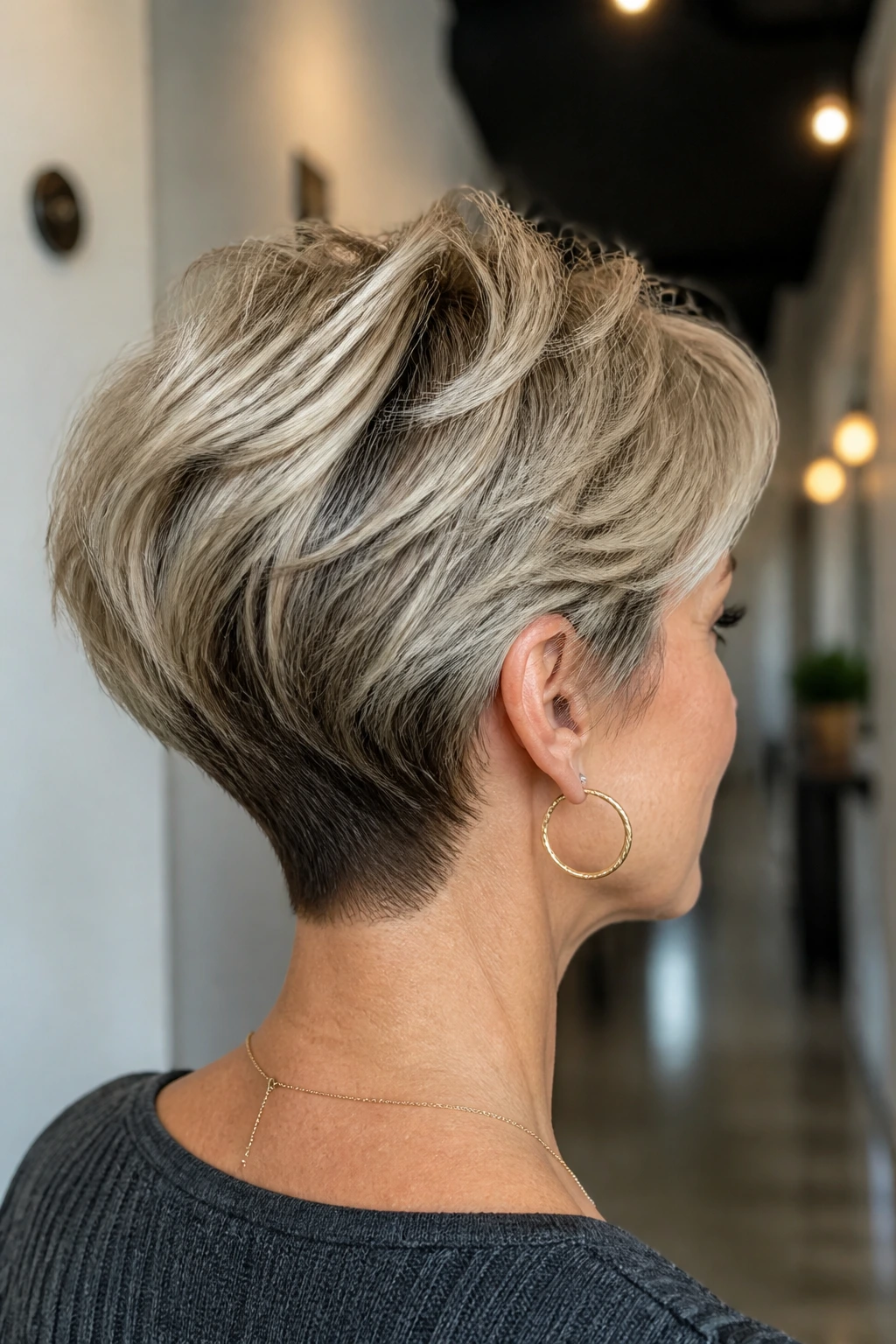
The nape is the quiet hero of a good pixie. If the back puffs out, the whole cut can make a round face look broader than it is.
A tapered nape solves that problem. The hair at the neckline is cut close and gradually shortened so the back hugs the head instead of stacking out. The top can still have softness, lift, or even a little drama. But the lower half stays disciplined.
- Best for: thick hair that tends to swell at the neck.
- Ask for: a clean taper, not a blunt line.
- Styling note: dry the back first so it does not kink under at the collar.
- Why it works: it keeps visual bulk away from the jaw and neck.
This cut feels especially sharp if you like collared shirts, earrings, or a clean profile. It’s a practical choice, too, because the back is the part that usually looks shaggy first. Keep that line tidy and the whole haircut stays fresh longer.
6. Curly Pixie with Crown Lift
Curly hair can wear a pixie beautifully on a round face, but the shape has to be managed with a little more intention. Curls love to expand sideways. That’s the enemy here.
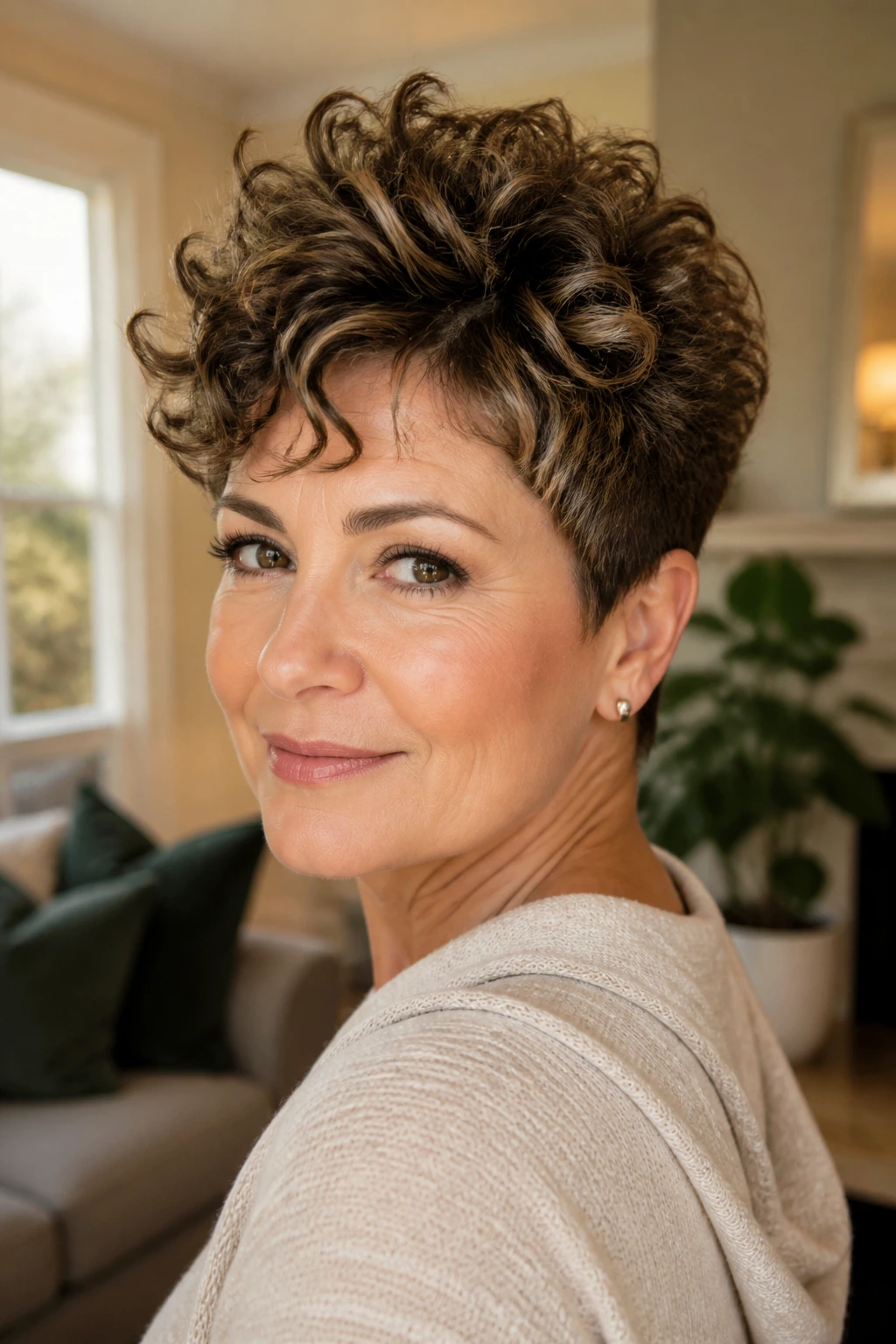
The fix is crown lift and controlled sides. You want the curl pattern to rise upward on top, not bloom out at the cheeks. A good curly pixie keeps the perimeter close and lets the top move. The silhouette becomes more oval than round, which is exactly the point.
How It Should Sit
Think of the cut as a small halo, not a wide puff. The curls at the crown should be light and springy, while the sides stay trimmed enough to stop the face from getting boxed in. If your curl pattern is loose, a diffuser on low heat helps preserve shape without flattening the roots.
If your curls are tighter, ask your stylist to cut the hair dry or nearly dry. Wet curl cuts can lie to you. They stretch, then spring up in a way that changes the whole shape once you get home. Dry cutting gives a more honest read, and that honesty matters in short hair.
7. Soft Undercut Pixie
An undercut does not have to look punk or severe. In a soft pixie, it can simply remove the hidden bulk that makes short hair spread sideways.
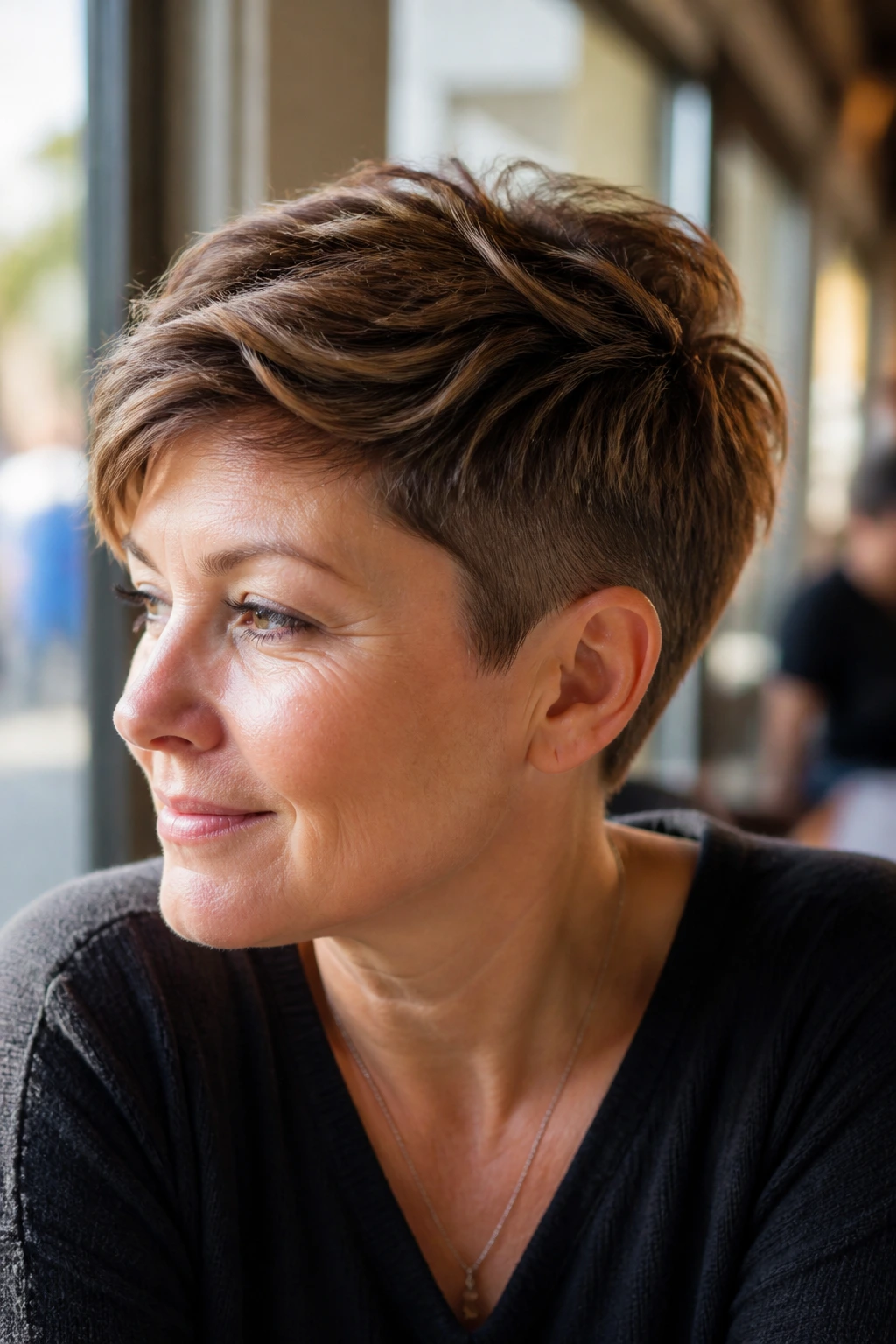
The trick is keeping the undercut subtle. The nape and areas behind the ears are trimmed shorter, while the top and fringe keep enough length to soften the face. On a round face, that hidden reduction in bulk is useful because it stops the silhouette from widening around the jawline.
This cut is especially helpful if your hair is thick, or if you hate the feeling of hair pressing at the neck in warm weather. It also gives you a little control over how dramatic the style feels from day to day. Wear the top smooth for a cleaner look. Rough it up with paste if you want a bit of edge.
Be honest with yourself here. If you want a cut that can still look polished after one quick finger comb, keep the undercut soft rather than extreme. Too much shave can make the top look disconnected unless you style it every single morning.
8. Tousled Salt-and-Pepper Pixie
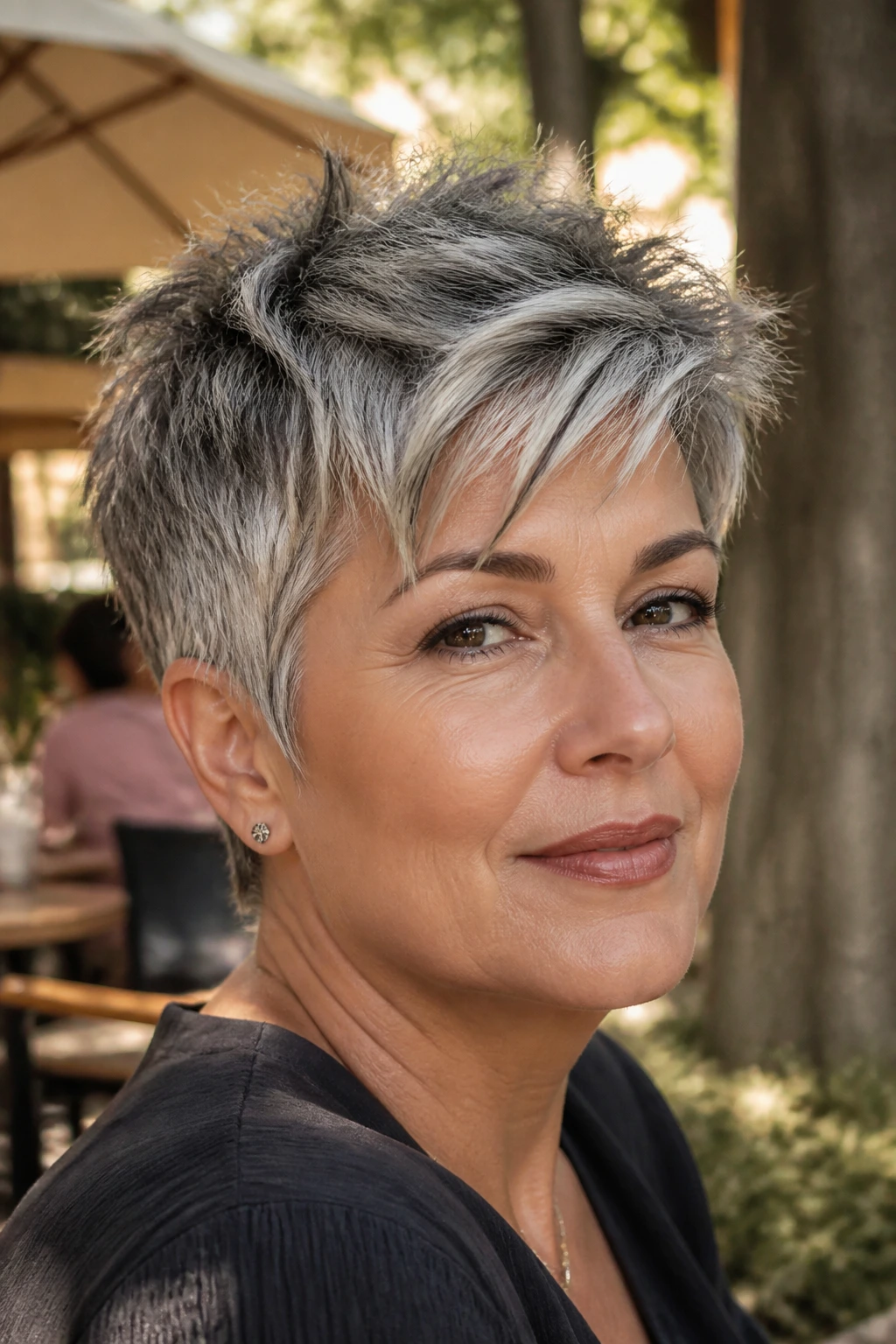
Gray hair looks fantastic in a pixie when the shape has movement. Salt-and-pepper strands catch light at different points, and a tousled cut makes that mix visible instead of hiding it.
This one leans into imperfection in a good way. The top stays piecey and slightly undone, the fringe breaks softly, and the sides stay controlled enough to keep the face from feeling too round. It works because the texture keeps the eye busy. You see shimmer, not width.
I especially like this cut for women who don’t want their silver hair treated like a problem to be fixed. It isn’t a problem. It’s a feature. Add a light volumizing mousse at the roots, rough-dry the top, then finish with a small amount of matte paste between the fingertips. Don’t polish it too much. A little mess is the point.
9. Slicked-Back Sculpted Pixie
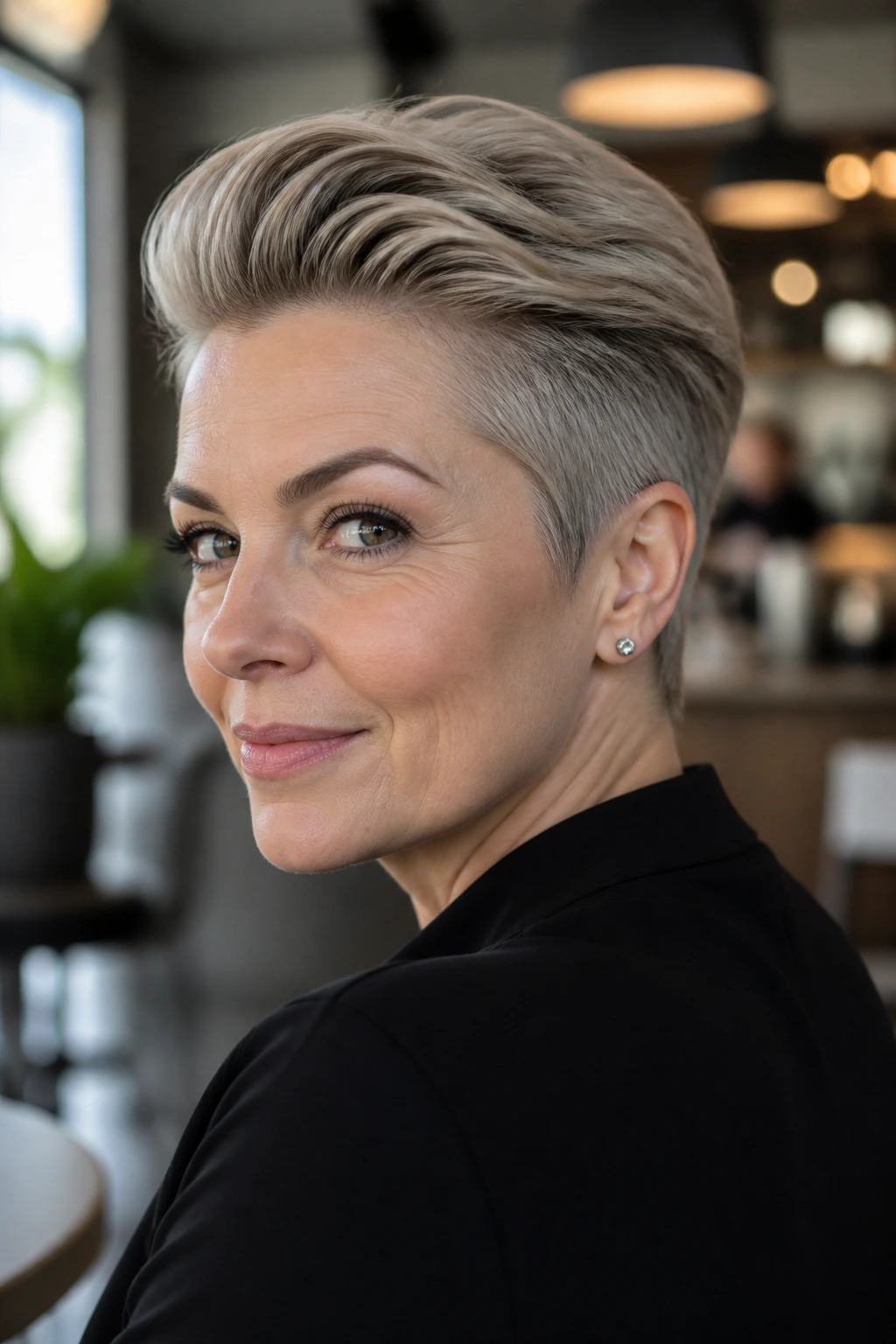
Can a slicked-back pixie work on a round face? Absolutely, if the top has enough height and the sides stay neat.
The mistake people make is flattening the whole front backward, which exposes width across the face and turns the haircut into one flat shape. The better version keeps lift at the front hairline and crown, then directs the hair back in a soft arc. Think sculpted, not lacquered. Think controlled movement, not wet plaster.
This style shines on straight or slightly wavy hair and looks especially sharp with strong brows or statement earrings. It also works well when you want the haircut to feel a little dressed up. Use a light gel or styling cream, then comb the top back with your fingers so it keeps texture. If the sides are too bulky, the slick-back loses its clean line fast.
10. Wispy Micro-Bang Pixie
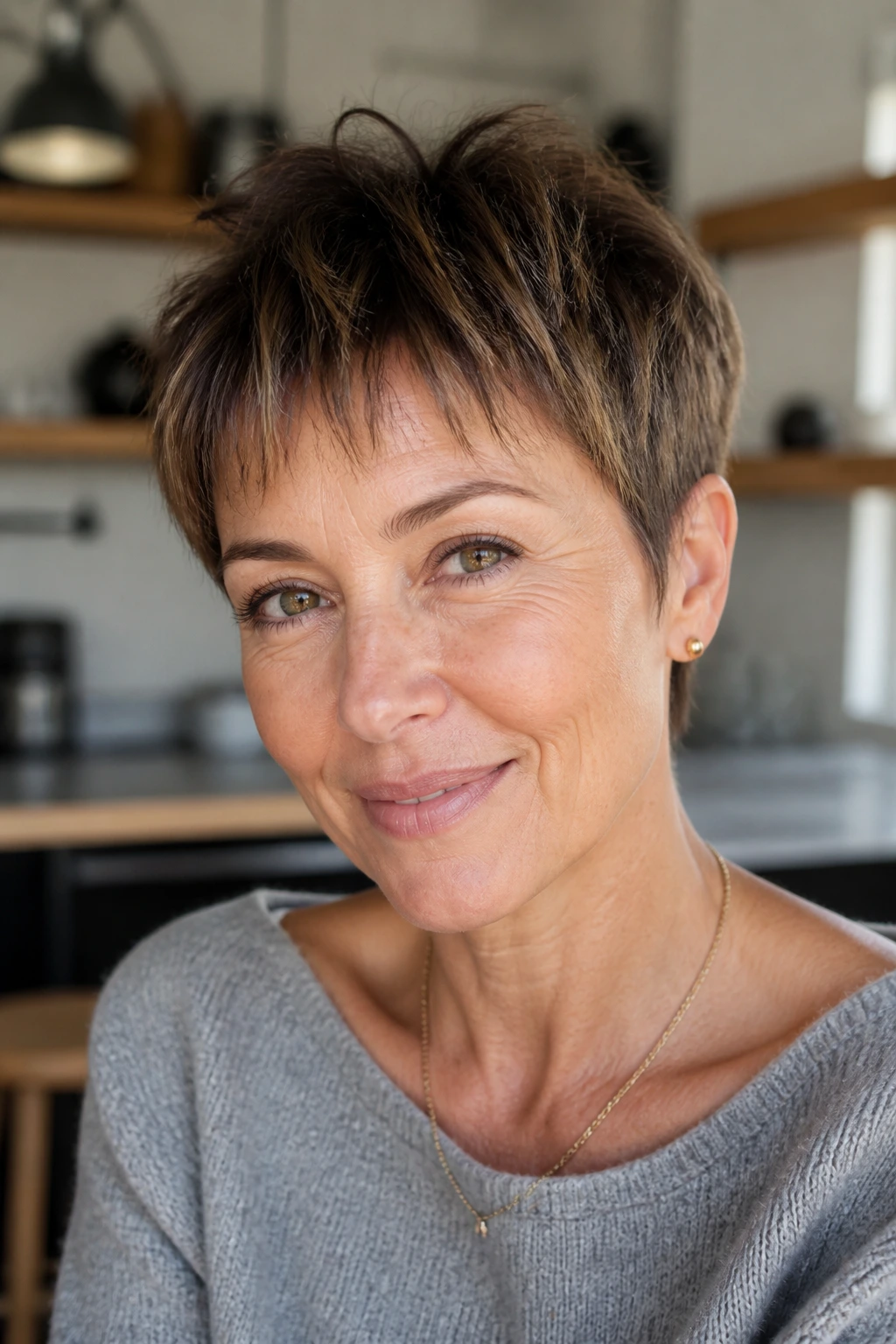
A micro-bang on a round face can be brilliant, but only if it’s wispy enough to leave some air around the forehead. A thick, blunt micro-bang is a different story. That version can chop the face horizontally and make it feel shorter.
The wispy version is lighter. Short fringe pieces sit above the brow, but they’re broken up and narrow enough to show skin between the strands. That creates texture instead of a wall. The top stays a little longer so the crown still pulls the eye upward.
Best When You Want a Bit of Edge
This cut suits someone who likes a sharper look without going full severe. It’s also good if you don’t want hair brushing your eyes all day. Keep the sides trimmed close, and let the bangs be a detail rather than the whole headline. A dab of paste can separate the fringe pieces, but skip the heavy wax. Micro-bangs need air.
11. Layered Pixie Shag
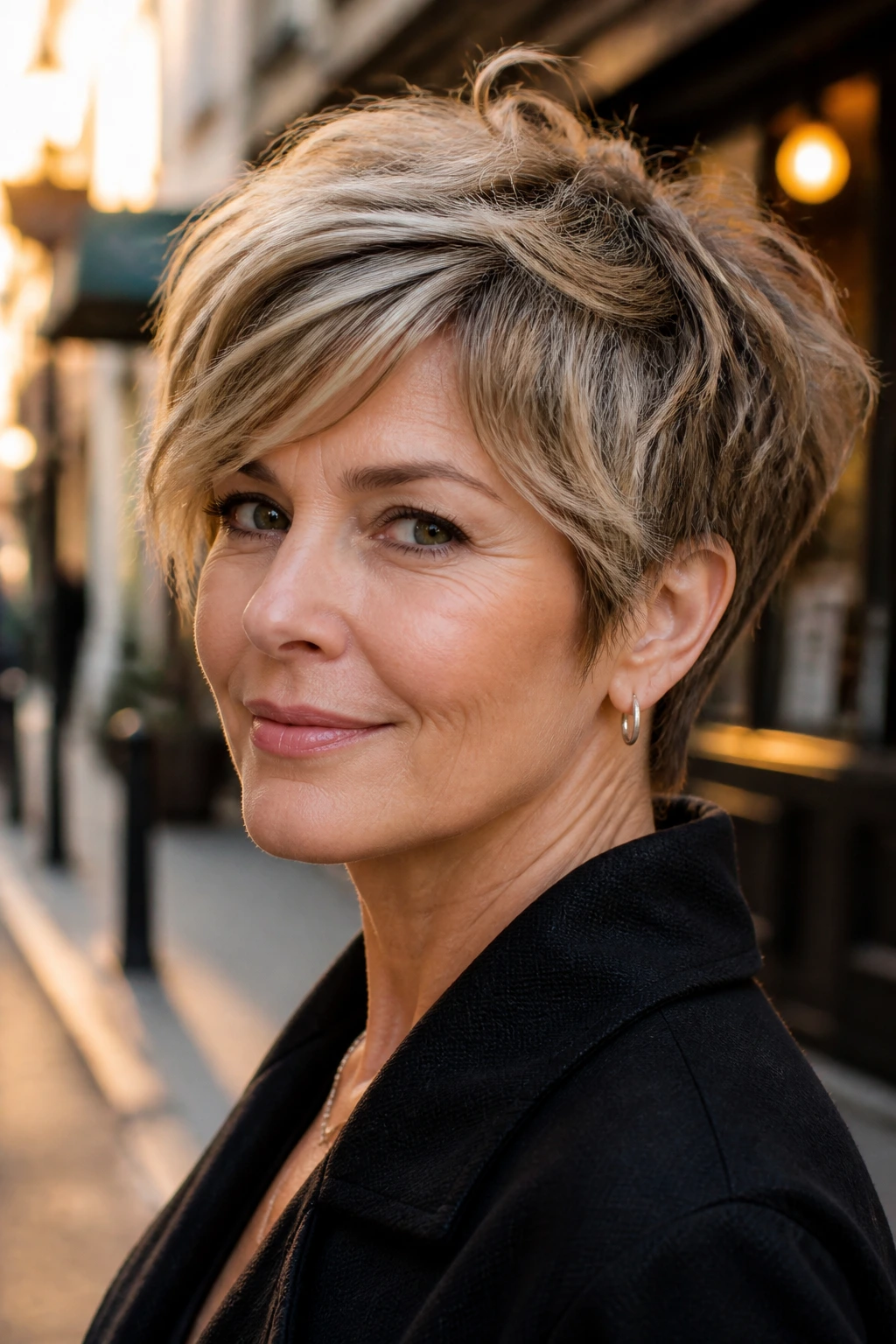
If your hair has a mind of its own, this is the one that usually feels the least bossy.
A layered pixie shag borrows from the shag’s messy, lived-in shape, but keeps the length short enough to stay in pixie territory. The top has soft, uneven layers, the fringe is usually side-swept or broken, and the sides aren’t all cut to the same exact length. That unevenness is what keeps a round face from looking too compact.
I like this cut on wavy hair because the layers encourage movement without needing perfect styling. It can be air-dried with a little curl cream, or blown out with a round brush if you want more polish. Either way, it should look a touch undone. If it looks too neat, the shag part isn’t doing enough work.
This is the style for someone who likes shape, not precision. It wears well with casual clothes and still looks thoughtful with a blazer. That’s a good range.
12. Temple-Framing Pixie
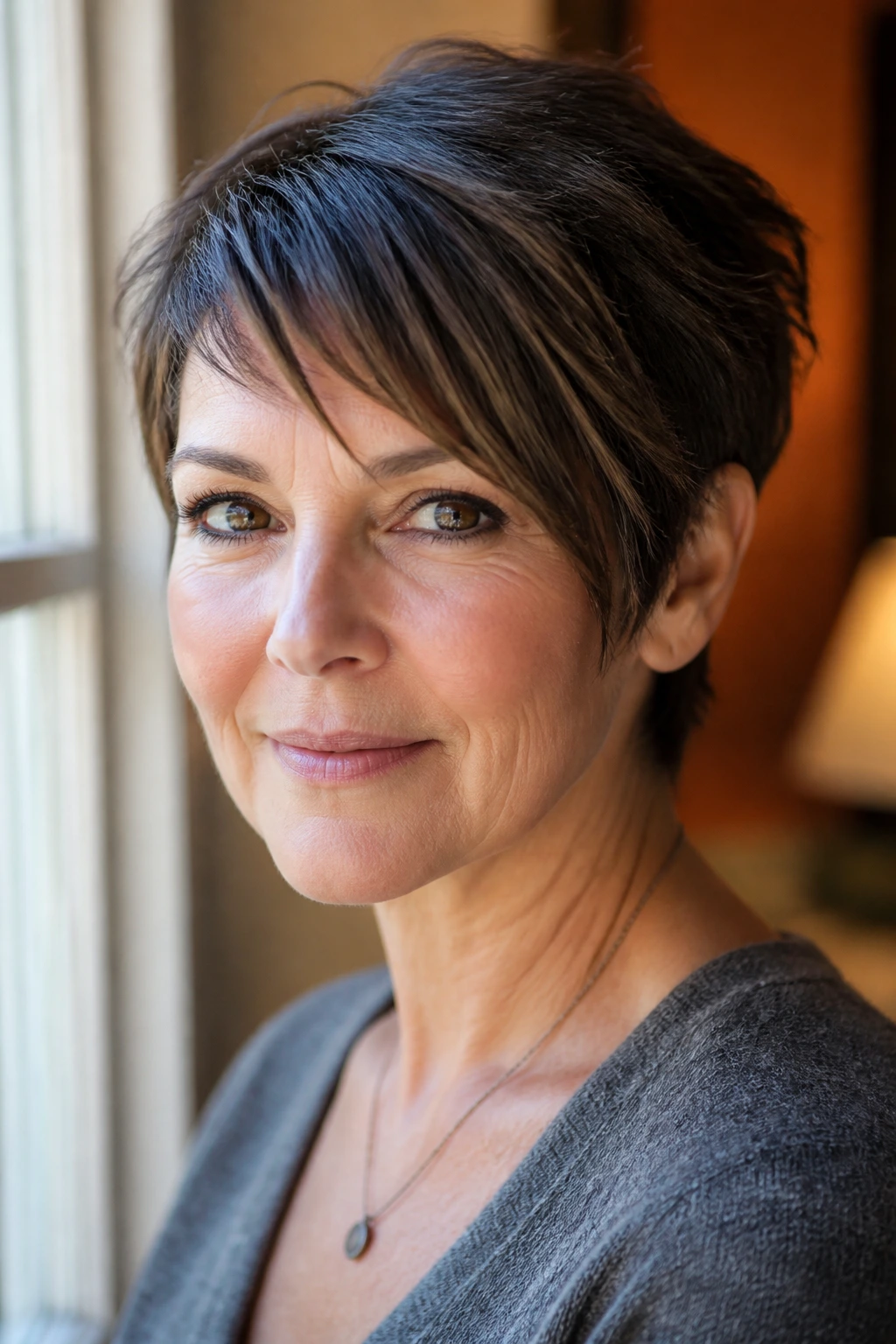
The temples matter more than most people think. A lot of round-face balancing happens there, not at the chin.
A temple-framing pixie keeps just enough length around the front edges to soften the transition from forehead to cheek. It does not swamp the face. It does not hide behind curtain bangs. It simply gives the eye a place to move down and inward. That small line can make the face look a little longer and the cheekbones a little higher.
Why It Matters
If you wear glasses, this is one of the easiest pixie shapes to live with. The hair doesn’t crowd the frames. It sits around them. Ask for light layering at the temples and a side part that lets one front section fall forward while the other stays tucked back. That asymmetry keeps the cut from reading too boxy.
This shape also plays nicely with fine hair, because the temple pieces create the illusion of more structure without needing a lot of actual bulk. Keep the ends soft. Hard edges around the temple are what make the face feel wider.
13. Long-Top Pixie with Deep Side Part

A deep side part is a cheap trick in the best possible way. It changes the whole haircut without changing the length.
This version keeps the top long enough to sweep heavily to one side, often with more weight on one temple and a tighter cut on the other. The contrast is the point. Round faces benefit from that off-center line because it interrupts symmetry, and symmetry is what makes a lot of short cuts look wider than they should.
- Best for: straight, wavy, or slightly thick hair.
- Ask for: a clear side part and longer top layers that can be directed across the forehead.
- Skip if: you hate putting any effort into the front section, because this shape likes a little direction.
- Why it works: it builds a visible diagonal line without needing extra length everywhere.
I’d use this cut if you like a haircut that feels modern but not aggressive. It’s also a smart way to make a pixie work when you aren’t ready for a super-short crop. The longer top gives you options. Tuck it, sweep it, flatten it, or puff it up a little at the root. You can steer it.
14. Classic Close-Cropped Pixie
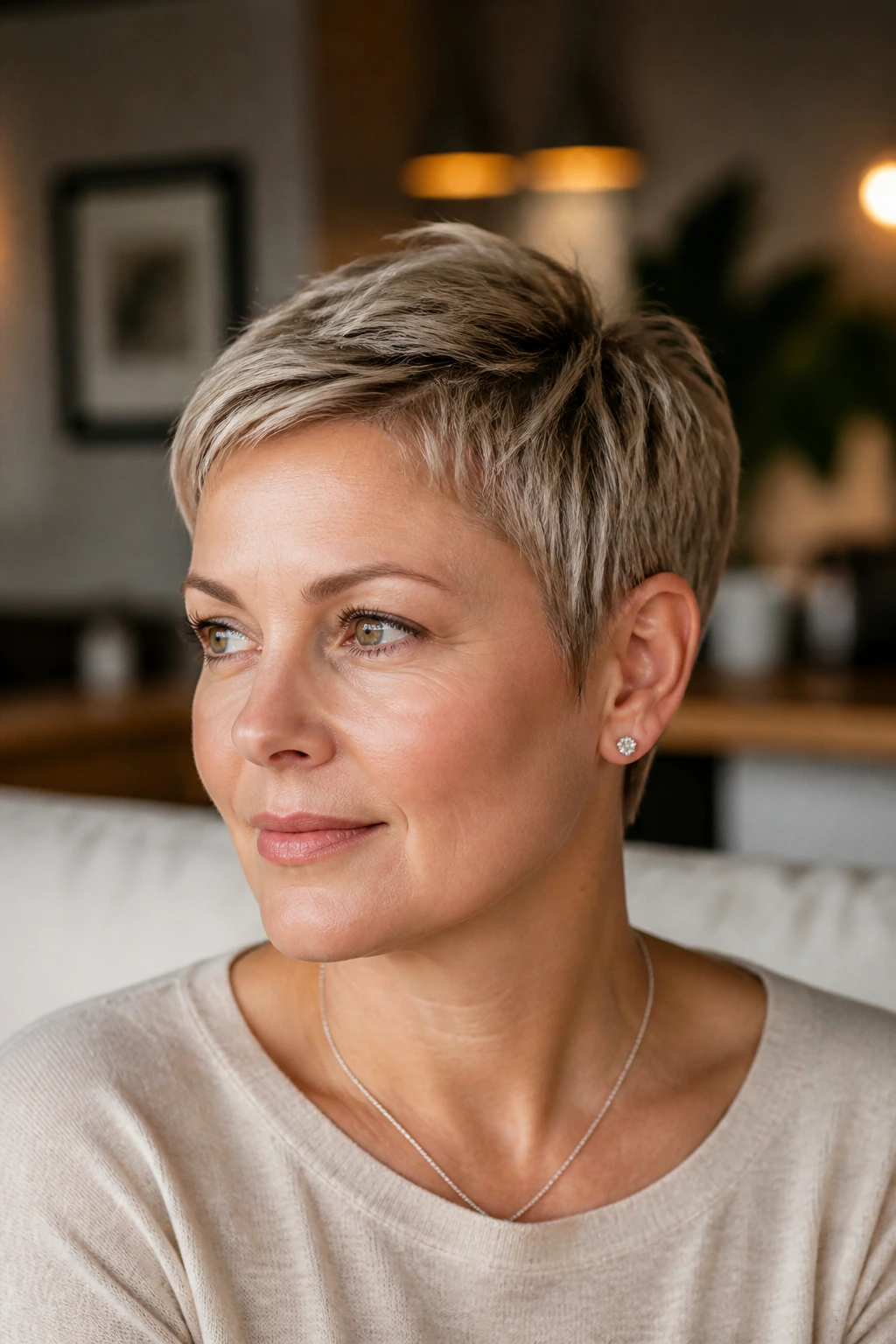
Short. Clean. No fuss.
The classic close-cropped pixie is for someone who wants almost all the hair off the neck, with just enough length on top to keep the face from losing shape. On a round face, the cut works when the sides are snug and the crown has a whisper of height. That balance keeps the style from turning into a cap.
A lot of people assume a close crop is too severe for soft features. It isn’t, if the edges are handled well. The nape should be neat, the sideburns should be deliberate, and the top should not lie dead flat. Even a half-inch of lift changes the read.
I like this cut on women who have strong brows, good cheekbones, or simply do not want hair in their way. It’s also one of the easiest pixies to keep neat between appointments. That said, it does ask for frequent trims. There’s no hiding when the neckline starts to grow out.
15. Sculpted Silver Pixie with Side Sweep
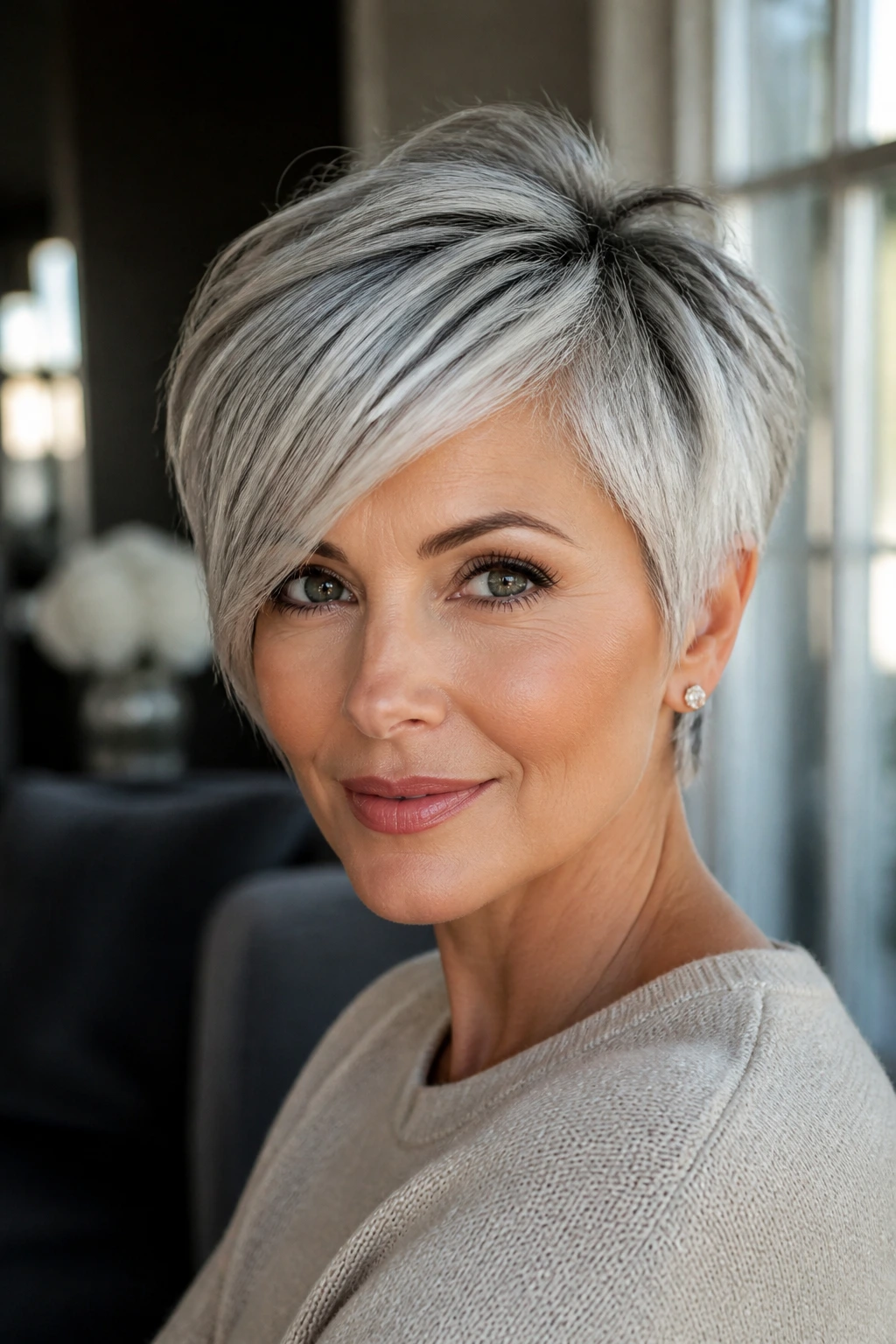
Silver hair in a sculpted pixie has a clean, bright look that really suits a round face when the front is swept to one side.
The side sweep gives the haircut a line to follow, while the sculpted shape keeps the back and sides controlled. The silver tones help, too, because they show texture and layering with almost no effort. You can see the shape more clearly than you can in some darker cuts, which is useful when the haircut depends on small shifts in length.
The Shape to Ask For
Tell your stylist you want a side-swept front, a tight but not shaved nape, and enough top length to create height at the crown. That combination keeps the face open without making the style feel severe. If your silver hair is coarse, a smoothing cream before blow-drying helps the top sit where you want it. If it’s fine, a little mousse at the root is usually enough.
This is the cut I’d pick if you want a short style that feels edited rather than fussy. It looks good when it’s clean. It looks even better when the layers are kept sharp.
Why These Pixie Shapes Work on Round Faces
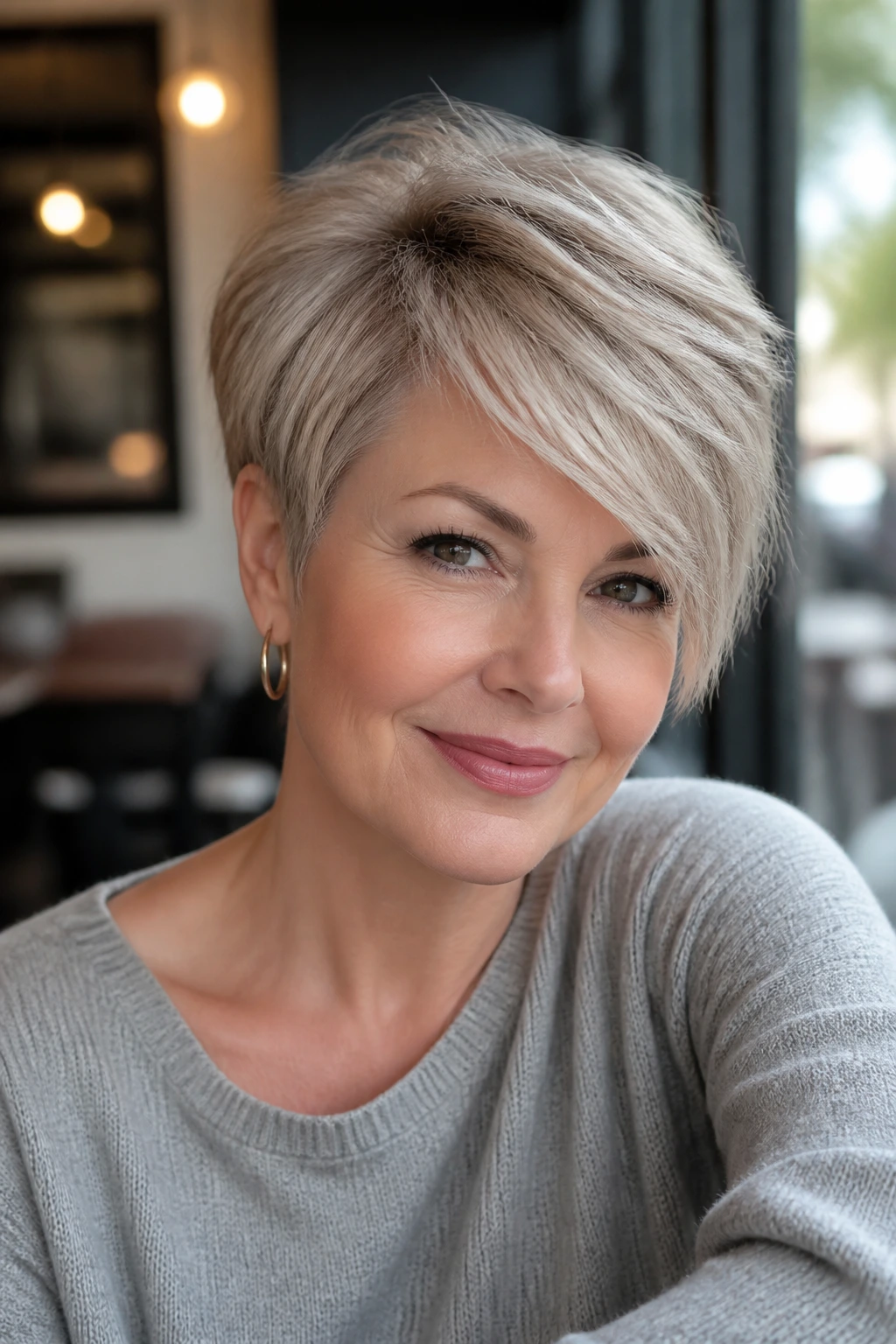
Round faces do not need to be “fixed.” They need direction. That’s a different job.
The smartest pixie cuts for women over 40 and round faces add length where the eye wants to travel upward, not outward. A lifted crown gives the face more vertical energy. A side-swept fringe breaks up the forehead. A tapered nape keeps the lower half from spreading into a mushroom shape. Those three things matter more than length alone.
Crown Lift Changes the Silhouette
A flat top makes a round face feel wider. Even a small lift at the roots changes the geometry. That’s why so many of the cuts above keep more length at the crown than at the sides. You do not need towering volume. You need a little air between the hair and the scalp.
The Temples Matter More Than People Think
Temple area is where a lot of short cuts go wrong. Bulky hair there adds width right where a round face already has it. Keep that zone light, and the face reads leaner. That’s one reason side-swept and asymmetrical versions work so well.
A Neat Nape Keeps the Cut from Spreading
Short hair expands visually when the neckline is fuzzy. A clean nape stops that. It also makes the whole cut feel sharper from the back, which is the angle you see in mirrors, photos, and jackets with collars. Small detail. Big payoff.
What to Tell Your Stylist Before the First Snip
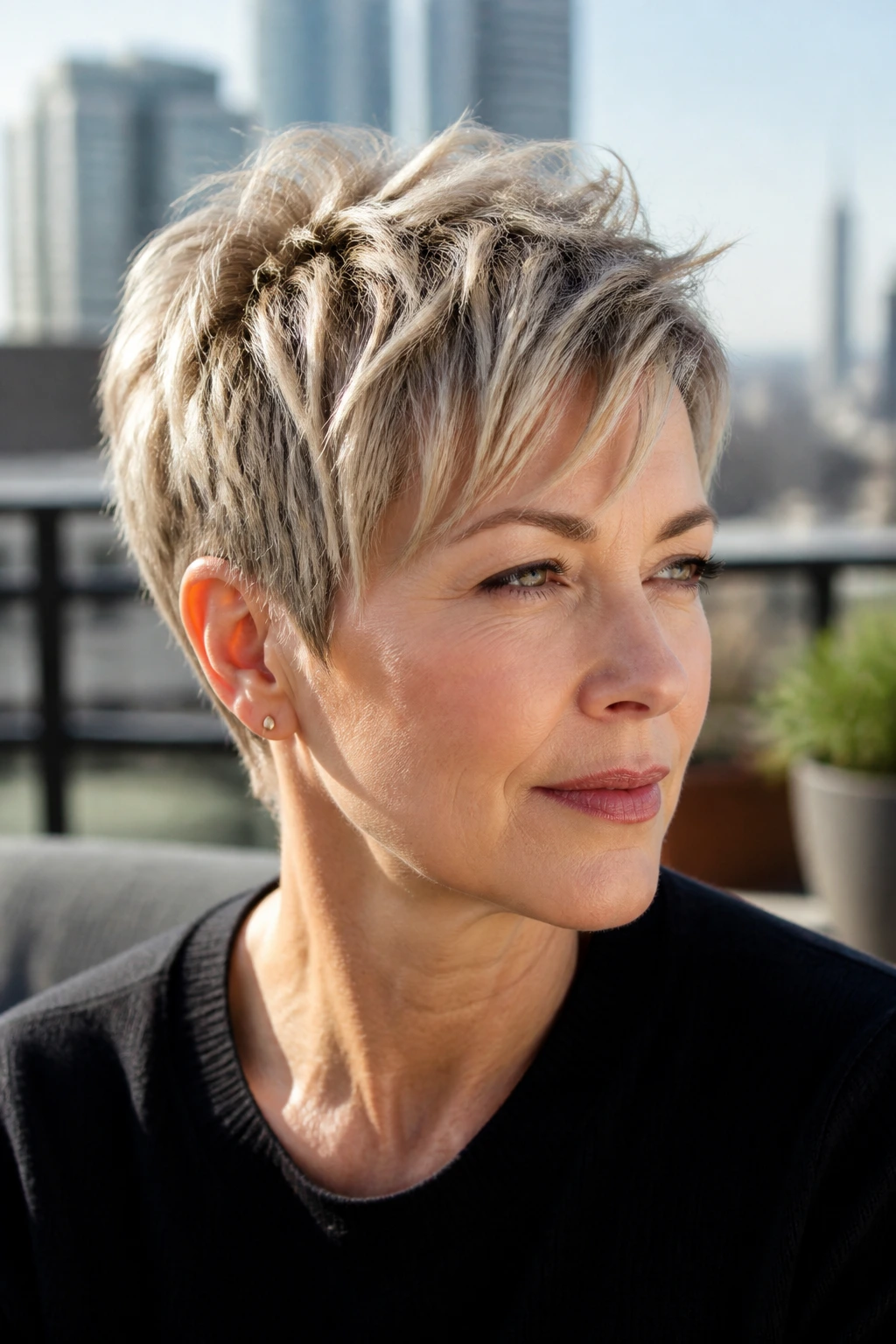
Bring photos, yes. But bring a sentence too.
Say what you want the haircut to do. “I want the face to look a little longer.” “I need the sides kept close.” “My fringe has to work with my glasses.” Those phrases matter more than the name of the cut, because every pixie lives or dies by how it’s adapted to the head in the chair.
A few useful things to ask for:
-
Keep the sides snug but not shaved: That keeps bulk away from the cheeks without making the cut harsh.
-
Leave enough length on top to sweep or piece out: If the top is too short, you lose the ability to create that vertical line.
-
Use point-cutting or feathering at the front: Blunt ends around a round face can look boxy fast.
-
Respect my cowlicks or swirl pattern: A pixie that fights your growth pattern is a pixie you’ll resent by week two.
-
Keep the nape neat and the temple area light: That’s where shape gets saved or lost.
Styling Tools That Belong in the Bathroom Drawer
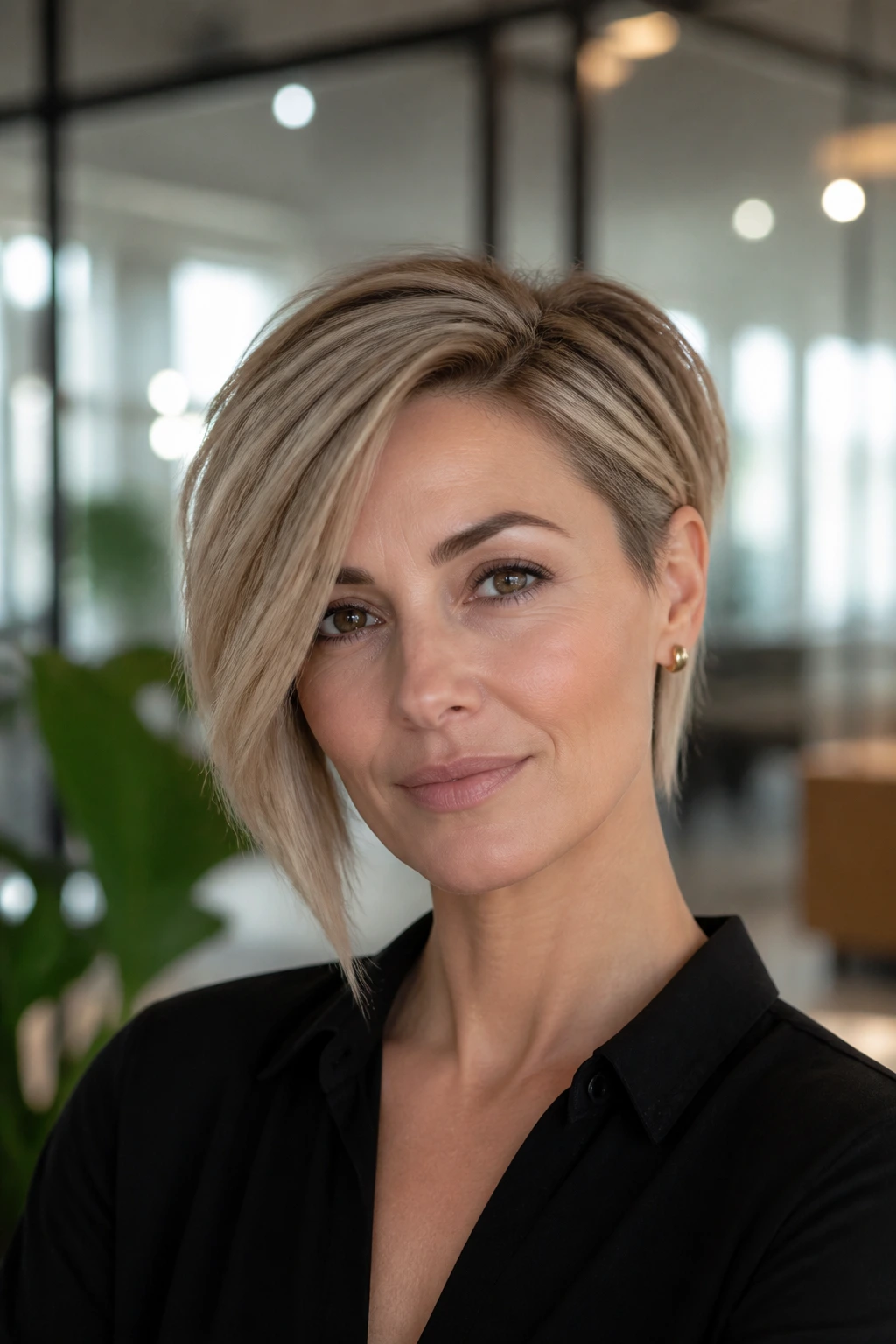
You do not need a pile of gadgets. You do need a few good ones.
-
Blow dryer with a concentrator nozzle: The nozzle keeps airflow focused so the roots lift where you want them.
-
1-inch round brush: Small enough for pixie-length hair, and useful for bending the fringe or creating a soft sweep.
-
Tail comb: Handy for clean parting, sectioning, and a quick lift at the crown.
-
Lightweight mousse: Gives fine hair a little grip without making it sticky.
-
Matte paste or cream: Best for piecey texture on dry hair.
-
Heat protectant spray: Use it if you blow-dry or touch the fringe with a flat iron.
-
Mini flat iron: Good for turning ends under or pushing the front in one direction.
-
Texturizing spray: Helps the top look fuller without adding obvious product.
-
Dry shampoo: Useful on day two, but don’t cake it on. That just dulls dark hair and leaves gray hair dusty.
How to Style a Pixie Without Fighting It
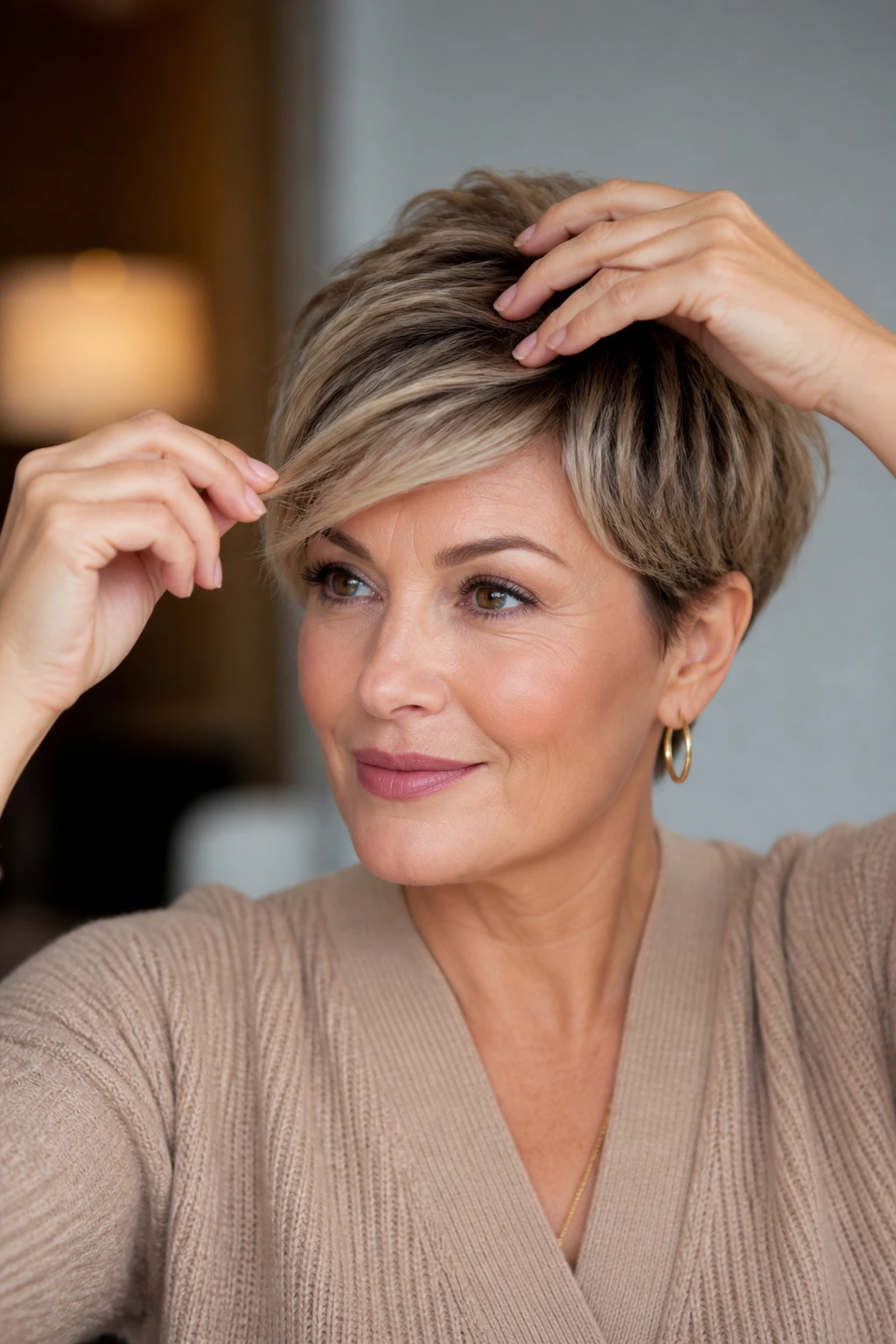
The best pixie styling routine is fast, but it still has a method.
Start at the root. On damp hair, work a small amount of mousse or root spray through the top section, not the ends. The roots need support. The ends need movement. Mixing the two up makes short hair look stiff.
Dry the front in the right direction first. If your fringe wants to split or lift awkwardly, blow-dry it the opposite way for a few seconds, then sweep it into place. That resets the pattern. A round brush helps, but fingers work if the cut is already behaving.
Keep the product tiny. A pea-sized dab of paste can go farther than you think. Warm it in your hands until it disappears, then pinch the top layers and fringe tips. Stop before the style starts to clump.
Use texture where you want attention. If the crown needs height, lift it with your fingertips and a short burst of heat. If the sides need to stay close, smooth them with the flat side of the brush or the palm of your hand. One head, two jobs.
For curly pixies, diffuse first and touch later. Let the curls set before you break them apart. If you finger-style too early, you get frizz instead of shape.
Common Mistakes That Make the Face Look Wider
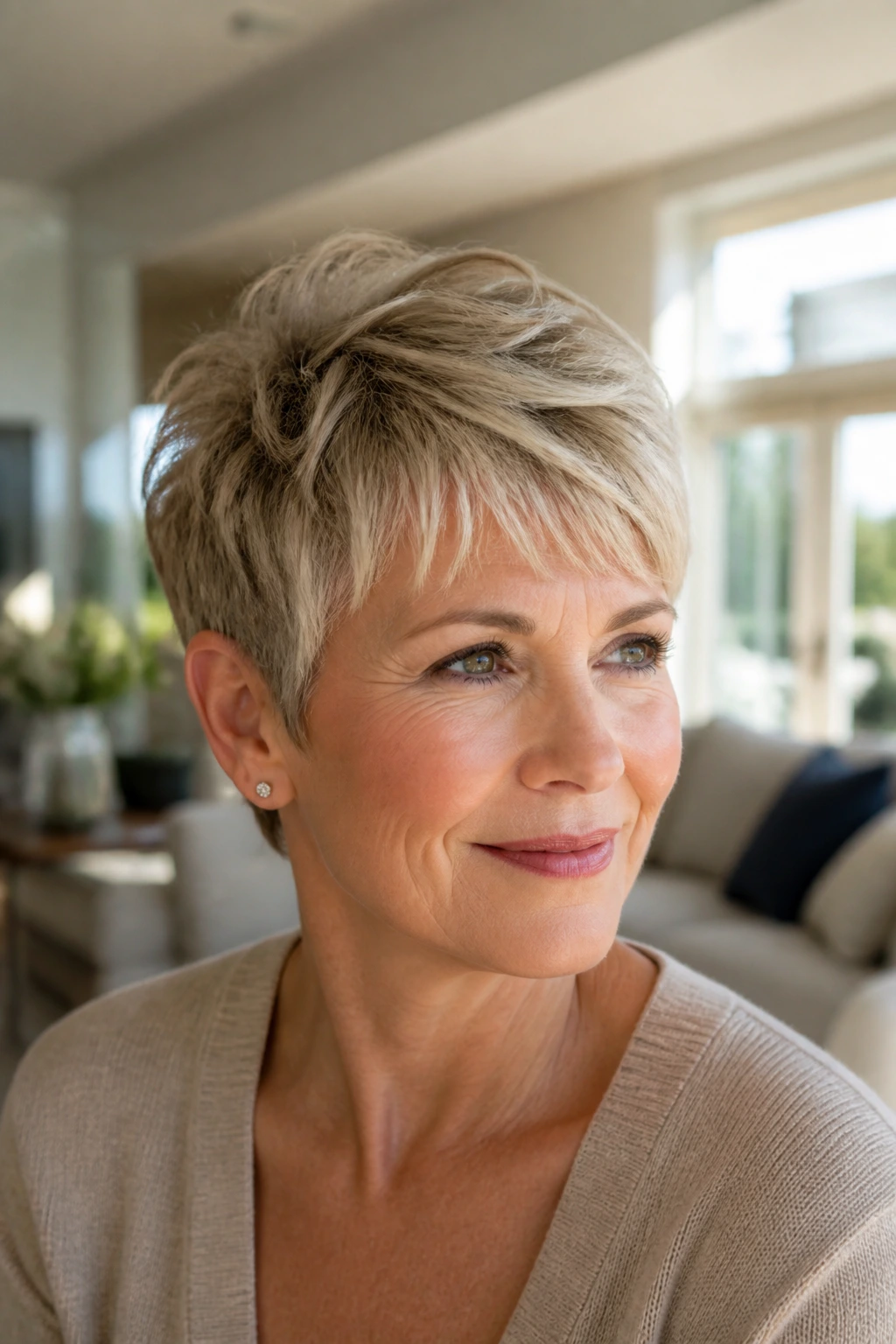
A bad pixie on a round face usually fails for the same few reasons. The fix is almost always shape, not more styling product.
-
Too much width at the cheekbones: Hair that flares out beside the face makes the roundness louder. Ask for a cleaner taper through that area.
-
A blunt fringe cut straight across the forehead: This shortens the face visually. A side-swept or feathered fringe usually works better.
-
A flat crown: Flat top, wider face. The two go together. Add a little lift, even if it’s subtle.
-
Bulky temple pieces: Thick side sections can make the head look boxier. Lighten them, especially if you wear glasses.
-
Using too much heavy cream or oil: Short hair gets greasy-looking fast. Use just enough product to separate the ends.
-
Letting the nape grow out too far: Once the neckline turns fuzzy, the whole cut loses shape and starts to feel rounder.
Variations and Tweaks for Different Hair Textures
The Softer Sweep
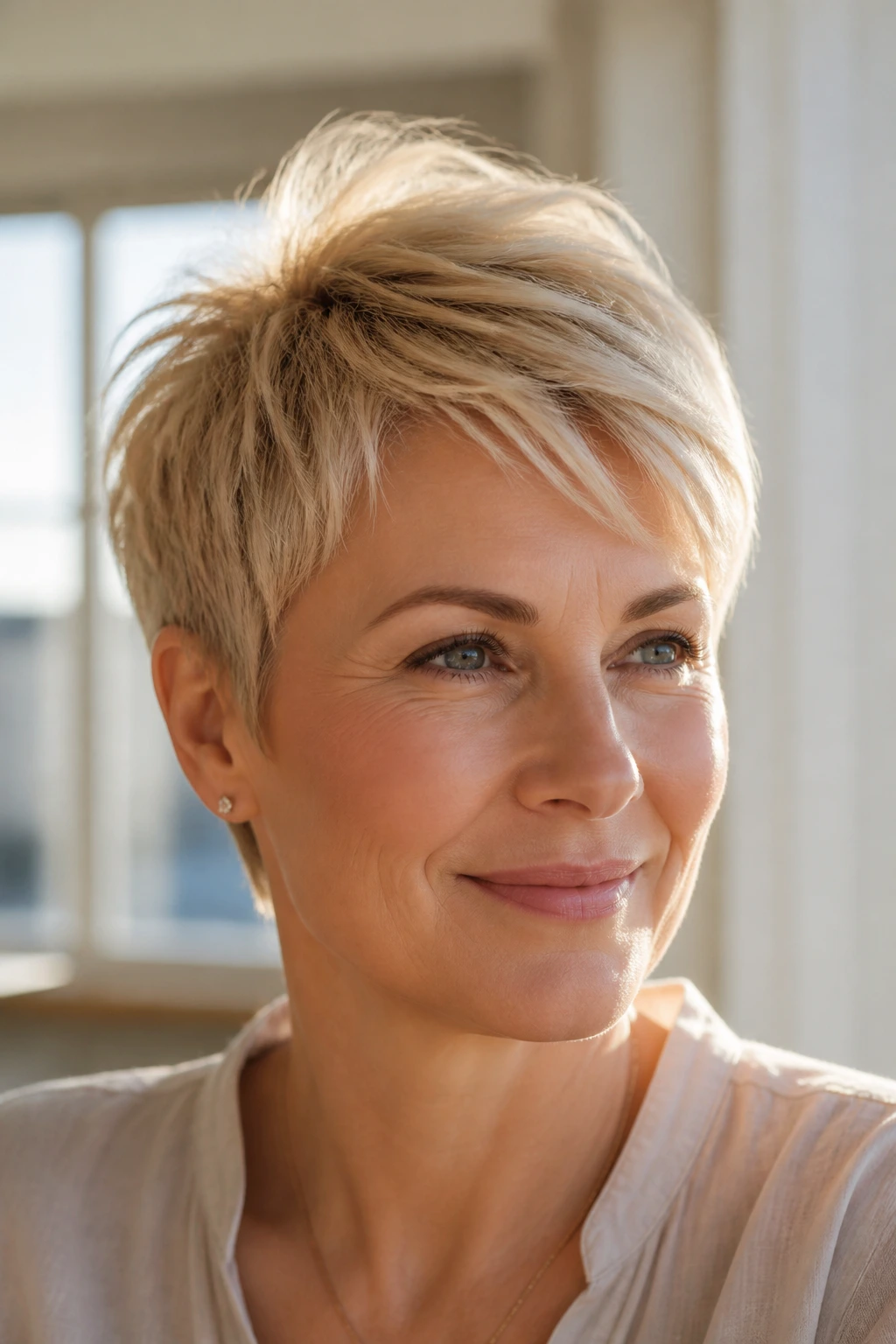
Keep the top longer and the fringe side-swept, but ask for softer layering through the crown. This version suits fine hair and first-time pixie wearers who want something forgiving. It’s the least dramatic of the group, and that’s the point.
The Piecey Edge
Use stronger point-cutting and a matte finish so the hair breaks into small sections. This works well on straight hair that tends to fall flat and on anyone who wants a bit more attitude without going shaggy.
The Curly-Control Version
Leave extra length on top, keep the sides close, and cut the curl pattern where it actually lives, not where it looks longest when wet. This version keeps curly hair from widening at the cheeks and gives the crown some airy lift.
The Glasses-Friendly Crop
Ask for lighter temples, a clean nape, and fringe that doesn’t sit on the frame arms. It’s a small adjustment, but it stops the glasses and hair from competing.
The Grow-Out Pixie Bob
If you want a softer transition later, keep the front and sides a bit longer from the start. That way, the haircut can drift into a short bob without a harsh in-between phase.
Maintenance, Trims, and Grow-Out Planning
Pixies are low on length, not low on maintenance. That distinction saves people a lot of annoyance.
A trim every 4 to 6 weeks keeps the shape honest. If your nape grows fast or your fringe loses its line early, a light cleanup every 3 to 4 weeks may be worth it. The back goes first. It always does.
If you color your hair, silver or otherwise, keep the tone in the same rhythm as the cut. Short hair shows root regrowth fast, and it also shows toner fading fast. A soft silver or brunette dimension looks cleaner when the haircut itself is fresh.
At home, sleep on a satin or silk pillowcase if your hair frizzes easily. It keeps the crown from puffing up overnight. For growing the cut out, resist the urge to trim every stray piece the moment it feels awkward. Let the top and fringe lead the way first. The nape can catch up later.
Frequently Asked Questions
Can a pixie really flatter a round face?
Yes, if the cut creates direction instead of width. Crown lift, side-swept fringe, and tapered sides are the details that matter most. The shape can look soft and short without making the face look wider.
What pixie length is most flattering for women over 40 with round faces?
Usually a long pixie or a pixie bob gives the most flexibility. Those versions leave enough length to sweep, tuck, or texturize, which helps balance the face. Very short crops can work too, but they need cleaner lines and more frequent upkeep.
Should I avoid bangs if I have a round face?
Not automatically. Thick blunt bangs can shorten the face, but wispy bangs, feathered fringe, and side-swept sections can work well. The key is to keep the line soft and avoid one heavy horizontal band across the forehead.
Will a pixie work if my hair is fine or thinning?
Yes, and in some cases it works better than longer hair. Fine hair often looks fuller in a short cut because the weight is removed. Ask for crown lift and avoid over-layering the sides, since too many short layers can make the hair look see-through.
What if my hair is curly or wavy?
A pixie can be excellent on curly and wavy hair, but the sides need to stay controlled so the shape doesn’t spread outward. A curly pixie with length on top and a tighter perimeter usually flatters a round face best. Dry cutting helps the shape land where it should.
How often should I trim a pixie cut?
Plan on every 4 to 6 weeks, and sooner if the neckline grows fast or the fringe loses its line. Pixies lose their shape in small increments, which is why they look neat one week and shapeless the next if you wait too long.
Can I wear a pixie if I have glasses?
Absolutely. In fact, a good pixie often makes glasses look more deliberate. Ask for light temple pieces and a fringe that doesn’t crowd the frame arms, and the whole look feels balanced instead of busy.
How do I grow out a pixie without looking awkward?
Keep the front and crown tidy while letting the nape lengthen more slowly. That gives you more styling choices as the cut gets longer. A little patience helps here. The awkward stage is shorter when the initial cut has a strong shape.
The Cut That Fits Your Face
The best pixie on a round face doesn’t fight softness. It edits it. A little height, a little angle, a little restraint at the sides — that combination does more than a blunt transformation ever could.
For women over 40, the smartest short cuts are the ones that respect hair texture, daily routine, and the way the face actually moves when you smile. Bring that to the salon, ask for the shape you want, and let the scissors do the quiet work.
