



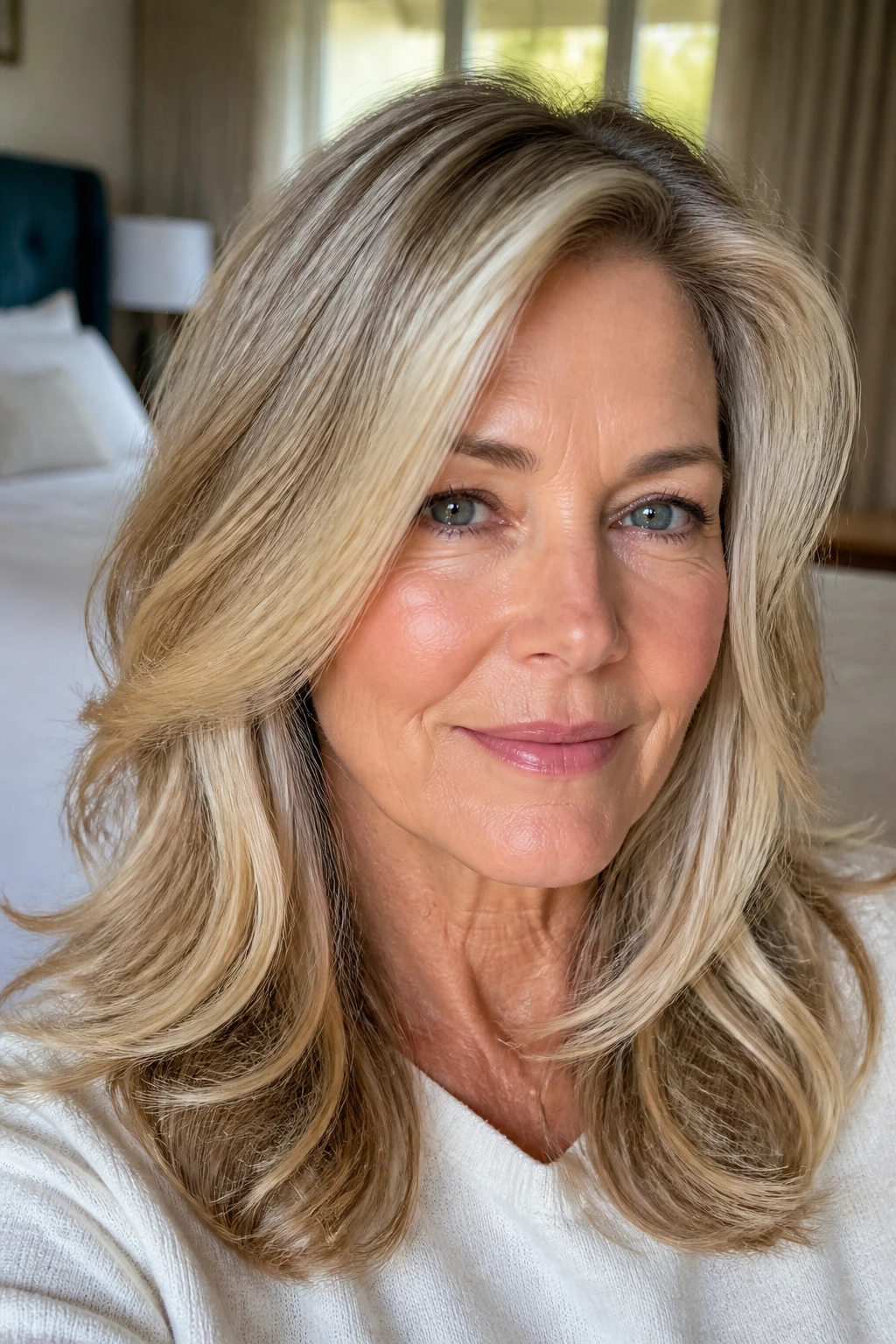
Creamy blonde is the kind of color that rescues a haircut when the ends have gone a little dry and the roots are doing their own thing. For creamy blonde hair colors for older women, the sweet spot is soft lightness with enough beige, butter, or pearl to keep the shade from reading flat, yellow, or chalky.
That balance matters more as hair goes gray or gets finer, because a blunt platinum can show every rough edge while a muddy brunette-blonde mix can make the face look tired. The shades that work best here have a gentle reflection, a little root depth, and a gloss finish that looks polished even when the cut is simple.
The good ones also buy you time. A creamy blonde with a shadow root, ribbon highlights, or a beige glaze can grow out in a way that looks intentional, not neglected — and that is a big deal when you are done chasing perfect roots every four weeks.
Why These Creamy Blondes Work So Well
-
Soft regrowth: Beige, vanilla, and butter tones blur the line between natural root color and highlighted lengths, so you do not get a hard stripe two weeks after an appointment.
-
Gray blending: Creamy ribbons can sit right on top of silver strands and let some of the gray remain visible, which keeps the color from looking painted on.
-
Face-friendly brightness: The right blonde lifts the face by reflecting light near the cheekbones and temples instead of washing everything out with one flat tone.
-
Flexible upkeep: Root shadows, glosses, and face-framing pieces let you stretch salon visits without giving up shape or shine.
-
Works with real hair texture: Fine hair, wavy hair, and hair that has a few dry ends all look better when blonde has some depth in it; a solid pale blonde can make those issues shout.
1. Vanilla Cream Blonde
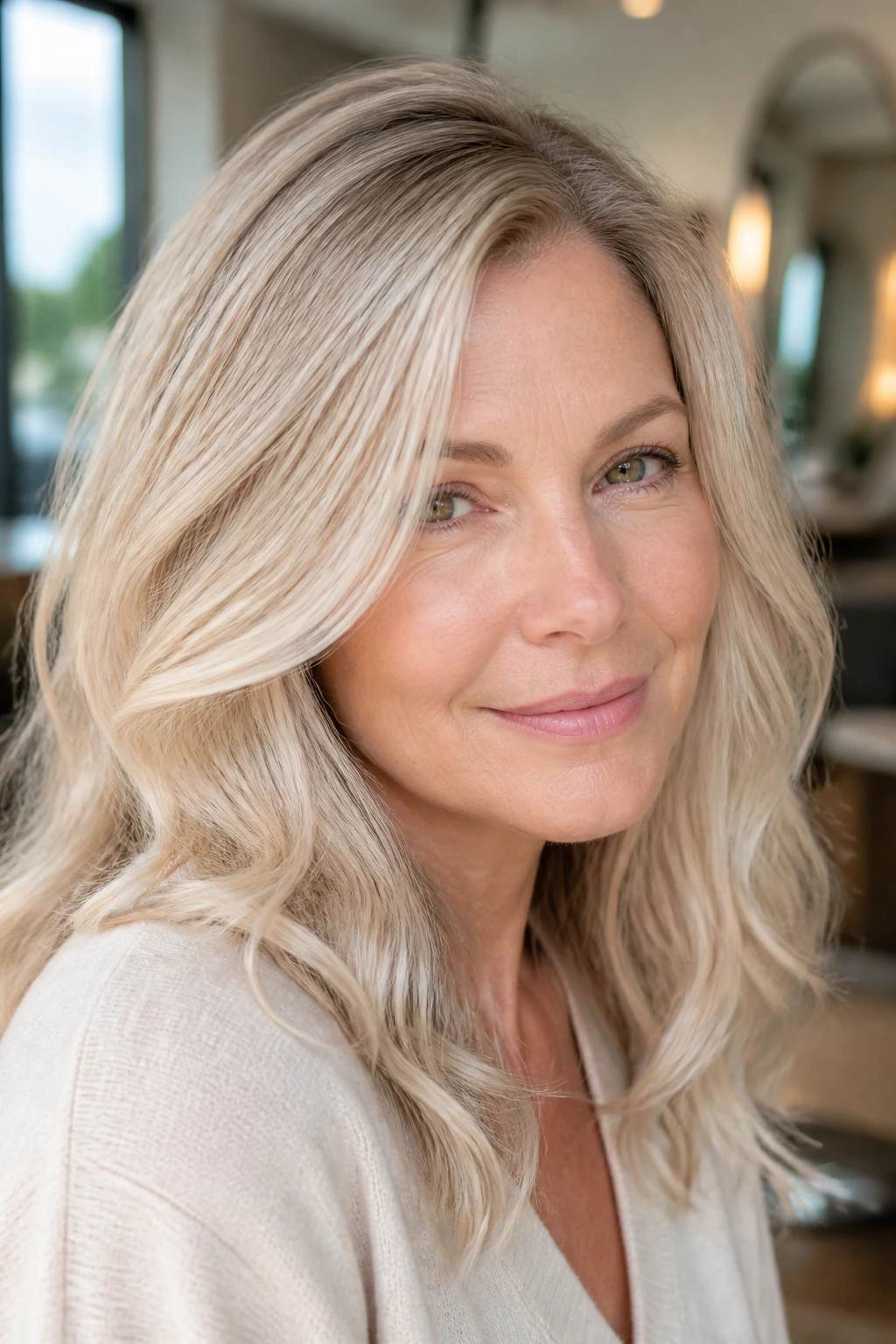
Vanilla cream blonde sits in that soft middle ground where the color looks light, but never brittle. It has a pale beige base with enough warmth to keep the face from going gray, which is why it flatters women whose skin has lost some of the rosy color it had years ago.
Ask for a delicate root shadow one level deeper than the mids and a gloss that leans vanilla, not yellow. The result feels airy on a bob, a lob, or a layered shoulder-length cut, and it grows out in a calm, unfussy way.
Why it earns its place
This shade is friendly to fine hair because the tonal range gives the eye something to read. Flat blonde can make thin ends look see-through; vanilla cream blonde gives the same brightness with more dimension.
2. Buttercream Blonde
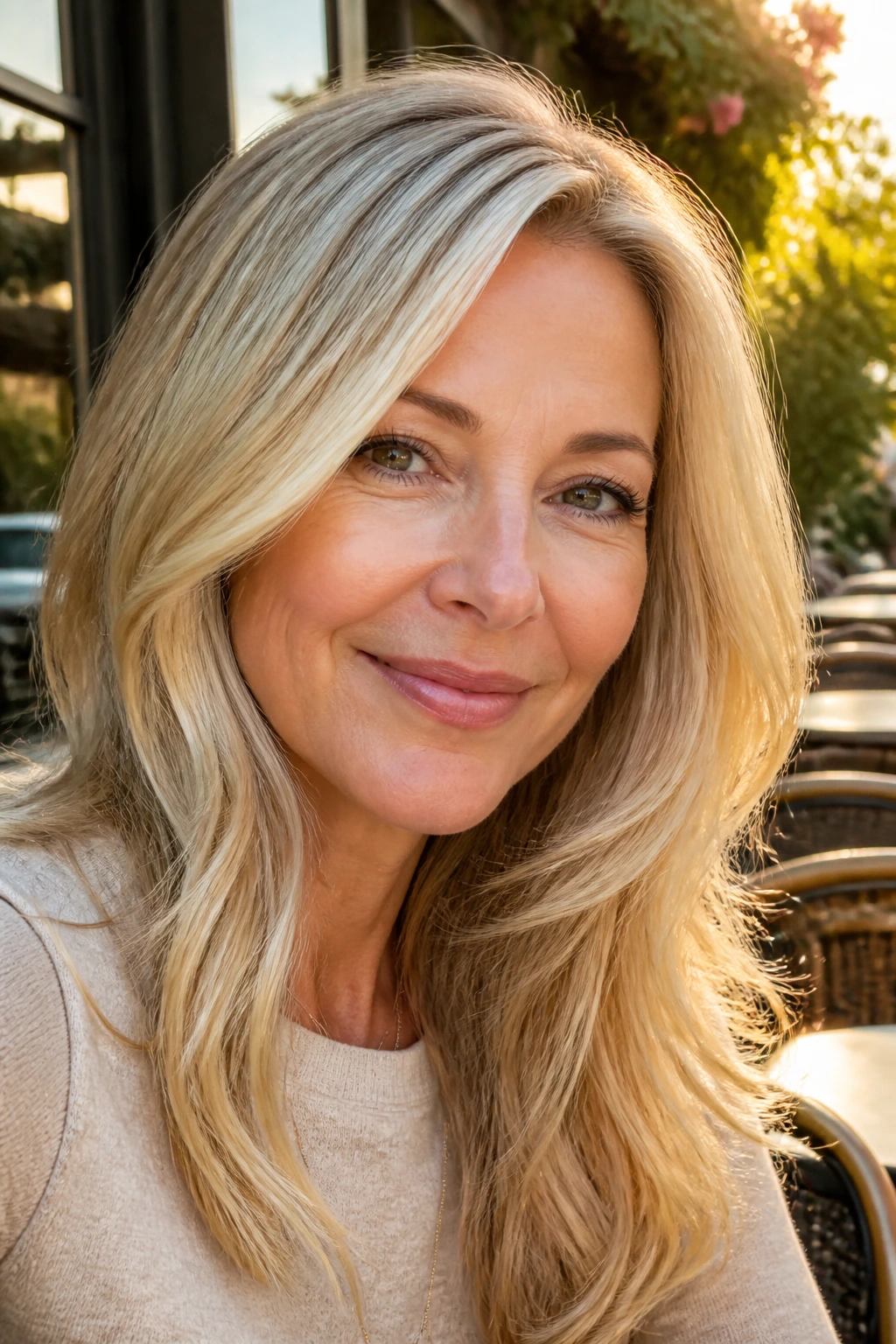
Buttercream blonde has a little more warmth than vanilla, which makes it useful when the skin leans peach, olive, or softly golden. It does not need to run orange to look flattering. The good version looks like sweet cream with a sunlit edge.
I like this shade on hair that already has some natural lift around the front. A face-framing highlight placed just above the cheekbone can make the whole cut feel fresher, especially on layered bobs and feathered mid-length styles. Keep the toner soft. Too much ash, and the butter disappears.
3. Champagne Blonde
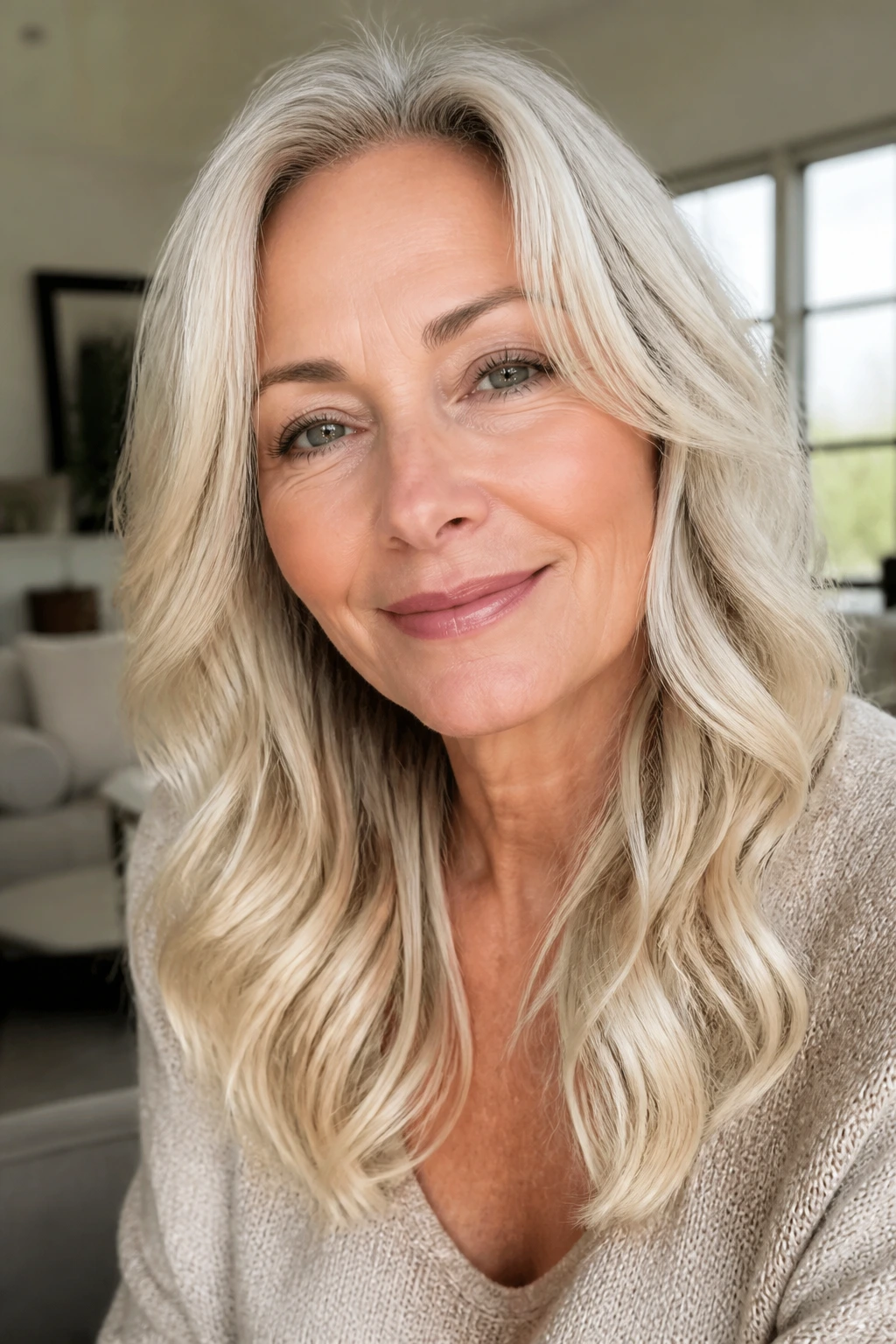
Champagne blonde has a pale fizz to it — not sparkly in a fake way, just bright enough to catch light on the ends and around the face. It is a smart choice if you want something lighter than beige but not as cold as silver-platinum.
This shade works well with waves, because the bends in the hair make the light and dark pieces separate cleanly. On straight hair, it can look a touch sleeker, which is fine if you want a neat, polished finish. Just keep a little root depth so the color does not look pasted on.
4. Beige Blonde
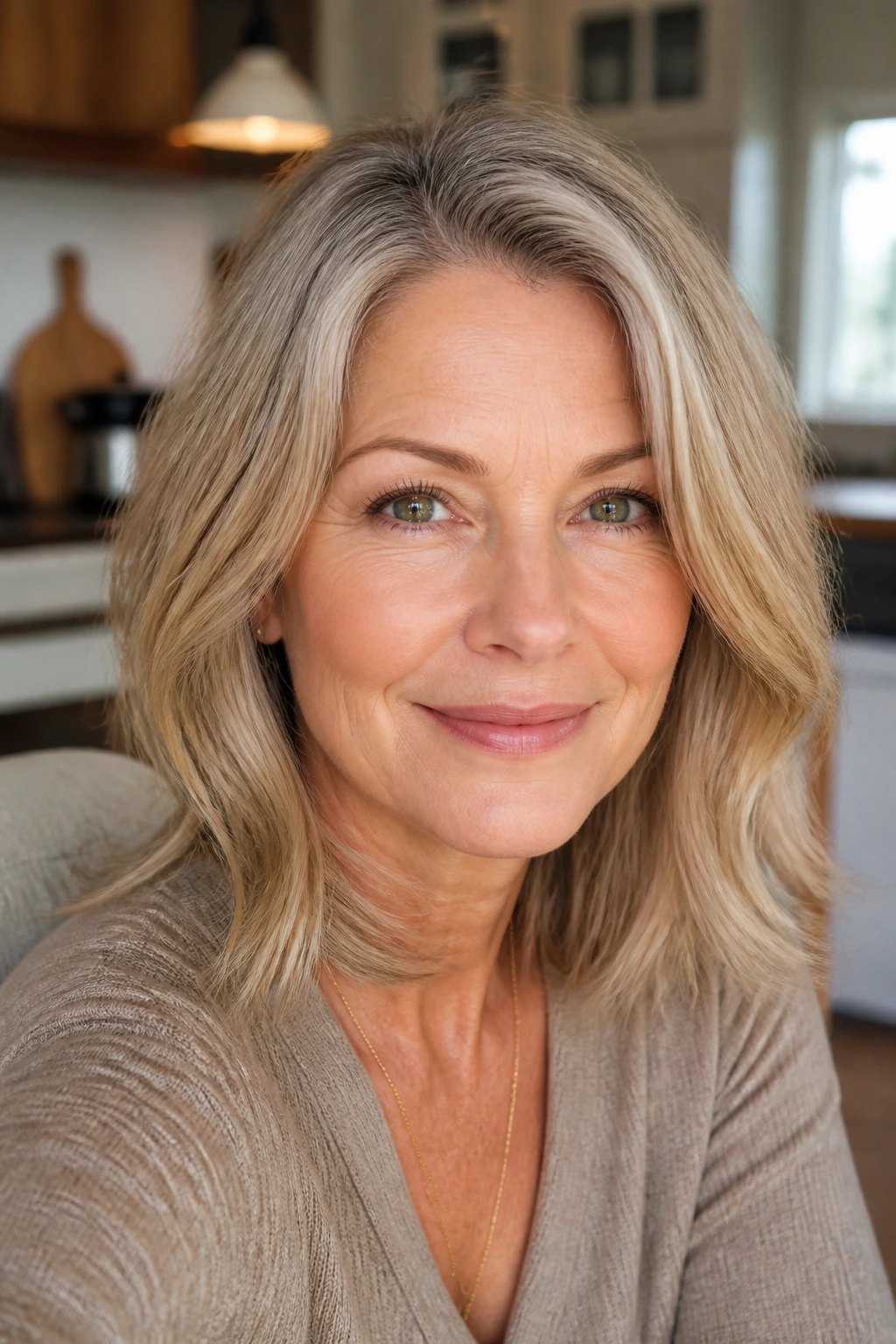
Beige blonde is the shade I reach for when someone says, “I want blonde, but I do not want to look like I am trying too hard.” It lives in the middle, and that middle is its strength. Beige tones soften the transition between gray regrowth and highlighted lengths better than icy blonde ever will.
What makes it useful
- It hides grow-out without going dark.
- It keeps warm skin from turning sallow.
- It plays nicely with both short crops and longer layers.
- It can be pushed warmer or cooler with a gloss.
The trick is a clean beige, not a muddy one. If the color looks dusty in the salon mirror, ask for more reflect and less dullness.
5. Pearl Blonde
Pearl blonde has a cool sheen, but it should never look blue or flat. Think of the faint shine on the inside of a shell. That is the feel you want. It is good for women with pink, rosy, or cool undertones who still want brightness around the face.
Be careful with porous ends. Pearl toner can grab too hard and turn the lightest pieces a bit frosty. A colorist who knows mature hair will usually soften the formula at the ends and leave a whisper of warmth in the base so the whole head still looks like hair, not porcelain.
6. Sandy Cream Blonde
Sandy cream blonde is one of the easiest shades to live with because it already carries a little natural softness. It is less shiny than champagne and less golden than honey, which makes it a calm choice for women who want blonde without the salon maintenance drama.
A shoulder-length cut with airy layers tends to suit this tone especially well. The shade shows movement when the hair sways, and it looks even better if you tuck one side behind the ear. That small exposure of root and cheekbone keeps the color from feeling too uniform.
7. Honey Cream Blonde
Honey cream blonde is warmer, but the better versions stay creamy at the core. They do not cross into brassy territory. That is the difference between a flattering gold-beige and a color that looks like it spent too long in the sun.
This shade loves thicker hair, because there is enough body to hold the warmth without it looking stringy. If your hair is very fine, ask for honey mostly through the mids and ends, with a softer beige near the scalp. The contrast keeps the hair from reading overly orange at the root.
8. Cream Soda Blonde
Cream soda blonde has a playful, glossy feel. The root is usually a shade deeper, then the blonde lightens through the middle and ends, much like the color in a glass that has more cream than fizz. It is one of the best low-drama looks for women who want dimension.
The shade works because it gives the eye a path to follow. Darker root, soft midtone, light ends. That progression flatters layered cuts and can make hair look thicker at the crown, which is useful if the part has started widening a little.
9. Mushroom Blonde
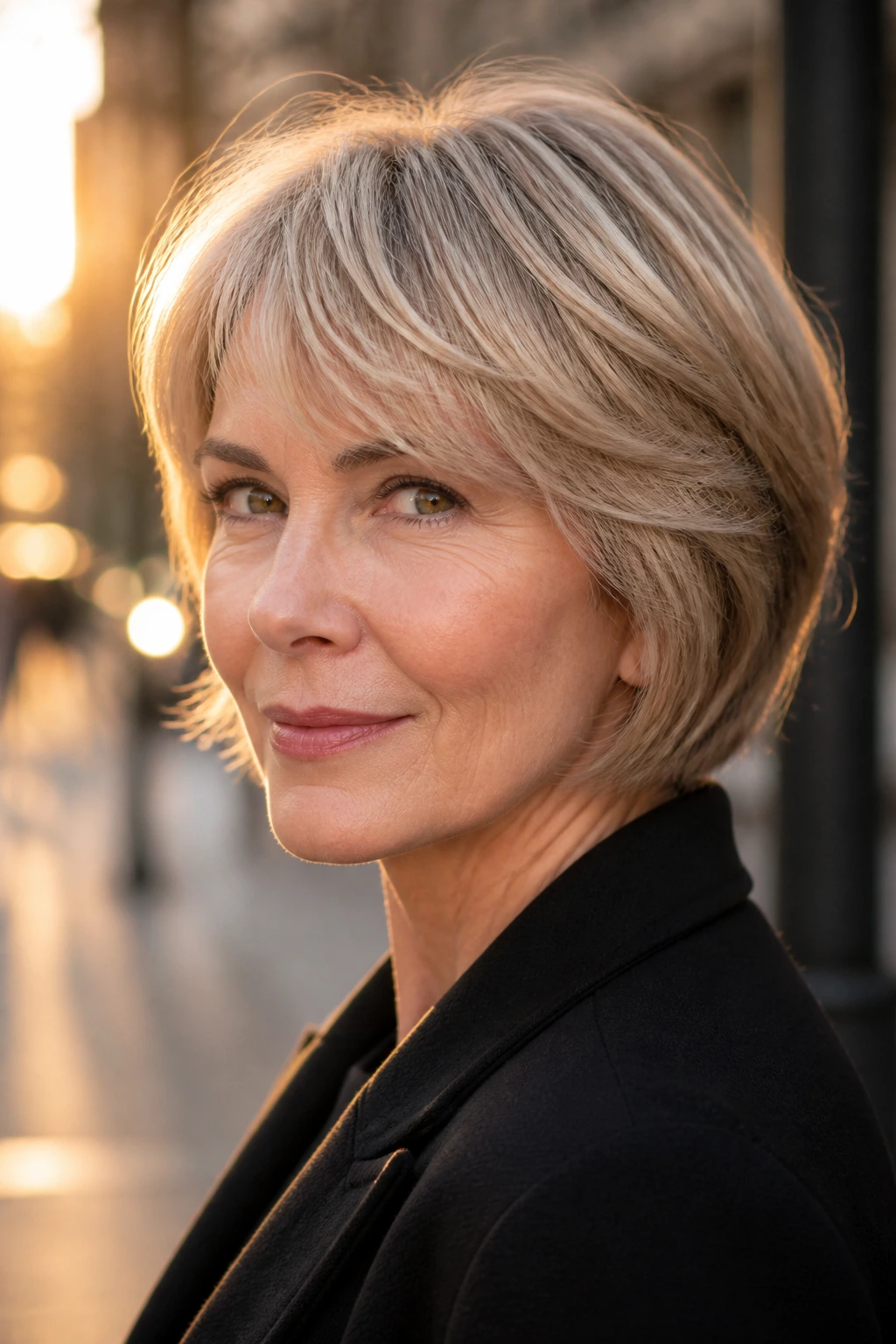
Mushroom blonde is for women who hate yellow. I say that kindly. Some people want warmth. Others want a smoky beige with just enough coolness to feel modern and calm. Mushroom blonde sits in that lane.
It works best when the base is a natural medium blonde or light brown, then softened with beige ribbons. On very pale hair, it can look washed out if the colorist goes too cool, so the formula needs a touch of cream in it. This is a lovely option if you wear a lot of black, charcoal, navy, or crisp white.
10. Almond Milk Blonde
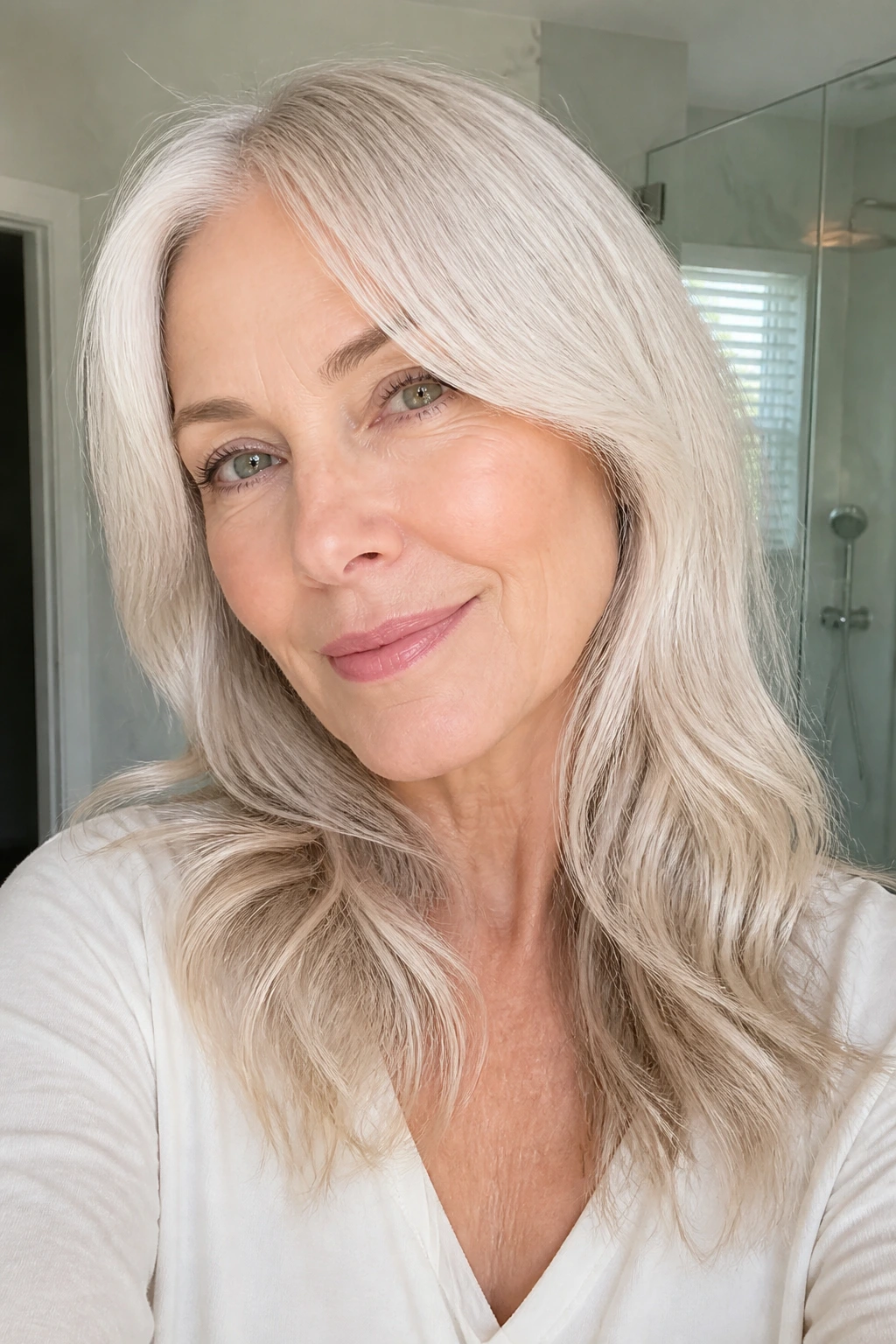
Almond milk blonde is pale, soft, and understated in the best sense. It reads as light blonde, but not hard blonde. That matters when hair texture has softened over time, because the shade gives brightness without putting every strand under a microscope.
This one is especially good for women transitioning from gray because it sits close to silver while still keeping the face warm. A gloss with a beige-pearl finish can stop the color from drifting too cool. If the hair is dry, do not push it too white; the softness is what makes it pretty.
11. Biscotti Blonde
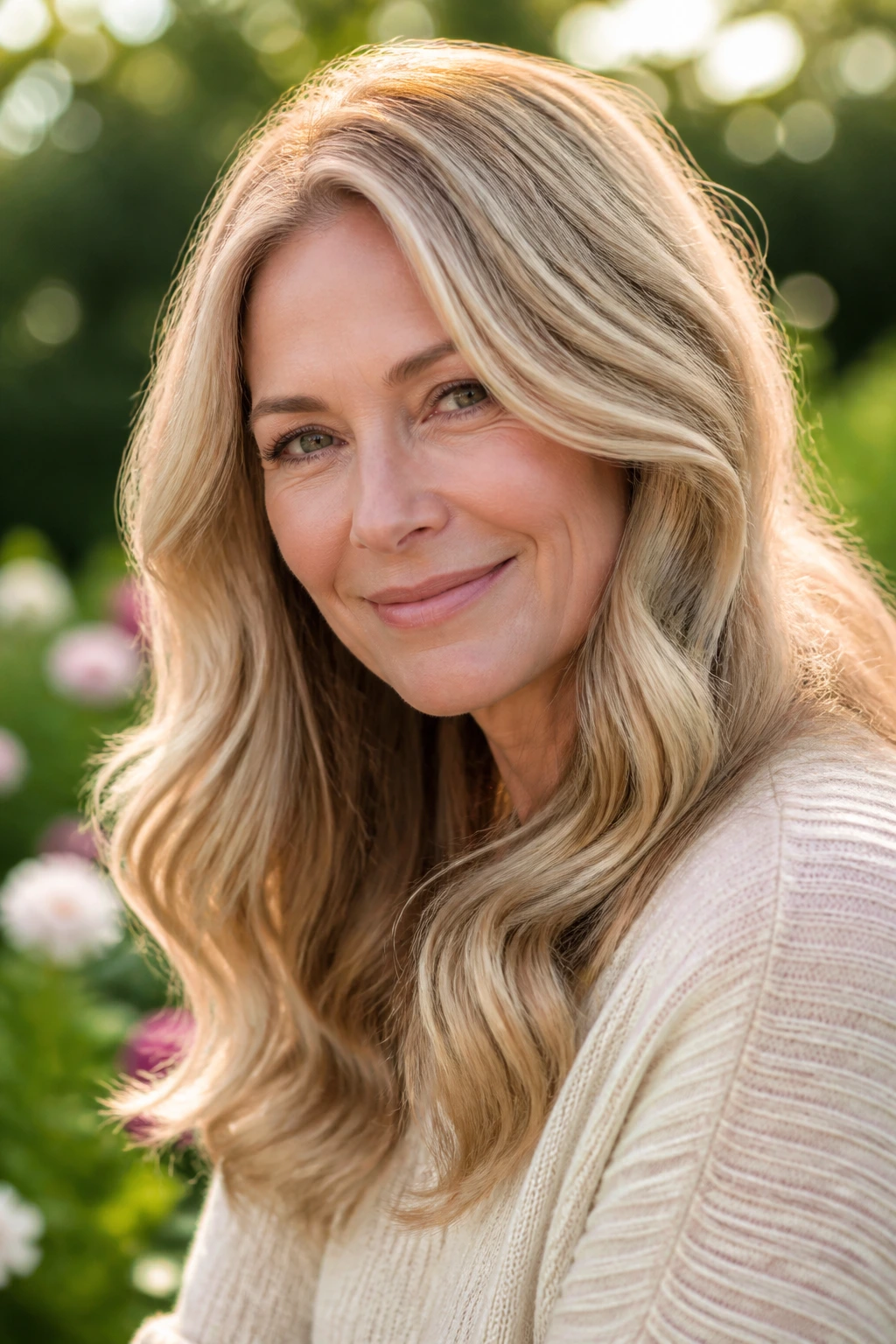
Biscotti blonde has toasted edges and a creamy center. There is a little baked warmth in it, which makes the color feel flattering on medium and olive skin tones. It is also kinder to layered haircuts than an all-over pale blonde because the darker tones keep the shape visible.
Best used when you want:
- A richer blonde that does not go orange
- Some depth around the crown
- A softer line between highlight and base
- A color that still looks good on day three, not just salon day
If you wear your hair in a soft wave, biscotti blonde picks up light in a way that looks fuller. Straight styles can wear it too, but the waves make the toasted tones show off.
12. Caramel Cream Blonde
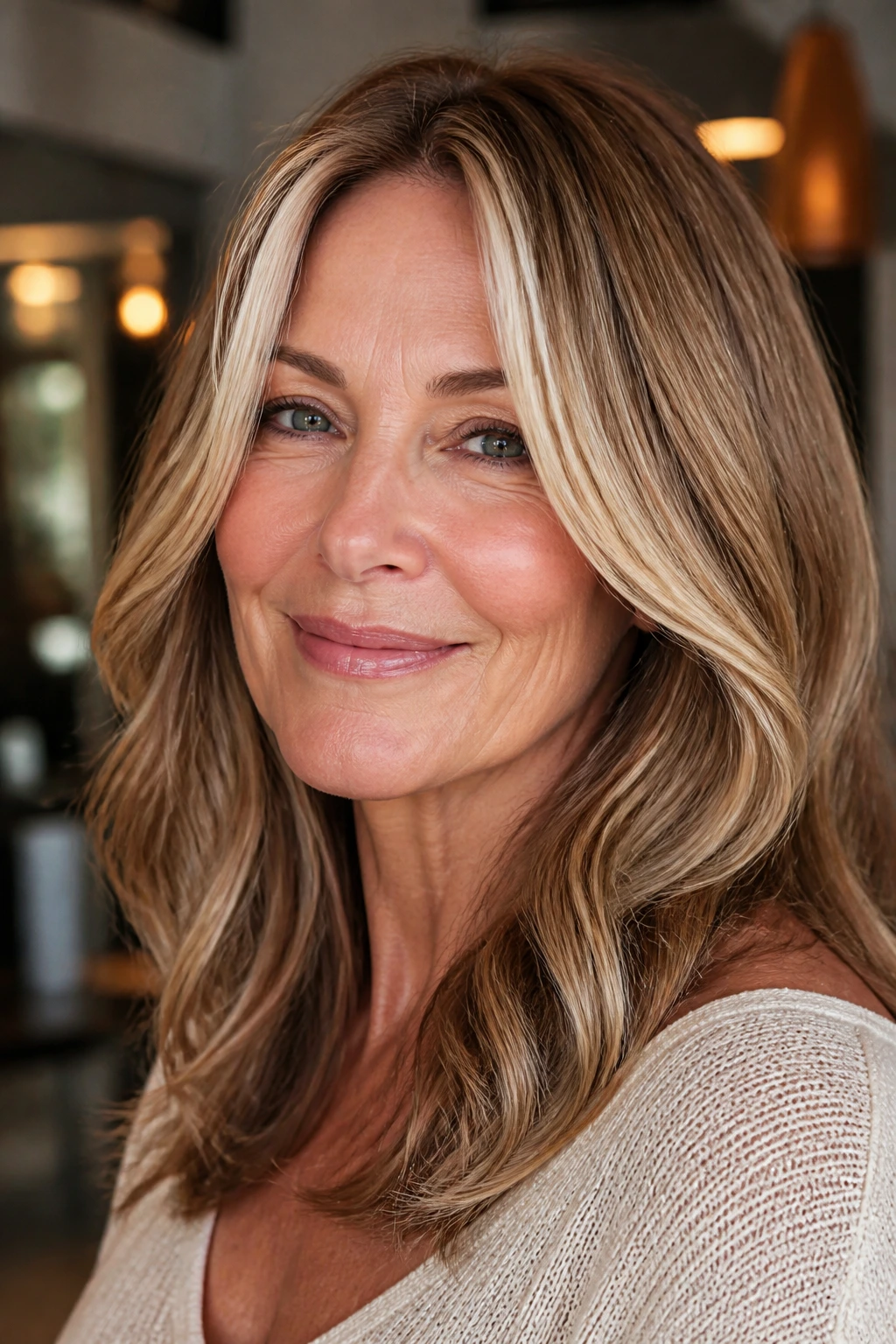
Caramel cream blonde sits closer to brunette territory, which is exactly why some older women love it. You get the face-brightening effect of blonde without giving up the richness that makes hair look dense and healthy. It is especially kind to thick hair that can swallow pale tones.
The best version places caramel mostly underneath or through the lower lengths, then leaves creamy ribbons near the face. That keeps the color from turning heavy. If your skin has warm undertones, this shade can be one of the most flattering in the whole range.
13. Bronde with Creamy Face Frame
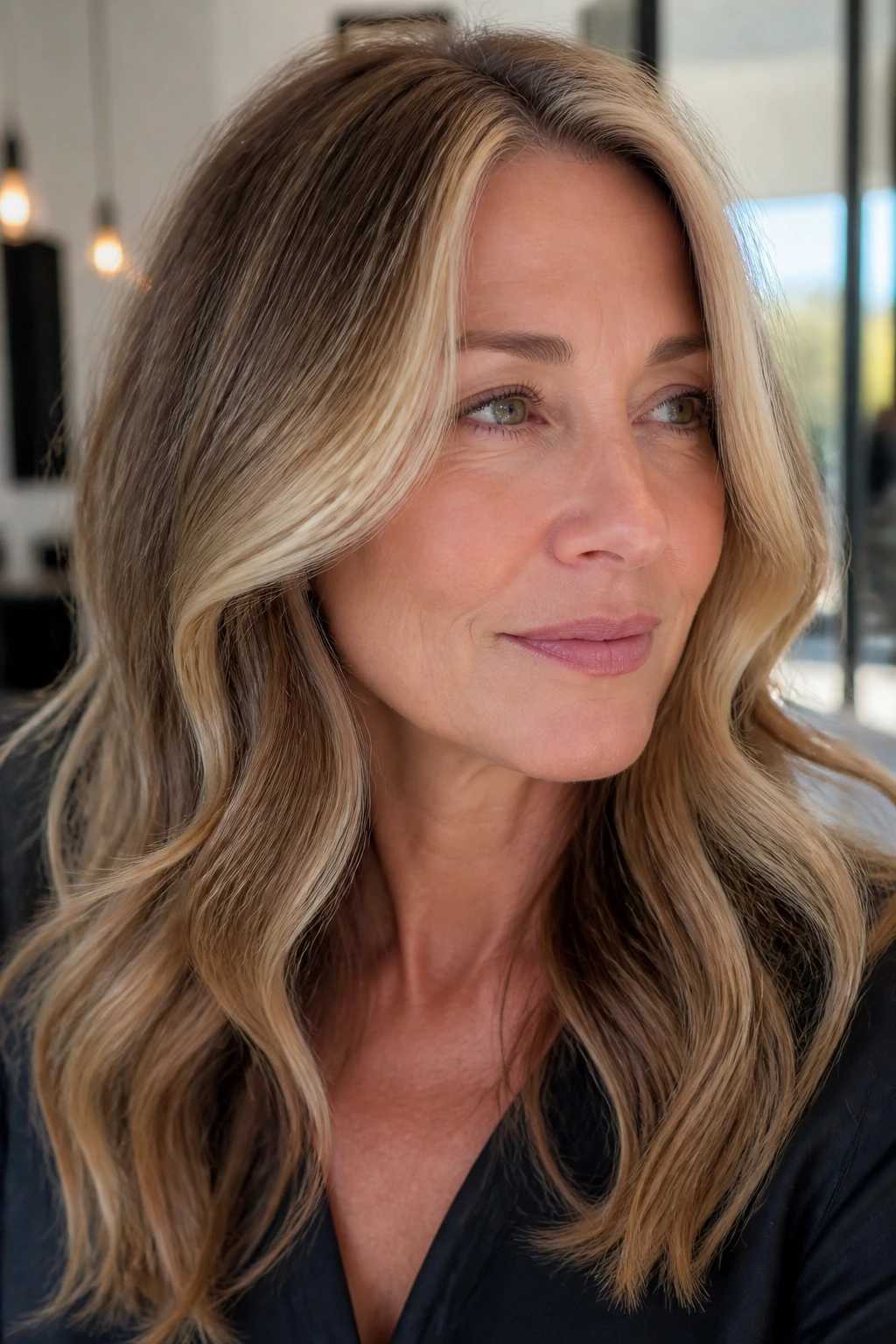
Bronde is the practical answer for anyone who wants blonde but refuses to bleach the life out of every strand. A creamy face frame does the brightening work, while the rest of the hair stays in a brunette-blonde zone that grows out quietly.
This is one of my favorite choices for busy women because it does not look neglected when it softens. It just looks lived-in. The face frame should sit a little brighter near the cheekbones and taper down as it moves toward the jaw, so the contrast lifts the face instead of drawing a stripe around it.
14. Soft Wheat Blonde
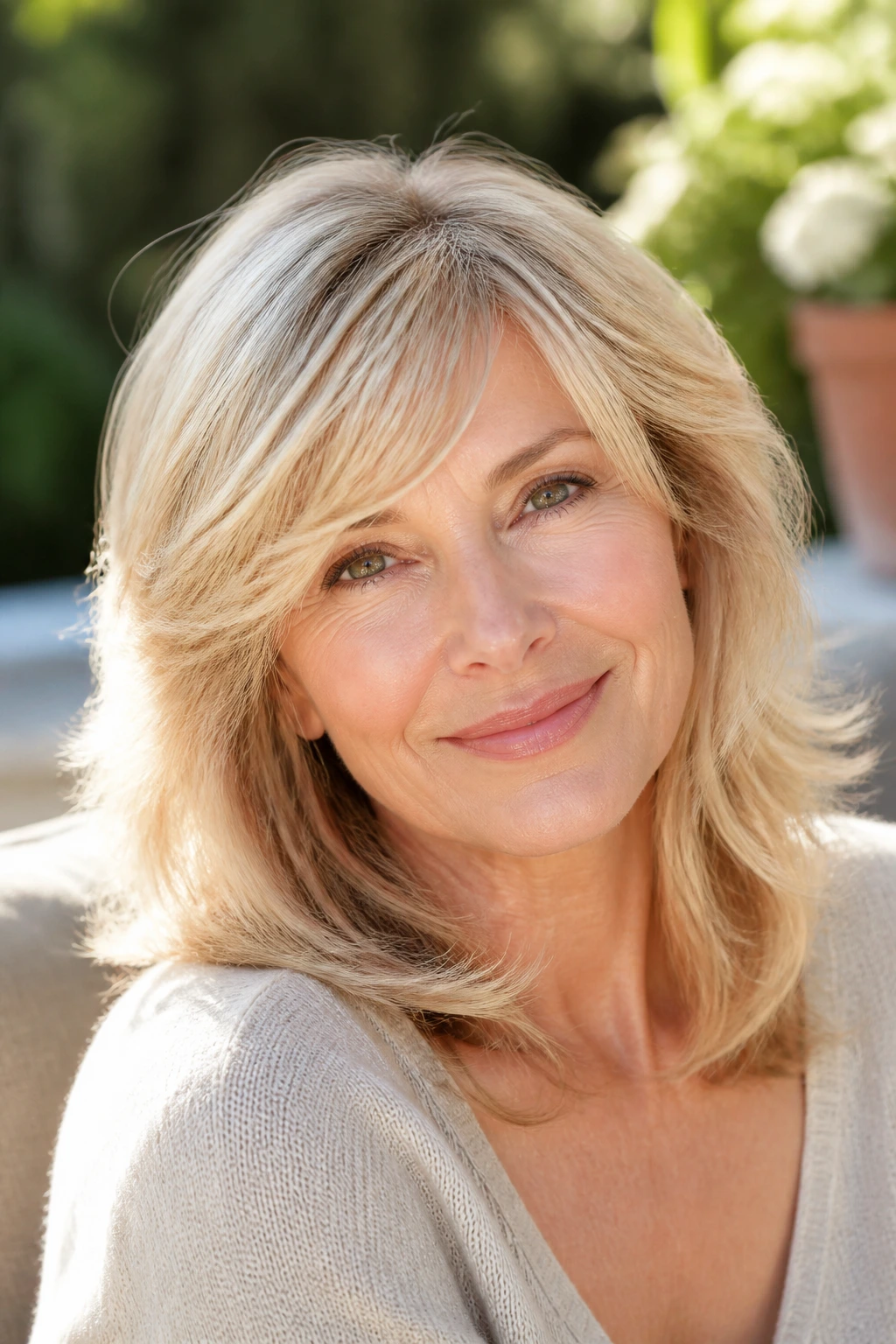
Soft wheat blonde has a pale grain-like warmth that feels natural on longer hair. It is less buttery than some blondes, which makes it useful for women who want softness without a sunny look. There is a dry, airy quality to it — not in a bad way, just in the sense that it looks light and breathable.
It flatters layered cuts that move. If the hair is one length and very straight, wheat blonde can look plain unless you add a few fine highlights and a satin gloss. Give it texture, and it starts behaving much better.
15. Ivory Blonde
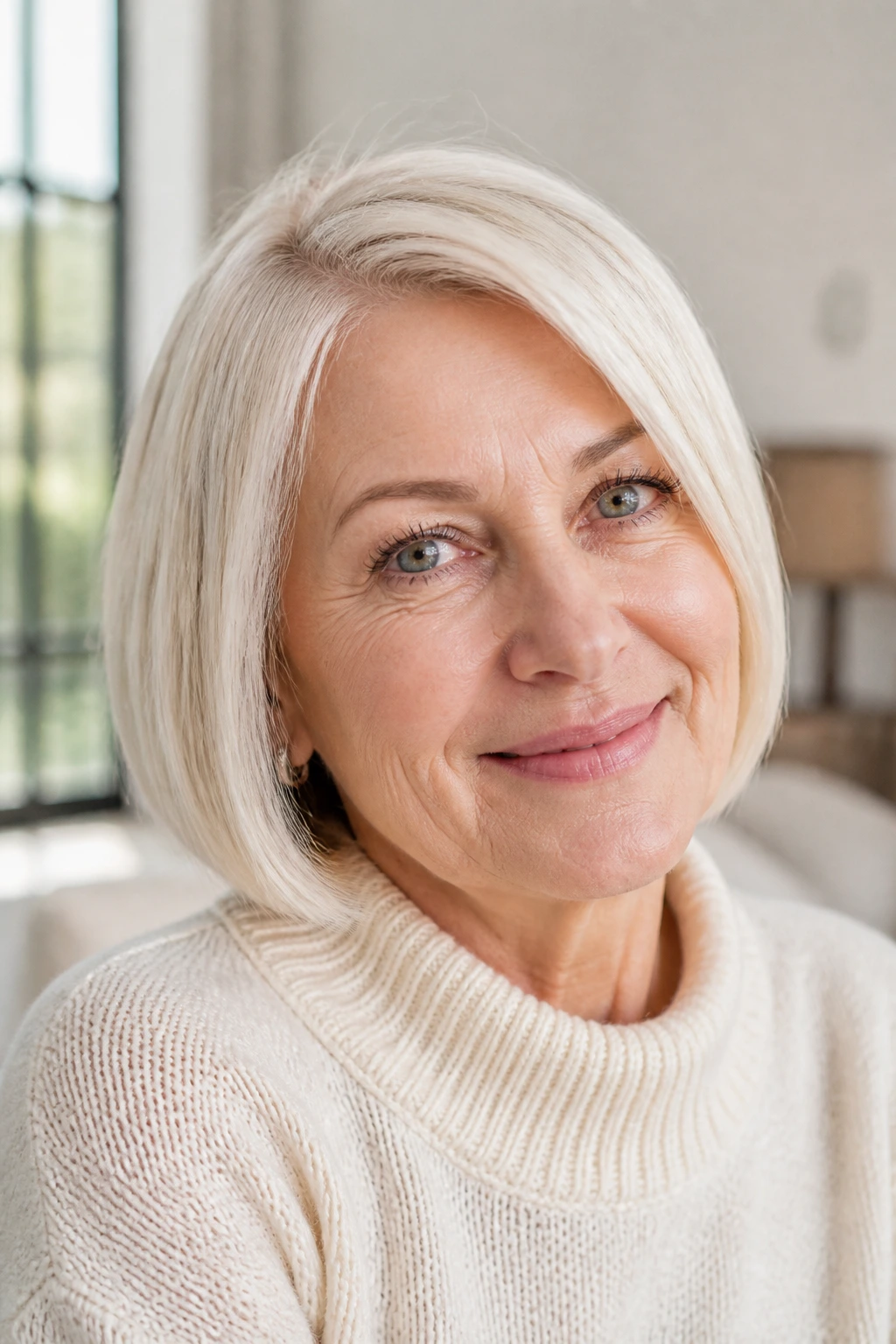
Ivory blonde is one of the cleanest pale blondes that still feels wearable. It has that off-white softness that works well when hair has a lot of gray already mixed in. Instead of fighting the silver, it cooperates with it.
This shade needs careful handling, though. If the ends are porous, ivory can go flat or grab too cool. A good colorist will leave a hint of beige at the root and gloss the lengths so the shade stays creamy rather than stark. On a pixie, it looks sharp. On a bob, it looks elegant without trying too hard.
16. Creamy Silver Blonde
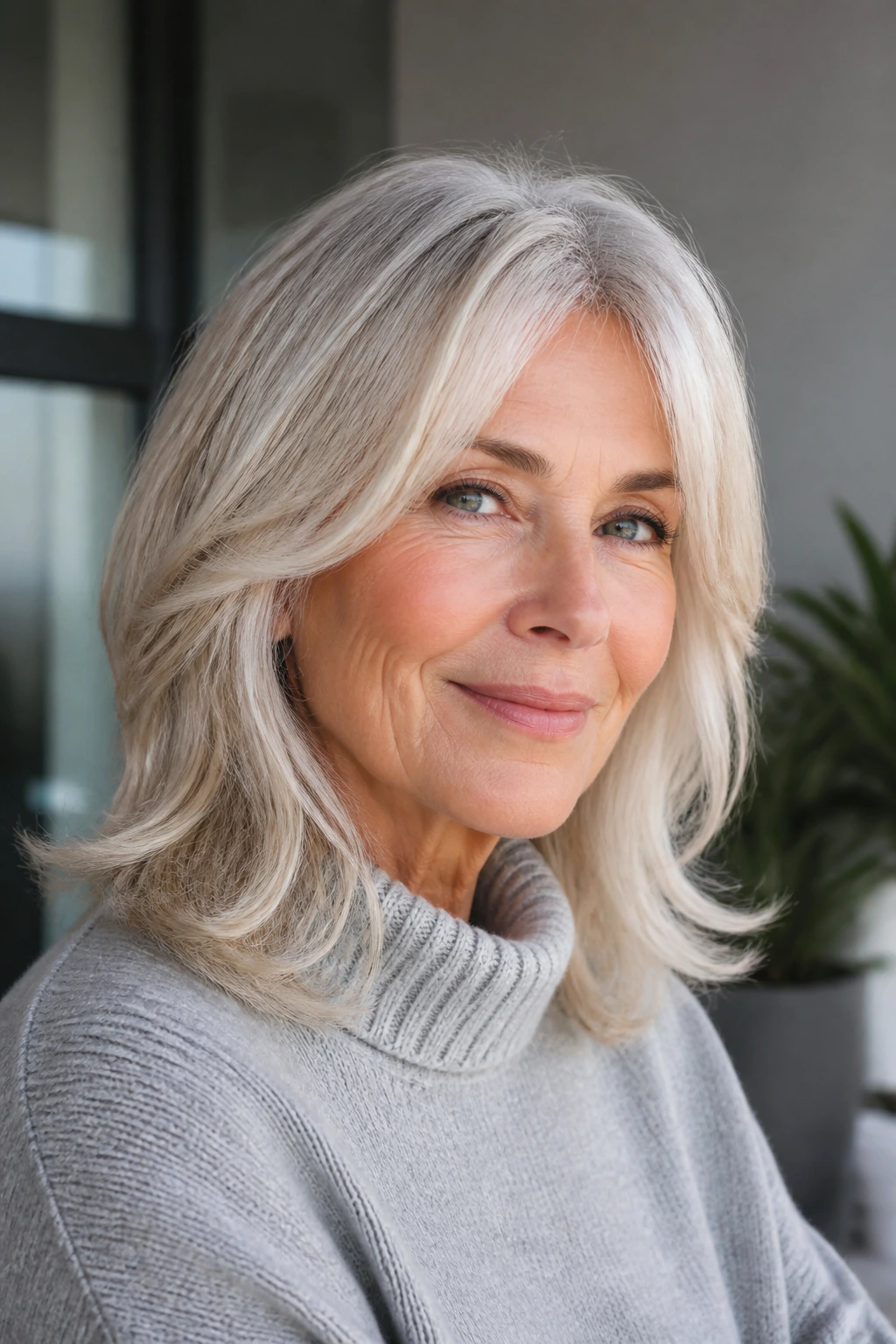
Creamy silver blonde is a smart choice for women who want to lean into gray without letting the hair look unfinished. It blends silver strands with pale beige or pearl highlights, so the result looks deliberate instead of patchy.
The color works best when the gray percentage is already fairly high. You are not covering every silver thread; you are giving them company. A little brightness around the temples and part line can make this shade feel fresh, especially if the cut is short and neat. It is low-friction color, and that is the appeal.
17. Platinum Beige Blonde
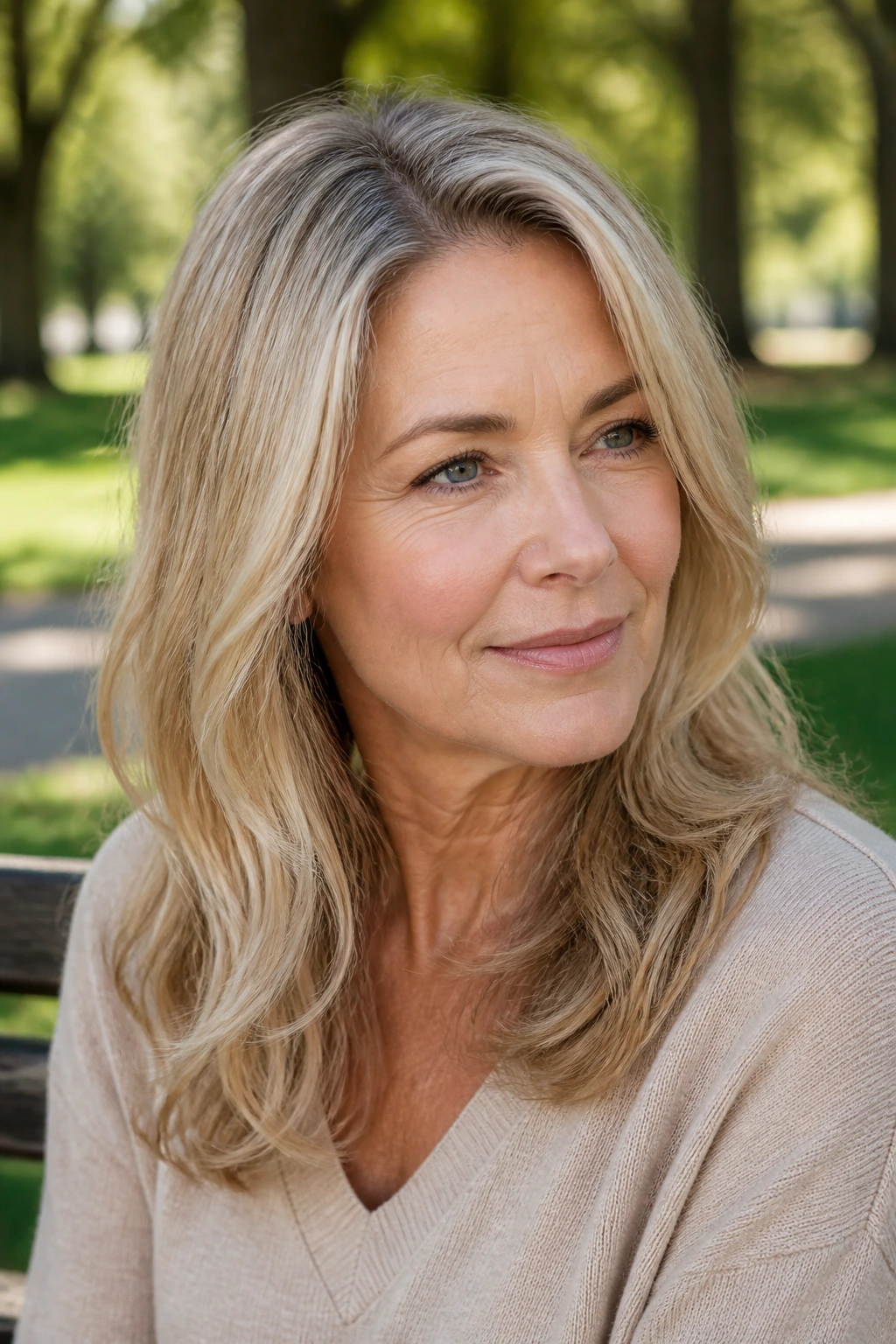
Platinum beige blonde keeps the brightness of platinum but softens the starkness with a beige veil. That makes a huge difference on mature skin, because pure platinum can sometimes pull every line and shadow into focus. Beige takes the edge off.
This shade needs discipline. Not a lot of yellow, not a lot of brass, not a lot of overtoning. If the hair is too porous, it can go flat quickly, so bond care and a gentle gloss schedule matter more here than on softer blondes. Use it when you want a lighter, cleaner finish with some restraint built in.
18. Toffee-Glazed Blonde
Toffee-glazed blonde is richer and deeper, like warm candy edged with cream. It is a good fit for women with thicker hair or deeper natural bases who want blonde that still looks connected to their roots. The glaze gives shine; the toffee gives body.
This shade is forgiving around the face, which is not a small thing. If the skin has started to lose contrast, a toffee glaze can give back some definition without making the color heavy. It also holds up well in a bob with a rounded shape, because the darker notes show off the cut line.
19. Sunlit Balayage Blonde
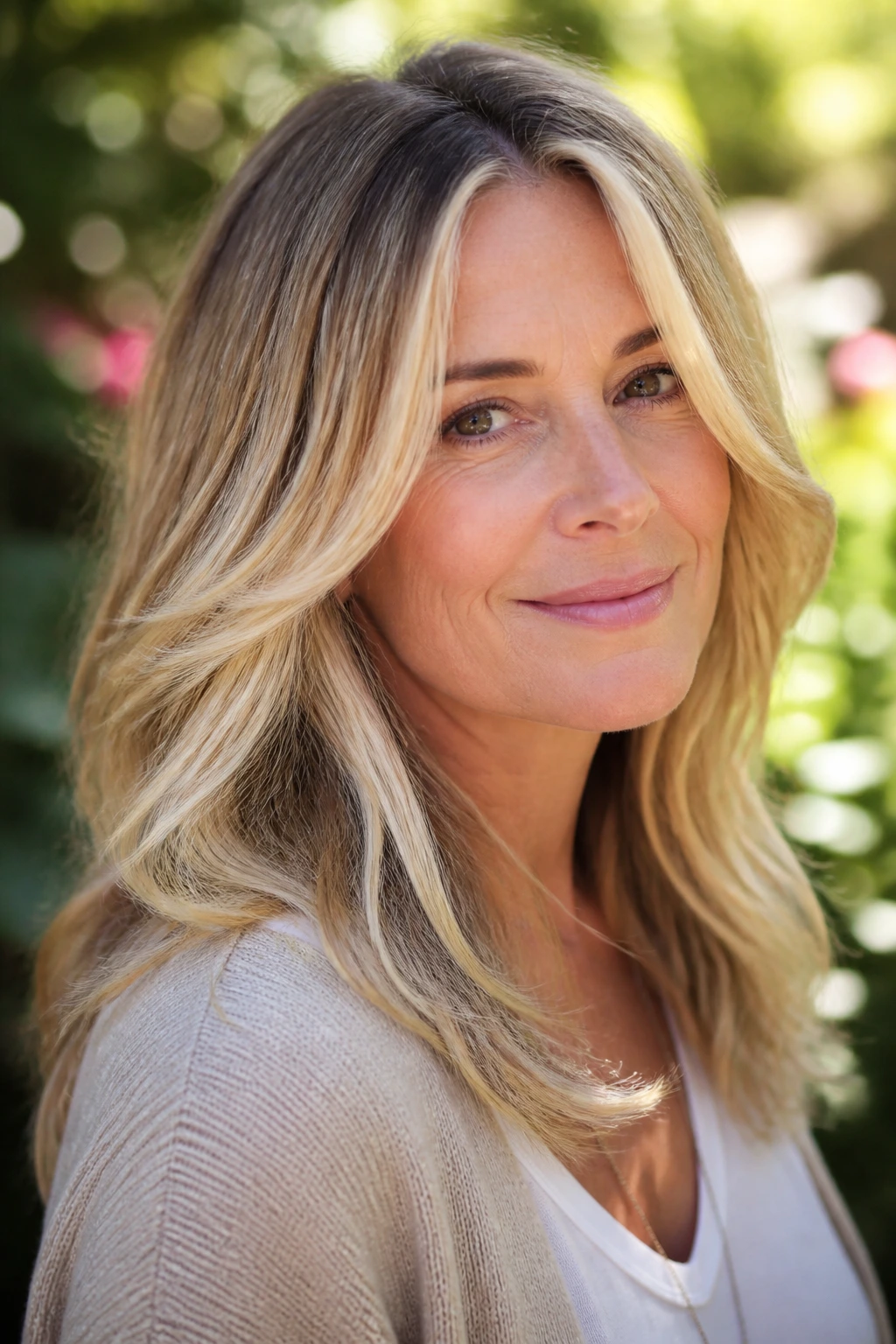
Sunlit balayage blonde is less a single tone and more a placement style. The light pieces are painted where the sun would naturally hit: around the face, on the top layer, and through the ends that move the most. That keeps the whole look soft.
Balayage works especially well if you do not want full scalp lightening. It gives older women a way to wear blonde with less frequent maintenance, and the grow-out tends to be gentle. If your natural color is light brown or dark blonde, this can be one of the easiest ways to get creaminess without a lot of scalp work.
20. Frosted Honey Blonde
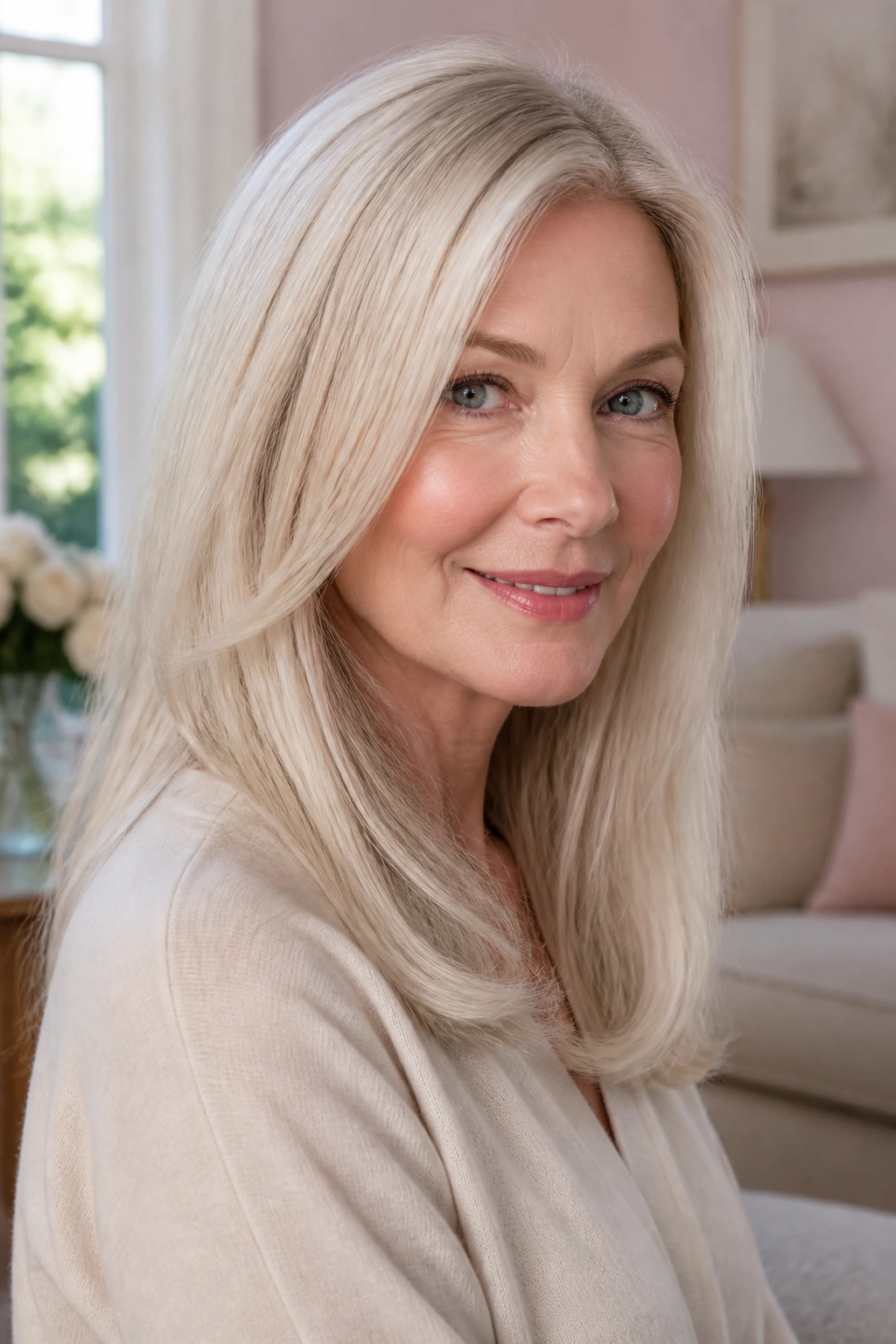
Frosted honey blonde keeps the warmth of honey but cools the edges just enough to stop it from turning brassy. It can be a very useful shade for hair that naturally pulls gold or orange after lightening. The frost is not icy; it is more like a soft filter.
This works best when the highlights are woven in fine sections. Big chunky pieces can make the frost look obvious, and that is not the point here. The color should feel luminous, not striped. A light peach blush and this shade can be a lovely pairing, because the warmth on the face and in the hair echo each other.
21. Vanilla Beige Bob
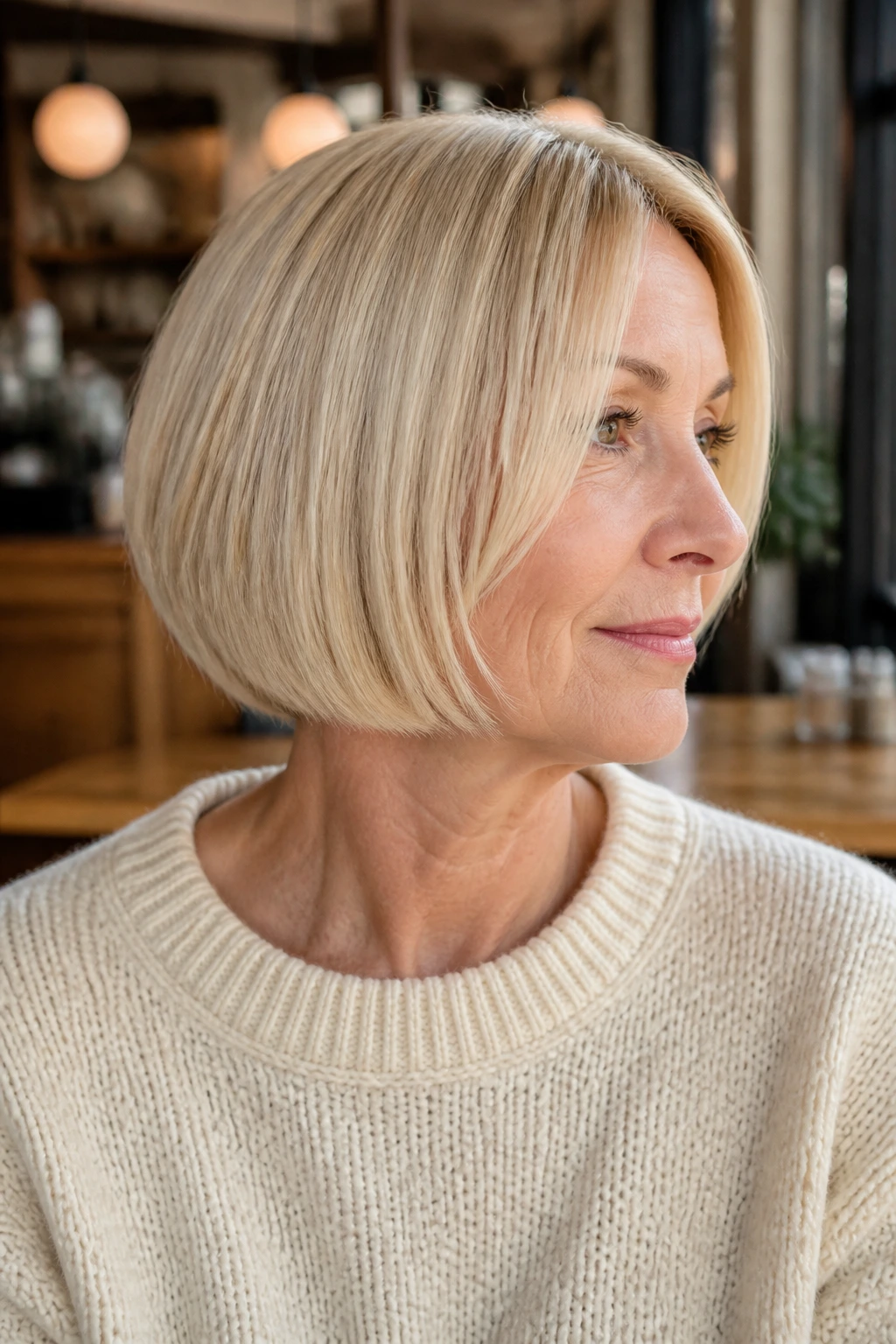
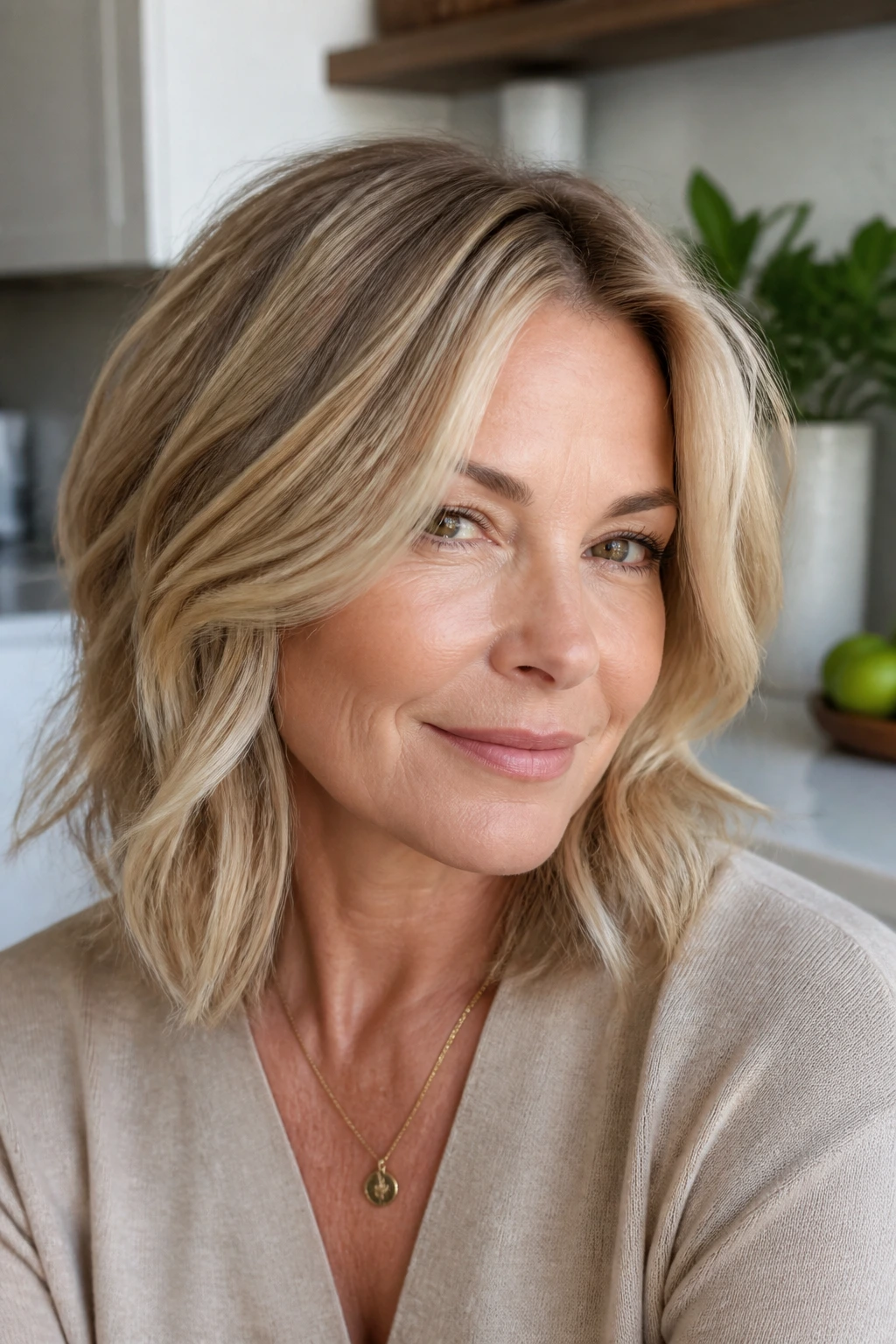
This one is less about the color alone and more about the way shade and haircut play together. A vanilla beige bob looks expensive because the clean line of the bob gives the soft blonde somewhere to land. Without the shape, the color can feel too gentle.
The key is movement at the ends. A blunt bob with a tiny bevel under the jaw keeps the blonde from reading pancake-flat, while a few pale ribbons near the front give lift. If the hair is fine, keep the nape a touch deeper so the shape has weight.
22. Cocoa-Butter Blonde
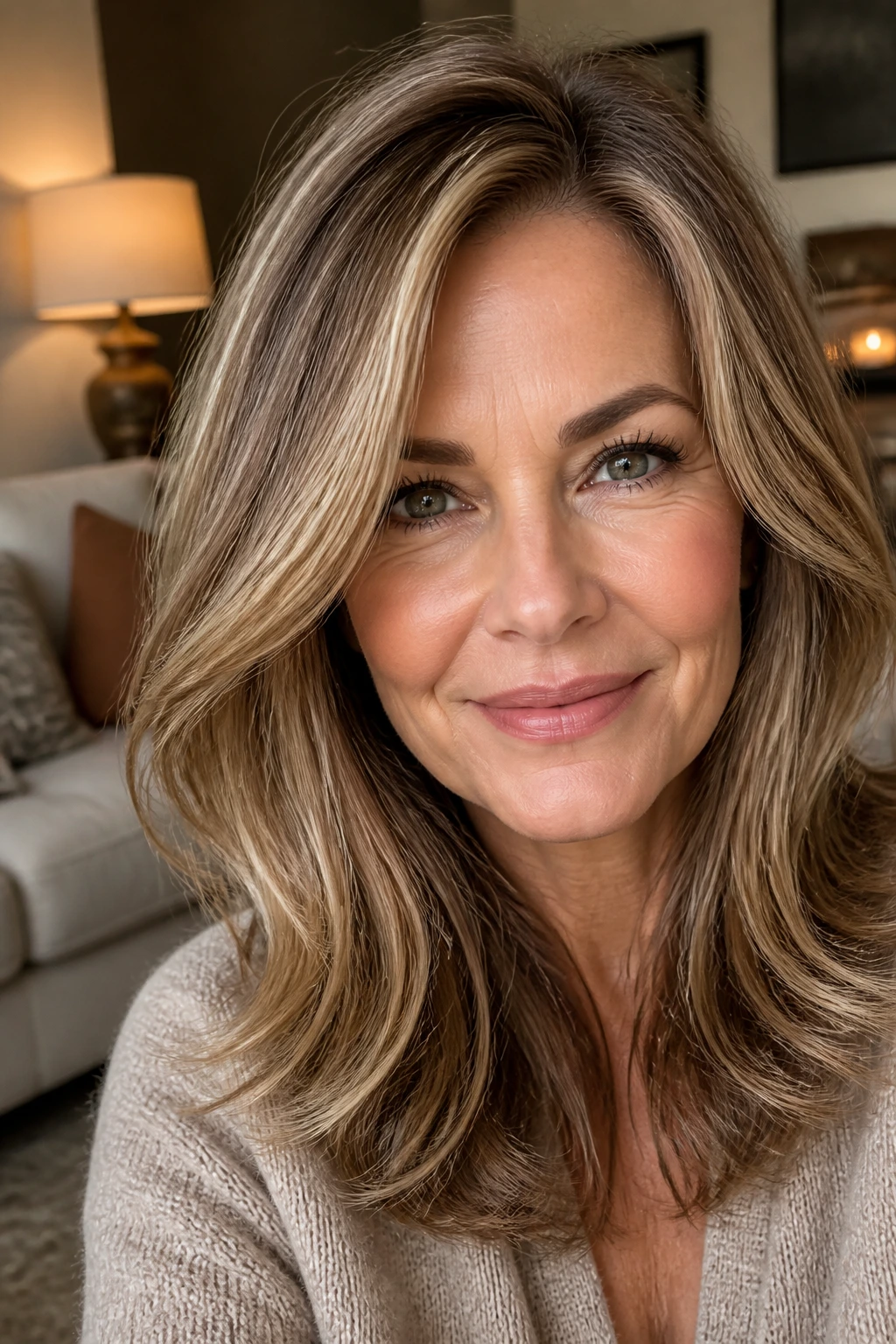
Cocoa-butter blonde is for deeper natural bases that want blonde without abandoning richness. Think dark beige, creamy highlights, and a soft brown-gold root. The color feels grounded, which is useful if your brows are still fairly dark or your skin has a lot of warmth.
I like this shade on women who wear minimal makeup and want the hair to do the work. It creates enough contrast to wake up the face, but it does not pull against the rest of the look. On curly hair, the ribbons show nicely as the curls move and separate.
23. Peach Cream Blonde
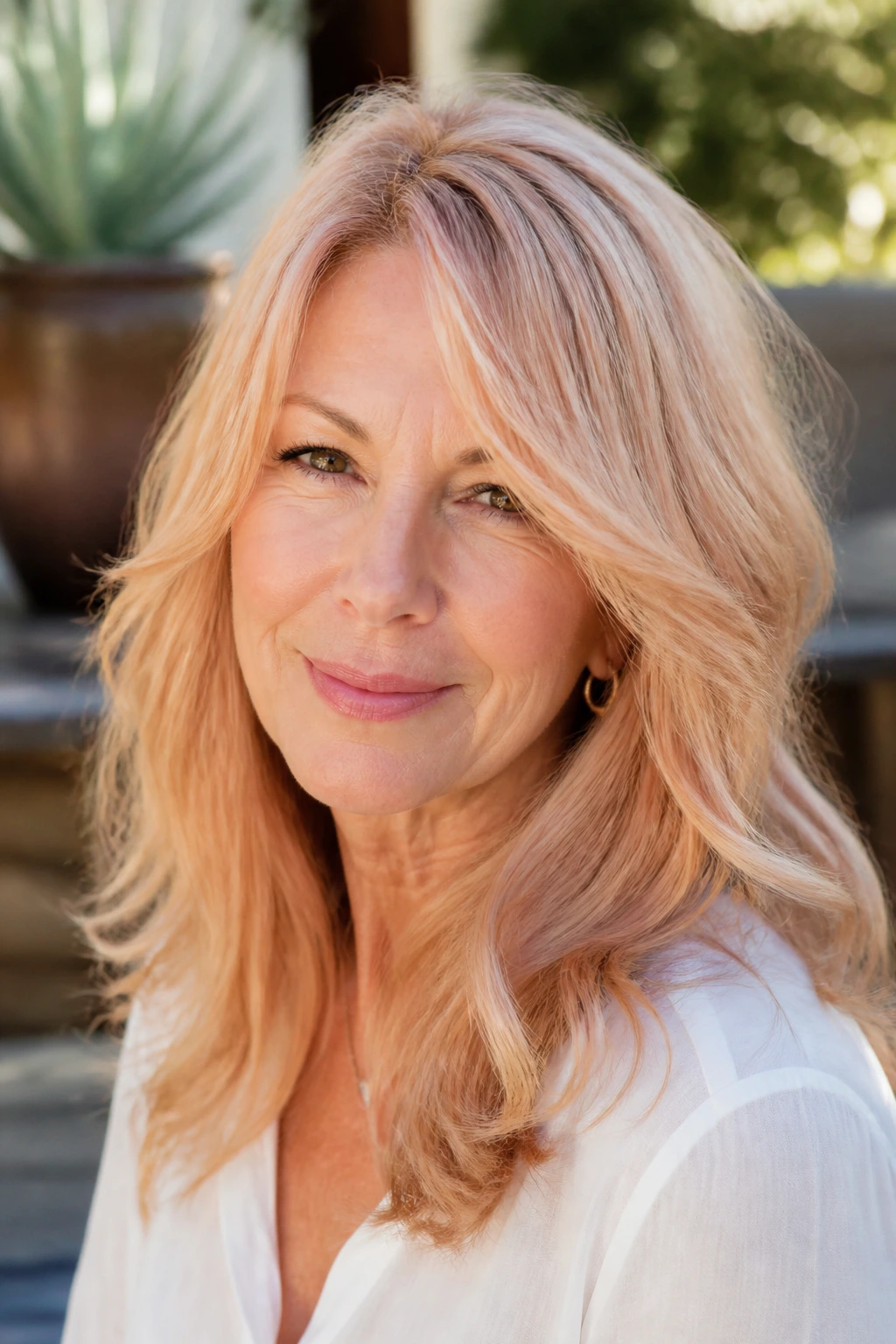
Peach cream blonde has a whisper of apricot in it, which sounds risky until you see how gentle it can look. Done well, it softens sallow skin and gives the face a healthier cast. The trick is keeping the peach faint, not candy-colored.
This shade is a nice answer for women whose hair has gone very white but whose skin wants a touch more warmth. A peach-beige gloss over light blonde or silver can stop the hair from reading cold and flat. It is one of those shades that looks especially good in daylight, which is where it really matters.
24. Rooty Cream Blonde
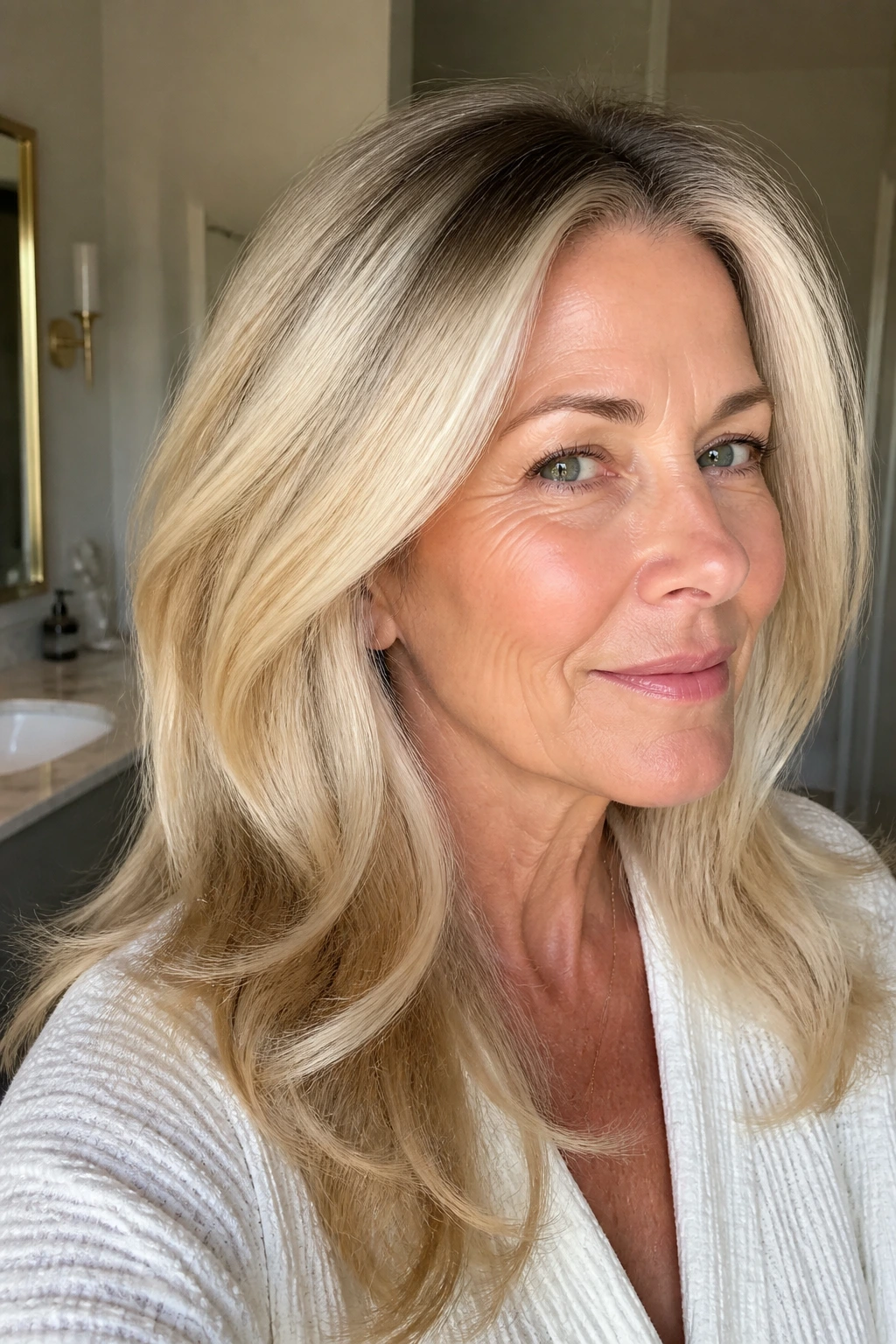
Rooty cream blonde is the maintenance-friendly choice. The scalp area stays a shade or two deeper, then the lengths fade into creamy blonde. That root melt gives you a softer grow-out and makes the whole head look fuller at the top.
This is a solid pick if you are spacing out appointments. It also helps if your natural color is light brown or dark blonde, because the root shade can stay close to what you already have. The lengths should still read blonde — just not bleach-white. That balance is the whole point.
25. Champagne Gray Blend
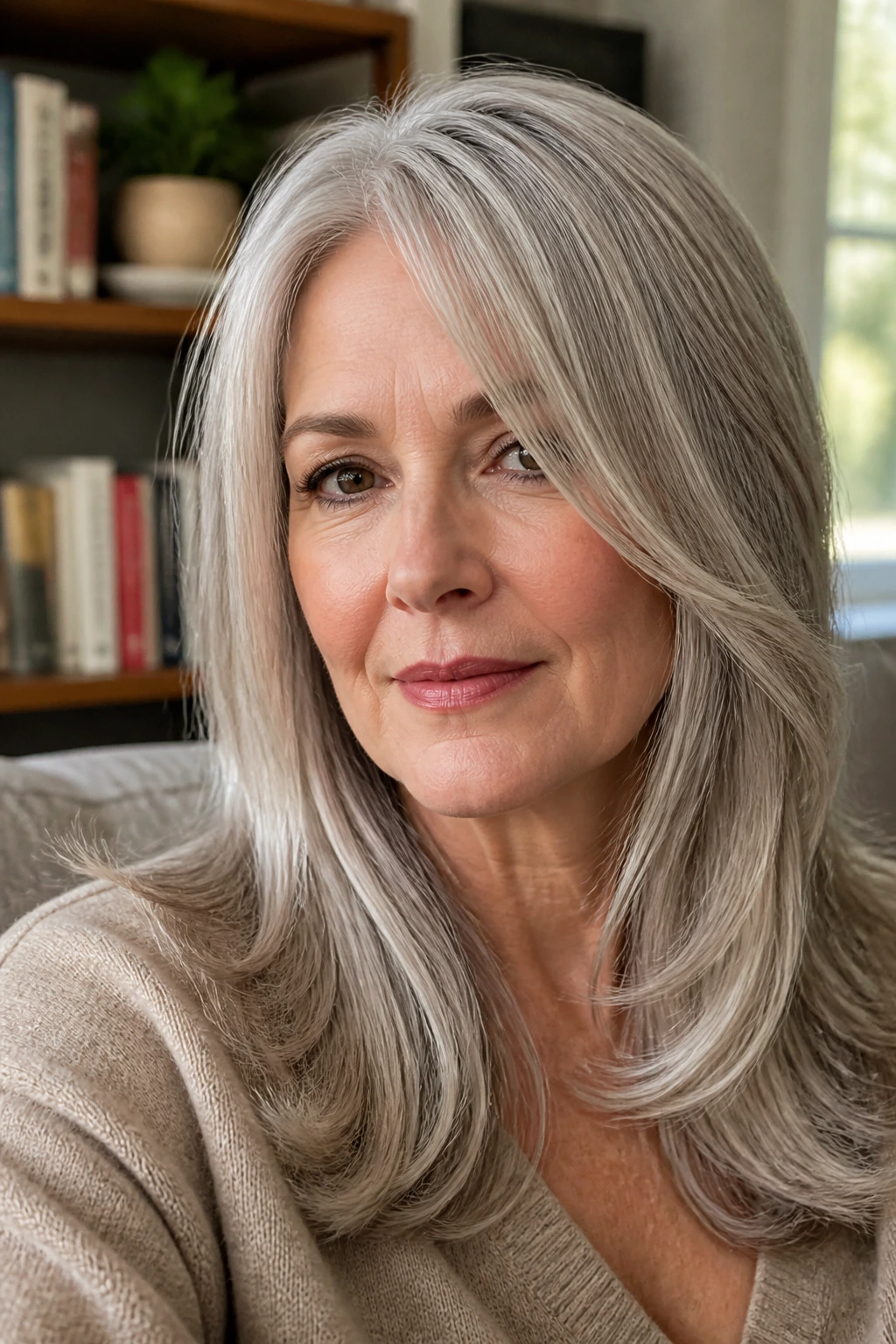
Champagne gray blend lets silver hair stay visible while giving it a more polished tone. Instead of covering gray strands, the colorist threads champagne highlights through them and adds a soft beige gloss. The gray stays part of the picture, but the contrast gets easier on the eye.
This shade is especially good if you have patches of white at the temples and darker color in the back. A blended finish keeps the transition from looking harsh. It is a grown-up blonde, honestly. Not stuffy. Just calm, bright, and useful.
How to Pick the Right Creamy Blonde for Your Skin, Gray Pattern, and Cut
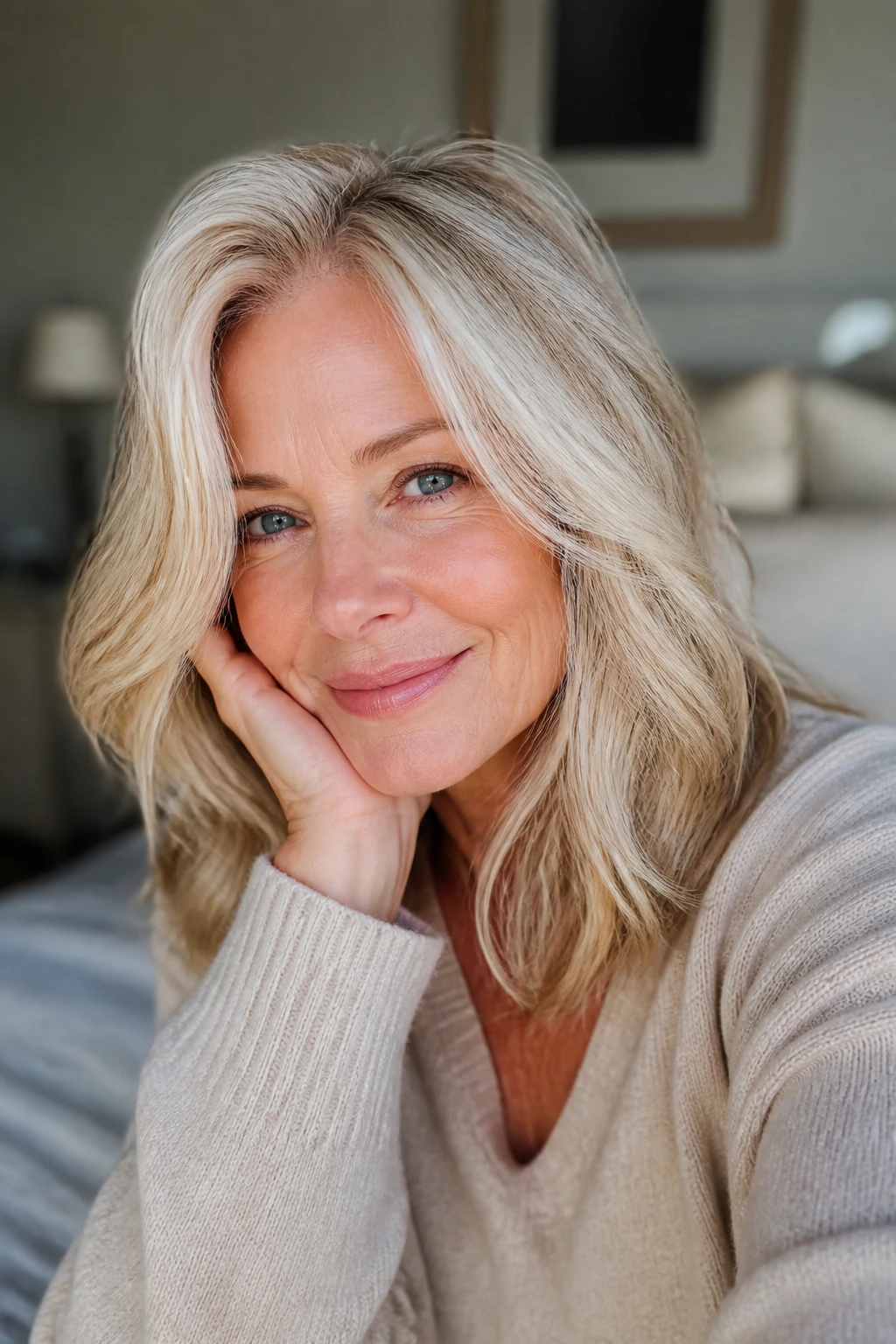
Start with your natural level, because that tells you how far the color has to travel. If your hair is a level 6 or darker, a creamy blonde usually needs a root shadow, fine highlights, and at least one gloss step to keep the result from going orange or streaky. If you are already a level 7 or 8, the shade can stay softer and lighter with less lift.
Gray pattern matters just as much. A few silver streaks at the temples need a different plan than an all-over salt-and-pepper base. When the gray is concentrated near the front, face-framing highlights and a beige root melt usually make the strongest difference. When the gray is spread through the whole head, champagne, pearl, or creamy silver blends tend to look more natural.
Haircut shape changes everything
A short crop can take a cleaner, lighter blonde because the shape already has structure. A long, one-length cut usually needs more dimension or it can look like a curtain. I prefer creamy blonde with movement — bevel, bend, layers, something — because the tone shows up better when the hair moves.
Skin tone is useful, not bossy
Warm skin often likes butter, honey, toffee, or biscotti. Cool skin tends to cooperate with pearl, ivory, or champagne beige. Neutral skin gets the easiest ride of all. If you are stuck, hold the swatch next to your face in daylight, not in a bathroom with yellow bulbs. That one habit saves a lot of regret.
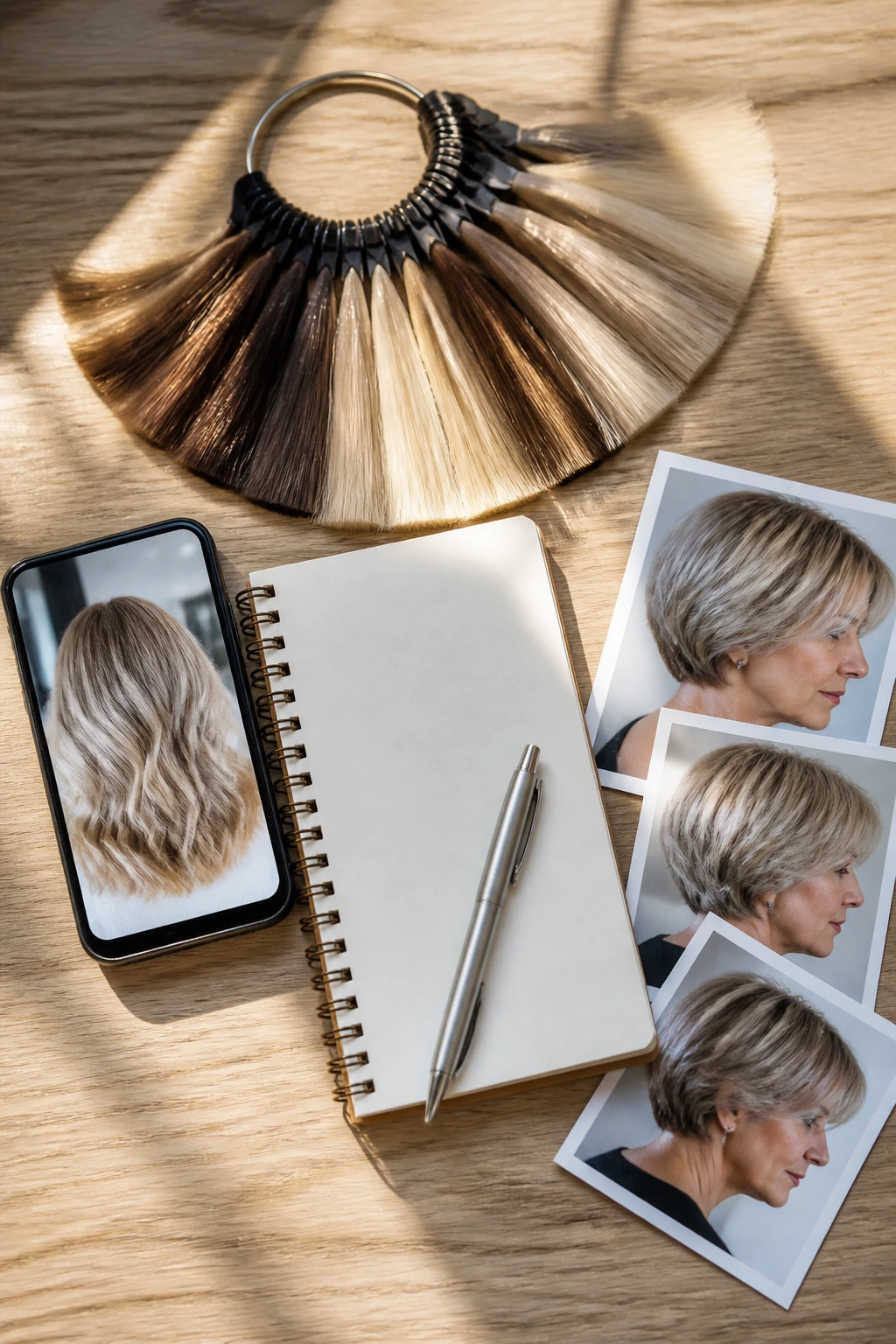
What to Bring to the Salon Chair
-
Three photos in daylight: Pick images where the hair is side-lit or outside; salon lighting lies, and it lies fast.
-
A note on your current color history: Tell the colorist about box dye, henna, previous highlights, or dark glosses so they can judge lift properly.
-
Your styling routine: If you blow-dry three times a week and flat iron once, say so. Heat changes how porous the ends are and how quickly toner fades.
-
A picture of your haircut: The same blonde can look calm on a bob and busy on long layers, so the cut matters as much as the shade.
-
A plain honest sentence about upkeep: Tell them whether you want six-week maintenance or something closer to three months. That changes the whole formula.
How to Keep Creamy Blonde Soft Between Appointments
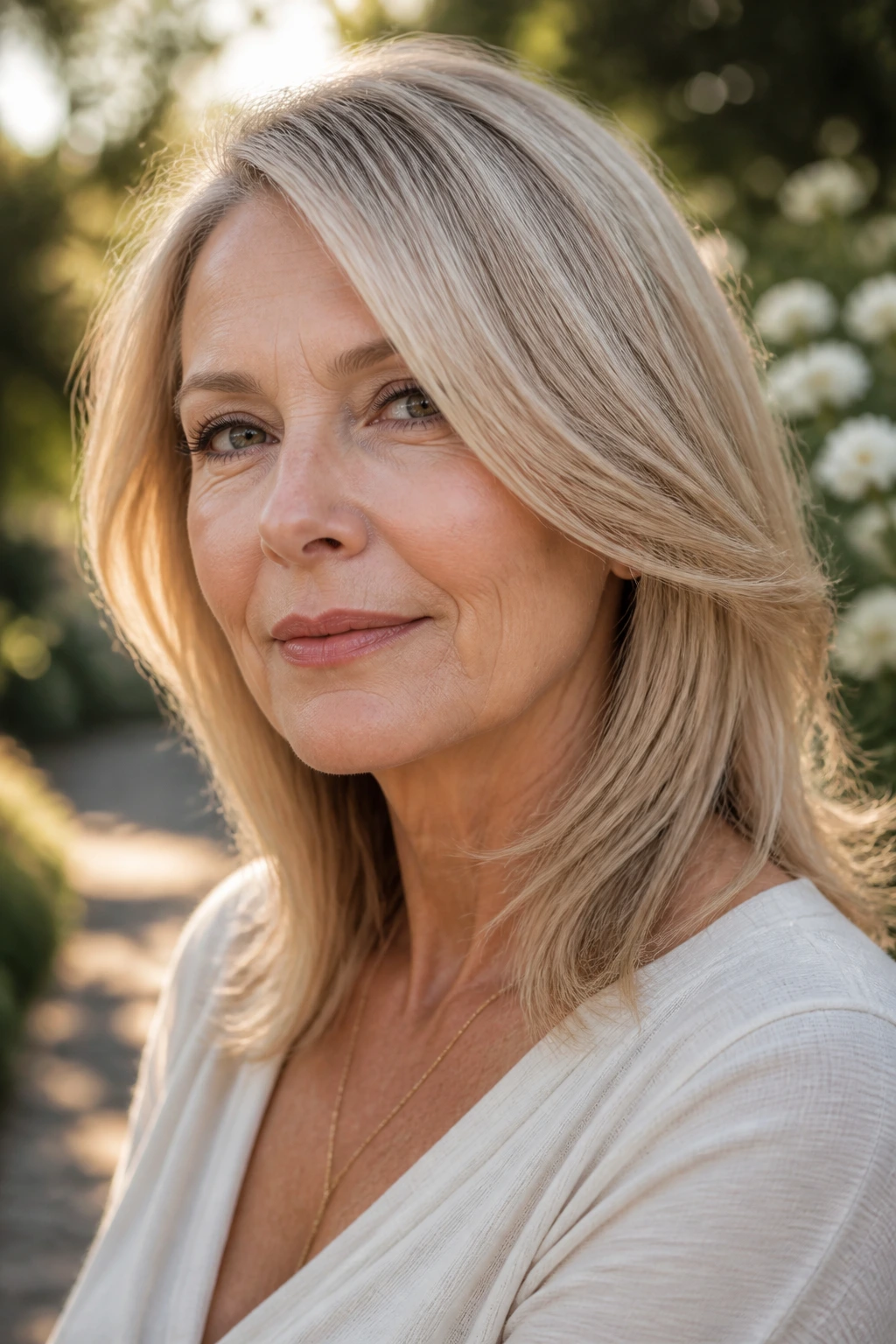
Creamy blonde stays pretty when you treat it like a color with a short temper. Heat, hard water, sun, and over-washing will pull the softness out faster than people expect. I would start with a color-safe shampoo and use it only two or three times a week if your scalp allows it. On the off days, a light rinse or a conditioning wash can keep the ends from drying out.
Purple shampoo is useful, but only in small doses. Once every one to two weeks is enough for most creamy blondes. If you use it more often, the hair can go dull or slightly lilac, especially on porous ends. That effect is easy to miss in the mirror and obvious in daylight.
A gloss or toner refresh every 4 to 8 weeks keeps the shade from drifting yellow. Root touch-ups can stretch longer if the haircut has shadow and dimension built in. And yes, a leave-in with UV protection matters. Sun fades blonde faster than most people think, and the ends usually show it first.
Practical Ways to Wear It Better
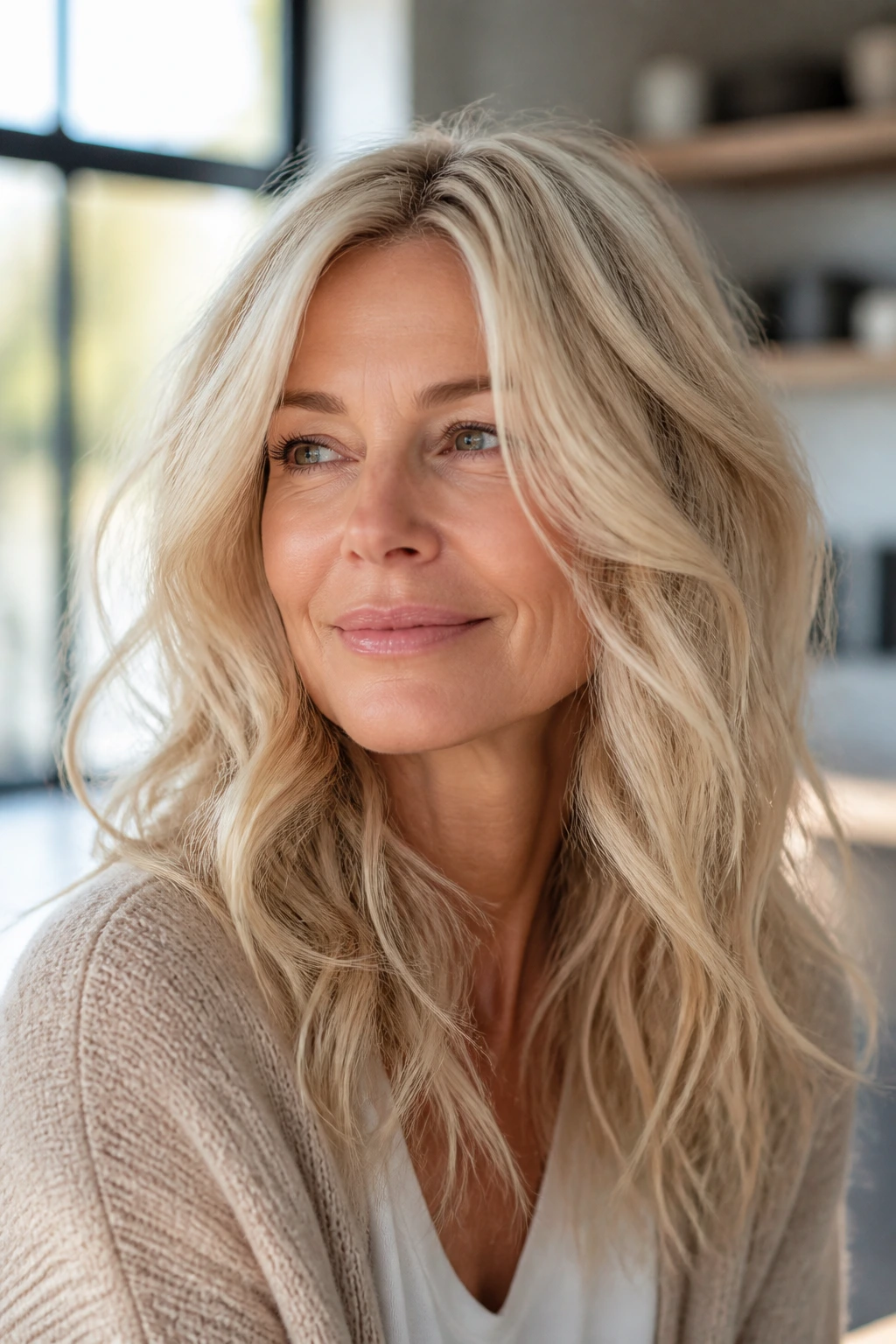
Color Enhancement: Ask for micro-lowlights if your blonde looks too bright and one-note. A few deeper pieces around the interior of the cut make the light ribbons stand up instead of floating on top.
Texture First: Creamy blonde usually looks better with a bend than with pin-straight hair. A loose wave, a round brush finish, or a soft bevel at the ends shows off the tonal shifts and keeps the color from feeling flat.
Face-Frame Control: Brighten the front first if you want the biggest visual payoff for the least amount of color. Two to four face-framing foils can lift the whole look without forcing an all-over blonde appointment.
Make-It-Yours: If you wear little makeup, go slightly warmer so the hair carries some of the color story. If you love cool clothes and silver jewelry, a pearl or champagne finish will sit more naturally next to your wardrobe.
Common Mistakes That Make Blonde Look Brassy or Flat
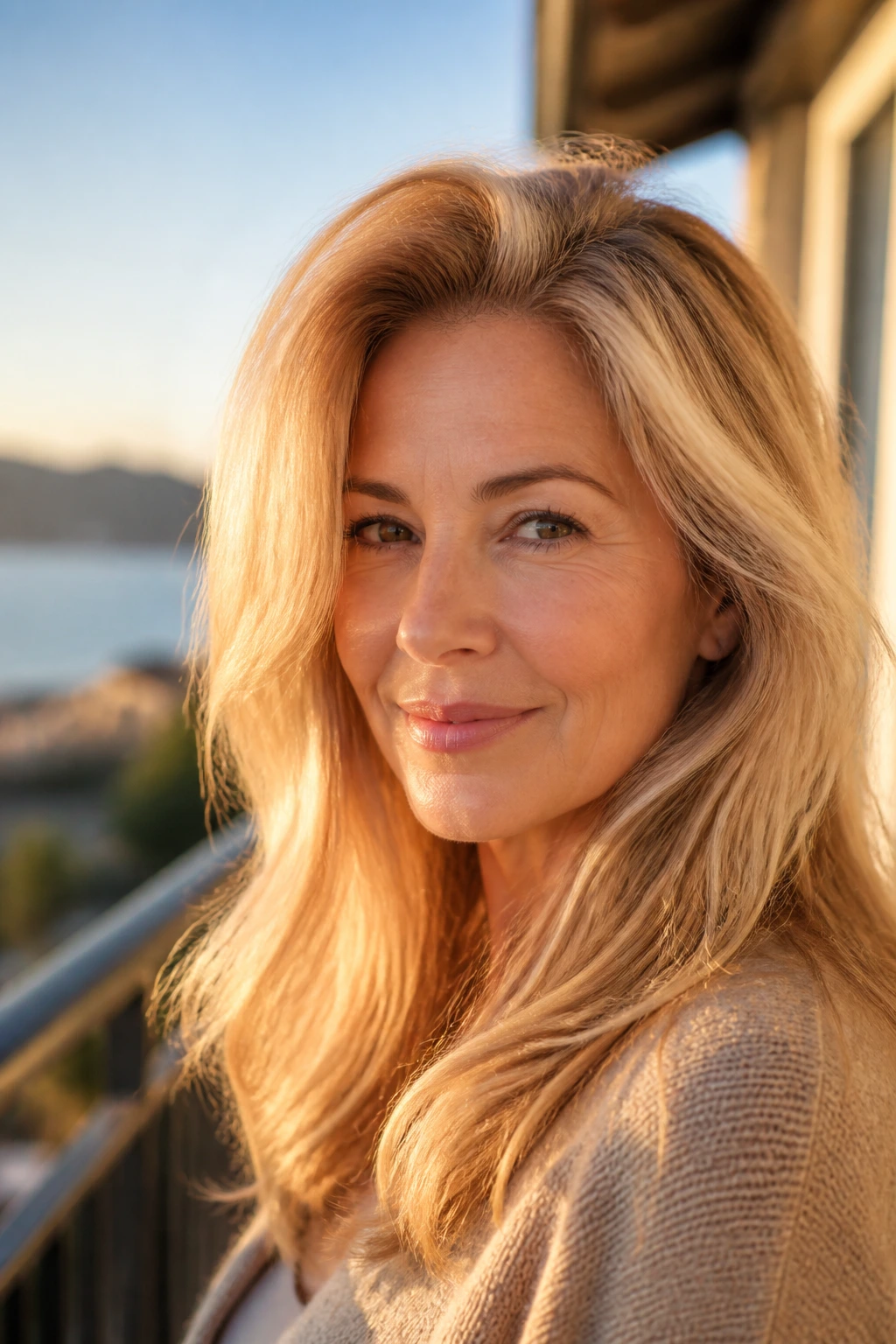
Going too pale in one visit is the fastest way to get brittle-looking ends and a color that feels one-note. If the hair starts from a darker base, build the blonde in stages. The grow-out looks better, and the hair usually feels better too.
Choosing the wrong warmth can make the whole face go muddy or yellow. Warm skin needs warmth, yes, but not orange. Cool skin can handle beige better than icy silver in many cases. The fix is a gloss adjustment, not a wholesale re-bleach.
Skipping depth at the root makes the blonde look helmet-like. A little shadow at the scalp gives the eye a place to rest and makes the face frame look intentional.
Using purple shampoo like a daily shampoo dries the hair and strips the creamy tone. Keep it occasional, rinse well, and follow with a real conditioner.
Ignoring the haircut is a quiet mistake. Even a gorgeous blonde can fall flat on damaged ends or a blunt cut with no movement. Trim the split ends, add a little shape, and the color suddenly looks more expensive.
Ways to Shift the Shade Without Losing the Creamy Feel
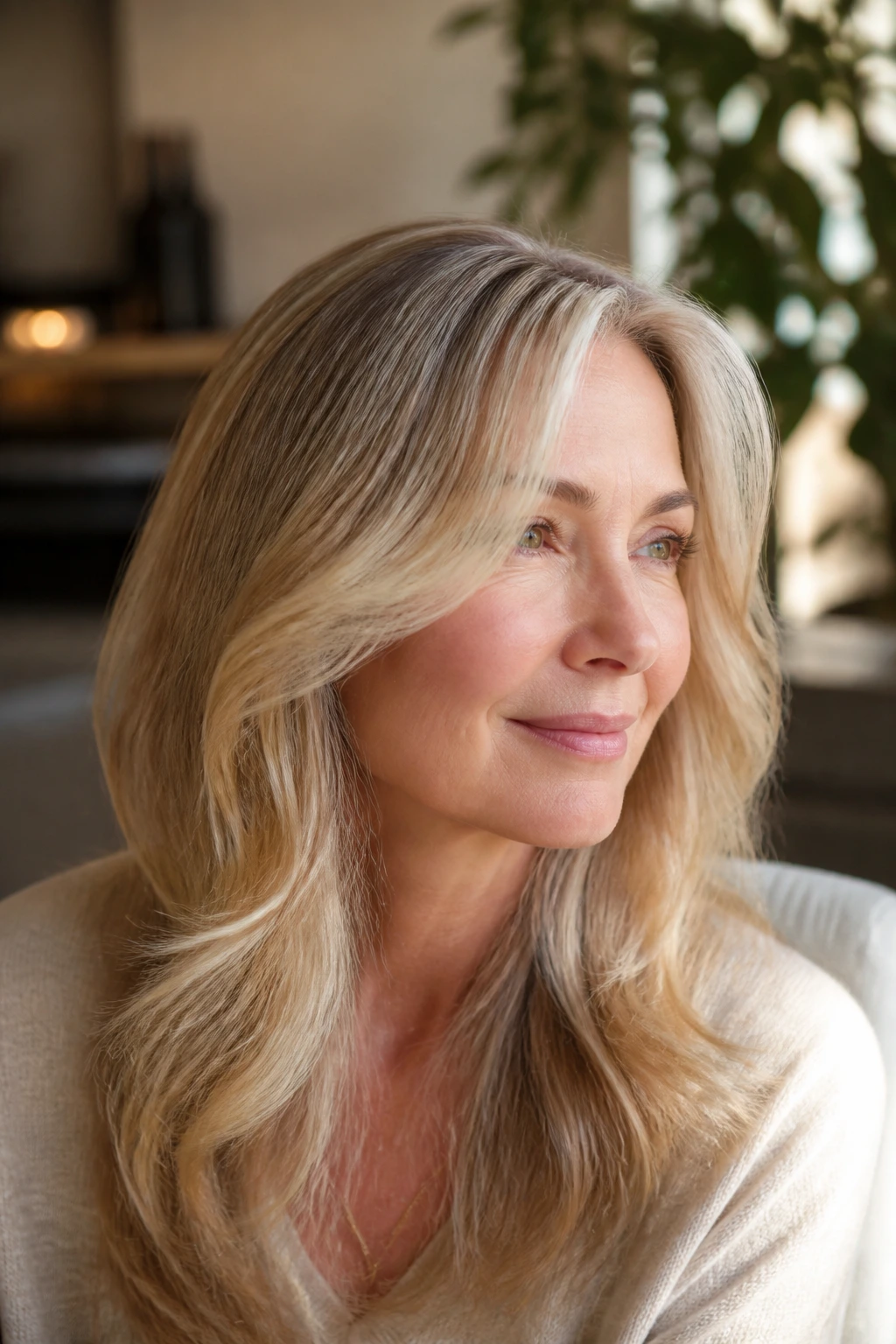
Soft Butter Edit: If you want more warmth, add a honey-beige gloss to the mids and ends. Keep the roots neutral so the color does not drift into orange.
Cool Pearl Edit: If brass is the problem, ask for a pearl toner with a beige base instead of a harsh silver toner. That keeps the blonde creamy, not chalky.
Gray-Blend Ribboning: For women with a lot of silver, let the gray stay visible and thread in champagne ribbons near the temples and crown. The contrast softens, but you do not lose the natural streaks.
Rooted Low-Maintenance Version: Leave more of your natural root showing and keep the blonde concentrated through the face frame and ends. This works well when salon visits need to be spaced out.
Short-Hair Brightener: On a pixie or cropped bob, lighten the top and front slightly more than the back. That little shift keeps the cut from looking heavy at the nape.
Frequently Asked Questions About Creamy Blonde
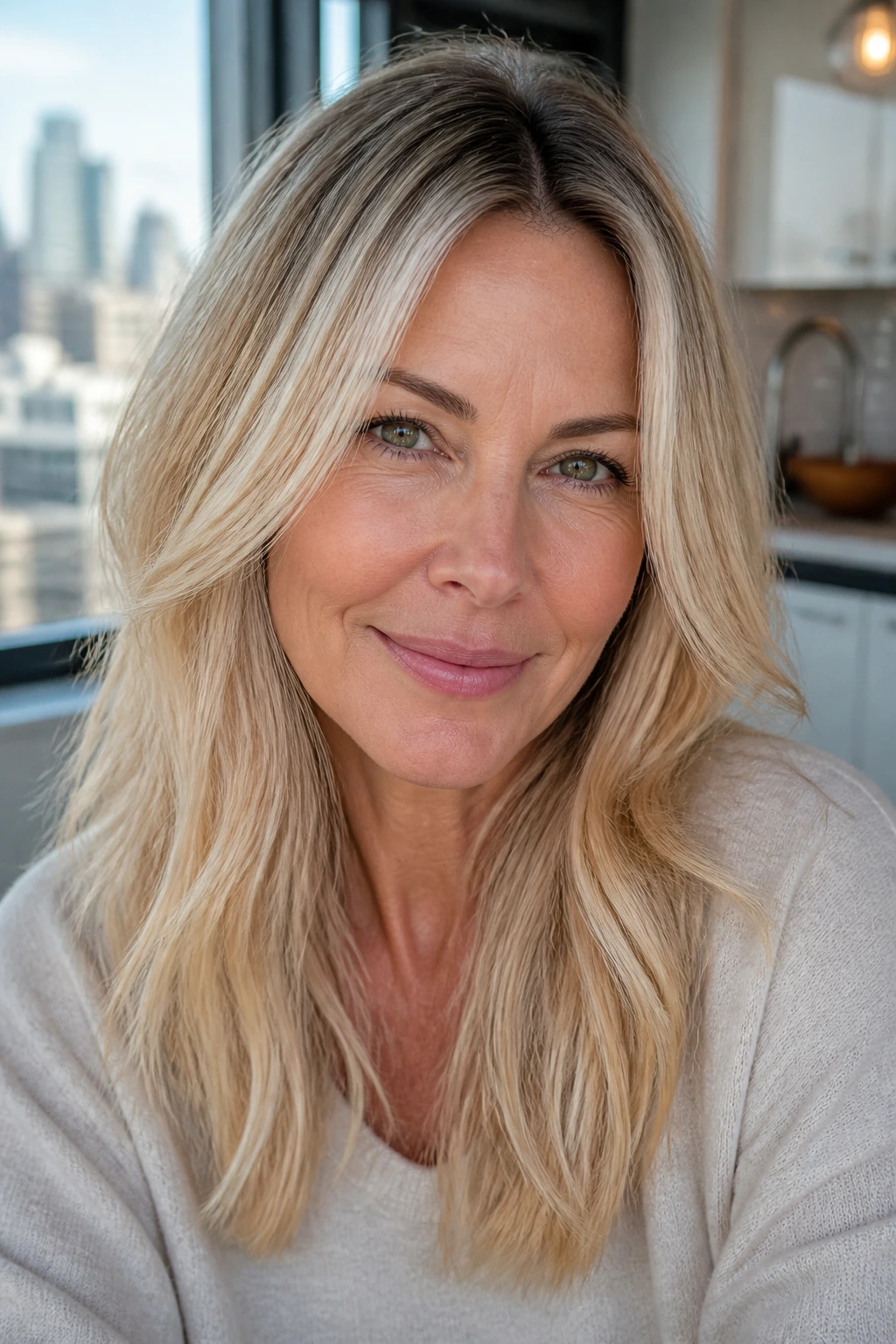
What creamy blonde shade is best for gray blending?
Champagne gray blend, creamy silver blonde, and beige blonde usually work well because they let the gray stay visible without making it look patchy. The best pick depends on how much gray you have at the temples versus the back.
Will creamy blonde make fine hair look thinner?
Not if the color has depth. Fine hair looks thinner when the blonde is one flat, pale tone from root to tip. A root shadow, fine lowlights, or a beige glaze adds visual thickness.
Is creamy blonde better than ash blonde for older women?
Often, yes. Ash can look smoky and chic, but it also has a habit of turning flat or aging the skin if the undertone is too cool. Creamy blonde usually leaves more warmth in the face.
Can you go creamy blonde from dark brown hair?
Yes, but usually not in one clean jump without stressing the hair. A staged process with lightening sessions, lowlights, and a good bond treatment gives a far better result than trying to bleach everything at once.
How often does creamy blonde need toner?
Most shades need a refresh every 4 to 8 weeks, depending on porosity, heat styling, and how much sun the hair gets. Very porous hair can need gloss more often because it holds onto toner unevenly.
What if my blonde turns brassy fast?
Start by cutting back on hot water, aggressive shampooing, and too-frequent purple shampoo. If brass still wins, the formula probably needs more neutral beige at the start, not more purple later.
Can creamy blonde work on short hair?
Absolutely. Short cuts can wear creamy blonde especially well because the color sits close to the face and the shape is easier to read. A pixie with beige or pearl pieces around the front can look sharp without feeling severe.
Does creamy blonde suit warm skin tones?
Yes, and often very well. Buttercream, honey cream, biscotti, and toffee-glazed blonde tend to flatter warm skin because they echo the skin’s own undertone instead of fighting it.
The Shade That Still Feels Like You
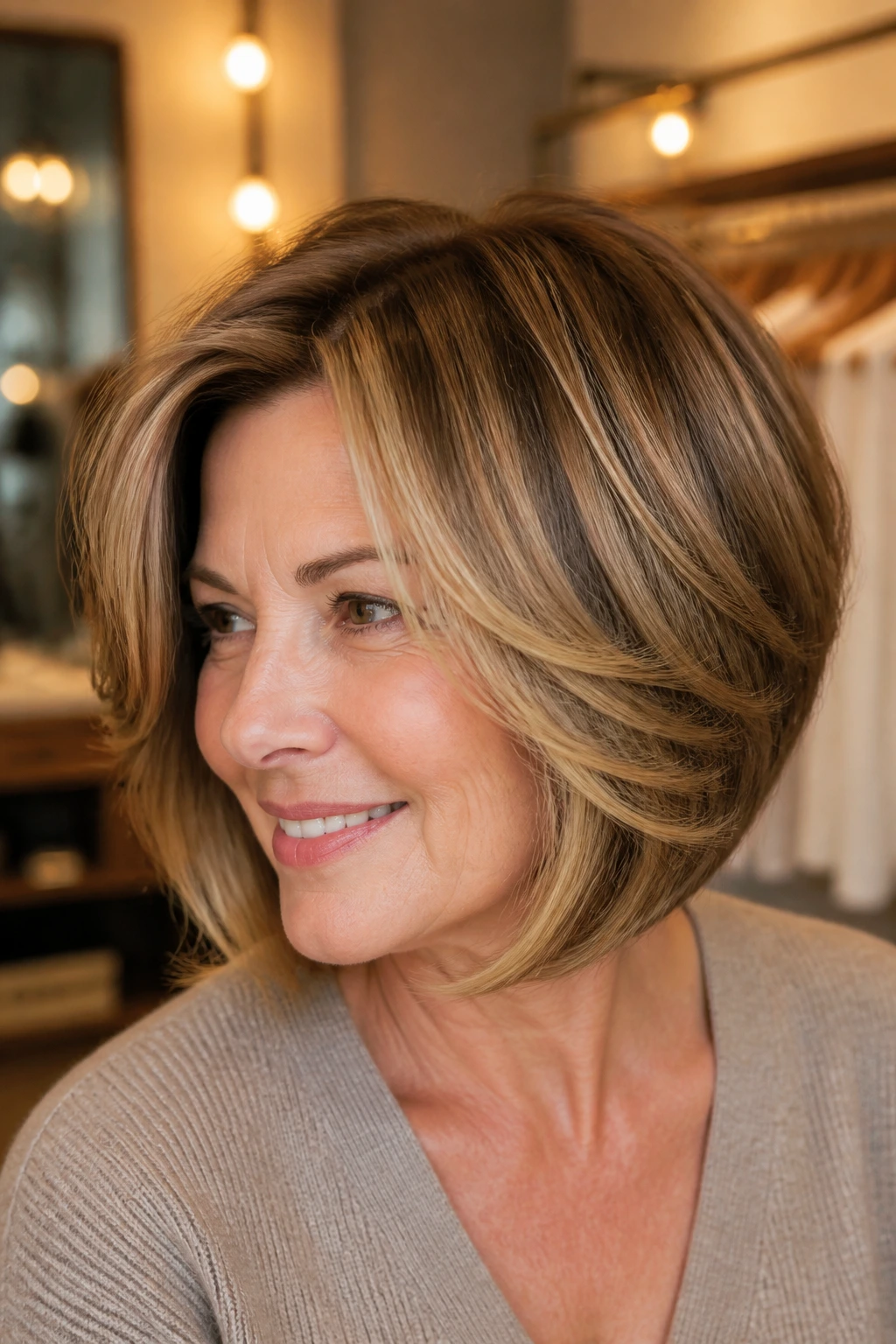
Creamy blonde works best when it respects what is already there. Gray strands, softer texture, wider part lines, changing skin tone — none of that is a problem to hide. It is simply the material you are working with, and the good shades know how to sit beside it instead of shouting over it.
The smartest versions are soft at the root, bright around the face, and calm at the ends. That combination looks polished on a salon day and still makes sense six weeks later, which is more useful than a dramatic blonde that only behaves for one afternoon. Pick the tone that matches your upkeep, your skin, and your haircut, and the color does half the work for you.
