



A good pixie on Black hair does not beg for attention; it gets it by shape. The line at the nape, the curve over the temple, the way the crown lifts for half an inch and still feels intentional — that’s where the real work happens. Pixie cuts for Black women look their strongest when they respect texture instead of trying to sand it down.
That matters because Black hair has a few things going on at once: density, shrinkage, coil pattern, and a hairline that can be either delicate or strong depending on the person. Cut it too bluntly and you get a helmet. Leave too much bulk in the wrong place and the silhouette goes puffy instead of sharp. Get the balance right, though, and a short cut can look clean, feminine, edgy, soft, polished, or all four at once.
I’ve always thought the best pixies are the ones with a plan. Not a vague “short all over” idea. A plan. A tapered nape. A fringe that actually suits the forehead. A crown with enough length to move. A barber or stylist who understands that a pixie on coily hair isn’t just a tiny haircut — it’s a sculpted shape that has to hold up after sleep, humidity, and a long day of touching your own hair because it feels good.
Why You’ll Love This Collection
-
Texture-Friendly Shapes: Every cut here is built to work with coils, curls, relaxed hair, or a silk press instead of fighting the natural bend of the hair.
-
Face-Frame Options: There are fringe-heavy, side-swept, and lifted-crown versions here, so you can choose the shape that balances your features instead of flattening them.
-
Low-Length, Not Low-Detail: Short hair still needs strategy. These cuts show how a few inches, a clean taper, or a sharp part can change the whole read of the style.
-
Maintenance You Can Plan For: Some looks need a clean-up every 2 to 3 weeks, while others can stretch longer. Knowing that upfront saves a lot of frustration.
-
Salon Reference Ready: Each idea is specific enough to bring to a stylist or barber without playing the “not too short, but not too short” guessing game.
-
Wear-It-Three-Ways Flexibility: A few of these cuts can look soft on a regular day, sharp for work, and dressed up with a clip or wave set when you want more drama.
1. Tapered Natural Pixie
This is the cut I’d hand to someone who wants short hair without losing the personality of their curls. The sides are clipped close, usually with a #1 or #2 guard, while the top stays around 2 to 3 inches so the coil pattern still shows. That little bit of height keeps the cut from looking flat, which is the trap a lot of first-time pixies fall into.
A tapered natural pixie works especially well on 4B and 4C textures because the shape follows the natural density of the hairline and crown. A light leave-in, a small scoop of curl cream, and a quick finger-fluff are often enough. Skip heavy butter here. They sit on the hair and make the top look weighed down by lunch.
The best thing about this cut is the way it grows out. Even after a few weeks, the taper still looks intentional, not messy. Clean the neckline every 3 to 4 weeks, keep the crown trimmed only when it starts collapsing, and this cut stays neat without demanding a daily ritual.
2. Side-Swept Pixie With Long Fringe
A long fringe changes everything. It softens the forehead, adds motion, and gives a short cut a little attitude without making it loud. When the front falls diagonally across one brow, the whole face looks framed instead of boxed in.
What Makes the Fringe Matter
A side-swept pixie is a smart choice if you like having one section you can play with. Sweep it forward. Pin it back. Let it fall over one eye on a tired morning. The fringe should be long enough to graze the eyebrow or the upper lash line when dry, because Black hair often shrinks higher than people expect once it’s clean and dry.
Ask for the nape and sides to stay tighter than the front, but not shaved so close that the contrast feels harsh. A light foam wrap lotion or styling mousse helps the fringe stay smooth, especially if you plan to brush it over during the day.
Best for: round faces, high foreheads, and anyone who likes a short cut with one section that still feels expressive.
3. Sculpted Finger Wave Pixie
Want a short style that can look dressed up without adding length? Finger waves do that work fast. The curves sit close to the head, and the shine gives the whole cut a polished, old-Hollywood feel that still reads strong on textured hair.
This version shines on relaxed or texturized hair, though it can also work on short natural hair if the texture is stretched first. You’ll want setting lotion, a fine-tooth comb, clips, and patience. Not a lot of patience. Just enough to let each wave settle before you move to the next. A hood dryer or bonnet dryer for 15 to 20 minutes helps the pattern set cleanly.
The reason this cut keeps showing up in formal looks is simple: it photographs well from every angle because the waves create their own structure. If your hair tends to slip, use a strong-hold mousse under the setting lotion and finish with a light mist of shine spray, not a greasy oil.
4. Curly Crown Pixie
If your curls lose their shape the second they’re cut short, leave more length at the crown and less at the sides. That’s the whole trick. A curly crown pixie keeps the top loose enough to show curl definition while the temples and nape stay tapered so the cut doesn’t mushroom outward.
Shape Notes That Matter
The crown usually looks best at about 2 to 4 inches, depending on curl pattern. Tighter coils need a little more length to show up; looser curls can sit shorter and still read full. A diffuser on low heat helps the curls keep their spring without blowing them apart.
- Use a lightweight curl cream. Heavy butters make the crown slump.
- Dry in sections. That keeps one side from shrinking more than the other.
- Pick only at the roots. Leave the ends defined so the shape still has a soft finish.
This cut is a good bridge between a tapered crop and a more obviously curly style. It feels soft, but not fluffy. There’s a difference.
5. TWA Pixie Fade
A TWA pixie fade is for the woman who wants sharp, clean, and almost nothing extra. The top stays ultra-short, the sides fade into the skin or nearly to it, and the whole cut leans into the face instead of sitting on top of it.
It’s a strong option if you like low-fuss mornings. Water, leave-in spray, a soft brush, and maybe a little oil on the scalp are often enough. The fade has to stay fresh, though. Once the edges blur, the whole shape loses its punch, so a quick clean-up every 2 to 3 weeks keeps it looking deliberate.
This style draws attention to cheekbones, earrings, and the line of the jaw. It also works well if your hair is dense and you don’t want to spend time stretching or smoothing. The shorter the top, the less you have to argue with shrinkage.
6. Asymmetrical Pixie
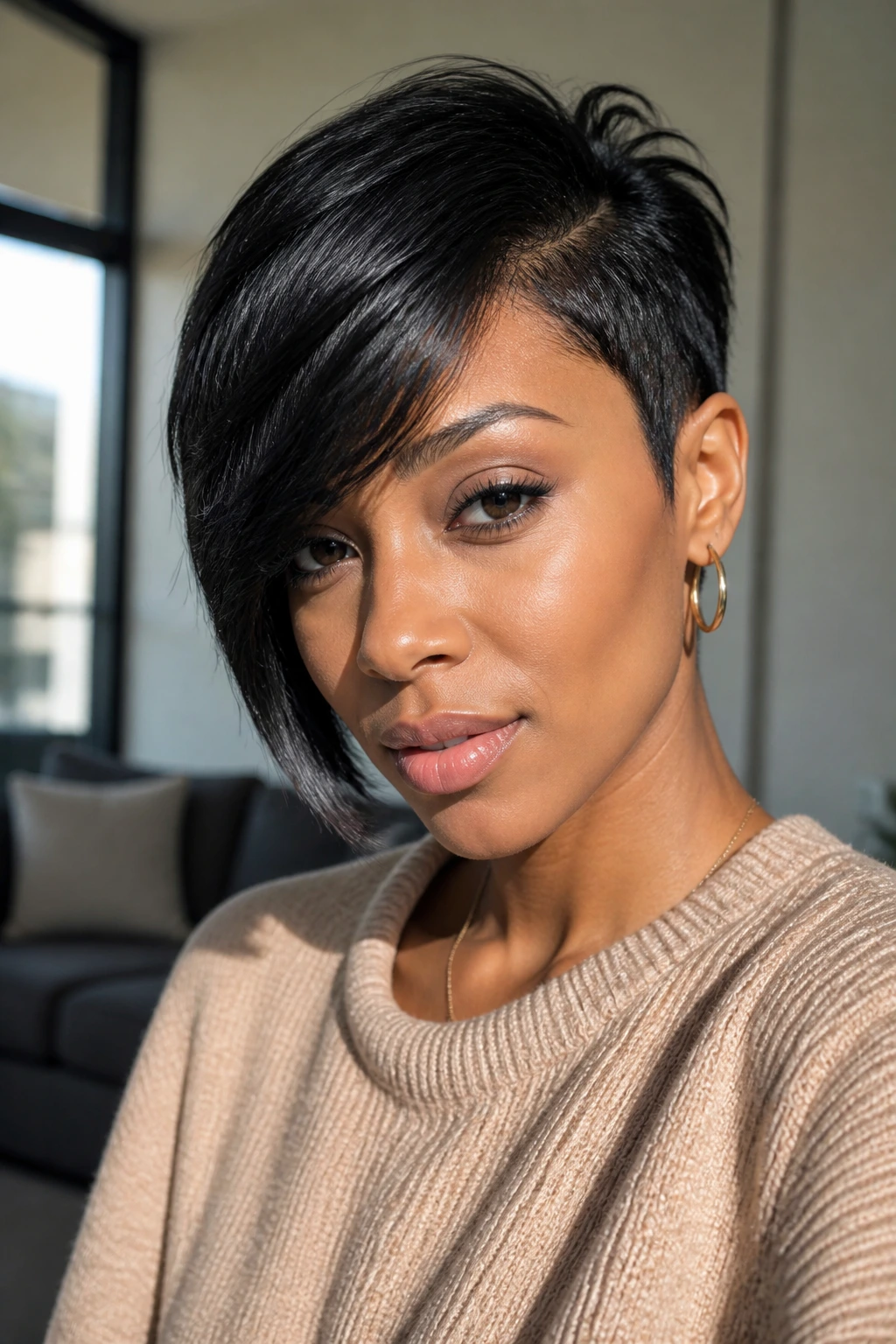
One side longer than the other. That’s it, and that’s the charm. An asymmetrical pixie gives you movement without needing a lot of length, and it lets the cut sit a little off-center in a way that feels stylish rather than fussy.
The longer side usually lands around the cheekbone or just below it, while the opposite side stays tighter at the temple and ear. That contrast can balance a strong jaw, soften a wider forehead, or pull the eye upward if you want more lift at the crown. It’s also a nice choice if you like a cut that looks a little different from every angle.
Keep the longer side sleek with a light cream or styling lotion, then direct it with a paddle brush or a small flat iron if your texture needs smoothing. If your hair is natural, stretch the front with a banding method or a quick blow-dry so the angle actually shows up. Otherwise, the asymmetry can disappear into shrinkage, and then the whole point is gone.
7. Undercut Pixie With Hidden Designs
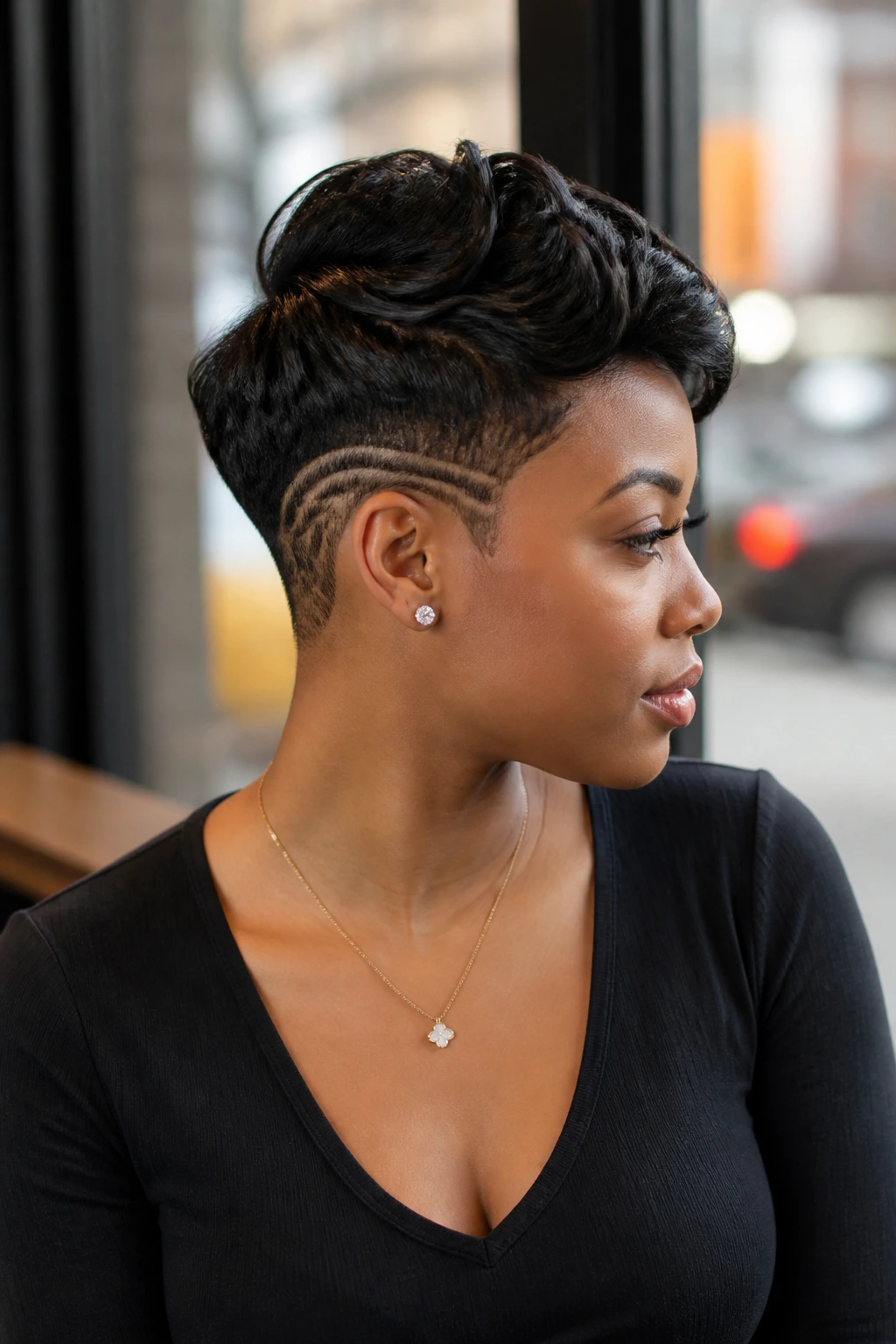
This is the cut for women who like a quiet surprise. From the front, it can look like a neat pixie with soft layers and a full top. Turn your head, though, and the undercut shows a shaved panel, a line, or even a small design tucked under the longer hair.
That hidden detail makes the style more flexible than it first appears. You can wear it covered for work, then tuck one side back and let the design show at dinner. The top usually works best at 2 to 4 inches so it can fall over the undercut instead of standing away from it.
Keep the shaved section clean every 2 to 3 weeks if you want the design to stay readable. And do not drown the top in grease. The contrast between the short side and the fuller crown is what sells the cut. Too much product blurs that out fast.
8. Feathered Pixie With Tousled Crown
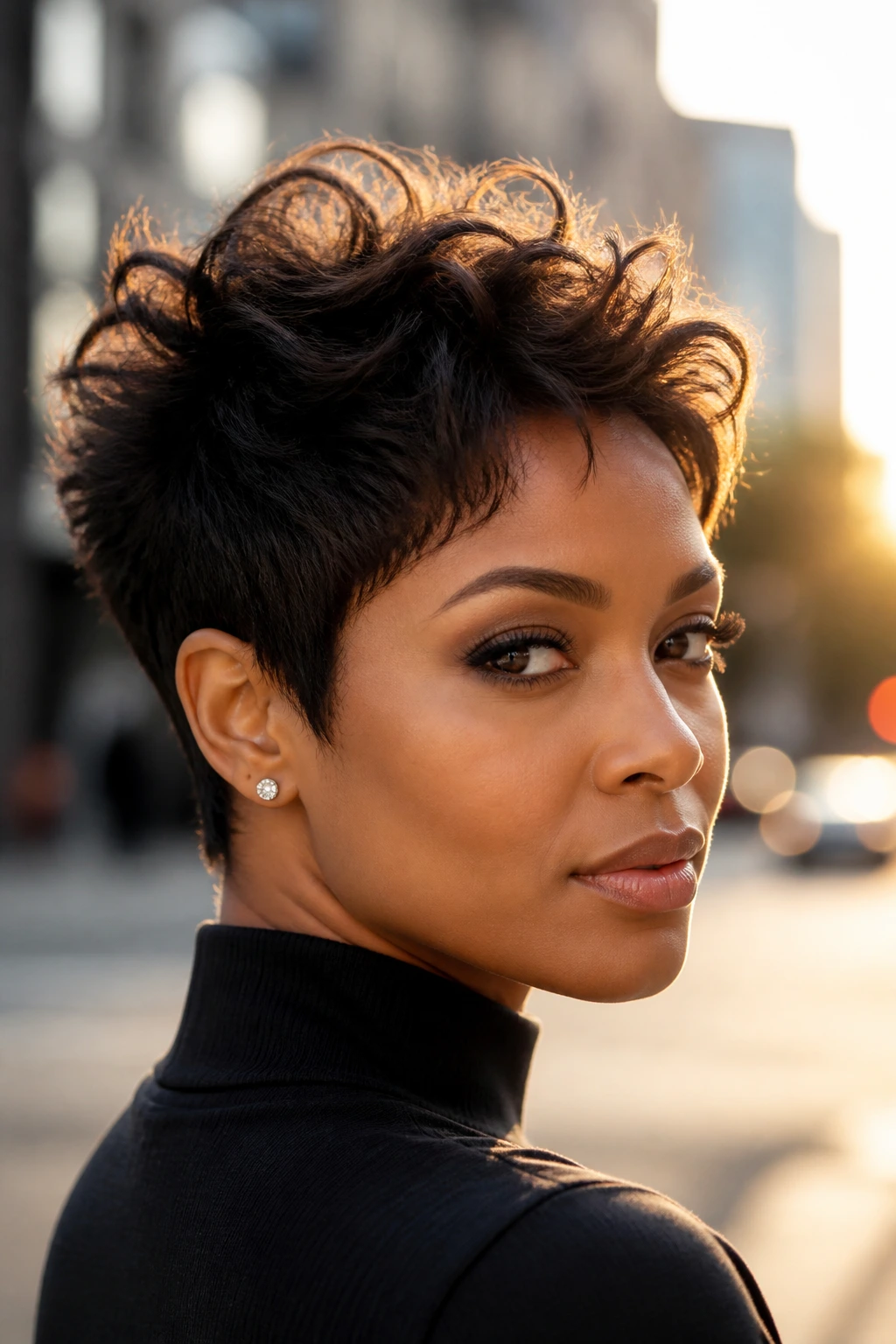
Feathering is one of those old salon techniques that still earns its place. It removes bulk in soft layers instead of hacking the hair into chunks, which makes the crown move instead of sit like a cap. On dense Black hair, that matters a lot.
The look is softer than a blunt crop and less serious than a heavy fade. You can wear it with a little lift at the roots or push the crown forward for a slightly messy finish. A foam mousse and a round brush can help the top turn airy, not stiff. If the layers are too blunt, the style loses that feathery motion and starts to feel boxy.
This version suits women who want something light around the face without going ultra-short. It also holds up well if you like to run your fingers through your hair during the day. It’s one of those cuts that looks better after a bit of movement, which is a nice thing to say about a short style.
9. Pixie Mohawk With Tapered Sides
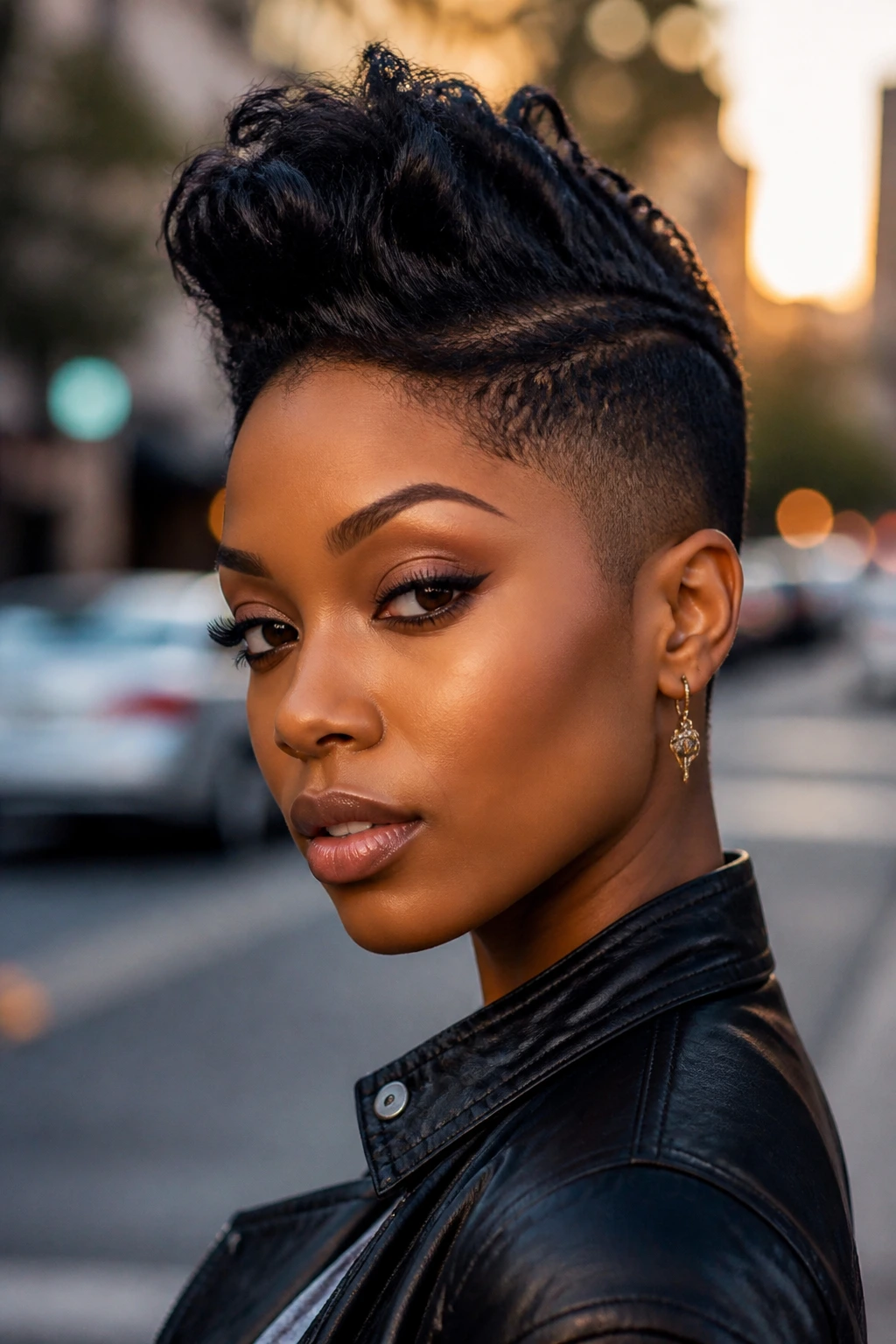
If you want height, this is the shape. The pixie mohawk keeps the center strip longer and either softly tapered or closely faded on the sides, so the eye goes straight up the head instead of out to the temples.
That central ridge can be styled with curls, coils, twists, or a brushed-up finish, depending on texture. A sponge works for tighter coils. A curl cream plus a diffuser works if you want more definition. Either way, the sides need to stay neat so the center has room to stand out.
This cut looks especially good on oval and heart-shaped faces because the vertical line gives the face a little length. It’s also a good answer for hair that feels too thick everywhere else. Trim the sides often, keep the top shaped, and the style stays bold instead of lopsided.
10. Sleek Relaxed Pixie
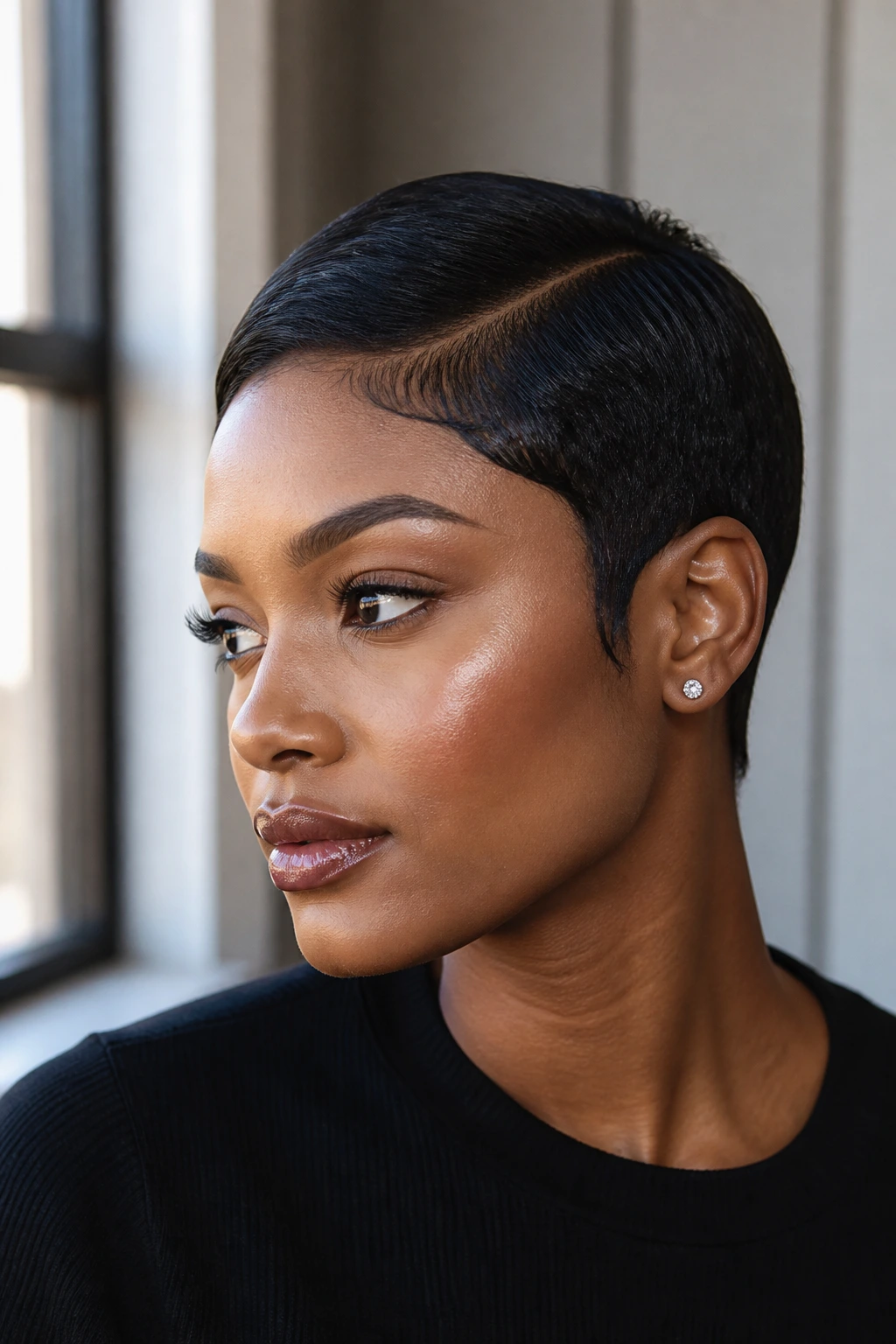
A sleek relaxed pixie has a different personality from the natural versions. The lines are smoother. The part is sharper. The whole cut sits close and neat, with the kind of finish that shows off cheekbones and earrings without fighting them.
It works well on relaxed hair or on hair that’s been silk-pressed and set with a light serum. I’d keep the top long enough to sweep to one side, because a flat, all-one-length pixie on straightened hair can look lifeless fast. A small round brush, a touch of heat protectant, and a cool-shot finish are enough to keep it smooth without turning it greasy.
If you wear this style, the wrap matters. Pin-curl the top or wrap it flat at night, then brush it into place in the morning. It takes minutes, not an hour. That’s part of the appeal.
11. Coily Wash-and-Go Pixie
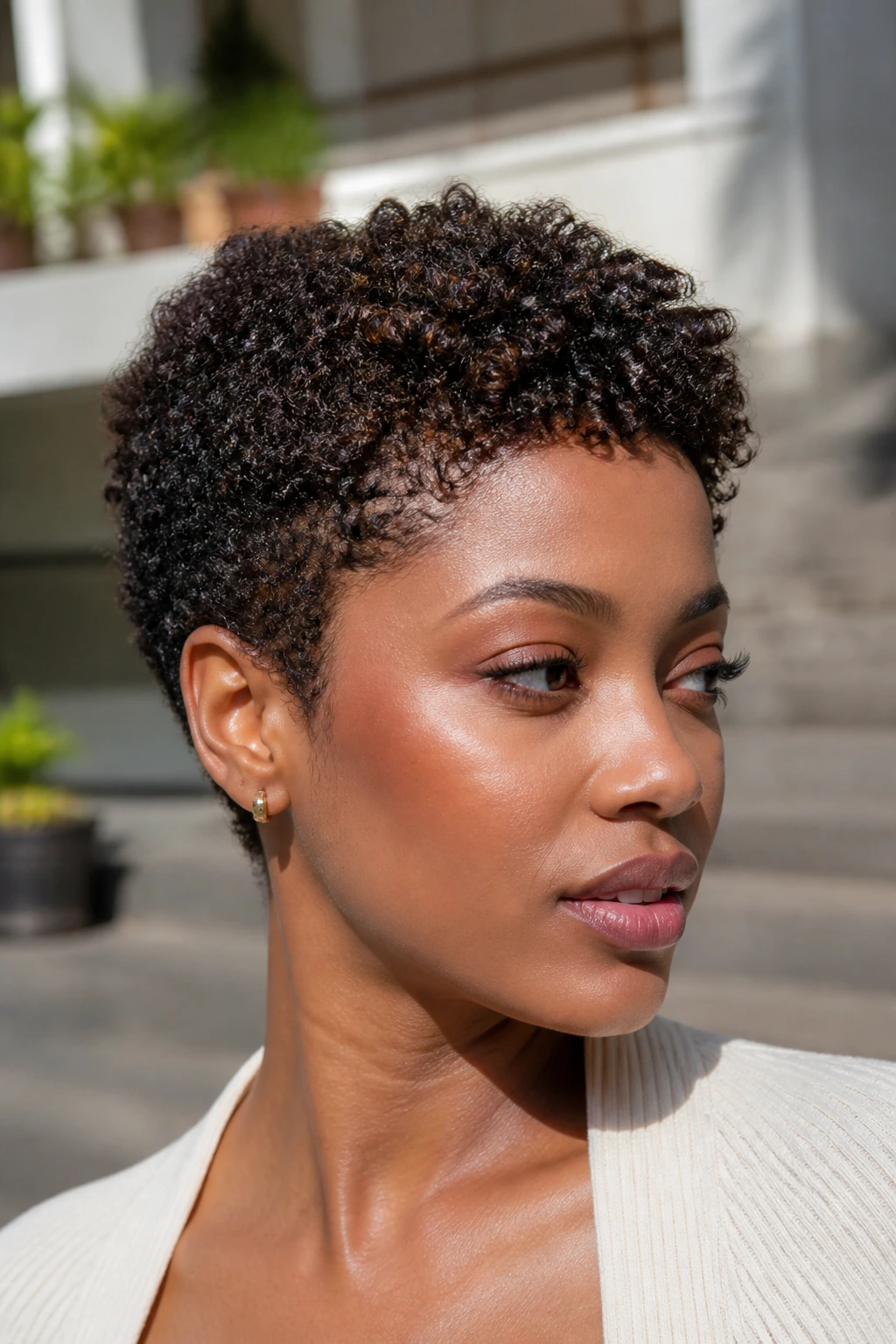
This is the short natural cut for people who want to wash, define, and leave. The coils stay visible, the sides are tidy, and the crown has enough length — usually 1.5 to 3 inches — to show the curl pattern without turning into a mini puff.
How It Works on Real Hair
The key is not overloading the hair. Start with a water-based leave-in, then add a small amount of curl cream or gel. Scrunch gently. If you use too much product, the curls clump into little damp ropes and take forever to dry.
A microfiber towel or a cotton T-shirt helps cut the drying time and keeps the curl pattern from frizzing up at the ends. Once the hair is dry, you can lift the roots with a pick or your fingers. Not a comb. A comb stretches the curl in a way that fights the whole shape.
This version is especially good if you like texture that looks alive rather than sculpted. It’s casual, but not sloppy. There’s a line between the two.
12. Buzzed Nape Pixie With Height
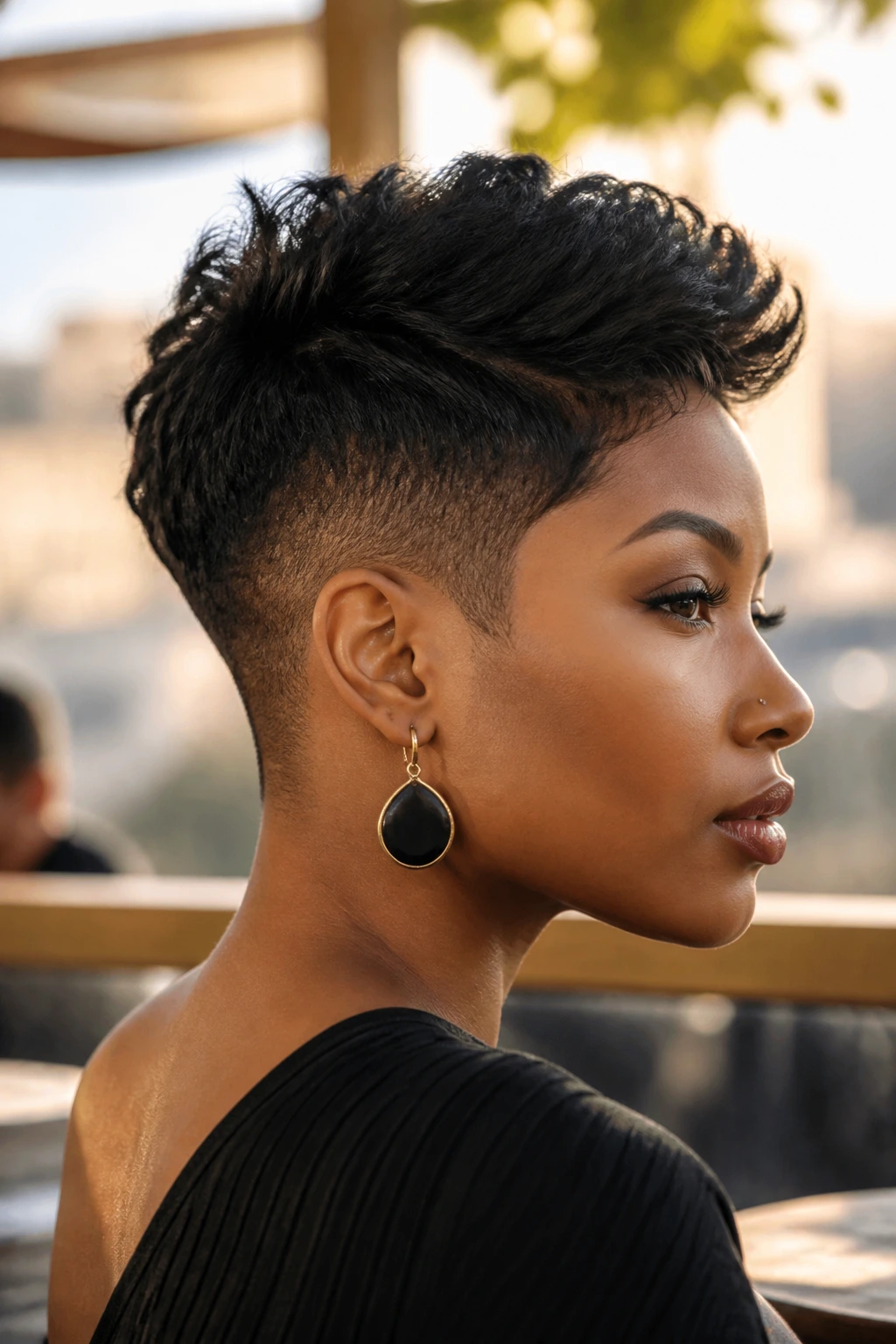
The nape buzz is the secret weapon here. Shaving the back close opens up the neck, sharpens the profile, and makes the crown feel taller by comparison. The top can stay soft and layered, but the clean nape does a lot of visual work on its own.
This shape is especially flattering if you want to show earrings, long necklines, or strong jaw angles. It also helps dense hair stay cooler in warm weather without forcing you into a full fade. Keep the top around 2 to 3.5 inches and ask your stylist to leave enough weight in the front so the cut doesn’t look too severe from the side.
The maintenance is straightforward. The buzzed area needs a tidy-up every 2 to 3 weeks, and the neckline is the first place that starts looking fuzzy. A dry brush and a bit of styling cream on the top is usually enough to reset the style between appointments.
13. S-Curl Pixie
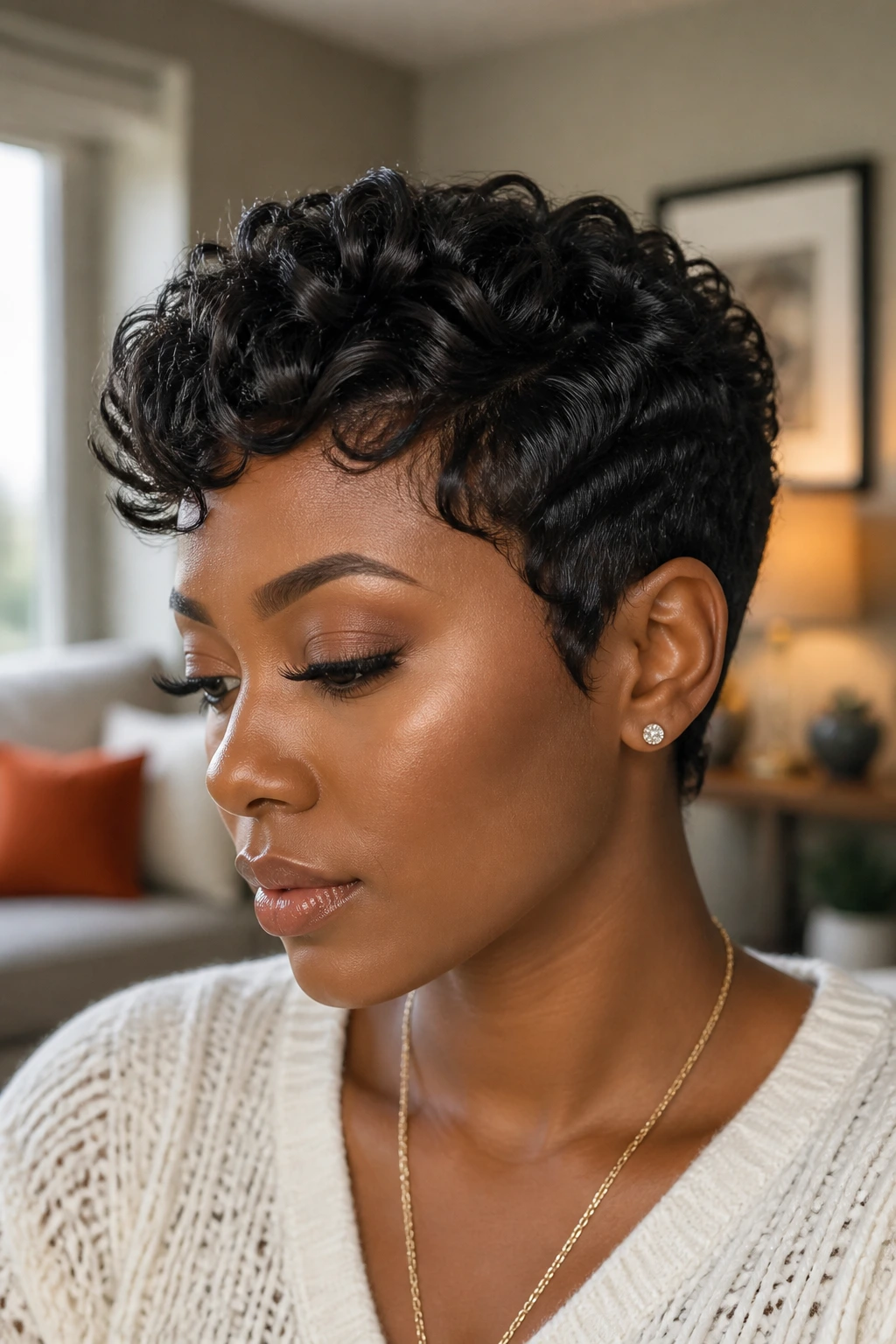
An S-curl pixie has that soft, undulating wave pattern that sits somewhere between finger waves and loose curls. It’s controlled, but not stiff. That balance is what makes it so wearable on short relaxed or texturized hair.
This cut tends to look best when the top has enough length to hold the wave pattern — think roughly 1.5 to 3 inches — and the sides stay shorter for contrast. A wave pomade or curl activator helps create the bends, and a soft brush lays them down without flattening the hair into a sheet. If the waves look too sharp, you used too much product or too much heat.
It’s a good pick if you like a polished finish but don’t want the hard lines of a full finger-wave set. The S-shape gives the cut a little movement, especially around the forehead and temple area. It feels classic, but not frozen in time.
14. Side-Part Pixie With Volume
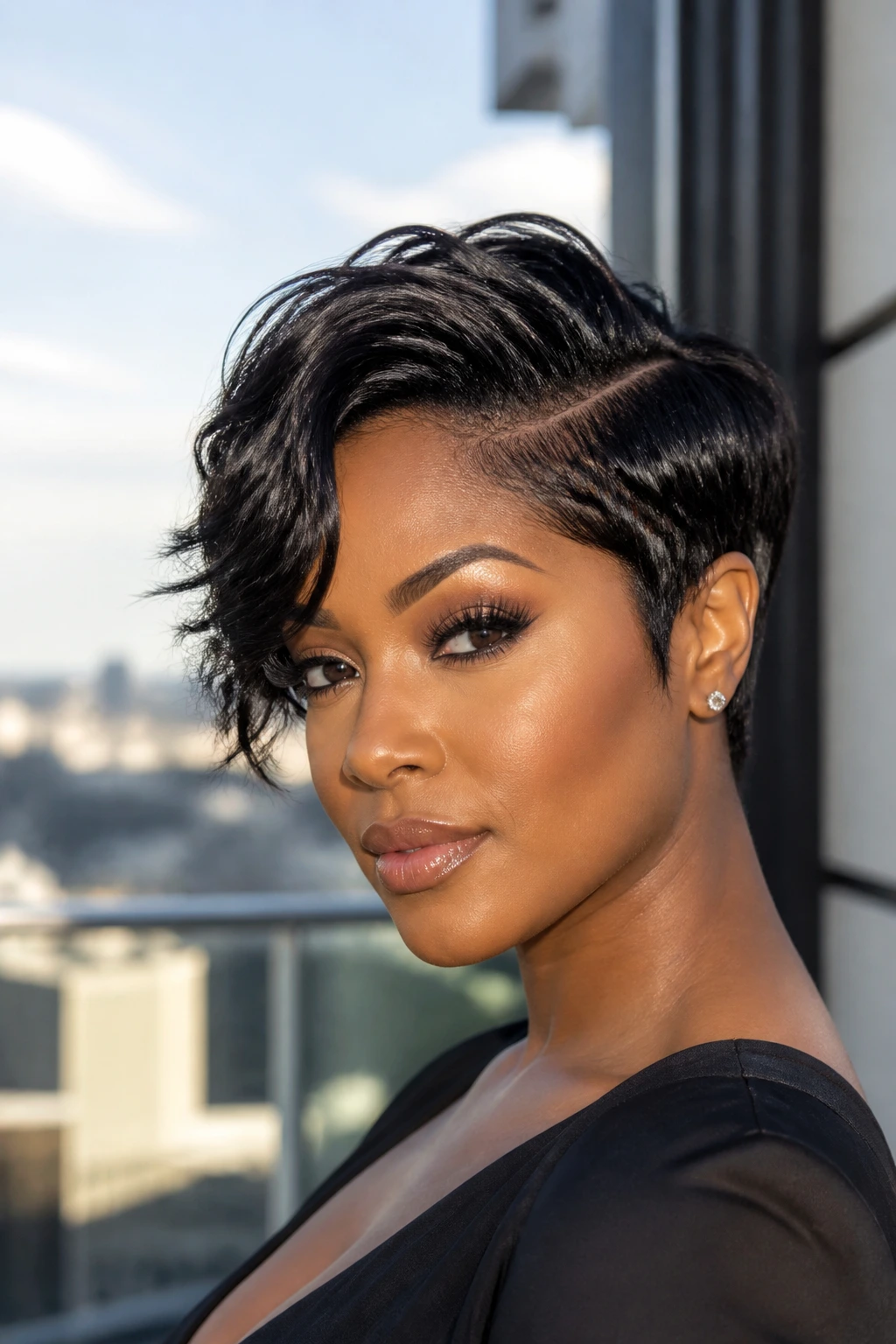
A deep side part can rescue a pixie that would otherwise sit too evenly on the head. Shift the weight to one side, lift the crown a bit, and the whole cut gets a smarter outline almost instantly.
This version is especially useful for fine-to-medium density hair, because the part creates the illusion of fullness where the eye lands first. A root-lifting mousse at the roots and a quick blow-dry with a small brush help the top rise without turning it airy in a bad way. You want height, not fluff.
The part also gives you something to work with on days when your hair feels flat. Tuck one side behind the ear. Add a clip. Leave the other side loose. The cut doesn’t fight those small changes, and that’s why people keep coming back to it.
15. Salt-and-Pepper Pixie
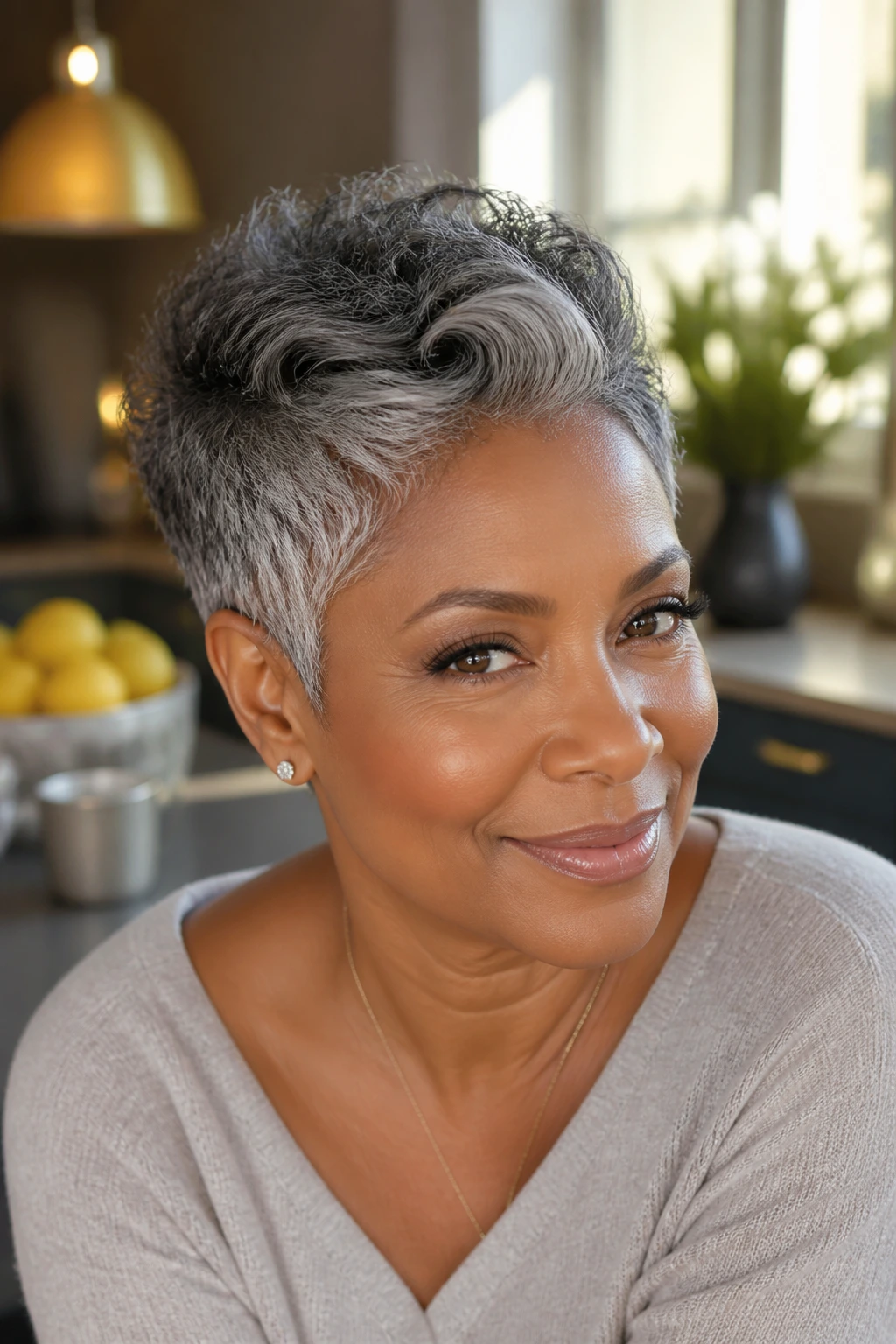
Gray hair on a pixie has a particular kind of force. There’s no hiding it, which is exactly why it works so well. The short shape puts the color front and center, and the texture — especially on coily or curly hair — gives the gray strands depth instead of making them look thin.
A salt-and-pepper pixie looks sharp when the cut is clean and the tone stays bright. If the gray is dull or yellowed, a blue or purple-toned cleanser can help keep it clearer, but don’t overdo it. Once a week is usually enough if the hair has color or discoloration. A lightweight gloss treatment can keep the finish shiny without turning the roots oily.
This is one of those styles that gets better when the shape is simple. Don’t crowd it with too many lines or products. Let the color do the talking.
16. High-Top Pixie Fade
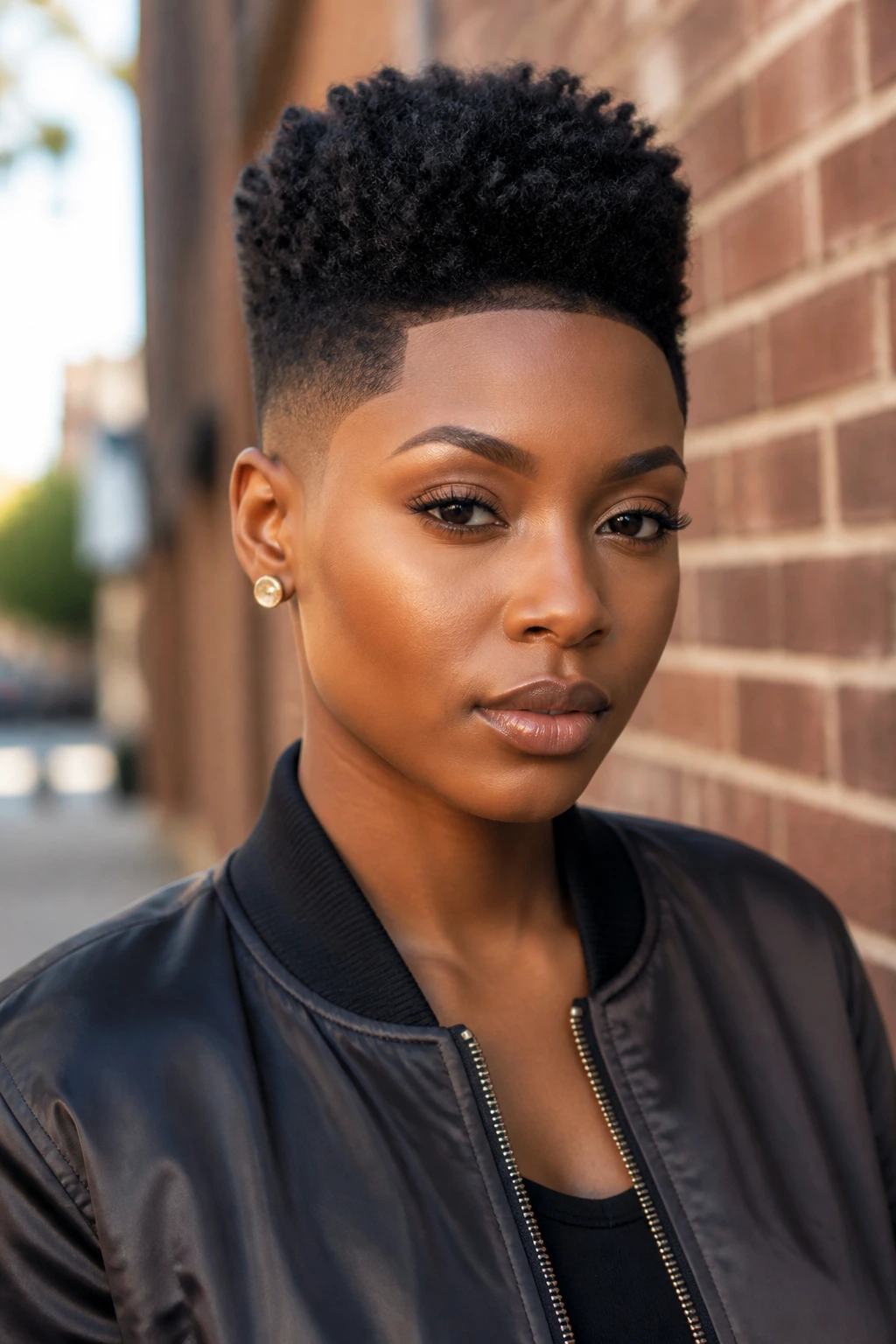
If you like height but don’t want a full mohawk, the high-top pixie fade lives in the middle ground. The top is left fuller and lifted, while the sides fade down cleanly so the silhouette rises from the head instead of spreading outward.
This cut can be shaped with coils, curls, or brushed-up texture. On tighter hair, a sponge or a twist-out on the top gives the crown some lift. On looser textures, a root-lifting mousse and directional blow-dry do the job. The key is keeping the top high enough to be noticeable but not so long that it starts to sag by midday.
It works best on women who like a statement shape without losing too much softness. The fade gives edge. The crown keeps the style from feeling severe. And if you keep the top trimmed every few weeks, the whole thing stays balanced.
17. Piecey Layered Pixie
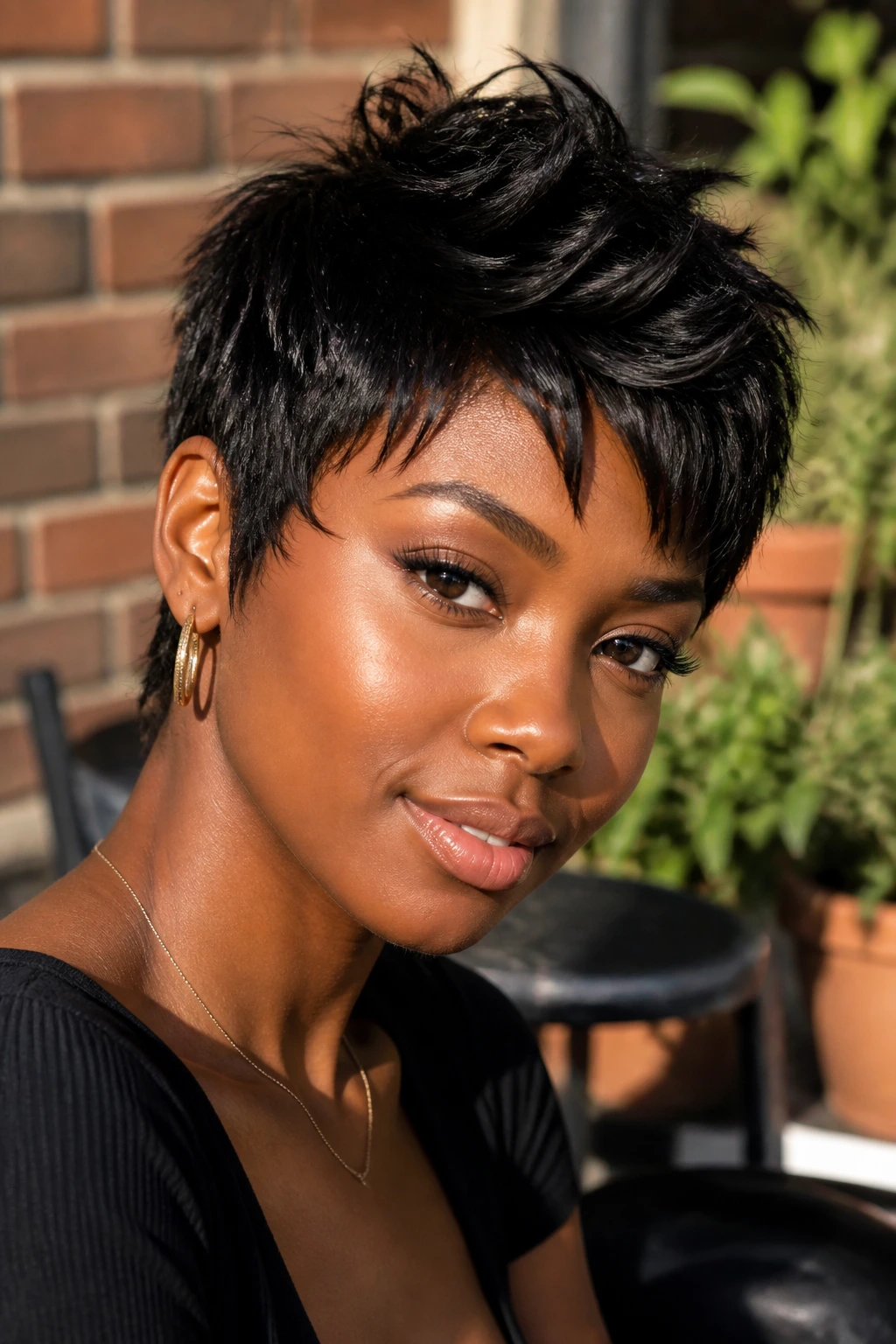
A piecey pixie is all about separation. Instead of one smooth mass, the cut breaks into visible sections that can be styled forward, up, or slightly to the side. On Black hair, that texture can look fantastic when the layers are cut with a light hand.
The Trick Behind the Texture
You want enough layering to remove bulk, but not so much that the top turns frizzy and undefined. A small amount of styling paste or wax on dry hair helps create those little separated pieces. Work it through the tips with your fingers, not a brush, or you’ll lose the definition.
- Best when the crown is layered. Flat layers won’t give you the same movement.
- Good for thick hair. The cut takes weight out without making the shape vanish.
- Use less product than you think. A dime-size amount is plenty for most short lengths.
This style is one of the easiest ways to make a pixie feel modern without chasing a trendy look. It’s messy on purpose. That matters.
18. Soft Frohawk Pixie
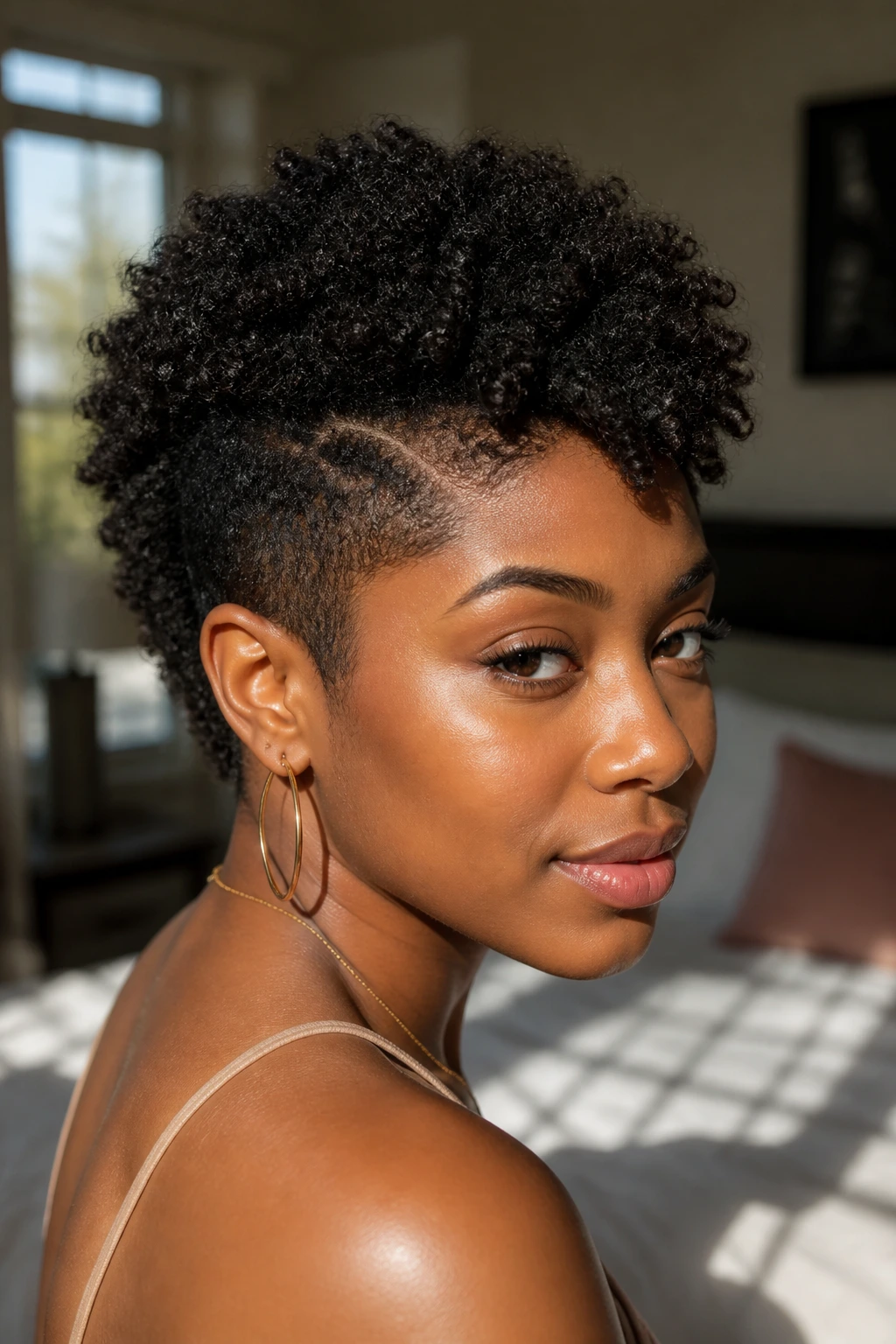
A soft frohawk pixie keeps the mohawk idea but loosens the edges. Instead of a hard-shaved strip, you get a fuller center section and tapered or softly faded sides that let the shape feel rounded and wearable.
It’s a strong choice for natural hair because the center can hold twist-outs, finger coils, or a fluffy curl set. The sides should stay neat enough to frame the face, not erase it. If the center starts looking too flat, a little root lifting at the base of the style brings it back to life.
This version works well with hoops, bold lip color, and necklines that show a little skin. The whole cut has movement, which keeps it from feeling too rigid. And unlike some sharper mohawk shapes, this one can soften over the day and still look good.
19. Wet-Look Pixie
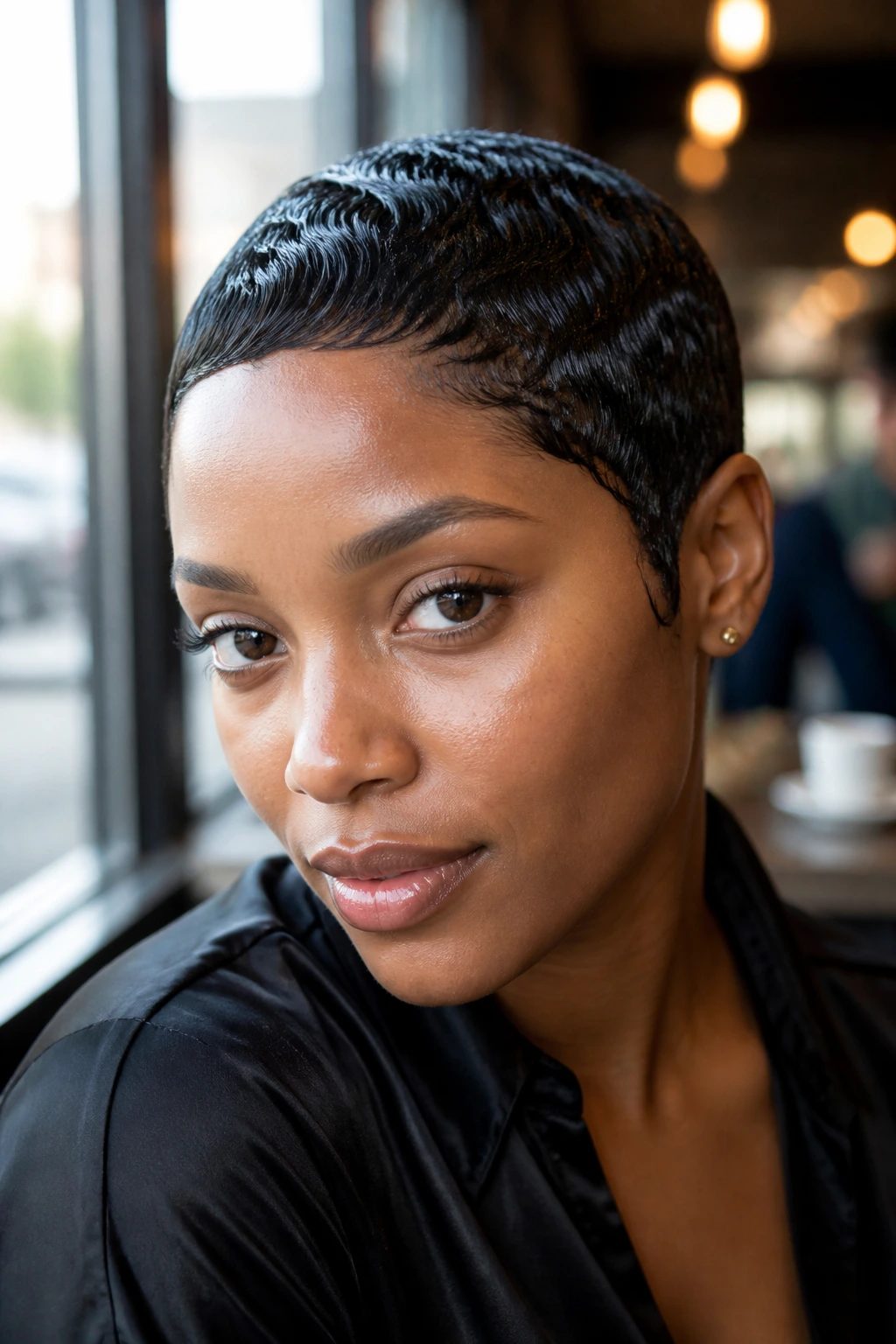
The wet-look pixie is not actually wet, which is the first important thing to say. It’s a close, sleek finish with shine, usually built with gel, mousse, or styling cream and brushed into place so the hair sits smooth and reflective.
This style works well on short natural hair, relaxed hair, and textured hair that’s been stretched a little first. You need control more than volume. A soft bristle brush, a strong-hold gel, and a little shine spray are enough. If you use too much oil, the look goes from sleek to slippery, and the shape falls apart faster.
It’s a good choice when you want a pixie that reads a little dramatic without adding height or fringe. The shine puts the face in focus. Keep the edges clean and the top smooth, and it does the work on its own.
20. Golden Honey Pixie
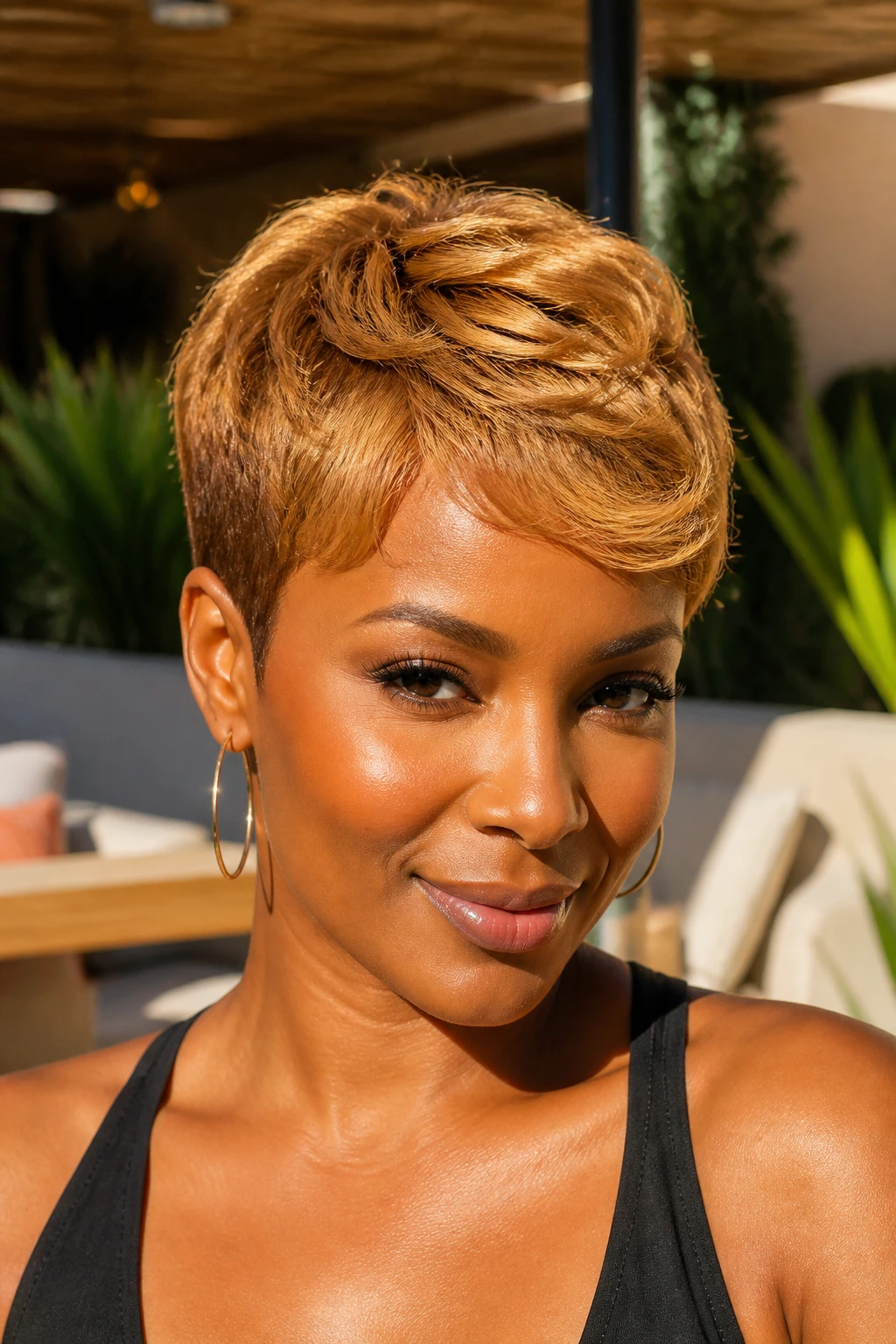
Color changes the whole conversation. A golden honey pixie brings warmth to the cut, and on deep skin tones that warmth can look rich rather than brassy when the color is placed carefully. Highlights through the top or a full honey-blonde tone both work, depending on how bold you want to go.
Short cuts are actually good for color because the hair gets trimmed often, which helps manage damage. Still, the hair needs moisture. A color-safe shampoo, a weekly deep conditioner, and a gloss or toner when the shade starts looking dull will keep the tone from going flat. If the blonde skews yellow, tone it back. If it looks dry, add a mask before you add more color.
I like this version on a cut with a bit of movement — feathered, side-swept, or slightly curled at the crown — because the highlights catch the texture. Flat color on a flat cut can look harsh. A little dimension goes further.
21. Deep Side-Swept Pixie
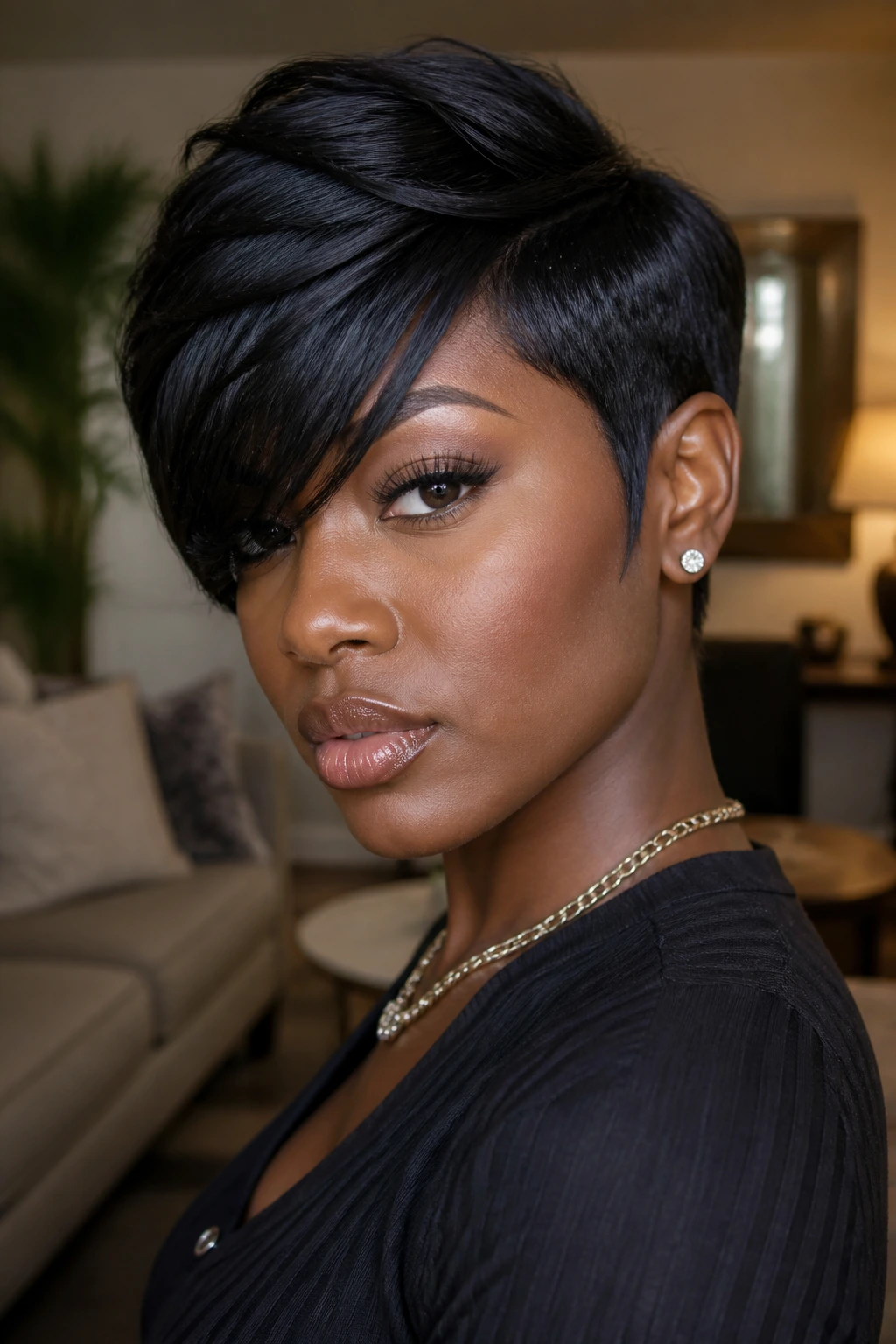
A deep side-swept pixie leans into drama in a very controlled way. The fringe comes over from one side in a heavier curtain, which can soften a forehead, balance a longer face, or simply give the cut a more romantic line.
Why It Feels Different
The weight of the fringe changes the silhouette. Instead of showing the same amount of face on both sides, the cut creates a diagonal. That diagonal is doing a lot of quiet work. It pulls the eye down and across, which can make the jawline look softer and the cheekbones more defined.
A light wrap set or flat iron pass may be needed if your texture resists the sweep. Keep the side that holds the fringe a touch longer than the opposite temple, and the style will settle better. If the fringe feels too heavy, have the stylist thin it a bit — not with aggression, just enough to let it bend.
This is one of the better pixies if you want polish without looking severe. The line is soft, but the shape is clear.
22. Micro-Fringe Pixie
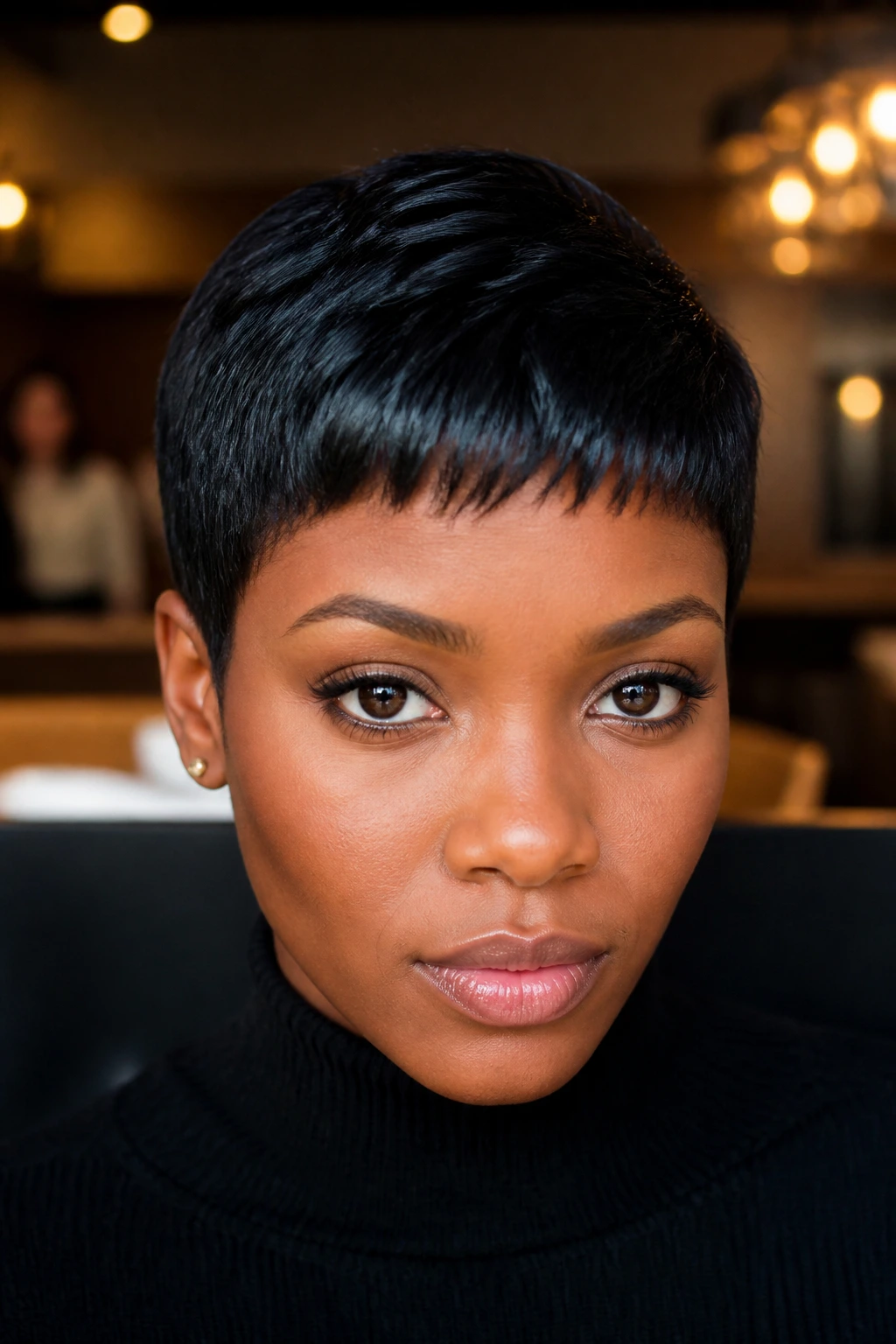
Tiny bangs are a choice. A strong one. A micro-fringe pixie sits in that sharp, fashion-forward lane where the short bang gives the cut a little bite and a lot of attitude.
The fringe usually lands well above the brow, which means the rest of the cut needs to be clean enough to support it. Short sides, a neat nape, and a crown that stays controlled make the tiny bang feel intentional instead of accidental. It works best on stretched, relaxed, or naturally straightening textures, because the fringe needs to stay visible.
This is not the easiest pixie to wear if you want the lowest maintenance possible. The bang needs regular trimming — often every 2 to 3 weeks — and the shape has to stay crisp. But when it’s good, it’s very good. The cut has a graphic quality that does not need a lot of extra styling.
23. Grow-Out Friendly Pixie Crop
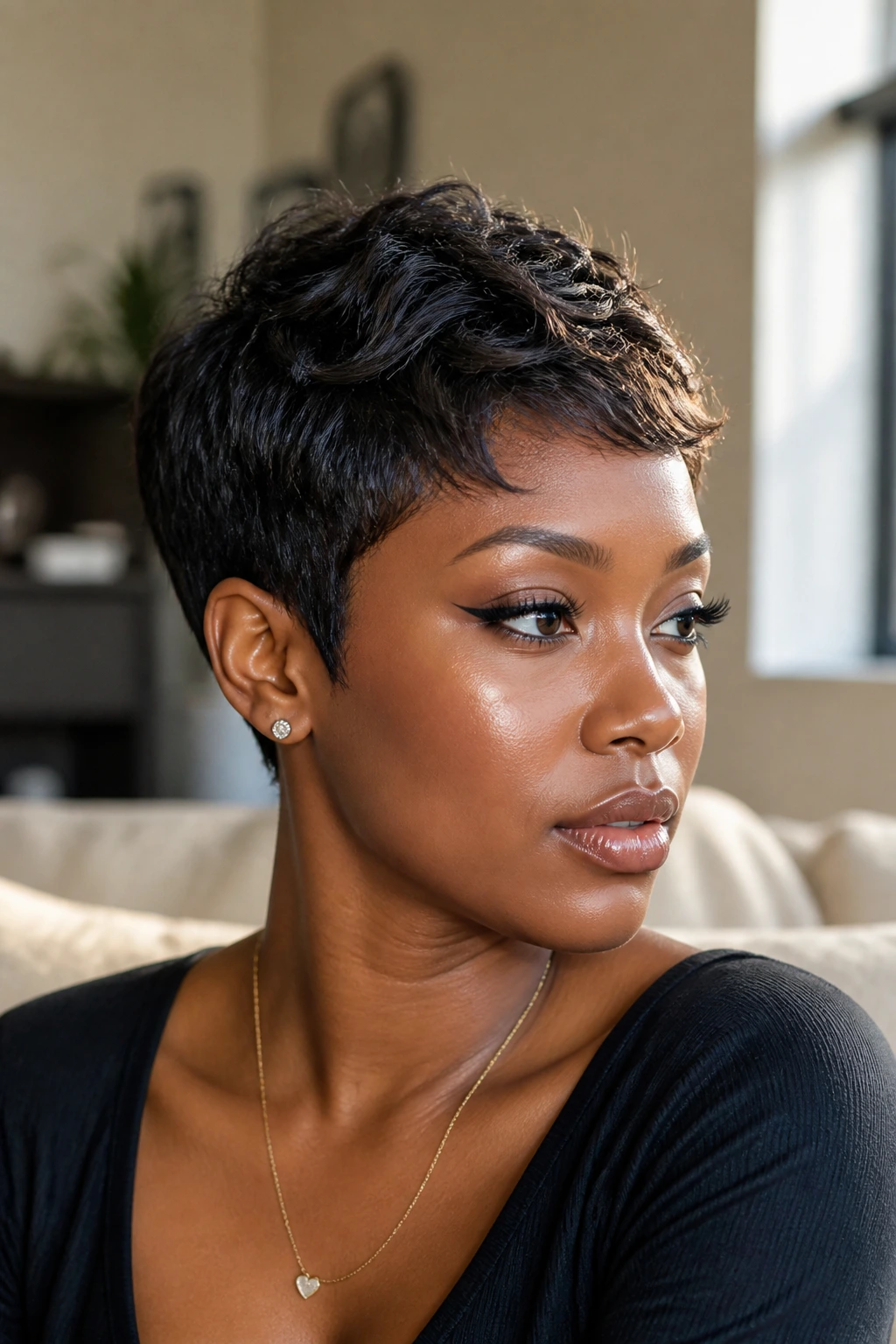
Not every pixie has to be a forever decision. A grow-out friendly pixie crop keeps a little more length at the top and a softly layered perimeter so the cut can move toward a short bob or a shaggy crop without a hard awkward phase.
That makes it a smart choice if you are testing short hair and do not want a strict reset in six weeks. Ask for a softer nape, a layered crown, and sides that are short enough to shape the face but not clipped so high that they disappear immediately as the hair grows.
This kind of cut benefits from regular shaping rather than aggressive chopping. Every 4 to 6 weeks, trim only what breaks the outline. Between appointments, use a cream or mousse that keeps the top from splitting into random directions. The grow-out looks better when the cut was built to age gracefully in the first place.
24. Glam Finger-Wave Pixie
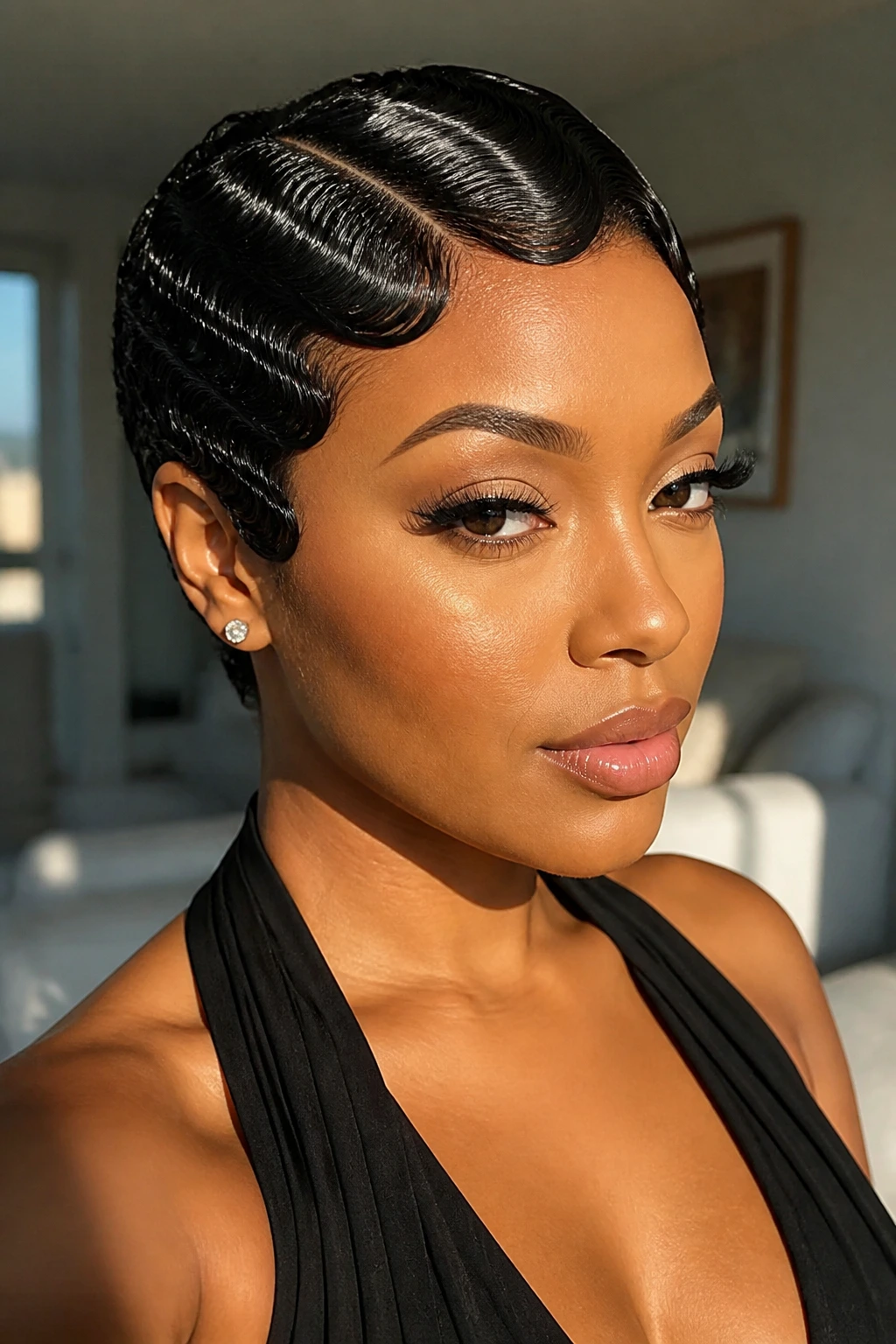
This is the dressed-up cousin of the sculpted finger-wave look. The waves are more deliberate, the finish is tighter, and the whole style is built for nights when you want your hair to look like it had a full conversation with the mirror before you walked out the door.
A setting lotion or strong mousse, duckbill clips, a fine-tooth comb, and a hood dryer are the backbone here. Add a jeweled clip, a side comb, or a glossy lip, and the cut changes from classic to event-ready fast. The wave pattern should stay close and smooth, with each ridge clean enough to catch light but not so sharp that it hardens the face.
This style flatters short relaxed hair and texturized hair especially well, though short natural hair can be stretched and set into a softer version. Keep the lines neat and the shine controlled. Too much gloss makes the waves look greasy. Too little makes them vanish.
25. Bold Undercut Pixie With Linework
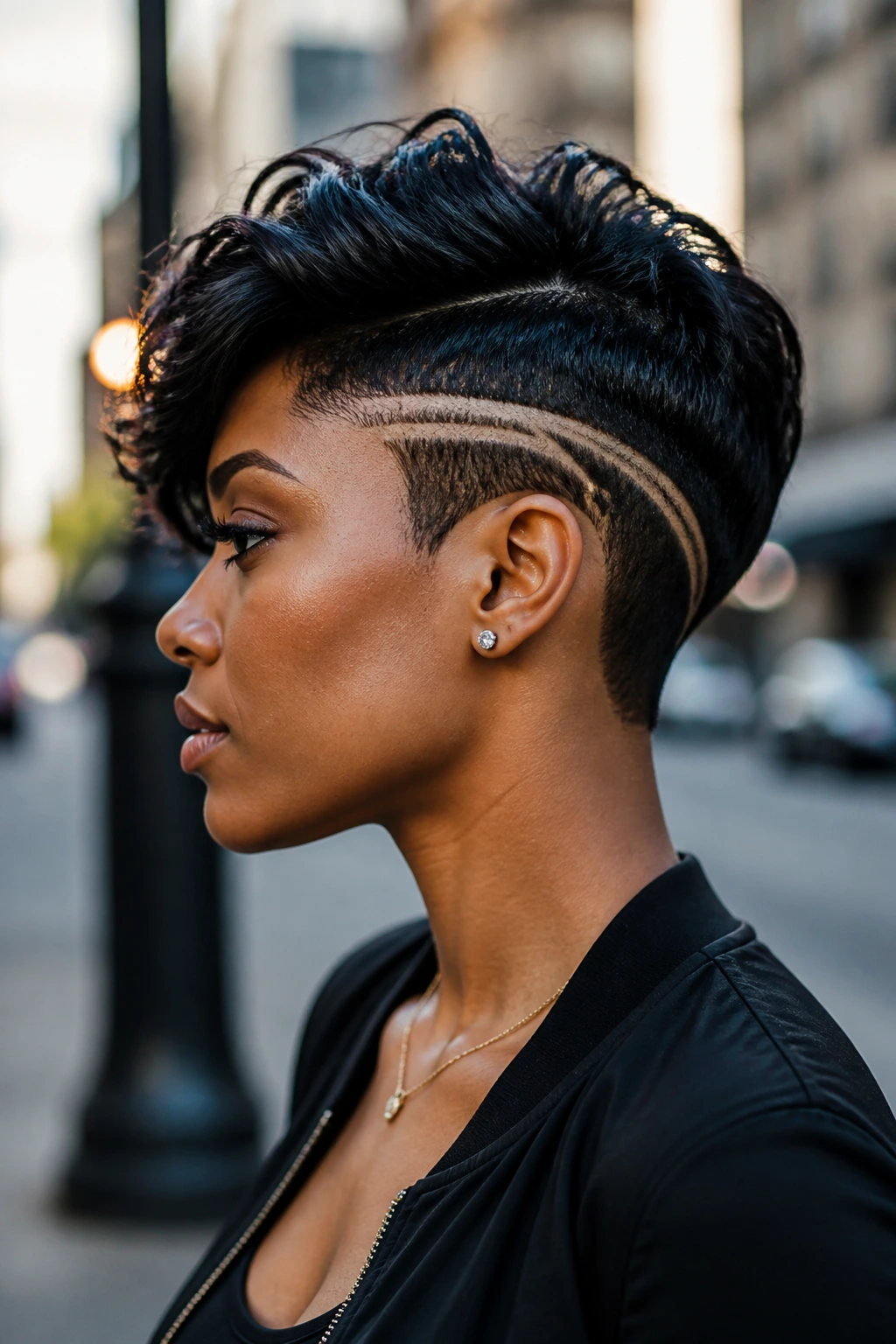
If you want your haircut to say something before you do, this is the one. A bold undercut pixie with linework uses a shaved panel, a carved design, or a sharp geometric line to turn the side or back into part of the style, not just the hidden part underneath it.
The top can stay soft, curly, or sleek, which makes the design stand out more. I like this cut when the upper section has enough length to drape over the art without hiding it completely. That way, the design appears when you move, turn, or tuck the hair back. It feels playful without losing structure.
Keep the linework fresh every 2 to 3 weeks if you want it to stay readable. And choose a design you can live with for a while — thin lines and simple shapes age better than anything too crowded. Short hair grows fast, and a design that looked crisp last week can blur sooner than you expect.
Why Pixie Cuts on Black Hair Depend on Shape, Not Length
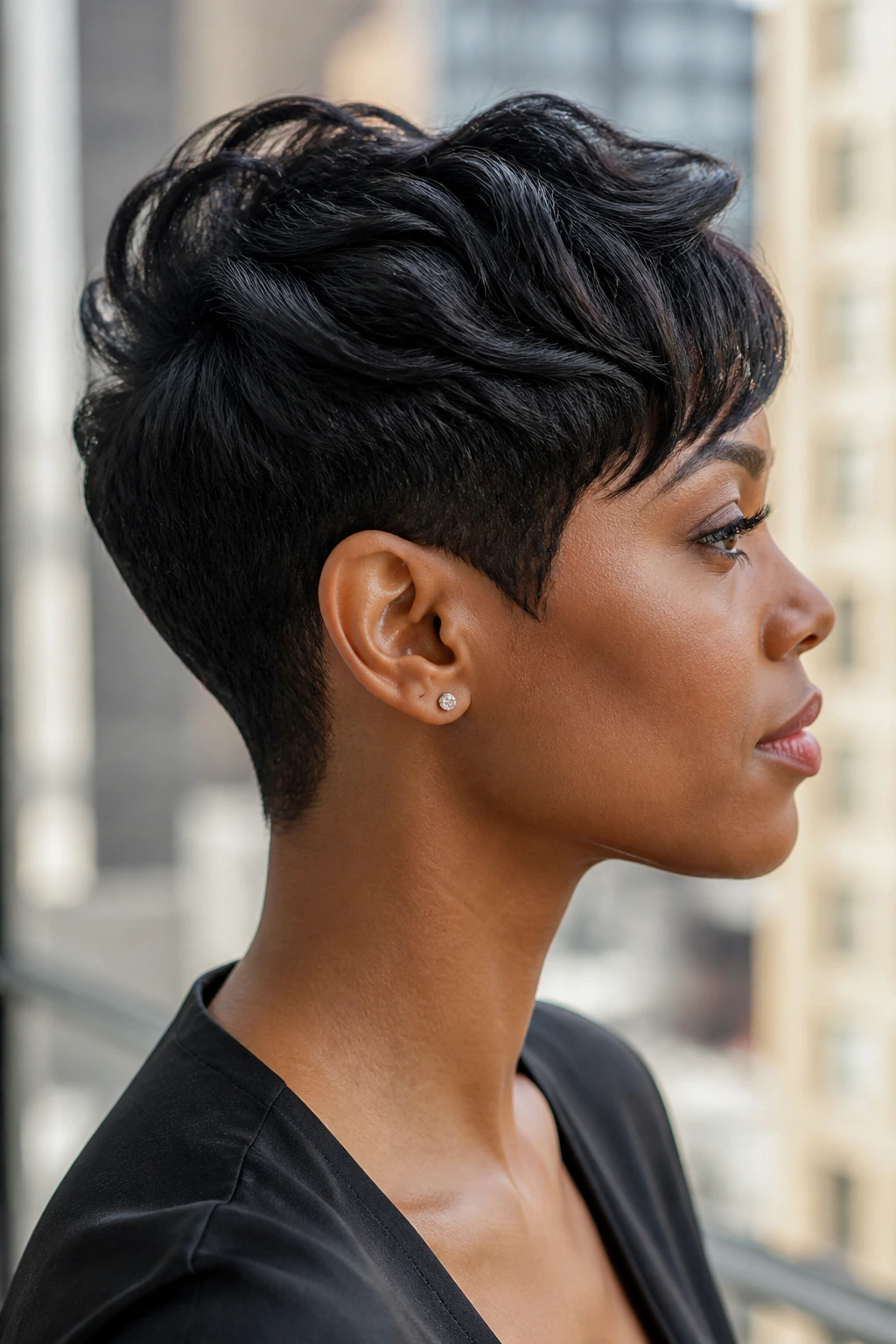
Short hair on Black women gets judged in a funny way. People see the length first and assume the cut is simple. It usually isn’t. Texture changes how the cut sits, how it shrinks, and how much weight you need to remove before the shape actually opens up. A pixie that ignores those things tends to puff at the sides or flatten at the crown. Neither one is flattering for long.
That’s why the best pixie cuts for Black women are really about architecture. A tapered nape gives the neck room. A lifted crown keeps the silhouette from reading boxy. A fringe shifts the eye where you want it. Even a half-inch difference in the front can change the entire face-framing effect.
There’s also the practical side. Black hair often needs more precise upkeep around the edges, especially if you like clean sideburns or a sharp neckline. The good news is that a pixie can make that upkeep easier once the cut is shaped correctly. Less hair does not mean less planning. It means the planning shows faster.
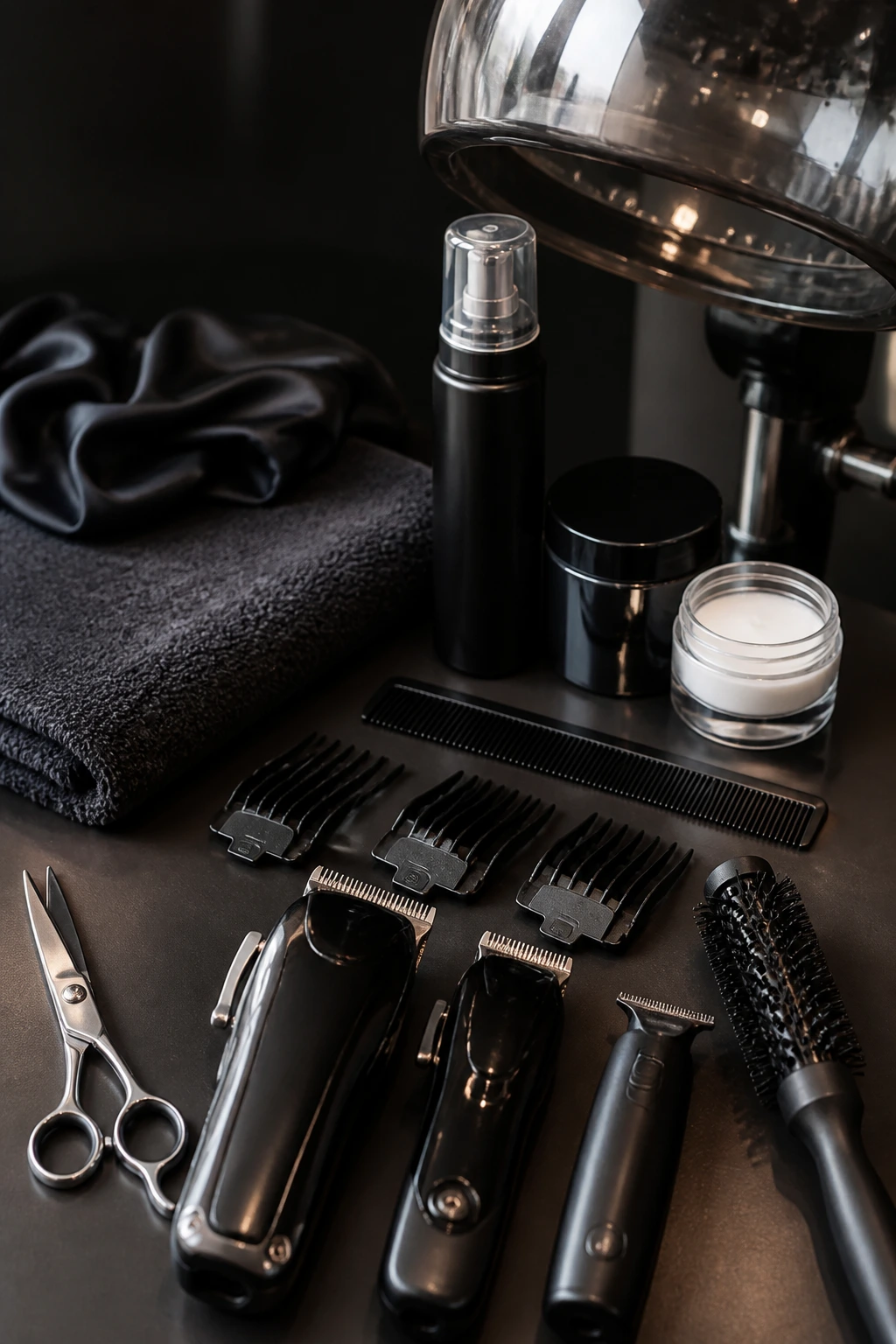
Essential Tools for These Cuts
-
A sharp pair of haircutting shears: Needed for trimming fringe, softening layers, and cleaning the outline without chewing up the ends.
-
Professional clippers with guards: The guard sizes help you keep the taper consistent, especially around the nape and sides.
-
A detail trimmer or edger: Useful for clean lines around the ears, neckline, and sideburns.
-
A fine-tooth comb: Essential for finger waves, side parts, and smoothing shorter sections into place.
-
A small round brush or paddle brush: Helps lift the crown, stretch the top, and direct the hair where you want it.
-
A hood dryer or handheld dryer with diffuser: Important for set styles, curls, waves, and smoothing without roughing up the cut.
-
Microfiber towel or soft T-shirt: Cuts frizz after washing and keeps short curls from puffing before styling.
-
Satin bonnet or silk scarf: Keeps the shape from getting crushed overnight.
-
Lightweight mousse or foam wrap lotion: Good for shaping without piling on heavy product.
-
Styling gel or edge control: Use sparingly for sleek looks, wave sets, and clean edges; too much leaves flakes and buildup.
Smart Product Picks for Texture, Hold, and Shine
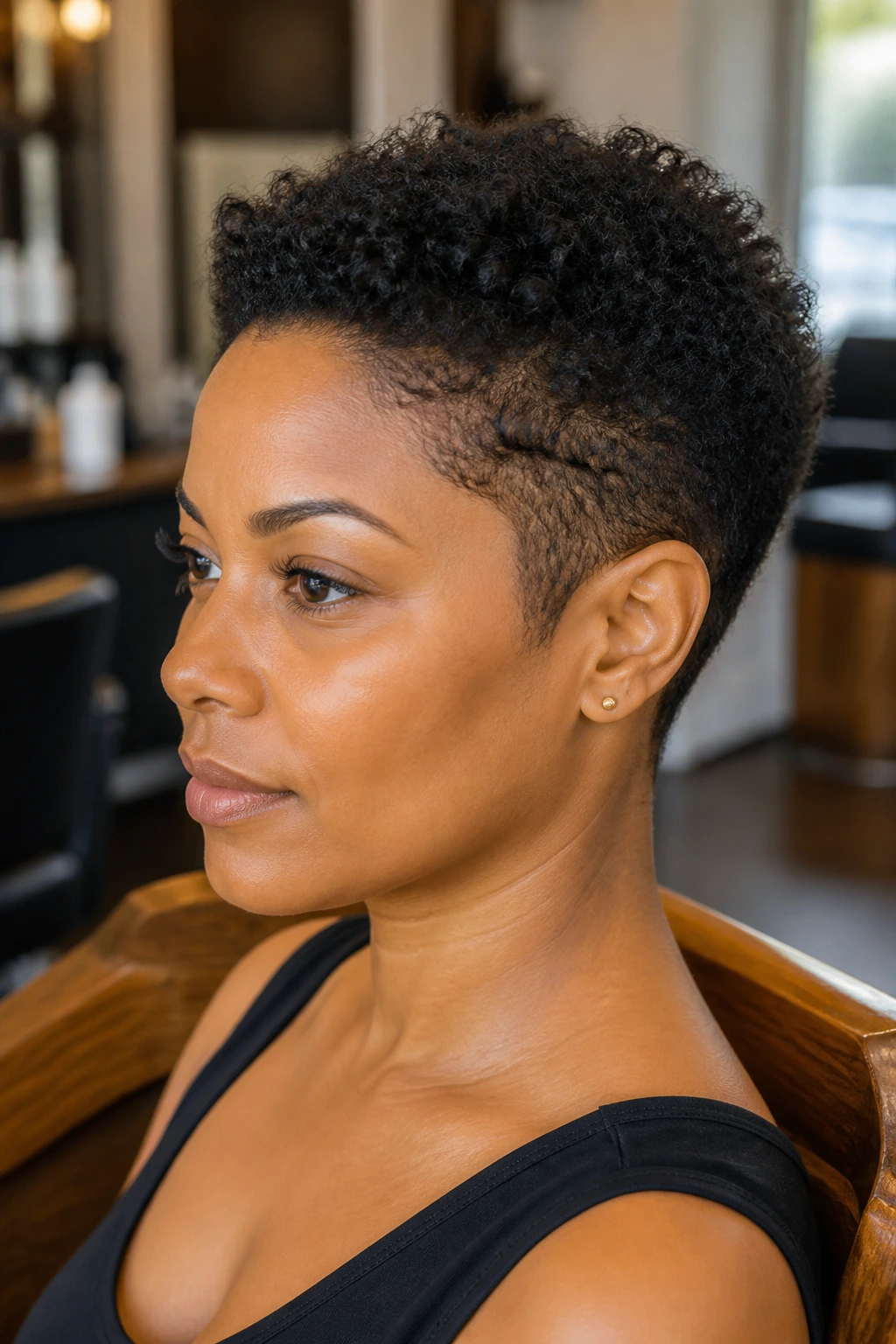
The best products for a pixie are the ones that help the haircut stay visible. That usually means lightweight, not rich. A thick cream can be lovely on longer hair, but on a short crop it often smears the shape and hides the lines you paid the stylist to build.
For curls and coils, start with a water-based leave-in or spray conditioner. Add a foam or mousse if you want lift, or a small amount of curl cream if you want more definition. For sleek looks, pick a setting lotion, gel, or styling foam with real hold. The trick is not layering all three at once. One or two good products beat five mixed together into a sticky helmet.
If your hair is color-treated, add a color-safe shampoo and a weekly deep conditioner. Short hair still gets dry, and the ends can look rough fast when they’ve been lightened. If you wear a lot of edge control, keep a clarifying shampoo on hand and use it once every 1 to 2 weeks so buildup does not sit around the hairline.
One more thing people miss: a little shine goes a long way on short hair. Use a few drops of lightweight oil or a gloss spray on the very ends, not the scalp. The scalp doesn’t need to gleam like a windshield.
How to Wear These Pixies With Different Face Shapes and Outfits
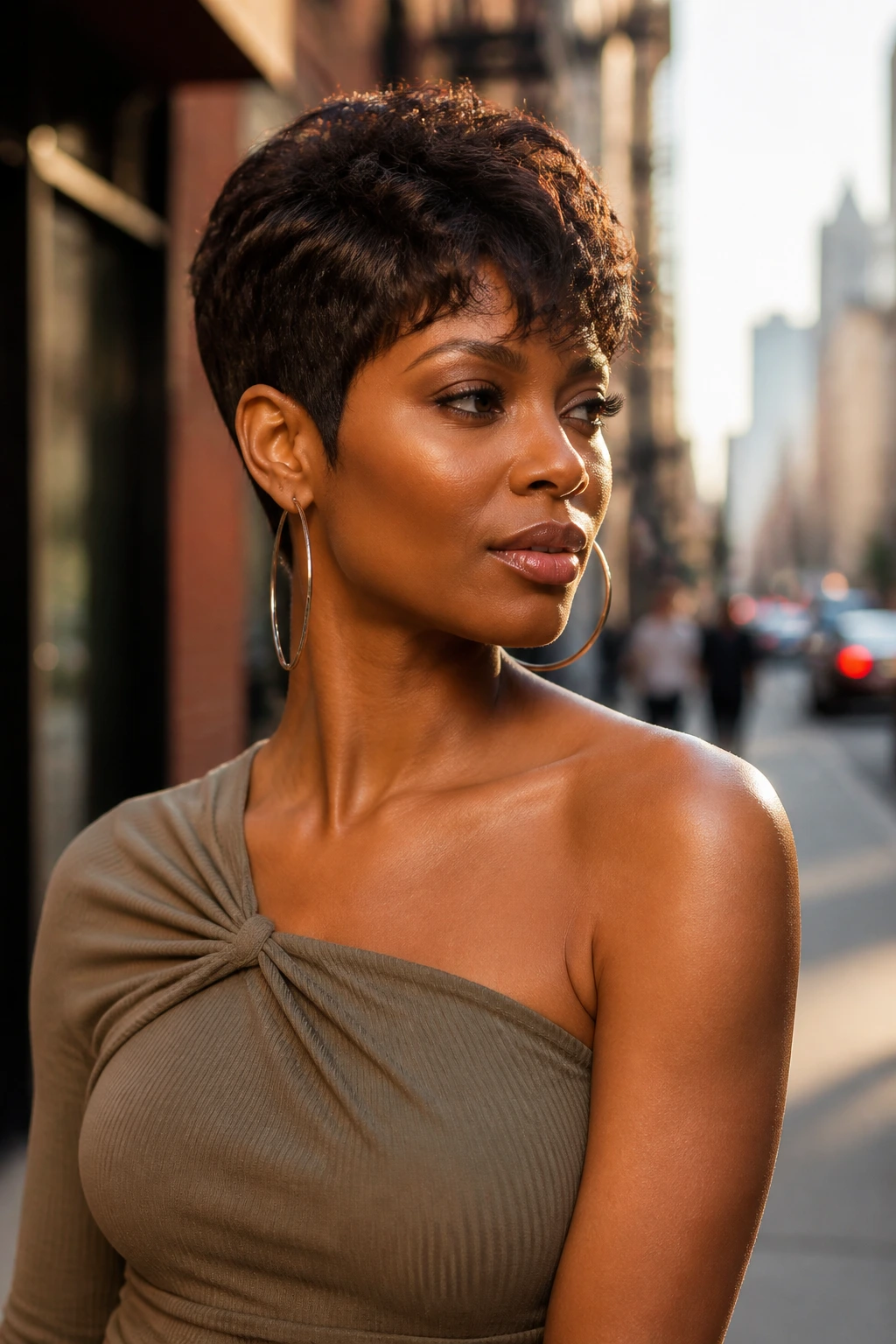
Face Shape: Round faces usually benefit from height at the crown or a deep side part, because that pulls the eye upward and breaks up width. Square faces often look softer with fringe, wave patterns, or a side-swept front that skims the forehead instead of cutting straight across it. Oval faces can wear almost anything, which is both lucky and slightly annoying.
Outfit Pairing: Pixies show off necklines, collars, and earrings, so the clothes matter more than people think. A sharp tapered cut loves a crisp button-down or a high neckline. A curly or feathered pixie looks especially good with hoop earrings and a simpler top, because the hair already carries motion.
Occasion: If you need polish, go for finger waves, a sleek relaxed pixie, or a smooth side part. If the day is casual, a coily wash-and-go or piecey layered crop feels easier. The cut does not have to change. The finish does.
Accessories: Small clips, thin headbands, satin scarves, and metallic hairpins can change the mood fast. With very short hair, one clip placed just behind the temple can feel like a whole style choice.
Extra Style Boosts That Change the Whole Look
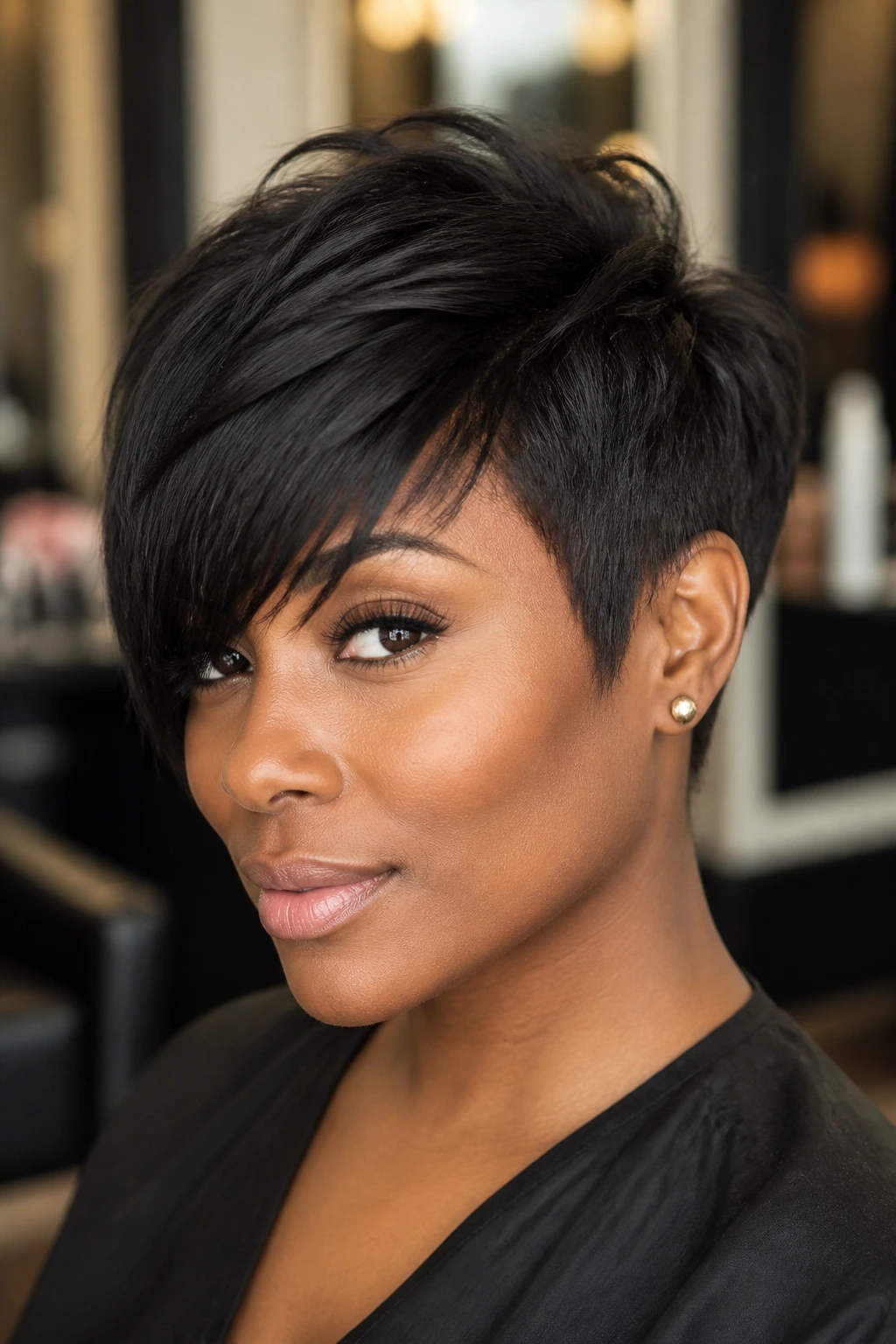
Texture Boost: A tiny bit of mousse at the roots can lift a pixie that keeps collapsing by lunchtime. Work it in with your fingers, then dry the top in the direction you want it to fall.
Color Lift: Honey, copper, auburn, and even a cool platinum tone can shift a pixie from casual to high-contrast. Short cuts make color look louder, so start with a few warm highlights or a single all-over tone if you’re not ready for full commitment.
Edge Detail: A crisp sideburn, a narrow temple taper, or a clean neckline can make the cut read expensive even when the styling is minimal. This is where a good trimmer earns its keep.
Time-Saver: Keep one quick routine for busy mornings: mist, brush, add a pea-size product, and go. Pixies look best when you stop before the product starts building a second layer on top of the hair.
Make-It-Yours: If you like softness, keep the fringe airy and the crown loose. If you like edge, add a fade or a carved part. If you like glamour, choose shine and wave structure. Short hair is not short on options.
Keeping the Shape Sharp: Wash Days, Sleep, and Trim Timing
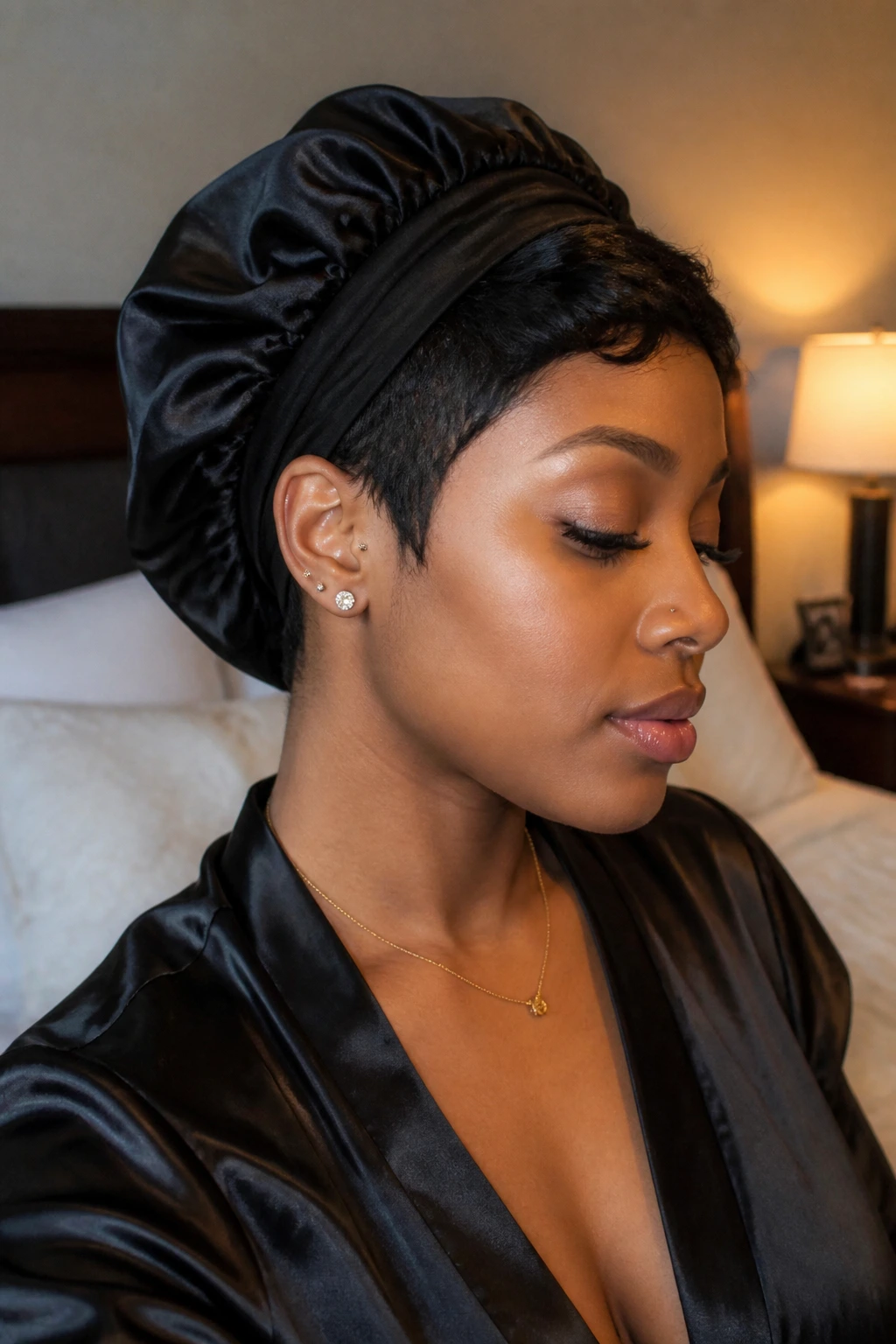
A pixie holds its look best when the maintenance is small and regular, not heroic. Wrap the hair at night with a satin bonnet or silk scarf, or sleep on a silk pillowcase if you hate anything on your head. That one habit keeps the nape smooth, the fringe from kinking, and the crown from flattening into the pillow crease.
Wash or cleanse the hair every 1 to 2 weeks if you use mousse, gel, or edge control often. Product sits fast on short hair, and once it builds up, the cut loses its clean line. If the scalp gets itchy sooner, rinse more often. Short hair makes that easy.
Most pixies need a shape-up every 2 to 4 weeks, depending on how sharp the fade or undercut is. Designs and tight linework need the quickest touch-ups. Softer tapered cuts can stretch a little longer, but only if the outline still reads clean. If the neckline starts spreading, the whole cut starts looking more casual than intended.
For heat-styled pixies, give the hair a break between flat-ironing or roller-setting sessions. Short hair can get crisp fast if you heat it too often. A lot of women learn this the hard way, then spend a month trying to coax the softness back. Better to keep the heat for the styles that truly need it.
Fresh Takes on the Same Cut
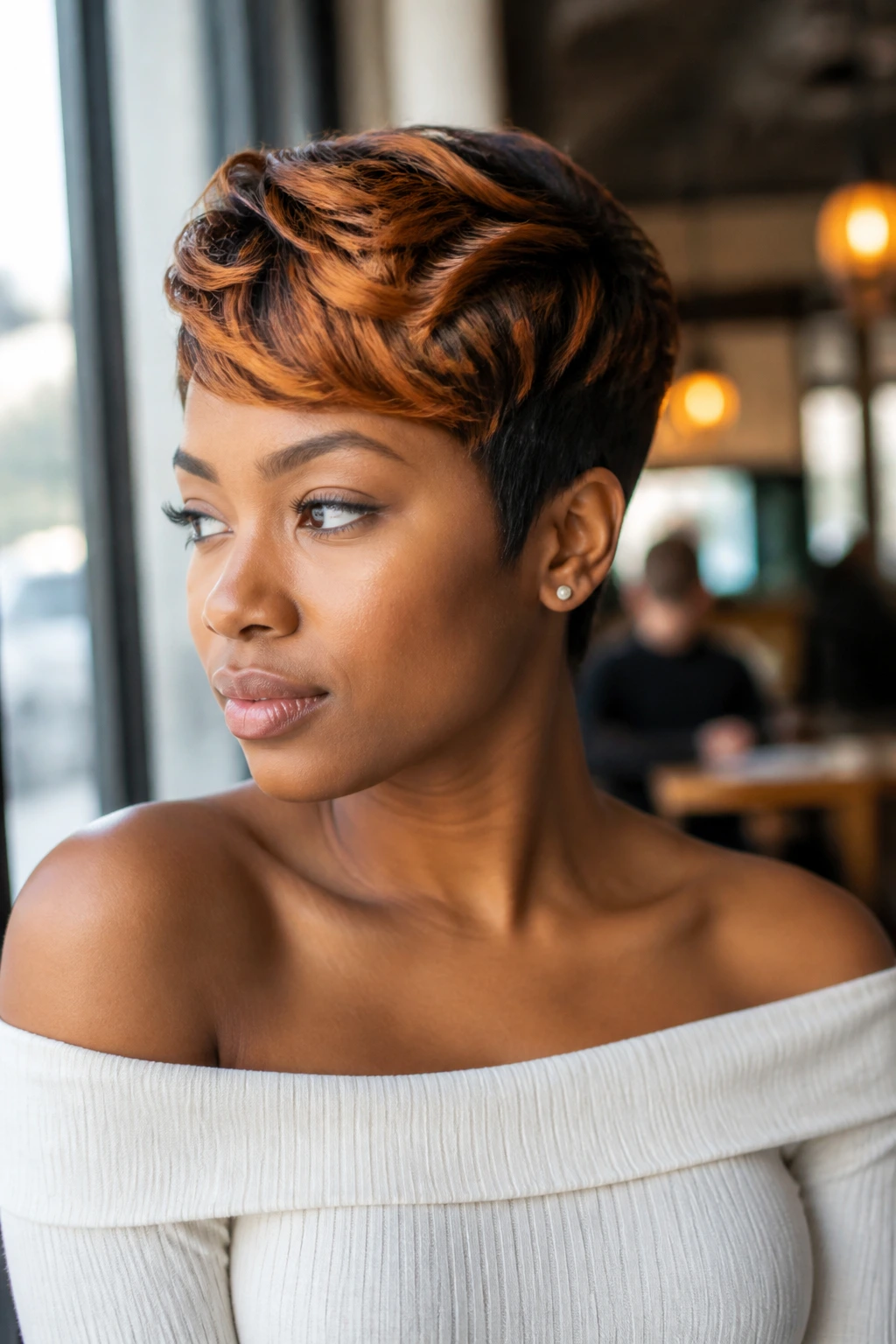
Soft Natural Reset: Keep the shape tapered, but leave a little extra length at the crown and fringe. This version suits women who want their curls to show without looking overly styled.
Sleek Studio Finish: Straighten the top just enough for a smooth side part and keep the sides clean. It works well for work settings, formal events, or anyone who likes a neat outline.
Color-Forward Crop: Add honey highlights, copper panels, or a full silver tone to a simple pixie so the shape and shade do the talking together. Short hair takes color fast, so the cut does not need much else.
Fade-Heavy Statement: Push the sides lower, sharpen the nape, and let the top carry the only softness. This version suits people who like crisp edges and a bolder profile.
Grow-Out Friendly Shape: Leave room at the front and crown so the cut can drift toward a bob or shag later. A good grow-out plan saves a lot of awkward in-between months.
Common Mistakes That Ruin a Good Pixie
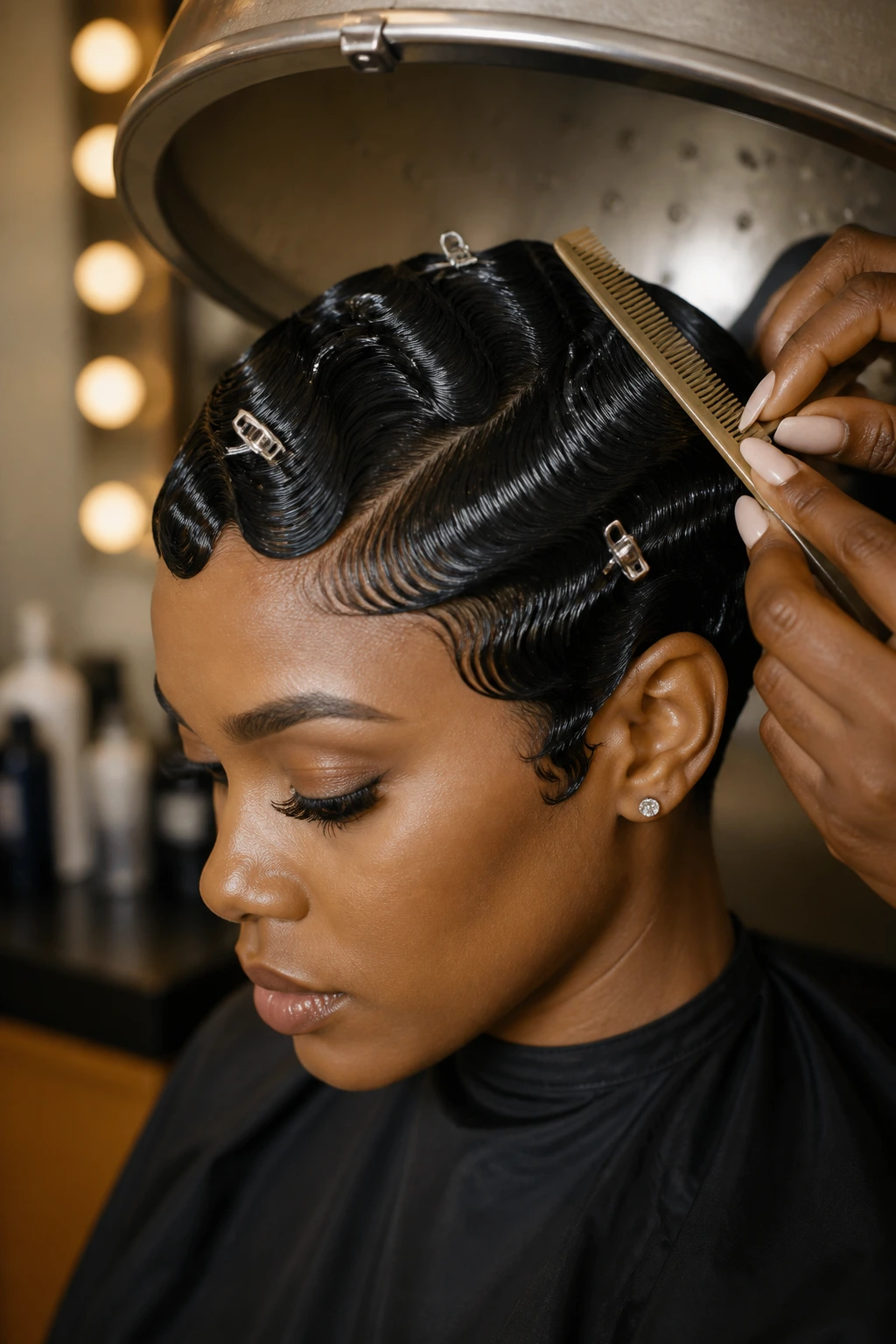
Cutting too much off the crown: If the top is taken down too close, the hair can’t show texture or movement, and the whole style reads flat. Keep enough length on top to balance the tighter sides.
Ignoring shrinkage: A curl that looks like 3 inches wet may sit like 1.5 inches dry. That’s how a flattering pixie becomes a too-short surprise. Always plan the cut with dry shrinkage in mind.
Using heavy creams on short hair: Thick butters and oils can bury the shape and make the pixie look greasy by noon. On shorter styles, lightweight products usually work better.
Skipping the neckline cleanup: The nape and sideburns blur quickly on short cuts, and once they blur, the haircut looks older than it is. A clean edge every couple of weeks keeps the style crisp.
Overloading edge control: A hard, flaky hairline is a dead giveaway that too much product was used. Apply a thin layer, brush it in, and stop there.
Forgetting the maintenance plan before the cut: Some pixies need more salon visits than people expect. If you do not want regular shaping, ask for a softer version instead of a hard fade or linework design.
Questions People Ask Before the Big Chop
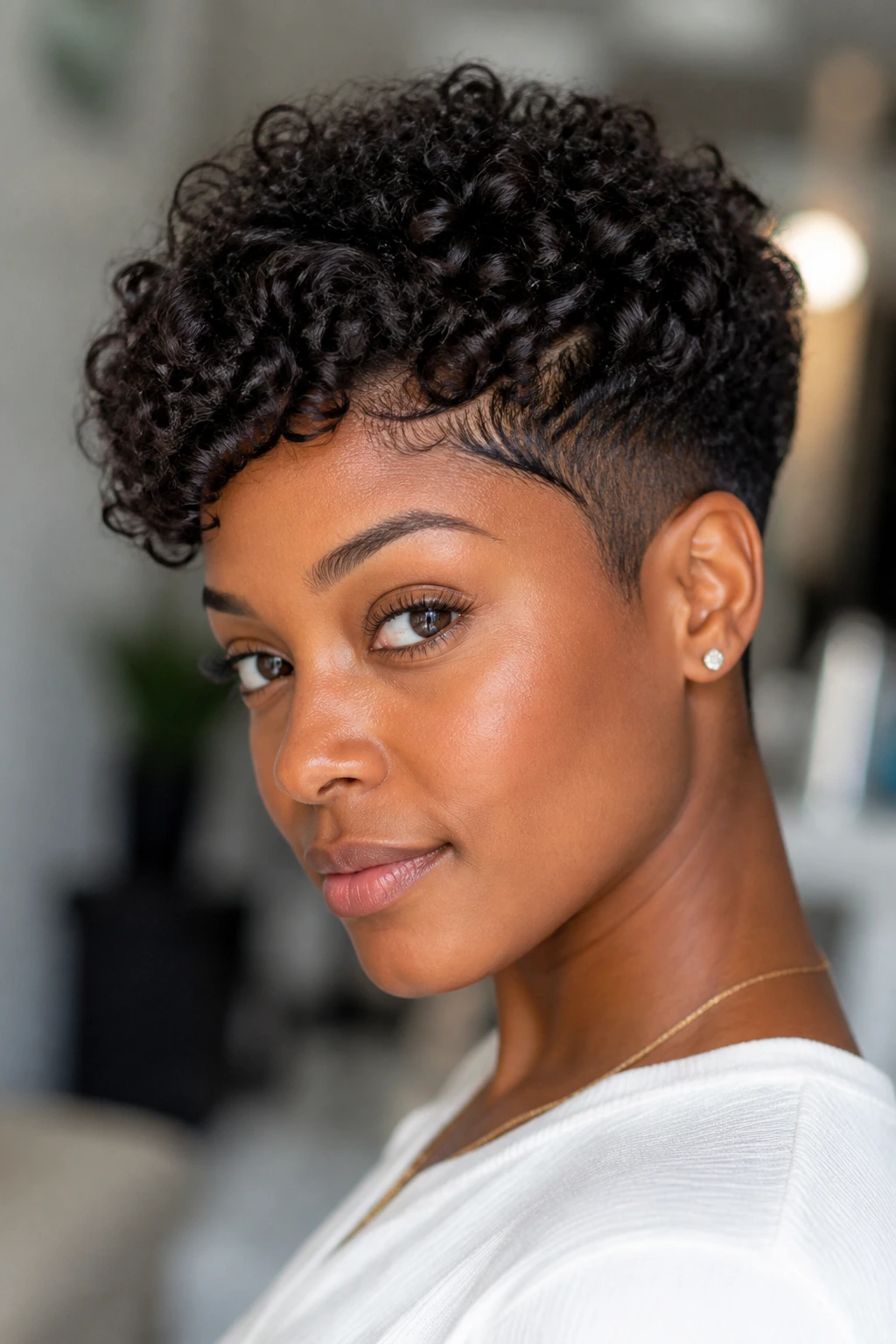
Will a pixie cut work on 4C hair?
Yes, if the cut is shaped around shrinkage and density. A tapered pixie with a little crown length usually works better than a blunt, all-over short crop, because it gives the texture room to sit instead of swelling out.
How often should I trim a Black pixie cut?
Most need a clean-up every 2 to 4 weeks. Fades, undercuts, and linework need the shortest interval, while softer tapered styles can go a little longer if the outline still looks neat.
Can I wear a pixie if I’m growing out relaxed hair?
Absolutely. A pixie can make the line between relaxed ends and new growth easier to manage, especially if the stylist leaves enough length at the top to blend the textures during the grow-out.
What if my hairline is thin or uneven?
Skip very sharp temple lines and ask for a softer taper instead. A slight side sweep or fringe can hide irregular spots better than a hard edge that exposes every detail.
Do I need heat for a pixie?
No, not for every version. Natural coils can be defined with leave-in, mousse, and a diffuser, while sleek looks may need a quick flat-iron pass or a wrap set. Heat is a tool, not a rule.
How do I stop mousse and edge control from flaking?
Use less product and layer it over clean hair. If you can feel a crust forming when you touch the hair, there’s too much on it. Clarifying once a week helps too.
Can I still wear accessories with a very short pixie?
Yes, and they stand out more on short hair. Small hoops, a jeweled clip, or a slim headband can change the mood fast because there is less hair competing for attention.
What’s the safest first pixie if I’m nervous about going short?
A grow-out friendly tapered crop. It keeps enough length at the crown and fringe to feel soft while still giving you the ease of a shorter cut.
The Shape Does the Talking
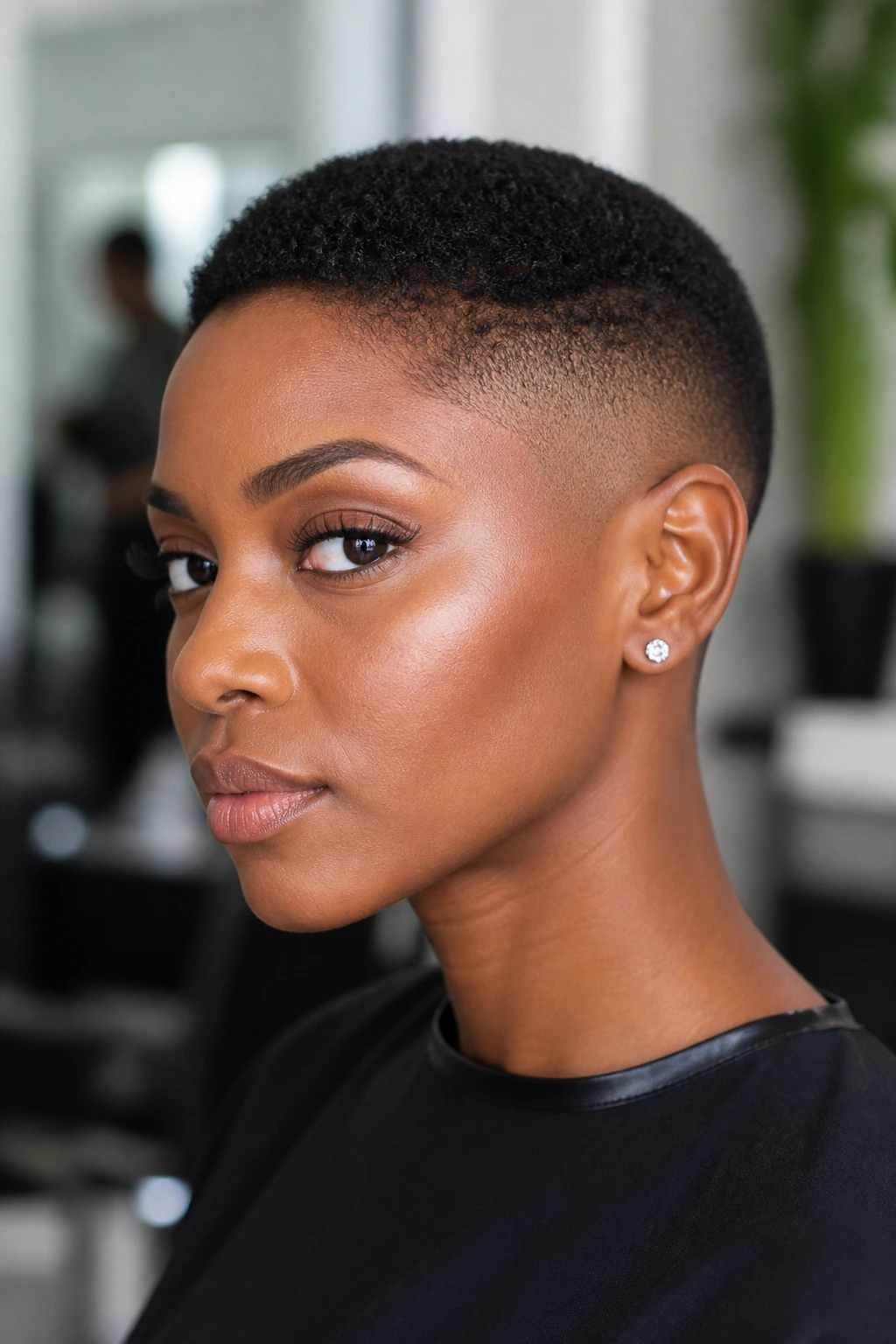
A pixie can be tiny in length and big in presence. That is the whole appeal. The right cut makes the neckline cleaner, the eyes brighter, and the face look more awake before you’ve done anything else.
If you take one thing from all these pixie cuts for Black women, let it be this: ask for shape first, then length. Bring photos. Talk about the crown, the nape, the fringe, and how much daily styling you’re actually willing to do. That conversation saves more bad haircuts than any trend ever could.
The best short cut is the one that looks deliberate on day one and still looks like your haircut three weeks later.
