



Shag haircuts for long hair over 40 work because they solve a very specific problem: the hair is still long, but it no longer has to hang there like one heavy sheet. The right shag takes the weight off the ends, lifts the crown, and keeps the face from being swallowed by length. Done well, it looks lived-in and intentional. Done badly, it looks like you lost a fight with a pair of kitchen scissors.
Age changes hair texture in small, annoying ways. The front can get finer, gray strands can come in coarser, roots flatten faster, and the ends can start feeling either stringy or bulky with no in-between. A blunt cut often makes that imbalance more obvious. A long shag, on the other hand, can redistribute where the bulk sits, which is why so many people keep circling back to it after they’ve spent a few years trying to force long hair into shapes it doesn’t want to hold.
The best long shags have a plan. The shortest layers land where they help the face, not where they fight it. The longer layers keep the length you want, not the length a salon wants to show off on Instagram. And the whole cut still behaves when you tuck it behind one ear, twist it into a low clip, or rough-dry it and leave the house with damp roots and a coffee in hand.
Why Long Shags Earn Their Keep After 40

-
They take weight off without taking length away: Long hair gets dragged down by its own density, especially if the ends are blunt and the layers are all living in one place. A shag lets the hair move again while still reaching past the shoulders.
-
They soften the face in a way a single-length cut can’t: The shortest pieces can sit at cheekbone, lip, or collarbone level depending on your features, which matters when you want lift around the eyes without a fringe that feels too stiff.
-
They handle texture changes better: Gray strands, coarse patches, and post-hormonal shifts in density can all show up at once. Shag layers make those changes look like shape, not damage.
-
They work with less styling time: A long shag can air-dry, bend with a brush, or look decent on second-day hair. That’s not a marketing line. It’s the actual reason people stick with it.
-
They grow out with a little grace: When the cut starts to soften, it usually still looks deliberate for weeks, not days. The shape blurs instead of collapsing.
-
They can go soft or edgy: You can push a shag toward feathered and polished, or keep it piecey and undone. The bones of the cut stay the same; the finish changes with the styling.
1. Soft Curtain-Bang Shag
This is the version I’d hand to anyone who wants movement without making a scene. The curtain bangs open at the center and sweep out around the cheekbones, while the long layers below keep the ends from feeling bulky. It’s one of the easiest shag haircuts for long hair over 40 because it gives shape at the front and still lets you keep real length in the back.
Why it flatters long hair
The magic is in the balance. Curtain bangs pull attention upward, but they do it gently, without locking you into a heavy fringe that needs daily fussing. The longest face-framing pieces should graze the lips or chin, which keeps the shape soft rather than boxy.
If your hair has started to feel a little flat at the top and a little too thick at the bottom, this cut fixes both at once. It also plays nicely with glasses. The front pieces can be adjusted so they don’t fight your frames every time you blink.
A good version isn’t over-thinned. The ends still need some presence, or the whole thing starts looking wispy by day two.
2. Feathered Layers That Move Without Looking Choppy
Feathering is one of those old-school ideas that keeps surviving because it works. The best feathered long shag cuts take a dense curtain of hair and break it into softer pieces that bend instead of hanging like a drape. On thick hair, that matters. A lot.
The trick is not to overdo it. Too many short pieces and you get a halo that puffs out around the head. Just enough feathering at the front and mids, though, and the cut suddenly looks lighter, especially if your hair has a strong wave or a bit of bend.
Best for:
- Hair that feels heavy by the collarbone
- People who like a blowout more than a flat-ironed finish
- Anyone whose ends puff up when the weather turns damp
Ask for this at the salon
Tell the stylist you want soft feathering, not aggressive texture removal. That distinction matters. Feathering should create movement, not gaps. If your hair is fine, keep the shortest layers longer than you think; otherwise the bottom can go transparent once you style it.
3. Curly Halo Shag for Natural Texture

Why do curly shags often look better on long hair than shorter ones? Because curls need room to fall. A long shape gives each curl enough weight to stretch into its own pattern, while the layers stop the whole head from puffing into a triangle.
This cut is especially useful when your curl pattern changes from front to back. Maybe the nape is tighter, the crown is looser, and the temples do their own odd little thing. A good curly shag can make that chaos look intentional. It doesn’t force the hair into one curl size. It just gives the curls a better frame.
How to style it
The cleanest result usually starts on damp hair with a curl cream or mousse, then a diffuser on low heat. Hands off once the curls start forming. If you keep touching them, you break the clumps and lose the shape the haircut was trying to give you in the first place.
For tighter curls, ask for a dry cut if the stylist knows how to read shrinkage. A curl that looks shoulder-length when wet may spring up three inches or more once it dries. That’s where many bad shag cuts go off the rails.
4. Wolf-Adjacent Shag With a Little Edge
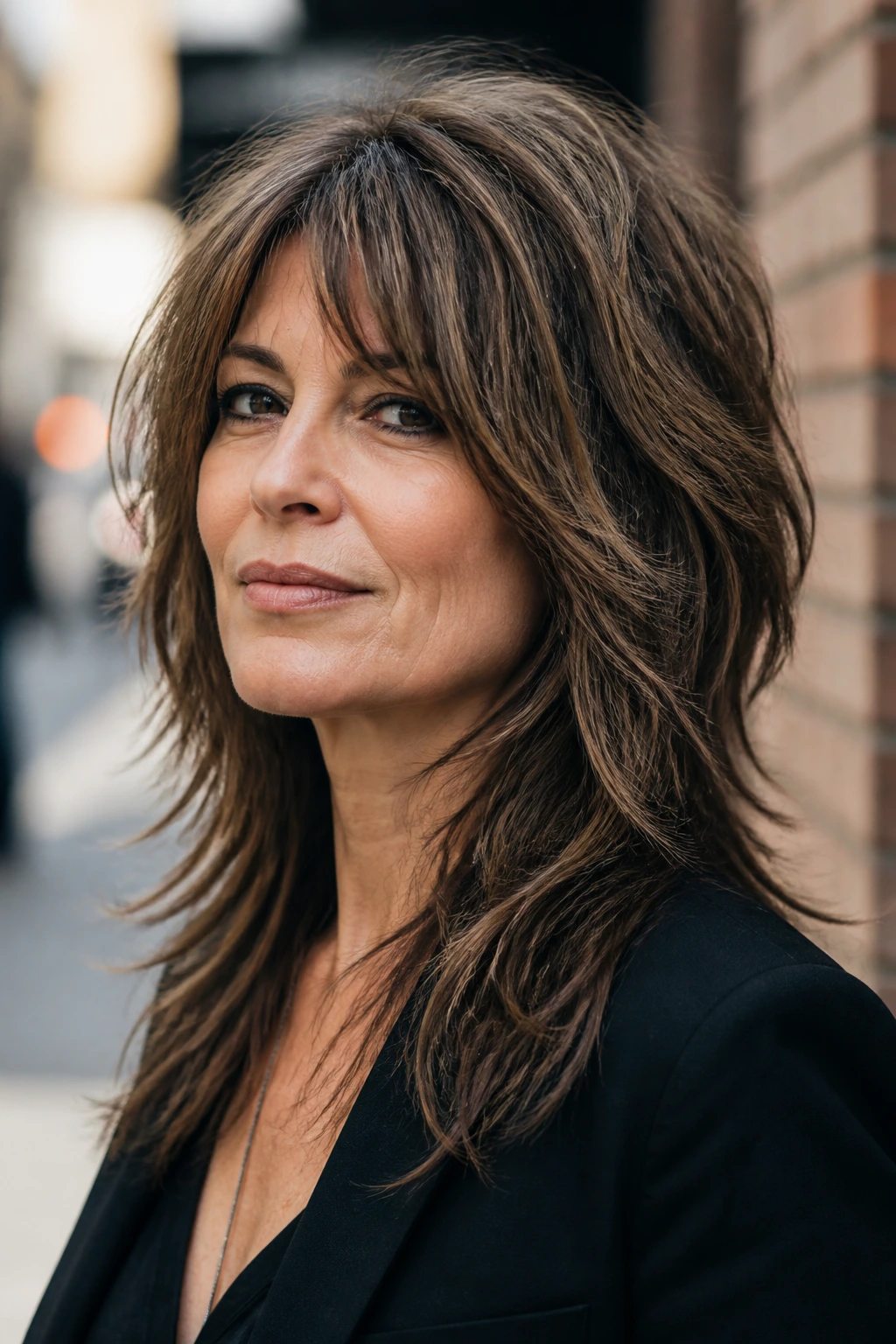
If you’ve ever asked for “something cooler, but not a mullet,” this is the haircut you were probably trying to describe. The wolf-leaning shag keeps more volume at the crown, with longer length in the back and a little extra attitude around the face. It feels less polished than a feathered shag and more deliberate than a grow-out.
I like this shape for hair that needs personality. Straight hair gets bend. Wavy hair gets a better outline. Thick hair gets relief at the top without losing its backbone at the bottom.
It does have a line it shouldn’t cross. Push the front too short or the crown too high, and the whole thing turns spiky in a way that feels try-hard fast. The sweet spot is choppy, yes, but still wearable at lunch, not just under club lights.
- Keep the shortest pieces around cheekbone level if you wear your hair down most days.
- Ask for the back to stay long enough to still brush into a low ponytail.
- Finish with a pea-sized amount of paste on the ends, not a thick cream that weighs everything down.
5. Side-Swept Fringe Shag

A side-swept fringe is the practical cousin of curtain bangs. It softens the forehead, slides naturally into a side part, and doesn’t ask you to keep two clean curtains separated in the middle every morning. That last part matters more than people admit.
This version works especially well if you have a cowlick at the hairline or a part that refuses to sit still. The fringe can be cut to sweep in the direction your hair already wants to go, which is a small kindness that turns into a big one when you’re styling at 7:10 a.m.
The key is to keep the fringe airy. Heavy side bangs can feel dated fast, and they can also take too much visual space away from the eyes. A wispy side sweep, though, gives the cut a little motion without turning the front into a wall.
If you wear your hair tucked behind one ear a lot, this cut does a nice job of softening that habit. The shape still looks finished even when half of it is pulled away from the face.
6. Long-Game Transitional Shag for Growing Length

Unlike a blunt cut that only changes the bottom few inches, this version works like a quiet correction. The perimeter stays long and strong, while the interior layers do the real work of removing bulk and keeping the shape from feeling bottom-heavy.
It’s the best choice when you’re growing out a shorter layered cut and do not want to sacrifice the length you’ve already earned. That’s the actual situation for a lot of long-haired women over 40: the cut got out of sync with the hair, but the thought of starting over feels irritating. This keeps the length while cleaning up the silhouette.
Best if you want:
- Hair that still fits into a clip or low twist
- Softness around the face without a dramatic fringe
- A cut that looks better, not shorter, as it grows
The trick is to ask for internal layers, not a heavily chopped exterior. The outline should stay readable. If the ends get too shredded, the style loses that long, expensive fall and starts reading as accidental.
7. Silver-and-Gray Shag for Coarser Texture
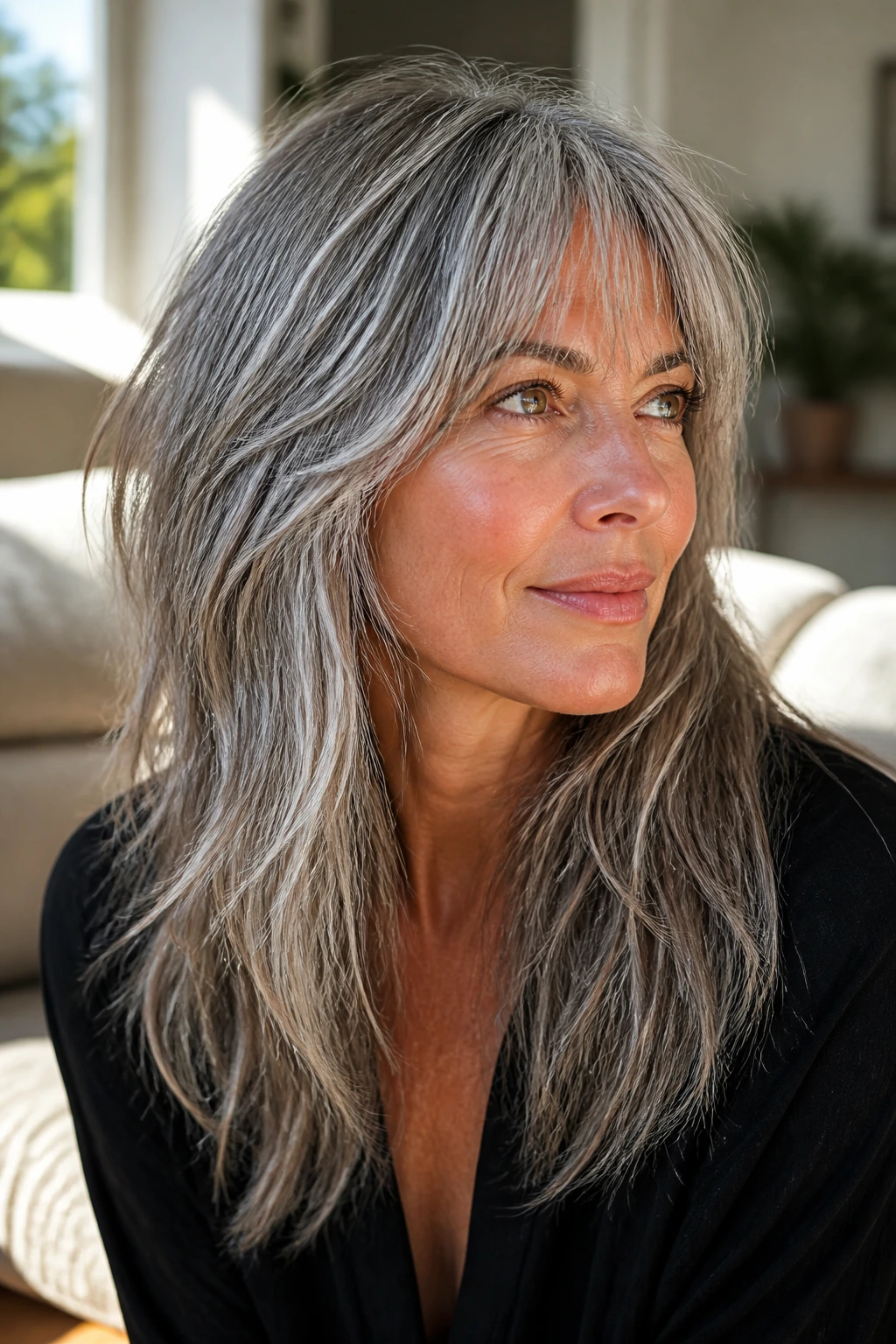
Gray hair is one of the best arguments for shag layers, mostly because silver strands can be both gorgeous and stubborn. They reflect light differently, feel a bit wirier, and often sit with more lift than the hair had before the color change. A long shag works with that shift instead of fighting it.
The right cut keeps the gray from ballooning out into a rounded mass. It also gives bright silver pieces room to move around the face, where they catch light without needing any color tricks at all. And when the hair has a little natural texture, the layers keep it from looking too dense at the ends.
A small note here: don’t carve too many short pieces into coarse gray hair just because it feels thick in the chair. Gray strands can shrink and frizz more than expected once they dry. I’d rather keep some weight and polish the edges than over-texturize and spend the next month chasing flyaways.
This is one of those cuts that looks better with a little shine serum on the last two inches only. Not the roots. Just the ends.
8. Air-Dry Shag for Wavy Hair

If your hair falls into a soft wave and you’re tired of pretending you’ll round-brush it every day, this version has a job to do. The layers should land where your natural bends already want to form, not fight them. That means the haircut should encourage the wave to swing, not collapse.
The result is hair that dries with movement instead of a triangle at the bottom and flatness at the crown. You’ll still need some product, but not a whole styling ritual. A little mousse or wave cream on damp hair, scrunched through from mid-length to ends, often does the trick.
The no-drama routine
- Apply mousse to towel-dried hair, then scrunch upward.
- Clip the roots at the crown for 10 to 15 minutes if they tend to lie flat.
- Don’t brush it once it starts drying.
- Break up the cast, if there is one, with dry hands or a tiny bit of oil.
The haircut matters because the layers tell the wave where to move. Without that shape, air-dried hair tends to do its own unpredictable thing near the shoulders.
9. Razor-Shaped Piecey Shag
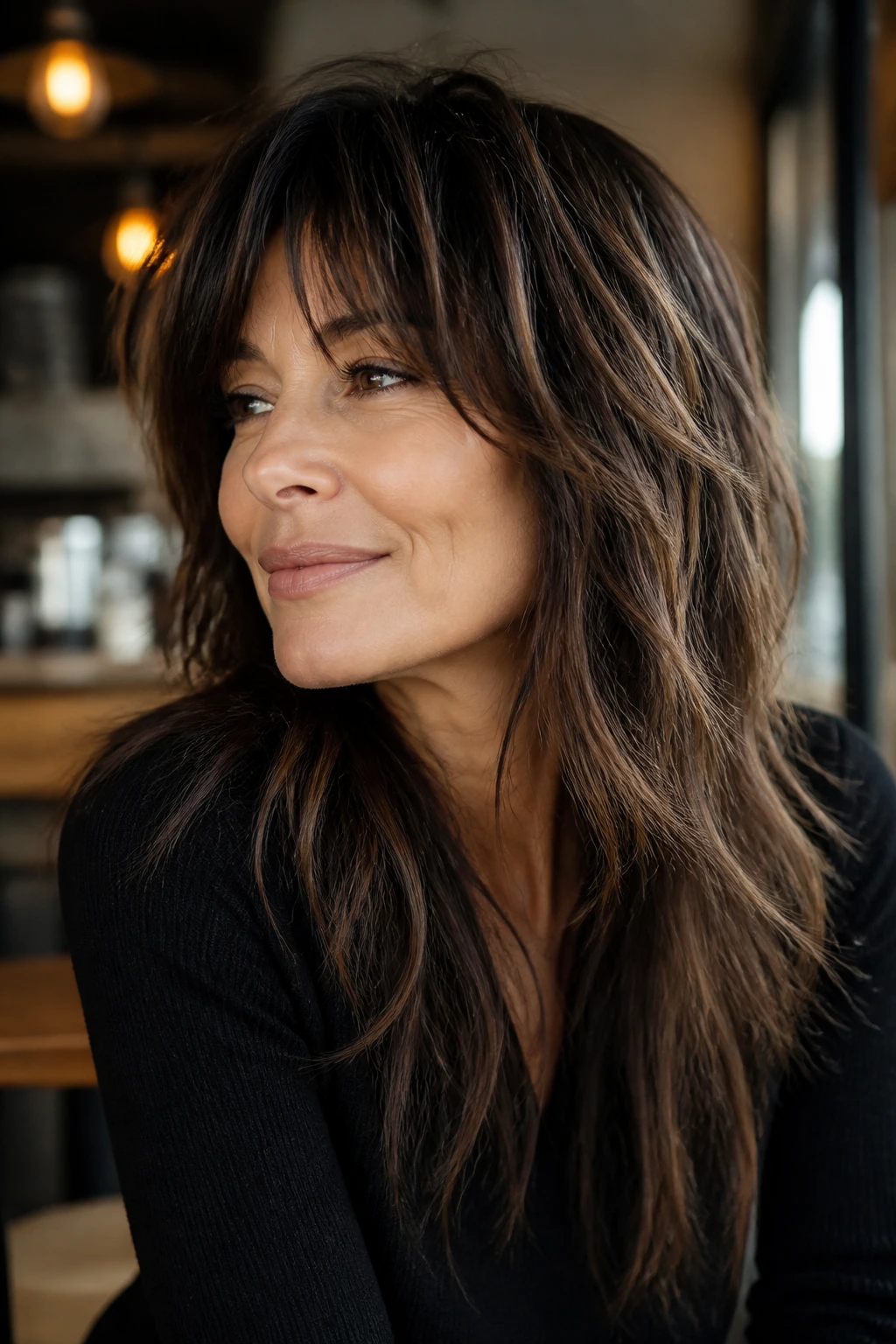
I like a razor shag only when the hair can actually take it. On healthy, thick, or very springy hair, razor cutting can create those soft, separated ends that make a long shag look light instead of blunt. On fragile or split ends, it can be a disaster in slow motion.
This cut is about separation. The ends don’t sit as one dense curtain; they break into visible pieces. That makes the style feel modern without asking for much styling product. A little texture spray can wake it up. Too much cream can shut it down.
Who should skip the razor
If your hair is already dry, lightened, or prone to fraying, ask for scissors and point cutting instead. A razor can leave the outer edges looking fuzzy, especially around the jaw and neckline. That fuzz is not texture. It’s damage showing up in a new shape.
For the right hair, though, this shag moves beautifully when you turn your head. It has swing. It has air. It does not need to be perfect, and that’s the point.
10. Glam Blowout Shag
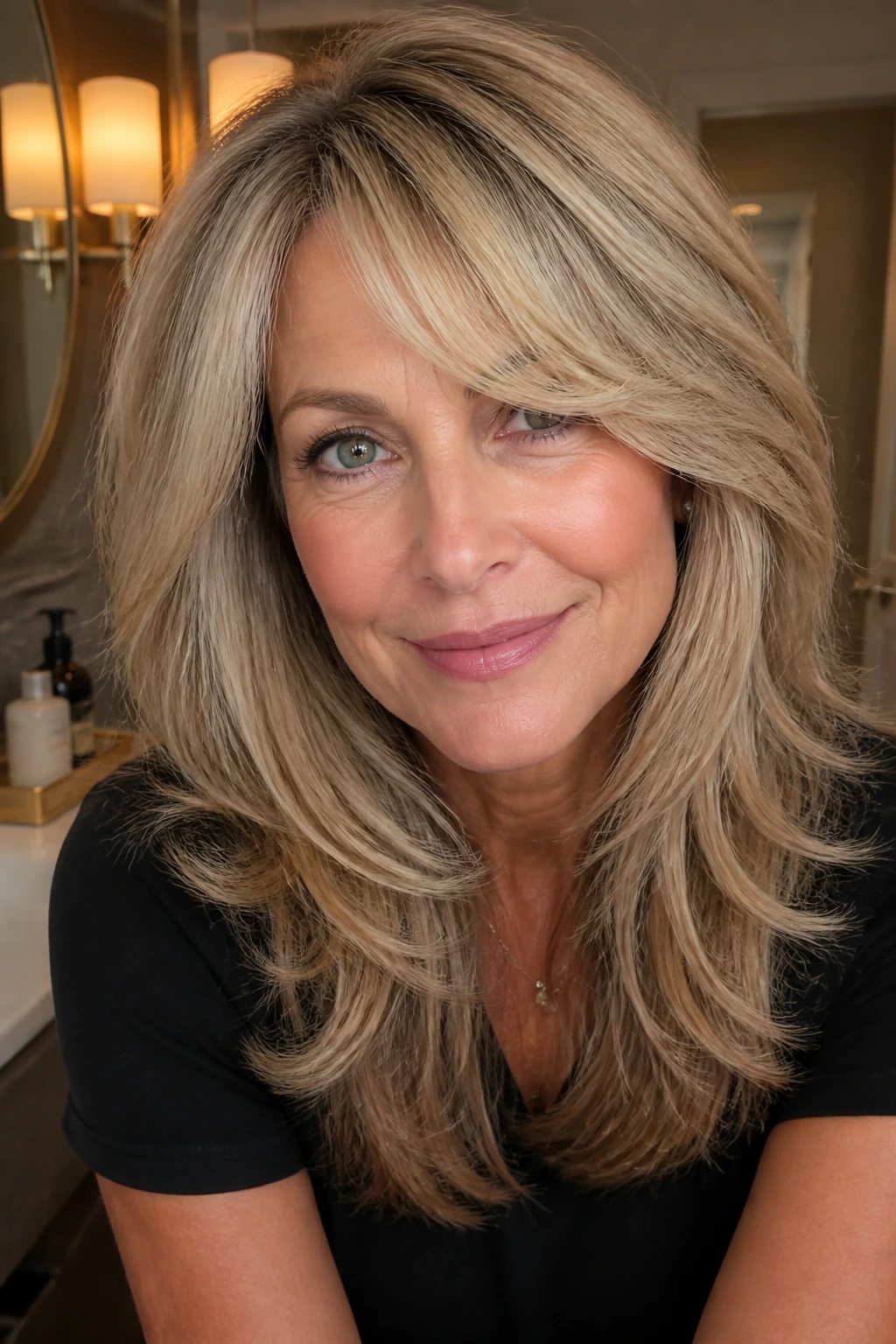
This is the shag for people who like the shape of layers but still want shine and bounce. The haircut itself is softer than a rock-textured version; the styling does the work. A round brush, a decent blow-dryer, and a little patience around the crown make a bigger difference than any product ever will.
The shortest pieces should bend away from the face, not kick out at random. The longer layers should fold under slightly at the ends, so the whole cut reads as full rather than fluffy. If the result looks like you’ve slept in rollers, the layers are probably too high or too choppy.
What to use
- 1.5- to 2-inch round brush: Big enough to smooth, small enough to create bend.
- Heat protectant: Every time. Dry hair shows heat damage fast.
- Volumizing mousse: A golf-ball amount at the roots adds lift without stiffness.
- Velcro rollers: Optional, but they’re useful at the crown if your roots cave in.
This version is especially flattering on long hair that’s gotten flat from years of ponytails, buns, and fast blow-dries. It gives back some shape without looking over-styled.
11. Bottleneck Bang Shag
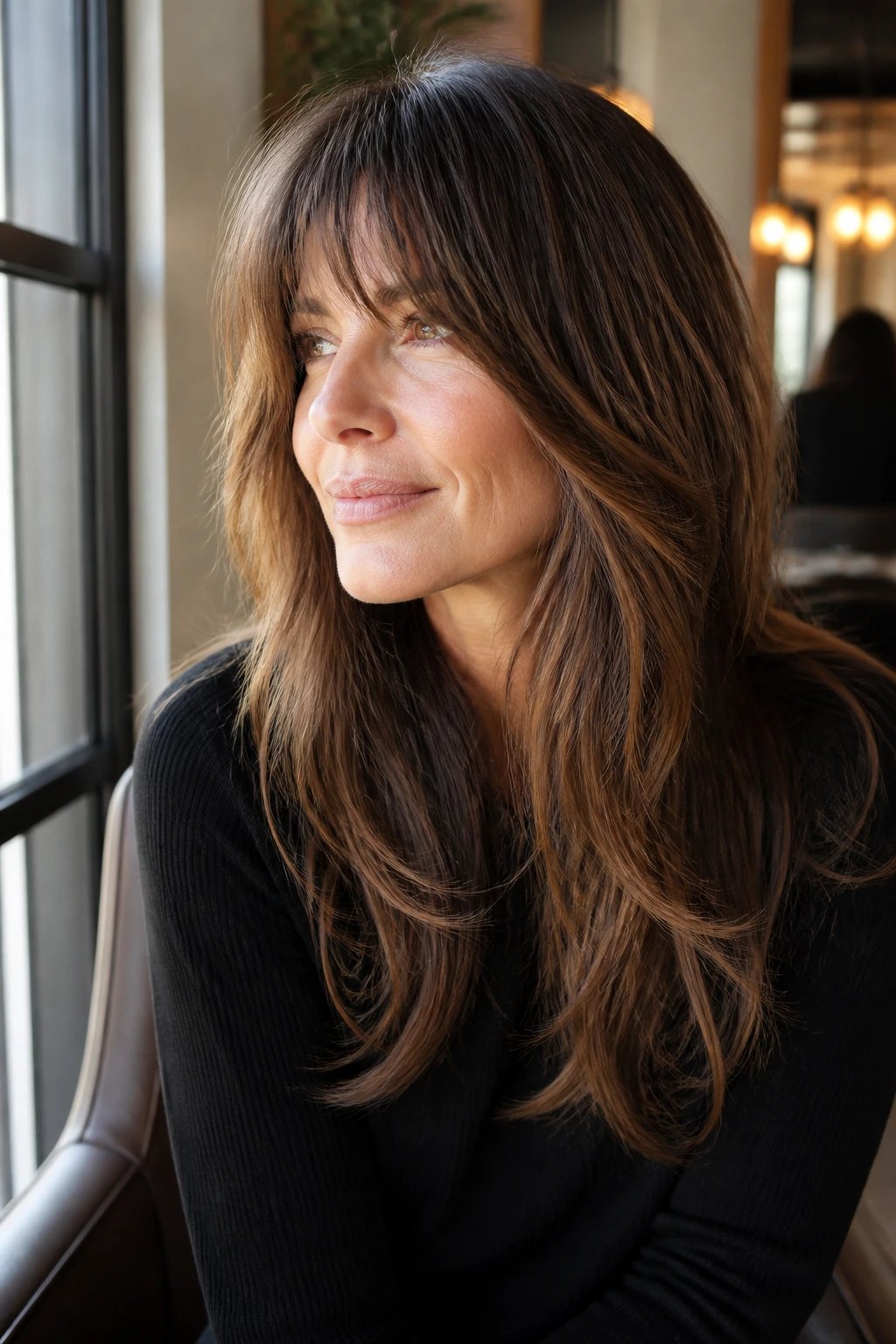
What if curtain bangs feel too wide and blunt bangs feel too heavy? Bottleneck bangs sit in that middle ground. They’re a little shorter in the center, longer at the sides, and they blend into the face-framing layers instead of stopping like a curtain dropped from the ceiling.
I think this is one of the best fringe choices for women over 40 because it gives face movement without eating up too much forehead space. That sounds like a small thing until you actually live with it. Then it becomes the difference between a fringe you enjoy and a fringe you keep pinning back.
The shape works especially well with long hair because it keeps the front interesting while the rest of the length stays soft and wearable. It can hide a high forehead, soften a strong brow, and still grow out in a way that doesn’t look like a mistake after three weeks.
If you wear glasses, make sure the side pieces are long enough to sit above or around the frames, not right across them. That tiny adjustment saves a lot of frustration.
12. Deep Side-Part Shag
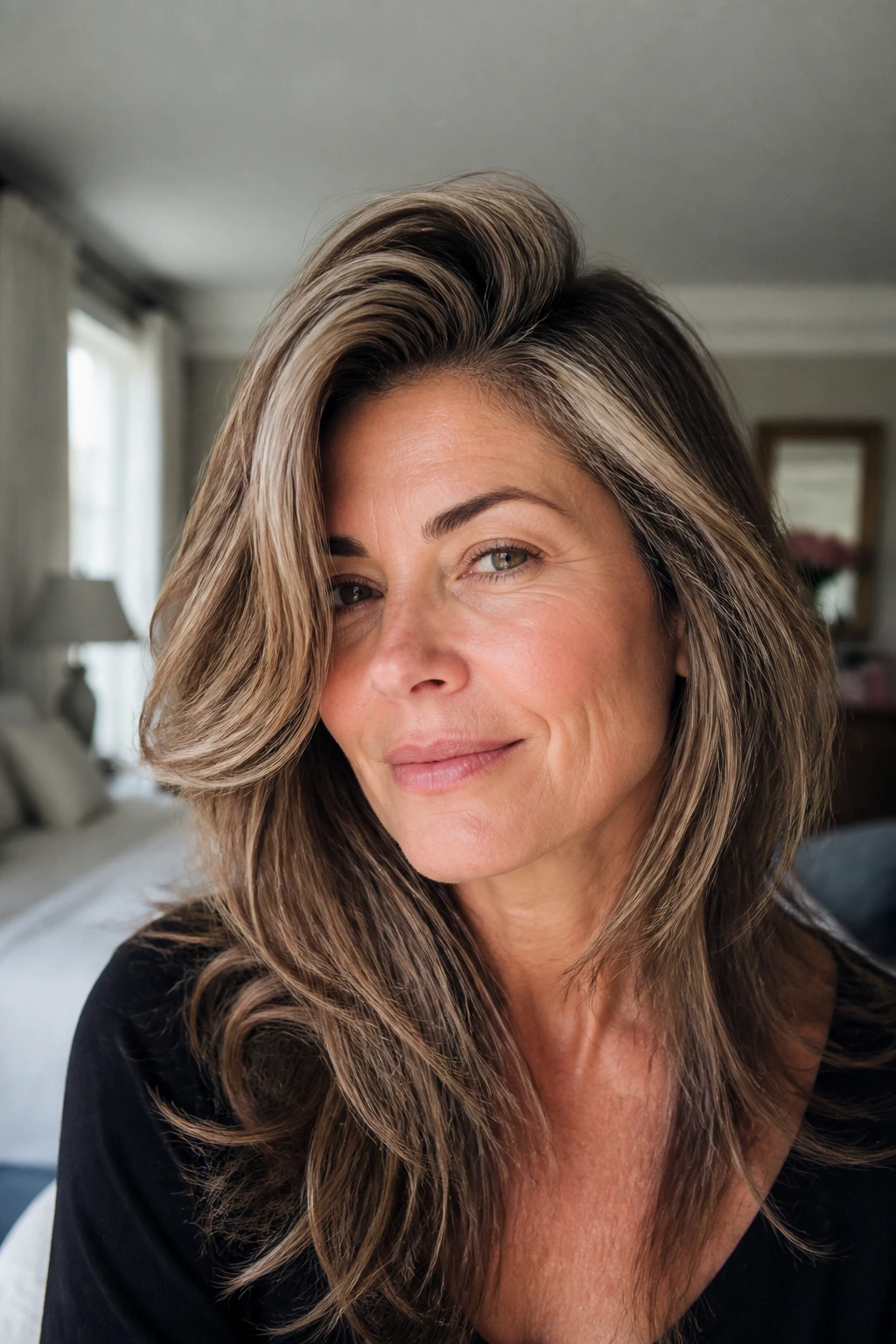
Move your part an inch, and the whole haircut changes. That’s the beauty of a deep side-part shag. The side part gives the roots immediate lift, sends the front into a sweeping line, and creates the kind of asymmetry that makes long hair look intentional instead of just long.
This cut is especially useful if one side of your hair falls flatter than the other, or if your crown starts collapsing by lunchtime. A deep side part hides that problem in plain sight. The heavier side creates the illusion of fullness, and the lifted side opens up the face.
It’s also a smart move if you’re not ready for bangs but still want that sense of framing. The haircut can be built with a longer front layer on the heavier side and a softer sweep on the lifted side, which keeps the shape from feeling lopsided in a bad way.
I’d pair this with a lightweight root spray at the part, then a quick blast from the blow-dryer at the roots before styling the lengths. That little bit of lift at the start makes the rest of the cut behave better.
13. Invisible-Layer Shag
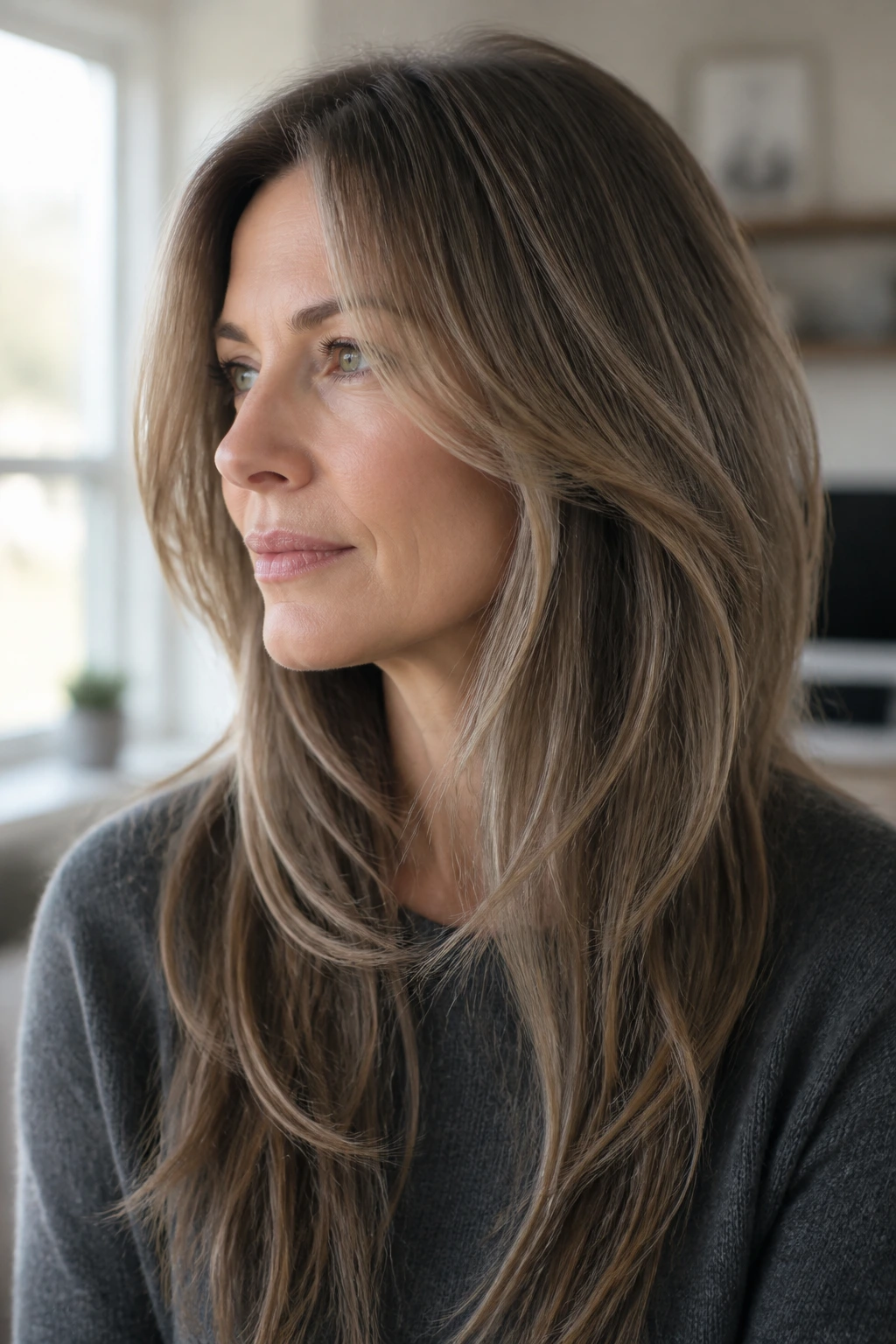
Some people love obvious layers. Others want the movement without the visible chop. This is the version for the second group. Invisible layers sit inside the hair, removing weight where you feel it but keeping the outside line much cleaner.
The result is a long shag that reads nearly one length when it’s hanging still, then breaks into movement the moment you move. That’s a nice trick if you want something polished enough for a work setting but not so stiff that it feels old-fashioned.
Why it works
The perimeter holds the shape. The internal layering stops the ends from dragging. You get the benefits of a shag—lift, swing, less heaviness—without the obvious staircase effect that some layered cuts create.
It’s a strong choice for finer hair that can’t afford to lose too much density at the edges. It’s also a good option if you like to keep your hair braided, clipped, or half-up, because the outside line still looks tidy when the hair is gathered back.
14. Retro Rocker Shag

This one has attitude. The ends flick out a little, the crown gets some lift, and the face-framing layers have enough texture to suggest movement even when the hair is barely styled. It feels a little 70s, a little concert-hall, and a little less obedient than the other shags on this list.
The useful part is that it doesn’t need to look aggressive. On long hair, a rocker shag can still stay soft at the bottom while keeping the top lively. The haircut is doing the heavy lifting, so you don’t need to pile on product like you’re sculpting a helmet.
A finger-dried finish keeps this version from looking too slick. I’d use a small amount of texturizing cream at the mids, then twist a few front pieces with your hands while they dry. That gives the style a lived-in bend instead of a fake curl.
If you’ve spent years wearing your long hair very straight, this is the cut that can wake it up without forcing you to chop off the length.
15. Crown-Lift Shag for Flat Roots
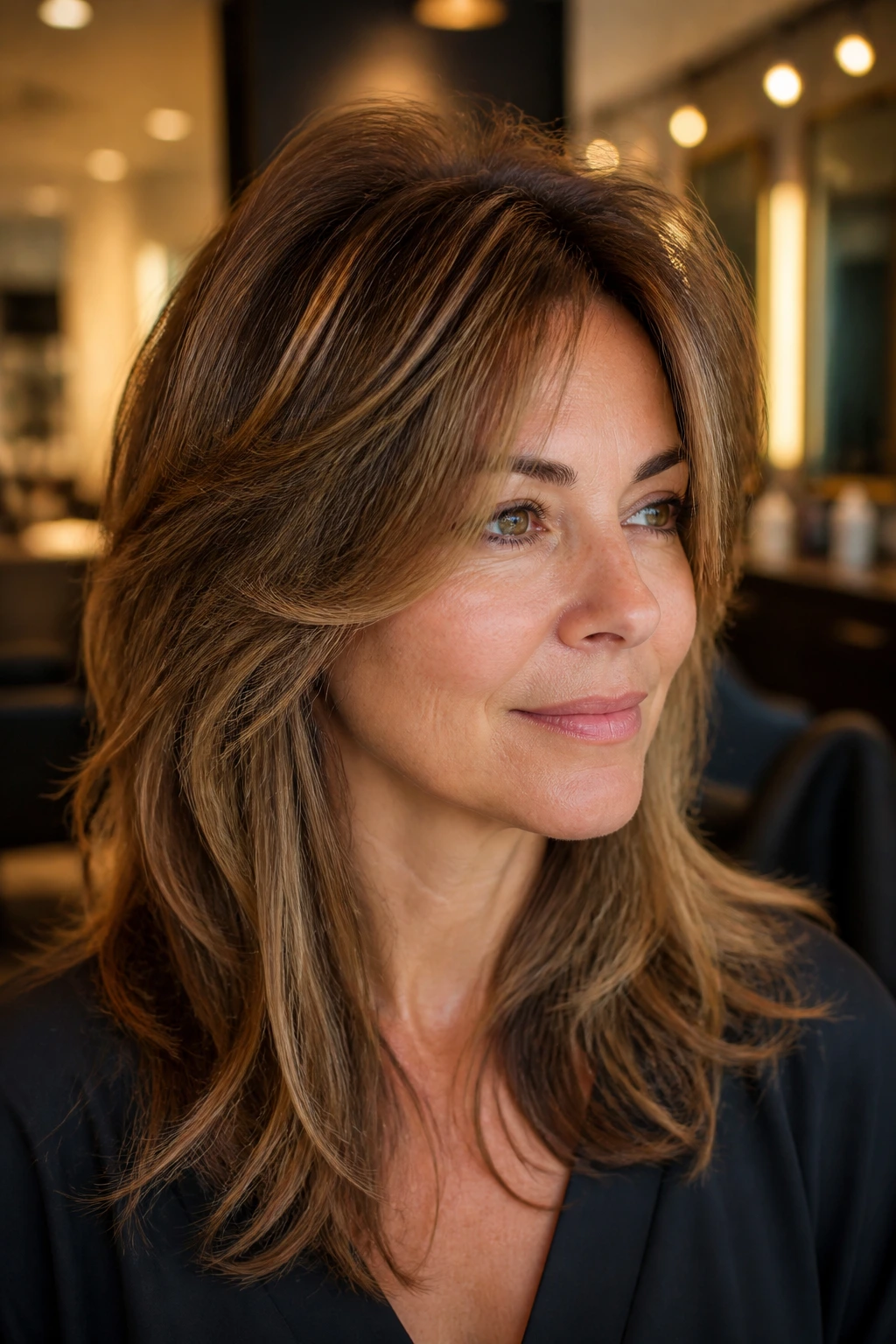
Flat roots make long hair look tired fast. The fix is not always more product. Sometimes the cut has to help. A crown-lift shag puts more of the layering pressure up top, where the hair needs a nudge to stand away from the scalp.
Where the shape matters most
The shortest internal layers should live around the crown and upper sides, with enough length left in the lower half to keep the haircut from puffing out like a triangle. That balance is delicate. Too much crown layering and the hair looks thin at the top. Too little and the lift disappears by noon.
This is a good match for hair that looks great for 20 minutes after a blow-dry and then sinks. It’s also useful if you like wearing your hair half-up, because the crown already has some built-in movement.
A round brush at the roots helps, but the cut does most of the work. If you want more body without a lot of styling, ask the stylist to keep the longest layers solid and focus the lift higher up.
16. Soft-Edged Shag for Fine Hair

Fine hair needs a light touch, not a hacking session. That’s the whole philosophy here. A soft-edged shag keeps the layers long enough to preserve density, then uses gentle face framing and subtle internal layering to create motion without exposing the scalp or shredding the ends.
The best version of this cut looks plush, not sparse. That means the perimeter stays intact and the layers are spaced out enough to let the hair breathe. If you overdo the texture, fine hair turns see-through fast, especially at the front and around the temples.
Use mousse, not a heavy cream. Use root lift, not a pile of wax. And if the hair is straight, a quick bend with a large iron can make the layers show up without making them look overworked.
What to avoid
- Short layers at the crown
- Too much razoring
- Heavy oils near the top
- Thinning shears on already delicate ends
This is one of those cuts that gets better, not worse, when the stylist is a little restrained.
17. Polished Long Shag With Clean Ends

If you like a haircut that reads as tailored rather than wild, this is the one to bookmark. The layers are still there, but they’re refined. The ends stay clean. The front has movement, not fray. It feels like a long shag that went through a good tailor’s studio before it hit your shoulders.
This is a smart choice for women who want softness around the face but don’t want to look like they’re always heading to a music festival. The line at the bottom gives the style some weight, which keeps long hair from turning wispy or over-textured.
It’s also one of the easiest shags to wear at different levels of formality. Blow it smooth and it looks deliberate. Add a little bend and it looks relaxed. Pin half of it back and the shape still holds.
If you’re choosing only one shag to try and you’re nervous about going too choppy, start here. It gives you the movement of a layered cut without giving up the clean finish that makes long hair feel expensive in the first place.
What Makes a Long Shag Look Finished Instead of Choppy
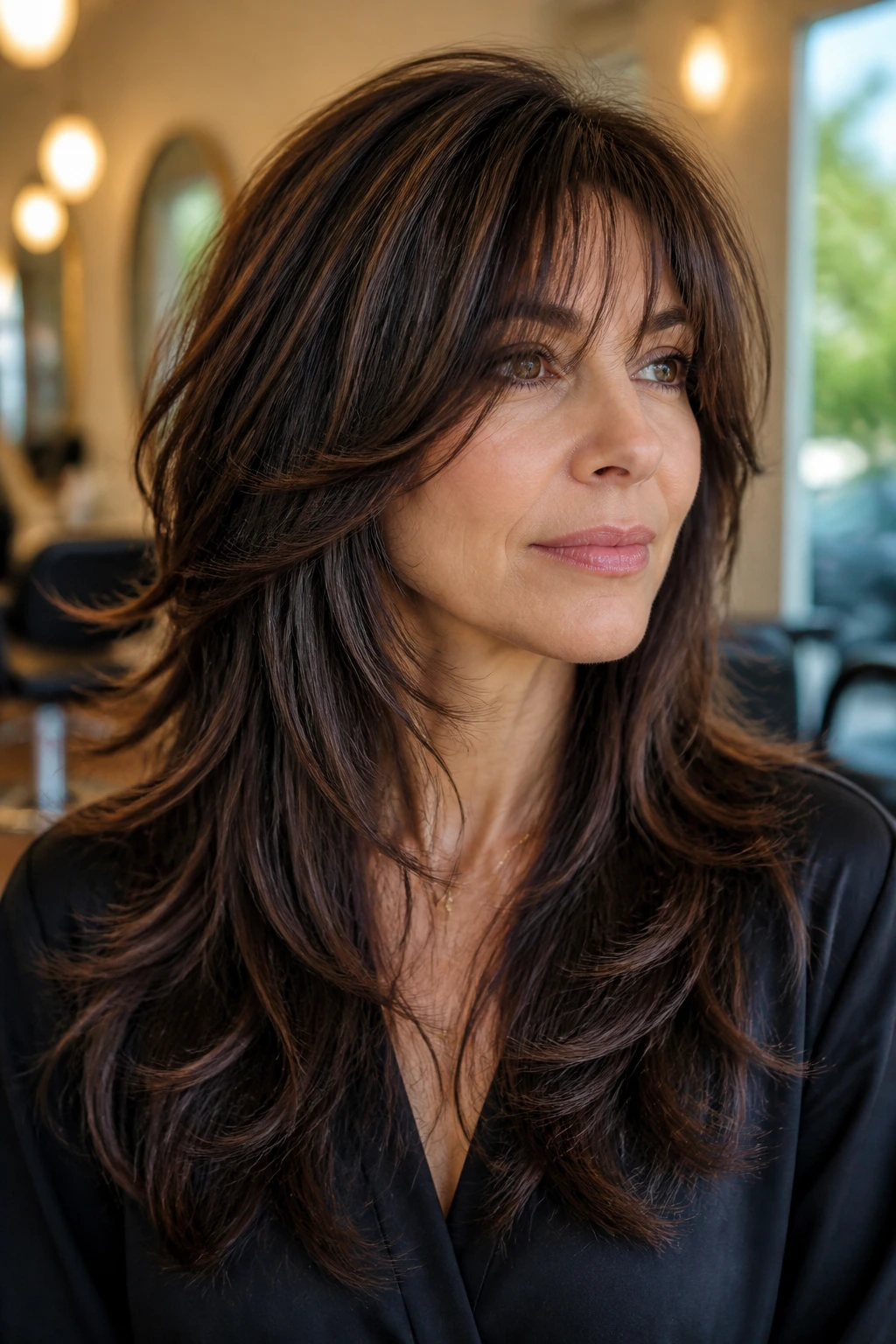
A long shag can go wrong in a very specific way: all the layers shout at once. The crown gets too short, the face frame stops too abruptly, the ends get thinned out, and the whole cut starts reading as accidental. The difference between that and a polished shag is usually structure, not trendiness.
The outside line still matters. If the perimeter is too shredded, the length loses its weight and the hair starts to look thin even when there’s plenty of it. I like a long shag better when the bottom third keeps some density. That’s what gives the cut its swing.
The placement of the shortest layers matters even more. Cheekbone, lip, chin, collarbone — those are the spots that do the best work for long hair. Shorter than that, and the cut can turn into a high-maintenance shape that needs daily intervention. Longer than that, and the face frame may disappear into the rest of the length.
Texture should be selective. A few piecey ends at the front? Fine. Texture carved through the whole head like a comb with anger issues? Not so much. The goal is movement, not visible damage.
What to Tell Your Stylist Before the Shears Come Out
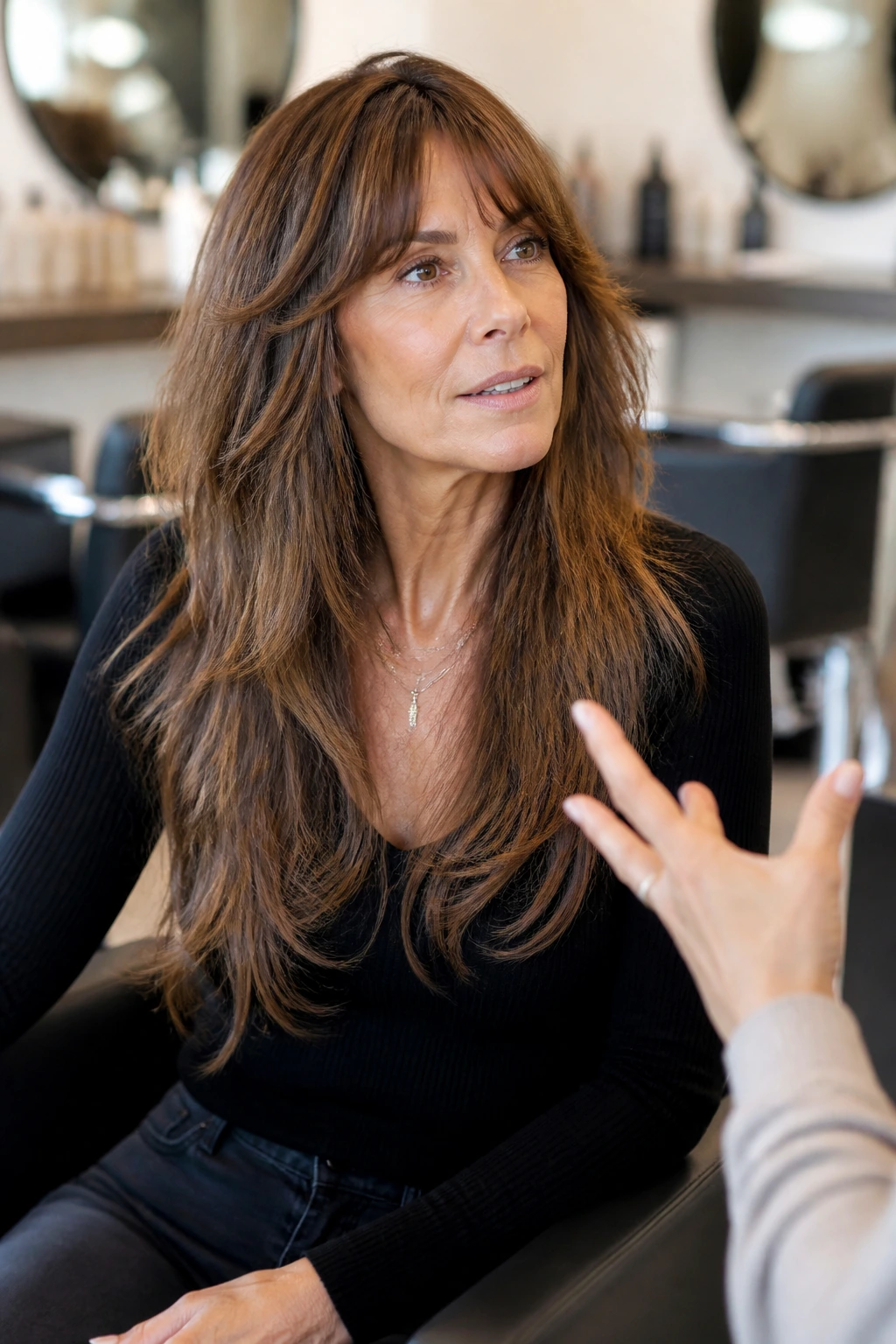
Haircuts go sideways when the conversation is vague. “I want a shag” is not enough. A shag can mean curtain bangs, wolf-ish edges, invisible layers, feathering, or a very soft long layer with a bit of bend. Those are not the same haircut.
Say this in the chair
- Keep the length: Tell them exactly where you want the longest pieces to land. Mid-back, bra-strap, waist, whatever it is.
- Shape the front first: Ask where the face frame should start—cheekbone, lip, or chin are the usual anchor points.
- Leave the ends solid enough to look full: That phrase matters if your hair is fine or gray.
Mention your routine
If you air-dry most days, say so. If you blow-dry with a round brush once a week and call it good, say that too. A shag that looks perfect only after 40 minutes of styling is a bad match for a person who wants the cut to work on real mornings.
Bring photos, yes, but point out what you like in each one. The layers? The fringe? The amount of bulk left in the ends? That part saves everyone time.
Tools and Products That Keep the Layers Moving
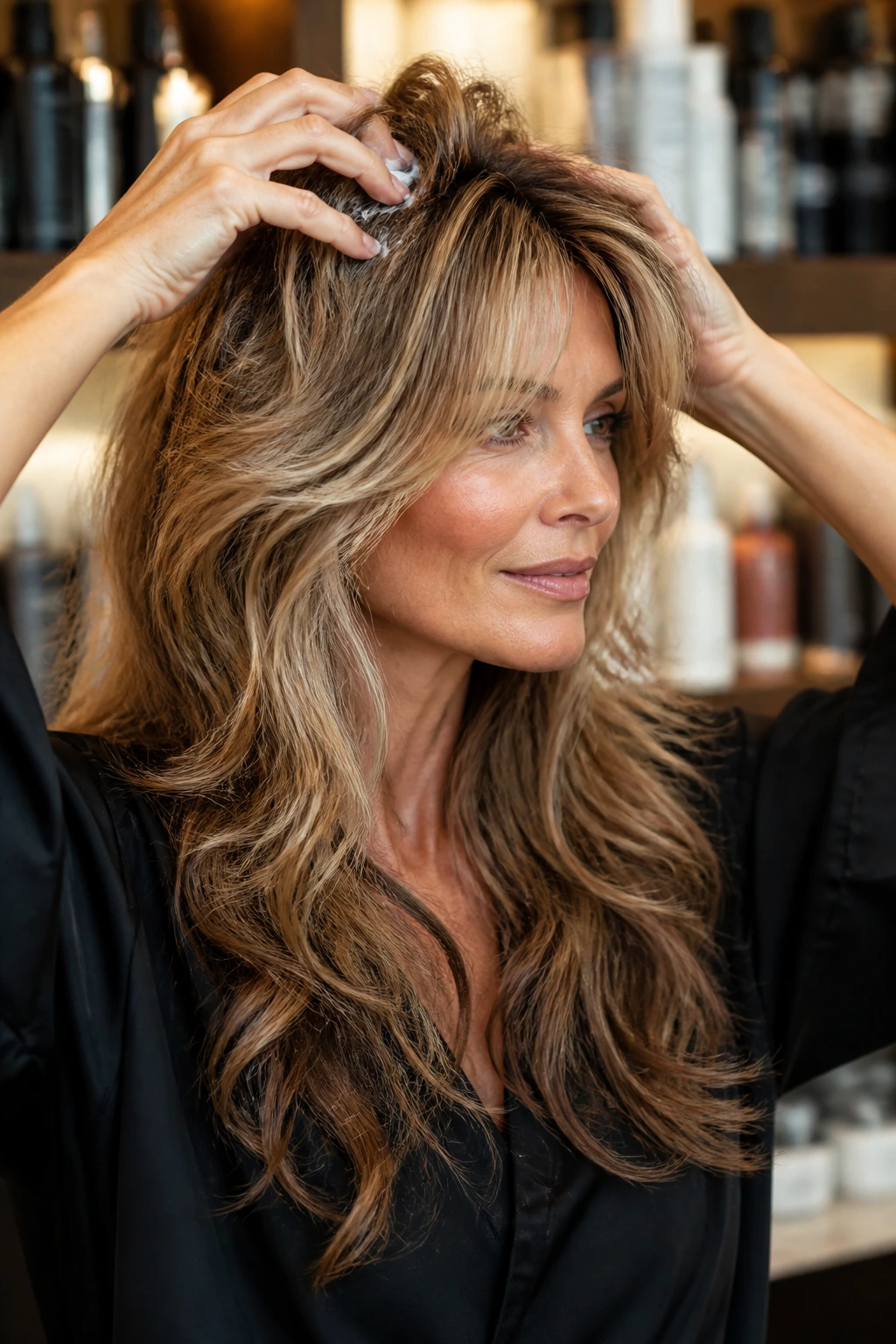
- 1.25- to 1.5-inch curling iron or wand: Good for bending the front pieces and giving a long shag a soft S-curve.
- Medium round brush: Use this for blow-drying the crown and flipping the layers under or away from the face.
- Heat protectant spray: Essential if you use hot tools even twice a week; long hair shows dryness fast.
- Volumizing mousse: A golf-ball amount at the roots helps keep long layers from falling flat.
- Texturizing spray: Best for piecey ends and second-day hair; a light mist beats a heavy hand.
- Light leave-in conditioner: Useful on the mid-lengths and ends, especially if the hair is gray, coarse, or prone to tangling.
- Dry shampoo: Helps the crown keep lift between washes, but don’t bury the hair in it or the layers will look dusty.
- Wide-tooth comb: Better than a fine brush when the hair is wet and the layers need detangling without stretch.
- Clips for root setting: Optional, but handy if your crown collapses while you get dressed.
How to Style a Long Shag on Busy Mornings
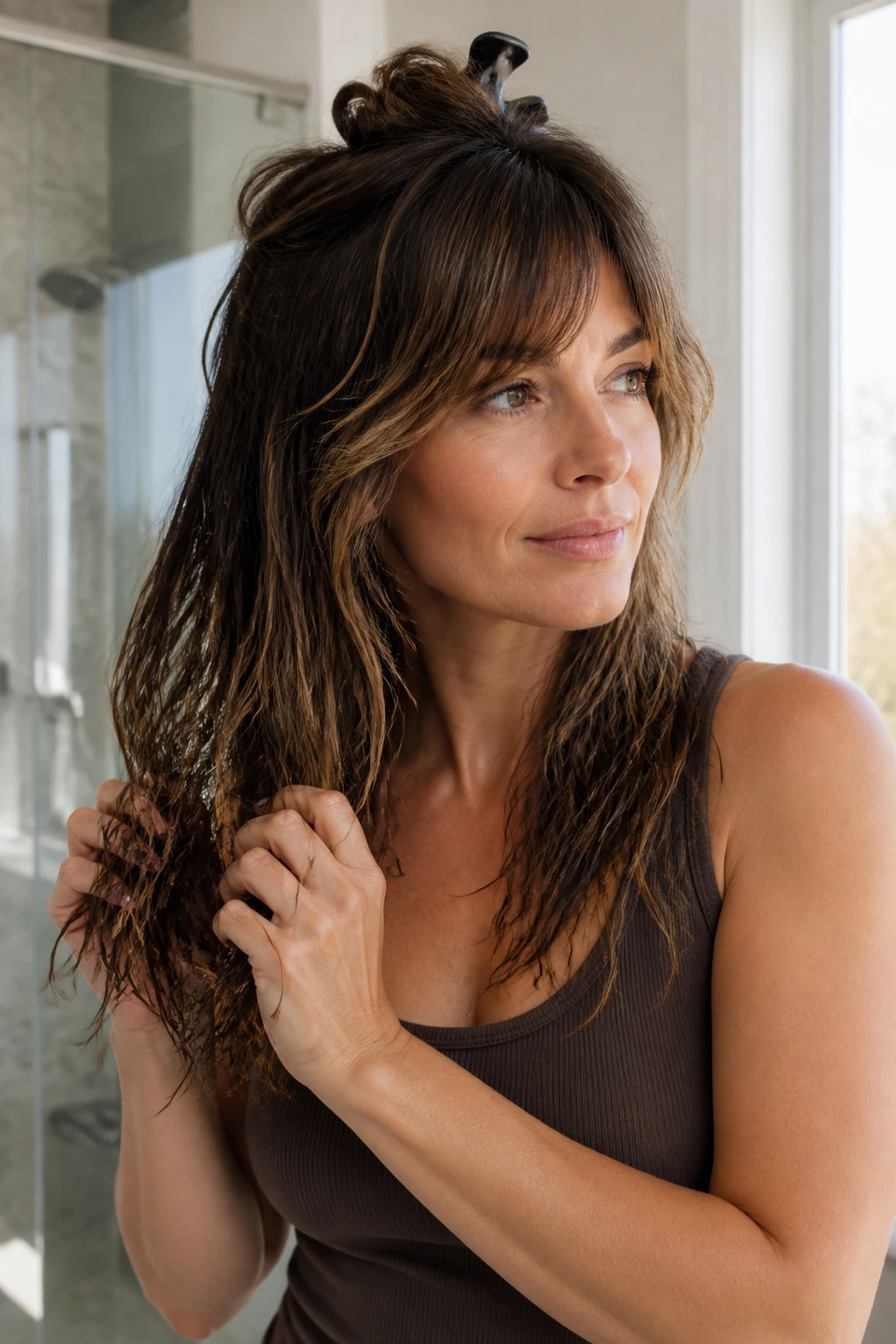
The best thing about a good shag is that it doesn’t demand a full styling marathon. It does, however, reward a tiny bit of planning. If you want the cut to look awake, the roots and face frame need the first pass of attention.
Air-dry version: Put mousse into damp roots, then run a small amount through the mids. Scrunch the lengths, clip the crown for a few minutes if it tends to fall flat, and leave it alone while it dries. Don’t keep combing it. You’ll only stretch out the bend the layers were trying to make.
Blowout version: Rough-dry until the hair is about 80 percent dry. Then use the round brush on the crown first, because that’s where the collapse usually starts. Pull the face-framing pieces away from the face and curve the ends under softly. A cool shot at the end helps lock the bend.
Second-day refresh: Mist the front and crown lightly with water or a leave-in spray, then twist the front layers with your fingers and hit them with a dryer for a minute or two. Dry shampoo goes at the roots, not the ends. The ends usually need a touch of oil; the roots need air.
Common Mistakes That Make the Cut Look Tired

-
Layering too high on fine hair: The symptom is see-through sides and weak ends. The fix is to keep the shortest layers longer and preserve density at the perimeter.
-
Cutting the fringe too short on day one: The symptom is constant pinning, especially if you wear glasses or have a short forehead. The fix is to start the bang a little longer than your stylist’s first instinct.
-
Over-texturizing gray or coarse hair: The symptom is fuzz and a halo around the outline. The fix is to use softer point cutting and leave more weight in the bottom third.
-
Using heavy cream everywhere: The symptom is limp layers that clump together. The fix is to keep richer products on the ends only and switch the roots to mousse or root spray.
-
Ignoring the part and cowlicks: The symptom is a split at the crown that keeps reopening. The fix is to cut and style the fringe in the direction the hair already prefers.
-
Letting the face frame grow too far past its shape: The symptom is hair that looks long but shapeless. The fix is a trim before the front pieces fall below the point where they help the face.
Variations and Alternatives Worth Trying
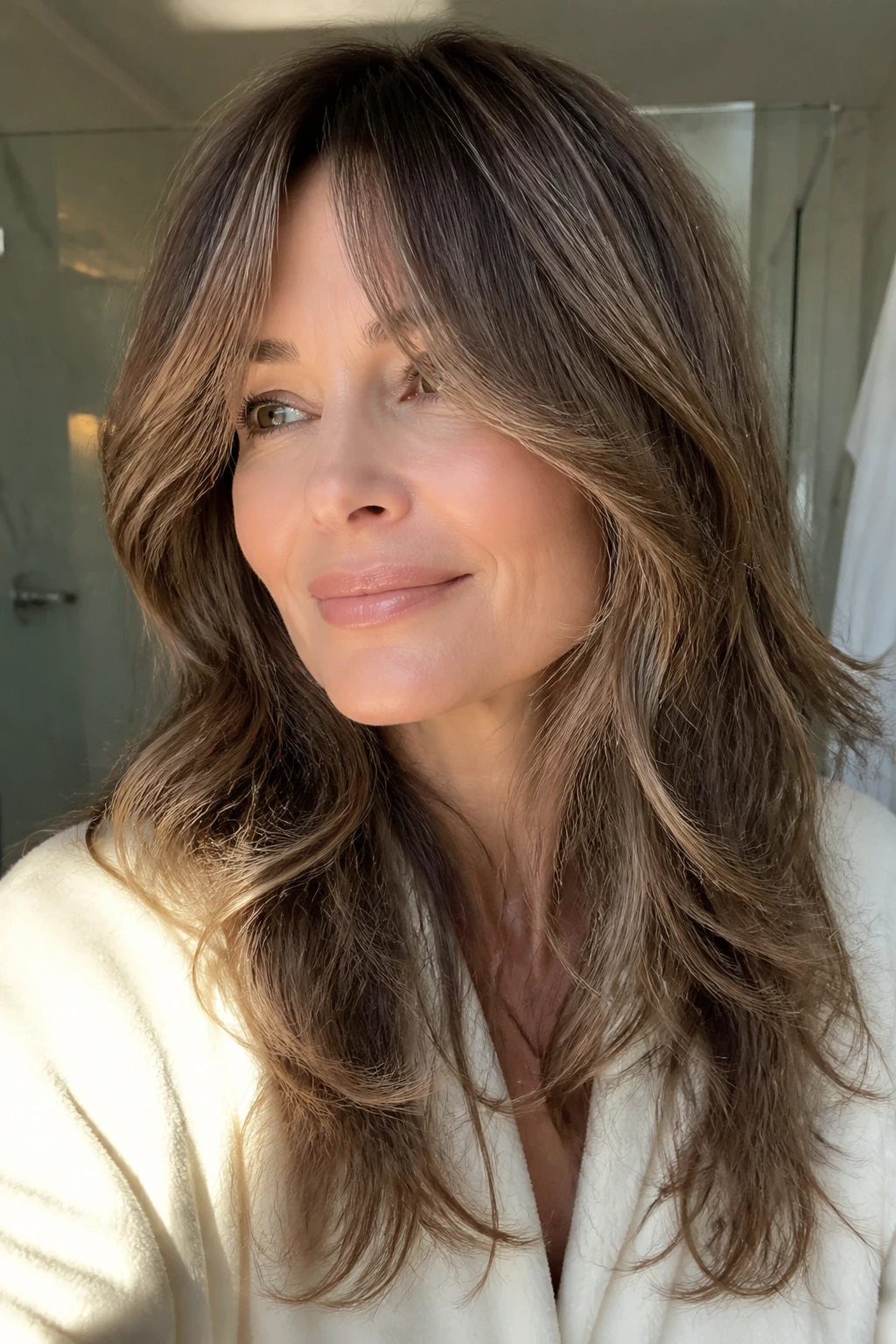
Soft Curtain Sweep: Keep the curtain fringe but let the layers stay long and rounded. This suits anyone who wants facial softness without a big style statement.
Rocker-Edge Finish: Ask for more pieceiness around the ends and a slightly shorter crown. It works when you want attitude and don’t mind using texturizing spray.
Fine-Hair Friendly Version: Keep the perimeter solid, limit the short layers, and let the movement come from the front. This keeps the hair looking full instead of shredded.
Curly-First Version: Have the haircut shaped around your curl pattern rather than against it. The layers should guide the curl, not fight the spring.
Polished Office Version: Keep the layers internal and the ends clean. You get movement and lift, but the haircut still looks tidy enough to wear with a blazer and not feel overdone.
Keeping a Long Shag in Shape Between Appointments
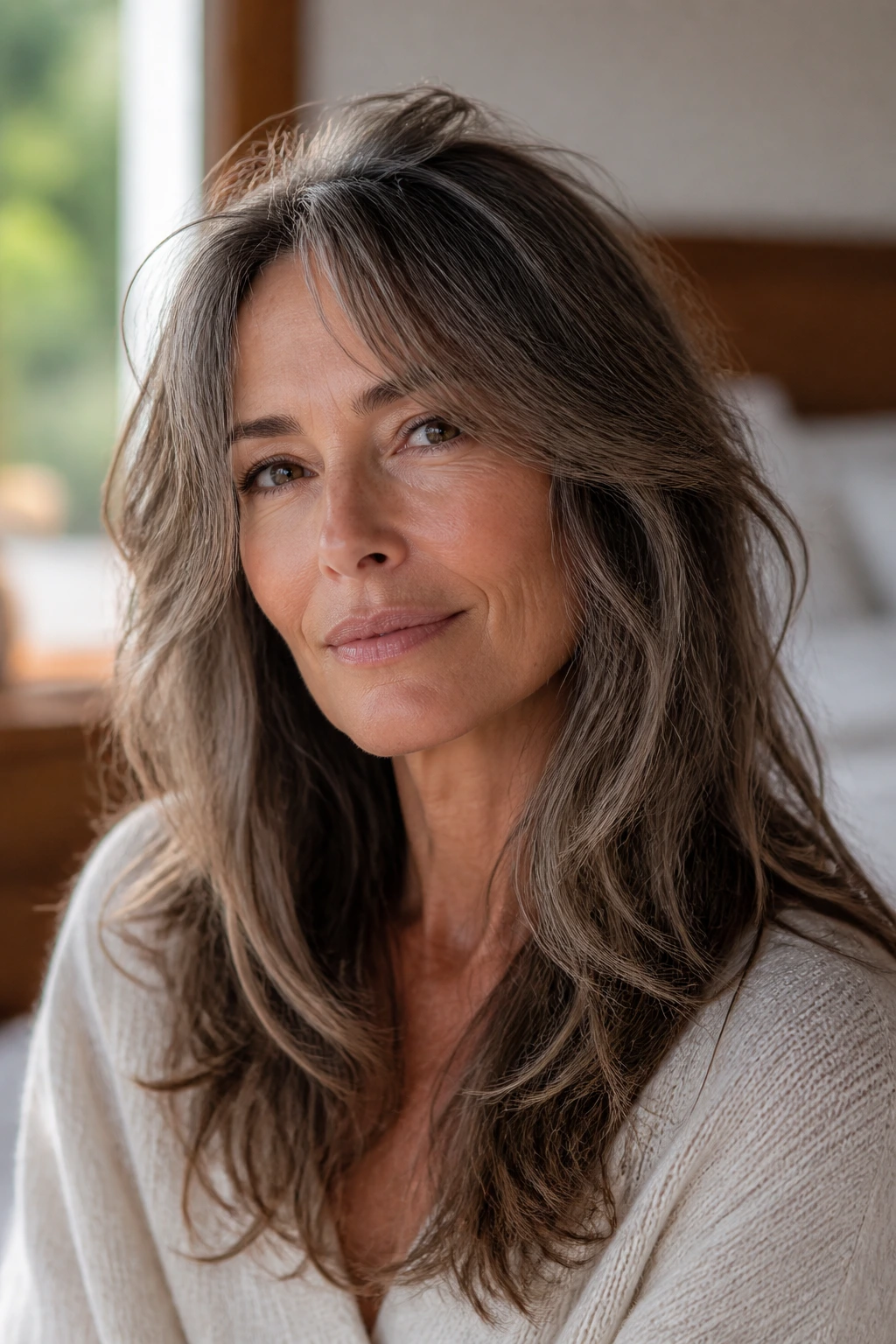
Long shags usually hold their shape for a while, but the front pieces and the crown tell on you first. A trim every 8 to 12 weeks keeps the perimeter healthy and the layers from turning into a vague idea of a haircut. If you wear bangs or a strong face frame, plan on a touch-up every 4 to 6 weeks.
Gray hair, coarse hair, and heavily styled hair need a little extra maintenance. A clarifying shampoo every couple of weeks can clear out dry shampoo and texture spray buildup, which matters because buildup weighs layers down fast. If the hair feels rough, a weekly mask on the mids and ends will help the shape move instead of puff.
Sleep matters more than people want to admit. A loose braid, silk pillowcase, or soft scrunchie can keep the front from tangling into itself overnight. That’s a small fix with a big payoff when you wake up and want the haircut to still look intentional.
Frequently Asked Questions About Long Shags After 40
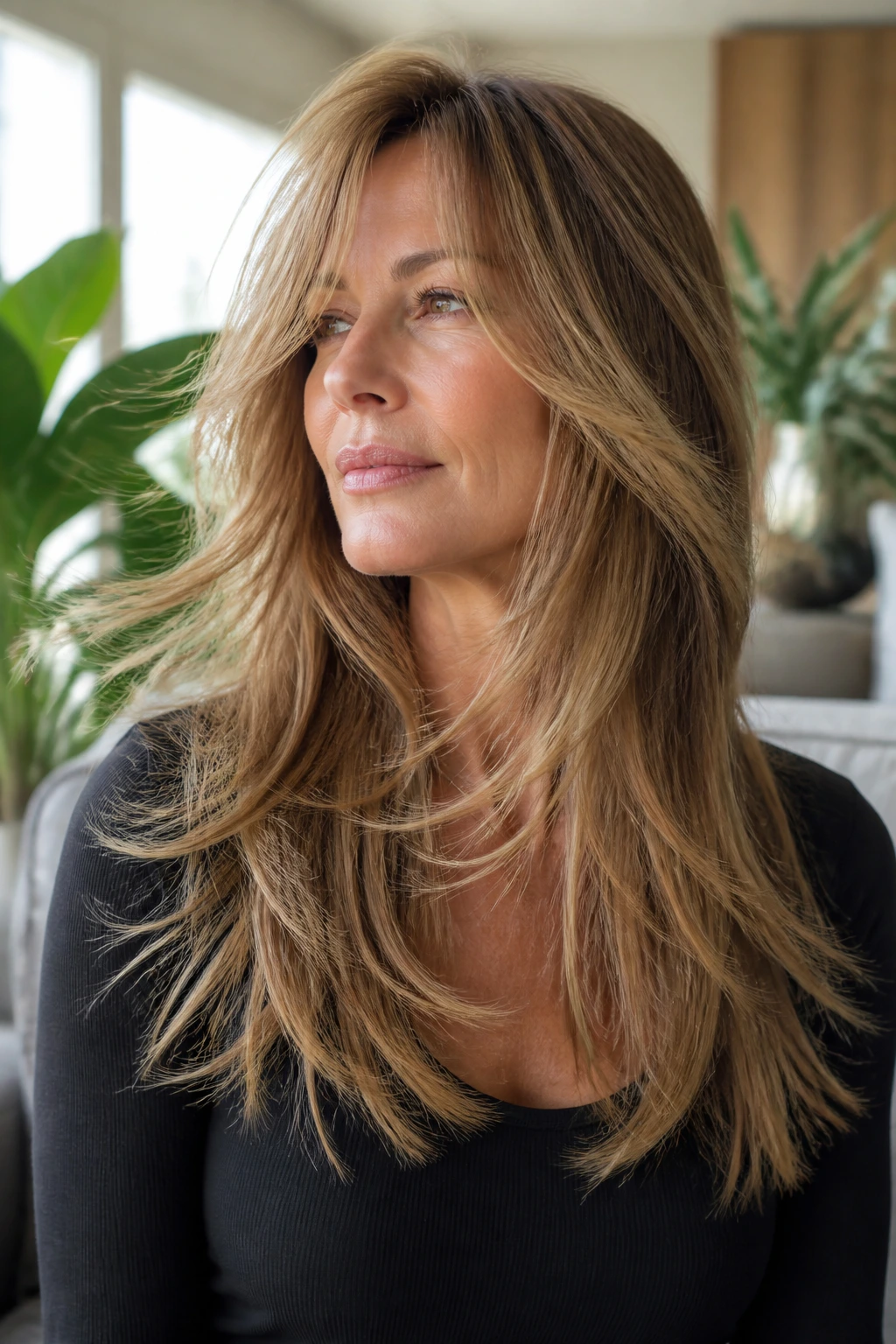
Will shag haircuts for long hair over 40 make my hair look thinner?
They can, if the layers are cut too aggressively or too high. The safer version keeps the perimeter full and uses layered movement around the face and crown instead of shredding the ends.
Can I get a shag if my hair is straight and flat?
Yes, and this is where the cut can help more than the styling product shelf. Ask for crown lift, long internal layers, and a face frame that starts around the cheekbone so the shape has somewhere to live.
Are curtain bangs easier than full bangs?
Usually, yes. Curtain bangs grow out with less drama and blend into the rest of the haircut instead of forming a hard line across the forehead.
What if my hair is gray and coarse?
A shag can work very well on gray hair, but the layers should be handled gently. Too much thinning can make the ends frizz, so keep some weight in the outline and use smoothing products only on the bottom half.
How do I ask for a shag without ending up with a mullet?
Say you want long layers with face framing and movement at the crown, but you want the back to keep enough length to fall cleanly. That gives the stylist a clear line between shaggy texture and mullet territory.
How often should I trim it?
Every 8 to 12 weeks is a safe rhythm for the main shape. Fringe or face-framing pieces may need attention sooner if they’re the part you notice first in the mirror.
What if my hair puffs out at the sides?
That usually means the layers are too short where the hair is fullest, or the product is too heavy. Ask for softer layering through the sides and switch to lighter styling products that don’t swell the shape.
Can I wear a long shag if I always put my hair up?
Absolutely. Just make sure the shortest layers are long enough to stay contained in a clip or low ponytail. Otherwise, the front pieces will escape and bother you all day.
A Shape That Still Feels Like You
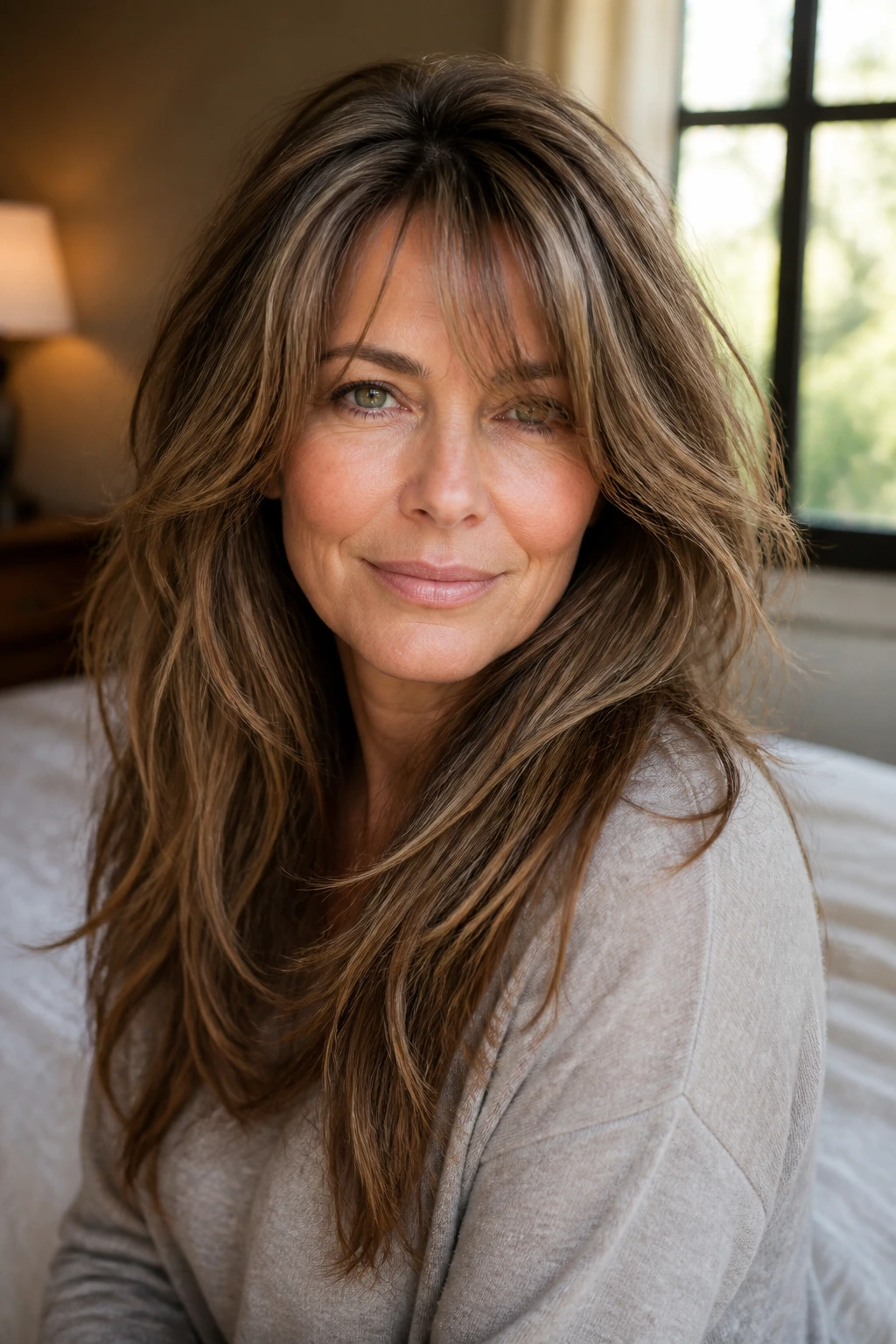
The strongest long shag doesn’t try to look young. It tries to look alive. That’s the real distinction, and it’s why the cut keeps coming back for women who want length without the limp, draped feeling that can sneak into long hair over time.
A good shag gives the face a little lift, the crown a little air, and the ends a little room to breathe. It can be soft, sharp, gray-friendly, blowout-ready, or almost invisible when styled straight. That range is the point. It lets you keep your hair long and still make it feel like it has shape.
If your long hair has started to feel heavy, flat, or strangely reluctant to move, one of these 17 versions will probably solve more than one problem at once. The right cut doesn’t fight your texture. It gives it a better job.
