



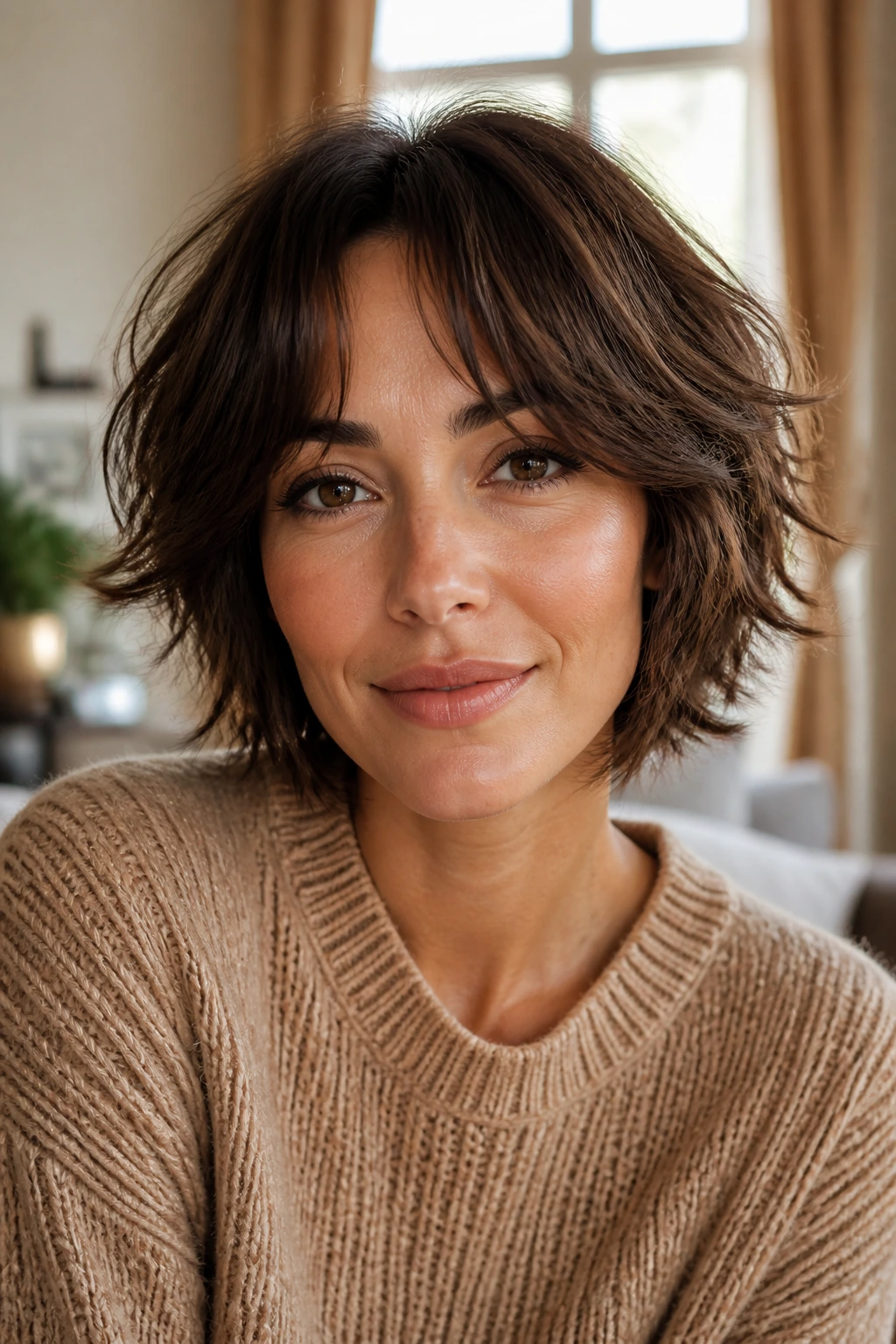
Short shaggy haircuts with curtain bangs have a way of looking finished even when they’re a little undone, and that’s exactly why people keep coming back to them. The cut wants movement at the ends, lift at the crown, and a fringe that opens at the center instead of boxing the face in. Done well, it feels airy around the eyes and cheekbones, with enough texture to keep the shape from collapsing the second you step outside.
What makes this family of cuts work is the balance. The shag brings broken-up layers, the curtain bangs soften the front, and the short length keeps the whole thing from drifting into mop territory. If you’ve ever had hair that sits heavy on top or flares at the bottom, you already know why this matters. A blunt perimeter can be unforgiving; a shag with a split fringe gives the hair room to move.
The fun part is how many directions it can go. Some versions lean French and soft, some look a little punk, and some are basically a very well-behaved wolf cut wearing a cleaner outfit. The trick is choosing the silhouette that plays well with your texture, your part, and how much time you’re willing to spend with a blow dryer in your hand.
Why This Collection Keeps Working
-
The fringe opens the face: Curtain bangs split at the center and fall toward the cheekbones, which keeps short hair from feeling too abrupt at the forehead.
-
The layers solve bulk: A shag removes weight where short hair can puff out, especially at the crown and through the sides.
-
The grow-out is forgiving: When the bangs start getting long, they blend into the layers instead of turning into a hard line.
-
Texture looks intentional here: A little bend, a little separation, and a few rough ends all fit the cut instead of ruining it.
-
It suits more than one hair type: Straight hair gets movement, wavy hair gets shape, curly hair gets control, and thick hair gets some breathing room.
-
It can look styled without being fussy: A five-minute bend with a round brush or wand is usually enough. That matters when you do not want a haircut that needs a daily ceremony.
1. Chin-Grazing Shag With Wispy Curtain Bangs
This is the version I reach for when someone wants texture without drama. The length sits around the chin, which gives the fringe something to graze against, and the wispy curtain bangs fall in that sweet spot between airy and obvious. It’s light around the cheeks, a little broken up at the ends, and never feels heavy in profile.
Why It Works
Chin length keeps the cut from looking too helmet-like, which is a real risk with short layers. The bangs split softly at the center and skim toward the cheekbones, so the face gets shape without a hard edge at the brow. On straight hair, it creates movement; on wavy hair, it keeps the bend from puffing out.
Best For
- Fine to medium hair that needs lift
- Oval, heart, and long faces
- People who like a soft, unfussy finish
Stylist note: Ask for the shortest face-framing layer to hit just below the cheekbone when dry. If the fringe is cut too short, the whole shape loses that easy fall.
2. Micro Shag With Airy Split Fringe
A micro shag is tiny but not timid. The sides stay cropped, the top gets choppy layers, and the fringe splits just enough to avoid sitting like a blunt little shelf across the forehead. It has a neat, almost gamine edge, but the shag layers keep it from reading severe.
The best thing about this cut is how much personality it packs into a small shape. It works especially well if your hair naturally lifts at the crown or if you like a little grit in the texture. Blow it forward and piece it out, or let it dry with a slight bend. Either way, it looks deliberate.
How to Wear It
- Tuck one side behind the ear for a sharper line.
- Use a pea-size amount of pomade or cream on the ends, not the roots.
- Let the curtain fringe fall just off center so it doesn’t split too perfectly.
3. French Bob Shag With Cheekbone Bangs
This one has a little Paris energy, but not the overly polished kind. The bob lands around the jaw, the shag layers are sliced just enough to keep the shape loose, and the curtain bangs hover right at cheekbone level. It’s tidy in outline, messy in texture, which is the whole point.
What I like here is the tension between the strong perimeter and the soft front. The bob gives the haircut a clear line, while the curtain fringe breaks that line in the right place. If you wear glasses, this cut can be especially good because the bangs frame the frames instead of fighting them.
4. Curly Shag With Long Curtain Pieces
Curly hair and curtain bangs can be a very good marriage when the cut respects shrinkage. The layers need room to spring, and the front pieces should be left longer than you think so they can curl into place instead of bouncing straight up. This version keeps the bangs long enough to part and drape, which saves you from the triangle effect.
A good curly shag doesn’t aim for perfect symmetry. It aims for balance. The longer curtain pieces soften the forehead, and the shag layers keep the curl pattern from building into one heavy wall around the face.
Best for
- Wavy to curly textures
- Rounder faces that benefit from vertical movement
- People who air-dry most of the time
Pro tip: Ask your stylist to cut the fringe dry, or at least to check the final length dry. Wet curls lie.
5. Rounded Shag With Feathered Bangs
Rounded shags are underrated. Instead of pushing the sides out wide, this shape curves gently around the head, which keeps short hair from looking boxy. The feathered bangs split in the middle and melt into the side layers, so the whole cut feels like one shape instead of three separate parts.
This is a nice choice if your features are sharp and you want the haircut to soften them a bit. It also behaves well in humid weather because the rounded outline gives the layers a place to sit. You still get that shaggy movement, but it looks more controlled than wild.
6. Razored Pixie Shag With Baby Curtain Bangs
Tiny top, lots of texture, and just enough fringe to whisper “curtain bangs” instead of shouting it. That’s the charm here. The razored ends create a feathery finish, while the baby curtain bangs open from the center and skim the upper forehead rather than dropping all the way to the brows.
This cut has an easy, editorial edge. It’s especially good if you like your hair short around the ears and neckline but still want some softness around the face. The danger is over-thinning it. Keep the razoring controlled, or the shape can start looking wispy in the wrong way.
What to Watch For
- Ask for movement, not thinning shears everywhere.
- Keep some density at the crown so the cut doesn’t collapse.
- Style the fringe with a quick bend away from the face, not a full curl.
7. Jaw-Length Wolf Cut Lite
Call it the polite cousin of the wolf cut. The jaw-length version keeps the attitude but trims back the wildness, which makes it far easier to wear day to day. The curtain bangs stay a little longer and the back layers aren’t so extreme, so the shape feels shaggy without tipping into costume.
This cut shines on medium to thick hair that wants air around the neck and cheeks. It has a little rock-and-roll energy, but the shorter length keeps it modern. If you want a shape with edge and movement, without spending half your morning coaxing the back into place, this is a smart lane.
8. Textured Lob Shag With Center-Fall Fringe
A lob that leans shaggy can carry more softness than a classic blunt one. The ends are broken up, the length skims the collarbone, and the curtain fringe falls down the center before flipping outward at the cheekbones. It’s one of the easier short cuts to grow out because the line remains long enough to stay versatile.
This is a strong pick if you’re not ready for a very short bob but you want the lighter feel of a shag. It also gives you enough hair to tuck, clip, or wave without losing the shape. Honestly, it’s one of the least demanding versions in the whole collection.
Quick Take
- Better for people who still want ponytail options.
- Easy to style with a round brush or a large curling iron.
- Looks good with soft waves and a center part.
9. Sliced Crop With Soft Curtain Bangs
A sliced crop has crisp intent. The layers are cut in a way that separates the strands just enough to create movement without frizzing out the silhouette. Add soft curtain bangs, and the result is compact, modern, and a little airy at the front.
This is a clean choice for straight hair that tends to hang flat. The sliced ends create texture where the hair would otherwise lie too close to the head. Keep the fringe longer on the outer edges so the split stays graceful instead of looking like two chopped pieces.
10. Piecey Wavy Shag With Face-Framing Layers

If your hair already bends, this is where the fun starts. The piecey shag lets the wave pattern do most of the work, and the face-framing layers give the curtain bangs a place to fall without losing their shape. It can look soft one day and a little wild the next, which is not a flaw here.
The key is not over-controlling it. A touch of mousse at the roots, a small amount of cream through the mids, and a quick scrunch is usually enough. Leave the ends a little separated. That separation is what keeps the cut from looking too neat.
Best for
- Natural waves that don’t need heavy styling
- Medium hair density
- Anyone who likes a bit of texture around the cheeks
11. Flipped-Out Short Shag
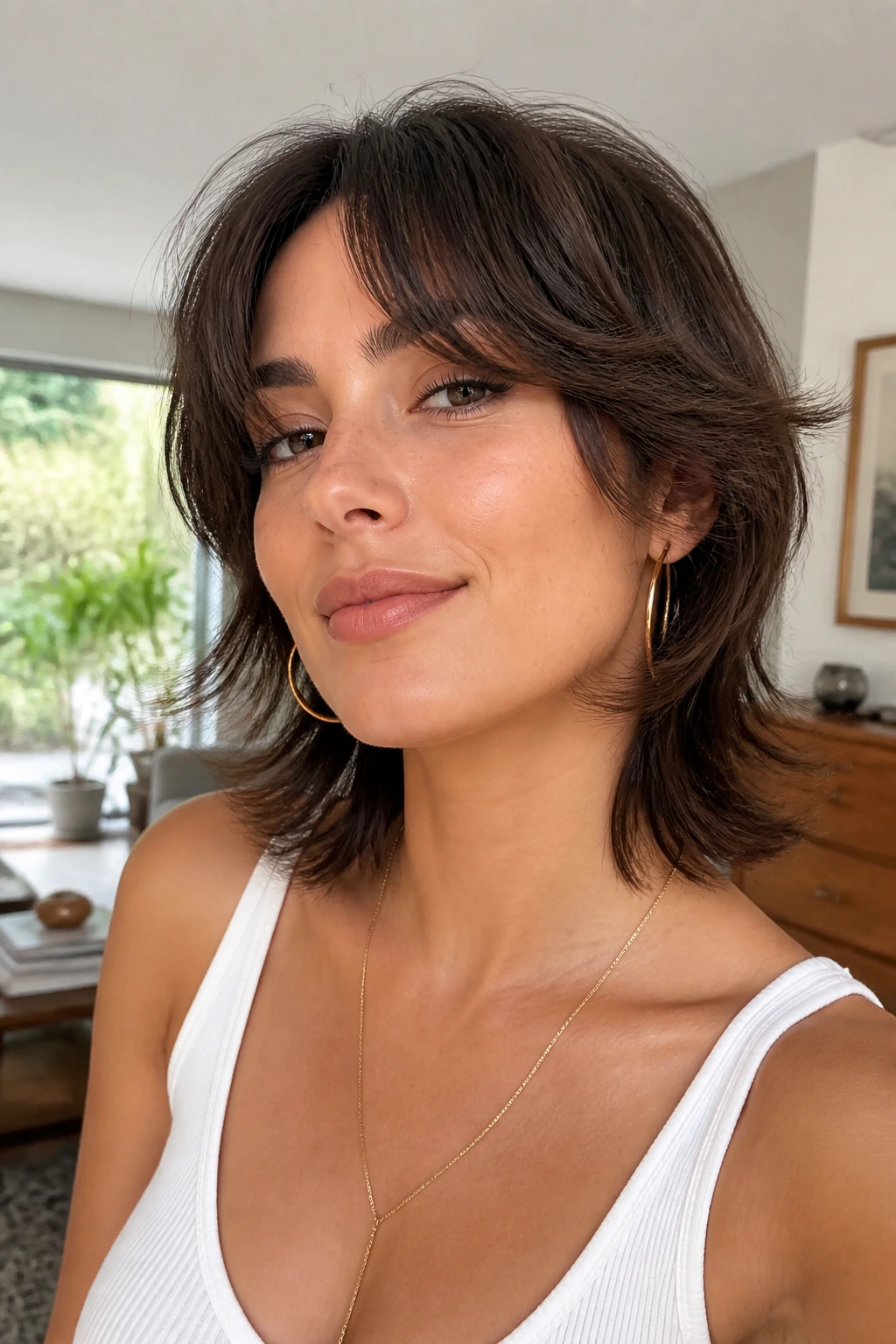
This one has a playful bend at the ends, almost like the haircut is turning its own shoulders out. The layers are short enough to kick away from the neck and jaw, and the curtain bangs follow the same idea with a split that opens the front instead of covering it.
It suits hair that holds shape well with a brush or iron. I’d avoid making it too rounded at the back; the flip-out effect needs some lift underneath or it can look dated in a hurry. Keep the bangs soft and the ends light, and it stays fresh.
12. Bixie Shag With Curtain Bangs
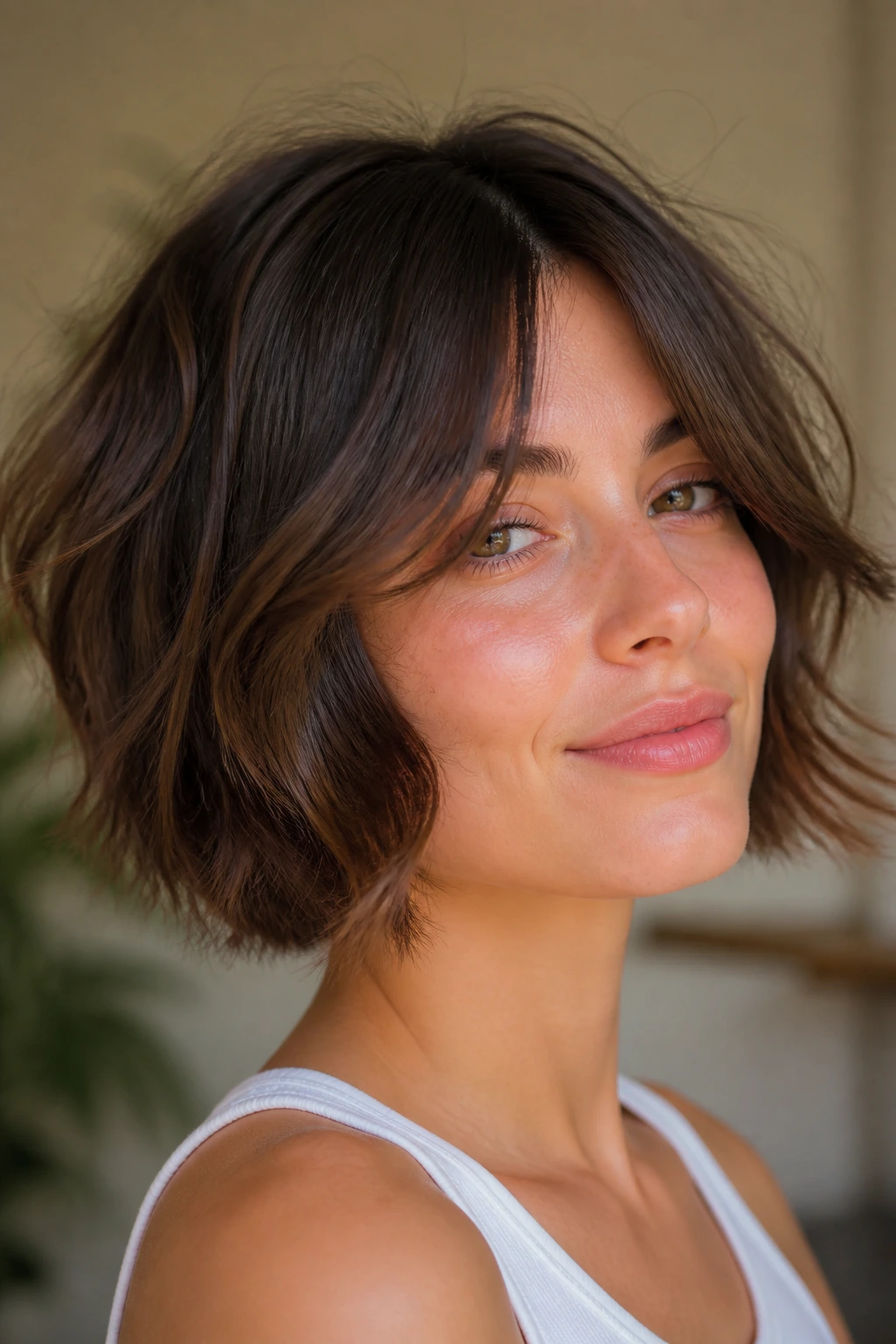
The bixie lives between a bob and a pixie, and the shag version gives that hybrid a little more movement. The back stays short, the top has texture, and the curtain bangs give the front enough length to soften the whole thing. It’s tiny, but not severe.
This cut is good for anyone who wants short hair without the commitment of a full pixie. The bangs keep it feminine if you want that word, though I prefer to think of it as balanced. You get edge, shape, and a fast styling routine. That matters.
Best for
- Fine hair that needs lift on top
- People who want short ears and neckline but a softer front
- A strong jawline or angular face
13. Choppy Mushroom Shag
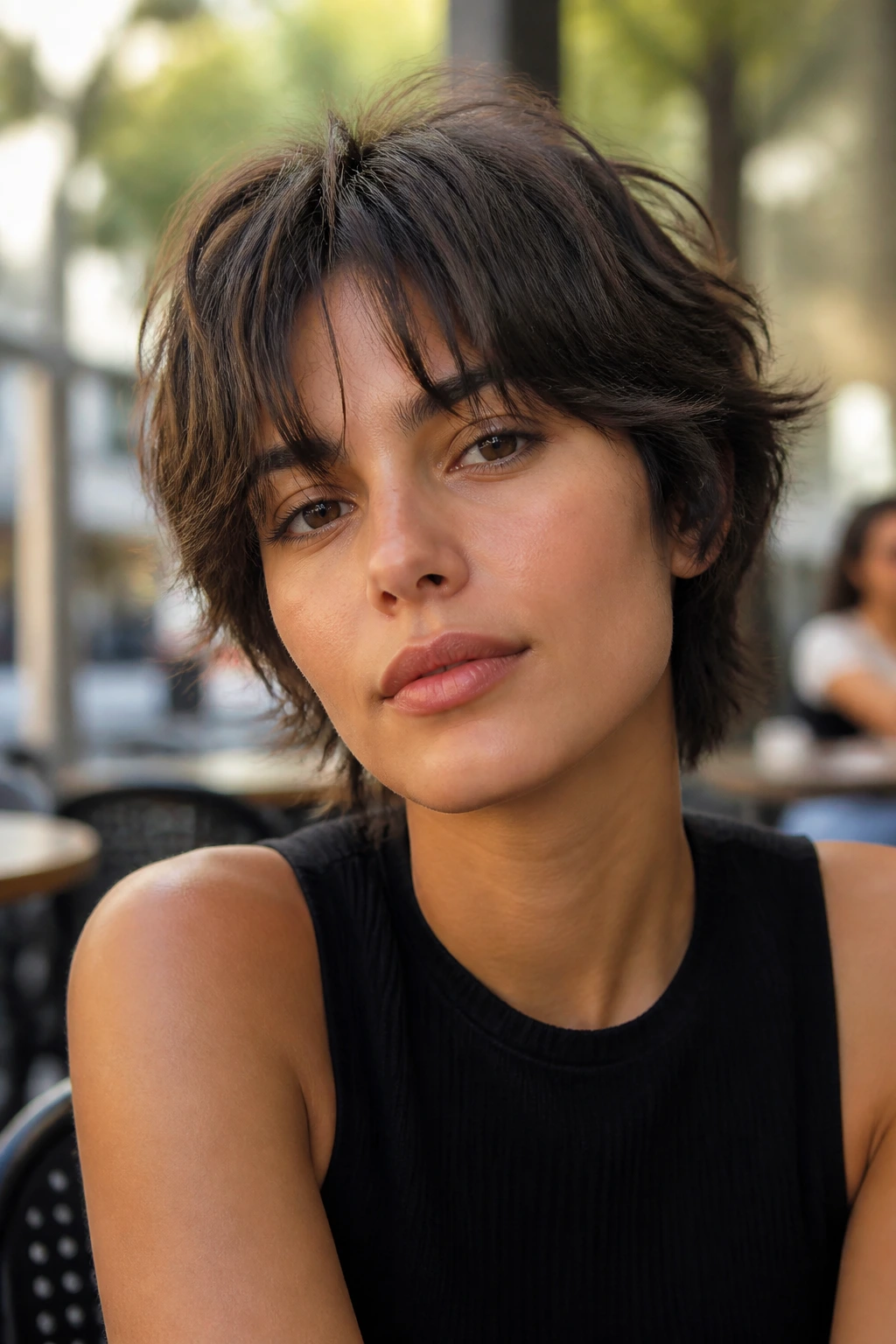
A mushroom cut can go very wrong if it’s too round and too heavy. The shag version fixes that by breaking the outline into choppy layers and splitting the fringe so it doesn’t sit like a cap. The result is a rounded shape with movement, not a bowl of hair with a few loose pieces hanging off it.
This is one of the more fashion-forward looks in the group. It feels a little graphic, a little playful, and much better when the texture is intentionally rough. If your hair is dense and puffy, this cut needs careful debulking underneath so the top doesn’t balloon.
14. Soft Razor Shag for Fine Hair

Fine hair can wear a shag beautifully, but the cut has to be handled with restraint. Too much texturizing and you’re left with ends that look see-through. A soft razor shag keeps the layers light and the fringe split, while preserving enough body to make the shape visible.
The real goal is lift, not thinning. Ask for internal movement around the crown and a gentle face frame that starts at the cheekbone. The curtain bangs should be feathered, not shredded. Fine hair likes clarity in the outline, even when the texture is loose.
What Works Here
- A light mousse at the roots
- Blow-drying the fringe first
- A small round brush for the front, fingers for the rest
15. Heavy Crown Shag for Thick Hair
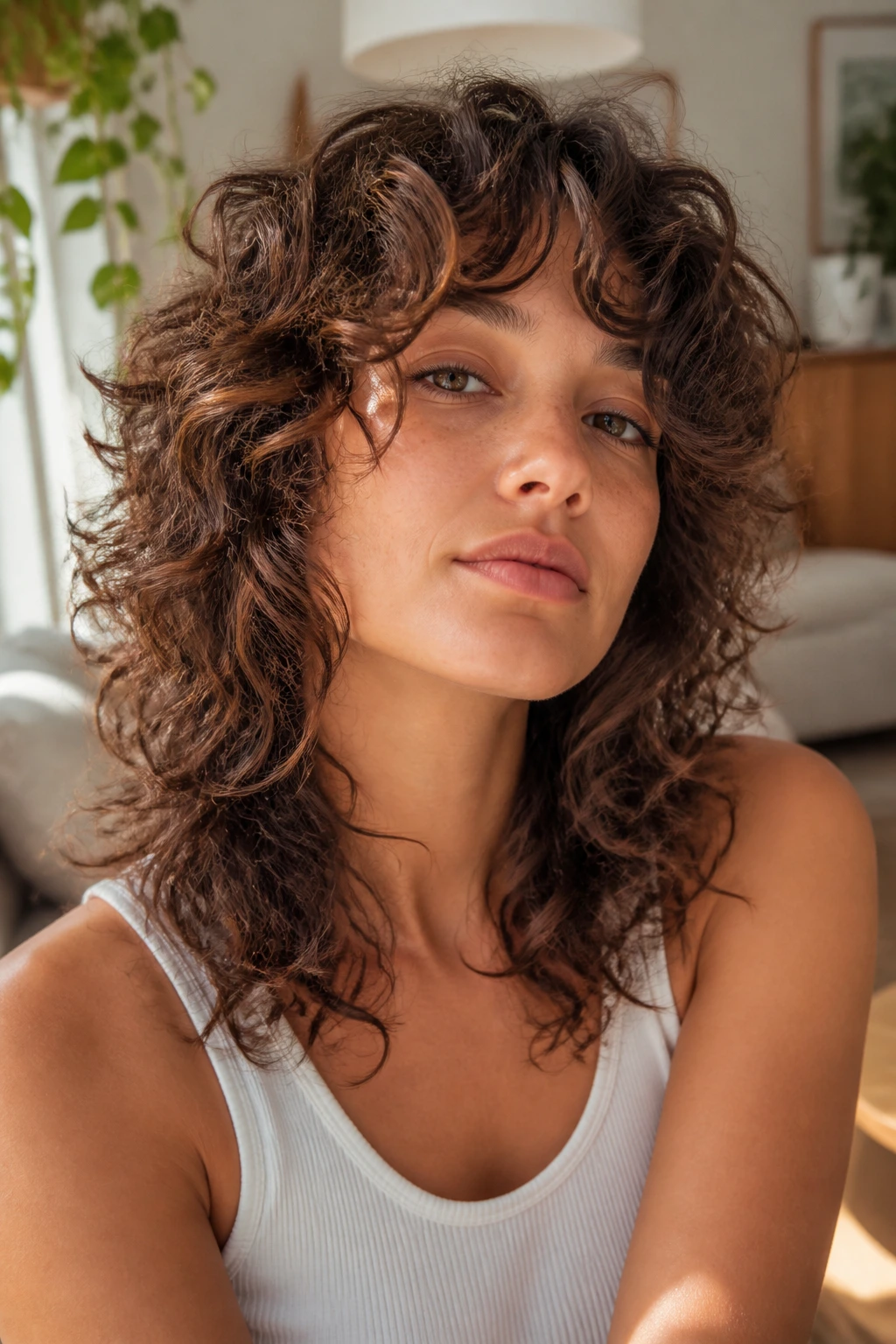
Thick hair can look gorgeous in a shag, but only if the crown gets some relief. This cut keeps the curtain bangs long enough to fall nicely while removing bulk through the top layers and sides. Without that reduction, the shape can swell into a dome by lunchtime.
I like this version because it respects density. It does not try to erase it. Instead, it redistributes it, letting the ends move while keeping the head shape from getting too bulky. If you have thick hair and hate how short cuts make your face disappear, this is a useful compromise.
16. Air-Dried Coastal Shag
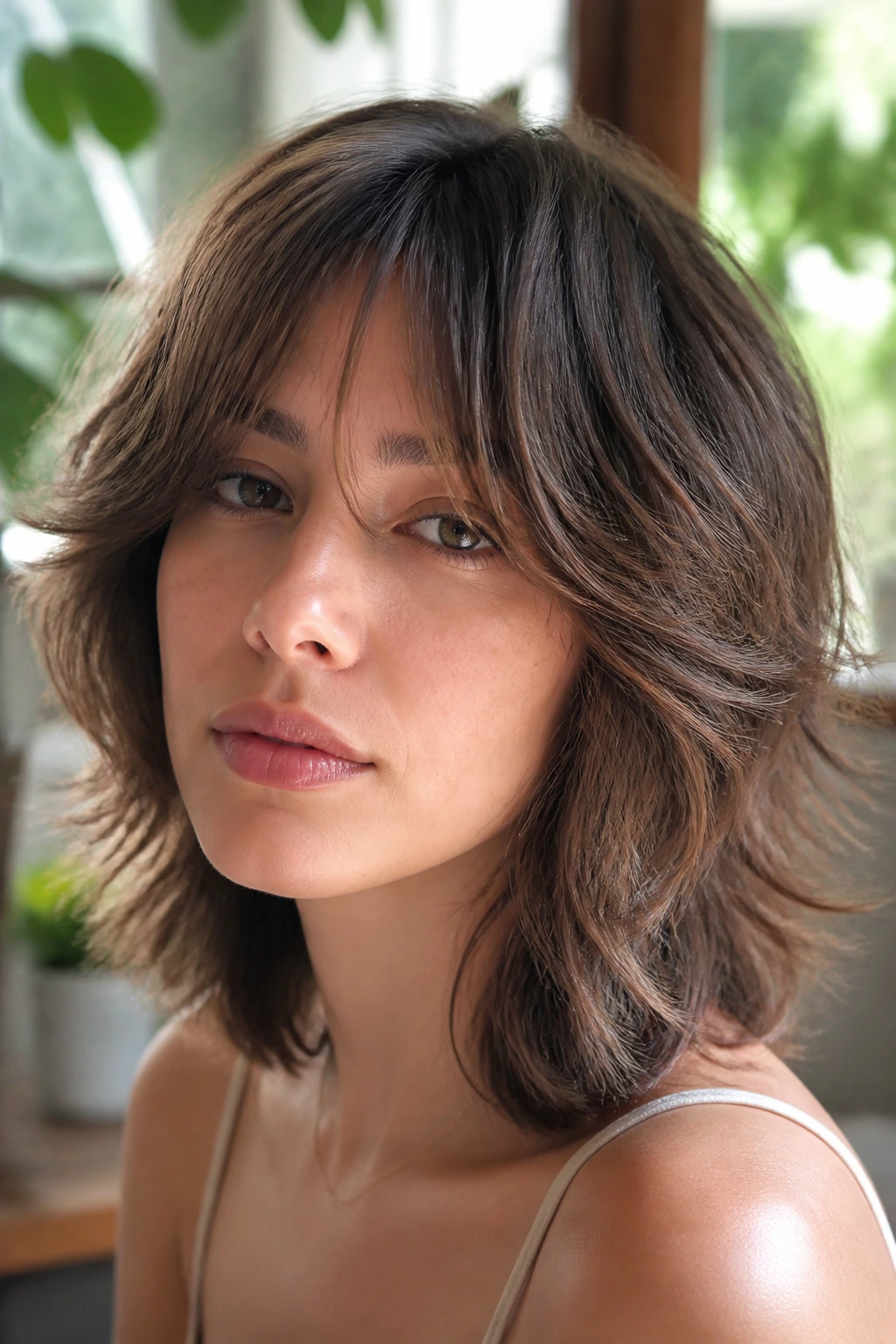
This is the cut for people who want to wash, scrunch, and leave the house. The layers are placed to support a loose wave pattern, and the curtain bangs are long enough to dry into that soft split without needing a brush. It looks especially good when the hair has a bit of grit from sea salt spray or a light mousse.
The trick is not to over-style it into perfection. Let some ends curve in different directions. That roughness keeps the haircut feeling easy rather than overworked. A short shag with curtain bangs should never look like it fought for an hour.
Best for
- Wavy hair with natural texture
- Low-maintenance routines
- People who want movement more than shine
17. Tousled Inverted Shag Bob
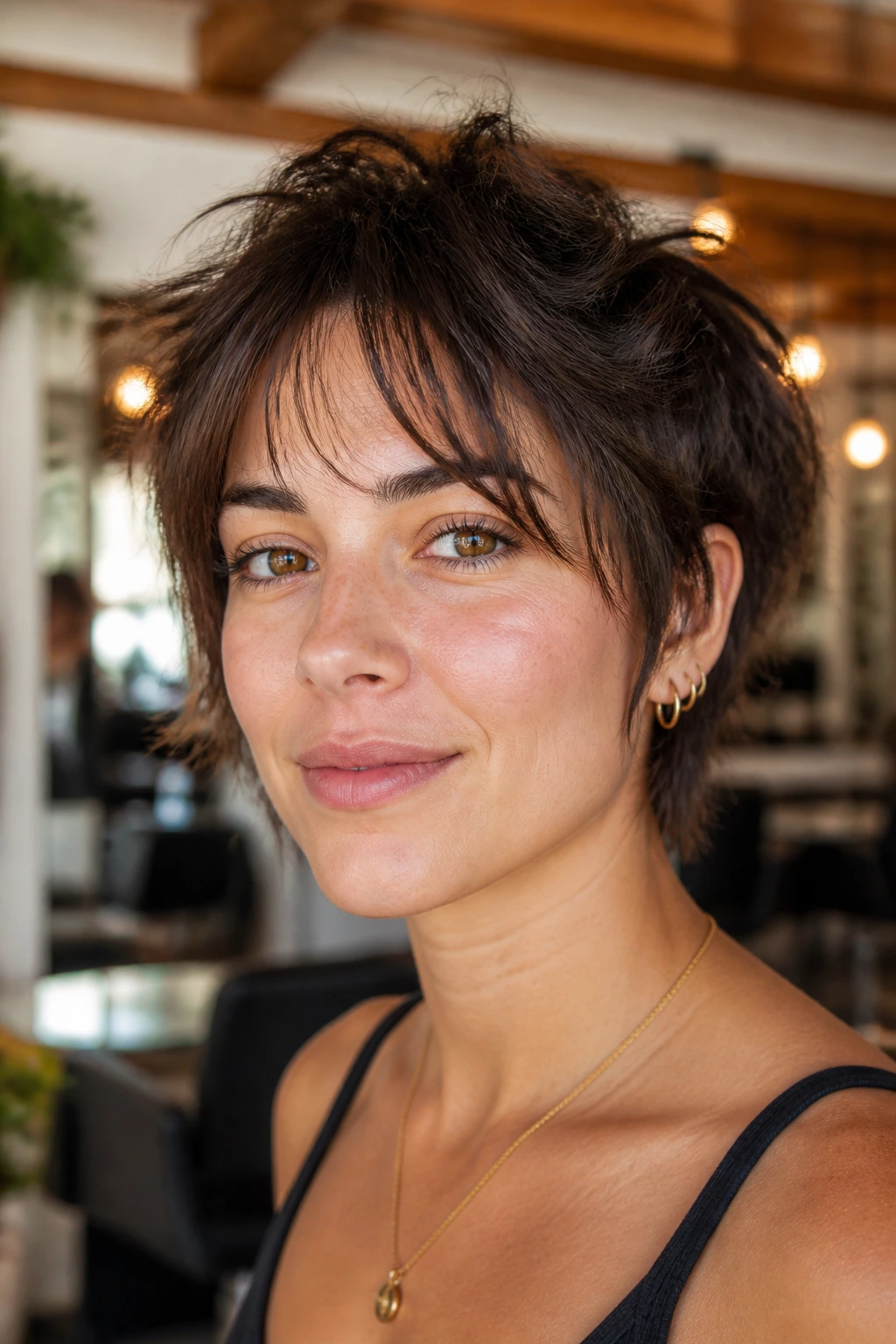
An inverted bob gives the back a little lift and the front a little length, which makes the shag layers feel more sculpted. Add curtain bangs, and the front becomes the softest part of the whole haircut. It’s a smart move if you like a clean neckline but don’t want the face frame to feel harsh.
The inverted shape helps the cut fall forward in a flattering way. It can sharpen the jaw or soften it, depending on where the longest pieces land. Style it with a round brush if you want polish, or rough it up with texture spray if you want more edge.
18. Short Shag With Arched Curtain Bangs
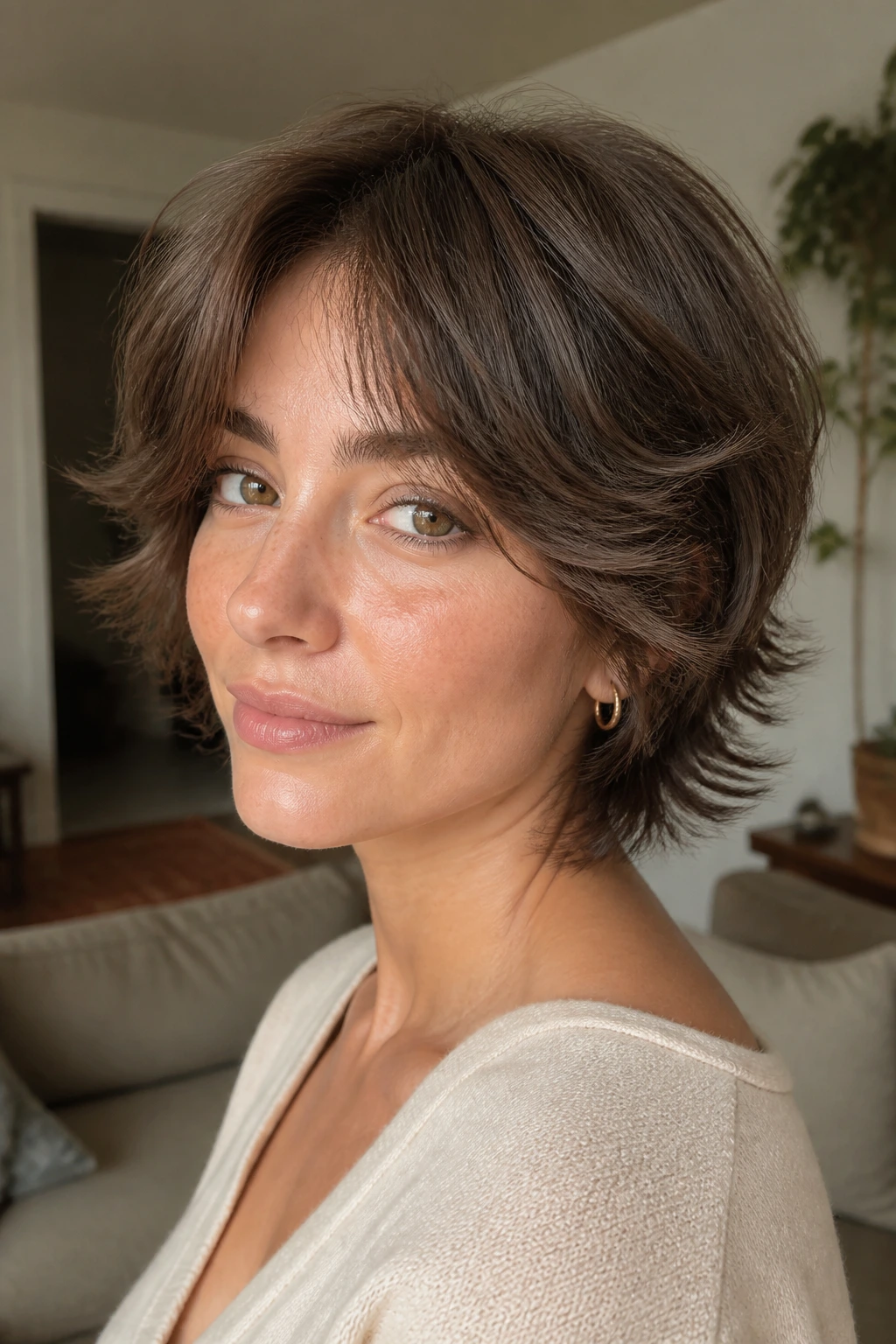
Arched curtain bangs rise slightly in the center and drop toward the temples, which gives the face a lifted look without using blunt bangs. On a short shag, that arch keeps the front light and open. It’s a small detail, but it changes the whole mood of the haircut.
This version is especially useful for people who don’t want the bangs to eat into the forehead too much. The arch lets more skin show, which can make the haircut feel less heavy. It’s also one of the better options if you wear statement earrings or glasses, because the front stays out of the way.
19. Curved-Under Shag Bob

Not every shag needs to kick out. A curved-under version brings the ends inward just enough to create a cleaner line, then uses the curtain bangs to keep the front relaxed. The effect is softer and a touch more polished, which can be useful if you want a haircut that works in both casual and sharper settings.
This is a nice bridge cut for people who like structure but still want texture. It also behaves well on hair that tends to frizz at the ends, because the curved shape gives it some direction. Keep the layers light around the cheeks so the bangs can do their job.
20. Spiky Textured Shag With Split Fringe
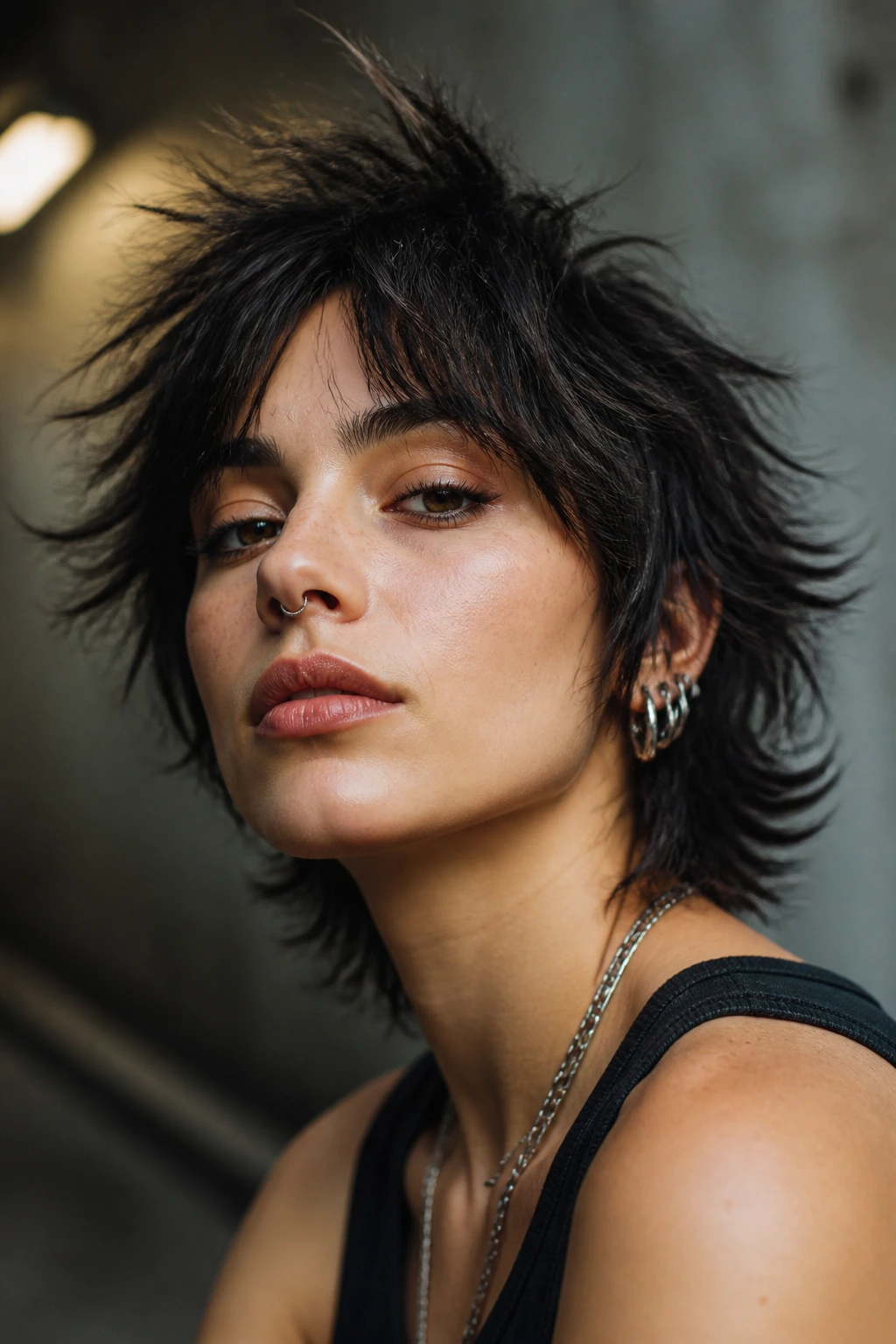
This one has attitude. The layers are short and separated, the ends are lightly spiked with product, and the curtain bangs split down the middle before drifting outward. It looks best when the texture is a little messy and the outline is not too perfect.
I’d recommend this cut to anyone who likes a sharper, more punk-leaning finish. It’s especially good on hair that naturally stands up or has a coarse texture. If you try to smooth it too much, you lose the point. This haircut wants a little grit.
Styling Note
- Use a matte paste on dry hair.
- Push the crown up with your fingers.
- Leave the fringe pieces a little uneven on purpose.
21. Grown-Out Pixie Shag
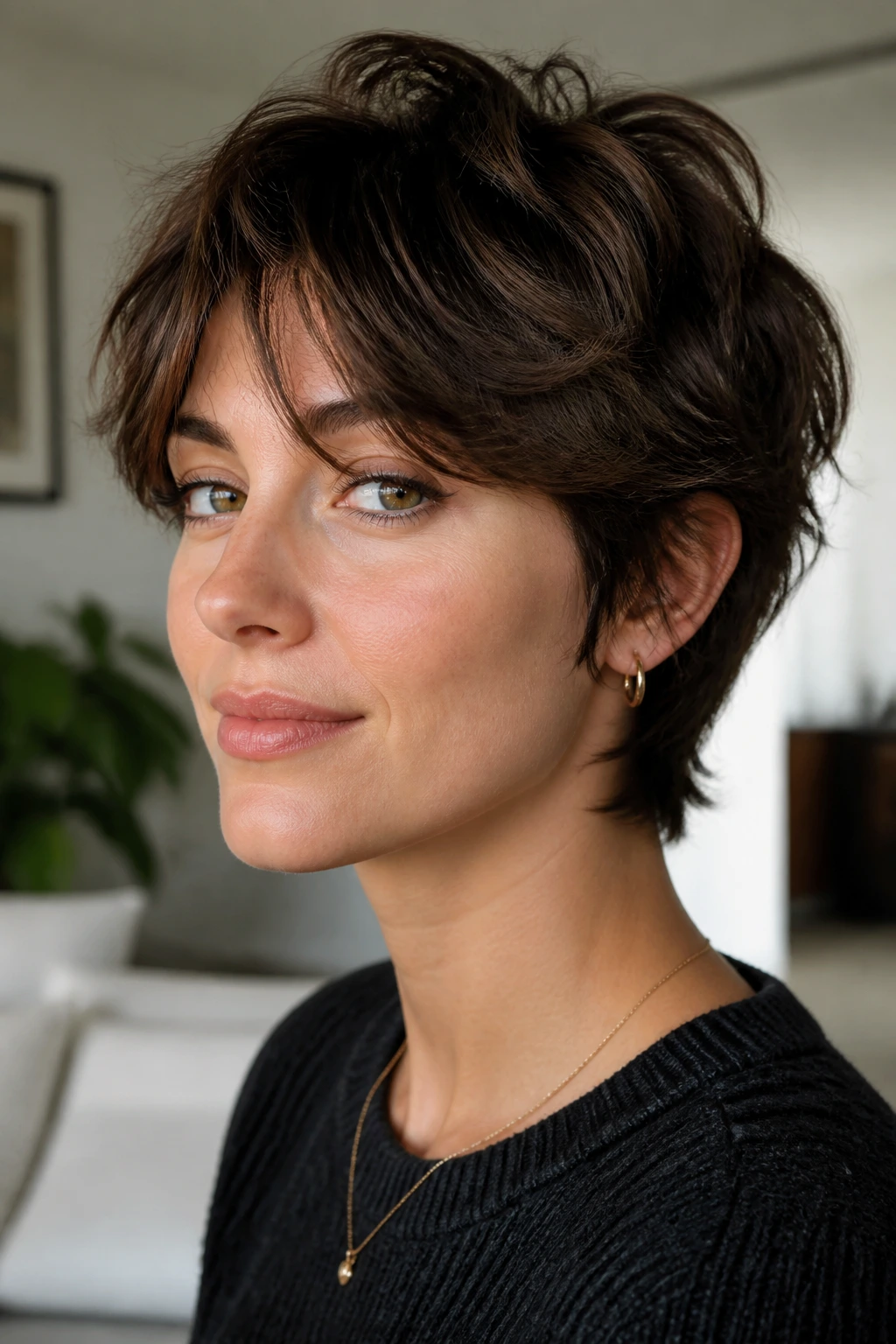
There’s something appealing about a cut that looks good in the middle of growing out. The grown-out pixie shag sits right in that zone, with short sides, layered top pieces, and curtain bangs long enough to frame the face. It turns that awkward in-between stage into the whole style.
This is a practical pick for people who want to keep their hair short but not static. The shape changes a little as it grows, which means it stays interesting longer. That’s not an accident. It’s a smart cut for people who dislike strict salon maintenance but still want a defined silhouette.
22. Layered Cropped Shag for Wavy Hair

Wavy hair does something nice in a cropped shag: it creates its own shape. The layers should be cut to follow the wave pattern rather than fight it, and the curtain bangs should be long enough to swing with the bend. Too short, and they bounce awkwardly. Too long, and they lose the split.
What I like here is the softness around the cheeks. The cut makes the wave pattern look intentional instead of random. If your hair tends to flatten at the root, a little root-lift mousse and a quick blow-dry at the fringe can wake everything up fast.
23. Asymmetrical Shag With Curtain Sweep

A small asymmetry changes the whole feel of a shag. One side stays slightly longer, the curtain bangs sweep off center, and the layers move unevenly in a way that feels modern rather than messy. It’s subtle enough to wear every day, but there’s still a little edge in it.
This version works well if you want to draw attention upward or if one side of your hair naturally parts more easily than the other. The asymmetry gives the cut some movement even when it’s not freshly styled. That said, it needs a careful hand. Too much imbalance turns into confusion.
24. Soft Mullet Bob
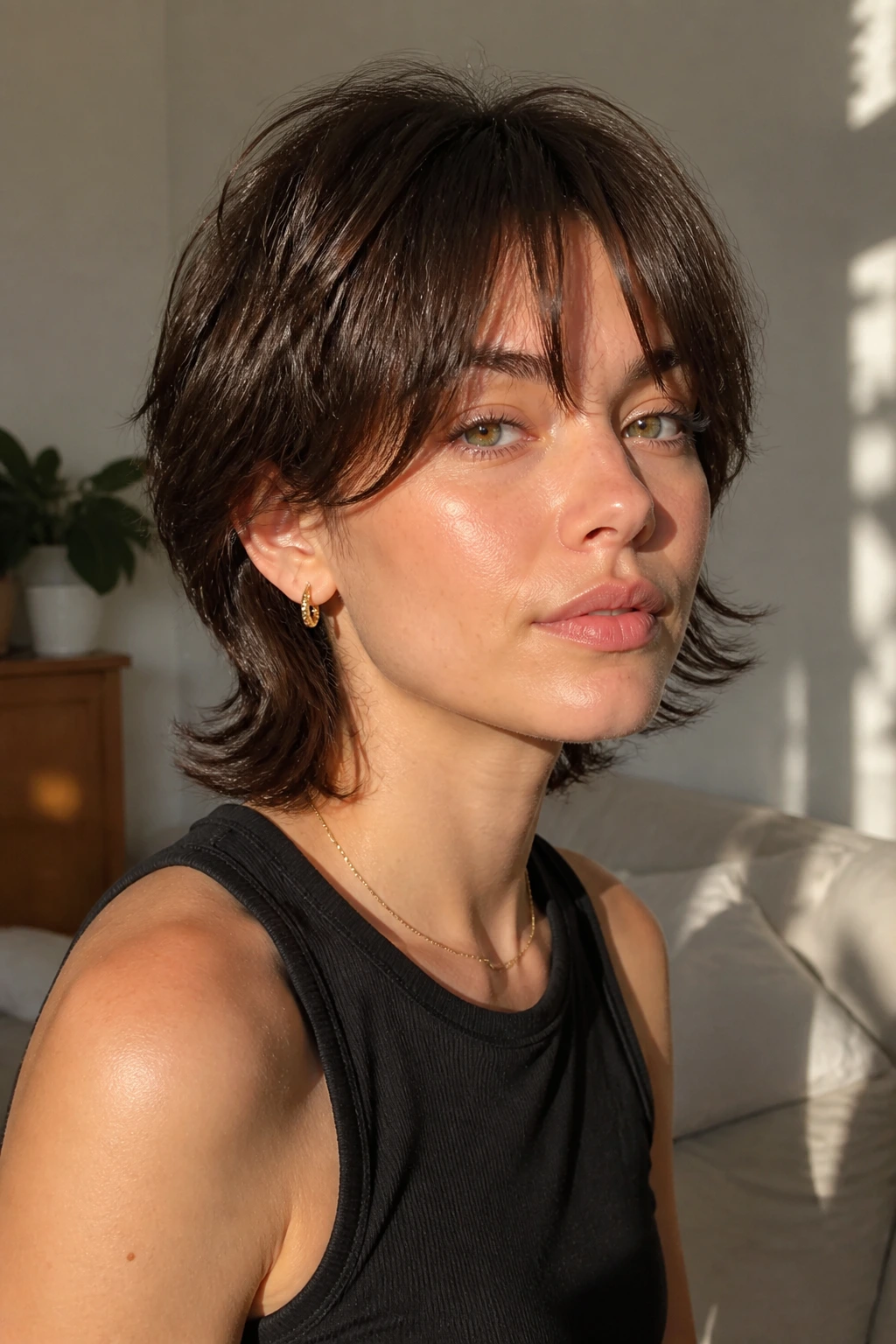
The soft mullet bob keeps the front and sides tidy while letting the back sit a touch longer. The curtain bangs soften the top front, and the shag layers connect everything so the cut doesn’t feel like a joke version of a mullet. Done right, it’s cool without looking try-hard.
This shape suits people who like contrast. The front is neat enough for daily wear, and the back has enough length to swing. It’s also one of the easiest cuts here to personalize, because you can push it more bob-like or more mullet-like depending on how much length you leave at the nape.
25. Shaggy Bowl Cut With Split Bangs
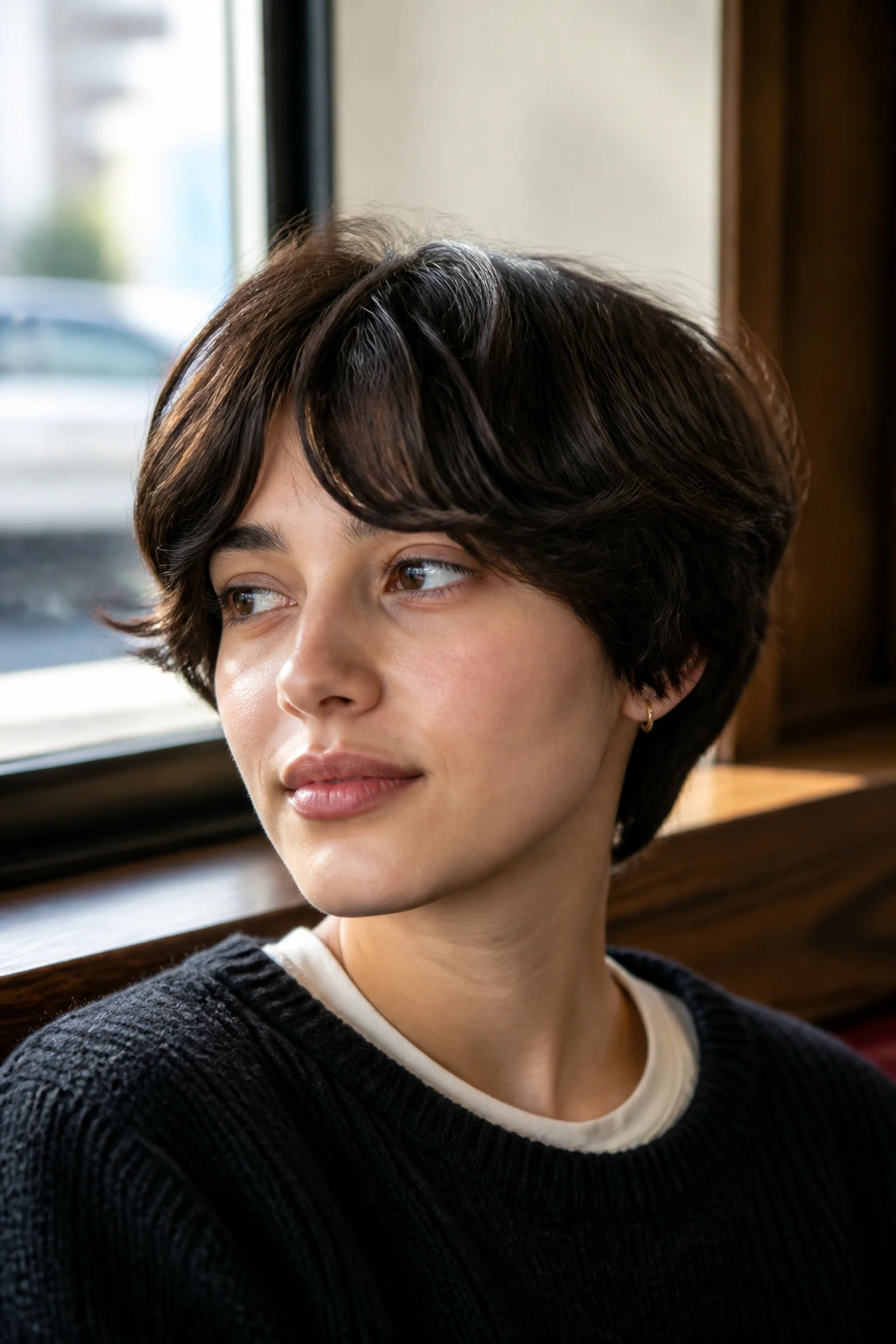
This is the one people either love immediately or need a minute with. The bowl outline gives the haircut a rounded frame, while the shag layers and split bangs break the severity. It’s graphic, a little retro, and much more wearable than a classic bowl because the curtain fringe keeps the face open.
I’d choose this if you want something with clear shape and a bit of fashion edge. It looks best when the ends are textured enough to avoid looking rigid. Keep the bangs softly parted and let a few pieces fall longer around the temples. That little irregularity makes the cut breathe.
26. Collarbone-to-Chin Transitional Shag
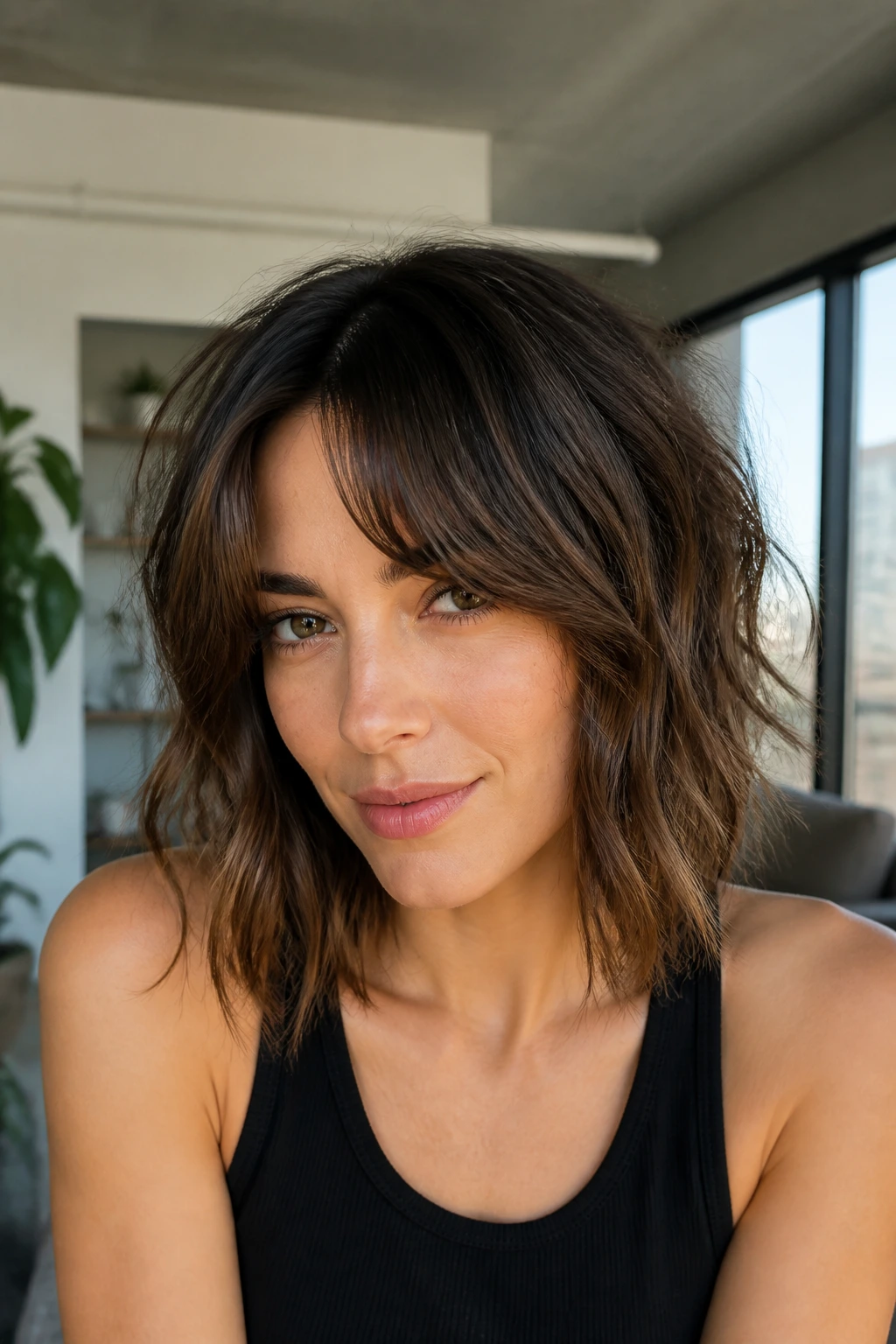
This one is for the person who wants short hair but not a sudden chop. The length lands somewhere between chin and collarbone, which gives the shag layers room to move and the curtain bangs space to taper into the sides. It’s a bridge cut, and a very useful one.
The transitional length means you can test the shag shape without going all the way short. It also grows out neatly, which I appreciate more than I should have to. If you’re nervous about committing, this is the safe-but-not-boring option.
27. Razor-Cut Shag With Micro Layers
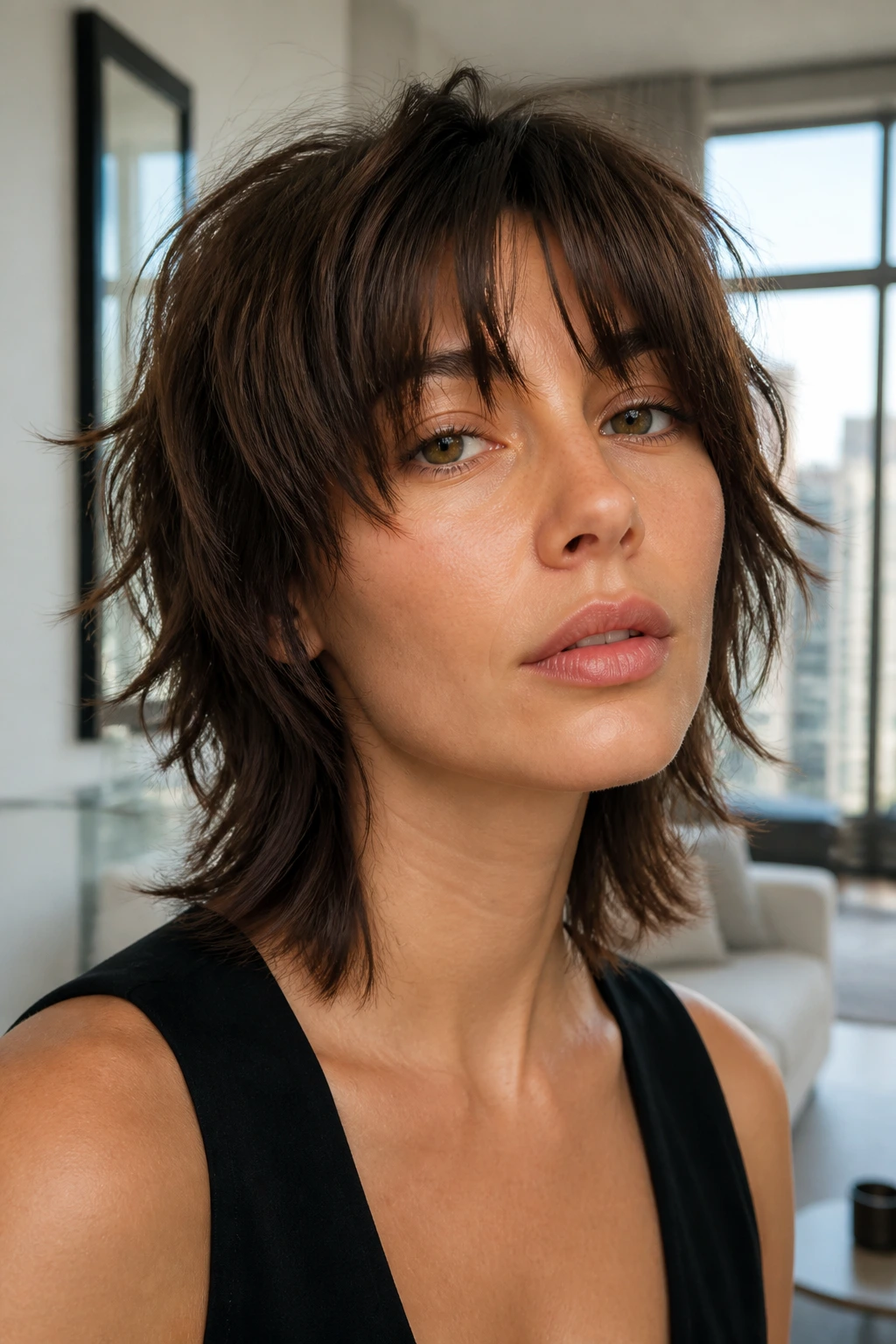
Micro layers sound tiny because they are. The razor cutting breaks the ends into soft little pieces, and the curtain bangs get the same treatment so the whole front feels light. The result is a haircut that moves on its own, even when it’s barely styled.
This cut is best when you want texture without bulk. It can be too airy for very fine hair if overdone, so the razor work needs a light hand. I’d pair it with a bit of matte styling cream or a dry texture spray so the ends don’t disappear.
Best for
- Straight hair that hangs flat
- Medium density with some natural body
- People who like a lived-in finish
28. Soft S-Curl Shag
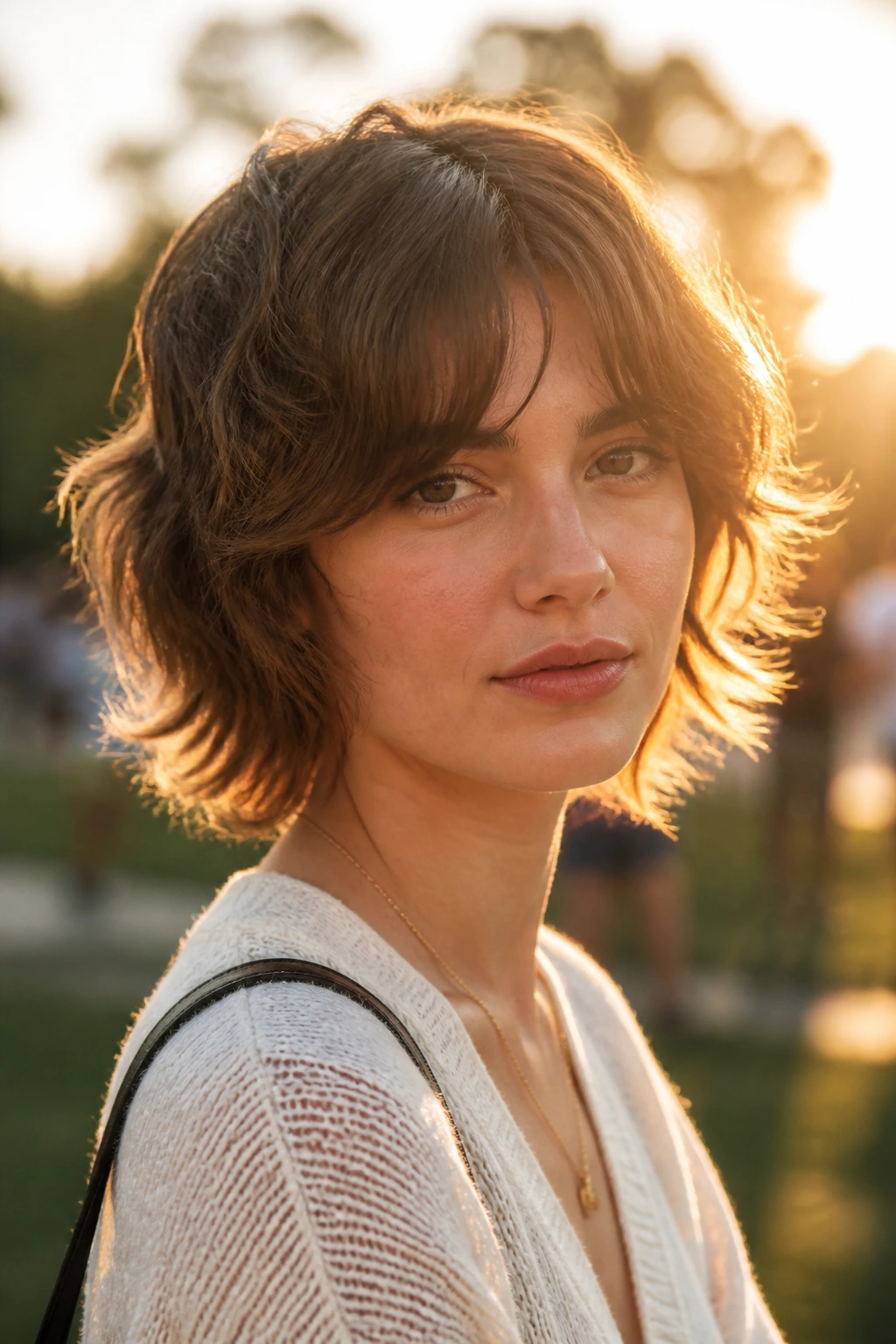
A soft S-curl shag takes advantage of a gentle bend instead of a full wave. The layers are short enough to show the pattern, and the curtain bangs curve from the center into a loose S shape that flatters the temples and cheeks. It’s one of the prettiest versions if your hair has a slight natural wave.
The goal here is movement with shape, not ringlets and not stick-straight bangs. A medium-barrel iron or a quick finger twist while the hair is damp can help define the bend. Keep the roots lifted, though. Flat roots kill the whole effect.
29. Tousled Silver Shag

Silver hair changes the way layers read. Texture shows up more clearly, light catches the broken ends, and curtain bangs look especially crisp when the hair is white, grey, or salt-and-pepper. A tousled silver shag feels sharp and soft at the same time, which is a nice trick.
This cut also works well with natural density changes that come with age, because the layers can support movement without looking sparse. I like the fringe a little longer here; it gives the face some warmth and keeps the cut from feeling too severe. If the hair is coarse, a light cream on the ends helps stop the texture from puffing.
30. Short Shag With Side-Falling Curtain Bangs
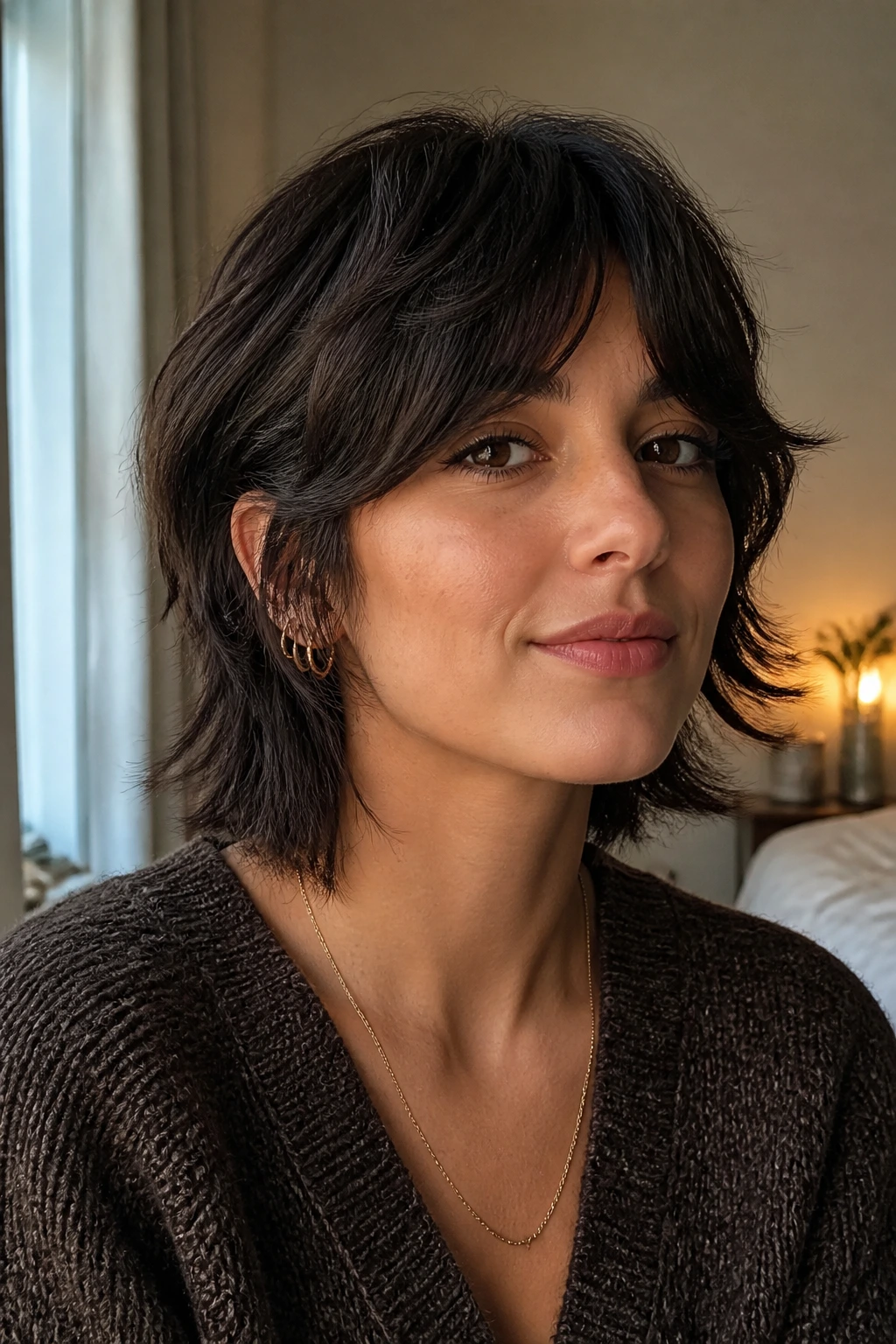
Not every curtain bang has to split dead center. A side-falling version shifts the opening a little off to one side, which can be kinder to a stubborn part or a cowlick at the front hairline. The shag layers follow that angle, so the whole cut feels relaxed and lived-in.
This is a good choice if center parts make your face look too symmetrical or too long. The side fall adds softness without turning into a side bang. It’s also easier to style on lazy mornings because the hair can choose its own direction with less fight.
31. Blunt-Cut Ends With a Shaggy Crown
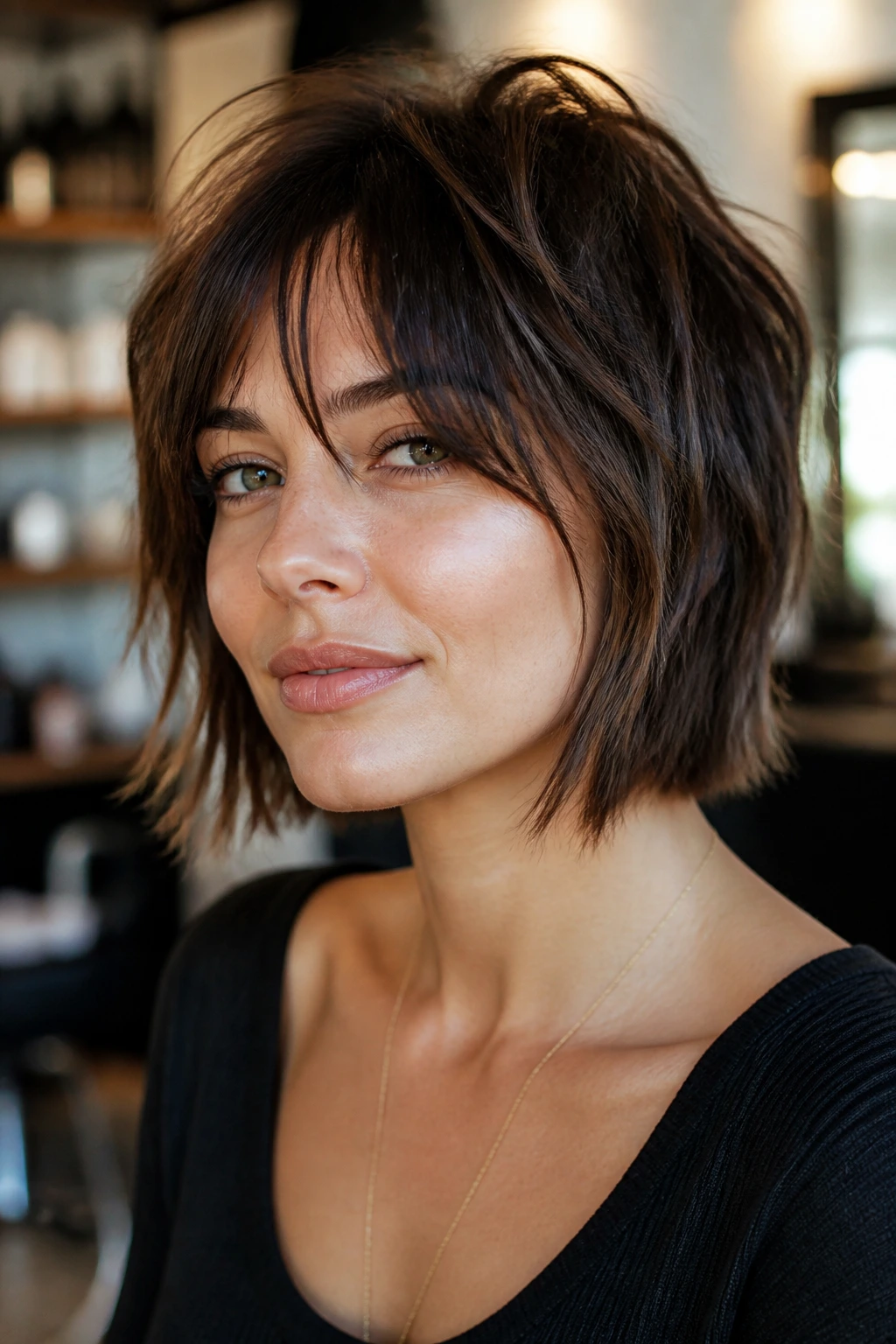
A blunt perimeter with a shaggy top sounds contradictory, and that’s exactly why it works. The ends stay clean and thick, while the crown gets texture and lift. Curtain bangs bridge the two, softening the front so the cut doesn’t feel too boxy.
This is one of my favorites for thick hair that needs a little structure. The blunt edge keeps the shape looking full, and the layered top stops it from becoming a triangle. If you’ve been told shag cuts are always too wispy for you, this is the counterargument.
32. Disco Shag for Short Hair
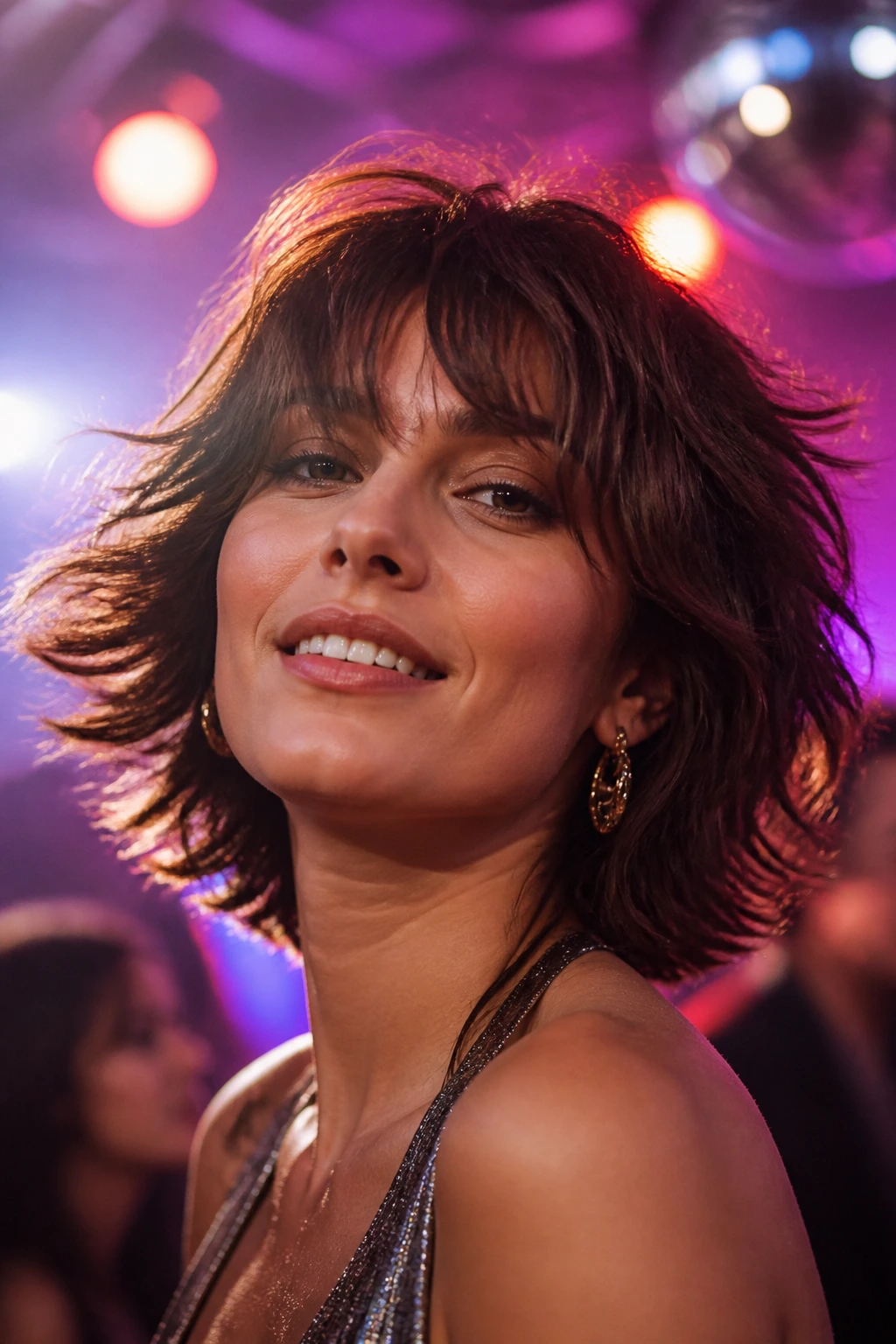
A disco shag is built for movement. The layers are cheeky and buoyant, the fringe splits and flicks outward, and the whole cut has a little swing in it. It’s short hair with a dance floor bias, not in a costume way but in the way the ends move when you turn your head.
This cut loves round brushing, big rollers, or a quick pass with a medium iron. The curtain bangs should look brushed-open rather than straightened flat. If you want a short shag that feels playful instead of quiet, this is where to go.
33. Crescent Bob Shag With Curtain Arch
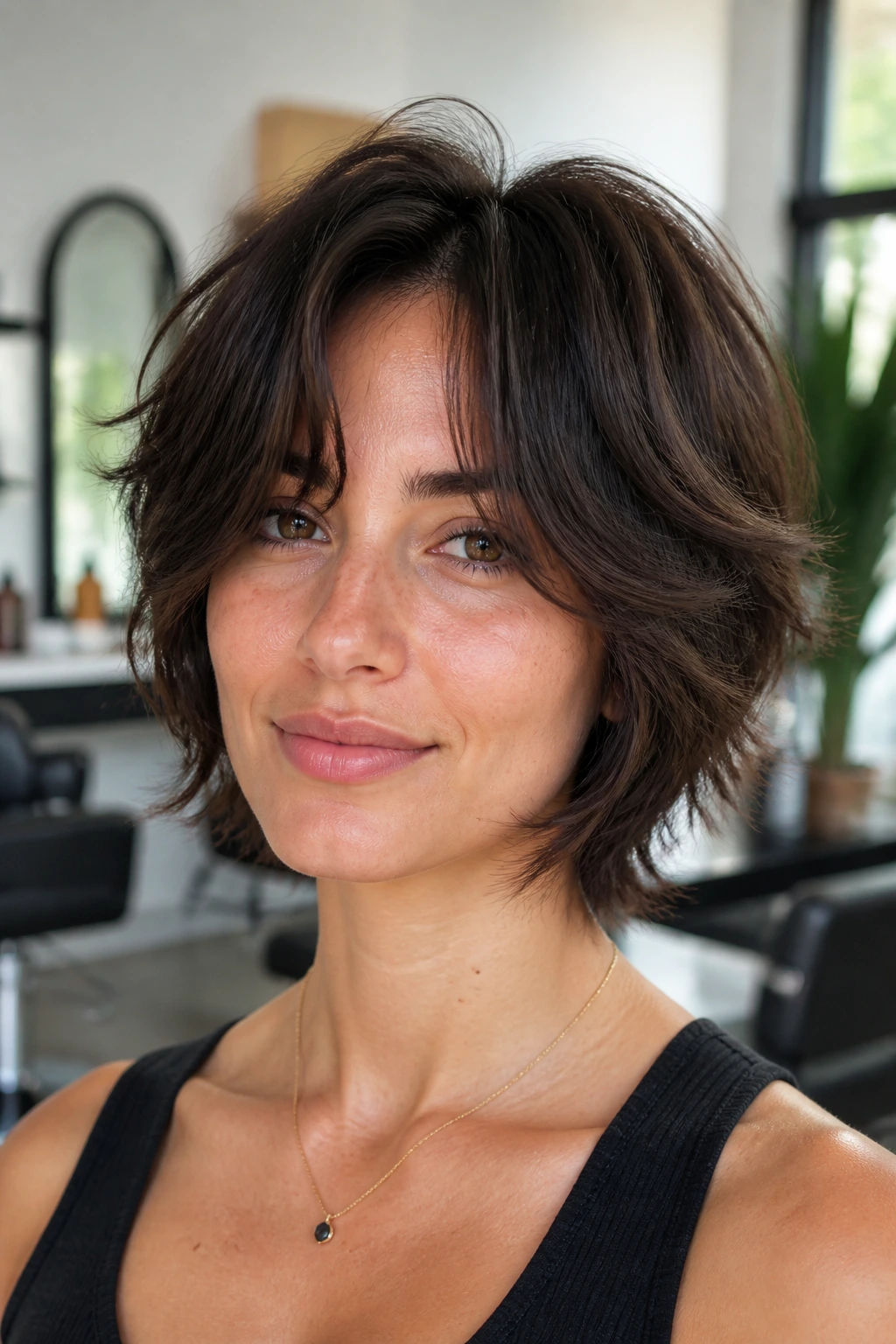
The crescent bob shag curves gently around the head like, well, a crescent. The curtain bangs arch at the center and slide into the side layers, which makes the whole haircut feel soft and balanced. It’s one of the easiest shapes to wear because the outline already does most of the work.
What makes this version special is the way it flatters the face without shouting. The curve at the perimeter gives lift, the fringe opens the forehead, and the short length keeps the neck visible. It’s a tidy ending point for this group, which is fitting, because the shape feels calm even when the texture is messy.
Why Short Shaggy Haircuts With Curtain Bangs Work So Well
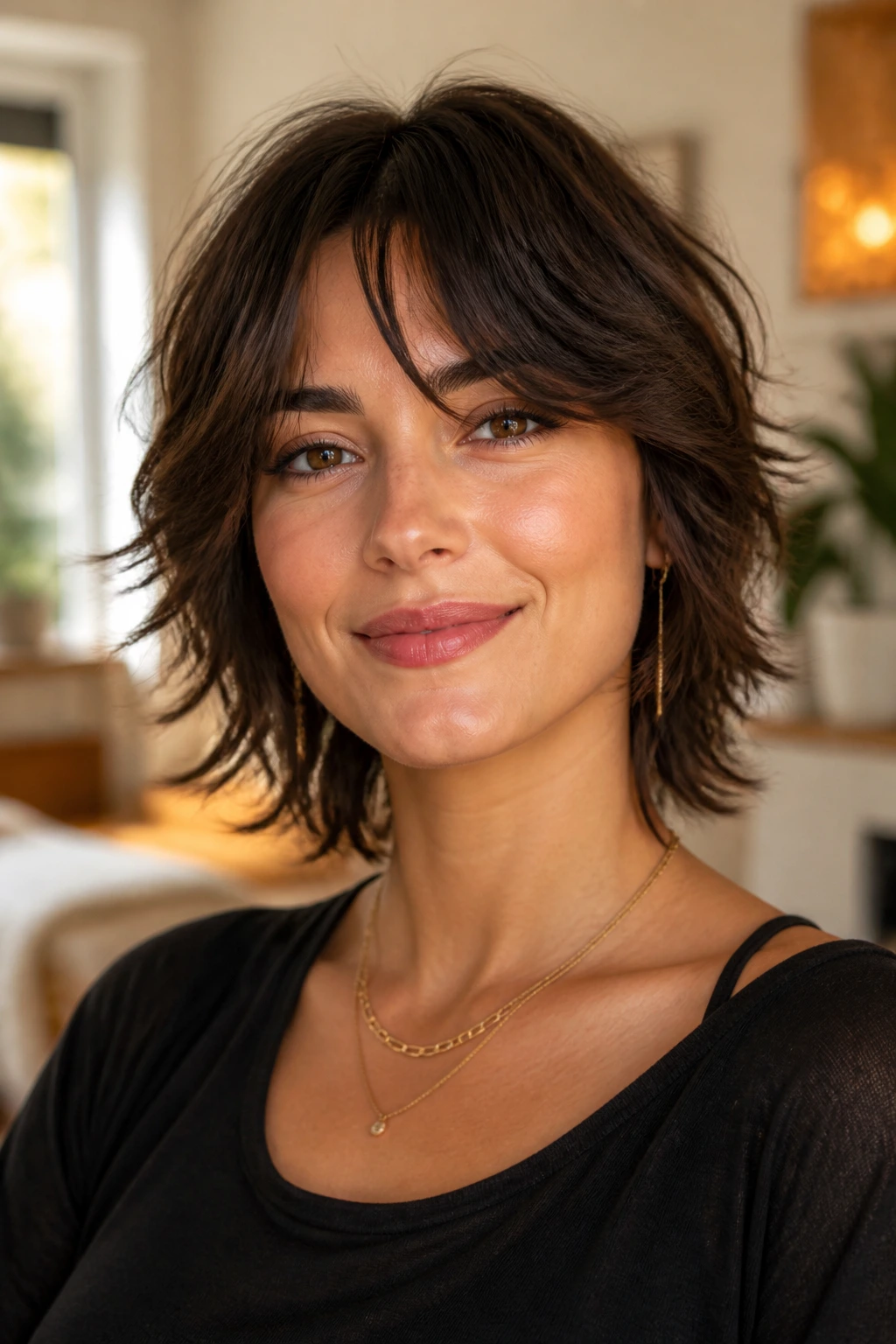
Short shaggy haircuts with curtain bangs work because the pieces are doing different jobs at the same time. The layers remove bulk and add movement, while the curtain fringe softens the front so the cut doesn’t feel blunt or boxed in. That combination matters more on short hair than people think. Once the length comes up above the shoulders, a haircut stops hiding bad structure for you.
There’s also a practical side to it. A shag keeps hair from hanging in one solid sheet, which helps with air-drying, with volume at the crown, and with that slightly messy texture that looks good even on a second-day style. Curtain bangs do a lot of face-framing work without needing a heavy straight-across line, so they grow out more gracefully than traditional bangs.
The best part is how the cut behaves when life gets in the way. It can look polished after a round brush, but it doesn’t fall apart if you skip that step. Not every haircut can do that.
What to Ask for at the Salon
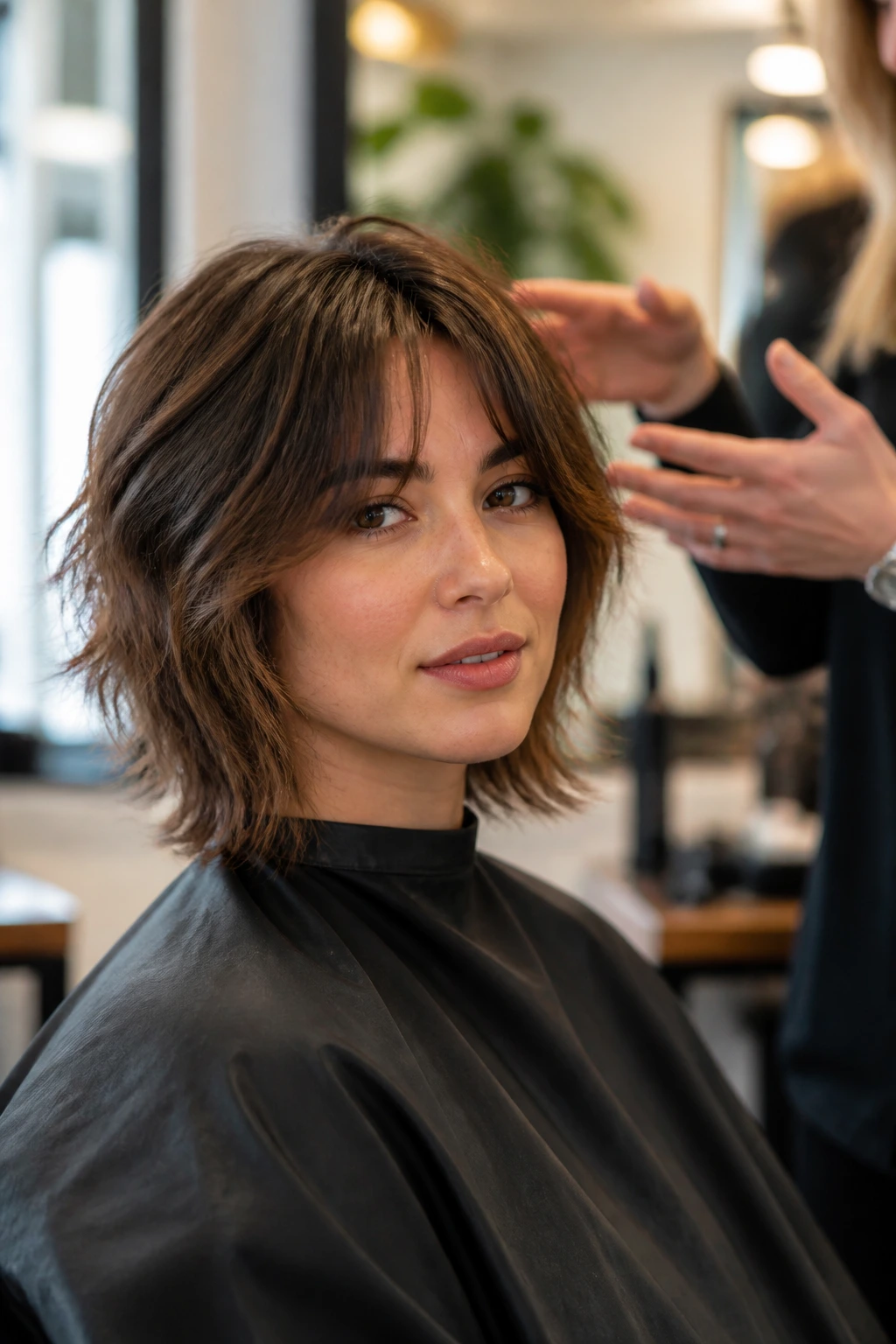
Bring photos, yes, but do not stop there. A good shag with curtain bangs needs more than a visual reference. Tell your stylist where you want the shortest face-framing piece to land when dry, usually around the cheekbone or just below it, and say how much forehead you want left open when the fringe splits.
Ask for the layers to be cut with your texture in mind. Straight hair usually needs more internal movement and careful point cutting. Curly or wavy hair needs more length left in reserve so the shrinkage doesn’t steal the shape. If your hair is thick, ask where weight should come out; if it’s fine, ask where bulk should stay.
A sentence I like to use is this: “Keep the fringe soft and long enough to part, but make the crown lift.” That gets closer to the real job than saying “I want a shag.” Because a shag can mean everything from airy and French to choppy and punk. Those are not the same haircut.
Essential Tools for Styling These Cuts
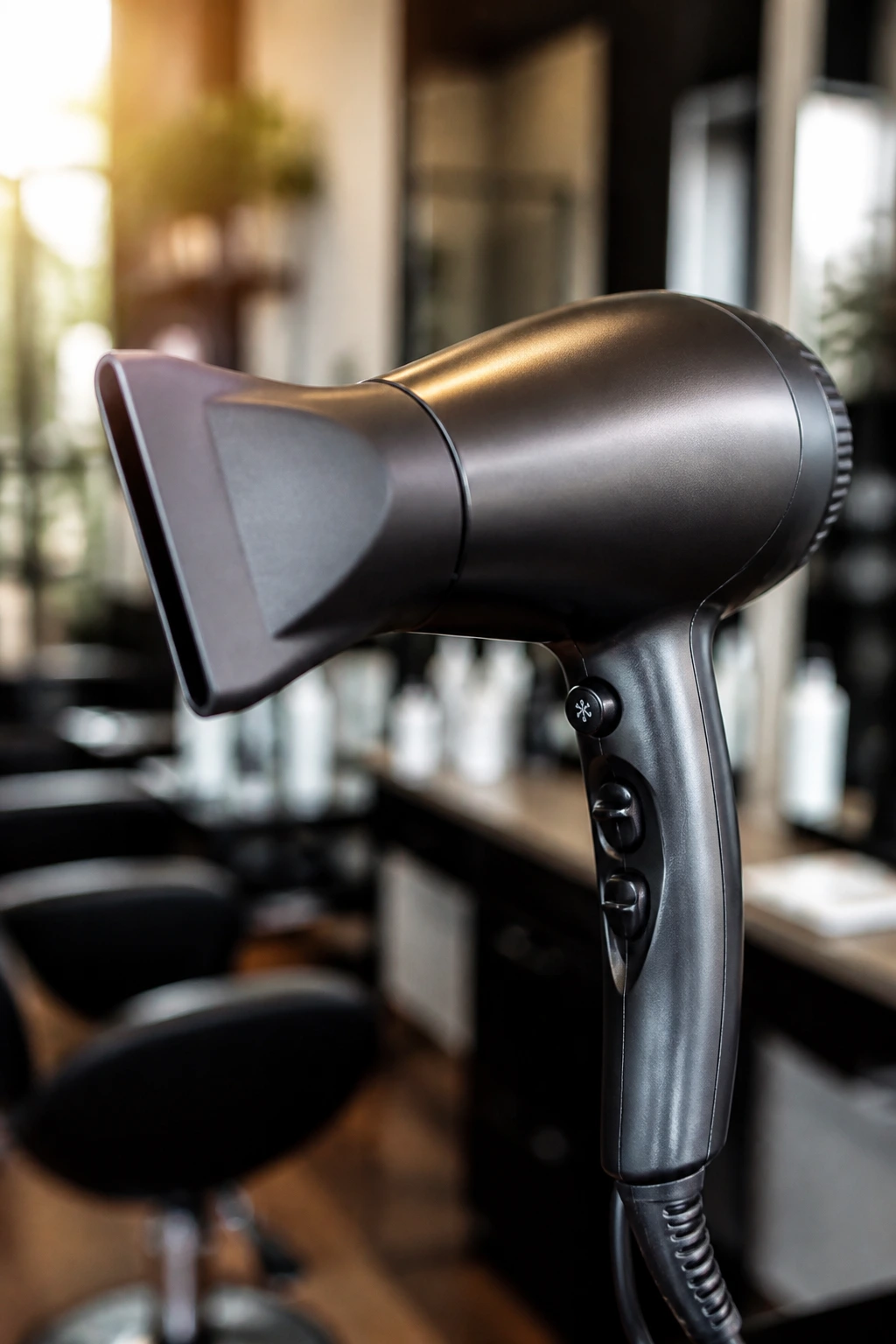
- Blow dryer with a nozzle attachment: Directs airflow at the roots and keeps the curtain bangs from blowing every which way.
- Small to medium round brush: A 1 to 1.25-inch brush is useful for bangs and shorter face-framing pieces.
- Diffuser: Helps wavy and curly versions dry with shape instead of frizz.
- Texturizing spray: Gives the ends grit and separation after drying.
- Light mousse or root lift foam: Adds body without making the hair sticky.
- Dry shampoo: Useful on day two when the fringe starts to collapse.
- 1-inch curling iron or wand: Handy for adding bend to the front layers and curtain pieces.
- Wide-tooth comb or fingers: Better than a brush for breaking up the finished texture without wrecking the shape.
How to Style a Short Shag With Curtain Bangs
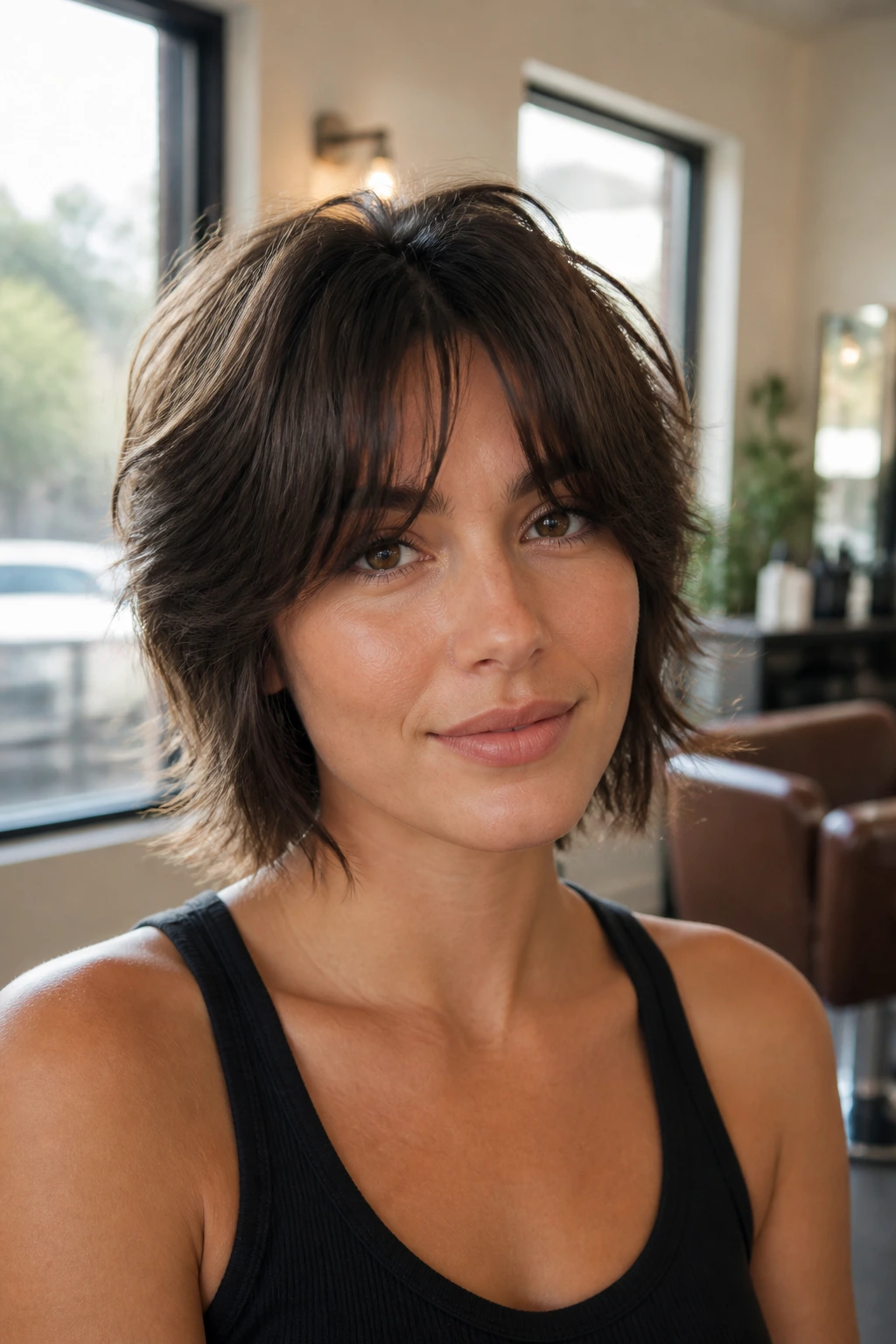
Start with damp hair, not soaking wet hair. Towel-dry until it feels loose and just a little cool, then work a small amount of mousse into the roots and a lighter amount through the mids. The roots need the most help. That’s where the lift comes from.
Dry the curtain bangs first. Pull each side away from the face with the round brush, then curve the ends back in slightly so the split opens without flipping straight out. If the front dries flat, the whole haircut can look sleepy. That part matters more than people expect.
Once the fringe is set, rough-dry the rest or use a diffuser, depending on texture. For straighter hair, a few bends from a curling iron on random top pieces can make the shag look alive. For wavy hair, a little scrunching and a mist of texture spray is often enough. Finish by shaking the roots with your fingers and keeping the ends separated. Overbrushing kills the whole mood.
Additional Tips and Texture Boosters
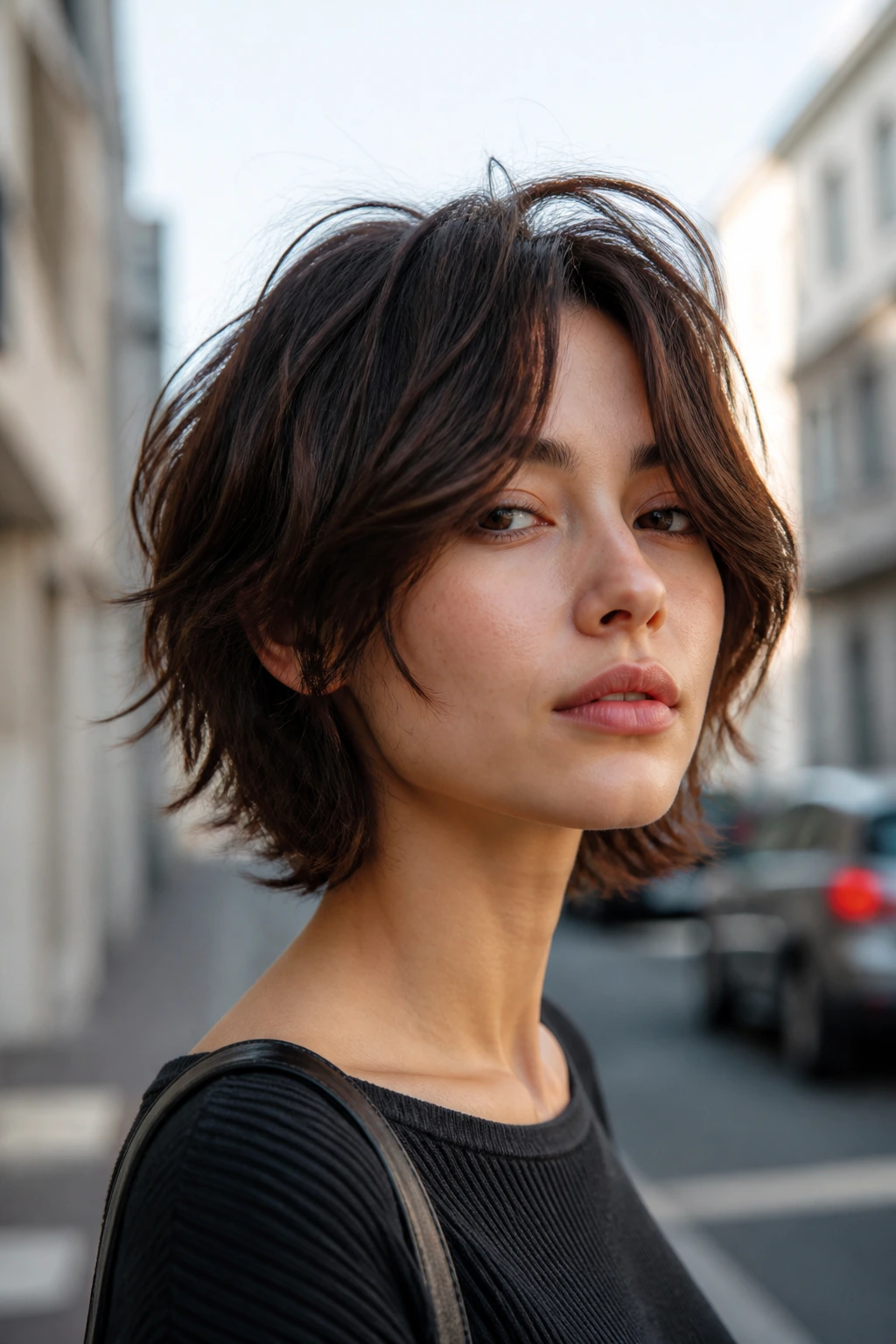
Shape Boost: If the cut feels too round, clip the curtain bangs away from the face while they cool after blow-drying. That tiny cooling pause helps the bend hold.
Texture Trick: A little texture spray at the mid-lengths can make short shag layers show up without turning them dry. Spray from underneath, not from above, or you’ll just rough up the surface.
Low-Fuss Fix: On second-day hair, mist the fringe with water and re-dry just the front 2 inches. You do not need to restyle the whole head to bring the shape back.
Fine-Hair Move: Use mousse at the roots and keep oils off the crown. Fine hair looks better with lift and a touch of separation than with glossy heaviness.
Curly-Hair Move: Refresh the curtain pieces by twisting them in opposite directions while damp, then let them dry before touching them again. That keeps the front from splitting awkwardly.
Polish Option: A flat iron on the very ends of the curtain bangs can tighten the front without making the rest of the shag look too done. One pass. That’s enough.
Common Mistakes to Avoid
-
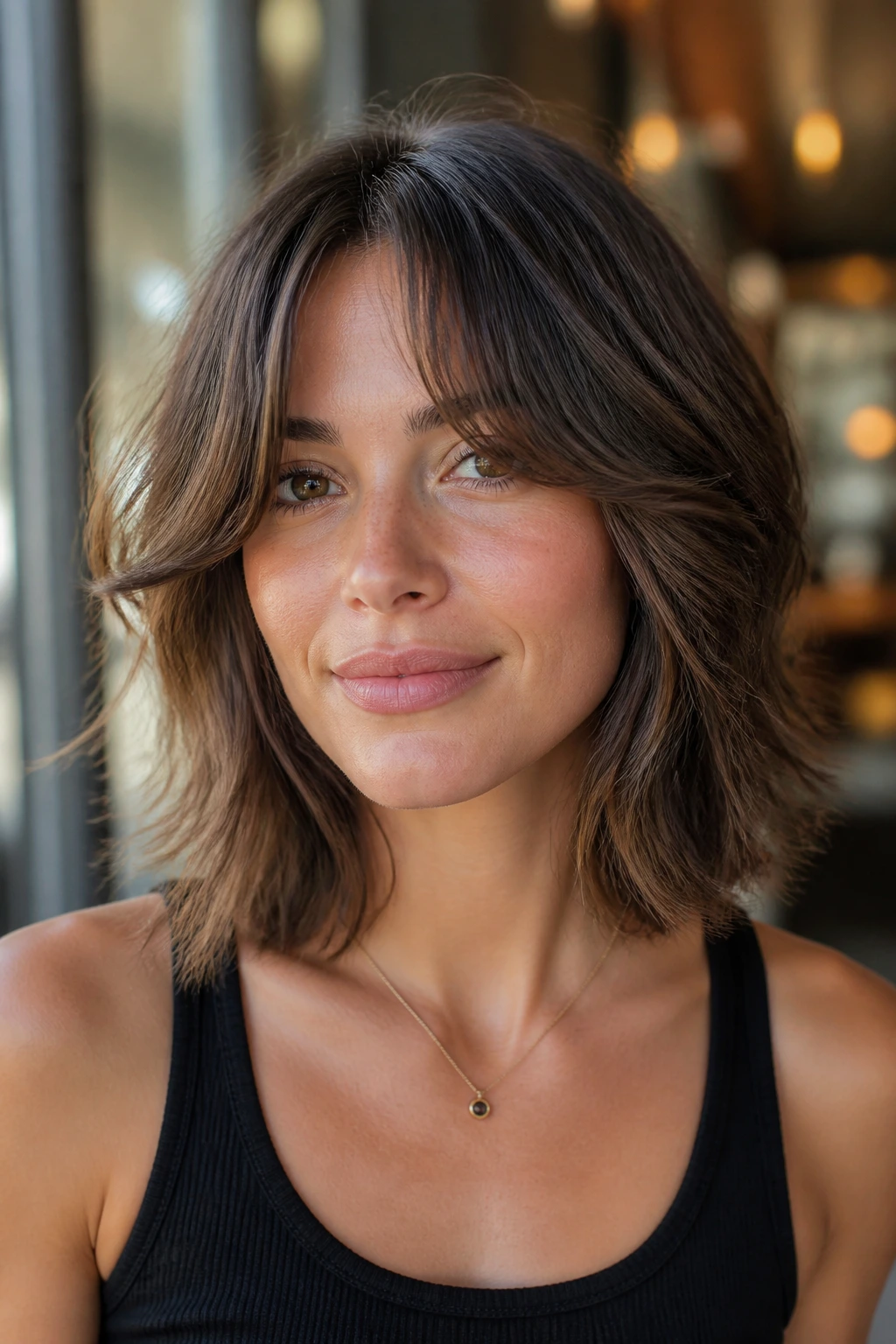
Cutting the curtain bangs too short: If the fringe lands above the brows before it’s styled, it can spring up and look blunt instead of soft. The fix is to leave the shortest point long enough to bend away from the face when dry.
-
Thinning fine hair too aggressively: Overusing razor work or thinning shears can leave the ends wispy and weak. Fine hair needs movement, yes, but it also needs some body left in the outline.
-
Ignoring the crown shape: A shag without crown control can puff out or collapse, depending on the hair type. Ask for weight removal in the right spots, not everywhere.
-
Styling the bangs straight down the middle: Curtain bangs need direction. Blow each side away from the face first, then let them settle back. If you force them straight down, they lose the split and start acting like a bad fringe.
-
Skipping trims too long: The bangs will hit your lashes, then your cheekbones, then your mouth if you ignore them. That grow-out may be fine for a while, but the shape stops reading as curtain bangs pretty fast.
-
Choosing a photo without matching texture: A shag on pin-straight hair does not behave like a shag on wavy hair. The silhouette may look close in a picture, but the upkeep can be wildly different in real life.
Variations and Adaptations to Try

The Soft Office Version: Keep the layers a touch longer and the curtain bangs at cheekbone length. This reads cleaner in polished settings and still gives you movement without the heavy shag edge.
The Curly Cloud Version: Leave more length in the fringe and let the curls form around the face. This works best when the stylist cuts with shrinkage in mind and avoids over-thinning the crown.
The Fine-Hair Lift Version: Ask for shorter crown layers, controlled point cutting, and a fuller perimeter. The shape stays visible without leaving the ends stringy.
The Thick-Hair Weight-Off Version: Focus on internal debulking and keep the curtain bangs soft but substantial. That stops the haircut from ballooning out at the sides.
The Grow-Out Version: Let the curtain bangs start lower, around the cheekbone, and keep the nape slightly longer. This buys you a few extra weeks before the shape needs a trim.
The Edgier Razor Version: Add a little more texture through the ends and keep the split fringe slightly messier. It’s the right move if you want the haircut to feel sharper and less sweet.
Maintenance, Washing, and Grow-Out Care
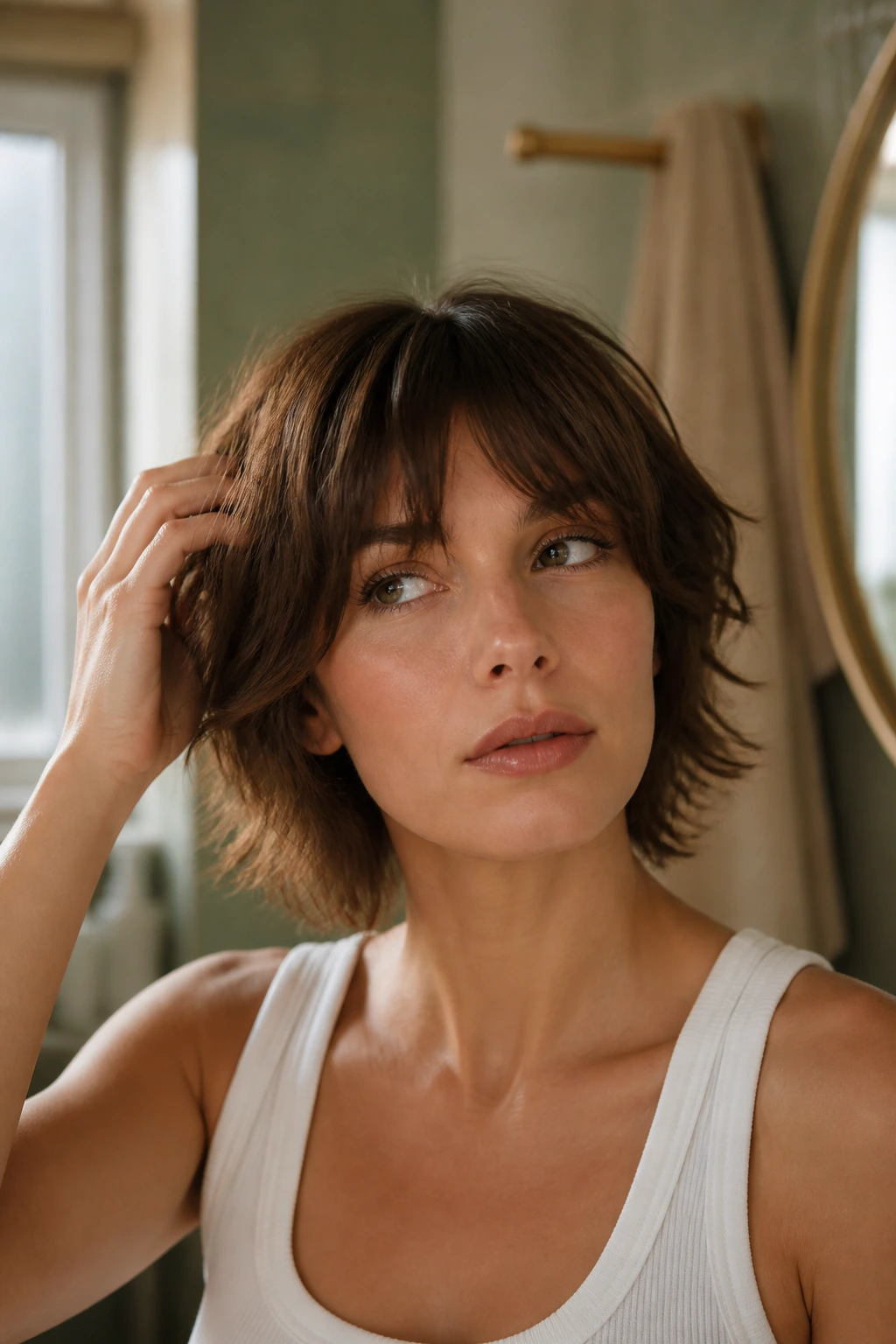
Most short shaggy cuts with curtain bangs need a trim every 6 to 8 weeks if you want the fringe to keep its shape. The rest of the cut can often go a bit longer, especially if the layers are blended well. Bangs are the part that show wear first. They hit the eyes, then the cheeks, then they start to behave like a long fringe that needs a decision.
Washing depends on texture and product load. Fine hair may need washing every 1 to 2 days because root lift disappears faster. Wavy or curly hair can often stretch to 3 or 4 days, especially if you refresh with a spray bottle and a small amount of cream or mousse. If you use dry shampoo, apply it before the roots get oily enough to look greasy; that’s when it works best.
The grow-out phase is where this haircut earns its keep. Curtain bangs can be tucked, bent, clipped, or pushed into the layers as they lengthen. If the front starts to feel too heavy, take a little weight out around the cheekbone instead of chopping the fringe shorter right away. That keeps the shape soft while you wait for the next salon visit.
Frequently Asked Questions
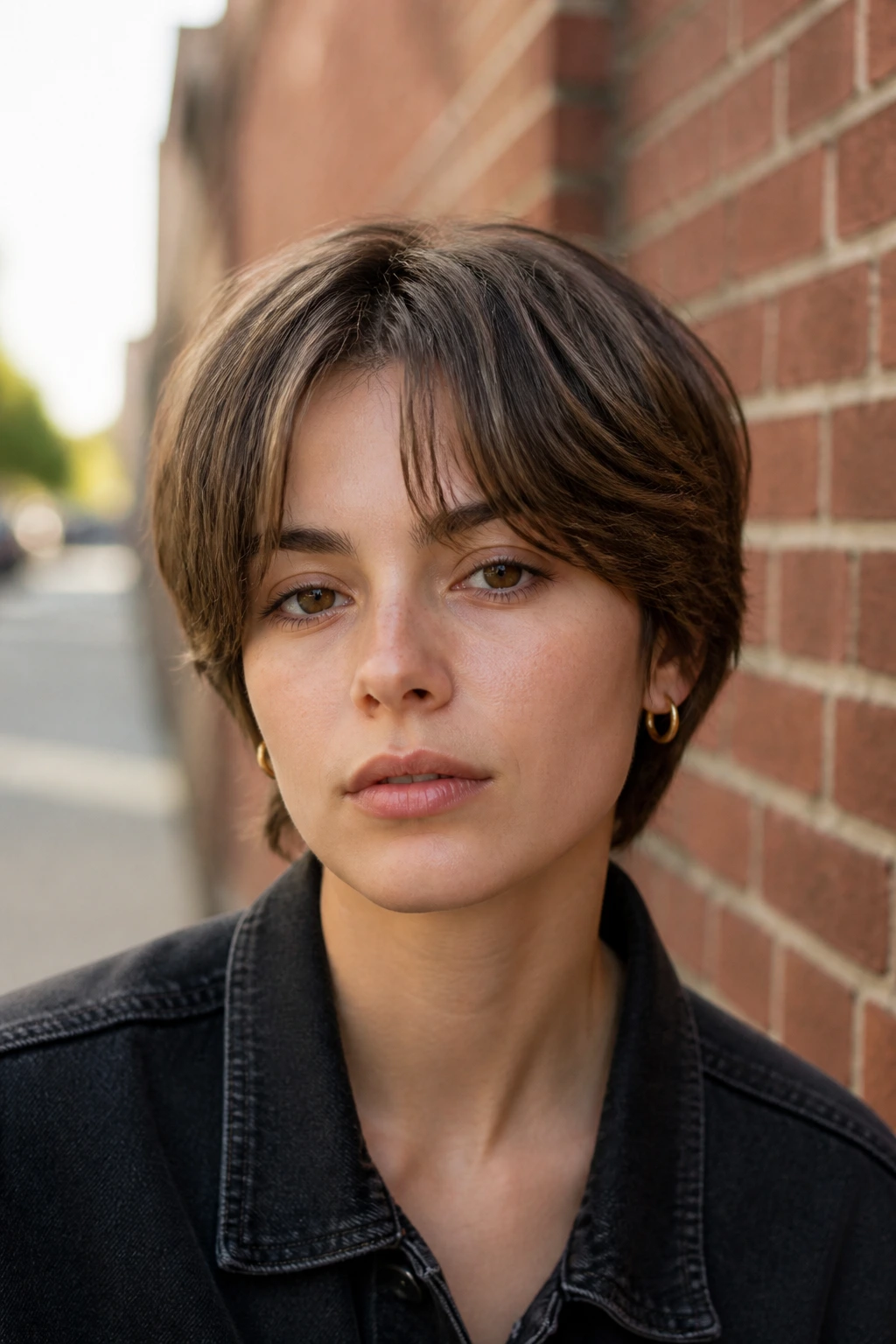
What face shape works best with short shaggy haircuts with curtain bangs?
Oval, heart, and longer faces are usually easy matches, but the cut can be adjusted for almost any face shape. The key is where the shortest face-framing layer lands and how open the fringe leaves the forehead.
Can fine hair wear a shag without looking thin?
Yes, but the cut has to keep some density at the ends and around the crown. Too much razor work can leave the style wispy in a bad way, so ask for movement instead of aggressive thinning.
Do curtain bangs work on curly hair?
They do, as long as the stylist leaves enough length for shrinkage. Curly fringe should be cut with the curl pattern in mind, and it usually looks best when it parts loosely rather than sharply.
How often do curtain bangs need trimming?
Most people need bang trims every 4 to 6 weeks, even if the rest of the haircut can wait longer. The fringe shows its age faster because it sits right at the eyes and cheekbones.
What if my hair flips out in weird directions?
That usually means the layers were cut without enough attention to your growth pattern or cowlicks. A quick round-brush reset or a small bend with a 1-inch iron can help, but the real fix is adjusting the next trim so the layers fall with your natural direction.
Can I air-dry this cut?
Absolutely, especially if your hair already has some wave or curl. Use a little mousse or cream, twist the curtain pieces away from the face while damp, and leave the rest alone once the shape starts to set.
Is this cut hard to grow out?
Not really. The fringe blends into the face-framing layers better than blunt bangs do, and that makes the in-between stage easier. You may still want a cleanup trim at the front, but the overall shape stays wearable.
What should I tell the stylist if I want low maintenance?
Say you want a short shag with soft curtain bangs that still works when air-dried. Ask for a shape that keeps the fringe long enough to part and the layers blended enough to avoid daily heat styling.
The Shape That Keeps Its Edge

A good short shag with curtain bangs does something rare: it gives you shape without locking you into a stiff routine. The cut can be soft, choppy, polished, or rough around the edges, but it always needs the same two things — movement in the layers and a front fringe that opens the face instead of boxing it in.
That’s why the details matter so much. A few millimeters on the fringe, a little weight taken out of the crown, the right length at the cheekbone — those small choices decide whether the haircut looks intentionally textured or just unfinished. Get those parts right, and the style starts doing half the work for you.
If you’re thinking about taking the plunge, bring a photo that matches your texture, then talk through length, density, and grow-out with real specifics. That conversation is where the best version of the cut begins.
