



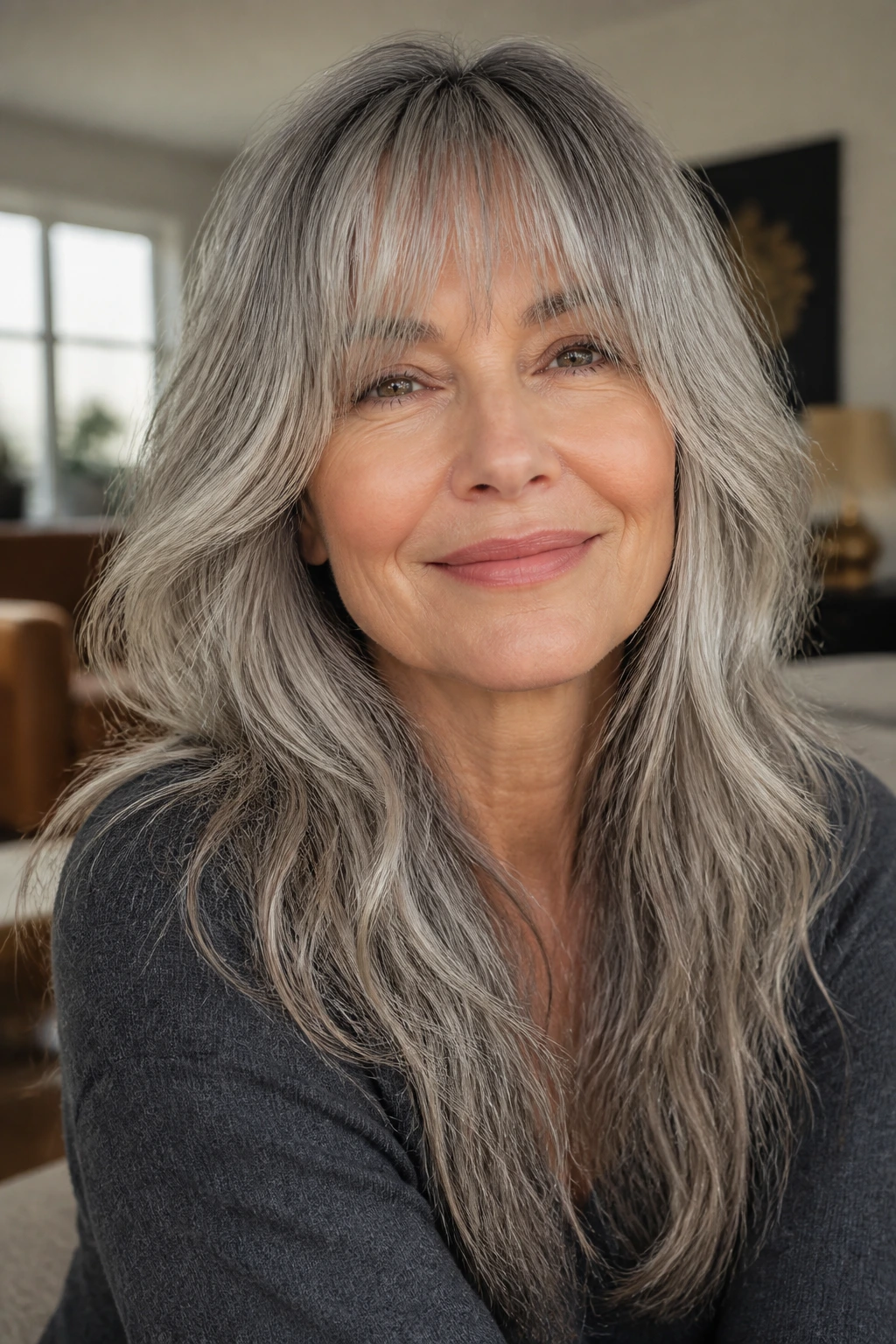
Long hair after 60 does not need to be swept into a neat little compromise. It can still move, still fall in a sheet, still brush the shoulders with a bit of attitude. Shag haircuts for long hair over 60 work because they keep what’s worth keeping — the length, the softness, the ability to tuck hair behind one ear — and strip out the heavy bits that make long hair look tired instead of styled.
The trick is placement. A good long shag doesn’t just chop layers into the ends and call it texture. It puts the shortest pieces where the face needs lift, usually around the cheekbone, jaw, or collarbone, and leaves enough length underneath so the cut still reads as long hair. That matters even more once hair turns silver, white, salt-and-pepper, or finer at the crown. Those textures show every blunt line, every too-short layer, every over-thinned end.
And there’s a line between airy and wispy in the worst way. I’ve seen long shags that were carved too hard and ended up looking dry at the bottom, almost frayed. I’ve also seen the opposite: too much length with no shape, which can drag the whole face down. The best versions sit right in the middle — soft, flattering, easy to grow out, and far less fussy than they look on first glance. The 19 cuts below cover the range, from polished and brushed-out to piecey and undone, because long hair after 60 deserves options, not one tired formula.
Why These Long Shags Keep Looking Fresh
-
They keep your length without making it feel heavy: The layers take bulk out of the middle and lower sections, so the hair moves instead of hanging like a curtain.
-
They work with silver, white, and salt-and-pepper strands: Those colors show shape fast, and a good shag gives them dimension without forcing you into a short cut.
-
They can be tailored to fine, thick, straight, wavy, or curly hair: The same shag idea behaves very differently depending on where the layers land and how much weight gets removed.
-
They give you a real choice about bangs: You can go curtain, side-swept, bottleneck, wispy, or skip fringe entirely and still get a flattering result.
-
They grow out with less drama than a blunt cut: The edges soften as they grow, which means you do not hit that awkward, shelf-like stage as fast.
-
They style well with a brush, a diffuser, or almost no styling at all: That flexibility matters when you want the hair to help you, not ask for a 45-minute negotiation each morning.
1. Curtain Bangs and Cheekbone Layers
Curtain bangs are the old reliable of long shags, and I mean that in the best way. They split softly at the center, skim the outer corners of the eyes, and drift into layers that land around the cheekbone or just below it. On long hair, that creates a frame without chopping the length down to something severe.
What makes it work
This version is especially kind to faces that want a little lift near the eyes and temples. The middle stays open, so you do not get the boxed-in feeling that comes from a blunt fringe, and the longer sides can tuck behind the ear on days when you want your face clear. If your hair has any bend at all, the curtain shape falls into place with a round brush and a couple of clips while it cools.
Ask your stylist to keep the shortest pieces long enough to sweep, not stick. If they cut the center too short, the whole thing starts acting like a bang with commitment issues. Not helpful.
Best for: softening the forehead, balancing longer faces, and easing into bangs if you have not worn them in years.
Style it with: a 1.5-inch round brush and a light mousse at the roots.
Watch for: too much thinning around the bang line — it can separate into stringy little bits by lunchtime.
Short version: if you want a long shag that feels friendly instead of edgy, this is a smart place to start.
2. Feathered Silver Shag
Silver hair shows everything. That’s the blessing and the curse. When the cut is too blunt, the edges can look hard against the shine of the color; when the layers are feathered just right, the whole shape looks lighter and more alive.
Feathering works especially well on silver because it keeps the cut from turning into one solid helmet of shine. The ends break up slightly, the top gets a bit of lift, and the whole thing looks like it has movement even when it’s sitting still. That matters on long hair, where too much weight can make the color feel flat.
I like this version with soft side pieces instead of a heavy fringe. It lets the silver do its own thing. If your natural texture is straight, a small bend through the midlengths is enough; if it’s wavy, the feathered layers usually encourage the wave to sit instead of puff.
Ask for this specifically
- Long layers that start around the collarbone or chest
- Soft feathering around the face and at the ends
- Minimal bulk removal at the perimeter
- Enough length to pull the hair back cleanly
The one thing I would avoid is over-razoring the bottom. Silver hair can get airy fast, and you do not want the ends looking see-through unless that is the look you asked for on purpose.
3. Side-Swept Fringe and Long Cascading Layers
If center parts make your hair fall flat around the crown, a side-swept fringe can wake the whole cut up. It throws the eye diagonally across the face, which is useful when you want a little lift without adding obvious height on top. The long layers underneath keep the hair flowing instead of collapsing into one side.
This cut tends to play nicely with glasses, too. The fringe can slip above or around the frame instead of fighting it. That sounds small, but anyone who has spent a morning trying to stop bangs from sitting in their lenses knows it is not small at all.
The key is restraint. A side-swept fringe should look like hair that decided to go over there, not like an entire section was sacrificed to the scissors. Keep the shortest point around the eyebrow or slightly below, then let the longest part blend into the cheek and jaw.
A little root lift spray at the part helps, but don’t overdo it. Too much product near the roots can make the side sweep lie down like it’s tired, and that defeats the point.
4. Razored Wavy Shag With Airy Ends
This one has a bit more grit in it, and I say that affectionately. If your hair has a natural wave and tends to swell at the ends, a razor-cut shag can remove the bulk that makes the shape look triangular. The result is a cut that moves in loose pieces instead of forming one block.
The trick is knowing where a razor helps and where it misbehaves. On coarse or slightly porous hair, a heavy razor pass can rough up the cuticle and make the ends feel fuzzy. So I prefer this version when the stylist uses a light hand, especially through the lower layers, and checks the result dry before taking off more.
Use this if your hair does this
- Grows out with puffy ends
- Has a gentle wave that needs encouragement
- Feels thick through the mids but not at the crown
- Looks better with separation than with a smooth sheet
A dab of wave cream on damp hair and a scrunch with a microfiber towel usually gets this shape where it needs to go. The whole point is that it should look like hair, not a styling project.
5. Bottleneck Bang Shag
Bottleneck bangs are the quieter cousin of curtain bangs. They start a little shorter in the center, open out softly as they move toward the temples, and melt into the long layers with less drama than a full fringe. On a shag, that shape can be gold.
Why? Because it gives you the softness around the eyes without committing to a heavy wall of hair on the forehead. It also lets the rest of the cut stay long and airy. On older hair, that balance matters. Too much bang can steal light from the face; too little can leave the top of the cut feeling unfinished. Bottleneck bangs sit in the middle and do the job neatly.
I like them most on hair that already has a slight bend or a little body. Straight hair can wear them too, but the styling step matters more. Blow-dry the center forward first, then sweep the sides away from the face. If you let them dry in whichever direction they choose, they’ll choose chaos.
Styling note: plan on a tiny trim every three or four weeks if you want the shape to stay open and clean.
6. Crown-Boosting Shag for Fine, Straight Hair
Fine hair over 60 often loses density where you want it most: at the crown, around the temples, and just behind the ears. A crown-boosting shag fixes that by putting the shortest internal layers where they create lift, while leaving the perimeter long enough to keep the hair looking full.
This is one of those cuts where less can be more. Too many short layers and the hair starts to split into little wisps that never settle. The better version uses a gentle staircase inside the cut, not a choppy stack all over the head. You want movement, not a porcupine.
What to ask for
- Internal layers at the crown for lift
- A stronger perimeter to hold the shape
- Soft face framing, not aggressive thinning
- Ends left thick enough to look intentional
Styling is part of the cut here. A little root-lift foam at the scalp and a medium round brush can make a big difference. If you air-dry fine hair all the way without any support, the top tends to drift down by noon. That is not a character flaw. It’s physics.
7. Deep Side-Part Piecey Shag
A deep side part changes the whole mood of a shag. It shifts the weight, gives one side more lift, and lets the shorter layers around the front fall in a piecey, lived-in way. For long hair, that asymmetry keeps the style from feeling too symmetrical or too formal.
This cut is especially useful if one side of your hair naturally lies flatter than the other. Most people have a side that cooperates better. Use that. Let the cut work with it instead of forcing a center part because it sounds tidy on paper.
The piecey part comes from the layers, but also from how you finish it. A light texturizing spray through the midlengths gives separation without making the hair crunchy. Then tuck one side behind the ear and leave the other side loose. Done right, it looks like you meant to do that all along.
If you wear earrings, this cut is flattering in a very ordinary, practical way — it opens the face and gives the jawline a little space. No fuss. No helmet.
8. Soft Wolf Cut With Long Ends
A wolf cut can go too hard for long hair after 60 if the layers are pushed up too high or the ends are shredded. But a soft wolf version? That can be very good. The difference is restraint. The crown gets a little more lift, the face-framing layers come down cleanly, and the bottom keeps enough length to avoid the full mullet effect.
I think this works best for hair with medium density or natural wave. Thick hair can carry the shape easily; fine hair can wear it too, but the layers should be gentler and the bottom line should stay strong. Otherwise it collapses.
The beauty of this cut is attitude without effort. It has a bit more edge than a classic shag, but it doesn’t ask you to dress like you live in a leather jacket. If you like a touch of grit in your hair and still want to be able to pull it into a low ponytail, this is the version to look at.
Ask your stylist to keep the disconnect subtle. If they start taking the back too short, slow the conversation down.
9. Bang-Free Long Shag With Face Framing
Not everyone wants bangs. Some people have a cowlick at the hairline that refuses to cooperate. Some wear glasses. Some simply don’t want to spend their mornings fighting the forehead pieces into submission. Fair enough.
A bang-free long shag still gets all the movement, but it starts the face-framing layers lower, usually around the cheekbone or jaw. That keeps the face soft without putting extra work on the front section of the hair. It also grows out beautifully, because the shape lives in the layers more than in a fringe line.
This is one of the easiest long shags to live with if you like to pull your hair half up, clip it back, or wear it in a low twist. The front layers slip around the face without blocking it, and you can pin them back on one side for a cleaner look.
The cut should still have shape. Bang-free does not mean shapeless. If the stylist leaves the top too long and the sides too blunt, you end up with long hair that has no conversation with your face at all. Not what we’re after.
10. Curly Shag That Keeps Length
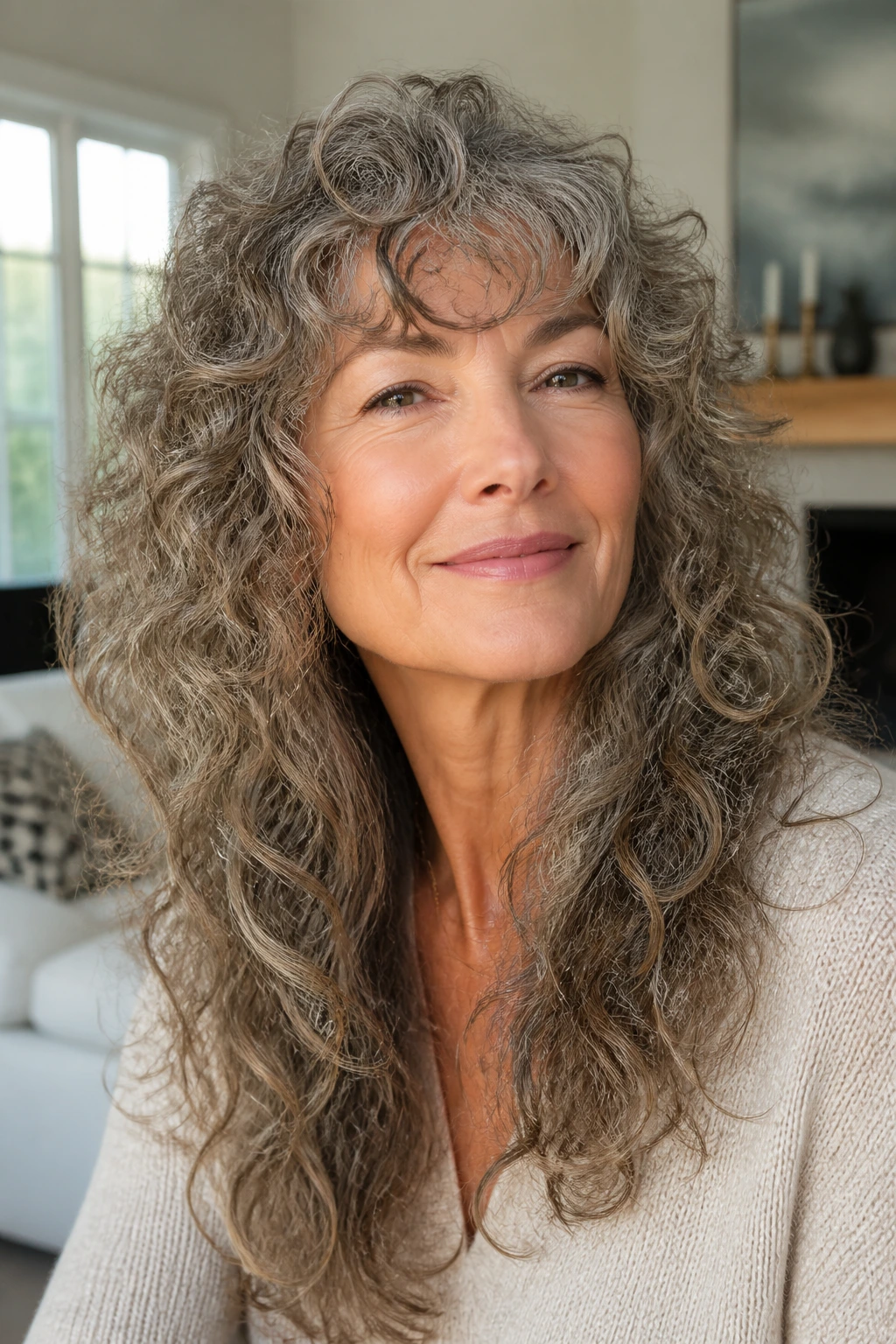
Curly hair and shags can be a beautiful match, but only if the cut respects the curl pattern. Cutting curly hair the same way you cut straight hair is how you end up with a triangle. That’s the old problem. The better shag lifts the curls in layers so they spring without stacking up too wide.
The best version is usually cut dry or damp, depending on the stylist’s method and the curl type. The shortest layers should land where the curl can bounce without sticking out awkwardly, and the perimeter should stay long enough to keep weight in the ends. That keeps the shape from getting too fluffy.
A curl-friendly shag also helps silver curls, which can be a little wirier than dark curls and sometimes need a more deliberate shape to avoid spreading out. A diffuser, a leave-in conditioner, and a small amount of gel or curl cream are usually enough. Do not rake through it with a brush after it dries. That’s how you get frizz and regret.
If your curls have a looser pattern at the top and tighter ends, tell the stylist. That detail changes the whole cut.
11. U-Shape Shag With Invisible Interior Layers
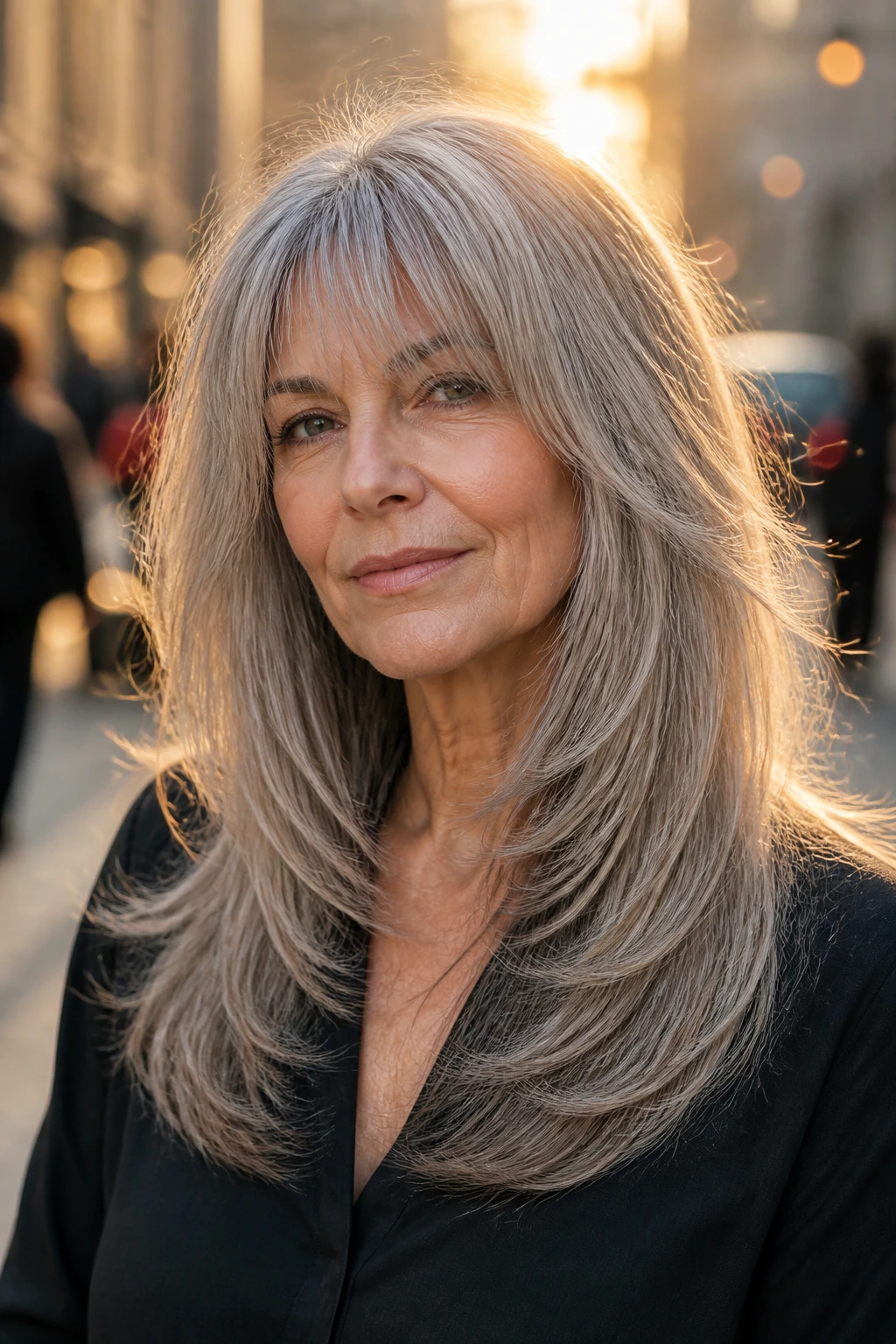
This is the quiet luxury version of a shag, if I can borrow a useful phrase without making it silly. The outside line stays in a soft U shape, so the hair keeps its length and looks polished from the back. Inside that shape, hidden layers take out the weight and give the cut movement.
I like this for people who want a shag but do not want the haircut to announce itself from across the room. It’s subtle. The layers are there, but they don’t shout. That makes it a solid choice for straight or slightly wavy hair that can look too flat when all the weight sits at the bottom.
The U-shape also helps the hair swing instead of fanning out. That matters when long hair starts feeling bulky around the shoulders. If you wear cardigans, blazers, or anything with a collar, this shape tends to sit neatly instead of snagging and puffing.
A light bend at the front is enough. You don’t need a full blowout every time. In fact, part of the appeal is that it should look like your hair, just better arranged.
12. Brushed-Out Blowout Shag

There’s a certain kind of shag that looks best when it’s been wrapped around a round brush and cooled into place. This is it. The shape is softer and more polished, with the face-framing pieces turning away from the face and the ends curving under just enough to keep the length neat.
This version is for someone who likes a finished look. Not stiff. Finished. The difference matters. The layers should move, but they should also land with a little control, especially around the shoulders and jaw. If your hair is medium to thick, this style can look expensive without trying too hard.
I’d ask for layers that can bend, not just chip. A choppy shag on a blowout can look odd if the ends are too broken up. Softly feathered layers hold the round-brush shape better, and a side part often helps the lift settle in the right place.
A blowout shag is a nice option if you like going a few days between washes. The style gets a little looser and less formal each day, which suits the haircut. That slow fall is part of the charm.
13. Salt-and-Pepper Shag With Dimensional Layers
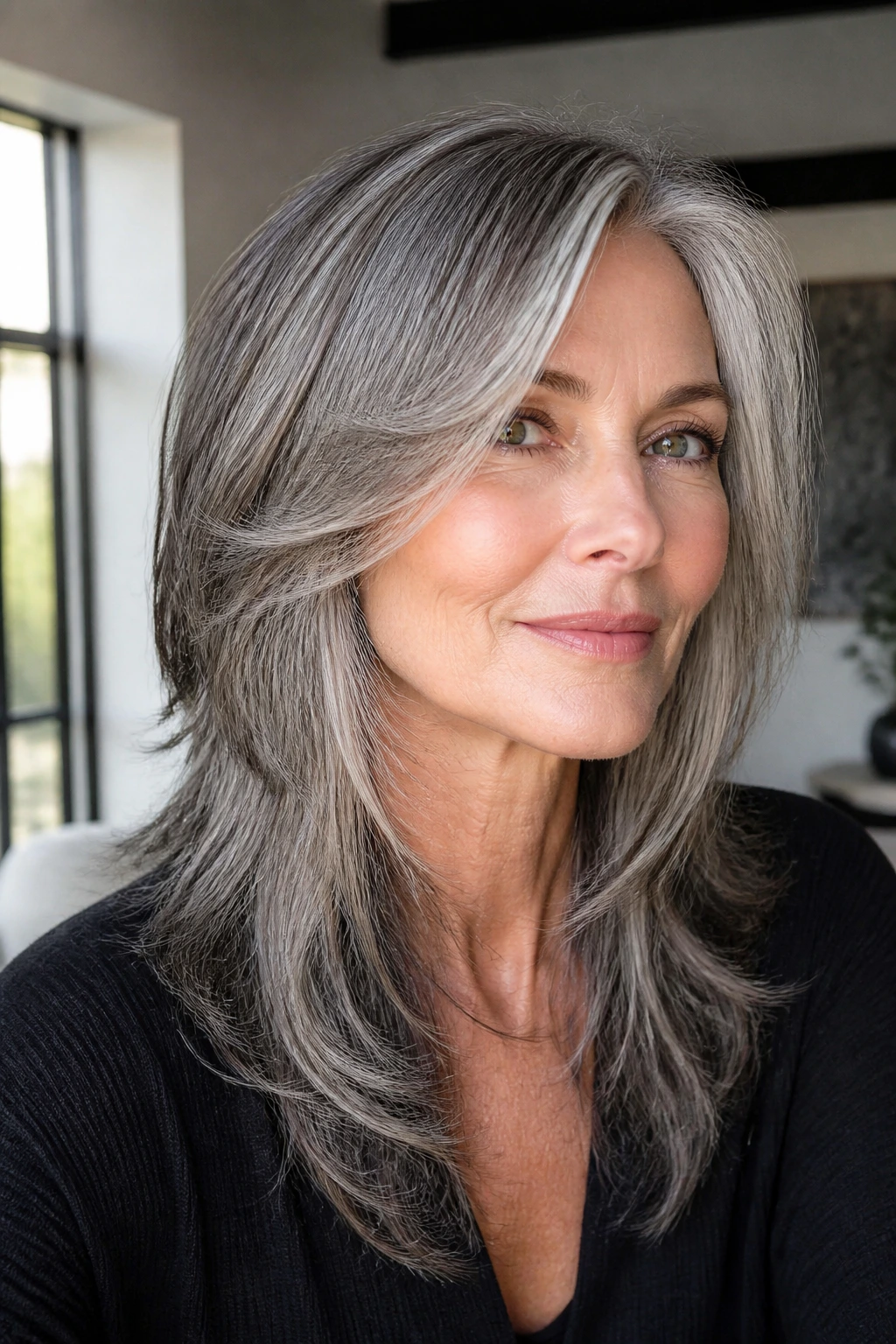
Salt-and-pepper hair can be gorgeous, but it needs shape because the color contrast shows exactly where the hair is dense, thin, flat, or heavy. Dimensional layers help break that up. They let the dark and silver pieces move together instead of sitting in one unmoving curtain.
What I like here is the way the layers make the color look intentional. A strong line can make salt-and-pepper hair feel striped; soft, staggered layers let the tones mingle. That gives the whole cut more depth without extra dye or extra effort. Handy.
The best version usually has a light face frame and a longer back, with enough internal movement to keep the shape from getting boxy. If the hair is coarse, a small amount of weight removal around the inner mids can stop the cut from swelling at the sides. If it’s fine, go easier. The goal is not to thin it into transparency.
This is a good style if you enjoy the natural color you’ve got and don’t want the haircut fighting it. Let the texture and the color do the talking.
14. Air-Dry Shag With Collarbone-Length Front Pieces
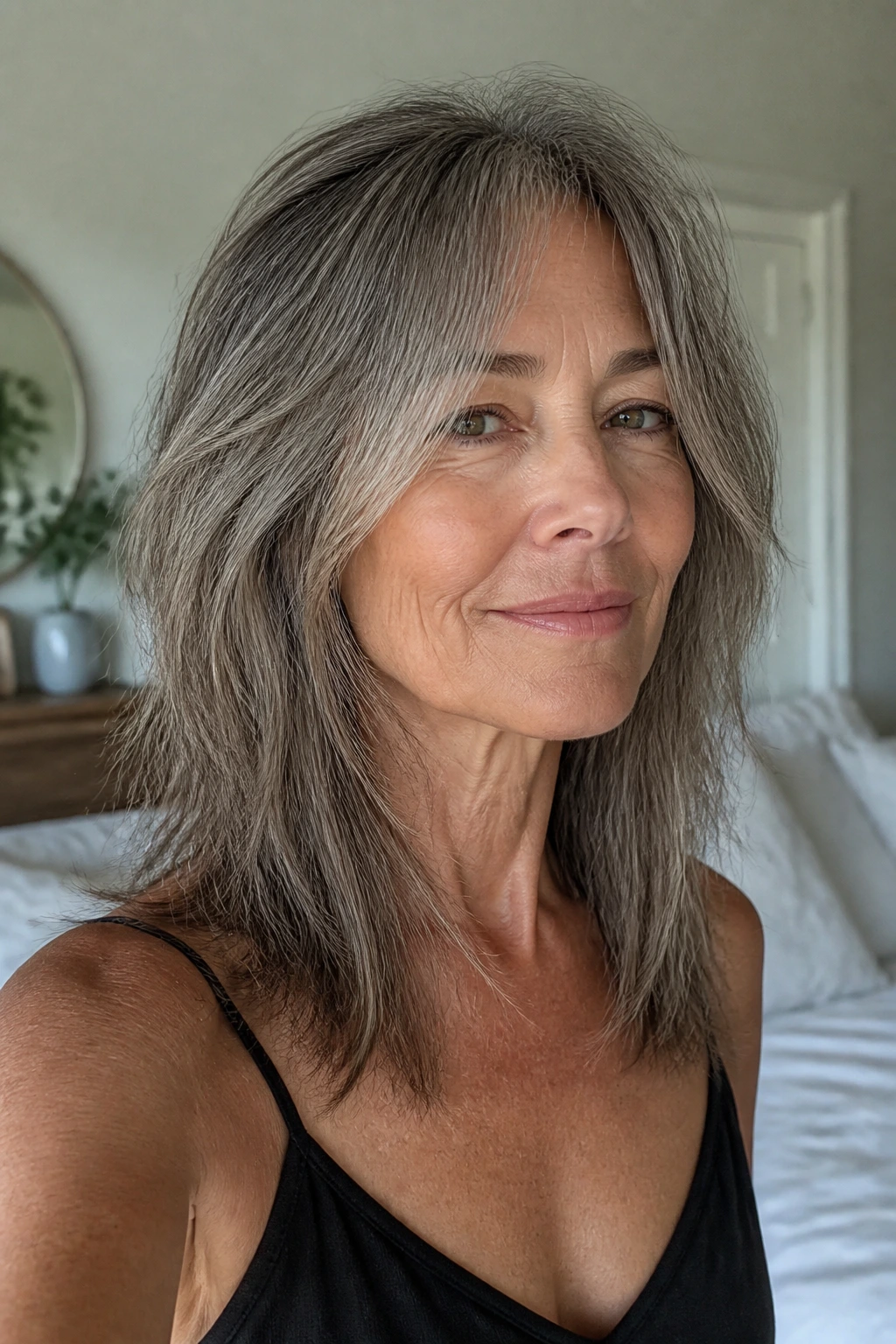
If your morning routine needs to stay under 10 minutes, an air-dry shag earns its keep. The front pieces are left long enough to shape themselves around the collarbone, and the interior layers give the hair enough movement that it doesn’t dry into one heavy wall.
This version works especially well on hair with a slight wave. The layers encourage the bend without asking for a curling iron. A leave-in cream, maybe a touch of mousse, and a loose twist while the hair is damp can be enough to make the whole style behave.
The collarbone length in front matters more than people think. It gives the face a soft vertical line, and it keeps the cut from shrinking too high when the hair dries. If the front is cut too short, the air-dried shape can jump up and sit awkwardly around the cheeks. No thanks.
This is also one of the easiest shag variations to grow out. The front pieces keep sliding into new lengths instead of turning into a strange shelf. That alone makes it worth a look.
15. Wispy Fringe and Long Lengths
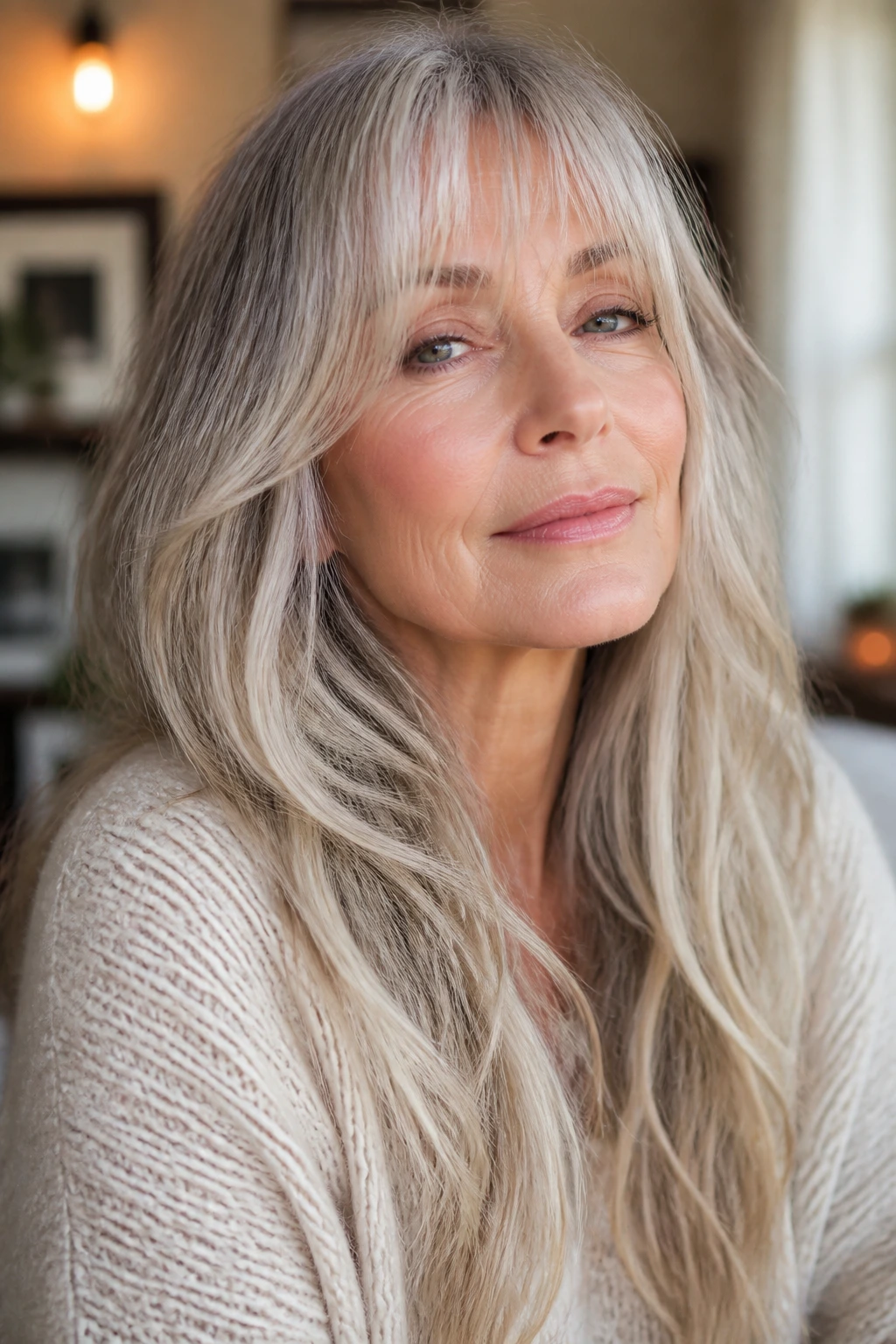
Wispy fringe can be lovely on long hair, but it has to be done with a light hand. You want the forehead softened, not hidden. A wispy fringe should look like a few soft strands sitting across the brow, with enough separation that it doesn’t feel dense or needy.
It works well if you want something gentler than curtain bangs and less commitment than a full fringe. It can also flatter hair that is thinning slightly at the temples, because the fringe gives a little coverage without stealing all the light from the face. That’s the sweet spot.
The main caution is upkeep. Wispy fringe can get oily faster than the rest of the hair, so a dab of dry shampoo at the roots and a quick comb-through can save the shape. If you let it sit too long without a trim, the wispy part stops looking airy and starts looking grown-out. Not the same thing.
I like this on long shag cuts where the rest of the hair is kept soft and flowing. It adds just enough detail near the eyes to matter.
16. Balanced Shag for Long Faces
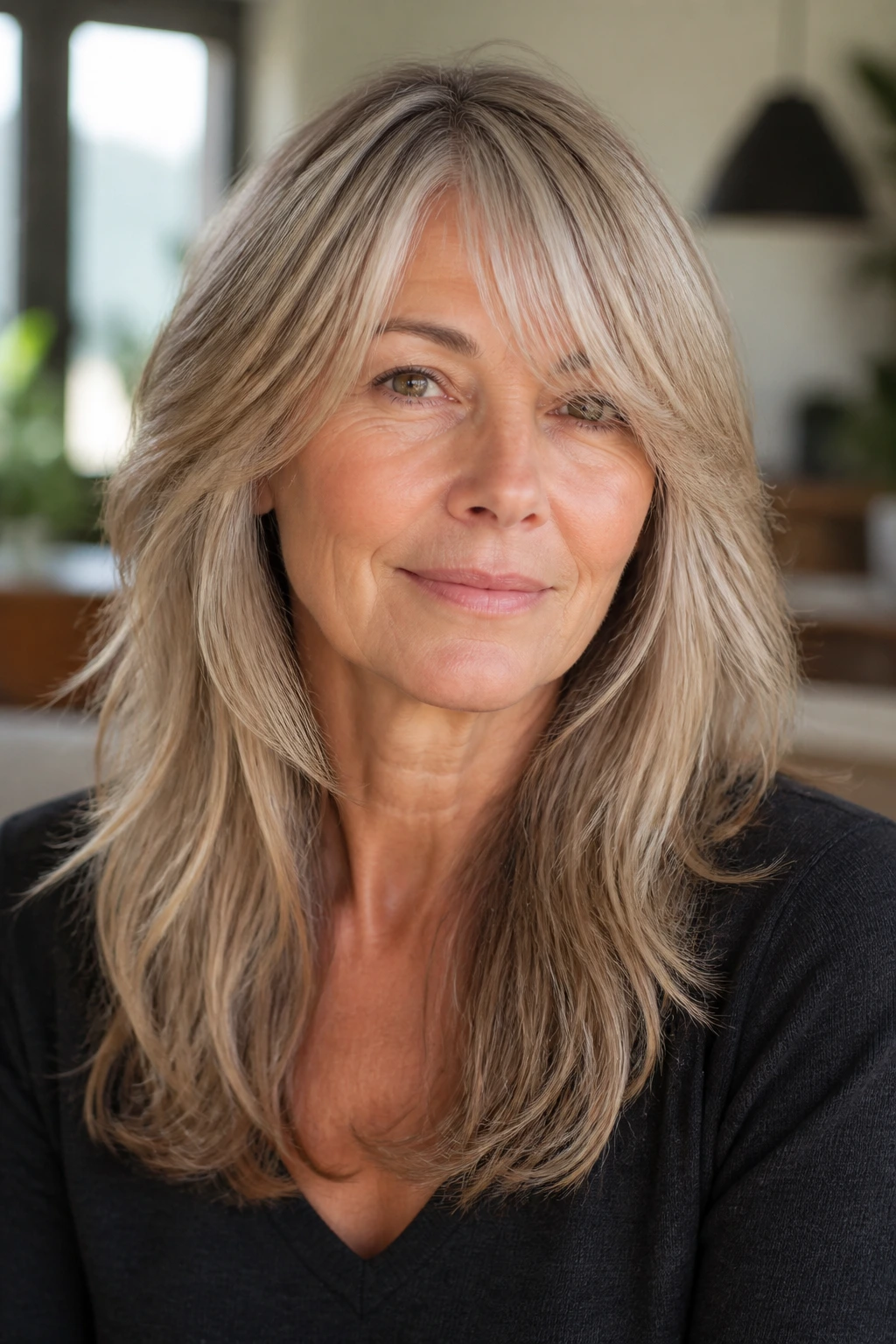
Long faces need width, not more vertical stretch. That sounds obvious, but it gets ignored all the time. A balanced shag places the layers around the cheekbones and sides of the head so the face feels a little broader, a little softer, and a little less drawn out.
The fringe should be longer, if you wear one at all. Short bangs can exaggerate the length of the face, while side-swept or curtain pieces help interrupt that line. The layers around the jaw should also keep some fullness, because hair that falls straight down from the crown can make the face feel even longer than it is.
This version is especially useful if your hair is straight and tends to hang flat against the head. A bit of outward motion at the ends gives width where you want it. A round brush or a large Velcro roller at the cheekbone area can make a practical difference, not just a cosmetic one.
A long face is not a problem to fix. It’s just a shape to work with. This shag does that with fewer tricks than you’d expect.
17. Thick Hair Razor Shag
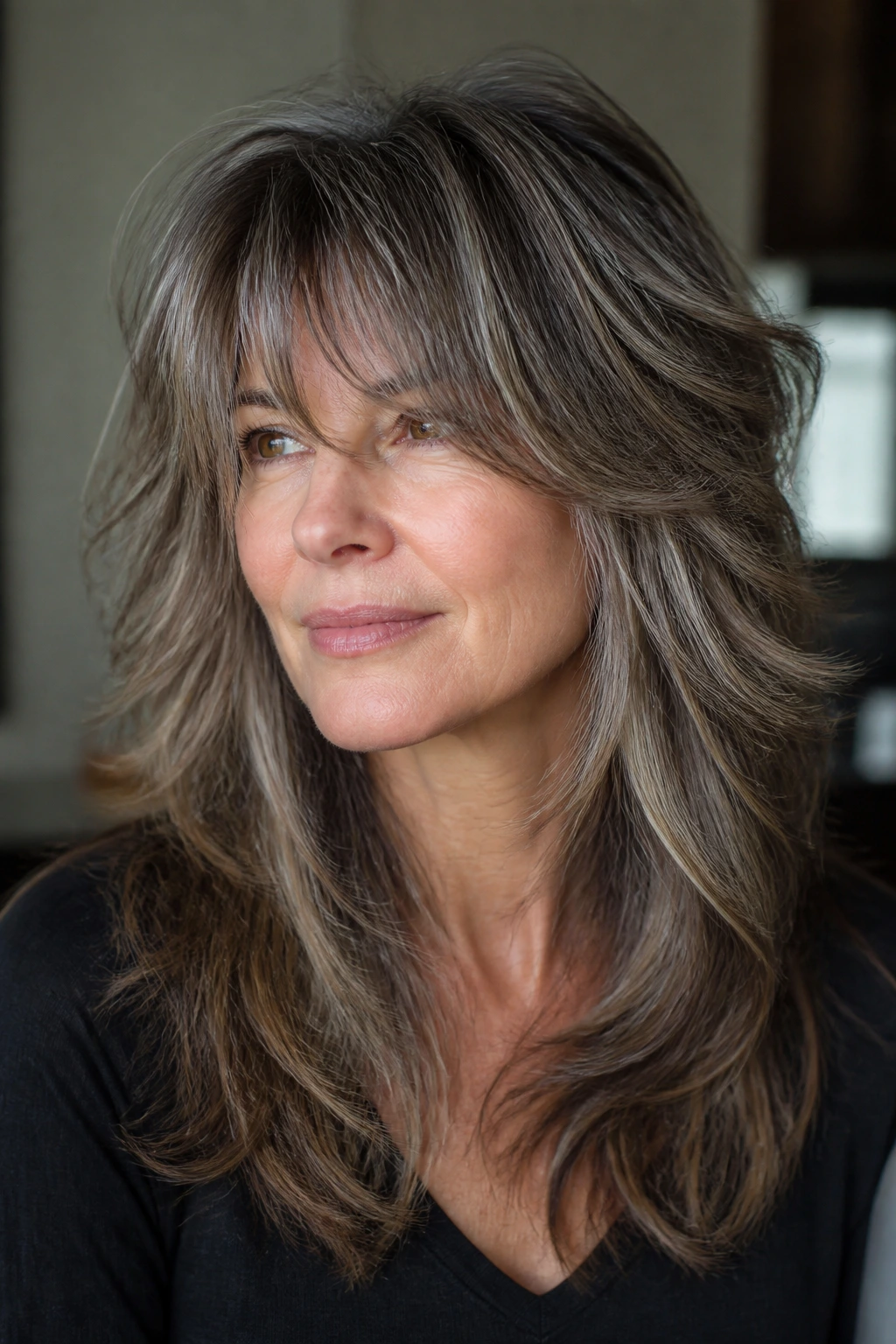
Thick hair can wear a shag beautifully, but only if the cut takes bulk out from the right places. Otherwise, you get a lot of body where you don’t want it and not enough movement where you do. A razor shag, done carefully, can solve that by softening the interior without gutting the ends.
I’m picky about this one. Thick hair gets ruined fastest when a stylist thins it too aggressively and leaves the perimeter looking see-through. The better approach removes weight inside the cut and keeps the bottom line strong. That way the hair still has shape on day three, not just the first hour after the salon.
This is a good style if your hair tends to balloon in humidity or sit heavy over the shoulders. The razored pieces let it bend and swing instead of just sitting there like a blanket. It also helps if you prefer to rough-dry your hair and move on with life.
If you’ve been told your hair is “too thick for layers,” that’s usually shorthand for “I don’t want to think about where the layers should go.” A good shag on thick hair is absolutely doable. It just needs a plan.
18. Shoulder-Skirting Shag With Flicked Ends

This one lives in that sweet middle zone where the hair is still long enough to feel elegant, but the ends have enough movement that they don’t drag. The flicked shape at the bottom can happen naturally with a little bend, or you can coax it with a round brush or flat iron.
It’s a good cut if you like hair that brushes the shoulders and moves when you turn your head. That sounds simple, but simplicity is the point here. The layers are placed so the ends flip instead of hanging straight down, which gives the whole haircut more energy without making it loud.
The shoulder-skimming length also works well for people who want to keep their hair up sometimes. You can still do a low twist, a clip-up, or a small bun. The face frame stays soft even when the rest is pinned back, which is one of those small things that ends up mattering all the time.
This is not a high-maintenance cut. It just looks like it has been shaped. Which, honestly, is often the whole assignment.
19. Soft Glam Shag With Curved Ends
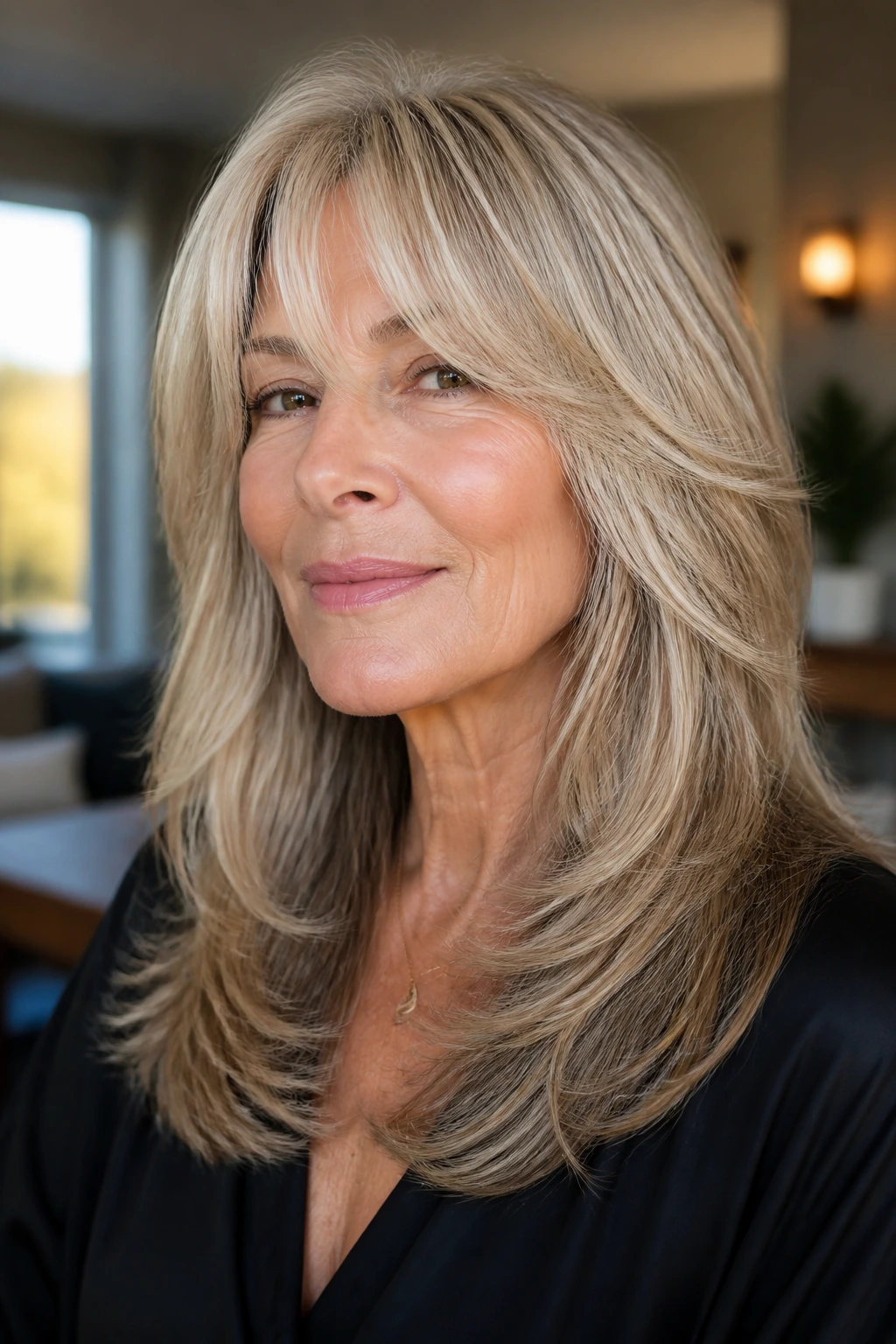
If you want a long shag that feels a little dressed up, this is the one I’d save to the top of the photo folder. The layers are softer, the ends curve inward or outward with a brush, and the face-framing pieces are long enough to look elegant rather than choppy. It still has movement, but it reads more polished than edgy.
This style suits people who like to wear lipstick, earrings, scarves, or a blazer and want the hair to match that energy. The curve in the ends gives a sense of finish, and the long layers keep it from feeling stiff. On silver or salt-and-pepper hair, the shape can look especially rich because the smooth bend helps the color show in bands instead of blobs.
The cut can be styled smoothly or with a little undone texture. That flexibility is the point. You’re not locked into one mood. A slight bend at the ends and a side part can take it from casual to dinner-ready without much effort.
If I had to pick one thing to remember about this haircut, it’s this: long hair after 60 does not need to look severe to look intentional. This cut proves it.
Why a Long Shag Still Works After 60
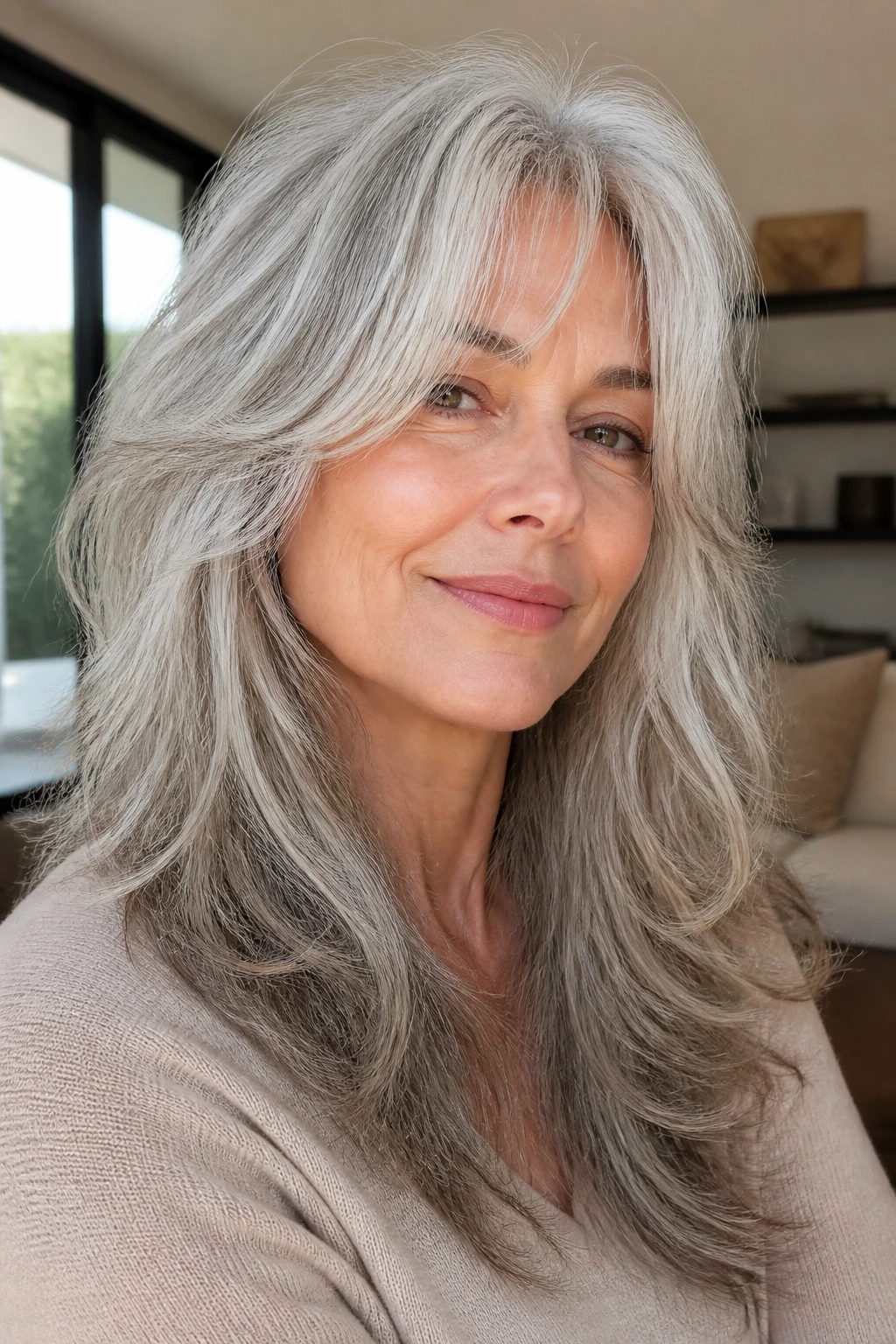
A long shag works at this stage of life because it solves the two biggest complaints people have about long hair: weight and shape. Hair that was easy to wear at 35 can feel flat, heavy, or oddly triangular later on, especially if the texture has changed. A shag removes enough mass to bring back movement without forcing you into a short crop.
It also gives you room to adjust for the changes that happen around the hairline, crown, and jaw. Some people get finer hair at the top and coarser ends. Some get more wave than they used to. Some get a silver halo that changes the way the hair reads in daylight. A good shag takes all of that into account instead of pretending every head of hair is built the same.
The version you choose matters, though. This is not a one-size-fits-all haircut. Fine hair wants soft internal lift. Thick hair wants controlled debulking. Wavy hair needs layers that respect the bend. Curly hair needs the shape cut around the curl, not against it. That’s why the cut can look polished on one person and messy on another if the placement is off by even an inch.
The main job of the haircut is simple: keep the length, keep the softness, and give the face some shape. Once those three things are in place, the rest becomes styling preference.
How to Talk to Your Stylist Without Guesswork
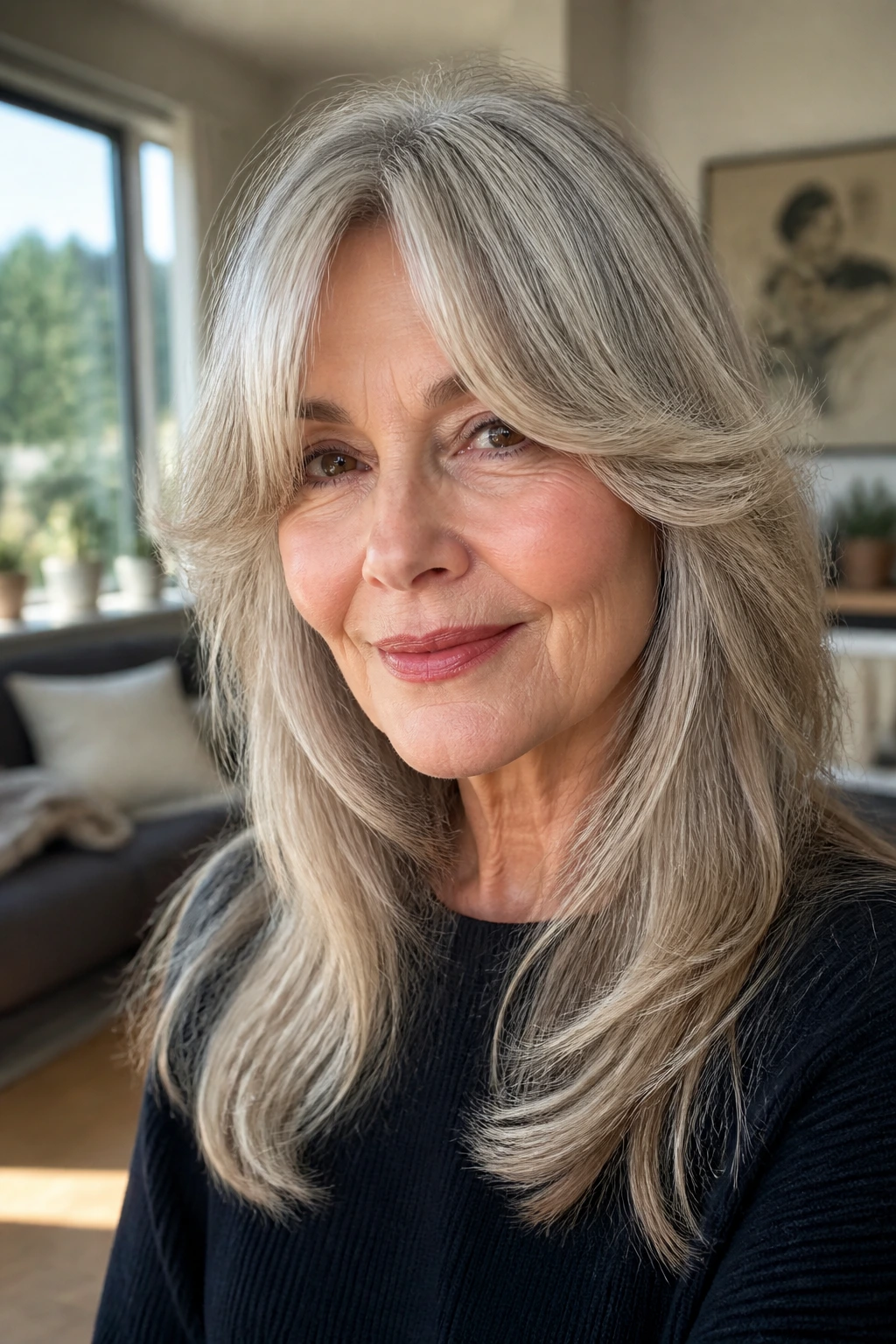
Bring photos, yes, but bring the right kind of photos. One front view, one side view, one back view if you can find it. The front shot tells the story of the fringe and face frame; the side shot shows how long the layers should be; the back shot keeps the stylist from guessing wrong about the perimeter. A single pretty photo from one angle is not enough.
Say where you want the length to land. Below the shoulders, collarbone, bra strap, mid-back — those are useful landmarks. “Long” means different things to different people, and if you do not name a landing point, you can wind up with a cut that feels shorter than you meant.
Tell the stylist how you actually style your hair. If you air-dry it, say so. If you blow it out with a round brush, say that. If you mainly wear it clipped back or in a loose ponytail, that matters too. A shag that looks lovely at the salon but falls apart with your real routine is not a good haircut. It’s a nice idea with bad logistics.
And be direct about bangs. If you want to avoid constant trims, say so. If you wear glasses, mention it. If your hairline has a stubborn cowlick, point it out before the scissors come out. Ten seconds of honesty can save you three weeks of irritation.
Tools That Make Styling Easier
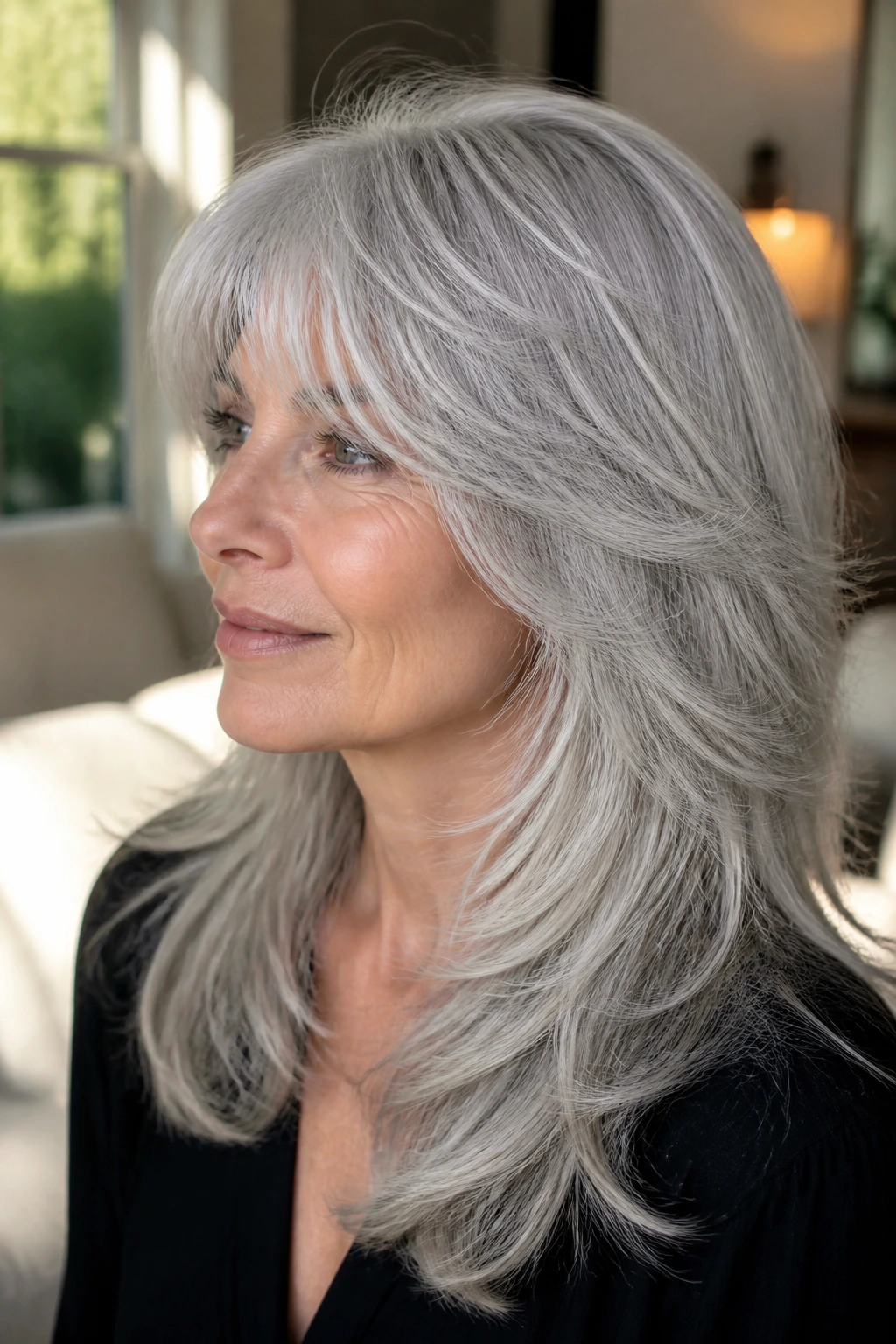
You do not need a drawer full of gadgets, but a few good tools make shag haircuts behave much better.
-
1.5- to 2-inch round brush: Great for shaping the face frame, smoothing the crown, and giving the ends a soft bend.
-
Vent brush: Dries the roots faster and helps fine or straight hair get lift without too much handling.
-
Wide-tooth comb: Better than a brush for detangling damp curls or waves without pulling the shape apart.
-
Blow dryer with a nozzle attachment: Directs airflow where you want it, which matters if you’re trying to keep the layers smooth instead of frizzy.
-
Diffuser: Worth owning if your hair is wavy or curly and you want the layers to keep their shape.
-
Heat protectant spray: Non-negotiable if you use a brush, iron, or hot air on the ends.
-
Light mousse or root-lift foam: Gives crown support without weighing down long layers.
-
Texturizing spray or dry shampoo: Handy for day-two hair and for keeping piecey layers from falling flat.
-
Sectioning clips: Small thing, big difference. They let you dry the top, sides, and back in clean sections instead of fighting the whole head at once.
-
Microfiber towel or cotton T-shirt: Cuts down on frizz, especially on wavy or curly shags.
How to Choose the Right Version for Your Hair and Face
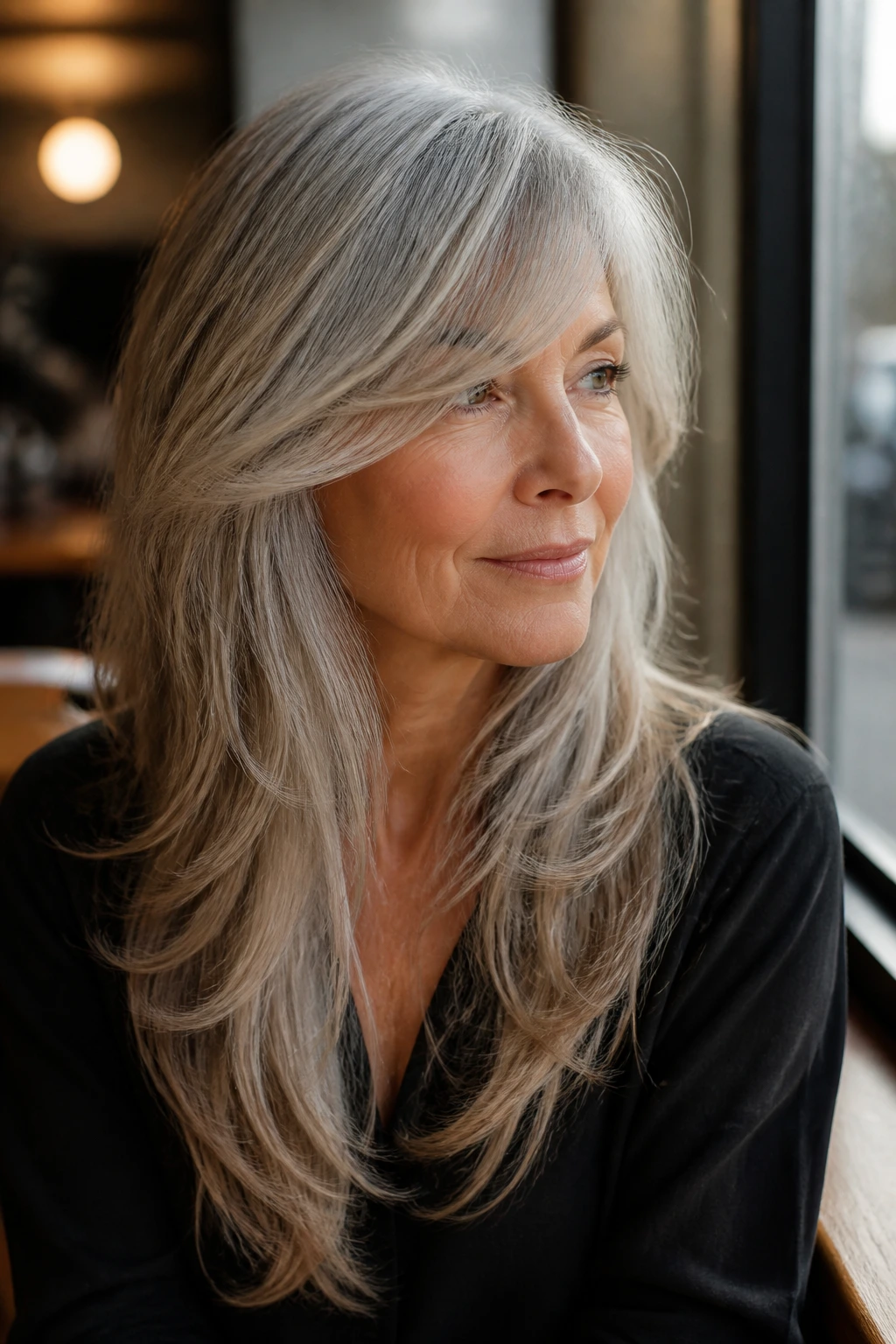
Fine hair: Choose a shag with soft crown lift and a stronger perimeter. Too many short layers will expose the scalp and make the ends look sparse. If your hair is fine and straight, a brushed-out blowout shag or a crown-boosting version usually behaves best.
Thick hair: You need controlled weight removal, not a haircut that just chops and thins everywhere. Razor shags, soft wolf shapes, and U-shaped shags with internal layers all work if the stylist leaves enough density at the bottom.
Wavy or curly hair: Keep the cut tied to the pattern of the curl. The shortest layers should support bounce, not create a shelf. A curl-friendly shag or air-dry version is often the least annoying to live with.
Long faces: Add width around the cheekbone and jaw, and avoid too much height on top. Side-swept or curtain fringe usually helps.
Shorter foreheads or glasses: Longer fringe, softer face framing, and less weight around the brow line keep the cut from feeling crowded.
Low-styling routine: Pick a version that grows out gracefully and does not depend on a round brush every morning. Air-dry, bang-free, and shoulder-skimming versions are your friends here.
How to Style It So the Layers Move
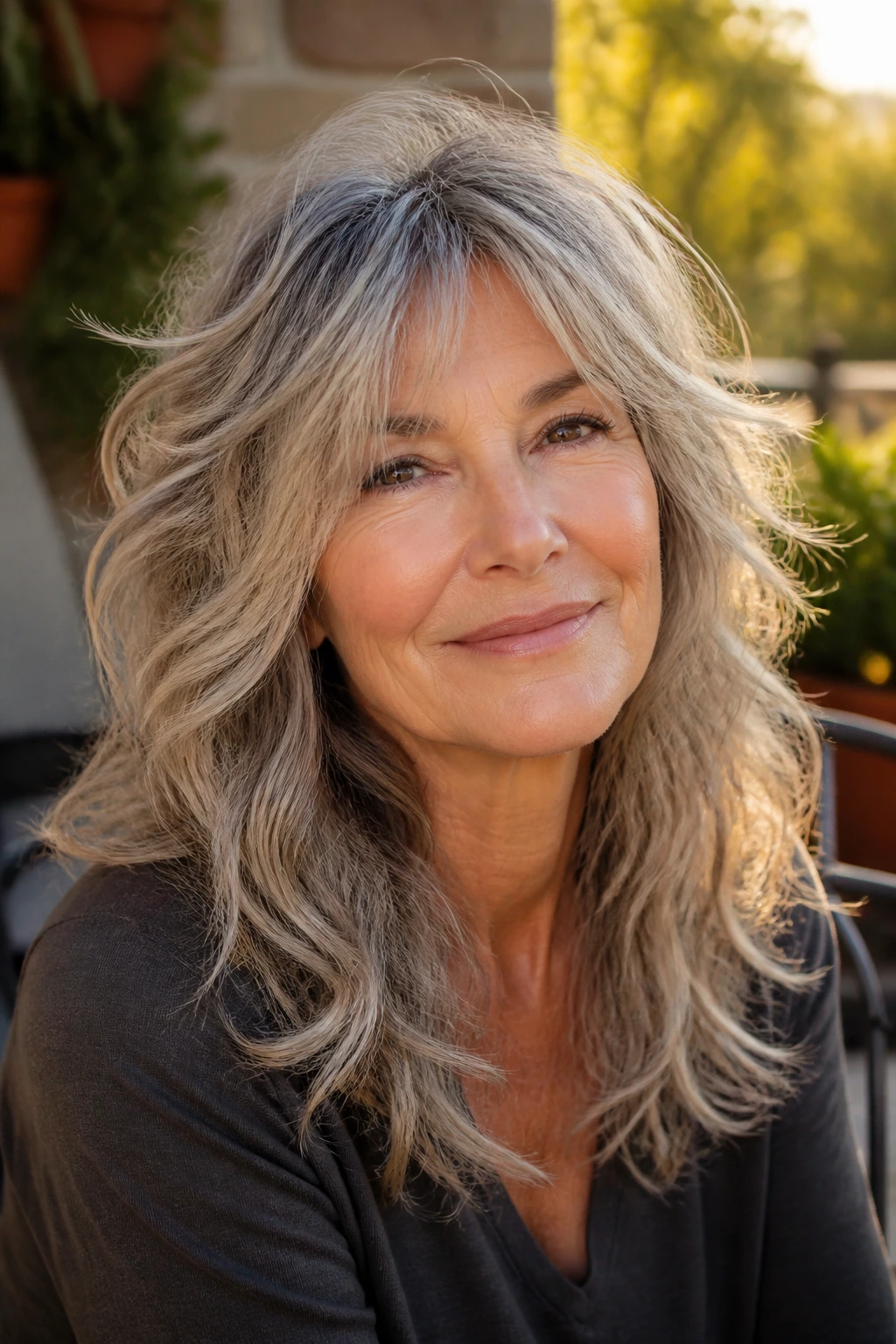
Start at the roots, not the ends. If the crown collapses, the whole shag loses its shape before you get to the face frame. A little mousse or root-lift foam at the scalp, then a rough dry to about 80%, gives the haircut a better base than trying to fix it at the very end.
Use less product than you think. Heavy creams, oils, and serums can drag long layers down fast, especially around the crown and temples. Put richer product only on the last few inches if the ends need it. The top of the head should stay light.
Choose the finish based on the mood you want. A round brush gives polish and movement. Fingers and a diffuser give texture. A flat iron can add a soft bend if the hair is stubbornly straight. None of those tools are wrong. The mistake is using all of them on the same day and wondering why the hair feels overworked.
For silver or salt-and-pepper hair, a light shine spray on the midlengths can help the layers read clearly. Keep it away from the root area. Greasy roots plus airy layers is a bad pairing. The haircut loses lift, and the whole thing starts slumping by lunch.
Common Mistakes That Flatten the Shape
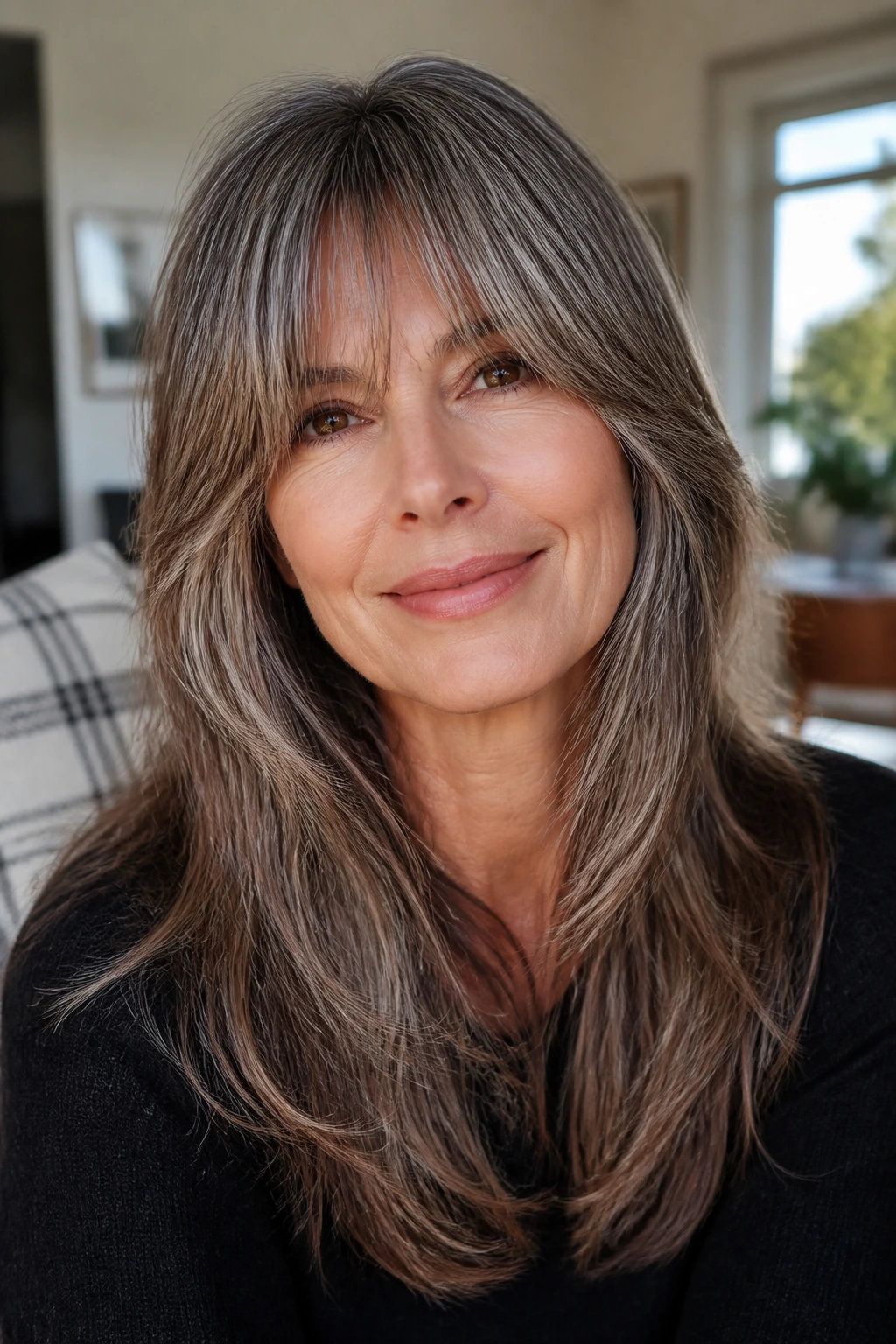
The first mistake is cutting the layers too high on fine hair. The result looks fluffy for a day, then see-through for the rest of the month. The fix is simple: keep the top layers softer and let the perimeter carry more of the weight.
The second mistake is over-thinning the ends. A long shag should have movement, not a ragged bottom line. If the ends feel stringy when you run your fingers through them, there’s too much texture removal. Ask for point cutting or light layering instead of aggressive thinning shears.
The third mistake is making the bangs too short. That can read harsh on mature hair, especially if the forehead needs softness rather than a hard line. Longer curtain, bottleneck, or side-swept shapes usually age better and are easier to live with.
The fourth mistake is using products that are too heavy. Thick oils, buttery creams, and rich leave-ins can flatten the lift around the crown in about 20 minutes flat. Save those for the ends if you need them.
The fifth mistake is waiting too long to trim the fringe and face frame. Long shags grow out better than many cuts, but bangs still need attention. Once the front pieces start falling into the eyes or hanging like curtains with no bend, the whole cut looks more tired than it is.
Variations and Adaptations to Try
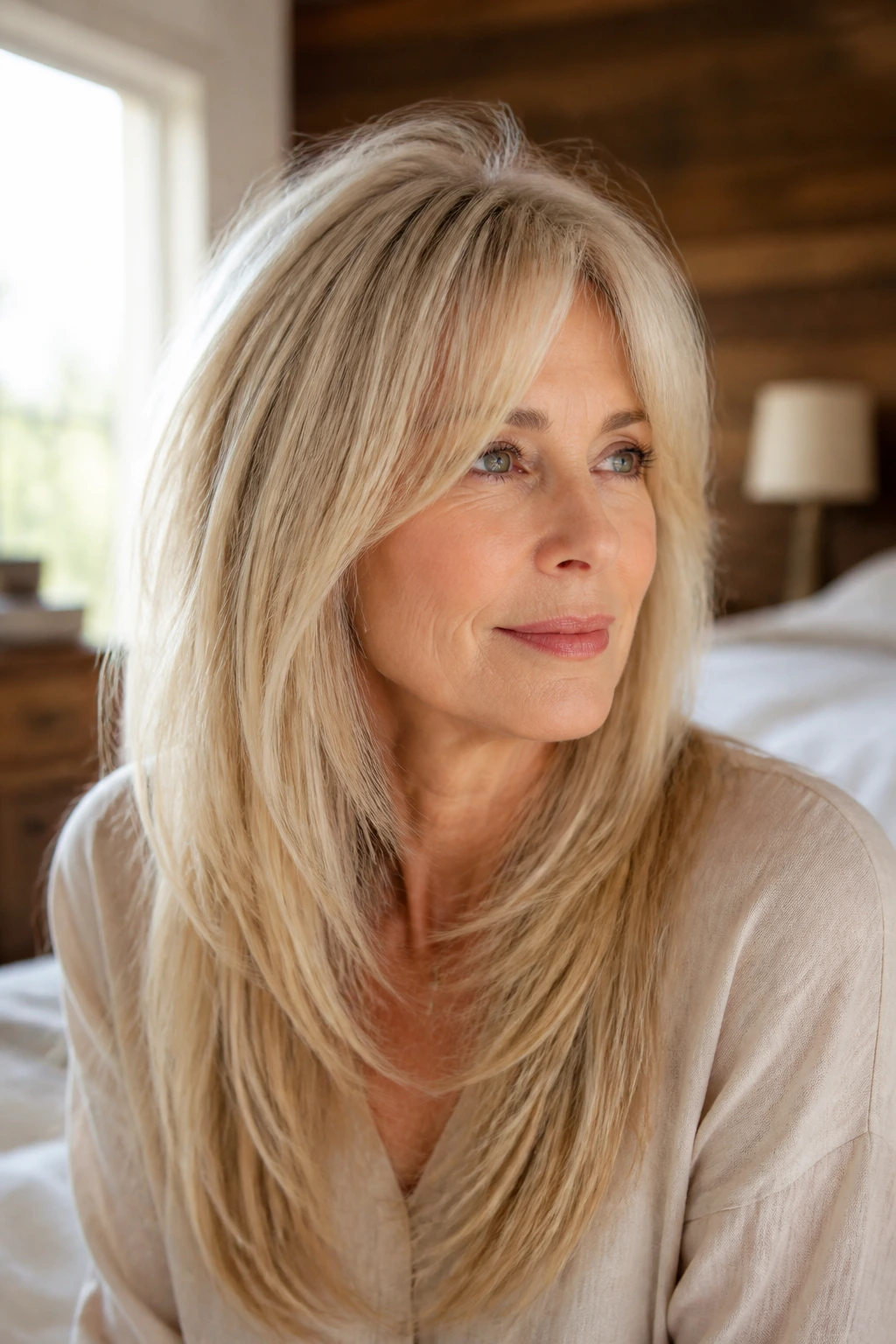
The Glasses-Friendly Fringe: Keep the front pieces long enough to clear your frames and sweep softly to the sides. This version avoids the constant bang-and-lens battle and still gives you face framing where it counts.
The Low-Maintenance Air-Dry Shape: Ask for softer internal layers, fewer short pieces at the crown, and a collarbone-length front. It looks best with a little wave and only a small amount of cream or foam.
The Thick-Hair Weight-Release Cut: Keep the perimeter strong, remove bulk from the inside, and ask for movement through the midlengths instead of a lot of short layers near the top. This stops thick hair from ballooning out.
The Curly Coil Version: Cut the hair around the curl pattern, keep the longest layers generous, and avoid over-thinning the ends. A diffuser and leave-in conditioner finish the job without flattening the curls.
The Dressy Blowout Version: Leave enough length for a round brush to curve the ends under or out, then place the face frame around the cheekbone. It’s a good choice if you like the hair to look more finished for dinners, events, or photos.
How to Keep the Shape Between Salon Visits

Long shag haircuts usually hold up better than blunt styles, but they still need a little maintenance if you want the layers to stay where they belong. Most people do well with a trim every 8 to 12 weeks. If you wear bangs or a short fringe, those pieces may need attention every 3 to 4 weeks, because front hair shows growth fast.
Wash schedule matters too. If your hair is fine, too much washing can make the crown collapse and leave the ends frizzy. If it’s coarse or curly, too little washing can make the layers clump and lose movement. A middle ground — two to four washes a week for many people — keeps the shape easier to style without stripping the hair.
Between washes, a quick reset helps. Mist the front and crown lightly with water, add a small bit of mousse if needed, then blow-dry the roots for a minute or two. You do not need to restyle every section. Usually the front, crown, and top layer are the places that decide whether the whole cut still looks fresh.
Sleep changes the shape, too. A loose braid, a silk pillowcase, or a soft clip can stop the ends from bending in strange directions overnight. That sounds fussy, but it takes less time than fighting with the ends every morning.
If the haircut starts looking heavy, the answer is usually a trim, not more product. If the haircut starts looking too wispy, the answer is sometimes to back off the thinning next time. Hair tells you what it wants if you pay attention for a week or two.
Frequently Asked Questions

Will a shag haircut make my long hair look thinner?
Not if it’s cut well. The problem is usually over-thinning the ends or stacking too many short layers on fine hair. A good shag removes bulk where it helps and keeps enough density in the perimeter to hold the shape.
Do shag haircuts work on gray or white hair?
Yes, and they often work better than blunt cuts because the layers keep light-colored hair from looking heavy or blocky. The key is soft placement, not aggressive texturizing. Silver hair shows the cut fast, so a good shape matters even more.
How short should face-framing layers be?
Most long shags look best when the shortest face-framing pieces start around the cheekbone, jaw, or collarbone, depending on the face shape and hair texture. Shorter can work, but it gets riskier fast if the hair is fine or the forehead needs softness.
Can I wear a shag if my hair is straight and stubborn?
Absolutely. Straight hair often needs a little more help with root lift and bend through the midlengths, but the shape can still be flattering. The difference is in styling and in how gently the layers are cut.
What if I do not want bangs at all?
Then skip them. A bang-free shag can still have plenty of face framing and movement, and it usually grows out more calmly. Just make sure the front layers start low enough to give the haircut shape.
How often should I trim a long shag?
Every 8 to 12 weeks works for most people. If you have fringe or bottleneck bangs, those front pieces may need a quicker cleanup so they do not fall into your eyes or lose their shape.
Can a shag work on very thick hair without making it puffy?
Yes, if the weight is removed inside the cut instead of all over the ends. Thick hair usually needs control, not a lot of choppy layers everywhere. Ask for movement through the interior and a perimeter that still feels solid.
What should I avoid if my hair is fine?
Avoid too many short layers, heavy oils at the crown, and razor work that leaves the ends looking airy in a bad way. Fine hair usually looks best when the top is lightly lifted and the bottom still has enough weight to read as full.
Keeping the Length, Gaining the Lift

A long shag can do something a lot of haircuts can’t: it keeps the length people love while giving the face some shape back. That’s why it keeps showing up on long hair over 60. It respects the length instead of arguing with it.
The best version is the one that fits your texture, your part, and the amount of time you’re willing to spend in front of a mirror. Bring a clear photo, say what you want to keep, and be honest about how you style it at home. That’s the difference between a shag that looks like it belongs to you and one that looks borrowed from somebody else.
Give the stylist a real target, not a vague wish, and the cut can do the rest.
