



Medium shaggy hairstyles for older women have a knack for doing what heavy one-length cuts rarely manage: they move, they soften, and they keep the whole head from collapsing into one flat shape by noon. That matters more than people admit. Hair changes with time — often finer at the ends, a little drier, sometimes a bit wavier in odd places — and a medium shag works with those shifts instead of fighting them.
The trick is balance. Too short and the cut can feel choppy in a way that draws too much attention to the haircut itself. Too long and the layers lose their point. A good medium shag lands in that sweet spot around the collarbone or just below the shoulders, where the ends still swing but the layers can lift the crown, skim the cheekbones, and keep the sides from sitting like a helmet.
And the best versions are not all wild and piecey. Some are soft and feathered. Some are polished enough for the office. Some lean curly, some lean sleek, and some are built for air-drying with a little mousse and a patient scrunch. The point is shape, not chaos. The good ones make the face look alive without looking fussy, and that’s where the fun starts.
Why These Medium Shaggy Hairstyles Work So Well
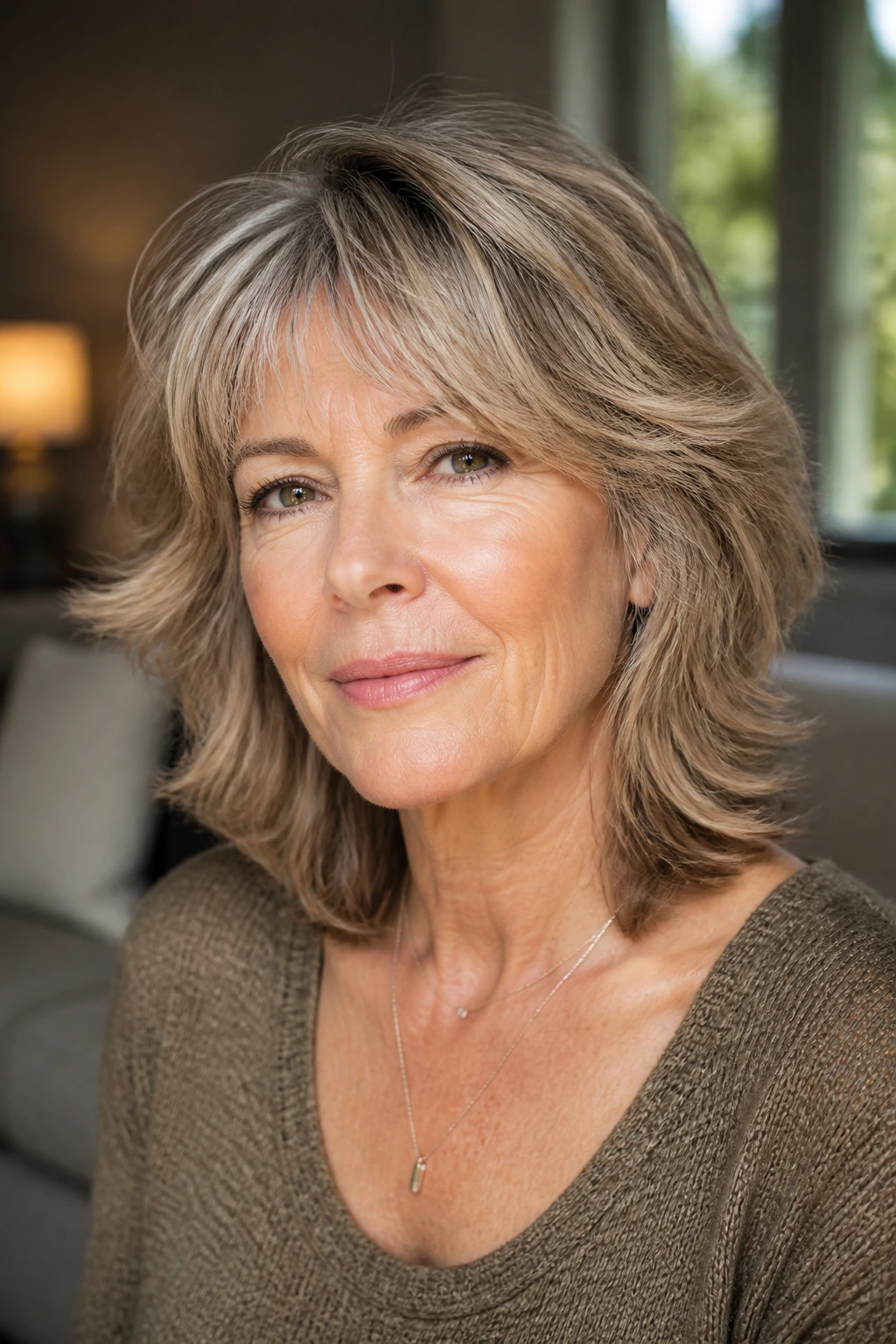
- They keep the silhouette light: Medium shag layers remove bulk where hair tends to puff out, especially through the sides and crown, so the shape doesn’t drag downward.
- They make fine hair look busier: A few well-placed layers can create the feeling of more movement at the ends, which matters when the hair has lost some density.
- They soften lines around the face: Curtain bangs, side-swept fringe, and feathered front pieces break up a hard outline near the forehead and jaw.
- They handle gray and silver beautifully: Shag layers show off dimension in natural gray, salt-and-pepper blends, and highlights without needing a dramatic cut.
- They grow out with less drama: A medium shag usually keeps some shape even after a few weeks, so you are not stuck waiting for the next trim.
- They fit different styling habits: You can blow them smooth, scrunch them messy, or let them air-dry with a little cream and still keep a real haircut shape.
1. Feathered Collarbone Shag with a Soft Side Part
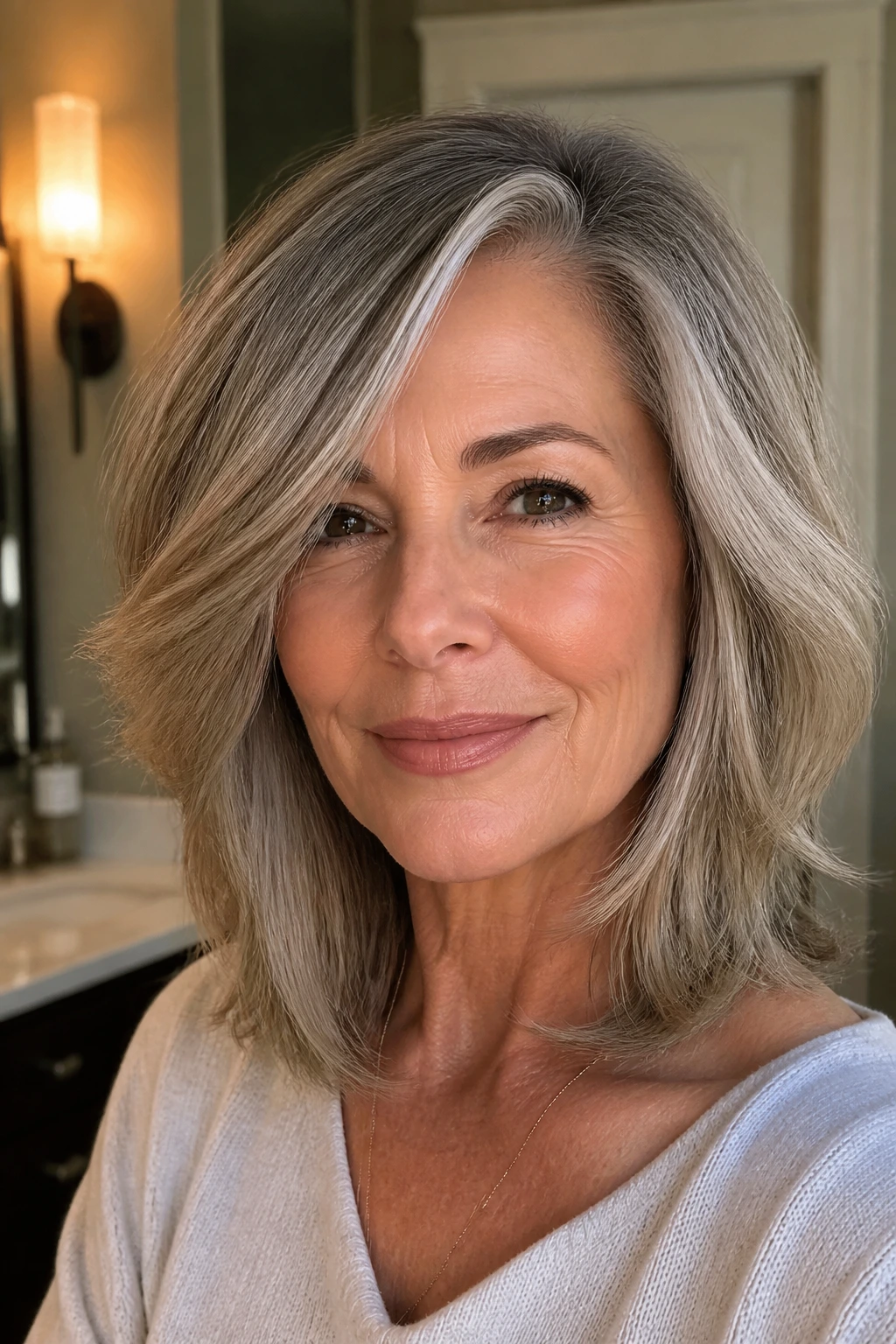
This is the cut I recommend to anyone who wants movement without looking like they’ve committed to a full-on retro revival. The length hits near the collarbone, which keeps enough weight in the perimeter so the ends do not flick out in a wild, uneven way. The soft side part breaks up the top of the face and gives the whole style a little lift right where most hair starts to sink.
The feathering matters more than people think. Done well, it takes a blunt edge and turns it into something that bends instead of sits. That’s especially useful if your hair has started feeling a little coarse at the ends but still has some body at the roots.
This version works best when the front layers skim the cheekbone and then taper toward the jaw. The result is gentle, not fussy. And on days when you don’t feel like doing much, a quick blow-dry with a medium round brush is enough to bring it back to life.
2. Curtain-Bang Shag That Skims the Cheekbones
Curtain bangs are not just a trend piece. On a medium shag, they act like a small frame around the face, and that frame can do a lot of work. The center stays a little shorter, the sides drift longer, and the whole bang section melts into the layers instead of sitting on top of them like a separate haircut.
Why it stays useful
The real advantage is grow-out. Curtain bangs do not punish you if you miss a trim by a few weeks. They just get a little longer and slide into the front layers. That is a much easier relationship to have with bangs than a blunt fringe that needs perfect maintenance.
If your hair is medium in density or slightly fine, this shape also avoids the heavy blocky look that a straight fringe can create. The bang opens the face near the eyes, while the shag layers keep the lower half moving. It’s a small visual trick, but it changes the whole balance.
Ask for the shortest point of the bang to fall between the brows and the top of the cheekbone, then let the sides blend into the jawline. That one detail keeps the cut soft instead of severe.
3. Wavy Silver Shag with Razored Ends
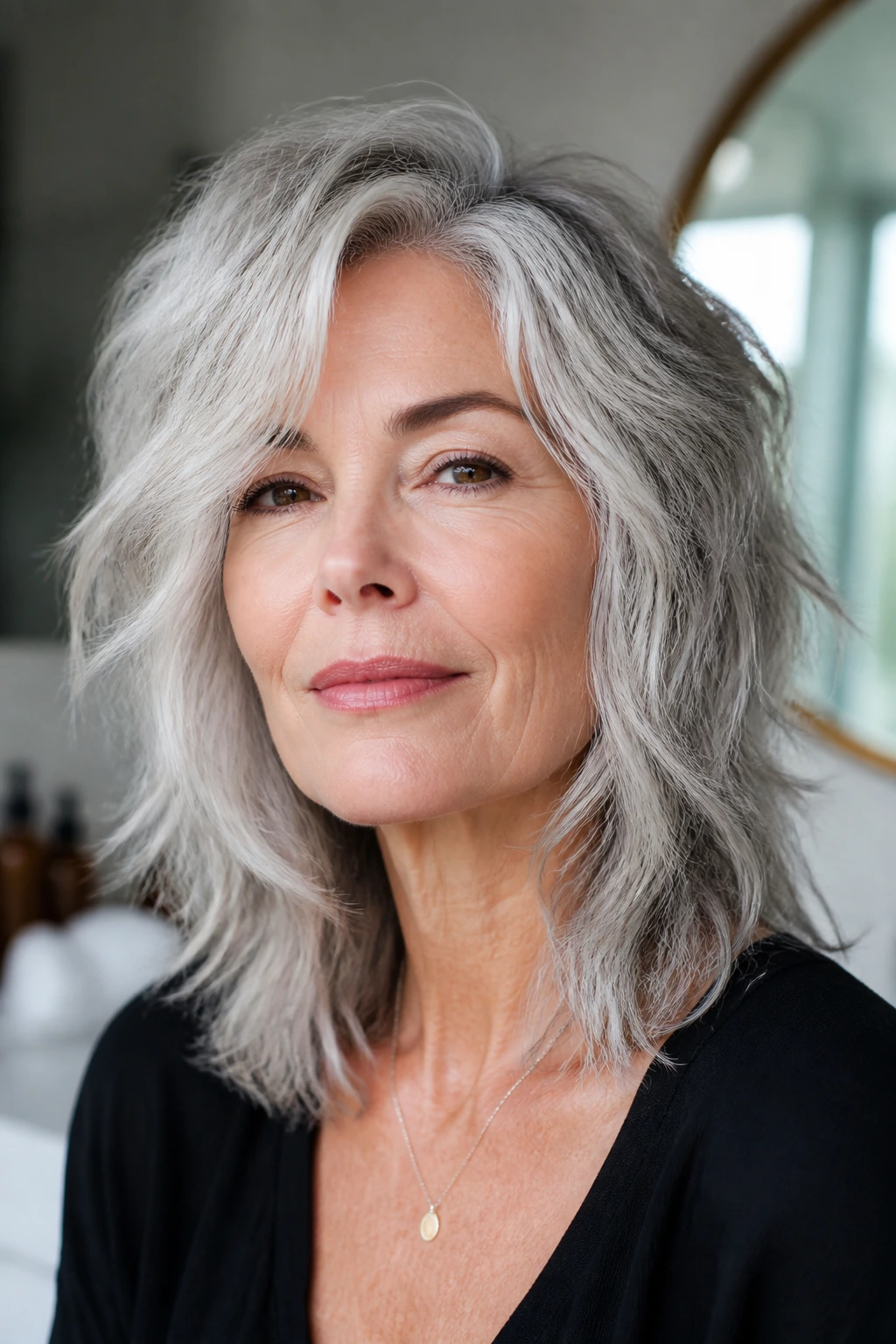
Silver hair and shag layers are a very good match when the texture still has some bend. The silver catches every little change in length, so the shag doesn’t need much more to look deliberate. Razored ends can help here, but only if the hair is dense enough to handle that tool without getting wispy in a bad way.
The reason this cut looks alive is simple. Wavy silver hair reflects light differently across the layers, so each bend shows up. A blunt cut hides that movement; a shag reveals it. If you have natural wave, this style can make the wave pattern look more organized without making it stiff.
A small caution. Razoring is not the best choice for fragile ends that already feel dry. In that case, point cutting with shears is safer. You still get the broken-up outline, just without shaving too much strength off the perimeter.
4. Curly Midlength Shag with Lift at the Crown
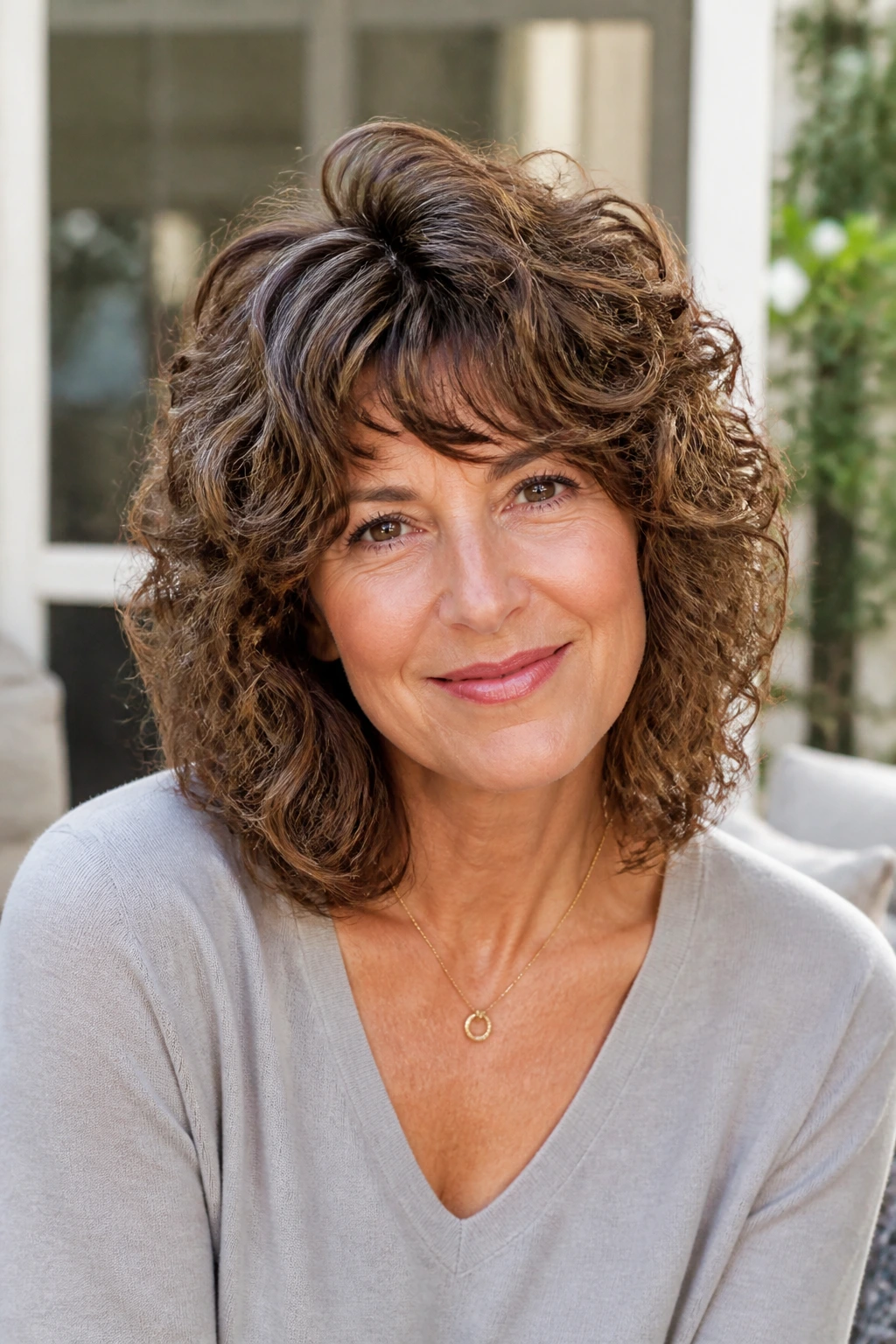
Curly hair gets flattened more easily than most people expect, especially when it’s cut too heavy through the top. A medium shag with crown lift gives curls room to spring instead of bunch up at the sides. The cut should be shaped dry, curl by curl if possible, because the shrinkage can fool even a careful stylist.
The crown layers are the whole story here. They prevent the top from ballooning into a triangle while letting the lower curls keep their length. That is the difference between “interesting shape” and “why does my hair look wider than my head?” Not subtle.
A diffuser on low heat helps, but the real magic is the cut itself. If the layers are too short, the curl will stack. If they’re too long, the whole shape droops. The middle ground, around shoulder length with a little air at the crown, is where the shape settles in.
5. Shoulder-Grazing Shag with a Side-Swept Fringe

A side-swept fringe has one job: soften the front without making the face look boxed in. On a shoulder-grazing shag, it does that job with almost no effort. The fringe flows into the front layers, so you get movement across the forehead and temple instead of a blunt curtain that has to behave perfectly.
This cut is a quiet favorite for women who want shape but not a lot of texture drama. The lines are easy to read. The fringe slides off to one side, the layers feather out toward the shoulders, and the haircut holds up in both smooth and slightly tousled styling.
It also plays nicely with glasses. That matters. A side-swept fringe can sit just above or beside the frames instead of competing with them, which means the glasses look intentional rather than crowded out.
6. Piece-Y Lob Shag for Fine Hair
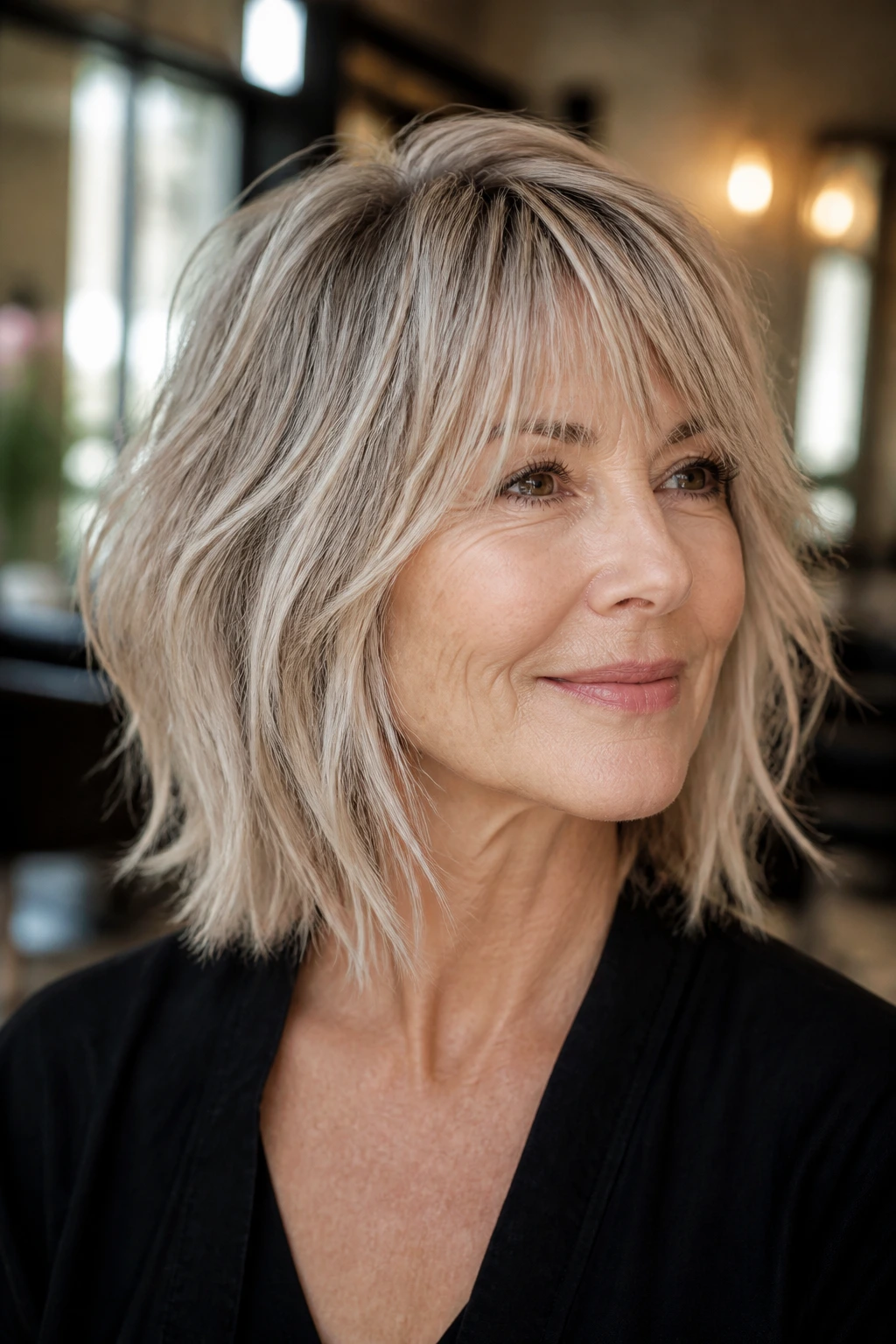
Fine hair needs a specific kind of shag. Too much slicing and it starts to look thin at the ends. Too little layering and it falls flat by lunch. The piece-y lob shag solves that by keeping the perimeter relatively solid while adding just enough interior layer to create movement.
The word here is controlled. You want visible separation, not shredded ends. A small amount of root lift mousse at the crown and a round-brush blow-dry on the top sections can make the cut feel fuller without piling on product. And please, no heavy oils near the roots. They flatten the whole thing.
This style is especially useful if your hair is straight or only slightly wavy. It gives the illusion of density without asking the hair to do something it won’t naturally do. That’s the whole point, really.
7. Rounded Shag with Long, Soft Bangs
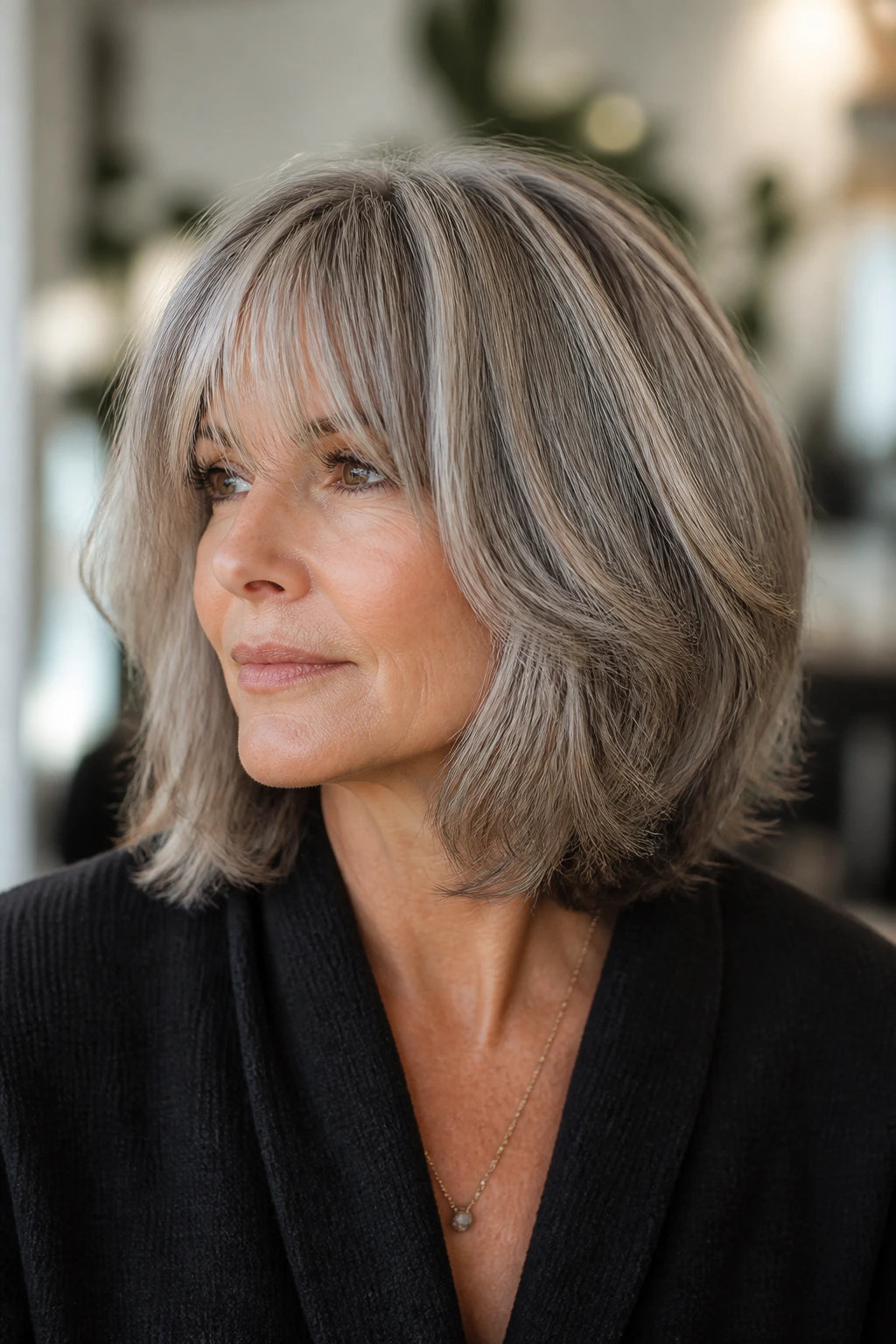
If you like a little polish, this is the shag that behaves itself. The outline stays rounded, almost like a soft helmet shape, but the layers inside keep it from feeling stiff. Long bangs sit just below the brows or graze the lashes, then drift into the sides so the face doesn’t get boxed in.
The rounded shape is especially nice for women whose hair tends to kick out at awkward angles around the jaw. Instead of fighting those ends, the cut works with a gentle curve. It looks intentional even when you have only done a quick brush-and-go.
Best for
- Hair that flips outward at the shoulders
- Faces that benefit from a softer edge around the chin
- Women who want bangs but not a harsh fringe line
A little blow-dry under the brush at the ends keeps the curve neat. Nothing complicated. The haircut does the heavy lifting.
8. Tousled Shag with Invisible Layers

Not every shag needs to announce itself from across the room. Invisible layers give you movement without obvious choppiness, which is useful if you like texture but not the “I came here for the haircut” look. The cut reads as soft and lifted, not sliced up.
The layers sit inside the shape, not screaming from the outside edge. That makes this a good choice for women who want their hair to look fuller in motion but still clean when it’s pinned behind the ears or tucked into a scarf. The surface remains calm. The inside does the work.
This one looks best with a matte cream or a light styling milk, not anything crunchy. Scrunch a little, shake out the roots, and let the hair fall where it wants. If you over-style it, you lose the whole point.
9. Heavy-Bang Shag for Thick Hair
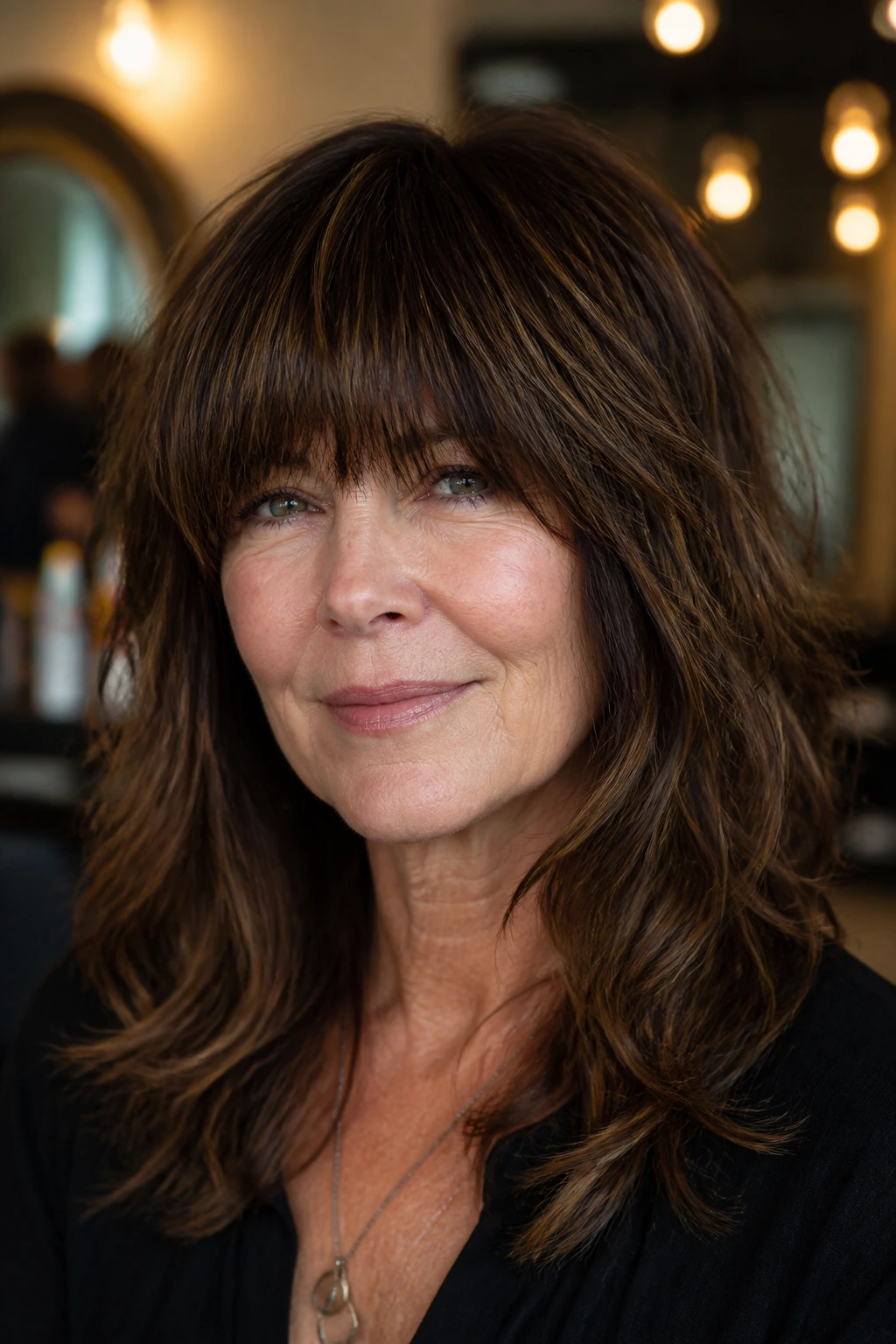
Thick hair can take a bold bang, and sometimes it needs one. A heavy-bang shag uses a fuller fringe to cut through density at the front while keeping the rest of the shape layered and breathable. Without that front weight, thick shag cuts can mushroom.
The fringe should be dense enough to make a statement but not so blunt that it feels like a wall. That balance matters. The rest of the cut should be debulked from the inside, not thinned at the ends. That’s where a lot of bad thick-hair shags go wrong: too much removal in the wrong place, and the shape goes fuzzy.
This style is good if you want your hair to feel substantial. It has presence. It does not disappear into the background. And because the bangs carry some of the visual weight, the layers around the sides can stay a little softer.
10. Soft Wolf Shag with a Tapered Nape
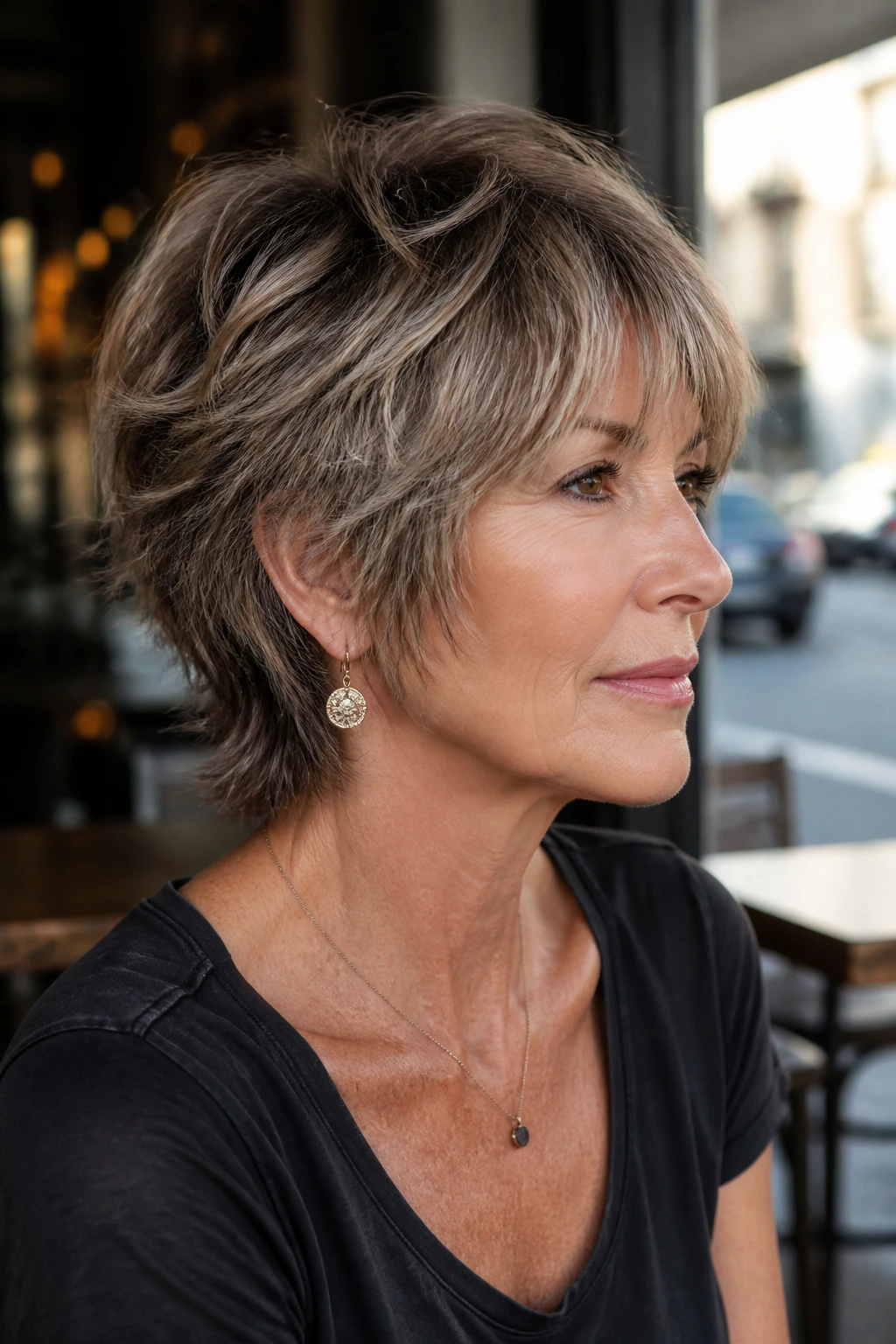
The wolf-shag family can get a little too aggressive if it’s pushed too far. The soft version is much easier to live with. You still get shorter crown layers, longer front pieces, and a tapered nape, but the outline stays wearable and less jagged.
What keeps this from tipping into mullet territory is the transition through the back. It should narrow gently, not drop suddenly. That gives the neck some breathing room without creating a harsh shelf. The front pieces can be cheekbone length or a little longer, which helps the style stay flattering from the side.
This cut has a touch of edge, but not the kind that demands an all-black wardrobe and a whole lot of confidence. It works for women who want something current-looking but not theatrical. There’s a difference.
11. Elegant Shag with Polished Ends

Who says a shag has to look messy? A polished shag keeps the layered structure but smooths the surface so the style reads as intentional and a bit dressier. The ends can bend slightly under with a round brush or flat iron, and the layers should remain soft enough to move when you turn your head.
This is the shag I’d point to for dinners, events, or work settings where you want something that looks finished. The layers still give it lift, but the styling is controlled. A light shine spray on the mids and ends goes a long way here.
The cut itself should not be too heavily razored. Clean sectioning and soft internal layering keep it sleek. If the hair gets too shredded, the polished effect disappears and you end up fighting frizz instead of styling shape.
12. Salt-and-Pepper Shag with a Deep Side Part

Salt-and-pepper hair can look flat when it’s cut into a plain shape. A deep side part changes the light pattern at the front and gives the silver, charcoal, and white strands a little more drama. Add shag layers, and the color stops looking static.
That side part is doing more than rearranging hair. It creates lift at the root on one side and a sweep of movement on the other, which can make the whole face look more open. If your hair has a strong natural part already, this cut can work with it instead of fighting it.
This is one of those styles that looks better when it is not too perfect. A bit of bend in the ends, a bit of lift at the crown, and the color does the rest. Salt-and-pepper hair already has built-in dimension. Let the cut show it off.
13. Shag with Bottleneck Bangs
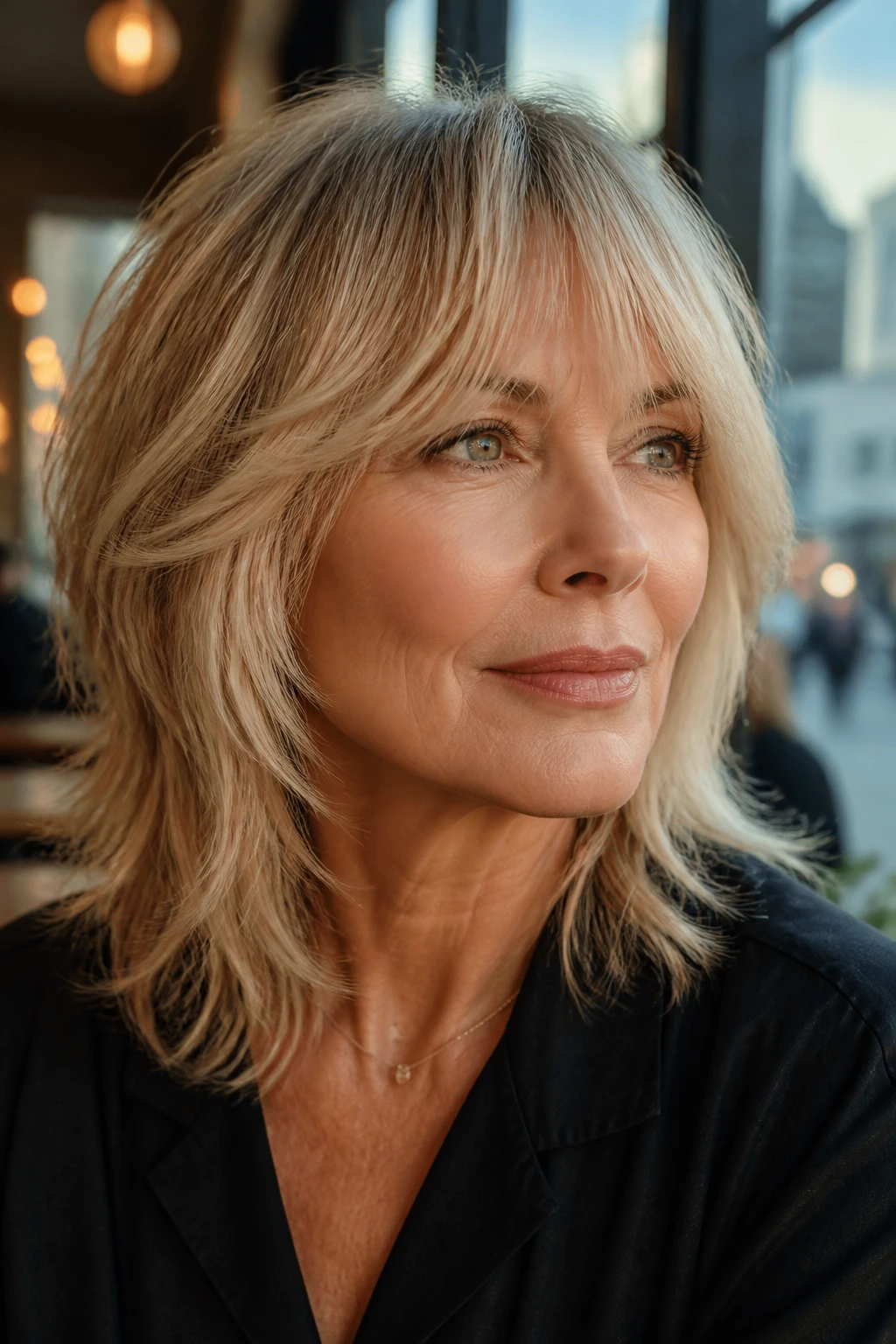
Bottleneck bangs are a clever middle ground. They start a little narrower near the center, then widen and lengthen toward the temples, which makes them softer than a blunt bang but more structured than a curtain fringe. On a medium shag, that shape keeps the front interesting without swallowing the whole face.
This works well if your forehead is broader or if you wear glasses and want a bang that does not crowd the frames. The narrower center opens things up, while the sides drift into the layers and keep the haircut moving.
There’s also a nice grow-out story here. Bottleneck bangs can slide into the rest of the haircut over time, which means they do not demand constant trimming the way some bangs do. That makes them a smart choice if you like the idea of fringe but dislike maintenance.
14. Airy Shag for Straight Hair

Straight hair is often the toughest to shag well because it shows every cutting mistake. Too much layer and it looks stringy. Too little and the haircut goes limp. An airy shag solves that by keeping the layers light and strategically placed, especially through the crown and around the face.
Point cutting helps here. So does a little rounding at the ends rather than a blunt line. The cut should feel feathered, not shredded. When straight hair is cut this way, it moves instead of hanging like a curtain.
A root-lifting spray and a quick blow-dry with the hair flipped in different directions can keep the top from sitting too close to the scalp. Don’t pile on texture spray too early. On straight hair, too much product can make the layers collapse faster than a good shape can rescue them.
15. Shoulder-Length Shag with Flipped-Out Ends

A little flip at the ends can change the entire mood of a cut. Shoulder-length shag layers with flipped-out ends have a lively, almost retro feel, but they do not need to look dated. The flipped perimeter gives the haircut motion, while the interior layers keep the shape light.
This style is especially good if your hair tends to tuck under in a way that makes the whole cut look flat. Instead of forcing everything smooth, let the ends bend out just a bit with a brush or a flat iron twist at the bottom inch. Tiny detail. Big difference.
The flip also pulls attention away from the neck and toward the cheekbones. That can be useful if you want the face to carry the shape rather than the jawline. It’s one of those cuts that looks best when it has a little attitude.
16. Low-Maintenance Wash-and-Go Shag
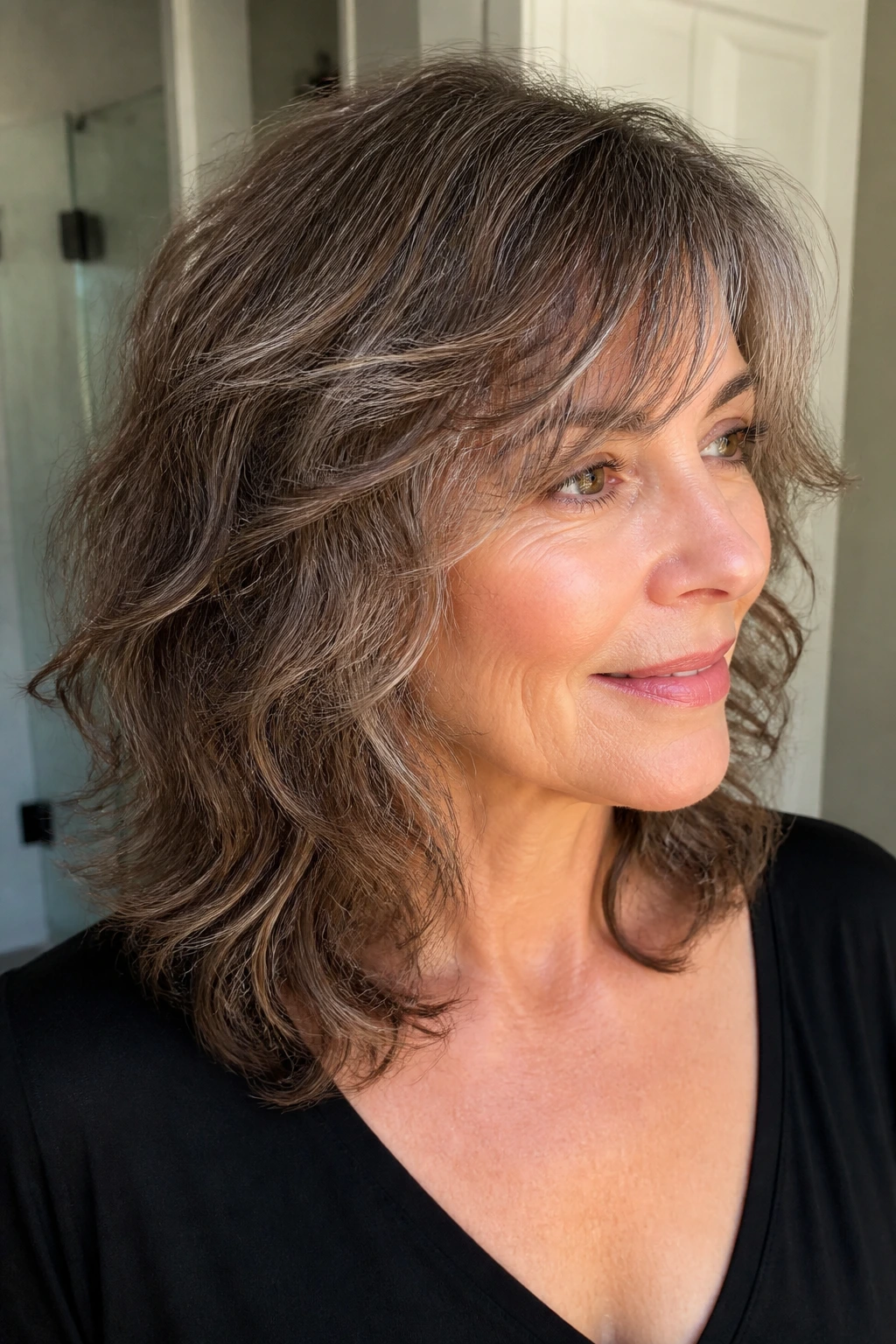
This is the shag for women who would rather spend five minutes on their hair than twenty. The cut has to be right, because the styling budget is tiny. Medium layers, a soft perimeter, and enough length to avoid puffiness are what make this one work.
A wash-and-go shag depends on the hair’s natural texture. If your hair is wavy, a light cream and some scrunching may be enough. If it’s straighter, a little mousse at the roots gives the style something to hold onto as it dries. Either way, the shape should still look like a haircut when the product is gone.
The danger with this style is over-styling it into stiffness. That defeats the point. Leave some frizz. Leave some movement. The charm is in the relaxed finish.
17. Dimensional Shag with Lowlights and Bright Pieces
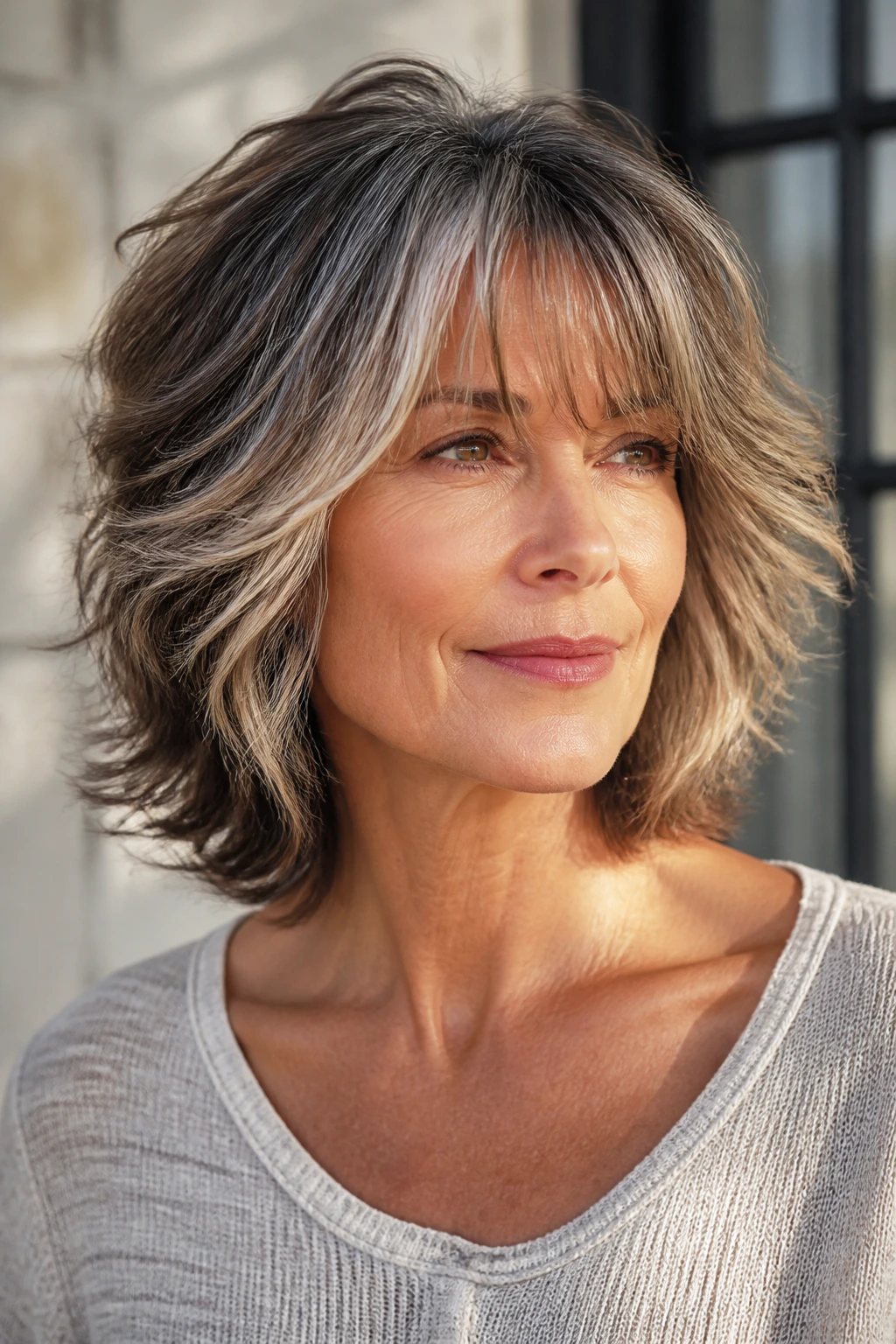
Color can do half the work for a shag. Dimensional lowlights and a few brighter pieces around the face make the layers read more clearly, especially on medium-length hair where the movement is subtle until light hits it. This is a strong option for women blending gray with color or wanting to break up a single flat tone.
The placement matters more than the number of shades. Bright pieces near the cheekbone and crown can highlight the cut’s movement, while lowlights underneath keep the shape from looking washed out. It’s a nice trick when the haircut itself is soft and the color needs to provide some of the contrast.
A shag with dimension also tends to look less “done” between salon visits. The colors blur a little as they grow, and the cut still has enough texture to carry that softness. That’s useful. And practical.
18. Retro-Inspired Shag with Lift at the Crown
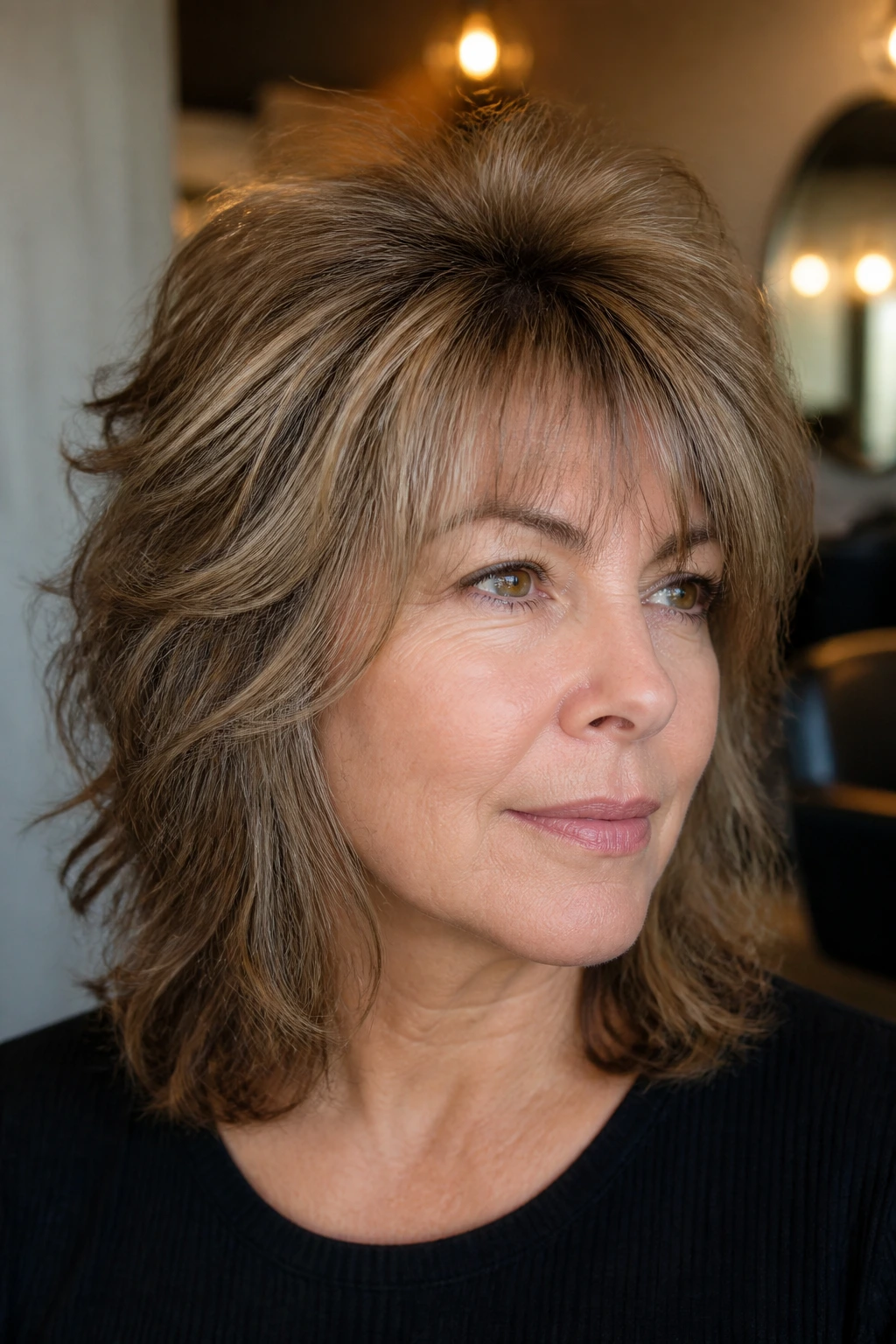
There’s a reason the retro shag keeps coming back: the crown lift does something most women want and most cuts ignore. It creates height without forcing the sides to flare. On medium hair, that means the top feels lively while the rest of the style stays grounded.
The key is not to go too extreme with the layers around the face. If the top is too short and the front too skinny, the result veers into costume territory. Keep the length around the shoulders, leave the fringe soft, and let the crown be the main event.
A round brush at the roots, a quick blast of heat, and a little cool-air set can lock in that lifted shape. You do not need a huge blowout. You just need the root to stand up enough to keep the whole cut from going flat by midafternoon.
19. Soft Shag Bob That Hovers at the Collarbone
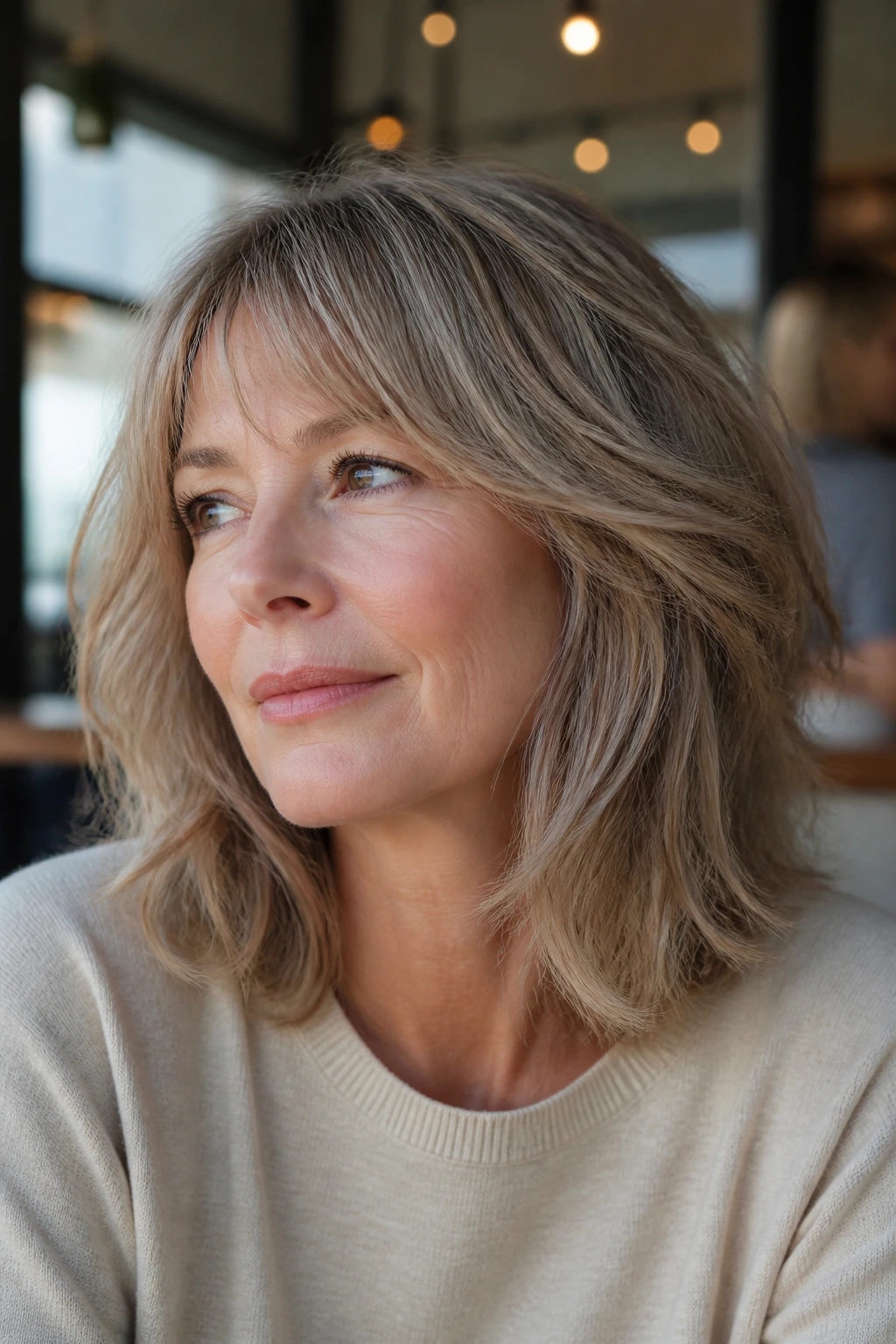
If you want the cleanest possible version of this look, start here. A soft shag bob at the collarbone keeps the outline neat but still adds enough texture to stop the cut from feeling solid or heavy. It’s the least aggressive shag in the group, and that’s part of its appeal.
The layers should be subtle, not chopped. Think movement through the mid-lengths and a gentle break at the ends. That gives the haircut shape without making it look busy. If you have been nervous about shag haircuts because they seem too edgy, this is the bridge version.
It also plays well with almost everything: side parts, middle parts, glasses, silver tones, highlights, soft waves, straight styling. The cut is calm. The layering is where the interest lives.
Why Medium Shag Shapes Suit Hair That Has Changed Over Time
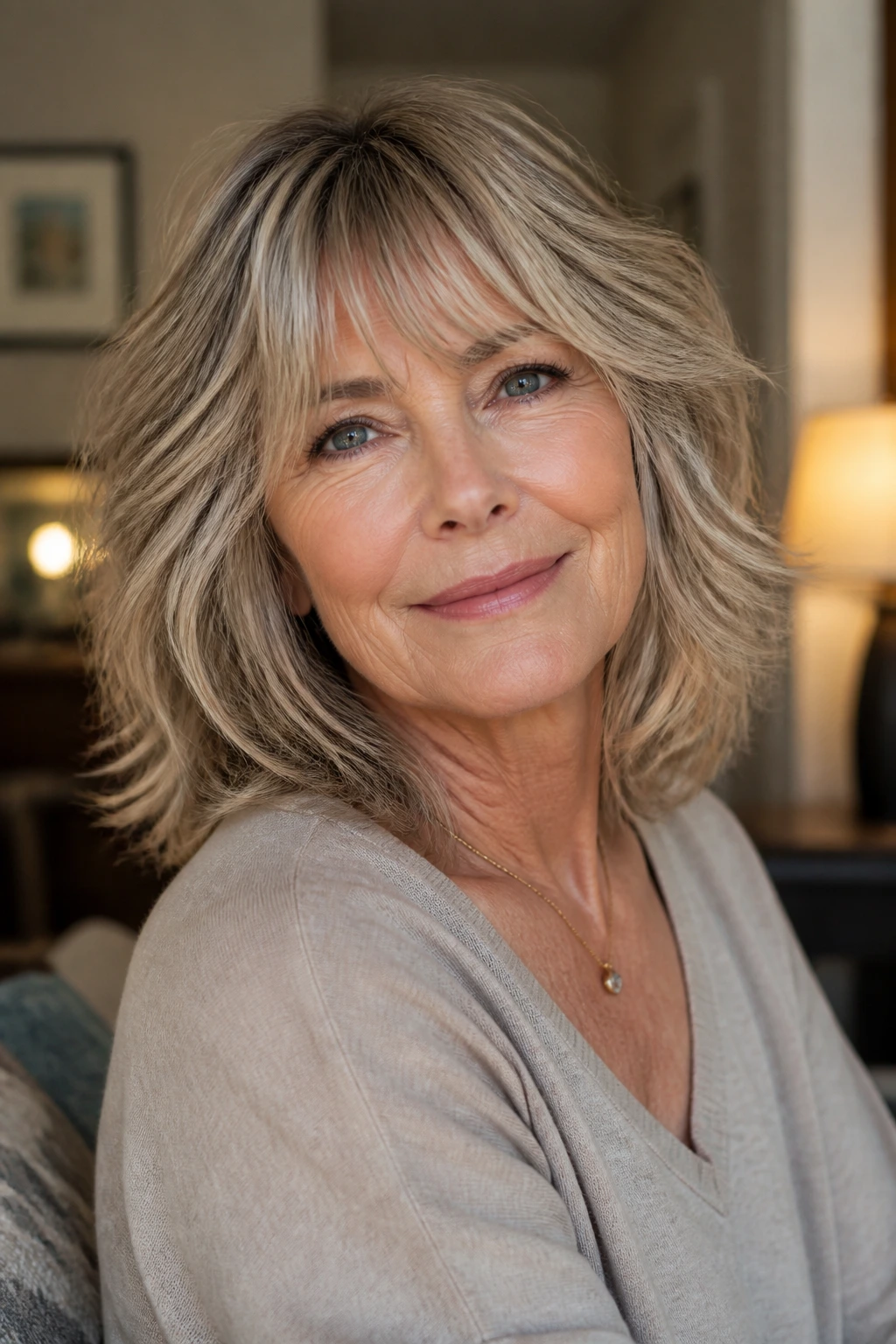
Hair texture changes. It usually gets drier at the ends, a little finer in spots, and more stubborn about lying flat where it used to have lift. That is exactly why medium shaggy hairstyles for older women make so much sense. The cut does not ask the hair to be one solid sheet. It lets different sections do different jobs.
The weight sits where it needs to sit, usually through the perimeter and the lower layers, while the crown and face frame get a little movement. That gives the eye something to follow. Instead of one thick line around the head, you get bends, soft edges, and a little lightness near the top where many women want it most.
Another benefit is that medium length does not exaggerate thinning at the ends the way a long, blunt shape can. If the hair has lost some density, a shag can make that look intentional. Not thin. Intentional. That’s a useful distinction.
How to Ask for the Right Shag at the Salon
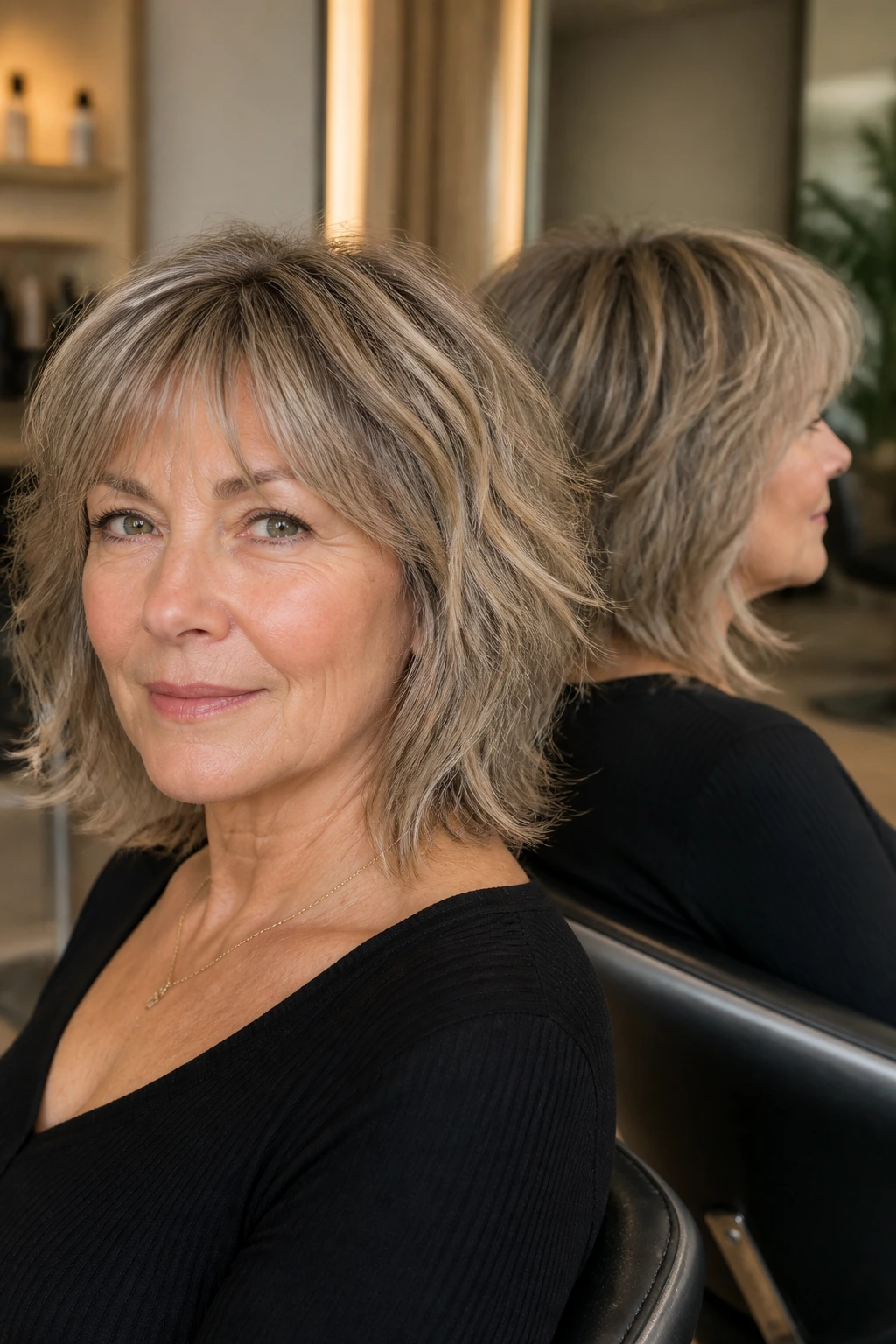
Bring photos, yes, but bring the right kind. You want one photo from the front and one from the side if possible, because shag cuts live or die by profile shape. A picture only from the front can hide a too-short nape or a bang that lands in a strange place.
Say the length you want in real terms: collarbone, shoulder, or just below. Then describe the amount of texture. Words like soft, feathered, piece-y, or polished help far more than saying “shaggy” and hoping for the best. That word means different things to different stylists, and some hear “mullet” when you mean “movement.”
Be specific about what you do not want. If your hair is fine, say you do not want the ends thinned out too much. If your hair is thick, say you want the bulk removed from the inside, not chopped away at the bottom. That one conversation can save a bad haircut.
Styling Tools That Make the Cut Easier
- 1.5- to 2-inch round brush: Big enough to smooth the layers without over-curving the ends into corkscrews.
- Vent brush: Good for rough-drying the roots fast, especially if your hair is fine or naturally flat.
- Wide-tooth comb: Useful for curls and waves when you want to keep the pattern intact.
- Blow dryer with concentrator nozzle: Helps direct the air where you want lift, not frizz.
- Light mousse or volumizing foam: Gives the roots a little structure without turning the cut crunchy.
- Heat protectant spray: Non-negotiable if you use a brush, iron, or hot-air styler.
- Soft-hold texture spray: Better than heavy hairspray for shag layers; it keeps movement visible.
- Diffuser attachment: Worth it for wavy or curly shags because it keeps the shape from getting blasted flat.
- Satin pillowcase: Small thing, big difference. It keeps the layers from snagging and helps the front pieces stay smooth overnight.
How to Style a Medium Shag Without Making It Stiff
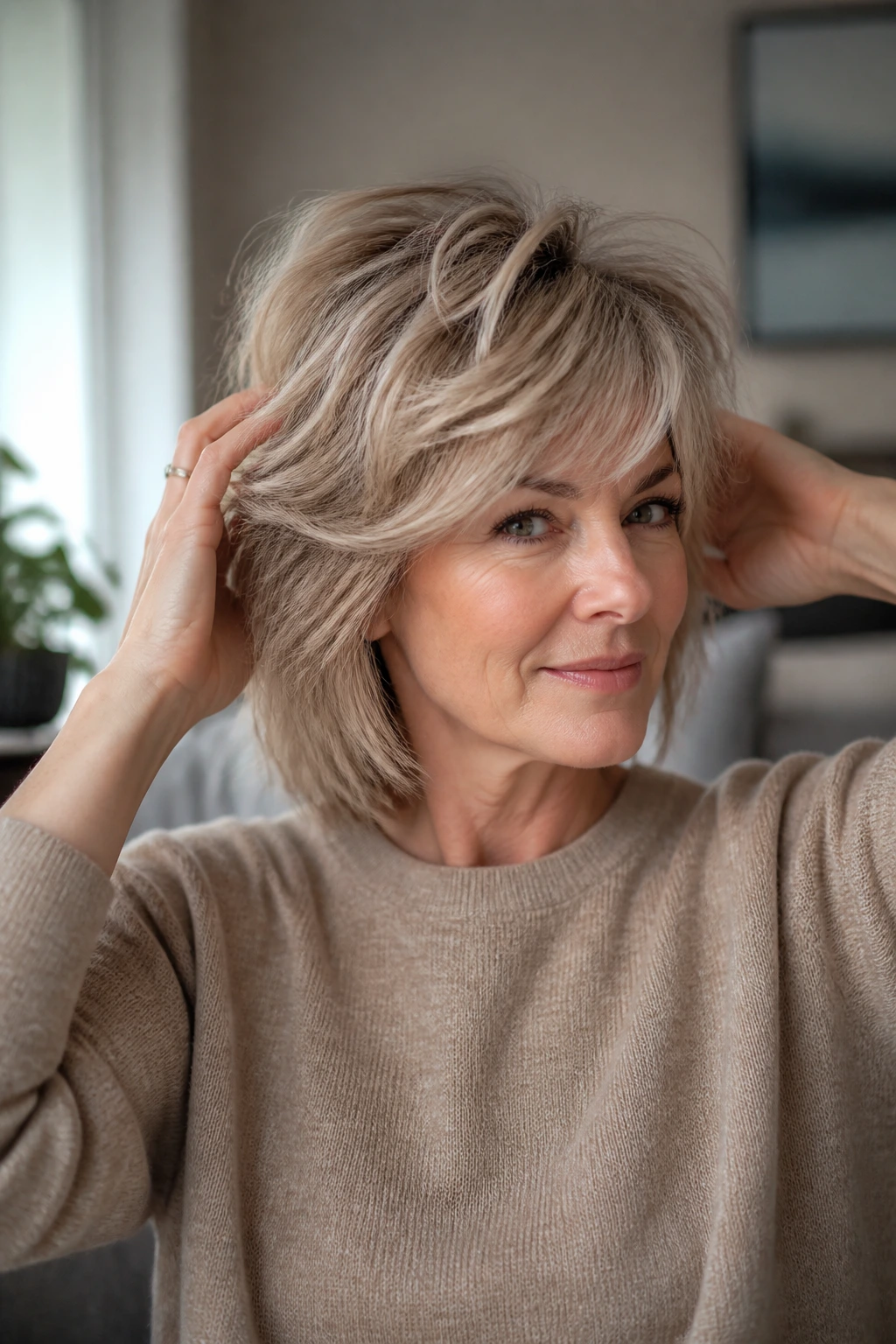
Start at the roots. That’s where the shape lives. A little mousse or root spray at the crown and along the part line gives the haircut some lift before the rest of it dries down and gets in the way.
Use your hands first, brush second. Rough-dry the hair about 70 percent of the way, then switch to the brush for the top sections and face-framing pieces. If you attack the whole head with a round brush, you can make the layers too round and lose the shag feel.
The finish should move when you shake your head. Seriously. If the hair feels lacquered or stuck in one position, there’s too much product or too much heat. A soft texture spray sprayed from 10 inches away is usually enough. Let the ends stay a little loose. That’s part of the charm.
Common Mistakes That Flatten or Age the Shape

Over-thinning fine hair. The symptom is limp ends that look see-through when the light hits them. The fix is a shag with softer internal layering and a stronger perimeter, so the shape still has substance.
Cutting the bangs too blunt or too short. That can harden the face and make the haircut feel severe. Ask for a softer bang line that can blend into the side layers, especially if you wear glasses or prefer a gentler look.
Using heavy cream or oil near the roots. The hair may feel silky for ten minutes, then collapse. Keep richer products on the mid-lengths and ends only.
Ignoring the crown. A shag without lift at the top can look like long hair with a few broken bits around the face. Not the same thing. Ask for crown layers that create a little height without exposing the scalp.
Letting it go too long between trims. The shape gets vague. The layers stop connecting. The fix is a trim before the ends start to splay, usually around six to ten weeks depending on how fast your hair grows and how much styling you do.
Variations and Adaptations Worth Trying

Softer Silver Sweep: Keep the layers light and the part off-center, then pair the cut with a silver-blonde or natural gray blend. This version looks especially good if you want movement without strong contrast.
Curly Lift-Up: Ask for a dry curly shag with layers concentrated at the crown and around the cheekbones. It keeps the upper half from sinking while preserving the curl pattern below.
Polished Office Shag: Use longer layers, a smoother blowout, and a subtle side part. The shape stays professional, but the hair still has enough swing to avoid looking stiff.
Air-Dry Friendly Version: For wavy or slightly textured hair, keep the layers soft and avoid too much razoring. Use mousse, scrunch, and leave the hair alone once it starts to set.
Bolder Wolf-leaning Shape: If you like more edge, shorten the crown and keep the back tapered, but leave enough length around the front to keep the cut wearable. This works best when you want a little attitude without going full retro costume.
Maintenance, Trims, and Sleep-Friendly Care
A medium shag usually holds its shape for longer than a blunt cut, but it still needs trims. Bang-heavy versions can need attention every six to eight weeks, especially if the fringe sits near the brows. Softer, grown-out versions can go closer to eight to ten weeks before the outline starts to blur.
At home, keep product light. A little mousse or cream is usually enough for the day; piling on two or three styling products tends to weigh the layers down and make the ends stringy. If the hair gets dry, refresh the mids and ends with a mist of water mixed with a pea-sized amount of leave-in conditioner in your palm, not a heavy soak.
At night, a satin pillowcase or loose clip helps preserve the front shape. If you wake up with flat roots, flip the part, mist the crown lightly, and blow-dry just the top for one minute. That tiny reset often does more than a full restyle.
Frequently Asked Questions
Do shag haircuts work on fine hair after a certain age?
Yes, but the cut has to be handled carefully. Fine hair needs lift and movement, not too much internal thinning. A medium shag with a stronger perimeter and soft crown layers usually works better than a heavily razored cut.
Will a shag make my hair look too messy?
Only if the layers are cut too aggressively or styled with too much texture spray. A good medium shag can look soft and controlled, especially when the perimeter is clean and the face frame is blended well.
Can I wear a medium shag if my hair is straight?
Absolutely. Straight hair needs more strategic layering and a little root lift, but it can carry a shag beautifully. The trick is to avoid over-chopping the ends, which can make straight hair look sparse.
What if I have curly hair and don’t want triangle shape?
Ask for crown lift and preserved length through the lower sides. That keeps the curl from ballooning out around the ears and jaw. A dry cut helps a lot because the stylist can see where the curl sits naturally.
How do I keep the fringe from getting annoying?
Choose a curtain or bottleneck bang instead of a blunt straight fringe. Both grow out more smoothly and are easier to tuck aside on bad weather days or when you just want your forehead back.
Can this style look polished enough for work?
Yes. The polished shag versions — especially the collarbone cuts with soft layers and side parts — can look tidy with a smooth blow-dry. You do not need to wear it tousled to count as a shag.
What should I say if I’m scared of going too short?
Ask for the longest version of the shape first, then build texture gradually. It is easier to add more layers later than to put length back after the fact.
Will gray or salt-and-pepper hair look dull in a shag?
Not if the cut is shaped well. Layering catches the light differently across the silver strands, which often makes gray hair look more dimensional, not less.
The Shape That Keeps Moving

The best medium shaggy hairstyles for older women are not the loudest ones in the room. They’re the cuts that keep moving when you turn your head, that hold some shape on day two, and that work with hair that has gotten a little finer, a little drier, or a little less predictable. That’s the real appeal. Not rebellion. Not nostalgia. Just a cut that understands hair as it actually behaves.
If you’re choosing between blunt and layered, I’d take the layered route here almost every time. A good shag gives you room to breathe around the face and enough length to style without fussing over every strand. That’s a useful haircut. And useful haircuts tend to get worn more often, which is the whole game.
