



Long shag haircuts for long hair have a funny reputation. On the wrong head, they can look like someone got bored halfway through a trim. On the right head, they do something far better than a blunt cut ever can: they let long hair move, bend, and break the light in pieces instead of hanging there like a heavy curtain.
The trick is balance. A good shag on long hair is not a shortcut to “more layers.” It’s a shape problem. The crown needs lift, the cheekbones need framing, and the ends need enough weight that the whole thing still feels like long hair. If the layers are cut too high, you get that fuzzy top-heavy outline people complain about. Too timid, and the haircut just lies there, which is its own kind of disappointment.
That’s why the best shag haircuts for long hair aren’t all one thing. Some are soft and face-framing. Some are feathered and airy. Some lean rock-and-roll, while others keep the length polished and smooth. The difference lives in where the shortest pieces start, how much weight is removed through the interior, and whether the fringe is doing the talking or just whispering in the background.
Why These Long Shag Variations Earn Their Keep
-
They keep the length you fought for: A long shag takes pressure off the crown and mid-lengths without chopping the whole silhouette off at the shoulders.
-
They work with your natural bend: Wavy hair gets a little extra swing, straight hair gets movement without a blunt shelf, and curls get room to stack instead of balloon.
-
They age better between trims: A layered cut with a smart outline can grow out for 8 to 12 weeks without turning into a blunt block.
-
They give you styling range: You can wear the same cut with a rough air-dry, a round-brush blowout, or a loose bend from a 1-inch iron.
-
They can be tuned up or down: Curtain bangs, bottleneck bangs, heavy fringe, or no fringe at all—same family, different attitude.
1. Soft Curtain Shag

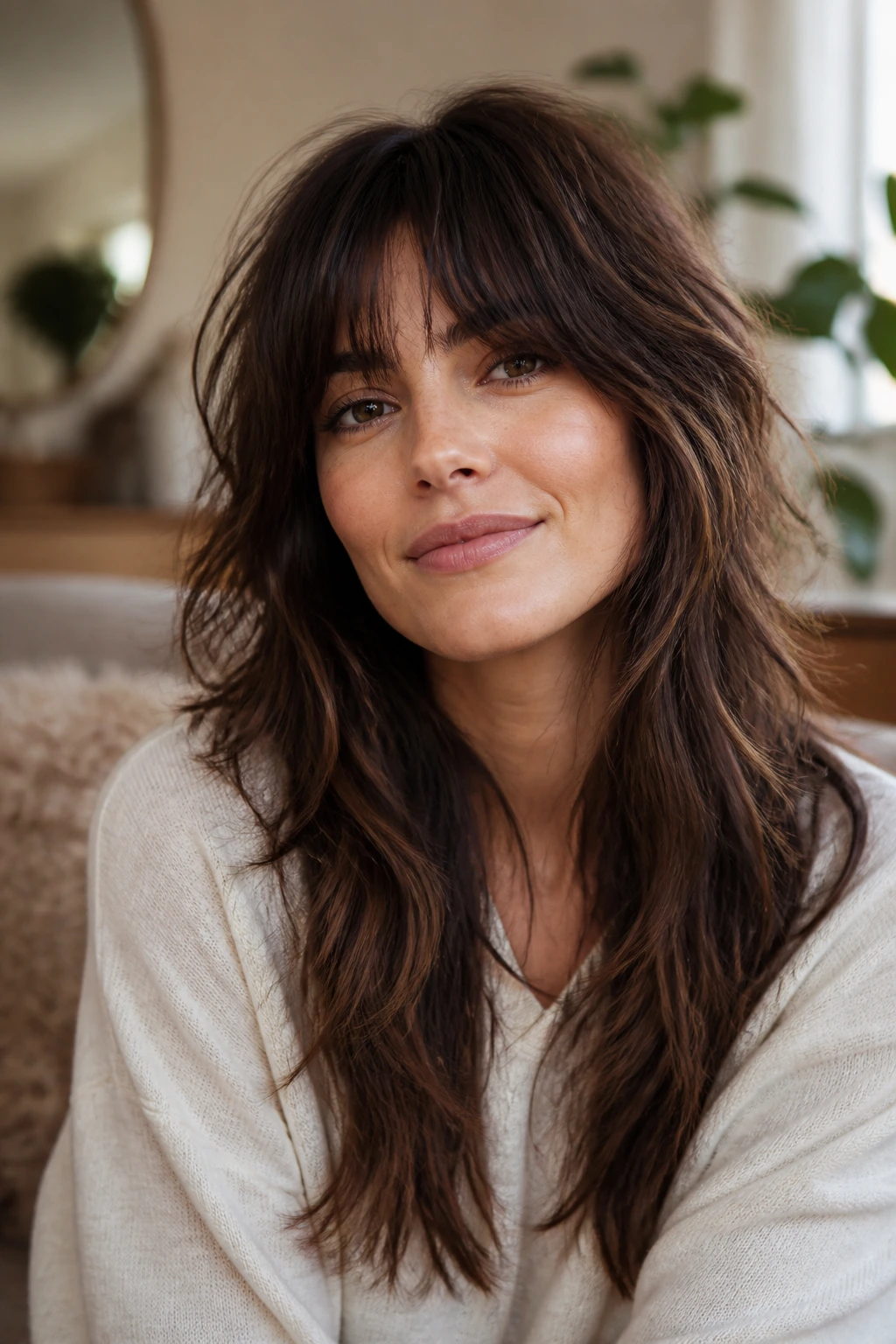
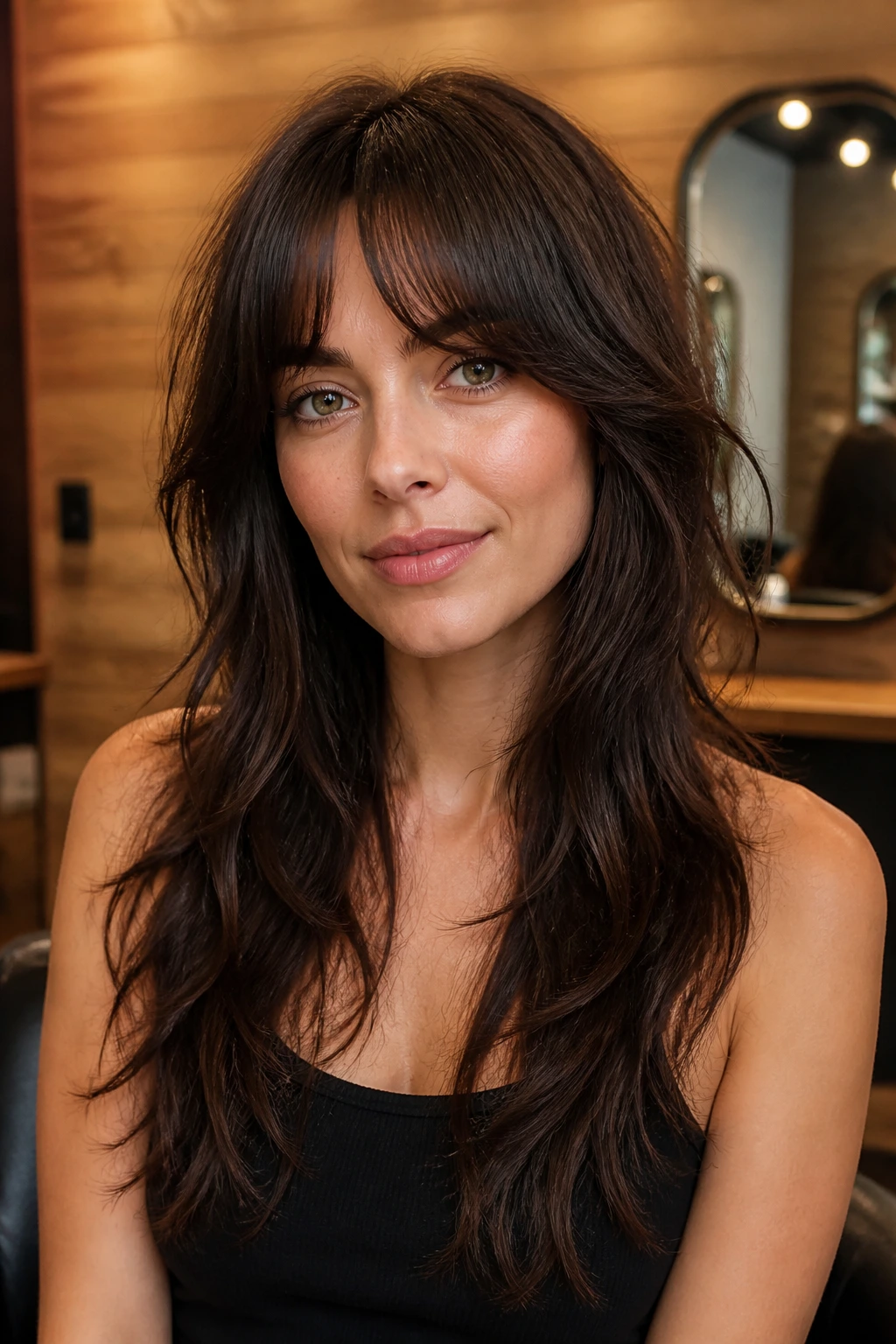
A soft curtain shag is the version I’d hand to someone who wants movement but does not want to look like they raided a glam rock archive. The layers start gently, usually around the collarbone or just above it, and the front opens around the face with curtain bangs that can tuck, split, or sweep. The result feels airy instead of chopped.
What makes it work
The shape matters more than the fringe. Long hair can take a surprising amount of layering, but if the crown is kept soft and the ends stay a little heavy, the cut moves without losing its length. That’s the whole point here. You get lift near the face and enough weight at the bottom that the hair still falls in one clean line.
Ask for face-framing layers starting at the cheekbone and a few shorter pieces near the jaw, not a stack of short layers at the top. That’s what keeps the cut from puffing out like a helmet in humidity.
- Best for medium to thick hair
- Looks good air-dried or blown out
- Grows out with less drama than a high-layer shag
Tip: If your hair flips too hard at the ends, ask for the lowest layers to be point-cut instead of blunt-cut.
2. Feathered 70s Shag
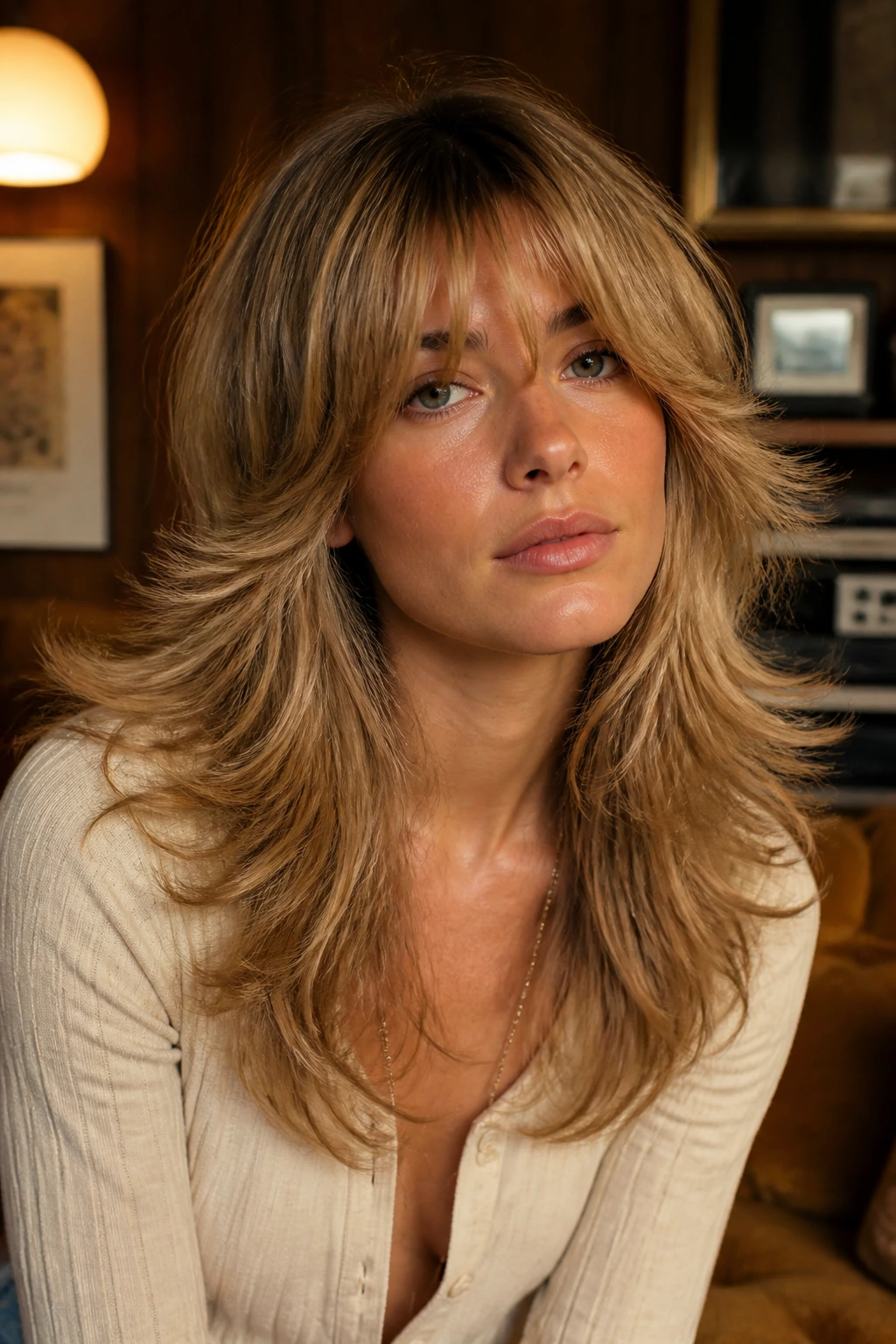
A feathered 70s shag has a little swagger. Not costume swagger. Better than that. The layers are softer and more directional, with ends that sit light and flick away from the face instead of stacking up in hard steps. On long hair, that feathering keeps the cut from feeling too heavy through the bottom third.
The reason this version keeps showing up is simple: it gives long hair movement without making the outline too modern-sleek or too messy. There’s a swing to it. A bit of bounce around the cheekbones. And if you blow-dry it with a round brush, the whole shape gets a subtle flip that feels intentional, not overworked.
This cut loves a little volume spray at the roots and a quick bend through the front with a medium-barrel brush or iron. The ends should look brushed through, not curled into little rings. That softness is the point.
Best on straight to wavy hair. On very curly hair, the feathering needs a careful dry-cut hand or it can get frizzy fast.
3. Wolf-Shag Hybrid
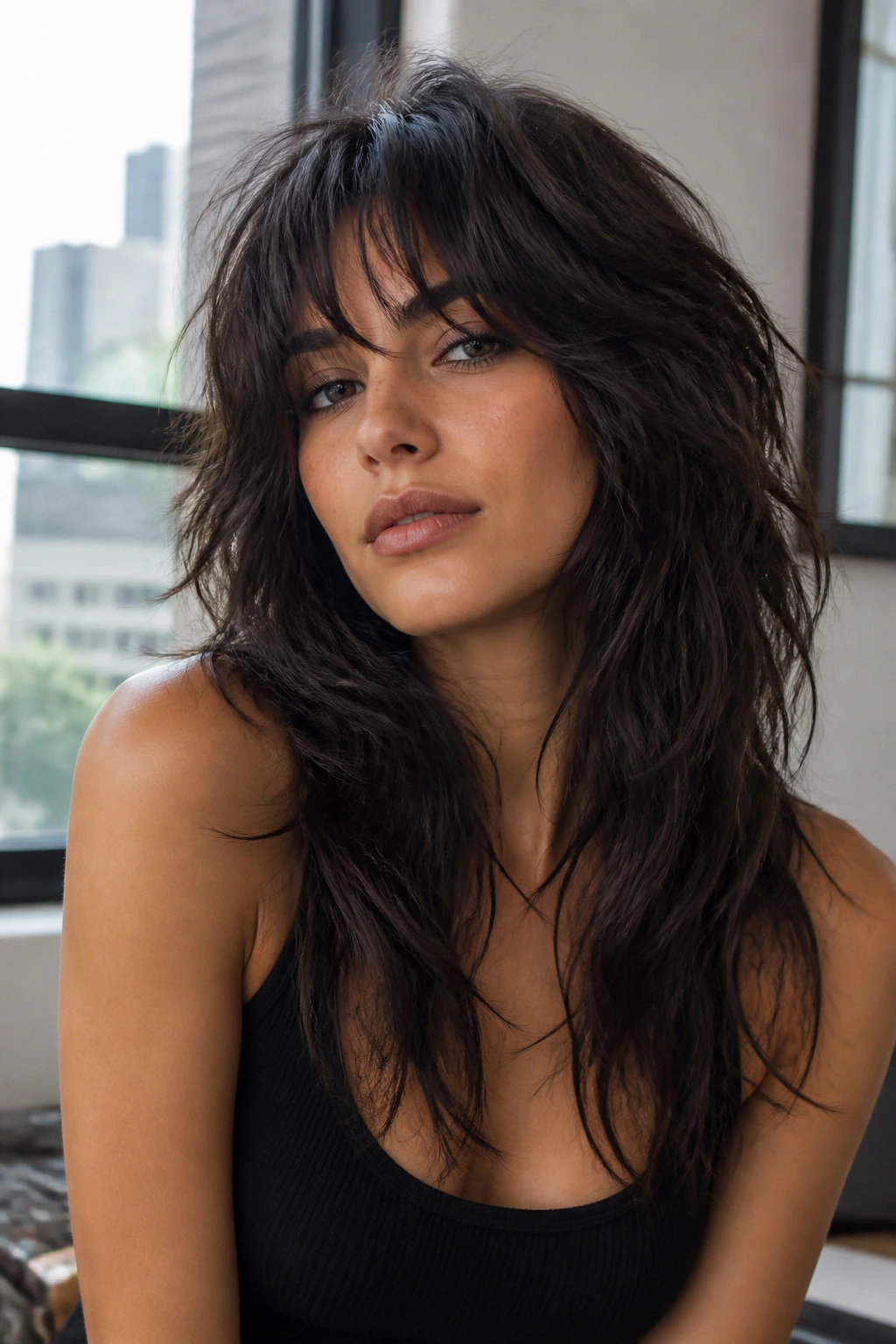
The wolf-shag hybrid is for people who want a little bite. It sits between a shag and a wolf cut: shorter around the crown, longer and thinner through the ends, with a stronger contrast in the silhouette. On long hair, that contrast is what gives the haircut its attitude.
Unlike a classic shag, this one leans more top-heavy. That means the crown gets a noticeable lift, and the pieces around the face come in sooner. The back keeps length, but it doesn’t sit as solidly as a traditional long layered cut. If you like a cut that looks slightly undone even after you’ve brushed it, this is the one.
It’s especially useful for dense hair that needs some internal removal without losing all the perimeter weight. The trick is not to overdo the shortest layers. A wolf-shag that’s too aggressive can go puffy near the scalp and skinny at the ends, which is a rough trade.
Good choice if you like dry shampoo, texture spray, and a bit of edge. Less ideal if you want a smooth, polished finish every day.
4. Butterfly Layer Shag
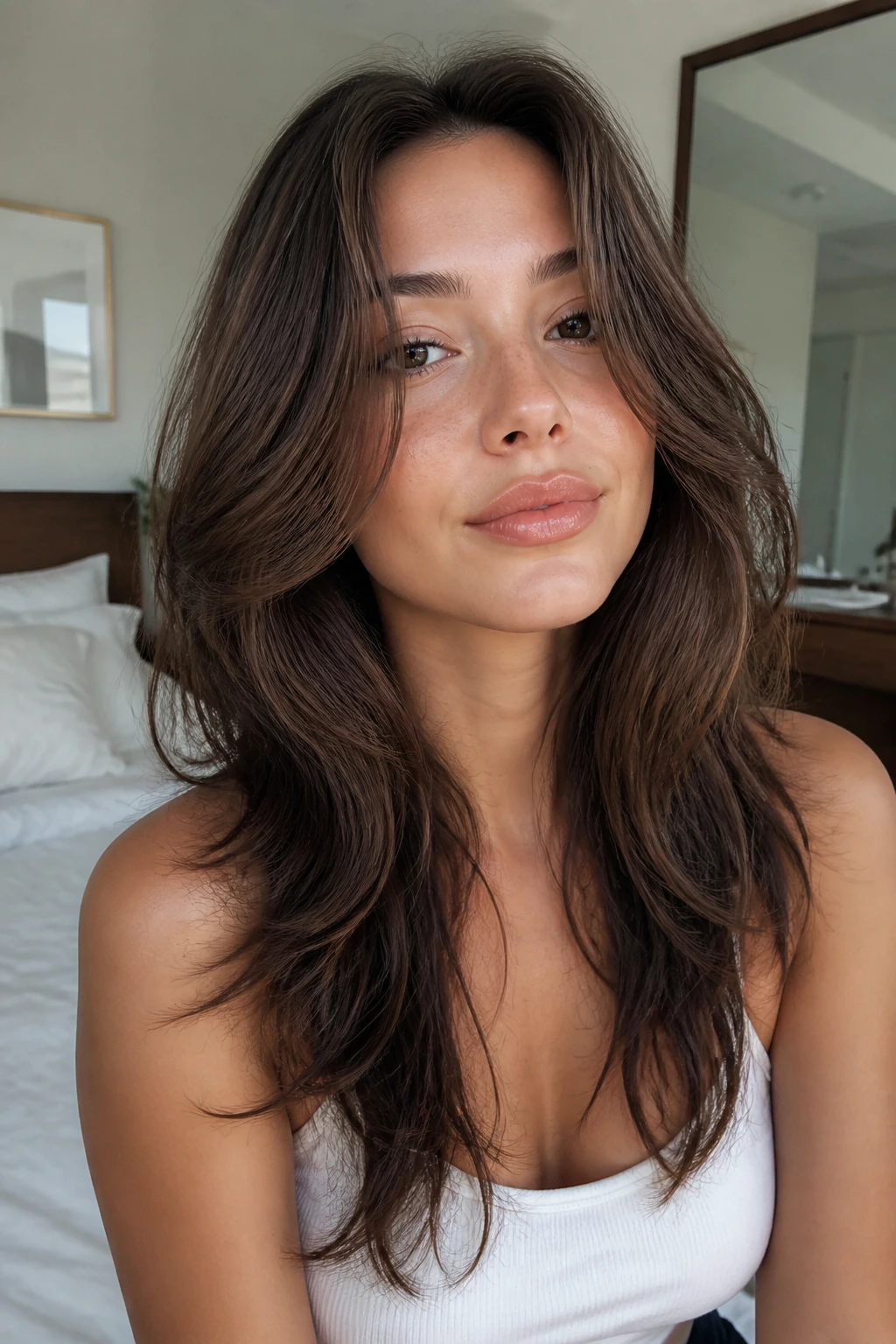
Why do butterfly layers work so well on long hair? Because they split the difference between “I want movement” and “I still want my hair to feel long.” The shortest face-framing pieces sit high enough to create lift around the collarbone and cheekbones, while the longer lower layers keep the bottom line full.
This is one of the easiest shag-adjacent cuts to wear if you like a blowout. The top section can be curled away from the face, and the long underlayer creates that fluttery, wing-like effect people keep chasing in salon chairs. The shape looks expensive when it’s done well, but that comes from structure, not volume for volume’s sake.
How to wear it
If your hair is fine, keep the crown layers longer so the shape doesn’t collapse after an hour. If it’s thick, your stylist can remove more bulk through the interior and still leave the perimeter soft. Either way, a middle part makes the butterfly shape read more clearly.
It’s a smart option for someone who wants a shag but is nervous about looking too choppy.
5. Razor-Cut Shag
Picture someone sitting in the chair with long, blunt, heavy hair that never seems to move. A razor-cut shag is what fixes that mood. The razor takes some of the bluntness out of the ends and turns the layers into softer, tapered pieces that fall with a little separation instead of one big block.
That softness is not the same as frizz. Done well, razor cutting creates a slim, feathered edge that works beautifully on hair with some natural texture. It can also rescue very thick hair that feels boxy at the bottom. The cut sheds weight where scissors would leave a harder line.
- Best when you want softer ends, not blunt corners
- Works well on wavy hair with some natural bend
- Needs a stylist who knows where to stop with the razor
Watch this: If your hair is already fine or fragile, too much razor work can make the ends look wispy in a bad way. Ask for light detailing, not a full thinning session.
The best razor shags look casual from the front and carefully shaped from the side.
6. Bottleneck Bang Shag
Bottleneck bangs have a narrower opening at the center and flare out around the eyes and cheekbones, which makes them a smarter companion to long hair than a straight-across fringe. On a shag, they create a neat bridge between the top layers and the face-framing pieces.
This cut is especially kind to longer faces and sharper jawlines. The bangs soften the forehead without cutting the face in half, and the shag layers keep the rest of the hair from going flat. The whole shape feels a little more tailored than a curtain bang shag, which is part of its charm.
If you hate spending five minutes every morning fighting your fringe, this version has a practical upside. Bottleneck bangs can be pushed apart, curled under, or tucked into the rest of the cut when you’re not feeling them. That flexibility matters.
A note from experience: the bangs need to be cut with the wearer’s part and cowlick pattern in mind. If someone just chops them straight across and hopes for the best, the result can split weirdly at the center.
7. Beachy Air-Dried Shag
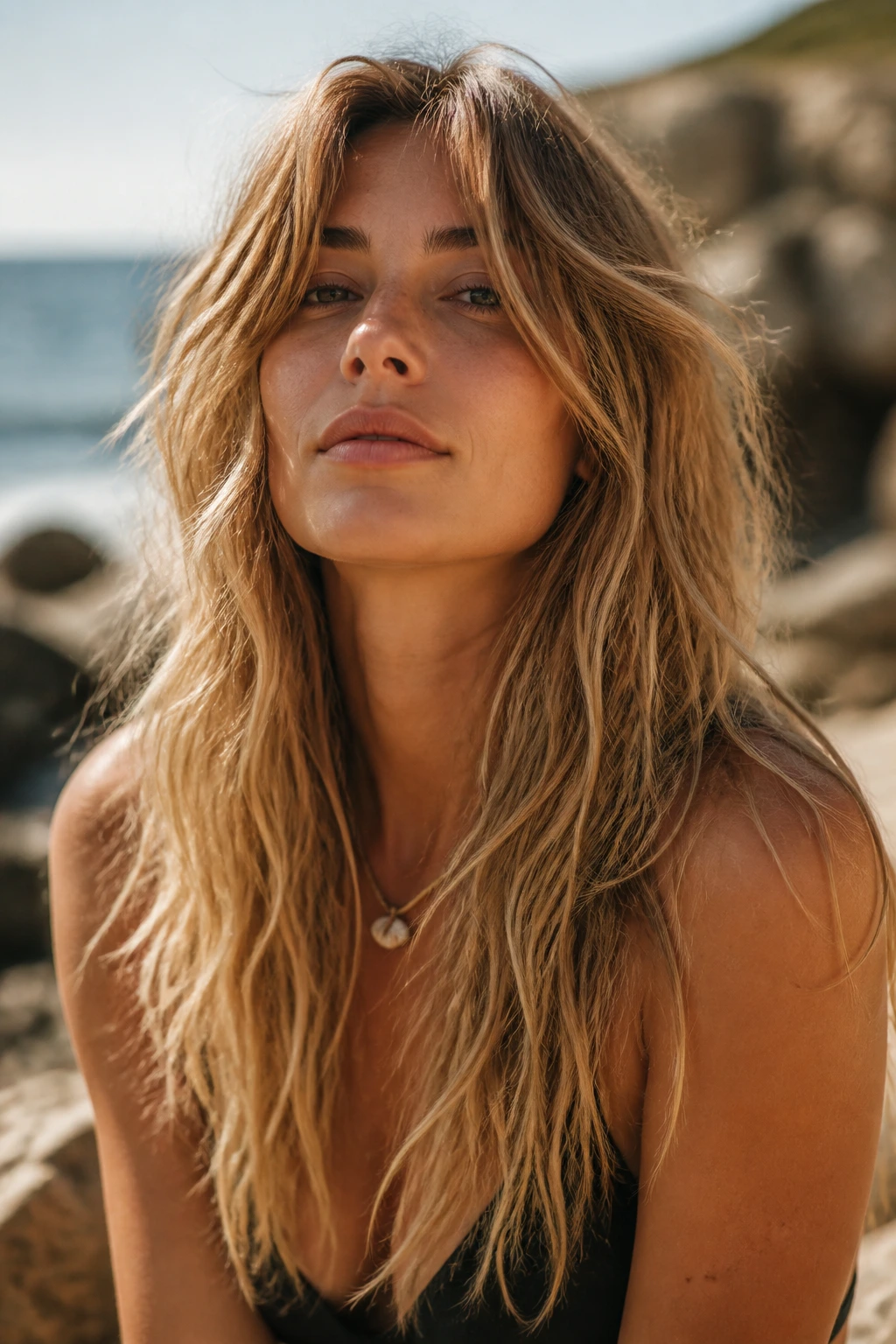
Some shags are designed to be styled. This one is designed to survive being ignored for twenty minutes after the shower. The beachy air-dried shag uses long layers, a little internal texture, and enough face framing to let waves form on their own instead of being bullied into shape.
The cut works because the layers are distributed in a way that encourages natural bends to land in the right spots. Hair dries with separation around the ends and a bit of lift near the roots if you scrunch in a lightweight cream or sea-salt spray. Don’t overdo the product. Too much and the strands clump into damp-looking ropes, which is not the same as beachy.
This is a strong choice for people who live in ponytail territory but want hair that looks more deliberate when it’s down. It also grows out nicely, because the style already accepts a little imperfection.
Air-dried shags are not ideal for pin-straight hair that refuses to bend. If that’s your texture, you’ll want a version with more structured face framing.
8. Curly Long Shag
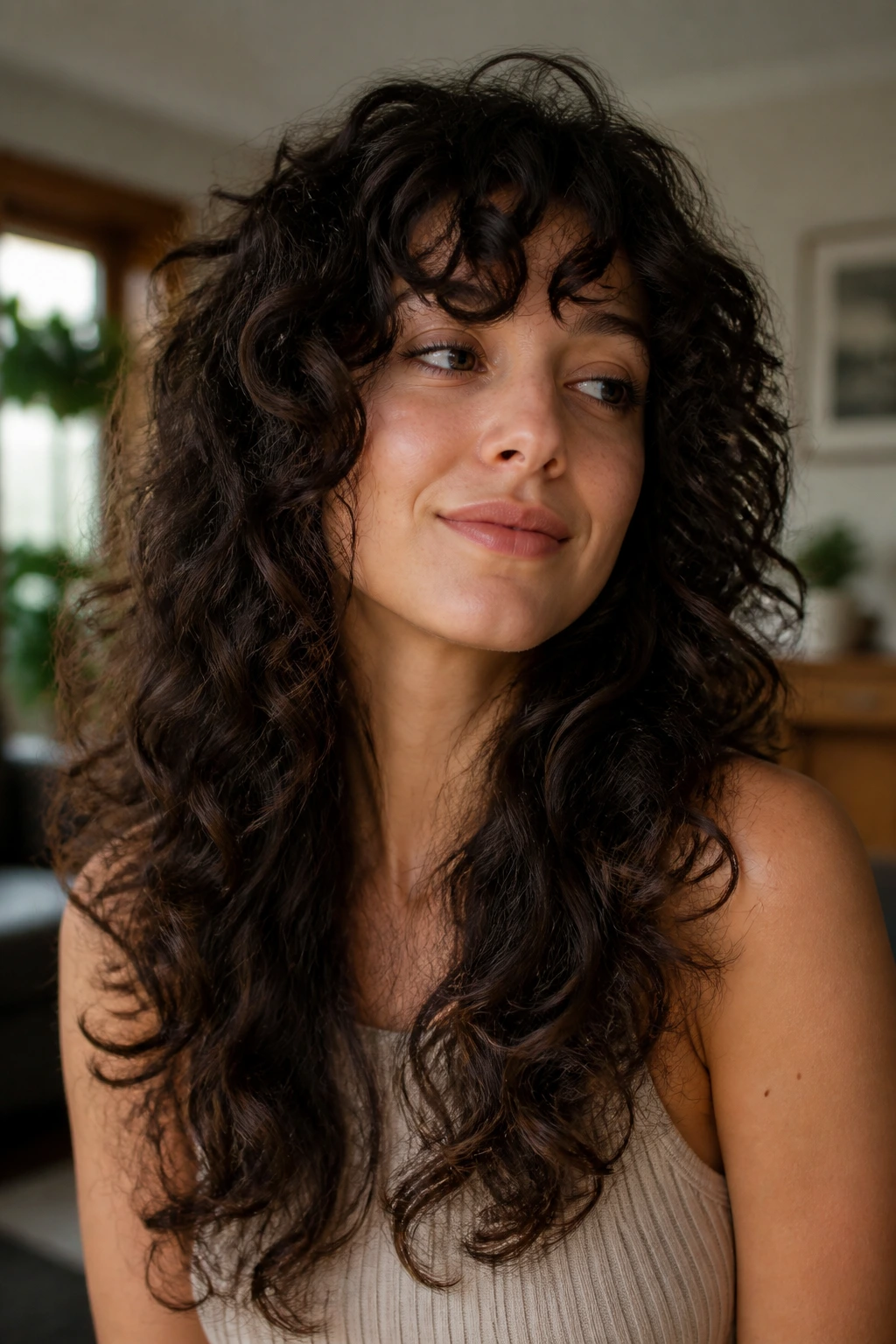
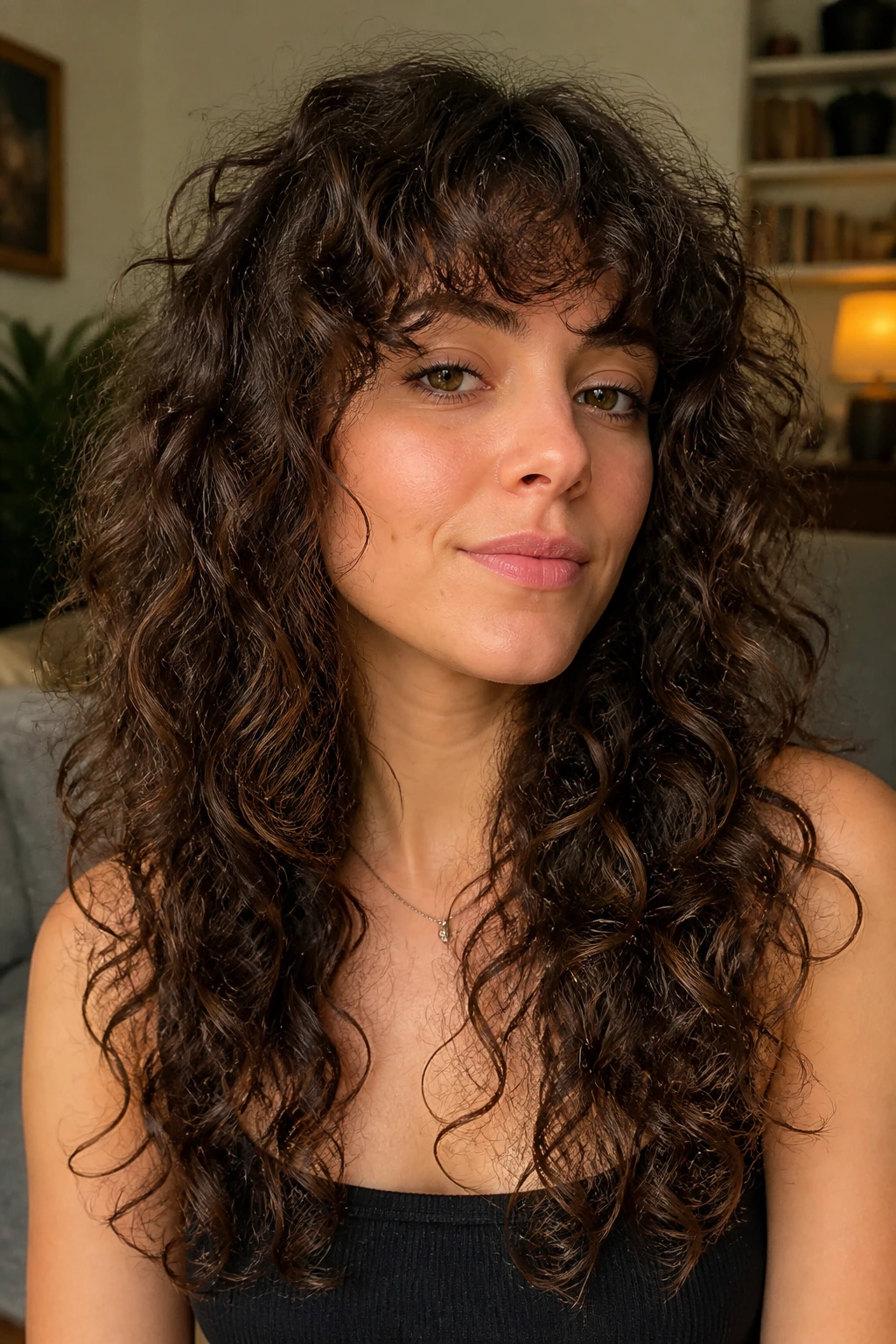
Curly hair and long shags can be a beautiful match, but only if the cut respects shrinkage. A curly long shag should be shaped dry or nearly dry, curl by curl, so the stylist can see where the length lands once the pattern springs back. If you cut curls wet and guess, the top can end up too short and the bottom too heavy.
The best curly shag removes bulk where curls stack, then leaves enough length so the ends still clump instead of fraying. That gives the haircut a rounded, lived-in shape. It also helps curls fall in layers rather than forming one giant triangle, which is the thing most curly-haired clients are trying to escape.
A good curly shag is less about “messy texture” and more about controlled freedom. The curls should have room to bounce, but the overall outline should still look like one haircut.
Ask for longer crown layers and carefully preserved perimeter length. That one request saves a lot of disappointment later.
9. Sleek Feathered Shag
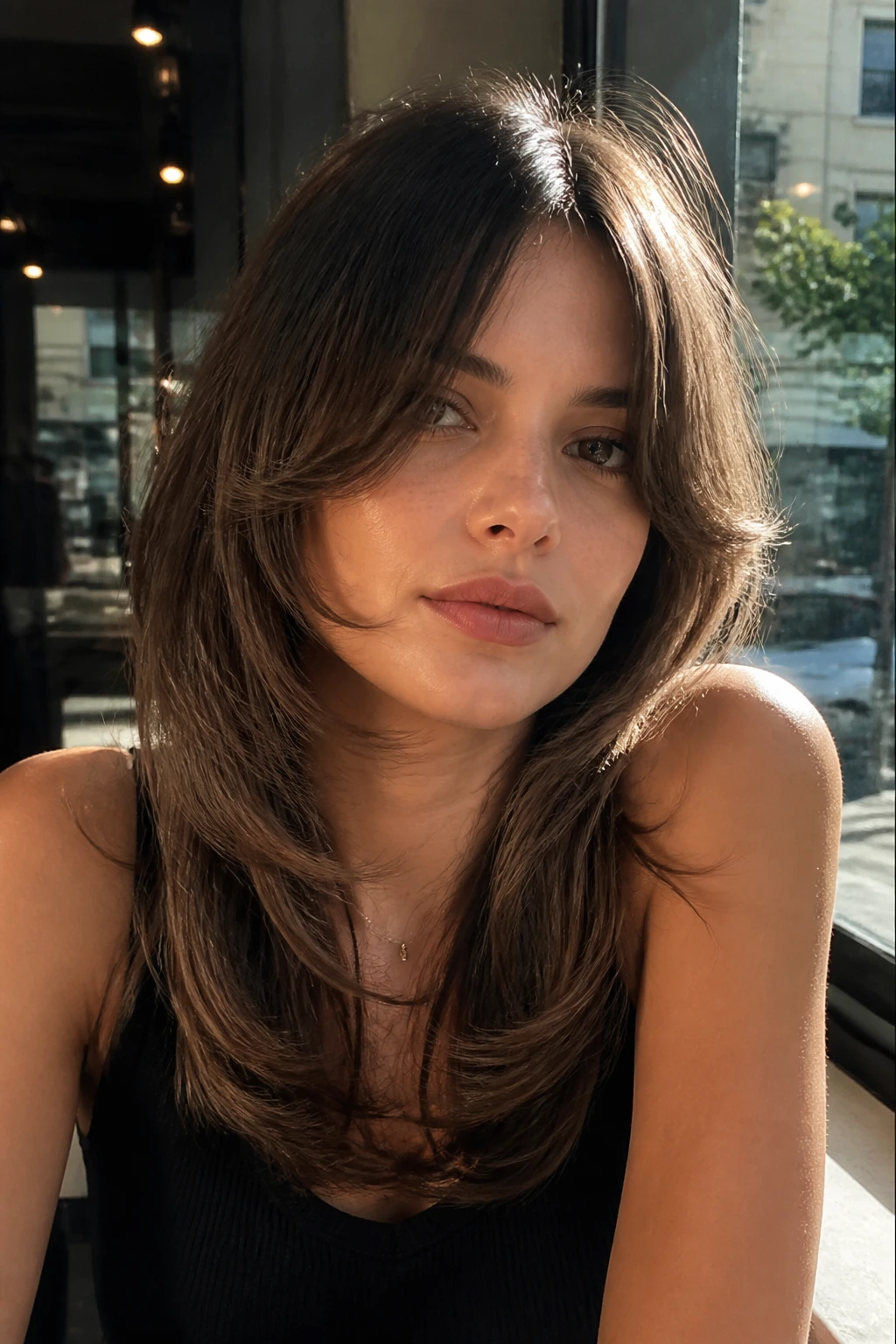
A sleek feathered shag is the polished cousin in the family. Same layered structure, less visible roughness. The strands are cut so they fall into a smooth, airy bend rather than a piecey mess, which makes this a smart choice for straight hair that wants movement without looking undone.
The key is in the blowout. A paddle brush or large round brush can stretch the layers just enough to show the shape without making every strand flip out in a different direction. The front pieces should skim the jaw and collarbone, not sit in hard angles. That slight bend is what keeps the cut from reading as old-fashioned or overstyled.
This version is useful if your hair is fine and tends to collapse under heavy texturizing. Too many razor cuts can leave fine strands looking thin at the ends; a sleek feathered shag keeps the perimeter cleaner.
It’s also the version I’d pick for someone who wears blazers, clean lines, or simple makeup and doesn’t want the haircut to shout over the outfit. There’s still softness. Just less chaos.
10. Boho Piecey Shag
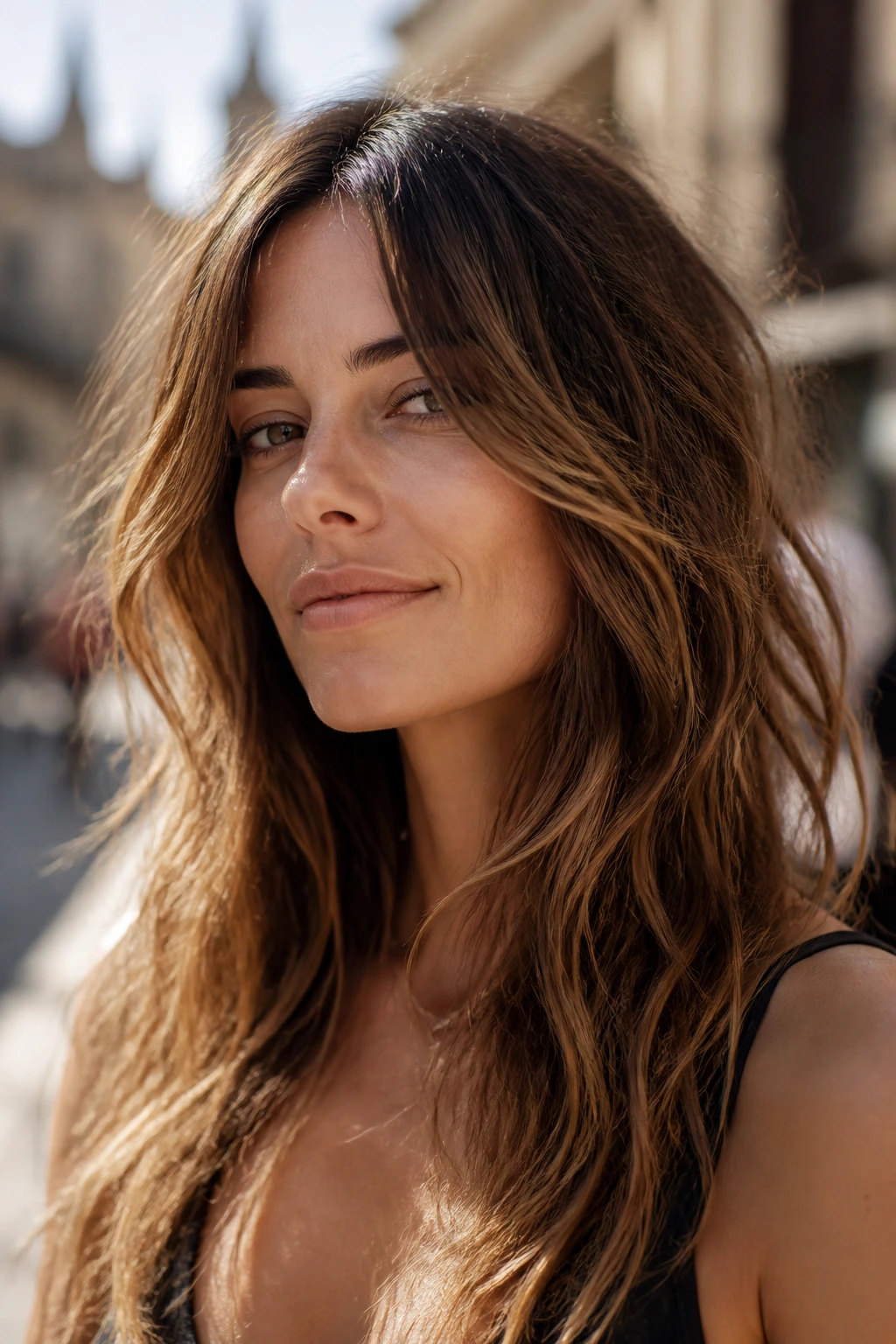
A boho piecey shag feels relaxed in a very specific way: not careless, not overbuilt, just separated enough to show the cut. The layers are longer and more irregular, and the ends are styled with a little grit so they don’t blend into one flat curtain.
This cut usually likes a center part, soft waves, and a touch of texturizing spray through the mid-lengths. The shape works because the pieces around the face are long enough to tuck behind the ear, but short enough to break up the silhouette. That means you can wear it loose, half-up, or with clips without losing the haircut’s whole point.
Think of it as the shag for people who like linen shirts, gold hoops, and hair that behaves a little differently every day. It’s not precious. It shouldn’t be.
A tiny warning: if your hair is already dry at the ends, a heavily piecey shag can look crispy. Use less spray than you think. Then stop. More is not more here.
11. Invisible-Layer Shag
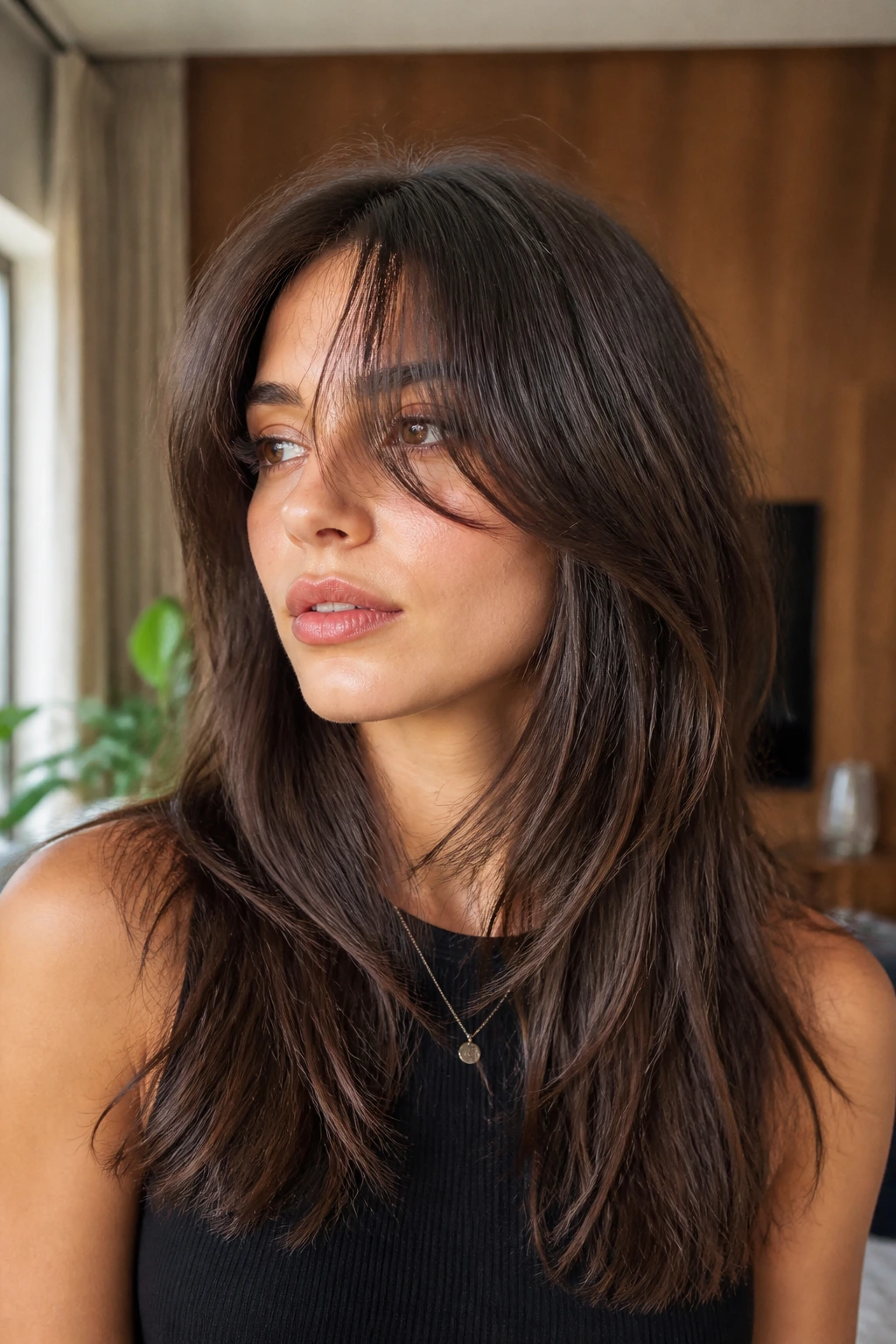
Invisible layers are what you reach for when you want shag movement without obvious choppy steps. The cut removes weight from inside the hair, so the outer shape still looks long and fairly smooth. On long hair, that makes a huge difference.
This is the version for people who like saying, “I got layers,” but don’t want the layers to show off every time they turn their head. It keeps the outline soft and the ends fuller, which is useful if your hair is thick, dense, or one of those textures that gets triangular when it’s all one length. The movement sits inside the haircut instead of hanging off the edges.
Unlike a high-contrast shag, this one doesn’t scream for attention. It whispers. That’s why it suits people who want a more expensive-looking finish and less obvious texture.
If your hair is pin-straight, invisible layers may need a bit of bend from a blow-dryer or iron to show their shape. On wavy hair, they show up on their own.
12. Heavy Fringe Shag
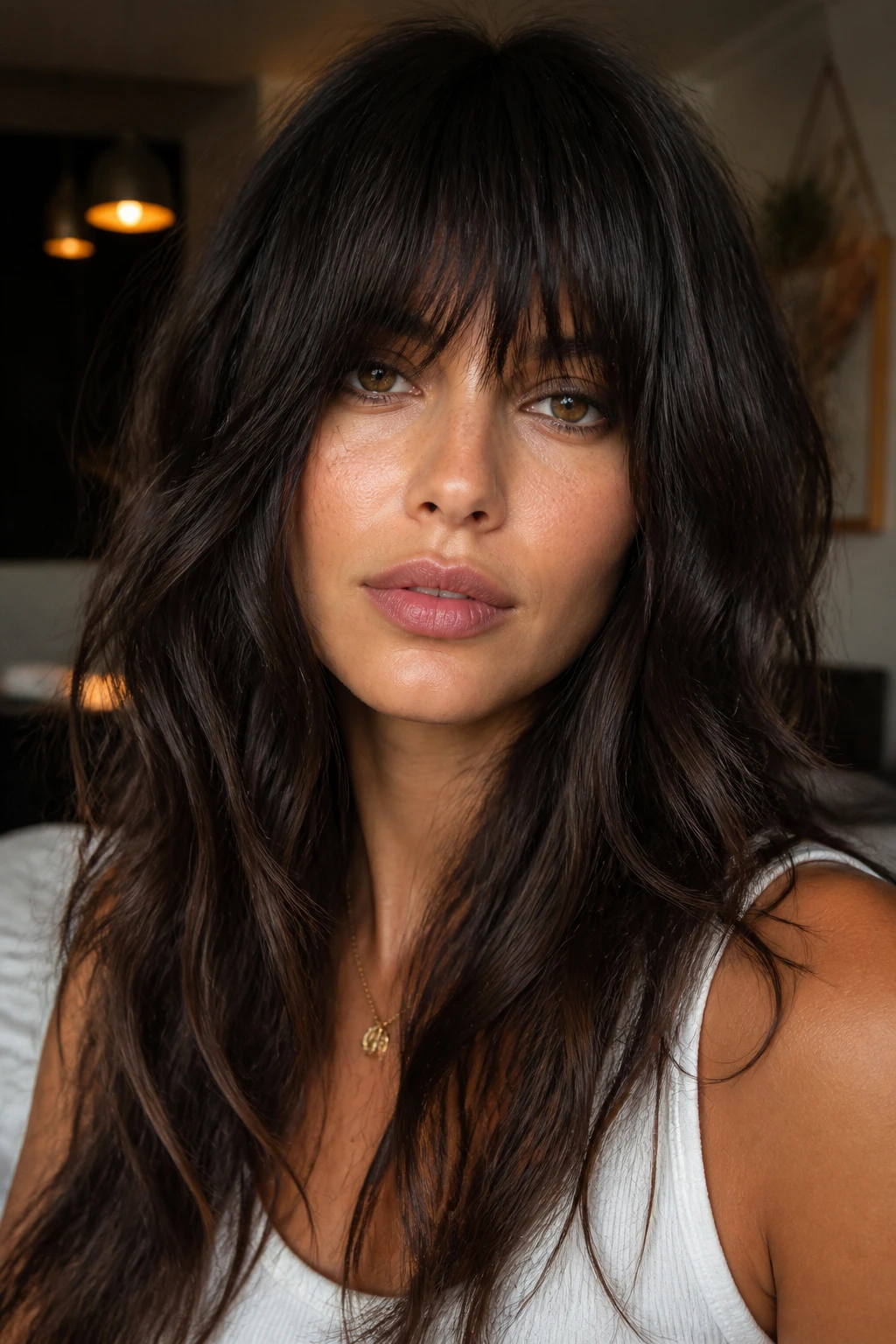
A heavy fringe changes the whole personality of a long shag. The fringe comes in stronger, thicker, and more deliberate than a curtain bang, which instantly gives the cut more mood. The rest of the layers can stay long and soft, but the front says something louder.
This works best when the fringe is cut with enough density to sit flat and enough softness at the edges to avoid the Lego-block effect. Too blunt, and it feels severe. Too wispy, and it loses the point. The sweet spot is a fringe that skims the brows and opens up into the front layers without disconnecting from the rest of the haircut.
It’s a good move if you want your hair to frame the eyes hard. Makeup people tend to like this one. So do anyone who wants their haircut to look a little editorial without committing to a whole dramatic shape.
The upkeep is the catch. Heavy fringe needs more regular trims than a curtain bang, and it gets oily faster around the forehead. That’s the price of the look.
13. Money-Piece Shag
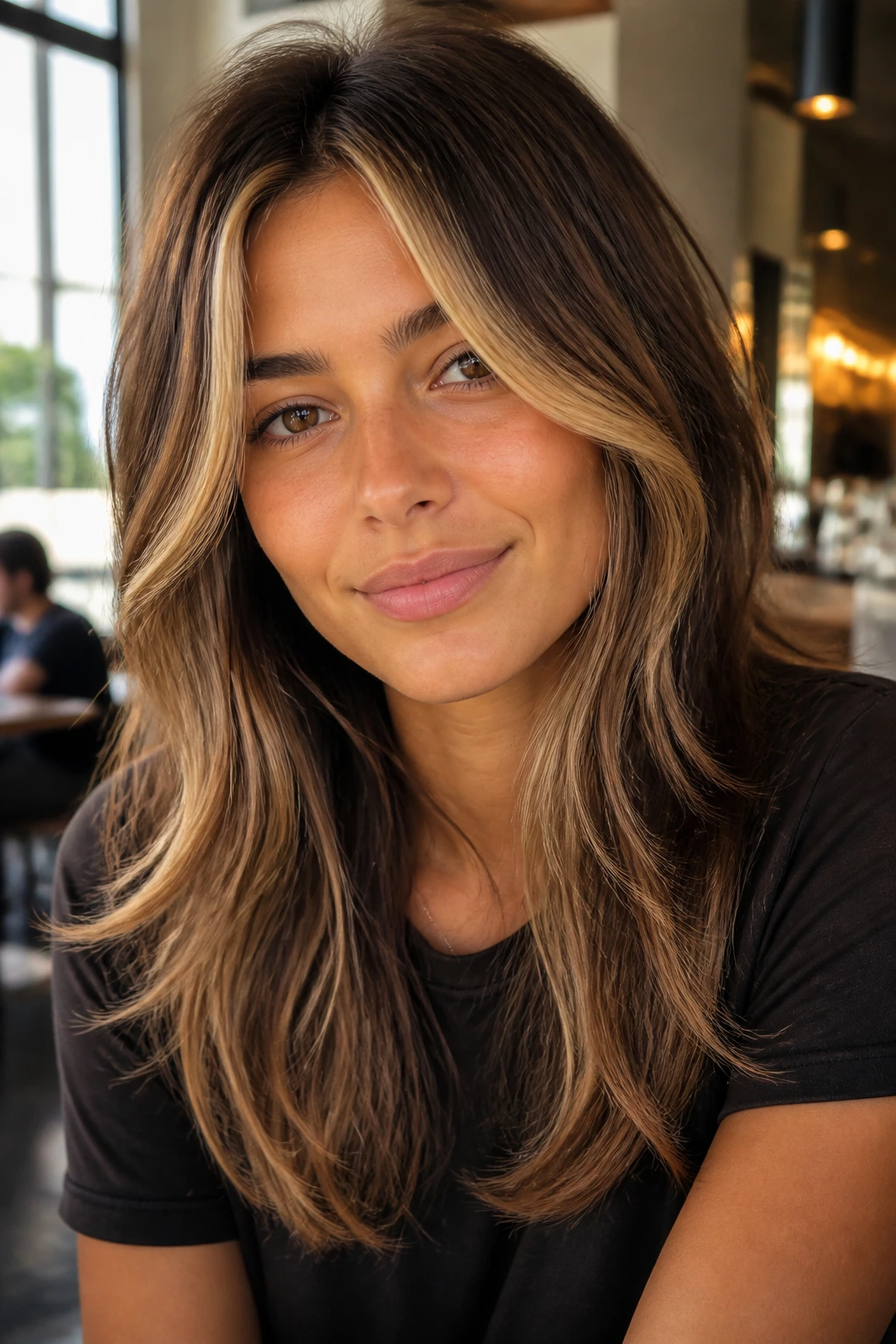
A money-piece shag adds brightness around the face, but the haircut still has to do the heavy lifting. The most effective version uses long layers to frame the front and leaves a lighter, more visible strip near the face so the color has somewhere to land. If the cut is flat, the money piece has nothing to play against.
This style is useful because it lets the haircut and color talk to each other. The layers pull the eye toward the cheekbones, and the lighter front pieces add a little contrast without needing a full color overhaul. It works especially well on medium-to-long hair that already has some wave or bend.
The important part is not making the front too short just because there’s color there. A money piece should enhance the layers, not hijack them.
Ask your stylist to think in terms of soft front movement rather than a chunky stripe. The haircut should look good even if the color fades a little.
14. Choppy Textured Shag
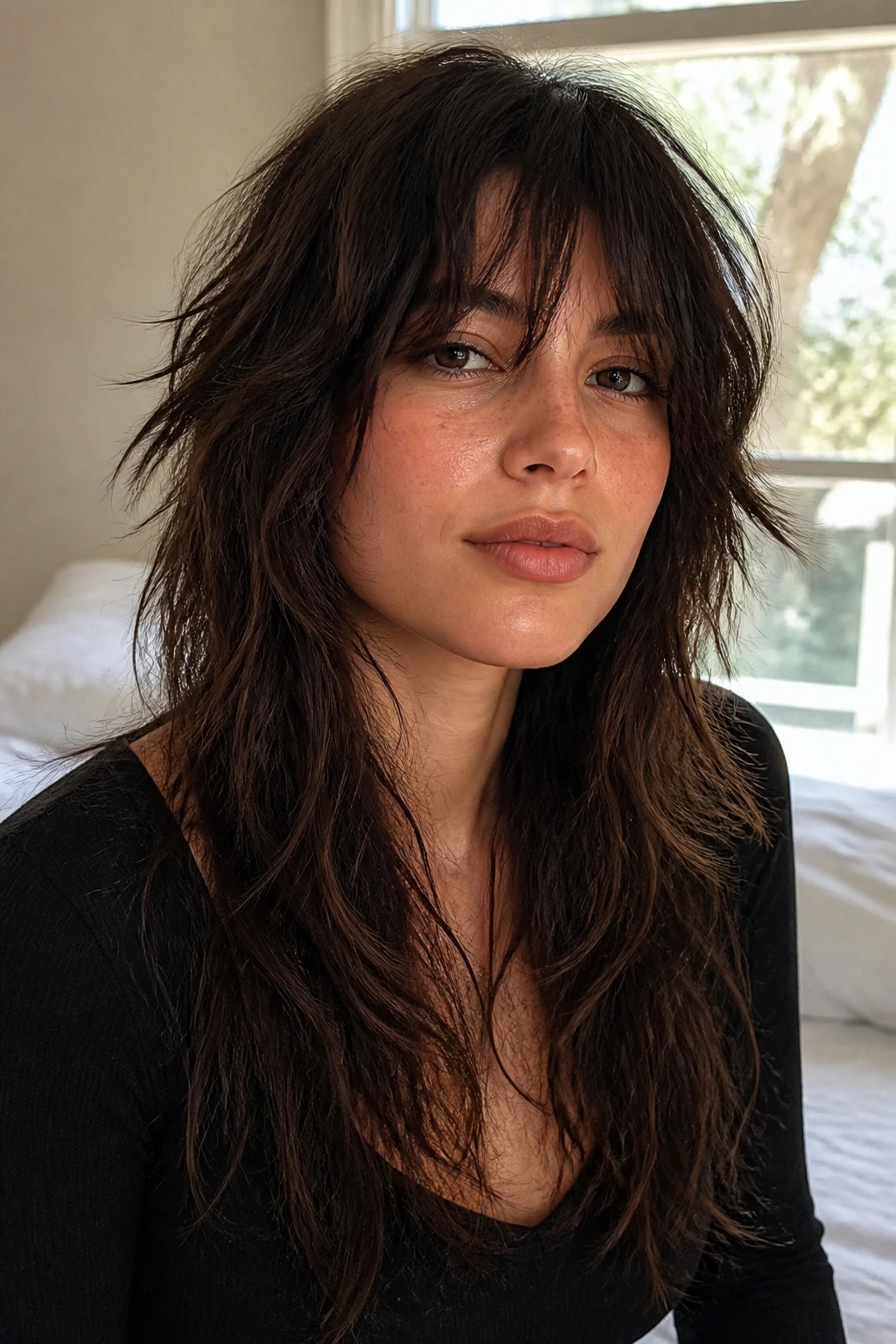
A choppy textured shag is blunt about what it wants: visible layers, visible ends, visible separation. This is the version for thick hair that needs bulk removed and for anyone who likes a cut that looks better the more you rough it up with your hands.
What separates it from a messy shag is the control. The layers are broken up with point cutting or slide cutting so the ends don’t sit in one solid line. That gives the hair a more broken, piecey finish. On long hair, this keeps the haircut from feeling too heavy through the bottom.
It can be a fantastic shape for people with a lot of hair who hate the feeling of mass around the neck. It also looks good with air-dried waves, because each layer catches a little differently.
But there’s a line. If the stylist removes too much density from the ends, the haircut can start to look straggly. Thick hair forgives a lot. Fine hair does not.
15. Rock-and-Roll Shag
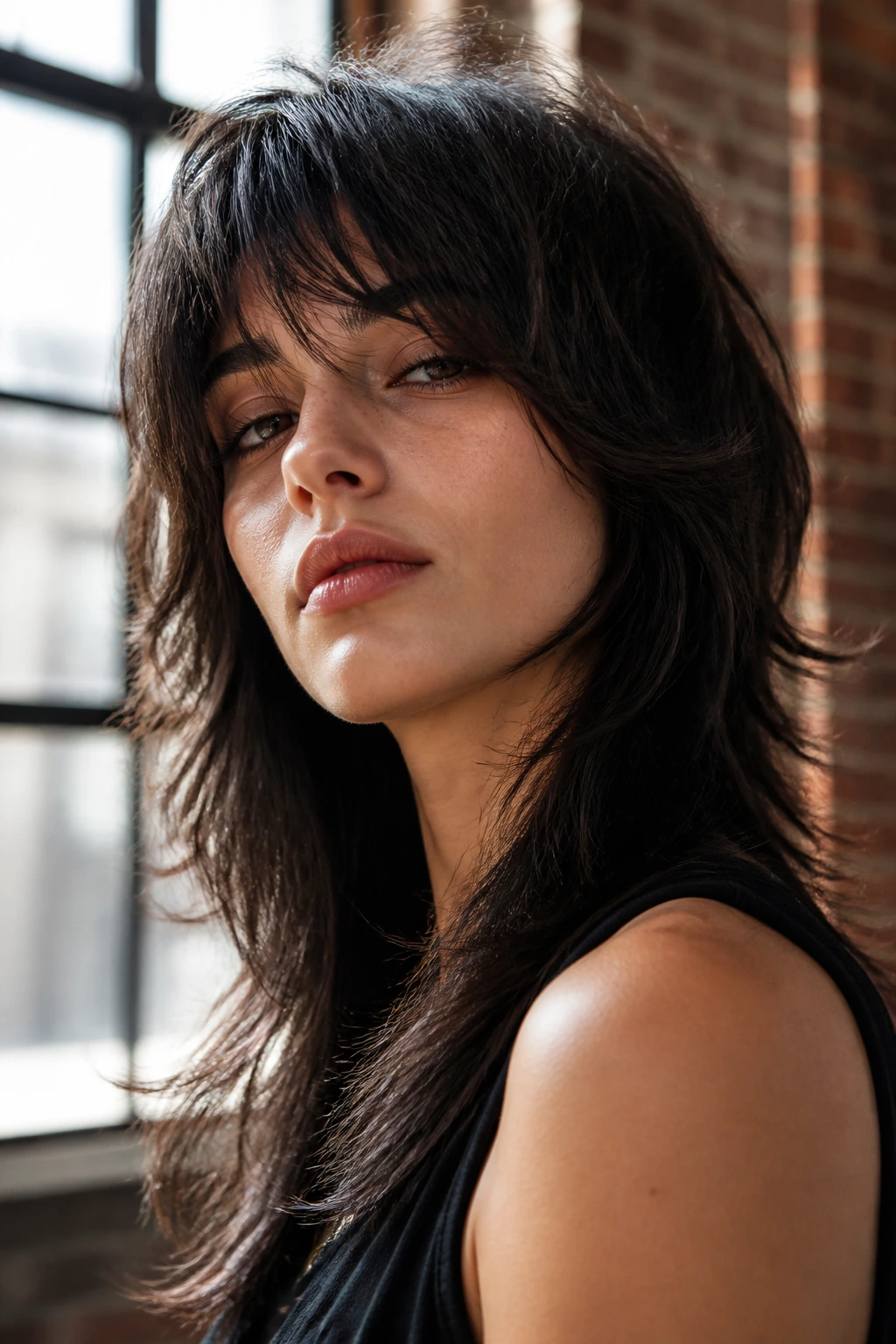
A rock-and-roll shag wants some attitude in the room. It has a stronger fringe, more movement through the crown, and a slightly more lived-in finish than the polished versions. On long hair, that means the shape still reads long, but the layers have enough bend to feel rebellious.
This cut is usually styled with a rough blow-dry or a loose iron bend, not a smooth salon finish. The ends should kick out a little. The front should fall in pieces. If everything is too tidy, the whole point gets lost.
I like this one on hair that can hold shape. Fine hair can wear it, sure, but a little grit in the strands helps. Thick or naturally wavy hair tends to carry the mood better because the texture supports the cut instead of fighting it.
If you’ve ever wanted your long hair to feel less “pretty” and more “has something to say,” this is the version that speaks up first.
16. Grown-Out Shag
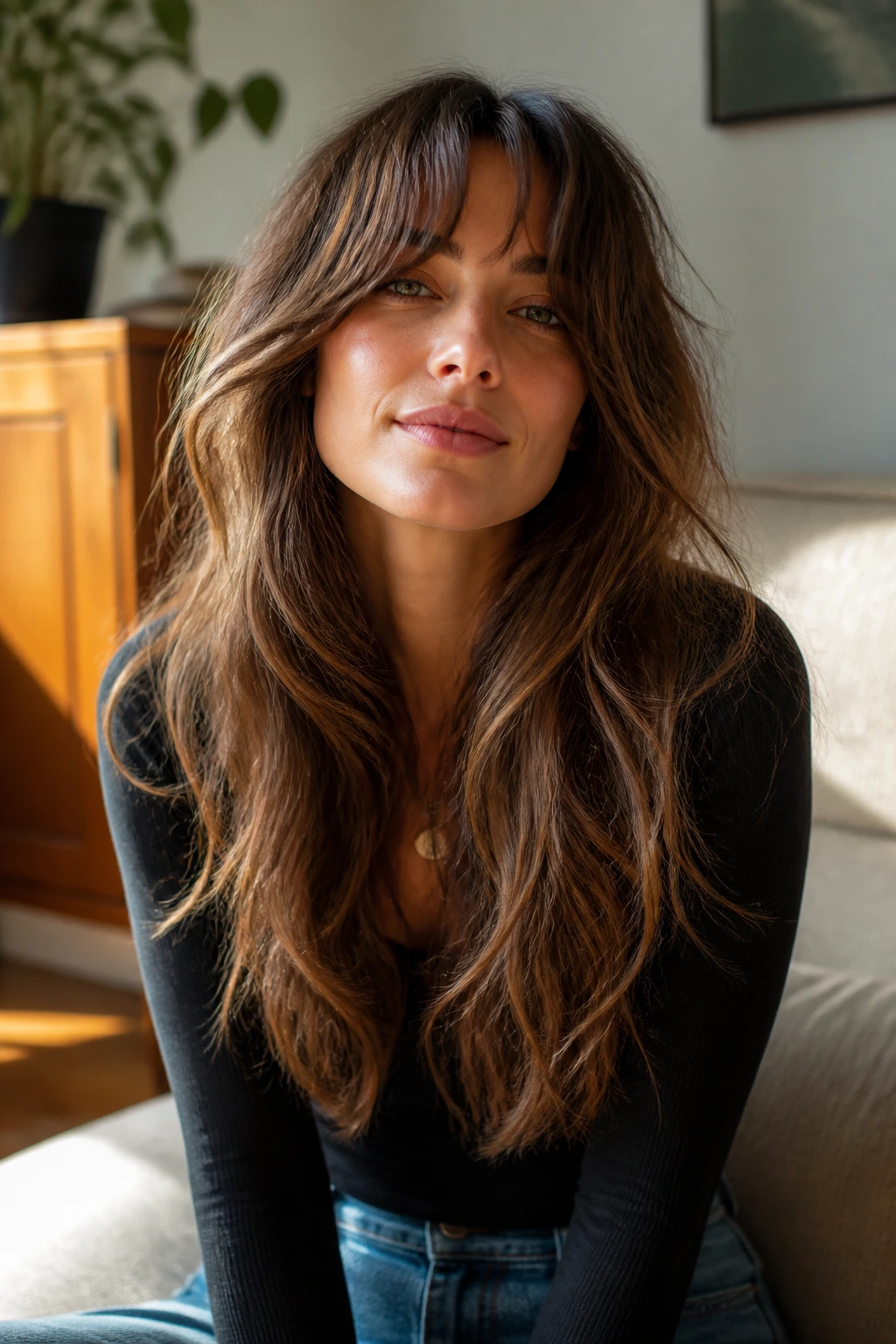
A grown-out shag is for the people who live between salon visits without apology. The layers are cut in a way that still looks decent once they’ve softened a few weeks later, which means the haircut should not rely on every edge staying fresh and crisp.
The best grown-out shags start with face framing that isn’t too short and layers that don’t begin miles above the shoulders. That buys you time. Once the haircut grows, the movement shifts lower instead of collapsing into one awkward shelf. This matters more than people think. A shag that’s gorgeous on day one but weird by week six is not a good haircut.
This version is also a lifesaver if you like to wear your hair up. Mid-length layers around the face can fall out of ponytails in a flattering way instead of sticking straight out.
If maintenance is not your favorite hobby, start here.
17. Polished Salon Shag
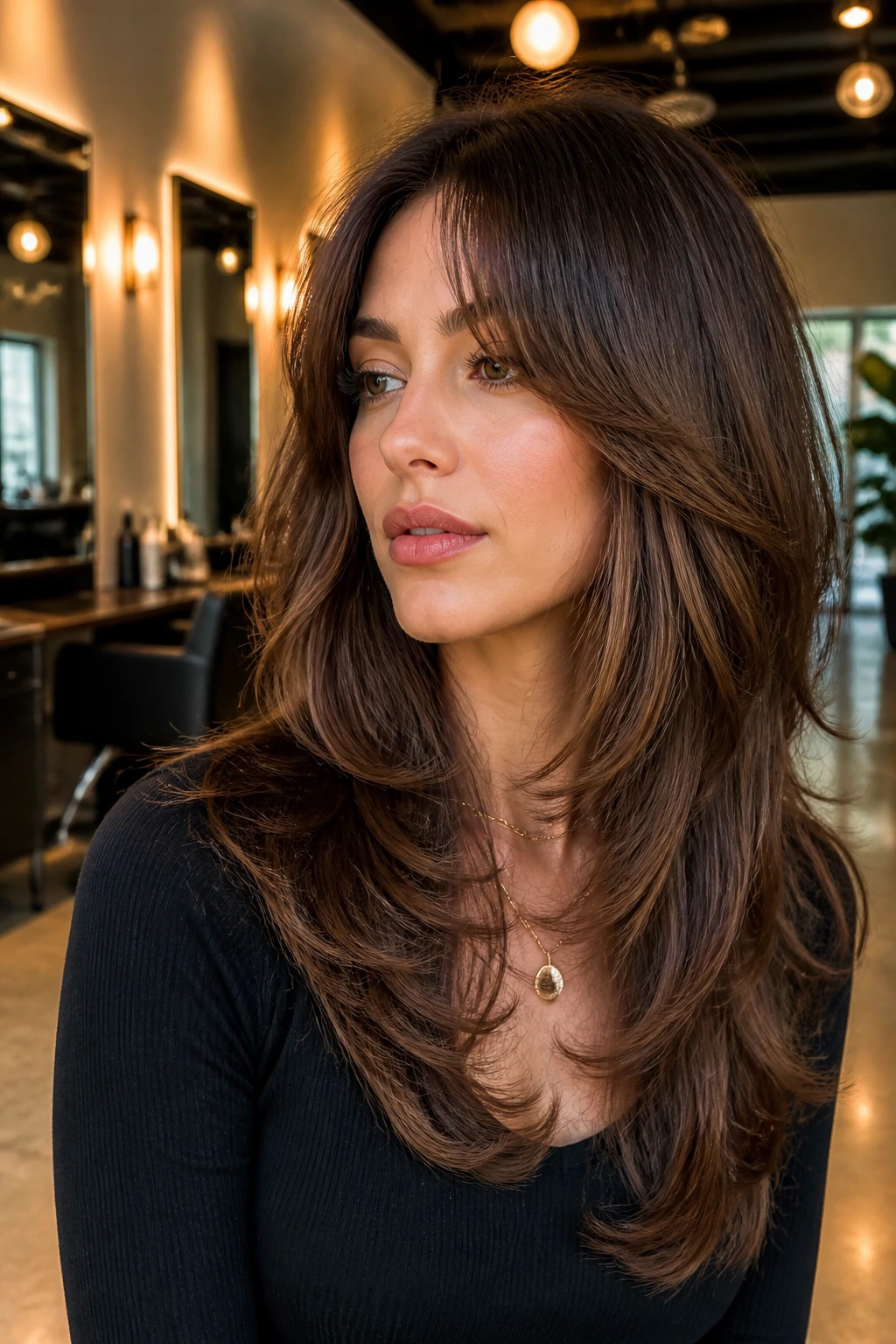
A polished salon shag proves the cut doesn’t have to look messy to have texture. The layers are clean, the face framing is thoughtful, and the ends are finished enough to lie smooth while still moving. It’s the tidy side of the shag family.
This is the version for people who want body without the “I slept in it” finish. It usually benefits from a round-brush blowout, a smoothing cream through the mid-lengths, and just enough bend at the front to keep the shape alive. The haircut feels expensive because nothing is left to chance. Every layer has a job.
On long hair, that polish matters. Too much texture can make long layers feel thin. A polished shag keeps the ends full and uses shape, not roughness, to create interest.
If your personal style leans tailored, glossy, or minimal, this is the shag that fits without trying to be cooler than you are.
18. Face-Framing Cascade Shag
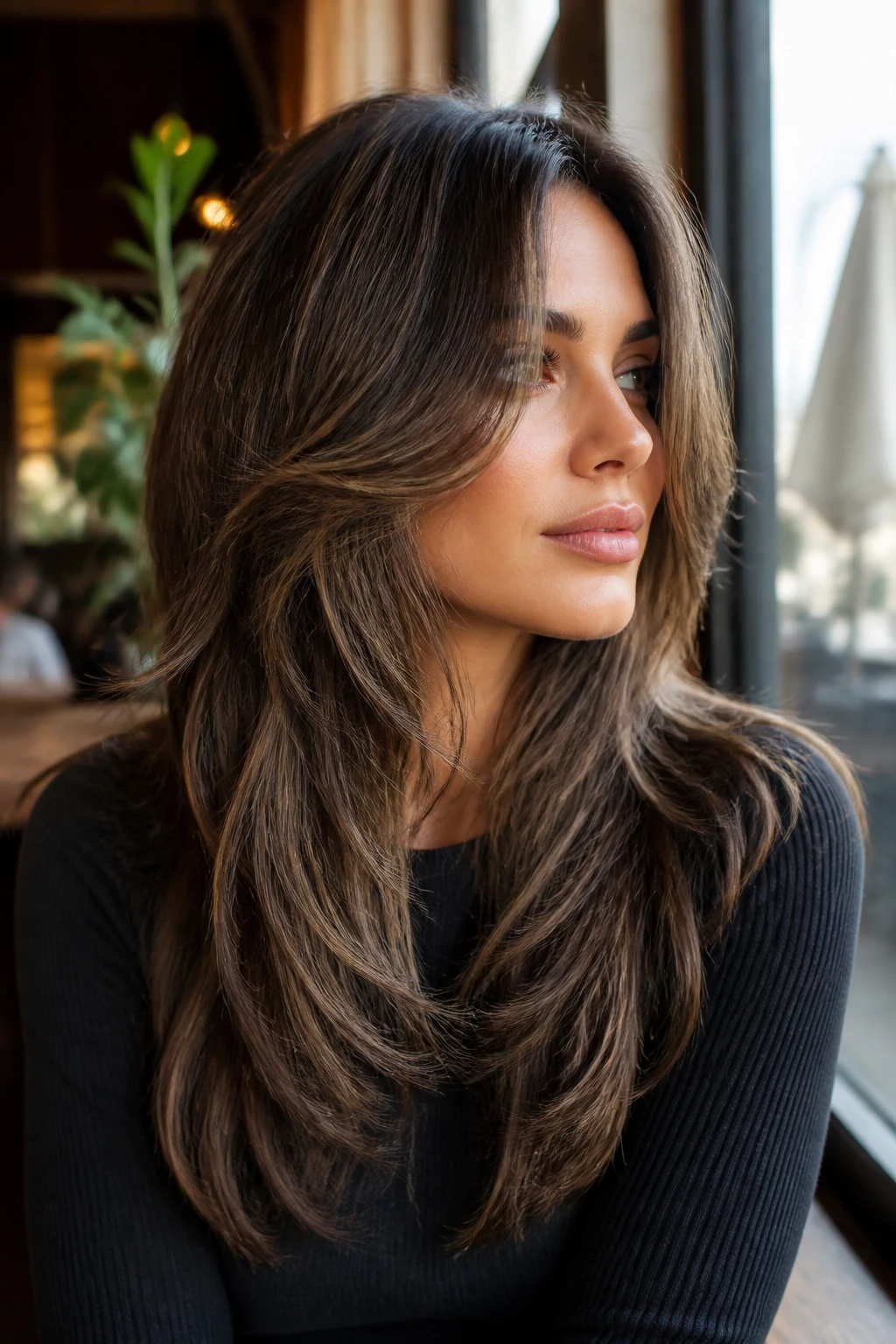
A face-framing cascade shag is built around a soft waterfall of layers that move from the cheekbones down through the chest. The front matters most here. The rest of the hair follows that line, which keeps the haircut feminine without turning sugary.
What makes it different from a curtain shag is the amount of length preserved in the front. The front pieces can be substantial, almost cheek-to-bust length depending on the cut, while still breaking away from the rest of the hair. That gives the face a border without boxing it in.
It’s an especially useful option if you wear your hair parted down the middle and like the way long pieces fall beside the jaw. The silhouette stays long, but the front doesn’t disappear into the rest of the cut.
If your hair is dense, this is a smart way to make long layers visible without making the whole cut too short around the crown.
19. Soft Modern Mullet Shag
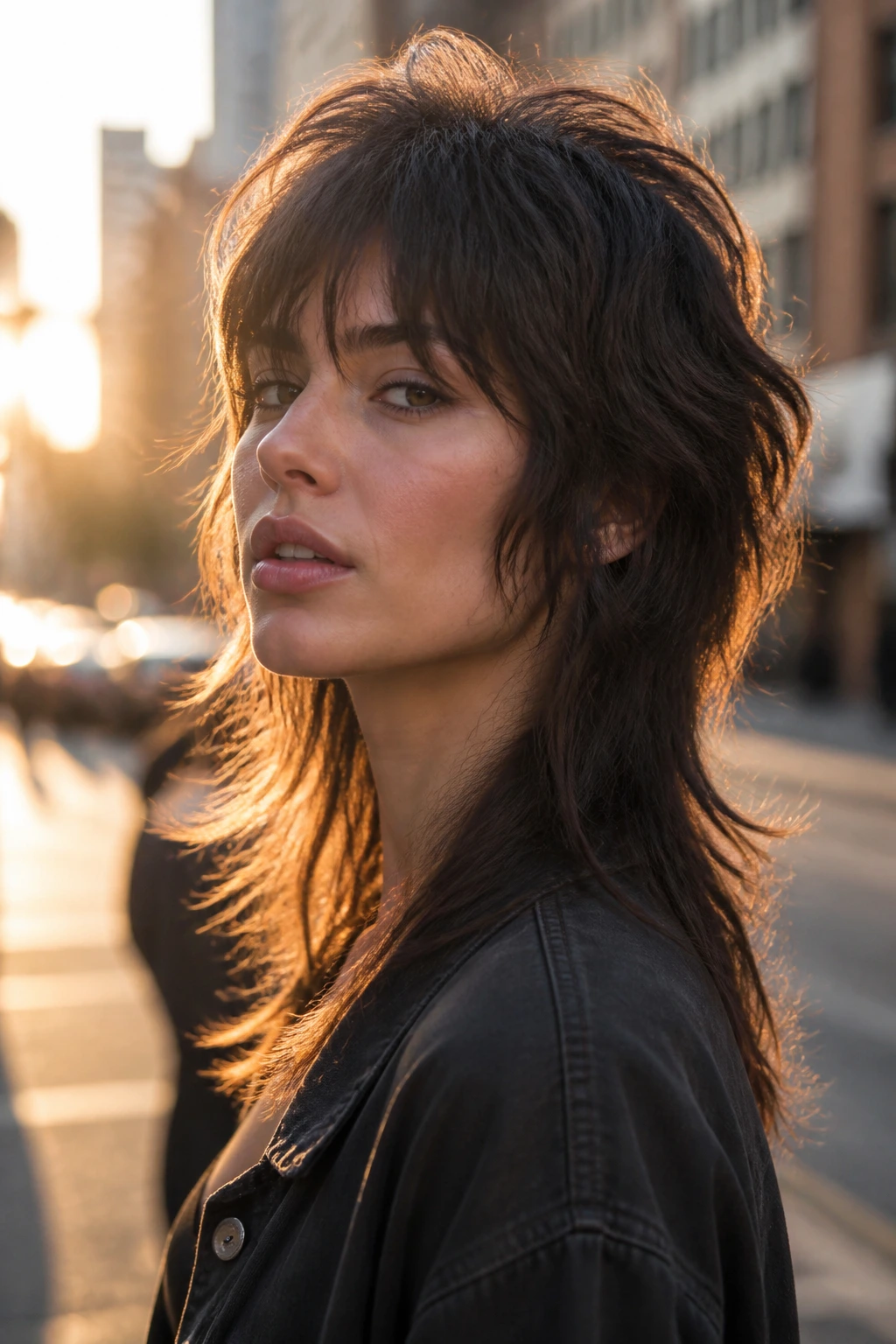
A soft modern mullet shag is the farthest edge of the shag spectrum here, but softened enough to stay wearable on long hair. The crown gets a little lift, the front opens around the face, and the back keeps a distinct tail of length. It’s not a hard mullet. It’s a gentler, more wearable cousin.
The reason this version works is the contrast. You feel a stronger shape in the top and front, while the back keeps the long line people still want. That contrast can be lovely on thick or wavy hair because the haircut creates motion without needing constant styling.
It is not a neutral haircut. You wear this one on purpose. If that sounds like too much, skip it. If it sounds like a fun departure from safe long layers, this is the one that gives the most personality with the least pleading from the styling tools.
Why Long Hair Needs a Smarter Layer Map
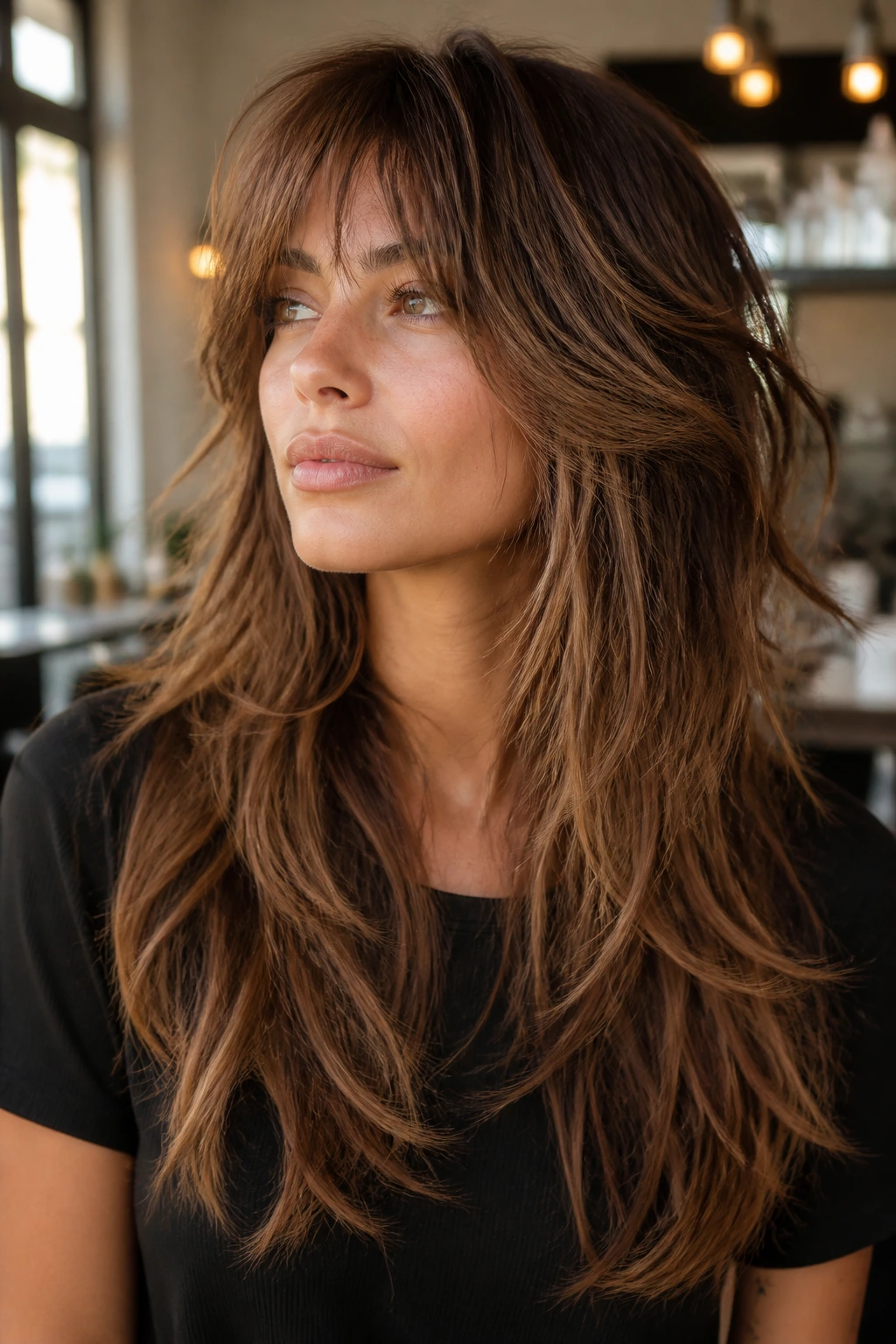
A long shag lives or dies on where the weight gets removed. That’s the part people overlook when they ask for “lots of layers.” Long hair already has gravity on its side. If the layers are cut too high, the crown can puff up while the ends go thin. If the layers are all too low, the whole thing just hangs there and calls itself textured.
The sweet spot is a map. Crown, cheekbone, jaw, collarbone, ends. Those points decide whether the haircut feels airy, directional, or flat. A good stylist reads the density first, then decides how much internal movement the hair needs before taking off any length. That’s why a photo alone isn’t enough. Hair thickness, texture, and growth pattern matter more than the picture.
Long shag haircuts also behave differently depending on styling habits. If you blow-dry, your layers need enough room to bend. If you air-dry, the cut has to encourage the hair to fall into place on its own. The best versions can do both. The mediocre ones can only survive one.
Essential Tools for Styling a Long Shag
-
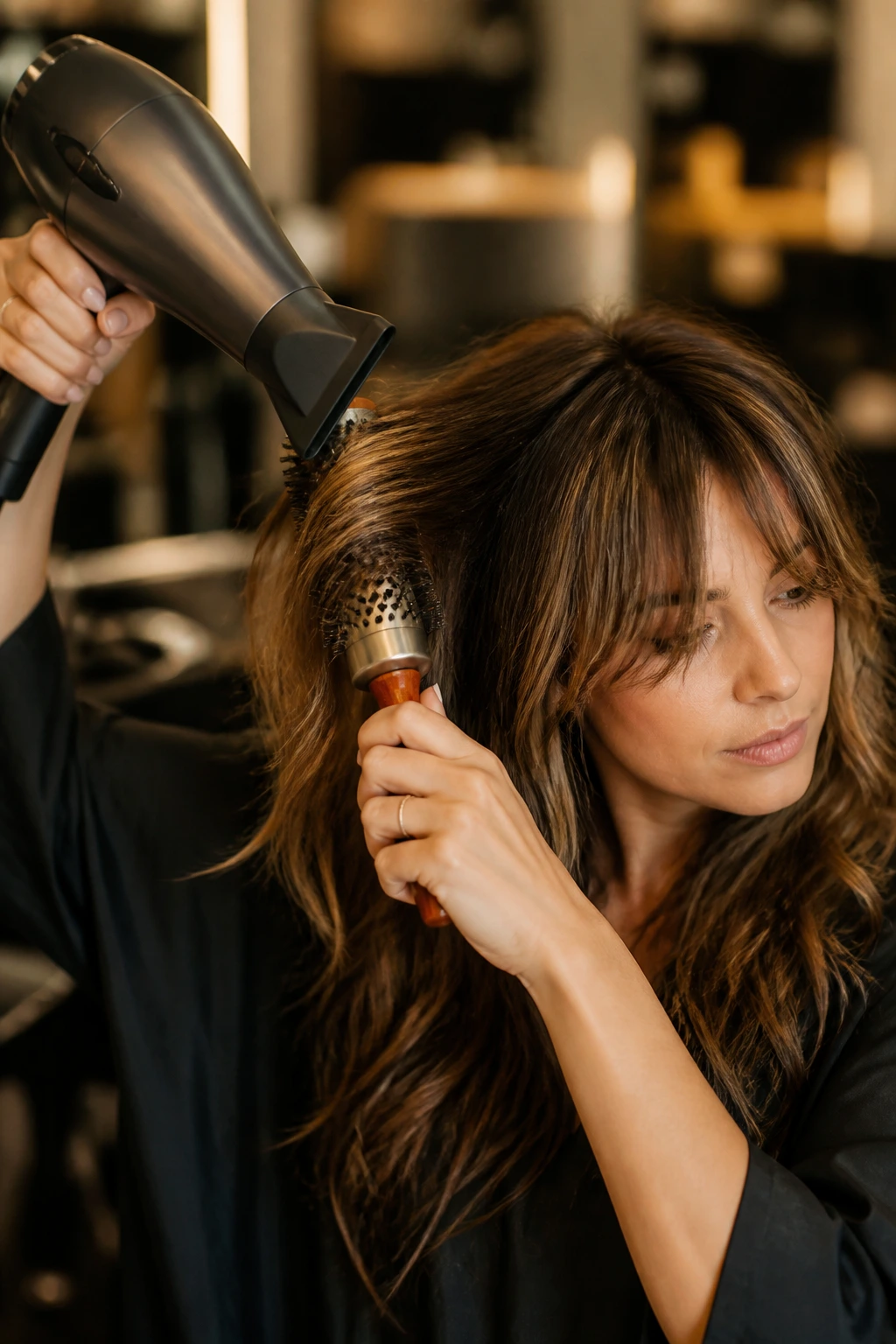
Blow dryer with a nozzle: A nozzle helps direct the crown and front pieces instead of blasting every layer in different directions.
-
Round brush, medium size: Great for lifting the front layers and softening curtain bangs without overcurling the ends.
-
1-inch curling iron or wand: Useful for adding a loose bend to the mids and ends when the shag needs extra definition.
-
Diffuser: The best friend of wavy and curly shags; it keeps the curl pattern from getting flattened by aggressive airflow.
-
Heat protectant spray: Non-negotiable if you use hot tools more than once a week.
-
Lightweight texturizing spray: Adds grip to clean, slippery hair without making it crunchy.
-
Wide-tooth comb: Better than a brush for distributing leave-in product through curls or soft waves.
-
Section clips: Help keep the crown, sides, and back separate when you’re shaping the hair with heat.
How to Choose the Right Shag for Your Hair Type
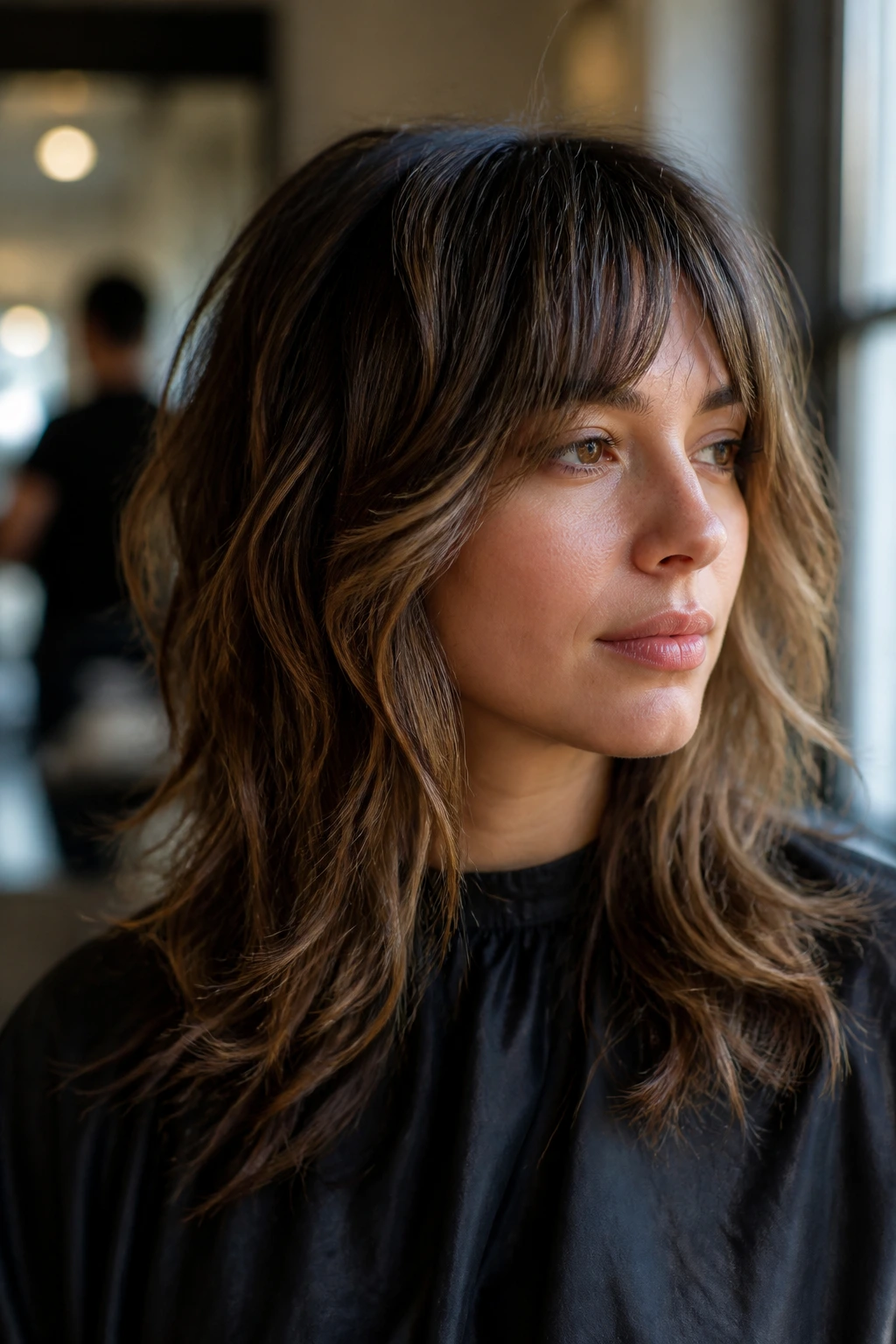
The prettiest shag in a mood board can be the wrong shag in real life. Fine hair usually needs longer layers and less internal removal, because too much texture can leave the ends looking see-through. Thick hair wants smarter weight removal, especially through the interior and around the nape, or else the cut sits like a dense block.
Curly hair needs room for shrinkage. Straight hair needs enough shaping to keep the layers from disappearing. Wavy hair gets the easiest ride of all, which is annoying but true. It often lands right in the middle, where the layers show up without much arm-twisting from styling tools.
Face shape matters less than people think, but fringe placement matters a lot. Curtain bangs soften square or long faces. Bottleneck bangs can narrow a wider forehead without taking over the whole forehead. Heavy fringe makes a strong frame, but it needs regular trims. If you hate that upkeep, don’t pretend you don’t.
Bring two reference photos to the salon: one that shows the front and one that shows the side. Haircuts are silhouettes. A single front-facing selfie can lie to you.
Styling Moves That Keep the Shape Soft, Not Puffy
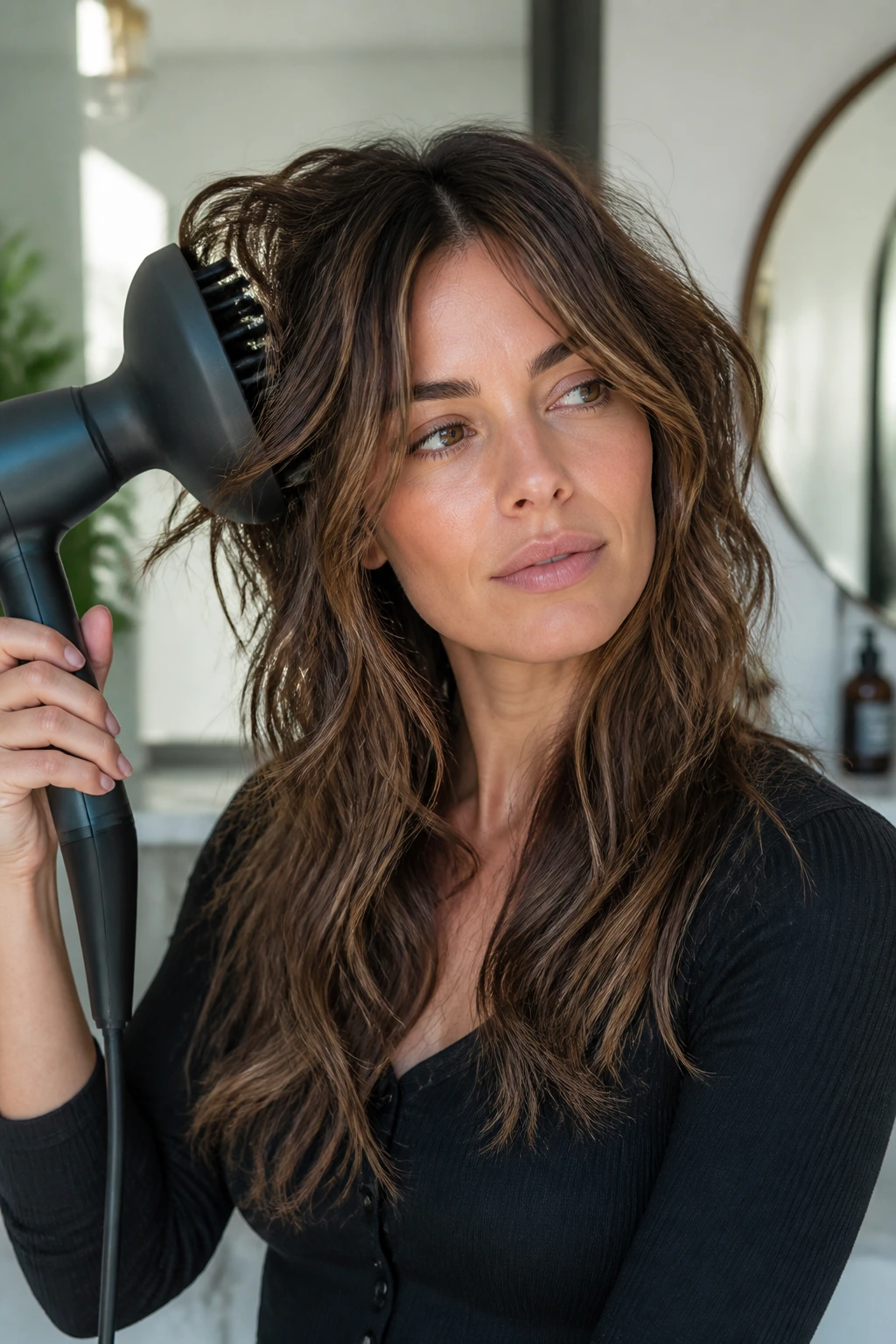
Start with the roots. Long shags go sideways when the crown gets blasted upward and never settles back down. A little root lift is good; a mushroom cloud is not. Use the nozzle on your dryer and direct the airflow down the hair shaft for the mid-lengths, then lift only where you want volume.
Air-dry day: Scrunch in a small amount of cream or foam from mid-length to ends, then leave the roots alone until they’re almost dry. Touching the crown too much while it’s damp creates frizz that doesn’t need to be there.
Blowout day: Wrap the front sections around a medium round brush and pull them away from the face. Let the ends curve, but stop before they turn into pageant hair. The shag should still feel a little broken up.
Tool-light day: Mist the front with water, twist two face-framing pieces away from the face, and let them dry. That tiny move can revive the whole cut.
Common Mistakes That Turn a Shag into a Triangle
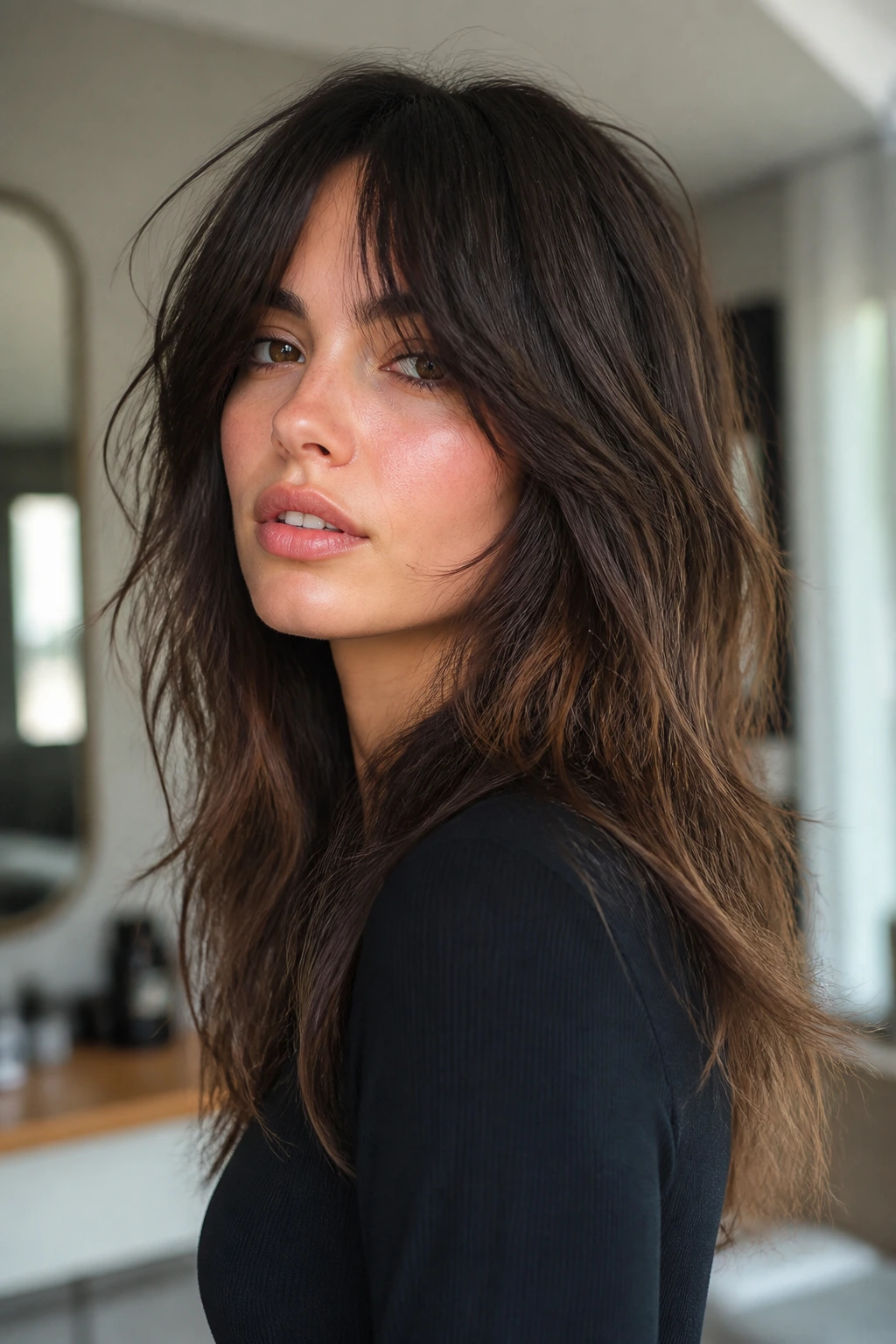
The first mistake is asking for too many short layers at the crown. The symptom is easy to spot: the top looks full and round while the bottom hangs flat. The fix is to keep more weight in the lower lengths and let the movement happen through the sides, not just the top.
Another one is cutting the fringe too short before you’ve seen how your hair sits when it’s dry. Bangs shrink. They also split weirdly if a cowlick lives nearby. Leave enough length to tuck, bend, or side-sweep them while they settle.
People also over-texturize fine hair. It sounds like a good idea until the ends look stringy and tired. Fine strands need shape, not shredding. Thick hair can handle more removal. Fine hair needs restraint.
The last big miss is styling every section the same way. A shag is built on variation. If you curl every layer toward your face in one clean pattern, the haircut loses the messy motion that makes it work.
Named Variations for Different Hair Types
-
The Feathered Fine-Hair Fix: Keep the layers longer and the ends softly beveled. This version preserves density while still giving movement around the face.
-
The Thick-Hair Weight Remover: Add internal layers and a slightly stronger outline at the bottom. It trims bulk without making the hair look thin.
-
The Curly-First Shape: Cut dry, keep the perimeter generous, and let the curls dictate where the layers land. This keeps the haircut from shrinking into a top-heavy puff.
-
The Straight-Hair Bend Shag: Use softer angles and a round-brush finish so the layers show up with movement instead of obvious chunks.
-
The Bang-Free Version: Skip the fringe and start the face framing lower, around the cheekbone or jaw. This works for people who want the shag shape without forehead maintenance.
Maintenance, Grow-Out, and Between-Wash Care
A long shag asks for less upkeep than a precision bob, but it still likes a schedule. If you wear curtain bangs or a heavy fringe, plan on a trim every 3 to 5 weeks just to keep the front from collapsing into your eyes. The rest of the shape can usually wait 8 to 10 weeks before it needs a clean-up.
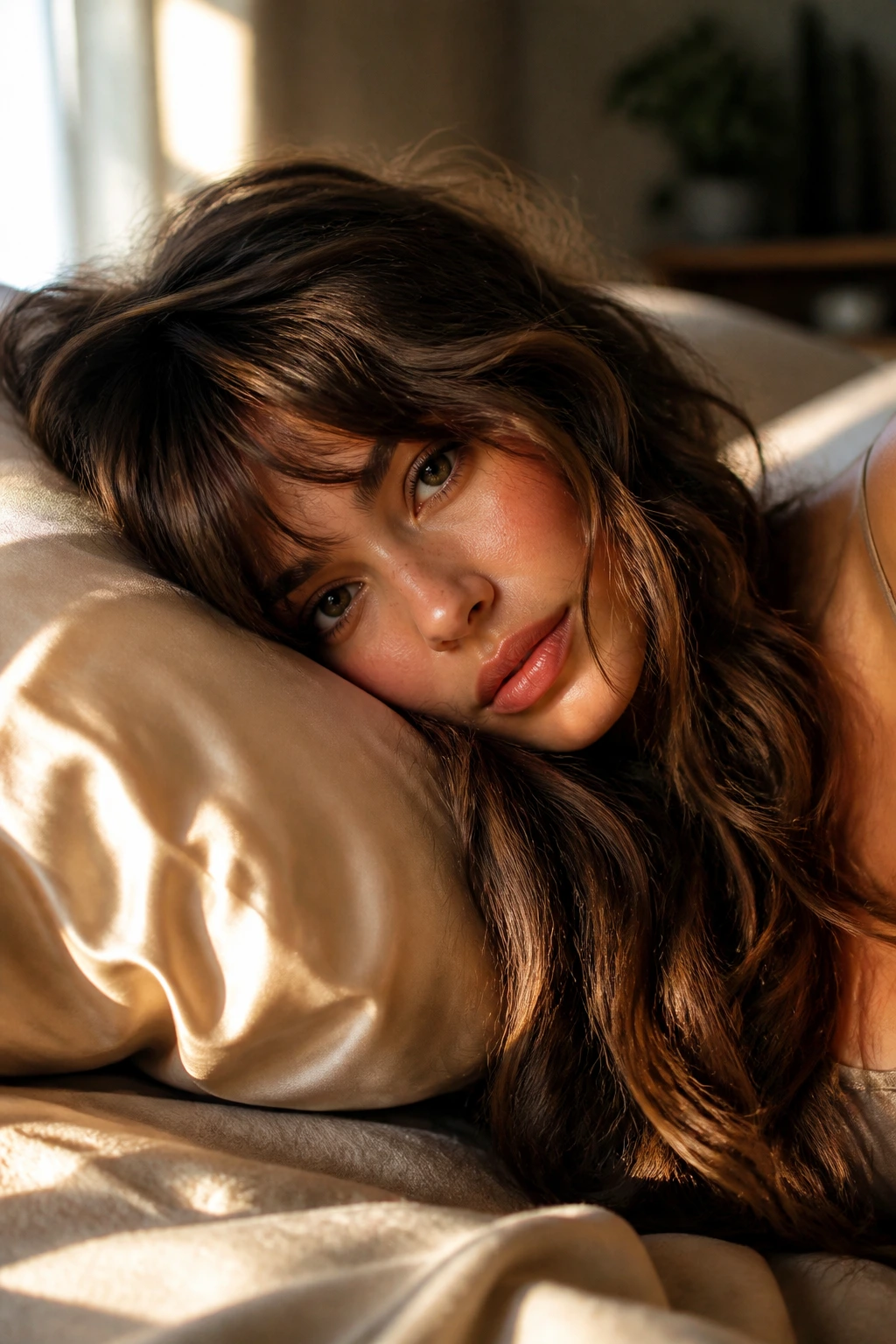
Sleep matters, too. Loose braids work well for wavy and straight hair if you want the layers to stay from tangling into each other. Curly hair usually does better in a loose pineapple or a satin bonnet, because the crown and front pieces need less friction overnight. A silk or satin pillowcase helps either way. Boring advice, yes. Effective, also yes.
Between washes, dry shampoo belongs at the roots, not sprayed down the lengths like confetti. The mid-lengths and ends usually need a mist of leave-in or water more than they need more powder. If the cut starts to feel flat, flip the part, mist the front pieces lightly, and re-bend just the face frame. That one move buys you a whole extra day.
Frequently Asked Questions
Will a shag make my long hair look thinner?
It can, if the layers are cut too aggressively or the ends are already fine. A smart long shag keeps enough weight at the bottom so the hair still reads full, especially in the back and through the perimeter.
Is a shag good for fine hair?
Yes, but it needs a lighter hand. Fine hair usually does better with longer layers, soft face framing, and less texturizing near the ends. Too much removal can make the haircut look wispy instead of airy.
Can I wear a shag if my hair is straight?
Absolutely. Straight hair just needs a little help showing the layers, usually from a blow-dryer, round brush, or a loose bend with a hot tool. Without that, the cut can flatten out and hide the shape.
How often should I trim the bangs?
Curtain bangs usually need a tidy-up every 4 to 6 weeks. Heavy fringe often wants attention sooner, especially if your hair grows fast or your brows sit low.
What if my hair is thick and puffy?
Ask for internal weight removal, not a bunch of short surface layers. Thick hair needs room to collapse inward, not just extra texture on the outside. A strong perimeter helps keep the shape controlled.
Can I grow out a shag without looking awkward?
Yes, if the shortest layers aren’t too short to begin with. A soft, longer shag tends to grow out better than a high-contrast cut because the layers soften instead of sticking out in obvious shelves.
Should I ask for a razor cut or scissors?
That depends on your texture. Razor cutting can soften thick or wavy hair beautifully, but it can make fine or dry hair look ragged if it’s overdone. Scissor shaping is safer if your strands already lack body.
What’s the fastest way to refresh a shag on day two?
Mist the front pieces with water, add a touch of leave-in or light styling cream, and re-bend only the face frame. You do not need to restyle the whole head just because the crown went a little sleepy.
The Cut That Keeps Its Shape
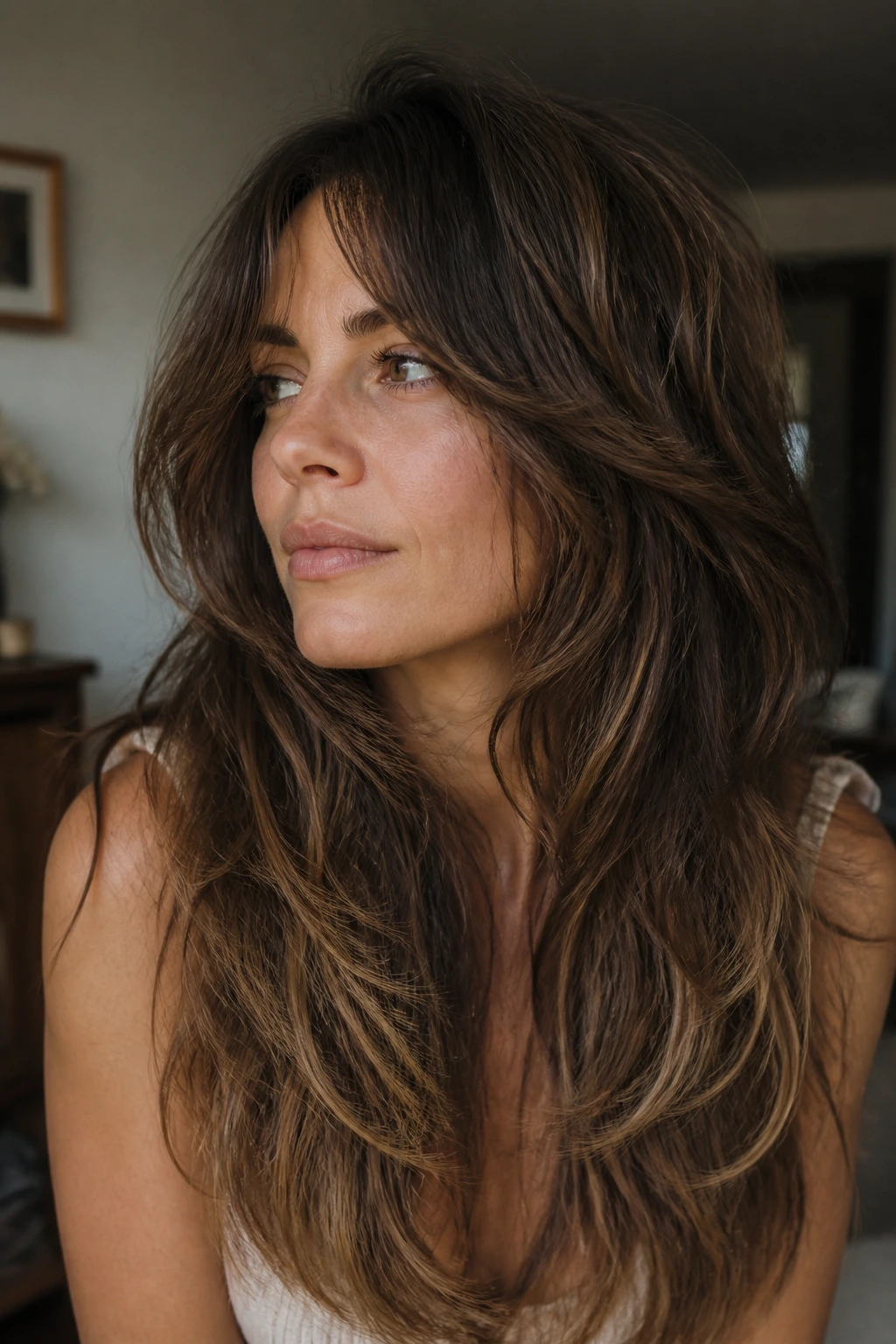
A long shag works when it respects length instead of fighting it. That’s the whole puzzle. The best versions bring movement to the crown, cheekbones, and ends without stealing the heavy, satisfying feel that makes long hair worth keeping in the first place.
Pick the version that matches your texture, your styling patience, and your willingness to deal with bangs. Then make the layers earn their space. A shag that grows out well, bends with your hair, and doesn’t need a full rebuild every morning is the one you’ll reach for again.
