



The fastest way to ruin curly bangs is to cut them like straight hair and hope shrinkage behaves. It won’t. A short shaggy curly haircut with bangs works because the layers and fringe are designed to move together, not sit there like a helmet when the room gets humid. The shape should look a little wild on purpose. That’s the charm.
What I like about these cuts is that they don’t ask curly hair to be something it isn’t. They leave room for bend, spring, and the odd twist that refuses to line up with its neighbors. The best versions keep weight out of the sides, build a little lift at the crown, and let the bangs land somewhere between face-framing and face-defining. Done well, the cut opens up the face. Done badly, you get a shelf of puff over the eyes and a triangle below the ears. Big difference.
And yes, the right shape depends on curl pattern, density, and how much time you want to spend on wash day. A chin-length 2C shag with curtain bangs behaves nothing like a jaw-length 3B wolf cut with a blunt fringe, and anyone who tells you otherwise is selling a fantasy. The good news is that there are a lot of short shaggy curly haircuts with bangs that can work, from soft and wearable to sharp and fashion-forward. The trick is choosing the one that fits your texture instead of fighting it.
Why These Short Shaggy Curly Haircuts With Bangs Work So Well
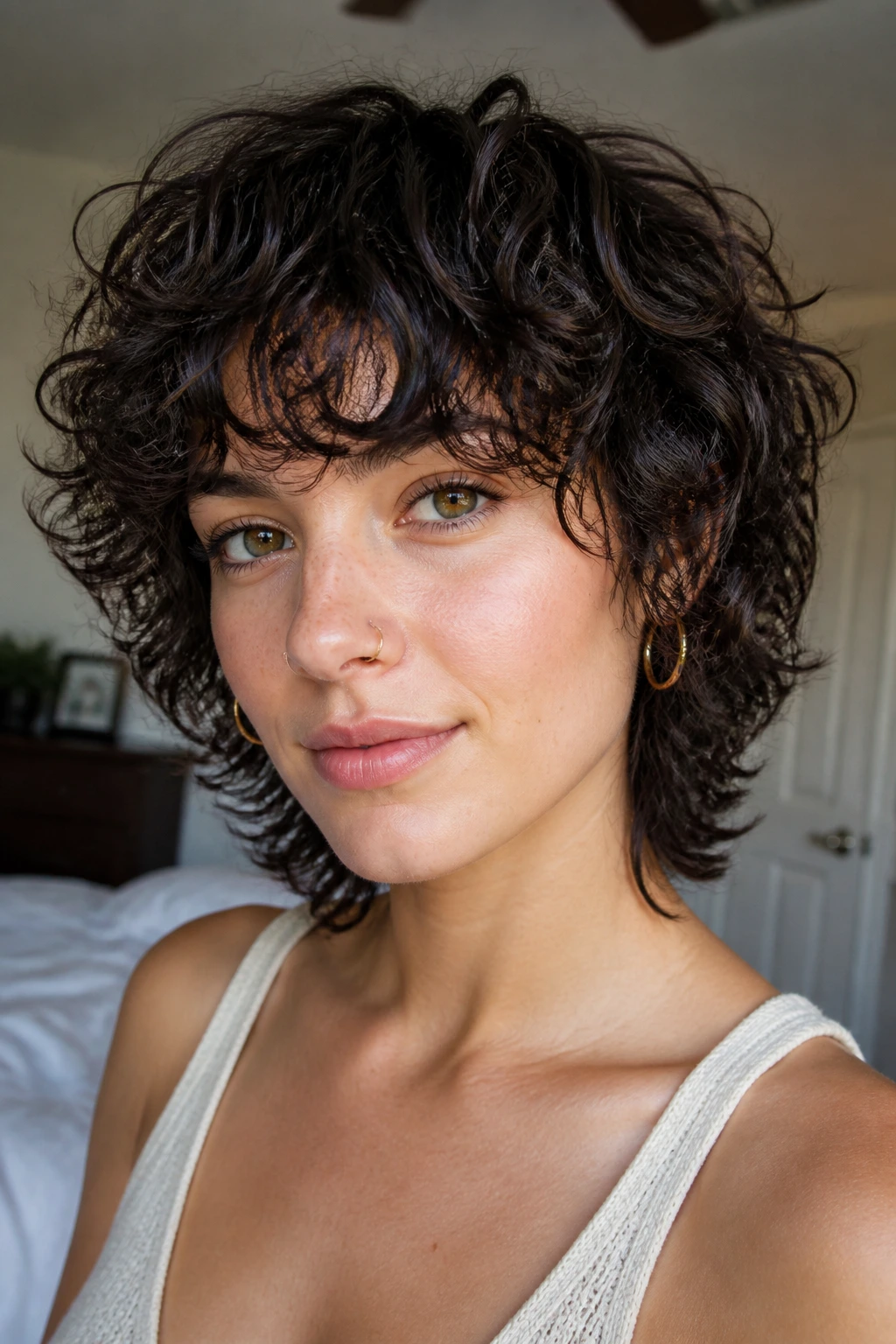
-
The layers stop the triangle effect: Curly hair expands outward when it’s all one length, and shag layers break that perimeter so the shape falls with more movement around the cheeks and jaw.
-
The bangs give the cut a face frame: A fringe pulls the eye up instead of letting all the visual weight sit at the bottom of the haircut, which matters a lot when the length is short.
-
The shape works with shrinkage instead of against it: Short curly cuts need room for bounce, and shaggy layers make that bounce look intentional instead of accidental.
-
You get styling flexibility without adding length: A few inches of length in the front, a tighter nape, and some broken-up fringe can make the same cut read soft, edgy, or polished with a change in product and part.
-
It can be tailored to dense, fine, loose, or tight curls: The cut is not one thing. A good shag borrows the same idea—layers, movement, fringe—and adjusts the weight lines for the curl in front of it.
-
It grows out better than a blunt bob: The whole point of a shag is that the shape softens as it grows, so you’re not stuck with a hard line the minute the salon visit starts aging out.
1. Chin-Length Curly Shag with Curtain Bangs
This is the cut I’d hand to someone who wants shape without drama. The length sits around the chin, which keeps the curls compact, and the curtain bangs split around the center so the forehead never feels boxed in. It’s tidy in motion, not tidy in the boring sense.
Why it works: The chin gives the layers a place to stop, which helps the haircut keep its outline even when the curls spring up after drying. Curtain bangs are forgiving here because they can start shorter in the middle and drift longer at the temples, so the face gets a soft frame instead of a blunt wall. On medium-density curls, this shape keeps the sides from puffing out like a mushroom.
If your curls are loose, this version can feel airy and polished. If your curls are tighter, it gets a little more sculptural, which is a good thing when the goal is a clean shape that still moves. Ask for internal layers that remove bulk under the top layer, not just random snips at the ends. That detail matters.
2. Pixie Shag with Cropped Bangs
This one has edge. Not fake edge. Real edge. The sides stay short, the crown keeps some lift, and the cropped bangs sit above the brows so the curl pattern can do its own thing without getting trapped under too much length.
What makes it different: A pixie shag depends on texture more than length, so the haircut reads best when the curls are active and the bang line is cut with shrinkage in mind. If the fringe is trimmed too short when wet, it can end up hovering halfway to the hairline. That’s not a vibe; that’s a warning. The cut looks strongest on dense curls that can support a shorter outline without going flat.
I like this version for people who hate hair hanging in their eyes and do not want to spend ten minutes fixing a bang every morning. You can diffuse it with a little root lift at the front, or you can let it air-dry and break the curls apart with oiled fingers once it’s fully dry. The result should feel slightly rebellious, not messy by accident.
3. Rounded Curly Bob Shag with Side-Swept Fringe
A rounded shag bob is one of the safest ways to wear curly bangs without losing softness. The silhouette curves inward a bit at the bottom, and the side-swept fringe gives the front movement without demanding a dead-straight line across the forehead. Easy on the eyes. Easy to live with.
The side sweep matters because it lets the curl clump decide where it wants to fall. That means less fighting, fewer weird gaps, and less time spent staring at a mirror trying to “fix” a part that probably doesn’t need fixing. This version is especially good if one side of your curls is looser or heavier than the other. The sweep hides the mismatch.
A rounded bob shag also wears well with glasses. The fringe can skim above or around the frames instead of colliding with them in a hard line. If you want balance, not drama, this is one of the cleaner choices in the whole group.
4. Wolf-Style Curly Shag with Full Bangs
This is the loud one. The wolf-style shag keeps more length in the back, layers heavily through the crown, and uses a fuller bang line to give the haircut a strong front edge. It’s not subtle, and that’s the point.
Why it works: Curly hair can carry a wolf shape better than straight hair because the natural bend keeps the cut from looking too stiff. The top needs enough internal removal so it doesn’t sit heavy, but the bang line should stay thick enough to hold its own against the rest of the hair. If the fringe is too thin, the whole front collapses. If it’s too blunt, the cut can feel boxy. There’s a narrow middle ground, and that’s where this haircut lives.
This shape suits dense curls that like volume and don’t mind a little attitude. It also gives a nice lift at the crown, which is helpful if your hair tends to lie flat on top and puff at the sides. The back should taper enough to keep the neckline visible, or the whole thing loses its shape fast.
5. Tapered Shag with Wispy Bangs
Want something lighter? This is the airy option. The taper pulls the ends in slightly, especially around the nape, and the wispy bangs soften the forehead without taking over the whole face. It feels like the haircut took a deep breath.
Why it works: Wispy bangs are useful on curls because they don’t need every strand to sit in the same place. You get a little see-through movement at the front, which helps if your curls are springy and unpredictable. The taper also keeps the lower half from ballooning, so the silhouette stays leaner than a classic shag bob.
This cut suits people who want a short curly style but don’t want the front to feel heavy. It’s also a good bridge if you’re nervous about committing to a full fringe. The bangs can be nudged to one side, split down the middle, or allowed to clump naturally. That kind of flexibility is rare in short cuts. Here, it’s the whole point.
6. Collarbone Shag with Bottleneck Bangs
This version sits right in the useful middle ground. It’s short enough to feel fresh, long enough to tuck behind the ears, and the bottleneck bangs give you that soft center-short, side-long shape that flatters a lot of face shapes without looking fussy.
Bottleneck bangs matter because they don’t demand a hard edge. The center sits higher, often around the brows, while the sides fall into the cheekbones. On curls, that shape lets the front breathe. It doesn’t choke the forehead the way a straight fringe can, and it doesn’t disappear into the rest of the haircut.
I’d choose this if you want a shag that still behaves at the office, on a school run, or anywhere else where “I woke up like this” is not quite the right phrase. It gives the whole haircut a quieter finish than a wolf cut, but it still keeps the front interesting. And yes, the collarbone length is a nice safety net if you’re growing out from something shorter.
7. French-Girl Curly Shag with Brow-Grazing Fringe
This one leans romantic, but not in a precious way. The layers are soft, the fringe brushes the brows, and the whole cut seems to fall into place with less effort than it actually takes. The charm is in the looseness.
The brow-grazing fringe is the part to watch. On curly hair, that length can shift from “just touching the brows” to “gone” once the curls dry. A good stylist will leave enough length to account for shrinkage, then shape the ends so they land unevenly in a way that looks intentional. That unevenness is important. Perfect lines look wrong here.
This cut is especially nice if you like a little softness around the eyes. It plays well with air-drying, side parts, and a light gel cast you can scrunch out once the curls are fully dry. The finished shape should feel a little undone, but never sloppy. That’s a fine line, and this cut walks it well.
8. Rezo-Inspired Curly Shag with Long Bangs
A Rezo-inspired cut is about balancing the curl map, not chopping straight across the head and hoping for the best. In a short shag version, that means the long bangs blend into the front layers so the fringe feels like part of the haircut instead of a separate piece sitting on top of it.
What makes it different: The front stays long enough to move with the side layers, which helps keep the outline even when different curls dry at different speeds. That’s useful if your texture changes across the head—tighter near the crown, looser at the temples, or any other little curl quirk that refuses to behave. The long bang pieces can be pinned back, parted center, or worn forward depending on the day.
This is the cut for people who want shape first and fringe second. It gives you both, but it doesn’t insist on making the bangs the main event. If you’ve ever hated a bang section that looked pasted on, this is the fix. The cut should feel integrated, not staged.
9. Jaw-Length Curly Shag with Micro Bangs
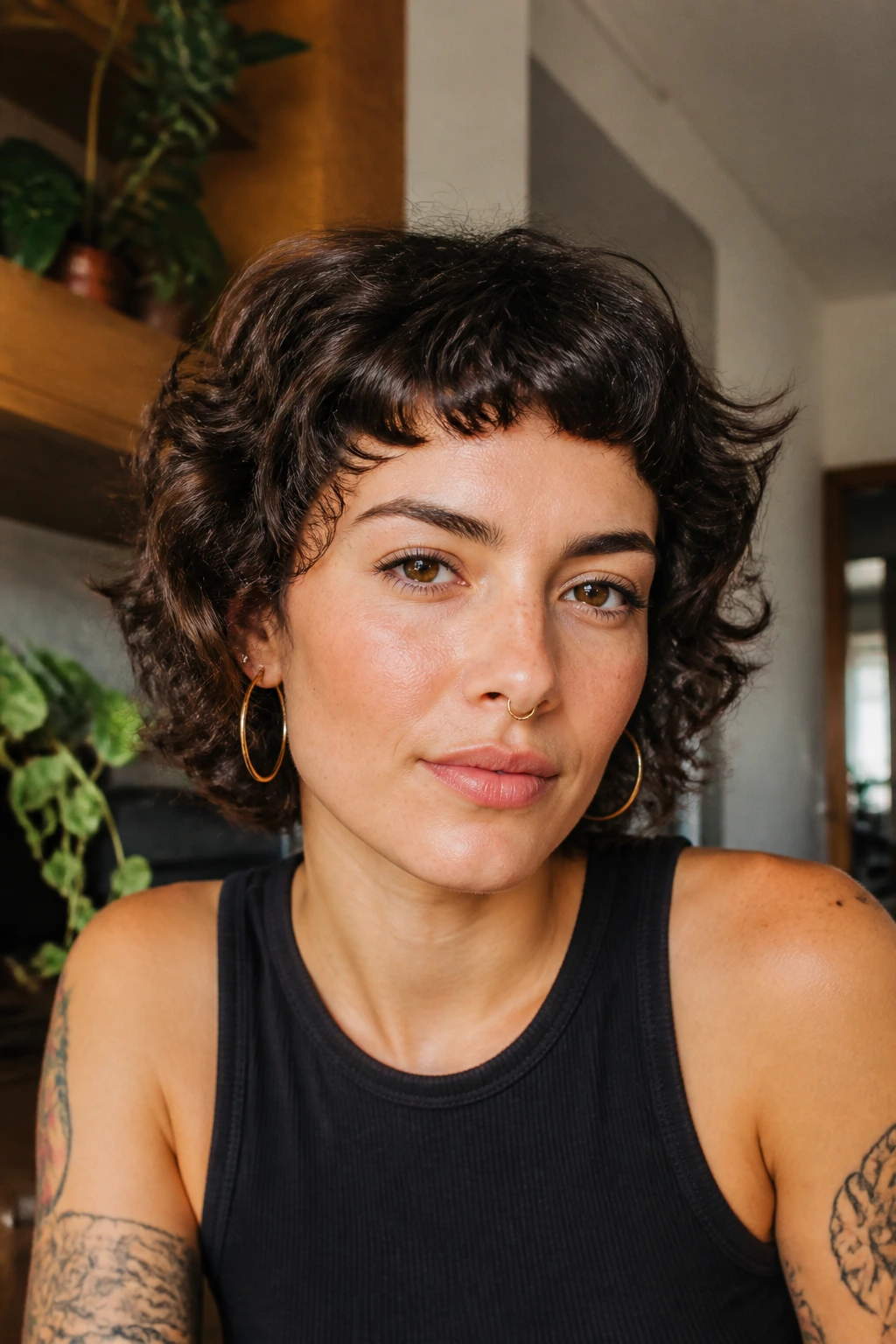
Micro bangs on curls are not for the shy. They are sharp, graphic, and slightly mischievous, which is exactly why they can look so good when the rest of the haircut is kept soft and shaggy. The jaw-length outline gives the face a frame, and the tiny fringe adds the punch.
The risk, obviously, is shrinkage. Micro bangs should be cut with a clear understanding of how much the curl springs up when dry. If the hair is very tight or very springy, the bang line needs to start longer than you think. If the curls are looser and more ribbon-like, the cut can stay closer to the brow. Either way, this is a style that needs regular trims to stay sharp.
I like this look on people with strong brows, glasses, or a taste for clothing that already does some heavy lifting. It works because the cut itself is doing character work. There’s no hiding behind it.
10. Asymmetrical Curly Shag with Side-Part Fringe

An asymmetrical shag is a neat fix for curls that never match perfectly from left to right. One side sits a touch longer, the part is pushed off-center, and the fringe sweeps across the forehead instead of dividing the face down the middle. It’s one of those cuts that turns an annoyance into a feature.
Why it works: Curly hair rarely dries evenly, and a side-part fringe lets the stronger curl side carry more of the visual weight. That keeps the haircut from looking lopsided in the bad way. It looks chosen. The layers should still be short enough to build lift near the cheekbones, but the off-center part makes the silhouette feel more dynamic.
This cut is a good move if you’ve got one flatter side, one springier side, or a growth pattern that pushes your bangs in a weird direction. Instead of fighting the bend, you steer with it. Small detail, big payoff. The shape stays interesting even on low-styling days.
11. Razor-Cut Curly Shag with Feathered Bangs
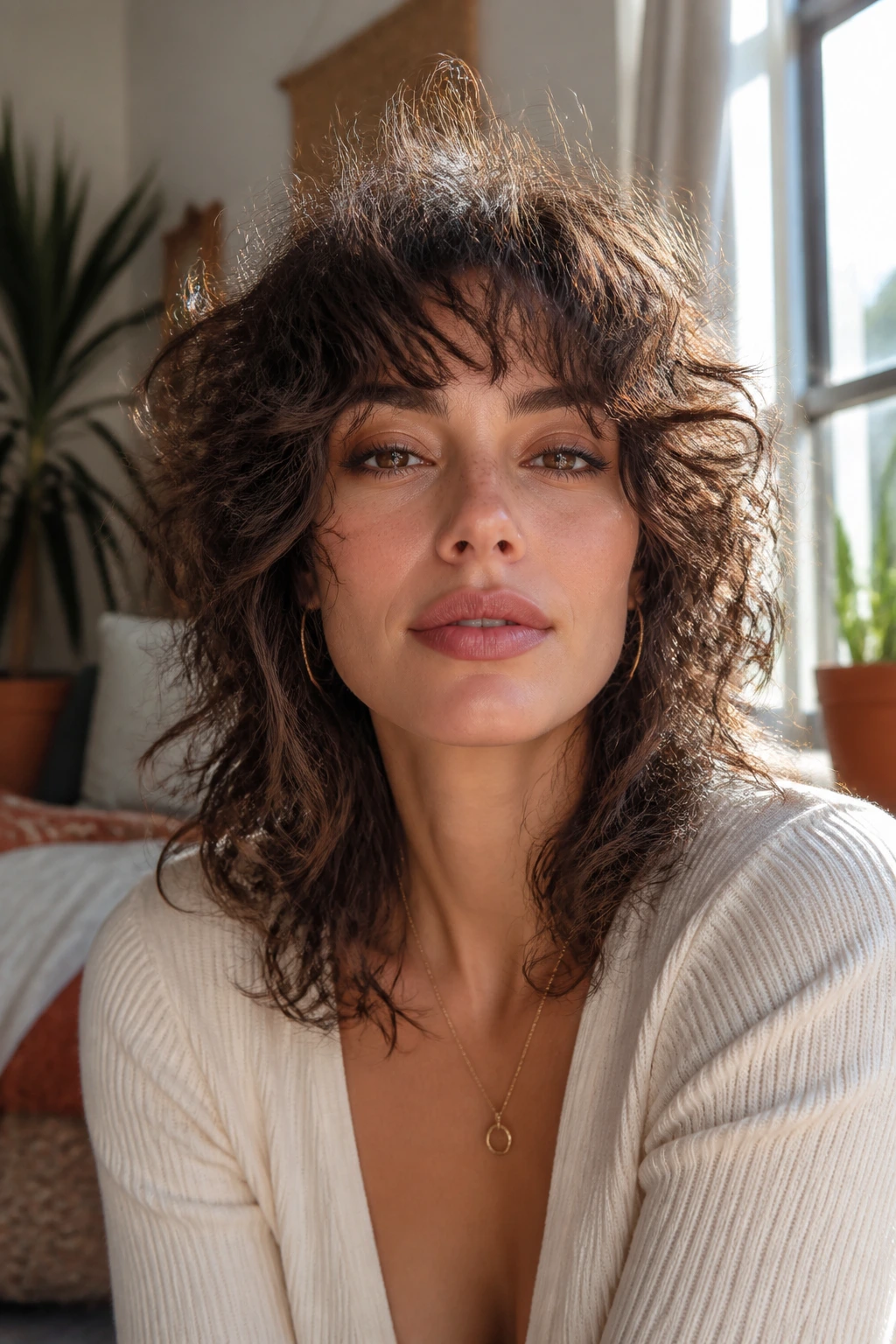
A razor cut can make curly ends look soft and feathery, but only if the person holding the razor knows how curls behave. That’s the honest version. On the right texture, though, a razor-cut shag gives the haircut a loose, almost airy finish, and the feathered bangs melt into the front layers instead of stopping dead.
The reason this works is simple: the razor removes weight in a way that can make curls separate a little more at the ends. That’s useful for thick, dense hair that tends to bunch. It’s less kind to coarse curls that frizz at the slightest provocation, so this one depends on hair type. If your curl pattern likes softness and clumps naturally, great. If not, ask for point cutting instead of full razor work.
This version feels best when the goal is movement. Not volume for volume’s sake. Movement. It’s the haircut equivalent of a shirt sleeve that rolls up on its own and somehow looks better that way.
12. Short Mullet Shag with Textured Bangs
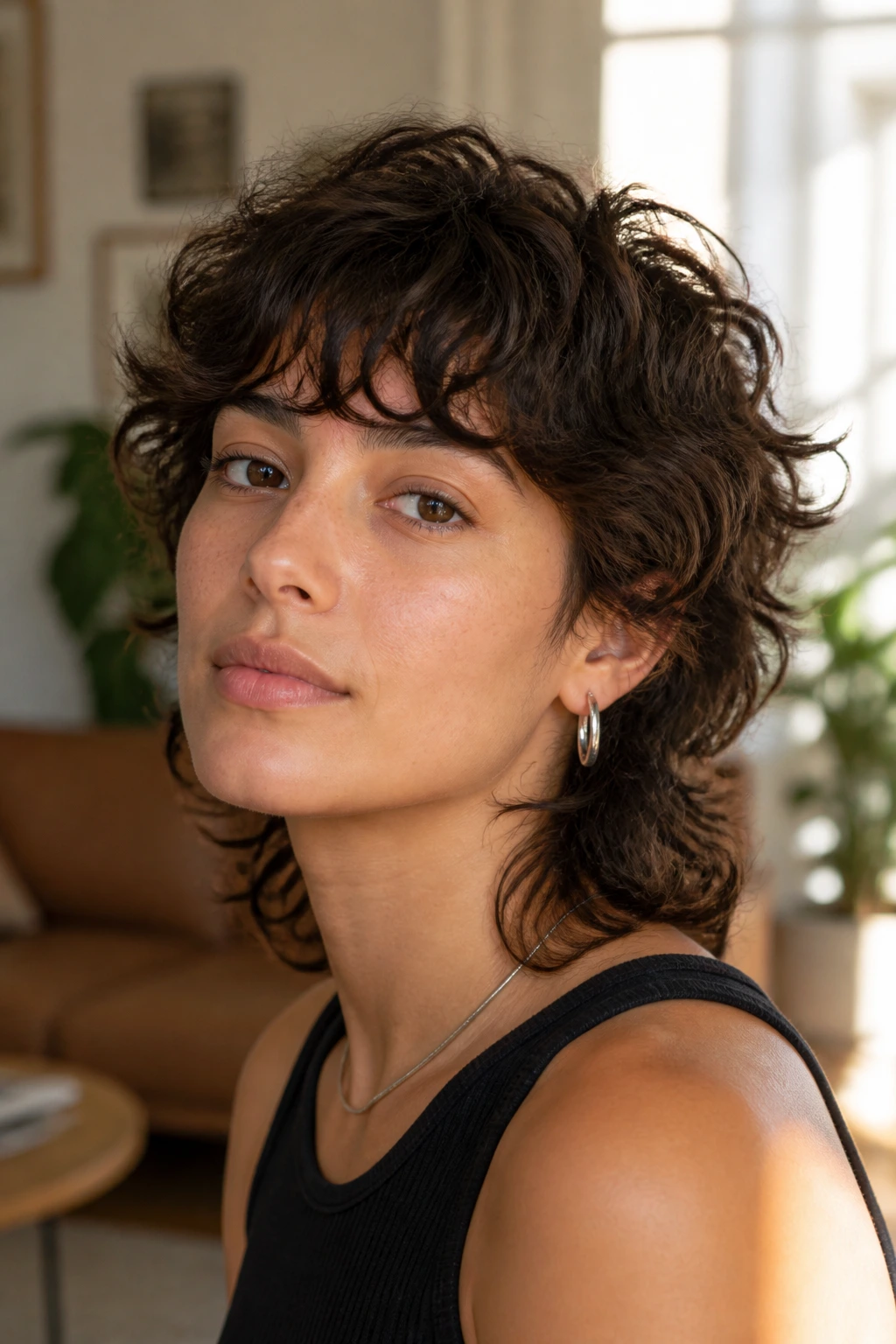
This is the cut for people who want the back to have a little more length and the front to stay lively. The short mullet shag doesn’t apologize for being strange, which is exactly why it looks so good when the texture is curly. The back gives you a tail of length, while the top and sides stay shaggy and broken up.
Textured bangs are the right match here because a solid fringe would be too stiff. You want pieces. You want a bit of visible forehead. You want the front to feel like it belongs to the rest of the cut, not like someone added bangs as an afterthought. If the curls are thick, the bang section needs careful removal of weight so it doesn’t turn into a curtain that swallows the eyes.
It’s a sharp look with a lot of personality. Not everyone wants that. Those who do usually know it fast.
13. Soft Mushroom Shag with Rounded Bangs

A soft mushroom shag can sound a little odd until you see it on curly hair. Then it clicks. The roundness around the head keeps the silhouette compact, while the shag layers stop it from looking like a helmet. Rounded bangs echo the shape without making it stiff.
The key is softness. If the perimeter is too blunt, the style can turn rigid fast. Curly texture helps here because it naturally breaks up the line. Rounded bangs should sit across the forehead with enough movement to avoid that old-school bowl-cut feel. The ends need to be slightly shattered, not carved into a hard shelf.
I’d choose this if you like structured shape but not severe lines. It’s a little retro, a little artsy, and it keeps the head shape neat without flattening the curl pattern. It’s one of the more underrated options in the whole group.
14. Ear-Length Shag with Peekaboo Bangs
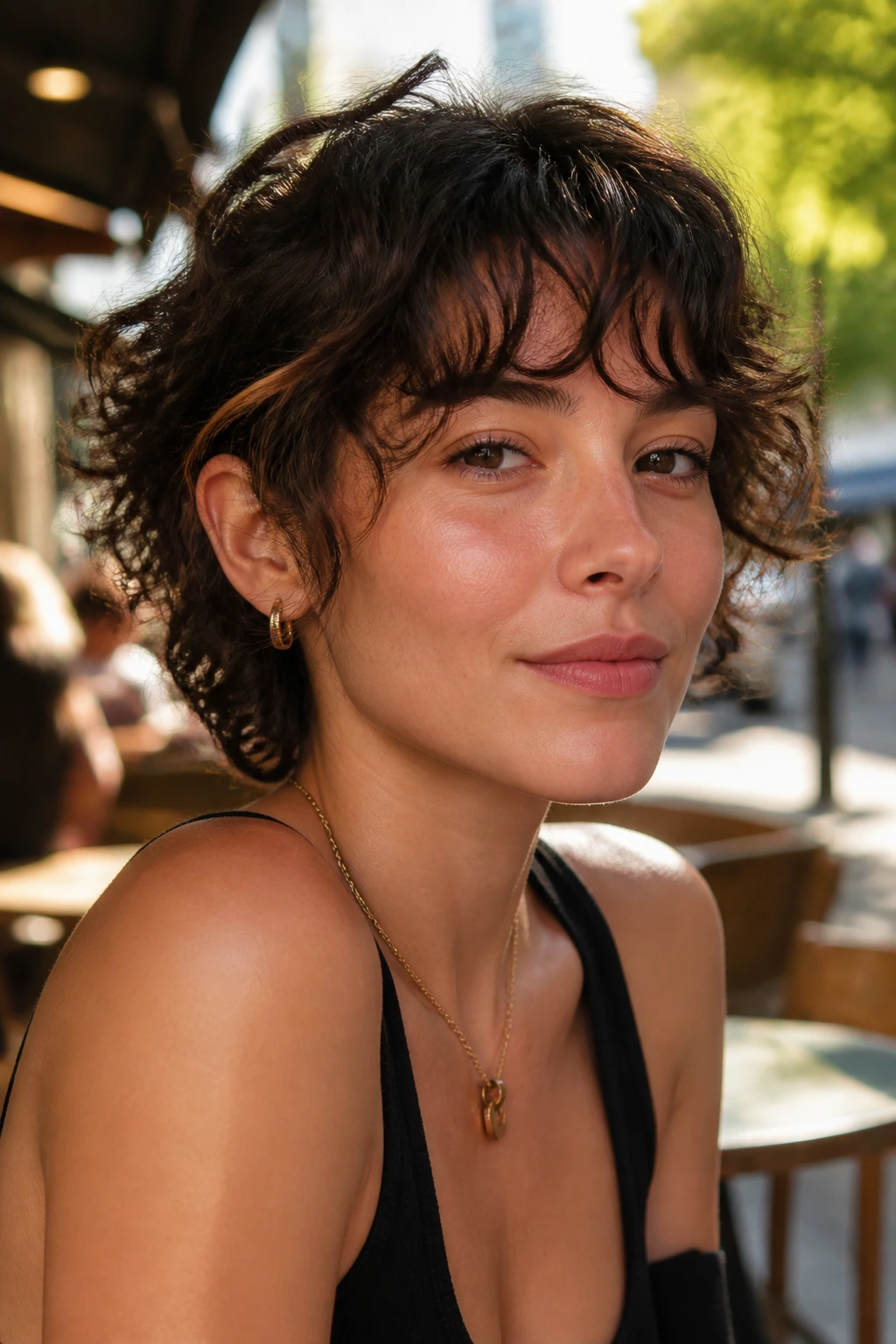
Shorter than most people expect, this cut leaves the ears partly visible and uses peekaboo bangs to keep the face from feeling closed in. The fringe slips in and out of the curls, which gives the haircut a playful, almost mischievous motion.
The ear-length shape is practical if your curls are dense and you want less bulk around the jaw. It also works if you like earrings, glasses, or anything else that gets crowded by longer side pieces. The bangs should be long enough to hide and reveal the forehead, not so short that they fight the curl pattern every morning.
This is one of those cuts that looks best when it’s not over-managed. Finger-dry, diffuse lightly, then leave it alone. Seriously. The charm is in the little surprises: a curl landing over one brow, another curving away from the temple, the side pieces tucking behind the ear on their own.
15. Curly Shag Bob with Piecey Bangs
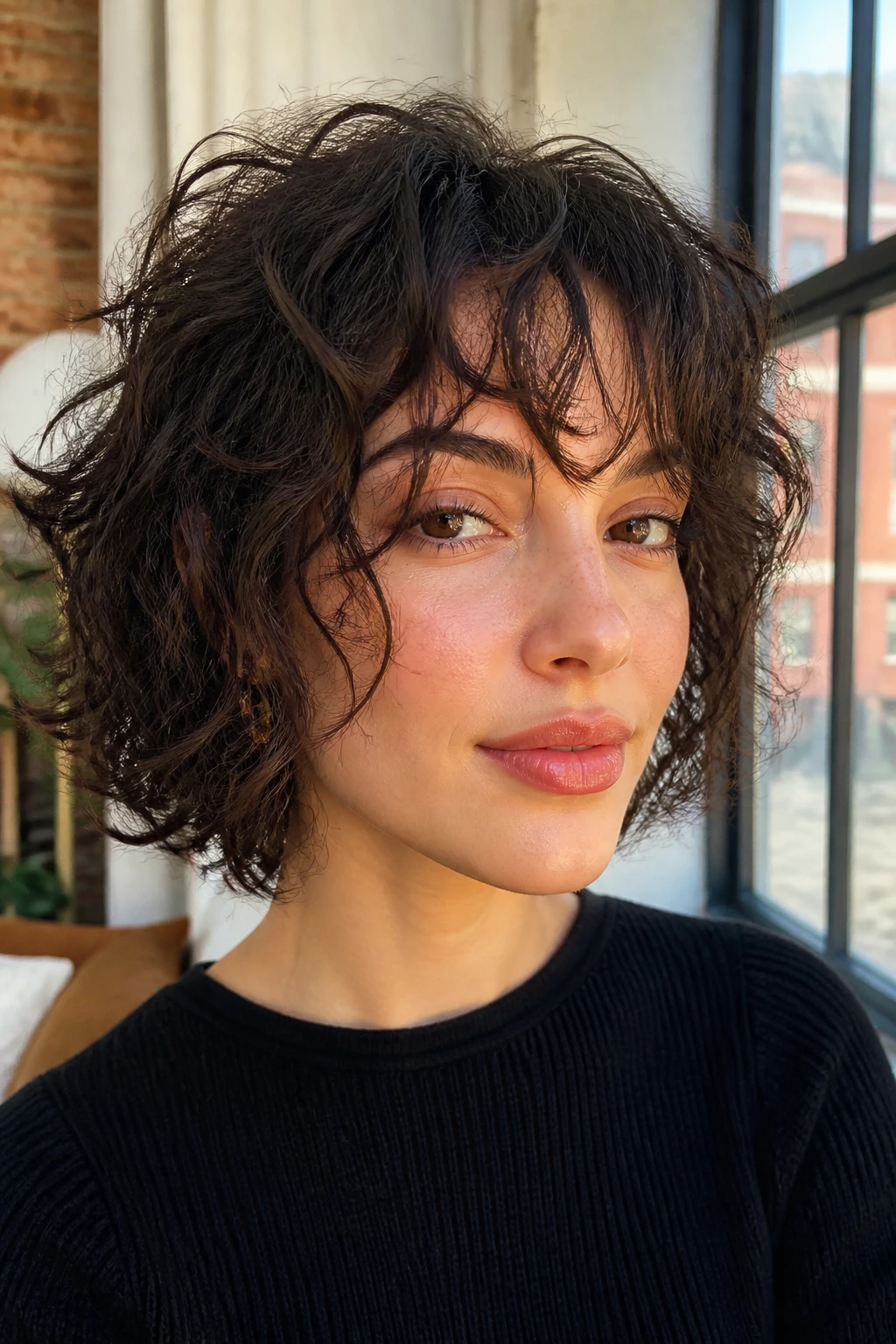
A piecey bang makes a huge difference on curly hair because it stops the front from turning into a single heavy curtain. In a shag bob, those separated bang pieces echo the layers through the rest of the haircut, so the whole shape feels deliberate rather than chopped apart.
This cut sits close to the head without going flat. That balance is the work. The bob length keeps it tidy, the shag layers keep it moving, and the bang pieces keep the forehead visible in spots. It’s a strong choice for someone who wants definition around the eyes but doesn’t want full bangs to commit to the whole face.
On finer curls, piecey bangs can add the illusion of more hair without needing extra bulk. On dense curls, they lighten the front enough to keep the cut from feeling heavy. A small amount of curl cream and a touch of gel usually goes farther here than people expect.
16. Indie Curl Shag with Heavy Eyebrow Bangs
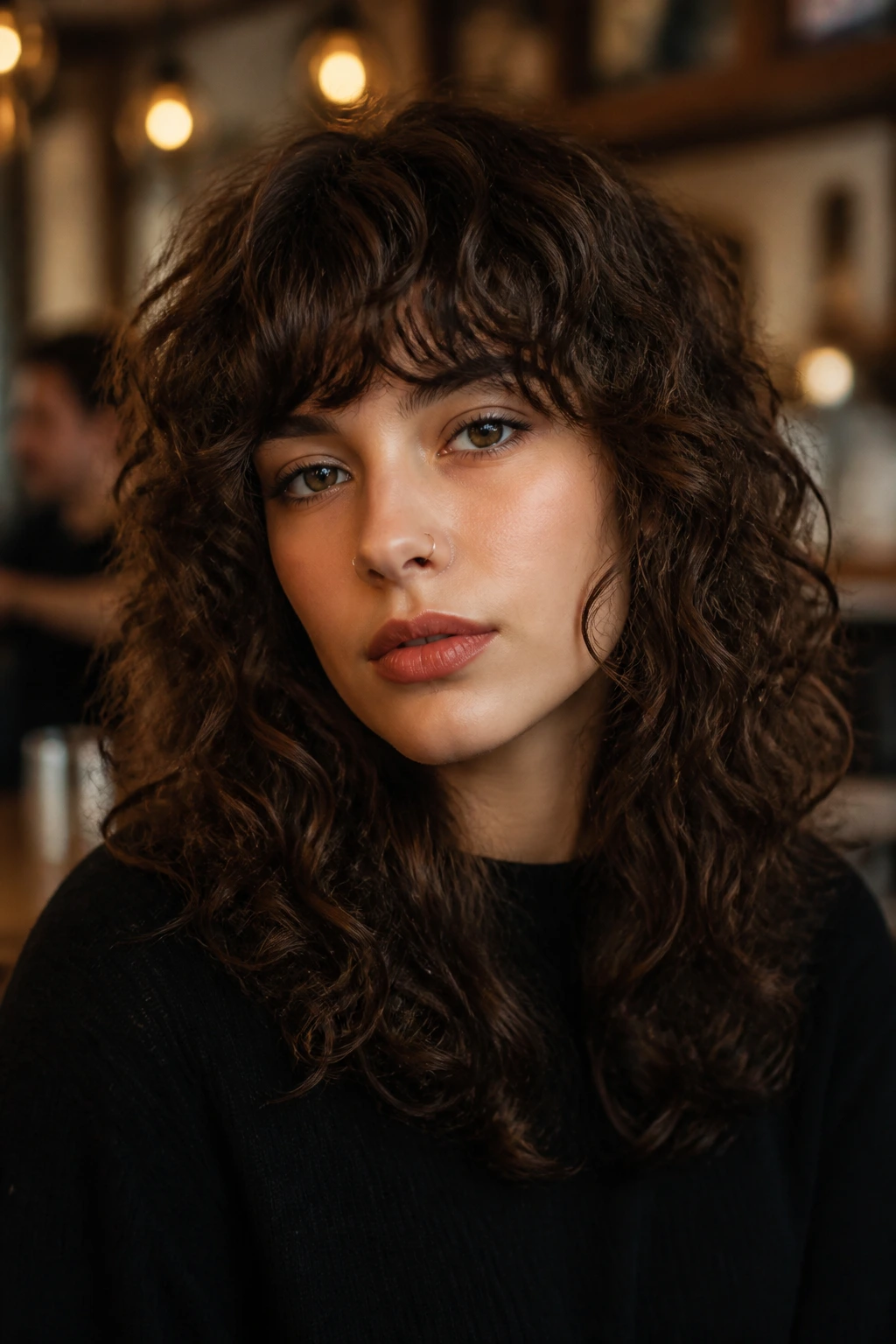
Heavy eyebrow bangs are the opposite of shy. They land near the brows, hold a decent amount of weight, and make the haircut feel grounded. Paired with a shag, they create that indie, slightly cool, slightly unbothered look that always seems to start conversations.
The bang section needs enough density to hold together, which means this works better on medium to thick curls. If the hair is too fine, the bangs can separate too fast and lose the strong line that makes them interesting. The layers through the sides should still be soft, or the front will overpower the rest of the cut.
I like this shape with dark frames, bold lipstick, or clothes that already have some structure. It has presence. A lot of presence. If you want a haircut that can carry the room without becoming a full costume, this is one of the stronger choices.
17. Tapered Crop Shag with Curly Fringe
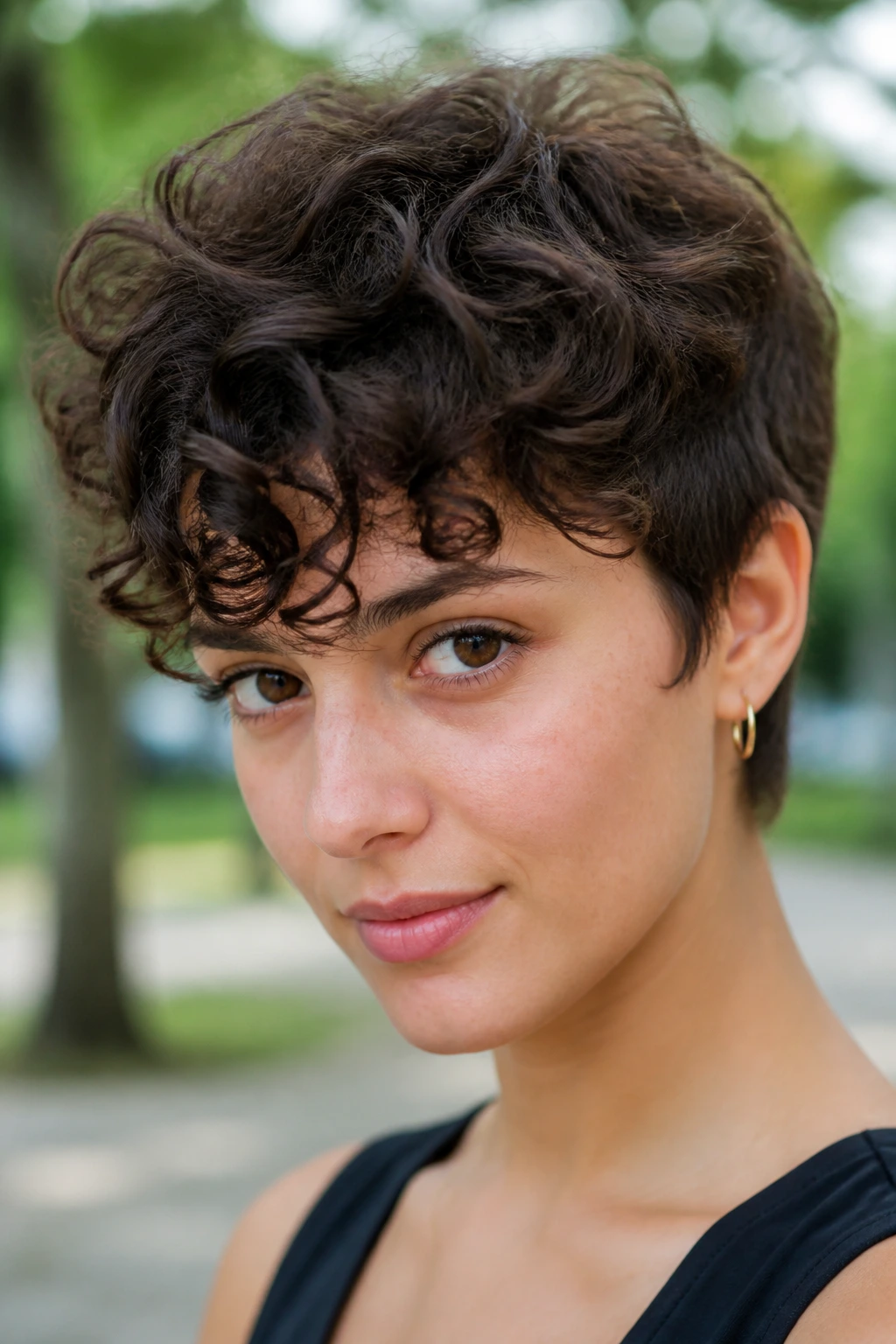
This is the short, practical cousin in the family. The sides and back taper in, the top stays textured, and the curly fringe drops forward without becoming a heavy slab across the forehead. It keeps the cut close to the head and still lets the curl pattern be visible.
That taper matters because it stops the silhouette from widening too much at the bottom. Curly crops can get bulky fast if the sides are left too full, so the shape needs internal removal and a slightly narrower outline near the nape. The fringe should be short enough to feel modern but long enough to bounce when dry. If you cut it too close, you’ll be babysitting it.
This one is excellent for hot weather, active days, or anyone who wants a cut that dries quickly. It can be styled in under ten minutes with a small diffuser and a pea-sized amount of product. Not glamorous. Practical. Which, honestly, is a kind of glamour.
18. Neck-Length Shag with Swoopy Bangs
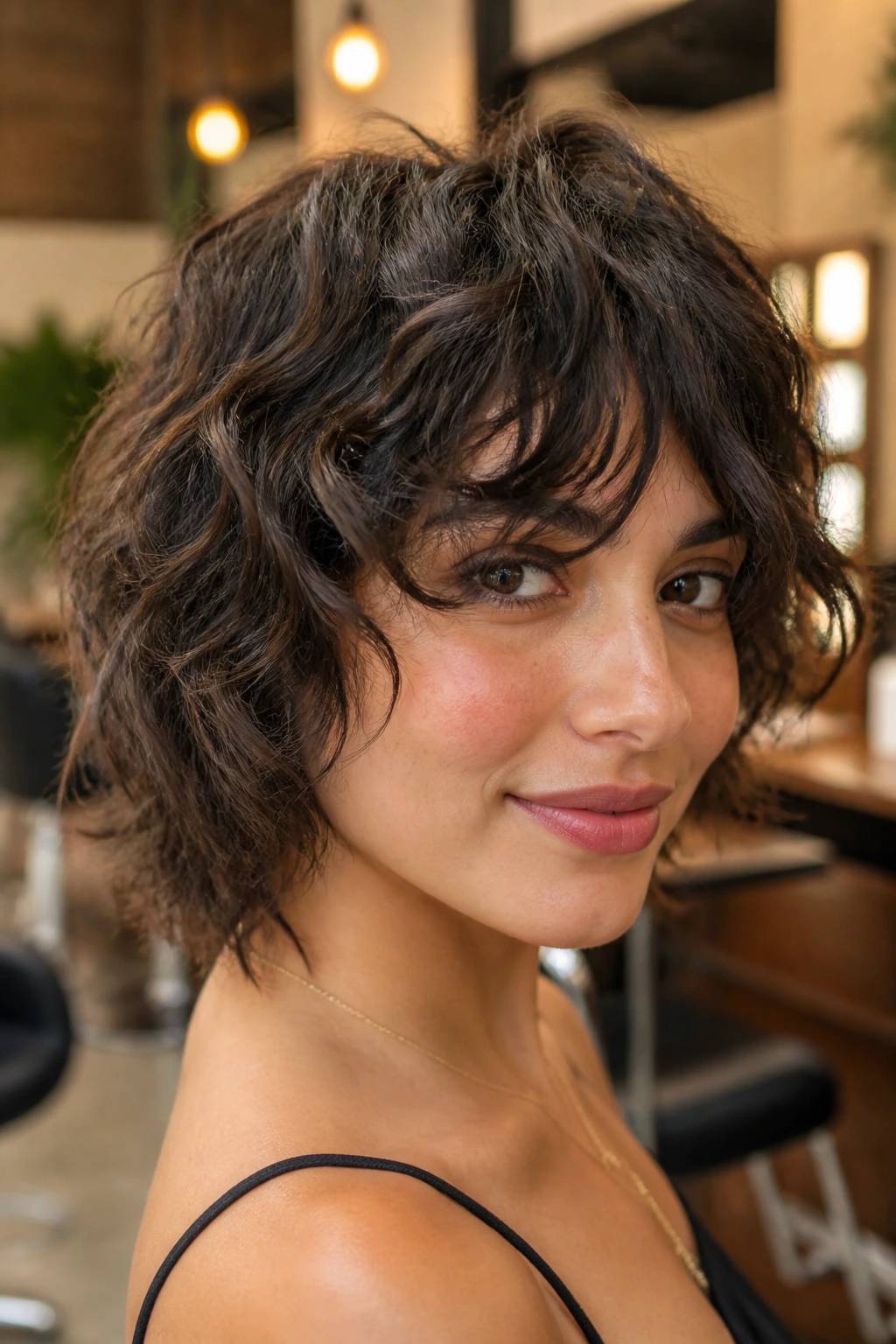
Neck-length is where a shag starts to feel especially wearable. The hair is short enough to stay lively, but there’s enough length to swing when you turn your head. Add swoopy bangs, and the whole haircut gets a softer, more directional front.
Swoopy bangs work because they don’t force the curls to sit symmetrically. One side can stay longer and slide into the cheekbone, while the other side lifts a little. That asymmetry gives the cut motion even when the rest of the hair is behaving. It also flatters people who don’t love a straight-across fringe but still want something more visible than curtain bangs.
This shape is a nice transition cut if you’re growing out a pixie, or if you want short hair that still feels easy to tuck behind the ears. The neckline matters here, so ask for a clean taper at the back. A shag with a messy nape looks unfinished. A shag with a neat nape looks intentional.
19. Layered Pixie-Bob Shag with Bangs
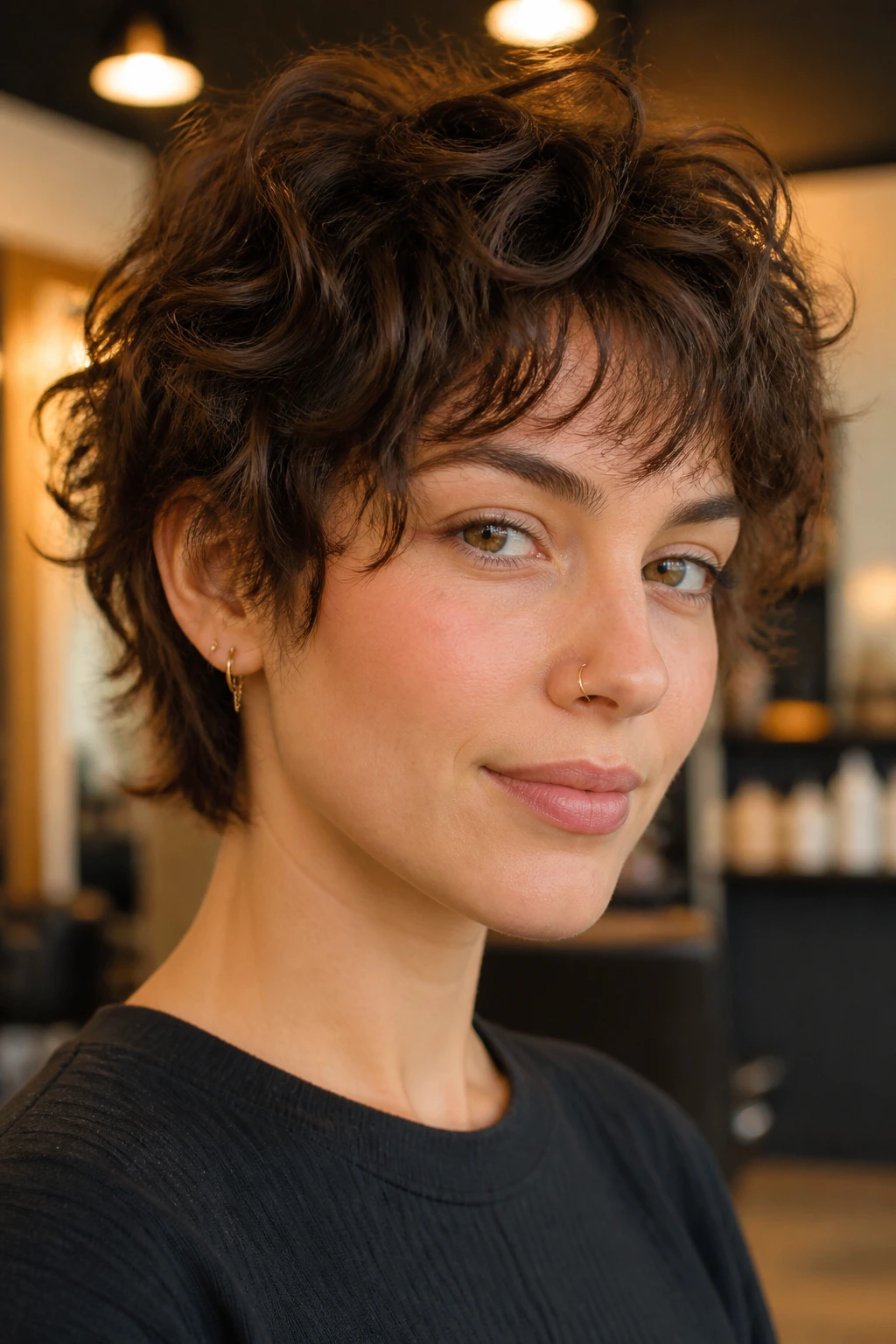
A pixie-bob shag sits right between cropped and bobbed, which makes it one of the most flexible short curly cuts on the list. The back stays short enough to keep the weight off the neck, while the front and sides hang a little longer for shape. It gives you room to play.
The bang section can go in several directions here—soft fringe, side sweep, or a short curtain shape—but the main thing is keeping the layers connected. If the top is too disconnected from the sides, the cut can look split into two hairstyles. Nobody wants that. The best version has a seamless transition from crown to temple to fringe, with enough movement that the curl clumps read as part of one shape.
This is a strong pick if you want short hair but not a super-short silhouette. It’s easy to refresh with a mist bottle and a bit of mousse on the front pieces. And yes, it grows out nicely, which matters more than people admit.
20. Freeform Curly Shag with Soft Fringe
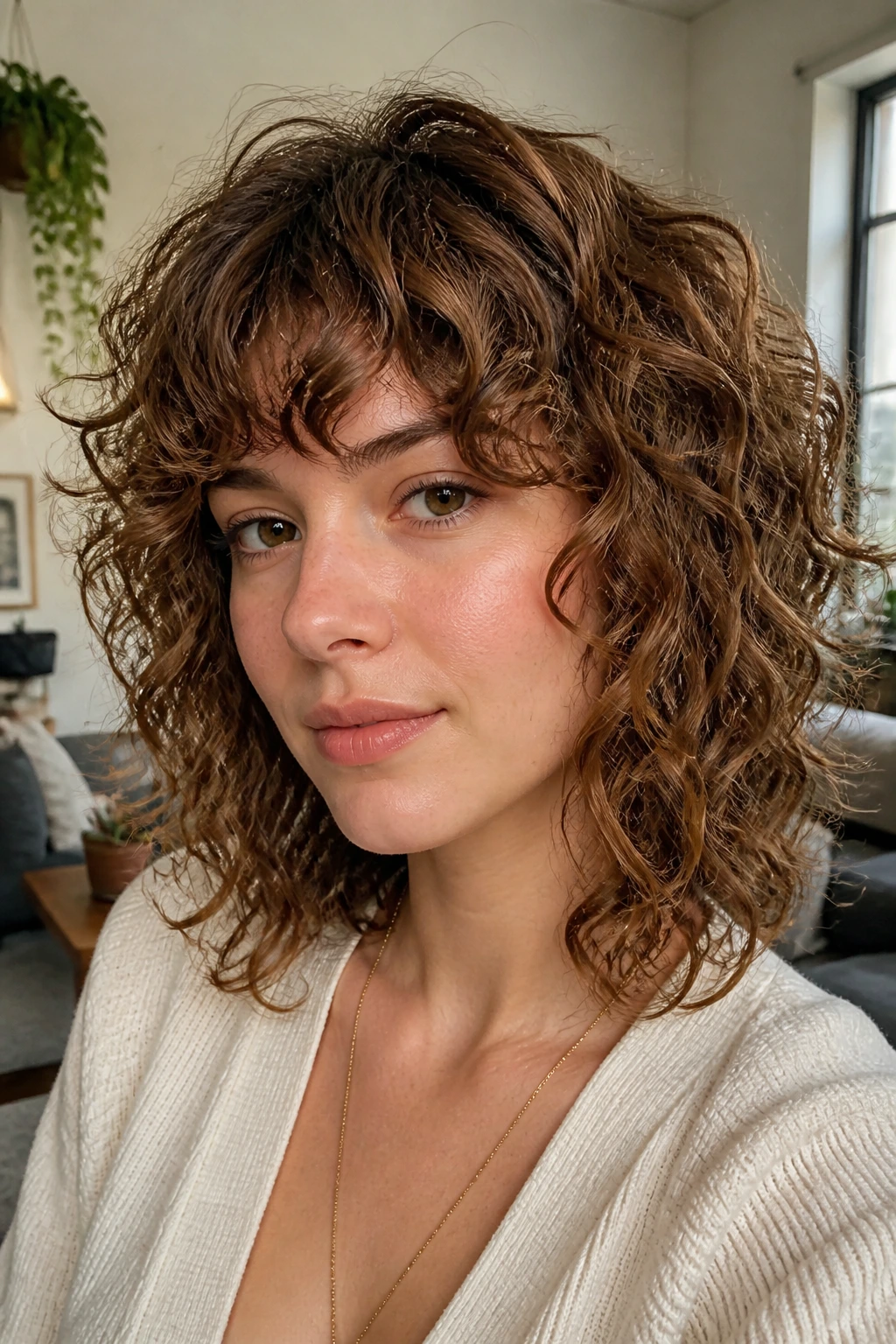
Some haircuts work better when you stop trying to control every curl. This is one of them. The freeform shag keeps the layers loose, lets the curls stack where they want to, and uses a soft fringe that can sit forward one day and sweep aside the next.
Why it works: When you leave a little room for the natural curl map, the haircut stops fighting itself. The bangs don’t need to be crisp to be useful. They just need enough shape to frame the face and enough length to survive shrinkage. The sides can be slightly uneven in the best possible way, because the asymmetry feels lived-in rather than mistaken.
I like this cut for people who are tired of spending energy making every curl behave. It still needs a skilled hand, but it doesn’t need a rigid finish. If you air-dry a lot, this shape can be a relief. The whole point is that the hair gets to look like hair.
21. Airy Deva-Cut Shag with Floaty Bangs
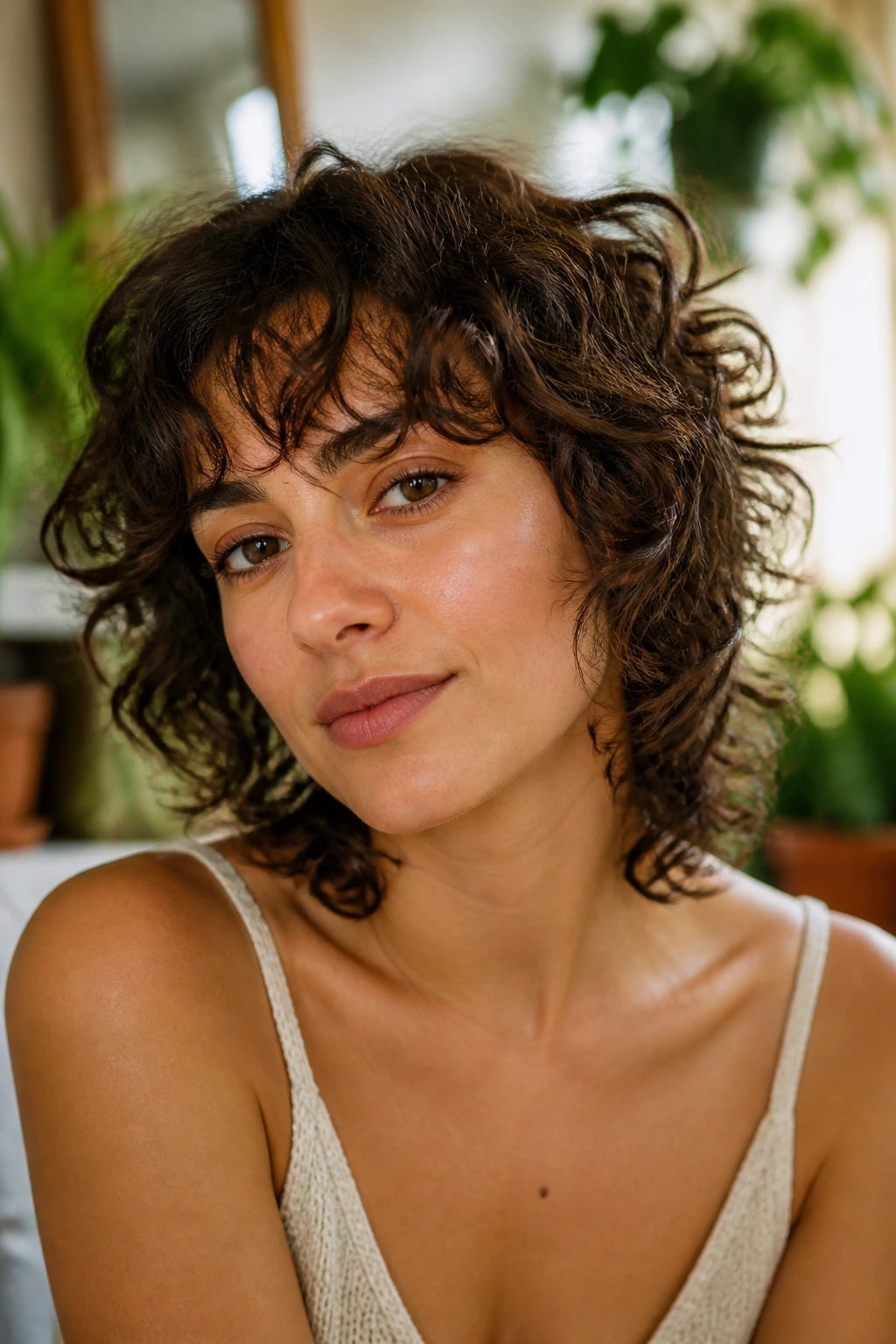
A Deva-inspired shag is cut to the curl pattern, not around it. That means each section gets shaped dry, in its natural state, so the stylist can see where the curls sit when they’re actually doing their job. In a short version, that makes the layers feel lighter and the bangs feel floatier.
Floaty bangs are a great match because they can be built to follow the front curls instead of forcing a straight line. The result usually looks cleaner in motion than a wet-cut fringe. This matters a lot when different parts of the head curl at different rates. Crown, temple, hairline—often three separate personalities.
If you’ve ever had a bang section that looked perfect in the chair and weird the next morning, this is the style to explore. It respects the curl map. That’s the whole advantage. The haircut should feel like it belongs to your hair, not borrowed from a straight-haired reference photo.
22. Retro 70s Curly Shag with Choppy Bangs
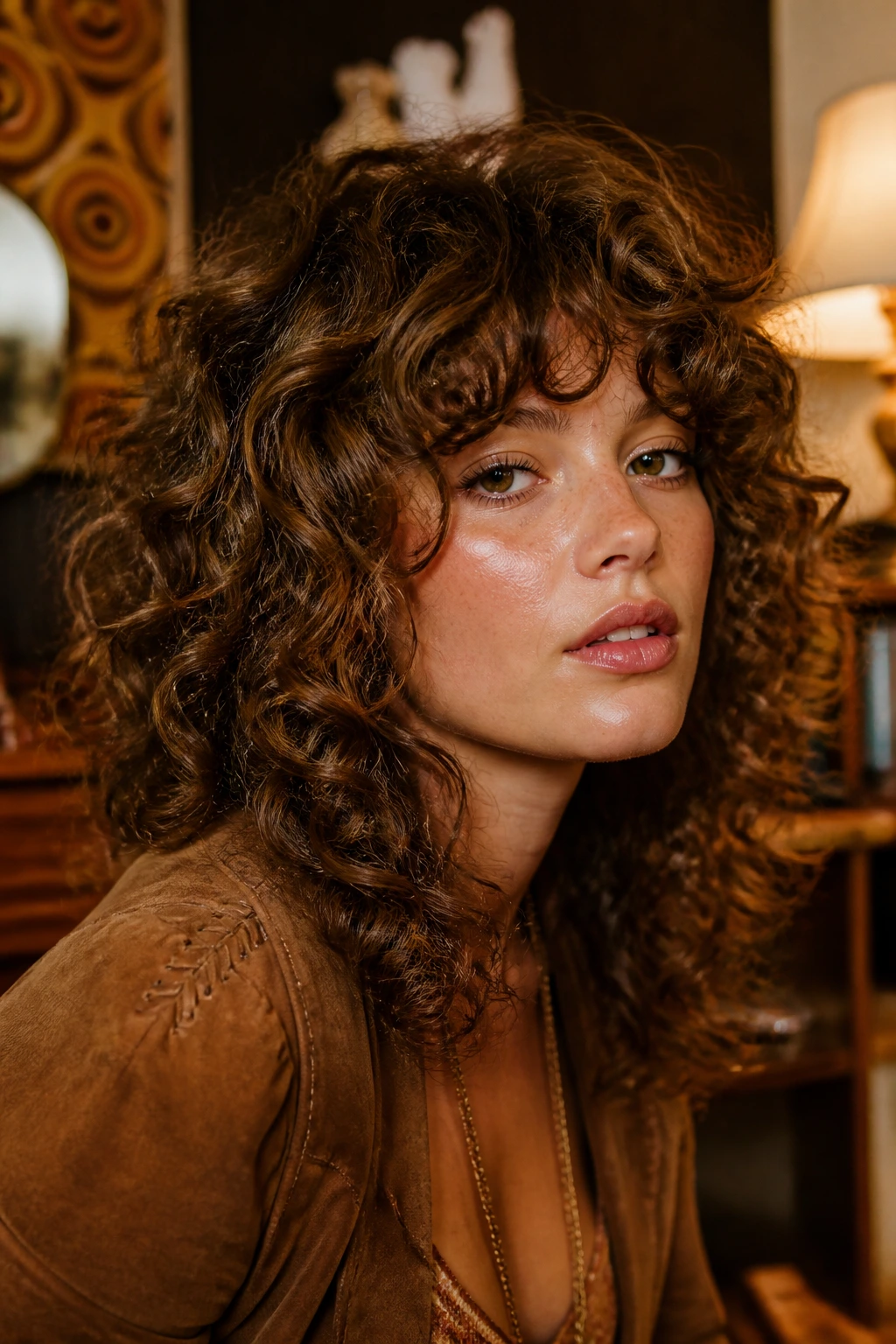
This is the most playful version here, and maybe the most obvious shag in the group. The layers are choppy, the bangs are broken up, and the whole shape leans into that 70s-inspired volume that curly hair does so well. It feels a little nostalgic without becoming costume-y.
The choppy bangs are the key. They should look separated and soft at the edges, not cut into a solid wall. On curls, that broken fringe keeps the forehead visible in places, which gives the cut a lived-in, easy shape. The layers around the cheekbones help the haircut widen just enough to frame the face without going full triangle.
If you like a center part, this cut can handle it. If you prefer an off-center part, even better. The style has enough movement to take either direction, and it tends to look best with a bit of product scrunched through the ends rather than brushed out. Retro, yes. Fussy, no.
Choosing the Right Shape for Your Curl Pattern and Face
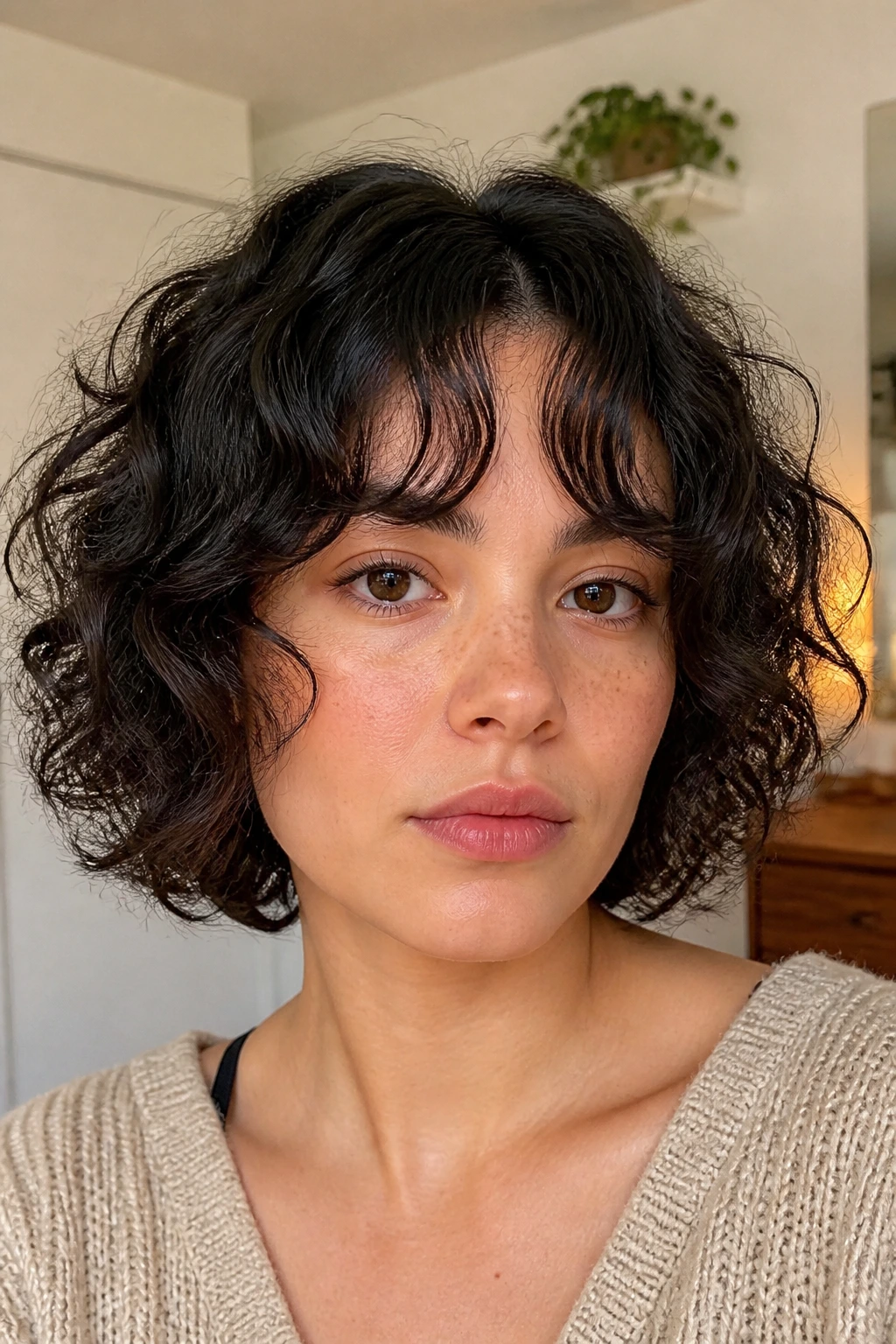
The shape you pick should respect two things at once: how your curls behave and how much forehead coverage you actually want. Those are not the same decision. A round face may love a longer fringe with side movement, while a longer face can usually handle a fuller bang line or micro fringe if the rest of the haircut keeps enough width near the cheeks.
Loose curls, especially 2C to 3A, often take to curtain bangs, bottleneck bangs, and swoopy fringe because the bend is soft enough to move across the forehead. Tighter curls, 3B to 4A, usually need a little more length left in the bang section so the shrinkage doesn’t steal all the coverage. That’s not a limitation. It’s a planning issue.
Fine hair needs a lighter hand with layering. Too much removal, and the shape loses body before you even step out the door. Dense hair can handle more aggressive internal shaping because it needs the weight taken out or the silhouette turns into a dome. The best curly shag is never the same cut twice.
What to Ask Your Stylist Before the First Snip
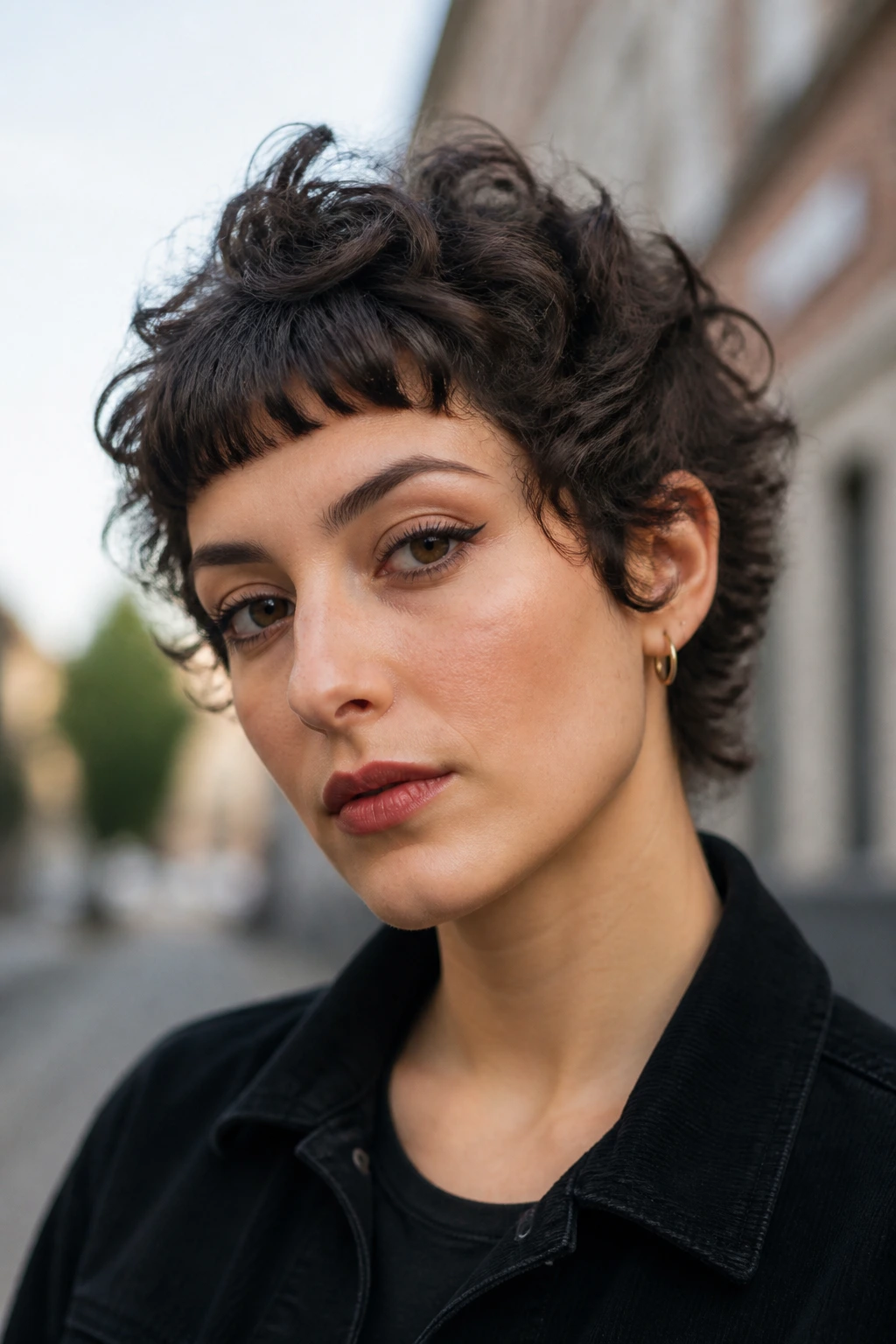
Bring photos, yes, but bring the right kind of photos. Show shots of the same curl pattern, the same density, and the same bang style if you can. A picture of a loose 2A shag on thick 3C hair is just decorative. Useful only as a vague mood reference.
Say the words dry cut if your curls shrink a lot, and ask where the bangs will land when fully dry. That single question saves a lot of regret. If you want more forehead coverage, ask for the fringe to be left longer and shaped after the rest of the cut is done. If you want movement around the face, ask for face-framing layers that start near the cheekbone instead of the chin.
A good stylist will also talk to you about weight lines. You want to hear things like “we’ll remove bulk under the crown” or “we’ll keep the perimeter soft so it doesn’t puff.” If nobody mentions how the haircut will behave when the curls dry, keep asking. That’s not being difficult. That’s being smart.
Tools and Products That Make the Cut Easier to Wear

-
A wide-tooth comb or your fingers: Curly shags hold their shape better when you don’t rake through them with a brush after styling.
-
A spray bottle with water: Handy for reactivating bangs and front layers on day two, especially if the fringe goes flat faster than the rest.
-
A diffuser attachment: Low heat and low speed help the layers dry with less frizz and more lift at the roots.
-
Curl cream or leave-in conditioner: Use a small amount through the mids and ends so the curls clump without turning greasy near the bangs.
-
Mousse or foam: Nice for the crown and front layers when you want the shag to look lighter and bouncier.
-
Light gel: Good for keeping the bang section from puffing up before it’s fully dry.
-
Duckbill clips or root clips: Useful if your crown lies flat and needs a little lift while drying.
-
A silk or satin pillowcase: Keeps the fringe from looking like it fought a pillow all night, which it probably did.
Daily Styling Moves That Keep the Layers Airy
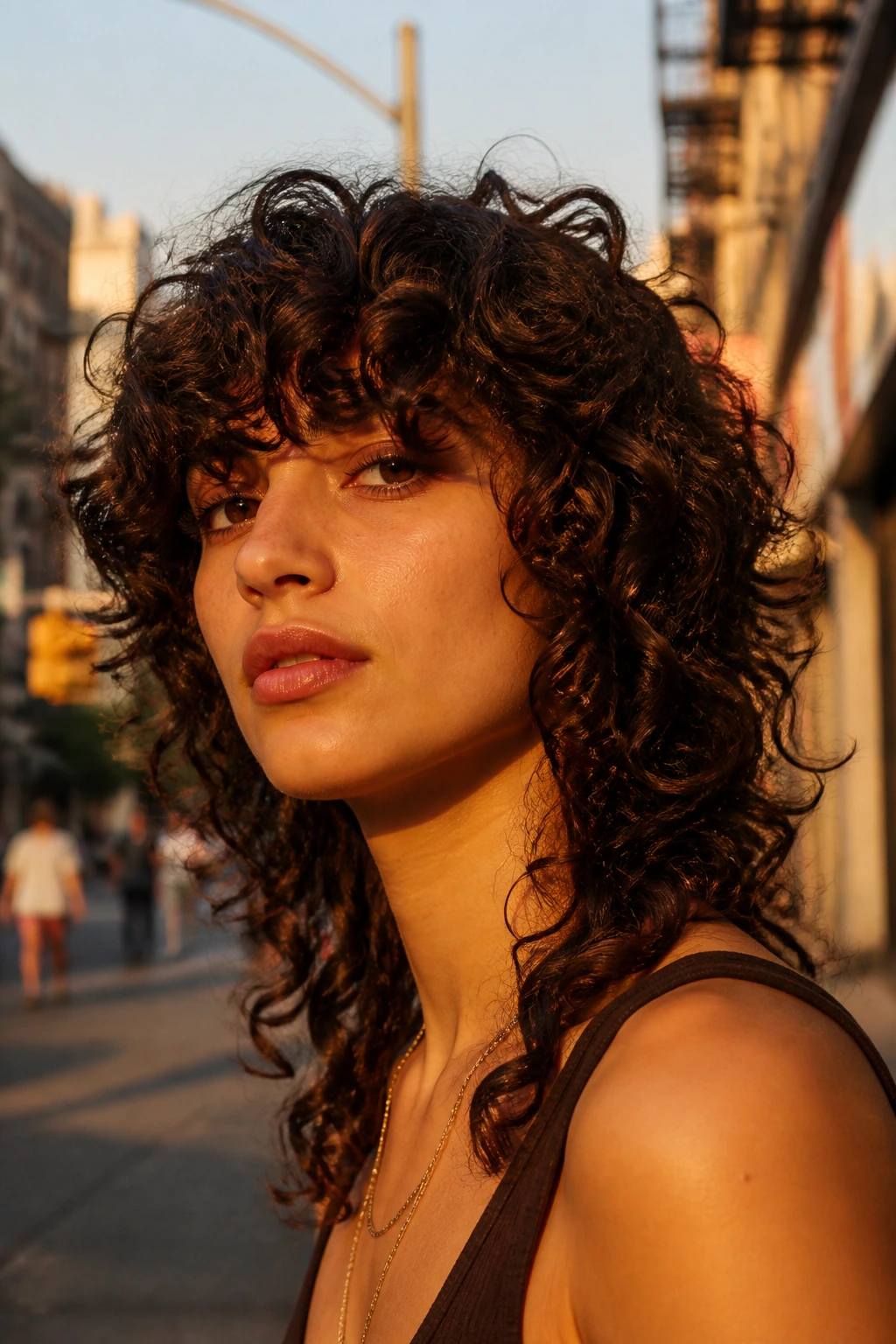
The trick with a short shag and bangs is not to overfeed the hair. Too much cream weighs the fringe down, and too much brushing stretches the curl pattern into frizz. Start with damp hair, apply a small amount of leave-in to the mids and ends, then use mousse or foam at the roots and fringe if you need lift. Small amounts. Really.
Diffusing helps, but don’t blast the front first. Clip the crown if it collapses, tilt the head only when the curls have started to set, and keep the diffuser moving. If the bangs are stubborn, let them dry in their natural direction before trying to part them. Fighting them too early creates that weird, fuzzy split that never quite recovers.
A simple refresh works on most of these cuts. Mist the fringe lightly, scrunch in a drop of gel, and let it dry while you get dressed. If one side has gone flat, lift the roots with your fingers and warm the area for a few seconds with the diffuser on low. The goal is shape, not perfection. Perfection is a trap here.
Common Mistakes That Turn a Good Shag Into a Bad One
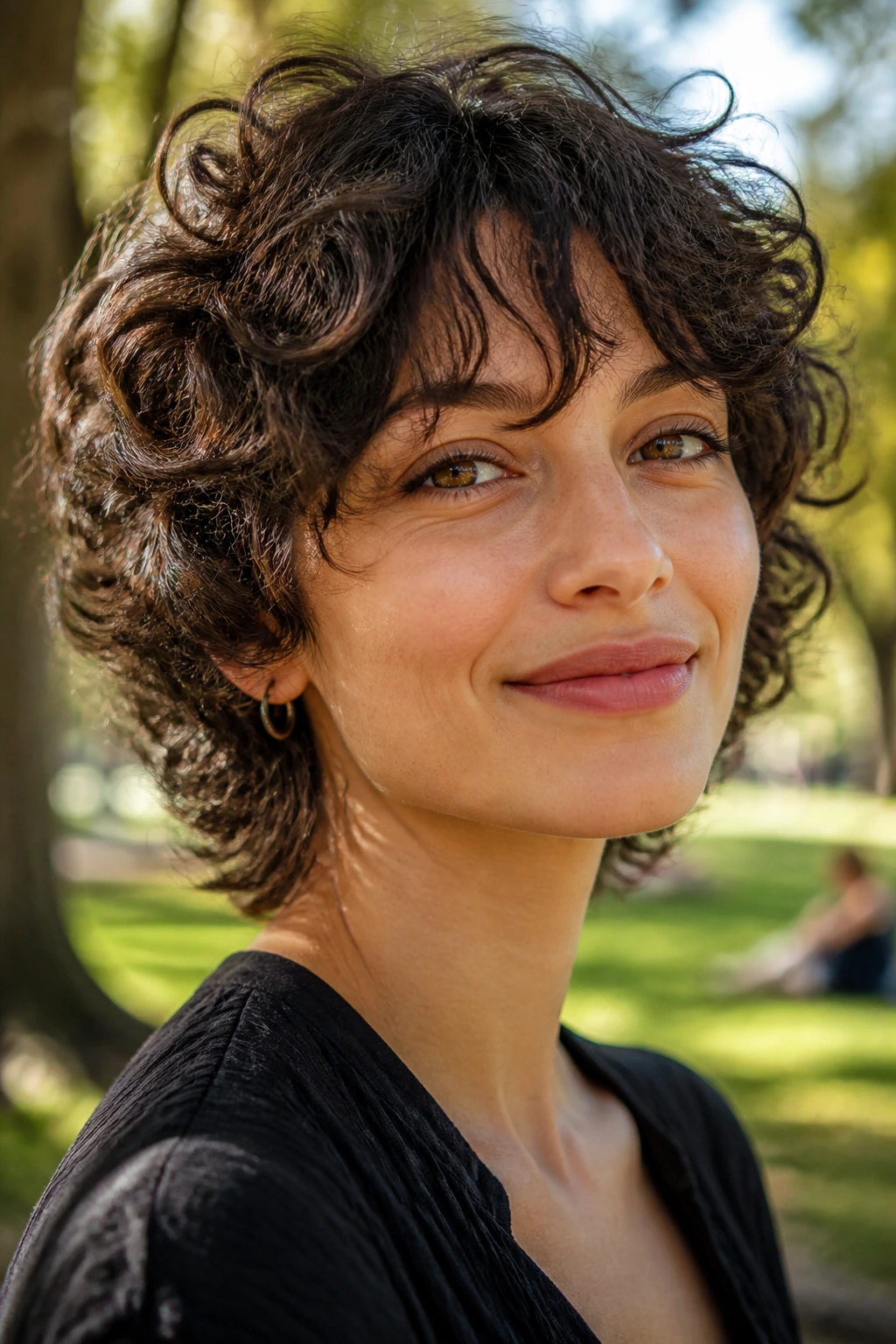
The first mistake is cutting the bangs too short while the hair is wet. Curly fringe springs, sometimes a lot, and the result can land above the brows in a way you never asked for. The fix is simple: leave extra length, dry the fringe fully, then refine.
Second, people often remove too much bulk from the sides and leave the top too heavy. That creates a lopsided shape—flat on the bottom, puffy at the crown. Ask for internal shaping, not random thinning, and make sure the perimeter still has enough weight to support the curl.
Third, too much cream in the front can drag the bangs straight down or make them clump into little greasy ropes. Use lighter product near the fringe and save richer creams for the mids and ends.
Fourth, some people keep trying to brush curly bangs into submission. Nope. That usually makes the fringe frizz and the layers lose definition. Finger-shape the front while it’s wet, then leave it alone until dry.
Variations and Alternatives to Try
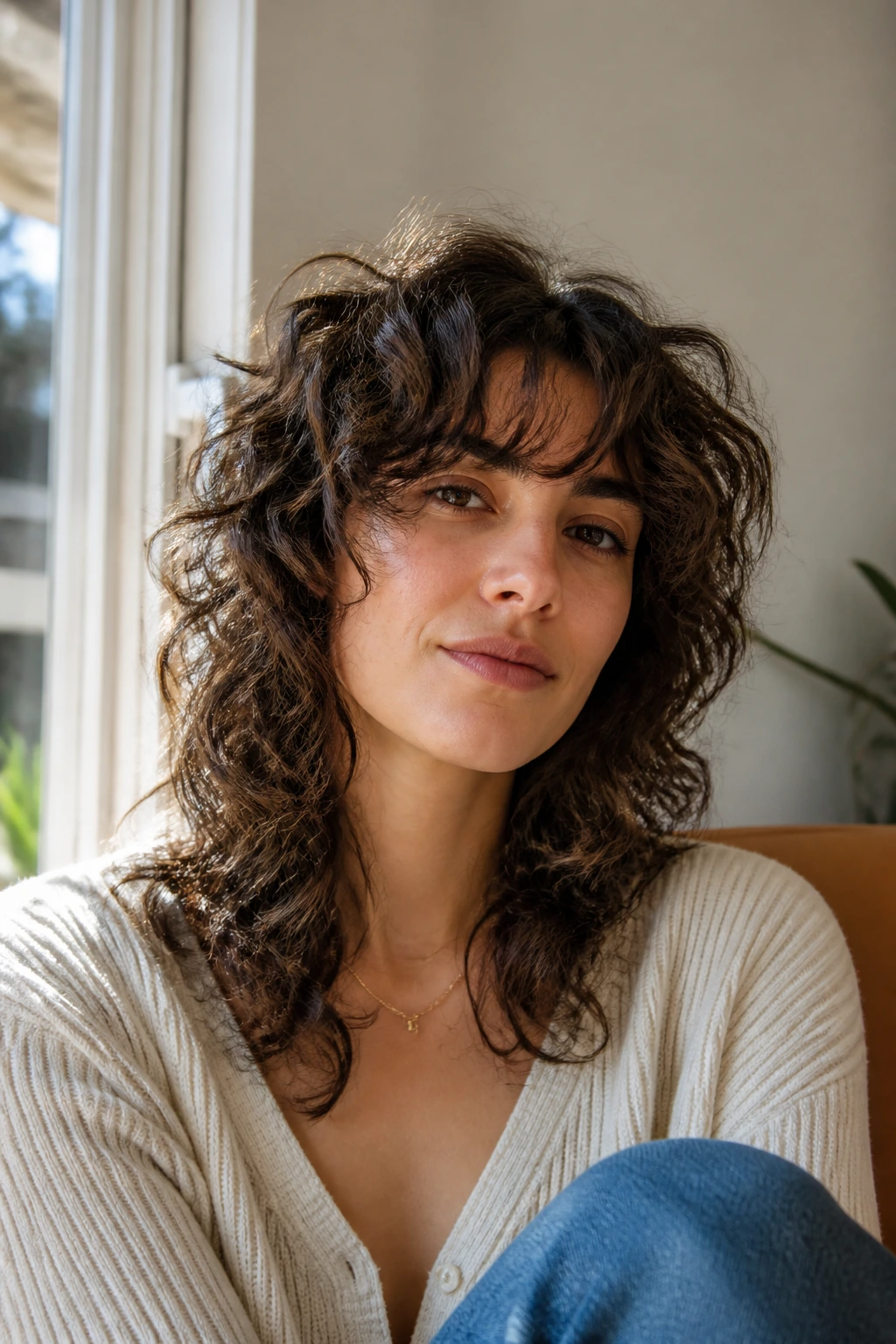
The Softer Office Version: Keep the same shag layers, but ask for curtain bangs or bottleneck bangs instead of a sharp fringe. It reads calmer, grows out cleanly, and tucks behind the ears when you need it to.
The Edgier Split-Fringe Version: Go for a more dramatic side part with an asymmetrical bang shape. This works well if one side of your curl pattern is stronger or if you like a cut that feels a little less polished.
The Low-Maintenance Air-Dry Version: Ask for longer bangs and slightly softer layers through the top so the hair can dry on its own without needing a diffuser every time. This is the move if your mornings are already crowded.
The Bold Micro-Bang Version: Keep the length short at the front and pair it with a tight shag around the crown and temples. It’s sharp, graphic, and best when the rest of the haircut is clean enough to support that punch.
The Grow-Out Friendly Version: Leave the fringe slightly longer than you think you need and keep the perimeter soft. The cut stays wearable for longer, which matters if you hate scheduling trims just to rescue the bangs.
Maintenance, Trims, and Between-Visit Care

Short shaggy curly haircuts with bangs live or die by upkeep. The bangs usually need shaping every 4 to 6 weeks if they’re short, a little longer if they’re curtain-style or bottleneck. The rest of the cut can often stretch to 8 or 10 weeks, but only if the layers keep their balance. When the sides start puffing or the crown gets heavy, that’s your sign.
Night care matters more than people think. A loose pineapple works for longer shags; a satin bonnet or pillowcase keeps the fringe from fraying into a fuzz ball. If the front pieces are especially short, let them dry flat or lightly clipped to one side before bed so they don’t wake up bent in odd directions.
Wash-day rhythm depends on your scalp and your product load, but many curly shags do fine with 2 to 4 days between full washes. On the in-between days, refresh the bangs first. They’re the first thing people see, and the first thing to look tired if you ignore them. A quick mist, a little scrunch, and a few seconds of diffuser heat often bring the whole haircut back into line.
Frequently Asked Questions
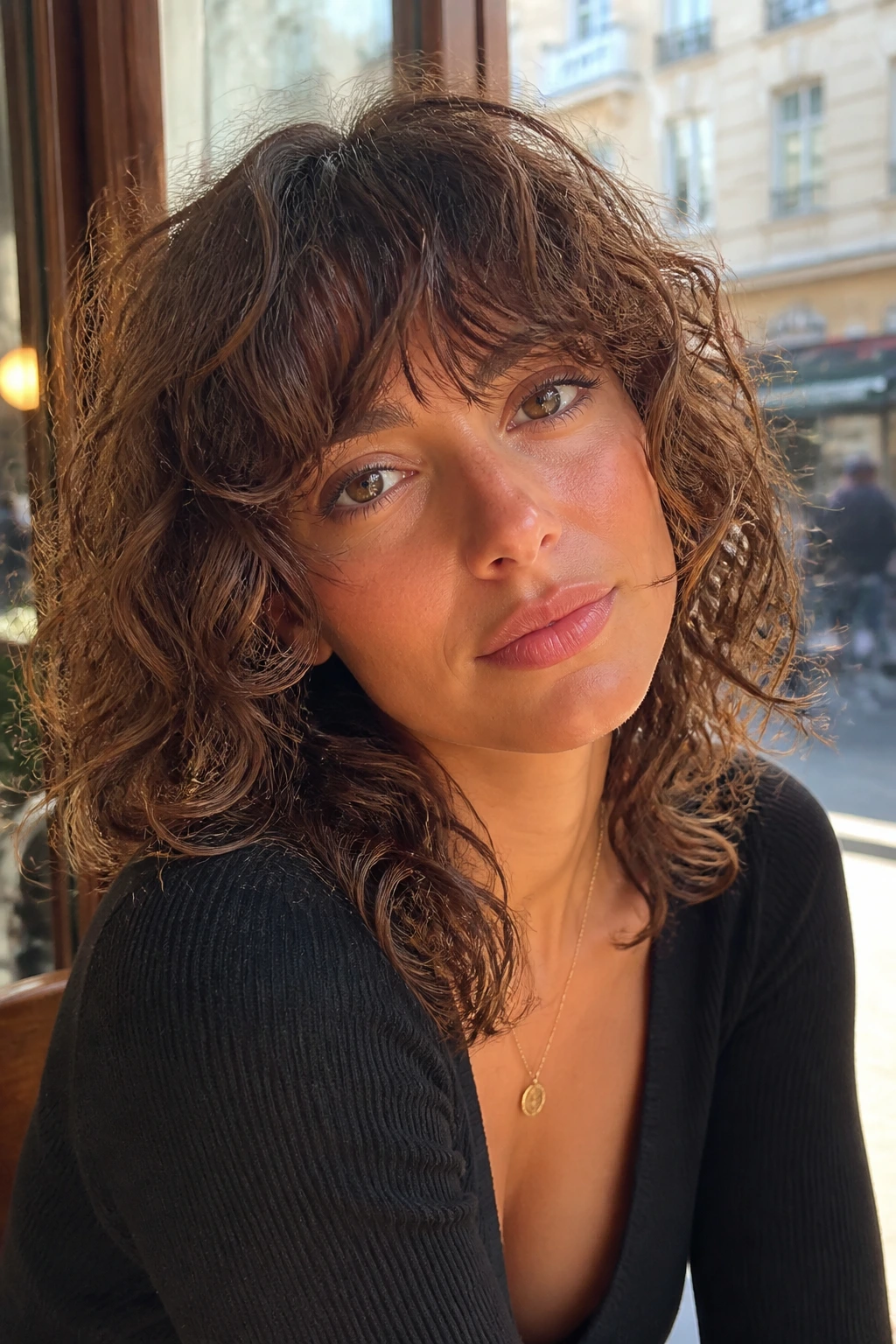
Will short shaggy curly haircuts with bangs work on fine hair?
Yes, but the layering has to be lighter than it would be on dense hair. Fine curls need enough length at the perimeter to keep the shape from collapsing, and the bangs should usually stay a bit longer so they don’t disappear when dry.
Should curly bangs be cut dry or wet?
Dry cutting is safer for most curl patterns because shrinkage is easier to see. Wet cutting can still work, but only if the stylist understands how much the curls spring up and leaves enough length for that change.
Which face shape suits a curly shag with bangs best?
Almost any face shape can wear one if the fringe and side layers are adjusted properly. Round faces usually do well with longer, split fringe; longer faces often like fuller bangs or a rounder silhouette; heart-shaped faces usually benefit from volume near the jaw.
How do I keep my bangs from separating into weird pieces?
Use less product at the front than you do through the rest of the hair, and finger-shape the fringe while it’s damp. Once dry, break up only the heavy clumps with a tiny bit of oil or serum on your fingertips.
Can I wear this cut if my curls are different on each side?
Absolutely. In fact, a shag can help hide that mismatch because the layers and fringe don’t rely on perfect symmetry. A side part or an asymmetrical fringe often makes the difference look intentional.
What if my bangs keep getting too short after a trim?
Ask for a dry finish and tell the stylist to leave extra length in the fringe. Bring up how much your hair shrinks when it dries, because that number matters more than the wet length in the chair.
Is a shaggy curly cut high-maintenance?
The short answer: not if the cut is shaped well. The bangs need some attention, yes, but the overall haircut usually styles faster than a blunt bob because the layers already give you movement.
Can I air-dry this haircut without losing the shape?
You can, especially with looser curls and longer fringe. The trick is to apply product evenly, avoid touching it while it dries, and reshape the bang section at the front before the hair sets.
A Shape That Likes a Little Chaos
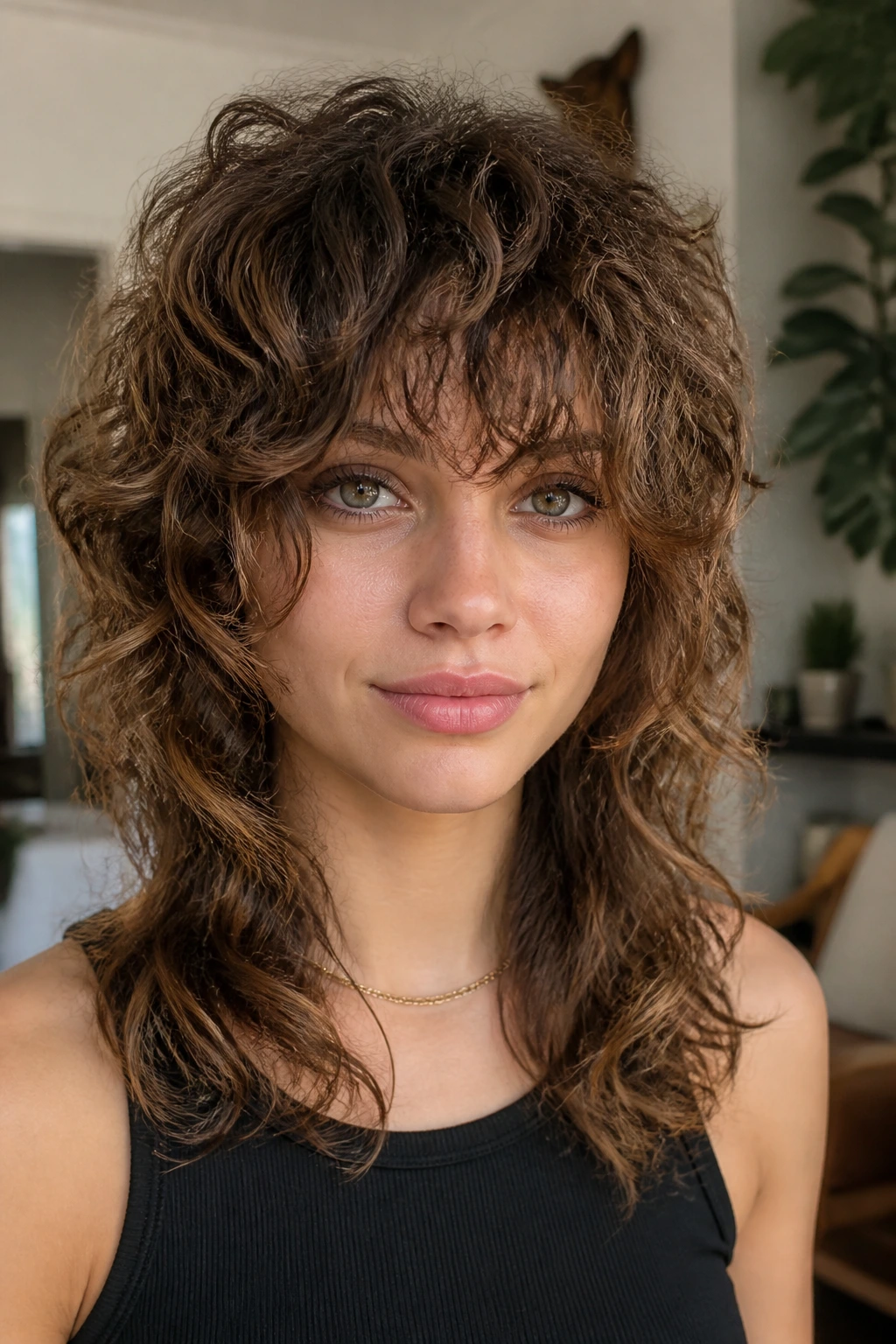
A good shag on curly hair doesn’t try to erase the curl pattern. It gives it a frame, a direction, and a place for the bangs to land without turning the whole cut into a block. That’s why these styles keep showing up in salons: they make sense on moving hair, not just in a still photo.
Pick the version that matches how your curls live on an ordinary Tuesday, not the version that looks best from one perfect angle. If the cut respects the way your hair bends, puffs, and settles, you’ll spend less time correcting it and more time wearing it as intended. That’s the whole win.
