



Wavy hair and a shag haircut have a kind of natural chemistry that blunt cuts rarely manage. The wave brings the motion; the shag gives it a shape that doesn’t collapse into a triangle or puff out at the sides like it’s trying to make a point. If your hair has ever looked good for one hour and then turned into a damp-looking mop or a puffy cloud, you already know why this cut keeps coming back.
The best shag haircuts for wavy hair don’t fight texture. They work with it, which is a different thing entirely. The right layers can make loose bends look fuller, make thick waves easier to live with, and make fine waves look like they’ve got more body than they really do. That’s the real trick: not making your hair look “done” in some stiff, overstyled way, but giving it enough structure that it behaves when it air-dries, diffuses, or gets scrunched with a little product.
There’s also a range here that people underestimate. A shag can be soft and almost polished, or wild and razor-edged, or somewhere in between with curtain bangs and face-framing layers that do the heavy lifting. Some versions need a little styling. Some practically style themselves. And a few of them grow out better than the cuts people keep calling low-maintenance, even though they really aren’t.
Why These Shag Haircuts Work So Well on Wavy Hair
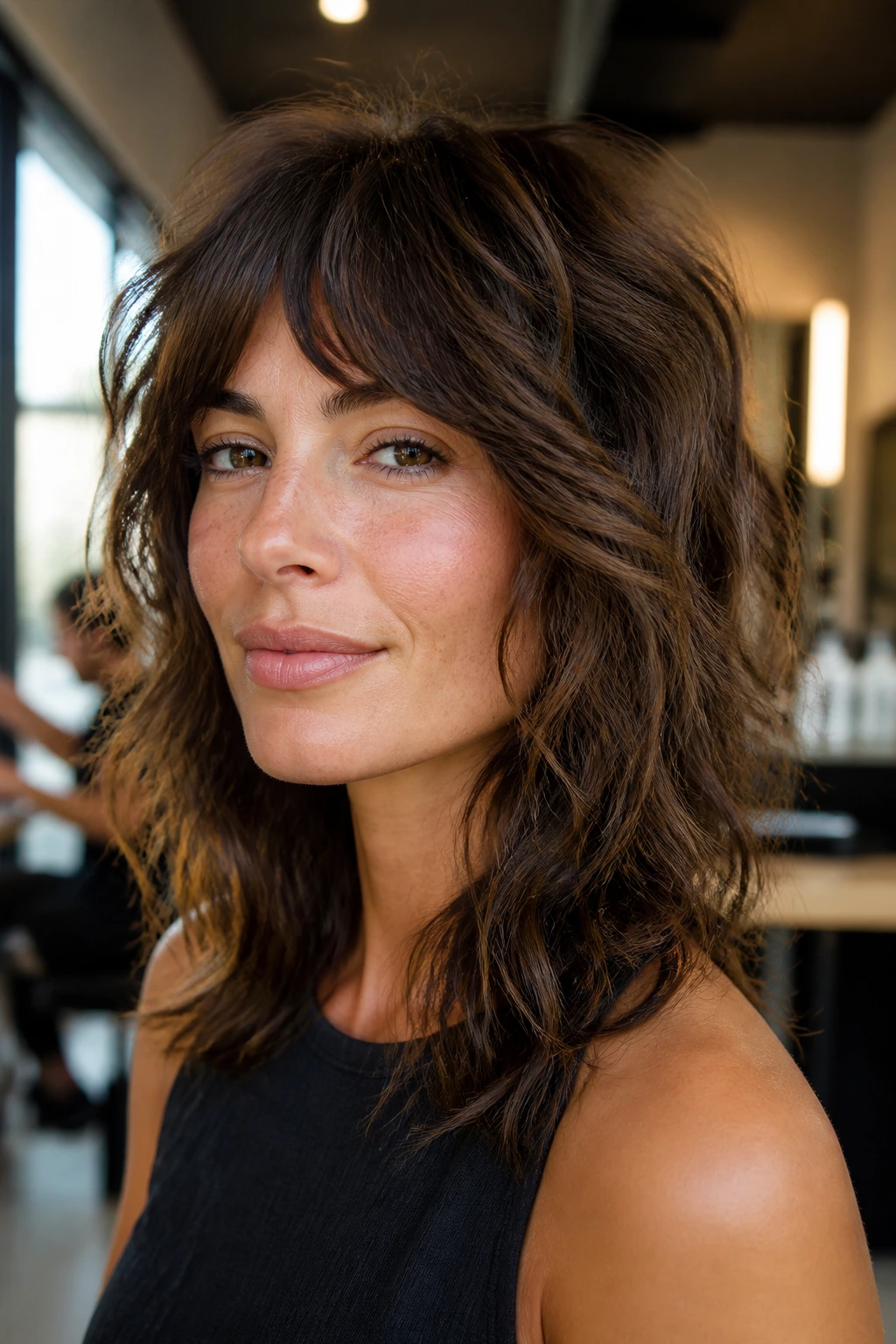
- The wave pattern gets room to move: The layers remove bulk where hair stacks up, so the wave shows instead of hiding under one heavy shelf.
- The shape stays lighter around the face: Long face-framing pieces stop wavy hair from ballooning at the cheeks or hanging flat at the temples.
- There’s less fight with the crown: Good shag layers take weight off the top so the root area doesn’t go limp while the ends flare outward.
- You can go softer or sharper: A shag can be feathered and airy, or choppy and rocker-ish, without losing the thing that makes it work on waves.
- It grows out with less drama: When the layers are placed well, the cut keeps moving as it gets longer instead of turning into a box.
Waves are honest. They show where the haircut is helping and where it’s working against you. That’s why shags make sense here. When the layers are placed with some restraint, the cut creates shape without forcing the hair into a style it doesn’t want.
A blunt cut on wavy hair can look neat for about ten minutes. Then the lower half starts to widen, the top flattens out, and you’re left with a shape that feels more like geometry homework than hair. A shag breaks that pattern. It keeps the perimeter from feeling heavy, but it doesn’t strip so much weight that the ends fray into fuzz.
The sweet spot is balance. Not too much layering at the crown. Not too much texturizing at the ends. Enough movement to let the wave pattern breathe. Enough length in the right places to stop the cut from puffing out when humidity shows up and decides to be rude.
1. Soft Collarbone Shag
This is the one I hand to people who want the shag look without making a dramatic scene about it. The length hits around the collarbone, the layers start low, and the whole cut keeps enough weight that your waves still look like hair instead of confetti.
Why It Works
A collarbone shag gives wavy hair an easy swing. It sits in that useful middle ground where the ends can flip a little, tuck under, or dry into a loose bend without feeling too short. If your hair tends to expand at the sides, this shape keeps things calmer than a heavily layered crop.
Ask for long layers that begin near the jaw or mouth, plus a soft face frame that doesn’t chew up too much length. That keeps the cut flattering on round, oval, and heart-shaped faces, especially if your waves are loose and you don’t want them overworked.
What to Tell Your Stylist
Say you want movement, not a staircase. That phrase matters. A good collarbone shag should look lived-in, not sliced into tiny pieces. If your hair is fine, keep the layers a little longer so the ends don’t go wispy.
2. Curtain-Bang Shag
Curtain bangs are the easiest way to make a shag feel open through the front. They split softly at the center, skim the cheekbones, and give wavy hair a bit of swing without locking you into a high-maintenance fringe.
A good curtain-bang shag works especially well when the bangs blend into the first two layers instead of sitting on top of them like a separate idea. That blend matters. It keeps the front from looking disconnected, which is where a lot of shag cuts go sideways.
If you wear glasses, this version is worth serious attention. The bangs can sit just above the frames or brush the top edge in a way that looks intentional instead of crowded. Keep the shortest point around the bridge of the nose and let the sides lengthen toward the cheekbones.
3. Chin-Length French Shag
Shorter shags have attitude, and this one gets there fast. Hitting around the chin, it makes waves feel springier and more alive, especially if your hair has a loose S pattern that likes to bounce rather than hang.
What keeps this cut from looking puffy is the outline. The bottom line should still be deliberate, even if the interior layers are choppy. That’s the difference between a chic short shag and something that looks like you got impatient halfway through a haircut.
This is a strong choice for strong cheekbones or smaller faces because it puts the movement right where people notice it first. If your hair is very dense, ask for internal removal rather than heavy surface layering. Otherwise the crown can go wide in a hurry.
4. Long Wolf Shag
A long wolf shag keeps the length, but the silhouette has edge. The crown sits shorter, the ends stay longer, and the whole cut feels a little more undone than a standard shag. On wavy hair, that contrast gives the wave pattern somewhere to go without making the head look bulky.
The important part is restraint around the perimeter. Too many short pieces near the top and you get a strange mushroom shape. Too little layering and the whole thing just looks like long hair with a face frame. The sweet spot is clear movement through the mid-lengths and a bottom edge that still feels connected.
This cut is a good fit if you like tying your hair up, wearing it half-down, or letting it air-dry most days. It keeps enough length to pin back, but it doesn’t flatten the way one-length long hair often does.
5. Razor-Layered Mid Shag
Razor layering softens the edges fast. The ends look lighter, the layers blend a little more quickly, and wavy hair gets a kind of broken-up movement that scissors alone don’t always create. It’s especially nice if your waves are thick and stubborn at the bottom.
That said, razor work needs a steady hand. On fine hair, too much razor cutting can leave the ends looking tired before they’ve even been styled. On dense hair, though, it can remove the bulky, blunt feel that makes a shag look too square.
The best version of this cut feels airy without feeling thinned out. Ask for sliced ends rather than a hard chop, and keep the face frame soft enough to fall naturally when you tuck hair behind your ears.
6. Airy Pixie Shag
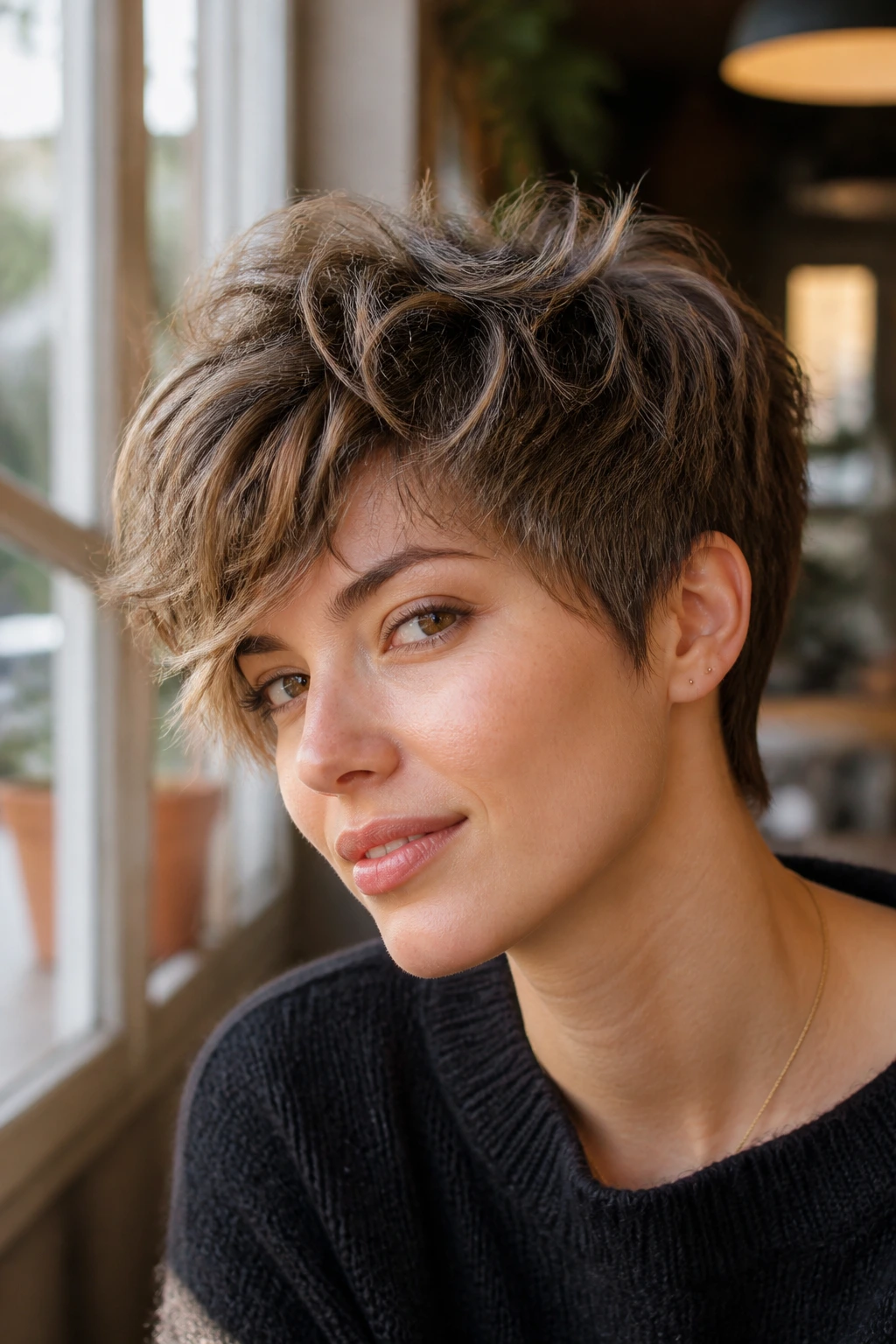
A pixie shag is for people who like haircuts with opinions. The sides stay short, the top keeps texture, and the wavy pieces on top give the whole thing a little lift instead of a helmet effect. It’s more playful than a classic pixie and less severe than a cropped bob.
This cut lives or dies by softness at the crown. If the top is cut too short and too blunt, wavy hair can stick up in odd directions. But when the top has light, uneven texture, the result is almost feather-like — quick to style, easy to refresh, and very good with a little pomade on the fingertips.
It’s not the best fit if you want to hide your forehead or keep things neat and tucked. It is a smart pick if you want to show off your waves and keep your morning routine down to a handful of minutes.
7. Shoulder-Grazing Layered Shag
Shoulder length is where a lot of wavy hair starts acting out, because the ends hit the shoulders and bounce in weird directions. A shag at this length fixes that better than a blunt cut does. The layers keep the ends from feeling like a shelf.
This version is one of the easiest to wear because it doesn’t ask much from you. A little mousse, a rough dry, maybe a few twists with your fingers while it’s damp, and you’re done. It’s especially useful if you want hair that can look presentable without looking overly styled.
If you’re nervous about going too short, start here. It gives you enough shape to feel like a haircut happened, but not so much texture that you lose the option to wear it sleek on straightened days.
8. Bottleneck-Bang Shag
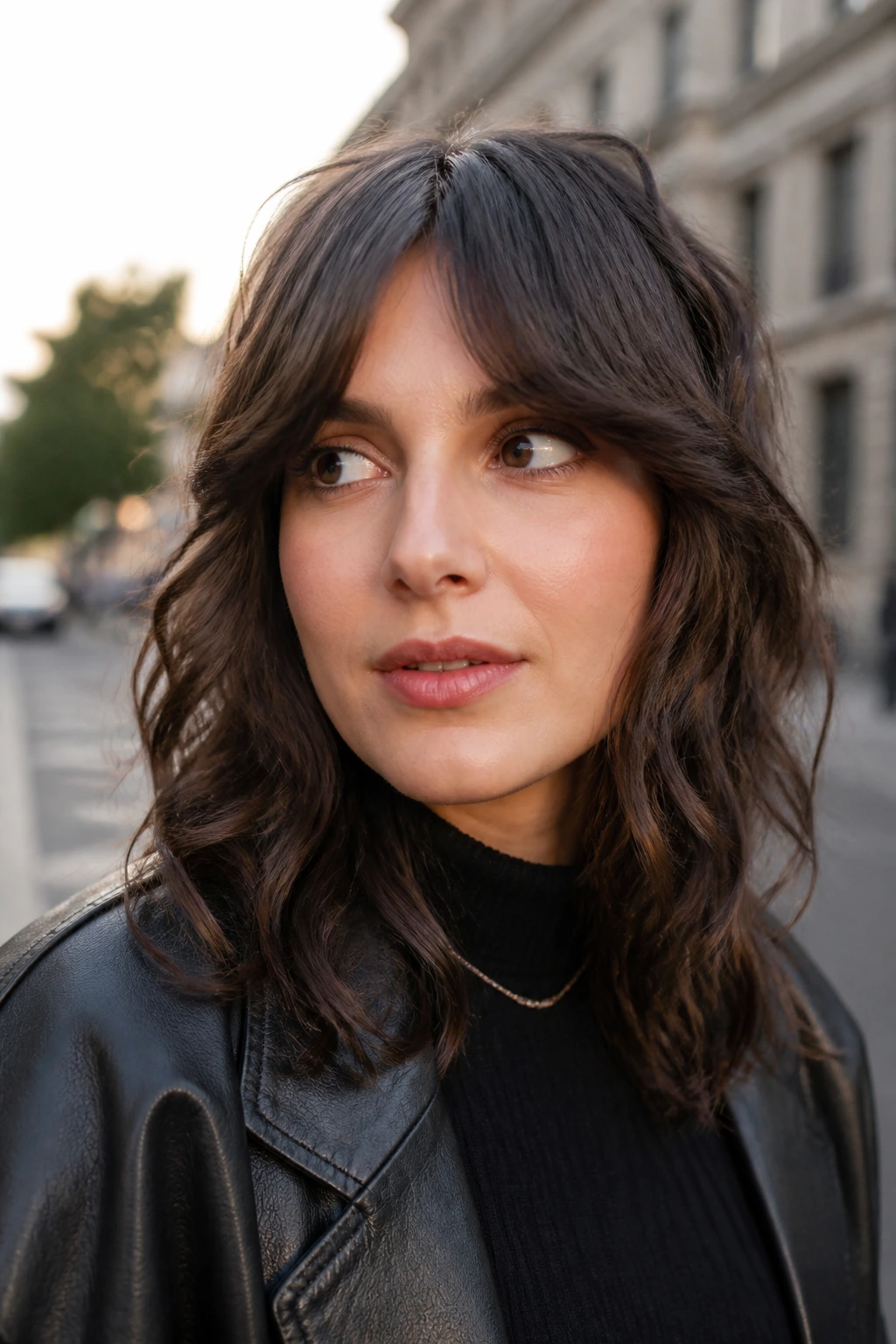
Bottleneck bangs have a narrow center and wider sides, which makes them a nice compromise between full fringe and curtain bangs. On wavy hair, they soften the forehead without swallowing your face in hair that never quite stays in place.
The shape works because it directs attention to the eyes and cheekbones while leaving the rest of the cut loose. It’s one of those details that looks small in a mirror and ends up doing a lot of work. The bangs should taper into the side layers so the front doesn’t feel chopped off.
If your waves clump easily in the front, this bang shape is easier to manage than a straight-across fringe. It can still be split or pushed to the side when you need it out of the way, which is a practical little blessing.
9. Grown-Out Shag Bob

A shag bob is one of my favorite lengths for waves because it avoids the worst part of bob hair: the triangle. The bob shape gives you a cleaner outline, and the shag layers break up the bulk so the cut doesn’t flare out at the chin.
This version usually lands somewhere between the jaw and the top of the neck, with internal layers that create movement without turning the whole haircut into feather dust. It’s tidy enough for work, but it still has texture when you rake through it with your fingers.
If you’re used to bobs that feel too dense, this is a good reset. Ask for a softer perimeter and some weight removal underneath, not just around the face. That keeps the back from sitting like a box.
10. Heavy Fringe Shag
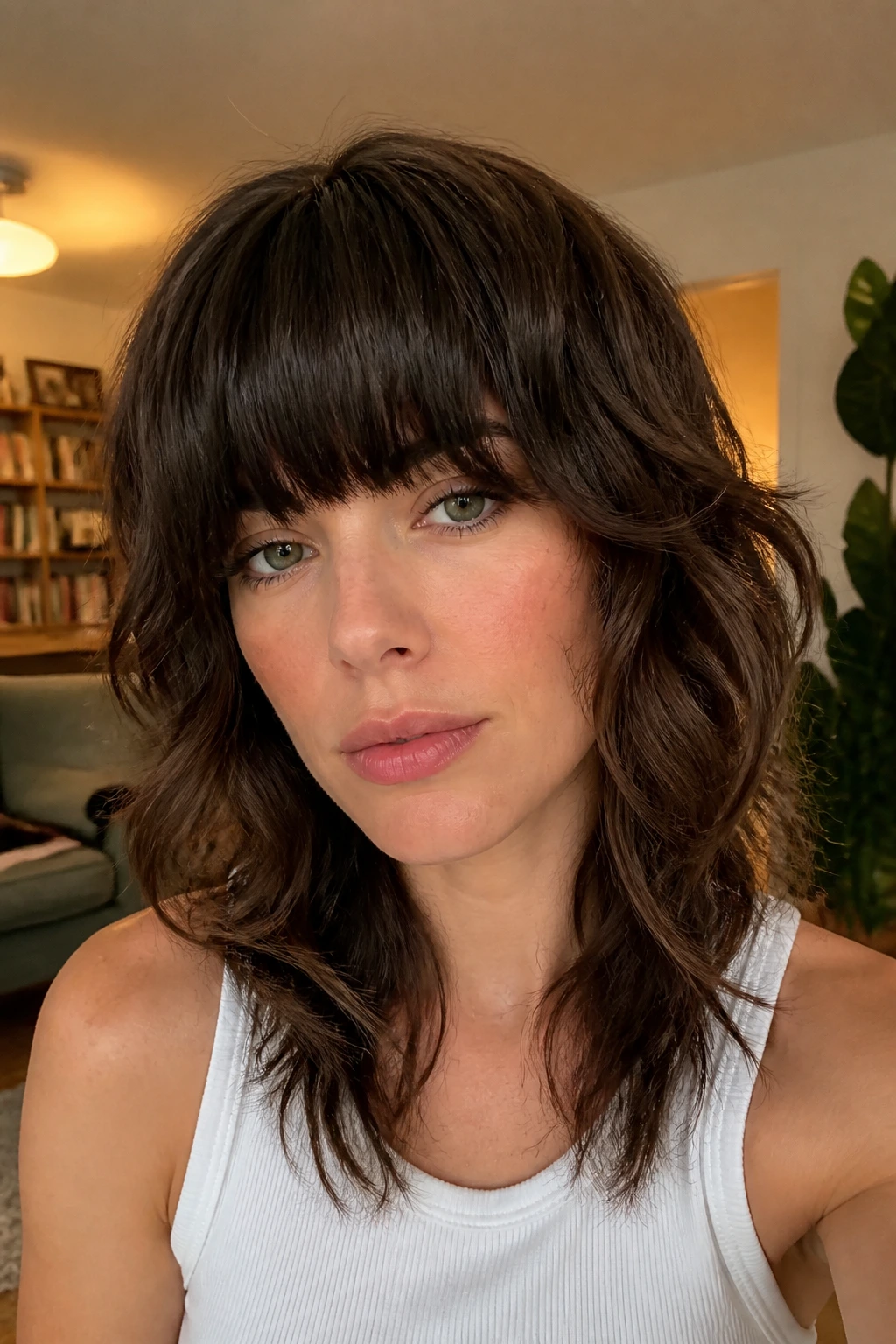
A heavy fringe can look fantastic on wavy hair when the rest of the cut is kept under control. It gives the face a stronger frame and makes the whole haircut feel intentional, almost a little cinematic.
The catch is balance. A dense fringe needs a cut with enough movement through the sides and back, or else the bangs will dominate everything. If the fringe is thick, the layers should be breathable. If the fringe is blunt, the rest of the shag should be softer.
This shape suits people who like a bolder front without going full retro blowout. On finer waves, the fringe can add the visual impression of density. On thick waves, it can get bulky fast, so ask your stylist to keep the interior layers clean and not over-texturized near the temple.
11. Invisible-Layer Shag
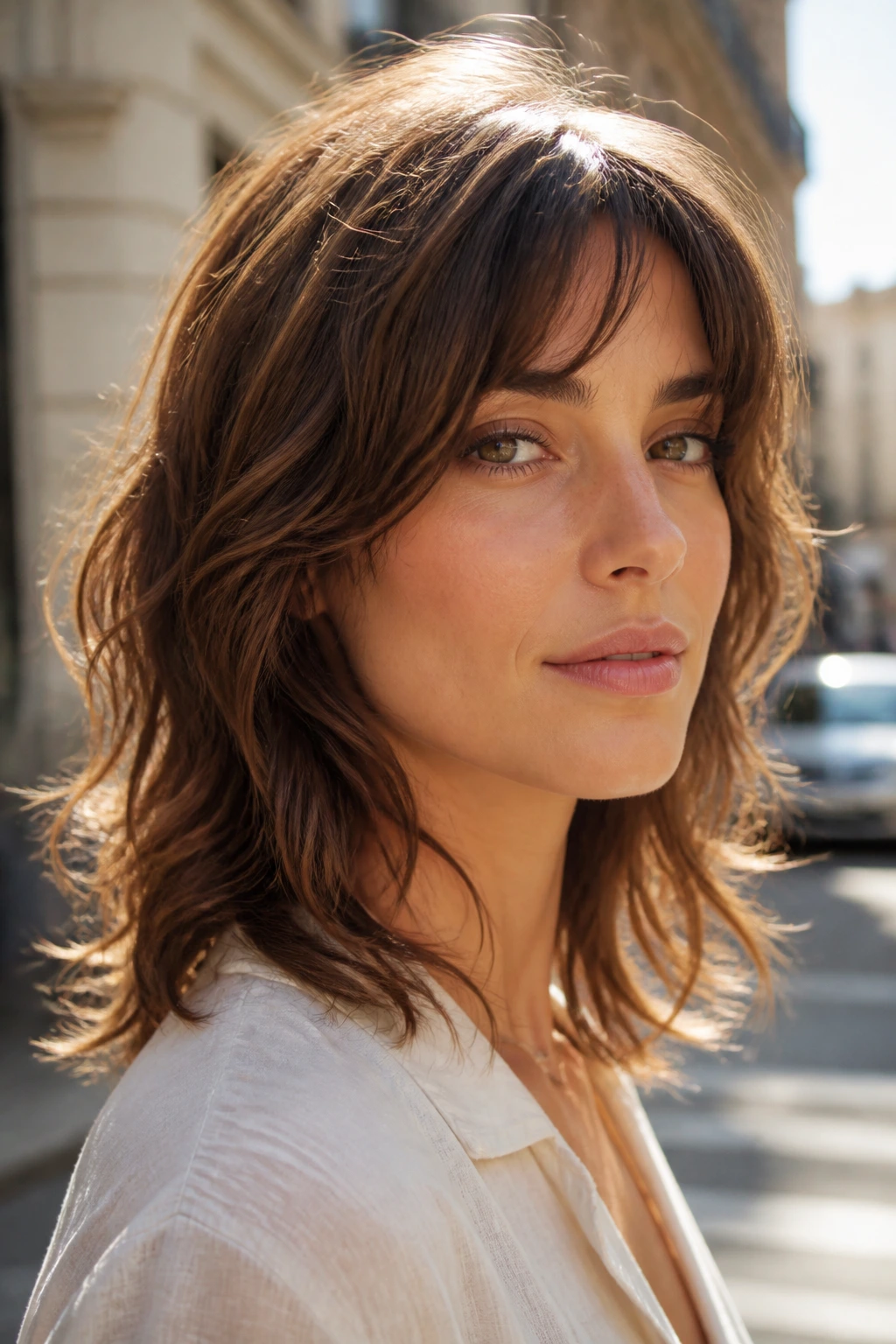
Not every shag needs to look choppy from across the room. Invisible layers are cut to remove weight without shouting about it, which makes them a smart choice if you want movement but don’t want obvious steps in the hair.
The magic here is in the interior. The top and outer shape can still look smooth, while the hidden layers stop the wave from sitting like one heavy sheet. It’s a quieter version of the shag, but it still gives wavy hair the lift and bend that a one-length cut often refuses to cooperate with.
This is especially good if you work in a conservative environment or you just dislike haircuts that look “done” all the time. It air-dries nicely, and it doesn’t demand constant fiddling. Sometimes that’s the best kind of haircut.
12. Piecey 70s Shag

This is the shag when people say they want “volume” but mean they want actual shape. The 70s version leans into feathered ends, airy layers, and a front that opens around the cheekbones instead of hanging like a curtain.
It works on wavy hair because the texture does half the styling for you. A little dry texture spray at the mid-lengths and a quick scrunch through the ends can make the pieces separate in a way that looks deliberate, not crunchy. That’s the key. Separation, not stiffness.
I like this style on medium-density hair because it has room to move. If your waves are very fine, you can still do it, but keep the layers long enough to preserve body. Otherwise the retro feel turns into limp nostalgia, which nobody asked for.
13. Modern Mullet Shag

This is the boldest cut on the list, and it shouldn’t pretend to be anything else. A modern mullet shag keeps length in the back, shortens the crown, and lets the front layers frame the face with a little more attitude than a standard shag.
The reason it works on wavy hair is simple: the wave pattern makes the transition feel softer. Straight hair can make the contrast look stark. Waves blur the boundaries, which helps the cut read as stylish instead of costume-y.
If you like a little edge, this is the one to show your stylist. Keep the top textured, not spiky, and let the nape stay long enough to feel connected. The best version has movement from every angle, not just the front.
14. Long Mermaid Shag
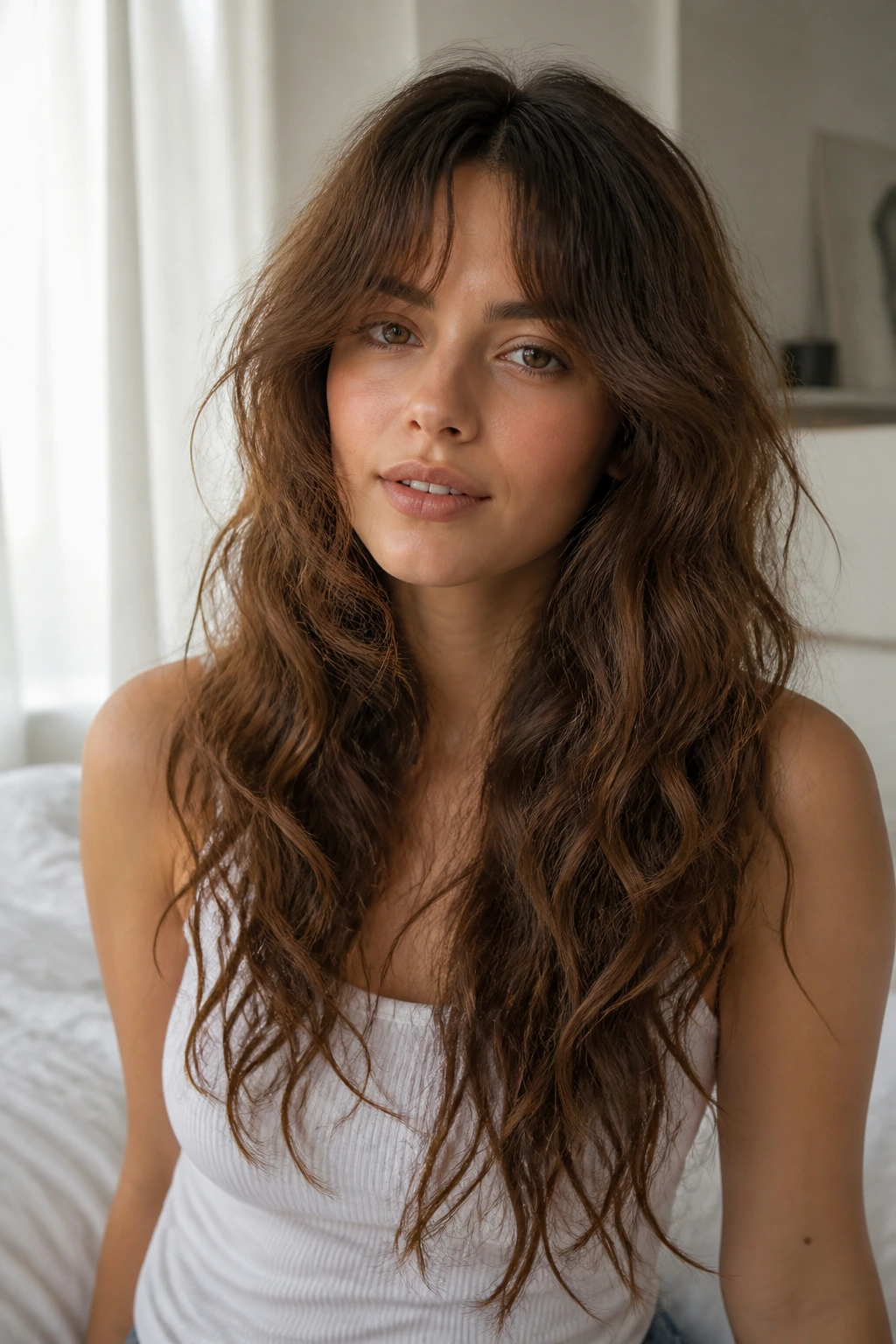
Long hair doesn’t have to be flat to stay long. A mermaid shag keeps the length, but it breaks up the heaviness so the waves don’t sit in one tired sheet down your back.
This cut is especially useful if you’ve been growing your hair out and it’s started to feel heavy at the bottom. Long layers through the mid-lengths help the waves spring a bit more, and a soft face frame keeps the front from disappearing into the rest of the length.
It’s a good compromise for people who are not ready to go shorter but are tired of hair that needs major effort to look interesting. You keep the length. You lose the drag. That’s a trade I’d take.
15. Choppy Lob Shag

A lob with shag layers is one of the easiest cuts to recommend because it sits in a very livable range. It’s short enough to feel fresh, long enough to tie back, and textured enough that wavy hair gets real movement without turning into a puffball.
The chop should be visible but not harsh. You want ends that look broken up, not hacked. That’s a fine line, and it matters more here than people think. The right version gives you body at the bottom and softness around the jaw.
If you often wear your hair half-up or tucked into a coat collar, this cut behaves well. It doesn’t get trapped under scarves and sweaters the way longer, heavier layers sometimes do. Tiny thing. Big difference.
16. Butterfly Shag
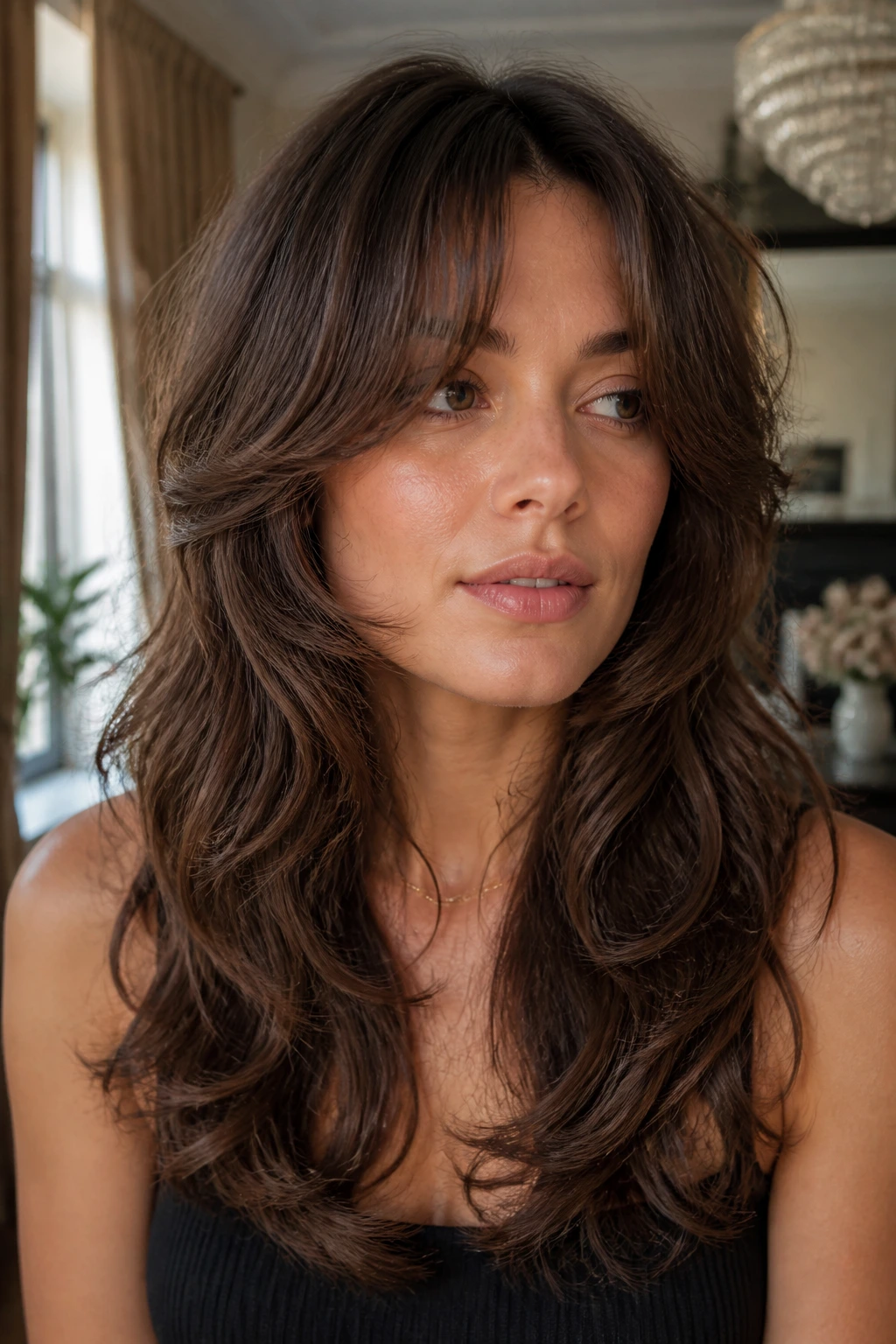
A butterfly shag gives you those soft, cascading layers around the face that look like they’re floating when you turn your head. It’s one of the better choices if you want a lot of movement up front without sacrificing the bulk of your length.
The trick is keeping the shortest face-framing layers high enough to matter but long enough to blend. On wavy hair, that means the pieces around the cheekbones and jaw should have shape, not little broken bits that shrink up when dry.
I like this cut for people who want a little glamour without committing to a dramatic chop. It can be styled with a round brush for polish or left to air-dry for something looser. Either way, the face frame does a lot of the talking.
17. Side-Swept Shag

A side part changes everything. It gives wavy hair a different lift pattern, and a side-swept shag uses that shift to make the whole cut feel softer on one side and fuller on the other.
This is a good option if your face feels a little too open with center-parted bangs, or if you simply want a shape that moves away from symmetry. The side sweep can blur a wide forehead, lengthen rounder faces, and make the cut feel less “standard shag,” which is useful if that look feels overplayed to you.
A deep side part also helps waves fall in a more interesting way around the eyes. It’s not dramatic for the sake of drama. It’s a practical shape trick, and it works.
18. Rounded Halo Shag

This one is all about silhouette. A rounded halo shag keeps volume around the crown and temples so the cut looks soft and balanced instead of flat on top and wide at the ends.
It’s especially helpful if your waves tend to collapse at the root but puff at the lower half. The rounded shape brings the fullness upward, which makes the whole cut look more intentional and less bottom-heavy. That’s the visual fix.
I’d recommend this for medium to thick waves that want body without looking messy. It can be styled with a diffuser and a little lift at the root, but the haircut itself does a lot of the work. That matters more than people admit.
19. Razor-Cut Flipped Shag
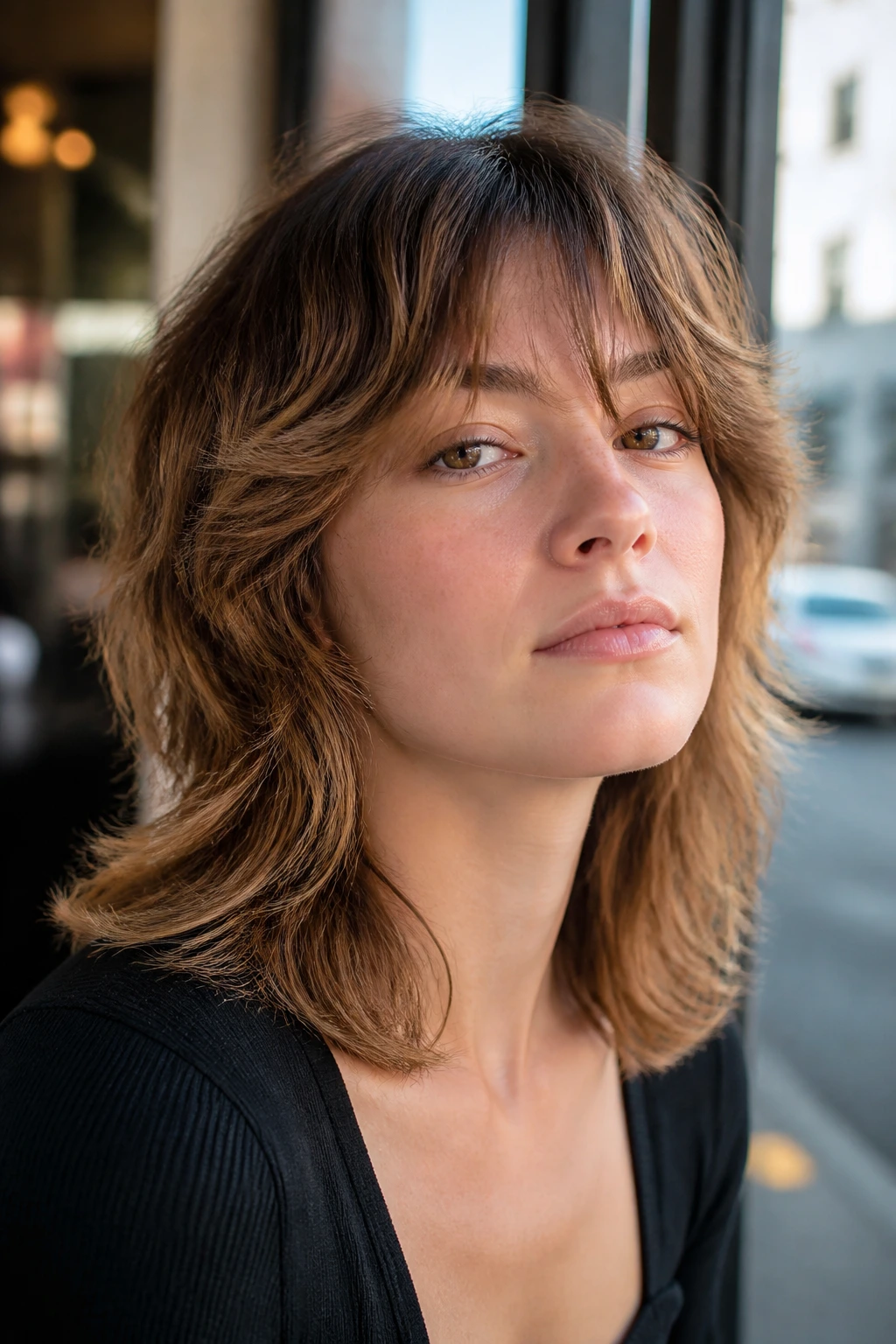
If you like the ends to kick out a little, this is your lane. A razor-cut shag gives the perimeter a softer edge, and on wavy hair the ends can flip in a way that looks airy instead of accidental.
The flip-out effect works best when the layers are cut to support it, not fight it. That means the lower pieces should be light enough to move, but not so thin that they separate into fuzz. The trick is to let the hair bend where it naturally wants to bend.
This cut looks especially good with a bit of texture spray through the mids and ends. Not too much. Just enough to show the shape. If you like a little movement around the jaw and collarbone, this one has a nice rhythm to it.
20. Beachy Sunlit Shag
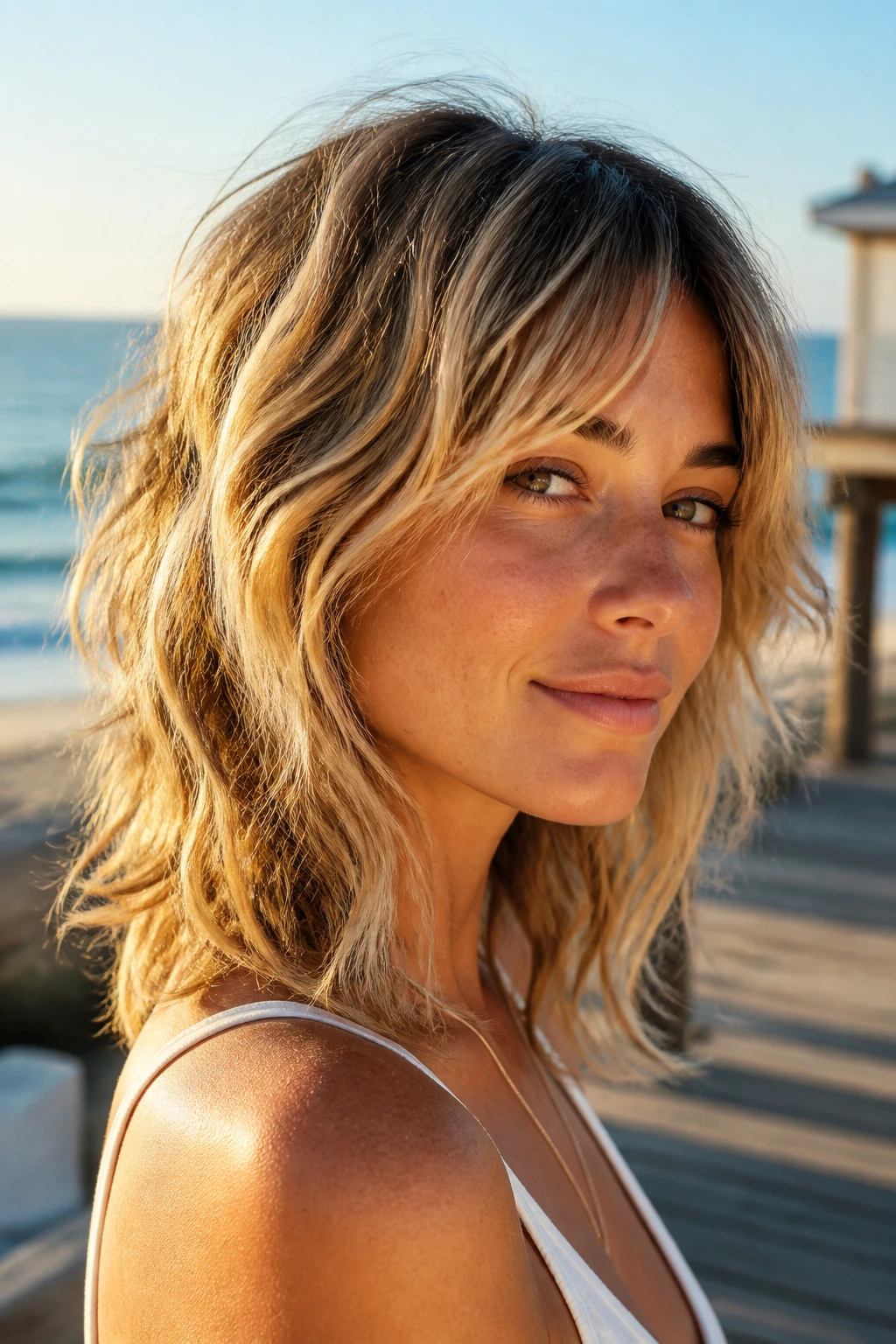
“Beachy” gets overused so often it starts to mean nothing, but in this case it fits. The haircut has lighter layers around the face, a soft perimeter, and enough movement to let wavy hair fall into loose, sun-touched pieces without looking overworked.
What makes it work is restraint. The layers should feel natural, almost accidental, with no hard steps or razor-thin bits at the ends. If your hair is darker, this cut pairs well with subtle color placement, but the shape itself carries the style even without that.
It’s a good choice if you want something relaxed and unfussy. The haircut has to hold up when the wave dries at different speeds, and this one does that better than overly polished layered cuts usually do.
21. Thick-Hair Weight-Removed Shag
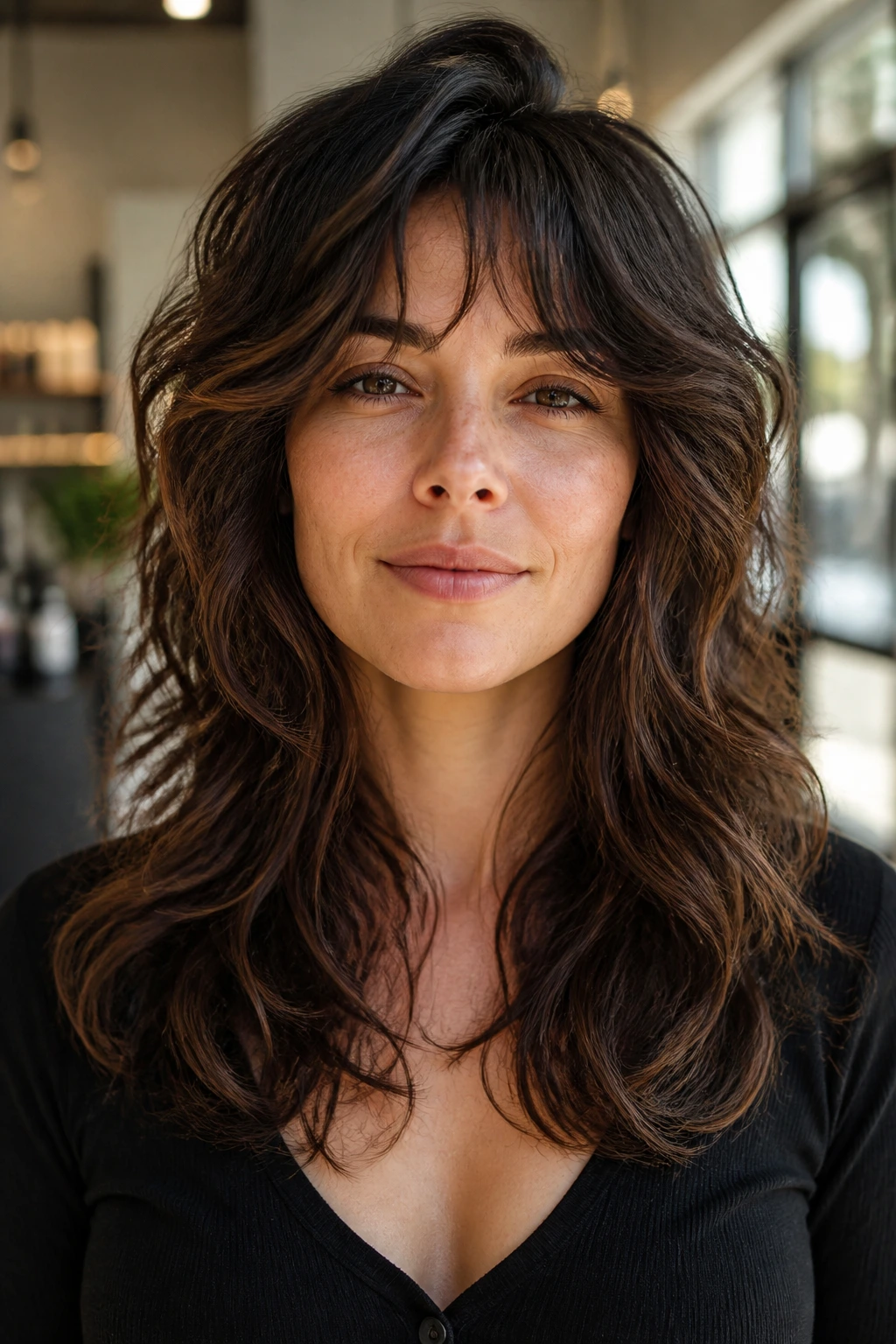
Thick wavy hair needs a different kind of shag. Not more layers everywhere. Smarter layers, placed where the bulk actually sits. That usually means the interior and underlayers, not just the surface.
When thick hair gets too much texturizing near the ends, it can puff like a bell. When it gets too little, it sits heavy and wide. The right version removes enough weight for the wave to bounce, but leaves enough substance that the cut doesn’t look shredded.
If your hair takes forever to dry, this is one of the best versions to consider. It cuts down on that heavy, damp feeling in the bottom half. And it makes the haircut easier to style because the hair stops fighting itself so much.
22. Fine-Hair Lifted Shag

Fine wavy hair needs a gentler hand. Too many layers and you lose the very thing you wanted: body. The better shag for fine hair keeps the layers longer, lifts the crown carefully, and preserves enough bottom weight to make the ends look full.
I’d avoid anything too choppy here. Fine waves can turn stringy fast if they’re over-cut. Instead, ask for internal shaping and a soft face frame that starts lower than you think it should. That keeps the hair from feeling skinny around the jawline.
This cut can look excellent with a little mousse at the roots and a diffuser on low heat. The goal isn’t big, teased volume. It’s a clean, airy shape that makes the hair look like it has more of it than it does.
23. Wash-and-Go Shag
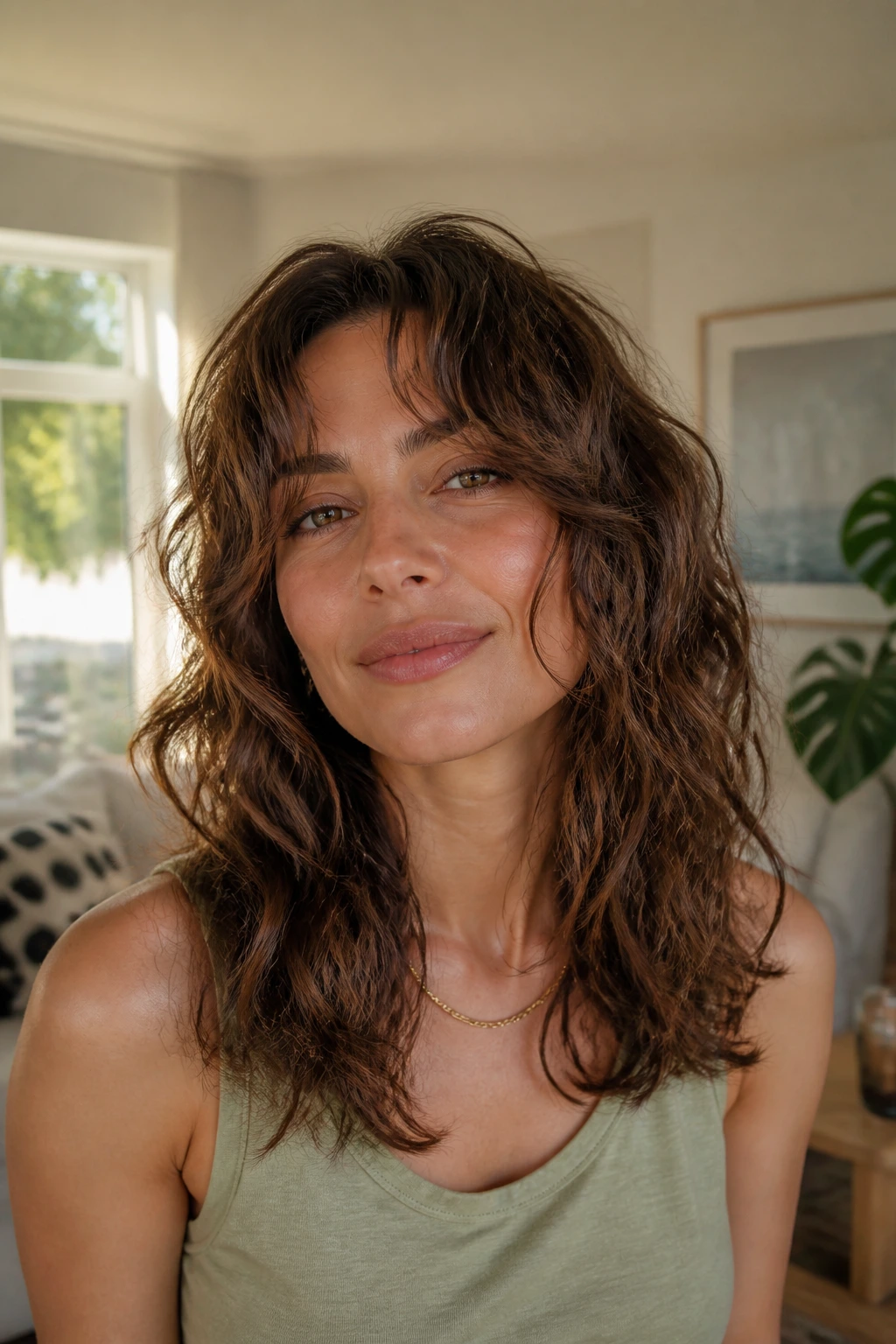
Some haircuts need a full styling routine to make sense. This is not one of them. A wash-and-go shag is cut so the wave pattern drops into place with minimal interference, which makes it ideal for people who do not want to spend twenty minutes arguing with a blow dryer.
The shape usually relies on soft layers and a friendly perimeter rather than aggressive texturizing. That lets the hair dry in pieces instead of turning into one flat curtain. If your waves are loose, this can be a lifesaver. If they’re denser, it still works as long as the bulk is controlled.
The secret is to keep the cut forgiving. If the style needs a perfect part and three products to behave, it isn’t wash-and-go. It’s just needy hair with good PR.
24. Micro-Fringe Shag

Micro fringe is not subtle. That’s the point. A short fringe paired with shag layers gives wavy hair a strong front edge and a little bit of attitude without needing much length around the face.
The biggest thing to watch is proportion. With waves, micro bangs can shrink when dry, so they need to be cut with that bounce in mind. The rest of the shag should stay soft enough to balance the sharper forehead line.
This works best if you like hair that reads as a choice, not an accident. It’s a bit more editorial, a bit more stubborn, and more flattering than people expect when the fringe length is tuned properly to the wave pattern.
25. Face-Framing Midi Shag

A midi length sits around the shoulders or just below, which makes it one of the most adaptable shag shapes around. The layers open the face, the length keeps options open, and wavy hair gets enough room to move without getting swallowed by gravity.
What makes this version stand out is the frame around the face. The front pieces should slide down smoothly from the cheekbones and into the rest of the length. That keeps the cut from feeling boxy. It also makes the waves around the front look more defined, which is a nice bonus.
If you like changing your part or tucking your hair behind one ear, this one handles that well. It shifts without losing its shape. That’s a good haircut trait, full stop.
26. Deep Side-Part Shag
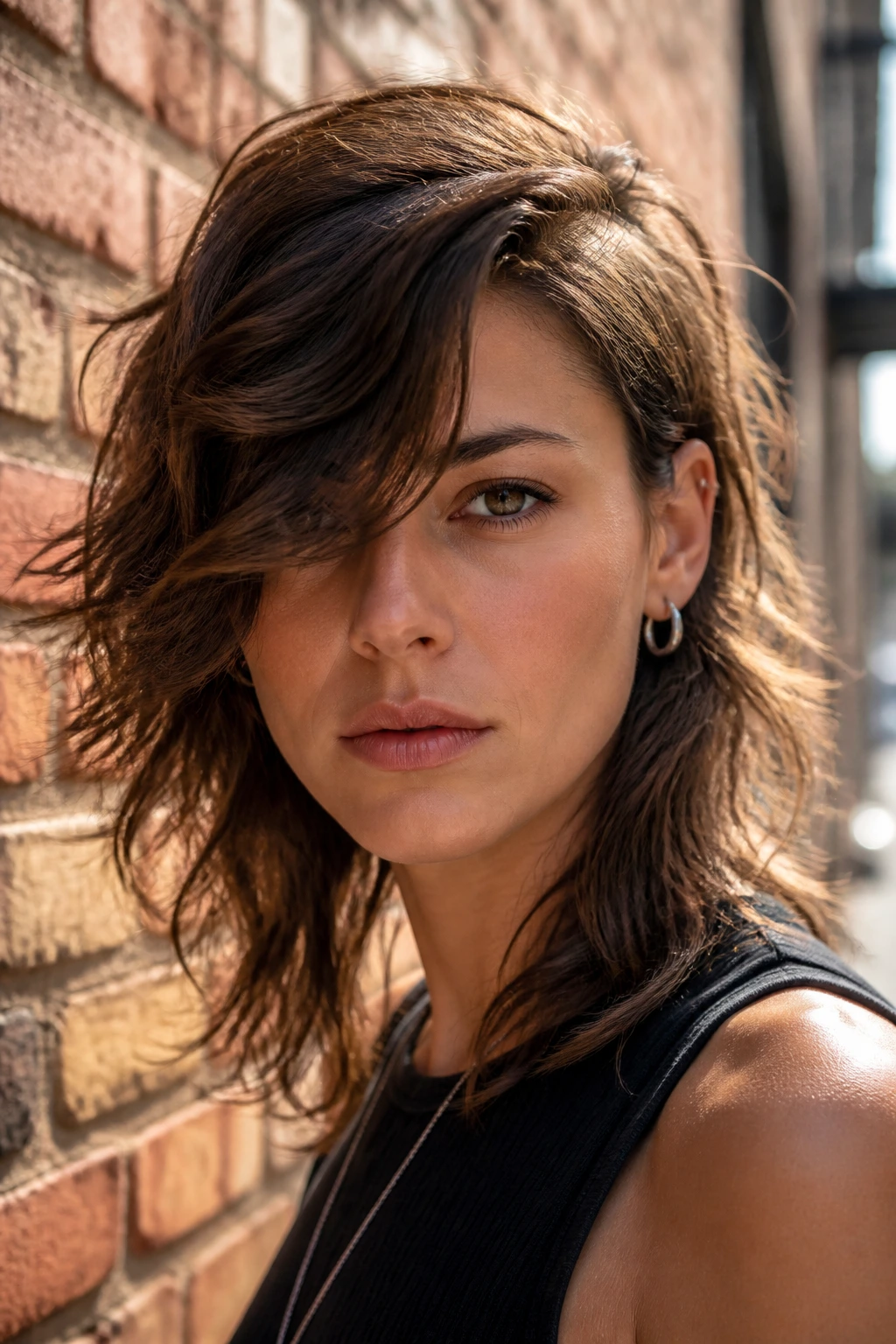
A deep side part can make a shag feel far more dramatic without changing the cut much at all. The hair falls with more height at the roots, more sweep across the forehead, and a little asymmetry that gives wavy texture extra personality.
This is useful if your waves go flat in the center or if you want the cut to look fuller on one side. The parting line changes the whole balance of the style. Suddenly the layers feel softer, the fringe feels longer, and the wave pattern has a chance to stack in a more interesting way.
It’s also one of the easiest low-commitment changes you can make. You don’t need a new haircut to test the shape. You just need to move the part and see what happens.
27. Soft Wolf Cut
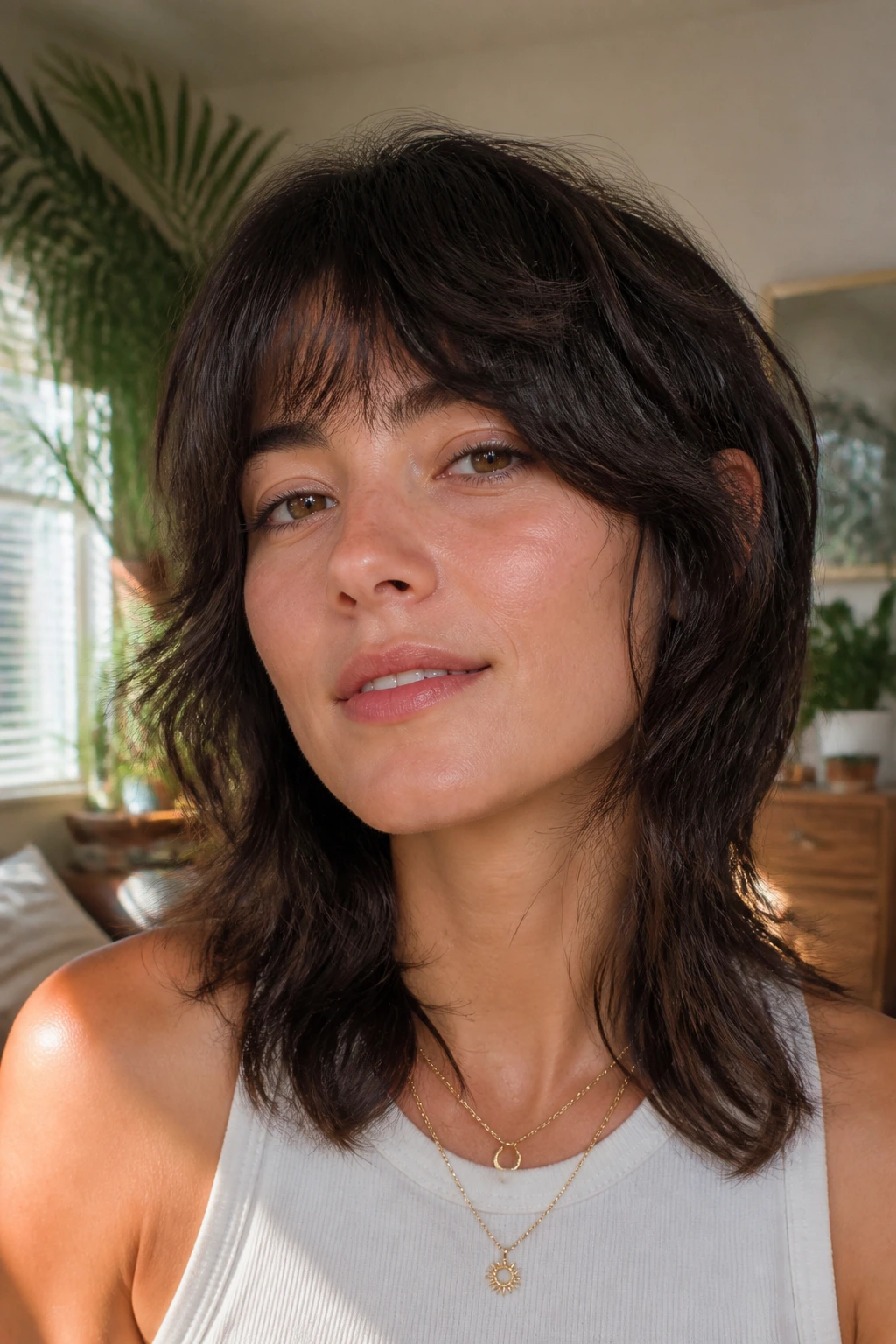
The soft wolf cut is for people who like the wolf cut idea but don’t want the full bite of it. The crown still gets some lift, the nape stays longer, and the whole cut feels more wearable because the transitions are less harsh.
Wavy hair is a good match here because it softens the contrast between short and long. You get movement without the extreme spikiness that straight hair can show. The shape becomes more of a loose frame than a sharp statement.
If the classic wolf cut feels a little too edgy for your day-to-day life, this is the version to try. It keeps the attitude, but it drops the chaos a notch. Sometimes that’s exactly the right call.
28. Sliced-Ends Shag

Sliced ends give the haircut a lighter finish without making it look ragged. The layers separate in a way that lets wavy hair fall into defined pieces, especially if the ends tend to clump together after washing.
This cut is useful when you want movement at the bottom but not too much bulk removal through the body. The ends do the visual work. They flick, bend, and separate just enough to keep the shape from feeling heavy.
I like this on medium-length hair because it keeps the outline readable. If you’ve had shags that looked too broken up at the bottom, this version is a calmer answer. It still moves. It just moves with a little more control.
29. Air-Dried Natural Shag

This one is built for the way real people live. If you want a cut that still makes sense when you step out of the shower and leave it alone, the air-dried natural shag is the place to look.
The layering should be soft enough to encourage natural bends, with enough face framing to keep the front from going flat. That balance matters most in the first hour after washing, when wavy hair is deciding what kind of day it wants to have. A good air-dried shag gives it a useful answer.
It works best when you stop touching it too early. Let the wave set, let the shape form, then break up the ends a little with your fingers. That’s plenty.
30. Classic Rocker Shag
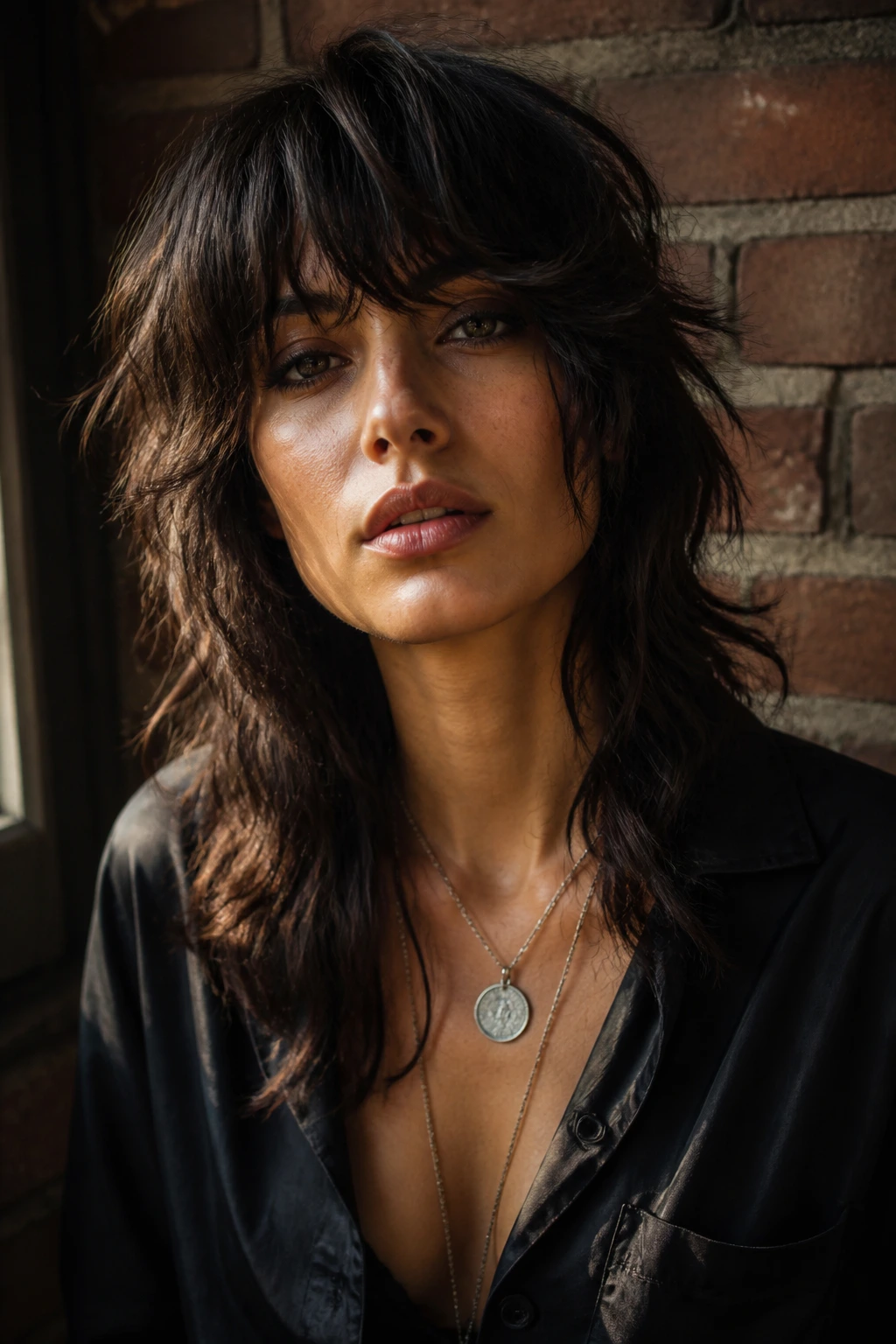
This is the loudest, most unapologetic version here. Full fringe, choppy movement, lots of texture through the ends, and just enough roughness to feel lived-in without looking sloppy.
Wavy hair helps this cut because the natural bend stops the layers from looking flat or forced. The fringe should sit strong across the forehead, the sides should feather outward, and the ends should have that slightly broken-up feel that keeps the whole thing moving.
If you want a shag with real attitude, this is the one. It’s not subtle, and it doesn’t try to be. But it still needs precision. The best rocker shag looks wild because the shape is controlled underneath. That’s the whole game.
How Shag Haircuts for Wavy Hair Stay Light Instead of Puffy
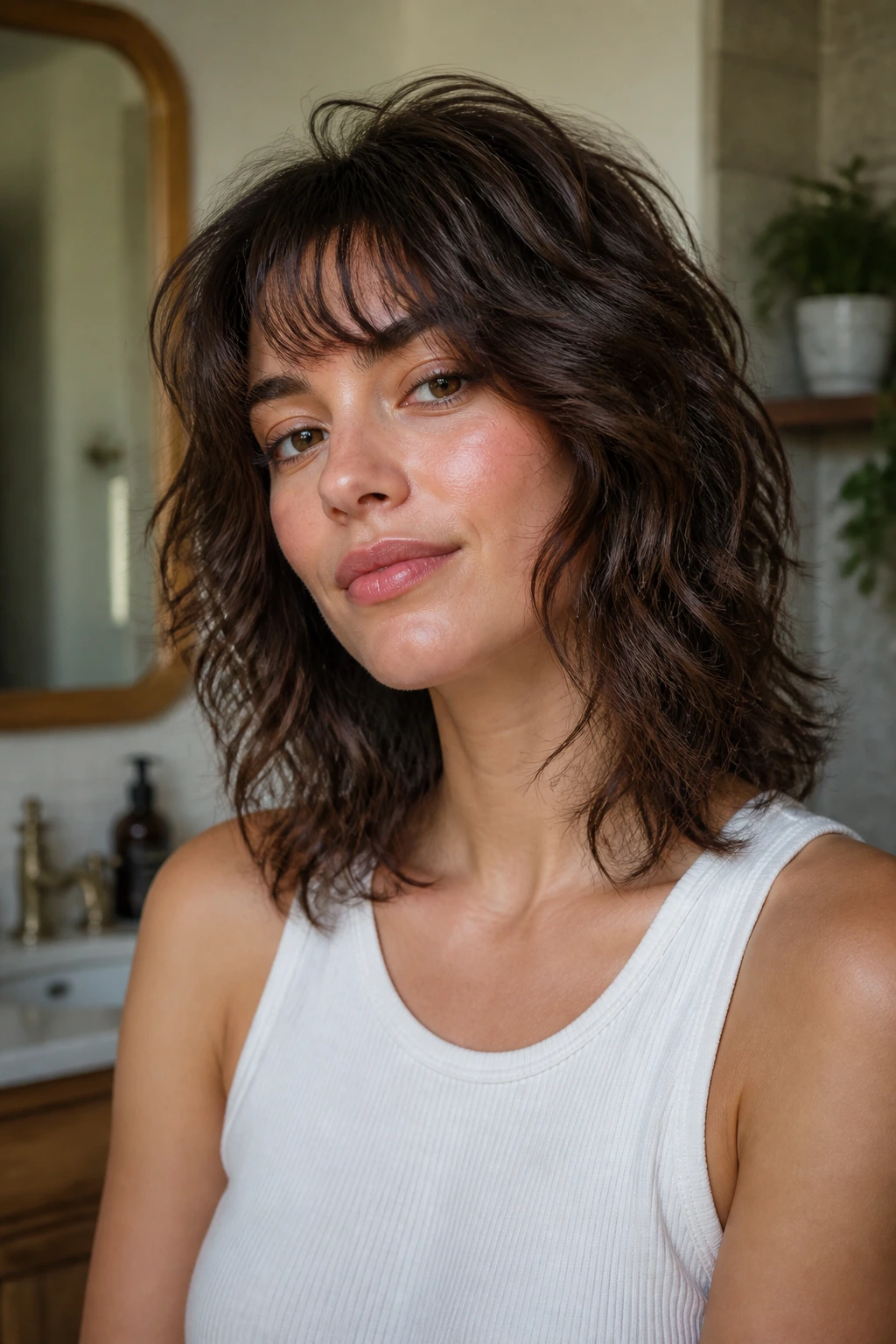
The reason some shags work and others just explode is weight distribution. Wavy hair needs room at the crown and through the mids, but it also needs enough length at the perimeter to keep the shape from puffing outward. If you take too much from both places, the cut loses structure and starts frizzing up at the edges.
A clean shag is not about making everything choppy. It’s about deciding where the wave should sit. Longer pieces near the bottom keep the outline grounded. Shorter pieces around the face and crown give the hair a lift point, so it doesn’t drag at the roots. That’s why a good shag can look easier than a blunt cut even though it has more layers.
I also like this kind of haircut because it takes humidity a little less personally. No haircut can ignore damp air, but one with intelligent layers tends to expand in a more forgiving way. It bends. It doesn’t balloon. Big difference.
What to Tell Your Stylist Before the First Snip

Bring photos, but bring the right photos. A front shot alone won’t tell anyone how short the crown is, how full the sides are, or whether the bangs hit the cheekbones or the bridge of the nose. Side and back views matter here.
Say how your waves behave when they’re clean, not just when they’re styled. Do they flatten at the root? Do they clump at the ends? Do they puff at the sides after an hour in the humidity? Those details help more than saying you want “something textured.” That phrase is too vague to be useful.
Say the shape, not just the style
If you want soft, ask for soft. If you want edge, say you want sharper layering and a stronger fringe. Stylists can work with that. “Shag” covers a lot of territory, and the haircut changes fast depending on how short the top layers are.
Be honest about your routine
If you air-dry most days, say so. If you own a diffuser but hate using it, say that too. A shag can be low-maintenance, but only if the layers are placed for the way you actually live, not the way a photo suggests you live.
Tools That Keep the Shape Easy to Wear
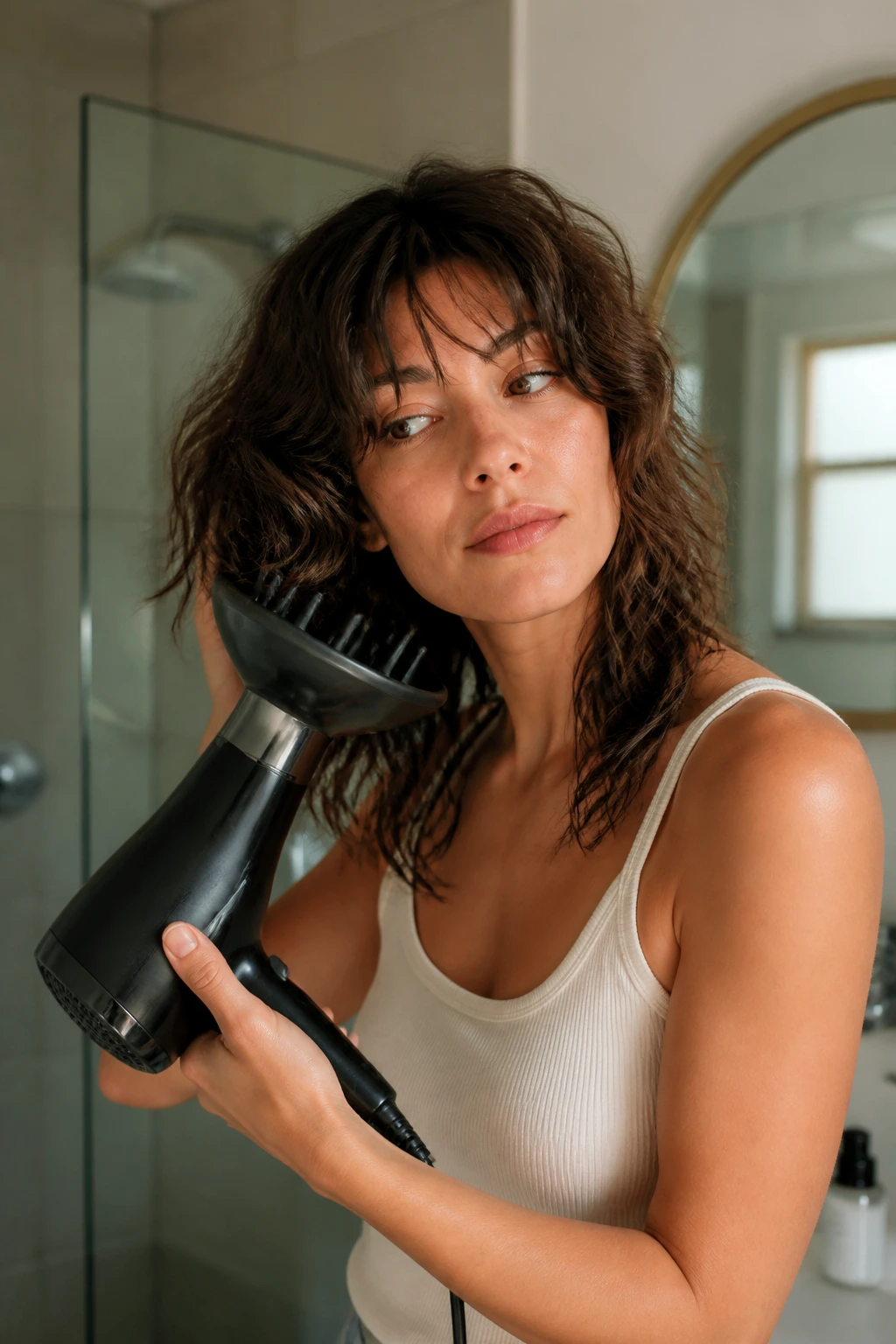
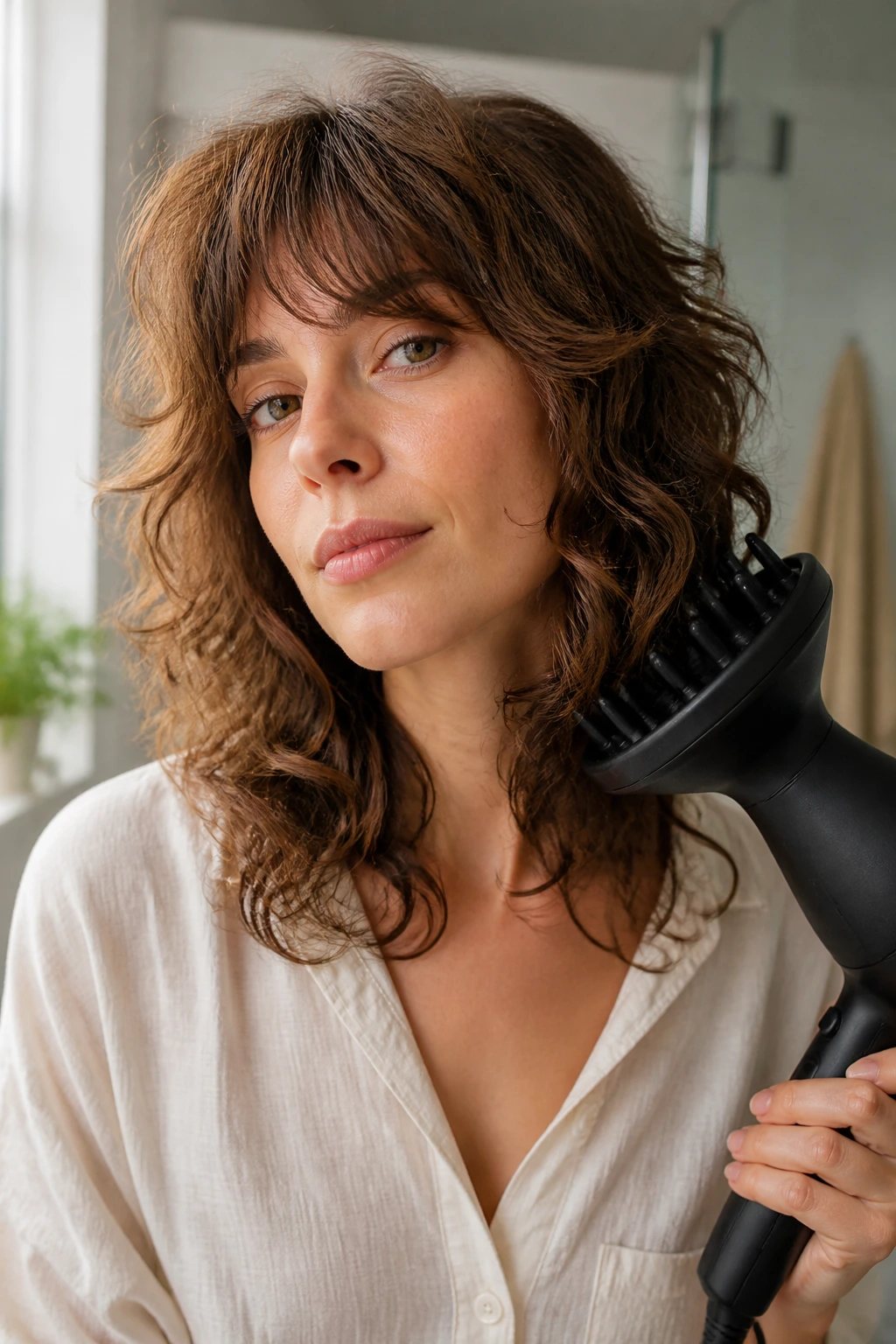
- A blow dryer with a diffuser: Helps waves dry with less frizz and more bend at the root.
- A wide-tooth comb: Good for distributing conditioner and detangling without pulling out the wave pattern.
- Sectioning clips: Handy if you diffuse in sections or want to set the fringe away from the face while it dries.
- A small round brush: Useful for curtain bangs, bottleneck bangs, and any front layers that need a little curve.
- Lightweight mousse: Gives lift without the sticky, crunchy feel that heavy gels can leave behind.
- Texture spray: Works well on dry hair when you want the ends to separate a bit more.
- Dry shampoo: Keeps the crown from going limp on day two or three.
- A hand mirror: Worth it if the back layers matter to you; shag shape can shift from the rear in ways the front never shows.
Products That Actually Help Wavy Shags Behave
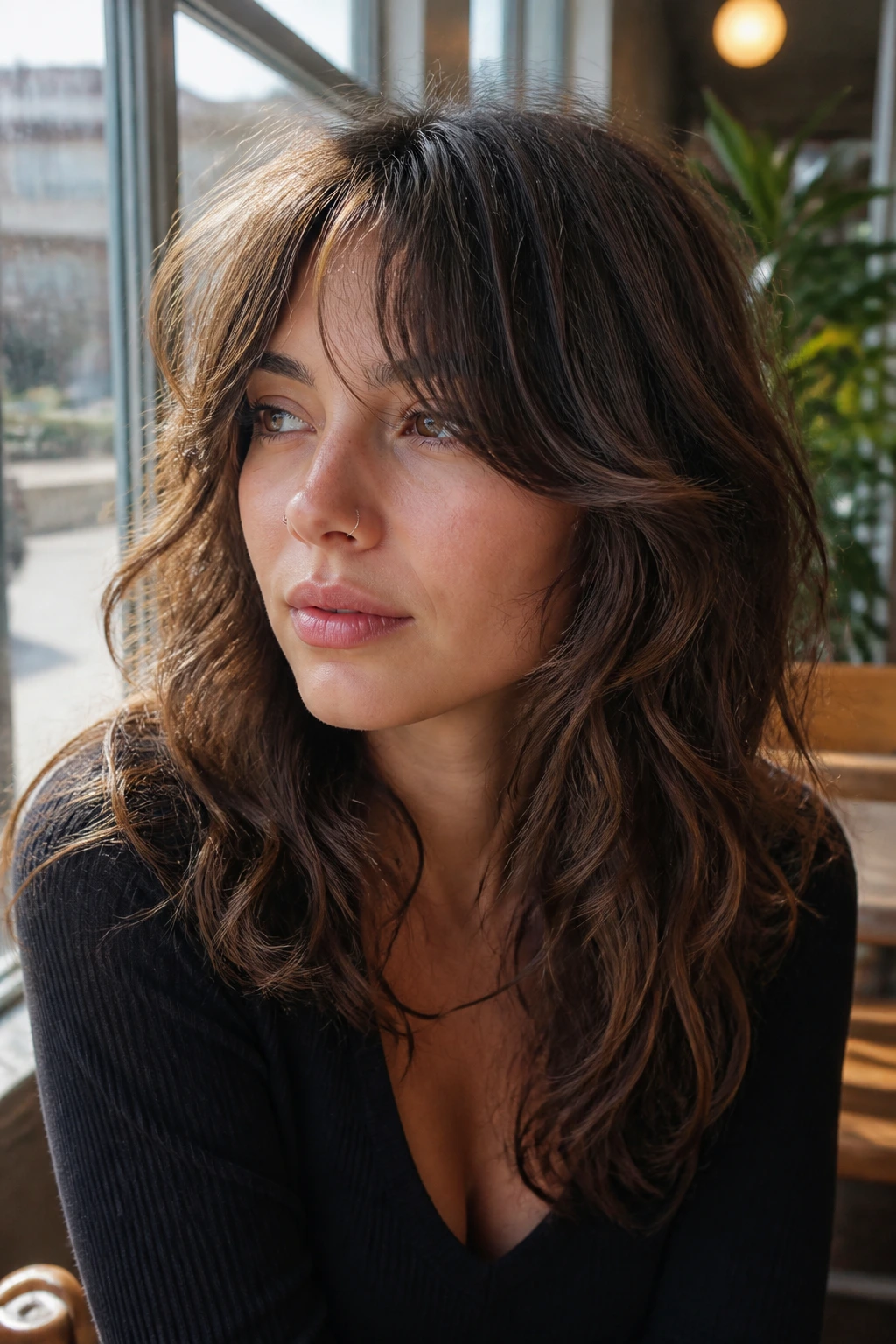
The product choice matters more than people think. A shag haircut can still fall flat if you drown it in the wrong thing. Heavy creams, thick oils, and too much leave-in conditioner tend to drag the wave down and flatten the movement you paid for.
For fine wavy hair, a light mousse at the root and a touch of texture spray at the ends usually does more than a rich curl cream. For thicker hair, a small amount of cream can help tame the rougher outer layer, but it should be used sparingly. Think small palmful, not a generous puddle.
Sea salt spray can work, but it’s not a miracle. Too much makes the ends feel crisp and thirsty, which is a fast way to get that frizzy, dried-out look people mistake for texture. Better to use it lightly and finish with a small amount of oil on the very ends if needed.
How to Style a Shag Without Flattening the Wave
Air-dry smart
Start with damp hair, not soaking wet hair. Scrunch in a light mousse or leave-in, then let the hair dry in a loose, natural shape. If you keep touching it while it’s half-dry, you’ll pull the wave apart and create frizz where you wanted definition.
Diffuse without blasting it
Use low heat and low speed. Cup the ends in the diffuser, lift the roots, and hold each section until it’s mostly dry before moving on. Hot, fast air tends to rough up the surface and make shag layers frizzier than they need to be.
Refresh day two
A tiny bit of water on your hands, a quick scrunch at the ends, and a touch of dry shampoo at the crown usually does more than starting over. You do not need to rewash every time the shape softens. Sometimes the haircut just needs a small reset.
Small Upgrades That Change the Mood
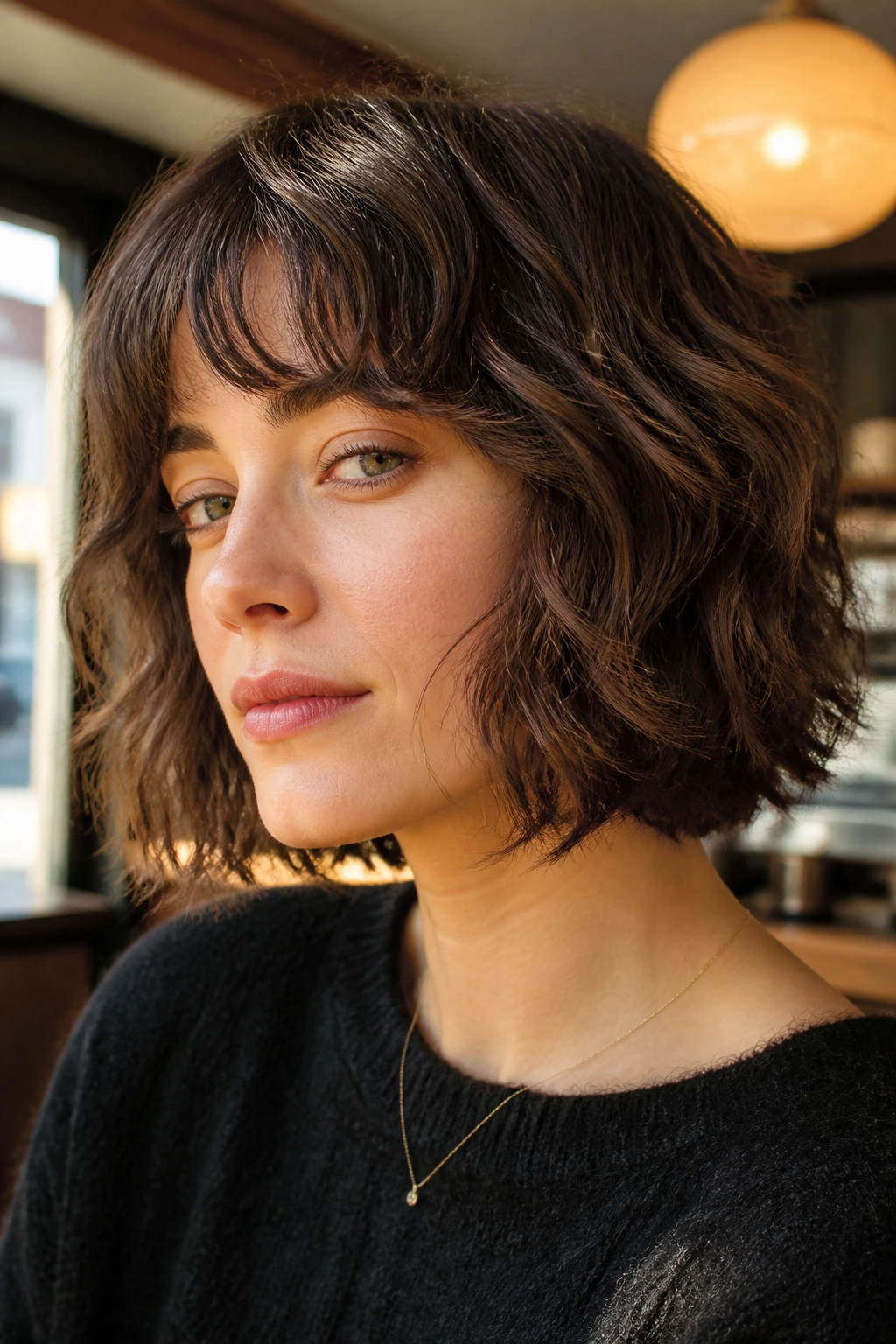
Face Framing: Move the shortest layers a little higher if you want more cheekbone focus, or keep them lower if you want the cut to feel softer and less spiky.
Parting: A center part gives a shag a cleaner, calmer look. A deep side part makes it feel fuller and a little more dramatic. Same cut. Different attitude.
Fringe Choice: Curtain bangs read softer. Heavy bangs read bolder. Micro bangs read sharper and need more confidence because they do not blend into the rest of the haircut quietly.
Weight Distribution: Thick hair usually needs weight removed underneath. Fine hair usually needs more left at the bottom. That one decision changes whether the haircut floats or frays.
Common Mistakes That Flatten the Shape

- Over-layering the crown: The hair lifts at the top and goes thin everywhere else. The fix is to keep the crown layers longer and remove bulk lower down instead.
- Texturizing the ends too much: The cut starts to look fuzzy and dry, especially on fine waves. Stop before the bottom edge loses its shape.
- Choosing fringe that ignores your wave pattern: Bangs shrink when they dry. If your hair bends a lot, your fringe needs that extra length allowance.
- Loading on heavy product: Waves go limp, the layers stick together, and the cut loses the airy separation that makes it work.
- Skipping trims for too long: A shag that grows out can become shapeless fast if the front layers drop into your eyes and the crown loses lift.
- Asking for “more texture” without specifics: That phrase can mean ten different things. Say where you want movement and where you want to keep weight.
Variations and Adaptations to Try

Office-Friendly Shag: Keep the layers longer, the fringe softer, and the ends less choppy. You still get movement, but the cut reads cleaner in a ponytail or tucked behind the ears.
Big-Texture Weekend Shag: Ask for stronger layers, a looser fringe, and a little more removal around the crown. This version looks best with diffuser drying and texture spray, not brushed-out smoothness.
Fine-Hair Lift Shag: Preserve the perimeter and use internal layers only where the hair collapses. That keeps the cut from thinning out too much while still giving it lift at the roots.
Thick-Hair Release Shag: Remove bulk underneath and through the mids so the wave can spring. Thick waves often need less length at the crown and more control at the bottom edge.
Low-Maintenance Air-Dry Shag: Keep the layer transitions soft and the face frame long enough to settle naturally. This is the version that looks good when you do almost nothing, which has a certain honesty to it.
Keeping the Cut in Shape Between Appointments
Shags usually need shape maintenance more often than a one-length cut, but not by much if the layering was done well. Bangs may need a trim every 4 to 6 weeks, especially if they sit near the eyes or split awkwardly when they dry. The rest of the cut can often go 8 to 12 weeks before it starts losing the point of the shape.
If your wave pattern changes in humidity, don’t wait for the haircut to look bad before refreshing it. A light mist of water, a small amount of mousse, and a quick diffuser pass on the front layers can bring the shape back without a full wash. Second-day shag hair often looks better than first-day hair anyway, especially if the ends have had time to settle.
The grow-out phase is worth thinking about, too. A well-cut shag should soften rather than collapse as it gets longer. If the front starts dropping into your face or the crown gets too flat, that’s your signal to trim, not to panic.
Questions People Ask Before They Book a Shag
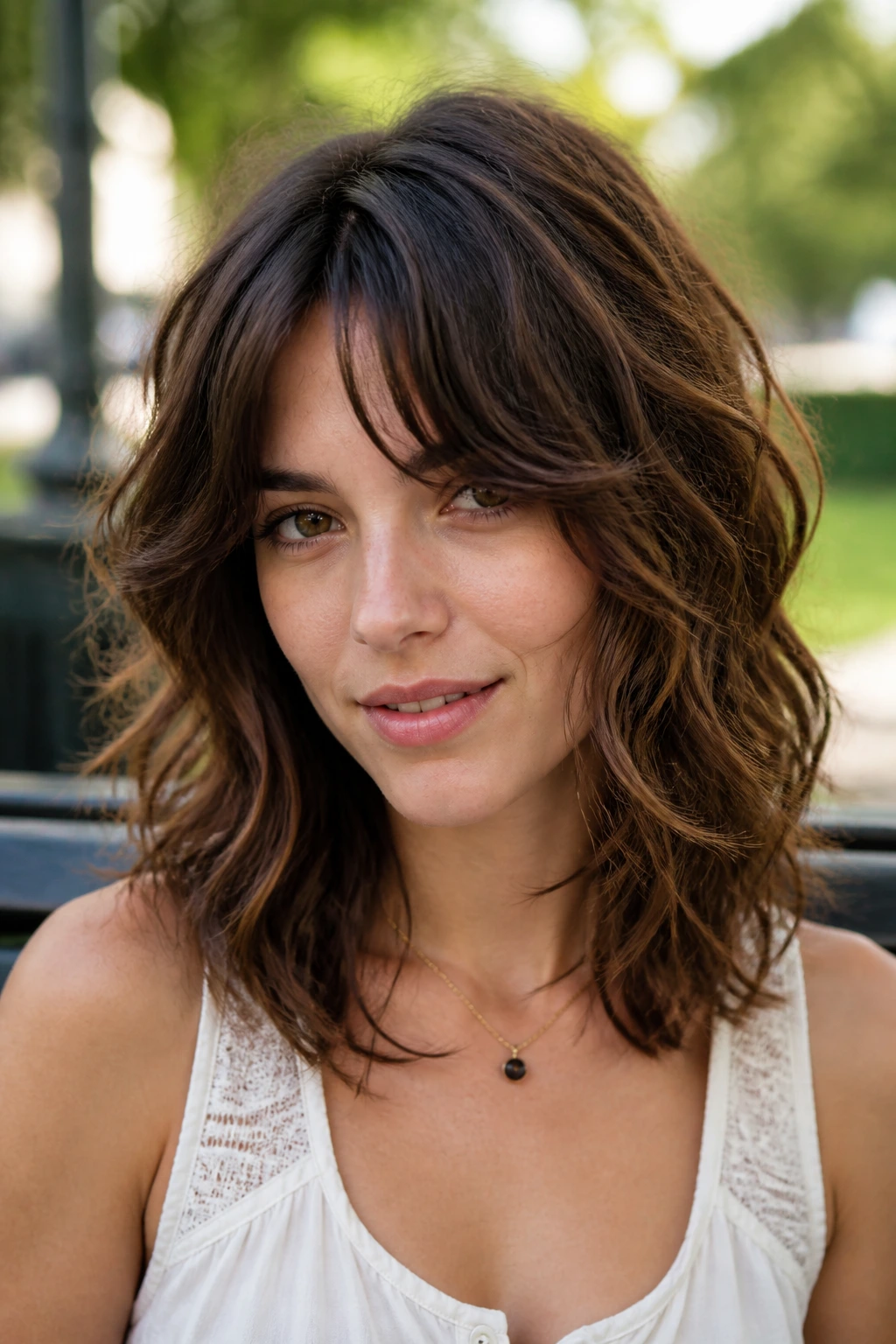
Will a shag work if my waves are loose, not curly?
Yes. Loose waves are often the best match because the cut adds shape without fighting the natural bend. You may need a little mousse or texture spray, but not a heavy styling routine.
What’s the difference between a shag and a wolf cut?
A wolf cut usually has more obvious contrast between short crown layers and longer ends. A shag can be much softer and more blended, which is useful if you want movement without the sharper mullet feel.
Should I get bangs with a shag?
Not automatically. Bangs help if you want the cut to frame your face more strongly, but a shag can work with no fringe at all. If your waves are unpredictable in the front, soft curtain bangs are safer than blunt ones.
Can a shag work on fine hair?
Yes, but the layers need restraint. Too much removal makes fine waves look thin and stringy. Ask for lift, not thinning.
How do I keep the shape from getting puffy?
Don’t strip too much weight from the bottom and don’t pile on heavy product. A light mousse, low-heat diffusing, and regular trims usually keep the shape calmer.
Can I air-dry a shag and still look polished?
You can, as long as the cut was shaped for that routine. Put product in while the hair is damp, scrunch once or twice, then leave it alone. Constant touching is what ruins the finish.
What if I hate the short layers once it grows out?
That’s one reason shag haircuts are useful: they soften as they grow. If you want less edge, ask for longer blending at the crown and face frame so the grow-out is less abrupt.
A Cut That Lets Waves Move

The nice thing about a shag on wavy hair is that it doesn’t ask your texture to become someone else. It gives the wave a better outline, some lift at the root, and a softer place to land at the ends. That’s enough to change the whole feel of the haircut.
If you’re sitting between wanting more shape and not wanting more fuss, this is a good place to land. The right version will make your waves look deliberate on clean hair, messy hair, humid hair, and that in-between day when you’ve done almost nothing except run your fingers through it. That’s the kind of haircut that earns its keep.
