



A silver pixie cuts through clutter fast. The color is cool, yes, but the real reason it looks sharp is the shape: a clean nape, a controlled crown, and a tone that stays pale enough to read silver instead of beige. Miss one of those, and the whole cut goes fuzzy in a week.
That’s the part people miss. Short hair gives you nowhere to hide, which is why silver on a pixie can look expensive in daylight and a little ruthless under bathroom lighting. If the blond base isn’t light enough, the toner won’t save it. If the fringe fights your cowlick, the edge starts to feel accidental.
These 20 silver pixie cuts lean into different moods—sharp, soft, smoky, choppy, curly, and a few that sit somewhere in between. Some are the sort of cut you wear with a black turtleneck and tiny hoops. Others work better when you want the silver to feel a little lived-in. Either way, the best ones have one thing in common: they know exactly where the line is.
Why These 20 Silver Pixie Cuts Feel Different on Real Hair
-
Shape first: The strongest silver pixie cuts use the haircut to create the mood, not the color alone; a tapered nape or a deliberate fringe gives the silver somewhere to land.
-
Tone control matters: A clean silver usually starts with a pale yellow base and a toner that pulls blue-violet or smoky rather than yellow-beige, which keeps the finish crisp instead of flat.
-
Short length keeps styling honest: A pixie only takes a small amount of product, so you can’t hide behind heavy creams, sticky sprays, or big curls that mask the outline.
-
The grow-out can look intentional: A soft root shadow, a bit of extra length at the temple, or a feathered crown makes the style behave nicely between cuts.
-
Texture changes the whole mood: The same silver can read sharp, soft, punky, or polished depending on whether the finish is matte, glossy, or piecey.
-
It works across hair types: Straight hair gets clean edges, wavy hair gets movement, curls get shape, and thick hair gets relief when the haircut is built with some thought.
What Makes a Silver Pixie Read Modern
Short hair tells the truth fast.
Silver hair tells it faster.
If the outline is fuzzy, the whole look slips backward a decade. If the crown is too flat, the color starts to feel like an afterthought. A modern silver pixie needs one strong decision at the front, one clean finish at the nape, and enough texture to keep the head from looking like one smooth helmet.
The best versions usually leave a little shadow at the root. Not black roots screaming through the top. Just enough depth to give the silver a spine. That small strip of darkness makes the tone look expensive and keeps the cut from floating.
Texture matters just as much. A modern pixie can be sleek, but it should still look shaped by a real hand. A rough-dried crown, a side part that sits a little off-center, or a fringe that falls with purpose can make the difference between “finished” and “fresh out of the salon chair with no plan.”
1. Icy Micro Pixie With a Clean Nape
This is the cut for people who like a line with teeth. The nape sits close, the sides stay narrow, and the top is cropped short enough that the silver reads as a color story, not a mop of pale hair.
Why it works
A micro pixie gives silver room to look deliberate. When the back is tapered tight and the crown stays compact, the eye sees the shape first and the color second, which is exactly what you want if your silver leans icy. Ask for about 1 to 1½ inches on top and a close taper at the neckline; any longer, and the silhouette starts to lose that crisp edge.
- Best on fine to medium hair that likes to lie flat.
- Pairs well with strong brows and sharper cheekbones.
- Needs a tiny amount of paste or cream, no more.
- Keeps its shape with a trim every 4 to 5 weeks.
My take: if you want silver hair that still looks clean after a windy commute, this is the one.
2. Side-Swept Silver Pixie With a Long Fringe
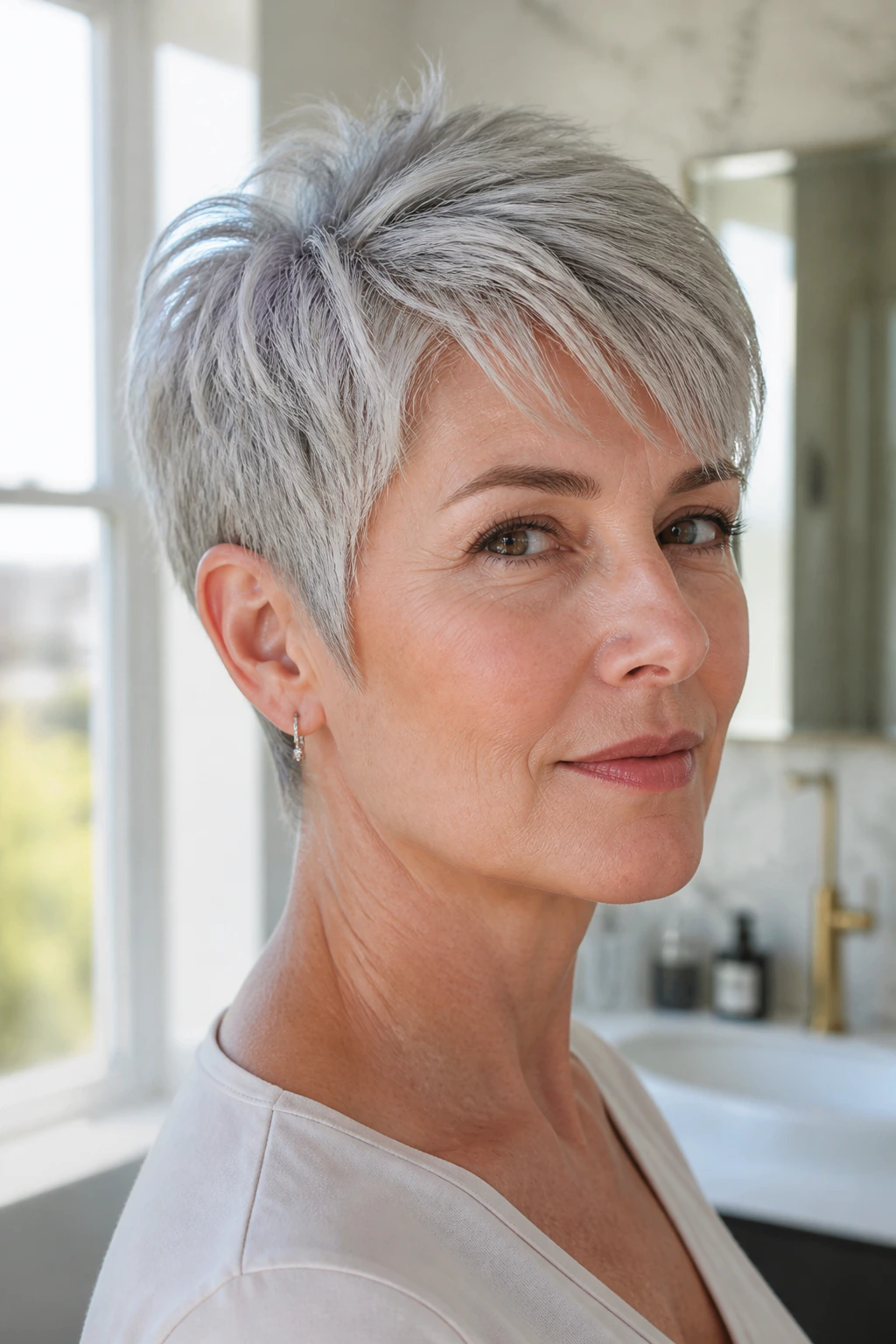
A long fringe changes the whole mood. Instead of exposing the whole forehead at once, this version lets the silver fall diagonally across the face, which softens the cut without making it sleepy.
The trick is length control. Keep the front long enough to tuck behind one ear or sweep across the eyebrow, but not so long that it drags into bob territory. Once the fringe passes the cheekbone and starts folding into itself, the shape loses the clean pixie line.
A small round brush helps here, but so does a blunt honest opinion from your stylist. If your hair grows forward hard at the front, ask for a bit of disconnection so the fringe can move instead of splitting down the middle.
3. Tapered Crown-Lift Silver Pixie
Need height without the helmet effect? This one gives it to you. The sides and back stay close, while the crown gets lifted and lightly layered so the top has air.
That crown volume is what keeps the silver from lying dead against the scalp. A little mousse at the roots, a blow-dry with the nozzle aimed upward, and a quick cool shot at the end can make the whole cut stand up with almost no drama. If you have flat hair, this is one of the best silver pixie cuts to ask for because the shape does some of the styling work for you.
How to wear it
Try a soft side part and sweep the crown backward with your fingers. You want lift, not perfection. Too much polish can flatten the top and turn the color into one big matte sheet, which is not the move.
4. Smoky Silver Pixie With Dark Roots
If you hate seeing a hard line at the scalp, this is the smartest version on the list. The root shadow gives the silver somewhere to start, and that smoky depth makes the whole cut feel easier to live with.
It also solves the grow-out problem. Instead of a bright stripe of regrowth showing up at the part line, the darker root melts into the silver, so you can stretch time between toning appointments without looking unfinished. The effect is cleaner when the root is soft, not chunky. Ask for a gentle melt through the first half-inch to inch, then let the silver brighten through the mid-lengths and ends.
This version suits people who like a cool tone but don’t want their hair to look like it was aired under stadium lights.
5. Choppy Razored Silver Pixie
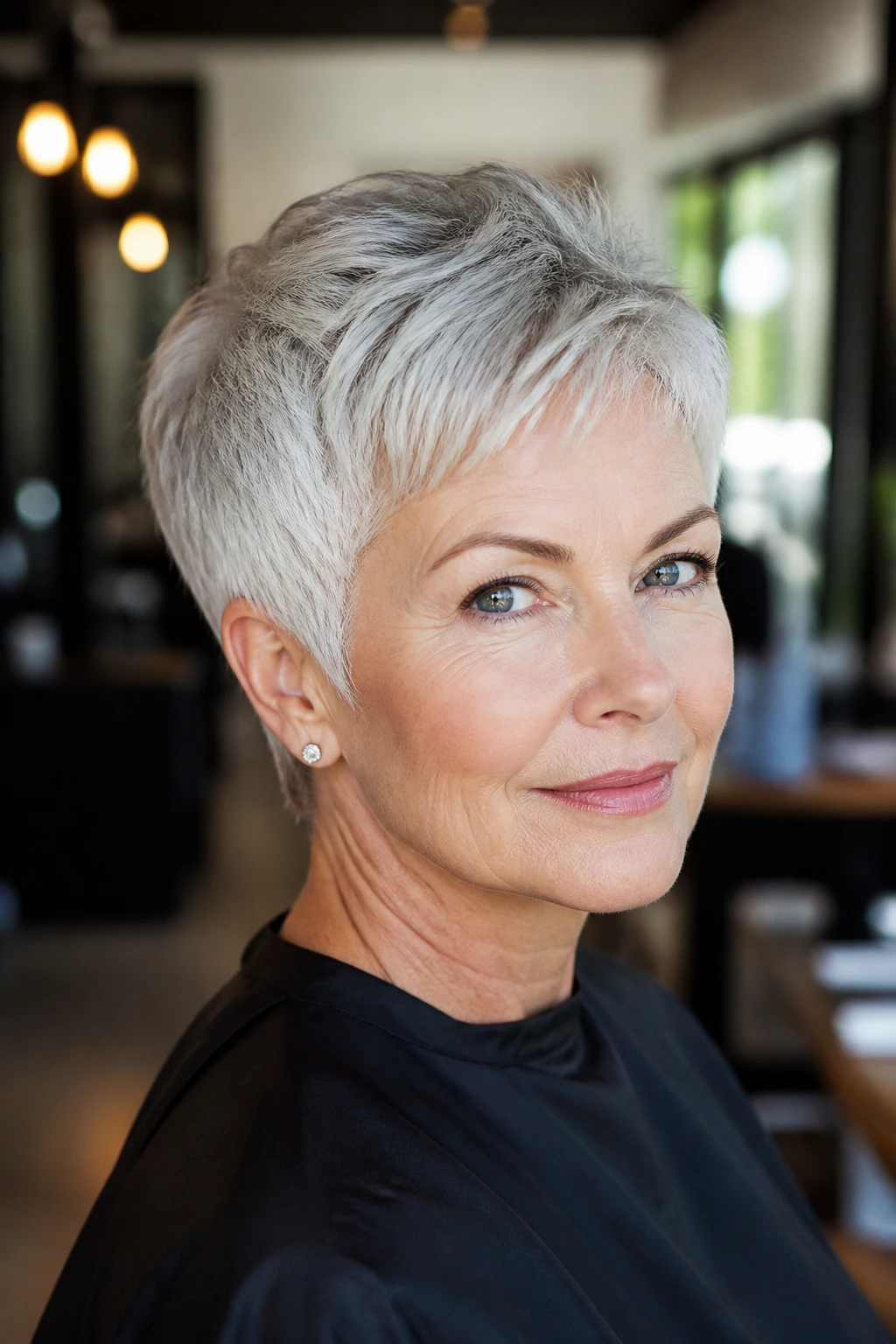
Unlike a blunt pixie, this one wants movement. The razored ends and choppy layers make the silver break up into tiny flashes of light, which is a nice way to keep dense hair from feeling heavy.
The cut works because the texture does the hard part. A razor or slide-cut finish can remove bulk without destroying the outline, especially around the crown and the nape. If your stylist reaches for thinning shears on already-fine hair, pause. That can make the ends too soft and leave the top with no body at all.
For styling, use a matte paste and pinch the ends into place with your fingertips. It should look touched, not sculpted.
6. Curly Silver Pixie With Airy Shape
Curly silver hair needs a different kind of respect. The perimeter has to stay soft enough for the curls to spring, or the shape gets boxy fast. That’s why this pixie works: it follows the curl pattern instead of fighting it.
Ask for the cut to be shaped with the curls dry if your stylist knows how to do it. Wet cutting can hide where the curl wants to sit, and once the hair dries, the silhouette may jump up in places you didn’t expect. Keep the top a little longer than you think, and let the sides taper gently toward the ear.
A curl cream and a diffuser are enough. The goal is not a crunchy ring of silver. It’s a soft halo with a bit of movement at the ends.
7. Asymmetrical Silver Pixie With a Deep Side Part
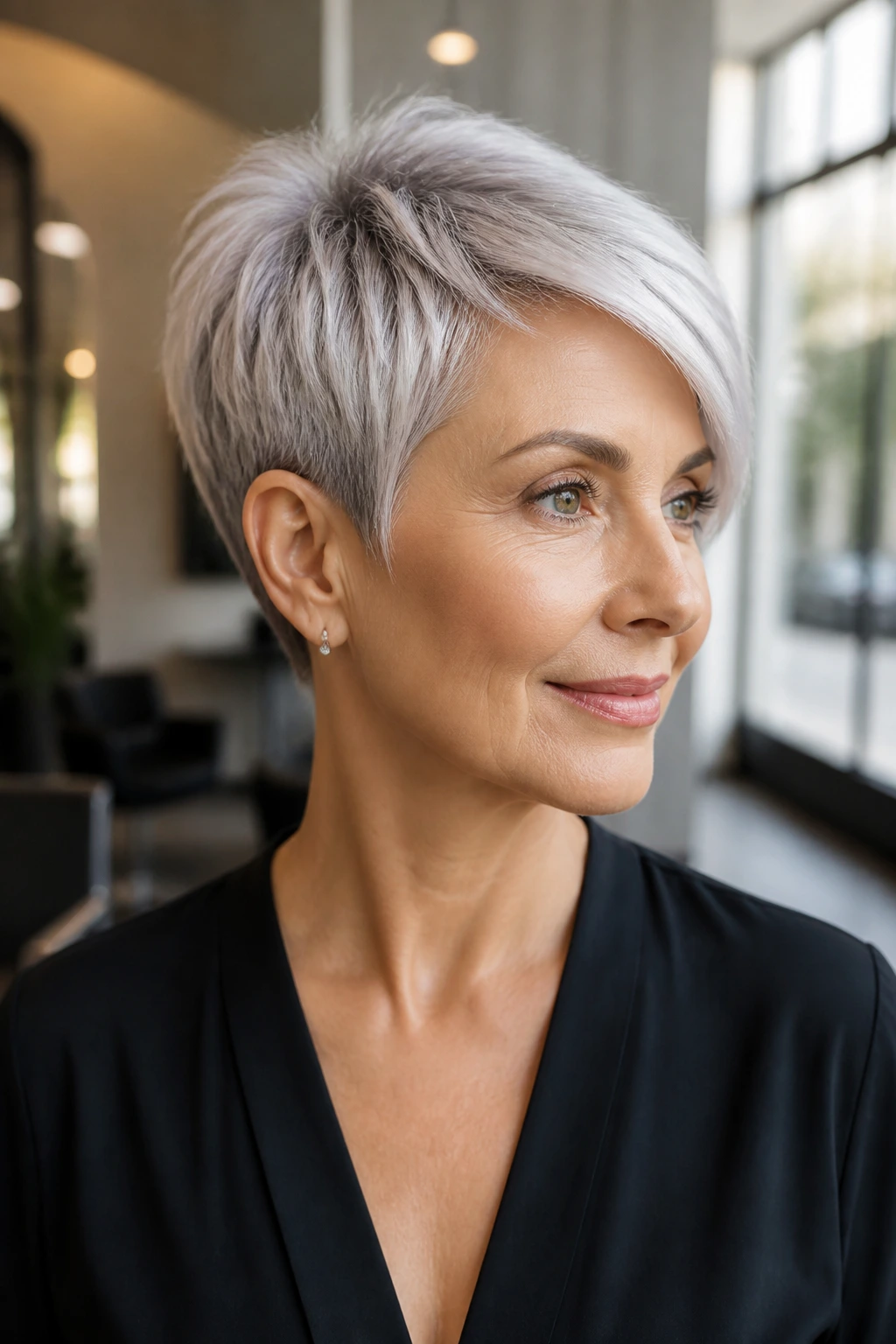
One longer side buys you drama without extra length. That’s the whole appeal here. The deep part makes the silver fall in one strong direction, and the asymmetry pulls attention to the eyes and cheekbones.
This cut looks best when the longer side isn’t allowed to get lazy. If it drops too far past the jawline, it stops reading as a pixie and starts reading as a very short bob with a mood. Keep the length difference subtle enough to feel intentional: one side can sit about an inch or so longer, maybe a little more, but the shape should still be compact.
Glasses work beautifully with this one. So do earrings that need a bit of open space around them.
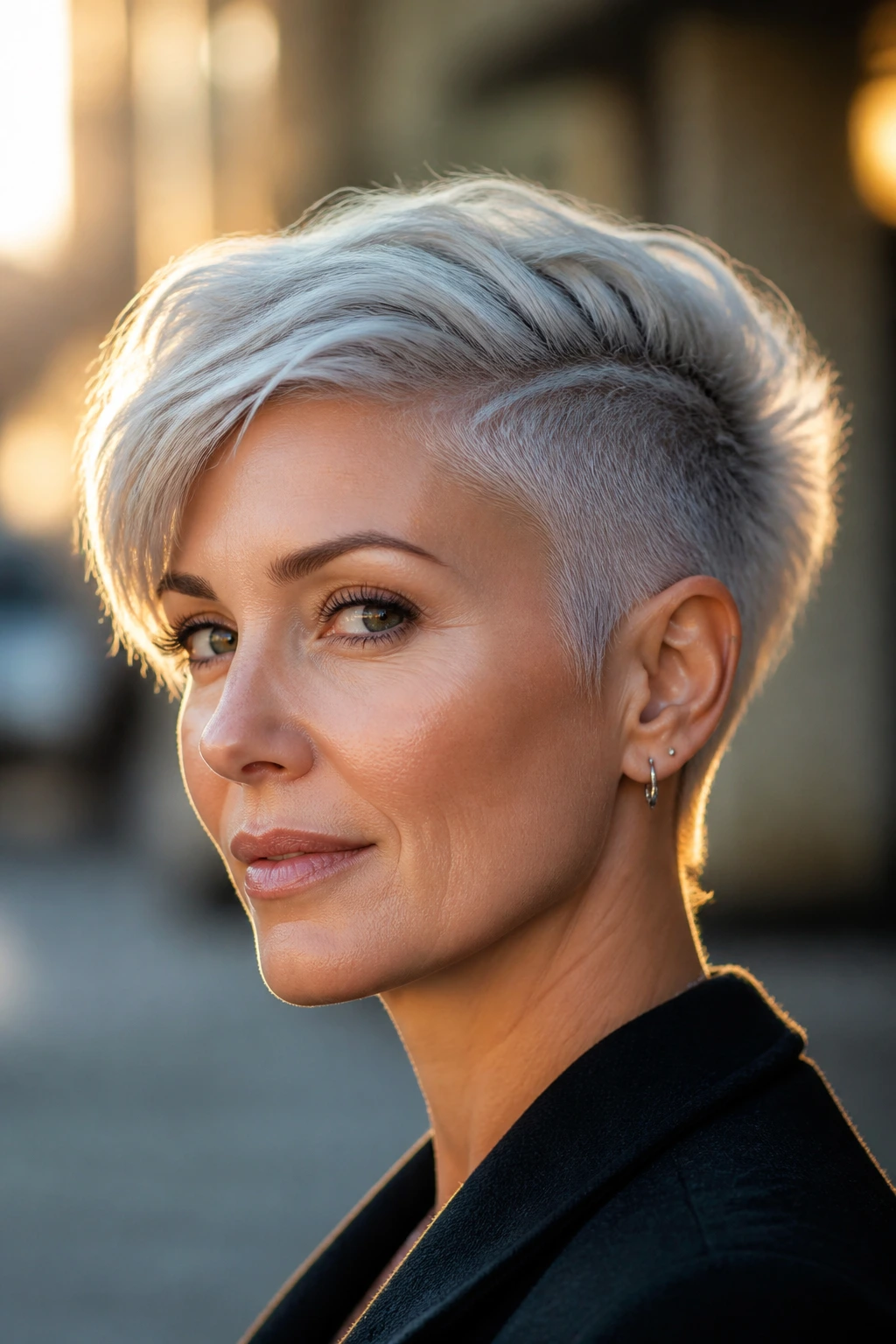
8. Platinum Silver Undercut Pixie
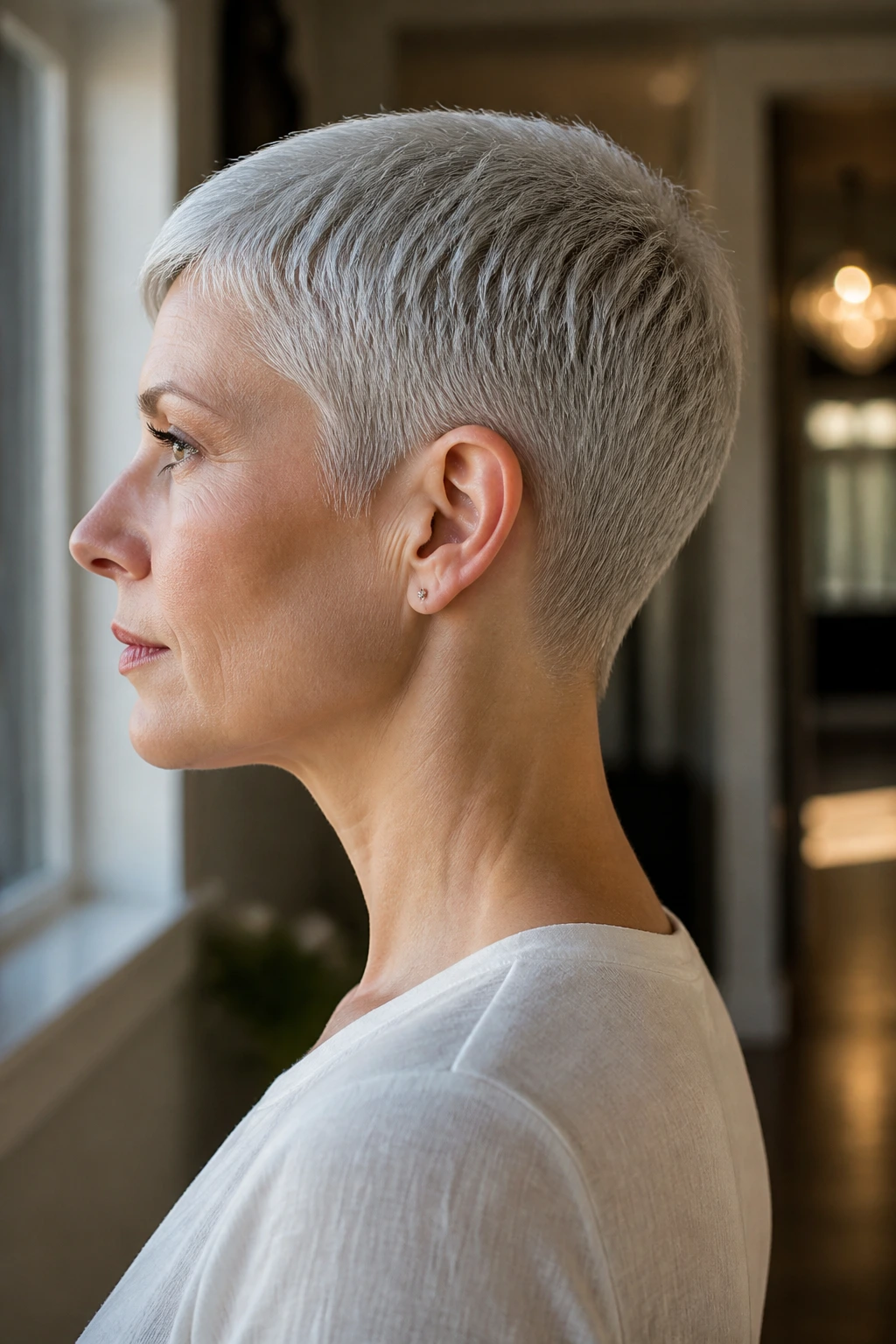
This is the most graphic version in the group. The sides are clipped close, the top stays longer, and the contrast between the two creates a hard line that silver color loves.
It’s also the least forgiving. If the undercut grows out even a little, the shape starts to puff at the edges, and that crisp silver top can lose its bite. Keep a trimmer appointment every 3 to 4 weeks if you want the cut to stay sharp. The payoff is worth it, though. The silhouette looks clean from every angle, and the top has enough length for a sweep, a spike, or a slicked-back finish.
If your wardrobe leans structured—tailored jackets, sharp collars, heavy knits—this cut fits right in.
9. Feathered Silver Pixie With Soft Layers
Not every pixie has to look severe. Feathering around the crown and temple area softens the cut so the silver feels lighter and a little more wearable day to day.
The nice part about feathering is that it keeps movement without turning the cut wispy. The layers should be built with a light hand, especially if your hair has any natural body. Ask for the ends to be softened, not thinned into nothing. That distinction matters more than most people think.
A light mousse and a quick blow-dry forward, then off to the side, gives the layers lift. A dab of cream at the ends can stop the feathering from fraying.
10. Sleek Silver Pixie With a Glassy Finish
What if you want the cut to feel polished instead of piecey? Go sleek. This version likes smooth sides, a defined part, and a finish that reflects light without looking oily.
The magic is in restraint. Too much serum makes silver hair look stringy, especially around the temples. Too little leaves the finish thirsty and uneven. A pea-size amount, warmed between the palms, is usually enough for the whole head if the cut is short. Then use a flat brush or a mini flat iron to guide the top into place.
This is one of the better silver pixie cuts for nights out, formal work settings, or anyone who likes their hair to look sharp next to clean tailoring.
11. Spiky Matte Silver Pixie
This is the cut that looks best when your fingers run through it and leave it a little messed up. The matte finish gives the silver a rougher, cooler edge, and the spikes keep the shape from collapsing into a smooth dome.
The key is where you put the product. Work a small amount of clay or dry paste into the roots and through the tips, then pinch the top pieces up and forward. Don’t smear it through the whole head like lotion. That kills the texture immediately.
This version suits fine to medium hair that needs help standing away from the scalp. It also gives silver a bit of attitude, which is handy if you don’t want the color to feel soft or precious.
12. Micro Bang Silver Pixie
Micro bangs change the proportion of the whole face. They make the forehead feel shorter, sharpen the eye line, and turn a simple pixie into something more editorial.
The cut is not forgiving, though. A cowlick in the front can push the bangs apart, and once they split, the whole look loses that neat, compact shape. Ask for the fringe to be cut dry if possible, or at least checked dry before the scissors go away. You want the bangs to hover above the brows, not sit so high they feel accidental.
Best for
This works well on straight or slightly wavy hair, especially if you like strong brows and clean lines. If your face is already very short from brow to hairline, keep the bangs a touch longer so the proportion doesn’t get too severe.
13. Silver Pixie Bob Hybrid
If you’re not ready to go full crop, this is the friendly middle ground. The top and sides stay pixie-short, but the back and front carry a little more length, so the cut can tuck, bend, and swing like a mini bob.
The hybrid shape is useful if you’re growing out a pixie and need something intentional in the meantime. It’s also a good answer for people who want movement around the jaw without the maintenance of a true bob. The silver tone has more surface area here, so a glossy finish or a soft root shadow keeps the color from looking one-note.
Tuck one side behind the ear and leave the other loose. That small asymmetry keeps the shape from feeling too round.
14. Shaved-Temple Silver Pixie
A single shaved temple can make a simple pixie look deliberate in a way that plain layering can’t. It brings a hard edge to the haircut and gives the silver an obvious focal point.
The shaved section does need upkeep. Once it grows past a few millimeters, the clean line starts to blur. Keep a trimmer handy or book regular cleanups every 2 to 3 weeks if you want the temple to stay sharp. The longer top can be swept across the shaved side, slicked back, or left with a messy bend.
This cut looks especially good with earrings, because the open space around the ear gives the jewelry room to breathe.
15. Silver Pixie for Fine Hair
Fine hair does not need more product. It needs better shape.
That’s why this cut works when the layers are placed carefully. The stylist should keep some weight at the perimeter so the ends do not look scraggly, then build lift at the crown without over-thinning the rest. A few well-placed internal layers can make the top feel fuller while keeping the edges clean.
Use a root spray or light mousse before blow-drying, then stop. Heavy oils and rich creams sink fine hair fast, especially once the silver tone has been bleached and the strands are already thirsty. If you want the cut to look fuller, part it slightly off-center and rough the roots with your fingertips after drying.
16. Silver Pixie for Thick Hair
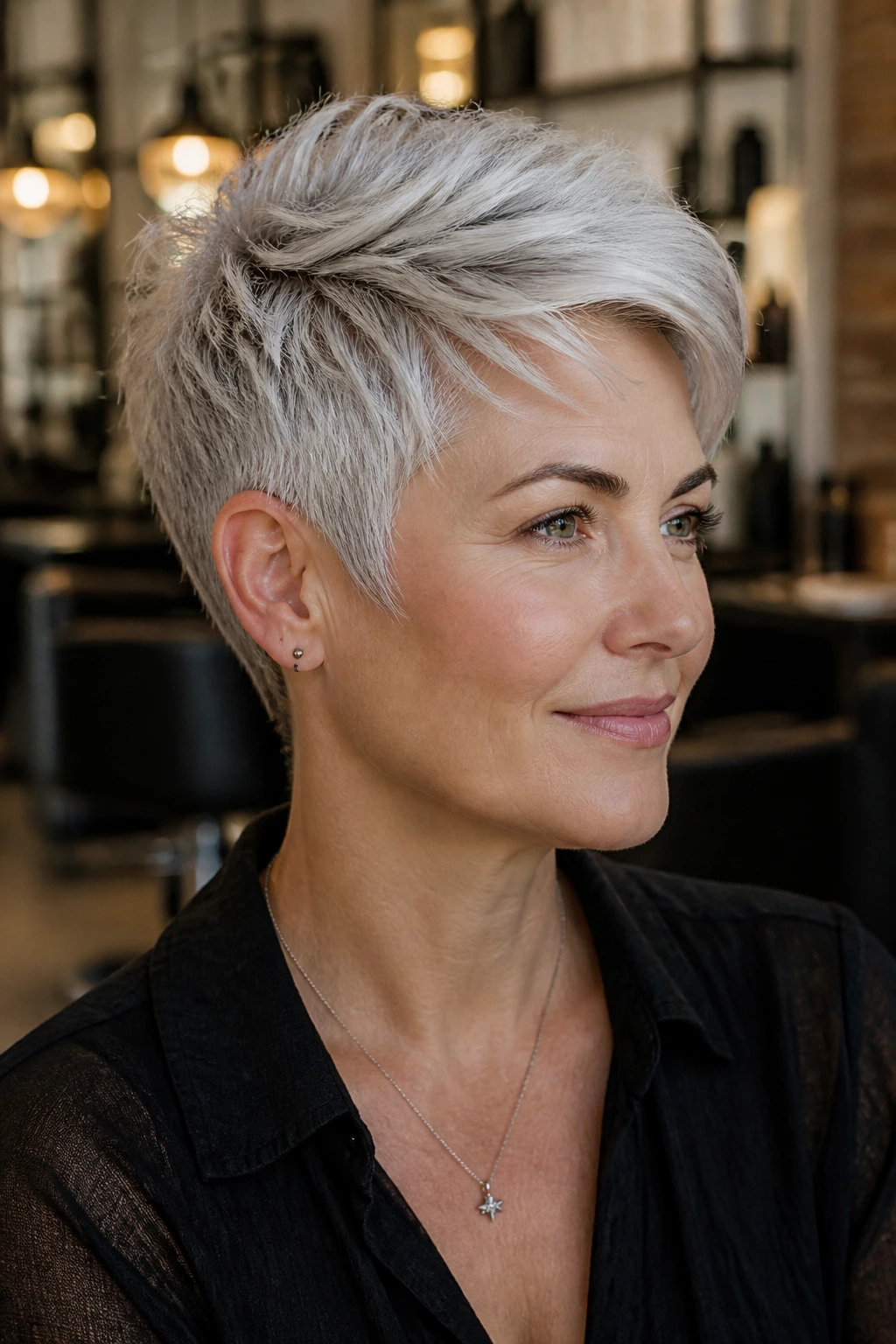
Thick hair can wear silver beautifully, but the cut has to take some bulk out or the shape gets puffy fast.
The best version usually includes an undercut at the nape or a controlled debulking through the interior, not just a lot of surface layering. You want the silhouette to stay compact while the top keeps enough density to show the silver cleanly. A good stylist will cut with the hair’s fall in mind and avoid leaving the sides too wide around the ears.
For styling, reach for a cream or lightweight paste rather than a heavy oil. Thick hair already has its own opinions. The product should guide it, not glue it down.
17. Grown-Out Silver Pixie

Every pixie spends some time between appointments. This version is built for that stage, and honestly, it can look better than a freshly cut version if the shape is kept under control.
The trick is to hold the neckline and temples tight while letting the top grow into a soft crop. That extra length adds movement and makes the silver feel a little less severe. A root shadow helps here too, because the grow-out blends instead of shouting. If you like a low-maintenance routine, this is a smart direction to take your silver pixie cuts in.
A little dry shampoo at the roots and a quick finger-style in the morning is usually enough. No need to wrestle with a round brush every day.
18. Salt-and-Pepper Silver Pixie
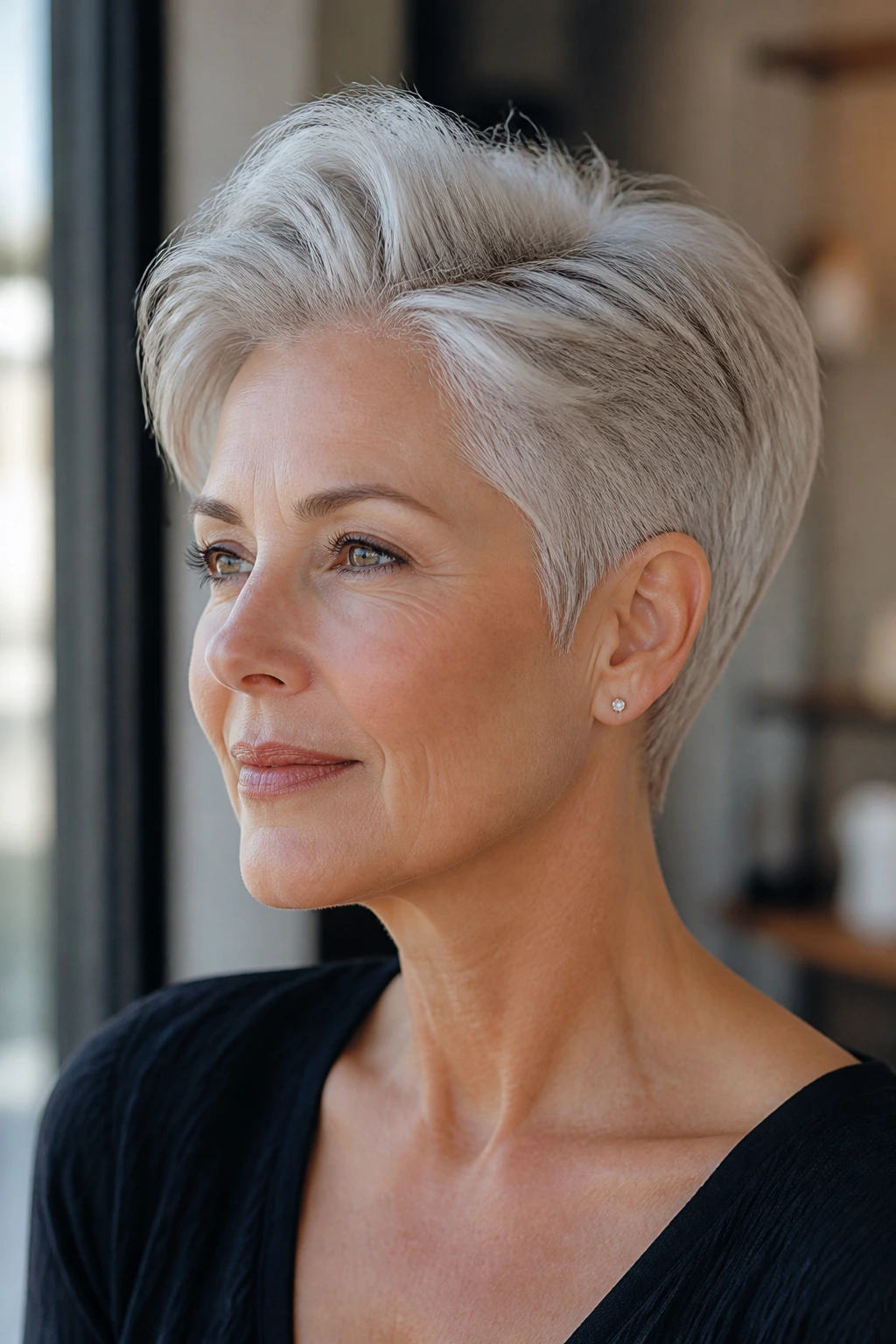
This is the easiest way to keep the look grounded. Instead of pushing everything toward pure silver, the cut keeps some natural pigment visible, which gives the hair texture and depth.
The result feels less bleached and more lived-in. If your natural gray is coming in streaky, this version can look better than trying to erase every darker strand. In fact, the contrast often makes the cut look richer. You get that cool silver effect without losing the natural variation that makes short hair interesting.
It’s also kinder on upkeep. A gloss and a good shampoo are usually enough. No full-color panic every few weeks.
19. Wavy Silver Pixie With Piecey Ends
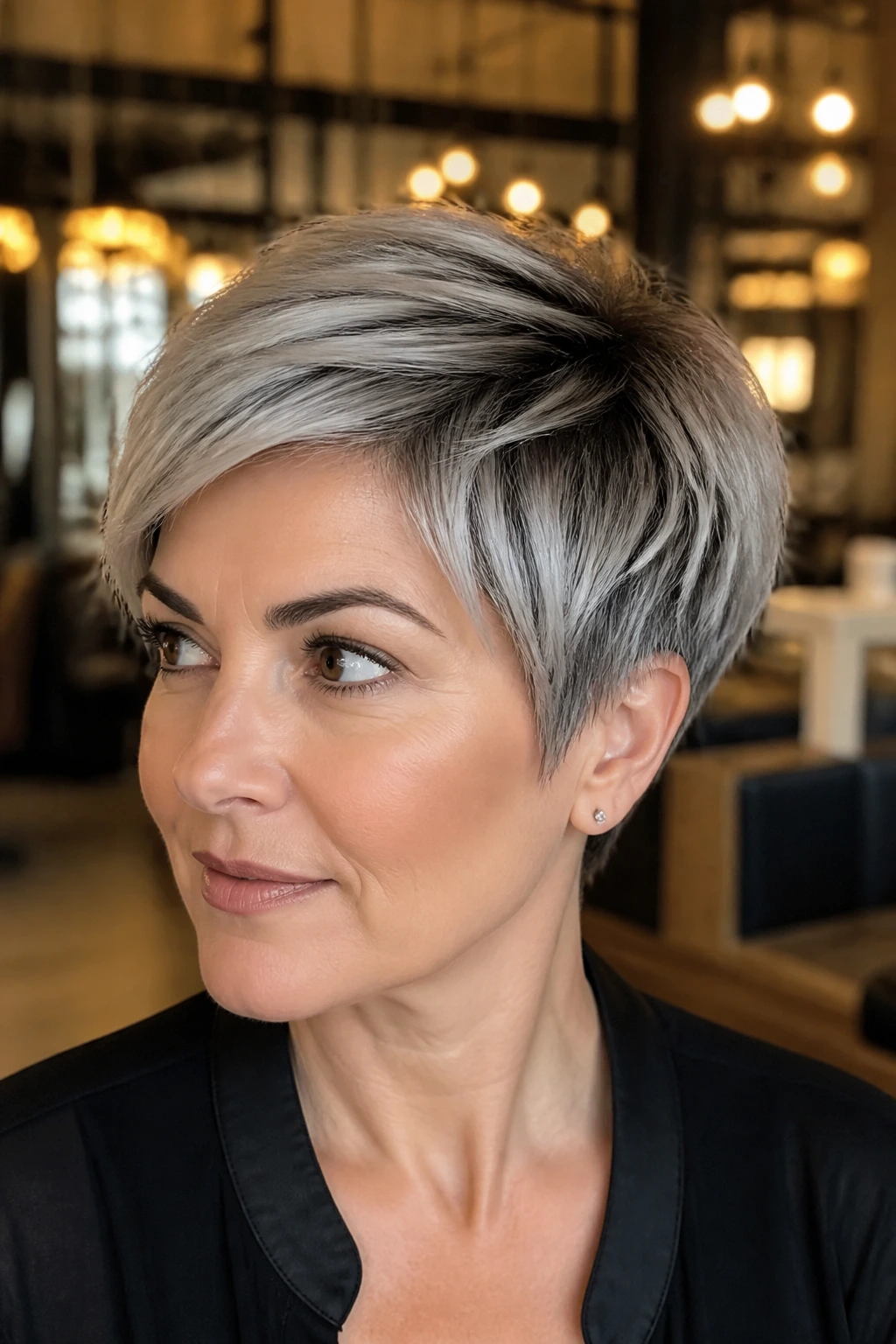
Waves can make silver feel softer, but only if the ends stay light. If the cut gets too heavy at the bottom, the wave pattern clumps and the whole thing turns into a compact ball.
Ask for the top to stay a little longer than the sides, then shape the ends so they separate when dried. A diffuser helps, but a rough dry with a little mousse can work too. The important part is not over-brushing the hair once it’s dry. That’s how piecey texture disappears and the wave collapses into fluff.
This one looks good with a slightly messy side part and almost no shine product. The texture should read touchable, not sticky.
20. Mushroom-Shape Silver Pixie With Soft Edges

Rounded doesn’t have to mean old-fashioned. When the bowl-like outline is softened with tapering and a bit of internal texture, the mushroom shape turns graphic in a good way.
The top keeps a fuller curve, while the sides and nape stay neat enough that the silhouette still feels current. The silver color helps here because it sharpens the rounded line and keeps the cut from looking heavy. If your hair is straight or only slightly wavy, this shape can be a nice surprise.
The danger is bulk. If the top grows too wide or the fringe gets too dense, the cut starts to feel blocky. Keep the edges soft, and the whole thing stays fresh.
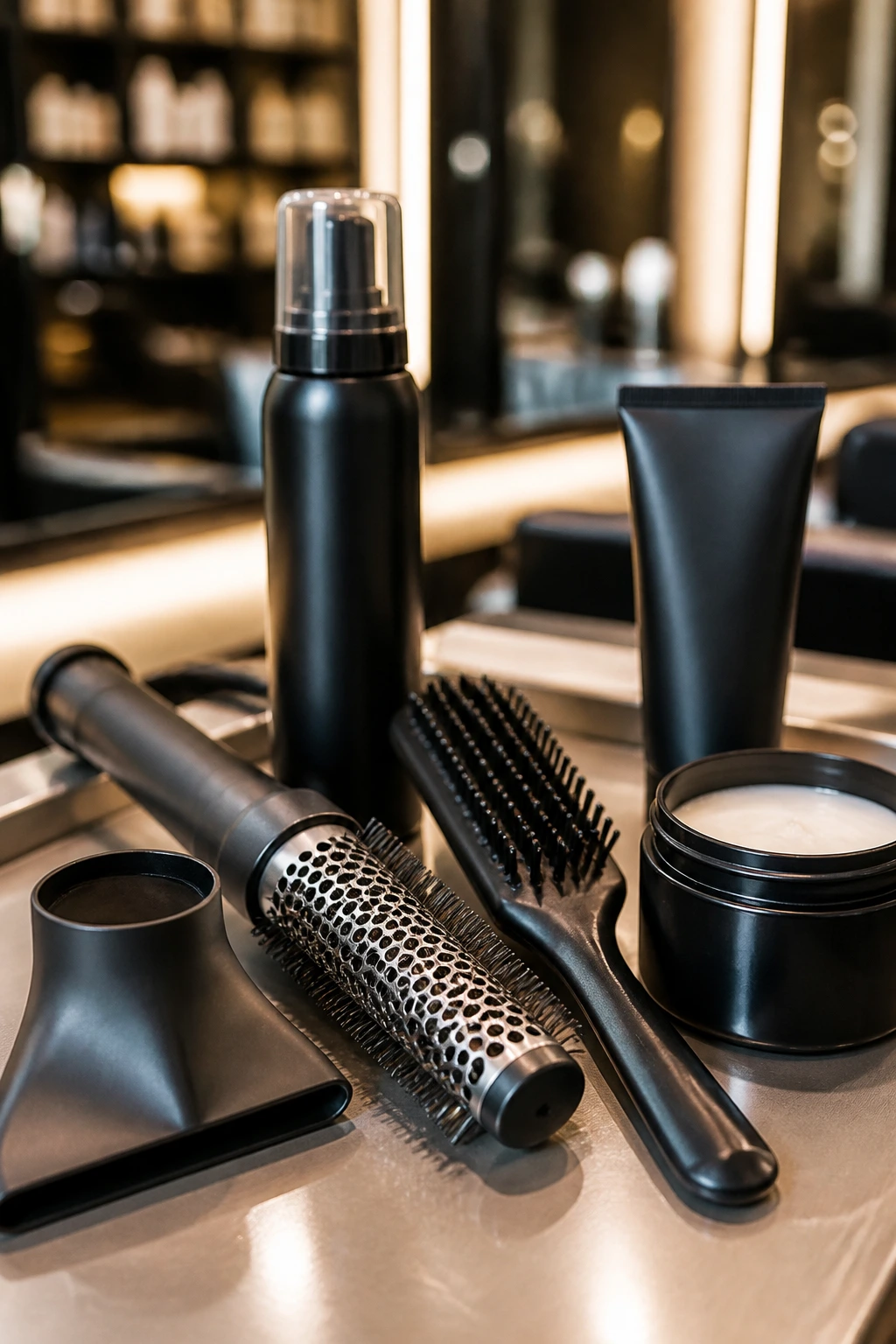
Essential Tools for Keeping the Shape Crisp
-
Blow dryer with a concentrator nozzle: The nozzle directs air at the roots and helps you build shape instead of scattering the hair in every direction.
-
Small round brush: Best for adding lift at the crown or guiding a side-swept fringe into place without bending the ends too much.
-
Vented brush or wide comb: Good for rough drying and separating short layers without pulling them flat.
-
Matte paste or clay: Use a pea-size amount to define the ends, add separation, or push a spiky pixie into place.
-
Lightweight mousse or root spray: Helps fine hair hold the crown without turning the cut stiff.
-
Smoothing cream or serum: Useful for sleek versions, but keep the amount tiny; silver hair shows product overload fast.
-
Purple shampoo: Helps keep blonde-based silver from drifting yellow, though it should be used sparingly.
-
Heat protectant: Worth using every time you touch a flat iron or blow dryer to porous, lightened hair.
Picking the Right Silver Tone and Styling Products
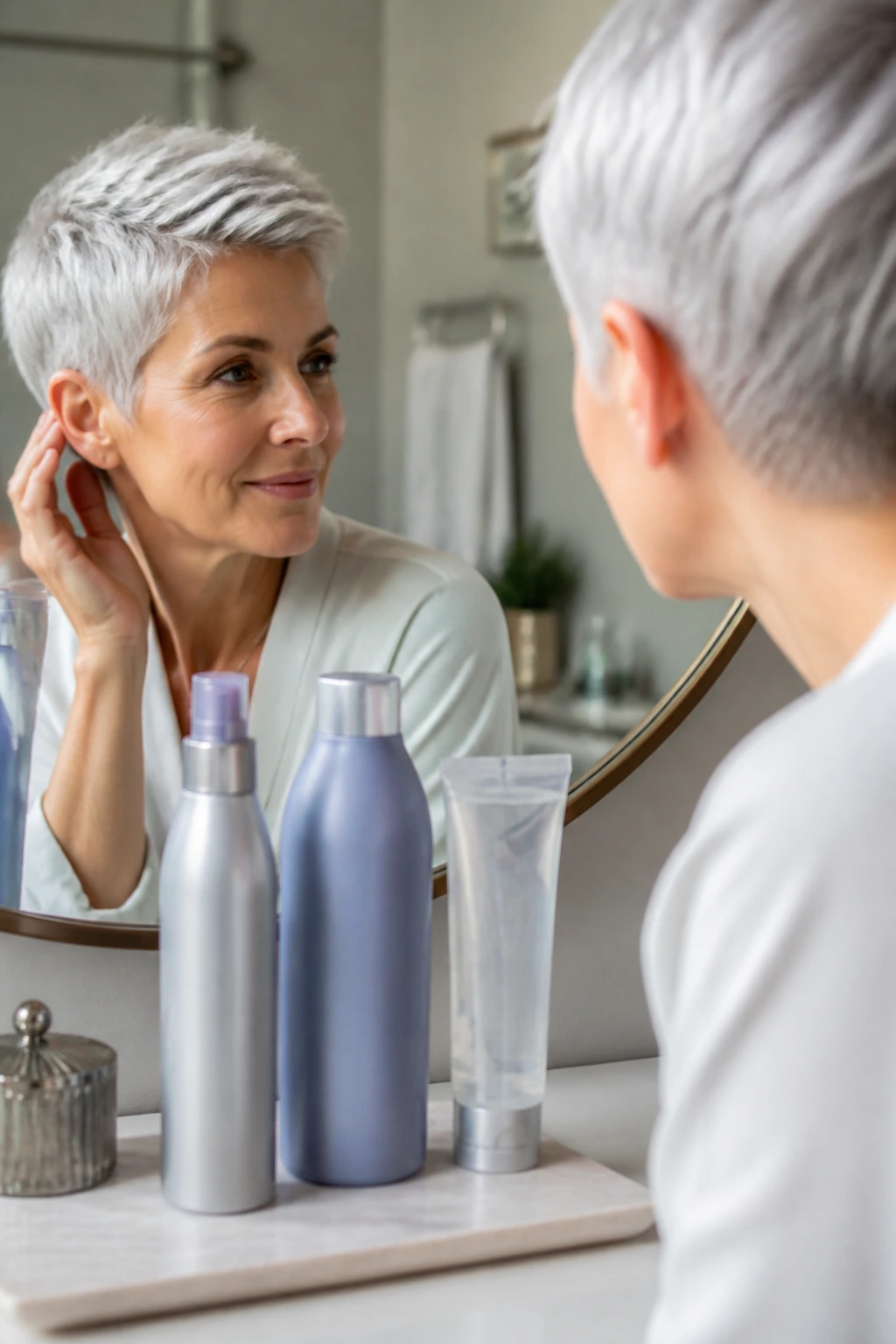
A silver pixie only looks clean when the tone matches the hair history underneath it. Darker natural hair usually needs staged lightening, because trying to jump straight to silver often leaves a yellow-orange base that reads muddy once the toner settles. If your hair is already pale, a gloss or demi-permanent toner may be enough to push it into icy or smoky territory.
Product labels matter more here than they do on longer cuts. Look for sulfate-free shampoo if your hair has been lightened, since harsh washes strip tone fast and leave the silver looking dull around the face and ears. A violet or blue-violet shampoo once a week can help with yellowing, but daily use can make the hair look flat or violet in a way that feels off. That stuff is best treated like seasoning, not a main ingredient.
For styling, the finish should match the cut. Matte paste suits choppy or spiky shapes. Mousse and root spray work better when you need lift. Smooth cream belongs on the sleeker cuts, and even then, a little goes a long way. If your hair is thick, choose lighter creams. If it’s fine, skip heavy oils entirely unless you enjoy watching volume vanish before lunch.
How to Wear a Silver Pixie in Real Life
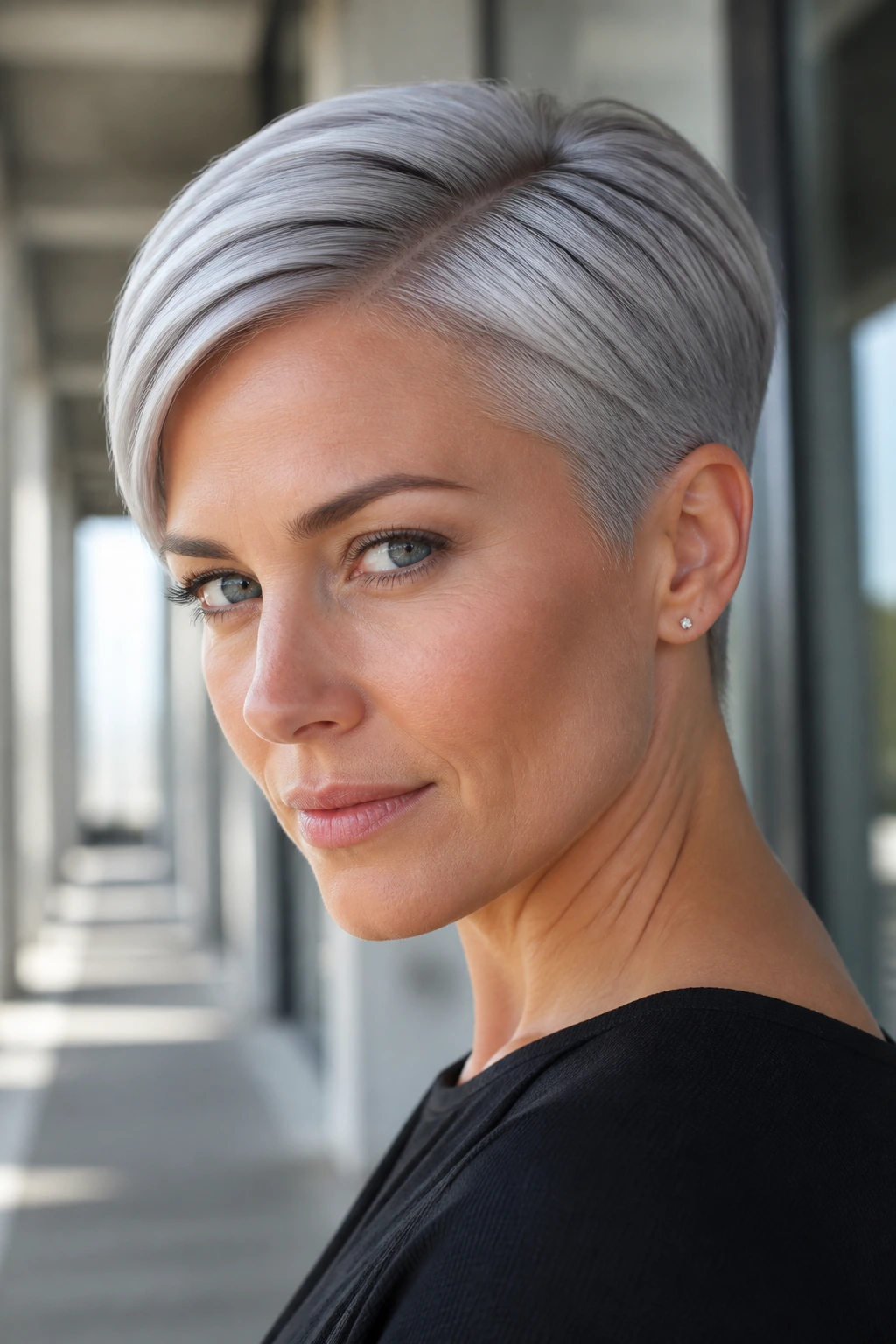
Presentation: Keep the outline visible. A tucked side, a defined part, or a lifted crown helps the silver catch the eye without needing a lot of length. If the cut is sleek, make sure the nape is tidy; if it’s textured, let the ends show their separation.
Accessories: Small hoops, slim wire frames, and narrow headbands tend to work better than oversized clips that fight the short shape. Silver hair already brings enough shine, so the accessories should frame it, not compete with it.
Wardrobe Pairings: Crisp shirts, charcoal knits, black collars, and matte fabrics make silver read cooler. Soft knits and scarves can work too, but if they sit too close to the neckline, they can hide the line of the cut.
Maintenance: Book trims before the neckline starts puffing out. Four to six weeks is the sweet spot for most pixies; undercuts and shaved temples need closer attention. Tone fades faster than the cut grows, so a refresh plan matters almost as much as the haircut itself.
Extra Styling Tricks and Color Boosters
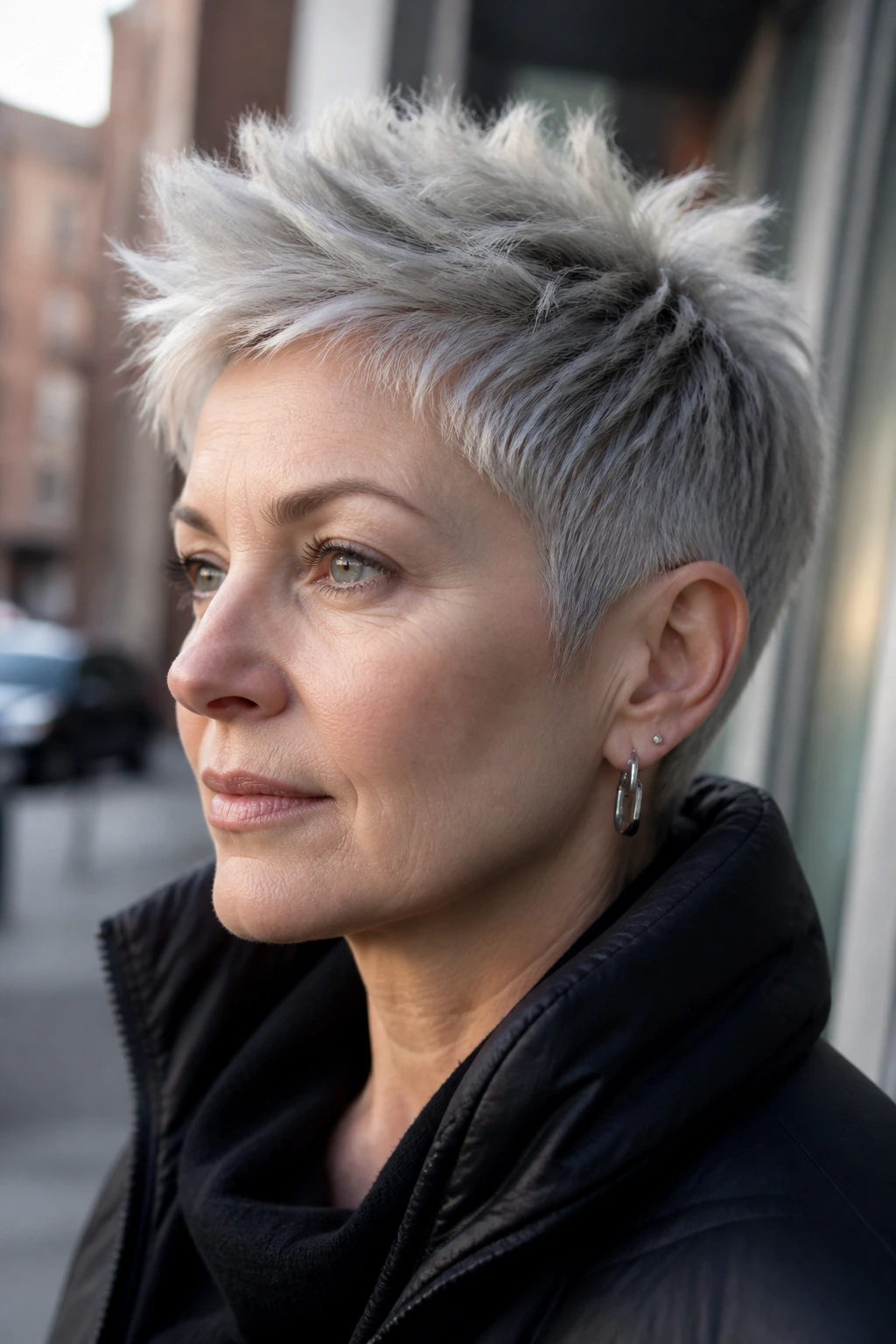
Texture Boost: Work paste or clay into dry hair only, then use your fingertips to pinch out the top pieces. Damp product can flatten a pixie faster than people expect, especially on fine hair.
Color Boost: If the silver starts to look creamy instead of cool, a clear gloss or a fresh toner can pull the tone back toward icy without changing the cut. That little reset makes a big difference in daylight.
Lift: Flip the part from time to time. The same side part every day trains the hair into a flat ridge, and silver shows that ridge like a spotlight.
Make-It-Yours: If your hair is curly, keep the top longer and the perimeter softer. If it’s thick, ask for internal debulking. If it’s fine, preserve weight at the ends. If you wear glasses, leave enough length around the temples so the frames and the hair don’t fight.
Keeping the Cut Sharp Between Salon Visits
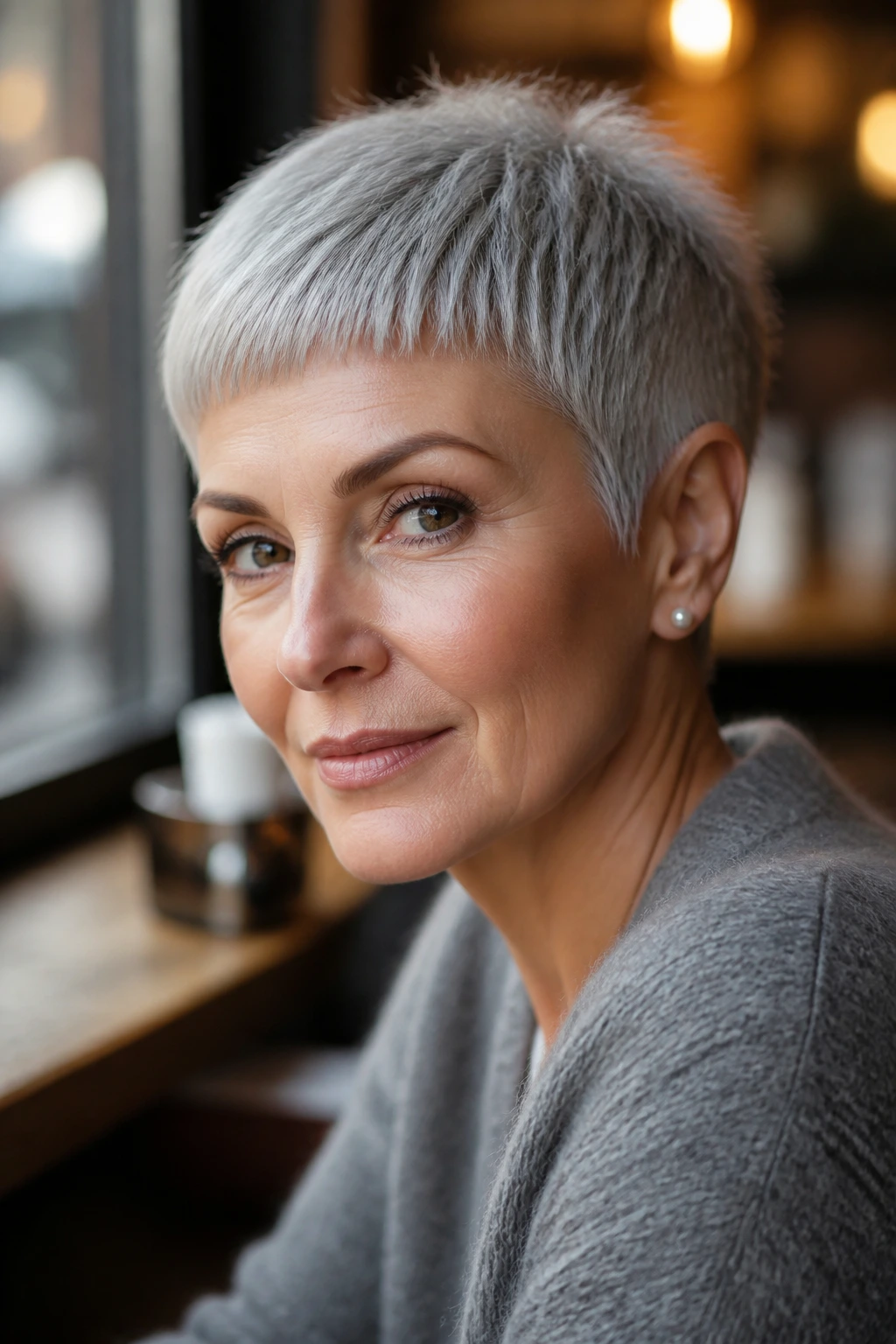
Silver pixie cuts age in two ways: the shape grows out, and the tone drifts. Deal with both, and the style stays fresh.
At night, a satin pillowcase helps a lot more than most people think. Short hair still gets crushed when you sleep on it, and a rough cotton pillowcase can rough up the finish and make the crown stick out in odd directions. If your cut is sleek, a tiny bit of smoothing cream on the ends before bed can help. If it’s textured, skip the cream and just sleep on the shape.
Wash frequency depends on the hair, but over-washing lightened silver hair usually strips tone and makes the ends feel dry. Many cropped styles hold up well with two to three washes a week, plus dry shampoo at the roots in between. If you exercise often or your scalp gets oily quickly, keep shampoo at the roots and conditioner off the crown.
Toner refreshes usually matter every 3 to 6 weeks, depending on how porous the hair is and how often it’s exposed to heat or hard water. A trim every 4 to 6 weeks keeps the neckline tidy. Shaved details need even closer upkeep, closer to 2 to 4 weeks, because a little growth changes the line fast. Store your styling products away from steam and heat, too; a bathroom shelf right above a shower can shorten the life of mousses and creams.
Variations and Adaptations to Try
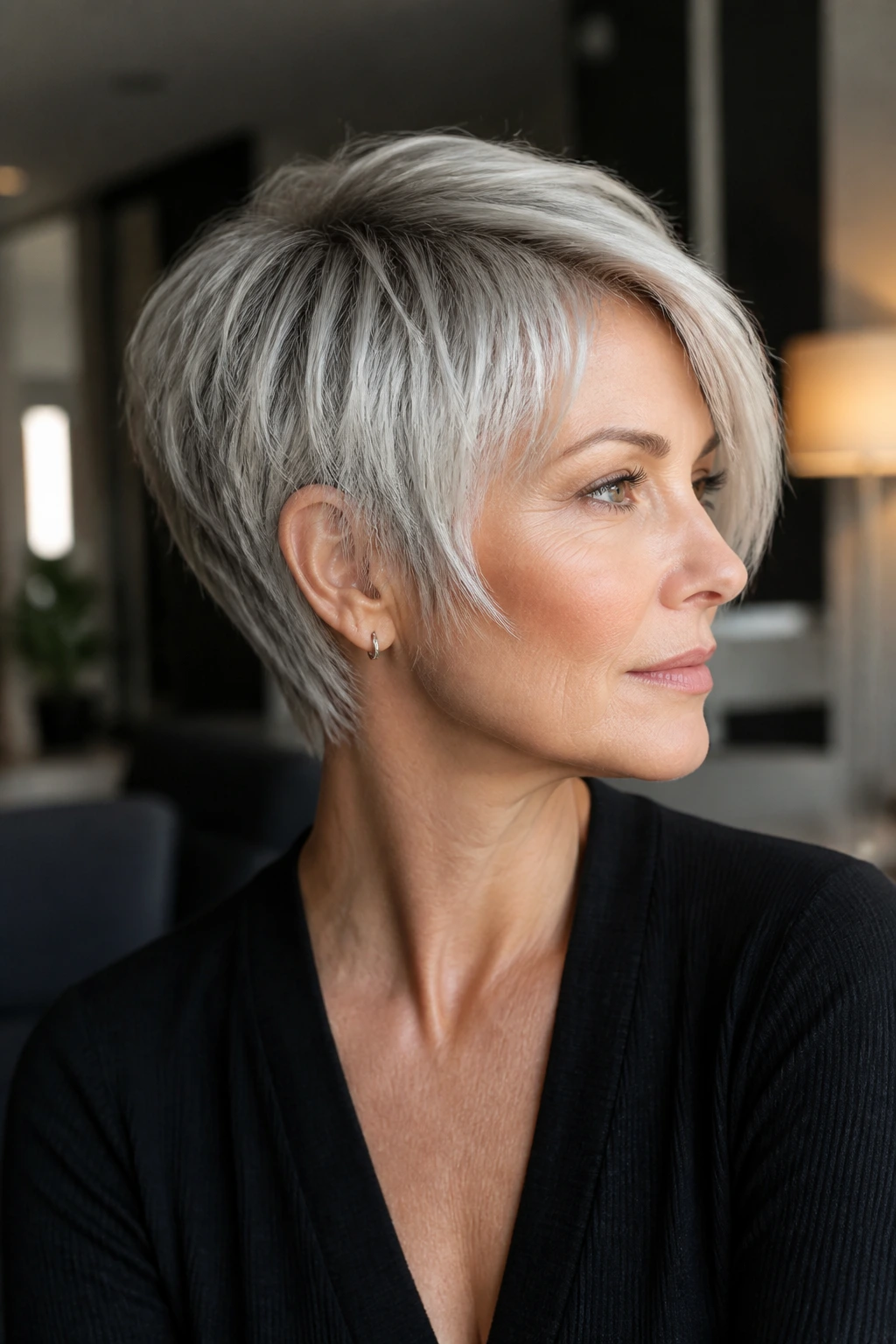
Icy White Finish: Push the palette toward the palest possible silver and pair it with a clean micro fringe or cropped crown. This version looks sharp on smooth hair and with dark brows, but it needs strong tone maintenance because the cool finish fades into cream fast.
Smoky Root Melt: Keep the base a shade deeper and let the silver brighten through the mids and ends. It’s the easiest way to make short silver hair look softer during grow-out, especially if your natural color is darker and the regrowth line shows quickly.
Curly Halo Crop: Use any pixie shape as a base, then adapt the top for curls with a longer crown and a gentler perimeter. The goal is to let the curl sit in a soft halo rather than forcing it into a round helmet.
Undercut Edge: Add a shaved nape, clipped temples, or both. This adaptation gives even a very simple silver pixie a harder line, and it’s a good choice if you want the haircut to stay neat in heavy, thick hair.
Natural Gray Blend: Skip full bleach if your hair already has gray or white in it. A gloss and a tidy pixie shape can make the natural blend look intentional, and the upkeep is kinder than chasing a uniform silver from root to tip.
Longer Grow-Out Pixie: Leave a bit more length at the front and crown so the style can move toward a short shag as it grows. This version is smart if you dislike salon visits every few weeks but still want the haircut to look planned.
Common Mistakes That Flatten the Shape or Cloud the Color
-
Chasing pure silver on hair that is not light enough: The symptom is a muddy beige or yellow cast that keeps coming back after toning. The fix is staged lightening and a clean toner base, not more purple shampoo.
-
Using too much cream on fine hair: The hair looks separated for ten minutes, then collapses into a damp-looking sheet. Use less product than you think, and apply it only to the ends and crown.
-
Letting the neckline grow out too long: The back starts puffing and the whole cut loses its edge. A quick cleanup every 4 to 6 weeks keeps the line visible.
-
Cutting the fringe without checking the cowlicks: Bangs split, lift, or swing the wrong way the first time humidity shows up. Always work with the natural growth pattern, not against it.
-
Overdoing purple shampoo: Silver turns dull or faintly lavender, especially on porous hair. Use it once a week, maybe twice if your water is hard and your hair pulls yellow fast.
-
Forcing every texture into the same shape: Curly, wavy, and straight hair all sit differently in a pixie. The cut has to be adjusted for the way the hair falls, or the finish will look stubborn instead of cool.
Frequently Asked Questions
Can silver pixie cuts work on fine hair?
Yes, and they can look better on fine hair than many longer styles because the weight is removed. The trick is keeping enough perimeter weight so the ends don’t disappear, then building lift at the crown with mousse or root spray.
How often should a silver pixie be toned?
Most silver pixies need a toner refresh every 3 to 6 weeks, depending on porosity, shampoo frequency, and water quality. If the color starts leaning creamy or yellow around the front hairline first, that’s usually your sign.
Do I need bleach to get silver hair?
For most darker starting shades, yes, or at least several lightening sessions. Silver sits on a very pale base, usually level 9 or 10, and skipping that step usually leaves the color muddy instead of cool.
What if my silver starts turning yellow?
That usually comes from sun, heat, hard water, or washing too often with the wrong shampoo. Use a sulfate-free cleanser, add a violet shampoo once a week, and cut back on hot tools unless you’re using heat protectant every time.
Can curly hair wear a silver pixie without looking boxy?
Absolutely, but the cut has to respect the curl pattern. Ask for a longer top, softer sides, and a dry cut if your stylist is comfortable with it, because curls bounce up in ways that wet hair won’t show.
How do I keep a pixie from going flat by midday?
Start with root spray or mousse, dry the hair in the direction you want it to sit, and finish with a cool blast at the roots. If it collapses anyway, a touch of dry shampoo at the crown can bring the shape back without adding weight.
What is the easiest silver pixie to grow out gracefully?
A tapered crop with a soft root shadow usually behaves the best. The darker root hides regrowth, and the extra texture at the crown lets the cut slide into a short shag instead of a bad in-between stage.
Will a silver pixie make my features look harsh?
Only if the shape is too severe and the tone is too flat. A side-swept fringe, a bit of root depth, or soft feathering around the temples usually keeps the look from feeling hard.
The Cut That Still Feels Sharp
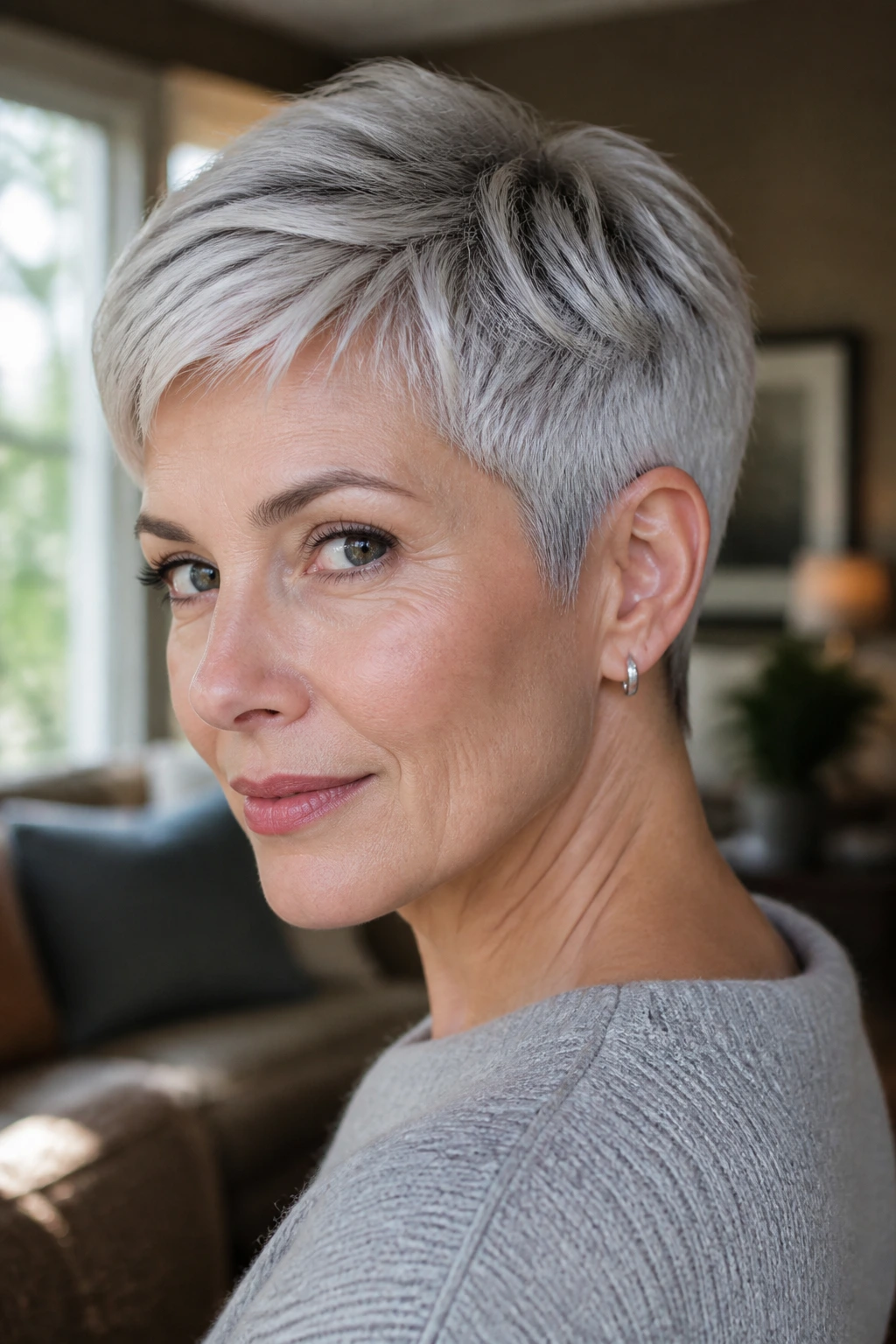
A silver pixie works best when the haircut and the color agree about the shape. If the edges are clean, the crown has a little life, and the tone still has depth at the root, the whole look reads deliberate instead of overworked.
That’s why these silver pixie cuts keep showing up in different forms. Some are icy and cropped close. Some are smoky and soft around the fringe. A few are built for curls, thick hair, or a grow-out phase that refuses to behave. The color gets the attention, sure, but the cut does the real job.
Pick the version that fits your hair’s natural bend and your appetite for upkeep, then keep the neckline honest. The rest tends to fall into place.
