



Short hair doesn’t forgive lazy color. A blonde pixie cut can look bright and crisp, or it can look flat and a little dry, and the difference usually comes down to three things: tone, texture, and the way the cut holds light at the crown.
That’s why some blonde crops feel expensive the second you see them. The nape is clean, the fringe lands with purpose, and the blonde has enough depth at the root that it doesn’t scream for attention. It just catches it.
I’ve always liked blonde on a pixie more than on longer hair. There’s less length to drag the color down, so every bevel, every feathered end, every tiny shift in tone shows up. Done well, the cut gives you brightness without the heavy, shellacked feeling that can happen when short blonde hair is cut too bluntly or colored too one-note.
Why These Blonde Pixie Cuts Work So Well
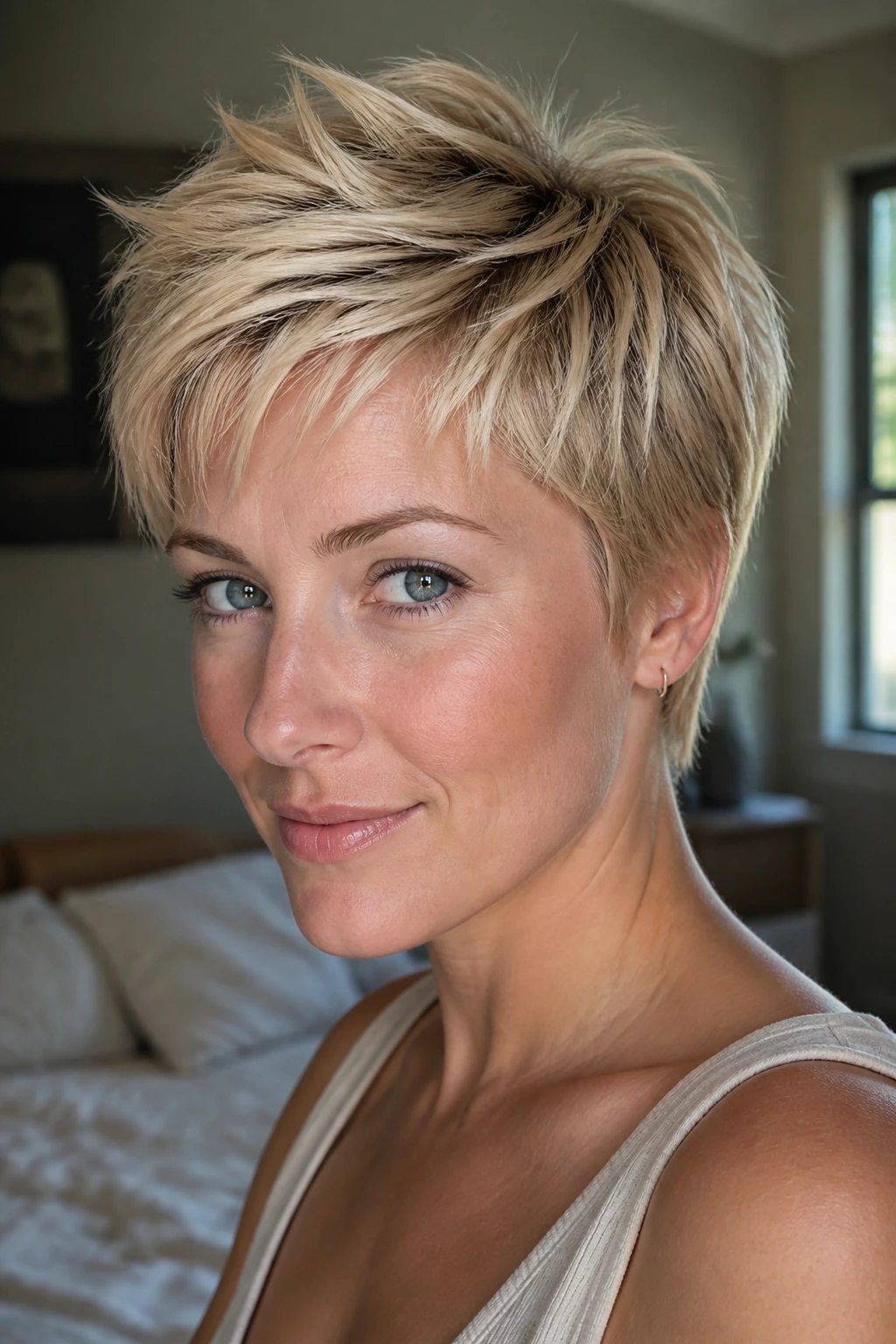
- Light lands faster on short hair: A pixie shows off tone on the crown, temples, and fringe in a way a longer cut never can, so beige, champagne, and icy blondes all read more clearly.
- The shape does half the work: Tapered sides and a tighter nape stop the cut from ballooning out, which keeps the blonde looking clean instead of puffy.
- Root depth makes the color look richer: A soft shadow root gives short blonde hair room to grow without turning harsh at week three.
- Texture keeps the cut from looking helmet-like: Feathering, choppy ends, and piecey layers stop the blonde from sitting on the head like a cap.
- There’s a style for almost every texture: Fine hair, thick hair, waves, curls, and even stubborn cowlicks can all work here if the cut is tailored instead of copied.
- You can dial the mood up or down: The same pixie can look soft, edgy, sleek, or sun-kissed depending on the fringe, the tone, and how much polish you put into it.
1. Champagne Pixie with Feathered Crown
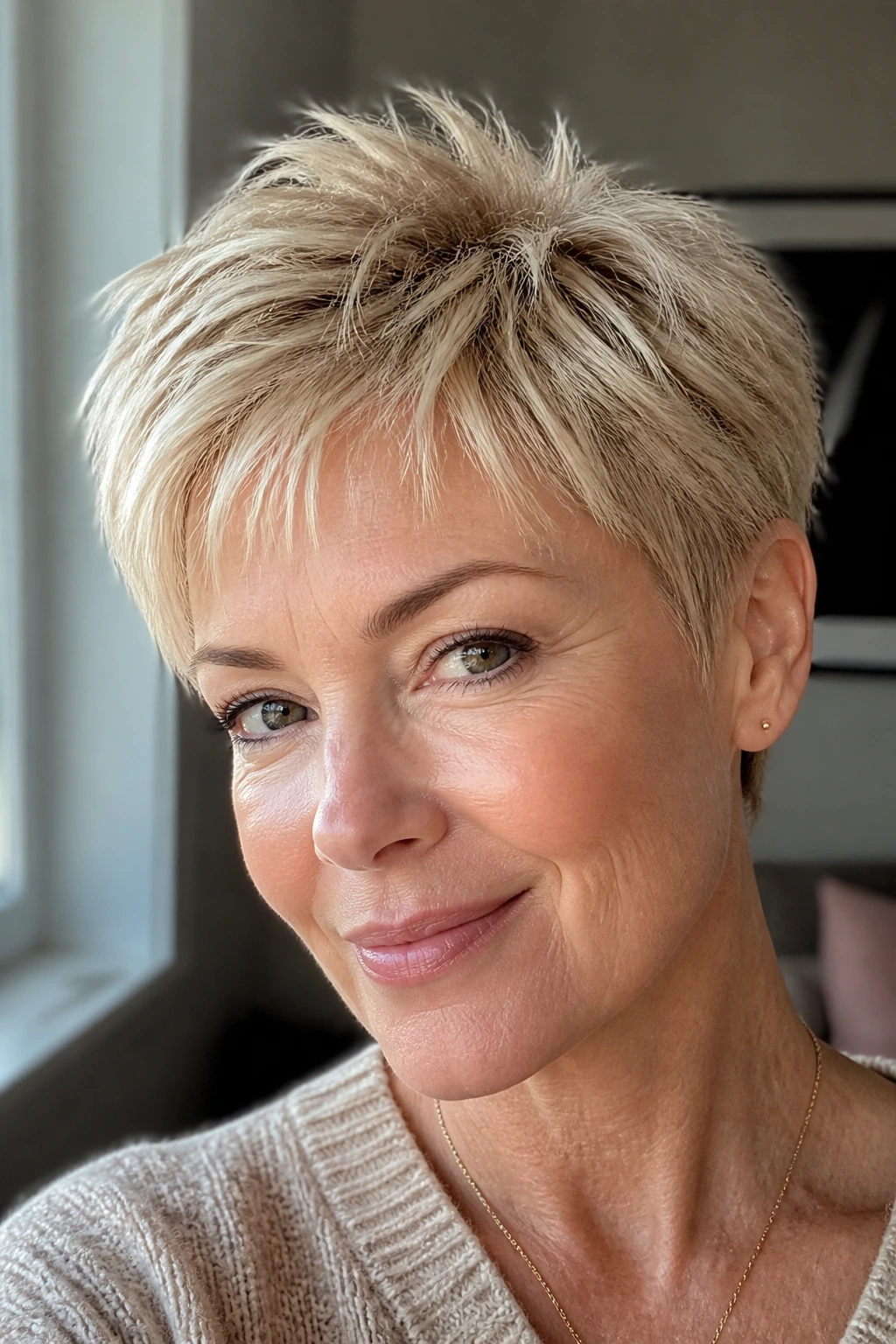
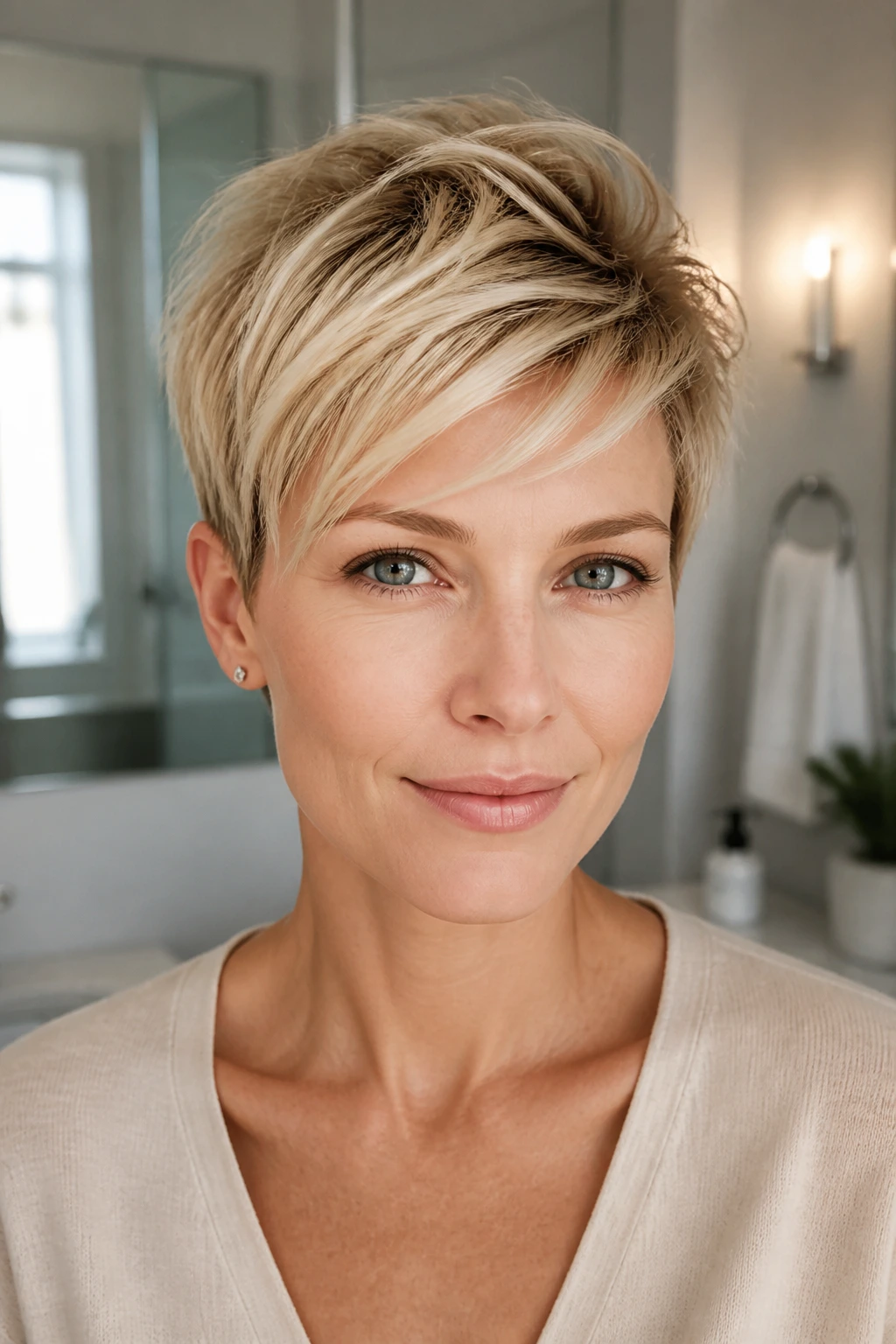
This is the blonde pixie cut I’d hand to someone who wants brightness without the icy glare. Champagne blonde sits in that sweet middle zone — pale enough to look fresh, warm enough to keep the skin from going washed out, and soft enough that the feathered crown still feels airy instead of stiff.
The trick is in the top. Ask for roughly 2 to 3 inches at the crown with point-cut ends, then taper the sides and nape close enough that the shape stays neat around the ears. The feathering matters here. It lets the blonde catch the light in little flashes, which is exactly what keeps this style from flattening out.
Why It Works
- Best for: fine to medium hair that needs lift without heavy layering.
- Color note: champagne blonde reads richer than pale platinum and is easier to keep looking soft between toning appointments.
- Shape note: the feathered crown gives height without making the cut look over-styled.
- Styling note: a pea-size amount of lightweight mousse at the roots is enough. Too much product turns the feathers into clumps.
If you wear this cut with a side part, the fringe falls in a way that softens the forehead. With a center push, it looks more modern and a touch sharper. Either way, the nape should stay tucked in tight. That little contrast — soft top, clean back — is what gives champagne blonde its polished edge.
2. Rooted Beige Blonde Pixie
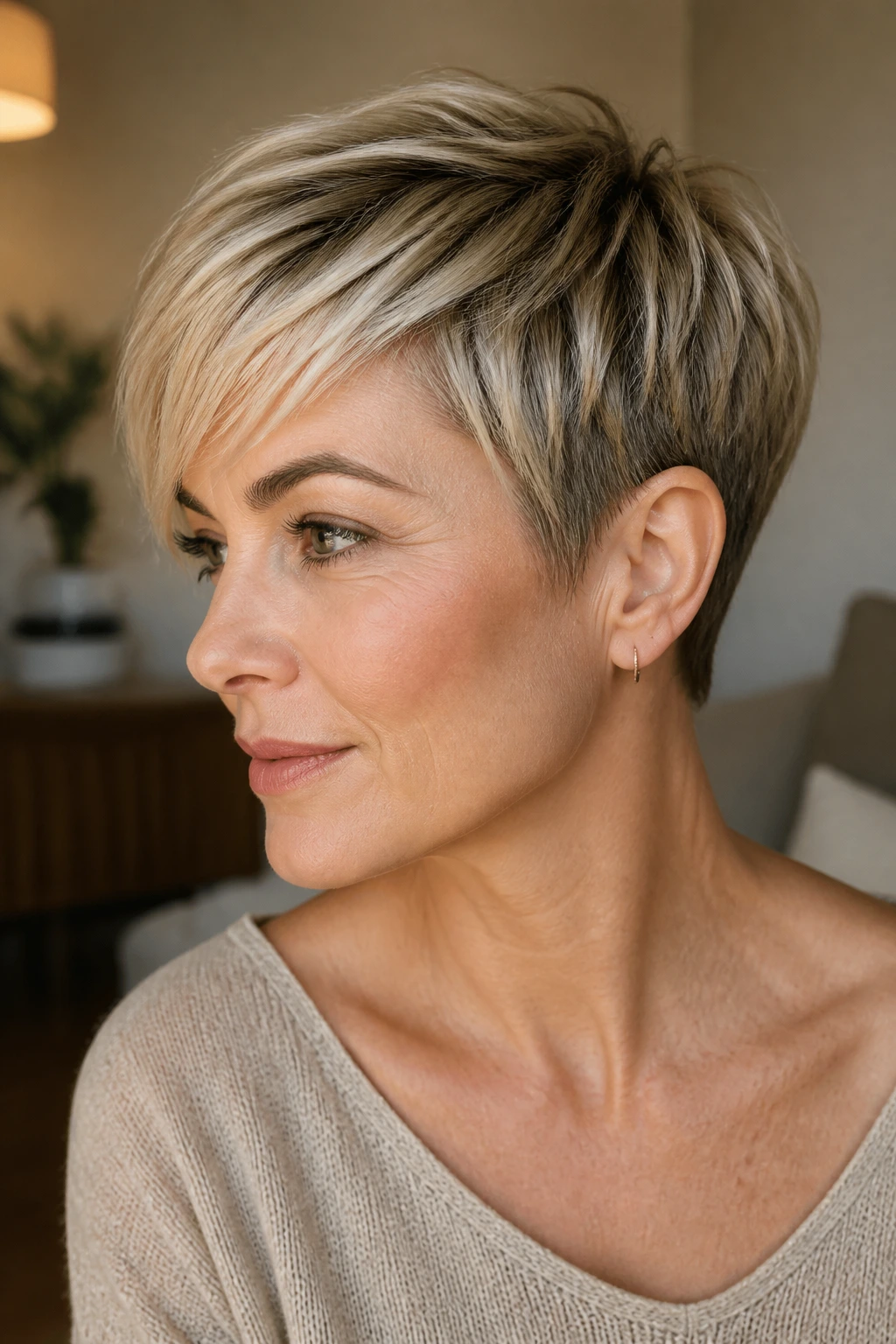
Beige blonde is the quiet one, and I mean that as a compliment. It doesn’t shout. It glows. On a pixie, that calm tone looks especially good when the root is left a shade or two deeper, because the grow-out blends instead of flashing a hard line across the scalp.
This version works best when the cut is tidy but not over-shaped. Keep the sides close, the top slightly longer, and the fringe brushed forward just enough to show movement. The root shadow should be soft, not stripey. If it looks painted on from six feet away, it’s too much.
What I like about this style is how forgiving it is. The beige tone keeps blonde from going brassy too fast, and the darker base means you can go a little longer between appointments without the whole cut looking abandoned. It’s also a nice choice if you prefer a blonde that sits closer to your natural depth and doesn’t turn your hair into a neon signal.
3. Icy Platinum Side-Swept Pixie
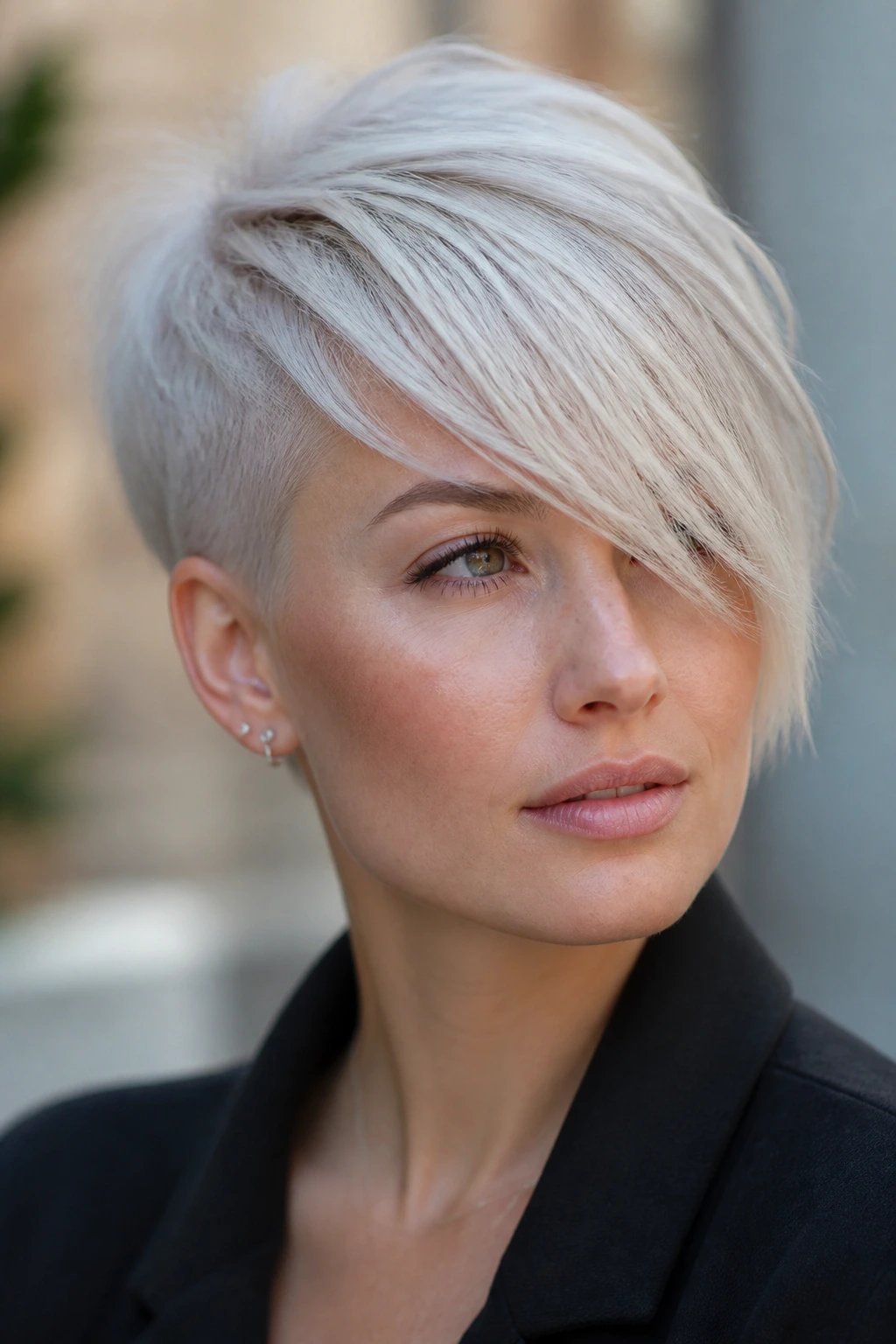
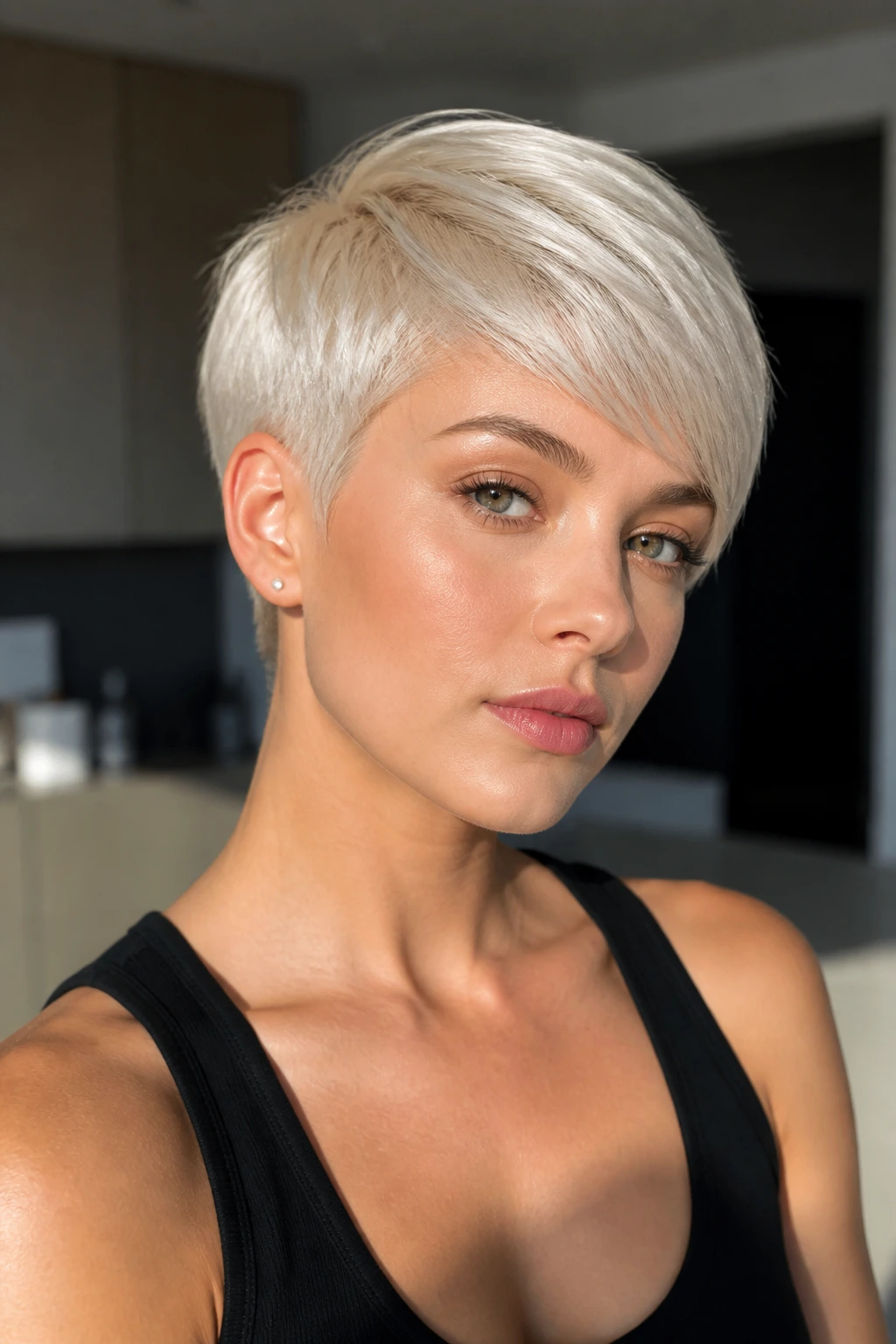
Can a platinum pixie still feel soft? Yes, if the fringe does the work. Icy blonde on short hair can go stark fast, so the side sweep is doing more than decorative labor here. It breaks up the brightness and gives the cut a little movement across the forehead.
The best version of this cut has a longer top — around 3 inches, sometimes a touch more — with the front directed diagonally across one eye. The sides stay clipped tighter so the brightness concentrates on the top plane of the head. That contrast keeps the blonde from spreading everywhere at once.
How to Wear It
- Blow-dry the fringe with a small round brush, then let it cool in the direction you want.
- Use a light paste on the ends only; if you put product at the root, the whole thing collapses.
- Keep the tone cool, but not chalky. A platinum that reads white can look dry fast on short hair.
- This shape is especially useful if you want your cheekbones to do some of the talking.
The cut has edge, but it’s not harsh if the finish stays touchable. That’s the sweet spot.
4. Honey Blonde Choppy Pixie
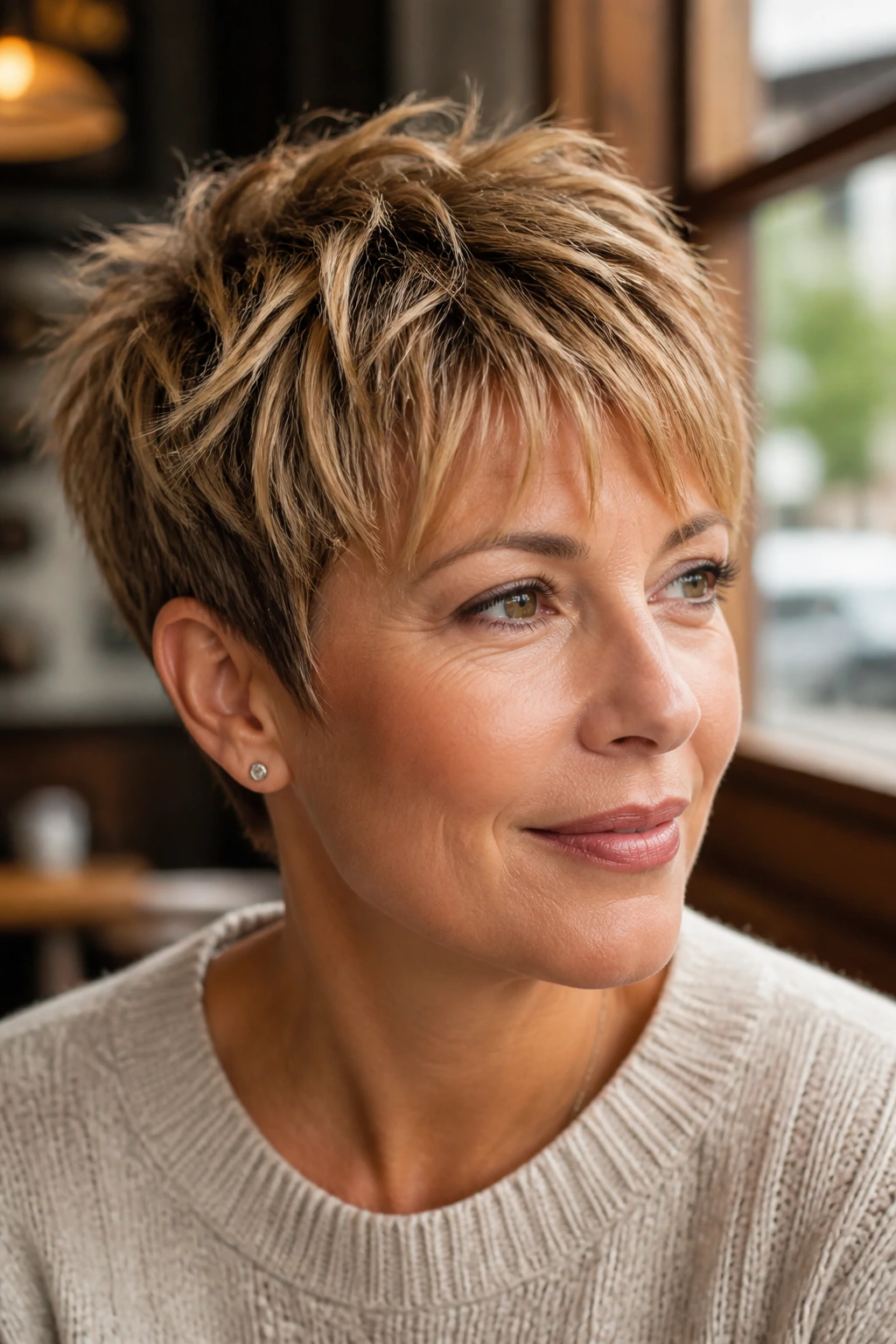
Honey blonde gives short hair warmth that feels alive instead of brassy. On a choppy pixie, that warm tone looks especially good because the irregular ends need a color with some depth. Very pale blonde can make choppy layers look a little fuzzy. Honey keeps them readable.
The cut itself should be piecey, not sculpted into one smooth shape. Think short layers at the crown, soft snips through the fringe, and enough separation that you can see the texture without trying too hard. A dab of matte paste on dry hair will bring the ends forward and let the cut look lived-in by lunch.
This is the pixie I’d suggest for someone who wants a less precious look. It’s friendly, a little messy, and easy to push around with your fingers. If the style gets a bit flattened overnight, a quick mist of texture spray and a fingertip lift at the roots brings it back fast.
5. Ash Blonde Micro-Fringe Pixie
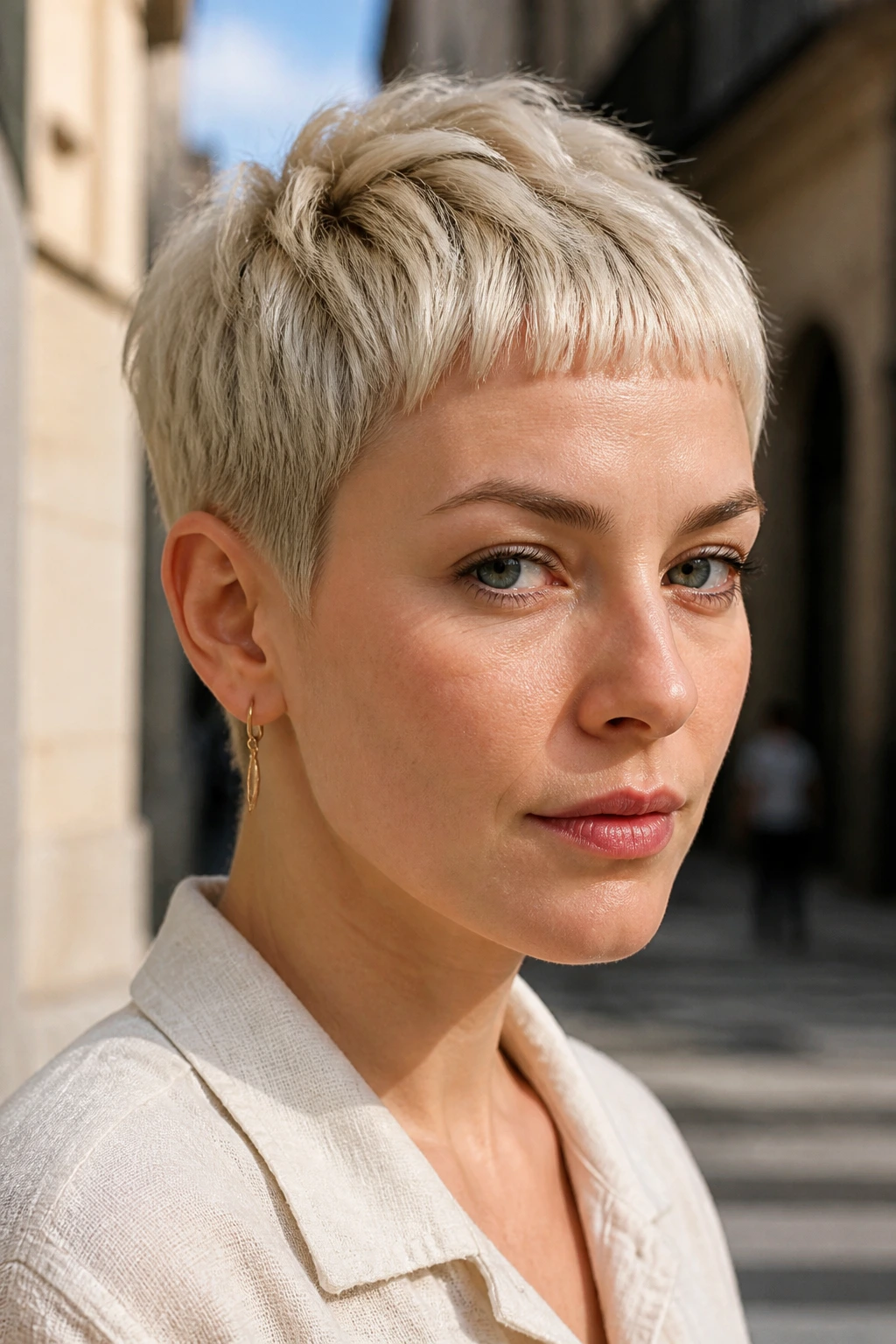
Ash blonde can be tricky on longer hair because it can feel dull if the cut isn’t doing enough. On a micro-fringe pixie, though, that cool tone suddenly makes sense. The short fringe creates a hard little line across the forehead, and the ash shade sharpens it instead of fighting it.
This one works best when the fringe is cut blunt but tiny — short enough to feel graphic, not so short that it sits awkwardly above the brow. Keep the top slightly jagged so the cut doesn’t turn severe. The balance matters. Too much bluntness and the whole look hardens. Too much softness and the fringe loses its point.
If your skin leans cool or neutral, this blonde often reads clean and crisp. If your complexion is warmer, keep a little beige in the toner so the ash doesn’t drag the face down. That small tweak makes a big difference.
6. Golden Blonde Curly Pixie
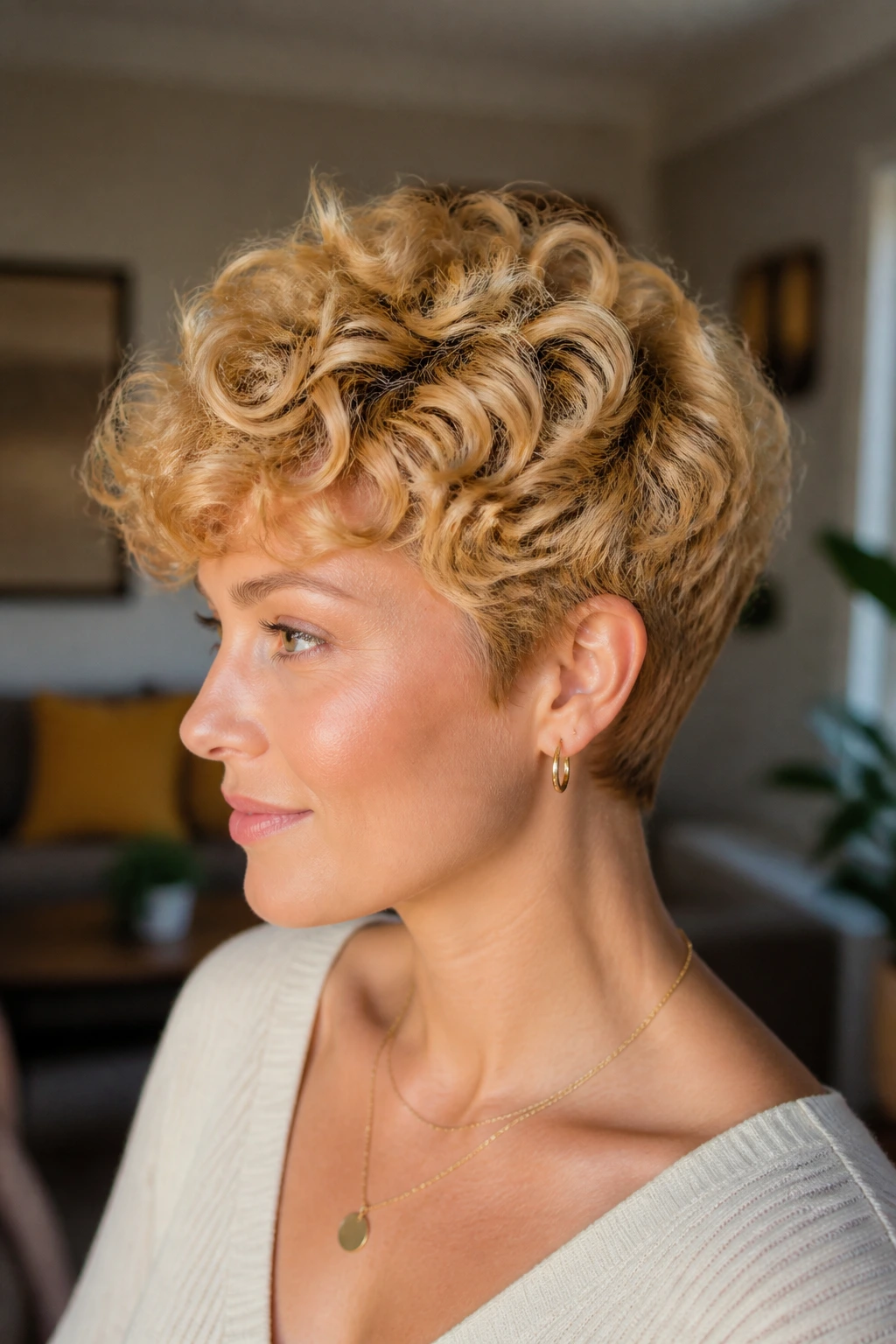
Curly hair does not need to be flattened into obedience to become a pixie. It needs room, shape, and a little respect. Golden blonde helps here because the warmth shows off curl definition without making each loop look dry and chalky.
Ask for a tapered back and sides, then leave enough length on top for the curls to stack naturally. The top might sit around 2 to 4 inches depending on curl pattern. The goal is not uniformity. The goal is a rounded shape that lets the curls spring up instead of spreading out.
What to Tell Your Stylist
- Keep the perimeter neat so the silhouette stays clean.
- Cut curl by curl, or the shape will collapse once it dries.
- Leave the front a little longer if your curls shrink hard.
- Use a diffuser on low heat and stop when the roots are dry, not fried.
This version can look sweet, sporty, or a little wild, and that’s the fun of it. Blonde curls on a pixie have more personality than most people expect.
7. Shadow-Root Balayage Pixie
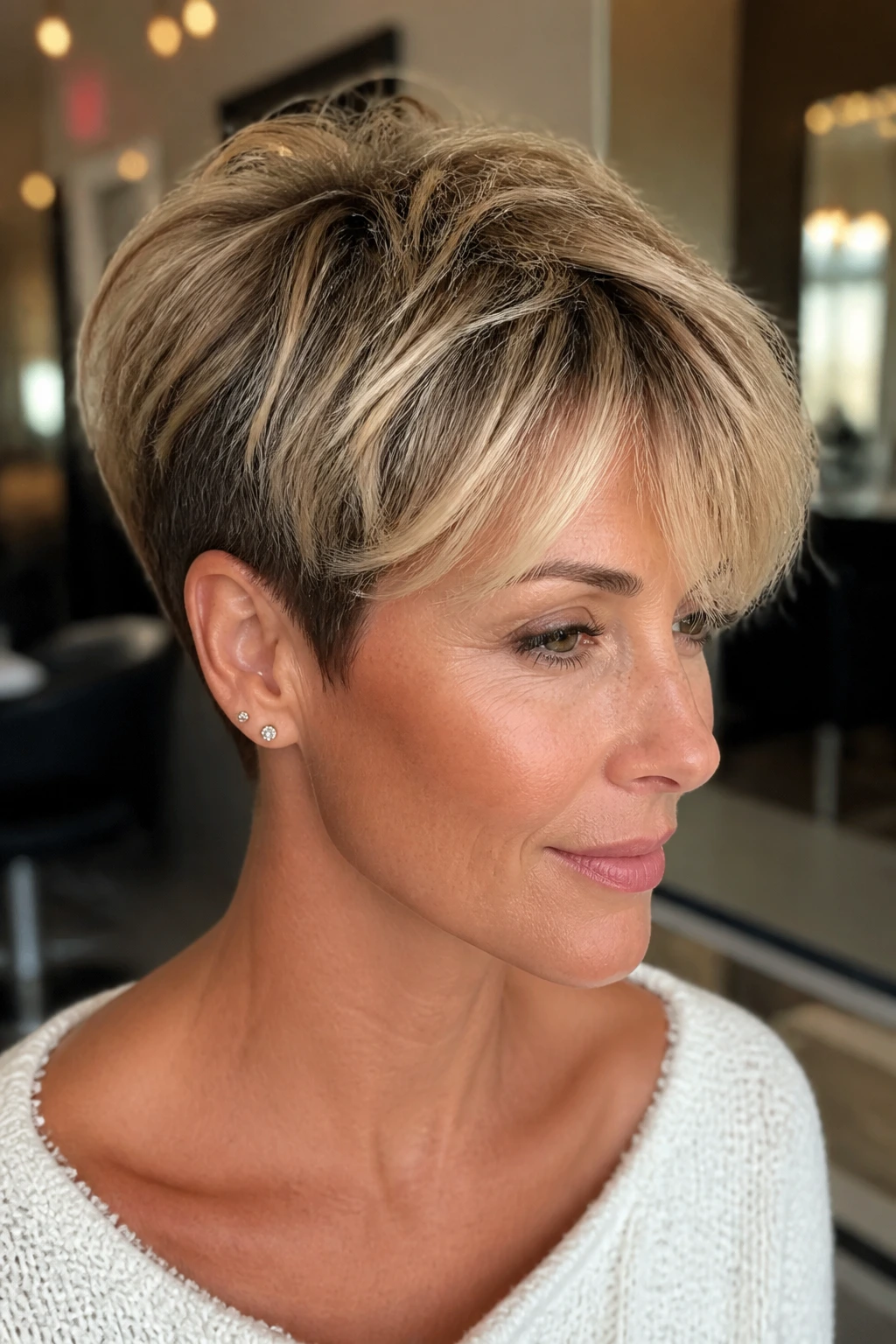
A shadow-root blonde pixie is the low-maintenance answer for anyone who hates that harsh line of grow-out around the hairline. The darker root gives the haircut a built-in outline, which makes the blonde highlights pop harder on top. It’s a practical trick, but it also looks good.
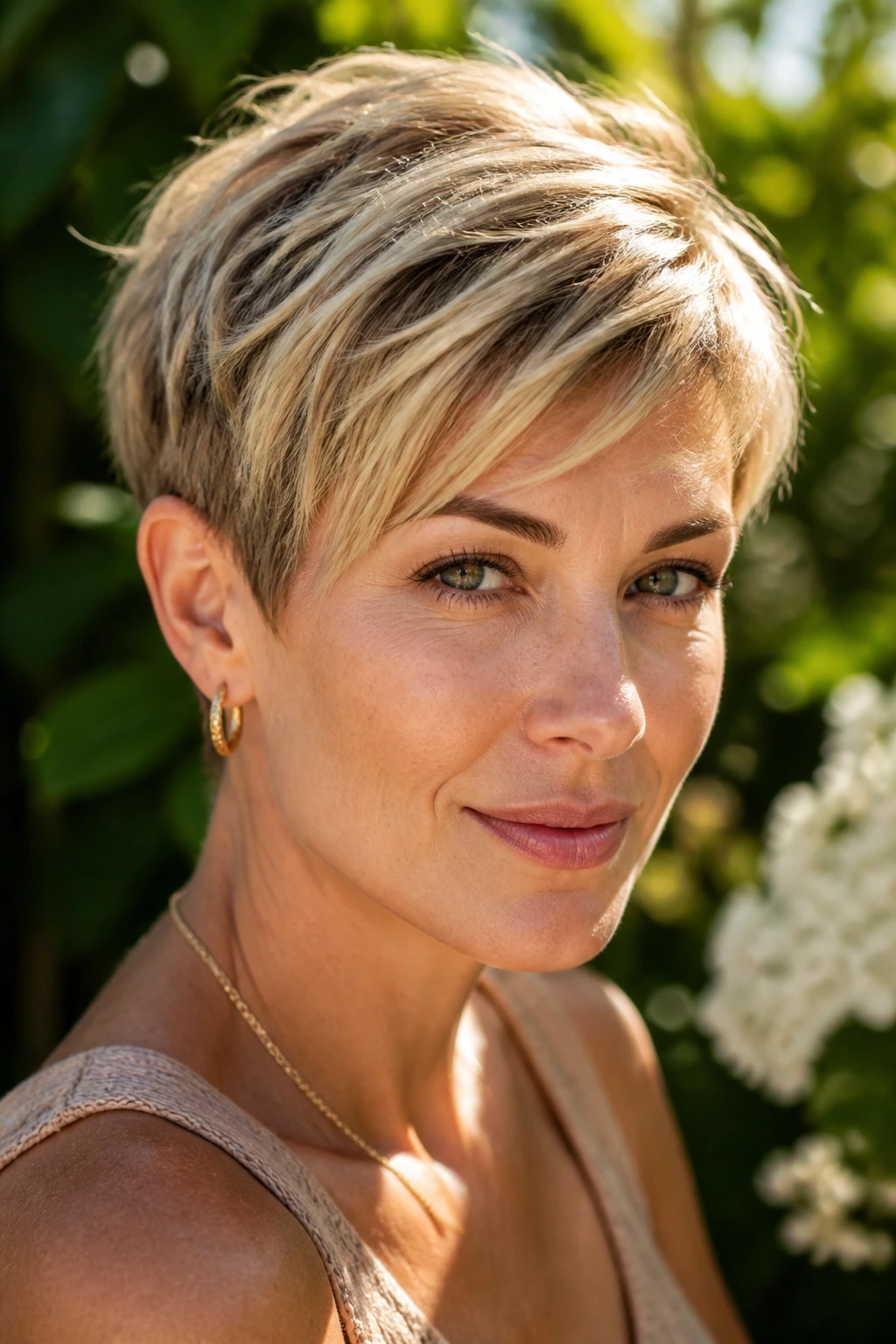
This style shines when the color is hand-painted through the crown and fringe instead of smeared everywhere. You want ribbons of light, not a solid block of blonde. Let the roots stay about half an inch to an inch deeper, then keep the brighter pieces where the sun would hit first — crown, temples, and the front edge.
I like this cut on people who want dimension without weekly salon obligations. The shadow root gives the pixie a bit of grit, which stops it from reading too sweet or too salon-perfect. And when the hair moves, the contrast shows up in a way that flat, all-over blonde never quite does.
8. Undercut Blonde Pixie
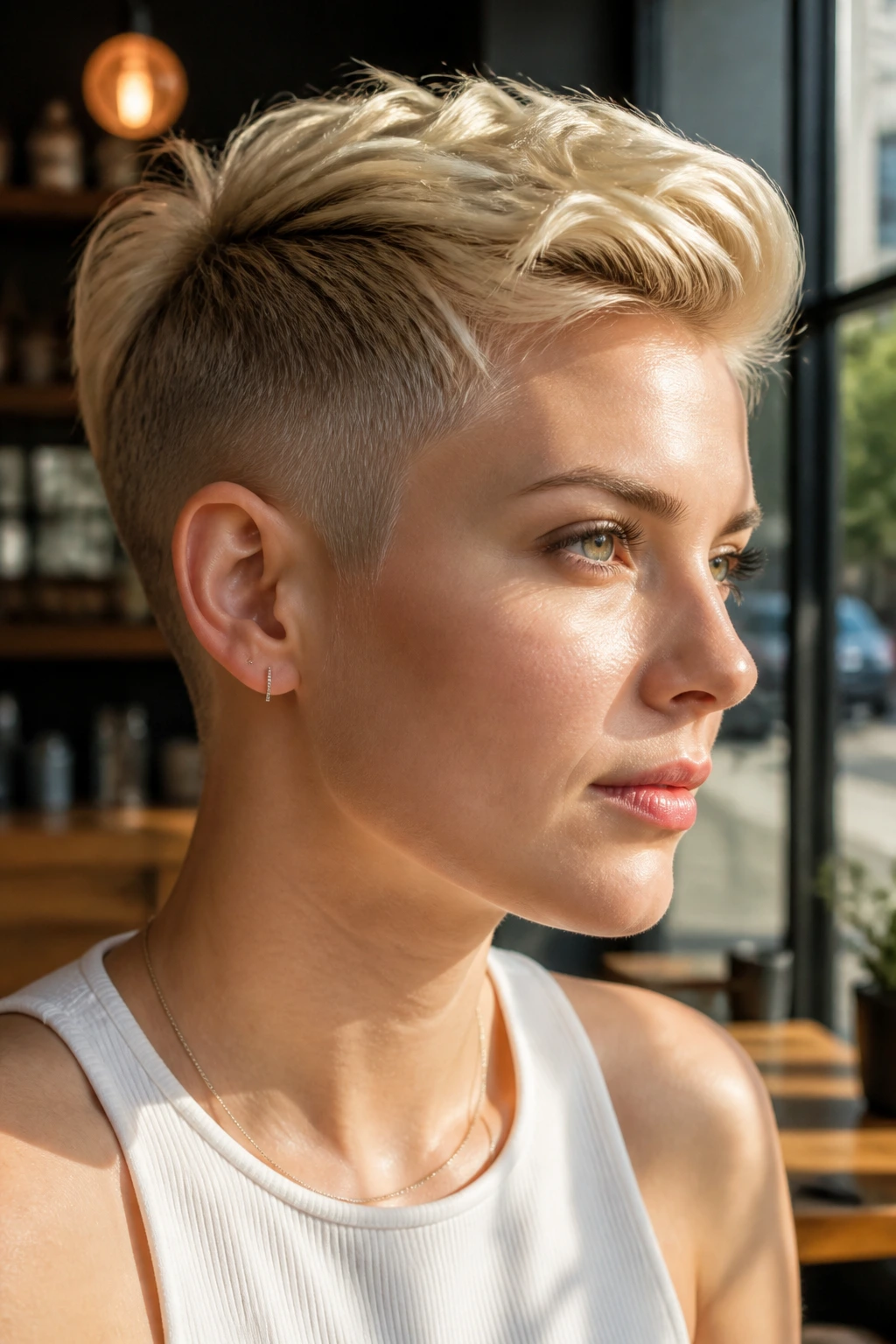
If you want short hair with a little bite, this is the one. The undercut removes bulk at the sides or nape, then leaves a brighter, longer top sitting above it like a lid of light. On blonde hair, that contrast gets even sharper.
The top can be styled smooth, brushed up, or pushed forward into a messy fringe. I prefer it with at least 3 inches on top so the silhouette has something to play with. If the top is too short, the undercut can take over and the whole cut starts looking severe instead of deliberate.
This style is especially good for thick hair that fights against shorter lengths. Removing weight underneath makes the top easier to move, and the blonde keeps the whole thing from looking heavy. It’s a cut with personality. No apology needed.
9. Sandy Blonde Rounded Pixie
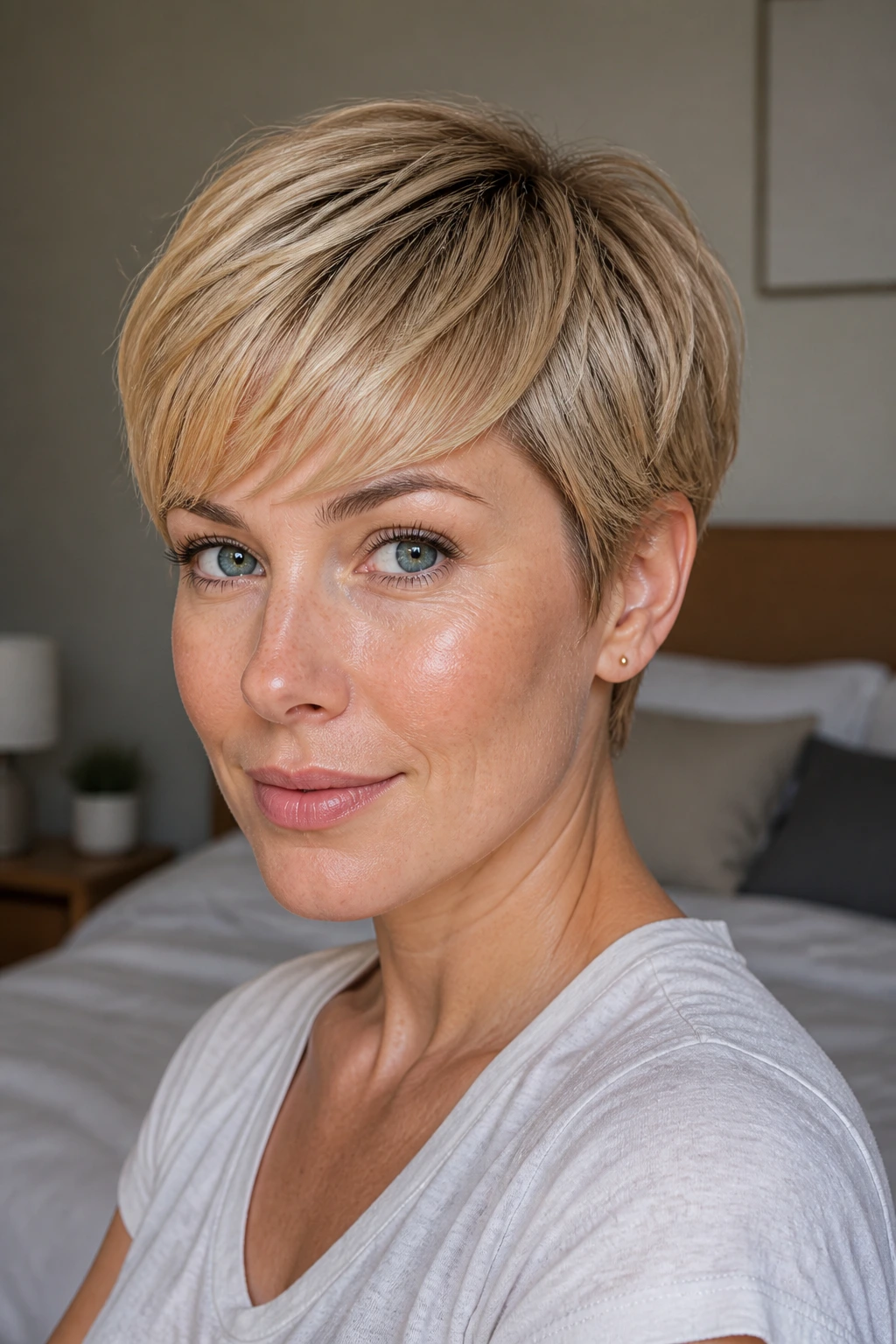
Sandy blonde is one of those tones that looks natural even when it isn’t. It has enough warmth to feel sunlit, enough neutrality to stay wearable, and enough depth to keep the cut from going pale and washed out.
A rounded pixie in this color feels softer than the choppier versions above. The crown follows the shape of the head, the sides sit close without looking shaved down, and the fringe curves gently rather than jabbing forward. It’s a neat cut, but not a severe one.
This is the style I’d point to if you want blonde hair that reads polished in daylight and easy under indoor lighting. It won’t fight with makeup or clothes. It just sits there looking clean, tidy, and quietly bright, which is not as boring as people think. Sometimes that restraint is the whole charm.
10. Pearl Blonde Slicked-Back Pixie
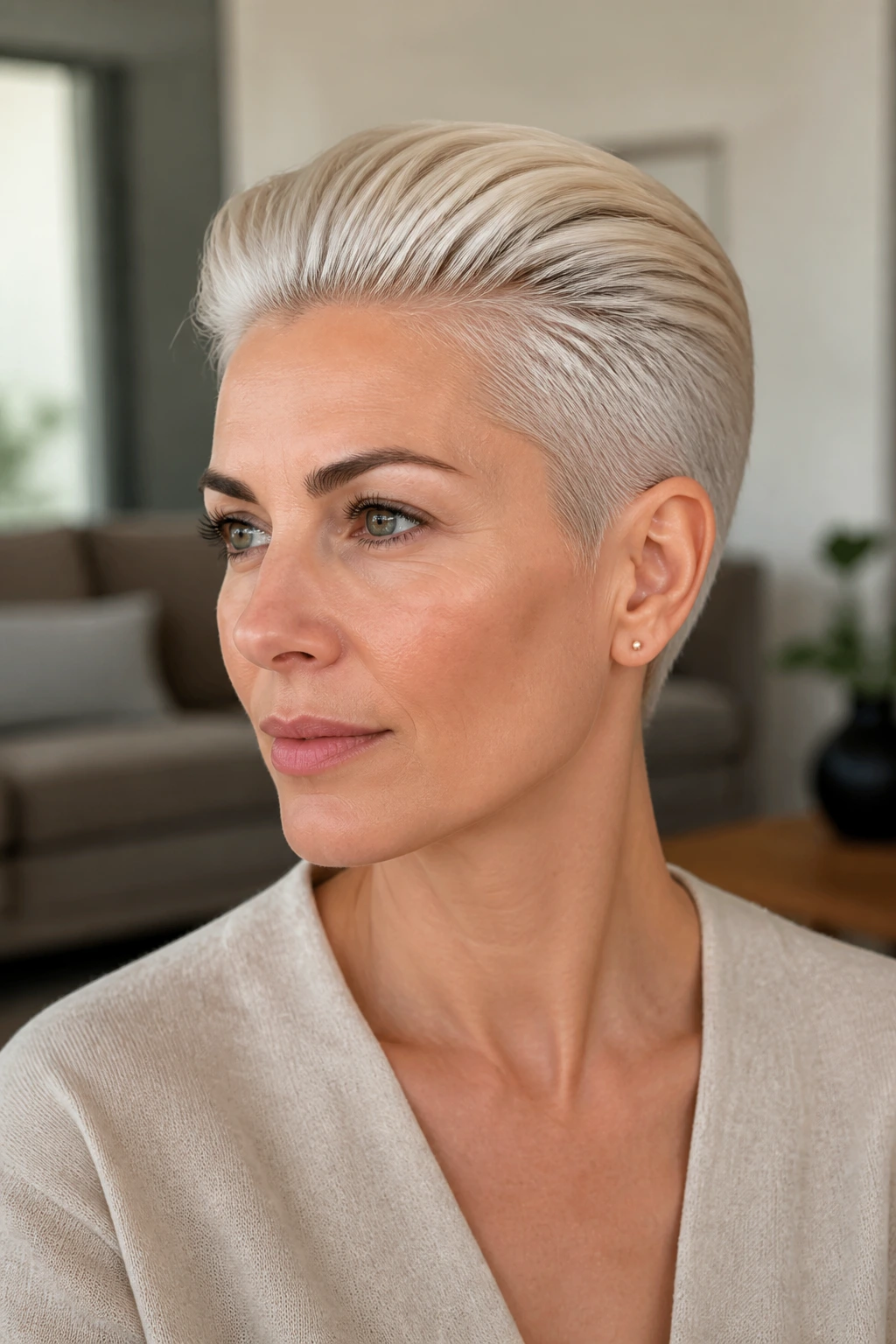
A slicked-back blonde pixie has a completely different attitude from the airy, feathered cuts above. It’s sleek. It’s a little glossy. And when the blonde lands in a pearl tone — not silver, not beige, but that soft luminous middle — the finish looks deliberate instead of drenched.
The key is control. Keep enough length on top to comb the hair back cleanly, then taper the sides and nape so the head shape stays neat. A tiny amount of lightweight gel or cream will give you hold without crunch, though I’d avoid loading the roots. That’s the quickest way to make the style look greasy.
When It Makes Sense
- Great for straight or softly wavy hair.
- Works well when you want your eyes and brows to stand out.
- Pairs nicely with sharp collars, hoops, and a clean neckline.
- Needs a little more care at the hairline than a messy pixie.
The finish is polished, but it should still move when you turn your head. If it looks glued, too much product found its way into the mix.
11. Asymmetrical Blonde Pixie
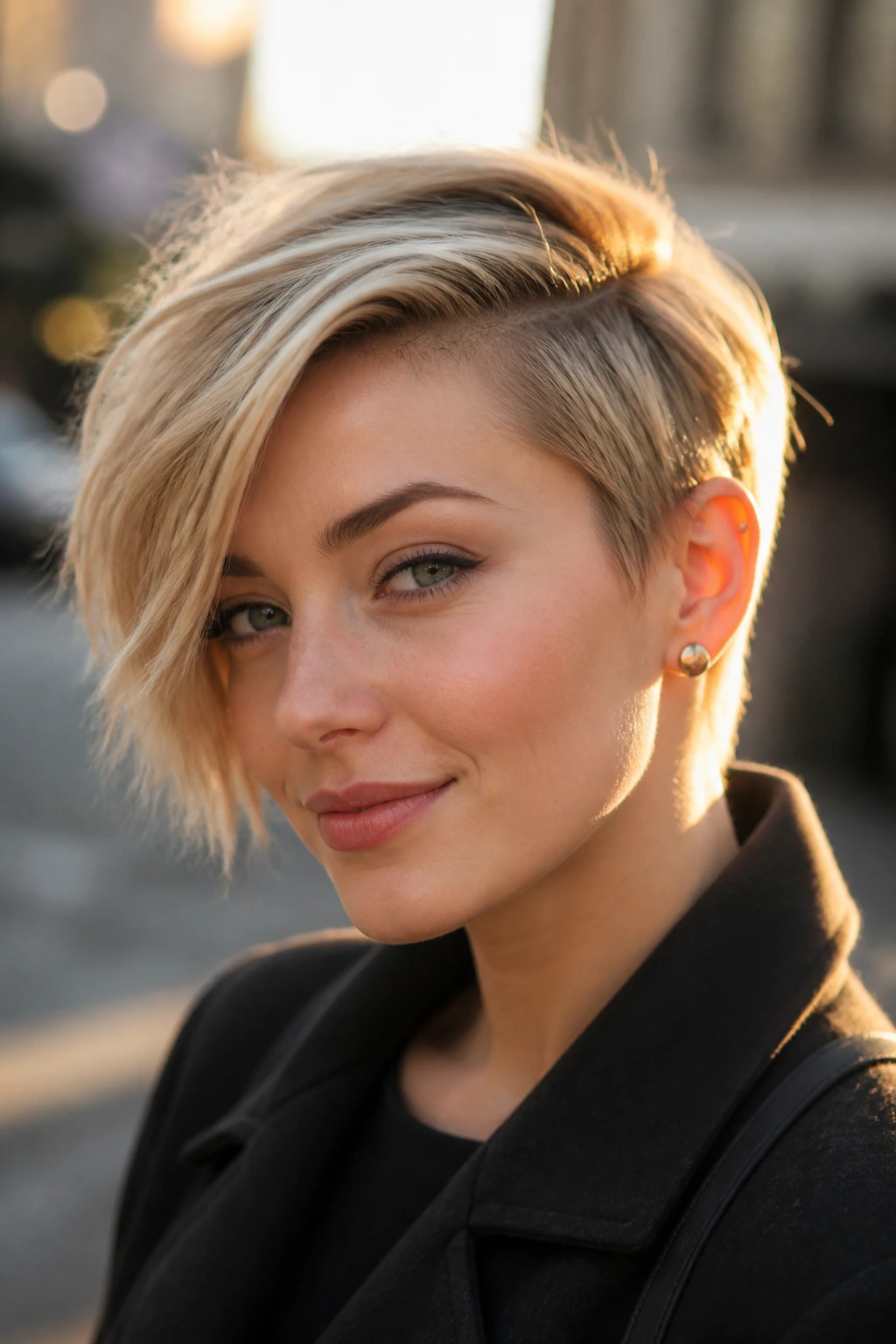
One side a touch longer, the other side tighter — that’s the whole trick, and it works because the eye loves asymmetry. On blonde hair, the contrast becomes even more obvious, especially when the longer side skims the cheekbone or lands just under the jaw.
This cut works best if the longer side carries the fringe and the opposite side stays neat and close. You do not need a dramatic chop to make it read as asymmetrical. Even an inch of difference can shift the whole face shape. That tiny imbalance is what gives it energy.
What I like here is how flexible it feels. Wear it smooth if you want the angle to look clean. Rough it up if you want the shape to feel more editorial. Either way, the blonde should be bright enough to highlight the difference in lengths, but not so pale that you lose the shape in a blur of light.
12. Butter Blonde Swept-Bang Pixie
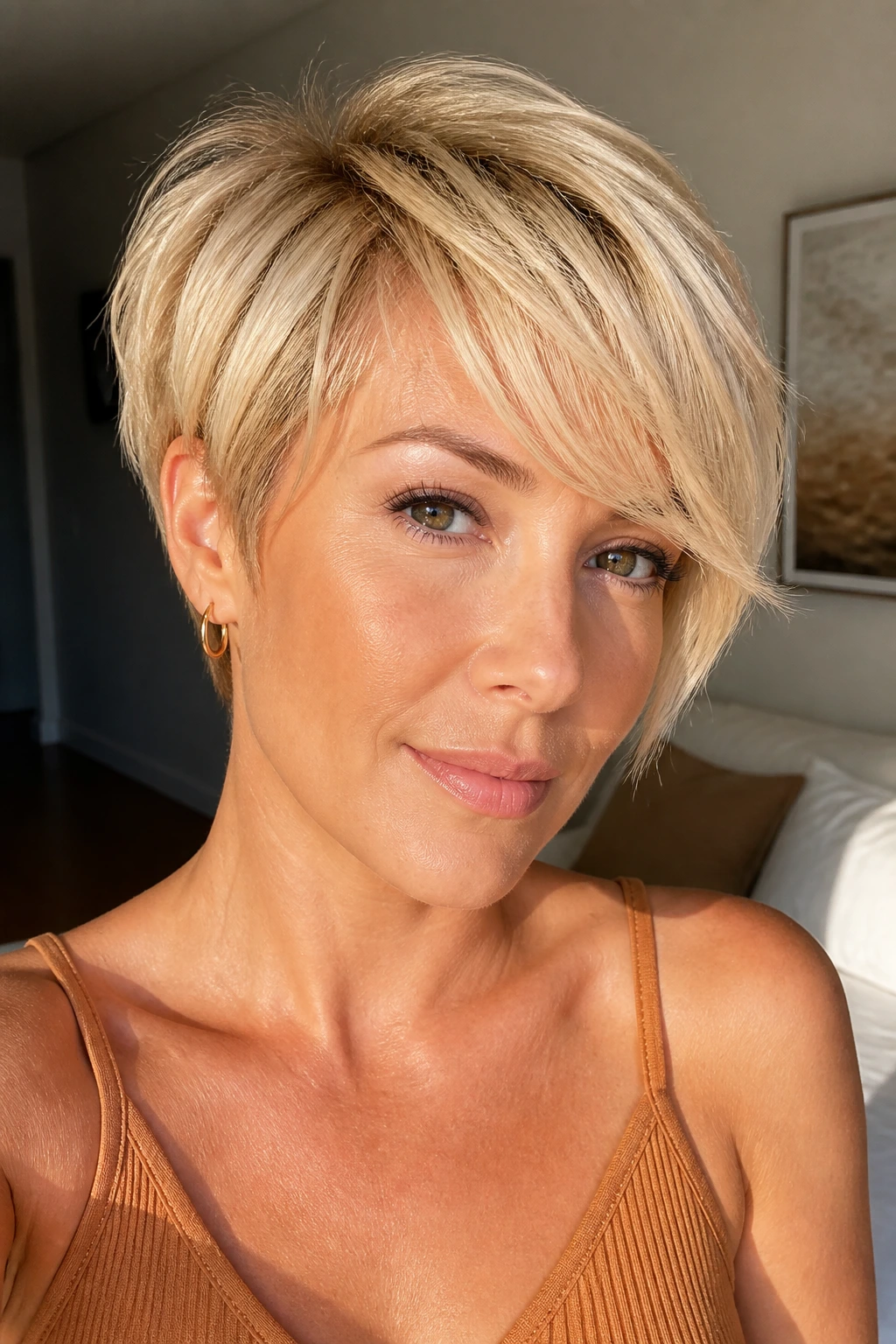
Butter blonde brings softness back into a pixie that might otherwise feel too sharp. The color has warmth without going orange, which makes it a smart choice when the fringe is long enough to sweep across the forehead in one clean motion.
Keep the bang section a little longer than the rest — usually 3 to 4 inches, depending on density — so it can curve into the face instead of sticking straight out. The top can stay lightly layered, but don’t shred it to pieces. Butter blonde looks best when the cut still has some body under the movement.
This is the kind of blonde that makes short hair look touchable. Not fluffy. Not flat. Touchable. That matters, because the wrong blonde can make a pixie look over-bleached and brittle. Butter tones keep the whole thing from turning sterile.
13. Platinum Spiky Pixie
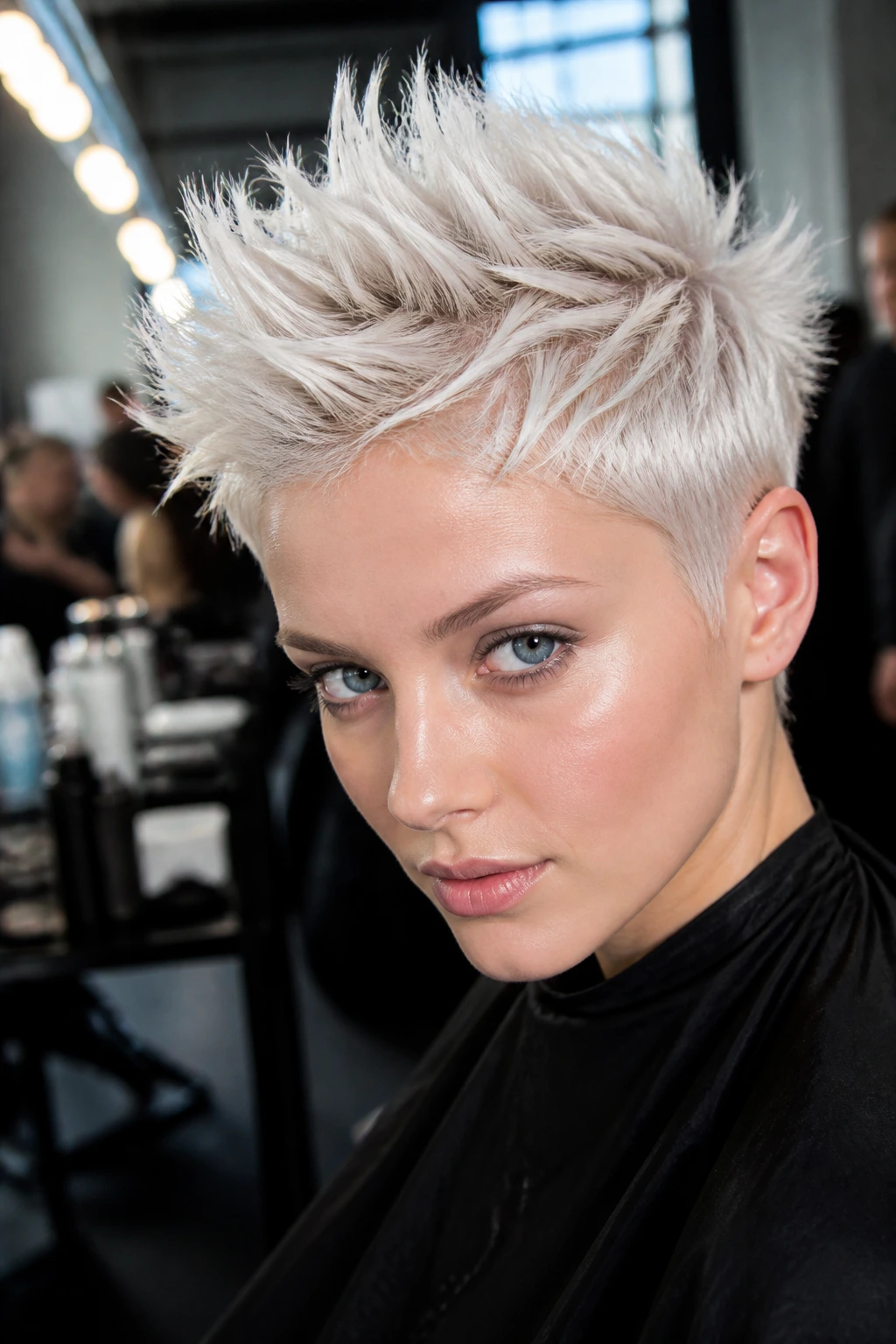
Want the blonde to feel sharper? Go spiky. Platinum on a spiky pixie turns each little lifted piece into a bright edge, which makes the cut feel bolder without needing extra length. The whole point here is separation.
The top should be short enough to stand up with a paste or fiber cream, but not so short that it turns into a fuzzball. Think texture, not noise. The crown needs enough length to direct pieces forward, upward, or slightly sideways, depending on your mood that morning.
Styling Note
- Warm a tiny amount of product between your fingers first.
- Pinch sections at the crown, then leave a few ends loose.
- Keep the sides tight so the spikes stay in focus.
- Use heat sparingly; too much flat-ironing kills the lift.
This cut is punchier than the softer blondes in the list. It suits people who like a little attitude and don’t mind a daily five-minute shape-up.
14. Dimensional Highlighted Pixie
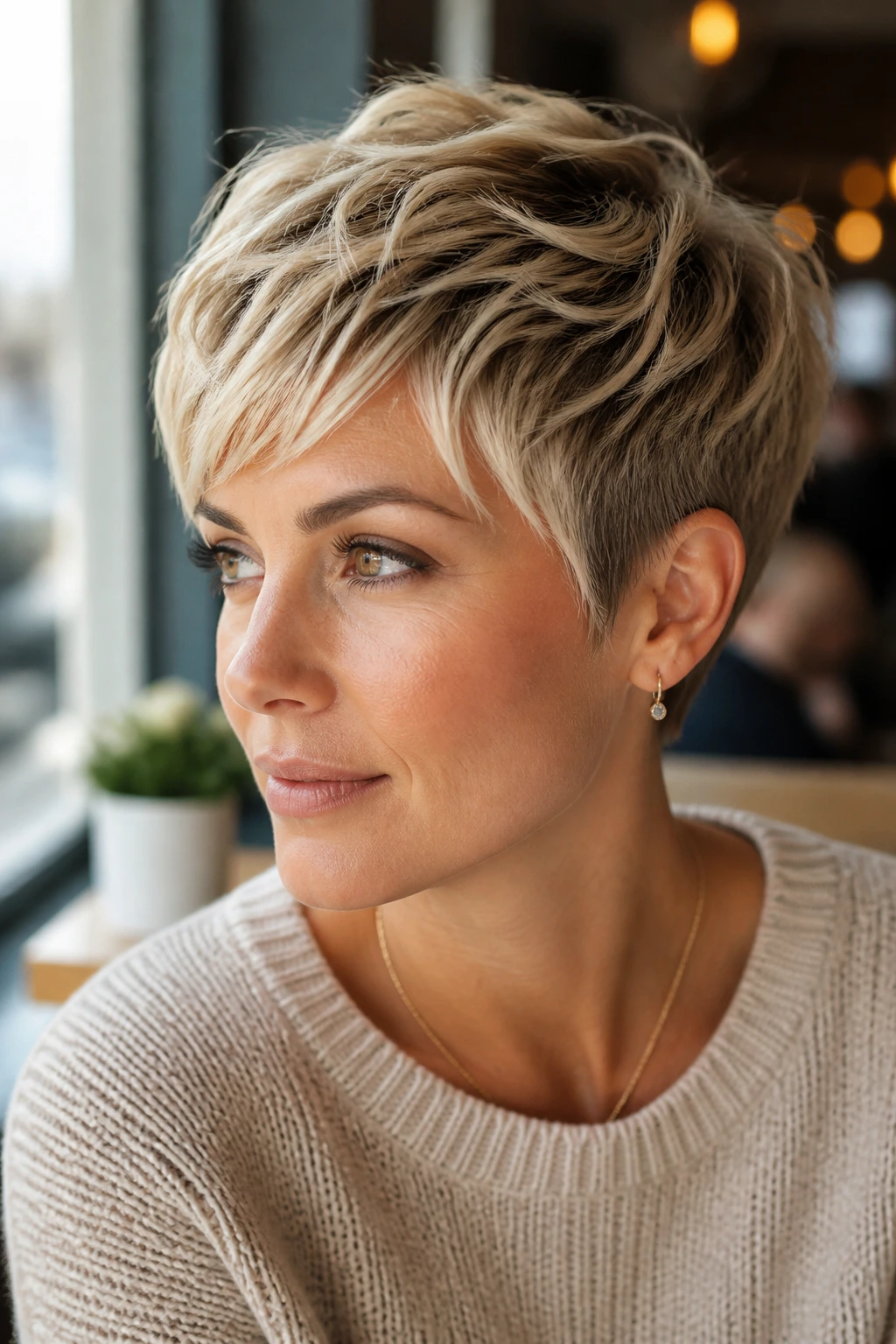
A dimensional blonde pixie is the one that looks expensive without trying to look expensive. That’s because the color isn’t one flat shade. It has lighter ribbons, darker lowlights, and enough depth near the root to keep the cut from looking cutout and overdone.
The shape can be nearly anything — feathered, side-swept, rounded, even slightly asymmetrical — but the dimension is what keeps it alive. Short hair shows contrast fast. A few lighter pieces at the fringe and crown make the shape read from across the room, while the lowlights keep the body of the hair from disappearing into the scalp.
I prefer this when someone wants brightness but not bleach fatigue. It also helps if your hair is fine, because contrast creates the illusion of more depth. One-color blonde can go a little flat on fine hair. Dimension fixes that without changing the basic silhouette.
15. Vintage Rounded Blonde Pixie
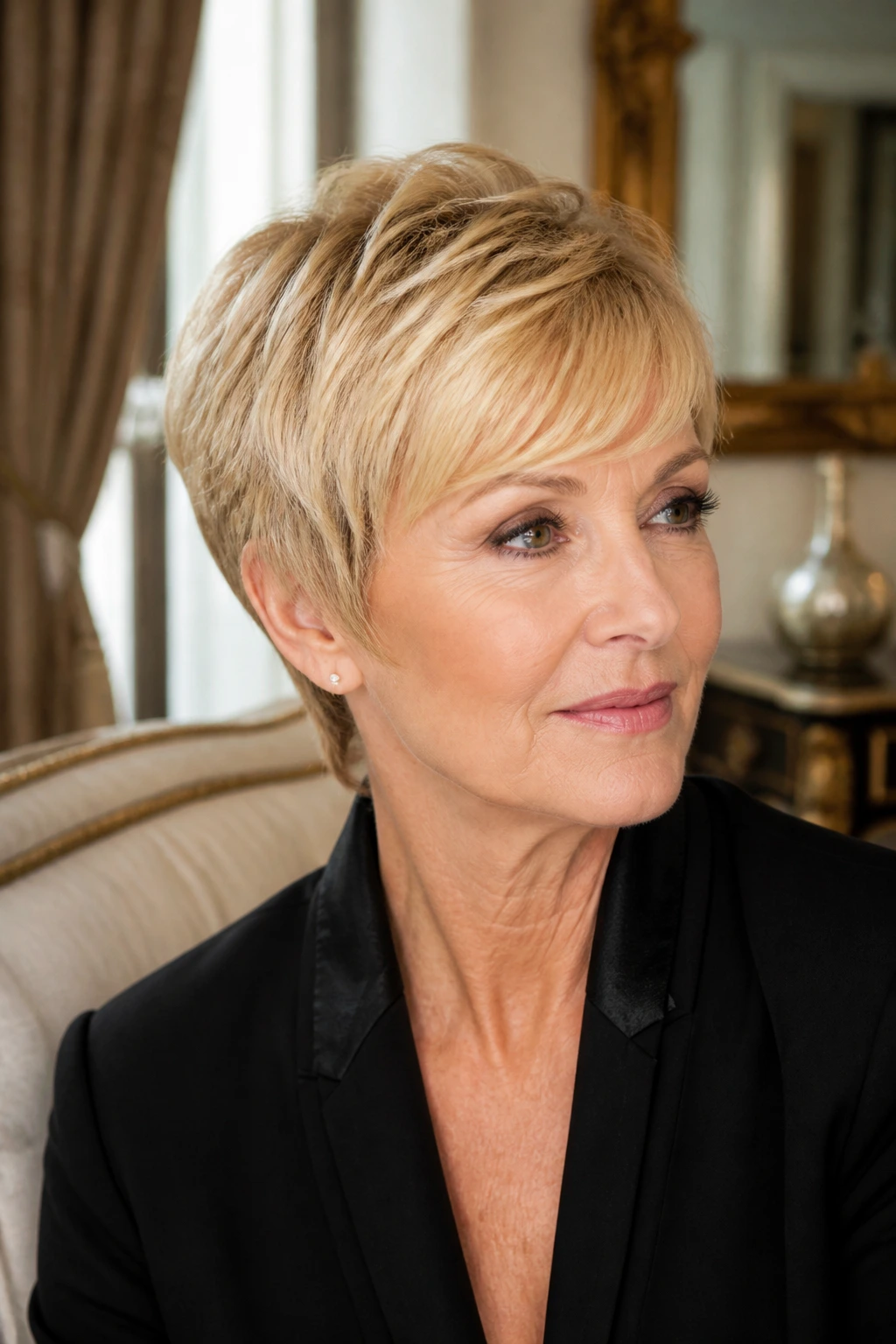
There’s something old-school and neat about a rounded pixie, and blonde gives it a fresh face. The shape hugs the head, with a gentle curve through the crown and a tidy line around the ears and nape. It feels tailored, almost like a short tailored jacket.
The fringe usually sits to the side, not chopped straight across. That little sweep softens the roundness and keeps the cut from looking helmet-shaped. A beige or soft gold blonde suits this style best because harsh platinum can make the curves feel too hard.
This cut is a nice choice if you like structure but don’t want edge for edge’s sake. It looks especially good when the hair is glossy and the outline is clean. The silhouette does all the talking. The color just makes sure people keep looking.
16. Curly Tapered Blonde Pixie
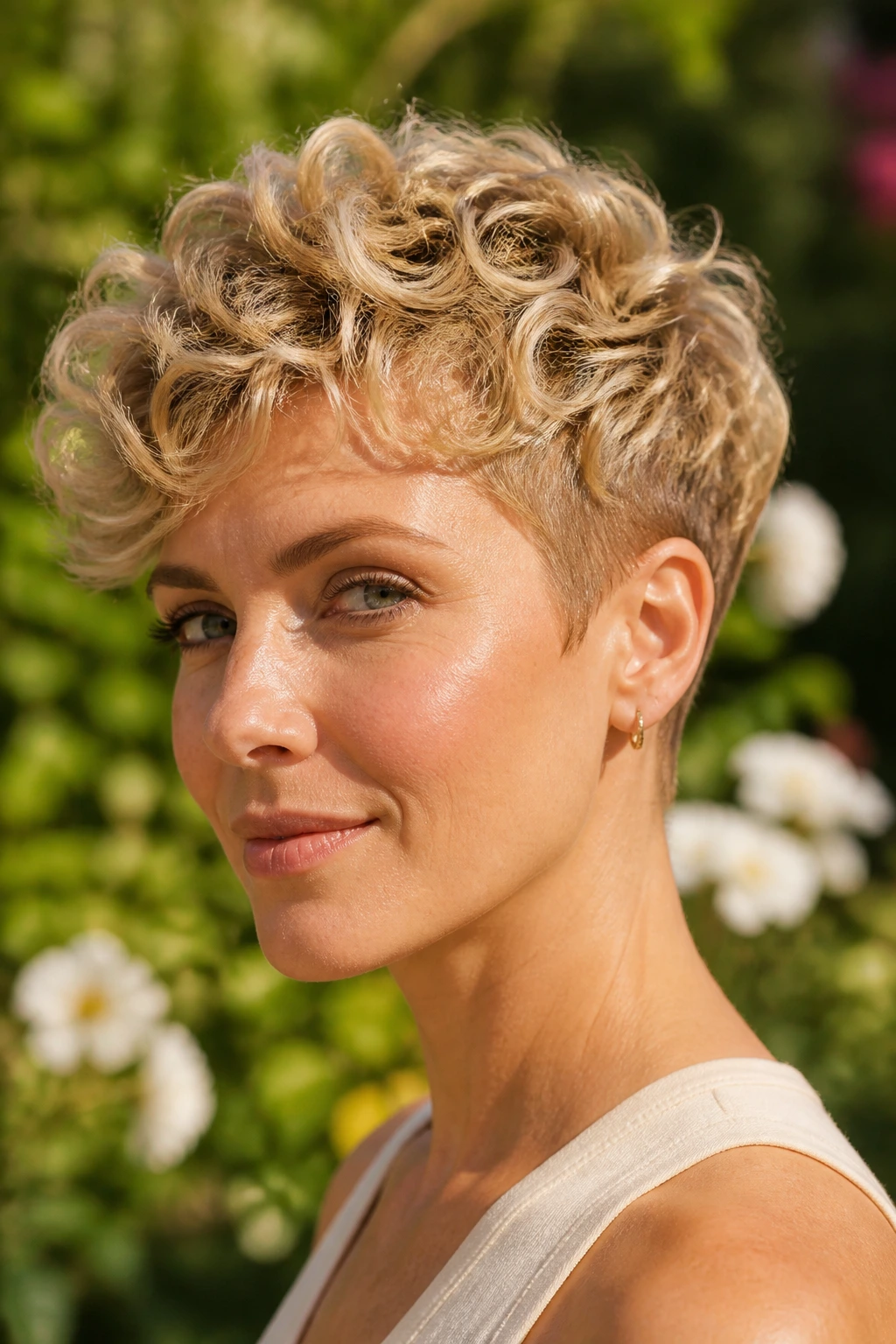
A curly tapered pixie is not the same thing as the golden curly version above. This one keeps the sides and back tighter, which makes the curl sit higher and closer to the head. The result is neater, snappier, and a little more sculpted.
Blonde works here because it shows the curl pattern in layers. If the hair is over-lightened, though, the curls can lose spring. So I’d keep some warmth or root depth in the mix. The color should support the curl, not bleach the life out of it.
This cut is good when you want your curls to feel intentional rather than fluffy. It can be worn with soft edges for a casual look, or pushed into a defined shape with curl cream and a diffuser. Either way, the taper keeps the whole thing from puffing out at the sides.
17. Cool Blonde Crop with Soft Layers
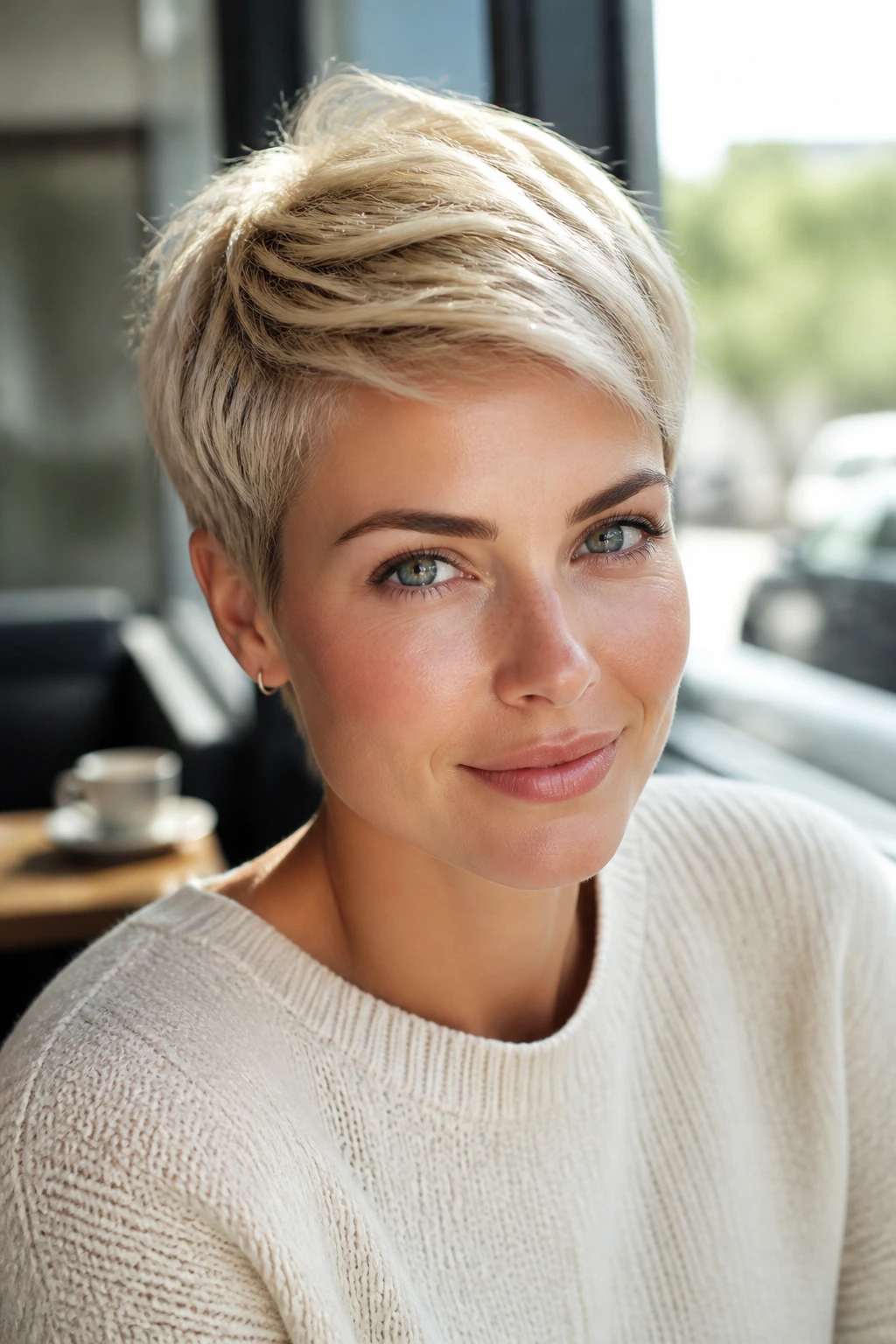
Cool blonde on a pixie crop can look icy, but the soft layers keep it from turning severe. That’s the whole trick. The tone stays clean and pale, while the layering adds movement so the hair doesn’t sit like a solid cap.
This cut is especially useful if you want a bright blonde that still feels modern and easy to wear. The layers should be internal and light, not chopped into visible chunks. A little lift at the crown, a little feathering through the fringe, and a clean nape are enough. The rest is tone.
When this works, it really works. The blonde looks crisp around the face and cooler at the top, which gives the cut a kind of fresh morning light effect. Sounds poetic. It’s also practical, because cool blondes can show brass fast if they’re too flat. Soft layers stop that from happening.
18. Feathered Long Pixie with Ear Tuck
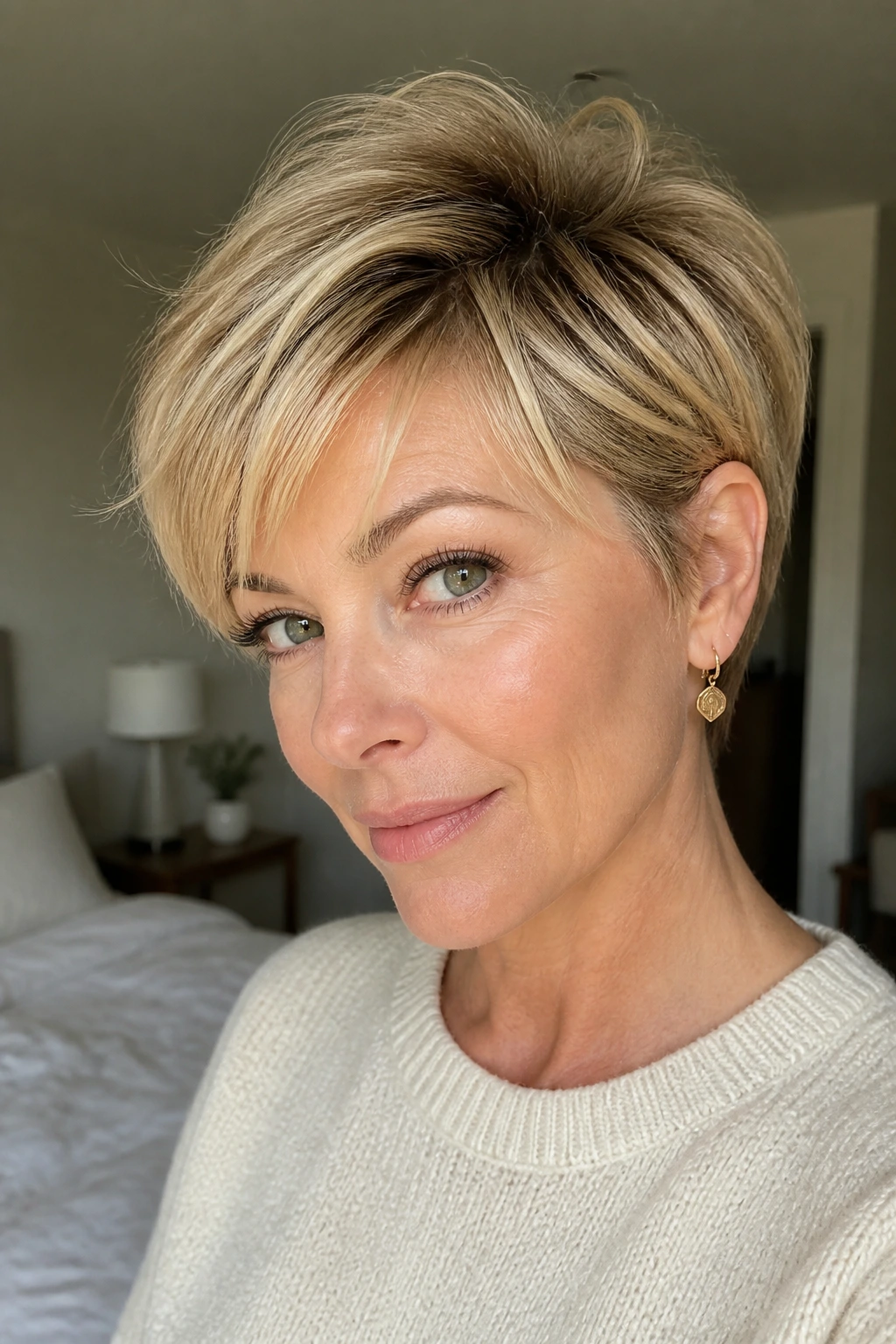
If you like the ease of a pixie but want a little more hair to play with, this is the one. The top and sides stay long enough to tuck behind the ears, and the feathering keeps the whole shape from looking bulky. Blonde makes that tucked shape feel lighter, which is a nice payoff.
I like this cut for people who want movement more than drama. The front can sweep across the forehead, then tuck cleanly back by the ears. It’s an easy shape to style with a brush and a blow dryer, but it also works when you let it air-dry and then push it into place with your fingers.
Best For
- Hair that sits straight or softly bent.
- People who wear glasses and want room around the temples.
- Anyone who likes to change part lines without changing the whole cut.
- A soft blonde tone with some depth at the root.
The tuck is the point. It gives the cut a little breathing room and keeps the sides from crowding the face.
19. French-Girl Blonde Pixie
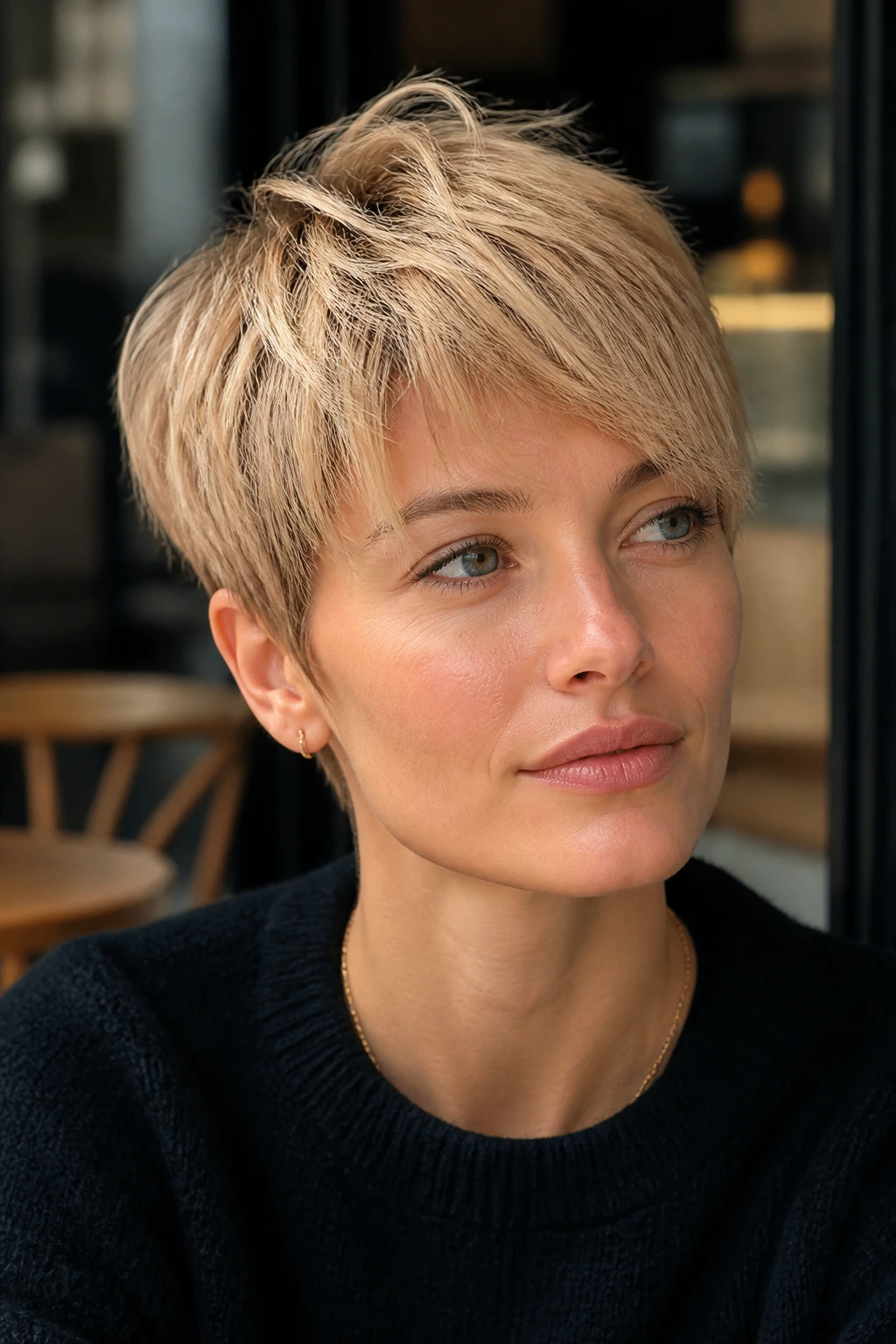
This is the messier, less polished cousin in the family. The French-girl pixie leans into softness, a bit of bend, a bit of fringe, and enough undone texture that the blonde looks lived-in rather than frozen.
The tone usually sits between beige and gold, with a soft root so the grow-out doesn’t turn needy. The cut should never feel over-layered. Just enough movement at the crown, a fringe that can fall a little sideways, and ends that don’t look too sharp. That looseness is what gives it charm.
I like this style when someone wants short blonde hair that doesn’t feel “done” in the salon sense. It has shape, yes, but it also has that slightly careless finish that makes people stare twice. Not because it’s loud. Because it looks like the hair had a good afternoon and didn’t apologize for it.
20. Mod Pixie with Blunt Fringe
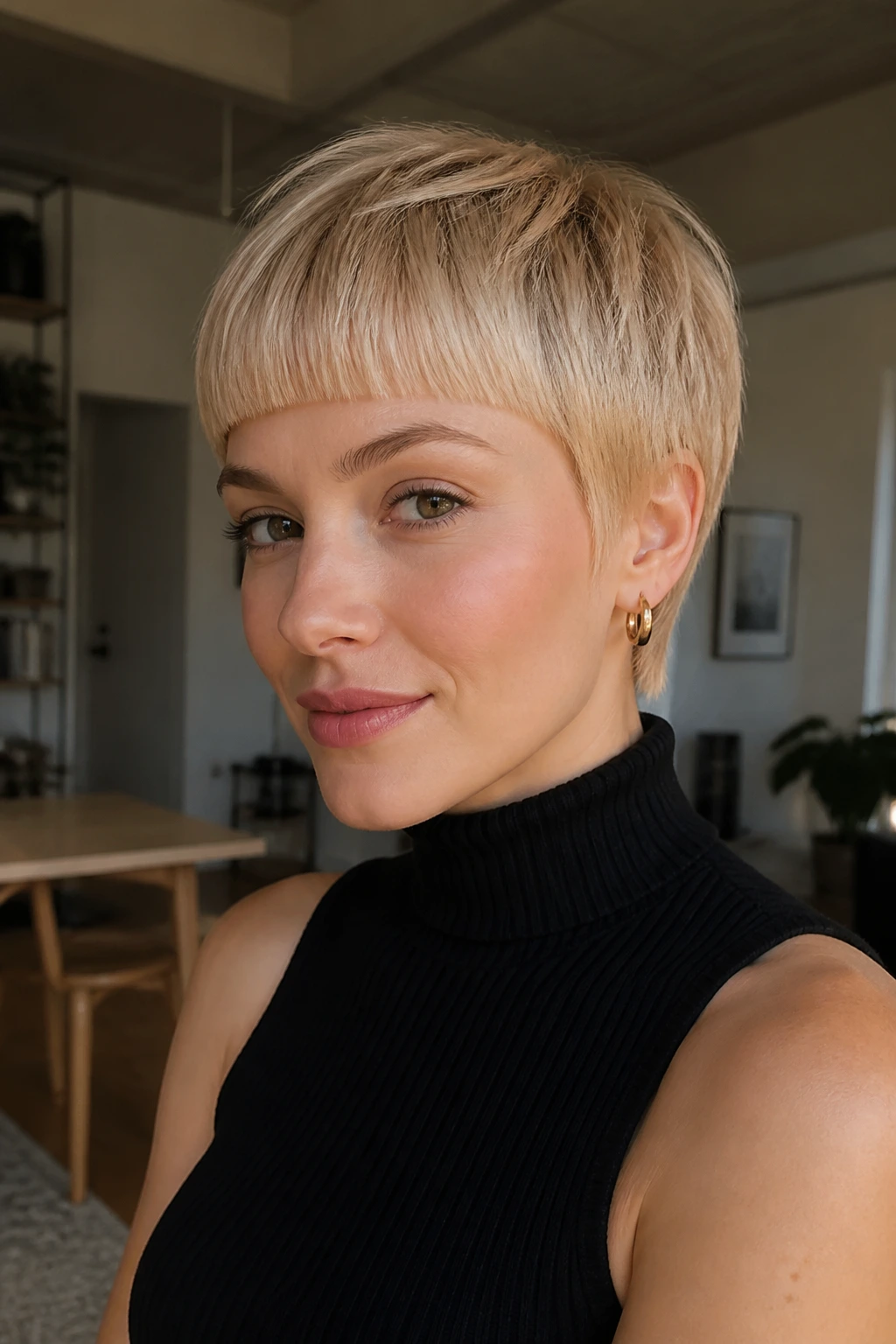
Can a pixie wear a blunt fringe and still look soft? Absolutely, as long as the blonde isn’t chalky and the rest of the cut has some give. This style borrows a little from mod shapes: a neat fringe, a tidy outline, and just enough roundness through the top to keep it from feeling boxed in.
The fringe should land straight but not rigidly so. Keep the sides tapered and the crown lightly layered, or the cut becomes too blocky. A creamy blonde or buttery beige tone works better than white platinum here, because the color should support the graphic fringe instead of making it look severed from the rest of the head.
This one is stronger than it looks. It reads clean in a way that feels deliberate, not severe, which is a hard line to walk. When the balance is right, the cut has a very crisp face-framing effect without getting costume-y.
21. Grown-Out Blonde Pixie
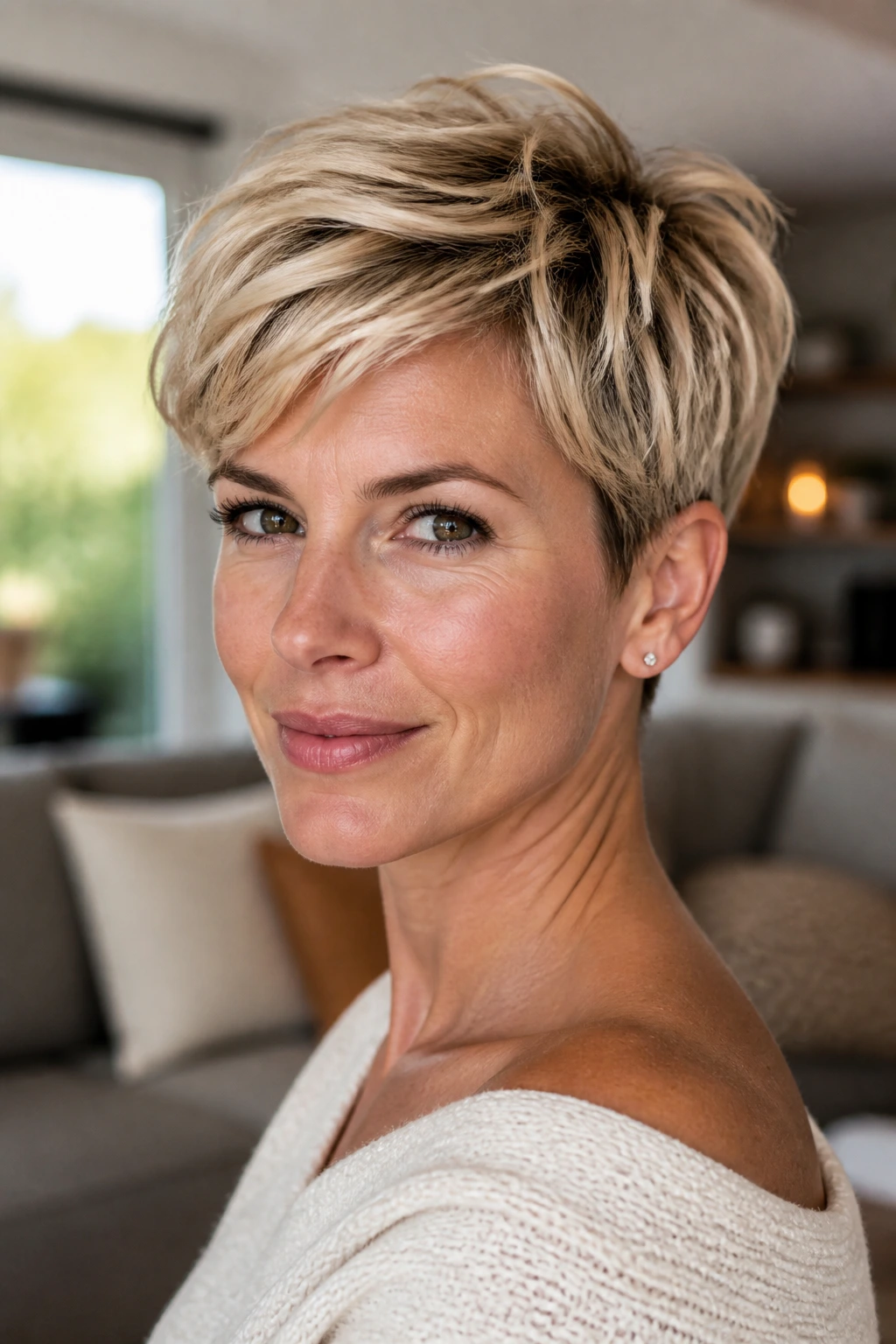
A grown-out pixie is not a compromise. Done well, it’s one of the best-looking versions of the cut. The crown stays a little longer, the sideburns soften, the nape grows just enough to blur the outline, and the blonde gets room to settle into a natural shadow root.
This is the style for people who don’t want to rush back to the salon every few weeks. It still needs shaping, but it’s less demanding than a tight crop. The fringe can sweep, split, or fall slightly forward, and the overall effect is easier and more relaxed than a fresh-cut pixie with hard edges.
What makes it work is control in the right places. Keep the perimeter neat enough that it doesn’t look accidental, then let the top have some swing. The blonde should feel dimensional, not flat. That way the grow-out looks like part of the design instead of a problem you haven’t dealt with yet.
22. Sunlit Face-Frame Pixie
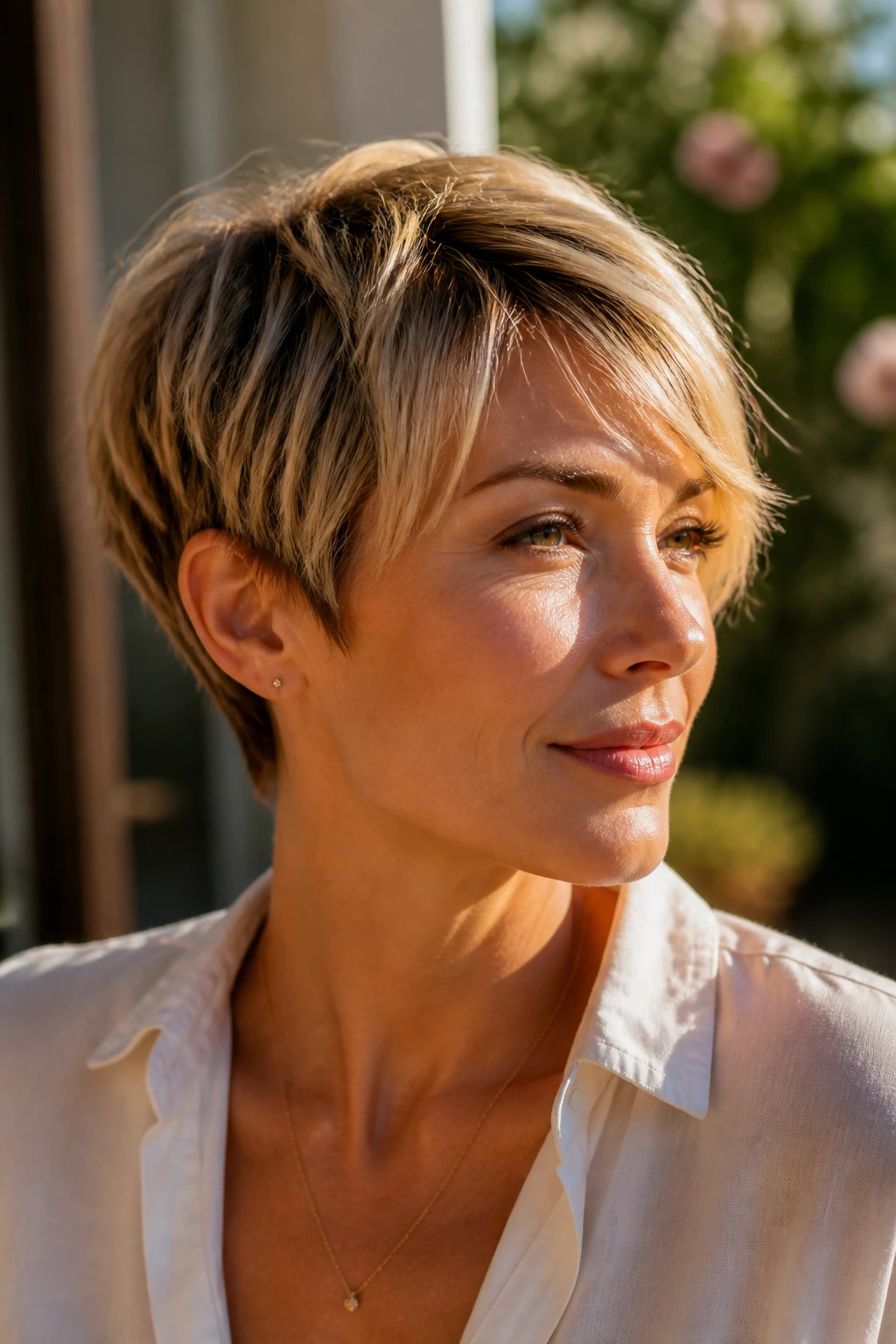
This is the style that closes the list for a reason. It takes everything a good blonde pixie should do — brighten the face, soften the outline, and keep the neckline clean — then puts the light right where you want it most. Around the eyes. At the temples. Along the cheekbones.
The face-framing pieces should be just long enough to flick forward or tuck back, depending on the day. A little warmer blonde near the front keeps the cut from feeling cold, while a softer root helps the shape grow out without a hard edge. It’s an easy way to keep short blonde hair looking sunny instead of overprocessed.
I’d choose this when I want a pixie to feel friendly first and edgy second. It has polish, but not stiffness. And on the right person, it gives that bright, lifted look that makes the whole face appear more awake before you even touch mascara.
Why Blonde Pixie Cuts Catch the Light So Well
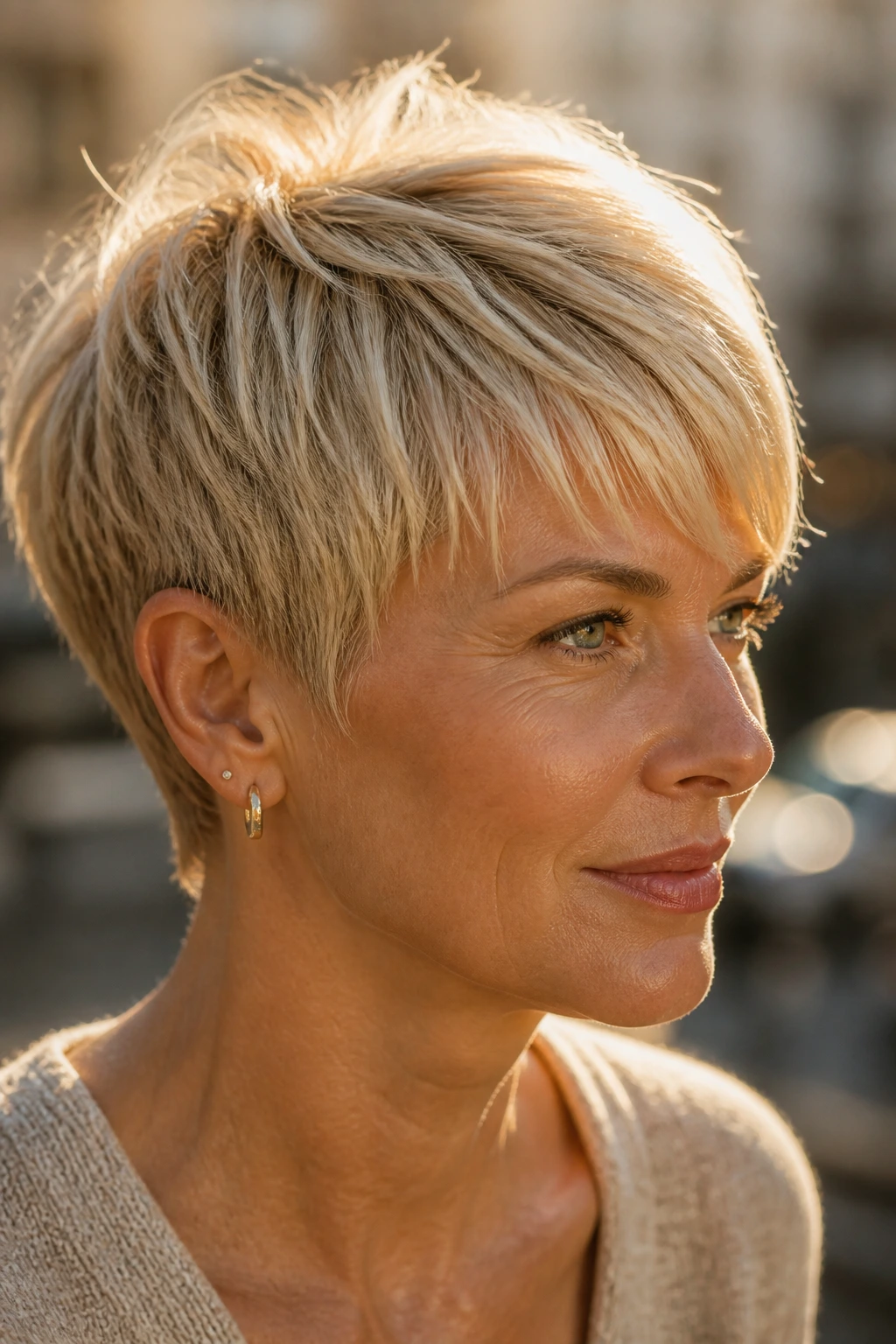
Short hair shows color in a way longer styles can’t fake. Every small change in length changes how the blonde reads. A feathered crown throws tiny flashes of light, a tapered nape creates a clean shadow, and a side-swept fringe gives the eye somewhere to land. That’s why blonde pixie cuts can look so sharp in daylight and so soft indoors. The shape is doing almost as much work as the tone.
Tone matters more than people think. A beige or champagne blonde can soften a strong jaw or a high forehead. Icy platinum pushes contrast and edge. Honey and butter shades warm the skin and make the whole cut feel less severe. If you’ve ever seen a pixie that looked flat, odds are the problem wasn’t the length. It was the absence of dimension.
There’s also the practical side. Short blonde hair shows damage fast, which sounds annoying, but it can actually help you make better choices. You notice brass sooner. You notice dullness sooner. You notice when the crown has been buried under too much product. That feedback loop is useful. It keeps the cut honest.
Essential Tools for Keeping a Blonde Pixie Sharp
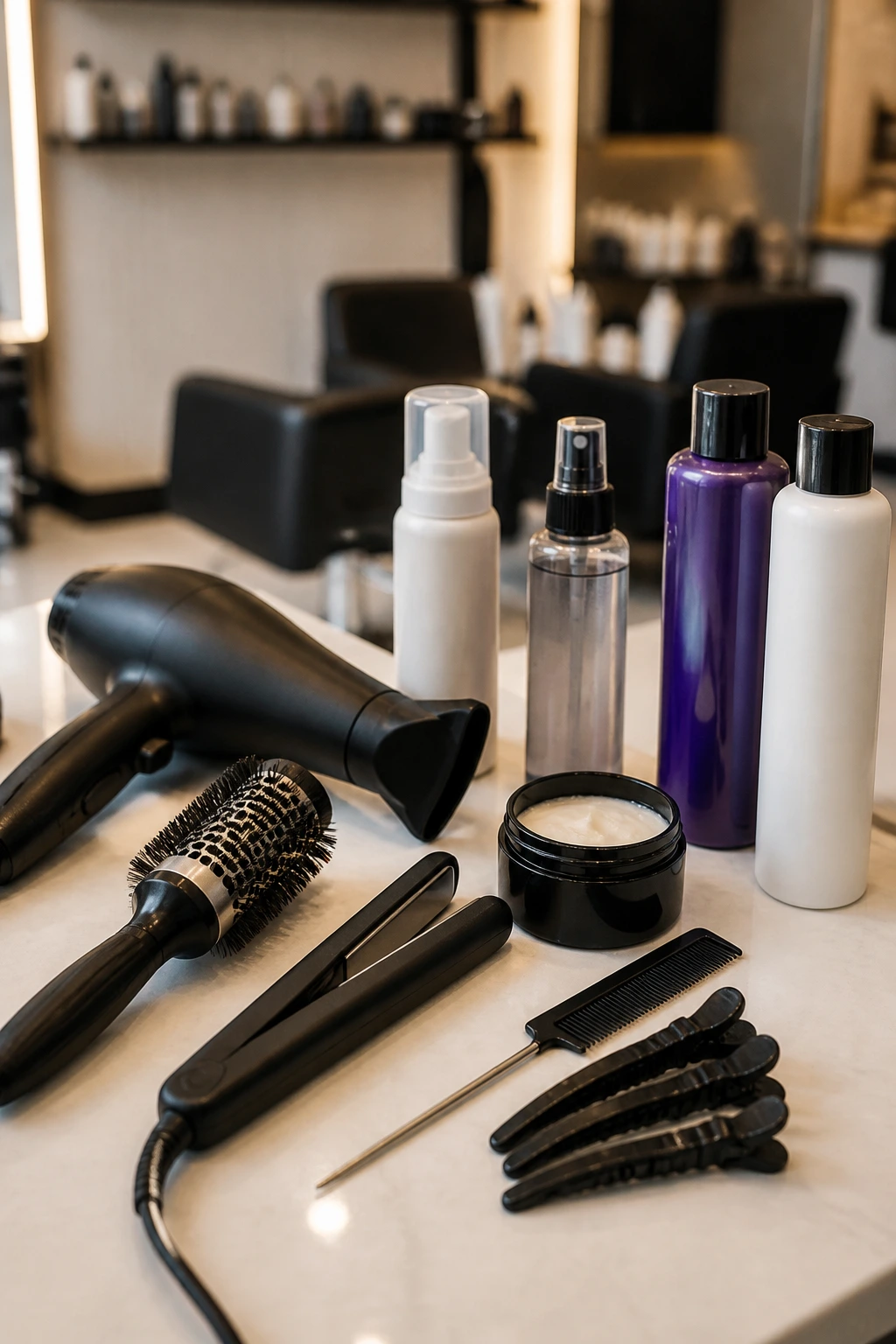
- Blow dryer with a nozzle attachment: Directs air at the roots so you can build lift instead of blasting the cut into frizz.
- Small round brush, about 1 to 1.5 inches: Useful for smoothing a fringe or giving the crown a bend without flattening it.
- Mini flat iron, 0.5 to 1 inch plates: Handy for shaping a side sweep, polishing the ends, or taming one stubborn section.
- Light mousse or root lift spray: Keeps fine hair from collapsing and gives the crown a little structure.
- Texture spray: Best for choppy, feathered, or French-girl styles that need separation.
- Matte paste or styling cream: Adds definition to short pieces without making the cut greasy.
- Purple shampoo: Helps keep pale blonde from turning yellow, though it should not be used like a daily cleanser.
- Color-safe conditioner: Protects brightness without overloading the hair shaft.
- Tail comb and section clips: Worth having even for short hair; clean parting makes styling much easier.
- Heat protectant: Non-negotiable if you use a dryer or iron often. Short hair burns just as easily as long hair.
Choosing the Right Blonde Tone and Cut Shape
The best blonde for a pixie is not the lightest one on the chart. It’s the one that makes the cut look deliberate. If your skin leans warm, beige, butter, champagne, and honey usually sit more naturally than a flat icy tone. If your coloring is cooler, ash, pearl, and platinum can sharpen the face without making the hair look muddy.
Cut shape matters just as much. Fine hair usually needs less internal layering and a little more length at the crown so it doesn’t vanish against the head. Thick hair needs weight removed around the sides and back or the pixie turns boxy. Curly hair needs room for shrinkage, which means the dry shape should be cut with the curl pattern in mind, not against it.
Tell your stylist how much time you want to spend on the hair in the morning. That answer changes everything. A tighter undercut or micro-fringe looks fabulous, but it asks for more shape maintenance. A rooted beige or grown-out blonde pixie gives you more wiggle room if you prefer a two-minute routine and a quick comb-through.
How to Style a Blonde Pixie on Busy Mornings
Lift first. Towel-dry the roots, then aim the dryer at the crown while brushing the hair in the opposite direction of the part. That tiny bit of resistance gives the top some lift before you add product, which matters more than people think.
Shape second. Once the hair is about 80 percent dry, push the fringe where you want it with a small brush or your fingers. If the cut has a side sweep, let it cool in that direction. If it’s choppy or spiky, pinch the front pieces while they’re still warm so they hold their bend.
Texture last. Use a pea-size amount of paste, cream, or wax, and keep it mostly on the mid-lengths and ends. Too much at the root kills the silhouette. Too much all over makes the blonde look dirty by noon.
Polish only where needed. A drop of lightweight oil on the very ends can calm frizz, but don’t spread it through the whole head. Blonde hair shows grease fast. One small mistake turns into a heavy-looking crown.
Extra Tips for Lift, Shine, and Separation
Crown Lift: Flip the front part of the hair opposite its natural direction while blow-drying, then switch it back when it cools. That gives the top a bit of memory and keeps the pixie from lying flat against the scalp.
Tone Control: If the blonde starts drifting yellow, use purple shampoo once a week and leave it on for only 2 to 4 minutes. Longer is not better. Too much purple can leave pale hair looking dull or slightly violet at the ends.
Texture Separation: Warm a tiny bit of matte paste between both palms, then press it into the ends instead of raking it through. Raking breaks up the shape too much. Pressing lets you keep the piecey look without making the whole cut frizzy.
Shine Without Slip: Use a light spray gloss or a single drop of serum on the outer layer only. If the roots shine, the style can look greasy. If the ends catch the light, the color looks richer.
Make-It-Yours: For fine hair, choose lighter layers and a brighter blonde near the front. For coarse hair, keep more root depth and remove bulk under the surface. For curls, let the curls define the outline instead of forcing them into a straight-backed shape.
Common Mistakes That Make a Blonde Pixie Look Flat
Over-lightening the whole head: If every strand is the same pale shade, the cut can lose its shape and start looking like a blur. Keep some root shadow or lowlight depth so the layers stay visible.
Using too much product near the scalp: A heavy paste or oil at the roots makes the blonde look dirty fast. Keep styling products on the ends and crown only where you need control.
Cutting the fringe too short too soon: A micro fringe can look chic. A fringe that got chopped in a hurry can look awkward for weeks. Leave a little extra length on the first cut so you can adjust after you live with it.
Ignoring the nape and sideburns: These small areas shape the whole haircut. If they’re left bulky, the pixie turns round in the wrong places and the blonde loses its clean outline.
Toning too often: Purple shampoo is useful, but overuse can make blondes look flat, matte, and tired. Use it sparingly and follow with a hydrating conditioner.
Skipping trims: A pixie grows out quickly around the ears and neckline. Once the edges soften too much, the whole cut starts reading as unplanned instead of styled.
Variations and Adaptations to Try
Fine-Hair Cloud Lift: Keep the sides close and leave the crown slightly longer, then ask for soft internal layering. This version gives fine hair more body without making it look choppy. A beige or champagne blonde helps the hair appear thicker because the tone reflects light without washing out the edges.
Curly Halo Pixie: Let the curls sit higher on top and taper the back tightly. This shape keeps the curls from spreading out too far and gives the style a rounded halo effect. A golden or sandy blonde works well here because it shows curl definition without making the hair look brittle.
Low-Maintenance Shadow Melt: Leave the root deeper and blend the blonde into a soft beige mid-tone. This is the easiest version to live with if you hate obvious grow-out. It also keeps the pixie looking dimensional even when the color appointment is a few weeks overdue.
Glass-Slick Platinum: Choose a pale platinum shade and wear the cut smooth, not fluffy. This adaptation is for straight hair or for people who love a sharp, polished finish. A tiny amount of shine cream on the outer layer gives the hair that sleek surface without weighing it down.
Glasses-Friendly Side Sweep: Keep the fringe long enough to sweep away from the temple and the frame arm of your glasses. That little extra length prevents crowding around the face. It’s a smart choice if you wear spectacles every day and want the cut to sit cleanly beside them.
Edgy Undercut Edit: Tighten the nape and sides, then leave the top intentionally longer and brighter. This version has the most contrast and the most attitude. It suits people who want the blonde to look sharp instead of soft.
Frequently Asked Questions
How often should a blonde pixie cut be trimmed?
Most pixies need a trim every 4 to 6 weeks if you want the outline to stay crisp. If you like a softer grow-out, you can stretch it a bit longer, but the nape and sideburns usually tell on you first.
What blonde shade is easiest to maintain on short hair?
Rooted beige, champagne, and sandy blonde are the easiest to live with. They hide regrowth better than icy platinum and usually need less toning to stay flattering.
Will a pixie cut work on fine hair?
Yes, and it can look fuller than longer hair if the layers are handled well. Ask for softness at the crown, not a stack of short chops everywhere, or the cut will go wispy in a hurry.
Can curly hair pull off a blonde pixie?
Absolutely. The key is to cut for shrinkage and keep some length on top so the curls can move. Over-lightened curls lose spring fast, so a gentler blonde tone usually works better than a stark white shade.
How do I stop blonde from turning brassy?
Use a color-safe shampoo, limit very hot tools, and add purple shampoo once a week if the blonde starts drifting yellow. If the tone keeps warming up too fast, the hair may need a deeper toner or more root depth.
What if my crown falls flat by noon?
That usually means the roots need more support at the blow-dry stage. Rough-dry first, then direct the airflow against the natural fall of the hair, and finish with a small root spray instead of piling on wax.
Can I grow out a pixie without an ugly stage?
You can make the grow-out less awkward by keeping the neckline tidy and letting the top stay a little longer. Shadow roots and beige blondes help, too, because they blur the line between fresh cut and in-between length.
Should I use purple shampoo every wash?
No. Most blondes don’t need it that often, and overuse can dry the hair out or dull the shine. Once a week is enough for many people, and some only need it every other week.
A Sun-Kissed Finish That Still Feels Sharp
A good blonde pixie cut has a funny kind of balance. It can look soft at first glance, then show its edge a second later when the nape comes into view or the fringe swings across one eye. That mix is what keeps these cuts from feeling childish, severe, or overstyled.
The best versions above all do the same thing in different ways: they let light hit the hair where it matters, then keep enough shadow and texture underneath to stop the blonde from going flat. That’s the whole game. Brightness with shape. Shine with backbone.
Pick the version that matches your routine, not just your mood in the salon chair. If you can live with the upkeep, go icy. If you want a softer grow-out, choose beige or champagne. If you like movement, keep the crown feathered and the ends piecey. The right blonde pixie will do something longer hair rarely manages — it’ll look intentional before you’ve even finished your coffee.
