



A good vamp fringe on short goth hair doesn’t whisper. It lands first — the line across the brow, the shadow under the lashes, the way a cropped black cut suddenly looks deliberate instead of merely short. That’s the magic here. Vamp bangs for short goth hair do a lot of visual work in a few inches of hair, and when the shape is right, the whole cut feels sharper, darker, and more expensive than it has any right to.
Short lengths are unforgiving. A fringe that’s half an inch too blunt can sit like a shelf. A fringe that’s too wispy can vanish the second you blow-dry it. And a cut that ignores your cowlick will spend the whole day arguing with your forehead. The styles that win are the ones that respect density, growth pattern, and the fact that goth hair tends to look better with a little edge, not a perfect helmet of black.
So the range matters. You’ll see micro cuts, jagged pieces, curtain shapes, side sweeps, and heavy opaque fringes that can anchor a pixie, bob, shag, undercut, or mini mullet. Some are severe. Some are soft enough for everyday wear. A few are unapologetically theatrical, which is exactly why they work.
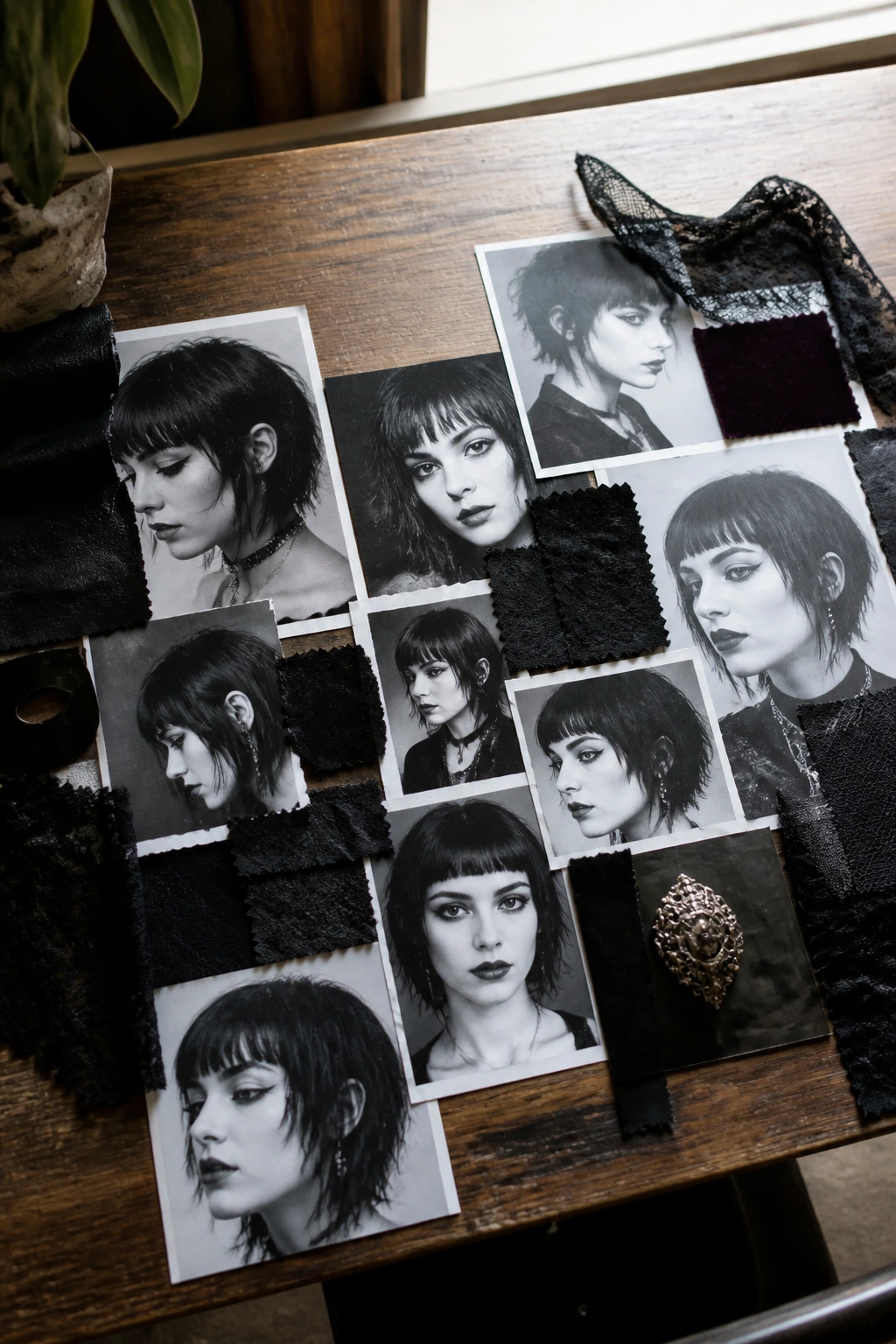
Why This Collection Deserves a Spot on Your Mood Board
-
Short hair needs a focal point: A fringe can do more for a crop than an extra three inches of length ever will, especially when the rest of the cut is tight around the ears or nape.
-
Dark hair shows shape better than color: On black or near-black hair, the line of the bang matters more than highlights, so a clean edge or jagged texture reads immediately.
-
You can tune the mood fast: The same short goth haircut can feel sharp, romantic, or feral depending on whether the fringe is blunt, feathered, or split.
-
Maintenance can match your energy: Some of these looks need a trim every 2 weeks; others can grow into face-framing pieces without looking messy.
-
Glasses, brows, and eyeliner all change the result: A fringe that sits 1/4 inch above the brow behaves very differently from one that skims the lashes, and that difference matters.
-
You do not need long hair to look dramatic: Honestly, that’s the best part. A short crop with the right fringe often looks more intentional than a longer cut trying to do the same job.
1. Razor-Soft Micro Fringe
A micro fringe on short goth hair has bite, but the razor-soft version keeps it from looking stiff or costume-y. I like this best when the bangs sit about 1/2 inch above the brows and taper slightly at the temples, so the front reads sharp while the edges still move.
Why It Works
The hard part of micro bangs is not the length. It’s the finish. A razor or point-cut edge lets the fringe break up instead of forming one flat line, which matters on short cuts where every millimeter shows. If your hair is straight and dense, this shape can look wickedly clean with almost no effort.
Best on: straight to slightly wavy hair.
Styling note: blow-dry forward with a flat brush, then pinch the ends with a tiny bit of matte paste.
Avoid if: your front cowlick pushes hard to one side and you hate fight-or-fix mornings.
2. Blade-Straight Baby Bangs
Want the most severe line in the room? This is it. Blade-straight baby bangs sit closer to the brow, usually in the 1-inch-to-1.5-inch range, and they look especially good on a cropped bob or pixie with blunt ends.
The trick is precision, not thickness. If the fringe gets too thick, it starts looking heavy in a way that swallows the face. Keep the center clean, flatten it with a small flat iron at a low setting, and let the eyeliner do the rest. This one loves structure.
3. Choppy Widow’s Peak Fringe
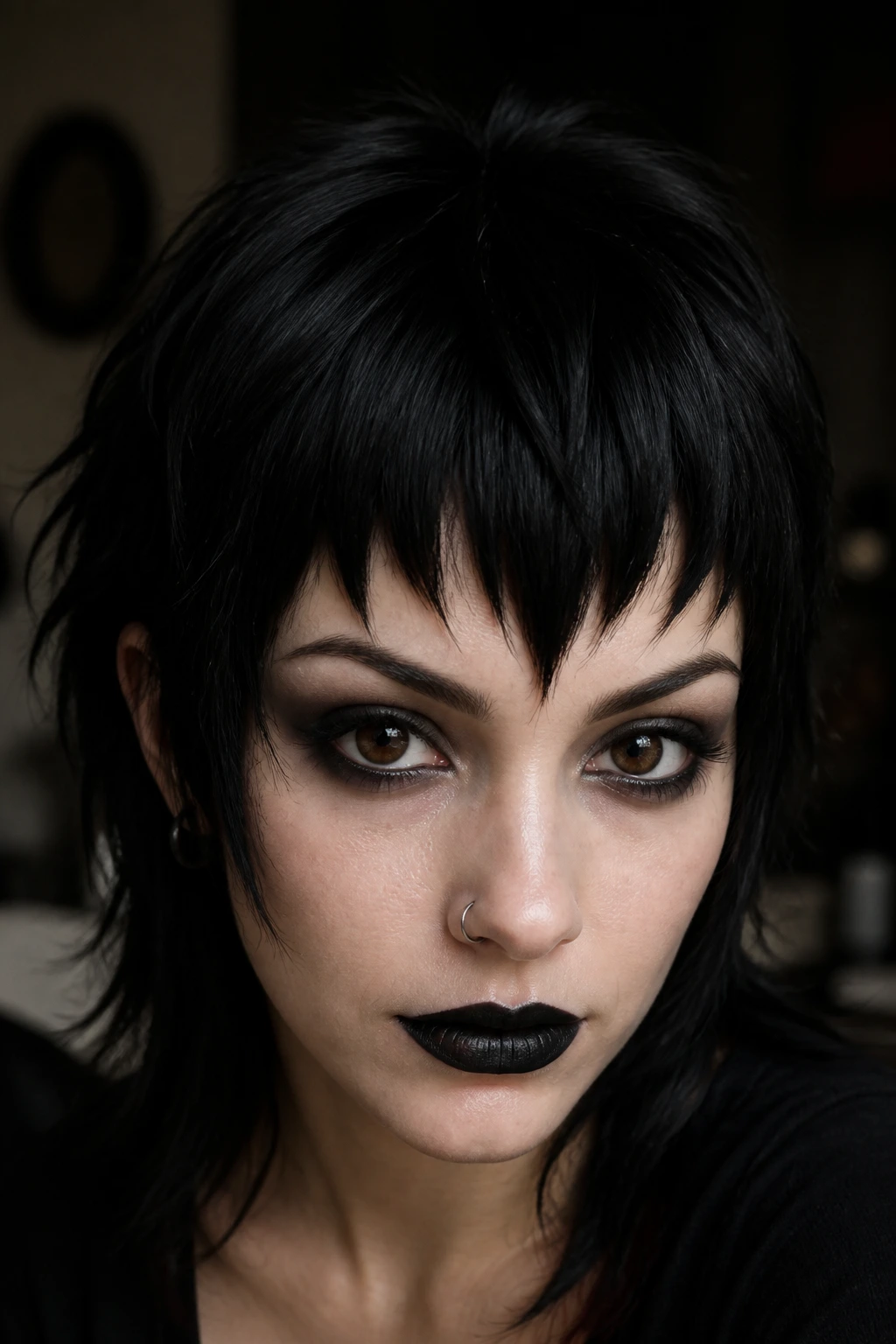
A widow’s peak can be a headache or a gift. Here, it becomes the center point of the whole cut. The fringe starts slightly longer in the middle and breaks into shorter, uneven pieces toward the sides, which gives the forehead a dark, pointed frame.
What Makes It Different
Instead of hiding the peak, you build around it. That works especially well on short goth hair because the front doesn’t need to be symmetrical to feel polished. In fact, a little irregularity helps.
- Leave the center piece about 1/2 inch longer than the outer corners.
- Use a point-cutting technique so the edges don’t sit like a blunt shelf.
- Keep the product light; too much wax turns the whole thing greasy fast.
4. Side-Swept Sable Bangs
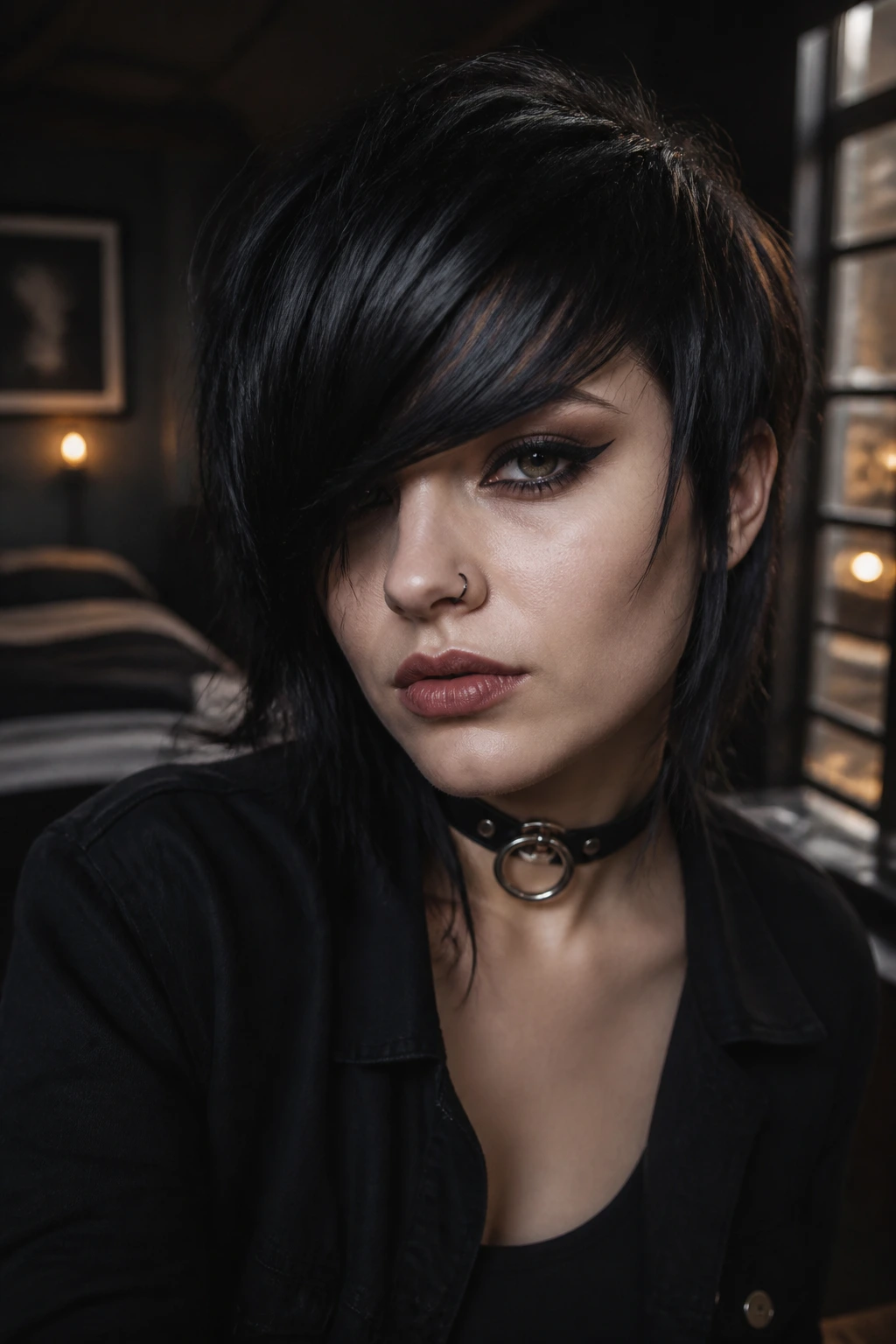
A side-swept fringe is the easiest way to make short goth hair look moody without going full theatrical. One thick sweep across the forehead softens the face, opens one eye, and gives the whole cut a little movement that a flat brow line can’t.
This is the style I reach for when someone wants goth, but not “I have to trim this every 10 days or I’ll lose my mind.” It grows out gracefully. It also works well if your hair is fine and you need the bang to borrow a little width from the side rather than sitting as a sparse strip on the forehead.
5. Arched Crescent Fringe
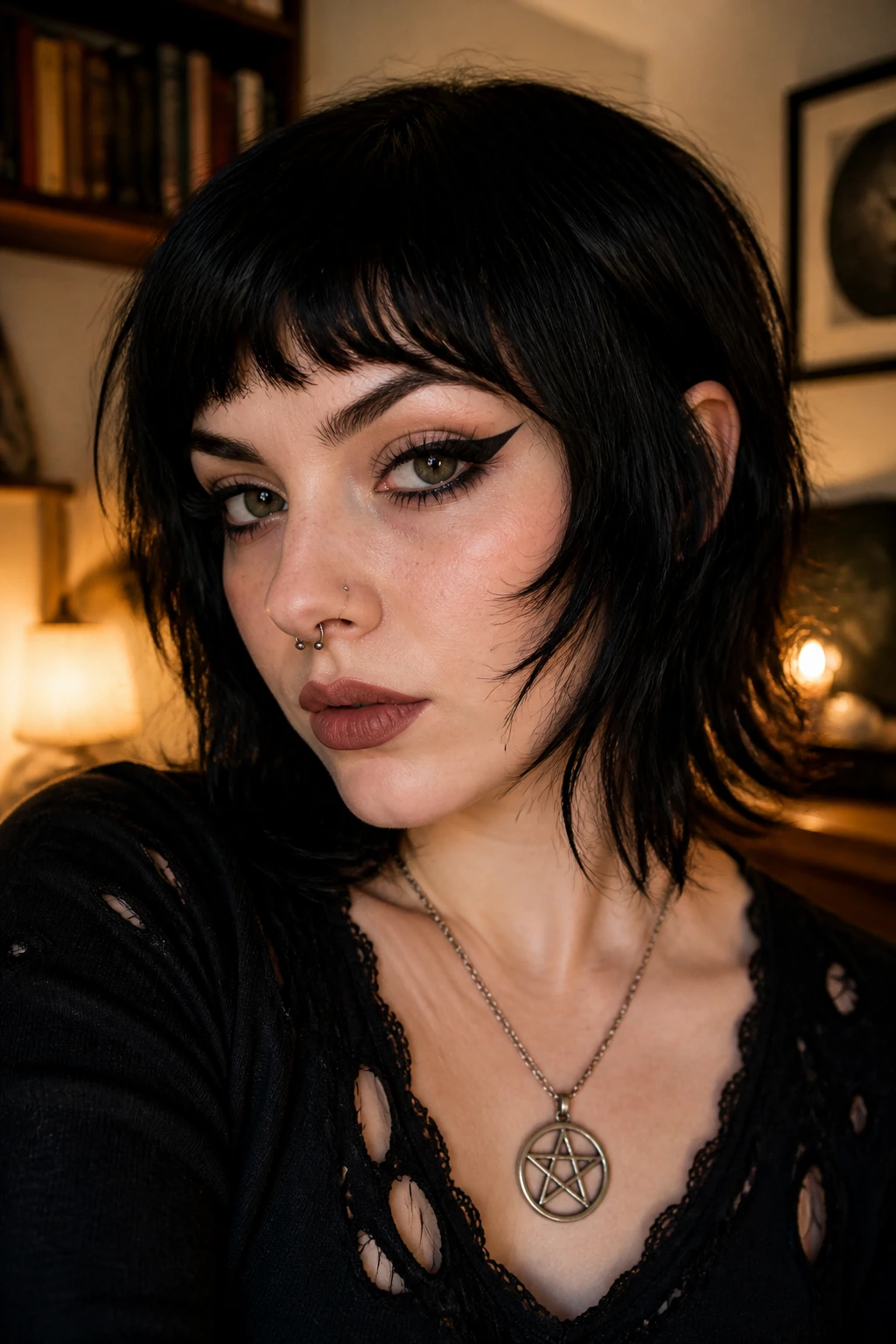
Why does an arched fringe look so good on short hair? Because it follows the shape of the brow instead of fighting it. The center sits a touch shorter, the sides drop longer toward the temples, and the whole thing makes the eyes look framed instead of boxed in.
How to Style It
Blow-dry with a small round brush, curving the hair under at the center and out at the corners. Keep the arc soft, not cartoonish. On a short black bob, this shape gives the front some curve so the cut doesn’t read like one hard line from ear to ear.
6. Piecey Split Curtain Bangs
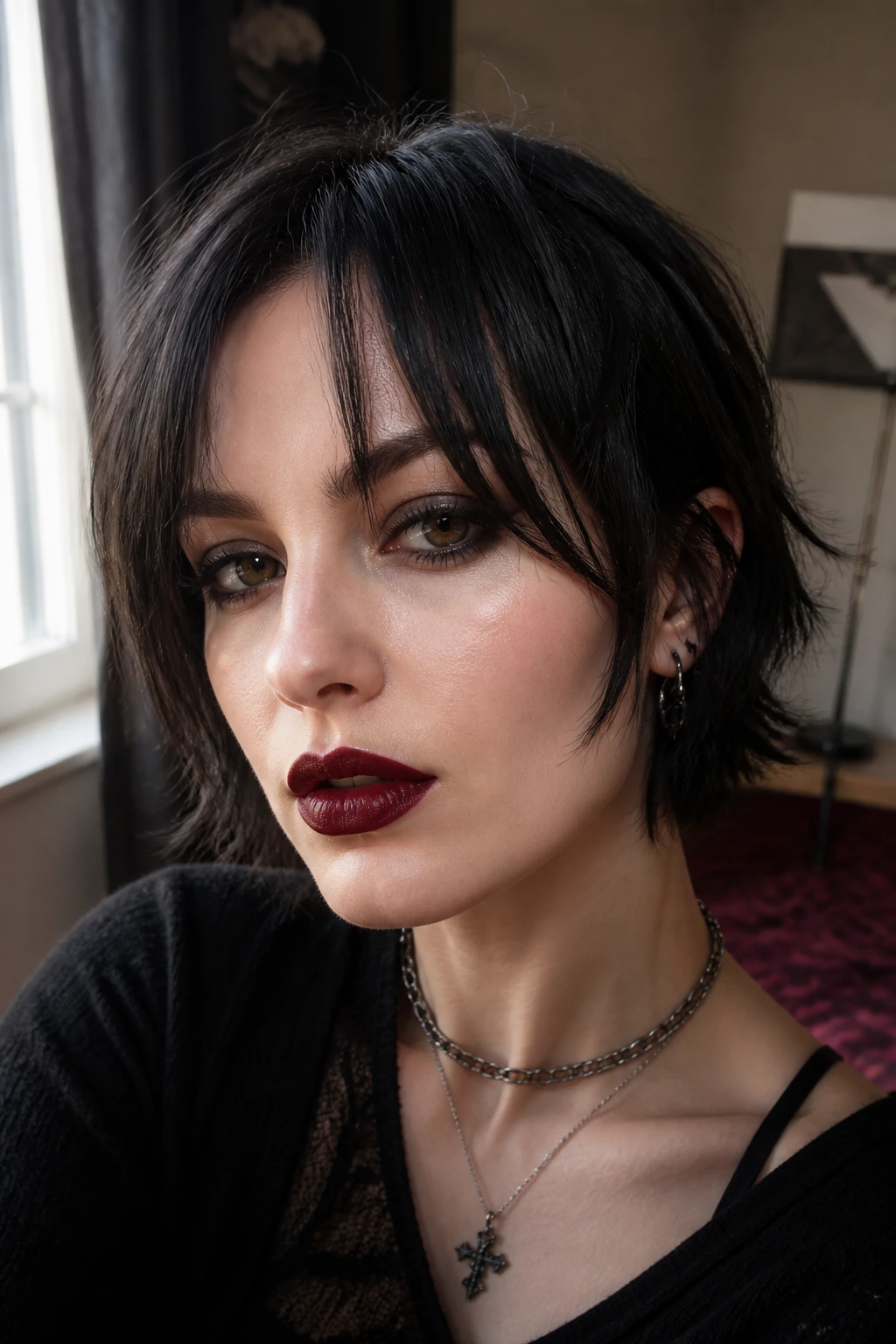
This is the fringe for anyone who likes the idea of curtain bangs but doesn’t have the length to support full drape. A center split with short, piecey pieces on each side works beautifully on short goth hair, especially if the rest of the cut has layers or an undercut.
Unlike long curtain bangs, these need direction. Push them away from the center with a round brush or your fingers, then separate the ends with a touch of light wax. That tiny split keeps the forehead visible and gives the cut a worn-in, slightly haunted look.
7. Wispy Veil Fringe
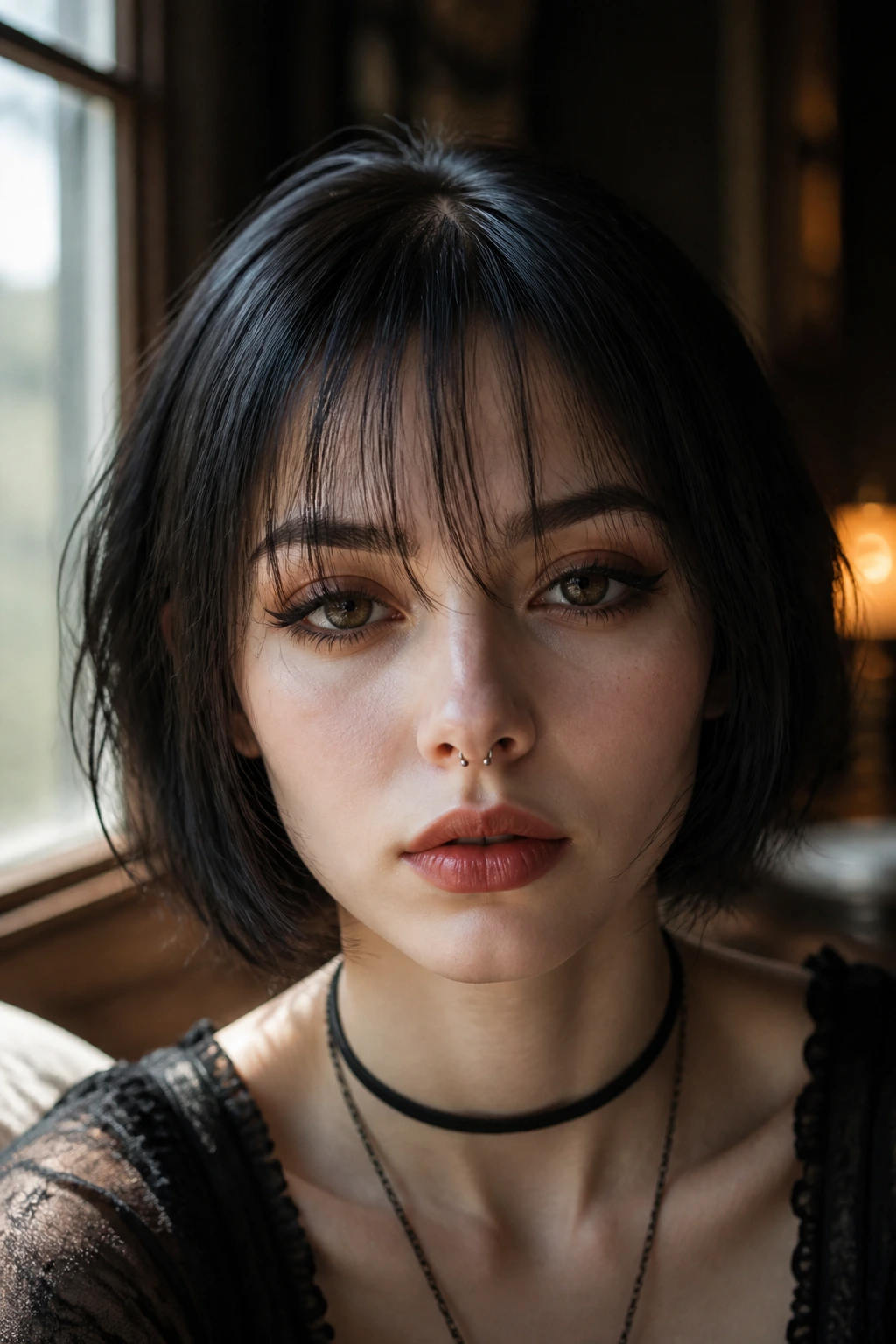
A wispy veil fringe is nearly see-through in the best possible way. It covers just enough of the forehead to cast shadow, but it never looks heavy, which makes it a smart option for fine hair or for anyone who wants goth softness instead of razor sharpness.
Use the lightest hand possible. Seriously. A few drops of serum on the ends, maybe a whisper of dry texture spray at the roots, and stop there. If you load up a veil fringe with paste, it collapses into strings. That’s not the same thing.
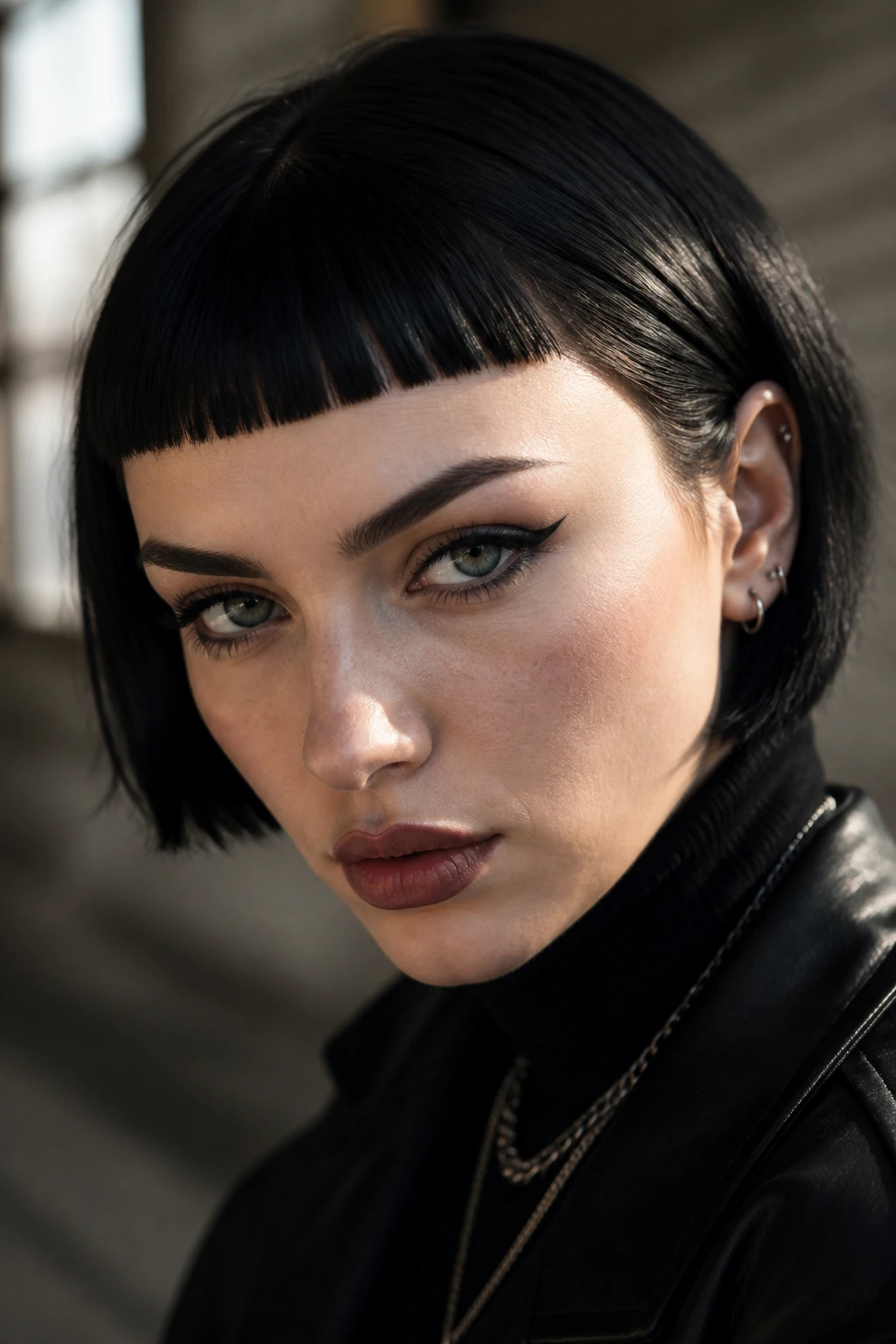
8. Blunt Goth Bob Bangs
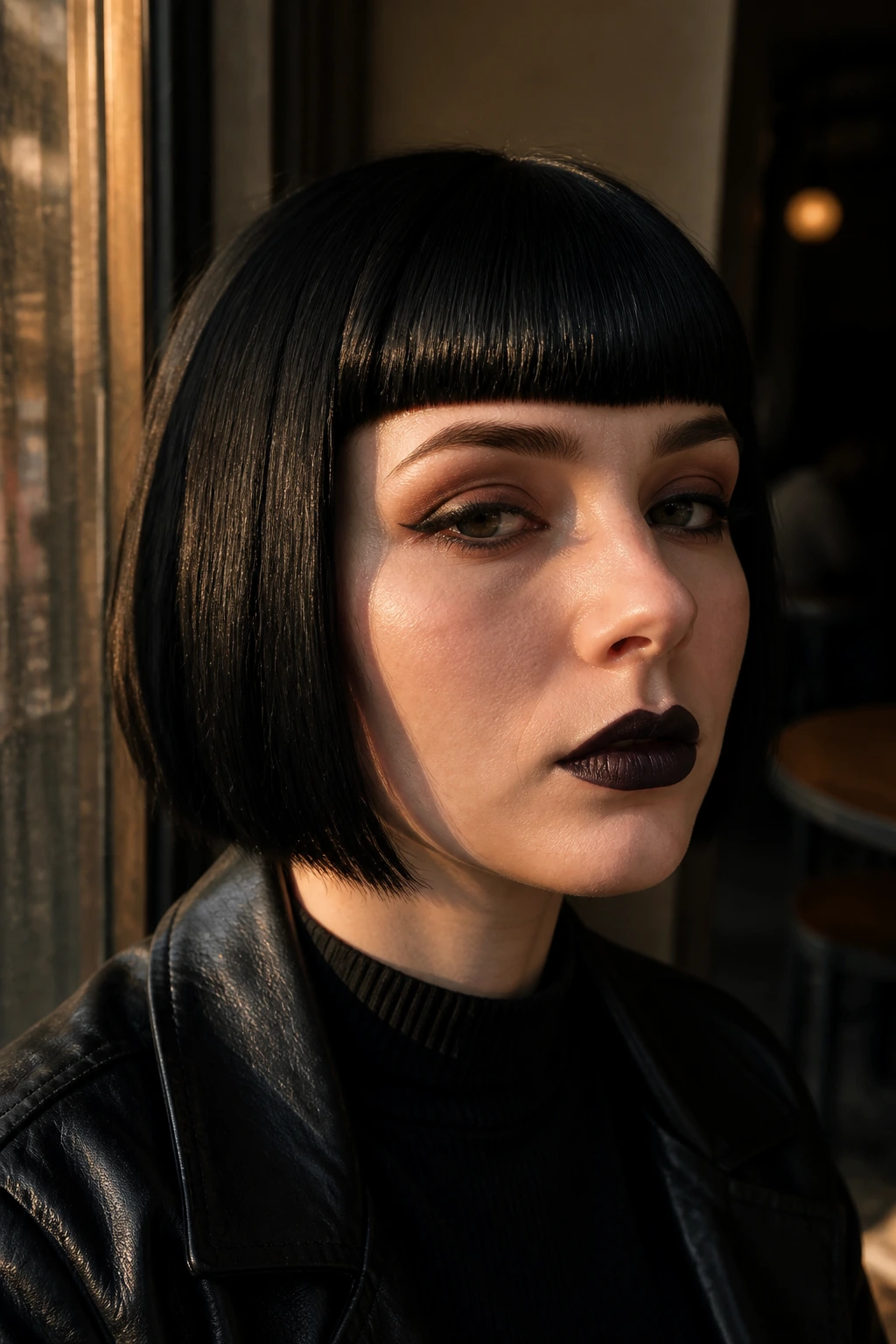
A blunt fringe across a short bob is one of those shapes that looks expensive even when the rest of the day is chaos. The line is direct, the shape is simple, and the result depends on healthy, dense hair that can actually hold that edge.
I like this cut when the bangs hit right at the brow or slightly above it. Any shorter and the look can go too mod; any longer and the bluntness loses its nerve. Flat iron the surface once, not three times, and keep the ends polished rather than fuzzy.
9. Heavy Brow-Skimming Fringe
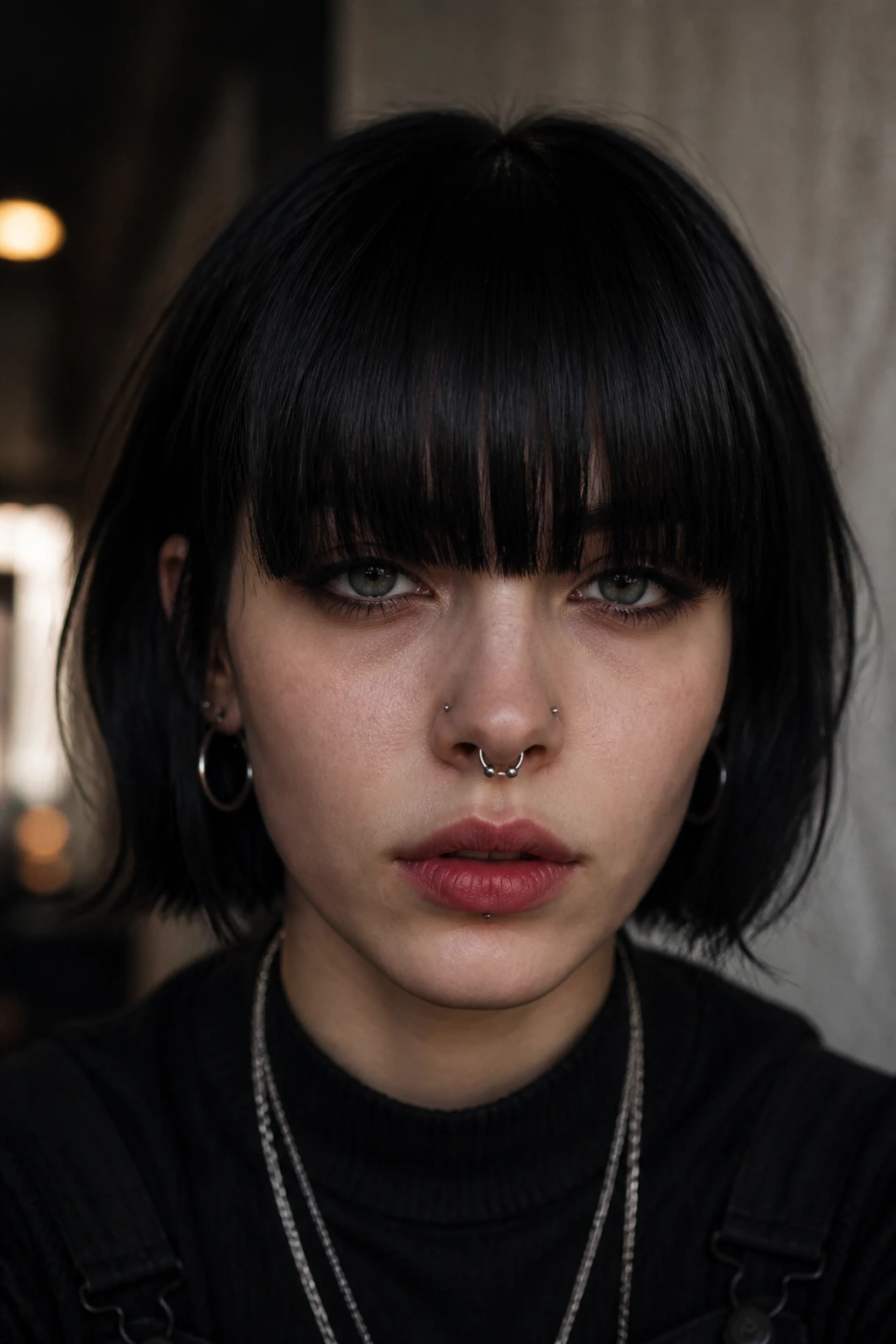
This one has weight. The fringe grazes the brows, sometimes brushing the lashes when it’s freshly dried, and that heavy line makes short goth hair feel dense and deliberate. It suits someone who wants their eyes half-hidden, which is a classic move for a reason.
The warning? Don’t thin this out too much. A heavy fringe only works if it stays heavy. If you over-texturize it, you lose the shadow that makes the style interesting in the first place. Let it sit with a bit of structure, then use a flat iron on low heat to keep the line clean.
10. Jagged Shattered Bangs
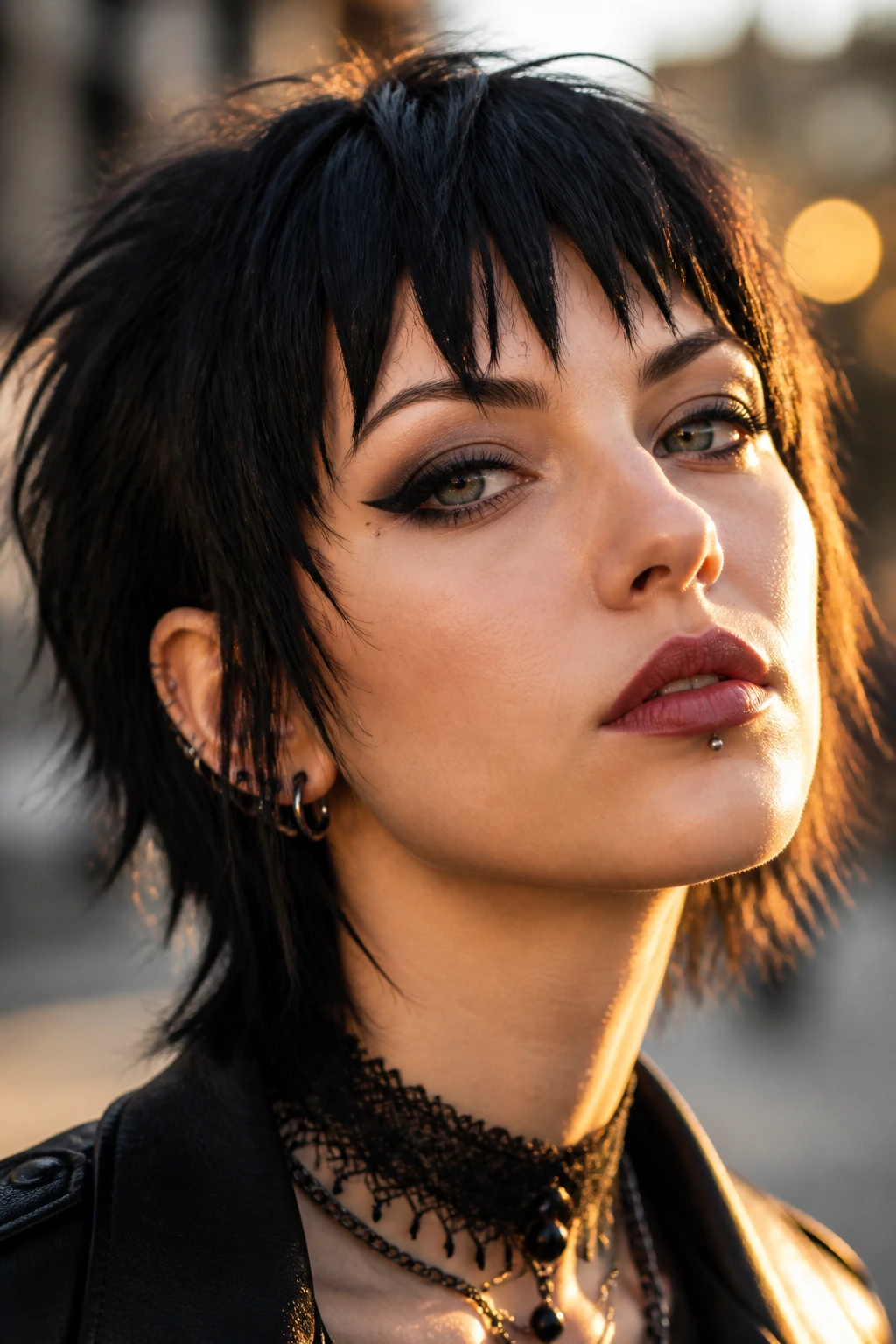
Jagged bangs are the answer when you want a darker, more rebellious texture than a smooth fringe can give you. The ends are broken up, the lengths vary a little, and the line across the forehead feels like it was cut with attitude instead of a ruler.
They’re best on short shag cuts or pixie crops with movement. The shape benefits from a razor or deep point-cutting because the unevenness is the whole point. A little dry shampoo at the root gives the bangs grip, so they don’t slide into one sad clump by lunch.
11. Curved Vampire Fringe
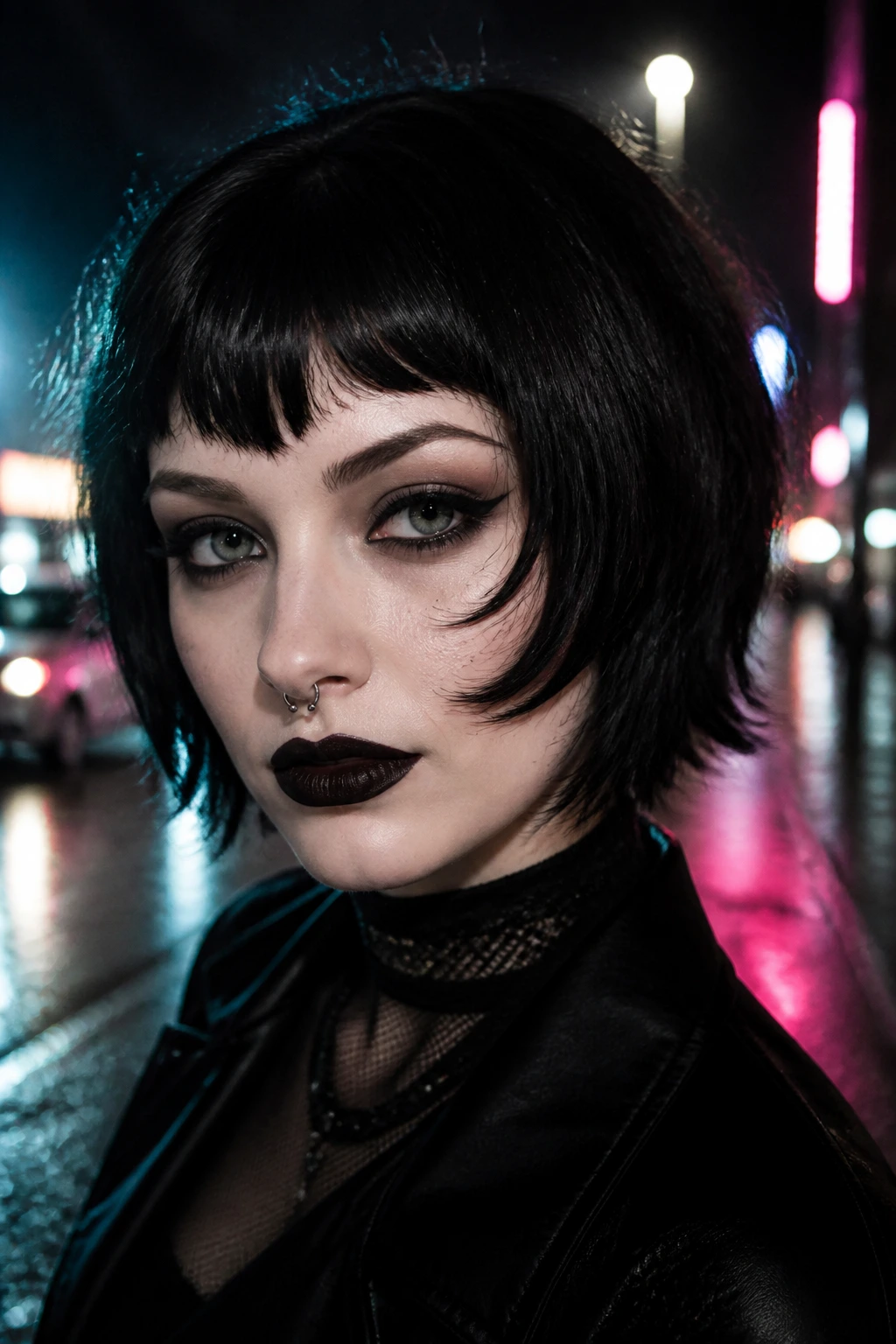
Think of this as a more elegant version of the heavy goth bang. The fringe curves gently around the face, with the center sitting a touch shorter and the outer edges sweeping toward the cheekbones. It’s dramatic, but it has a soft edge that makes it wearable.
Why It Flatters Short Goth Hair
A curve draws the eye inward. That’s useful when the rest of the haircut is cropped close, because the fringe becomes the frame for the face instead of just covering it. If you wear strong lipstick or dark liner, the shape makes all of it look more intentional.
12. Mullet Bang Sweep
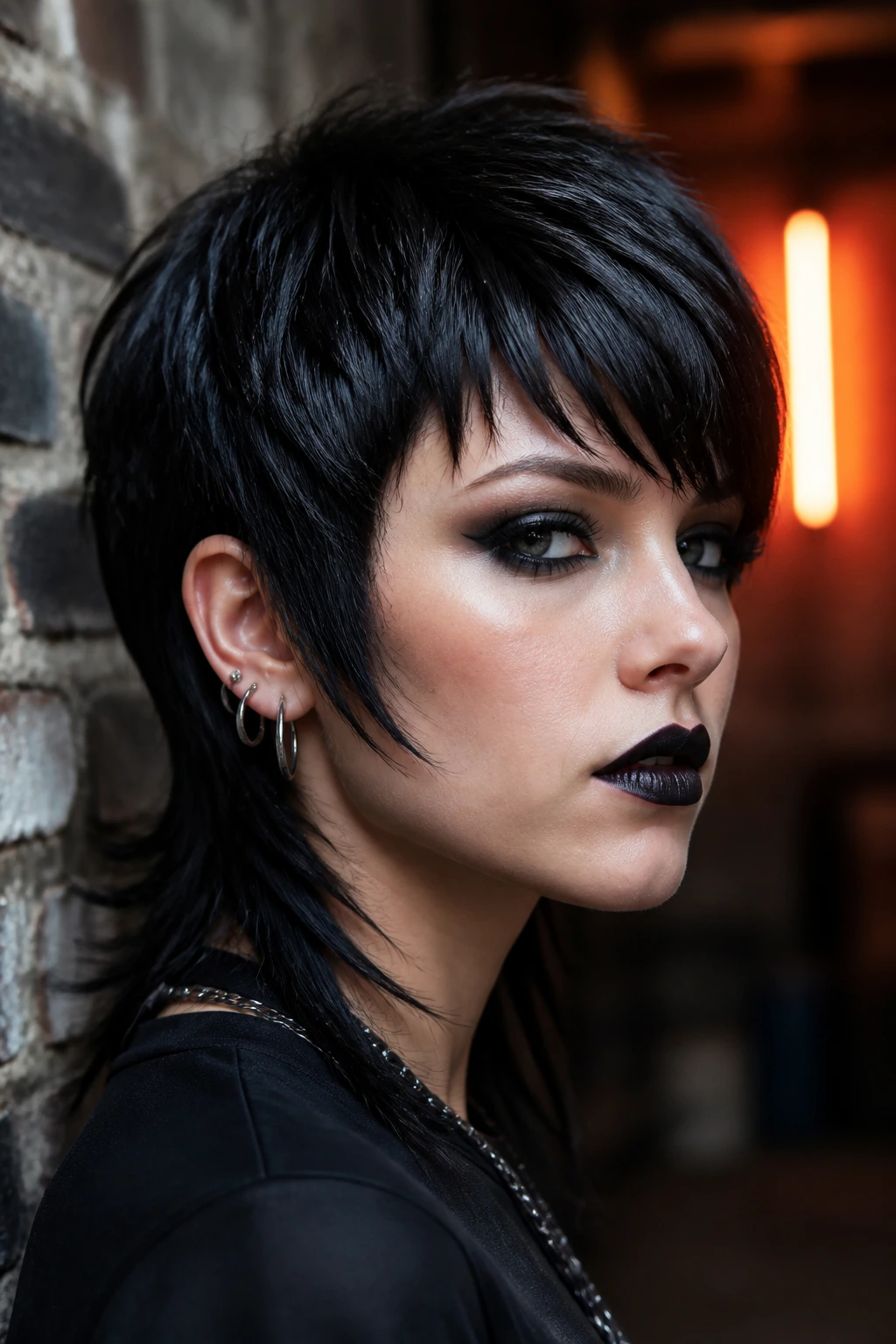
A mullet bang sweep fits short goth hair that has a little attitude in the back. The front is angled into a sweep, but the sides keep enough length to blend into the longer top and nape, so the whole cut feels connected.
This works especially well if you want something that moves when you turn your head. It’s not static. Blow-dry the front forward first, then redirect it diagonally with your fingers or a vent brush. Leave a little mess at the ends. The roughness helps.
13. Bottleneck Bangs on a Pixie
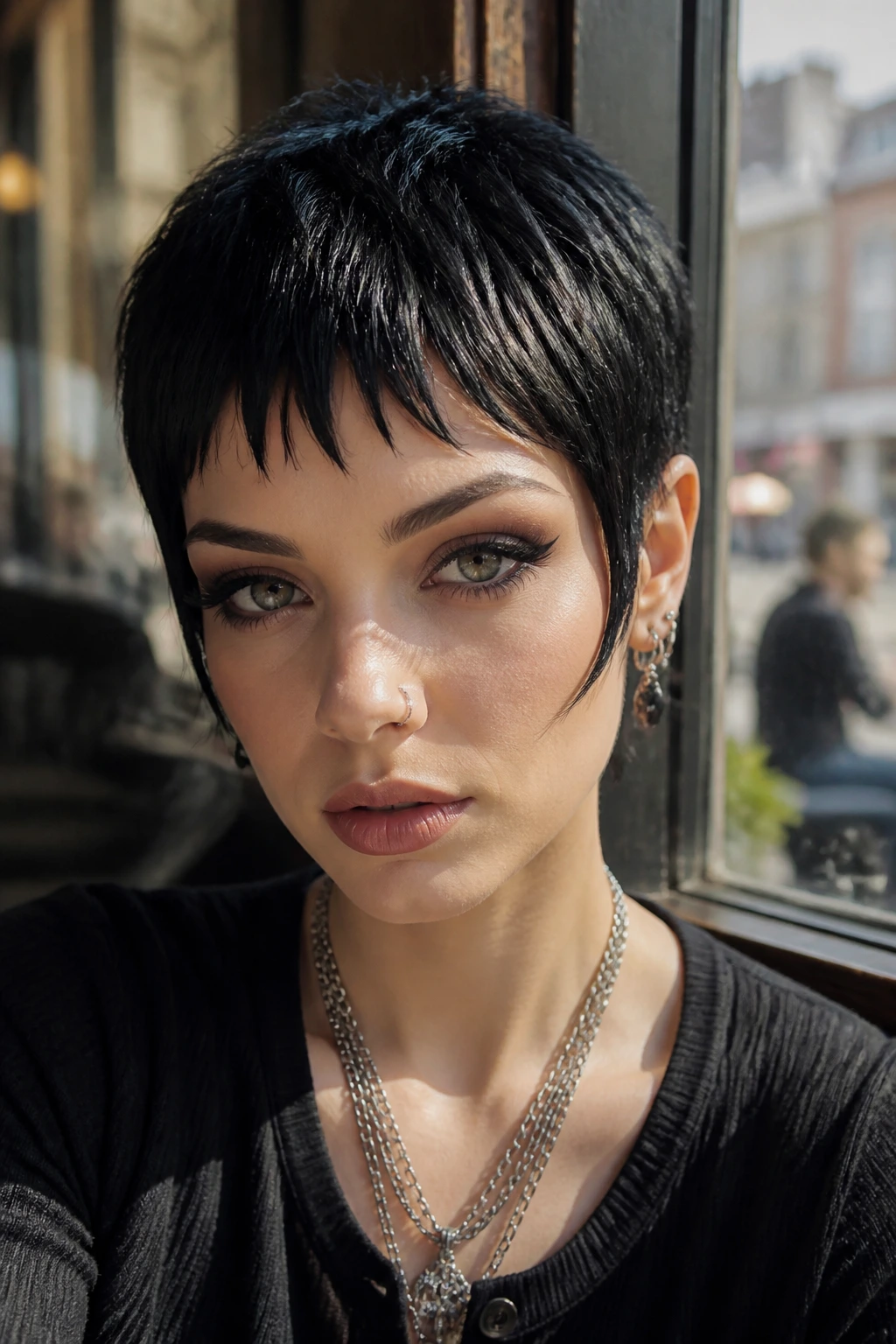
Bottleneck bangs look like they were made for a pixie cut that needs a softer front. The center is shorter and narrower, then the fringe widens and lengthens as it approaches the temples, so the shape opens up the face instead of closing it down.
- Keep the middle section just long enough to graze the forehead.
- Let the outer pieces fall toward the cheekbones.
- Use a tiny round brush or your fingers to bend the side pieces away from the face.
That bit of width matters on short hair. Without it, the bang can look like a little fence nailed to the forehead.
14. Side-Part Slash Fringe
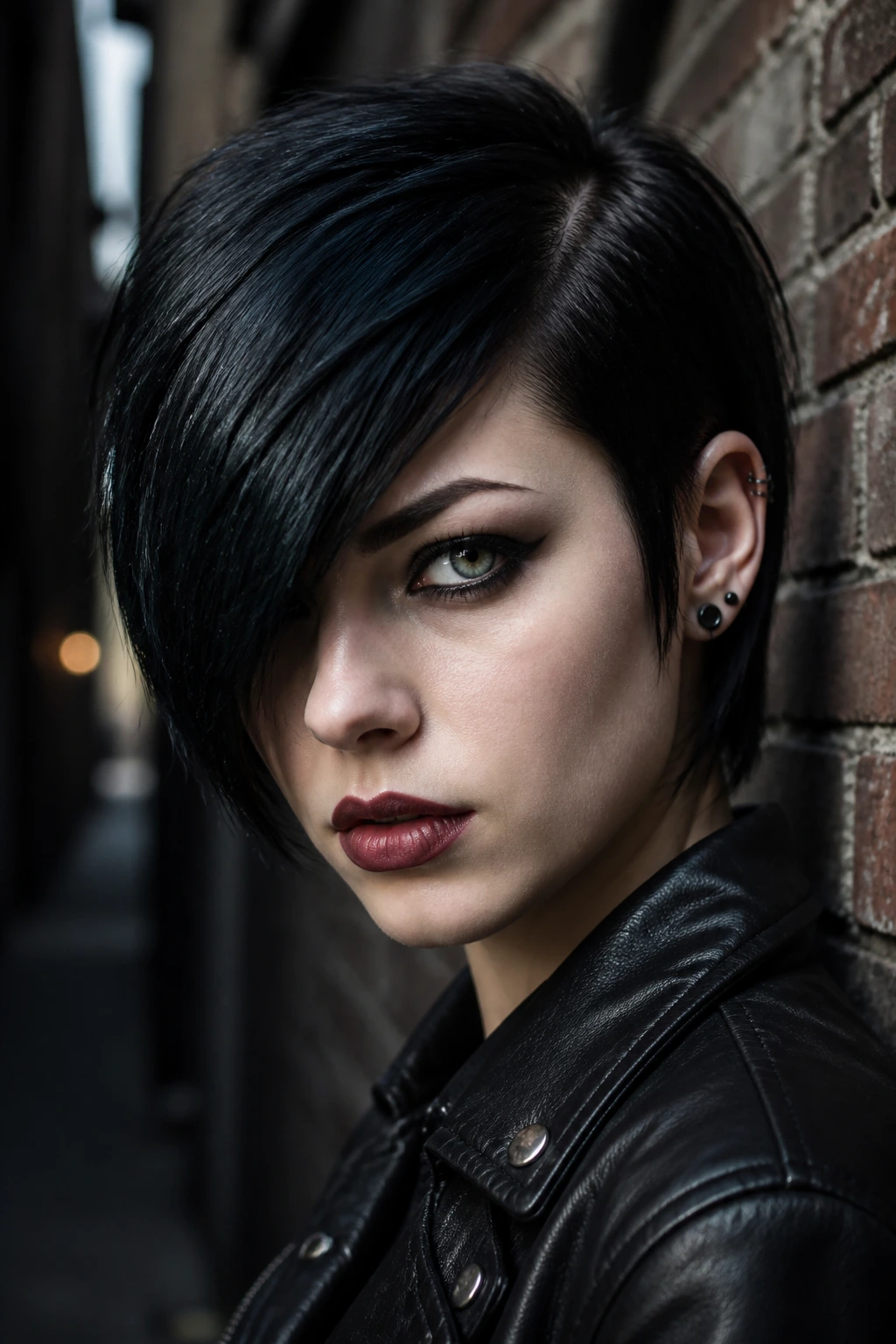
A slash fringe is one of my favorite cheats for short goth hair because it gives drama with almost no maintenance. The part is deep, the bang falls diagonally, and the line cuts across the face like a blade.
The cut looks best when one side is a bit heavier than the other. That asymmetry is what gives it life. If your hair is thick, remove bulk underneath without thinning the top layer too much. If it’s fine, keep the line blunt and let the shape carry the style.
15. Short Shag Feather Bangs
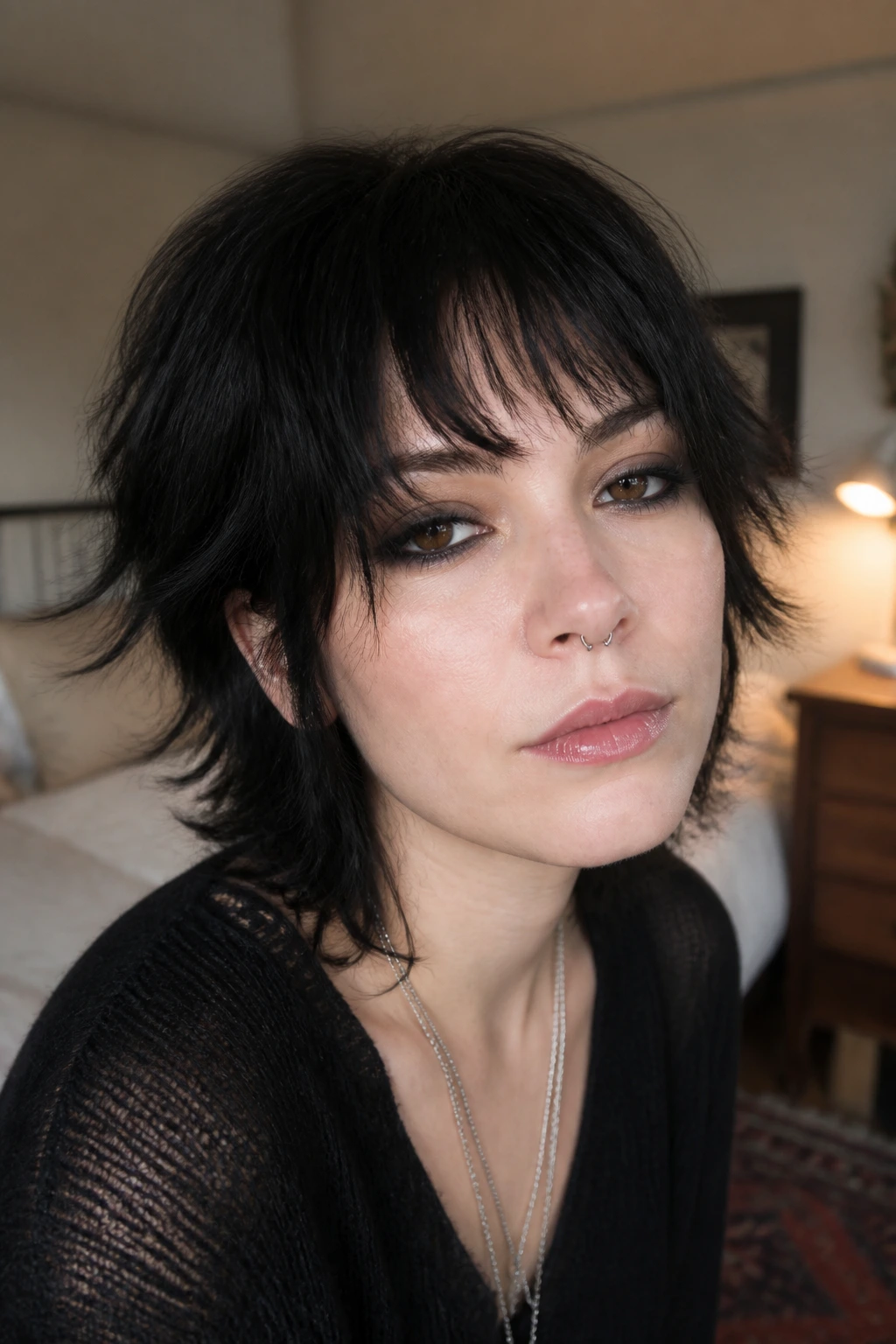
Short shag bangs should move when you shake your head. If they don’t, the cut is too stiff. The feathered version works because it blends into the rest of the shag, giving you layers around the brow instead of one isolated front strip.
I like this on hair that has a little wave or bend, because the shape gets better on its own after an air-dry. Scrunch in a light mousse, twist a few front pieces while damp, and let them fall wherever they want. That slightly ungoverned finish is part of the charm.
16. Asymmetrical Swoop Bangs
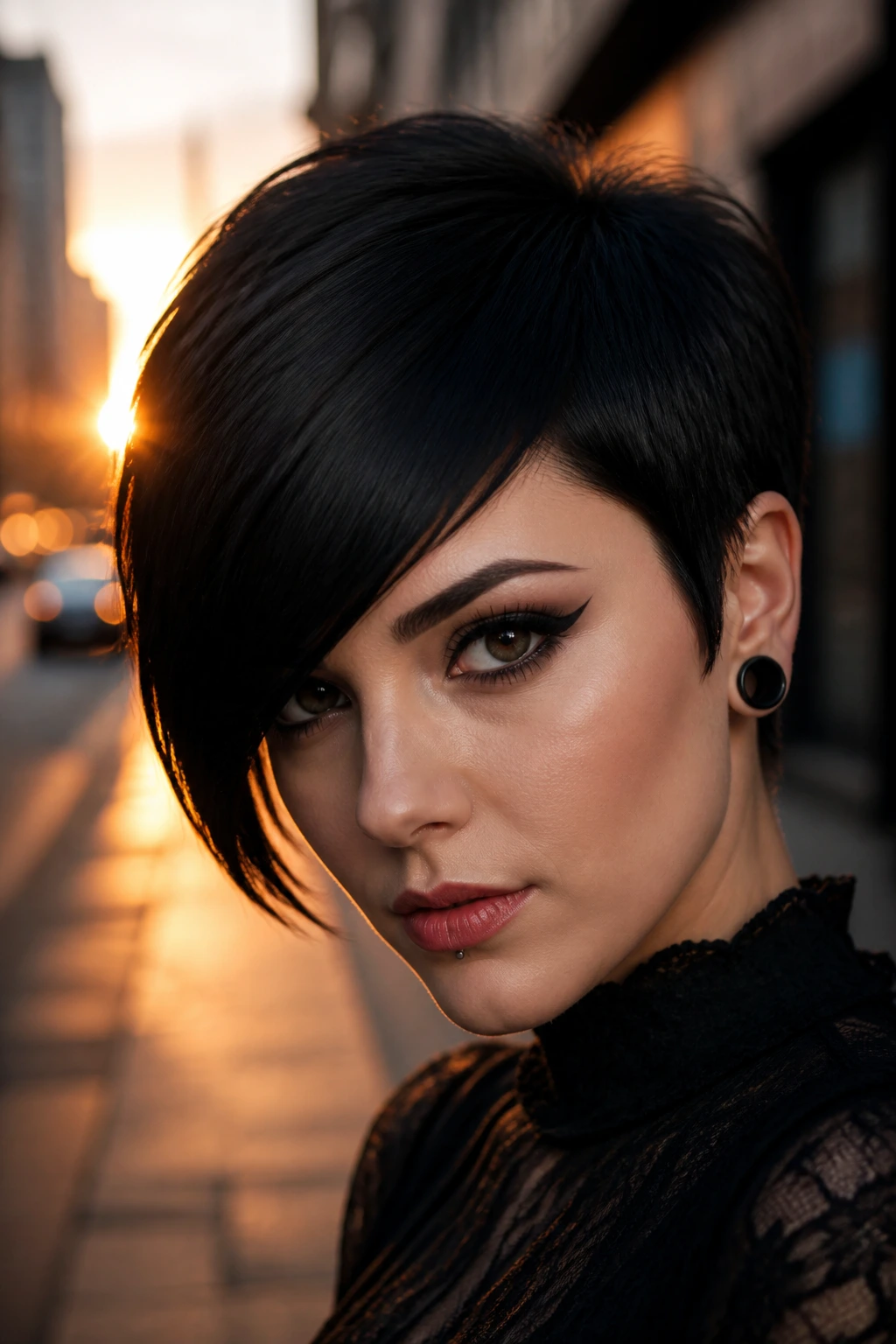
Need one side to do the talking? This is the fringe for that. One side sweeps long across the forehead, while the other stays shorter and tighter near the temple, giving short goth hair a slanted, deliberate line.
The asymmetry helps if you wear a side shave, an undercut, or even just one ear tucked back. It also makes a round or fuller face look longer because the eye tracks diagonally instead of stopping at a straight bang line. Keep the longer side smooth, not curled.
17. Micro Fringe with Tapered Temples
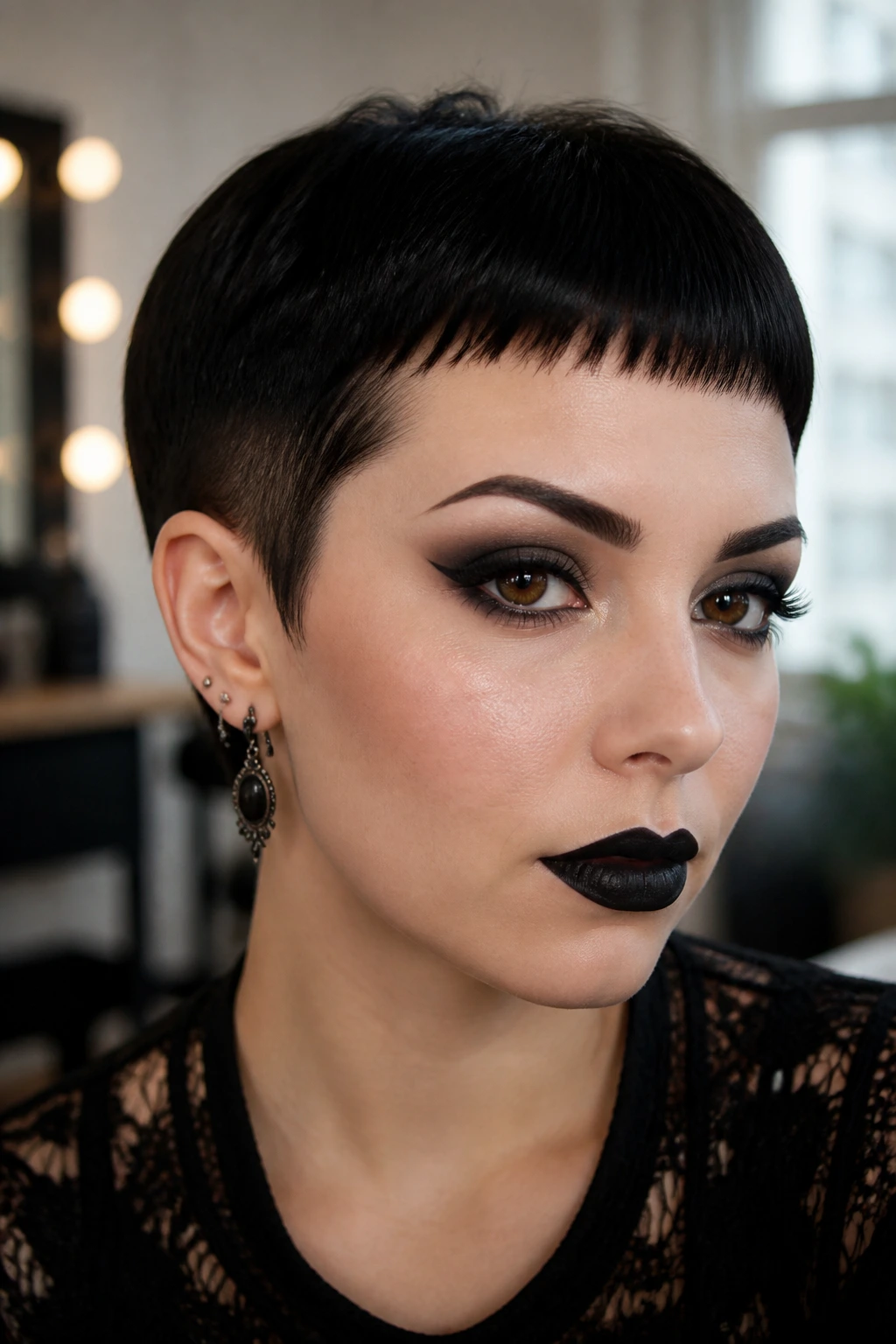
Micro fringe can feel severe in a good way, but tapered temples make it easier to wear. The center stays short and cropped, then the side pieces thin out and blend into the haircut instead of ending in a hard block.
That taper is the whole trick. Without it, a micro fringe can look disconnected on short hair. With it, the bang becomes part of the cut rather than a separate object perched on top of it. A dab of pomade at the temples is enough; don’t overwork the center.
18. Textured Bardot for Short Hair
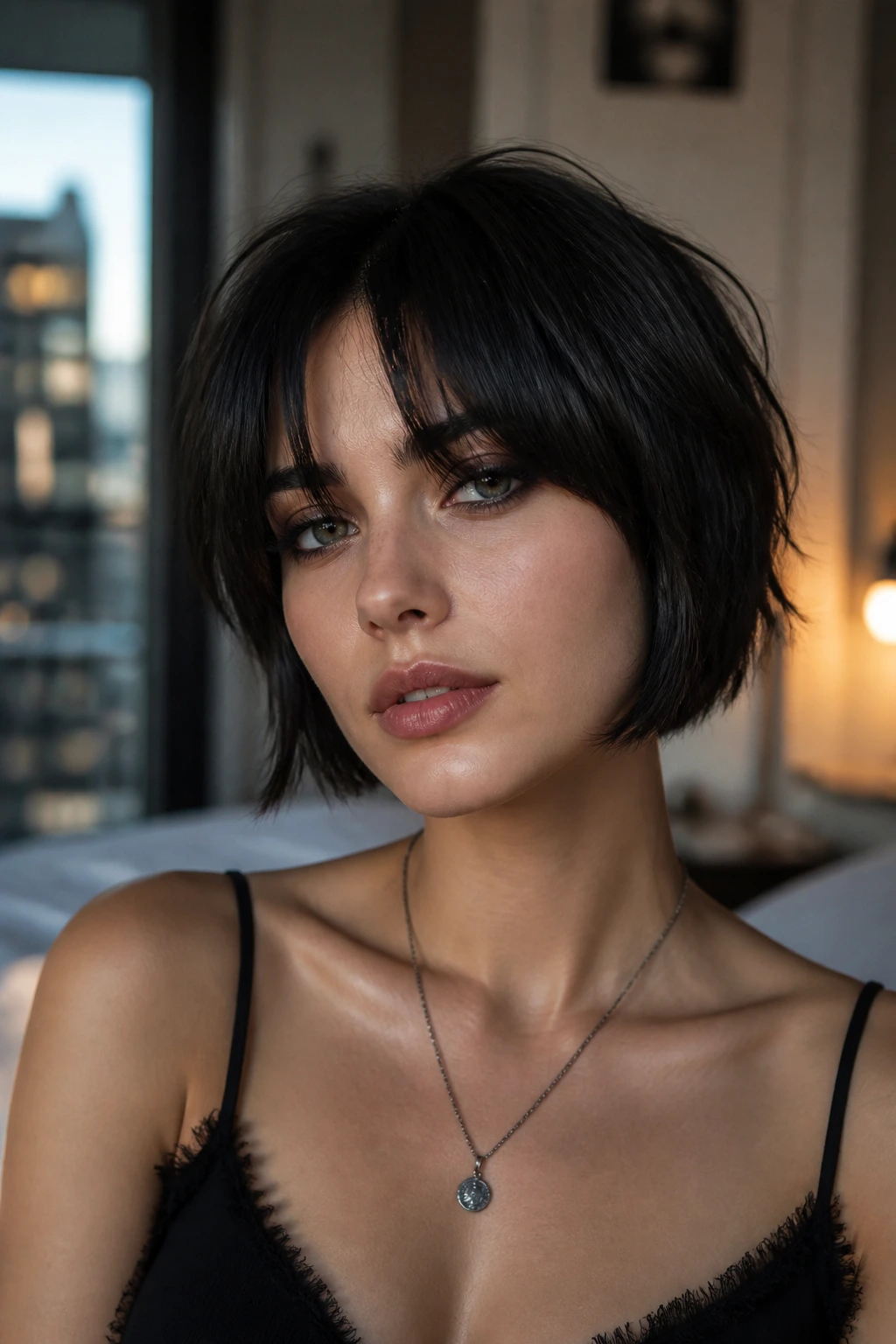
This is basically a short, goth-leaning curtain fringe with a little cheekbone sweep. The center split keeps the forehead from feeling boxed in, while the textured edges make it darker and less polished than a classic Bardot shape.
Why It’s Worth Trying
It buys you flexibility. You can wear it parted, pushed back, or forward into a softer frame, and it grows out into face-framing pieces instead of turning into an awkward triangle. On a short bob or crop, that flexibility is gold.
19. Peekaboo Fringe Over an Undercut
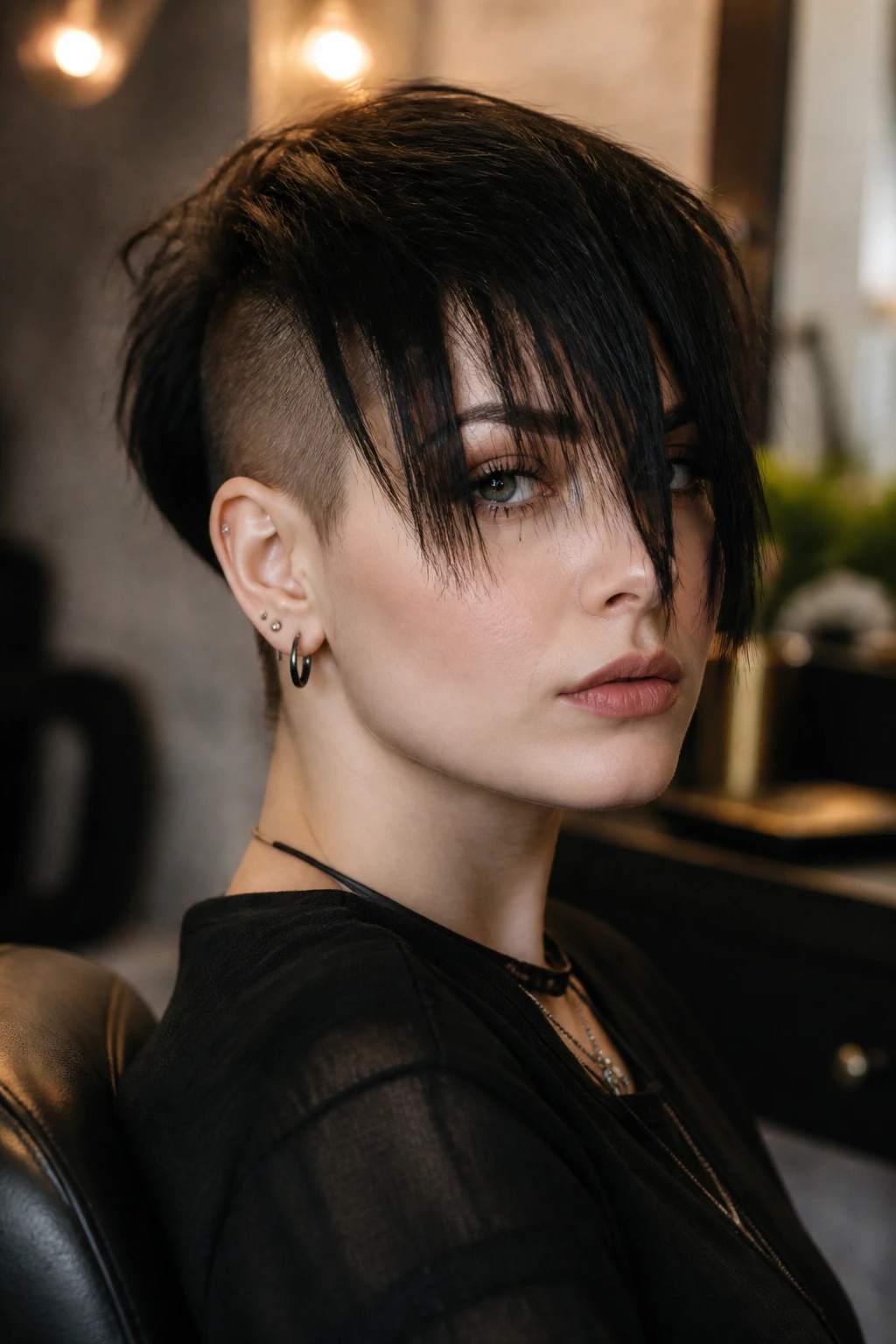
A peekaboo fringe is what happens when the top section is long enough to flirt with the eye, while the undercut keeps the whole style tight and clean underneath. It gives you the drama of length without giving up the neatness of a short cut.
This one looks best when the fringe drapes forward, then falls just enough to reveal a hint of the undercut as you move. Use a blow-dryer on low heat and direct the hair forward first; the shape holds better if you let it cool in place before you touch it.
20. Rounded Doll Fringe
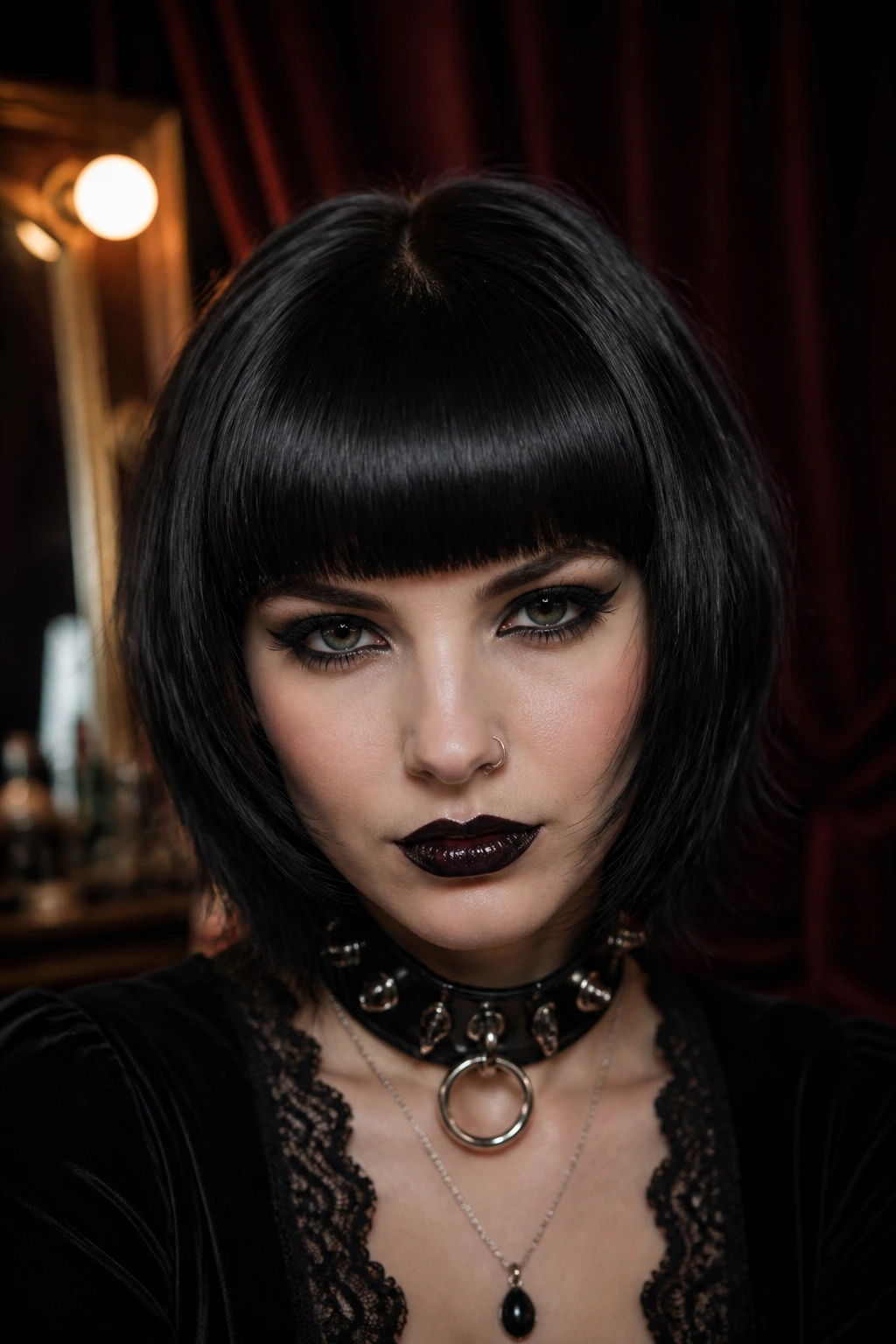
Rounded bangs can look sweet, but on short goth hair they read more eerie than cute. The curve is fuller through the center, the corners soften into the sides, and the result feels a little like a porcelain doll that learned how to stare back.
The key is density. A rounded fringe needs enough hair to hold the arc, or it turns wispy and loses the shape completely. Keep the cut clean, then polish the front with a round brush. If the line starts fraying, the whole thing gets blurry fast.
21. Face-Framing Vamp Pieces
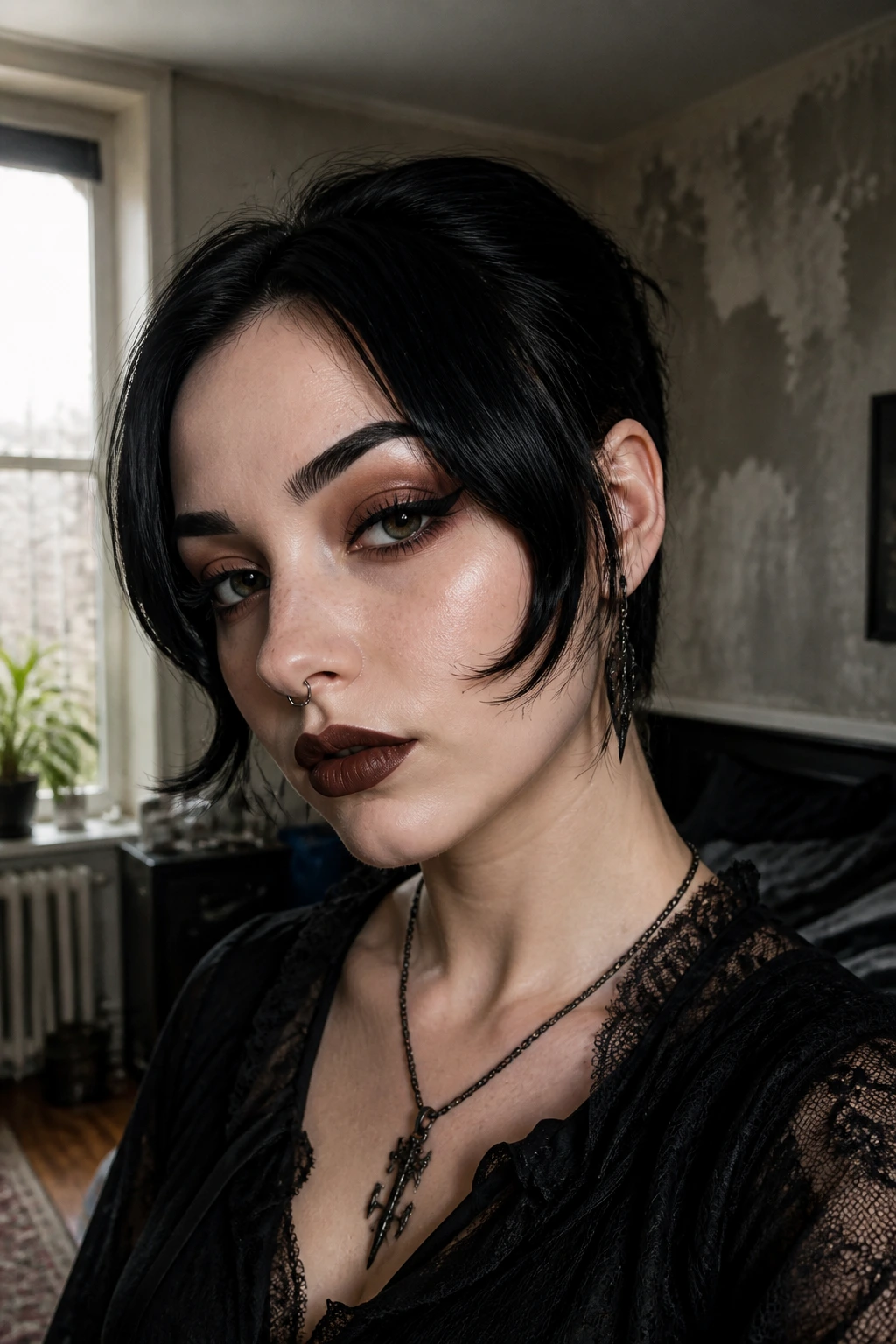
Not every fringe has to be a full bang. Sometimes the smartest move is a pair of short, moody pieces that frame the face and leave the forehead mostly open. On short goth hair, that can be a relief, especially if your hairline hates full bangs.
This is a good bridge style if you’re growing out a fringe or testing the waters before cutting more hair forward. Keep the pieces sharp around the cheekbones, not chin length, so the look stays in the short-hair family. A small flat iron can bend the front pieces just enough to curve inward.
22. Chopped Hex Fringe
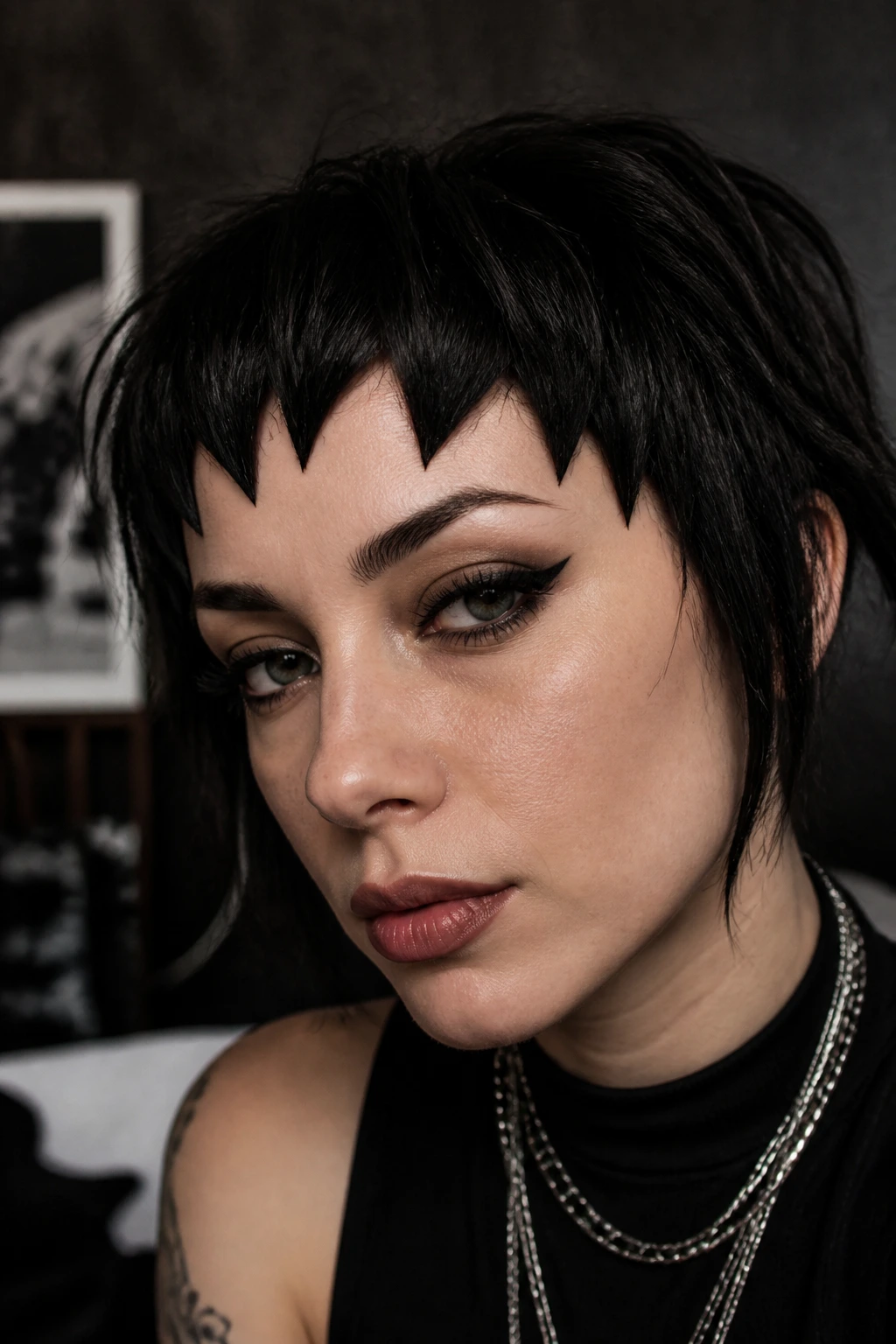
A chopped hex fringe has six-ish points of interest instead of one clean line, which sounds strange until you see it in motion. It’s angular, slightly graphic, and perfect if you like your short goth hair to look a little architectural.
What Makes It Different
The uneven lengths give your eyes something to trace. That matters on a small haircut, because the fringe becomes the main feature. Keep the cuts deliberate, not random. There’s a difference, and people can feel it even if they can’t name it.
23. Gothic Bowl-Bang Remix
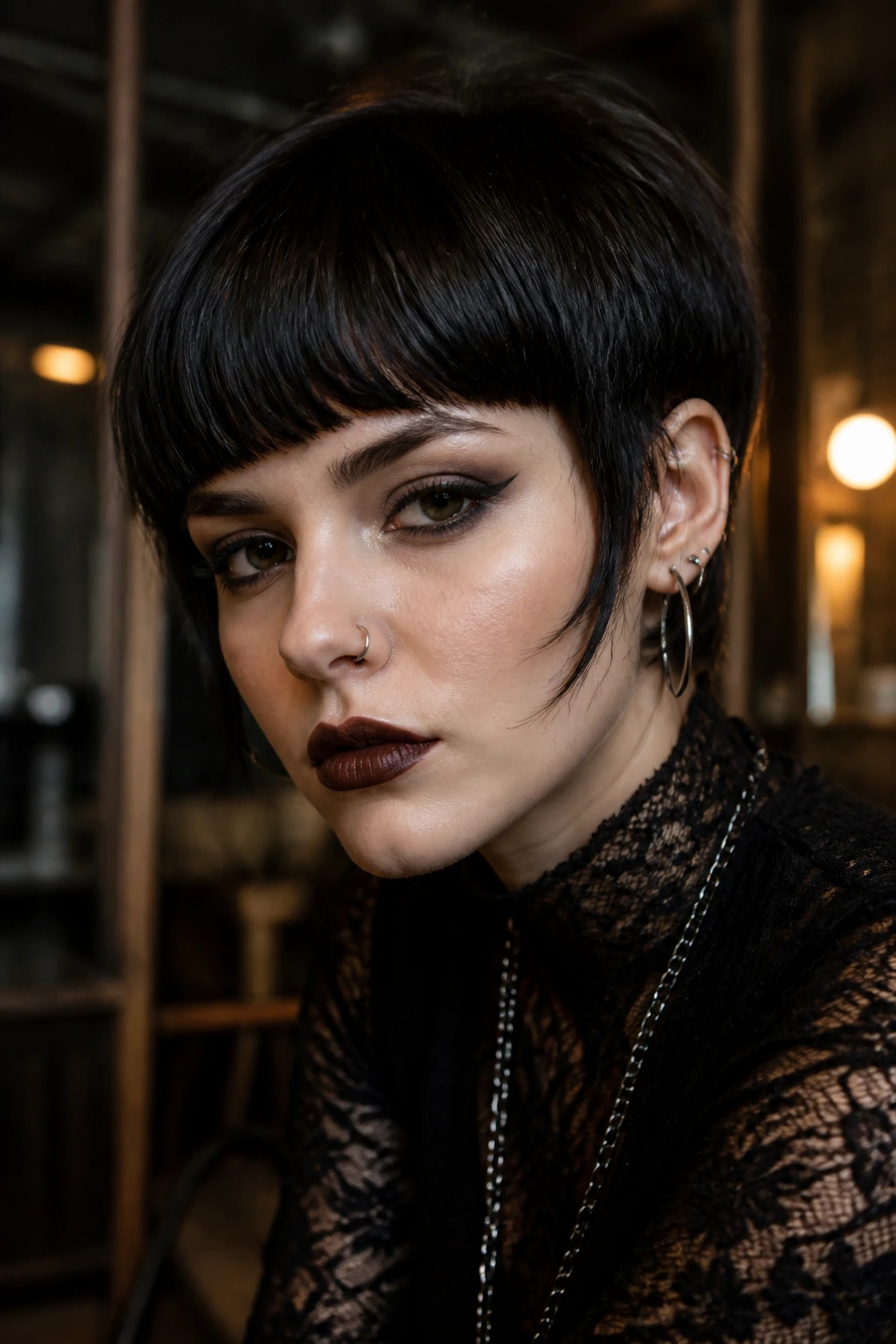
The bowl-bang remix borrows the roundness of a bowl cut but loosens it so it doesn’t go full retro helmet. The fringe still curves around the forehead, yet the interior texture is softer, so the shape feels darker and less literal.
This works well with short bobs and cropped shags that already have a round silhouette. If you want the shape to stay modern, do not keep the line perfectly rigid. Break up the ends slightly and let the sides feather into the rest of the cut.
24. Soft Razor Curtain on a Crop
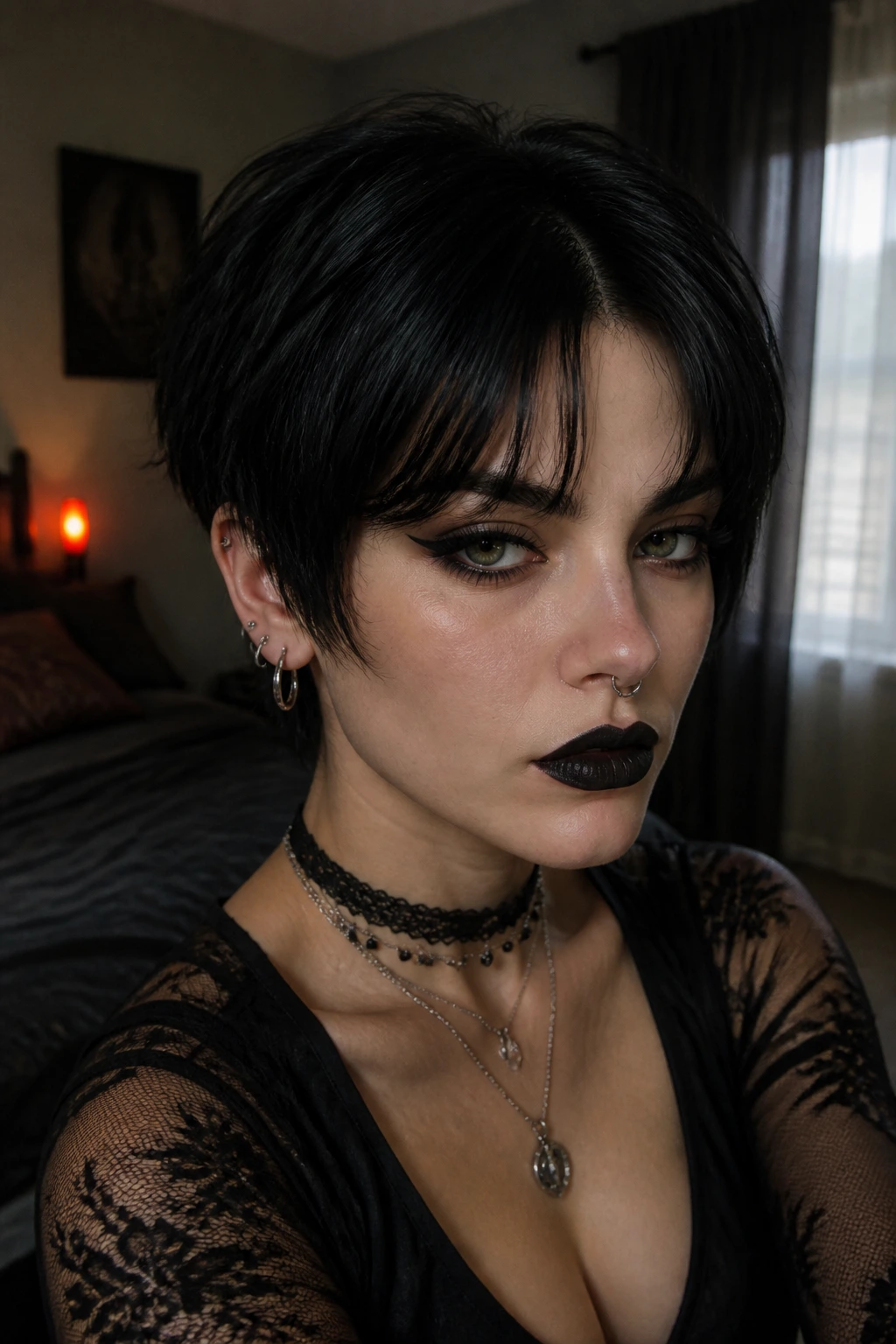
A soft razor curtain gives you the openness of curtain bangs without the weight of long hair. The center part is there, but the bangs are short enough to keep the crop feeling neat, and the razor finish keeps the edges from turning chunky.
I’d cut this on hair that has a bit of natural bend. Straight hair can still wear it, but the shape looks better if there’s some movement near the temple. Dry the fringe forward, then split it gently with your fingers while it’s still warm.
25. Ear-Grazing Side Fringe
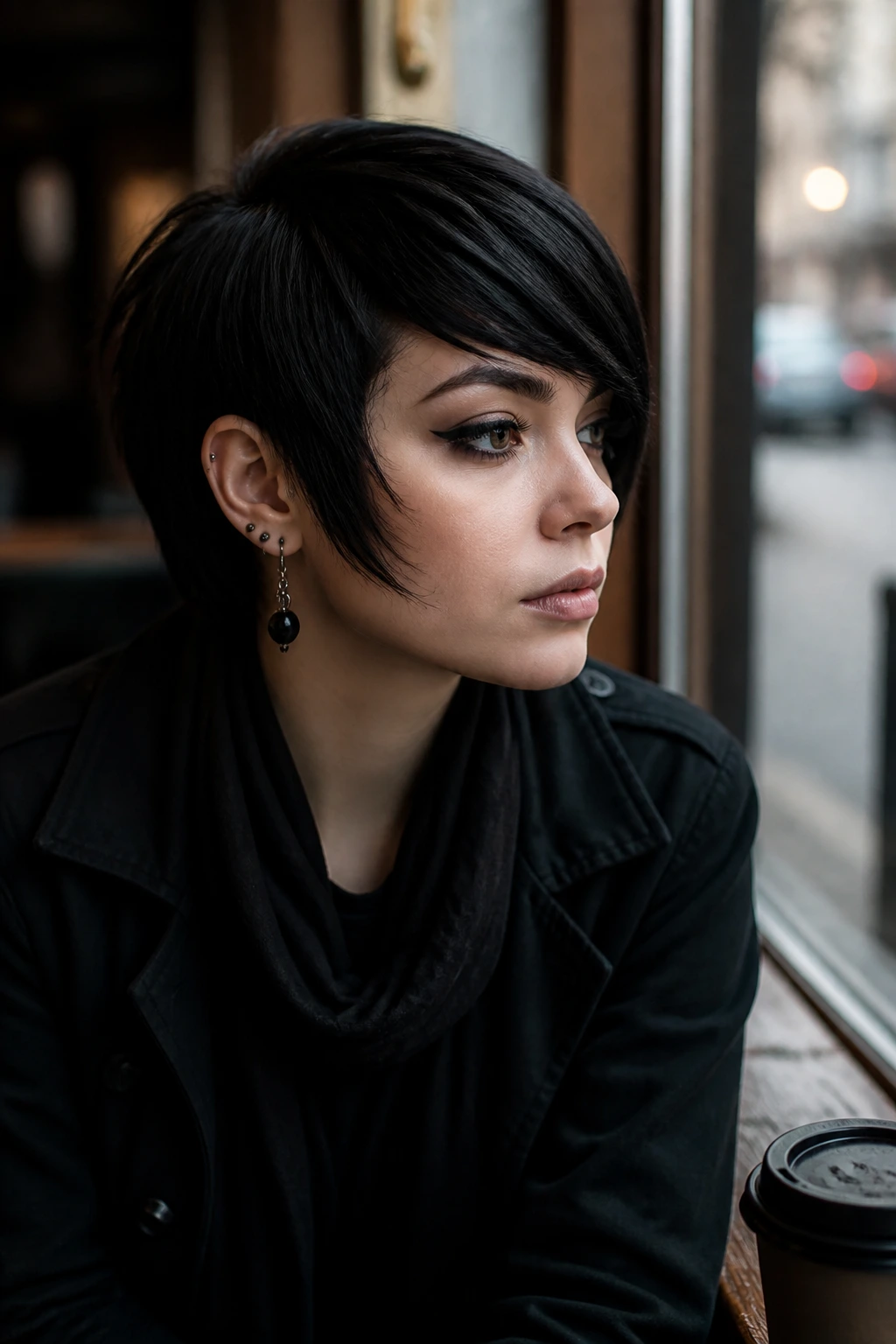
This is a side fringe that stretches long enough to graze the ear, which gives short goth hair a sleek, slashed shape. It’s elegant, a little secretive, and easy to pin back when you want your face fully open.
It’s also one of the better choices for people who wear statement earrings or glasses. The fringe doesn’t fight the accessories; it frames them. Keep the long edge clean and the shorter edge soft, or the diagonal can start looking choppy in the wrong way.
26. Mini Bettie Bangs
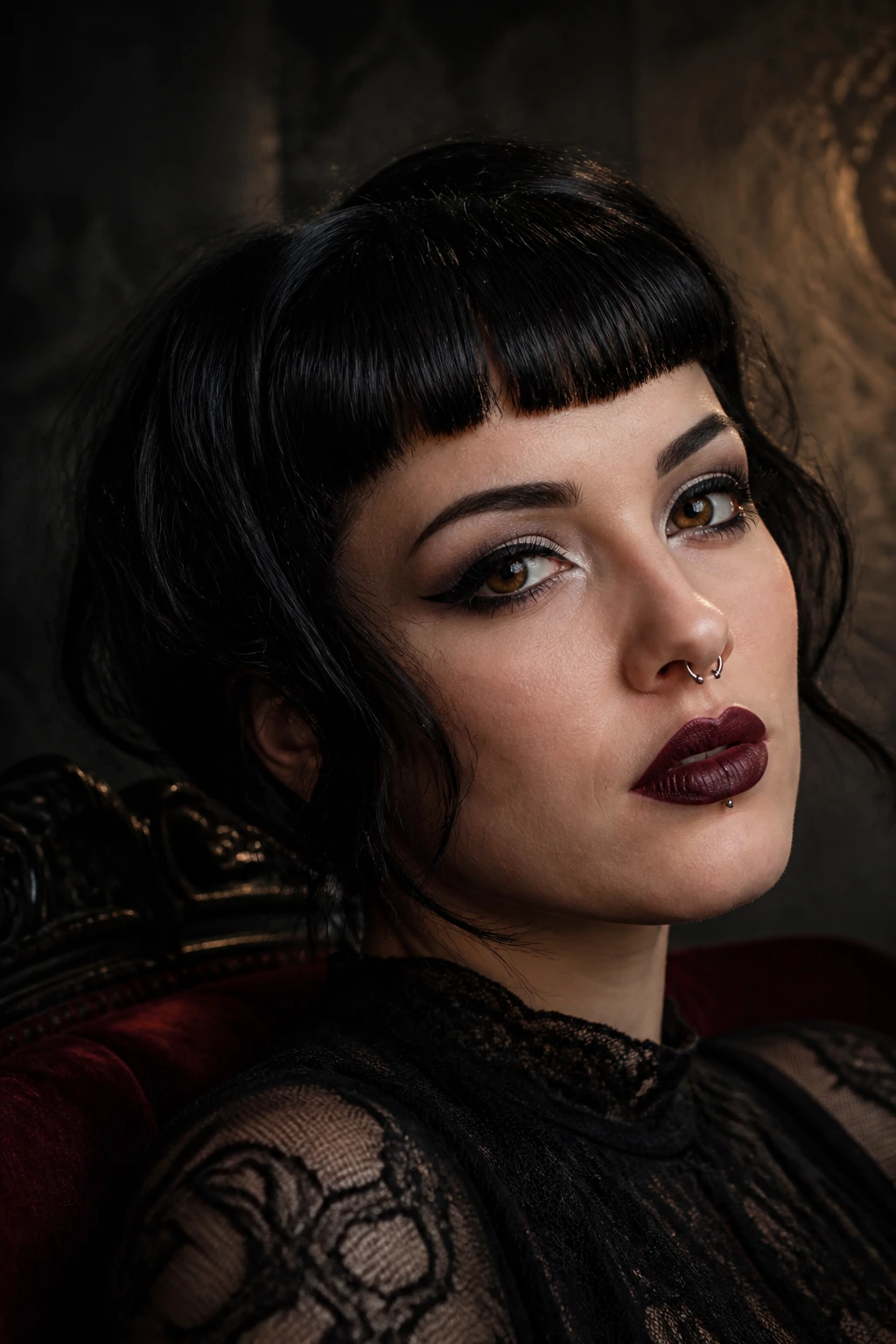
Mini Bettie bangs nod to vintage shape without copying it exactly. They curve slightly, sit short above the brows, and keep enough fullness to feel deliberate on a black crop or pixie.
The danger is making them too round and too stiff. That turns the style sweet, and sweet is not the mood here. Keep the underside tidy, smooth the top with a flat brush, and let the ends stay a touch blunt so the fringe retains its bite.
27. Messy Prophecy Fringe
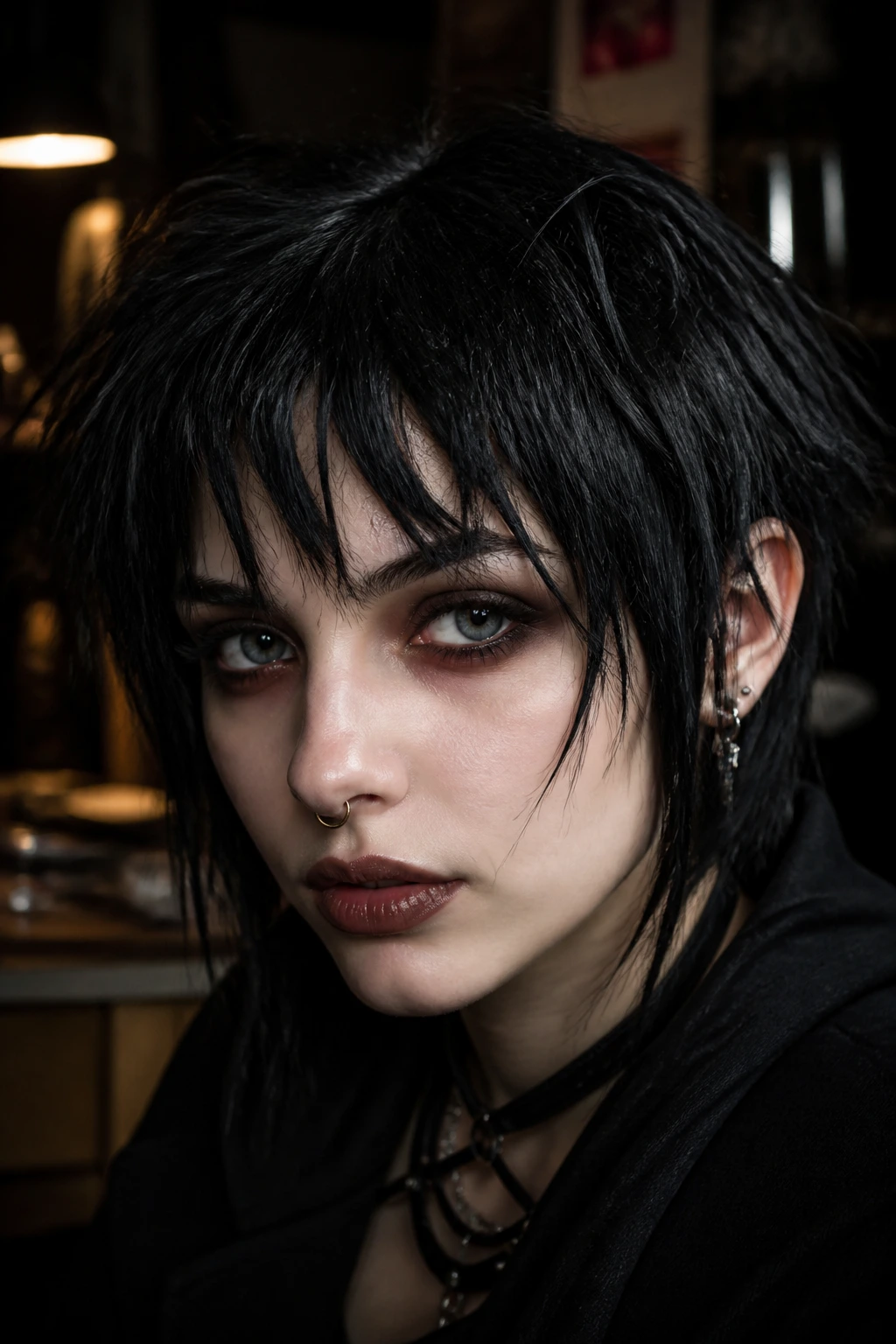
Messy prophecy bangs look like they were cut after a long night and somehow turned out right. The lengths are uneven in a controlled way, the ends separate naturally, and the whole front has that half-seen, half-remembered quality that suits goth styling.
Why It Works
The beauty here is motion. A fringe with a little disarray feels more alive on short hair than a strict line that never moves. Use texturizing spray at the roots and pinch a few pieces apart while they’re damp. Don’t overcomb it back into obedience.
28. Tapered U-Shape Fringe
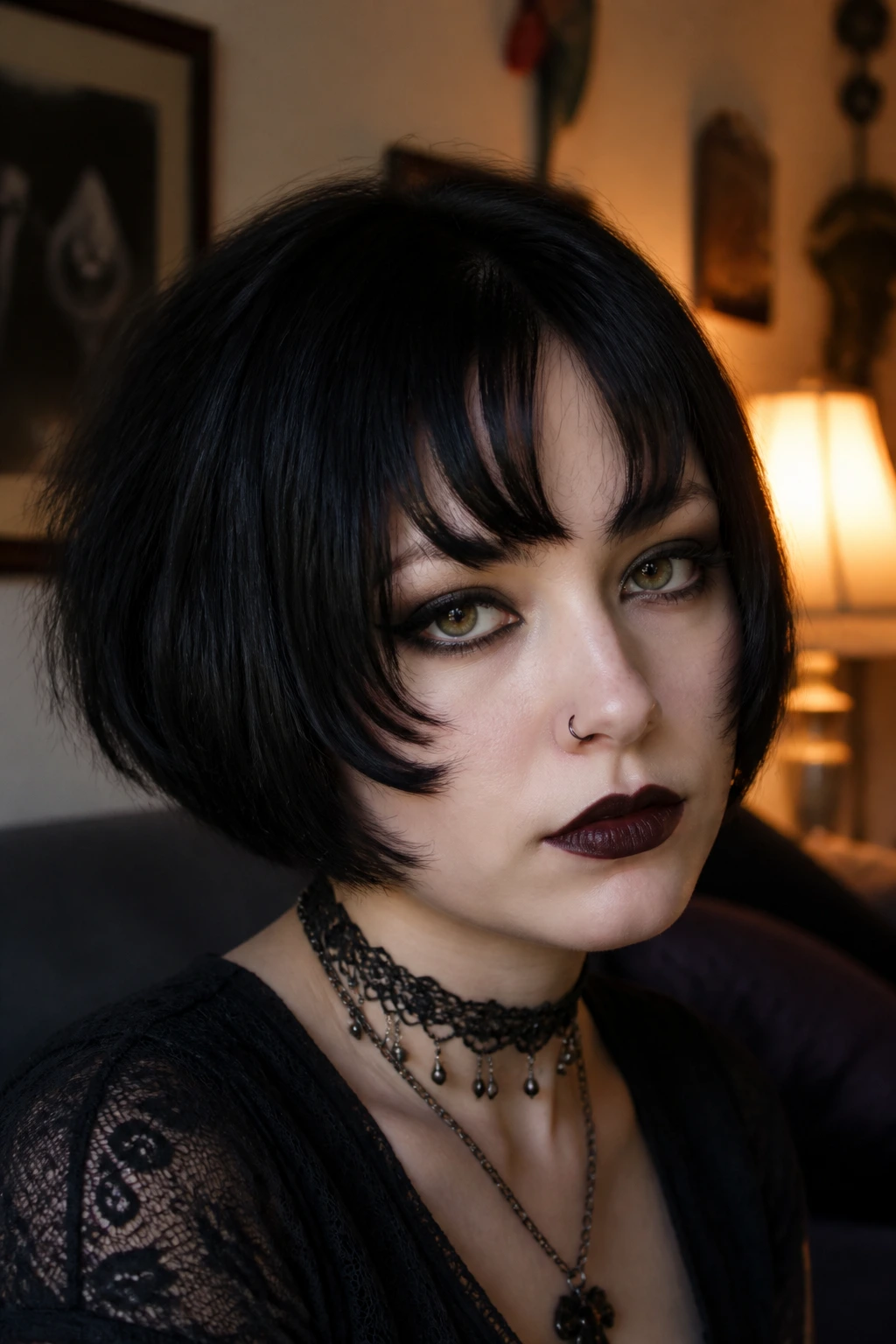
A U-shape fringe keeps the center short and the sides longer, but the taper makes the curve feel softer than a blunt horseshoe bang. On short goth hair, that shape can balance a strong jaw or a high forehead without turning the cut heavy.
The line is especially useful if you want something that grows out gracefully. As the fringe lengthens, it becomes a face-framing arc instead of a problem. A small round brush or a few Velcro rollers can help the ends bend under without too much heat.
29. Cropped Center Split

A cropped center split is a tiny middle part with short bangs that barely clear the brows. It feels cool because it refuses to choose between a full fringe and a curtain, and that uncertainty suits a lot of short goth cuts.
How to Use It
Keep the part clean and the sides a little longer than the center. That creates a soft V of hair that sits on the face instead of clinging to it. If your hair is thick, remove bulk from underneath so the split opens instead of puffing out.
30. Fringe with Tucked Sides
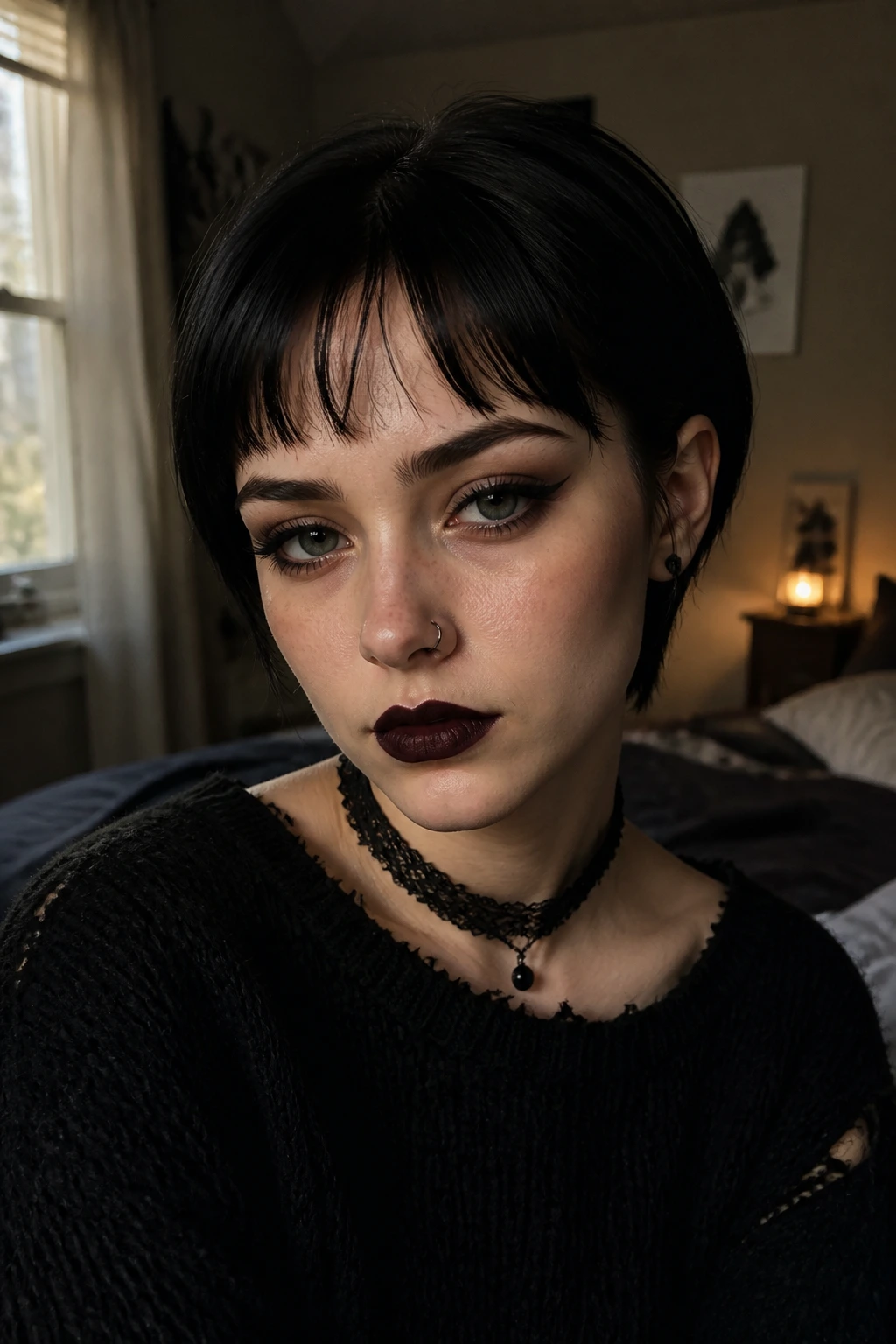
This style is built for people who like to tuck, pin, or flip the side sections behind the ears. The front still reads as a fringe, but the edges are long enough to move out of the way when you want a cleaner outline.
That practical detail matters more than it sounds. A lot of short goth hair looks good only when it’s styled one exact way. This one gives you options. Keep the center slightly shorter, let the sides brush the cheekbones, and the fringe can switch from moody to neat in about 30 seconds.
31. Heavy Inky Brush Bangs
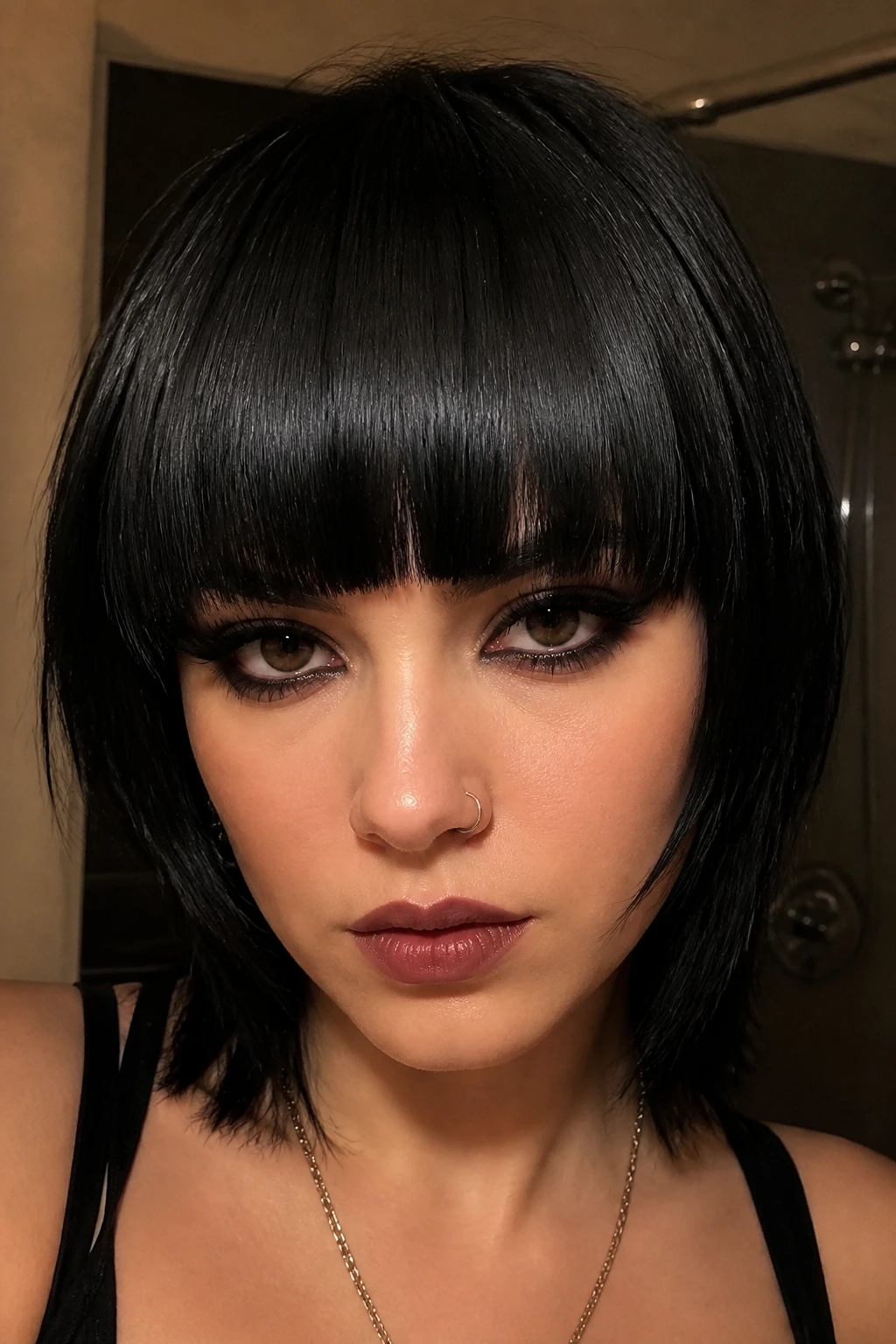
Think of this as a paint stroke across the forehead. The fringe is thick, dark, and opaque, with enough density that the line looks like it was brushed on in one movement. On short goth hair, that kind of weight can be gorgeous.
- Works best on dense hair that sits flat at the front.
- Needs a round brush or flat iron to keep the surface smooth.
- Falls apart fast if it gets too much dry shampoo or product buildup.
This is not a light-maintenance bang. It asks for care. But when it’s clean, it has real presence.
32. Sharp Chevron Fringe
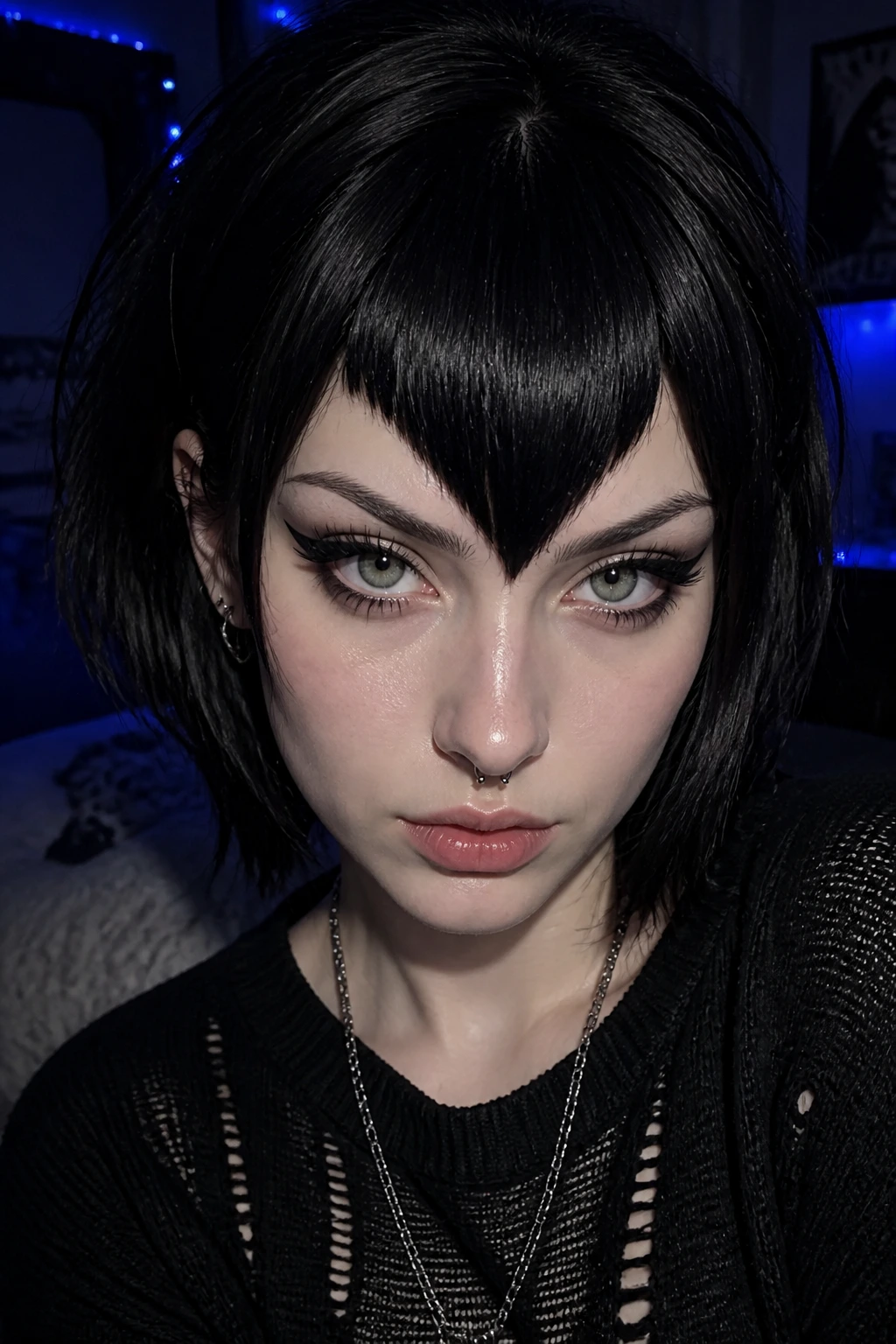
A chevron fringe points slightly down at the center, forming a V-like shape that feels very sharp on a short goth cut. It’s more structured than a soft arch and more interesting than a plain straight line.
What Makes It Different
The point draws the eye straight to the nose bridge and eyes, which makes makeup land harder. If you like dark liner or a stained lip, that shape gives the face a frame with teeth. Keep the center crisp and the sides smooth so the V reads on purpose.
33. Razor-Shattered Pixie Bangs
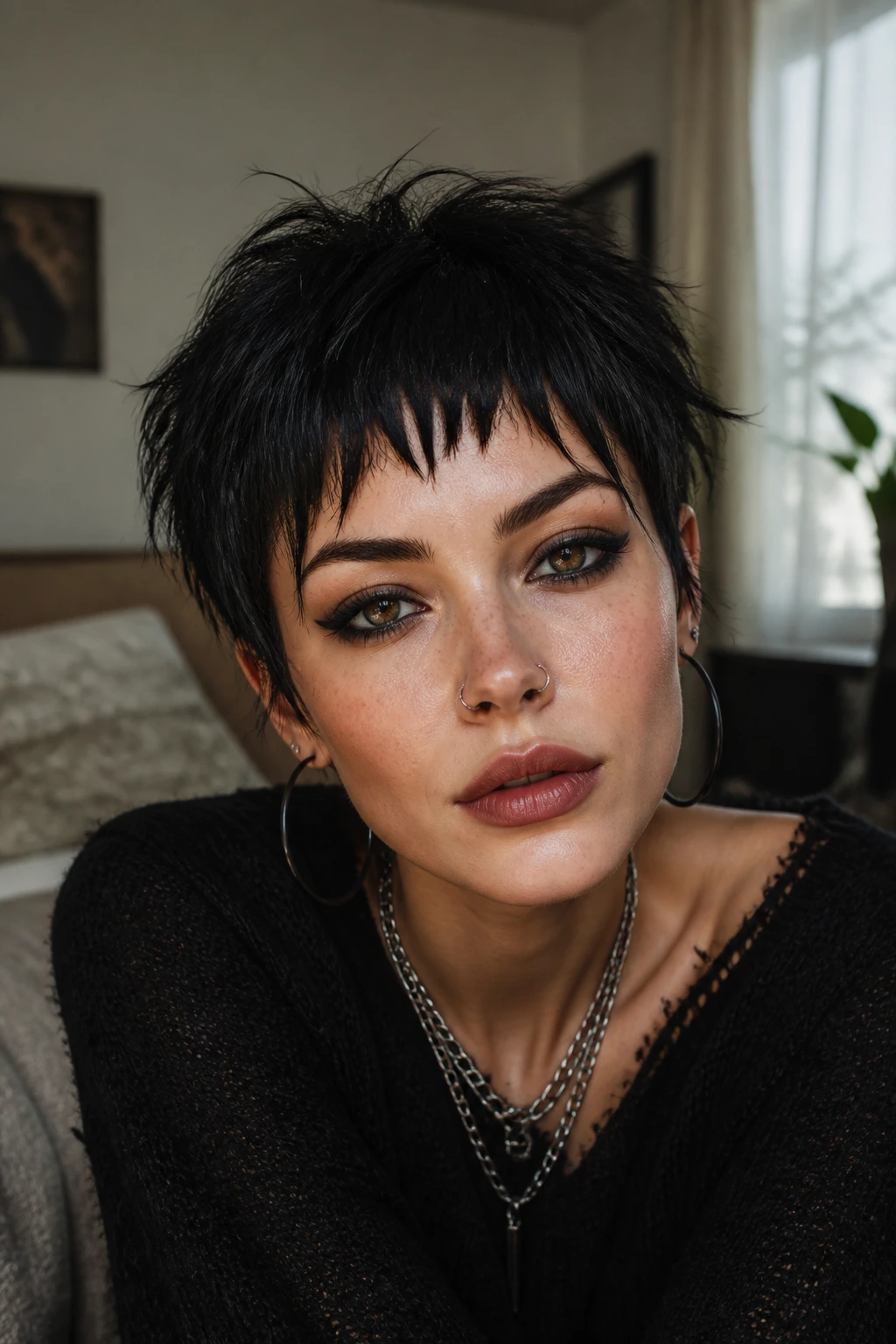
Pixie bangs can look too neat if they’re cut with scissors only. Razor-shattered edges change that fast. The front pieces break apart, separate a little, and give the pixie that lived-in, midnight energy that straight bangs often miss.
The best part is the ease. A bit of styling cream through damp hair, a quick scrunch, and a few pieces pulled forward with your fingertips is usually enough. If the bang starts looking too fuzzy, it needs less product, not more.
34. Long Top, Short Sides Sweep
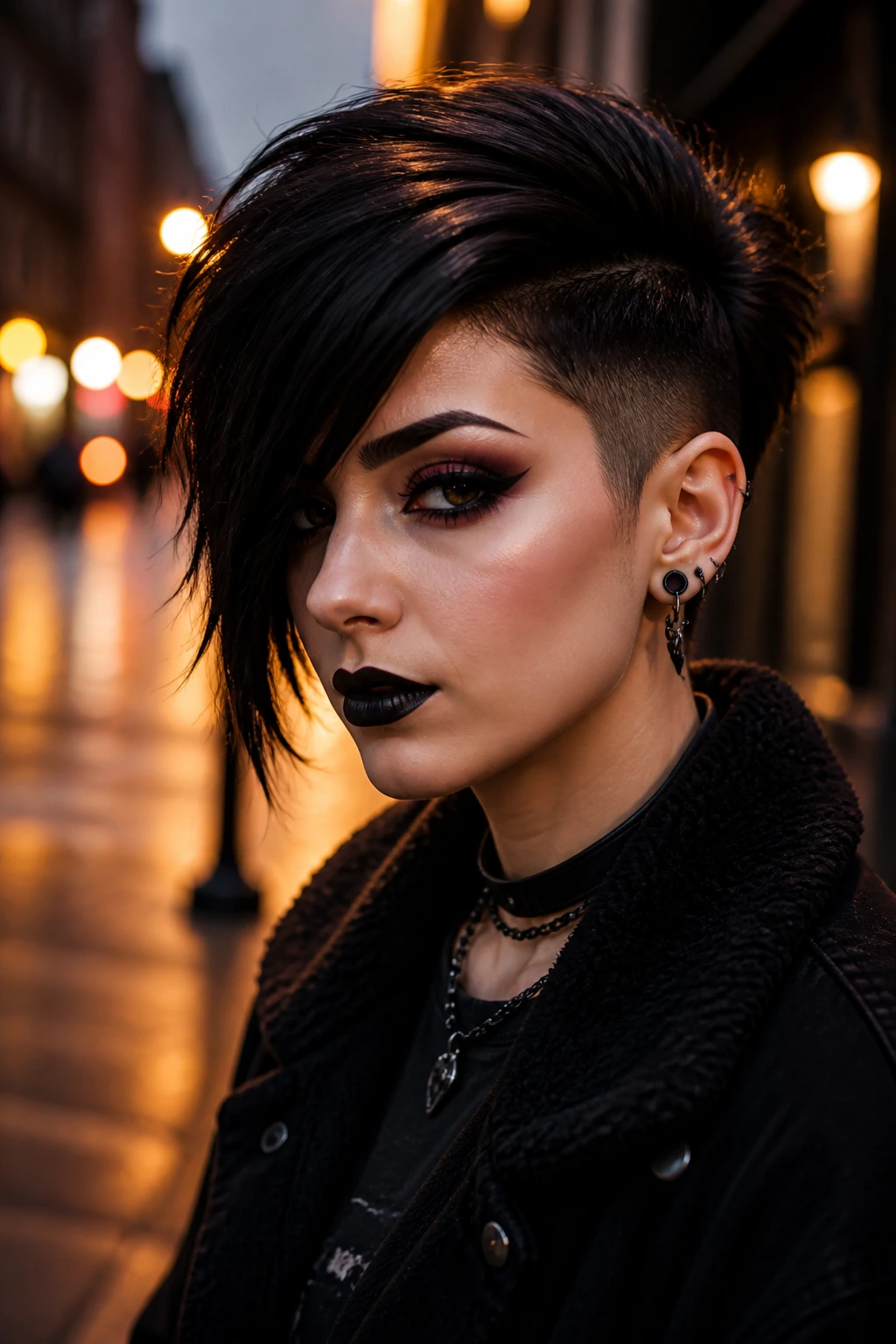
This is the fringe for a short goth cut that leans androgynous or just plain sharp. The sides stay short and tidy, while the top sweeps long across the forehead or upward and over, almost like a tiny quiff with a bang attached.
It gives height. That’s the real trick. If your face feels visually compact, this shape opens it up without needing long layers. Dry the front upward first if you want lift, or forward if you want more shadow. Both versions work.
35. Full Blackout Vamp Fringe
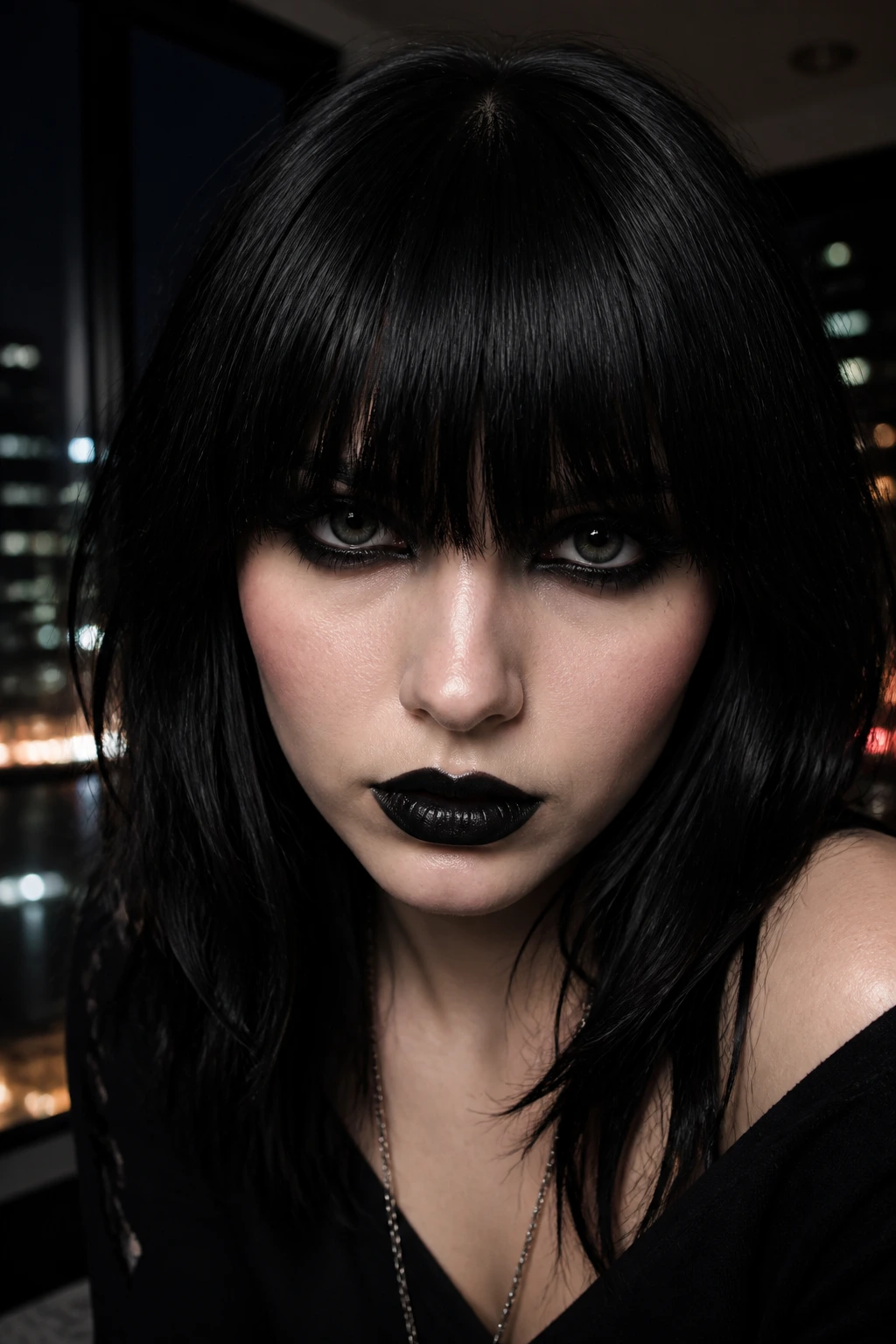
A full blackout fringe is the boldest option here. Thick, broad, and opaque, it covers much of the forehead and turns a short goth haircut into a statement the second you step into daylight. There’s no subtlety, which is the charm.
Why It Stays Memorable
The fullness creates a block of darkness that makes the eyes look brighter and the cheekbones look sharper. It’s best on dense hair and best when you’re willing to trim it often. Let it grow past its line and the whole effect softens fast.
Why Short Goth Bangs Need a Different Kind of Shape
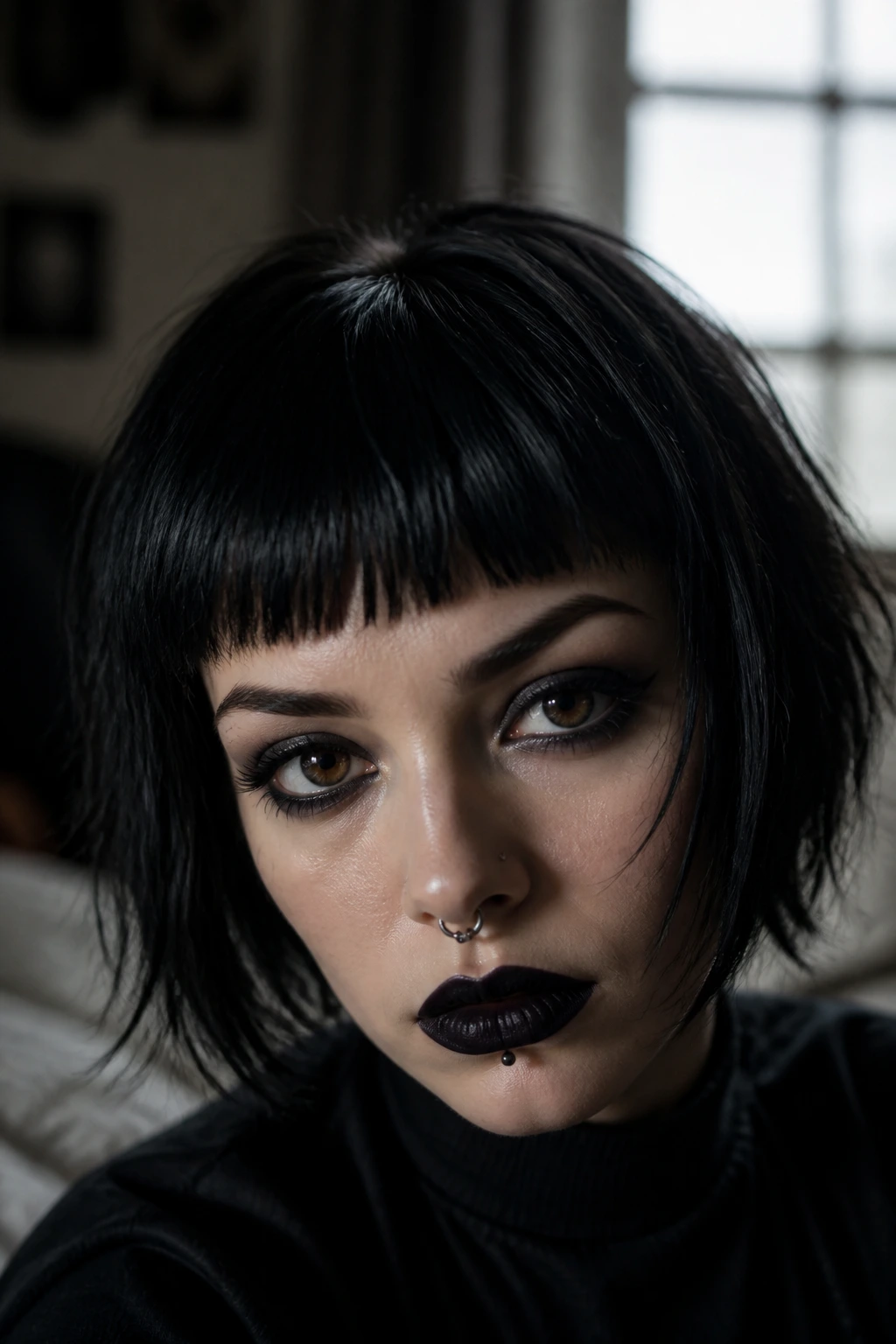
Short goth hair lives and dies by silhouette. There isn’t much length to hide a weak front, so the fringe becomes the place where the haircut gets its personality. A blunt line can make a pixie feel severe. A split fringe can make a bob feel sly. A textured bang can take a plain crop and give it that slightly dangerous look people notice before they know why.
The other thing worth saying: texture is not decoration here. It’s the whole game. On short hair, a clean edge says confidence, while broken edges say movement, and a heavy fringe says control. Pick the mood you want, then choose the cut that says it plainly. Haircuts get weird when people try to make one fringe do three jobs at once.
Essential Cutting and Styling Tools for These Looks
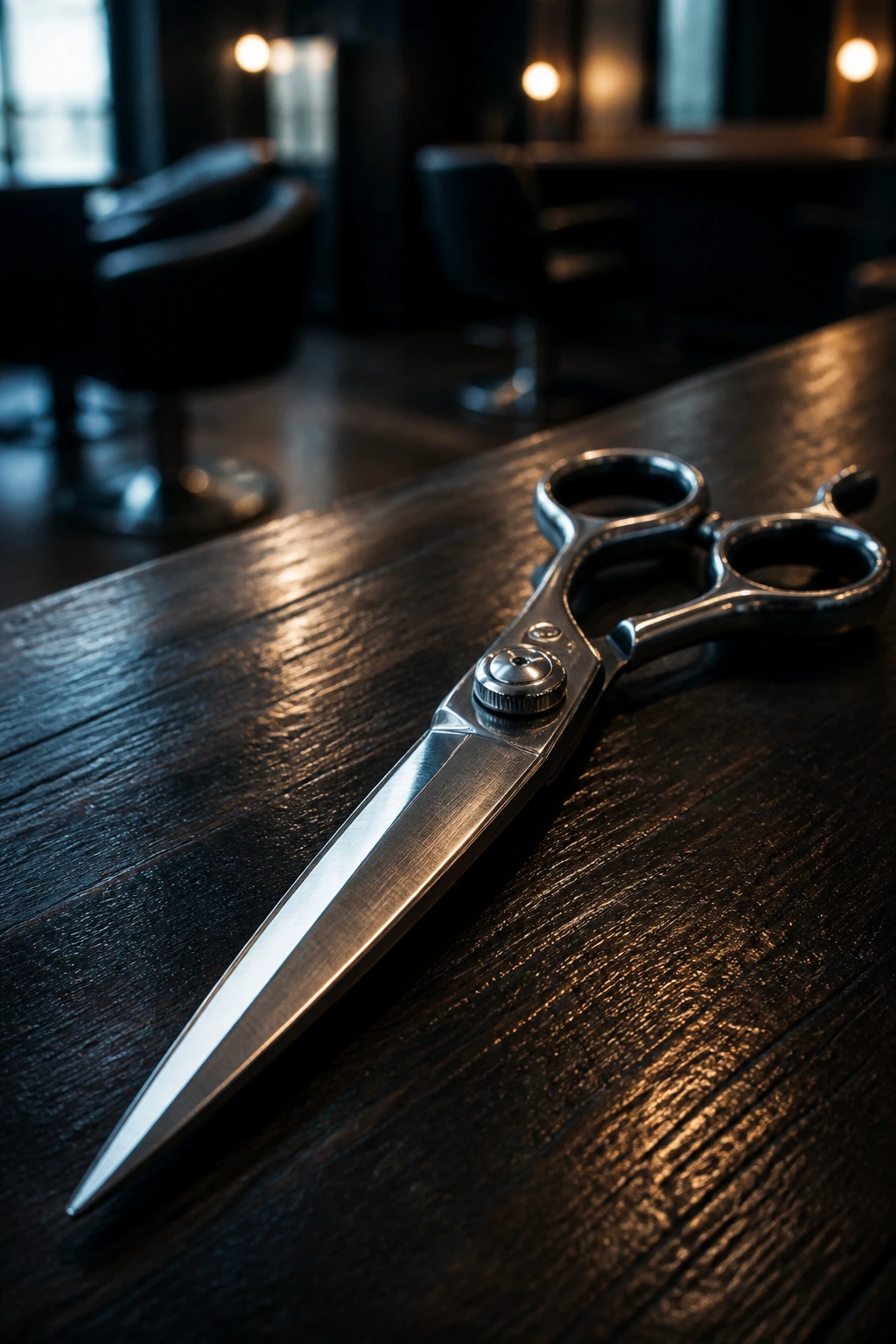
- Sharp hair-cutting shears: Dull scissors chew the ends and make short fringe look fuzzy instead of clean.
- Texturizing shears: Use these lightly on dense bangs; one pass is often enough.
- Razor comb or feather razor: Best for shattered, wispy, and soft-edged fringes.
- Fine-tooth comb: Helps you section the bang accurately, especially around a cowlick.
- Blow dryer with a narrow nozzle: Directs the hair forward or diagonally without puffing it up.
- Small round brush: Useful for curved, arched, and Bardot-style short bangs.
- Flat iron with adjustable heat: Keep it low; short bangs do not need high heat.
- Sectioning clips: Hold the rest of the crop out of the way while you trim the front.
- Matte paste or light styling cream: Gives separation without shine overload.
- Dry shampoo: A must if your fringe touches your forehead all day.
- Hand mirror: Crucial for checking both sides of an asymmetrical or angled fringe.
- Heat protectant spray: Non-negotiable if you’re using a flat iron more than once a week.
Choosing the Right Fringe for Your Hair Density and Texture
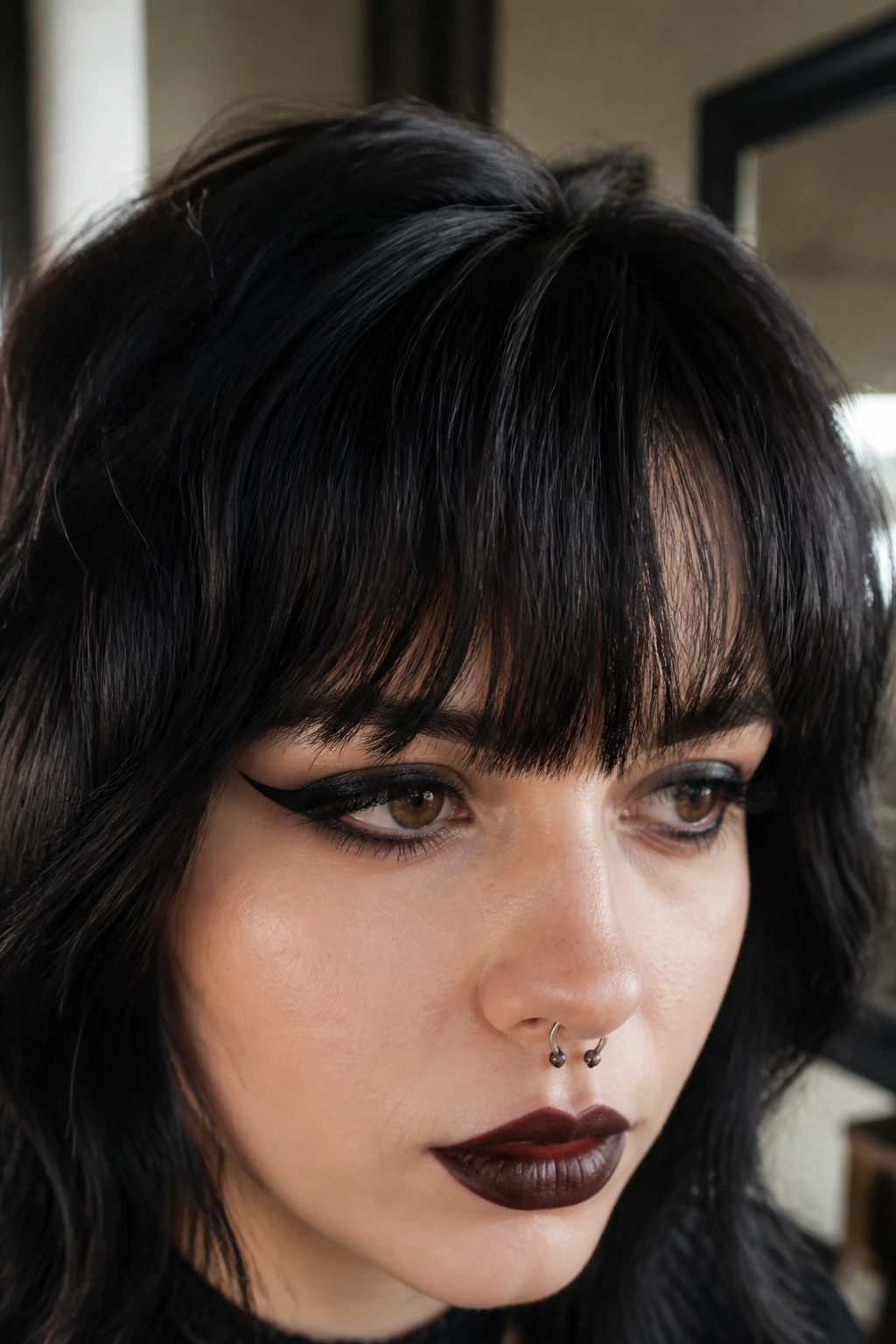
Fine Hair: Go narrower, lighter, and cleaner. A wispy veil, a cropped center split, or a side-swept fringe usually looks better than a huge, heavy bang because fine hair can disappear when over-layered. Keep the ends blunt enough to show density, and skip too much texturizing.
Thick Hair: You can carry more weight, which opens the door to blunt goth bob bangs, heavy brow-skimming fringes, and full blackout styles. The trick is removing bulk underneath instead of shredding the surface to pieces. If you thin the top layer too much, the fringe goes fluffy.
Wavy or Curly Hair: Cut it dry. I mean it. A curly fringe shrinks in ways that are hard to predict, and short goth hair gets strange fast if you guess wrong. Leave the fringe a little longer than you think, then refine after the curl pattern settles.
Straight Hair: This is the easiest canvas for razor-soft micro fringe, blade-straight baby bangs, and sharp chevrons. Straight hair shows every edge, so the cut has to be tidy. The upside is that once the line is right, it stays readable all day.
How to Wear These Styles Without Losing the Mood
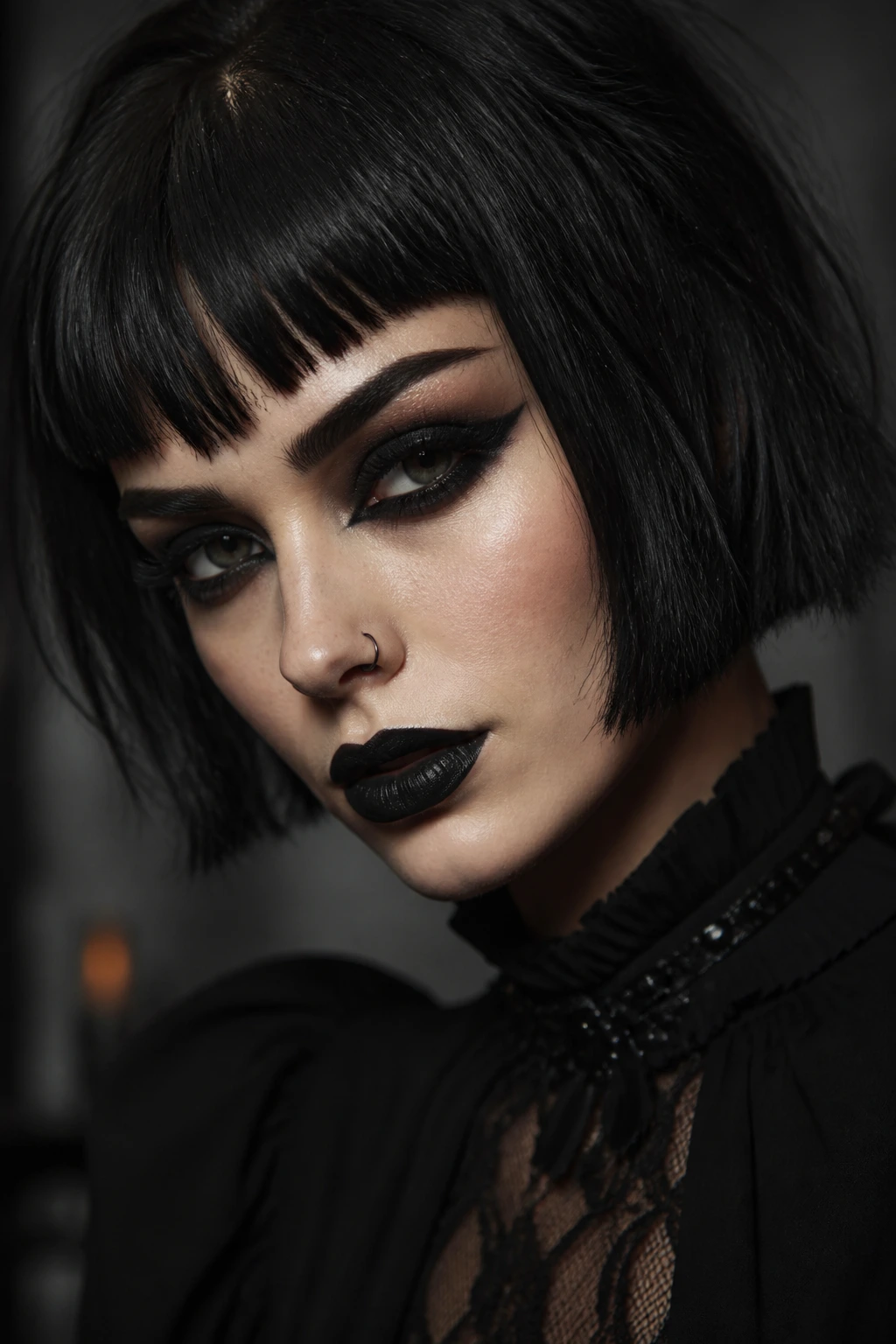
Silhouette: Short goth hair looks strongest when the fringe and the outline of the cut agree with each other. A hard blunt bang pairs well with a blunt bob. A jagged fringe wants a shag, a wolfy crop, or a mullet-influenced shape. Mismatched texture can work, but it has to feel deliberate.
Makeup Pairing: Dark liner, smoky shadow, and a strong brow all become more visible when the fringe changes the amount of forehead showing. A heavy bang makes the eyes feel deeper set. A split fringe gives more room for visible lid space. Pick the fringe after you know where you want the face to land.
Eyewear: Glasses can either fight bangs or finish them. Thick frames work with blunt, heavy fringes because both give the face structure. Thin frames usually look better with side sweeps, curtain splits, or softer piecey fringes so the upper face doesn’t get crowded.
Neckline: High collars, chokers, and crew necks make sharp bangs feel even darker. Open necklines soften the effect and let the fringe carry most of the visual weight. If you want a more formal goth look, a clean neckline and a precise bang line is a strong combination.
Keeping the Shape Between Wash Days
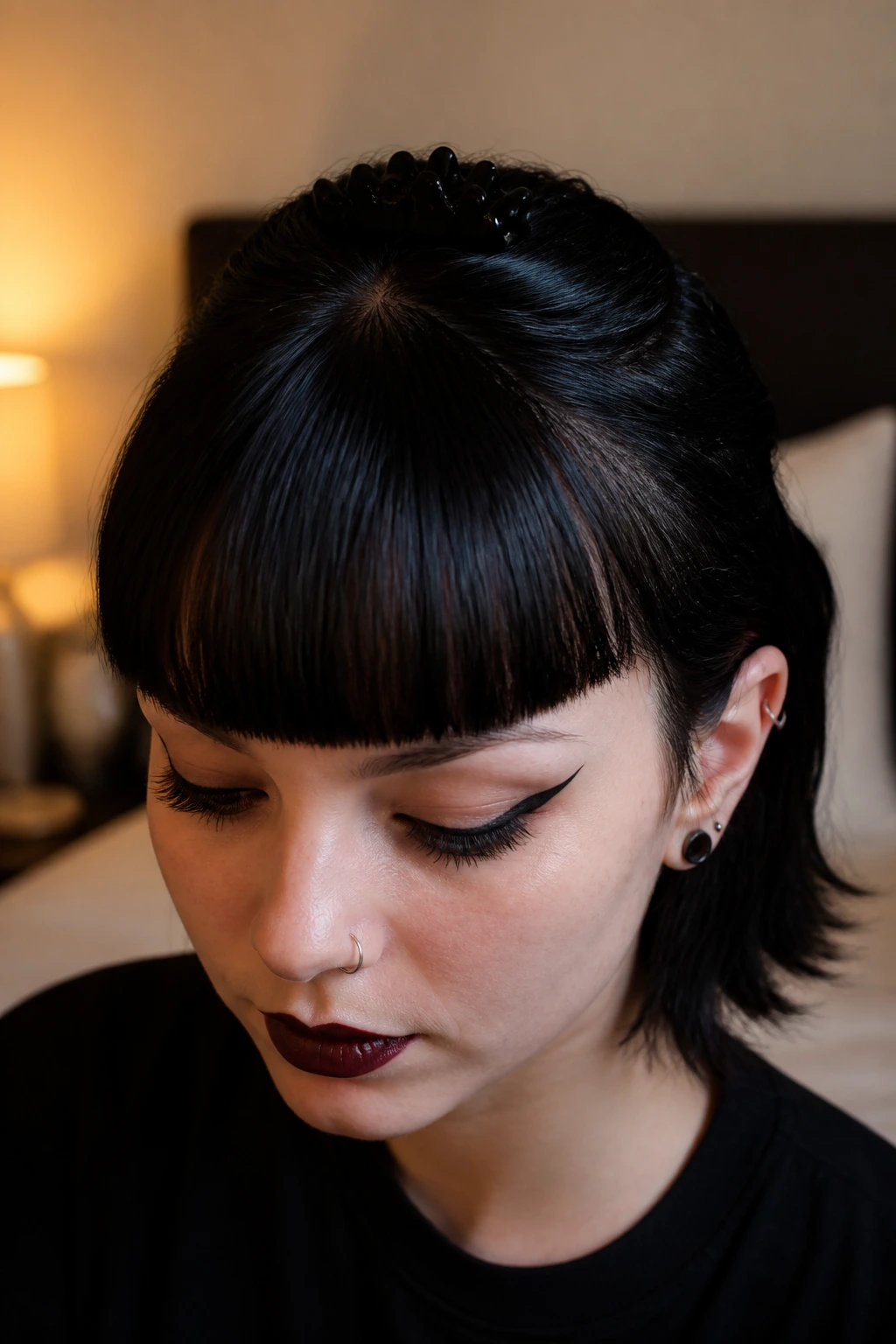
Bang maintenance is mostly about oil control and shape control. The forehead sends up oil fast, and short bangs sit right in the path of it, which means a fringe can go from crisp to sticky in a single afternoon. If that’s your life, dry shampoo at the roots is not optional. Hold the can 6 to 8 inches away, spray lightly, let it sit for 30 seconds, then brush it through so you don’t get gray patches on dark hair.
The sleep routine matters too. A side fringe or curtain split usually survives better if you clip it loosely before bed or tuck it into a silk bonnet. Heavy blunt bangs do better with a flat clip at the crown so they don’t bend into an ugly ridge. If your bang kinks in the morning, a quick blast from the blow dryer on low heat while brushing side to side usually fixes it faster than starting over.
Trims are the part people put off, and that’s when the shape goes from gothic to just overgrown. Micro fringes need attention every 2 to 3 weeks. Heavy brow-skimming bangs can usually stretch to 3 or 4 weeks. Longer curtain and face-framing styles may hold for 4 to 6 weeks before they lose the line. If you’re trimming at home, do it on dry hair, one tiny section at a time, and stop before you think you need to.
Extra Styling Moves That Change the Whole Look
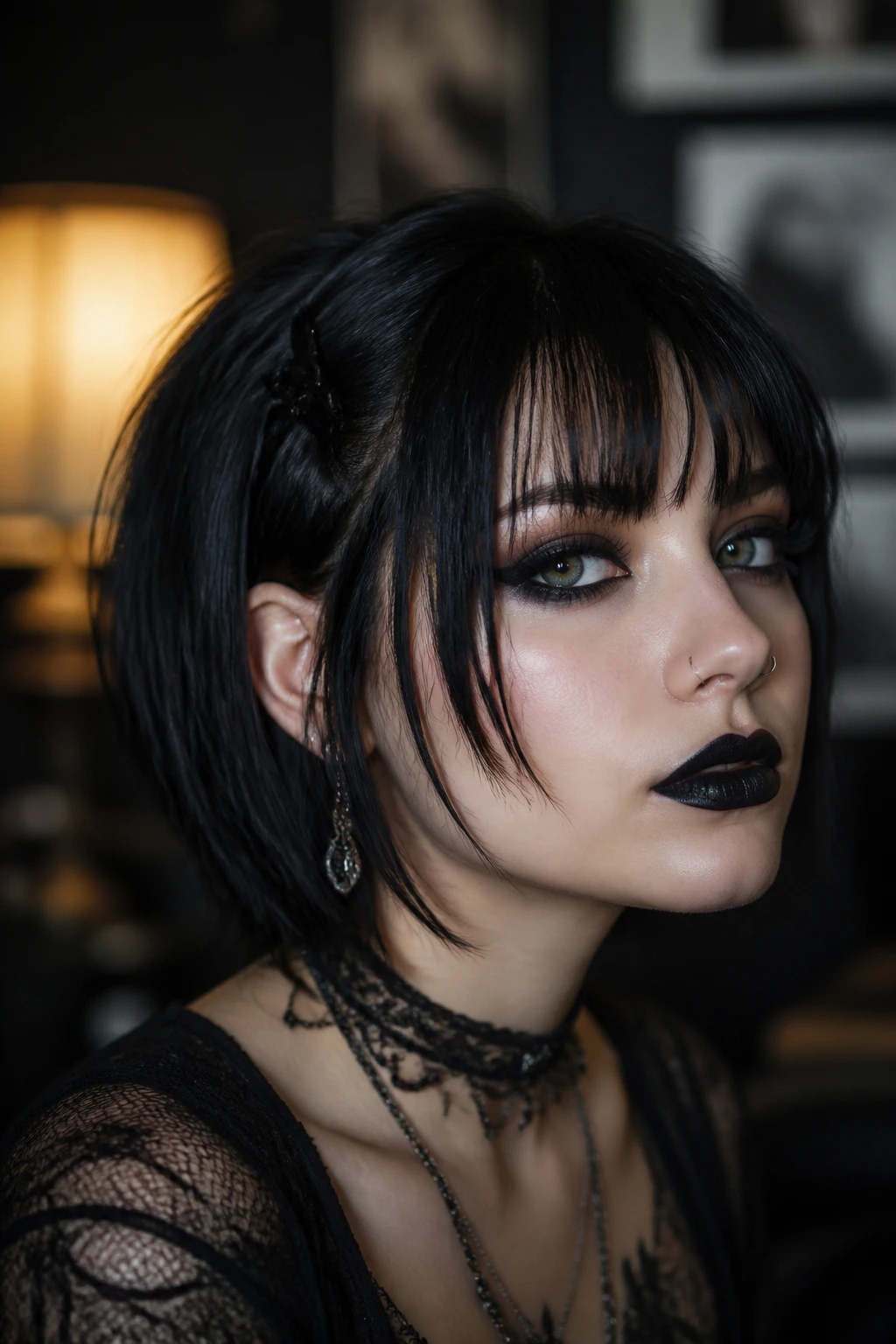
Texture Boost: A pinch of matte paste at the ends of a jagged or shattered fringe makes the separation look intentional instead of frizzy. Use less than you think. If the bang feels tacky, you’ve gone too far.
Customization: Pin one side back with a black clip, tuck one side behind the ear, or separate a center split a little wider if you want the fringe to feel softer. Small changes alter the mood fast, which is why short goth hair is so fun to wear.
Color Boost: Jet black makes every edge stronger, but deep plum, blue-black, or faded charcoal can give the fringe a smoky quality that looks good under dim light. The cut matters more than the color, though. Bad shape stays bad shape.
Make-It-Yours: If you wear a lot of makeup, keep the bang cleaner so the eyes have room to work. If you prefer a bare face, let the fringe carry more texture and shadow. If your style leans androgynous, asymmetry and undercut details usually read better than a round, soft finish.
Common Mistakes That Flatten the Look
-
Cutting the fringe wet and trusting it blindly: Short bangs spring up, collapse, or split in odd places as they dry. Cut them dry, or at least dry enough that you can see the real line.
-
Over-thinning the front: A fringe that’s been shredded too much loses its dark edge and turns into fuzz. If the shape needs softness, use point-cutting at the ends, not aggressive thinning through the middle.
-
Ignoring the cowlick: The front swirl will win if you don’t plan for it. Leave a touch more length where the hair pushes up, and direct the section while drying so it sets in the right direction.
-
Using too much shine product: Glossy bangs can look wet in a bad way, especially on black hair under indoor light. Use a small amount of cream or paste, then stop before the fringe clumps.
-
Forgetting the side pieces: A fringe that looks good by itself can feel disconnected if the temple area is too abrupt. Blend the sides or keep them deliberate; the transition matters.
Variations and Adaptations to Try
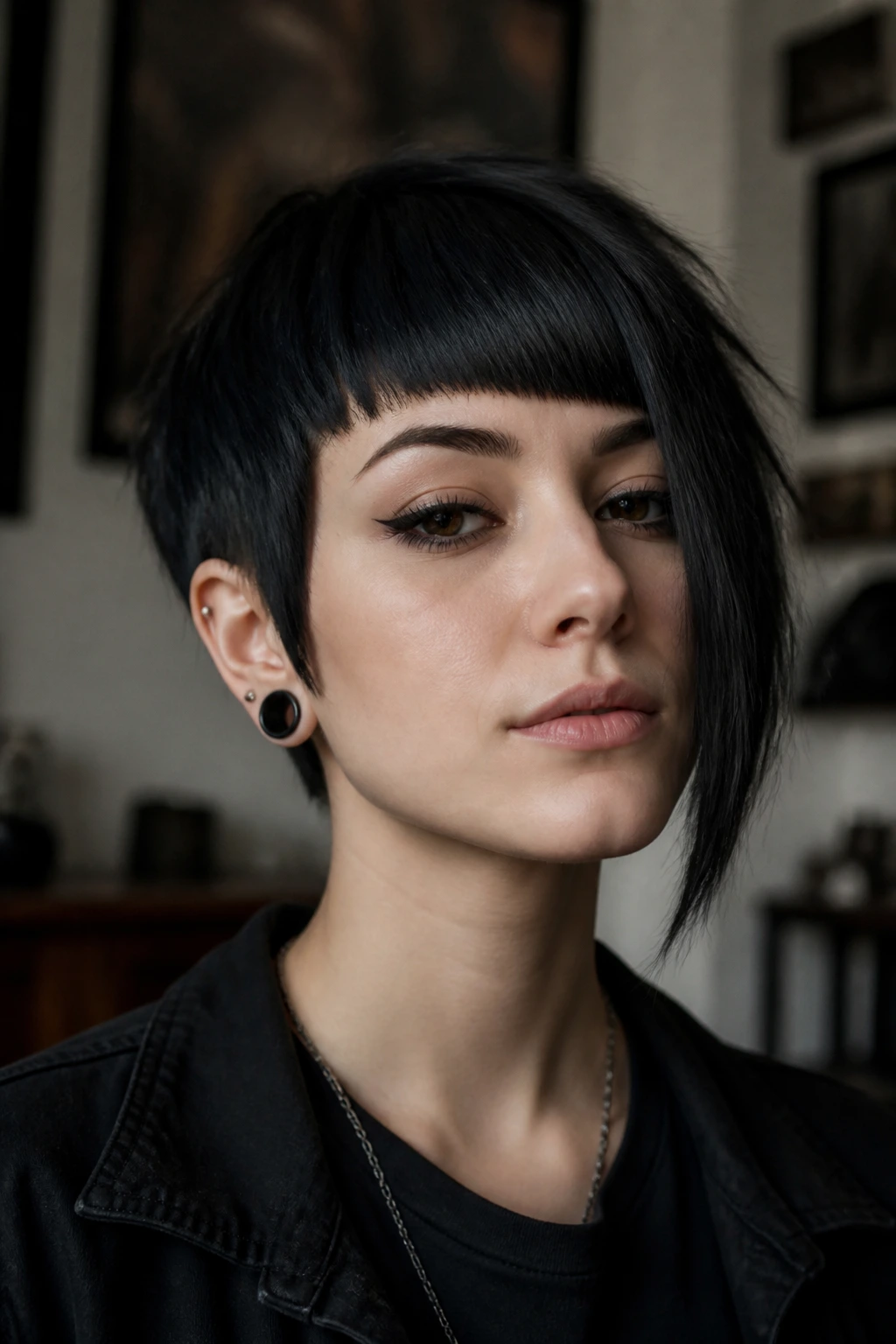
Curly Crypt Fringe: Keep the fringe longer, cut it dry, and let the curls land where they want. The shape becomes softer and more romantic, but it still reads goth if the outline is strong.
Glasses-Friendly Sweep: Choose a side-swept or split fringe that clears the frame line by about 1/4 inch. That tiny bit of space keeps the bangs from getting trapped under the lenses and sticking to the bridge.
Fine-Hair Specter: Go for a wispy veil or cropped center split with almost no heavy product. The goal is visible movement, not density, so a little root lift spray goes farther than paste.
Undercut Eclipse: Pair a short fringe with an undercut or hidden shave. The top hair can sit heavier while the sides stay sleek, which gives the style a cleaner edge and makes the front look more dramatic.
Heatless Nightfall: Set the fringe with a small clip, rollers, or a forward twist overnight instead of flat-ironing every morning. This works best on hair that already has a bend, because the shape holds with less effort.
Grow-Out Savior: If you’re tired of maintenance, shift from micro bangs to face-framing pieces or a soft curtain split. The look stays in the same dark family, but it buys you time between trims.
Frequently Asked Questions
Can short goth hair work with curly bangs?
Yes, but the bangs need to be cut dry and left longer than a straight fringe. Curl shrinks more in the front than people expect, and a short curly bang can jump up to a length that feels abrupt. A softer split or face-framing version is easier to live with than a strict blunt line.
How often should vamp bangs be trimmed?
Most short fringes need a trim every 2 to 4 weeks, depending on how exact the shape is. Micro bangs and blunt heavy bangs show growth quickly, while curtain pieces and side sweeps can stretch longer before they lose their outline.
Should I cut bangs wet or dry?
For short goth styles, dry is safer. Wet hair lies to you, especially at the front where cowlicks and growth patterns can push the fringe off-center. If you do cut damp hair, keep it only slightly wet and dry it fully before deciding on the final length.
What if my bangs split in the middle every day?
That usually means the center is too short or the product is too heavy. Leave the middle a little longer, blow-dry the fringe forward before parting it, and use less cream so the hair doesn’t separate into greasy ribbons.
Do these styles suit glasses?
Absolutely, but the shape matters. Side sweeps, bottleneck bangs, and split curtains tend to work better with frames because they leave room around the eyes. Heavy blunt fringes can work too, though they need enough length to clear the top of the glasses.
How do I grow out a short fringe without losing the goth look?
Shift into face-framing pieces, a soft Bardot split, or a shaggy side fringe. Those shapes keep the front dark and moody while letting the length move away from the brow line. A couple of pins or a tiny clip can also make the awkward middle stage feel intentional.
Do I need heat styling every day?
No, and for a lot of these looks, daily heat is overkill. A blow-dryer with a nozzle and a quick brush-through is enough for many styles, while some piecey or messy fringes look better air-dried. Use the flat iron only when the line needs sharpening.
What’s the best fringe if my forehead is very short?
Try a side sweep, a split curtain, or a tapered U-shape rather than a dense blunt bang. Those shapes give the face room and stop the haircut from feeling crowded at the brow. A tiny micro fringe can work too, but it has to be cut with real restraint.
Why the Fringe Makes the Whole Cut
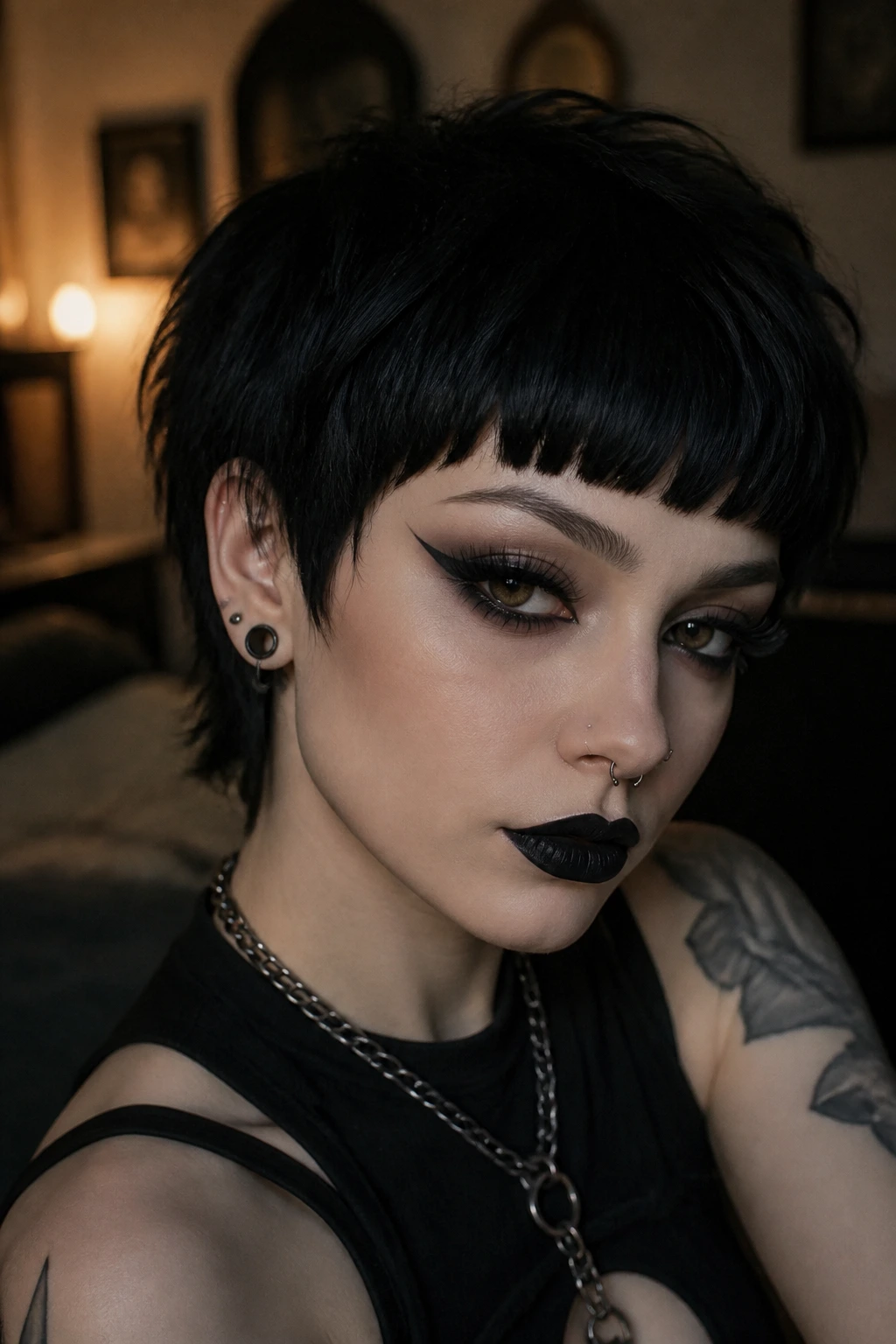
Short goth hair gets its attitude from line, shadow, and timing. The fringe is usually the first thing people notice, and it’s the part that decides whether the cut feels soft, sharp, strange, or fully unapologetic. That’s a lot of power for a few inches of hair.
Pick the shape that matches your actual life, not the one you’d need three mirrors and a 20-minute blow-dry to maintain. The best vamp bangs are the ones you can wear on a random Tuesday and still feel like yourself. When the fringe lands right, the rest of the cut falls into place almost on its own.
