



Oval faces get handed the broadest bangs advice, and most of it is too lazy to be useful. Yes, this face shape can wear blunt fringe, curtain bangs, side-swept pieces, baby bangs, and a dozen styles in between—but the wrong density, the wrong starting point, or the wrong amount of forehead left showing can make the whole cut feel off.
The thing people miss is that an oval face is not a blank canvas. It already has balance. That means bangs are not there to “fix” anything; they’re there to steer the eye. A fringe can widen the face a touch, shorten it visually, sharpen the cheekbones, or soften a strong brow line. Tiny differences. Big payoff.
I care about that because bangs are one of those hair changes that can look expensive or accidental with almost no middle ground. A clean line sitting at the brows reads one way. A wispy split that opens at the cheekbones reads another. Same face. Different message.
Why These Fringe Picks Work So Well on Oval Faces
-
Oval faces can carry structure without looking boxed in: A blunt line, a curved curtain, or a deep side sweep all sit comfortably on an oval face because the length-to-width ratio is already balanced.
-
Forehead height still changes everything: A longer oval face usually looks better with width at the temples or cheekbones, while a shorter oval can wear denser fringe without losing openness.
-
Texture decides the final shape: Straight hair shows every edge, wavy hair shows every gap, and curls need extra length so the cut does not bounce too short.
-
Cowlicks matter more than trends: If your front hairline splits hard at the center or pushes one way, some styles will fight you by lunch and others will settle in naturally.
-
The best fringe choices move the eye on purpose: The styles below are picked to do something specific—show the brows, open the cheeks, soften the forehead, or build width where the face needs it.
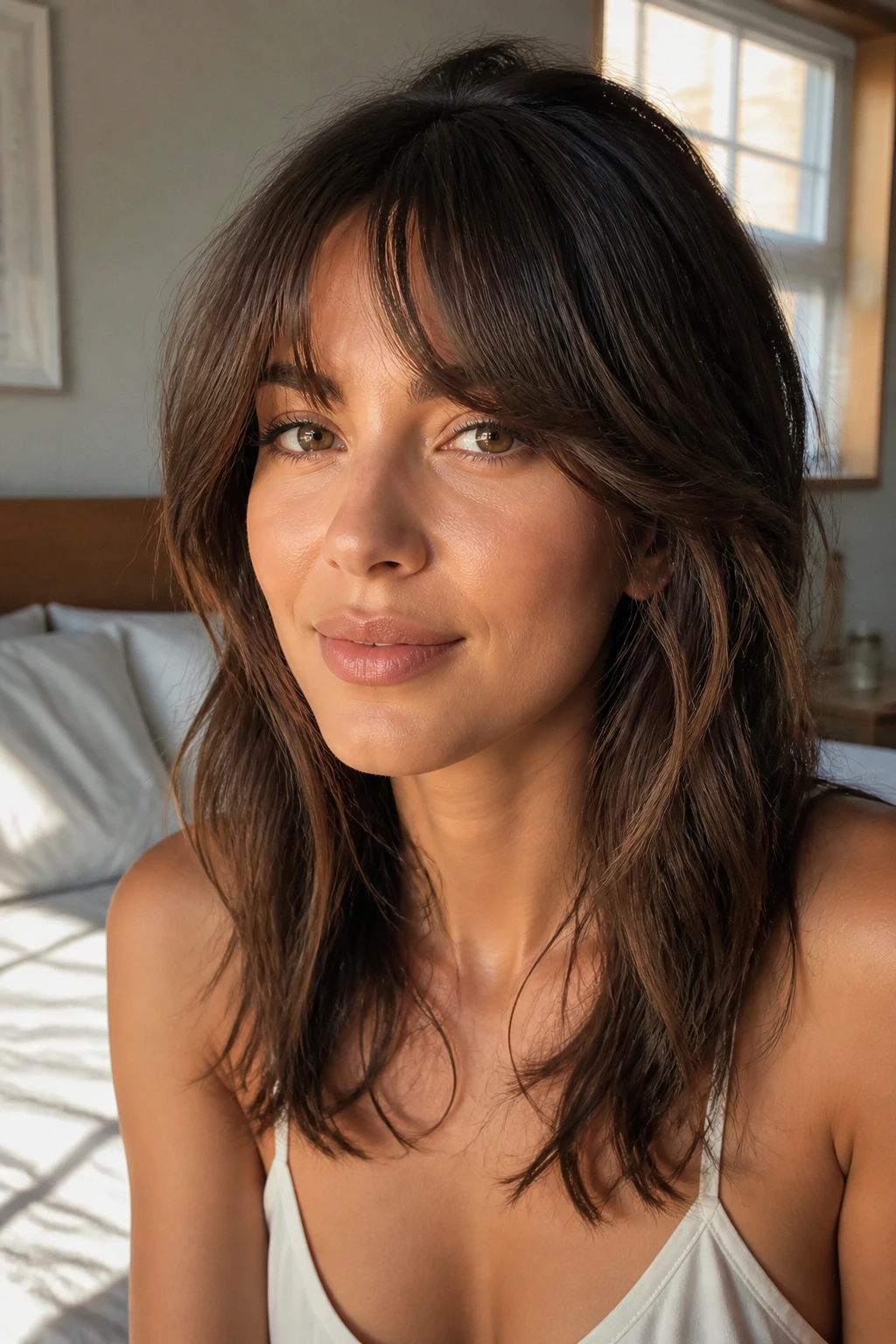
1. Curtain Bangs That Open at the Cheekbone
Curtain bangs are the safest bet for oval faces, and I mean that in the nicest possible way. They part in the middle, skim down toward the cheekbones, and let the face breathe instead of boxing it in.
Why They Work on an Oval Face
The clean trick here is the starting point. If the shortest piece lands around the bridge of the nose and the longest edge brushes the top of the cheekbone, the fringe frames the face instead of sitting on top of it. That keeps the oval shape visible, which is the whole game.
How to Wear Them
Blow-dry the center section forward first, then bend each side away from the face with a small round brush. Don’t make the ends too curled. A soft flip is enough. If the split gets too wide, the fringe starts acting more like grown-out layers than bangs.
Best for: medium to thick hair, or fine hair with a little root lift.
Watch for: a center part that sits too far back. It can make the bangs collapse and flatten the crown.
2. Blunt Brow-Skimming Fringe
A blunt fringe can make an oval face look sharper in about five seconds. It draws a straight line across the forehead, which adds contrast to a shape that already reads balanced and smooth.
Keep it grazing the brows or just touching them. Any shorter and it can feel severe; any longer and it starts losing that crisp edge that makes the style worth cutting in the first place. This one likes straight or mostly straight hair, because the whole point is the line.
I’d pair it with a slightly textured finish rather than a helmet-flat blowout. A tiny bit of separation at the ends keeps it from looking frozen in place. If your hair bends or puffs at the temple, ask for the outer corners to be softened by a few millimeters. That small move matters.
3. Bottleneck Bangs
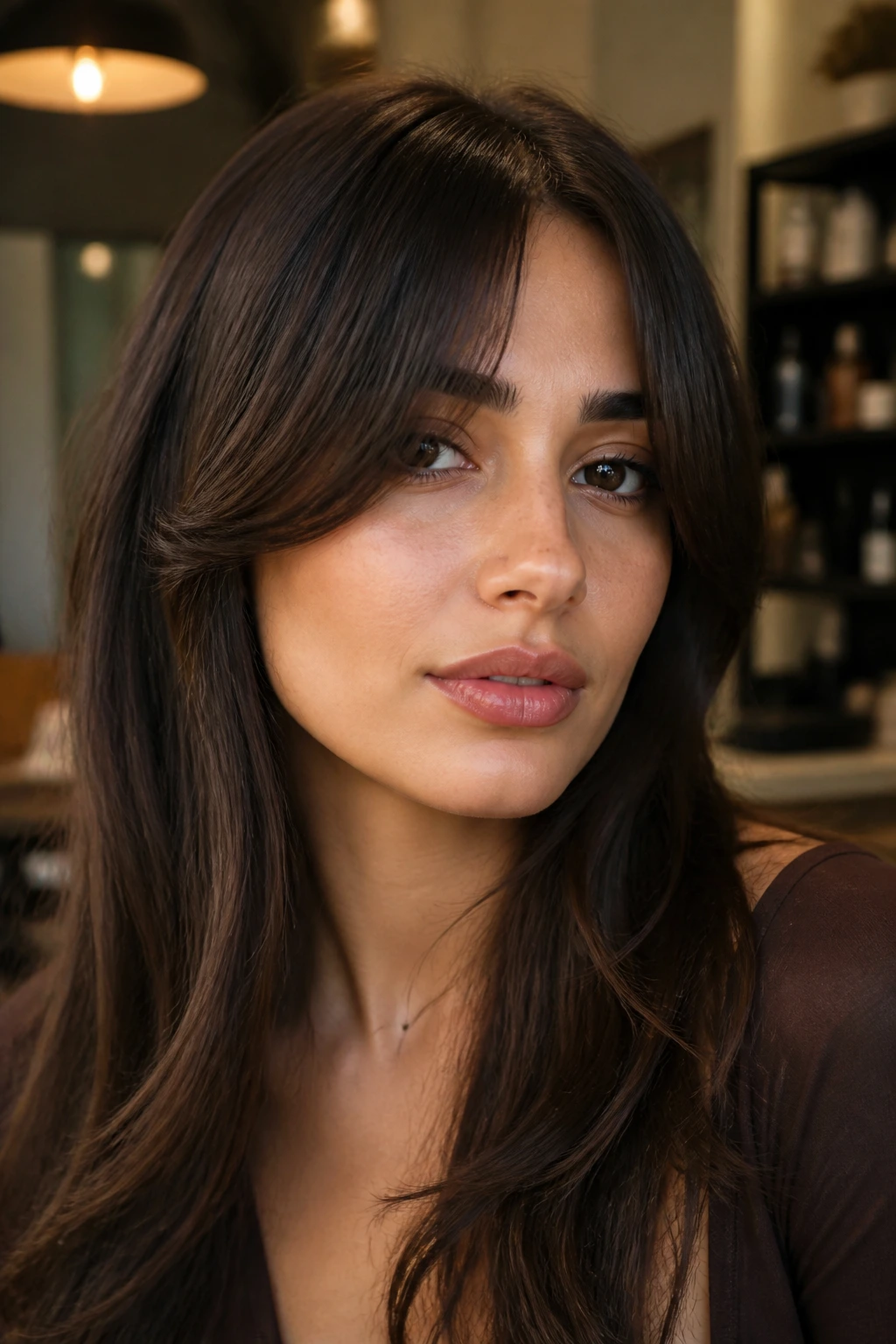
Why do bottleneck bangs look so natural on an oval face? Because they start narrow, then open out at exactly the point where the face wants a little width.
The Shape That Makes Them Work
The center pieces sit shorter, usually around eyebrow level, while the sides lengthen toward the cheekbones. That tapered shape mirrors the soft narrowing and widening already happening in the face. It feels tailored rather than forced.
How to Style Them
Use a round brush or even a roller to lift the center, then direct the side pieces away from the face. A little bend is better than a hard curl. If you over-style the ends, the whole thing can look fussy.
These are especially good if you want movement without a full curtain wall across the forehead. They also grow out in a friendly way. Not glamorous. Just practical.
4. Side-Swept Long Bangs
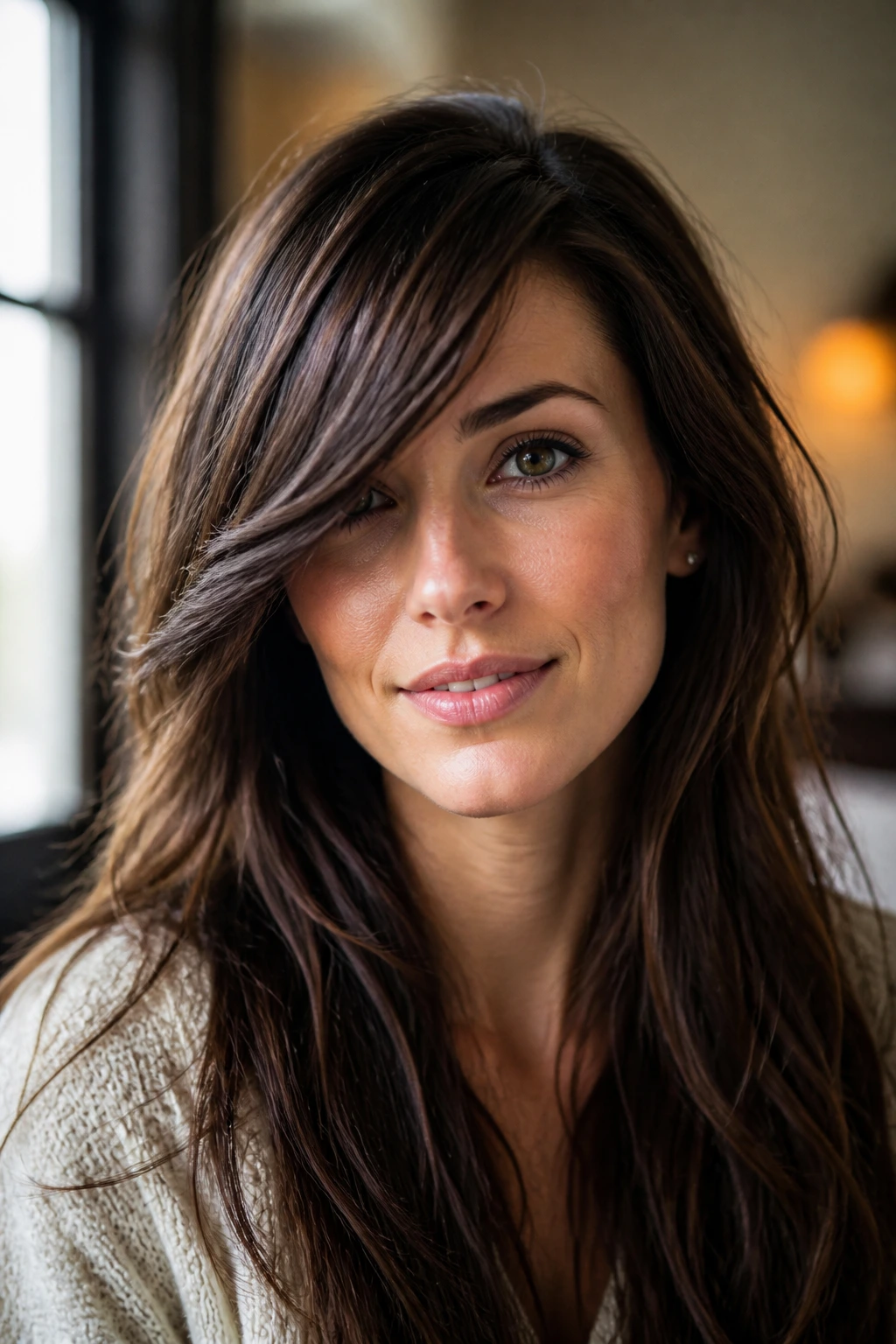
If you’ve ever grown out bangs and kept the grown-out version because it suddenly looked better, this is probably why. Side-swept long bangs ride along one side of the face and quietly stretch the line of the haircut.
The visual effect is simple: a diagonal line makes the oval face look a little more sculpted, especially when the fringe starts deep enough to create lift at the root. I like this style on people who wear a side part anyway. Don’t fight the part you already have.
- Works well when the fringe hits somewhere between the brow and cheekbone.
- Needs a bit of directional blow-drying.
- Plays nicely with glasses because it doesn’t sit dead-center on the frame.
The only real mistake is making it too thin. Then it stops being a fringe and starts looking like one stray section that escaped.
5. Wispy Feathered Bangs
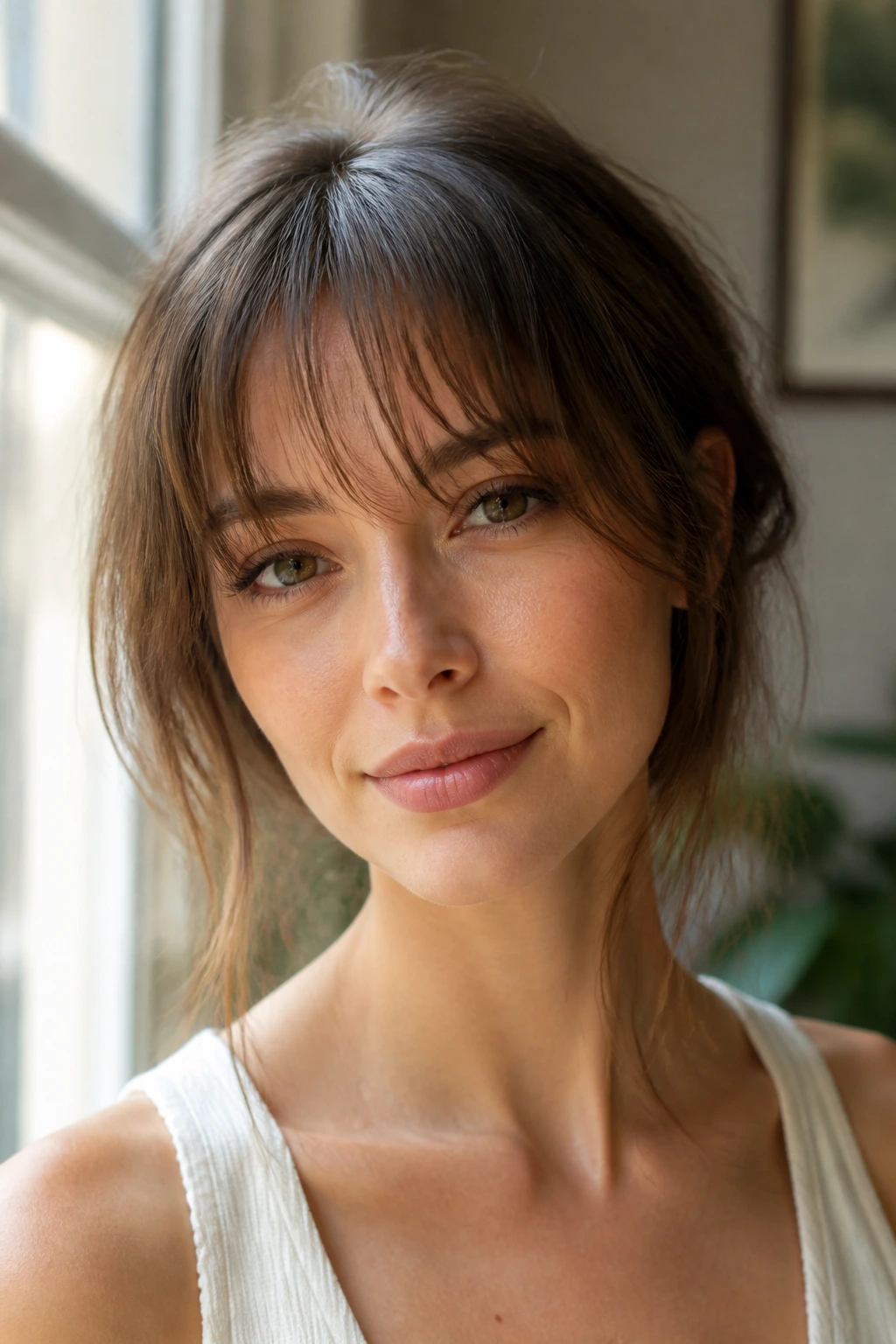
Wispy feathered bangs are the sort of fringe I recommend to people who want movement first and drama second. They leave gaps. They show forehead. They soften the front of the haircut without swallowing the face.
On an oval face, that lightness matters because you do not need bangs to do all the work. You just need them to interrupt the forehead a little and then disappear into the rest of the hair. That’s why feathering at the ends is useful here. It keeps the line soft and lets the cheekbones stay visible.
I especially like this on fine hair that goes limp fast. A thick blunt bang on fine hair can look stringy by the second day. Wispy fringe, though, can go a little airy and still look deliberate.
6. Birkin Bangs
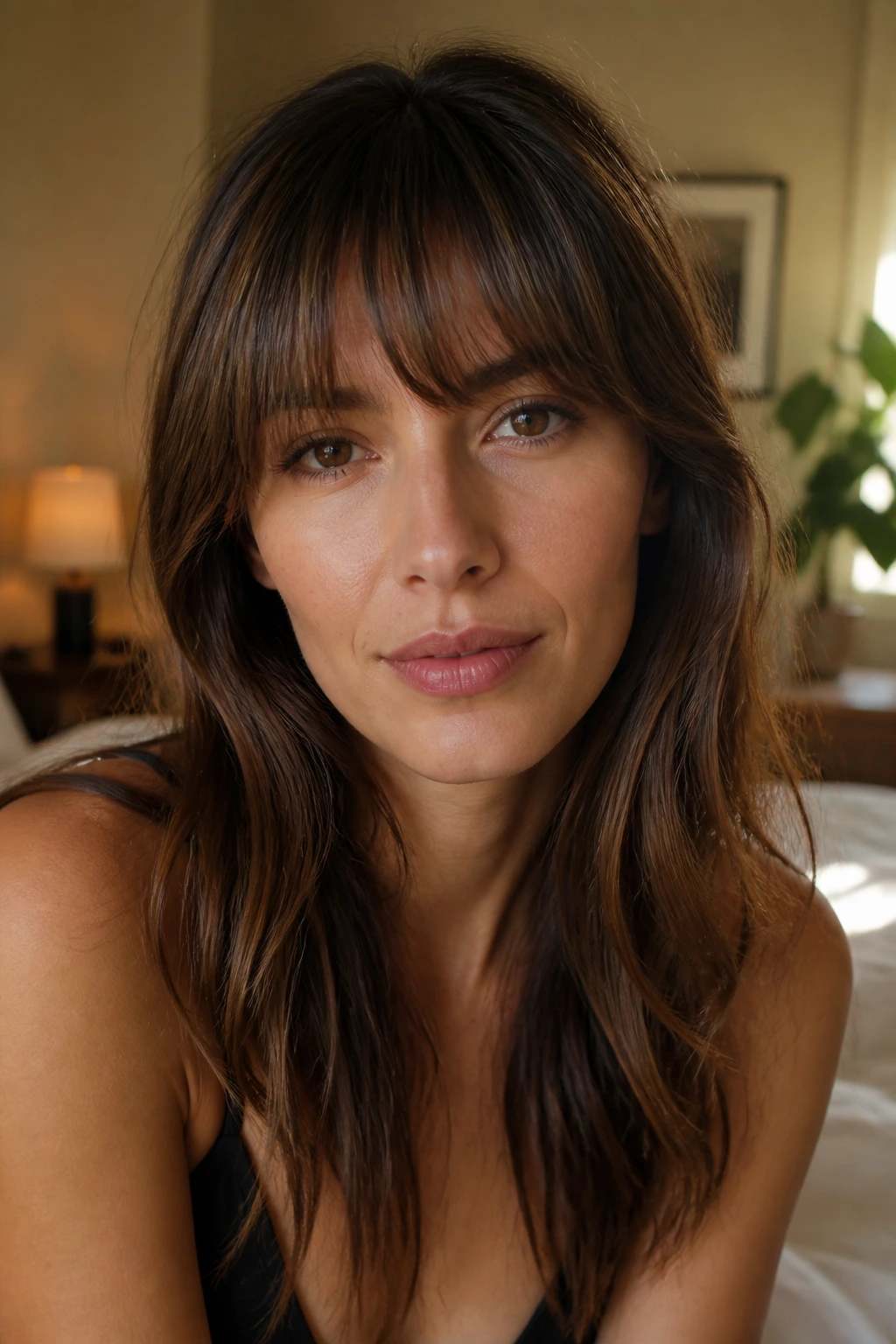
Birkin bangs sit in the middle ground between polished and undone, which is why they flatter oval faces so easily. They’re fuller than wispy fringe, looser than a blunt cut, and usually brushed just low enough to graze the brows.
Unlike blunt bangs, Birkin bangs don’t insist on a hard edge. Unlike curtain bangs, they don’t split wide open. They sit there with a bit of texture and a touch of movement, which feels especially good on an oval face because the shape can take the softness without disappearing.
Best on medium to thick hair, or on finer hair that has a little natural bend. If the fringe gets too heavy, it starts hiding the eyes instead of framing them. Ask for a little piece-y breakup at the ends. That’s the part that keeps it from feeling like a solid block.
7. Baby Bangs
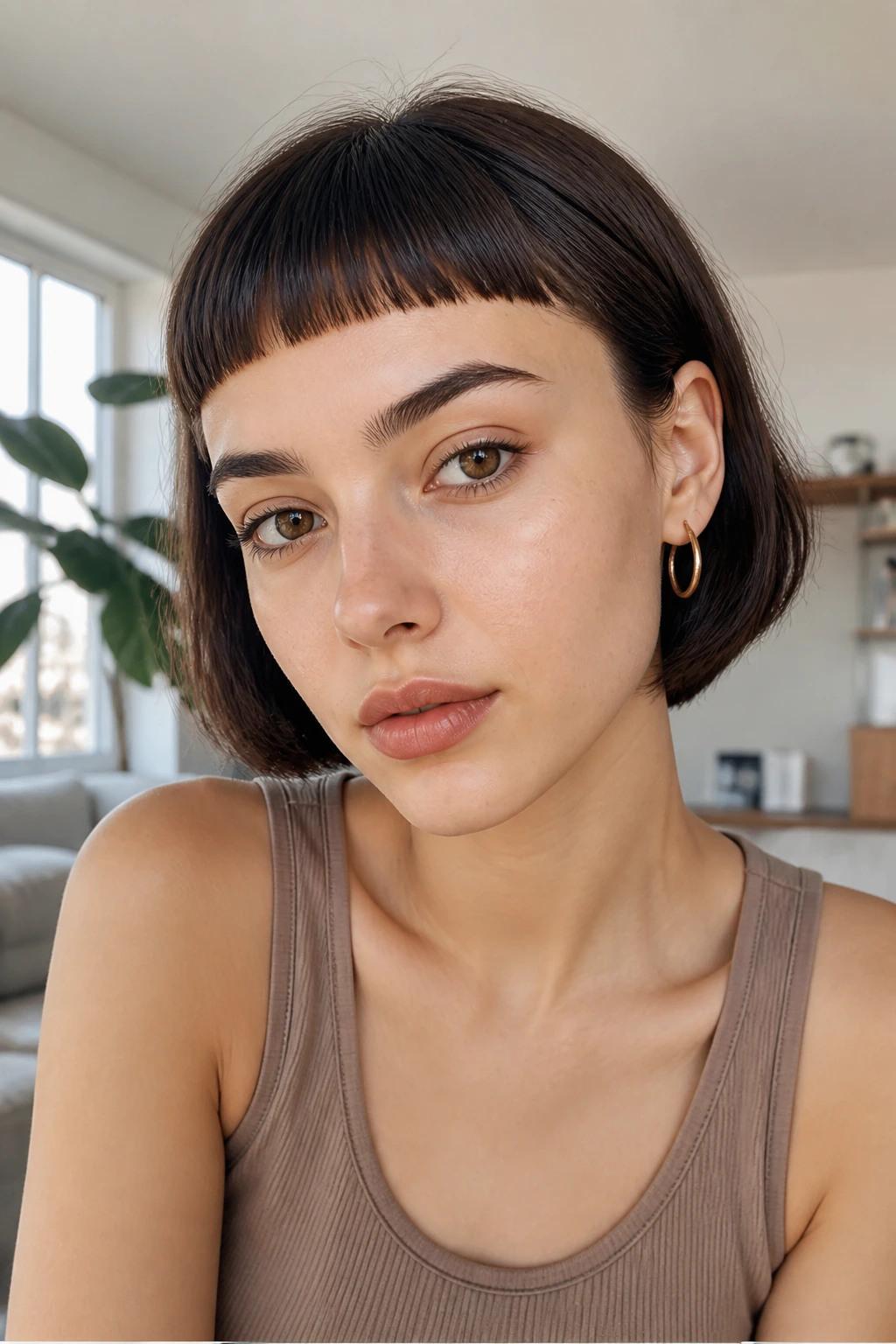
Baby bangs are bold, and they ask for commitment. Still, on an oval face, they can look sharp instead of costume-y if the rest of the haircut is balanced and the brow line is clean.
Why They Can Work
A shorter forehead exposure throws more attention to the eyes, brows, and bone structure. Oval faces usually have enough balance to handle that shift without looking top-heavy. The key is proportion. If the fringe is too thick, the face can lose its length and start feeling crowded.
What To Ask For
Keep the line blunt or slightly broken, not shaggy. Let the cut sit above the brows, but not so high that it looks like an accident. I’d be cautious with this style on a very long oval face, because the short length can make the face read even longer if the sides stay flat.
Best for: strong brows, confident styling, and hair that holds shape.
Not for: anyone hoping to hide a forehead.
8. Arched Bangs
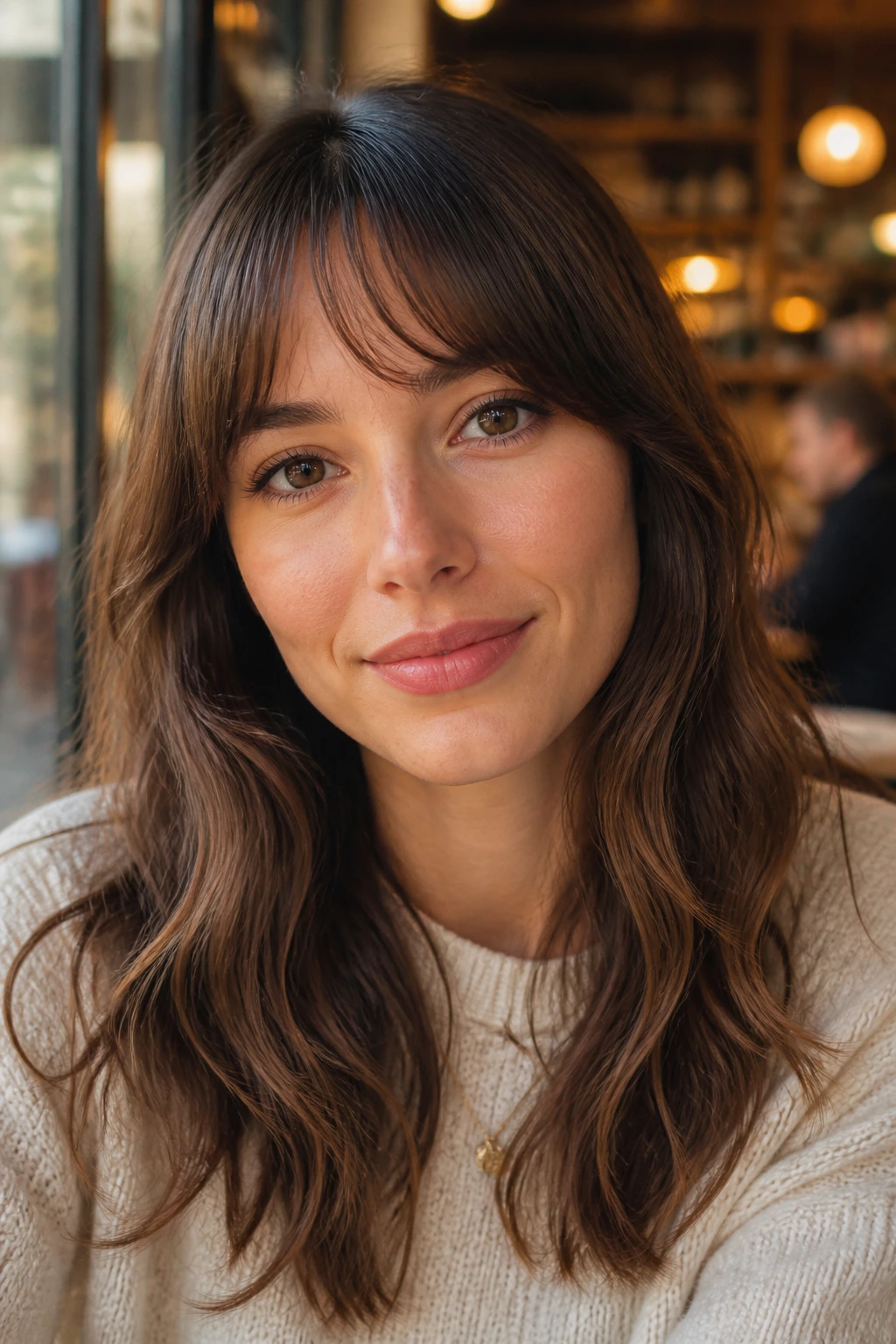
Arched bangs follow the curve of the brow instead of arguing with it. That’s why they look so natural on oval faces. The shape adds a gentle frame without turning the forehead into a straight-edged block.
This style is useful if your brow line is one of your best features. The arch can mirror it, which gives the whole front of the haircut a quiet sort of order. Not stiff. Just clean.
Keep the center slightly shorter and the sides a touch longer so the curve reads in motion, not as a hard crescent. If your hair is thick, lighten the middle a little so the shape doesn’t sit flat like a shelf.
9. Choppy Textured Fringe
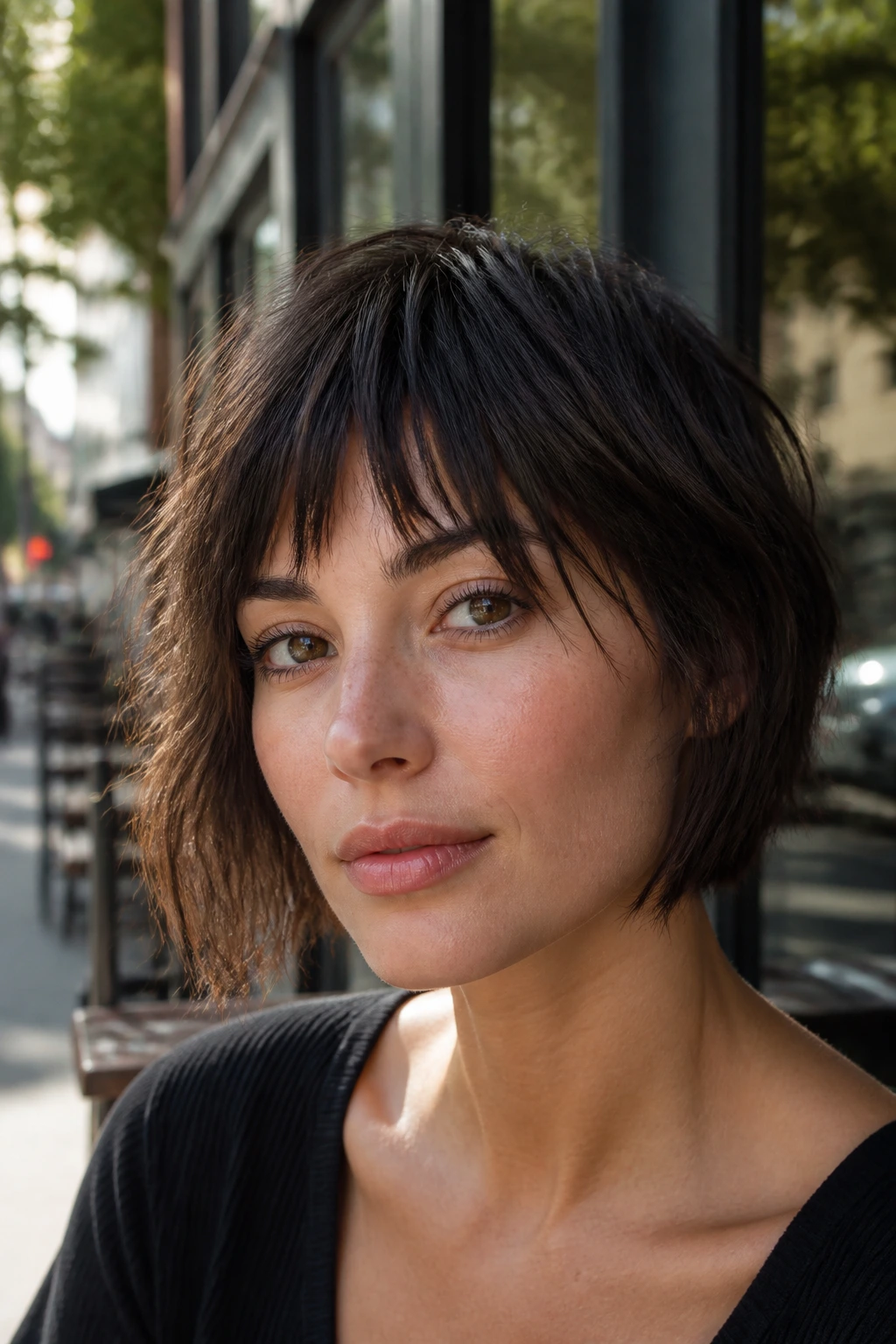
What happens when a fringe needs movement instead of polish? You get choppy texture. And on an oval face, that looseness can keep the haircut from feeling too neat.
Where It Helps
A choppy fringe breaks up the forehead line in small pieces, which is useful if you want the face to feel a little less symmetrical. It also works well with layered cuts, shaggy bobs, and any haircut that already has some rough edges. Straight, blunt fringe on an oval face can sometimes feel too severe. Choppy fringe avoids that.
How To Wear It
Use a matte texturizer or a tiny bit of styling cream, then separate the pieces with your fingers. Don’t over-brush it. That just erases the point. If your hair is thick, ask for point-cut ends rather than a straight chop; it keeps the fringe from puffing out like a curtain.
10. Peekaboo Bangs
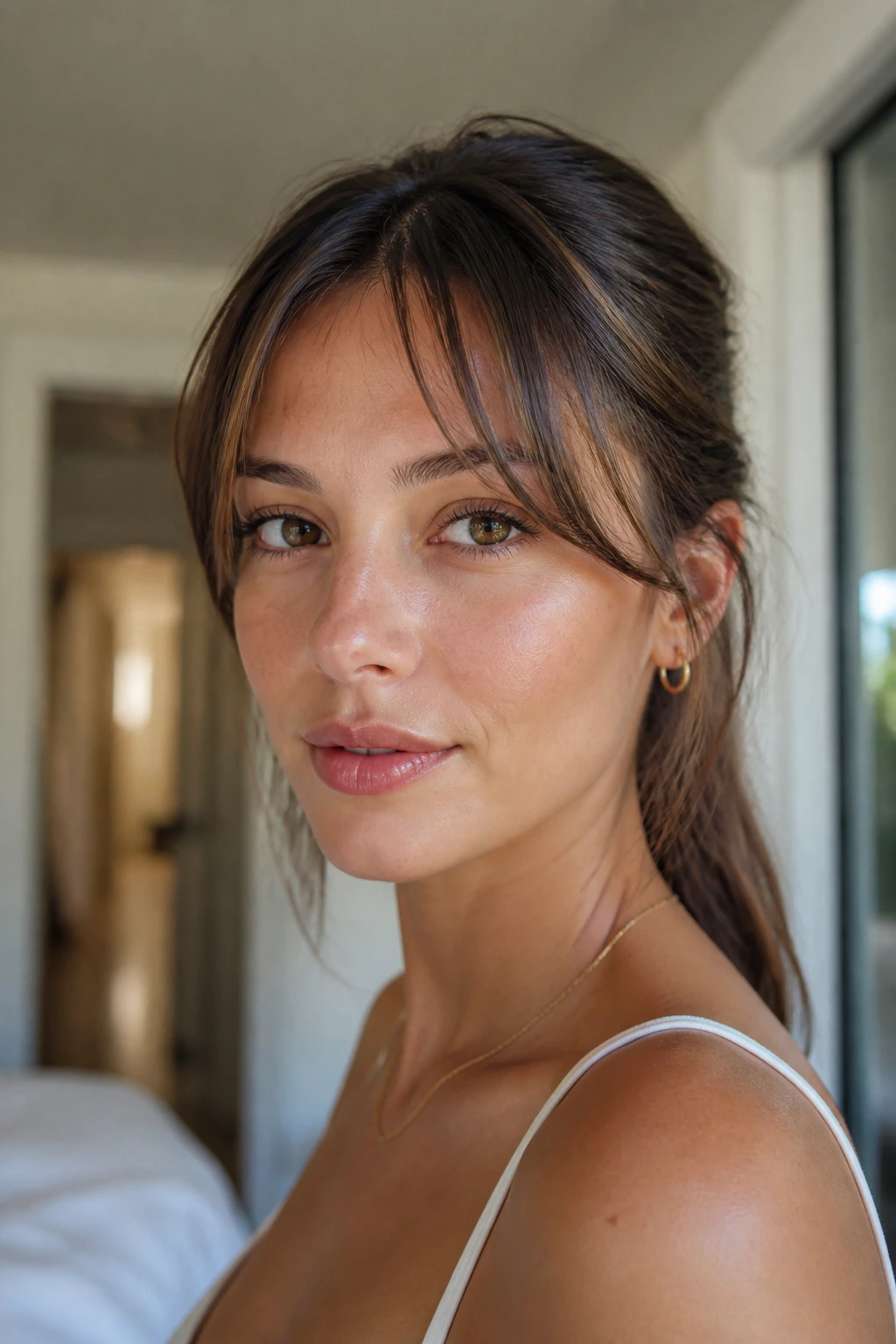
Peekaboo bangs are for people who want the suggestion of fringe without giving up much forehead at all. The hair falls forward in pieces, then slips back into the rest of the cut. It’s a subtle move.
That subtlety is the point on an oval face. Since the shape already reads balanced, you don’t need a heavy bang to make an impact. A few deliberate pieces at the front can change the mood of the haircut without locking you into a strict maintenance schedule.
They’re also useful if you’re still deciding whether bangs are for you. You can tuck them behind the ears, split them differently, or let them blend into face-framing layers. Not dramatic. Just adaptable.
11. Crescent Bangs
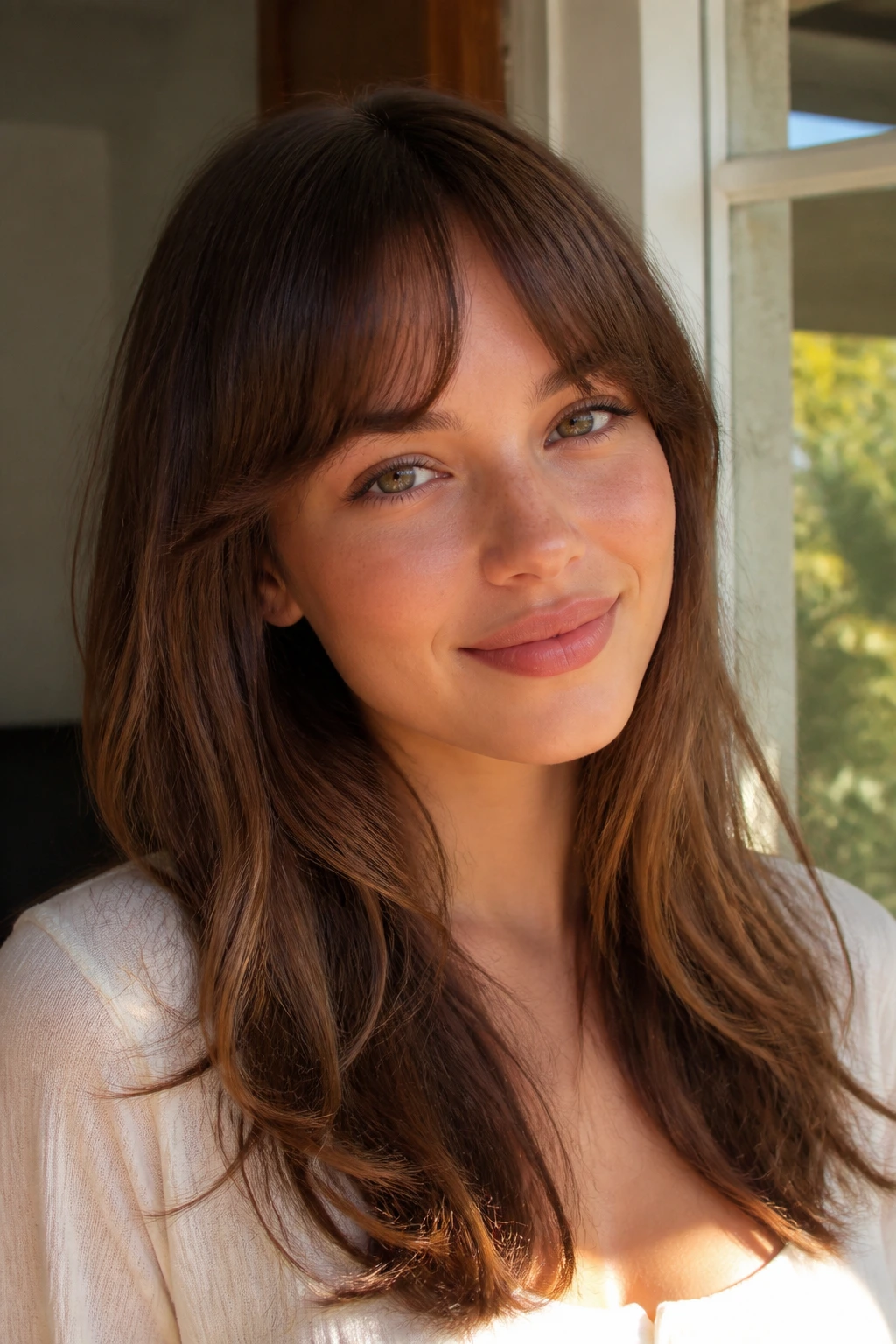
Crescent bangs trace a soft half-moon across the forehead. The center tends to sit a bit shorter, while the sides fall away in a curve that echoes the face rather than cutting across it.
On an oval face, that curve is the whole appeal. It softens the top half of the face without flattening the shape. I like this style on medium-density hair where the fringe can hold a visible curve but still move a little when you turn your head.
The biggest mistake is cutting the curve too low. Then it starts to hide the eyes. Keep the arc light enough that the brow line still breathes underneath.
12. Long Sweeping Fringe
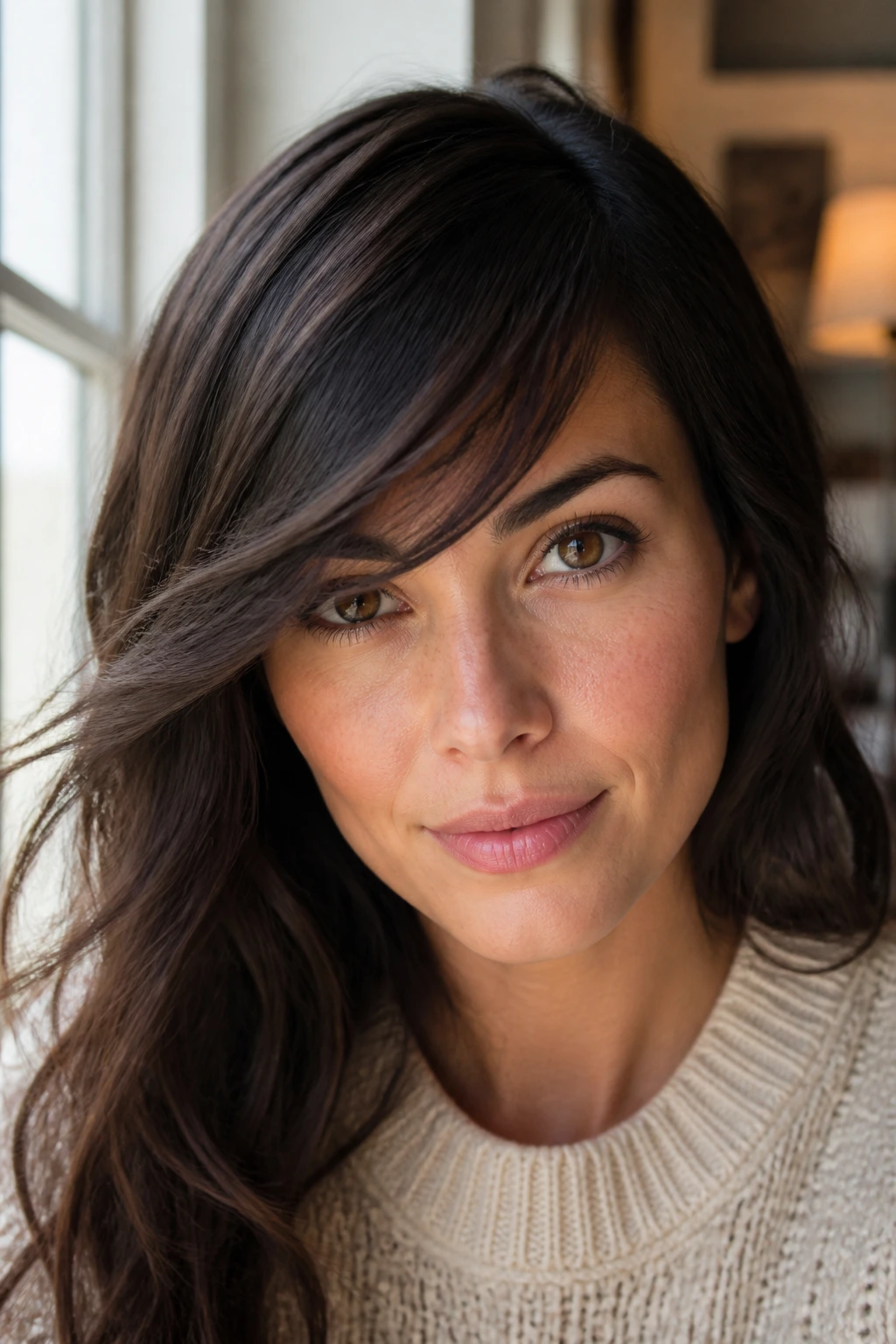
Unlike curtain bangs, a long sweeping fringe commits to one side. It doesn’t split the difference; it makes a diagonal decision and sticks to it. That can be a smart choice for an oval face that needs a little asymmetry.
This style is especially good if your face reads long or if you wear a deeper side part everywhere else. The sweep pulls the eye across the forehead and then down toward the cheekbone. That motion keeps the face from feeling too vertical.
I’d choose this over a center split if your hair naturally falls that way. Fighting the direction your hair wants to go is how bangs become a daily argument. Not worth it.
13. Razored Fringe
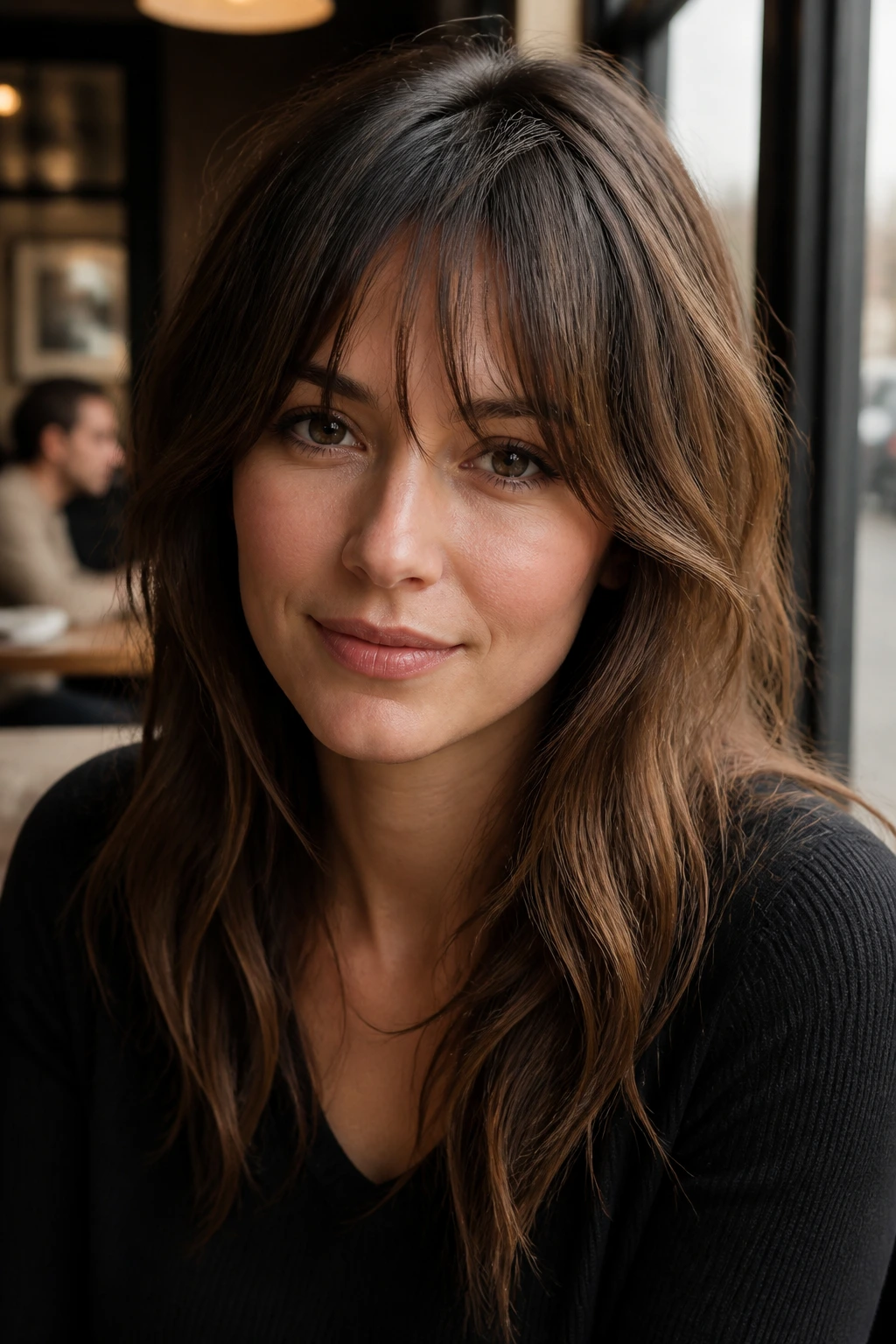
Razored fringe has a softer edge than a blunt cut, but sharper movement than wispy bangs. A razor removes weight from the ends and leaves the front looking broken up in a clean way.
Why It Matters
Oval faces can handle texture at the front because they don’t need extra structure to “correct” anything. Razor cutting gives you shape without a hard line, which is useful if your hair feels too dense in the bang area. The result is lighter on the forehead and less likely to sit like a shelf.
Styling Reality
This cut likes a light hand. A dab of cream or a touch of spray is enough. Too much product and the separated ends clump. Too little and the fringe flies apart. The sweet spot is somewhere in the middle, with just enough polish to show the shape.
14. Curly Bangs
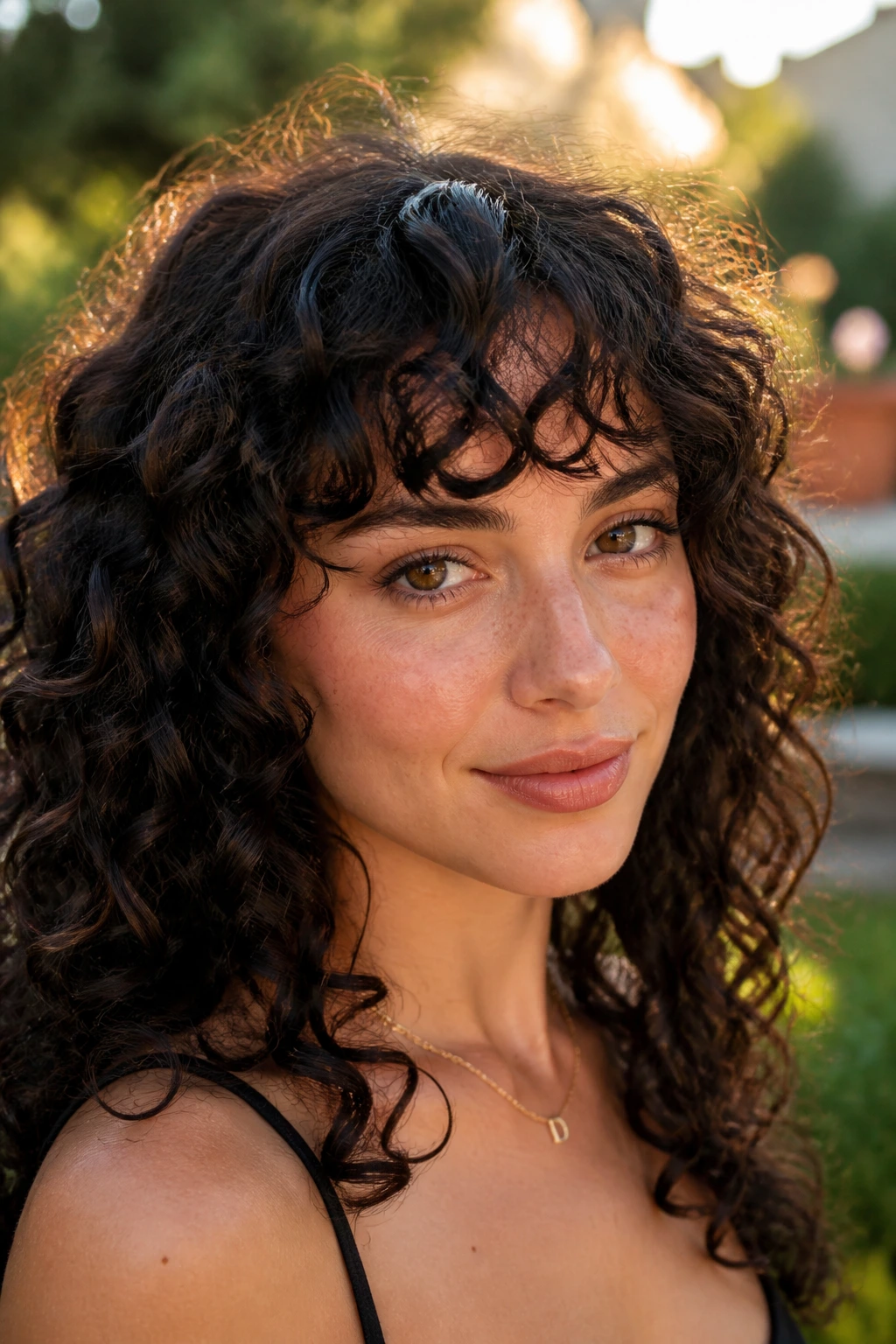
Curly bangs can look better than straight bangs on an oval face, mostly because the curl breaks the line before it gets heavy. That makes the forehead feel framed instead of covered.
The cut has to respect shrinkage. Always. Curly fringe should be left longer than straight fringe, often by more than you think, because the spring can lift it right above the brows once it dries. If you cut curly bangs wet as though they’re straight, they’ll jump up and leave the forehead exposed in a way that feels accidental.
I like curly bangs when the rest of the haircut has shape too—layers, a shag, or a rounded bob. Then the bangs feel like part of the haircut, not an extra bit pasted on top.
15. Shag Bangs
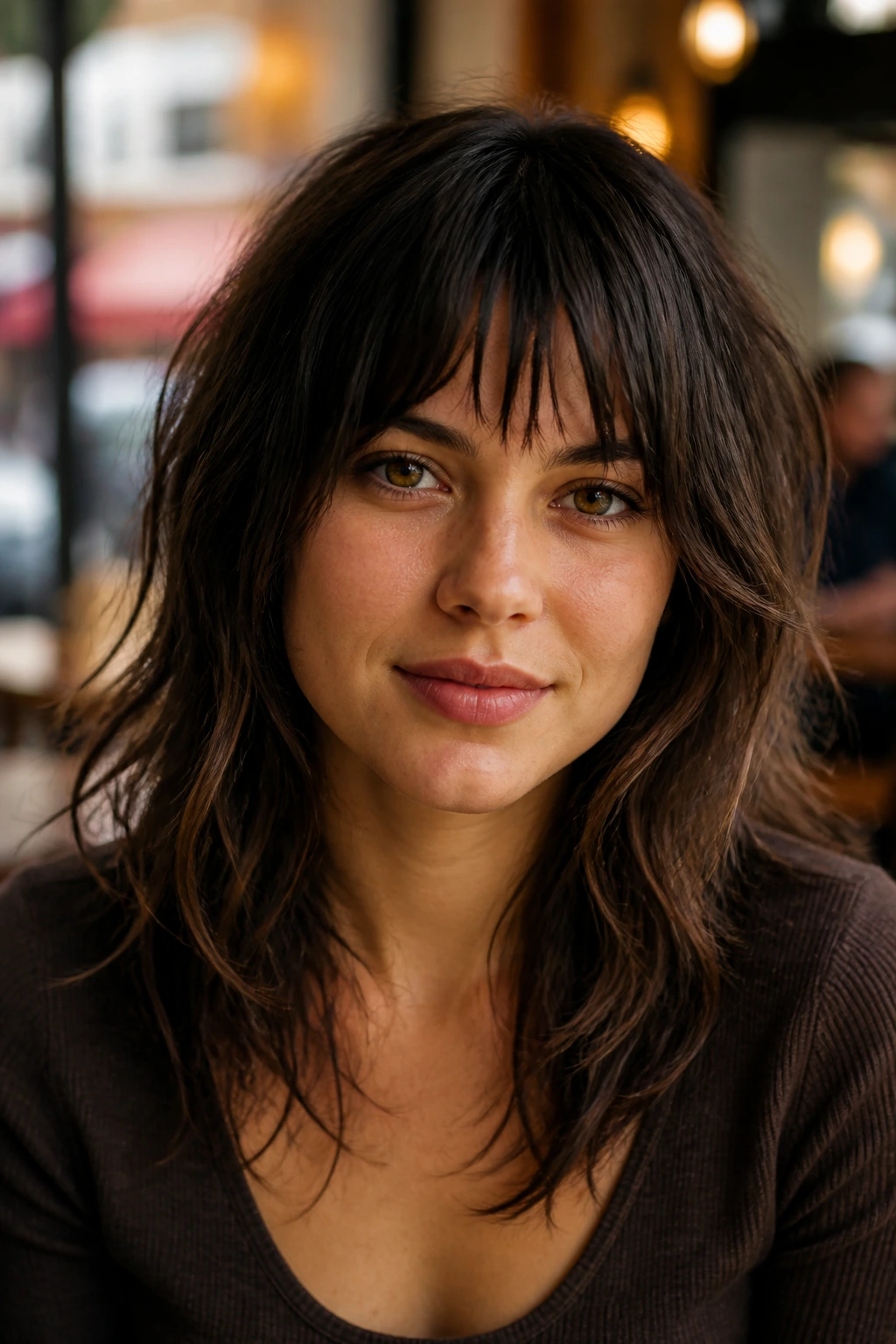
Why do shag bangs work so well on oval faces? Because they don’t sit still long enough to overthink anything. They blend into the haircut, they move when you move, and they keep the front from looking too finished.
What Makes Them Different
Shag bangs are usually choppy, layered, and a little irregular at the ends. That irregularity is useful on an oval face because it adds texture where the shape is already balanced. You get softness up top and a bit of edge around the eyes.
Best Version
Keep the shortest pieces near the brow line, then let the outer corners slide into the layers around the cheeks. If the fringe is too short everywhere, it stops looking shaggy and starts looking abrupt. A little length keeps the shape wearable.
16. Bardot Bangs
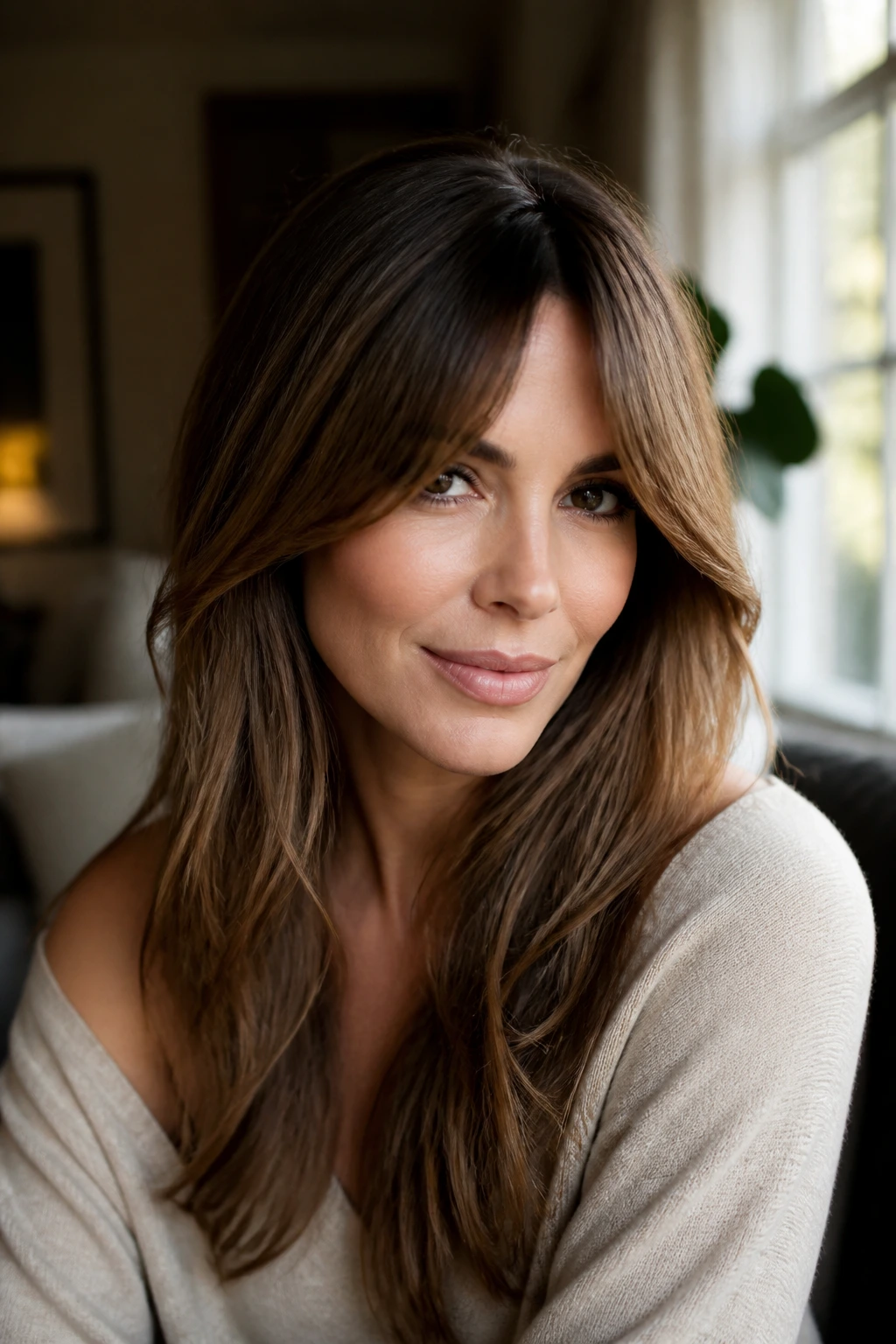
The modern Bardot fringe sits in that sweet zone where the bangs are full enough to matter but loose enough to move. It’s named after a very specific kind of face-framing softness, and on an oval face, the style usually lands well because it opens in the center and drapes toward the sides.
This is one of my favorites on medium-density hair. It gives the forehead some structure, then lets the face keep its balance. A Bardot bang also tends to make cheekbones look a little more present, which is never a bad thing.
The trick is volume at the root. Without that lift, it just looks like grown-out curtain bangs. The difference is small. The effect is not.
17. Split Fringe
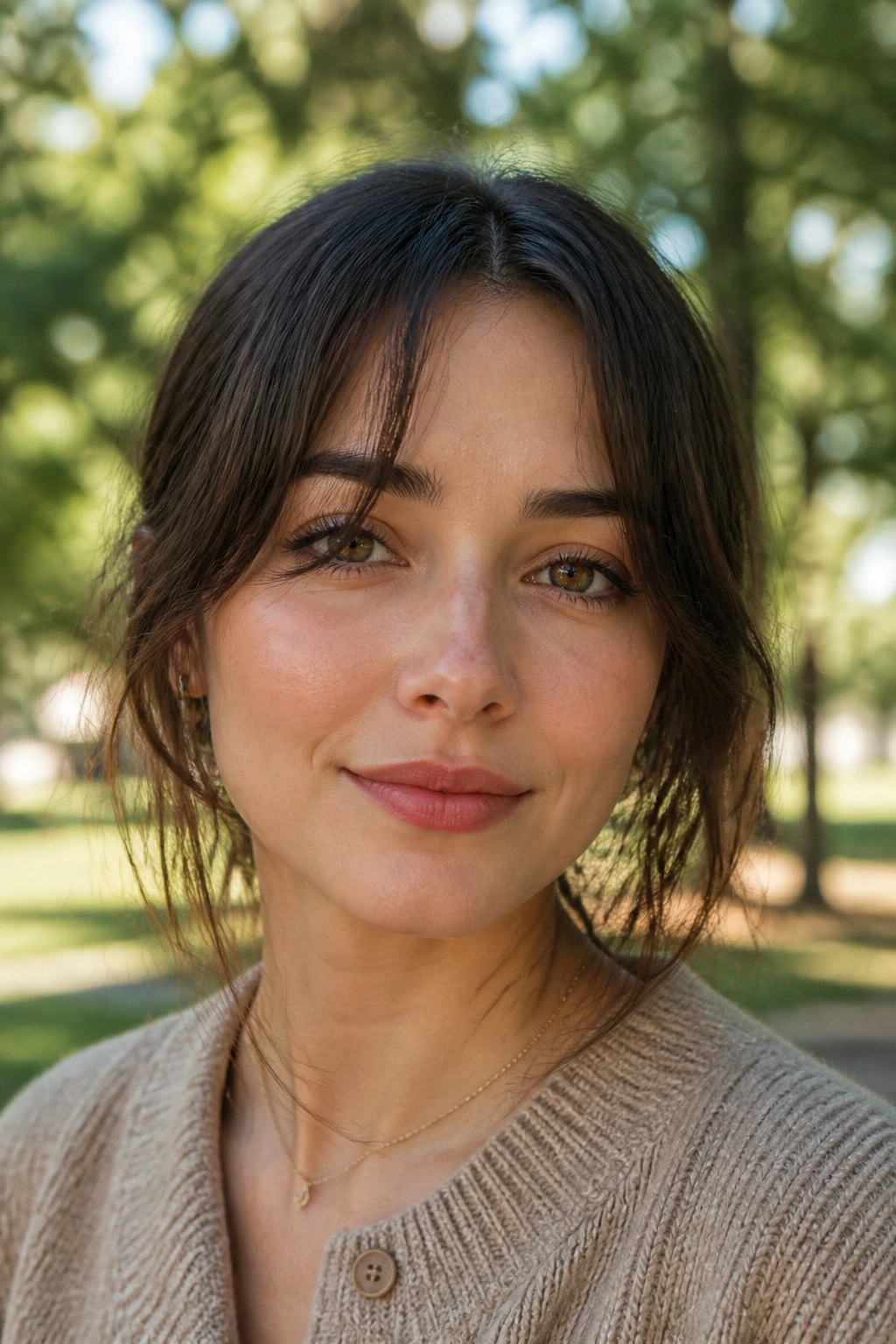
A split fringe is a cleaner, more deliberate version of a center part bang. The hair separates at the center and falls in two soft sections, but the pieces usually stay narrower and neater than full curtain bangs.
On an oval face, this works because it keeps the forehead visible while still building shape at the sides. The result is open, not empty. That distinction matters more than people think.
I like split fringe on hair that naturally wants to fall away from the center. If your front hairline already parts there, you can work with it instead of flattening it into something artificial. A little bend at the ends keeps the style from reading too severe.
18. Face-Framing Fringe with Layers
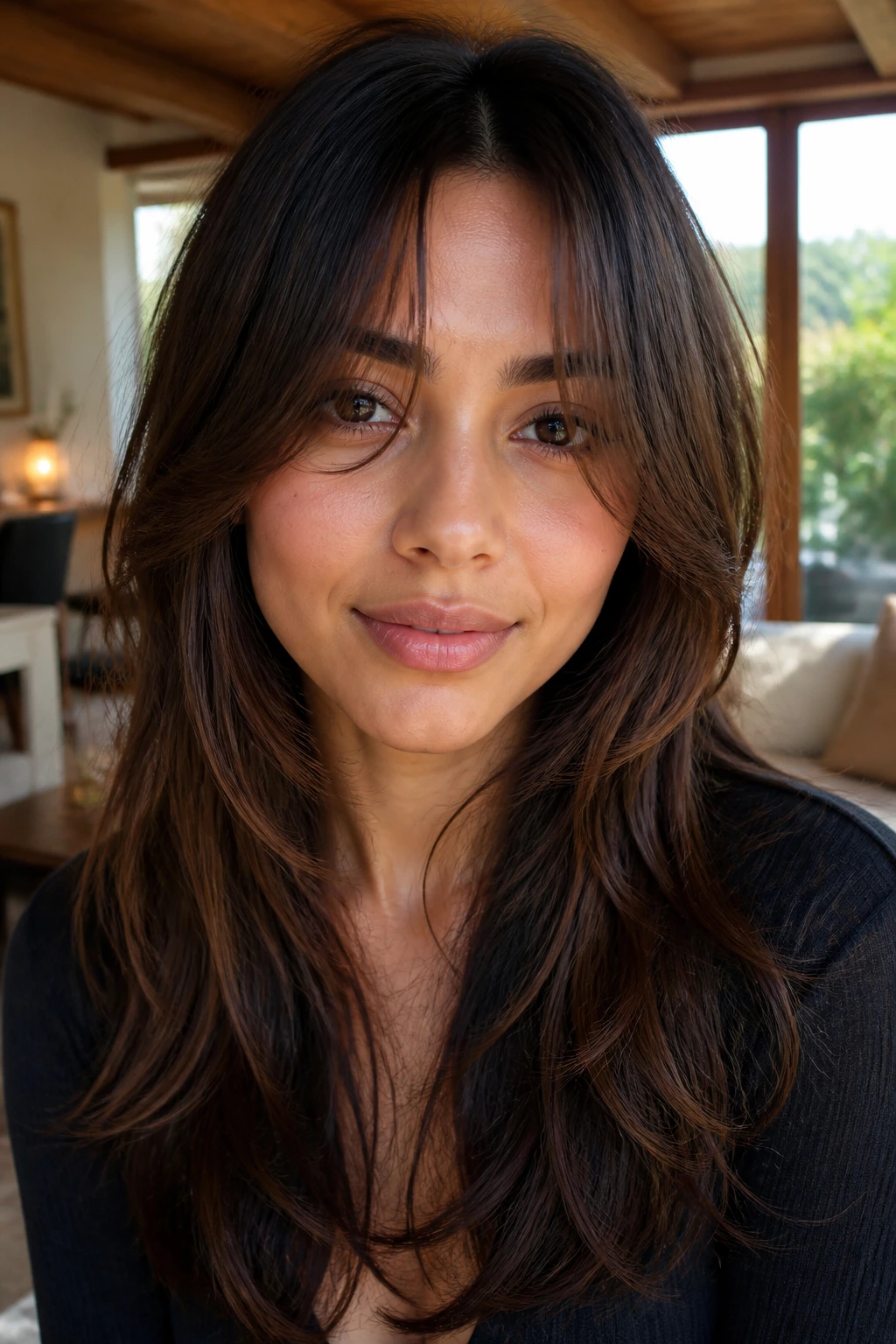
Unlike a standalone bang, this version melts into the haircut. The shortest front pieces are only part of the story; the rest of the length keeps sweeping down the cheeks and into the jawline.
That’s useful on an oval face because it creates movement without drawing a hard line across the forehead. If you want bangs but hate the idea of a full front fringe, this is the softer route. It also grows out more politely. The shorter pieces just become part of the layers.
The best version starts around the cheekbone and tapers down. Ask for the front to blend, not stop. That one word changes the whole haircut.
19. Micro Curtain Bangs
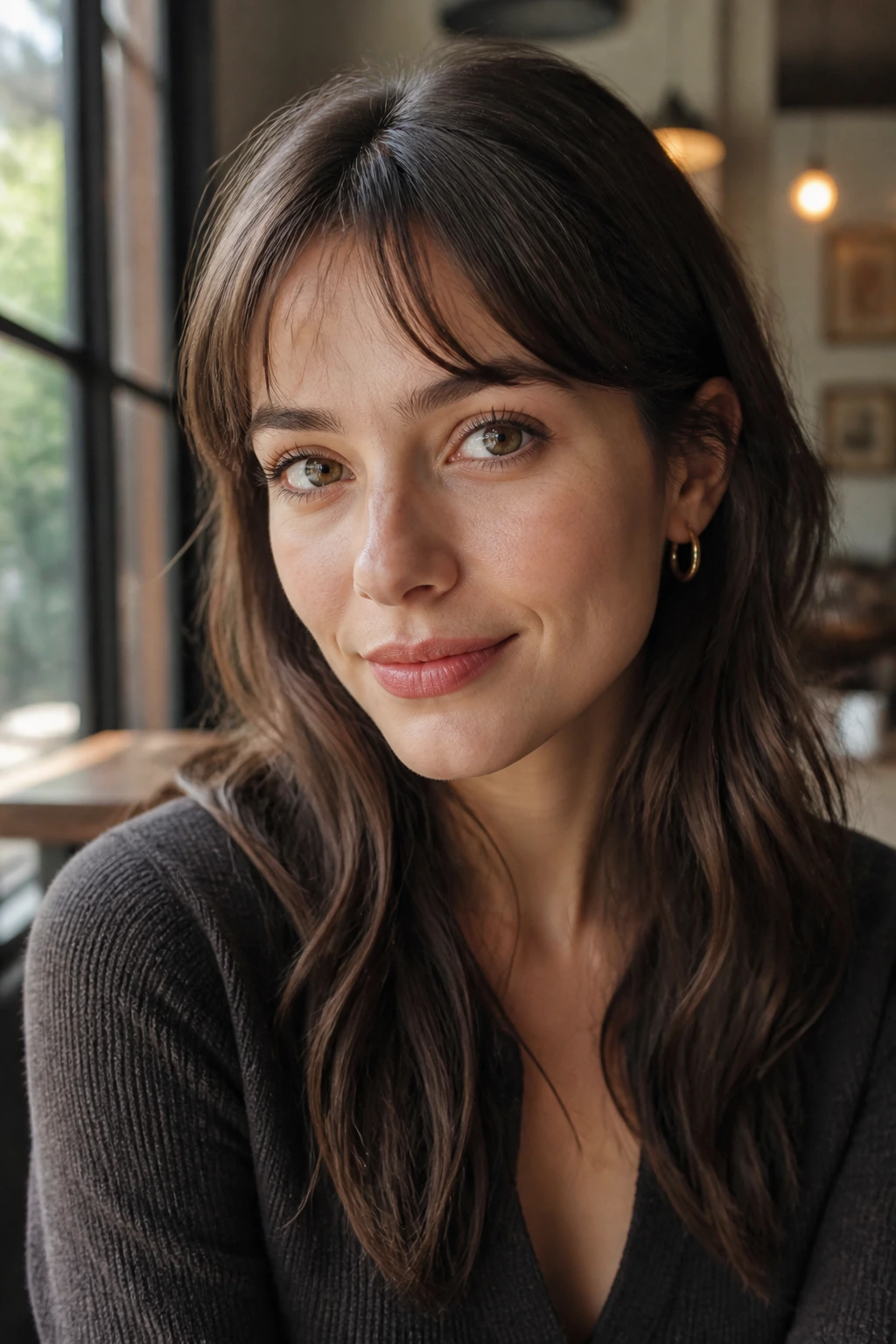
Micro curtain bangs give you the center part and the opening shape of curtain fringe, but with a shorter overall length. They sit higher on the forehead and leave more face visible than a full curtain.
Why would that work on an oval face? Because the shape can take a little extra forehead exposure without getting thrown off balance. If you want a lighter fringe that still feels intentional, this is a neat middle ground. Not as blunt as a true bang. Not as long as a grown-out curtain.
The only thing to watch is the crown area. If the roots lie flat, the bangs can look sparse instead of airy. A quick blow-dry with lift at the root makes the difference.
20. Swoopy Side Bangs
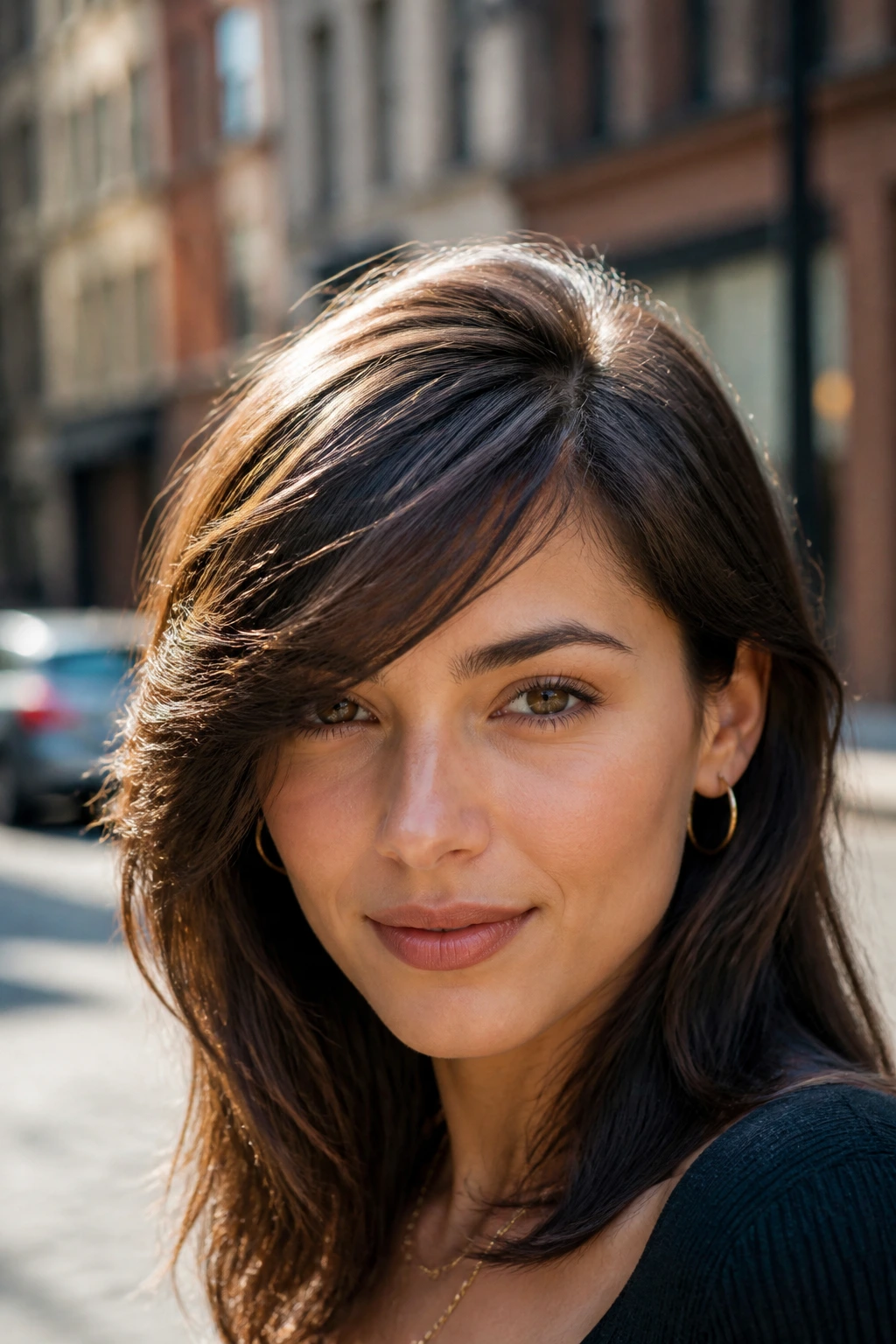
Swoopy side bangs are what happens when a side fringe leans all the way into motion. They arc across the forehead in one strong sweep, then blend into the rest of the haircut.
I like these on oval faces because they introduce a diagonal line without making the front feel heavy. They’re also one of the easier options to wear if you don’t want to restyle your bangs every morning. A brush, a blow-dryer, maybe a roller for a few minutes. Done.
If your face is a longer oval, this style is useful because it creates width. If your face is a shorter oval, just keep the sweep lighter so it doesn’t crowd the eyes.
21. Piecey Fringe
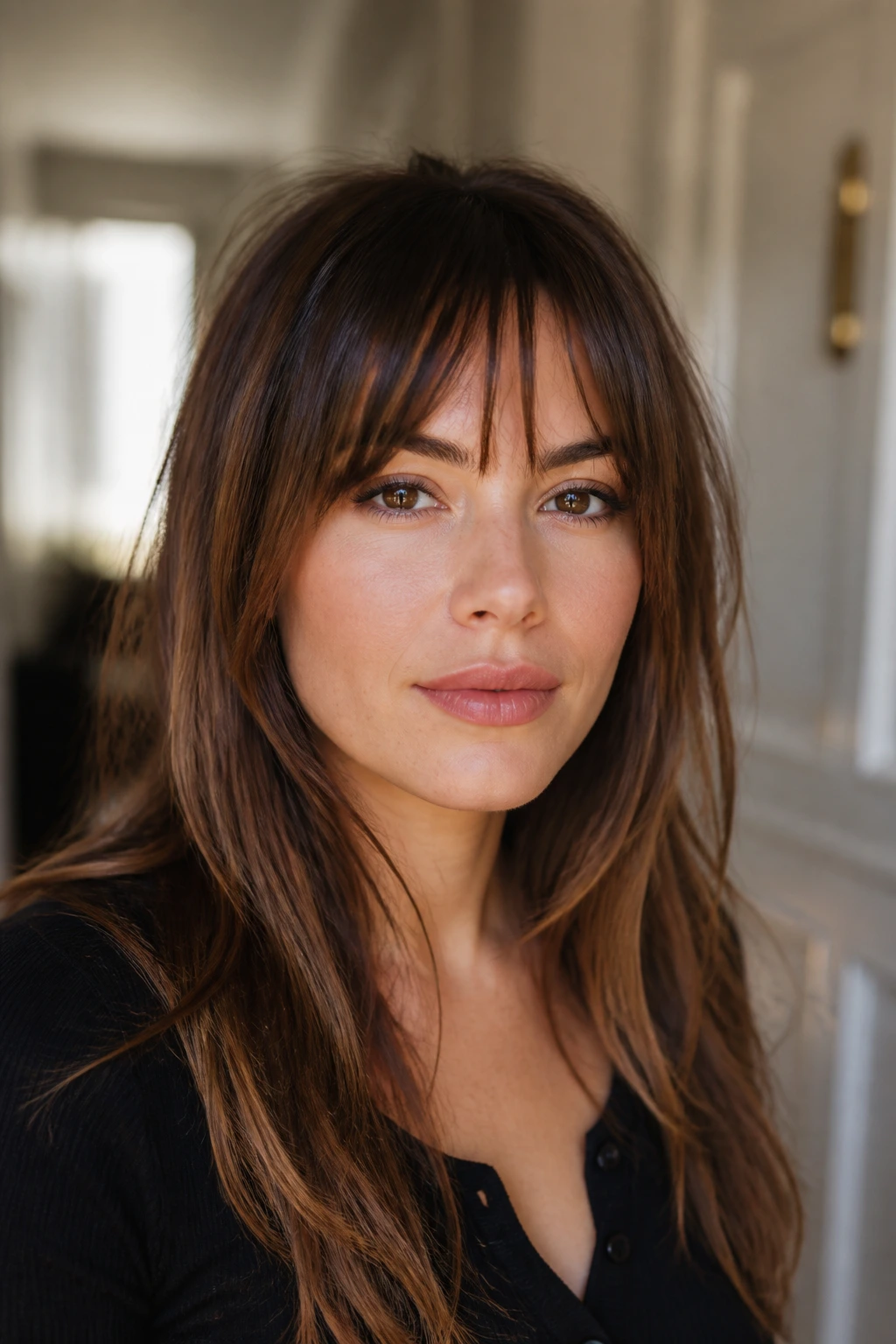
You know that slightly separated fringe that looks cut for movement rather than symmetry? That’s piecey fringe, and it’s one of the easiest ways to keep bangs from feeling dense on an oval face.
The separate strands matter. They let the forehead peek through in small breaks, which keeps the face open while still framing the eyes. Piecey bangs also forgive a little growth, which is handy because bangs never stay the same length for long. They are in a permanent state of creeping.
Use a tiny amount of styling paste or wax on the very ends. Too much and they clump. Too little and the pieces lose their shape.
22. Full Dense Fringe
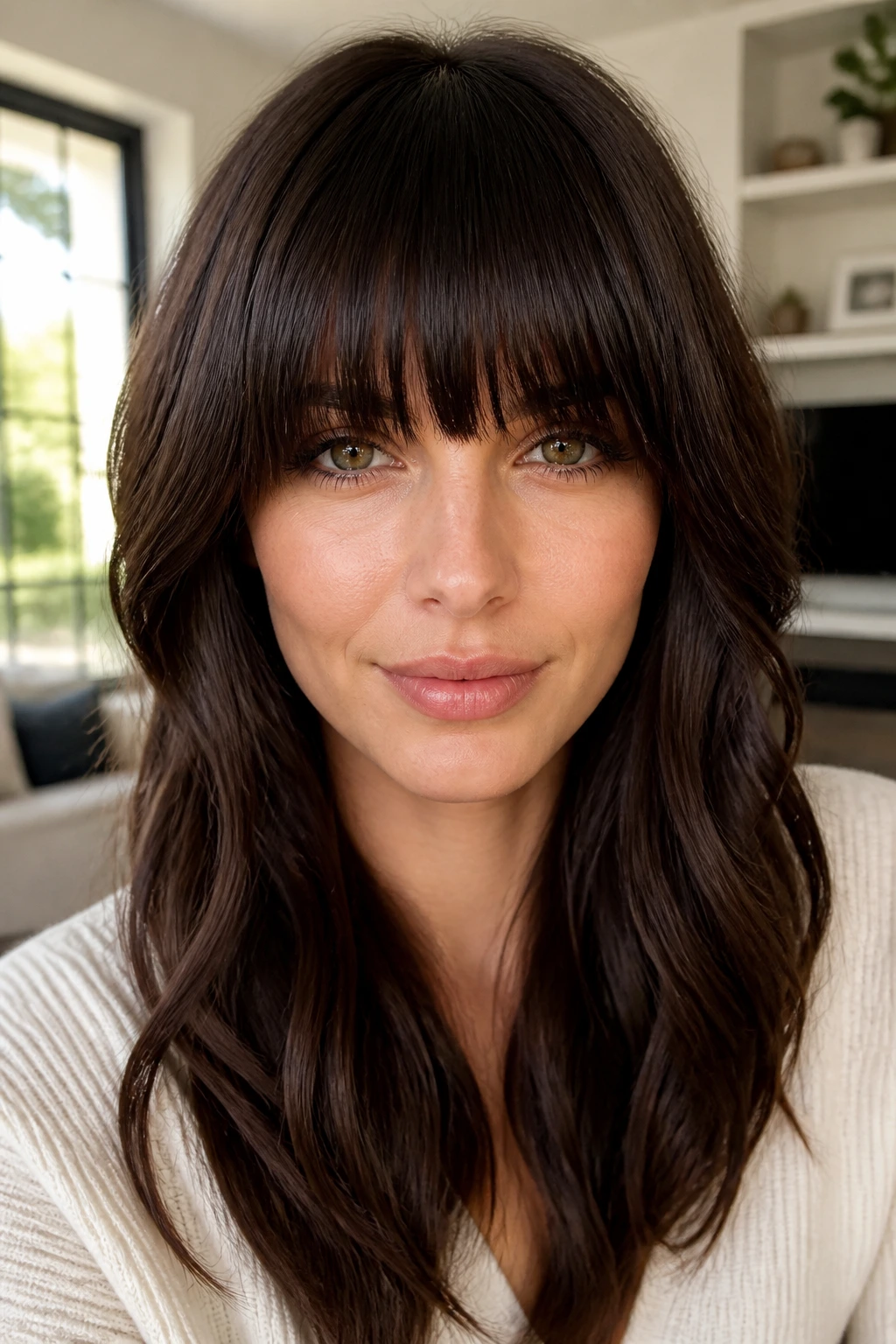
Not every oval face needs airy bangs. Sometimes a dense, full fringe is exactly the right move, especially if the face is long or the forehead feels broad and you want a stronger frame.
This style gives the eyes a tighter stage. It creates contrast. And because the oval shape is already balanced, the weight of a full fringe can actually look clean rather than bulky—provided the thickness matches the rest of your hair. Thin hair with a heavy fringe can look see-through at the sides. Thick hair can carry it.
I’d ask for the perimeter to sit right at or just below the brows, with the interior weight kept even. If the bang gets too boxed in, it starts to fight the rest of the haircut.
23. Soft Bottleneck with Layers
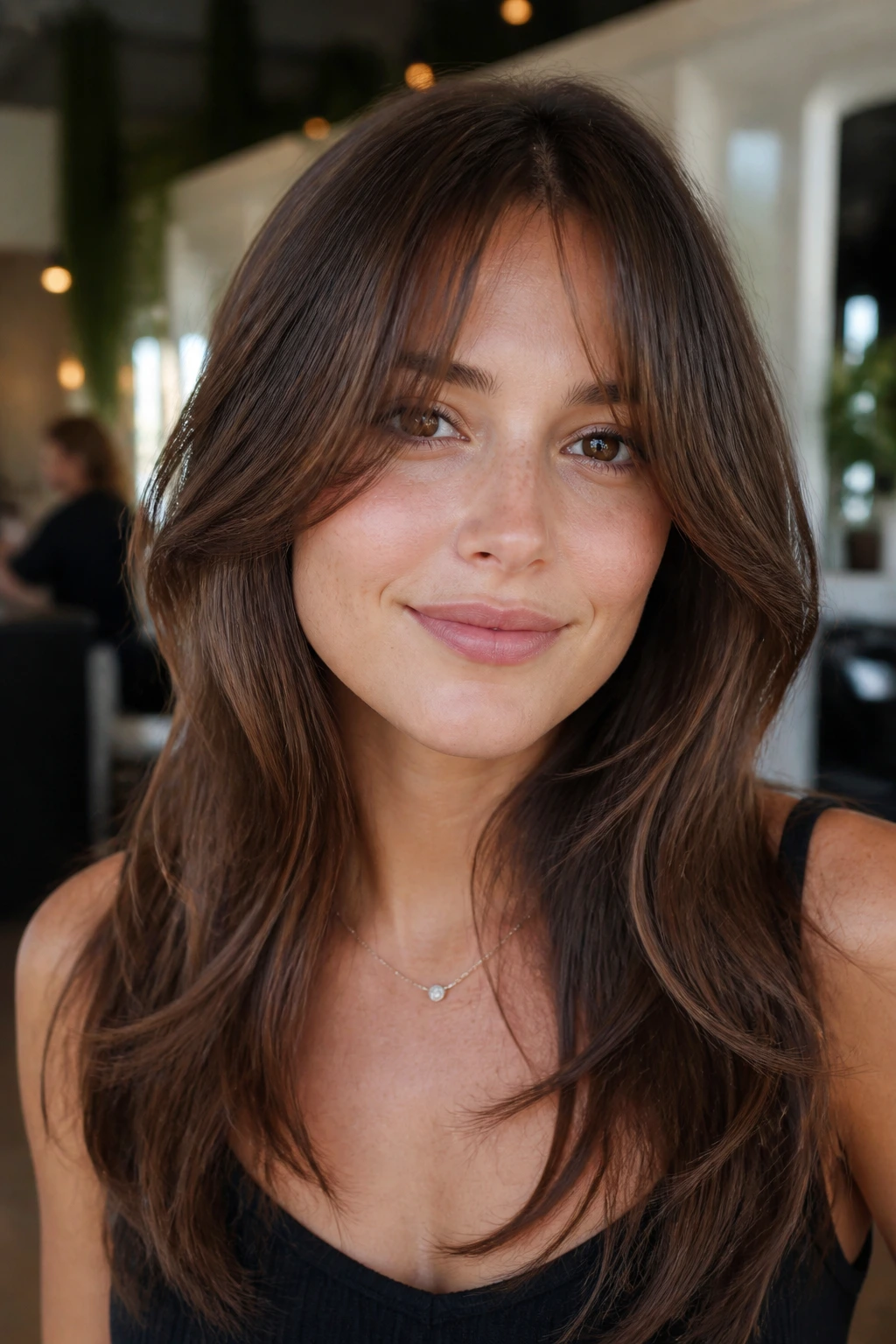
Think bottleneck bangs, but with a softer hand and a little more layering at the edges. The center still starts shorter, but the pieces melt out more gradually, so the overall effect is less pronounced.
That softness suits an oval face that wants framing but not a strong cut line. It also works well if your hair has movement or a slight wave, because the layers can fall naturally instead of needing perfect styling. I’d call this a low-pressure fringe.
Ask the stylist to keep the inner section light and let the outer pieces overlap the cheekbone. That overlap is what gives the cut its shape. Without it, the bangs can look like random front pieces.
24. Rounded Fringe
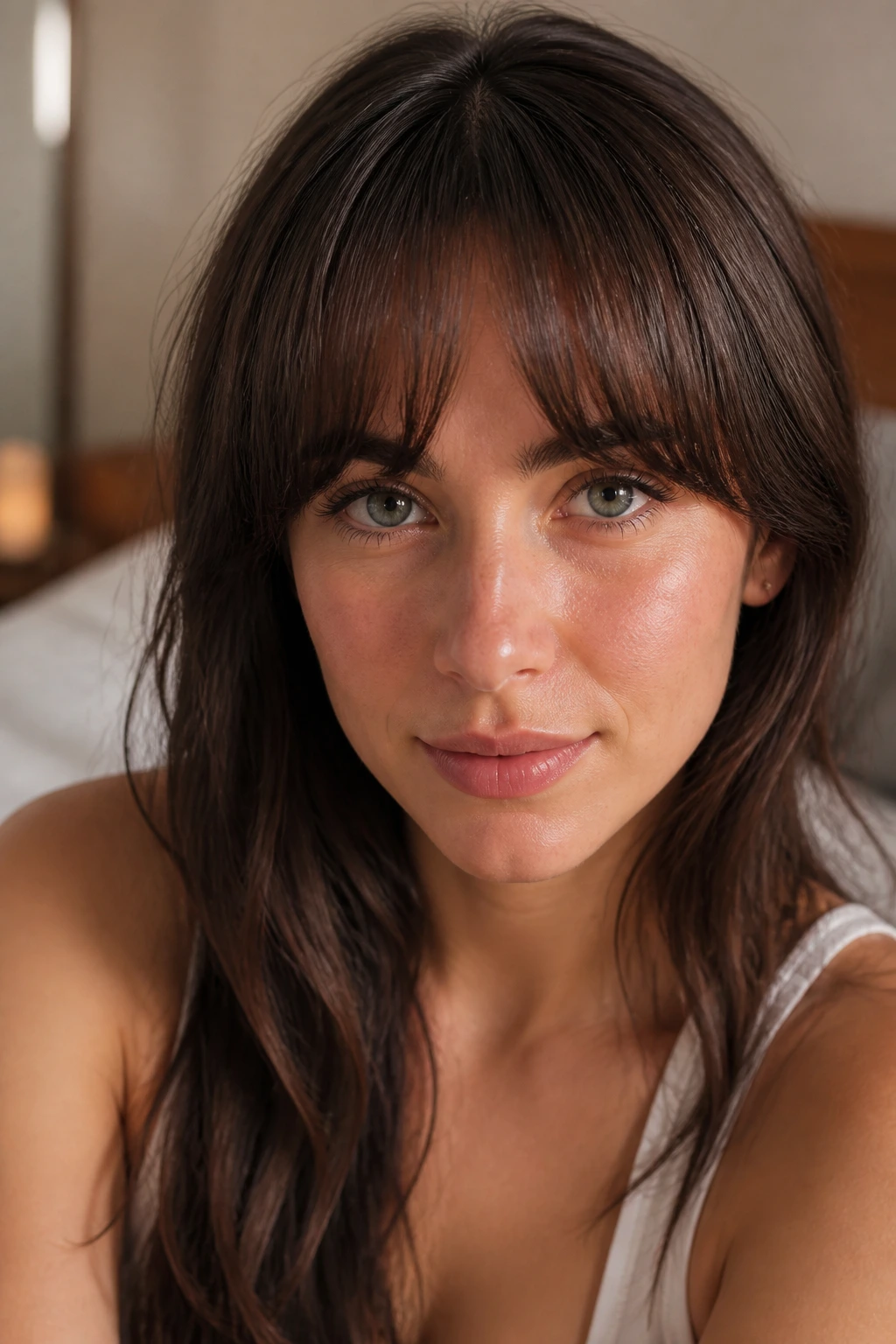
Rounded fringe curves gently across the forehead, usually with the middle sitting a little lower than the outer corners. It’s a neat, old-school shape, and on an oval face it can look polished without being stiff.
The Curve That Matters
The roundness softens the upper face and can make the brows and eyes feel more centered. That’s useful if your oval face leans long or if your forehead is the part you want to downplay a bit. The shape also reads well with strong cheekbones because it doesn’t compete with them.
The Caution
Don’t cut it too low unless you want the eyes hidden. A rounded fringe should frame, not cover. If your hair is very thick, have some interior weight removed so the curve doesn’t sit like a solid cap.
25. Tapered Bangs
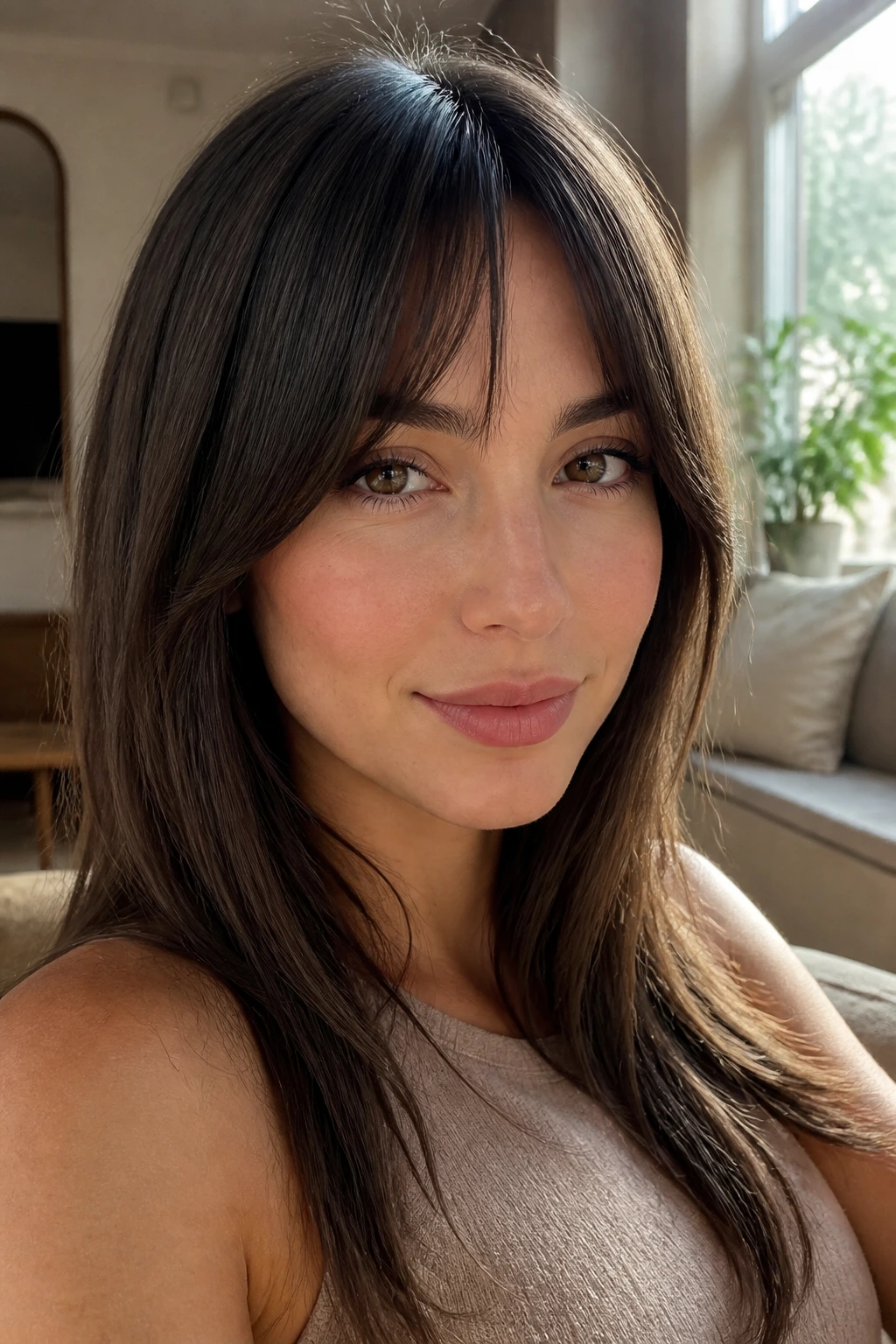
Tapered bangs are a quiet fix for thick hair that wants to puff. The shortest area sits where you need the frame, and the sides thin out so the bangs don’t spread too wide across the face.
On an oval face, that taper keeps the front from feeling boxy. It also gives the eyes a cleaner opening because the fringe narrows as it reaches the temples. The shape is subtle, but it changes the whole balance of the haircut.
I like this for anyone whose bangs get too wide by the end of the day. Weight taken out in the right places means less fighting with the brush every morning.
26. Layered Curtain with Cheekbone Length
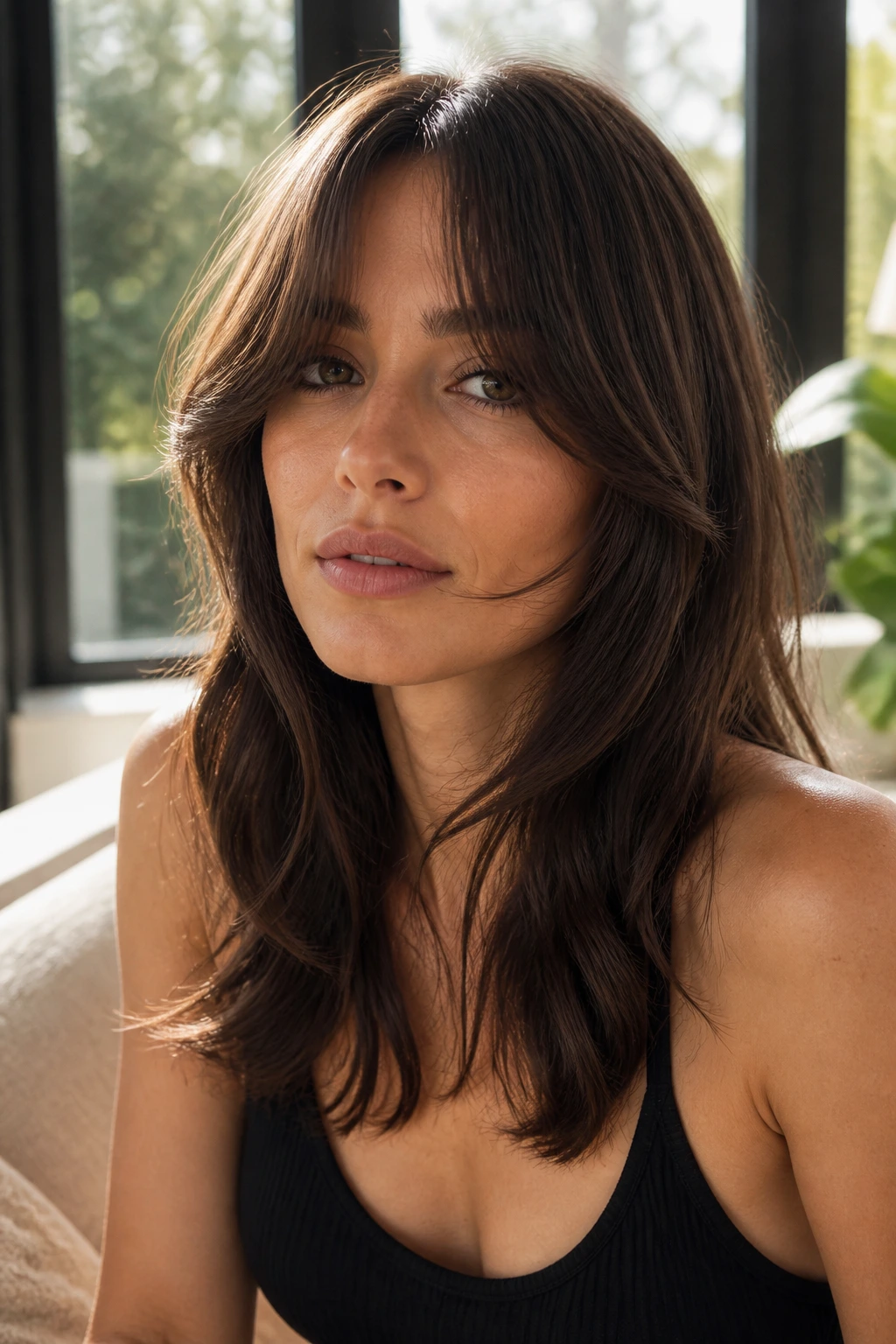
What if standard curtain bangs feel too tidy? Add layers. A layered curtain keeps the split center and the cheekbone opening, but it breaks the line in a looser way.
This is a good choice for oval faces with medium to long hair because the layers keep the front from hanging too straight. The result feels breezy rather than engineered. I’d ask for the shorter pieces to hit around the bridge of the nose and the outer pieces to land near the cheekbone or just past it.
The layering matters most at the corners. That’s where the shape either glides into the haircut or sits on top of it like an add-on.
27. Deep Side Part Fringe
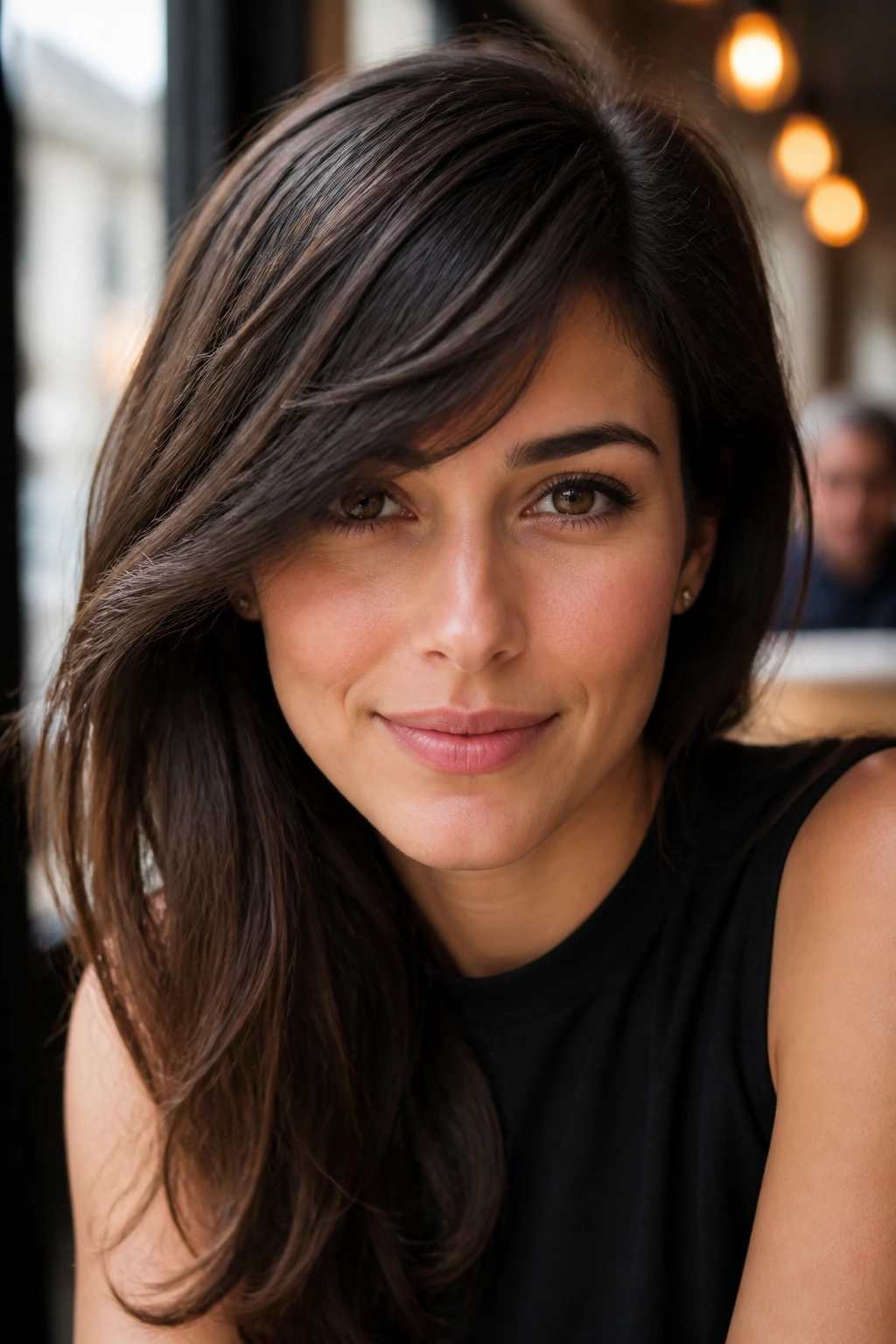
A deep side part fringe is for people who already live on one side and do not want to pretend otherwise. The bangs follow the part, sweep across the forehead, and create a strong diagonal line.
That diagonal can make an oval face look a little more sculpted, especially if the face is long. It adds width where the fringe crosses the forehead and keeps the style from feeling symmetrical in a way that can sometimes look too polite. I like it with a bit of lift at the root and a soft bend at the end.
- Best when the part is already part of your routine.
- Easy to tuck behind one ear.
- Good with glasses, because it stays off the center of the face.
28. Wavy Fringe
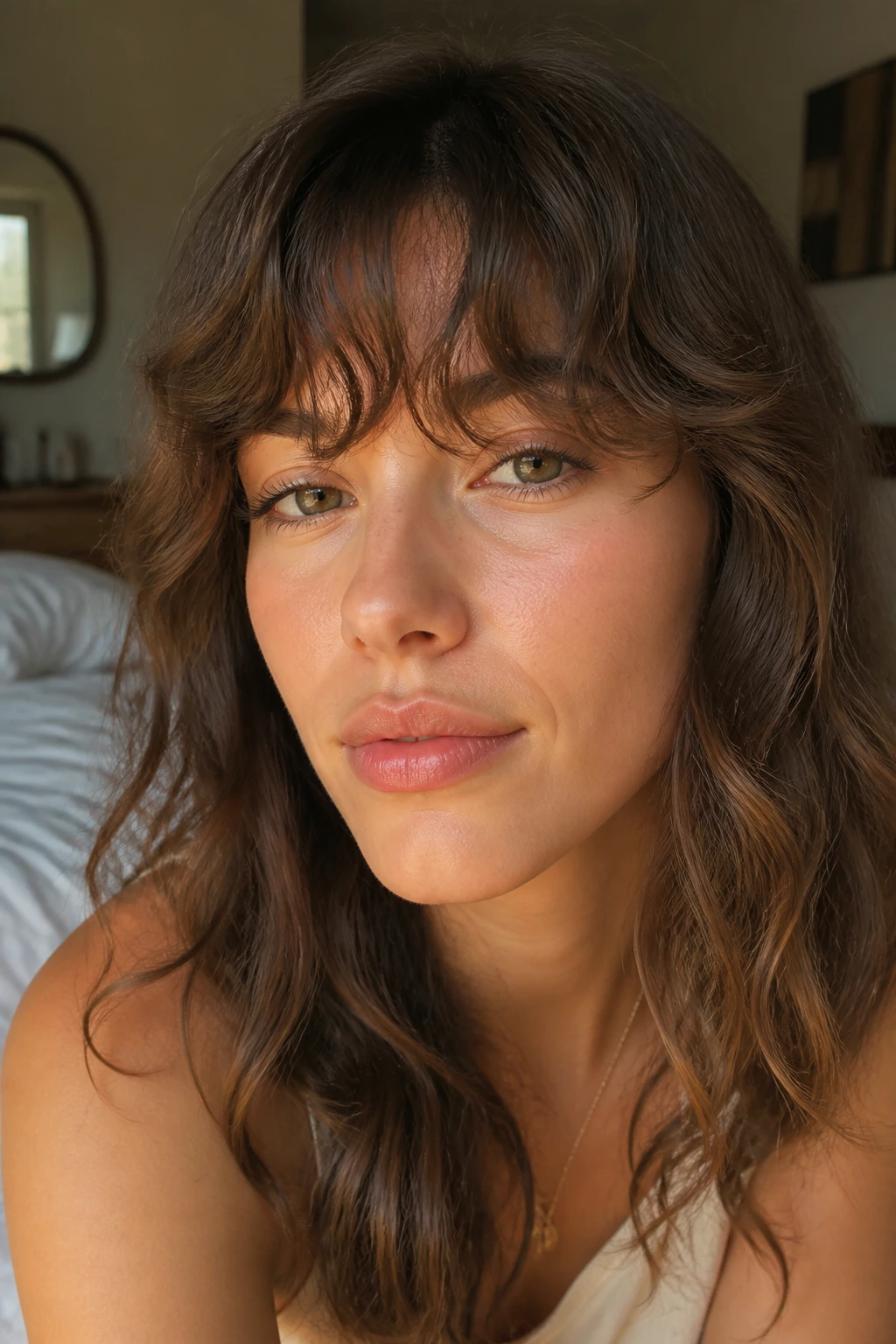
Wavy fringe should be cut with the wave in mind, not against it. That sounds obvious, but plenty of bad bangs come from pretending wavy hair is straight for one cutting session and then acting surprised when it bounces into a different shape.
On an oval face, wave can be a gift because it softens the front without making the bangs disappear. The fringe should usually sit a touch longer than a straight version so the curl pattern has room to settle. If it’s too short, you get frizz and surprise lift.
I’d avoid over-layering wavy fringe unless the rest of the haircut is also layered. Too much removal at the front can leave it wispy in a bad way.
29. Feathered Side Bangs
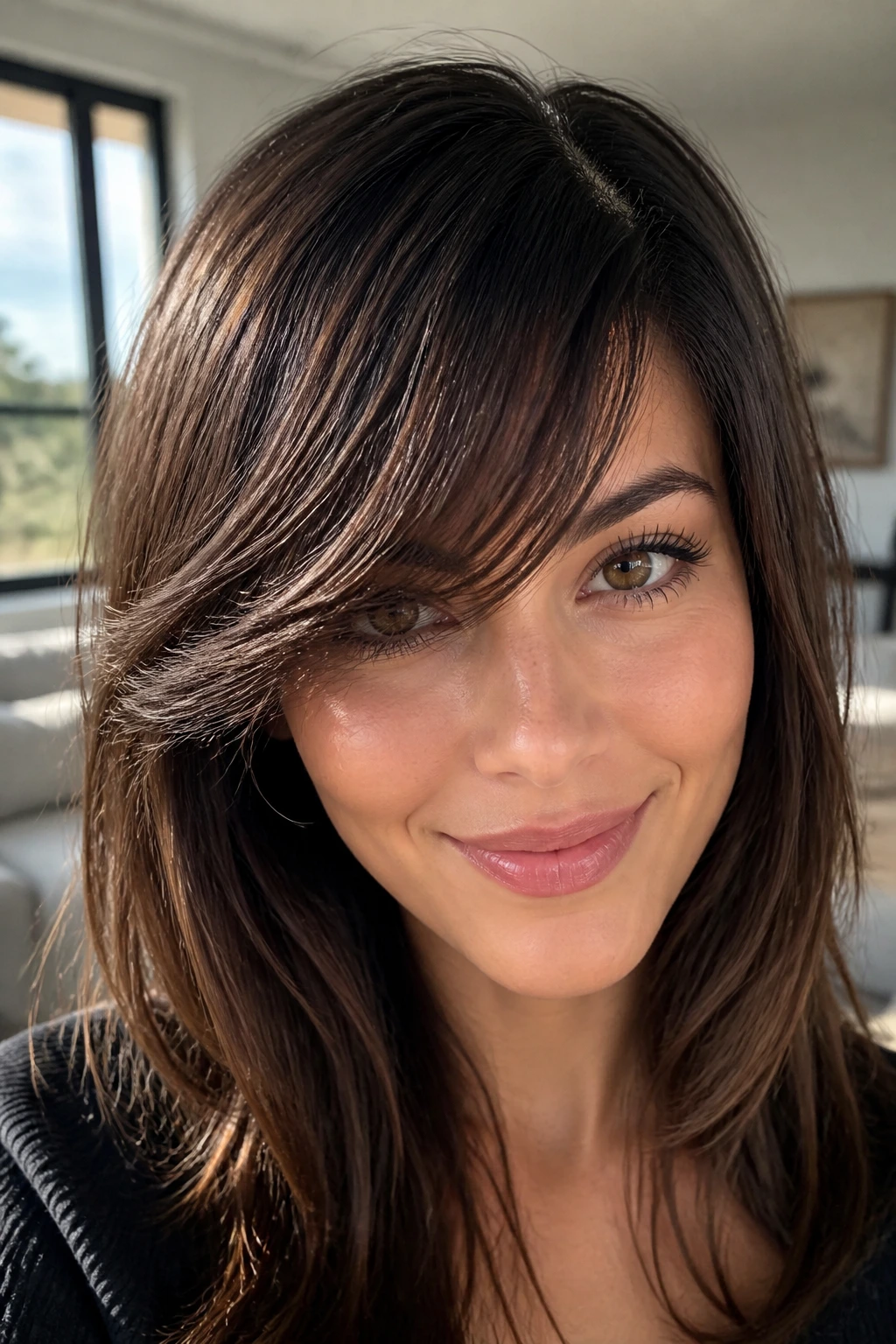
Feathered side bangs are softer than a piecey fringe and a little more swingy than a blunt side sweep. The ends are broken up, but not chopped into obvious pieces.
That softness suits oval faces because it keeps the front light while still adding direction. The hair moves across the forehead, then fades into the haircut instead of stopping abruptly. It’s a very usable shape for medium-length hair, especially if you want the bangs to feel part of the style rather than a separate event.
Keep the feathering at the edges, not all through the middle. If you thin the center too much, the bang loses its line and starts to vanish.
30. Asymmetrical Fringe
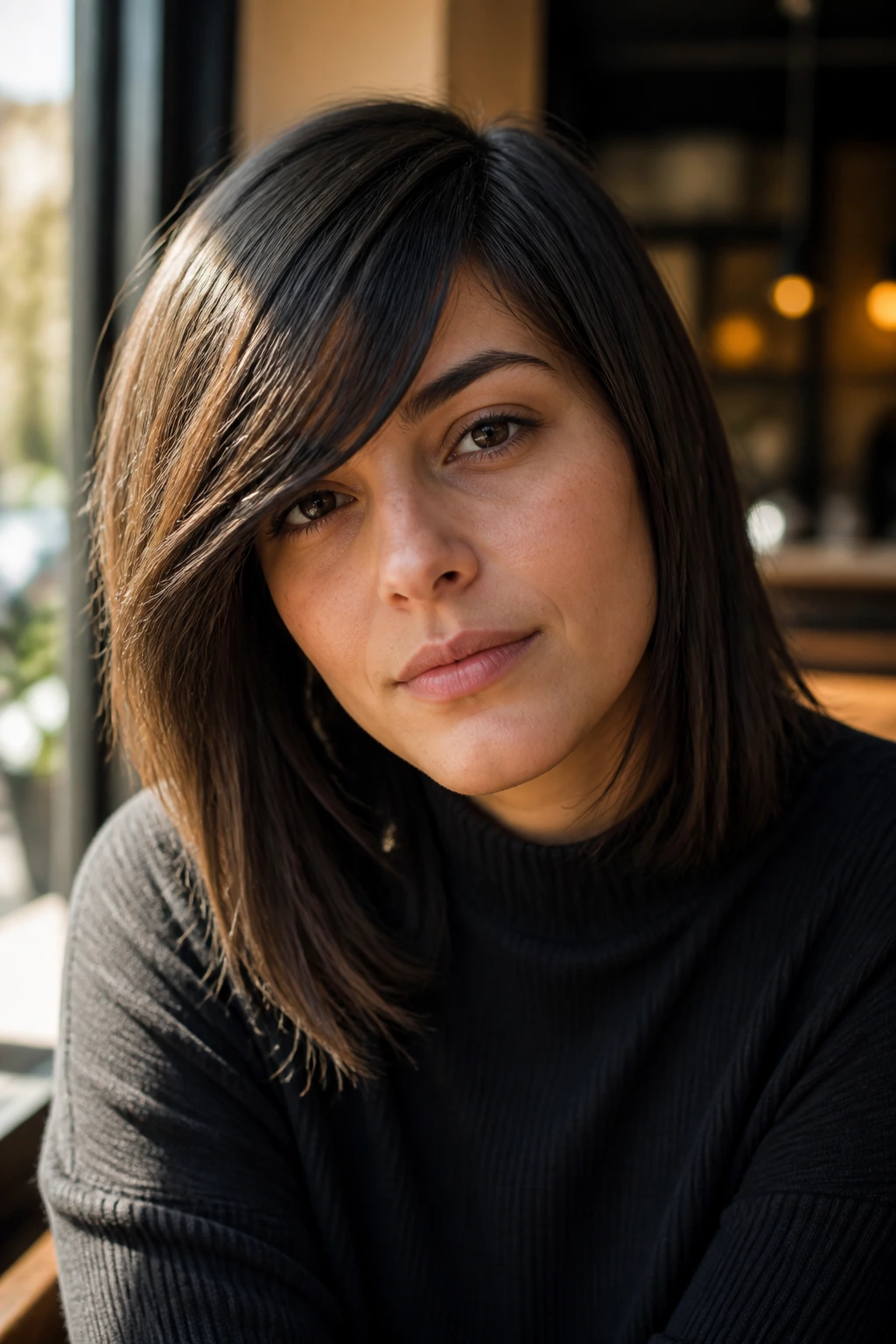
Asymmetry is useful on an oval face because the shape can take a little imbalance without losing harmony. That’s the reason an angled fringe can look sharp instead of awkward here.
One side may sit shorter, the other longer, and the line cuts across the forehead at a slant. That slant changes the way the eye reads the face. It creates motion. It can also make the jaw look a little more pronounced, which is handy if your oval face feels too soft in front.
This is not the cut for someone who wants low-effort precision. The angle needs a trim schedule and a decent styling routine. But if you like hair with a little attitude, this is a solid choice.
31. Jawline-Skimming Bangs

Can bangs live this long and still count as bangs? Yes. When the front pieces reach the jawline, they start acting like fringe and face-framing layers at once.
On an oval face, jawline-skimming bangs can be a smart move if you want to keep the forehead open while still creating a strong outline. They’re especially good for longer ovals because the extra length at the sides adds width lower on the face. That can make the whole shape feel more grounded.
The key is keeping the shortest front pieces controlled. If the ends get too blunt, the style loses its softness and starts looking like an in-between grow-out stage. There’s a difference.
32. Wispy See-Through Bangs
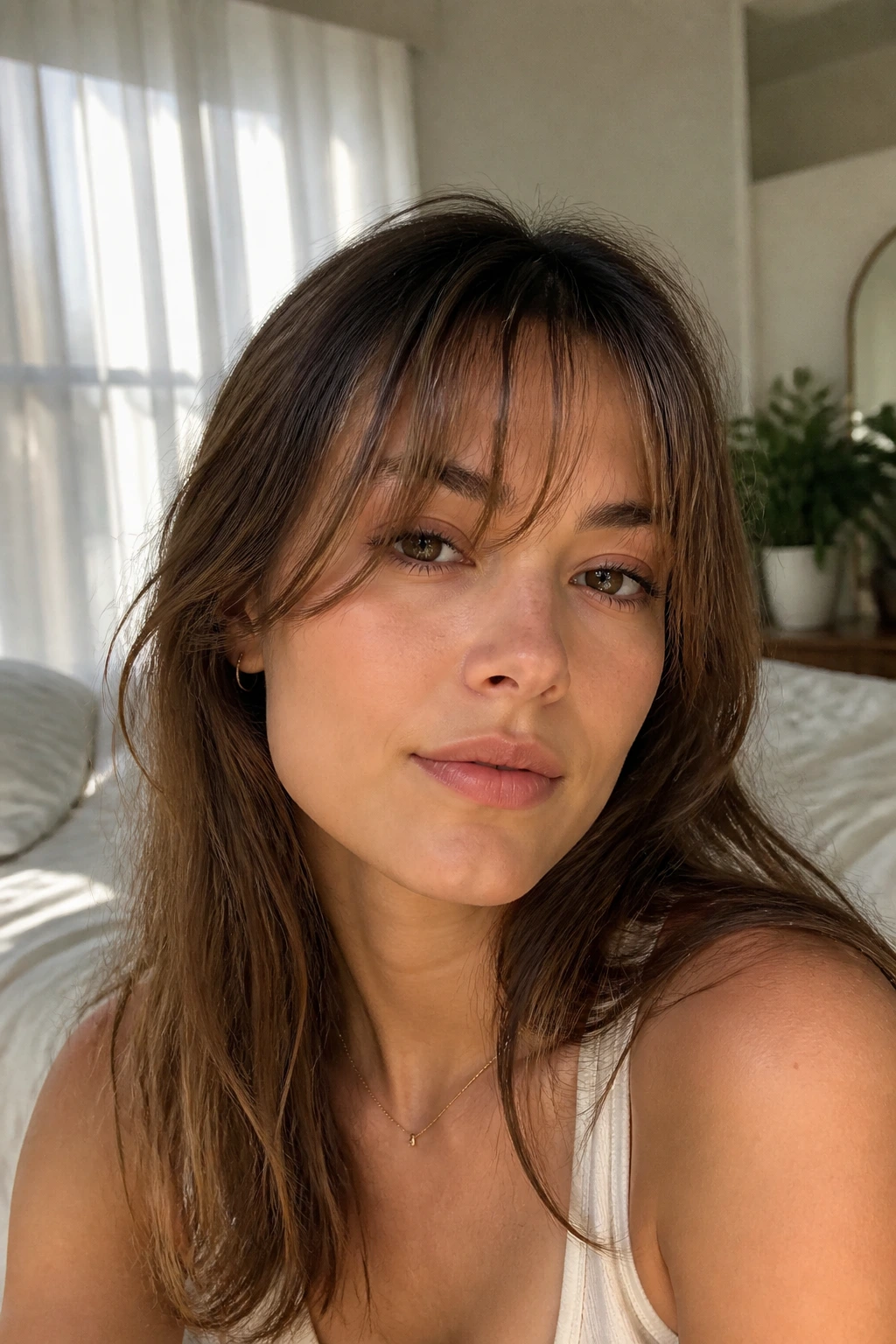
Wispy see-through bangs leave the forehead partly visible, which is why they work so well on oval faces that want a little fringe without a heavy frame. The hair is deliberately sparse, but it still creates shape.
I like this style for fine hair, where a thick bang would fight the texture from day one. It also works if you like a softer look around the brows. The trick is not to over-thin it. If you remove too much hair, the bangs stop looking wispy and start looking accidentally incomplete.
Keep the length around brow level, then style with a light brush and almost no product. Heavy cream turns this fringe into stringy strands fast.
33. Fringe with Internal Layers
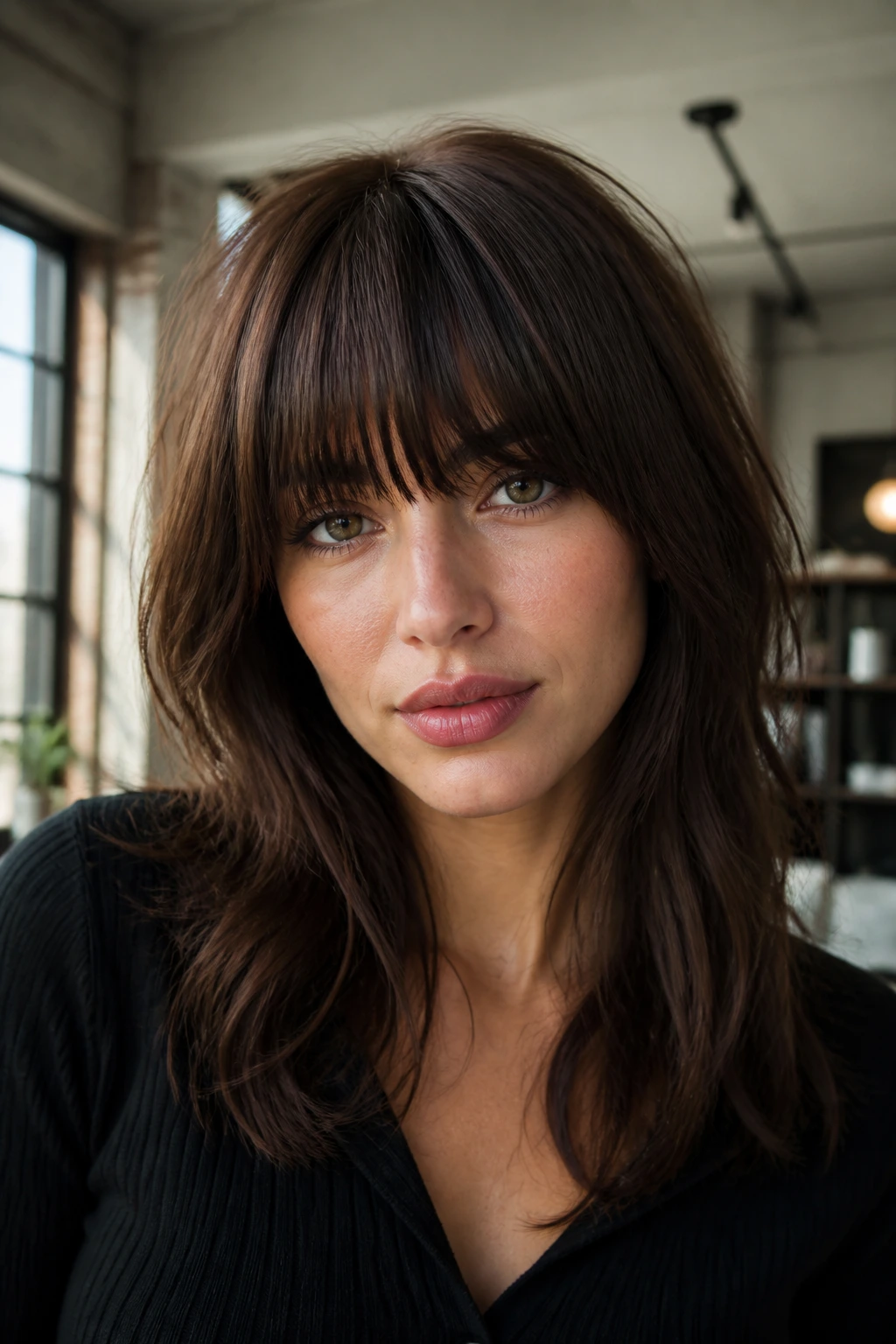
Internal layers are the quiet detail that saves thick bangs. The front still looks full, but the weight underneath gets removed so the fringe moves instead of sitting like a slab.
On an oval face, that matters because you can have the drama of a denser fringe without losing softness around the eyes. It also keeps the bangs from spreading too wide at the temples, which is a common issue when the hair is thick or coarse. This style is one of the better choices if your hair tends to feel heavy by noon.
Ask for the layers to be hidden inside the shape, not carved into the surface. That keeps the outside clean while lightening the inside. Small trick. Big difference.
How to Style Bangs So They Sit Right on an Oval Face
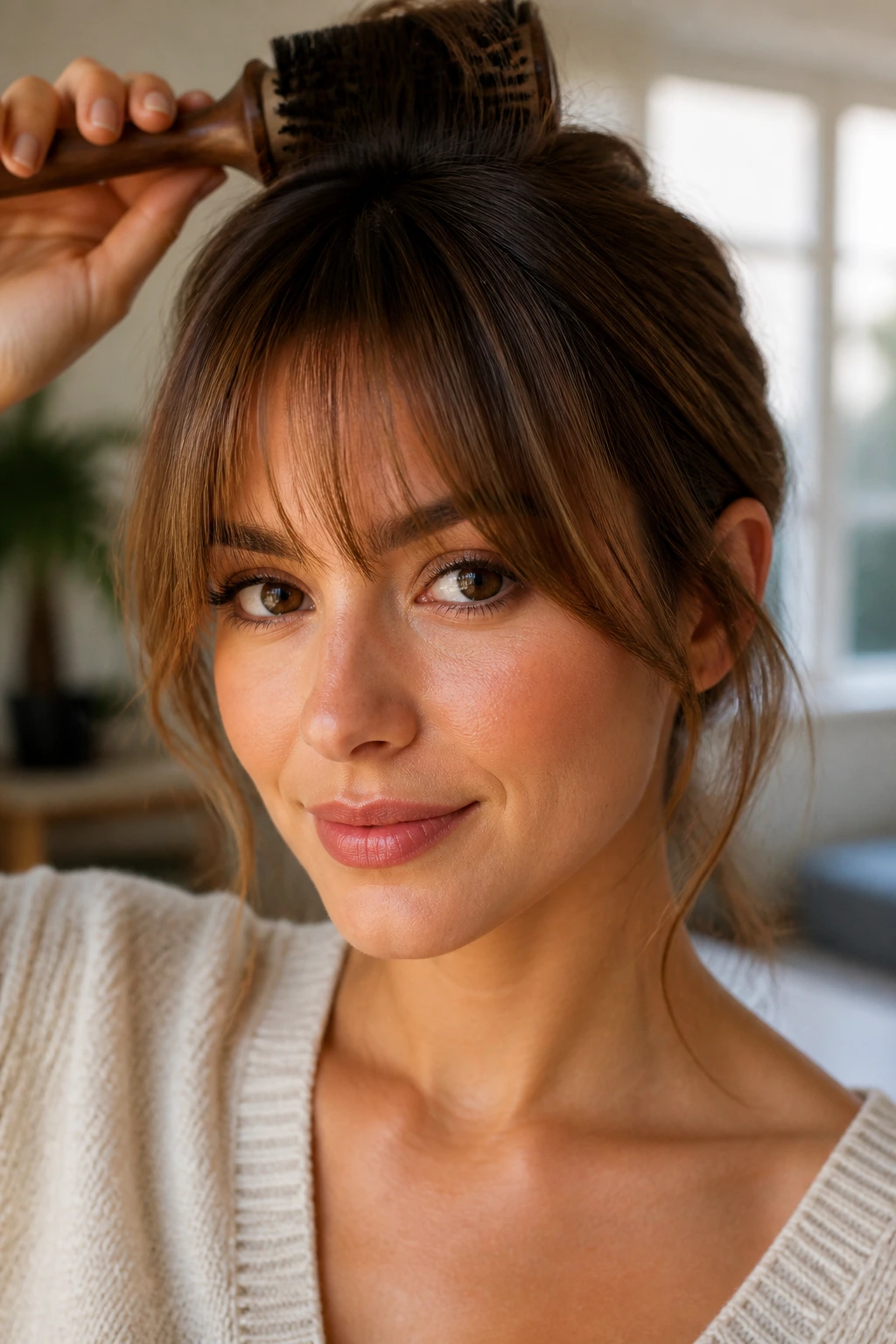
Start with the part you’ll actually wear. Bangs dry into the shape they were born in, not the shape you wish they had after you’re already late. If your center part is the plan, set it before the blow-dry. If your side part wins most days, commit to it from the start.
Lift at the root, not just the ends. A round brush helps, but so does directing the airflow at the base of the fringe for the first few seconds. That’s what keeps curtain bangs, bottleneck bangs, and side sweeps from collapsing onto the forehead.
Cut longer if your hair has bounce. Wavy and curly hair need more length than straight hair because they spring upward once dry. If you forget that, the bangs can end up sitting an inch shorter than the salon mirror suggested. Been there.
Use less product than you think. A touch of texturizer or dry shampoo is useful; a heavy cream load is not. Bangs sit on the face, so they show grease fast.
Common Bang Mistakes That Throw Off Oval Faces
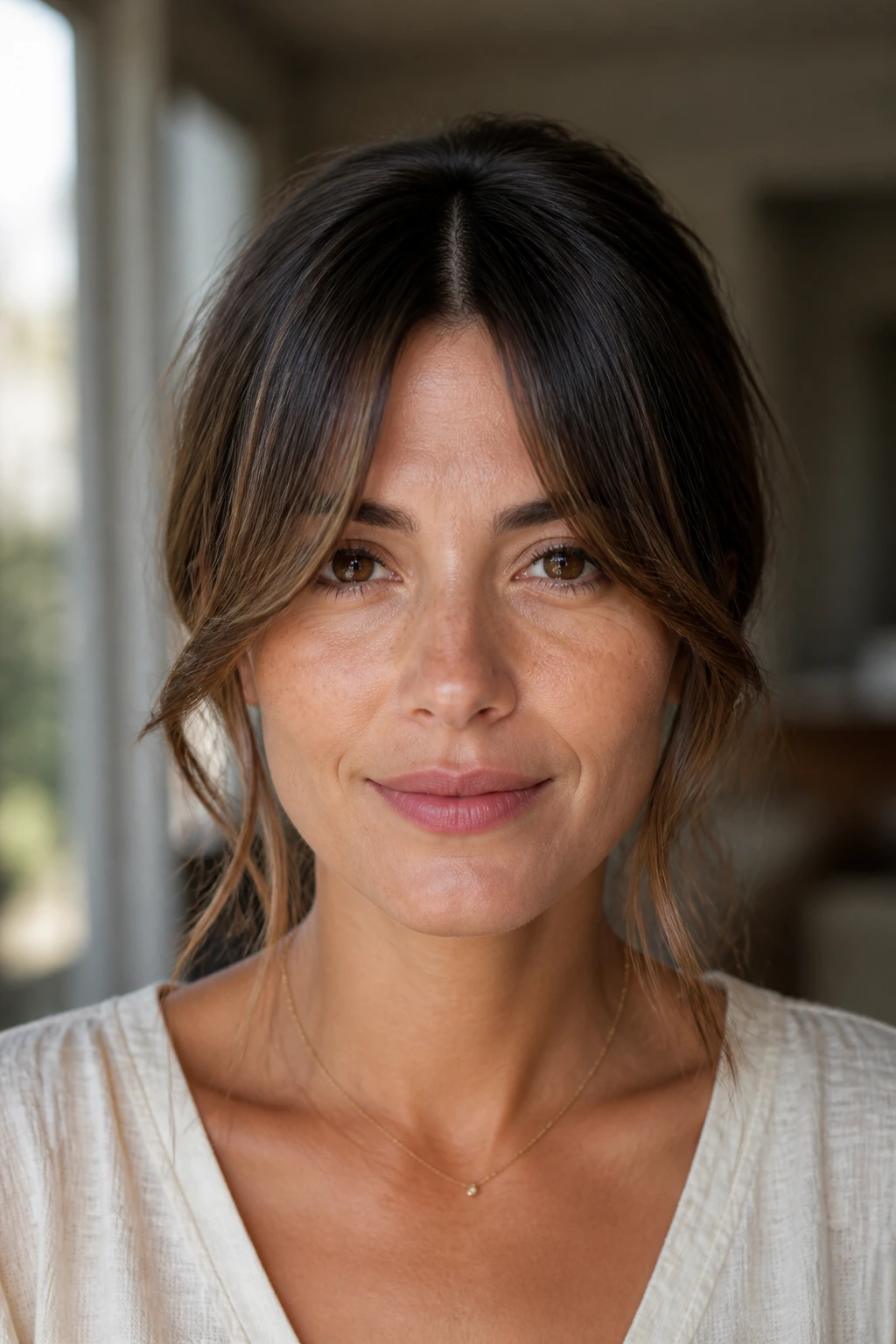
Cutting too short on the first pass: Bangs always look longer when they’re wet. If you go too high too fast, you lose the option to adjust. Start longer, dry them fully, then trim.
Ignoring the cowlick: A stubborn front swirl can split the bang or push one side higher than the other. If that’s your hair, choose a style with a natural split or enough length to redirect the growth.
Over-thinning fine hair: See-through bangs can look light and airy, but too much thinning leaves gaps. The fix is to leave a little more weight at the center and remove bulk only at the edges.
Making thick bangs too wide: Dense fringe that spreads past the temples can flatten the face in an odd way. Keep the weight where the forehead needs it, and let the outer corners taper.
Styling only the ends: The root direction matters more than the last inch of hair. If the front lifts in the wrong direction, the bang will separate no matter how nice the ends look.
How to Change the Shape Without Starting Over
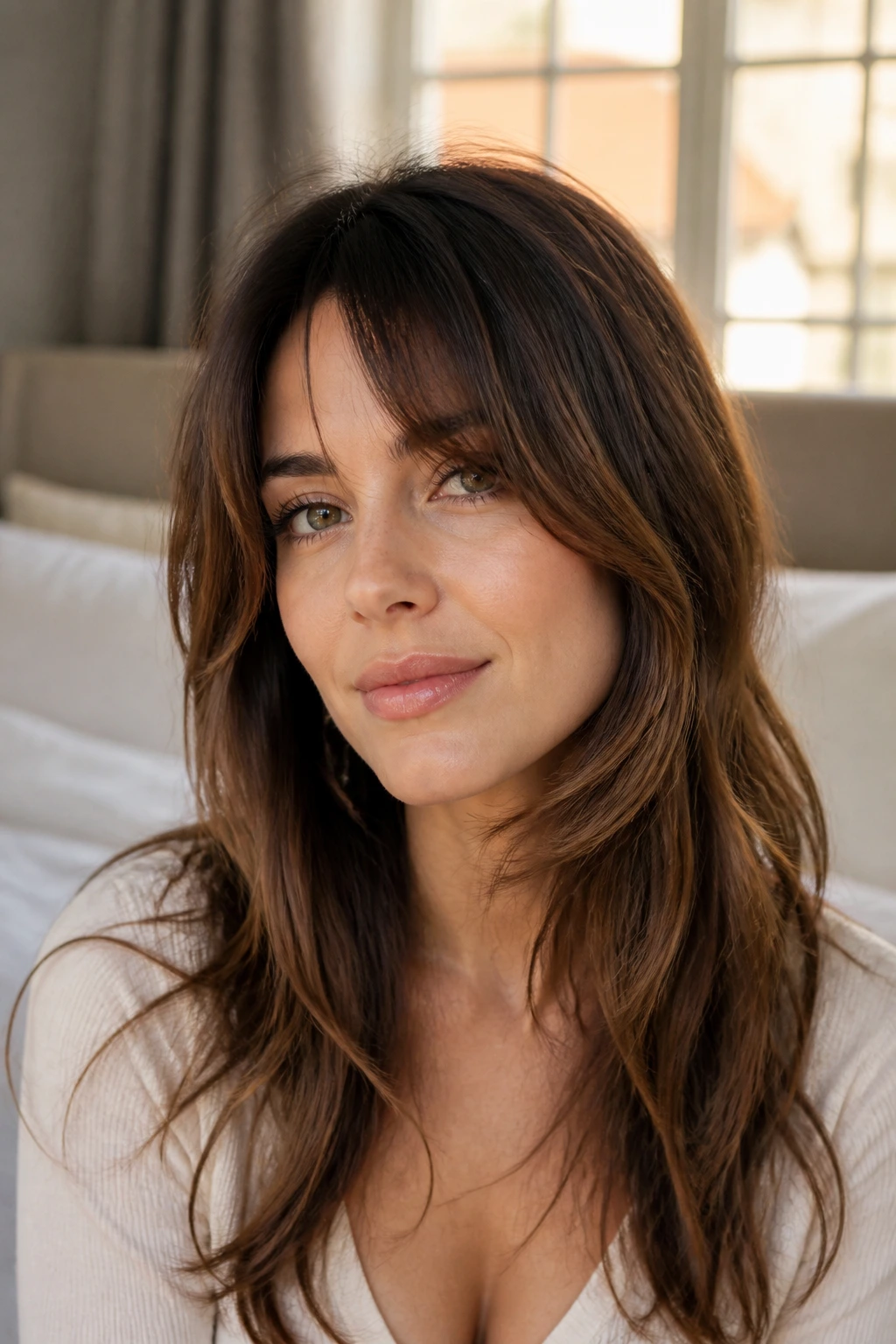
The Soft Landing: Ask for a fringe that starts longer at the center and softens into face-framing pieces. This is the safest path if you want bangs without a hard commitment.
The Brow Brush: Keep the fringe brow-grazing and denser through the middle. Good for oval faces that want stronger eye focus and a little less forehead.
The Grow-Out Bridge: Choose piecey or layered bangs that can slide into cheekbone layers later. This is the smartest route if you hate awkward in-between stages.
The Curl-Friendly Cut: Leave extra length and let the curl shape the final line. This keeps curly bangs from springing too high after the first wash.
The Glasses-Friendly Sweep: Use a side sweep or split fringe that leaves room above the frames. Nothing ruins a cute bang faster than constant lens conflict.
Tools That Make Fringe Styling Easier
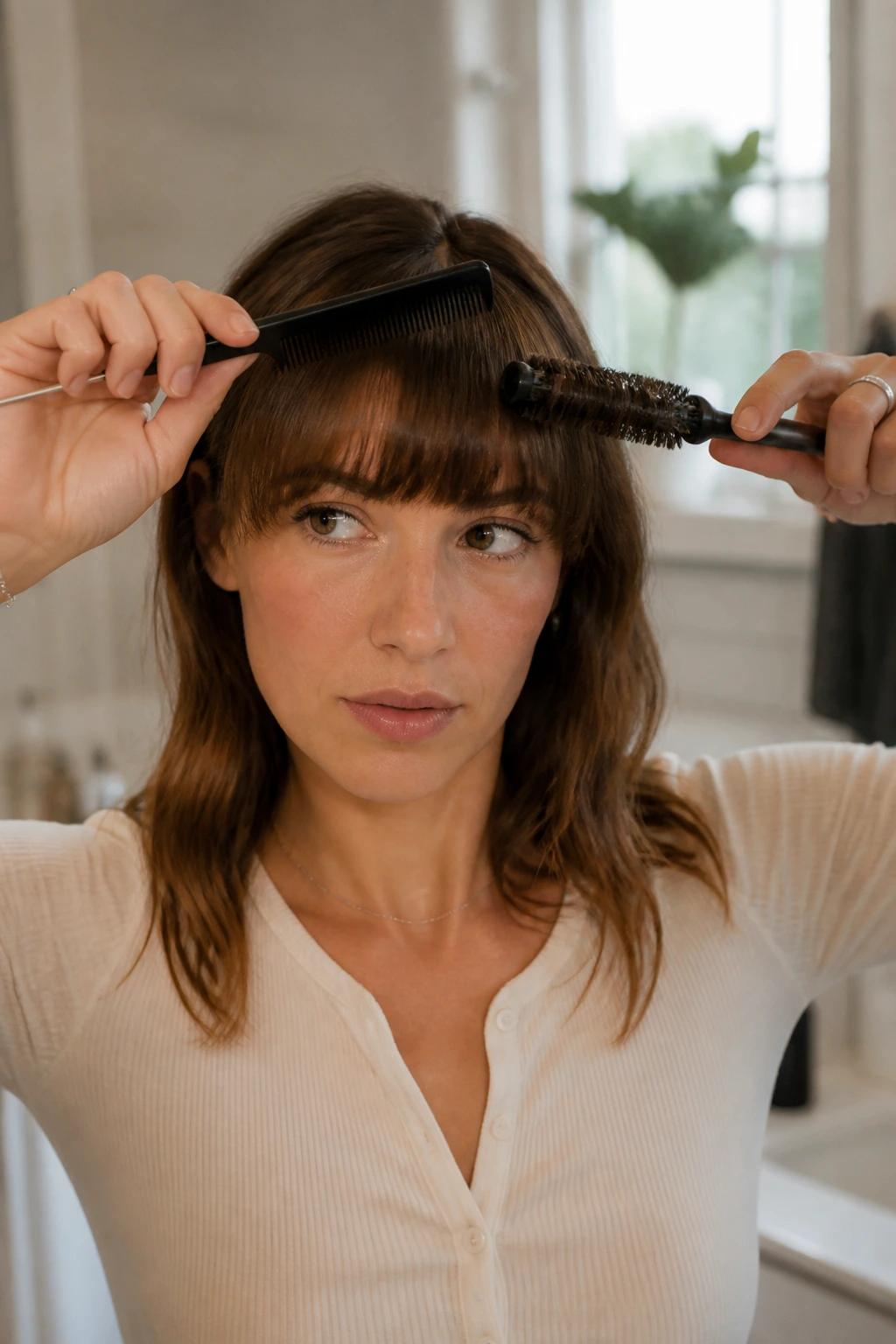
- Hair-cutting shears: Real shears give a cleaner edge than kitchen scissors, which chew the hair and leave frayed ends.
- Tail comb: Useful for sectioning the fringe cleanly before a trim or blow-dry.
- Small round brush, 1 to 1.5 inches: Best for shaping curtain, bottleneck, and side-swept bangs.
- Blow dryer with a nozzle: Directs the air where you want it instead of blasting the whole front flat.
- Duckbill clips: Handy for separating the fringe while you dry the rest of your hair.
- Dry shampoo: Helps when forehead oils start breaking up the line by midday.
- Light texturizing spray: Good for piecey, shaggy, and feathered fringe.
- Flat iron, optional: Useful for a tiny bend or a quick polish on blunt bangs.
- Hand mirror: Worth it for checking both sides and the crown, which often betrays the first bad cut.
Keeping Bangs in Shape Between Trims
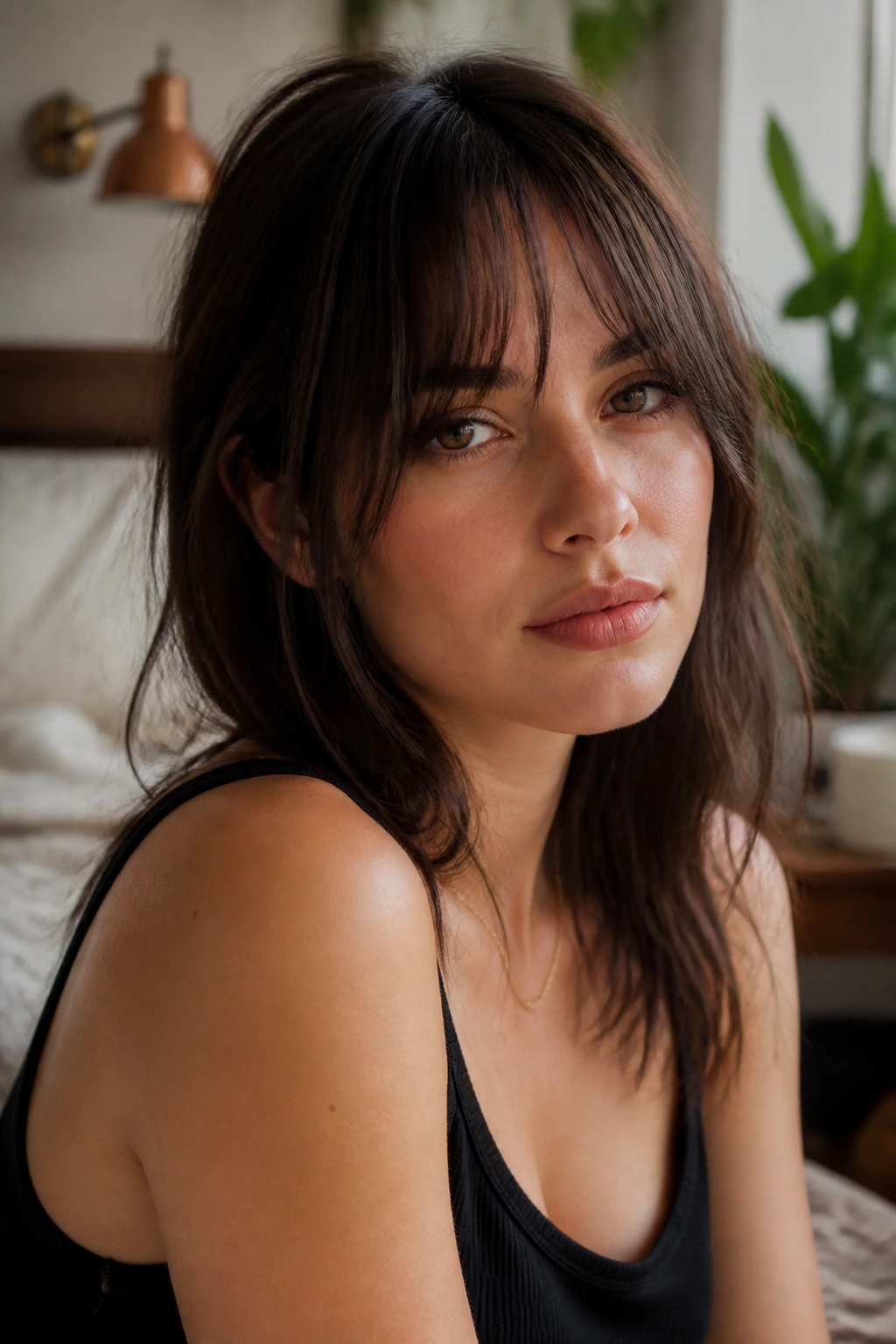
Bangs do not stay put for long. That is the deal. The trim schedule depends on the style: blunt, baby, and arched bangs usually need attention every 3 to 4 weeks, while curtain, bottleneck, and side-swept fringe can often go 5 to 7 weeks before they look shaggy. Curly and shag styles usually give you a little more room because the texture hides the grow-out.
Forehead oil matters too. Bangs usually need more frequent washing than the rest of the hair, and that’s not a flaw. It’s just physics. If the front starts separating by lunchtime, a tiny mist of dry shampoo at the roots will help, but use it sparingly. Too much and the fringe gets dusty.
Sleeping on bangs can flatten them into weird shapes overnight. A loose clip or a quick morning reset with a round brush and warm air is often enough. Don’t try to fix a bad fringe with more product. That usually makes it heavier, not better.
Frequently Asked Questions
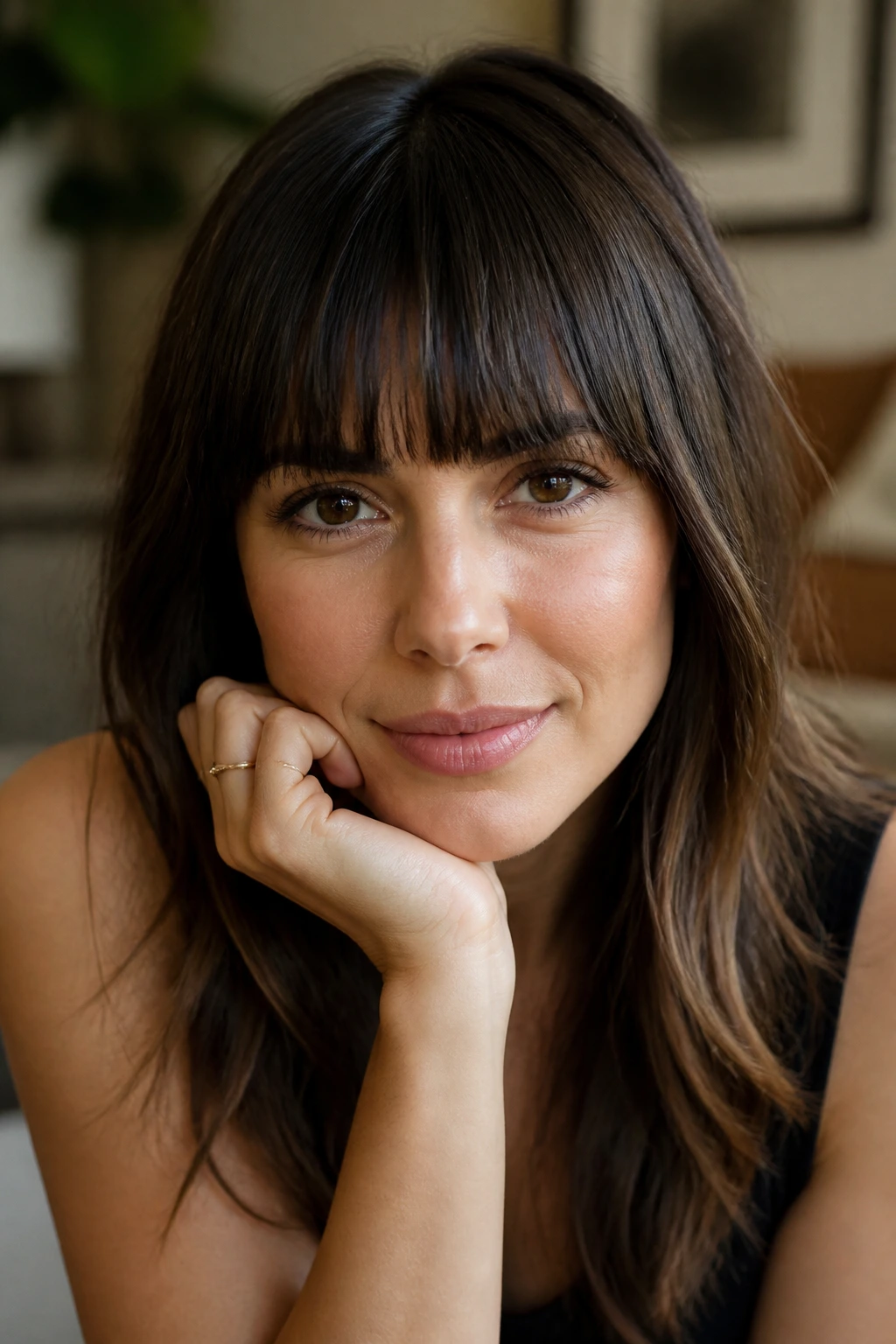
Are bangs good for oval faces, or do they hide the shape too much?
They’re good on oval faces because the shape can handle almost any fringe direction. The real question is whether you want to emphasize the eyes, shorten the forehead, or add width at the temples. Bangs only hide the shape if they’re too dense or cut too low.
Which bangs make an oval face look shorter?
Blunt brow-skimming fringe, rounded fringe, and denser curtain bangs tend to shorten the face visually. Side-swept and very long pieces do the opposite. If your oval face runs long, look for styles that create a horizontal line near the brows or cheekbones.
What bangs are easiest to grow out?
Curtain bangs, bottleneck bangs, and face-framing fringe with layers grow out with the least drama. They blend into the rest of the hair instead of turning into a strange shelf. Baby bangs and blunt fringes take more patience because the shape changes fast as they lengthen.
Can I cut bangs myself if I have an oval face?
You can, but the texture matters more than the face shape. Straight, forgiving hair is more manageable than curly or wavy hair, which changes length after drying. If you do it at home, start longer than you think and trim in tiny passes.
Do bangs work with glasses on an oval face?
Yes, but the best styles usually clear the frames instead of sitting right on top of them. Side-swept, curtain, and split fringe tend to play nicest with glasses because they leave room around the eyes. Very blunt or very short bangs can crowd the frame line if they’re not cut carefully.
What if my bangs split in the middle every time I style them?
That usually means your cowlick is stronger than the cut. A center split or curtain style may work better than a blunt bang. You can also ask for more weight at the outer corners so the fringe has something to stay connected to.
Do curly oval faces need a different bang shape than straight hair?
Yes. Curly hair usually needs longer bang lengths and more space for spring, while straight hair can carry a crisper edge. Cutting curly fringe dry or nearly dry helps you see the real shape before you commit.
How often should bangs be trimmed?
Most fringes need a tidy-up every 3 to 7 weeks, depending on density and style. Short, blunt, and baby bangs need the most frequent trims because even a half-inch of growth changes the line. Longer curtain styles can stretch a bit farther before they look overgrown.
The Fringe That Fits
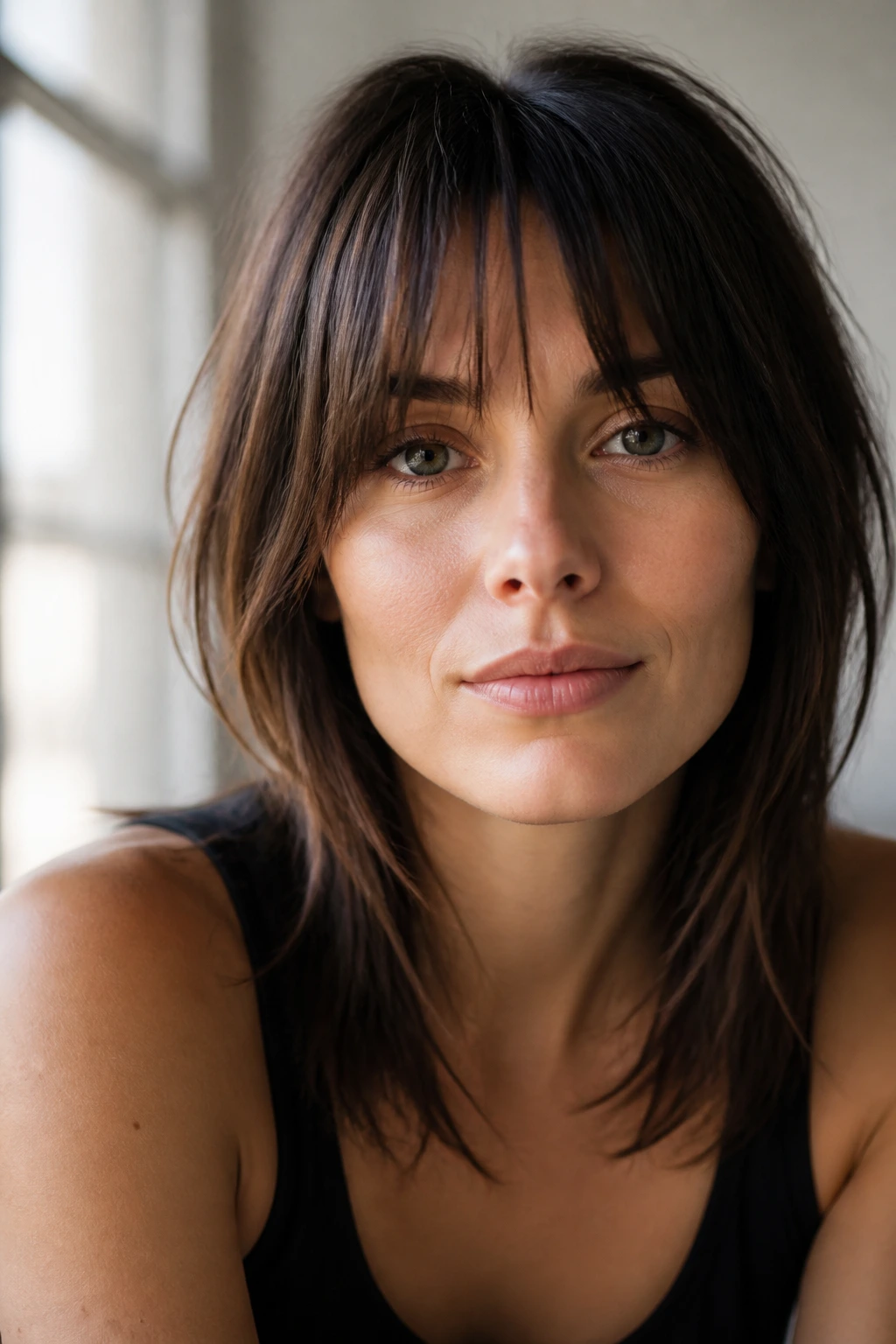
Oval faces are lucky, but luck can make people sloppy. That’s why the best bangs here are the ones that choose a job and do it cleanly: opening the cheekbones, sharpening the eyes, softening the forehead, or building width where the face wants it.
If you keep one thing in mind, make it this: texture and starting point matter more than the trend name. A curtain bang cut at the right cheekbone length will flatter one oval face beautifully and feel wrong on another if the hairline, brow height, or cowlick says otherwise.
Pick the fringe that works with your hair’s actual behavior, not the one that wins in a screenshot. That’s where the good cuts live.
