



Layered haircuts with curtain bangs have a very specific kind of charm: they make hair look like it has already done half the work for you. The layers lift and move, the bangs split and soften the face, and the whole cut seems to shrug off stiffness. Even on a plain day, even with a quick blow-dry, there’s shape there. That’s the real appeal.
I’ve always thought the best versions of this cut are the ones that don’t scream for attention. They swing when you turn your head. They fall open at the cheekbones. They let the ends live a little instead of sitting there like a blunt line waiting to be rescued by a flat iron. And curtain bangs matter more than people think. If they’re cut at the wrong length, they can pinch the face or fight your glasses; if they’re cut with the right sweep, they make the layers feel intentional instead of accidental.
That’s why this collection works across so many hair types and lengths. Long hair, medium hair, thick hair, fine hair, straight hair, wavy hair, curly hair — there’s a version that fits if you choose the right balance of face-framing pieces, internal layering, and bang length. Some of these cuts are polished. Some are shaggy and a little wild. Some grow out with almost no drama. All of them hinge on the same idea: the front matters as much as the length.
Why These Cuts Keep Showing Up on Real Clients
-
They frame the face without boxing it in: Curtain bangs split in the center and skim the cheekbones, so you get softness without a hard fringe line sitting across the forehead.
-
They give movement where hair usually falls flat: Layers around the crown, sides, and mid-lengths stop the cut from hanging like one heavy curtain.
-
They buy you a better grow-out: A center-parted fringe blends into face-framing layers faster than a blunt bang, which means fewer awkward weeks between trims.
-
They work with air-drying and blowouts: If your hair bends naturally, the cut shows it off. If you prefer a round-brush finish, the layers catch the shape fast.
-
They adapt to density: Thick hair can carry more shape and texture, while fine hair gets lift from shorter internal layers and lighter ends.
-
They make side profiles look cleaner: A good curtain bang pushes away from the eyes and temples, which keeps the cut from feeling heavy around the face.
1. Long Feathered Layers That Fall Past the Collarbone
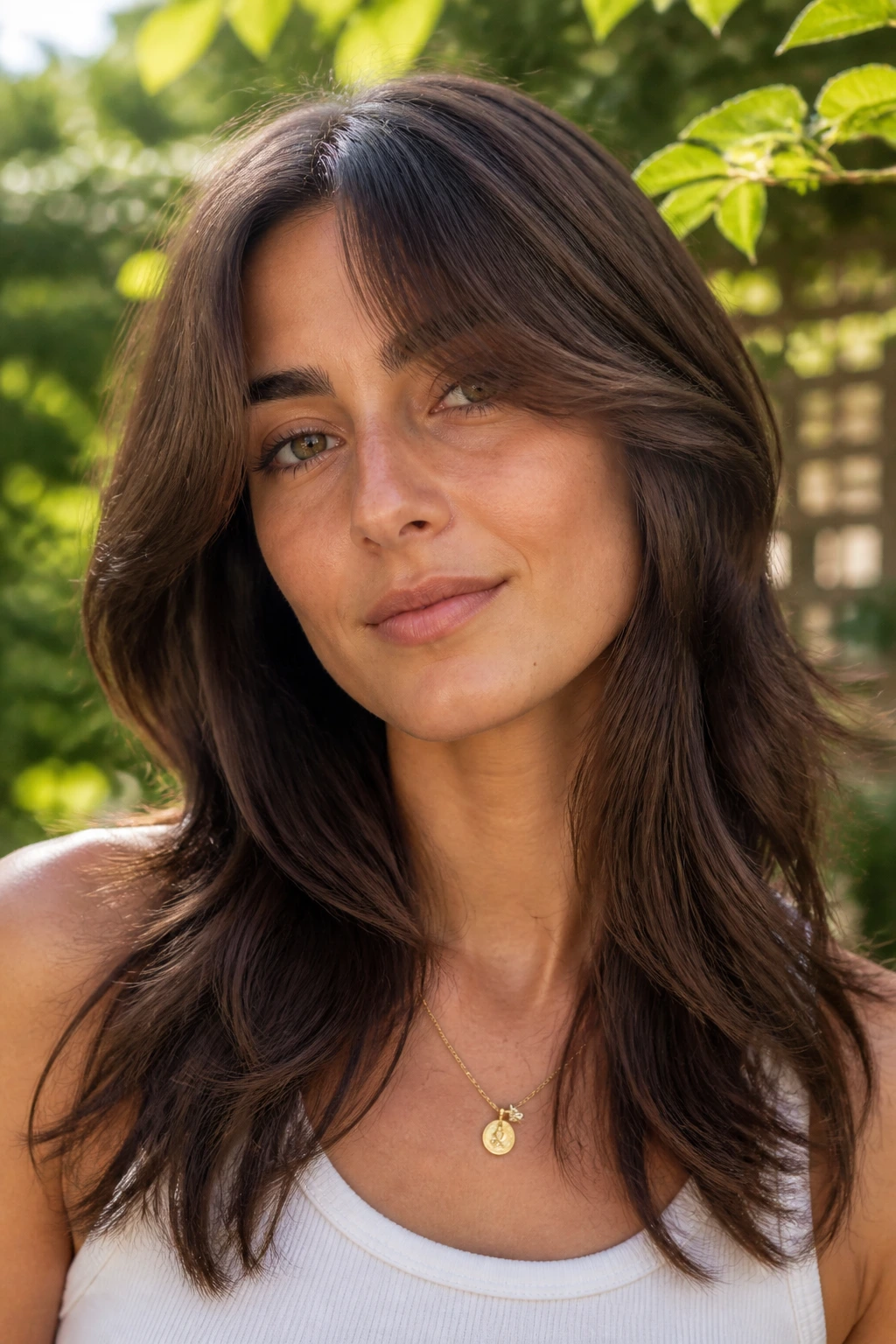
Long feathered layers are the classic answer for anyone who wants movement without giving up length. The curtain bangs start near the cheekbone, then open into soft pieces that land into the top layers. The result is airy, not choppy. You get that swingy, blown-out look even when the hair is just brushed and bent.
Why It Works
This shape is strongest on medium to thick hair, because the layers can do their job without the cut collapsing. A collarbone-to-chest length gives the curtain bangs room to melt into the rest of the cut instead of sitting like a separate section. If you like your hair in a loose bend rather than a strict curl, this is one of the easiest styles to live with.
Quick Notes
- Best for hair that holds a wave or bend.
- Ask for layers that begin below the cheekbone if you want less volume.
- A 1.25-inch round brush or curling iron keeps the face-framing pieces soft.
- Tip: Don’t curl the bangs under too tightly. The prettiest version is usually the one that opens away from the face.
2. A Soft Lob With Curtain Bangs and Bouncy Ends
A lob with curtain bangs has a cleaner edge than long layers, and that’s exactly why it works. The length sits around the collarbone or just above it, so the curtain bangs have something crisp to play against. The ends can flip under, flick out, or stay straight; all three look intentional when the cut is balanced.
This is the version I’d hand to someone who wants a haircut that behaves on ordinary mornings. It doesn’t need big styling. It needs a quick round-brush pass at the front and a little bend at the ends. If your hair tends to get limp when it gets too long, the lob brings the shape back without forcing you into a pixie or a blunt bob.
It also flatters the jawline in a way longer cuts sometimes miss. The curtain bangs soften the forehead, the lob sits close enough to the shoulders to feel fresh, and the whole thing has enough structure to look neat even when it’s a little undone.
3. The Butterfly Cut With High, Swooping Bangs
Why does the butterfly cut keep pairing so well with curtain bangs? Because both pieces of the haircut are built around lift. The shortest face-framing layers sit around the cheekbones and jaw, while the longer length stays intact underneath. That contrast is what gives the cut its air.
How to Ask for It
Tell your stylist you want shorter front layers that blend into long layers without a hard shelf. That phrase matters. If the top pieces are cut too aggressively, the cut starts looking stringy. If they’re too timid, you lose the whole point.
The curtain bangs in this cut usually begin high enough to sweep back with a round brush, not so low that they sit like two sad side pieces. It is one of the best options for anyone who likes a salon blowout look, because the shape almost builds itself once the front sections are bent away from the face.
Use a large round brush, roll the bangs up and away, and let the ends of the longer layers stay smooth. The contrast is the charm. Too much curl turns it syrupy.
4. A Shaggy Shoulder-Length Cut With Airy Fringe
I keep coming back to the shoulder-length shag because it has one of the cleanest grow-outs in the whole curtain-bang family. The layers are choppy enough to create texture, but not so short that they explode into a triangle the minute your hair gets humid. The curtain bangs stay a little longer, which gives them room to split softly instead of forming a blunt curtain across the brow.
What Makes It Different
The shag is not trying to look perfect. That’s the point. It wants a little bend, a little mess, a little piecey texture around the face. If your hair naturally waves or frizzes with character, this cut takes advantage of it instead of fighting it into submission.
- Works well on fine-to-medium hair that needs motion.
- Keep the bang length below the brow if you want easy styling.
- A texturizing spray at the mids and ends helps the layers separate.
- Small warning: too many short layers around the crown can make this shape puff out, especially on thicker hair.
The finished cut has a lived-in feel that still looks deliberate. Not sloppy. Just relaxed in the right spots.
5. U-Shaped Length With Face-Framing Pieces
A U-shaped cut is one of my favorite ways to wear long hair with curtain bangs, mostly because it keeps the back full while opening the front. The perimeter curves gently instead of dropping in a straight line, and that tiny change makes the whole cut feel softer. The curtain bangs carry the shape forward, so the front doesn’t look weighed down by all that length behind it.
This works especially well if you dislike the look of blunt ends on long hair. A blunt line can make the cut feel heavy, even if the hair is healthy and glossy. The U-shape breaks that visual weight. It also gives you more styling options, because the front pieces can be bent inward for polish or flipped away from the face for a looser finish.
If your hair is dense, this is a smart choice. The curve removes bulk from the outline without making the ends thin and scraggly. If your hair is fine, ask for a subtle U rather than a deep one. Too much taper and you lose the body.
6. A Curly Cut That Lets the Fringe Curl Open
Curly hair and curtain bangs can be a dream, but only if the bangs are cut with the curl pattern in mind. A dry cut usually makes more sense here, because curly hair shrinks in a way that wet cutting simply can’t predict. The bangs need enough length to spring upward and still land at the right spot once the curls dry.
The best curly version doesn’t force the fringe to behave like straight hair. It lets the center part open naturally, then shapes the front layers so they fall around the eyes and cheekbones. That keeps the face framed without flattening the curl pattern.
A diffuser helps, but so does restraint. Use a small amount of cream or gel, then stop touching it. The front will do what curly hair does best: move. If you keep the curtain bangs too short, they can shrink into a puff. Leave room for the curl to live.
This is one of the most flattering layered haircuts with curtain bangs when the cut respects texture instead of correcting it.
7. The C-Cut: Smooth Layers That Curve Inward
The C-cut is the polished cousin in this group. It’s named for the way the layers curve around the face, sweeping inward like a soft letter C instead of kicking out in a rough stack. Curtain bangs are almost built for it, because the bang pieces help the front curve start high and finish low without a hard edge.
This cut shines on straight or slightly wavy hair that you like to blow-dry smooth. The layers aren’t loud. They’re precise. And because the front is shaped so carefully, the style looks expensive even when you’ve only spent ten minutes on it. That’s my honest read on it: it’s one of those cuts that looks more finished than it actually is.
If you want a shape that feels refined rather than edgy, this is the one. Ask for face-framing layers that begin around the cheekbone and curve into longer lengths through the mid-back of the hair. The curtain bangs should blend, not disconnect. That’s the whole trick.
8. Razored Mid-Length Layers With Piecey Bangs
Razored layers are not for everyone, and I’ll say that plainly. On the right head of hair, though, they bring a light, broken-up texture that scissors can’t always fake. The curtain bangs turn piecey and airy, the mid-length layers separate a little at the ends, and the whole cut looks like it has movement built into it.
Best Fit
This shape makes sense if your hair is medium to thick and you like texture that reads a little undone. It is not the cut for someone who wants glassy, heavy ends. A razor can thin things out too much on fine hair, which is why I’d skip it there unless your stylist knows exactly how your hair behaves.
What to Tell Your Stylist
- Ask for soft razoring through the mid-lengths only.
- Keep the curtain bangs long enough to tuck behind the cheekbone.
- Avoid over-thinning the ends if your hair frizzes easily.
- Good pairing: a light styling cream, not a crunchy gel.
The cut wakes up fast with a little mist of water and a scrunch or two. That’s part of its appeal. It doesn’t need a perfect blowout to make sense.
9. A Wolf-Cut Shape That Stays Soft Around the Face
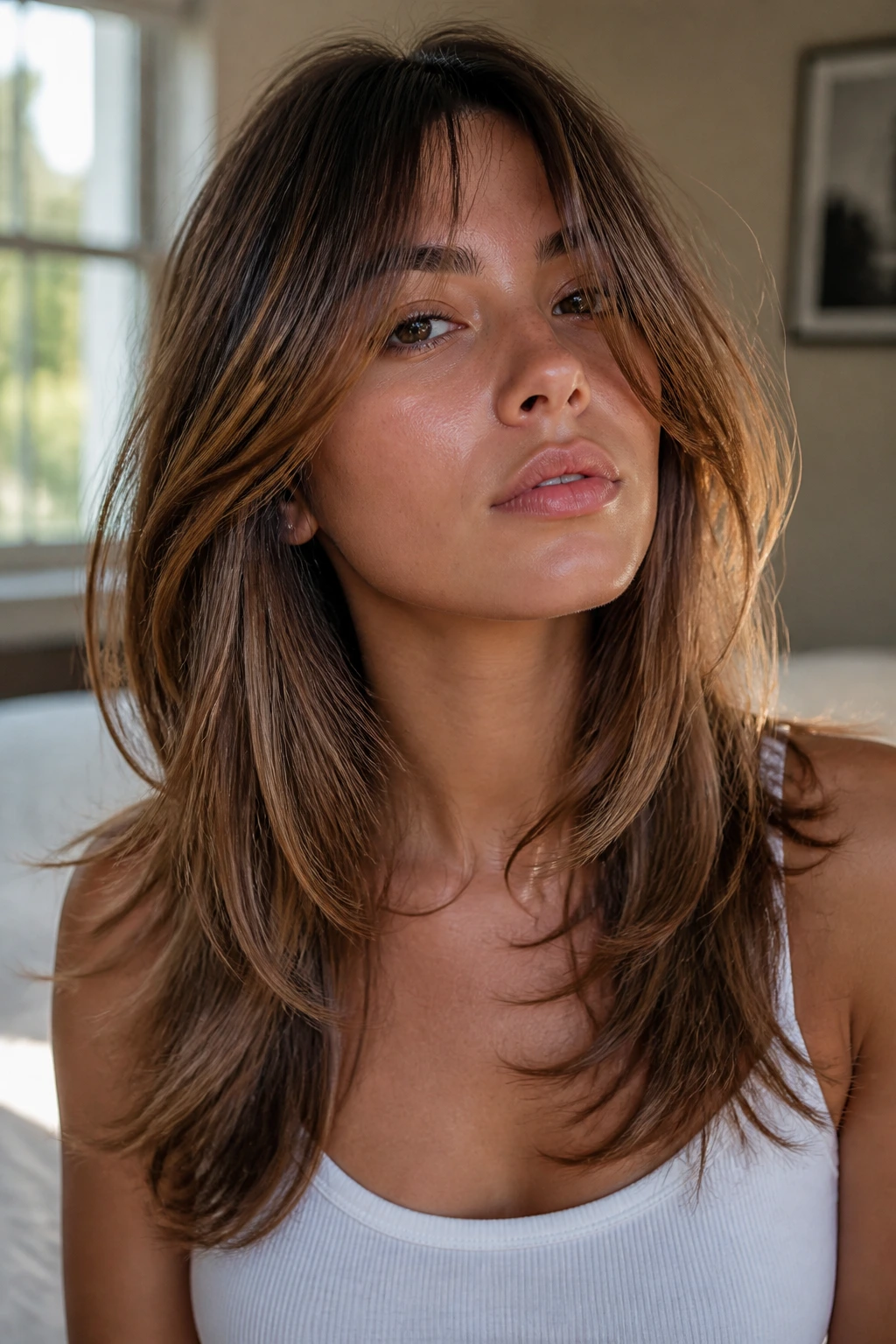
A wolf cut sounds louder than it usually is. The best version with curtain bangs is less mullet, more shag with attitude. The front pieces are the softening agent here. They stop the cut from veering into costume territory and keep the whole thing wearable.
This shape suits people who want texture and a little edge but do not want short, blunt fringe across the forehead. The curtain bangs give the cut a face-friendly entry point. They also help the layers transition from short to long without a hard line. If the back is shaggy and the top is airy, the front has to do some smoothing work.
I like this cut most on wavy hair. Straight hair can wear it too, but it may need more styling to show the movement. Ask for layers that stay soft around the cheek and jaw rather than jumping too high. That keeps the shape modern instead of severe.
Nope, it doesn’t need to look rebellious to work. It just needs to move.
10. Blunt Ends, Internal Layers, and a Soft Curtain Fringe
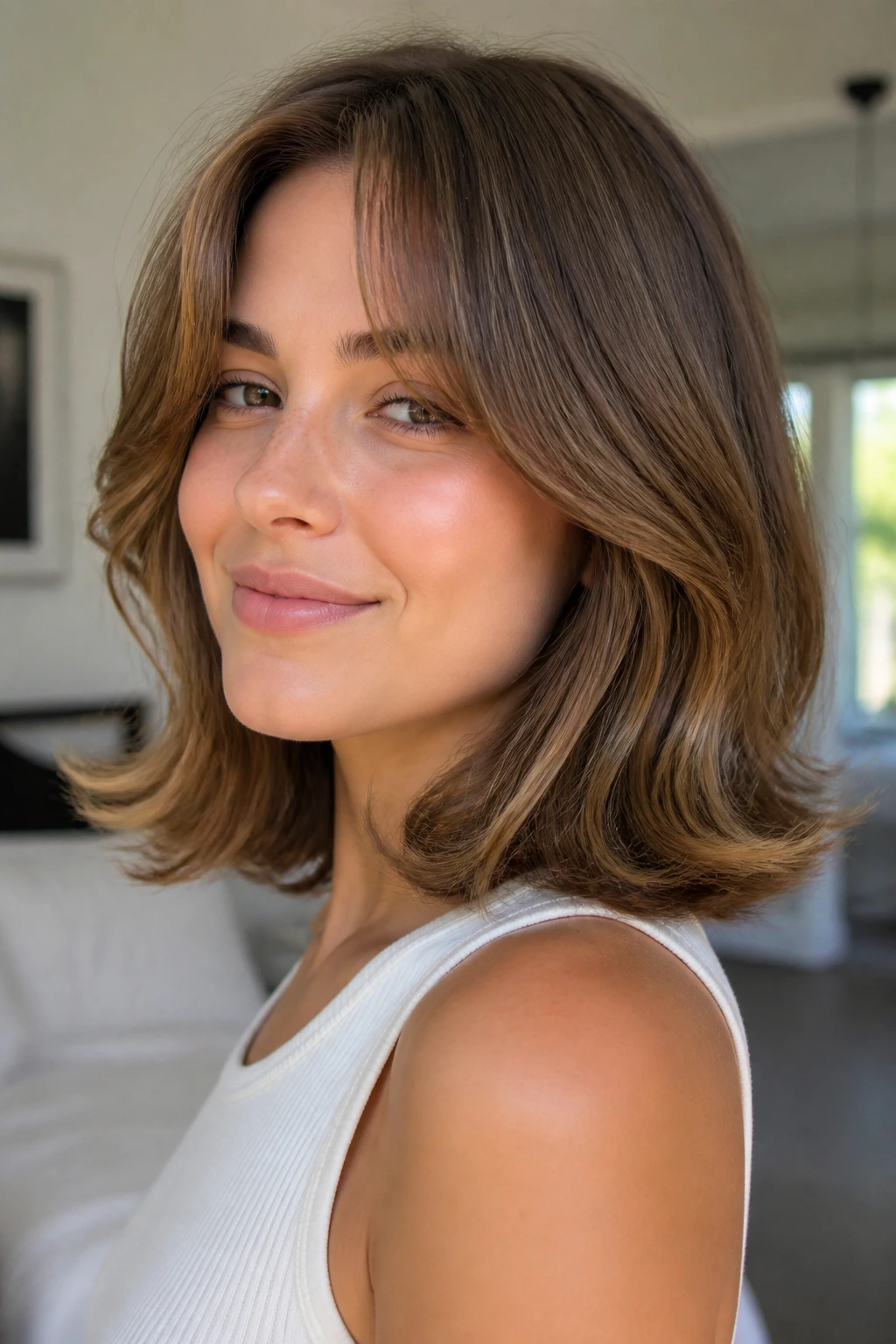
There’s something sharp and useful about this combination: blunt ends for weight, internal layers for lift, and curtain bangs to soften the front. It looks especially good on hair that needs structure but hates feeling bulky. The blunt perimeter keeps the line clean, while the hidden layers prevent it from turning boxy.
This is one of the smarter layered haircuts with curtain bangs for people who want the hair to sit neatly on the shoulders. You get movement when you walk, not just when you curl it. The curtain fringe breaks up the forehead and keeps the style from looking too solid.
A lot of people think blunt ends and layers cancel each other out. They don’t. They balance each other. The ends hold the shape; the inside removes the weight. Ask for invisible layering through the interior and keep the outer line crisp. If your hair is thick, this combo can save you from that triangle effect that shows up a month after a haircut.
11. Feathered 70s Layers With a Big Blowout
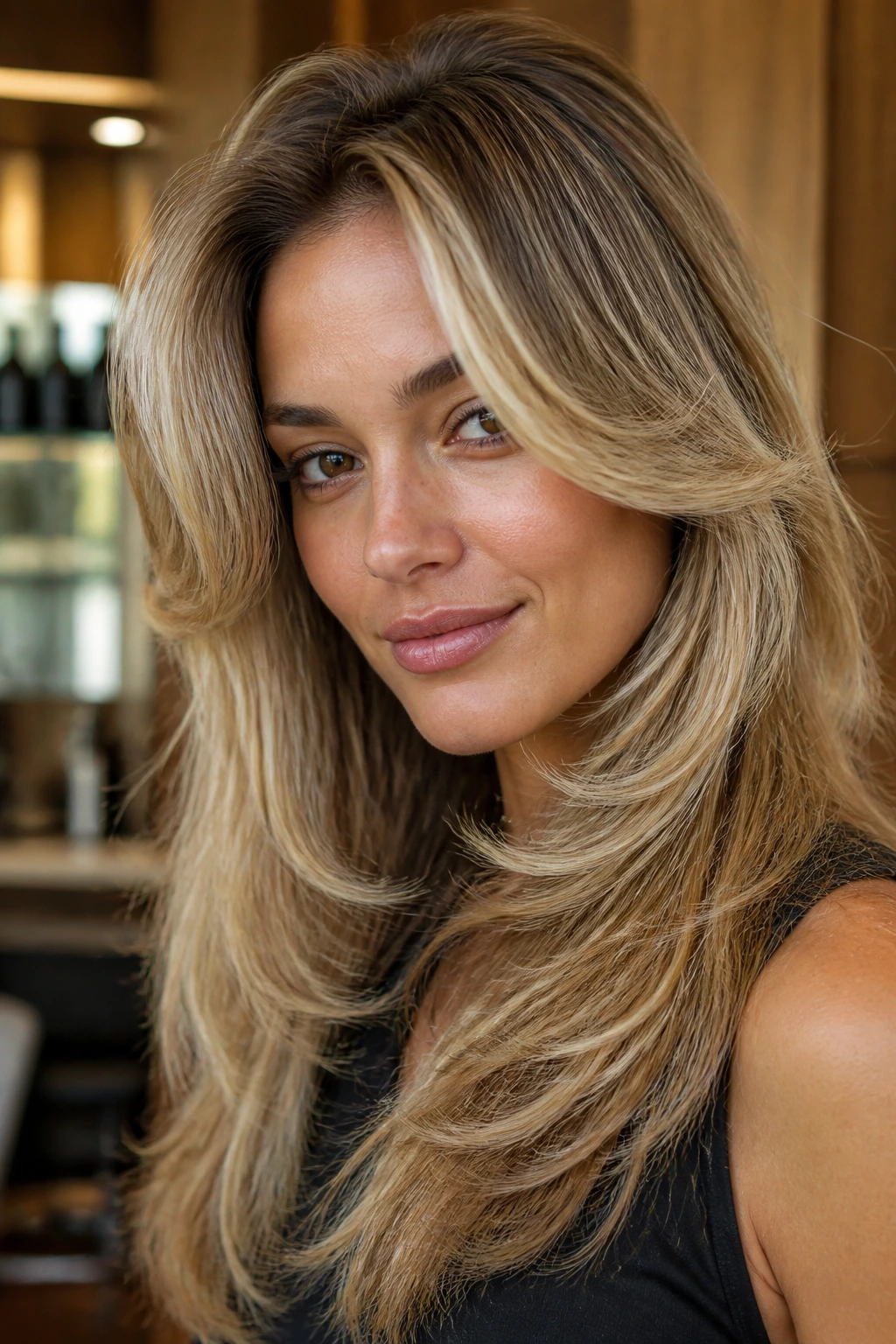
Feathered layers are having a very sensible comeback, and the curtain bangs belong there. The look is all about movement away from the face: soft, flipped sections, airy crown volume, and ends that fan out instead of hanging straight down. It’s glamorous in a low-key way. No helmet hair. No stiff shell.
The styling matters as much as the cut. A medium or large round brush, a blast of heat from the roots, and a cool shot at the end make a huge difference. If you can, let the bangs set in a roller for a few minutes while you finish the rest. That little pause helps them hold the swoop.
This cut is especially good if you like your hair to look full without looking bulky. The feathering removes visual weight around the cheeks and jaw, which can be a gift if your face feels swallowed by long, heavy sections. The result has bounce. Real bounce. Not the fake kind from one curled piece at the front.
12. A Choppy Bob With Longer Curtain Bangs
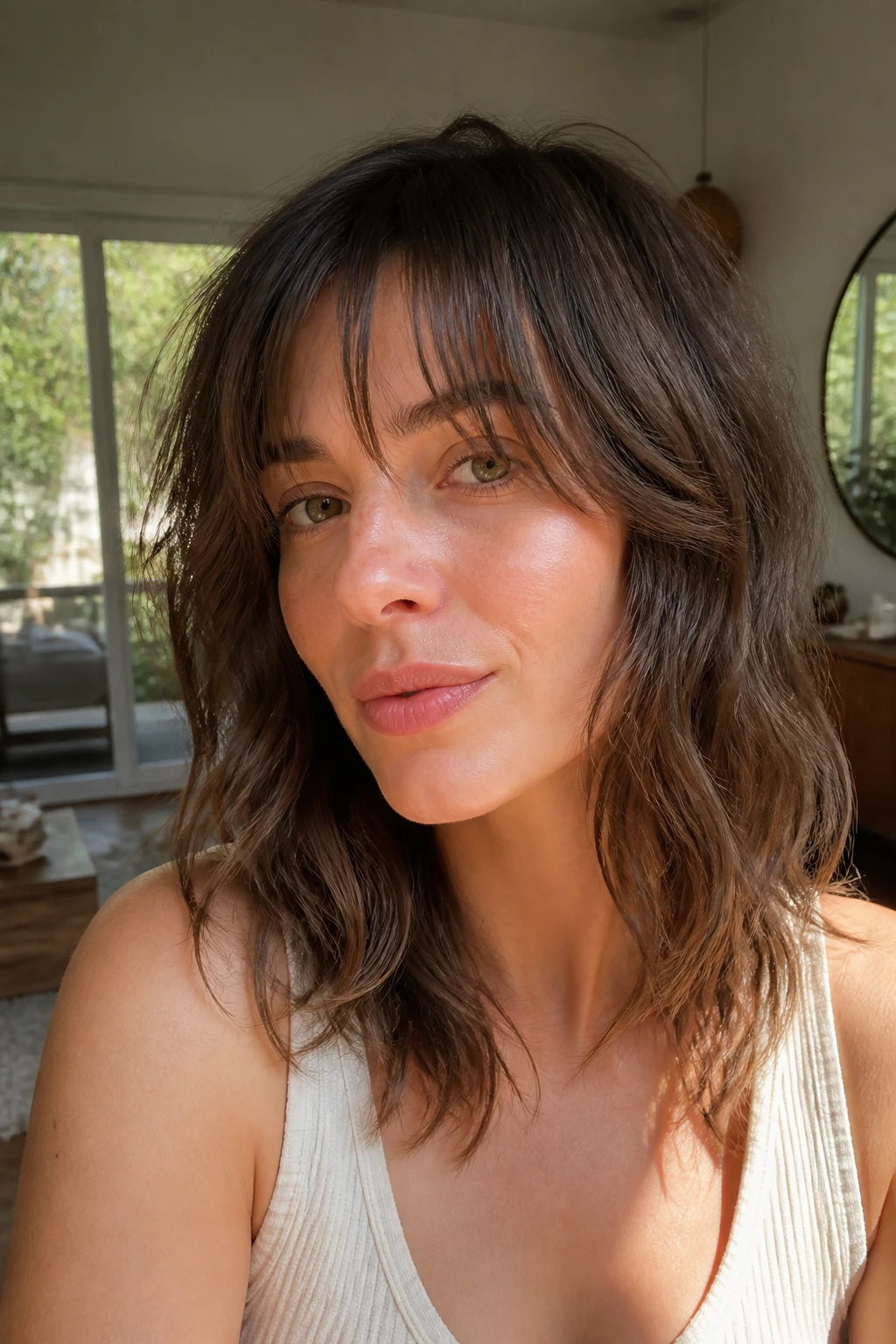
A choppy bob with curtain bangs is for people who want a little bite in the silhouette. It’s shorter, yes, but the layers keep it from feeling rigid. The bangs stay longer than a classic fringe, which matters because a short bang on a bob can make the cut feel too hard around the face.
What I like here is the contrast. The bob outline is neat, almost blunt, while the interior texture keeps the shape from sitting flat. The curtain bangs stretch the front forward and make the whole cut look less severe. If you tuck one side behind the ear, the asymmetry gets even better.
This one flatters the neck and jawline fast. It also works well if you don’t want the upkeep of long hair but still want something that looks styled. A little wave, a little texture spray, and you’re done. Straight and sleek can work too, but the choppy ends are what give it personality.
13. Thick-Hair Layers That Remove Bulk Without Losing Shape
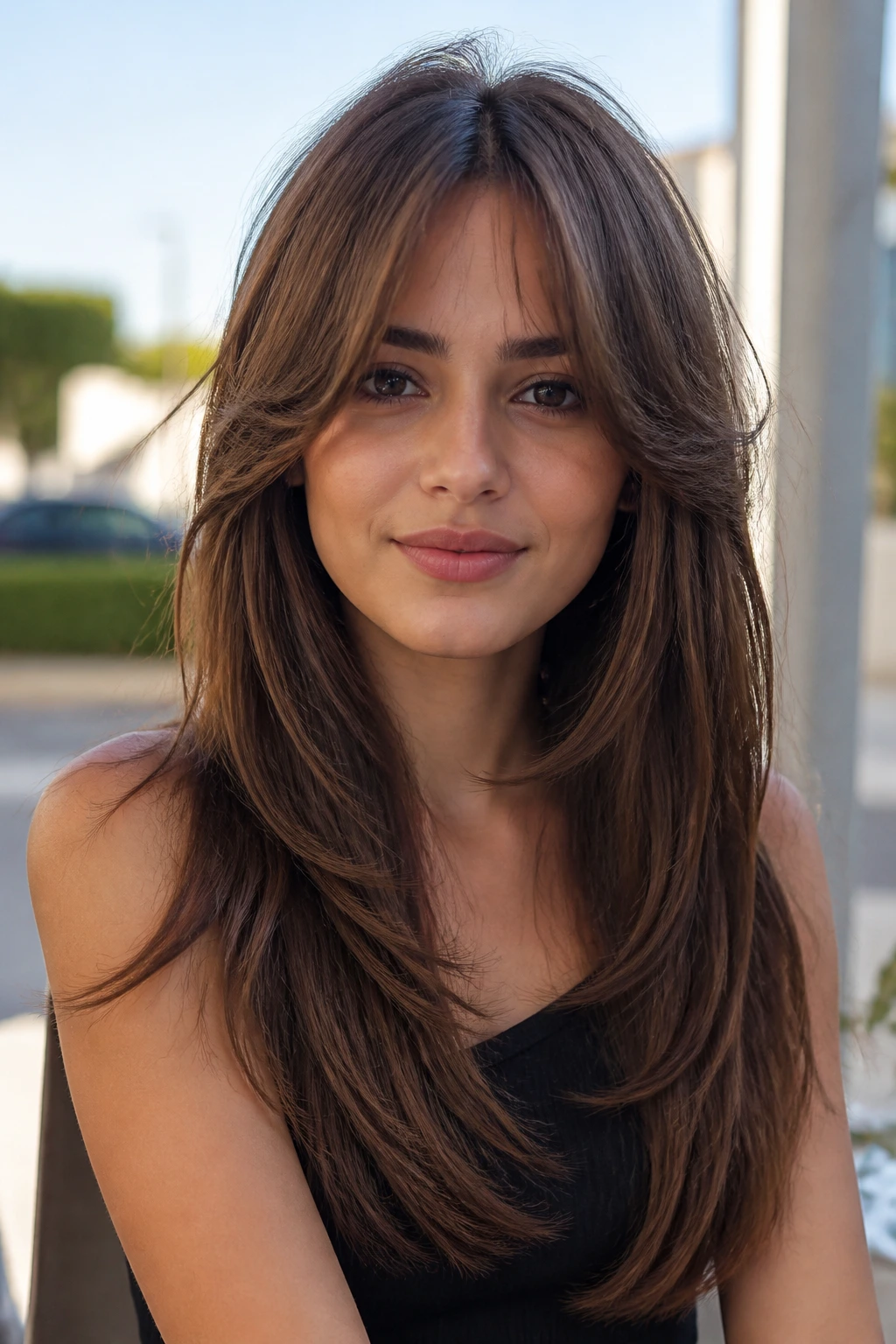
Thick hair needs a different kind of layering. Too much slicing and you get a halo of frizz. Too little and the cut feels like a blanket. The sweet spot is internal weight removal paired with long curtain bangs that skim the face rather than sit as a heavy block.
What to Ask For
Tell your stylist you want bulk removed from the inside, not the outline destroyed. That phrase helps keep the cut from looking thinned out at the ends. Curtain bangs should be cut long enough to sit near the cheekbones, because thick hair tends to spring up a bit more than expected.
The best thick-hair version moves, but it still feels full. That balance is what makes it worth wearing. If your hair puffs in humidity, ask for the front to be kept a touch longer. The bangs can always be nudged shorter later. They cannot be put back.
A smoothing cream at the ends and a quick pass with a paddle brush can tame the shape without flattening it. That’s the goal here: control, not collapse.
14. Fine-Hair Layers That Fake More Lift
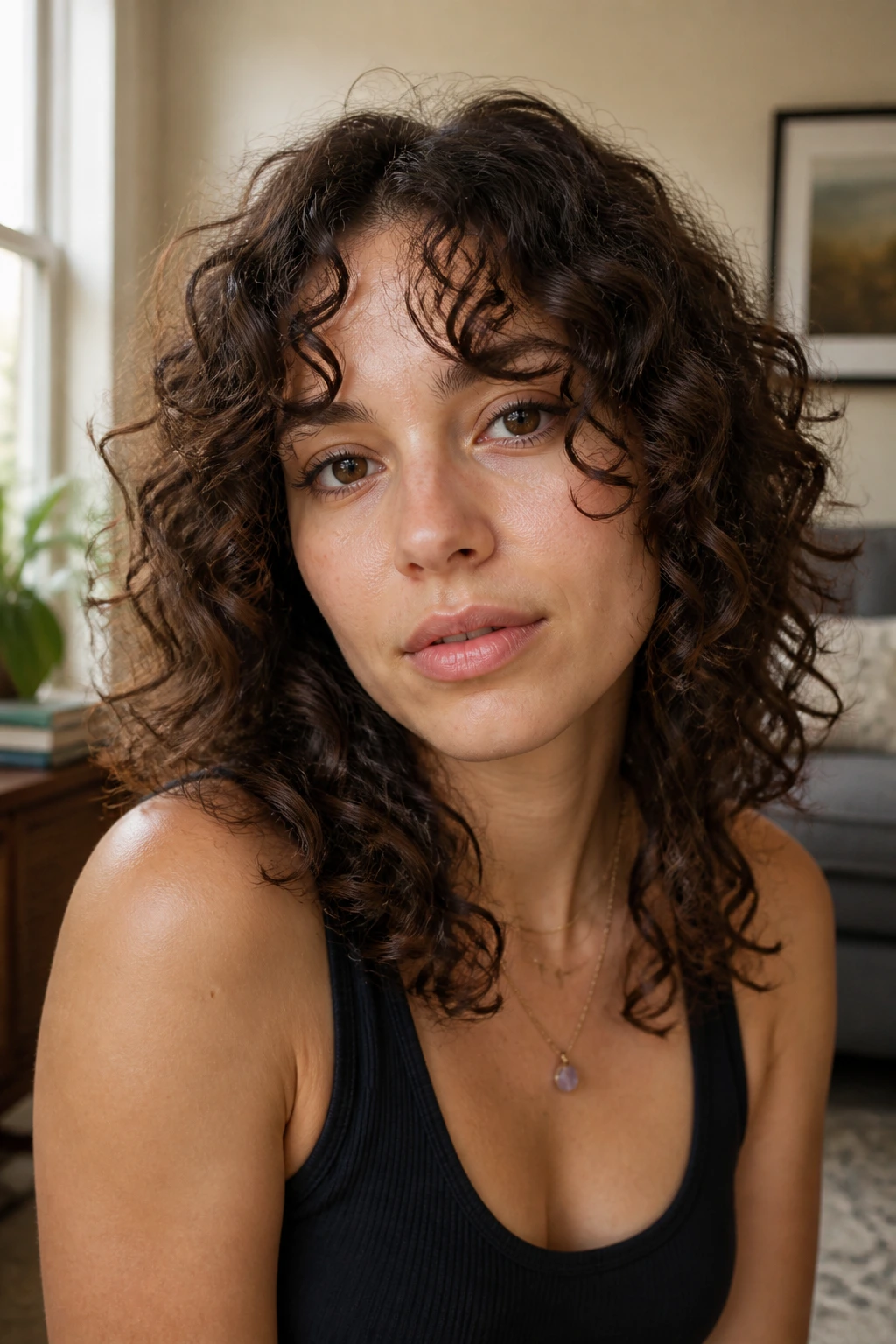
Can fine hair wear curtain bangs without looking flat? Absolutely — if the layers are light and the bang length is handled with care. The trick is to keep the front pieces soft enough to move, but not so long that they drag the rest of the cut down. Shorter internal layers around the crown can give you a little lift where you need it most.
This cut is a good fit if your hair goes limp fast or if you’ve given up on styles that need a lot of density. Curtain bangs help fine hair look fuller at the front because they create two soft panels instead of one thin strip. That split makes the hairline less obvious, which is a small but useful trick.
Use mousse at the roots, not the ends. Then blow-dry the front with a small round brush and let the rest fall where it wants. Fine hair does not need a heavy hand. It needs shape and a little patience. And maybe a dry shampoo mist at the root on day two.
15. Medium-Length Layers With Flipped-Out Ends
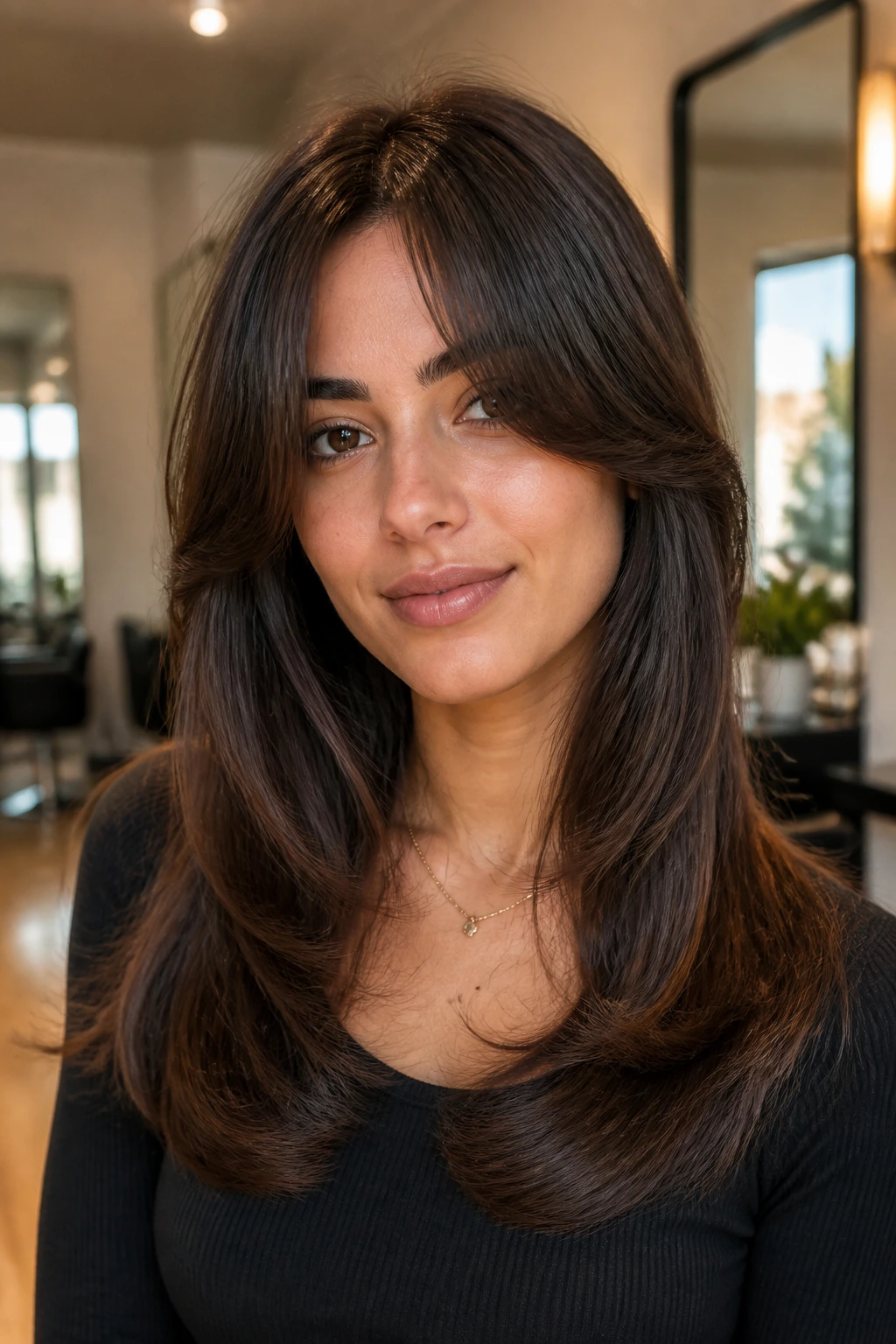
This cut lives in a sweet spot: long enough to move, short enough to feel light. The layers start around the chin or collarbone, then the ends flip out just enough to give the style some attitude. Curtain bangs slide into those front pieces and keep the whole thing from looking too round or too tidy.
A medium-length cut like this works best when you want a visible haircut without committing to very long hair maintenance. It also photographs well under ordinary light because the flipped ends catch the eye without needing a lot of product. A little bend at the ends and a clean center part are usually enough.
If you style with a blow dryer, curl the ends away from the face at the front and alternate directions through the rest. That keeps the layers from looking too symmetric. If you air-dry, a touch of cream on the mids and ends gives enough separation. The shape should feel relaxed, not overworked.
16. V-Cut Length With Dramatic Front Pieces
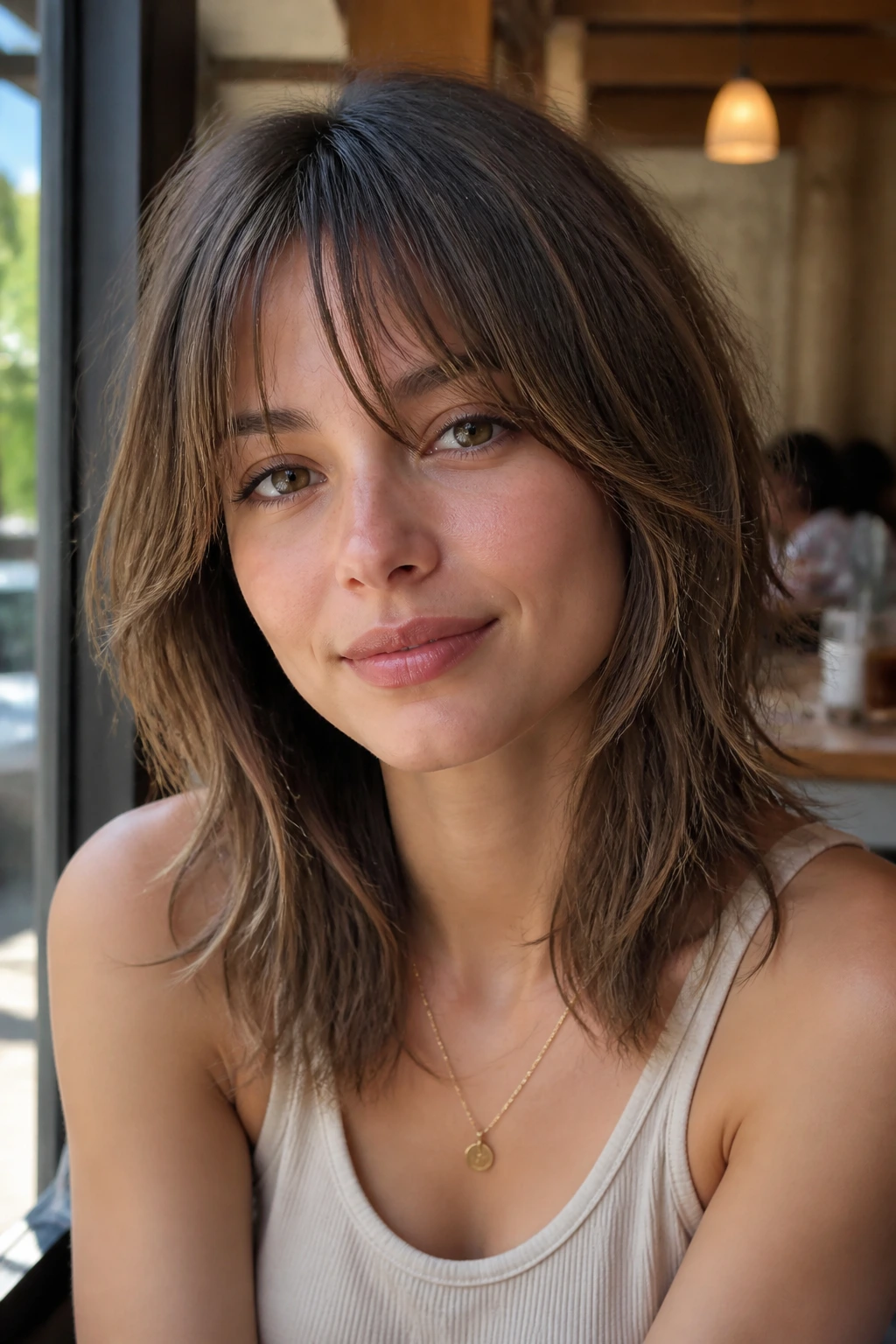
A V-cut gives you a point at the back, and that point changes everything. Instead of the hair falling in a flat arc, the shape narrows toward the ends and creates a more dramatic outline. Curtain bangs complement it well because the front pieces soften the angles before the eye reaches the point at the back.
This is one of the better choices for very long hair that needs some structure. The front doesn’t get lost, and the back doesn’t turn into one giant sheet. If you like a little drama in your hair but not a lot of short layers, this is a smart middle ground.
The style works best when the front pieces are cut to skim the jaw and cheekbone before blending into the longer lengths. That gives the curtain bang room to do its job. If your hair is thick, the V-cut also helps the ends move instead of dragging. If your hair is fine, keep the point subtle. Too much taper and you lose density.
17. Grown-Out Curtain Bangs for Low-Maintenance Wear
Grown-out curtain bangs are the practical choice, and I mean that kindly. They are for people who like the look of bangs but don’t want to babysit them every three weeks. The fringe sits long enough to part in the middle, brush to either side, or blend into the front layers. That flexibility is the whole point.
This version looks especially good with layered haircuts because the bangs stop reading as a separate feature. They become part of the cut. If your hair grows fast or you hate the feeling of a blunt bang touching your lashes, this is the version I’d put at the top of the list.
Style them with a quick bend rather than a full curl. A brush, a dryer, and a tiny bit of tension are enough. Let the ends skim the cheekbones and stop there. The beauty of this look is that it doesn’t need to be perfect to look intentional. It just needs to be left alone at the right moments.
18. Textured Layers With a Center-Parted Fringe
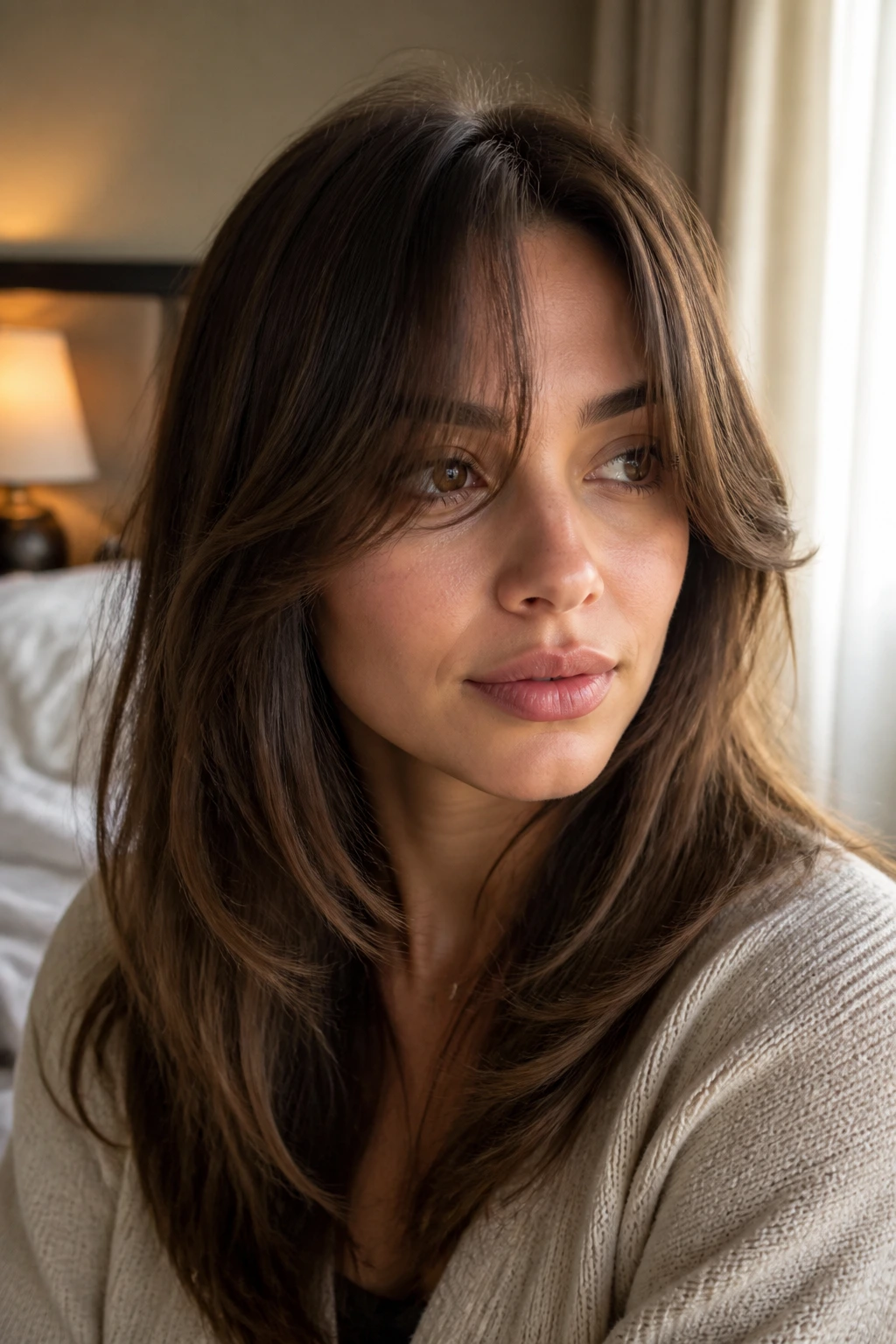
Textured layers with a center-parted fringe are the least fussy way to wear curtain bangs and still look styled. The layers can be soft or choppy depending on your hair, but the shape always comes back to the center part and the open front. That parting line gives the haircut its calm.
This cut suits people who prefer hair that looks better after it’s been touched, bent, or lived in a bit. It does not require a polished finish. Waves, bends, and air-dried texture all help. If your hair has natural movement, this style lets it stay visible instead of being brushed out flat.
Ask your stylist for front pieces that frame the cheekbones first, then taper into the rest of the layering. The middle part should stay readable even when the hair shifts. That is what keeps the fringe from swallowing your face. It’s a simple cut on paper. In real life, the texture does the talking.
Why Layered Haircuts and Curtain Bangs Work So Well Together
The reason this pairing keeps working is geometry, plain and simple. Curtain bangs split the front of the face into two soft panels, and layers keep the length from hanging in one heavy block. Put those together and the hair starts moving in different directions instead of falling like a curtain rod.
There’s also a balance issue at play. One-length hair can look shiny and strong, but it can also make the face look broader or the ends feel thick in an awkward way. Layers break up that mass. Curtain bangs then pull the eye inward, toward the cheekbones and jaw, which is where a lot of faces look best framed.
The cut also responds well to different styling habits. If you like a round brush and a blowout, the front pieces can curve away from the face. If you prefer air-drying, the layers can rough-dry into shape with a little cream or mousse. That flexibility matters. A haircut that only looks good in a salon chair is a bad haircut in real life.
What to Tell Your Stylist Before the First Snip
A good curtain-bang haircut starts with a clear conversation, not a vague “something soft.” Bring a photo, yes, but also say what you want the front to do. Do you want it to open at the cheekbones? Hit the jaw? Blend into long layers or stay distinct?
The Three Things to Mention
- Your daily styling habit: If you air-dry, say that. If you blow-dry with a round brush, say that too.
- Your part: Curtain bangs behave differently on a center part than on a slight off-center part.
- Your density and texture: Thick, fine, curly, or straight hair changes the way the front should be cut.
If you wear glasses, mention that. If your forehead is short or your hairline is strong, mention that too. Those details change the bang length more than people expect. A good stylist will adjust the point where the fringe starts so it opens at the right spot instead of landing straight across the lenses.
And ask about maintenance honestly. Some versions need a trim every six to eight weeks. Others can drift longer. There’s no prize for pretending you’ll style a high-maintenance fringe every morning at 7:00 a.m. You know yourself better than the inspiration photo does.
Tools That Make the Shape Behave
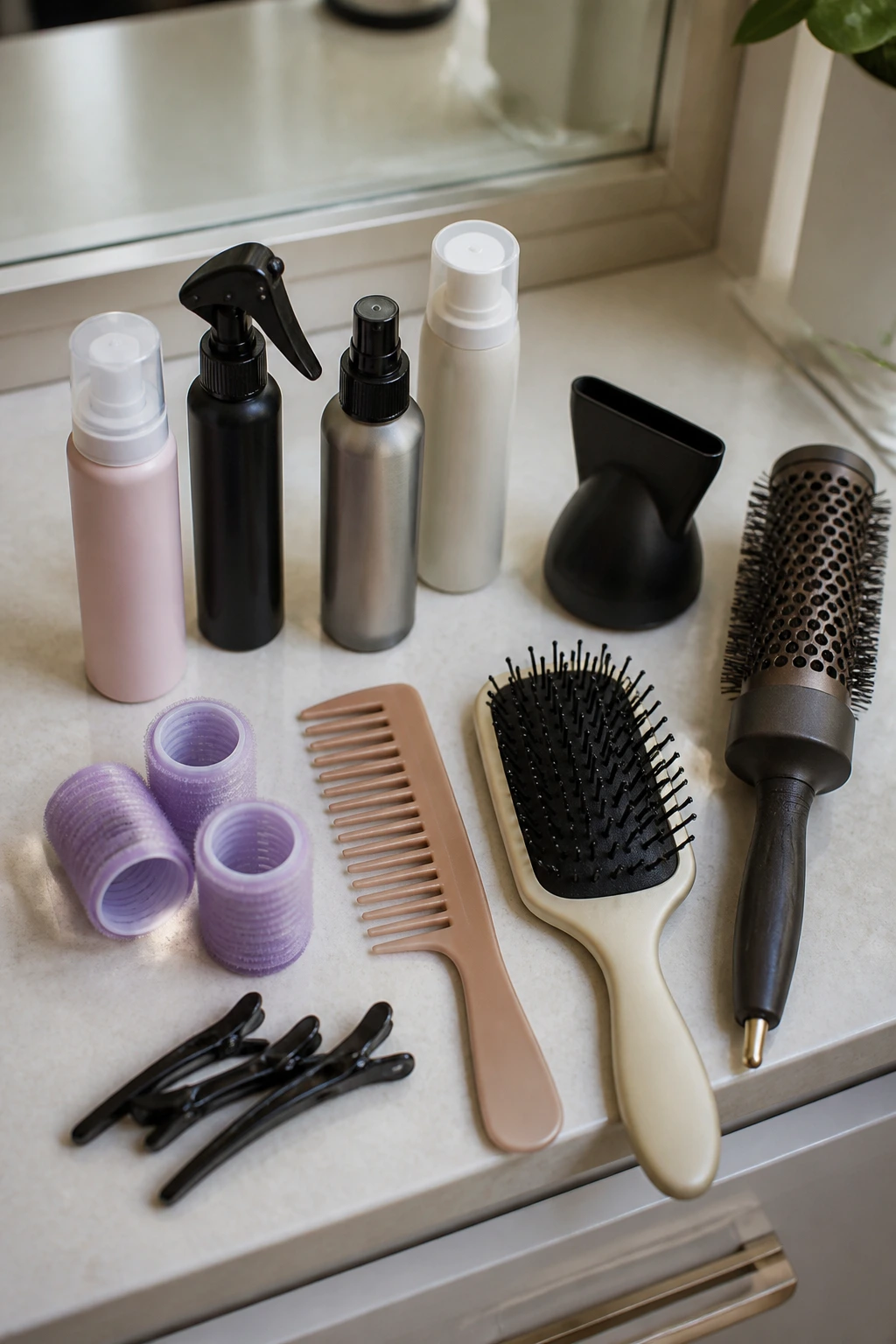
- 1-inch round brush: Best for shorter curtain bangs or tighter bends at the front.
- 1.25-inch round brush: The workhorse size for most layered cuts with curtain bangs; gives a softer lift.
- Blow dryer with a concentrator nozzle: Directs airflow so the bangs don’t puff in every direction.
- Heat protectant spray: Keeps the front pieces from drying out, especially if you restyle them often.
- Light mousse or root lift spray: Adds structure at the crown without making the ends sticky.
- Velcro rollers: Handy for setting the bangs while you do makeup or get dressed.
- Texturizing spray: Useful on shaggy, wolf-cut, or choppy versions where piecey separation matters.
- Paddle brush: Good for smoothing long layers without flattening the entire head.
- Wide-tooth comb: The safer choice for wavy and curly cuts.
- Hair clips: Sectioning the bangs properly makes a big difference. No, seriously. It does.
How to Style These Cuts at Home Without Fighting the Bangs
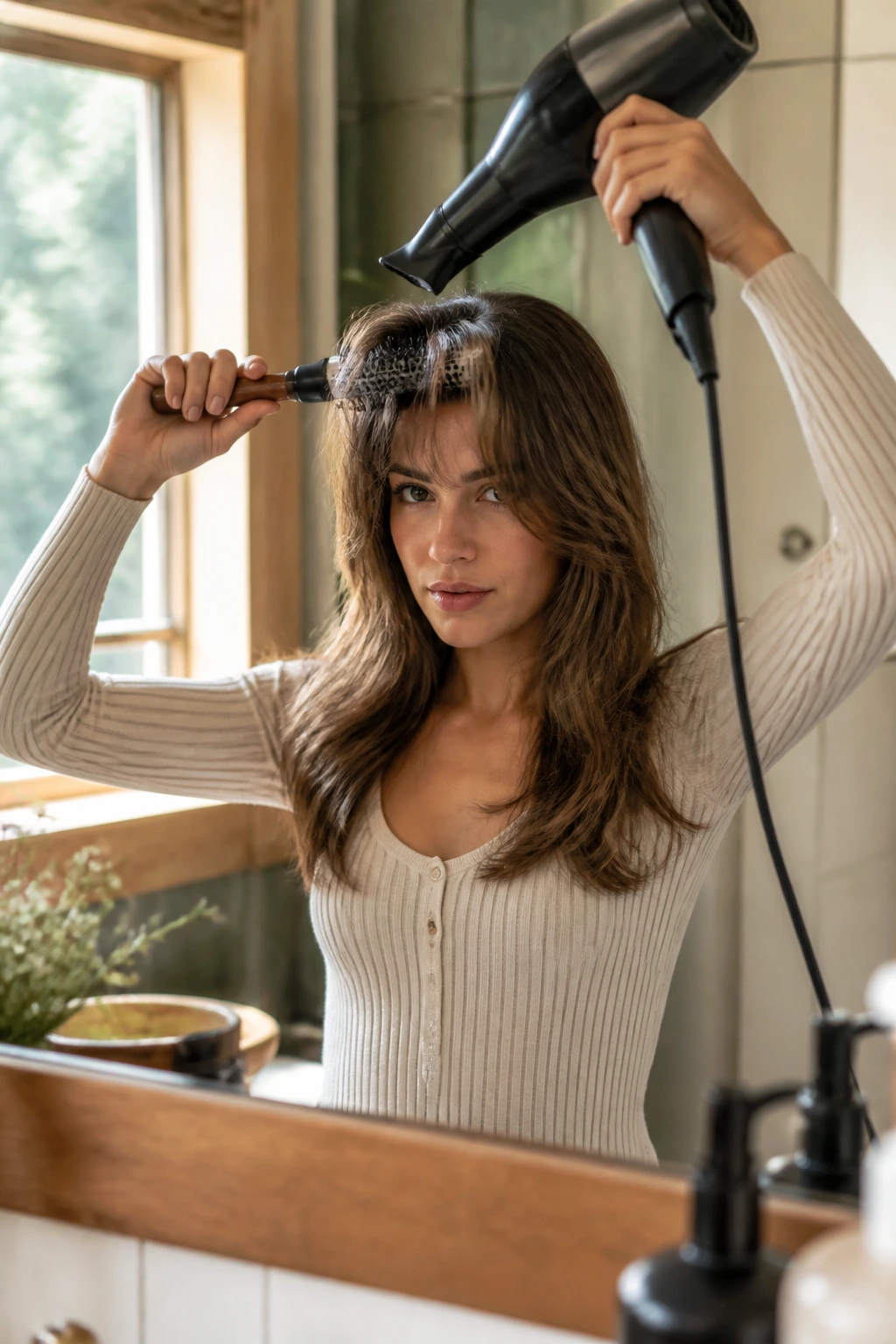
Start at the front. Always. The curtain bangs need direction before the rest of the hair gets in the way, and if you leave them for last, they usually end up overworked. Dry the fringe from side to side first, then bend each half away from the face with a round brush or a brush and dryer combo. That small movement keeps the part from looking flat.
Brush Size Matters: a smaller brush gives more curve, while a larger brush keeps the bend softer and more natural. If your bangs are chin-length or longer, go bigger. A tiny brush can make them look curled instead of swept.
Use Less Product on the Ends: the face-framing pieces need a little help, not a wet coat of styling cream. Too much product near the bang area makes the hair separate in clumps and stick to the forehead.
Heat Setting: medium heat is enough for most hair types. High heat dries the front too fast and can leave the bang line puffy at the roots. That’s especially true on fine hair.
Lazy-Day Fix: if the layers look good but the bangs don’t, dampen just the front section with your hands, twist each side away from the face for a few minutes, then let it fall. It takes less time than a full restyle and often works better than starting from scratch.
Common Mistakes That Flatten Curtain Bangs
A lot of bad curtain bangs fail for the same few reasons. The first is cutting them too short. Short curtain bangs can be cute for a week, then they spring upward and sit in the middle of the forehead like they got lost. Leave enough length for the hair to bend and split.
Another common problem is over-layering the front. If the stylist takes too much from the face-framing pieces, the bang section turns thin and stringy. You want separation, not a sad little veil. The fix is simple: keep some weight in the front so the bangs have something to drape on.
Wrong styling direction is another one. If you curl curtain bangs inward toward the face, they can close the face off instead of opening it. Bend them away. That’s the whole spirit of the cut.
Heavy products cause trouble too. Oil, thick creams, and too much dry shampoo can make the front piecey in the wrong way. Use small amounts. The hair around the forehead gets touched the most, so it doesn’t need a pile of product.
Finally, people forget the maintenance line. Curtain bangs are forgiving, but they still grow. Once they start hitting the cheek instead of the eye area, the whole shape changes. A trim every 6 to 10 weeks keeps the face frame where it belongs.
Variations and Alternative Approaches
Soft Side-Swept Blend: If you like the idea of curtain bangs but want less center-part drama, ask for a version that can wear slightly off-center. It softens the open middle and feels gentler on round or shorter faces.
Shaggy-and-Soft: Keep the layers rougher through the mids and ends, but leave the bangs longer and softer. This is a good route if you want edge in the body of the cut without making the fringe too choppy.
Polished Blowout Layers: Ask for smooth, rounded layers and longer curtain bangs that can be brushed into a clean swoop. This version suits people who like a finished look and don’t want the hair to feel too broken up.
Curly Face Frame: For curls, keep the curtain bangs longer than you think you need and let them dry naturally before trimming the final shape. That gives the curl room to open instead of shrinking into a stubby fringe.
Low-Maintenance Grow-Out: Let the curtain bangs drift a little longer and blend them into the front layers. This works well if you only want the bang effect on styling days and don’t want to babysit the shape every morning.
Keeping the Cut Fresh Between Trims
Curtain bangs usually need attention before the rest of the cut does. That’s normal. The front pieces grow into your eyes first, and the layers around the face lose their sweep before the length feels old. A light trim every 6 to 8 weeks keeps the bangs from dragging down the cut. If the rest of the hair is very long, you can often stretch the full haircut a bit longer.
Between appointments, focus on the front. A tiny trim at home is tempting, but I’d be careful with that unless you’ve done it before and know your hand is steady. Curtain bangs are easy to overcut. Once they’re too short, the whole point of the softness disappears.
Dry shampoo can help on day two or three, but use it at the roots, not all over the bangs. If the front starts looking dusty or stiff, brush it out and re-bend it with a little heat. A quick reset beats piling on more product.
If you wear the cut curly or wavy, refresh the front with damp hands and a touch of leave-in, then let the rest of the hair do its thing. The shape usually comes back faster than people expect.
Frequently Asked Questions
Do curtain bangs work on fine hair?
Yes, if they’re kept light and not over-thinned. Fine hair often looks better with longer curtain bangs and shorter internal layers that add a little lift at the crown. Heavy products are the enemy here; use mousse or root spray instead.
Are layered haircuts with curtain bangs hard to style?
Not usually. The front needs the most attention, but once the bang section is bent away from the face, the rest of the cut can air-dry or get a quick brush-through. The more your hair has natural bend, the easier this becomes.
What face shapes suit curtain bangs best?
They’re flexible, which is why people keep coming back to them. Longer faces like the width they create at the cheeks, while rounder faces often do well with longer, cheekbone-skimming bangs that open low and soft. The bang length matters more than the face shape label.
Can I wear curtain bangs with curly hair?
Yes, but the bangs need to be cut with shrinkage in mind. A dry cut or a curl-by-curl approach usually gives a better result than cutting curls straight across when wet. Leave more length than you think you need.
How often should curtain bangs be trimmed?
Most people need a touch-up every 6 to 8 weeks. If your hair grows quickly or the fringe sits right at the eyes, you may want a trim sooner. Longer, grown-out curtain bangs can go a little longer between visits.
Will curtain bangs make my forehead look smaller?
Usually, yes, because they break up the open space at the front of the face. But the effect changes with the starting point and length. Very short curtain bangs can emphasize the forehead if they sit too high, so longer is often safer.
Can I tuck curtain bangs behind my ears?
Longer curtain bangs can be tucked or pinned back easily. That’s one reason they’re so wearable. If you want the option to wear them away from the face, keep the front pieces long enough to reach the cheekbone or jaw.
What if my bangs keep splitting in the wrong place?
That usually means the section is too short, too heavy with product, or cut without enough blend into the front layers. A stylist can soften the angle and adjust the parting point. At home, try drying the bangs side to side and letting them cool away from the face.
The Shape That Grows Out Well
The best thing about layered haircuts with curtain bangs is that they don’t demand perfection to look finished. A clean center part, a few well-placed layers, and enough length in the fringe to bend away from the face can carry an entire style. That’s a rare kind of haircut. Convenient, yes, but also flattering in a way that holds up when the weather changes, when you skip a wash day, or when you only have ten minutes and a brush.
If you pick the version that fits your texture and your routine, the cut does most of the work for you. The rest is just keeping the front pieces moving and refusing to let the bangs get too short too fast. Small things. Big difference.
