



A parted bang is one of those small haircut choices that changes the whole face. The hair falls away from the center, opens the eyes, and leaves just enough fringe at the cheeks to blur hard lines around the forehead and jaw. On a soft face frame, that tiny split can do more work than a blunt bang ever will.
What I like about parted bangs is that they do not need to look identical on both sides to succeed. A narrow center opening, a deep side sweep, or a bottleneck shape can all soften the front of the haircut without turning it into a heavy wall of hair. The trick is matching the split to your density, your parting habit, and the way your hair dries around the face.
Some fringe styles look good only when they’re freshly styled. Parted bangs tend to move better because the shape already invites the hair to bend and separate. That gives the face a little space around it, which is exactly why these cuts feel softer instead of severe.
Why These Parted Bangs Work So Well on a Soft Face Frame
- They break up hard lines: A center split or off-center sweep cuts across the forehead in a diagonal, which makes the face look less boxed in.
- They grow out more cleanly: Longer parted fringe usually blends into cheekbone layers instead of turning into an awkward shelf.
- They can be tuned to your hair type: Fine hair, thick hair, waves, and curls all need different density, and the right split accounts for that.
- They flatter without hiding your features: You still see the eyes, brows, and cheekbones. The bang frames them instead of covering them.
- They handle day-two texture better than blunt fringe: A little separation is built in, so they still look intentional when they are no longer freshly blown out.
1. Feather-Light Curtain Bangs
Feather-light curtain bangs are the version I reach for when someone wants softness without a big haircut commitment. The center opens just enough to show the brow line, and the side pieces taper down toward the cheekbones instead of stopping in a hard line. On the face, they read airy, not heavy.
Why They Work
The shape is doing most of the work here. A narrow center split keeps the forehead visible, while the longer outer pieces pull the eye down and out, which makes rounder faces feel a little less compact. They also sit nicely on medium-density hair because there is enough movement to avoid that stiff, triangular bang look.
- Best length: just below the brow in the center, then grazing the upper cheek.
- Best texture: straight to soft wavy hair.
- Best styling move: a quick blow-dry with a 1.5-inch round brush, rolling the ends away from the face.
- Best note for growth: they blend into layers fast, so you do not get trapped in a fringe you hate.
Small tip: Keep the center piece lighter than you think. Too much weight in the middle makes curtain bangs collapse instead of parting.
2. Bottleneck Bangs at the Cheekbones
Bottleneck bangs are the smarter, more sculpted cousin of classic curtain fringe. The center is shorter and narrower, then the hair opens out like the neck of a bottle before falling into longer face-framing pieces. That shape feels softer than a full fringe because it never sits like a straight line across the face.
The reason I like bottleneck bangs for a soft face frame is simple: they pull attention to the cheekbones. The center acts like a little peak, but the sides are where the real movement happens. If your jaw is sharp or your forehead feels wider than your chin, this shape gives you balance without making the haircut look bulky.
They work especially well on thick hair that needs structure. Ask for internal texture, not thinning at the ends. That keeps the fringe from puffing up in humidity and turning into a mushroom shape.
3. Long Side-Swept Fringe
A long side-swept fringe is the safe bet that still looks deliberate. It starts deep on one side, crosses the forehead on a diagonal, and lands somewhere between the cheekbone and the jaw. Nothing about it is rigid. That’s the charm.
Why does it soften the face so well? Because the line is moving. A diagonal cut interrupts the horizontal width of the forehead and creates a gentle lead-in toward the eyes. I like this look on round faces, shorter foreheads, and anyone whose hair tends to part itself off-center anyway. You are working with the grain, not fighting it.
How to Style It
Dry the fringe first, before the rest of your hair gets heavy. Lift at the root with a round brush, then turn the ends slightly away from the face. If you want more hold, mist the roots with a light volumizing spray before drying — not a sticky mousse that leaves the front crunchy by noon.
4. Center-Parted Wisps
Center-parted wisps are barely-there bangs for people who do not want the front of the haircut to announce itself. The pieces are light, narrow, and soft enough to fall around the eyes without covering them. They can be almost invisible until they move.
This style shines on fine hair, especially when the hairline is delicate and the brow area does not need much coverage. A heavy bang can overwhelm that kind of texture. Wisps, though, keep the face open and let the cut breathe. They also pair well with glasses because the shape sits higher and lighter across the forehead.
If your hair is naturally straight, ask for a very small amount of interior layering so the pieces separate instead of hanging in one flat sheet. If it’s wavy, a touch of bend at the ends is enough. No need to force a perfect curve.
5. Bardot Bangs
Bardot bangs have that easy, relaxed fullness that feels a little glamorous without looking stiff. The center is usually a touch shorter, the sides are longer, and the whole thing drapes like it knows exactly where to fall. It’s the kind of bang that looks best when it is not too perfect.
What makes Bardot bangs so flattering is the balance between volume and openness. You get more presence than with wispy fringe, but the split still keeps the forehead from feeling boxed in. On medium-thick hair, this shape has a lovely weight to it; on thick hair, it needs a good blow-dry to keep the center from puffing up.
I’d choose this if you want a face frame that feels romantic rather than edgy. It suits oval and heart-shaped faces especially well, because the longer sides echo the cheekbones without dragging the whole look downward.
6. Rounded Parted Fringe
Rounded parted fringe is for the person who likes the idea of curtain bangs but wants a little more structure through the middle. Instead of dropping straight down and then opening, the shape curves gently across the forehead before it splits. It feels polished, but not severe.
Unlike a flat center-part fringe, this shape gives the hair a soft arc. That arc matters. It breaks the forehead into smaller visual sections, which makes the face look less long and less hard around the brow. If your hair grows forward with a slight bend already, this cut can be almost effortless to style.
The best version of this bang stays light at the center and longer at the temple. That means the part looks intentional even after a long day. It is one of the better options if you want face framing that still behaves with a ponytail.
7. Chin-Skimming Face-Frame Bangs
Chin-skimming face-frame bangs are not really bangs in the strict sense, and that’s exactly why they work. The shortest pieces start near the lips or cheekbones, then cascade down toward the chin in a parted shape. It is a soft frame, not a forehead feature.
This is a strong choice if you dislike anything touching your brows. The hair still shapes the face, but the emphasis moves lower, which can make the jaw look smoother and the neck look longer. I particularly like this on straight or softly wavy hair where the ends can swing a little.
Ask your stylist for a connection between the front pieces and the rest of the layers. If the front is cut too separately, it can look like two different haircuts living on the same head. That’s the line between chic and awkward.
8. Shaggy Split Bangs
Shaggy split bangs have a bit of attitude, but the soft face frame keeps them from reading harsh. The fringe is piecey, lightly textured, and encouraged to separate down the middle rather than sit as one solid block. There’s movement in every direction.
The reason this works so well is that shag haircuts already rely on broken-up weight. A parted bang fits that structure naturally. If your hair has wave, a little bend, or a cowlick that refuses to be ignored, this style can make the front of the cut look intentional instead of unruly.
Best For
- Wavy or curly textures that want shape, not stiffness.
- Thick hair that benefits from internal layering.
- Anyone who likes a lived-in front section instead of a polished blowout.
My take: Shaggy bangs need texture, but not frizz. A pea-size cream on damp hair is plenty.
9. Micro Split Fringe
Can a short bang still look soft? Yes, if the split is handled carefully. Micro split fringe sits above the brow, but the center part keeps it from feeling blunt or boxy. It’s shorter, sharper, and still surprisingly gentle around the face.
This cut works best when the rest of the hair has some movement. If everything else is too sleek and the fringe is too short, the look can skew severe. But with a textured bob, a shag, or loose waves, it lands in that sweet spot between polished and playful.
The maintenance is the catch. Short bangs show growth fast. Plan on a trim every 3 to 4 weeks if you want the center to stay precise. Past that, the shape starts to lose its balance and the split can get messy in a way that looks accidental.
10. Soft Swoop Bangs
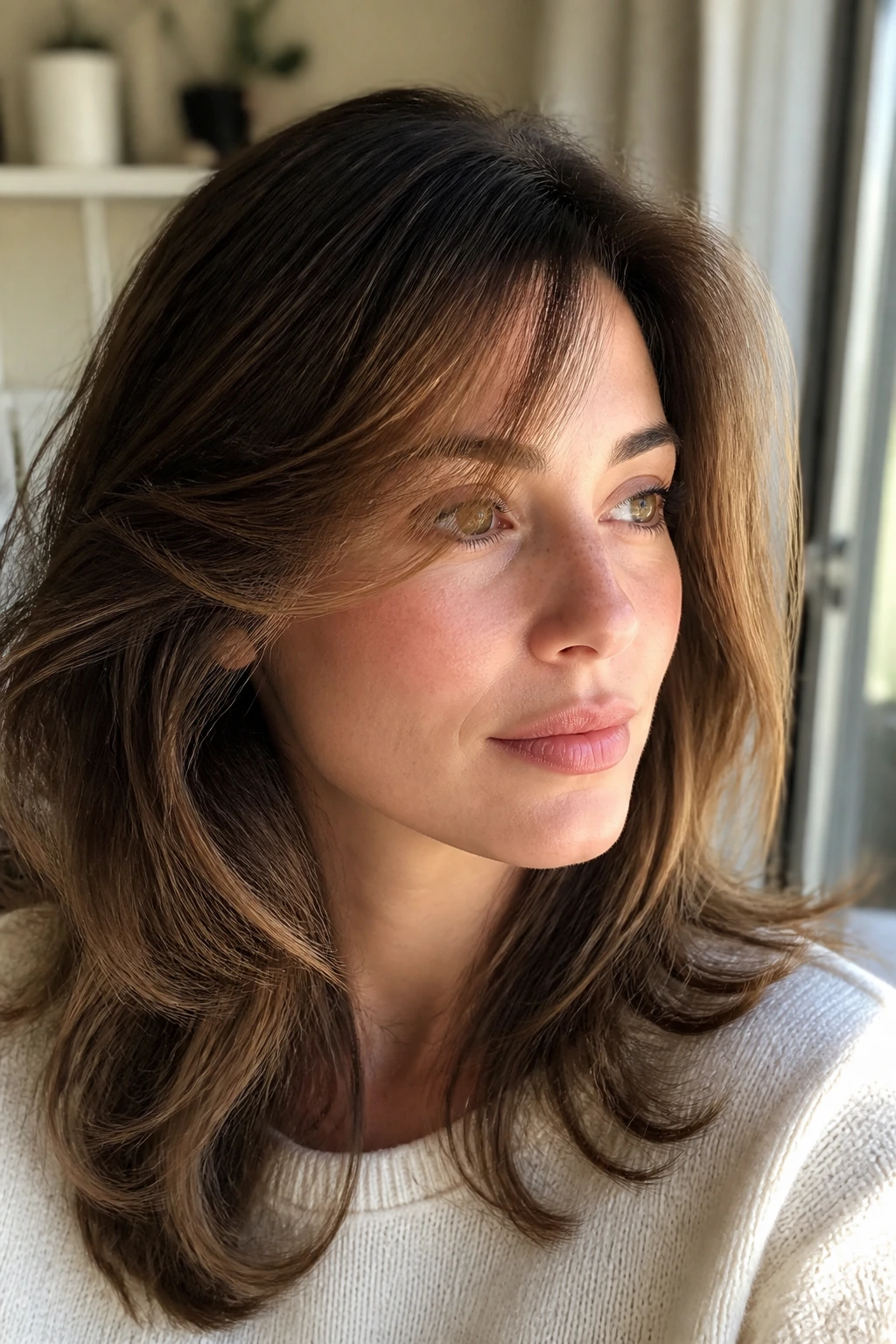
Soft swoop bangs are what I recommend to people whose hair naturally wants to fall to one side. Instead of forcing a center split, the bang sweeps across the forehead in a loose arc and then opens just enough near the temple to keep the face from feeling covered. It’s a gentler version of side bangs.
The face-framing effect comes from the curve. A swoop cuts across the forehead, then drops toward the cheek, which makes the whole front of the haircut feel lighter. It’s especially useful for square faces, because the line takes some of the emphasis off the jaw.
If you style this with a round brush, keep the brush moving. Pausing too long at the root creates a flat ridge that ruins the softness. A little bend is enough. You do not need a helmet.
11. Thick Curtain Bangs
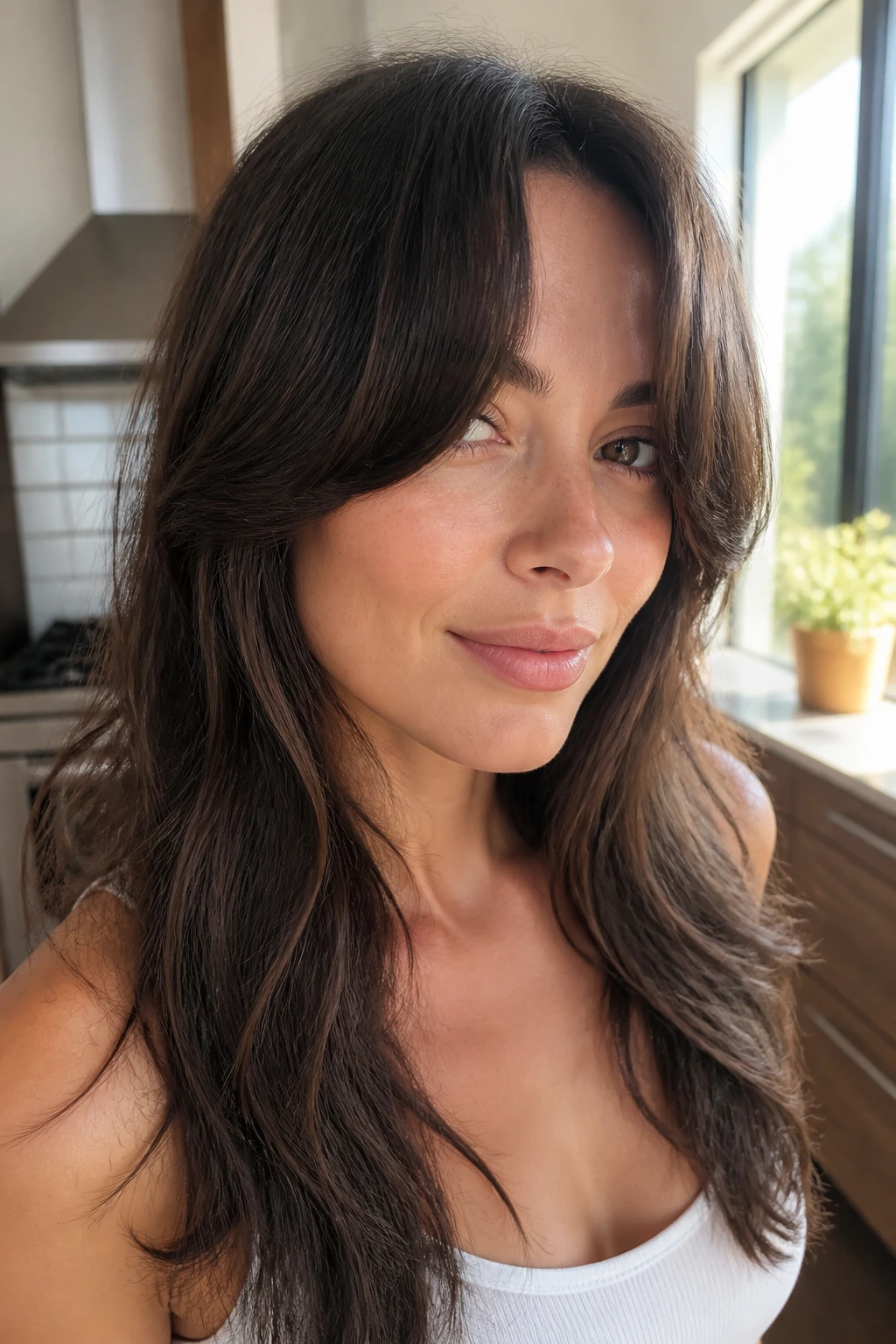
Thick curtain bangs are for people who want the face frame to feel substantial, not whisper-light. The center split is still there, but the density gives the bangs more presence. When cut well, they make the cheekbones look sharper and the forehead look narrower without hiding anything.
This style needs internal texture. Without it, thick curtain bangs can sit like a curtain rod across the face, which is exactly what you do not want. Ask for weight removal in the middle and longer, feathered edges on the sides. That keeps the front from swelling up when air dries.
I like this look on hair that already has body. Fine hair can wear it, but the styling work goes up. Medium to thick hair gives you the easiest result and the most useful grow-out.
12. Grown-Out Bangs That Blend into Layers
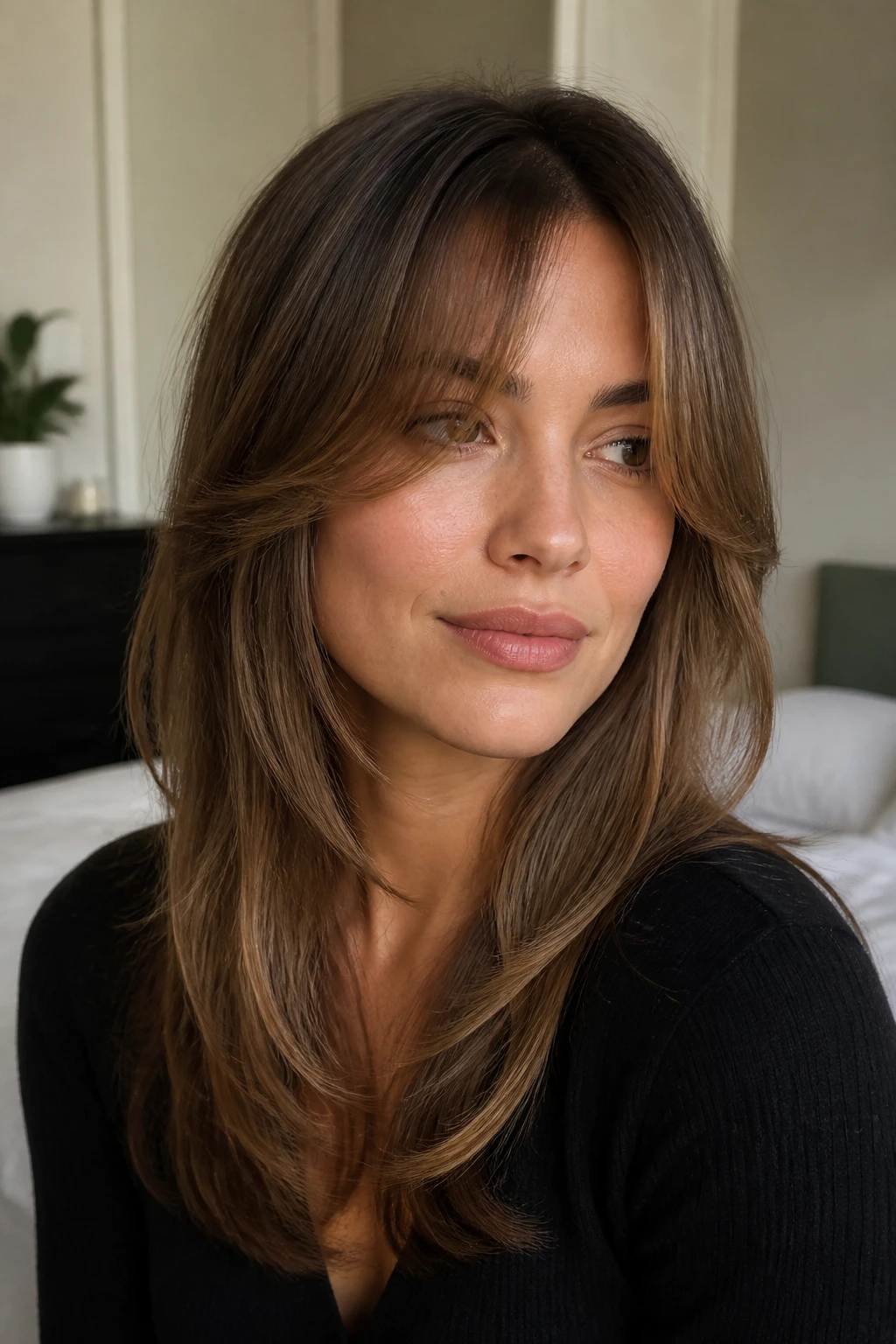
Grown-out bangs are underrated. People think of them as a stage between one haircut and the next, but when the cut is planned well, they become a face frame all on their own. The split stays soft, the ends fall into the cheek layers, and the whole front has that easy movement some people spend years trying to fake.
This style suits anyone who hates frequent trim appointments. It’s also a smart choice if you are unsure whether you want bangs long term. The pieces can be tucked behind the ears, pinned, or swept back on messy days without fighting the haircut.
The key is continuity. The bang pieces should connect to the front layers cleanly, not stop in an abrupt line. If your hairdresser leaves the transition too sharp, the grow-out phase will look like a mistake. If it’s blended properly, it just looks like a longer, softer fringe.
13. Textured Split Bangs for Wavy Hair
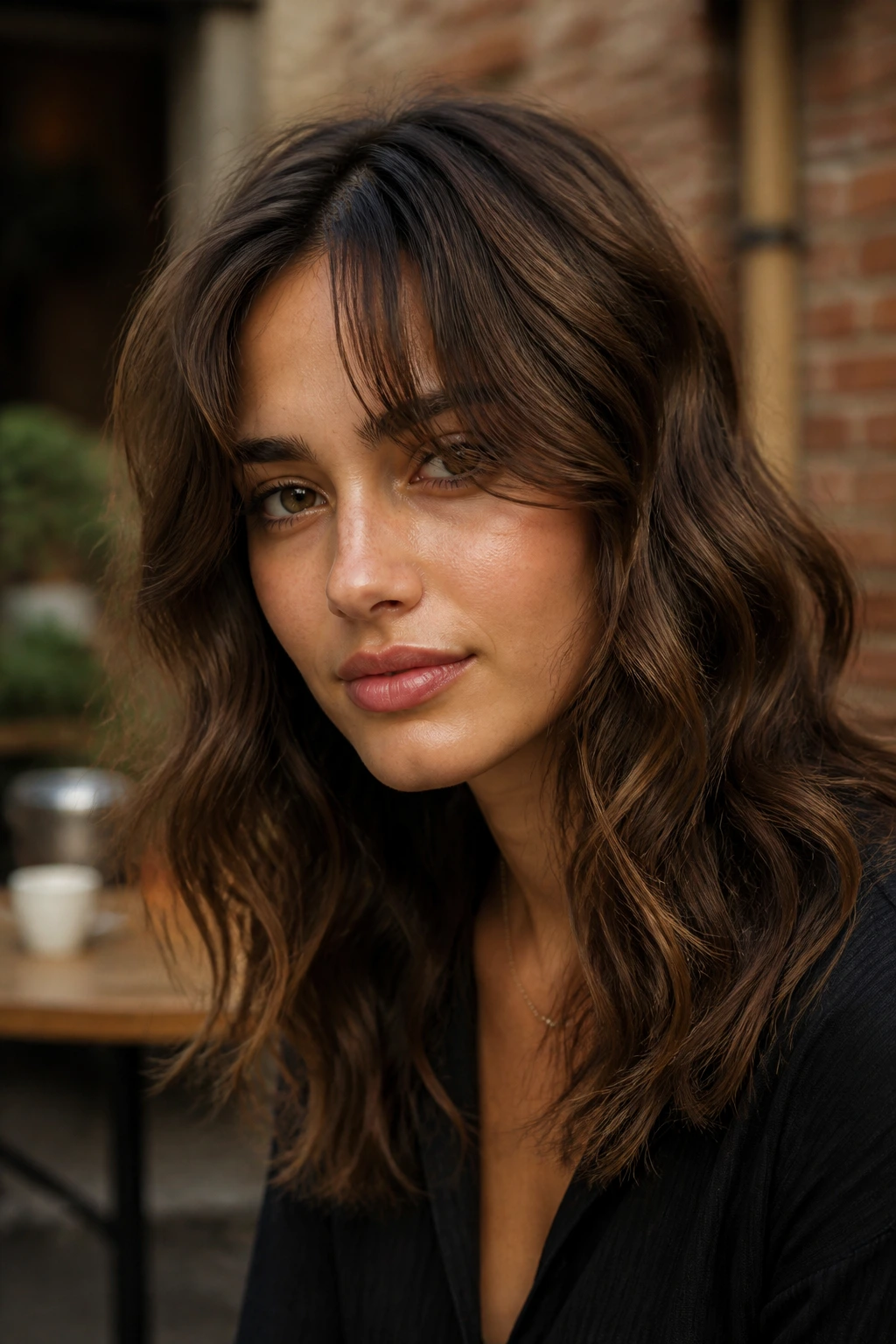
Wavy hair gives parted bangs a built-in softness that straight hair has to work for. The split fringe doesn’t need to be perfectly smooth; it needs to bend, separate, and settle around the face in loose pieces. That’s where the flattering part comes in.
I like this style because the wave breaks up the line of the fringe. Instead of one heavy curtain, you get bits of movement around the brows and cheeks. That makes the face look less rigid. If your waves tend to spring up short, keep the center a little longer than you think so it doesn’t bounce too high.
Use a diffuser only if your wave pattern needs help. If the hair already dries with a soft bend, air-drying plus a tiny bit of leave-in is enough. Too much product will weigh the front down and kill the separation.
14. Blunt-Edge Soft Split Bangs
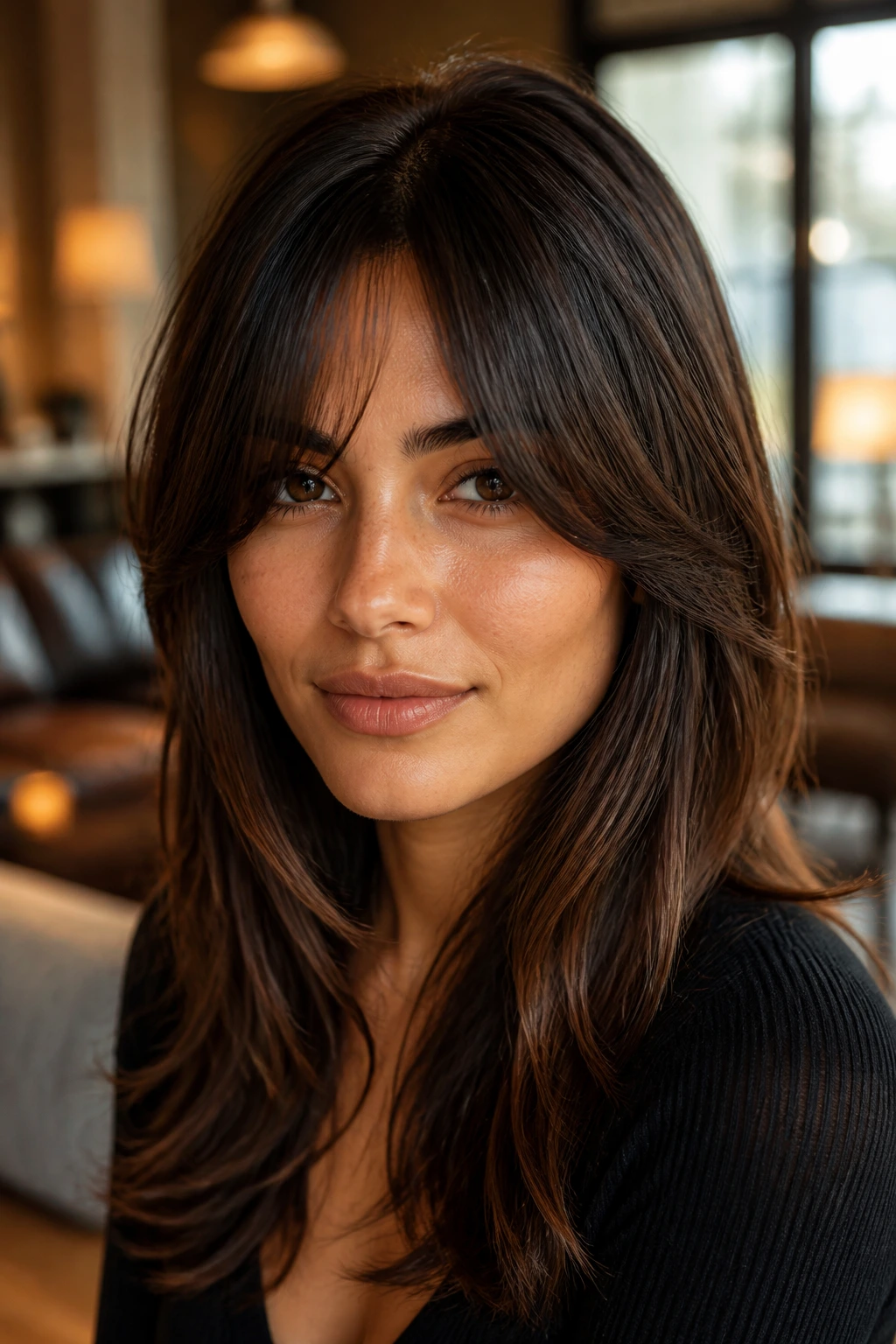
Can blunt ends still feel soft? Absolutely, if the split is doing the heavy lifting. This look keeps the bang line slightly fuller through the tips, but the center part and cheek-skimming sides prevent it from reading harsh.
The advantage here is clarity. You get a fringe with shape and definition, which is useful if your hair is very straight or your features can handle a little stronger outline. The softness comes from the opening at the center and the length variation on the sides, not from wispy ends.
This is a good salon request if you want bangs that still look finished when you blow them straight. Ask for bluntness only through the lowest point, then taper the sides. A razor-heavy finish can make the cut too frayed and thin at the edges.
15. Fine-Hair Feather Fringe

Fine hair needs a different kind of softness. Too much layering can make the fringe disappear, and too much density can make it lie flat against the forehead. A feather fringe sits in the middle: light enough to move, dense enough to show up.
The parted shape matters because it keeps the hair from clumping into one flat strip. A center opening and slightly longer sides give fine hair a little architecture. That structure is what keeps the face from looking bare.
A small round brush and a cool shot from the dryer are usually enough. Skip heavy creams. They flatten the hair and make the fringe look stringy by lunchtime. If you want grip, use a light root spray at the crown and nothing heavier at the ends.
16. Collarbone Curtain Fringe

Collarbone curtain fringe is for the long game. The front pieces stretch farther down than classic bangs, often landing near the jaw, neck, or collarbone. The result feels soft, sweeping, and grown-in from the start.
This style is excellent if you want the face framed without showing much forehead. It brings the visual weight lower, which can make the jawline look smoother and the whole haircut feel more relaxed. It also plays nicely with ponytails and half-up styles, since the pieces still do something when the rest of the hair is tied back.
The only trap is making it too heavy. The longer the fringe, the more it needs internal texture, or it can hang like wet rope. A bit of movement through the ends keeps it from feeling flat.
17. Glasses-Friendly Parted Bangs

Glasses change the equation. A fringe that looks perfect in the salon can feel crowded the minute it lands on the frames. Glasses-friendly parted bangs solve that by keeping the center a touch shorter and the side pieces angled away from the lenses.
The soft face frame here is practical, not decorative. You want the bang to sit above or just at the top rim, then skim outward instead of dropping straight into the glasses. That opens the face and keeps the hair from competing with the frames.
I’d choose this for anyone who wears glasses every day and doesn’t want to keep pushing fringe out of the way. A stylist can adjust the center length by a quarter inch and make a huge difference. Tiny changes matter here.
18. Deep Side-Part Fringe

A deep side-part fringe brings drama, but not the hard kind. The sweep starts farther over on one side, which gives you a stronger diagonal line across the forehead and a softer opening around the opposite temple. It feels more editorial than curtain bangs, but still wearable.
This shape flatters round faces and shorter foreheads because it creates a longer visual line. The side that carries more hair also gives you a place to build volume, which is handy if your roots go flat fast. The other side can stay slimmer so the face doesn’t get buried.
Best result? Keep the fringe long enough to tuck back if you change your mind. A deep side part looks chic only when it still has movement. If it’s cut too short, it can lock you into one styling pattern.
19. Air-Dried Natural Split
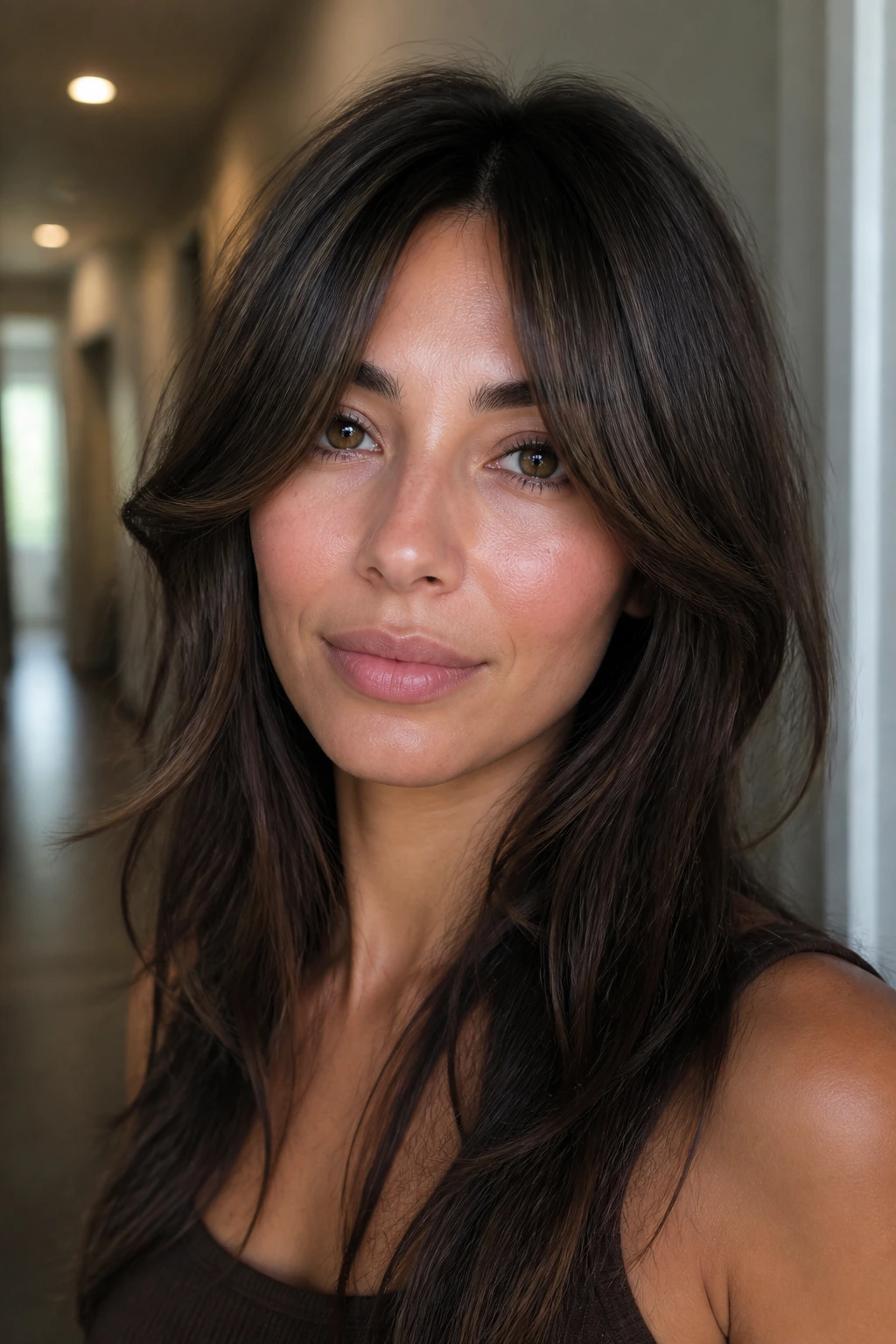
What if you do not want to round-brush your bangs every morning? Then this is the one. Air-dried natural split bangs are cut to follow the way your hair already falls, with the center opening encouraged rather than forced. The softness comes from the texture, not from heat styling.
This look works best on wavy hair and loose curls, but straight hair can wear it too if the front has some bend. Ask for a slightly longer center and keep the ends light so they separate instead of clumping. A dab of leave-in conditioner is often enough.
The honest downside is that this style is less controlled. Some days the split is neat, some days it wanders. If you hate imperfection, skip it. If you like hair that looks touched by the weather instead of a brush, it’s a very good fit.
20. Glossy Evening Parted Bangs
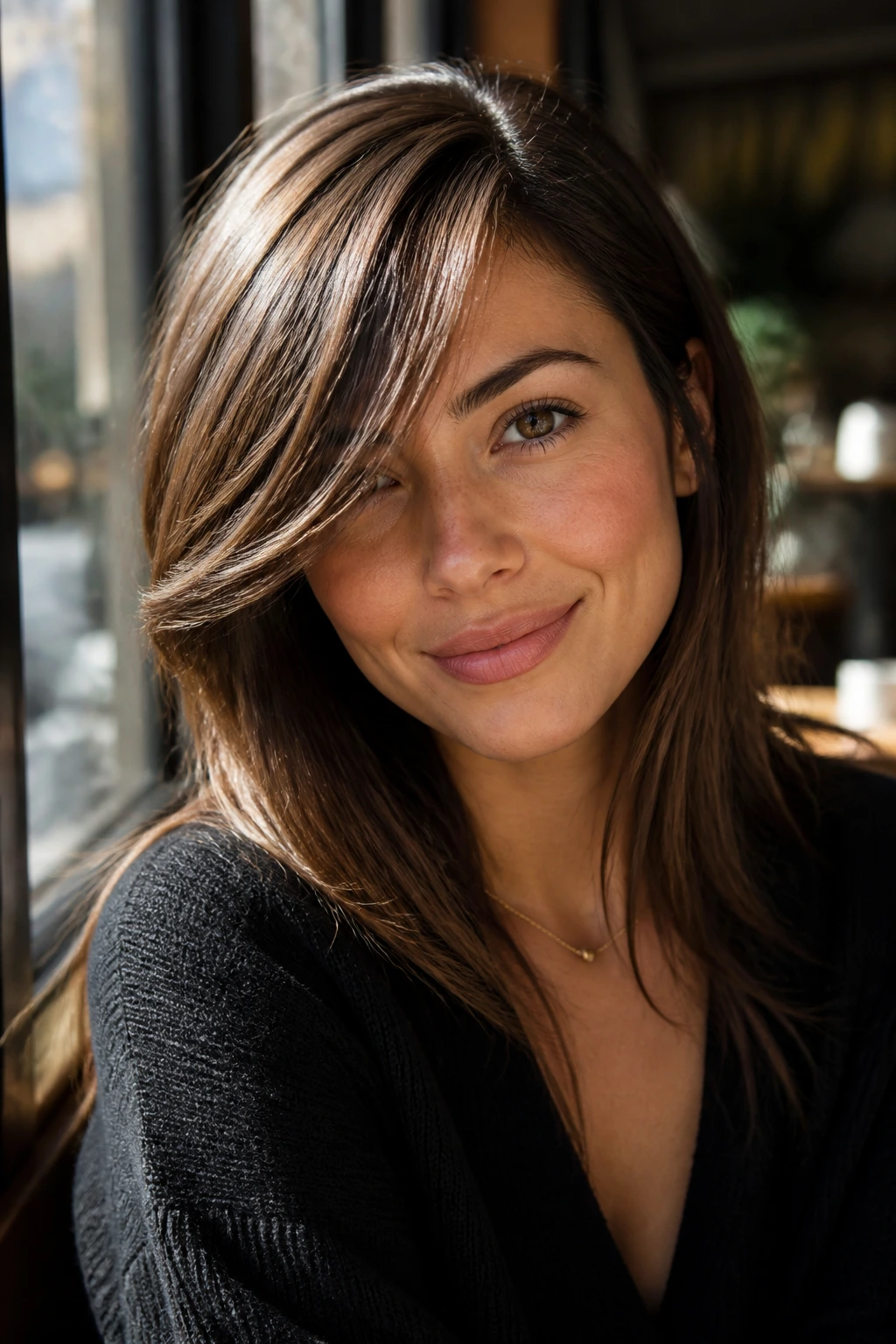
Glossy evening parted bangs are the polished version of this whole category. The center opening is clean, the sides are smooth, and the finish is sleek enough to work with a blowout, a dinner outfit, or any haircut that needs a little shine around the face.
The softness comes from the movement, not from frizz or separation. That means the hair has to be prepped properly: heat protectant, a controlled blow-dry, and a light serum only on the ends. Too much oil at the roots will make the split collapse, and then the whole look goes limp.
This is the style I’d pick when the haircut needs to feel refined. It can make a shoulder-length cut look expensive without making the face look stiff. The front stays open, the eyes stay visible, and the whole shape reads clean from a few feet away.
Why the Split Makes the Face Look Softer
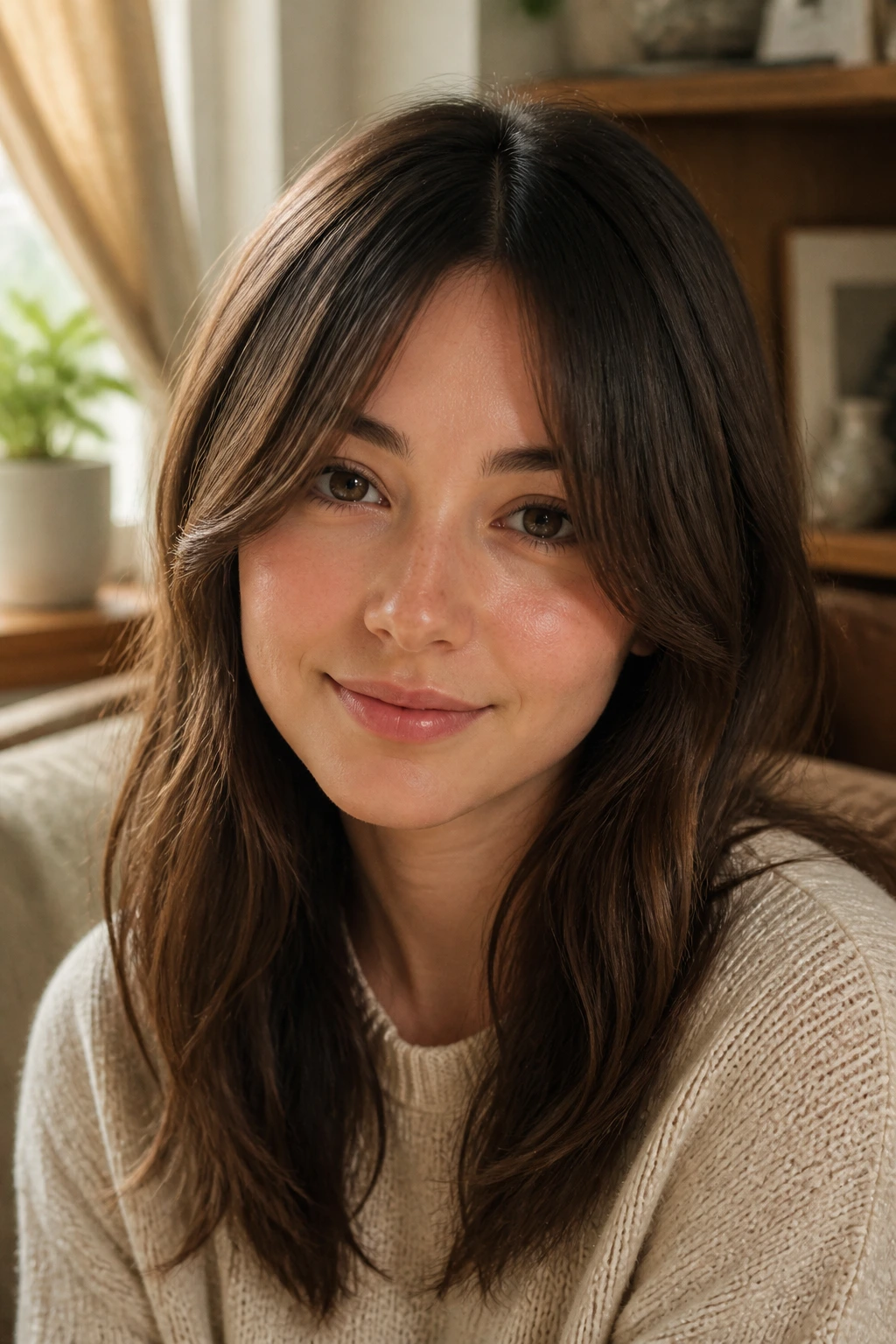
A parted bang works because it changes the direction of the eye. A blunt fringe gives you one hard horizontal line. A split fringe gives you two diagonals, and diagonals are kinder to the face. They move the eye outward toward the cheekbones and then down toward the jaw, which softens the forehead without hiding it.
Texture matters just as much as the part. A thick, dense bang can still look soft if the center is light and the side pieces are feathered. A wispy bang can look harsh if it is cut too short and sits like a stray line across the brow. The shape, not the label, decides the result.
The Cut That Changes the Shape
If you want a softer face frame, ask your stylist where the shortest point should land before they pick up the scissors. That one detail often decides whether the bang feels airy or fussy. A quarter inch can change the whole thing.
Why Length at the Temples Matters
The temple pieces are the part people overlook. If they stop too high, the face frame ends abruptly. If they reach cheekbone or chin level, the haircut starts to flow.
How to Style Parted Bangs Without Fighting Them
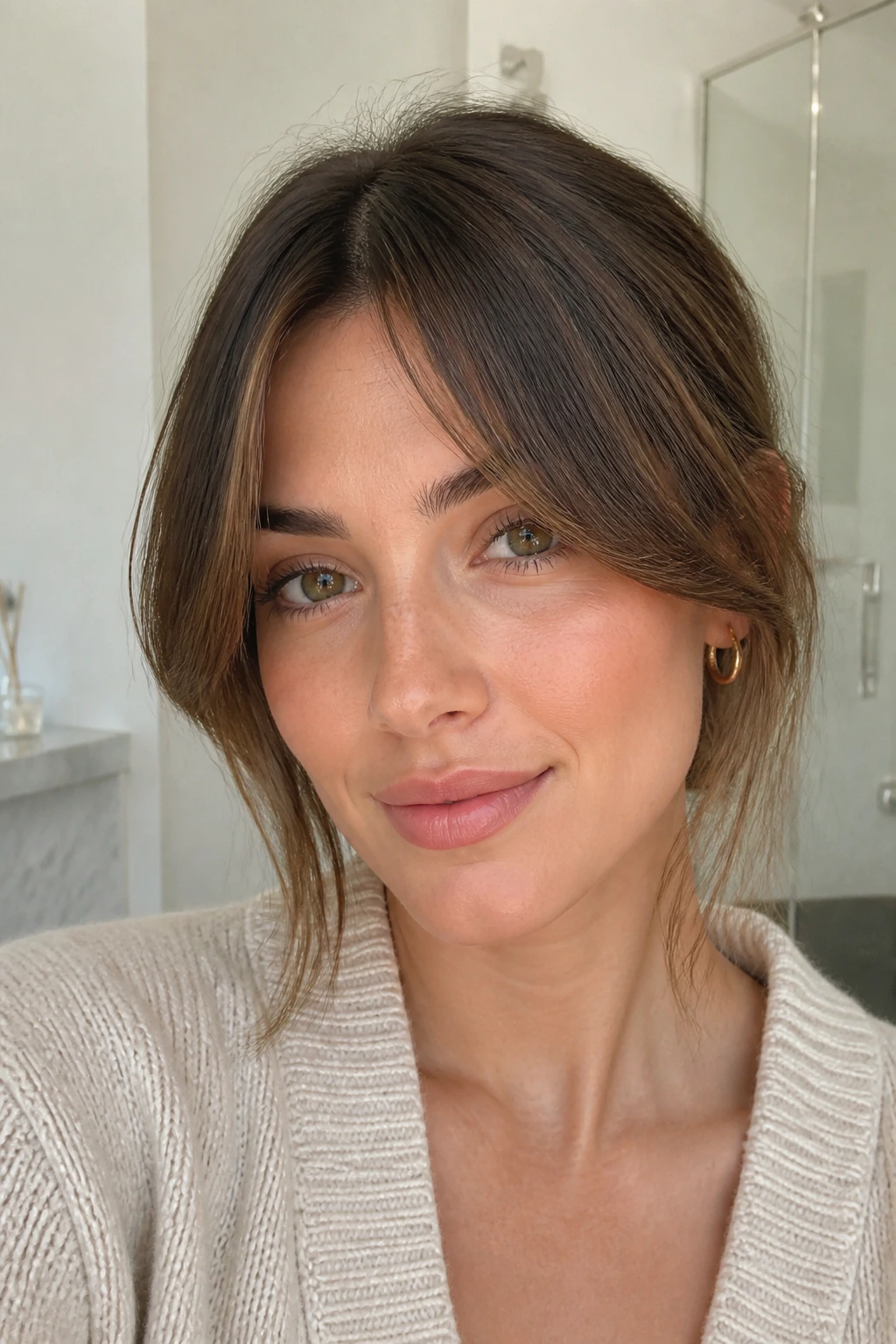
Start on damp hair, not dry hair. Bangs behave better when you direct the root early. Use a comb to set the part, then clip each side in place for a minute while you dry the rest of your hair.
Use a round brush or a small flat brush depending on texture. Straight hair usually needs a bend at the ends. Wavy hair often needs less shaping and more root control. A blast of cool air at the end helps the split hold.
Keep product light. A pea-size amount of cream or serum is enough for most fringes. Too much product makes the front separate in heavy chunks and lose the soft frame effect.
Tame cowlicks with direction, not force. If one side keeps flipping, set the part a little off-center and dry that section first. Fighting the growth pattern usually makes the bang look more stubborn, not less.
Common Mistakes That Make Parted Bangs Fall Flat

Cutting the center too short. The symptom is a bang that sticks up, splits too high, or feels too blunt across the brow. The fix is simple: keep the shortest point long enough to bend, especially if your hair grows forward strongly.
Letting the sides stop too early. If the outer pieces end at the jaw or above, the face frame looks abrupt. Ask for the sides to taper into the cheekbone or lower, depending on your face shape.
Using too much smoothing product. Heavy cream makes the fringe separate into greasy clumps, which kills the softness. Use less than you think, and keep most of it on the ends.
Ignoring your natural part. A bang that fights your cowlick will need twice the work and still fall wrong by lunchtime. Build the style around how your hair already wants to split.
Skipping trims for too long. Parted bangs can grow out gracefully, but only up to a point. Once the center loses its shape, the whole frame starts to sag.
Named Variations and Alternatives to Try
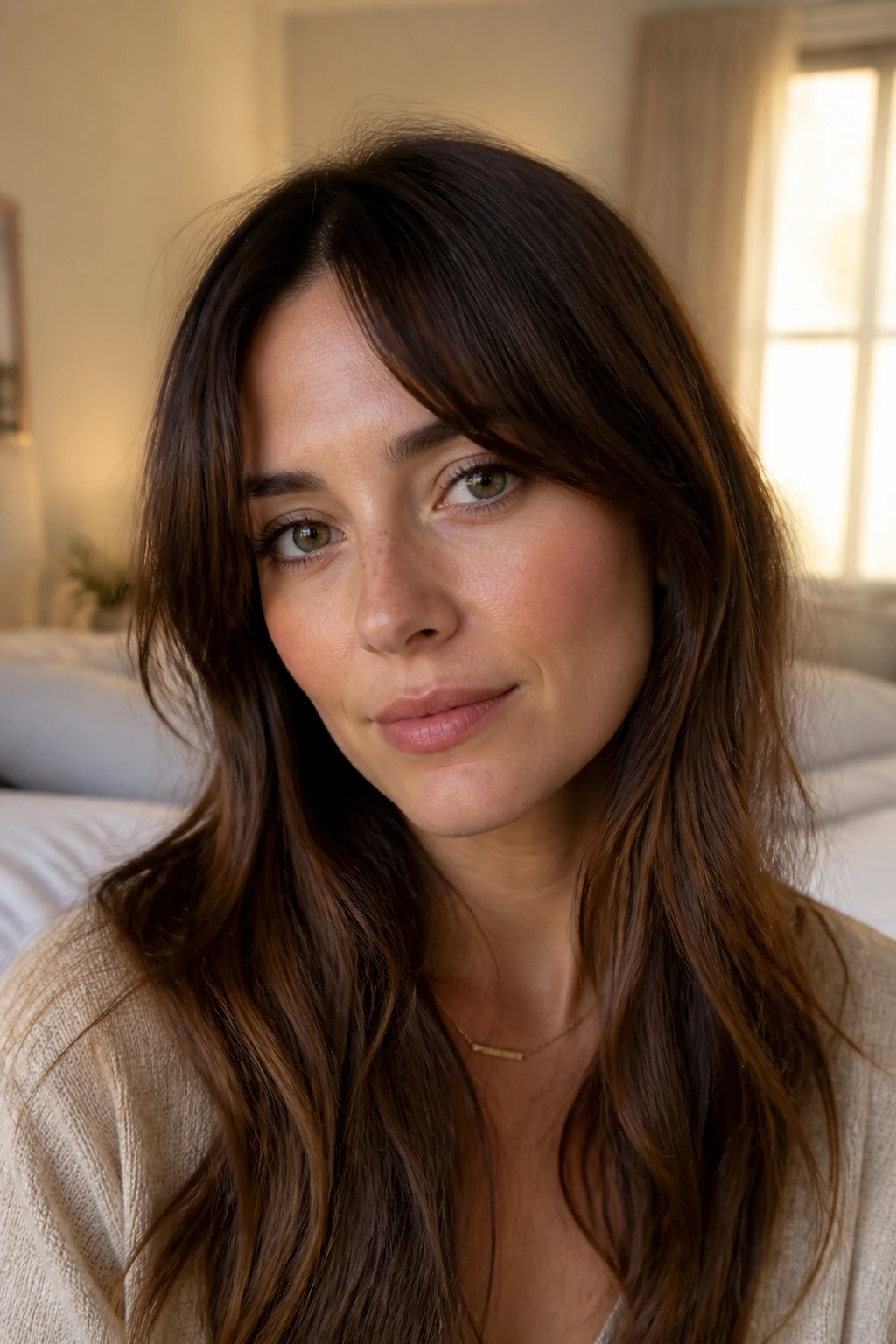
The Barely-There Split: This version keeps the fringe feather-light and narrow, with just enough separation to open the forehead. It works well for fine hair or anyone who wants the face framed without a noticeable bang line.
The Thick Curtain: Here the bang has more density through the center and a fuller sweep at the sides. It suits thicker hair and stronger features because the shape adds presence without turning stiff.
The Shag Blend: This is the more lived-in option, where the parted fringe melts directly into shag layers. It’s a good pick for wavy or textured hair that looks better broken up than polished.
The Curly Crescent: Curly hair needs room to spring, so the fringe is cut longer and allowed to arc around the face. The split stays soft, but the shape follows the curl pattern instead of flattening it.
The Deep-Part Sweep: For more drama, shift the part farther to one side and let one section carry more weight. It gives you a stronger diagonal across the forehead and a sharper frame around the eyes.
Essential Tools for These Looks
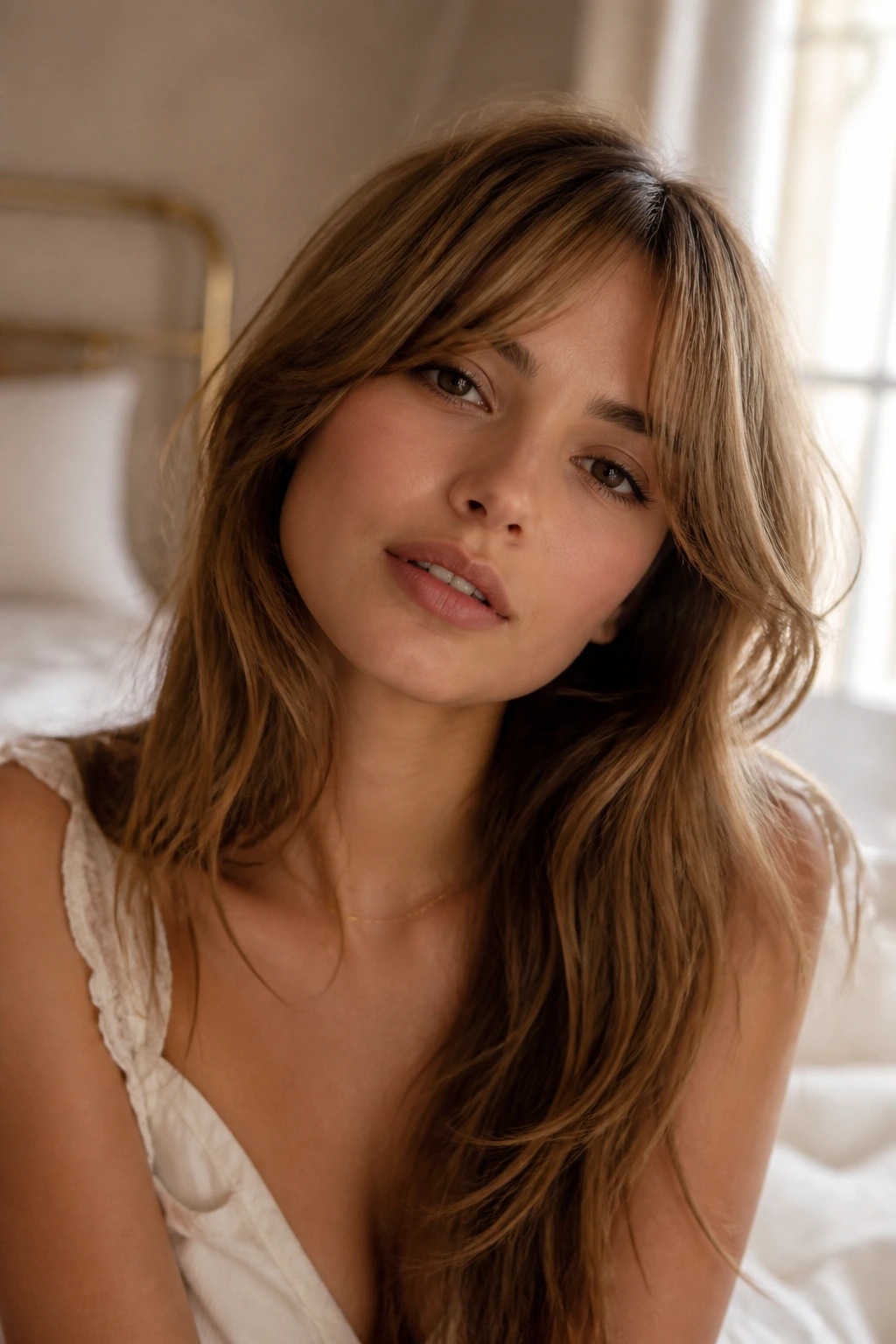
- Blow dryer with a nozzle: Directs airflow so the fringe sets in the right direction instead of puffing around.
- 1- to 1.5-inch round brush: Best for bending the ends inward or outward without making the bang too curly.
- Fine-tooth tail comb: Useful for placing the part cleanly and separating damp sections before drying.
- Duckbill clips: Keep the sides pinned while the center dries, which helps the split stay where you want it.
- Heat protectant spray: Worth using every time you touch bangs with heat; the front pieces see the most styling.
- Light volumizing spray or root mist: Helps fine hair hold shape without turning sticky.
- Dry shampoo: Good for day-two bang refreshes, especially if your forehead gets oily.
- Small flat iron, optional: Handy for smoothing a stubborn bend or polishing the ends on straight hair.
How to Keep the Shape Between Salon Visits

Parted bangs need more upkeep than layers, but not as much as a blunt fringe. Shorter versions usually want a trim every 3 to 4 weeks. Longer curtain or face-frame styles can stretch to 6 to 8 weeks if the shape is forgiving and the ends are blended well.
The daily reset matters too. Bangs pick up oil faster than the rest of the hair because they sit on the forehead. A quick wash of just the front section at the sink, or a hit of dry shampoo at the roots, can buy you another day. If they go flat, mist the roots lightly with water and blow-dry the split back into place for 30 seconds.
Sleep can wreck a good fringe in a single night. If you wear your bangs down regularly, pin them loosely to the side or use a soft headband before bed. It keeps the root direction from getting crushed. On grow-out days, tuck the pieces into the rest of the haircut and let the longer layers do the work.
How to Get the Most Out of Parted Bangs

Ask for a soft perimeter, not a blunt wall. The front should taper into the cheek pieces, or the whole shape will feel heavy and boxy.
Keep the shortest point conservative at first. It is easier to trim a bang a little shorter than to wait for a too-short fringe to grow out.
Match the part to your cowlicks. If your hair naturally falls to one side, don’t force a pure center split. A slight offset can still look balanced and will behave much better.
Use the finish that fits your life. If you air-dry, choose a cut that works with texture. If you blow-dry, you can get away with a more sculpted shape. The best bang is the one you can actually wear on a Tuesday morning.
Frequently Asked Questions

Which face shapes suit parted bangs best?
Most face shapes can wear parted bangs, but they’re especially good on round, heart, and square faces because the split softens the width across the forehead. The real key is the length at the sides, since that’s what decides whether the face frame feels open or heavy.
Are curtain bangs and parted bangs the same thing?
Not exactly. Curtain bangs are one type of parted bang, usually with a center split and longer sides that sweep toward the cheeks. Parted bangs is the bigger category, so it also includes side-swept fringe, soft swoops, and more textured split shapes.
Can curly hair wear parted bangs without looking puffy?
Yes, but the cut has to be longer and softer than a straight-hair version. Curly bangs need room to spring, so the shortest point should usually sit lower than you think, and the sides should be shaped to follow the curl pattern rather than fight it.
How do I stop my bangs from separating in a weird way?
That usually means the center is too heavy, the product is too sticky, or your natural part is being ignored. Dry the fringe with the correct part from the start, use less cream, and ask for internal texture if the hair is dense.
Do parted bangs work with glasses?
They can, and they often work better than blunt bangs because the opening keeps the front from crowding the frames. The main trick is keeping the center short enough to stay above the lenses while the sides angle away from the temples.
How often should I trim parted bangs?
Shorter fringe needs more frequent trimming, usually every 3 to 4 weeks. Longer curtain or face-frame styles can go longer, often 6 to 8 weeks, because the shape is meant to blend as it grows.
What if my bangs fall flat by midday?
That usually points to too much weight at the roots or too much product. A quick refresh with dry shampoo at the scalp, then a 20- to 30-second blast of warm air and cool air, can bring the split back without a full wash.
Can I grow parted bangs out without an awkward stage?
You usually can, if the sides were cut with enough length in the first place. Keep the front pieces blended into your layers, and as they grow, shift the part a little deeper or use pins on the shortest section while the rest falls naturally.
The Fringe That Softens Instead of Shouts
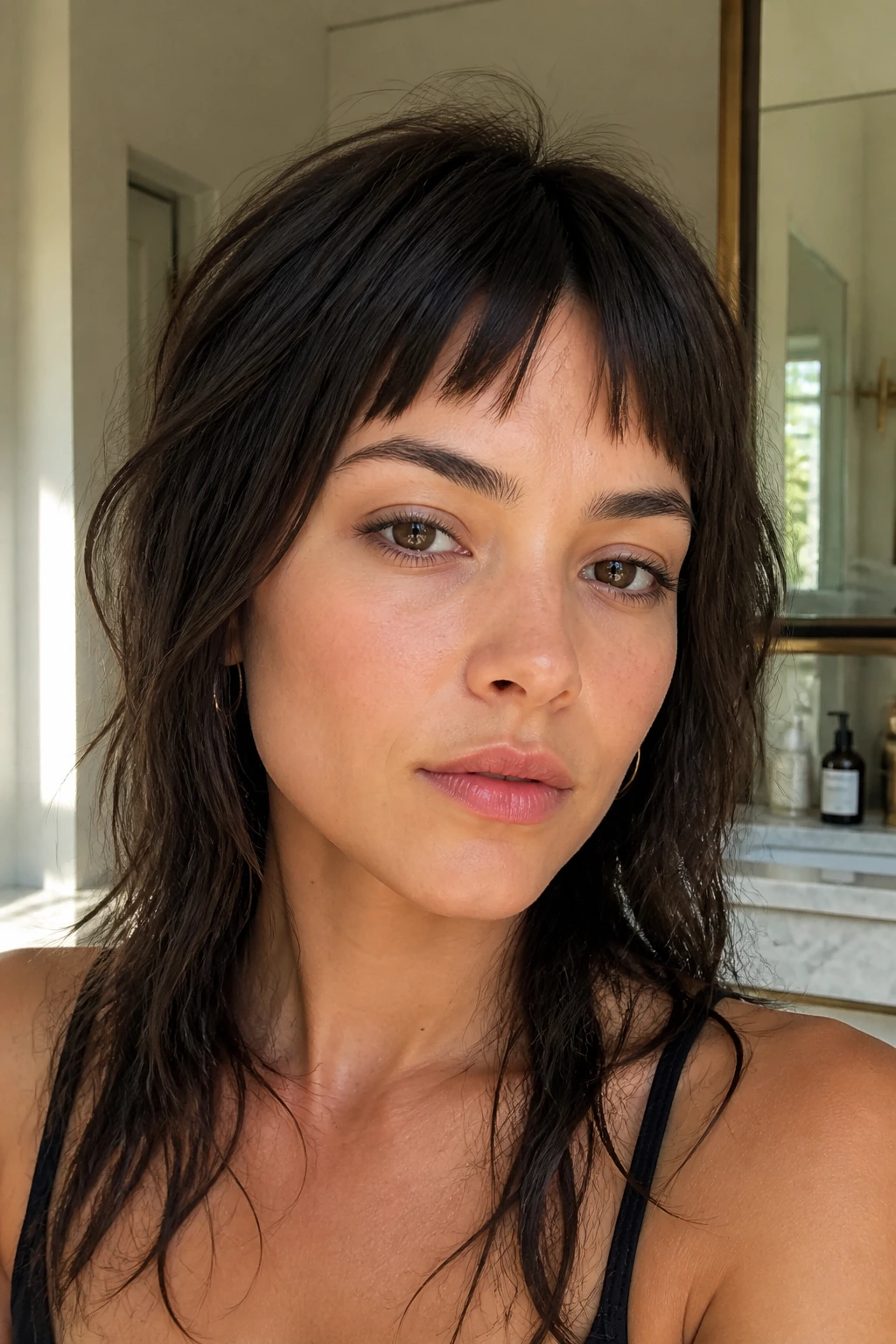
A good parted bang does not fight the face. It opens it. That’s the part I keep coming back to: the split is doing shape work, not cover-up work. It lets the forehead breathe, bends the eye toward the cheekbones, and makes the front of the haircut feel lighter even when the rest of the hair has plenty of body.
The best one for you is the version you’ll actually style. A wispy center split, a thick curtain, a side-swept fringe, or a grown-out face frame can all soften a face beautifully, but they do it in different ways. Pick the one that matches your hair’s behavior, not the one that looks best in a perfectly still photo.
