



Curly hairstyles with curtain bangs have a funny kind of honesty to them. They don’t pretend your texture is going to fall in a neat, obedient line, and that’s exactly why they work. The fringe splits, bends, springs up, and lands somewhere between cheekbone and jaw, which is where a lot of curls look most alive.
The trick is not forcing the curl to act straight. It’s giving the front of the cut enough length, enough weight balance, and enough room to move. A curtain bang on curly hair can look soft and airy, or thick and dramatic, or almost invisible until the light hits it and you see the face frame doing all the work. The bad versions usually fail for one boring reason: someone cut them too short while the hair was wet.
That’s why the right cut matters so much here. Curly curtain bangs can sharpen a bob, soften a shag, rescue a grow-out, and make a ponytail look intentional instead of thrown together. The styles below cover loose waves, springy ringlets, dense coils, and everything that lives between those lines. Some are polished. Some are messy on purpose. All of them understand one basic rule: curls need room to bounce.
Why This Collection Works So Well on Curly Hair
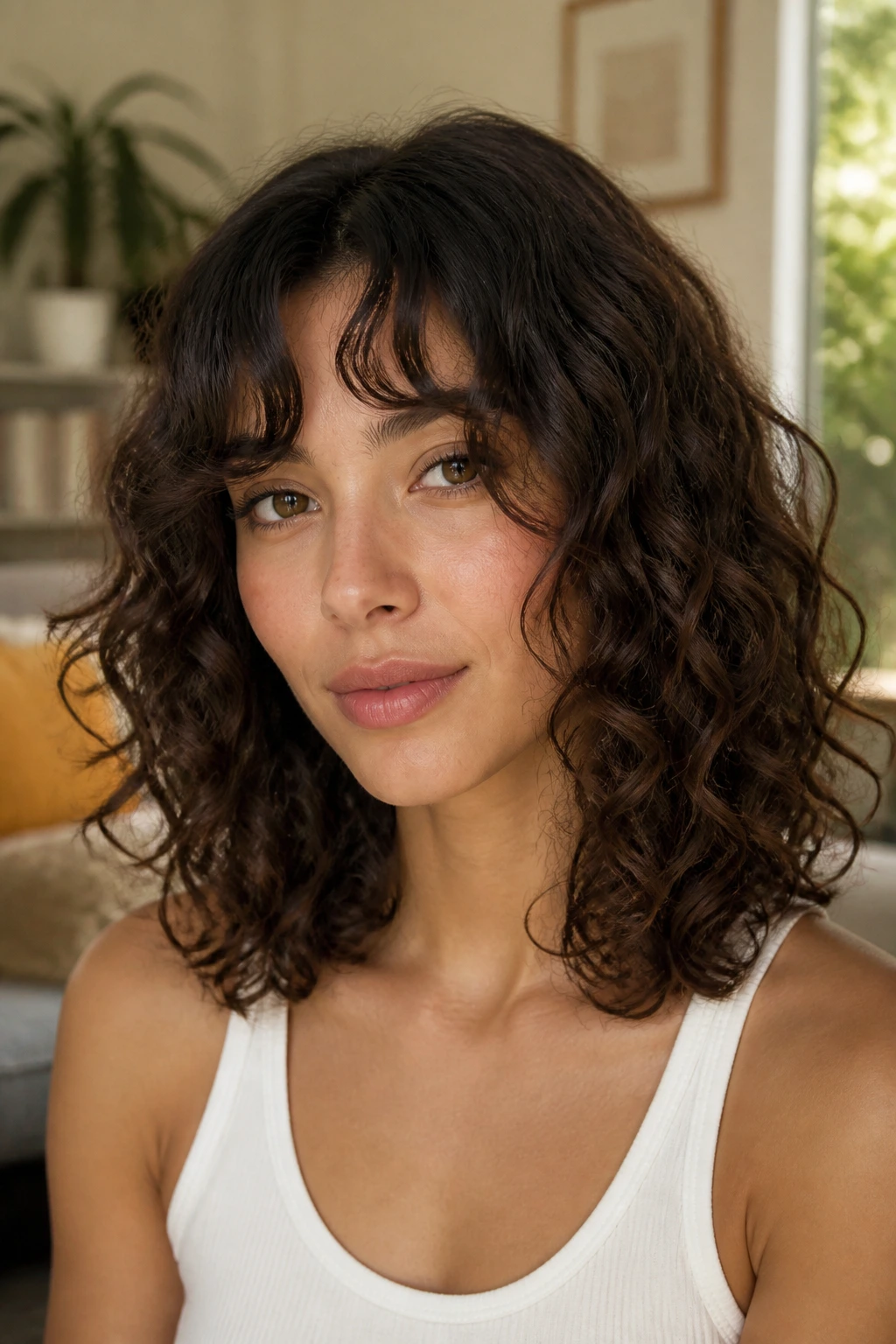
- Shrinkage-Friendly: Every style here leaves extra length in the front, so the bangs can spring up without becoming a tiny accidental fringe.
- Face-Framing First: Curtain bangs split the eye line and soften the forehead, which gives curly cuts shape even when the rest of the hair is doing its own thing.
- Texture-Forward: These looks get better when the curl pattern shows. A little frizz at the edge is not a failure here; it’s part of the shape.
- Easy to Scale Up or Down: A collarbone lob, a puff, or a braided crown can all use the same bang idea without needing the same haircut.
- Low-Heat Friendly: Most of these styles look strongest with a diffuser, air-drying, or a quick root lift — not a marathon with a flat iron.
- Grow-Out Proof: Curtain bangs are kinder to the awkward in-between stage than blunt fringe, because the front pieces can blend into layers instead of sitting there like a hard line.
1. Collarbone Curly Lob With Soft Curtain Bangs
The collarbone lob is the easiest doorway into curly curtain bangs. The length is long enough to keep the curl from shrinking into a chin-high puff, but short enough that the face frame still shows up from across the room. When this cut is done well, the bangs land somewhere between the cheekbone and the jaw once dry, with the ends turning under just a little.
Why It Works on Shoulder-Length Curls
A lob gives the front pieces a little weight, which matters if your curls are springy or uneven. The curtain shape can travel from center part to cheekbone without the bang line breaking apart, and that makes the whole haircut feel calmer. It also works for people who want movement without a ton of layers around the crown.
- Best on 2C to 3B curls that want definition without losing length.
- Ask for the front pieces to stay 1 to 2 inches longer than the final target if your hair shrinks hard.
- Diffuse the front sections on a low setting and stop when they’re about 80% dry.
- Bold tip: keep the center slightly longer than the outer pieces; that little difference makes the curtain shape read better.
The real charm of this cut is that it looks finished even on day two. The bang pieces drift back into place instead of fighting the rest of the style.
2. Rounded Curly Shag With Floating Fringe
The shag is where curly curtain bangs stop behaving and start looking good for it. The shape is rounder through the top, lighter through the ends, and full of movement around the face, so the fringe doesn’t sit there as a separate piece. It just melts into the layers. That’s the whole point.
What Makes the Shag Work
A rounded shag gives you a soft halo effect at the crown and cheekbone-level bits that keep the bangs from looking pasted on. If your curls tend to get flat near the roots, this cut fixes that without needing a lot of product or a lot of heat. It also handles density well, which is useful if your hair turns triangular when it gets too long.
The best styling move is to scrunch in a lightweight mousse, then diffuse with your head slightly tipped forward. Let the bang sections fall where they want first, then separate them with your fingers only after they’re dry. If you rake through them too early, you lose the little pieces that make the shag look alive.
This is the cut I’d pick for someone who likes hair with some grit in it. Clean, but not too clean. That’s the sweet spot.
3. Long Spiral Layers With Cheekbone Curtains
Want the curtain bang idea without sacrificing length? This is the move. Long spiral layers let the curls keep their drama, while the bangs open the face at cheekbone level instead of chopping across the forehead. The result feels softer than blunt fringe and less heavy than a full shag.
How It Reads on Longer Hair
The layers do most of the work here. They keep the bangs from disappearing into the rest of the length, but they also stop the cut from feeling top-heavy. On looser spirals, the front pieces bend into a clean split. On tighter curls, they land like two small curved curtains that sit just wide enough to show the brow.
How to Use It
If you wear your hair down most days, this cut gives the nicest payoff with the least fuss. Use a curl cream only from the mid-lengths down, then add a touch of gel at the bang ends so the front pieces keep their shape. The mistake is loading the front with too much product. It turns those cheekbone pieces into damp ropes.
Long curls can eat a fringe if the layers are too short, so keep the bangs connected to the rest of the cut. When they’re linked instead of isolated, the whole style moves as one.
4. Chin-Length Curly Bob With Feathered Bangs
A chin-length bob with curtain bangs is sharp in the best way. The line around the jaw makes the face feel cleaner, while the bangs soften the top so the cut doesn’t look boxy. On curls, that feathered front is doing more work than people expect.
A Good Choice for Dense Curls
If your hair has a lot of body, a bob keeps the width under control. The curtain bangs stop the front from looking like a helmet and instead create a little opening at the center. That matters if your curls puff outward fast once they dry.
- Feels strongest on thicker 3A to 3C textures.
- Ask for the bang area to be point-cut, not thinned to death.
- A chin-length bob needs a tidy neckline, or the whole shape starts looking accidental.
- One-sentence truth: this style looks best when the curls are shaped, not stretched.
The feathered bang pieces should bend away from the forehead and land close to the cheekbones. If they sit too high, the bob loses its balance. If they get cut too blunt, the softness disappears and the whole thing starts looking boxy.
5. Wolf Cut Curls With Piecey Curtain Bangs
The wolf cut and curly curtain bangs get along because both like a little edge. The top is fuller, the crown has lift, and the bangs are intentionally piecey instead of perfectly matched. If you want hair that looks a little wild in a controlled way, this is where to look.
Unlike a standard layered cut, the wolf cut leaves obvious separation between the crown, bang area, and ends. That separation helps curls show their shape, especially if your hair grows wide before it grows long. The curtain bangs can be shorter near the center and longer at the edges, which gives the face frame a sharper angle.
The key is not over-smoothing it. A wolf cut should look like it moved around a little. Use a diffuser, then break the cast with a drop of oil on your palms. If you make the front too polished, the whole point of the cut disappears.
This is the haircut I’d give to someone who likes texture with a bit of attitude. Not messy. Just not trying too hard.
6. Tapered Medium Cut With Split Fringe
A tapered cut gives curly curtain bangs structure without dragging the whole style down. The sides stay a touch slimmer, the crown keeps lift, and the front opens in a clean split that makes the forehead look longer. It’s one of the better choices if your curls need shape but not bulk.
Why This Shape Feels Balanced
The taper keeps the outline from becoming rounder than you want. That matters on medium-length curls, where a lot of shape can disappear once the curls fully dry. The fringe sits in the middle like a soft hinge, connecting the crown to the sides without creating a hard line.
If you wear glasses, this cut is worth a close look. The bangs can stop above the frame or sweep around it, and the taper keeps everything from crowding your face. Use a light cream on the bang sections and nothing heavy near the roots. Heavy product up front is the fastest way to kill the split.
This cut doesn’t shout. It just makes the curls look organized. Sometimes that’s the better outcome.
7. Pixie Grow-Out With Mini Curtain Bangs
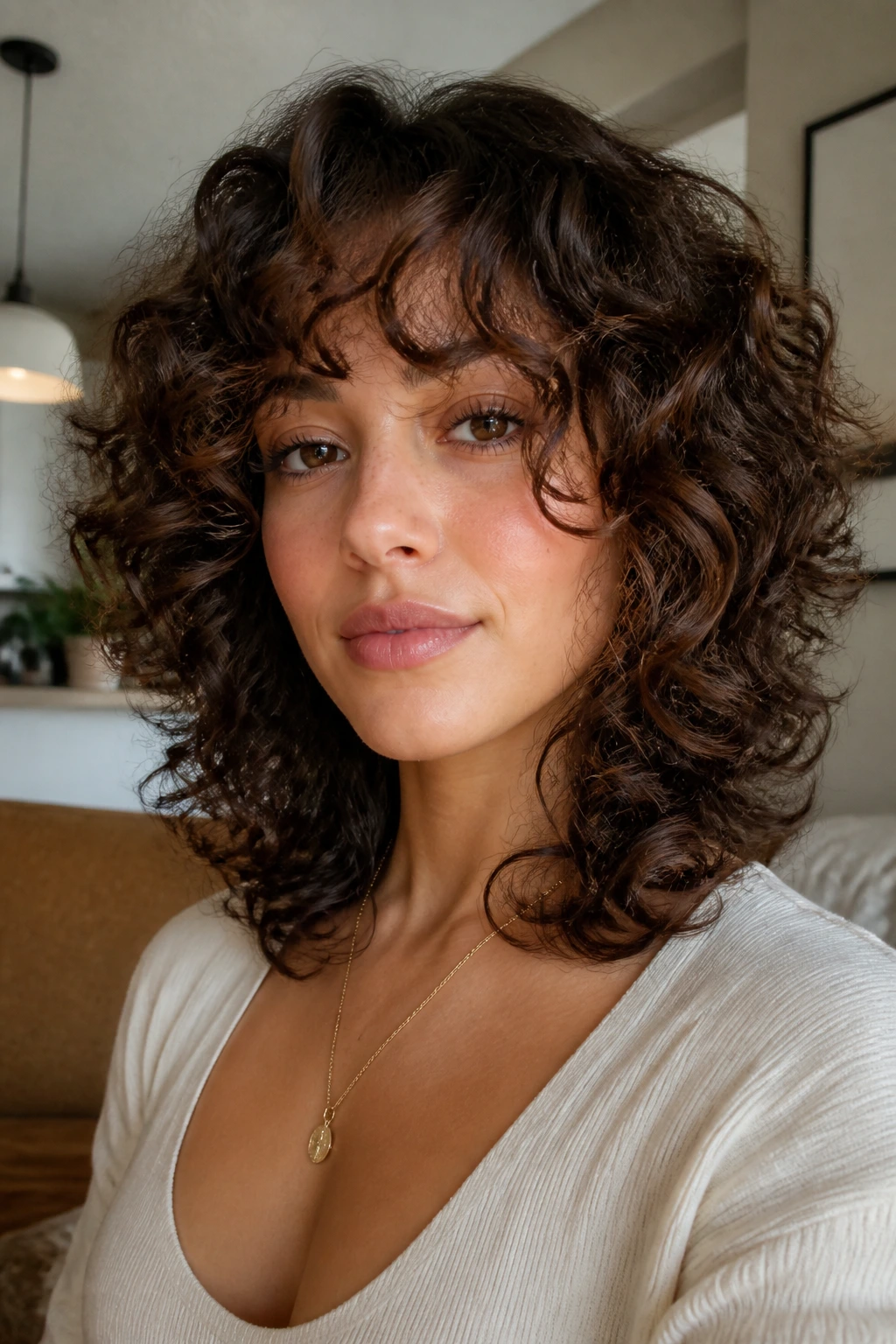
A curly pixie grow-out can look awkward for about ten minutes, and then a smart curtain bang fixes half of it. The front pieces soften the transition between short sides and a growing top, so you don’t end up with one stubborn curl cluster sitting at the hairline. That’s the whole rescue plan.
How to Wear the In-Between Stage
Mini curtain bangs work best when they’re long enough to bend, not so short that they stand up like springs. Keep the center pieces a little longer than the rest of the front, and let the outer pieces fall toward the temples. The shape can look tiny, but it should still move.
What Helps
- Use a pea-sized amount of gel on the bangs.
- Clip the front while the rest of the hair dries.
- Re-dampen only the fringe when it flattens.
- Let the grow-out hit the cheekbone before you trim again.
This one is practical, not fussy. The bangs buy you time while the cut catches up with your patience.
8. Half-Up Curly Ponytail With Loose Curtain Bangs
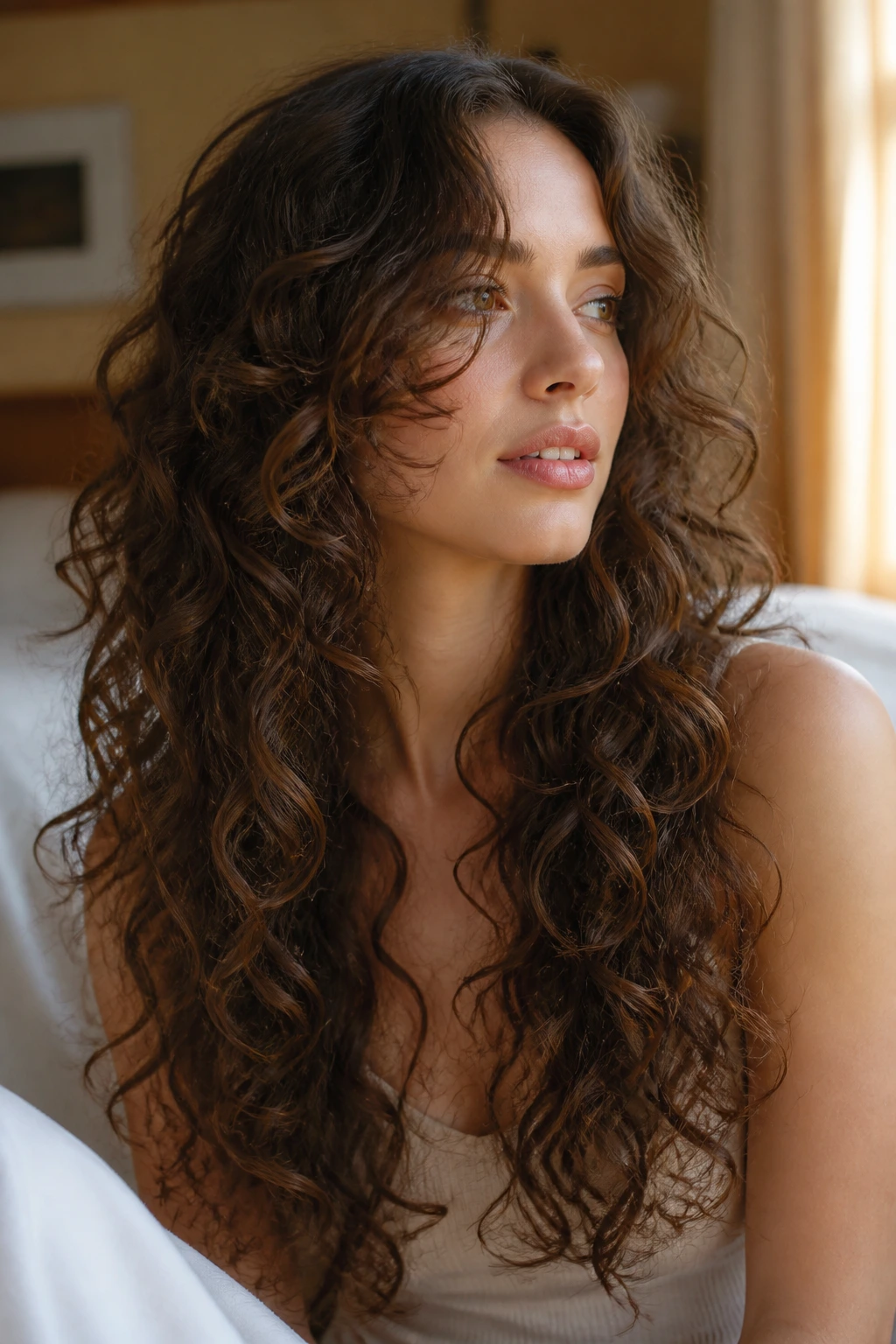
Half-up styles and curly curtain bangs make sense together because they solve two problems at once: they pull hair away from the face, and they keep the front soft. The look works on second-day curls, gym-day curls, and those mornings when the crown feels flat but the ends still have something going on.
A good half-up pony should leave the curtain pieces loose enough to curl back toward the cheeks. If you slick them too hard, they stop reading as curtain bangs and start reading as side bits you forgot to finish. Use a fine brush or your fingers to lift the top section, then let the front fall after the ponytail is secured.
This style is strong because it shows off the curl pattern without asking the whole head to cooperate. A few tendrils at the temples, a little lift at the crown, and the bangs do the rest. It’s quick. It doesn’t need a lot of product. That’s why people keep reaching for it.
9. High Puff With Curly Curtain Pieces
A high puff with curly curtain bangs has real personality. The puff creates height and clean shape, while the bangs leave enough softness around the forehead to stop the style from looking severe. On coily hair, that front opening can make the whole face look brighter.
What to Watch For
The puff should sit high enough to lift the silhouette, but not so high that the curtain pieces get pulled tight. Those front sections need a little slack so they can curl instead of sticking out like ribbon. If your roots are dense, smooth only the sides and keep the front lightly moisturized.
This look loves a center part. Not a perfect ruler-straight one — a natural middle that lets the front pieces fall where they want. If the bang sections are extra short, give them a touch of water and stretch them gently with your fingers before pinning the puff in place.
It’s one of those styles that looks both simple and intentional. That’s not common.
10. Deep Side Part With Swept Curtain Bangs
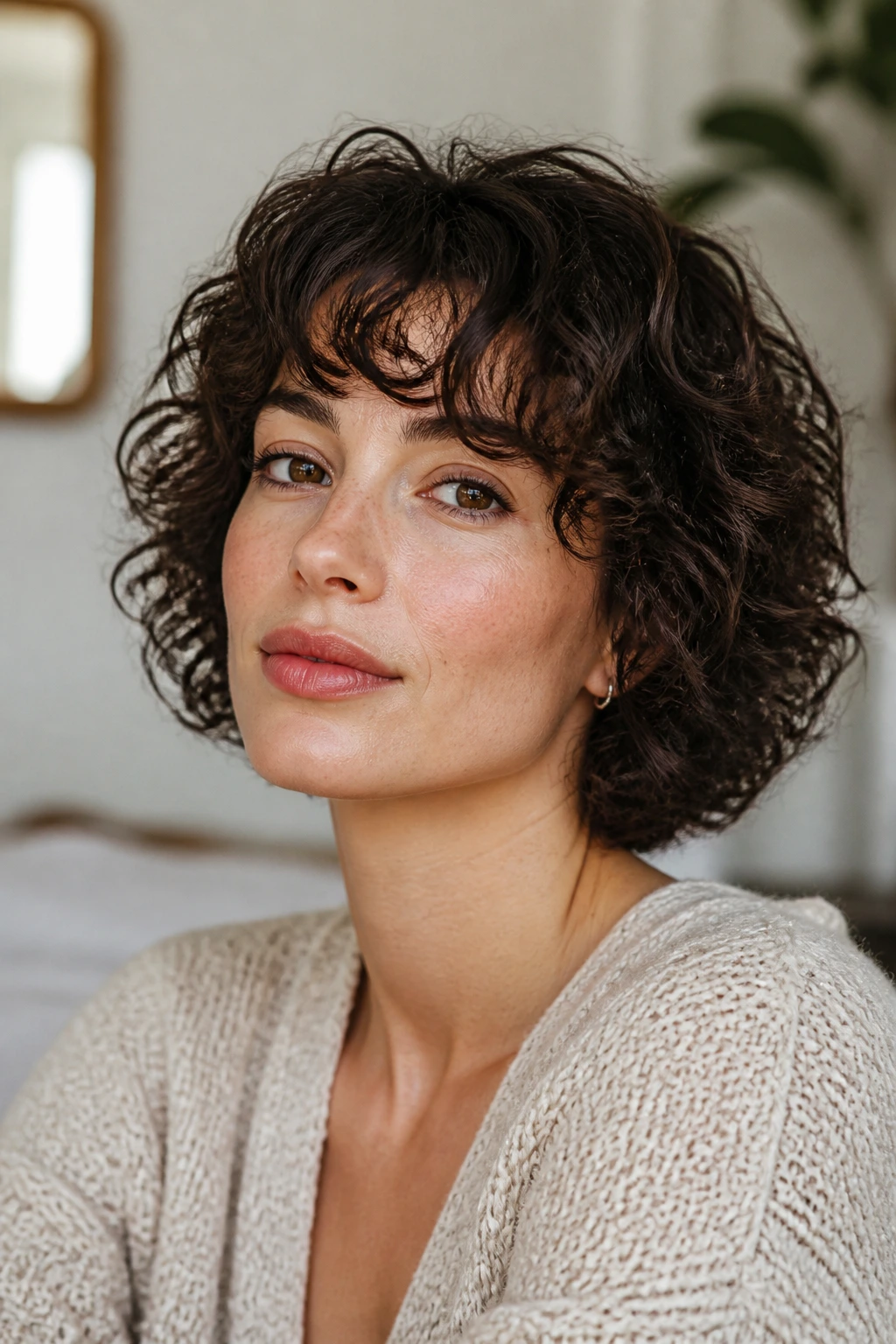
Does curtain-bang energy have to live dead center? Not at all. A deep side part can still give you that face-framing effect, especially if the front pieces are long enough to sweep across the forehead before curving away. The result feels a little softer and a little more dramatic than a strict middle split.
This works especially well if one side of your face carries more width than the other. The longer sweep pulls attention diagonally, which can balance fuller cheeks or a stronger jaw. Use a side that follows your natural growth pattern, not one that fights it. Hair always tells you where it wants to part. Listen.
A side-swept curtain bang also behaves well on day two, when the roots need a little help. A quick mist of water at the front and a few seconds with the diffuser usually put the shape back in place. No need to overthink it. The bend is the whole point.
11. Volume-Full Afro With Soft Center-Part Bangs
A full afro with curtain bangs is all about shape control. The rounded silhouette gives you power at the sides and crown, while the front split keeps the face from disappearing under one giant cloud of texture. It’s beautiful when the density is respected instead of thinned into submission.
Why It Looks So Strong
Coily hair needs room, and this cut gives it room. The bangs should sit long enough to curl back from the brow, with the center part opening the forehead just enough to show structure. If the front is cut too short, the shape turns boxy fast.
Keep the bang area dense. That sounds counterintuitive, but it matters. Too much thinning makes the center look stringy and the sides look disconnected. A better move is to let the curl pattern carry the softness, then define the front with a little leave-in and a few finger twists.
The payoff is a face frame that feels intentional without flattening the afro shape. It’s a strong silhouette. It knows what it’s doing.
12. Defined Ringlets With Long Bottleneck Bangs
If your curls form neat ringlets, long bottleneck-inspired curtain bangs can look incredibly clean. The center stays a bit shorter, the edges lengthen toward the cheekbones, and the front pieces create a gentle opening that doesn’t interrupt the curl pattern. It’s a smart choice when you want structure without losing bounce.
Unlike a short fringe, this version gives the curls enough length to arc instead of sticking straight up. That little extra room is everything. The ringlets can cluster into nice curved pieces, and the bang area reads like part of the cut, not a separate section dropped on top.
Styling is straightforward. Shape the front with your hands when it’s wet, add a touch of gel to the ends, and let the curls dry without touching them. Once dry, separate only the pieces that are too thick. If you pull the bangs apart too early, you break the definition and lose the clean bottleneck shape.
This is a tidy look. Not stiff. Just tidy.
13. Collarbone Layers With Waterfall Curtain Bangs
Waterfall curtain bangs work because they don’t stop at the forehead. They slide into the front layers and keep going, which makes the whole haircut look softer and longer. On collarbone-length curls, that flow matters. It keeps the style from feeling chopped up.
The Layer Connection Matters
Ask for the bang area to connect gradually to the front layers, not end in one obvious line. That connection is what gives the waterfall effect. It also makes grow-out easier, because the front can keep blending as the bangs get longer.
This style loves a bit of movement around the jaw. If the shortest curl in the front lands around cheekbone level and the next layer falls to the mouth or chin, you get that nice cascading shape without needing a lot of heat. A diffuser helps set the curve. A finger twist on the longest front pieces helps even more.
It’s a good middle ground for anyone who wants curtain bangs but doesn’t want them to dominate the haircut. The layers do the talking. The bangs just start the sentence.
14. Twist-Out Bob With Fluffy Curtain Fringe
A twist-out bob gives curly curtain bangs a different texture story. Instead of relying on a wash-and-go, you set the curl pattern first, let it dry, then separate it into airy pieces. That gives the fringe a softer, puffier feel that works especially well on natural coils and tighter curls.
The bob keeps the overall shape compact, which helps the front pieces stand out. If the twists are set neatly at the roots, the bangs can fan open without collapsing into the face. Use a side-to-center section at the front, then separate the curtain pieces only after the hair is fully dry. Dry means dry. Not almost dry.
This style needs a little patience, but not a lot of product. A leave-in, a cream, and a light hold product are enough. Too much oil makes the front pieces greasy and heavy, which ruins the fluffy effect. When done right, the bangs look soft, touchable, and a little cloud-like.
15. Braided Crown With Curly Leave-Out Curtains
Braids and curtain bangs make an unexpectedly good pair. The braid crown handles the structure and keeps the hair secure, while the curly front pieces stay loose and frame the face. That mix gives you a polished base without losing the softness around the forehead.
Why It Works for Events and Busy Days
A braided crown can feel formal fast, but the curtain pieces keep it from looking too stern. The front curls should be left out early, before the braiding starts, so they keep their spring and don’t get pulled into the braid tension. If you braid too close to the hairline, the fringe gets flattened and the whole thing starts to look tight.
A small curl cream or gel on the leave-out pieces helps them sit with the braid instead of frizzing away from it. If the front sections are longer, let them taper toward the jaw. If they’re shorter, keep them slightly fuller so they don’t disappear beside the braid.
This is one of those styles that looks more complicated than it is. Good news for you. The front detail does most of the work.
16. Wet-Look Curls With Sleek Curtain Bangs
Wet-look curls are the dramatic cousin in this group. The shine makes the curl pattern look more defined, and the curtain bangs sit in clean, glossy sections instead of fluffy ones. It’s a bold choice, but the shape reads clearly because the front pieces stay separated.
The trick is restraint. Use enough gel to create a cast, not so much that the bangs turn crunchy or sticky. The curtain pieces should still curve away from the face once they dry. If they lie flat, the style loses its edge; if they fluff too early, the wet look disappears.
This version works best when the part is clean and the ends are neat. I like it on medium to long curls because the length gives the shine somewhere to go. Shorter curls can do it too, but the front needs a little extra length to keep the bang shape visible after the gel sets.
It’s sleek, but not stiff. That distinction matters.
17. Protective Updo With Sculpted Bang Panels
A protective updo with curtain bangs is one of the smartest ways to keep the front soft while putting the rest of the hair away. Think twists, tucked buns, or pinned sections at the back, with two sculpted pieces left at the front to frame the face. You get the practical part and the pretty part together.
The front panels should be moisturized before they’re shaped. Dry ends will fray fast when you pin the rest of the style up. If your curl pattern is tighter, twist the bang pieces once or twice before letting them fall so they keep a longer curve. That small step keeps them from shrinking into little coils right at the hairline.
This is a good style for long wear, workouts, and days when you want your hair off your neck. It also works if you’re protecting ends while still wanting something that doesn’t feel severe. The curtain pieces soften the whole updo immediately.
18. Waist-Length Curls With Long Curtain Bangs
Long curls and long curtain bangs are a clean final stop because the front pieces get to blend instead of compete. The bangs start the frame, then the rest of the length takes over with that heavy, swinging curl motion that only long hair can give. It feels relaxed, but not careless.
Why This Length Combo Stays Elegant
The longer the hair, the more important the bang connection becomes. If the curtain pieces are too short, they float on top of the length like they belong to another haircut. Keep them long enough to dip toward the cheekbones and chin, and they’ll fold into the rest of the style more naturally.
This cut is especially nice when the curls are defined but not over-styled. A little separation is enough. A lot of product will weigh down the front and break the movement. Use a light cream, a touch of hold, and a diffused dry. That’s usually enough.
Long curtain bangs are also easier to grow out than short ones. They can slide into face-framing layers without a dramatic awkward stage, which is one reason this version stays in rotation for so many people.
How Curly Curtain Bangs Change the Shape of the Whole Cut
Curly curtain bangs do not sit on top of a haircut like decoration. They change the balance of the whole head. On loose curls, they can soften the forehead and widen the cheek area. On tighter textures, they can open the face without flattening the crown. That difference sounds small until you see it in the mirror.
Loose Waves and Soft Curls
With 2C to 3A hair, the front pieces often need more length than people expect. A curl that lands at eyebrow level when wet may bounce up to the middle of the forehead once it dries. If your texture is loose, the cut can be a little shorter because the spring is gentler.
Dense Ringlets and Coils
Tighter curls need more weight in the bang area. If the front is over-thinned, the curtain split starts to look wispy and uneven. Better to keep the center dense and remove softness around the edges with point-cutting or careful layering.
The Part Line Matters
A center part gives the classic curtain shape, but the exact middle is not sacred. A slight off-center part can work better if your growth pattern fights the middle or one side curls tighter than the other. The cut should follow the way your hair falls, not the way a photo says it should.
What to Tell Your Stylist Before the First Snip
Say the useful things. Not “make it cute.” Helpful language beats vague excitement every time.
Bring a photo of your own curl pattern, if you have one, and show how you usually wear the part. Ask for the bangs to be cut with shrinkage in mind, which means longer than the final length you picture in your head. For tighter curls, that can mean a full extra inch or two at the front.
You can also ask for point-cutting at the ends instead of a blunt line. Point-cutting leaves the edge softer, which helps the fringe bend instead of forming a shelf. If you want the bang pieces to connect into layers, say that too. Otherwise you may walk out with a separate fringe that refuses to blend.
The most useful sentence in the chair is often the simplest one: “Cut these for how they dry, not how they look wet.” That one saves a lot of regret.
Small Styling Moves That Keep the Fringe Soft
The front of a curly style needs a little more attention than the back. Not a lot. Just enough to keep the bangs from splitting in weird places or puffing out by noon.
Root Lift: Clip the curtain sections up at the roots for the first 10 minutes of drying. That small lift keeps the front from sticking flat to the forehead.
Product Control: Use less product on the bangs than on the rest of the hair. A pea-sized amount of cream or gel is usually enough for both sides of the face frame.
Drying Angle: Diffuse the fringe from underneath, then stop touching it once a cast forms. The curl needs room to set before you decide whether it’s behaving.
Refresh Move: Mist only the bang area with water, scrunch once, and let it dry for 5 to 10 minutes before adding more product. Over-refreshing turns the front into mush.
A little less handling usually gives a better result. Strange, but true.
Tools That Make Curly Curtain Bangs Easier
- Wide-tooth comb: Good for separating clumps without stretching the curl pattern.
- Spray bottle: Lets you re-wet the fringe without soaking the whole head.
- Diffuser attachment: Helps set the bang area without blasting it flat.
- Duckbill clips: Useful for lifting the roots while the curl shape dries.
- Microfiber towel or cotton T-shirt: Cuts down on friction right after washing.
- Curl cream: Adds slip and softness, especially for looser curls.
- Lightweight gel or mousse: Keeps the front pieces from frizzing apart.
- Satin bonnet or pillowcase: Protects the bang shape overnight and cuts down on kinks.
How to Keep the Shape Between Wash Days
Curly curtain bangs usually look best on day one or day two, but they can hold up longer if you treat the front like its own little project.
At night, separate the bang pieces gently and clip them away from the face if they tend to flatten. A satin pillowcase helps, but it doesn’t solve everything. If the front twists under your head while you sleep, pinning the curtain sections loosely can save you from a crooked morning.
On the next day, refresh only what needs it. A few sprays of water at the bang area is enough most of the time. Scrunch once, then diffuse for 30 to 60 seconds on low heat. If the ends fray, smooth a tiny bit of cream between your fingertips and press it into the last inch of each side.
Trim timing depends on the length. Shorter curtain bangs usually need a shape-up every 6 to 8 weeks. Longer face-framing versions can go 8 to 12 weeks before they start losing their arc. If the center keeps dropping into your eyes while the sides still look fine, the shortest front pieces are the ones asking for a trim.
Common Mistakes That Throw Off the Part and the Fringe
- Cutting them too short while wet: The bang line jumps up as the curls dry, and suddenly you have a fringe that sits much higher than planned. Fix it by cutting longer than you think you need, then checking the dry shape before trimming again.
- Thinning the center too much: The fringe starts to look see-through and the split loses its softness. Keep density in the middle and remove bulk only where the curls pile up.
- Using heavy cream on the front pieces: The bangs hang flat and separate into greasy strings instead of curved panels. Switch to a lighter cream or a small amount of gel.
- Brushing the bangs dry: That turns the curl pattern into a fuzzy halo and destroys the curtain shape. Mist, finger-style, and stop combing once the hair is dry.
- Ignoring the natural part: If your hair wants a slight off-center split and you force a strict middle, one side will keep collapsing. Work with the growth pattern, not against it.
- Over-diffusing the front: Too much airflow makes the bang pieces frizzy before they set. Diffuse just until they hold their bend, then walk away.
Different Ways to Wear the Same Shape
The Soft Grow-Out: Let the bangs hit the cheekbone and keep the layers long. This is the easiest version to maintain if you hate frequent trims, and it blends neatly into medium-length curls.
The Bold Face-Frame: Cut the front a little shorter near the center and leave the sides longer. It gives more opening around the eyes and works well on fuller faces that want extra lift.
The Low-Maintenance Puff Version: Pull the back into a puff or ponytail and leave the curtain pieces loose. This keeps the style simple while still showing the bang shape.
The Defined Coil Version: Use more hold product and finger-coil the front pieces so each side lands in a clean arc. That works well on tighter textures where soft separation matters more than fluff.
The Event-Ready Version: Add shine serum only to the ends and let the rest stay naturally textured. You get cleaner lines around the face without flattening the curl pattern.
Frequently Asked Questions About Curly Curtain Bangs
Do curly curtain bangs work on every curl pattern?
Not every pattern behaves the same, but the shape can be adapted from loose waves to tight coils. The main adjustment is length: looser curls can sit shorter, while tighter curls need extra room for shrinkage.
Should curly curtain bangs be cut wet or dry?
Dry or mostly dry is safer. Wet curls stretch, which makes people cut too much off the front; once the hair dries, the fringe jumps up and the shape changes.
How long should they be when you leave the salon?
Longer than your final goal. A good rule is to ask for the shortest point to land near the cheekbone when dry, then adjust from there after you’ve seen how your texture settles.
Can I wear them with a side part instead of a middle part?
Yes. A slight side bias can look better on some faces and can also follow the way your hair naturally falls. The curtain effect still works as long as the front pieces bend away from the face.
How do I stop them from puffing up in humidity?
Use less cream, more controlled hold, and a quick diffuse after the hair starts to swell. Humidity often makes the bangs frizz first, so keeping the front lightly sealed is usually enough.
What if one side always looks longer than the other?
That usually means the curl pattern or growth pattern is uneven, not that the haircut failed. Trim based on the shorter side and let the longer side be a little longer on purpose; forcing both sides to match exactly can make the front look crooked.
Can I grow curtain bangs out without an awkward stage?
Usually, yes. Because the front is split and layered, it can merge into the rest of the haircut instead of sitting as a hard fringe. Long side pieces help the grow-out look intentional.
Do I need heat to make them work?
No. A diffuser helps, but most curly curtain bangs look best with water, light product, and a little patience. Heat can smooth the front too much and erase the bend that gives the style its shape.
A Fringe That Moves With You
Curly curtain bangs work because they respect the texture instead of flattening it. That sounds simple, but it’s the whole game. The right length, the right layering, and the right amount of product can turn the front of a cut from a problem spot into the most interesting part of the style.
Pick the version that matches your curl pattern and your tolerance for upkeep. A lob gives you polish, a shag gives you lift, a puff gives you height, and long curls give you that slow, swinging face frame that never gets old. The front can be soft, bold, messy, or neat. It just needs room to bend.
If the last bad bang cut made you cautious, fair enough. Curly curtain bangs are less about gambling and more about calibration, and once the length is right, the whole style starts doing what curls do best.
