



A good asymmetrical haircut with bangs does a strange, useful thing: it makes hair look intended. Not “I asked for a trim and this happened,” but a shape with a point of view. One side lands sooner, the other side keeps going, and the bangs pull the eye exactly where the cut wants it.
Asymmetrical haircuts with bangs work because they break the head’s symmetry in a controlled way. That sounds abstract until you see it in the mirror: a jaw-skimming side can sharpen your profile, while a longer front section softens the face and keeps the whole thing from feeling harsh. If your hair has ever looked too heavy at the ends, too square around the face, or too stuck in one shape, this kind of cut can change the whole mood without asking you to grow everything out.
The part people miss most? The bangs matter as much as the diagonal line. A side fringe can make a sharp bob look smoother. Curtain bangs can take the edge off a strong angle. A micro fringe can turn a soft asymmetrical crop into something graphic and cool. The wrong bangs, though, can flatten the haircut fast. Too blunt on the wrong texture, too short on a cowlick, too dense on fine hair — and the clever shape starts looking fussy instead of fresh.
Why These Cuts Stand Out
-
The angle does the styling for you: A longer front corner or shorter side creates movement even when the rest of the hair is barely touched with a brush.
-
The bangs control the mood: Side-swept fringe, curtain bangs, micro bangs, and feathered fringe all change the same cut in very different ways.
-
They work with more textures than people think: Straight hair shows the line crisply, waves soften it, and curls make the asymmetry look softer and more lived-in.
-
Grow-out can be kinder: A subtle diagonal line usually ages better than a blunt one, so you’re not stuck with a weird triangle two weeks after the cut.
-
The face-framing effect is real: A longer front piece can narrow a round face, while a shorter side can open up the cheekbones on longer faces.
-
They’re easy to make your own: Shift the part, tuck one side behind the ear, add texture spray, or smooth the bangs flat — the same cut can read polished, edgy, or messy.
1. Angled Bob with Side-Swept Fringe
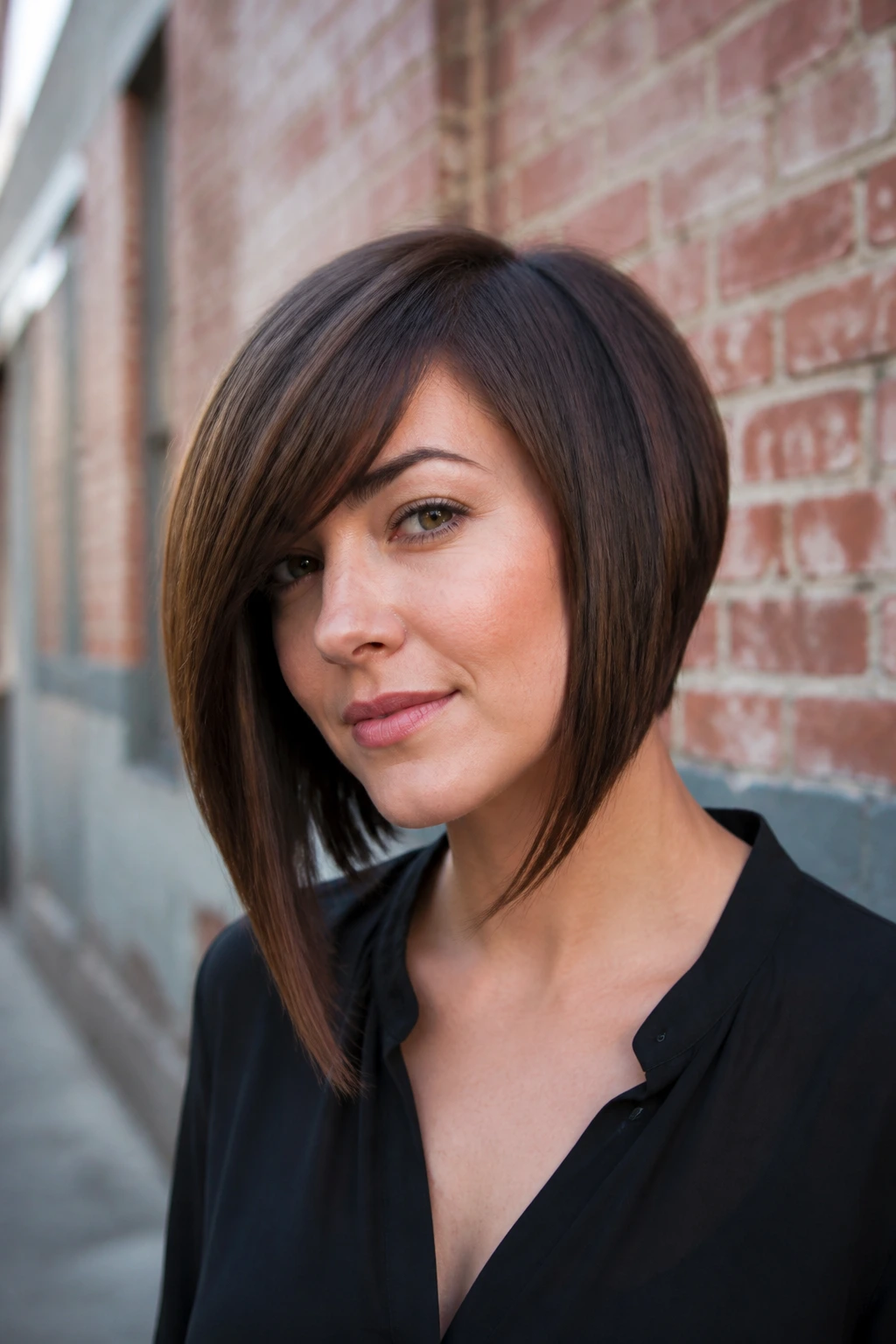
An angled bob with side-swept fringe is the haircut I’d hand to someone who wants structure without looking too severe. The back sits shorter, the front drifts down toward the collarbone, and that slanted shape gives the whole head a little forward motion. Add a long side bang and the line stops feeling blunt; it starts looking carved.
Why It Works
This cut is strong on straight and slightly wavy hair because the angle shows immediately. You can see the difference between the shorter back and the longer front even when the hair is tucked behind one ear. The side-swept fringe softens the front edge, so the haircut reads as sharp, not boxy.
Quick Details
- Best for fine to medium hair that needs a clean silhouette
- Keep the front about 1.5 to 3 inches longer than the nape for a visible slope
- Blow-dry with a round brush, turning the front pieces under just slightly
- Ask for a fringe that can move across the forehead, not sit like a shelf
Pro tip: If your hair flips out at the ends, ask your stylist to point-cut the front edge. A hard blunt line on this shape can start kicking away from the jaw.
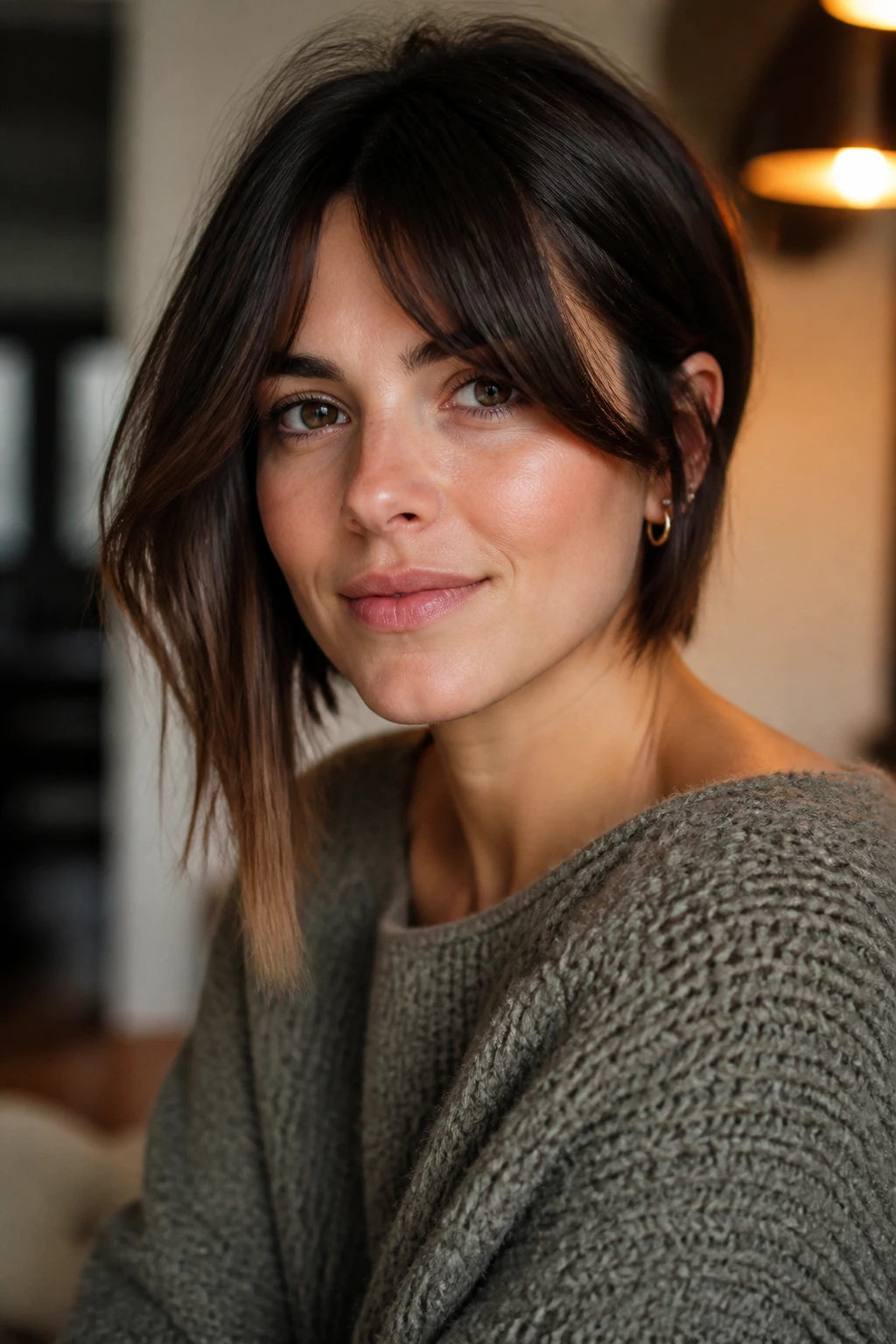
2. Micro-Offset Pixie with Long Bangs
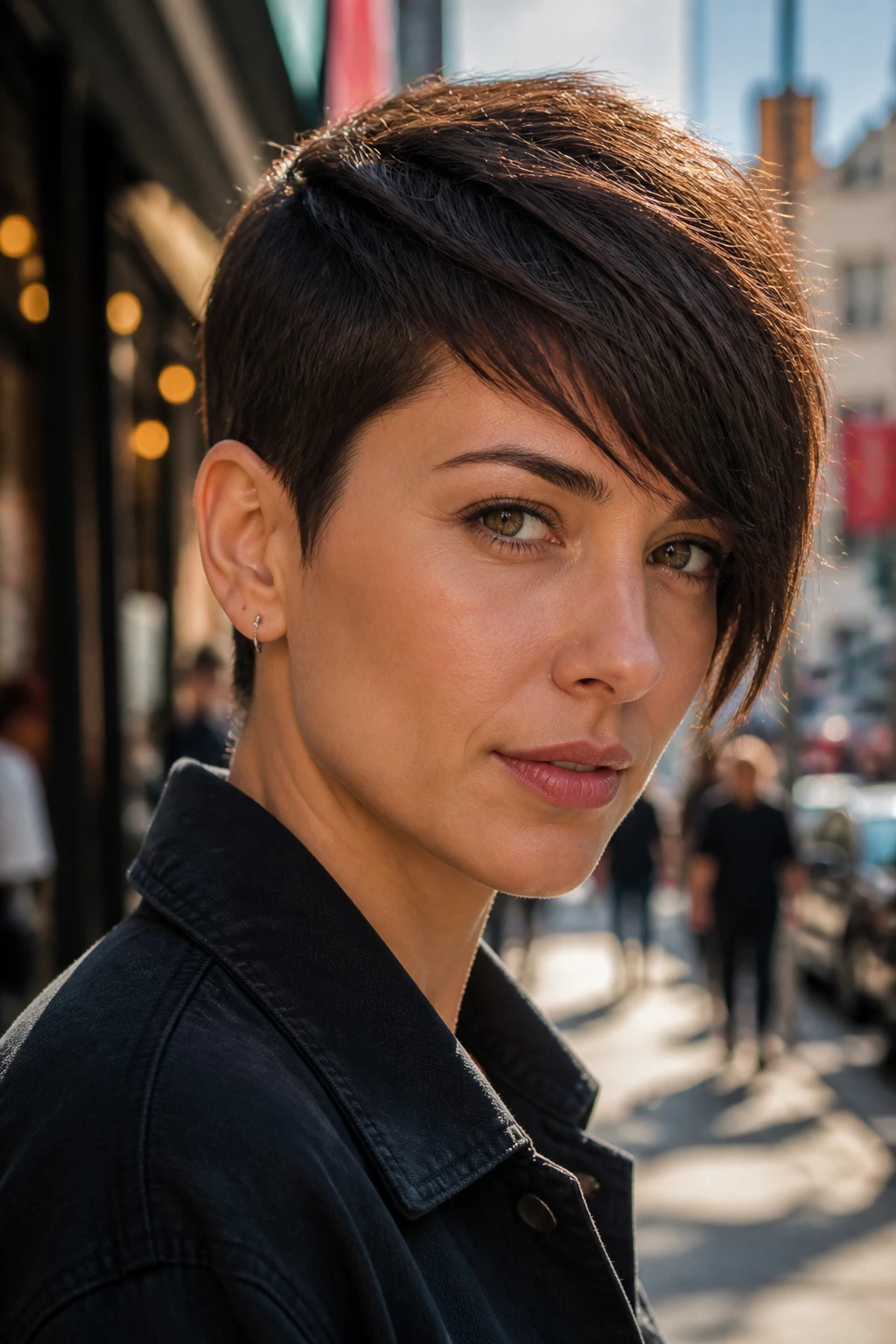
This is the one that looks tiny from the back and unexpectedly dramatic from the front. One side hugs the head close, the other side keeps enough length to sweep across the brow, and the result has a sharp little tension that makes the cut feel expensive even when you barely style it.
What Makes It Different
The offset matters more than the overall length. A standard pixie can feel cute and neat; this version has edge because one side carries more weight through the fringe and temple. It’s a good pick if you like short hair but don’t want the same shape every day.
Styling Notes
A pea-sized amount of paste or cream is usually enough. Work it through damp hair, then finger-dry the longer bang forward and across, leaving the shorter side flatter and closer to the head. If you want extra lift, blow-dry the crown with a small vent brush for about 30 seconds.
This cut loves a little mess. Too much polish flattens the point of it.
3. Collarbone Lob with Curtain Bangs
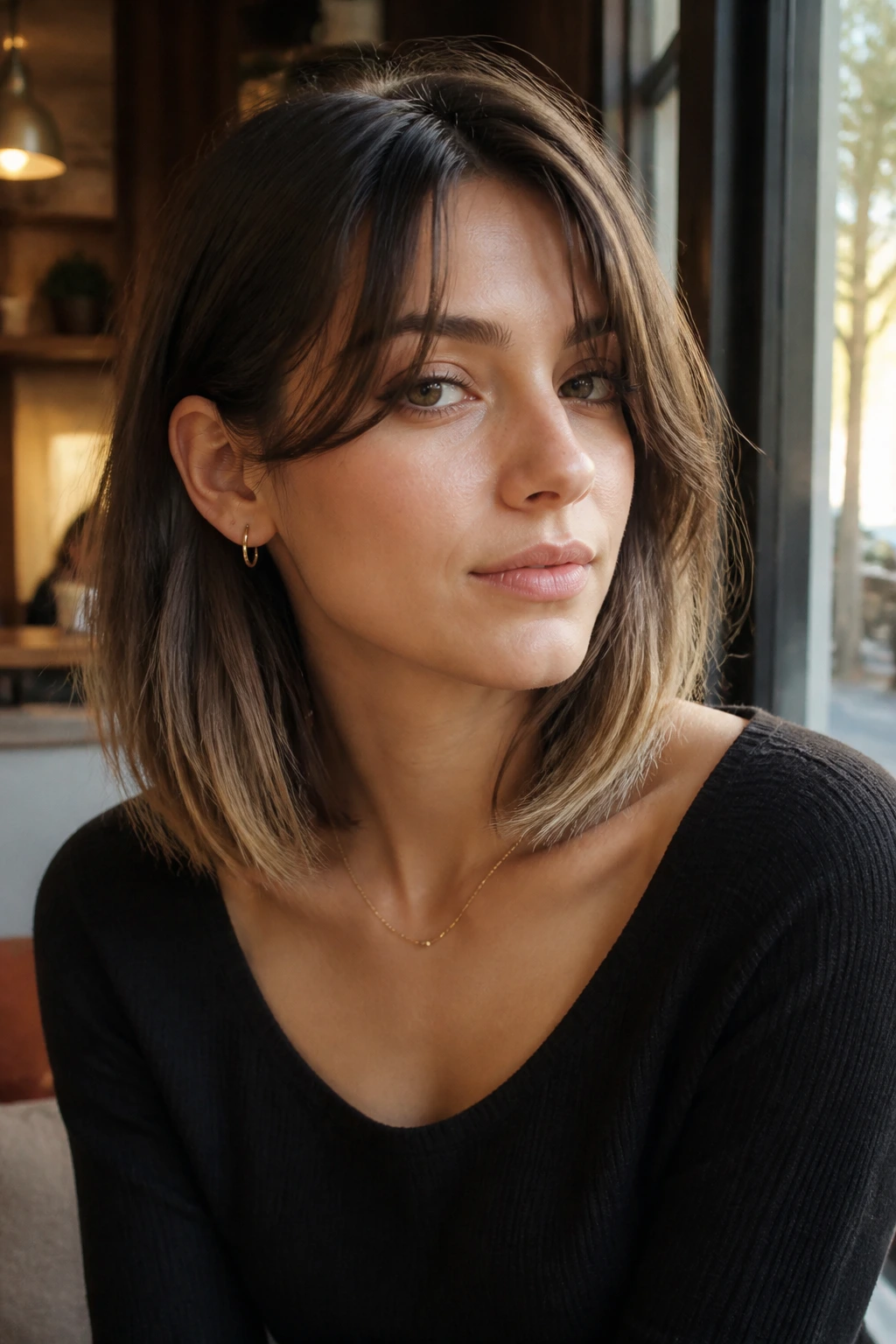
A collarbone lob with curtain bangs is the quiet achiever in this group. The cut doesn’t scream for attention, but it has enough asymmetry in the front lengths to keep it from going limp. One side can be tucked, the other can swing free, and the bangs split the face with that easy, middle-open shape that curtain fringe does so well.
How to Wear It
This is the kind of lob that behaves best when it’s not overworked. A quick bend with a flat iron, a little texture spray at the ends, and the whole thing looks lived-in instead of staged. On wavy hair, the asymmetry shows up through the movement rather than a hard line, which I think is the better look for most people.
Best For
- Oval, heart, and longer face shapes
- Hair that sits between straight and wavy
- Anyone who wants bangs without the commitment of a heavy fringe
If you part the bangs a little off center, the cut becomes softer. Part them dead center, and the diagonal in the rest of the hair starts to feel more obvious.
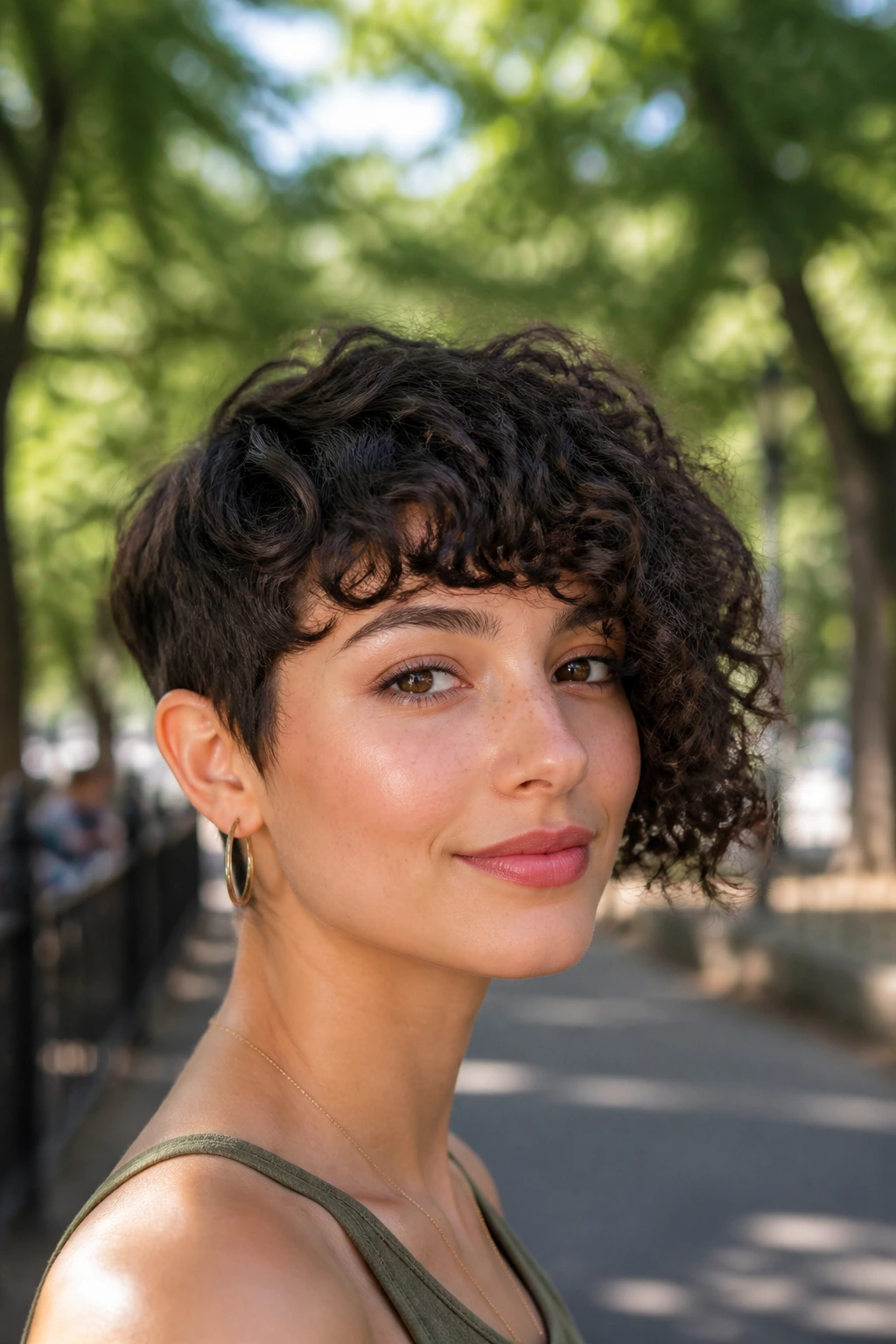
4. Curly Asymmetrical Crop with Rounded Fringe
Curly hair changes the rules, and that’s half the fun. A curly asymmetrical crop with rounded fringe should be cut dry or nearly dry, because the curl pattern decides where the length ends up. One side can graze the cheekbone while the other side stays higher near the ear, and the fringe can curve across the forehead in a soft, broken line.
Why It Succeeds on Curls
Curly hair doesn’t need a hard angle to read as asymmetrical. The difference in length shows up in the silhouette, not in every single curl. Rounded bangs help because they stop the front from looking too heavy or too triangular, which can happen fast when curls spring up.
How to Style It
Use a leave-in conditioner, then a small amount of curl cream or gel. Scrunch lightly, let the curls fall, and do not fight the front pieces into submission. The bangs may need a finger twist while drying, especially if one side wants to separate more than the other.
This cut is forgiving, but only if you respect shrinkage. Ignore shrinkage, and the shorter side can jump up way more than you planned.
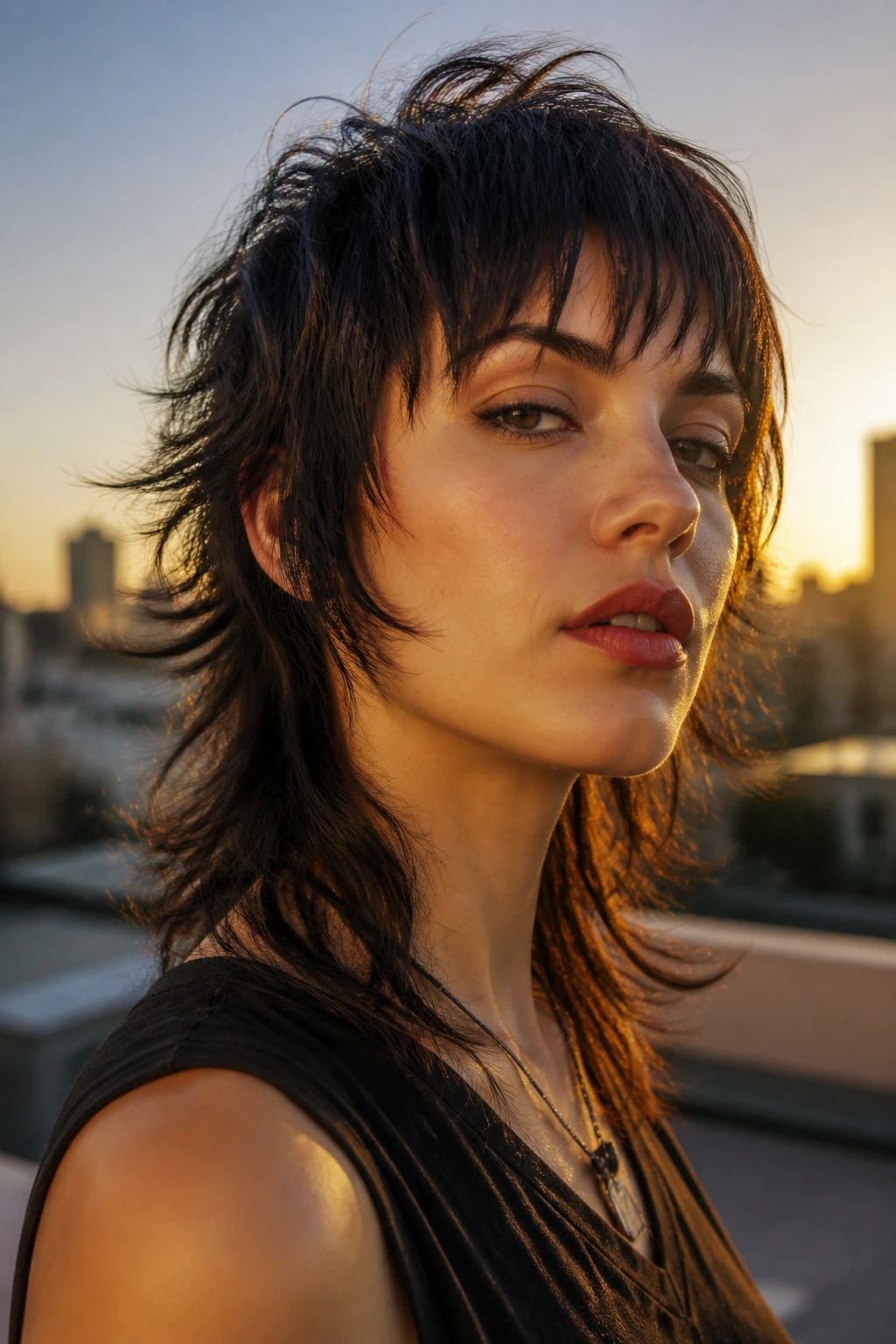
5. Shaggy Mullet with Piecey Bangs
The shaggy mullet with piecey bangs is for someone who doesn’t want the haircut to sit still. It has short layers near the crown, longer pieces through the back, and an uneven front that keeps the whole silhouette a little wild. The bangs are broken up instead of full, which matters; if they’re too dense, the top gets heavy fast.
Why It Works
The shag and the mullet both depend on contrast, so asymmetry fits them naturally. The shorter front pieces bring the eye in, then the longer back lets the shape trail off. That gives you movement without needing the hair to be perfectly smooth.
A Few Real-World Notes
- Best on wavy or textured hair that wants to puff and separate
- Use a salt spray or light mousse for grip
- Air-dry for a rougher finish, or diffuse for more lift at the crown
- Ask for bangs that are sliced into small sections, not cut as one block
If you like hair that looks better after you’ve touched it, this is a strong choice. If you want clean and tidy every day, it’s probably too much personality.
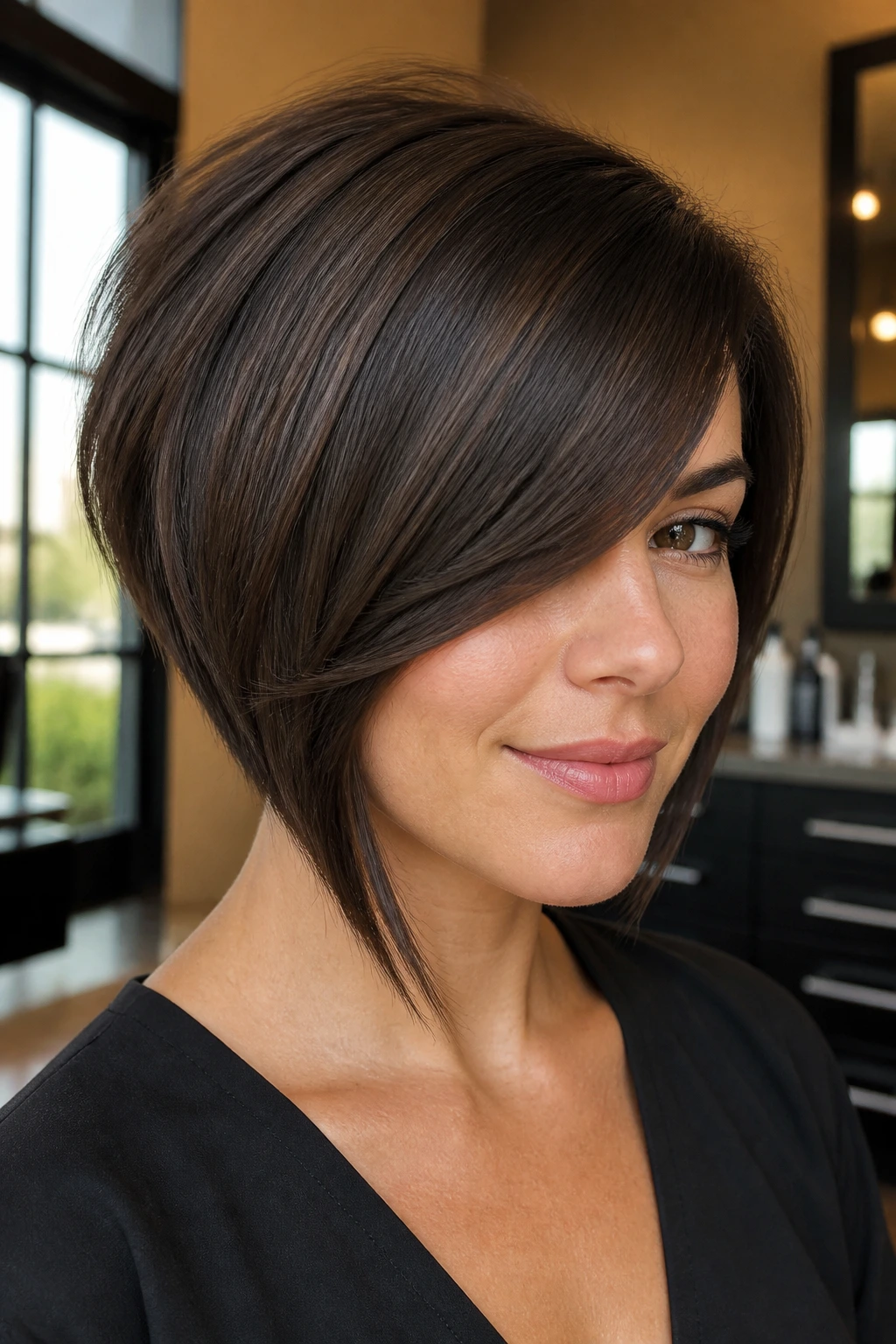
6. Inverted Bob with Heavy Side Bangs
An inverted bob is stacked in the back and longer in the front, so the asymmetry is baked right into the shape. Add a heavy side bang and the cut becomes more dramatic, but also more wearable because the fringe keeps the front from feeling too pointy. It’s a strong silhouette. Very clean. Very clear.
Why It Feels So Balanced
The back lift gives the bob volume where many people need it, especially if hair lies flat at the crown. The side bangs then soften the front line, which can otherwise read as a little severe. The result is a haircut with real shape from every angle, not only face-on.
Who Usually Likes It
People with dense hair often love this because the stacking removes bulk. Straight hair shows the architecture best, while slightly bent hair gives the front pieces a little swing. If your hair is very fine, ask for less stacking so the back doesn’t look too sparse.
A round brush and a nozzle attachment matter here. Skip the rough dry if you want the stacked back to keep its shape.
7. Razor-Layered Lob with Bottleneck Bangs
This is a softer, airier version of asymmetry. The razor-cut layers keep the ends light, and the bottleneck bangs open up in the center before narrowing toward the cheekbones. That fringe shape does a lot of work: it gives forehead coverage without boxing the face in.
What Makes It Stand Out
The looser ends help the diagonal front pieces move instead of sitting like a ruler line. That’s useful if your hair is fine or medium and needs more swing than structure. The bangs are especially good when you want a face frame that can be pushed apart, tucked, or worn a little messy.
Styling Considerations
A blowout with a medium round brush gives the longest pieces a gentle curve. If you want a more casual finish, twist the bangs around your fingers while they’re damp and let them air-dry for a few minutes before touching them again.
Bottleneck bangs are kinder than blunt fringe on a lot of faces. They give shape without stealing the whole show.
8. Undercut Pixie with Sweeping Fringe
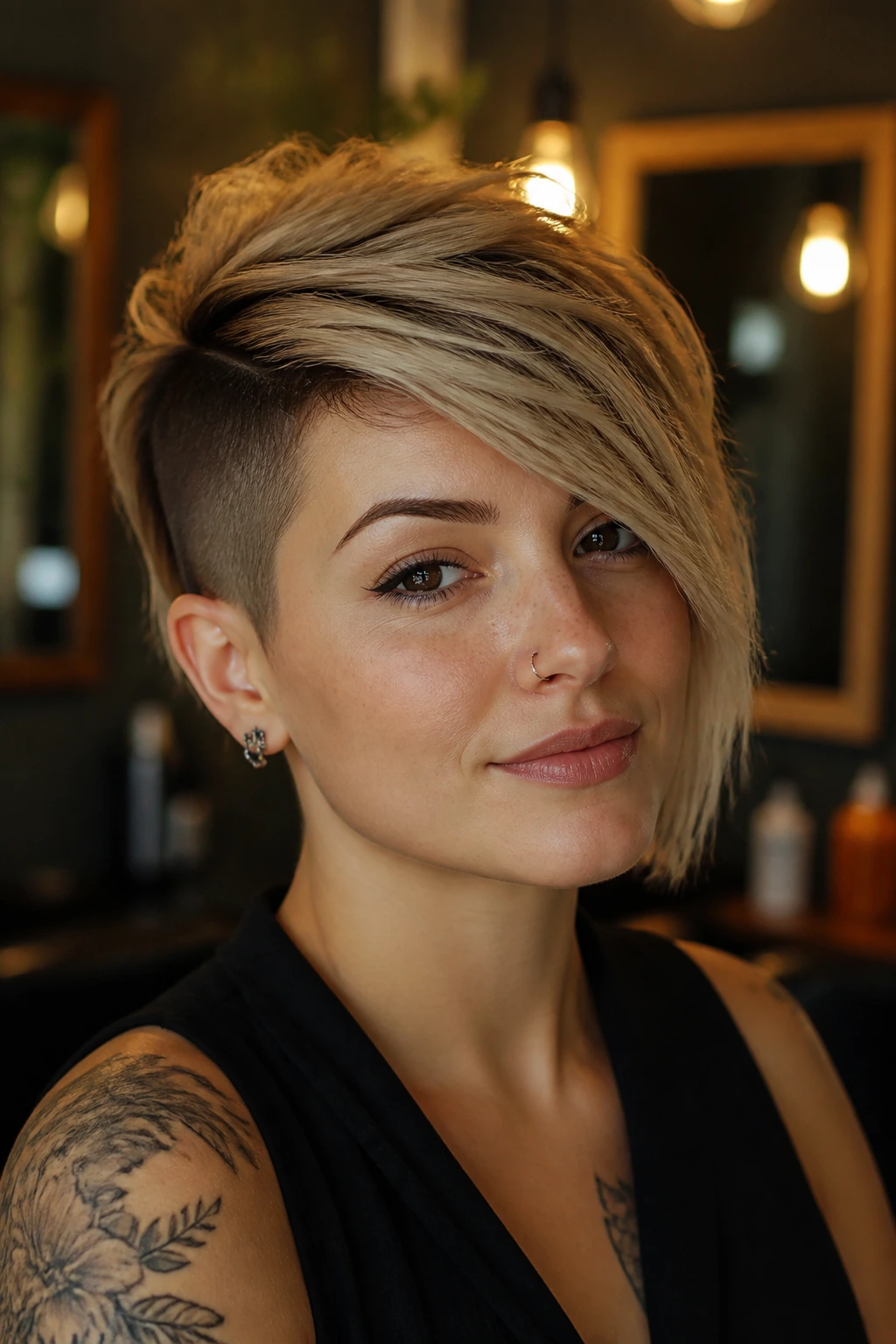
This one has teeth. An undercut pixie with sweeping fringe keeps one side or the nape cropped close, while the longer top hair travels over the forehead in a wide sweep. The asymmetry is obvious, which is the point — the cut wants to be seen.
Why It’s So Effective
The undercut removes bulk, so the top layers can fall more cleanly. That gives the fringe room to move instead of collapsing into the scalp. If you have thick hair, this can feel like losing five pounds off your head. Not a metaphor. It really does feel lighter.
Styling Notes
Use a lightweight mousse at the roots and a touch of pomade on the fringe ends. Too much product makes the sweep look wet in the wrong way. You want it soft but controlled, with the short side staying close and the long side curving across the brow.
This is a cut that looks best with some confidence. You do not need perfect makeup or a dressed-up outfit to wear it, but you do need to let the shape be bold.
9. Wavy Midi with Off-Center Bangs
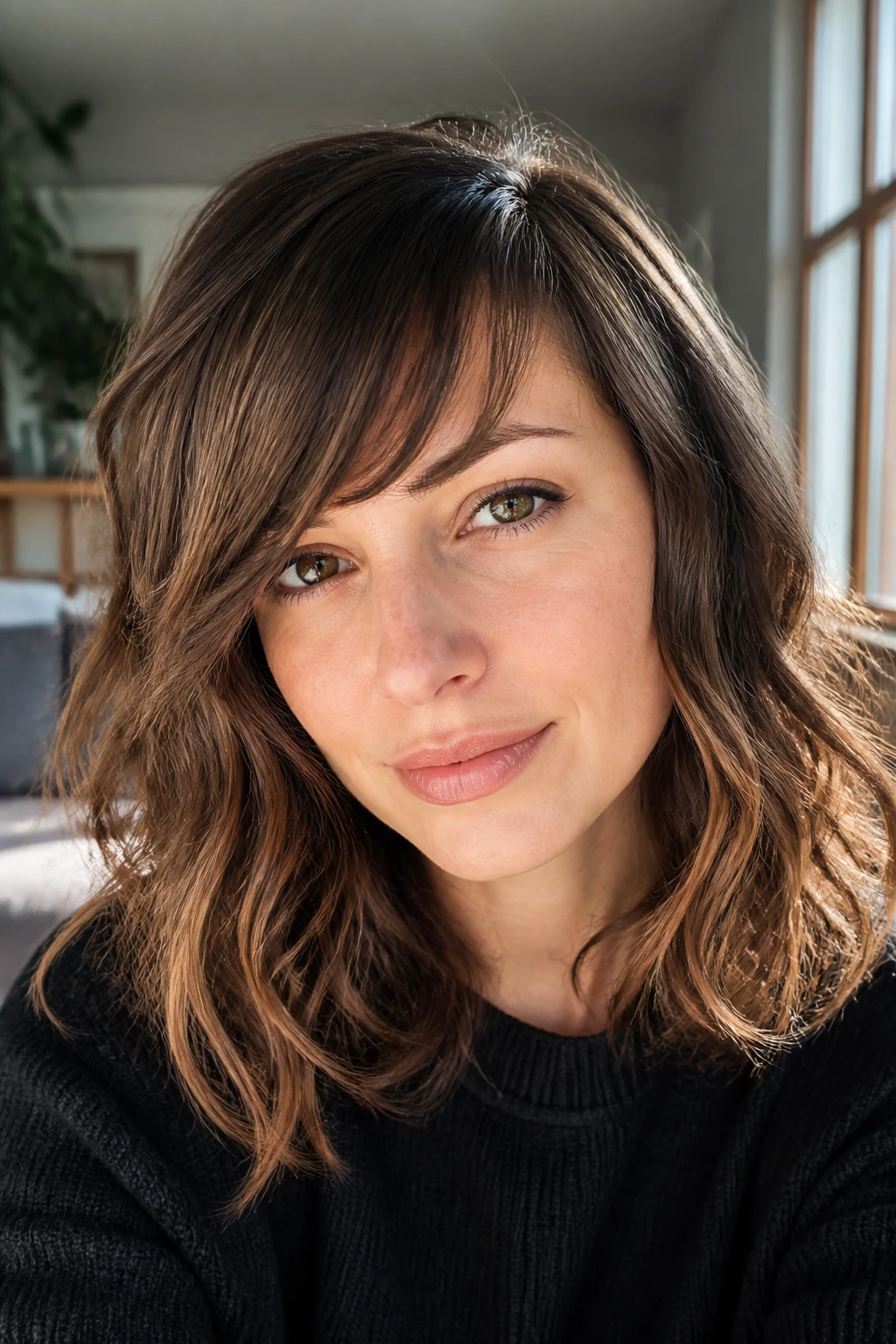
A wavy midi cut falls somewhere around the shoulders, which gives it enough length to move but not so much that the asymmetry disappears. The off-center bangs matter here because they tilt the visual line just enough to keep the shape from becoming too symmetrical and sleepy.
How It Reads on Hair
On natural waves, the longer side tends to bend and flip a little more, which is what makes this cut feel alive. The fringe can be longer on one side, shorter on the other, or simply parted off center so the eye doesn’t land in the middle of the face every time.
Best For
- Medium-density hair that likes to swell slightly as it dries
- People who want a shoulder-length cut without the “triangle” effect
- Anyone who styles with a diffuser or a quick bend from a flat iron
I’d ask for soft internal layers here, not chunky ones. The point is movement, not choppiness for its own sake.
10. A-Line Bob with Feathered Fringe
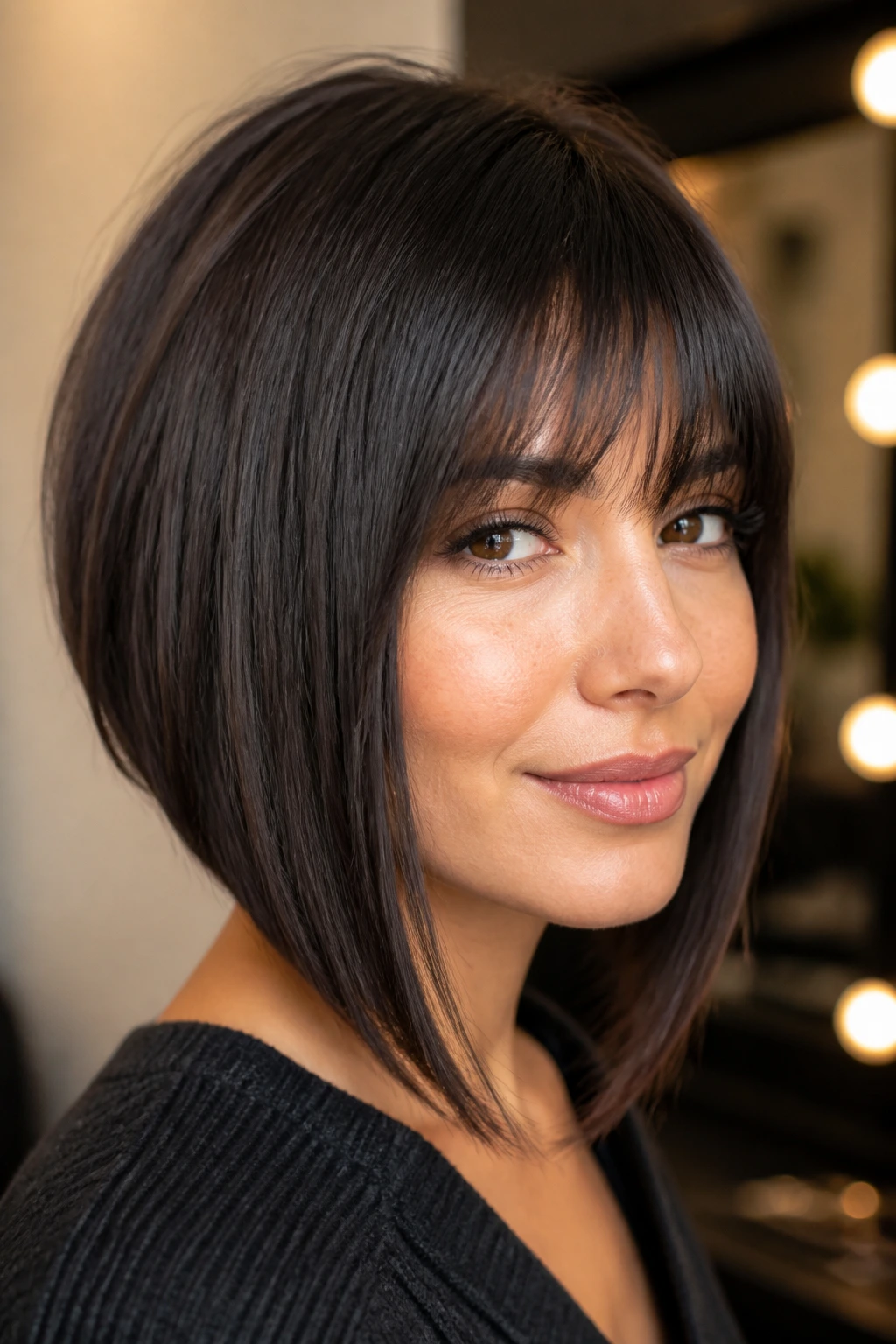
An A-line bob has a very specific kind of discipline: shorter in the back, longer toward the front, and usually smooth enough to show the line clearly. Feathered fringe keeps that line from feeling too crisp. The bangs break up the forehead area just enough to match the cut’s diagonal mood.
Why It Still Feels Soft
Feathering changes the whole read of the haircut. Instead of one heavy block sitting on top of a sharp outline, you get a lighter front that lets the angle breathe. It’s a smart option if you like polished hair but don’t want anything stern.
Styling Cue
Use a flat brush while blow-drying the fringe forward, then bend the ends slightly under at the cheekbone. The goal is not volume for the sake of volume. The goal is a clean arc that follows the face and keeps the front from drooping into the eyes.
This is one of those haircuts that looks more expensive when it’s precise. Tiny crooked sections show up fast, so the trim matters.
11. Choppy Shoulder Cut with Grown-Out Bangs
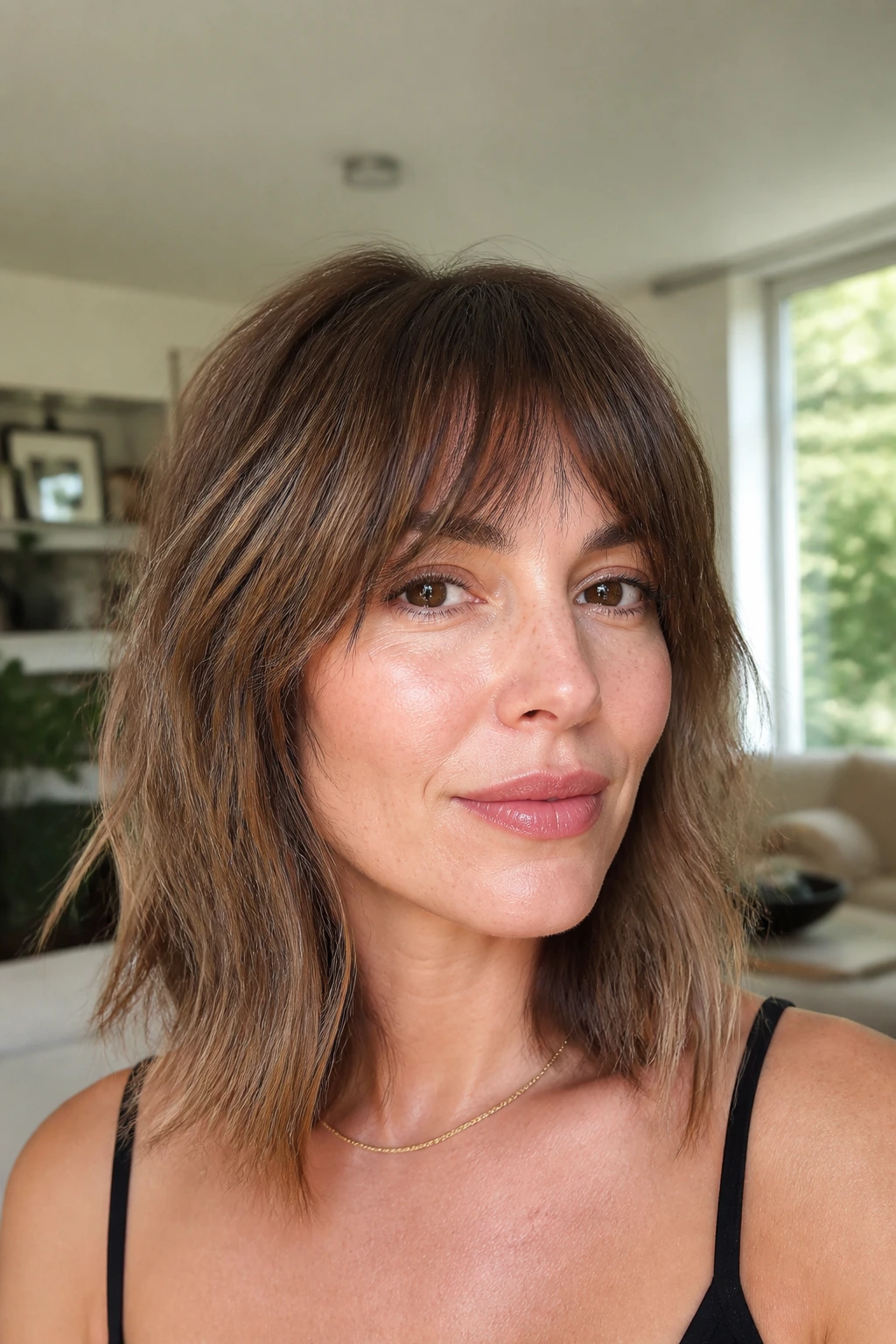
A choppy shoulder cut with grown-out bangs is the friendliest version of asymmetry in the group. It doesn’t demand a strict line. The lengths shift through the front, the ends are textured rather than blunt, and the bangs live in that useful middle zone where they can be pushed aside or worn loose.
What It Gives You
There’s a built-in softness here that makes grow-out easier. If your hair grows fast or you only want to visit the salon every few months, this shape doesn’t fight you. The asymmetry shows through the placement of the front pieces instead of a hard length difference.
Good Fit
People who don’t want a haircut that looks “done” all the time tend to like this one. It suits straight, wavy, and lightly curly hair, especially if you want to air-dry and leave. A little mousse at the root and a bend through the ends are usually enough.
Grown-out bangs can look accidental if they’re too thick. Keep them light, and the haircut stays intentional.
12. Slick Asymmetrical Jaw-Length Cut with Tucked Bangs
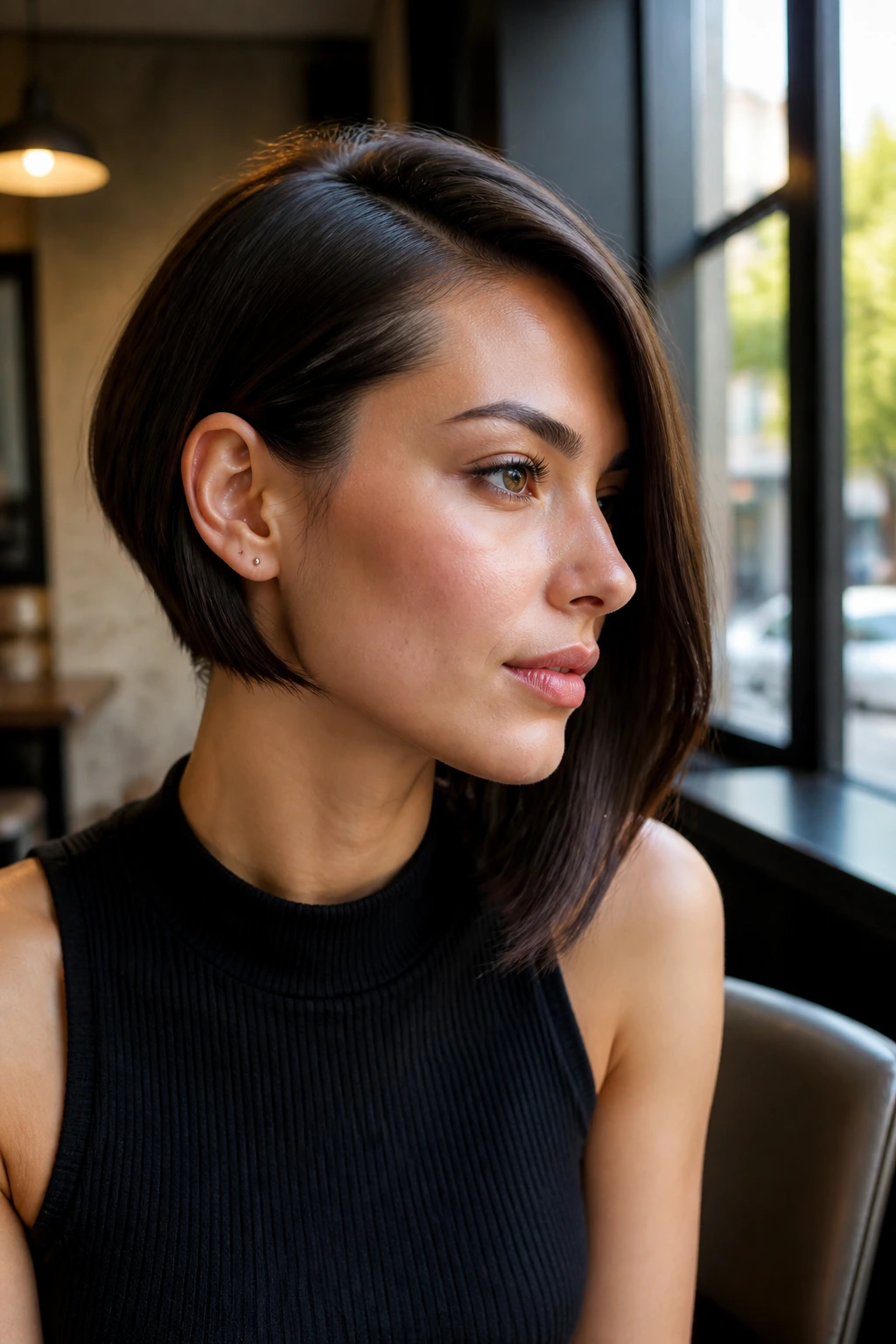
This cut is sleek, sharp, and a little severe in the best way. One side lands right at the jaw, the other side pulls longer toward the collarbone, and the bangs are tucked or swept so the front line stays clean. It’s a haircut that knows exactly where it ends.
Why It’s Different
The tucked bang changes the whole profile. You’re not looking at fringe as a separate feature; you’re looking at the bang becoming part of the asymmetrical shape. That makes the haircut feel minimal and architectural rather than cute or airy.
Styling Notes
Use a smoothing cream and a flat iron if your hair likes to puff. You want the line to stay close to the face, especially through the shorter side. A sharp middle or side part both work here, but a side part usually makes the angle read more clearly.
This is a strong choice if you like glasses, bold earrings, or crisp collars. It gives those pieces room to show up.
13. Wolf Cut with Micro Fringe
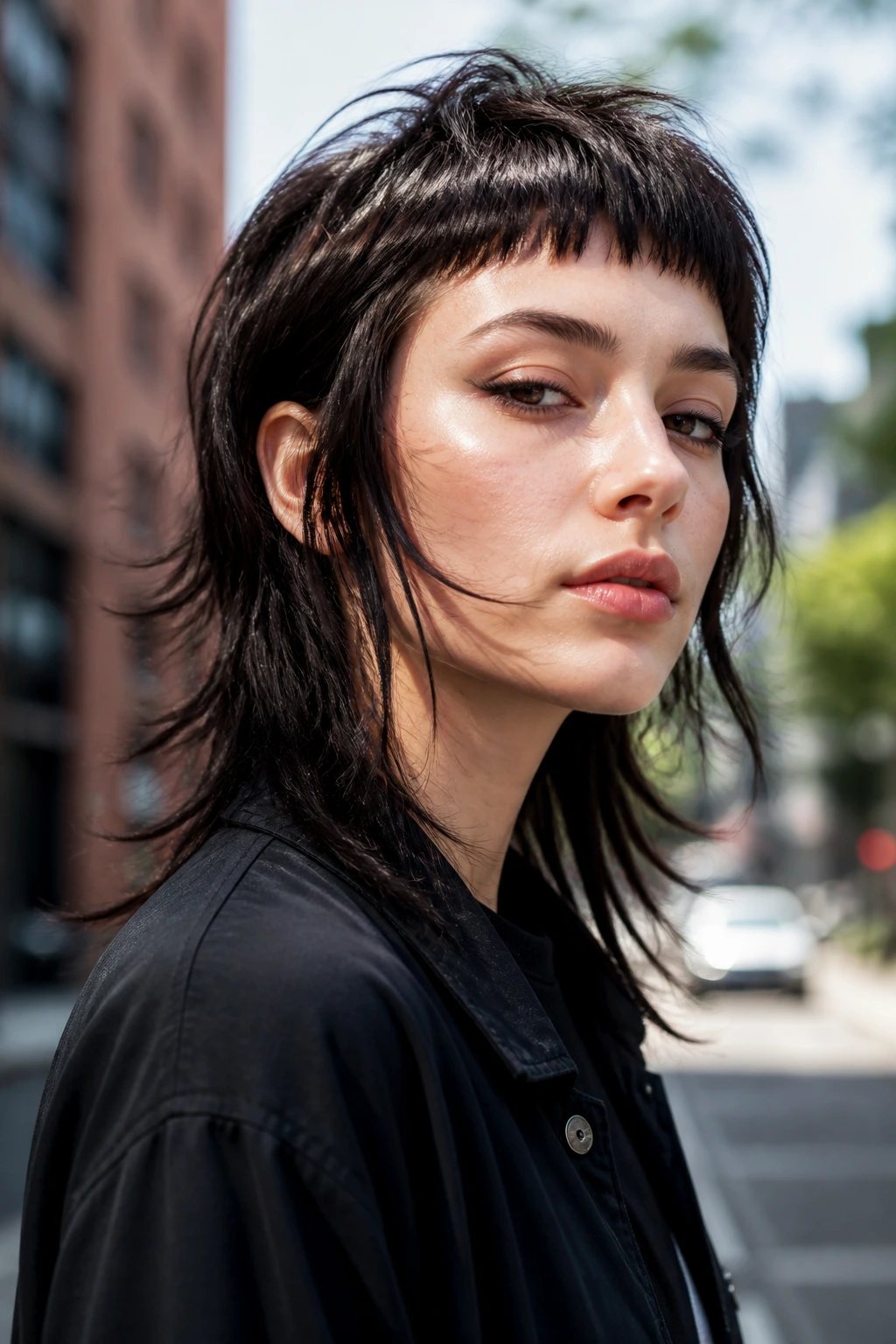
A wolf cut already lives on the edge between shag and mullet, so asymmetry feels natural here. The crown is shorter, the lengths spread out, and the micro fringe adds a hard little punctuation mark across the forehead. Tiny bangs. Big attitude.
What the Cut Does Well
Micro fringe keeps the face open while the layers do all the movement work. Because the fringe is so short, the longer side pieces become even more obvious. That contrast is what gives the haircut its bite.
Styling Reality
This is not a hairdo that needs to look controlled. If anything, it gets better the messier the texture is. Blow-dry the fringe straight down if you want the strongest effect; otherwise, let it sit a little piecey and irregular.
Short bangs are not forgiving on every forehead or every cowlick. If your hairline swirls, ask the stylist to leave a touch more length than you think you need.
14. Long Layered Cut with Deep Side Part and Fringe
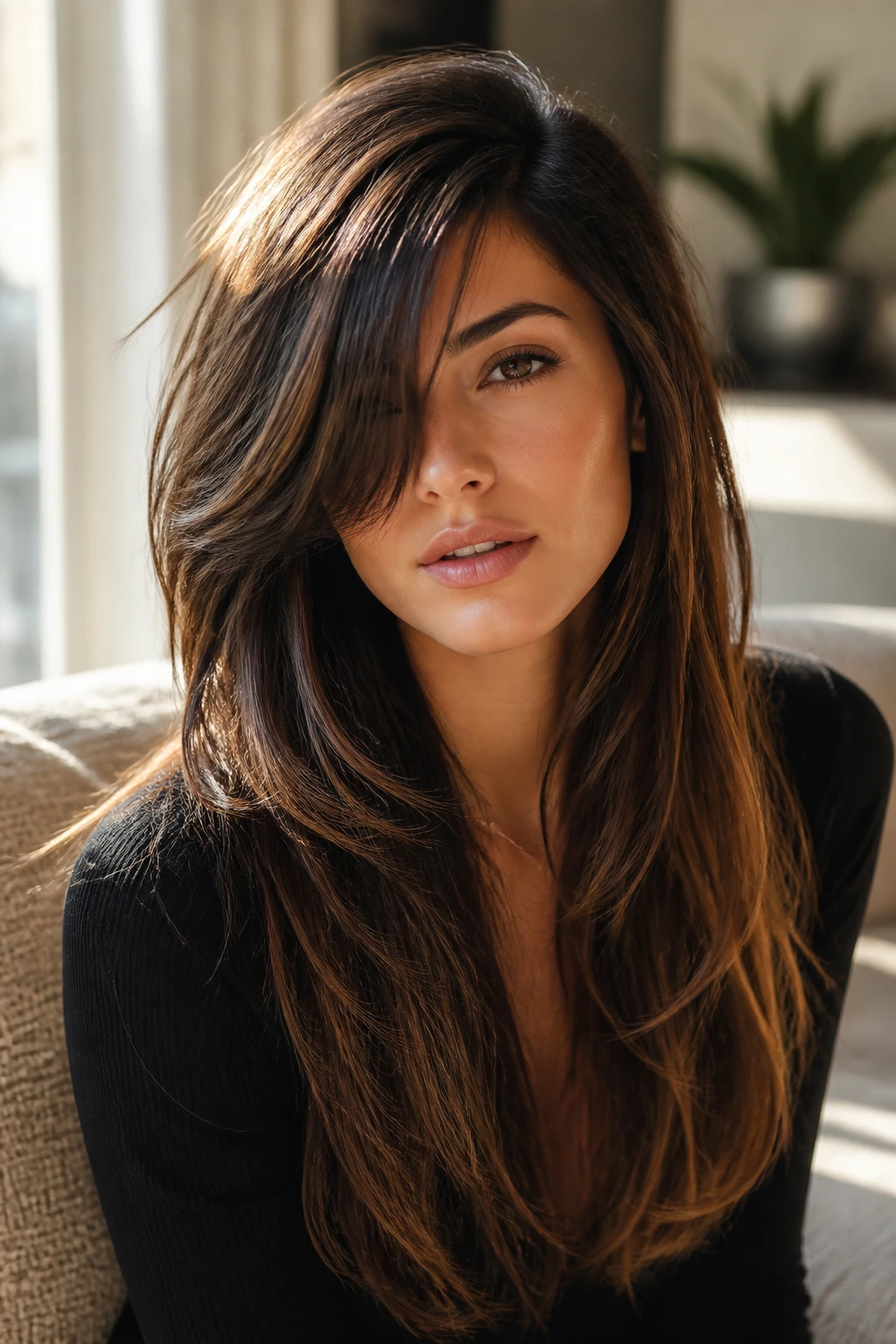
Not everyone wants a short asymmetrical cut. A long layered style with a deep side part and fringe gives you the diagonal feeling without giving up length. One side falls more heavily over the face, the other side opens out, and the bangs sit like a curtain that’s been shifted on purpose.
Why It Works on Long Hair
Long hair can go flat fast, especially if the ends are all one length. The deep side part breaks that up, and the front fringe gives the shape a focal point. You get movement near the face, which is where long hair often needs help most.
Who It Suits
This is good if you like ponytails, buns, or half-up styles and don’t want to lose that flexibility. The asymmetry shows up when the hair is down, then disappears a little when you pull it back, which can be handy if you need a quieter look for work.
A round brush at the roots and a small bend through the bangs usually do enough. You do not need a full blowout every day.
15. Ear-Grazing Crop with Soft Bangs
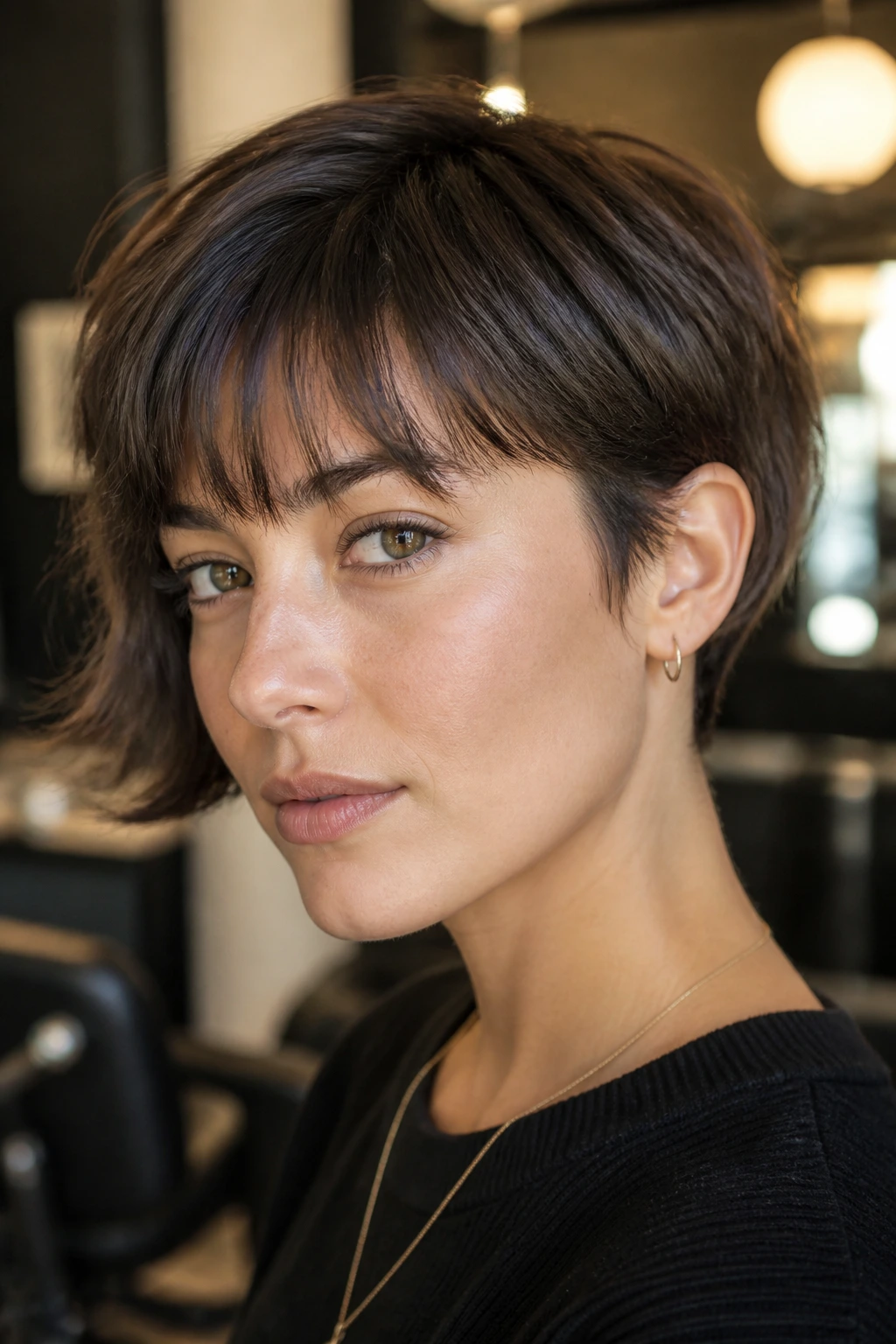
An ear-grazing crop sits in that sweet spot between pixie and bob. The asymmetry lives in the front lengths and the way one side skims closer to the ear while the other side keeps a touch more body. Soft bangs keep it from feeling too spiky.
Why It Feels Easy to Wear
The length is short enough to feel fresh, but not so short that every cowlick becomes a crisis. The bangs help anchor the cut, especially if they’re light and slightly separated. That keeps the crop from floating away from the face.
Styling Cue
A cream or light paste is enough. Rub it through the ends, then use your fingertips to nudge the front pieces where you want them. This cut looks best when it has a little bend, not helmet shine.
If your face is narrow, leave a little more softness around the temple. If your jaw is broader and you want to balance it, ask for the longer side to come forward a touch more.
16. Curved Asymmetrical Bob for Thick Hair
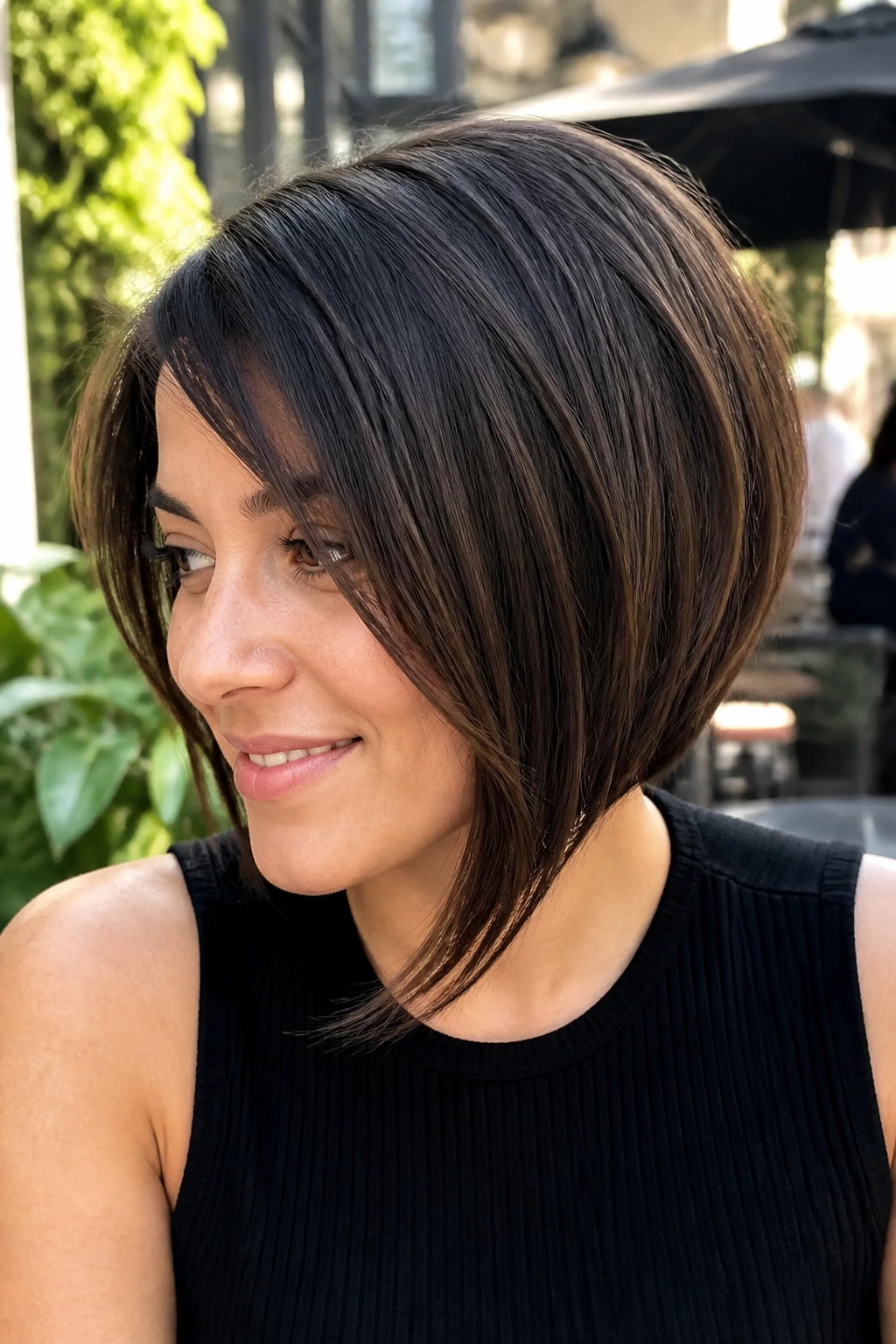
Thick hair can make an asymmetrical bob look either gorgeous or heavy as a brick. The curved version solves that. The longer front pieces follow a smooth arc rather than a hard diagonal, while internal weight removal keeps the shape from swelling out at the bottom.
Why It Helps Thick Hair
A straight blunt line on thick hair can make the ends puff into a triangle. A curved shape lets the hair fall with a softer edge. The bangs also need to be handled carefully here — too much density and the fringe will sit like a curtain you can’t move.
Practical Note
Ask the stylist to thin the interior, not the outline. That keeps the curve clean while reducing bulk where the hair stacks up. At home, a paddle brush and a quick bend at the front are usually enough to keep it from looking too square.
This is a haircut with a little discipline. When the shape is right, it feels light without losing the presence thick hair can give.
17. Tousled Midi with Curtain Bangs and Face Framing
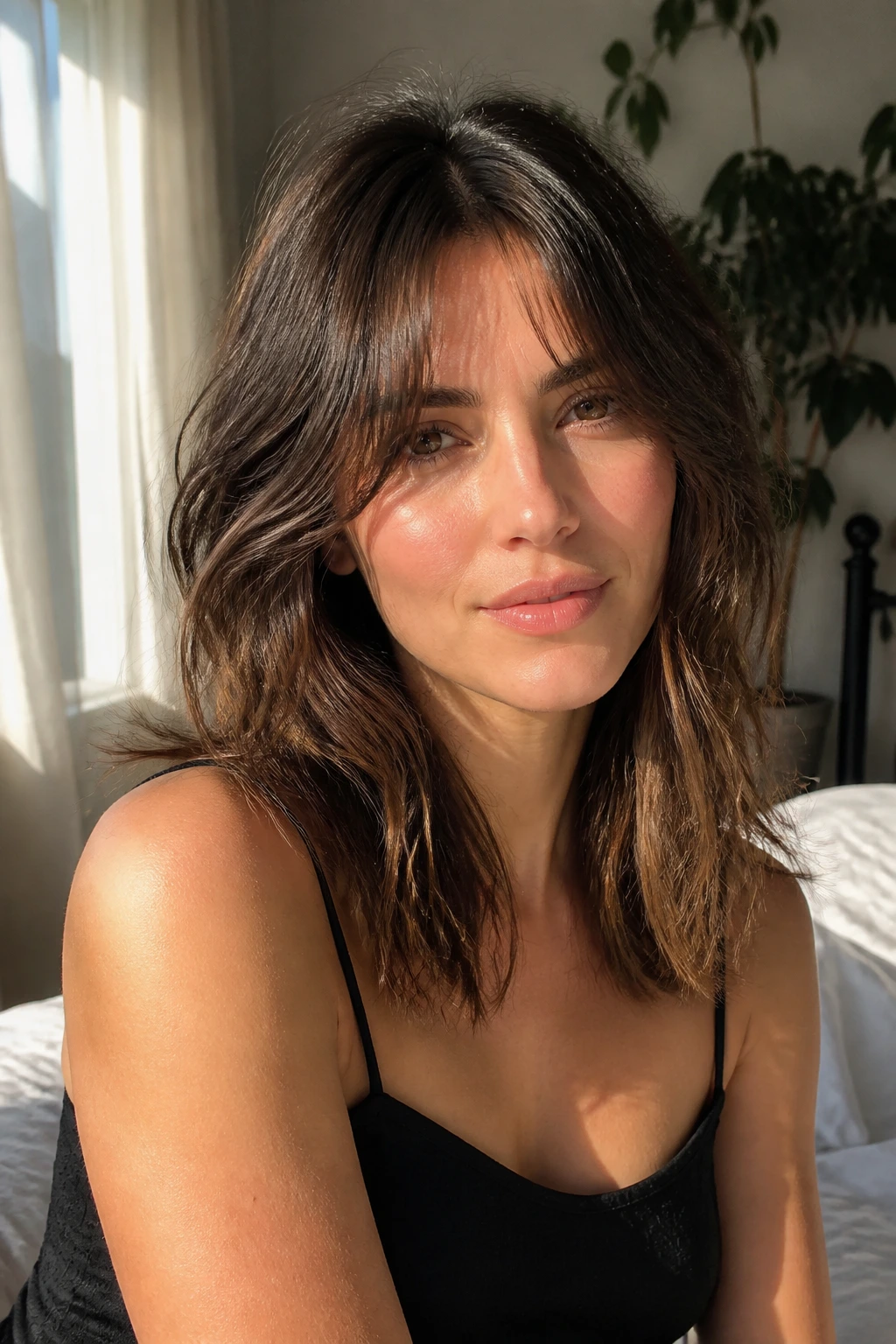
A tousled midi with curtain bangs is one of the easiest ways to wear asymmetry without announcing it too loudly. The length sits around the shoulders, the bangs split open softly, and the face-framing pieces fall at slightly different levels. Nothing about it looks rigid.
Why It Works
The asymmetry here comes from movement rather than a hard cut line. One side can flip out more, the other can hang flatter, and that difference is part of the appeal. Curtain bangs soften the forehead and keep the look from feeling too heavy.
Best For
- Hair that bends naturally or holds a loose wave
- People who want a haircut that can be air-dried
- Anyone who likes soft styling over exact lines
A little texturizing spray at the ends goes a long way. This is one of those cuts where overstyling kills the charm.
18. Blunt Lob with One-Side Weight
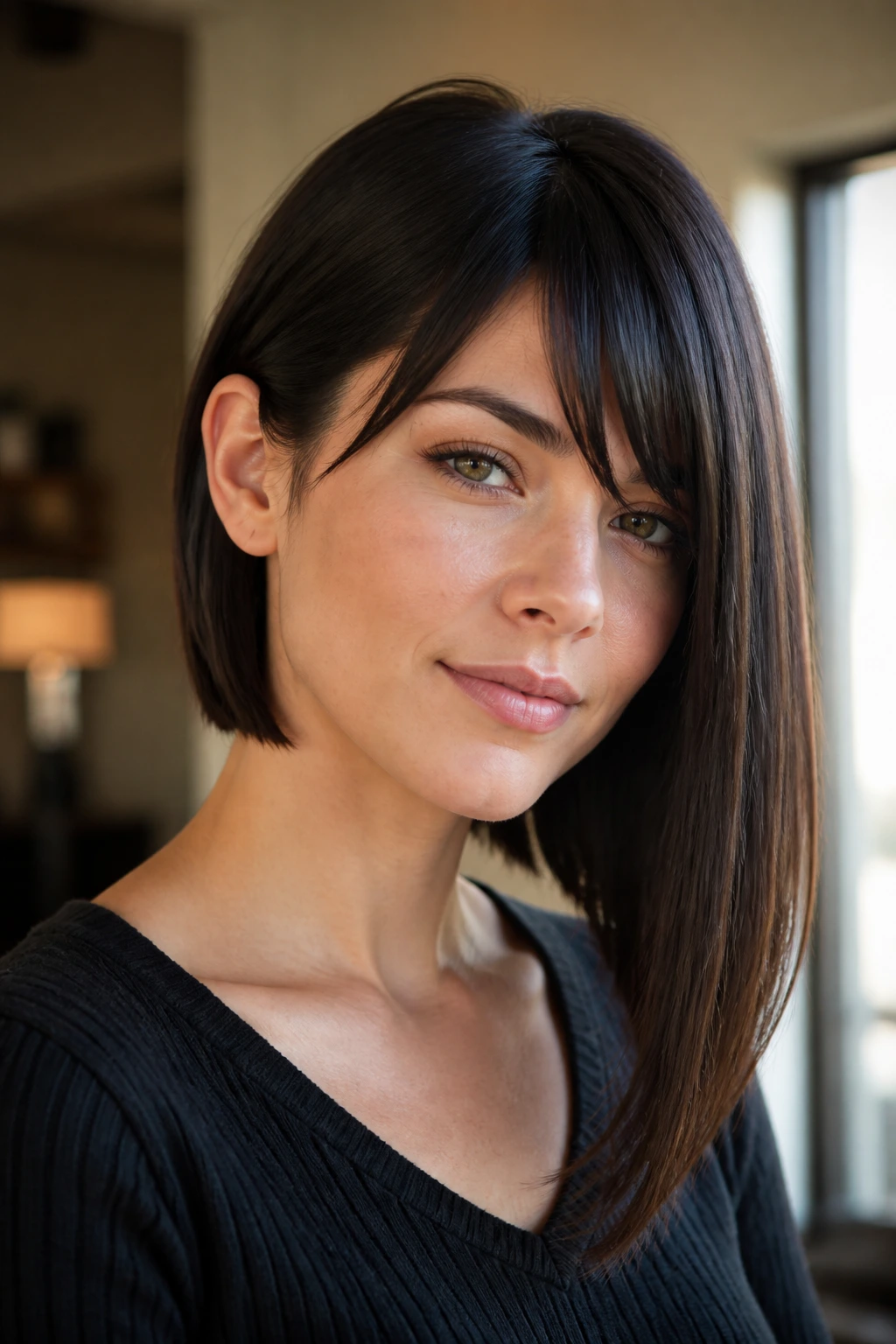
A blunt lob can look plain until you tilt the weight to one side. Then it turns into something much more specific. One side stays a bit heavier and longer, the other side sits slightly shorter, and the bangs are kept long enough to travel with the line instead of cutting across it.
What Makes It Sharp
The blunt edge gives the haircut a graphic base, while the asymmetry adds motion. That combination is useful if you like crisp hair but don’t want the whole thing to feel static. The longer side also gives you a natural tuck-behind-the-ear moment, which changes the shape in a small but noticeable way.
Styling Notes
This cut likes straight hair, but it also works on smooth waves. Use a flat iron only where needed; you want the end line to stay clean, not pin-straight from roots to tips. A drop of serum on the bottom inch keeps the blunt edge looking polished.
It’s a clean haircut. Not fussy. That matters.
19. Sculpted Pixie-Bob with Arched Bangs
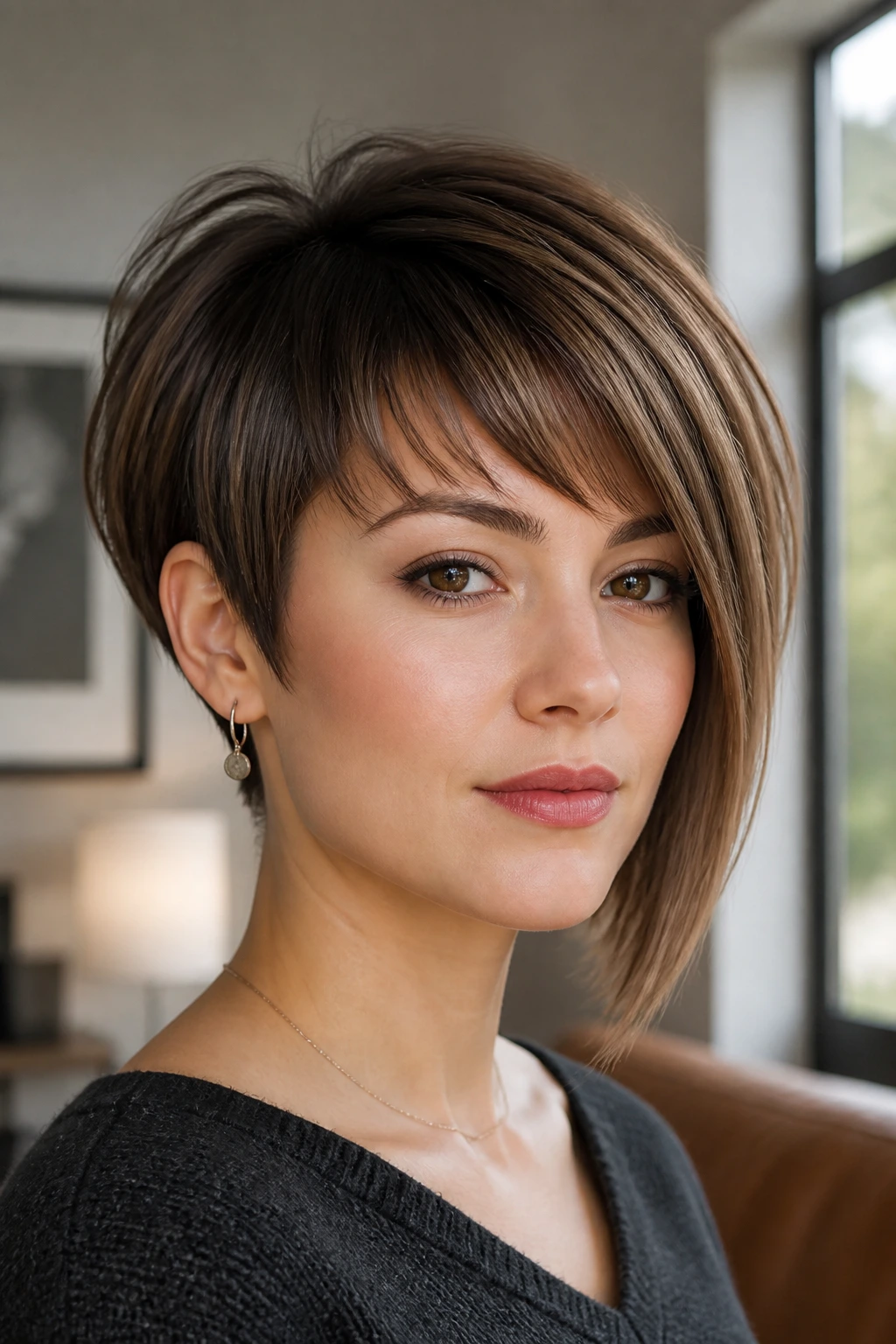
A pixie-bob sits between a short crop and a bob, and the sculpted version leans into that in a very deliberate way. One side can be tighter around the neck, while the front keeps enough length to brush the cheek. Arched bangs add a curve that softens the geometry.
Why It Feels Polished
The arch in the bangs lifts the eye instead of dragging it straight across. That matters when the rest of the cut is already quite shaped. The balance of short back, longer front, and curved fringe gives the haircut a little architecture without becoming severe.
Who Should Consider It
This is a strong choice if you like short hair but want more face framing than a classic pixie gives. It also works well when you wear earrings, because the ear and jaw line stay visible.
A small round brush is your friend here. The fringe needs a gentle bend, not a stiff roll.
20. Airy Layered Shag with Long Fringe
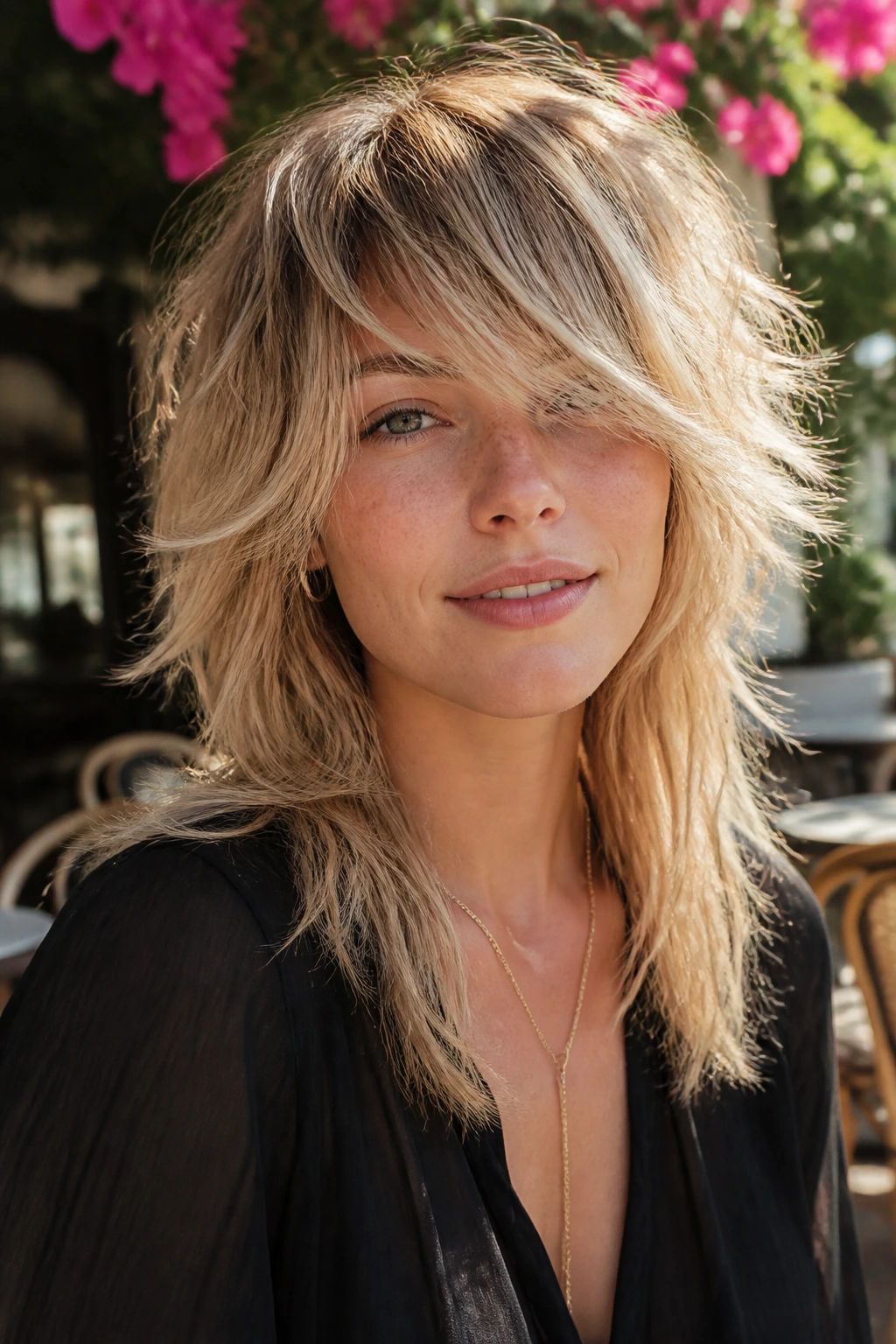
An airy layered shag with long fringe is the easiest cut in this list to live with when you want movement first and polish second. The layers are light, the fringe drifts across the forehead, and the asymmetry shows up in the way the front side pieces land at different lengths. It has swing. It has a little attitude. It also grows out in a forgiving way.
Why It’s So Wearable
The long fringe gives you coverage without shutting down the face. Because the layers are airy, the cut doesn’t pile too much weight in one place. That means the asymmetry keeps showing up even when the hair is a little messy or day-old.
Styling Cue
A diffuser, a curl cream, or a touch of mousse can all work here. Pick the one that matches your texture and stop before the hair gets crunchy. The best version of this cut looks touched, not sculpted.
If you want a look that still has shape when you skip a wash day, this is the one I’d point to first.
What Makes the Angle Work in Real Life
Asymmetry is not just about one side being longer than the other. The cut works because the eye keeps moving. A longer front panel, a shorter nape, a bang that lands off center — all of those pieces interrupt the usual straight line of a haircut, and that interruption creates shape.
That’s why these cuts can look more expensive than they are. The style doesn’t need every strand to behave. It needs a clear decision. One corner drops lower. One side holds weight. The fringe either opens the face or cuts across it with intention. You notice the line first, then the texture.
The smartest part is how flexible it is. On straight hair, the angle reads clean and graphic. On wavy hair, it turns softer and more casual. On curls, the shape becomes a silhouette rather than a ruler-straight line, which is honestly better most of the time. A good asymmetrical haircut with bangs doesn’t force your hair into one story. It gives your hair a better one to tell.
How to Ask for the Cut Without a Salon Guessing Game
Bring photos, yes, but bring the right ones. One photo should show the side view you want, because the front can lie. Another should show the fringe shape you like, because “bangs” can mean seven different things to seven different stylists. The shorter side, the longer side, and the bang length all need to be named out loud.
Length markers help. Say where you want the shortest point to land: cheekbone, jaw, chin, collarbone, or the nape. That one word saves a lot of confusion. If you want the asymmetry to be soft, ask for a gradual difference. If you want it obvious, say so and keep the gap larger.
Texture matters more than the reference photo. Thick hair needs more internal removal. Fine hair needs less weight taken out, or the longer side can go see-through. Curly hair needs the cut checked dry or almost dry so the bang length doesn’t jump up later.
Tell them how much work you’ll actually do. If you air-dry, say that. If you’ll round-brush the bangs every morning, say that too. A cut that depends on a perfect blowout is a different animal from one that can survive a busy Tuesday.
The Tools That Keep the Line Clean
-
Blow dryer with a concentrator nozzle: Helps direct the fringe and keep the angle from puffing out.
-
Round brush, 1 to 1.5 inches: Best for bending bangs and polishing the front pieces without making them too round.
-
Paddle brush: Good for smoothing longer asymmetrical bobs and lobs fast.
-
Small flat iron: Useful for flipping just the front corner or taming one side without ironing the whole head flat.
-
Duckbill clips: Handy when you want the bangs to dry in the right direction.
-
Light mousse or root spray: Gives shape at the crown without turning the cut stiff.
-
Texture spray or light paste: Helps piece out shaggy cuts, pixies, and layered crops.
-
Heat protectant: Non-negotiable if you use a blow dryer or flat iron more than once in a while.
Keeping the Shape Sharp Between Cuts
The fringe is usually the first thing to go off. Bangs grow fast enough to change the whole balance of the haircut, so a quick trim every 3 to 4 weeks can keep the face frame where it belongs. The rest of the shape often holds for 6 to 10 weeks, depending on how hard the angle is and how fast your hair grows.
If the asymmetry is subtle, you can often stretch the appointment longer. If it’s a strong angled bob or a sculpted pixie, the line needs more frequent clean-up or it starts to blur. That blur is not always bad. Sometimes it looks softer in a nice way. Sometimes it just looks like you missed your window.
At home, keep the front pieces from drying in the wrong direction. Clip the bangs where you want them for a few minutes after washing, or rough-dry the shorter side first so it doesn’t spring out in a weird shape. On second-day hair, a mist of water at the fringe and a fast round-brush pass are usually enough to wake the cut up again. The trick is small corrections, not a full rebuild.
Common Mistakes That Make the Cut Lose Its Edge
-
Making the asymmetry too dramatic for your hair density: On fine hair, a huge length gap can leave the longer side looking stringy. Start with a smaller difference and build from there.
-
Cutting bangs too heavy: Dense fringe can swallow the face frame and make the haircut look blunt rather than shaped. Ask for softness at the ends unless you truly want a graphic look.
-
Ignoring the cowlicks and growth pattern: A side bang that fights your natural part will split, buckle, or pop up. Your stylist needs to cut with your growth pattern, not against it.
-
Skipping regular trims on short versions: Pixies and jaw-length bobs lose their shape fast. Once the fringe grows past the sweet spot, the whole cut reads differently.
-
Styling every asymmetrical cut the same way: A razor lob wants different product than an undercut pixie. Heavy creams flatten light layers. Strong gel can make soft fringe look stiff. Match the product to the cut.
Ways to Tweak the Look Without Losing the Angle
Soft Office Version: Keep the length difference subtle and use curtain or side-swept bangs. The shape still looks interesting, but it’s quiet enough for a dress code that doesn’t love sharp edges.
High-Drama Razor Version: Ask for a more visible front drop and texture the ends with a razor or point-cutting. This version works well with bold makeup, strong frames, or anyone who wants the haircut to do the talking.
Curly-Friendly Version: Reduce the length gap slightly and cut the bangs with the curl pattern in mind. Dry cutting helps here because the curl will tighten as it dries, and that changes everything.
Low-Maintenance Grow-Out Version: Keep the fringe longer and the angle softer. This gives you room before the line starts feeling shaggy, which is useful if you do not want frequent salon visits.
Color-Boosted Version: A few face-framing highlights or a darker shadow underneath can make the asymmetry read more clearly. The cut still does the work, but the color draws the eye to the longer side and the bang sweep.
Frequently Asked Questions
Do asymmetrical haircuts with bangs work on fine hair?
Yes, but the cut needs restraint. Too much length difference can make fine hair look sparse on one side, so a smaller angle and lighter bangs usually work better. A blunt-ish front edge with soft layering often gives more body than a heavily razored finish.
What if my bangs split in the middle no matter what I do?
That usually means the cowlick or growth pattern is stronger than the cut. Ask for bangs a little longer and lighter, then style them while they’re still damp with a clip or round brush. Sometimes the fix is less about product and more about not cutting them too short.
Which face shapes suit this style best?
Most face shapes can wear some version of it, but the bang choice changes the result a lot. Side-swept fringe softens square or round faces, curtain bangs open up longer faces, and shorter face-framing layers can help balance a strong jaw.
Can I air-dry an asymmetrical cut, or does it need heat?
You can air-dry plenty of versions, especially shaggy lobs, curls, and layered midi cuts. The sharper the angle and the cleaner the fringe, the more likely you’ll want at least a quick blow-dry at the front.
How often should I trim it?
Short versions often need a refresh every 4 to 6 weeks, especially around the bangs and the nape. Lobs and longer layered cuts can stretch to 8 or 10 weeks if you like a softer grow-out. The fringe usually asks for attention first.
Will asymmetry look strange if I wear my hair up a lot?
Not really. In fact, a longer front piece or a deep side bang can make ponytails and buns look more finished. The asymmetry shows best when hair is down, but it can still help the shape of an updo.
Can I start with a subtle version before going bold?
That’s the route I’d take if you’re unsure. A soft diagonal bob or a long layered cut with off-center bangs gives you the effect without the shock. If you like it after a month, you can always sharpen the angle next time.
What if my hair is very thick and bulky at the sides?
Then internal weight removal matters more than the outline. Ask for the inside of the cut to be debulked while keeping the outer line clean. Otherwise, the asymmetry can disappear under all that weight.
The Shape That Keeps Its Edge
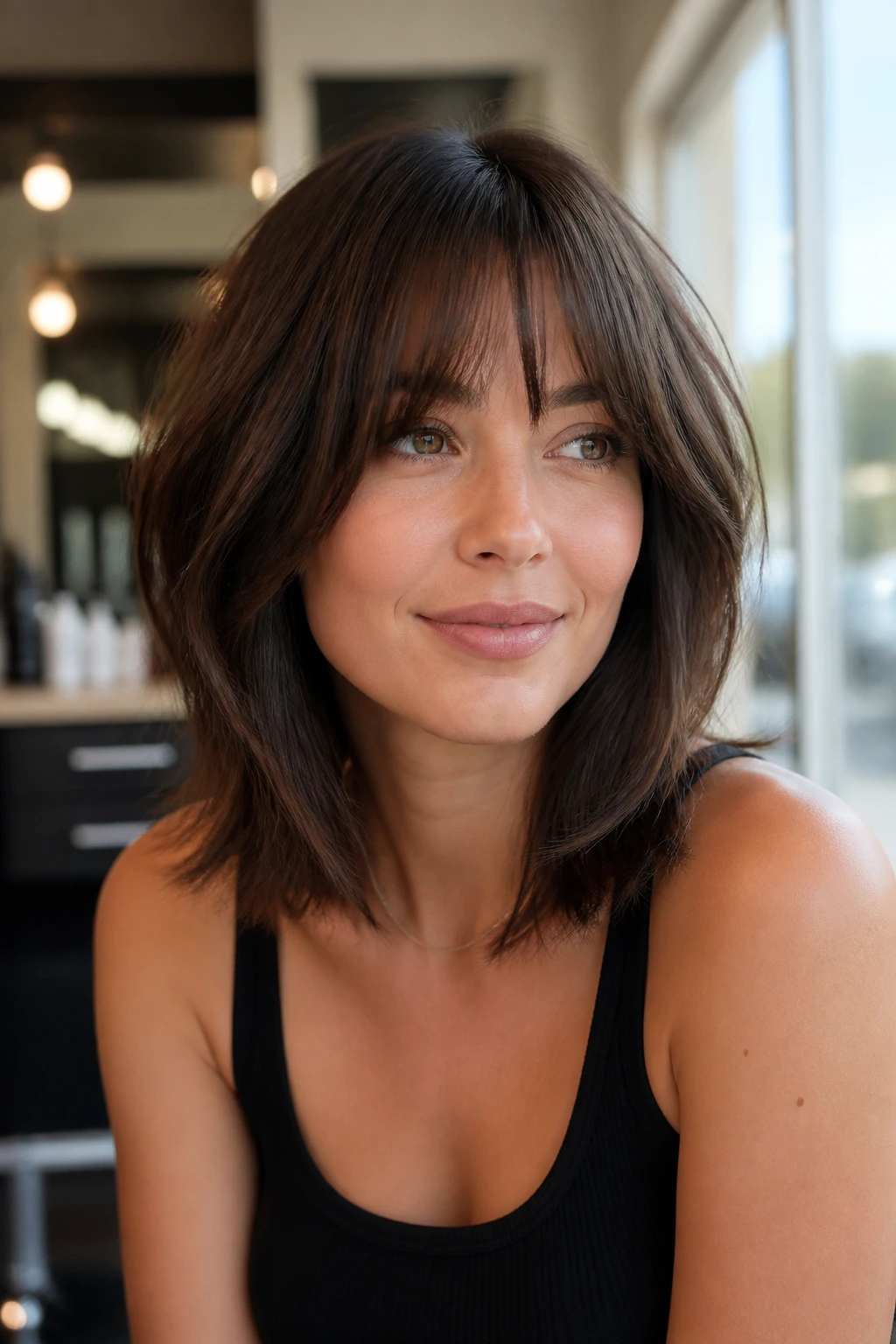
The best thing about asymmetrical haircuts with bangs is that they do not rely on one single trick. The angle, the fringe, and the texture all pull together, and when they’re balanced well, the haircut keeps looking deliberate even on a day when you’ve only brushed it once.
That’s the part I like most. Not the drama, though there can be plenty of that. Not the polish, though a sharp angled bob can look almost architectural. It’s the way the cut gives you a visible shape without locking you into one mood. Soft, sharp, messy, neat — the same haircut can move between them with a change of part, a little product, or ten seconds behind one ear.
If you’re ready to try one, bring a photo that shows the silhouette from the side and another that shows the bangs from the front. That tiny bit of homework makes the whole thing easier, and it usually gets you much closer to the cut sitting in your head.
