



Thin hair and bangs have a touchy relationship. Cut the fringe too dense and it splits open by lunch; make it too wispy and it can look like you only meant to trim a stray section in front. The smartest bang styles for thin hair don’t fight the hair you have. They work with the way fine strands fall, bend, and separate.
There’s also a useful distinction people skip over. Thin hair and fine hair are not the same thing. Thin usually means lower density, so you have fewer strands per square inch. Fine means the strand itself is small. Sometimes you have both. Sometimes you have one and not the other, and the bang plan changes fast once that detail enters the room.
The styles below lean on shape, movement, and smart placement. Some give the illusion of fullness with a narrow center section. Some hide a sparse hairline by letting the sides do more work. A few are unapologetically short or piecey, because a little structure beats a heavy, droopy fringe every time. If you’ve ever wondered why one set of bangs looks airy and chic while another goes stringy after a single humid walk, the difference usually starts at the cut line.
Why These Bang Styles Work on Thin Hair
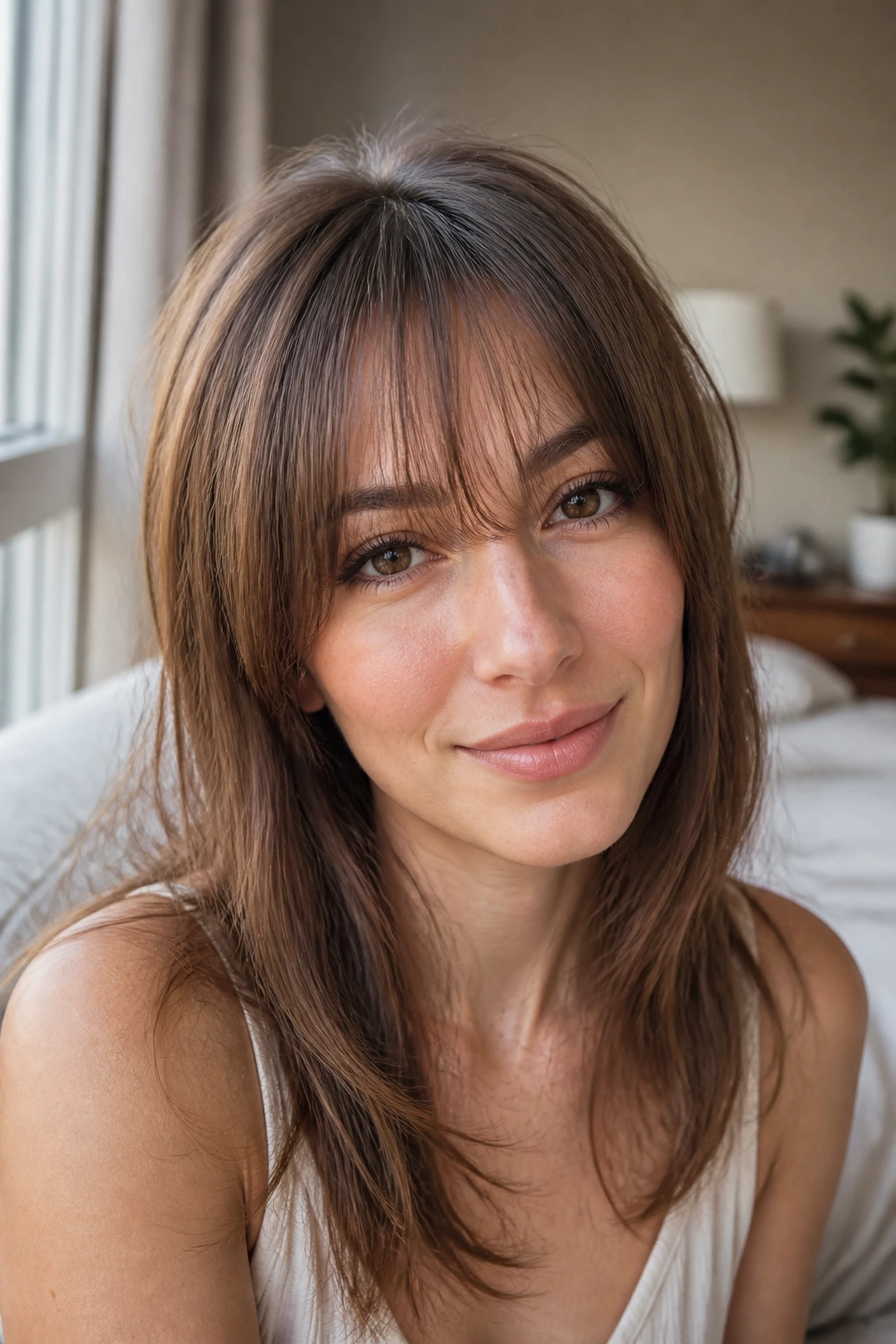
-
They keep the bang section narrow: A smaller front section leaves enough hair to look intentional instead of stretched thin across the forehead.
-
They use movement instead of mass: Soft bends, feathered ends, and side-swept shapes create the feeling of fullness without asking for more density than you have.
-
They leave the temples alone: Longer sides around the face help a fringe blend into the haircut, which is especially useful when the front hairline is a little sparse.
-
They grow out without looking choppy: The better thin-hair bangs are the ones that can turn into face-framing layers instead of a weird half-cut line.
-
They play well with root lift: Thin hair often needs a little lift at the roots, and these styles can handle that without puffing into a helmet.
1. Long Curtain Bangs That Start at the Cheekbone
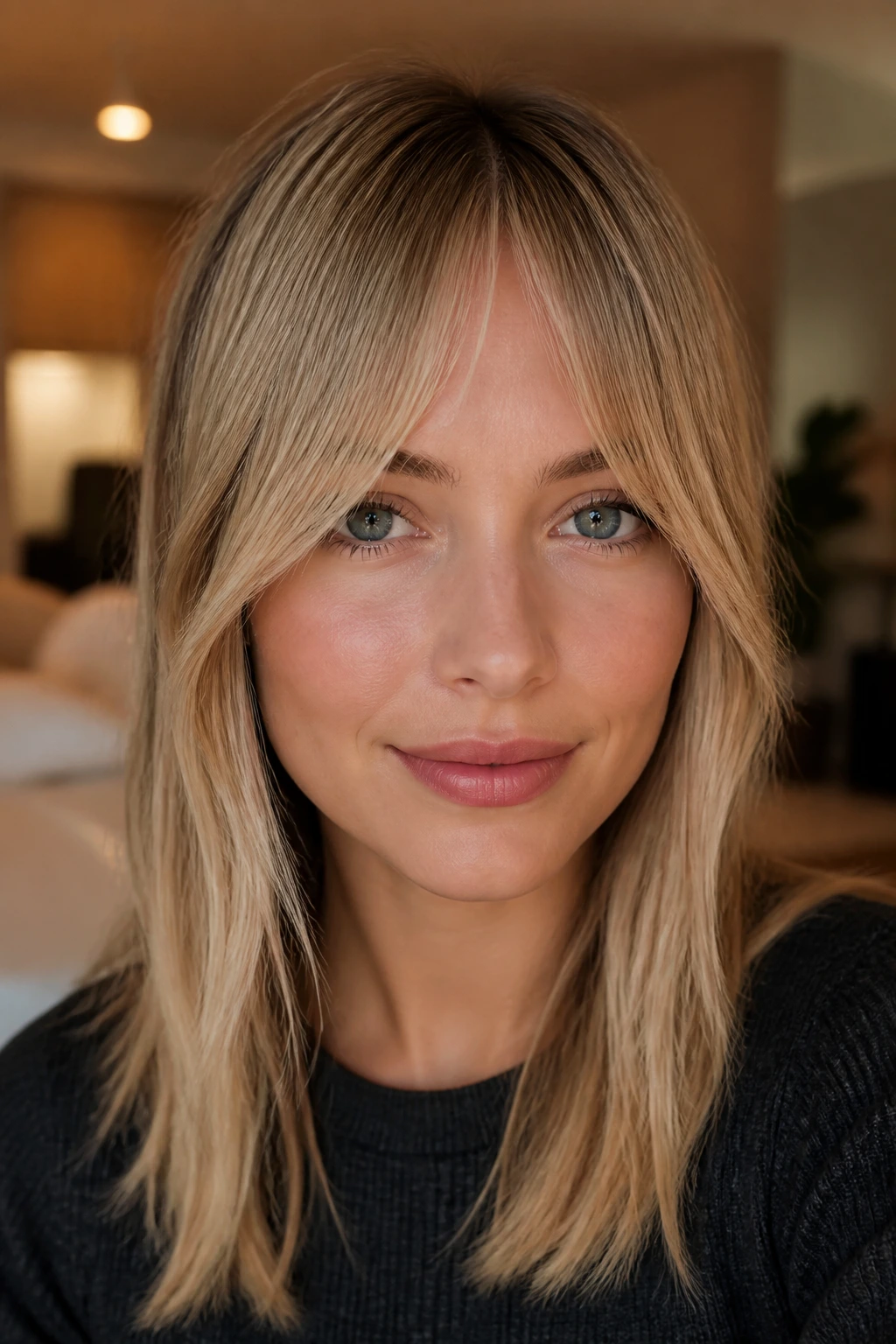
Long curtain bangs are the safest place to begin if you want fringe without gambling on density. They part in the middle, sweep away from the face, and sit somewhere between the cheekbone and the top of the lip. That extra length matters. It gives fine strands enough weight to lie down instead of floating into separate little wisps by noon.
Why they work
The center stays narrow, so you’re not spreading thin hair across the entire forehead. The longer side pieces also hide a soft hairline at the temples, which is where a lot of fringes go transparent in a bad way. Ask for point-cut ends and a gentle bend, not a blunt shelf.
Styling note: Blow-dry the bang section forward first, then roll it away from the face on a 1- to 1.25-inch round brush. Let it cool before you touch it.
2. Short Curtain Bangs With a Soft Brow Sweep
Short curtain bangs sit a little higher, usually brushing the brows or stopping just above them. On thin hair, that shorter length can be a gift, because it keeps the fringe from hanging in limp strips. The key is softness. You want the middle to open cleanly and the sides to taper, not a hard split that exposes too much scalp.
If your hairline has a weak spot right at the center, this version is better than a heavy bang cut. It creates a frame without demanding a wall of hair. I like this style on hair that has some bend on its own, because the curve reads on its own even when you skip a full blowout.
3. Bottleneck Bangs With a Narrow Center
Bottleneck bangs start narrow at the center of the forehead and open wider toward the temples, which makes them one of the better bang styles for thin hair. The shape gives you a little forehead coverage where you want it, then eases off before the fringe starts to look crowded. It’s a smart cut for hair that’s low in density but not completely flat.
Tell your stylist to keep the center soft and slightly shorter, then let the outer pieces graze the cheekbones. That transition is the whole point. If the center gets too wide, the style loses its charm and starts to look like a heavy curtain in miniature.
Best for: people who want shape up front but don’t want a full, thick bang line.
4. Wispy See-Through Bangs That Leave Some Forehead Showing
Wispy see-through bangs can be lovely on thin hair when they’re cut with intention. The trick is that they are not supposed to be thick. They’re supposed to be light, separated, and just dense enough to soften the forehead without hiding it completely. Think of them as a veil, not a wall.
This style works best when the stylist keeps the section small and avoids over-thinning the ends. If the hair is already sparse at the front, too much texturizing can leave it looking unfinished. A little spacing is fine. Too much, and the fringe starts to disappear.
A tiny bit of root-lift spray at the base gives this style the push it needs. Without that, it can fall flat against the skin and look smaller than it really is.
5. Side-Swept Bangs for Easy Lift
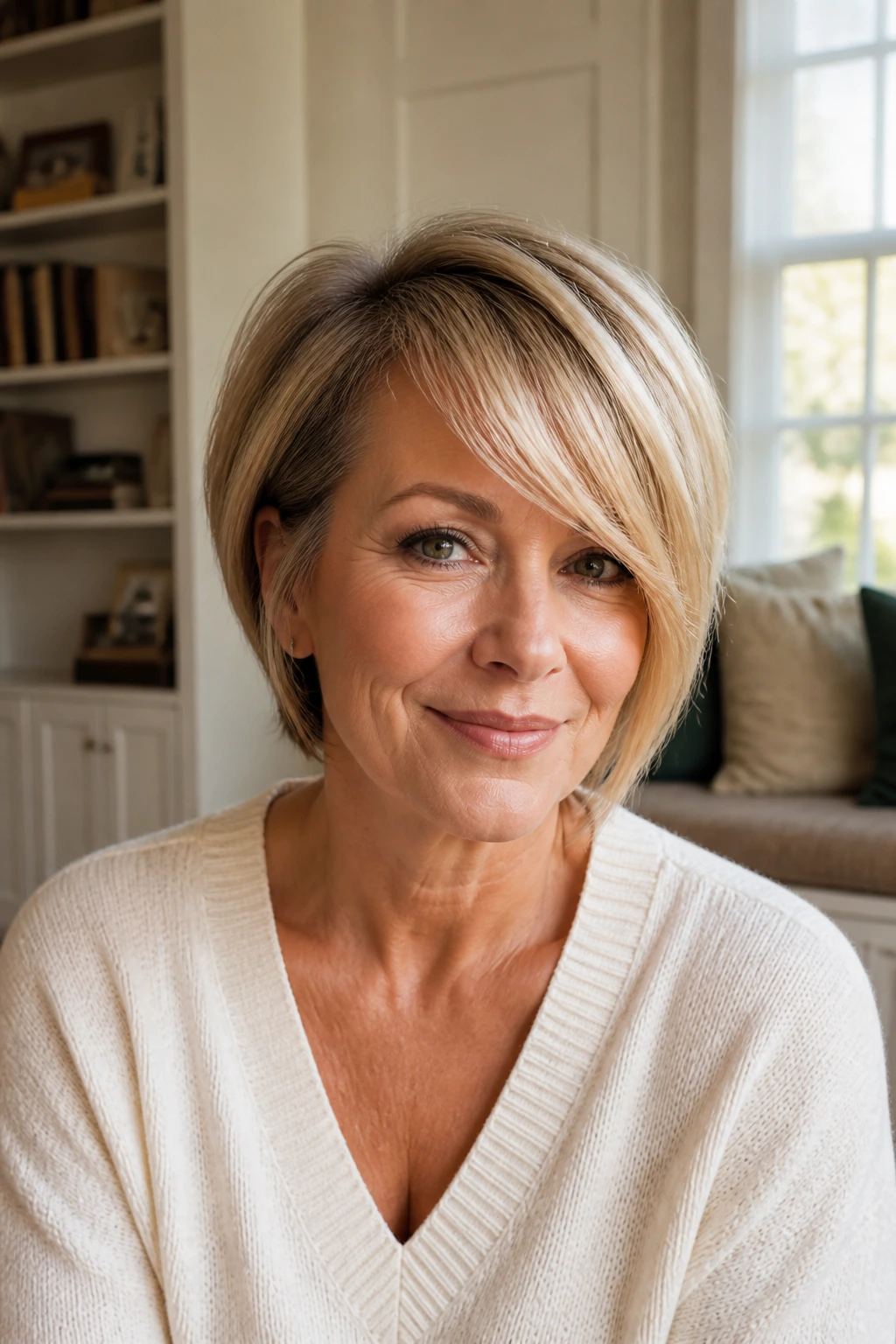
Side-swept bangs are still one of the easiest answers when thin hair needs a fringe that behaves. The deep angle gives the front section a place to go, which helps it look fuller than a straight-down bang. It also works beautifully around cowlicks, because you’re not trying to force the hair into a straight line it doesn’t want to hold.
The version I like most is long enough to tuck behind one ear when needed. That makes it forgiving on wash days and good for grow-out. If you wear glasses, this style can be especially useful, because it keeps the hair from sitting right on top of the frame.
How to style it
Blow the bang section across the forehead in the opposite direction first, then sweep it back. That quick flip adds lift at the root and keeps the bang from sticking in one tired direction all day.
6. Feathered Fringe for a Softer Edge
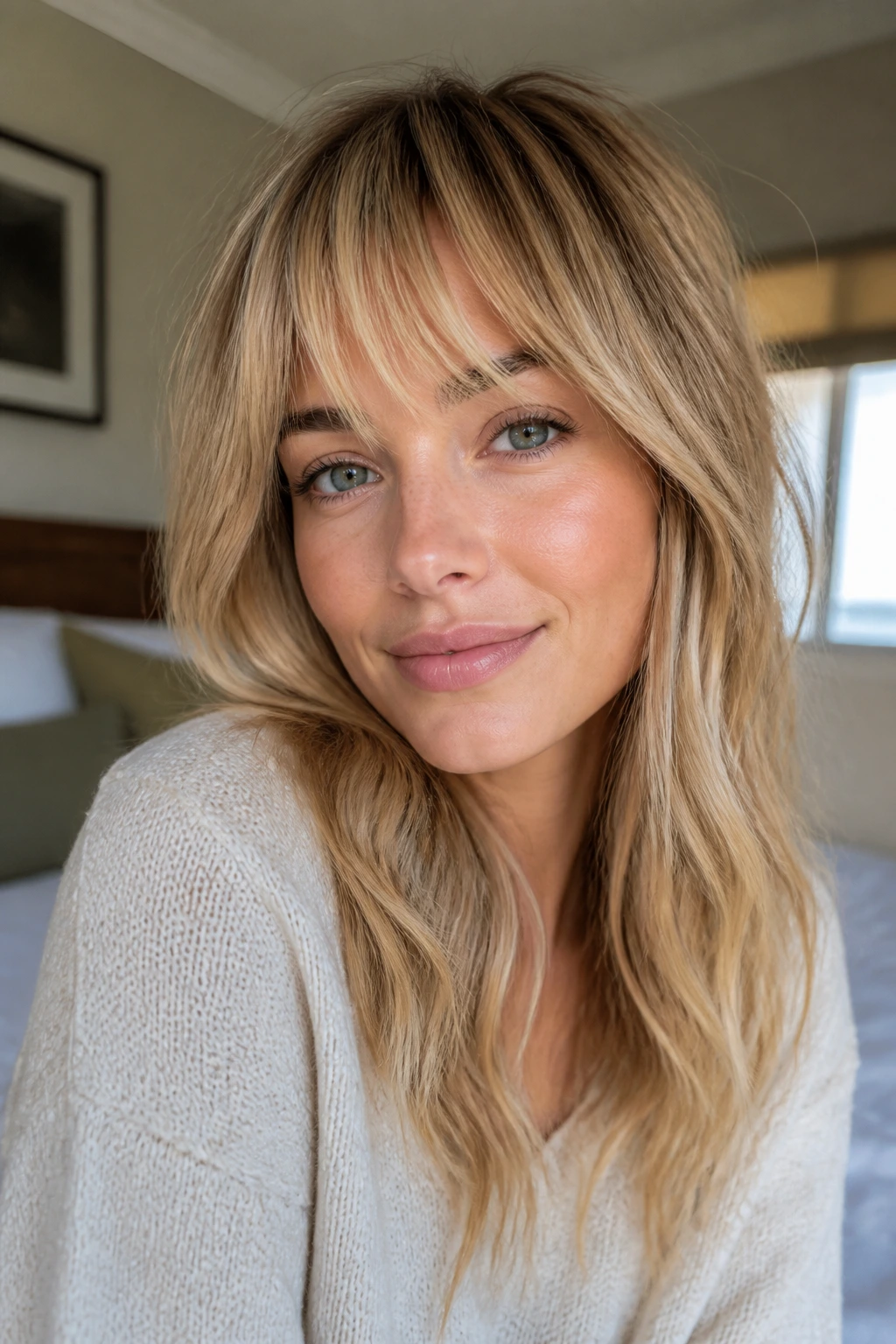
Feathered fringe is basically a softer, more broken-up version of a traditional bang. The edges are light, the line is airy, and the whole thing looks like it was meant to move. On thin hair, that matters more than a sharp blunt edge, because the feathering keeps the front from looking like one flat strip.
This is a good cut if your hair is fine but not super sparse at the hairline. The feathering gives enough texture to avoid heaviness without stripping away too much density. A razor or careful point cutting usually does the job here, but the finish should still feel soft, not shredded.
I like feathered fringe paired with layered cuts. It gives the whole haircut a little swing instead of making the bangs look like they belong to a different head of hair.
7. Soft Blunt Bangs With Thinned Ends
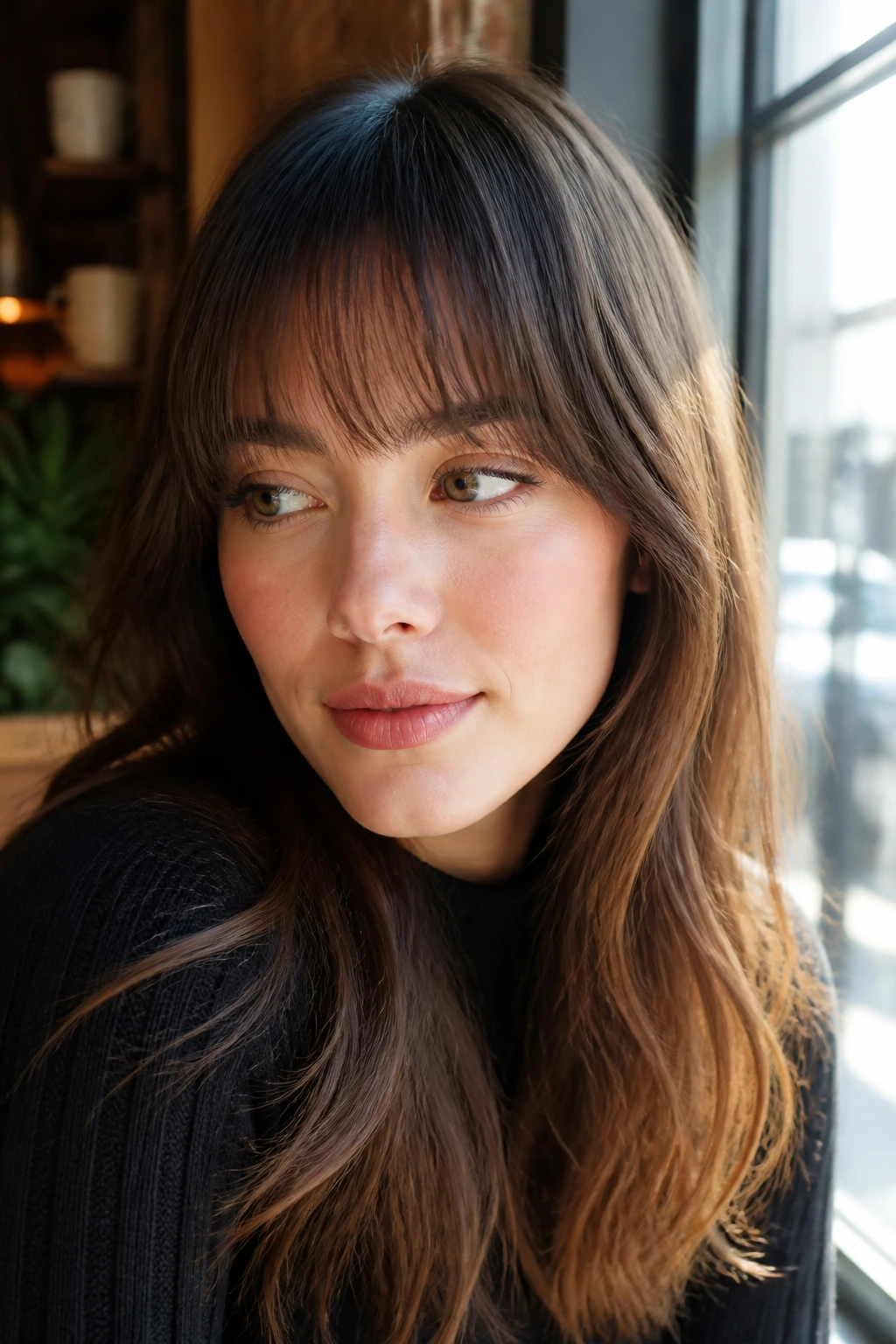
Blunt bangs on thin hair sound risky, and sometimes they are. But a soft blunt fringe can work if the section is narrow and the ends are softened just enough to avoid that hard, helmet-like line. The goal is a clean edge, not a thick barricade.
This style needs decent front density. If your hairline is extremely sparse, I’d steer you elsewhere. But if the front is just fine rather than full, a soft blunt bang can create a crisp frame that makes the rest of the hair feel more substantial by contrast.
The trick is not to over-thin the ends after cutting. A little softening is fine. Too much texturizing, and the fringe starts to look see-through at the tips while still sitting too straight at the base. That’s the awkward middle ground nobody wants.
8. Choppy Textured Bangs With Deliberate Gaps
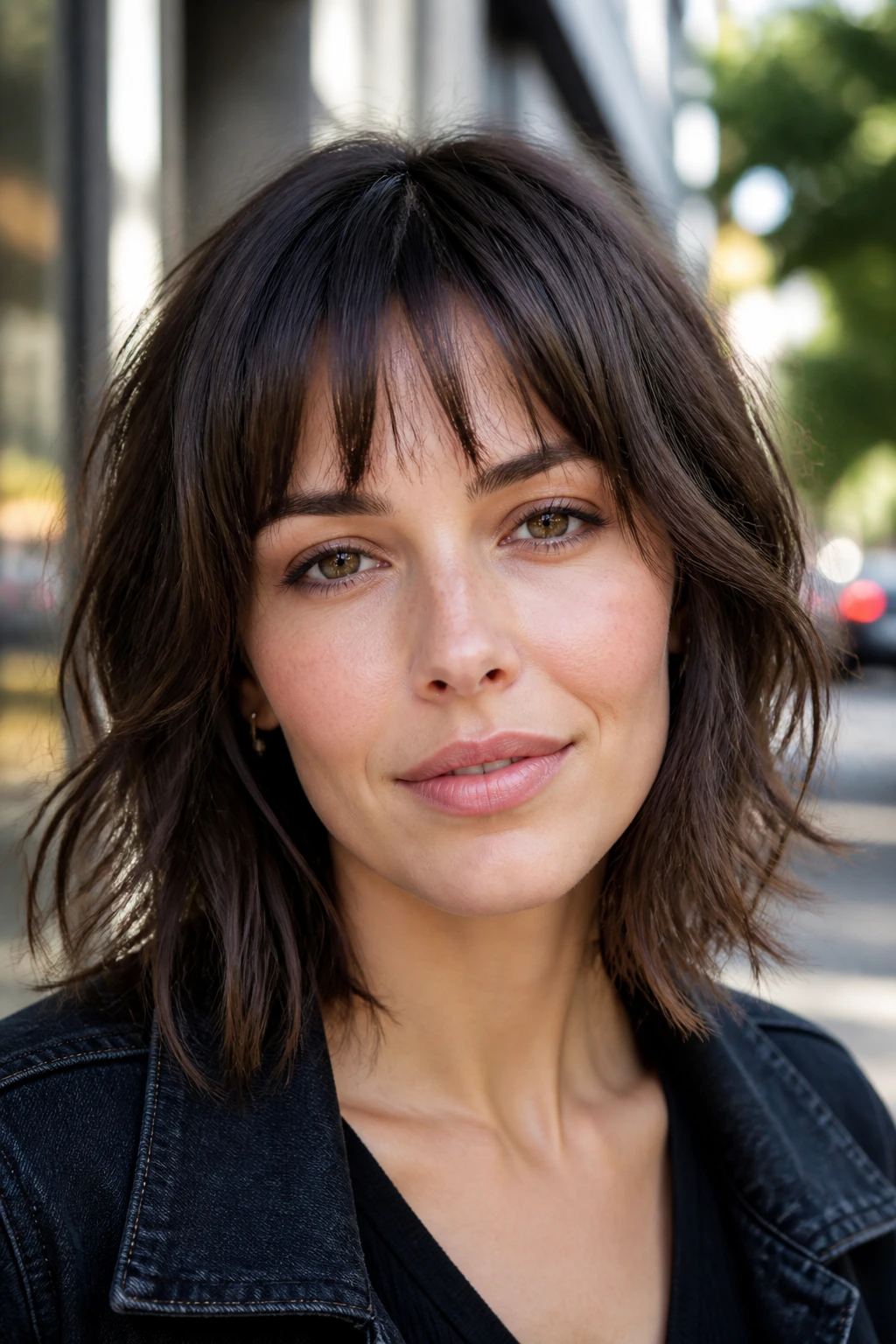
Choppy bangs are a good answer when you want fringe that looks lived-in instead of polished. The cut has little breaks in it, so the hair doesn’t all sit in one flat sheet. On thin hair, that can be a blessing, because a slightly irregular bang often looks fuller than a neat one that exposes every gap.
This is one of the better options for hair that gets oily quickly. A bit of pieceiness disguises separation. A slick, one-length bang tends to show grease fast; a choppy fringe can keep some shape even when the roots are starting to collapse.
Use a tiny amount of texturizing spray at the roots, then pinch the ends with your fingers. Don’t overdo the product. A little grit goes a long way here.
9. Eyebrow-Grazing Bangs That Sit Just Long Enough
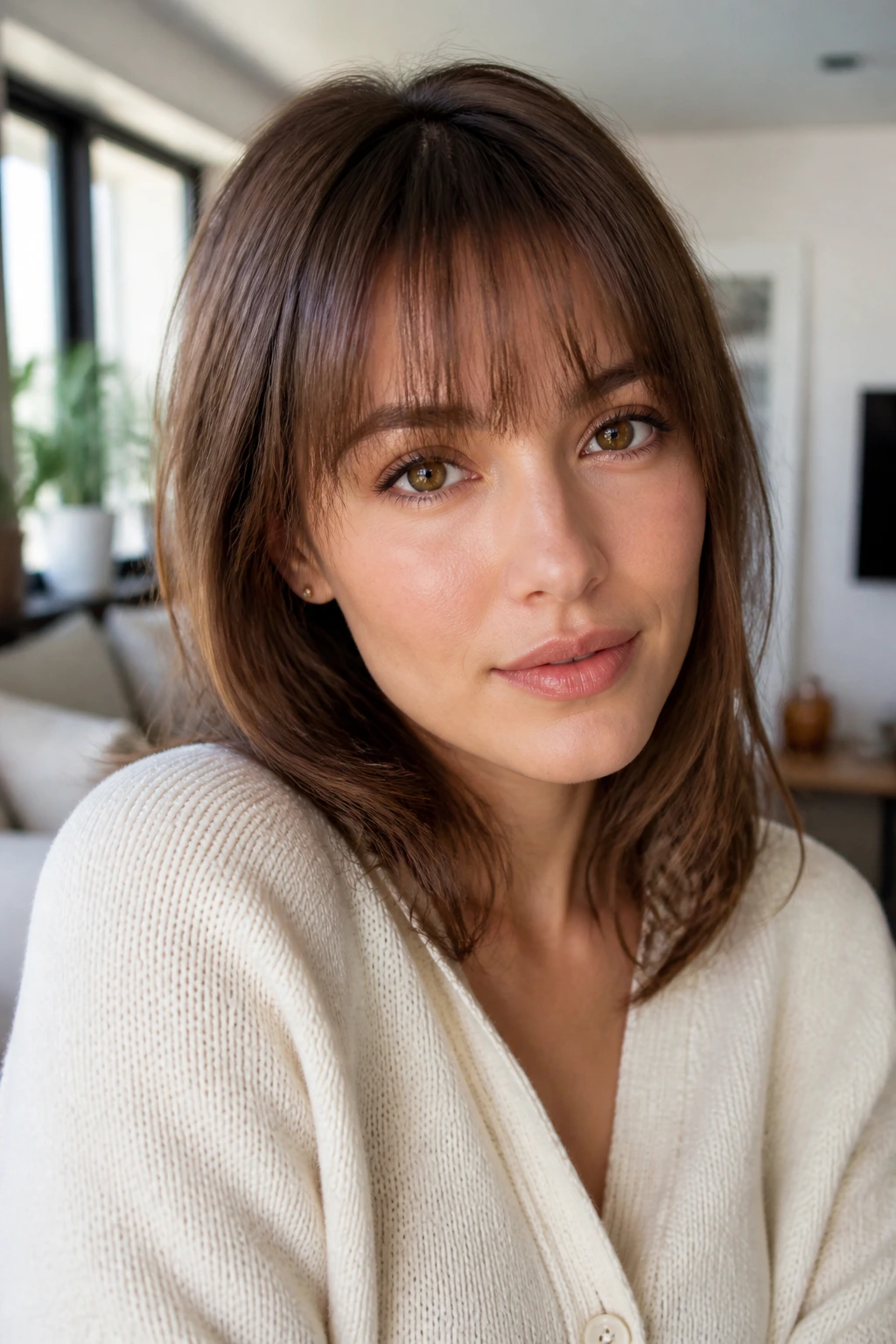
Eyebrow-grazing bangs sit in that useful little band just at or barely over the brows. They give you a front shape without stealing too much density from the rest of the haircut. On thin hair, that shorter-but-not-too-short length can make the fringe look intentional rather than skimpy.
What I like here is the balance. The bangs are present, but they aren’t eating up your whole forehead. That leaves room for the hair to move and keeps the style from folding into itself. It also gives you more control when styling, because a quick brush and bend is often enough.
If your face is a little longer, this length can be a smart choice. It shortens the visual stretch without needing a heavy bang line.
10. Lash-Length Bangs That Brush the Eyes
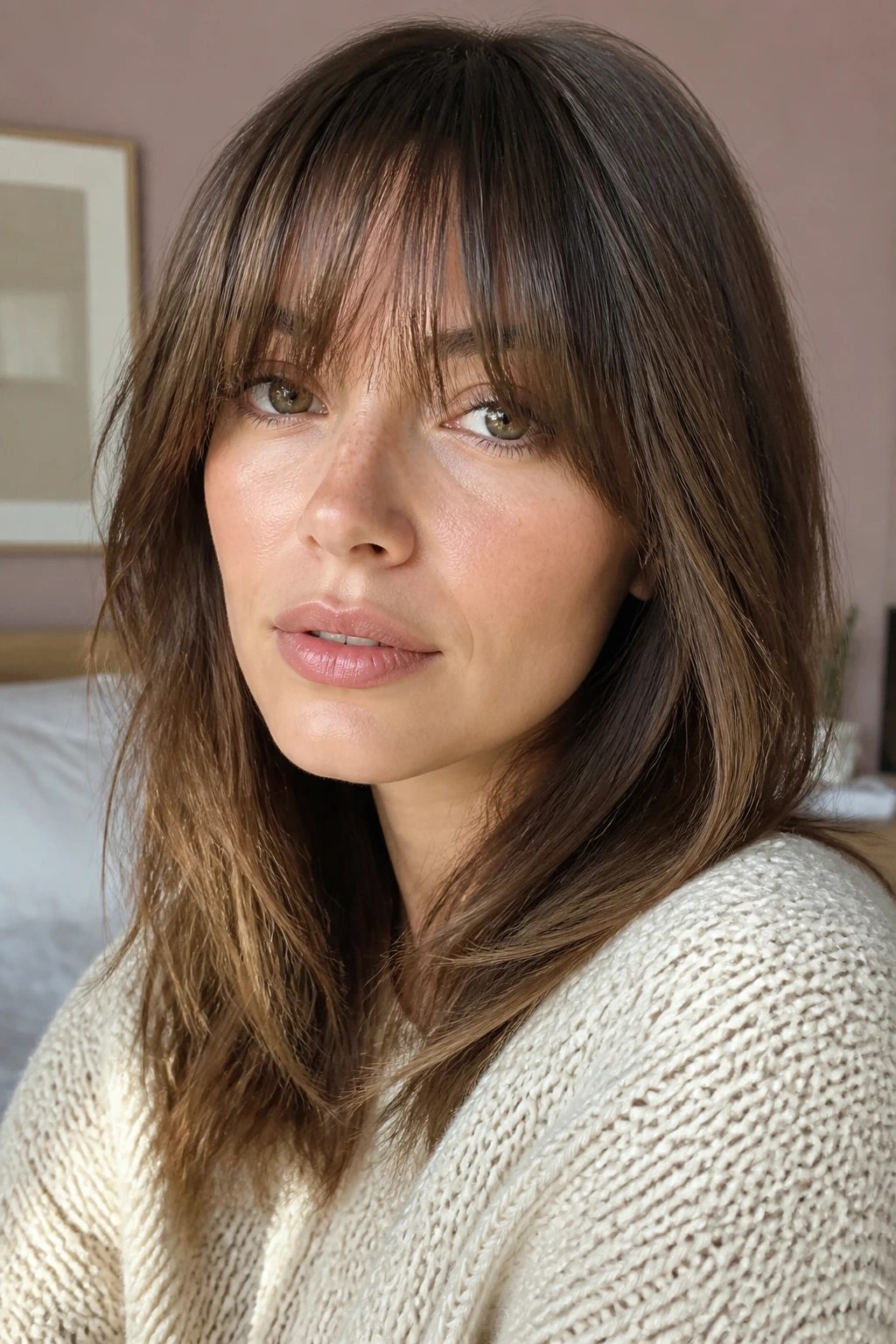
Lash-length bangs are excellent when you want softness and a little drama without going short. They sit low enough to carry some weight, which helps thin hair feel less broken up. The ends can brush the lashes or hover just above them, depending on how much maintenance you want.
This length is kind to fine hair because it uses gravity instead of fighting it. A very short fringe can separate fast; a lash-length fringe has more pull and often settles better through the day. It’s also forgiving if your hairline isn’t perfectly even. The longer line lets small irregularities disappear into the shape.
Use a round brush or a mini flat iron to add a slight bend away from the eyes. Anything straighter than that tends to sit too close and become annoying by hour two.
11. Rounded Bangs That Follow the Shape of the Face
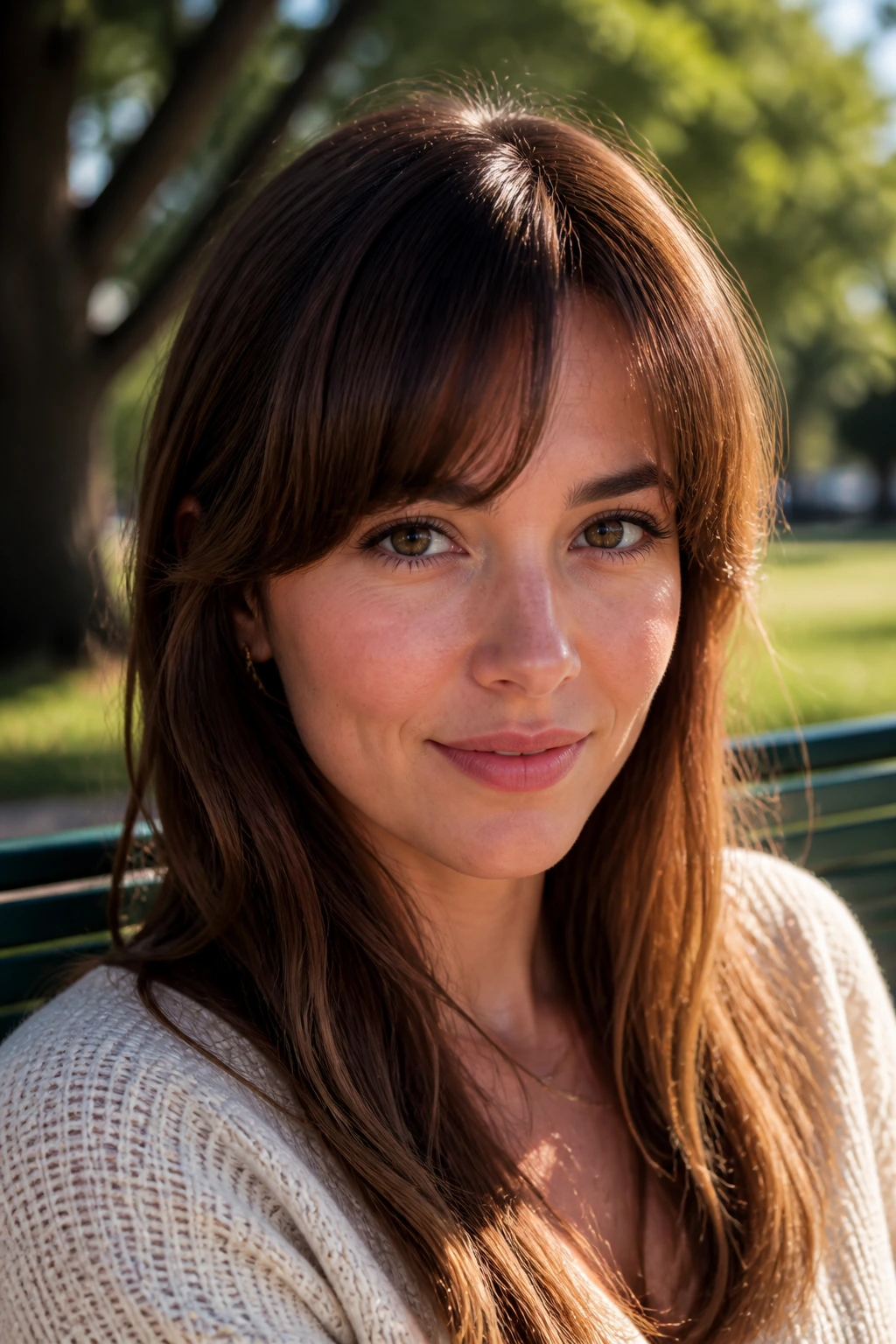
Rounded bangs arc gently across the forehead and are a sneaky good choice for thin hair. The curve gives the illusion of density in the middle while the outer edges taper softly into the rest of the haircut. It feels balanced, not severe.
This shape is especially useful if the front hairline is denser in the center than at the temples. The rounded outline helps disguise that difference. It also works well with shoulder-length cuts, because the line of the bangs echoes the curve of the haircut rather than fighting it.
I’d ask for the roundness to be subtle. Too much curve, and the fringe starts to feel costume-y. A soft half-moon is enough.
12. Arched Fringe That Opens at the Temples
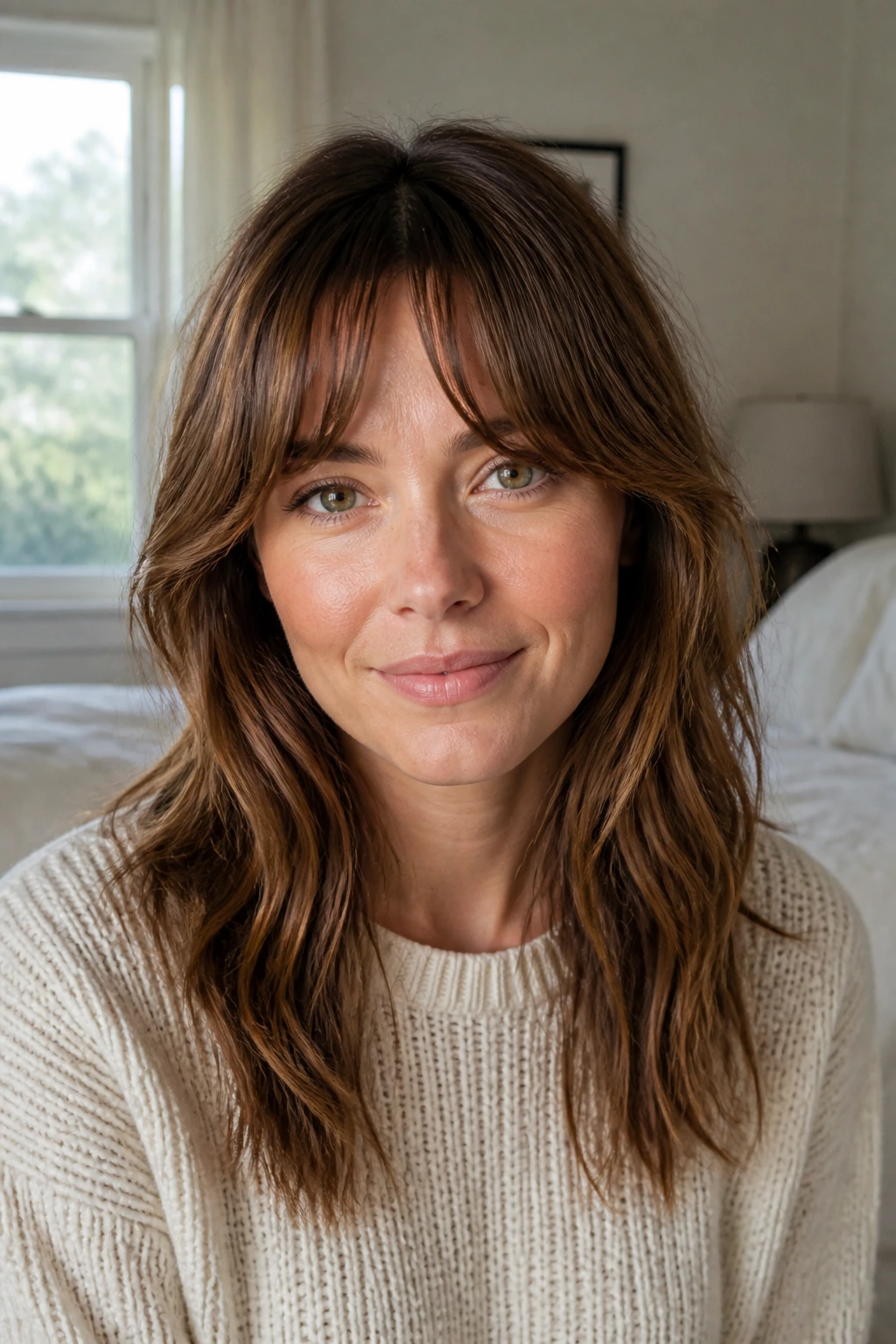
Arched fringe is a touch more defined than rounded bangs. The center sits a little shorter and the sides lengthen toward the temples, creating a gentle arch that frames the face. On thin hair, that arch is useful because it keeps the weight focused where it matters most.
The cut works well when you want some forehead coverage but don’t want the whole front section to feel heavy. It also helps if your hair has a slight natural wave, since the curve can stay in place with less effort. Straight hair can wear it too, but the arch usually needs a quick bend from a brush or iron.
A small warning: if the arch is cut too wide, the fringe can look sparse at the corners. Keep the front section narrow and let the sides do the framing.
13. Razor-Cut Bangs With Light, Frayed Ends

Razor-cut bangs can be lovely on thin hair when the hair texture can handle them. The blade creates a soft, frayed finish that feels light instead of blunt. That softness is the appeal. It breaks up the line and lets the fringe move.
This style is best on straight to slightly wavy hair. If the hair is very fragile or prone to split ends, I’d be careful with a razor, because too much slicing can leave the fringe looking fuzzy in the wrong way. A good cut should still have shape. It should not look like it was chewed.
Use a little smoothing cream only on the ends, not the roots. Too much product at the root will drag the whole fringe down.
14. Split Fringe for Cowlicks and Easy Grow-Out

Split fringe is one of the most practical choices on thin hair, especially if your hairline wants to separate anyway. Instead of fighting the split, you build the style around it. The center opens naturally, and the two sides fall away from the face in a way that feels relaxed and deliberate.
This is a huge help for cowlicks. A fringe that resists the cowlick often collapses or sticks off at odd angles. A split version works with that movement. It also grows out well, because the center part becomes a feature rather than a problem.
If you want low stress, this is a strong option. It does not demand perfect blow-drying every morning. A quick root lift and finger separation is usually enough.
15. Baby Bangs for a Sharp, Short Front Section

Baby bangs are short, cropped, and impossible to ignore. On thin hair, they’re not the easiest choice, but they can work when you want a strong shape and your front density can support it. Because the section is small, the cut doesn’t need much hair to feel intentional.
The downside is obvious: there’s less room for error, and they need regular trims to stay neat. The upside is that they bring structure to a haircut fast. If your hair is short overall or you already wear a sharp shape like a bob or pixie, baby bangs can look clean and modern rather than fussy.
I would not choose this style if your forehead coverage is the main goal. Choose it when you want the cut itself to be the statement.
16. Birkin Bangs With an Undone Finish
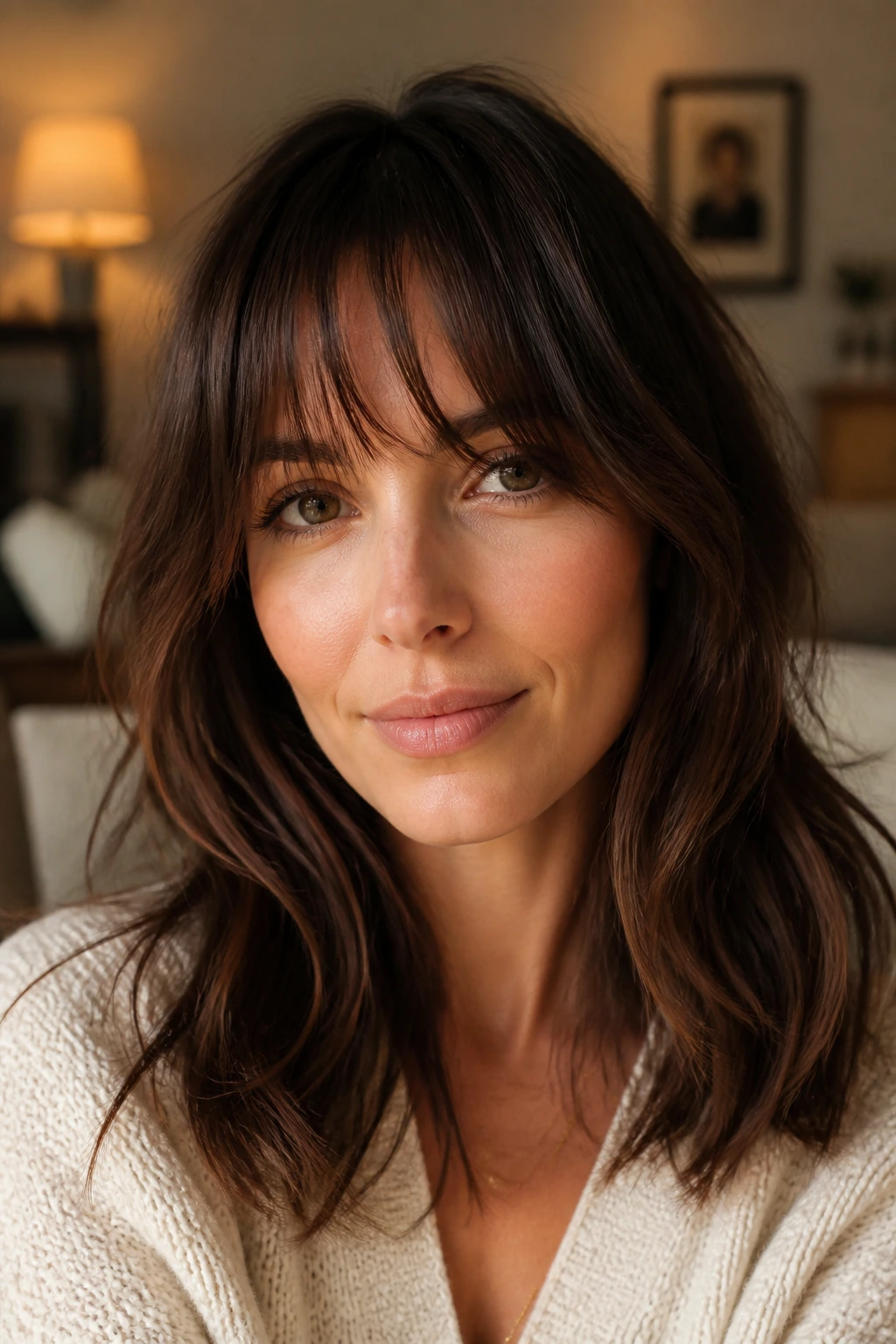
Birkin bangs sit somewhere between polished and slightly messy, which is exactly why they suit thin hair so well. They’re not dense, but they’re not flimsy either. The line is soft, the ends are a little broken up, and the whole thing feels like it belongs to the haircut rather than sitting on top of it.
This is a good option if you like a fringe that can be finger-styled in under a minute. You don’t need a perfect round brush finish every day. A little bend, a little separation, and a small amount of texture at the root are enough.
The style works best when the bang section is kept narrow. If the front is cut too wide, the Birkin feel gets lost and the fringe starts behaving like a heavy curtain.
17. Shag Bangs That Melt Into the Cut

Shag bangs are a gift to thin hair because the bangs are not isolated. They melt into the rest of the cut, so the eye sees movement instead of one heavy strip. That matters. A disconnected fringe can expose thinness fast; a shag fringe lets the layers do some of the work.
This style is especially good if your hair already has a bit of wave or bend. It doesn’t need to be perfectly smooth to look finished. In fact, a tiny bit of roughness helps. The fringe should feel like part of a lived-in cut, not something polished within an inch of its life.
If you ask for this at the salon, mention that you want the front to blend into face-framing layers. That keeps the bangs from looking too separate.
18. Grown-Out Fringe That Hugs the Cheekbones
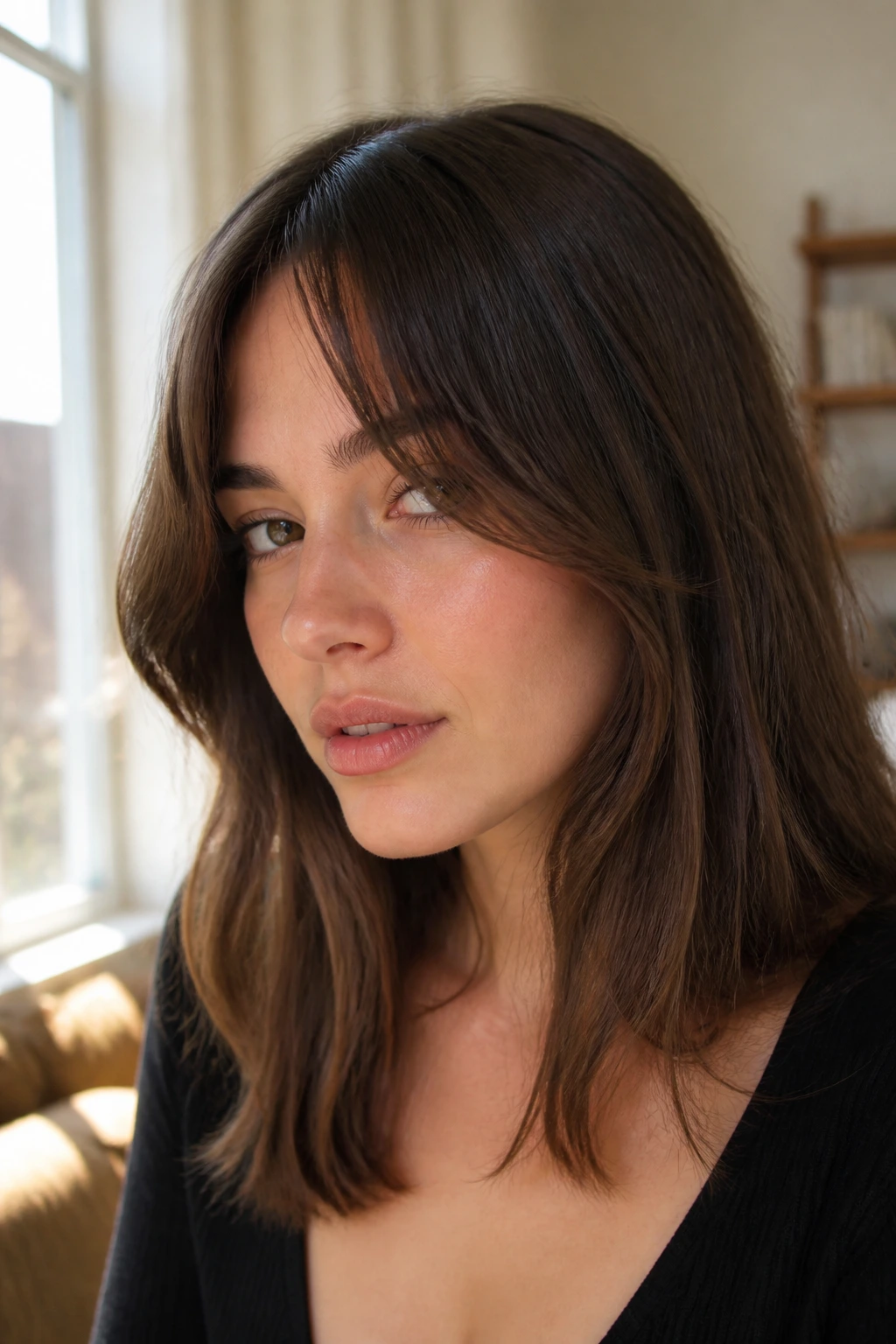
Grown-out fringe is not a failure state. On thin hair, it can be one of the best-looking choices in the room. Once bangs pass the brow line and drift toward the cheekbones, they usually gain enough weight to behave better, and they stop exposing every little gap at the front.
This is the style for people who want the idea of bangs without the constant trim cycle. It can be worn center-parted, swept to one side, or tucked behind the ears on lazy days. The shape is soft and forgiving, which makes it easy to live with.
A grown-out fringe also solves a lot of transitional awkwardness. If you’ve ever tried to grow out short bangs and hated every inch of the process, this is the stage where the haircut starts giving back.
19. Layered Face-Framing Fringe That Barely Reads as Bangs

This is one of my favorites for thin hair because it doesn’t force a clean bang line at all. The front pieces are cut short enough to frame the face, but they’re blended into the rest of the haircut so smoothly that they don’t announce themselves like a classic fringe. That softness makes low-density hair look more fluid.
It’s a smart option if you’re nervous about commitment. You can still tuck it back, part it differently, or let it grow out without a weird line hanging across the forehead. If you want movement around the face more than true bangs, this is the route.
Ask for the shortest pieces to hit around the cheekbone, then have the rest taper gradually. That keeps the haircut airy and avoids a blunt stop point.
20. Deep Side-Part Fringe for One-Sided Volume
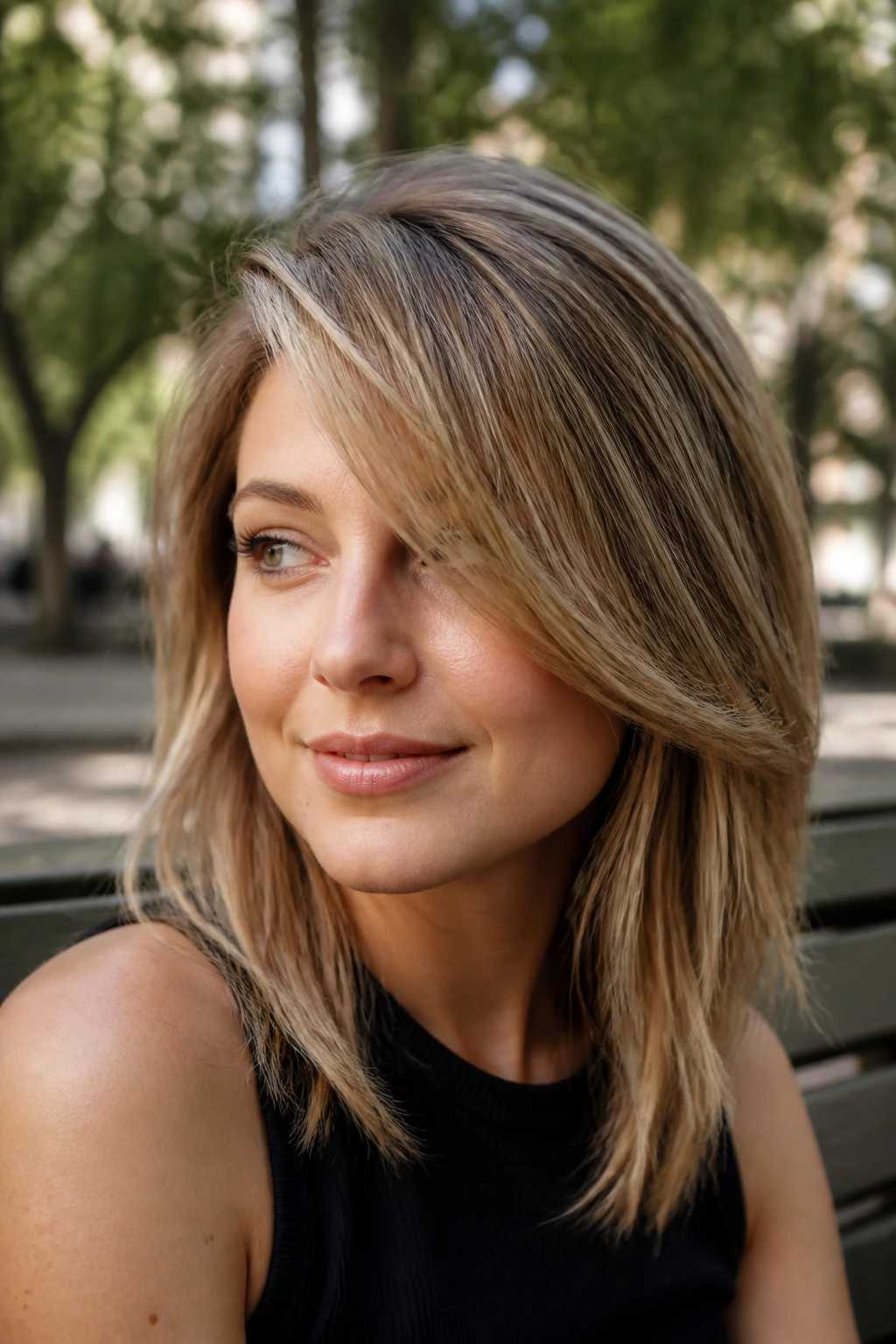
A deep side-part fringe gives thin hair a neat trick: all the front density gets pushed to one side, where it looks fuller than it would split down the middle. The part itself becomes part of the style. That’s useful if one side of your hairline is stronger than the other or if a cowlick keeps fighting the center.
This version works especially well on straight or slightly wavy hair. The front section can be blown in the opposite direction first, then folded back over. That little reverse-dry adds lift at the root and helps the fringe stay off the forehead instead of clinging to it.
It’s also one of the easiest bang styles to tuck away if you change your mind midweek. Not many fringes can say that.
21. Diagonal Fringe That Skims Down Across the Forehead
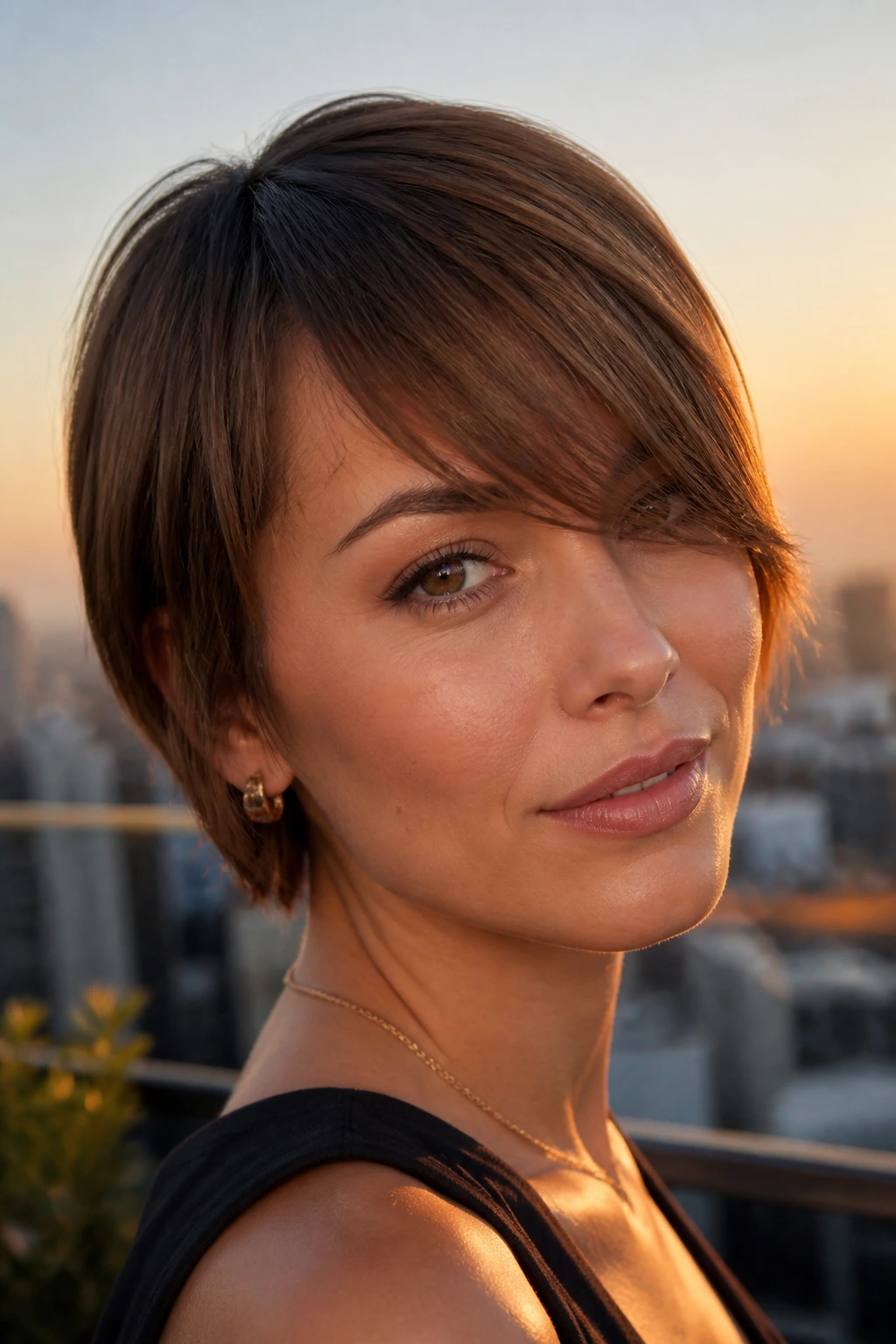
Diagonal fringe cuts across the forehead on a clear angle, usually from one brow down toward the opposite cheekbone. The slant gives the eye a line to follow, which makes thin hair look more deliberate than a straight-across fringe that shows every gap.
I like this shape when you want movement but still want a defined bang moment. It’s more structured than side-swept bangs and less formal than a blunt bang. That middle ground is useful if your hair is fine but you want the front of the haircut to feel finished.
The angle should be soft, not severe. If the diagonal is too steep, the shorter side can feel choppy and the longer side can swallow your face. Keep the transition gradual.
22. Flipped-Under Fringe With a Soft Bend
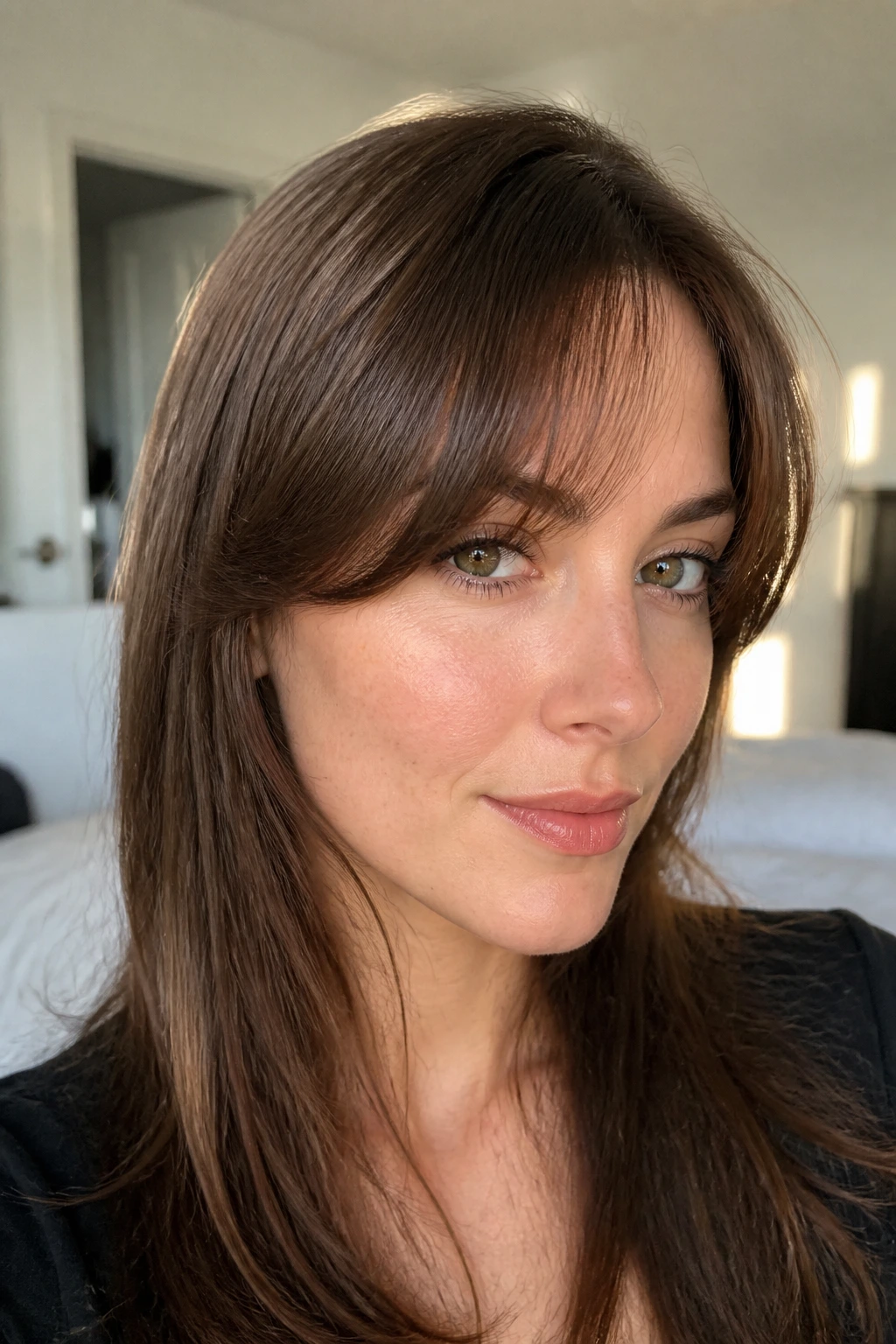
Flipped-under fringe is a nice choice when you want the bangs to sit close to the face without appearing flat. The ends turn under slightly, which gives thin hair a bit of shape and stops the fringe from looking stringy at the tips.
This style usually needs a round brush or a small flat brush during blow-drying. The bend should be gentle. If it curls too much, the bangs can bounce away from the forehead and expose more scalp than you want. A soft tuck is enough.
It also pairs well with a cleaner haircut, like a bob or a collarbone-length cut. The polished bend keeps the whole style from feeling too casual.
23. Micro Curtain Fringe for a Tiny, Fashiony Opening
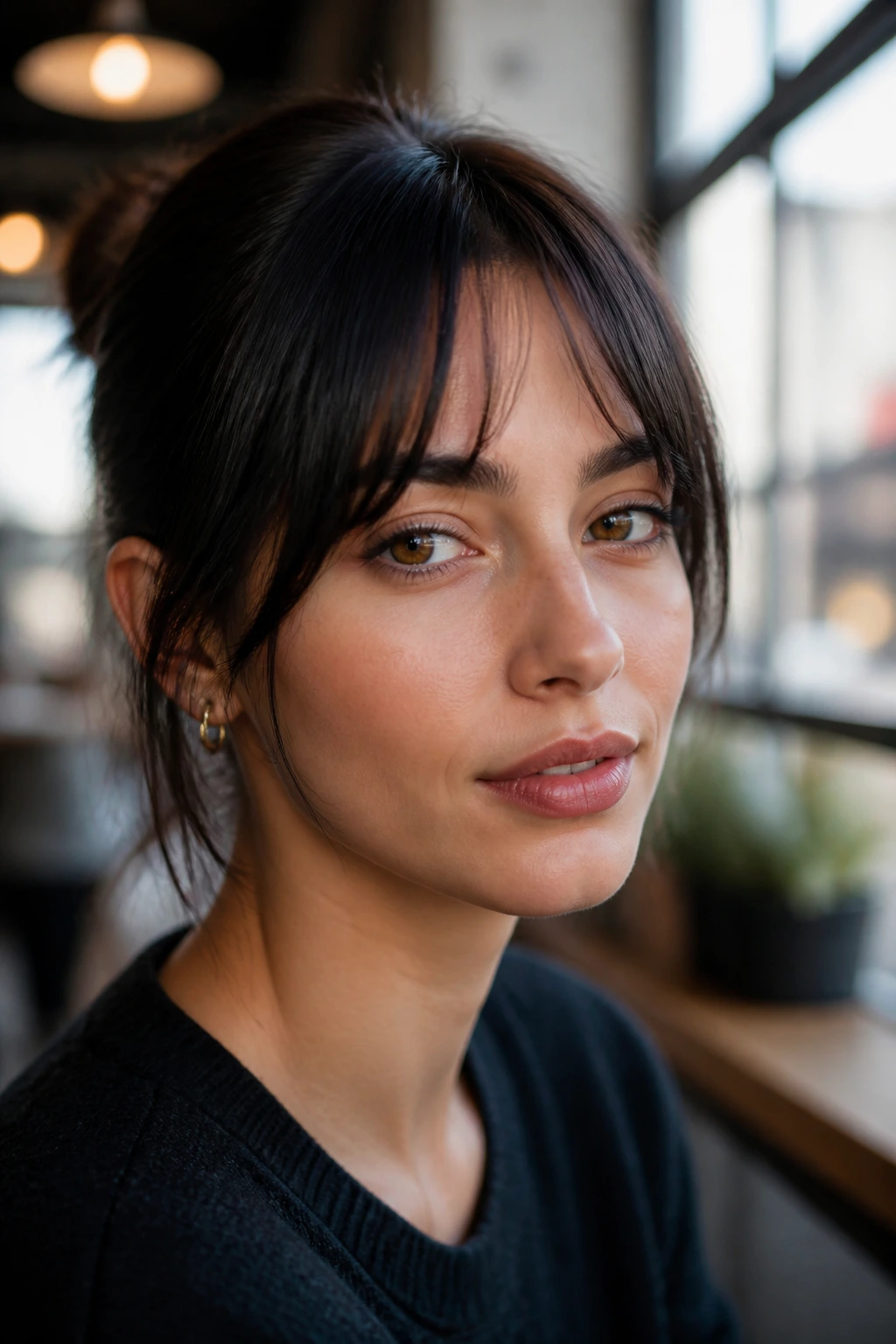
Micro curtain fringe is a shorter, lighter version of curtain bangs, and it can look sharp on thin hair if you keep the section narrow. The opening in the middle is tiny. The sides fall just a touch longer. That small detail is what keeps it from reading as a heavy bang line.
This one is best if you want something a little more fashion-forward and a little less practical. It gives shape fast, but it also asks for regular trimming because the proportions shift quickly as it grows. If you like to change your part and angle often, that can be a plus.
A tiny round brush and a quick flip at the root are enough most days. No need to overbuild it.
24. Piecey Fringe With Separated Strands
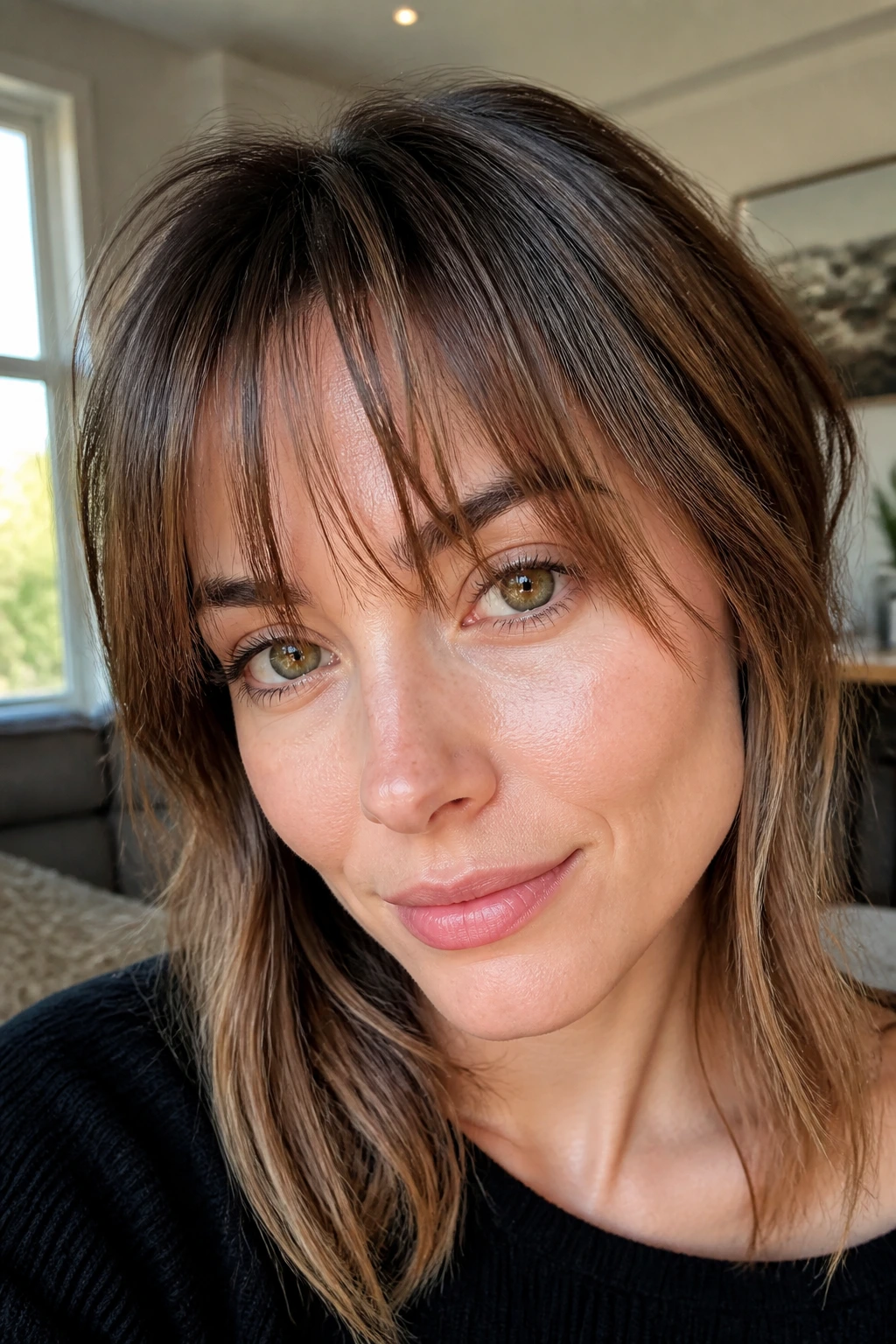
Piecey fringe is less about the cut line and more about the way the bangs sit once styled. Thin hair often benefits from this because separated strands can look fuller than one smooth strip that exposes every little gap. It has a light, lived-in feel that works especially well with texture sprays and a bit of finger styling.
The danger is product overload. A dab of paste or cream is enough. Too much and the bangs clump into little strings, which is not the same as piecey. The difference is clean separation versus greasy separation. You want the first one.
This style is forgiving on busy days because it doesn’t need to look perfect. A small bend and a little separation usually do the job.
25. Curved French Fringe With a Gentle Center Arc
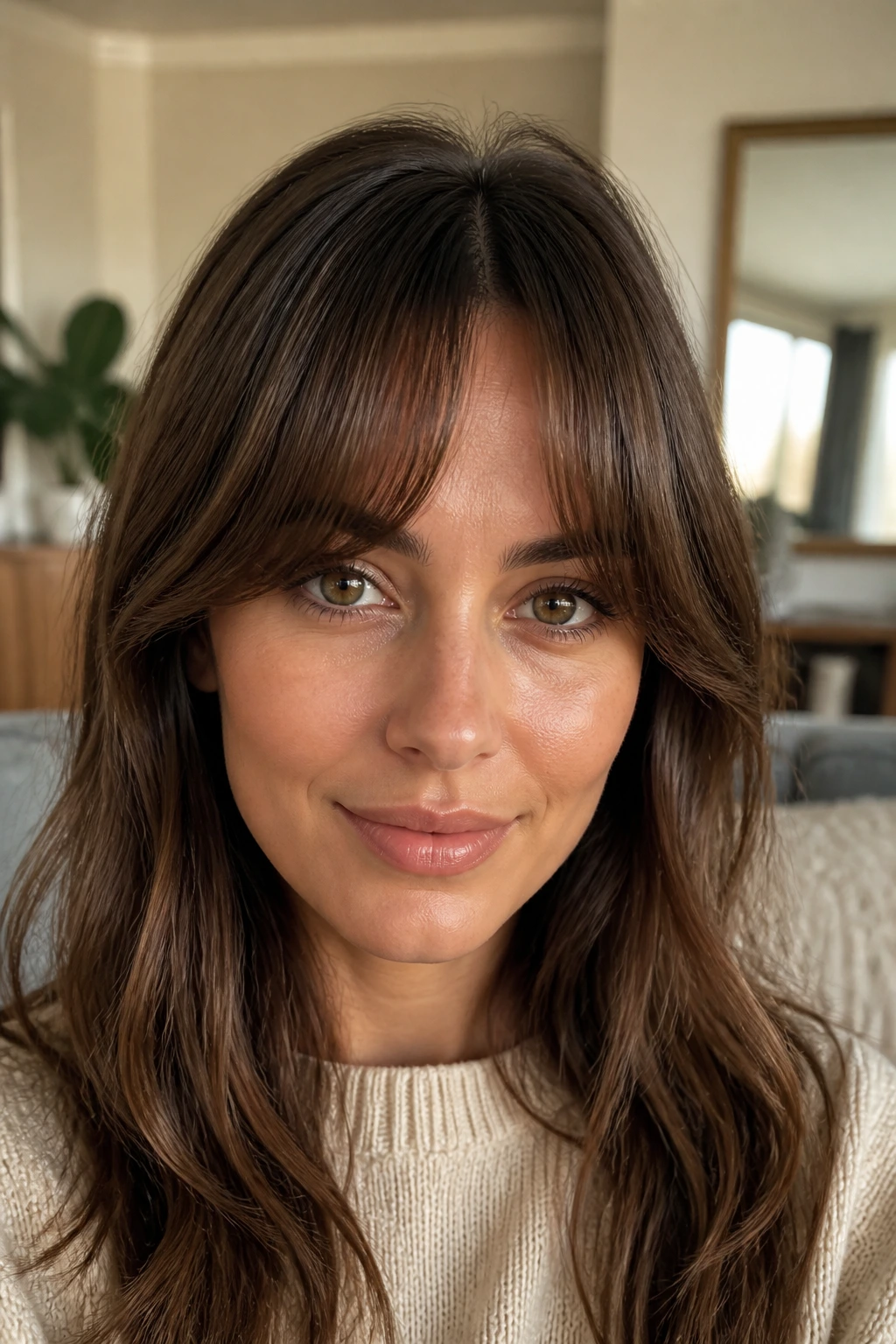
Curved French fringe has a softer, more polished arc than a standard blunt bang. The middle sits a touch lower, the sides taper upward, and the whole thing feels a little more finished than a purely messy fringe. On thin hair, that shape can make the front look fuller because the eye reads the curve as intentional thickness.
It’s a good option if you like a neat frame but don’t want your bangs to feel too severe. The curve also helps the fringe blend into the rest of the haircut, especially when the side pieces are kept longer. I’d ask for a narrow section and soft edges so the arch doesn’t turn into a hard shell.
A clean blow-dry matters here. This style rewards a brush more than finger-drying.
26. Tapered Fringe That Narrows at the Sides
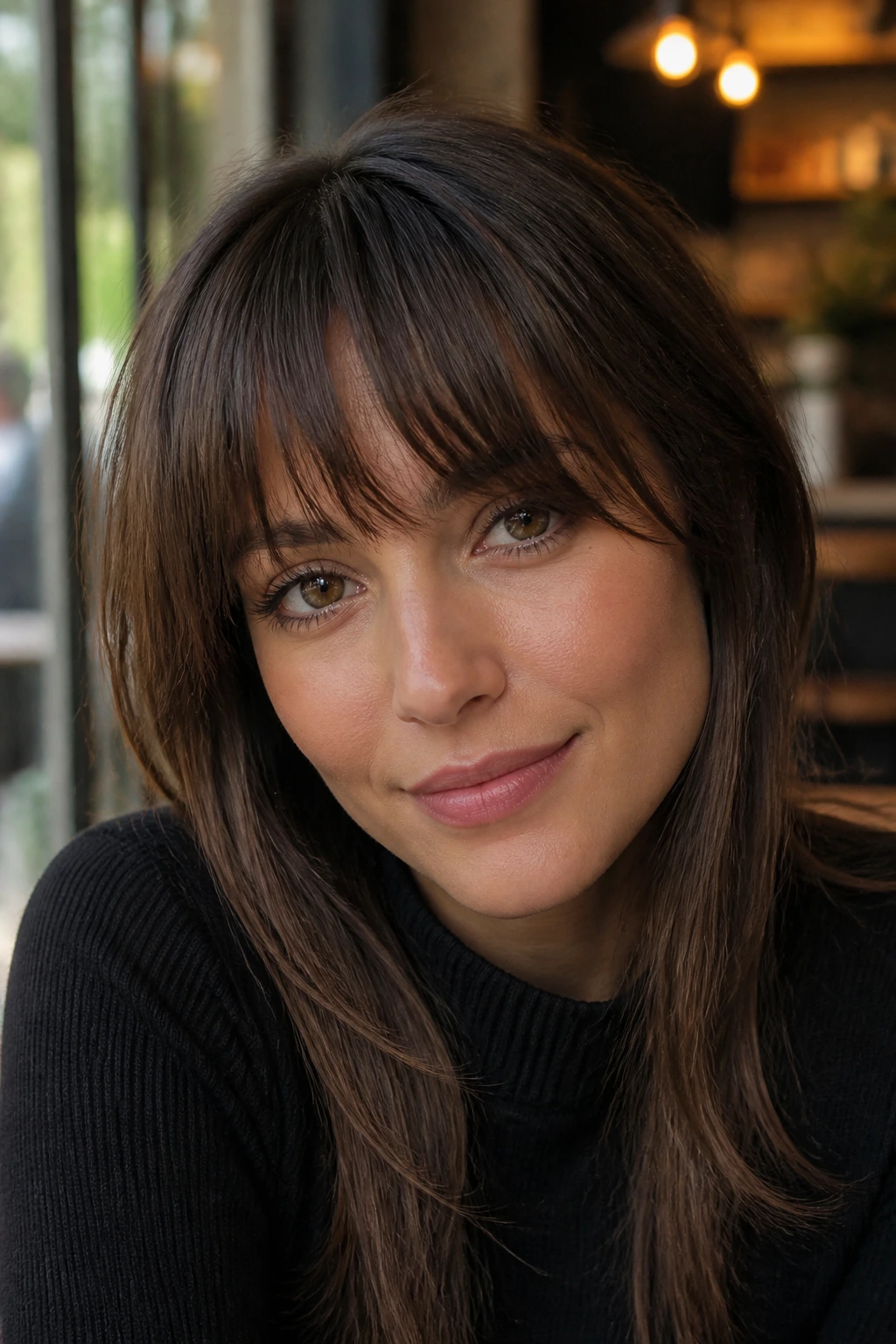
Tapered fringe is one of the better choices when the temples are thinner than the center. The bang starts with a little more presence in the middle and fades gradually at the sides, so you’re not drawing attention to weak spots near the hairline. It’s a subtle shape, but subtle is often the right move with thin hair.
The taper also helps with grow-out. As the bangs get longer, they don’t suddenly look like a block of hair sitting on the forehead. They just start behaving more like face-framing pieces, which is easier to live with.
If you like low-maintenance hair, this cut is worth a serious look. It does not demand a lot of daily reconstruction.
27. Mixed-Length Fringe for a Lived-In Look
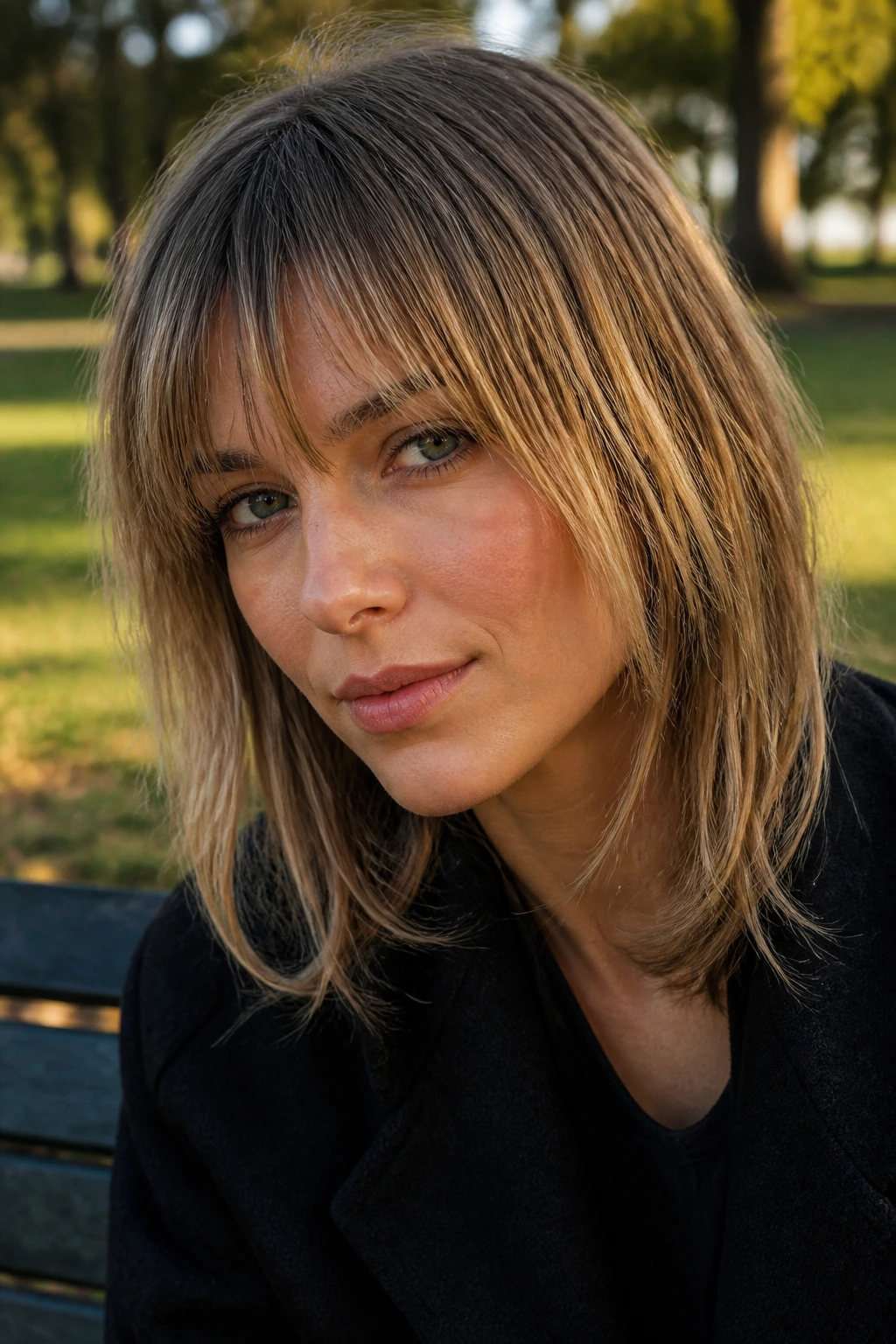
Mixed-length fringe uses uneven lengths on purpose, which makes thin hair look less uniform in a good way. The front section has variation, so the eye doesn’t lock onto one flat line. That slight irregularity can hide sparse areas better than a ruler-straight bang.
This style is especially smart if your hair naturally separates or if your part shifts a lot during the day. Instead of trying to force symmetry, the cut works with movement. The result feels casual, but not sloppy. There’s a difference.
Ask for point cutting instead of a hard straight line. That helps the ends move independently and keeps the fringe from forming a sheet.
28. Pixie Fringe for Short Crops
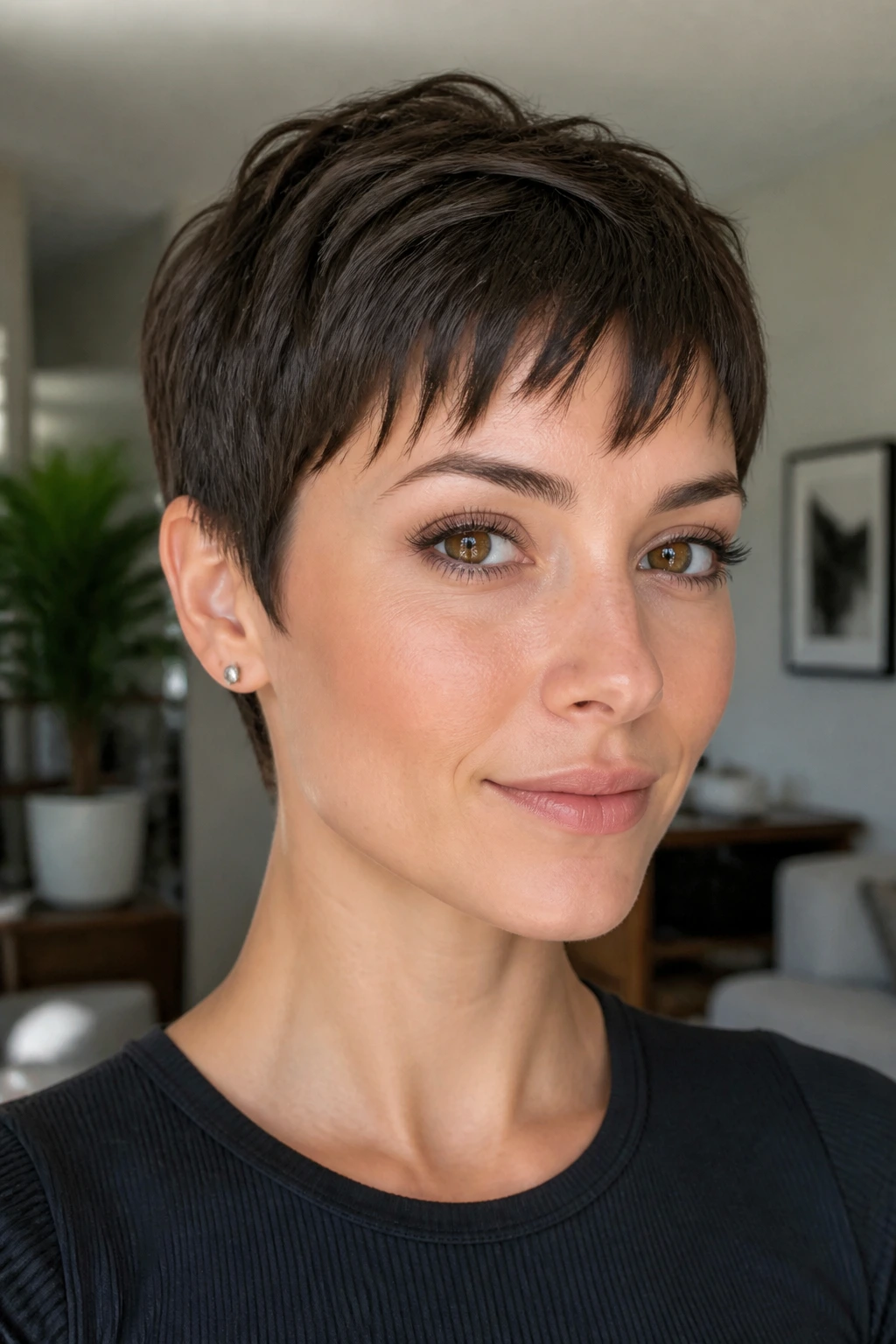
Pixie fringe is short, sharp, and very much part of the haircut rather than an accessory on top. On thin hair, it can work better than you might think because the short length allows the shape to carry the style. You’re not relying on bulk; you’re relying on the outline.
This is not the fringe I’d hand to someone who wants forehead coverage or easy concealment. It’s for people who like a neat, cropped look and don’t mind regular trims. The payoff is clean lines, fast styling, and almost no weight on the front of the hair.
It also pairs well with very short sides or a textured crop, where the fringe becomes just one part of the silhouette instead of the whole story.
29. Long Swooping Fringe That Hides a Sparse Hairline
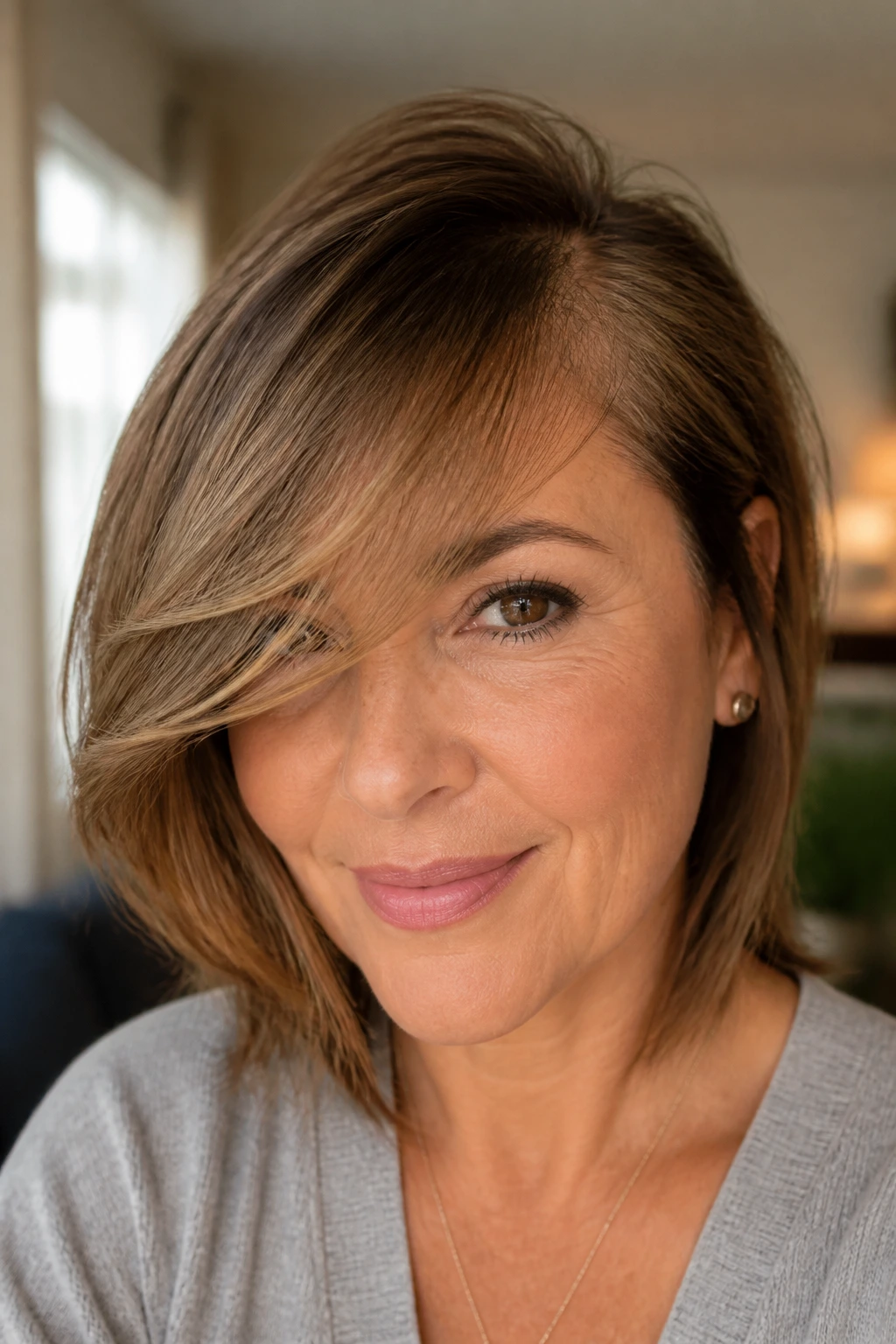
A long swooping fringe is one of the best answers if your hairline is sparse at the front and you want coverage. The sweep crosses the forehead diagonally and carries enough length to hide little gaps without looking heavy. Thin hair often does better with this kind of motion than with a dense, straight-down cut.
The move here is all in the direction. Blow-dry the fringe first in the opposite direction, then sweep it back across the face. That gives the roots a lift and stops the front from collapsing into a tired side part. The shape should feel soft and continuous.
If you’re looking for the most forgiving option in the entire group, this is a strong contender. It’s hard to make a swoop look accidental.
30. Soft Angular Fringe That Points Downward at the Temples
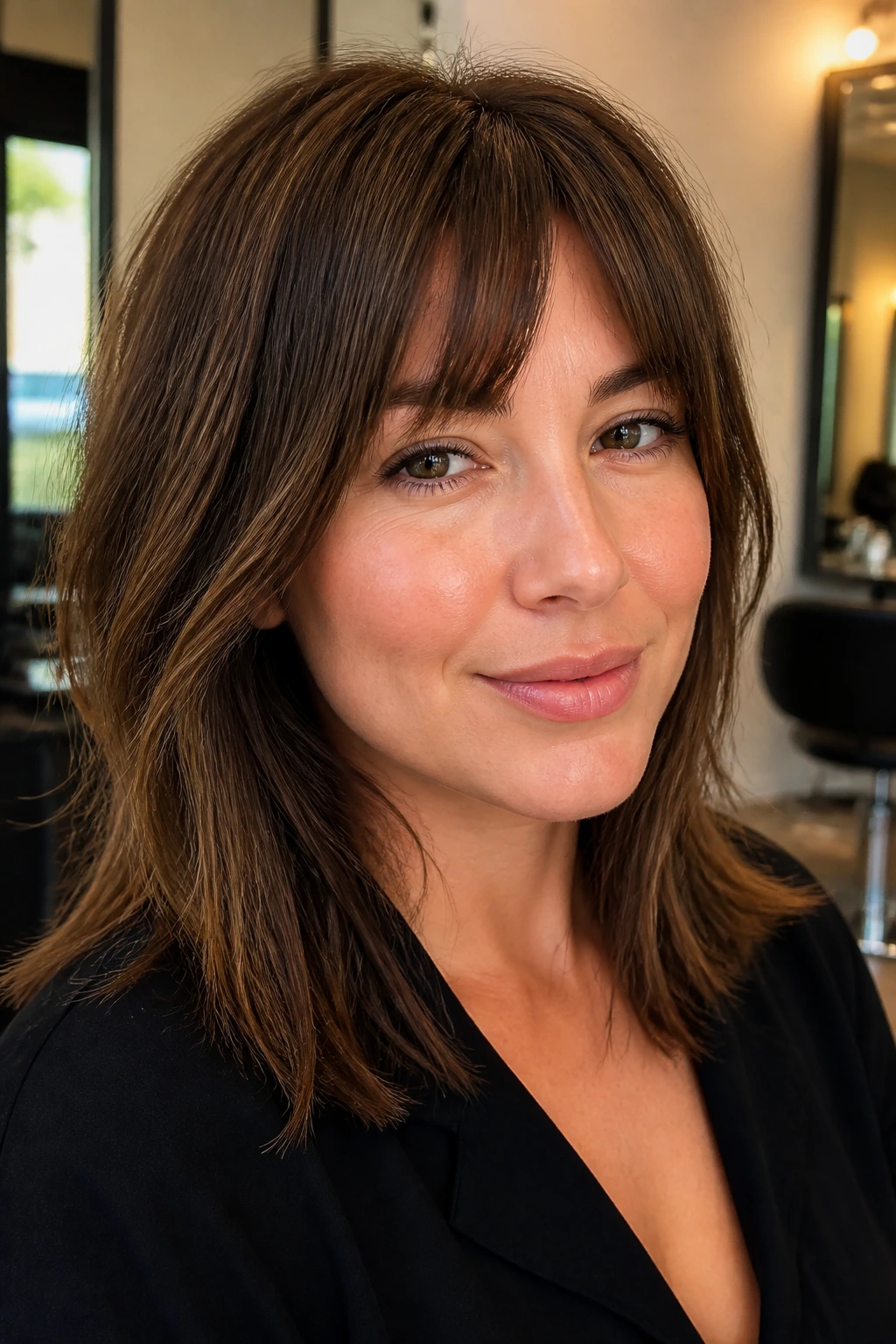
Soft angular fringe gives you structure without the severity of a hard geometric bang. The line is slightly longer at the temples and a touch shorter in the middle, which creates a subtle angle that flatters thin hair by making the front look intentional. It’s a quiet shape, but it has presence.
I like this one when someone wants a little edge without going full blunt or full dramatic side-sweep. The angle gives the illusion of fullness at the center and softness near the face. It also plays nicely with layered cuts because the transition feels smooth instead of chopped.
Keep the ends soft. A rigid angle can look too sharp and expose the fact that the hair is fine.
31. Invisible Fringe That Blends Into Layers
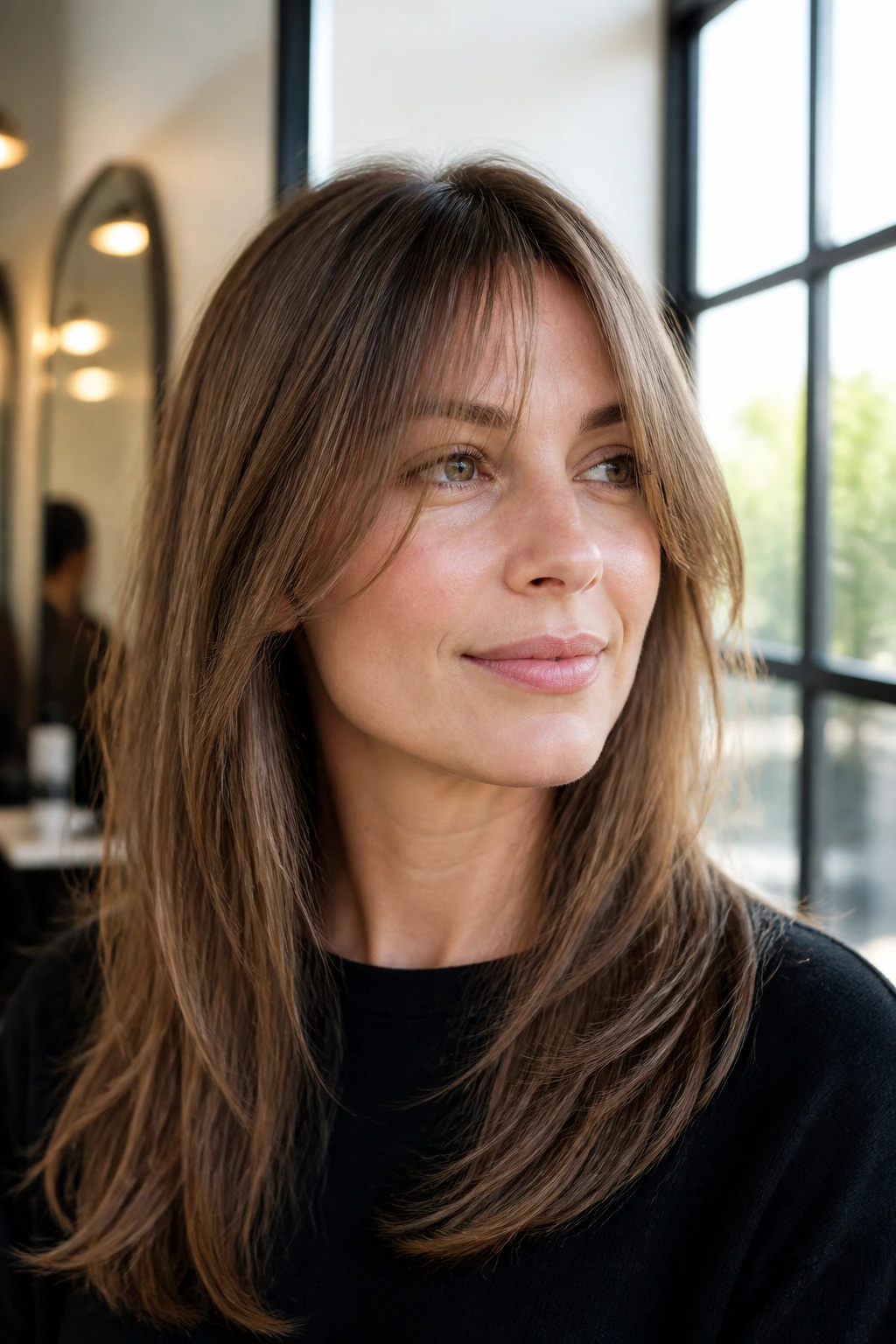
Invisible fringe is what happens when the bangs are so well blended they barely read as bangs at all. The front pieces are there, but they melt into the haircut fast. That makes it a smart choice for thin hair, because you get the suggestion of a fringe without building a heavy section that will separate later.
This is one of the easiest styles to live with if you hate obvious bang maintenance. It can be pushed to either side, tucked back, or left to fall forward on its own. The haircut does the work quietly, which is honestly underrated.
The best version keeps the shortest pieces around the cheekbone or slightly above the brow, then feathers the rest into the sides. Nothing chunky. Nothing shelf-like.
32. Root-Lift Curtain Fringe With a High Bend
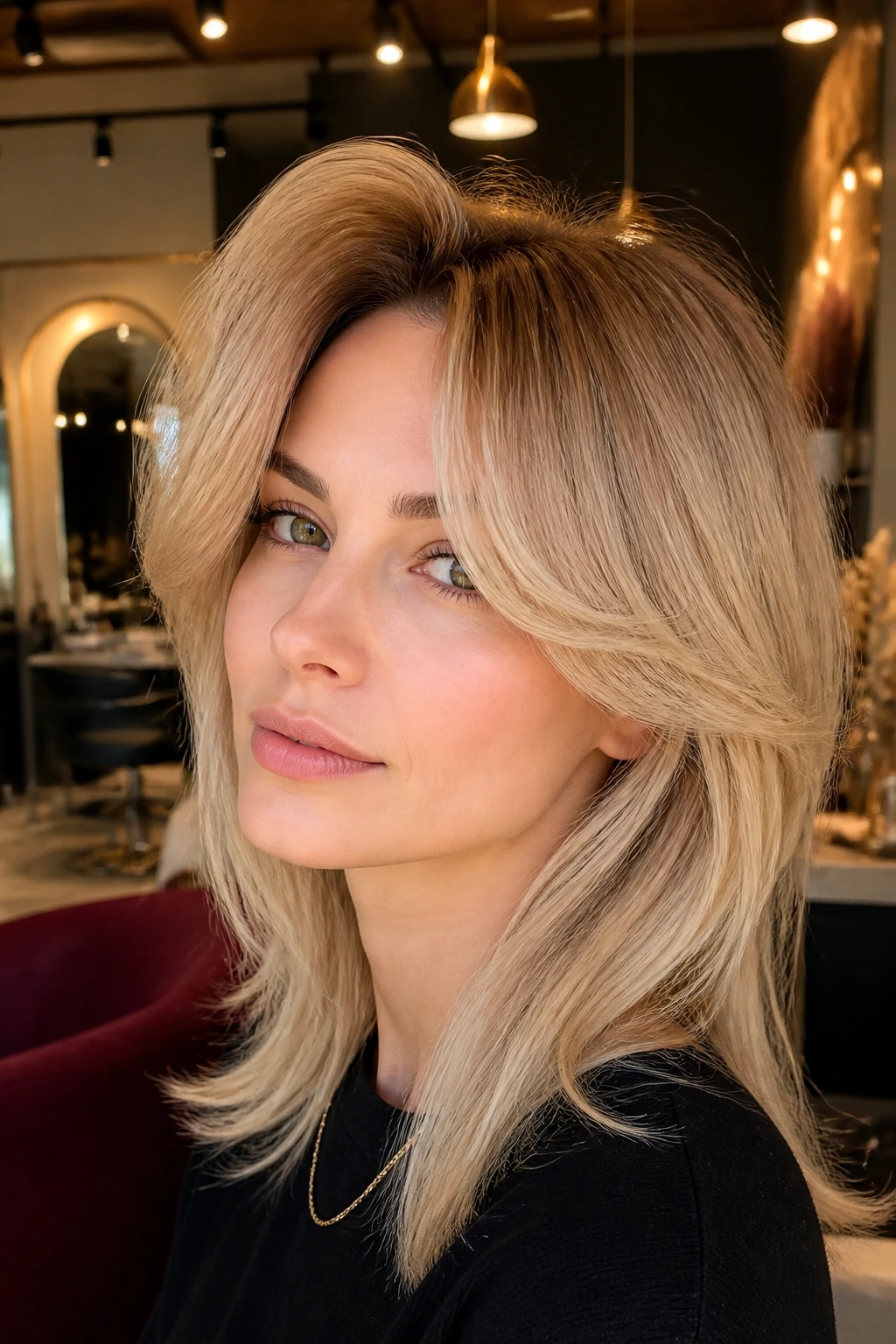
Root-lift curtain fringe is for the person who likes curtain bangs but wishes they sat a little higher and moved a little more. The cut itself stays narrow, but the styling leans into volume at the roots so the fringe doesn’t glue itself to the forehead. That little lift makes thin hair look more alive.
This style benefits from mousse at the roots and a quick blast with the dryer while the hair is still damp. Let the bang section cool on a velcro roller for a few minutes if you can spare the time. It’s not fussy. It just works.
If your hair falls flat by lunchtime, this is the version to try before you blame bangs altogether.
33. Curly Fringe Shaped on Natural Texture
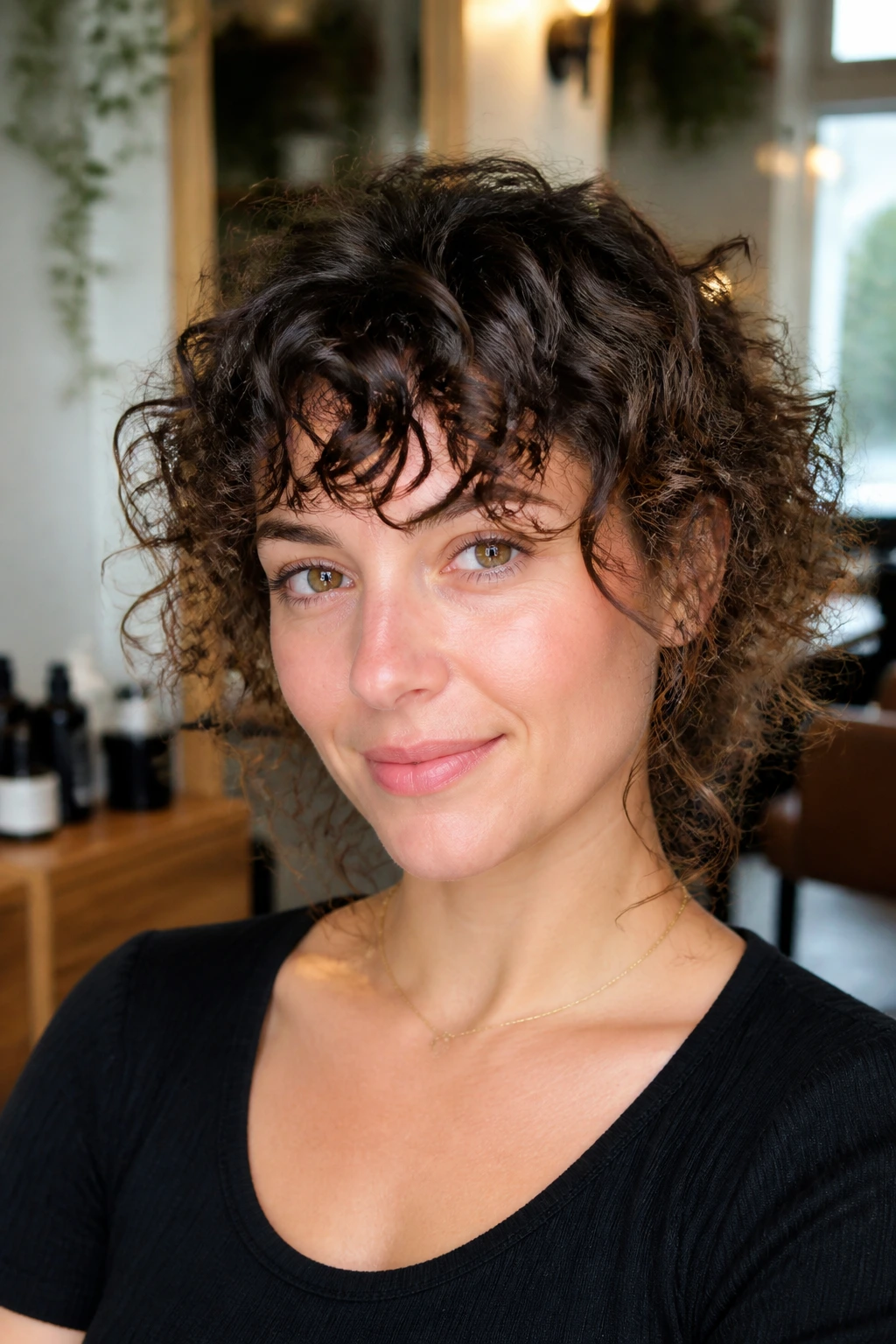
Curly fringe on thin hair needs a different mindset. The cut has to respect the spring of the curl, or the bangs end up shorter than planned and weirdly sparse once they dry. A dry cut or a cut on lightly damp curls is often safer than a fully wet one, because the final shape is easier to judge.
The right curly fringe gives movement and softness around the face without flattening the curl pattern. It can be just a few face-framing curls or a fuller fringe that sits above the brows. Either way, the point is to shape the curl instead of forcing it into a straight bang.
Use a light cream or mousse, not a heavy butter. Curly thin hair gets weighed down fast, and then the fringe turns stringy at the roots.
34. Blended Bob Fringe That Works With a Clean Perimeter
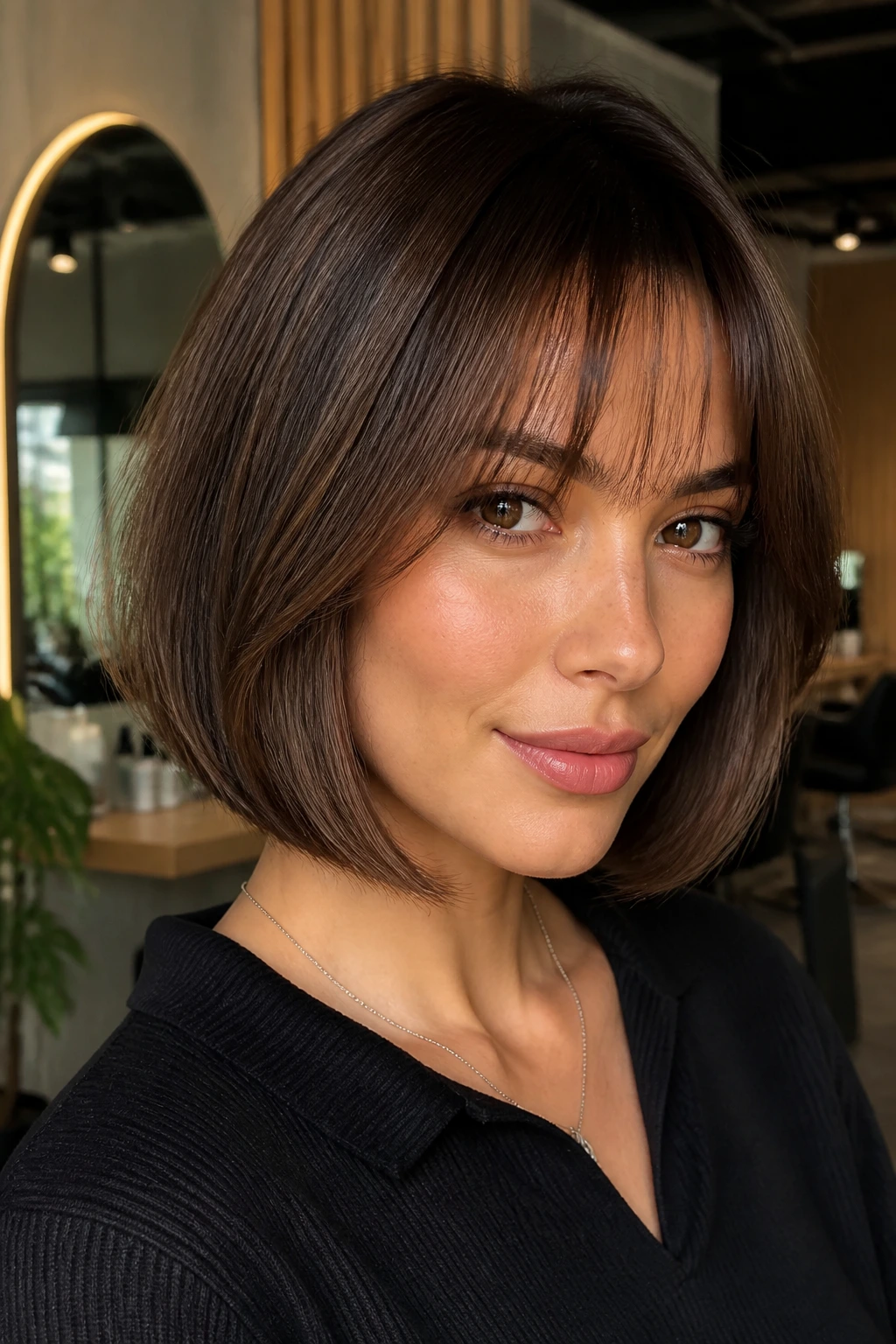
A blended bob fringe is a smart companion to a bob because the front pieces and the fringe live in the same visual space. The bangs don’t look pasted on. They just extend the shape of the haircut. That makes the front feel fuller, which is exactly what thin hair often needs.
This style is especially good if you like clean lines and don’t want a lot of daily fiddling. The bob provides the weight; the fringe provides the frame. Together they make the whole cut feel denser than it really is. A little under-bending at the ends can keep the shape smooth without making it stiff.
Ask for the fringe to be connected to the bob’s front corner rather than cut as a separate block. That detail matters more than people think.
35. Asymmetrical Fringe for Uneven Hairlines and Movement
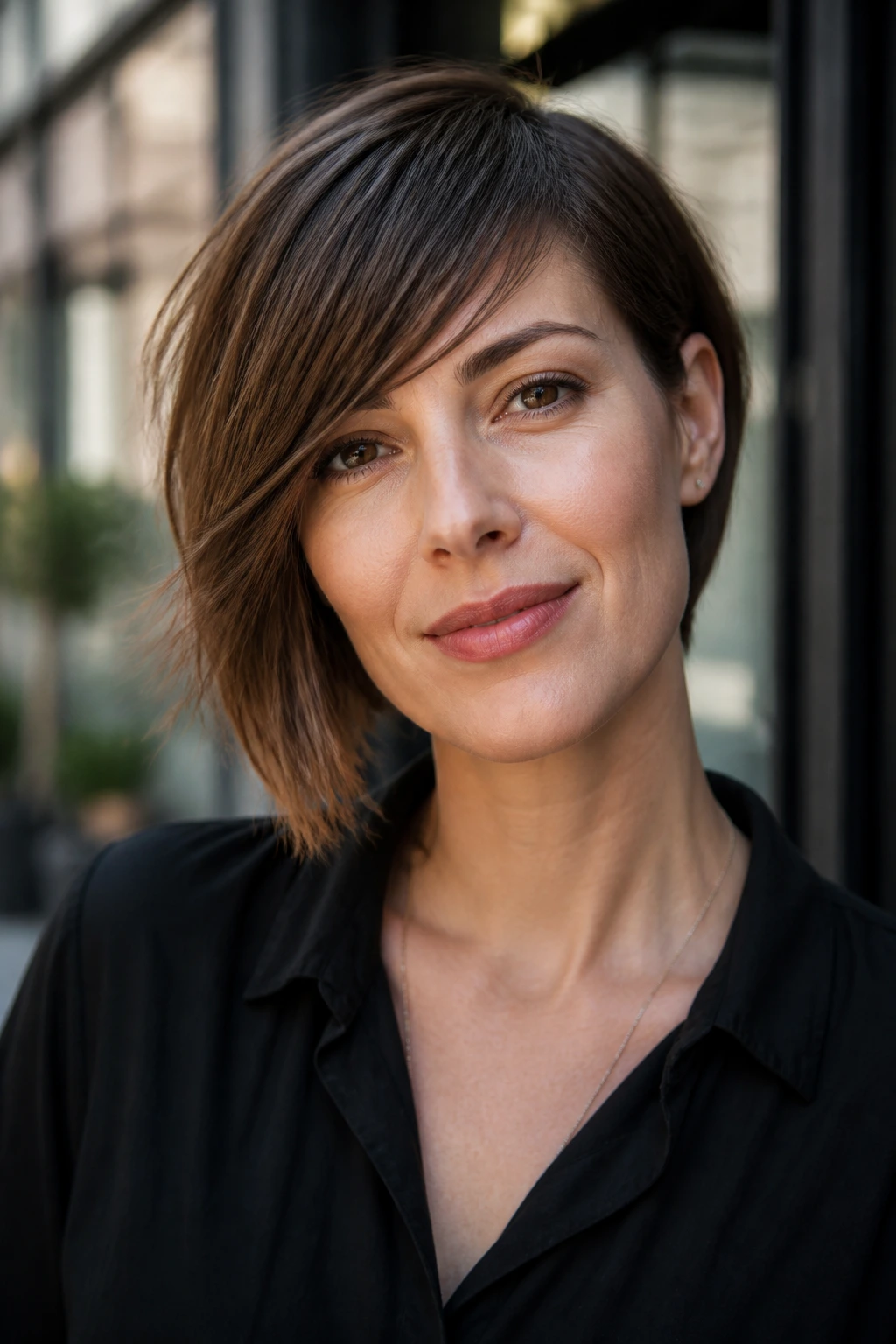
Asymmetrical fringe is a nice solution when your hairline is uneven or you want a bit of edge without committing to a perfectly balanced bang. One side sits shorter, the other stretches longer, and the diagonal gives the eye something to follow. On thin hair, that movement can hide sparsity better than symmetry can.
This is a good option if you like a style that feels a little less predictable. It also lets you work around a stronger cowlick or a temple that tends to go flat. The longer side can be tucked back, which gives the cut more flexibility than people expect.
I’d keep the difference subtle rather than extreme. A slight asymmetry looks intentional. A huge one can feel disconnected.
How to Choose the Right Fringe for Your Density, Cowlicks, and Face Shape
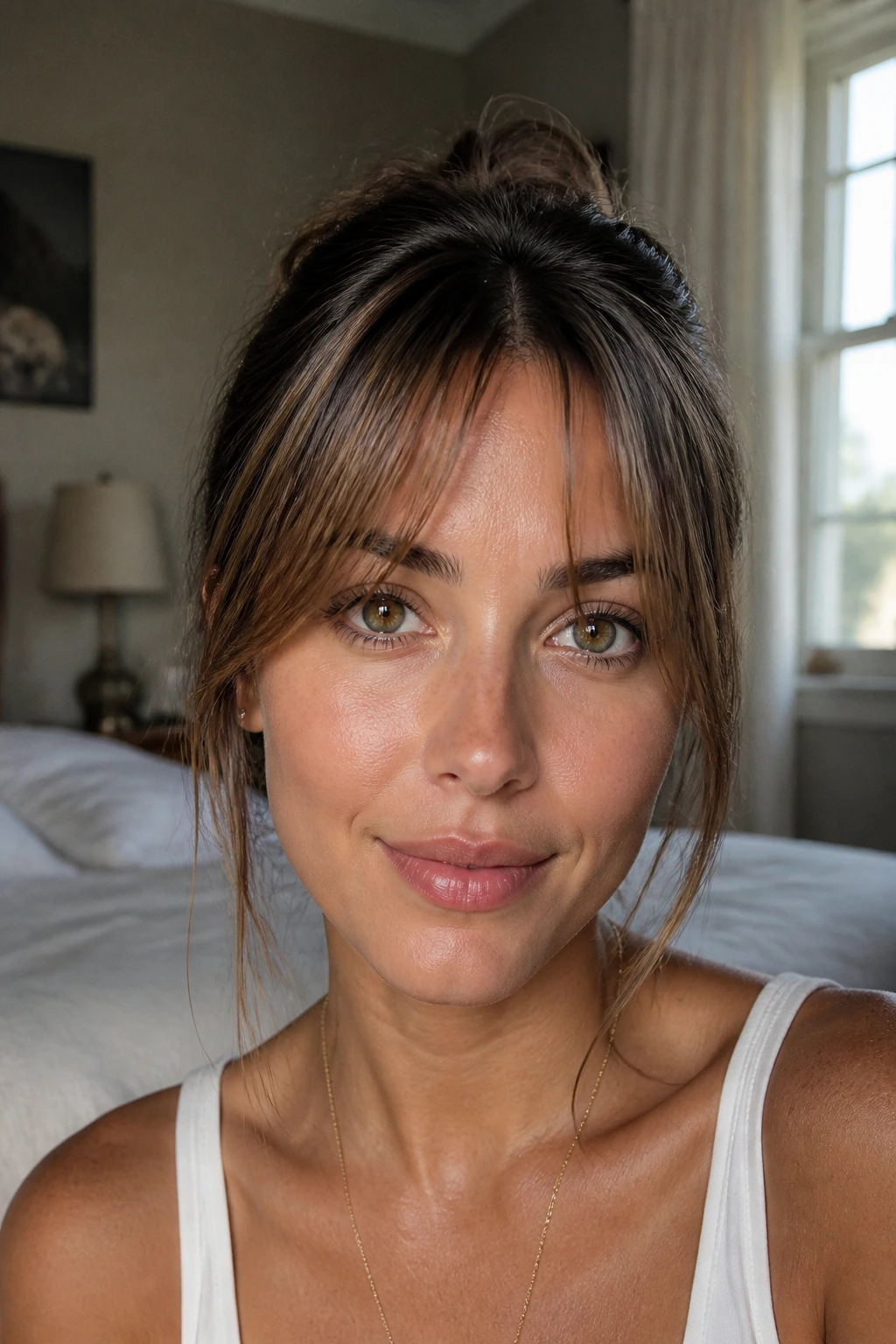
The best bang styles for thin hair usually come down to three things: where your density lives, how your hairline behaves, and how much styling you’re willing to do before coffee. If the front is sparse, a narrow center with longer side pieces often wins. If the fringe zone is dense but the rest is fine, you can get away with a cleaner line.
Cowlicks deserve respect. They don’t care about your mood or your Pinterest board. A strong front swirl usually likes side-swept bangs, split fringe, or a deep side part, because those shapes move with the natural pattern instead of fighting it. That one change can save a lot of bad mornings.
Face shape matters, but not in a rigid, rule-book way. Longer curtain bangs and swoopy side fringe soften longer faces. Rounded or arched fringe can make the forehead feel shorter. Shorter shapes like baby bangs or pixie fringe create emphasis fast, so they’re best when you want the cut to be the statement instead of a disguise.
What to say at the salon
Use plain language. Say, “I want the front to look fuller without being heavy,” or “keep the bang section narrow and the sides longer.” That’s more useful than asking for a style name alone. Style names are a starting point. Density and hairline are the real instructions.
Tools That Make Styling Easier
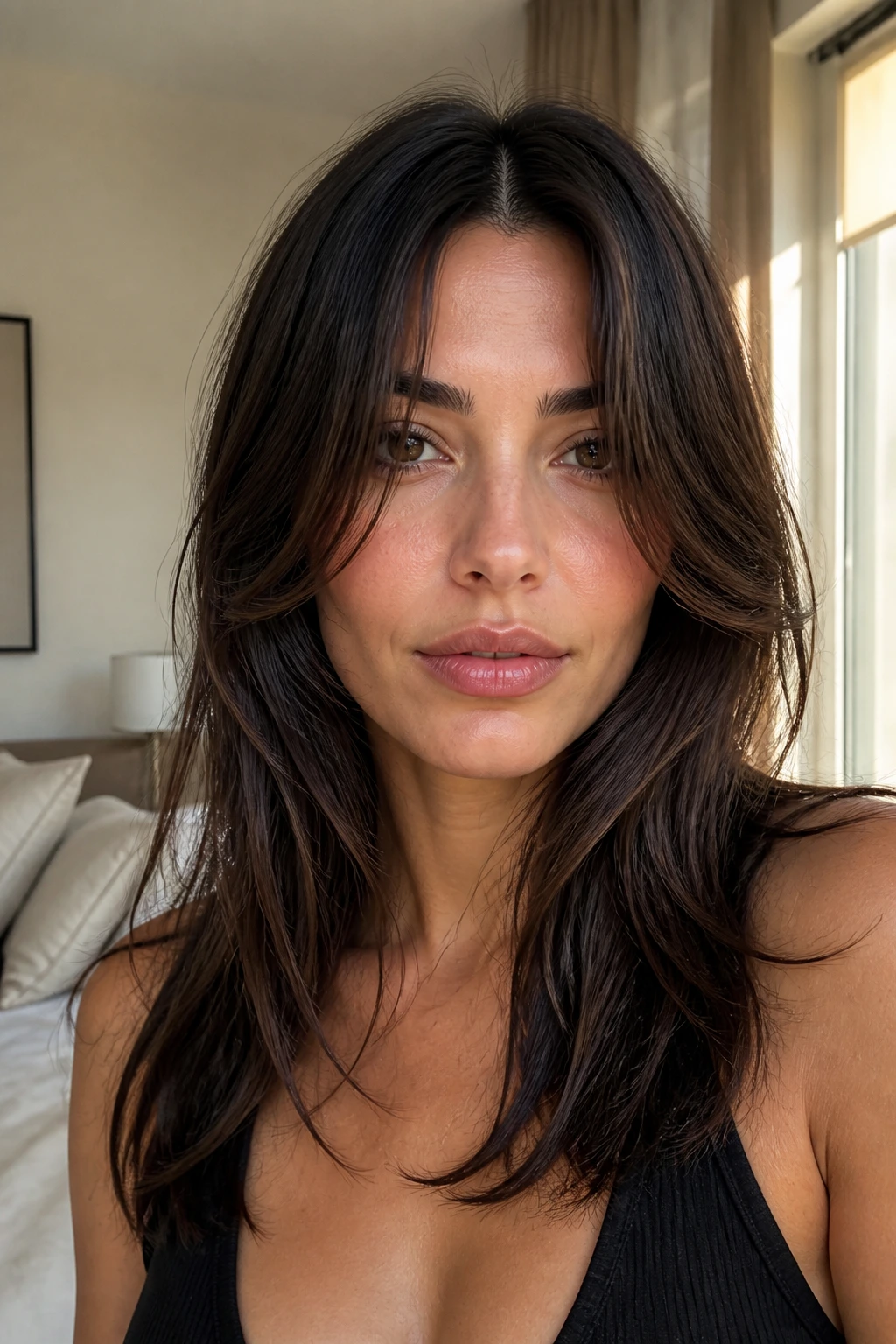
-
Blow dryer with a concentrator nozzle: Direct heat helps you steer thin bangs instead of letting them dry in random directions.
-
1-inch round brush: Small enough to give bend and lift without making the fringe puff out like a mushroom.
-
Mini flat iron: Useful for a slight curve or a quick direction change on stubborn pieces.
-
Duckbill clips: Great for pinning the rest of the hair away while you work on the fringe in small sections.
-
Velcro roller: Lets the bangs cool with shape, which is half the battle on thin hair.
-
Dry shampoo: Helps absorb oil at the roots and gives a bit of grit so the fringe does not fall flat.
-
Lightweight mousse: Adds body without making the bang section sticky or stiff.
-
Texturizing spray: Best used sparingly for piecey, airy finishes.
-
Fine-tooth comb or bang comb: Keeps the section neat without dragging too much product through the hair.
Product Picks That Add Shape Without Crushing the Fringe
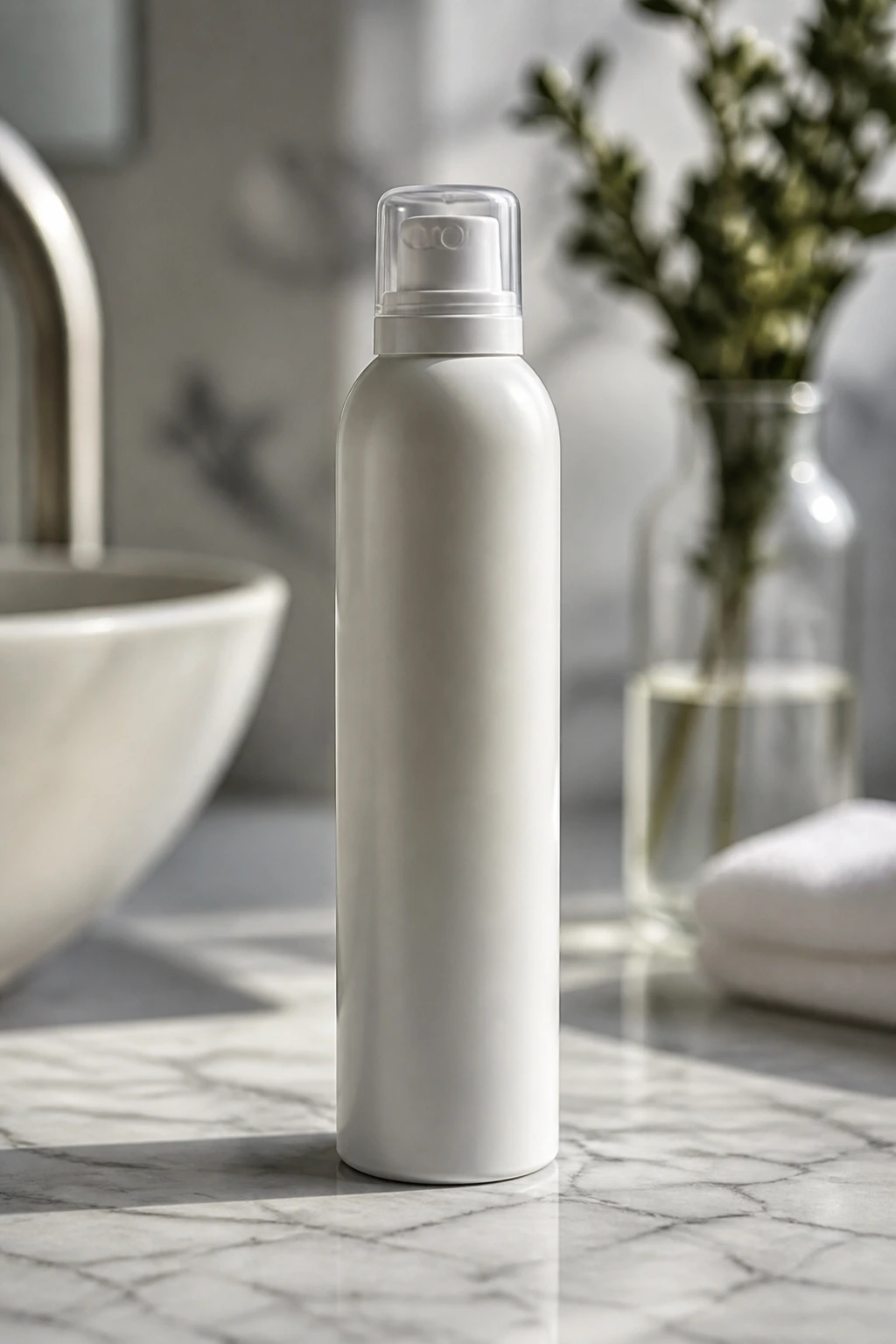
Thin bangs hate heavy products. Thick oils, buttery creams, and sticky gels usually win the first hour and lose the rest of the day. What tends to work better is a light root-lifting mousse, a dry shampoo that doesn’t leave a white cast, and a flexible spray that adds grip without turning the hair crunchy.
If your fringe gets greasy fast, apply dry shampoo to clean hair at the root line before things get oily. That sounds backward, but it gives the hair a little insurance. Shake the can, spray from about 8 to 10 inches away, let it sit for a minute, then brush through lightly. You’re aiming for air, not powder.
A tiny bit of texture spray on the mid-lengths can help piecey bangs stay separated. Use less than you think you need. Thin hair doesn’t forgive product overload; it just clumps up and tells on you.
How to Keep Thin Bangs Fresh Between Washes and Trims
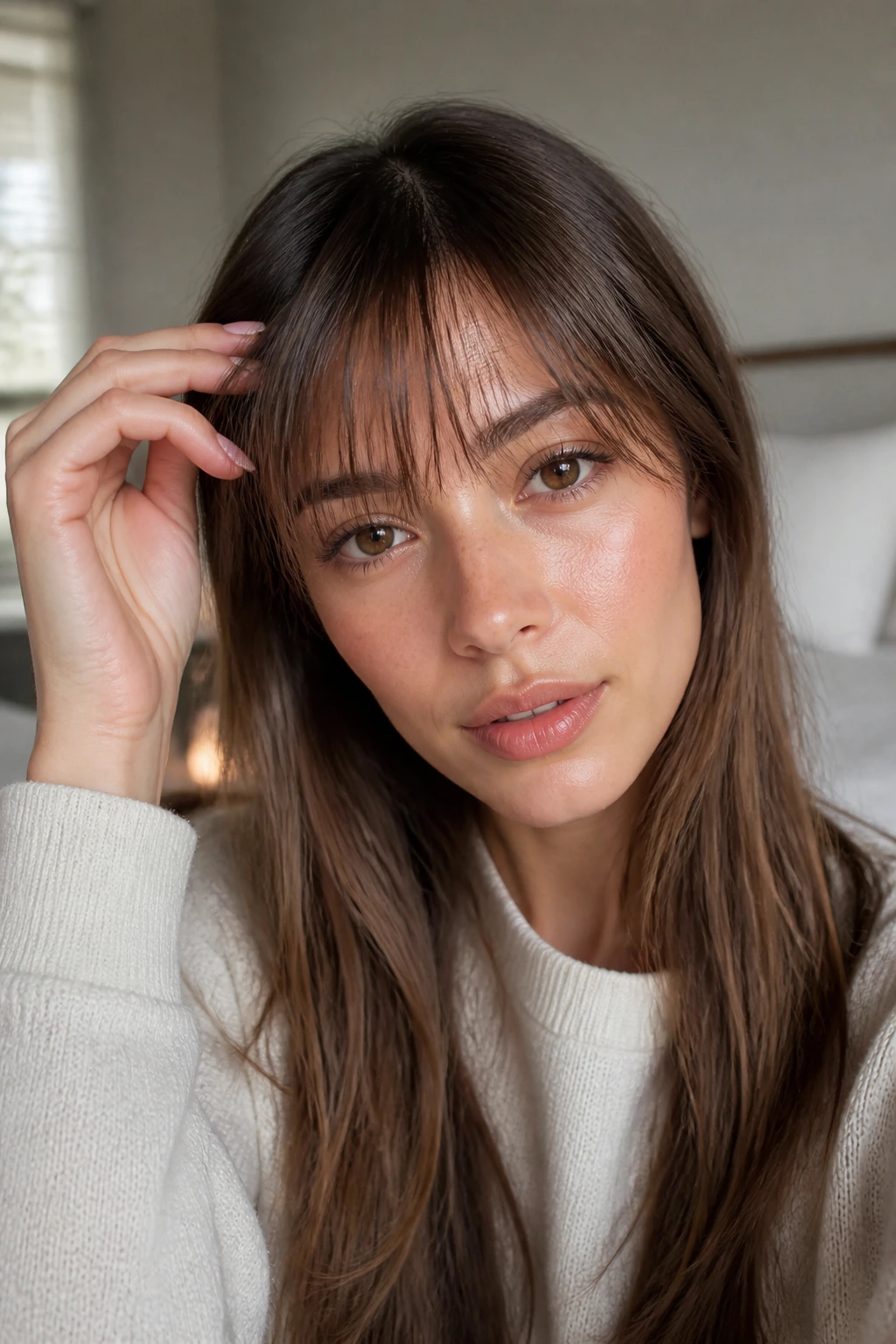
Daily reset
Bangs usually need a quick reset every morning, even when the rest of the hair looks fine. A few seconds with a round brush and dryer can wake up the roots better than a full restyle. If the fringe is just a little bent wrong, a blast of warm air followed by cool air often fixes it.
Washing without overdoing it
If the bangs get oily before the rest of your hair does, wash just the front section in the sink with a tiny amount of shampoo and a quick rinse. That keeps you from stripping the whole head every day. Let the fringe dry fully before you leave it alone. Damp bangs on thin hair flatten fast.
Trim timing
Most thin-hair fringes need a shape-up every 3 to 5 weeks, depending on how fast your hair grows and how precise the cut is. Curved, blunt, baby, and pixie fringes usually need the shortest interval. Curtain, swoop, and grown-out styles can stretch longer.
Sleep and humidity
Clip the bangs up loosely before bed if they tend to get bent or greasy. In humid weather, a touch of dry shampoo at the roots before you leave the house can save you from the “why does this look smaller than it did in the mirror” problem by noon.
Style Boosters and Adaptations to Try
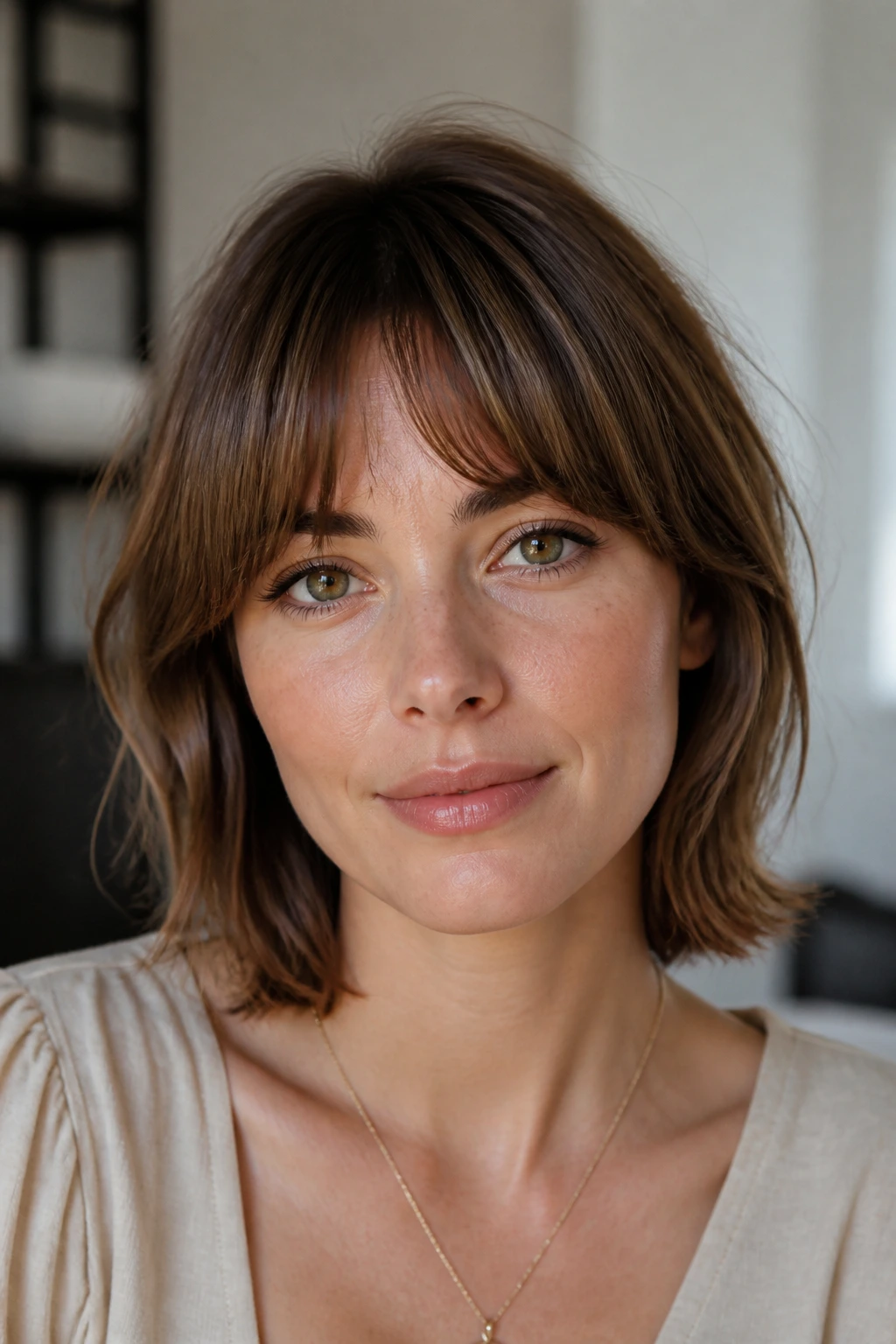
For Cowlicks: Choose split fringe, deep side-part fringe, or long swooping bangs. A quick reverse blow-dry at the roots helps the hair settle into the direction you want, not the direction it chose while you were asleep.
For Glasses: Try eyebrow-grazing bangs, curtain bangs, or soft blunt fringe with a little bend. Keep the center narrow so the frame doesn’t compete with the front of the haircut.
For Curly or Wavy Hair: Pick curly fringe, shag bangs, or a grown-out face-framing fringe. Let the curl pattern guide the cut, and avoid heavy creams that flatten the root area.
For More Forehead Coverage: Bottleneck bangs, lash-length fringe, and rounded bangs give the most coverage without turning into a thick sheet. Keep the sides longer so the fringe can breathe.
For Low-Maintenance Routines: Invisible fringe, grown-out fringe, and layered face-framing fringe need the least daily fuss. They’re the styles I’d hand to someone who wants bangs but does not want to babysit them.
Common Mistakes That Make Bangs Look Sparse
-
Taking the bang section too wide: A wide section spreads thin hair too far across the forehead. The fix is a narrower triangle at the front, with the sides kept longer.
-
Over-thinning the ends: Too much texturizing can leave the fringe ragged and see-through. Ask for softening at the tips, not heavy razor work through the whole bang.
-
Letting bangs air-dry straight down: Thin hair dries exactly where you leave it. If you want lift or curve, you need to steer it while it’s damp.
-
Using heavy serums or oils near the root: That collapses the fringe and makes the sparse areas more obvious. Keep richer products off the bang section.
-
Cutting them with dull household scissors: The ends fray, the line gets jagged, and the fringe looks thinner than it is. Use proper hair shears or leave the trim to a stylist.
Frequently Asked Questions

Can thin hair wear blunt bangs?
Yes, but the line has to be narrow and soft enough to avoid a paper-thin look. A softly blunt fringe works best when the front hairline has decent density and the ends are lightly softened so the shape does not look blocky.
Are curtain bangs good for fine hair?
They usually are, especially if the center stays narrow and the sides are longer. Curtain bangs let the front section breathe, which helps fine hair avoid that flat, split-open look that heavier bangs can get by afternoon.
What bang style is easiest to grow out?
Grown-out fringe, invisible fringe, and layered face-framing bangs tend to behave the best during grow-out. They start blending into the rest of the haircut instead of sitting there like a hard line that needs constant correction.
Should bangs be cut wet or dry?
For straight or slightly wavy thin hair, a slightly damp cut is common, but curly or cowlick-prone hair often benefits from a dry or nearly dry cut. That lets the stylist see how the fringe sits in its real shape instead of guessing.
How do I stop my bangs from splitting apart?
Start with the right shape, then use a light root product and a quick blow-dry at the roots every morning. If the section is too wide or too heavy for your density, splitting is usually the hair telling you the cut needs to be smaller.
Can I have bangs if my hairline is sparse at the temples?
Yes, but choose styles that leave the temples softer, like curtain bangs, bottleneck bangs, side-swept fringe, or a swoopy diagonal shape. A full blunt line tends to expose those sparse corners more than it helps.
What if my bangs look too thin after the cut?
Ask for a narrower section rather than more layering. Adding more length at the sides can often fix the look better than cutting more hair away in the middle, which usually makes the fringe feel even smaller.
Are bangs a bad idea for thin curly hair?
Not at all. The cut just has to respect the curl pattern. Curly fringe, shag bangs, and face-framing pieces cut on the curl tend to work far better than a straight-across fringe that fights the natural bend.
A Fringe That Moves With You

The best bang styles for thin hair are the ones that understand a simple truth: you do not need more hair, you need a better shape. That’s the whole game. A narrow center, soft ends, a little root lift, and a length that can breathe often beat a dense fringe that looks impressive for twelve minutes and then falls apart.
If you’re choosing from the list, start with the style that matches your hairline first, not the one that looks boldest in a photo. That small decision usually saves you from the awkward grow-out phase later. And if you already know your hair likes to separate or slip flat, lean into the styles that leave room for movement. They’re kinder, and they tend to look better by the end of the day.
