



Brunette hair with bangs for older women works best when the fringe is cut to the face in front of it, not to a stock photo in someone else’s lighting. A good brunette cut does a few jobs at once: it softens the forehead, brings the eyes up, and gives brown hair enough shadow and shine to look full even when the ends are a little finer than they used to be.
That’s why bangs and brunette are such a strong pair. Brown hair shows shape clearly, especially when you build in a chestnut ribbon here, a mocha glaze there, or a soft caramel touch around the front. The bang line becomes part of the haircut instead of a separate event, and that matters a lot when you want hair that looks deliberate but not stiff.
The trick is choosing a fringe that works with the hair you actually have. Cowlicks. Glasses. Wavy ends. A crown that’s lost some lift. All of it counts. The right cut doesn’t fight those things. It uses them, and the result is usually much better than forcing a heavy fringe into a head of hair that wants to move a different way.
Why Brunette Hair with Bangs for Older Women Works So Well
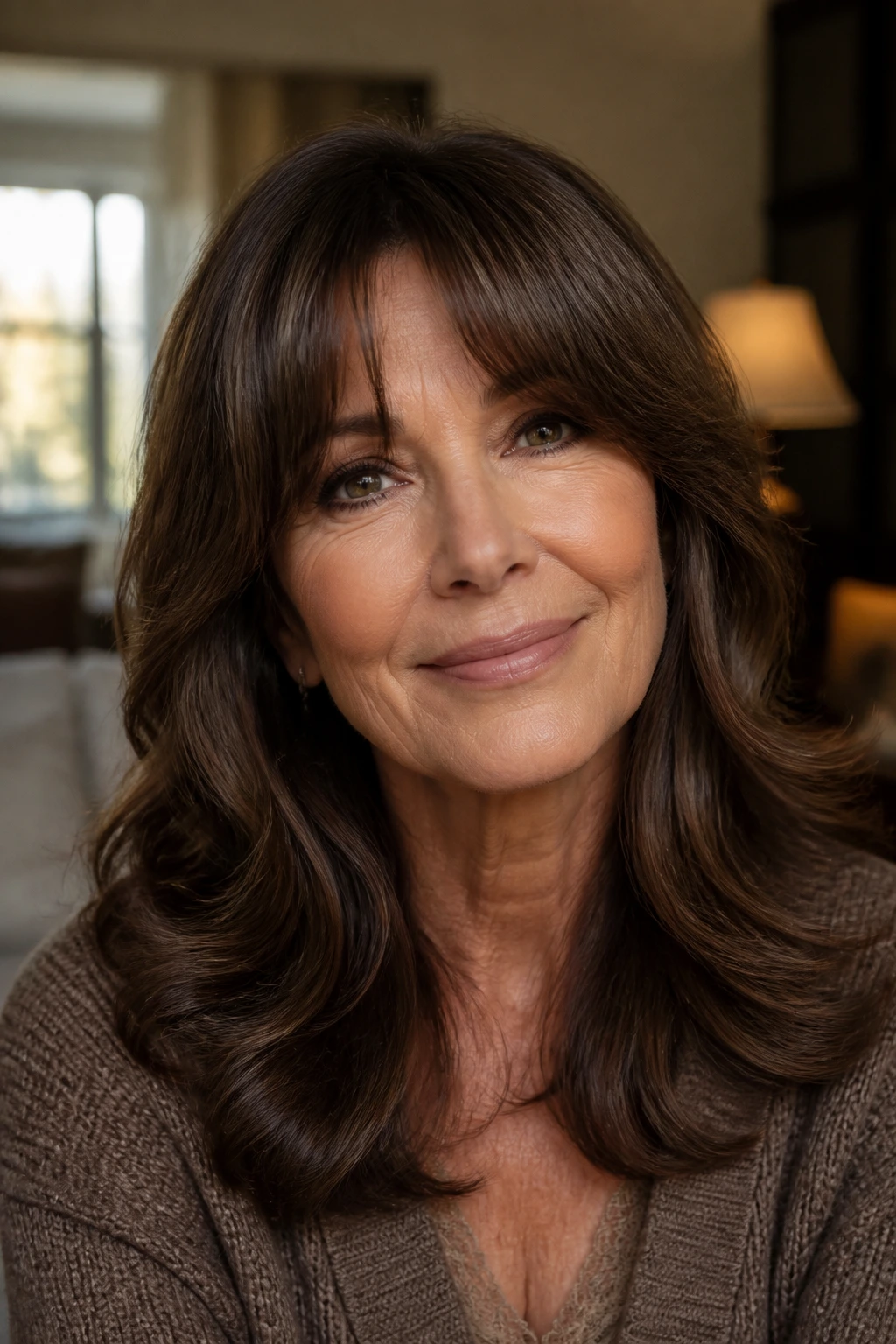
-
The face gets softness fast: Curtain bangs, side-swept fringes, and wispy fringe lines take pressure off the forehead without hiding your features behind a curtain of hair.
-
Brown hair shows movement better than you’d expect: A chocolate or chestnut base catches light at the bends and ends, so a layered cut reads richer instead of flat.
-
Gray blending is easier in brunette: A soft brunette root with lowlights and face-framing brightness makes regrowth look intentional rather than harsh.
-
Most of these cuts are trim-friendly: A stylist can clean up a fringe line in 10 minutes, which keeps the whole shape from slipping into “grown-out and forgotten.”
-
There’s a version for every texture: Fine hair, thick hair, straight hair, waves, curls, and coils all have a fringe that can work if the length and density are chosen well.
-
It plays nicely with glasses and jewelry: That’s a small thing until it isn’t. A bang that sits too low can fight your frames; the right one makes the whole face look more open.
1. Soft Chocolate Lob with Curtain Bangs
A collarbone lob with curtain bangs is one of those cuts that makes hair look expensive without trying to look expensive. The length is long enough to tuck behind one ear or clip back on a rushed morning, but the fringe splits softly at the center and falls toward the cheekbones, which keeps the face from looking boxed in. On brunette hair, especially a deep chocolate shade with a few lighter ribbons around the front, the movement shows up immediately.
Why it flatters
Curtain bangs are forgiving because they do not commit the whole forehead to one line. They taper at the center, open out toward the temples, and sit in that useful zone between brows and cheekbones. For women whose hair has thinned a bit at the temples, that soft spread is worth a lot.
Ask for collarbone length, a slightly beveled edge, and curtain bangs that start a touch longer than you think you want. They should brush the cheeks, not stab at the eyes. If your hair bends easily, this cut takes very little morning coaxing. A round brush and a blow-dryer nozzle will do more than a shelf full of products.
2. Chestnut Bob with Side-Swept Fringe
A side-swept fringe is the safest first step into bangs, and I’ll stand by that. It gives you the forehead-softening effect without putting a dense wall of hair across the face, which is exactly why it works so well on a neat chestnut bob. The side sweep also handles cowlicks better than a straight-across fringe, and that alone saves a lot of morning frustration.
Chestnut is a smart choice because it has warmth without turning orange. On mature skin, that little bit of warmth keeps the cut from reading flat or cold, especially if the rest of the bob sits right at the jaw. A clean side part, a smooth blow-dry, and ends that curve under by half an inch make the whole thing look intentional in a very quiet way.
If you want a bob that can move from casual to polished without a second haircut, this is it. The fringe can be brushed forward, swept softly back, or tucked behind one temple when you want a more open face.
3. Espresso Pixie with Feathered Bangs
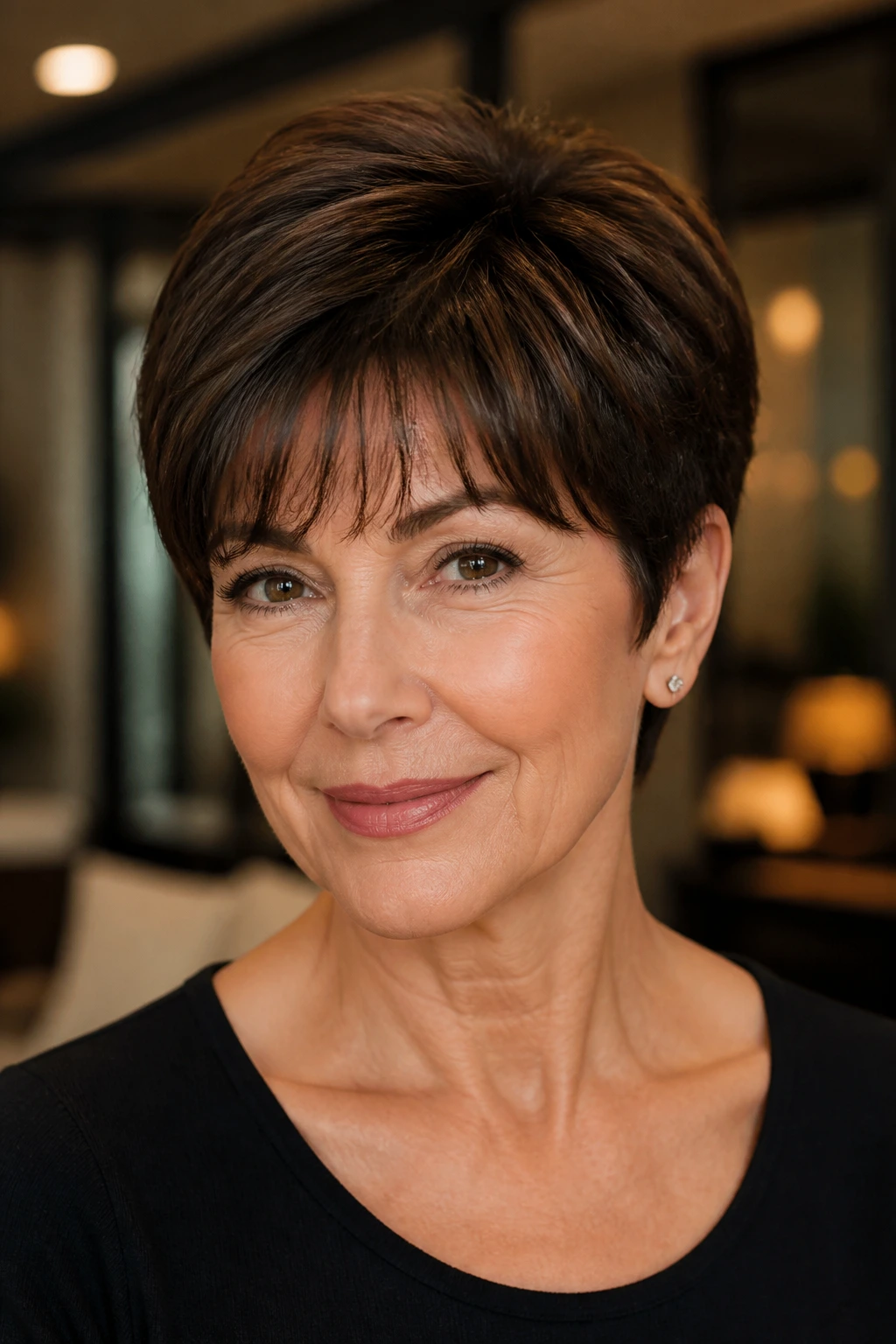
Want short hair without the hard edge? This is the answer. An espresso pixie with feathered bangs keeps the sides neat, leaves enough length on top for lift, and uses a soft fringe to blur the hairline instead of shouting across it. The dark brunette shade gives the crop shape, and the feathering keeps it from looking boxy.
How to wear it
The best version of this cut has a little height at the crown and a fringe that is broken into fine pieces, not one heavy band. That matters if your hair is fine, because a dense bang can reveal the scalp too fast. A feathered pixie hides that problem by letting the strands sit lightly over the forehead.
It is also one of the few short cuts that can look elegant rather than sharp. A dab of lightweight cream through the top, a quick blow-dry forward and slightly to one side, and you’re done. If you wear glasses, this cut leaves enough room around the frames that nothing feels crowded.
4. Walnut Shag with Piecey Bangs
A walnut shag is for the woman who wants movement first and neatness second. The layers start near the crown, the ends move around the shoulders, and the bangs are cut in little pieces so they don’t land as one dense line across the forehead. On medium or thick brunette hair, that piecey fringe keeps the cut from looking heavy.
Picture this after a wash: the hair is not perfectly smooth, and that’s the point. A shag likes a bit of bend. The walnut brown color gives all those layers definition, especially if you have a few darker lowlights under the top layer. It stops the shape from turning puffy or shapeless.
What makes it work
- Crown layers build lift where mature hair often goes flat first.
- Piecey bangs break up the forehead line and make the face look less square.
- A texture spray or mousse gives the front enough separation to keep the cut airy.
- This shape looks best when it is touched, not overbrushed.
If you hate a stiff haircut, this one earns its keep.
5. Mocha Layered Mid-Length Cut with Long Bangs
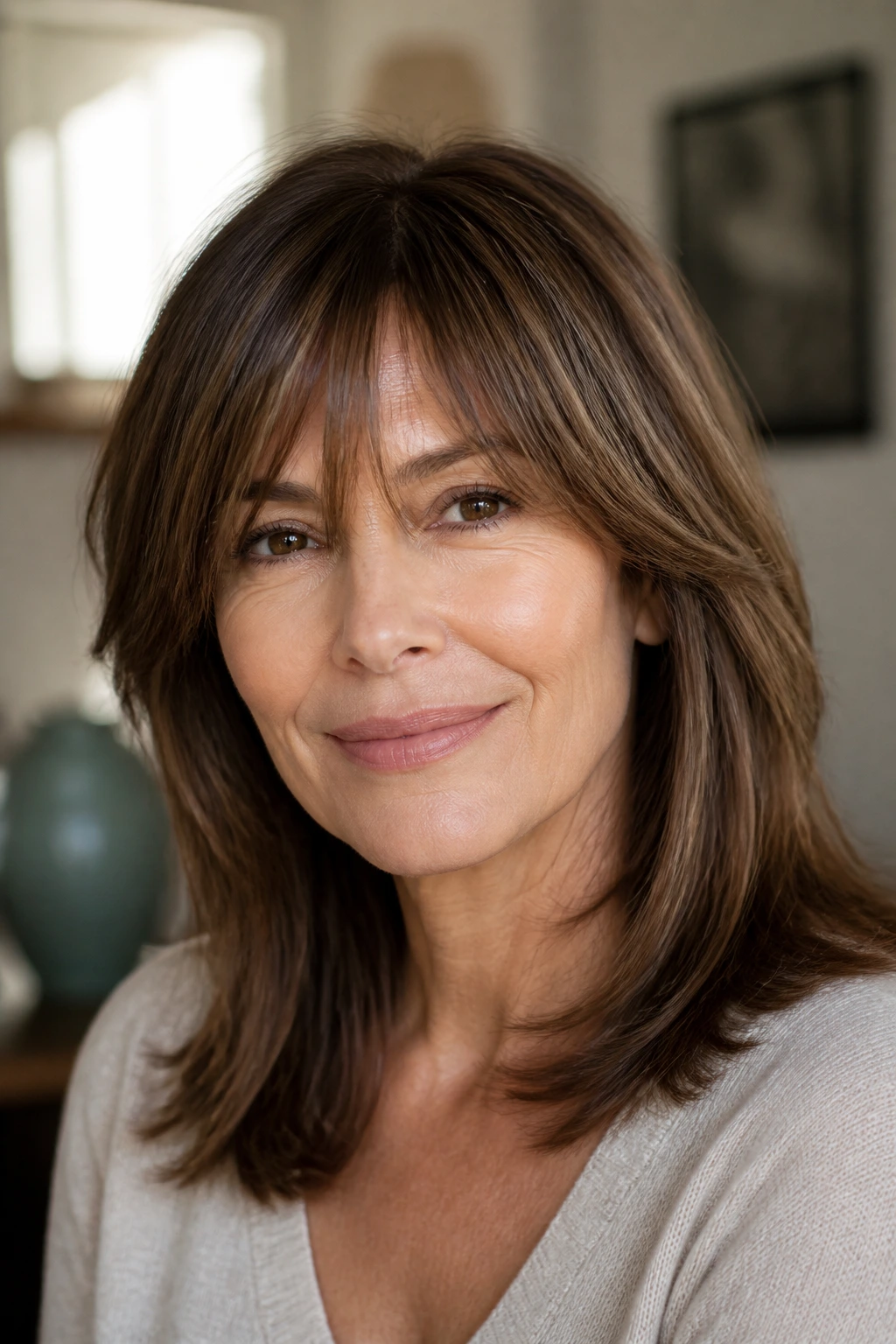
This is the haircut for someone who likes the security of length but wants the front to do some work. A mocha mid-length cut usually falls somewhere between the shoulders and the collarbone, and the long bangs melt into the rest of the layering instead of sitting apart from it. That means the style can be worn loose, clipped half-back, or pulled into a low ponytail without losing its shape.
The mocha tone matters. Deep brunette on its own can go flat, but mocha has enough softness in it that the layers show up even in plain indoor light. The long fringe is especially useful if you’ve got a forehead you’d like to soften a bit, but you do not want to commit to a shorter bang line.
This is one of my favorite options for women who want a cut that behaves on a busy morning. It needs a tidy blow-dry, yes, but not much else. If you let the front stay a half-inch longer than your initial impulse, you’ll get a fringe that grows out smoothly instead of in awkward stages.
6. Cinnamon Brunette Collarbone Cut with Bardot Bangs
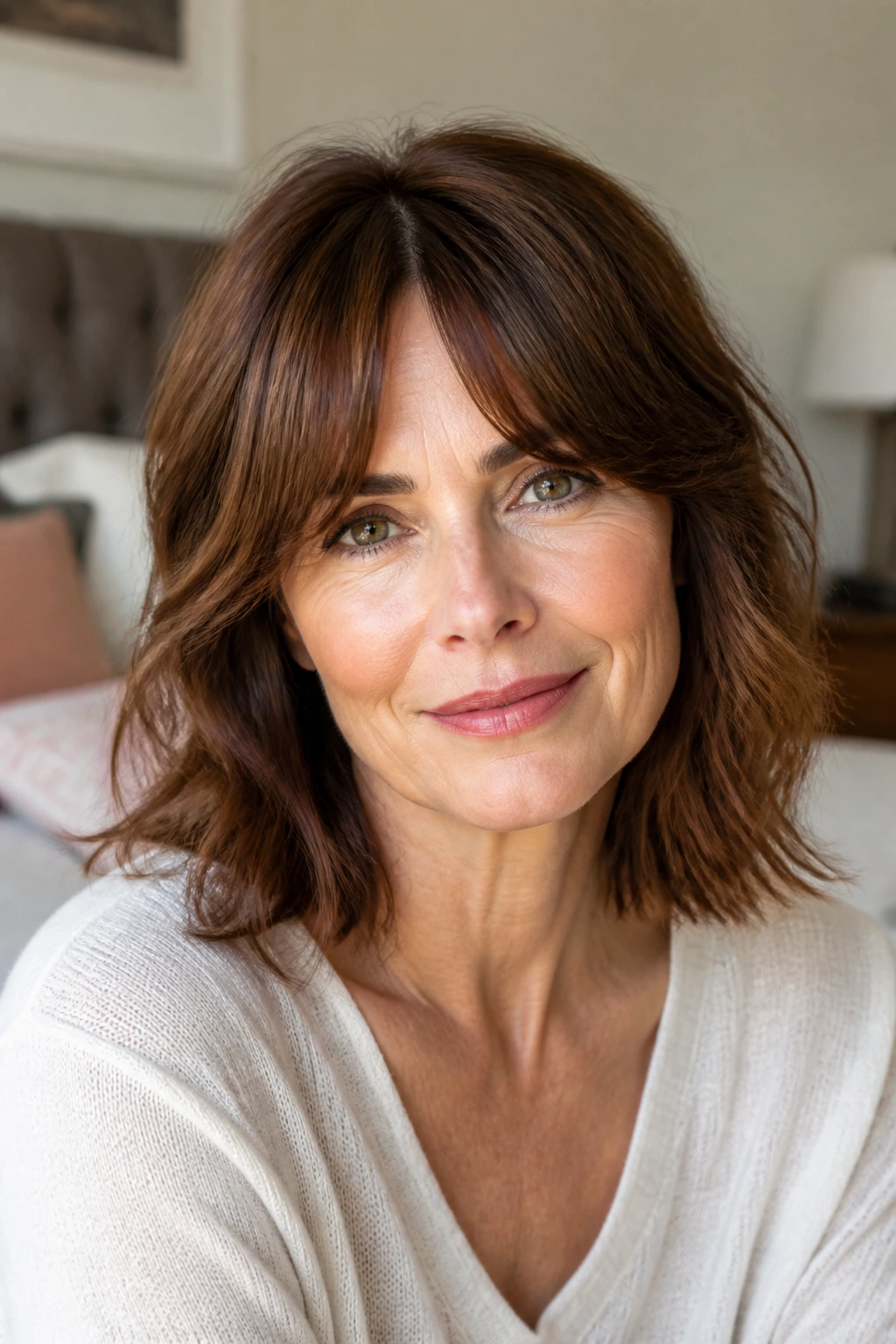
Bardot bangs are the gentler cousin of blunt fringe. They split in the middle, curve toward the temples, and sit just a little longer than a classic curtain bang, which makes them a very good fit for collarbone-length hair. On a cinnamon brunette base, that soft center split looks warm rather than fussy.
Compared with straight-across bangs, Bardot bangs give the face room to breathe. They also work better with cheekbones, glasses, and hair that has a natural wave. If your hair grows with a little bend, this is a friendlier choice than trying to beat it into a straight line every morning.
The collarbone length keeps the ends from looking too heavy, which matters because Bardot bangs already create shape around the face. Add a loose wave at the bottom or leave it smooth with a bevel under the ends. Either way, the cut reads soft and modern without trying too hard.
7. Dark Brunette Blunt Bob with Brow-Grazing Fringe
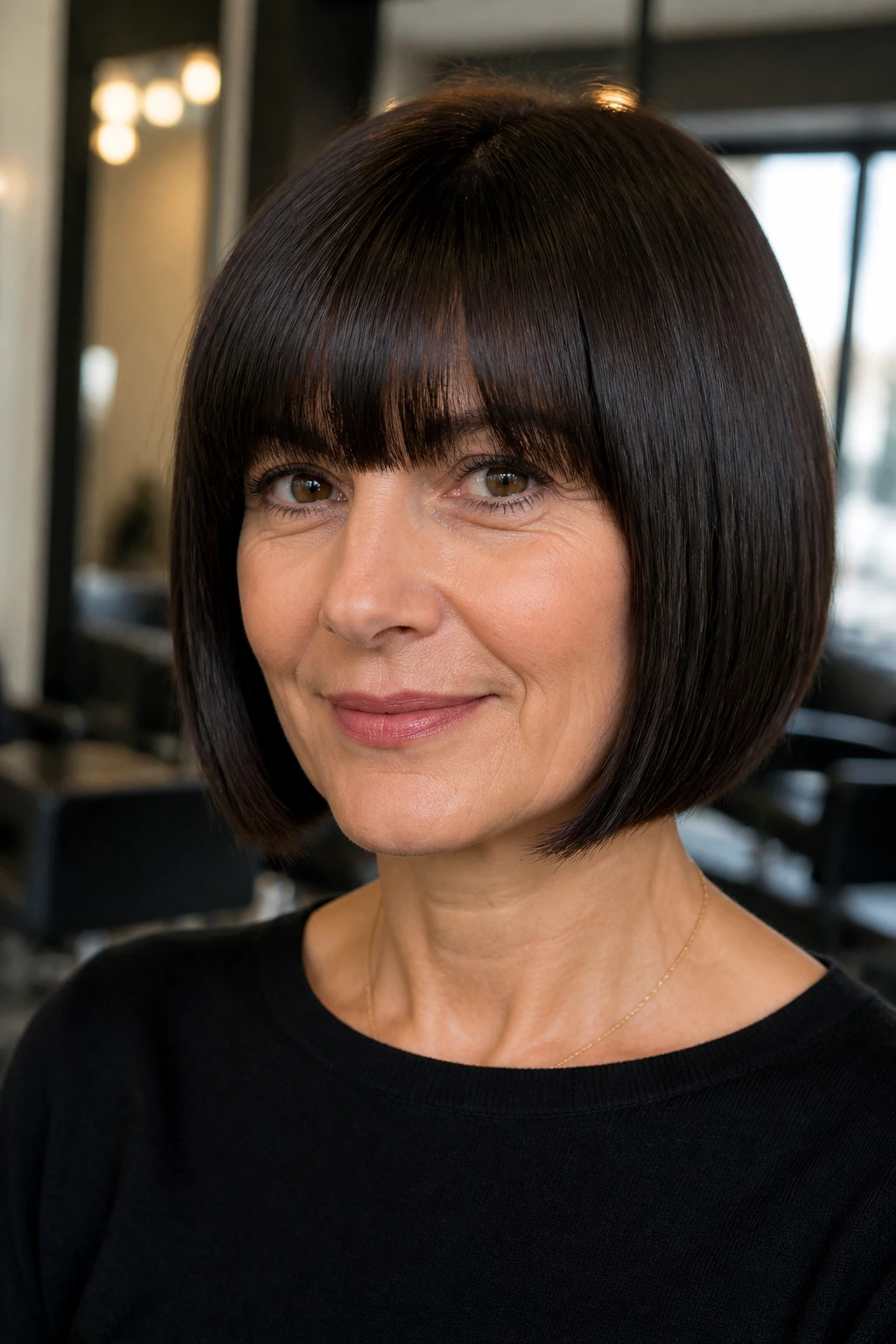
A blunt bob is not the enemy. It just needs the right hair to support it. On thick, straight brunette hair, a dark blunt bob with a brow-grazing fringe can look sharp in the best way—clean line, glossy surface, strong shape. The fringe lands just at the brows, which gives you coverage without making the face feel hidden.
This style is especially good if you like structure. The outline is crisp, the finish is polished, and the brunette tone adds weight so the bob doesn’t look airy in a way that exposes too much scalp or wispy ends. If your hair is coarse or naturally full, the blunt line keeps the shape from spreading out too much.
Be honest with yourself about maintenance. A blunt fringe shows every uneven snip and every extra week between trims. If you’re willing to keep it neat, though, the payoff is a very clear, very strong silhouette that can make the jawline look more defined.
8. Rich Cocoa Curly Bob with Curved Bangs
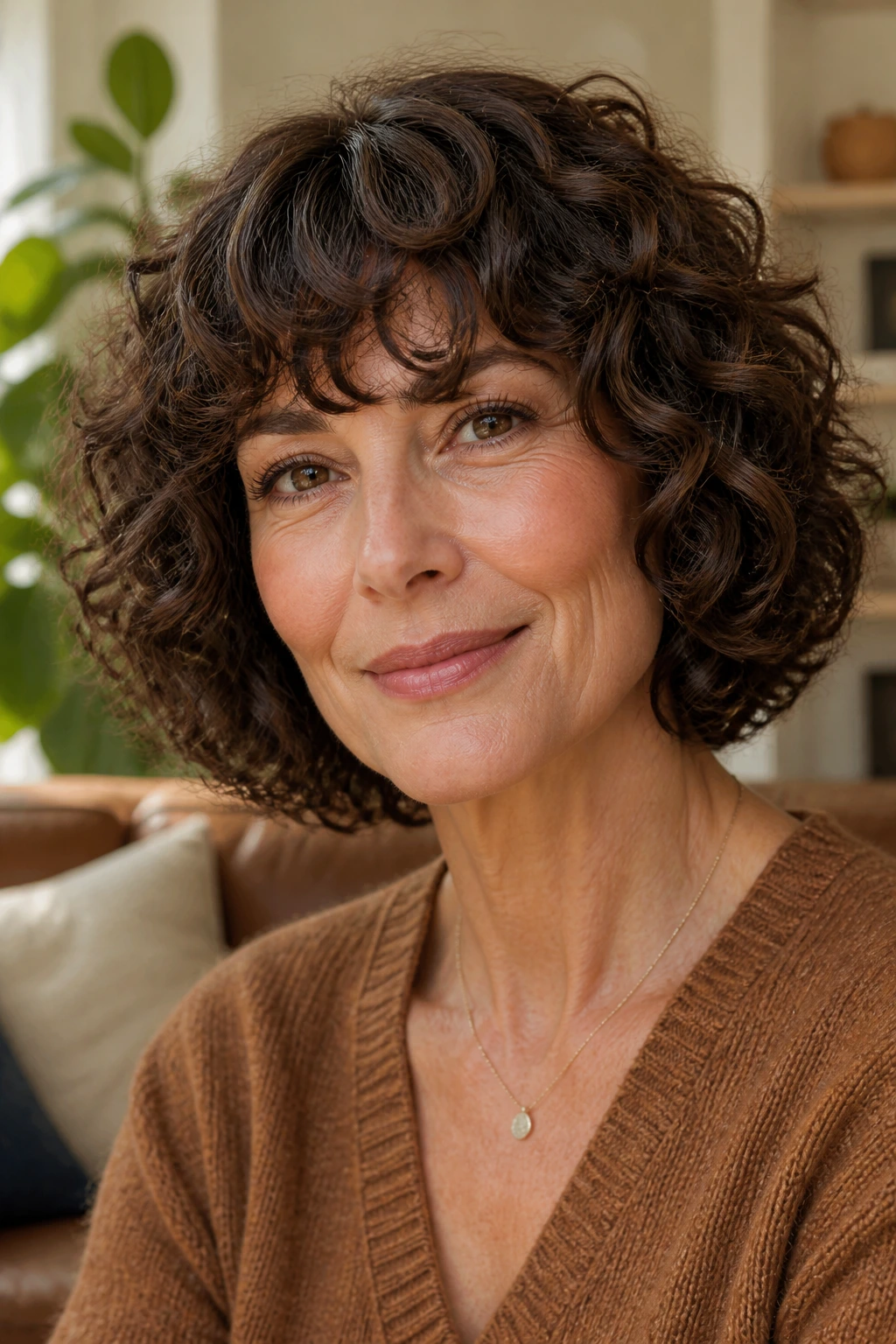
Curly bangs are not the same thing as straight bangs with a curl problem. They need to be cut with the curl pattern in mind, usually dry and a touch longer than you first expect. On a cocoa bob, curved bangs follow the shape of the forehead softly, then spring back into the rest of the curl.
How to cut it safely
The biggest mistake with curly bangs is cutting them too short while they are wet. Curly hair shrinks, and it will happily steal half an inch or more when it dries. Ask for the fringe to be shaped dry, or at least cut longer with room to bounce up.
This cut works beautifully for women who want texture to do the styling work. A curl cream, a diffuser, and a little scrunching are usually enough. The cocoa brown shade gives the curls depth, so even second-day hair still looks deliberate. It is one of the few bang styles that can look a little better after it settles.
9. Caramel-Balayaged Layers with Curtain Fringe
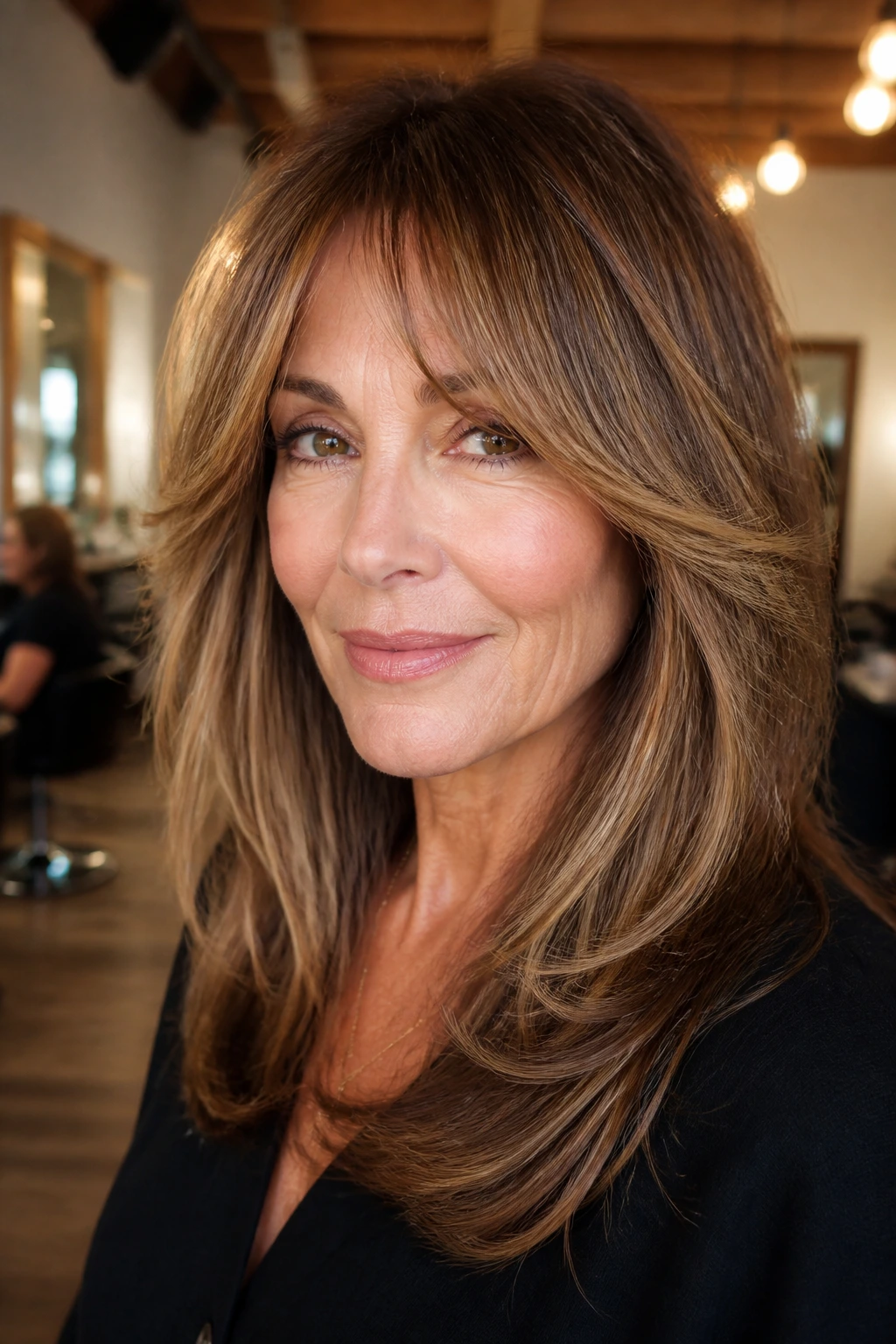
Caramel balayage around a brunette base changes the whole mood of bangs. The fringe stops looking like a separate strip of hair and starts looking like part of a layered, face-framing shape. That is especially useful if you want to blend gray softly or if your natural brown needs a bit more brightness near the front.
A curtain fringe works well with balayage because the light pieces sit where the eye naturally goes first: the temples, the cheekbones, the front bends of the hair. Those brighter strands keep the fringe from disappearing into a dark cap, which can happen on very deep brown hair. The result is softer and more dimensional, not louder.
This is a good choice if you want to keep the cut flexible. Wear it sleek, round-brushed, or with a loose wave. The color does half the visual work, which means the bang line can stay airy and still feel finished.
10. Sable Shoulder-Length Cut with Wispy Bangs
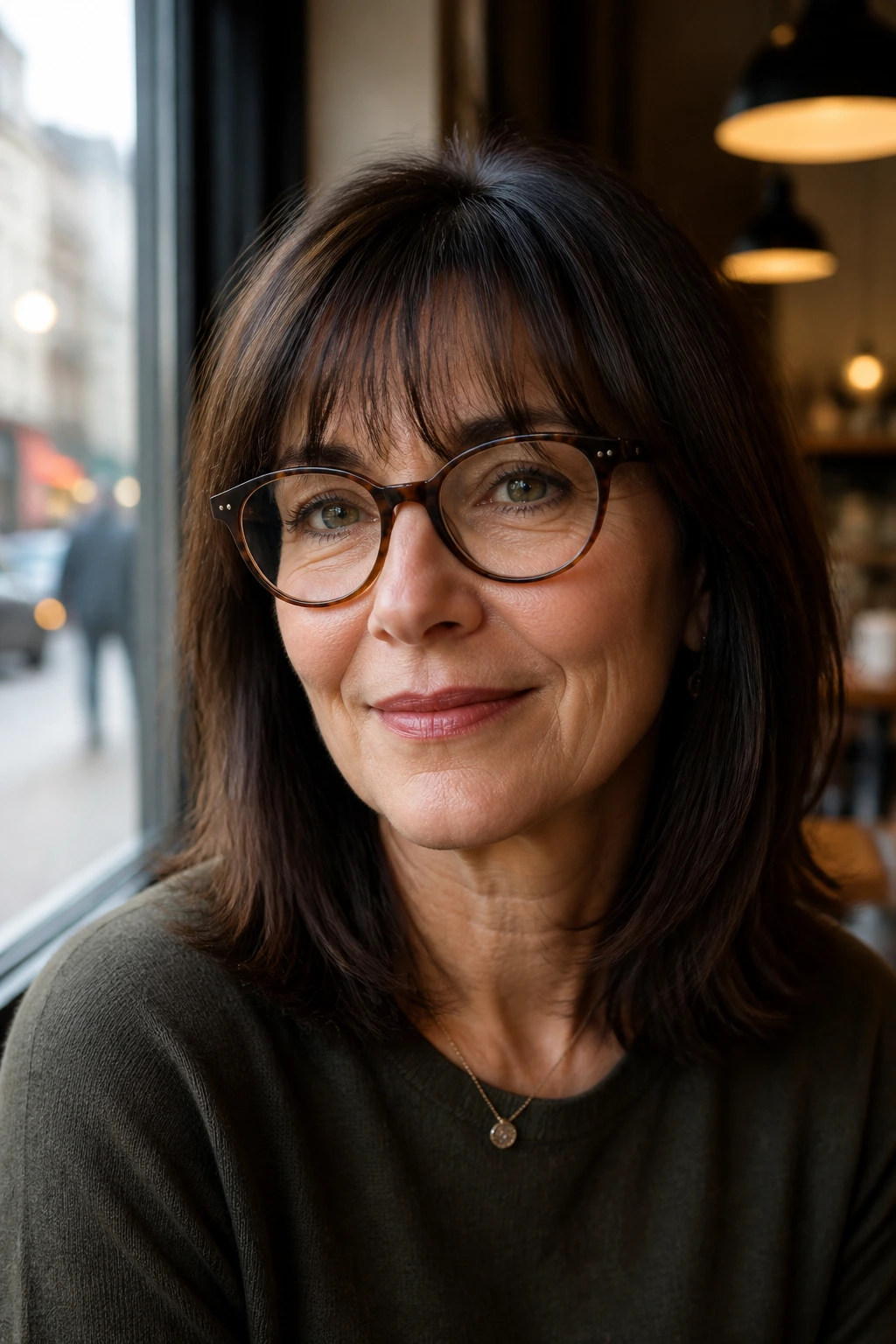
A wispy fringe is the easiest yes if you hate the feeling of too much hair on your forehead. It has enough presence to change the shape of the face, but not so much density that it feels hot, heavy, or fussy by noon. On a sable shoulder-length cut, those thinner bangs keep the whole look light.
This is the fringe I’d point to for anyone who wears glasses and wants bangs without fighting the frame. Wispy bangs sit above or just at the brow line, so they do not press into the lenses or create a shadow over the eyes. They also dry faster, which is a small gift on mornings when you’d rather not spend fifteen minutes fighting the front of your hair.
Best for
- Fine hair that looks weighed down by a dense fringe.
- Women who want a softer first-time bang.
- Hair that naturally falls straight or with a slight bend.
If you want ease, this is a good place to begin.
11. Brunette Wolf Cut with Soft Fringe
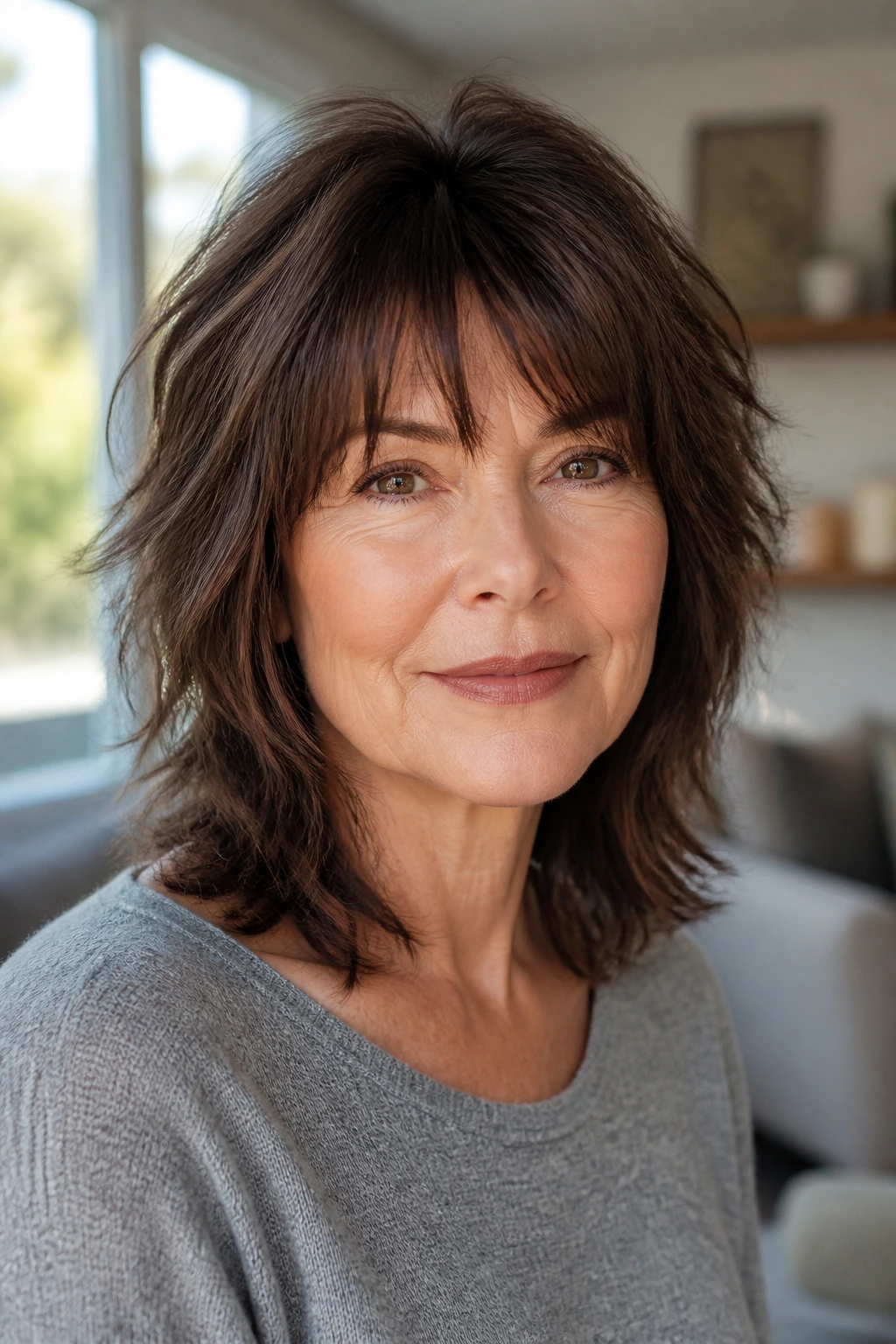
The wolf cut gets a bad reputation when people think of it as pure edge and not much else. A softened brunette version is more forgiving. You still get the lifted crown, the loose layers, and the slightly shaggy outline, but the fringe is kept softer so the haircut reads less aggressive and more lived-in.
The reason it works on mature hair is simple: it creates volume where age often steals it. The crown gets height, the sides move away from the face, and the fringe breaks up the forehead just enough to keep the haircut from feeling heavy. On dense wavy hair, it can be a lifesaver.
Why it works
The wolf cut looks best when it is not overstyled. A little mousse, a diffuser, and a rough dry are enough. If you like a cut that looks better with movement than with perfect brushwork, this is a strong option. If your hair is very fine, though, ask for softer layers so the top does not look stringy.
12. Chestnut Flip Lob with Rounded Bangs
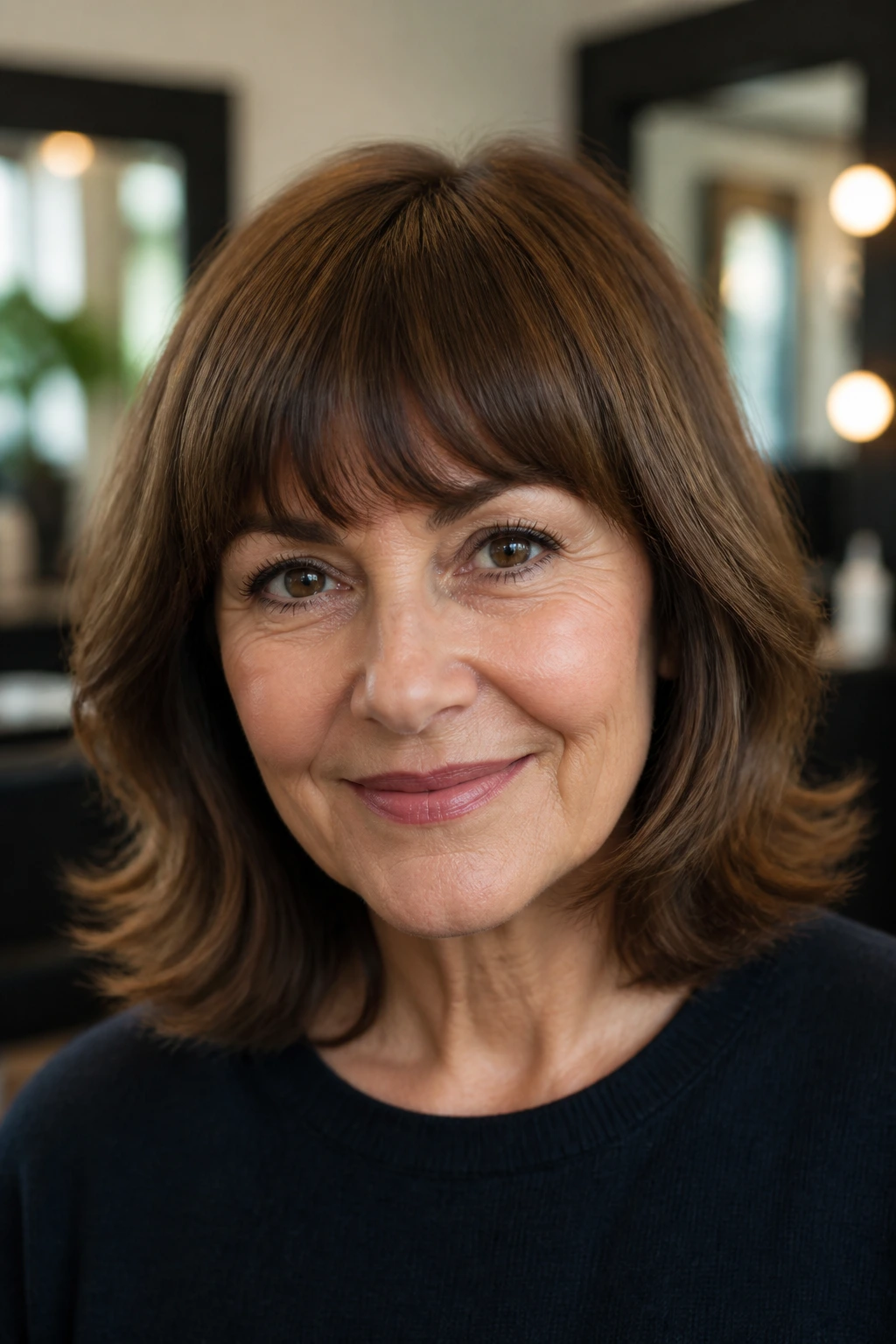
The flip lob has a little retro energy, but not in a costume way. The ends bend outward just enough to lift the line off the shoulders, and the rounded bangs curve with the brow instead of cutting straight across it. That shape softens the upper face while giving the lower half a bit of motion.
A chestnut brunette shade keeps the whole look warm and wearable. Rounded bangs can sometimes feel too sweet on their own, but the flipped ends add enough shape that the haircut feels finished. This is the kind of cut that looks especially good with a simple side part and a round brush at the ends.
Compared with curtain bangs, rounded bangs give a little more frontal coverage. That can be useful if you want to soften forehead lines while still keeping the eyes open. The overall effect is neat, lifted, and a touch vintage without tipping into old-fashioned.
13. Deep Brunette Tapered Crop with Micro Fringe
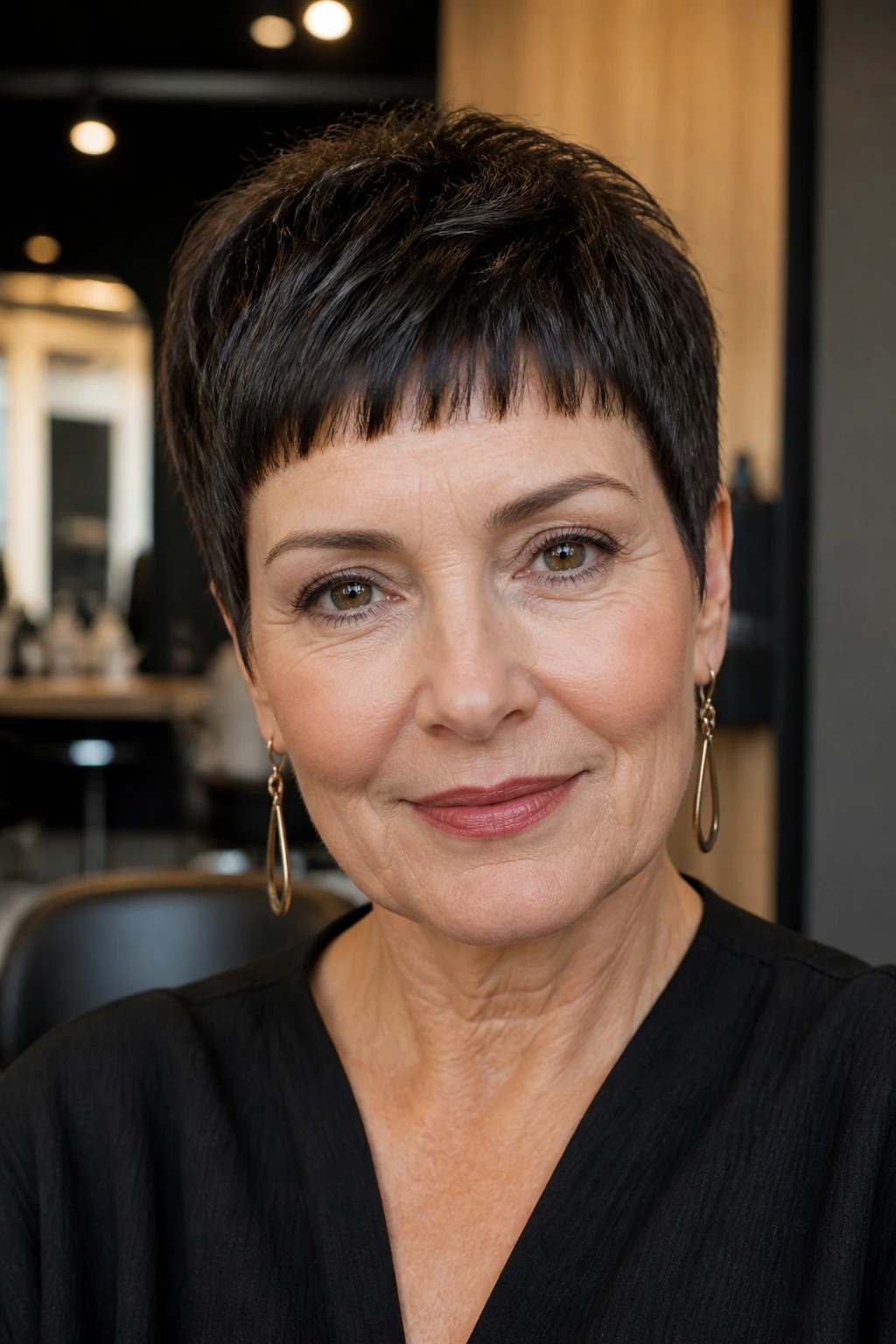
A micro fringe is not a compromise. It is a statement, and it works best when it is treated that way. On a deep brunette tapered crop, the short fringe puts the brows, eyes, and bone structure front and center. The sides stay close, the top has just enough lift, and the whole cut feels sharp in a clean, edited way.
What to know before you commit
Micro bangs are best on straight or mostly straight hair. If your hair has a strong wave or a stubborn cowlick at the front, the upkeep gets annoying fast. They also need regular trims—more often than a long fringe—because even a quarter-inch of growth changes the shape.
If you wear bold glasses or have brows you like to show off, micro fringe can be striking. If you want softness, this is probably not the place to start. It is a short cut with confidence built in, and it looks best when the rest of the hair is tapered neatly so the fringe has room to stand out.
14. Warm Brown Wedge Bob with Side Fringe
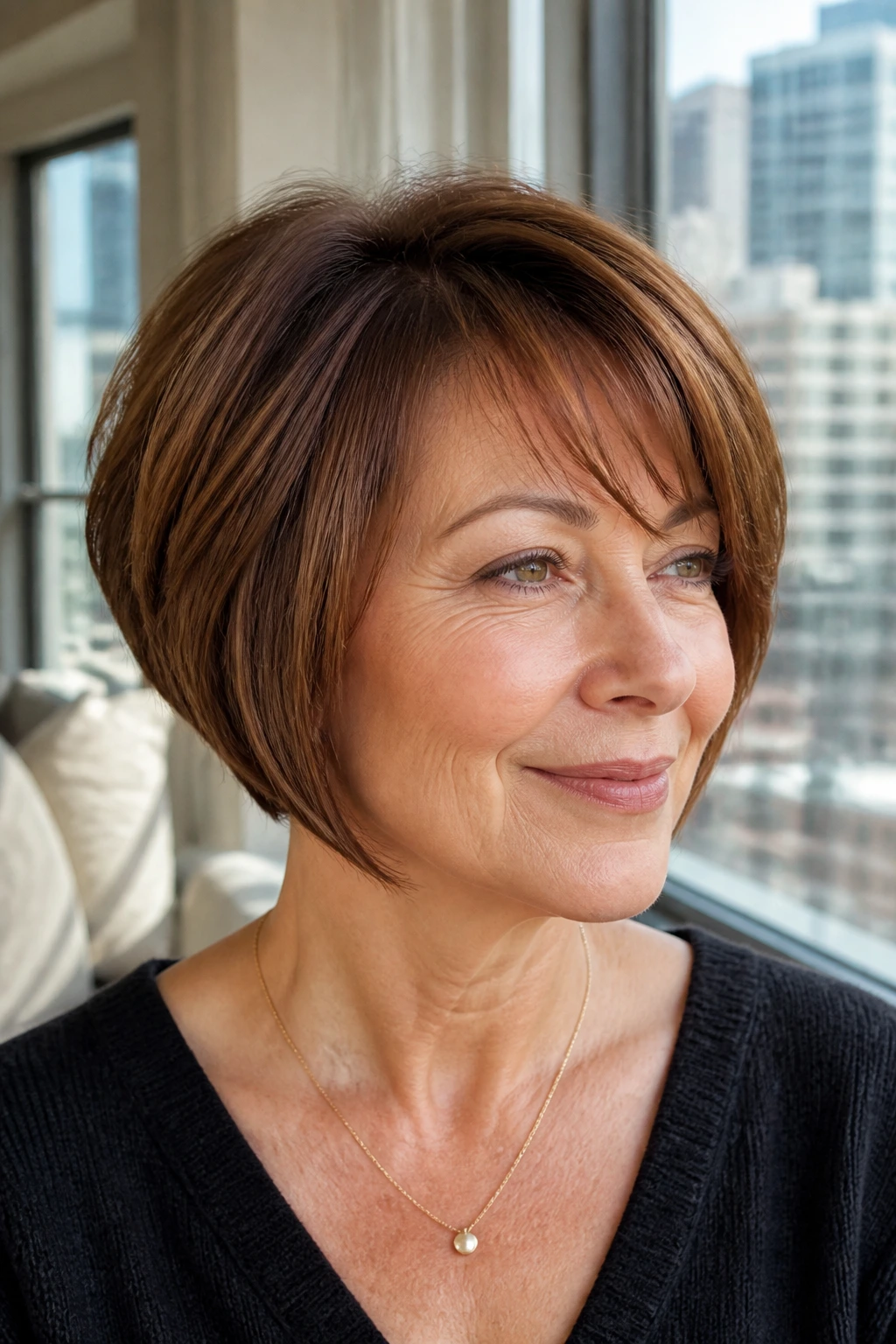
The wedge bob has a shape that does a lot of work for you. The back is stacked so it lifts off the nape, the sides taper toward the jaw, and the side fringe keeps the front from looking too hard. On warm brown hair, that rounded structure gives the cut a tidy outline without making it feel severe.
This is especially useful if your hair has started losing lift at the crown. The wedge shape gives the illusion of more height at the back of the head, and the side fringe softens the profile from the front. It can look a little retro, sure, but only in the sense that it actually has a shape you can see.
A good wedge bob should never look helmet-like. If the crown is too stacked or the side fringe is too thick, it gets heavy fast. Keep the fringe light and let the color sit a shade warmer around the face, and the whole haircut reads smoother.
15. Mushroom Brunette Midi Cut with Airy Bangs
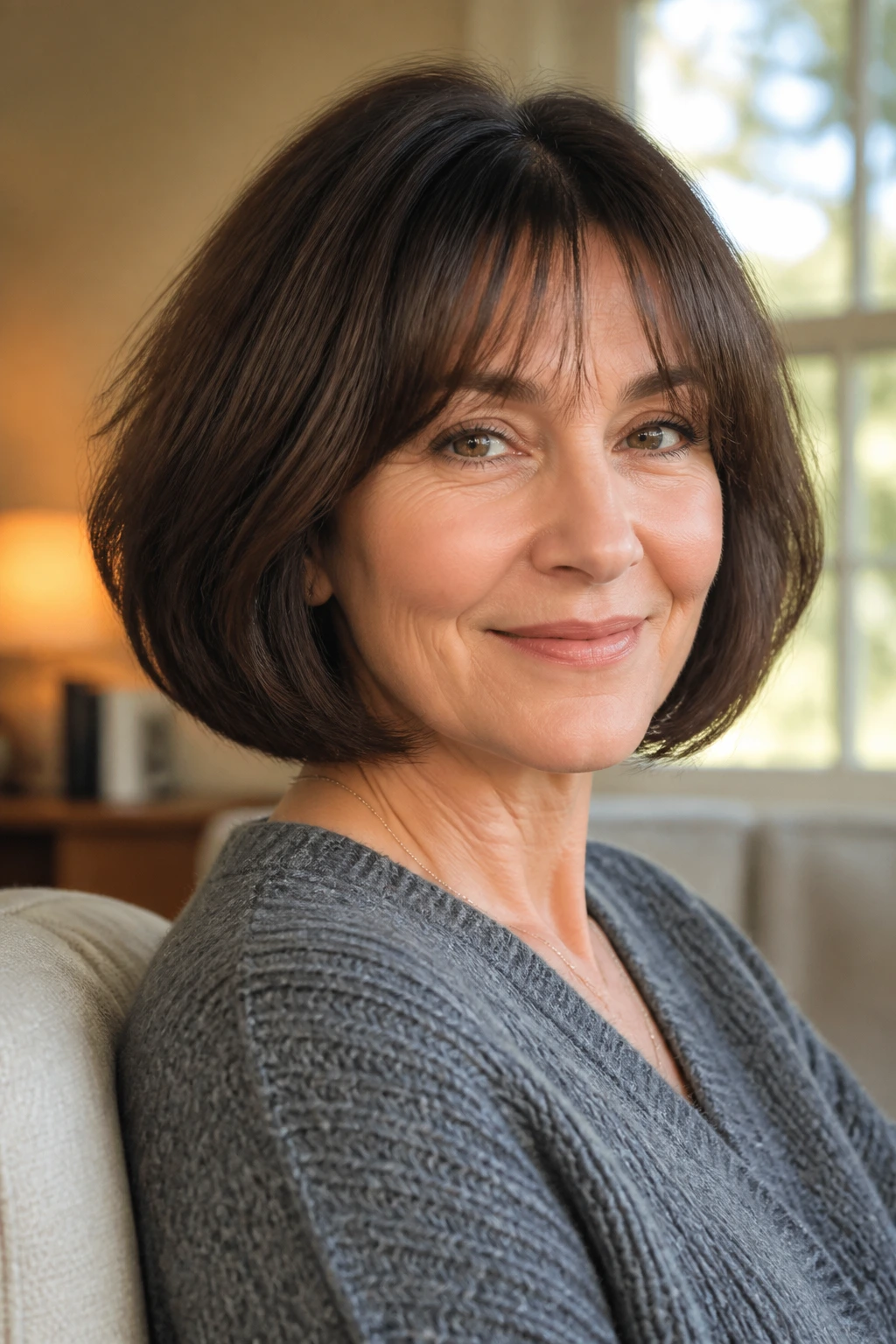
A mushroom midi cut sounds like it might be severe. It isn’t, if it’s cut well. The shape is rounded and slightly tucked in at the ends, but the bangs are kept airy, which stops the style from looking like one solid cap of hair. On brunette hair, that contrast between structure and air is what saves it.
This is a good shape for women with thick hair who want control without losing all their movement. The rounded outline contains the volume, while the airy bangs lighten the front. If your hair tends to spread out at the sides, this cut brings it back in.
The trick is not to let the fringe get too dense. Airy bangs should look see-through enough that you can still see some forehead behind them. That small bit of transparency makes the haircut feel modern and friendly instead of stiff.
16. Toffee Brown Long Layers with Sweeping Fringe
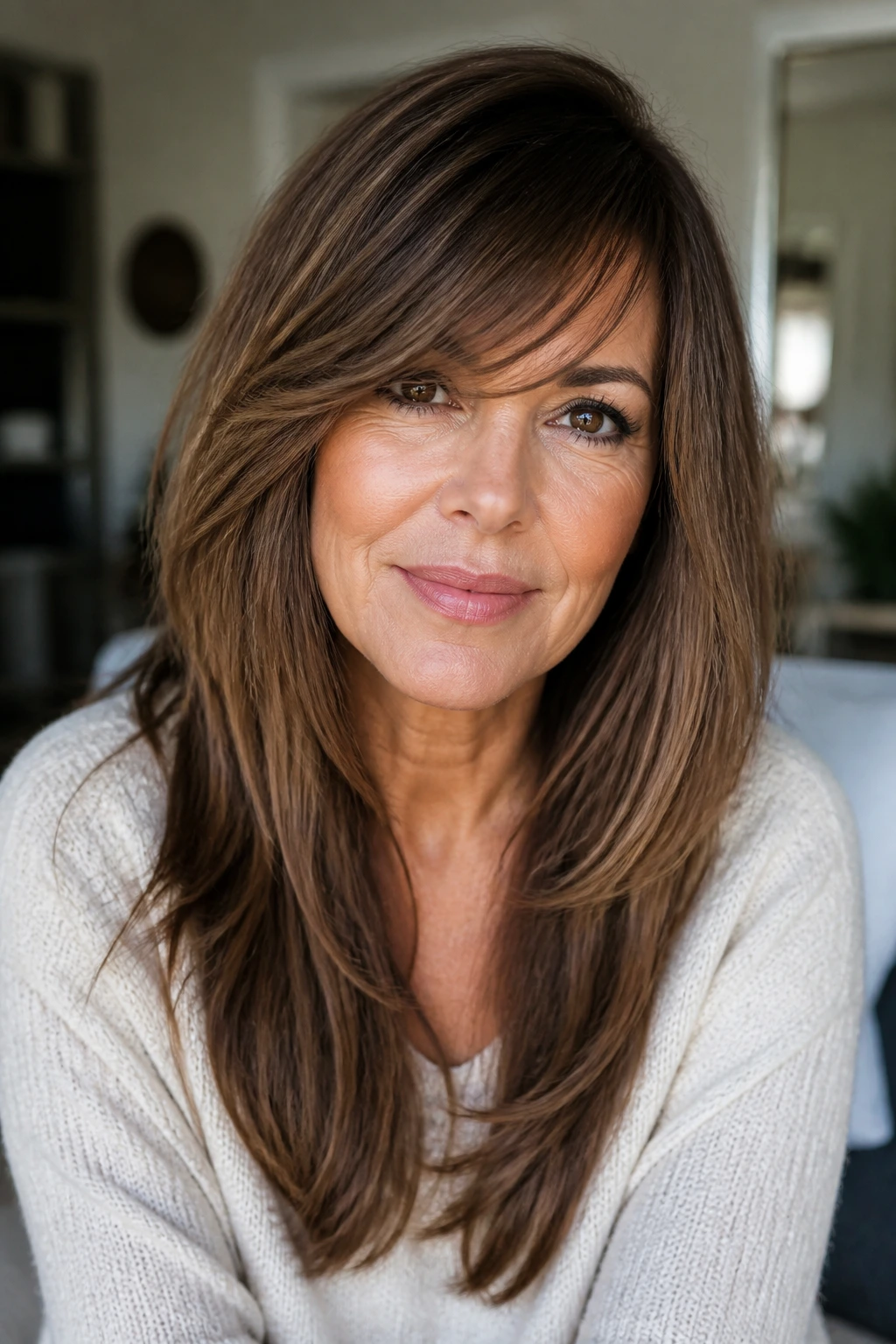
Long hair can get tired-looking when it sits in one block, and that is where sweeping fringe earns its place. A toffee brown base with long layers keeps the length, but the fringe travels diagonally across the face so the front feels shaped instead of heavy. It’s a useful option if you are not ready to go shorter.
Why the length matters
The longer the hair, the more the fringe has to do. A sweeping bang can pull focus back toward the eyes and cheekbones while letting the rest of the length stay loose. It also gives you a graceful grow-out, which matters if you don’t want your haircut to demand constant salon visits.
Toffee brown works well because it has warmth without going brassy. A few lighter threads around the front can keep the long layers from looking flat. Wear it smooth, wear it wavy, wear it in a loose braid with the fringe out front—this is a forgiving shape with a soft face frame.
17. Auburn-Brown Curly Bob with Curved Bangs
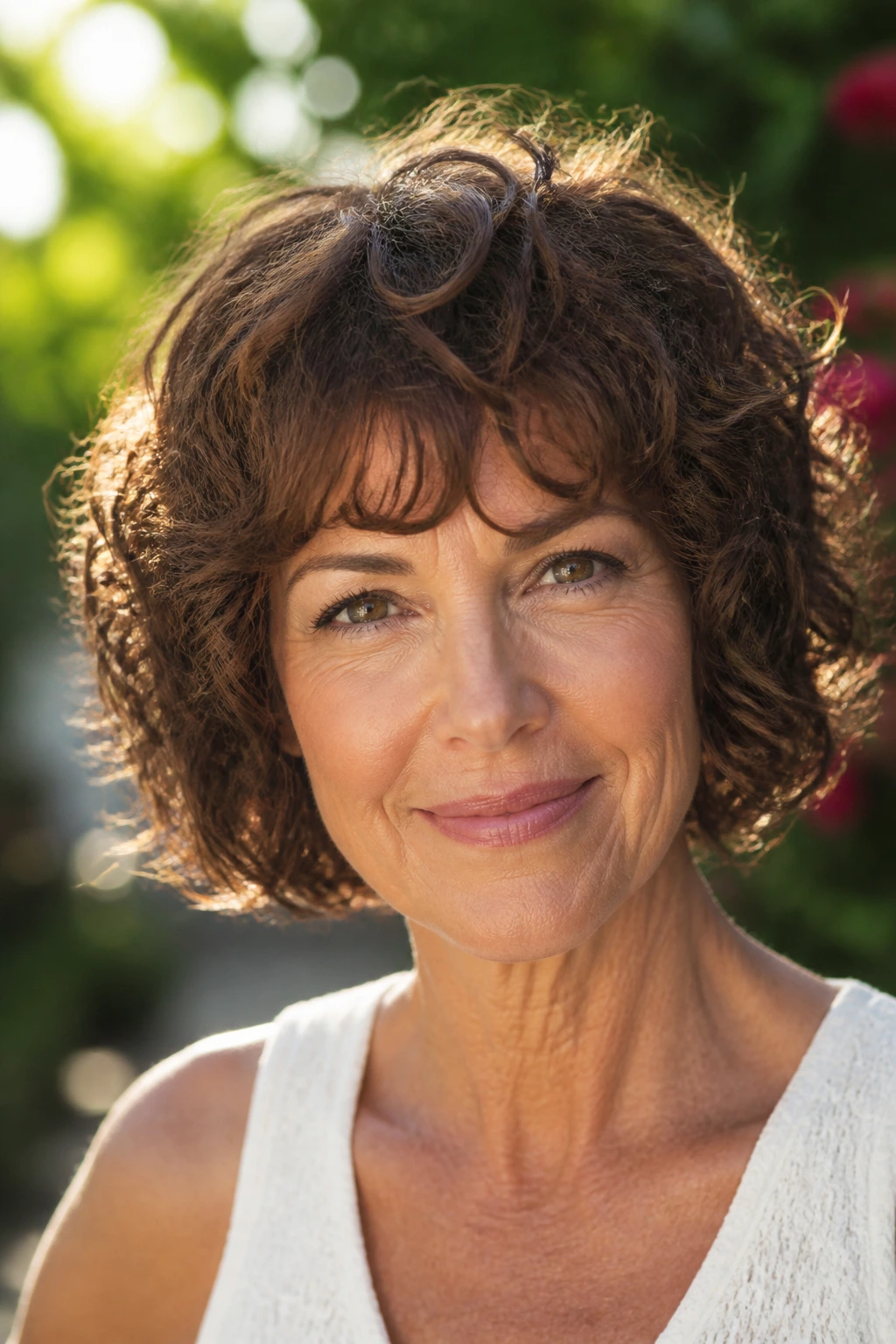
Curly bangs only look difficult when they’re cut like straight bangs. On an auburn-brown curly bob, the fringe should curve with the curl pattern and sit a little longer than you’d expect in the chair. Auburn-brown adds a touch of warmth that makes the curl pattern show up more clearly, especially around the face.
This cut is good for women who want texture to stay visible instead of polished away. The curved fringe follows the arc of the curls, so you don’t end up with a blunt band that fights the rest of the style. If your curls are springy, ask for the fringe to be shaped dry and adjusted after it settles.
A curl-specific fringe can make the whole haircut look younger in the best sense of the word—not because of age, but because it reads alive. That movement matters. The front should bounce, not sit there.
18. Dark Mocha Midi with Bottleneck Bangs
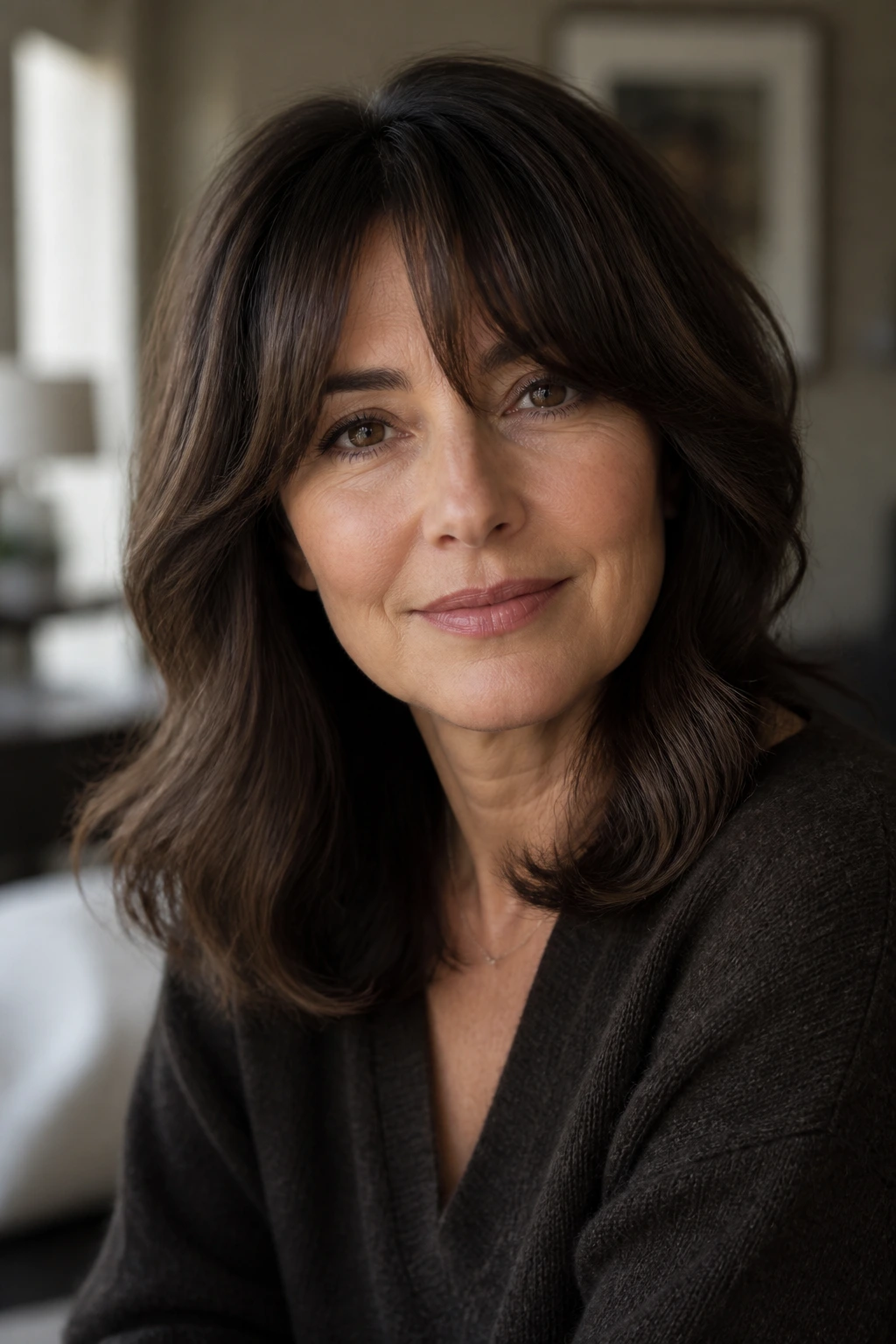
Bottleneck bangs are one of the smartest fringe shapes around, and they deserve more credit. The center starts shorter, then the sides open out longer toward the cheekbones, so the bang feels narrow where it needs lift and wider where it needs softness. On a dark mocha midi, that shape gives the face a gentle frame without swallowing it.
What makes bottleneck bangs so useful is the grow-out. They do not turn weird as fast as a blunt fringe, and they are kinder to women who don’t want to trim bangs every two weeks. If you wear glasses, they sit in a cleaner zone than a heavy straight bang, which avoids the constant frame battle.
Why they’re forgiving
They suit a broad forehead, a round face, or any haircut that needs a little more structure in front without going full curtain bang. You can blow them back, brush them aside, or wear them forward. That flexibility is the whole point.
19. Brunette Soft Pixie Bob with Long Fringe
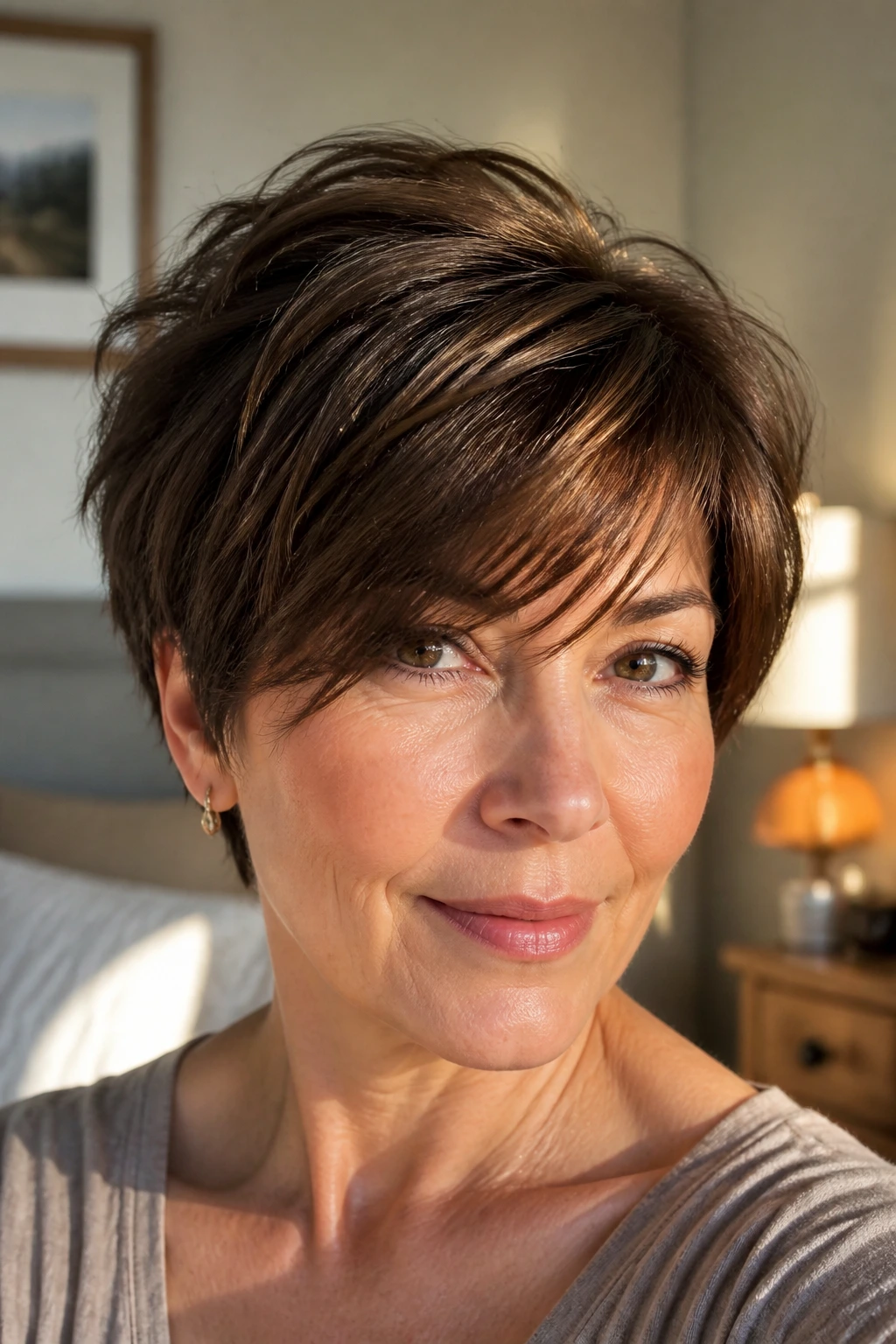
A pixie bob gives you more softness than a strict crop and more lift than a long bob, which is exactly why it works so well for older women who want a lighter silhouette. Keep the fringe longer and the sides slightly tapered, and the shape stays open around the face instead of pinched.
This is a strong choice if your hair is finer than it used to be. The shorter back gives support, the longer fringe gives movement, and the brunette color gives the shape enough contrast to show up. It also styles quickly. A pea-sized amount of cream through the fringe and a quick finger-dry can be enough.
If you like short hair but still want your cut to feel soft around the temples and eyes, this is a nice middle ground. It is tidy without looking hard.
20. Espresso Long Bob with U-Shaped Fringe
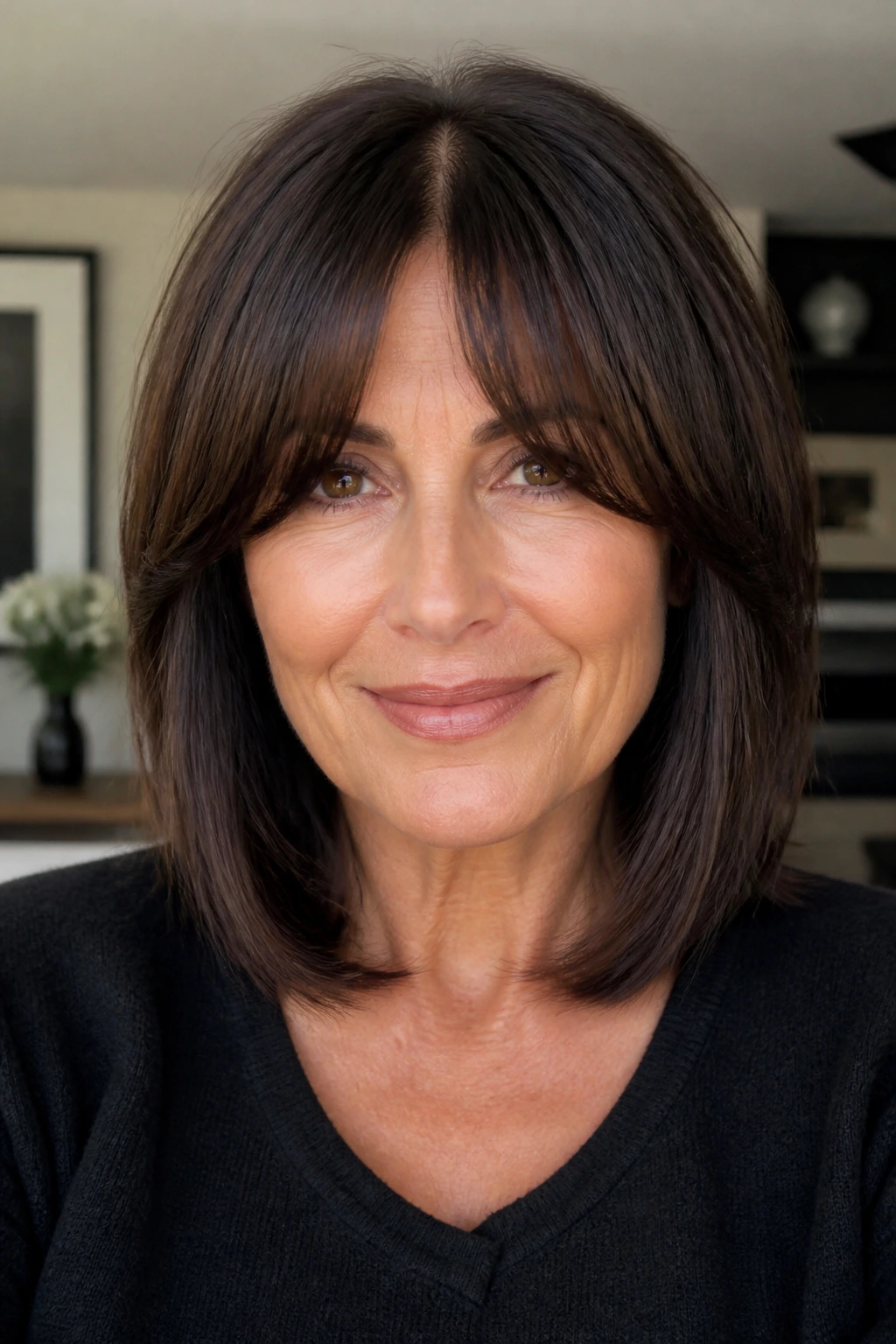
A U-shaped fringe is a little like curtain bangs’ quieter cousin. The center sits slightly shorter, the temples stay longer, and the overall line forms a gentle curve instead of a hard straight edge. On an espresso long bob, that shape keeps the face from looking closed off while still giving the bangs some presence.
This is one of the best options if you want a low-drama cut that still reads finished. The long bob gives enough length for a ponytail or twist, and the fringe adds shape without demanding a perfect blowout every morning. If your hair is straight or slightly wavy, it behaves well. If it’s thicker, ask for the bang section to be thinned carefully so it doesn’t puff out.
I like this one because it grows out gracefully. The fringe can slide into the sides, the bob can keep its line for weeks, and the whole haircut stays useful long after the salon visit.
What to Tell Your Stylist Before the Shears Come Out
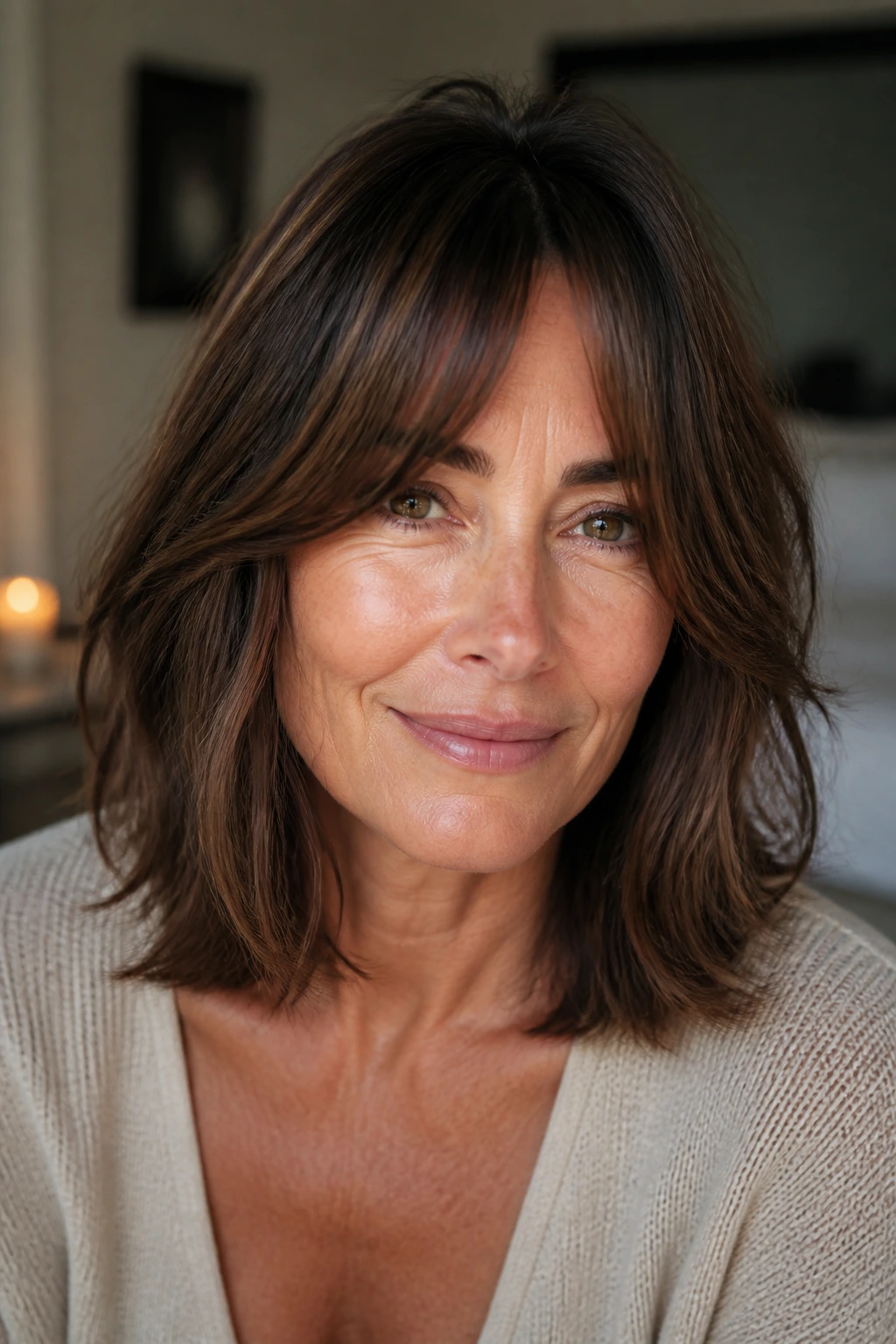
Bring more than one photo. One picture should show the shape you like; the other should show the fringe length you actually want. Those are not always the same thing, and if you only show a single reference, you can end up with a bang line that looks right in a photo but wrong on your face.
Say how your hair behaves at the front. Mention cowlicks, a deep side part, a widow’s peak, or bangs that split after lunch because your forehead gets oily. That information changes the cut more than most people realize. A stylist who knows where your hair wants to move can place the fringe half an inch differently and save you daily frustration.
If you wear glasses, say so. If you air-dry, say that too. And if you are nervous, ask for the fringe to start longer than the final target. You can always take more off after the hair dries.
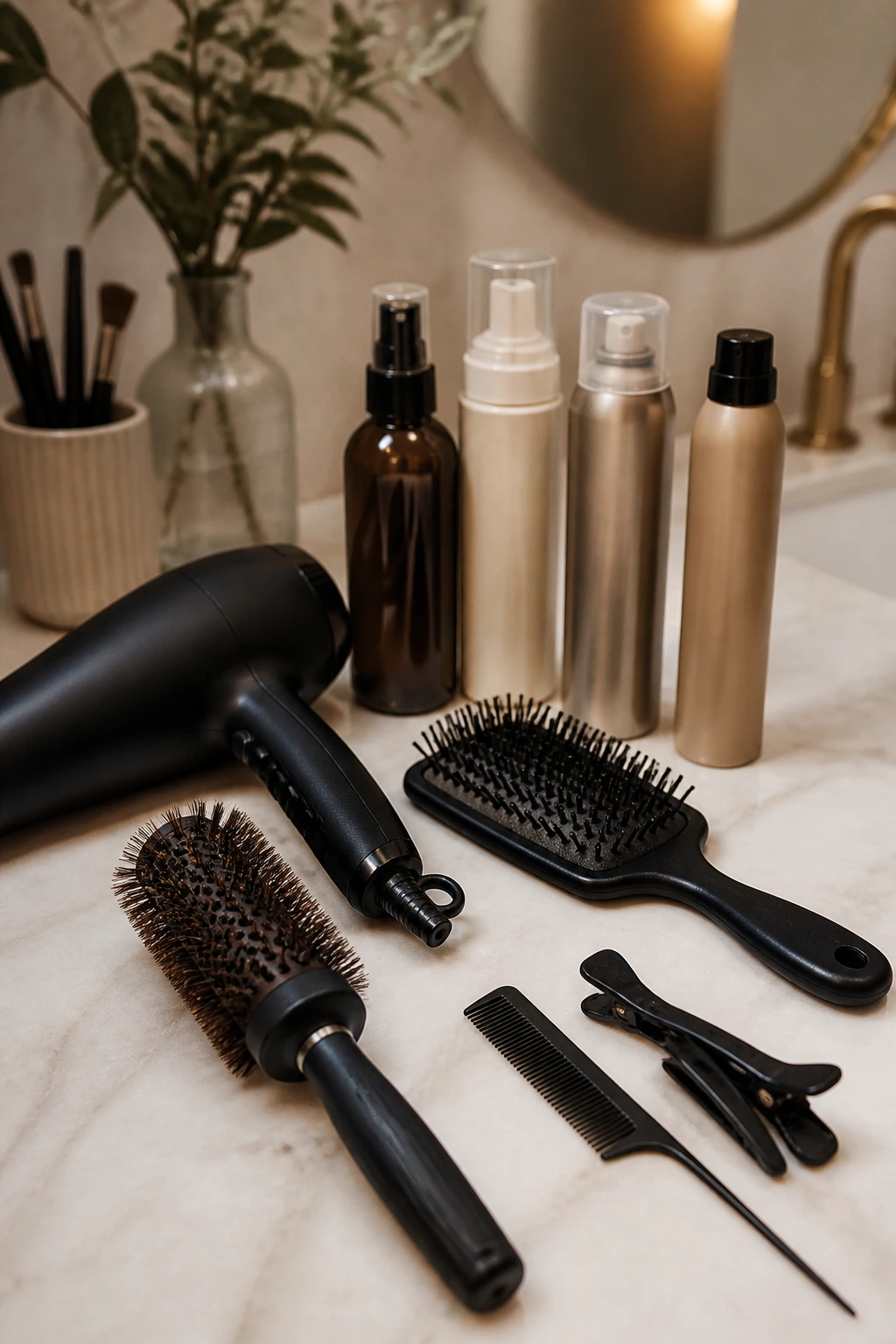
Essential Tools for Styling These Cuts at Home
-
Blow dryer with a concentrator nozzle: This gives you control over the fringe and keeps the front from blowing everywhere.
-
Round brush, 1 to 1.5 inches: Best for curtain bangs, bobs, and lobs that need a little bend under the face.
-
Vent brush or paddle brush: Useful for quick drying on pixies, shags, and air-dried styles.
-
Tail comb: Handy for clean parting, sectioning the fringe, and lifting roots at the front.
-
Sectioning clips: Keep the rest of the hair out of the way while you dry the bang area first.
-
Heat protectant: If you blow-dry your fringe every day, use this. The front hair is the first to look fried.
-
Dry shampoo: Not optional if your bangs touch your forehead. It keeps them from looking slick by midday.
-
Lightweight mousse or root lift spray: Useful for fine hair that needs support at the crown.
-
Texturizing spray: Best for shags, wispy bangs, and piecey cuts that need separation.
Smart Brunette Shade and Fringe Choices for Older Women
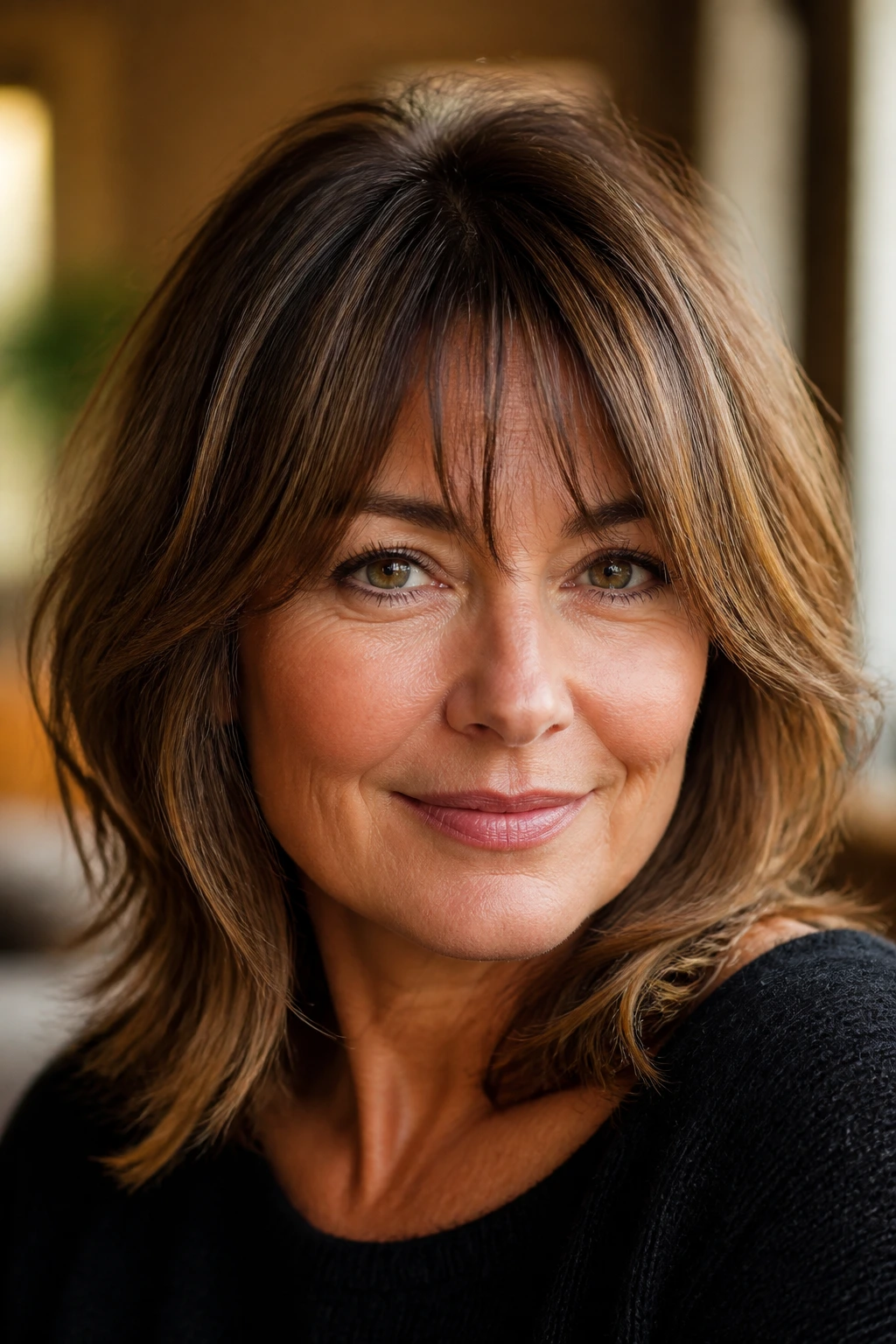
Brown hair is not one color, and that matters more than people think. A flat brown can make a fringe look heavy, while a brunette with lowlights, glossy ends, or a softer root gives the front shape and depth. Chestnut warms the skin, mocha keeps the cut soft, espresso adds contrast, and toffee or caramel around the face can lighten the whole effect without turning the hair blonde.
Shade before shine
If your hair has a lot of silver coming in, a low-contrast brunette often looks better than a harsh dark box color. A softer root shadow and a few face-framing lighter pieces make grow-out less obvious. That does not mean the color should be noisy. It just needs enough variation so the fringe line has somewhere to disappear and reappear.
Fringe density matters
Fine hair usually looks better with a lighter, see-through fringe. Thick hair can hold a fuller bang, but it still needs point cutting or softening at the ends so it doesn’t sit like a shelf. If you have glasses, keep the fringe a little higher or a little longer depending on where your frames sit. The wrong bang length and the right pair of glasses can fight each other all day.
How to Wear These Styles With Glasses, Earrings, and Everyday Clothes
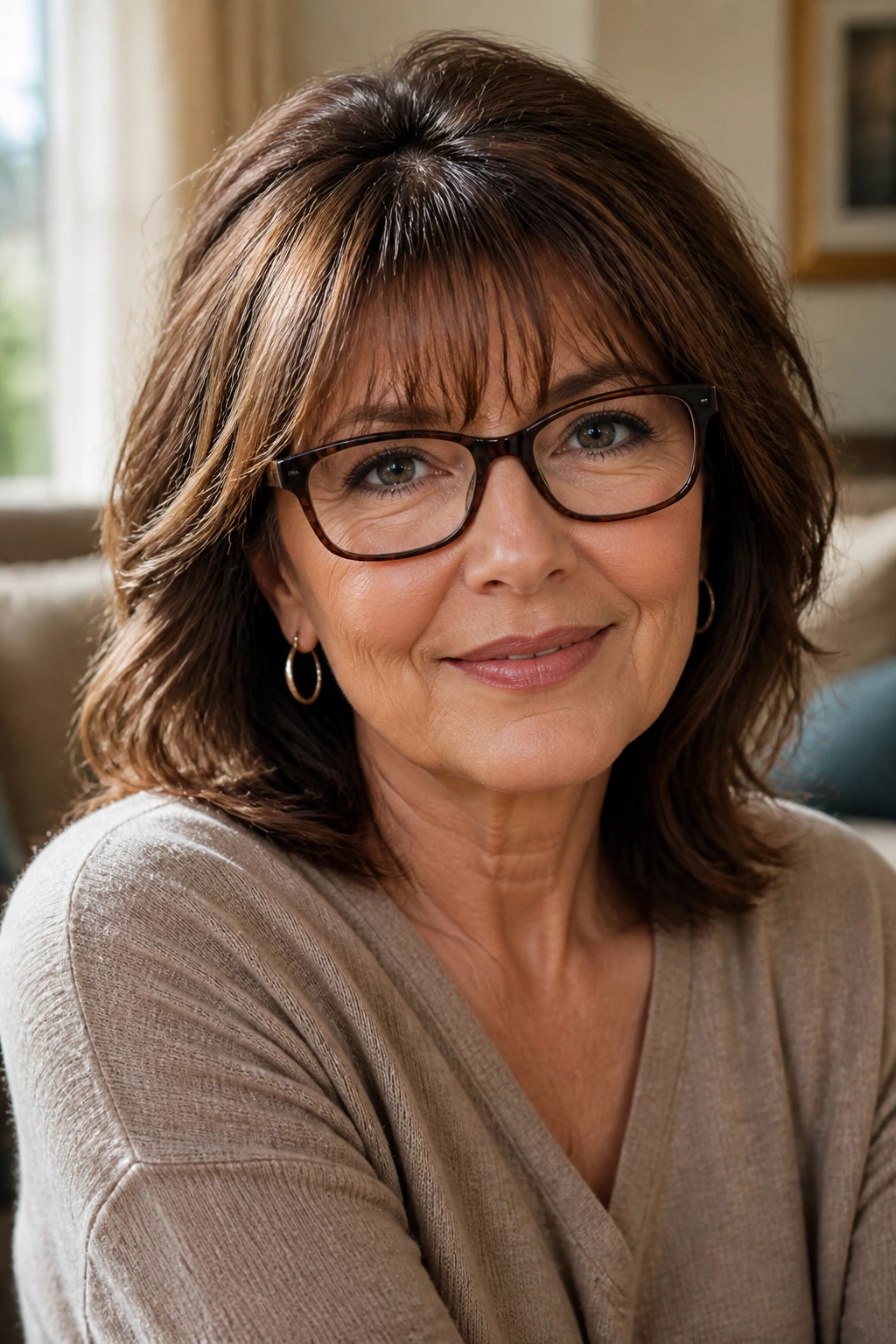
Glasses: The safest bang lengths usually land above the top of the frame or break softly at the brows. Curtain bangs, bottleneck bangs, and side-swept fringe keep the eye area open, which matters when your frames already create a strong line.
Earrings: Shorter cuts like pixies, wedge bobs, and soft pixie bobs give hoop earrings room to show. Longer lobs and layered midi cuts balance heavier studs or drop earrings better because they create a little vertical line beside the face.
Necklines: A blunt bob likes a clean neckline—crew necks, simple collars, and sharp lapels. Softer bangs with long layers can handle open necklines and V-necks because the hair itself brings enough shape.
Styling Mood: Sleek gives you structure. Rough-dried gives you movement. A cut with bangs can shift between both if the length is right, and that flexibility is one of the reasons these styles are so useful.
Small Styling Moves That Make the Hair Look Fuller
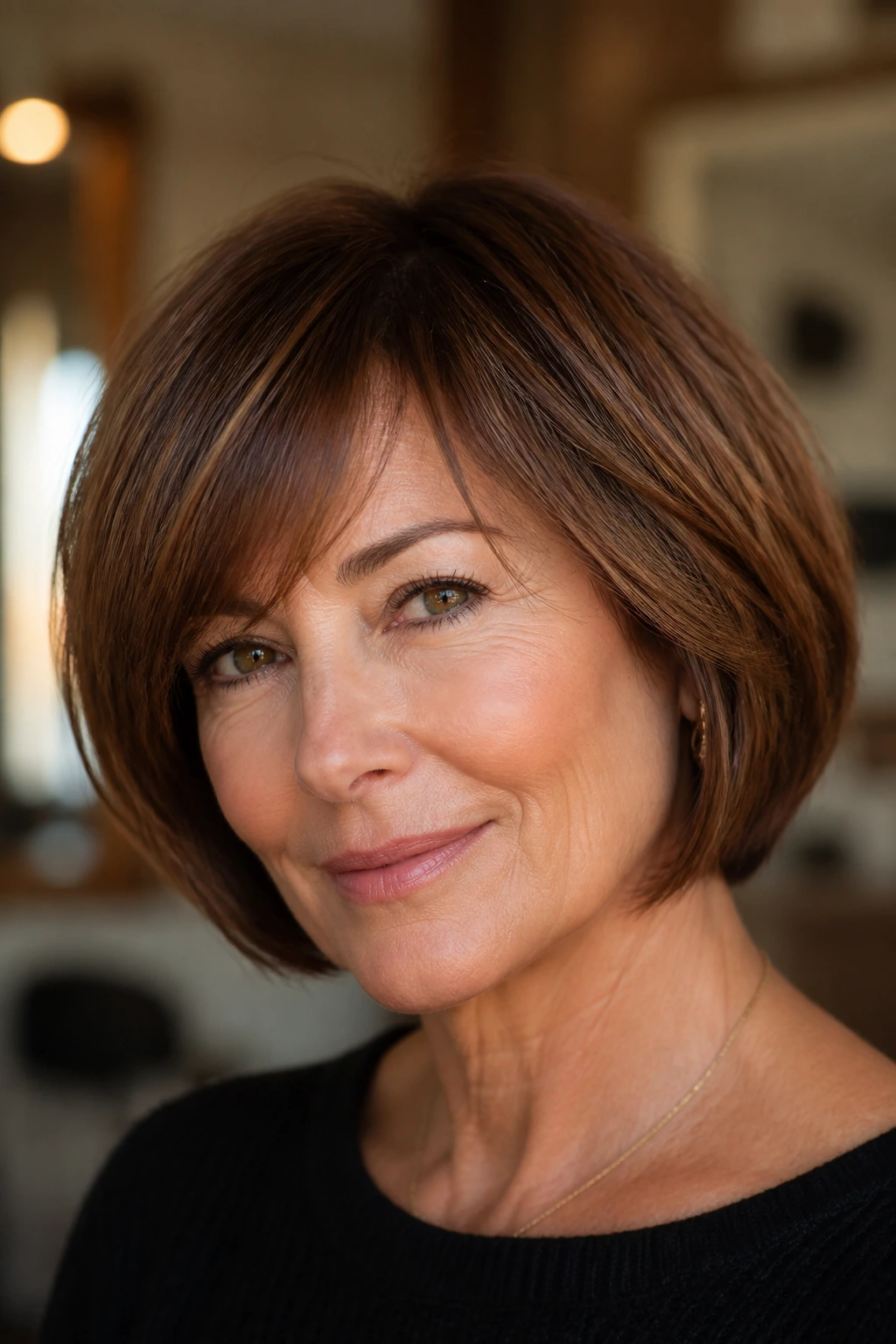
Root Lift: Dry the front first, not last. If the fringe is already flat and warm by the time you get to it, you’re fighting a losing battle. Aim the dryer at the roots, lift with your fingers, and use a cool shot to lock the bend.
Texture: A pea-sized amount of mousse at the roots can do more than a heavy cream from mid-lengths to ends. The lighter the front, the less likely it is to separate into oily strands by noon.
Face-Framing: A few lighter pieces around the temples can change a brunette haircut more than another inch of length. The eye reads brightness first, then shape.
Make-It-Yours: If your hair part is stubborn, cut the fringe to support that part instead of trying to erase it. Fighting your natural pattern tends to age the cut faster, and yes, that sounds dramatic because it is.
How to Keep Brunette Hair with Bangs for Older Women Fresh Between Trims
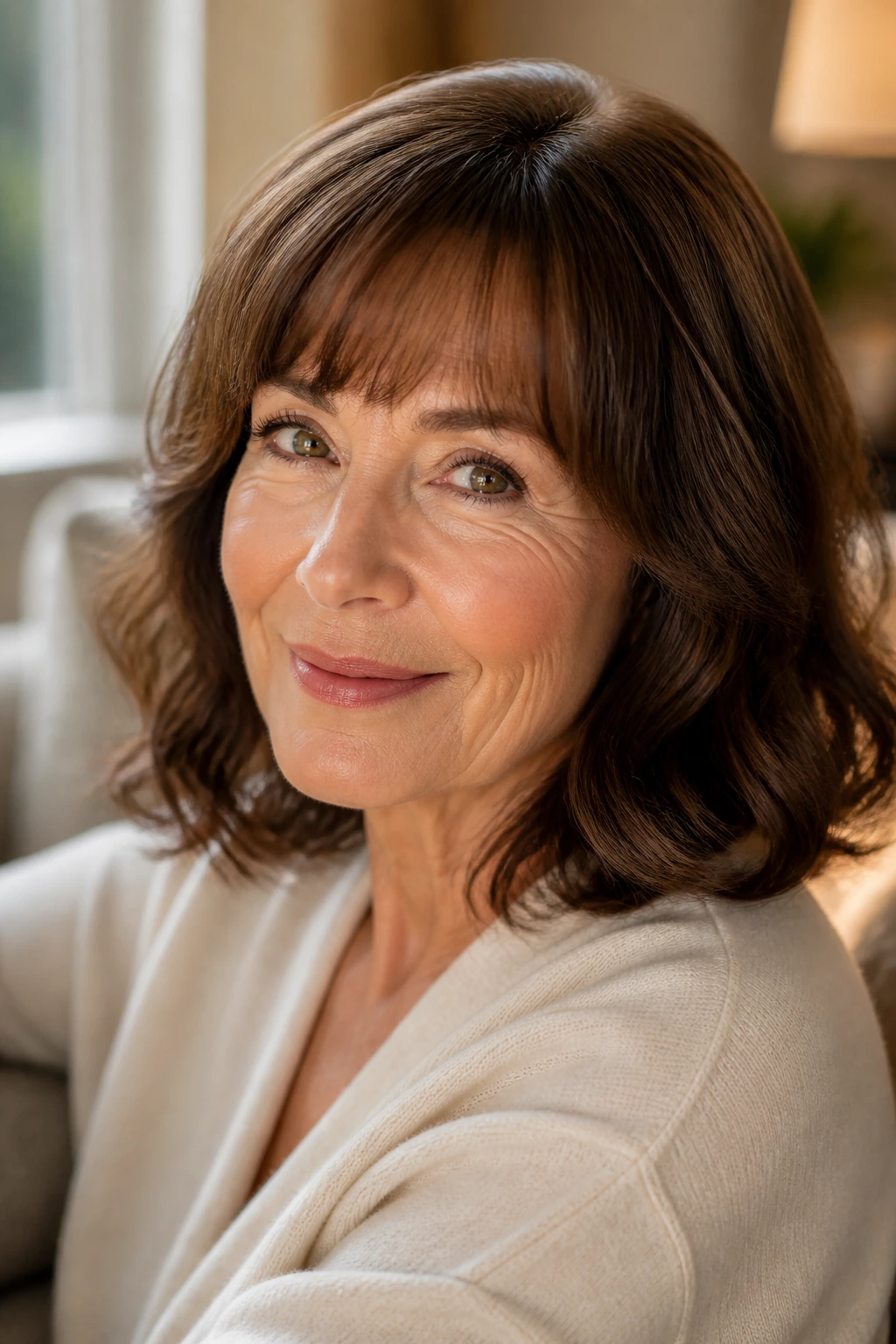
Bangs need a different maintenance rhythm than the rest of the haircut. The fringe area picks up forehead oil, makeup, and humidity faster, so it usually needs a little more care every morning than the back of the head. A quick rinse of the fringe in the sink, or even just a damp brush-through and a round-brush dry, can reset the shape without washing the whole head.
For most bang styles, plan on trimming the fringe every 3 to 4 weeks. Short crops and blunt fringe may need cleaner touch-ups sooner. Lobs, shags, and curtain bangs can stretch longer—6 to 10 weeks for the full cut if the outline still sits well. If your brunette color is salon-applied and starts to look dull or brassy, a gloss or toner every 4 to 6 weeks can keep the shade from going muddy.
At night, keep bangs from getting mashed into odd angles. A loose clip, a soft pin at the sides, or a silk pillowcase helps more than most people expect. And if your fringe separates by midday, don’t drown it in oil. Dry shampoo at the roots and a tiny pass with a blow dryer will usually fix the problem faster.
Common Mistakes That Make Bangs Feel Fussy
-
Cutting the fringe too short: The front jumps up, shows too much forehead, and grows out awkwardly. Ask for the first cut to land longer than you think, then refine after drying.
-
Making the brown too flat: One dark block can look heavy, especially around the face. Add lowlights, a soft gloss, or a few lighter pieces near the temples.
-
Ignoring the cowlick: If the front hair naturally splits, a blunt bang will keep fighting it. Choose a side-swept, curtain, or bottleneck shape instead.
-
Using heavy oil on the fringe: The front starts to string out and stick to the forehead by lunch. Keep richer products off the bang area and use them only on the ends.
-
Leaving the cut too long between bang trims: Even a good fringe can lose its shape once it reaches the lashes and starts hanging into the eyes. Trim the front before the shape disappears.
-
Letting the crown go flat: Bangs and flat roots are a bad pairing. A bit of lift at the scalp makes the whole haircut look cleaner.
Variations and Tweaks Worth Trying
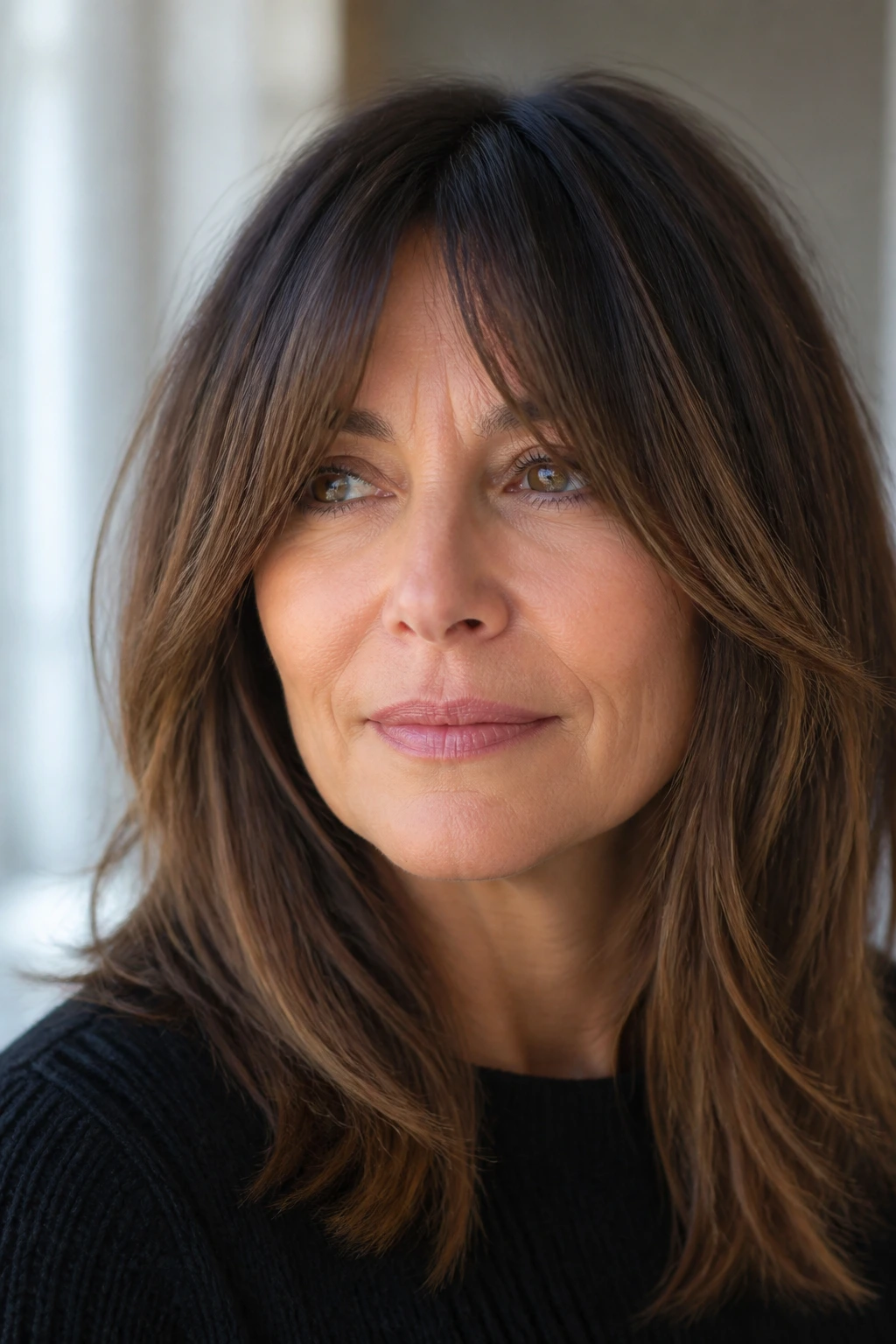
Glasses-Friendly Sweep: Keep the front pieces long enough to brush just above the frames, then angle them softly toward the cheekbones. This is a good choice if you wear glasses all day and don’t want to keep pushing hair out of the way.
Gray-Blending Mocha: Use a mocha base with soft lowlights and face-framing brightness rather than a single dark color. The grow-out looks quieter, and the fringe doesn’t create a hard line against silver strands.
Air-Dry Curtain: Ask for longer curtain bangs and lighter internal layers, then let the front dry with a little cream and finger-shaping. This suits women who prefer not to blow-dry every morning.
Curl-Respecting Fringe: If your hair is curly or wavy, cut the fringe dry and longer, then shape it again after it settles. The line will sit better, and you will not spend the next month regretting a bang that was chopped too short.
Short and Soft Crop: If you like short hair but fear a severe finish, keep the sides tapered and the fringe feathered. You still get the lift of a crop without the hard edge of a tight barber-style cut.
Frequently Asked Questions
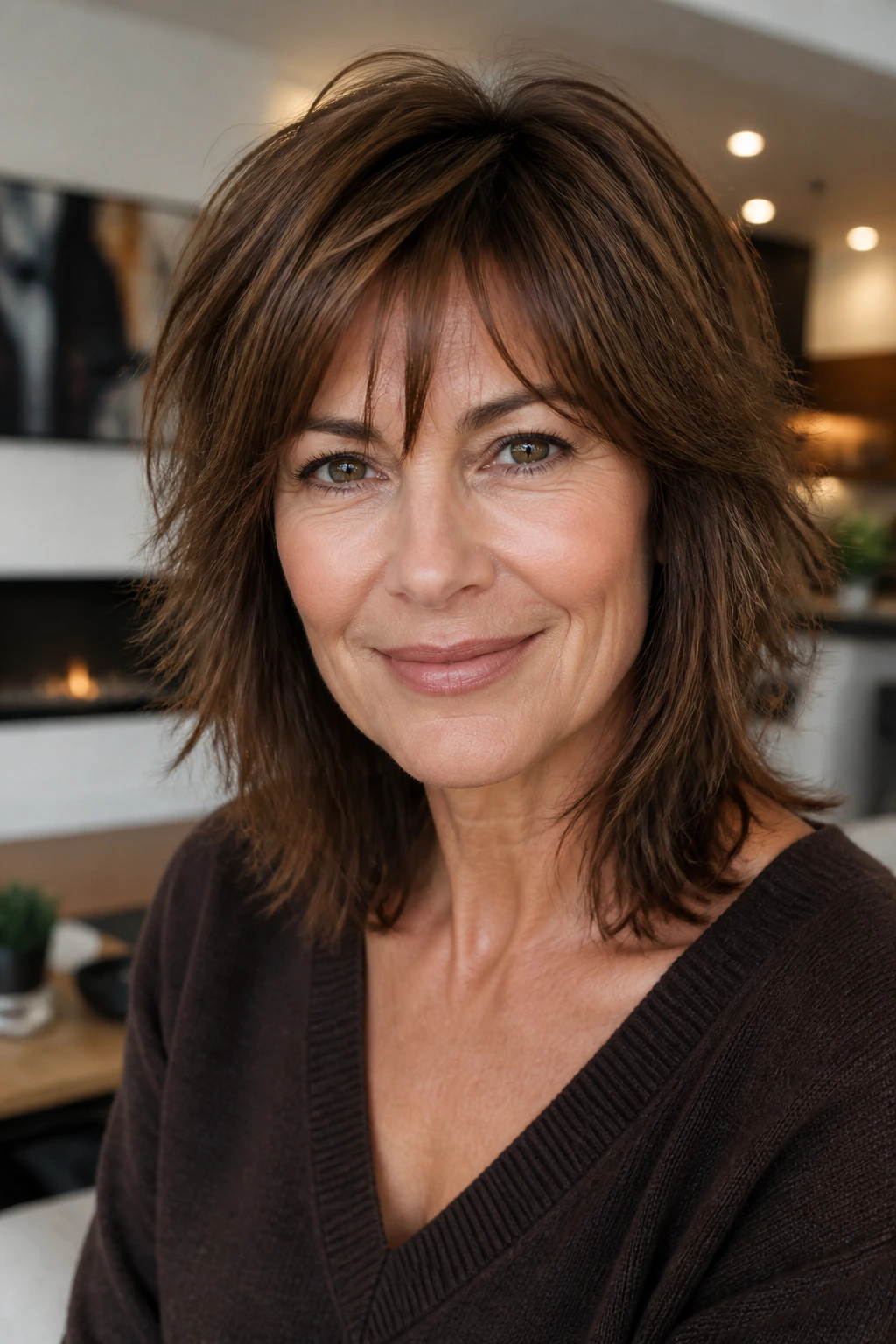
Are bangs a bad idea if my hair is thinning?
Not if you choose the right kind. A wispy, curtain, or bottleneck fringe often works better than a dense blunt bang because it does not need a lot of hair to look balanced.
Which brunette shade hides gray the softest?
A medium brunette with lowlights and a root shadow usually grows out more quietly than a single deep brown. Chestnut, mocha, and toffee tones are especially good when you want the gray to blend instead of pop.
Can I wear bangs with glasses?
Yes, but the length matters. Bangs that stop too low can compete with the frame, so side-swept, curtain, or bottleneck shapes usually sit better around glasses.
How often do bangs need trimming?
Most fringes need a touch-up every 3 to 4 weeks. Very short bangs need faster maintenance, while longer curtain styles can stretch a bit farther.
What if my bangs split because of a cowlick?
Do not fight the cowlick with a thick straight fringe. Ask for a side sweep, a longer curtain shape, or a fringe that is cut to move with the part.
Do these cuts work on curly hair?
Yes, but the fringe needs to be cut dry or at least shaped with the curl pattern in mind. Curly bangs should usually start longer than straight bangs because they spring up as they dry.
What’s the lowest-maintenance option here?
A shoulder-length lob with curtain or bottleneck bangs is one of the easiest. It grows out cleanly, styles quickly, and doesn’t need the constant line maintenance of a blunt fringe or micro bang.
Should I choose layers or a blunt edge?
If your hair is thick, layers usually help the cut move. If your hair is very straight and full, a blunt edge can look strong, but it needs regular trims to stay crisp.
How do I stop bangs from getting greasy so fast?
Keep heavier serums away from the front and use dry shampoo early, before the fringe looks oily. A quick blow-dry at the roots after washing also helps the front stay lifted longer.
The Shape That Keeps Working
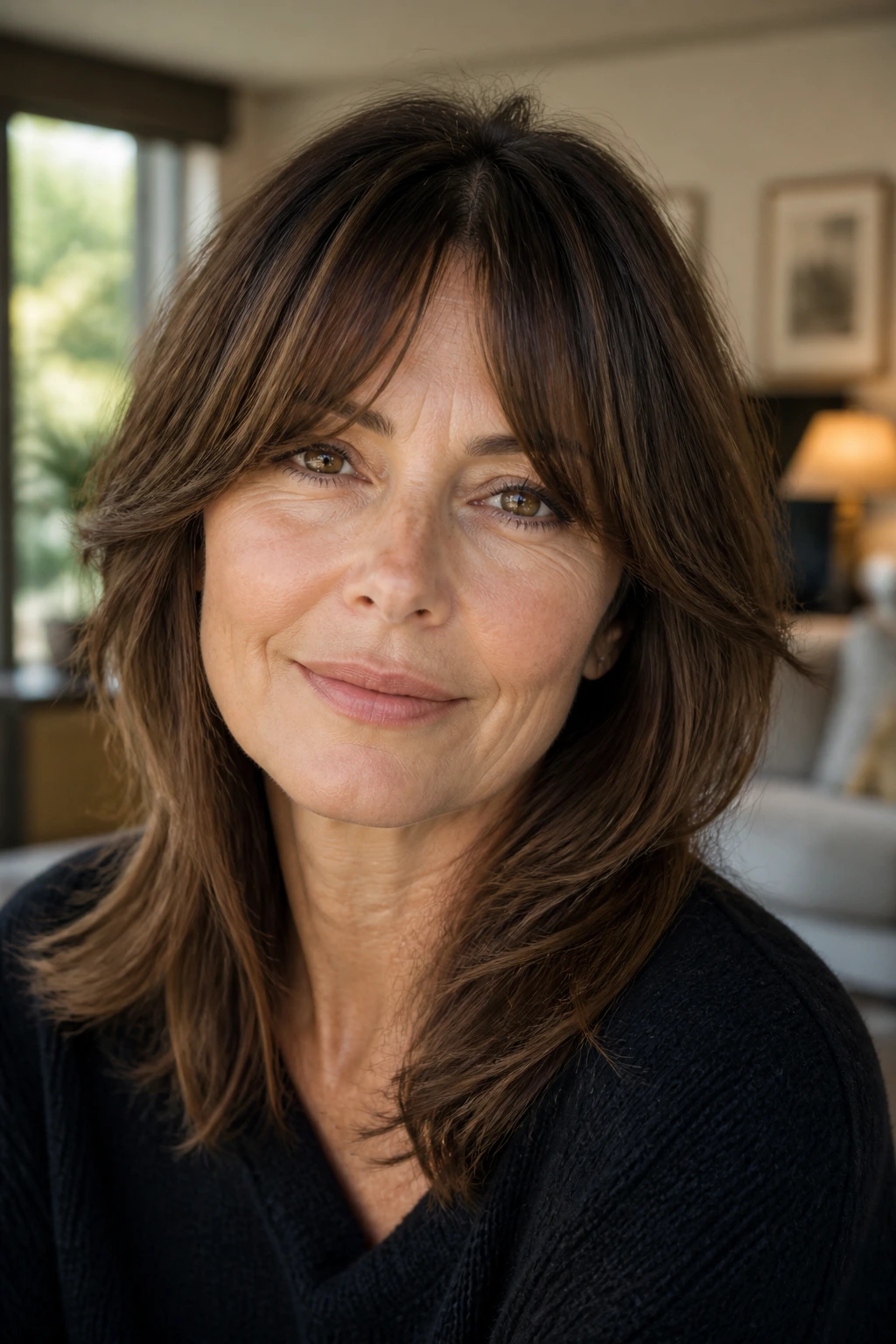
The best brunette cuts with bangs do not ask hair to be something it isn’t. They borrow from the way your hair already falls, then clean up the line around the face so the whole look feels lighter, brighter, and easier to wear. That’s why the same idea can show up as a lob, a bob, a pixie, a shag, or a long layered cut and still make sense.
If you’re sitting on the fence, start with the shape that gives you the most room to adjust later. Curtain bangs, bottleneck bangs, and soft side fringes are especially good at that. They grow out without drama, and they leave you enough styling room to decide what you want next.
