



Long wispy haircuts solve a problem that heavy layers never quite fix: they keep the length, but they take the weight out of the ends. If your hair hangs like a solid curtain, if it collapses by lunch, or if the bottom half feels like it belongs to a different head, this is the shape that starts to make sense. The movement comes from the cut, not from spending twenty minutes trying to fake movement with a curling iron.
What makes wispy hair interesting is that it can look soft without looking unfinished. That balance is touchy. Too little layering and the hair still feels flat. Too much texturizing and the ends start to look ragged, especially on fine hair or on hair that has been heat-styled hard for years. The good versions keep a clean perimeter and let the lightness happen inside the shape.
And that’s why the word wispy matters here. It isn’t code for “thin everything out.” It means feathered ends, blended face framing, and layers that move when you turn your head. The right long wispy haircut can make thick hair feel breathable, fine hair feel less limp, and wavy hair fall in a cleaner line. The wrong one can look like a haircut that gave up halfway through.
Why These Long Wispy Haircuts Feel Lighter Without Losing Length
-
Movement comes from placement, not from removing everything: The strongest wispy cuts keep a visible outline and place softness around the face, through the mid-lengths, and near the ends, so the hair still reads as long instead of shredded.
-
They stop the “heavy triangle” problem: Long hair often widens at the bottom when it needs internal shaping; wispy layers pull some weight out of the bulk so the shape narrows in a cleaner way.
-
They suit more than one texture: Straight hair gets bend and air, wavy hair gets cleaner shape, and curly hair gets a little more spring at the ends when the cut is done with shrinkage in mind.
-
They grow out with less drama: Because the best versions keep the perimeter soft and the layers blended, the haircut can pass through an awkward grow-out stage without turning into a blunt helmet.
-
They are easier to style in different directions: A center part, side part, blown-out bend, or loose wave can all work because the cut already has built-in movement.
-
They look expensive when they’re not overdone: A wispy cut is at its best when you can still see hair. That sounds obvious. It isn’t. Too many stylists get enthusiastic with thinning shears and forget that shine and density are part of the look.
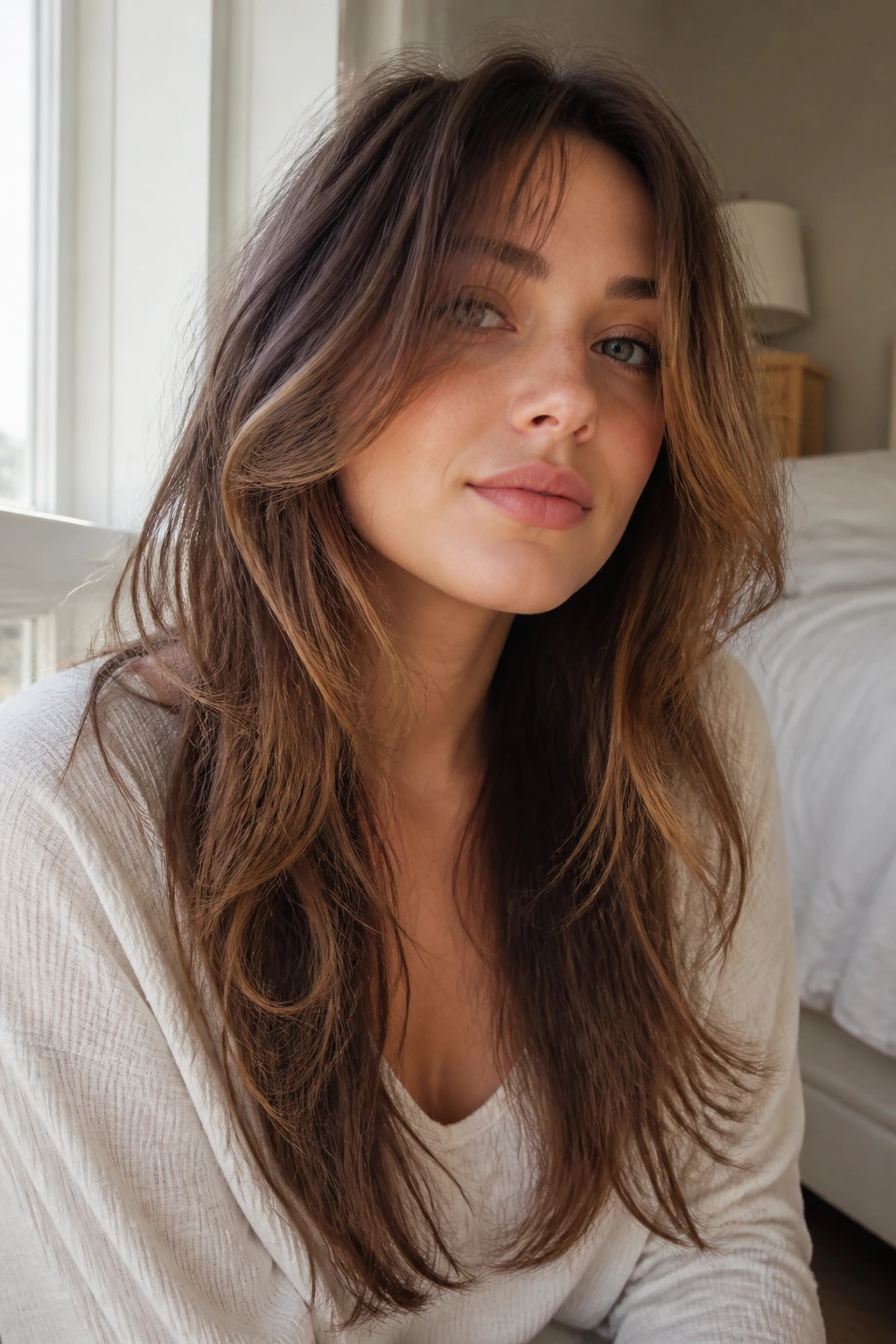
1. Feathered Butterfly Layers
Butterfly layers are the haircut I reach for when someone wants motion around the face but refuses to give up long hair at the back. The shortest pieces usually start around the collarbone or just above it, then drop into longer lengths that keep the ends full. Done well, the cut has that soft “lifted front, long back” shape that looks breezy from every angle.
Why the shape works
The butterfly shape creates two jobs at once. It opens the face, then keeps the lower length intact so the cut still feels dramatic when the hair moves. That split is what stops long hair from sitting like one heavy slab.
Ask for the shortest layer to begin at the collarbone or slightly below it if your hair is fine. If the front starts too high, the cut can lose its edge fast. The sweetest version of this haircut has feathering, not choppiness, and the ends should still look like part of the same hair, not a separate stack of pieces.
2. Long Shag with Curtain Bangs
This is the cut for hair that needs a little attitude. The long shag with curtain bangs keeps the bottom length while cutting in enough broken layers to stop everything from hanging flat. Curtain bangs soften the front, but they also do something practical: they give your style a shape even on days when you barely touch it.
The shag works especially well on medium to thick hair because the layers can be spread out through the crown and sides without making the ends look see-through. If your hair is dense, the movement should come from internal removal and smart layering, not from carving the bottom to pieces. That’s the difference between “lived-in” and “why does my hair look unfinished?”
Wear it with a loose blowout, a few bends from a curling iron, or air-dried texture. The cut changes personality fast, which is half the fun.
3. Soft U-Shape with Wispy Ends
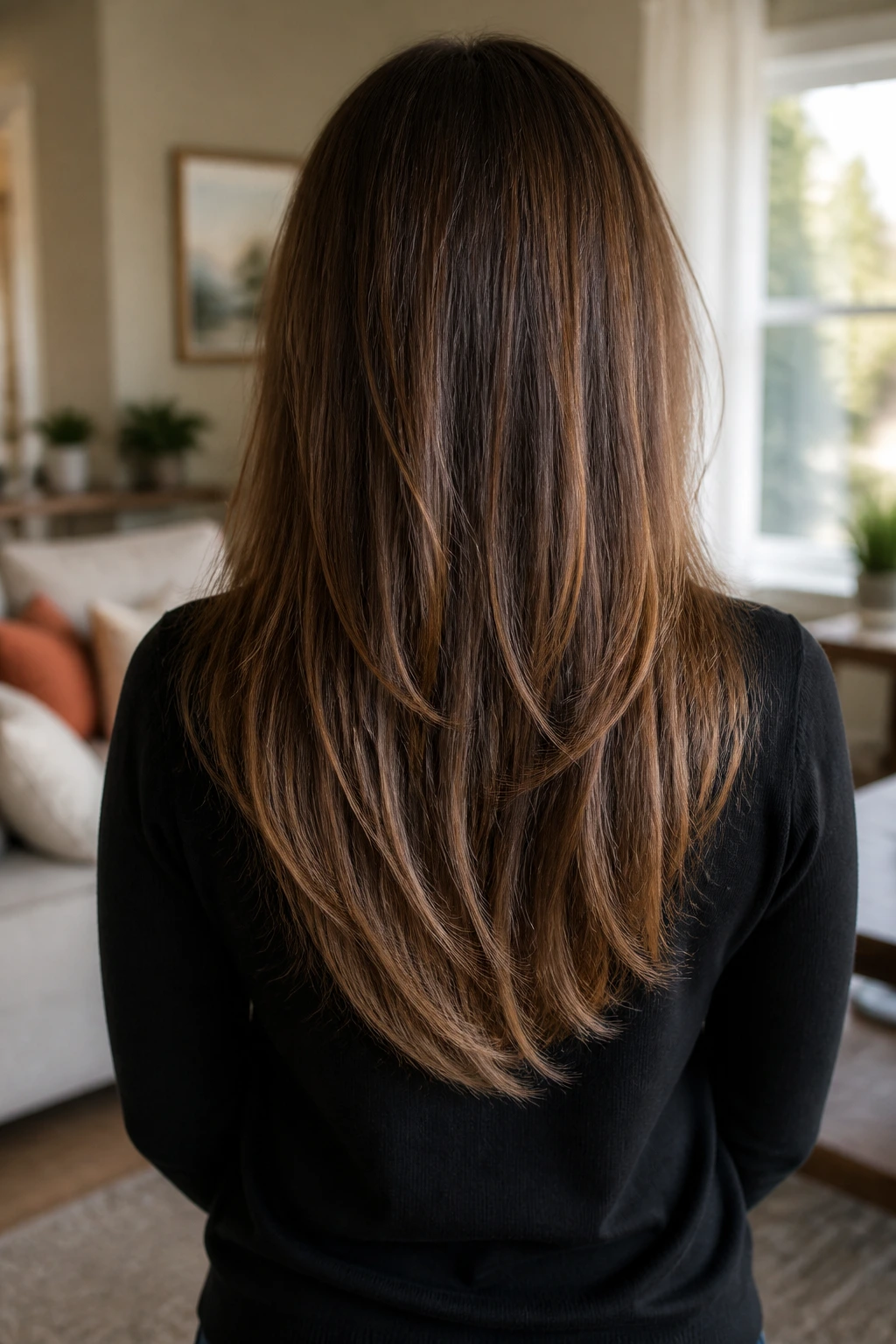
Picture the back view first. The hair drops in a gentle U, not a hard line and not a dramatic point. That shape is one of the easiest ways to keep long hair looking polished while still letting the ends move a little instead of hanging like a straight sheet.
A soft U-shape is especially useful if you like long hair but hate the blunt, boxy look that can happen when the perimeter gets too thick. The curve at the bottom creates a calmer silhouette. Add wispy ends, and the whole cut feels lighter without losing the length that makes long hair worth keeping in the first place.
This one is good for people who wear their hair mostly down. It does not need a lot of styling to read correctly. A round brush at the ends or a quick bend with a flat iron is enough to show the shape.
4. Long V-Cut with Airy Interior Layers
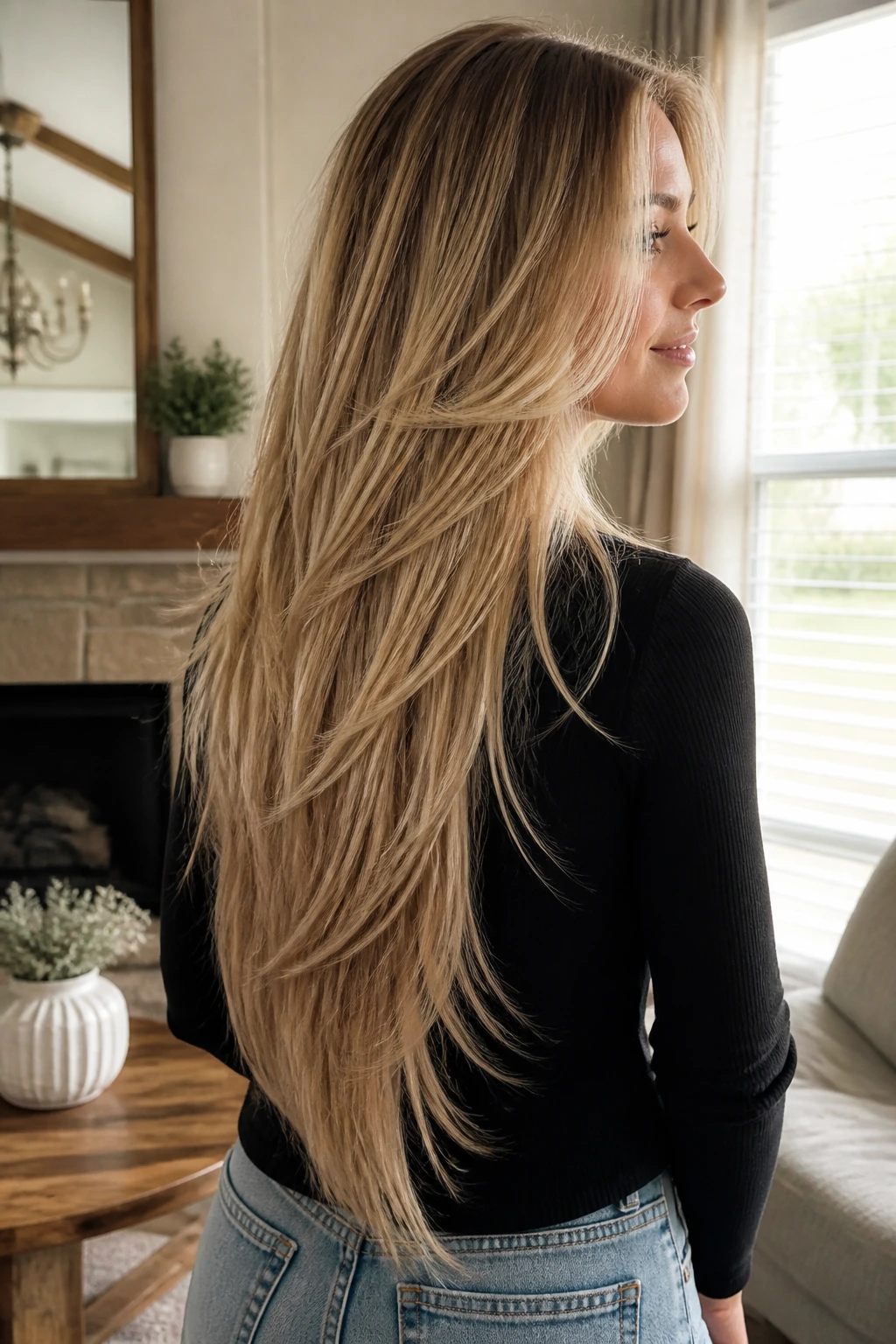
Why do some long cuts look lean while others feel bulky? Usually it comes down to the outline. A V-cut draws the length into a softer point at the back, which gives long hair a cleaner drop and keeps it from ballooning at the hem.
Where this cut shines
The V shape is a smart choice if your hair is thick, slightly wavy, or prone to puffing out at the ends. Interior layers make the top and middle sections lighter, but the pointed back keeps the style long and visible. It is a good compromise for anyone who wants movement but does not want the ends to disappear.
The catch is that the V should be subtle. Too sharp, and the back can look dated fast. The better version is soft, almost like the hair naturally narrows on its own. Ask for a gentle point, not a hard triangle.
5. Muted Wolf Cut for Long Hair
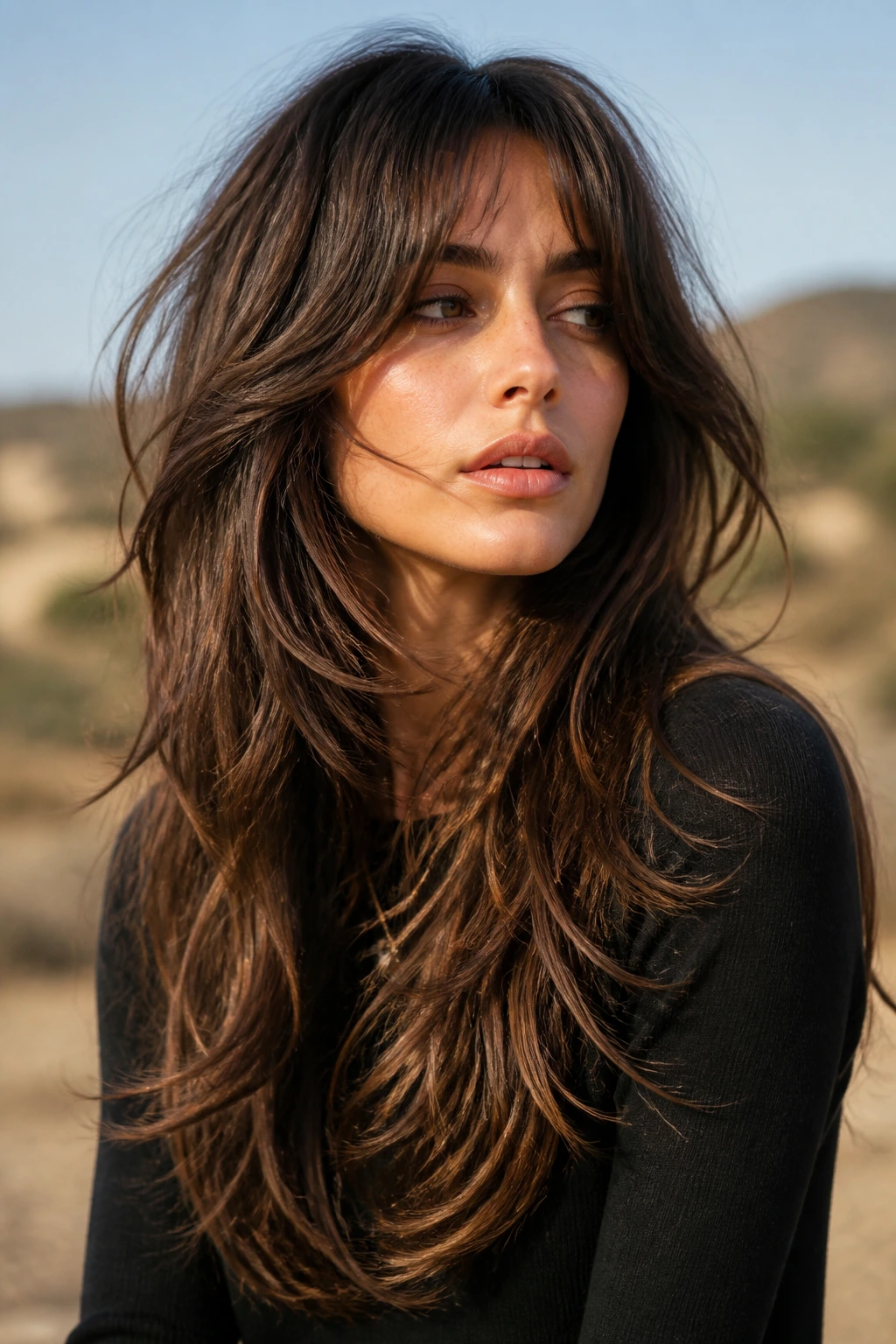
A wolf cut does not have to look like it wrestled with a razor and lost. The muted version keeps the crown a little shorter, the layers more blended, and the ends less ragged. That makes it a better fit for long hair that still needs to look wearable in daylight, not only in a mirror selfie.
The point here is movement. A muted wolf cut brings air around the face and around the top half of the head, then leaves enough length through the bottom that the haircut still feels feminine, soft, and a little wild in a controlled way. It is especially nice on wavy hair, which can use the extra lift at the crown.
If you wear your hair sleek most days, ask your stylist to keep the layer contrast mild. A wolf cut with too much height at the top can turn into a chore. Keep the shape looser, and it becomes much easier to live with.
6. Invisible Layers for Fine, Straight Hair
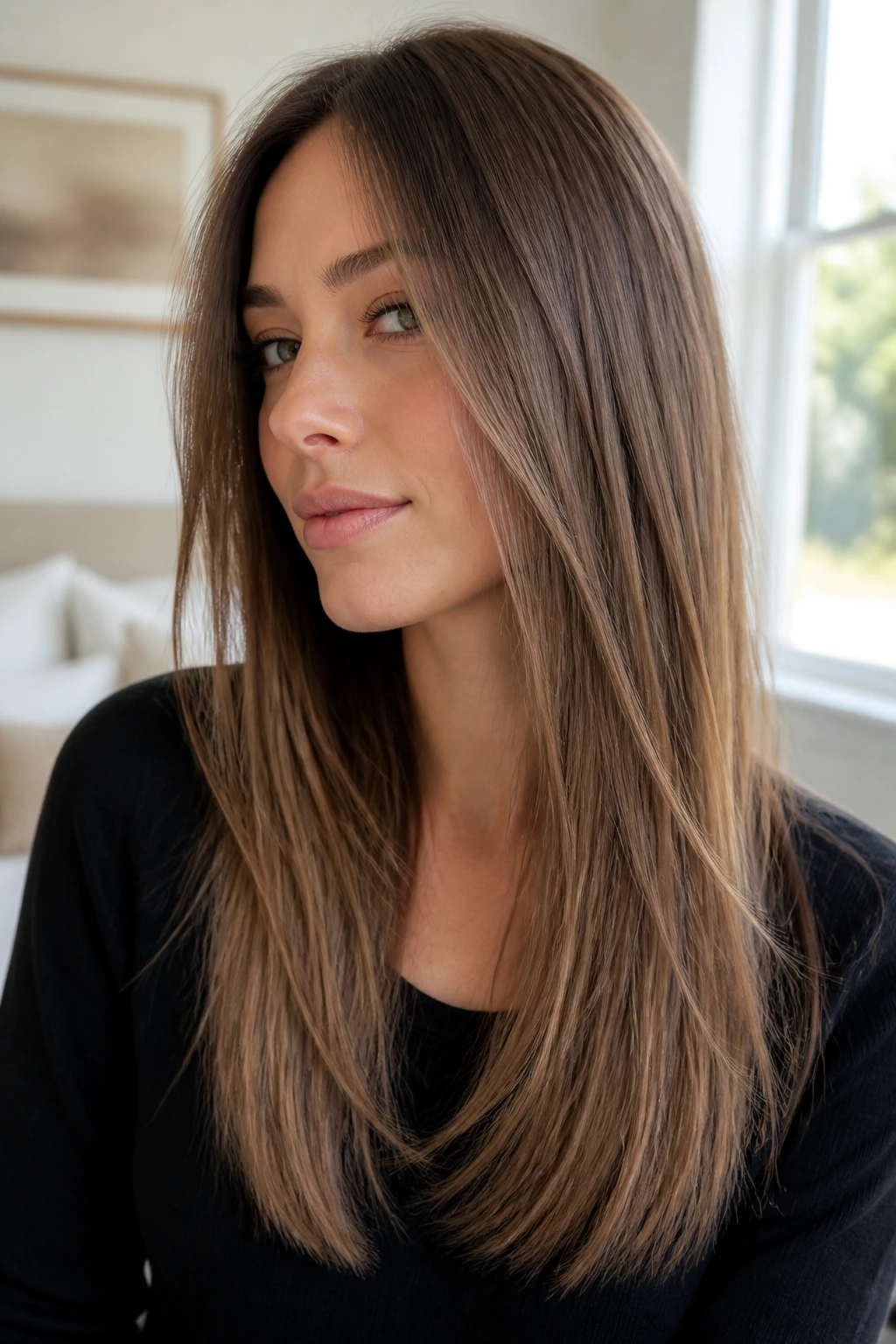
Fine hair and wispy layers have a tricky relationship. Go too hard with the thinning, and the ends start looking scraggly. Keep the layers too blunt, and the hair falls flat against the head. Invisible layers sit in the middle of that problem, which is why they work so well.
The idea is simple. The stylist removes weight from underneath and around the interior, while the outer line still looks full. On fine, straight hair, that matters. You get movement when the hair moves, but you do not lose the clean edge that makes the hair look healthy. It is a quiet haircut, and that is the point.
Ask for layers that are blended enough to disappear when the hair is worn down. If you can see every step in the cut from across the room, the layers are too obvious. On fine hair, subtlety usually wins.
7. Razor-Textured Layers for Thick Hair
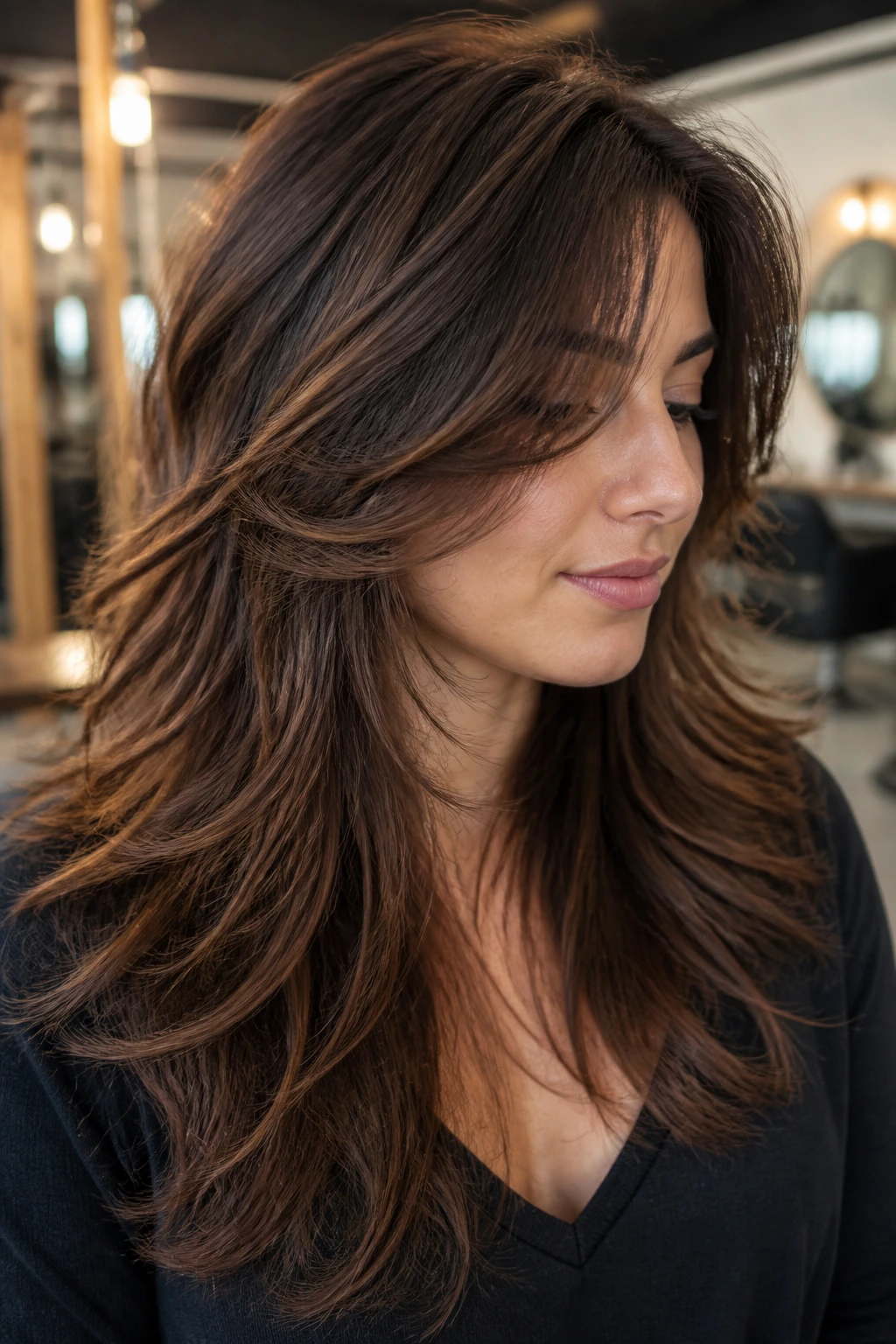
Thick hair can take more texture, but it still needs judgment. A razor-textured long cut softens the ends and breaks up the density so the hair doesn’t sit in one stubborn block. When it’s done right, the edges move. When it’s done badly, the ends fray and never really recover.
-
What to ask for: Tell the stylist you want weight removed through the mid-lengths, not a lot of short pieces floating around the crown.
-
What to avoid: Heavy thinning shears through the ends can create that fluffy, see-through finish that thick hair gets stuck with.
-
Best on: Hair that is dense, slightly coarse, or naturally straight and puffy at the bottom.
-
Tip: If your ends already feel dry or fragile, ask for point cutting instead of a full razor pass. You still get softness, but with less edge damage.
This cut can look fantastic with a blowout because the movement shows up clearly. Just do not over-style it into pieces every day. Thick hair already does enough on its own.
8. Bottleneck Bangs with Blended Length
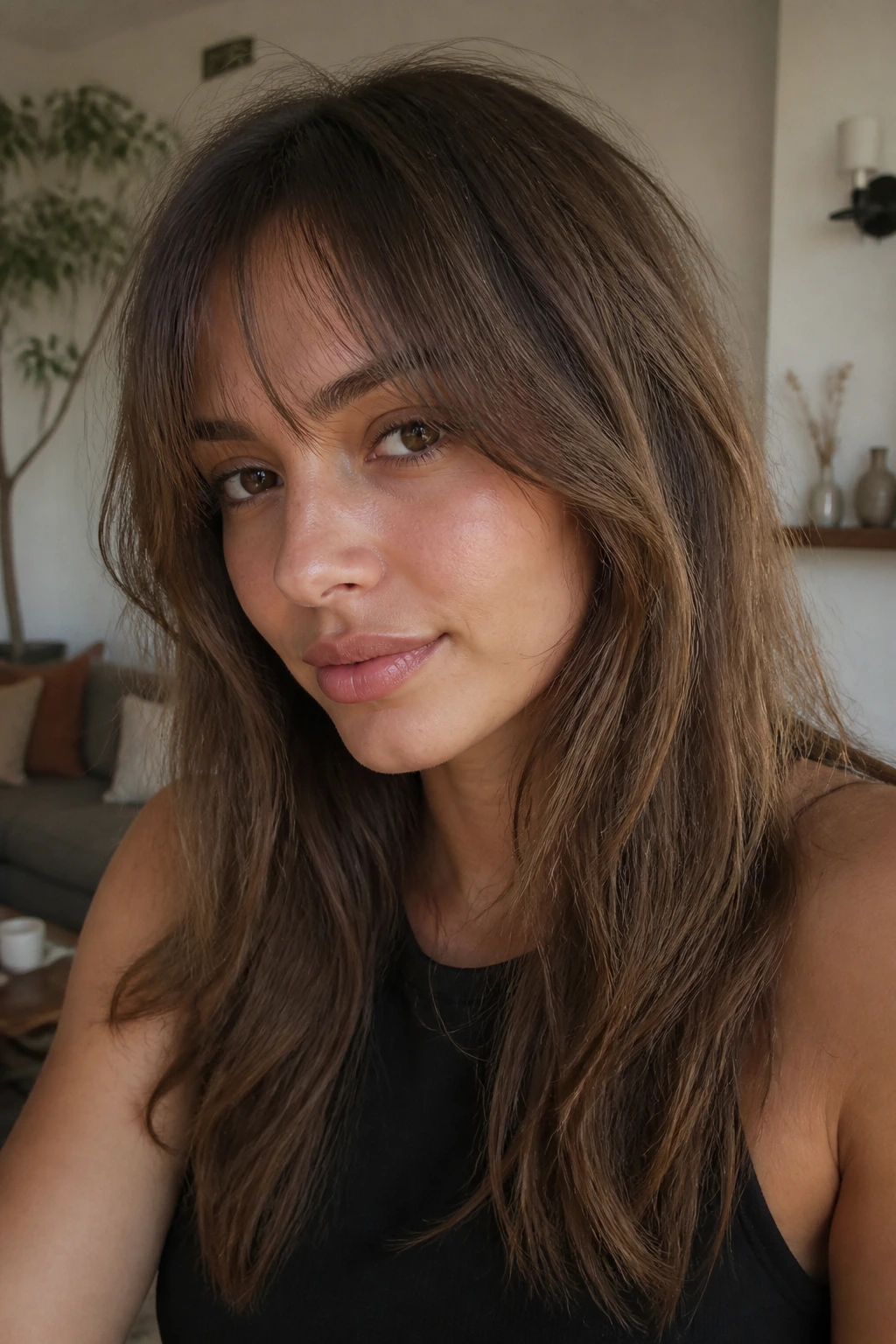
Bottleneck bangs are one of the better ways to ease into fringe without committing to a heavy block across the forehead. They start narrower between the brows, then open out toward the cheekbones and blend into the long layers around the face.
That shape pairs well with wispy hair because it gives the front of the haircut a built-in curve. The bangs do not sit there like a wall. They taper, which helps the rest of the length feel softer too. If you keep the rest of the cut long and airy, the fringe becomes the anchor.
Styling note
A small round brush or a medium curling iron does the job here. The trick is to bend the bangs away from the face, not curl them into a tight roll. That softer bend helps the whole haircut stay light and modern.
9. Side-Swept Fringe and Face-Framing Drift
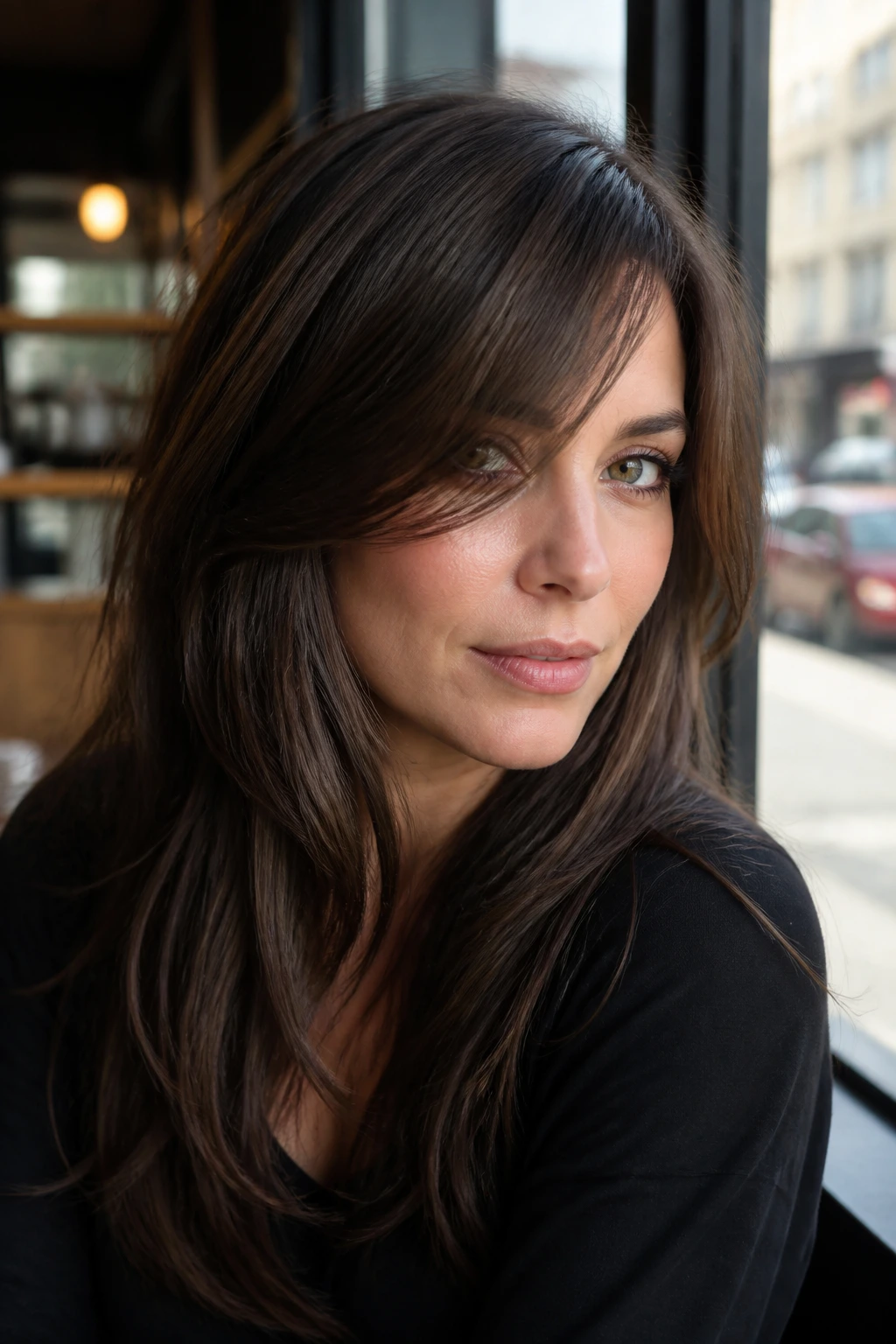
There is something very practical about a side-swept fringe on long hair. It shifts the eye, opens one side of the face, and gives the haircut a little asymmetry so the length does not sit too stiffly. On wispy cuts, that side motion can make the whole style feel less formal.
The face-framing pieces should start somewhere around the cheekbone or just below it, then drift into the rest of the length. That’s the sweet spot. Too short, and the front starts to dominate. Too long, and you lose the shaping benefit completely.
This is a good option if you part your hair off-center already, or if your face shape looks softer with a bit of diagonal movement. It also hides grow-out well, which is useful because face-framing pieces always seem to grow faster than the rest. They probably do, or at least that’s how it feels on wash day.
10. Long Wispy Haircut for Round Faces
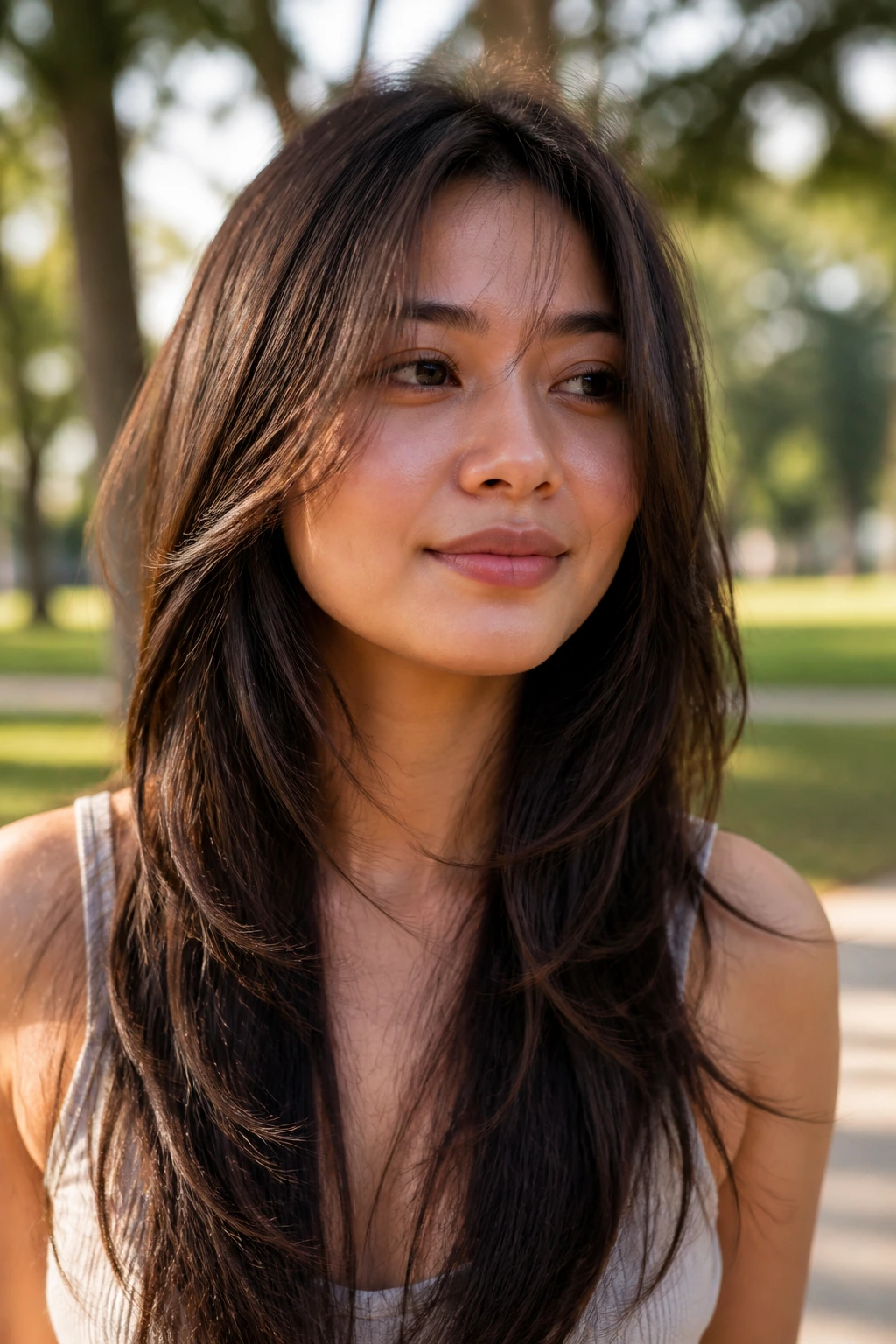
Round faces usually benefit from vertical lines, not width added right at the cheeks. That is why a long wispy haircut can be such a smart choice: it stretches the silhouette and keeps the soft pieces from bunching up too high on the face.
The placement matters
Start the shortest face-framing layers below the widest part of the cheek, not directly at it. That lets the hair fall in a longer line and keeps the cut from making the face look wider. A little bend around the collarbone helps too.
If you wear a center part, keep the front pieces loose and blended. If you like a side part, let it sweep diagonally rather than sitting flat. Either way, the goal is the same: length through the sides, softness through the ends, and no hard shelf of volume right at the cheeks.
11. Long Wispy Haircut for Square Faces
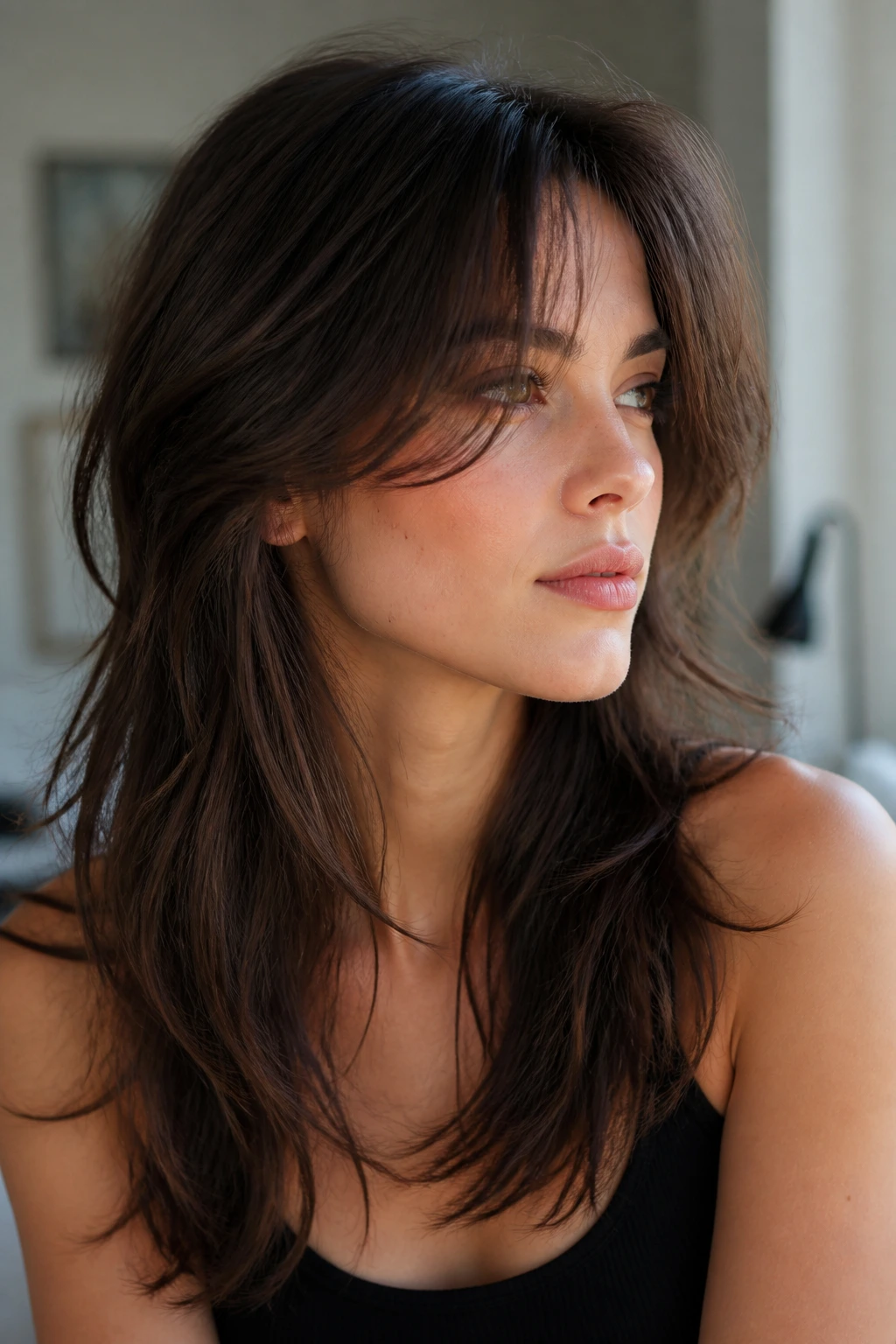
Square faces usually look best with curves, not hard edges echoing the jaw. A wispy long cut can soften that strong line without hiding it. The trick is to keep the layers low enough that they move around the mouth and collarbone instead of cutting straight across the jaw.
That soft descent matters. If the shortest layer lands exactly at the jawline, it can make the angles feel sharper. If it falls a bit below, the face gets a gentler frame. A bit of feathering through the front helps even more, because the eye follows the movement instead of the outline.
This kind of cut loves a loose wave or a round-brush bend at the ends. Straight, flat hair can make the jaw look heavier. A little air around the edge changes that quickly.
12. Long Wavy Cut with Broken Ends
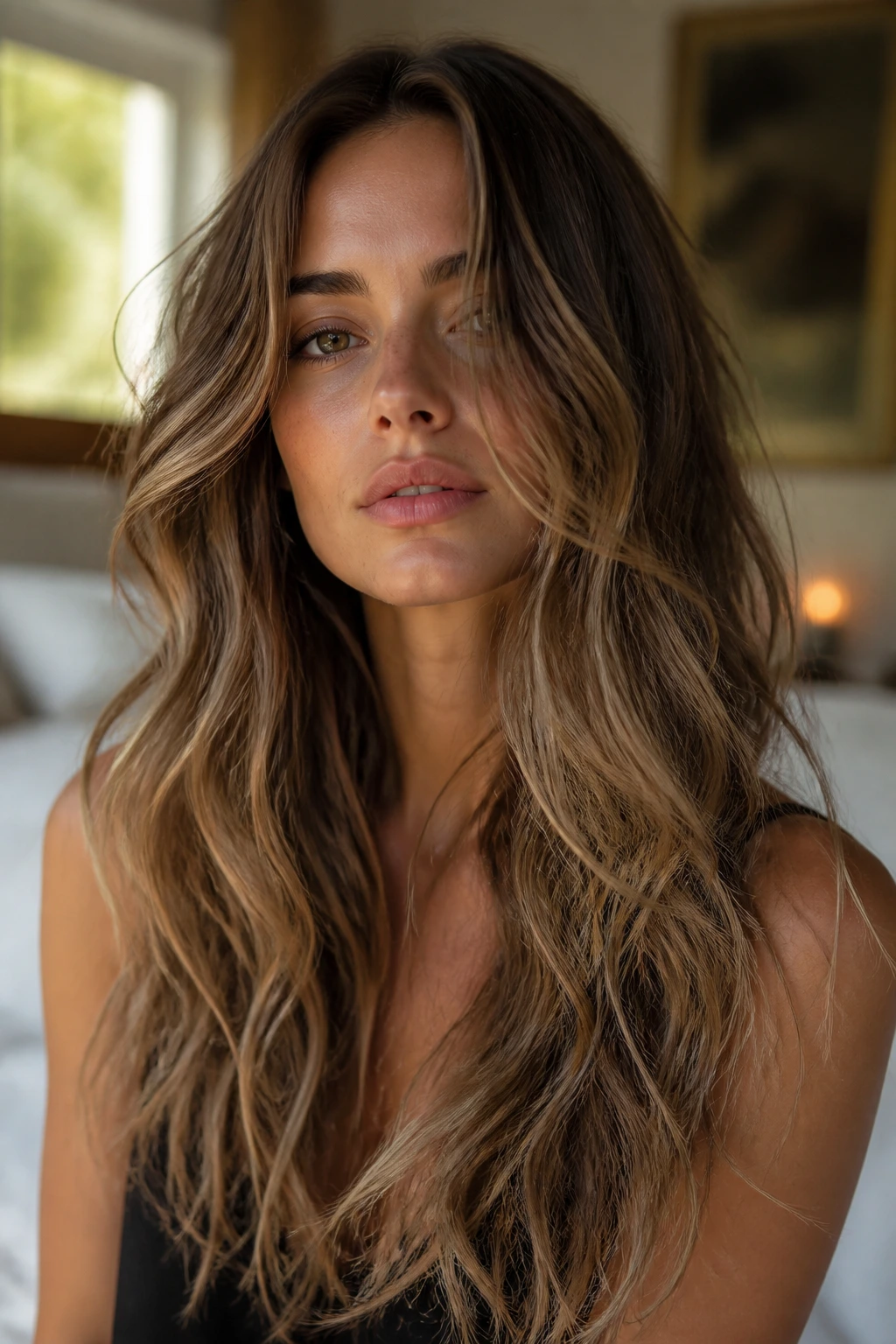
Wavy hair already has movement, so the wispy version should respect that instead of fighting it. A cut with broken ends and soft layering lets the natural wave pattern show up in a cleaner way. The result is less “pyramid” and more “soft spill of movement.”
A lot of people with waves go too blunt at the perimeter because they are trying to save density. That works for a while, then the bottom starts to puff up and the top stays flat. Adding a little softness at the ends helps the wave settle into a shape that looks deliberate.
Air-drying works well here, but only if the cut has enough internal shaping. If the hair is all one length, it will still dry in a bulky mass. Give the waves some room to separate, and they behave much better.
13. Curly Long Wispy Layers
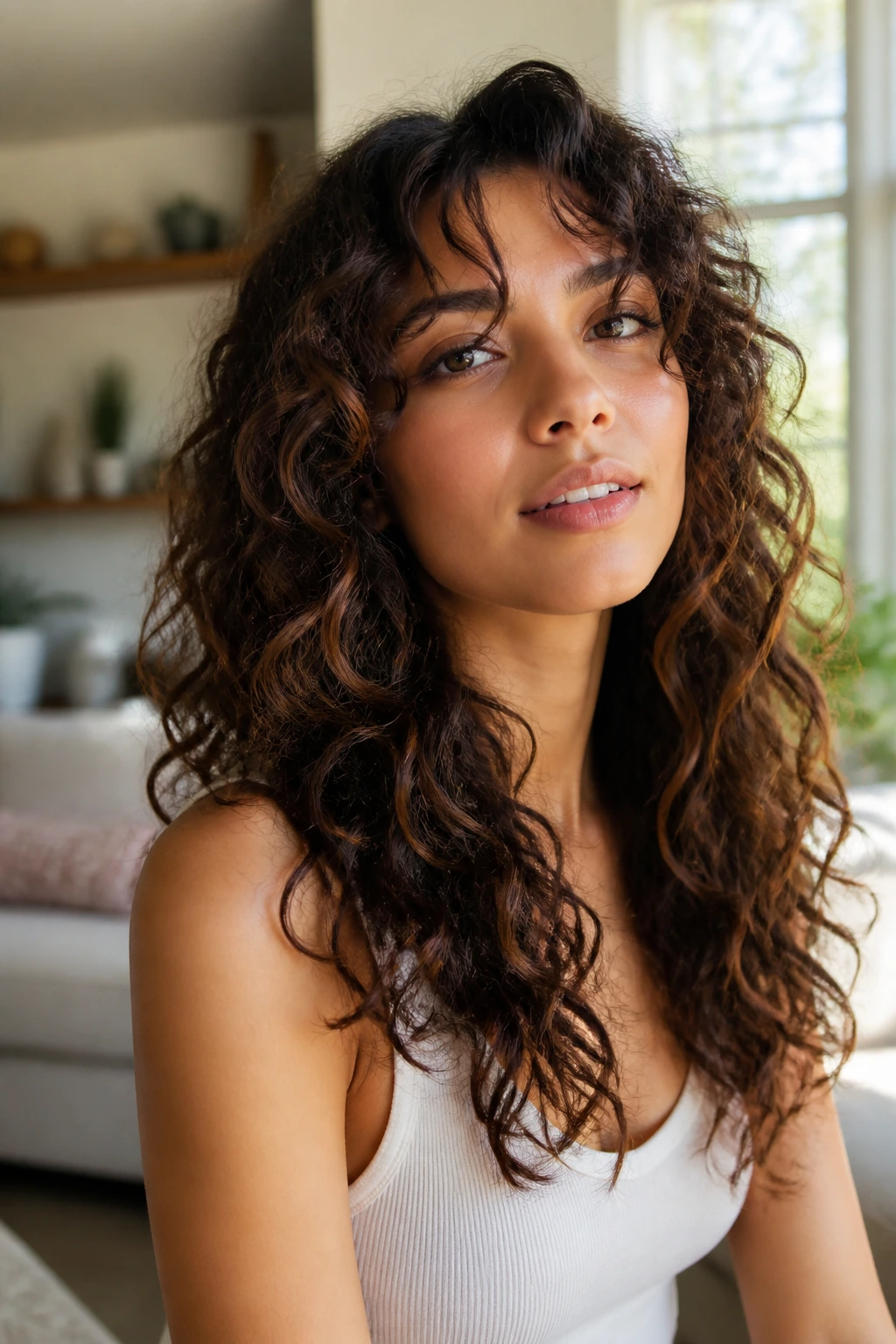
Curly hair and wispy layers can look gorgeous together, but the cut has to respect shrinkage. Curls bounce up after the snip, which means a layer that seems subtle on wet hair may end up sitting much shorter once it dries. That is why dry cutting, or at least cutting on hair that has been prepared to show its curl pattern, matters so much.
What keeps it from getting too thin
The shortest pieces should encourage the curl to spring, not split the whole shape into frizz. You want roundness and air, not a halo of broken ends. The best curly wispy cut keeps enough weight at the perimeter so the curls still clump together.
If your curls are fine, go lighter on the layers. If they are dense and coarse, the stylist can remove more bulk from the interior. Either way, the cut should make the curl pattern easier to read, not harder.
14. Sleek Long Cut with Choppy Micro-Ends
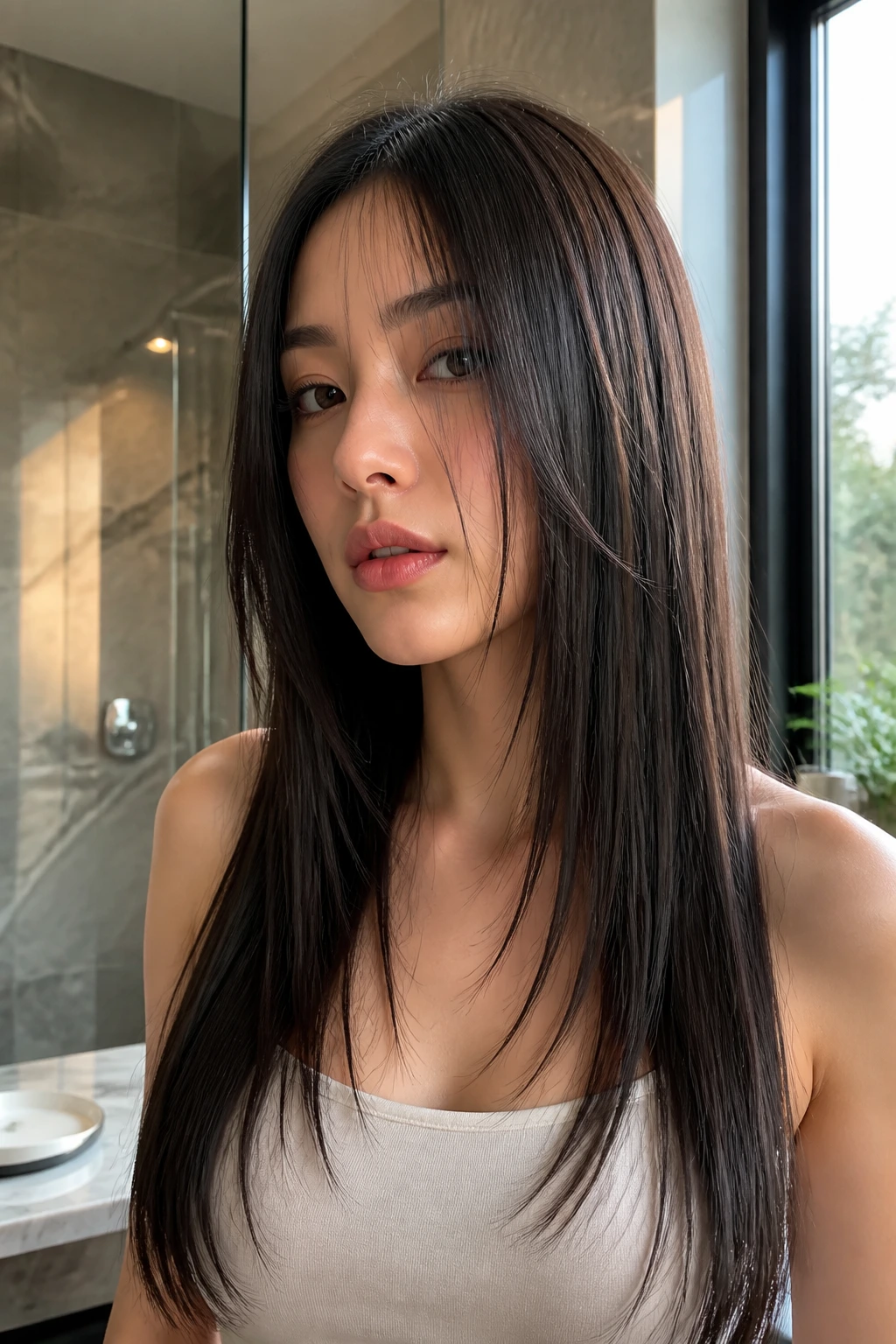
If you wear your hair straight most days, wispy does not have to mean fluffy. A sleek long cut with slightly choppy micro-ends gives the hair a little broken texture without turning it into a shag. Think of it as a smoother version of softness.
The micro-texture lives mostly at the ends and in tiny bits of face framing. The length still looks polished, but the line is not rigid. That matters on straight hair, where a blunt hem can look very severe very quickly.
This version is a nice middle ground for people who like a smooth blow-dry and do not want layers flying everywhere. Keep the ends blunt enough to feel full, then add just enough internal texture that the hair moves when you turn your head. Tiny adjustment. Big difference.
15. Deep Side Part with Long Sweep Layers
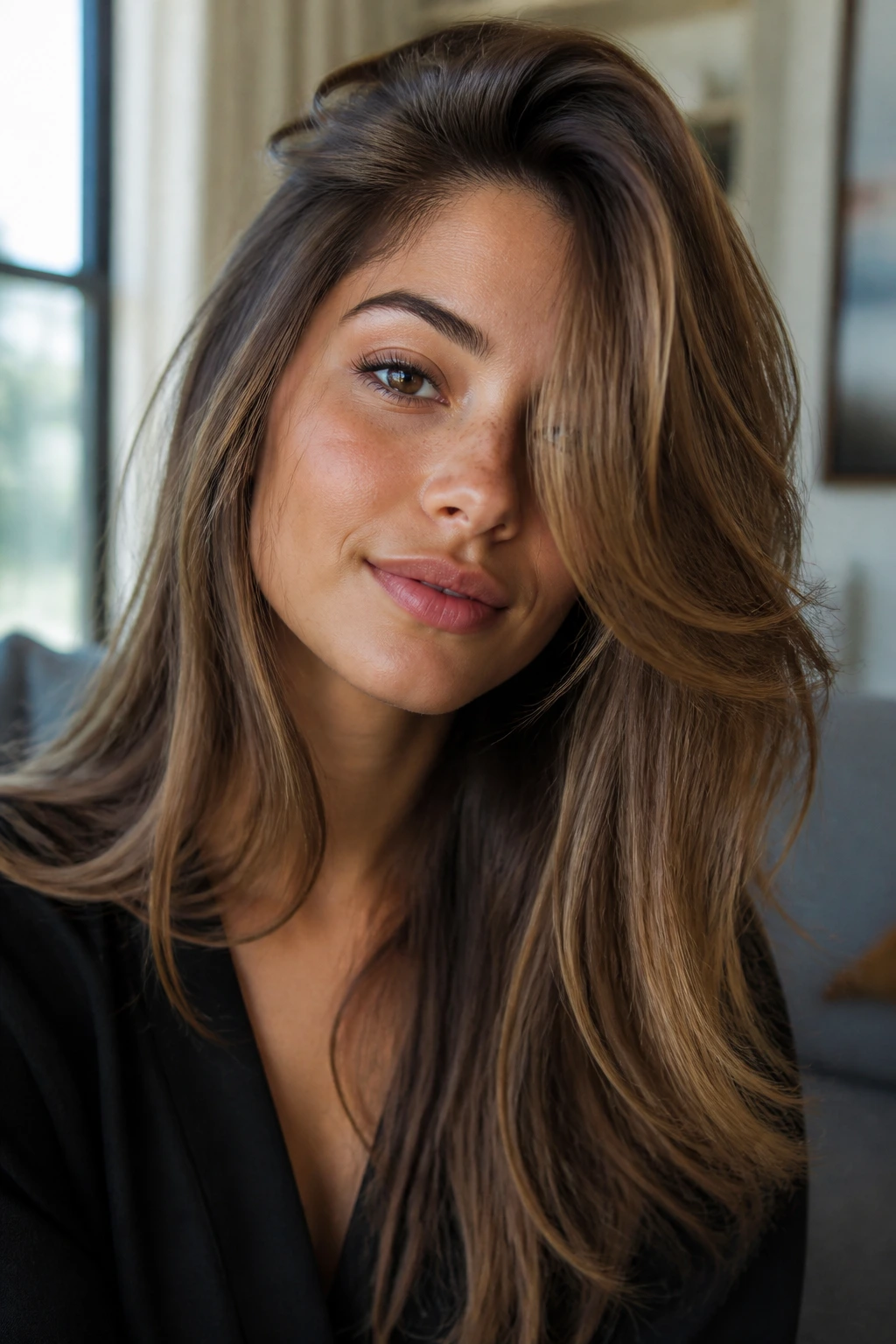
Why does a deep side part change a haircut so much? Because it shifts volume to one side and breaks up the sameness that makes long hair feel heavy. With long sweep layers, that asymmetry becomes part of the cut rather than a styling accident.
The front pieces should fall diagonally across the forehead and cheek, not puff up into a ridge. That shape gives long wispy hair a little lift at the roots and some softness around the face. It also helps when your hair naturally falls flat at the crown, which is more common than people admit.
This style looks especially good with a loose blowout or a large-barrel wave. It does not need perfect symmetry. In fact, the lack of symmetry is the whole point.
16. Interior-Layer Cut That Keeps the Perimeter Full
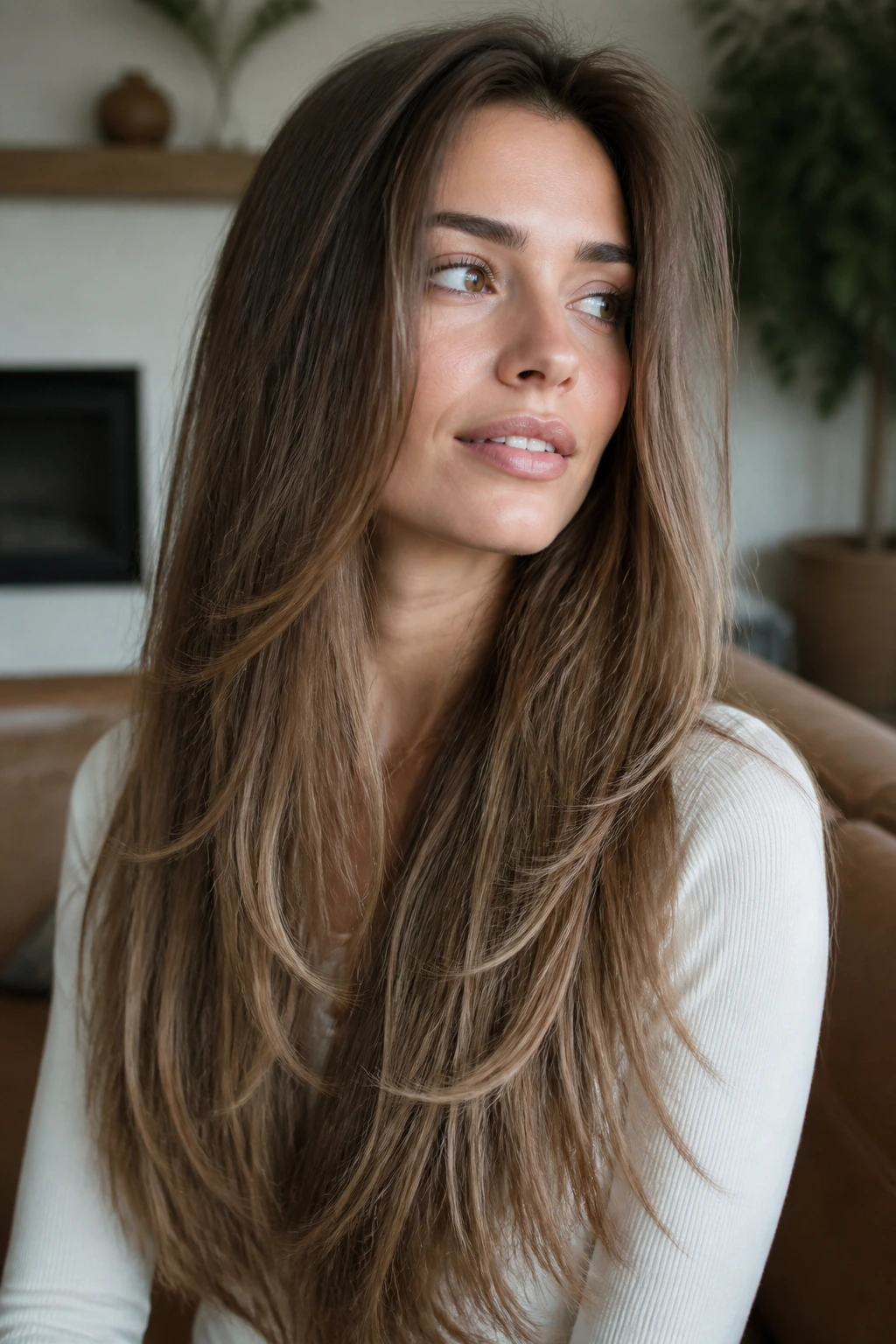
This one is for the person who wants movement but hates losing the feeling of thickness at the bottom. Interior layers live underneath the surface and inside the shape, so the perimeter still looks strong while the inside gets lighter and more mobile.
That is a useful trick on long hair. The ends stay solid enough to look healthy, but the mid-lengths stop fighting you. When you run your fingers through the hair, it feels less packed. When you wear it down, it still has body.
It is also one of the easiest versions to grow out. Since the outer line stays full, the haircut does not snap into a different shape every time the layers get a little longer. If you are the type who pushes trims longer than you should, this is a sensible choice.
17. Feathered Ends with a Center Part
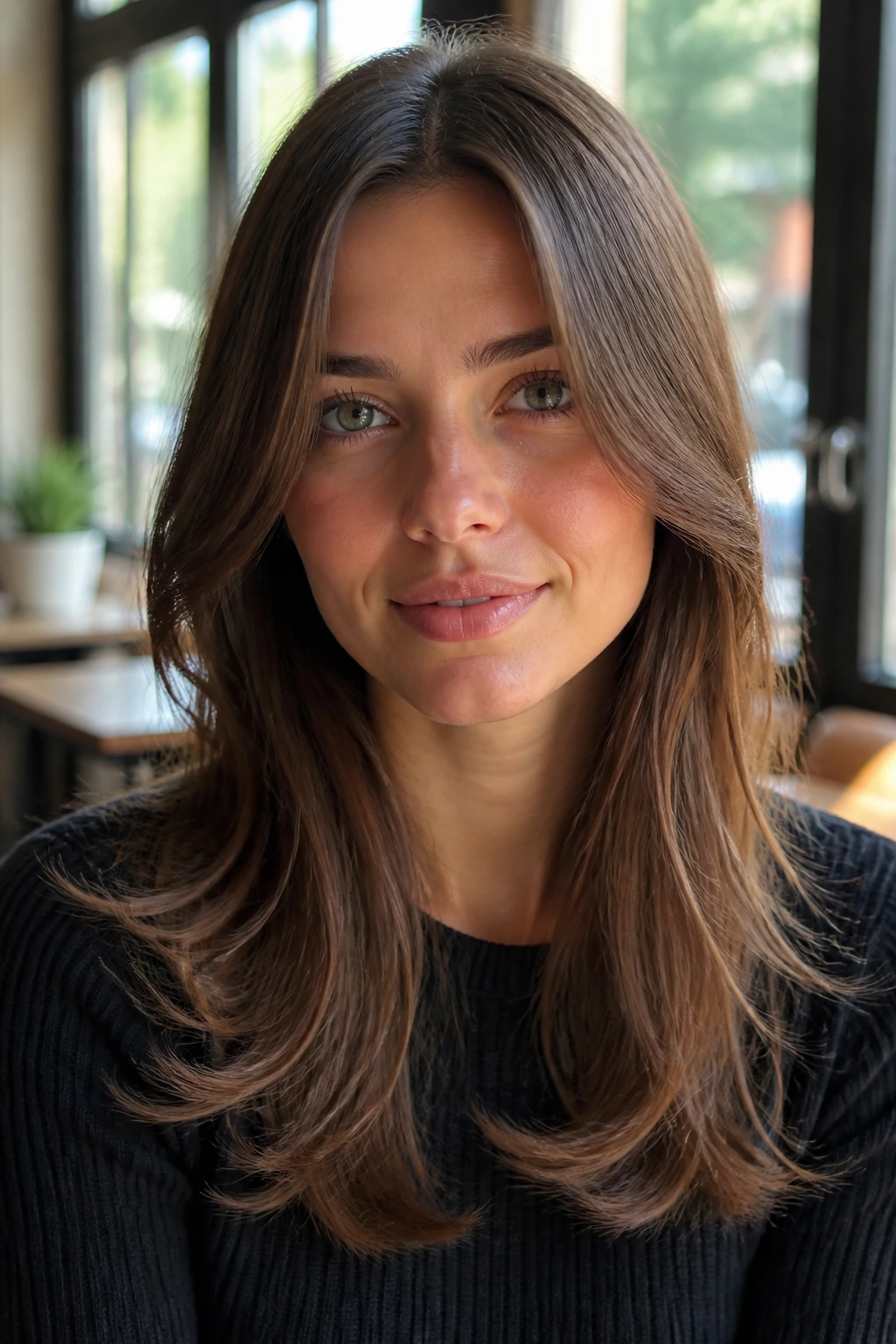
A center part can look severe if the cut underneath is too blunt. Feathered ends solve that by softening the drop at the bottom and giving the hair a cleaner sway on both sides of the face. The look is calm, symmetrical, and a little bit floaty when the hair moves.
The most important part is restraint. A center part with feathered ends should still have density through the last few inches. You want the hair to move in panels, not disappear into stringy pieces.
How to keep it from collapsing
A medium round brush and a low-heat blow-dry setting are enough for most people. Bend the front away from the face, then let the ends flick outward slightly instead of curling them under hard. That keeps the cut soft and avoids the helmet effect that center parts can create on heavy hair.
18. Grow-Out Friendly Long Wispy Cut
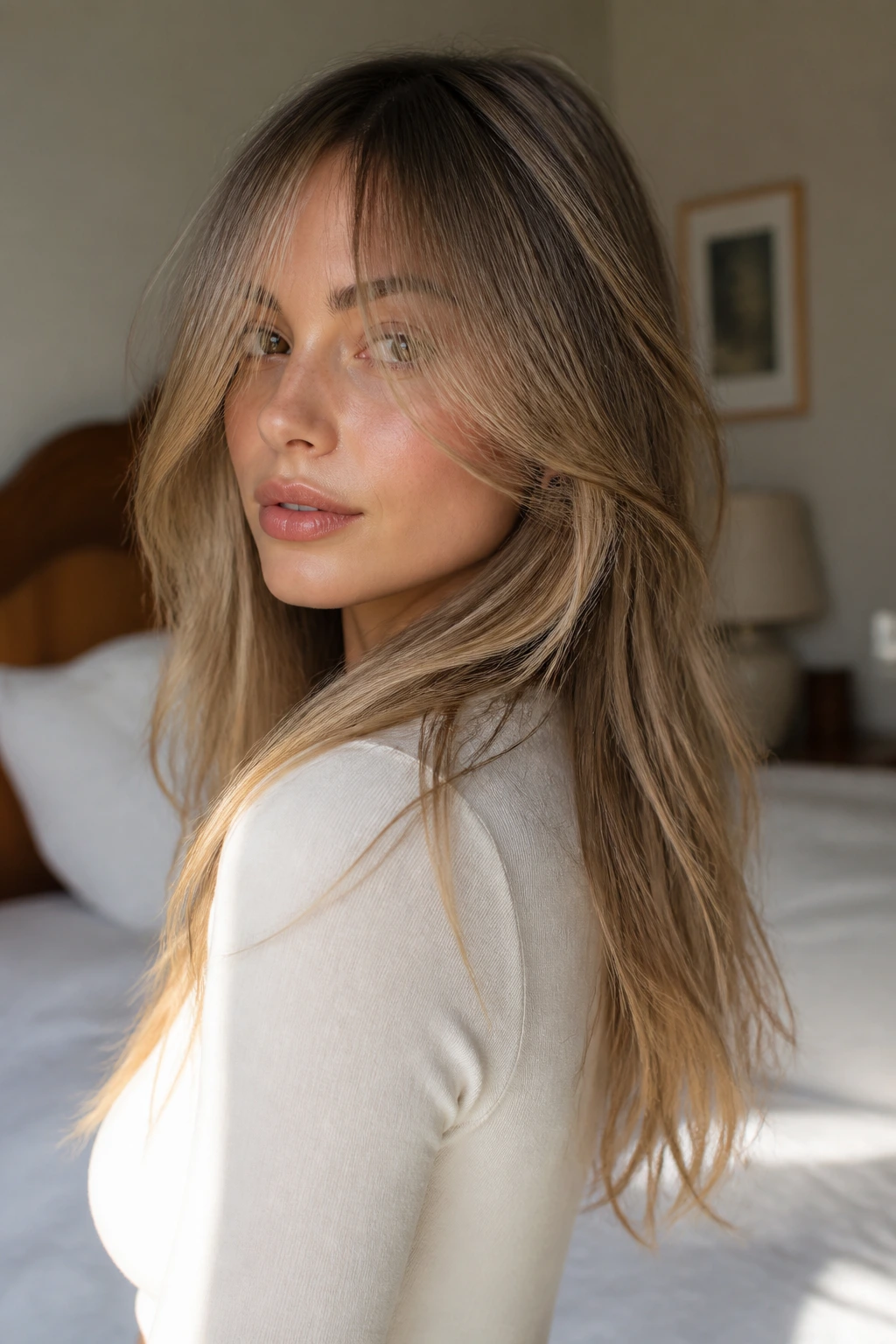
This is the version for people who want shape without a strict upkeep schedule. The cut keeps the length generous, places the shortest pieces where they can grow out gracefully, and avoids harsh contrast between layers. It is wispy, but not fussy.
The best grow-out friendly cut has three things: a clean perimeter, gentle face framing, and layers that blend rather than jump. That means it still looks intentional when it is a little past its trim date. Which, for a lot of people, is the real test.
If you live in ponytails, clips, and half-up styles, this one is a smart pick. It gives the front enough structure to look finished when loose, then still behaves when you twist it back. That kind of haircut earns its place.
What Makes Long Wispy Haircuts Move Instead of Just Hang
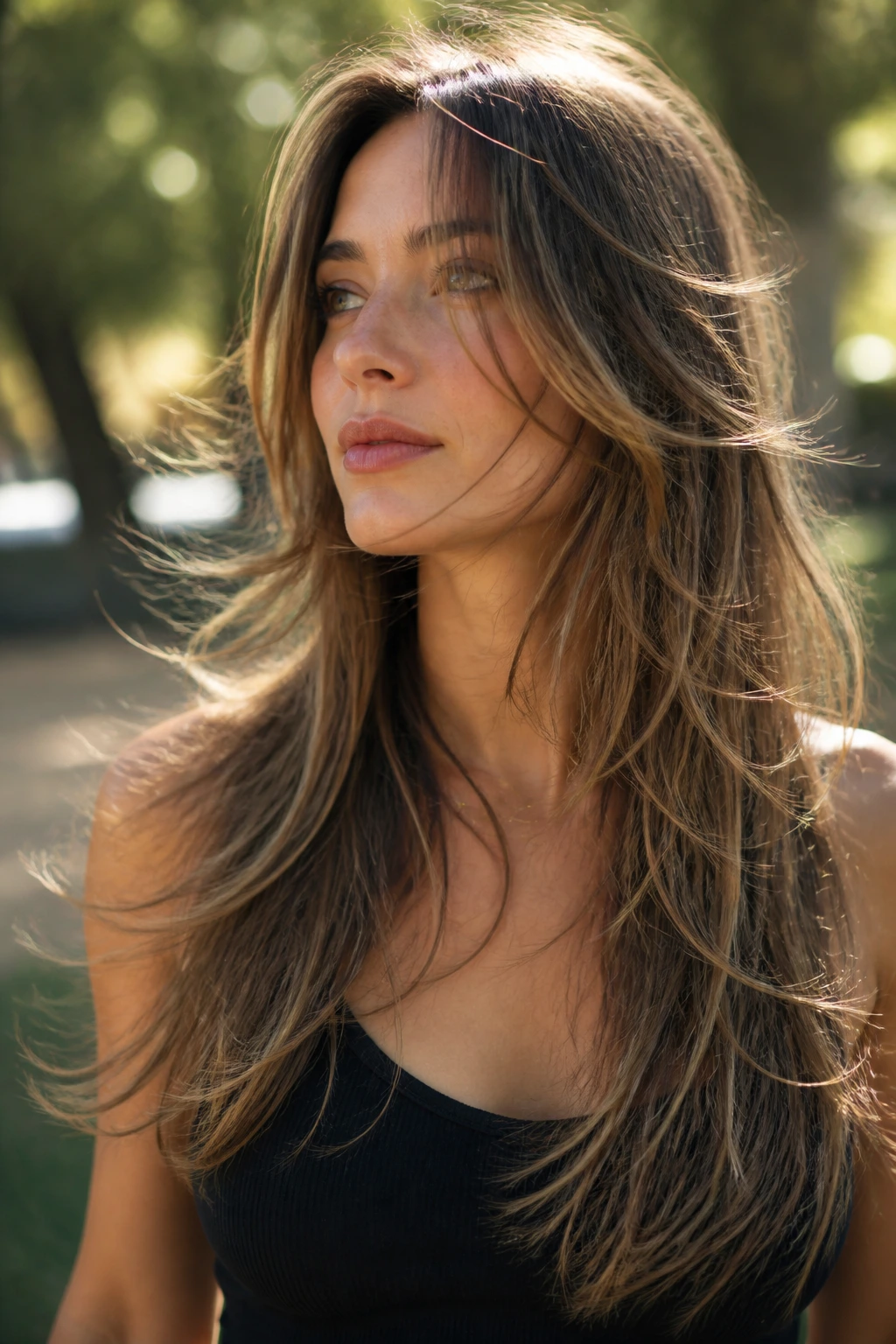
A wispy cut is not defined by how much hair is removed. It is defined by where the weight comes out. That sounds like a small distinction, but it changes everything. Remove too much from the ends, and the haircut looks thin. Leave too much bulk in the wrong places, and it falls flat in a way that looks tired instead of sleek.
The perimeter still matters
The outer line is what keeps long hair looking healthy. If that line is too shredded, the cut starts to fray visually even when the hair itself is in good condition. A good stylist keeps enough density at the bottom so the hair still reads as long, not as a collection of loose ends.
Weight removal is not the same as thinning
Thinning shears can be useful, but they are not a cure-all. On some hair types, they remove too much of the good stuff and leave a rough finish that never sits right. Point cutting and slide cutting often make more sense for long wispy haircuts because they soften the shape without stripping the end mass away.
Movement should happen where the eye lands
The best wispy cuts place softness around the face, through the mid-lengths, and at the tips. That way the hair moves when it should, and stays steady where it matters. It is a quieter kind of shaping, but I think it ages better.
Essential Tools for Styling Long Wispy Haircuts
-
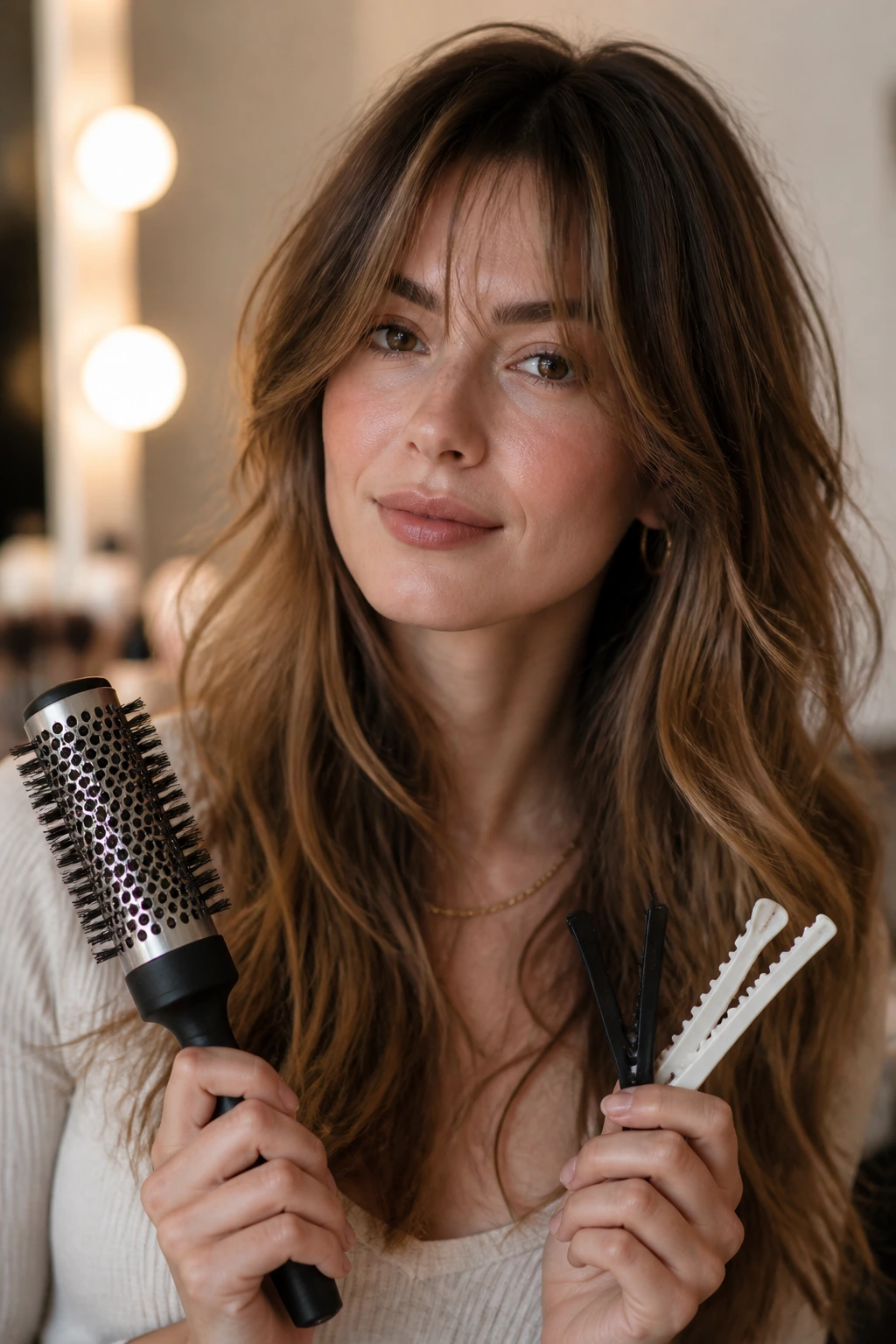
A sharp pair of sectioning clips: They keep the front pieces out of the way while you dry the crown and roots.
-
A blow-dryer with a nozzle attachment: The nozzle helps aim the air so wispy layers bend instead of puffing out.
-
A medium round brush, about 1.5 to 2 inches: This size gives the ends a soft curve without making the front pieces too round.
-
A 1-inch or 1.25-inch curling iron: Good for bending face-framing layers and adding a loose wave to long hair.
-
A flat iron with smooth plates: Best for a sleek finish or a slight bevel through the ends.
-
Heat protectant spray: Non-negotiable if you use hot tools more than once a week.
-
Lightweight mousse or volumizing spray: Helpful at the roots when the haircut needs lift but not stiffness.
-
Texturizing spray: Use a little on the mid-lengths and ends if the cut needs separation.
-
Wide-tooth comb: Better than a brush for working through waves and curls without pulling the shape apart.
-
A satin or silk pillowcase: It will not style your hair for you, but it cuts down on frizz and crushed face-framing pieces.
How to Style Long Wispy Haircuts Four Different Ways
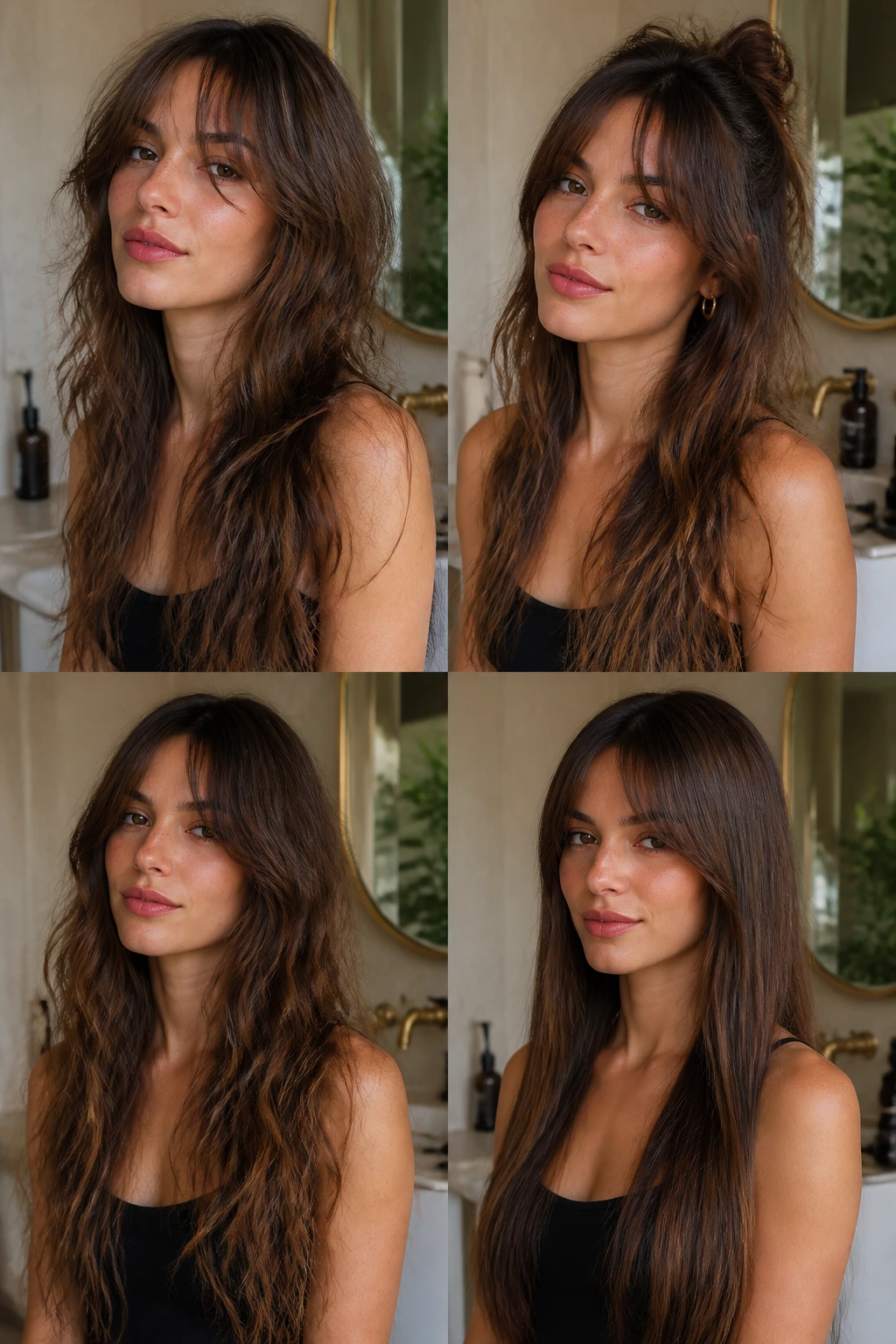
Air-Dry:
If your hair is wavy or curly, scrunch in a light cream or mousse, then let the hair dry with the part in place. Resist the urge to keep touching it. Wispy cuts hold better when you leave the clumps alone until they set.
Blowout:
Use a round brush and direct the front pieces away from the face. Keep the airflow moving downward on the last inch or two so the ends lie softly instead of kicking out. The goal is a bend, not a curl.
Loose Wave:
Wrap random sections around a 1-inch iron, leaving the last inch out on some pieces so the shape feels less uniform. Alternate direction from section to section. That small messiness is what keeps the cut from looking too done.
Sleek Finish:
Run a flat iron from mid-length to ends, then flick the last half-inch slightly under or outward. Do not press the life out of it. Wispy hair looks best when it has a little air left in the line, even when the finish is smooth.
Common Mistakes That Make Long Wispy Haircuts Look Thin
-
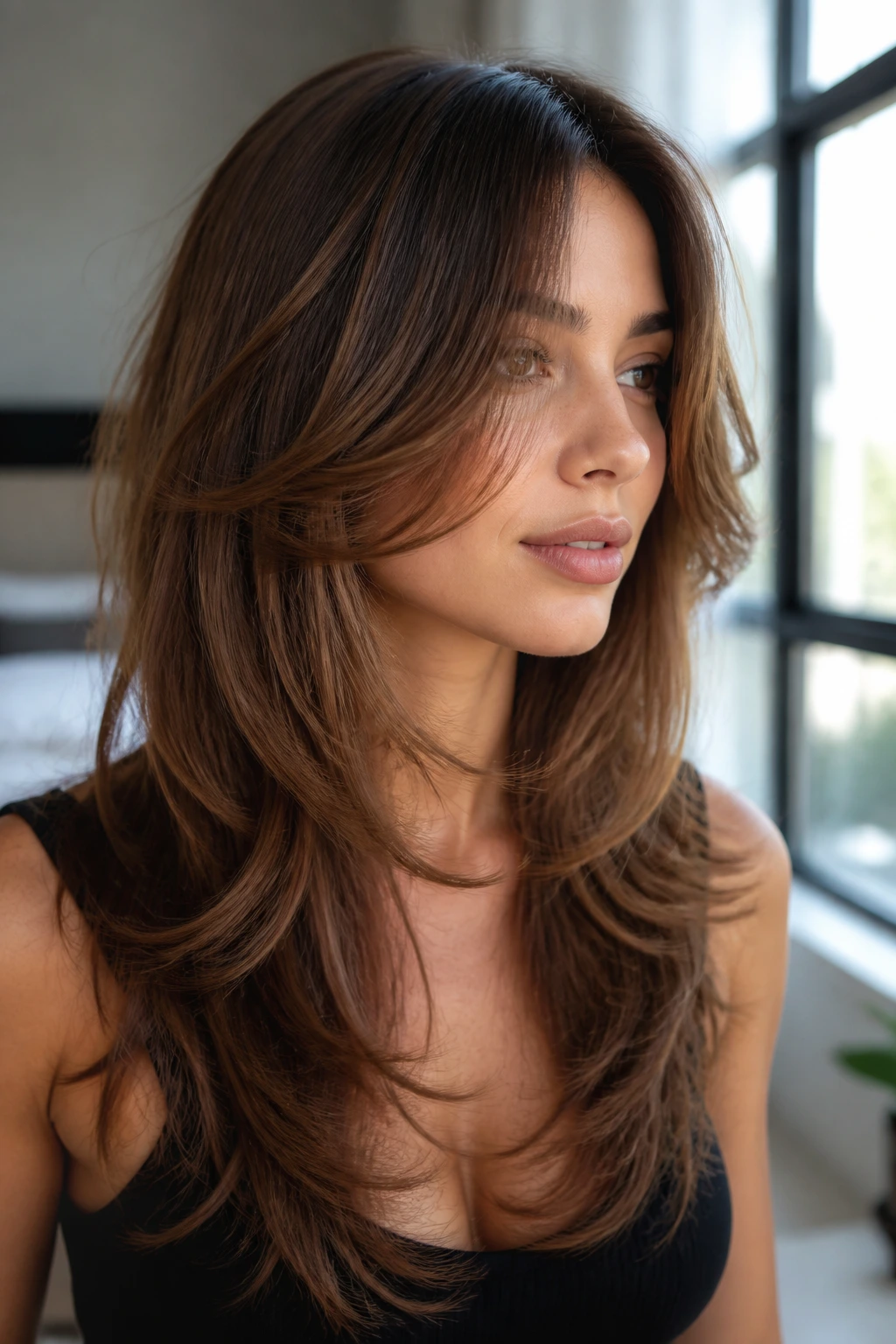
Taking the layers too high: If the shortest pieces start near the nose or higher, the haircut can lose its bottom weight and look hollow. The fix is to keep the shortest front layers lower unless your hair is very thick.
-
Thinning the ends too aggressively: The symptom is see-through, fuzzy tips that never settle. Ask for point cutting or soft slicing instead of heavy thinning shears.
-
Ignoring the perimeter: When the outer line is neglected, the haircut starts to look broken rather than soft. A wispy cut still needs a clean edge to hold its shape.
-
Styling only the roots: Big roots with flat ends make the cut look unfinished. Bend the ends every time, even if it takes two extra minutes.
-
Using heavy oil on fine hair: Too much oil can make wispy pieces collapse into separated strands. Use a tiny amount, and keep it on the last inch or two.
-
Forgetting shrinkage on curls: A layer that looks fine when wet can jump up and create a gap when dry. Curly hair needs a dry-shape check before the scissors keep going.
Named Variations to Ask Your Stylist For
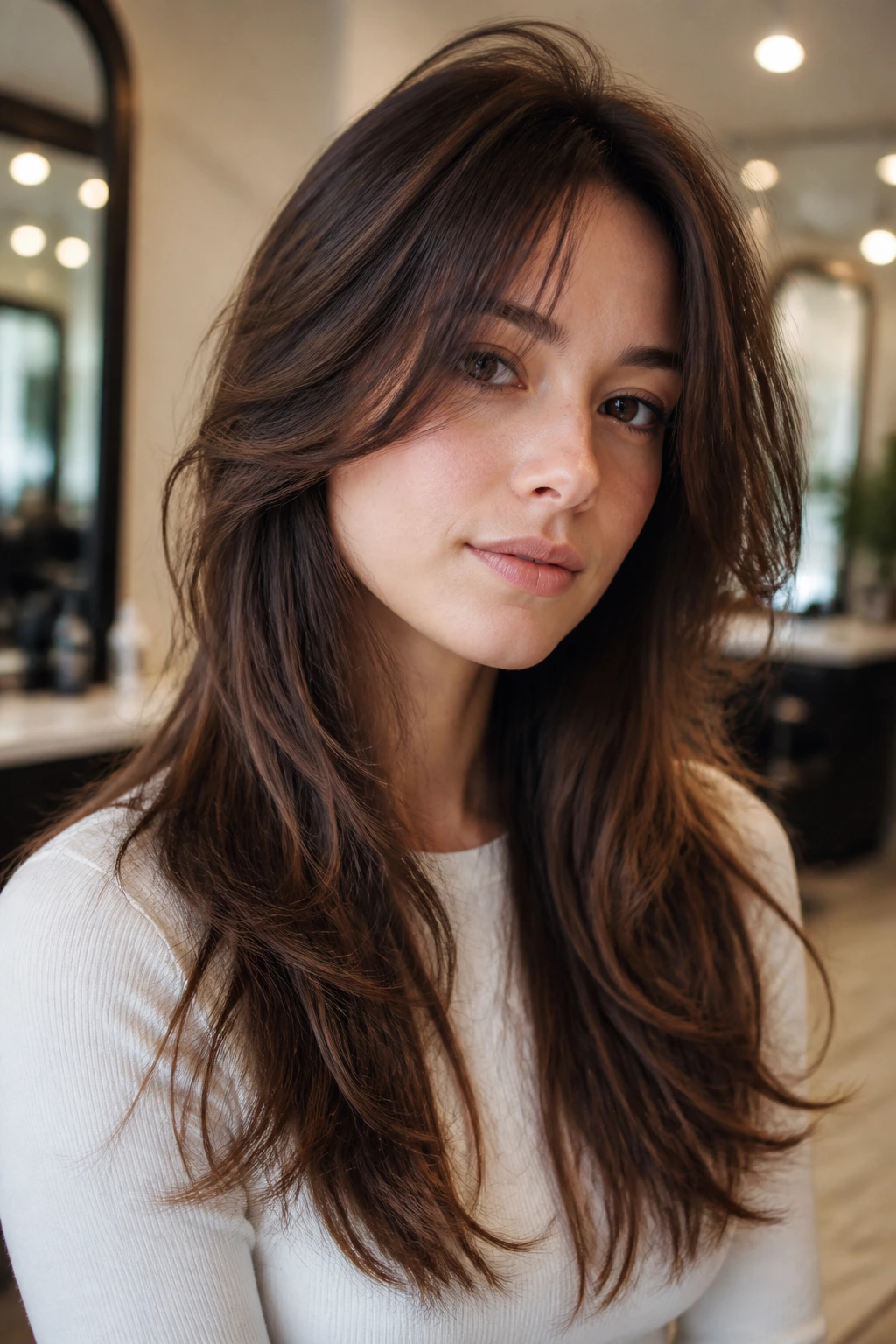
The Soft-Frame Version
Keep the length long and add just enough face-framing layers to open the cheekbones. This works well if you want the wispy effect without losing density through the back.
The Airy Crown Version
Ask for a little more lift through the crown and upper sides, then keep the ends fuller. It suits hair that collapses at the top but still looks too thin when the bottom is over-layered.
The Sleek-Edge Version
Keep the perimeter clean and add only subtle texture through the interior. This is the one for people who wear hair straight and want movement without a lot of piecey separation.
The Curl-Friendly Version
Tell the stylist to respect the curl pattern and keep the shortest layers long enough to avoid frizz halos. It is better for curls that need shape than for curls that already behave.
The Grow-Out Version
Keep the layers soft and avoid any sharp steps. The cut should still look neat eight to ten weeks later, which matters more than flashy texture on day one.
Keeping Long Wispy Haircuts Fresh Between Salon Visits
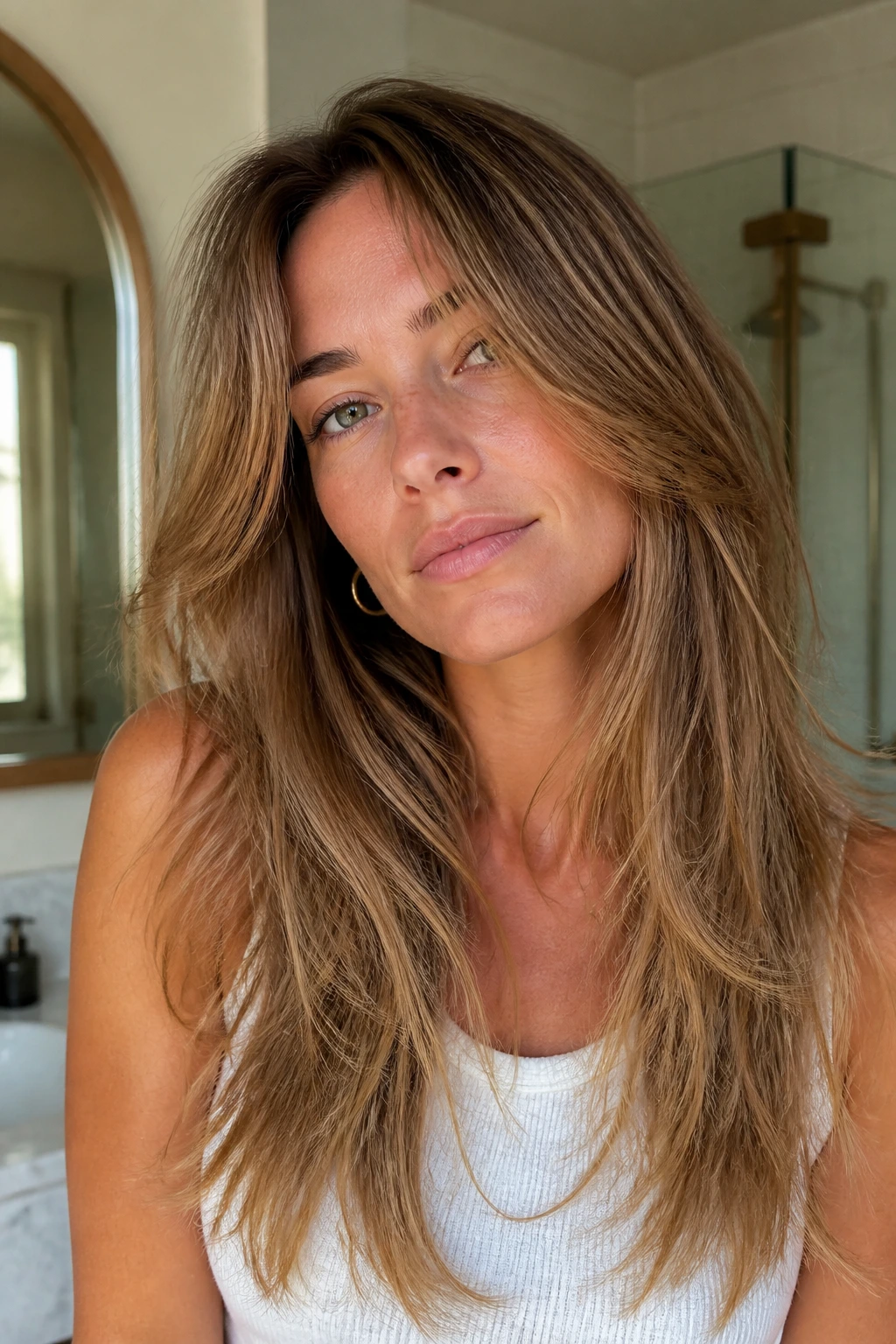
Long wispy haircuts look best when the shape stays soft, not when every strand is controlled. That means upkeep is less about constant styling and more about preventing the ends from turning dry, puffy, or ragged. A trim every 8 to 12 weeks is a solid rule for most long layered shapes. Bangs and shorter face-framing pieces may need a touch-up sooner.
Wash frequency matters less than people think, but product placement matters a lot. Put your leave-in, cream, or mousse where the haircut needs support: roots for lift, mid-lengths for shape, ends for softness. Do not dump heavy product all through the bottom unless your hair is coarse and thirsty. Wispy ends need movement, not grease.
Sleep can wreck a nice cut faster than heat styling. A satin pillowcase helps, and so does loosely tying the hair at the top of the head so the front pieces do not get bent into odd angles. If you wake up with a dented fringe, a quick pass with a round brush or a tiny bit of water on the front usually fixes it. No drama.
Dry shampoo has a place, but not on the ends. Keep it at the roots, where it can lift without clouding the feathered pieces. The ends need slip more than powder.
Frequently Asked Questions
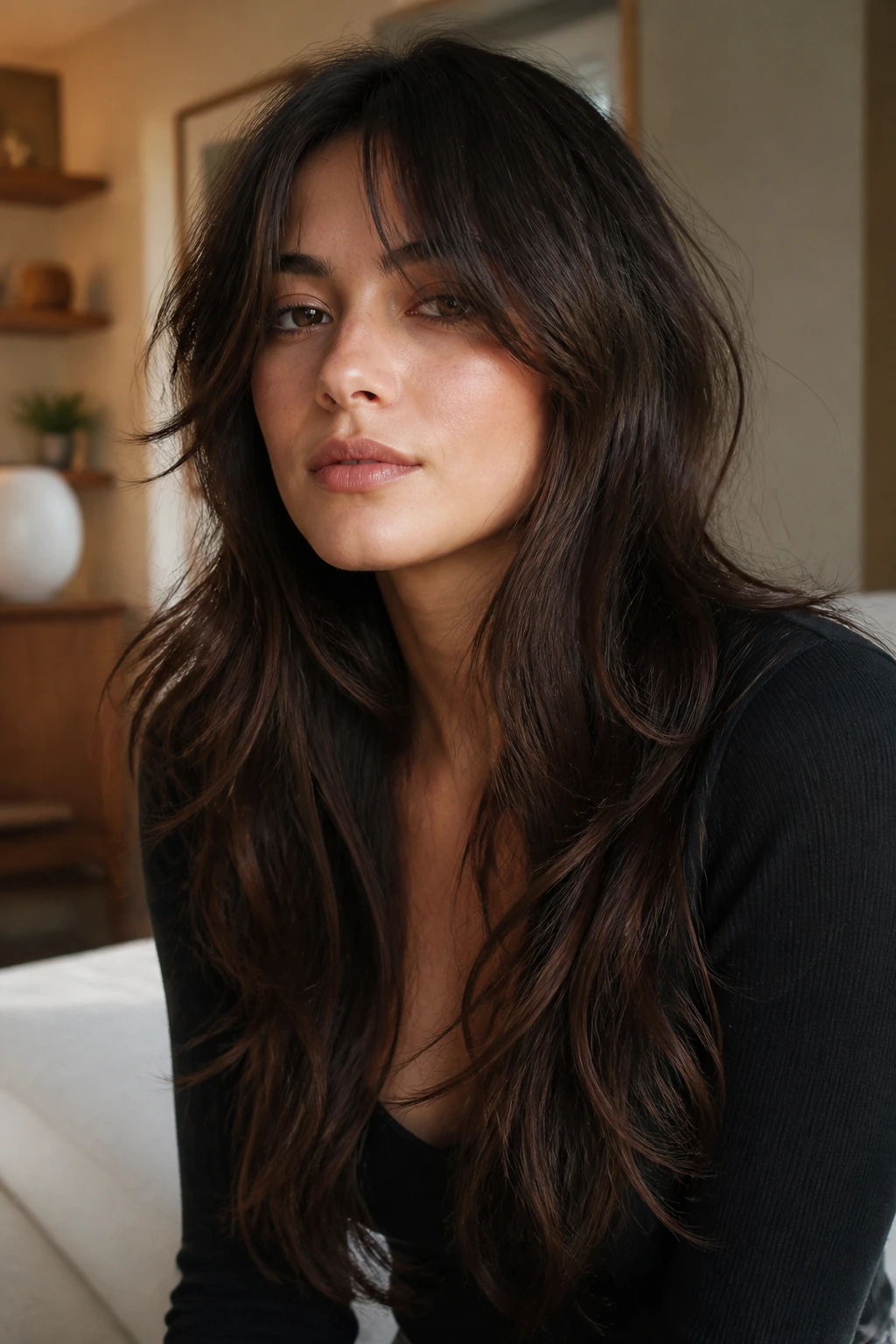
Do long wispy haircuts work on fine hair?
Yes, but the cut has to be subtle. Fine hair usually does better with invisible layers or soft face-framing pieces rather than lots of choppy internal removal, because too much texture can make the ends look sparse.
Can thick hair handle wispy layers without puffing up?
It can, if the stylist removes weight in the right places and leaves enough perimeter. Thick hair often needs internal shaping and careful point cutting, not aggressive thinning from top to bottom.
What should I ask for at the salon if I want a wispy look?
Ask for soft layers, blended face framing, and a clean perimeter. If you have a reference photo, point out where the shortest layer sits and whether you want movement around the cheeks, collarbone, or crown.
Do wispy cuts work with curly hair?
They do, but curl shrinkage changes everything. The best curly version is usually cut with the curl pattern in mind and kept a little longer than you think, because curls spring up after they dry.
How often should I trim a long wispy haircut?
Most people stay in shape with trims every 8 to 12 weeks. If you wear bangs or a lot of face framing, you may want a light cleanup sooner so the front pieces don’t slide into your eyes.
Will a long wispy haircut make my hair look thinner?
Only if the layers are too high or the ends are over-thinned. A good version keeps enough weight at the bottom so the hair still looks full, while the middle and front get the motion.
Is a center part or side part better for wispy layers?
Both work, but they create different moods. A center part reads cleaner and more symmetrical, while a side part gives more root lift and can soften stronger face shapes.
What if my wispy haircut looks too piecey after styling?
Use less texturizing product and more softening cream or light leave-in on the ends. If the cut itself is too broken up, the fix is at the salon: the layers need blending, not more product.
Soft Movement, Long Shape

The best long wispy haircuts do something many layered cuts miss: they keep the length looking like a choice, not a compromise. That means you still get the sweep, the bend, and the air around the face, but the hair keeps enough body to look healthy from root to tip.
That balance is the whole game. Softness without collapse. Movement without mush. If your current cut feels heavy at the ends or stubborn around the face, a wispy shape can change the way the whole style sits, and it does not need to be flashy to do it.
The smartest version is the one that respects your texture and your patience level. A cut that looks good on day one and still looks decent when you miss a trim? That’s the one worth keeping.
