



Long hair after 50 works best when the cut does some of the lifting for you. The best long hairstyle trends for older women rarely look like trends at all; they look like hair that has been shaped to move, soften, and stay believable on a real head, not a photo set. That means the right layers, the right fringe, and the right finish matter more than chasing some dramatic makeover that only works for twenty minutes in front of a mirror.
A blunt, tired length can drag the face down. A well-cut long style can do the opposite. It can open the cheekbones, skim the jaw, hide a little thinning at the crown, and make silver or salt-and-pepper strands look intentional instead of accidental. That’s the part people miss when they talk about long hair on mature women as if it’s one single look. It isn’t. It’s shape, weight, and movement.
I also think long hair gets easier to wear with age when you stop asking it to do too much. It does not need to look stiff. It does not need to look young. It needs to look healthy, shaped, and alive. The most wearable long styles do that with a few clean lines and one smart styling habit—nothing more, nothing less.
Some of the looks below are polished. Some are casual. A few lean glamorous in the best possible way. What they all share is this: they give long hair a reason to be long.
Why These Long Styles Earn Their Keep
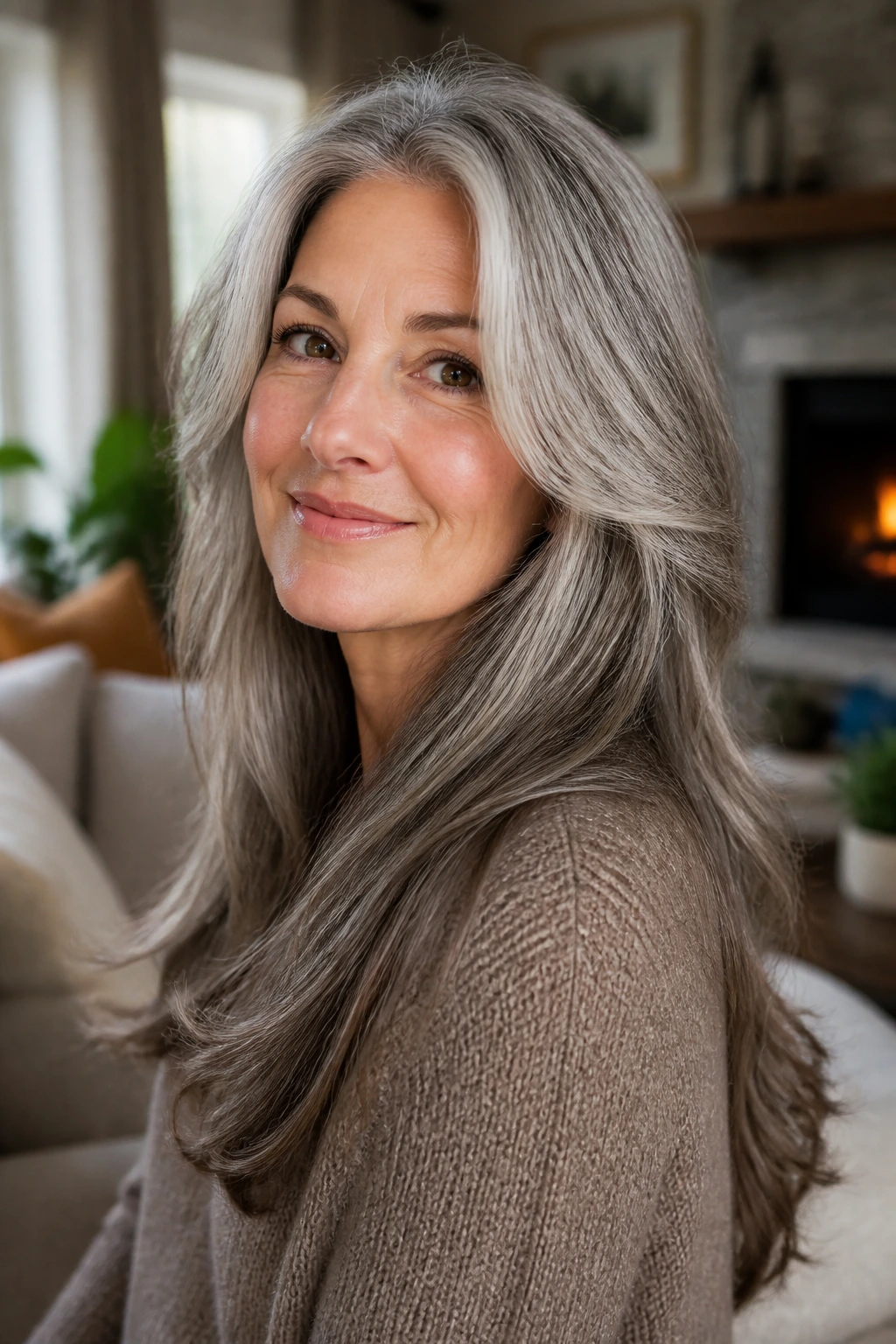
- Face-framing layers: They draw the eye up toward the eyes and cheekbones instead of letting all the weight sit at the bottom edge of the hair.
- Grey-friendly shaping: Silver and white strands show every rough end and uneven line, so a clean perimeter and soft layering matter more than heavy styling.
- Low-fuss polish: The best long styles still look deliberate on day two, which is where most real life happens.
- Texture-specific options: Fine, thick, straight, wavy, and curly hair each need a different long shape, and none of them should be forced into the same cut.
- Accessory room: Long hair gives you space for clips, pins, scarves, low ties, and one strong earring when you want the style to do less work.
- Versatility without sameness: You can wear one long cut sleek on Monday, brushed into waves on Friday, and pinned back for dinner without starting over.
1. Feathered Face-Framing Layers
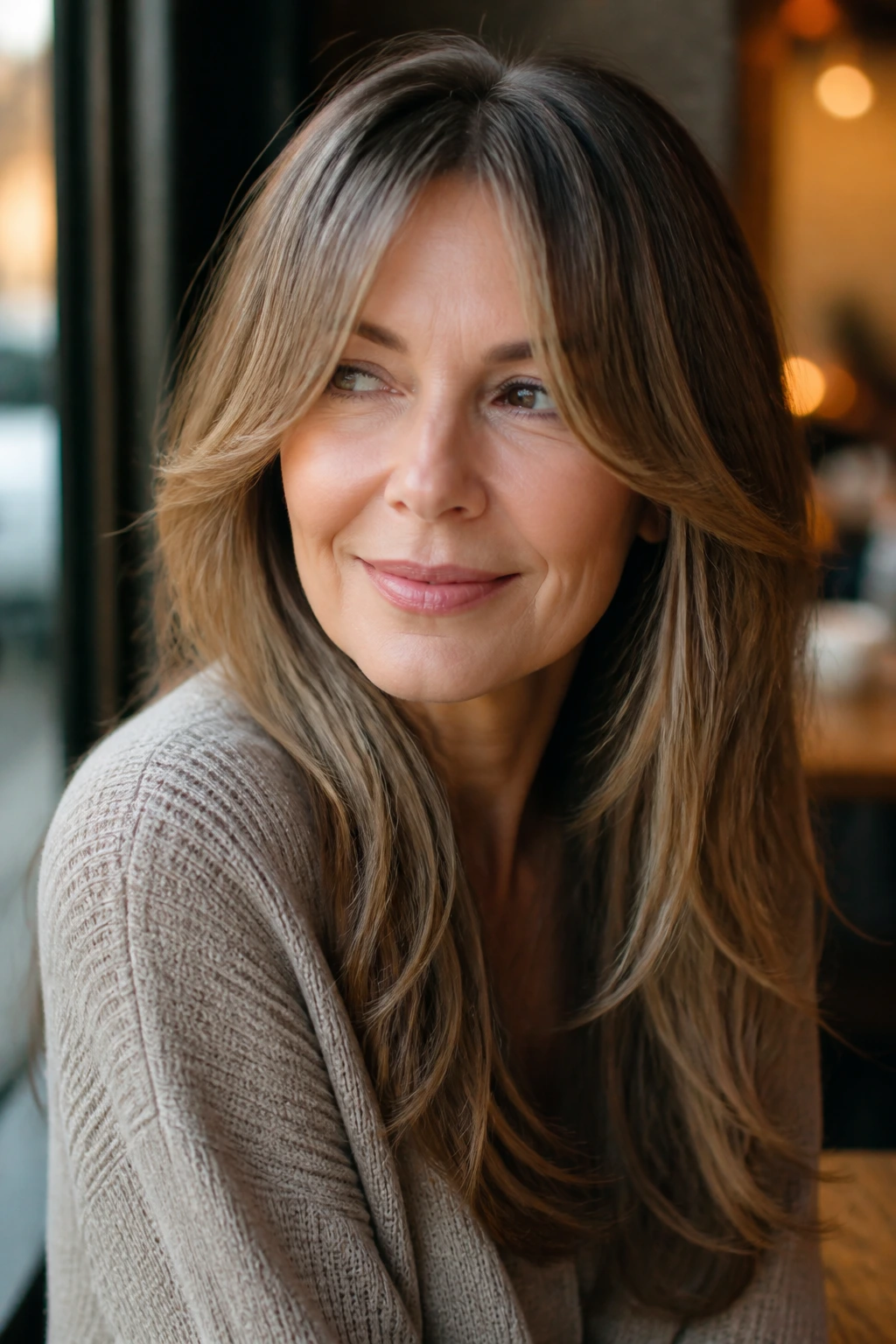
Feathered layers are one of the easiest ways to make long hair feel lighter without giving up the length that took months—or years—to grow. The shortest pieces should land around the cheekbone, jawline, or just below, where they can bend softly toward the face instead of hanging like curtains. That little bit of movement changes the whole mood of the cut.
Why It Flatters
- The layers create lift around the face, which is where flat long hair usually goes wrong first.
- They let you tuck one side behind the ear without the cut falling apart.
- They work especially well if your ends are healthy but your crown needs a little visual lift.
Best request for your stylist: keep the front soft enough to tuck, and don’t start the shortest layer too high. If the first layer jumps above the cheekbone, the cut can start looking choppy instead of feathered.
The shape is especially kind to women whose hair has thinned a bit over the years. You still get the feeling of fullness, but it’s distributed where it matters. And that’s the whole trick here.
2. Curtain Bangs That Melt Into Length
Curtain bangs are the rare fringe that can soften a face without making the style feel high-maintenance. They split in the center, sweep outward, and blend into long layers instead of sitting on the forehead like a hard line. On older women, that softness is the point. It gives the face a little lift without screaming, “I cut bangs.”
They also play well with glasses, which is not a small thing. If your frames already sit near your brows, a blunt fringe can crowd the upper half of your face fast. Curtain bangs open that area back up and leave enough room for the eye to breathe.
The best versions land somewhere between the eyebrow and cheekbone when styled, then continue into the length with a soft bend. I like them most when they’re not overworked. A quick round-brush blow-dry or a pass with a large roller is enough. Anything too stiff starts to look dated.
3. Soft Waves That Start Below the Cheekbone
Why do soft waves keep coming back? Because they fix a lot of hair problems without looking like you tried to fix anything at all. A loose wave creates lift, disguises dry ends, and makes long hair feel fuller than it really is. On mature hair, that matters because the texture usually gets a little finer, a little drier, or both.
How to Wear It
If you use a curling iron, stick with a 1¼-inch barrel for shoulder-length to mid-back hair. Wrap the mid-lengths and leave the last inch or two out, then brush the wave apart with your fingers once it cools. That keeps the finish softer and keeps the ends from curling into tiny, overdone hooks.
A wave like this works best when the root stays a little airy. A puff of volumizing spray at the crown before drying helps more than another round of hot tools ever will. Really. One good root lift does more for the style than extra curl on the bottom.
- Use a heat protectant every time.
- Alternate curl direction for a more natural bend.
- Finish with a light mist, not a heavy hairspray helmet.
4. Silver-Forward Lengths
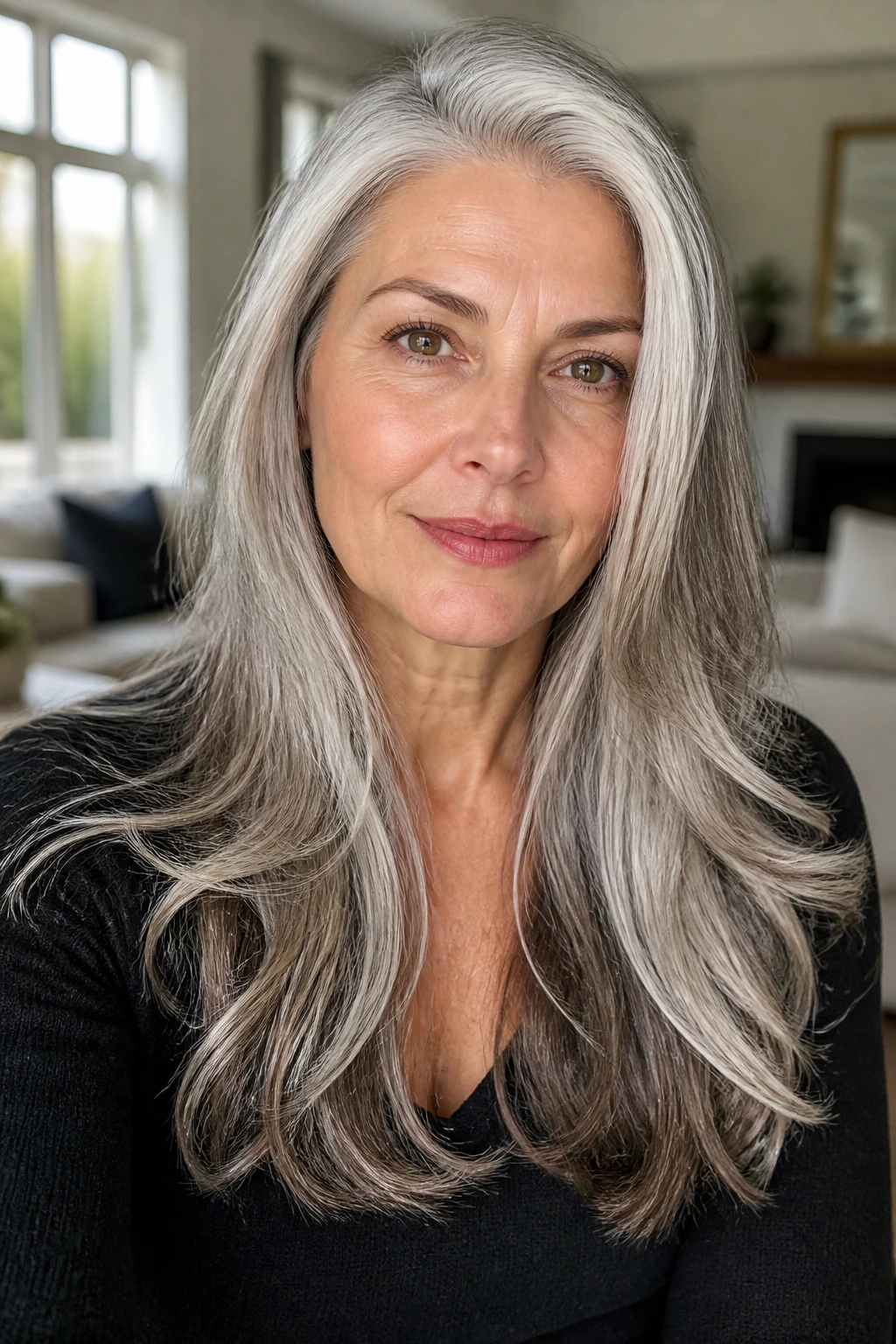
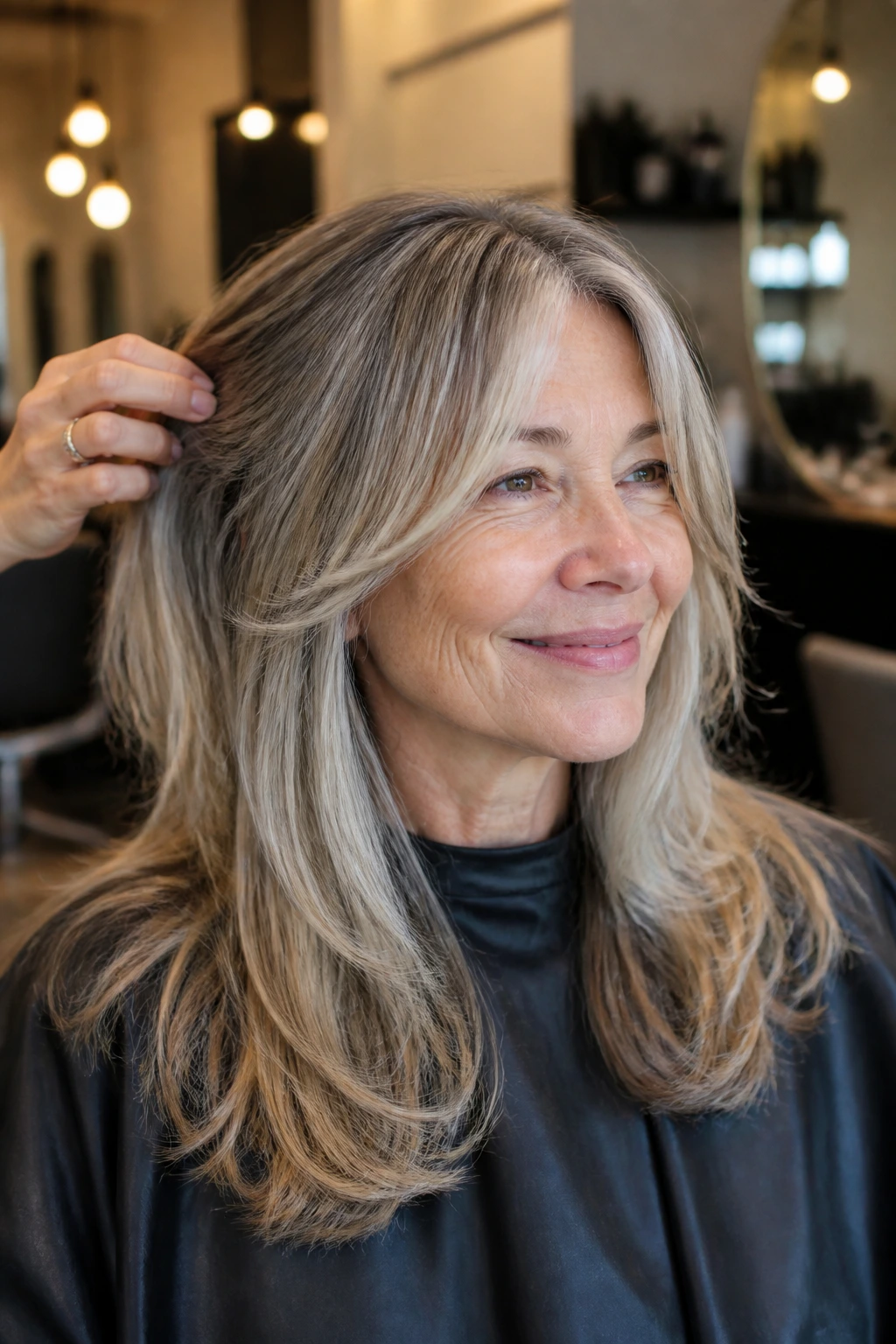
If you’re growing out gray, this is the style that makes the transition look deliberate instead of unfinished. Long silver hair can be striking when the ends are clean and the shape is controlled. It can also look scruffy fast if the perimeter gets ragged, because gray and white strands reflect light in a way that shows damage quickly.
The version that works best has a tidy cut line, soft movement through the mid-lengths, and enough polish to make the color look like a choice. That might mean a gloss treatment, a clean blowout, or even just a good conditioner and a wide-tooth comb. The point is to let the silver read as texture and shine, not as dryness.
I prefer this trend on women who want to wear their natural color but still want the hair to feel styled. It’s a strong look. No dye camouflage, no awkward half-grow-out, no pretending the gray is not there.
5. The Long U-Shape Cut
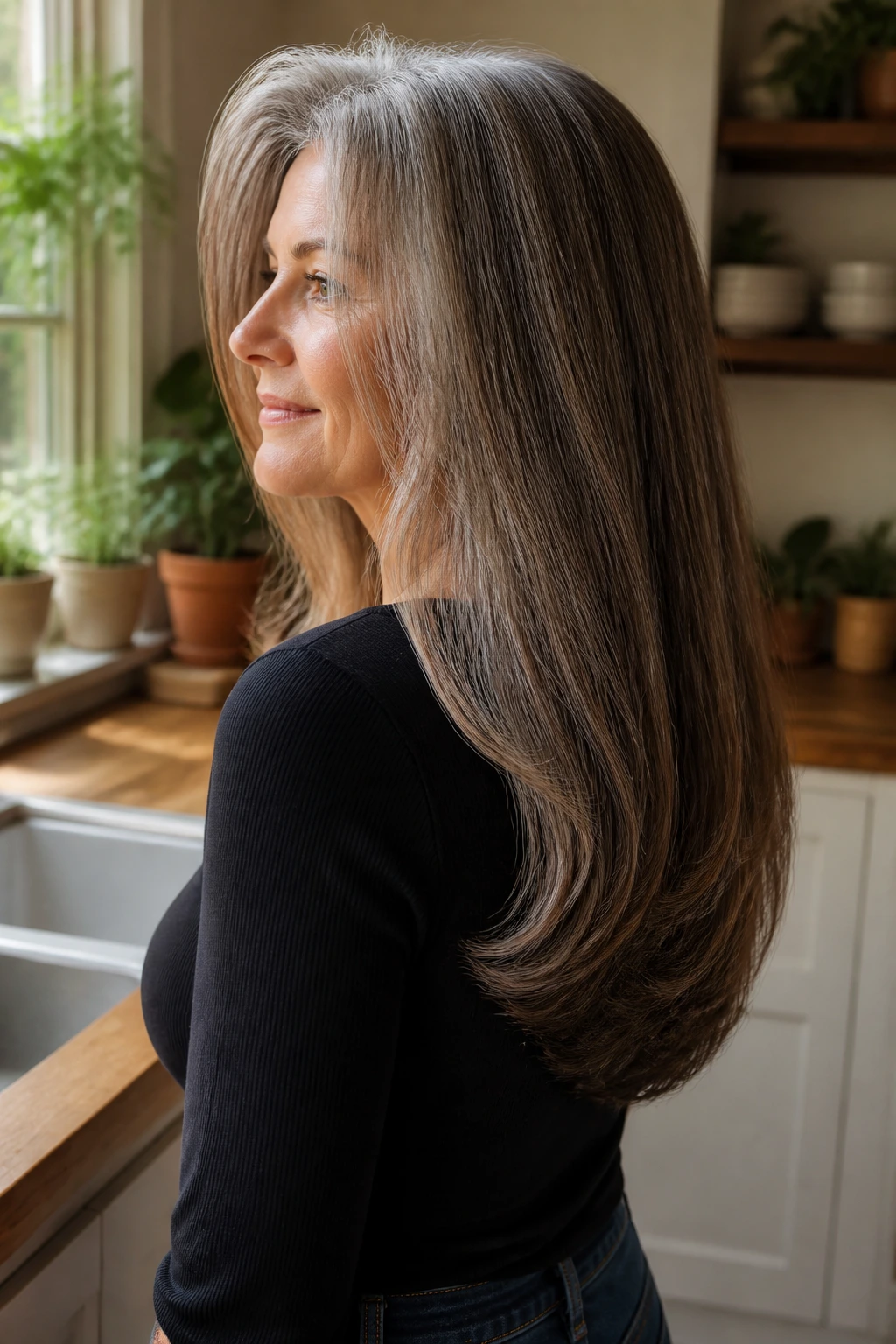
A long U-shape is a small change with a big payoff. Instead of cutting the back straight across, the stylist leaves the center slightly longer and curves the sides up into the face. That soft curve keeps the bottom from feeling blocky, which is one of the main reasons long hair can start to look heavy.
The U-shape is especially useful if your hair is thick or if you like wearing it loose most of the time. It takes some weight out without turning the ends into a thin, stringy line. The shape falls better over sweaters, blazers, and higher necklines too, which sounds trivial until you see it in the mirror and realize the hair actually sits where it should.
This is a quiet cut. It doesn’t announce itself. That’s why it lasts.
6. Long Shag With Piecey Ends
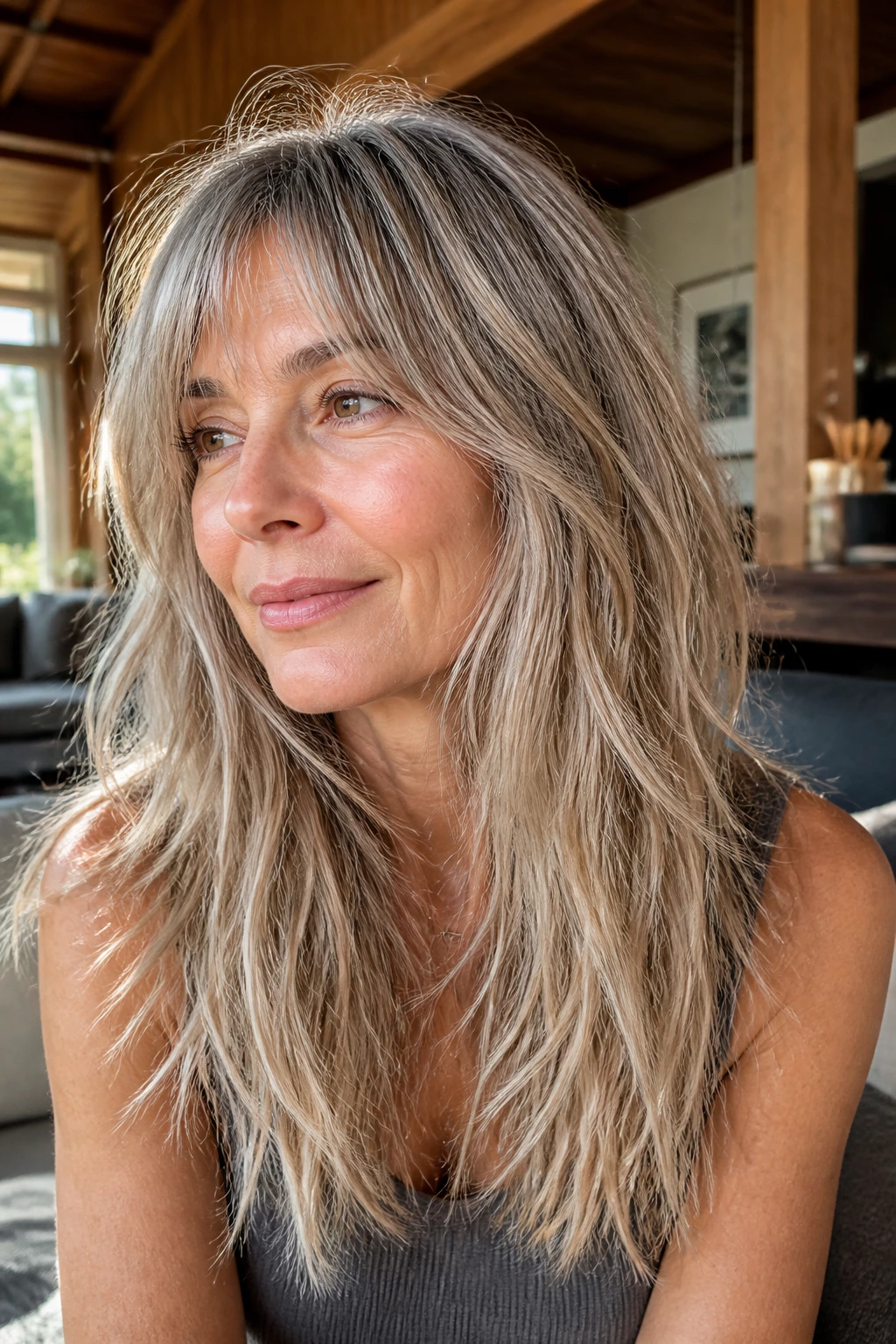
A long shag is for women who want movement without chasing perfect curls every morning. The layers live higher than they do in a classic long cut, which gives the crown a little lift and keeps the silhouette from collapsing. Piecey ends keep it from feeling too polished, and that slightly undone finish can be exactly right for long hair after 50.
What Makes It Different
Unlike a one-length cut, the shag gives the hair air between the layers. That matters if your hair tends to fall flat at the roots or puff out at the bottom. It also helps if you want a style that looks good with a little bend and a little mess.
It is not the right choice if you hate styling. It does want a mousse, cream, or texture spray, and it looks best when the layers are visible. But if you like hair with some attitude, this one has real range.
A long shag can look soft and expensive when the layers are cut well. It can look sloppy when they’re not. The difference is usually in the placement, not the length.
7. Side-Swept Fringe Over Long Hair
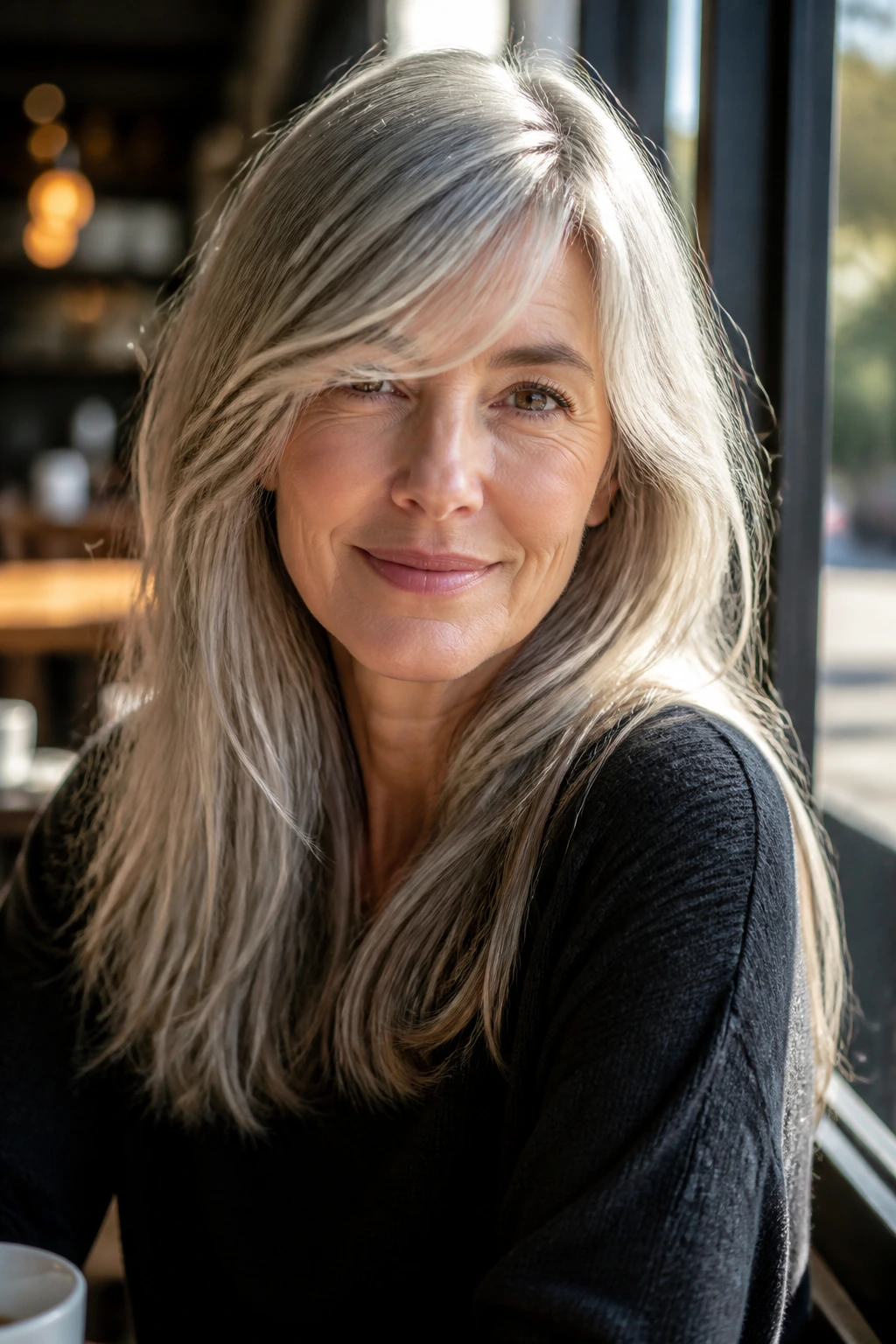
A side-swept fringe is gentler than full bangs, and that is the point. It skims across the forehead, creates a diagonal line through the face, and gives long hair a little shape near the top without requiring daily commitment to a full fringe. If you wear glasses, this is one of the smartest long-hair choices on the list.
A side sweep also suits women who do not want to lose much length around the face. You get the softness of fringe, but the hair still tucks, moves, and grows out gracefully. That is a better deal than a blunt bang for most people, honestly.
Best For
- Foreheads you want to soften without hiding.
- Frames and glasses that need space at the brow.
- Long layered cuts that need a little direction near the part.
Keep the sweep light. If it gets too heavy, it stops looking airy and starts acting like a curtain that needs constant attention.
8. Rounded Curls With Defined Ends
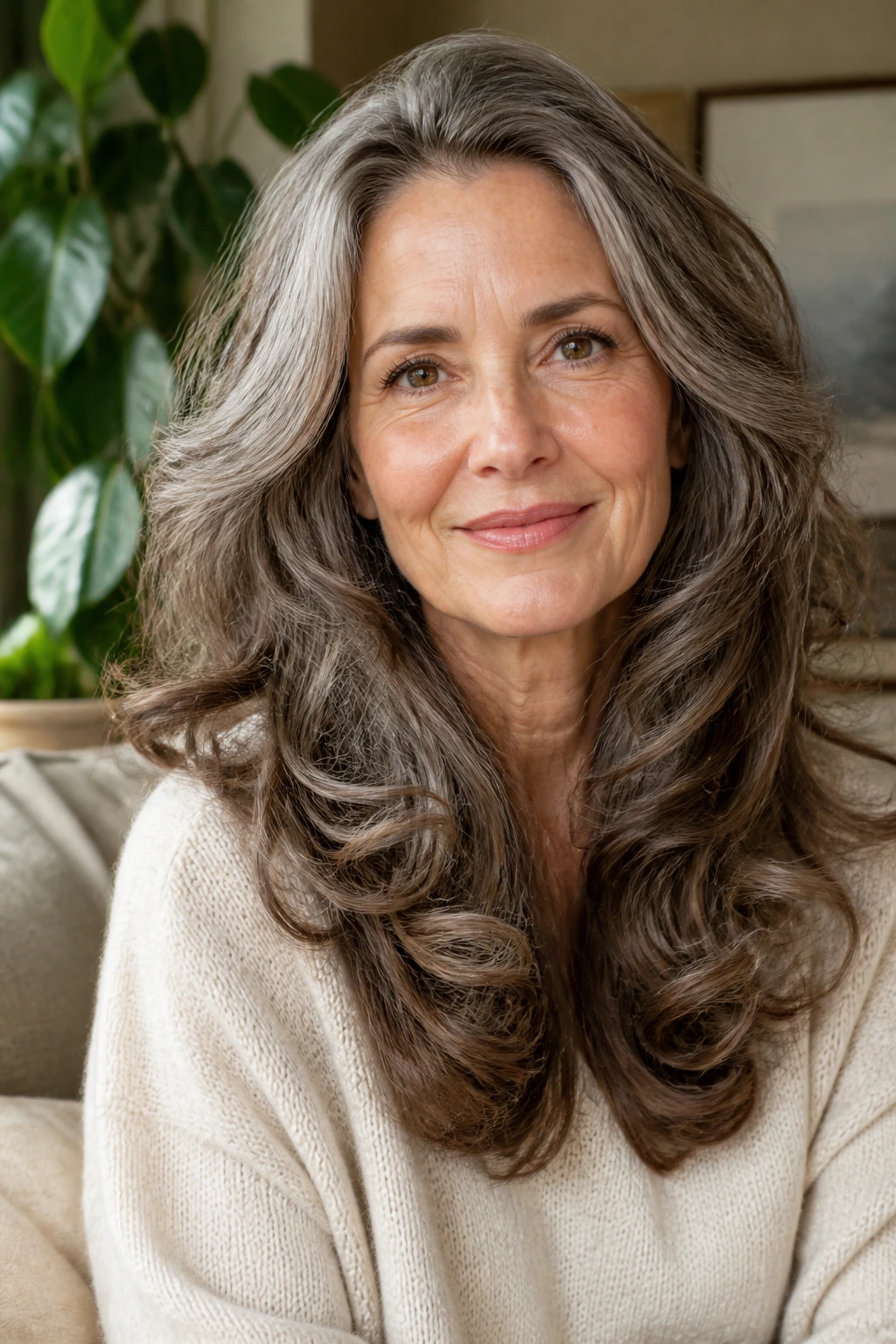
Curls at long length need shape, not just length. Without that shape, the bottom can swell out in a way that makes the whole head look wider than it is. A rounded curl pattern keeps the silhouette balanced and gives the eye a place to land.
The trick is to let the curl family do the work. That means diffusing until the hair is about 80 percent dry, then leaving it alone long enough for the cast to set if you use a gel. If your curls are looser, a light cream plus a few defined scrunches is usually enough. If they’re tighter, sectioning and drying in small pieces keeps the shape from frizzing open.
This style can look lush and expensive. It can also go big and puffy fast if you touch it too much. Hands off is not a bad policy here.
9. Glossy Straight Length With a Center Part
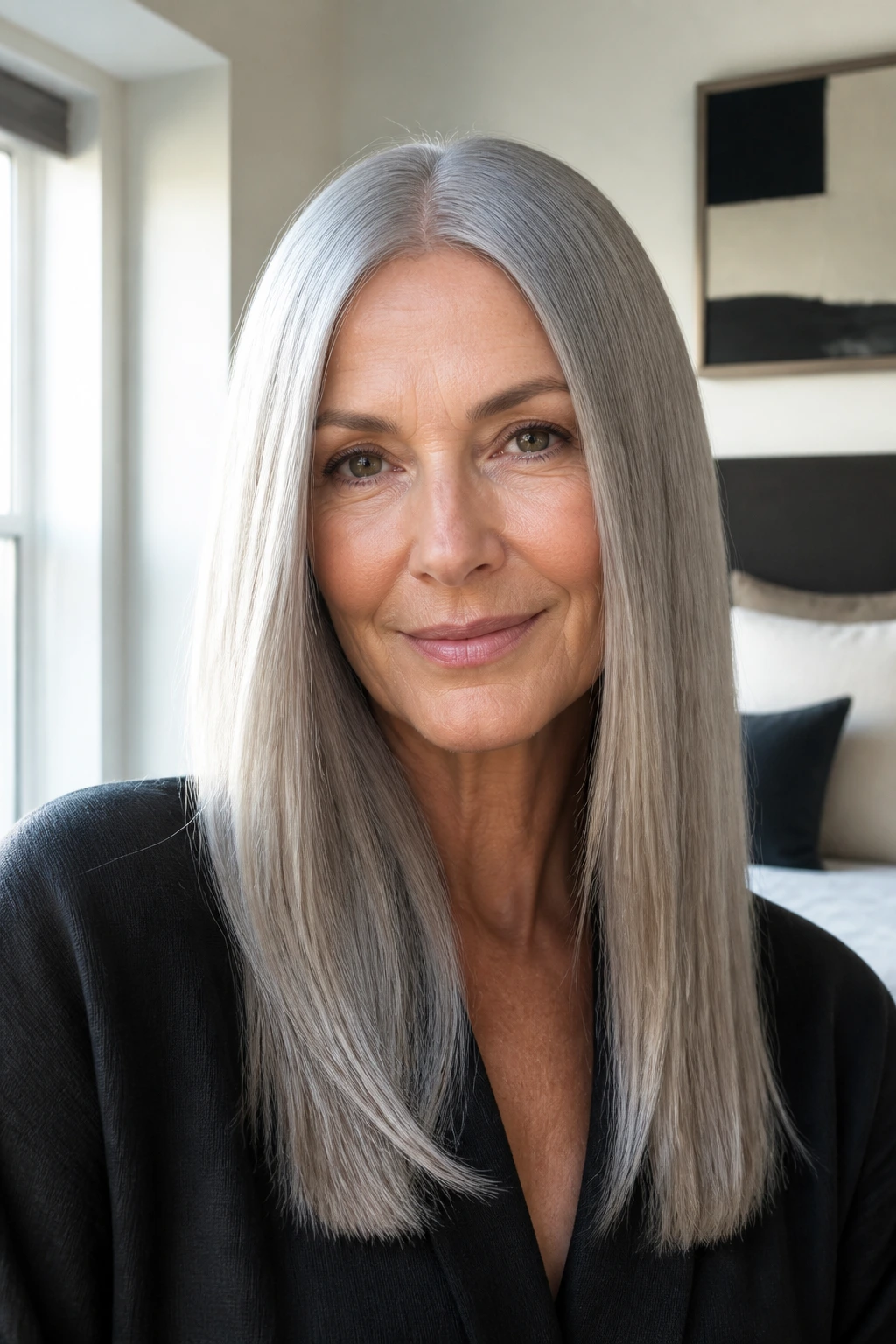
A center part is not automatically severe. On long, straight hair, it can look clean, modern, and calm—especially if the ends are blunt and healthy. The key is movement at the bottom and a crown that isn’t flat as paper.
This style rewards good maintenance. Dry, split ends show up fast on straight hair, and that is even more obvious on silver or highlighted lengths. A small amount of shine serum on the last four inches and a careful blow-dry can change the whole read of the style.
It’s especially good if you like a crisp outline and don’t want layers flying around your face all day. The look is disciplined, but not stiff. There’s a difference.
10. Low Ponytail With Crown Volume
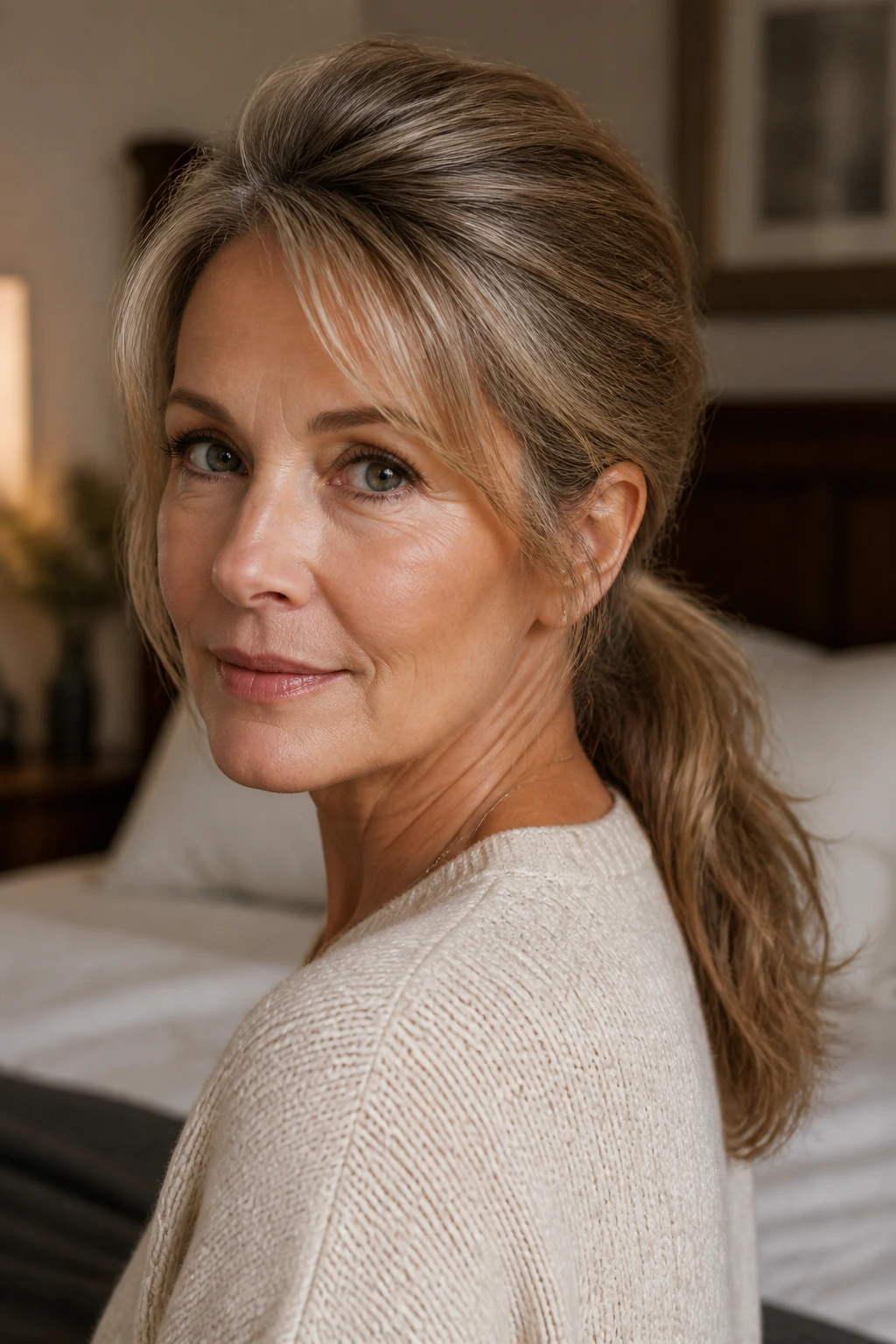
A low ponytail sounds plain until you give the crown some lift. Then it turns into one of the easiest long hairstyles for older women who want polish without fuss. The volume at the top keeps the face open, while the ponytail itself lets the length stay visible and controlled.
The best version starts with a little root support. Tease the crown lightly, or set a large roller at the top while you finish makeup. Gather the hair low at the nape, secure it with an elastic, and wrap a small strand around the band if you want a more finished look. That tiny wrap matters. It makes the style look considered.
Quick Details That Help
- Keep the ponytail low, not mid-head.
- Leave the crown slightly lifted.
- Use a soft brush, not a stiff one, so the top doesn’t go shiny and flat.
It is one of the few styles that works for errands and dinner on the same day without a second thought.
11. Half-Up Twist With Loose Length
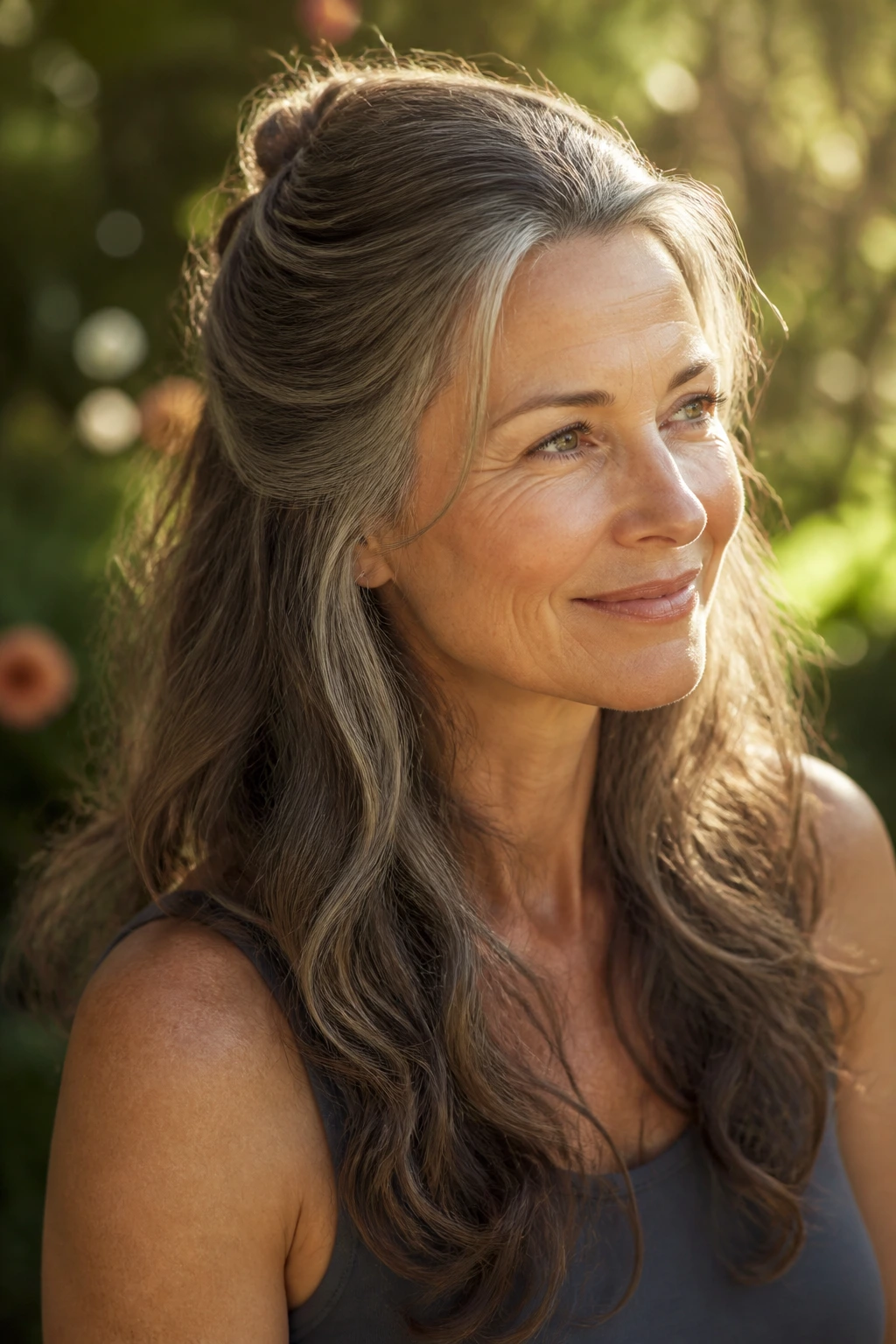
The half-up twist is a good answer for women who want their hair off the face but do not want to lose the drama of long length. The front gets lifted and secured, the rest stays loose, and the whole thing feels a little more relaxed than a full updo. That balance is why it keeps showing up.
If you’ve got layers around the face, this style is even better. The shorter pieces can fall softly at the temples while the twist keeps the crown from collapsing. Two bobby pins placed in an X hold better than one clip in many cases, and they hide more easily under the hair.
It is also kind to second-day hair. Sometimes that’s the whole appeal. Hair doesn’t have to be freshly washed to look finished.
12. Braided Crown Through Long Hair
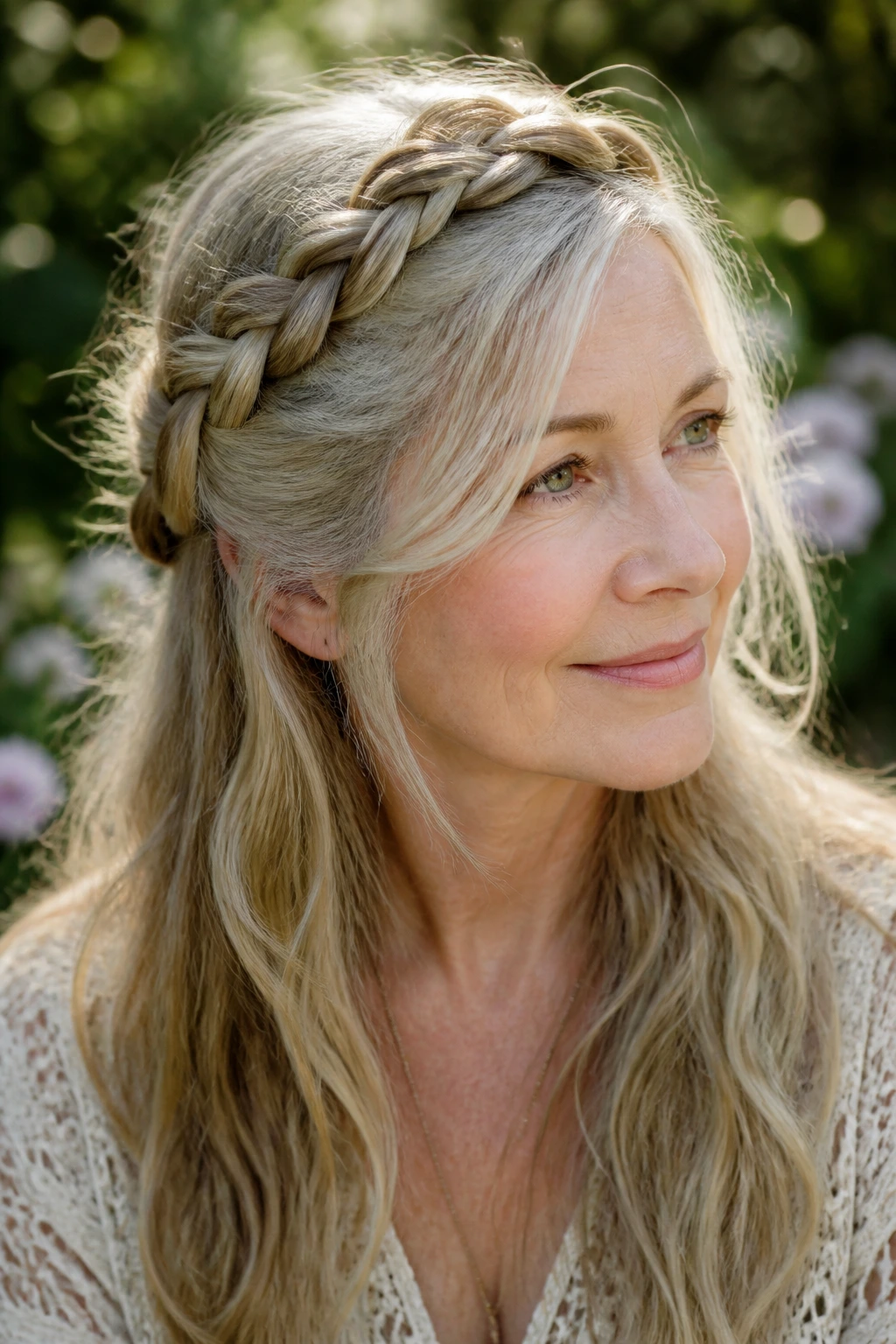
A braided crown is practical and decorative at the same time, which is a rare pairing. It keeps long hair controlled, shows off the length, and works especially well when the weather is humid or the day is long. The braid doesn’t have to be tight. In fact, a looser braid usually looks better on mature hair because it sits flatter against the head and doesn’t pull the hairline.
This is a style I like for travel, weddings, and any day when you want your hair to stay put without looking severe. The braid can wrap around the top of the head, start at one temple and travel across, or simply feed into a low plait with the front pieces pulled softly away from the face.
A little width at the braid gives the whole thing a softer read. Tiny, tight braids can look fussy. Bigger ones breathe.
13. Big Blowout Layers
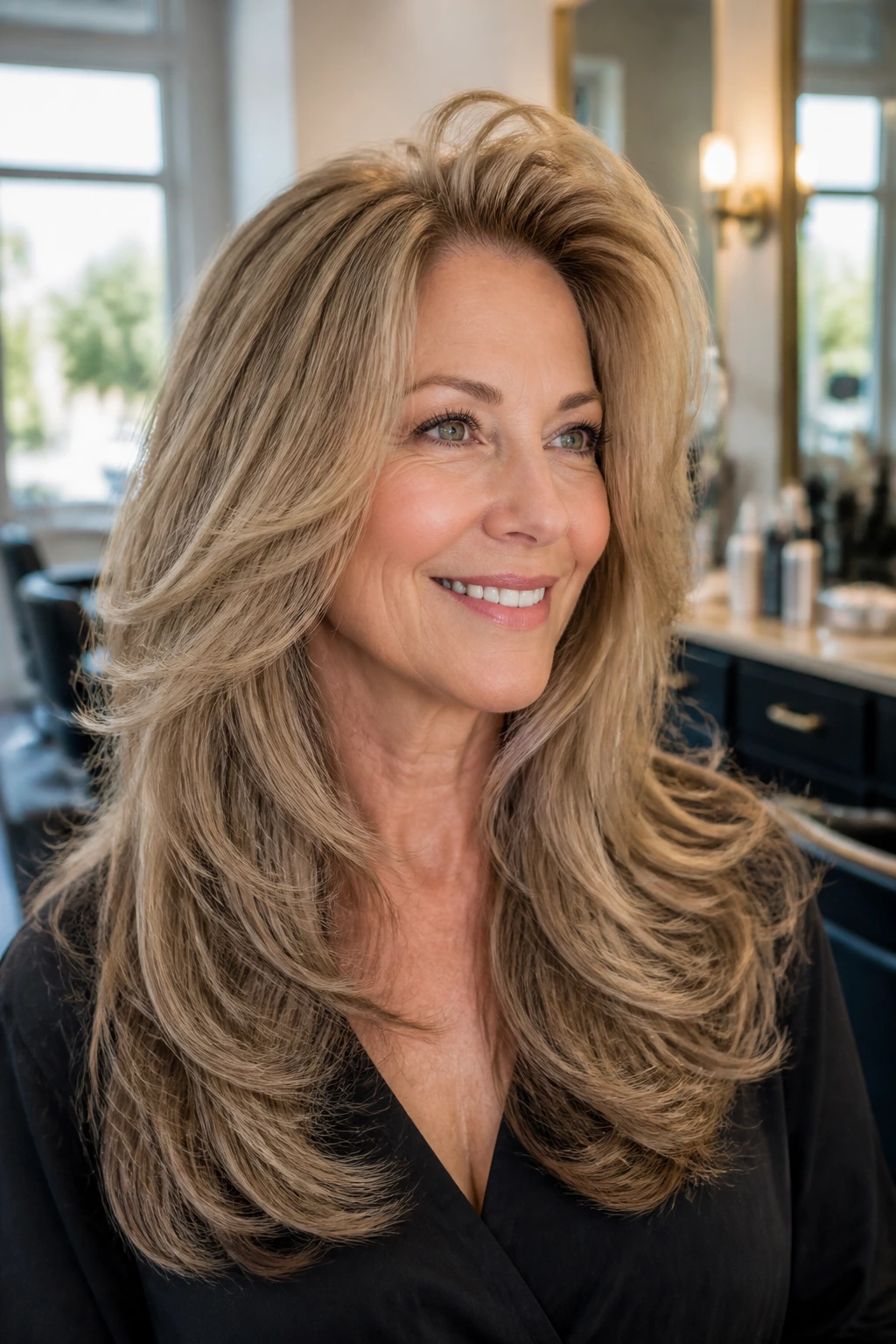
A big blowout is not about making the hair as high as possible. It’s about creating a smooth lift at the crown and a bend through the ends that makes long hair feel alive. The right layers help a blowout last because the hair has somewhere to move. Without layers, the brush work can only do so much.
The Cut Has to Help the Brush
If your hair is all one length and heavy, the blowout can fall flat by noon. Layering around the front and mid-lengths gives the brush something to shape. A 1½-inch round brush is usually the sweet spot for long hair, and a nozzle on the dryer matters more than people think because it keeps the air pointed where you want it.
Set the front pieces away from the face for a softer finish, or roll them under if you want a more classic shape. Either way, let the hair cool in the shape you want before you touch it. Heat sets the style. Touching it too soon ruins it.
14. Air-Dried Texture That Still Looks Finished
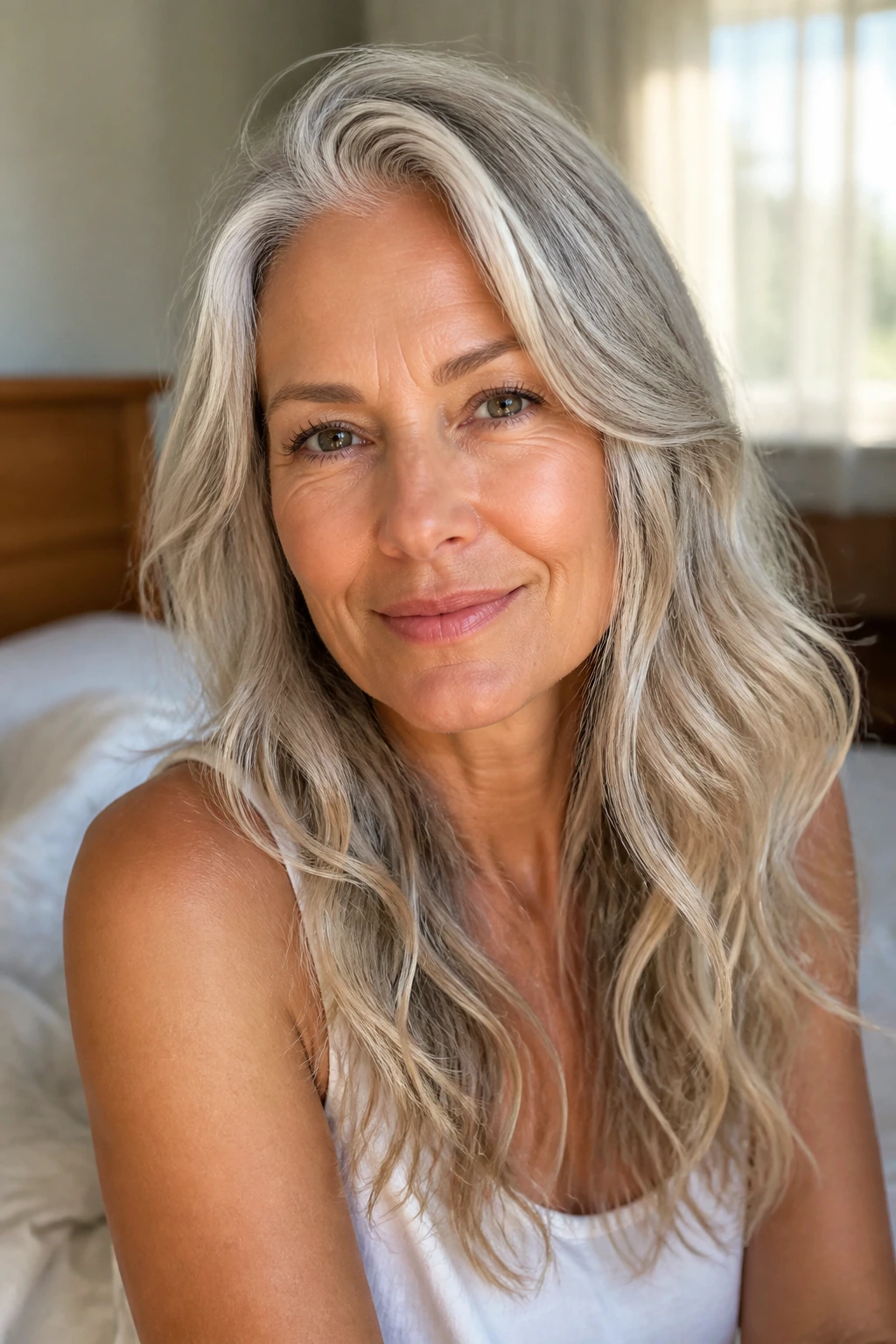
Not every long style needs a hot tool. Air-dried texture can look excellent on older women when the hair is cut to support the natural bend instead of fighting it. The best versions are not fuzzy. They have a soft, touchable bend, a little lift at the roots, and a finish that looks casual on purpose.
A leave-in conditioner plus a light gel-cream is usually enough for wavy hair. Smooth it through damp hair, scrunch once or twice, and leave it alone while it dries. If you keep touching it, you’ll get frizz instead of shape. That’s the trade.
This look is especially nice for women who want less heat and less effort. It can still look polished. It just asks for a better cut and a little patience.
15. Deep Side Part Waves
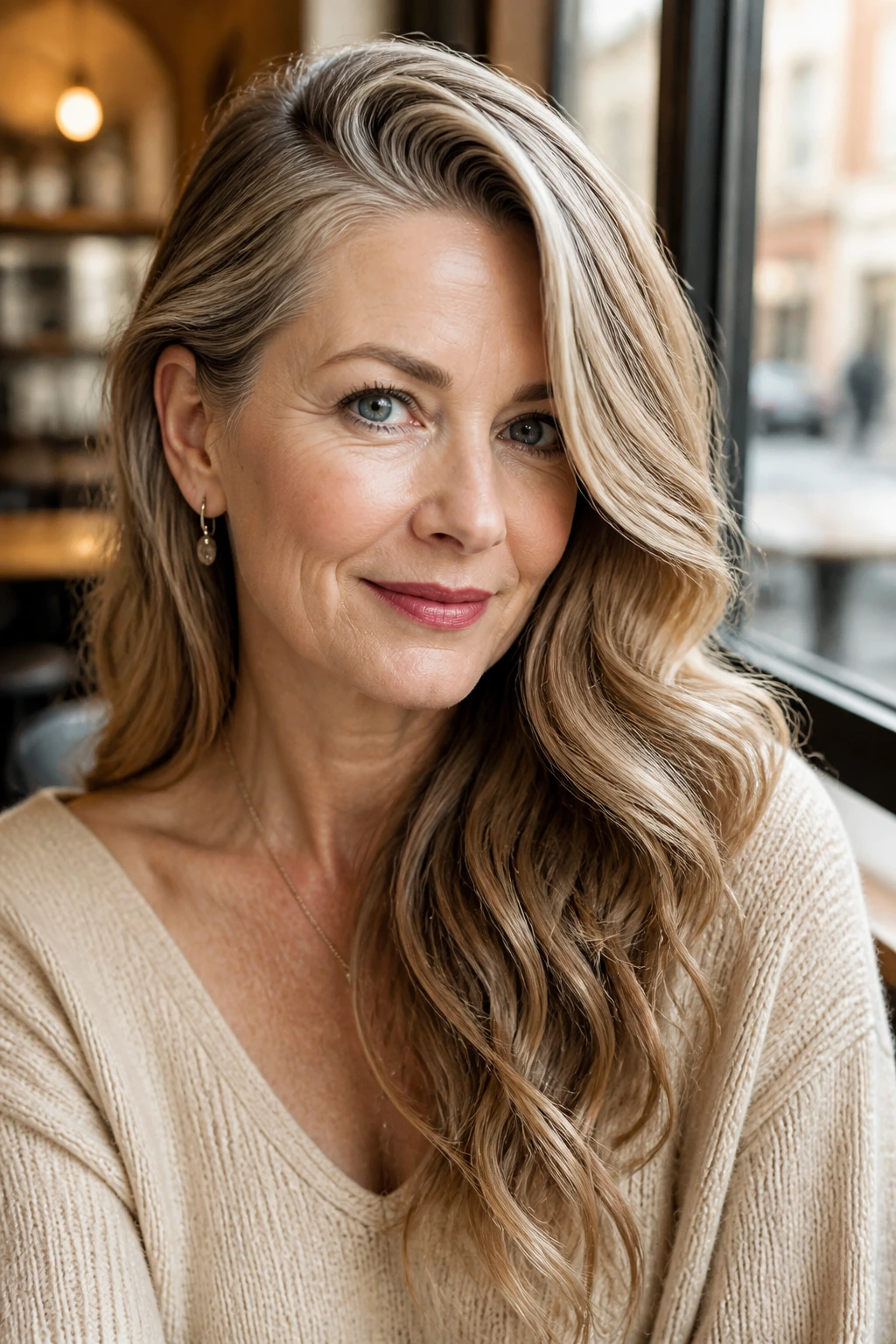
A deep side part changes the whole face. It shifts volume to one side, lifts the root where you need it, and can soften areas where the hair is thinner near the temples. On long hair, that simple move can feel like a real style decision instead of a default.
The waves themselves do not need to be perfect. A side part already creates drama. Add a loose wave through the mid-lengths, tuck one side behind the ear, and the shape suddenly reads intentional. If your hair is very fine, do not force the part so deep that the hair collapses on the heavy side. A little angle is enough.
This is a good option when you want change without a cut. Small shift. Big effect.
16. Feathered Flip Ends
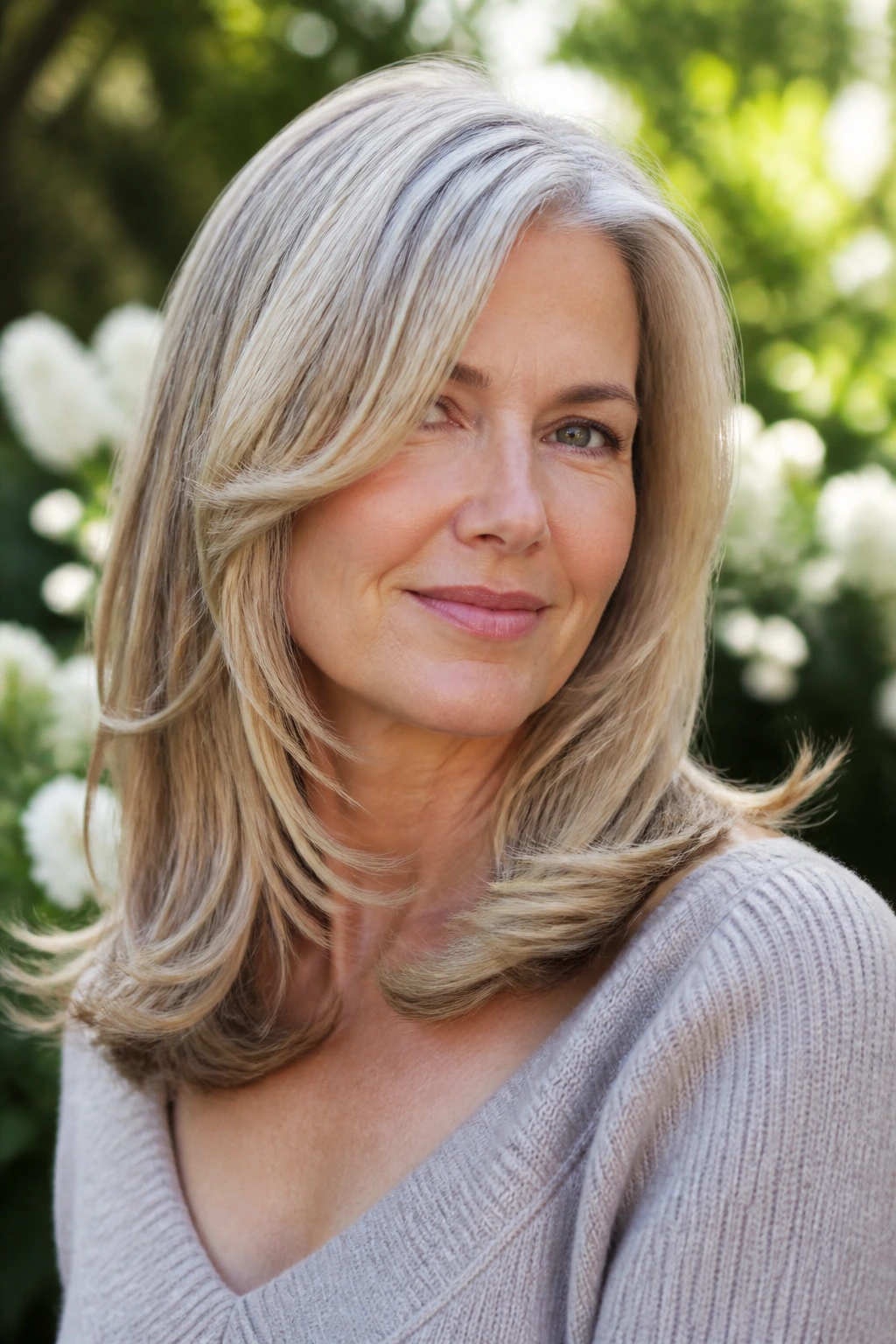
Feathered flip ends have a bit of retro energy, but not in a costume way. The ends kick outward just enough to keep long hair from hanging straight and tired. It feels lighter than a blunt inward bend, and more playful than a heavy curl.
This style works best on hair that falls at the collarbone, chest, or mid-back and needs a little motion at the bottom. A round brush or flat iron bend can create the flip, but the goal is always the same: the ends should move, not curl into a tight loop. If they turn under too much, the style starts to feel old-fashioned in the wrong way.
A feathered flip also works beautifully with soft layers. The layers support the shape so it doesn’t feel pasted on.
17. Long Layers for Fine Hair
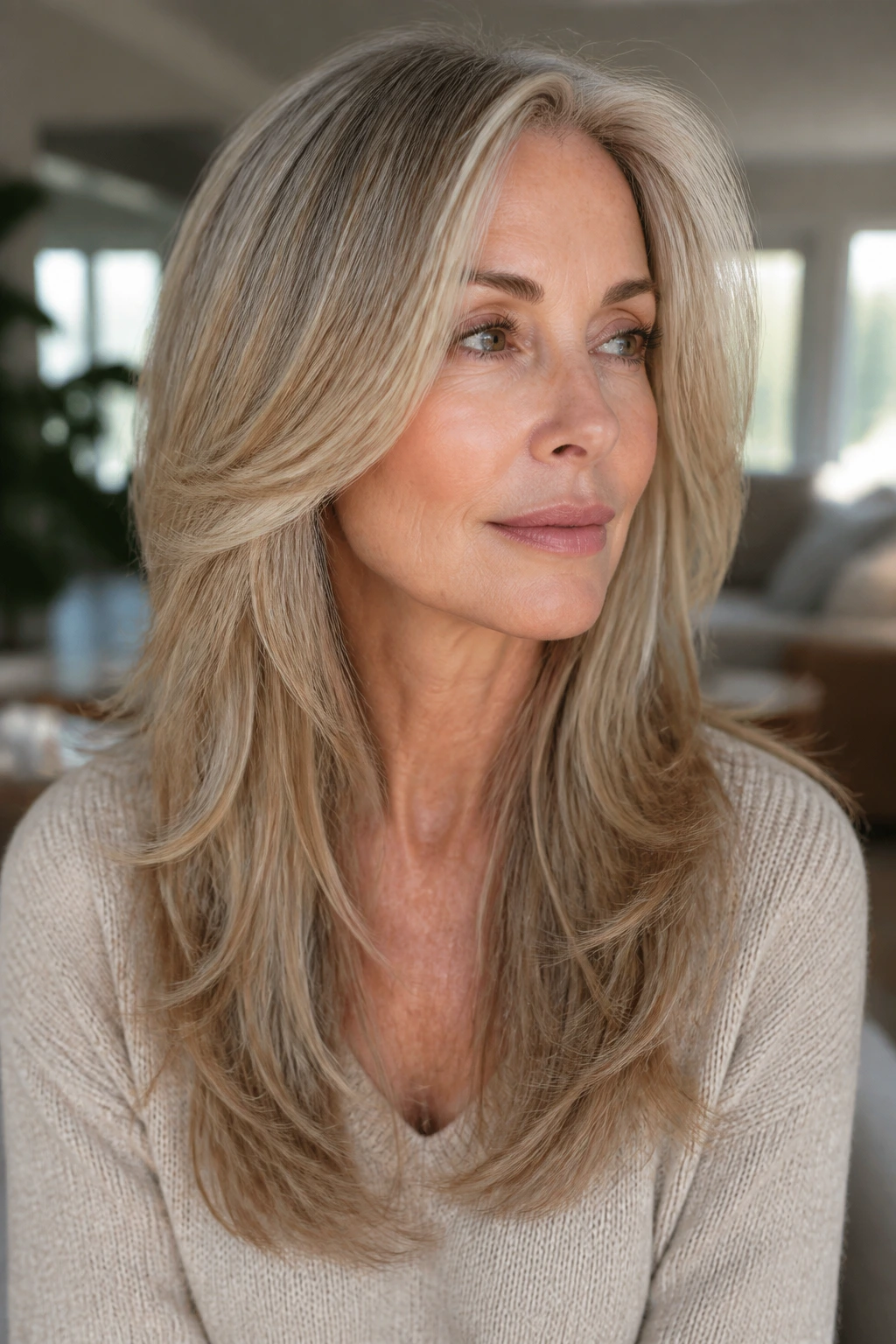
Fine hair can stay long. It just cannot be overloaded with too many short layers. That’s the part people get wrong, and then they blame the length when the real problem is the haircut. For finer strands, the best long layers are long enough to preserve density at the bottom while still allowing some movement through the sides.
Ask for layers that begin lower, often around the collarbone or below, and avoid anything too choppy at the crown. Too many short pieces can make fine hair look thin in a hurry, especially when it’s worn down. A cleaner perimeter helps the ends look fuller, and a little root lift goes a long way.
Ask For This
- Long, blended layers, not chunky ones.
- A perimeter that keeps the bottom visually full.
- Face-framing pieces that start low enough to support the rest of the cut.
Fine hair likes support. It does not like being stripped down to nothing.
18. Long Layers for Thick Hair
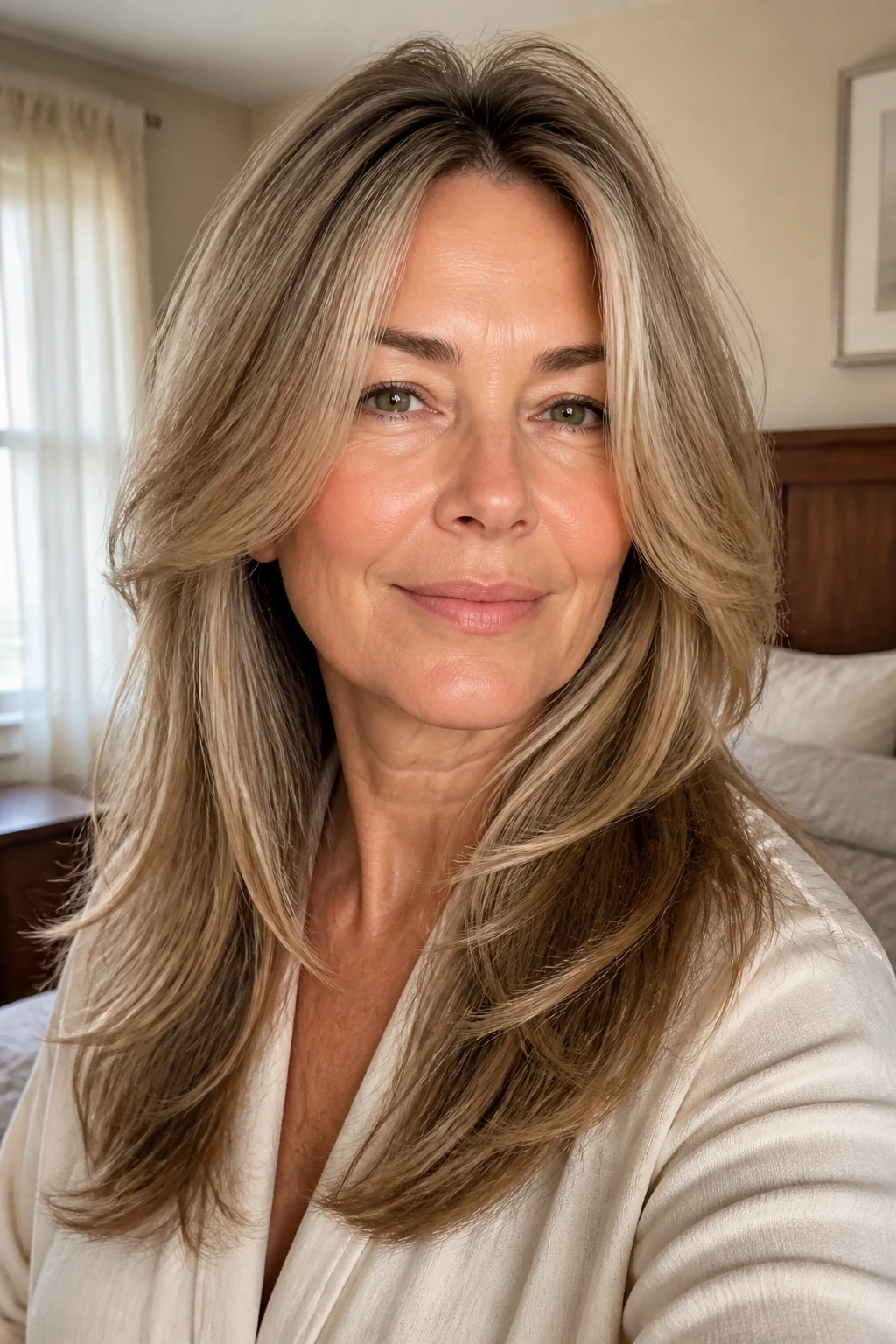
Thick hair usually needs the opposite treatment: weight removal without turning the shape into a triangle. Long layers help the length move, stop it from ballooning at the bottom, and make it easier to wear loose without feeling like you’re carrying a blanket on your head.
The smartest version keeps the structure inside the cut, not just on the outside. Internal layers remove bulk while the outer line stays smooth. That way the hair still looks lush, but it stops fighting your shoulders. If you’ve ever had thick long hair that looked wide rather than graceful, you know exactly what I mean.
This is also the cut that makes blow-drying less of a workout. Hair that’s too dense at the bottom takes forever to dry and often looks puffed up by the time you’re done. A better shape solves both problems.
19. Rounded Curls With Natural Texture
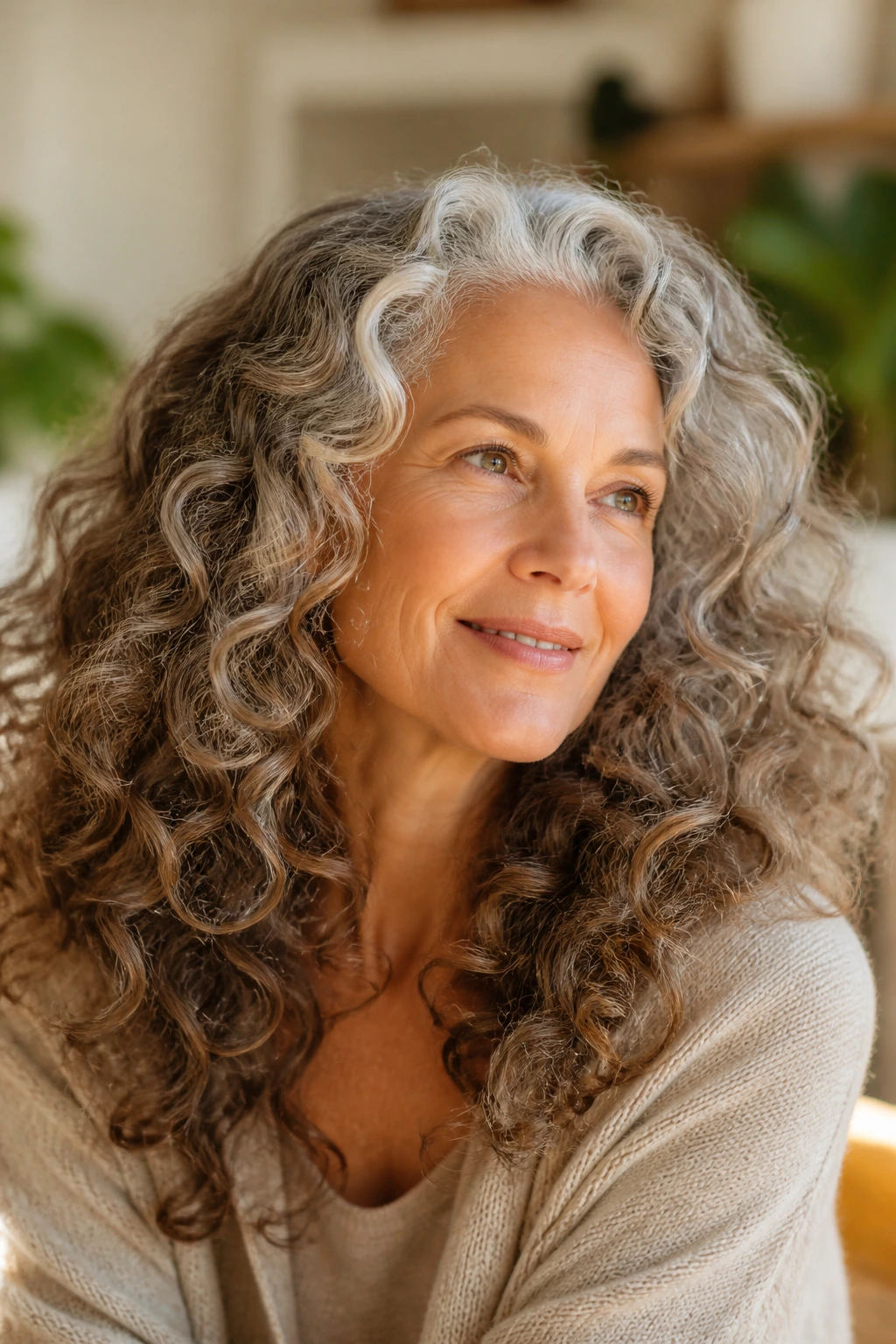
Natural curls look better long when the shape is rounded instead of triangular. A good curl cut keeps the edges soft and the outline full enough that the hair feels balanced from top to bottom. The exact layering depends on curl pattern, but the goal stays the same: keep the curls springy and let the silhouette breathe.
Cutting curly hair dry, or at least in a curl-aware way, usually gives a better result than trimming it flat and hoping for the best. Curls shrink. A lot. If the shape is wrong on dry hair, the finished look can land several inches shorter than expected and one side can end up puffier than the other.
This trend works beautifully for women who want hair that feels natural but still shaped. It does not need to be stiff or overly defined. It just needs enough structure to keep the curls from spreading outward.
20. Hollywood Waves on Long Hair
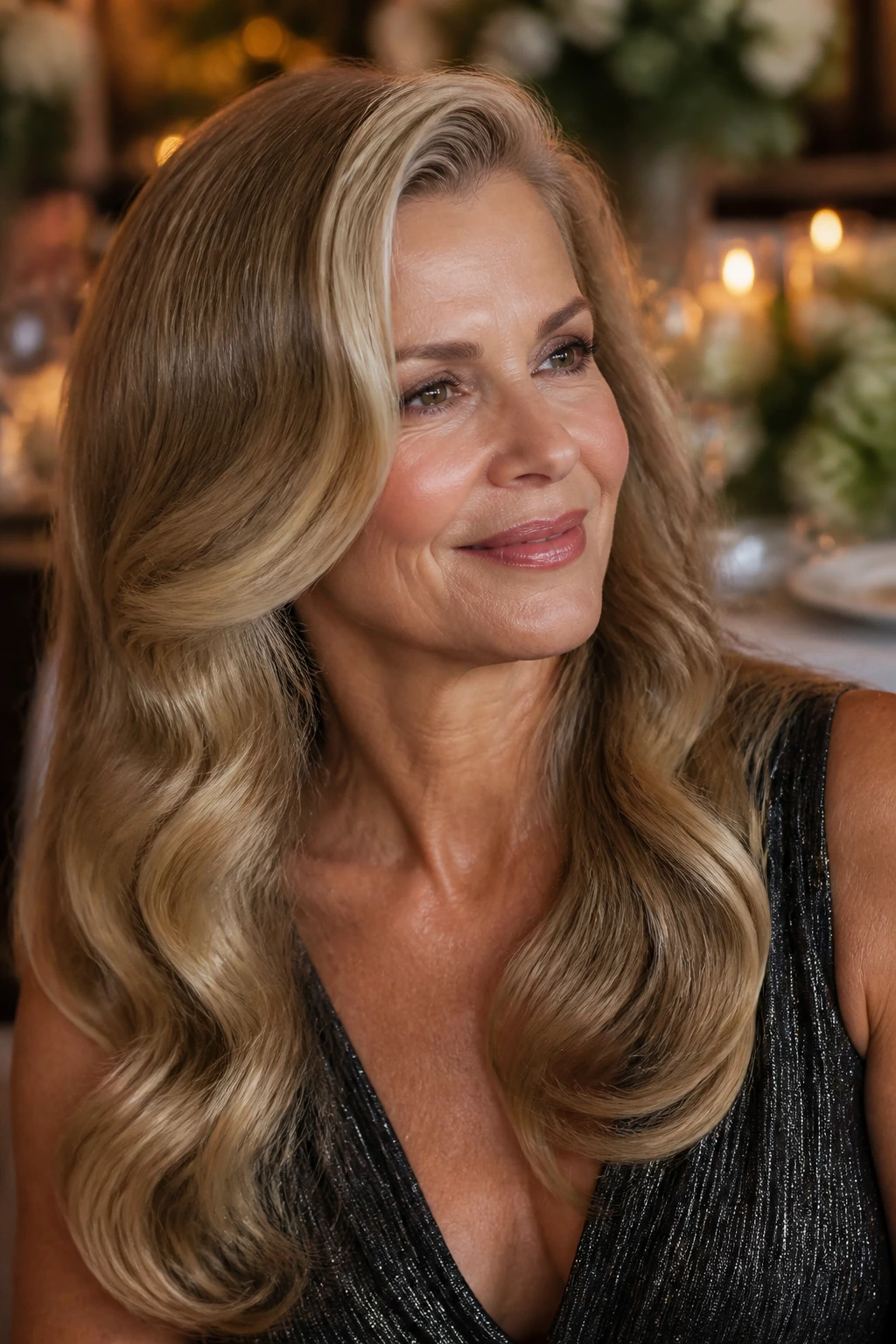
Hollywood waves are still one of the best long-hair styles for dinners, events, and any day when you want the hair to carry a little glamour on its own. The wave pattern is smoother and more set than casual beach texture, with a polished bend that runs in clean, repeated curves. On older women, that kind of shape can feel elegant rather than overdone when the finish stays soft.
The trick is not to make the waves too tight. Large sections, brushed-out curves, and a good setting spray give the style its hold without turning it stiff. Pinning the waves until they cool helps, too. That cooling step is one of the least glamorous parts of the process, but it saves the style.
This is a style that likes healthy ends and a little shine. Dry hair makes it look tired. Healthy hair makes it look rich.
21. Low Chignon With Face-Framing Pieces
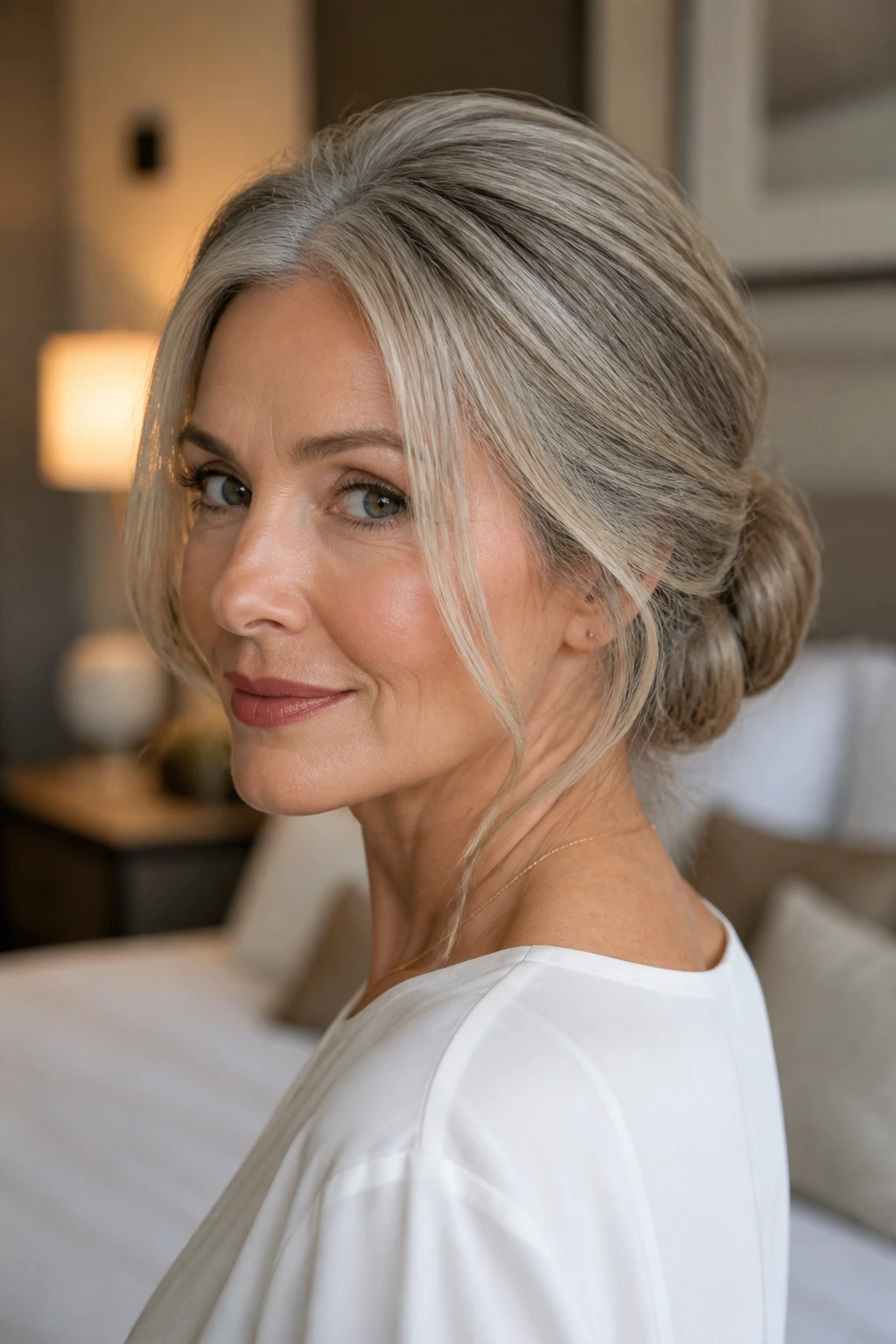
A low chignon is one of those styles that seems formal until you wear it with a few soft pieces around the face. Then it becomes something much better: tidy, graceful, and not a bit severe. The knot sits at the nape, so the scalp doesn’t feel pulled, which older women often appreciate more than they expect to.
Face-framing pieces soften the whole thing. They stop the style from looking too tight and let the hairline breathe a little. If your hair is long enough to gather easily, the chignon can work for events, warm days, or a polished everyday look that just happens to be pinned up.
It’s a useful style because it respects the length without forcing it to be the star. Sometimes that’s the smartest move.
22. Scarf-Tied Lengths
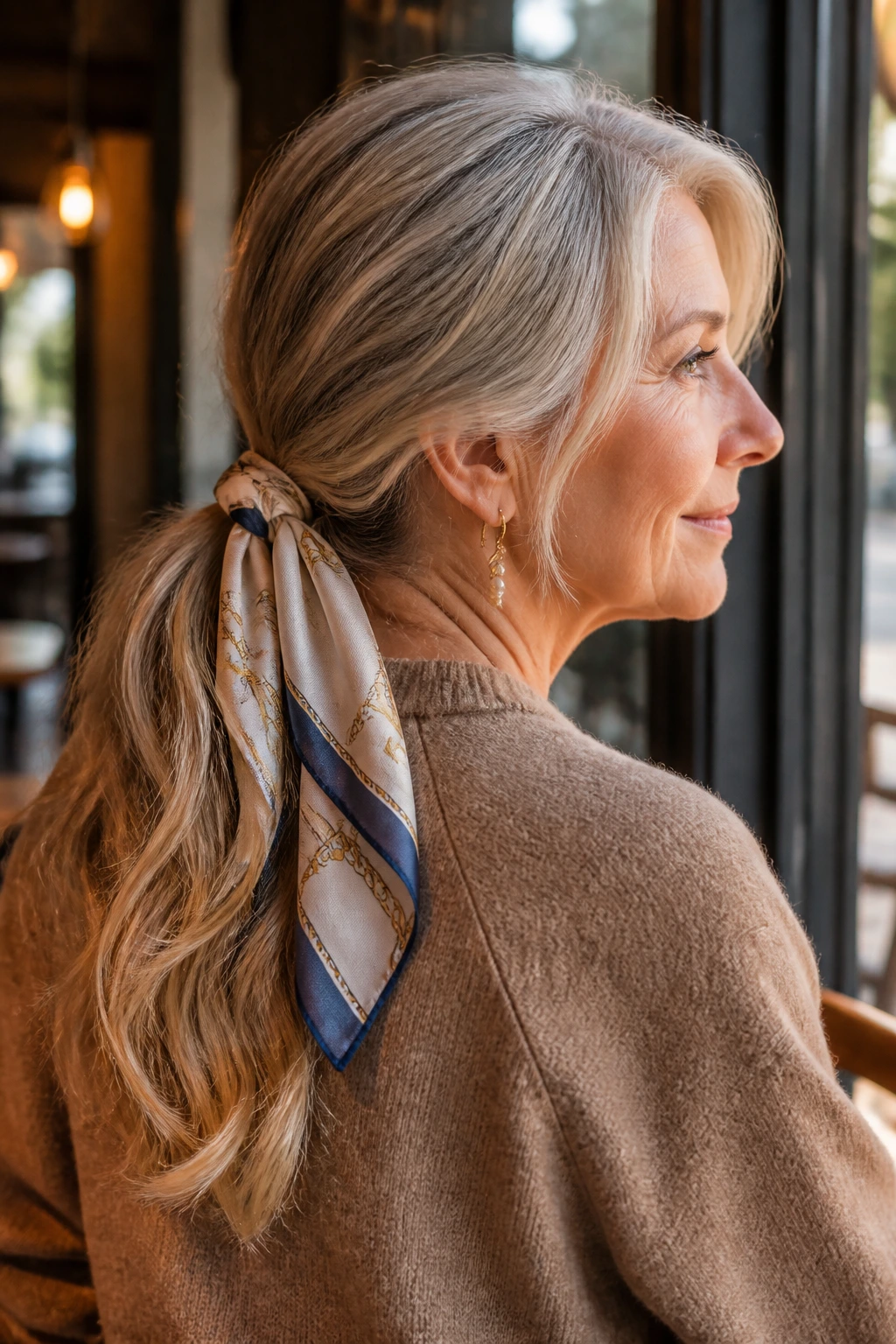
A silk scarf can change long hair faster than a cut can. Wrap one around a ponytail, a braid, or even the base of a half-up style, and the whole look suddenly feels finished. It also hides a hair tie, which is one of those tiny fixes that makes a bigger difference than it should.
Why It Feels Fresh
A scarf gives second-day hair a reason to be seen. It pulls attention to color, texture, and movement instead of to the fact that the roots aren’t freshly washed. That’s useful for older women who want easy style without making the hair look neglected.
Choose a scarf that sits flat and doesn’t add too much bulk under the tie. Thin silk or satin works best. Thick fabric can make the style feel lumpy, especially on finer hair. Keep the knot low and neat, and let the ends of the scarf hang if you want a softer, more relaxed finish.
23. One-Ear Tuck With Sleek Length
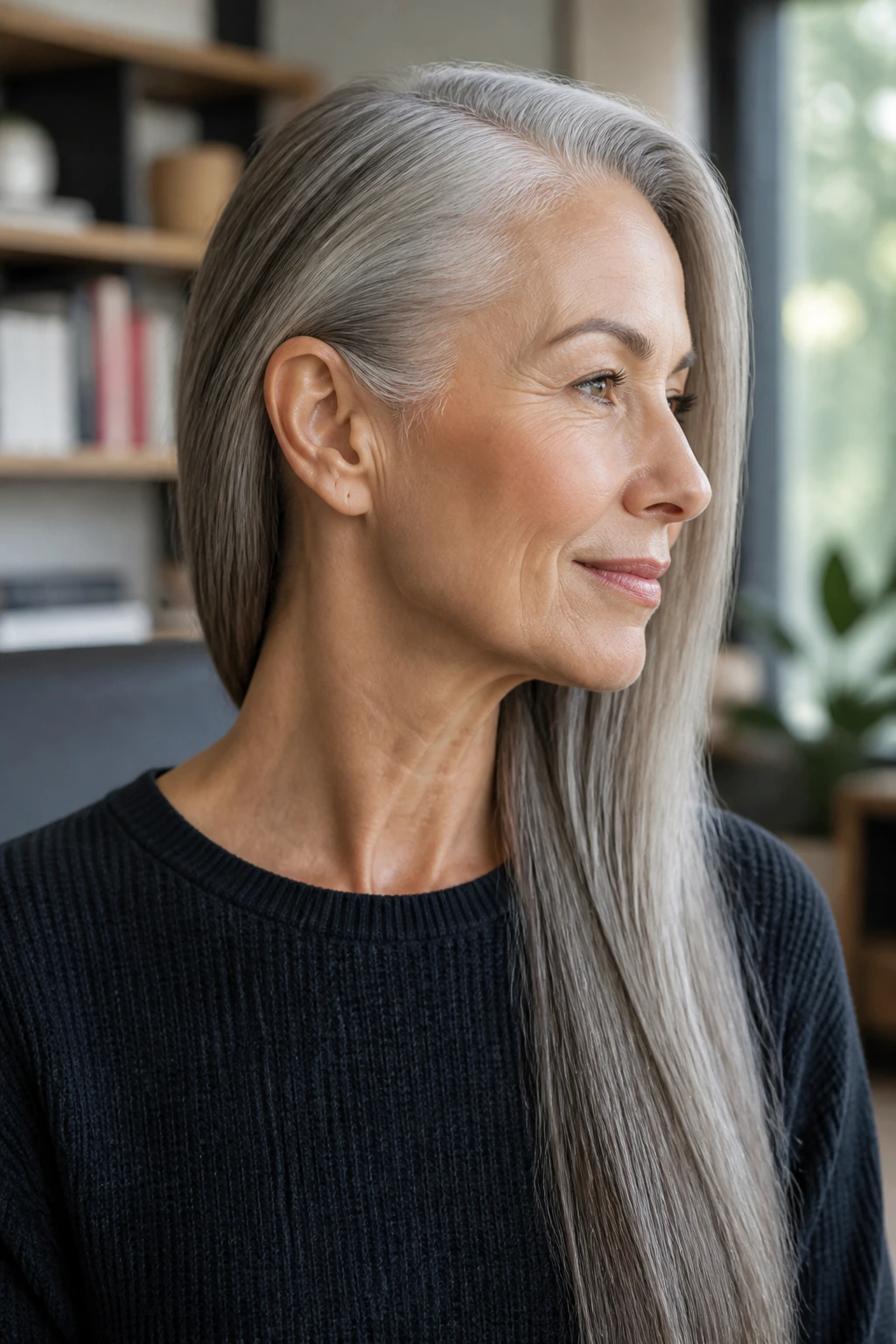
The one-ear tuck is almost too simple, which is exactly why it works. One side goes behind the ear, the other stays loose and smooth, and the face opens up without needing a full updo or a lot of heat. It looks especially good with statement earrings, glasses, or a sharp collar.
What I like about this style is its restraint. It does not try to do everything. It just changes the line of the hair enough to make the whole silhouette feel more awake. If the ends are healthy and the part is clean, the look feels deliberate in a matter of seconds.
A light serum on the tucked side helps keep the front smooth. Too much product will make the hair cling and lose the lift. Keep it spare.
What Makes Long Hair Feel Intentional Instead of Heavy
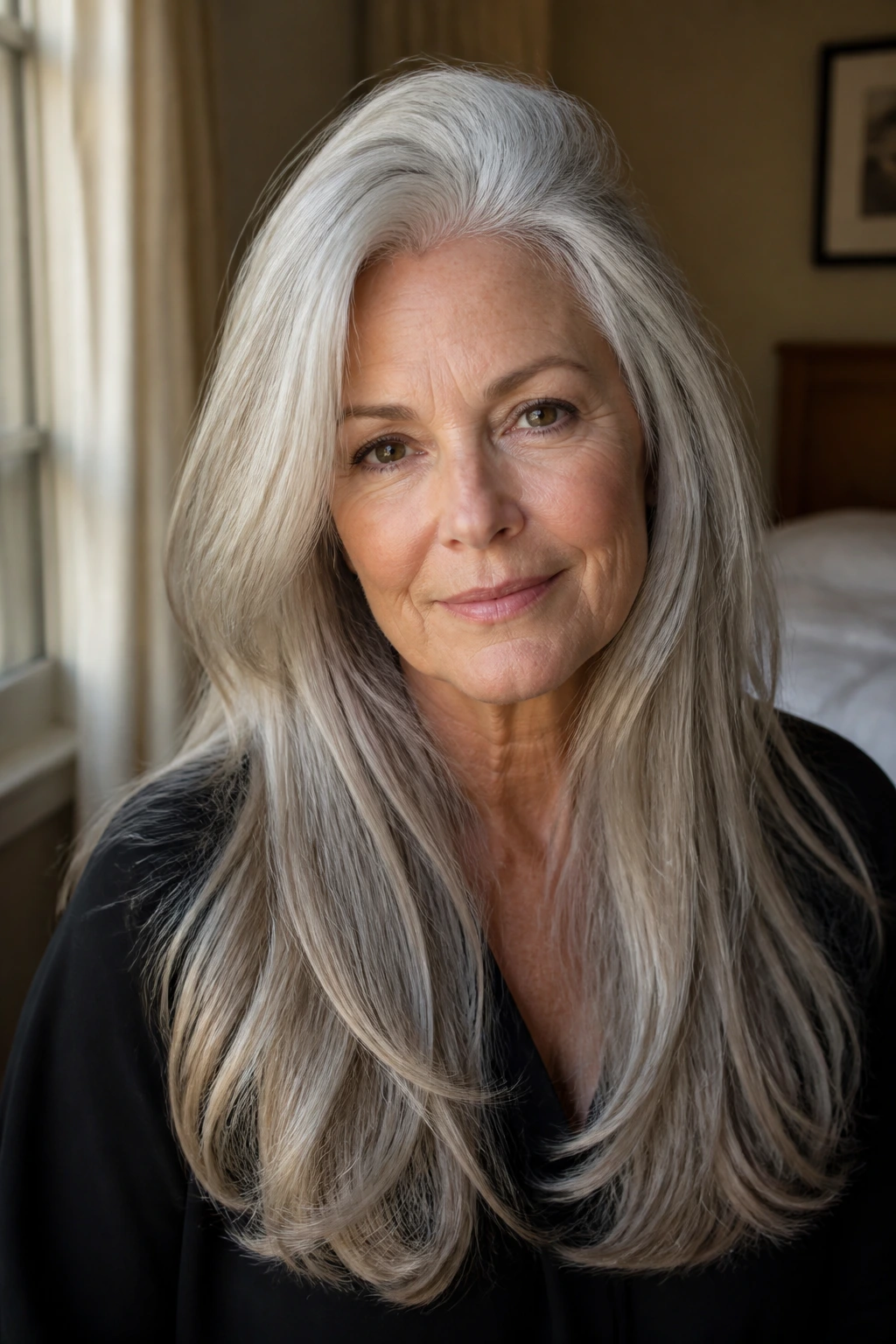
Length is not the problem. Weight is.
That is the first thing worth getting straight. Long hair starts to look tired when all the weight collects at the very bottom, when the crown goes flat, or when the perimeter looks rough enough to catch light in all the wrong places. The same length can look elegant or dragged down depending on where the cut places its support.
The Outline at the Bottom
A clean bottom line does more than most people realize. A blunt hem can look crisp on some hair types, while a soft U-shape can keep thick hair from feeling like a curtain. What matters is that the end shape matches the density of the hair and the amount of styling you’re willing to do.
The Lift at the Crown
Long hair needs a little lift near the root or it turns heavy fast. That can come from long layers, a round-brush blow-dry, a side part, or a simple root spray. You do not need all four. You need one reliable way to stop the top from lying flat against the head.
The Finish at the Ends
Dry ends are the enemy of long hair, especially on silver strands. A trim every 8 to 12 weeks, plus a small amount of serum or cream on the last few inches, keeps the length looking cared for. You can get away with a lot if the ends look healthy. You can get away with almost nothing if they do not.
Essential Tools for Long Hair That Behaves
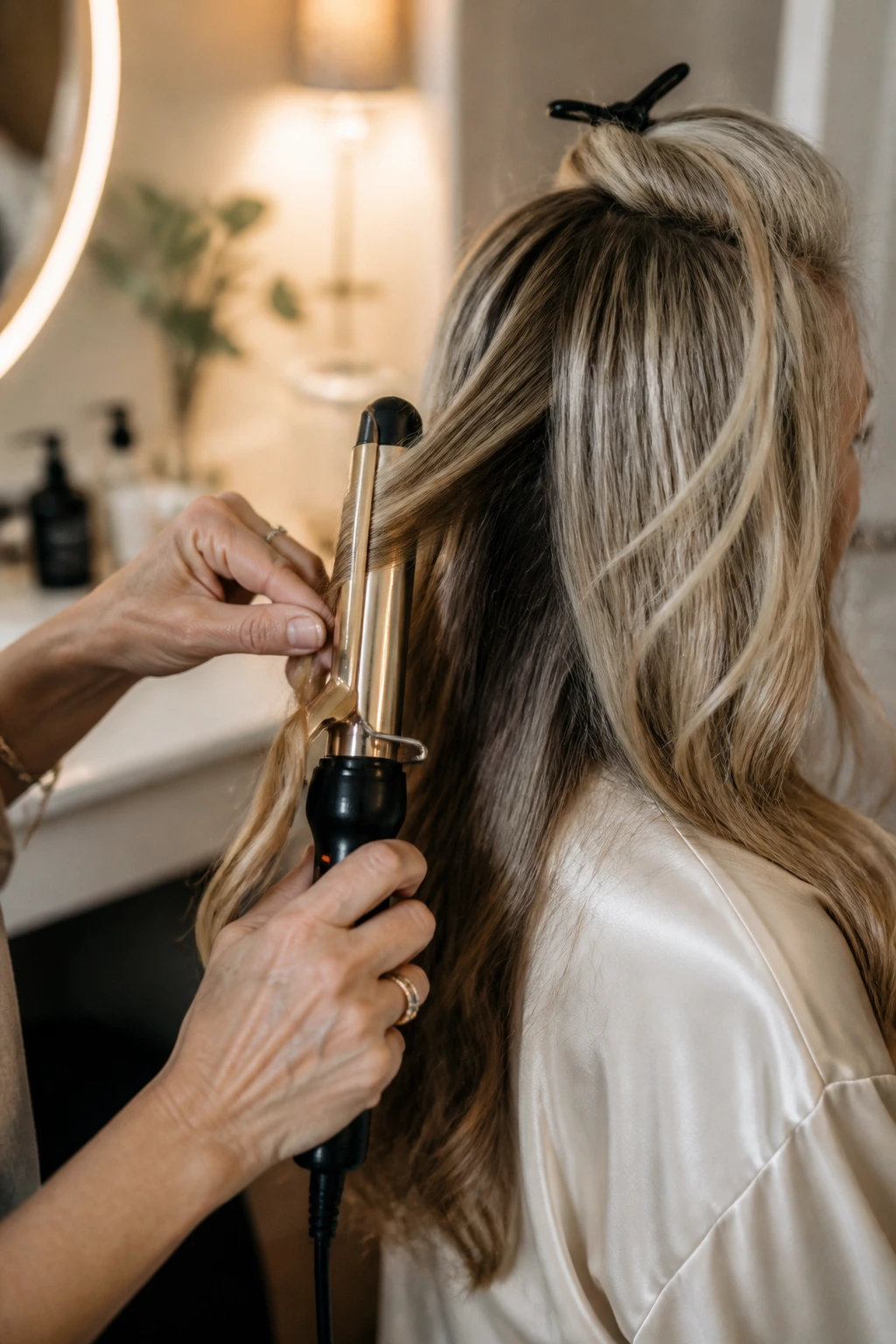
- 1¼-inch curling iron or wand: The easiest size for soft waves that do not look too tight on long lengths.
- 1½-inch round brush: Useful for volume at the crown and a smooth bend at the ends.
- Blow dryer with a nozzle: Directs airflow so the cuticle lies flatter and the finish looks smoother.
- Sectioning clips: Make blow-drying, curling, and setting much easier on hair that falls past the shoulders.
- Wide-tooth comb: Helps detangle long hair without ripping through the ends.
- Tail comb: Good for parting, teasing the crown lightly, and cleaning up sections.
- Boar-bristle brush: Best for smoothing sleek styles and distributing natural oils down the hair shaft.
- Lightweight heat protectant spray: Keeps hot tools from chewing up the ends.
- Volumizing mousse or root spray: Helpful for fine or flat hair that needs lift without stiffness.
- Hair oil or serum: A few drops on the last 3 to 4 inches tame frizz and make the cut look finished.
- Satin pillowcase or bonnet: Keeps long hair from getting roughed up overnight.
- Small clear elastics and bobby pins: Essential for ponytails, twists, braids, and soft updos.
Choosing the Right Cut Line, Product Weight, and Finish
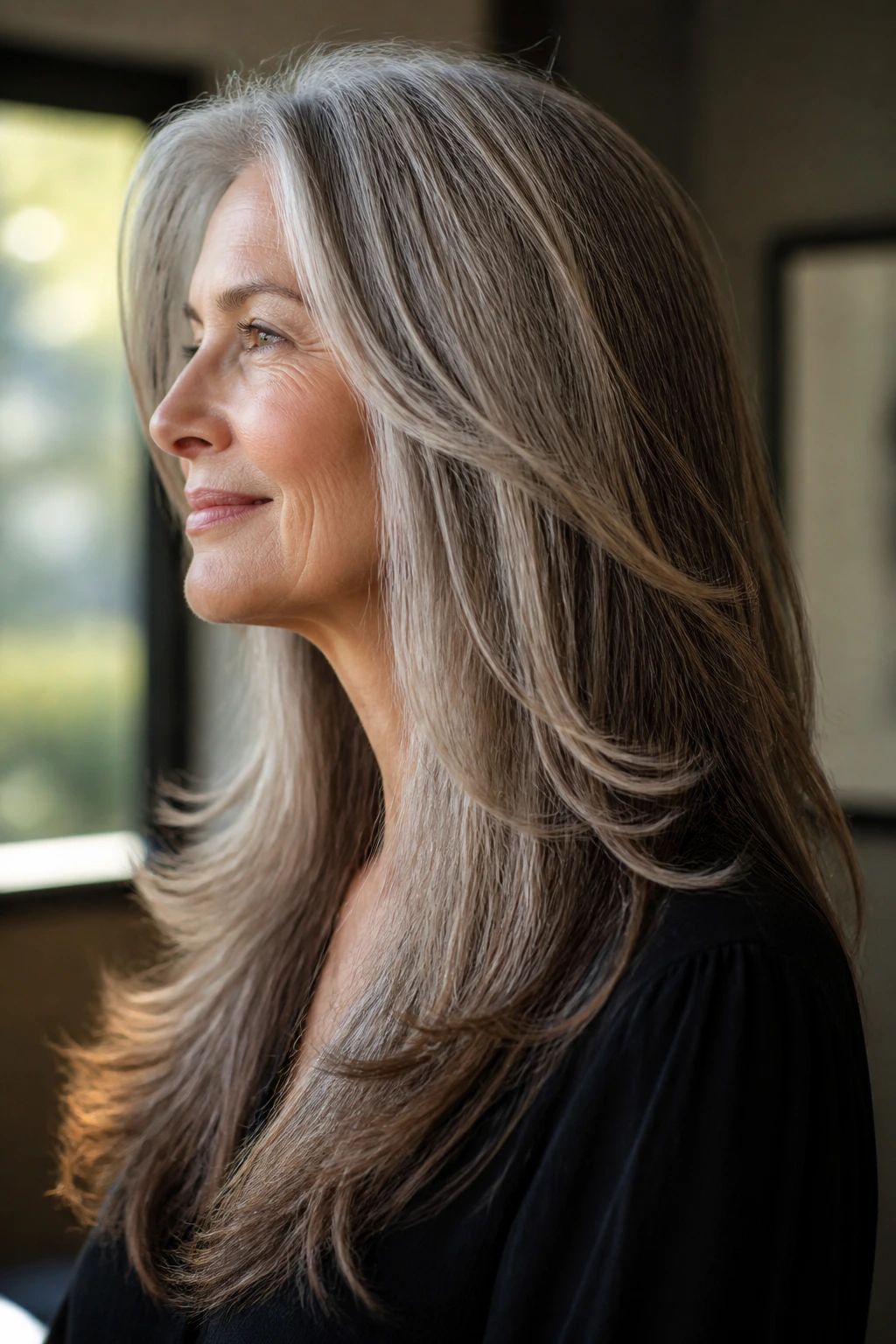
The biggest mistake people make with long hair is treating every head like the same head. It isn’t. Fine hair, thick hair, curly hair, and silver hair all need different weight, different shaping, and a different finish. If you copy a photo without adjusting for density or texture, the result can be pretty on the screen and wrong in your mirror.
For fine hair, keep the layers long and the product light. A mousse at the roots and a drop of serum on the ends usually beats a heavy cream that flattens everything by noon. For thick hair, the problem is usually bulk, so internal layers and a smoother perimeter make life easier. Curly hair needs shape in its own language—dry cutting, curl-aware layering, and enough room for shrinkage.
Gray hair deserves its own note. It often feels coarser and shows dryness faster, so a softer serum, more conditioning, and less over-styling usually win. A long gray cut can look beautiful, but only if the ends stay clean. The shine has to be earned.
One more thing: bring photos, yes, but bring one photo of what you do not want too. That helps a stylist understand whether you want airy layers, a blunt finish, more crown lift, or less movement around the face. Words help. Pictures help more.
How to Wear These Styles in Real Life
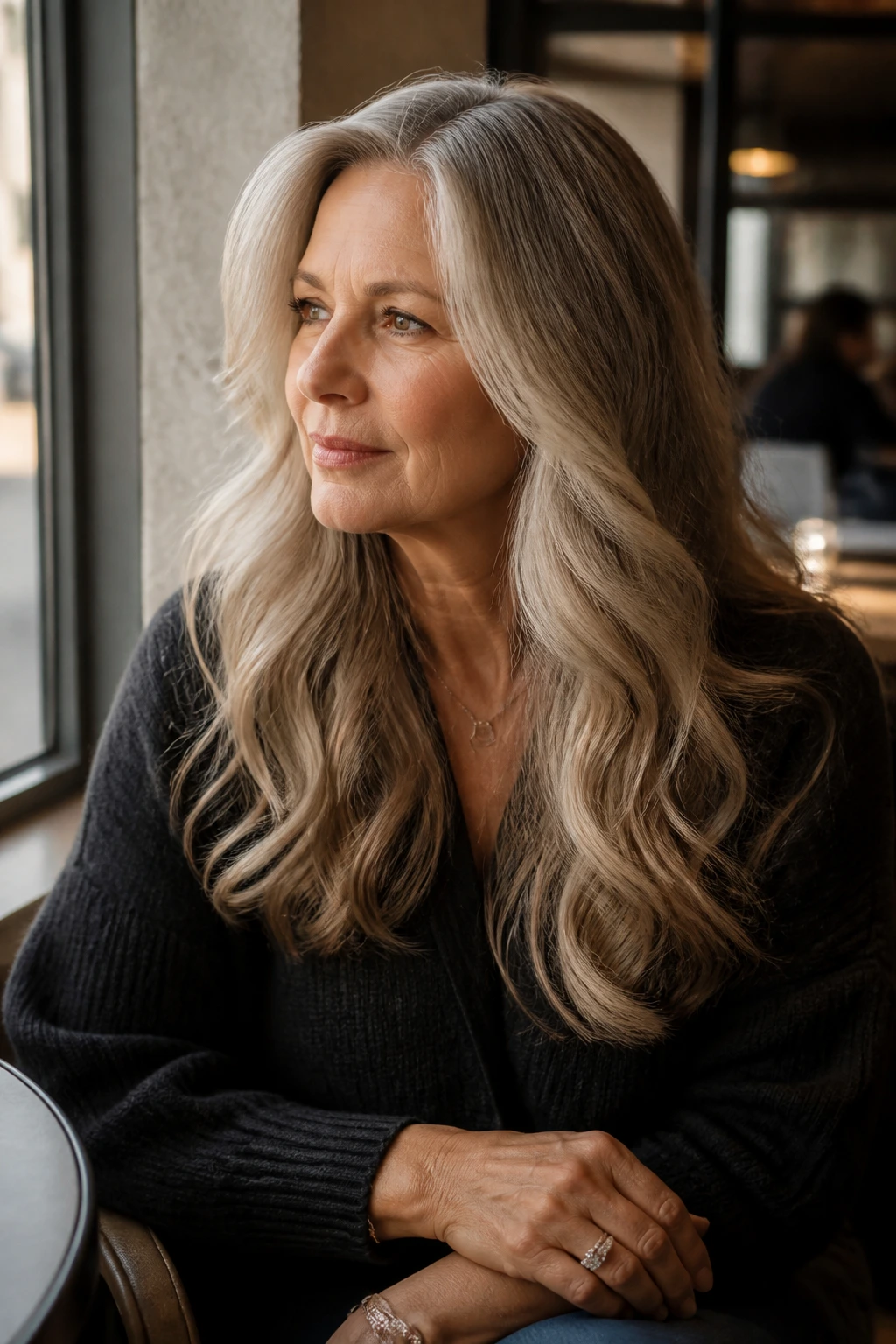
Presentation: Long hair looks best when the crown and ends are doing different jobs. Give the crown lift, keep the part clean, and decide whether the finish should be smooth, waved, or textured before you pick up a tool.
Accompaniments: Earrings matter more with long hair than people admit. A one-ear tuck loves a statement earring. Soft waves work well with simple studs or hoops. Glasses pair especially well with curtain bangs, side-swept fringe, and styles that keep hair from crowding the brow.
Length Balance: If the hair feels too heavy, stop fighting it with more product. Change the cut line, shorten the layers slightly, or move the part. If you want the hair to feel lighter without losing the length, keep the longest layer at mid-back and let the face-framing pieces do the visual work.
Best Moments: Loose waves and feathered layers work for everyday wear. Low ponytails, scarves, and claw clips are better when you need speed. Hollywood waves, chignons, and smooth blowouts are the ones that make sense for dinners, events, and anything that asks for a little more polish.
Additional Tips and Style Boosters
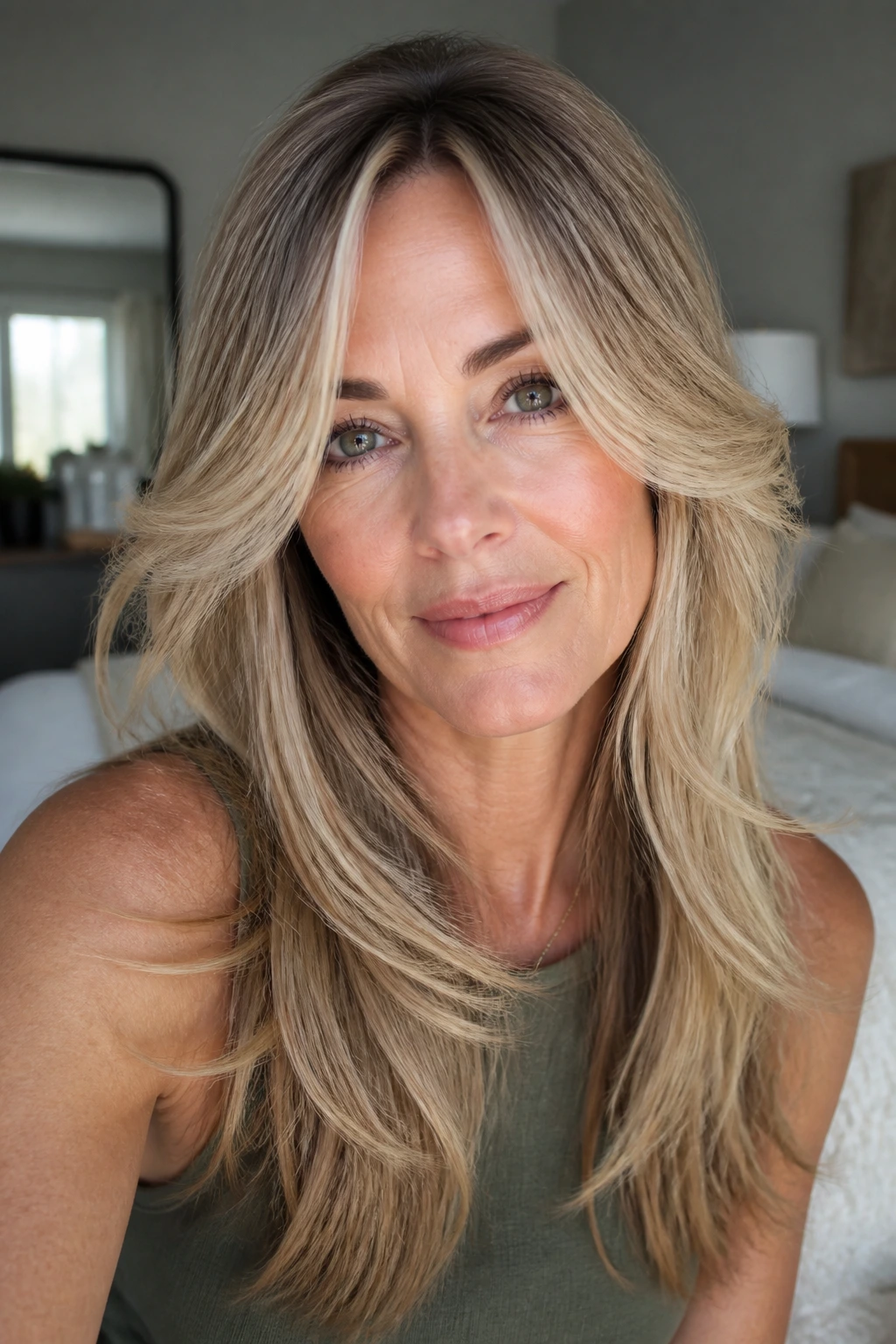
Root Lift: A small amount of mousse at the roots, blow-dried with the head flipped once, gives more shape than piling serum into the ends. If the crown goes flat, the whole style tends to sag by lunchtime.
Texture Control: Long hair does not need to be curled from root to tip. A bend from mid-length down is often enough. That keeps the style moving while avoiding the too-perfect, over-curled look that can age a cut fast.
Shine Move: Use a pea-sized amount of oil or serum only on the bottom third of the hair. The ends need help. The root area usually does not. Too much product at the scalp makes long hair look limp before noon.
Customization: For fine hair, keep the front soft and the layers long. For thick hair, ask for internal weight removal. For curly hair, let the stylist shape the cut around your natural pattern instead of flat ironing it into a false idea of balance.
Accessory Move: A clip, pin, or scarf can rescue a second-day style with almost no effort. Don’t pick a giant accessory just because it’s there. Pick one that holds the shape without swallowing the hair.
Overnight Care, Refreshing, and Trim Rhythm
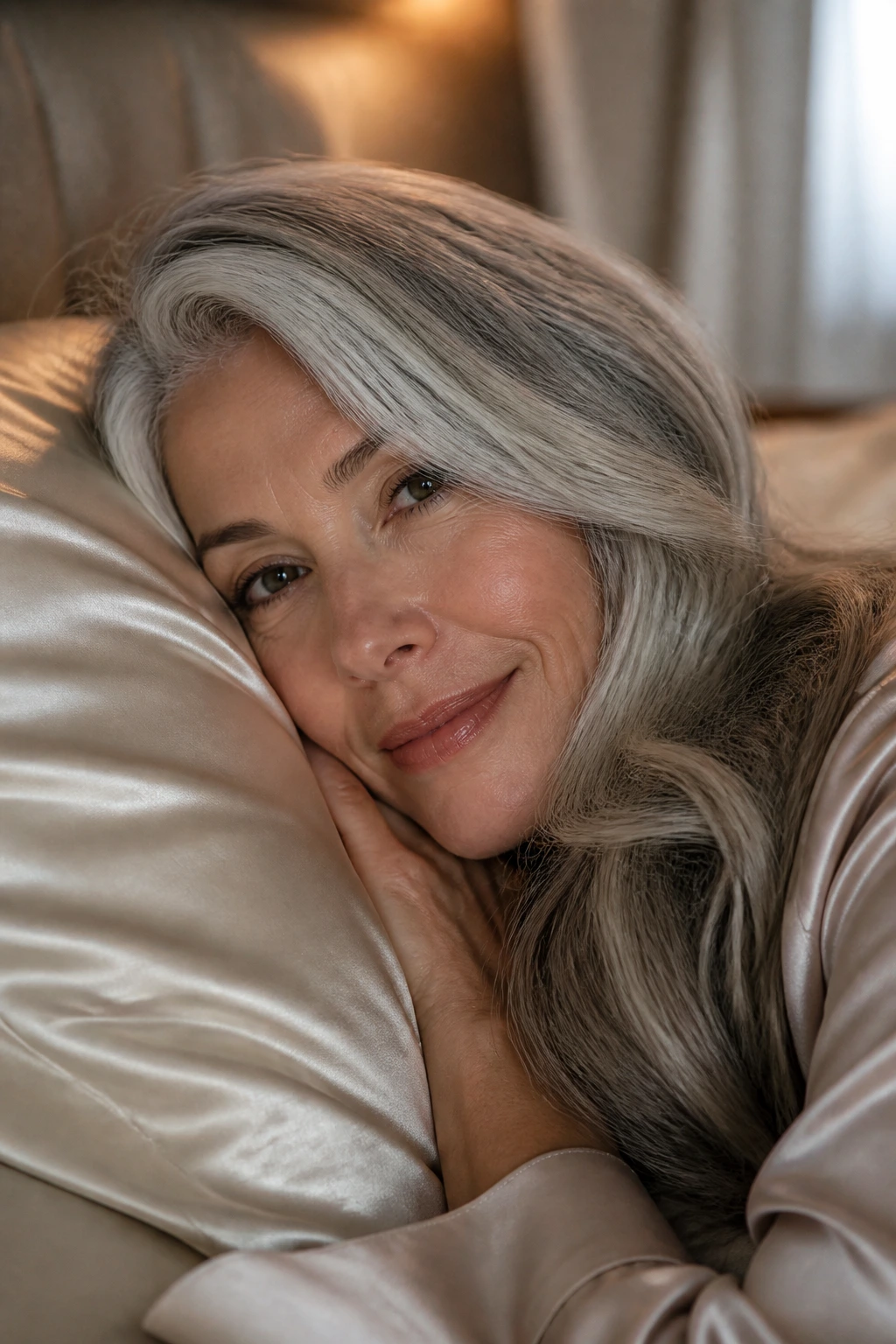
Long hair stays nicest when you treat the night before like part of the style routine. A silk pillowcase or satin bonnet keeps the ends from rubbing into a dry halo, and a loose braid or low wrap can keep waves from getting crushed. If you wake up with a blowout, a quick brush-through and a cool shot from the dryer at the roots often brings it back to life fast.
Waves usually hold for one to two days if you do not overbrush them. On day two, mist the mid-lengths lightly, wrap a few sections around a 1-inch iron for five seconds, and let them cool before you touch them again. Straight styles are easiest to refresh with a boar-bristle brush and a tiny bit of serum on the ends. Curly styles need the most moisture: a water spritz plus leave-in in a 3:1 mix can revive curl shape without making the hair soggy.
Trim timing matters. Long layered hair usually needs a dusting every 8 to 10 weeks if you want the shape to stay crisp. Blunt long hair can go a little longer, around 10 to 12 weeks, if the ends stay healthy. Curtain bangs and side fringe need more frequent cleanups, often every 3 to 5 weeks, or they start falling into the eyes in an awkward way.
For color, a gloss or toner refresh every 6 to 8 weeks helps silver, blonde, and highlighted long hair keep its tone. Purple shampoo can help brass, but don’t overuse it. On gray hair, too much violet product can leave the tone dull and chalky.
Variations and Adaptations to Try
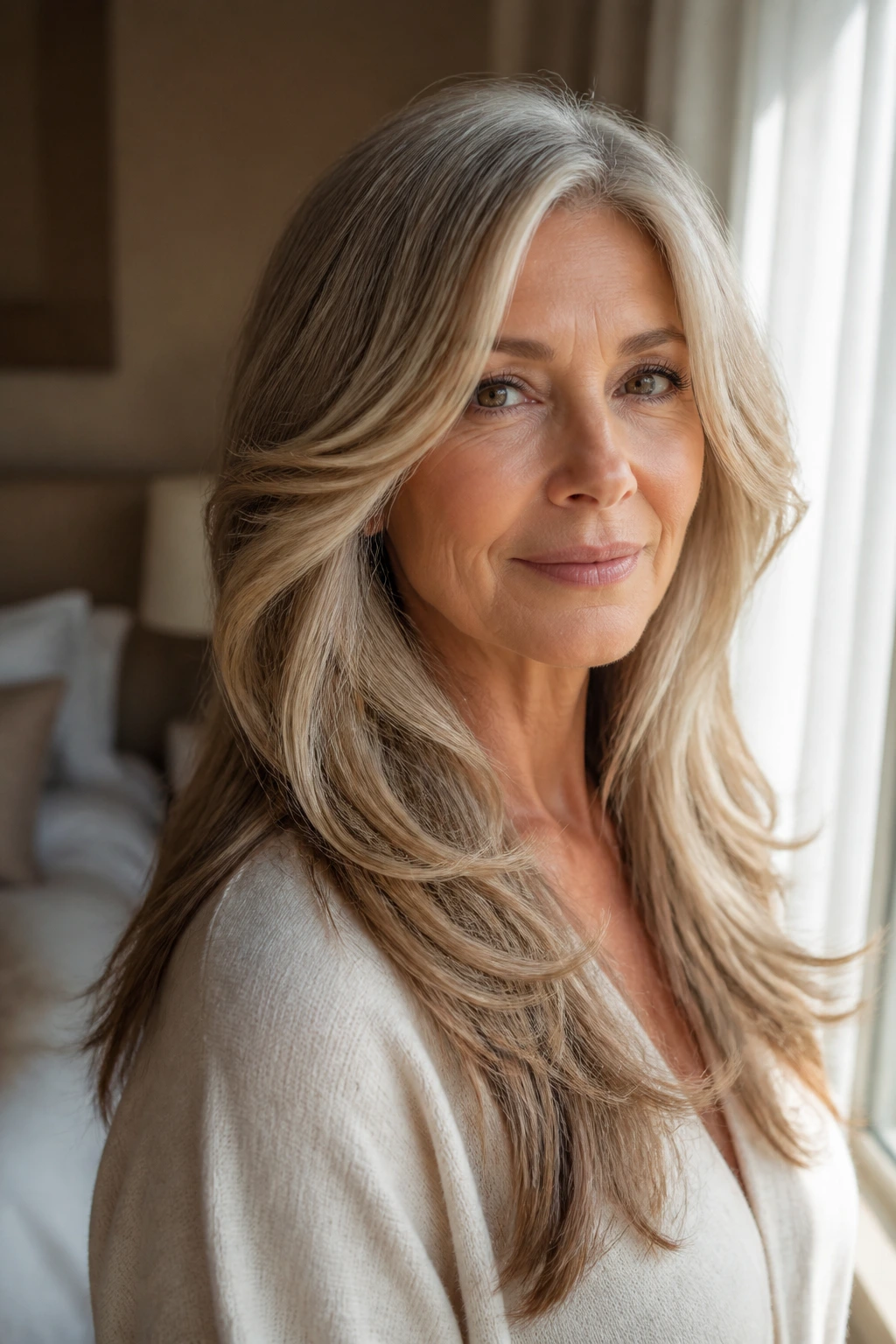
Fine-Hair Lift Layers: Ask for long, invisible layers that start lower on the head and keep the perimeter full. This gives movement without exposing too much scalp or making the ends look skinny.
Thick-Hair Softening Layers: Keep the shape curved and use internal weight removal so the hair falls instead of expanding. This is the best option if your hair gets triangular when it’s worn loose.
Silver Gloss Finish: Pair long silver hair with a gloss treatment and a cleaner cut line. The result is bright, reflective hair that looks like a choice, not a compromise.
Low-Heat Air-Dry Version: Use leave-in conditioner, a light gel-cream, and a loose braid or scrunch method while the hair dries. This works well for wavy and curly hair that hates daily heat.
Glasses-Friendly Fringe: Curtain bangs or a side-swept fringe keep the forehead open and stop the frames from competing with the haircut. Ask for a length that hits around the cheekbone when styled.
Formal Sweep Version: For dinners or events, add a deep side part, set the front with rollers, and pin one side into a low chignon or ponytail. The shape looks dressed up without needing a full updo.
Common Mistakes to Avoid
- Cutting too many short layers into fine hair: The hair may look lively in the chair and thin by lunch. Ask for long, blended layers instead, and keep the bottom line full enough to support the rest of the style.
- Letting the ends go rough: Split, dry ends make long hair look older than the face does. A trim every 8 to 12 weeks keeps the cut from collapsing into frizz and wisps.
- Using too much oil near the roots: Hair that starts shiny at the scalp and dull at the ends usually has product overload. Keep serum on the bottom third only.
- Forcing a blunt bang that needs daily work: A heavy fringe can crowd the face and demand constant trimming. Curtain bangs or side-swept fringe grow out more cleanly and suit glasses better.
- Ignoring crown volume: Long hair with no root lift tends to drag the face down. A little mousse, a side part, or a round-brush dry at the roots fixes more than another curling pass does.
- Overstyling natural texture: Wavy and curly hair can look stiff if you try to flatten every bit of movement out of it. Work with the bend, not against it.
Questions That Come Up at the Salon Chair
What is the most flattering long hairstyle for older women with thin hair?
Long layers that stay soft and low, plus some crown lift, usually beat a heavily layered cut. You want the hair to look full at the bottom and controlled at the top, not chopped into pieces that reveal too much scalp.
Can women over 60 wear long hair without it looking dragged down?
Absolutely, if the cut has shape and the ends are healthy. A clean perimeter, face-framing pieces, and some root lift keep the length from settling into a heavy curtain.
Are curtain bangs high-maintenance?
Not nearly as much as blunt bangs. They still need a little blow-drying and occasional trimming, but they grow out in a softer way and blend into the rest of the cut instead of turning into a line you have to fight every morning.
How often should long hair be trimmed?
Most long styles need a trim every 8 to 12 weeks to keep the ends from splitting and the shape from sagging. If you wear bangs or a fringe, the front usually needs attention sooner.
What if my hair is curly and I want to keep it long?
Keep the shape rounded and ask for a curl-aware cut, ideally one that respects shrinkage. Long curls look best when the silhouette is balanced and the layers are placed to support the natural pattern instead of slicing it apart.
Is a center part aging on older women?
Not by itself. A center part can look sharp and modern when the hair has enough body, shine, and movement. If the crown is flat, a slight side part usually looks better because it gives the style more life.
What style is best if I wear glasses every day?
Curtain bangs, a side-swept fringe, or face-framing layers that stay off the brow line are the easiest fits. You want room around the frames so the haircut and the glasses do not fight for the same space.
How do I make long hair look polished on day two?
Start with the right sleep setup, then refresh only the parts that need it. A little dry shampoo at the roots, a touch of serum on the ends, and a quick re-bend of the front sections can make the style look intentional again in minutes.
The Long Look That Still Feels Like Yours
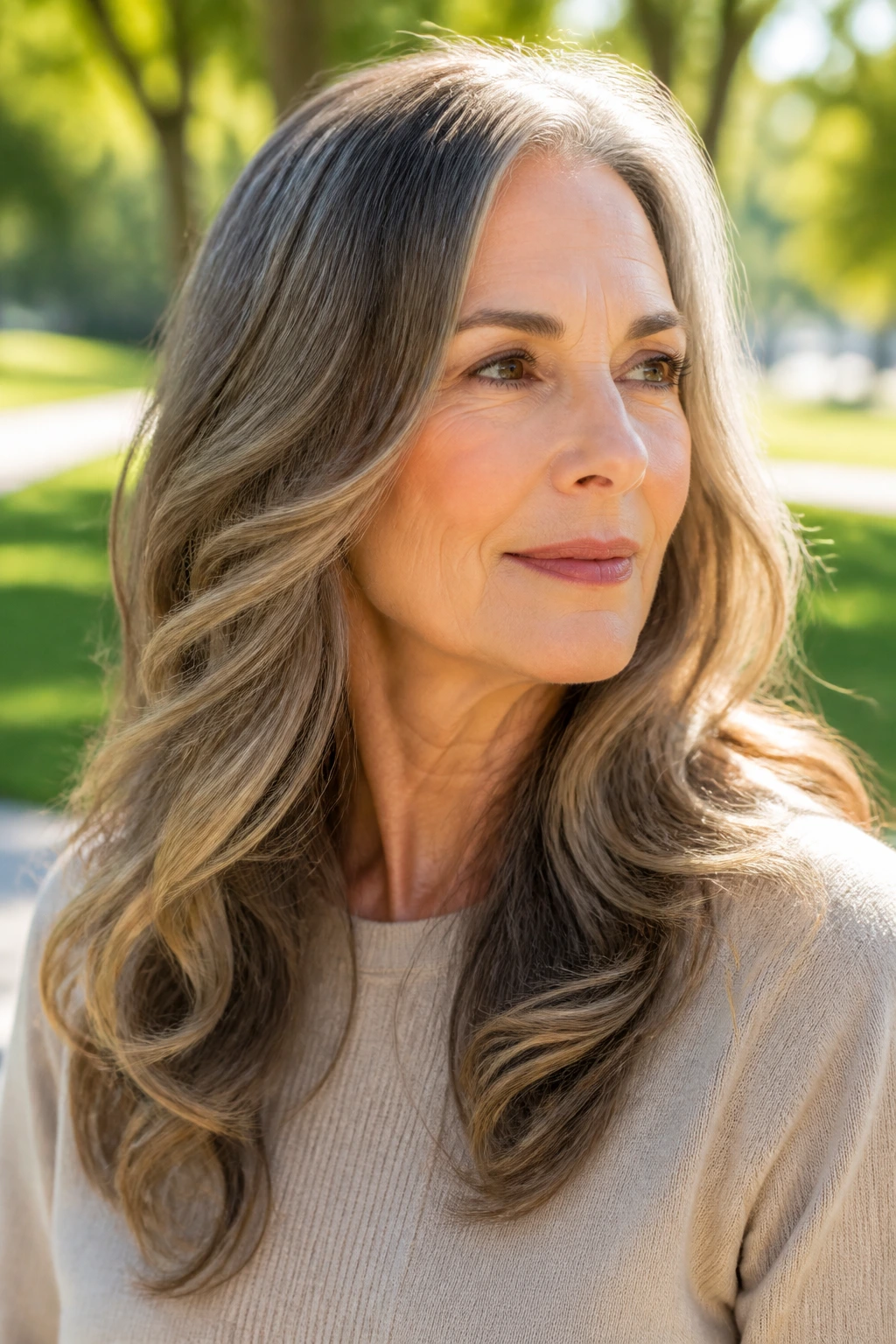
The smartest long hairstyles for older women do not try to outshout age. They work with the hair you have, the texture it’s become, and the amount of time you actually want to spend on it. That’s why the cut matters so much. A good long style gives you lift, softness, and shape without forcing the hair into a personality it doesn’t have.
If you’re keeping your length, make the shape earn its place. Clean ends. Smart layers. One or two styling habits you can repeat without thinking too hard. That combination goes a lot farther than chasing some dramatic change you’ll be annoyed by in two weeks.
The best long hair is the kind that still moves when you do.
