



Long hair after 40 should never feel like a compromise.
The best long hairstyles for women over 40 do one thing beautifully: they keep the length you love, then give it enough shape that it looks deliberate instead of dragged down by its own weight. That shape can come from a clean U-cut, a face-framing bang, a soft wave, or a low knot that keeps everything neat around the neck. Same length. Very different result.
Hair changes, too. Temples can get finer. Ends can go wispy faster than they used to. Gray strands often come in with a wirier texture, which can be a gift or a headache depending on how the cut is built. The right style works with those shifts instead of fighting them, and that’s where the good stuff lives.
Why These Long Styles Earn Their Keep
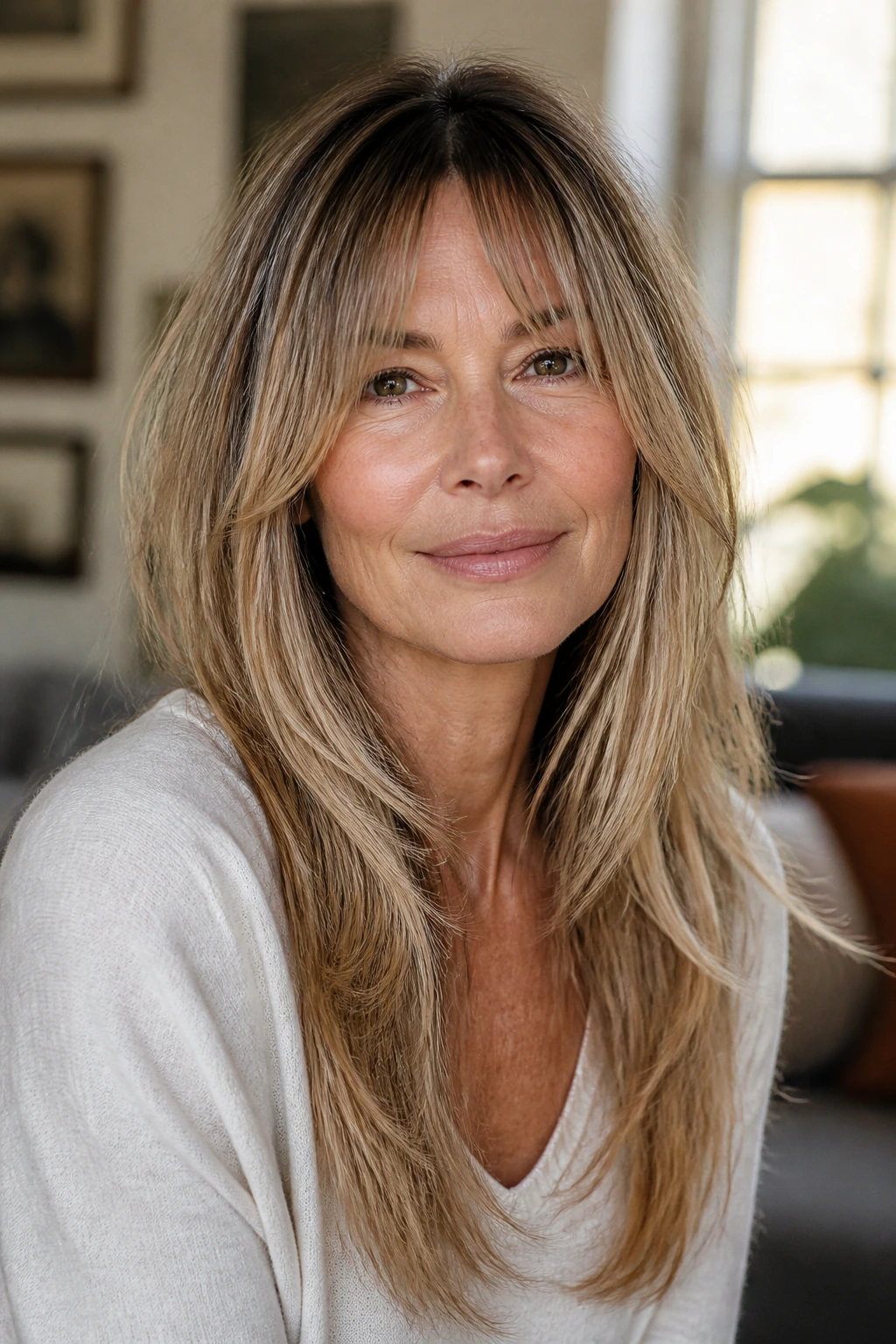
- They keep the length, but not the heaviness: A few well-placed layers or a cleaner perimeter can stop long hair from hanging flat against your back.
- They make facial features look more open: Curtain bangs, side parts, and face-framing pieces soften the line around the cheekbones and jaw without hiding your face.
- They work with hair that’s changed texture: Gray, fine, coarse, straight, and wavy hair all need different handling, and these cuts leave room for that.
- They are easier to style than they look: A polished low ponytail or a loose blowout can read as intentional with only 10 to 15 minutes of work.
- They grow out without turning messy fast: That matters. A style that still looks decent six weeks later is worth more than a cut that behaves for three days.
- They suit real life, not just photos: Glasses, collars, humidity, errands, work calls, weddings, and sweaty afternoons all show up here.
1. Long Layers with Curtain Bangs
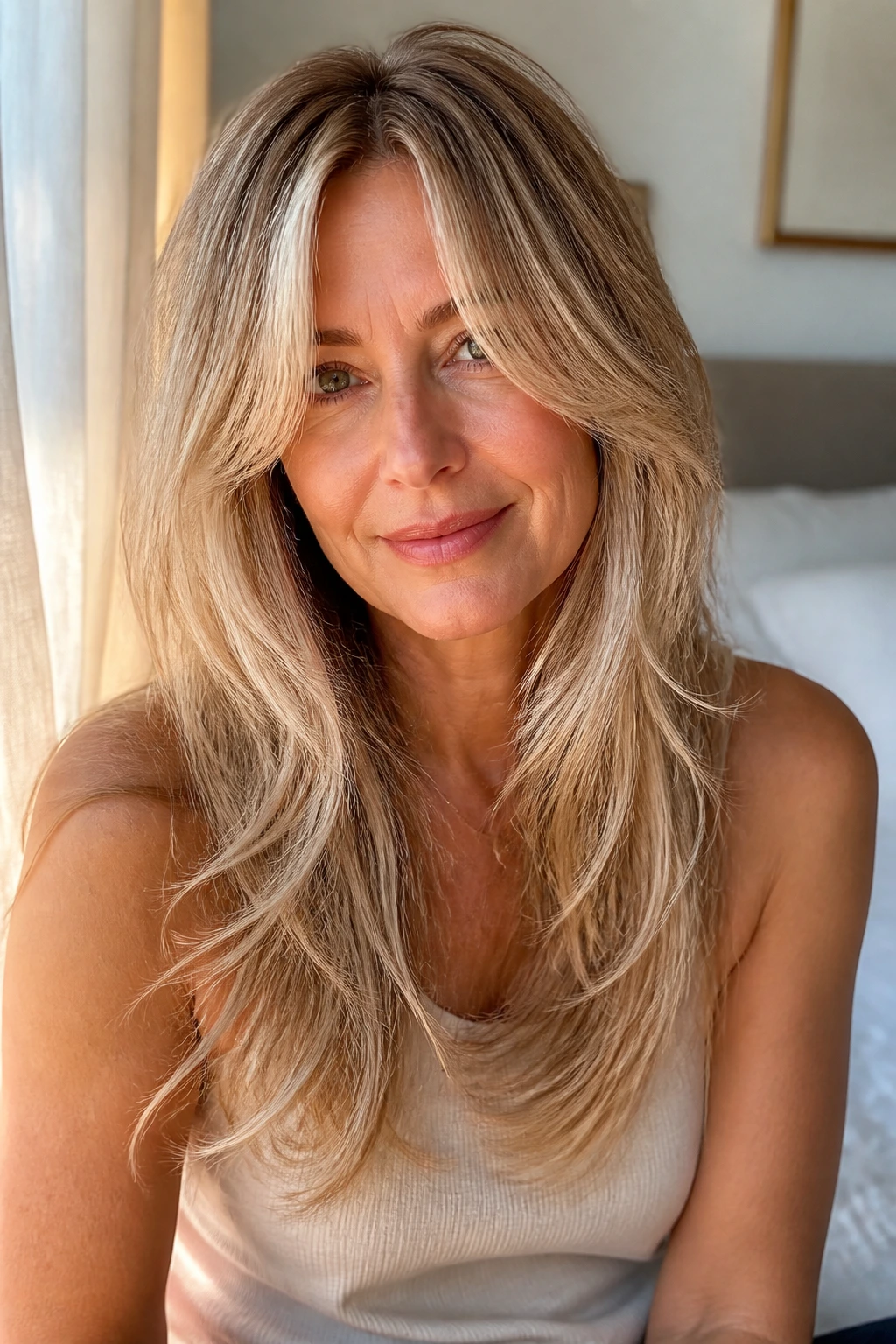
This is the long-hair style I recommend most often when someone wants movement without giving up length. Curtain bangs open at the center and fall away at the cheekbones, which keeps the front light while the layers behind them stop the whole shape from looking bottom-heavy.
Why It Works
Long layers remove enough weight to make the ends move, but they do not chop the hair into a choppy mess. That matters if your hair has gotten finer over the years, because too many short layers can leave the bottom looking see-through. Ask for the shortest face-framing pieces to hit around the cheekbone or lip, then let the longest layers blend down through the collarbone.
Curtain bangs are forgiving. They can be swept apart, pinned back, or blended into the rest of the hair on lazy days. Blow-dry them with a medium round brush and a blast of air aimed down the hair shaft. If the bangs stick to your forehead, they are too wet when you start styling.
A small amount of mousse at the roots and a pea-size serum on the ends is enough. Anything heavier turns this into a helmet.
2. Soft U-Cut with Face-Framing Pieces
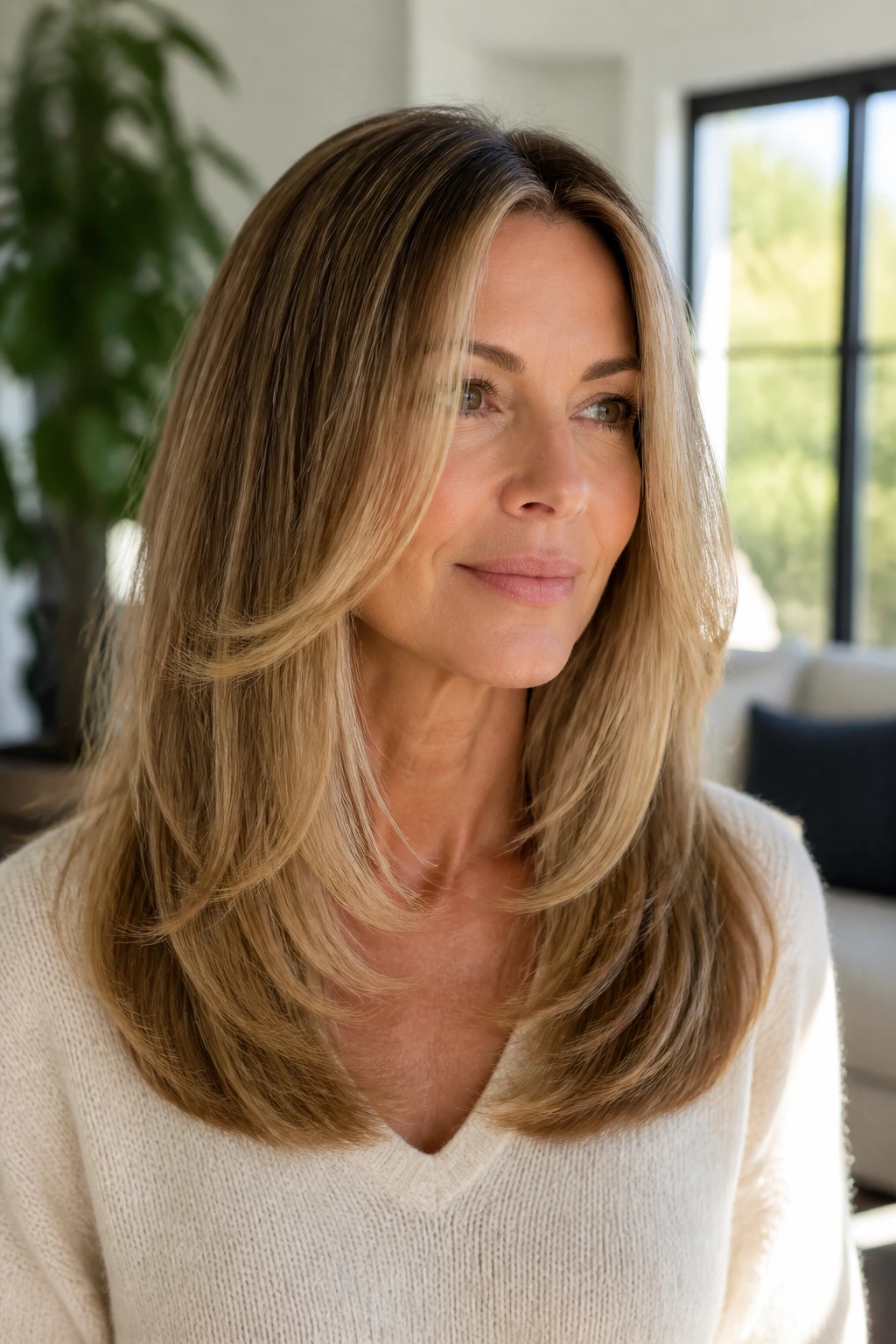
A U-shaped cut gives long hair a rounder, fuller outline at the back, and that shape keeps the length from feeling abrupt. It’s one of the best choices if your hair is thick enough to go triangular when it grows out.
The prettiest version has subtle face-framing pieces that begin below the chin and ease into the longest length. That little move keeps the front from feeling severe. It also helps if you wear glasses, because the front pieces can slide around the frames instead of boxing them in.
Ask your stylist to keep the perimeter soft, not blunt. The whole point is a smooth arc, not a sharp edge. On thick hair, a U-cut dries faster than a single heavy sheet of hair, and that alone is worth the haircut.
3. Sleek One-Length Length with Mirror Shine
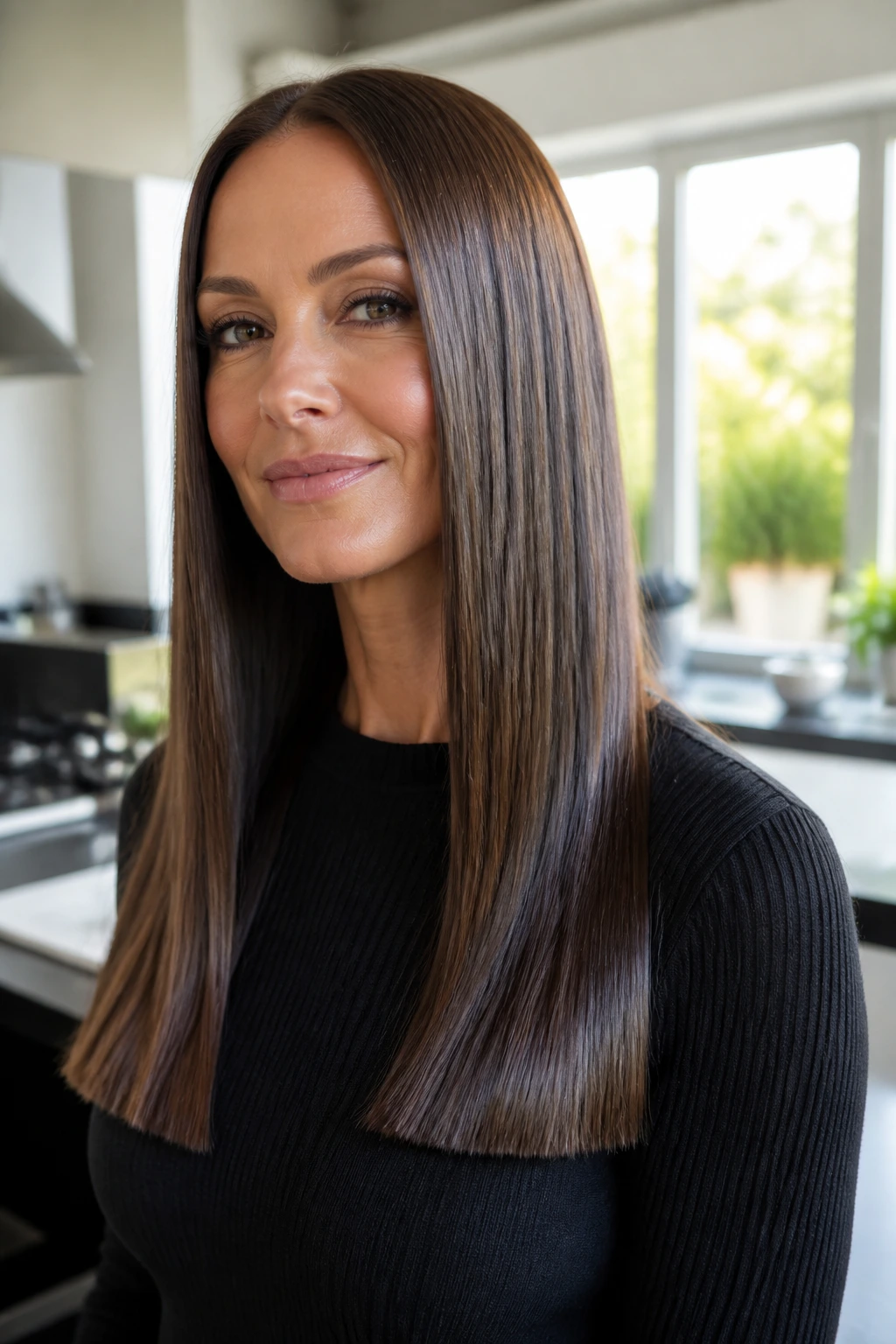
Who says long hair needs layers to look modern? A blunt, one-length finish can be gorgeous when the hair is healthy and dense enough to support the line. It has a clean, expensive-looking edge that makes straight or slightly wavy hair look deliberate.
The trick is upkeep. Split ends show faster on a one-length cut, so this style only works if you are willing to trim it before the bottom starts to fray. I like it best on hair that already falls fairly straight, because you spend less time forcing it into shape.
A flat iron at a moderate heat, around 300°F to 350°F depending on texture, gives the hair a smooth curtain effect. Finish with a drop of lightweight serum on the mid-lengths and ends. Too much product kills the shine and leaves the hair stringy.
4. Long Shag with Piecey Texture
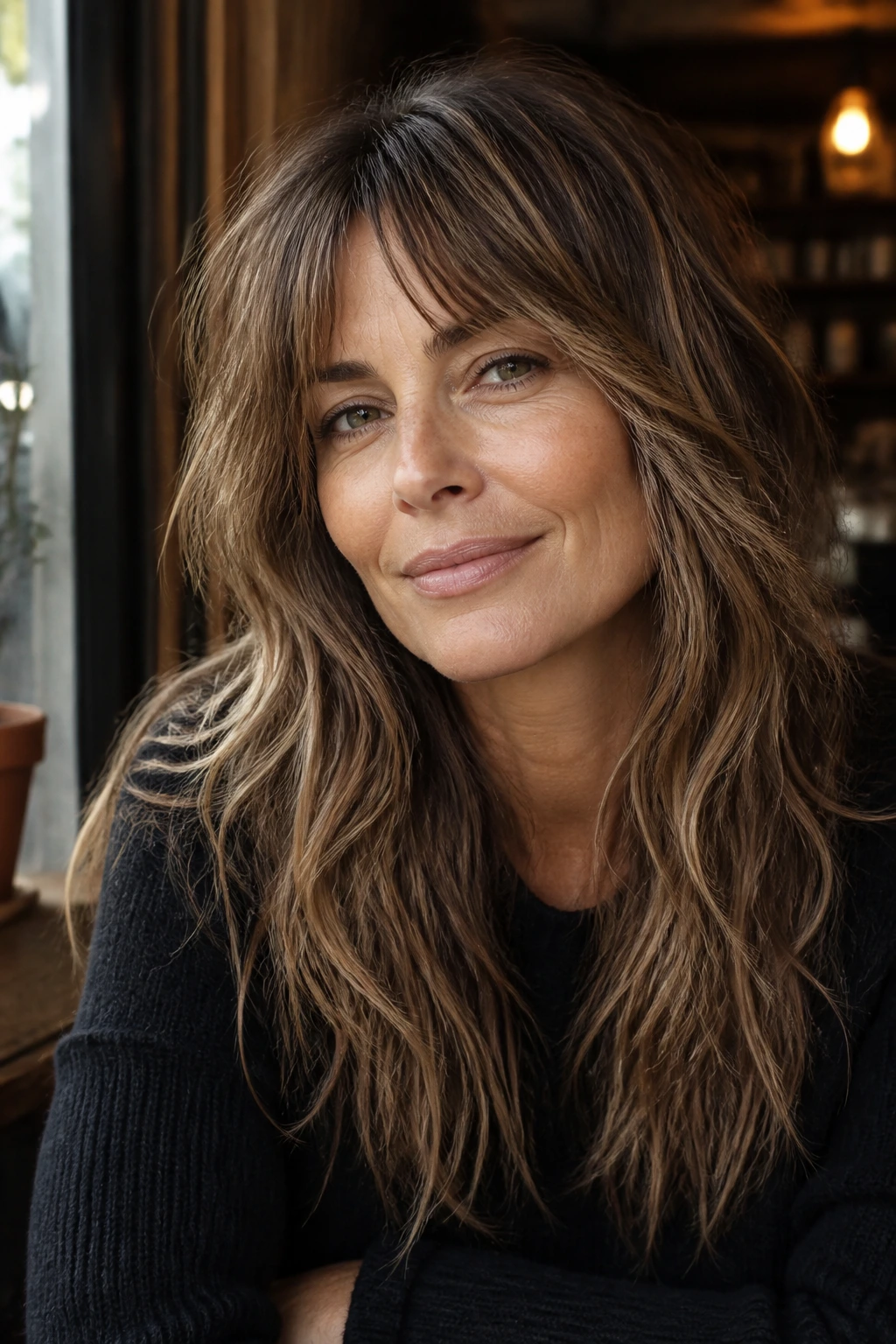
A long shag can save hair that feels flat at the crown and limp at the ends. It looks especially good on hair with natural wave, because the layers encourage the bend instead of hanging straight and sad.
This cut lives or dies by restraint. You want internal layering and movement, not a 1970s feather explosion unless that is truly your thing. Ask for soft layers that keep some weight at the bottom, then add texture around the crown and cheekbones. That gives the hair lift without making the ends look ragged.
Styling is fast. A little mousse at the roots, a diffuser or rough-dry with your fingers, and a touch of texturizing spray through the mid-lengths is enough. It’s one of the few long styles that looks better when it is not overdone.
5. Loose Blowout Layers
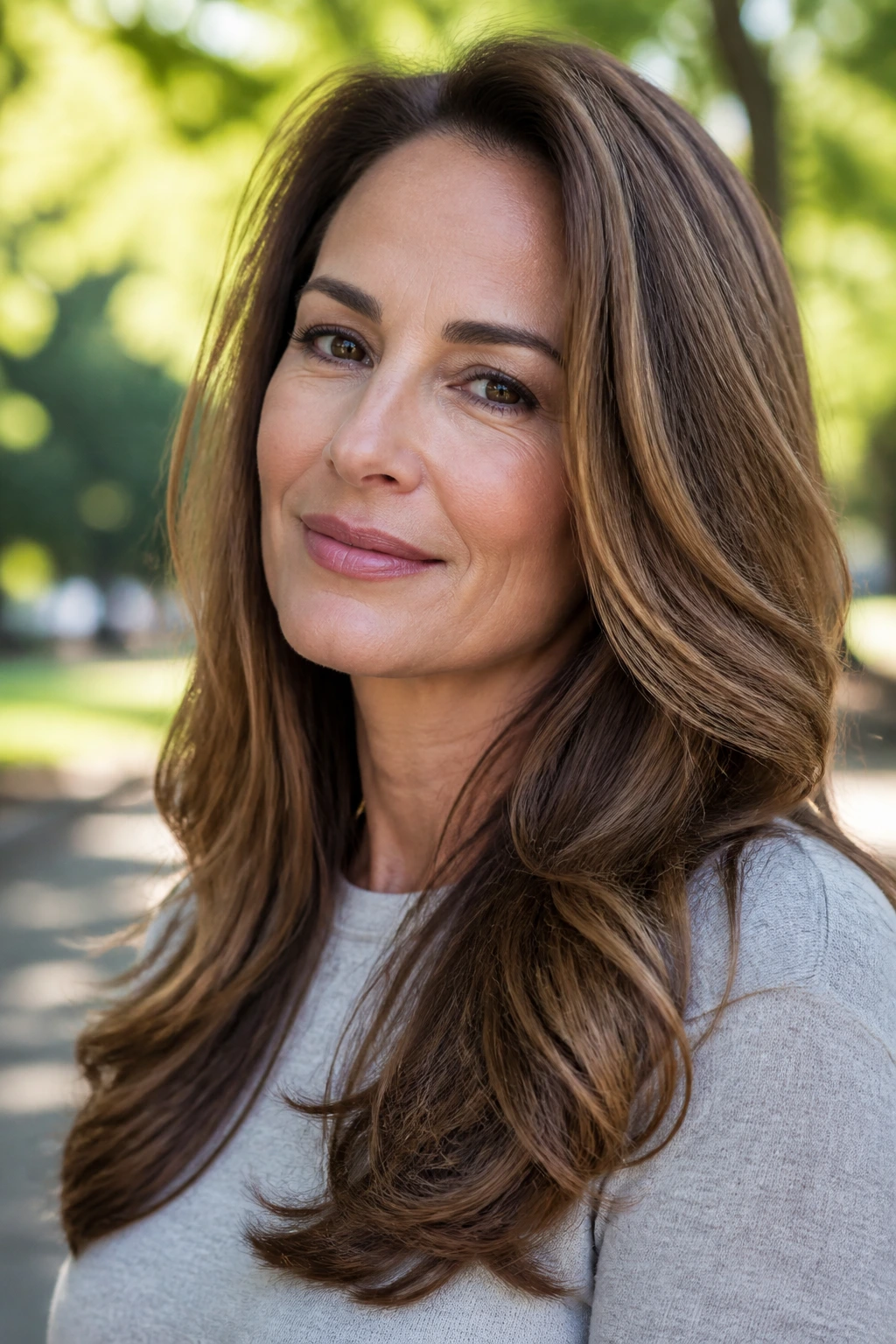
There’s a reason this style keeps showing up in salons and on real heads, not just in glossy photos. A loose blowout makes long hair swing, and swing is the thing that keeps length from looking tired.
Use a round brush large enough to smooth the hair without wrapping it into a tight curl. A 1.5-inch or 2-inch brush works well for most long lengths. Pull the sections up and away from the face as you dry them, then flip the ends under just a little. You want bend, not a ringlet.
This style is kind to layered cuts because the ends overlap and create movement. It’s also one of the easiest looks to dress up later in the day. A brush-through and a mist of light hairspray can take it from school-run hair to dinner hair without a full reset.
6. Deep Side Part with Root Lift
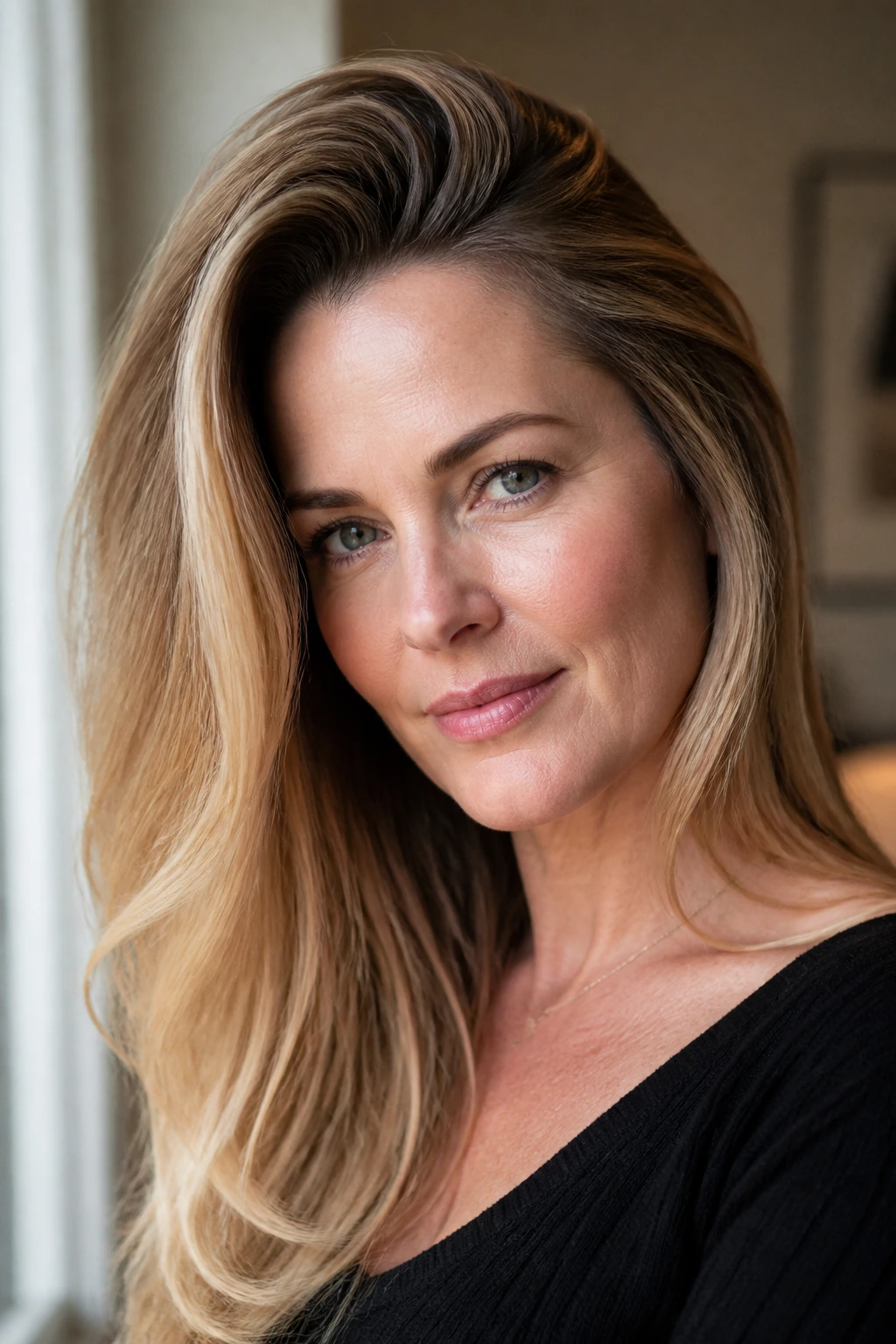
A deep side part changes the entire mood of long hair in about ten seconds. It lifts the front, softens a strong forehead, and gives the crown a little height without teasing the life out of it.
The best part? It works on almost every texture. Straight hair gets drama. Wavy hair gets shape. Fine hair gets a quick volume boost at the roots because the part pushes the body to one side. If your hair tends to collapse flat at the crown, clip the opposite side of the part for five minutes while it cools or sets. That small trick helps the root stay lifted longer.
I’d pair this with a light root spray or volumizing mousse, then keep the ends sleek. If the top is full and the bottom is frizzy, the whole look falls apart. Balance matters here.
7. Air-Dried Waves with Soft Ends
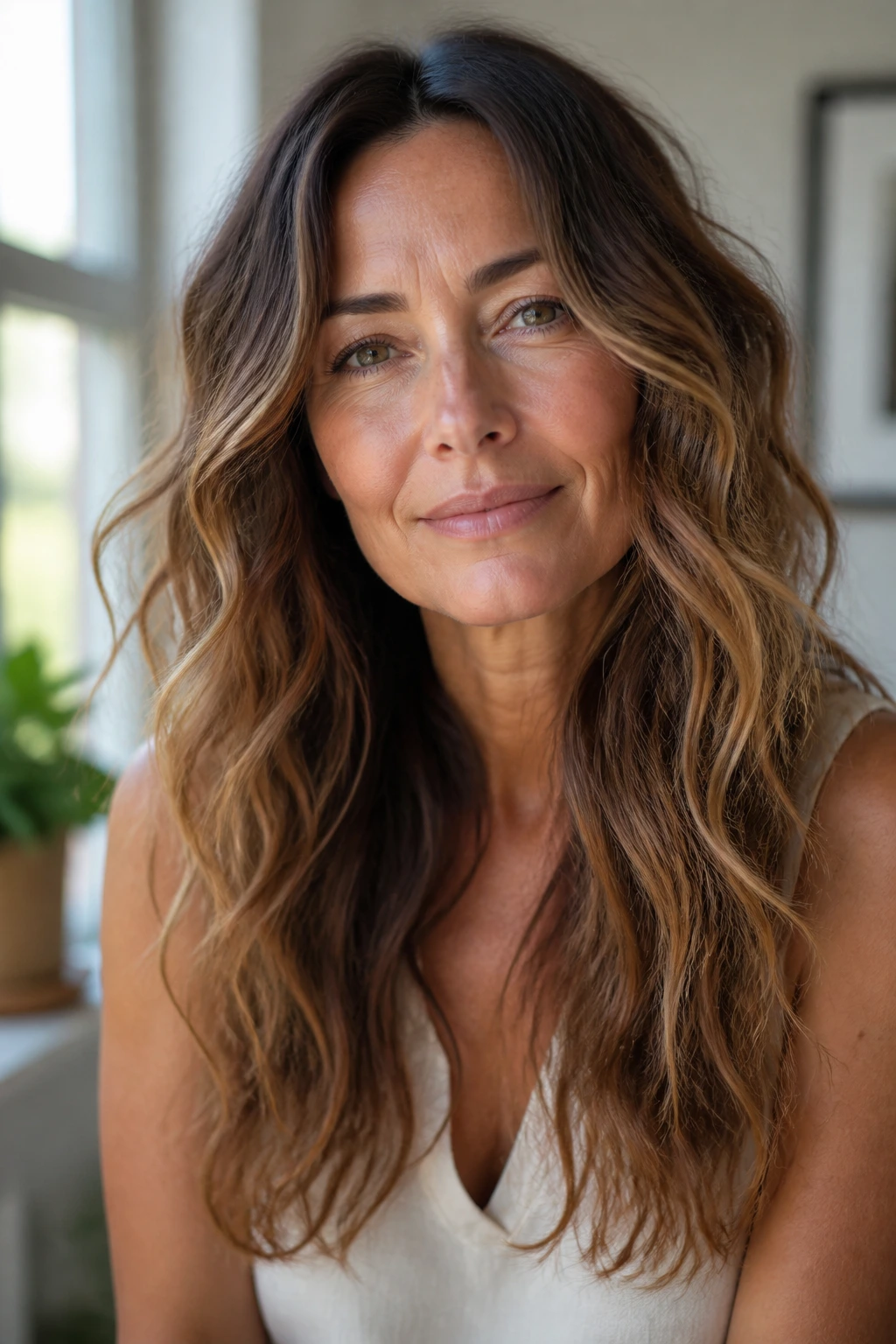
Air-dried waves sound casual, but the good version has more control than people think. You start with damp hair, not soaking wet hair, and you use enough product to encourage the wave pattern without gluing the strands together.
Work a curl cream or wave lotion through the mid-lengths, then scrunch from the ends upward. Leave the roots mostly alone if you want lift. If your hair is thick, flip sections over your fingers while it dries so it doesn’t dry in one giant clump. A quick blast with a diffuser for five minutes can save the front pieces from drying flat.
This style is especially kind to women whose hair texture has changed with gray growth or chemical processing. It lets the hair look lived-in instead of over-styled. The important thing is to keep the ends soft and moisturized, because dry ends can make even pretty waves look frayed.
8. Half-Up Twist with Crown Volume
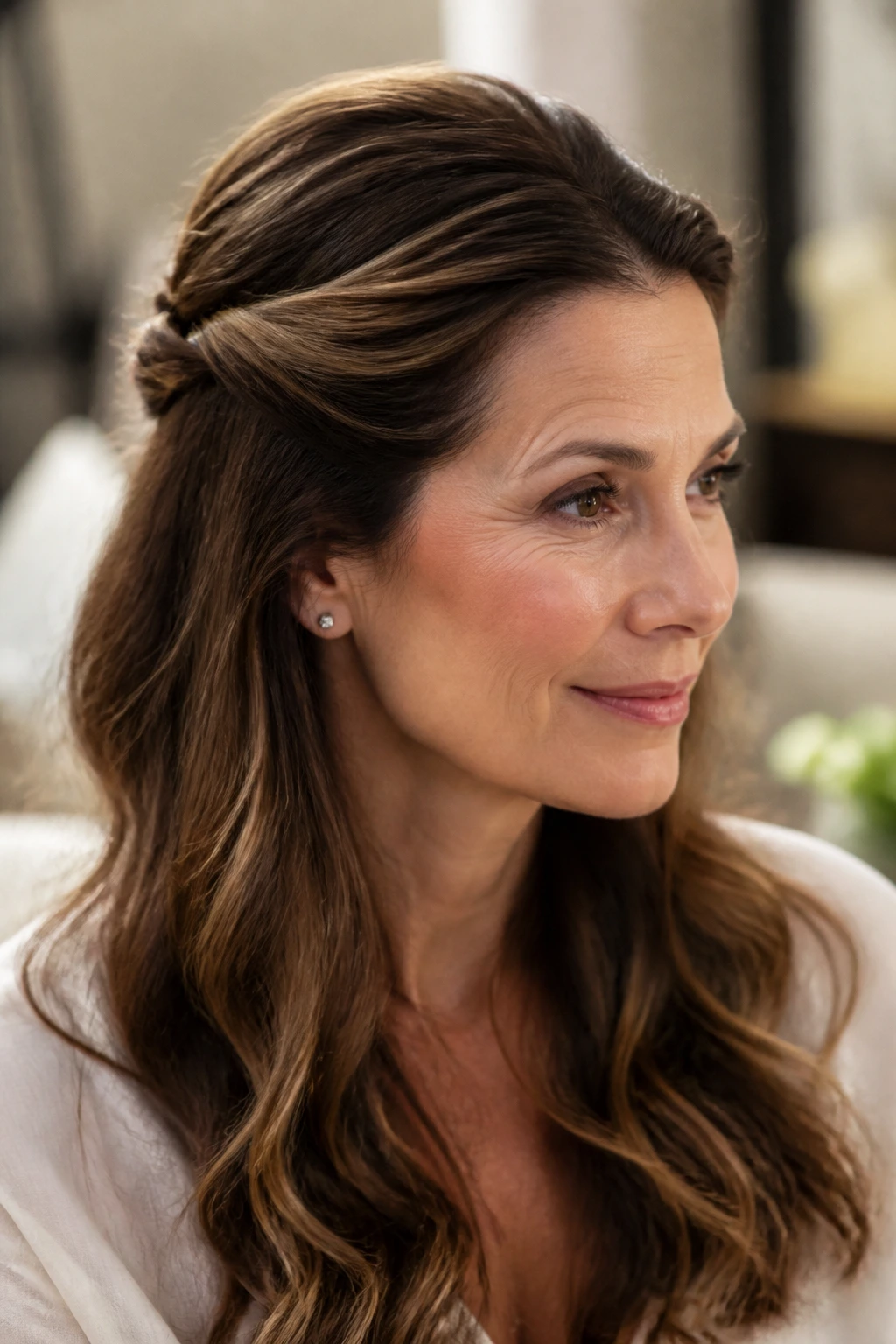
If you want long hair off your face without putting it in a full updo, this is the move. The crown gets a little lift, the front stays open, and the length still does its thing down the back.
Backcomb the crown lightly with a tail comb or push a little texture spray into the root area before you pin. Then twist two sections from either temple toward the back and secure them with bobby pins just under the twist. The rest of the hair can stay smooth, wavy, or loosely curled. It takes almost no time, which is exactly why it works on busy mornings.
This style is kinder to longer faces than a tight half-up ponytail because it keeps volume above the ears, not just at the top of the head. That shift changes the whole balance.
9. Low Ponytail with Wrapped Base
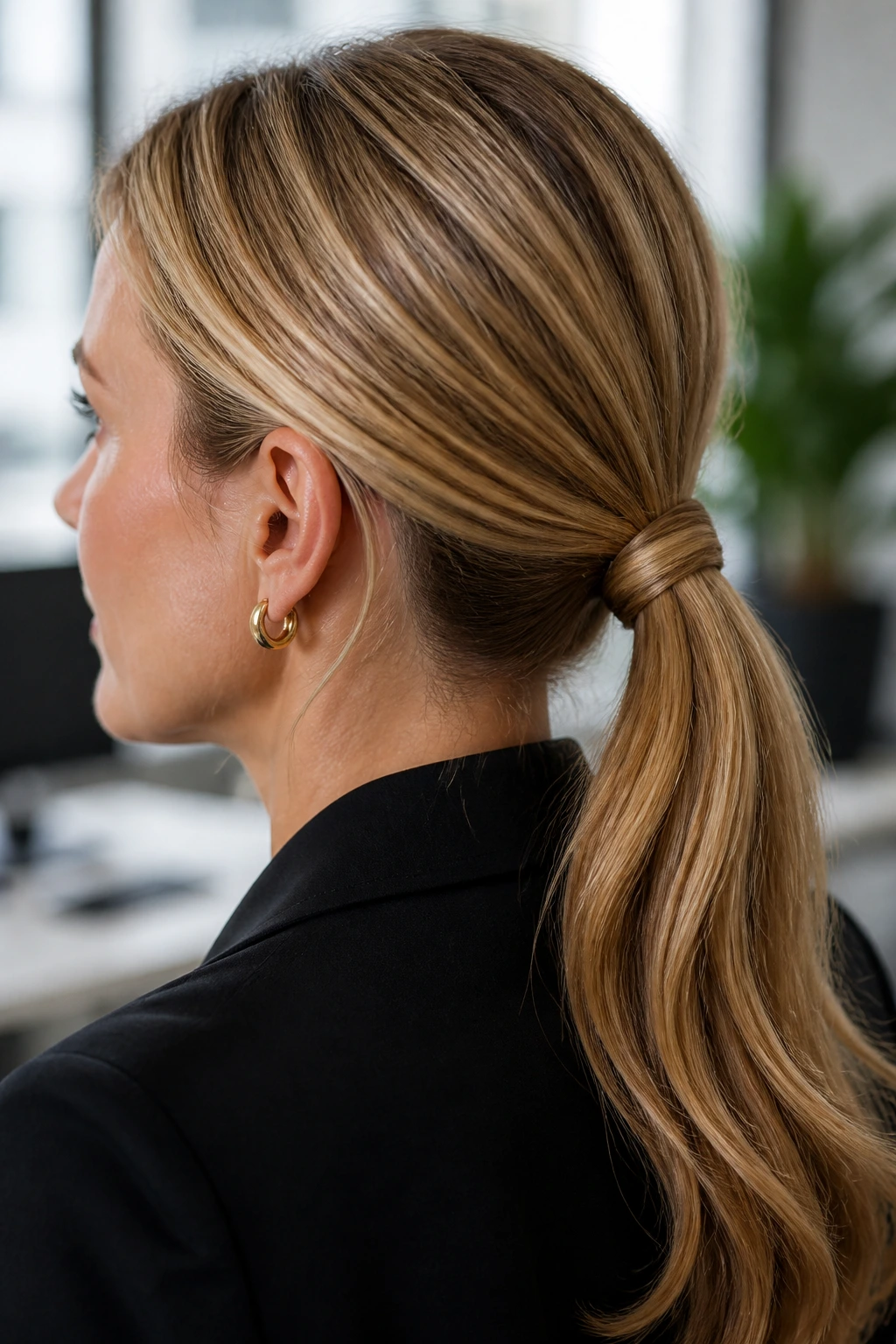
A low ponytail can look plain, or it can look sharp enough for a blazer and lipstick. The difference is the finish. A wrapped base, where a small section of hair hides the elastic, makes the whole thing feel cleaner.
Brush the hair back with a boar bristle brush or a soft paddle brush, gathering it at the nape rather than the crown. Secure it with a strong elastic, then wrap a one-inch section around the base and pin it underneath. If your hair is slippery, a tiny bit of styling cream on the palms keeps the flyaways down without turning the ponytail wet-looking.
I like this style best with long layers because the tail keeps some movement. If your hair is very thick, leave a few millimeters of slack at the elastic so the ponytail doesn’t pull tight and create a hard ridge above the ears.
10. Side-Swept Braid over One Shoulder
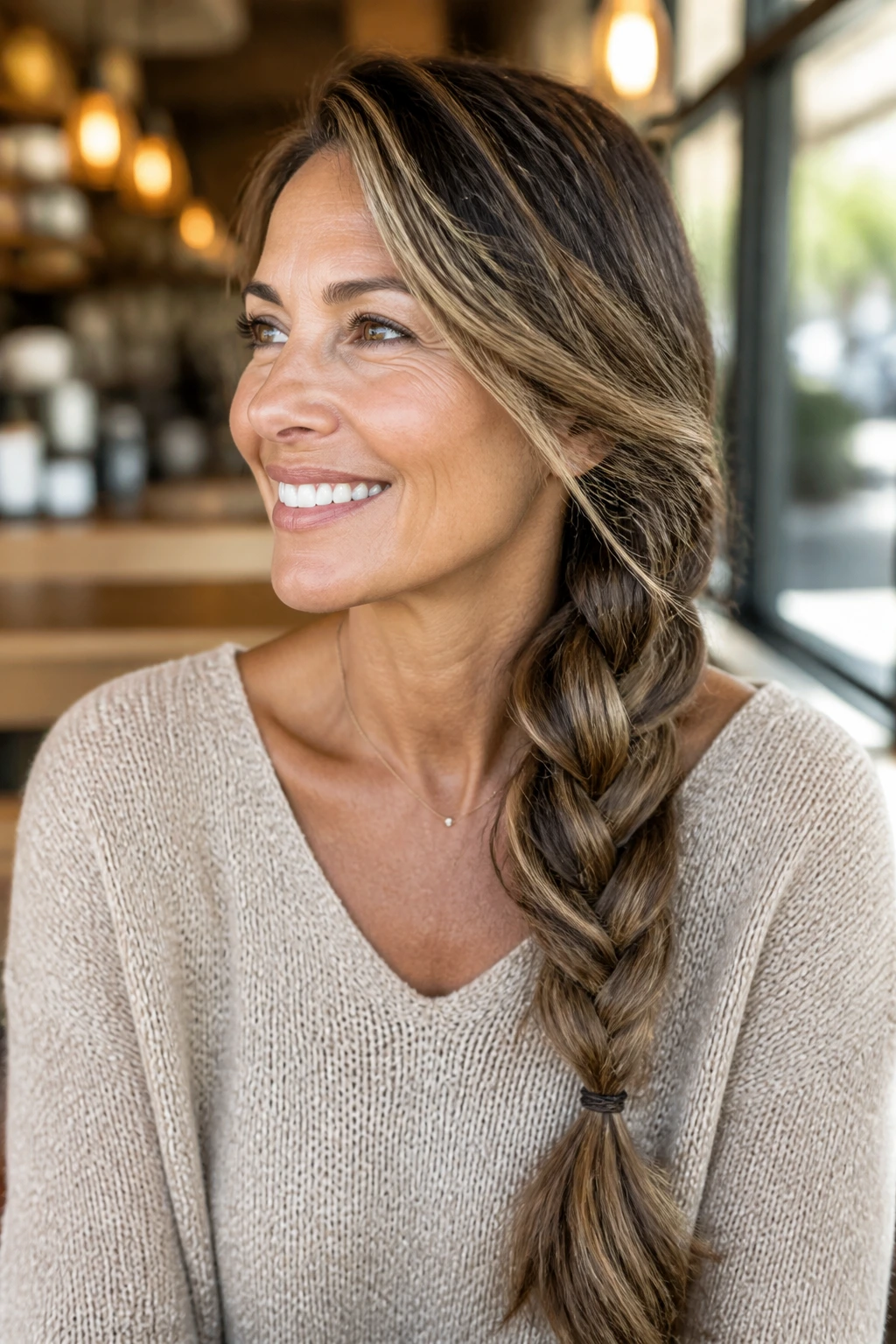
A braid over one shoulder is one of the few styles that makes long hair look finished even on second-day hair. It keeps the length visible, but it also stops strands from sticking to your face or shoulders.
You can go simple with a classic three-strand braid, or build a little more body with a loose Dutch braid at the crown that eases into a regular braid down the back. Once it’s secure, pull gently on the outer edges to widen it. That “pancaking” step makes the braid look fuller and softer.
This is a very good option if your hair is layered and you don’t want the ends to fray out in the wind. Tuck the shorter face-framing pieces behind the ear or let them fall free. Both work, and both look intentional.
11. Bottleneck Bangs with Long Length
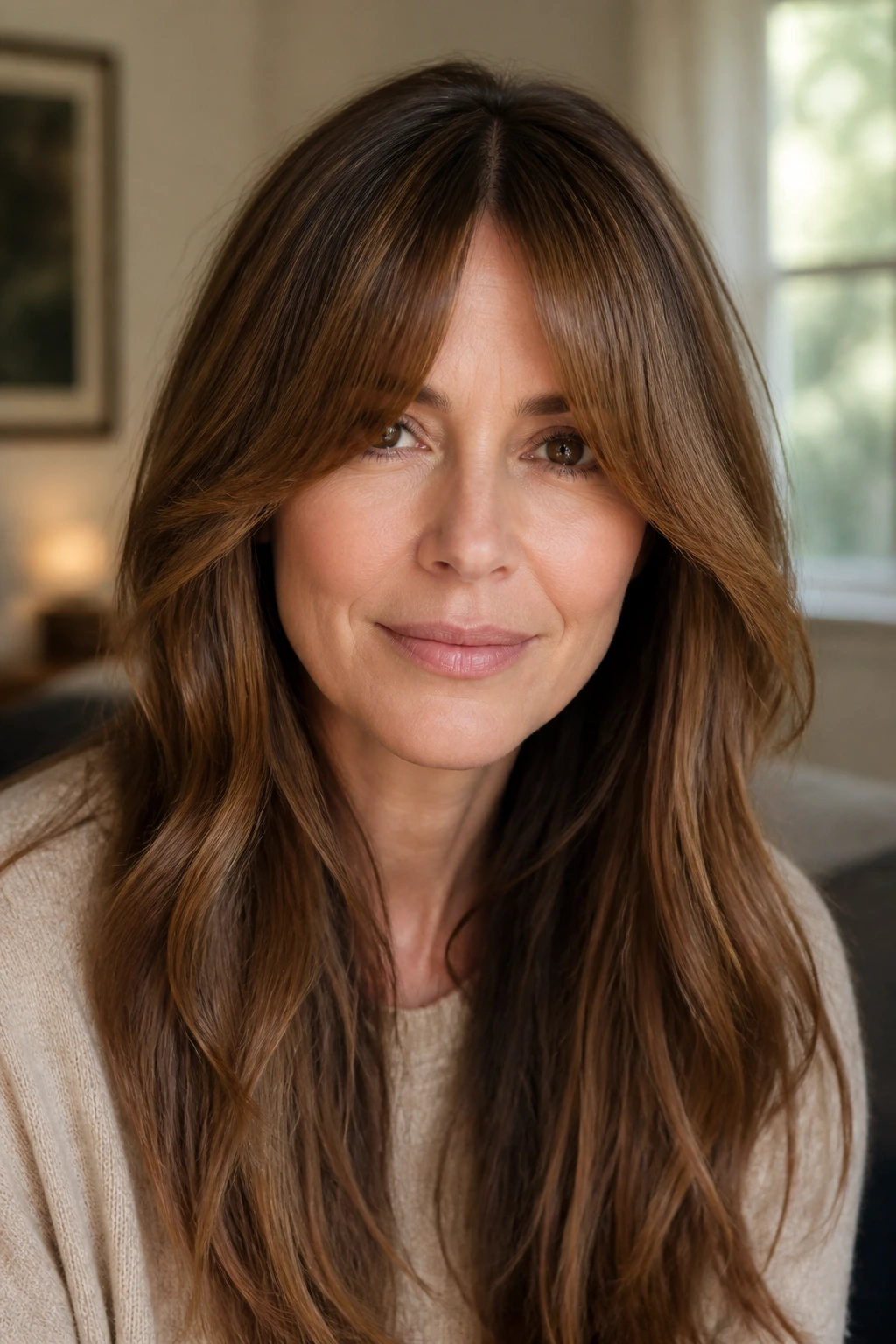
Bottleneck bangs are the quieter cousin of curtain bangs. They start narrow at the center, then open a little wider as they move toward the temples, which makes them less bulky around the forehead.
That shape is useful if you want fringe but not a heavy, straight-across bang. It blends neatly into long hair and gives a little structure around the eyes without swallowing the face. On longer faces, it adds width where you want it. On rounder faces, it breaks up the curve without making the cut look severe.
Ask for the bangs to be soft at the ends and long enough to tuck behind the ears on bad hair days. That flexibility is the whole reason this cut keeps earning loyal fans.
12. Glossy Center-Part Straight Hair
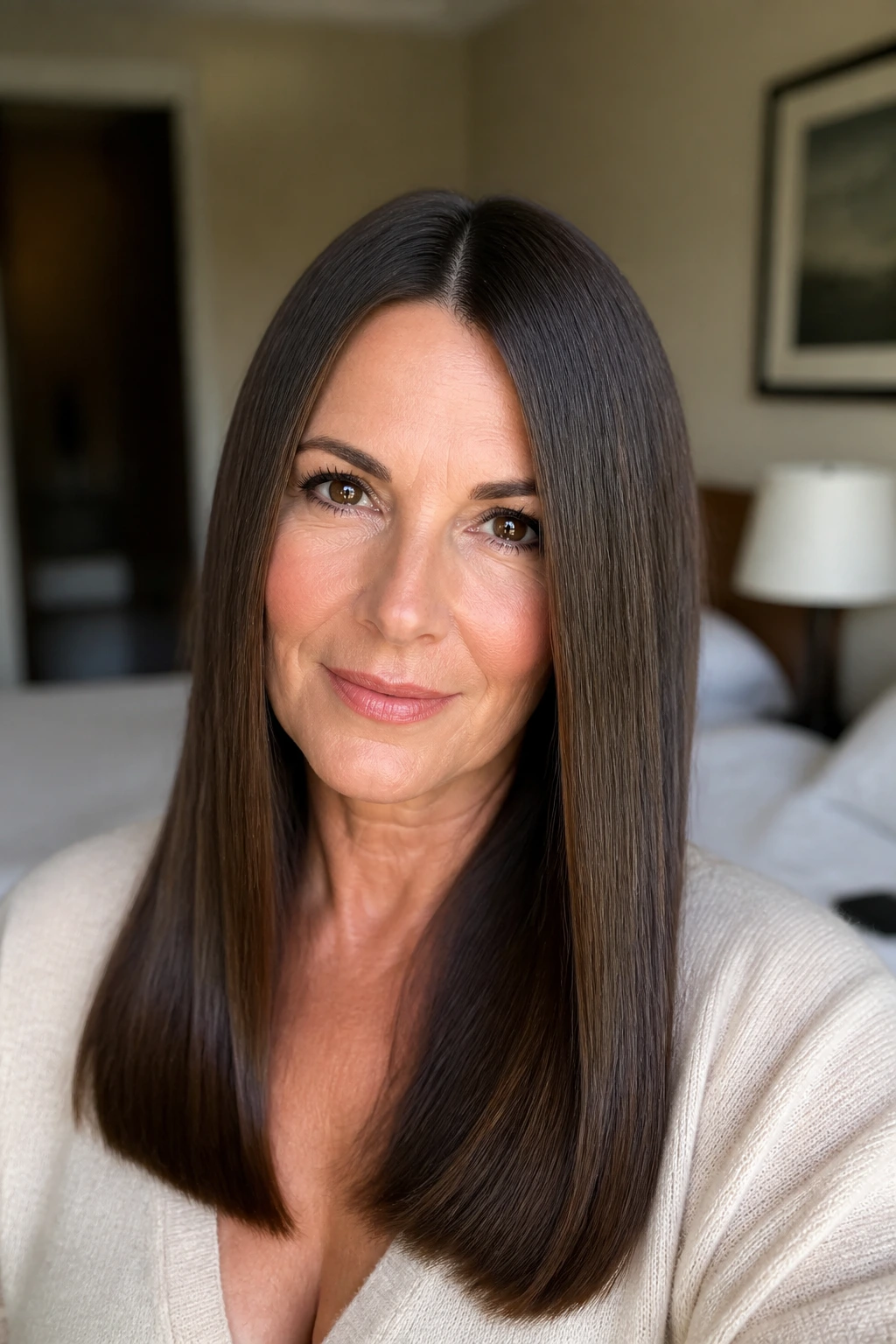
A center part with sleek, straight length is a strong look, and I mean that in the plainest way. It shows off good condition, clean lines, and healthy ends. If the hair is glossy, it looks elegant. If it’s frizzy, it looks unfinished. There’s no hiding here.
Start with a heat protectant, then smooth the hair in sections with a flat iron at a moderate heat. I’d rather do two careful passes at 320°F than one scorched pass at a hotter setting. Finish with a tiny amount of serum from the ears down. Keep it off the roots or the part will go greasy by lunchtime.
This style works best when the cut underneath is tidy. If the ends are ragged, the center part puts a spotlight on the problem. That is not a flaw in the style. It’s a useful lie detector.
13. Romantic Loose Curls with Long Layers
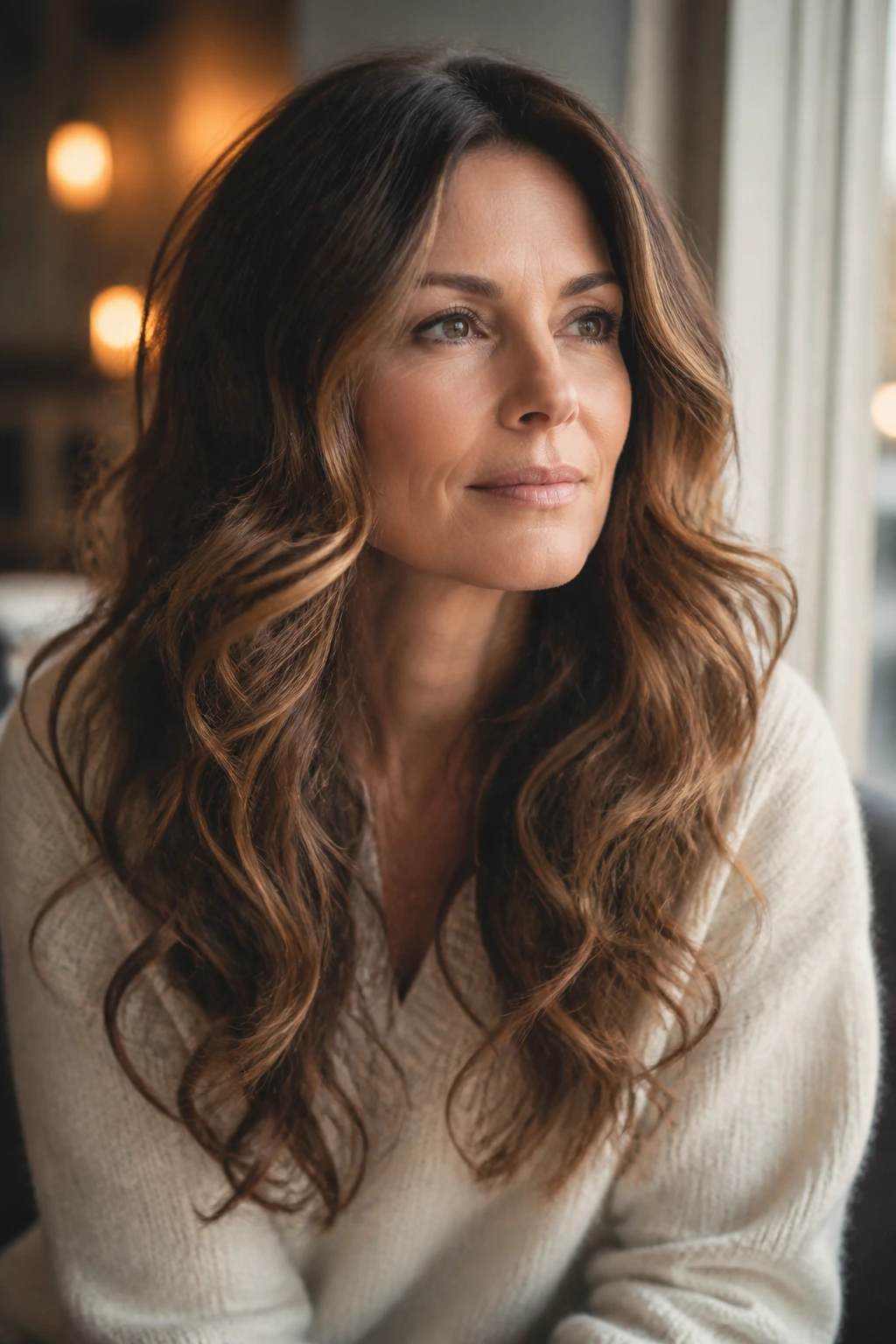
Loose curls on long hair can look a little theatrical if they’re too uniform. The fix is in the direction and the brush-out. Curl away from the face at the front, switch directions through the middle, then let everything cool before you run your fingers through it.
A 1.25-inch curling iron is a solid starting point for shoulder-length-to-mid-back hair. Clamp each section for about 8 to 10 seconds, let it slide out, and pin the curl to cool if you want the bend to last longer. Once the hair is fully cool, separate the curls with your hands or a wide-tooth comb.
Long layers help this style because they keep the curl from turning into one heavy mass. The result is softer around the shoulders and less boxy at the bottom. It’s a date-night style, yes, but it also works when you want your long hair to look intentional under a coat or wrap.
14. Waterfall Braid with Soft Tendrils
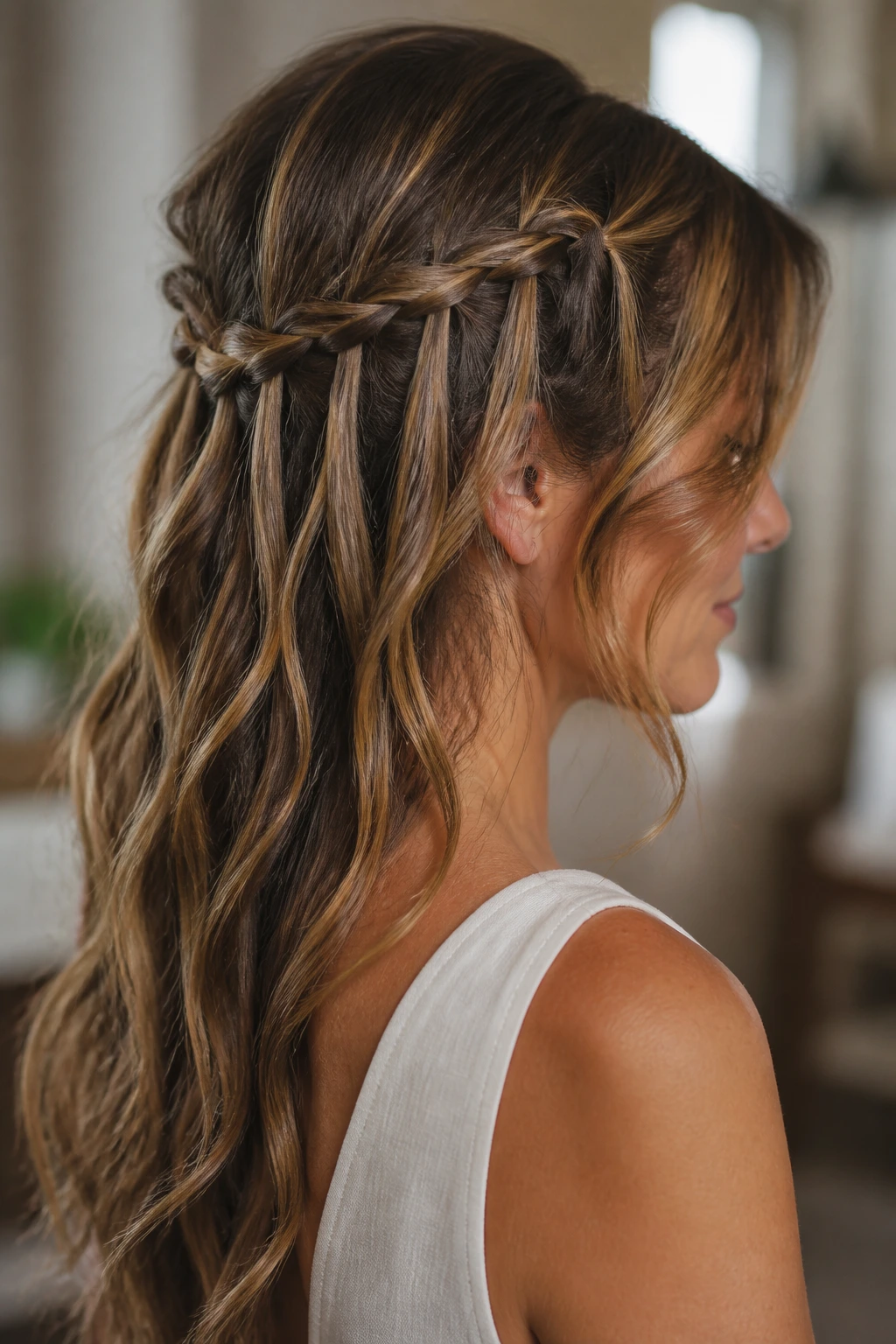
A waterfall braid keeps the length visible, which is why it works so well on women who do not want to hide their hair in a full braid. The dropped sections create that woven, airy look along the back of the head while the rest of the length still hangs loose.
The braid itself is easier than it looks once you get the rhythm. Drop one section, pick up another, and keep the tension soft. If the braid is too tight, the whole thing looks stiff. A few face-framing tendrils soften the edges and stop the style from reading too young or too prom-like.
I like this for weddings, dinners, and any day when the hair needs a little architecture but you still want movement. A spritz of flexible hairspray is enough. No helmet head, please.
15. Crown Braid with Loose Ends
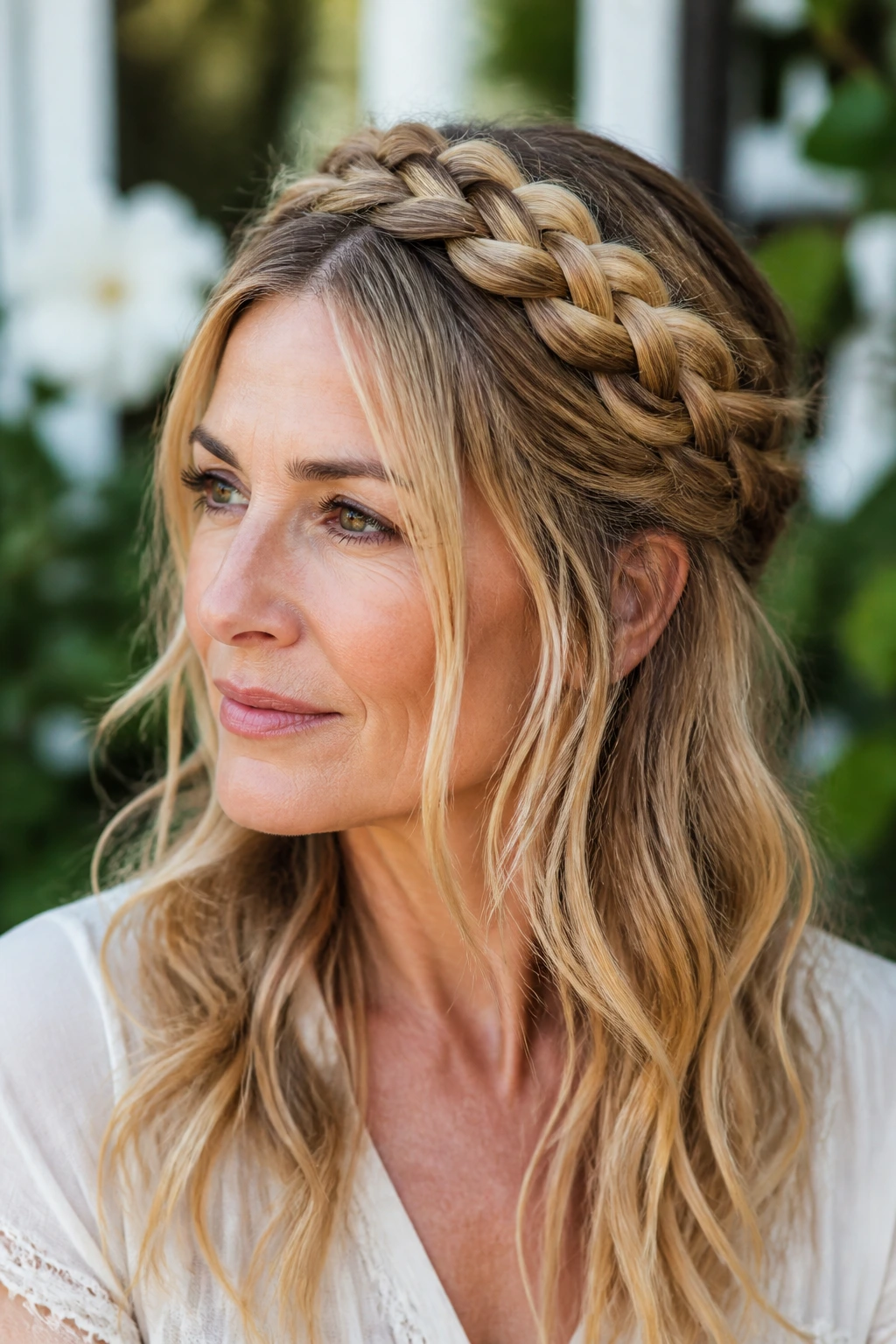
If you’re tired of hair brushing your neck but don’t want to lose the length, a crown braid is the answer. It pulls the front and sides up and around the head, then leaves the rest of the hair down or half-down in loose waves.
The trick is not to pull every strand tight. Leave the braid a little soft so it sits against the head instead of pinching it. That softness matters more on long hair, because too-tight braiding can make the style look strained and expose any frizz around the hairline.
This is one of those styles that solves several problems at once. It keeps hair off the face, helps on humid days, and makes layered hair look more controlled. It also pairs well with earrings, which is not a small thing.
16. Sleek High Ponytail
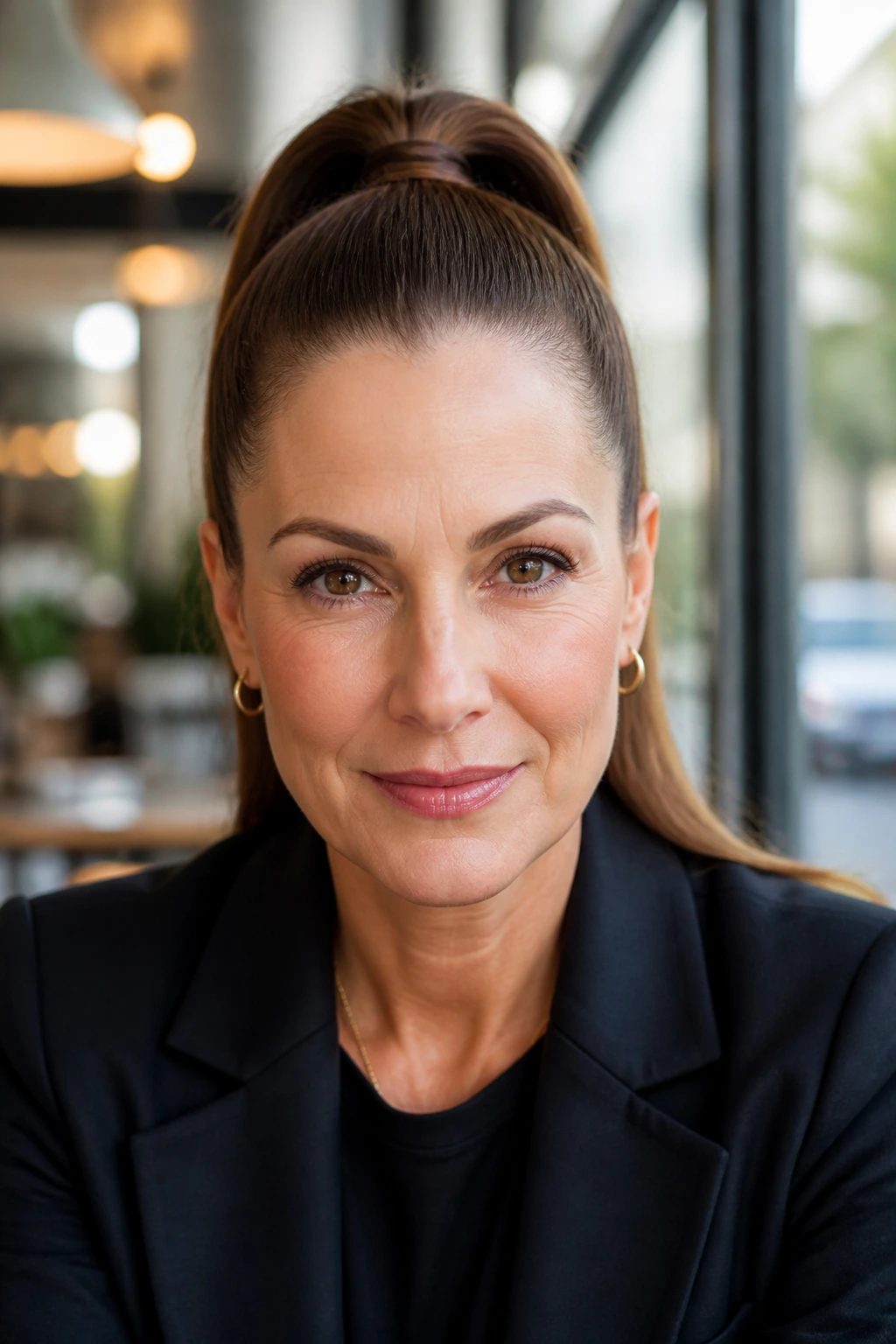
A high ponytail lifts the face, clears the neck, and gives long hair a sharp line. It can look sporty, but with a smooth finish and a wrapped base, it reads polished instead.
Brush the hair straight up to the crown or just above it, then secure it with a bungee or strong elastic. If the hair at the hairline wants to puff out, smooth it with a small dab of styling cream or wax on a toothbrush or edge brush. That tiny tool is often the difference between neat and messy.
This style is especially useful when the hair feels too long for the weather, the outfit, or your patience. It keeps the tail dramatic while making the front look clean. Bonus: it shows off cheekbones in a way low styles don’t.
17. Knotted Half-Up Style
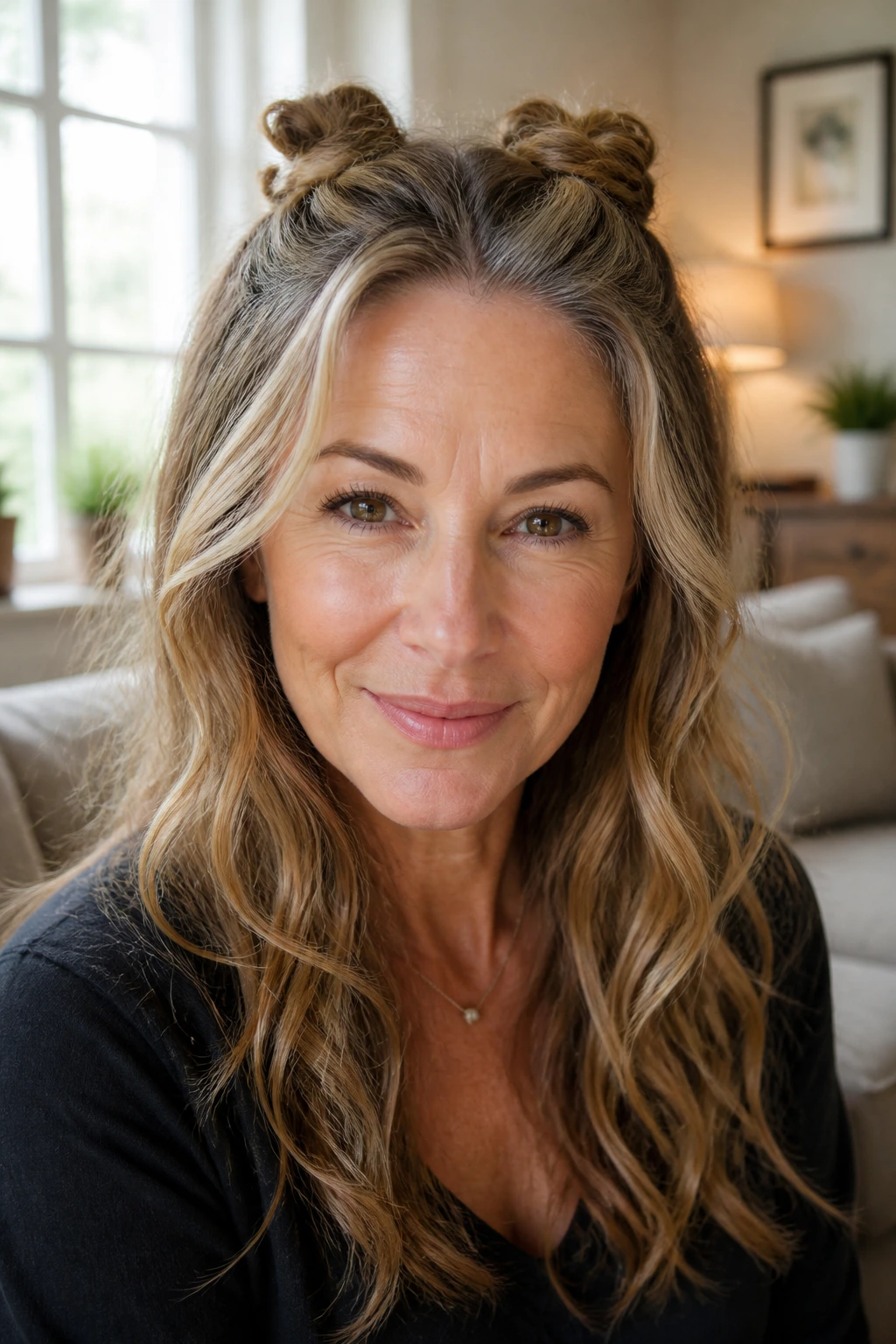
A knotted half-up style looks fussy in photos and takes less than five minutes in real life. That’s a good trade.
Take two sections from the temples, tie them once or twice depending on the length, then pin the knot underneath with two bobby pins. Leave the rest of the hair loose in waves, straight, or soft curls. The knot gives the crown a little lift without the extra bulk of a full top section.
This one is friendly to layered hair because the knot hides the shorter pieces around the front. If your hair slips, a clear elastic under the knot gives it more grip. Small fix. Big payoff.
18. Twisted Low Chignon for Long Hair
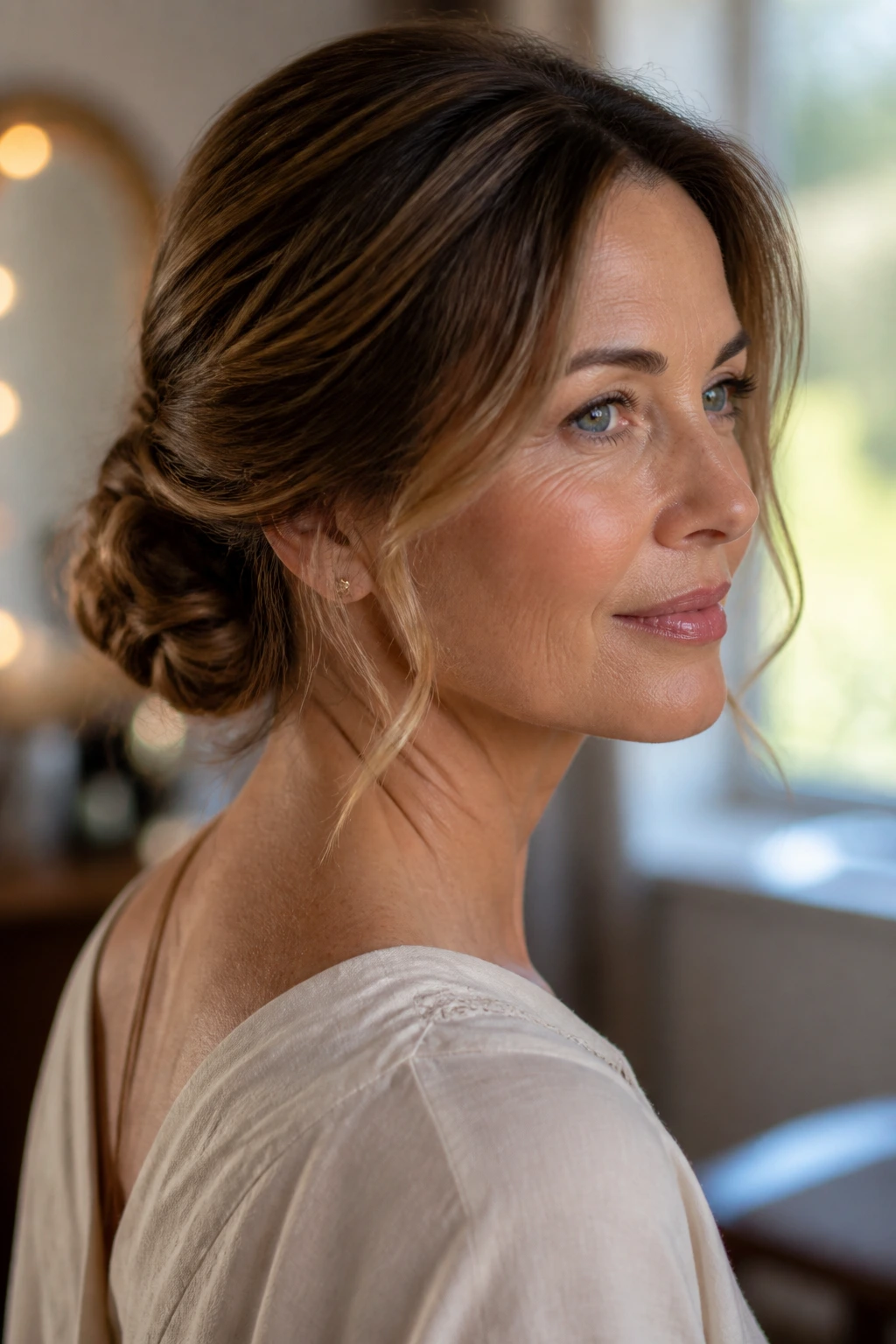
A low chignon is what I reach for when long hair needs to look calm. Not stiff. Calm.
Gather the hair at the nape, twist it once or twice, and coil it into a low bun or chignon shape. Pin it with crossed bobby pins so it doesn’t droop after an hour. Leave a few soft pieces around the face if you want the style to feel less formal. On layered hair, those tendrils keep the shape from looking too compact.
This works beautifully for events, meetings, and dinners where you want the hair to stay put but not feel severe. It also plays well with longer earrings and collars that sit higher on the neck.
19. Defined Curls with Long, Rounded Shape
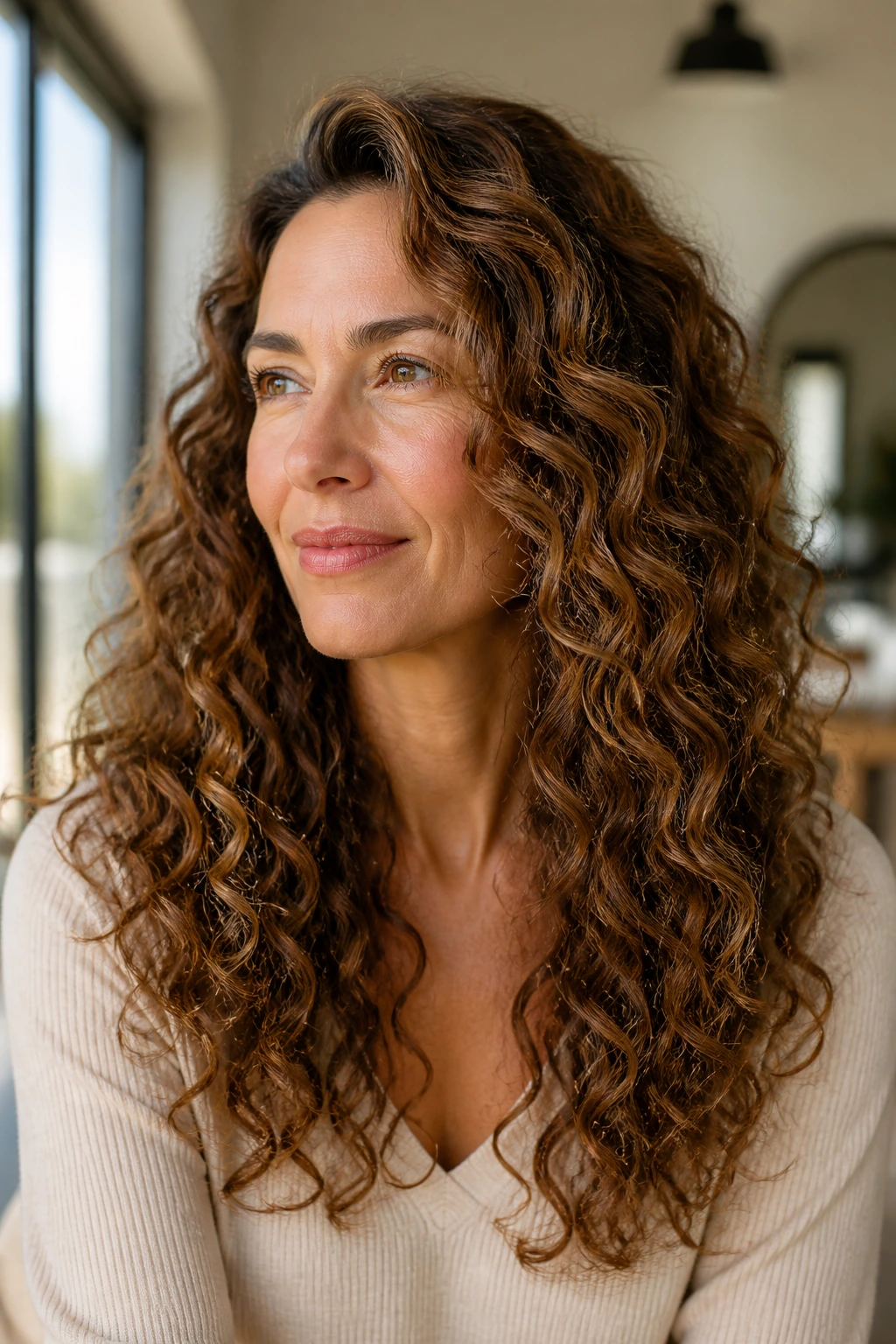
Curly hair after 40 deserves shape, not flattening. A long rounded cut keeps the curl pattern moving without forcing the ends into a triangle, which is the look most curly-haired women are trying to avoid.
Use a curl cream on soaking-wet hair, then diffuse at low heat or air-dry with a little root clipping for lift. The crown needs space to dry upward, not plastered down. Once dry, scrunch out the cast if you used a gel, and separate only the curls that naturally want to separate. Don’t go hunting for volume with a brush.
This style is especially good if your curls have become more wiry or gray strands have started to show up. A rounded shape lets the hair look lively instead of puffy. It’s a shape problem more than a texture problem, and shape can be fixed.
20. Feathered Ends with Tucked Front Pieces
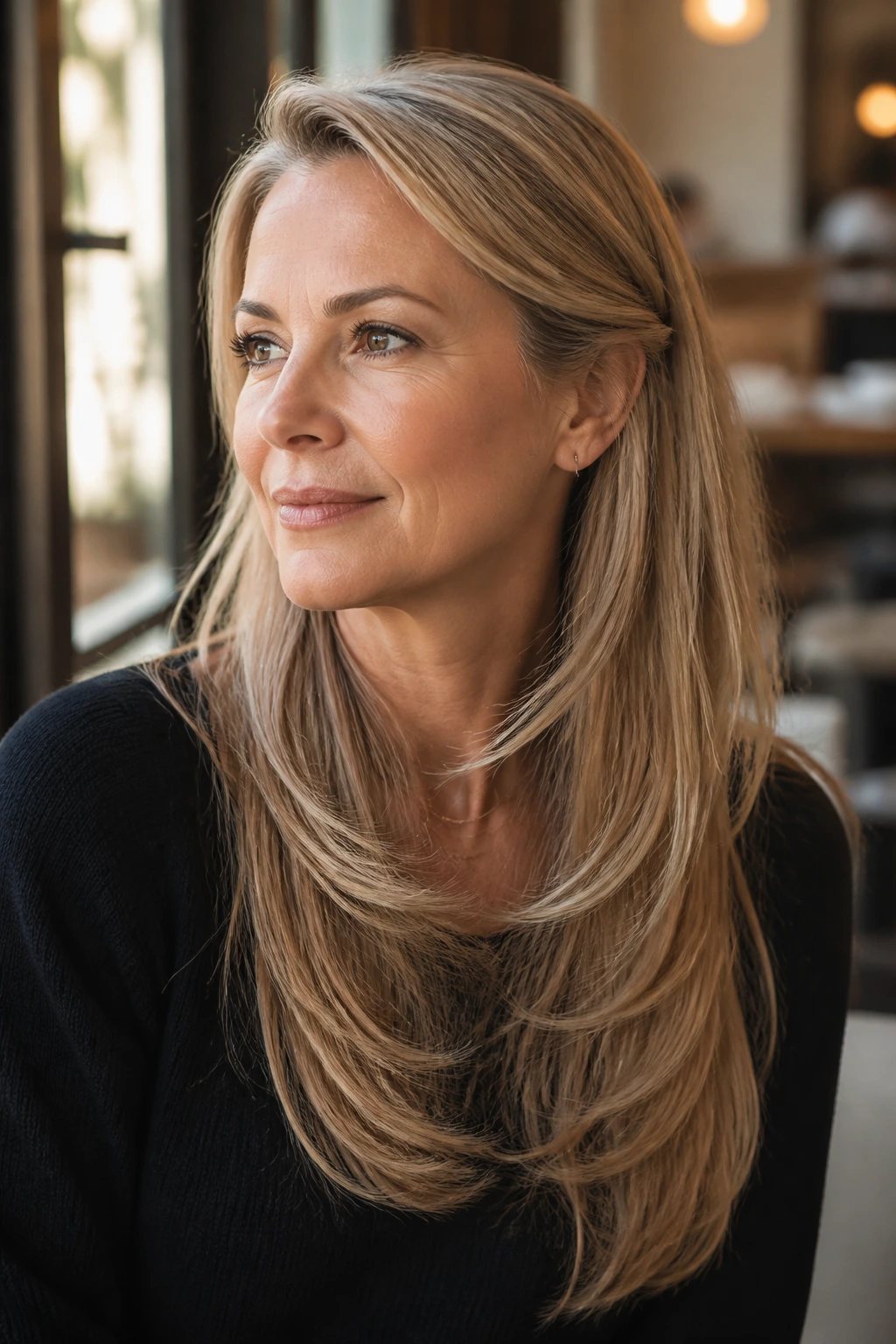
Feathered ends make long hair feel lighter at the bottom without stripping away too much density. Tucked front pieces keep the face open and make the whole style work well with glasses, earrings, and sharp necklines.
Ask for the perimeter to stay soft, then have the ends refined so they taper a little instead of hanging in one blunt line. When styling, tuck the front pieces behind the ears or guide them back with a side part. A quick bend at the ends with a large curling iron keeps the feathering from looking too 1970s unless you want that vibe on purpose.
This is a quietly useful style. It gives shape, shows off the length, and keeps the hair from overpowering the face. That combination is hard to beat.
Why Long Hair Needs Shape, Not Just Length
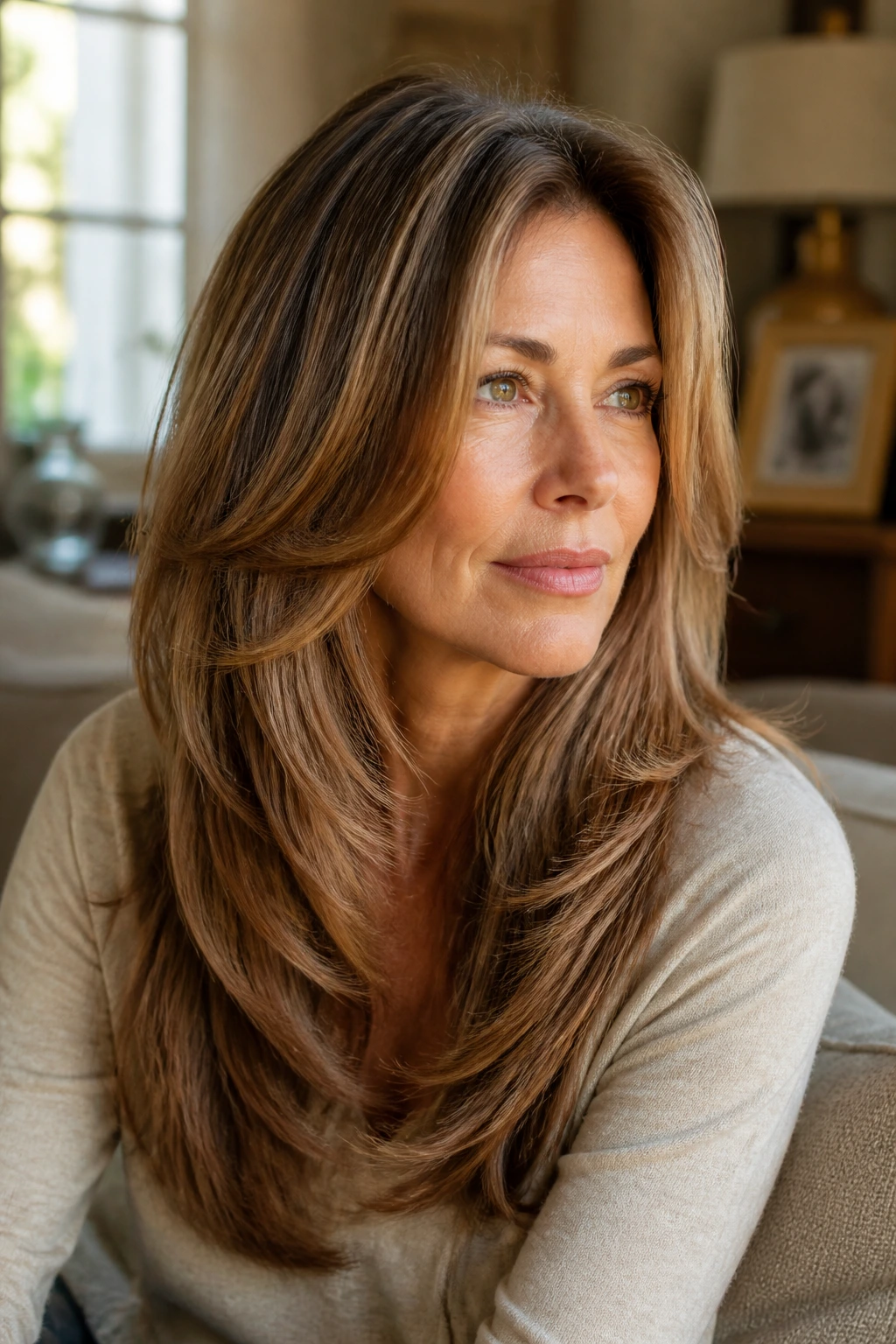
Length on its own is not the point. Shape is.
A few inches of well-placed layering can make the difference between hair that drapes and hair that moves. On longer hair, weight tends to pile up where you least want it: around the perimeter, under the jaw, and at the back of the neck. That’s where styles start looking heavy. Not thick. Heavy. There’s a difference.
The smartest long hairstyles for women over 40 usually solve one of three problems: flat roots, a heavy bottom, or a face that needs more softness near the cheekbones. Once you know which problem you’re trying to fix, the cut becomes much easier to choose. A curtain bang is not the same thing as a side part. A U-cut is not the same thing as a shag. Each one changes where the eye lands.
The Brushes, Clips, and Products That Make These Styles Behave
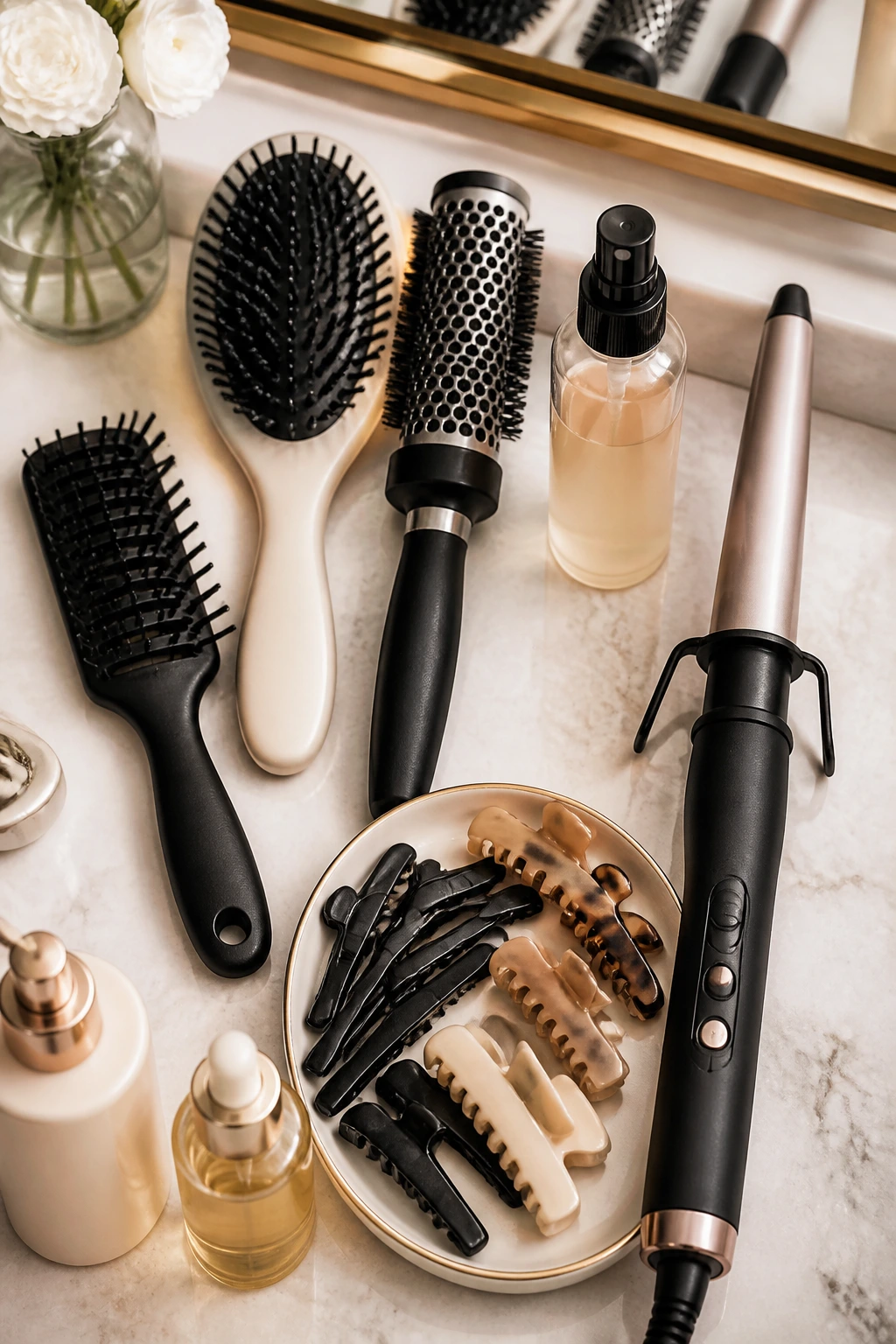
A good hair day often starts with the right tool in your hand, not a miracle product. That sounds boring. It isn’t.
You do not need a bathroom shelf full of bottles. You need a small set that actually works with your texture and your patience. The wrong brush or the wrong heat setting will fight every style on this list, and the fight shows.
Essential tools and products:
- Wide-tooth comb: Best for detangling wet hair without ripping through the ends.
- Tail comb: Useful for clean parts, sectioning, and lifting roots before a half-up style.
- Blow dryer with concentrator nozzle: Helps smooth the cuticle and directs airflow where you want it.
- Round brush, 1.5 to 2 inches: The sweet spot for blowouts, curtain bangs, and soft bend through the ends.
- Flat iron with adjustable heat: Better than a one-setting tool that runs too hot.
- 1.25-inch curling iron or wand: Ideal for loose curls, brushed-out waves, and long layers.
- Bobby pins and strong hairpins: Buy more than you think you need; long hair eats pins.
- Silk scrunchies or coated elastics: Reduce creasing and breakage around ponytails and braids.
- Heat protectant spray: Non-negotiable if you use hot tools more than once a week.
- Light mousse or root lift spray: Gives fine hair enough structure to hold a part or wave.
- Dry shampoo: Extends blowouts and adds grip at the roots for updos.
- Light serum or cream: Keeps the ends from looking dusty without weighing them down.
What to Ask for at the Salon Before You Start Styling
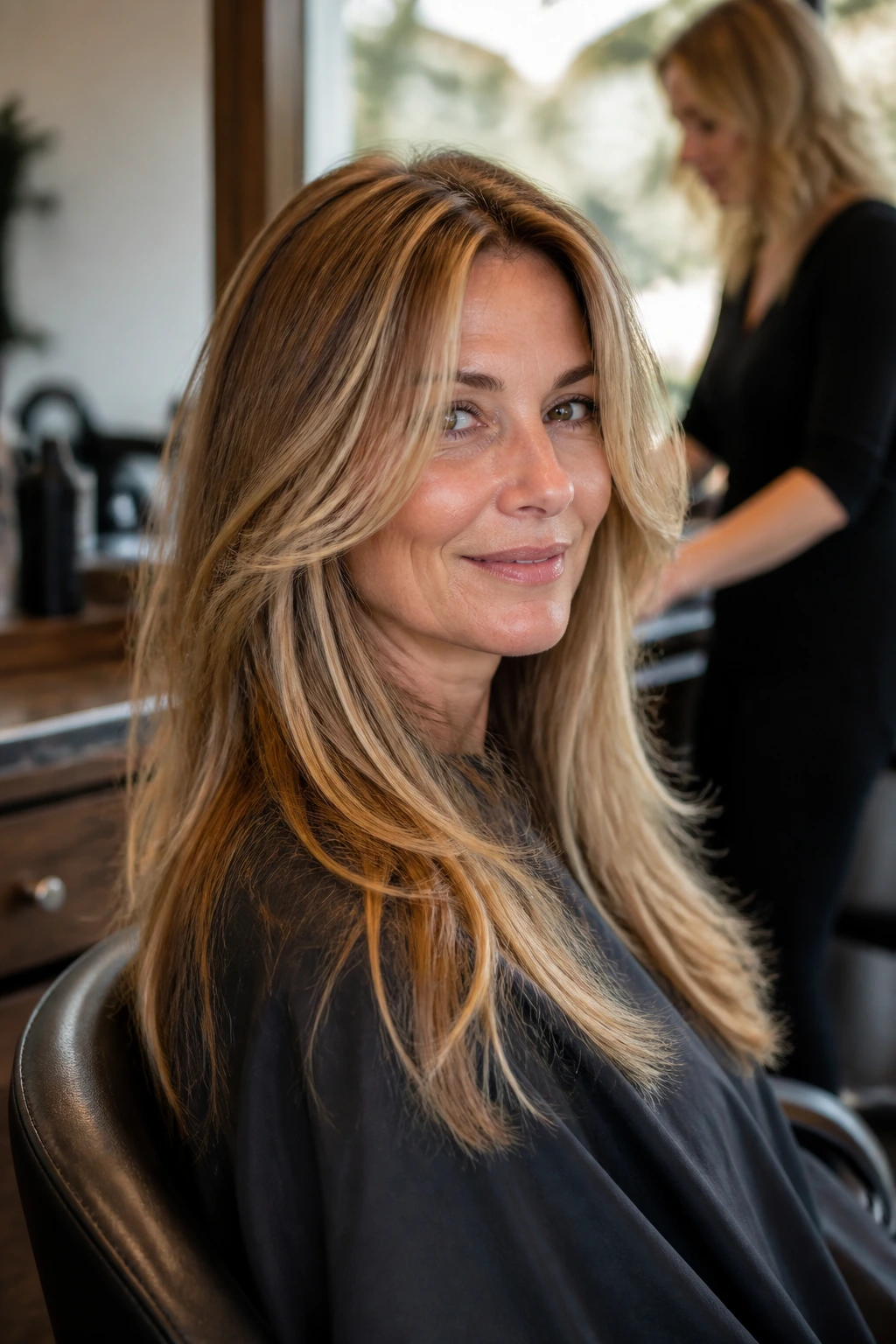
The style begins in the chair. If the cut is wrong, the best brush in the world won’t save it.
Bring a photo, yes, but bring a practical one. The image should show the side view, the back, and the front if possible. A front-only photo can hide the exact thing that will make or break the cut: where the shortest layer lands. If you want softness around the face, say where you want that shortest piece to fall. Cheekbone, lip, chin, collarbone. Pick one.
For fine hair, ask for internal layers rather than aggressive thinning. For thick hair, ask where the weight should come out so the ends do not puff out like a shelf. For curly hair, a dry cut or curl-by-curl shaping often gives a better read on length than a wet cut, because curls spring up. And if you wear glasses often, say so. A stylist who knows that detail can place the front pieces so they sit around the frames instead of fighting them.
How to Wear These Looks Without Overthinking It
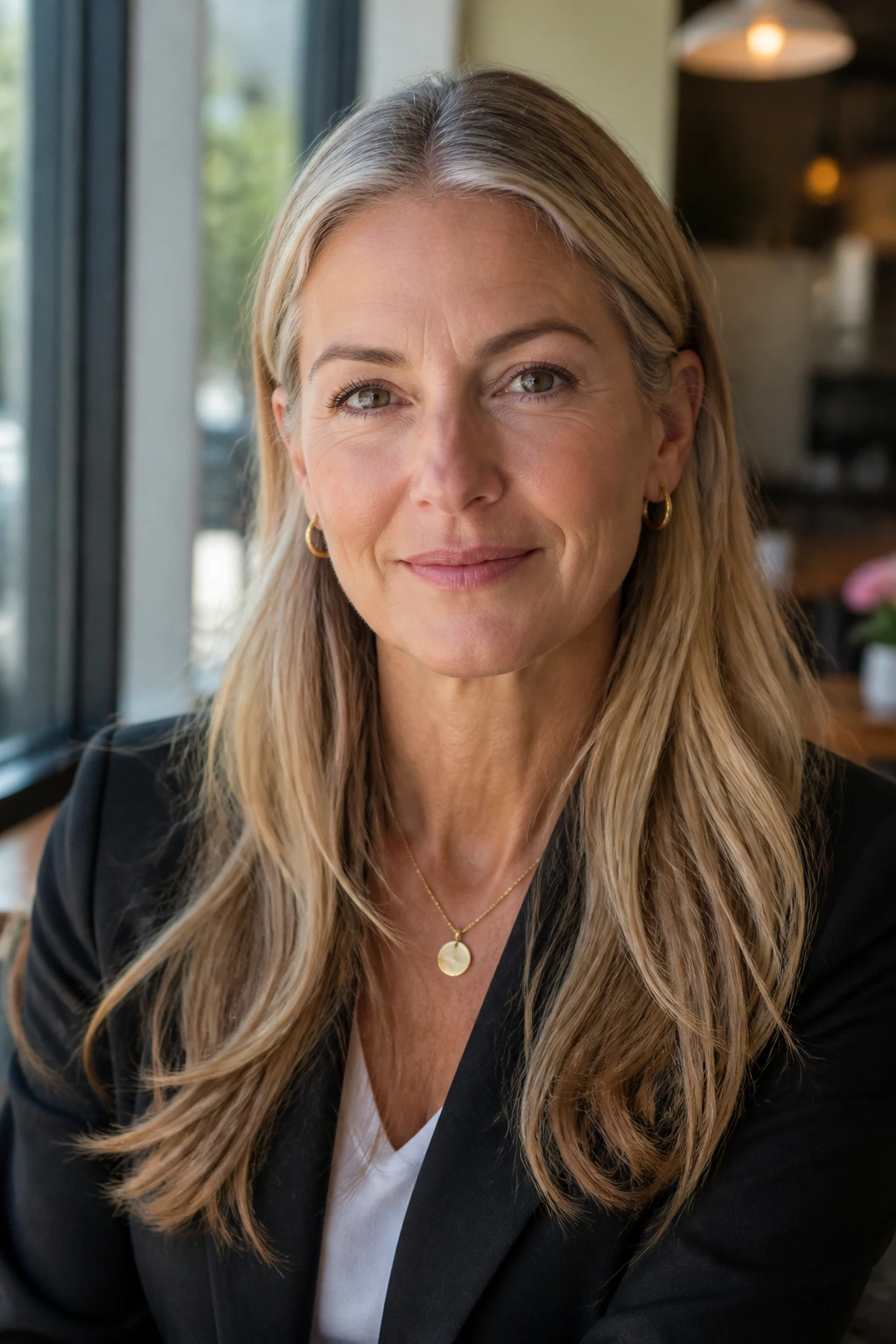
Presentation: Long hair looks best when the front tells the story. Pull some styles away from the face, tuck others behind the ears, and let the part work with your features instead of against them. If a style feels too heavy, the fix is usually at the crown or around the cheekbones, not the ends.
Accompaniments: Sharp collars, simple earrings, clean necklines, and a good lipstick all change the read of long hair. A sleek ponytail pairs well with a blazer. A loose wave likes a soft knit or open neckline. Braids and twists sit nicely with earrings that move a little but do not tangle in the hair.
Portions: If your hair is fine, keep the volume concentrated at the roots and the ends neat. If it’s thick, spread the weight out with layers, a wave, or a braid so the style does not sit like a blanket. For shorter long hair, think collarbone to mid-back. For very long hair, build more shape near the face so the length doesn’t take over.
Beverage Pairing: For a morning blowout or salon day, iced coffee or black tea is the obvious match. For an evening event, a crisp sparkling water with citrus or a dry white wine keeps the mood clean and light.
The Small Styling Moves That Make a Big Difference
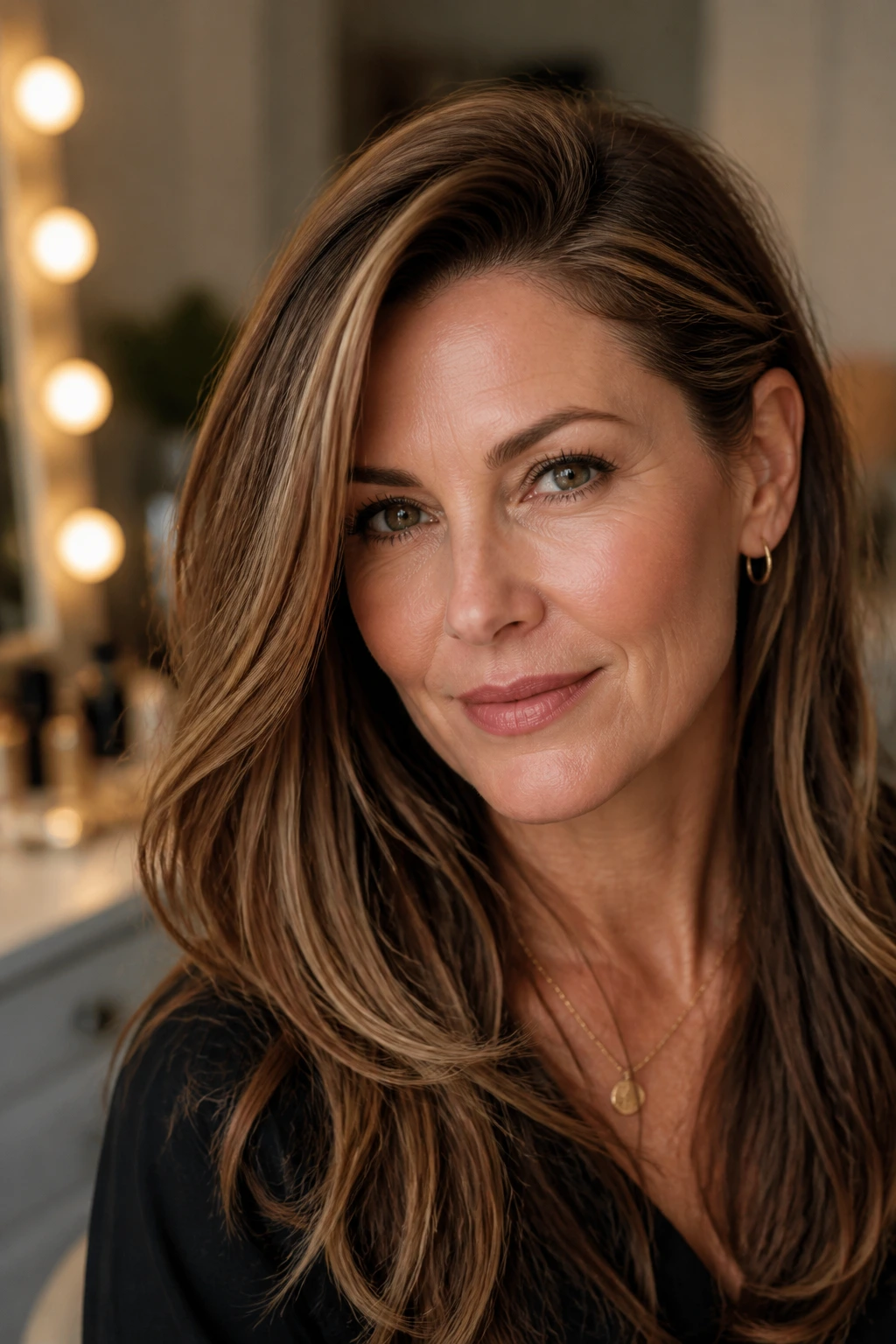
Shine Boost: A tiny amount of serum on the ends after styling gives long hair a more finished line. Start with less than you think you need; one pea-size amount can go a long way if you rub it through the palms first.
Customization: Flip the part, tuck one side behind the ear, or pin back a single front section and the whole style changes. That is a better fix than starting over every time the mood shifts.
Serving Suggestions: Use a light finishing spray, not a hard shell. Add a ribbon to a braid, a tortoiseshell clip to a half-up style, or a simple barrette near the temple if you want the hair to look considered.
Make-It-Yours: If you want softness, leave a few wisps around the face. If you want polish, smooth the sides and keep the crown clean. If your hair is gray and a little coarse, a glossing cream helps the strands lay together instead of separating into flyaway pieces.
The Mistakes That Make Long Hair Look Tired
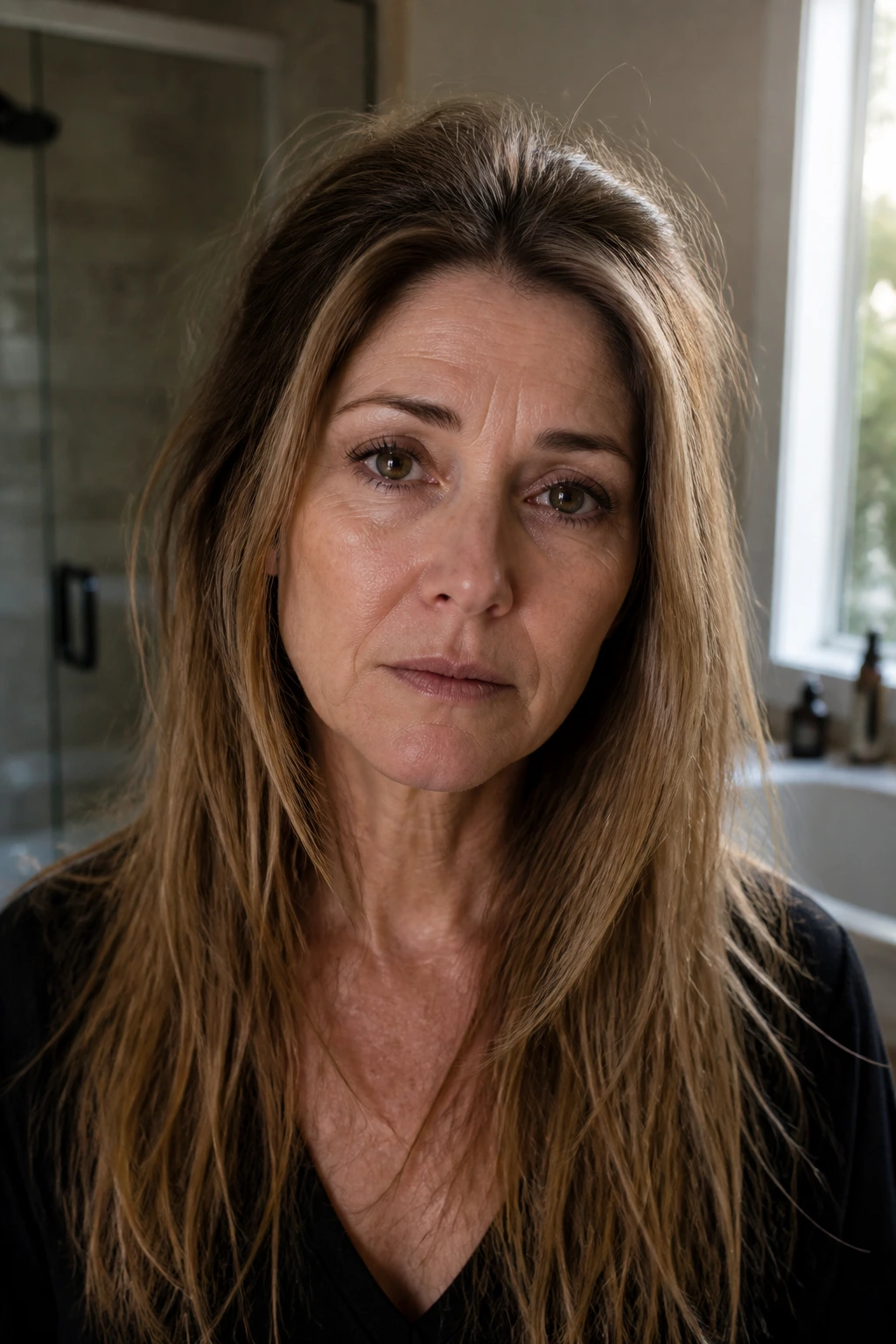
The first mistake is too many short layers in fine hair. It sounds like volume, but often it turns into see-through ends and a blunt-looking bottom. If the hair already feels thin, keep the longest layers long enough to preserve density.
Another common one: too much heat, too often. Long hair can survive a little blow-drying, but it hates being hammered with a flat iron every single day. The symptom is familiar — rough ends, dull shine, and strands that snap before they swing. Use heat protectant, lower the temperature, and give the hair a day off between hot-tool sessions when you can.
Skipping trims is a slower problem, but it shows. Split ends creep upward, the tail looks scruffy, and suddenly the whole style feels older than it should. A trim every 8 to 12 weeks keeps the ends from fraying.
Then there’s the crown-collapse issue. If the top goes flat and the ends stay full, the style reads heavy. A little root lift spray, a side part, or a half-up twist fixes that faster than adding more layers ever will.
Variations and Adaptations to Try
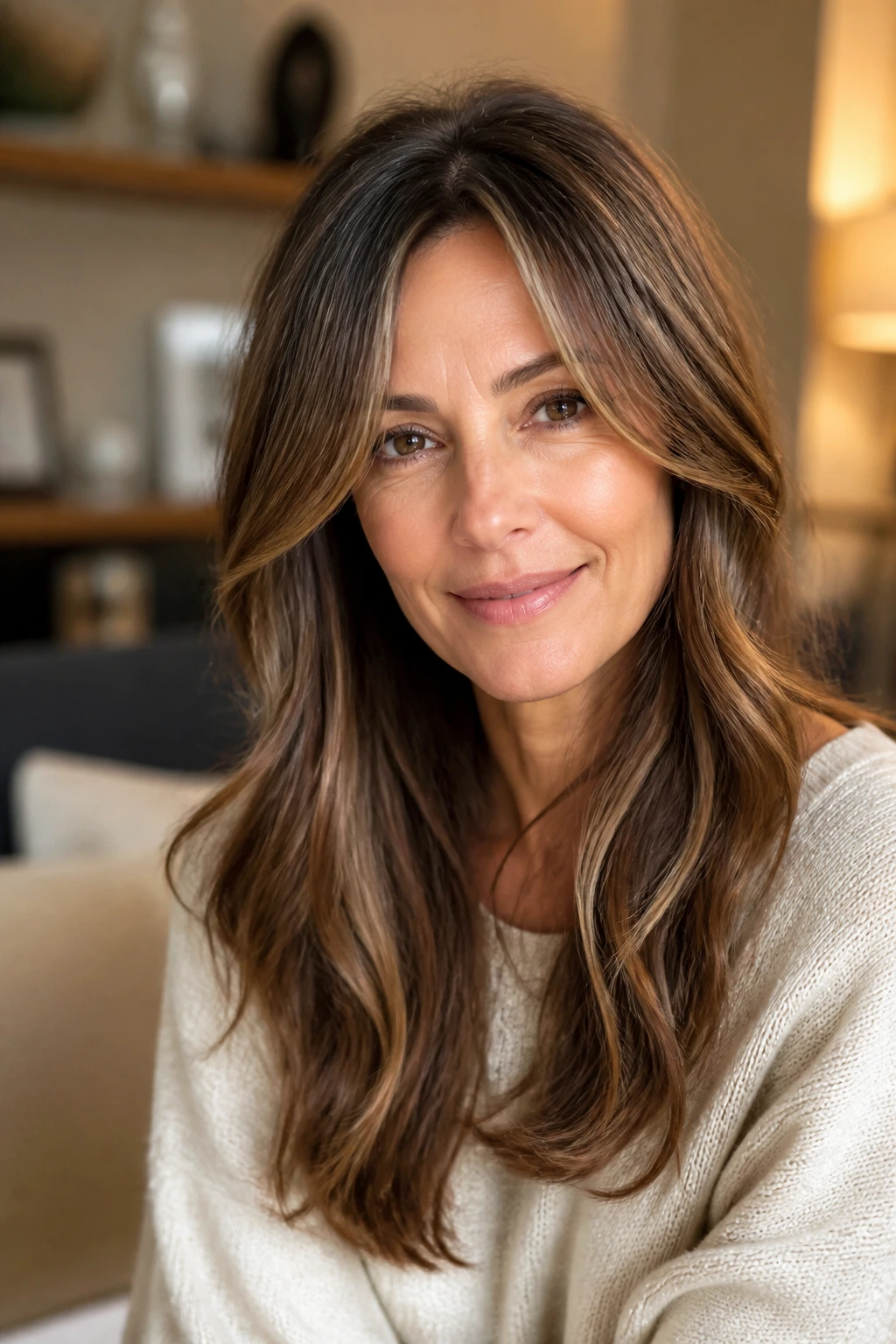
The Fine-Hair Lift: Keep the layers longer, add curtain bangs or a side part, and avoid over-thinning the ends. A root spray and a round brush do more for fine hair than a dozen choppy layers.
The Thick-Hair Sweep: Ask for a U-cut or long internal layers that remove bulk without wrecking the shape. This version needs a strong blow-dry at the roots and a smoother finish through the mids.
The Curly-Rounded Shape: Shape curls so the longest pieces stay heavy enough to hang, but not so heavy that they stretch flat. Diffuse at low heat and keep hands out of the hair until it is dry.
The Gray-Blending Soft Wave: Loose waves soften wirier gray strands and make the blend look intentional instead of patchy. A gloss or lightweight cream helps the light catching in the hair feel even.
The Glasses-Friendly Frame: Use face-framing pieces that begin below the eyes and tuck easily behind the ears. This keeps the frames visible and stops hair from crowding the face.
Keeping Long Hair Fresh Between Washes
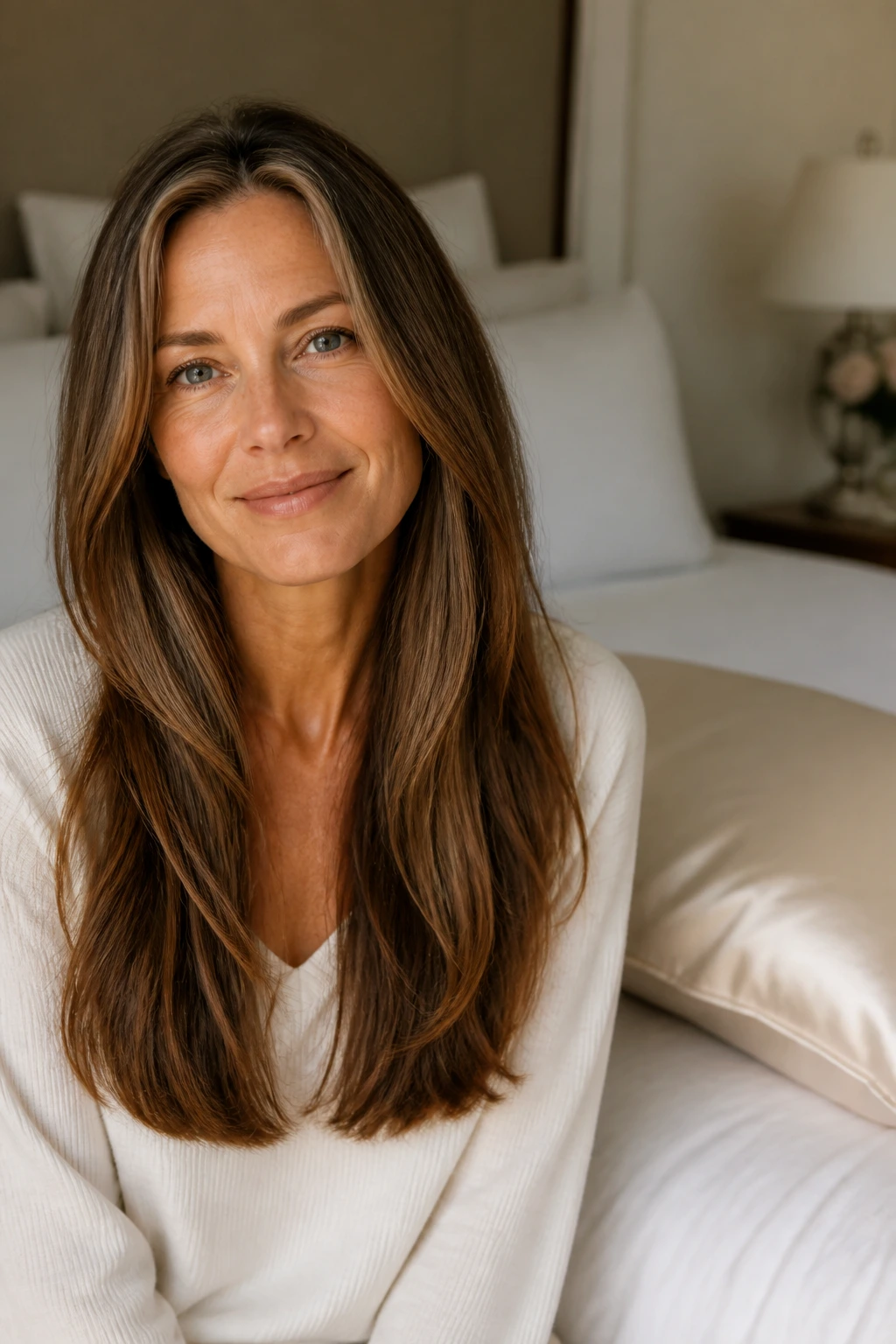
Most long styles behave best in the first 24 hours, then start asking for help. That help can be small. Dry shampoo at the roots, a quick brush-through of the ends, and a silk pillowcase usually buy you another day or two without much drama.
Blowout styles and straight styles tend to last 1 to 2 days before the crown starts to lose lift. Waves can stretch to 2 or 3 days if you sleep with them loosely pinned or in a low, soft braid. Braids and low ponytails often survive the longest, especially when you wrap the base and keep the elastic gentle. If the hair gets sweaty at the scalp, refresh the root area first. The ends usually need less work than you think.
At night, a loose silk scrunchie, a pillowcase that does not snag, and a quick twist or braid make a real difference. If the front pieces keep flattening, clip them loosely away from the face before bed. That one habit saves more morning time than any fancy serum.
Questions People Actually Ask About Long Hair After 40
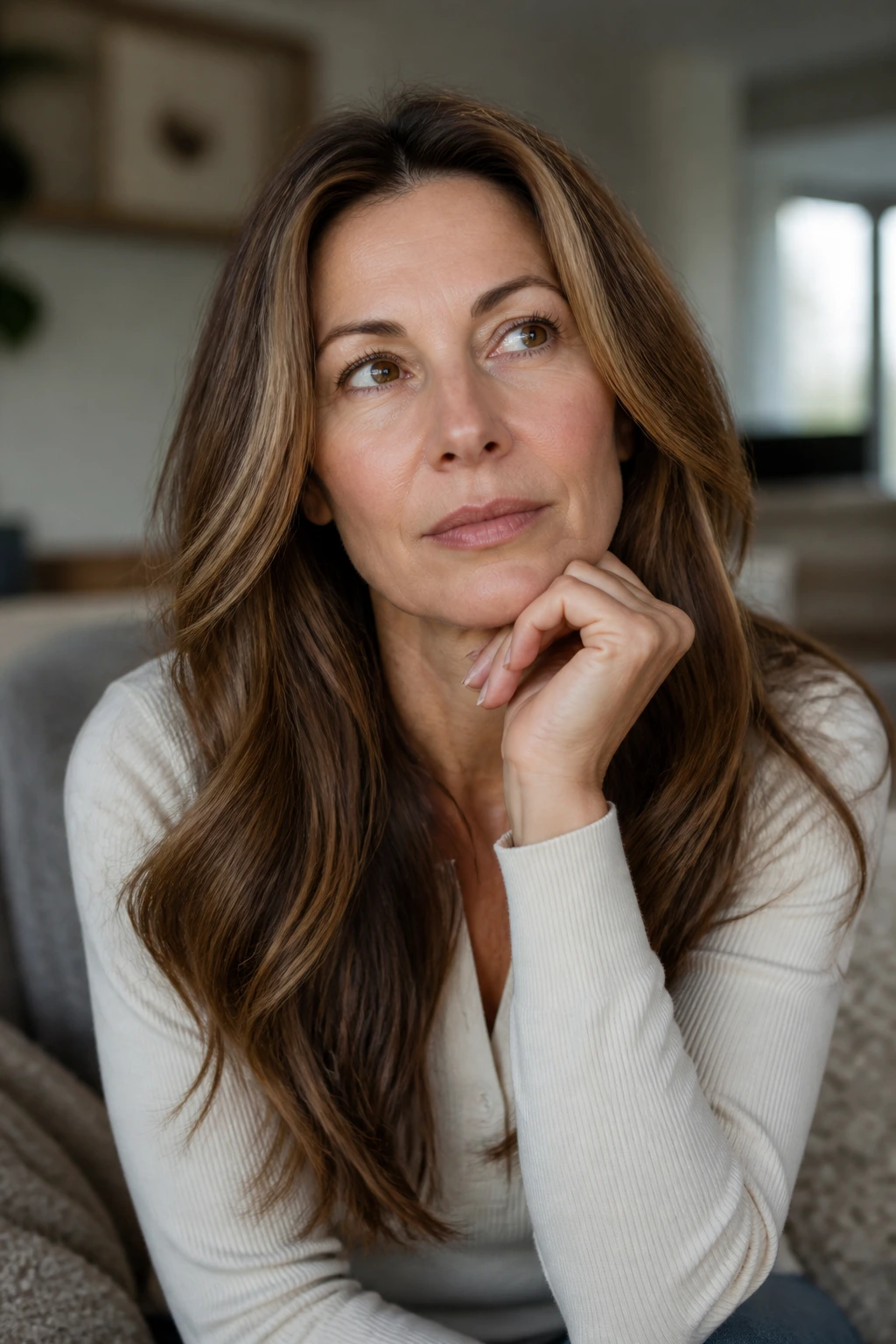
Which long hairstyle is most flattering if I want to keep length?
Long layers with curtain bangs or a soft U-cut are usually the safest starting point. They keep the length but give the front enough movement that the hair does not drag down the face.
Can long hair still look good if it’s fine?
Yes, but the cut has to be careful. Keep the layers longer, add root lift, and avoid feathering the bottom so much that the ends turn wispy.
Do bangs work with long hair after 40?
They do, especially curtain bangs and bottleneck bangs. The trick is keeping them soft and flexible so they blend into the rest of the hair instead of sitting like a hard line.
How often should long hair be trimmed?
A trim every 8 to 12 weeks is a solid rhythm for most people. If you wear a blunt one-length cut, trim closer to the shorter end of that window so the line stays clean.
What if my long hair feels flat at the crown?
Use a side part, a root-lift spray, or a half-up style that creates height right where the eye needs it. Flat crown and full ends is the combo that usually makes long hair look tired.
Are ponytails and braids too casual?
Not if they’re finished properly. A wrapped low ponytail, a side braid, or a crown braid can look polished enough for dinner, work, or an event if the flyaways are controlled.
What’s the easiest style on this list for busy mornings?
The wrapped low ponytail and the half-up twist are the fastest. Both take only a few minutes, and both look more intentional than tossing the hair back with a plain elastic.
How do I keep gray hair from looking rough in long styles?
Use a smoothing cream or glossing product, keep the ends trimmed, and favor styles with a little bend or wave. Gray strands often need more moisture and less heat.
The Long-Hair Styles That Earn Their Place
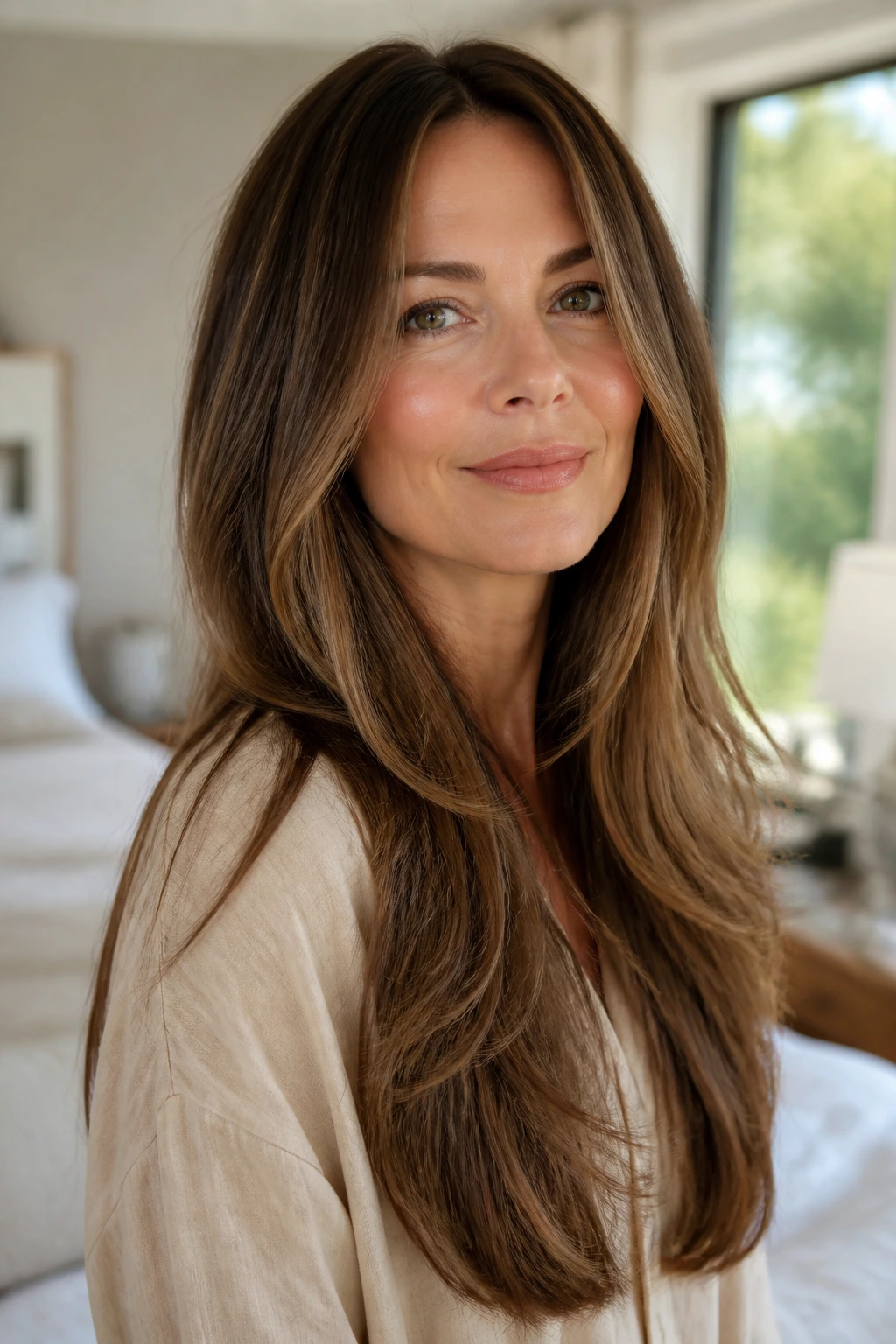
The best long styles are the ones that make the hair look like it knows what it’s doing. That might mean a polished ponytail, a soft curtain bang, or a curly shape that finally sits where it should. Length stays. Shape does the heavy lifting.
If you’ve been wearing long hair the same way for years, the smallest change can make it feel fresh again: a deeper part, a better face frame, a cleaner perimeter, or a braid that keeps the front under control. Pick one style that fits your mornings, your texture, and your patience. Then wear it enough to see what the hair really wants to do.
