



Long hair gives you options, and then it dares you to use them.
Finding hairstyle ideas for women with long hair gets easier once you stop treating length like one single look and start treating it like material. You can braid it, twist it, wrap it, pin it, smooth it, or leave it loose and let the weight do half the work. A style that looks fine on shoulder-length hair can slide, sag, or puff up the second you add another six or eight inches. Gravity matters. So does texture. So does where the hair hits your collarbone, your jacket, and the back of your chair.
The best long-hair styles don’t fight that reality. They work with it. A low ponytail can look sharp instead of sleepy. A braid can stay neat without turning into a helmet. A blowout can keep the movement at the ends instead of ballooning at the roots. That’s the sweet spot here: styles that make long hair look deliberate, not like you just ran a brush through it and hoped for the best.
Why You’ll Love This Collection
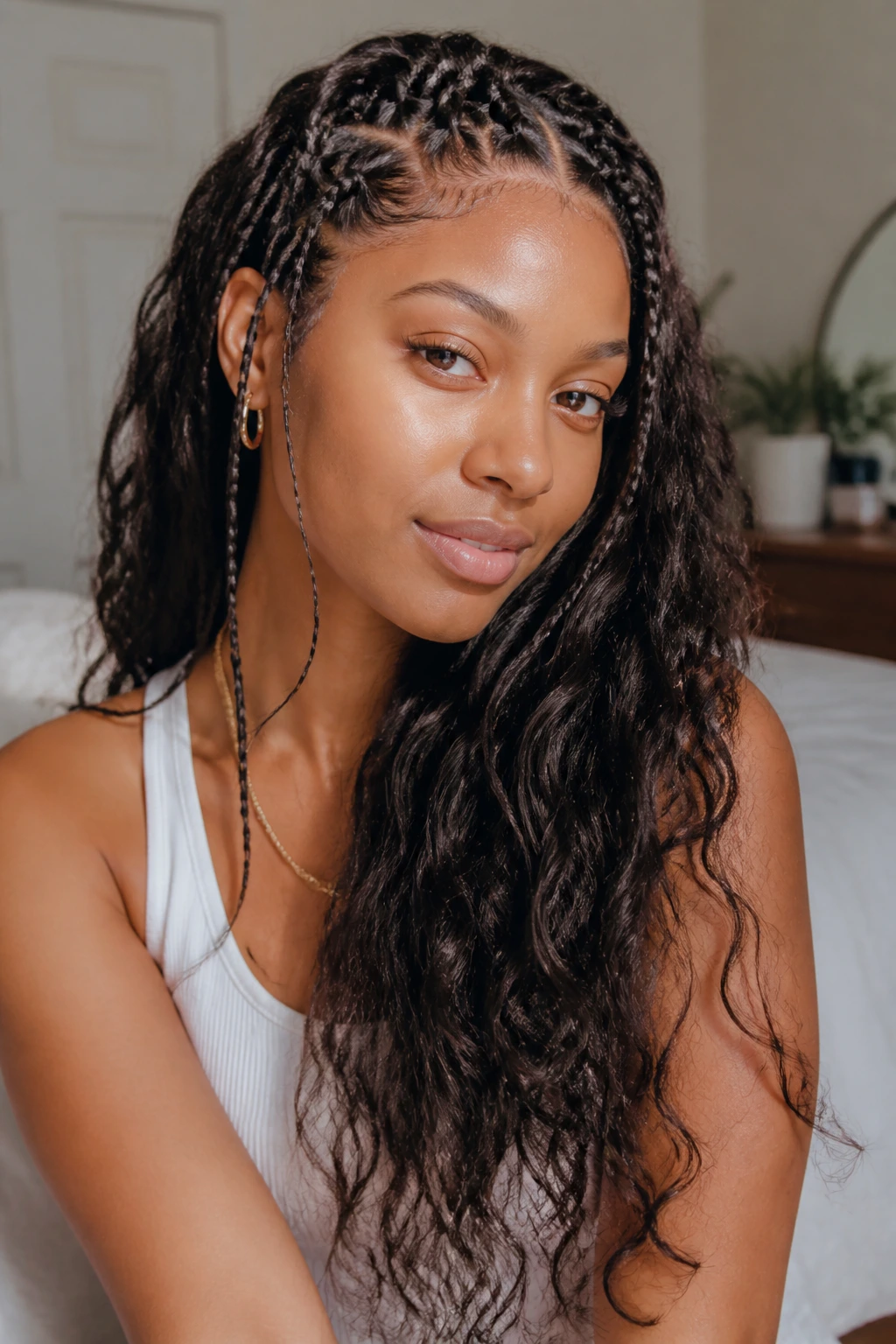
-
Heat optional: Several of these looks rely on braids, twists, clips, or clean sectioning, so you can skip the curling iron when your hair needs a break.
-
Length stays visible: These styles keep the long shape in play instead of stuffing everything into one tight knot and hiding the part you spent years growing.
-
Day-two hair becomes useful: A little dryness, grit, or bend often makes these styles hold better, which means less pressure to wash every morning.
-
Easy to dress up or down: The same basic shape can read polished with a metal clip, soft with face-framing pieces, or formal with a ribbon and a clean finish.
-
Better hold, less fuss: Long hair gets heavy fast, so these looks lean on anchors, texture, and smart placement instead of endless spray.
-
Damage-conscious choices: Several styles spread tension across the head instead of yanking the same spot at the hairline all day. Your scalp will notice.
1. Sleek Low Ponytail
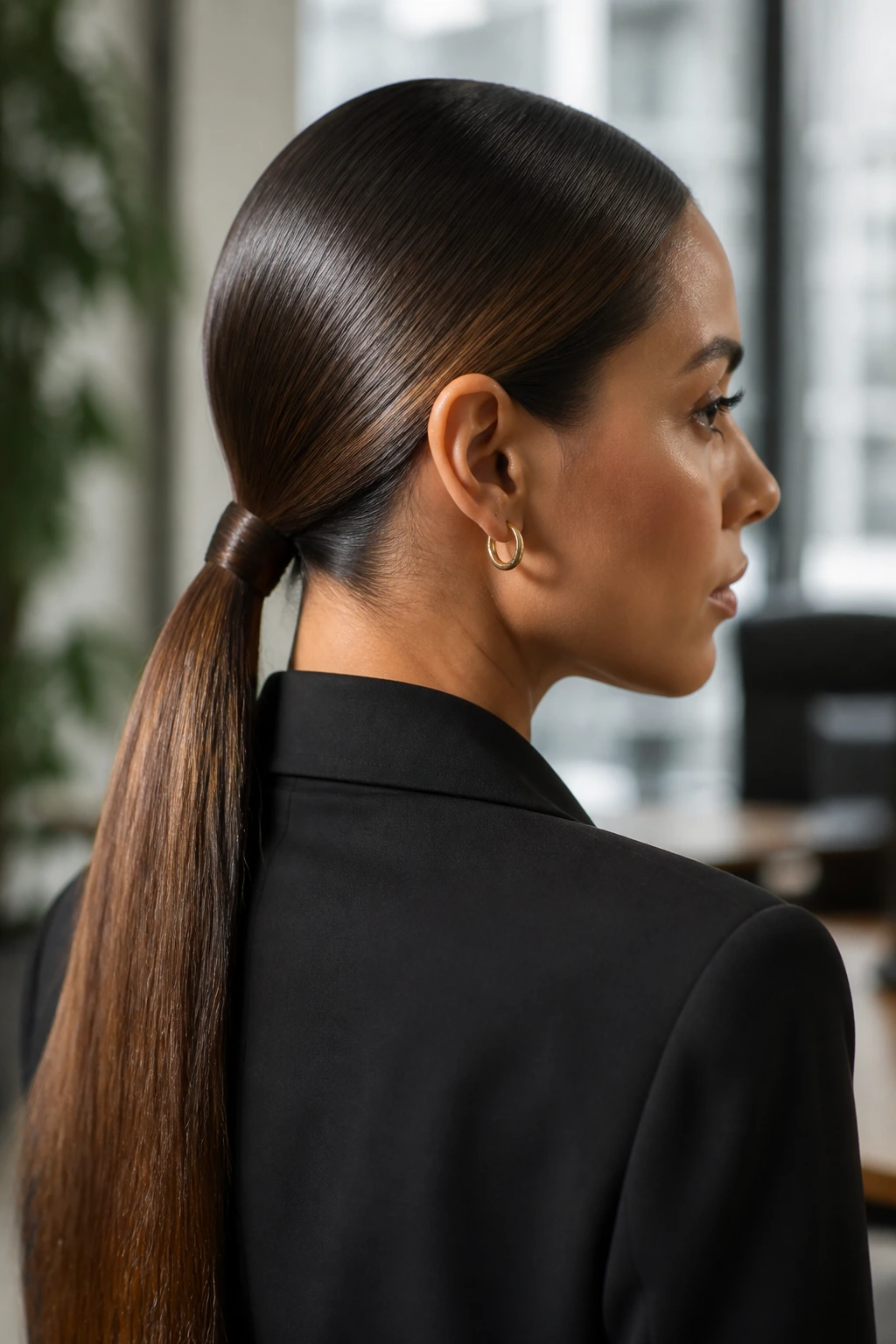
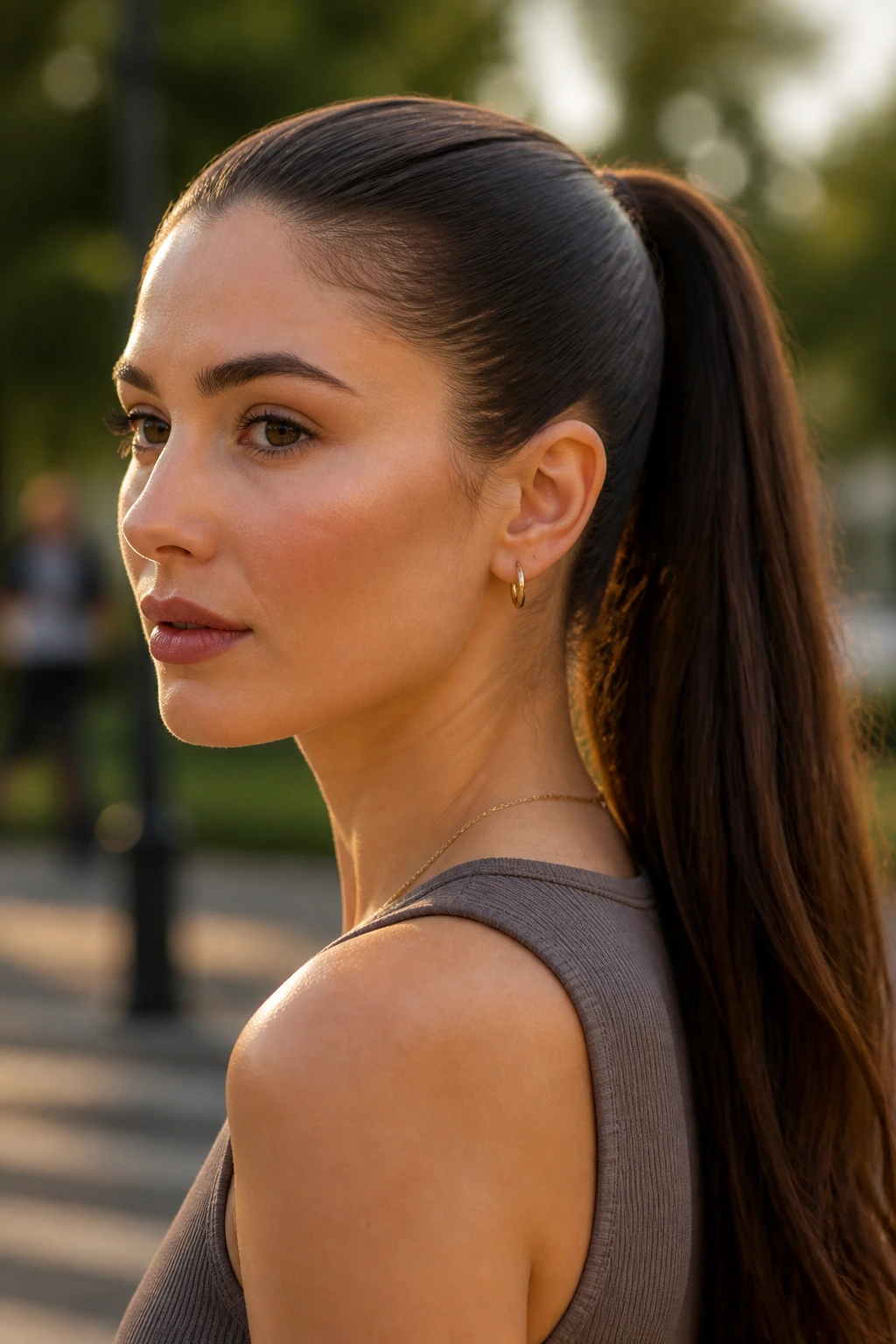
A sleek low ponytail is one of those long-hair styles that looks almost rude in its simplicity, because the clean line is the whole point. When the hair falls all the way down the back, the ponytail turns into a straight, glossy ribbon instead of a thrown-together backup plan.
Why it works: Long hair gives this style weight, which is exactly why it sits so cleanly at the nape. The lower placement keeps the pony from pulling upward at the crown, and the length helps the tail hang with shape instead of sticking out like a stubby loop. A little shine cream or serum on the mid-lengths makes the whole thing look expensive without asking for much effort.
Best for: Office days, sharp collars, hoop earrings, and any outfit with a high neckline that needs a clean silhouette.
Quick styling moves:
- Brush the hair back with a paddle brush and a dime-size amount of smoothing cream.
- Secure it at the nape with a snag-free elastic.
- Take a thin strand from underneath, wrap it around the elastic, and pin the end under the pony.
- Mist the top lightly with flexible-hold hairspray and smooth flyaways with a clean toothbrush or edge brush.
Watch for: Too much oil at the roots. If the crown gets slick, the pony starts sliding by lunch.
2. Soft Curtain Layers With a Blowout Bend
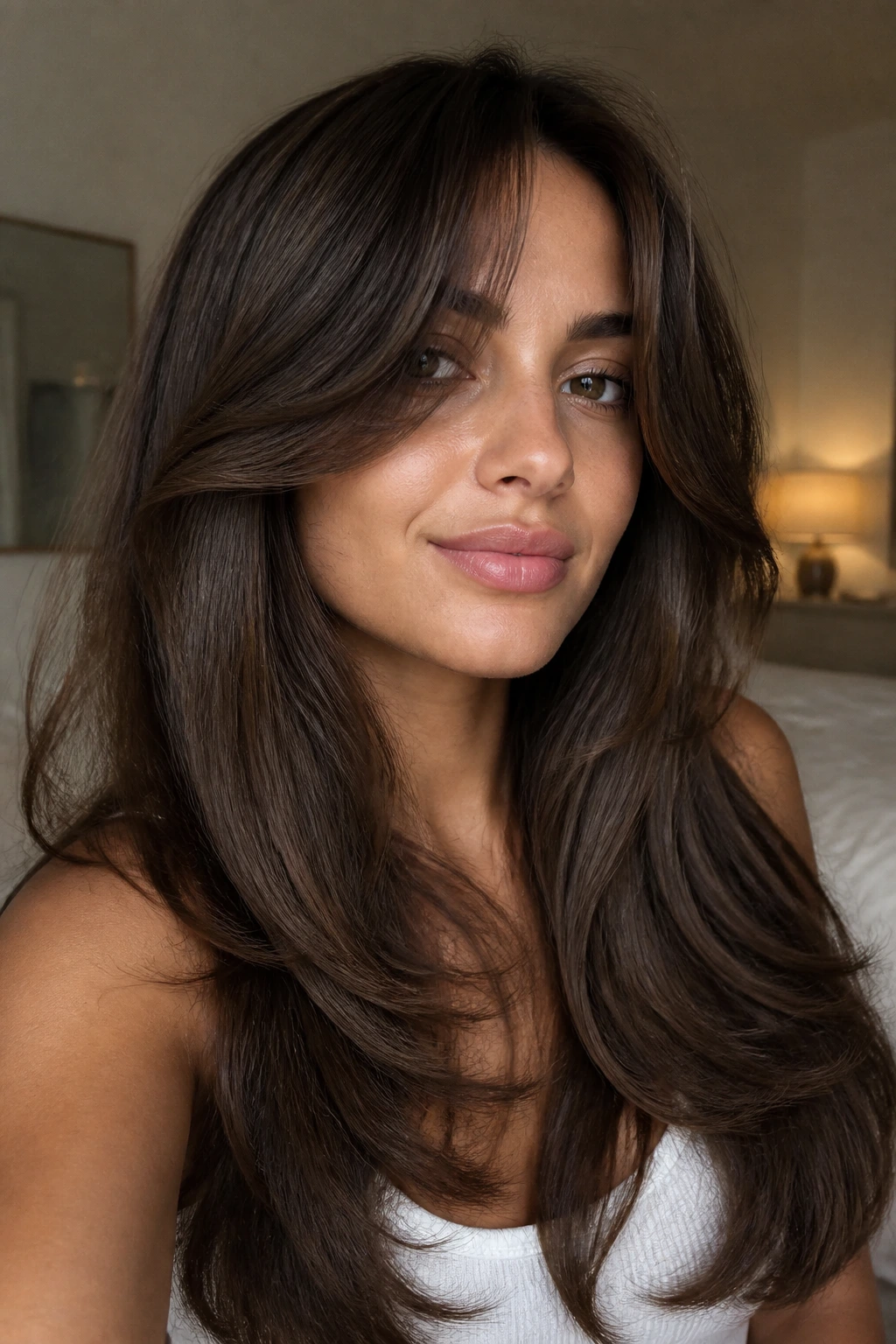
Curtain layers are the long-hair trick that saves a style from looking like one giant sheet of hair. The pieces around the face move first, the rest follows, and the whole cut gets a soft bend that feels lived-in instead of stiff.
Why it works: Long hair needs shape at more than one level. A blowout bend at the front keeps the face-framing pieces from collapsing straight down, while a round-brush finish through the ends stops the length from looking heavy. If your hair is thick, this is one of the few styles that can actually reduce the visual bulk without making the hair look thin.
The sweet spot is movement, not curl. Use a medium round brush or a blow-dry brush, lift the roots at the crown, and turn the ends away from the face just enough to show a little curve. If the bend reaches all the way to the root, the style starts looking like a pageant blowout. Keep it softer than that.
Best for: Long layers, face-framing pieces, and hair that goes flat when left straight.
Tiny rule: Keep the bend strongest from cheekbone to collarbone. That’s where the eye lands first.
3. Half-Up Twist That Keeps Length Visible
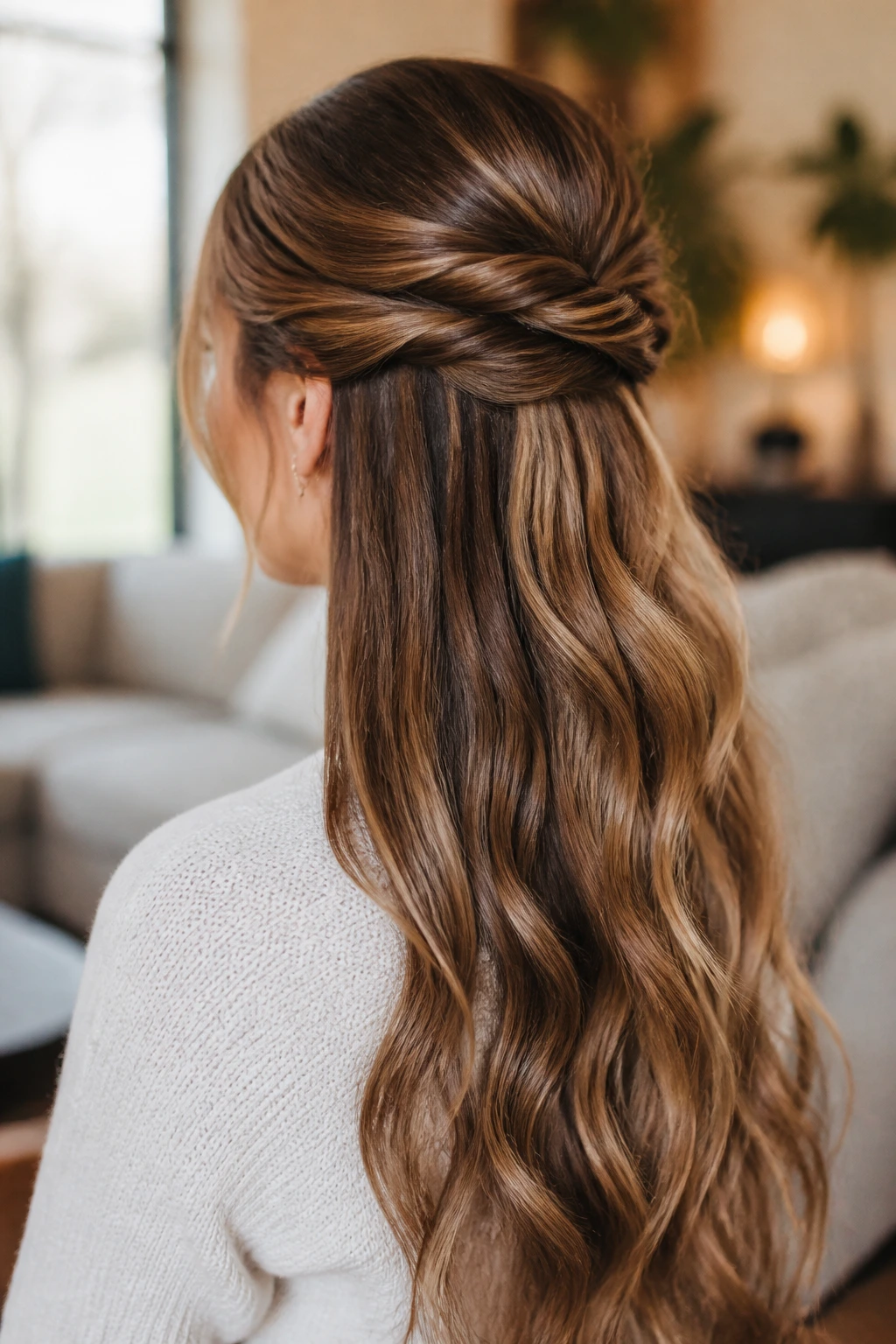
How do you keep hair off your face without hiding the best part of it? A half-up twist solves that in about thirty seconds, and it’s one of the most forgiving long-hair looks in the whole stack.
Why it works: Long hair gives the twist enough weight to stay in place, and the loose bottom section preserves the length that makes long hair fun in the first place. Two twisted side sections meet at the back, so the style has shape without needing a tight elastic or a lot of product. It’s also forgiving on second-day hair, which means a little texture helps instead of hurting.
How to wear it:
- Take a section from each temple, twist them back, and pin them together with two crossed bobby pins.
- Leave the lower half loose and brush it into soft waves or keep it straight.
- Pull out two narrow pieces around the face if you want the finish to feel lighter.
Best for: Brunch, casual dinners, school runs, and any day when you want “done” without a full styling session.
Small warning: If the twist sits too high, it starts looking fussy. Keep it around the crown, not at the top of the head.
4. Bubble Braid Down the Back
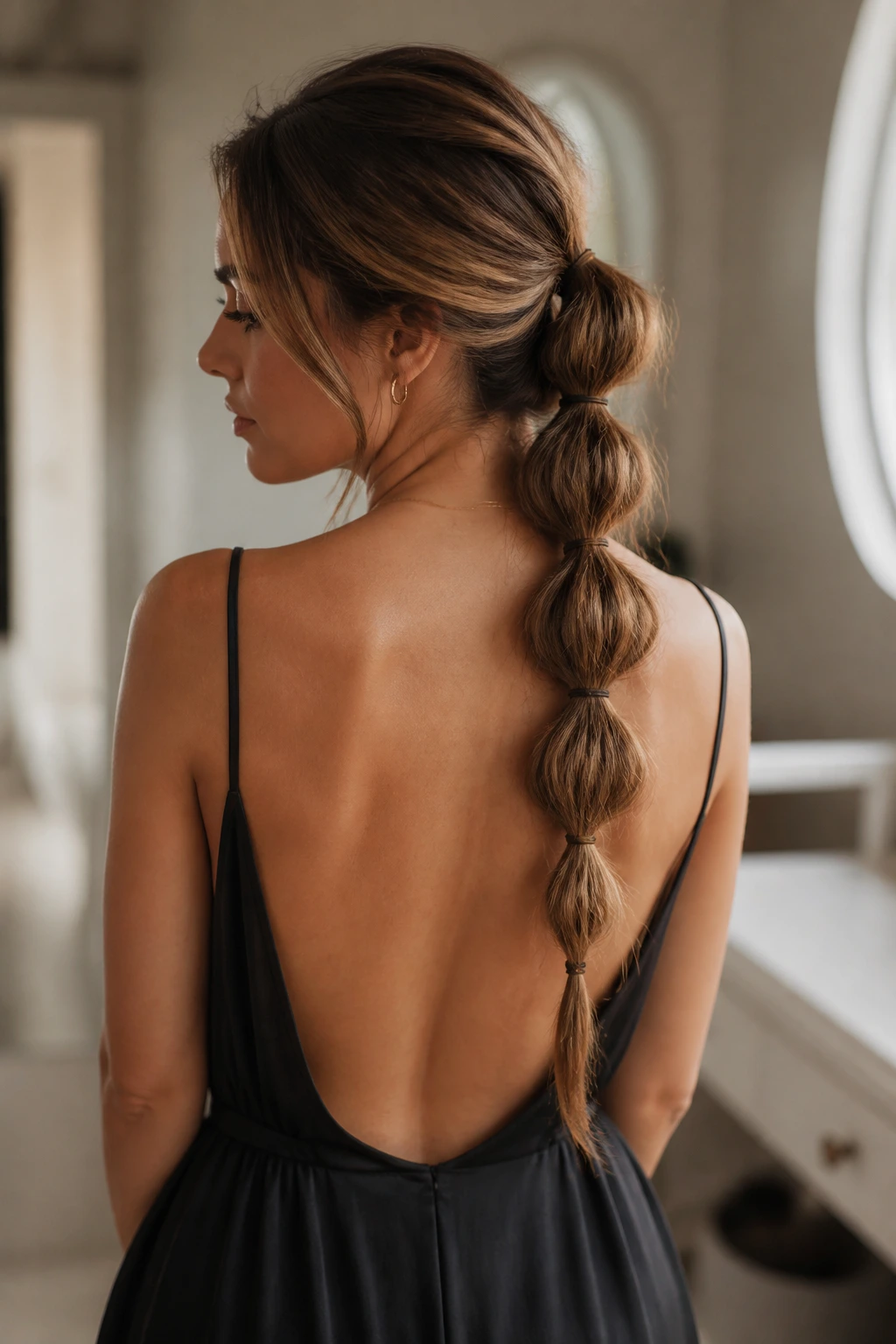
A bubble braid looks playful, but it has a serious advantage: it stays put. Long hair gives each section enough material to puff into a defined bubble, which is why this style reads clean instead of childish when you keep the spacing even.
Why it works: The braid is really a sequence of small elastic anchors, so the length never has to rely on one single braid tension. That’s useful on thick hair, because thick hair can slip right out of a regular braid by midday if the sections are too silky. Add a little texture spray first, and the bubbles hold their shape instead of sinking into each other.
Key move: Place elastics about 2 to 3 inches apart, depending on your length, then tug each section outward from the center to round it out. Start from the top and work downward so the spacing stays consistent.
Best for: Parties, concerts, long commutes, and hair that refuses to stay contained.
Avoid if: Your hair is freshly blown out and very slippery. The braid can look polished for an hour, then lose all its puff.
5. Loose Mermaid Waves With a Center Part
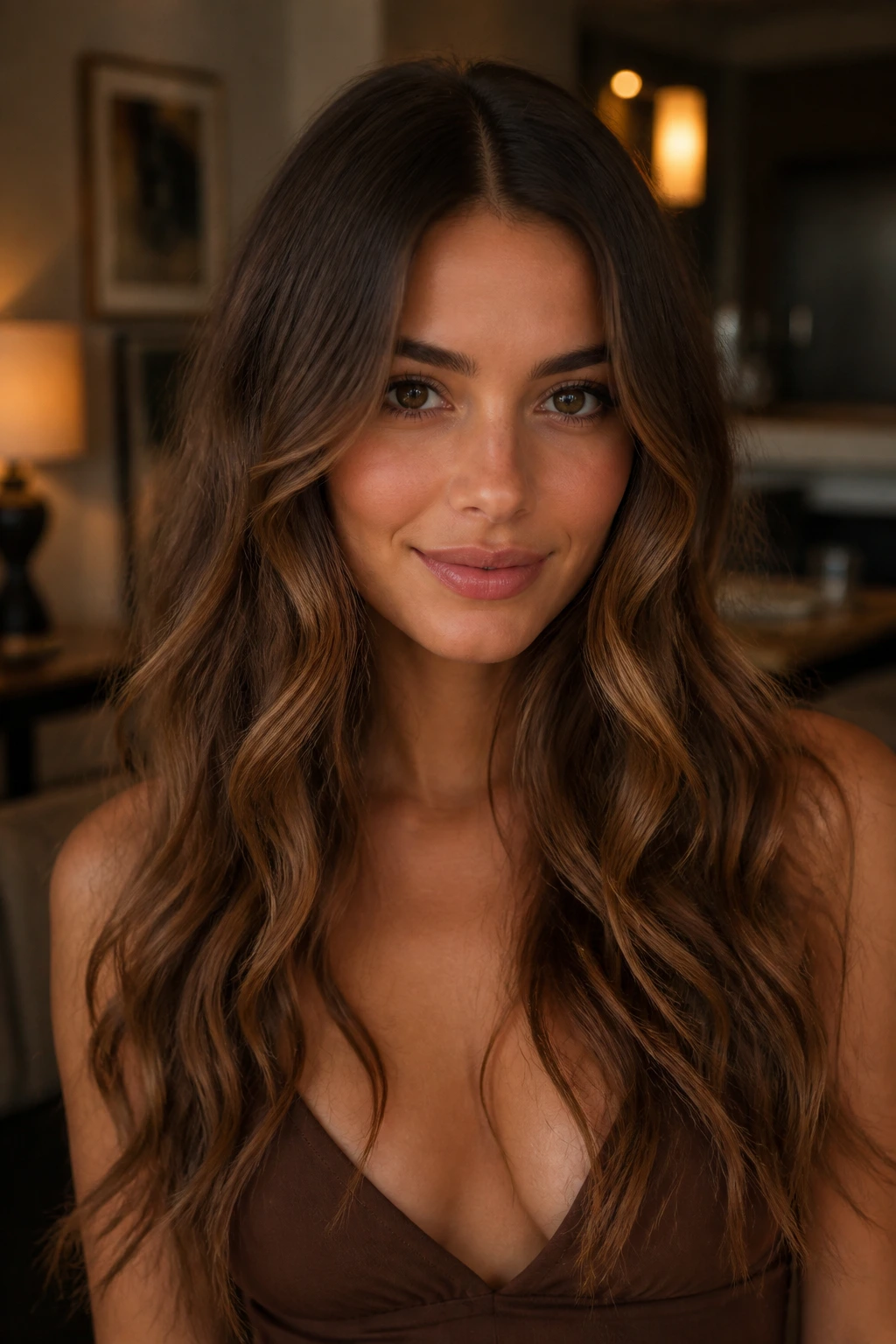
Loose mermaid waves can look lazy in the bad sense or effortless in the good sense, and the difference usually comes down to the ends. Keep them soft and the style feels airy. Over-curl the bottom half and it turns into a heavy, overworked wave set.
Why it works: Long hair gives the wave pattern room to unwind, which is why these waves look better on length than they do on shorter cuts. The center part makes the whole style feel balanced, and alternating curl directions keeps the waves from clumping into one big curl. The result is movement from mid-length down, which is where long hair looks richest anyway.
Use a 1 to 1.25-inch curling iron, leave the last inch or so of the ends out, and let the hair cool before brushing it through. That cooling step matters. If you rake the waves apart while they’re warm, they fall faster and lose the soft bend that makes the style work.
Best for: Evenings out, photos, and long hair that already has a bit of natural wave.
My preference: A little frizz at the ends looks better than over-sprayed stiffness here.
6. High Gloss Bun
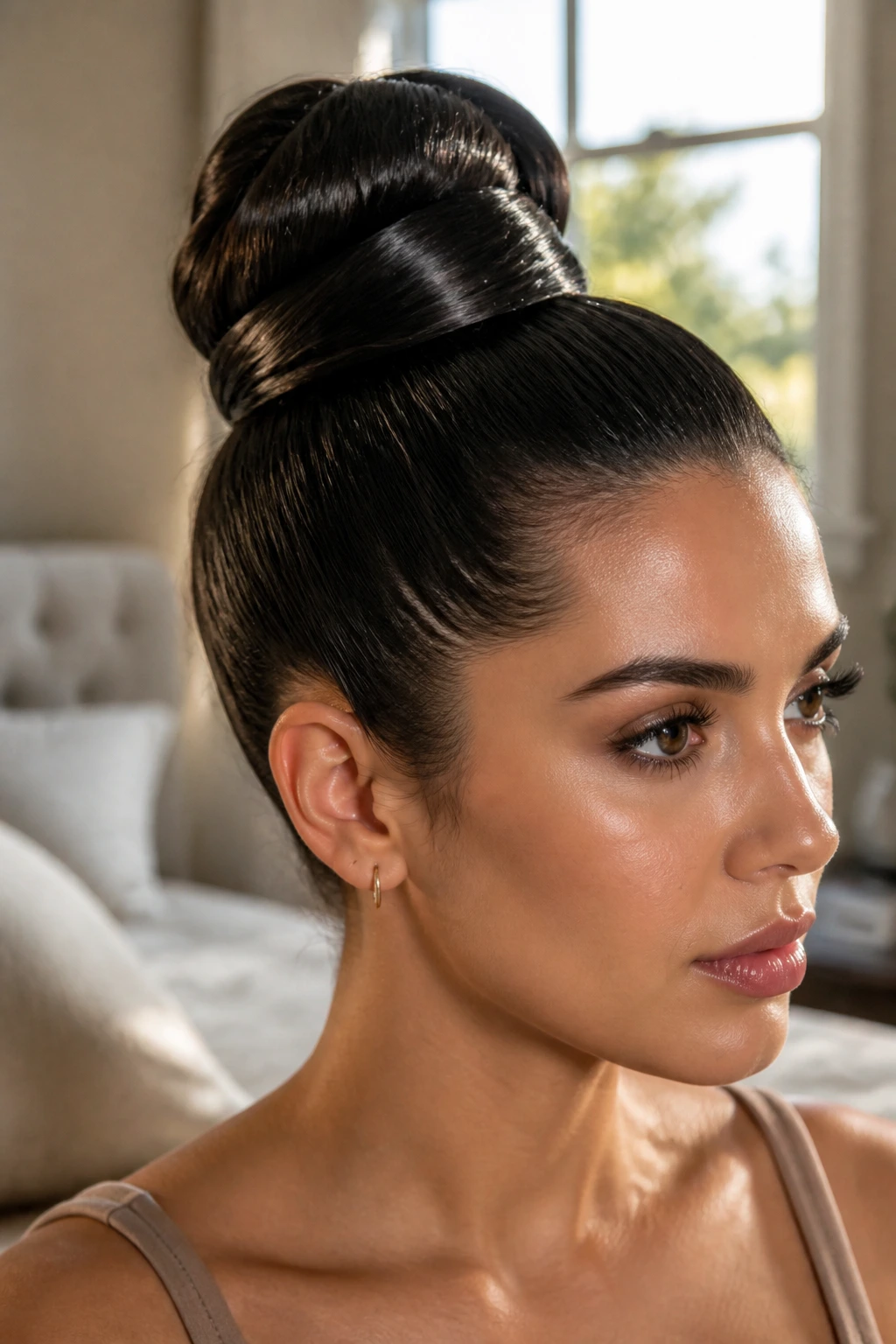
A high gloss bun is the long-hair answer to “I need this off my neck, but I still want it to look intentional.” It sits high, catches the light, and can feel surprisingly elegant when the surface is smooth and the bun is tight enough to hold shape without feeling like a headache.
Why it works: Long hair has enough length to wrap into a proper bun, not a tiny knot that looks like it was assembled in a rush. The weight of the hair helps the bun feel substantial, and the high placement opens the face. That said, the style only works when the hair is smoothed in sections; one rushed sweep and the bun looks lumpy by the second mirror check.
How to style it: Gather the hair into a high ponytail, twist the tail around the base, and pin the coil with U-pins or two bobby pins crossed into an X. If your hair is very thick, split the ponytail into two ropes and wrap them around each other before coiling. It distributes the bulk more neatly.
Best for: Warm days, formal events, and outfits with open necklines.
7. Side Braid With Pancaked Loops
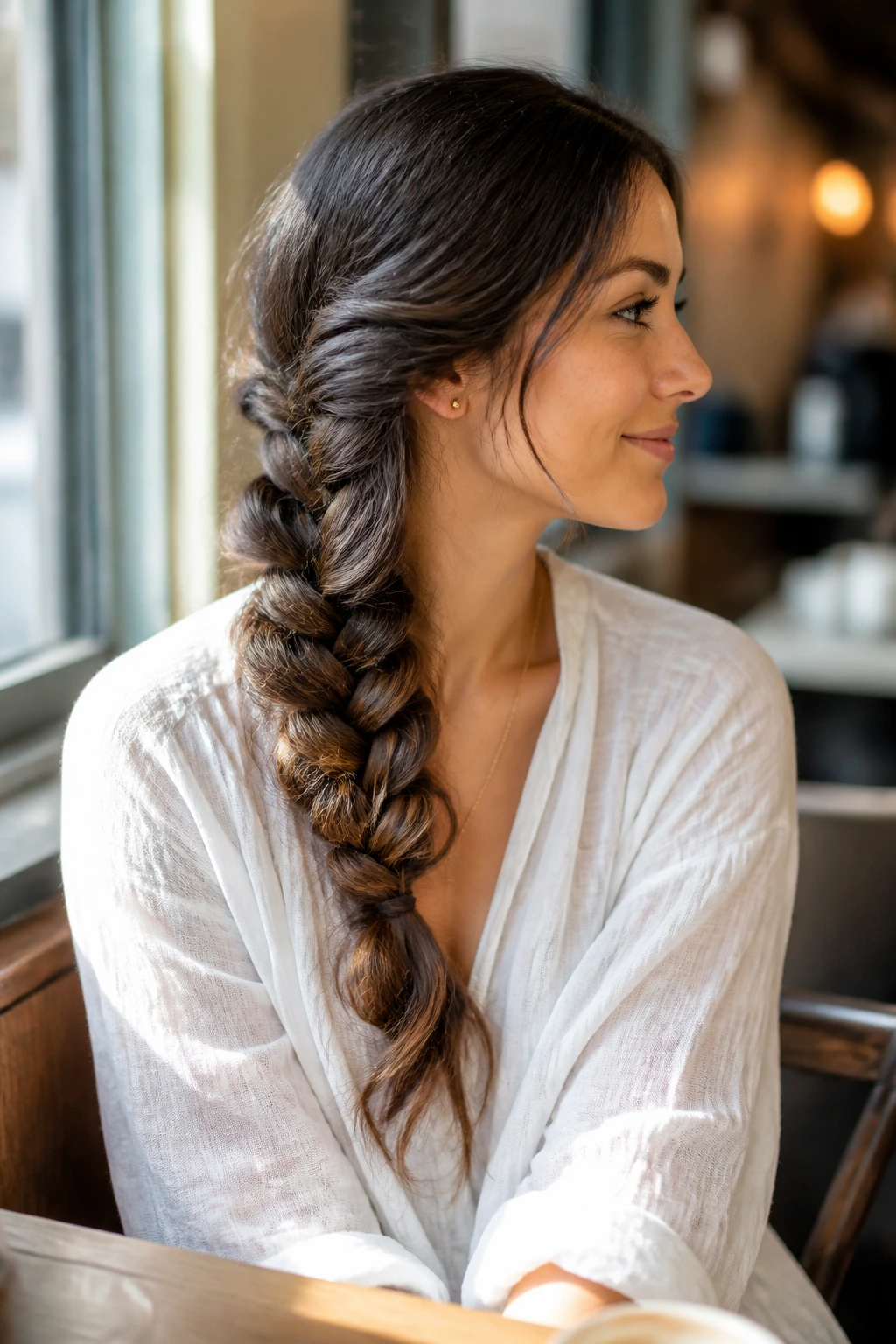
A side braid changes the mood of long hair fast. Move the whole thing over one shoulder and the length suddenly looks softer, a little more romantic, and far less severe than a braid hanging straight down the back.
Why it works: The side placement gives the braid a bigger visual surface, which is useful when your hair is very long and you want people to see the structure. Pancaking—gently tugging the outer loops of the braid—makes the braid look fuller without adding product or fake volume. On long hair, that widened shape keeps the braid from disappearing into the body of your coat or sweater.
Quick styling note: Start with a low side part or pull the hair over after a center part, then braid loosely from behind the ear. Pull the braid apart a little at a time, not all at once, or the shape will go frizzy before you’re halfway through.
Best for: Sweaters, one-shoulder tops, and days when you want something pretty without heat.
Skip the fluff: If the braid is too loose near the crown, it falls apart fast. Hold the top section snug, then loosen the tail.
8. Claw-Clip French Twist
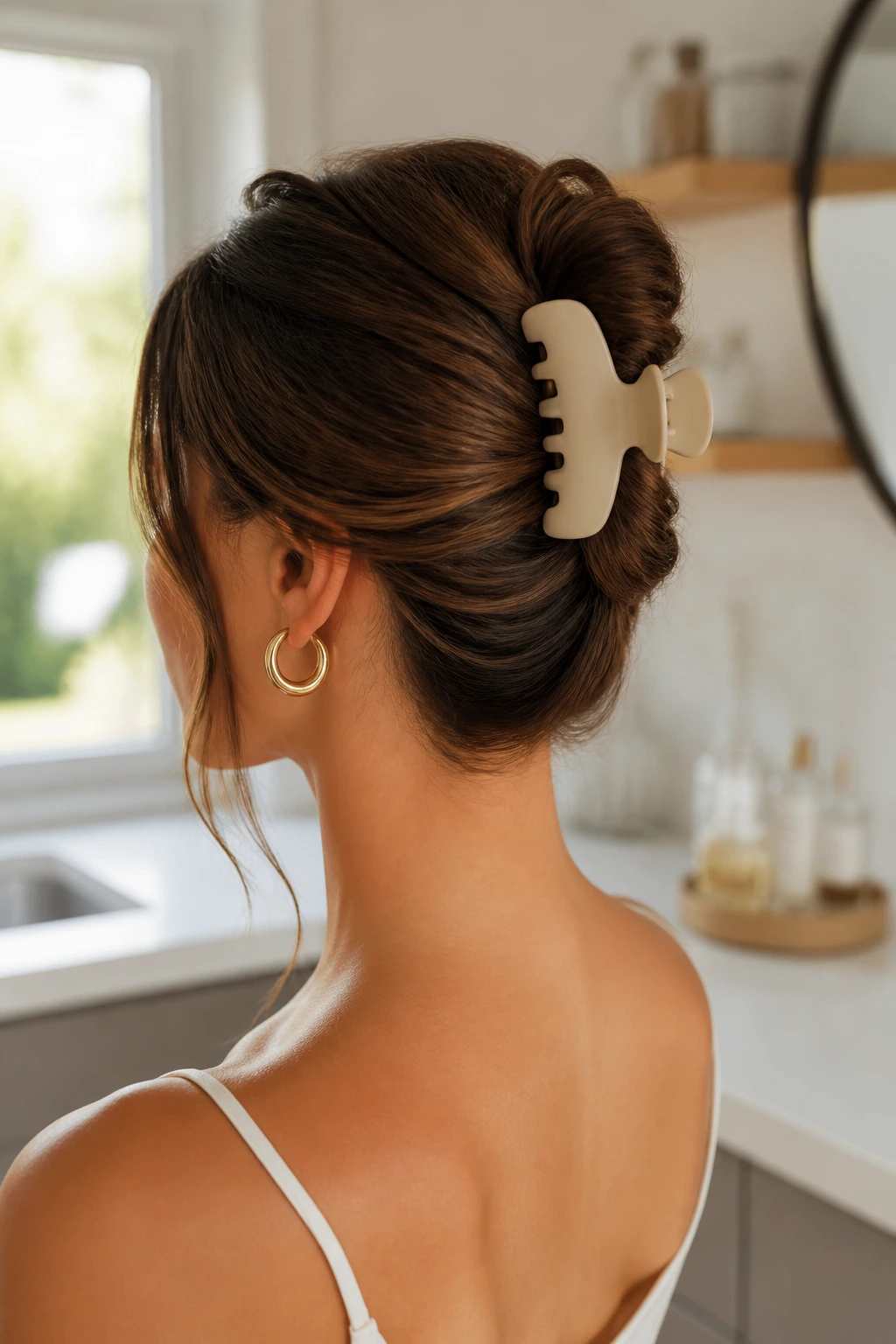
The claw-clip French twist is one of the fastest long-hair updos that still looks put together. The clip gives you instant structure, and the twist works especially well when your hair has enough length to fold upward more than once.
Why it works: Long hair makes a more dramatic twist because there’s more material to tuck in. A large clip can grab the folded length and hold it without depending on ten separate pins. That’s the whole appeal: the style feels neat, but it doesn’t need a full styling marathon or a dozen invisible bobby pins.
Best for: Desk days, errands, and anything where you need to go from loose hair to updo in under two minutes.
How to do it: Sweep the hair to the back as if you’re making a low ponytail, twist the tail upward, fold the ends under, and clamp the clip over the center of the twist. Leave a few ends loose if you want it softer, or tuck them all in for a sharper shape.
One thing. Use a clip with real grip. Decorative clips that look pretty but slide on the first turn are a waste of time.
9. Butterfly-Layer Blowout
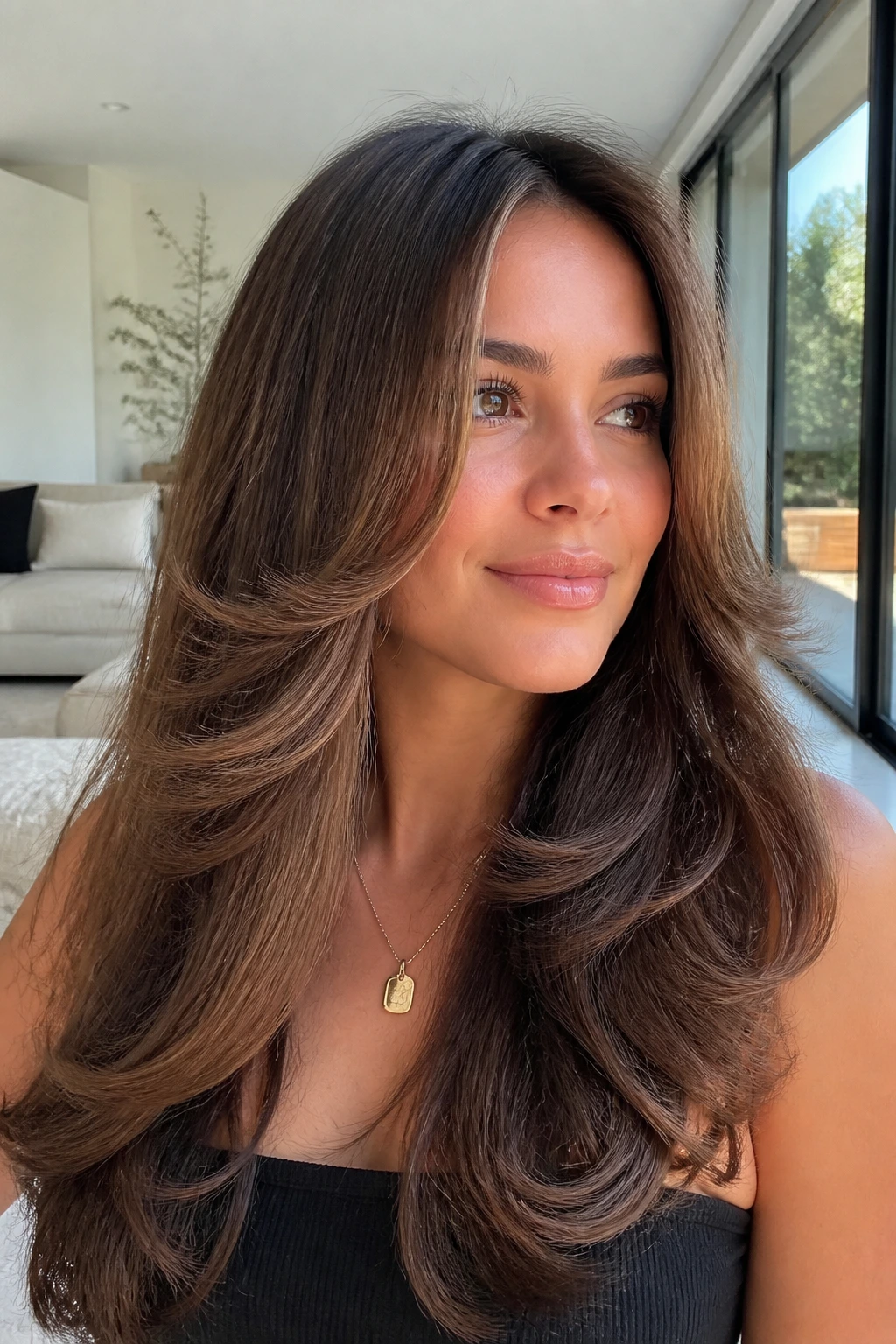
This style is what happens when long layers get the attention they deserve. Instead of hanging flat from root to tip, the layers swing out around the face and sit a little lighter through the ends, which keeps long hair from looking heavy.
Why it works: The butterfly-layer idea gives movement to two places at once: the cheekbone area and the bottom half of the length. That’s what stops long hair from reading as one solid block. If your hair is dense, this style takes some of the weight off the visual line without actually thinning the hair. It looks especially good when the front pieces brush the jaw and the longer layers skim the chest.
What to ask for in styling: Lift the roots with a round brush or blow-dry brush, then flip the front sections away from the face just enough to create a winged shape. The ends should move, not curl into ringlets.
Best for: Layered cuts, long faces, and anyone who likes a full blowout that still has shape around the cheeks.
10. Messy Top Knot With Face-Framing Pieces
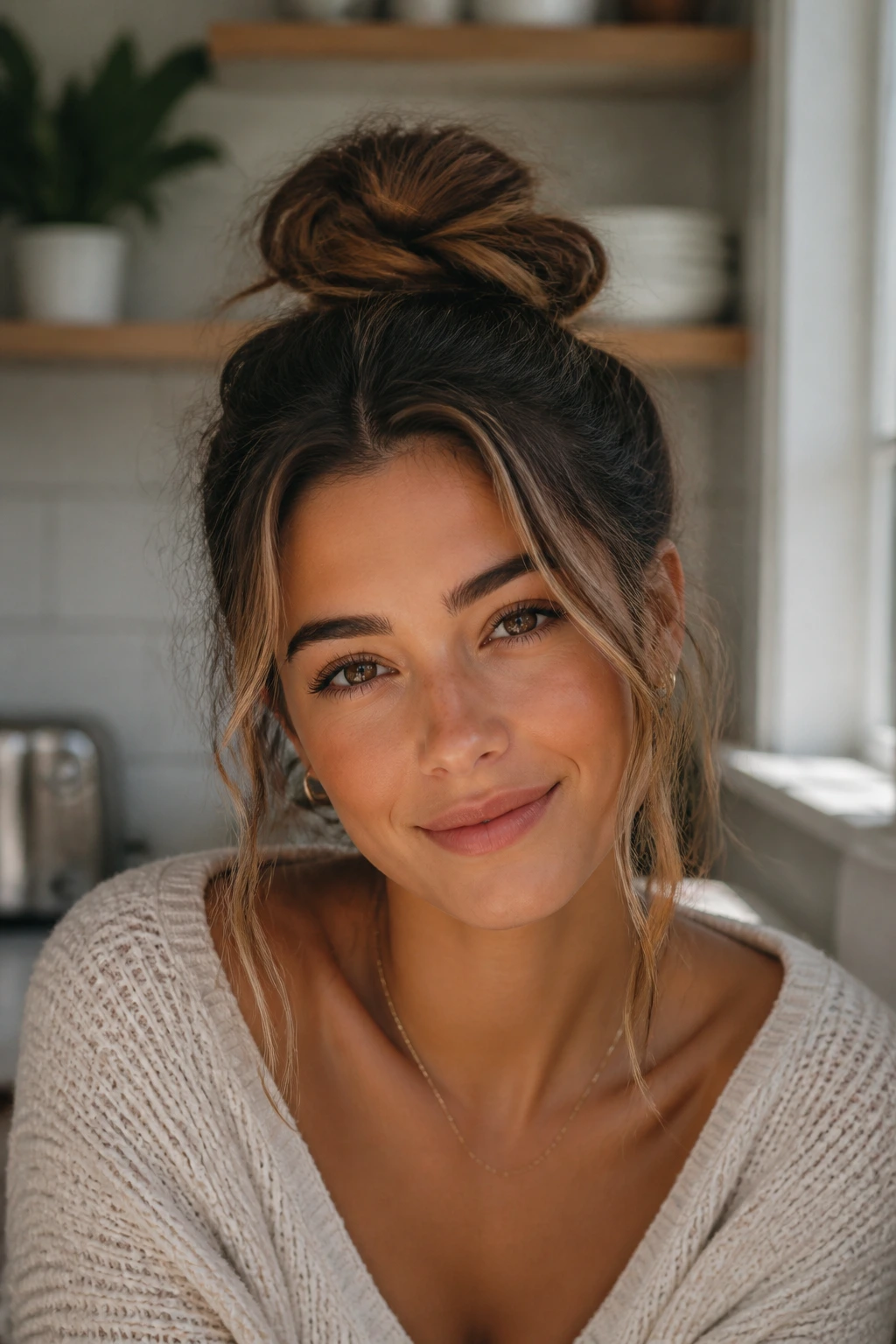
A messy top knot can go wrong in a dozen ways, but when long hair is used well, it lands in that sweet spot between casual and polished. The secret is not the mess. It’s the balance.
Why it works: Long hair has enough length to create a knot with volume, so you can leave out a few face-framing pieces without the bun collapsing into a tiny lump. The high placement clears the neck, the loose pieces soften the face, and the knot itself benefits from the natural weight of the length. If the bun feels too tight, it usually means the style has been overcontrolled. That’s the wrong direction.
Best for: Errands, workouts, lazy dinners, and travel days.
Simple rule: Pull the bun apart a little after it’s secured, but stop before the center opens. You want texture, not holes.
Common misstep: People either make it too perfect or too sloppy. Aim for “I pinned this quickly, but I know what I’m doing.”
11. Dutch Braid Crown
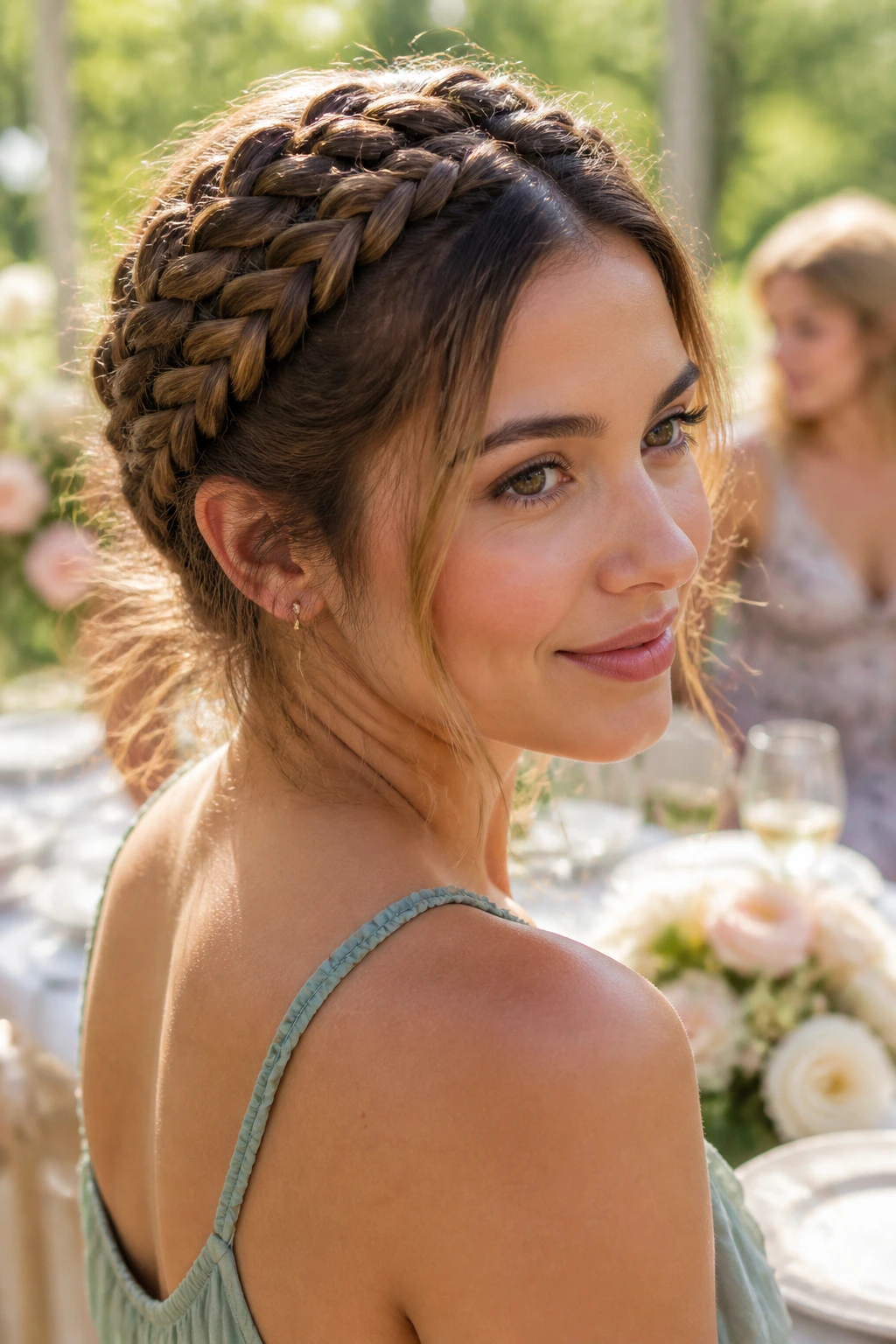
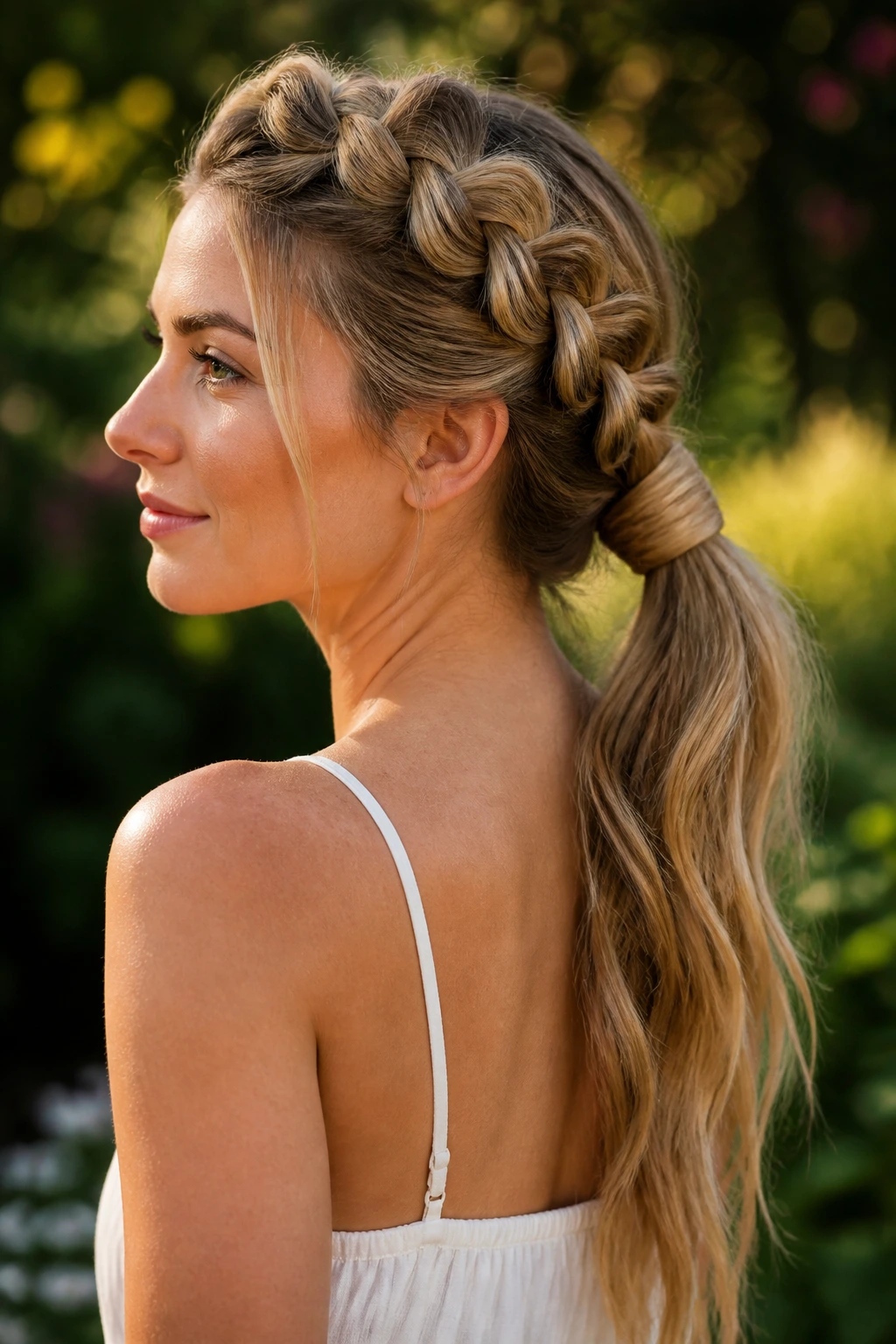
A Dutch braid crown gives long hair a kind of built-in frame, and I like it because it keeps the hair off the face without flattening the whole head. It looks more done than a loose braid, but it still has softness around the edges.
Why it works: A crown braid uses the hairline and temples as anchor points, which is useful when long lengths start sliding under their own weight. The braid sits close to the scalp, so it stays controlled, and the loose tail at the back keeps the look from turning severe. On long hair, the braid has enough length to wrap around the head in a way shorter hair can’t.
Best for: Weddings, garden parties, or any day you want a braided look that does not scream “gym class.”
What to watch for: If your hair is very silky, add dry shampoo to the roots first. Grip matters here. Without it, the braid can loosen before you finish the second side.
12. Pin-Straight Glass Hair
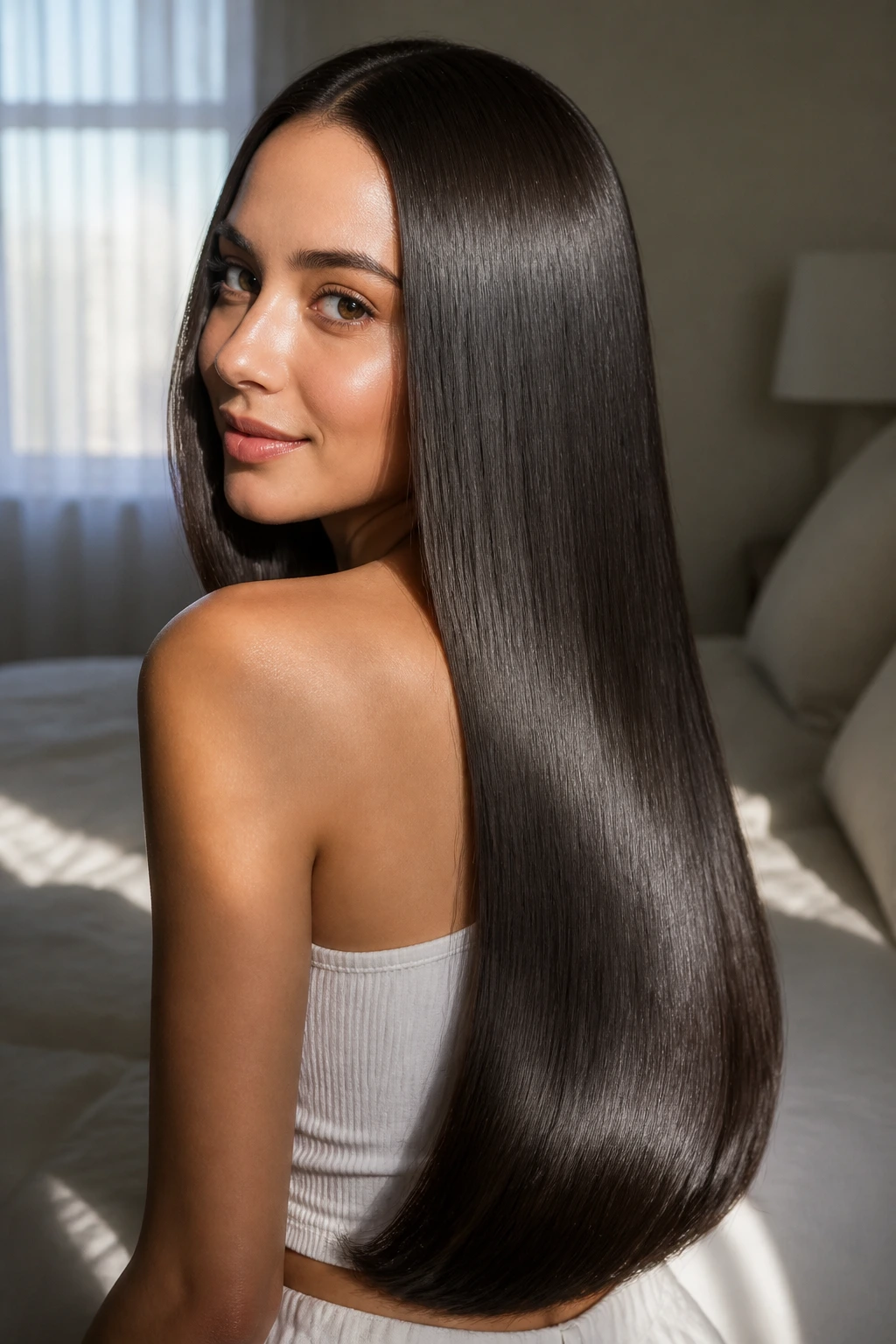
Pin-straight hair on long lengths is a choice, not an accident. It’s a look that puts all the attention on shine, edge definition, and the clean line from root to end.
Why it works: Long hair shows straightness better because the length gives the line somewhere to go. A flat iron can turn the whole shape into a glossy sheet, but the style only looks good if the ends are clean and the roots are smooth. If the ends flare or the crown puffs, the entire effect disappears. Keep the heat passes slow and controlled, and do not chase perfection by frying the same section five times.
Best for: Minimal outfits, strong makeup, and long hair in healthy condition.
Tiny preference: I like the ends to be almost straight but not razor-stiff. A slight bevel makes the style look more expensive.
Warning: This style shows breakage fast. If the ends are dry, trim first or the damage will be the first thing people see.
13. Voluminous Side Sweep
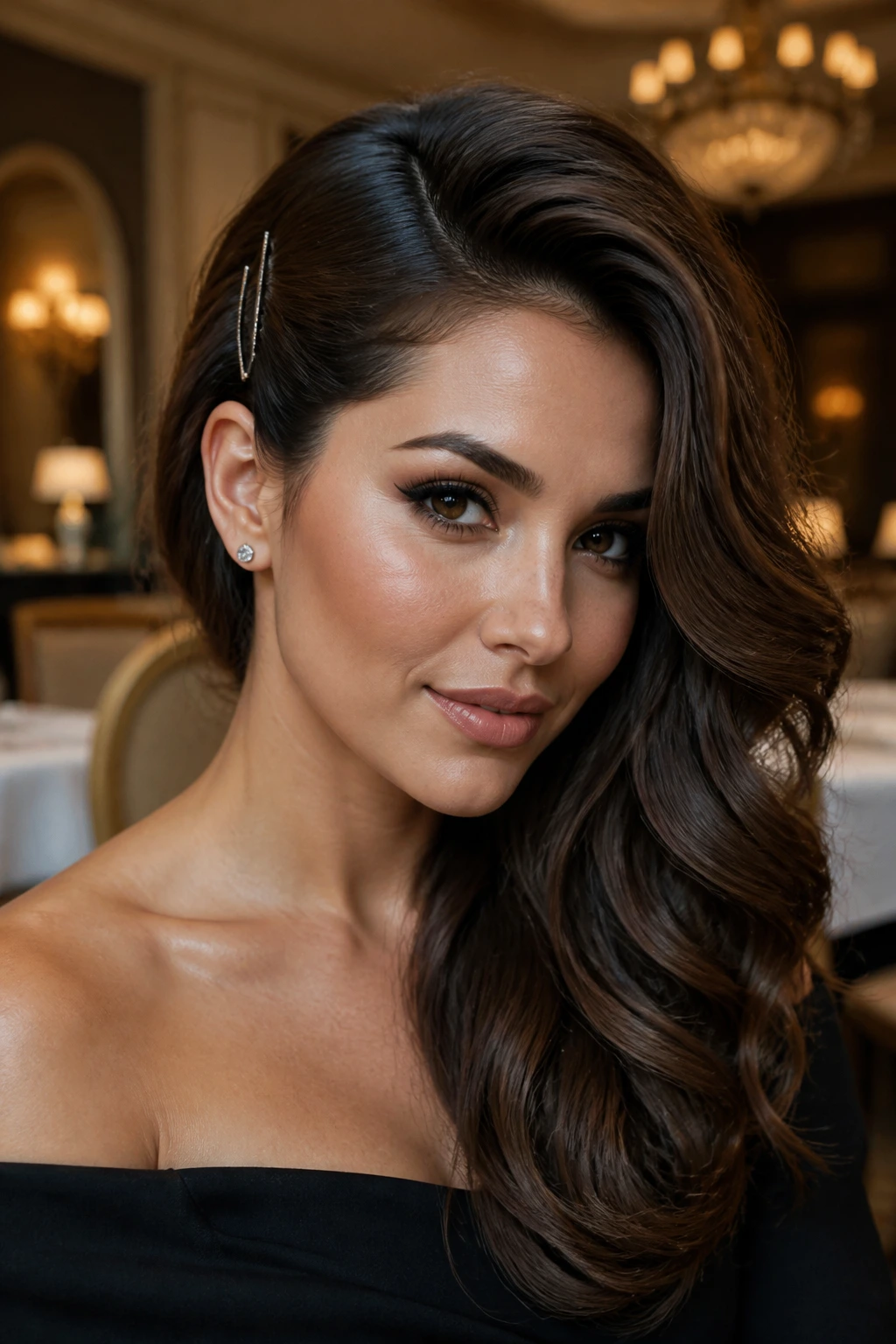
A voluminous side sweep is one of the easiest ways to make long hair feel formal without hiding it in a bun. It has movement, face framing, and just enough drama to look intentional in photos.
Why it works: Sweeping the hair to one side changes the balance of the whole head shape. The long length stays visible, but the front gets enough lift to feel styled. It also gives you a built-in spot for earrings, which matters more than people admit. A good side sweep makes the jawline look cleaner and the hair look fuller because all the volume is concentrated on one side.
How to style it: Create a deep side part, curl the hair away from the face, then pin the heavier side back behind the ear or at the temple with two bobby pins crossed. Brush the curls lightly into one loose shape. You want flow, not a helmet.
Best for: Evening events, dinners, and days when you want long hair to look dressed up with one smart move.
14. Rope-Braid Ponytail
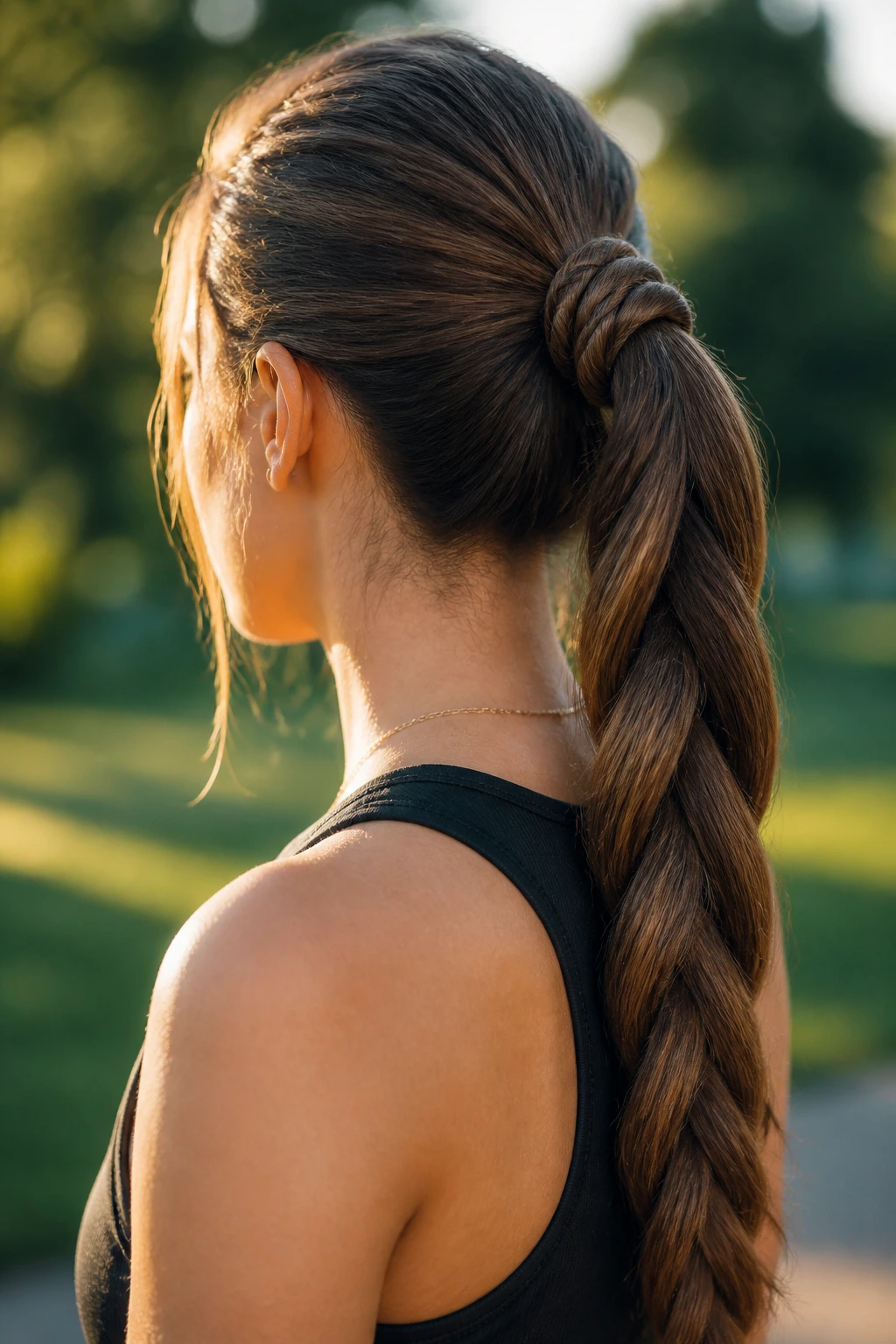
A rope-braid ponytail looks more intricate than it is. That’s useful, because long hair can make simple styles look too plain unless you give them some structure.
Why it works: Two twisted sections wrapped around each other create a rope-like braid that stays smoother than a regular three-strand braid. Long hair gives the twist enough length to show the pattern clearly, and the ponytail base keeps the style anchored. It’s especially nice on thick hair, where a classic braid can feel bulky.
Best for: School runs, office days, travel, and humid weather.
How to do it: Tie the hair into a ponytail, split the tail into two sections, twist each one in the same direction, then wrap them around each other in the opposite direction. That opposite motion is the key. If you twist both sections the same way, the rope falls apart.
Small detail: Finish with a tiny elastic and tuck it under the tail if you want the end to look cleaner.
15. Wet-Look Slick-Back
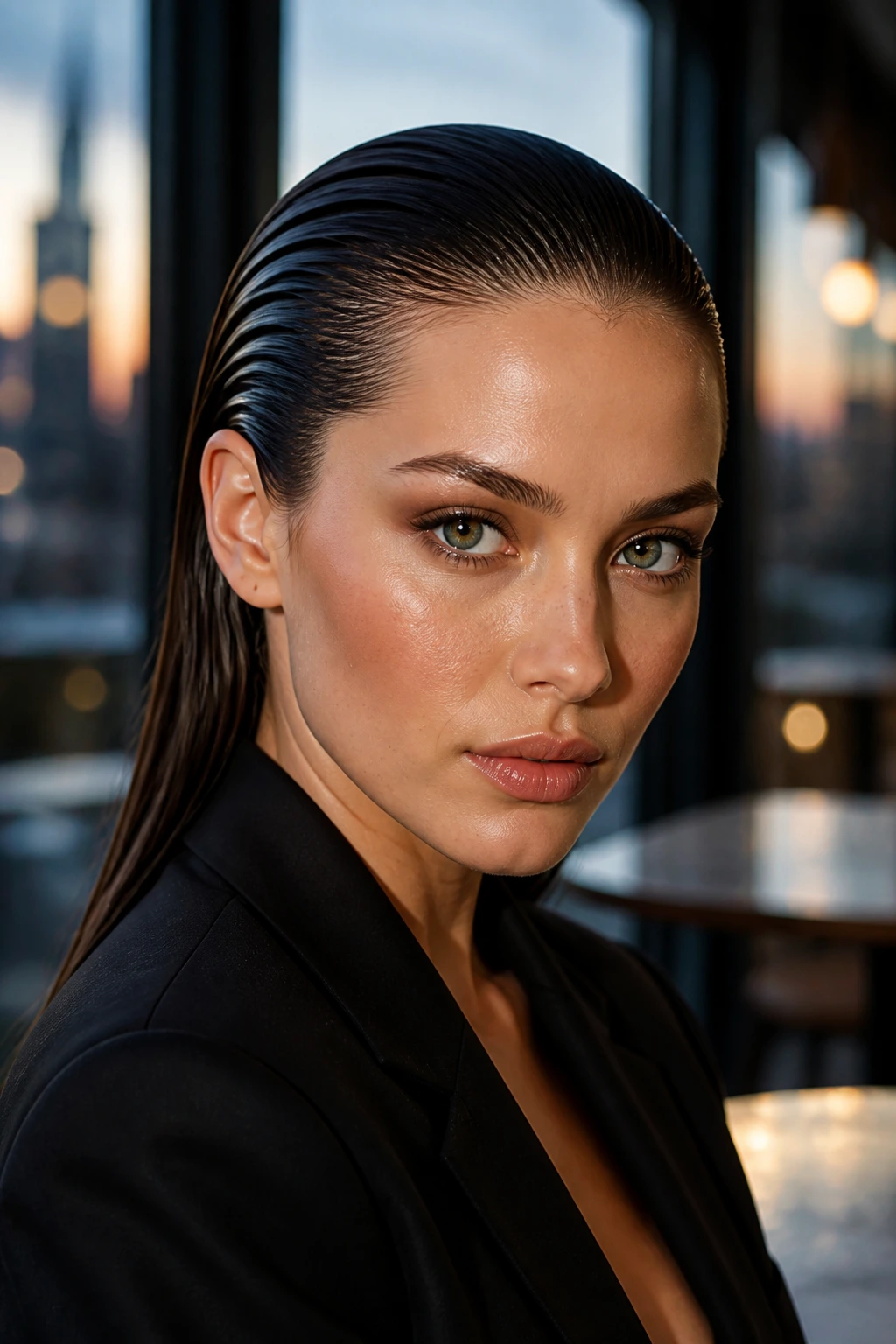
The wet look is not for everybody, but on long hair it can be striking in a way that loose styles sometimes aren’t. It turns length into shape and shine instead of movement.
Why it works: The slick-back approach forces the eye to the face and the line of the head rather than the ends. That’s useful on long hair because the ends can sometimes distract from the rest of the style. Wet look styling also handles humidity better than soft curls do, which is why people reach for it on hot days or for nights out when they want the hair to stay exactly where it is.
How to wear it: Start with damp hair, work in gel from the roots through the mid-lengths, and comb everything straight back or into a precise side part. Use a light touch on the ends so they stay glossy, not crunchy. If you want more shine, add a pea-size amount of serum after the gel has set.
Best for: Fashion-forward outfits, hot weather, and sharp makeup.
Important: A wet look should look glossy, not greasy. Too much product turns the hair stringy fast.
16. Low Chignon
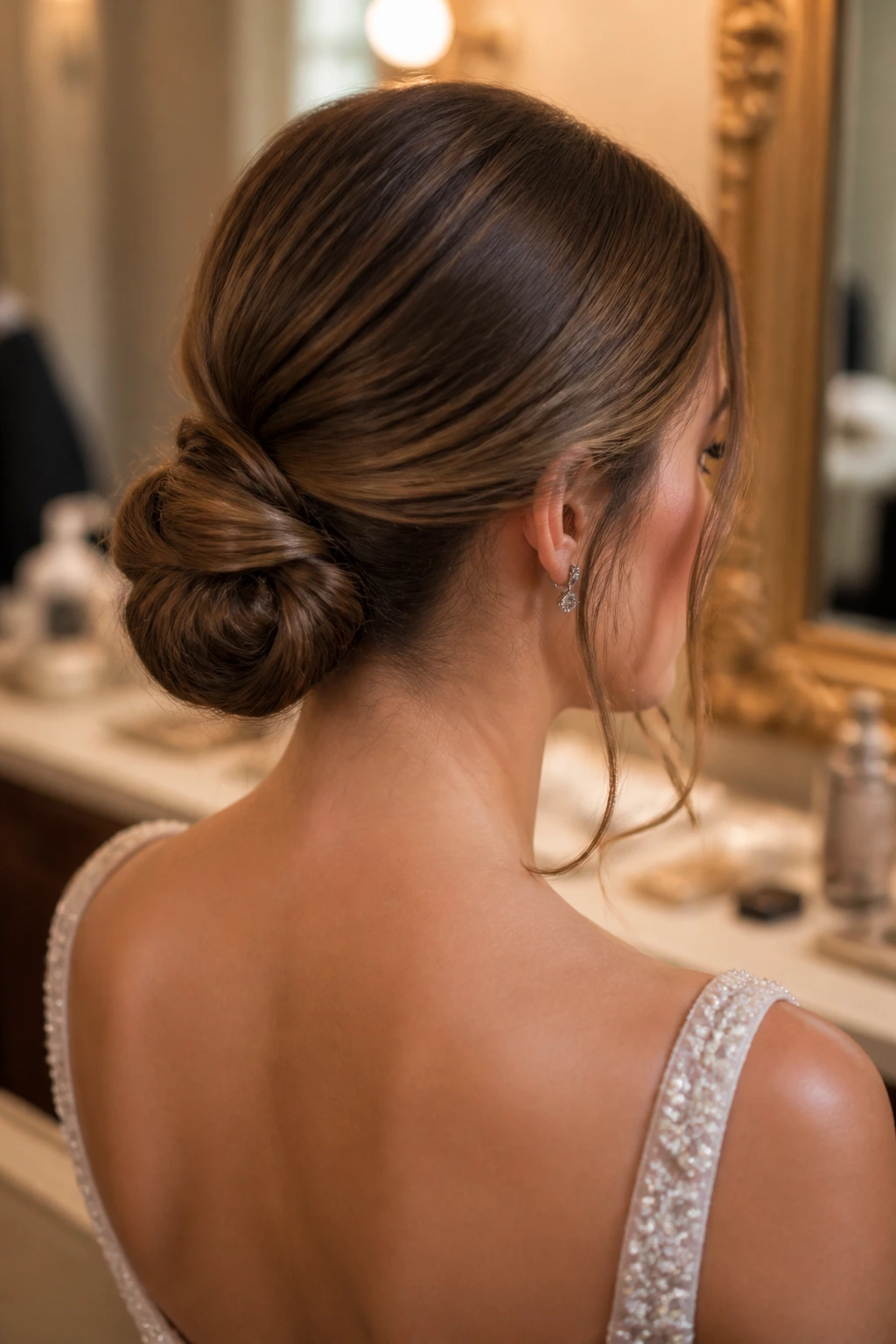
A low chignon is the polished older sister of the messy bun. It sits at the nape, twists into itself, and turns long hair into a neat knot that feels composed without being severe.
Why it works: Long hair has enough length to form a real chignon, not a tiny nub that keeps escaping. The low placement keeps weight off the scalp, and the twist lets you tuck the ends inside instead of forcing them to fold awkwardly. If you have long layers, this is one of the styles that benefits most from a few extra pins. The structure matters more than the volume.
Best for: Weddings, interviews, black-tie dinners, and any outfit that needs a clean neckline.
How to finish it: Smooth the surface with a soft brush, twist the ponytail once or twice, coil it against the nape, and secure the bun with U-pins around the outer edge. A little flyaway around the hairline is fine. A big, sagging bun is not.
17. Boho Waves With Tiny Accent Braids
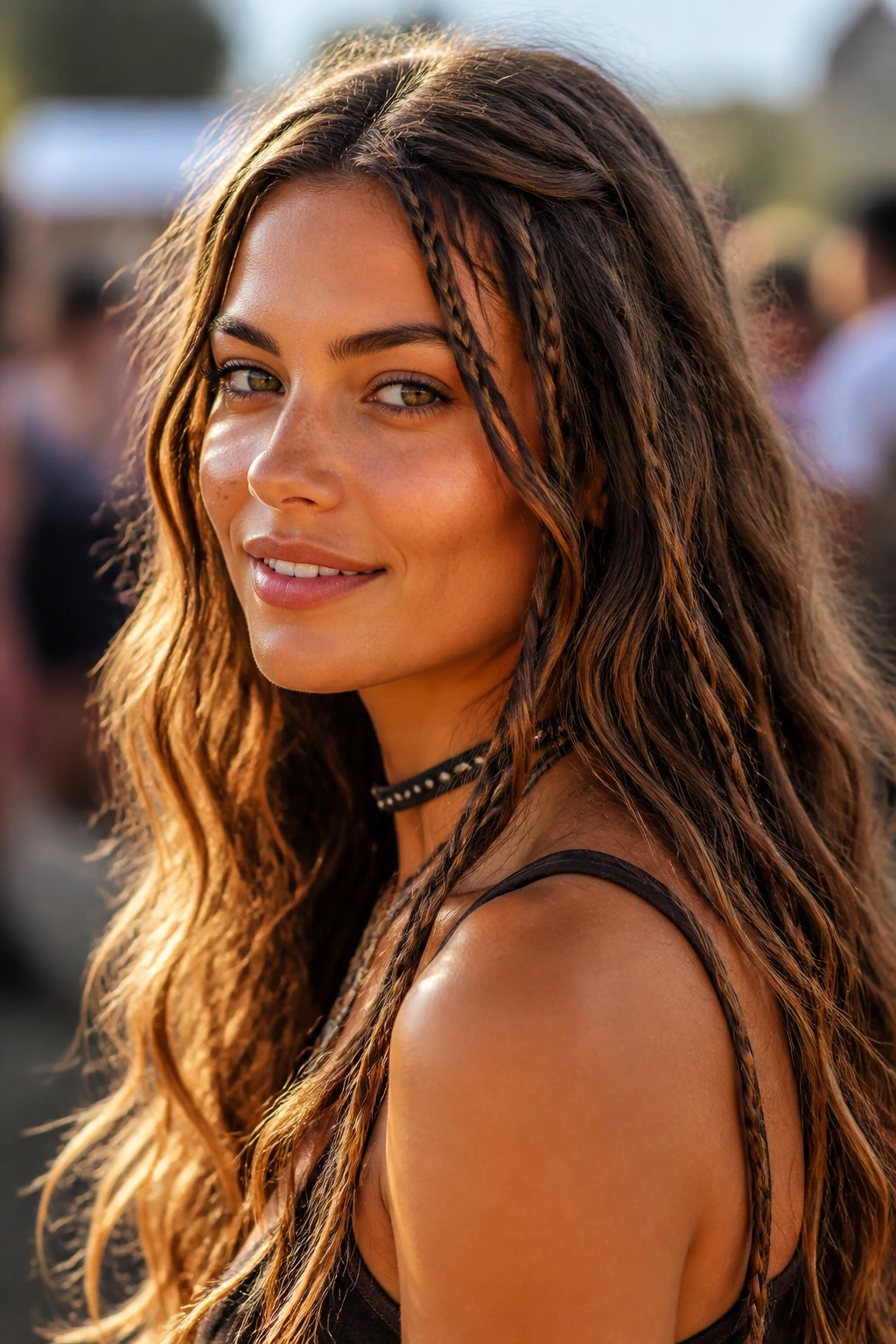
Boho waves can look a little predictable on long hair, so the tiny accent braids are what make this version feel more considered. They break up the wave pattern and add a bit of structure without taking over the whole head.
Why it works: Long waves can blur together if every section has the same bend. Small braids interrupt that pattern and create texture that shows up especially well near the temple or behind the ear. The look is strongest when the braids are narrow—no bigger than a pencil in width—so they feel like detail, not decoration overload.
Best for: Festivals, weekends, vacations, and loose outfits that need one small styling idea to feel finished.
What I’d do: Add two or three micro-braids to the top or sides, then leave the rest in soft waves. Finish with a light mist of texture spray and scrunch the ends once or twice. Don’t over-brush it. The slightly uneven finish is the point.
18. Fishtail Braid
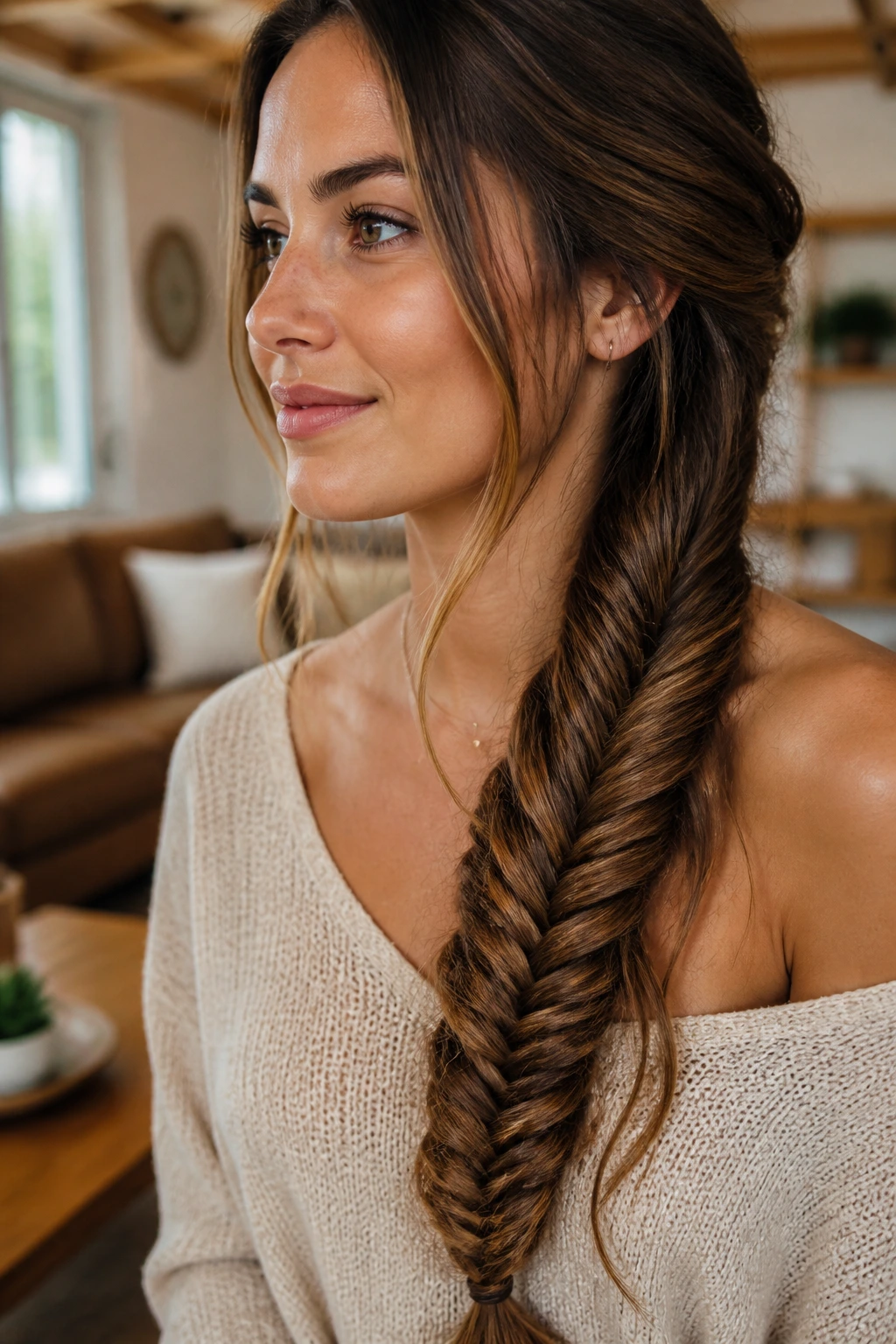
A fishtail braid looks complicated, which is useful when you want your hair to seem styled without reaching for hot tools. On long hair, the narrow pattern stretches down the back in a way that shorter hair can’t really imitate.
Why it works: The braid gets more visual payoff the longer the hair is, because every crossover shows up as a clear texture band. It also holds nicely once it’s pancaked a little. The tighter the top section, the better the base; the looser the tail, the prettier the body. That contrast keeps the braid from looking stiff.
Best for: Long, thick hair and moments when you want one braid to carry the whole look.
Quick rule: Start with slightly rough hair. If it’s too silky, the braid slides apart and the fishtail detail disappears.
Who should tweak it: If your hair is layered, leave the shortest face-framing pieces out on purpose or they’ll escape in random directions.
19. Scarf-Tied Ponytail
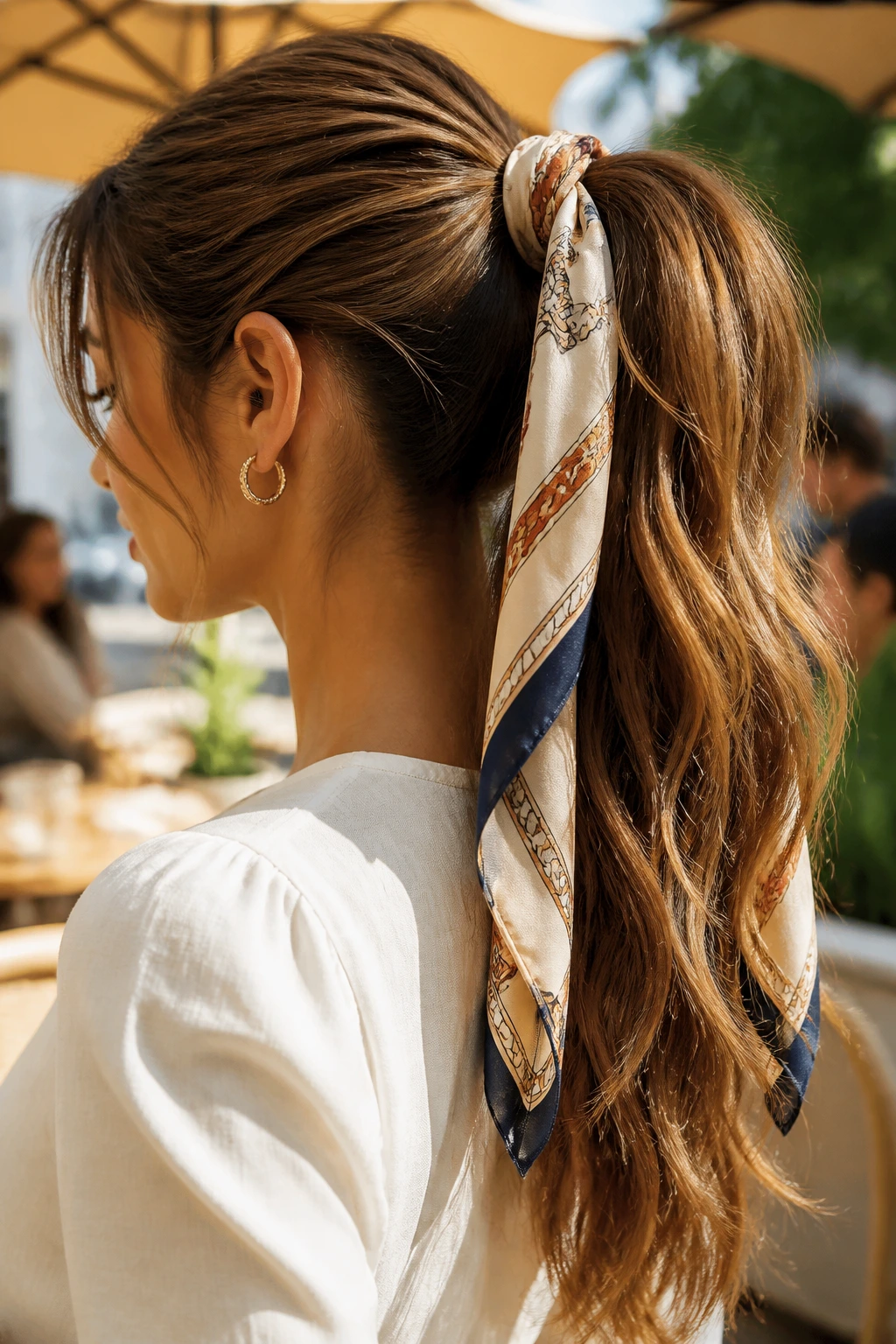
A scarf-tied ponytail is the easy answer to long hair that needs a little personality. The scarf does half the styling work for you, and the result feels deliberate even if the pony itself is simple.
Why it works: Long hair gives the scarf a place to sit. The length hangs below it, so the fabric doesn’t look like it’s floating on top of the hairstyle. A silk or satin scarf also helps tame frizz around the base, which is a nice side effect on days when the hair is a little dry. If the ponytail is low, the scarf reads elegant. If it’s mid-height, it reads casual and bright.
Best for: Errands, lunches, travel, and second-day hair.
How to use it: Tie the ponytail first, then knot the scarf around the elastic or thread it through the pony base and let the ends fall with the hair. Keep the fabric light enough that it doesn’t pull on the scalp.
Tiny note: Patterns matter. A bold print can distract from a flat pony and save the whole look.
20. Flipped-Ends Layers
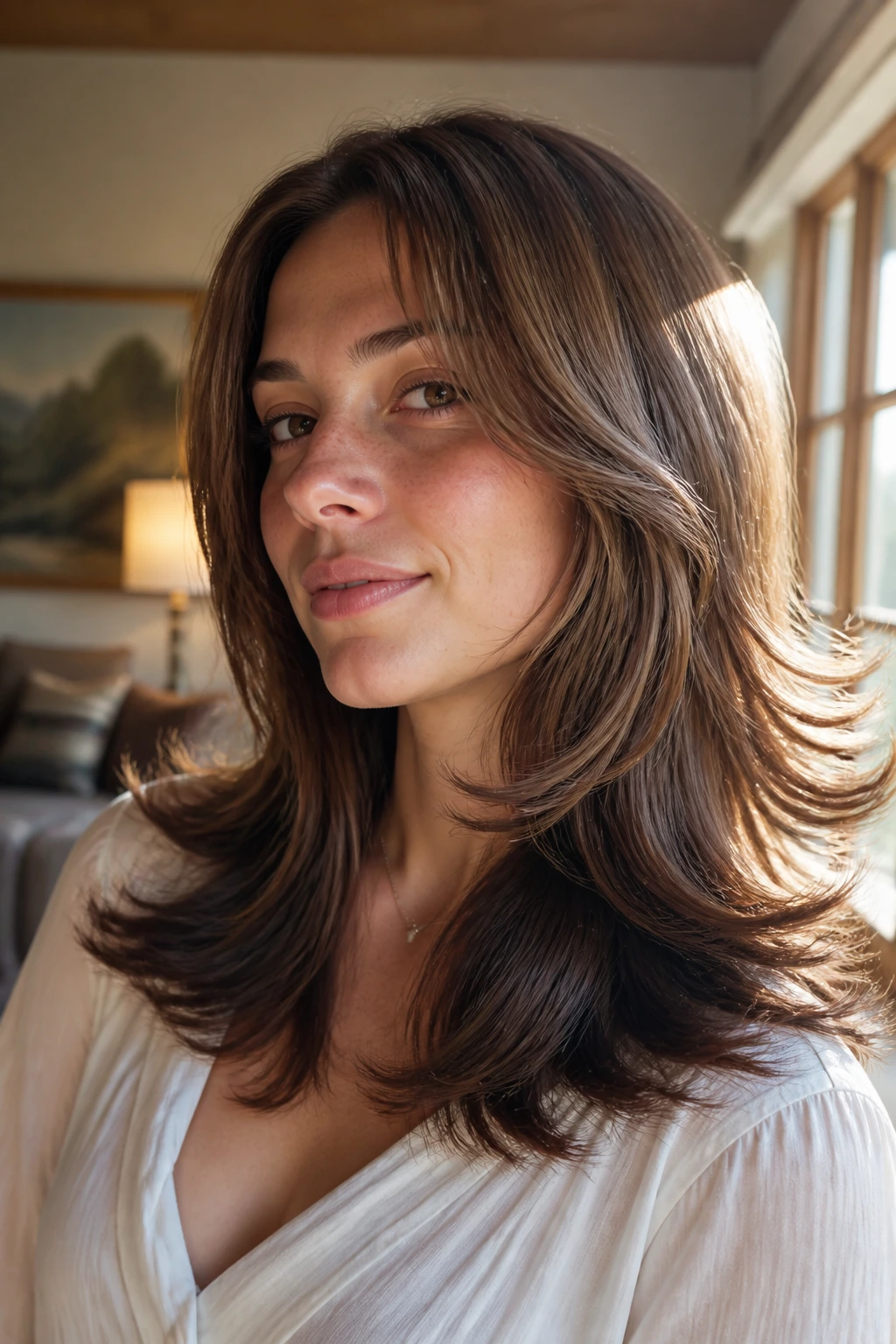
Flipped ends are back in the best possible way when they’re treated like a styling choice instead of a costume. On long layered hair, the outward bend adds movement and keeps the shape from hanging too straight.
Why it works: The flip at the bottom creates a visual lift that makes long hair feel lighter. It also gives layers a chance to show their shape instead of disappearing into the rest of the length. A small flip at the ends is enough. If the bend gets too big, the style starts looking cartoonish, which is not the goal.
How to style it: Use a round brush or flat iron to turn just the last 1 to 2 inches outward. The outer sections can flip more, while the back stays softer. That asymmetry makes the style feel more natural.
Best for: Long layered cuts, slightly retro outfits, and hair that has enough body to hold a bend.
My take: This looks best when the roots stay calm and the ends do the talking.
21. Twisted Halo Half-Up
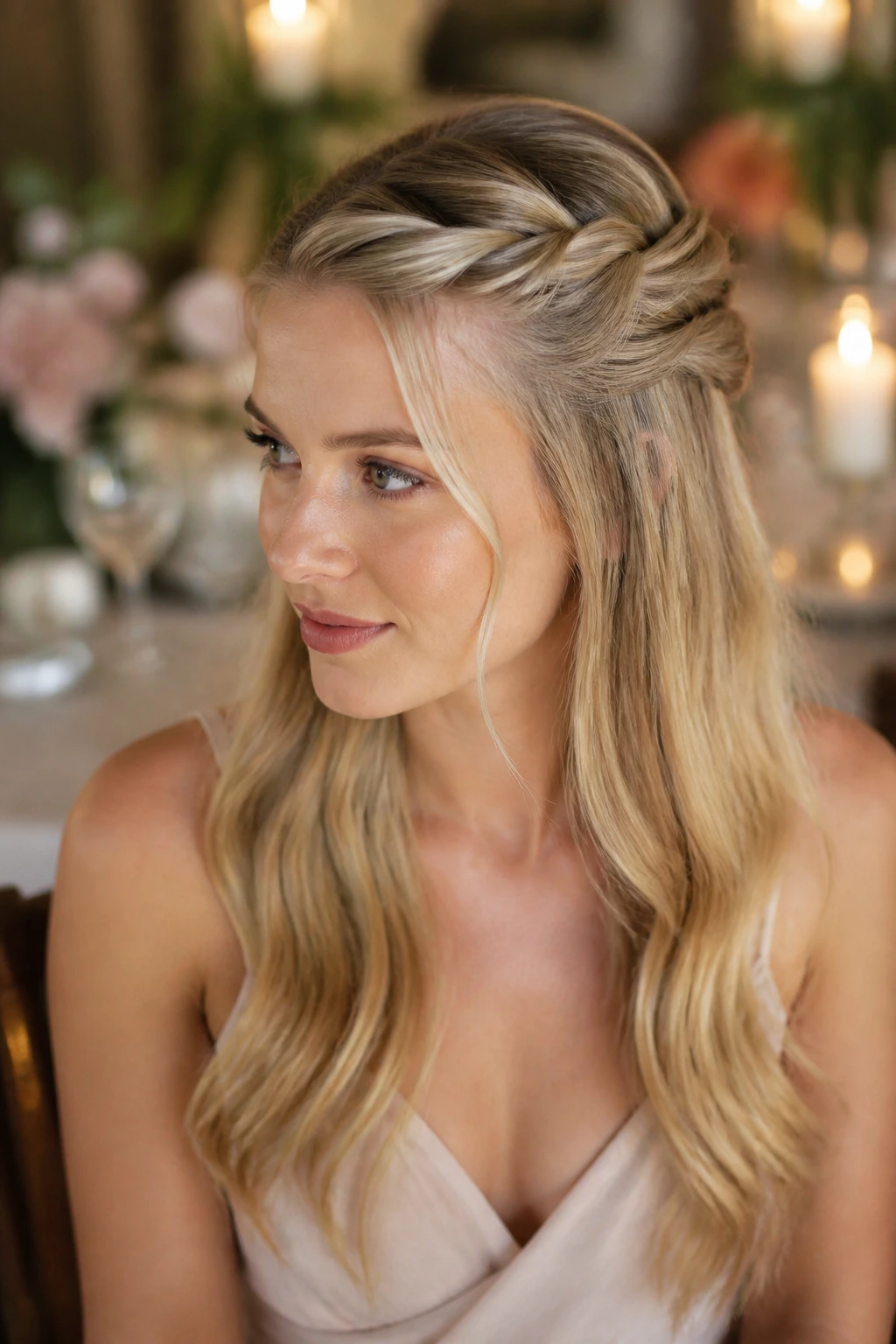
A twisted halo half-up gives you the prettiest part of a crown braid without the commitment of braiding the whole head. That makes it useful on long hair, where full braids can feel heavy if you want something lighter around the face.
Why it works: Twists are faster than braids and easier to widen, which helps the style stay soft. The halo shape keeps the front pieces off the face, but the loose length underneath still shows the long silhouette. It’s one of those styles that looks like there was more work involved than there actually was.
Best for: Weddings, dinners, or any day you want a little romance without a full updo.
How to do it: Take a section from each temple, twist them back toward the crown, pin them together, and hide the pin with a small layer of hair if you want a smoother finish. If your hair is layered, keep the twist low enough that the shorter pieces can still stay inside it.
22. High Ponytail With a Wrapped Base
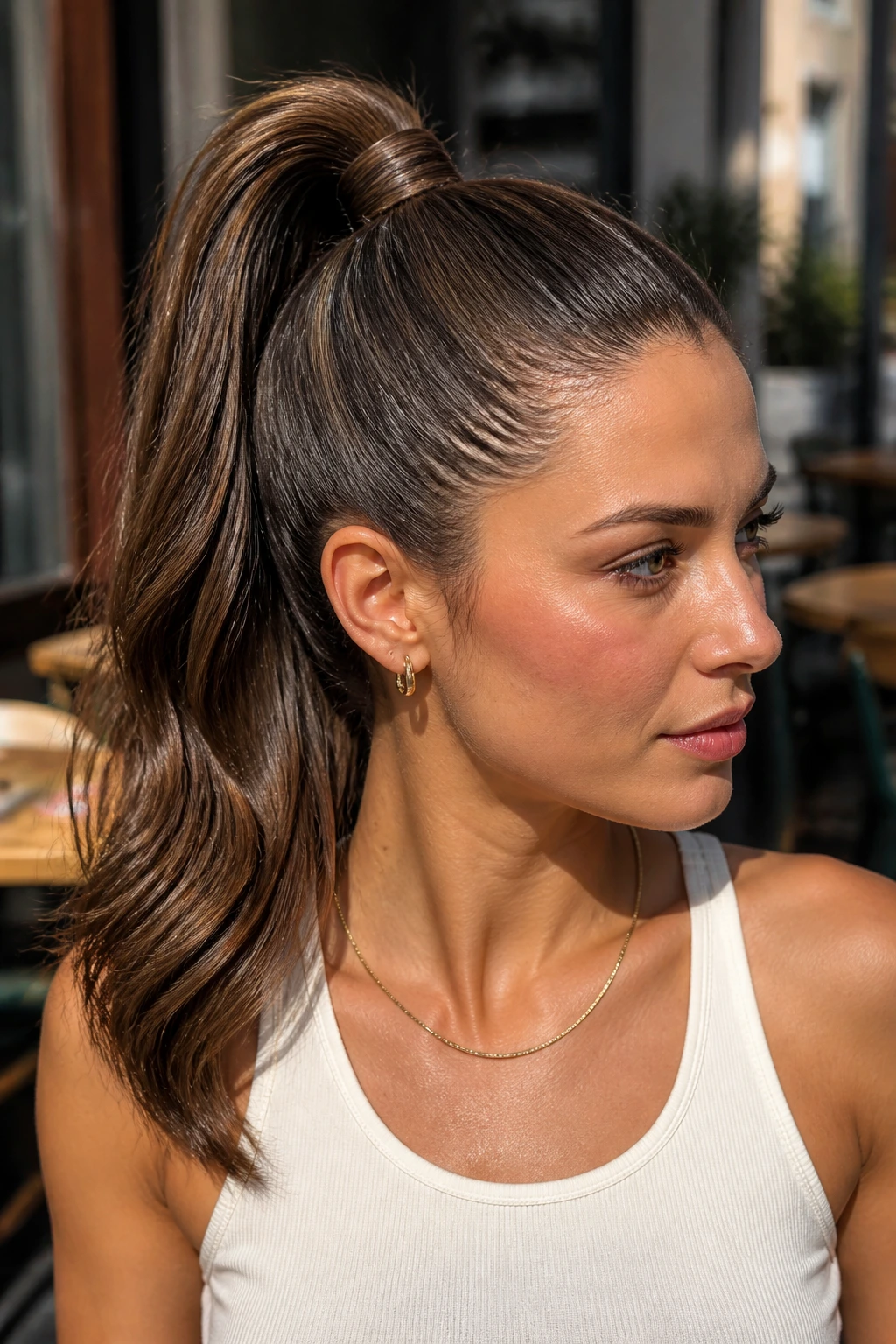
A high ponytail is one of the most useful long-hair styles because it can look sporty, sleek, or downright polished depending on how clean the base is. The wrapped elastic is the part that changes the whole thing.
Why it works: Long hair gives the ponytail enough length to swing and enough weight to sit with shape, which is why the style looks better than it does on shorter cuts. A wrapped base hides the elastic and makes the pony look finished instead of thrown together. If you add a little lift at the crown first, the style gets a cleaner profile and doesn’t pull flat against the scalp.
Best for: Active days, dressier casual looks, and outfits where you want your neck clear.
Quick move: Brush the hair up with firm tension, secure it with a strong elastic, then take a small strand from underneath and wrap it around the base before pinning it out of sight. Use a second elastic if your hair is very thick.
23. Braided Pigtails With a Clean Finish
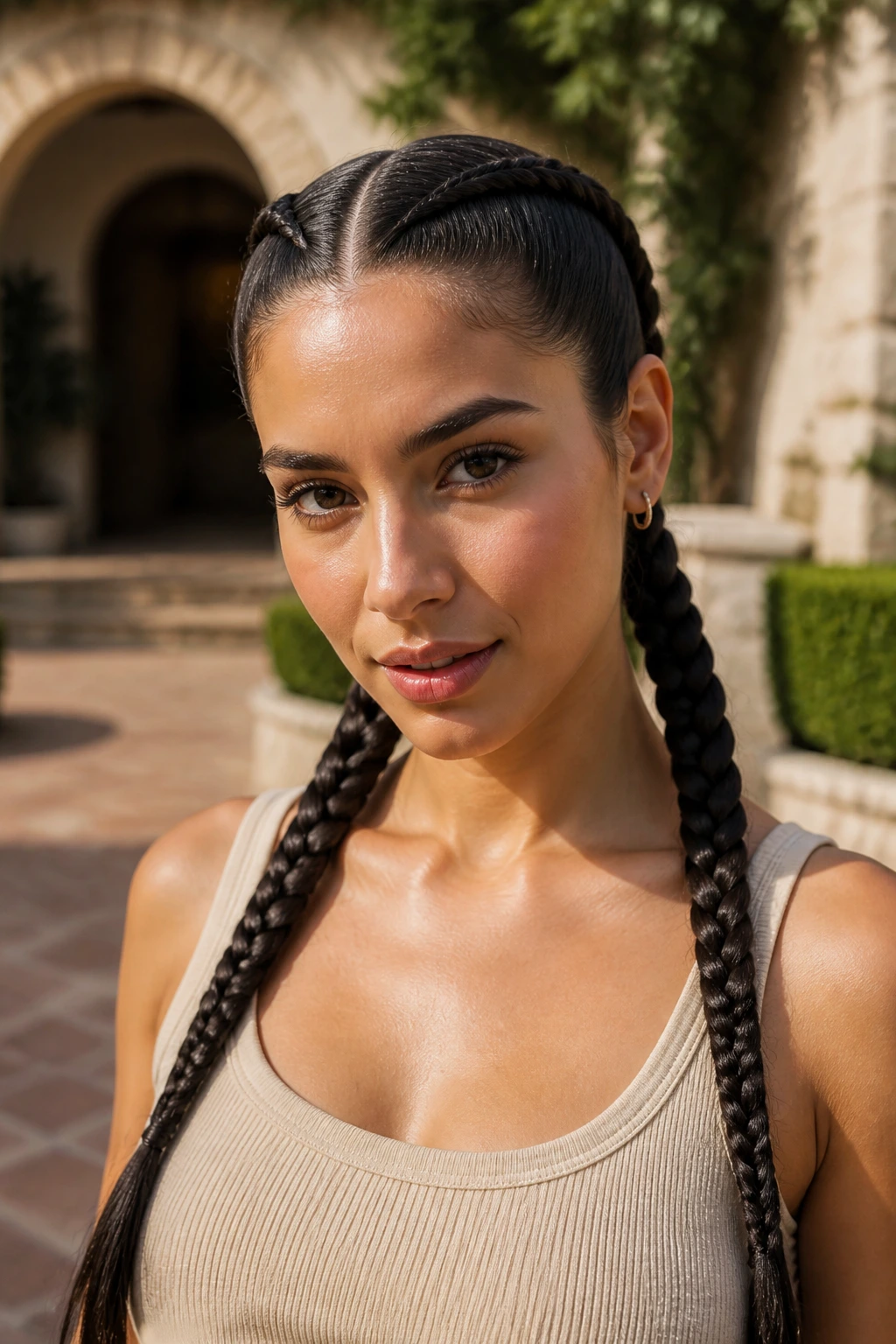
Braided pigtails can look playful or childish depending on how they’re done, and on long hair the difference usually comes down to the part and the finish. Keep them sleek and low, and they read modern.
Why it works: Long hair gives each braid enough length to sit neatly over the shoulders instead of stopping halfway down the back. A center part and even tension make the style look deliberate. If the braids are loose near the scalp, the shape starts to wander and the look loses its edge. Clean lines matter here.
Best for: Casual days, travel, and anyone who wants a braiding style that feels easy to wear.
What I’d change for maturity: Keep the braids lower and tighter at the top, and leave the ends smooth rather than frizzing them out. That alone shifts the mood.
24. Soft Romantic Curls With a Side Pin
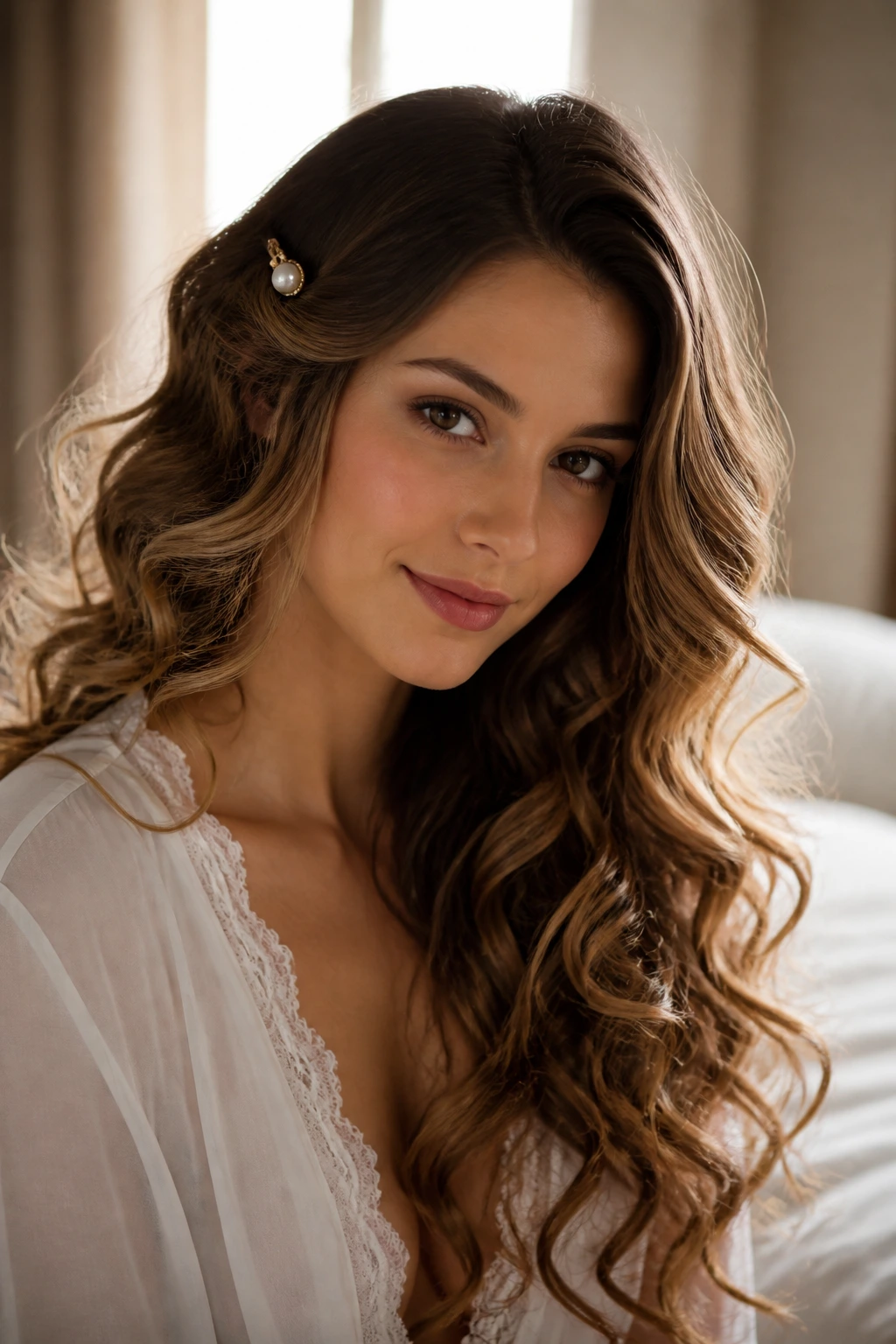
Soft romantic curls are the long-hair crowd-pleaser I never get tired of, mainly because the length makes the curls fall in a way shorter hair cannot match. The side pin keeps one side neat while the rest moves.
Why it works: Long curls have room to drape, so they look fuller and less puffy than tight ringlets. A side pin helps control the front and gives the style a focal point. If you curl the hair away from the face and brush it out lightly after cooling, the result is soft instead of overdone. That brushing step matters. It turns “curls” into a shape.
Best for: Dates, weddings, dinners, and any night where you want the hair to do some of the talking.
Small preference: Choose one strong accessory—pearl barrette, crystal clip, metal pin—and let it be the only hard edge in the look.
Why Long Hair Changes the Styling Math
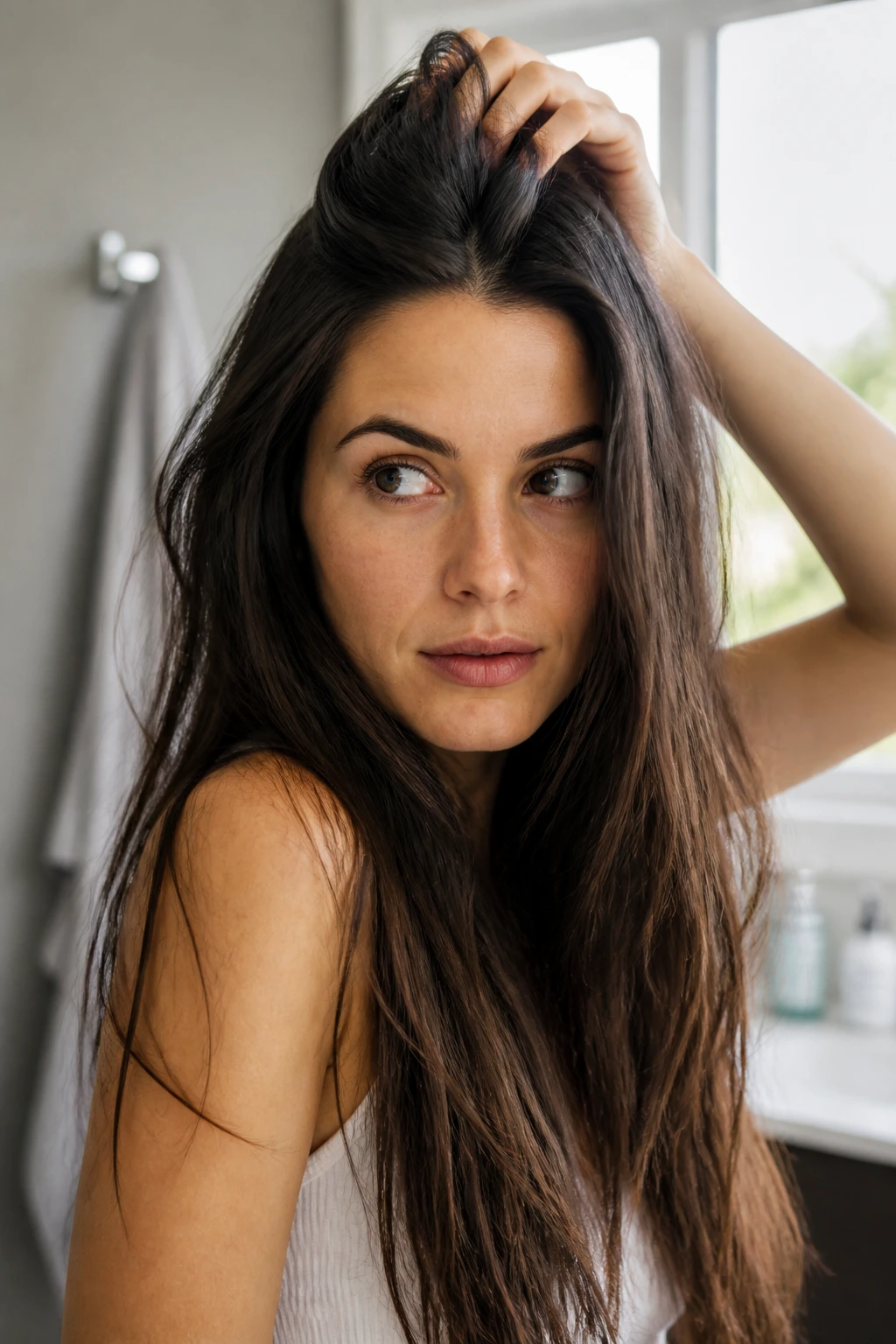
Long hair is less like a blank canvas and more like a fabric with weight, drag, and its own ideas. That sounds dramatic. It’s true, though. A style that looks secure for two hours on medium-length hair can start slipping on long lengths because every inch below the shoulders adds pull.
The crown also behaves differently. Too much cream or oil at the roots, and the style collapses. Too little texture, and the pins slide out. The middle is usually where the real work happens: enough product to give grip, not enough to turn the hair into cardboard.
Ends need their own plan too. Long ends dry out first, catch on coat collars, and show damage before the rest of the hair complains. When the ends are shaped—flipped, curled, tucked, or braided—the whole look reads cleaner. When they’re ignored, they hang there and betray you.
The Tools That Actually Earn Drawer Space
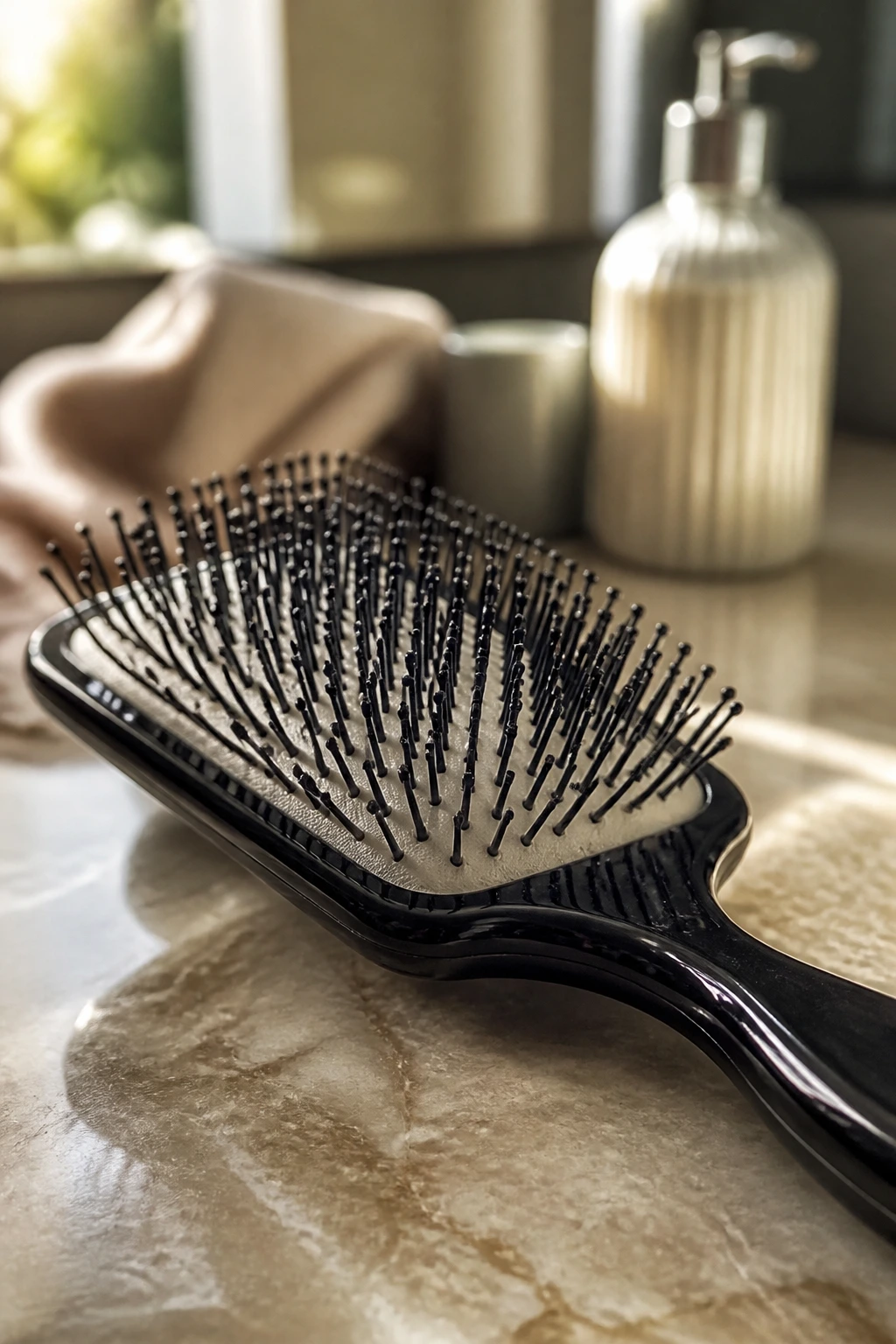
You do not need a bathroom full of gadgets. You need a few tools that grip, smooth, and separate hair without chewing it up.
-
Paddle brush: Best for smoothing long lengths before a ponytail, twist, or bun; the wide surface moves a lot of hair fast.
-
Tail comb: Great for clean parts and sectioning around the crown or temples; the pointed end saves time.
-
Sectioning clips: Keep layers out of the way while you braid or curl; even four clips make a difference.
-
Bobby pins and hairpins: Use matte pins for grip and standard bobby pins for general hold; cross them when a bun needs extra security.
-
U-pins: These hold chignons and buns with less visible hardware than regular pins.
-
Large claw clip: A 4- to 5-inch clip matters for long hair because tiny clips can’t close around all the bulk.
-
Clear elastics: Useful for bubble braids, wrapped ponytails, and micro-braids; they vanish more easily than thick bands.
-
Silk scrunchie: Gentler on long hair than a tight rubber band, especially for low ponytails and loose buns.
-
Blow-dryer with concentrator nozzle: Helps direct the air so the roots smooth down instead of fluffing everywhere.
-
Round brush or blow-dry brush: Gives curtain layers, flipped ends, and blowout bends their shape.
-
Curling iron or wand: A 1 to 1.25-inch barrel works best for long waves because it shapes the mid-lengths without making tiny ringlets.
-
Flat iron: Useful for glass hair, flipped ends, and polished ponytails; pick one with smooth plates and temperature control.
-
Wide-tooth comb: Handy for detangling after waves or braids without pulling the shape apart.
-
Flexible-hold hairspray: Keeps the style in place while still letting long hair move; stiff spray can make long lengths look crispy.
Picking Products That Hold Without Crunch
Long hair punishes heavy product. Put too much cream at the roots and the style collapses. Put too much spray on the ends and the hair starts looking like it’s wearing shellac.
A lightweight mousse is a smart buy if your hair goes flat near the crown. Work a golf-ball-size amount into damp roots and mid-lengths before blow-drying. It gives the hair a little memory without leaving a thick coating behind. Texture spray or dry shampoo also earns its spot, especially if your hair is silky. A few sprays at the roots before braids or twists add friction that pins can actually hold onto.
Smoothing cream should stay small and specific. I like it on the outer layer and the ends, not rubbed everywhere. Same with serum. One to two drops warmed in the hands is enough for most long hair; more than that starts to weigh things down. For slick styles, choose a gel that dries with shine, not one that flakes if you touch it.
Heat protectant is not optional if you use hot tools. Pick one that matches the temperature of the tool, and don’t drench the hair. A fine mist is enough. The goal is to protect the cuticle, not soak the whole head.
How to Pick the Right Style for Fine, Thick, Straight, or Curly Hair
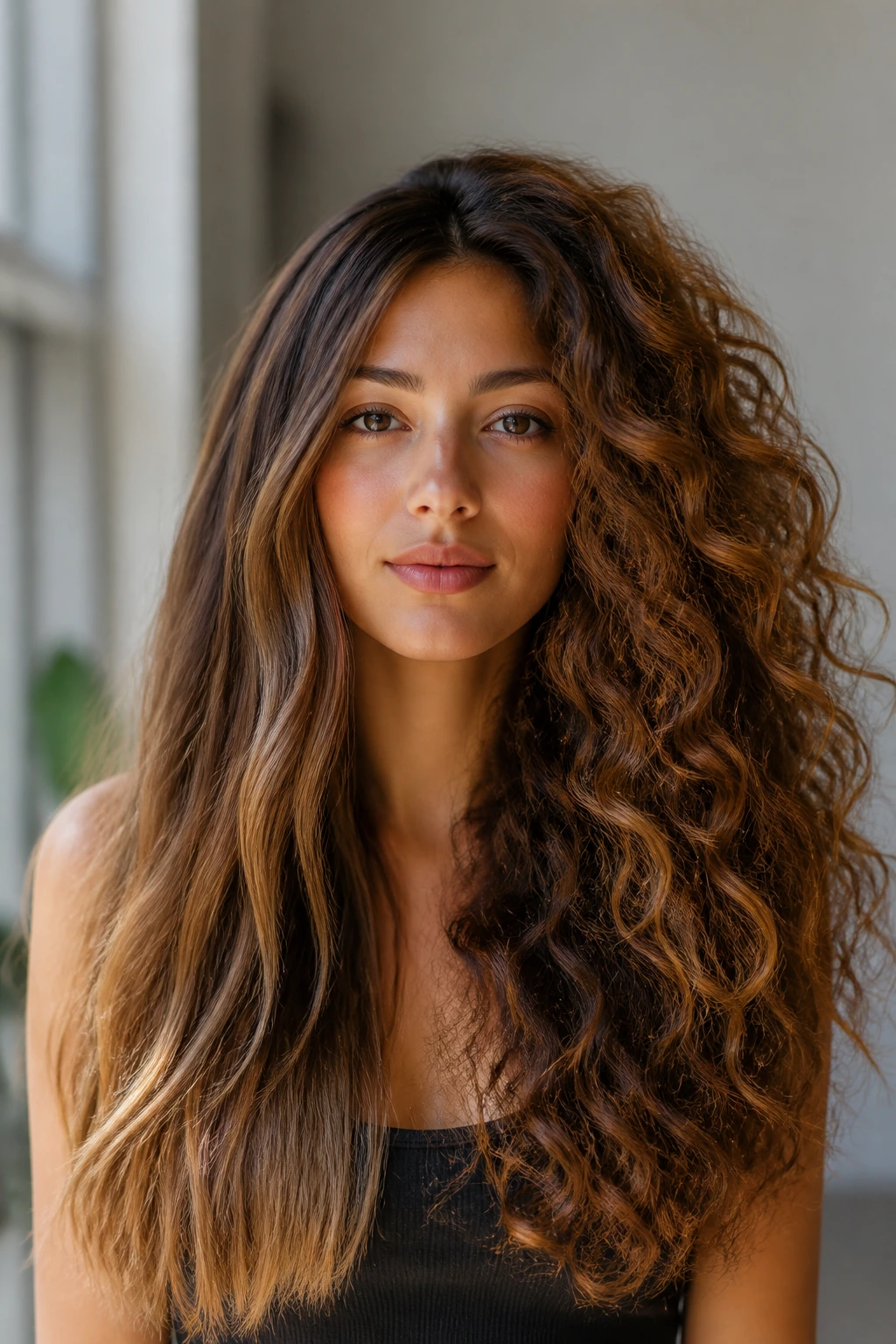
Fine Hair
Fine long hair usually needs lift more than it needs product. Styles with anchors—bubble braids, wrapped ponytails, half-up twists—often hold better than loose curls that slide flat by noon.
Thick Hair
Thick hair needs sectioning and better hardware. Larger clips, stronger elastics, and more pins are your friends. Chignons, Dutch braids, rope ponytails, and high buns work because they control bulk instead of pretending it isn’t there.
Straight Hair
Straight long hair can look sleek or stubbornly flat. Add texture before braiding or twisting, and use styles with a visible shape, like a side sweep or a scarf ponytail, so the length doesn’t disappear into one straight line.
Curly Hair
Curly long hair looks best when the style respects the curl pattern. Braids, halo twists, buns, and soft pinned half-ups usually hold better than trying to force every curl into a glass-straight finish. A little frizz is normal. Don’t fight it into boredom.
How to Wear These Styles for Work, Errands, and Events
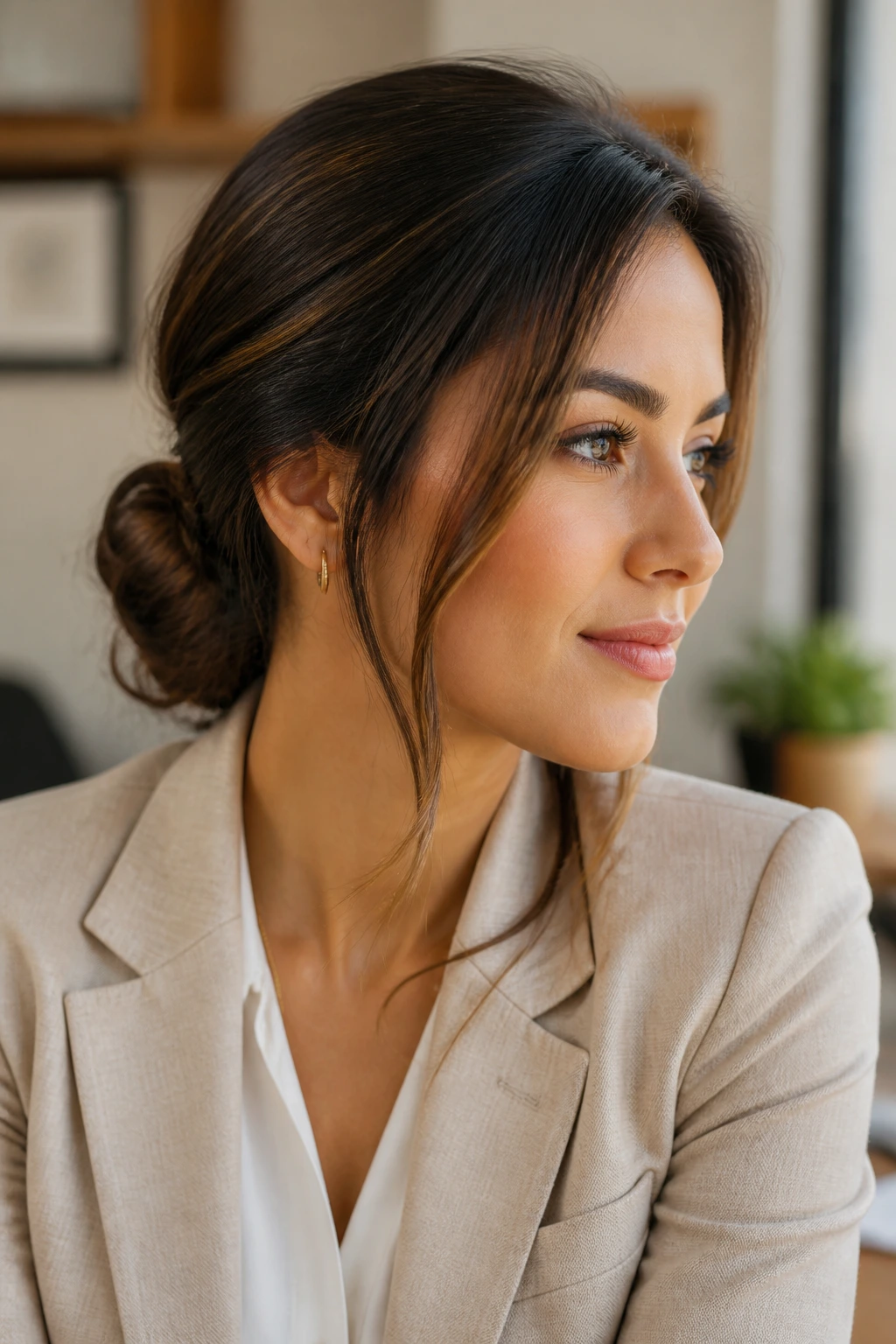
Presentation: For workdays, reach for styles that look clean from the front and tidy at the nape: low ponytails, chignons, claw-clip twists, and polished half-ups. For events, use styles with a visible shape down the back—braids, soft curls, side sweeps, or a wrapped high ponytail.
Best With: High collars love low buns and sleek ponies. Open necklines pair well with side sweeps and loose waves. Earrings matter more than people think; a clean updo lets a heavier earring show, while loose hair usually needs something smaller and brighter.
Time Needed: A claw-clip twist or scarf pony can happen in three minutes. A blowout bend or glass hair takes longer, because the prep is the whole point. If you only have five minutes, choose structure over softness.
Setting: Errands and travel usually call for styles that survive movement—bubble braids, top knots, rope ponytails. Weddings, dinners, and formal photos want smoother lines and one clear focal point: a pin, a braid, or a shine finish that doesn’t look accidental.
Small Finishers That Make the Style Look Intentional
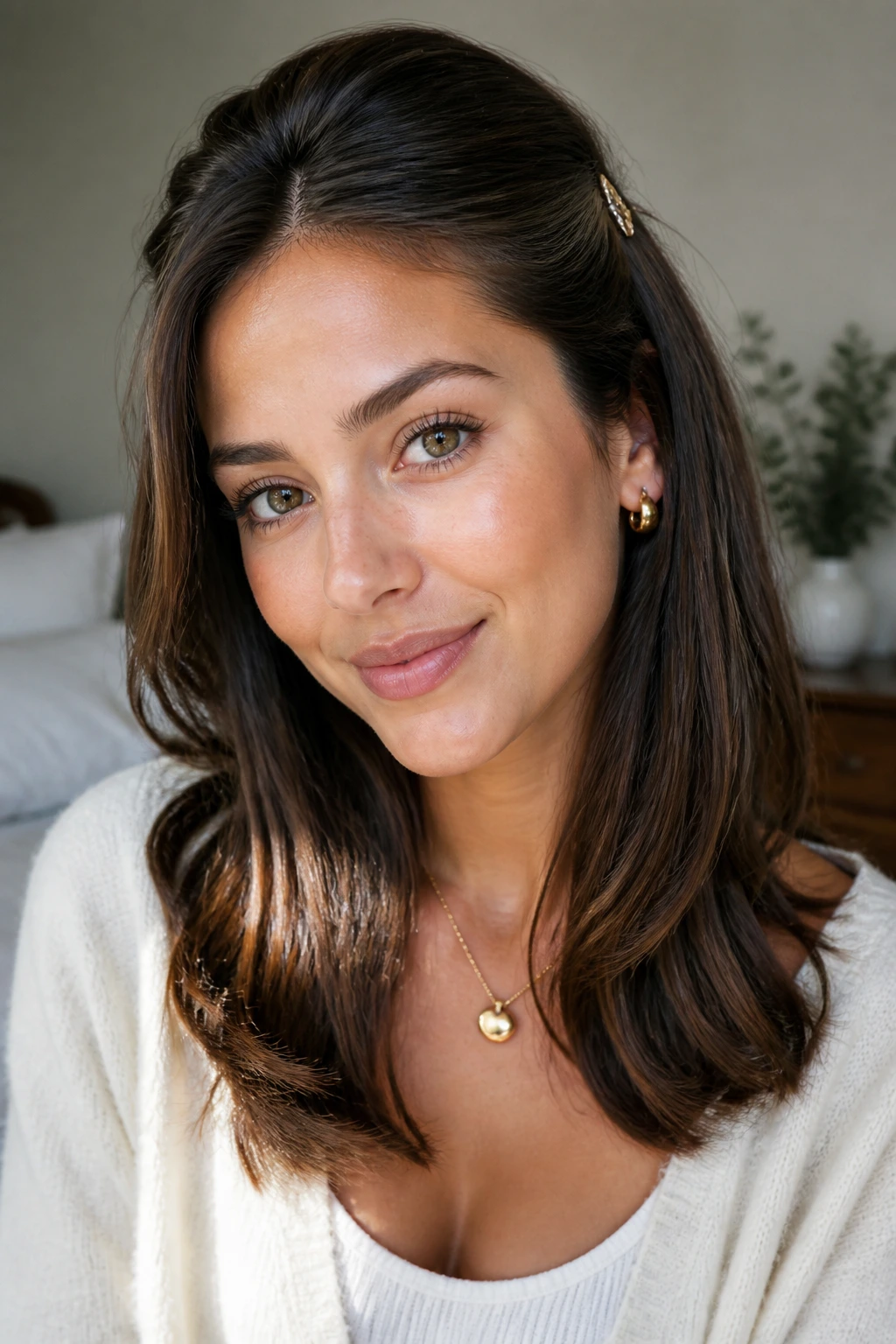
Shine: A pea-size amount of serum on the mid-lengths and ends cleans up the finish fast. Warm it in your hands first so you don’t dump a greasy patch on one spot.
Flyaways: Spray hairspray onto a toothbrush or clean spoolie and smooth the hairline with it. That gives you control without loading the whole head with product.
Lift: Clip the crown for ten minutes after blow-drying if the roots go flat easily. It creates a bit of bend at the base that helps every style hold shape.
Shape: Pull one small piece loose near the face or at the temple. One little release can make an otherwise stiff style feel softer.
Make-it-yours: Add a ribbon, matte clip, or one visible pin. Long hair can handle a small accessory, and sometimes that’s the thing that makes the look feel finished.
The Mistakes That Make Long Hair Fall Flat
-
Too much product at the roots: The style looks clean for ten minutes, then collapses. Keep smoothing cream and oil away from the scalp unless the style is meant to be slick.
-
Tightening every style into a headache: If your temples ache or the hairline starts pulling, the style is too tight. The American Academy of Dermatology warns that repeated traction from tight styles can damage the hairline over time, so rotate the placement and loosen the tension.
-
Skipping anchor points: A bun or twist without crossed pins or a strong elastic will sag. Long hair needs more support than a quick wrap.
-
Working with hair that’s too slippery or too damp: Freshly washed hair can be hard to control, and damp hair in a tight style can stay wet too long. Add texture or wait until the hair is fully dry.
-
Ignoring layers: Short face-framing pieces fall out first. Either pin them on purpose or leave them out on purpose. Half-finished is the worst option.
-
Using tiny accessories on heavy hair: A dainty clip that looks pretty on the shelf may not hold long lengths for ten minutes. Size matters.
Variations for Weather, Texture, and Heat-Free Days
Fine-Hair Rescue: Start with texture spray or dry shampoo at the roots, then use styles with built-in grip, like bubble braids, low twists, and wrapped ponytails. Fine hair usually looks better with a little separation than with heavy cream.
Thick-Hair Control: Split sections smaller than you think you need, and use more pins than your instincts suggest. Thick long hair looks best in styles that control bulk in layers—Dutch braids, chignons, rope ponytails, and high buns.
Curly-Hair Respect: Keep the curl pattern in the plan instead of flattening it. Braided crowns, scarf ponies, and half-up twists work well because they guide the curl instead of fighting it.
Humidity Shield: Choose styles with structure over styles that depend on perfect smoothness. Braids, slick backs, buns, and wrapped ponies usually hold better than loose curls when the air gets sticky.
No-Heat Weekend: Lean into braids, overnight twists, and buns set on nearly dry hair. A little wave formed naturally overnight often looks better than hot-tool curls that went too perfect.
How to Keep a Style Fresh Overnight
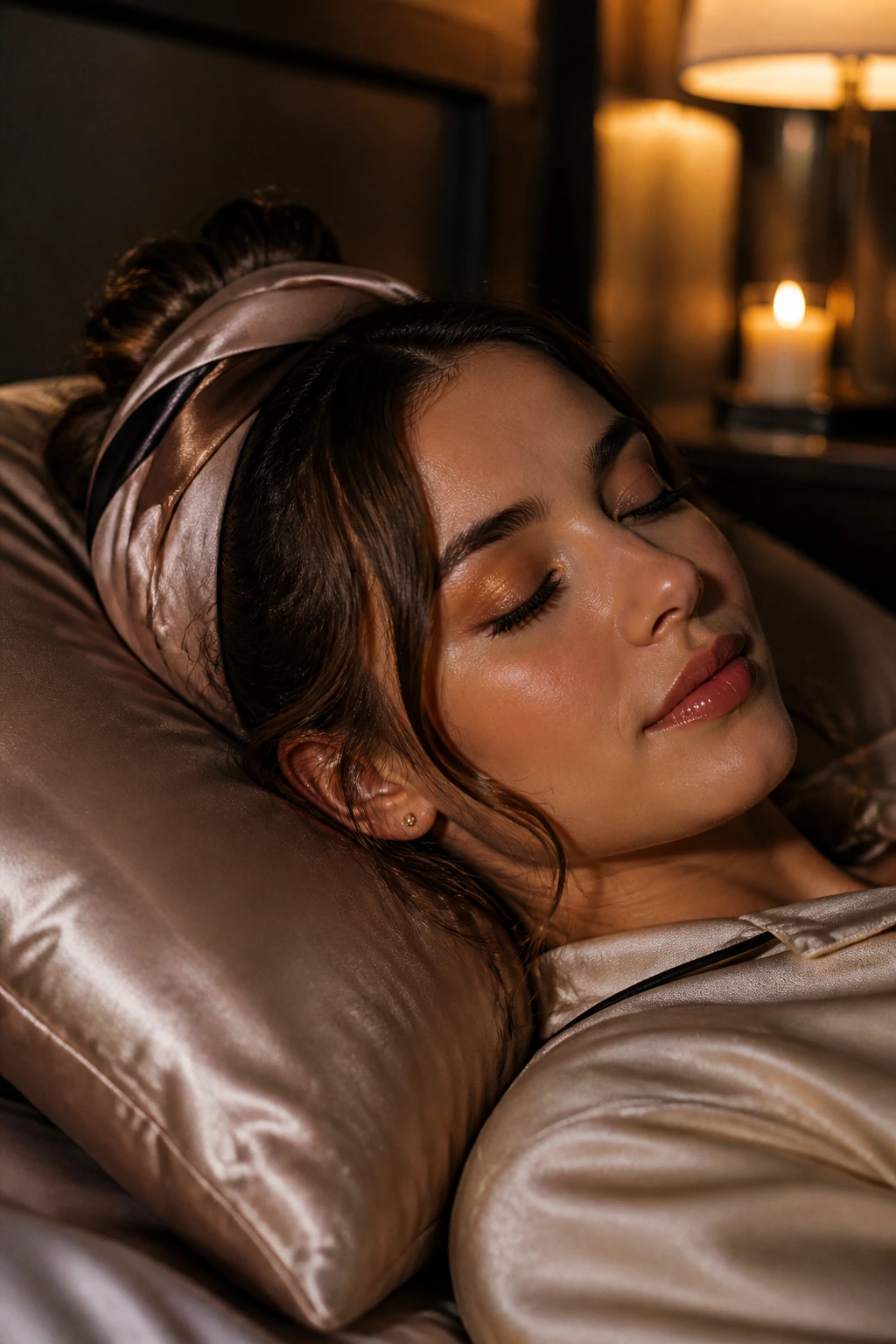
The safest overnight move is a loose, friction-free setup. A silk or satin pillowcase helps, but the style itself matters more than people think.
For waves, braid the hair loosely before bed or twist it into two low sections. For straight styles, use a very loose low pony or wrap the hair in a silk scarf so the ends don’t snag. For buns and updos, remove any pins that are poking the scalp, then let the hair rest in a soft shape rather than a tight knot.
If you want to save a blowout, clip the roots only where they need lift and keep the ends loose. If you want to preserve curls, don’t flatten them into the pillow. Push them up into a soft pineapple or gather them gently at the crown. Sleeping on damp hair in a tight braid is a bad trade if your scalp stays damp for hours. Dry enough to sleep is the rule I’d keep.
In the morning, revive the style with a little dry shampoo at the roots and a mist of water on the ends if needed. Then reshape with your hands first. Brush later, if at all.
Questions About Hairstyle Ideas for Women With Long Hair
Which long hairstyles last the longest during a busy day?
Braids, wrapped ponytails, low buns, and claw-clip twists usually hold up best because they use multiple anchor points. Loose waves look pretty, but they need more touching up once they meet humidity, coat collars, or a long commute.
How do I stop my ponytail from sliding down?
Use a snag-free elastic, add a little texture at the roots first, and place the pony a touch lower than your first instinct. If your hair is silky, a second elastic under the first can help, and wrapping a strand around the base hides the hardware while tightening the look.
Is it bad to wear tight styles every day?
Tight styles on the same spot can stress the hairline over time. Rotate the placement, loosen the tension, and give the roots a break with softer styles like half-ups or low braids when you can.
What if my long hair is layered and pieces keep falling out?
That usually means the style needs either more pins or a different section plan. Leave the shortest face-framing pieces out on purpose, or pin them into the style with cross-pins instead of trying to force every layer into the same braid.
Can I style long hair without heat and still look polished?
Absolutely. Bubble braids, twisted crowns, scarf ponies, slick buns, and claw-clip twists all look finished without a curling iron. Texture spray and a clean part often matter more than hot tools.
What style works best if my hair is very thick?
Styles that manage bulk rather than flatten it tend to win: chignons, Dutch braids, rope ponytails, and high buns. Thick hair needs larger clips, stronger elastics, and a little patience during sectioning.
How do I keep waves from looking frizzy instead of soft?
Leave the ends slightly loose when you curl, let the waves cool before brushing, and use a tiny amount of serum only on the outer layer. If you brush hot curls apart too early, they puff instead of falling softly.
What’s the fastest style when I have less than five minutes?
A claw-clip French twist or a low ponytail with a wrapped base. Both look tidy with minimal work, and both are forgiving when you’re styling in a hurry.
The Styles That Keep Their Shape
Long hair looks best when the style respects what the length is already doing. A clean pony, a braid with grip, a twist that uses the crown, or a wave that knows when to stop—those are the looks that stay useful after the mirror test is over.
The smartest move is not choosing the fanciest idea. It’s choosing the one that fits your texture, your morning, and your patience level. Start there, and long hair stops being a problem to manage. It becomes the part of the outfit that pulls everything together.
