



Medium length blowout hair ideas hit a sweet spot that long layers and short cuts never quite share. There’s enough length to get that sweeping, brushed-out movement, but not so much hair that the shape collapses under its own weight by lunchtime. That’s the whole appeal: a collarbone-length cut can look polished, airy, messy, or old-Hollywood, and it can do all of that without needing three hours and a prayer.
The other reason this length works so well is simple. Medium hair gives you room for root lift, face-framing bend, and those ends that flick under or out just enough to make the style feel finished. On short hair, the blowout can look too puffy. On very long hair, it can go soft and heavy unless you fight for volume. Medium length sits right in the middle, which is exactly where a good blowout likes to live.
I also like medium-length blowouts because they don’t have to be perfect to look good. A slightly uneven bend near the cheekbone, a little extra lift at the crown, or one side that flips a touch more than the other can make the whole thing feel lived-in instead of stiff. That’s the version most people actually wear, and it’s the version that tends to get the most compliments.
Why You’ll Love These Medium Length Blowout Hair Ideas
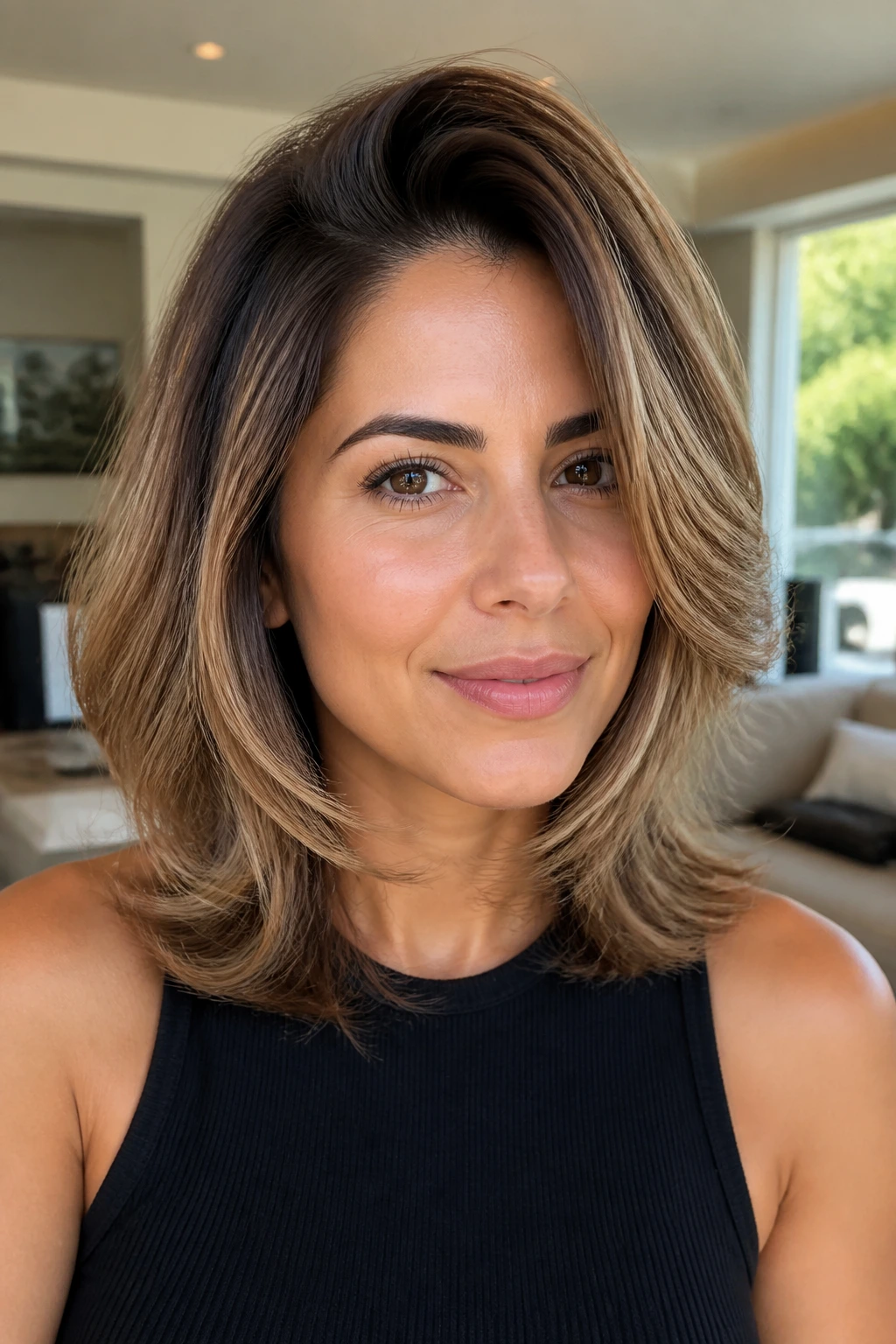
-
Built-In Movement: Medium-length hair has enough weight to show a shape, but not so much that every bend disappears the second you step outside.
-
Fast Enough for Real Life: Shoulder-to-collarbone hair dries faster than long hair, so you can get a salon-looking finish without making a whole afternoon of it.
-
Works With Layers or a Blunt Cut: A blowout can soften a blunt lob, sharpen a shag, or make curtain bangs do their best work around the face.
-
Easy to Push Toward Smooth or Textured: One round brush and the right product can take the same cut from sleek and glossy to airy and piecey.
-
Flatteringly Framed Around the Face: Medium-length blowouts can open up the cheekbones, soften the jaw, or add width where you want it most.
-
Less Fragile Than Loose Waves: A good blowout usually holds its shape better than soft curls, especially when the hair hits just below the shoulders.
1. The Classic Bombshell Blowout
This is the blowout people picture first: big crown, polished lengths, and ends that curve under with a soft, expensive-looking bend. On medium hair, it doesn’t tip into costume territory the way it sometimes can on very long hair. The shape stays lighter, cleaner, and a little more believable.
Why it works: The length gives the brush enough room to build tension through the mid-lengths, while the ends still have enough movement to bounce instead of hanging flat. A 1.5- to 2-inch round brush usually gives the best body here, especially if your hair has a little natural wave.
What to ask for: Long layers that start below the chin, with face-framing pieces that are a touch shorter. If the layers are cut too high, the whole look can turn fluffy in a bad way.
Best for: Medium to thick hair that needs shape, not rescue.
2. Curtain Bangs and Airy Face-Framing Layers
Curtain bangs are practically made for a medium-length blowout. They give the style a soft front edge, and the rest of the hair can stay loose, shiny, and a little breezy around the shoulders. The whole thing feels relaxed, but not lazy.
How it wears: The bangs should sweep away from the face and land around the cheekbones or just below them. That movement is the point. If they’re blown straight down, you lose the lift that makes this cut work.
A medium-length cut with curtain bangs also gives you options on the messy days. Pull the rest into a low clip, let the bangs fall forward, and you still look like you meant to do something with your hair. Which is rare. And useful.
Best styling note
Use a small round brush or even a medium brush with a slight twist at the wrist. You want the bang to fold, not curl into a full ringlet.
3. The Rounded C-Shape Blowout
This is the neatest look on the list, and honestly, one of the most flattering on medium hair. The ends curve in toward the neck and jawline in a clean C-shape, which gives the haircut structure even when the rest of the day gets messy.
Why it works: Medium hair tends to sit nicely with this shape because the length isn’t so heavy that the curve straightens out immediately. The result is smooth and controlled, but not rigid. Think polished, not lacquered.
I like this version for finer hair because it creates the illusion of density at the perimeter. The outer edge of the hair looks fuller when it’s rounded in slightly. That small detail changes the whole silhouette.
4. Soft 90s Flip-Out Ends
The flip-out blowout is a little cheekier. The ends flick away from the neck instead of turning under, and that one detail makes the whole style feel lighter and more relaxed. On medium-length hair, the flip sits right where it should — at the collarbone or just below it.
A lot of people overdo this look. Don’t. The flip should look like the hair wants to move that way, not like you forced it with a hot tool and a grudge.
Quick facts:
- Best with a side or off-center part.
- Looks sharp with a blunt lob.
- Needs a light hold spray, not a crunchy one.
- Works well when the ends are cut clean and not too wispy.
Tip: Turn the brush outward only at the last inch or so of the strand. That keeps the rest of the blowout soft.
5. The French-Girl Undone Blowout
This version is softer at the root and less polished through the ends, which is exactly why it works. It has that brushed-out, lightly slept-on feeling without crossing into frizz. Medium hair is the right length for it because the shape can stay loose and visible instead of falling completely straight.
The trick is to keep the crown airy and the lengths separated into a few visible sections rather than one uniform curtain. That little bit of irregularity makes the style feel expensive in the same way a good linen shirt does: not fussy, not overworked, and definitely not trying too hard.
A mist of texture spray near the mid-lengths can help. Not much. Just enough to keep the ends from slipping into a blank sheet of hair.
6. Big Bouncy Layers With a Side Part
If you like the feeling of hair that moves when you move, this one delivers. A side part instantly gives medium-length hair more lift at the front, and the layers do the rest. The shape feels generous, full, and a little dramatic in the best way.
This is the blowout I reach for when the cut already has movement built in. On a layered medium-length cut, the side part pushes the shorter pieces up and away from the face, which makes the whole style look fuller than it is.
Best for: Thick hair, medium-density hair, or anyone whose hair tends to go limp at the roots.
Watch for: If your layers are too short, the top can puff out while the bottom goes flat. That imbalance is annoying. It also looks like the haircut is arguing with itself.
7. Sleek Roots and Feathered Mid-Lengths
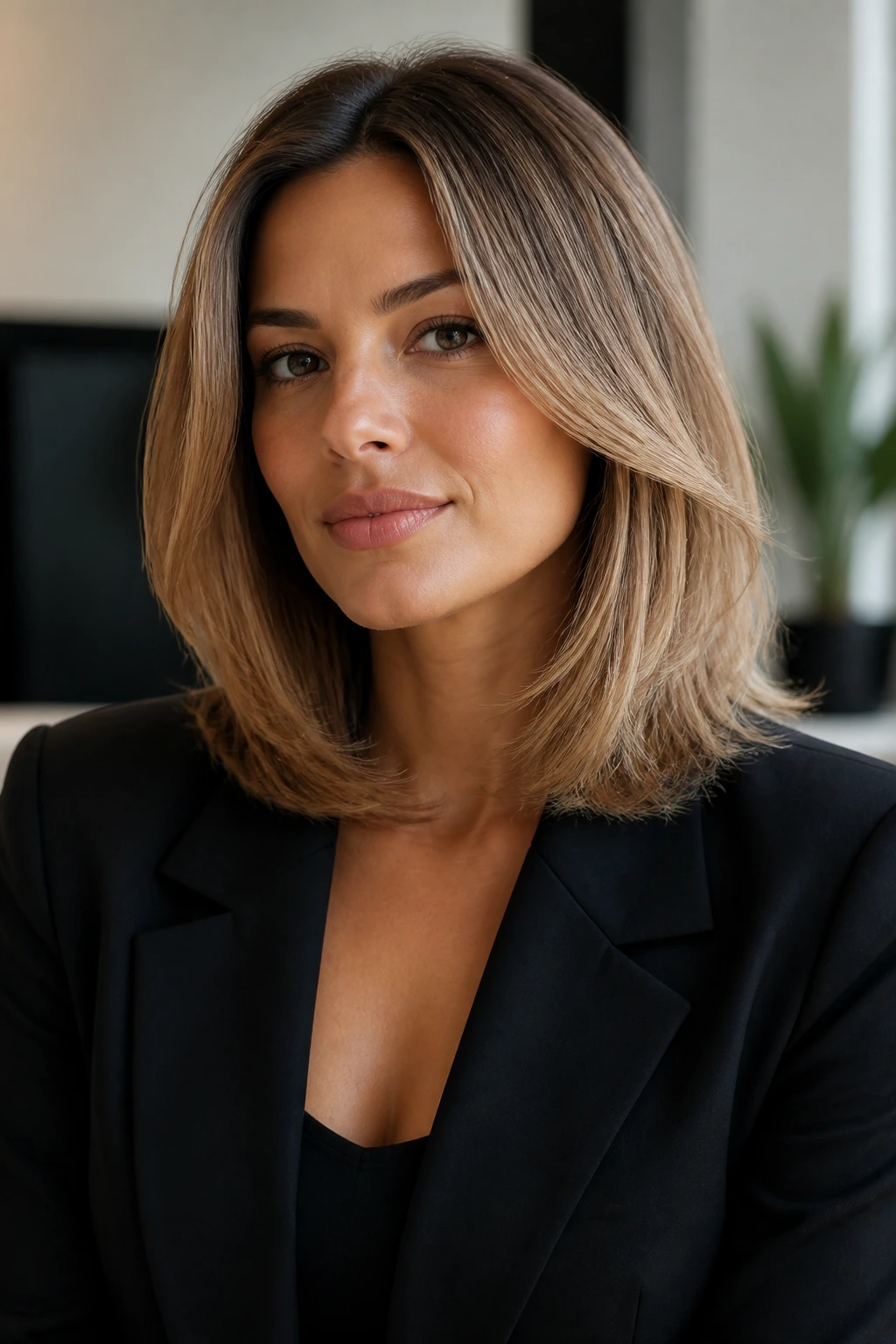
Here the crown stays smooth and close to the head, but the middle and ends get feathered out with a soft bend. It’s a cleaner, more refined take on a blowout, and it works especially well if you don’t love a lot of volume at the top of your head.
The contrast is what makes it interesting. Smooth roots make the hair look controlled, while feathered ends keep it from feeling severe. That balance is hard to fake with a flat iron alone; a round brush and a cool shot at the end do more of the work.
I’d call this one quietly sharp. It’s the sort of blowout that looks good with a blazer, a knit dress, or a white T-shirt that fits well. Nothing about it screams for attention, but it still reads as finished.
8. The Money Piece Blowout
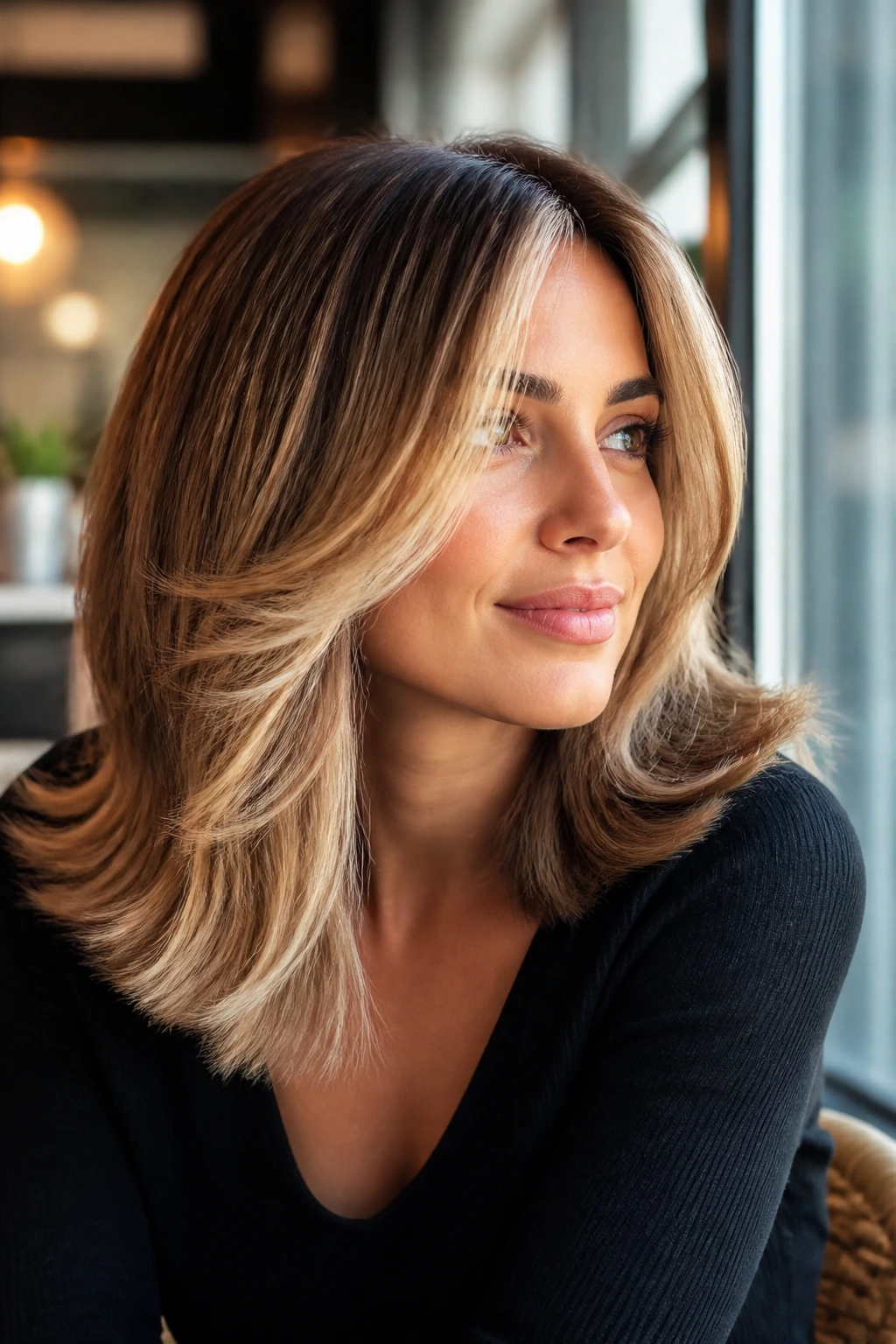
This style leans on bright face-framing pieces to make the blowout look even more dimensional. The front sections catch the eye first, then the rest of the medium-length layers follow with a smooth, glossy bend. It’s a smart choice if you have highlights, balayage, or lighter pieces near the front.
The best part is how the color and shape work together. A blowout already adds movement, but lighter front pieces exaggerate that motion because the eye picks up the shifting tones. The result is not just volume — it’s depth.
If you’ve ever felt like a medium-length cut looked a little flat in photos, this is the fix. Brightening the front and keeping the ends softly curved changes the way light lands on the hair. That matters more than people think.
9. The Soft Shag Blowout
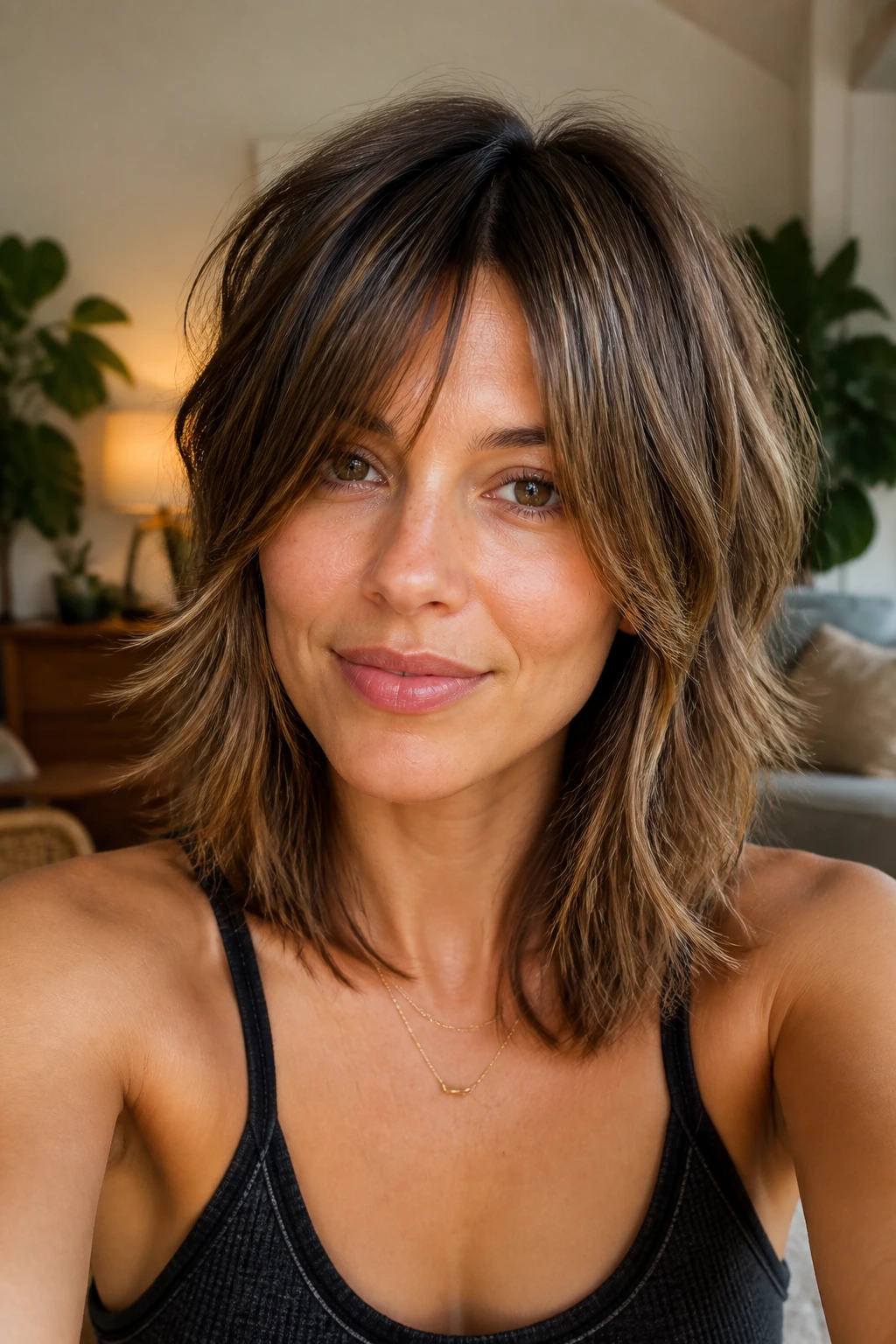
A shag blowout is not sleek, and that’s the charm. The layers are more obvious, the ends are a touch piecey, and the shape has a lived-in swing that feels natural on medium hair. It’s a good choice if you like texture but don’t want to commit to a full curl pattern.
This version usually looks best when the hair isn’t over-smoothed. A little grit at the roots helps the layers separate. Too much shine serum can flatten the whole thing and turn a cool, undone style into a damp-looking one. Nobody wants that.
What makes it work
The shag’s shorter face-framing layers keep the front from looking heavy, while the longer pieces at the bottom keep the haircut grounded. That length mix is the whole game.
10. Farrah-Inspired Volume With Curtain Bangs
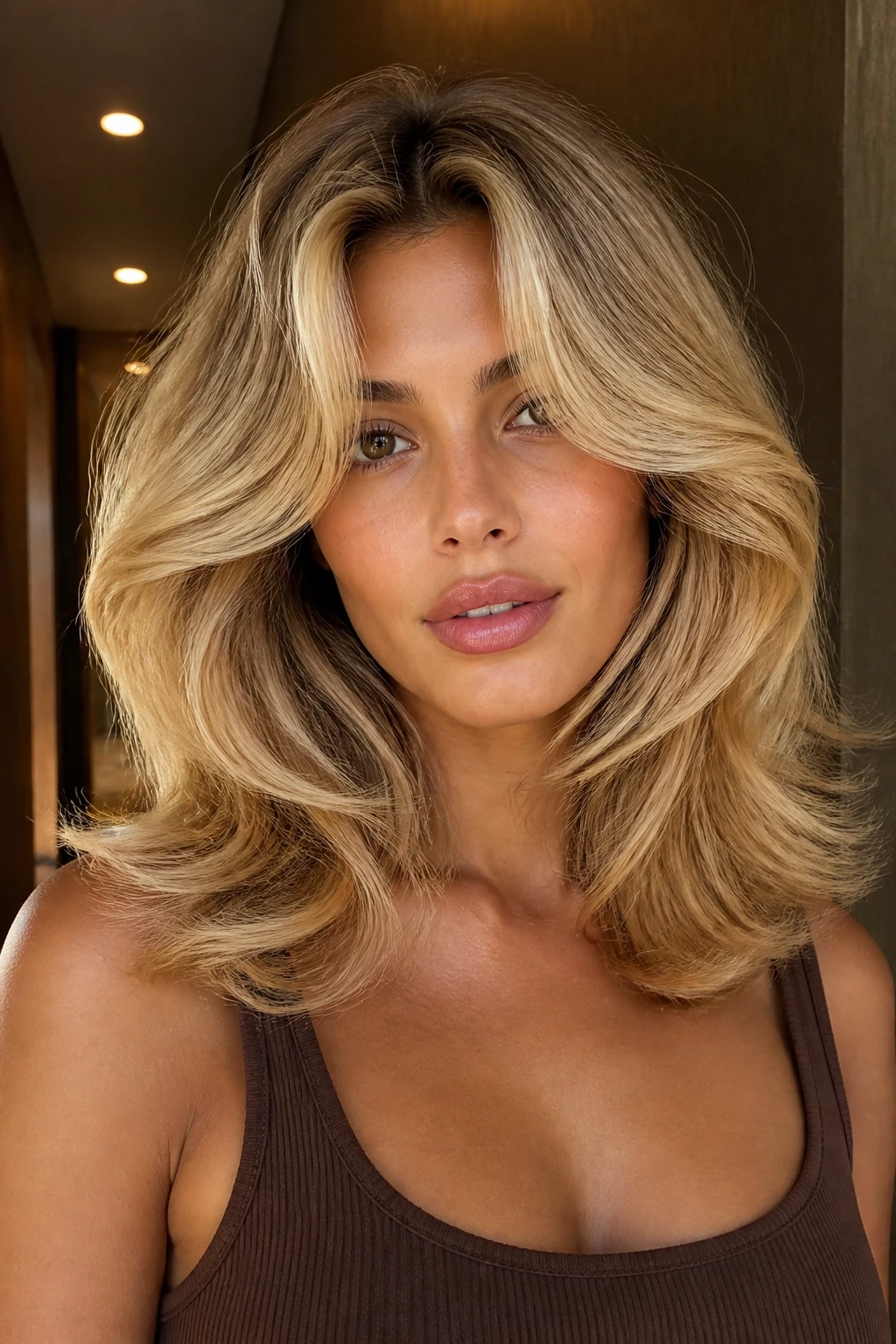
Big, swoopy, and not shy about it. This blowout borrows the wide, feathery shape of a classic layered style, then softens it with curtain bangs so it feels wearable on medium-length hair instead of theatrical.
The volume comes from direction. You’re not just drying the hair straight back or straight down; you’re pushing it away from the face and lifting it off the scalp in a curved line. That little bit of overdirection gives the style its width.
It’s especially good if your medium-length cut has a lot of internal layering. The shape can open up around the face without turning the ends into a mushy cloud. Strong layers. Soft finish. That’s the sweet spot.
11. The Polished Middle-Part Blowout
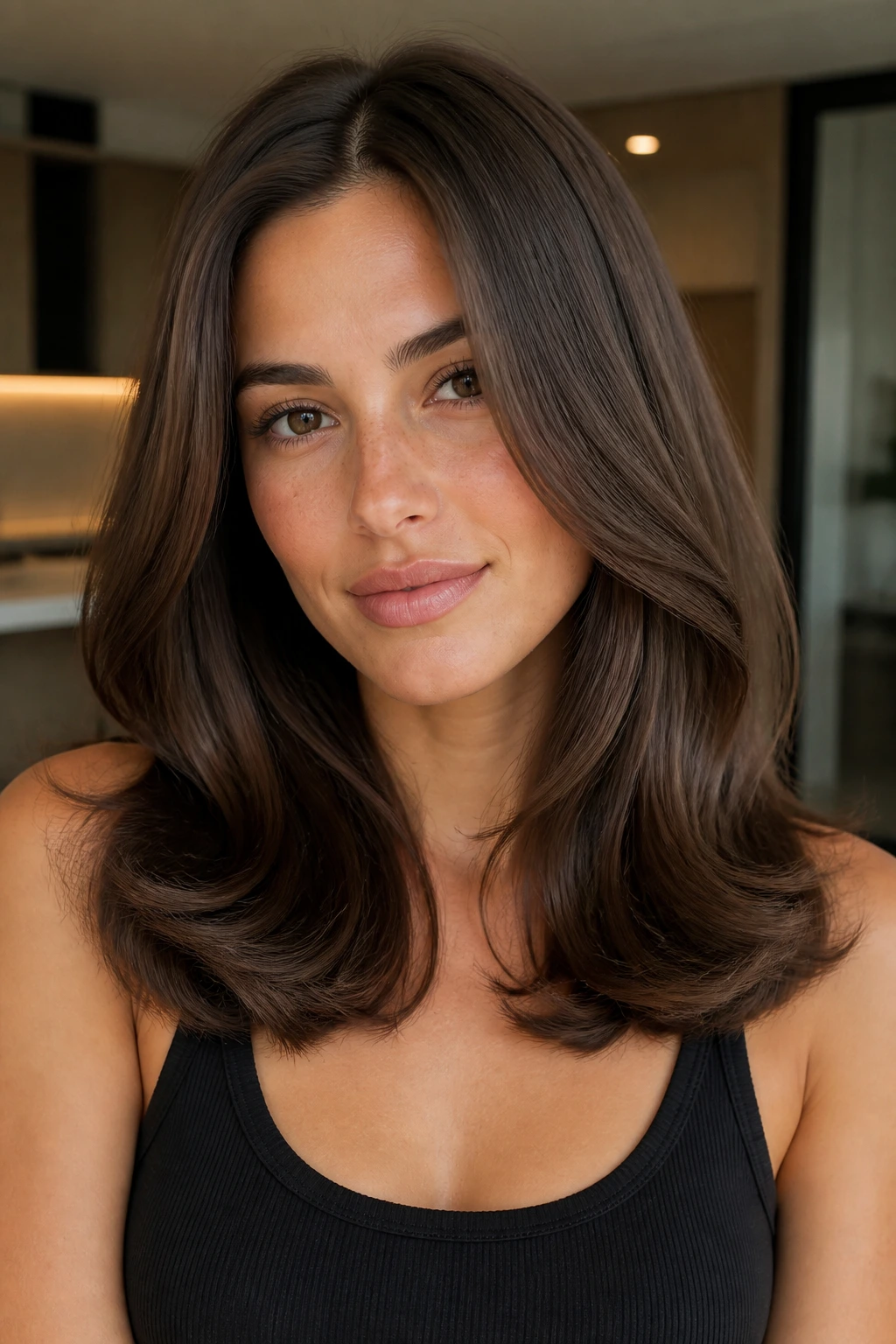
A middle part can make medium-length hair look longer, cleaner, and a little more modern. With a blowout, it doesn’t have to feel severe. The trick is to keep the roots sleek and let the lengths bend softly under near the shoulders.
This is one of the best choices if you want your hair to look tidy without looking stiff. The symmetry is satisfying. There’s no side that needs to dominate. No dramatic sweep. Just a balanced frame around the face and a glossy finish through the ends.
It suits people who don’t want a lot of obvious layering around the front. Even a blunt medium cut can look rich and controlled with this shape.
12. Gritty Beach-Blown Texture
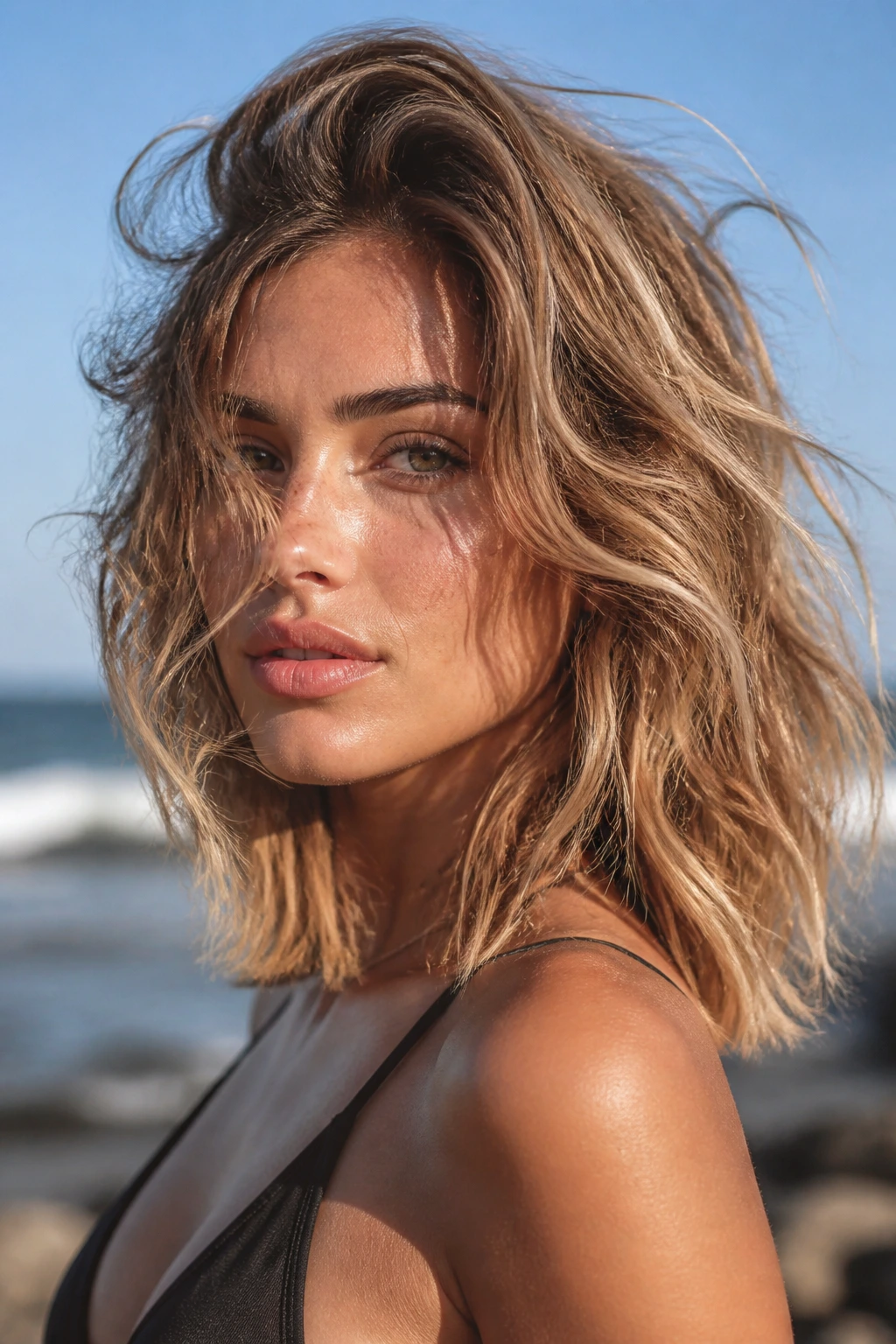
This is not a curl-iron beach wave. Different thing. The blowout stays at the center, but the finish has a dry, touchable texture that keeps the hair from looking too neat. On medium-length hair, that combination gives you volume without a helmet effect.
A little texture spray through the mids changes the mood fast. The hair keeps its swing, but it picks up separation at the ends and a bit of roughness around the face. That roughness is a feature here.
Use this version if your hair is naturally a touch frizzy and you’re tired of fighting it into submission. Work with the texture instead of pretending it doesn’t exist. The result is better, and far less frustrating.
13. Crown-Lift Blowout for Fine Hair
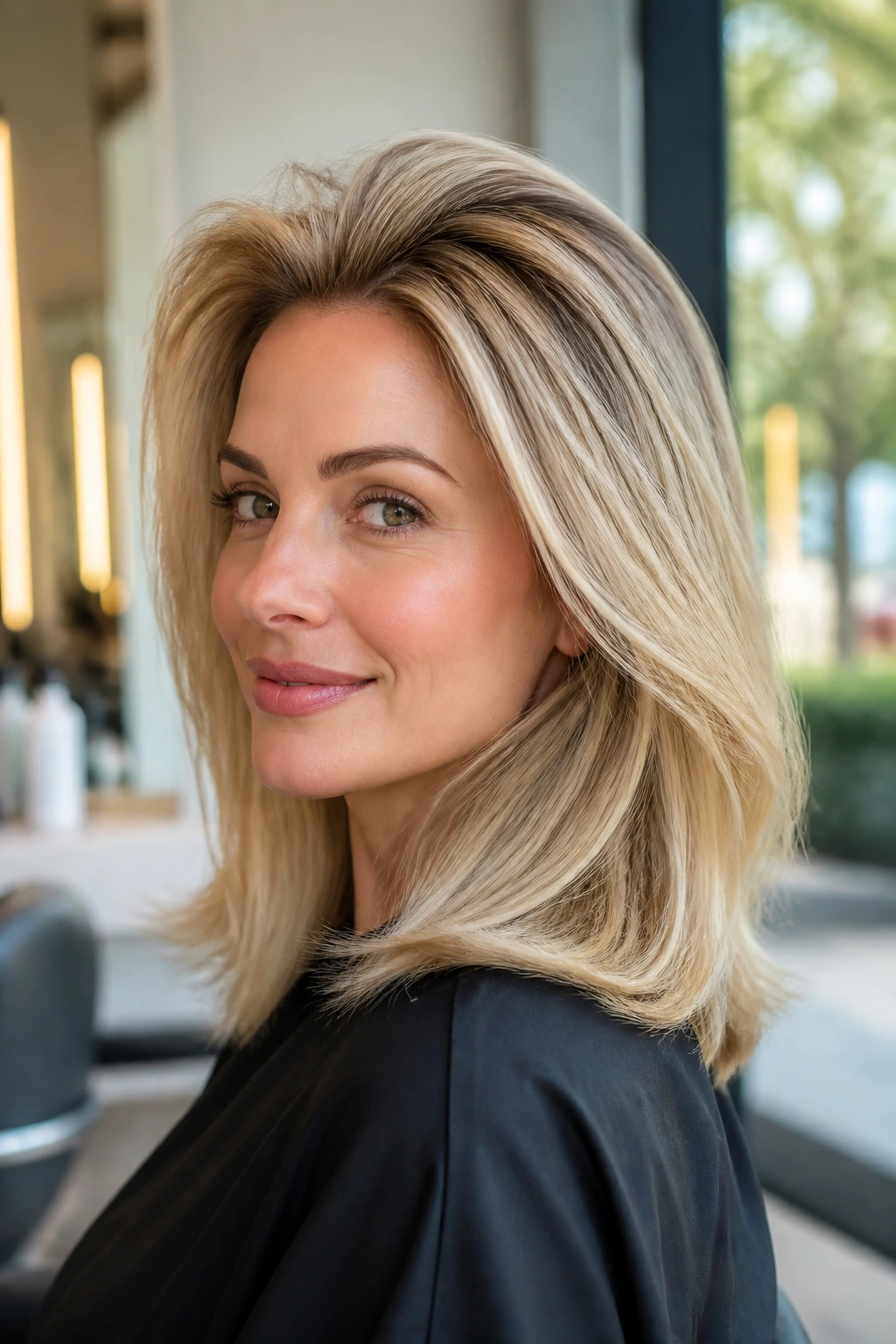
Fine hair often needs a lie told to it. This style is that lie: big lift at the crown, body through the top sections, and ends that stay light instead of overly curved. Medium length is perfect for it because there’s enough hair to show shape, but not so much that the root lift disappears.
The important part is the top third of the head. That’s where the volume has to live if you want the style to last. Root clips, a light mousse at the base, and a cool shot after each section help more than people expect.
Skip heavy oils near the scalp. Seriously. Fine hair goes flat fast, and once the root is greasy-looking, the whole blowout starts losing its nerve.
14. Feathered Layers With Bent Ends
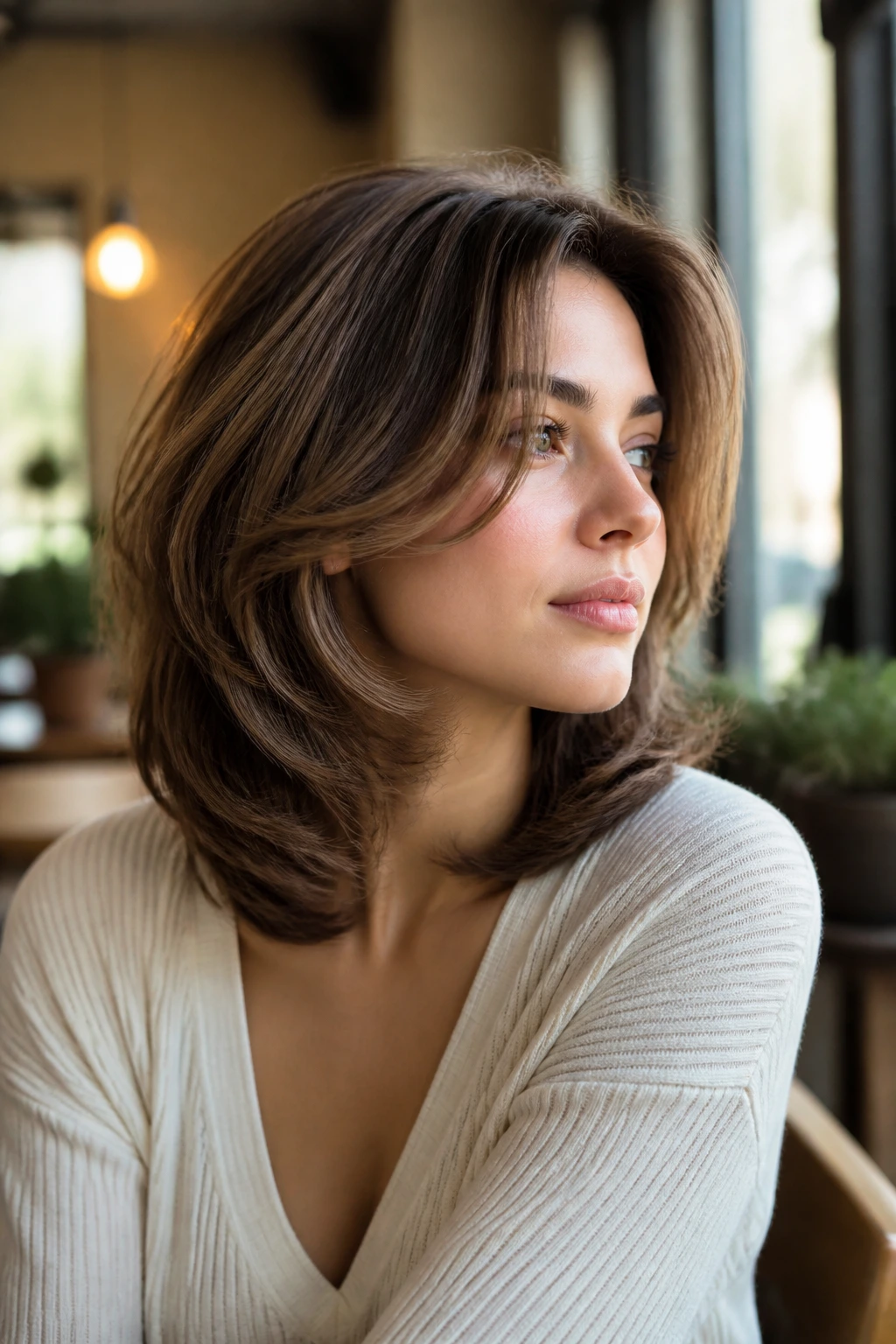
This one sits somewhere between soft and structured. The layers are feathered so the cut looks airy, but the ends still have that gentle bend that gives a blowout its shape. It’s a really good middle ground for medium-length hair that needs movement without chaos.
You can see this style best in motion. The layers shift when the head turns, and the ends stay light instead of chunking together. That movement is what keeps feathered cuts from looking dated.
Best for hair that does this:
- Falls flat at the sides but holds a bend at the ends.
- Needs shape around the cheekbones.
- Looks better with soft brushing than with tight styling.
- Can handle a round brush without turning puffy.
If your hair wants to swing, not curl, this is a strong pick.
15. The Blunt-Cut Gloss Blowout
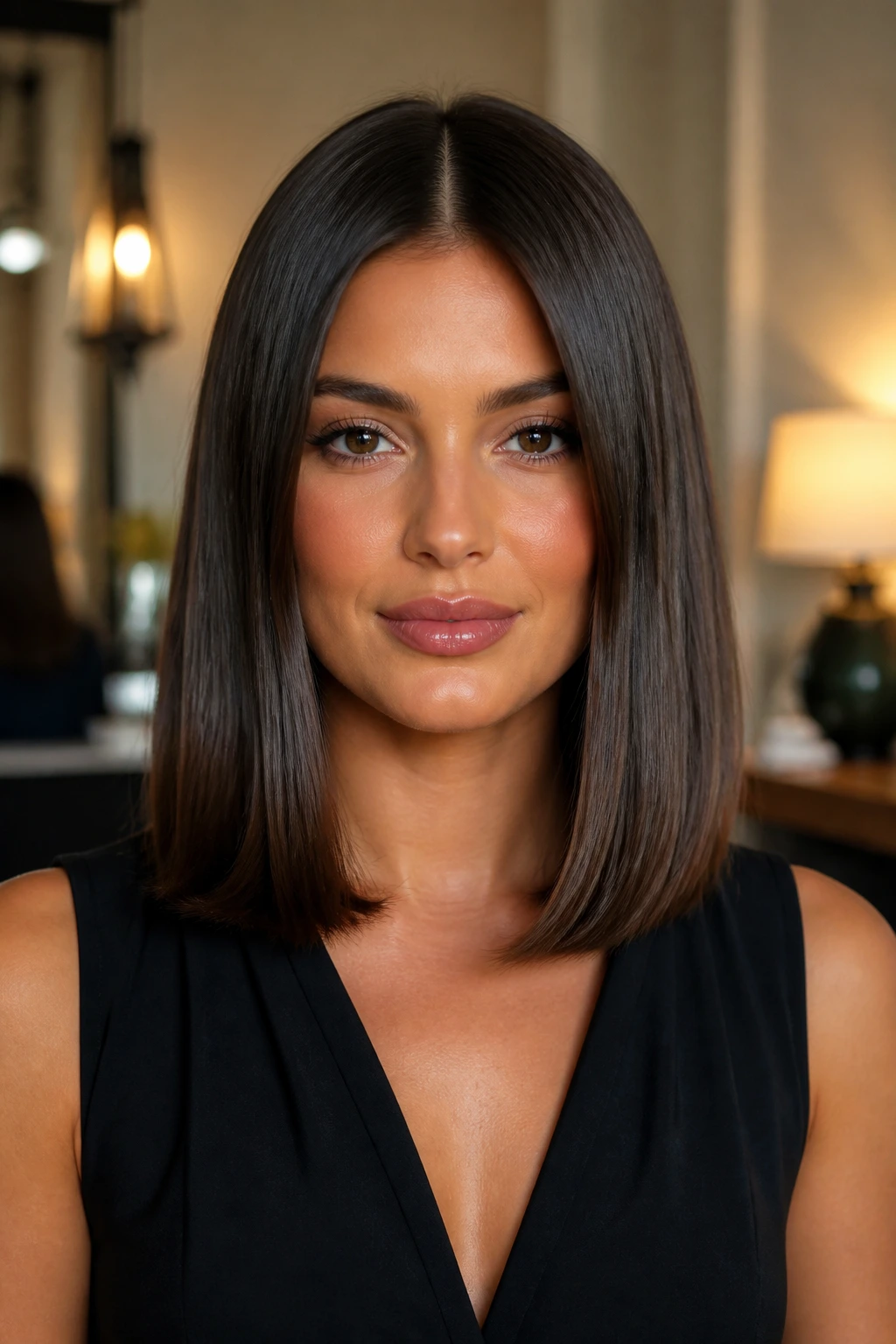
A blunt medium-length cut can look striking with a blowout, because the clean line gives the style a solid base. Instead of relying on layers for movement, you get it from shine, a subtle bend, and a smooth finish that makes the cut feel expensive without getting loud about it.
The glossy part matters. A blunt cut can go flat in a heartbeat if the finish is dry or rough. A light serum on the ends and a cool-shot pass help the hair reflect light in a way that keeps the line visible.
I like this one on hair that’s naturally straight or slightly wavy. It doesn’t need a lot of coaxing. It needs restraint. Too much volume would fight the shape.
16. Soft Crimp-Under Texture Blowout
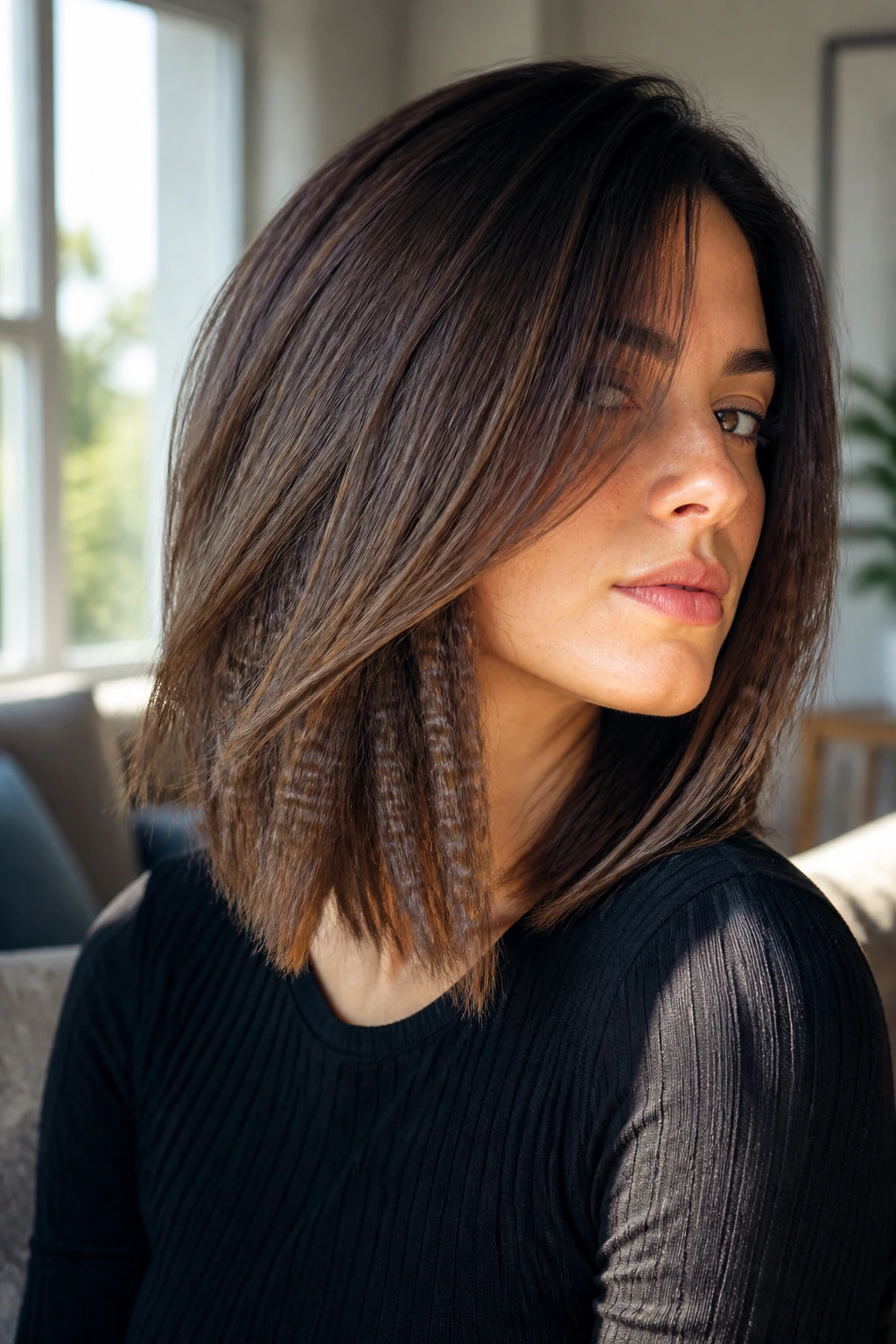
This is the most textural idea on the list, and the most useful if your medium-length hair needs the blowout to stay put. The surface looks smooth, but a faint crimp or hidden wave underneath gives the hair grip so the style doesn’t deflate an hour after you leave the house.
You don’t need visible crimping all over. In fact, you probably shouldn’t do that. A little texture underneath the top layer is enough to support the crown and keep the lengths from sliding too slick. The top reads polished; the base does the heavy lifting.
This version is especially handy for hair that’s too slippery to hold a round-brush bend. A hidden crimp or a few rough-dried panels under the top layer can make the whole blowout behave better. Small cheat. Big payoff.
17. The Humidity-Resistant Smooth Blowout
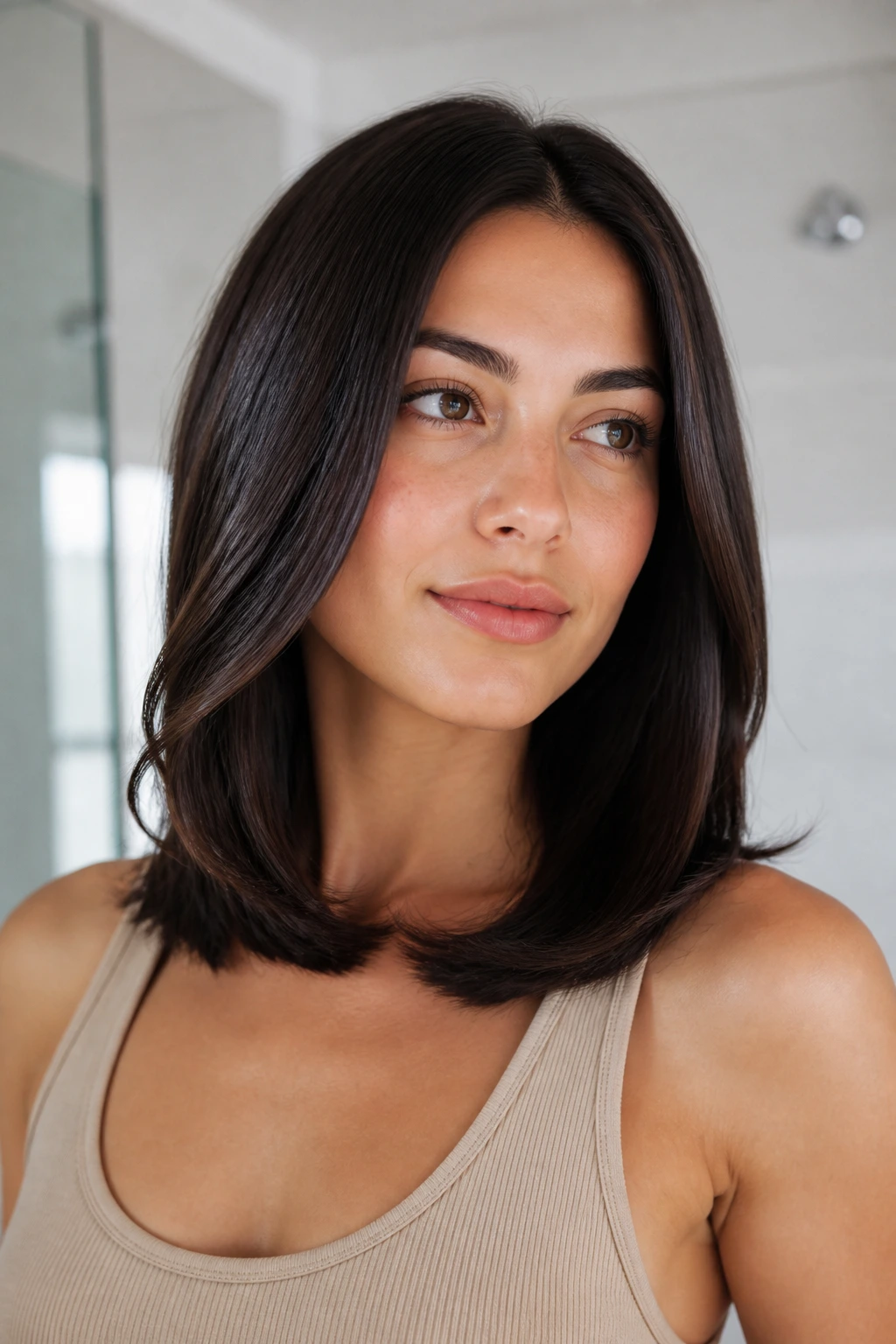
Some blowouts are pretty for ten minutes. This is not one of them. The humidity-resistant version keeps the root smooth, the mid-lengths controlled, and the ends soft enough to move without flipping into chaos.
The key is product choice and restraint. A light smoothing cream before drying, a nozzle on the dryer, and a cool shot at the end all help the cuticle lie flatter. Once the hair is dry, leave it alone. Hands are the enemy here.
Medium-length hair tends to hold this style better than long hair because there’s less weight pulling the shape down. That makes it a smart pick for anybody who wants the polished look without a full battle.
18. The Second-Day Brushed-Out Blowout
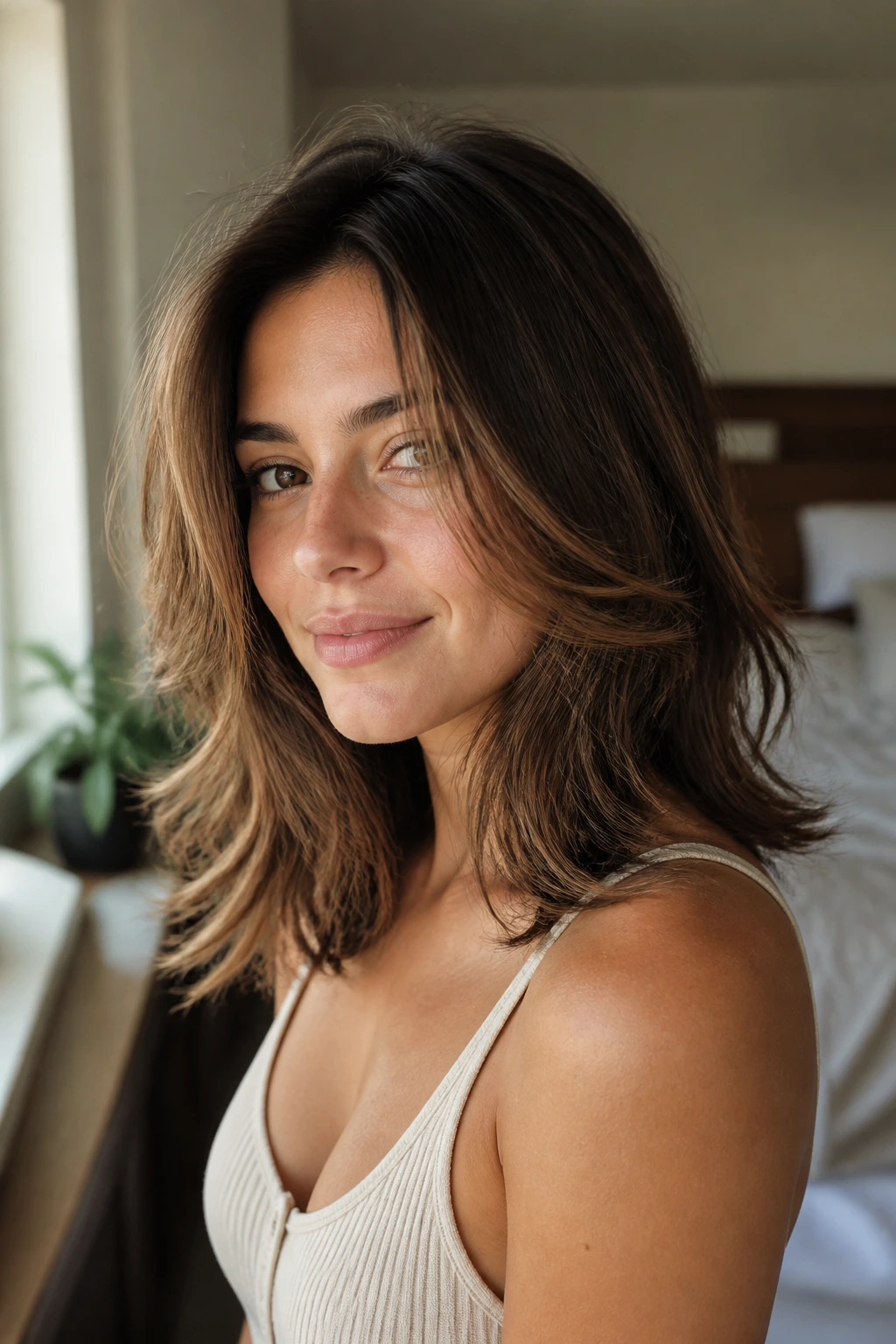
This is the practical one. The hair starts with some bend, then gets brushed out the next day into a softer, more relaxed version of the original blowout. Medium length is ideal for it because the style doesn’t get swallowed up by too much hair, and it doesn’t collapse into a narrow little line either.
A little dry shampoo at the roots, a boar bristle brush through the lengths, and a quick re-bend on the front pieces are usually enough. The goal isn’t to recreate day one perfectly. The goal is to keep the shape while loosening the edges.
And honestly, sometimes this version looks better than the first one. The finish is a little less perfect, which makes it feel more expensive and more human. That’s the part people usually like most.
Why Medium Length Hair Holds a Blowout So Well
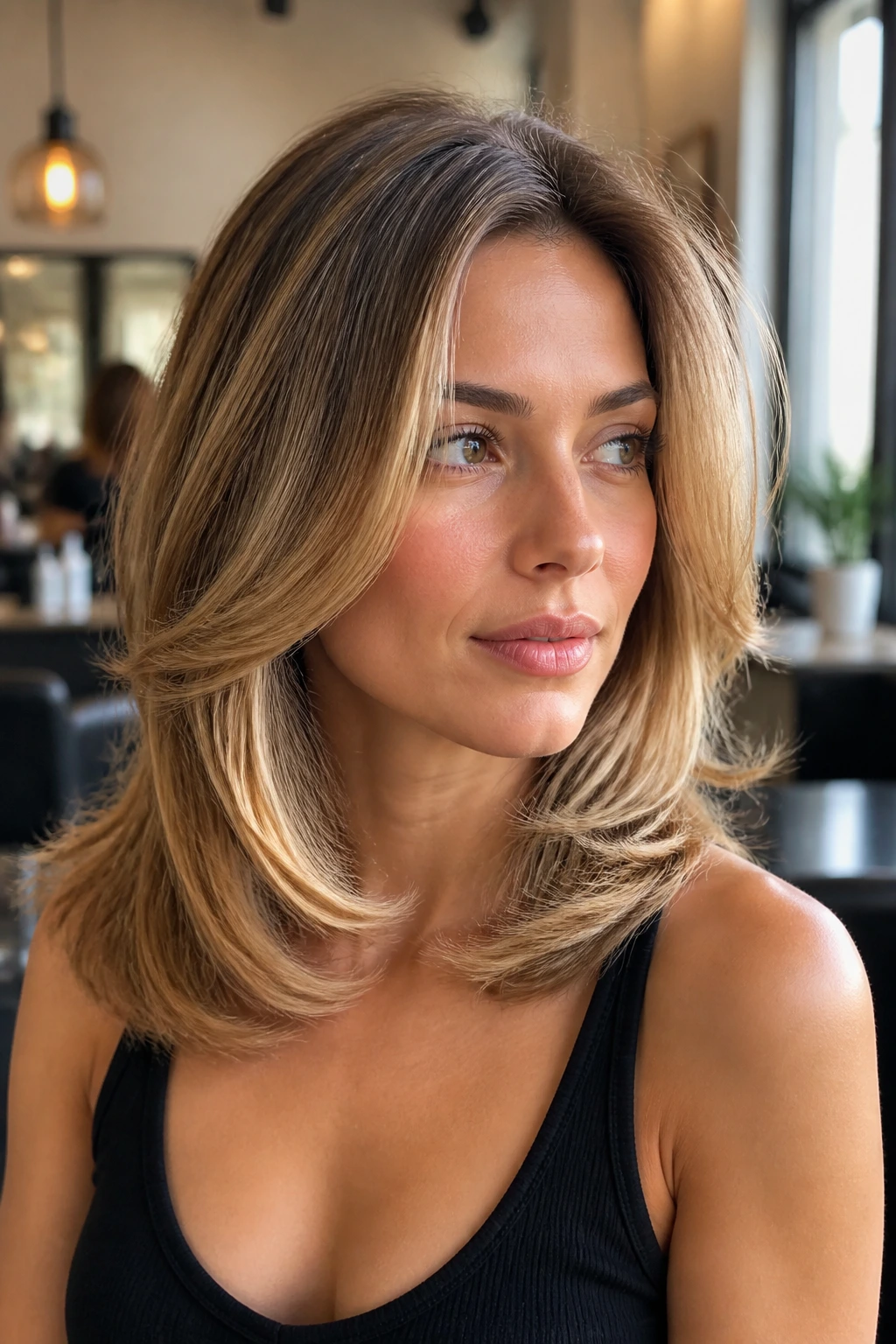
Medium-length hair has a useful kind of weight. Not too much, not too little. The strands are long enough to show a shape — those bends at the cheekbone, the curve at the collarbone, the lift at the crown — but they’re not so long that every bit of volume gets dragged downward by gravity before lunch.
There’s also a practical reason stylists like this length for blowouts: sectioning is easier, drying is faster, and you can control the tension better around the brush. That matters. A strong blowout is not about one magical product. It’s about the combination of tension, heat, direction, and a cool shot at the end. Medium-length hair cooperates with all of that better than most lengths do.
The haircut matters, too. Layers change how the air moves through the style. A blunt lob gives you a cleaner line and more gloss. Face-framing layers make the blowout feel softer and more shaped. Curtain bangs can make the front half of the style look finished even when the back is doing its own thing. That flexibility is the reason this length works so well for people who want options.
Tools That Make the Difference
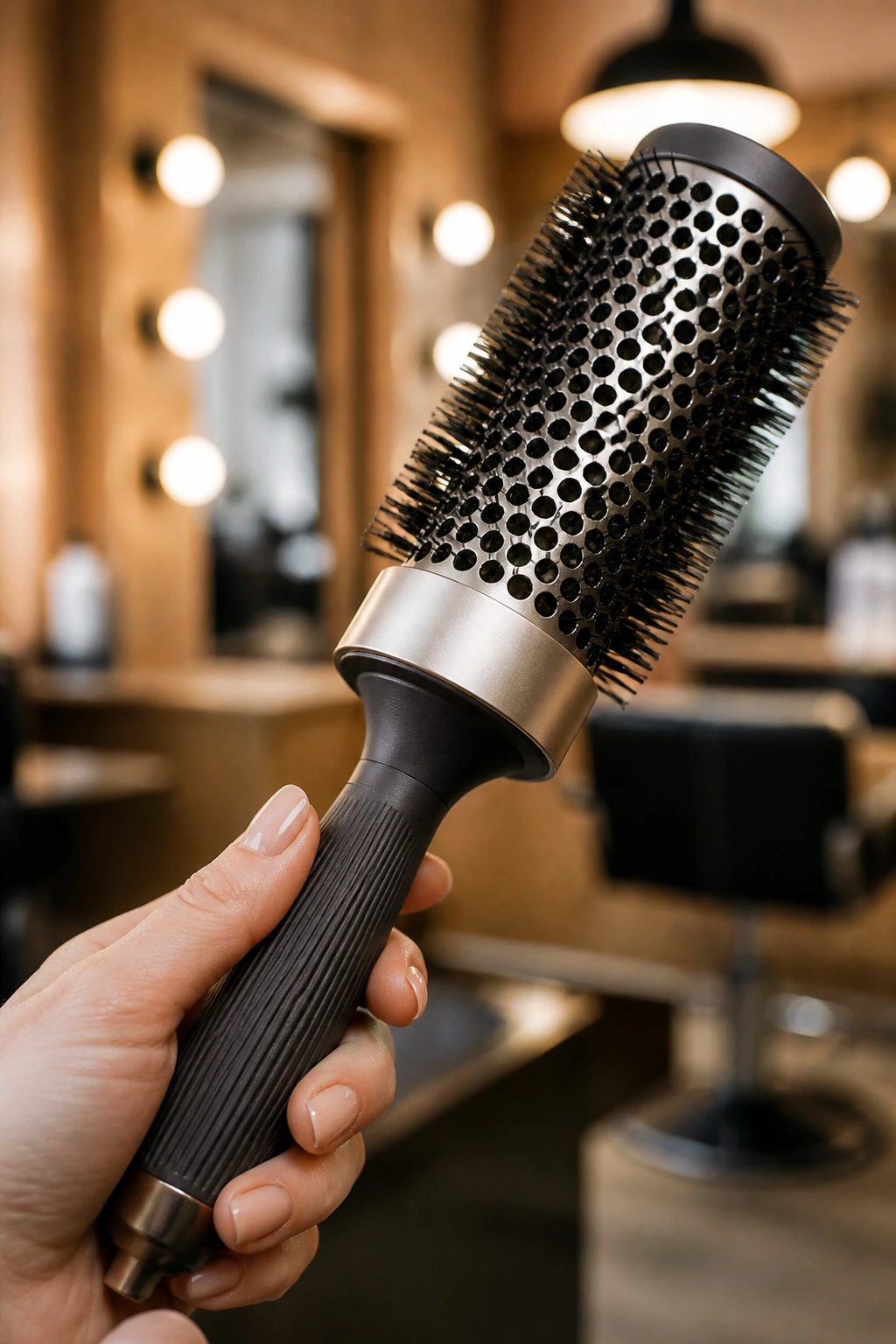
A good blowout isn’t about owning every hot tool in the store. It’s about a few pieces that actually do something useful.
-
Blow dryer with a nozzle attachment: The nozzle concentrates airflow, which helps smooth the cuticle instead of blasting the hair in every direction.
-
Round brush, 1.5 to 2 inches: This is the workhorse for medium-length hair. Smaller brushes create tighter bends; larger ones make smoother movement.
-
Paddle brush: Handy for rough drying the roots and for smoothing longer sections before you go in with the round brush.
-
Velcro rollers: Great for setting the crown while the hair cools. A few minutes here can save you from flat roots.
-
Sectioning clips: Hair clips keep the work organized. They matter more than people think, especially when the layers start fighting back.
-
Heat protectant spray or cream: Non-negotiable. Use it on damp hair before drying, not after the fact.
-
Light mousse or root lift spray: Helps fine or flat hair keep some structure at the base.
-
Lightweight serum: Best on the ends only. A pea-sized amount is plenty for medium-length hair.
-
Texture spray: Useful for shaggy, beachy, or second-day blowouts that need separation.
-
Boar bristle brush: Good for brushing out the finish and softening the shape without making it puffy.
Smart Product and Tool Tips
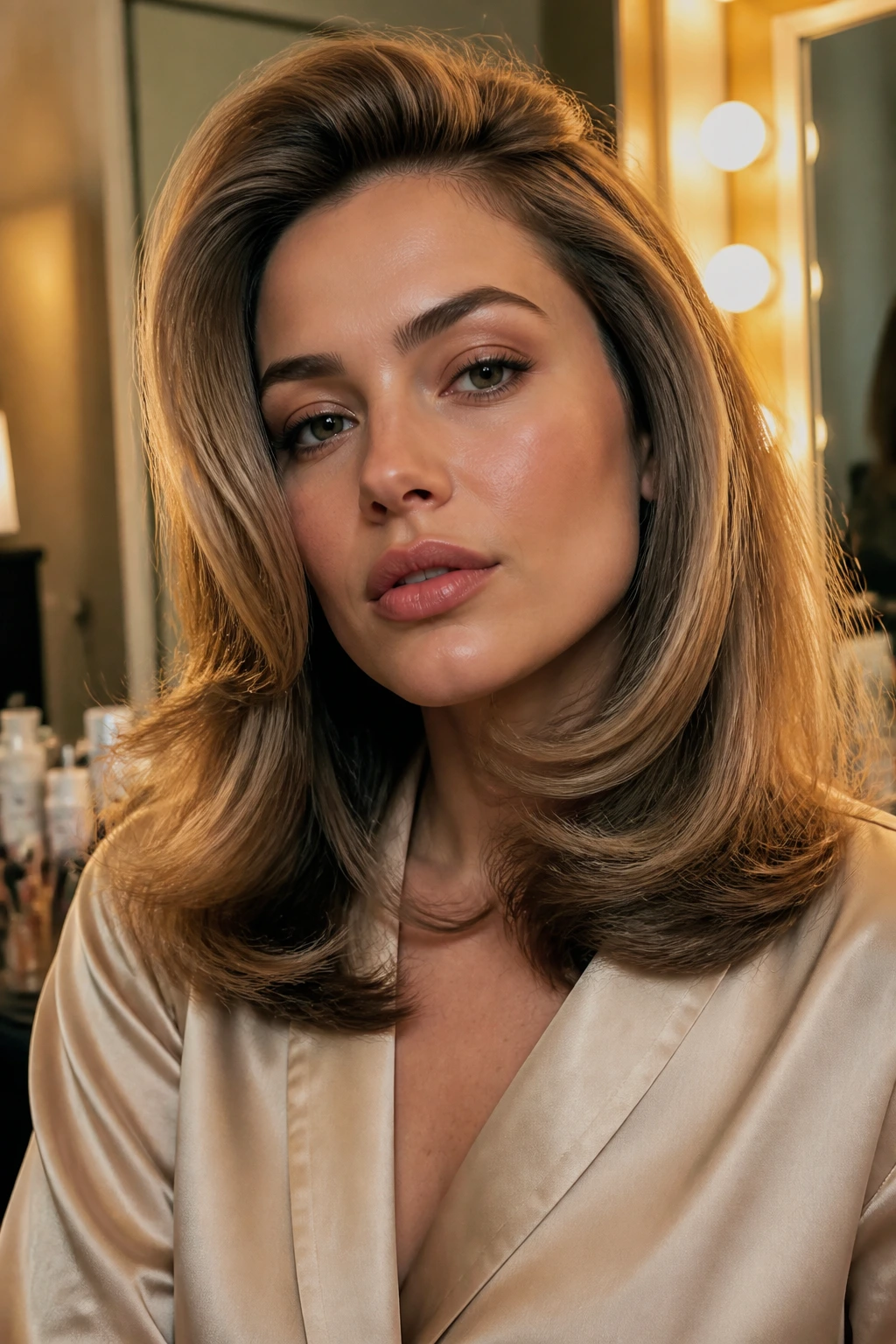
The easiest mistake with a blowout is using products that fight the shape you want. If your hair is fine, keep the base light. A mousse or root spray gives lift without slicking the scalp down, while a heavy cream can turn the roots limp before the style is dry. Thick hair can take more smoothing cream, but even then, you want the product concentrated through the mids and ends, not smothered at the scalp.
Heat protectant is one of those things people treat like a formality. It isn’t. The round brush and dryer are doing repeated passes over the same pieces, and the ends take the most abuse. A good protectant helps the hair glide through the brush instead of snagging, which makes the finish smoother and the hair feel less dry after a few styles in a row.
Brush size matters more than most people expect. A larger brush gives you a looser bend and more polish. A smaller one gives you grip, lift, and a little more curve. If your medium-length hair tends to curl too much at the ends, go bigger. If it falls flat at the root, go smaller at the crown and larger through the bottom half.
How to Choose the Right Blowout for Your Face Shape and Hair Type
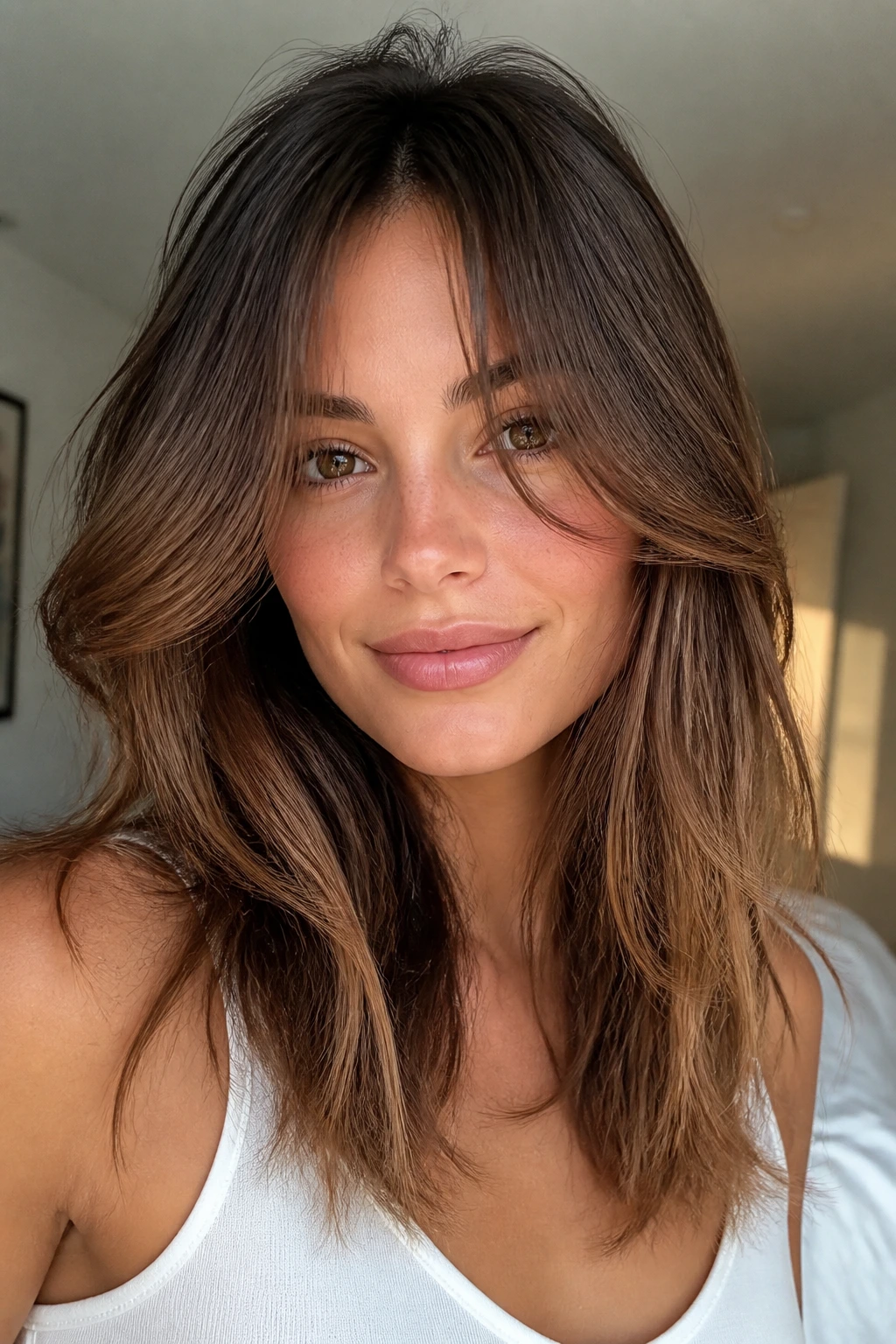
Round faces: Styles with height at the crown and a bit of width below the cheekbones help lengthen the face. Think side-part blowouts, curtain bangs, and feathery layers that start lower on the head.
Square jawlines: Softer bends around the jaw and collarbone can take the edge off a strong jaw without hiding it. The rounded C-shape blowout and the French-girl version do that well.
Fine hair: Root-lift styles are your best friend. A crown-lift blowout, a blunt gloss blowout, or a soft crimp-under version can make the hair feel fuller without overloading it.
Thick hair: You’ll usually get the best result from styles that control the perimeter. Sleek roots, feathered lengths, and a blowout with a polished middle part keep the volume from turning into bulk.
Naturally wavy or frizzy hair: Don’t fight the texture into a stiff little shell. A soft shag blowout, beach-blown texture, or humidity-resistant smooth finish gives you shape while leaving some movement in the hair.
Extra Volume, Smoothness, and Frizz Control Tricks
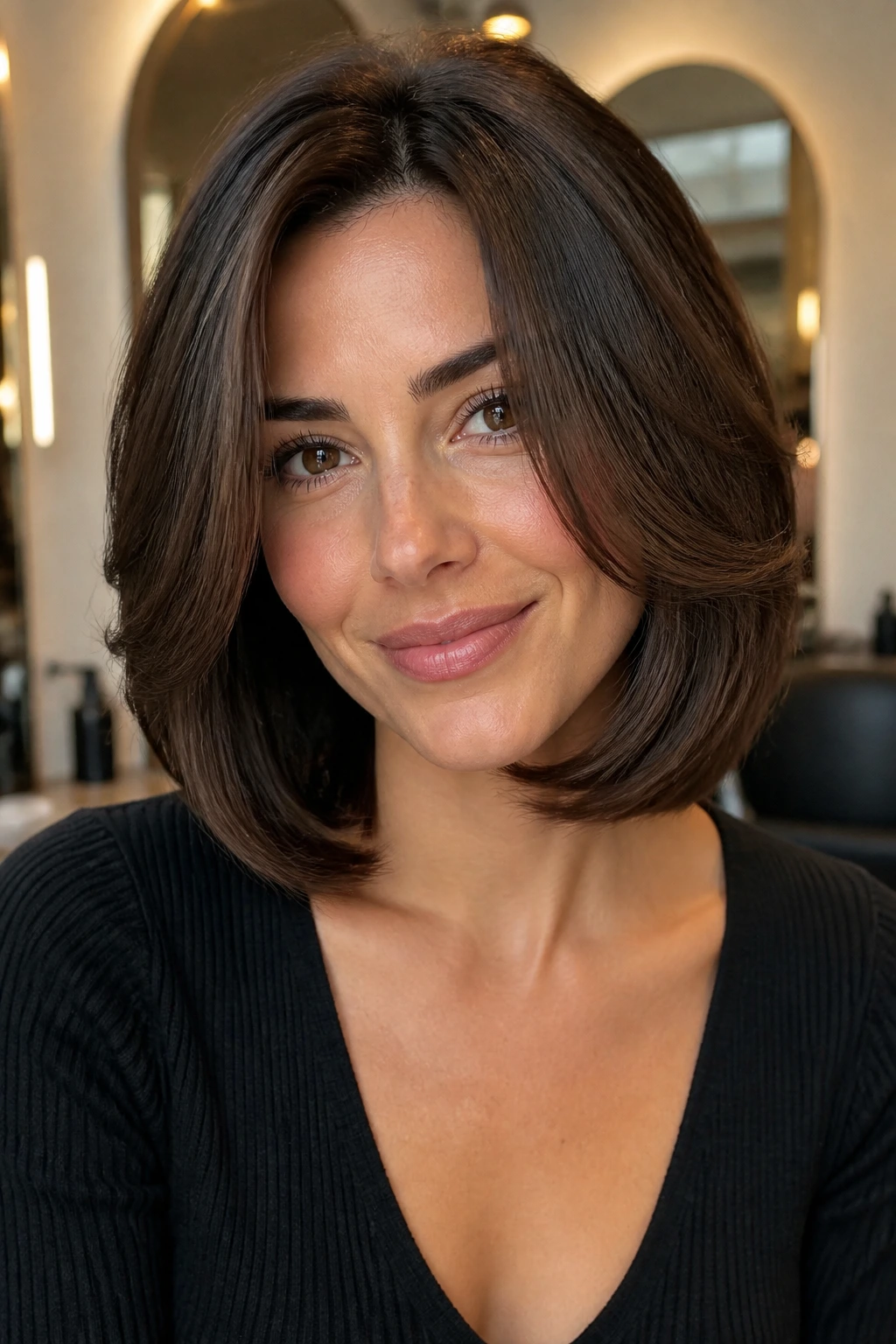
Volume Boost: Blow-dry the roots in the opposite direction of the part first, then flip them back once they’re mostly dry. It sounds fussy, but it buys you real lift at the crown.
Smoother Finish: Use the nozzle on the dryer and keep the air pointed down the hair shaft. That one detail helps the cuticle lie flatter, which makes the hair look cleaner without adding more product.
Texture Boost: If the style feels too soft, mist a little texture spray into the mid-lengths and scrunch only the bottom third. Keep your hands out of the crown unless you want to lose the lift.
Make-It-Yours: Add curtain bangs for softness, a side part for volume, or a blunt perimeter for a sharper line. The same medium-length blowout can lean romantic, sharp, or undone just by changing the front and the finish.
Keeping a Blowout Fresh Between Washes
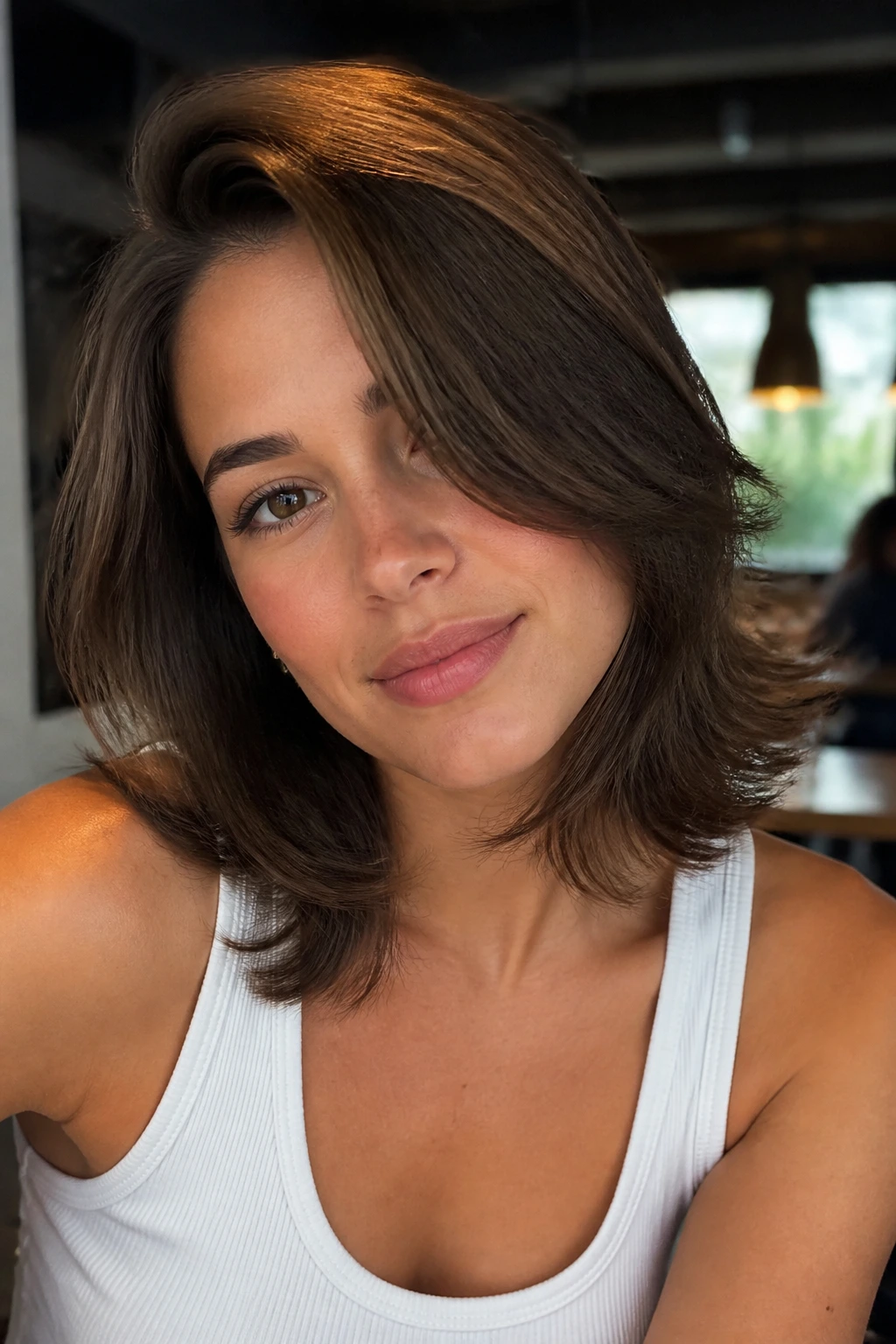
Day one is easy. Day two is where you see whether the style had any structure to begin with. Medium-length blowouts usually stay in play longer than people expect, especially if the roots were dried fully and the hair cooled before you touched it too much.
The trick is to protect the crown at night. A loose clip, a soft scrunchie, or a silk pillowcase can keep the front from getting mashed flat. If you toss and turn a lot, pin the top sections up loosely before bed and release them in the morning. No tight ponytail. That crease is ugly and hard to fix.
Dry shampoo works best before the hair looks greasy. A light mist at the roots on day two absorbs oil before it has spread. Then brush it through with a boar bristle brush so you don’t end up with a dusty patch at the hairline. If the ends need help, re-bend just the face-framing pieces with a brush or hot tool for a minute or two. That usually brings the whole style back.
By day three, most blowouts need a refresh. Focus on the roots, not the whole head. A little mist of water on the front sections, a quick round brush pass, and a touch of serum on the ends can make the hair look styled again without starting from scratch.
Common Mistakes That Flatten Medium Length Blowouts
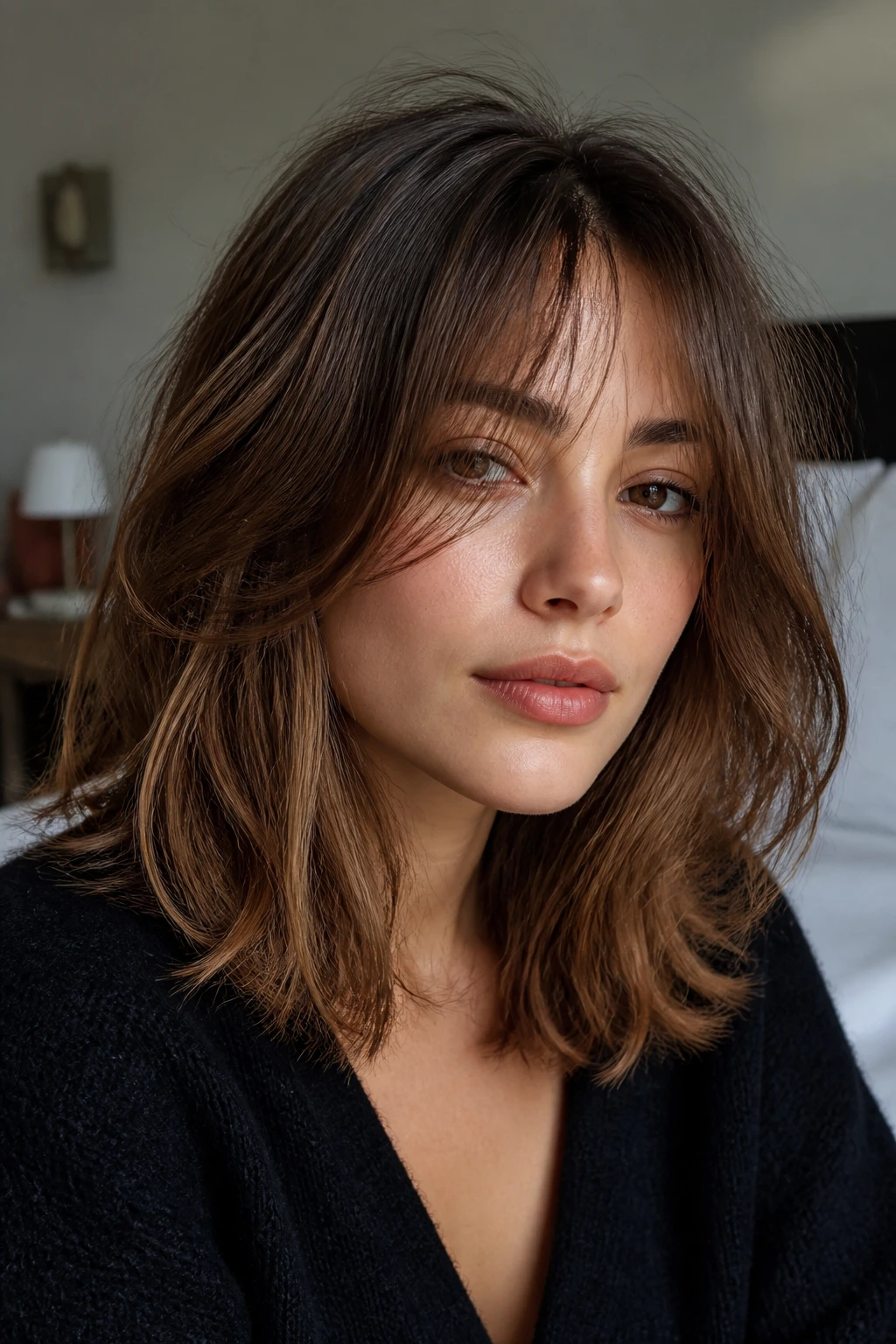
Using too much product at the roots: The symptom is obvious — the hair looks clean but lifeless, like the crown gave up early. Fix it by keeping creams and oils off the scalp and reserving them for the ends.
Skipping the cool shot: If you release each section while it’s still warm, the bend drops fast. A cool shot locks the shape in place while the hair is still wrapped around the brush.
Taking sections that are too big: Big sections dry unevenly, especially at the ends, and that leaves you with a smooth top and frayed bottom. Smaller sections take longer, yes, but they actually hold the shape.
Over-brushing after the hair is set: The style goes from bouncy to fluffy in about six strokes too many. Brush only enough to soften the shape, not enough to erase it.
Not drying the roots fully: Damp roots kill volume. They also make the blowout collapse later, which feels like the style betrayed you personally.
Using one brush size for every section: The crown often needs a smaller brush for lift, while the lengths look better with a larger one. One tool can’t do every job equally well.
Variations and Adaptations to Try
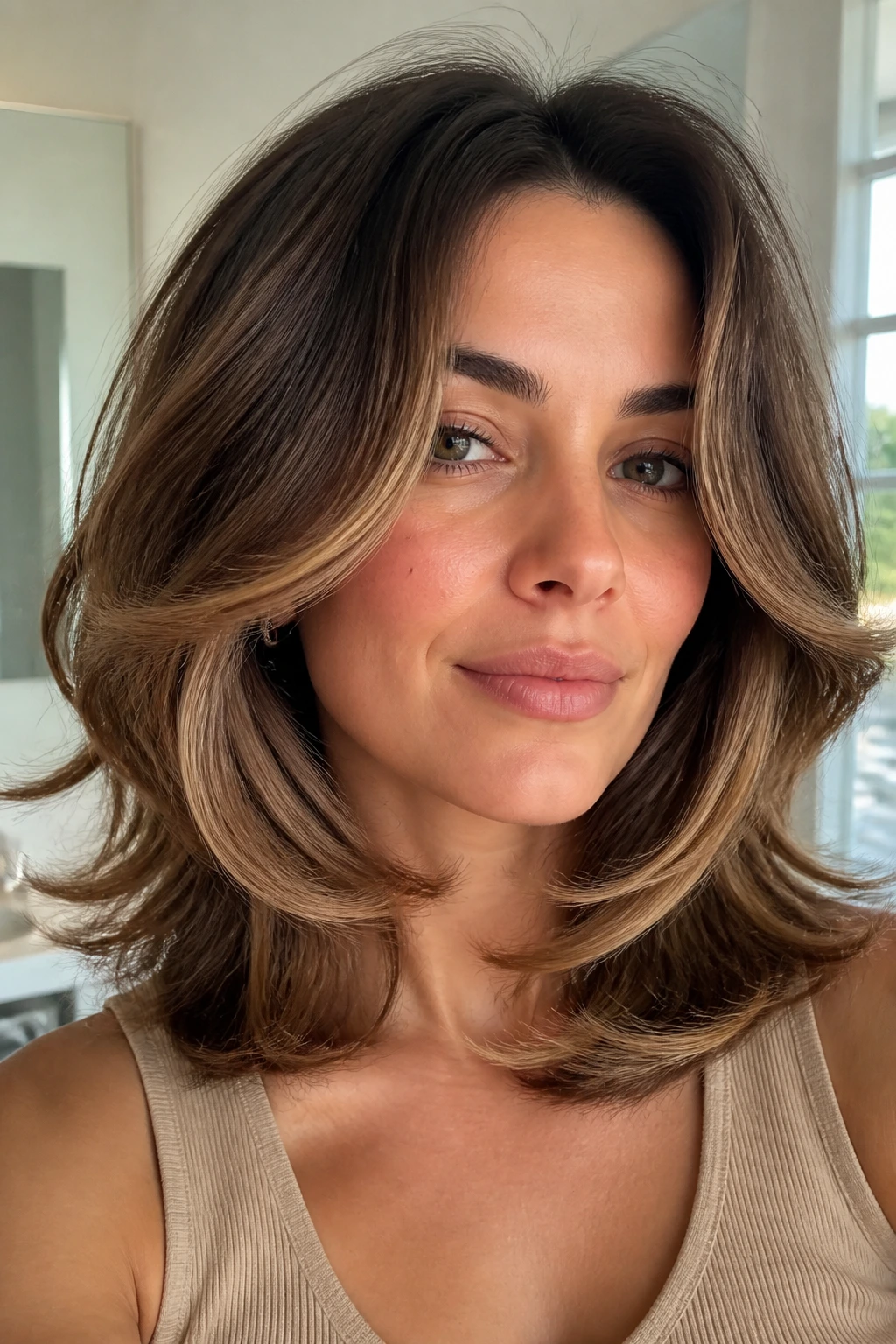
The Fine-Hair Lift Kit: Use a root-lift spray at the scalp, dry the crown in small sections, and finish with velcro rollers for five to ten minutes. This keeps the style from drooping before the day even starts.
The Thick-Hair Softener: Work a smoothing cream through damp lengths, then use a larger round brush and more tension through the mid-lengths. You’ll get movement without the bulk that thick hair sometimes creates.
The Curly-Hair Stretch Blowout: Blow-dry with a nozzle and a paddle brush first, then go back through the front pieces with a round brush for shape. This keeps the hair smoother without stripping away all the texture.
The Lob-Friendly Bend: If your medium-length cut sits closer to the shoulders, keep the curl looser and the ends slightly straighter. Too much bend on a shorter lob can make it look mushroomy. That’s not the goal.
The Gloss-First Finish: Use a tiny amount of serum, then brush the hair with a boar bristle brush once it’s cool. Finish with shine spray only on the ends and the outer layer. The look turns smoother, richer, and more put-together.
Frequently Asked Questions
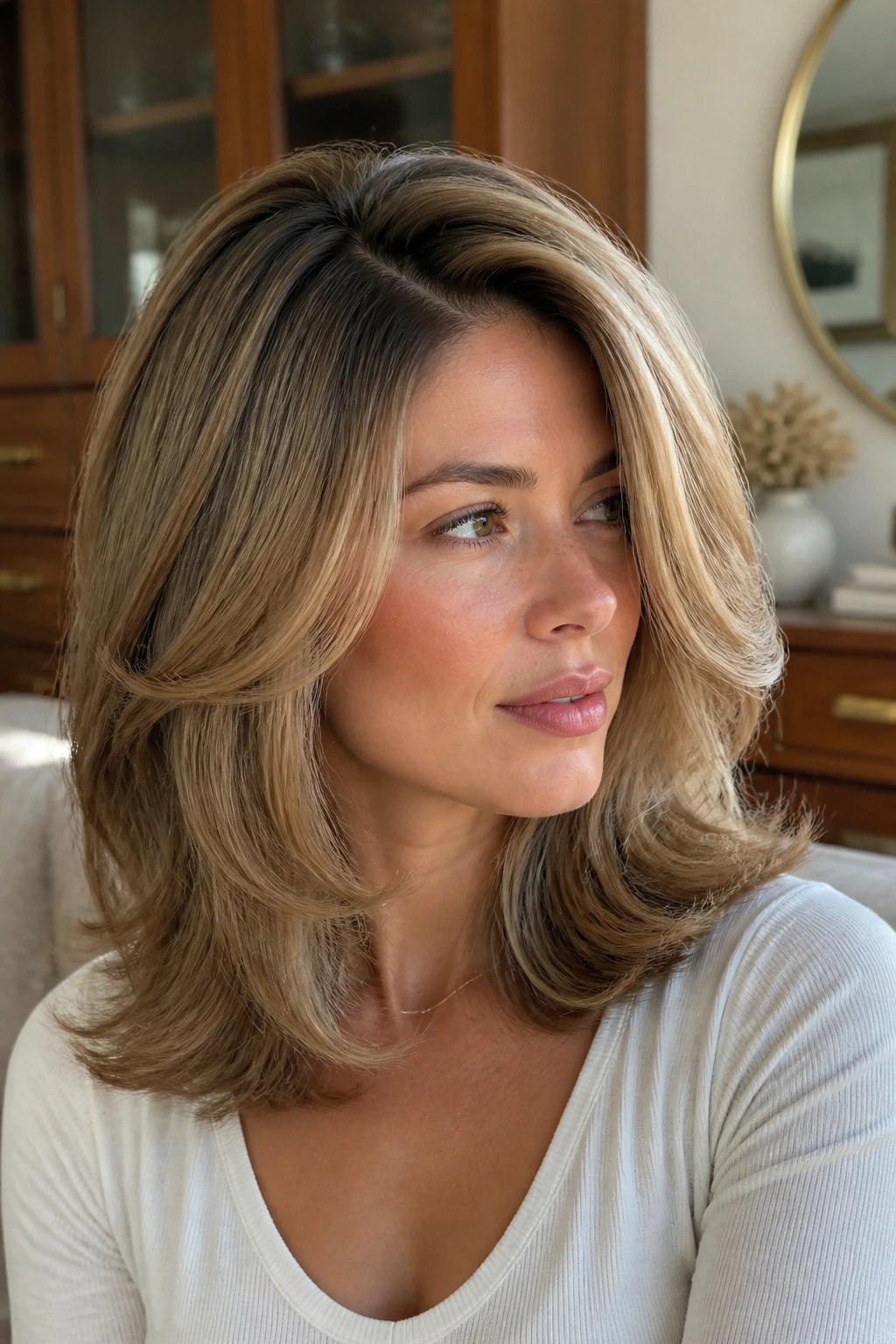
Can medium-length hair hold a blowout better than long hair?
Usually, yes. Medium-length hair has less weight pulling the shape down, so the root lift and end bend tend to last longer. Long hair can look gorgeous, but it asks more of the brush, the product, and the weather.
What brush size works best for shoulder-length hair?
A 1.5- to 2-inch round brush is the safest bet for most medium-length cuts. Smaller brushes give more curl and lift, while larger ones give a smoother, looser finish.
How do I keep a blowout from going flat at the crown?
Dry the roots fully, use a root-lift product, and set the crown with a cool shot or a few velcro rollers while it cools. If the hair is still warm when you leave the brush, the lift will sag.
Can I do a blowout on wavy or frizzy hair without making it poofy?
Yes, but you need tension and smoothing, not more heat. Work in smaller sections, keep the nozzle pointed downward, and use a lightweight cream instead of something heavy and greasy.
Why do my ends flip weirdly?
Usually the brush angle is doing too much, or the section is too dry before you finish shaping it. Turn the brush only at the last inch or so, and make sure the ends are fully wrapped before you release them.
Is a medium-length blowout easier to maintain than curled styles?
Often it is. A blowout can be brushed out and revived faster than a full set of curls, and it tends to look intentional even when it softens over time.
What should I do if the style falls apart by midday?
The cause is usually one of three things: damp roots, too much product, or not enough cooling time. On the next try, dry smaller sections, lighten the product near the scalp, and let each section cool completely before you touch it.
The Blowout That Fits the Cut
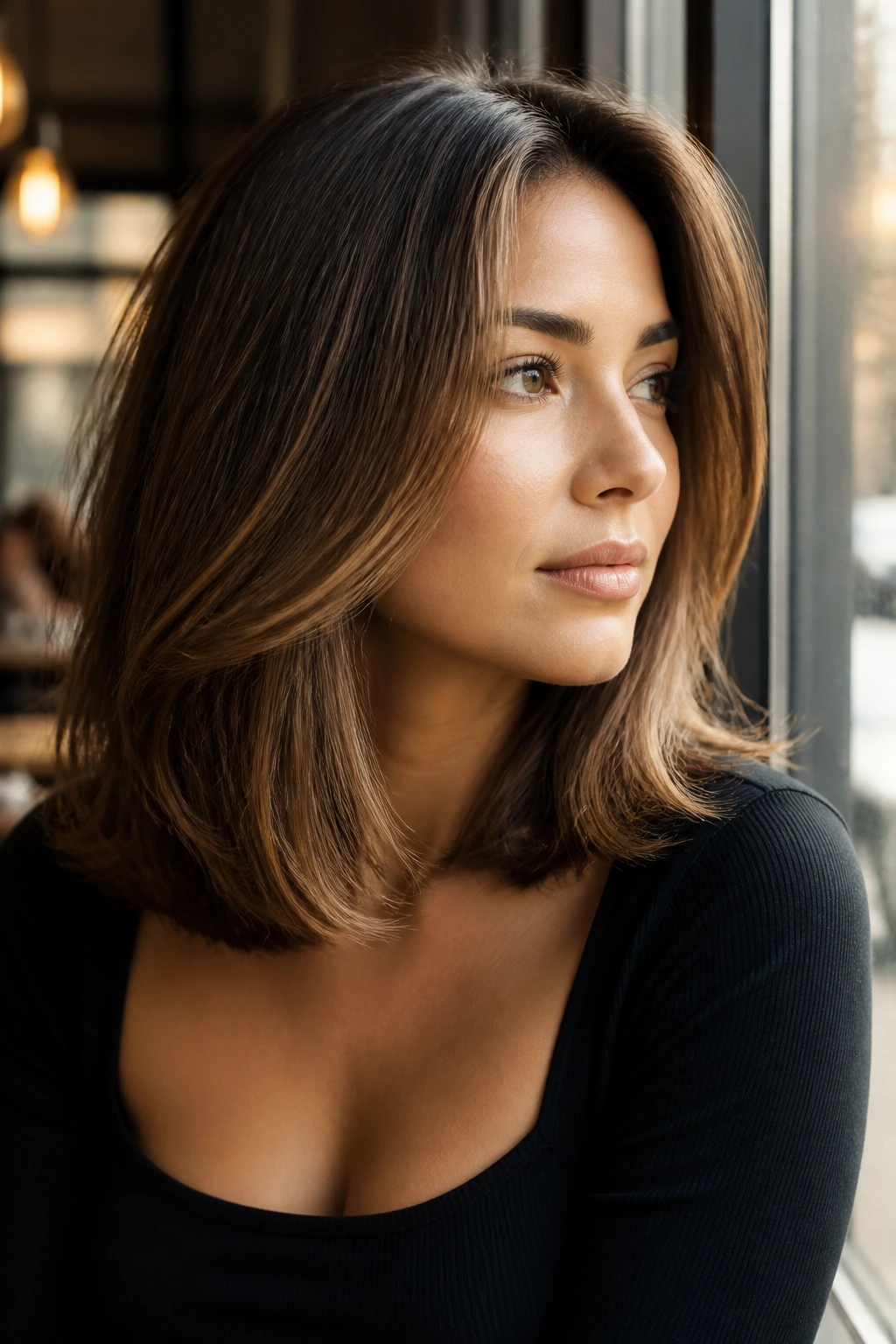
Medium-length hair gives you room to play, and that’s why these blowout ideas work so well. You can push the style toward sleek gloss, feathered texture, big crown volume, or a soft brushed-out finish that looks better on day two than it did on day one. That range is the gift of the length. It’s enough hair to show shape, but not so much that every style turns into a wrestling match.
The smartest part is that you do not need to pick one forever. A blunt lob can go polished one week and shaggy the next. Curtain bangs can look airy on Monday and a little more swept on Friday. Medium-length blowouts have range, and once you know which shape flatters your cut, the rest gets easier fast.
