



A good haircut after 60 should not feel apologetic. It should sit on the head with shape, movement, and a bit of nerve. The best modern hairstyles for women over 60 do exactly that: they keep the face open, the neckline clean, and the overall outline sharp enough to feel current without looking like you copied a salon poster from six blocks away.
What changes after 60 is not the need for style. It’s the hair itself. Density shifts. The crown can flatten. Ends get finer, or drier, or both. Gray hair brings its own texture, sometimes silkier, sometimes wirier, sometimes wonderfully strong. A cut that understands those realities will look fresh for longer because it works with the hair you actually have, not the hair a stylist pretends you have.
The trick is shape. Not disguise. Not overloading the head with layers that collapse by lunchtime. Not freezing everything into a stiff helmet either. The sweetest spot is usually somewhere between structure and softness: a fringe that lands just where the forehead wants it, a bob that moves when you turn your head, a crop that leaves enough length on top to catch light and volume. That’s where the interesting hair lives.
Why These Hairstyles Feel Modern Instead of Fussy
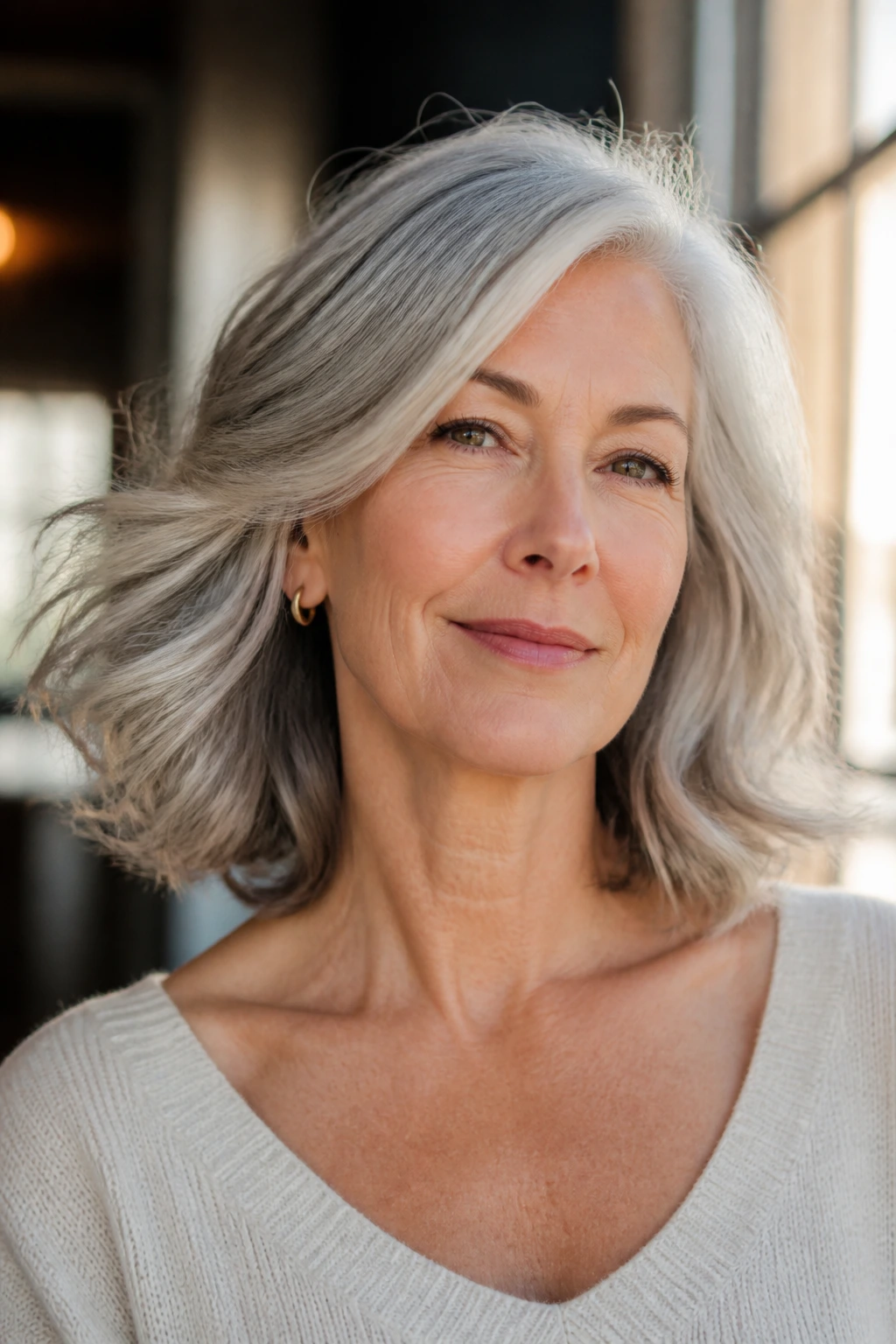
Movement beats heaviness. Hair that swings a little when you walk looks newer than hair that sits in one solid block, especially around the jaw and collarbone.
Soft edges matter more than extreme length. A blunt line can be chic, but a slight bend at the ends or a few internal layers keeps the cut from looking severe.
Gray hair works with these shapes, not against them. Silver, white, and salt-and-pepper tones show off texture in a way dark dye sometimes hides.
Most of these cuts respect real hair changes. If your crown has gone flatter or your ends have thinned, the right shape can add lift without hours of styling.
They’re adaptable. A side part, a fringe, a nape taper, or a little extra face-framing can change the whole mood of the cut without starting from scratch.
The best ones don’t scream “trying to look younger.” They just look well cut. That’s the real win.
1. Soft Layered Bob with Side-Swept Fringe
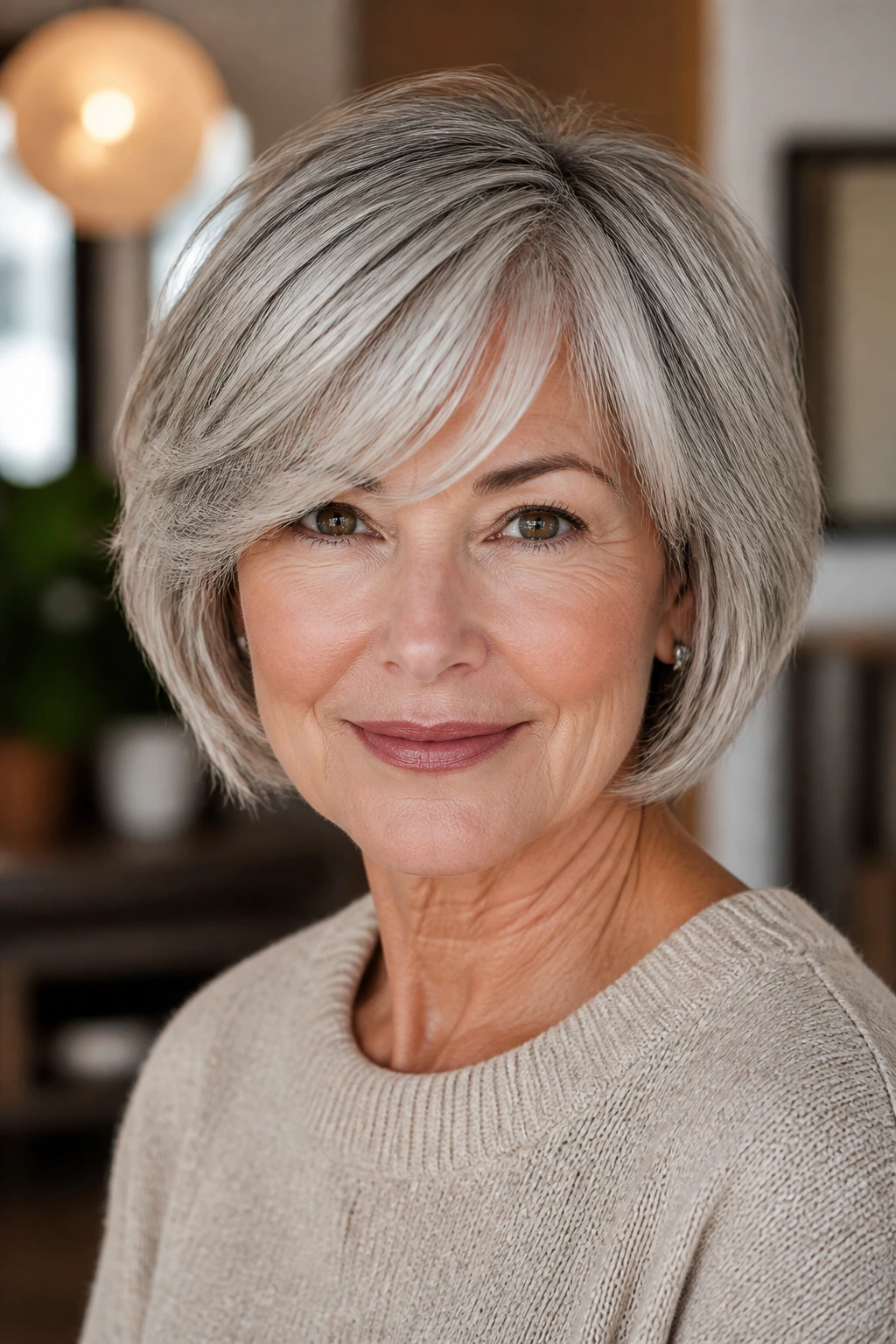
A soft layered bob is one of those styles that quietly does a lot of work. It skims the jaw, catches movement around the cheeks, and gives the face a little lift without piling on volume where you do not want it. The side-swept fringe is the piece that keeps it modern; it softens the forehead and slides neatly into the rest of the cut instead of sitting there like a blunt curtain.
Why it reads modern
The bob’s outline stays tidy, but the layers stop it from looking boxy. I like this cut on fine-to-medium hair because the perimeter can stay strong while the interior gets just enough softness to move. Ask for layers that start around the cheekbone, not near the ends, or the shape can get wispy fast.
A good version usually lands between the chin and just below it. Too short, and it starts to feel severe. Too long, and the shape loses its little snap. The fringe should sweep across the forehead rather than cover it fully.
- Best for hair that needs a bit of body at the sides.
- Works beautifully with gray or highlighted hair because the layers show dimension.
- Needs a quick round-brush blow-dry or a small bend with a flat iron.
- Trim every 6 to 8 weeks to keep the line clean.
If you wear glasses, this bob is especially useful. The fringe can sit above the frames or glide into them without fighting for space. That small detail makes the whole face look calmer.
2. Tapered Pixie with Longer Top
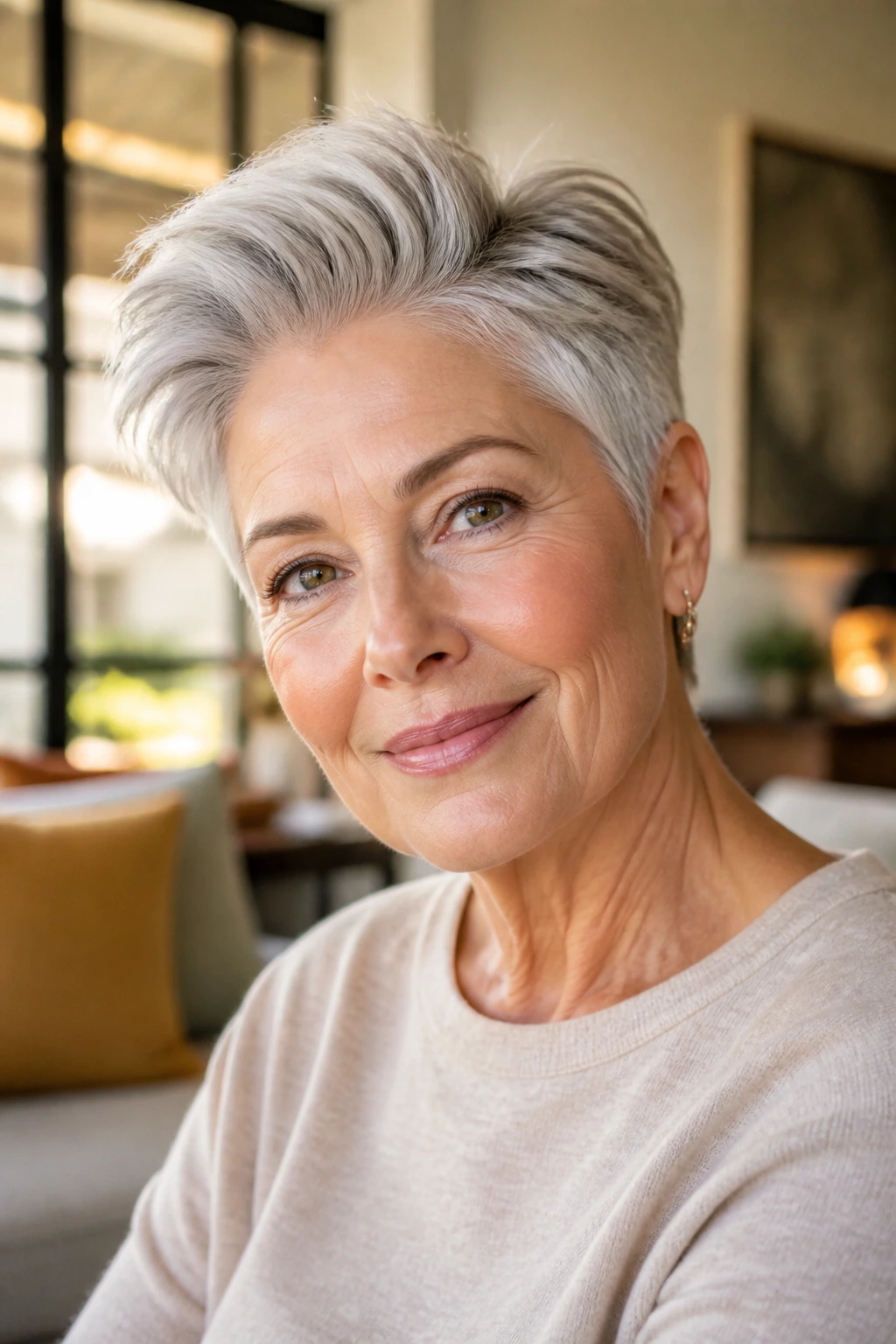
A tapered pixie is blunt in the best way. The sides and back sit close to the head, while the top keeps enough length to brush up, sweep over, or piece out with your fingers. It’s one of the cleanest modern hairstyles for women over 60 because it removes bulk where bulk does not help and leaves movement where movement matters.
This cut shines on women whose hair has started to thin around the crown but still has some lift. The longer top gives you room to create height without teasing the life out of it. If your stylist leaves 2 to 3 inches on top and keeps the nape neat, the result feels sharp instead of severe.
The styling is mercifully simple. A pea-sized amount of styling cream or paste through the top is usually enough. Finger-dry the crown upward, then smooth the sides close to the head so the cut keeps that neat taper. Too much product will make it look flat and sticky. Nope.
I also like this cut for silver hair because the contrast between the close sides and the brighter top reads almost architectural. It has shape without fuss. That matters.
3. Chin-Length French Bob
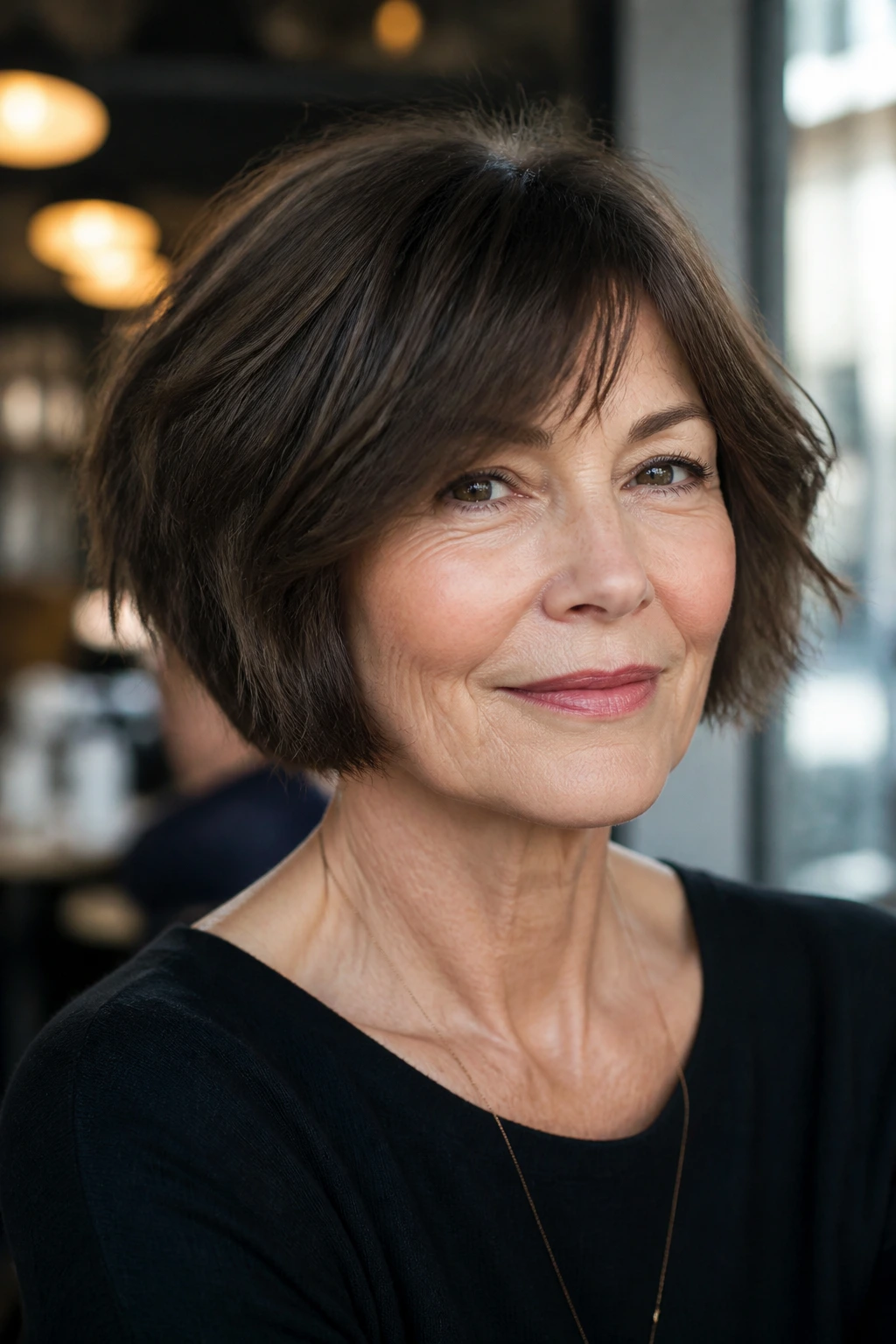
The French bob has a reputation for being a little cool, a little undone, and a little less obedient than a classic bob. That’s exactly why it works. Cut at the chin, maybe a touch below, it creates a clean line that draws attention to the mouth, cheekbones, and jaw without swallowing the face.
What makes it modern is the looseness. The ends should not be puffed into a round helmet. They should move. A light point-cut on the bottom edge keeps the line crisp but not blunt in a heavy way, and a side part or short fringe can shift the mood from polished to quietly edgy.
How to wear it
If your hair is naturally straight, this cut is almost unfairly flattering because it falls into place fast. With a wave, it gets even better. The slight bend keeps it from looking too tidy, which is the fastest route to a dated bob.
- Ask for the length to sit right at the chin or just underneath.
- Keep the front slightly longer if you want a softer angle.
- Use a 1-inch iron only on the front pieces if the back already behaves.
- Tuck one side behind the ear for an easy, modern finish.
I would not make this too round at the back. That’s where the old-fashioned version creeps in.
4. Collarbone Lob with Invisible Layers
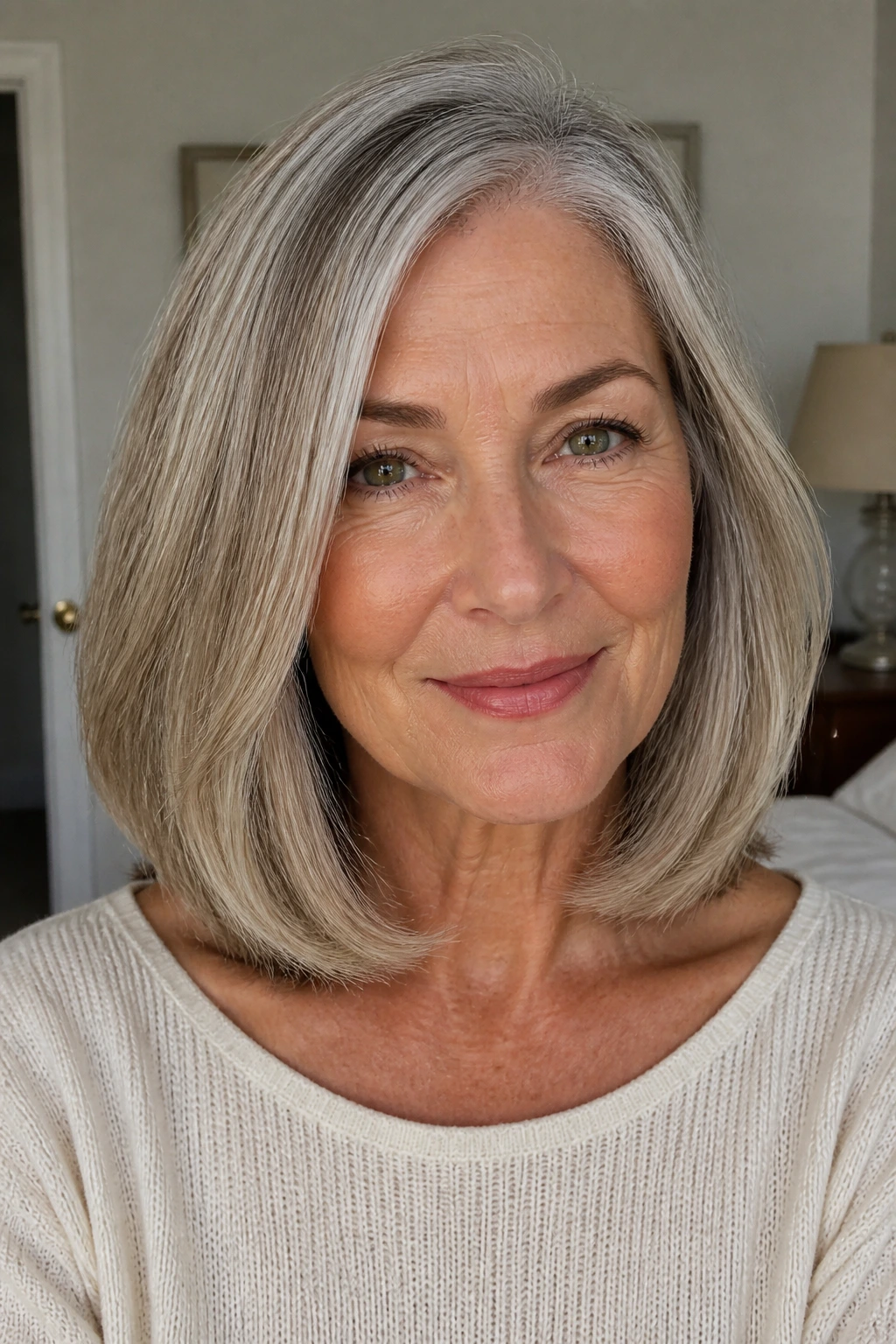
A collarbone lob is the haircut I recommend when someone wants to keep some length but hates the way long hair can drag the face down. It lands at the collarbone, which is a useful point because it gives you movement near the shoulders and enough length to pin back or tuck into a clip.
The “invisible layers” part is what matters. You don’t need obvious choppy layers here. You need internal shaping that takes a little weight out so the hair bends instead of hanging flat. That is a big difference. One looks airy; the other just looks like long hair that needs a trim.
This cut works especially well if your hair has medium density or if the ends have started to get fine but the mid-lengths still have life. It also suits women who like to style their hair in two ways: smooth for one day, slightly wavy the next. The collarbone length does both.
A quick pass with a round brush or a loose curl at the ends is usually enough. I would keep the part slightly off-center unless your face is very symmetrical and your hair naturally falls that way. A dead-center part on a limp lob can feel a little too exact. Hair should breathe.
5. Textured Crop with Feathered Crown
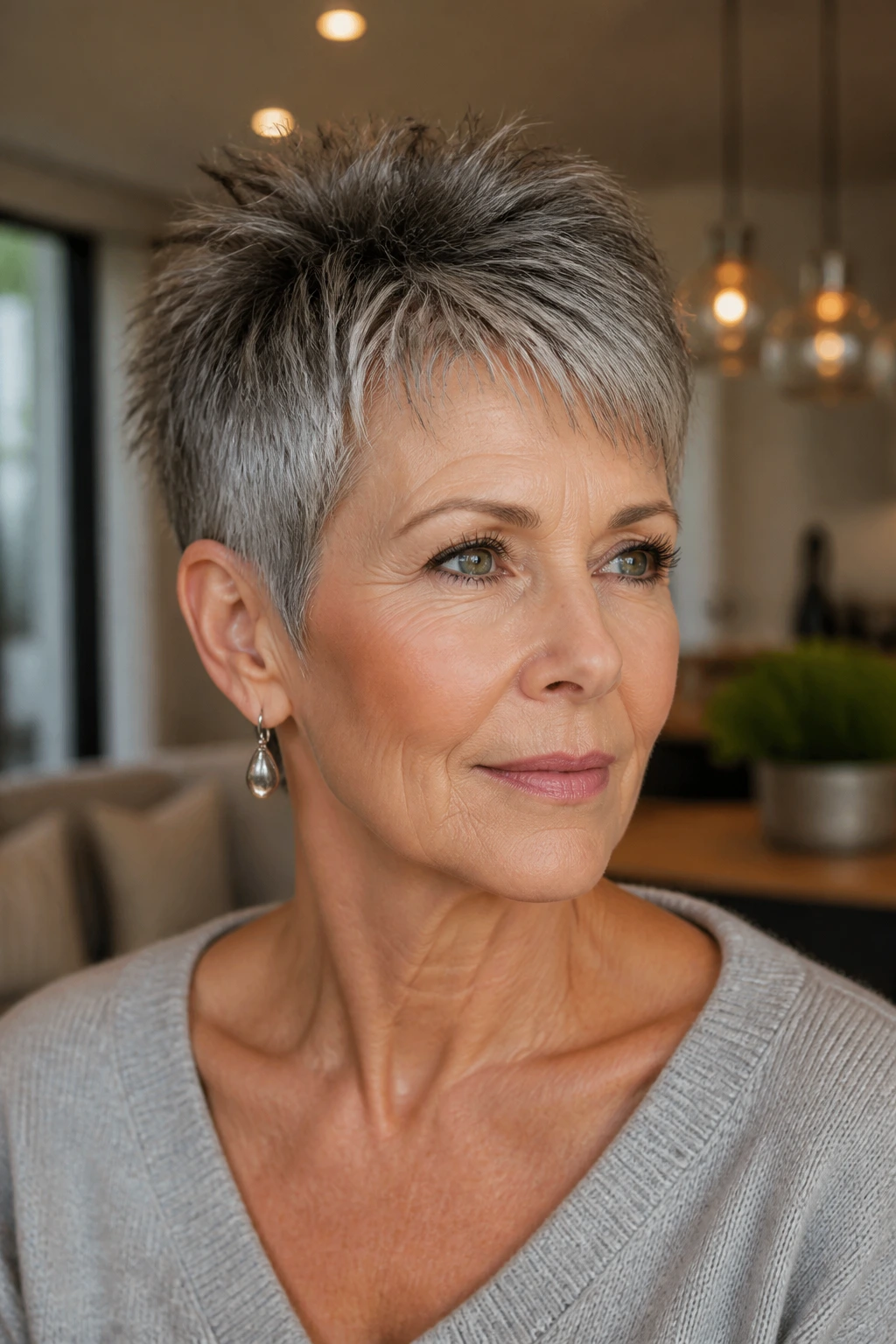
This is the cut for women who want short hair but do not want to look as if the scissors won and the hair lost. A textured crop keeps the sides neat, then builds soft, feathered movement through the crown. It’s shorter than a bob, less severe than a classic pixie, and usually much more flattering on fine hair than people expect.
The feathered crown is the point. It gives lift where the head usually goes flat. Ask your stylist to texture the top with restraint. Too much razor work can leave the ends brittle or fuzzy, and that’s not the goal. You want pieces that separate a little, not a halo of fluff.
What makes it work
It looks modern because it refuses to sit still. The shape can be tousled with paste, brushed forward, or swept to one side. That little bit of irregularity makes the cut feel fresh.
The best versions also keep the neckline clean. A tidy nape makes the whole crop feel intentional. Leave the top at about 1.5 to 3 inches, depending on how much lift you want and how dense your hair is. Any shorter and you lose styling options.
Use a tiny amount of matte paste at the fingertips, then pinch the top into place. Not much more. If the hair starts looking greasy by noon, you have used too much.
6. Shoulder-Length Cut with Face-Framing Layers
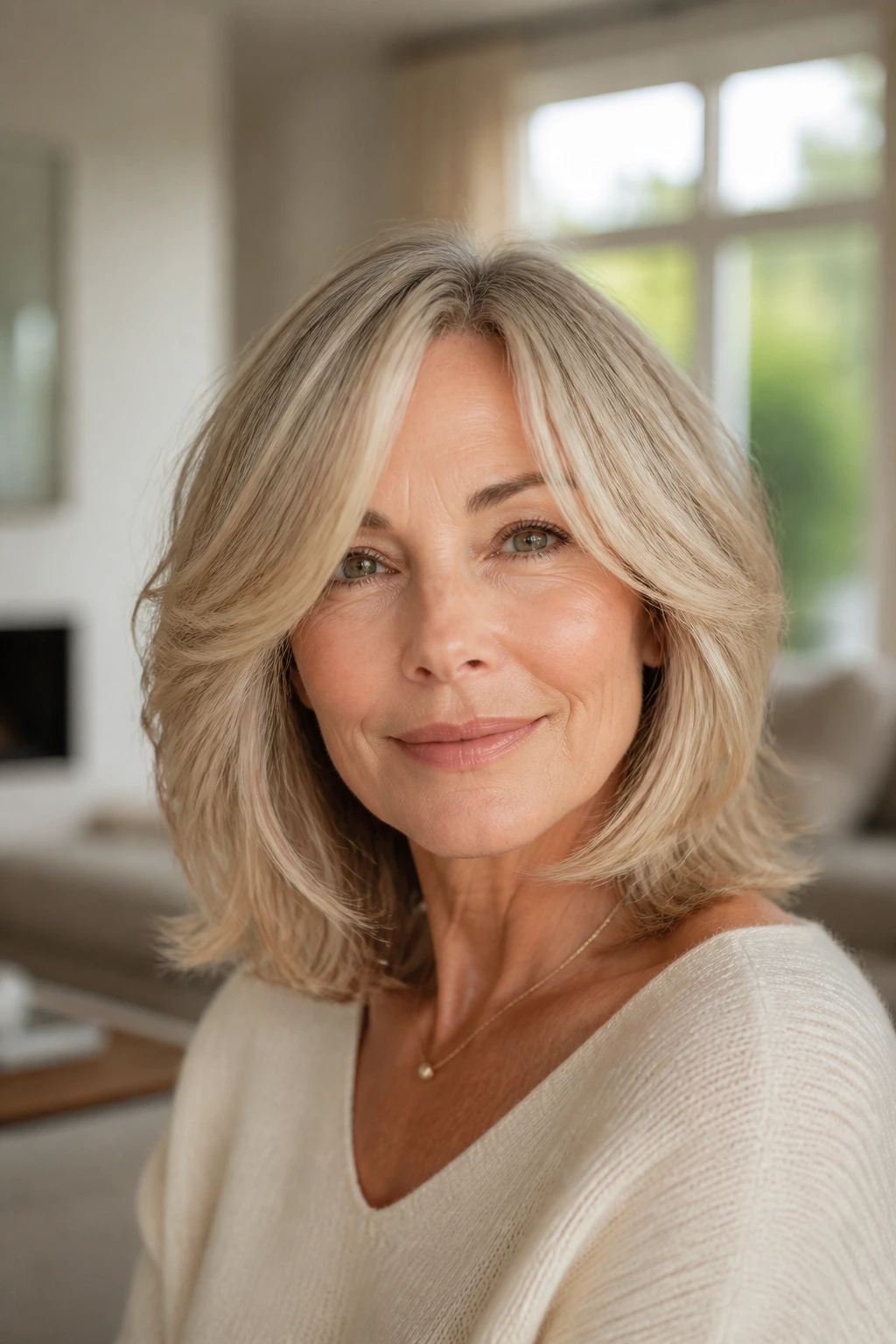
Shoulder-length hair gets dismissed too fast. That’s a shame, because it can be one of the most flattering modern hairstyles for women over 60 when it’s cut with intention. The difference between “just grown out” and “well shaped” comes down to where the layers land.
Face-framing layers around the cheekbone and jaw can break up a heavy outline and keep the hair from dragging the features downward. I like this cut for thicker hair because it takes enough bulk away to create swing, but not so much that the ends go see-through. It also gives you ponytail length when you want it, which is a practical perk nobody talks about enough.
The styling can stay soft. A big brush blowout, a loose wave, or even a simple air-dry with a little cream can work. If you like a side part, this shape can handle it. If you prefer a center part, the front layers need to be cut carefully so they do not hang like flat sheets.
One more thing: this cut looks especially good when the ends are kept healthy. Shoulder-length hair shows damage faster than a bob. If the last inch looks frayed, it will show.
7. Curly Bob Shaped at the Jaw
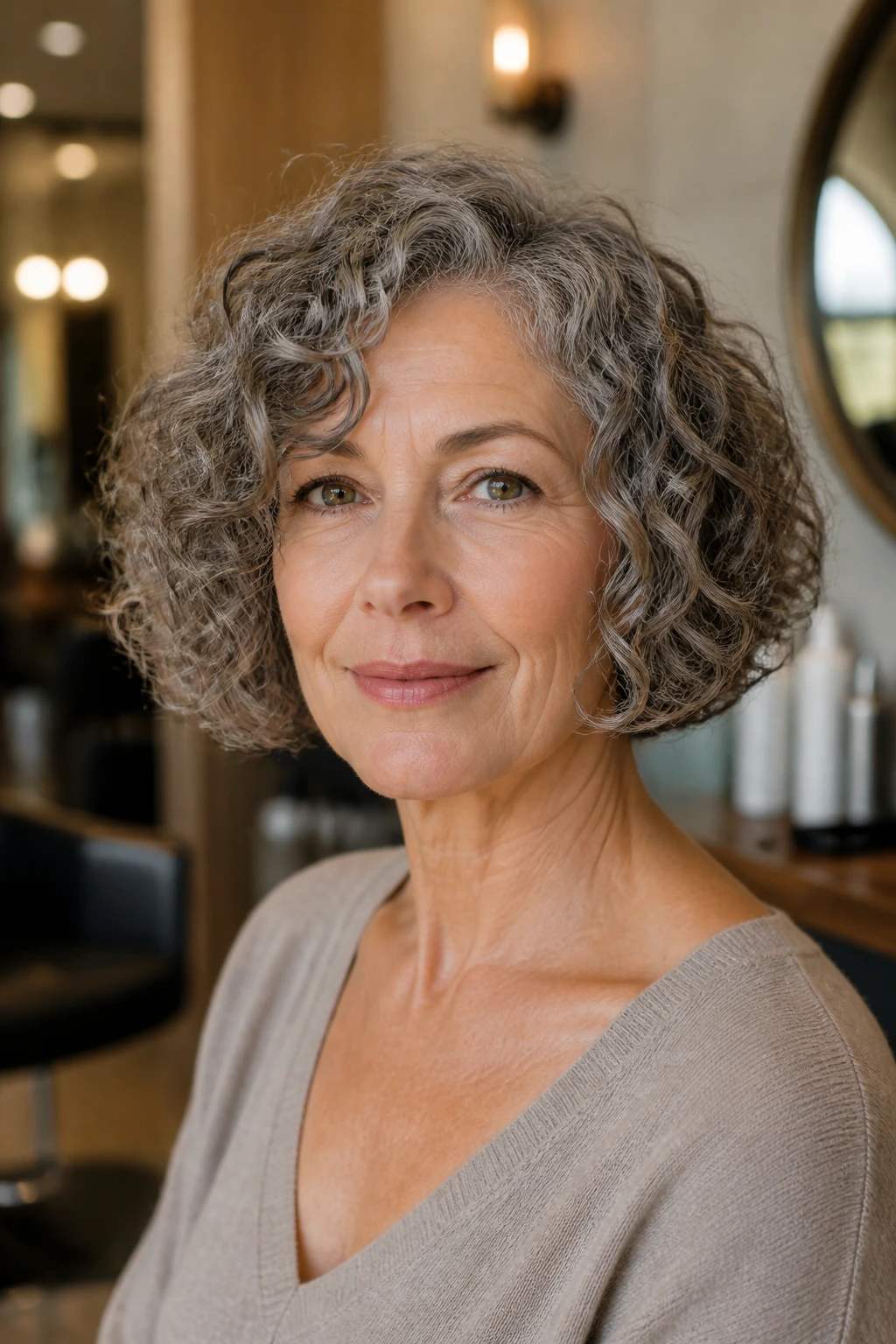
A curly bob that’s shaped at the jaw can look full, lively, and surprisingly polished if the cut respects the curl pattern. The key is not to chop it too bluntly at one exact line. Curls need room to spring. Cut them dry, or at least mostly dry, so you can see where they land instead of guessing.
The roundness should follow the curl, not fight it. If the bottom edge balloons out too much, the whole head can turn triangle-shaped. That’s the thing to avoid. A good curly bob keeps a bit of length in the outer layers and removes bulk where it piles up at the sides.
The shape matters
This style looks modern because it has structure without stiffness. The jawline length opens the face, while the curl pattern does the rest. Gray curls can look especially clean here because silver strands tend to show shape in a very honest way.
Use a curl cream on soaking-wet hair, then scrunch in a light gel for hold. Diffuse on low heat, or air-dry if your curl pattern keeps definition on its own. A cotton T-shirt or microfiber towel will help with frizz. Terry cloth is too rough.
If your curls shrink a lot, leave the cut slightly longer than you think you need. Curls like to have the last word.
8. Shaggy Midi with Wispy Bangs
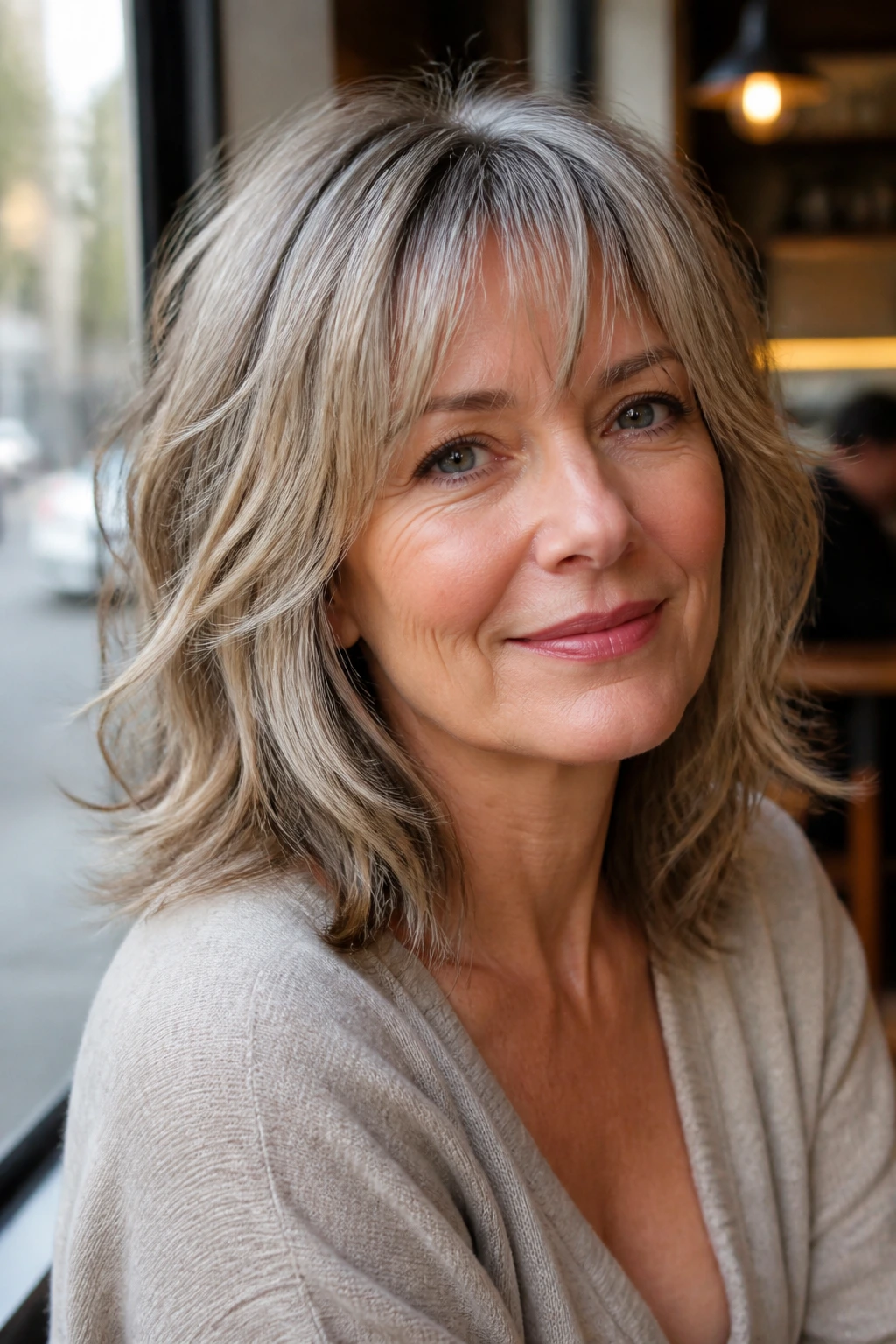
The shaggy midi is for women who want movement and a little attitude without wandering into “too young” territory. It usually sits somewhere between the jaw and collarbone, with layers that break up the shape and wispy bangs that take the edge off the forehead. Done well, it looks relaxed, not messy.
This is one of the best modern hairstyles for women over 60 with natural wave. The layers let the hair bend on its own instead of forcing it into a smooth shape it may not want to hold. That matters more than people think. Hair that fights its cut always looks a bit tired by late afternoon.
The bangs should stay light. I prefer them broken and piecey rather than dense. Thick bangs on mature hair can swallow the face, especially if the hair is fine at the temples. Wispy fringe keeps the eyes open and the whole cut lighter.
Style it with a mousse at the roots and a little scrunching cream through the ends. Then stop touching it. That’s half the battle. The shag works best when it looks like the hair found its shape, not like you negotiated it into one.
9. Sleek Blunt Bob with Softened Ends
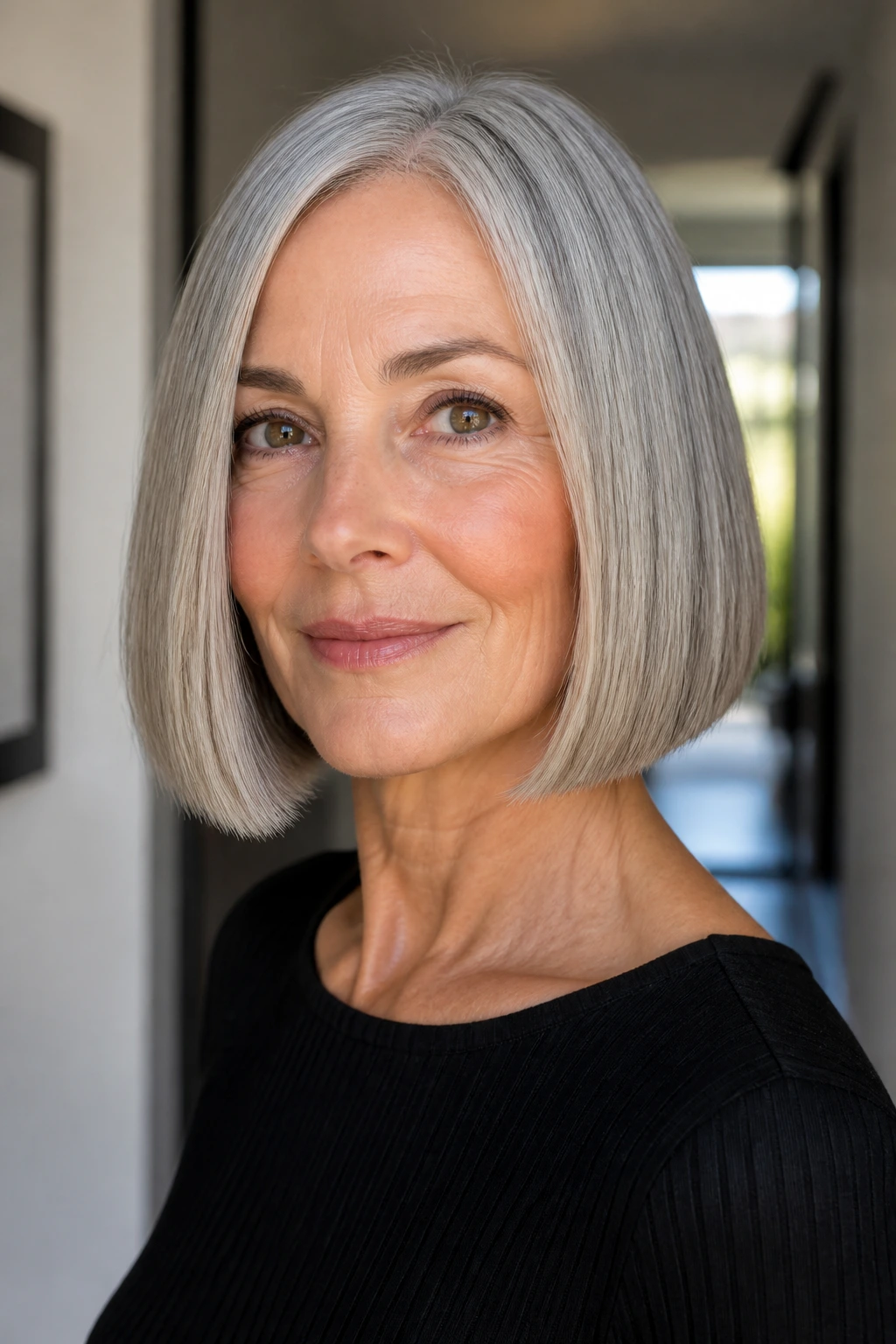
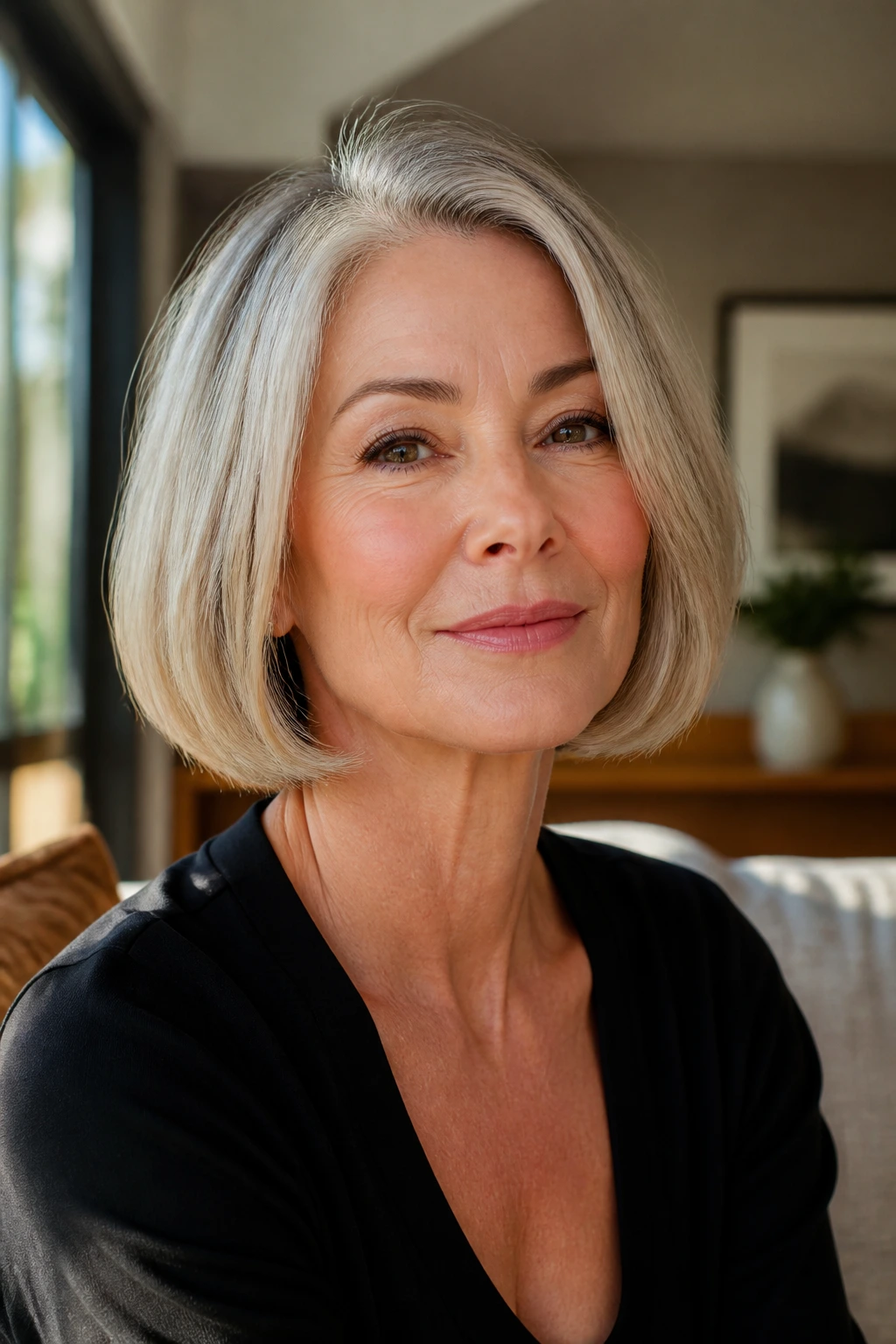
A blunt bob can be a smart, modern choice after 60, but only if it avoids the hard, chin-clenched look that makes some bobs feel dated. The trick is to keep the perimeter clean while softening the ends just enough that the line doesn’t feel rigid. A tiny bit of point-cutting at the bottom edge is usually enough.
This cut is strongest on straight hair or hair that will smooth easily with a blow-dryer and paddle brush. It looks especially sharp on gray hair, because silver reflects light across the blunt line and makes the shape read very clearly. That crispness is the point.
A sleek bob like this can make the neck look longer and the jawline cleaner. If you want a look that feels polished without a lot of fuss, it delivers. But it does need regular trims; a blunt bob loses its shape fast once the ends start splitting or flipping in odd directions.
Use a heat protectant, blow-dry downward for smoothness, and finish with a drop of serum on the ends only. Too much product on the whole head will flatten the crown. Keep it selective.
10. Ear-Length Crop with Long Side Fringe
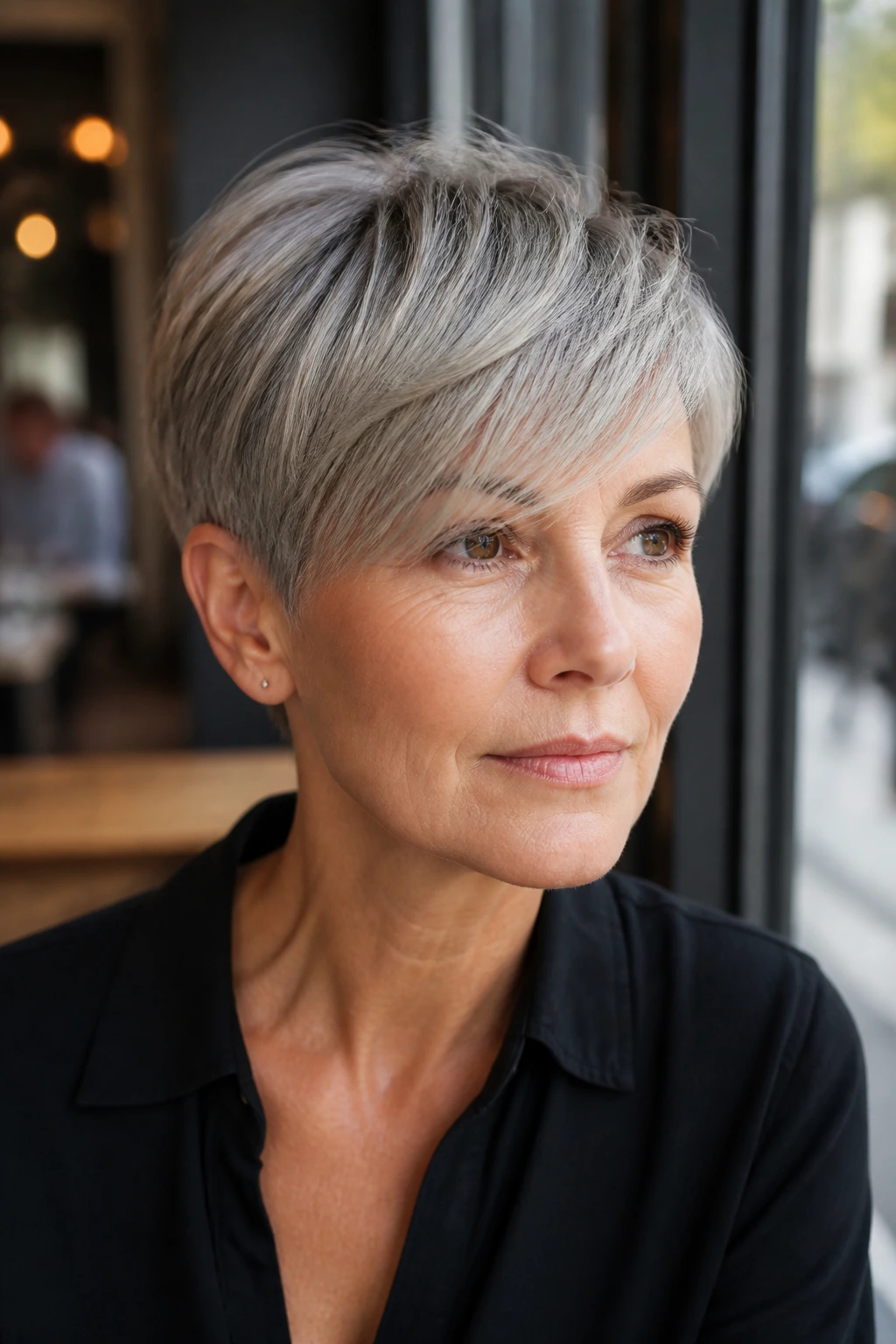
An ear-length crop with a long side fringe gives you the neatness of a short cut and the softness of a longer front. That combination is useful if your hairline has become a bit finer or if you want to keep the forehead open without fully exposing it. The fringe moves across the face in a way that feels lighter than full bangs.
The ears stay visible, which gives the style a sharper outline. That sounds small. It isn’t. Exposing the ear and nape makes the whole haircut feel cleaner and more current. A lot of older short cuts fail because they cover too much. This one does the opposite.
This shape works well with glasses, strong cheekbones, or a narrow face. It also lets earrings do a little work, which is nice if you like a simple wardrobe. The side fringe should be long enough to tuck behind the ear on one side, or sweep into the top section without falling into your eyes all day.
Keep the top lightly textured and the sides neat. If the fringe gets too short, the style loses its ease. Better to let it graze the brow or cheekbone than to clip it into an awkward little shelf.
11. Wavy Collarbone Cut with Razored Ends
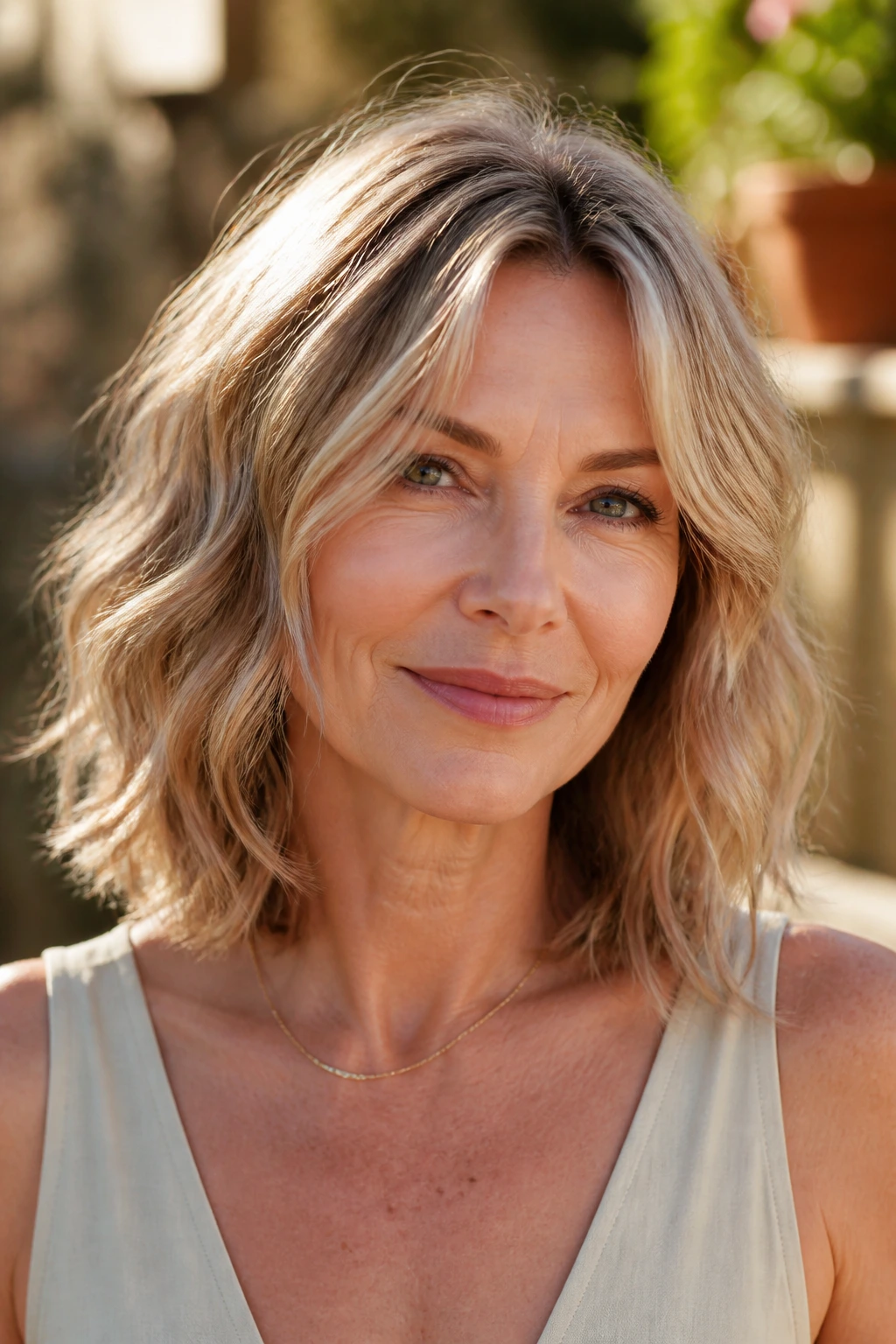
Here’s the thing about wavy hair: it often looks best when the cut is a little looser than a classic blowout shape. A collarbone cut with razored ends keeps waves from looking blocky. The ends taper softly, so the wave pattern can break apart and move.
This style suits women with medium to thick hair, or hair that naturally forms soft bends after washing. The collarbone length keeps enough weight to stop the waves from exploding into frizz, while the razored finish lightens the lower half. Ask for a gentle razor touch only if your hair is in good condition. If it’s fragile or dry, point-cutting is safer.
The shape feels modern because it doesn’t try to force every wave into the same direction. A center part can look lovely here, especially if the front pieces are a little shorter. A side part gives more lift at the crown. Both work.
I’d use a light wave cream or mousse, then let the hair dry mostly on its own before touching up a few pieces with a curling wand if needed. Not every wave needs help. Some just need space.
12. Modern Pageboy with Bend and Sweep
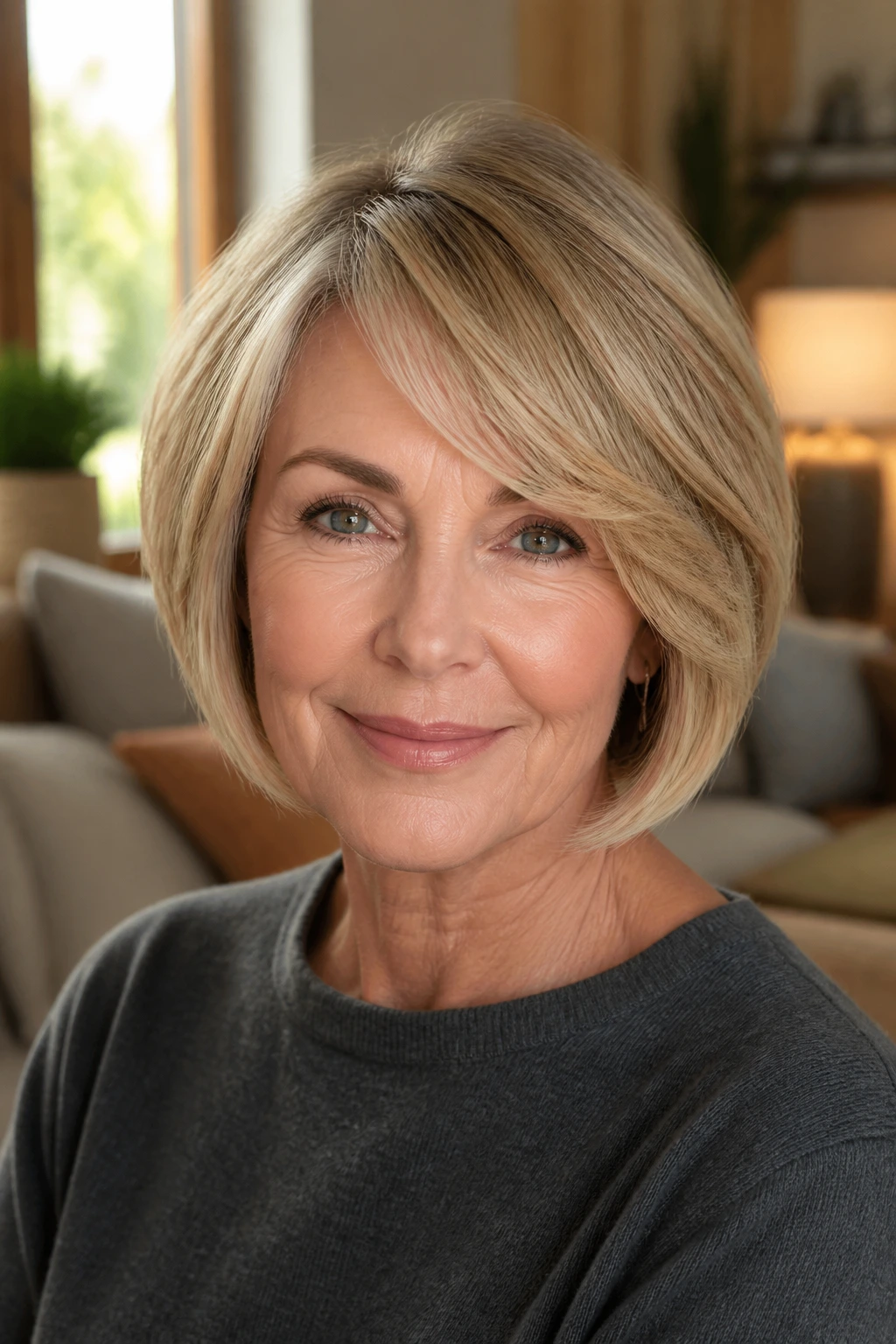
The pageboy used to have a very specific, very old-school reputation: smooth, round, and a bit stiff. Modern version? Much better. A modern pageboy keeps the curved outline but softens the edges, adds an off-center part, and lets the ends bend instead of lock into a helmet shape.
It’s a strong option for women who like control without harshness. The neck is usually lightly covered, the sides tuck in a bit, and the front sweeps across the forehead or cheek. The whole thing feels orderly, but not frozen. That matters.
How to keep it from looking dated
The outline should be round, not bubble-like. That means the crown needs a little lift and the ends should not flip under too strongly. A gentle bend is enough. If the hair is too polished, the style starts dating itself fast.
- Keep the length around the jaw or just below.
- Ask for softness at the nape so the back doesn’t puff.
- Use a medium round brush and direct the ends inward only slightly.
- A side part usually keeps it lighter than a center part.
I like this cut on straight hair or slightly wavy hair that can smooth easily. It has a tidy confidence to it. No drama required.
13. Long Layers with Silver Flow
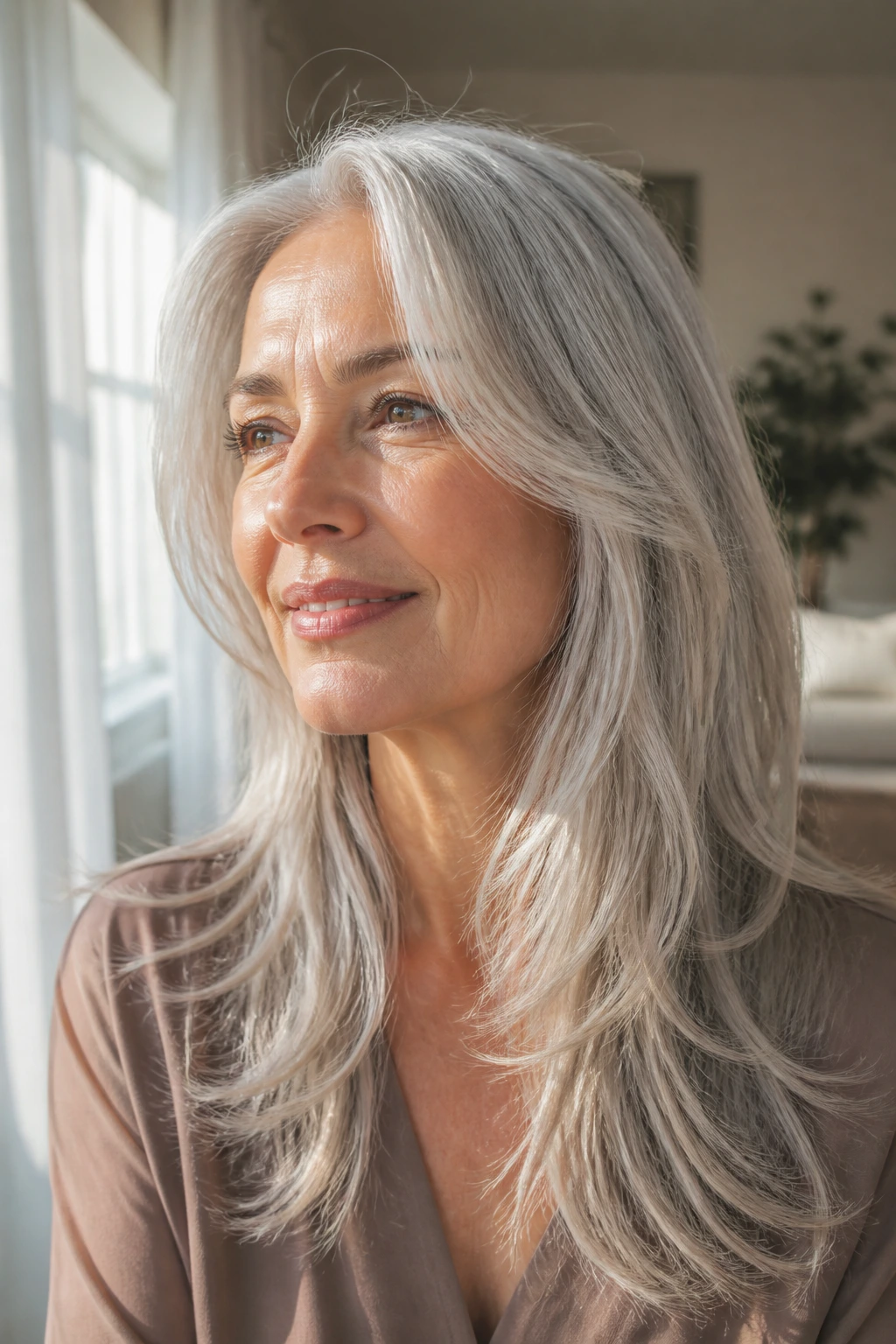
Long hair after 60 is not the problem. Bad long hair is the problem. When the layers are placed well, long hair can look elegant, current, and completely unforced. The trick is to keep the layers long enough that the length still feels full, not chopped up into pieces that hang thin and tired.
This cut works best if you actually like the feel of longer hair and your ends are healthy enough to show it. Layers should start below the chin or even lower, depending on density. That keeps the top from getting too thin. Face-framing pieces can open the cheekbones, and a few longer internal layers can help the whole shape move.
Silver hair shines here in a way that dark dye sometimes hides. There’s something lovely about long gray layers when they’re clean and glossy; they catch movement without screaming for attention. Keep the ends trimmed every 10 to 12 weeks and use a lightweight serum, not heavy oil, unless the hair is very dry.
I would not recommend this if the ends are wispy and weak. Long hair only looks chic when the last few inches are honest.
14. Asymmetrical Bob
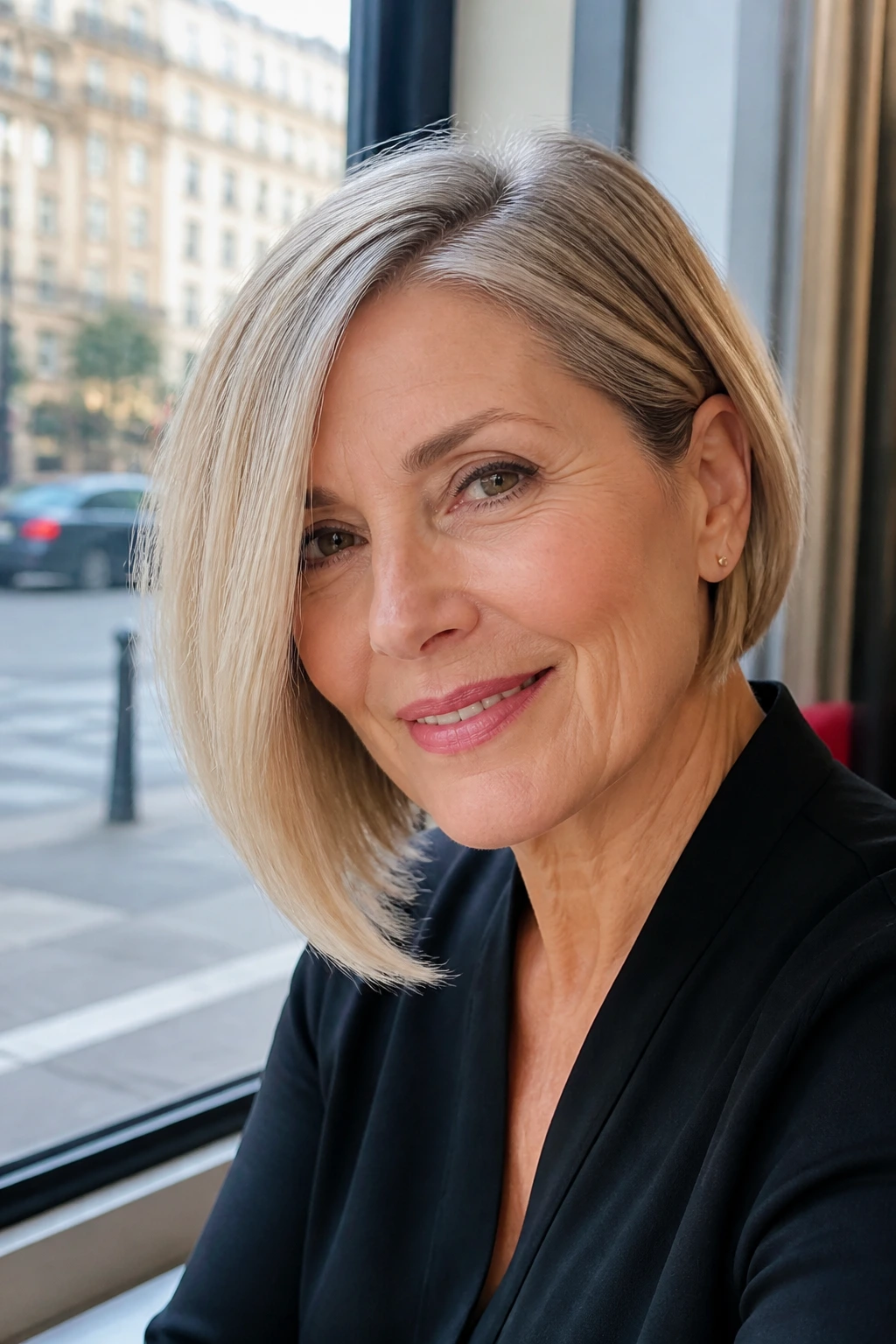
An asymmetrical bob is for women who want a little edge without going full avant-garde. One side sits slightly longer than the other, usually by 1 to 2 inches, and that small difference creates movement around the face. It’s a smart way to modernize a classic bob without making it complicated.
The asymmetry also helps balance features. A fuller cheek, a stronger jaw, or a face that feels slightly wider on one side can all benefit from that subtle shift in line. The haircut doesn’t need to be dramatic to work. In fact, a mild asymmetry often looks better because it feels intentional, not trendy-for-trendy’s sake.
This cut needs a clean blow-dry or a smooth bend with a flat iron so the longer side reads as a design choice. If the hair is too fuzzy, the shape gets lost. If it’s too stiff, it feels severe. The sweet spot is soft control.
Ask for the longer side to fall just past the jaw or collarbone, depending on how bold you want it. Keep the shorter side tidy near the ear. Small details. Big effect.
15. Curly Pixie with Tapered Sides
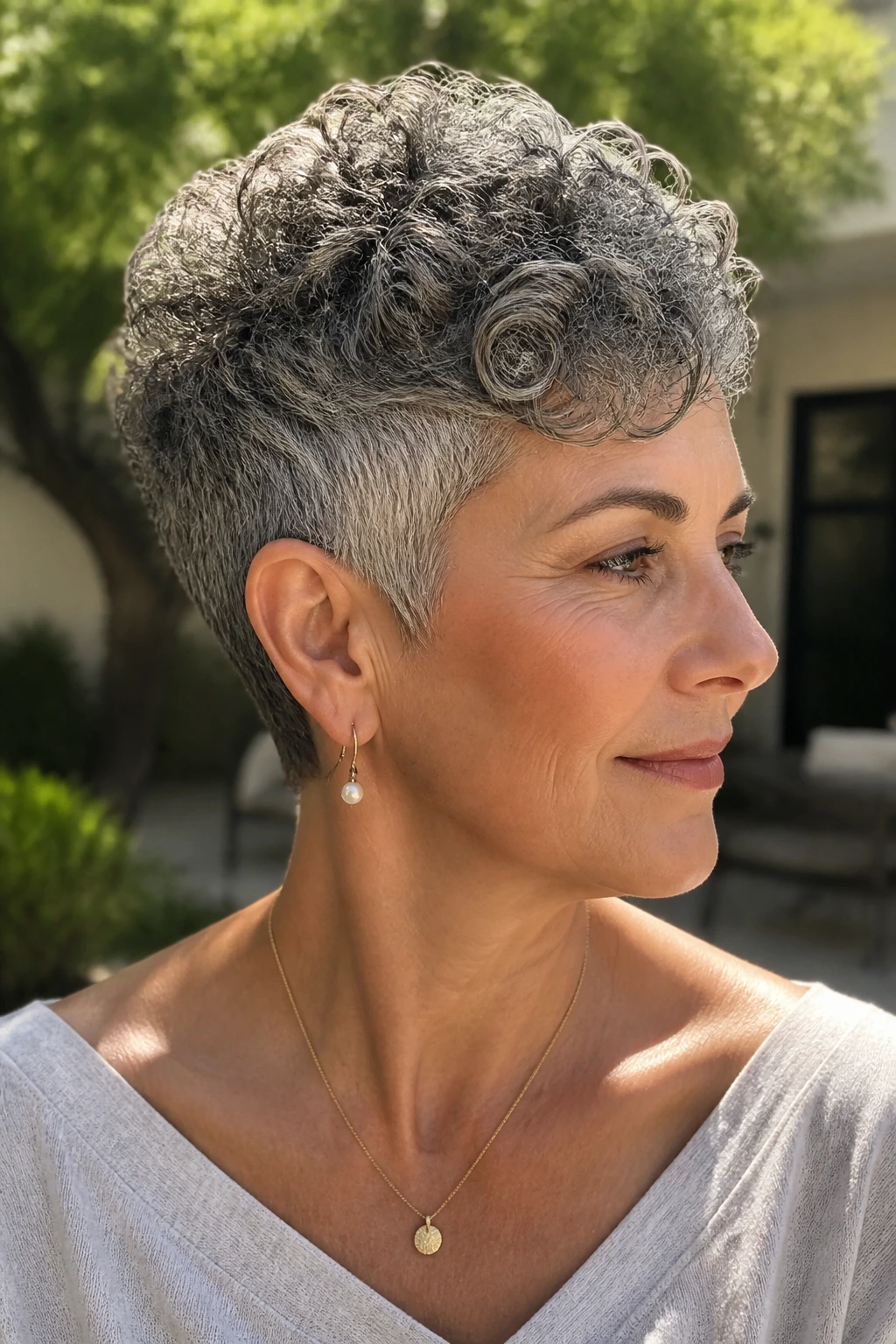
A curly pixie can be one of the most flattering short cuts for mature women, especially if the curls are fine, springy, or tight enough to create their own shape. The tapered sides keep the outline neat, while the top stays curly and alive. It’s short, yes, but not flat.
What makes this version modern is the balance between structure and texture. The sides and back are trimmed close enough to keep bulk down, but the crown remains long enough to let curls stack up in a soft, rounded shape. That keeps the face open and the hairstyle from looking puffy in the wrong places.
Use curl cream on damp hair, then diffuse or air-dry. If the top wants more definition, a little gel can help, but don’t overdo it. A curly pixie looks best when the curls keep some bounce and separation. Crunchy curls feel older than they should.
This style does ask for maintenance. Every 4 to 6 weeks, the taper needs cleaning up or the shape gets fuzzy around the ears and neck. Short hair reveals messy grow-out fast. Still worth it.
16. Layered Bob with Bottleneck Bangs
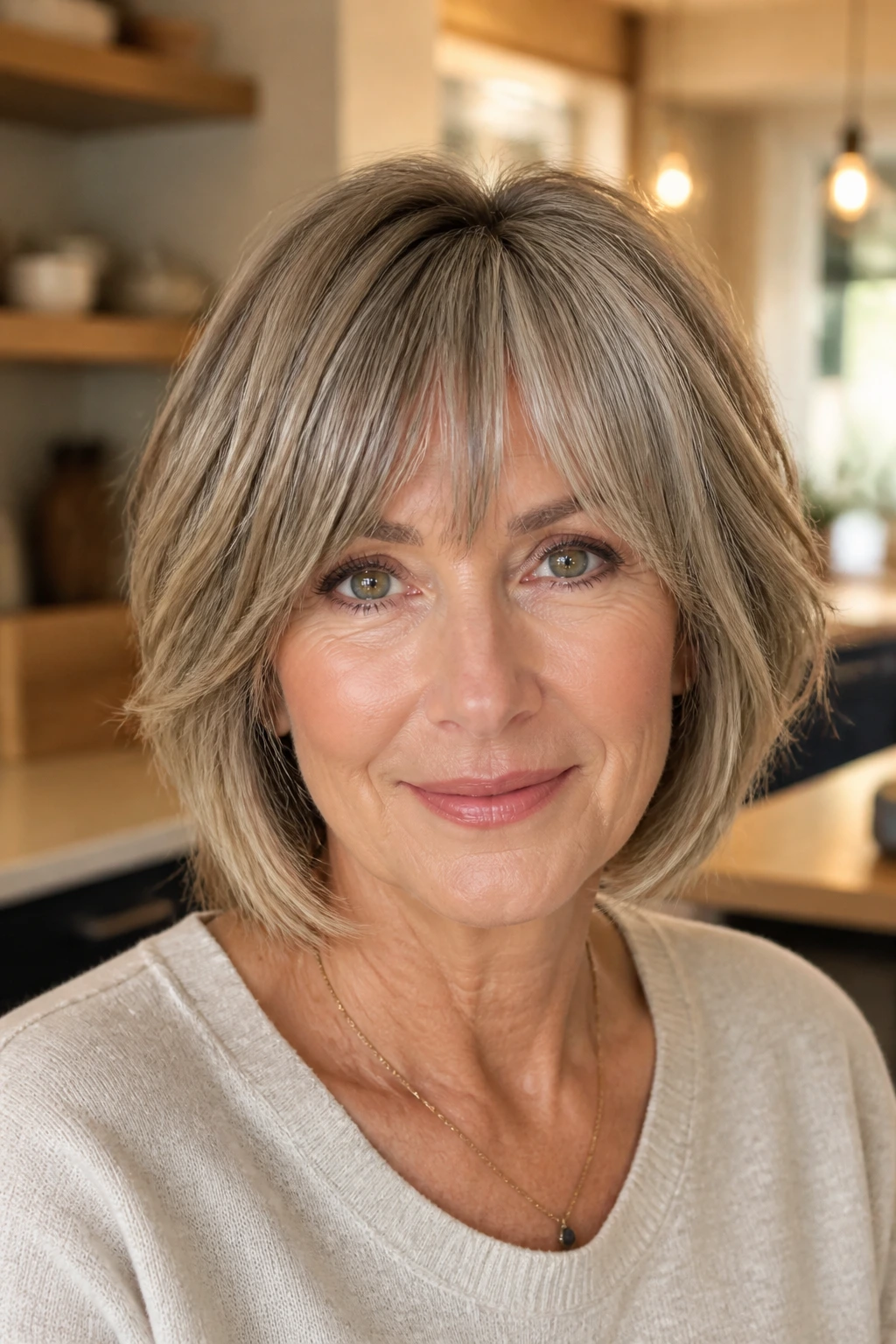
Bottleneck bangs have a nice trick: they start narrower at the center, then widen softly toward the temples. On a layered bob, they create a frame that’s flattering without boxing the face in. I like this on women who want fringe but do not want the weight of straight-across bangs.
The bob itself can sit at chin or jaw length, with layers that move just enough to keep the shape from feeling heavy. The bangs bridge the gap between forehead and cheekbones in a way that feels softer than a blunt fringe. That softness is what makes the style feel current.
This cut works with straight or slightly wavy hair. The bangs do need regular trim attention, because once they grow past the sweet spot, the shape gets vague fast. I’d keep them around eyebrow to cheekbone level, depending on your forehead height and how much opening you want.
A small round brush and a quick blast of heat at the roots are enough. You don’t need a lot of styling drama here. The haircut should do most of the talking.
17. Wash-and-Wear Cut for Natural Texture
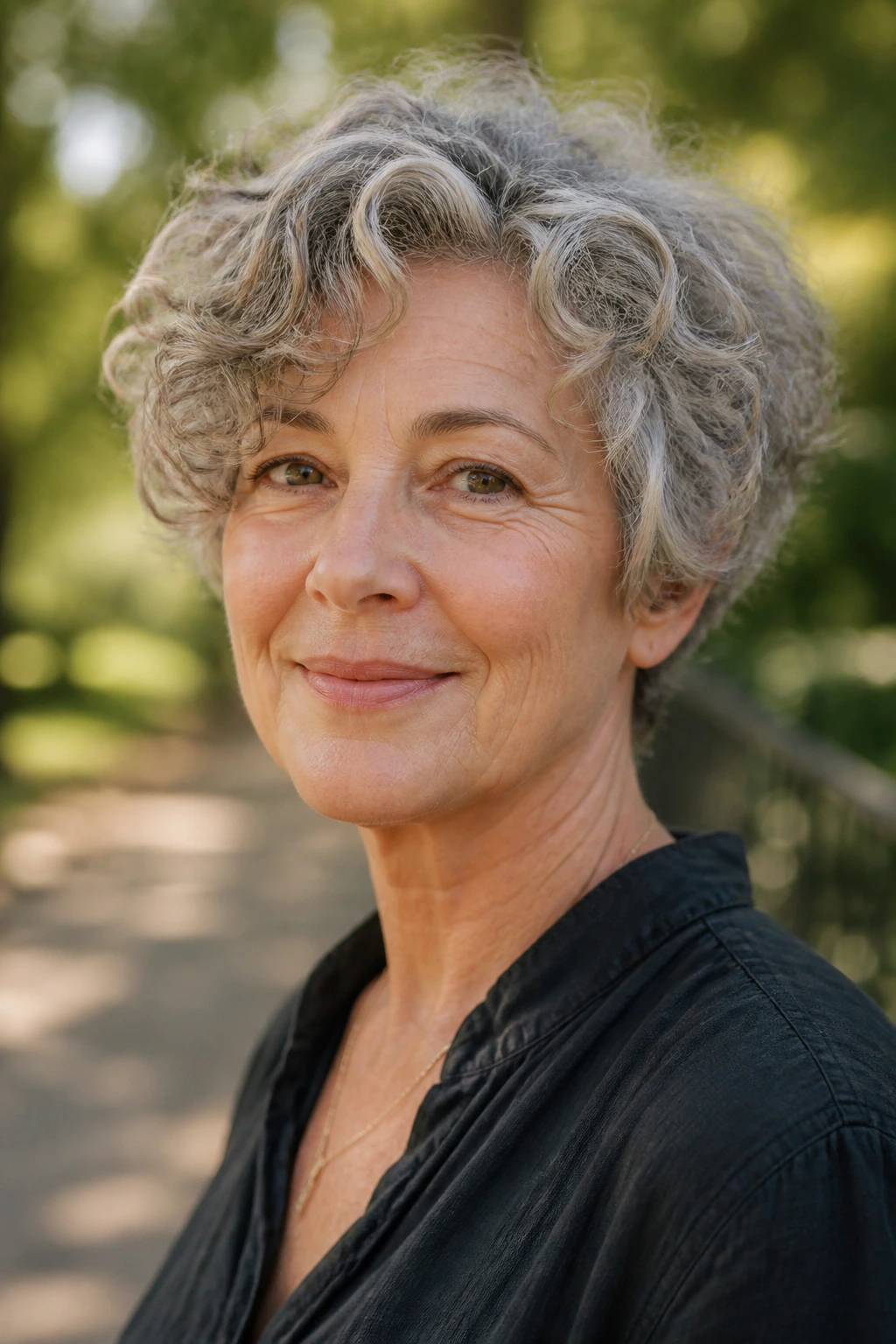
Some hair wants to be washed, scrunched, and left alone. Fighting that every morning is a waste of time and usually a waste of product too. A wash-and-wear cut is built around the hair’s natural bend, kink, coil, or wave so it dries into a shape that looks deliberate with almost no coaxing.
The best version usually has a strong perimeter and internal shaping that respects growth patterns. That means the stylist has to look at how your hair falls when it’s dry, not only when it’s wet. Wet hair lies. Dry hair tells the truth.
This is a smart modern choice for women over 60 who are tired of spending half an hour forcing volume into submission. The cut should be personalized: a bit longer if your hair shrinks, a bit shorter if it goes flat, and never thinned so aggressively that the ends look stringy.
Use a leave-in conditioner, a light cream, and maybe a diffuser if your texture needs help at the root. Then stop. The point is not perfection. The point is a cut that behaves when you don’t want to babysit it.
18. Rounded Blowout Layers
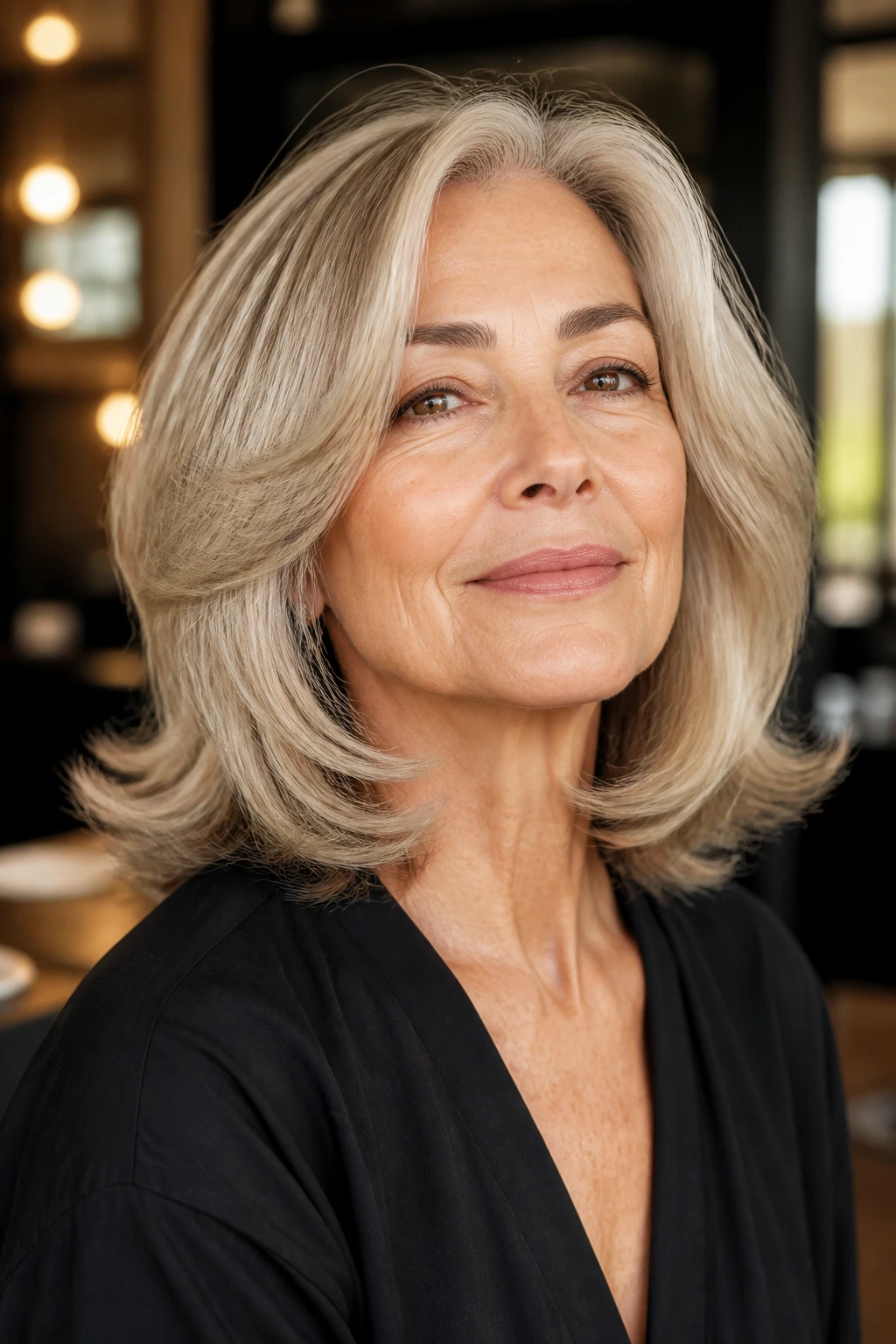
A rounded blowout cut gives you soft body at the crown and curved ends that move away from the face instead of hanging straight down. It’s especially useful if your hair has lost some lift at the top and you want a shape that looks styled without looking stiff.
The layers need to be placed carefully. Too many short layers, and the hair gets fluffier than you bargained for. Too few, and the blowout collapses by midday. Ask for layers that encourage a smooth curve from crown to ends, with the front pieces opening the cheekbones.
This style can look glamorous in a very contained way. Not big. Not overdone. Just full enough to feel intentional. Silver or highlighted hair shows the curve particularly well because the light catches the roundness of the shape.
A medium round brush, root clips, and a blast of cool air at the end make a difference here. If you want a little extra bounce, set the front pieces in velcro rollers for 10 minutes while they cool. That tiny step can hold the shape longer than another pass with the dryer.
19. Bixie Cut with Soft Nape
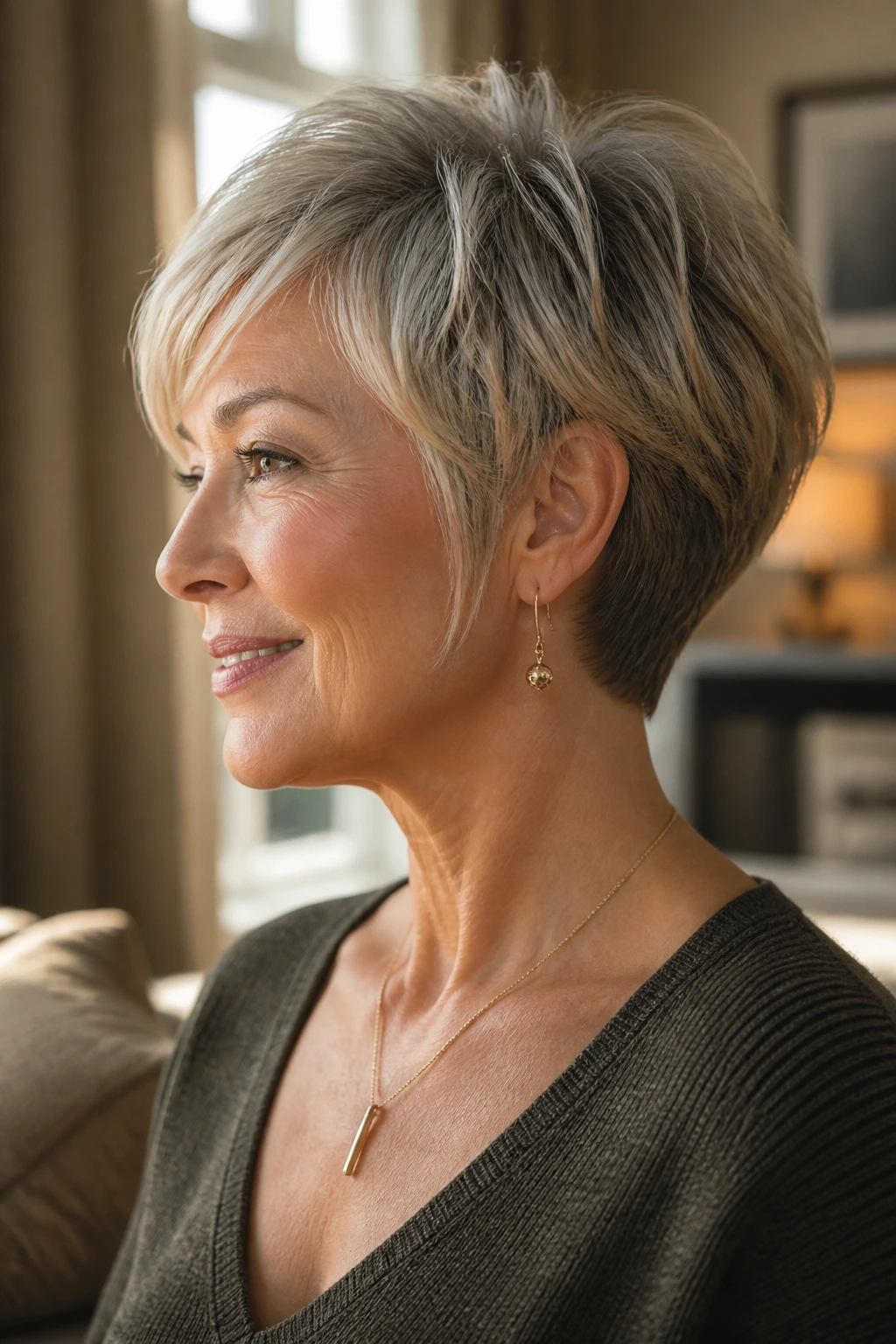
The bixie sits between a bob and a pixie, and that in-between space is exactly why it’s useful. It gives you some neck exposure, some cheek framing, and enough length on top to style in more than one direction. For women who want short hair but not a severe crop, it’s a strong option.
The soft nape is what keeps it modern. Rather than a hard stacked back, the shape tapers gently at the neck, which makes the cut feel lighter and less dated. The front can stay slightly longer, especially if you want to tuck one side behind the ear or sweep it forward for softness.
I like this cut for fine to medium hair because it gets lift without requiring much volume product. A little mousse at the roots and a fingertip amount of paste through the top is usually enough. If the hair is thick, the bixie can be thinned carefully, but I would avoid over-texturizing. That’s where the shape starts to fray.
It’s also a good grow-out cut. A bixie can move toward a bob or back toward a pixie without looking awkward for weeks on end. That flexibility is part of its appeal.
20. Midlength Cut Built for Half-Ups
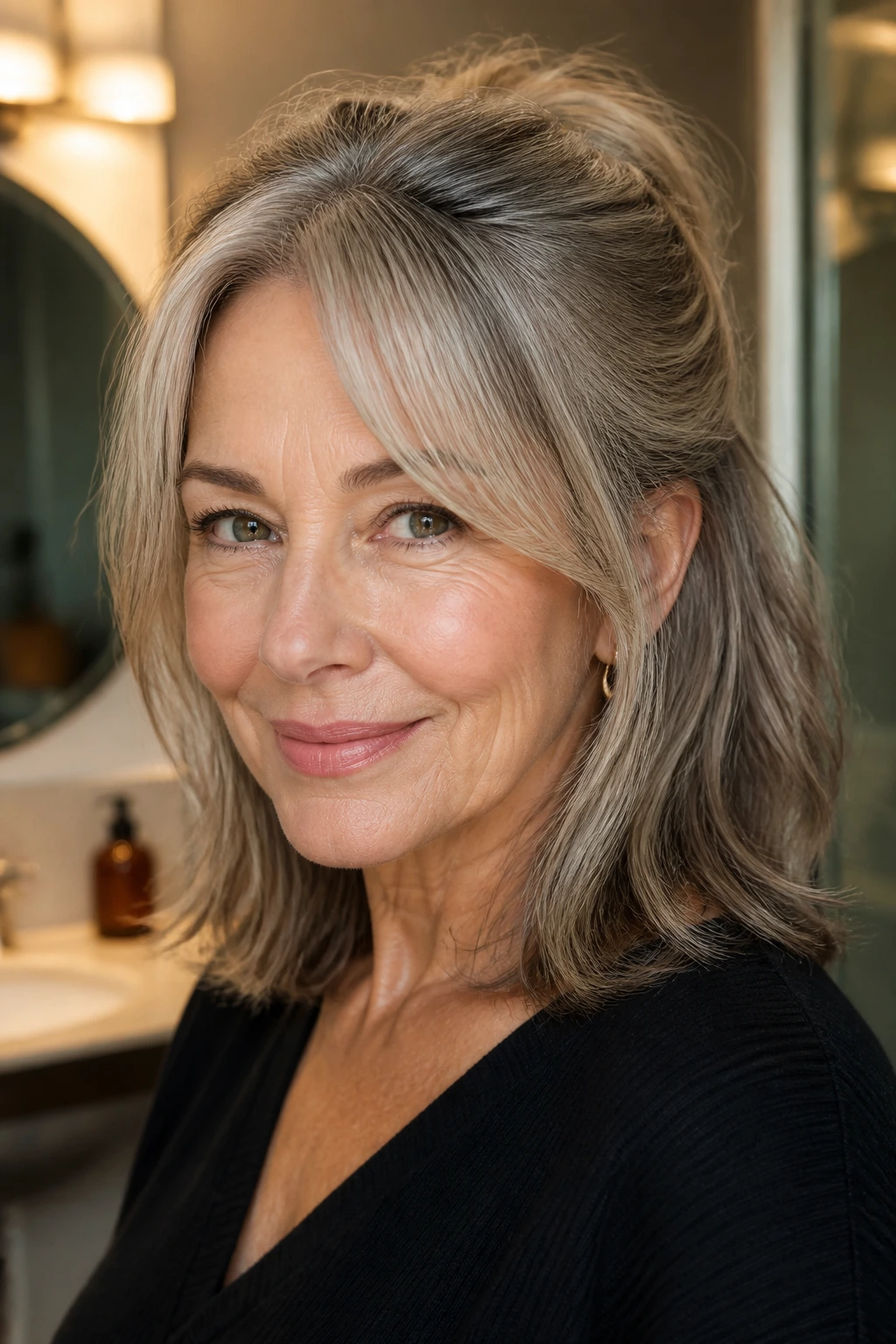
A midlength cut that can be worn half-up is one of the most practical choices on this list. It gives you enough hair to pull back when you want your face open, but not so much length that the ends become a chore. The key is internal layering that keeps the hair from turning into one heavy sheet.
This shape is especially useful for women who like clips, pins, or simple half-up twists. If the front pieces are cut with a little face framing, the style reads softer even when it’s partially pulled back. That matters because half-up hair can look severely schoolmarm-ish if the front is too straight and tight.
The length usually lands between shoulder and upper chest. Keep the layers long enough to preserve fullness. If the crown is fine, too many short layers will make the top look see-through when it’s clipped back.
This cut is also friendly to air-drying. With a bit of cream and a loose scrunch, it can look done without needing a full blowout. When you want polish, pin back the sides and leave a little bend through the ends. Easy enough. More useful than glamorous. Which, honestly, is better most days.
21. Shoulder-Grazing Cut with Center Part
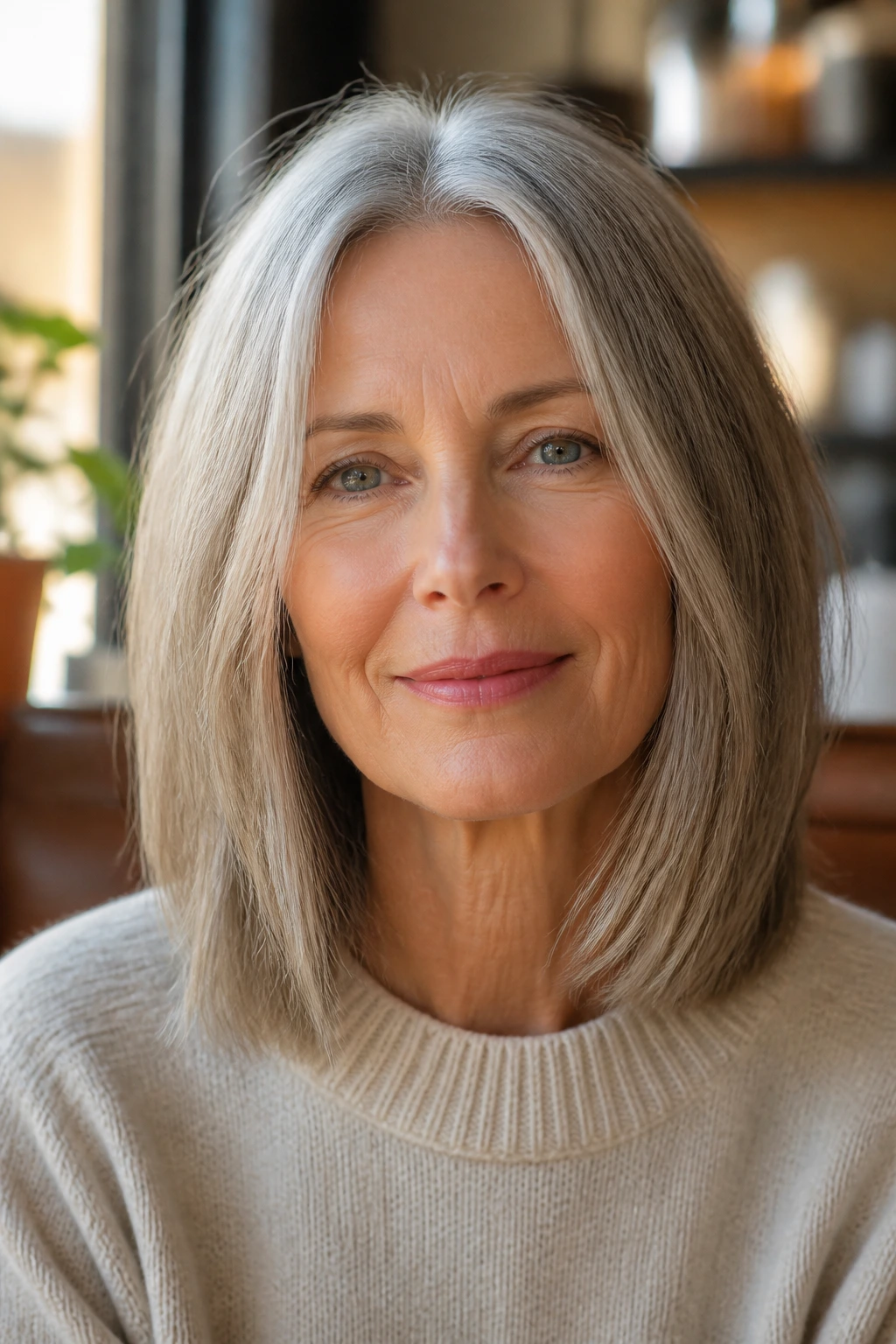
A shoulder-grazing cut with a center part is clean, calm, and much more modern than people give it credit for. The line is long enough to feel feminine without dragging, and the center part keeps the look simple and even. That simplicity can be a relief after years of fighting a side part that never sat right.
This haircut works best when the ends are healthy and the layers are subtle. You do not want the front to disappear into wisps. You want enough weight to create a smooth frame around the face. If the hair is straight, the cut can look sleek and sharp. If it’s wavy, it gets that easy, lived-in movement that feels current without trying too hard.
The center part is not for everyone, though. It can highlight symmetry, which is lovely, but it can also expose thinning at the temples if the hairline has changed. If that happens, a tiny offset part often fixes the issue immediately. No drama.
I like this cut on women who want length with a neat edge. It sits in that nice middle ground where the hair can be tucked behind the ears, clipped back, or left loose and clean. That flexibility matters.
22. Elegant Long Crop with Nape Taper
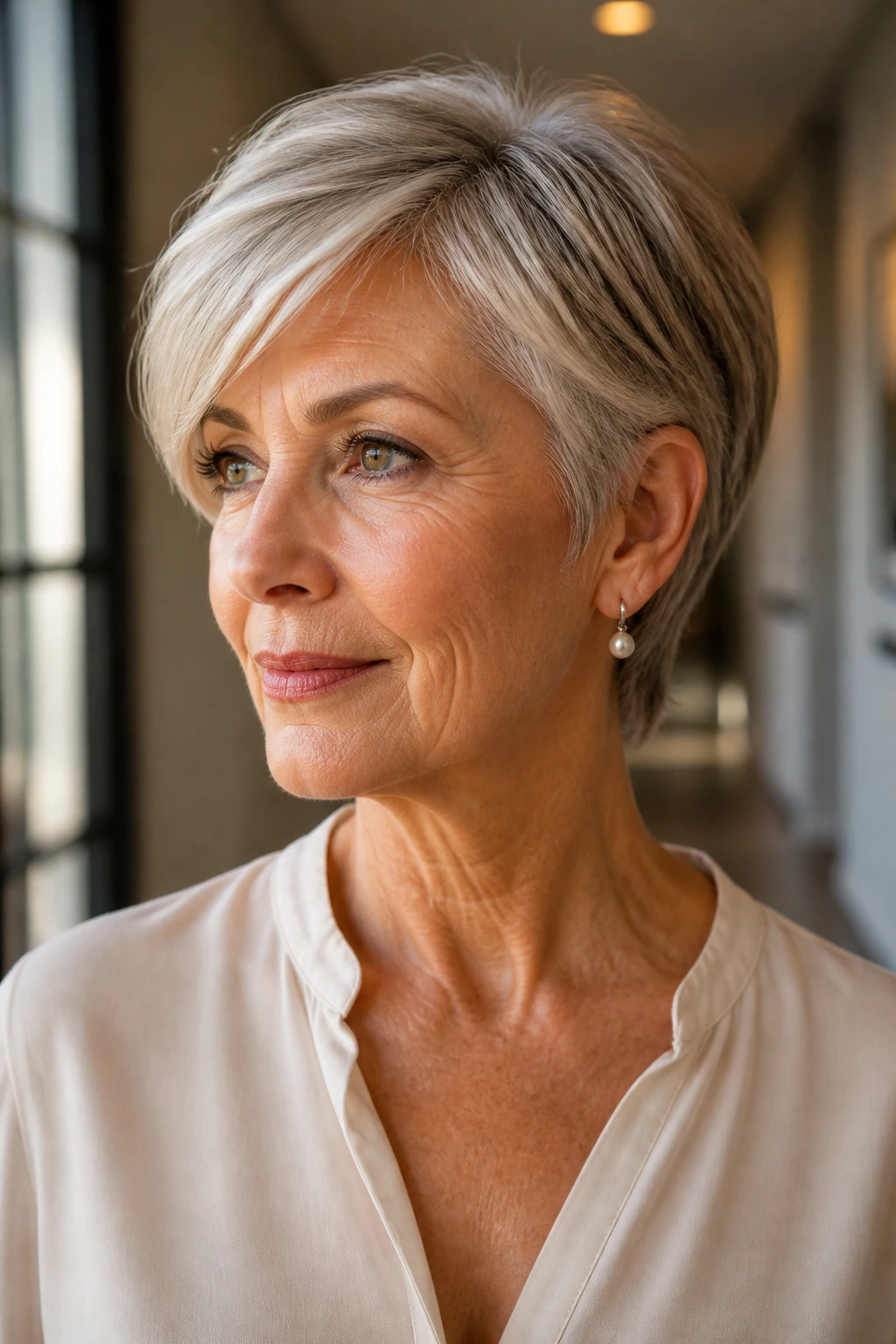
An elegant long crop is what happens when short hair grows up. The back is tapered neatly at the nape, the top stays longer than a classic pixie, and the front can sweep softly across the forehead or cheek. It’s refined without feeling severe, which is a hard balance to pull off.
This style is especially kind to women whose hair is fine but not sparse. The longer top creates the illusion of fullness, while the tapered back keeps the silhouette tidy. If the sides are left a touch longer than the neck, the shape feels polished instead of military.
The cut also plays well with silver hair because the clean lines show off the color instead of hiding it. A little shine cream or smoothing lotion through the top is usually enough. The point is to keep the outline smooth and the ends separated just enough to move.
I think this is one of the most useful short haircuts for mature women who want to look modern without cutting into a full pixie. It gives structure, a bit of softness, and less styling work than shoulder-length hair. That combination is hard to beat.
Why a Modern Shape Makes Hair Look Healthier
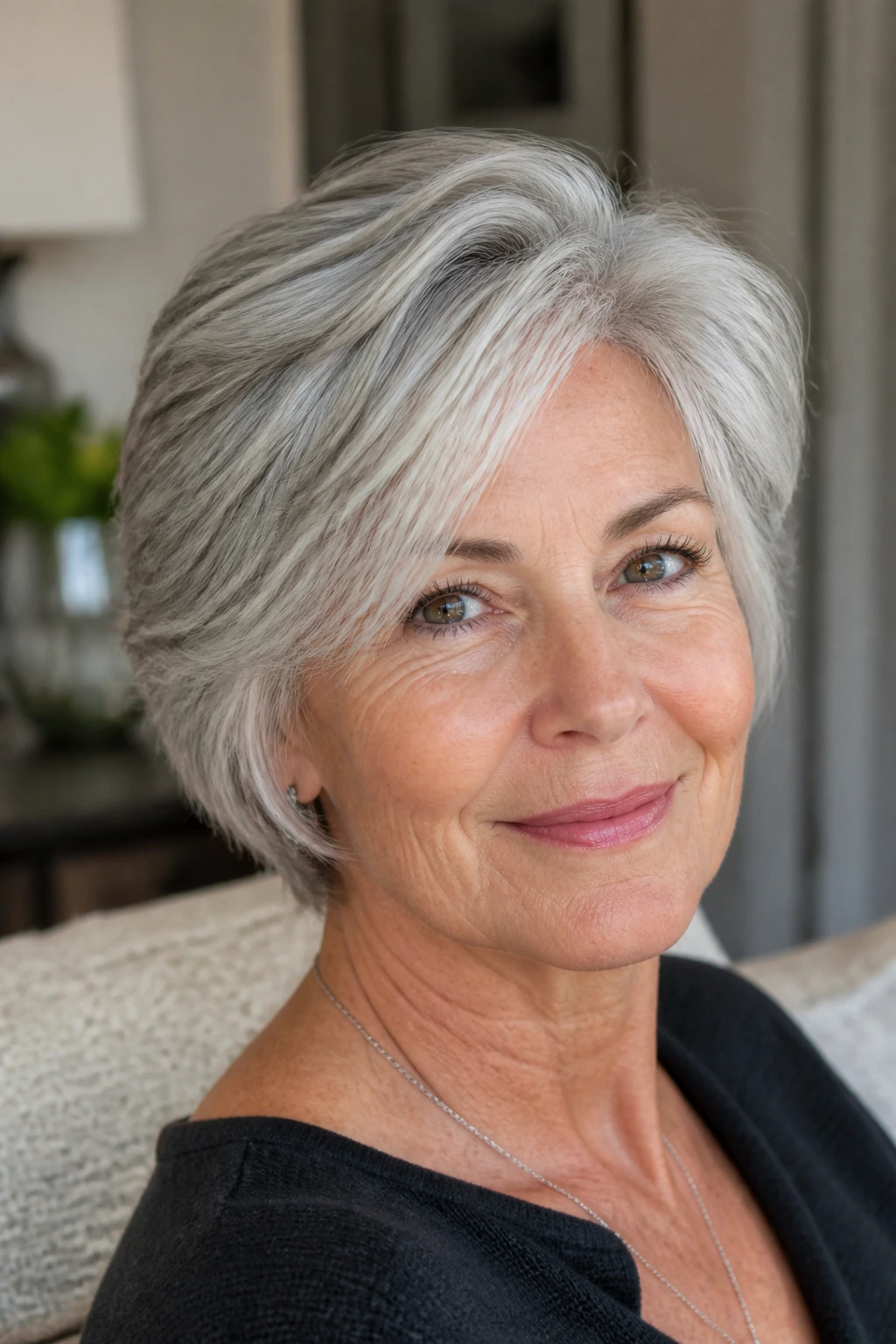
A haircut can change how healthy hair looks long before it changes how healthy it is. That sounds obvious, but most bad salon cuts ignore it. A shape with a clean perimeter, controlled layers, and the right amount of lift can make ends look thicker, reduce the look of frizz, and stop the crown from going flat by midafternoon.
The best modern hairstyles for women over 60 do not chase volume in every direction. They place it where the eye needs it: around the face, at the crown, or just enough at the sides to keep the head from looking wide or hollow. That kind of control matters more than raw length. A long style can look tired if the ends are thin. A short style can look fresh if the outline is smart.
Gray hair especially benefits from a better shape. Silver strands reflect light, which means blunt lines, soft layers, and tidy napes show up more clearly than they do on darker hair. If the cut is good, gray hair looks like a feature. If the cut is bad, gray hair shows every flaw. That’s not cruelty. It’s just how light works.
The Tools and Products That Make These Cuts Behave
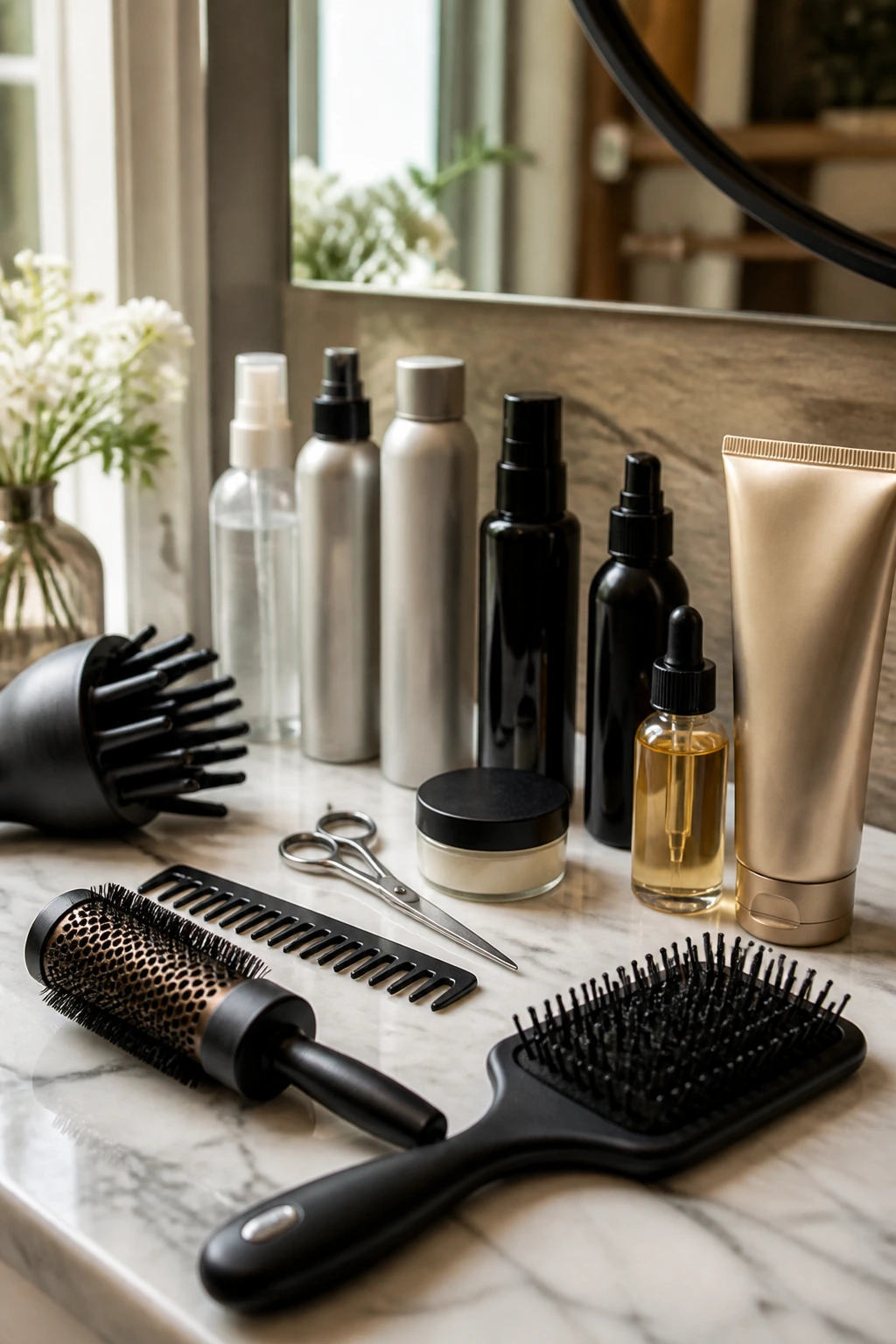
A good cut helps, but the right tools keep the shape from falling apart between washes. The collection below is what I’d keep near the mirror if you rotate between short haircuts for older women, medium-length styles, and soft layered looks.
- 1-inch round brush: Best for short bobs, bangs, and curved ends where you need a tighter bend.
- 1.5- to 2-inch round brush: Better for lobs, shoulder-length cuts, and blowouts that need lift, not tight curl.
- Blow-dryer with a nozzle attachment: The nozzle directs air and keeps the hair smoother while you shape it.
- Diffuser: Useful for curls, waves, and shags when you want the pattern to hold instead of frizzing out.
- Flat iron with narrow plates: Handy for soft bends in a bob or quick smoothing around the face.
- Light mousse: Gives fine hair some grit at the root without making it crunchy.
- Root-lift spray: Works well on crowns that flatten fast, especially in pixies and bobs.
- Heat protectant: Worth using every time you touch a hot tool to the hair.
- Matte paste or lightweight styling cream: Good for pixies, bixies, and crops where you want piecey separation.
- Texturizing spray: Gives movement to layered cuts without the sticky feel some hairsprays leave behind.
- Wide-tooth comb: Better than a brush for curls, waves, and wet detangling.
- Duckbill clips or sectioning clips: Small thing, big help. They keep the top separate while you dry the sides.
If you only buy three things, make them heat protectant, a decent round brush, and a styling product that fits your hair’s texture. The rest can wait.
What to Ask Your Stylist When You Want a Modern Look
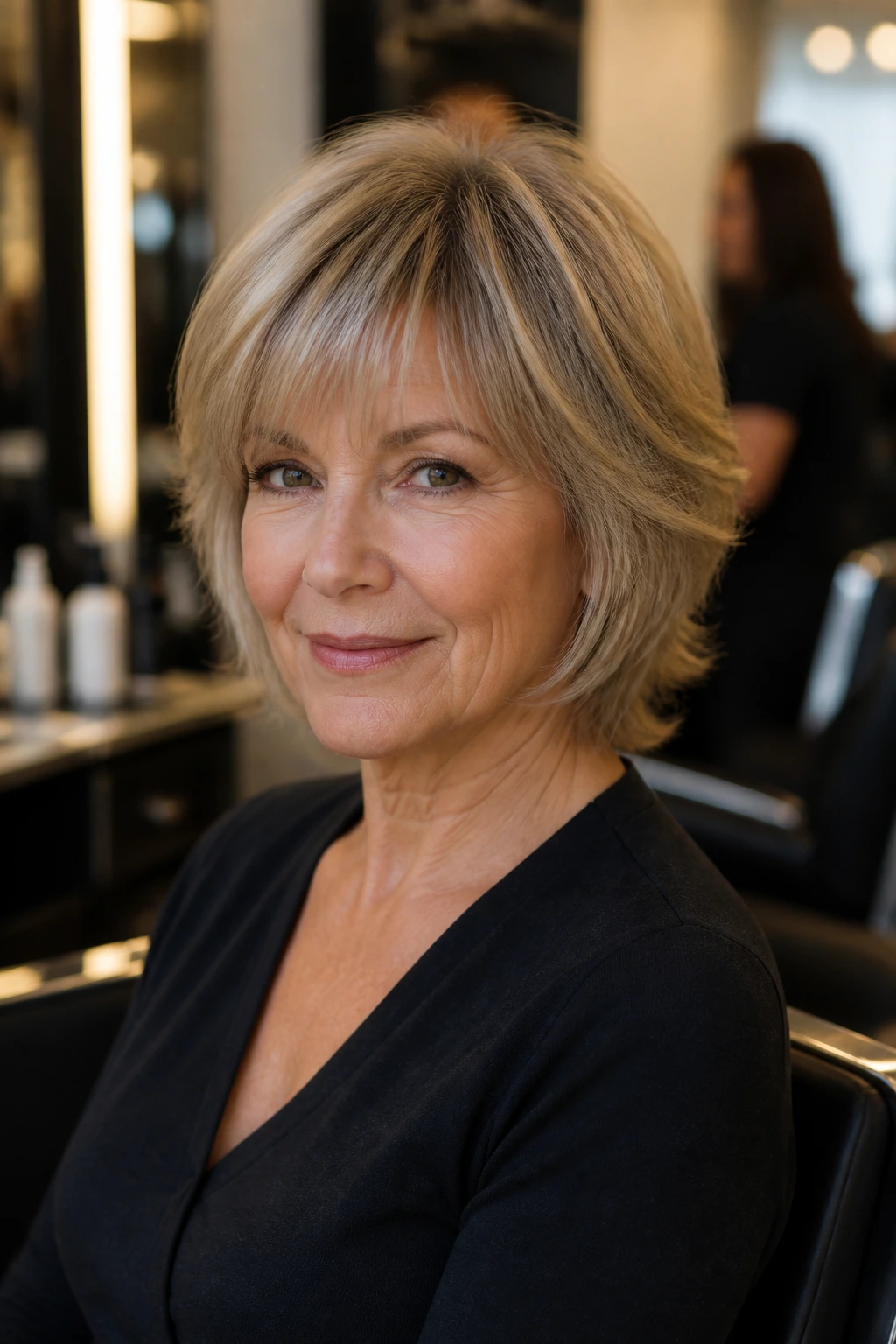
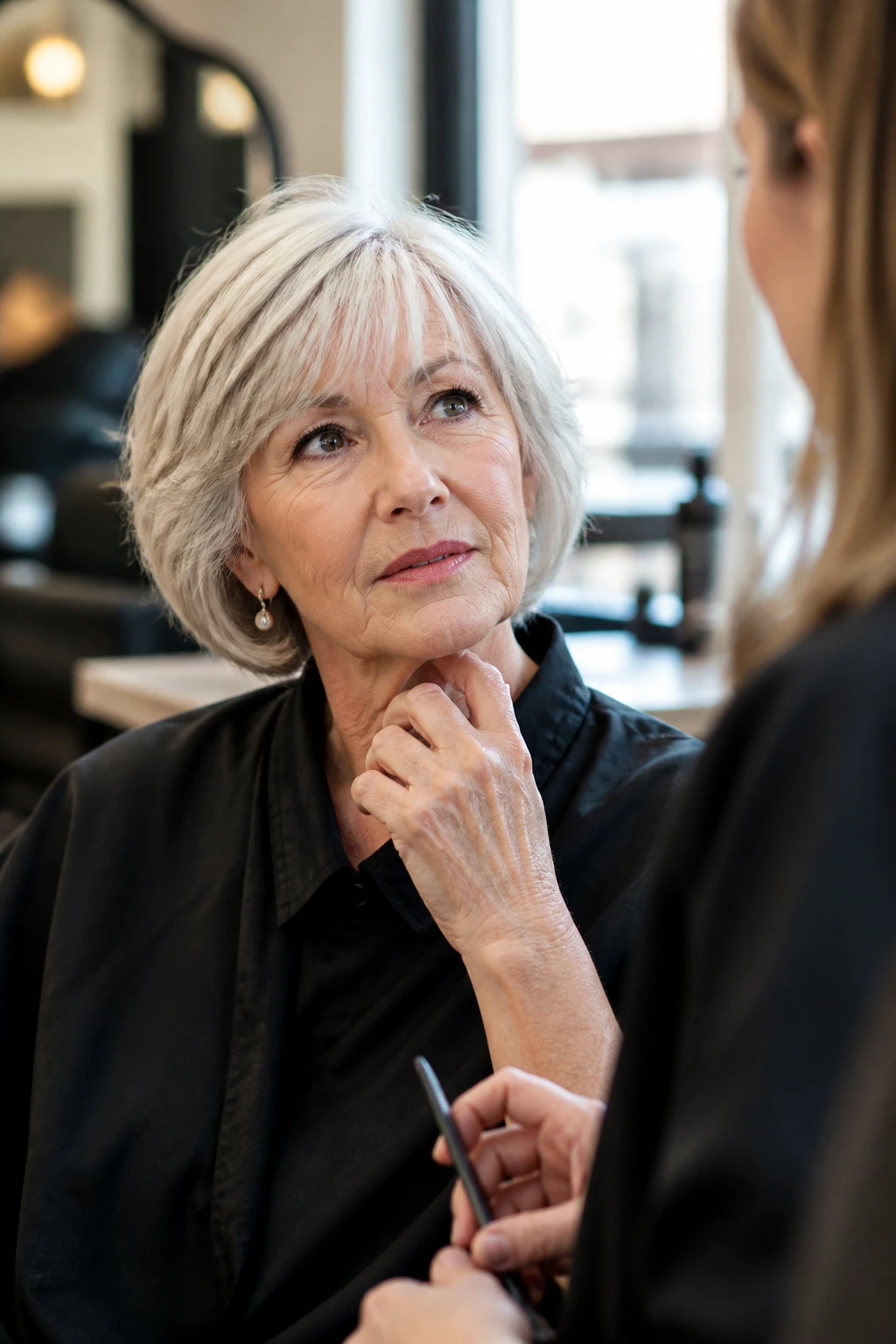
Saying “make it modern” is not enough. Stylists can work with it, but they do their best work when you hand them shape, length, and texture clues. Bring a photo, yes, but also be specific about what you want the haircut to do.
Ask for the length point first. Do you want the hair at the jaw, chin, collarbone, or shoulder? That one decision changes everything. Then talk about the weight line. Do you want it blunt, soft, or slightly rounded? If the answer is “soft,” say so. That usually means some point-cutting or internal layering rather than a hard perimeter.
For finer hair, ask where the layers start. If they start too high, the cut can go see-through. If they start too low, the shape stays heavy. A good compromise is often cheekbone or just below, depending on the style. For thick hair, ask for removal of bulk where it traps volume, not random thinning all over the place.
Fringe matters too. Side-swept, bottleneck, wispy, curtain, or none at all. Those are not small choices. A fringe that lands half an inch too short can change the whole face. Better to leave bangs slightly longer on the first cut; they can always be refined later.
How to Wear These Cuts So They Stay Sharp All Day
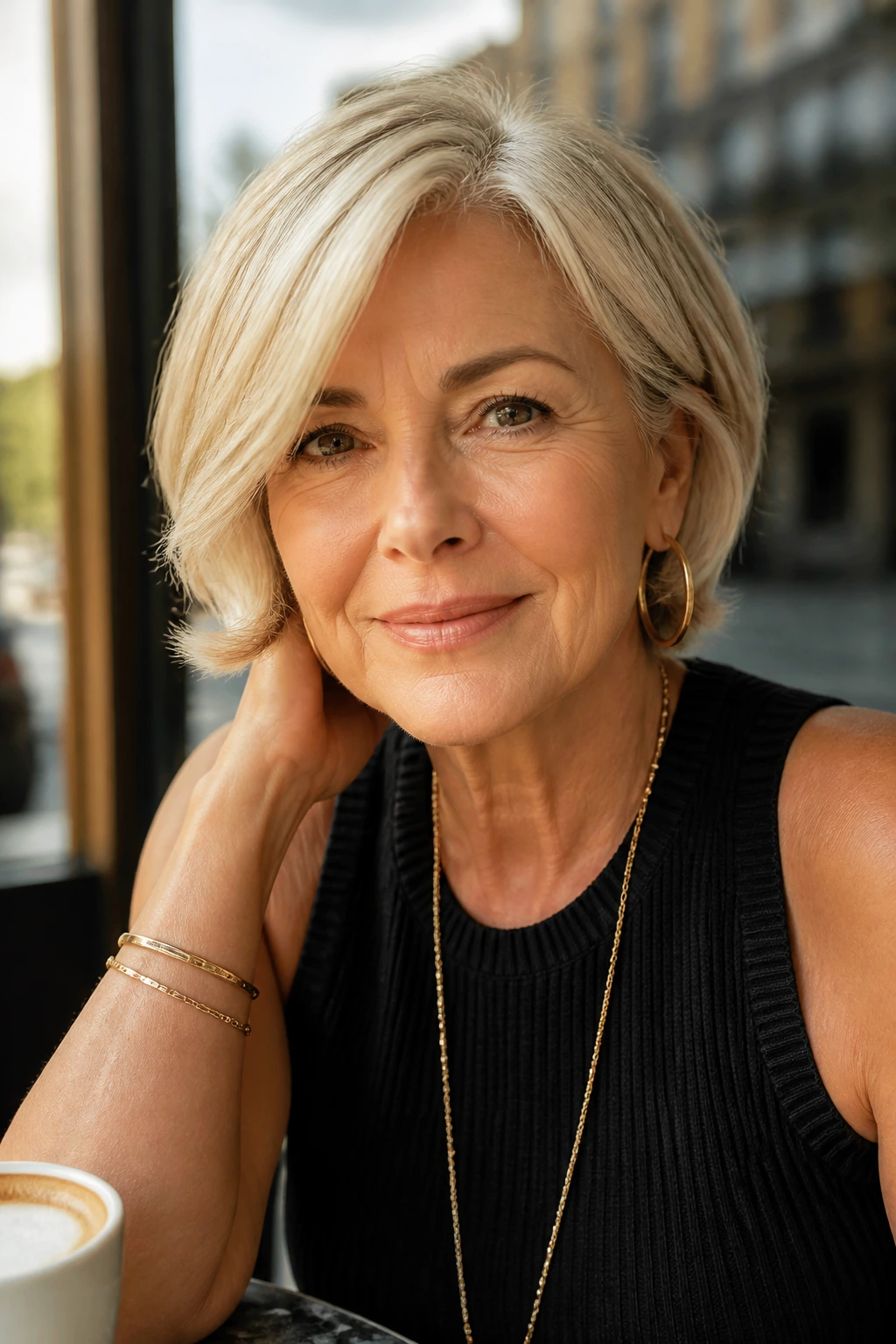
Finish: The cleanest finish is usually a touch of bend, not a pin-straight polish. A bob that turns slightly under at the ends or a pixie with a piecey crown looks more alive than hair that has been flattened into submission.
Pairing with glasses and earrings: Shorter cuts look excellent with glasses because they leave the eye area open. Small hoops, studs, or a slim frame keep the face from getting crowded. If you wear a bolder frame, keep the haircut simpler; if the cut has more texture, a lighter frame often balances it better.
Volume balance: If your hair is short on the sides, keep a little lift on top. If the cut is longer and sits at the collarbone, the ends should have movement or the style can hang. Hair wants balance. It never stops asking for it.
Lasting the day: A quick blast of root spray at the crown and a side part can rescue a flat bob in under two minutes. For curls, a water mist and a dab of cream is usually enough. For sleek cuts, a brush and a pea-size smoothing lotion often beat another round of hot tools.
Small Styling Moves That Make a Big Difference
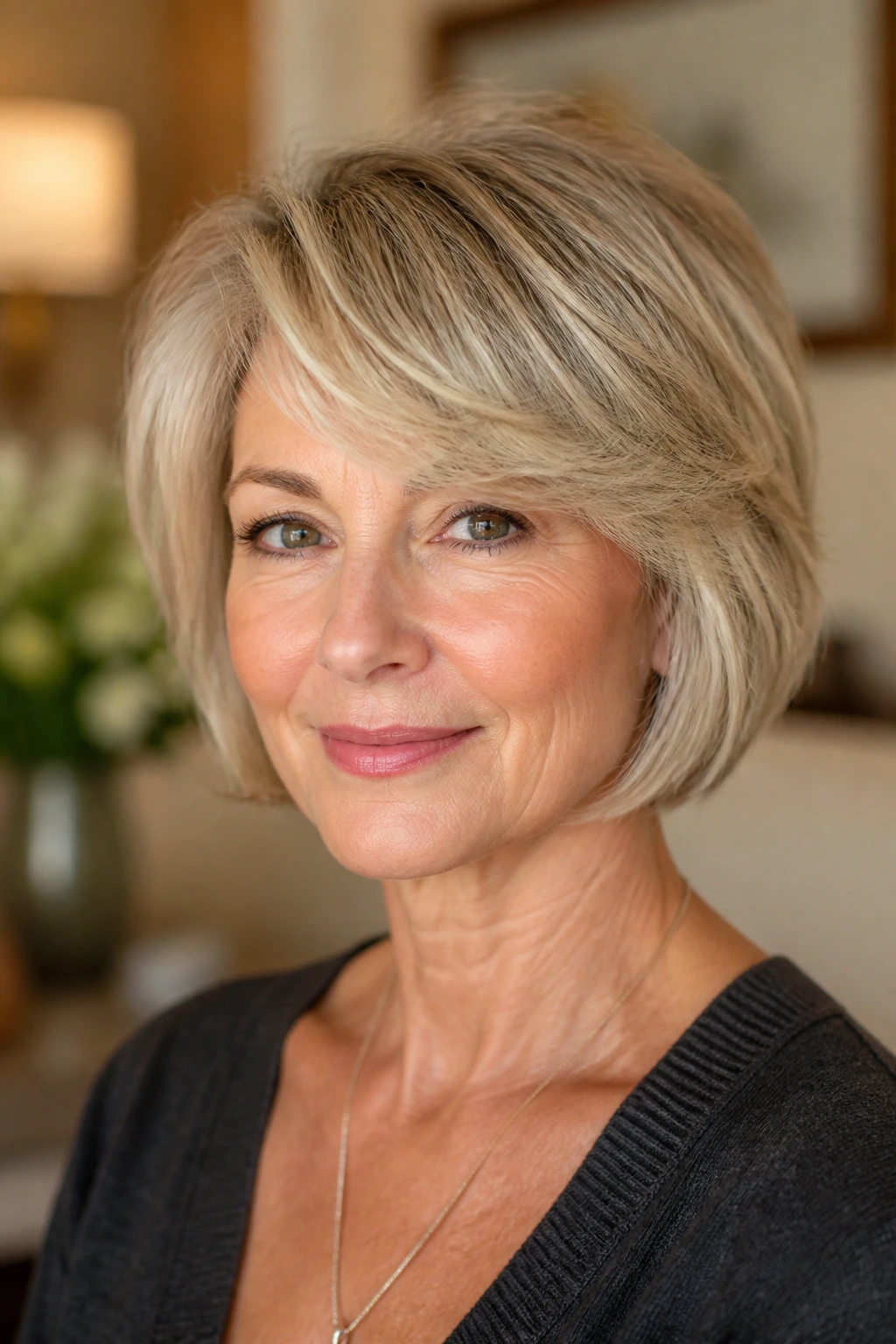
Texture Boost: A little dry texture spray at the roots can stop a bob or lob from collapsing, especially if your hair is fine and clean. Use less than you think. Too much and the hair feels dusty.
Framing Fix: If the face looks long or the jaw feels too sharp, add softness near the cheekbone with a side sweep or a small face-framing bend. That tiny change can soften the whole haircut without sacrificing length.
Color Lift: Silver hair looks best with shine, not heavy gloss. A lightweight serum on the ends and a purple shampoo used sparingly can keep the tone bright without making the hair look flat or dull.
Accessory Move: A narrow headband, a slim clip, or a barrette placed just behind the ear can make even a plain bob look intentional. The accessory should support the cut, not hide it.
Part Switch: If a haircut starts feeling tired, shift the part by an inch. That alone can wake up the crown and change the way the fringe falls. Cheap fix. Effective.
How to Keep the Shape Between Salon Visits

Short and medium cuts tend to lose their shape in different ways. Bobs start flipping, pixies grow fuzzy at the nape, and layered cuts lose their front framing first. That means the maintenance plan should match the cut, not just the hair type.
For bobs and lobs, expect the shape to stay clean for about 6 to 8 weeks before the ends start to thicken or turn uneven. A pixie or bixie usually needs a trim every 4 to 6 weeks if you want the neckline and ears to stay tidy. Shoulder-length cuts can stretch to 8 to 12 weeks, but only if the ends are trimmed before they fray.
Overnight care matters more than people think. A satin pillowcase reduces friction, which helps preserve the fringe and the crown. If the style is curly, a loose pineapple or a soft clip at the top can protect the curl pattern. If the style is straight or wavy, tucking the front sections behind the ears before bed can keep them from kinking in odd places.
For refresh days, dry shampoo at the roots is useful, but only on the roots. A little mist of water on the front pieces, then a round-brush blow-dry for 60 seconds, can reset a bob faster than a full wash. For curls, a spray bottle and a dab of leave-in cream do the same job. Hair does not need to be “reborn” every morning. It just needs a little help.
Variations and Adaptations to Try
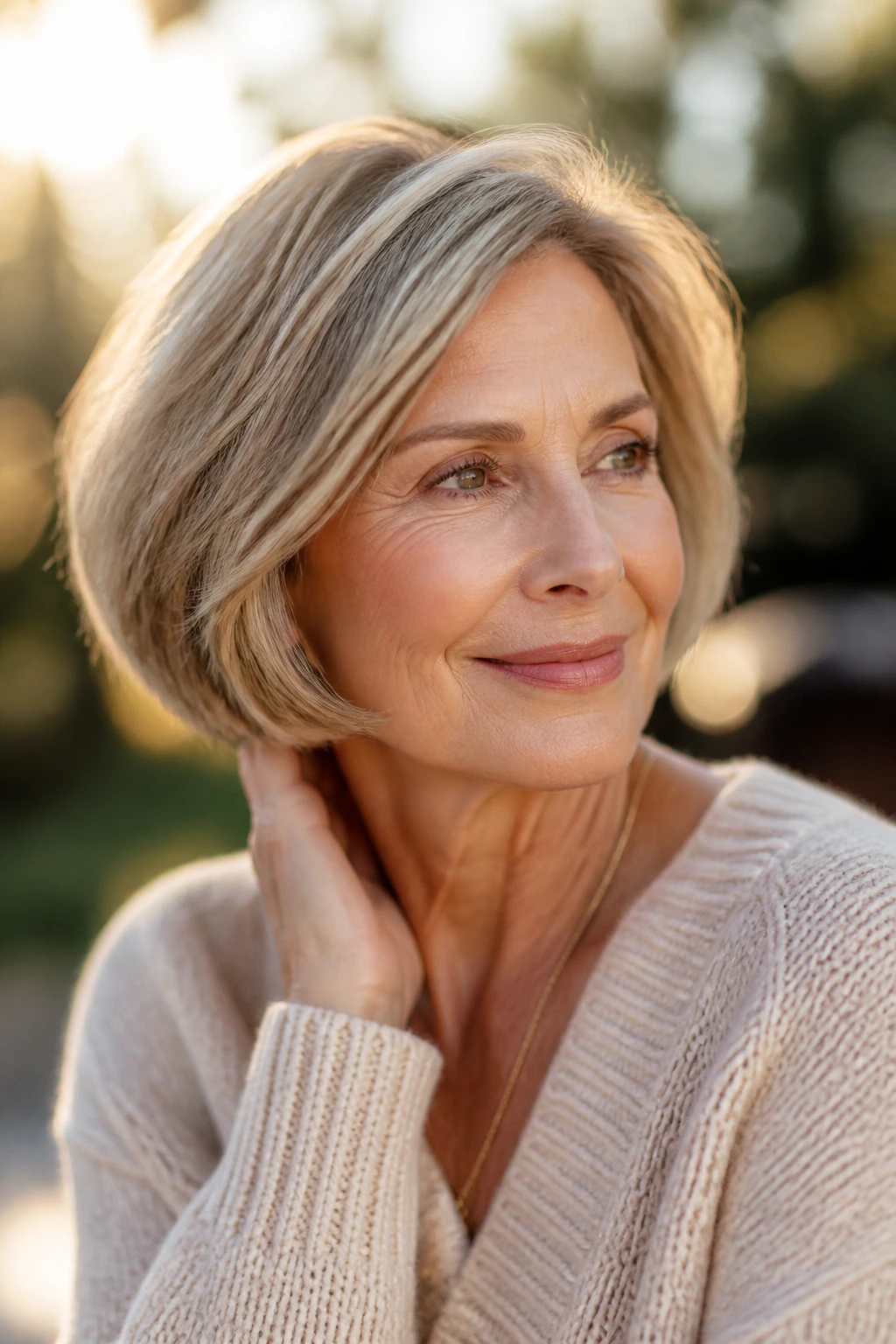
The Fine-Hair Lift Plan: If your hair is thin at the ends, keep the perimeter blunt and the layers minimal. A bob, bixie, or cropped pixie with a little crown lift will usually outwork a heavily layered cut.
The Thick-Hair Slim-Down: Thick hair needs shape, not a fight. Ask for internal layering, weight removal at the right spots, and a cleaner outline around the jaw or shoulders so the cut does not balloon.
The Curl-Friendly Version: For waves and curls, ask for dry cutting or curl-by-curl shaping. That keeps the ends from shrinking into a triangle and lets the texture keep its natural bounce.
The Glasses-Friendly Fringe: If you wear frames, keep bangs longer and lighter. Side-swept fringe, bottleneck bangs, or a soft piece that falls just above the brow usually works better than a straight blunt bang that crashes into the lenses.
The Grow-Out Grace Cut: If you hate frequent salon visits, choose a lob, shoulder-length cut, or a bixie with soft edges. These grow out more evenly and avoid that awkward “I meant to get a trim but ended up with a new haircut” stage.
The Silver Shine Version: Gray hair looks strongest when the cut is clean and the finish is light. Use shine spray, avoid heavy waxes, and keep the nape and fringe trimmed so the color can do its work.
Common Mistakes That Make Older Hair Look Older
The first mistake is too many short layers on fine hair. The result is often see-through ends and a crown that collapses by noon. Fine hair needs shape and a little lift, not a thousand tiny pieces.
Another one: bangs cut too short. Hair around the forehead can shrink as it dries, and a fringe that looked fine in the salon chair may sit much higher at home. Leave more length than you think you need, especially if your hair has a wave.
Over-thinning is a quiet problem. A stylist can remove so much bulk that the ends start looking ragged and weak. If the hair is thick, ask where the bulk is being removed and how much. Random texturizing is not a plan.
Ignoring the neck and nape is another mistake. A haircut can look neat from the front and clumsy from behind. If the nape puffs out or grows into a shelf, the whole style looks older fast.
Heavy product causes trouble too. Thick creams, sticky gels, and too much oil can drag the crown down and make the hair look dirty by lunchtime. Use smaller amounts. Then use even less.
And one last thing: choosing a cut that fights your natural pattern. If your hair wants to wave, stop asking it to act poker-straight every day unless you enjoy the labor. The modern look usually comes from working with the texture, not punishing it.
Questions People Actually Ask Before Getting the Cut
What haircut makes hair look fuller after 60?
A jaw-length bob, a bixie, or a short crop with lift at the crown usually gives the best illusion of fullness. The trick is keeping the perimeter strong enough to look dense while avoiding layers that thin the ends.
Are bangs a good idea for mature women?
Yes, if they’re cut with the forehead shape and hair texture in mind. Side-swept fringe, bottleneck bangs, and soft wispy bangs are usually easier than heavy blunt bangs because they grow out more gracefully.
Should women over 60 keep their hair short?
Not automatically. Short hair can be flattering, but collarbone cuts, lobs, and long layers can look just as modern if the shape is clean and the ends are healthy. Length is less important than structure.
How often should these haircuts be trimmed?
Pixies and bixies need attention every 4 to 6 weeks. Bobs and lobs usually hold for 6 to 8 weeks. Shoulder-length cuts can go a bit longer if the ends stay in good shape.
Can gray hair look modern without color?
Absolutely. In fact, silver hair often looks more striking in a clean, well-shaped cut because the light catches the line and texture. A good shape matters more than dye.
What if my hair is thinning at the crown?
Choose a cut with a little lift on top and avoid over-layering. A pixie, textured crop, or bob with root support can make the crown look fuller without aggressive teasing.
Do these styles work with curly or wavy hair?
Yes, and some of them work better on texture than on straight hair. Curly bobs, shags, wash-and-wear cuts, and layered lobs are especially useful when the shape respects the natural bend.
What should I bring to the salon?
Bring two or three photos, but also say what you like in each one. Tell the stylist the length you want, whether you need low maintenance, and how much time you’ll spend styling on a normal morning. That saves everyone a headache.
The Shape That Does the Heavy Lifting
The best hairstyles for women over 60 do not try to hide age. They give the hair a better outline so the face looks fresh, the neck looks cleaner, and the whole style feels current without acting desperate for attention. That’s a better bargain than chasing a cut that fights your texture every morning.
A good modern haircut should make you feel like the style has your back. It should handle gray hair, thinning at the crown, waves that have a mind of their own, or a fringe that needs a little coaxing. If it does that, the rest becomes much easier. You spend less time wrestling with the mirror and more time living with hair that actually suits you.
If you’re heading to a salon with one of these cuts in mind, bring the photo, bring the measurements, and bring a little honesty about your routine. That’s where the real good hair starts.
