



Medium length wavy hairstyles hit a sweet spot that short cuts and longer lengths often miss. The hair has enough swing to show off its bend, but not so much weight that the wave disappears before lunch. A collarbone cut, a clean lob, or a layered shoulder-grazer can all take on a different mood with one part change, one clip, or a few passes of a curling iron.
That flexibility is the real draw. You can go soft and undone on a Tuesday, then push the same length into something sharper, sleeker, or more dressed up without cutting off inches or starting over. Medium waves also behave better when the weather gets annoying — and hair gets annoying in ways people never warn you about, like the flat root at the crown, the puff at the ends, or that strange half-bent section right behind the ear.
The trick is choosing a shape that works with your wave pattern instead of fighting it. Some medium cuts need weight to keep fine hair from floating away. Others need layers to stop thick hair from turning into a helmet. A few of the best looks here are polished enough for work and loose enough to air-dry on a busy morning, which is the kind of practical range that keeps a haircut in rotation for months.
Why This Collection of Medium Length Wavy Hairstyles Works So Well
-
The length has room to move: Hair that lands around the collarbone or shoulders bends instead of dragging flat, so the wave reads clearly even after a long day.
-
You can change the mood fast: A center part, a deep side part, a barrette, or a tuck behind one ear can make the same haircut look calmer or sharper in minutes.
-
Layers do different jobs here: Shorter layers add lift, longer layers keep the shape from puffing out, and face-framing pieces make the front feel lighter without sacrificing bulk control.
-
These styles handle second-day hair better: Medium waves usually wake up with enough shape left to refresh, which means less washing and less starting from scratch.
-
They work with heat or no heat: A curling iron, a flat iron bend, braids, or a straight-up air-dry can all get you into the same general family of texture.
-
The grow-out is kinder: Medium cuts tend to blur into the next stage more gracefully, so a trim that grows a little long does not instantly look sloppy.
1. Soft Layered Lob With Loose Bends
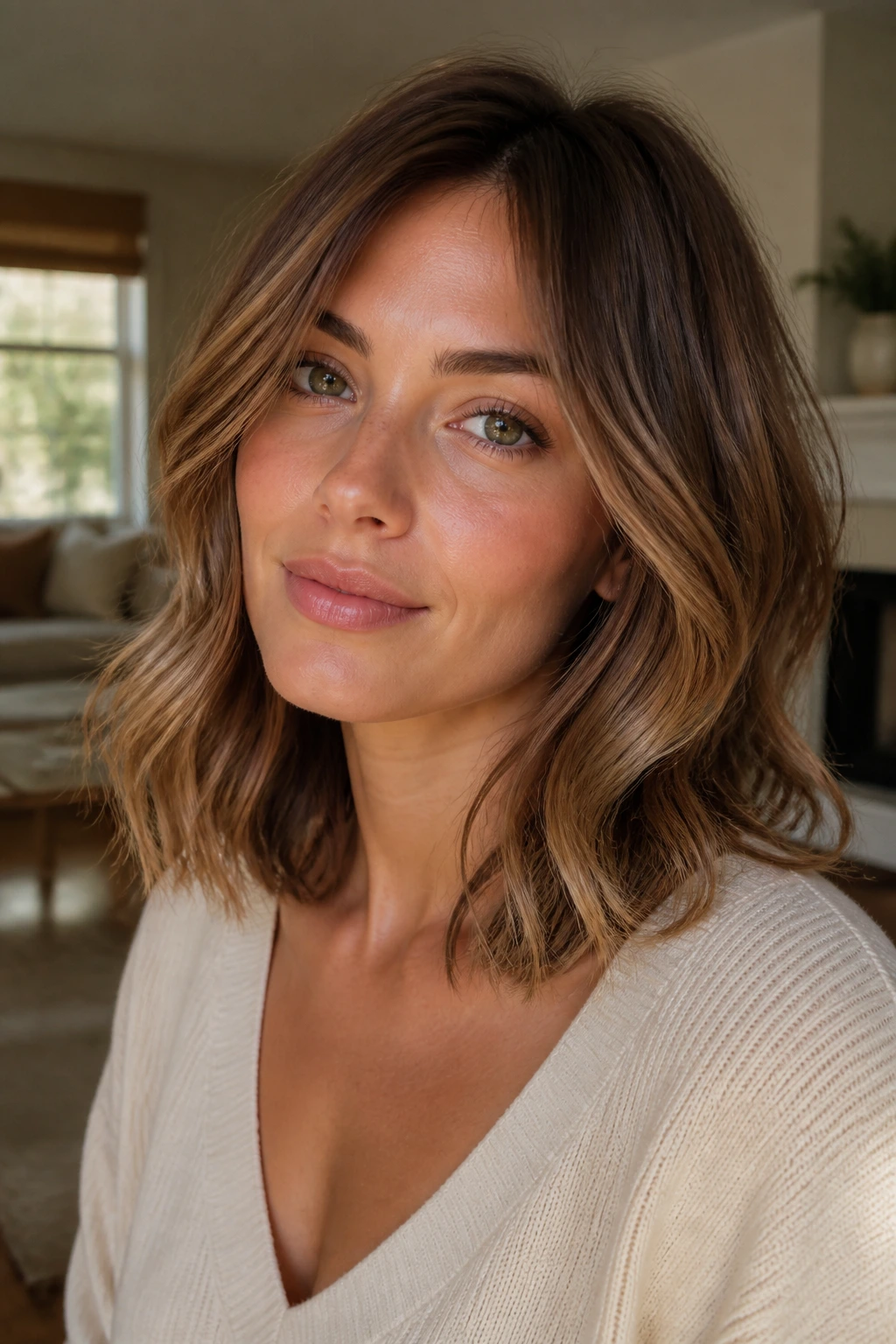
A soft layered lob is the reliable middle lane of medium length wavy hairstyles. It sits around the collarbone, which gives the ends enough weight to lie nicely while still letting the wave show. The result is relaxed, not flat. Clean, not stiff.
Why It Works
The length does two useful things at once. It keeps fine hair from flying apart, and it keeps thicker hair from stacking up into too much bulk at the shoulders. If the layers start around the cheekbone and fall in long, gentle drops, the bend feels airy without getting ragged.
A 1.25-inch curling iron gives this shape its easiest finish. Wrap only the midlengths and leave the last inch or so out. That tiny choice keeps the ends from looking too ringlet-heavy, which is where a lot of lob styling goes wrong.
Styling Notes
- Use a light mousse if your hair is fine and slips flat fast.
- Use a smoothing cream if your hair is coarse and tends to frizz at the ends.
- Curve every other section away from the face so the wave does not look too uniform.
- Finger-comb after cooling, not while hot. Hot waves collapse in a hurry.
The best thing about this lob is that it still looks like hair after you’ve worn it all day. That matters more than people admit.
2. Curtain Bangs and Shoulder-Grazing Waves
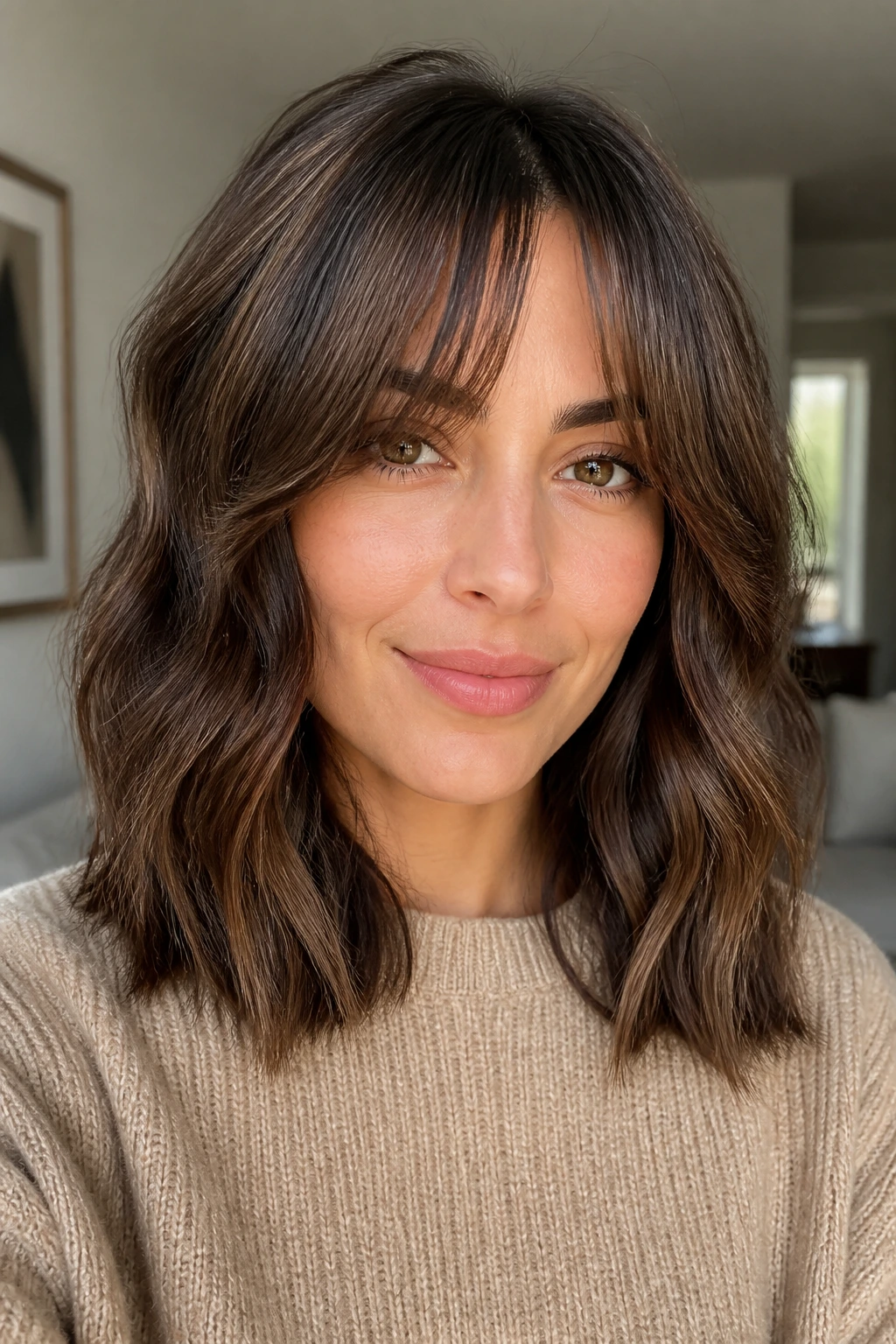
Curtain bangs change the whole read of medium length wavy hairstyles. They soften the front, break up width at the cheeks, and give you something to style even when the rest of the hair is behaving lazily. The bang area does need attention, though. Ignoring it is how curtain bangs start looking like sad little drapes.
The trick is in the blow-dry. Push the bangs forward first, then wrap them away from the face with a round brush or a medium Velcro roller until they cool. That bend at the root matters more than the ends. If the root stays flat, the whole bang falls limp.
For the waves, keep the sections loose and the direction slightly imperfect. Curtain bangs look better with a bit of movement underneath them, not with rigid, identical curls everywhere.
Best for:
- Faces that need a little width broken up at the cheek level
- Hair that can hold a bend but still wants softness around the forehead
- Anyone who wants a cut that grows out without turning abrupt
This is one of those styles that looks polished even when the wave pattern is not perfect. The bangs do a lot of the heavy lifting.
3. Choppy Wavy Shag With Piecey Ends
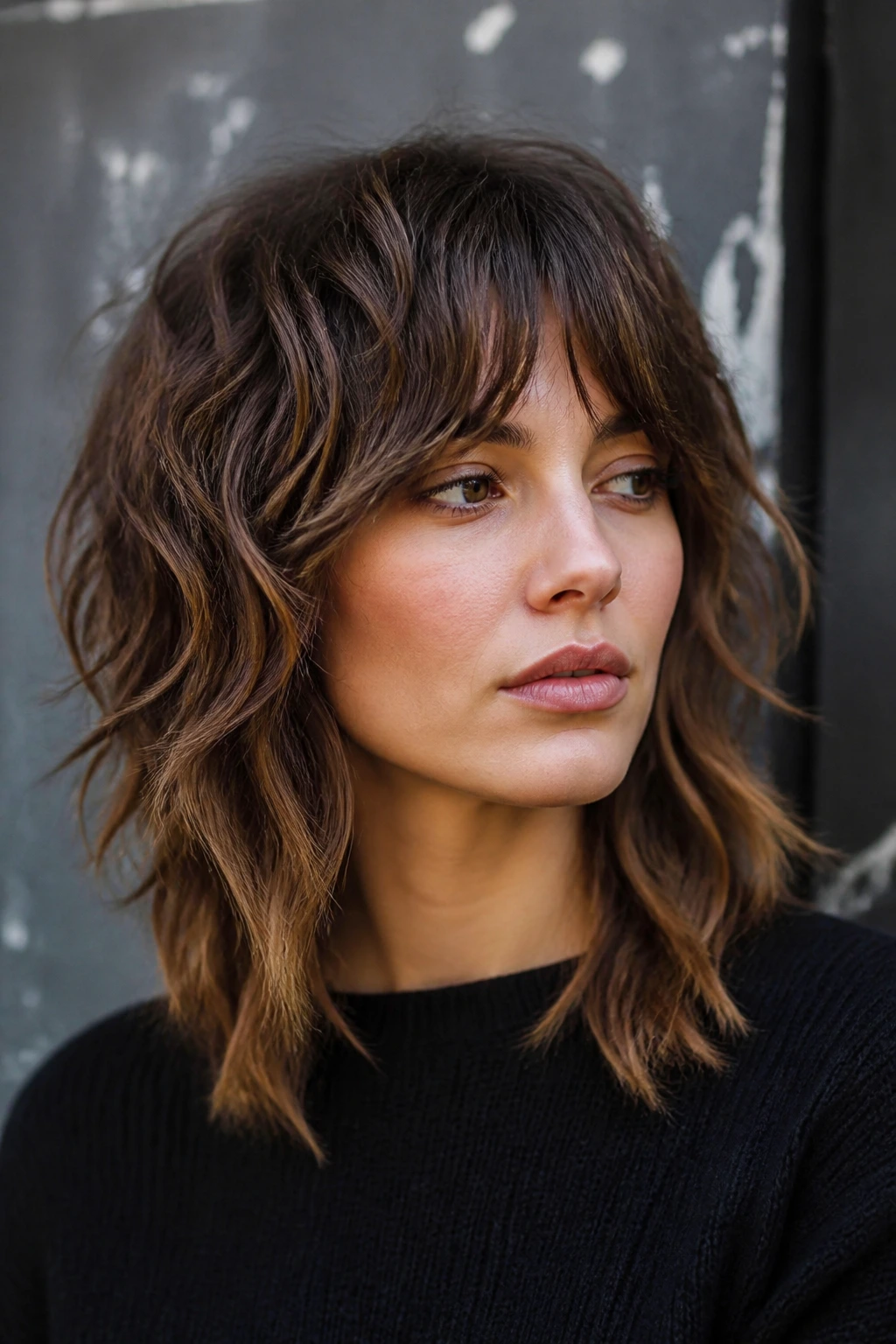
Why do shag cuts keep showing up on wavy hair? Because waves and shag layers want the same thing: air. A medium shag gives the crown some lift, removes weight from the sides, and leaves the ends looking separated instead of thick and blocky. It is messy on purpose, which is a relief if your hair refuses to hold a neat pattern anyway.
What Makes It Different
This is not the haircut for someone who wants smoothness first. It is for someone who likes visible texture, touchable ends, and a little edge around the face. Ask for shorter interior layers, but keep the bottom line long enough to brush the collarbone. If the shortest pieces are too high, the shape can puff out in a triangle.
Dry shampoo at the roots gives this cut a better finish than heavy oil ever will. That’s not glamour. It’s just how the shape behaves.
How to Style It
- Scrunch in mousse on damp hair.
- Diffuse until about 80% dry.
- Break up a few top layers with a tiny bit of wax or pomade on the fingertips.
- Skip brushing unless you want the whole thing to go soft and round.
A shag can look a little wild in the mirror and still be the right haircut. That’s part of the appeal.
4. Blunt Lob With Polished Bends
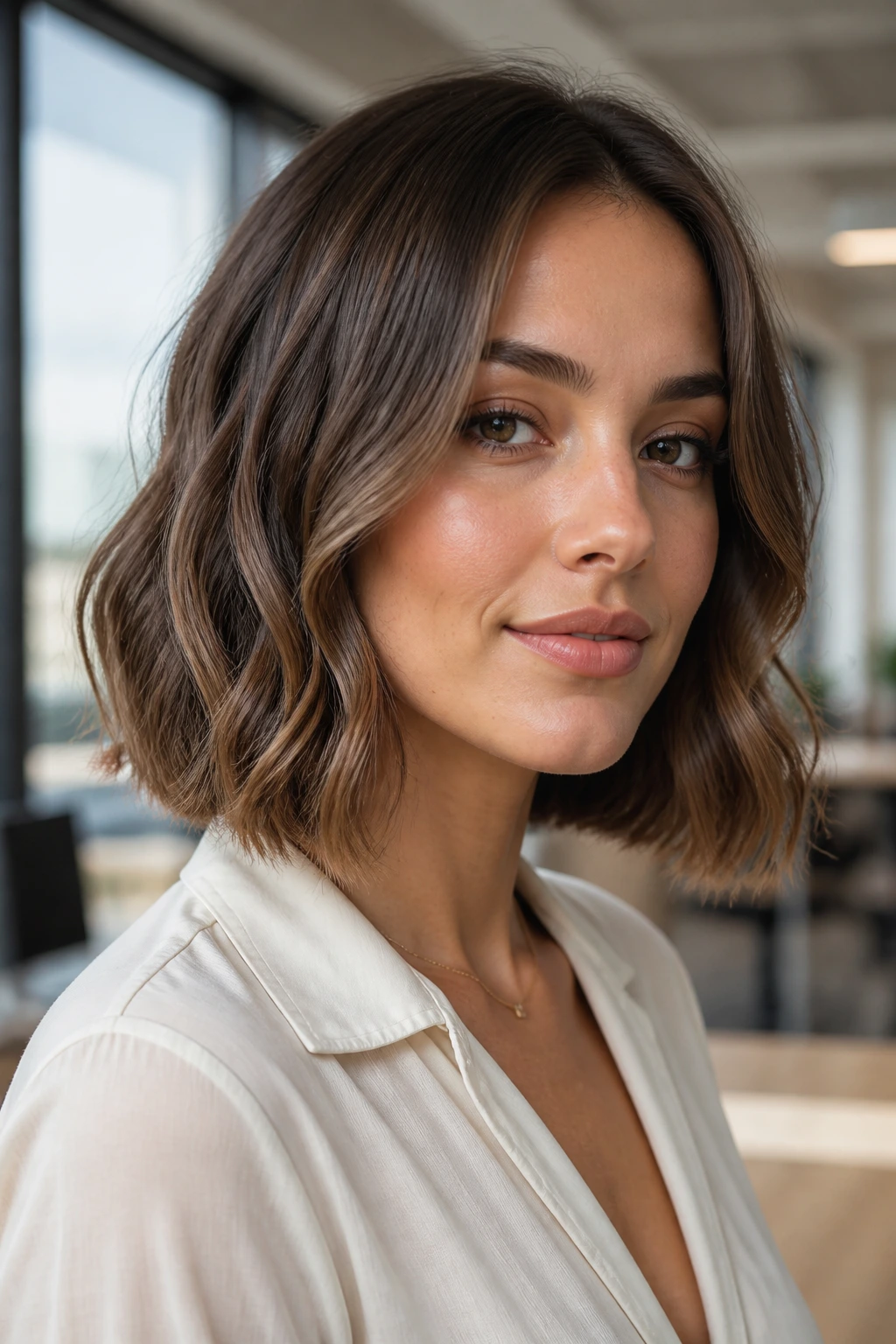
A blunt lob sounds strict, but on wavy hair it can look sharp in a good way. The clean edge gives the wave something to sit against, so the texture reads as deliberate rather than frayed. If your hair is fine or medium in density, this style can be a better choice than too many layers, which sometimes steal the shape away.
The bend should be gentle, almost like a flat iron wave rather than a full curl. Clamp the iron midway down a section, bend it slightly in one direction, then switch the angle and continue. You want a soft S, not a corkscrew. That little difference keeps the ends looking crisp.
Use this if you want:
- A haircut that feels neat even when styled loosely
- A good base for polished office hair
- Less need for heavy texturizing products
The blunt edge does require regular trims. Once the perimeter starts to split or flip out unevenly, the style loses its clean line fast. Keep that in check and it stays sleek.
5. Deep Side-Part Waves With Long Layers
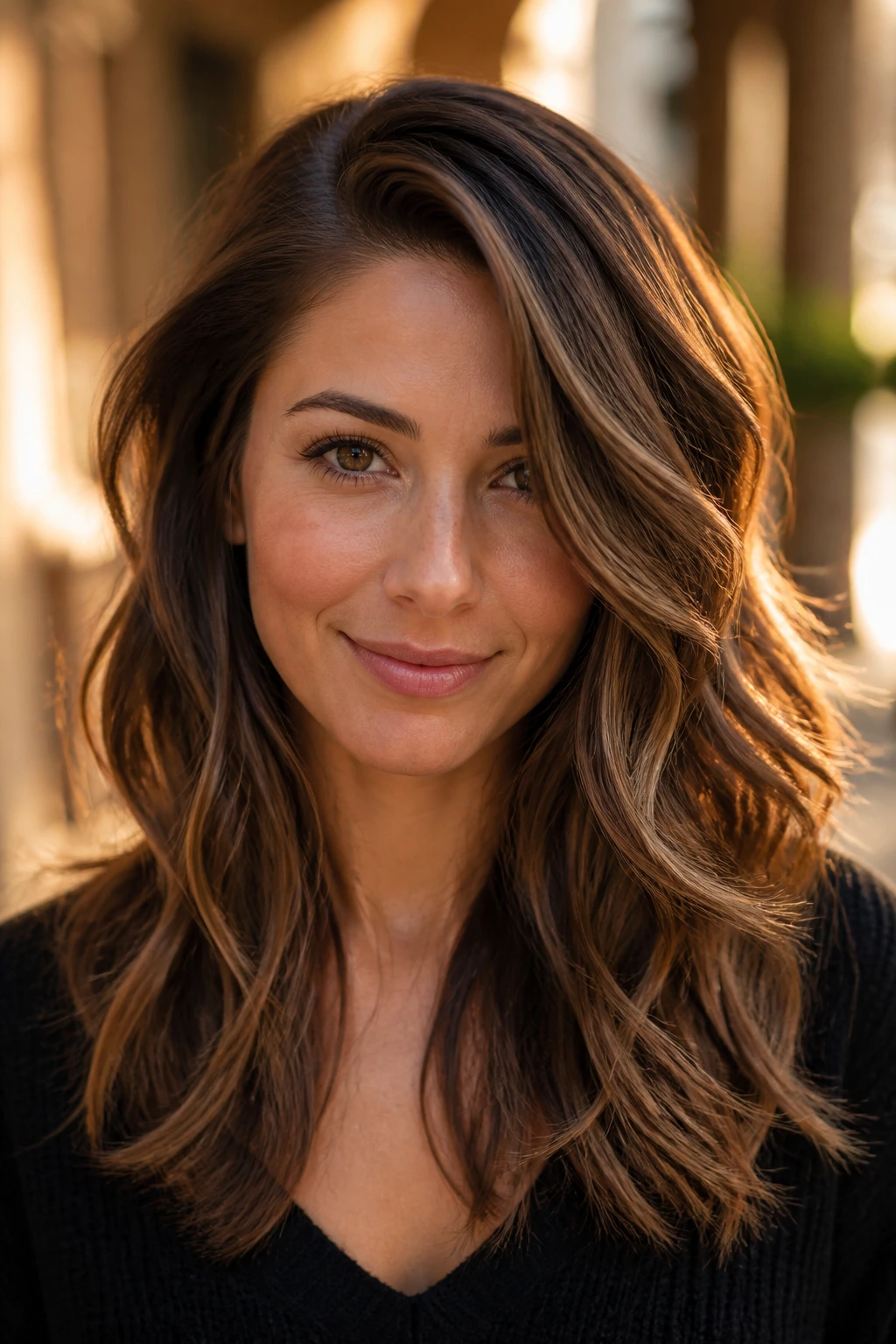
A deep side part does more than change the direction of the hair. It shifts the balance of the whole cut. On medium length waves, it adds height at the crown, moves weight off the center line, and gives the front more sweep. If your hair tends to collapse on top, this is a useful trick, not a gimmick.
The long layers matter because they keep the wave flowing when one side is tucked behind the ear or pinned back. Without those layers, the part can make one side feel too heavy and the other side too thin. That imbalance is hard to ignore.
The style works especially well when the waves start a little below the roots. If you curl from the scalp down, the part can go puffy. If you leave the top inch smoother and let the bend start lower, the whole shape looks more expensive — not in a flashy way, just in a cleaner, more intentional one.
6. Face-Framing Midi Cut With Soft Movement
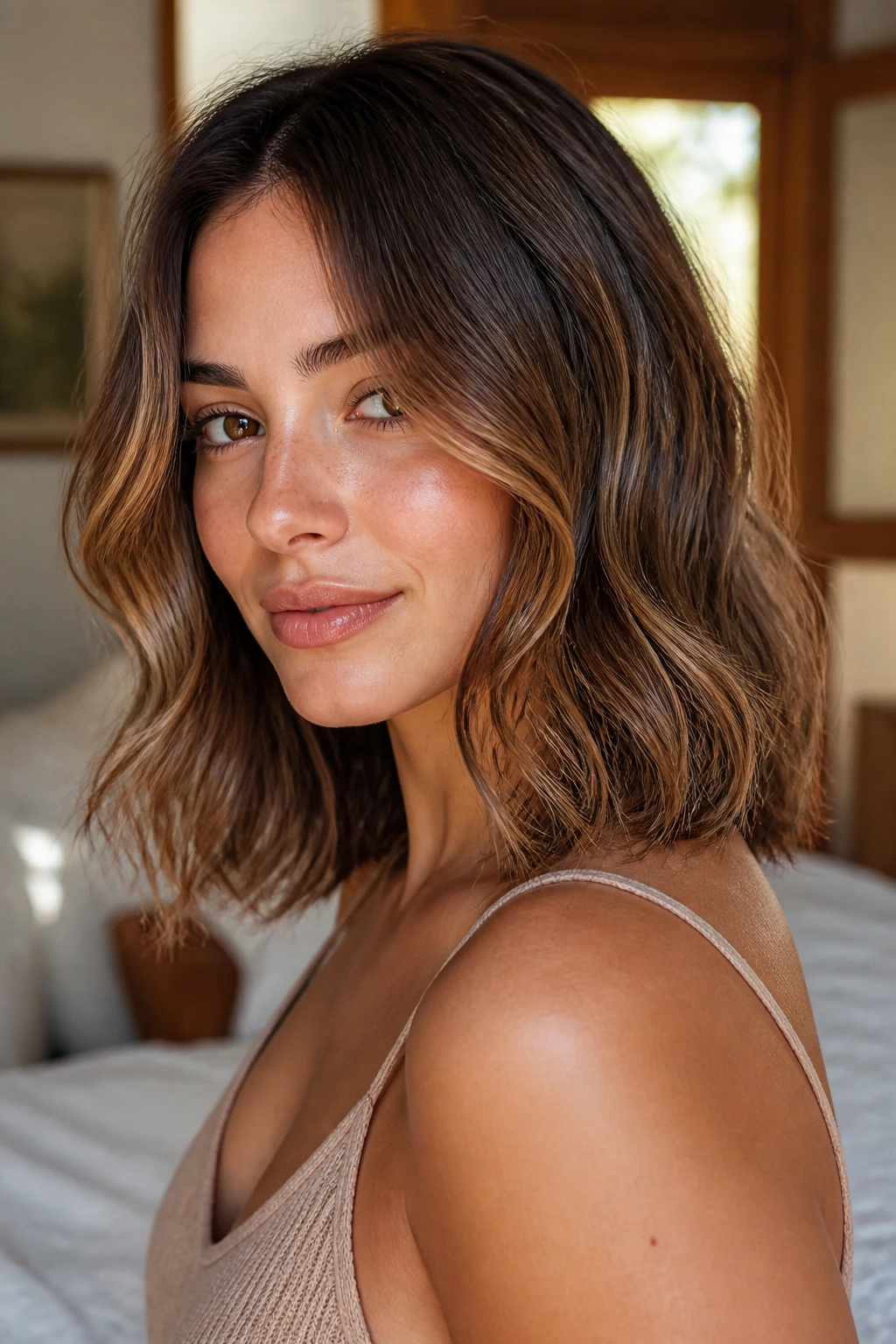
Some cuts are built around the front first, and this is one of them. A face-framing midi cut keeps the length around the shoulders, then drops a few lighter pieces around the cheekbones and jaw. The effect is less about big volume and more about directing the eye. Your hair moves with your face instead of hanging beside it.
That matters if your waves are loose and soft, or if the front tends to hide your features. A good face frame opens the cut up. It can make a medium wave look lighter even when the overall length stays the same.
I like this cut on hair that gets a little shapeless after a few weeks. The front pieces keep doing a job even when the rest grows. That is handy. Not glamorous, just useful.
Ask for the shortest face-framing layer to land somewhere between cheekbone and lip level, then let the longer pieces follow the jaw. Anything shorter can turn fussy fast unless your styling is extremely controlled.
7. Collarbone Wavy Bob With Invisible Layers
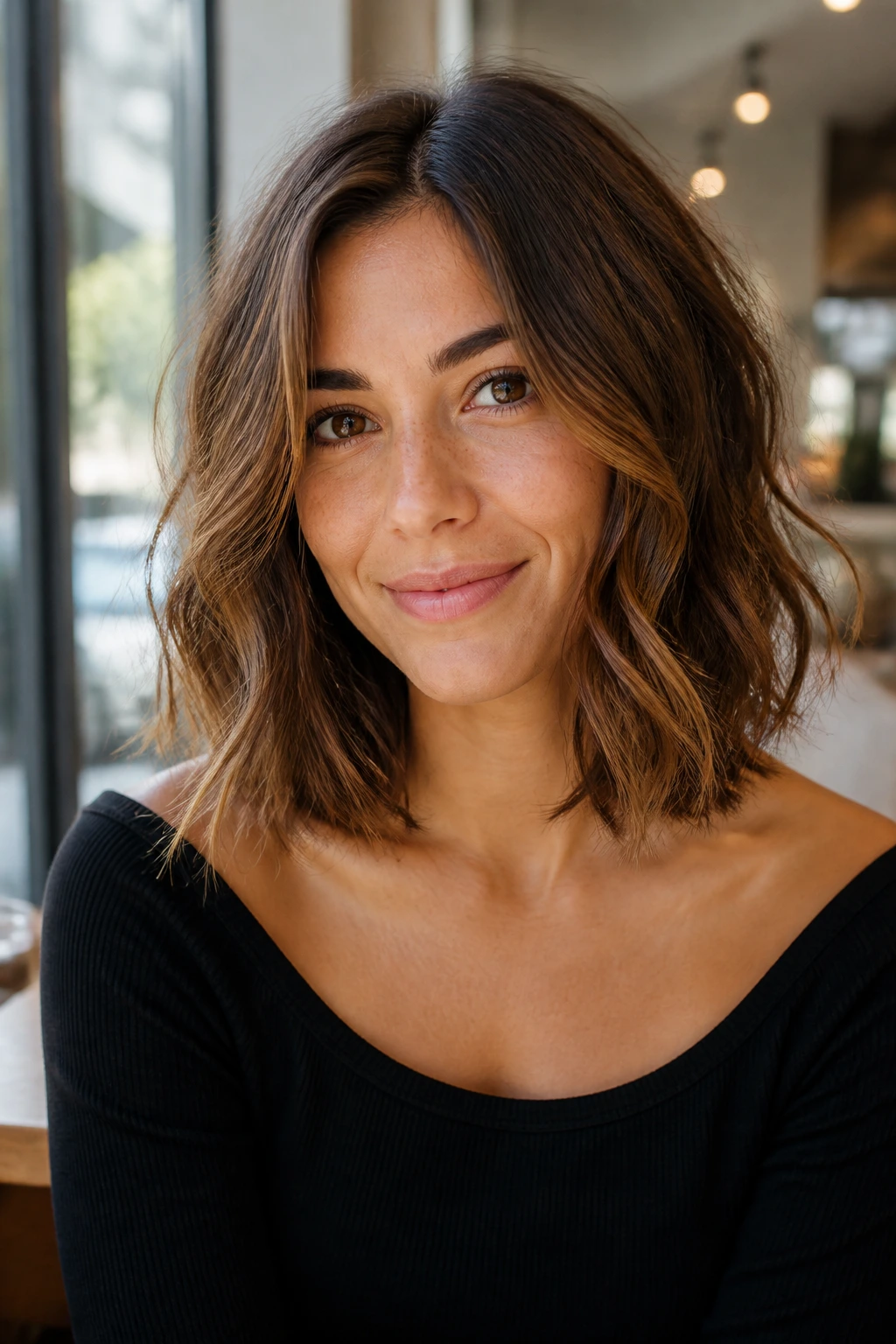
This is the style for people who want movement without obvious stacking. The collarbone wavy bob sits between a classic bob and a lob, and the layers are tucked inside the shape so they do their work without shouting about it. That makes it easy to wear brushed out, air-dried, or curled.
What Makes It Different
The outline stays clean. That’s the point. Instead of visible choppy pieces, the cut uses subtle internal removal so the waves fall in a smoother, more controlled way. If you’ve got thick hair, this keeps the ends from ballooning outward. If your hair is finer, it stops the shape from looking stringy.
Styling Clues
- Use a soft bend, not tight curls.
- Blow-dry the roots smooth before adding texture.
- Tuck one side behind the ear to show the neckline.
- Finish with a light spray, not a sticky one.
This style has a neat little trick: it looks as if you didn’t fuss much, while actually benefiting from a very considered cut. That’s the kind of haircut people think is easy because the hard parts are hidden.
8. Half-Up Twist for Medium Wavy Hair
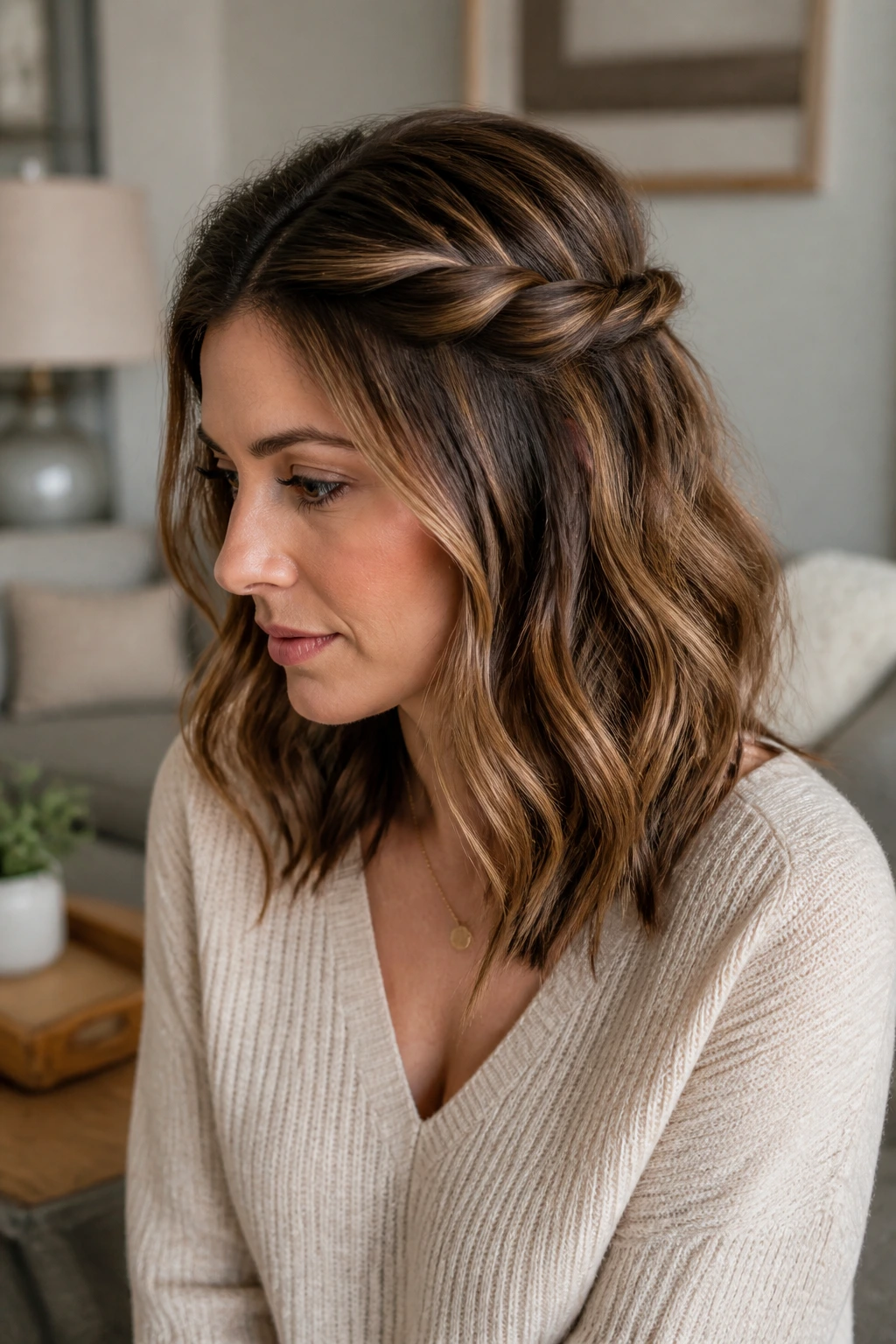
The half-up twist is what I reach for when the front pieces refuse to cooperate. Medium waves are already giving you texture, so this style uses that instead of fighting it. A few turns at the temples and the crown pull the hair back without flattening the wave through the ends.
The beauty of this one is speed. You can make it neat with two bobby pins or looser with a small claw clip. Leave the ends wavy and loose, and the whole look keeps its movement. Pull everything too tight and it starts looking formal in a way that works against the length.
This is one of the easiest styles to fake a fresh wash with. A little dry shampoo at the roots, a twist, and some finger separation at the ends go a long way. That is why it survives on actual busy mornings, not just in staged photos.
9. Deep Side-Part Glam Waves
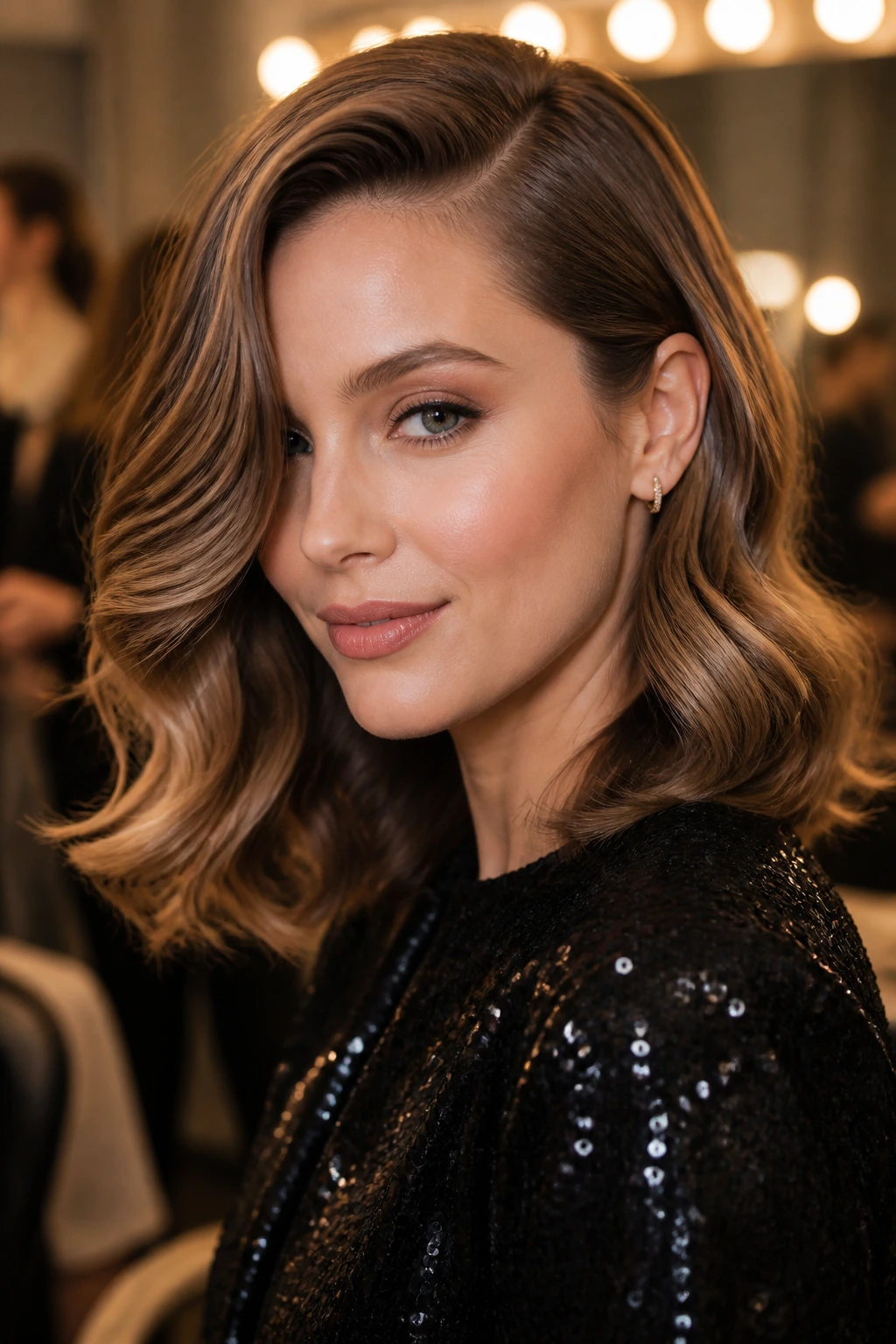
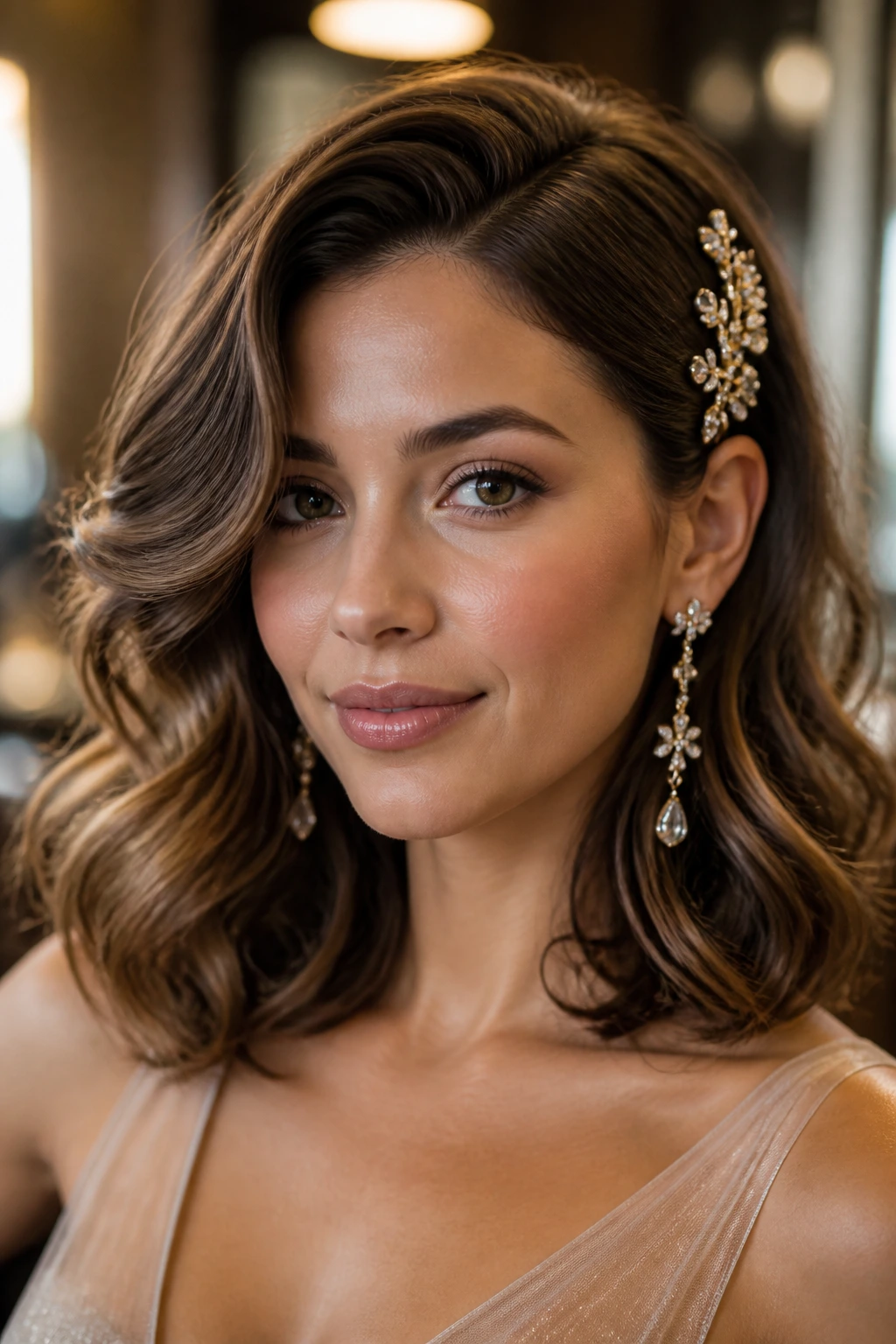
Deep side-part glam waves sit on the polished end of the spectrum. They borrow from old-Hollywood styling, but they work especially well on medium length hair because the waves have enough length to drape and enough mobility to hold shape. The trick is brushing them out after they cool so they fall in a continuous pattern.
Unlike beach waves, which are supposed to look a bit broken up, glam waves want a smoother surface and more definition. Each curve should feed into the next. If you do only half the head and leave the top untouched, the look falls apart at the crown. So set the root first, then work down.
Use a shine spray sparingly. A mist is enough. Too much and the hair turns greasy near the part line, which is where people always overdo it.
For a formal event, pin one side back under the waves with a small barrette. It keeps the silhouette clean and lets the wave line stay visible from the front.
10. Waterfall Braid on a Wavy Lob
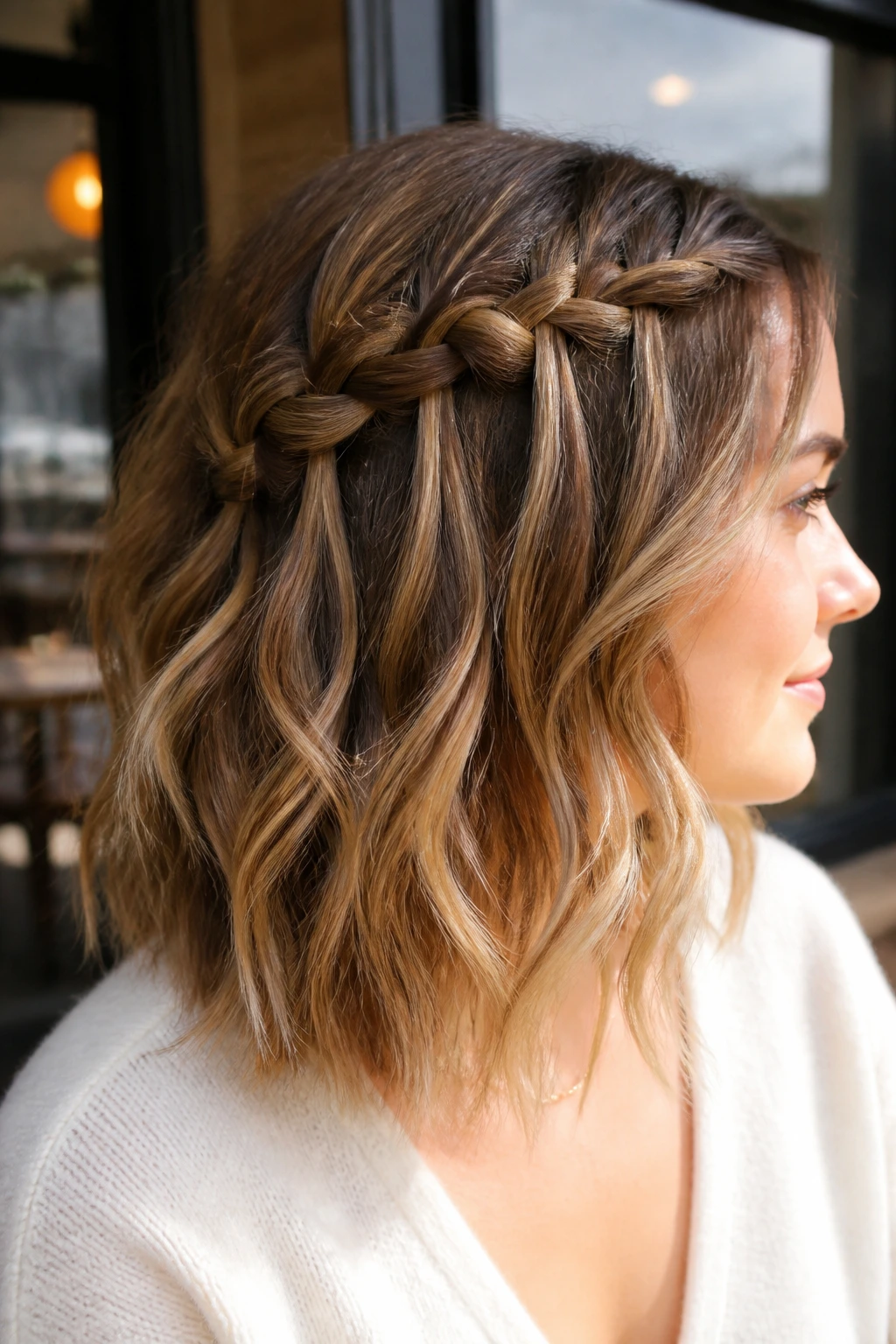
Can you braid medium waves without making the whole style collapse? Yes, if the braid is doing a bit of decoration instead of carrying the whole hairstyle. A waterfall braid on a wavy lob is light, pretty, and far less fussy than a full head of braids on this length.
Start with a side section above the temple and braid across the head, dropping one strand each time you cross. Let the rest of the hair stay loose and wavy. The braid should sit like trim, not like a helmet band. If it’s too tight, the scalp line starts pulling in an unflattering way.
How to Use It
A waterfall braid works best when the wave pattern underneath is soft and brushed out. Tight curls under a braid fight the structure. Gentle bends complement it.
- Curl or wave the hair first.
- Braid over medium-hold hair, not freshly slippery conditioner-heavy hair.
- Set the braid with a small pin behind the ear.
- Keep the rest of the hair loose for movement.
This is a good choice when you want something a little more styled without committing to a full updo.
11. Air-Dried Tousled Layers
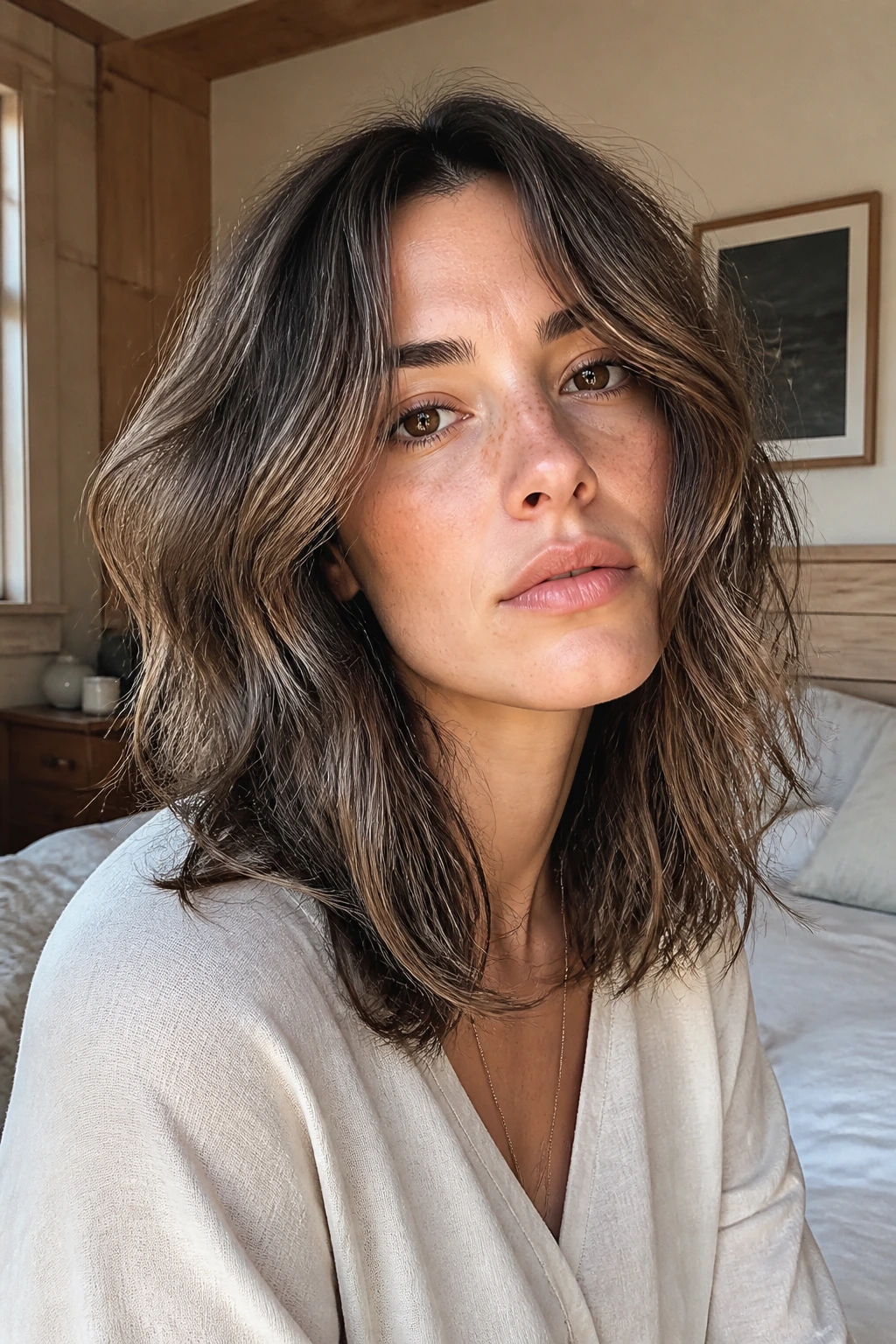
Air-dried waves are not lazy hair. They are strategic hair. The cut has to do enough work that the hair falls into shape on its own, and the product has to support the bend without making the whole thing feel crunchy. That’s why the right layered medium cut matters so much here.
The best air-dried versions use long layers and a little weight at the bottom. If the layers are too short, the top half dries fluffy while the ends go wispy. If the hair is too blunt, the wave can turn into one heavy curve with no separation. Balance matters.
Use a small amount of leave-in conditioner through the ends and a mousse at the roots. Then keep your hands off it. Seriously. Touching the hair while it dries is how the texture gets broken up in all the wrong places.
This style earns its keep because it looks better once it settles. A little imperfection is part of the charm.
12. Shoulder-Length Wolf Cut
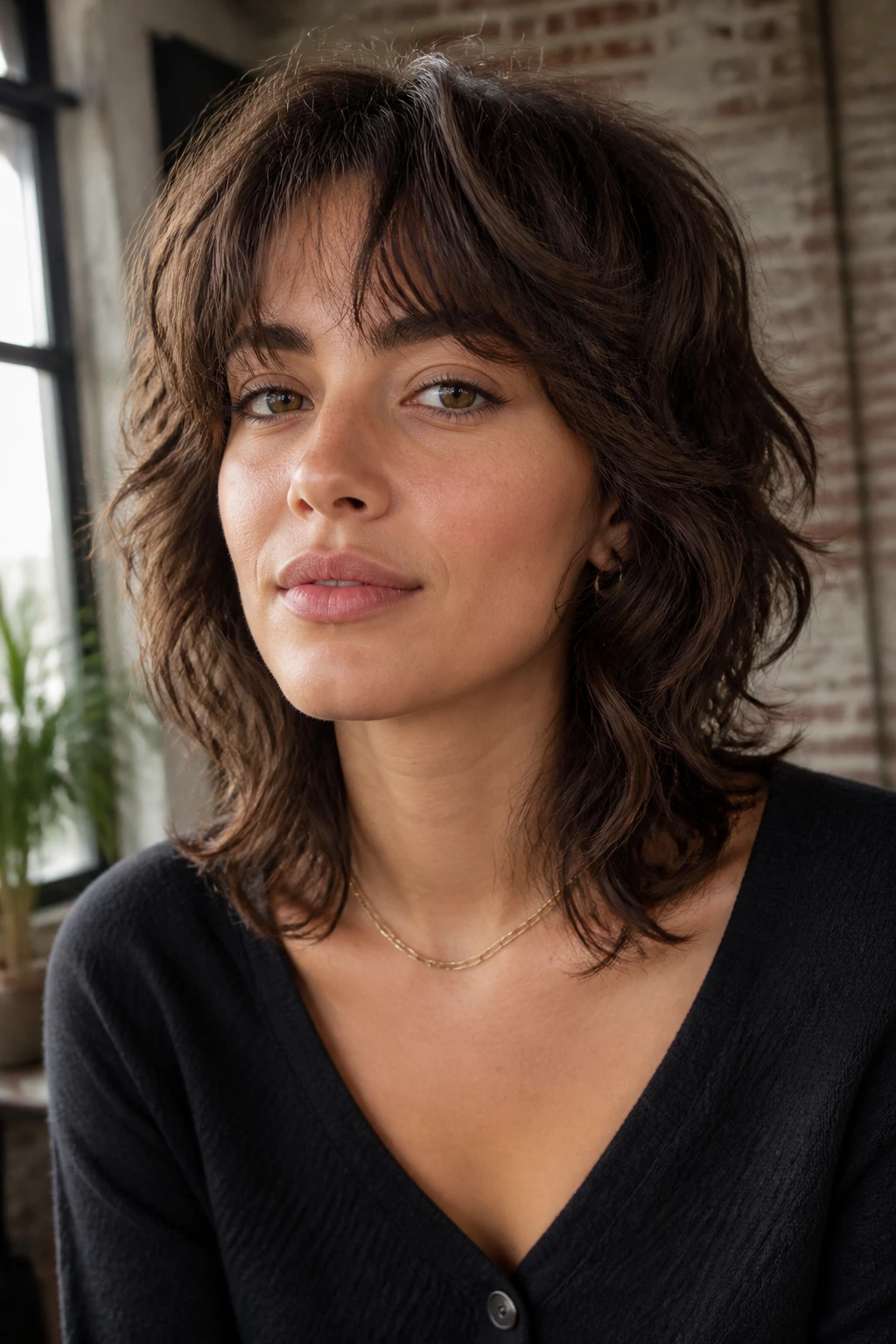
The wolf cut on medium length wavy hair is not for the cautious. It leans into shorter crown layers, longer bottom pieces, and a deliberately lived-in shape. On hair with natural wave, that can look sharp and modern. On hair that is fine and thin, it can get too airy if the layers are cut too high.
That’s the main thing to watch. The wolf cut needs enough density to hold the shape. Thick or medium-thick hair usually handles it better because the shorter pieces create lift without turning see-through. If your hair already puffs around the ears, ask for a softer version with longer face-framing pieces.
The style looks best when you let the texture be a little rough. Round-brushing every strand defeats the point. A diffuser, a touch of cream, and a little scrunching usually give enough bend to make the layers show.
This is the haircut for someone who likes movement with an edge. It has a bit of attitude, and it does not apologize for that.
13. Rounded Wavy Cut With Subtle Layers
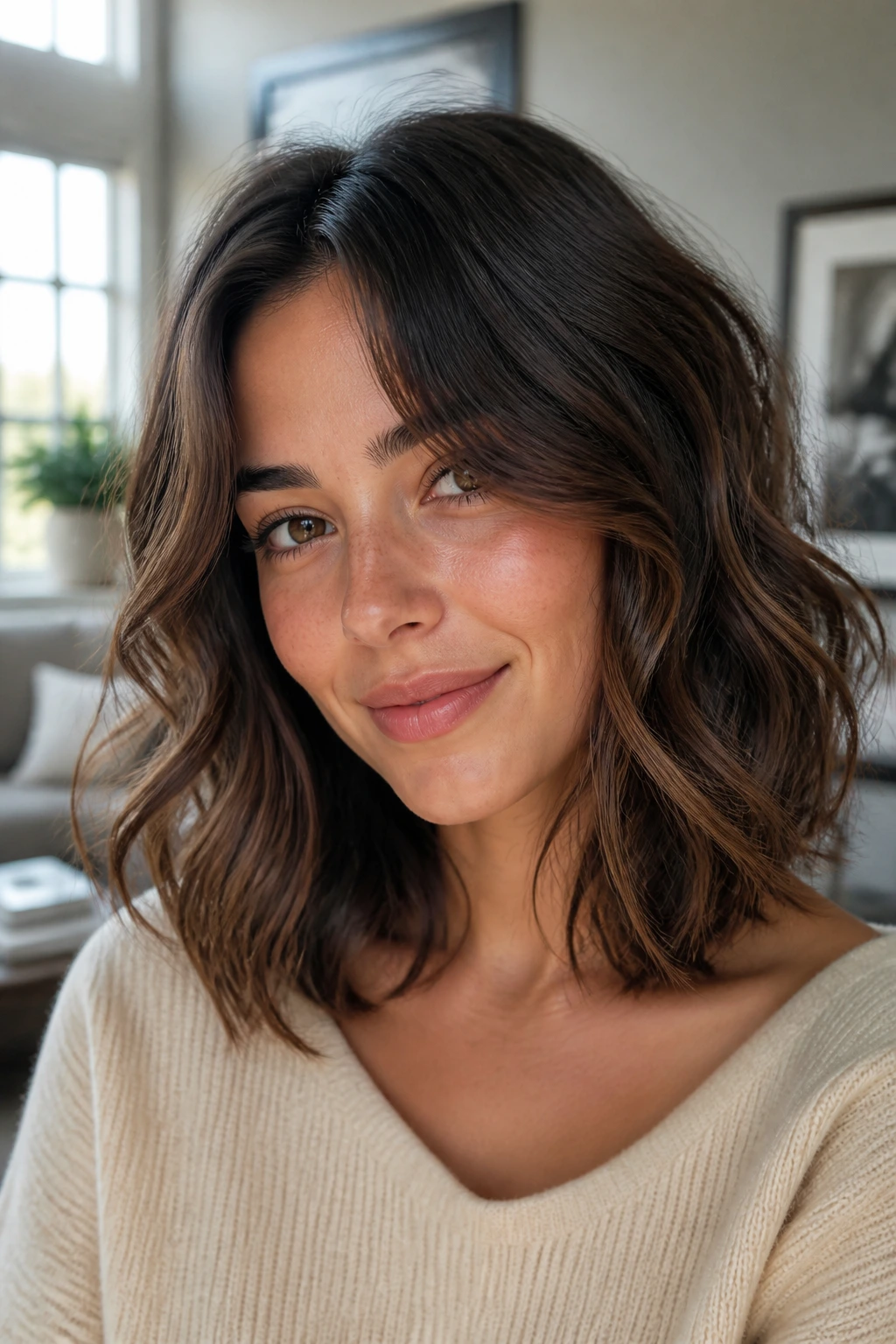
A rounded wavy cut is quieter than a shag and softer than a blunt lob. The silhouette curves in toward the neck and shoulders, which keeps the overall outline neat even when the texture is loose. Medium length waves love this shape when they need a little more structure and a little less mess.
The subtle layers help the hair fall in a dome-like shape instead of flaring out at the sides. That is especially useful for thick hair, where the widest point often lands right at the shoulder line. Rounded layering trims that bulk without taking away the wave.
What to Ask For
- Keep the perimeter around the collarbone.
- Use soft internal layers, not choppy ones.
- Keep the front slightly longer if you want movement near the face.
- Avoid over-texturizing the ends if your hair frizzes easily.
This style is calm in the best way. It doesn’t fight the wave, and it doesn’t chase it either. It just gives it a clear outline.
14. Beach Waves With Money-Piece Highlights
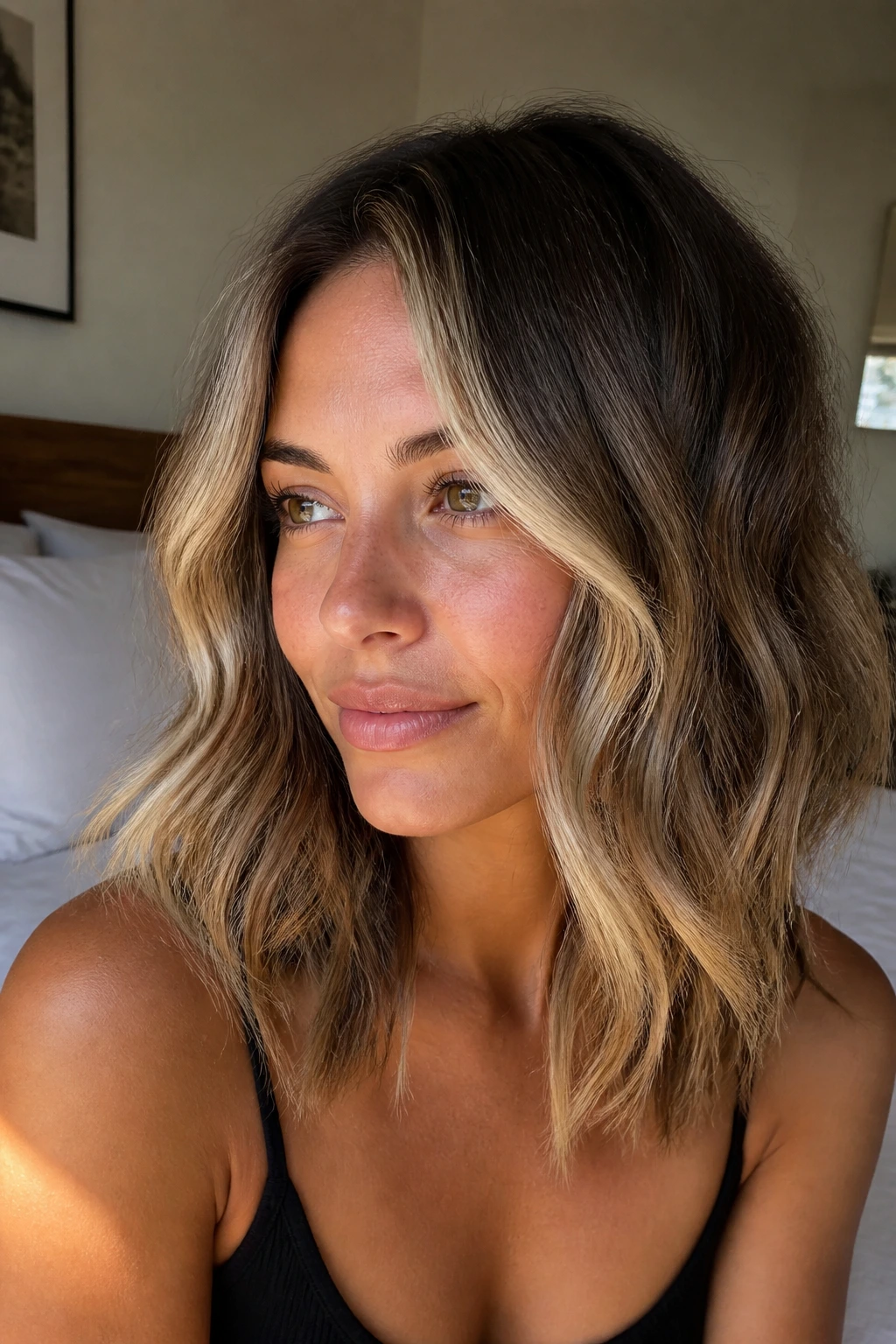
Money-piece highlights change how medium waves read in the mirror. Light pieces around the face catch the bend first, so the movement looks clearer without adding more curl. That makes the hairstyle feel fuller even when the cut itself is simple.
Beach waves work well here because the texture gives the color places to break and shift. If the wave is too uniform, the highlights can look stripey. If the wave is soft and varied, the lighter pieces pop just enough to frame the face and brighten the cut.
The key is restraint. One or two face-framing sections should be enough. If the front is over-lightened, the style can lose depth and start looking flat under indoor light. The best versions keep darker lowlights underneath so the wave has dimension from the side, not just the front.
This is the look to choose when you want movement and color to do the talking at the same time.
15. Low Bun With Loose Wavy Tendrils
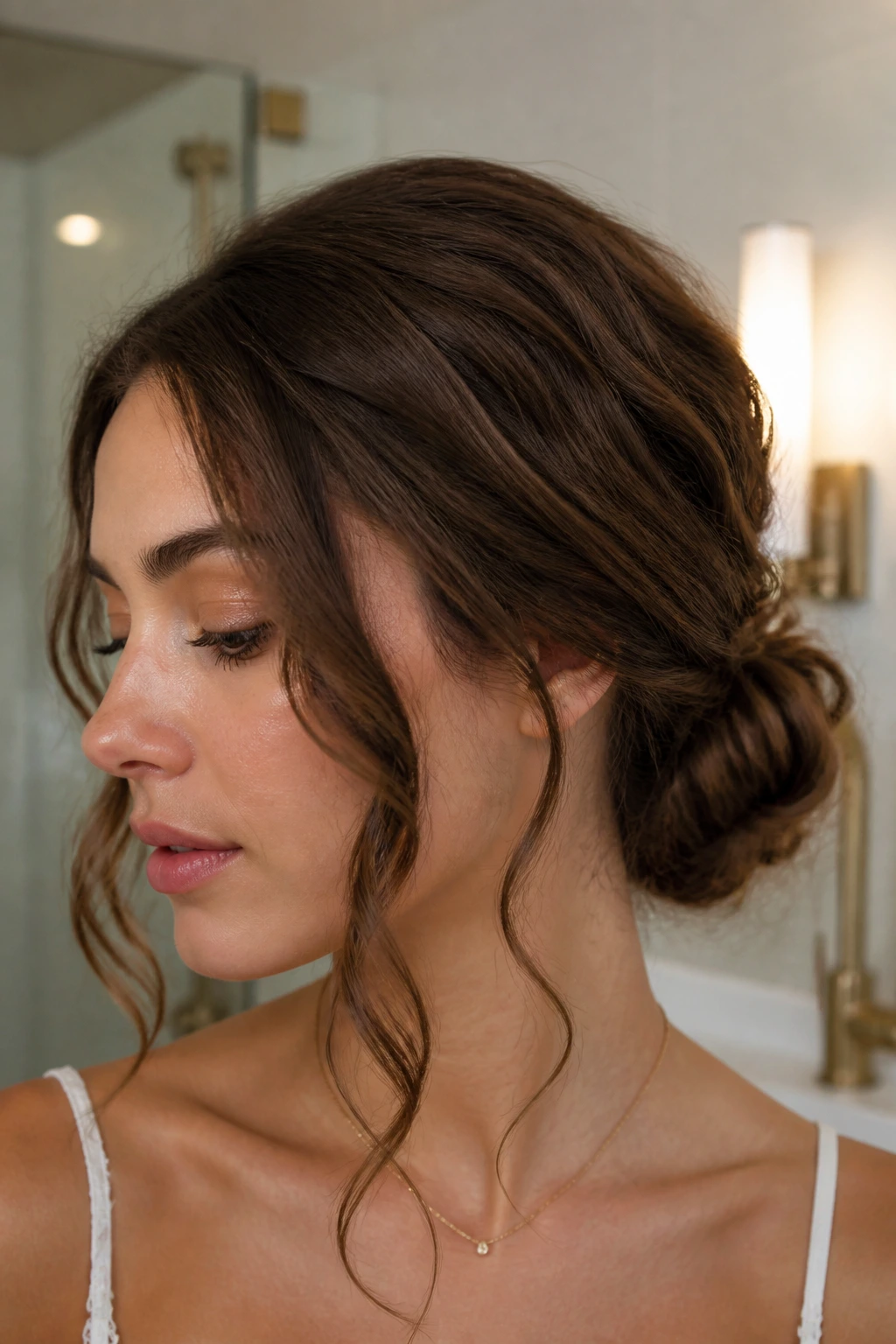
A low bun on medium wavy hair works because the wave gives the bun grip and the tendrils soften the outline. The trick is not to force every strand into submission. Leave a few front pieces loose, gather the back low at the nape, and twist the bun so the natural texture stays visible.
This style is especially good on day-two hair. The wave has already settled a little, so it tucks in without slipping apart. If the roots are oily, a dusting of dry shampoo helps the bun hold. If the ends are dry, a tiny amount of cream on the fingertips keeps the loose pieces from looking fuzzy.
- Pull the bun low and soft.
- Leave two face-framing pieces out on purpose.
- Pin only where needed.
- Keep the crown smooth but not tight.
The result feels put together without trying too hard. That balance is hard to fake with straight hair, and medium waves do most of the work for you.
16. Sleek Crown and Wavy Ends
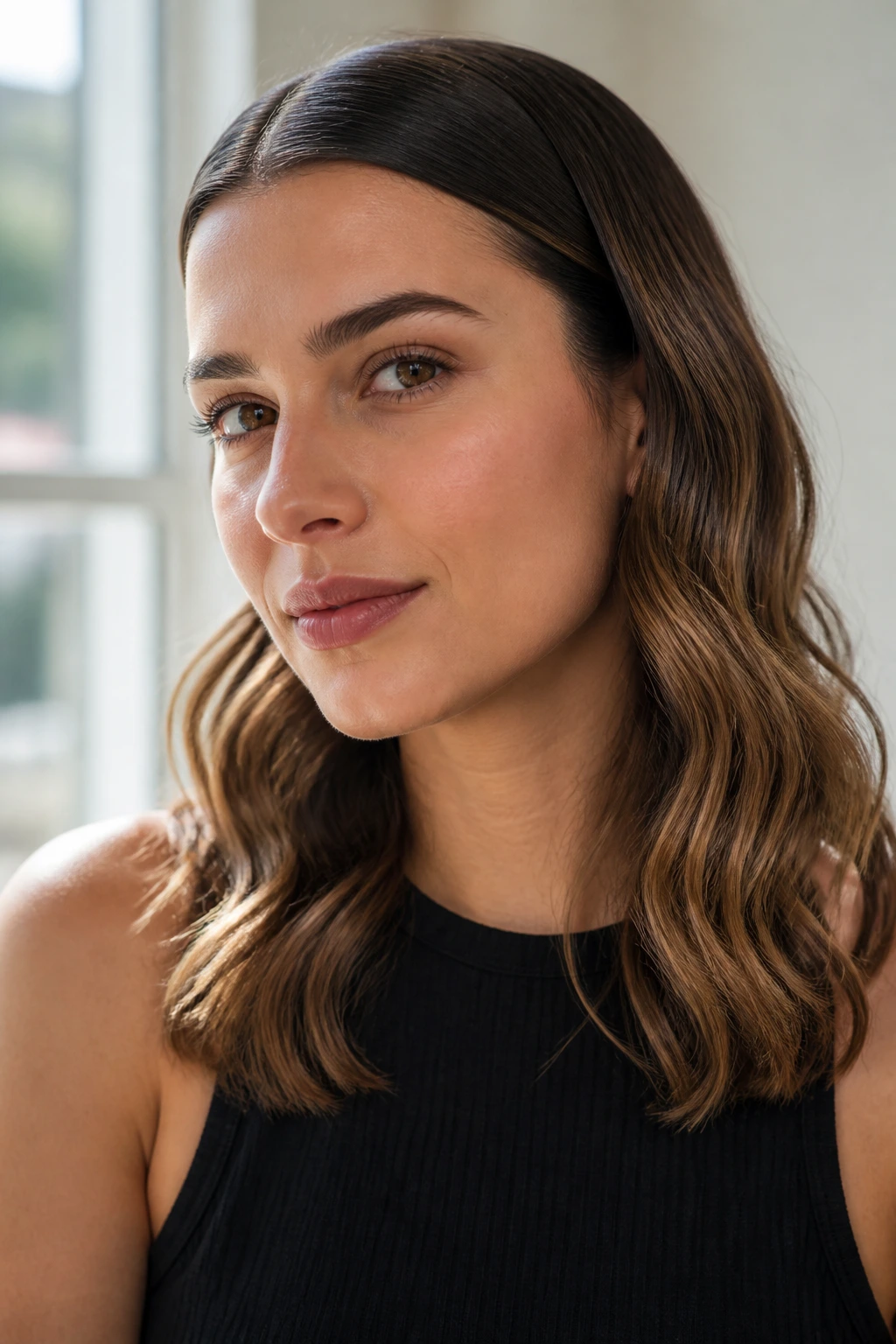
Why does smoothing just the top section make such a difference? Because it creates contrast. A sleek crown makes the lower wave look richer and more intentional, and medium length hair is long enough to show that shift without losing shape. The style is part polish, part softness.
This one works best when you blow-dry the roots smooth, then add bends only from the midlengths down. If the wave starts too high, the crown loses the clean finish. If the roots are flat but not sleek, the style can look unfinished. That tiny tension between smooth and textured is the whole point.
It is a good choice for work, dinner, or any setting where you want the hair to read neat from the front but still have movement when you turn your head. That’s not a small thing. Hair changes how a whole outfit lands.
Keep the part clean, use a light serum on the ends, and stop before the hair gets too glossy near the scalp.
17. Glam Waves With One Side Tucked Back
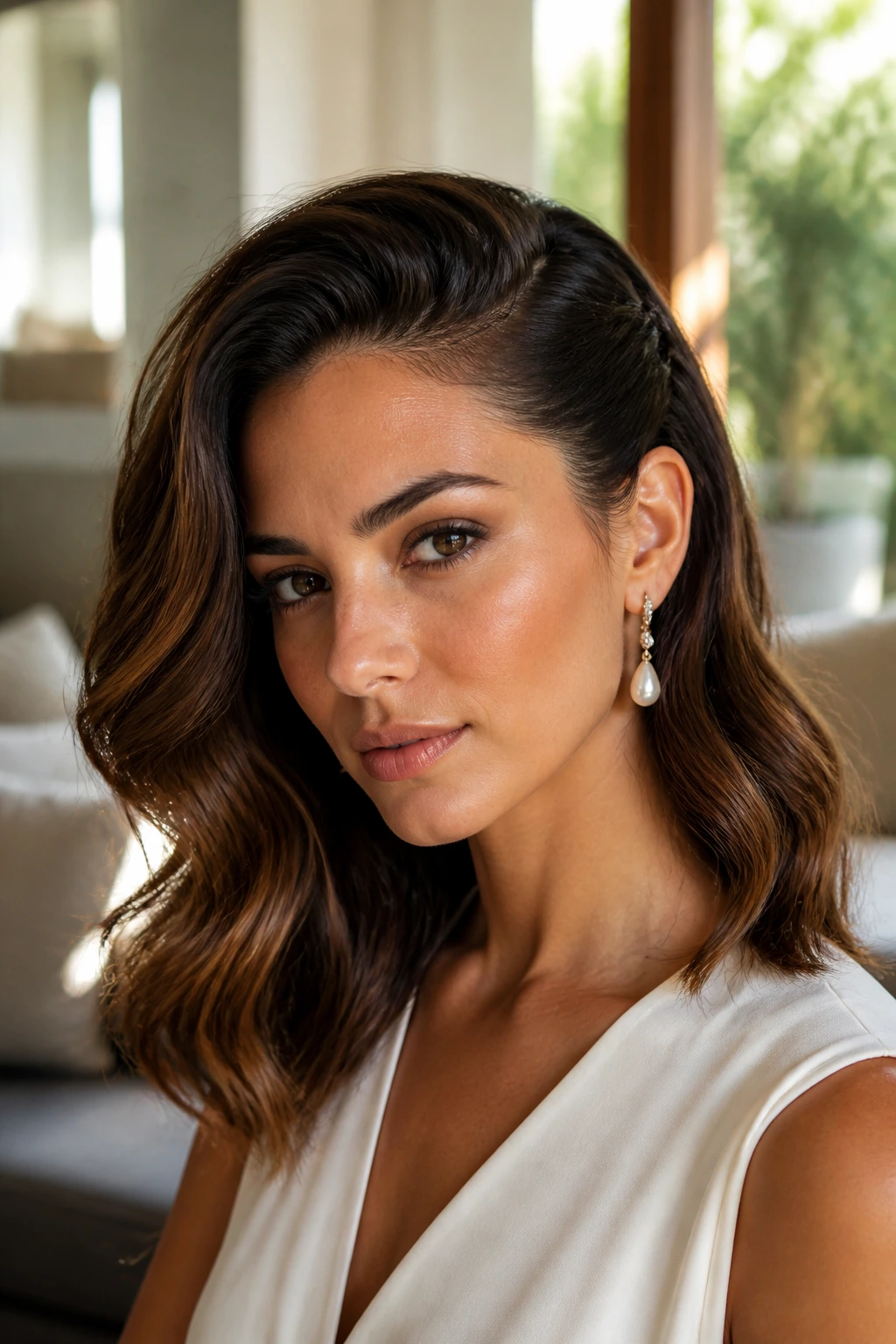
There’s something strong about one side tucked back on medium waves. It opens the face, shows off earrings, and keeps the wave pattern from swallowing the whole head. On shoulder-grazing length, the tuck works because the hair still falls forward enough to keep softness.
What to Notice
The wave should stay broad and brushed out, not tight and springy. A polished texture gives the tuck room to stand out. A small barrette, a few crossed bobby pins, or even a hidden pin under the upper layer can hold the side in place without breaking the line.
- Tuck the heavier side first.
- Leave the opposite side fuller for balance.
- Choose one standout earring if you want the tucked side to matter.
- Spray the tucked section lightly so it stays put.
This style lands in that useful space between dressed-up and easy. It gives you shape, not fuss.
18. Layered Cut With Bottleneck Bangs
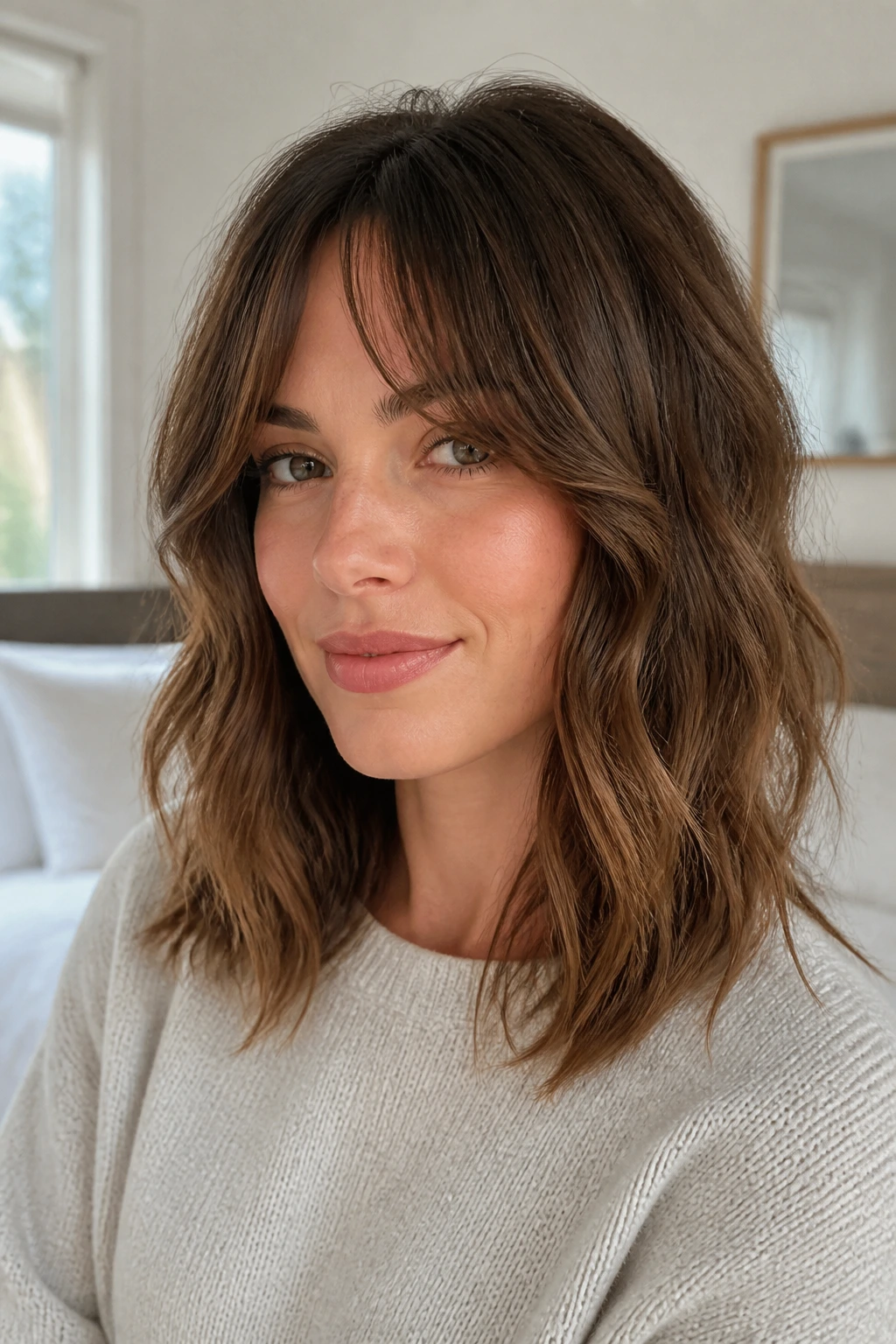
Bottleneck bangs are one of the easiest ways to update medium length wavy hairstyles without changing the whole haircut. They start narrow at the center, then open out around the cheekbones, which means they blend into the wave instead of sitting on top of it like a shelf. That makes them a smart match for hair that already has movement.
The layers behind the bangs should stay long enough to keep the shape flowing. If the bangs are cut too straight or too heavy, they can fight the waves at the front. A softer, tapered bang keeps the face open and the rest of the cut loose.
This style is especially useful if you want forehead coverage but do not want the bluntness of a straight fringe. It gives you a little bit of structure, then steps out of the way.
The best part is how easily it changes with styling. Blow them smooth, let them bend, or split them slightly in the middle — all three versions work, and that kind of flexibility is rare enough to be worth paying attention to.
Why Medium Length Waves Keep Their Shape So Well
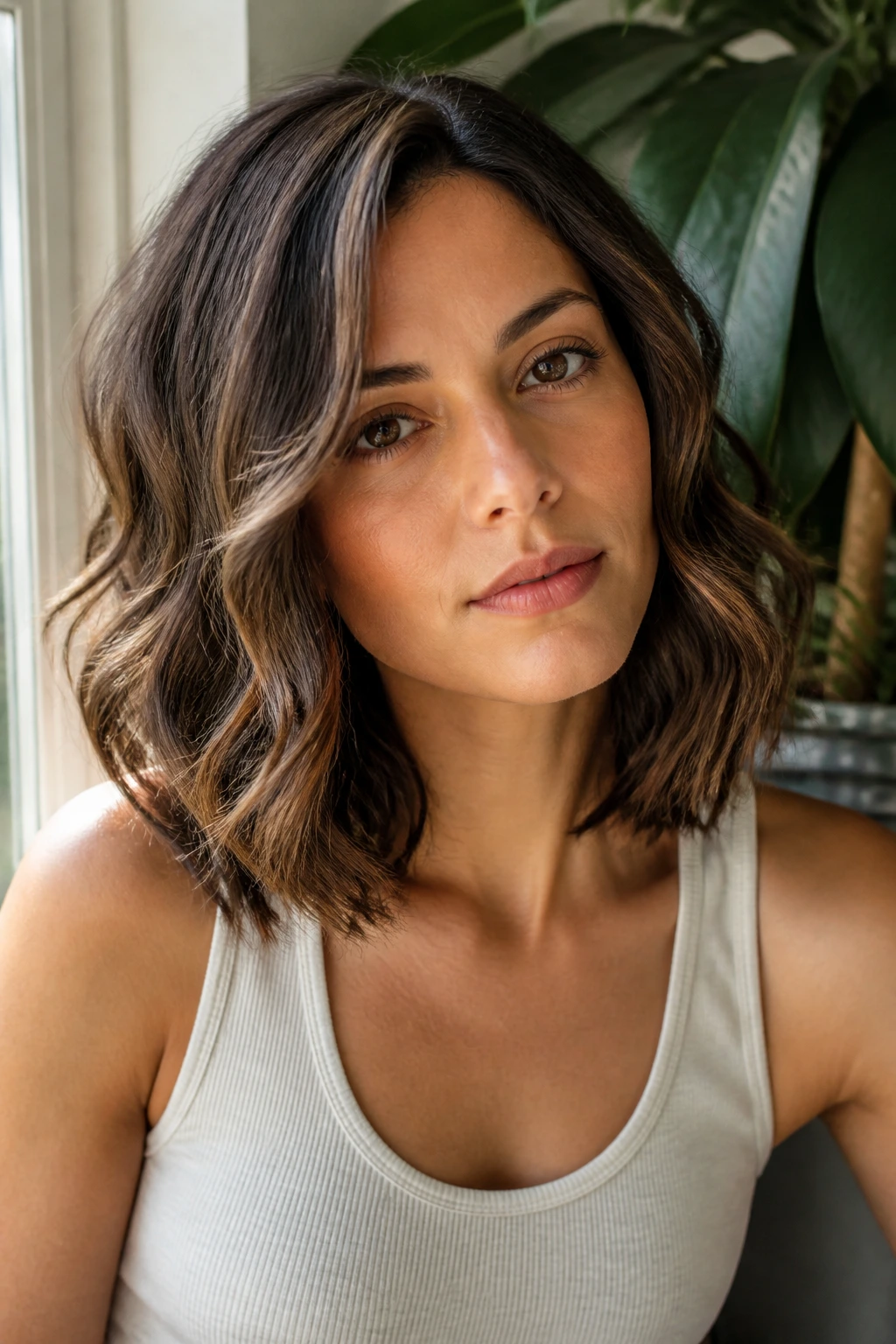
Medium length is the point where waves stop being overburdened by weight but still have enough mass to fall in a line. That sounds technical, but you can see it on your own head in a mirror. Hair at the collarbone usually bends, swings, and settles more predictably than hair that hangs much longer. It is easier to lift at the root and easier to refresh on day two.
The cut matters more than people want to admit. If the perimeter is too thick, the wave turns blocky. If the layers are too short, the hair can puff out. The sweet spot is a shape that gives the wave a path to follow.
That is why medium length wavy hairstyles feel so wearable. They let you work with your natural pattern instead of using a lot of heat every morning. Some days you want a loose bend. Some days you want a brushed-out curl. The cut can handle both.
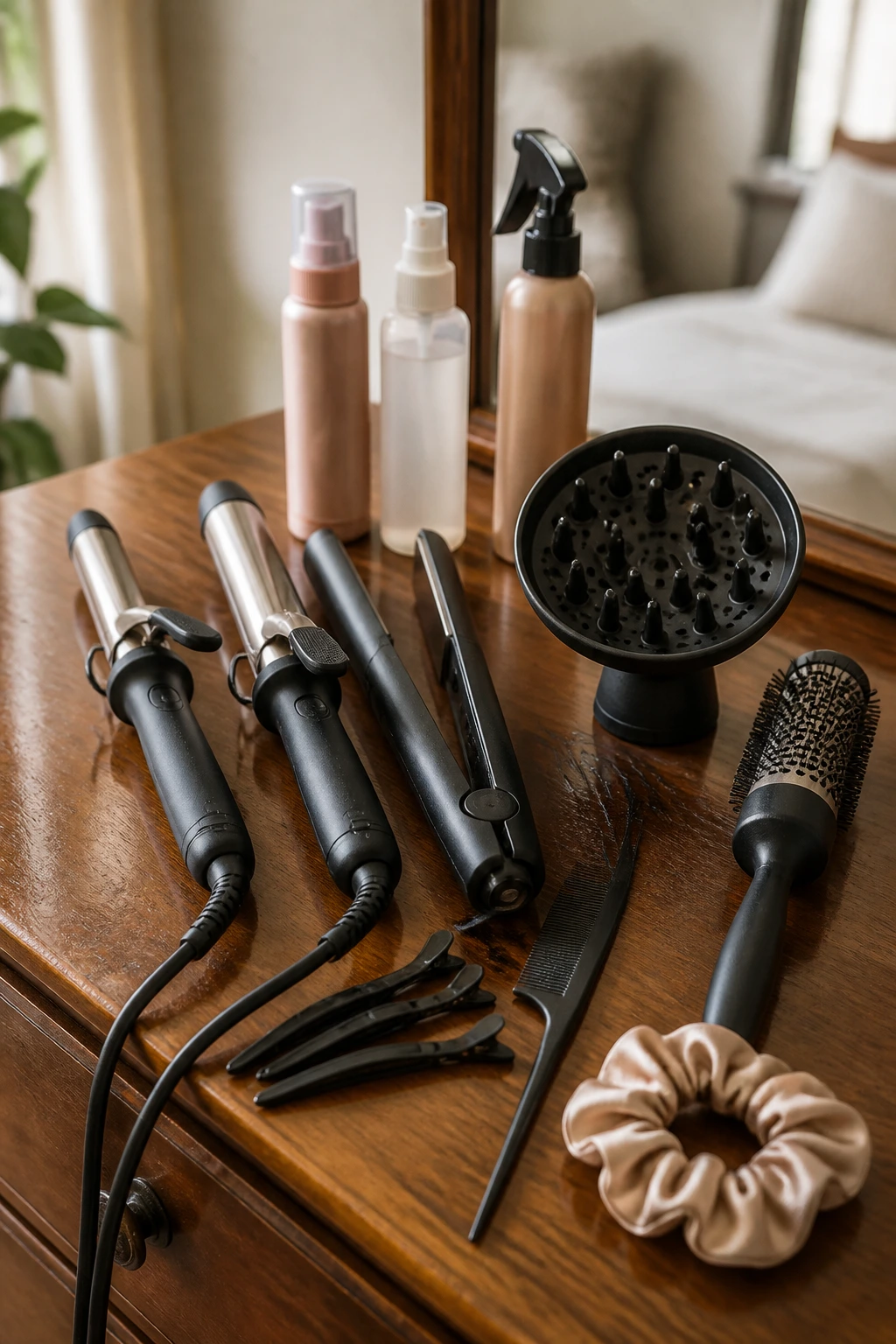
Essential Tools for These Styles
-
1-inch curling iron: Best for tighter bends, glam waves, and more defined pieces around the face.
-
1.25-inch curling iron: The safest all-purpose barrel for soft, medium waves that do not look overdone.
-
Flat iron: Useful for quick S-waves, bent ends, and touch-ups on stubborn sections.
-
Blow dryer with nozzle: Helps smooth the crown and direct the roots before adding texture.
-
Diffuser: A smart pick if you air-dry or have natural waves that need support without frizz.
-
Round brush: Handy for curtain bangs, face-framing pieces, and root lift.
-
Duckbill clips or sectioning clips: Keep the hair organized while styling; they save time and reduce chaos.
-
Tail comb: Good for clean parts, sectioning, and lifting small pieces near the crown.
-
Light mousse or foam: Gives grip to fine or slippery hair without making it stiff.
-
Texturizing spray: Adds separation to shaggy, lived-in styles and helps the ends hold shape.
-
Heat protectant: Non-negotiable if you use hot tools. A mist is enough; don’t drown the hair.
-
Satin scrunchie or pillowcase: Useful for overnight care and preserving waves without kinks.
Smart Cut, Color, and Product Choices
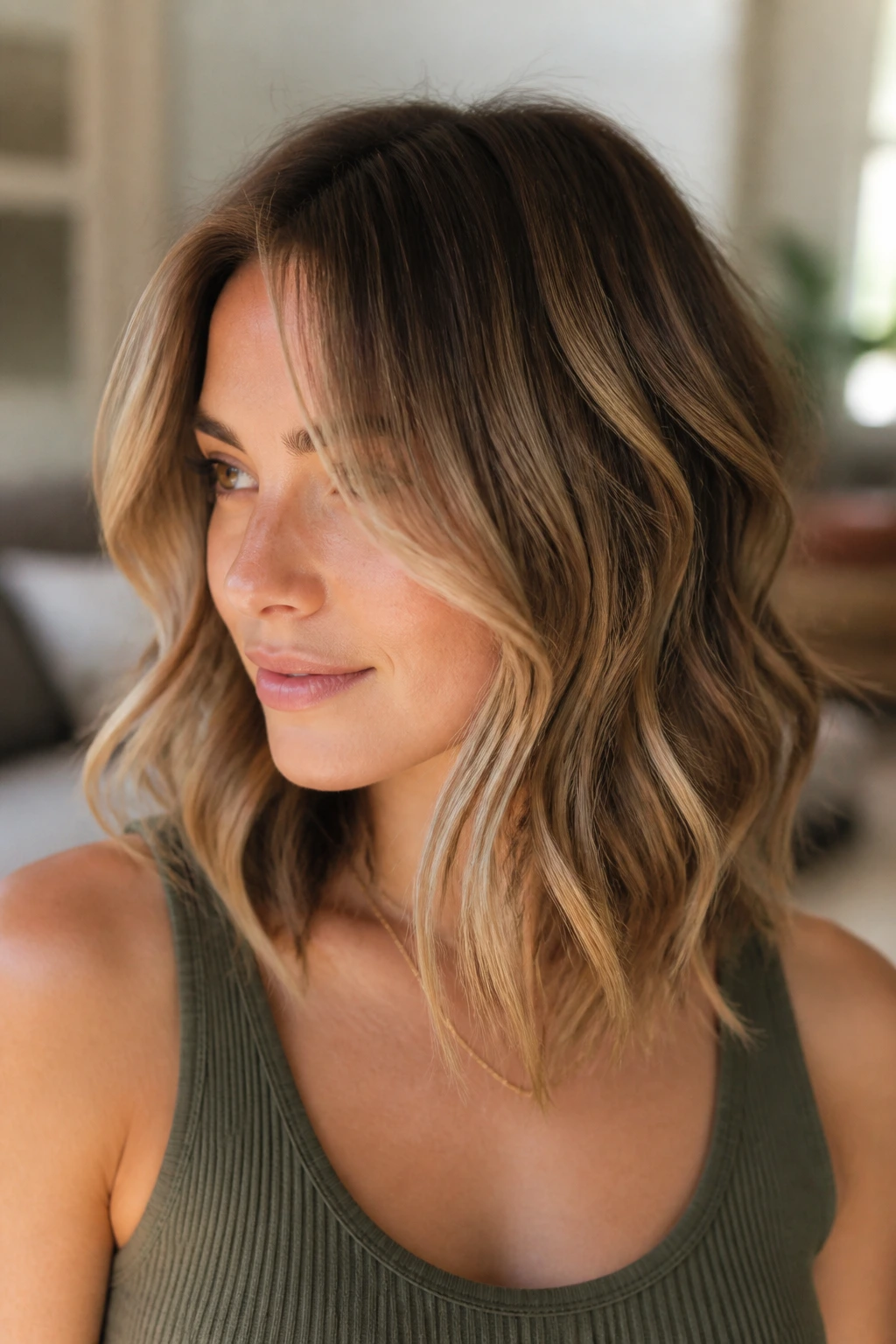
The best medium wavy cut starts with how your hair behaves when it dries, not with a photo copied off a screen. Fine hair usually needs a little more perimeter weight, so a blunt lob with soft face-framing layers can keep the wave from scattering. Thick hair usually needs internal removal and longer layers, or the shape swells at the shoulders and takes over the whole outline.
Ask for layers that solve one job at a time. Crown lift is one job. Face framing is another. Bulk removal at the ends is another. If all three happen at the same height, the haircut can feel choppy in the wrong places. Good stylists think in zones. So should you, even if you’re only learning the language.
Product choice matters just as much. Mousse gives lift and grip. Cream gives softness and frizz control. Spray gives separation. A lot of people use too much of the wrong one and blame the cut. It’s not always the cut.
Color can help too. Balayage, money-piece highlights, and soft lowlights make bends easier to see. A single flat color can look fine, but wave pattern gets clearer when light and dark shift across the strands. If you wear waves often, ask for color placement that follows the shape of the cut.
How to Wear These Hairstyles
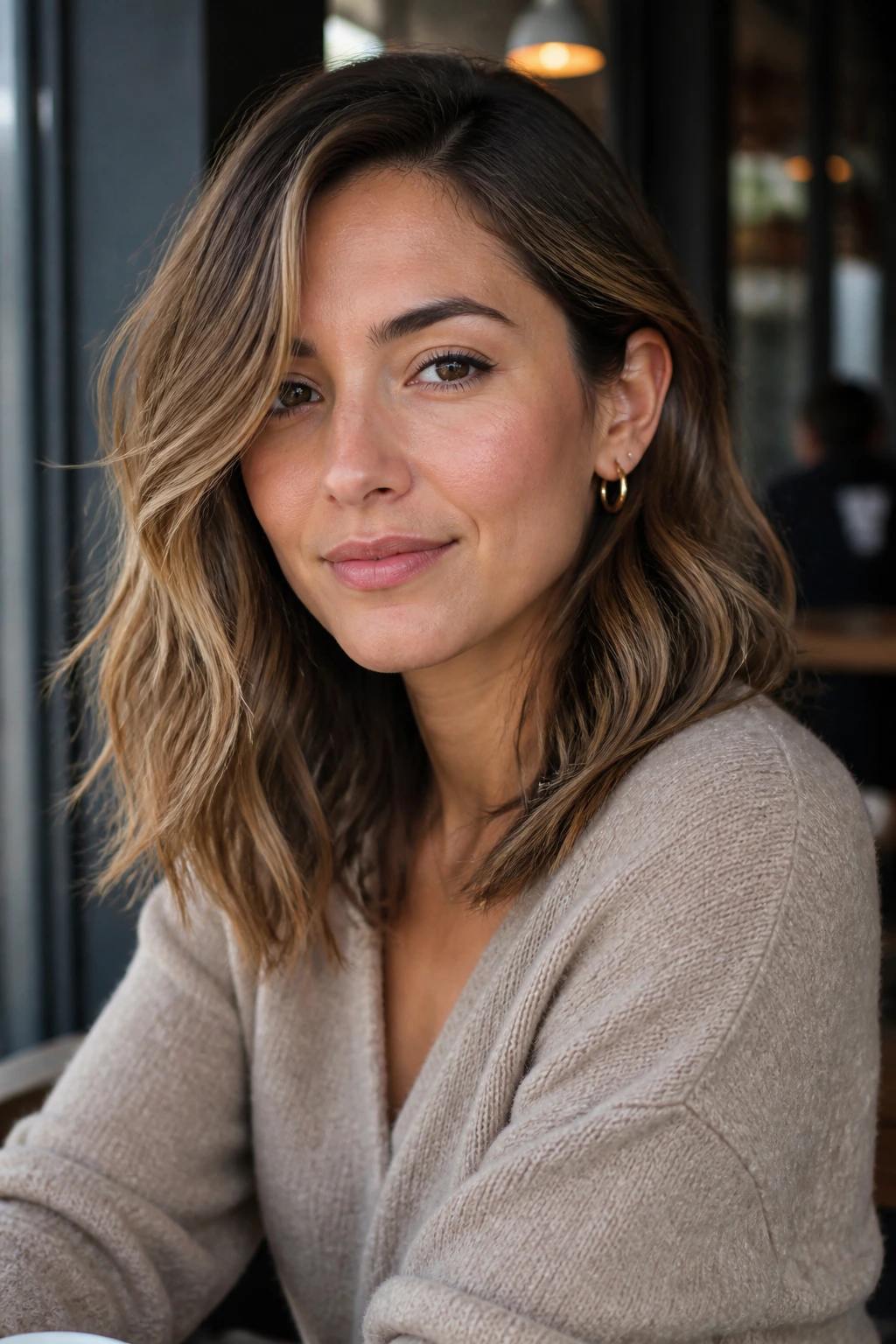
Presentation: Keep the finish aligned with the occasion. Clean roots, soft waves, and a tucked side suit a more polished look; looser texture, broken-up ends, and a clipped-back bang area feel more casual. Medium hair can move between both without a haircut change, which is part of the appeal.
Best Occasion: Office days, weekend errands, dinners out, weddings, and travel all work here. A blunt lob with soft bends reads neat in a meeting. A shag or wolf cut feels better when you want a little edge. A braid or half-up twist handles long days when you need the front off your face.
Accessory Match: Small hoops, barrettes, silk ribbons, and claw clips all make sense with this length. Bigger earrings work especially well with one side tucked back. Headbands can help on day-two hair, though they look best when the crown still has some lift.
Face Shape and Outfit Pairing: A deep side part can help widen a narrow face. Curtain bangs soften a long one. A sleek crown with wavy ends suits sharper collars and jackets, while softer waves with face-framing pieces look good with knits and open necklines.
Additional Tips and Texture Boosters
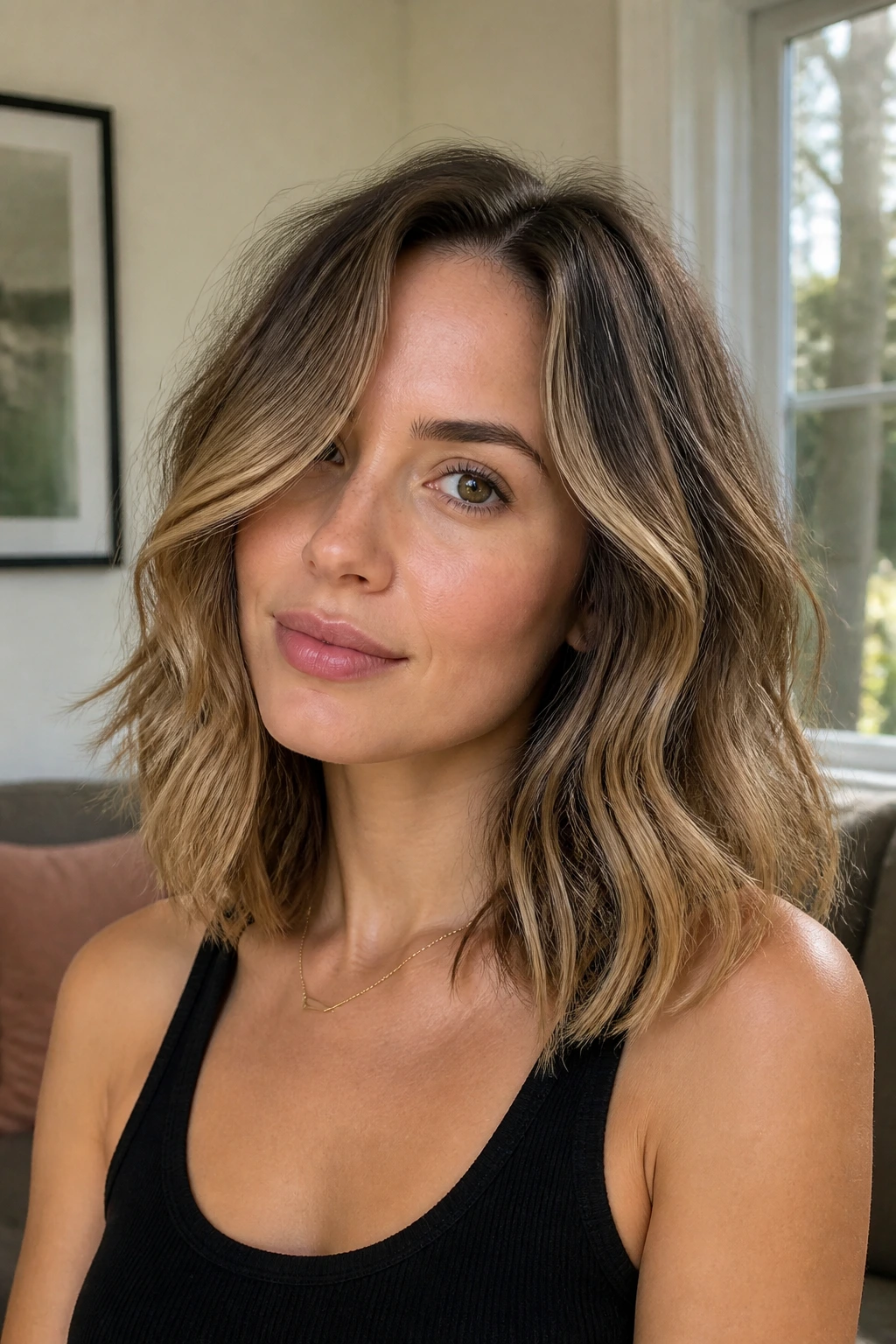
Root Lift: Flip your part before the hair dries, then flip it back once it’s set. That quick change gives the crown a little lift without teasing or stiffness.
Wave Memory: Clip freshly curled pieces to cool in a rounded shape if you want them to last longer. Heat sets the bend; cooling locks it in. Skipping the cool-down is why waves fall out before you leave the house.
Frizz Control: Use a pea-sized amount of cream or serum only on the midlengths and ends. If it touches the roots, the hair can collapse and separate in a greasy way. Less is the better move here.
Fast Refresh: Mist the hair lightly with water, scrunch in a touch of mousse, then diffuse for a few minutes. That is usually enough to wake up medium waves without a full rewash.
Make-It-Yours: If your hair is fine, keep layers longer and products lighter. If it is thick, go a little choppier or add more internal shaping. If it is straight with a slight bend, use a flat iron or curl the hair in alternate directions to fake more natural movement.
Maintenance, Refreshing, and Nighttime Care
Medium waves usually hold their shape for 2 to 3 days if the cut is right and the product load is sensible. Fine hair may need a refresh sooner. Thick or coarser hair often keeps texture longer, but the ends can dry out faster, so watch that balance. Washing too often strips the wave and makes the hair harder to set the next time.
At night, a silk or satin pillowcase helps more than people expect. It cuts down on friction, which means less frizz at the crown and fewer bent ends in the morning. If your hair is long enough to gather, a loose pineapple or soft clip at the top of the head keeps the wave from getting crushed. Don’t tie it tight. That just leaves a line in the hair and makes you chase the kink with a flat iron later.
For a refresh, work from the parts that flattened first. Usually that’s the crown, the side you slept on, or the front pieces near the cheekbones. Mist those sections lightly, reshape them with your fingers, and reheat only if needed. A full re-curl is overkill for most medium waves and usually gives the hair that overdone, all-the-same texture nobody wants.
Trims matter too. For layered medium cuts, aim for every 8 to 10 weeks if the shape is losing movement. Bangs often need a touch-up sooner, around 3 to 5 weeks, depending on how fast they fall into the eyes. If you wear color with the style, protect the wave and the tone with gentler washing and a heat protectant every time.
Variations and Adaptations to Try
Fine-Hair Lift: Keep the perimeter blunt and the layers long, then use mousse at the roots and a light spray on the ends. This version holds shape without stripping away the density that fine hair needs to look full.
Thick-Hair Control: Ask for internal layering and a slightly longer face frame. A smoothing cream through the midlengths stops the wave from swelling wide at the shoulders, which is the biggest issue with thick medium hair.
Heatless Weekend Waves: Try two loose braids, a robe-cord wrap, or a twist set on damp hair. The result is softer and less uniform than iron waves, which suits air-dried texture and low-effort mornings.
Office-Polished Waves: Smooth the crown, make the part clean, and tuck one side behind the ear. A light shine spray on the ends keeps the style neat without turning it glossy at the roots.
Glam Sweep: Go for brushed-out waves, a deep side part, and a statement pin or earring on one side. This adaptation works well when you want the cut to feel dressed up but still wearable.
Rainy-Day Backup: Use a stronger mousse, a little anti-humidity spray, and keep one half-up option ready. Weather does what it wants. A style that survives a bad forecast is worth keeping in the rotation.
Common Mistakes to Avoid
-
Layering too high around the crown: The hair starts to puff and lose its line. Keep the shortest layers lower if your hair is fine or frizzes easily.
-
Curling every piece the same direction: The style can look like a tube instead of waves. Alternate the direction or leave a few pieces out near the front.
-
Using too much serum or oil: The roots go flat and the ends separate in a greasy way. Start with a tiny amount and keep it off the crown.
-
Brushing waves before they cool: The bend drops out fast and the style turns fuzzy. Let the hair set first, then finger-comb or use a wide-tooth comb.
-
Ignoring the part line: A stale part makes even good waves look tired. Shift it occasionally, even if only by half an inch.
-
Skipping trims for too long: Medium layers grow into odd lengths and the ends split, which makes the whole shape look thinner than it is. Keep the perimeter clean if you want the style to hold.
Frequently Asked Questions
What medium-length haircut makes waves look fuller?
A blunt lob with subtle face-framing layers usually gives the fullest look. The blunt edge keeps the ends from scattering, while the front pieces add movement where you can actually see it.
Do wavy hairstyles need layers?
Not always. Fine hair can look better with fewer layers and a stronger perimeter, while thick hair often needs internal layers to stop the shape from getting wide and heavy. The right answer is the one that fixes your specific texture issue.
How do I keep medium waves from falling flat by midday?
Start with product at the roots, not just the ends. Mousse, root lift spray, or a little blow-drying at the crown will help more than adding extra curl through the bottom half of the hair.
Can medium length wavy hair work with bangs?
Yes, and curtain bangs or bottleneck bangs are usually the easiest place to start. They blend with the wave pattern better than a blunt fringe, which can take more daily styling.
What is the best way to air-dry wavy hair without frizz?
Use a leave-in conditioner or light cream, then a small amount of mousse for hold. Scrunch gently, keep your hands out of it while it dries, and avoid rough towel rubbing, which roughs up the surface fast.
How often should I trim medium wavy hair?
Most medium wavy cuts do well with a trim every 8 to 10 weeks. Bangs may need attention sooner if they sit in your eyes or split too far apart at the center.
Which is better for medium waves: a curling iron or a flat iron?
A curling iron is easier for soft, consistent bends. A flat iron gives a looser, more modern wave and is useful if you want ends that stay a little straighter.
What should I do if my waves get too puffy at the sides?
The cut may need more weight removed from the wrong places and less from the perimeter. In the meantime, use a smoothing cream only on the midlengths and keep the top smoother so the bulk stays under control.
The Shape That Gives Waves Room
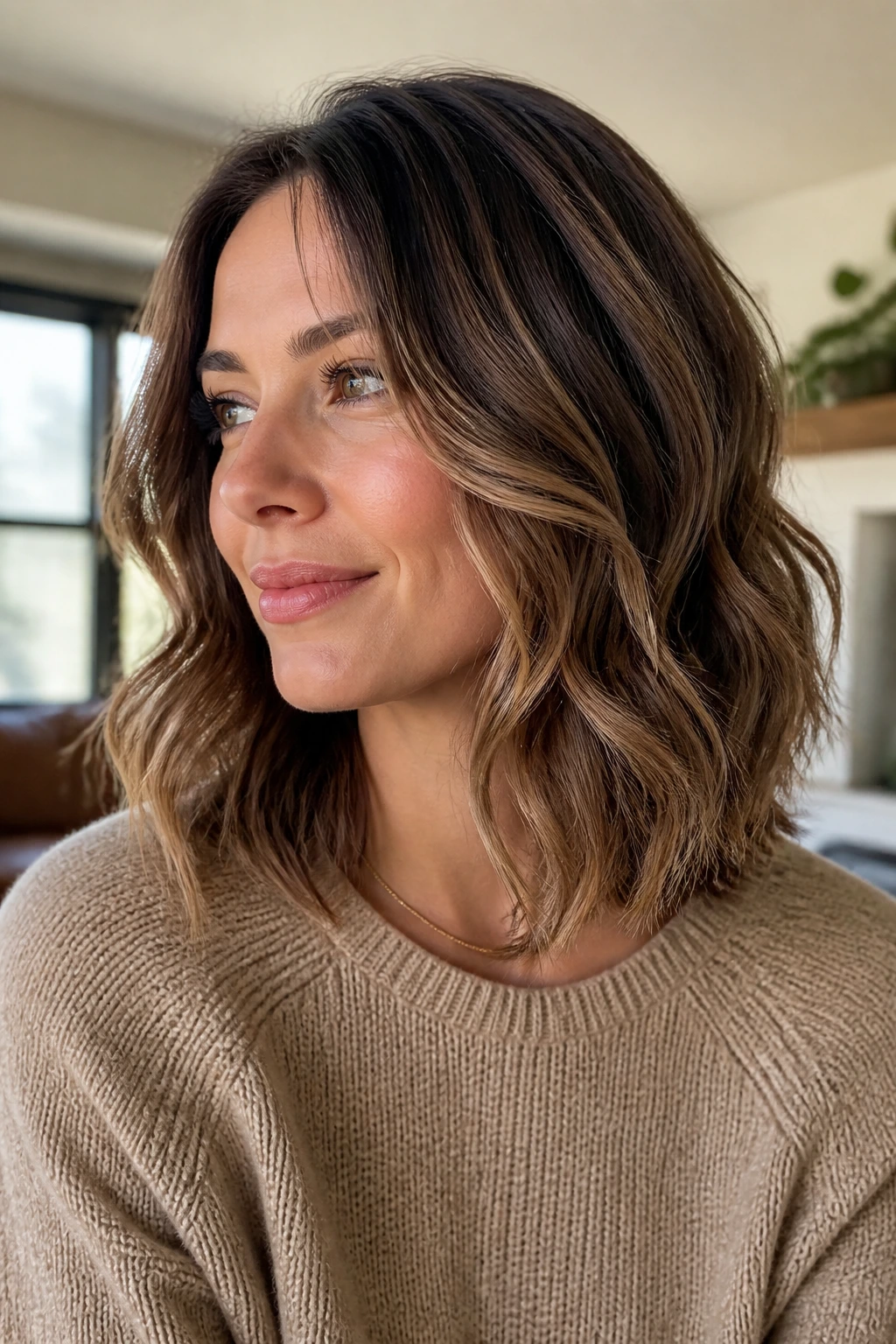
Medium length wavy hairstyles keep working because they sit in a useful middle ground. The hair has enough body to show texture, enough length to shape the face, and enough flexibility to move between casual and polished without a full reset. That is a rare combination, and it is one reason these cuts stay around so long.
Pick the version that solves your real hair problem. Too much bulk? Go more blunt and controlled. Too little movement? Add layers, bangs, or a side part. Want a low-effort routine? Let the wave stay soft and build the style around a clean cut, not a long styling session.
The best medium waves are the ones that still look like your hair at the end of the day. That’s the part that keeps them in rotation.
