



Hair after 60 tells the truth. It shows where the crown has thinned, where silver has taken over, and where your natural bend has decided to do its own thing. Wavy hairstyles for women over 60 work because they respect that reality instead of fighting it, and that usually looks better than a stiff blowout pretending nothing has changed.
A soft wave can do three jobs at once. It can lift the eye away from a wider jaw, keep fine hair from lying flat against the scalp, and stop thick hair from puffing out in a way that feels like too much. The cut matters. So does where the part falls, how the layers are carved, and whether the ends are left blunt or softened with point-cutting.
And yes, the right wave changes with hair density, face shape, glasses, and how much time you actually want to spend with a round brush. That’s why the strongest looks here aren’t all the same length or the same mood. Some are neat. Some are loose. Some lean dressy, some need almost no fuss, and a few are the kind you can wear with a blazer, a knit sweater, or a pair of chunky earrings without the whole look falling apart.
Why These 28 Wavy Looks Earn Their Keep
-
Softens the edges: A bend through the mid-lengths keeps hair from sitting hard against the jaw or neck, which matters a lot when you want movement instead of a helmet shape.
-
Works with silver and gray: Wave patterns show off the contrast in salt-and-pepper hair, and the texture keeps all that shimmer from reading flat or one-note.
-
Helps fine hair look fuller: A blunt perimeter with a little wave gives the eye a thicker outline, especially around the chin, collarbone, and cheekbone.
-
Tames thick hair without chopping it to bits: Wavy layers remove bulk in the right places, so the cut moves instead of puffing outward on humid days.
-
Grows out with less drama: A wavy cut usually looks decent for weeks because the shape is built around movement, not precision. A little growth can even make it better.
-
Plays well with glasses, earrings, and scarves: The right wave leaves room around the temples and ears, which keeps the whole look balanced rather than crowded.
1. Chin-Length Wavy Bob with Side Part
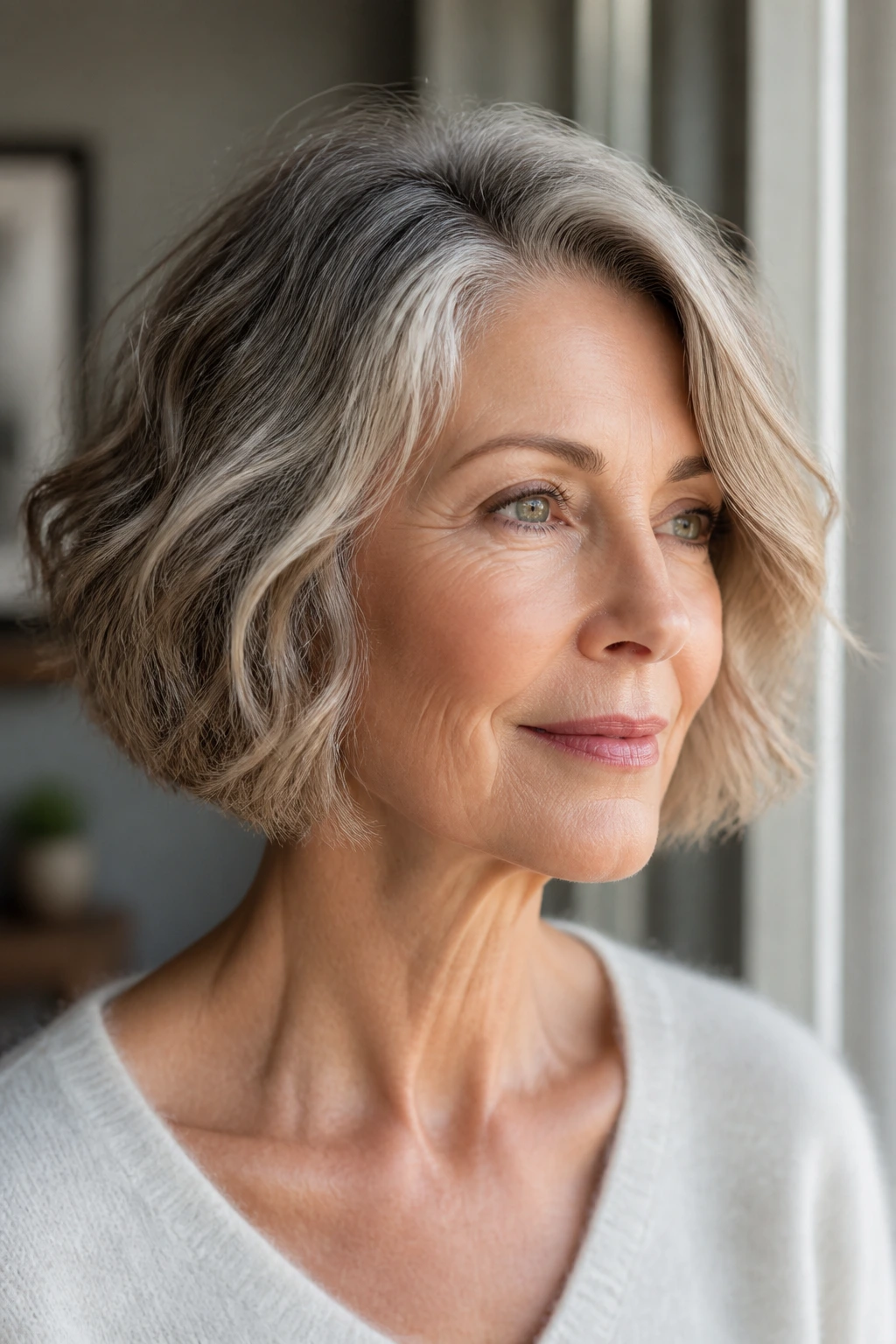
A chin-length wavy bob with a side part lands right where the jaw wants definition. That’s why it works so well on hair that has lost a little density at the sides — the shape gives structure back without forcing the hair into something rigid.
Why It Flatteres the Face
The side part creates a small lift at the crown, while the chin-length line keeps the ends from dragging everything downward. If your hair is fine, ask for a blunt perimeter with just enough internal layering to keep the wave from collapsing.
A 1-inch curling iron or wand is usually enough here. Wrap only the mid-lengths and leave the last inch out so the bob doesn’t curl under into a dated shape.
- Best for: fine to medium hair that needs shape around the face.
- Style cue: curl away from the face on the heavier side for lift.
- Good move: tuck one side behind the ear and leave the other loose.
My one strong opinion: this cut looks best when the wave is soft, not tight. Tight curls make a chin-length bob feel busy fast.
2. Soft Layered Lob at the Collarbone
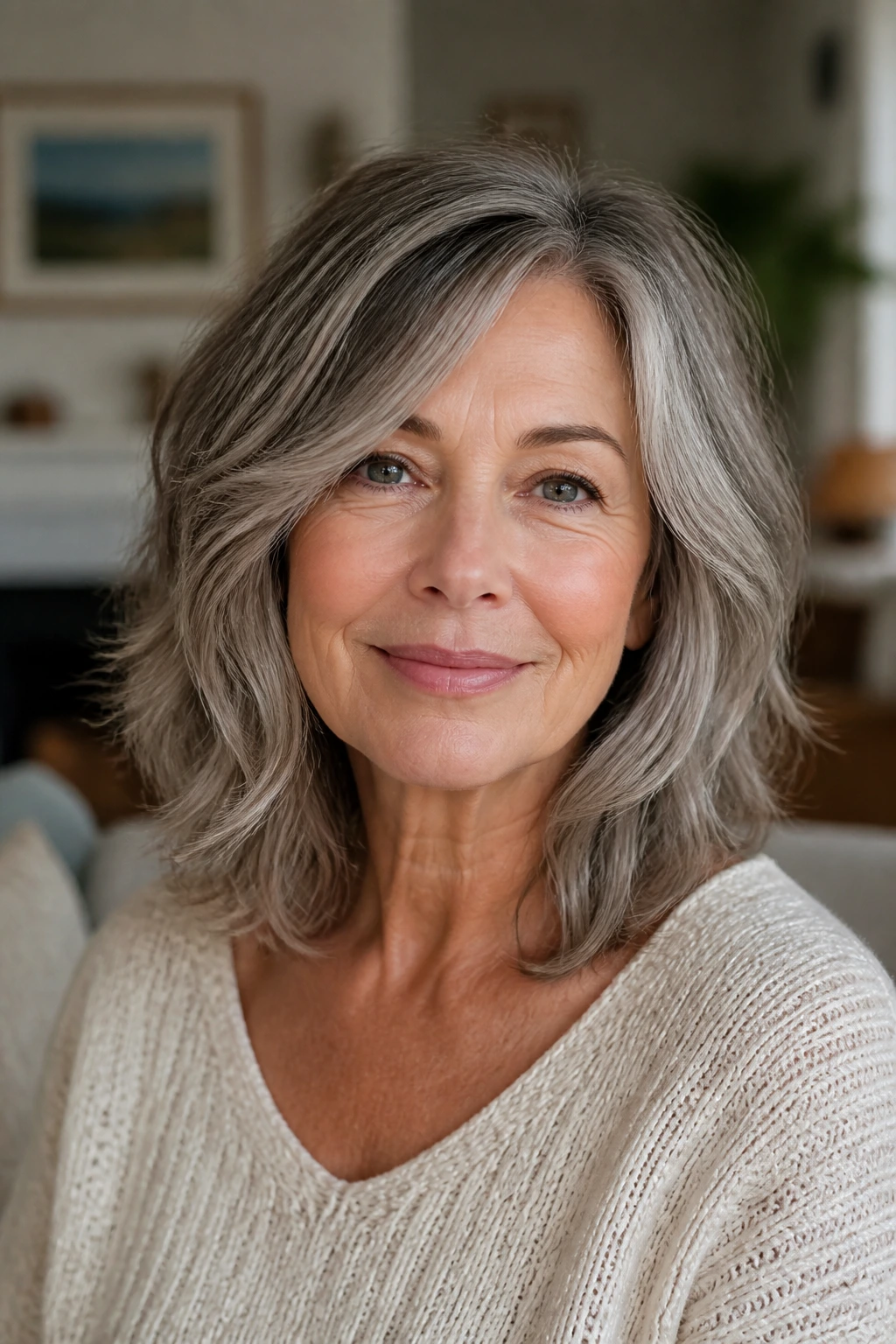
If I had to pick one length that causes the fewest regrets, it’s the collarbone lob. It sits long enough to pull back, but short enough that the ends still have some spring. That matters when hair starts to dry out a little faster or loses the old weight it used to carry.
The soft layers should begin below the cheekbones, not up near the ears. That keeps the top from frizzing and leaves the bottom with a clean, airy bend. A little mousse at the roots and a round brush at the front can make the whole cut look fuller without much effort.
This is the haircut I’d suggest to anyone who wants a wavy style that doesn’t scream “I had my hair done.” It just looks balanced. Steady. Easy to live with.
3. Silver Shag with Airy Fringe

Why does a shag look better on silver hair than a neat one-length cut? Because silver shows every line in the cut, and the shag gives the eye something softer to follow. The fringe breaks up the forehead area, the layers take weight off the sides, and the whole thing has a little swing to it.
How to Style It
Work a pea-sized amount of mousse through damp hair, then scrunch with your hands or diffuse on low heat until the roots are about 80 percent dry. After that, leave it alone. The less you touch it, the better the layers behave.
- Ask for soft, not choppy, layers so the fringe doesn’t fray.
- Keep the fringe at brow to eyelash length if you wear glasses.
- Use a lightweight cream only on the ends, not the crown.
This cut is especially good if your hair has a natural bend but doesn’t want to behave the same way every day. That irregularity is the point. It should look lived in, not overworked.
4. Shoulder-Length Waves with Curtain Bangs
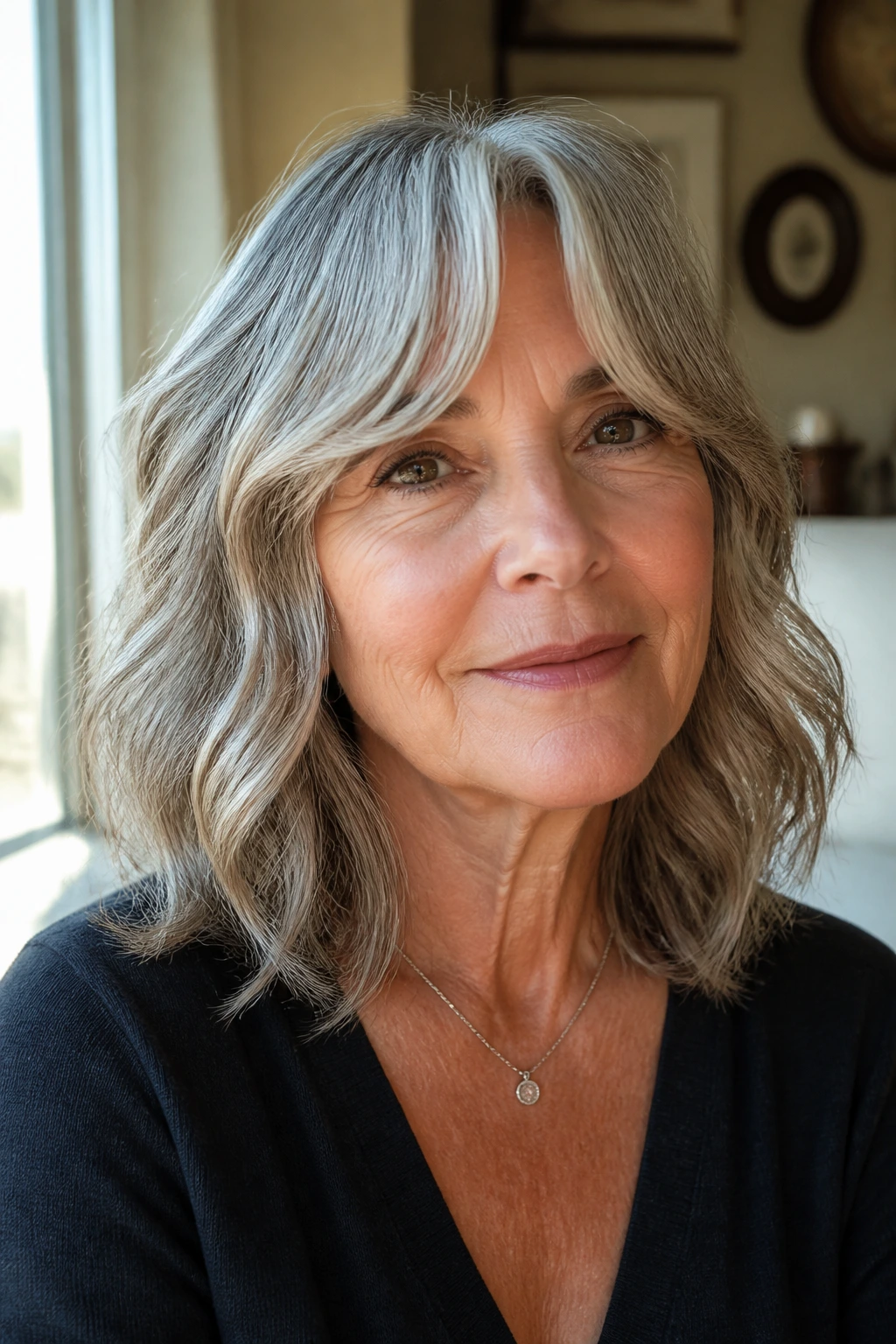
You want enough length to pin up when you need to, but not so much that it drags your face down. Shoulder-length waves with curtain bangs hit that sweet spot. The bangs pull the eye upward, and the soft bend through the rest of the hair keeps the cut from feeling flat.
Curtain bangs work well here because they can split around the eyes and cheekbones instead of sitting like a heavy curtain. If your forehead is wider, keep the shortest piece a little longer. If your hair is coarse, the bangs should be textured lightly — not thinned to wisps, because that usually makes them stick out.
This is one of those cuts that looks finished even when the styling is bare-bones. A quick blow-dry around the face and a few bends through the ends are often enough.
5. Tucked-Behind-the-Ears Waves

There’s something sharp about hair tucked behind the ears when the rest of the shape is soft. It shows the cheekbones, opens the face, and gives waves a cleaner outline. I like this look most on women who wear earrings, because the hair and jewelry stop fighting for attention.
The trick is not to tuck too much. Leave some fullness at the crown and through the mid-lengths, then slide only the front section back. If the hair is too flat at the temples, the whole thing can look severe. A little root spray or a few velcro rollers at the front fixes that in minutes.
This style also behaves well on windy days. The hair already has a purpose. It’s not trying to float everywhere.
6. Feathered Pixie with Wavy Crown
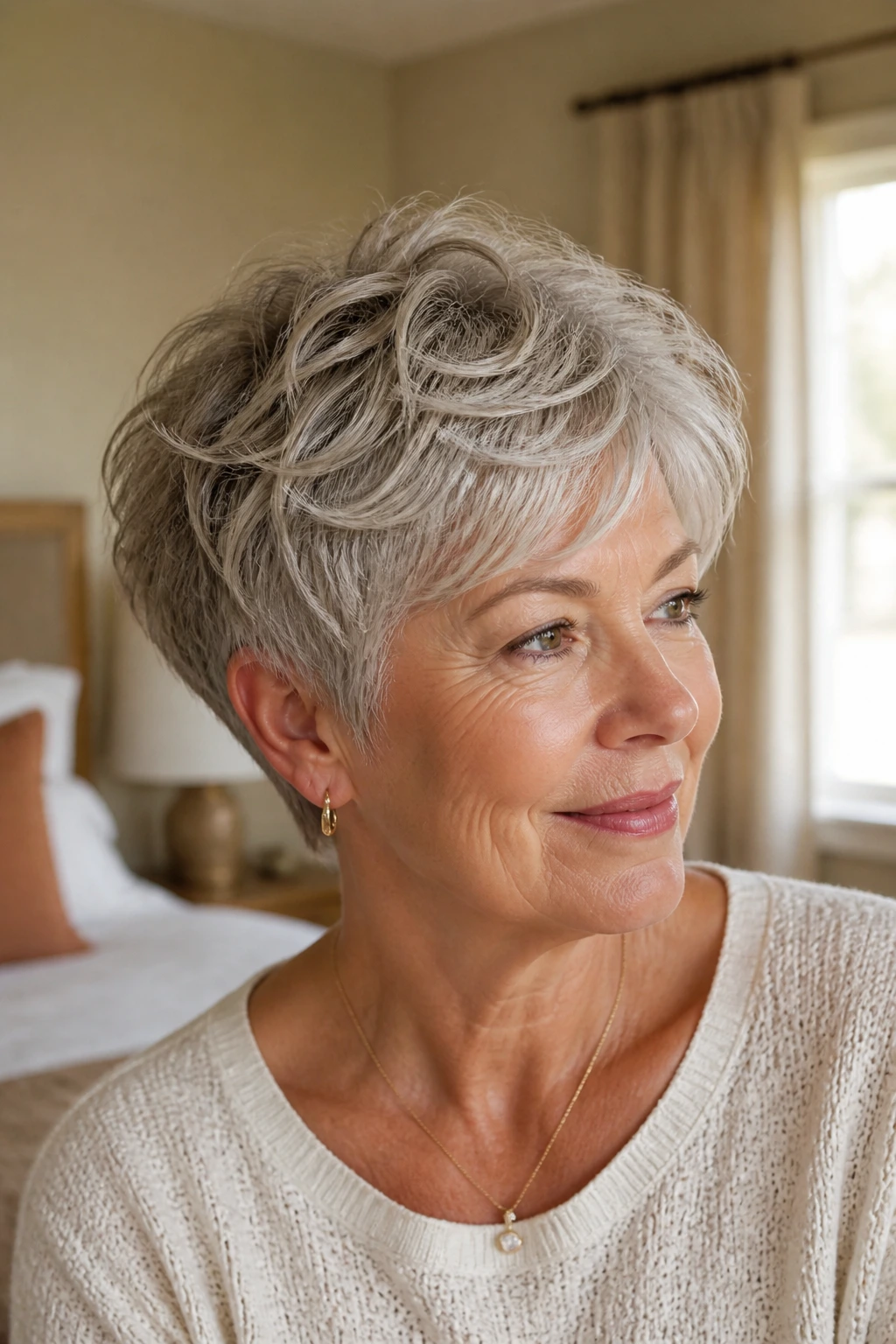
Short hair can still have movement. It just needs the right shape. A feathered pixie with a wavy crown keeps the sides soft and lets the top bend a little, which avoids that hard, helmet-like finish some short cuts pick up after a few weeks.
The crown is where the life is. Use a tiny amount of mousse or styling paste on damp hair, then rough-dry with your fingers and lift the top slightly as you go. The goal is texture with a little height, not a spiky finish.
This cut suits women who want less hair to handle but still want some softness around the face. It’s especially good if the hairline has gotten a little lighter, because the feathered top draws attention upward instead of directly to the temples.
7. Deep Side-Part Glam Waves
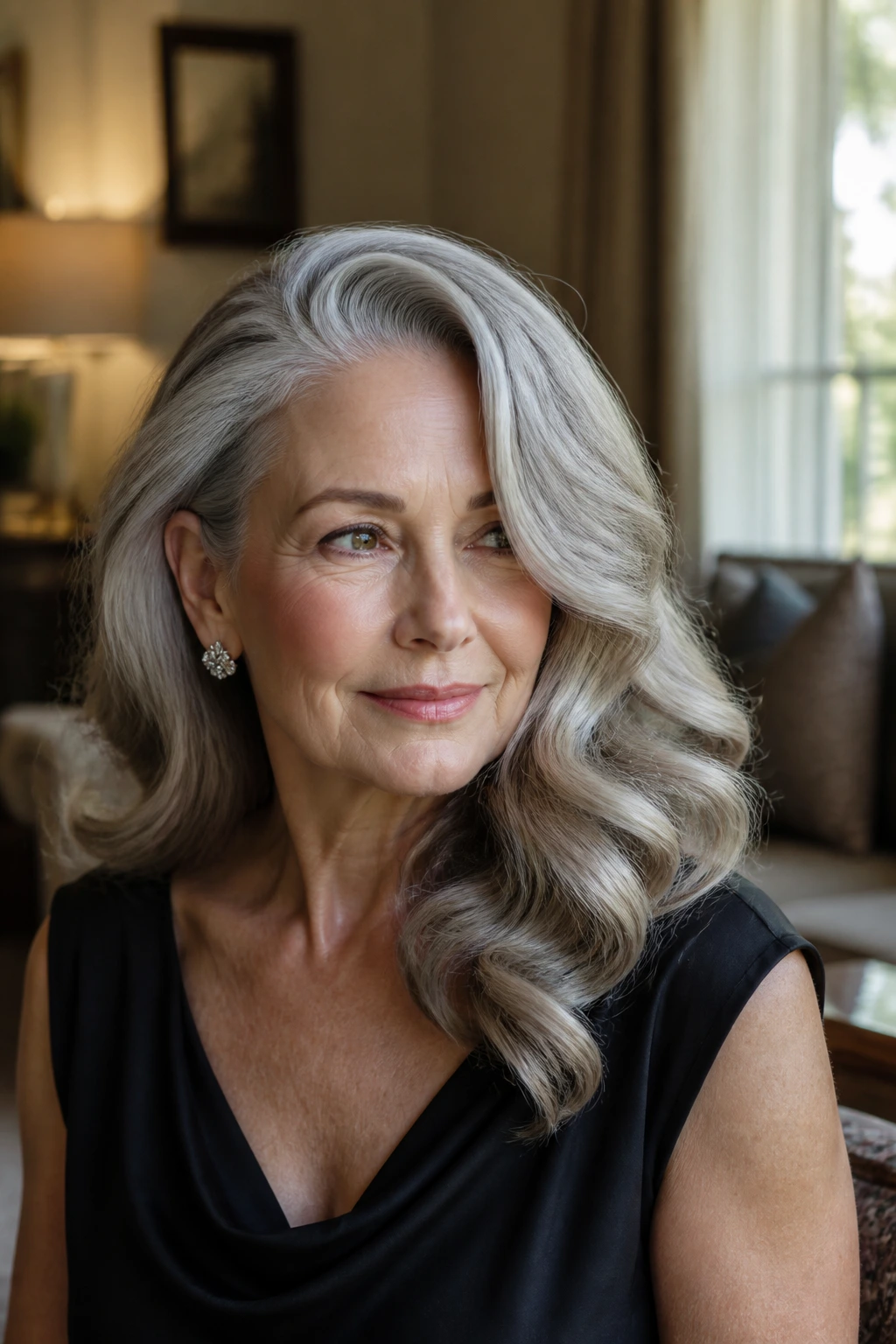
A deep side part does more than people think. It gives the crown lift, makes the face look a little longer, and turns a plain wave into something with shape. That’s why it’s such a good move for dressier days, even if the rest of the hair is simple.
Set the waves with a 1.25-inch iron, then clip the front section up while it cools. Don’t brush it right away. That’s the part most people skip, and it’s why the bend falls out before dinner. Once the hair is cool, loosen it with fingers and finish with a flexible spray, not a crunchy one.
If you want a style that feels a little more polished without looking stiff, this is a strong choice. It pairs well with a jacket collar, a necklace, or just a clean neckline.
8. Piecey Wavy Bob with Choppy Ends
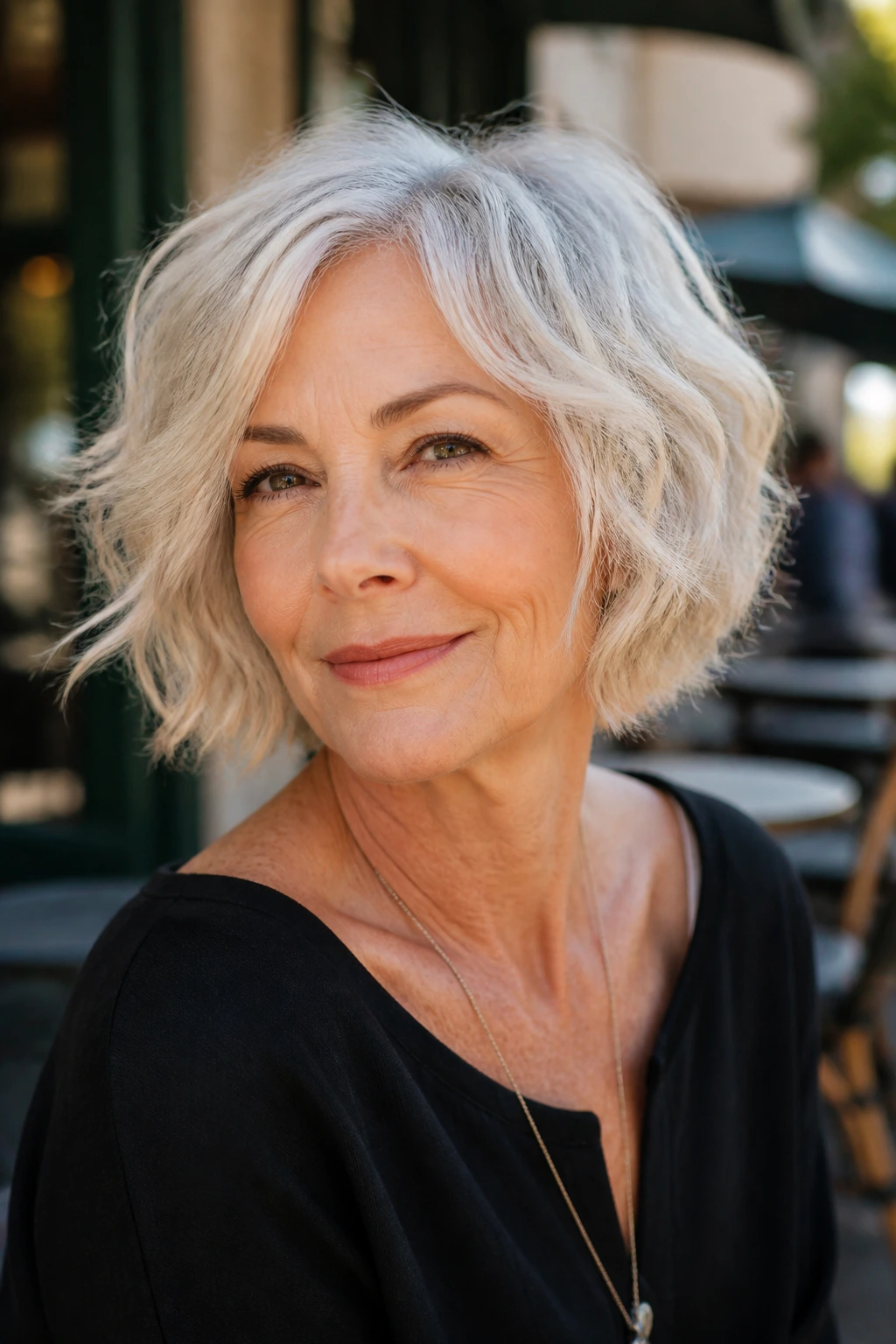
A piecey bob is what happens when a bob stops trying to look neat all the time. The ends are lightly textured, the waves are separated just enough to show shape, and the whole cut feels more modern because it doesn’t sit in one solid sheet.
What Makes It Different
- The texture keeps the bob from reading heavy.
- Choppy ends help thick hair move instead of balloon.
- A small amount of styling cream rubbed through the hands gives separation fast.
If your hair is naturally wavy, this one is easy. If it’s straighter, wrap only random sections around a wand so the bend doesn’t look too uniform. I’d skip a heavy serum here. It kills the texture in about five minutes.
9. Long Layers with Face-Framing Waves
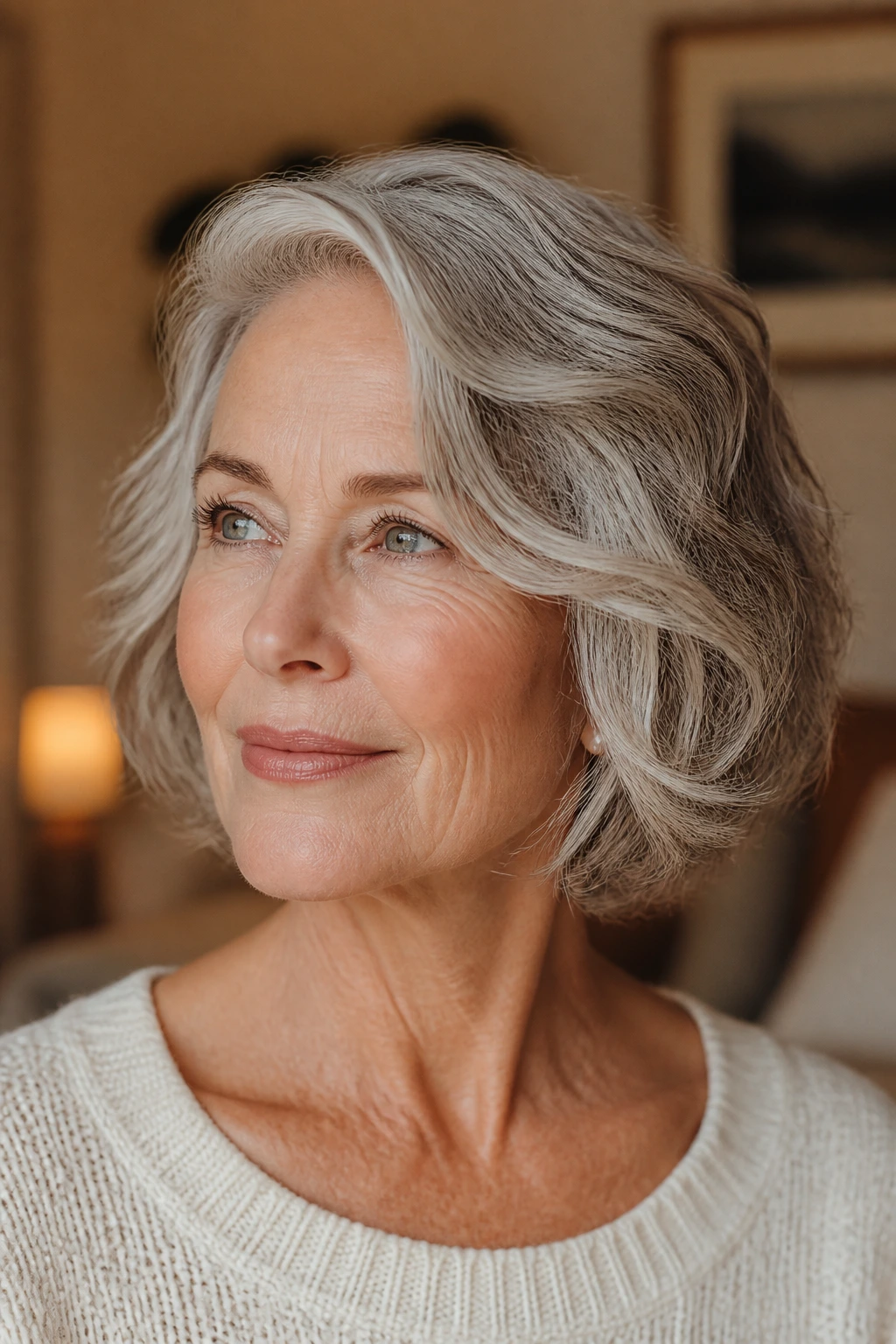
Keeping length after 60 is fine. The mistake is keeping too much one-length weight at the bottom, because then the hair hangs instead of moving. Long layers with face-framing waves solve that by keeping the front soft while leaving the back with enough length for a ponytail or clip.
The face-framing pieces should start around the cheekbone or just below the chin, depending on face shape. That gives the eyes and jaw a little shape without taking the length away. A middle or slightly off-center part works well here; the part choice changes the mood more than people expect.
This look has a calm kind of elegance to it. Not showy. Not severe. Just enough structure to keep long hair from feeling like a curtain.
10. French-Inspired Crop with Soft Texture
This cut is short, but it doesn’t feel hard. A French-inspired crop with soft texture keeps the sides neat and the top a little loose, so the hair has movement without needing much product. It’s a good answer for anyone who hates spending time on hair but still wants it to look intentional.
Use a tiny bit of mousse on damp hair and scrunch the top with your fingers. If you want a bit more shape, bend the front pieces with a mini flat iron for three to five seconds each. That’s enough. More tends to over-style the cut and flatten the charm right out of it.
This one works especially well with strong brows, glasses, or a good pair of earrings. The cut leaves space for the rest of the face to do some work.
11. Half-Up Wavy Style with Crown Lift
Half-up styles are useful when the top of the hair has lost volume but the ends still have nice movement. Pulling just the top section back gives the crown a little lift while keeping the waves visible through the length. It’s a practical trick, not a fussy one.
A small clip or soft barrette is better than a tight elastic. Keep the top section loose enough that the crown still looks rounded, then let two or three face-framing pieces fall free. If the hair at the front is flat, tease the roots very lightly or use a root-lift spray before you clip it back.
This style works for errands, lunch, and the kind of dinner where you want your hair off your face but not off your shoulders. Simple. Reliable.
12. Blunt Lob with Loose Ends
A blunt lob sounds strict, but on wavy hair it can be surprisingly soft. The blunt line gives the impression of thickness, which is useful if your ends have gotten see-through or a little wispy. The loose wave keeps it from feeling boxy.
The trick is to leave the ends mostly straight and put the wave through the middle of the hair. That gives the cut a clean outline with some movement inside it. If you curl the ends too much, the shape can puff outward and lose that solid look that makes the lob work.
This is one of my favorite options for finer hair. A blunt perimeter is a cheat code. It does more for density than most people realize.
13. Air-Dried Wavy Cut for Fine Hair
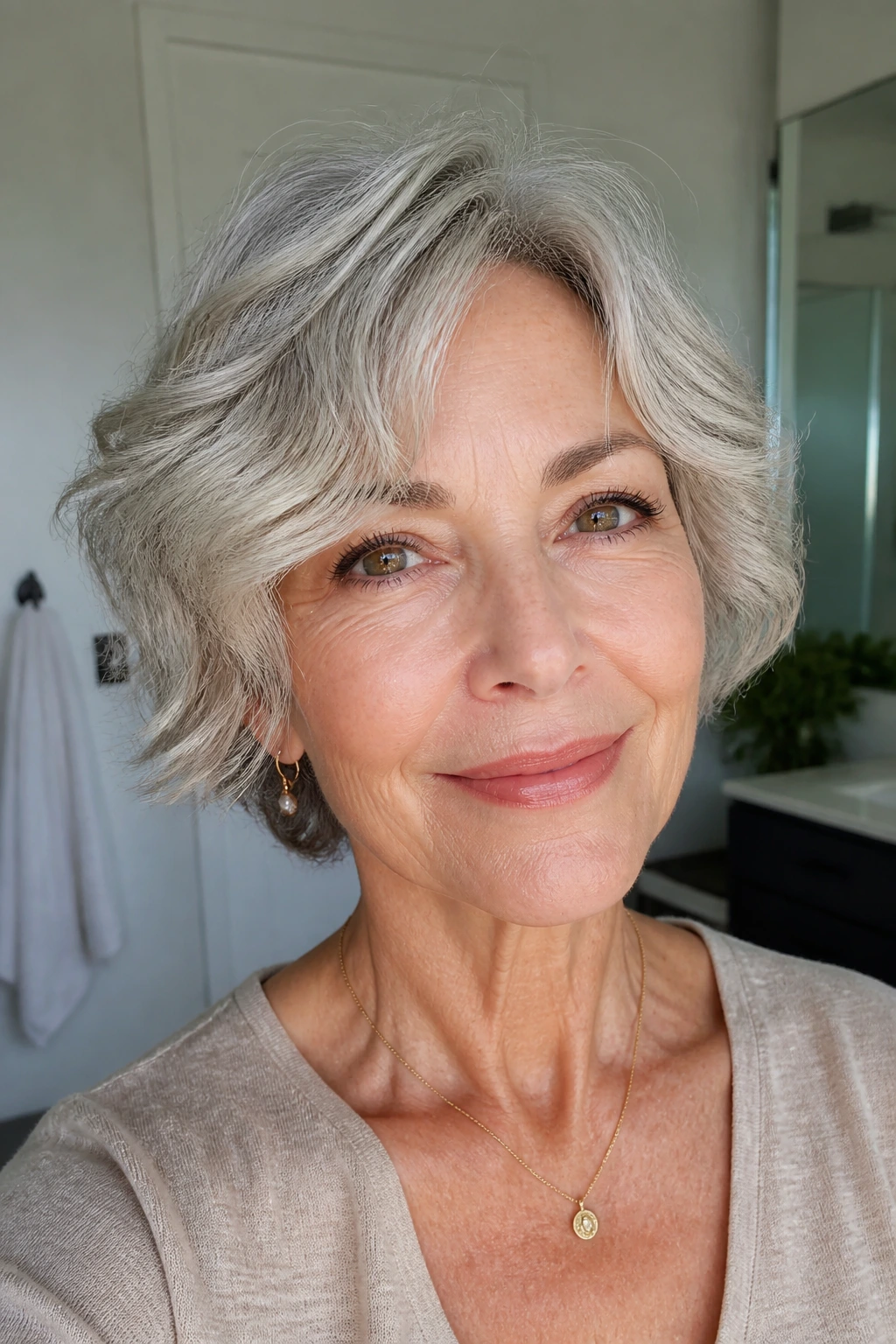
Fine hair needs a gentler hand. Heavy cream, too much oil, or a cut full of short layers will usually flatten it by noon. An air-dried wavy cut works better when the shape is kept slightly shorter, the layers are light, and the product is chosen for hold instead of softness.
How to Keep It Full
Use a mousse on damp roots, then a small amount of leave-in only on the ends. Scrunch, clip the crown for ten minutes if you need extra lift, and let the hair dry with as little touching as possible. A diffuser can help, but low heat is the rule.
If your hair dries with a soft bend and not a full wave, that’s fine. The goal is body, not uniform curls. Fine hair often looks better with a little roughness anyway.
14. Asymmetrical Bob with Soft Bend
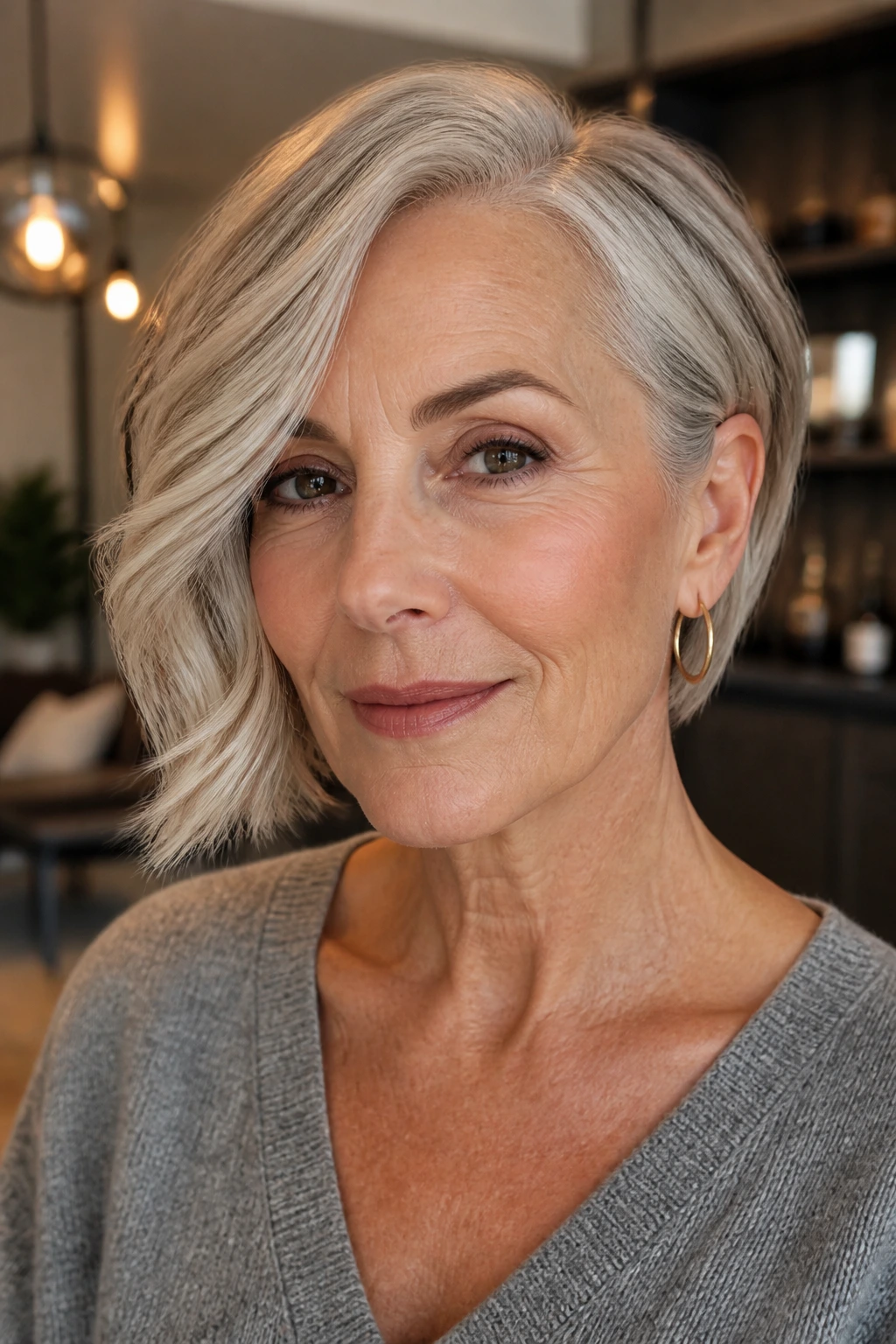
A tiny bit of asymmetry can do a lot. One side sits just a touch longer, which gives the face a longer line and keeps the cut from looking too boxy. On wavy hair, that difference feels subtle, not dramatic, and that’s the sweet spot.
Keep the wave soft so the angle stays readable. If the bend gets too tight, the asymmetry disappears into texture. The side with more length should usually carry a little more movement, while the shorter side can be tucked behind the ear to show off the line.
This cut is a nice choice if you like a bob but want something less expected than an even perimeter. Small changes can matter more than big ones.
15. Wispy-Bang Waves at Shoulder Length

Wispy bangs soften the forehead without closing off the face. At shoulder length, they sit in a useful middle ground: enough length to move, enough structure to stop the hair from hanging straight down. That’s a good place to be if you don’t want your style to feel too heavy.
The bangs should be light enough that they separate with your fingers. If they’re cut too dense, they can stick to the forehead or crowd the eyes. Keep the wave in the rest of the hair loose, and let the ends bend a little away from the shoulders so the cut doesn’t widen out.
This style is especially nice if you like wearing simple tops or open necklines. The hair stays soft around the face and doesn’t need a lot of extra work.
16. Low Knot with Loose Wavy Tendrils
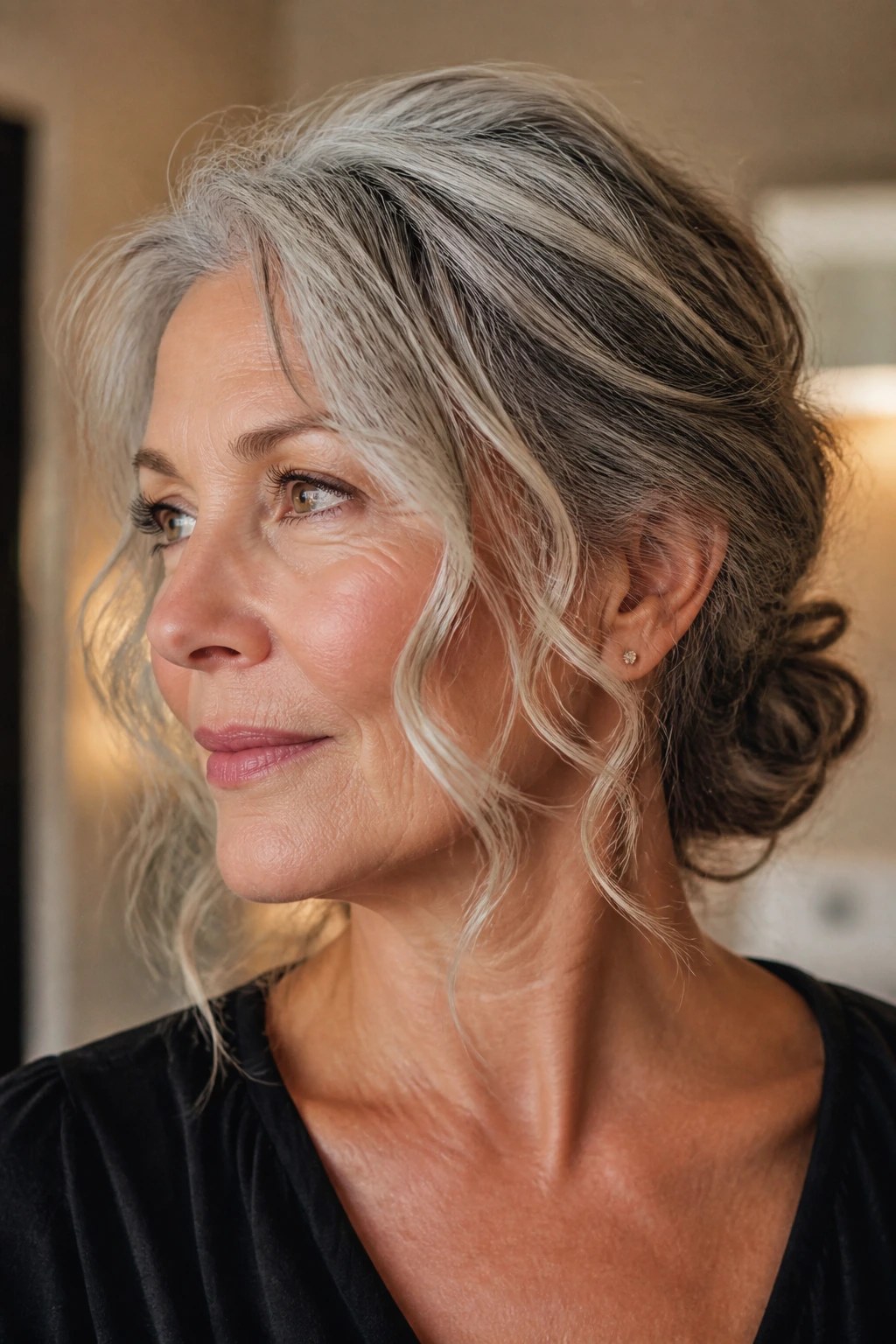
A low knot is a useful fallback when the hair is having an off day. The trick is keeping it loose. Pull the hair back at the nape, twist it into a knot or soft coil, and leave a few wavy tendrils out in front. Those little pieces are what keep it from looking severe.
If your hair is very clean and slippery, add a dry texture spray first so the knot has something to hold onto. A few bobby pins, crossed in an X, usually hold better than one big elastic. And don’t over-smooth the crown — a little softness up top keeps the whole style from looking too tight.
This is one of those quick styles that can save a haircut on its second or third day. That alone makes it worth knowing.
17. Mid-Length Waves for Thick Hair

Thick hair has its own problem: too much of it in the wrong places. Mid-length waves solve that better than a blunt heavy cut because they let the hair move around the face and shoulders instead of expanding outward like a triangle. The layers should be internal, not sliced to pieces on the outside.
Ask for weight removal near the bottom thirds of the hair, not the top. Too much thinning at the crown can make thick hair frizzy and uneven. A little leave-in conditioner and a medium round brush usually help the wave fall in a cleaner way.
This cut looks best when the ends are still substantial. Thick hair needs some presence at the bottom. Without it, the shape can get fuzzy fast.
18. Side-Swept Occasion Waves
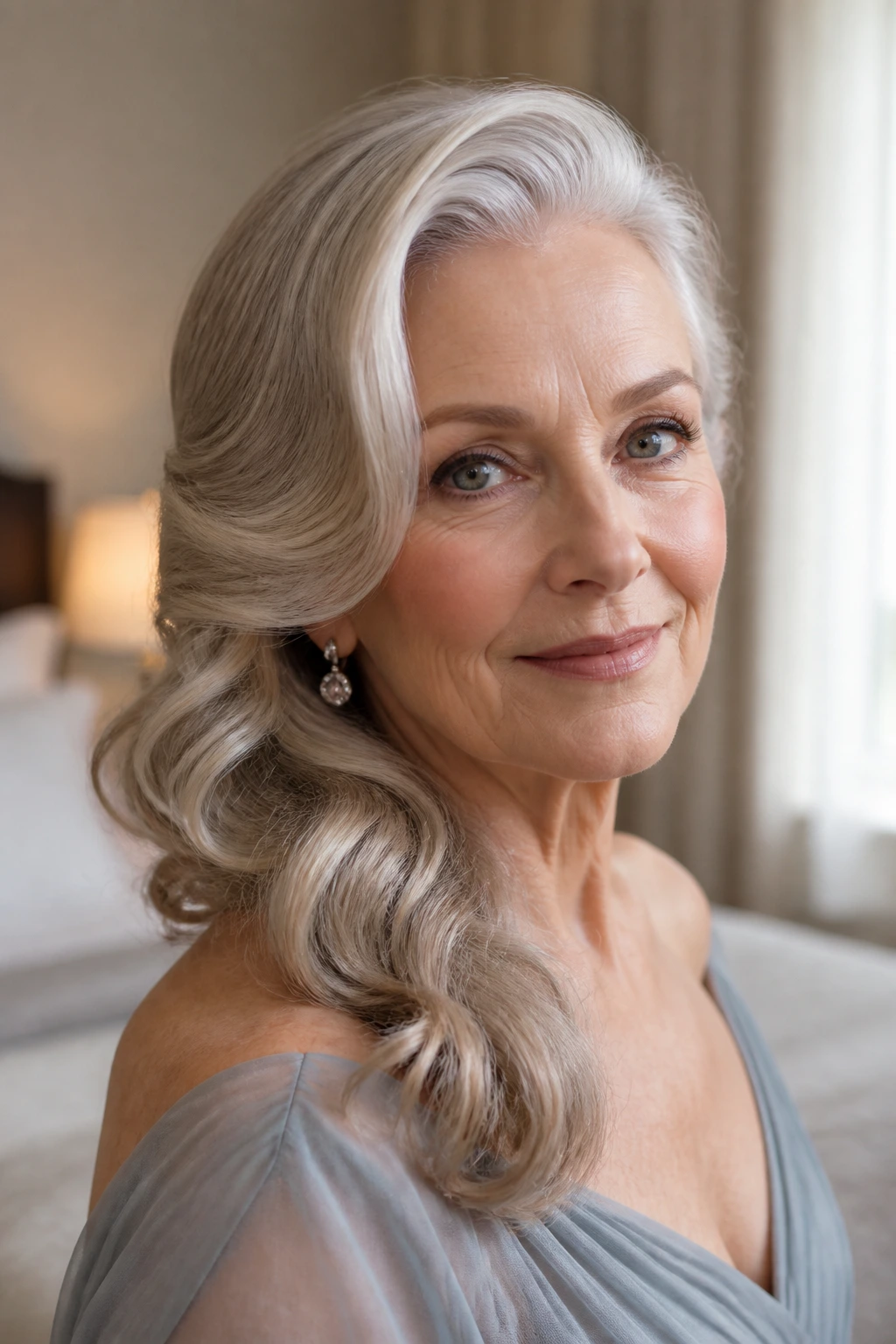
Side-swept waves do one thing very well: they make the face feel open and lifted. That’s why they show up so often at weddings, theater nights, and dinners where a little extra polish matters. The sweep changes the balance of the whole head.
Set the hair with a larger iron, then pin the heavier side back just behind the ear or slightly lower at the nape. Leave the front curve soft and avoid brushing it into one flat sheet. That’s the mistake that makes this style look old-fashioned in a bad way.
Use a flexible-hold spray so the wave stays in place but still moves when you turn your head. Hard spray makes this style look frozen.
19. Glasses-Friendly Wave Cut

Glasses can get blamed for hair problems they didn’t cause. The real issue is usually length around the temples and fringe placement. A glasses-friendly wave cut leaves enough room for the frames to sit without crushing the hair at the sides.
The Temple Zone Matters
Keep the shortest pieces just above or just below the arm of the glasses, not right on top of it. That tiny adjustment stops the hair from flipping out in a weird angle. Curtain bangs or a soft side-swept fringe usually work better than a dense straight bang, because they don’t compete with the frames.
The best version of this cut has a little volume at the crown, soft movement through the sides, and no blunt chunk right where the glasses sit. That’s the difference between a haircut that fights your face and one that looks built for it.
20. Salt-and-Pepper Tousled Shag

Salt-and-pepper hair loves a tousled shag because the cut shows off the contrast in color instead of hiding it. The lighter strands and darker strands separate a little through the layers, which gives the wave a built-in depth you don’t have to fake with product.
Keep the texture loose and piecey. This is not the cut for a polished, brushed-out finish. A little sea salt spray through damp hair can help if your hair is naturally soft, but don’t overdo it — too much will dry out the silver and make the ends feel rough.
If you’ve been fighting the texture in your gray hair, this style can be a relief. It asks the hair to do less. That’s usually the smartest move.
21. Curled-Under Bob with Wave Finish
A curled-under bob has a neatness to it that never really goes away. The ends sweep inward just enough to keep the line tidy, while the top and mid-lengths still hold a soft wave. It’s a good choice if you like hair that looks finished without looking stiff.
Use a round brush while blow-drying the ends, then add a loose bend through the outer layer with a wand if you want more softness. The key is restraint. If you over-curl the front, the shape can feel old-fashioned fast.
This style works well with polished clothes, but it isn’t fussy. That’s why it hangs around. It behaves.
22. Long Center-Part Waves
Long center-part waves can be elegant when the cut is layered properly. The center part gives balance, and the long layers keep the hair from hanging in one heavy curtain. This style works best when the wave starts around the cheekbones or lower, not all the way up at the roots.
If the hair is very thick, the layers should be enough to release weight without breaking the outline. If it’s fine, the layers should stay longer so the hair doesn’t disappear at the ends. A little shine spray on the mid-lengths helps the wave look deliberate instead of dry.
This is the longest option in the group, and it has a softer mood than the shorter cuts. It’s for people who still like length but want it to move a little more.
23. Neck-Length Choppy Waves
Neck-length cuts sit in a useful middle place. Shorter than a lob, longer than a classic bob, and easy to dry without wrestling a lot of hair. When the ends are choppy and the wave is loose, the shape feels light around the neck instead of heavy on it.
Why It’s So Practical
- It clears the collar enough to stay comfortable under sweaters and scarves.
- The shorter length means less time with hot tools.
- Choppy edges keep the cut from looking too precise.
This is a good cut for women who want mobility. It can be tucked, pinned, left loose, or bent with a quick pass of the iron. Not precious. Not boring.
24. Low Bun with Face-Framing Waves
A low bun is useful when you want your hair out of the way but still want some softness around the face. The face-framing pieces matter more than the bun itself. Leave them out before you secure the back, then bend them gently with a curling iron if they need help.
Keep the bun low and slightly loose at the nape. A tight bun can pull the face backward and make the whole style feel severe. A softer bun, with a few waves left loose around the temples, has more grace to it.
This one works for dinner, travel, or any day when your hair needs to behave without disappearing completely.
25. Rounded Bob with Internal Layers
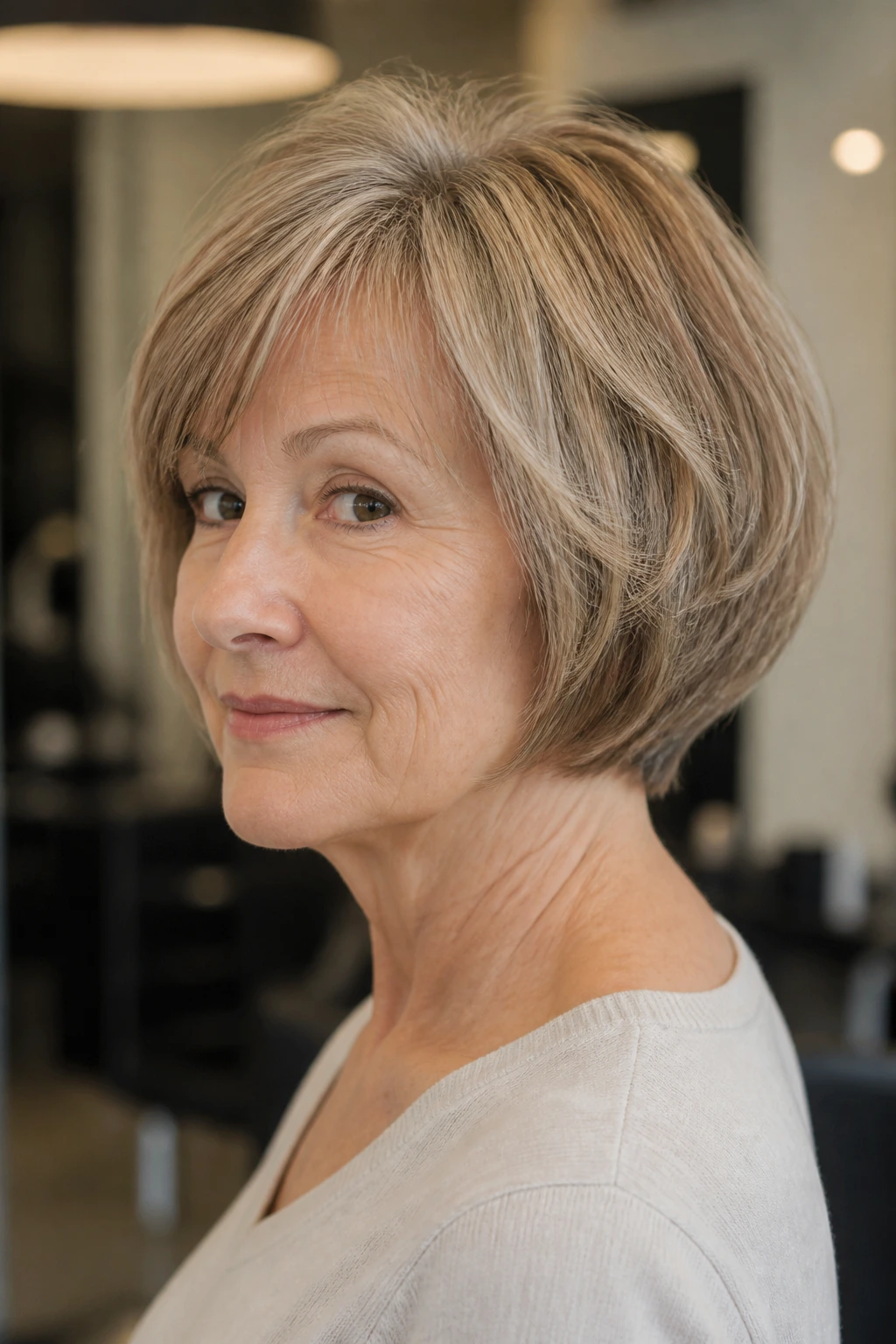
A rounded bob is the answer when hair wants to puff outward instead of lying down. The internal layers remove enough weight to let the curve sit close to the head, while the outer shape stays full and rounded. That’s especially helpful for dense or coarse hair.
What to Ask For
Ask your stylist to keep the perimeter solid and build the layers inside the shape. That gives the bob body without shredding the outline. Too many exterior layers can make the cut look frayed, especially when the hair is silver or dry at the ends.
A round brush and a quick cool-shot at the end are often enough to keep this cut in place. It’s a quiet, controlled look. Very different from a fluffy one.
26. Smooth, Glossy Wavy Blowout
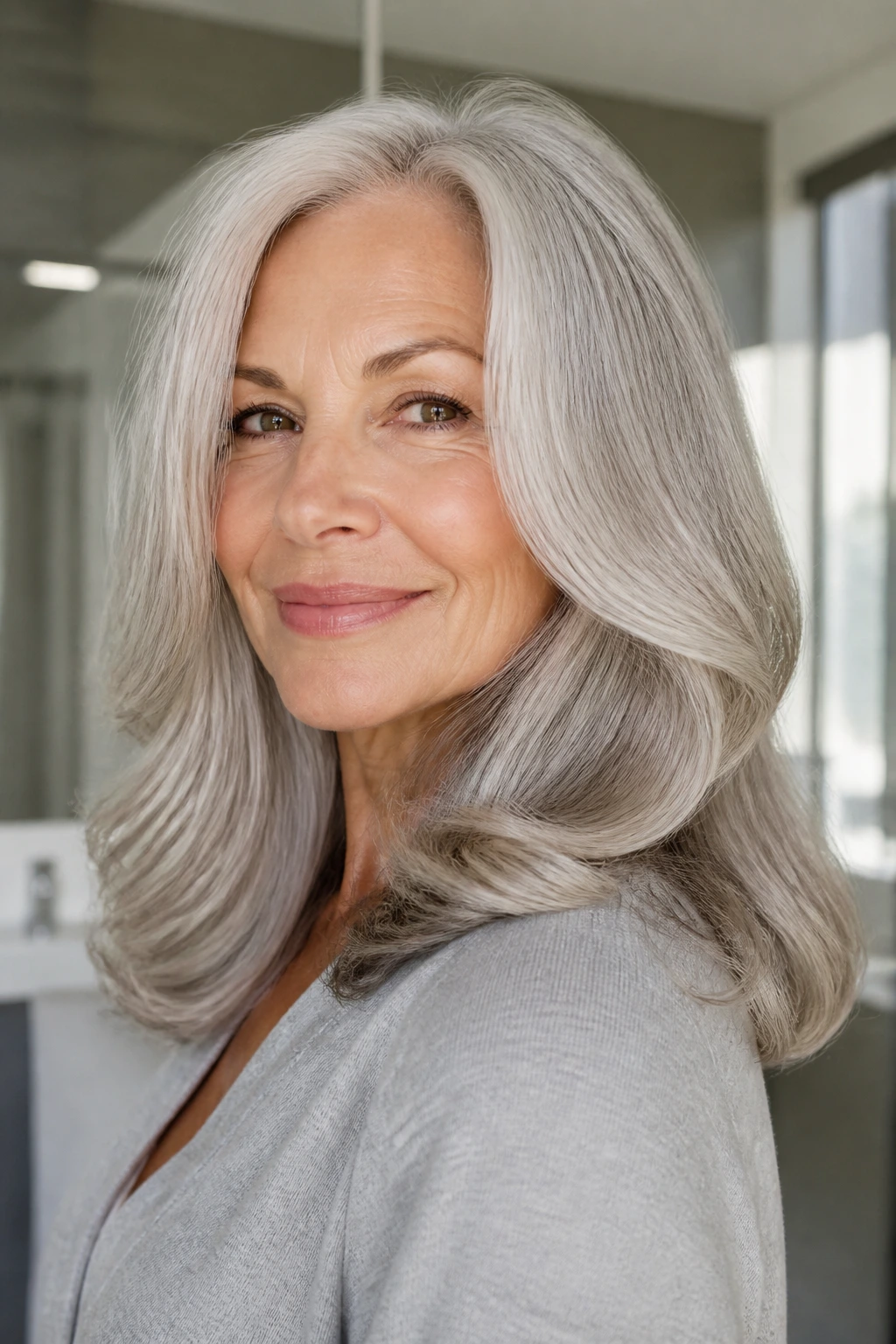
Not every wave needs to look rough and undone. A smooth, glossy blowout with soft bends through the ends can look sharp and expensive without being stiff. The secret is in the finish: clean roots, bent mid-lengths, and ends that move when you do.
Use a round brush to smooth the crown, then add a few bends with a large-barrel iron once the hair is dry. Don’t wave every section. Leave some of it straight so the style has contrast. A light gloss spray or serum on the outer layer can help silver and gray hair look richer, but keep it off the roots.
This is the look for days when you want polish without losing softness. It’s neat. That’s the point.
27. Vintage Finger Waves with Soft Edges
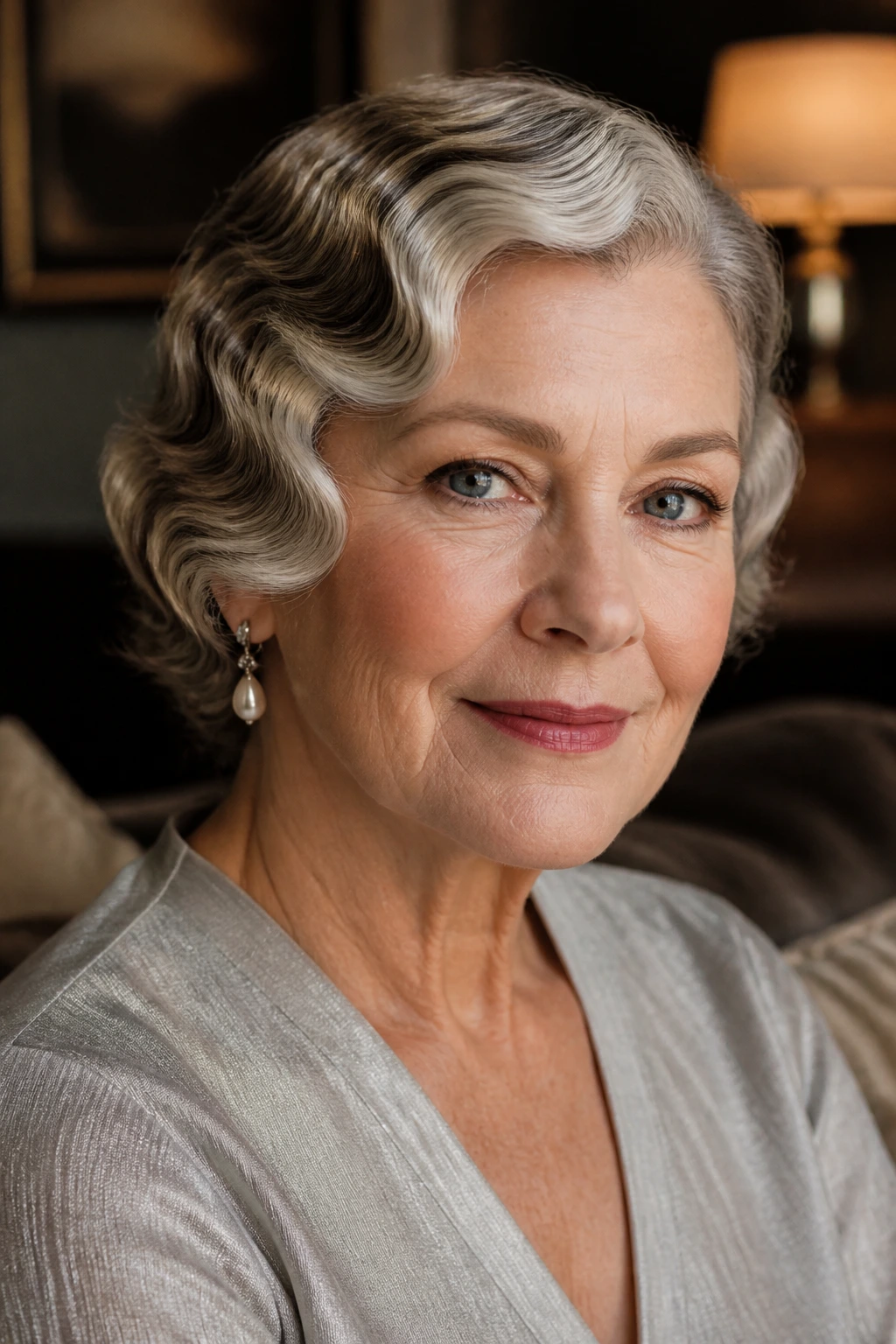
Finger waves can sound intimidating, but a softened version is easier than it looks and much less severe than the old-school pictures suggest. The shape hugs the head a little more closely, which can be very flattering on short to medium hair, especially for special events.
The Shape Matters More Than Perfection
A little setting lotion or strong mousse helps the waves hold their curve. Use clips to guide the shape while the hair dries, then loosen the edges with your fingers once everything is set. If a wave looks too rigid, break it up. That softness is what keeps the style from feeling costume-like.
This is one of the few dressy styles that really rewards a precise hand. A tiny change in placement can change the whole face.
28. Air-Dried Natural Waves with Shine

Some of the best waves happen when you stop trying to control every strand. Air-dried natural waves with a little shine keep the hair soft and honest. The cut does the heavy lifting here. The product just gives the bend a cleaner finish.
Work a lightweight curl cream or foam through damp hair, scrunch once, and leave it alone until it dries. If your hair tends to frizz, a drop of serum on the ends after drying can help, but keep it small — a pea-sized amount is enough for most short to mid-length cuts.
This is the simplest look in the collection, and it still has range. It can be casual, neat, or a little romantic depending on the cut underneath.
Why Wavy Hairstyles Work So Well After 60
Hair changes shape with time, and that’s not a flaw. It usually gets a little drier, sometimes a little finer at the top, and often less predictable at the ends. Waves help by breaking up those changes instead of spotlighting them. They keep the eye moving.
That movement matters around the face. A straight, heavy line can sit hard against the jaw or neck, while a soft bend gives the whole look a gentler edge. Silver and gray hair also benefit from wave because the color variation shows up more clearly when the strands are separated a bit. Flat hair hides it. Waves show it off.
There’s another reason these cuts make sense: they age gracefully. A wavy shape doesn’t rely on exact symmetry the way a blunt, poker-straight look does. A small amount of grow-out, a slightly off-center part, or a softer fringe usually just changes the mood rather than ruining the cut.
Essential Tools and Products for These Looks
-
1-inch curling iron or wand: Best for chin-length bobs, layered lobs, and face-framing bends without making curls too tight.
-
1.25- to 1.5-inch barrel iron: Useful for longer waves and any style that needs a smoother, looser finish.
-
Heat protectant spray: Use it every time you touch hot tools to dry hair. Silver hair can look extra rough when heat damage shows up.
-
Volumizing mousse or foam: Good on damp roots when you want lift without crunch.
-
Lightweight leave-in conditioner: Helps coarse or dry waves stay softer without turning the hair greasy.
-
Root-lift spray: Handy for fine hair at the crown, especially on bob and lob lengths.
-
Dry shampoo: Extends a style by one or two days and gives the roots some grip.
-
Wide-tooth comb: Better than a brush for separating soft waves without flattening them.
-
Duckbill clips or sectioning clips: Useful when setting waves, pinning the crown, or cooling curls in place.
-
Diffuser attachment: A real help for air-dried looks and low-heat drying when the wave needs a little shape.
-
Soft bristle brush: Good for smoothing the top layer on polished blowouts without destroying the bend.
-
Silk pillowcase or satin bonnet: Not glamorous advice, but it cuts down on overnight frizz and flattening.
Choosing the Right Cut, Part, and Product
A good wavy style starts in the chair, not in the bathroom mirror later. If you have fine hair, ask for a blunt edge with strategic internal layering. Too many short layers can make the hair puff up at the sides and disappear at the ends. If your hair is thick, ask for weight removal lower down, not razor-thin ends that frizz by lunch.
The part matters more than most people admit. A side part gives lift and softens a flatter hairline. A center part can look balanced and calm, especially on longer cuts with face-framing layers. If you wear glasses, the part should leave enough room at the temples so the frames don’t crowd the hair.
Product choice matters, too. Heavy cream at the roots will flatten waves faster than almost anything. Use mousse, foam, or a light gel at the damp stage, then save the richer serum for the last inch or two of hair. For silver hair, a gentle clarifying shampoo every 7 to 10 days helps keep buildup from dulling the tone. Purple shampoo can be useful, but too much will make the hair feel dry and a little chalky.
How to Wear These Waves in Real Life
Everyday: Keep the top smooth and let the ends carry the bend. That’s enough for errands, coffee, and regular days when you don’t want your hair to look overworked. A small amount of shine cream on the ends can keep the style from getting frizzy in dry air.
Dressier Finish: Deepen the side part, bend the front pieces away from the face, and pin one side back or tuck it behind the ear. This makes the wave read more polished without turning it stiff. One or two curls at the front usually do more than curling the whole head.
With Glasses: Leave a little room at the temples and avoid bangs that sit exactly where the frame arm lands. Curtain bangs, wispy bangs, or a soft side-sweep usually behave better. If the glasses are bold, keep the wave shape slightly cleaner so the face doesn’t feel crowded.
With Jewelry and Necklines: Shorter waves and lobs show off earrings nicely. Shoulder-length or longer waves work well with open necklines, collarless tops, and jackets with a little structure. The hair should frame the clothes, not fight them.
Extra Polish and Personal Touches
Texture Boost: A little mousse at the roots and a mist of sea salt spray through the mid-lengths can give softer hair more grip. Use both lightly. Too much turns waves crunchy fast.
Color Lift: Waves look richer when the color has depth. A few lowlights near the underside or a soft gloss over silver hair can make the shape read more clearly. The wave pattern shows more when there’s contrast between strands.
Accessory Move: Clips, combs, and slim headbands can change the mood without changing the cut. I’d pick matte or brushed metal over shiny plastic if the rest of the style is soft. It reads cleaner.
Make-It-Yours: Fine hair often looks better a little shorter and blunter. Thick hair usually needs more internal layering. Gray hair usually benefits from a shine product that doesn’t weigh it down. If you like low effort, ask for a cut that still looks good when you only bend the front pieces.
Keeping the Style Fresh Between Washes
Most wavy styles after 60 look their best on day one or day two. Fine hair usually starts to lose shape sooner, sometimes by the next morning. Coarser hair can hang on for three days if it’s not overloaded with product. The trick is refreshing just enough, not redoing the whole head.
At night, sleep on a silk pillowcase or gather longer waves into a loose pineapple with a soft scrunchie. For bobs and lobs, a loose clip at the crown can stop the back from flattening. If the hair is dry, a tiny bit of serum on the ends before bed helps reduce frizz without making the roots greasy.
In the morning, mist the hair lightly with water and a small amount of leave-in conditioner — about four parts water to one part conditioner in a spray bottle is plenty. Scrunch the wave back into shape, then touch only the front pieces with a 1-inch iron if they’ve gone flat. Dry shampoo at the roots gives the style a little lift, but keep it a few inches away from the scalp so the powder doesn’t sit in one spot.
If the wave pattern has collapsed completely, don’t fight the whole head. Rework the crown and face-framing pieces only. That usually brings the style back faster than starting from scratch.
Variations and Adaptations to Try
Fine-Hair Lift Package: Keep the length around chin to collarbone, use a blunt edge, and ask for soft internal layers only where the hair needs movement. Style with mousse and a root-lift spray, then skip heavy oils except on the last inch. This version gives the hair a thicker outline without making it feel bulky.
Thick-Hair Tamer: Go for mid-length or longer layers with enough weight left at the bottom to keep the shape grounded. A side part and a smooth blow-dry at the crown help keep the style from puffing outward. It’s a good option when you want waves that move, not expand.
Gray-Glow Finish: Silver and salt-and-pepper hair often looks best with a clear gloss or a violet shampoo used sparingly. Keep the styling products light so they don’t cloud the tone. A wave pattern with a little separation shows the color shifts better than a brushed-out finish.
Glasses-Friendly Frame: Choose curtain bangs, soft side-swept fringe, or temple pieces that stop just above or below the frame arm. The goal is to leave the glasses visible and the hair calm around them. No fighting at the temples.
Heat-Free Wave Plan: Braid damp hair into two to four loose braids, or twist it into soft sections overnight. In the morning, take the braids out, shake the hair gently, and smooth only the ends with a touch of cream. This works best on hair that already has some bend.
Special-Event Polish: Set the front with a larger iron or hot rollers, pin the curls while they cool, and finish with a flexible spray. This gives older hair a smoother wave that still moves when you turn your head.
Common Mistakes That Flatten Waves
The biggest mistake is cutting all the weight out of the hair. It sounds smart when the hair is thick, but if the layers are too aggressive, the ends fray and the shape gets puffy instead of soft. The fix is simple: keep some perimeter weight and remove bulk from inside the cut.
Another problem is putting too much product at the roots. A rich cream or oil near the scalp makes waves sag fast, especially on fine hair. Keep the heavy stuff on the ends and use mousse or foam up top if you need lift.
Curling everything in the same direction is another easy way to make the style look stiff. Alternating direction — and leaving the ends a little straighter — keeps the waves from forming one solid barrel shape. That small change matters more than people expect.
Skipping the cool-down is a classic mistake. If you brush or finger-comb the hair before the wave sets, it drops almost immediately. Pinning the front pieces for a few minutes and letting the rest cool makes the bend last longer.
Bangs can cause trouble too. If they’re cut too short or too dense, they fight glasses and crowd the face. A softer, longer fringe usually sits better and grows out with less drama.
Questions Readers Ask About Wavy Hairstyles for Women Over 60
Are wavy hairstyles flattering after 60?
Yes, because waves add movement where straight hair can look flat and heavy. They also soften the outline around the jaw, neck, and forehead, which is useful when hair changes texture or density over time.
What if my hair is naturally straight and won’t hold a wave?
Start with a cut that has a bit of internal layering and use a mousse before drying. Then set only the front and top layers with hot tools instead of curling every strand. That usually holds better and looks less forced.
Can I wear waves if my hair is very fine?
You can, but keep the cut blunt enough to preserve the outline. Fine hair usually does better with shorter to mid-length waves, light product, and a little lift at the crown rather than a lot of layers.
Do glasses change which wavy cut works best?
They do. You want room at the temples and fringe that doesn’t sit directly on top of the frames. Soft curtain bangs, side-swept pieces, or a clean tuck behind the ears usually solve the problem.
Is a center part or a side part better?
A side part usually gives more lift and softness, while a center part feels balanced and calm. If the hair is thinning at the front, a slight side part is often kinder.
How often should I wash wavy hair?
Most wavy styles do fine with washing every 2 to 4 days, depending on oil level and product use. Silver or gray hair can show buildup sooner, so a gentle clarifying wash every 7 to 10 days helps.
Can gray hair hold waves as well as dyed hair?
Yes, but it often needs more moisture control. Gray hair can be coarser or drier, so a light cream on the ends and a flexible spray tend to work better than heavy oils or stiff gels.
What’s the easiest low-heat option?
Airdrying with mousse, then touching only the front pieces with a wand if needed, is usually the fastest low-heat route. Heat-free braids overnight work too, but the finish is softer and less polished.
The Shape That Keeps Hair Moving
The best wavy hairstyle after 60 is usually the one that respects how your hair behaves now, not how it behaved twenty years ago. That means paying attention to density, part placement, and where the wave starts — at the cheekbones, at the collarbone, or just through the ends.
A good cut makes the styling easier. A good product keeps the wave from collapsing. Put those together, and the result is hair that looks like it has shape without looking overworked.
Pick the version that fits your mornings, your glasses, your neckline, and your patience. Then let the wave do the rest.
