



Short hair and waves have a built-in advantage: every bend actually matters. On long lengths, a wave can disappear into the mass of hair. On a bob, a bixie, or a cropped shag, the same bend changes the whole read of the cut — suddenly the cheekbones look sharper, the jawline looks cleaner, and the haircut has a little motion instead of sitting there like a helmet.
That’s why wavy hairstyles for women with short hair are so satisfying to wear and style. You can go glossy and neat, tousled and beachy, or sculpted and old-Hollywood without needing layers of length to carry the look. A 1-inch curling iron, a decent mousse, and five minutes of finger work can do more on a short cut than an hour of fussing ever could on waist-length hair.
The catch is that short waves show everything. Great product choice? Visible. Bad barrel size? Visible. A heavy cream that drags the roots flat? Also visible. Short hair is honest like that, which is exactly why it’s fun.
Why These Short Wavy Looks Earn Their Keep
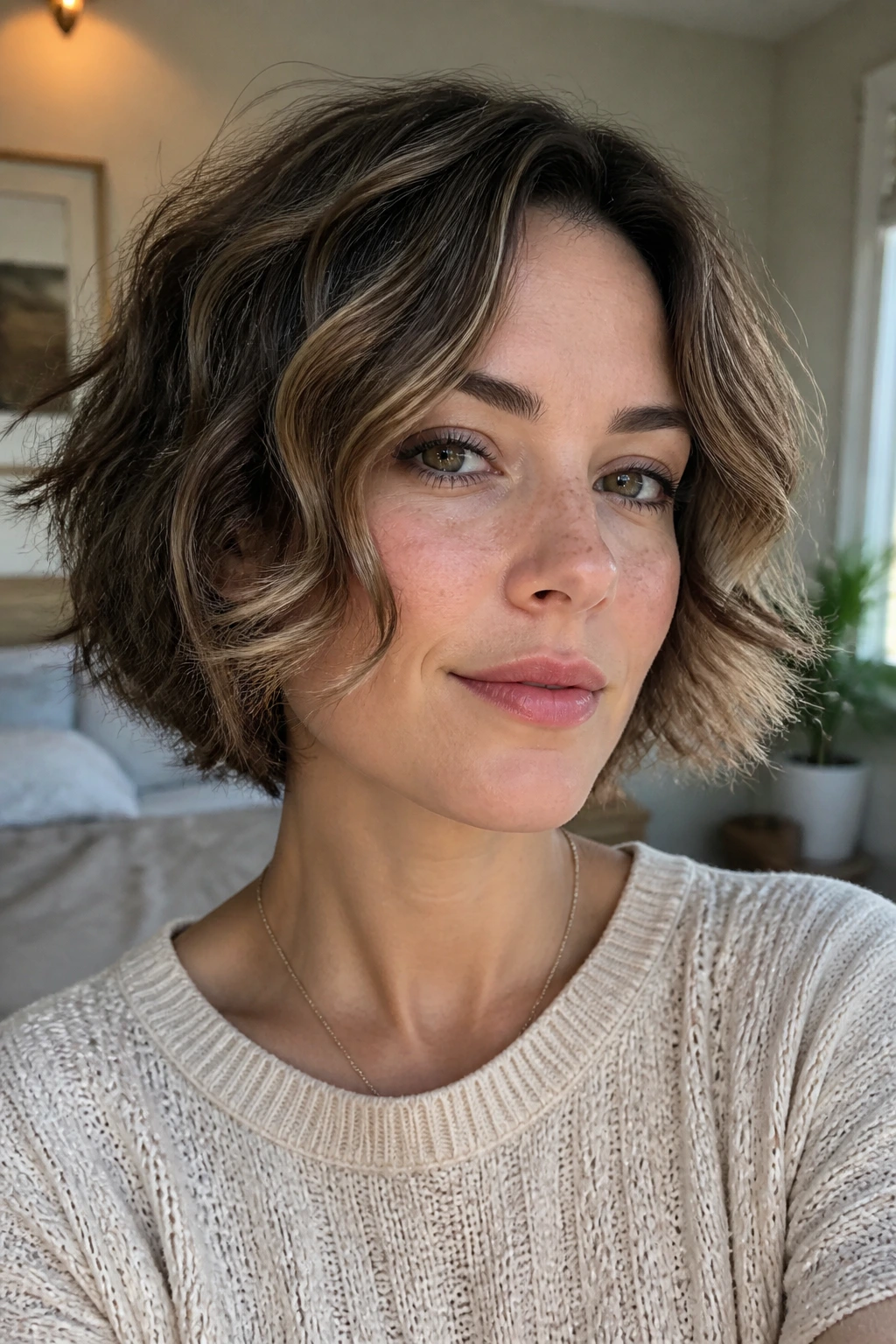
-
They use the cut itself as part of the style: A chin-length bob or pixie-bob doesn’t need tons of curl to look finished; one well-placed wave around the face can change the entire silhouette.
-
They work with second-day hair instead of fighting it: The slightly gritty texture you get from day two often helps waves hold better, especially when a little dry shampoo is working at the roots.
-
They give you more than one finish: The same cut can read polished for work, soft for brunch, or sharp for evening if you change the part, the product, or how tightly you set the wave.
-
They’re easier to refresh than long styles: Short lengths dry fast, cool fast, and take less product to reshape, which means you can fix the front piece or the crown without redoing your whole head.
-
They flatter a lot of hair types: Fine hair gets lift from a bent bob, thick hair gets control from layers, and naturally wavy hair gets to look intentional instead of accidental.
-
They’re not stuck in one decade: You can borrow from French-girl bobs, retro finger waves, undone beach texture, or a sleek wet look without changing the cut every other month.
1. Textured French Bob
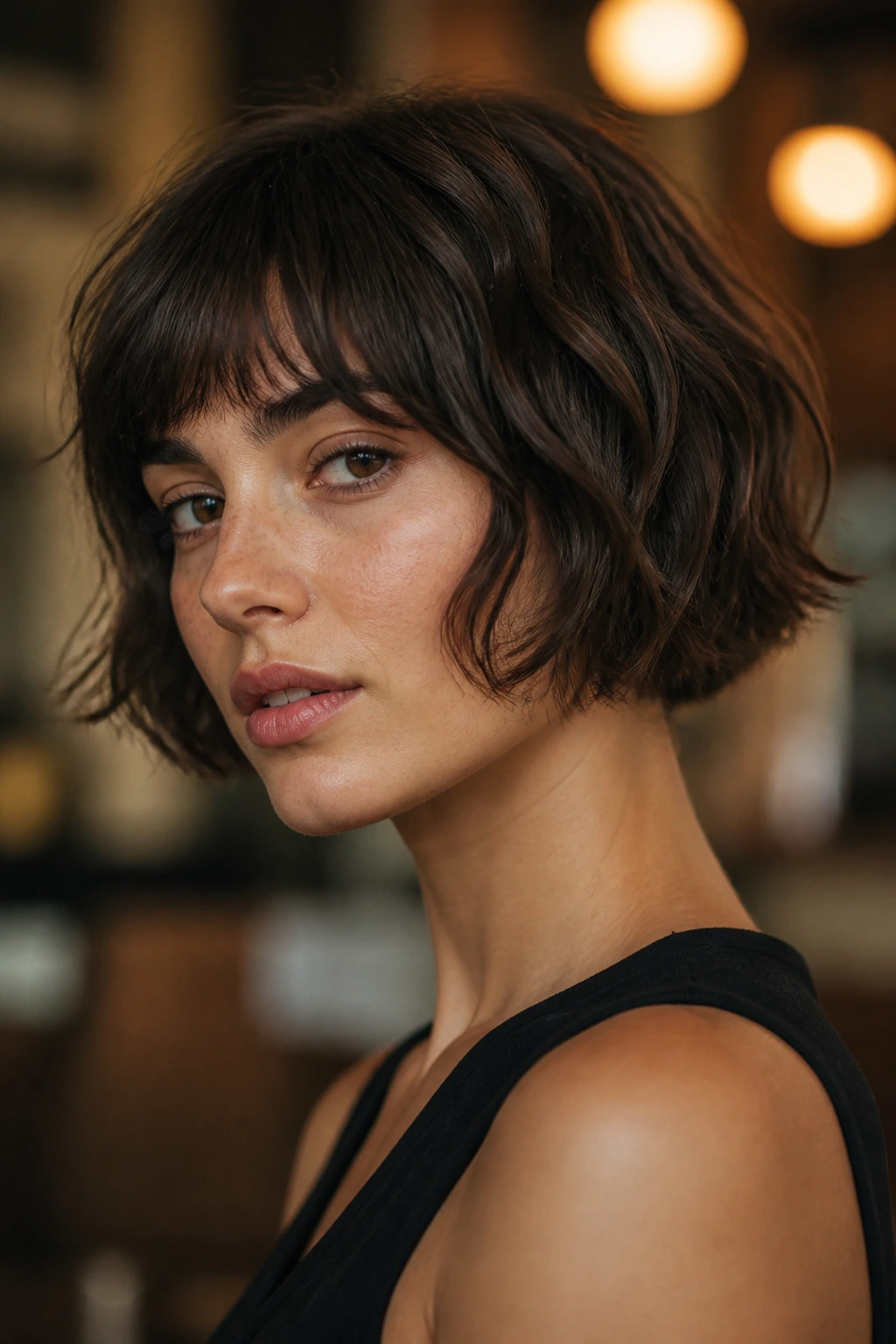
The French bob works because it keeps the shape blunt enough to look deliberate while letting the wave break up the line just enough to keep it from feeling severe. When the length sits around the cheekbone or just below the jaw, the ends flip and bend in a way that makes the whole haircut look expensive, even if you styled it with a cheap mousse and a 1-inch wand. That’s the charm.
Why It Looks Good on Short Hair
A French bob gives short waves somewhere to land. The wave isn’t trying to travel down the hair shaft, so it shows up as shape instead of noise. That matters. The cut looks fuller at the ends, but not puffy, which is a tricky balance to hit on short hair.
How I’d Style It
Use a light mousse at the roots, rough-dry until the hair is about 80 percent dry, then make a few loose bends with a flat iron or curling iron. Don’t curl every section. That’s how you end up with a poodle effect. Curl the middle, leave the ends slightly straighter, and keep the pieces near the face a little softer.
- Best barrel size: 1 inch
- Parting: Center or slightly off-center
- Finish: Matte texture spray or a tiny bit of balm on the ends
Pro tip: Let the front pieces cool in the direction you want them to sit. Short hair obeys heat memory fast, and if you rush the cool-down, the wave falls flat before lunch.
2. Side-Part Wavy Bob
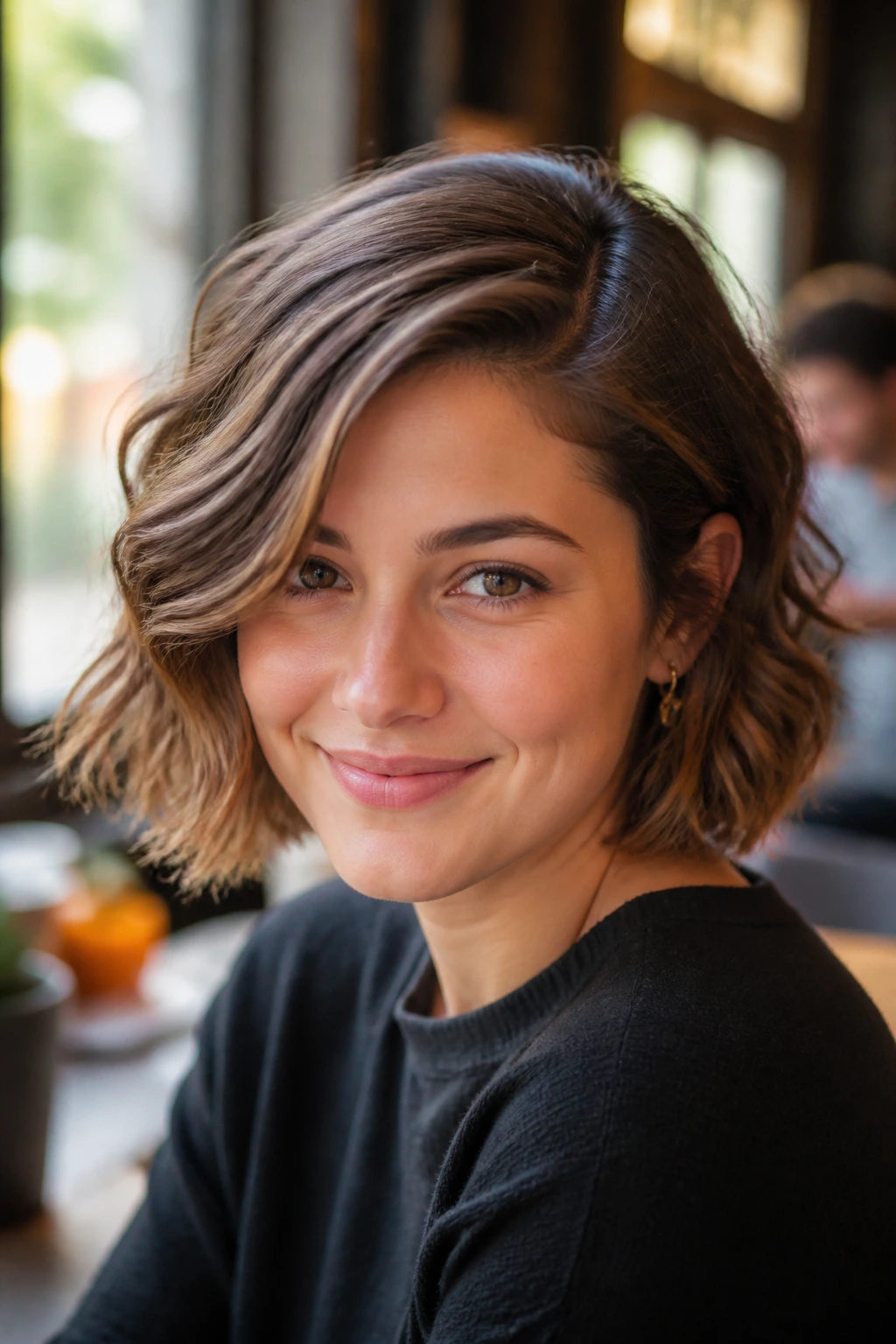
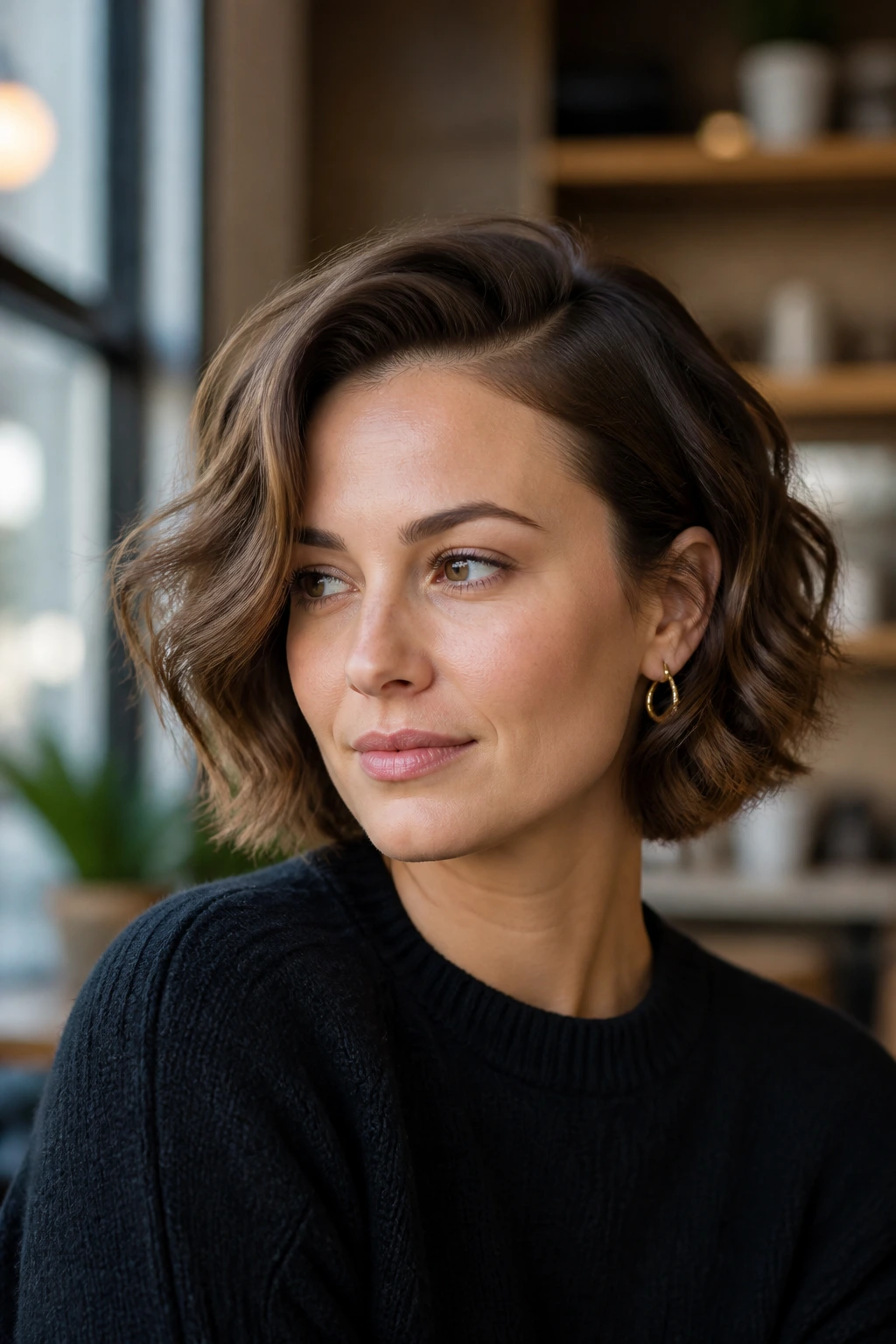
A deep side part can make a short wavy bob look twice as styled with almost no extra effort. That’s the whole trick. You’re not adding more curl; you’re changing the architecture. One side gets lift, the other side gets a clean sweep across the cheek, and the wave suddenly has a reason to be there.
The best part is how forgiving this look is if your hair is fine or a little flat at the crown. The side part gives you an instant root boost, especially if you spray a little volumizing mist into the top section before drying. Then the waves do their job at the ends instead of collapsing the whole shape.
I like this one when the haircut is chin-length and the wave pattern is soft, not ringlet-tight. It feels modern because it doesn’t try too hard. A small bend behind one ear and a few loose pieces around the face are enough.
If you want a sharper finish, tuck the heavier side behind the ear and leave the opposite side loose. If you want it messier, rake through the waves with your fingers and stop before the hair starts to frizz. Don’t brush it out. That’s a fast way to turn a nice bob into a cloud.
3. Tousled Pixie With a Long Top
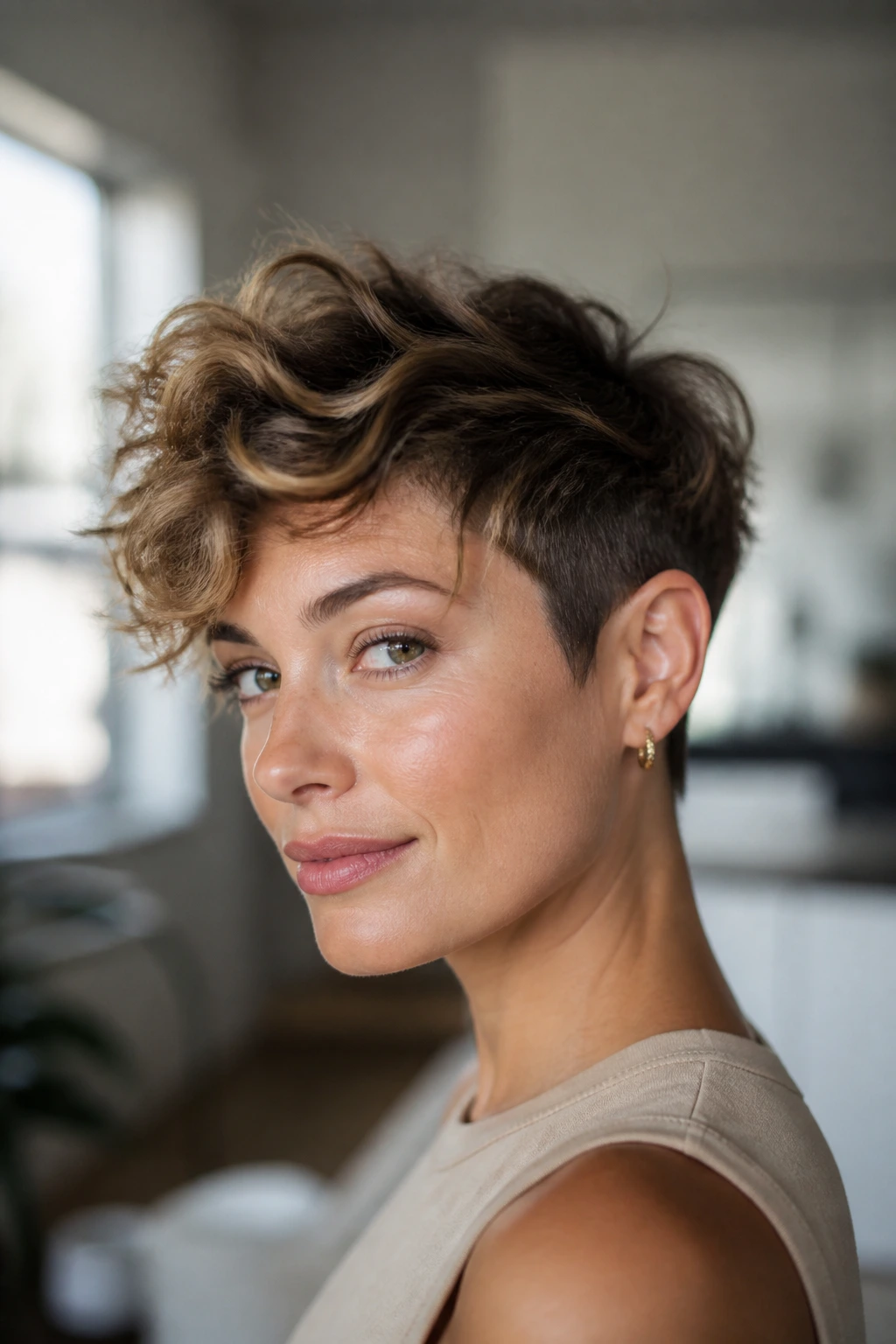
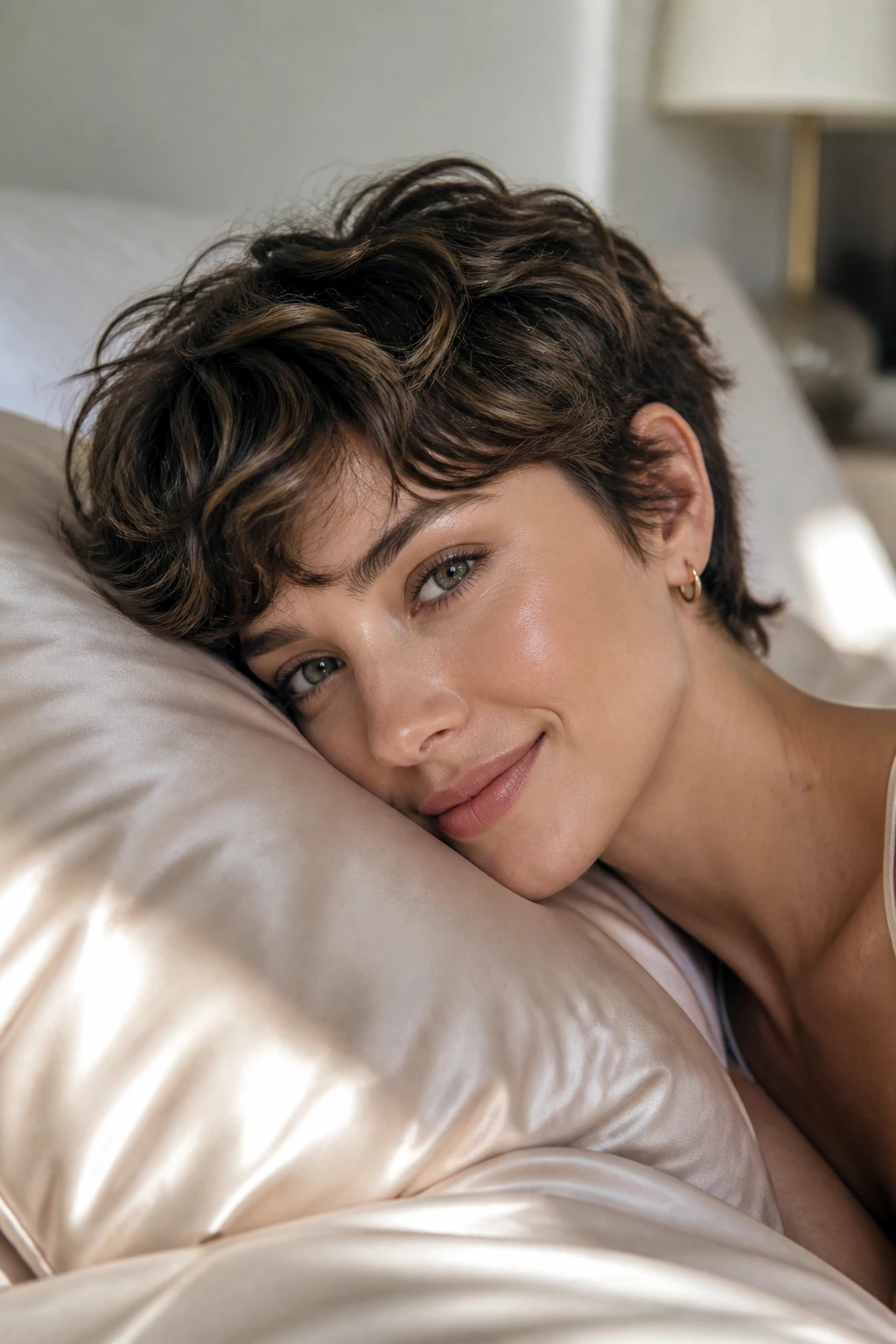
Can a pixie be wavy? Absolutely. In fact, the short sides make the top texture look even better because there’s less hair competing for attention. A long-top pixie, sometimes called a grown-out crop, gives you enough length on top to bend with a small wand or flat iron, but it still keeps the cut crisp around the ears and nape.
This style is all about controlled mess. Not chaos. Controlled mess.
Start with damp hair and work in a lightweight mousse or styling cream. Dry the sides first so they stay close to the head, then twist the top in small sections with a 3/4-inch to 1-inch iron. Leave the ends out for a piecey finish. If you curl too much of the top, the style starts to look dated fast. The better move is one bend near the front and a second at the crown, then a little paste pinched through the ends.
How to Wear It
This cut looks especially good when the top is directed slightly forward or diagonally across the forehead. A small side sweep softens the face. A shorter fringe makes it sharper. Either way, the texture should look touchable, not sprayed into place.
Best for: fine to medium hair, especially if you want volume without giving up short sides.
4. Chin-Length Beach Waves

Chin-length beach waves are the style people try to describe with the word “effortless,” and I usually hate that word because it hides the actual work. But here, there is a real point to it: the cut is short enough that the wave doesn’t droop, which makes the texture look airy instead of dragged down.
This is the easiest short style to wear with a casual outfit and still look finished. A tee, a blazer, a button-down, a simple hoop earring — everything works because the hair has enough movement to keep the look from feeling stiff.
What makes it work is the spacing of the waves. You want a few stronger bends around the face and softer bends in the back. Use a salt spray or texturizing mist on damp hair, scrunch with your hands, and finish with a diffuser if you’ve got natural wave. If you’re using heat, alternate direction with each section so the hair doesn’t form one uniform curl pattern. That uniformity is what makes short beach waves look fake.
A chin-length cut is also where a little frizz can actually help. I’m not talking about a halo of puff. Just enough fuzz to keep the wave from looking too neat. If your hair is too polished, beach waves can lose that loose edge.
5. Soft Finger Waves
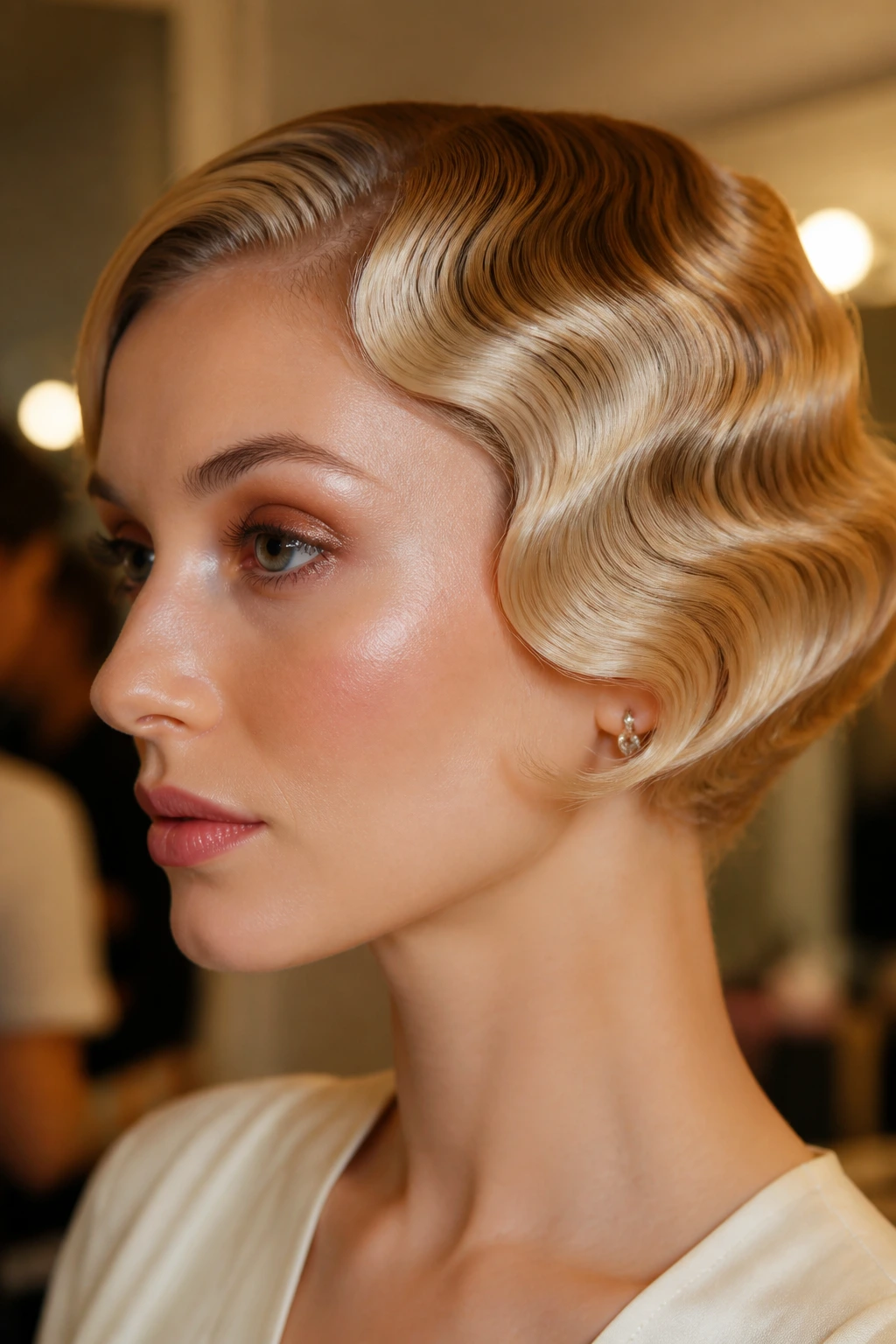
Finger waves on short hair are one of those styles that can look nearly invisible in a mirror and then shockingly good in person. The surface is smooth, the curve is deliberate, and the whole shape sits close to the head in a way that makes earrings, lipstick, and necklines look sharper. This is the short-hair answer when you want glamour without big curls.
The technique matters here. You’re not creating fluffy volume. You’re directing hair into S-shaped ridges with gel, a comb, and your fingertips. The wave should feel sculpted, almost wet at the start, then set as it dries. If the hair is too thick or the part is too wide, the wave loses definition, so smaller sections are better. I’d rather see two crisp waves than five muddy ones.
This style loves a side part, a dramatic lip, and a clean neckline. It also rewards shine. Use a strong-hold gel on damp hair, comb it into place, and pinch the ridges with your fingers or clips until they dry. If you’re doing a special-occasion look, wrap a silk scarf around the hair for the first 10 to 15 minutes while the pattern starts to set.
It’s a little fussy. Worth it.
6. Layered Wavy Bob
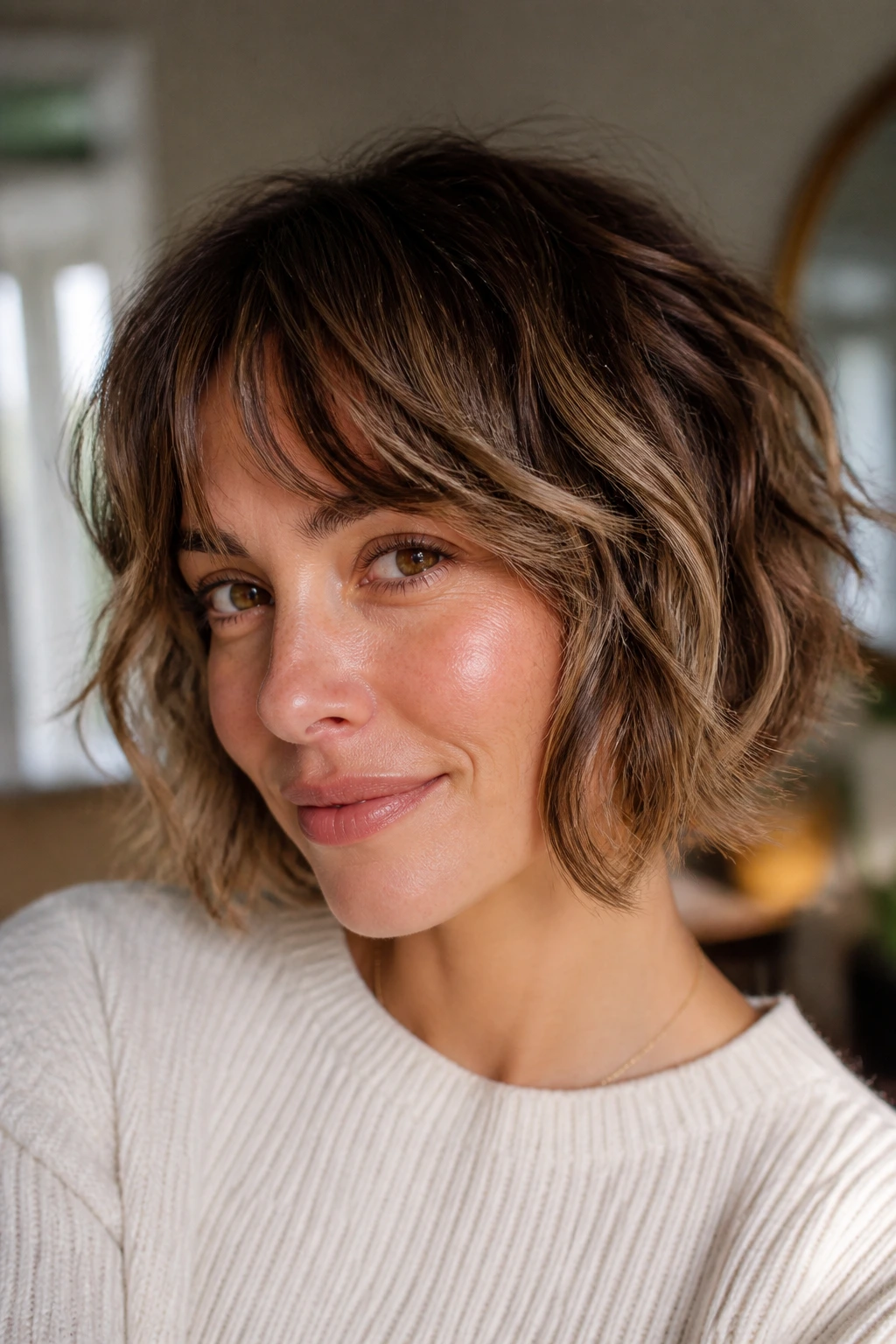
A layered wavy bob has the useful kind of texture — the kind that lets the hair move without making the ends look thin. If your short hair has ever puffed out at the sides and then collapsed at the bottom, layers are usually the fix. They let the wave bend instead of bulking up into a triangle.
The difference between a blunt bob and a layered one is easy to feel after styling. The blunt version gives you a harder edge. The layered version gives you a little air. That air is what makes the waves separate into pieces instead of forming one heavy sheet.
Why Layers Matter Here
If your hair is thick, layers remove enough weight to keep the shape from sitting on the shoulders like a block. If your hair is fine, they prevent the ends from looking stringy. The same cut works for both, but the styling changes: thick hair wants smoothing cream on the mid-lengths, while fine hair usually behaves better with mousse at the roots and a dry texture spray at the end.
I’d keep the wave loose and a little uneven. One larger bend near the jaw, one smaller bend near the ear, then leave a few straight ends to keep it modern. The style reads better when it looks lived in, not perfectly set.
7. Curtain Bangs and a Wavy Bob
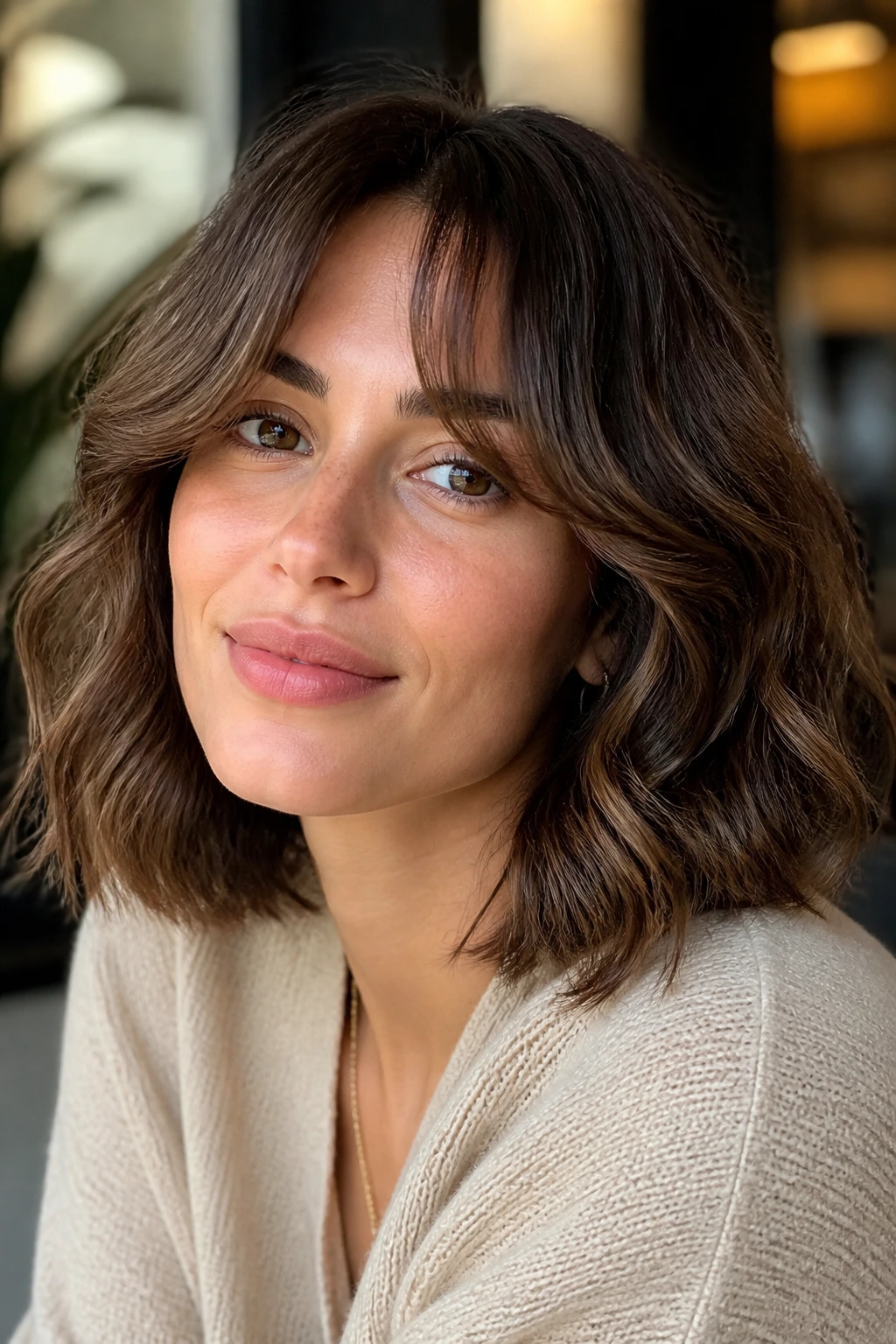
Curtain bangs on a short wavy bob can do more face work than people expect. They split the attention between the eyes and cheekbones, which is handy if you want the waves to feel soft instead of bluntly framed. The bangs become part of the movement, not an extra thing sitting on top of the haircut.
The key is not to make the bangs match the rest of the hair too neatly. That’s where it gets too sweet. Blow the bangs away from the face with a round brush or your fingers, then let them fall into a soft bend. The rest of the bob can be wavier, messier, or a little flatter near the crown. That contrast is what makes the cut feel current.
A curtain fringe also helps if your hairline is a little uneven or if you don’t want a heavy full fringe touching your forehead all day. It opens the face without exposing everything. Nice middle ground.
How to Keep the Fringe From Splitting Wrong
Dry the bangs first. Seriously. If the rest of the hair dries before the fringe, the bangs will set in whatever odd shape they choose. Use a small round brush or your fingers, direct the hair away from the center, and let it cool before touching it again.
8. Sleek Roots, Soft Ends

This is the style for someone who likes a little polish but doesn’t want the whole head curled into submission. The roots stay smooth and close to the scalp, then the wave starts lower down, around the cheek or chin. The result is cleaner than beach waves and less formal than a full blowout.
It also flatters short hair because it keeps the top from getting too big. On a short cut, volume at the crown can go from chic to mushroom-shaped in about thirty seconds. Sleek roots avoid that. The shape stays controlled, and the ends still get to bend.
To style it, blow-dry the roots flat with a paddle brush or a concentrator nozzle, then use a curling iron or flat iron to bend only the mid-lengths and ends. Leave the very top smooth. A light serum on the surface will help with shine, but keep it away from the roots or you’ll lose the lift you just created.
This is a strong office-to-evening style. It looks intentional with a blazer and just as good with an open collar or a bare neck.
9. Jaw-Grazing Shag
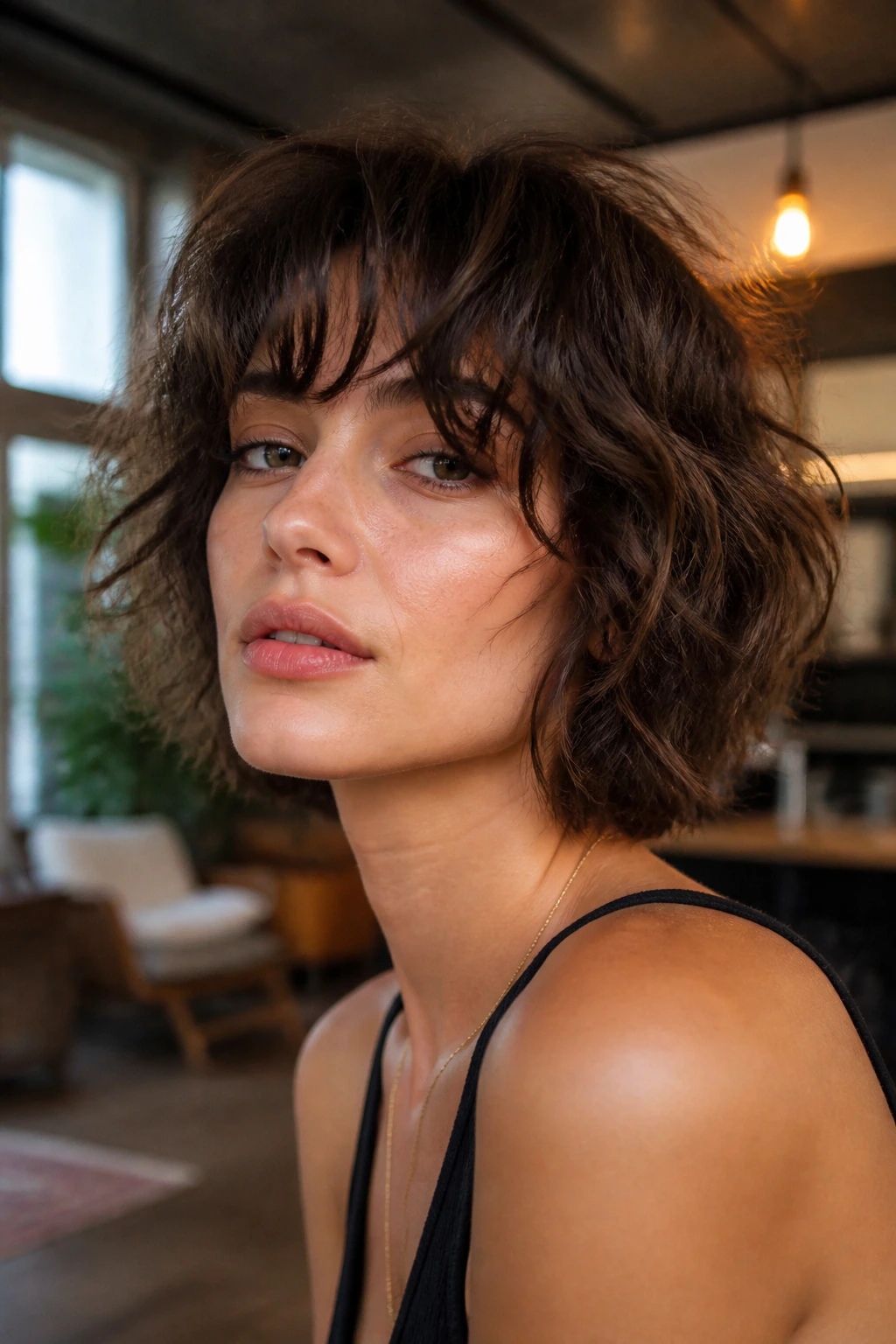
A jaw-grazing shag has edge baked into the cut, so the wave doesn’t have to work hard. The layers are uneven on purpose. The fringe usually has a little movement. The sides kick out in different directions. That roughness gives the style its personality.
If you’ve ever had short hair that felt too neat, a shag fixes that fast. It takes the same wavy texture everyone else is trying to create and makes it look like it belongs there. A diffuser helps, but so does just scrunching in a light cream and letting the hair dry with some air in it. The important part is not over-smoothing the layers. The shag wants separation.
This is one of the better cuts for thicker hair because the layers remove bulk without making the ends look wispy. It also works well if your natural wave bends in different directions on each side. That inconsistency looks deliberate here. In a cleaner bob, it can feel messy. In a shag, it feels right.
A little dry texture spray at the end is usually enough. You don’t need a lot of shine. In fact, too much shine can flatten the whole point.
10. Half-Up Mini Twist
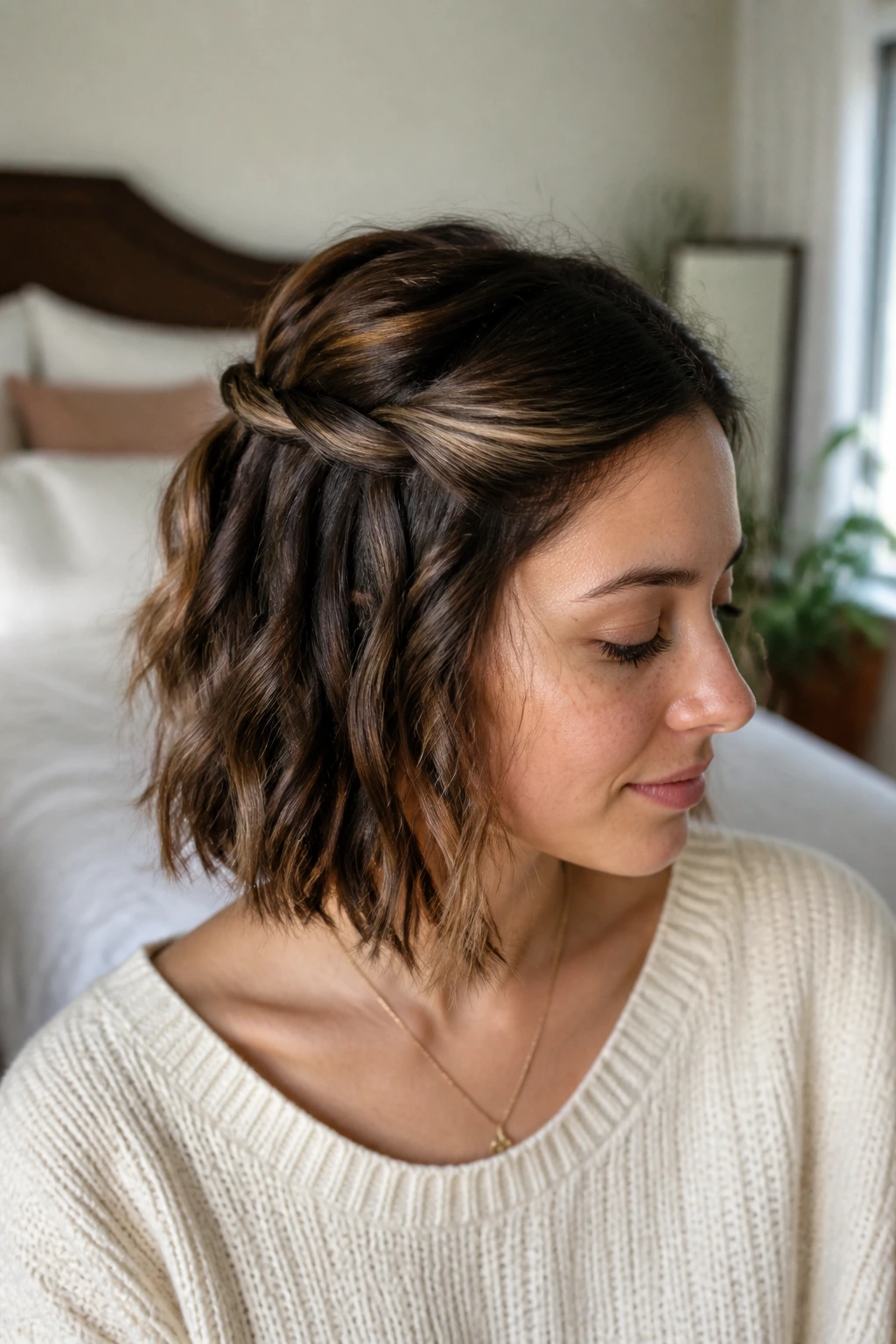
A half-up mini twist is one of my favorite ways to make short waves feel styled without adding more heat. You take the front sections or top crown section, twist them back, and pin them with a small clip or bobby pins. The rest stays loose and wavy. Simple. Effective.
This works best when the hair is chin-length to just above the shoulders, because you need enough length for the twist to hold. If your short waves tend to fall in your face, this is a clean fix that still leaves texture showing around the ears and neck.
The twist changes the mood of the haircut. Loose waves on their own can read casual. Add the twist and it feels more finished, almost like you paid more attention than you did. That’s useful on days when you want the hair out of your face but don’t want a ponytail.
Use two small clips instead of one giant barrette if your hair is fine. Fine hair slides. Thick hair needs stronger pins and maybe a mist of hairspray on the section before you twist it back. Keep the twist soft. If you pull it too tight, the wave at the front disappears and the style loses its shape.
11. Deep Side-Part Glam Waves
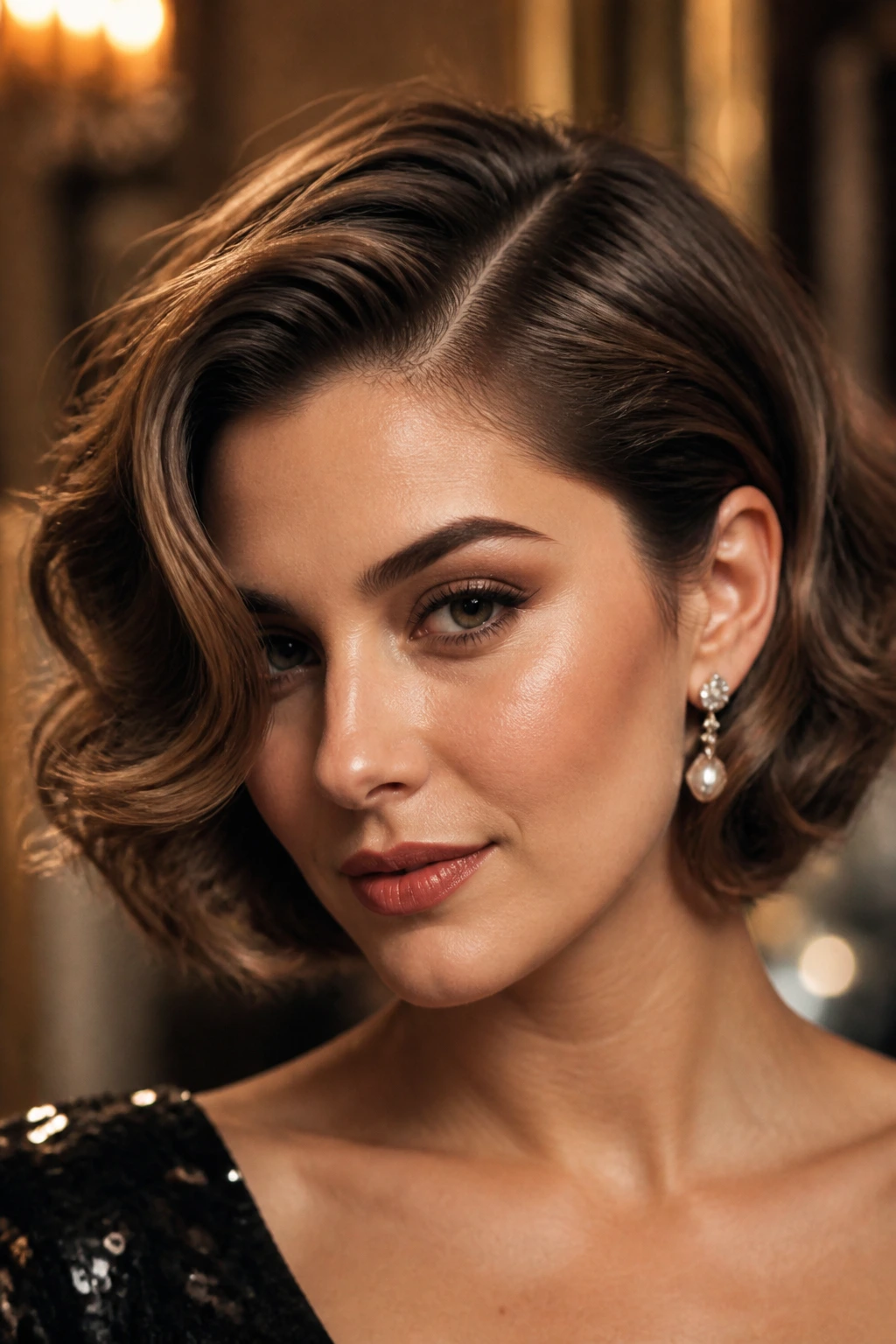
Deep side-part glam waves on short hair are dramatic in a good way. The part line creates instant lift, and the wave pattern becomes cleaner and more directional. This is the short-hair version of old-Hollywood styling, but it works best when the hair is cropped enough that the waves stack around the face instead of dropping long.
Brush the waves into one direction first, then pin and cool them if you want extra shape. Once the hair is set, brush it gently into a softer curve. That part is important. A glam wave should look polished, but not stiff enough to crack if you laugh.
A side part also makes a short style feel longer, which is a neat visual trick. One side sits close to the head; the other side fans away from the face. That asymmetry gives the cut a little drama without needing accessories.
If you want this look to last, use a setting spray before the hair cools and a little shine spray at the end. Don’t drown it. The finish should glow, not look wet unless you’re going for a stronger evening effect.
12. Messy Crop With Tucked Sides
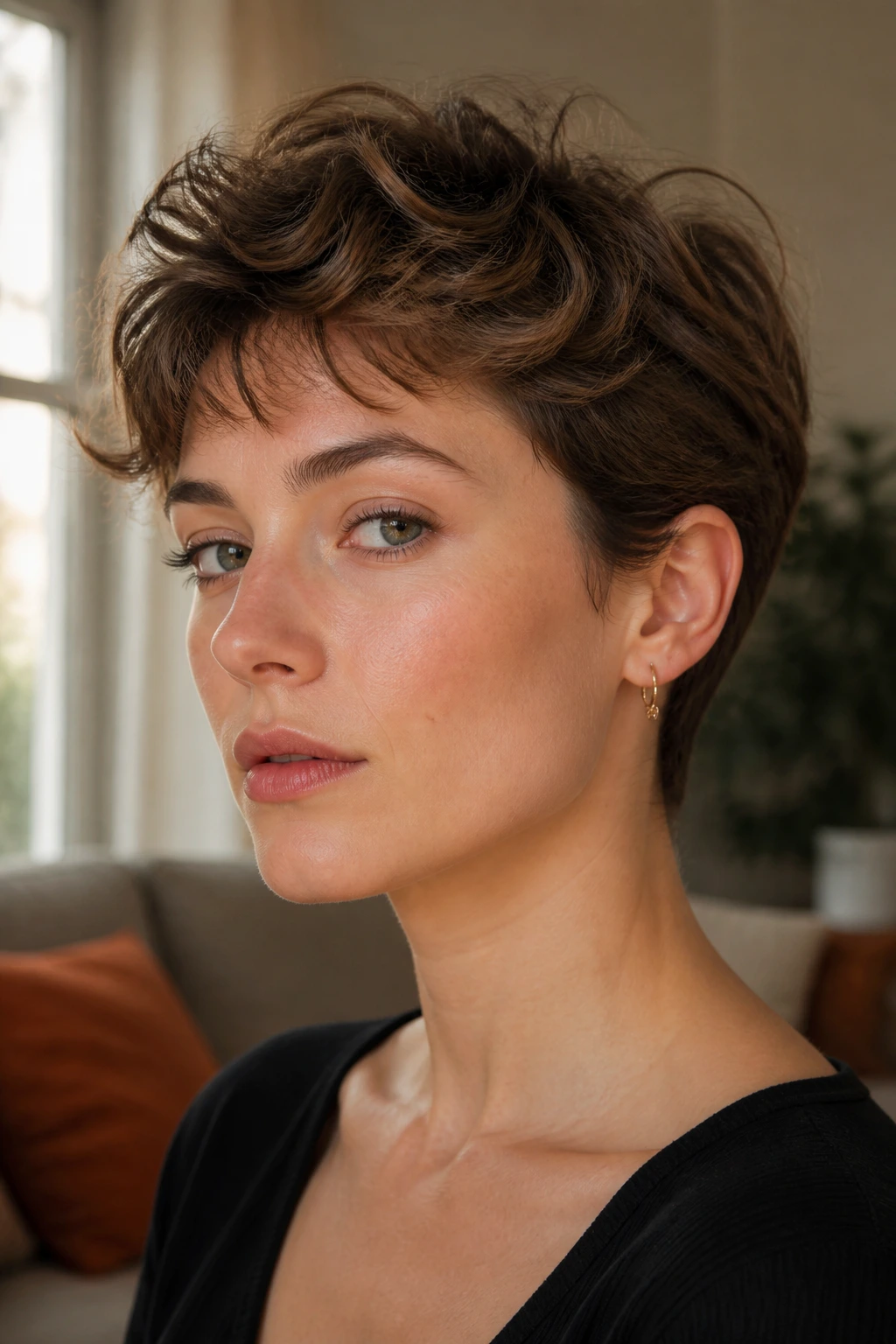
A messy crop with tucked sides is the haircut equivalent of a perfectly rumpled shirt: it looks relaxed, but the shape still has to be right. Short waves make the crop feel less severe, and tucking the sides behind the ears or clipping them back keeps the face open.
This style is especially useful if your hair is cut close at the nape and slightly longer on top. The top gets the wave; the sides stay neater. That contrast creates shape fast. You don’t need every section to wave the same way. In fact, a couple of straighter pieces near the temples make the look feel more natural.
I like this one because it can go from casual to sharp with one small change. Leave both sides tucked for a neat, boyish shape. Pull one side loose, and it suddenly feels more undone. Add a little pomade to the ends if you want the pieces to separate instead of puff out.
If your glasses sit wide on your face, this is a good cut to consider. The tucked sides keep the hair from fighting the frames, and the top wave gives the whole thing movement.
13. Mini Blowout Waves
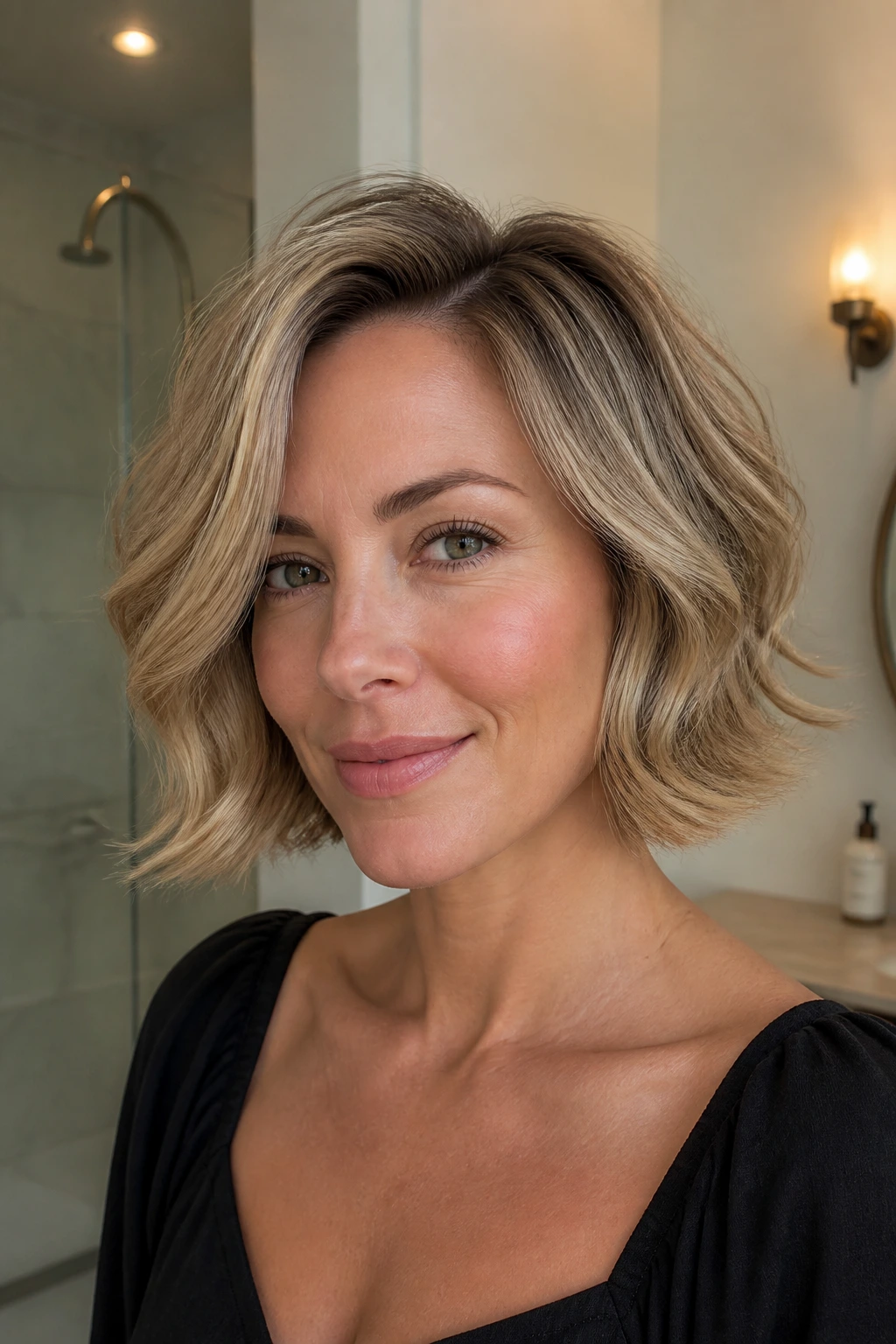
A mini blowout wave is for people who want body without obvious curl marks. Think soft bend, not spiral. The roots lift, the ends curve under or away, and the middle stays smooth enough to make the whole style look clean. It’s a polished short-wave look that doesn’t need a curling iron if your brush work is good.
Round brush, low heat, a concentrator nozzle. That’s the basic setup. Dry the roots first, then wrap the top sections around the brush and roll them away from the face. The hair should come off the brush warm, not hot, with a visible bend and a soft curve through the ends. If you use too much tension, the hair can look stiff. If you use too little, it just sits there.
This style suits bobs with a little layering because the brush can sneak movement into the interior, not just the surface. It also makes short hair look expensive in the old-fashioned sense of the word — cared for, smooth, arranged.
A bit of mousse at the roots and a drop of serum on the ends is usually enough. Skip heavy oils. They flatten the crown in a heartbeat.
14. Retro Pin-Curl Bob
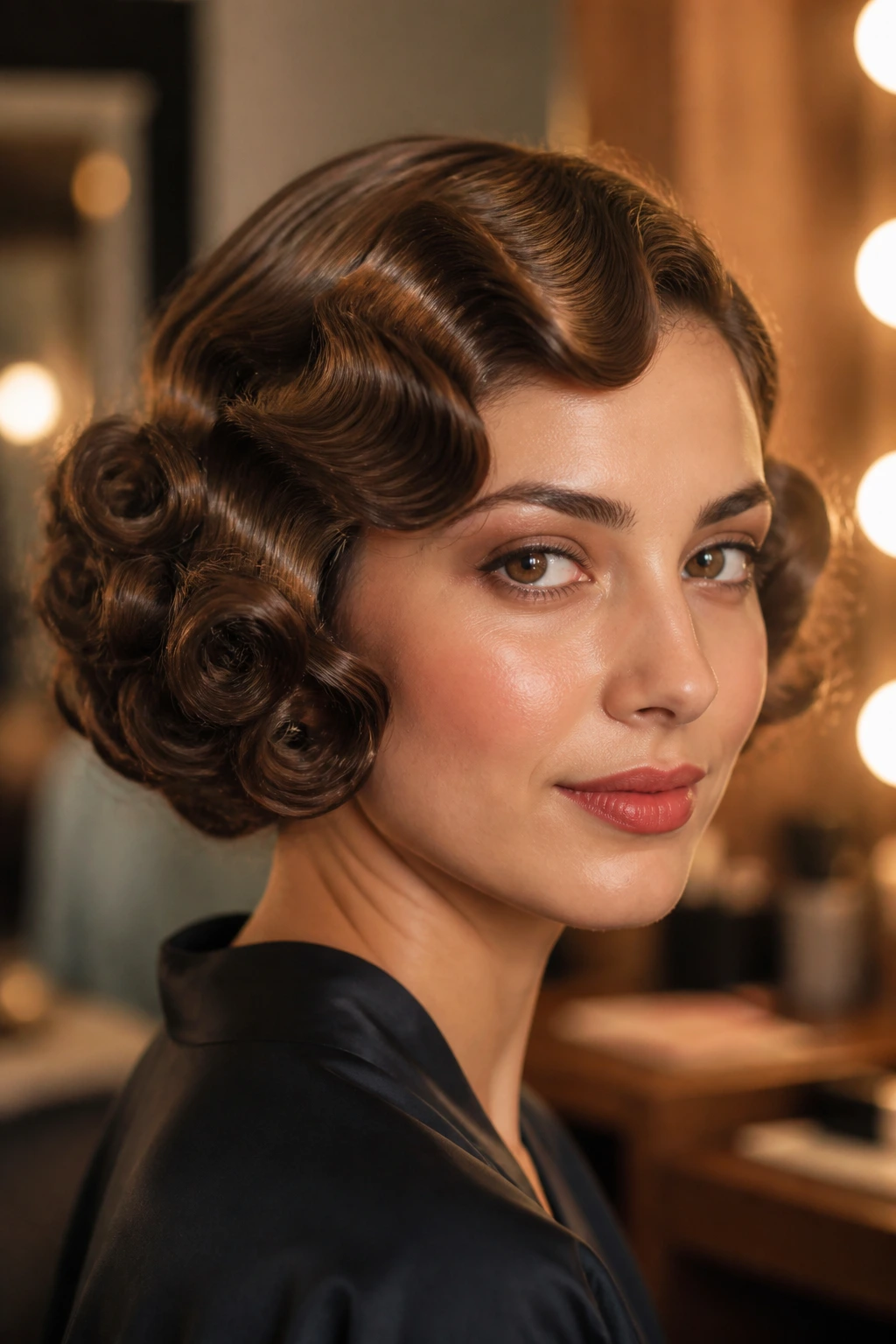
Retro pin curls on short hair give you shape that feels deliberate, almost tailored. The wave pattern is tighter than beach waves and softer than finger waves, which puts it in a useful middle zone. You can make it look vintage, polished, or a little theatrical depending on how much you brush it out.
Set the hair in small sections while it’s damp or slightly dry, roll each section into a curl, then pin it flat against the head. Once it cools completely, release the pins and brush the wave into a smooth pattern. A light setting lotion or mousse helps the shape hold without turning crunchy. The most common mistake is opening the pins too early. Don’t. Warm hair will slump and the wave will flatten before it leaves the mirror.
This style is especially good for a short bob with a side part and enough length to sweep the front. It also loves a strong lip and a simple neckline. You don’t need a lot of extras. The hair already has the drama.
Pin curls take patience, but they give you control. And on short hair, control is half the point.
15. Air-Dried Salt-Spray Waves
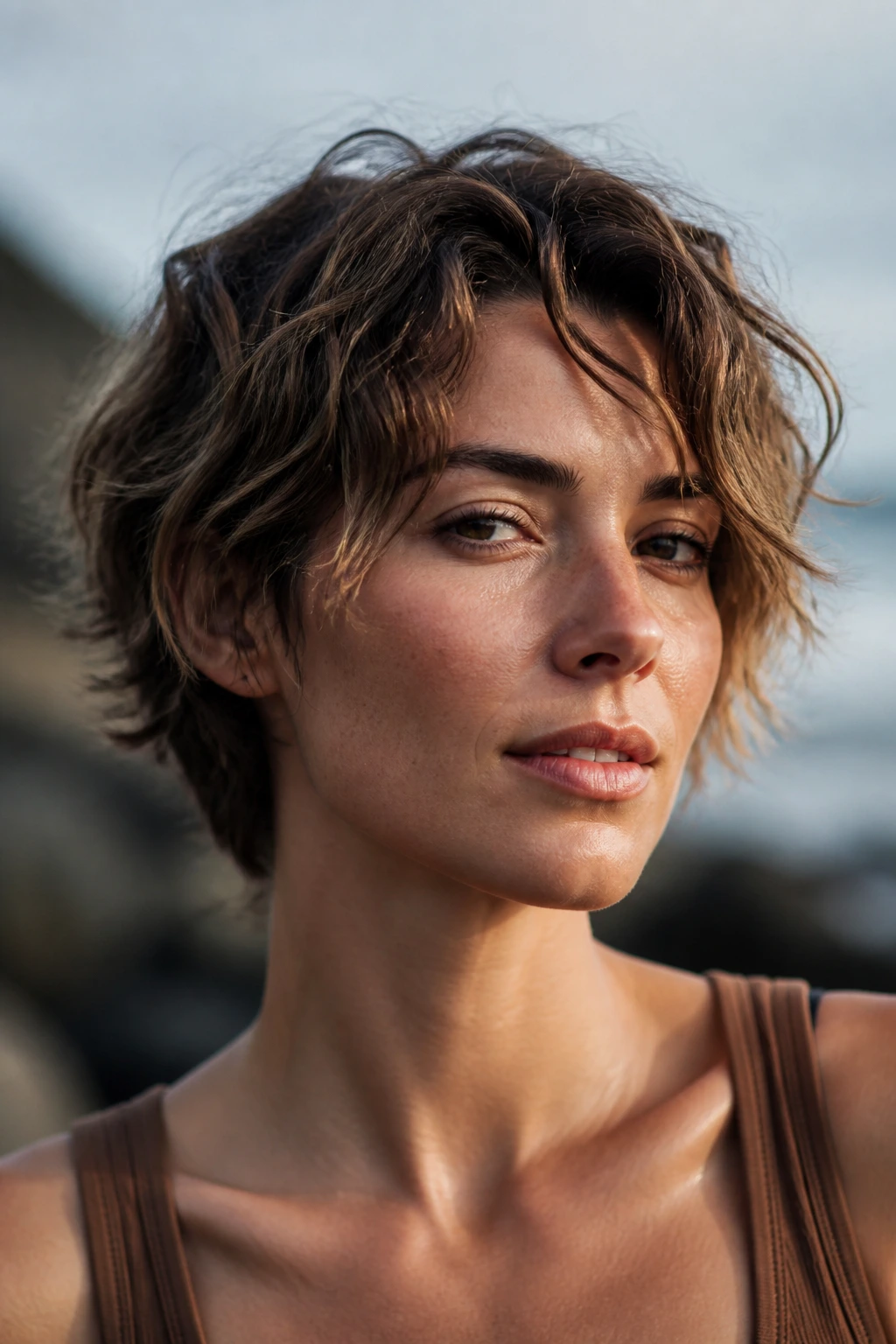
Air-dried salt-spray waves are the easy answer when you want texture without heat. The important word there is texture. Not frizz. Not puff. Texture. Salt spray gives the hair a rougher grip so the wave can form as it dries, which is handy on short cuts that need shape but not stiffness.
Start with damp hair, add a leave-in conditioner if your hair gets dry fast, then layer a light salt spray from mid-lengths to ends. Scrunch with your hands. Twist a few front pieces around your fingers to encourage the direction you want, then let the hair dry without touching it too much. If you keep messing with it, the wave loosens into a fuzzier shape.
This look works well on layered short hair because the layers catch different amounts of spray and dry with a little natural separation. It’s less tidy than a blowout wave, but that’s the point. It should look like the hair has a memory of being near the ocean, not like you spent forty minutes trying to fake a vacation.
If your hair is already very dry, keep the salt spray light. Too much can make the ends feel stiff and rough.
16. Piecey Pixie-Bob Waves
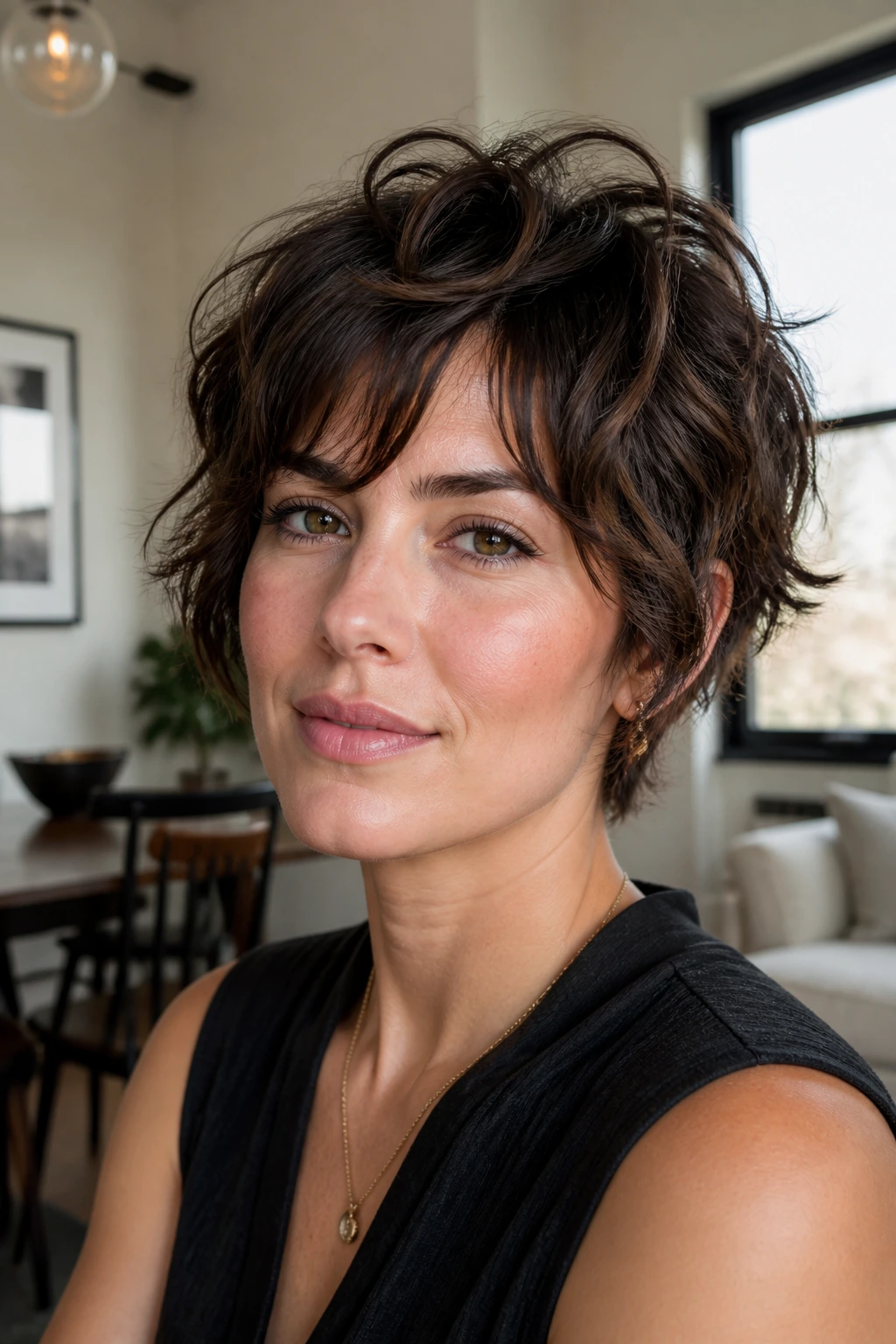
The pixie-bob sits in that useful middle space between a pixie and a bob, and piecey waves suit it because the cut already has movement built in. You’re not trying to create one big wave pattern. You’re giving the top and sides a little separation so the layers can do their job.
A pixie-bob looks best when the wave direction shifts slightly from section to section. One piece bends forward. Another bends away from the face. A third stays nearly straight and just looks touched by heat. That irregularity keeps the style from getting too “done.” The finish should feel playful, not overstyled.
Use a texture cream or light wax on dry hair, then pinch pieces between your fingers to define them. If the crown is flat, lift it with a bit of root spray and a quick blast of heat. That tiny lift matters. On short cuts, a flat crown can sink the whole shape.
This is one of the best choices if you want to grow out a very short cut without losing style. The wave distracts from uneven lengths and gives the haircut some softness while it transitions.
17. Ear-Tucked Wavy Bob

An ear-tucked wavy bob is one of those looks that sounds too simple to matter. It does matter. The tuck changes the balance of the haircut, shows the jawline, and gives the wave a cleaner frame on the other side. Sometimes the best styling move is just deciding where the hair should stop.
This style works with nearly any bob length, but it’s especially good when the front pieces are a little longer than the back. Tuck one side behind the ear, let a few soft pieces fall loose, and keep the opposite side wavy and fuller. The asymmetry is the point.
If you wear earrings, this cut makes them part of the outfit instead of hiding them. If you wear glasses, it keeps the frame from getting crowded. If you don’t wear either, it still creates a nice line from the temple to the jaw.
I’d finish with a tiny dab of cream on the tucked side so the hair stays neat there and the loose side keeps its texture. The contrast between tidy and undone is what gives the look its charm.
18. Wet-Look Short Waves
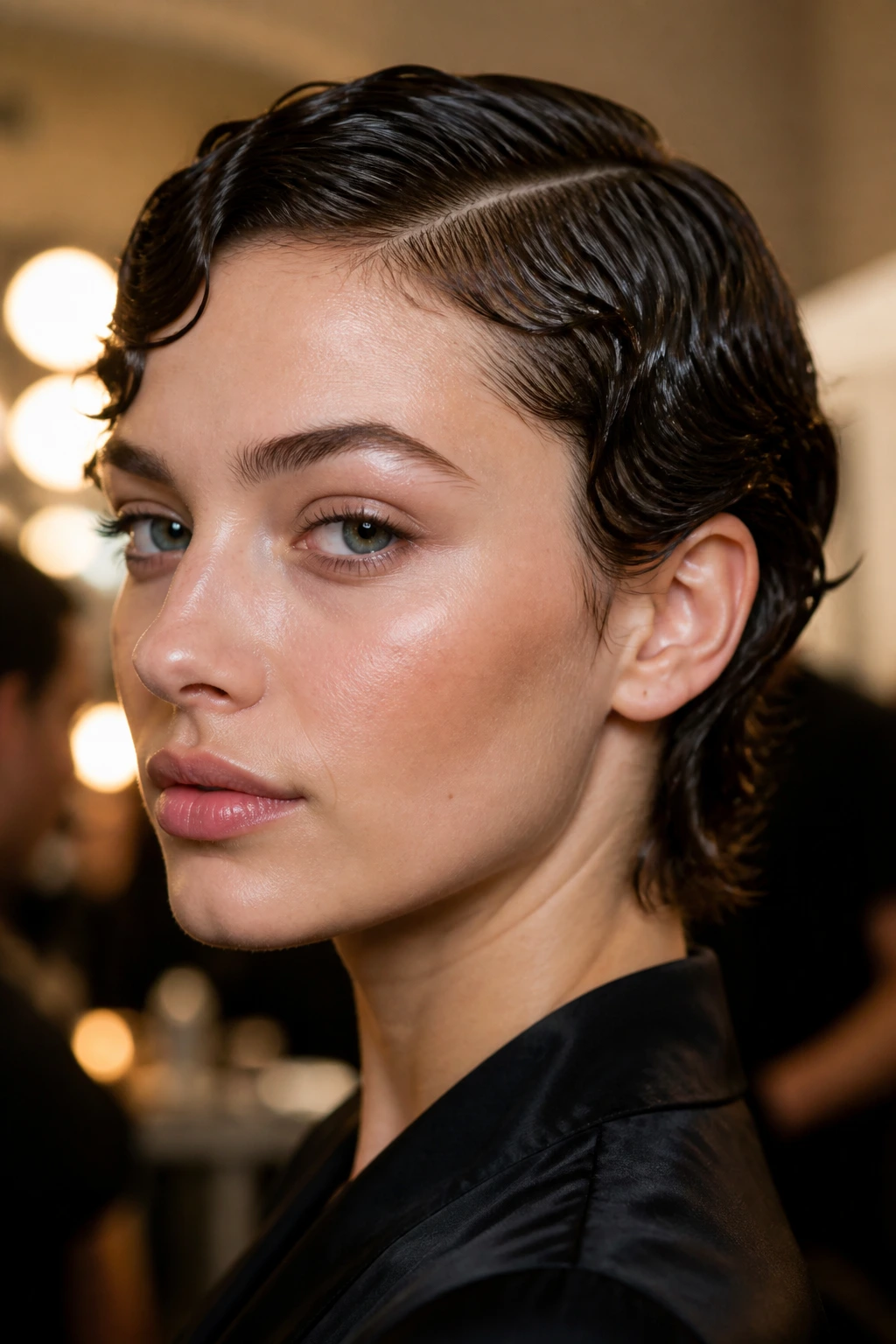
Wet-look waves on short hair are bolder than most people expect. The finish is slick, glossy, and close to the head, but the wave pattern still shows through the product. You get shape without fluff. It’s a strong look, and it’s one of the few short-wave styles that can read genuinely sharp with very little actual length.
The trick is choosing gel or styling cream with enough hold to keep the wave pattern visible. Work the product through damp hair, comb it into the part you want, and use your fingers or a tail comb to direct the bends around the face. Too much product, though, and the hair starts to look greasy instead of polished. There’s a thin line there. Stay on the right side of it.
This style pairs well with a short bob, a slick crop, or a pixie with a little top length. It also works when you want the hair to feel architectural — more line, less fluff. Think of it as the opposite of beach waves. The hair should look wet enough to have sheen, not wet enough to drip.
Use this for evening events, sharp tailoring, or any outfit that already has clean lines. The hair doesn’t need to fight the clothes.
19. Soft Waves With a Clip or Headband
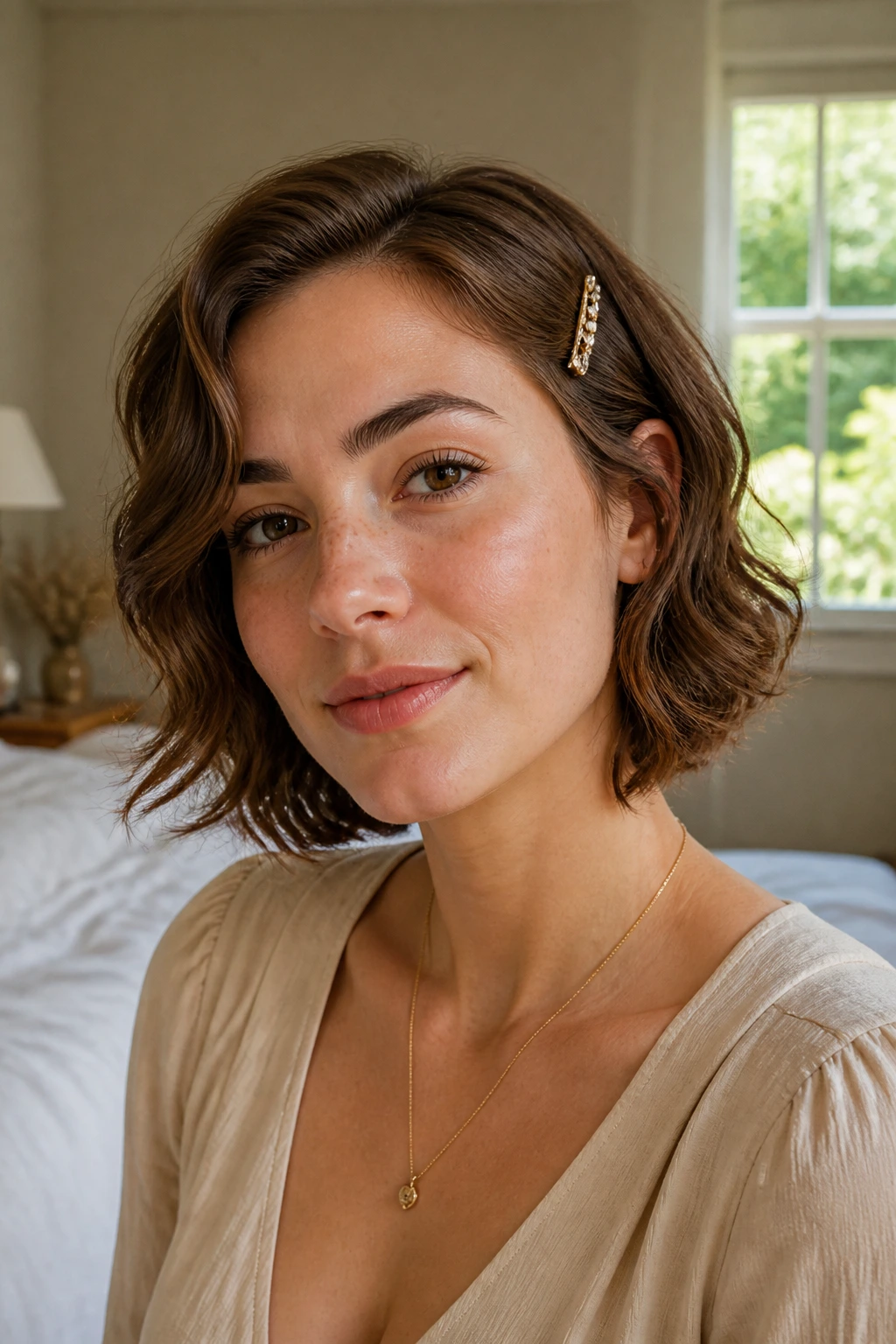
A clip or headband can solve the one thing short waves sometimes struggle with: finding a finishing point. You style the wave, then the accessory gives it a frame. That’s especially useful when the cut is in the awkward between-length stage and you want the hair to look intentional instead of like it’s growing out on purpose.
The accessory shouldn’t overwhelm the wave. A narrow headband, a small claw clip, or a simple barrette is usually enough. If the piece is too wide or too sparkly, it steals the whole show and the texture disappears. Better to let the hair stay the main event.
This is a smart choice for second-day waves, when the crown needs a little lift and the front sections have started to bend on their own. Slide the clip in on one side and let the wave fall around it. Or push a soft headband back just enough to show some root volume at the hairline. The shape changes fast, and you don’t need a new heat pass.
It’s also the easiest style to dress up when you’re short on time. The wave does the work. The accessory just points to it.
Why Short Waves and Short Cuts Work So Well Together
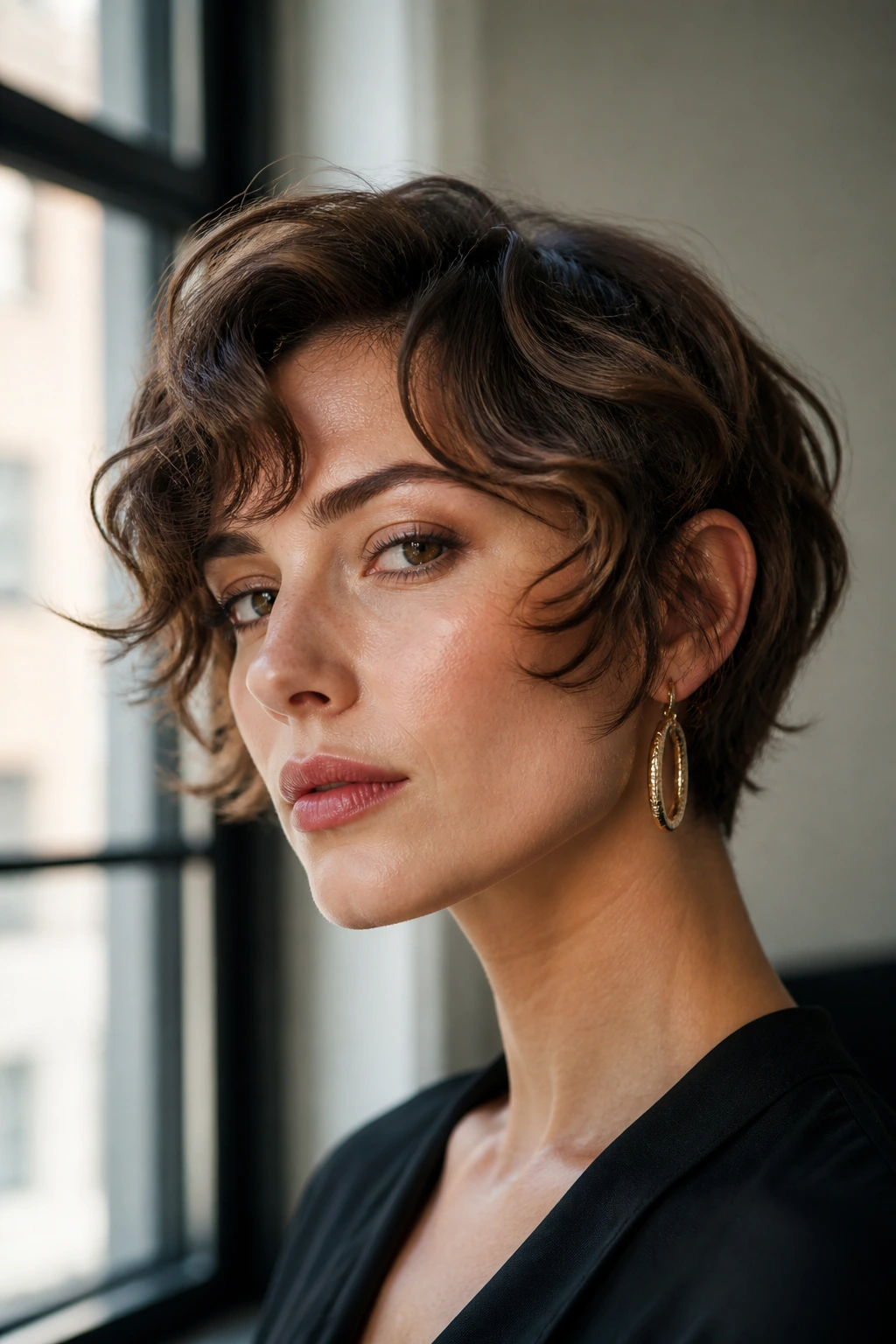
Short hair and waves get along for the same reason a good jacket works with clean tailoring: the shape is already doing part of the job. A short cut takes less hair to move, so the wave shows up faster, dries faster, and keeps its outline better. That matters if you’ve ever watched long curls collapse under their own weight halfway through the day. Short hair doesn’t have that problem nearly as often.
Another advantage is the way short waves change the face. A bend at the cheekbone can make the face look sharper. A flipped end at the jaw can soften a square line. A little lift at the crown can add height without turning the head into a puffball. The hair sits close enough to the face that small changes look meaningful. Small. But meaningful.
There’s also a practical side people forget. Short wavy hair uses less product, less time, and less heat to get the same visual payoff. That doesn’t mean it’s zero-effort — it isn’t — but it does mean you can be precise instead of ceremonial about styling. And precision is where short cuts shine.
Tools That Make Short Waves Easier
-
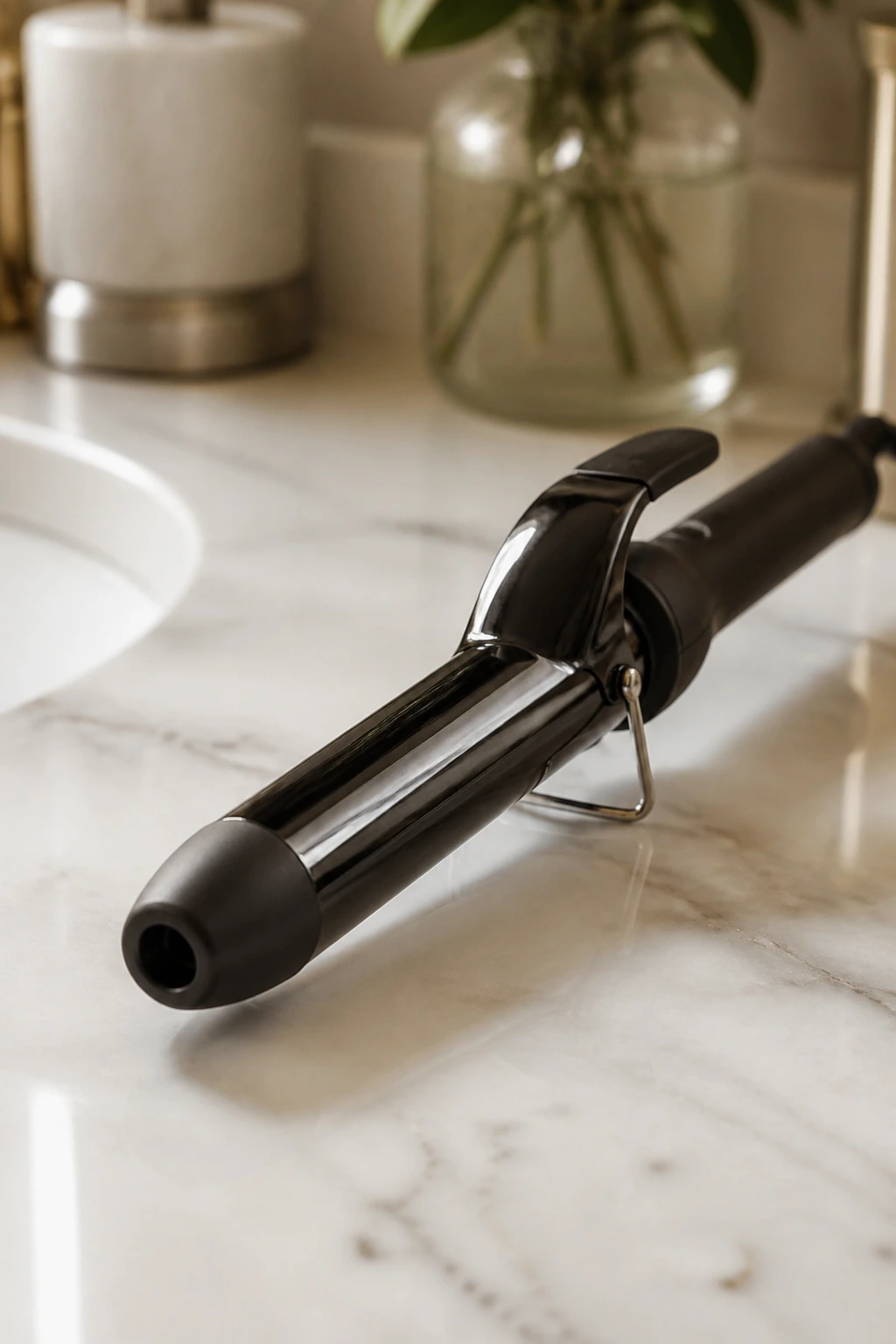
1-inch curling iron or wand: This is the safest all-purpose size for most short waves; larger barrels can make the bend too loose, and tiny barrels can look overdone fast.
-
3/4-inch wand: Useful for pixie-bobs, short shags, and tighter texture where the hair barely reaches the jaw.
-
Flat iron with rounded edges: Good for a soft bend at the ends or for flipping pieces away from the face without creating a full curl.
-
Blow dryer with a concentrator nozzle: Helps smooth the roots and direct the hair before you add wave.
-
Diffuser: A smart choice if your hair has natural wave or curl and you want to keep the pattern without blasting it apart.
-
Clips or duckbill clips: These hold sections while they cool, and cooling is what makes short waves last.
-
Heat protectant: Non-negotiable if you’re using hot tools; short hair shows heat damage faster because the ends are closer to the face.
-
Mousse or volumizing foam: Best at the roots for lift without sticky buildup.
-
Texturizing spray or dry shampoo: Gives the wave a little grip and keeps short hair from slipping flat.
-
Lightweight serum or cream: Use sparingly on the ends if they get frayed or dry; too much will make the style collapse.
How to Choose the Short Wave That Fits Your Hair
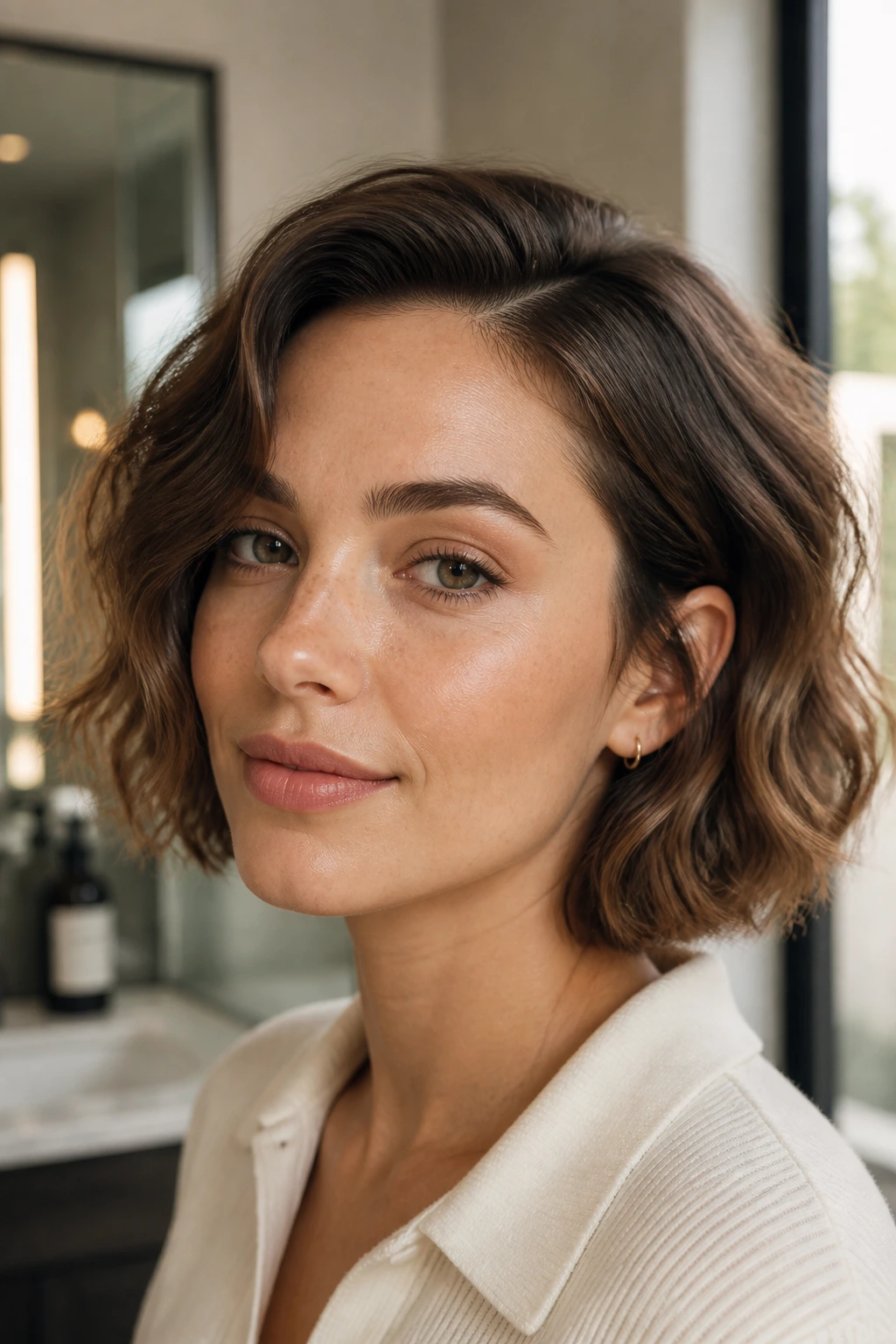
Density matters first. Fine hair usually looks best with styles that build lift at the roots — side parts, blowout waves, piecey pixie-bobs, and ear-tucked bobs. Thick hair usually benefits from layers, shaggy texture, or a smoother root with softer ends, because too much bulk around the sides can make the whole style feel heavy.
Wave pattern matters next. If your hair already has some bend, air-dried salt-spray waves or a layered bob can enhance what’s there without a full heat routine. If your hair is straight as a ruler, you’ll usually get better results from a curling wand, flat iron bends, or pin curls. Don’t fight the texture you’ve got. Work with it, then sharpen it.
Face shape plays a role, but not in the rigid way people like to pretend. A deep side part softens a round face. Curtain bangs help a longer face feel less stretched. A chin-length bob can sharpen a jawline, while a messy crop with tucked sides opens the face and shows off earrings or glasses. These are guidelines, not laws. The haircut still has to fit your daily life.
Styling time matters too. If you want five-minute hair, choose looks that live on rough texture and finger shaping: the airy bob, the half-up twist, the clip-and-go style. If you don’t mind 20 minutes with hot tools, a glam wave, a retro pin-curl set, or a wet-look finish gives you more drama. Pick the one you’ll actually repeat.
How to Style Short Wavy Hair Without Fighting It
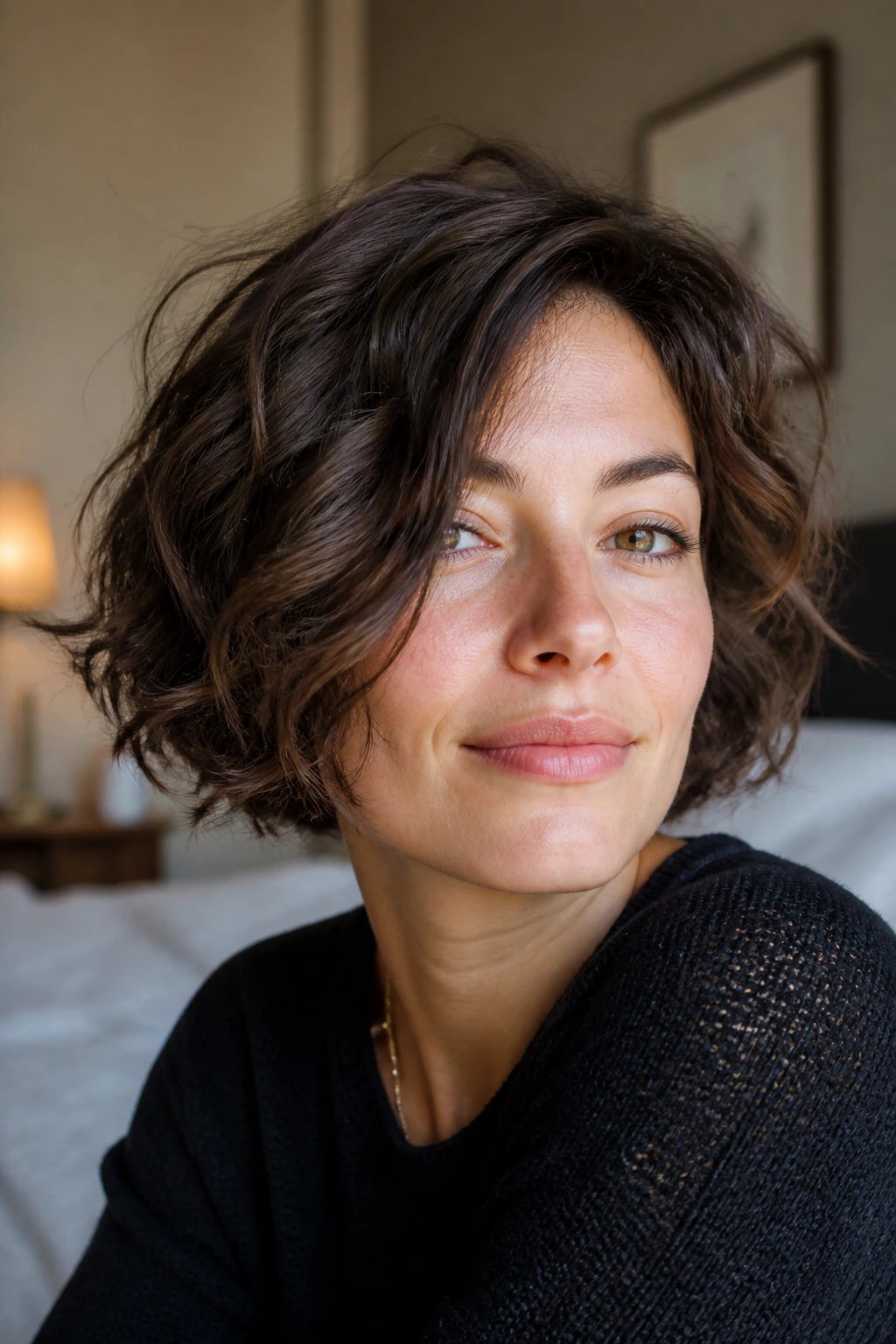
Short waves look better when the sections are a little imperfect. Use smaller sections near the face and slightly larger ones in the back so the front gets shape without becoming too curly. If every piece is curled the same way, the hair can look like a mini perm instead of a cut with movement.
Cool-down is the secret nobody wants to hear because it’s boring and it works. Pin the wave for a few minutes while it’s still warm. Let the hair set before you brush, scrunch, or touch it much at all. That tiny pause is usually the difference between a style that lasts and one that folds by noon.
Product placement matters more than product quantity. Put mousse at the roots, cream on the ends, and texture spray only where you need grip. When everything goes everywhere, the hair gets heavy. Short lengths are especially sensitive to that. A pea-sized amount of cream can be enough on a bob. A golf-ball amount is not your friend.
And please, do not overbrush short waves into a blur. Use your fingers, a wide-tooth comb, or a soft brush only if you want a smoother glam finish. Most of the time, the wave looks better with a little separation. That separation is what gives it shape.
Common Mistakes That Flatten the Shape
-
Using a barrel that’s too large: A big curling iron can make short hair flop straight again before you’ve left the house. Stick to 3/4-inch or 1-inch tools for most cuts above the shoulders.
-
Curling every piece in the same direction: The result is often too uniform and too round. Alternate directions, especially around the face, so the hair looks textured instead of set in place.
-
Putting heavy cream near the roots: That’s a fast way to kill lift at the crown. Keep richer products on the ends and use mousse or root spray higher up.
-
Skipping the cool-down: Warm hair changes shape easily. If you don’t let the waves cool while they’re pinned or held in place, they fall out faster than they should.
-
Brushing too hard: A rough brush can turn defined waves into puff. If you want a softer finish, use your fingers first and a brush only when the style calls for it.
-
Trying to force too much wave into very short sections: If the hair only has an inch or two to work with, a strong bend is enough. Tiny short sections don’t need full curls; they need direction.
Fresh Ways to Change the Look Without Changing the Cut
Soft Side Sweep: If you’re bored with the same part, shift everything to one side and let the front wave fall across the forehead. It changes the mood fast, especially on bobs and pixie-bobs. Use a little root spray at the new part so it doesn’t collapse.
Heatless Texture Set: For hair that hates hot tools, twist damp sections, pin them while they dry, and break them apart with your fingers later. It’s less precise than iron waves, but it gives short hair a softer, more irregular shape that can look better on fine or fragile hair.
Glossy Evening Finish: Take any of the softer wave styles and add a shine serum only on the outer layer. That gives the hair a more formal read without flattening the body underneath. A little goes a long way here.
Thicker Hair Softening: If your hair expands instead of moving, ask for internal layers or use a smoothing cream before blow-drying. Then keep the wave looser. Thick short hair needs space to move, not more curl stacked on top of itself.
Fringe Focus: A curtain bang, side fringe, or short face-framing piece changes the entire balance of a short wave. Even a simple bob can look different when the front is lifted and bent away from the eyes. That little detail matters more than people expect.
Overnight Care and Day-Two Refreshes
Short waves usually hold up better than long curls, but they still need a little help if you want them to last past one evening. Sleep on a silk or satin pillowcase if you can. It cuts down on friction, which means fewer bent ends and less frizz at the crown. If you prefer, wrap the hair loosely with a silk scarf or clip the front sections up so they don’t get crushed.
For day-two hair, don’t start from scratch unless you have to. A few sprays of water mixed with leave-in conditioner can bring back the bend at the front. Dry shampoo at the roots helps if the style looks flat or a little oily. If the wave pattern is still there but just tired, twist the sections around your fingers for ten seconds and let them cool. Often that’s enough.
If you use hot tools often, give the hair one or two lower-heat days each week. Short hair can show dryness at the ends quickly, and the wave will start looking rough instead of textured. A small trim every 6 to 8 weeks keeps the shape clean, especially around the nape and sides where short cuts grow out awkwardly first.
Short Wavy Hair Questions People Actually Ask
Can short hair really hold waves?
Yes, and often better than long hair. Short cuts have less weight pulling the wave straight, so the bend stays visible longer, especially when you cool the sections before touching them.
What barrel size works best for short wavy hairstyles?
A 1-inch barrel is the safest default for most bob-length cuts. If your hair is very short — pixie or bixie territory — a 3/4-inch wand is easier to control.
What if my short hair gets puffier instead of wavier?
You usually need less product at the root and more smoothing before the wave is set. Blow-dry the top flatter, then add texture only through the mid-lengths and ends.
Are layers necessary for wavy short hair?
Not always, but they help a lot if your hair is thick or one-length styles make it mushroom out. Fine hair can wear a blunt bob too, but it usually needs root lift and lighter product.
Can I do these looks without heat?
Yes. Air-dried salt-spray waves, pin curls, twists, and clip-set styles all work on short hair. The wave won’t be as uniform, but that can actually look better on cropped cuts.
How do I keep waves from looking too tight?
Use larger sections, leave the ends a little straighter, and stop curling once the shape is visible. Short hair needs suggestion more than perfection.
Which of these styles is easiest for beginners?
A side-part wavy bob, soft beach waves, or an ear-tucked bob are the least fussy. They forgive uneven sections and still look intentional.
Will short waves work on glasses wearers?
Yes, especially tucked styles, side parts, and soft waves with one side pinned back. Keep the temples a little smoother so the frames and hair don’t compete.
Ways to Keep the Shape Looking Intentional
Short waves have a strong point of view. That’s part of the appeal. They don’t disappear into the background, and they don’t need endless length to make an impression. A chin-length bob can feel sharper than a long cascade of curls if the bend is in the right place.
Pick the version that matches your morning routine, your hair density, and the kind of finish you actually like seeing in the mirror. A neat French bob says one thing. A tousled shag says another. A wet-look crop says something else entirely. Same category, different attitude.
And that’s the fun of short wavy hair: you can change the whole read with a side part, a clip, or one twist of the iron. Not much length is needed when the shape is doing the talking.
