



A short haircut can either carve out cheekbones or sit like a cap on top of them. On fuller faces, that difference shows up fast—right at the cheeks, the jaw, and the crown. Short hairstyles for chubby faces work best when they create shape instead of just taking off length.
The trick is rarely about hiding anything. It’s about where the weight falls, whether the part leans to one side, and how much lift you leave at the top. A bob that stops exactly at the widest part of the face can feel boxy; the same cut with an angle, a soft fringe, and a little internal layering can suddenly look lighter and more intentional.
Some of the best cuts are sharp. Some are messy in the right way. A few depend on wave or curl to do the heavy lifting, and a few only work if your stylist keeps the sides narrow and the crown a touch higher than you think you need. That balance is where the good hair lives.
Why This Collection Is Different
- Angle beats length: A cut that slopes forward or leans to one side can make a fuller face look longer without needing extra inches.
- Crown height changes everything: A little lift at the top pulls the eye upward fast; flat roots do the opposite.
- Texture is doing real work here: Piecey ends, soft waves, and airy layers stop short cuts from reading heavy around the cheeks.
- Not every face needs bangs: Some cuts use a fringe to break up width, while others rely on a side part and clean face-framing pieces.
- Short does not mean severe: You can keep the shape soft, lived-in, and easy to wear without letting it balloon at the sides.
- The right cut depends on hair type too: Fine, thick, straight, and curly hair all need a different version of the same basic idea.
1. Angled A-Line Bob
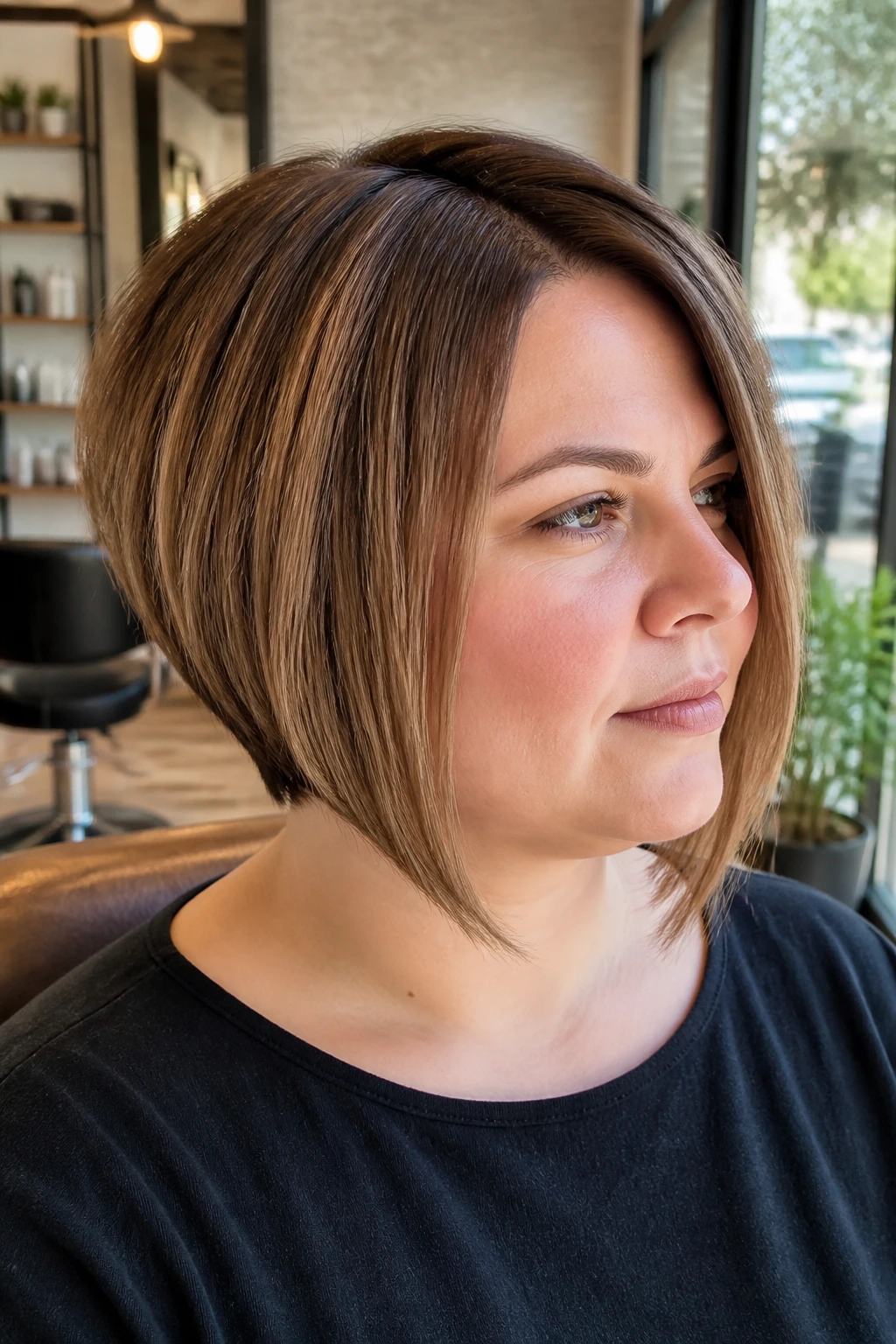
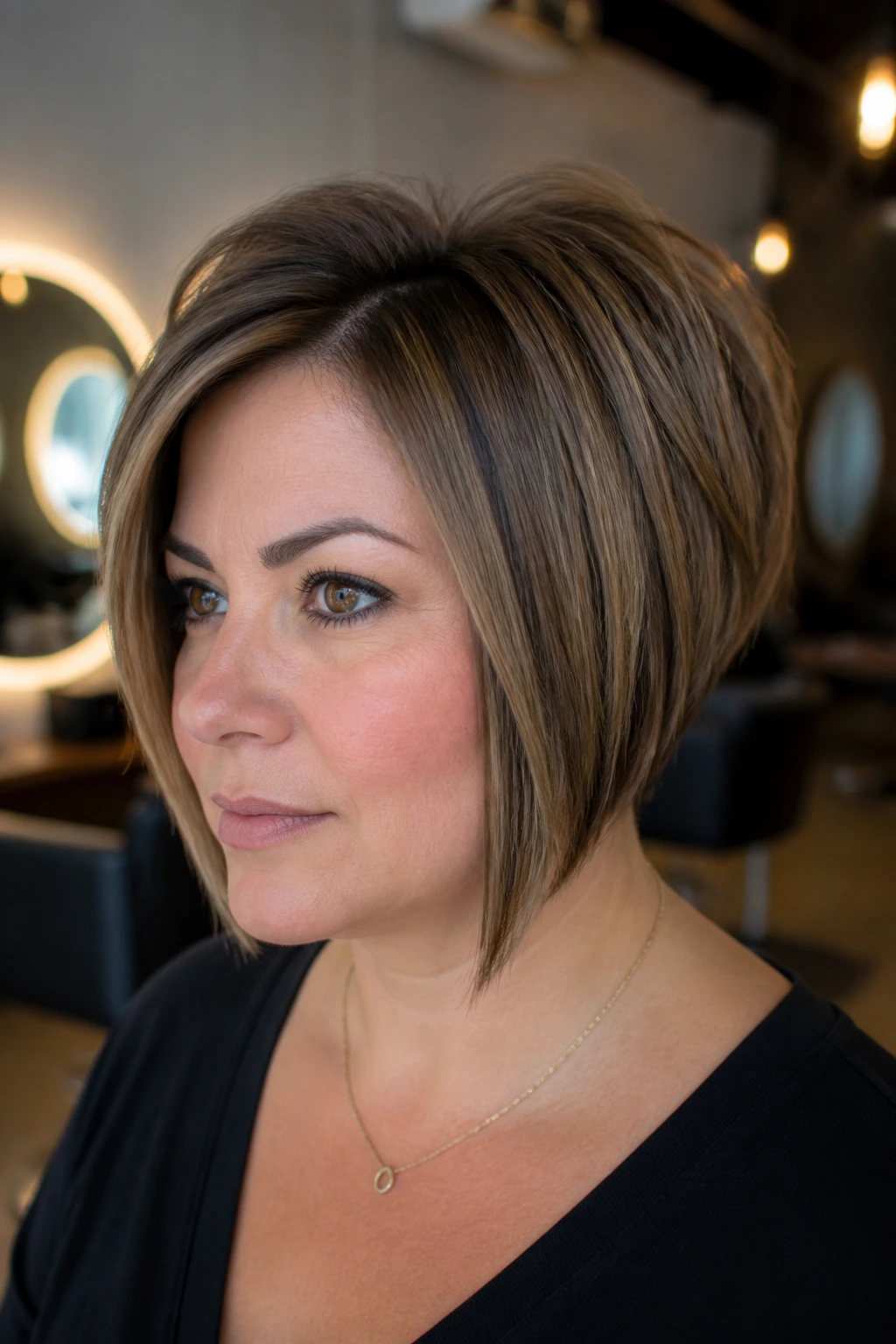
An angled A-line bob is one of the safest bets for a fuller face because it pulls the eye down and forward instead of letting the width sit right at the cheeks. The back is shorter, the front is longer, and that forward slope does a lot of quiet work.
Why the angle matters
The cleanest version usually lands somewhere between the chin and the collarbone in front, with the back tucked closer to the nape. That small shift in length changes the whole outline of the face. It looks especially good when the longest pieces sit below the cheekbone, not right on it.
- Best length: Front pieces 1 to 3 inches below the chin
- Best part: Off-center or deep side part
- Best texture: Straight, blown out, or softly wavy
- Best finish: Smooth ends with a slight bend inward
Pro tip: Ask for the front to be slightly longer than you think you need. If it stops right at the cheek line, the haircut loses the slimming effect and starts to feel boxy.
2. Long Pixie With Side-Swept Fringe
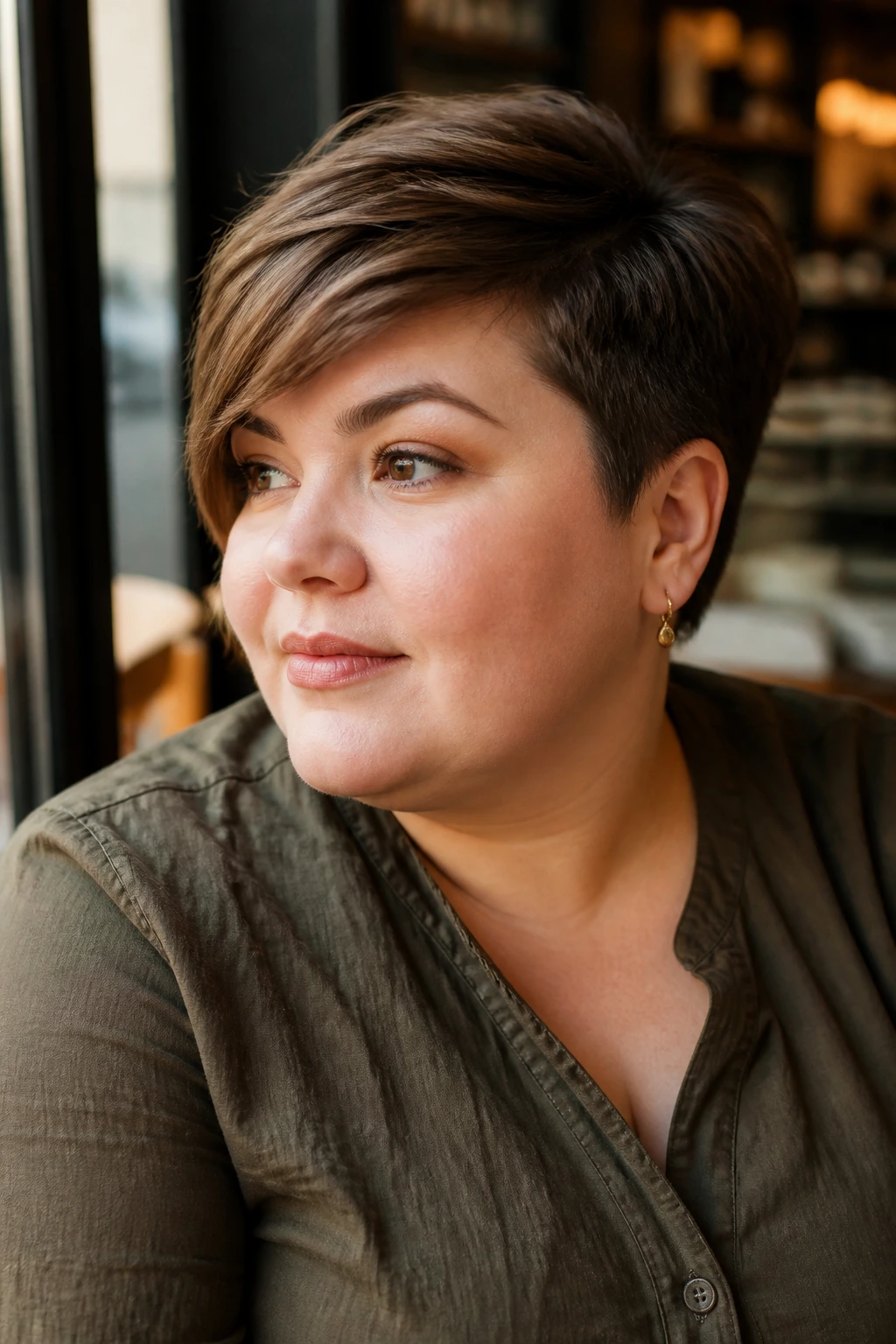
A long pixie with a side-swept fringe gives you short hair without exposing every curve at once. That fringe matters. It draws a diagonal line across the forehead, which is exactly the sort of shape that keeps a fuller face from feeling too round.
The top should have enough length to move—usually around 3 to 4 inches—while the sides stay tight enough to show the ear or skim it lightly. When the top is too short, the cut turns blunt. When the fringe is too heavy, it lands like a curtain and shrinks the face in the wrong way. The sweet spot is soft and directional.
I like this cut best when it’s styled with a dab of matte paste or lightweight mousse, then pushed to one side with the fingers instead of a round brush. It should look intentional, not shellacked. The whole point is motion.
3. Textured Bixie Cut
Why does a bixie work so well on a fuller face? Because it borrows the lift of a pixie and the outline of a bob, which means it can stay short without collapsing into one solid shape. The cut usually sits around the ear to the jaw, with enough layer play at the crown to keep things from widening at the sides.
A bixie is one of those cuts that looks better once it’s been roughed up a little. The ends should be broken, not blunt. The top should be a touch longer than the sides, and the nape should be cleaned up enough that the silhouette feels neat. Otherwise it starts to puff where you don’t want puff.
How to wear it
- Fine hair: add root spray before blow-drying.
- Thick hair: ask for internal debulking near the nape.
- Wavy hair: scrunch in a light cream and let the bend do the work.
The bixie is a smart choice if you want something modern but not fussy. It doesn’t need perfect styling to hold its shape.
4. Stacked Bob With Crown Volume
If your hair falls flat at the crown and balloons near the cheeks, a stacked bob can fix both problems in one cut. The short layers in the back create lift where you need it, and the front stays longer so the face doesn’t feel trapped inside a circle.
The stack should be visible, but not dramatic enough to shout “salon haircut from ten years ago.” That’s the trap. A modern stacked bob is controlled. The graduation starts near the nape, then softens as it moves toward the front. The cheek area stays clean.
A side part helps here, especially if your hair grows in a stubborn middle part that refuses to cooperate. I also like this cut with a round brush blowout because the crown lift looks sharper when the ends tuck under a little. It gives the whole face a taller outline.
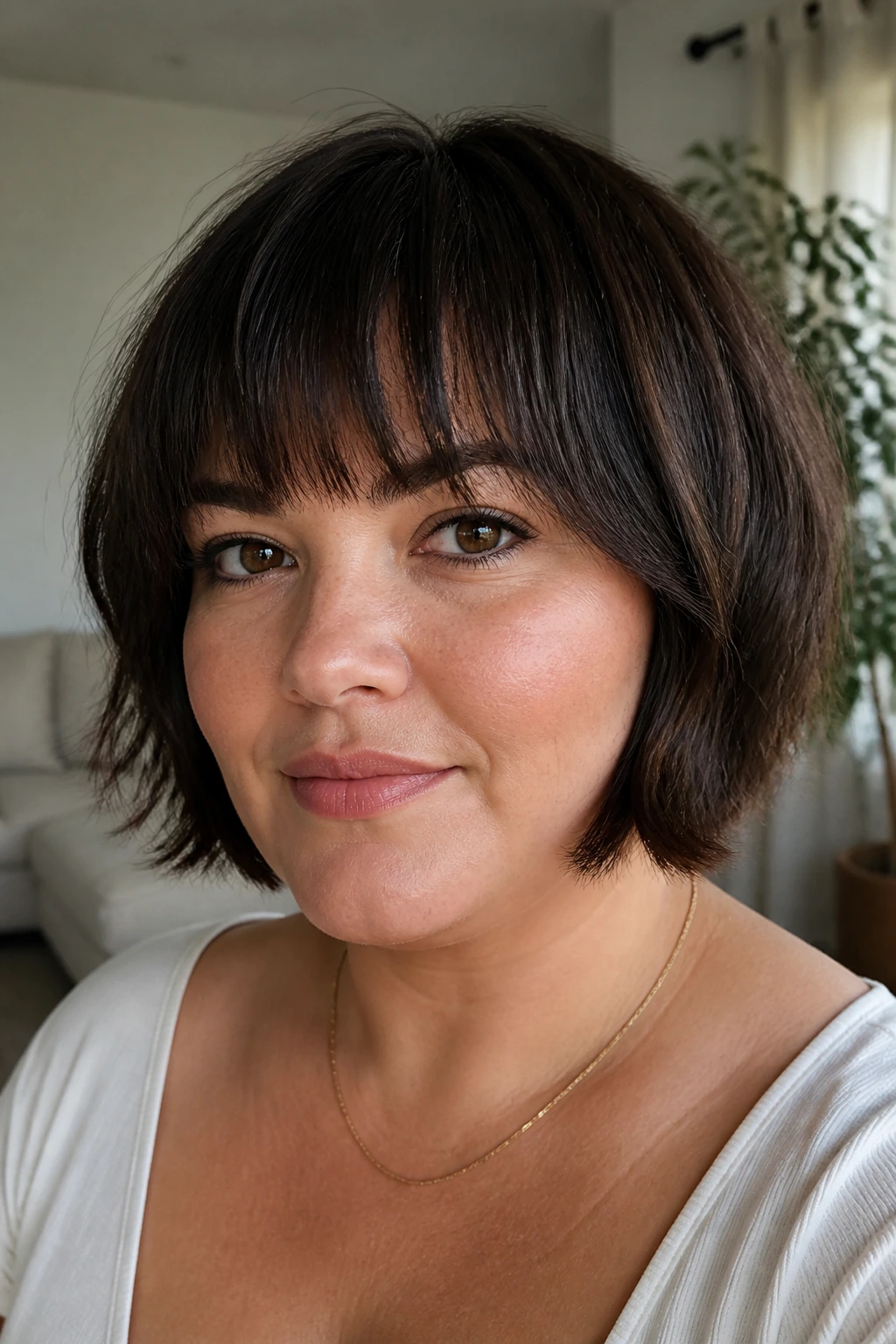
5. French Bob With Soft Fringe
The French bob can be a lovely choice for fuller faces when it’s kept airy and a little irregular. The classic version is chin-length and blunt, which can be too square if your cheeks are already the widest part of your face. The better version here is softer. More swing. Less helmet.
A soft fringe helps break the forehead into smaller sections, which keeps the face from reading as one big oval. The edges should be touched with point cutting so they move instead of sitting like a shelf. I’m picky about this one. A French bob works when it feels like hair, not a haircut.
It’s especially good on naturally wavy hair because the slight bend adds shape around the jaw without puffing at the sides. Straight hair can wear it too, but then the outline needs a little bend under the ends. Otherwise it can look too neat for its own good.
6. Choppy Shaggy Bob
Unlike a blunt bob, a choppy shaggy bob doesn’t place all the weight in one place. That’s the whole advantage. The layers are broken up, the ends are piecey, and the shape stays loose around the face instead of wrapping it tightly.
This is one of my favorites for thick hair. Thick hair can swallow a blunt cut whole and make the cheeks look fuller than they are. Choppy ends stop that. Ask for light internal layers around the crown and cheekbone area, then keep the perimeter somewhere between the jaw and upper neck.
It’s also the sort of haircut that forgives a bad blow-dry. Air-dried waves can work here. So can a quick blast with a diffuser and a dab of sea salt spray. If you want a cut that gets better when it’s a little imperfect, this is the one.
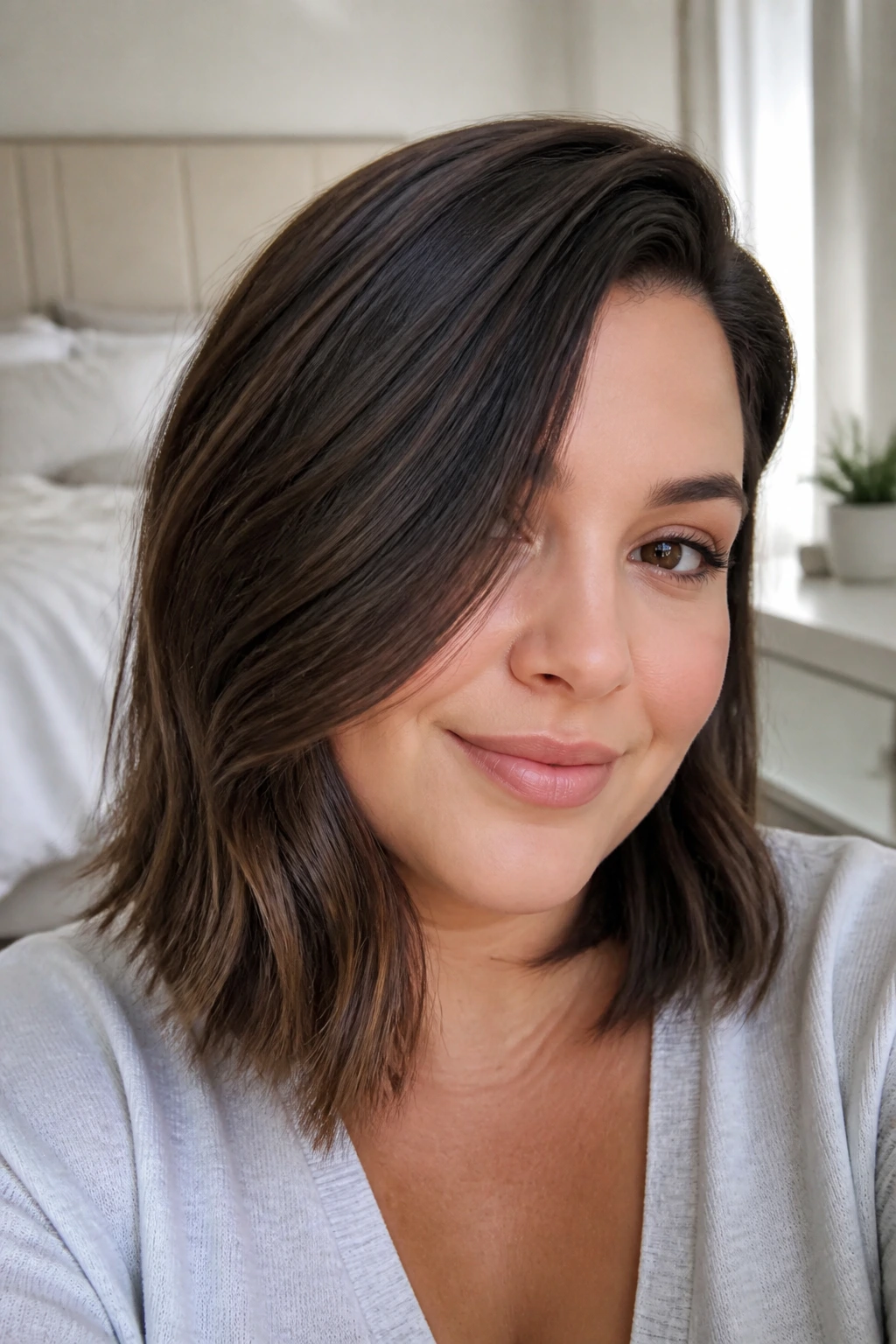
7. Deep Side-Part Lob
A deep side part changes the face before the haircut even does. It shifts the volume, creates a long diagonal across the forehead, and breaks up symmetry in a way that feels flattering without trying too hard. On a fuller face, that asymmetry is useful.
The lob itself can sit just above the collarbone or graze it slightly. Short enough to feel light. Long enough to keep the silhouette from widening at the jaw. I like a gentle bend through the mid-lengths so the hair doesn’t hang straight and heavy. A 1.25-inch curling iron or large hot brush works well here.
This cut also grows out nicely, which matters more than people admit. A haircut can look great for ten minutes in the chair and then turn moody three weeks later. The deep side-part lob stays coherent as it lengthens, which saves you from that awkward triangle phase.
8. Tapered Curly Pixie
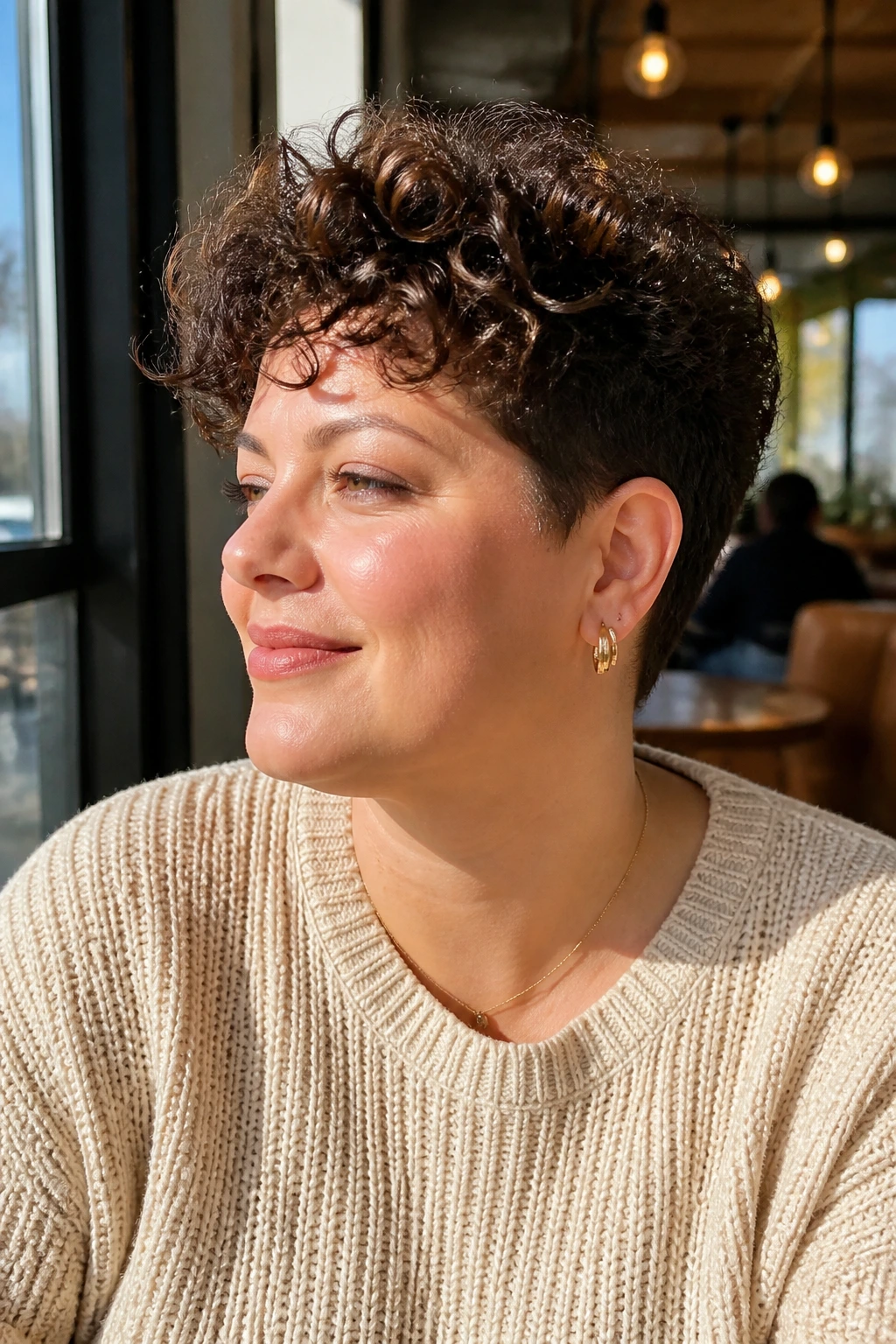
Curly hair needs its own rules. A tapered curly pixie works on fuller faces because it removes bulk at the sides and lets the curls rise at the top, where the eye wants to travel. That vertical movement matters more than length.
The nape should be neat, almost clipped into place, while the top keeps enough length for the curls to form proper coils. If the top is cut too short, the curl pattern can puff outward and widen the face. If it’s too long, it droops. The balance is delicate, but worth it.
What to ask for
- Keep the top long enough for curl definition.
- Taper the sides close to the head.
- Leave a little softness around the temples.
- Cut it dry if your curl pattern changes a lot when wet.
This is a bold cut, but not a harsh one. It shows the face instead of hiding it.
9. Inverted Bob With Piecey Ends
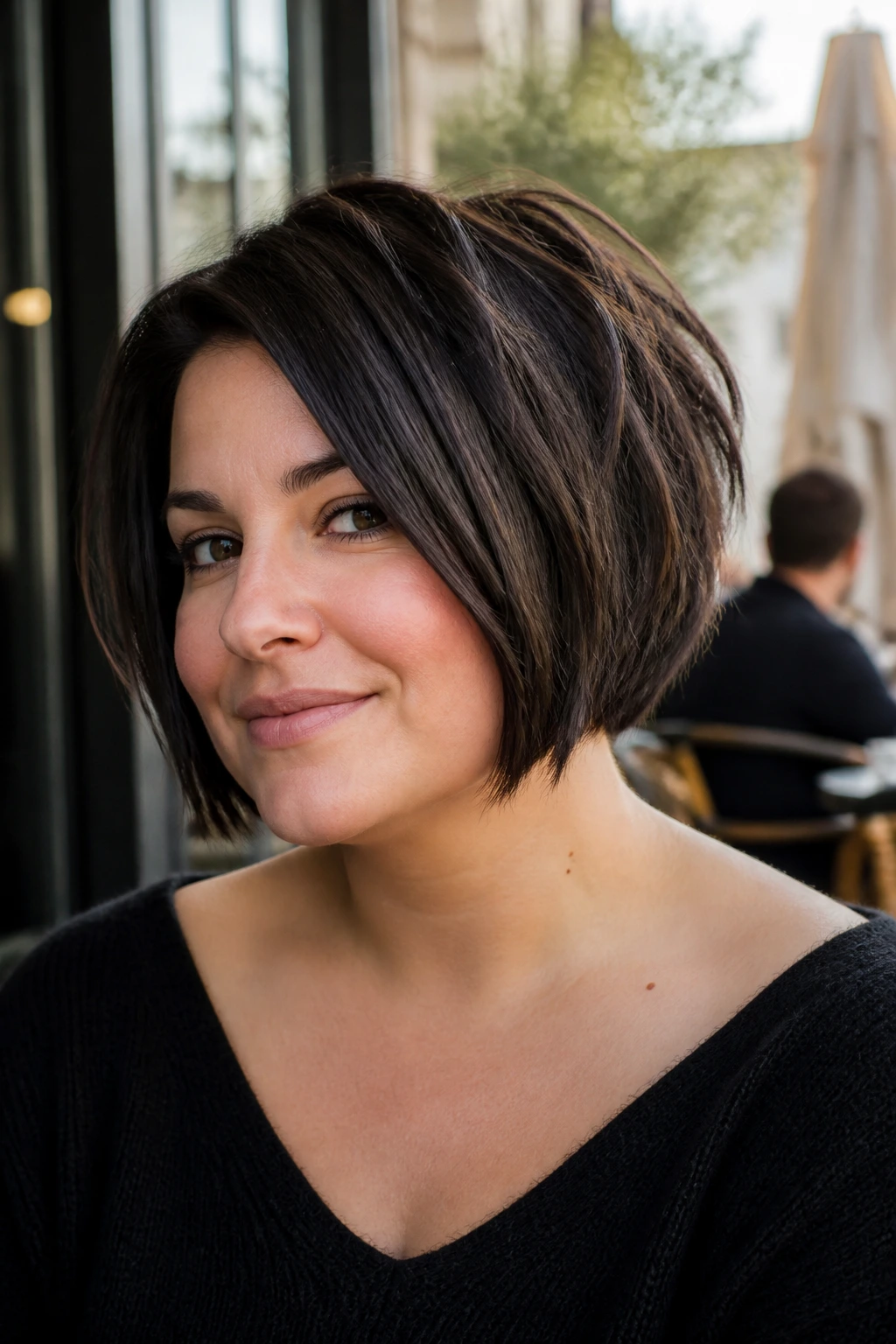
Can an inverted bob make a round face look wider? Yes, if the front stops at the cheeks and the back is blown up too high. Done right, though, it’s one of the better shape-shifters in the short-hair category.
The front should slide past the jawline, and the back should stay compact. That gentle length difference creates a downward angle that keeps the face from feeling boxed in. Piecey ends help too. They stop the haircut from reading as one solid block.
This is a good option if you like structure but don’t want stiffness. A little styling paste at the ends makes the shape look separated in a good way. Clean. Not crunchy. If the bob feels too polished, it can start to widen the face again.
10. Feathered Crop With Wispy Bangs

This is the cut for someone who wants short hair but not a hard line. Feathering breaks up the edges, and wispy bangs soften the forehead without swallowing it. On a fuller face, that softness matters because heavy bangs can shrink the top half of the face and draw too much attention to the cheeks.
The layers should be light, almost airy, around the temples and crown. Nothing bulky. A feathered crop works especially well for fine hair because the texture makes the hair look fuller without needing much length. The trick is to keep the fringe narrow and broken apart, not cut across in one solid strip.
It’s a friendly cut. Not precious. It doesn’t need a lot of heat styling, just a little rough-drying and a fingertip lift at the roots.
11. Asymmetrical Bob
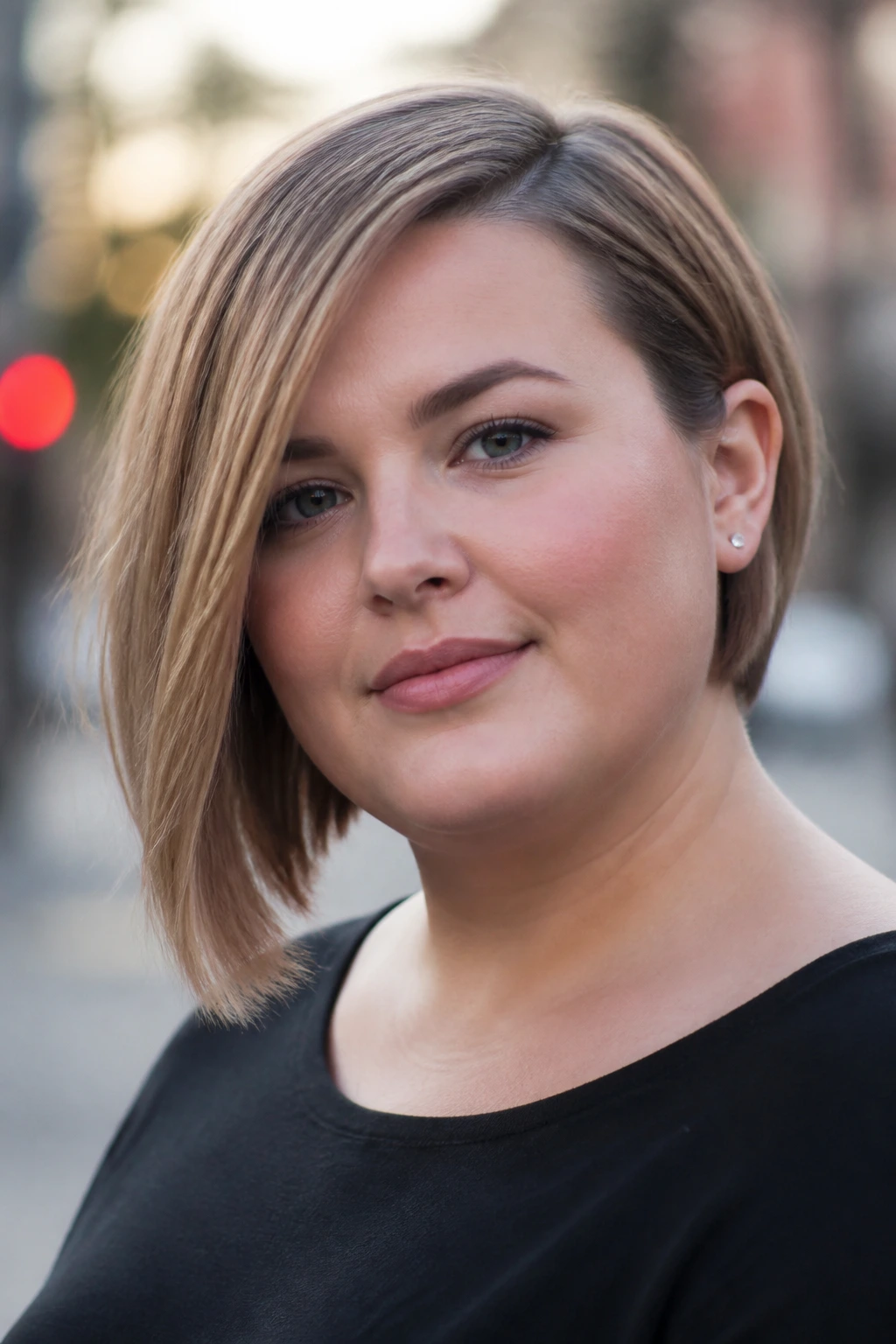
An asymmetrical bob is a clean way to break up facial width because it refuses to mirror both sides of the face. One side stays a touch longer—usually by 1 to 2 inches—and that tiny imbalance creates a diagonal line that the eye follows right down and out.
I like this cut on people who want a bob but hate the feeling of sameness around the face. The longer side can skim the jaw or even dip below it, while the shorter side stays tucked and neat. That contrast keeps the silhouette from going round.
The styling should stay simple. Tuck the shorter side behind the ear. Let the longer side hang forward a little. Don’t over-curl it. The power here is the line itself.
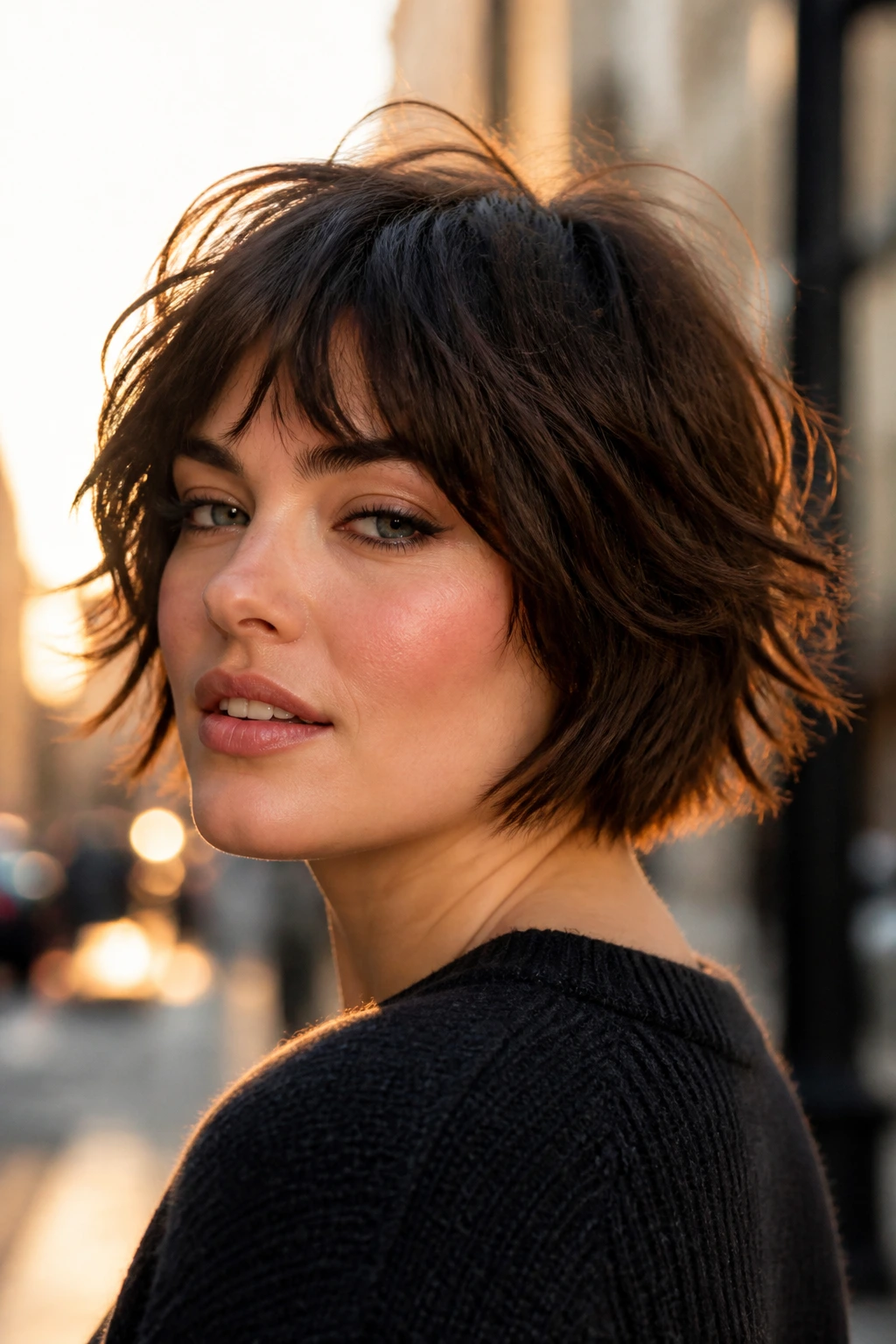
12. Tousled Crop With Crown Lift
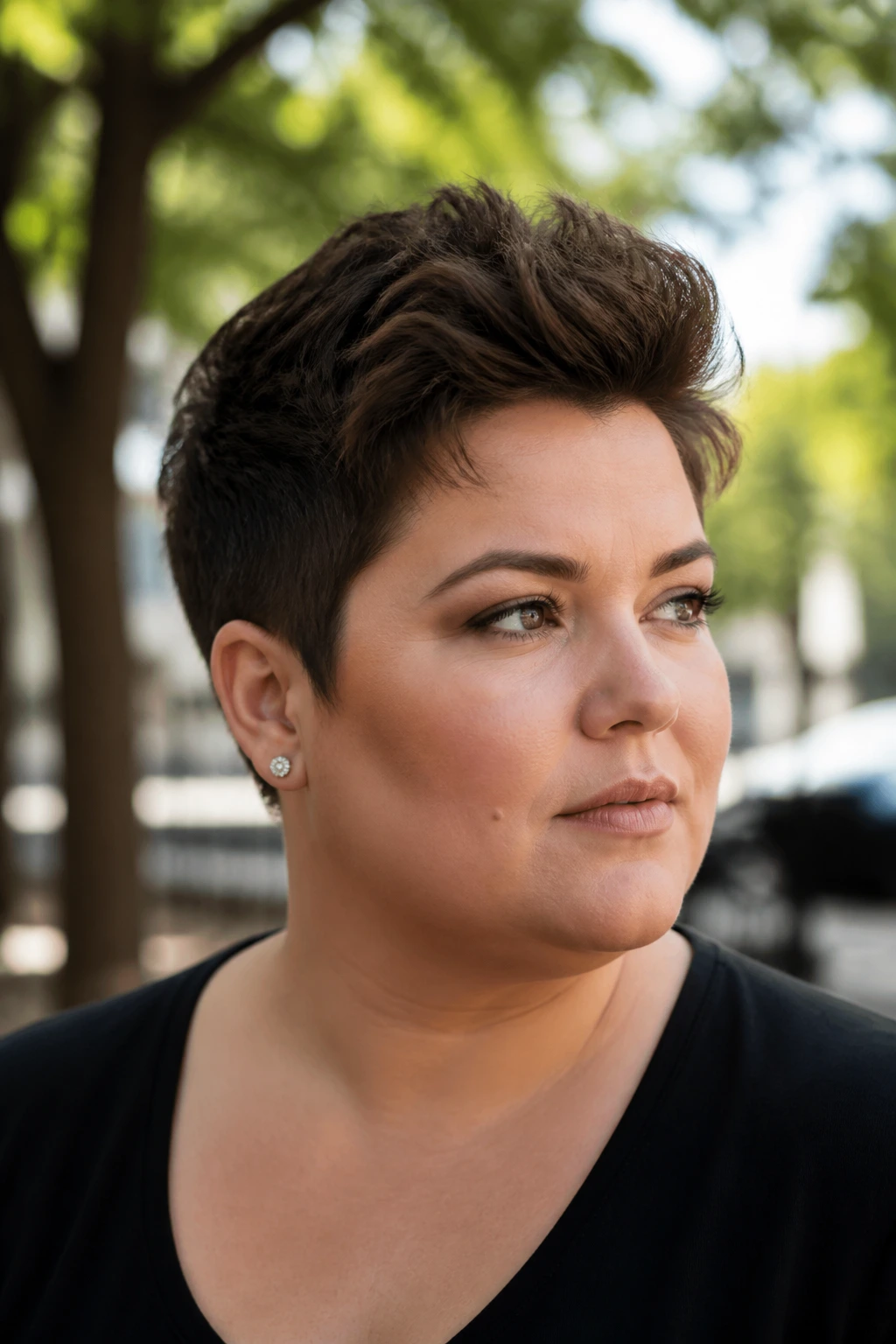
A tousled crop can be a small miracle if your hair is flat on top and wide at the sides. The crop creates a short outline, and the crown lift draws the eye upward. That makes the face read longer, which is the whole game with fuller cheeks.
This is not the sleek, polished crop you see on glossy mood boards. It’s messier than that. The top should be lifted with mousse or root spray, then pushed into place with fingers, not a brush. The ends can be slightly uneven. That helps the haircut avoid a helmet shape.
If you wear glasses, this cut can be especially good because it leaves space around the frames and keeps the top active. It’s low-drama in the best possible way. A little lift, a little texture, and the face gets a cleaner outline.
13. Soft Wolf Cut
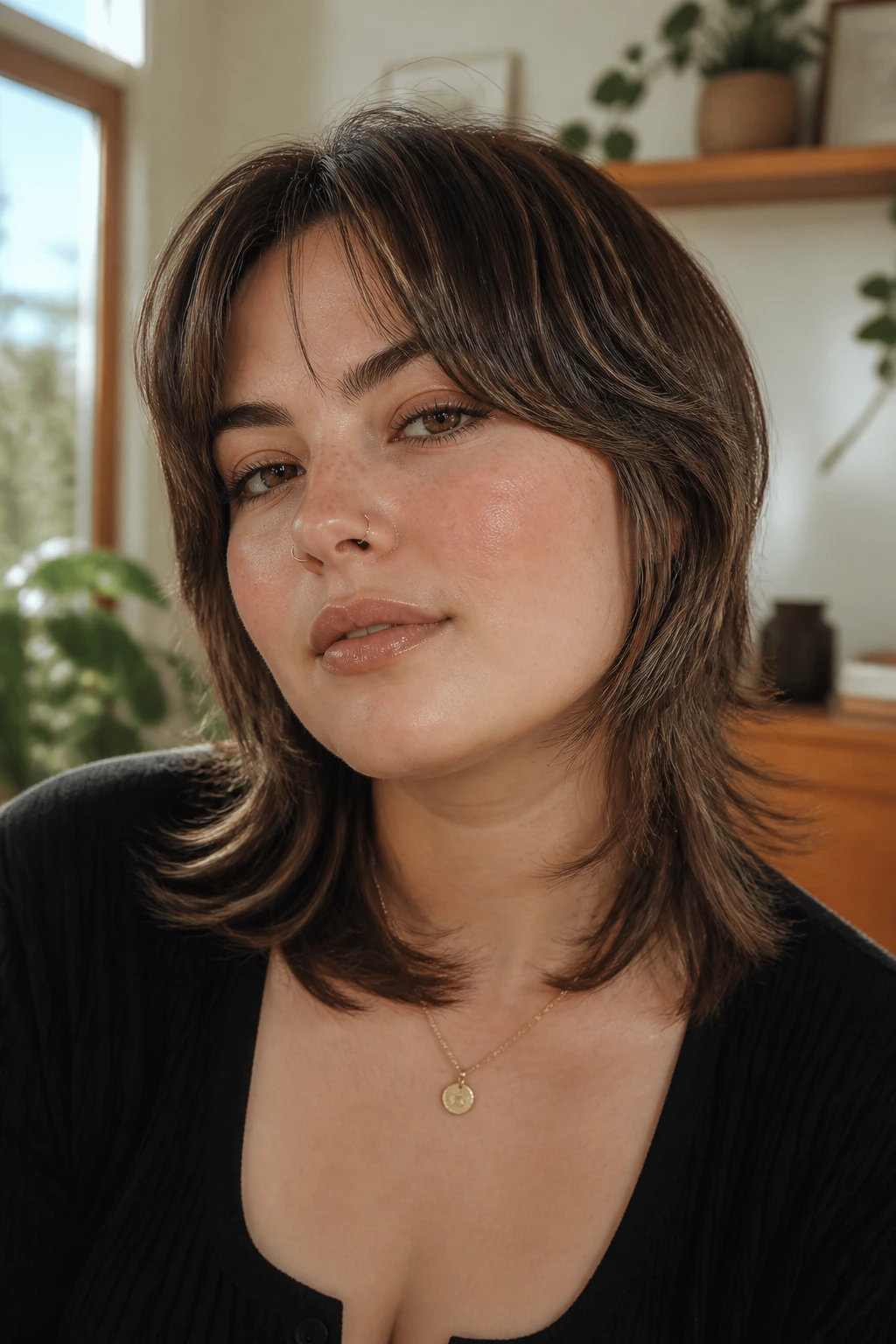
Can a wolf cut work when the face is fuller? Yes—but only if the layers are soft and the sides stay under control. The rough, overdone version can turn into a triangle fast. The softer version, with gentle top layers and a narrow perimeter, adds movement without making the cheeks feel bigger.
The short wolf cut should keep the longest pieces below the cheekbone, while the top layers and fringe create lift near the eyes and forehead. That separation is what keeps it from spreading outward. A little flip at the ends is fine. A lot of volume at the cheek line is not.
I’d pick this cut for wavy hair or for someone who likes a lived-in look and doesn’t mind a bit of styling paste. It has personality. It also has opinions. That’s the appeal.
14. Sleek Bob With a Long Front Angle
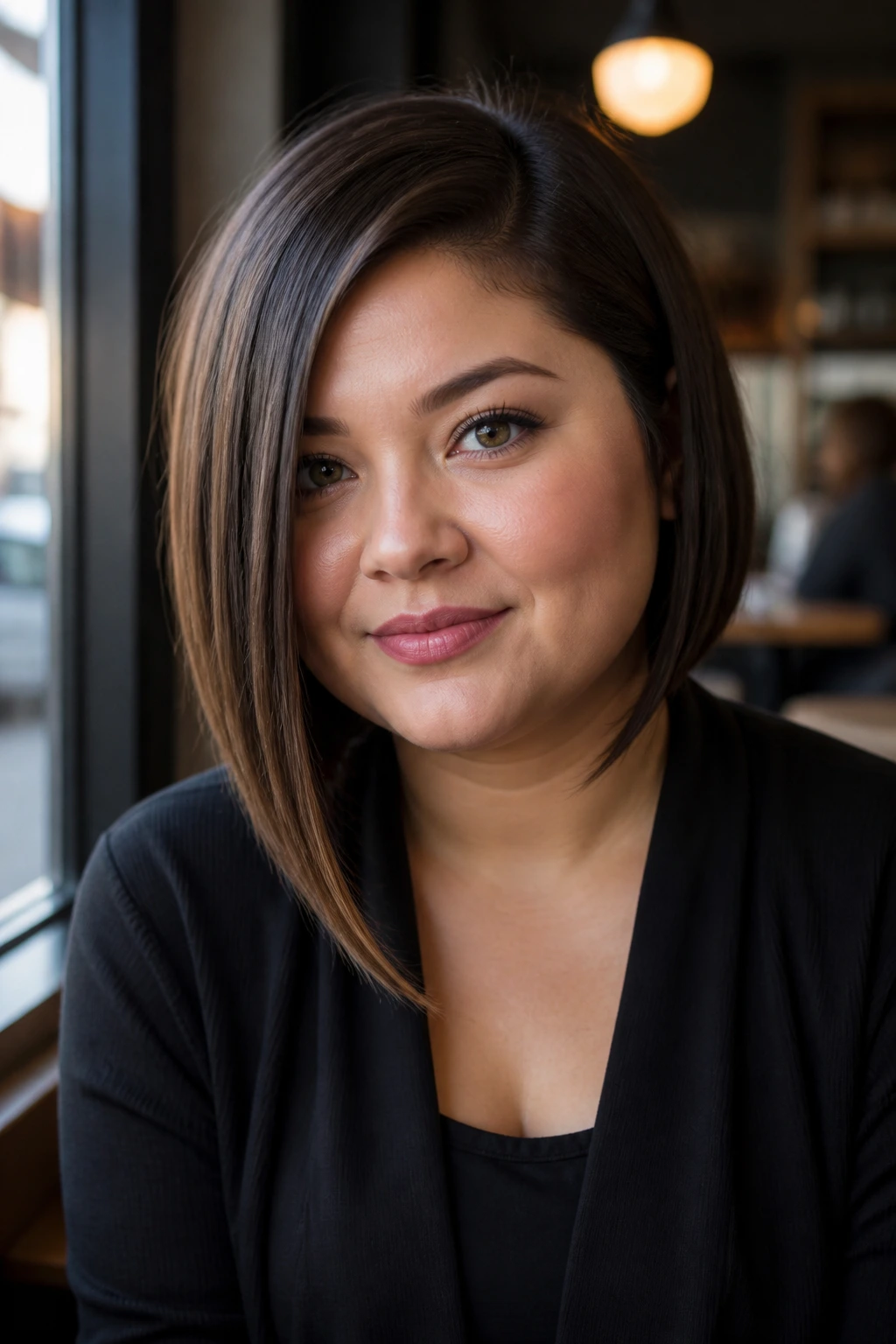
A sleek bob can work on a fuller face if the front angle is long enough to pull the eye downward. The key is not the smoothness alone. It’s the direction. If the front ends below the jaw and the part is off-center, the whole haircut reads longer.
This version likes straight hair or hair that can be flat-ironed in sections without much fuss. Keep the ends tucked under just slightly, not flipped out. If they kick outward, the face gets more width at the exact wrong place. I also like one side tucked behind the ear, because that opens up the cheekbone on one side and breaks the symmetry.
It’s a sharp look. Not severe, if the angle is right. That’s the difference between a bob that flatters and one that simply sits there.
15. Wavy Blunt Bob With Internal Layers

A blunt bob sounds risky for a chubby face, and sometimes it is. But if the hair has natural wave and the inside of the cut is lightly layered, the outer line can stay clean while the texture does the softening. That combination is better than people think.
The outer edge should land below the widest part of the face, and the internal layers should remove just enough bulk that the sides don’t puff out. The wave needs room to move. If it’s crushed under too much product or blown dry too flat, the whole thing turns heavy. A little mousse and an air-dry is often enough.
This cut is a good fit if you like a tidy outline but don’t want a fully polished blowout every day. It reads modern in a quiet way. Not showy. Just controlled.
16. Undercut Pixie
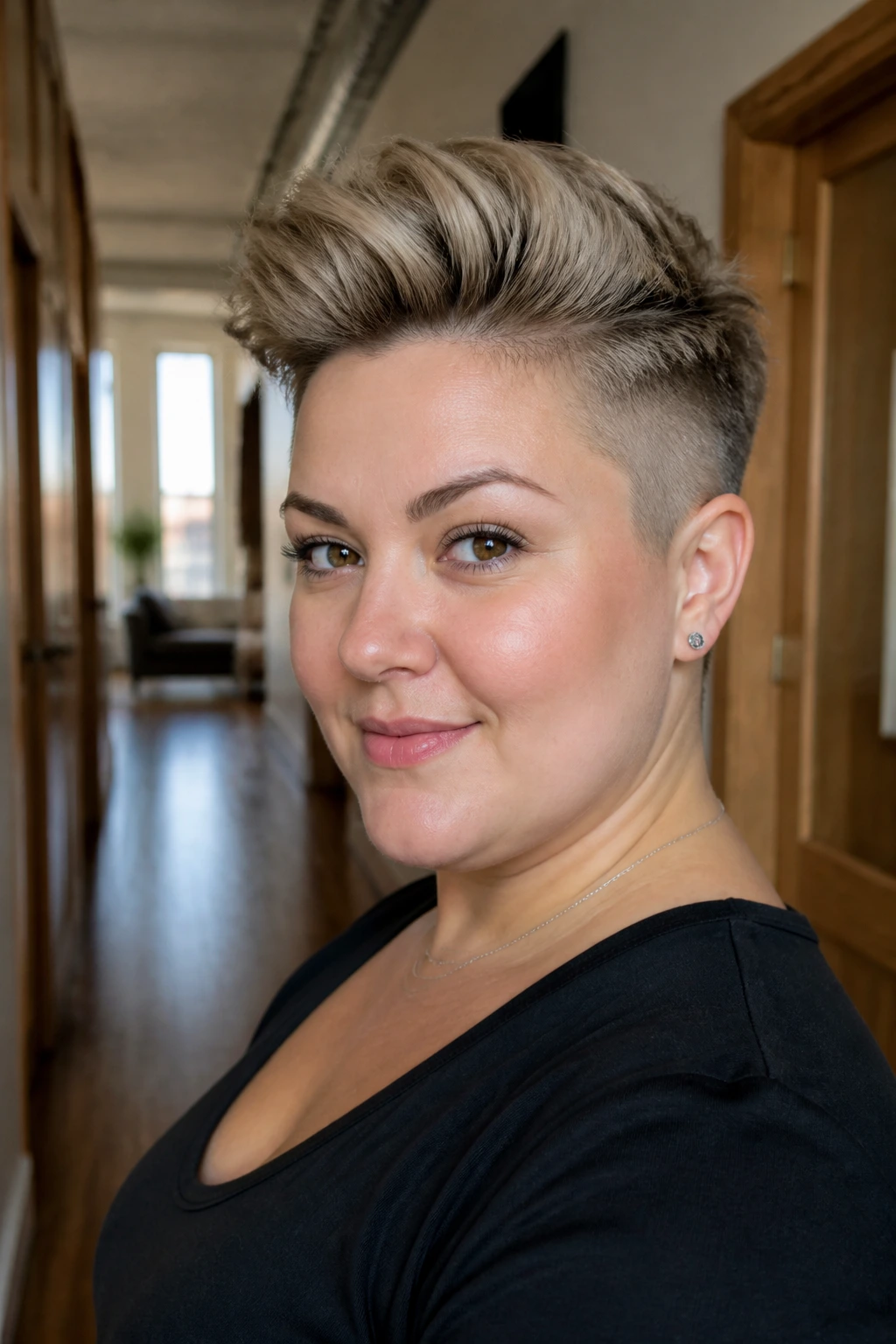
If your hair is thick enough to feel like a helmet by noon, an undercut pixie is the reset button. It removes bulk where it tends to flare out—usually around the nape and lower sides—then leaves length on top so the style still has shape and movement.
This cut can look soft or sharp depending on how high the undercut goes. I prefer the softer version for fuller faces. Keep the top swept upward or slightly to one side, not slicked flat. Height matters here. A little lift at the crown makes the face look longer, while a flat top with shaved sides can go severe fast.
It’s not a timid haircut. That’s part of the charm. It also saves time if you’re tired of fighting thick hair every morning. Less bulk means less battle.
17. Collarbone Bob With Curtain Bangs
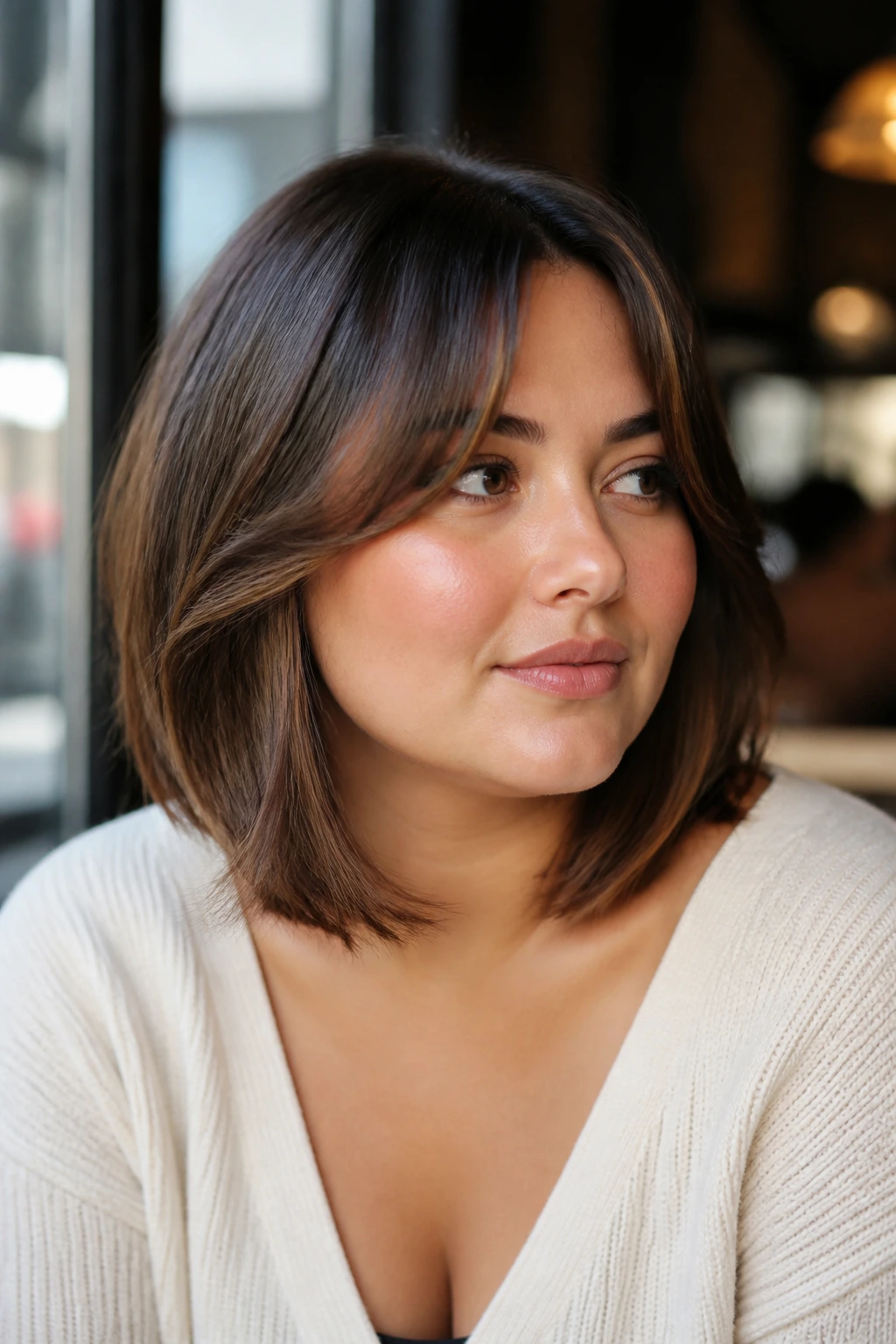
A collarbone bob sits in a sweet spot for fuller faces because it gives you short-hair energy without cutting off all the vertical line. Curtain bangs help even more. They split in the center, open around the forehead, and soften the sides of the face without adding width.
The length should hit at the collarbone or just above it, with the longest front pieces brushing the jaw. That keeps the face from feeling boxed in. The bangs should be feathered enough that they move. Heavy curtain bangs can sit like a wall, and that’s not the look you want here.
This is one of the easiest styles to grow out too. If you’re moving from a shorter cut and don’t want a hard transition, it gives you room to breathe.
18. Short Mullet With Feathered Top
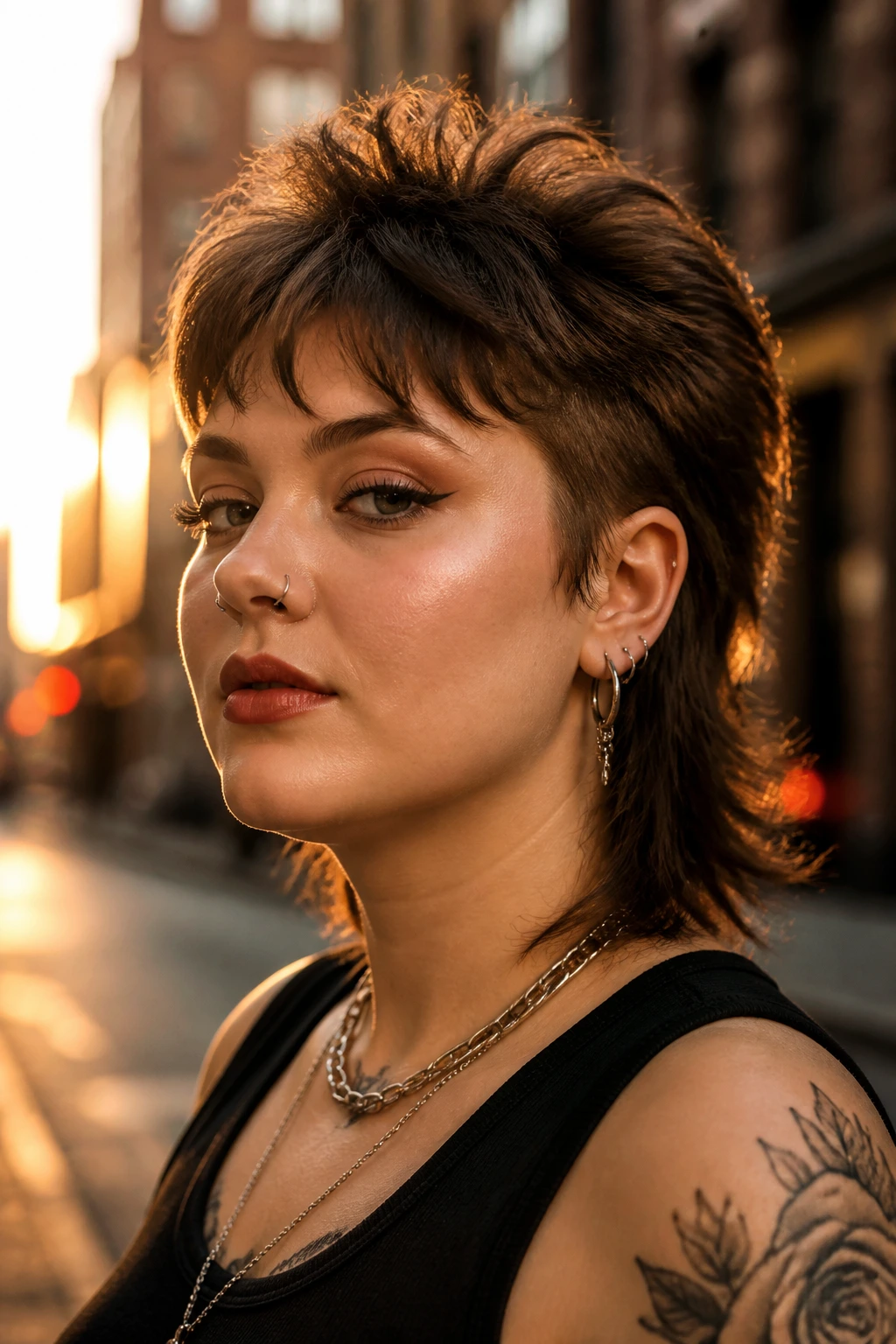
A short mullet is not for everyone. Let’s say that out loud. But the soft, feathered version can be excellent on a fuller face because it keeps the sides narrow while letting the nape and crown stretch the outline vertically.
The trick is restraint. The top should have lift and movement, the sides should stay slim, and the back should be tapered enough that it feels deliberate, not shaggy by accident. If the layers at the cheeks get too wide, the cut loses its shape fast. Keep them feathered, not bulky.
I like this cut on wavy hair with a bit of grit. It has edge, but the softened layers keep it from reading harsh. If you want something a little rebellious that still understands face shape, this is a strong contender.
19. Ear-Grazing Layered Cut
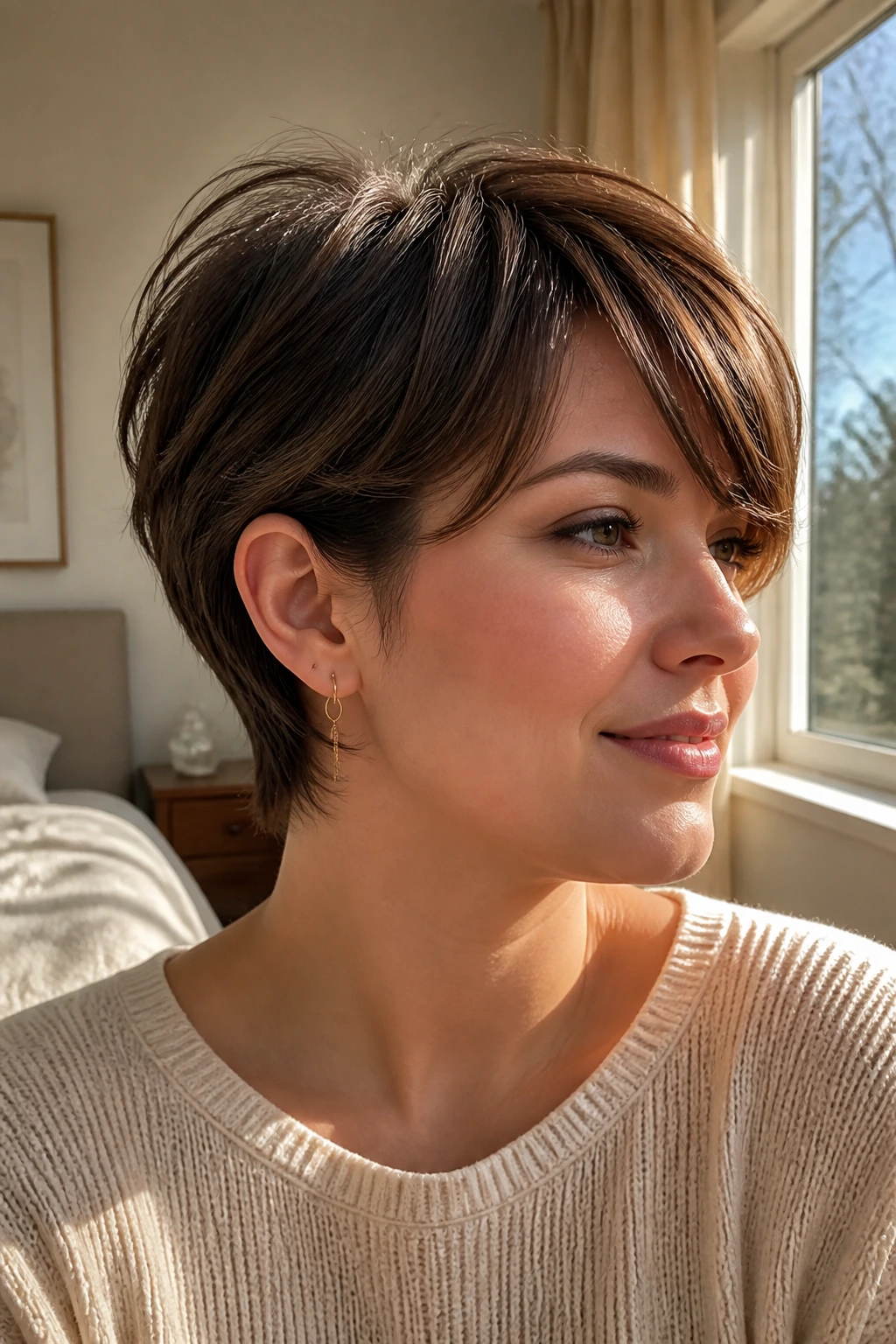
Why does something this short still feel flattering? Because the layers sit high enough to keep the outline moving, while the ear-grazing length opens the face instead of wrapping around it. That opening matters on fuller cheeks.
This cut works best when the top is a little longer than the sides, and the fringe is swept or broken apart. The nape should be tidy. The temples should not puff outward. That’s the line to watch. A short cut can go mushroom-shaped quickly if the sides get too round.
It’s a good choice if you want something easy to wash and style fast. It also wears well with glasses, because it leaves room around the frames and doesn’t crowd the face.
20. Curly French Crop
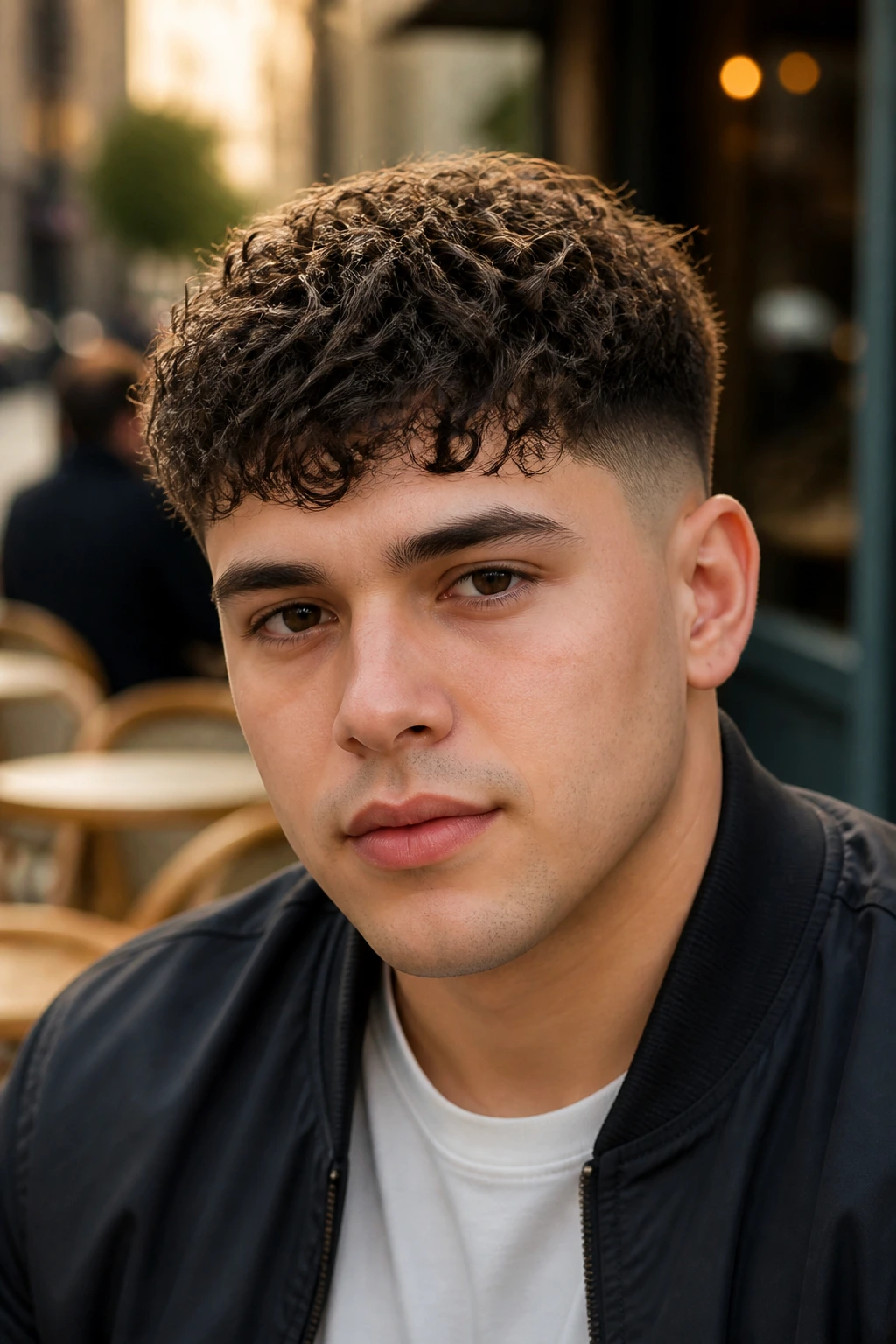
Curly hair and a French crop can make a very strong pair when the cut respects the curl pattern. The top needs enough length to coil; the sides need to stay tight enough that the face doesn’t widen at the temples. Done right, the curls sit on top like a soft frame instead of blooming sideways.
The fringe should be kept light and a little irregular. Straight-across curly bangs can crowd the forehead and shorten the face. A broken fringe, on the other hand, keeps the eyes open and lets the curls do their own thing. That natural movement is what makes this version feel lively.
I’d ask for a dry cut if your curls change shape a lot when wet. Wet curls lie to everybody. Dry cutting gives the stylist a better read on where the shape actually lands.
Why These Shapes Work on Fuller Faces
The cuts above aren’t magic. They all lean on the same handful of shape tricks, and once you see them, the whole subject gets a lot easier. Height at the crown, direction through the front, and narrowing the sides do most of the work.
A fuller face usually looks best when the hair makes a vertical or diagonal line, not a round one. That’s why side parts, angles, and lifted roots keep showing up. They steer the eye away from the widest point of the face and toward the center line or the top of the head. That small shift changes the whole read of the haircut.
Crown height
Flat roots can make the face look wider than it is. A little lift at the top—done with blow-drying, root spray, or a cut that naturally stacks—adds length. Not volume everywhere. Just upward shape.
Side movement
Hair that sweeps across the forehead or drifts forward on one side breaks up symmetry. That matters because symmetry can exaggerate roundness. A small side part often does more than extra layers ever will.
Where the length ends
A short cut that ends right at the cheeks tends to stop the eye in the wrong place. Better to go a touch above the ear with lift, or a touch below the jaw with a clear angle. Right at the middle is where things get squishy.
How to Brief Your Stylist for the Right Shape
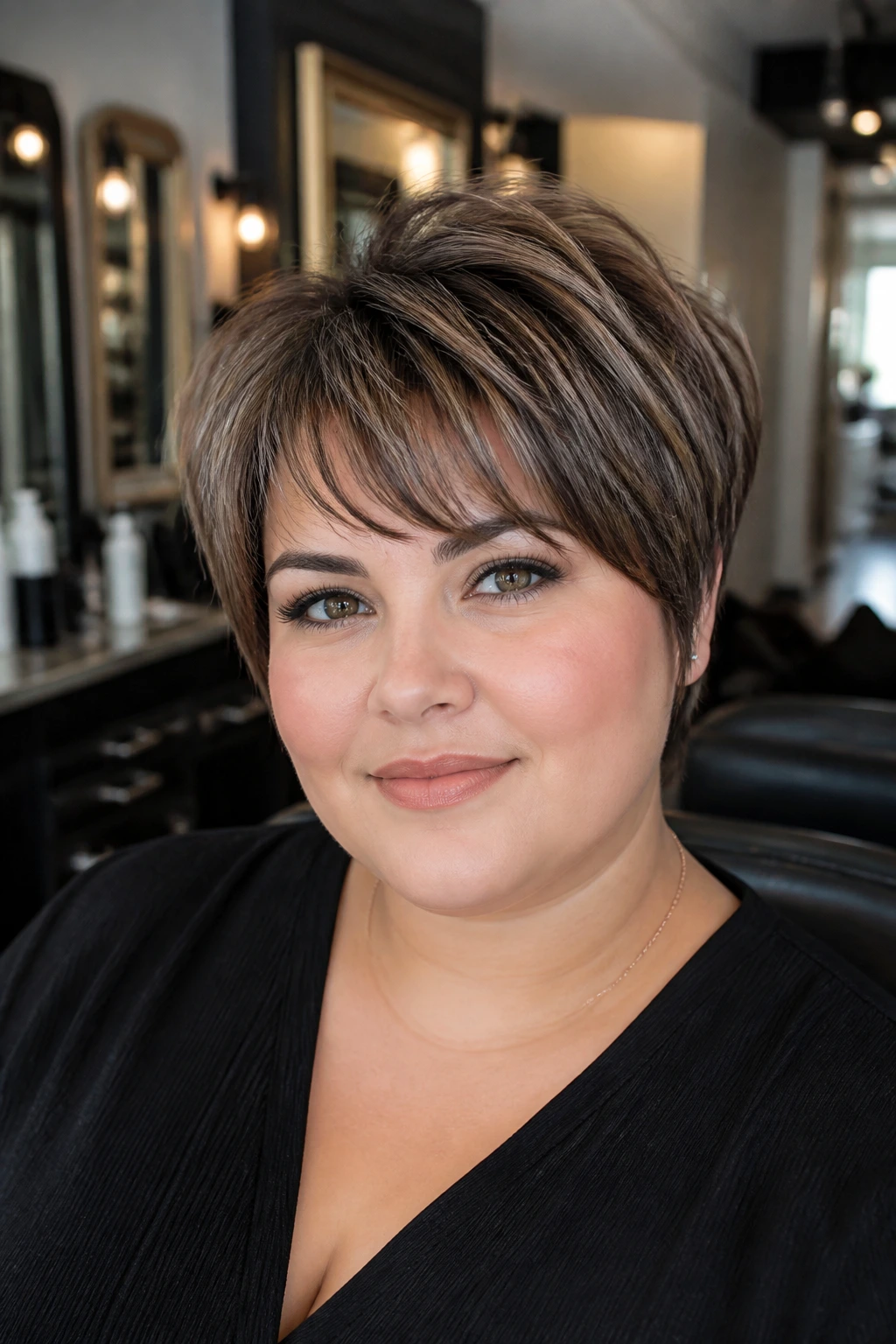
Bring photos, yes. But bring the right ones. Not just “I like this cut.” Bring the ones that show the front, the side, and the back, because a short haircut lives or dies on those three views.
Say what you want the haircut to do. That’s more useful than name-dropping a style. Try language like “keep the sides narrow,” “leave the front below the cheekbone,” or “I need volume at the crown, not at the cheeks.” Stylists can work with that fast.
If you style your hair every day, say so. If you don’t, say that too. A pixie with a brushed-up top is a different job from a wash-and-go crop. And if you wear glasses, tell them; the length around the temples and ears matters more than people think.
One more thing. Mention your cowlicks. Short hair exposes them.
Essential Tools and Products for These Styles
- Blow dryer with a nozzle attachment — directs airflow at the roots so you can build lift without frizzing the ends.
- Round brush, 1 to 1.5 inches — useful for bobs and lobs when you want a soft bend under the front pieces.
- Tail comb — makes clean side parts and helps section the crown without guessing.
- Texturizing spray — gives pixies, bixies, and shaggy bobs a piecey finish without sticky buildup.
- Lightweight mousse — good for fine hair that needs shape without losing movement.
- Matte paste or styling cream — better for short cuts than heavy gels if you want touchable ends.
- Heat protectant — non-negotiable if you use a flat iron or curling iron on short hair; shorter hair still burns.
- Small flat iron — especially handy for asymmetrical bobs and side-swept fringes.
- Diffuser — the better choice for curls and waves when you want definition without blasting the shape apart.
- Duckbill clips — help set the crown or fringe while it cools so the shape holds longer.
Practical Styling Moves That Make the Cut Work
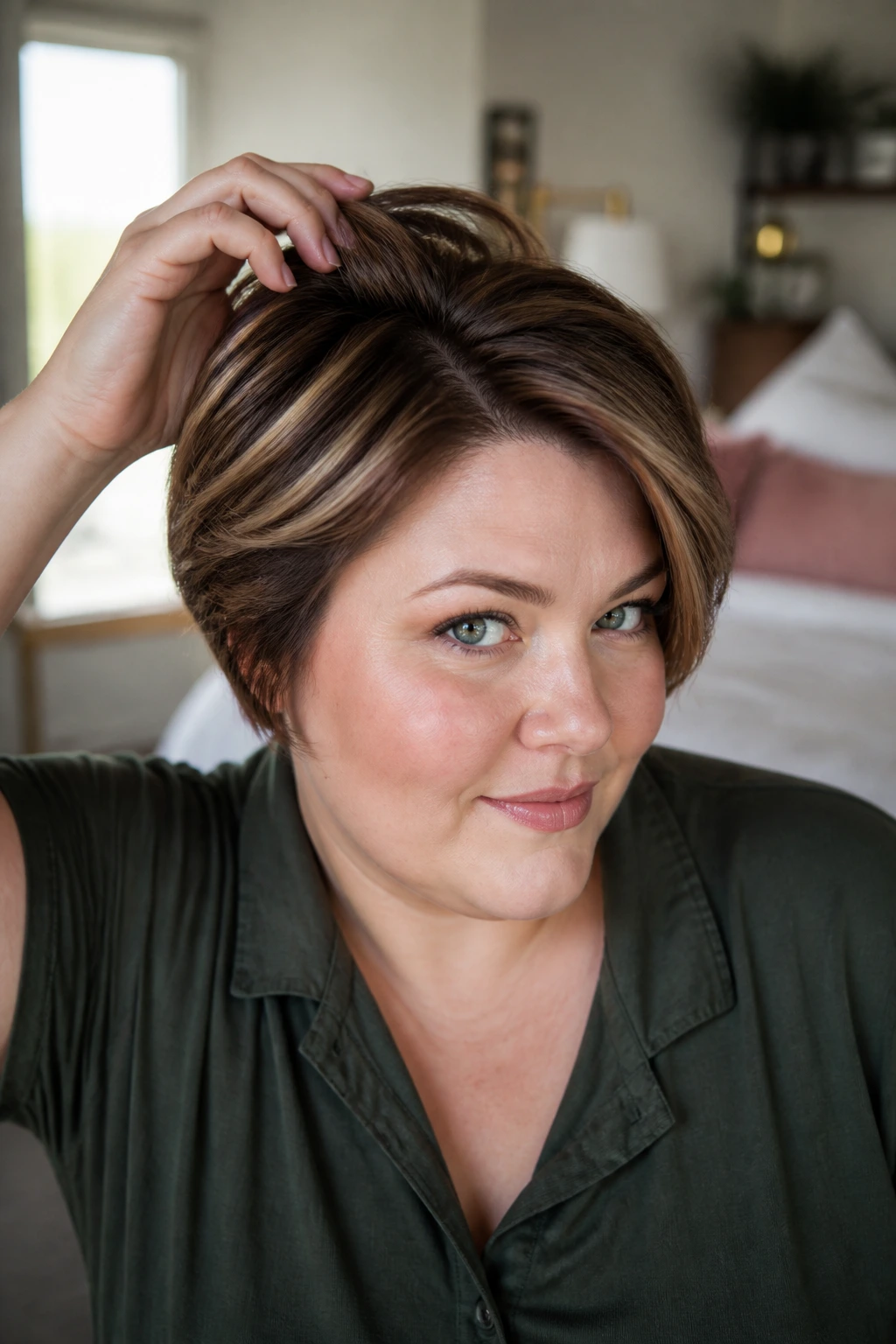
Root lift: Start at the crown, not the ends. If you add volume low down, you widen the face. If you lift at the roots, you lengthen it. A quick blast with the dryer while the head is tipped back can do more than a pile of product.
Parting: Keep a tail comb nearby. A deep side part or even a slight off-center shift changes the balance fast, and short hair shows every millimeter of that move. Re-parting at the crown can rescue a cut that’s gone flat.
Fringe control: Bangs should skim, not swallow. If they hit the middle of the forehead and hang there, they shorten the face in a blunt way. Sweep them, break them apart with fingers, or soften the line with point cutting at the salon.
Finish: Use less product than you think. Short hair gets greasy and stiff in a hurry. A pea-sized amount of paste or cream is often enough for the whole head, especially if you’re only shaping the ends and fringe.
Common Mistakes That Make a Short Cut Look Wider
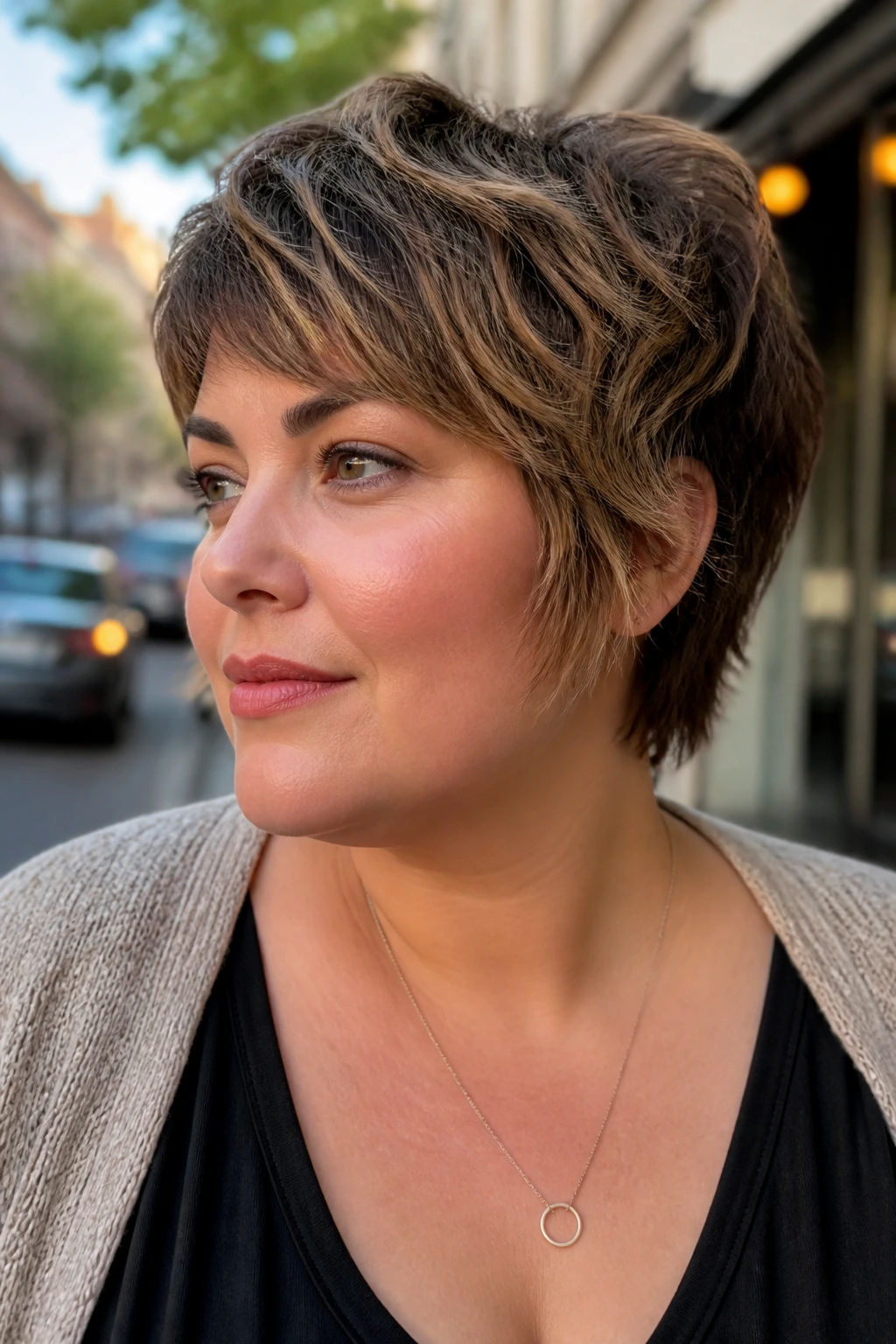
Cutting at cheek level. That’s the biggest one. If the line of the hair ends exactly where the face is widest, the cut mirrors the roundness instead of balancing it. Ask for the shortest point to sit above the cheekbone or below the jaw.
Too much side volume. Big width at the temples or lower sides can make a face read broader. The fix is simple: keep the silhouette narrow near the cheeks and move the volume upward.
Heavy straight bangs. Thick bangs that fall in one solid line can shorten the face and press everything downward. If you want fringe, make it airy, side-swept, or broken up.
Blunt ends with no movement. A sharp perimeter can be chic, but if the line is too hard and the hair is thick, it can feel dense. Internal layers, point cutting, or a slight bend at the ends usually help.
Not adjusting for texture. A cut that works on straight hair may balloon on curls. A curly pixie, for instance, needs more length on top and less bulk at the sides than the same cut on smooth hair.
Ignoring upkeep. Short cuts lose shape fast. If the nape grows out or the fringe drops into your eyes, the whole balance changes. That is not a flaw. It’s just how short hair behaves.
Variations and Alternatives to Try
Soft-Edge Version: Keep the perimeter rounded and the layers airy if you want a gentle look instead of a sharp one. This suits people who like movement but hate obvious styling. It’s especially easy to wear with natural wave.
Sharper-Line Version: Use cleaner edges, a deeper side part, and less internal layering if you like a neat silhouette. This version works best on straight or dense hair, where the outline can stay visible all day.
Curly-First Version: Let the cut follow the curl pattern instead of forcing a bob shape on it. Dry cutting, longer top sections, and tapered sides keep the result from puffing out near the cheeks.
Low-Styling Version: Pick cuts with built-in texture—bixies, shaggy bobs, feathered crops—so air-drying does most of the work. These are the styles you choose when you want shape without a 20-minute blowout.
Glasses-Friendly Version: Keep the fringe light and the sides neat around the temples. Too much hair near the arms of the frames creates clutter, and clutter makes the face feel wider than it is.
Keeping the Shape Between Salon Visits
Short hair asks for maintenance. There’s no way around it. The good news is that the upkeep is predictable, and once you know the rhythm, it stops feeling like a chore.
For pixies and crops, a trim every 4 to 6 weeks keeps the crown from collapsing and the nape from puffing out. Bobs and lobs usually stretch to 6 to 8 weeks before the shape starts to go sideways. If your hair grows fast or your fringe sits right in your eyes, move those dates up, not down.
At home, dry shampoo at the roots can buy you a day or two, but don’t pile it on like drywall dust. A light mist is enough. For bobs, a quick pass with a round brush or a flat iron at the front pieces can reset the angle without redoing the whole head. For curls, dampen the ends with a spray bottle and squeeze in a little cream to revive the shape.
Sleeping on a silk pillowcase helps too. It keeps the fringe from getting crushed flat and keeps the ends from fraying into weird flips. Small thing. Big difference.
Frequently Asked Questions
What short haircut makes a round face look slimmer?
Cuts with angle and height usually work best: angled bobs, long pixies, asymmetrical shapes, and short styles with a deep side part. The goal is to avoid a wide horizontal line at the cheeks and build more vertical movement through the top.
Are bangs bad for chubby faces?
Not at all. Heavy straight bangs can be tricky, but side-swept bangs, wispy fringe, and curtain bangs can soften the forehead and keep the face from reading too wide. The mistake is making the bangs too thick and too blunt.
Can I wear a bob if my face is full?
Yes, but the line of the bob matters a lot. A chin-length bob with no angle can widen the face, while an A-line bob, inverted bob, or bob with longer front pieces usually works better because it changes the shape.
What if my hair is very thick?
Ask for internal debulking and a shape that narrows the sides. Thick hair can swell around the cheeks if it’s cut into one solid block, so you need texture, movement, or an undercut at the nape to keep it from ballooning.
What if my hair is thin?
Go for cuts that create the illusion of density without piling on width—long pixies, feathered crops, and stacked bobs work well. Too many wispy layers can make thin hair collapse, so keep the shape clean and use root lift at the crown.
How short can I go without making my face look wider?
Shorter can work fine as long as the crown has lift and the sides don’t flare out. The issue is not the length itself. It’s whether the cut creates a vertical line or a round one.
Do curly cuts need to be different from straight cuts?
Yes. Curly hair needs extra room in the top and less bulk on the sides, because curls expand as they dry. A curly pixie, French crop, or shaggy bob should be cut with the curl pattern in mind or the shape will widen.
What if my haircut looks too puffy at the sides?
That usually means the weight line is sitting too high or the ends are too blunt. A stylist can thin the internal bulk, lower the perimeter a bit, or move more volume to the crown so the width doesn’t sit right at the cheeks.
The Shape That Changes Everything
The best short haircut for a fuller face is rarely the one with the most drama. It’s the one that gets the balance right. A little lift, a little angle, and a little space around the cheeks can change the whole feel of the face without making the haircut look forced.
That’s the part I like most about these styles. They don’t ask you to hide your face. They just give it a cleaner outline and let the haircut do some quiet geometry work.
Pick the one that fits your texture, your patience, and your morning routine, then ask for the shape with real specificity. The right short cut on a fuller face looks less like a compromise and more like a good decision you should have made sooner.
