



An oval face can wear short hair with more freedom than most shapes, but that freedom is a trap if you treat every crop like it’s the same. A blunt bob at the jaw, a pixie with a heavy crown, a shag with the wrong fringe — each one changes where the eye goes, and that is the whole game.
That’s why short hairstyles for oval faces can look either razor-clean or oddly lopsided with just one small tweak. The face itself is balanced: forehead and jawline tend to sit in the same neighborhood, and the length usually runs a little longer than the width. So the haircut is not trying to “fix” the face. It’s deciding what to spotlight — cheekbones, brows, neck, lips, ears. Small difference. Big effect.
The best cuts for this shape don’t fight it. They frame it. A jaw-length line can sharpen the profile. A side-swept fringe can soften the forehead without hiding it. A cropped texture can make the whole face feel lively, while a sleek bob can turn the same features into something sharper and more tailored. Once you start looking at it that way, the options open up fast.
Why Short Hair Works So Well on an Oval Face Shape
Balance is the main advantage here. An oval face already gives you a clean base to work from, so short hair doesn’t have to wrestle with width or length in the same way it might on a round or square face. That means the cut can be playful, sharp, soft, or very bare around the ears, and it still has room to look intentional.
The detail that matters most is where the line lands. A bob that stops at the jaw pulls attention lower. A crop with lift at the crown pushes the eye upward. A fringe changes the whole mood in one move. The face is the same, but the haircut changes the story.
You can go shorter than you think. Oval faces usually tolerate exposed forehead, bare temples, and narrow napes better than people expect. That said, the cut still needs shape. No haircut flatters a face just because it is short. The shape has to decide where to sit.
Texture is your friend. Straight, wavy, curly, and coily hair all behave differently in short length, and that is a good thing. A little bend at the ends can keep a chin-length bob from looking severe. A soft wave can stop a pixie from feeling too cropped. Tiny things. They matter.
These cuts also grow out more gracefully. That’s one of the practical perks people forget. An oval face can often carry the in-between stage — the awkward half-bob, the grown pixie, the shag with longer edges — better than a face shape that depends on precise framing.
1. Chin-Length Blunt Bob
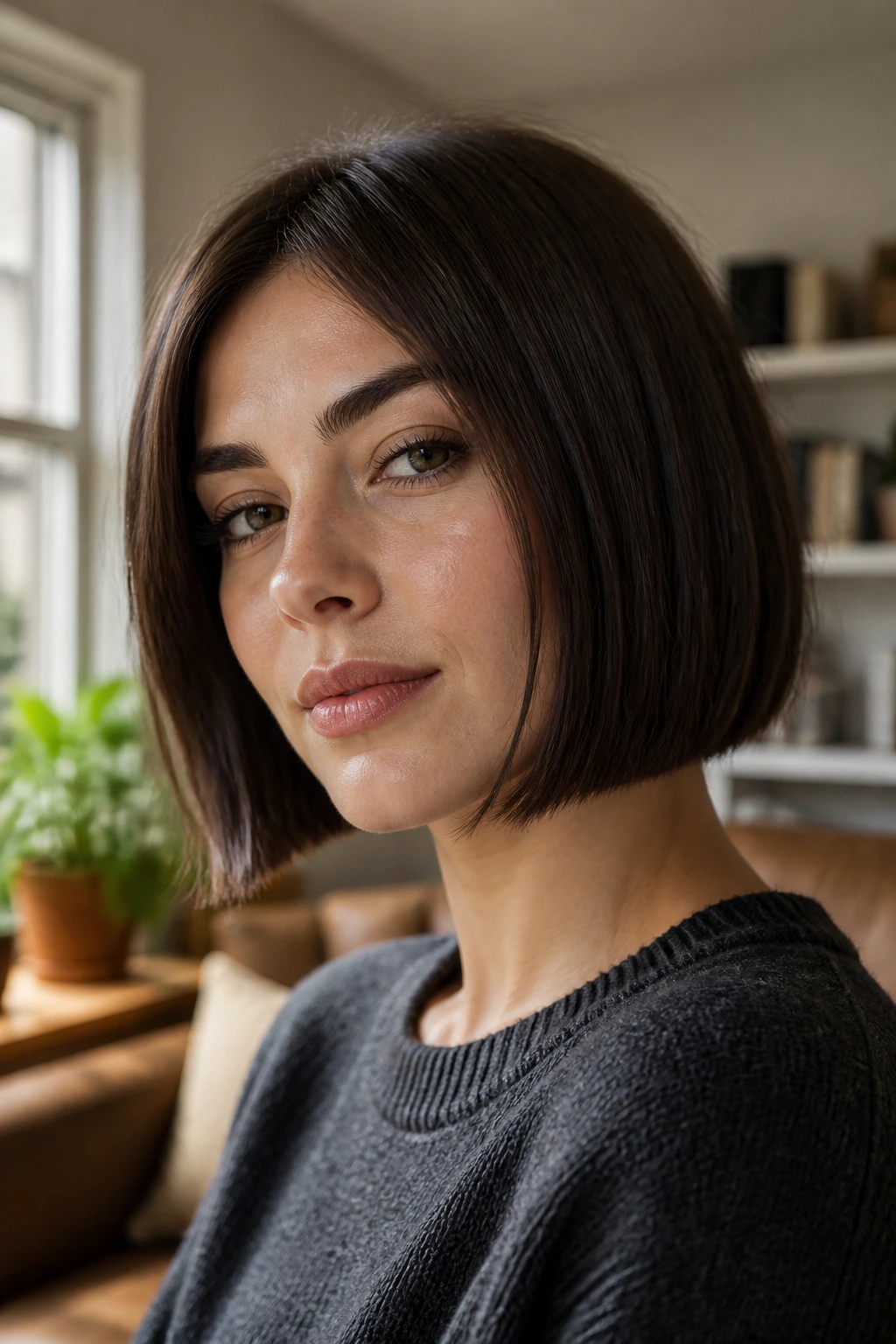
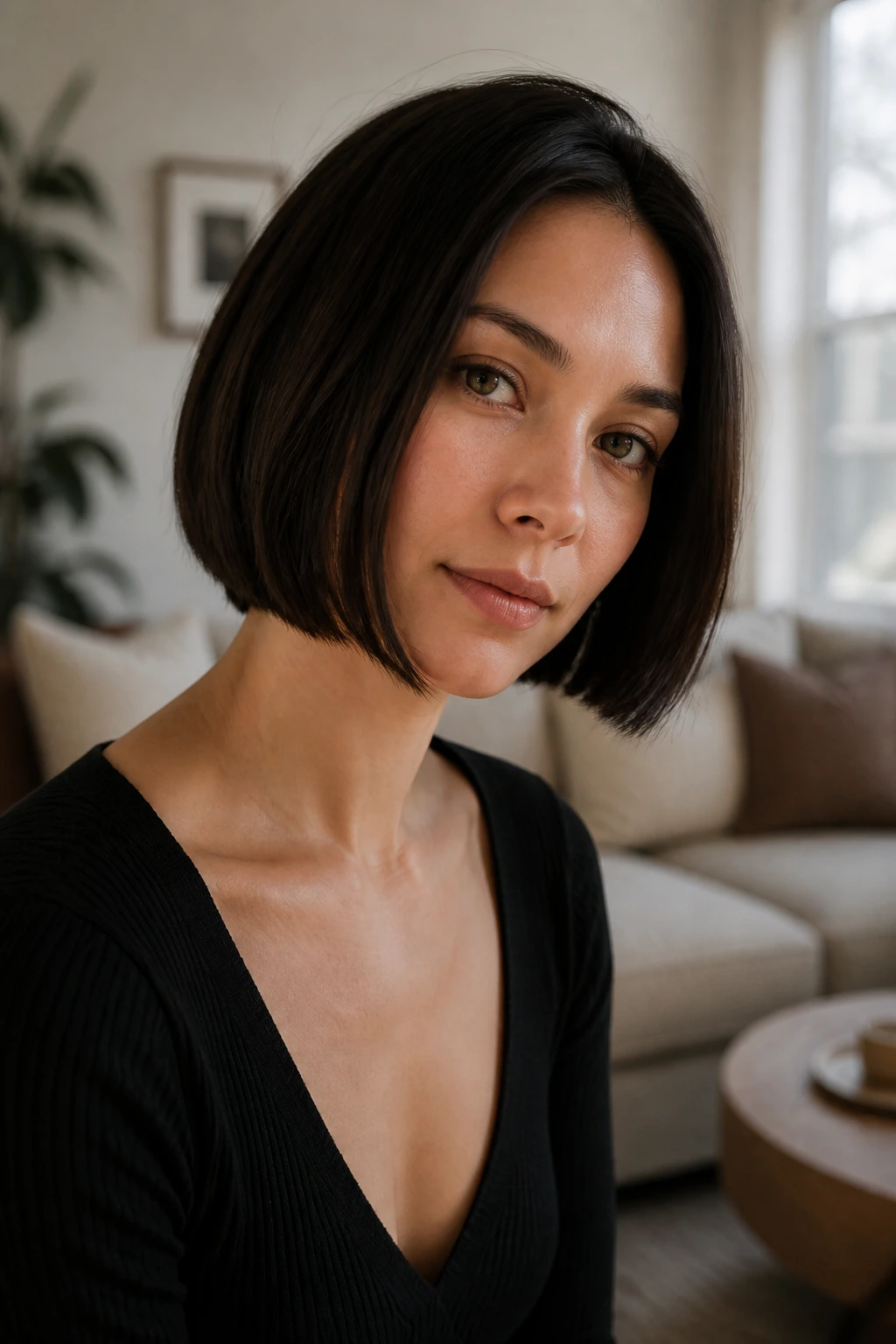
A chin-length blunt bob is the haircut equivalent of a clean white shirt: plain on paper, sharp in real life. On an oval face, that blunt edge can make the cheekbones look more deliberate and the jaw feel crisp instead of hidden. If the ends sit right at the jawline, the whole face reads a little more sculpted.
What I like about this cut is how little it asks for. A center part makes it look polished and graphic. A side part softens the edge and gives the style a more relaxed line. If your hair is fine, the blunt perimeter also creates the illusion of density, which is one reason this cut keeps showing up in salons.
Keep the interior layering light. Too much choppy texture in a blunt bob turns the shape mushy, and the whole point here is the clean border. Blow-dry it with a paddle brush for a flat, glossy finish, or wrap the ends under with a round brush if you want a little curve at the bottom. Simple. Clean. Direct.
2. Soft Pixie With a Side-Swept Fringe
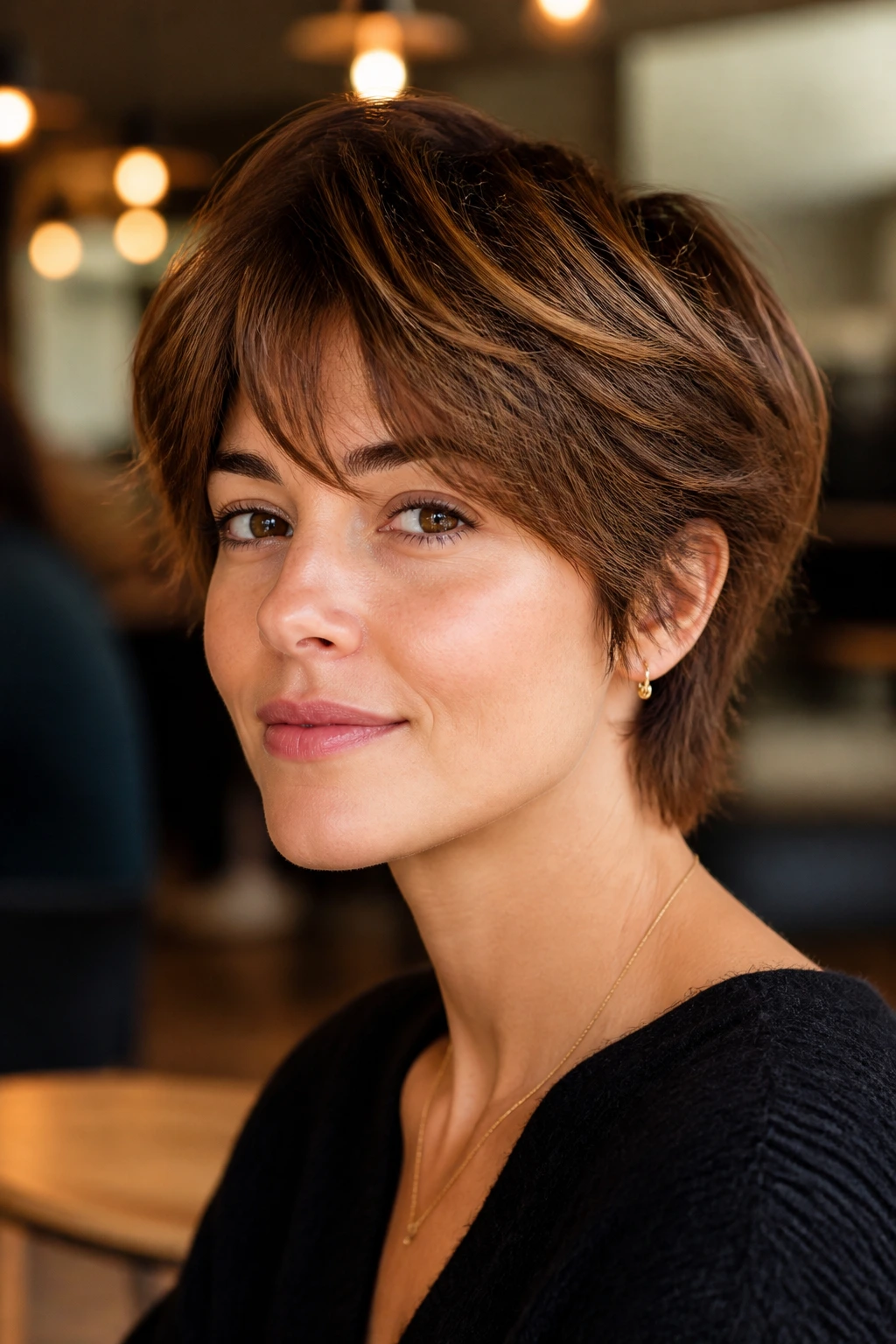
The side-swept fringe does the heavy lifting here. Not the length. Not the crown. The fringe. A soft pixie on an oval face draws attention to the eyes and cheekbones, then lets the neck and jaw stay open, which is a good trade if you want a short cut that still feels gentle.
This version works especially well if you dislike hard lines around the forehead. A fringe that falls diagonally across one brow can make the cut feel less severe, and it gives you a little flexibility on days when you do not want every strand to sit perfectly. You can finger-style it with a pea-sized amount of cream or paste and still look finished.
Ask for short sides that taper neatly around the ears and a top section long enough to push forward or to the side. If the top gets too tall, the shape starts to stretch the face. If it stays close and soft, the whole haircut feels easier to wear.
3. French Bob With a Short Fringe
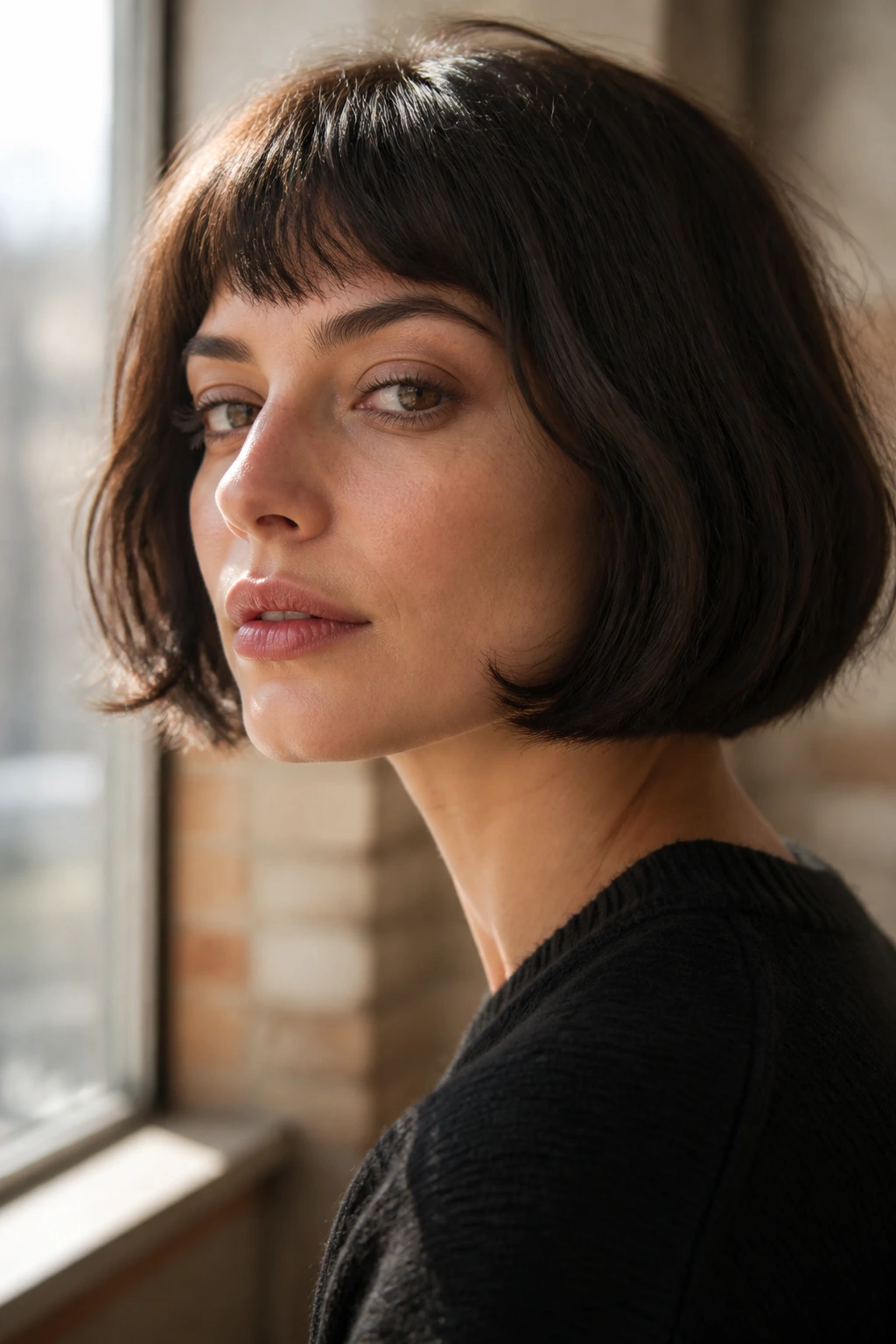
Can a bob feel polished and slightly mischievous at the same time? Absolutely, and the French bob is the proof. It usually sits around the jaw or just above it, and the short fringe changes the mood from simple to a little bit editorial. On an oval face, that fringe gives the cut a clear focal point.
The trick is keeping the fringe light enough that it does not box the forehead in. You want separation, not a solid shelf of hair. A little bend through the ends helps too, because a pin-straight French bob can look strict in a hurry. I prefer this cut with natural movement, not helmet hair.
If your hair is naturally straight or only slightly wavy, this is one of the easiest short cuts to live with. Dry the fringe first, then the rest of the bob, so the front does not split into weird directions later. And if the fringe starts to feel too blunt, a trim at the brow line will keep it from swallowing your expression.
4. Textured Crop With Piecey Ends
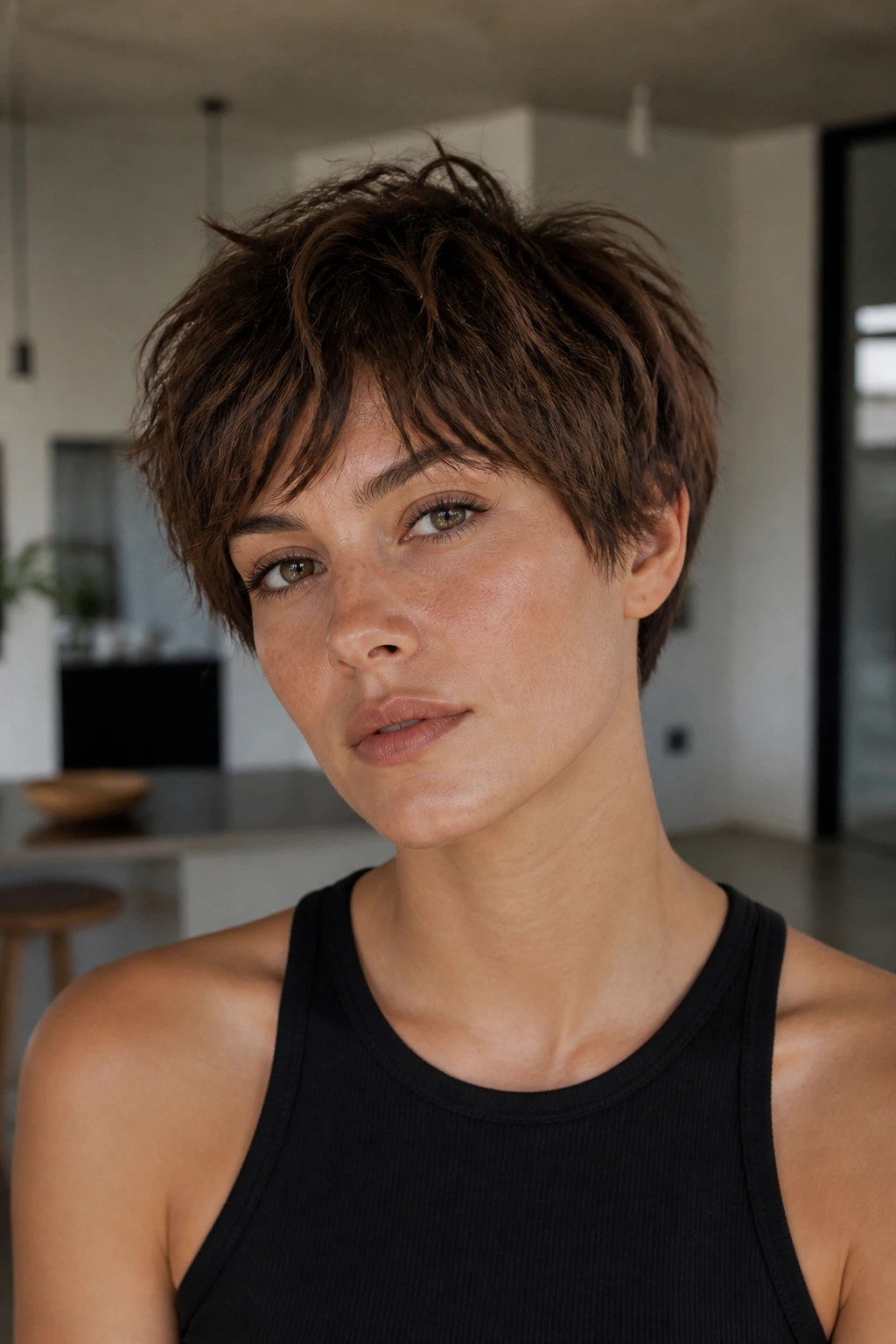
This is the haircut for the person who wants to spend about five minutes on their hair and be done with it. A textured crop with piecey ends looks relaxed, but it is not accidental. On an oval face, the choppy finish keeps the features from feeling too polished or too severe.
The best part is the movement around the temples and crown. Tiny broken-up layers keep the shape soft, and the piecey ends stop the cut from sitting flat against the skull. If you have dense hair, this kind of crop can remove some bulk without turning the outline into a fuzzball.
What makes it work
A matte paste or lightweight cream gives the edges separation without shine. That matters because shiny product can make a short crop look wet or stiff, and this cut needs air in it. A little lift at the roots and a little mess through the top are enough.
Ask your stylist to avoid over-thinning the crown. That’s a common mistake. You want texture, not holes. If the cut is done well, it should look better after a few hours of wear, not worse.
5. Angled Bob With a Slight Forward Line
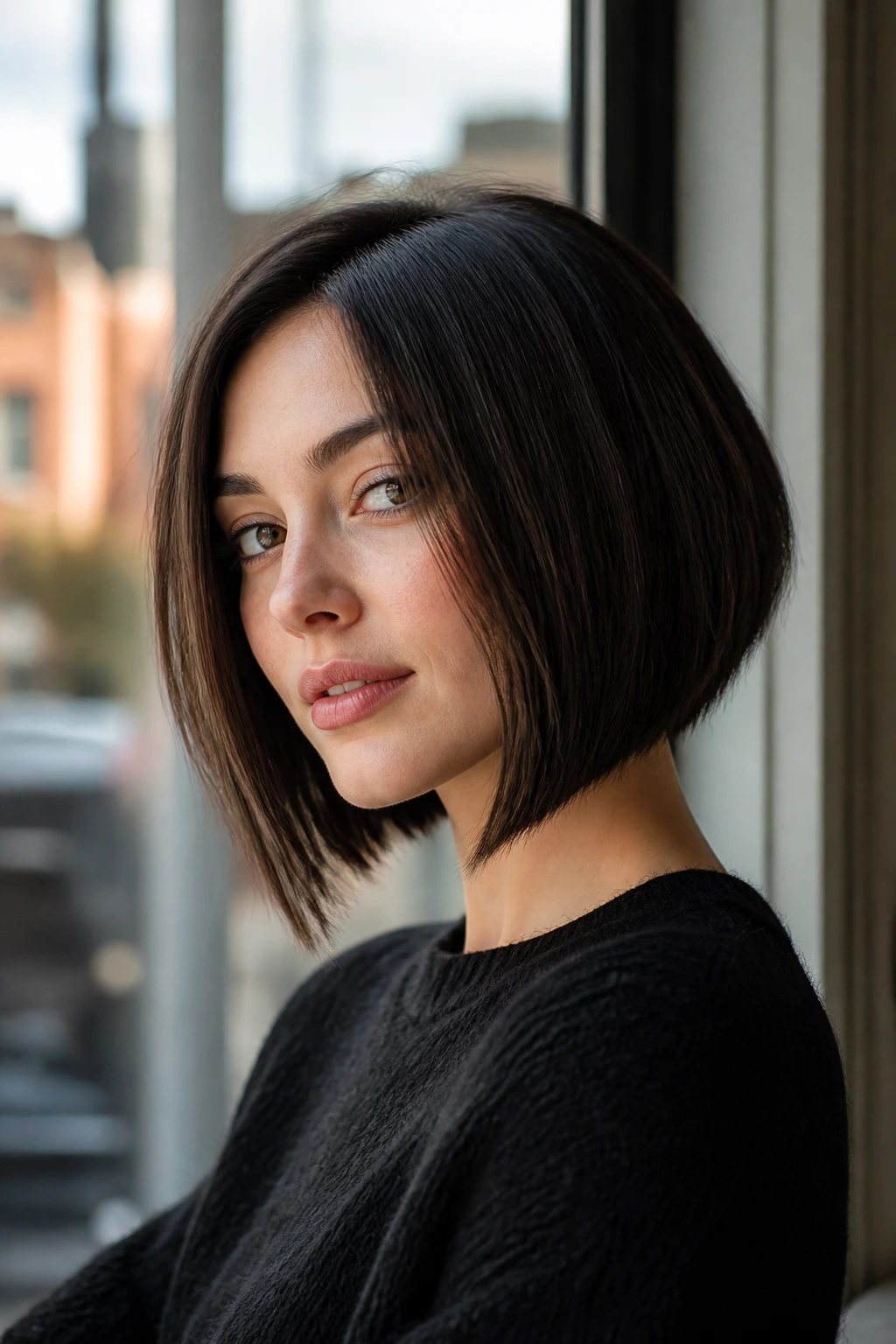
An angled bob gives an oval face a clean bit of geometry, which is exactly why it works so well. The back stays shorter, the front drifts a little longer, and the eye moves forward toward the cheek and jaw instead of sitting in the middle of the head. It is a neat trick, and a useful one.
This version is especially nice if you like hair that feels polished but not flat. The slight forward line can sharpen the profile, and it plays well with both straight hair and loose waves. If your hair tends to flip out at the ends, a subtle bevel can make that movement look intentional rather than fussy.
The only thing to avoid is overdoing the angle. A severe, almost triangular bob can start to look dated fast. Keep the transition gentle. The best angled bobs on oval faces feel like they are gliding forward, not lunging.
6. Curly Bob That Sits at the Jaw
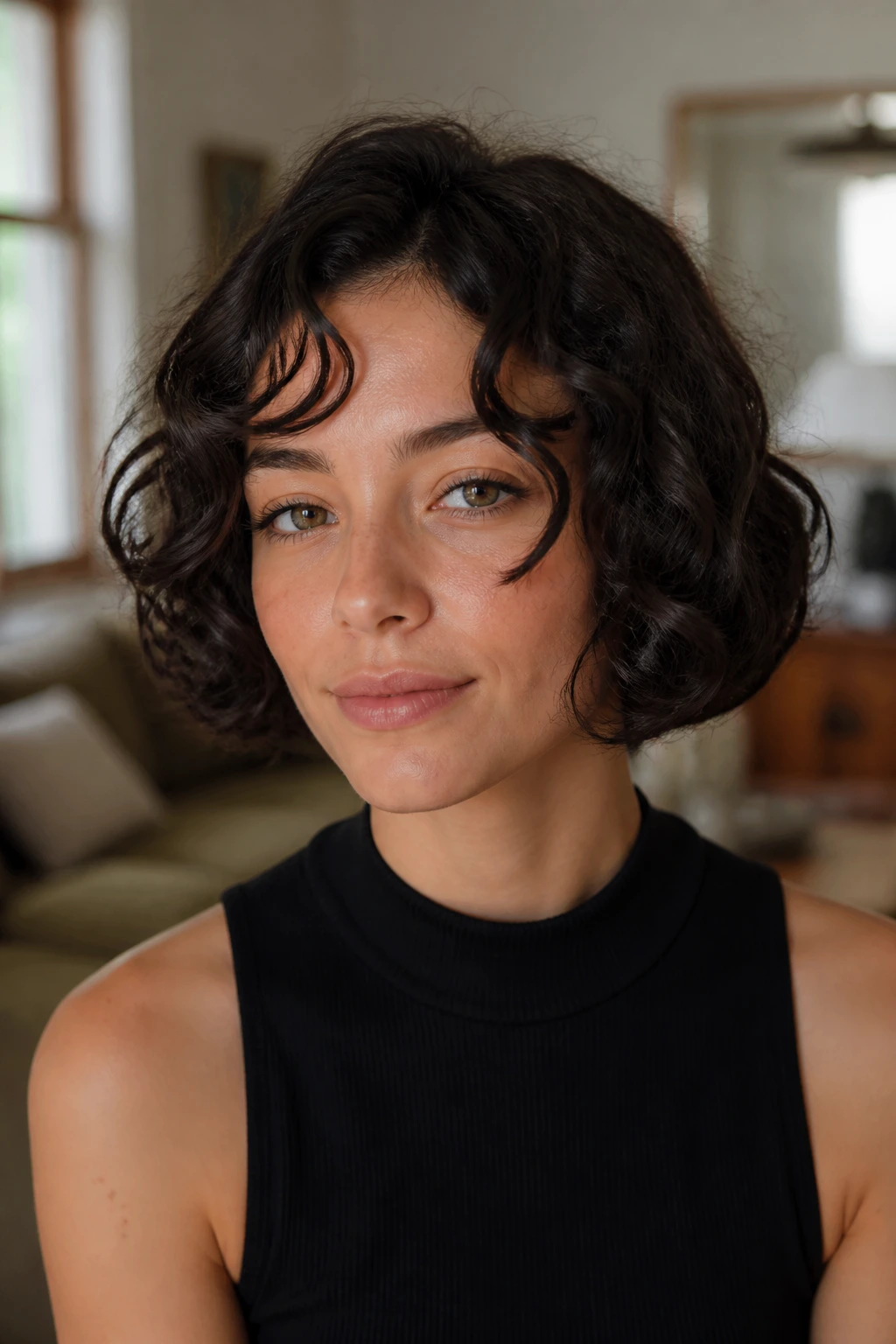
Curly hair changes the conversation because the cut shrinks once it dries. That’s why a curly bob for an oval face has to be planned with the actual curl pattern in mind, not just the wet length. A jaw-level cut keeps the curls visible while still giving the face an open frame.
The payoff is shape. Lots of curl types naturally build width, so the goal is to keep the silhouette balanced and clean around the jawline. If the bob is too short and too round, it can puff out. If it is cut with enough interior layering, the curls stack in a way that feels airy instead of heavy.
Use a diffuser or air-dry with a curl cream that gives hold without crunch. Scrunching too much can make the top collapse and the sides swell. Better to set the curls, leave them alone, and let the shape form on its own.
7. Layered Bixie
A bixie lives between a bob and a pixie, which sounds like a compromise until you see it on an oval face. Then it looks smart. The longer top keeps the style soft, while the shorter nape and sides keep it short enough to feel fresh.
Why this hybrid length works
The bixie gives you more movement than a classic pixie and less bulk than a bob. That balance is handy if you want the haircut to show off the face without exposing every line at once. It can be styled tucked, tousled, or pushed forward, and all three read differently.
I especially like it for hair that has a little natural bend. The layers break up the outline and keep the cut from sitting like a block. If your hair is thick, this shape can remove weight without losing personality. If your hair is fine, the layered top creates lift where a bob might just fall.
Ask for soft graduation through the nape and longer pieces over the ears. That keeps the grow-out from looking abrupt. The bixie is one of those cuts that gets more interesting after a few weeks, which is rare and useful.
8. Shaggy Crop With Feathered Ends
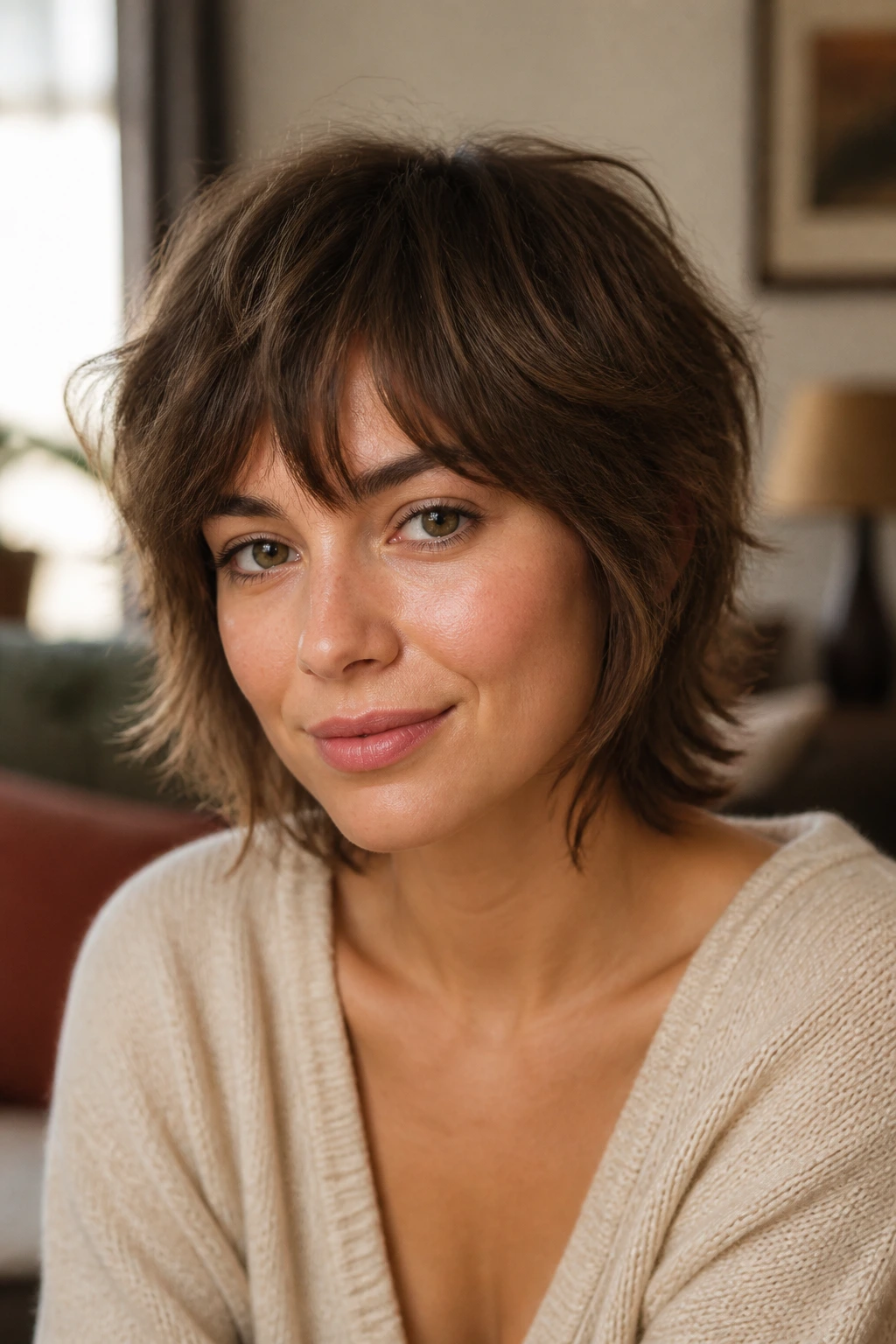
The shaggy crop has a lived-in look that can save you a lot of styling time. Feathered ends keep the cut light around the cheeks and jaw, which is useful on an oval face if you want movement without losing the shape of the face itself.
This cut behaves best when it looks a little undone. Air-dry it, scrunch it, rough-dry it, then stop touching it. The whole charm is in the slightly broken-up texture. A little face-framing layer can soften the forehead and make the haircut feel less cropped than it is.
If your hair is straight, use a salt spray or texture mist and twist a few sections while drying. If your hair is wavy, you may barely need product at all. The only real hazard is over-layering, which can make the ends wispy instead of feathered. There is a difference. You want movement, not frizz with ambition.
9. Ear-Length Bob With a Deep Side Part
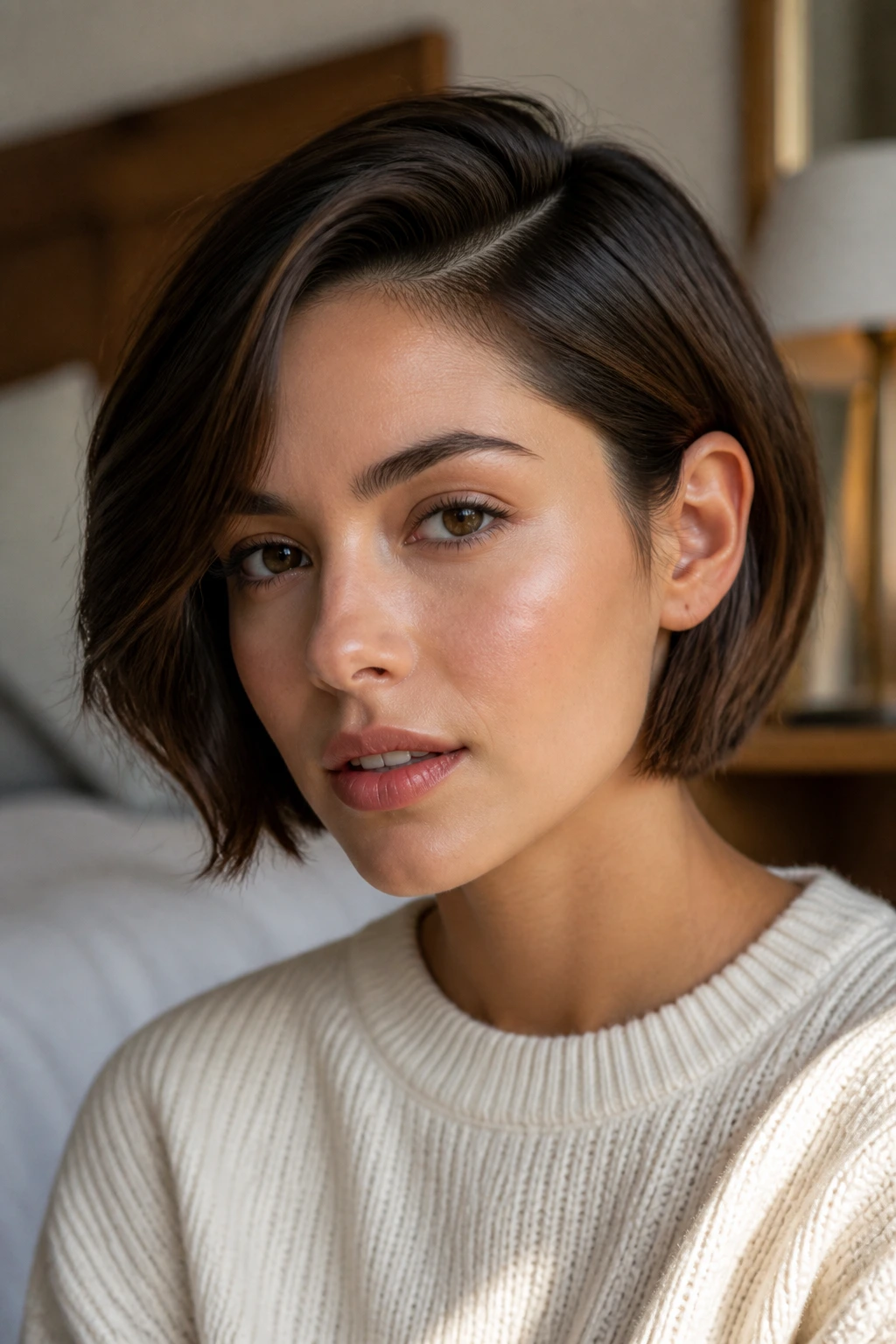
An ear-length bob is not for someone who wants to hide. It puts the face out there. On an oval face, that can be a strength, because the proportions stay balanced even when the cut is very short around the ears.
The deep side part is what makes this shape feel less strict. It lifts one side, lets the other fall closer to the cheek, and gives the haircut a little asymmetry without needing a dramatic angle. The result is elegant in a low-key way, which sounds vague until you see how nicely it opens the eye area.
This cut shines when one ear is tucked and the other side stays loose. That single move can make the same haircut feel softer or sharper depending on the day. If you want a short style with a bit of grown-up polish, this is one of the easiest places to land.
10. Slicked-Back Crop
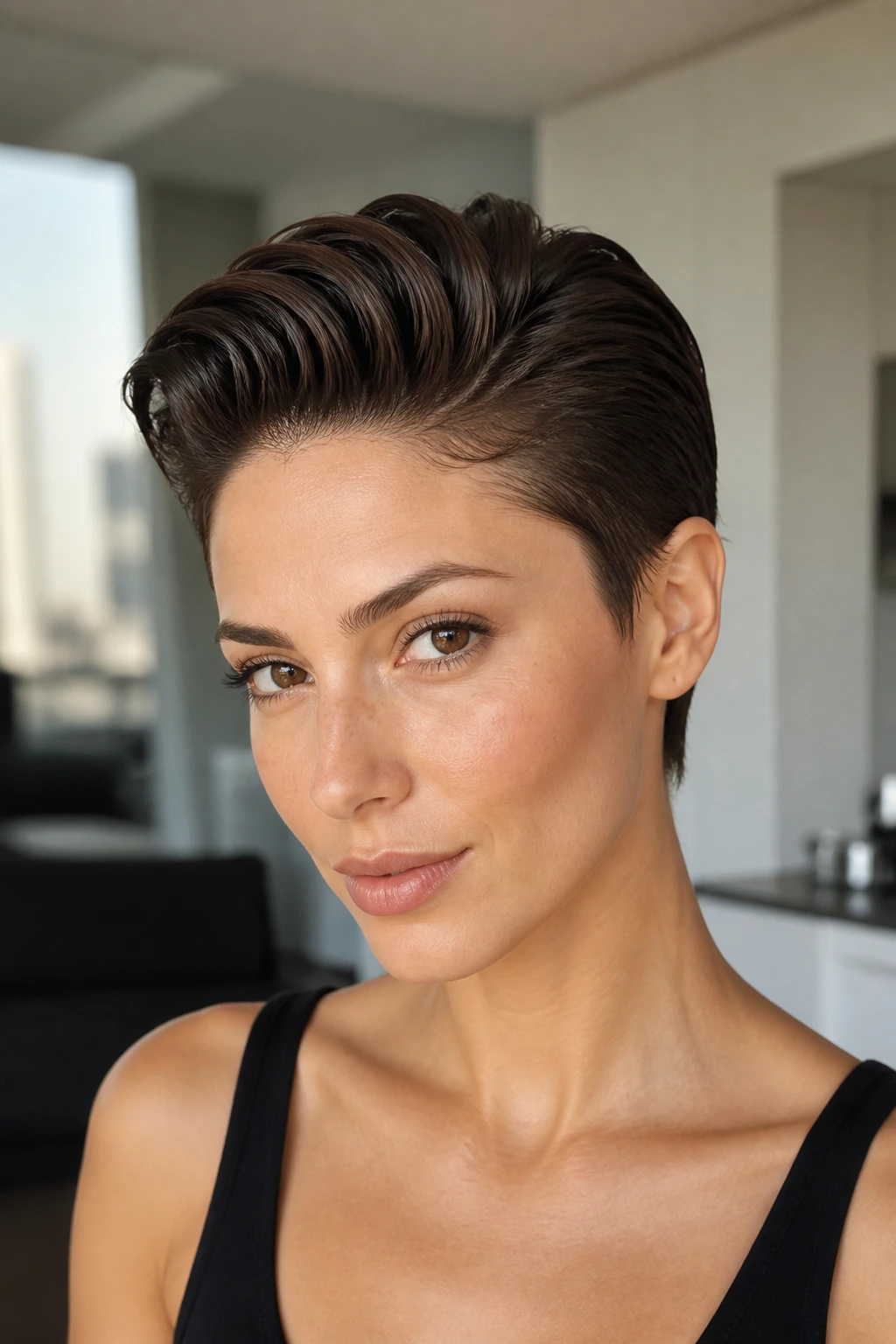
A slicked-back crop is the haircut version of removing all the clutter from a room. Suddenly the face is the room. On an oval face, that can look crisp and deliberate, because the balanced proportions can handle the bare shape without needing a lot of extra framing.
This style is best when you want the hair away from the forehead and temples. It shows brows, cheekbones, and the line of the neck in a way few other short styles can. The catch is that it depends on product and finish. Too dry, and it looks unfinished. Too wet, and it can feel flat in a hurry.
Use a lightweight gel or cream with a comb, then smooth the hair back while it is still damp. Leave a little lift at the roots if you want the style to keep some shape. I prefer this on nights out or sharper outfits, not as an everyday default. It has a specific mood, and that mood is strong.
11. Undercut Pixie
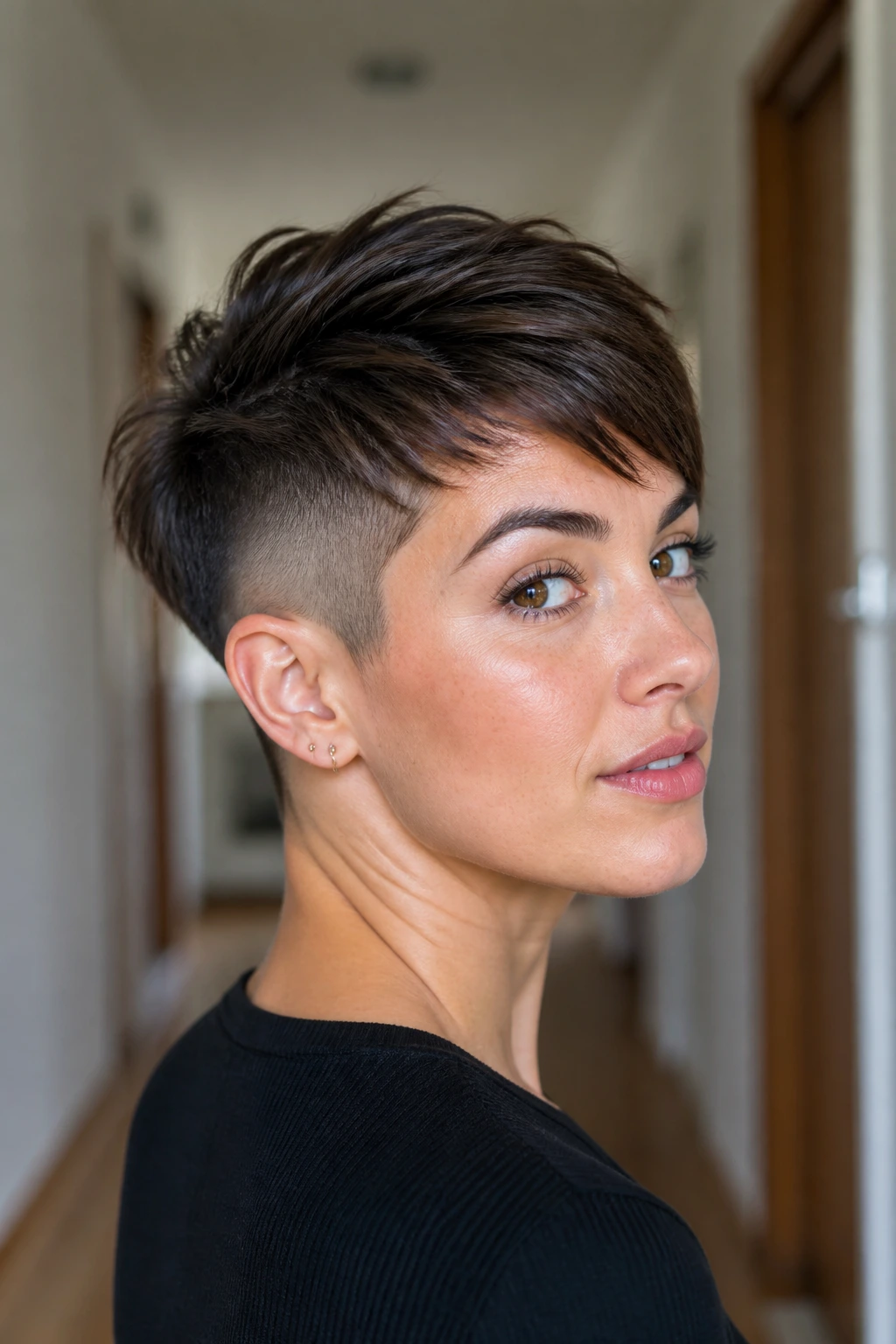
The undercut pixie is for people who do not want their haircut to whisper. It has edge built into the shape, especially around the nape and sides, and an oval face can wear that contrast without losing balance. The shortness opens everything up.
What makes this cut work is the difference between the shaved or clipped sections and the longer top. That contrast creates drama without needing a lot of length. If you have thick hair, an undercut can also remove bulk that would otherwise balloon around the head. Practical. Not just stylish.
Be honest with yourself about maintenance here. The undercut area grows fast, and once the edges lose their crispness the whole cut starts to blur. If you love neat lines and a little bite, it is worth it. If you want something you can ignore for two months, skip it.
12. Razored Crop With a Long Top
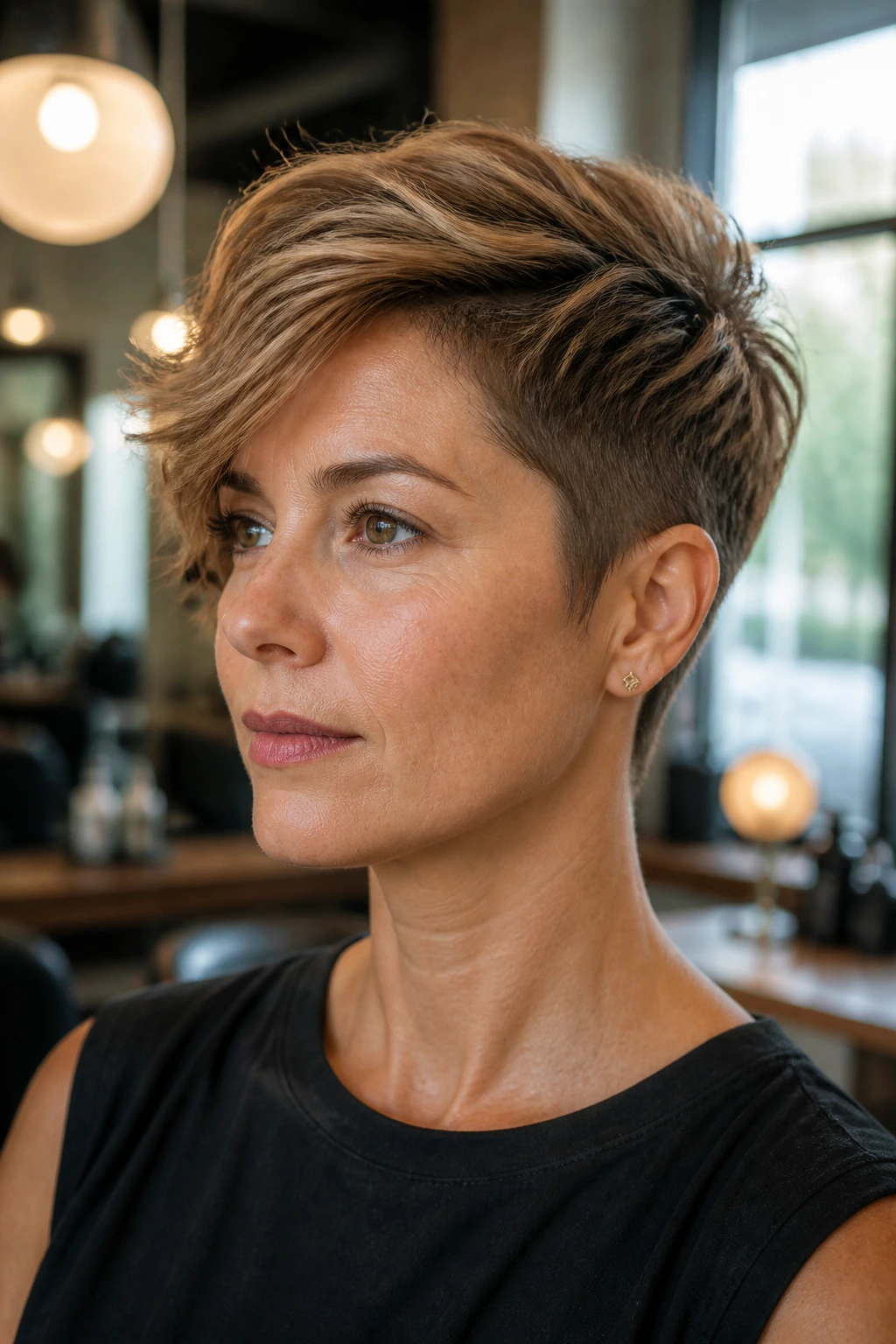
A razored crop has movement built into the cut itself, which is why it often looks better than a blunt crop on hair that feels heavy. The razor softens the edges and leaves the top long enough to flip, sweep, or tousle depending on your mood.
Best for hair that needs air
If your hair is dense, a razored finish can keep the top from sitting like a helmet. If it is fine, the long top helps the cut look fuller without needing a lot of product. On an oval face, the extra movement on top can keep the eye moving instead of dropping straight down the sides.
This is not the haircut for someone who wants a precise, polished outline. It lives in texture. A little dry styling cream, a touch of mousse at the roots, and some finger-shaping are usually enough. The danger is going too far with thinning shears and leaving the ends shredded. You want softness, not a haircut that looks tired after one wash.
13. Wavy Short Bob Air-Dried
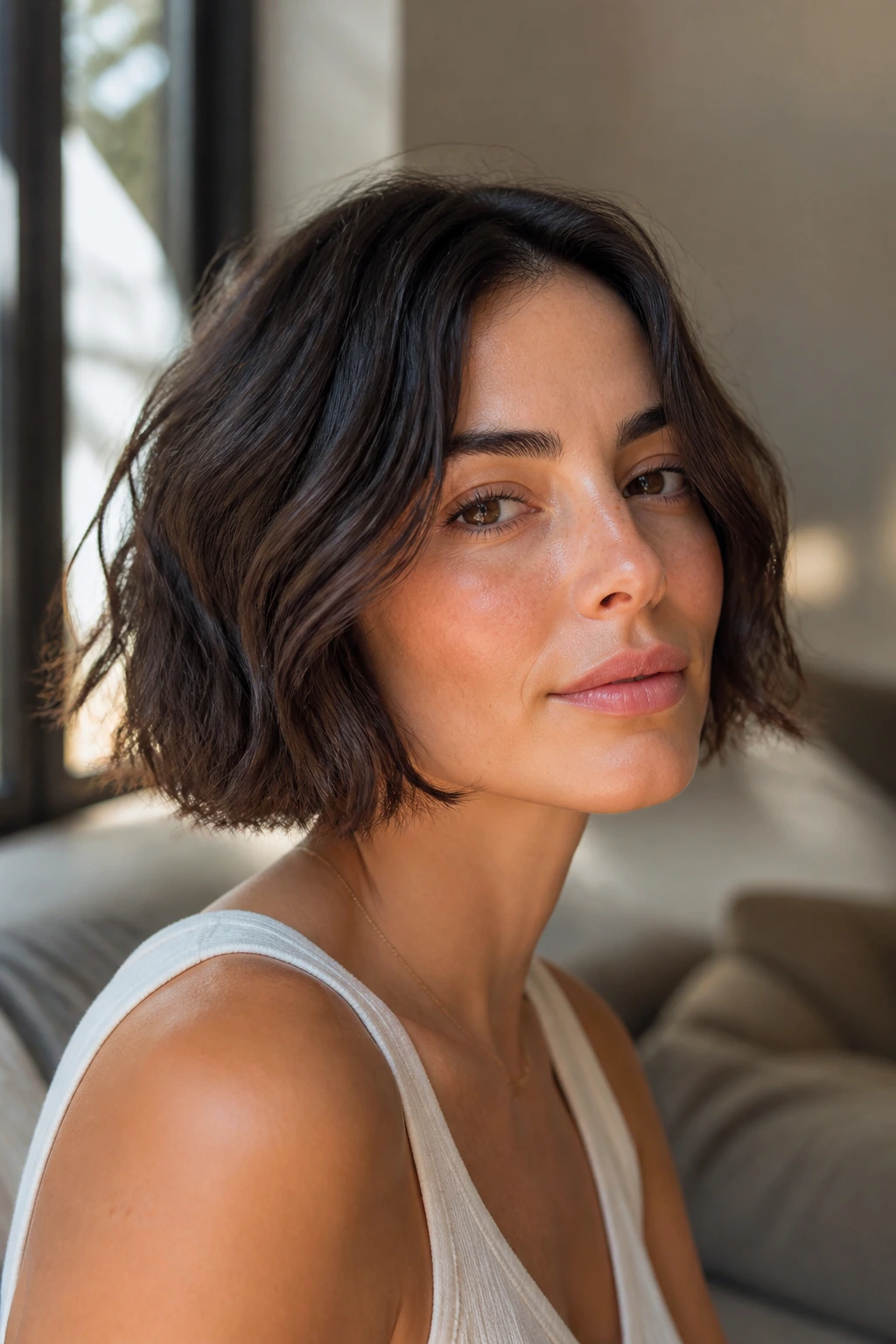
A wavy short bob is one of those styles that looks more expensive when you do less. That may be why it keeps winning. On an oval face, the wave adds width at just the right points, then lets the shape skim the jaw instead of clinging to it.
The sweet spot here is the air-dried finish. A little sea salt spray or lightweight foam can coax the bend without forcing the hair into curls it does not naturally have. If your hair has a loose wave, this cut almost styles itself. If it is straighter, a quick twist with your fingers while damp can fake the movement nicely.
What to watch for
Heavy ends can drag the wave down, so ask for some internal layering. Not too much. Just enough to keep the bob from feeling boxy. The face should stay open, and the hair should move when you turn your head. If it sits like one flat shape, the cut needs a little more life.
14. Rounded Pageboy
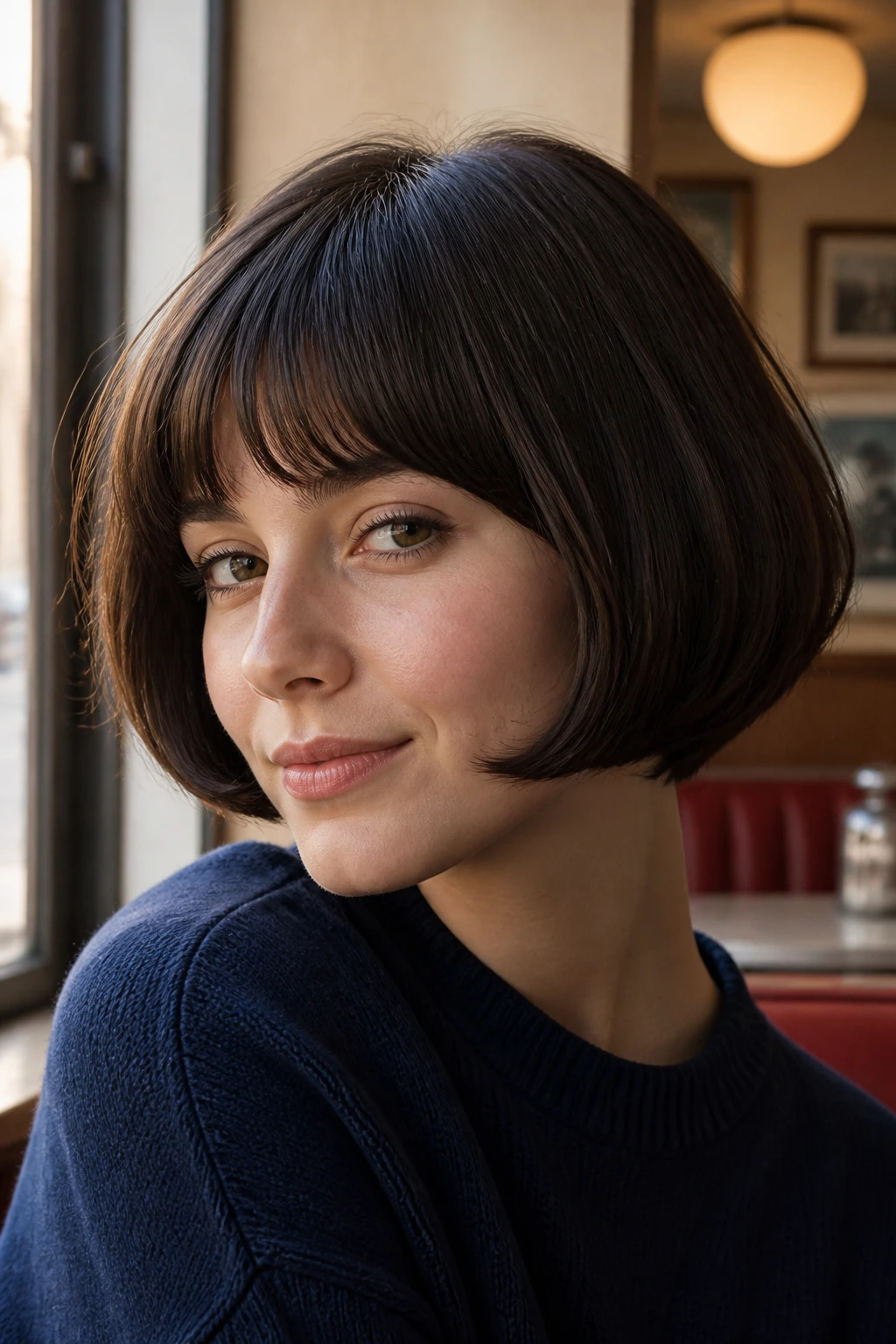
A rounded pageboy sounds retro because it is retro, but that is part of the charm. On an oval face, the curved outline can hug the jaw and cheekbones in a very controlled way, which makes the whole look feel intentional rather than costume-like.
The important part is the curve. The hair should bend around the head, not puff away from it. If the ends are too stiff, the style goes heavy fast. If the pageboy is softened with a subtle side part or gentle undercurve, it reads modern without losing the shape that makes it memorable.
I like this cut for hair that naturally falls straight or slightly bent. It benefits from a blow-dry with a round brush or a quick pass with a flat iron at the ends. It is one of those styles that can look sharp with little effort, but only if the perimeter is kept tidy.
15. Asymmetrical Pixie Bob
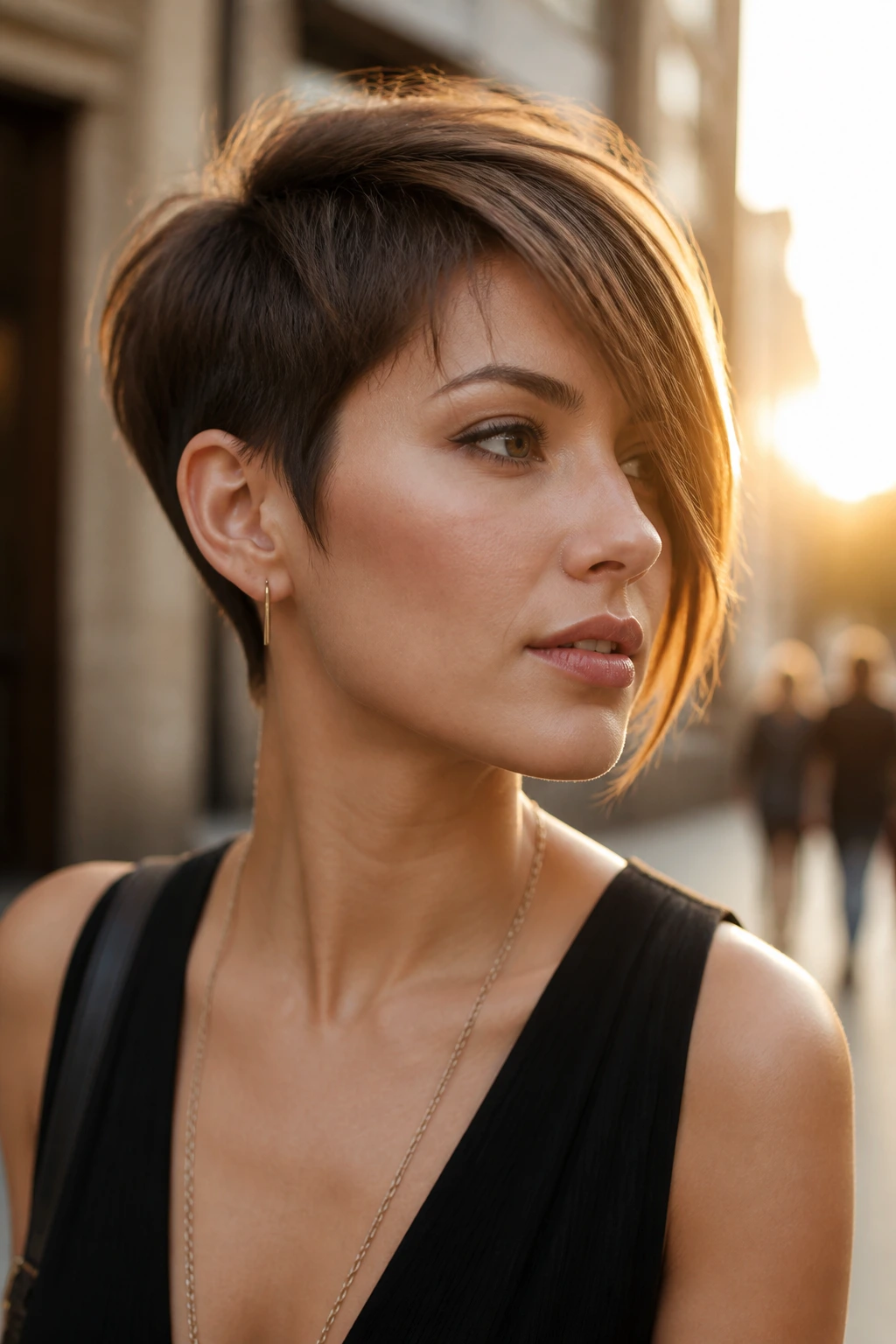
An asymmetrical pixie bob gives an oval face a little tension, and that’s the point. One side falls shorter, the other side hangs longer, and the imbalance keeps the haircut from feeling too safe. It is a good choice if you want a short cut with a stronger personality.
The asymmetry helps create a focal point without hiding the face. One longer side can skim the jaw or cheek, while the shorter side opens the temple and ear. That push-pull effect is especially flattering when you want to show off earrings or a strong brow.
Keep the difference subtle unless you want the cut to read very bold. A slight asymmetry is easier to grow out and easier to style on ordinary days. A dramatic one looks great, but it asks for more maintenance. That is the trade.
16. Curtain-Bang Crop
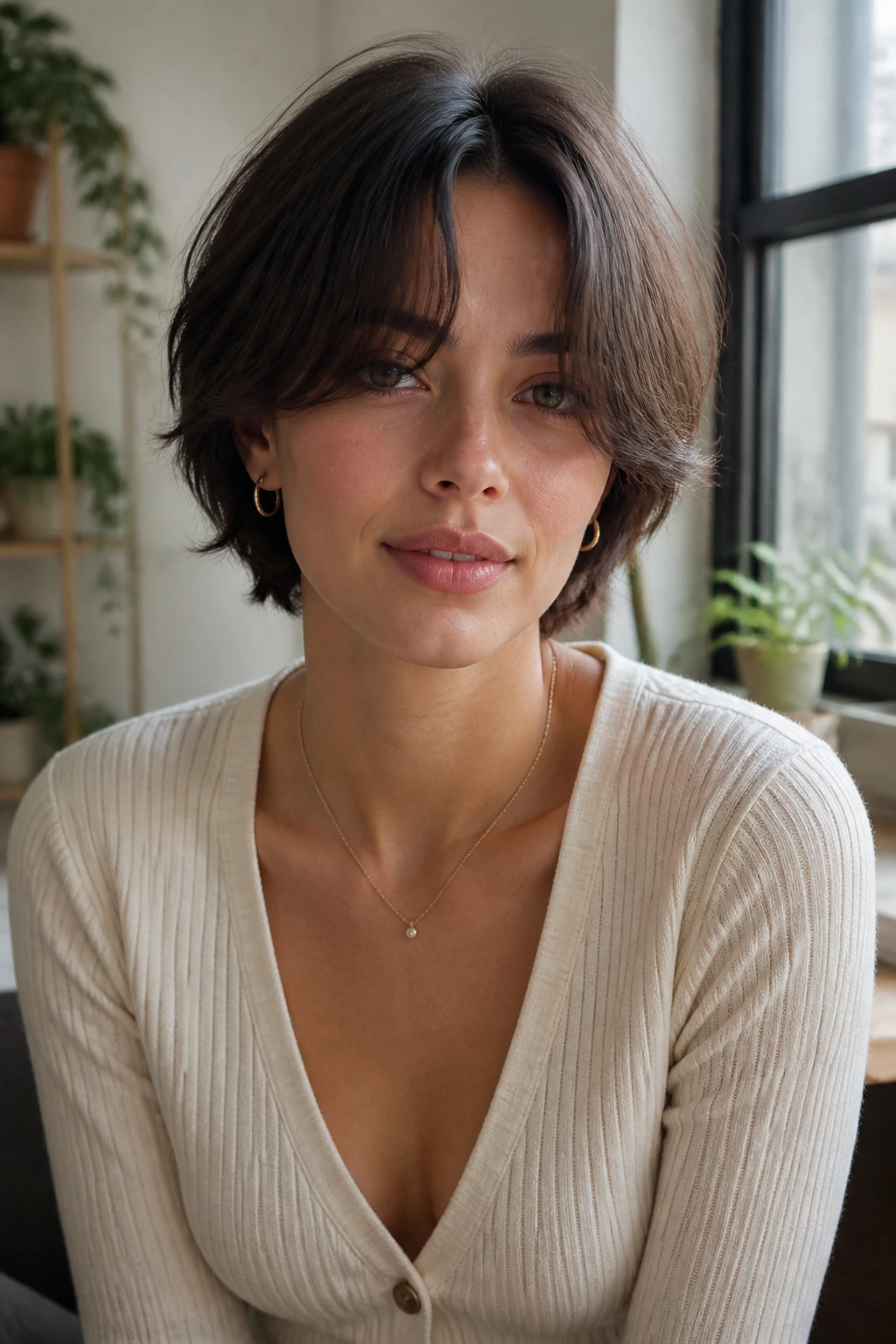
Could bangs help an oval face more than they hide it? Sometimes, yes. Curtain bangs on a short crop split the focus right down the middle, then soften the forehead without boxing it in. The result is relaxed and flattering instead of fussy.
The key is keeping the bangs long enough to move. They should brush the brow or sit just below it, then part gently away from the face. Paired with a short crop, that fringe can make the cut feel less severe and more wearable, especially if your forehead is on the higher side.
How to wear it
Blow-dry the bangs first with a small round brush, rolling them away from the center and letting them fall naturally. The rest of the crop can stay rougher. You do not need every section to look equally styled. In fact, that contrast is part of what makes the cut interesting.
17. Classic Tapered Pixie
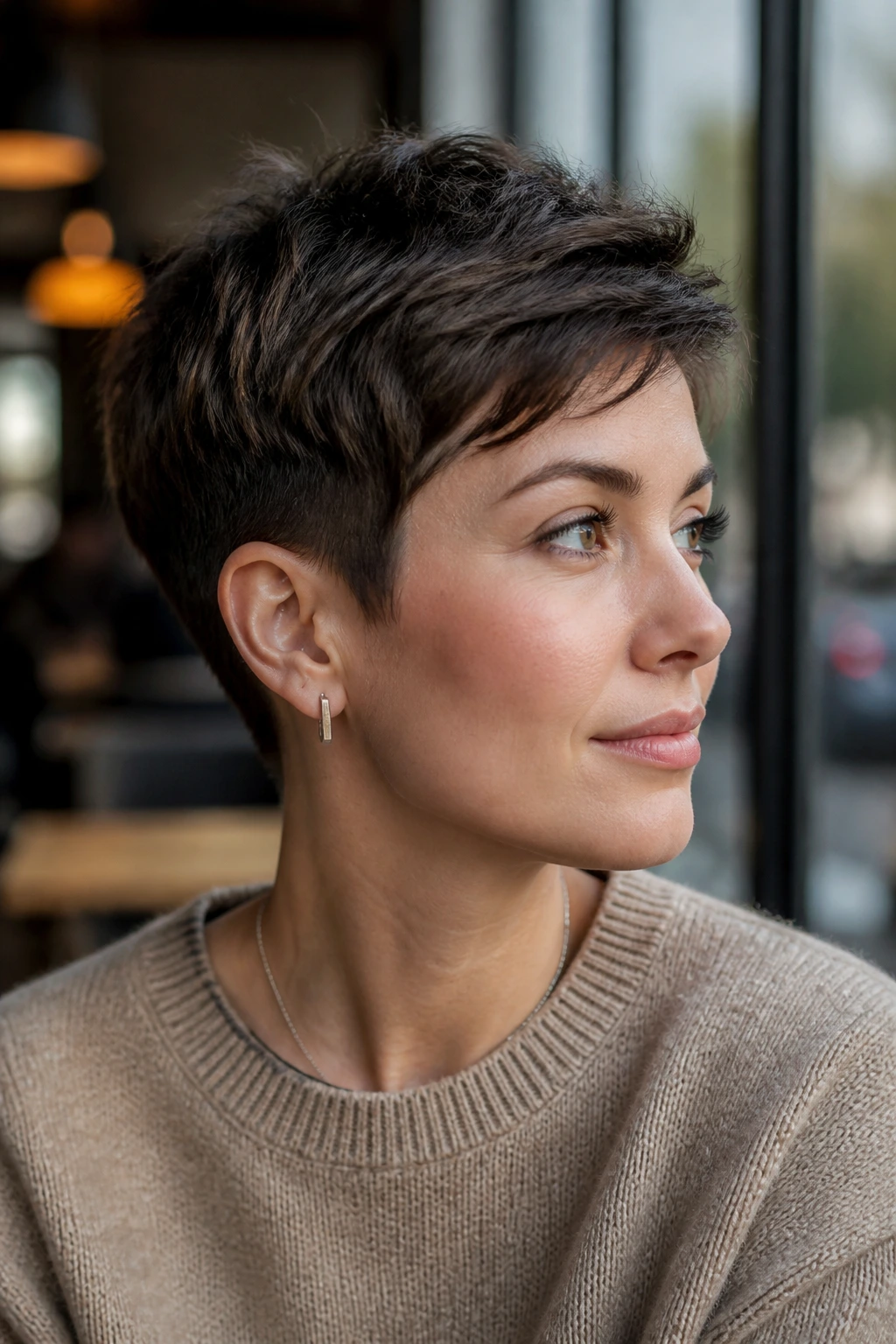
The classic tapered pixie is the cleanest option in the bunch. Short at the nape, neat around the ears, fuller on top. On an oval face, that taper keeps the lines crisp without making the face look long or narrow.
What I like is the reliability. It does not depend on a lot of styling drama. A little cream, a quick blow-dry, maybe a finger twist at the front, and it is done. That makes it a smart cut for people who like their hair to behave in under ten minutes.
If you have fine hair, the taper gives shape without weight. If you have thick hair, it removes the bulk that tends to puff at the sides. Either way, the silhouette stays close to the head and keeps the face in clear view. No fuss. No excess.
18. Jaw-Grazing Flip Bob
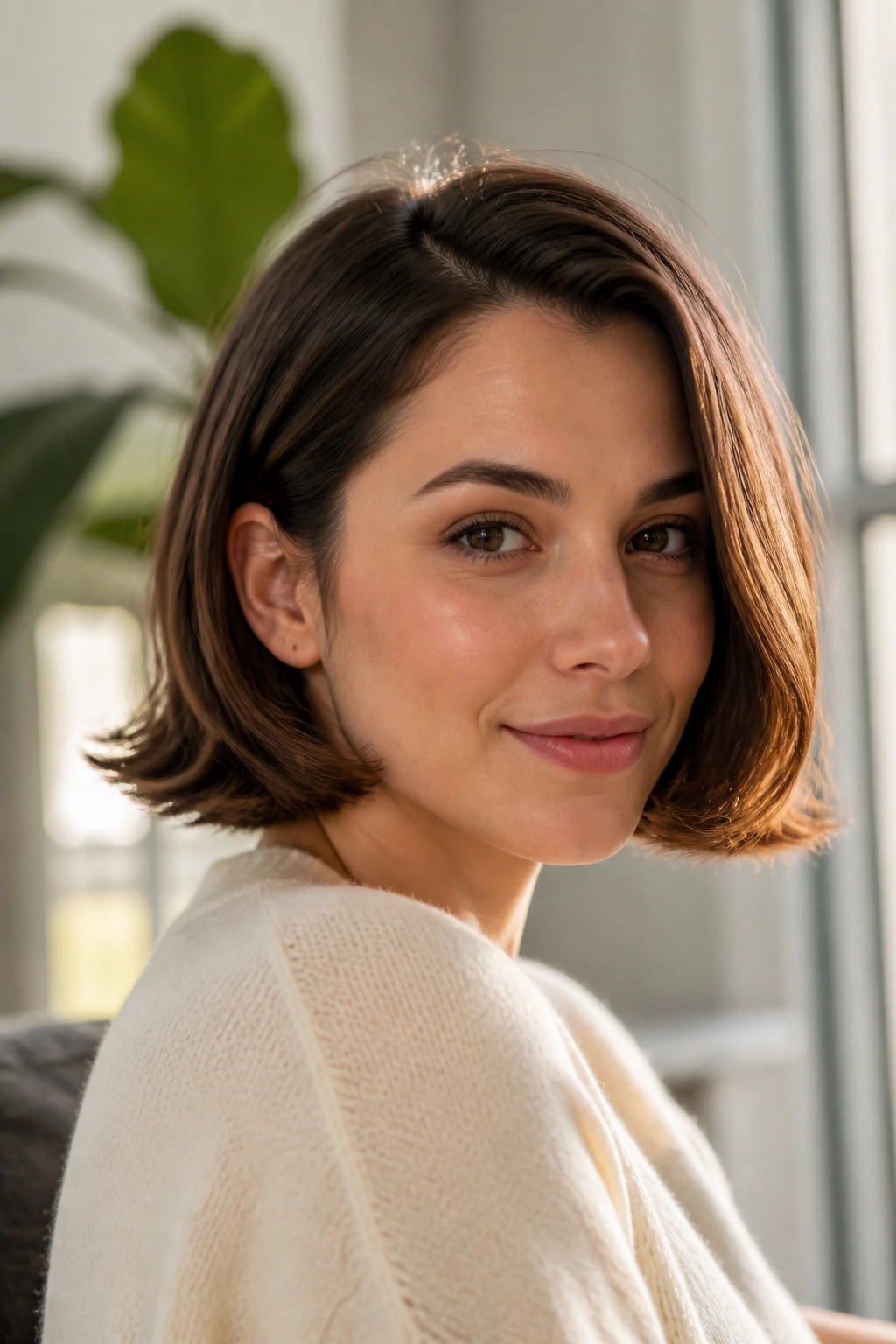
The flip bob brings back a bit of swing around the jaw, and on an oval face that can be very flattering. The flipped ends put motion near the chin, which keeps the line from feeling heavy or boxy. It is a nice middle ground between sleek and playful.
This is one of the few short cuts that really benefits from a little end styling. A round brush or a flat iron turn at the bottom can change the whole mood. You can wear the flip subtle or obvious. Subtle is usually better if you want the cut to feel current rather than costume-y.
The shape also works nicely with side parts and ear tucks. One tucked side, one flipped side — that kind of lopsided styling gives the face some movement without losing the balance that oval shapes already have.
19. Short Coily Cut With Defined Shape
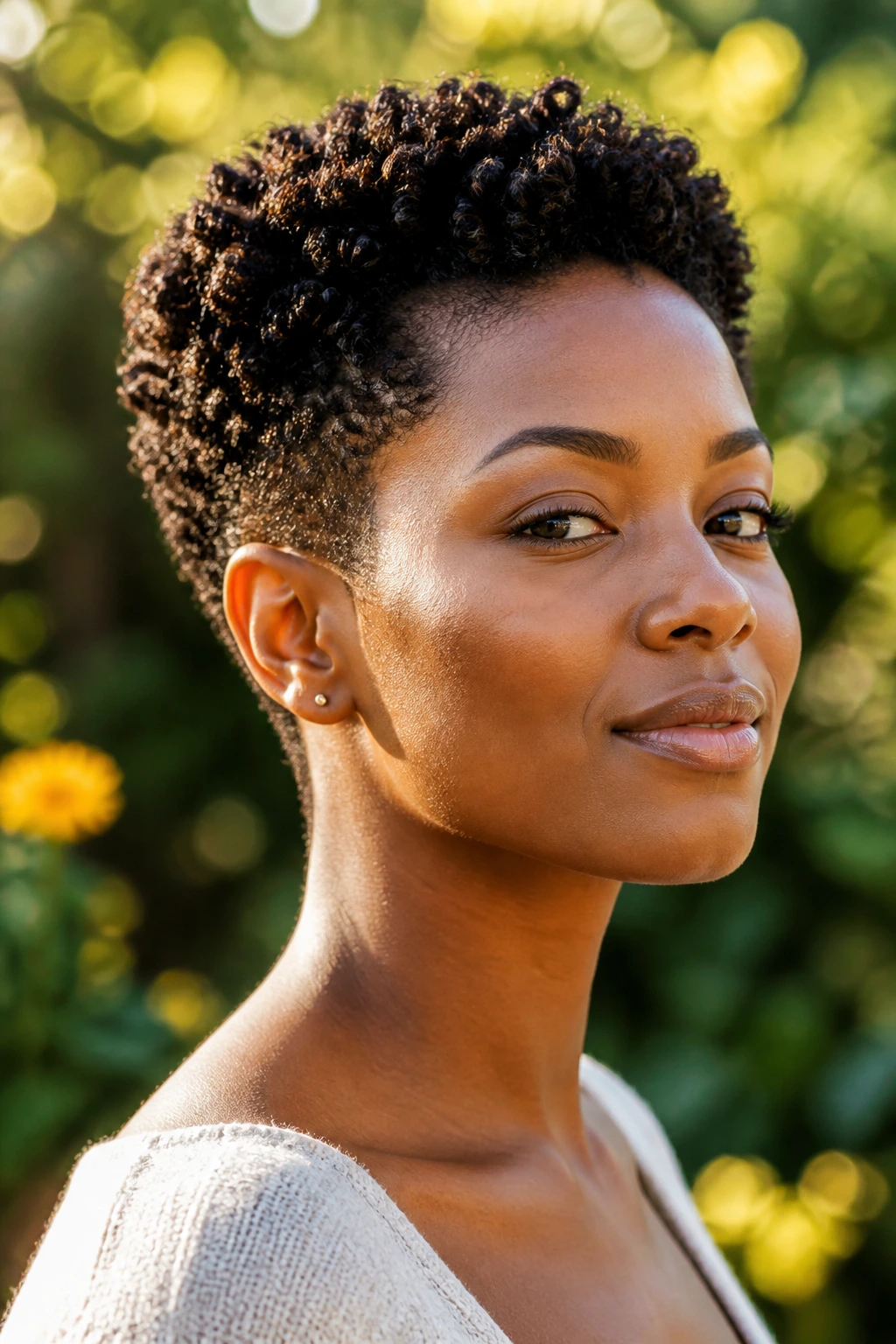
Coily hair deserves a shape that respects the curl pattern instead of forcing it into a bob-shaped box. A short coily cut can look incredible on an oval face when the outline is tapered and the top is left with enough room for the coils to do their thing.
The goal is definition. The coils should stack in a way that shows off texture and keeps the silhouette clean at the sides and nape. If the cut is too blunt, it can balloon. If it is too thinned out, it can lose its structure and look patchy. The good version lives in the middle.
Use a leave-in conditioner and a curl cream, then let the shape dry without too much touching. A pick at the roots can lift the top if you want more height, but keep the sides tidy. The face stays open, the texture stays visible, and the haircut gets to be the point.
20. Stacked Bob With a Soft Nape
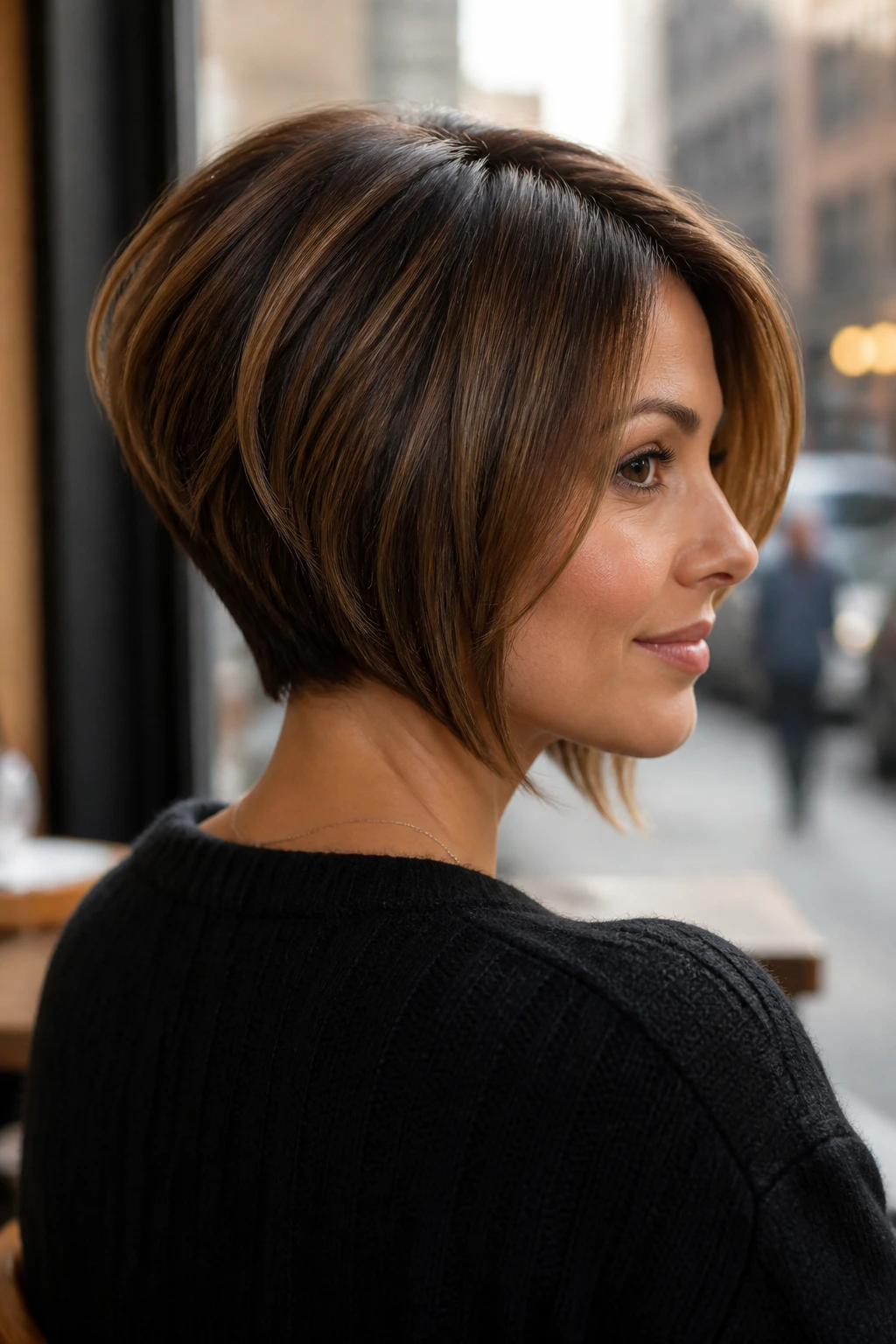
A stacked bob gives you lift at the back without making the front collapse, which is why it works so well on an oval face. The stacked layers create a rounded shape through the crown and nape, while the front stays long enough to frame the jaw instead of disappearing behind it.
The soft nape matters. Hard stacking can look dated fast, and too much volume at the back can pull the silhouette upward in a way that feels stiff. A softer version gives you body where you want it and calmness where you need it. That is the difference between a cut that looks salon-fresh and one that looks overworked.
This is a good choice if you like your hair to have structure even on off days. It keeps its shape better than a lot of shorter bobs, especially if you use a round brush just at the roots and let the ends settle naturally. The face gets framing, the back gets lift, and the cut holds itself together.
Why Short Hairstyles for Oval Faces Usually Feel So Balanced
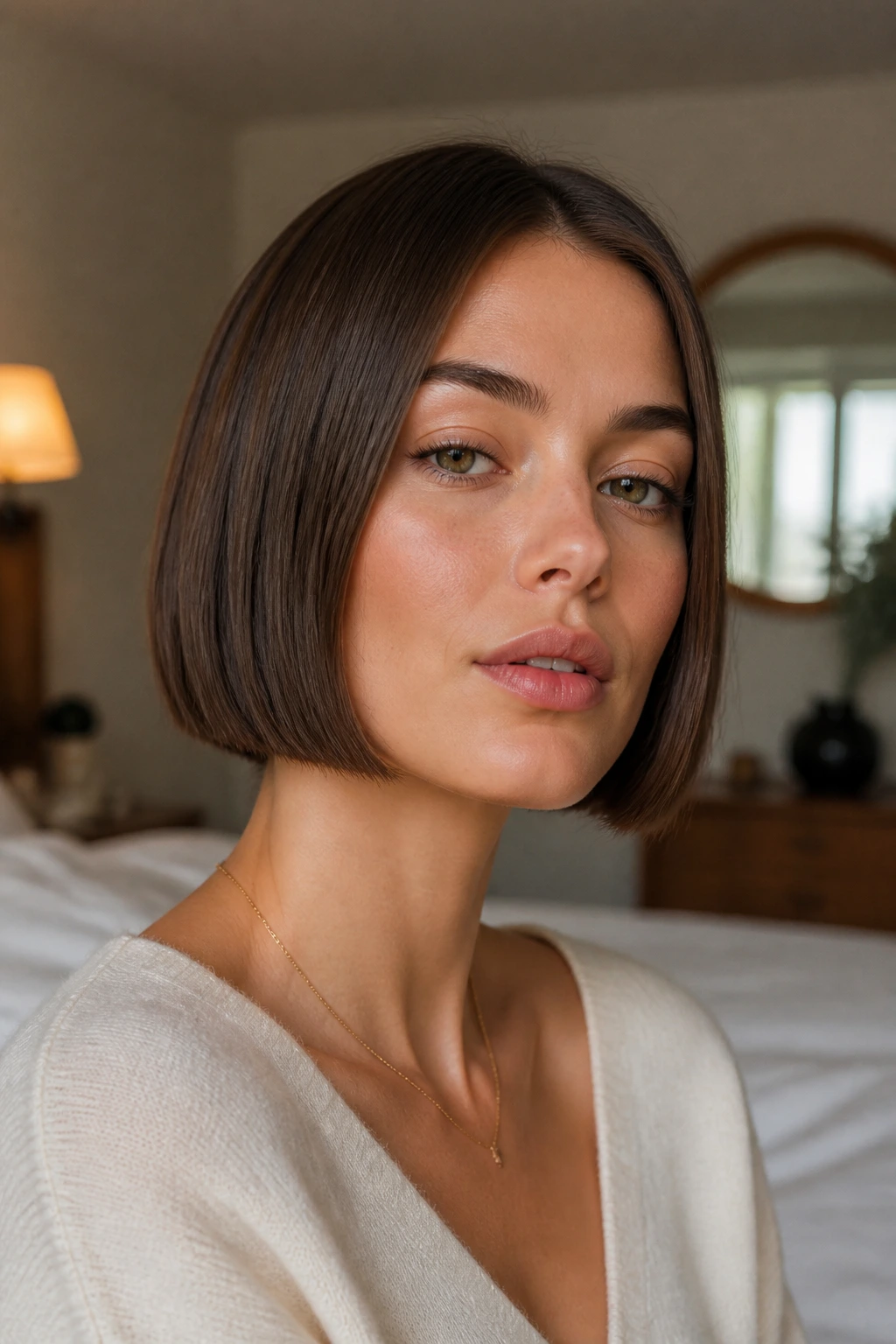
Oval faces make short hair easier because the haircut can play with proportion instead of rescue it. That sounds blunt, but it is the truth. If the jaw is soft, the forehead is balanced, and the length is evenly distributed, the stylist gets to choose a mood instead of fixing a problem.
That opens up a lot of room. You can go clean and geometric, like a blunt bob. You can go airy and broken-up, like a crop with texture. You can leave the forehead open or bring in fringe. You can tuck one side, expose the ear, or stack the back. The face does not fight those choices, which is why short hair on oval faces often looks polished with less effort.
The only real mistake is treating “oval” like it means “anything goes.” It does not. It means you have more room to decide what you want to emphasize. That is a useful difference.
How to Ask for Short Hairstyles for Oval Faces at the Salon
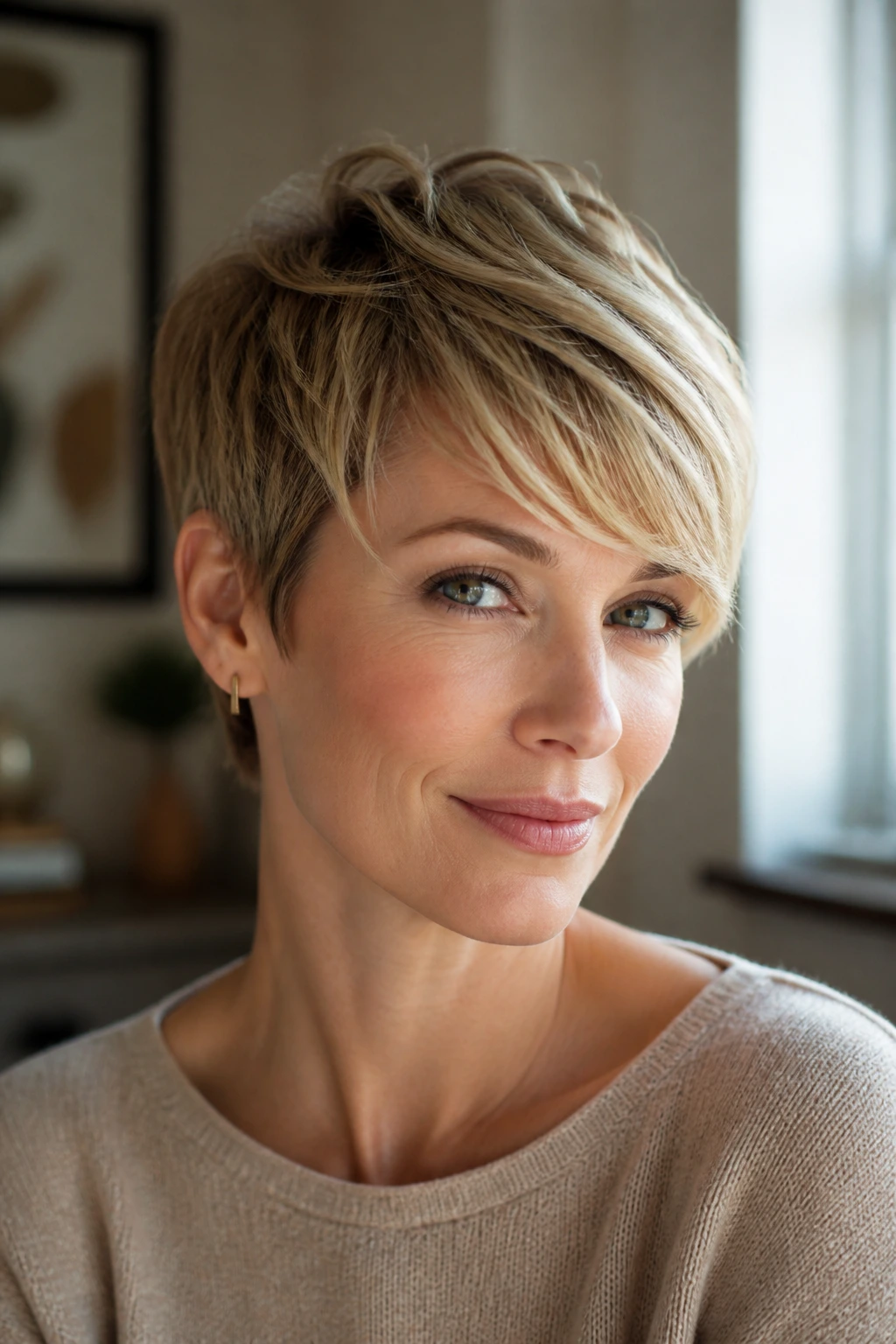
Bring a photo, yes. But bring words too. Photos get the mood across; words get the measurements right. If you want a bob, say where you want the ends to land: just below the jaw, at the jaw, or grazing the top of the neck. That small detail changes the whole cut.
Tell the stylist how much forehead you want showing. Say whether you part your hair in the middle, on the side, or wherever it lands after lunch. That matters more than people think. A side part can soften a strong line, while a center part can sharpen one. Neither is wrong. They do different jobs.
If you have thick hair, ask where the bulk should be removed. If you have fine hair, ask where the shape should stay solid. And if you want low-maintenance hair, say that plainly. “I want this to air-dry well” is better than “I want something easy,” because easy means different things to different stylists.
The Tools That Make Short Hair Behave
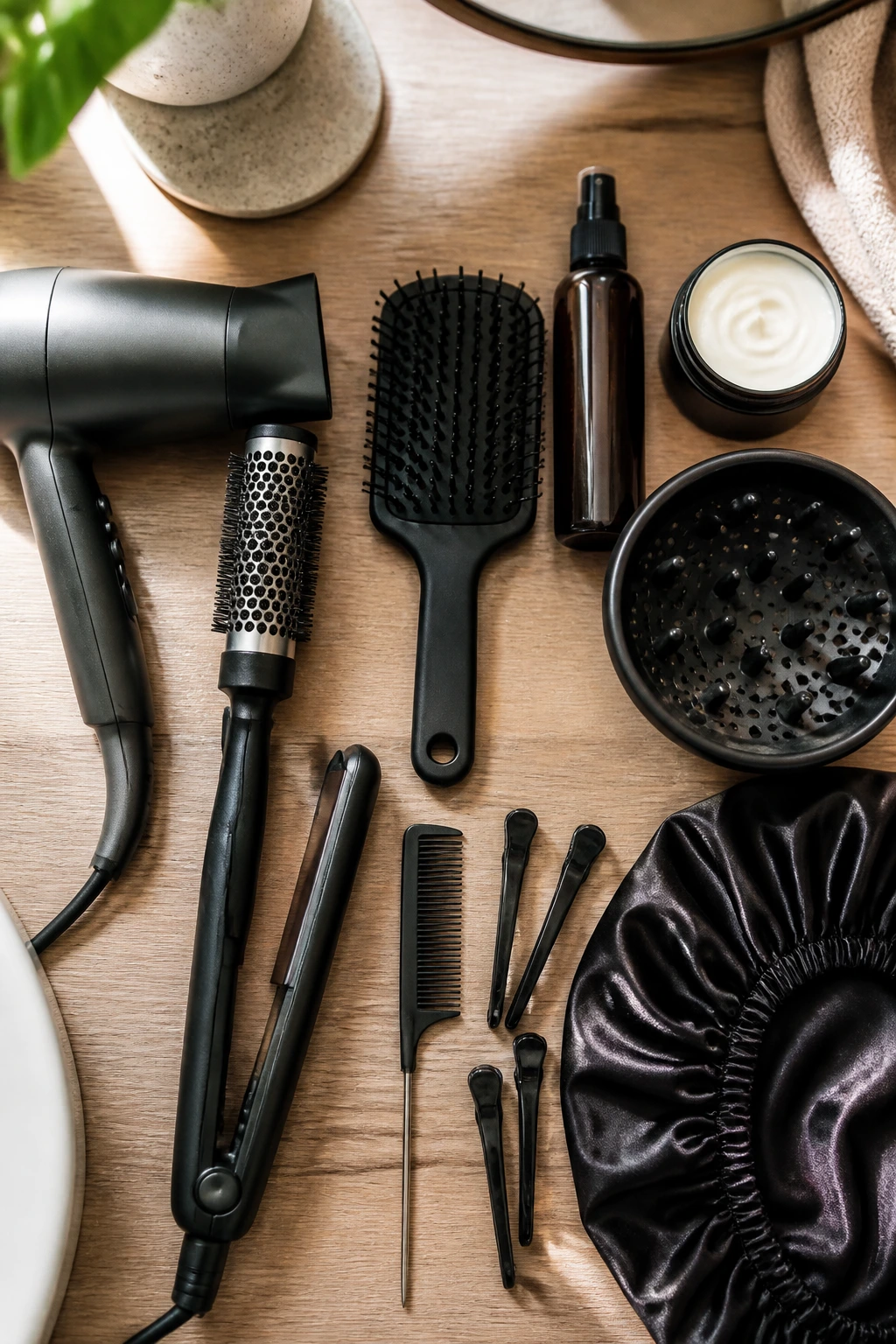
- Blow dryer with a nozzle attachment: Keeps the airflow focused so bobs and pixies do not blow apart at the sides.
- Small round brush, 1 to 1.5 inches: Useful for bending bangs, under-turning ends, and giving a crop a bit of lift.
- Paddle brush: Handy for smoothing blunt bobs and keeping the shape flat where you want it.
- Lightweight texturizing spray: Adds grip to crops, bixies, and shaggy cuts without turning them crunchy.
- Cream or paste: Best for pixies, undercuts, and slicked-back styles; use a small amount and build slowly.
- Diffuser: Worth owning if your hair is wavy or curly and you want the shape to dry with less frizz.
- Flat iron with narrow plates: Good for slight bends, flipped ends, and quick polish on short bobs.
- Fine-tooth comb: Useful for sharp parts and smoother slicked styles, especially around the temple line.
- Sectioning clips: Not glamorous, but they make blow-drying and root work much easier.
- Satin pillowcase or bonnet: Helps short hair keep its shape overnight instead of getting crushed flat.
How to Style the Same Cut for Different Hair Textures
Fine hair usually needs lift at the roots and a little body through the ends. Thick hair needs weight removed in the right places, or the shape spreads outward and starts to feel square. Straight hair shows lines more clearly, which can be a gift or a problem depending on the cut. Wavy and curly hair need room for movement, not too much force.
For fine hair, I’d reach for a blunt bob, a side-swept pixie, or a stacked shape with a compact crown. Those styles keep the outline strong. Use lightweight mousse at the roots and dry the hair in sections so the shape does not collapse halfway through the day.
Thick hair is happier in a bixie, razored crop, or shaggy bob. Those cuts take out weight without turning the head into a puffball. Ask for internal debulking rather than a lot of surface shredding. That distinction matters. Coarse hair especially can go fuzzy if it is thinned too aggressively.
Wavy and curly textures tend to look best when the cut respects the bend. That means a jaw-length bob with soft layers, a curly crop, or a tapered pixie that lets the top move. Coily hair usually benefits from a defined outline and a shorter taper at the sides, because the shape stays visible even as the coils do their own thing.
Small Styling Moves That Change the Whole Mood
Root lift: A little lift at the crown can make a pixie feel fresh, but too much will stretch an oval face. Keep the height subtle. You want shape, not a tower.
Part placement: A center part gives a blunt bob more edge. A side part softens almost every cut on this list. Move the part an inch or two and the haircut changes personality fast.
Ear tuck: Tucking one side behind the ear is the cheapest styling move in the room, and one of the best. It exposes the jaw and keeps a short cut from sitting too heavily on the face.
Product choice: Creams soften, pastes separate, sprays add grip. Use the lightest product that gives you the shape you want. Short hair does not need much. A dab too much becomes obvious quickly.
Finish: Sleek, matte, or airy — pick one on purpose. Mixed finishes can look messy in a bad way. A blunt bob usually likes shine. A crop usually likes texture. A pixie can live in either world.
Common Mistakes That Throw the Shape Off
The first mistake is piling on too much height at the crown. On an oval face, that can drag the eye upward and make the face feel longer than it is. If you want lift, keep it modest and let the sides stay soft.
Another common one: cutting the sides too wide on thick hair. The shape ends up sitting like a helmet. The fix is to remove bulk inside the cut and keep the perimeter cleaner so the style hugs the head a little closer.
A third problem is fringe that is too heavy. Heavy bangs can swallow the forehead and make the face feel boxed in. If you want bangs, keep them movable — side-swept, curtain, or lightly textured rather than one solid curtain of hair.
Skipping trim appointments is another easy way to wreck a short cut. Pixies lose their line fast. Bobs lose their edge a little more slowly, but they still blur. If the nape starts to flip or the jaw line starts to sag, the shape is already slipping.
Finally, people often ask for a style by name and never describe where they want the length to land. “Bob” means almost nothing without a reference point. Jaw, cheekbone, ear, neck — name the landing spot.
Variations and Adaptations to Try
The Low-Maintenance Version: Ask for softer edges and a length that can air-dry into place. A textured bob or a bixie usually fits this brief better than a highly precise cut.
The Statement Fringe Version: Keep the same short shape but add a stronger bang — micro, curtain, or side-swept. That single change can take a plain crop and turn it into something with more character.
The Thick-Hair Version: Choose a style with internal weight removal and a compact perimeter, like a razored crop or stacked bob. The goal is to stop the sides from ballooning.
The Fine-Hair Version: Go blunt, beveled, or tapered rather than too layered. Clean lines create fullness where airy layers would just make the hair look thinner.
The Curl-Friendly Version: Keep the length around the jaw or above the shoulders and let the curls define the silhouette. A shape cut on dry curls will usually behave better than one cut too wet and stretched.
Keeping the Shape Between Salon Visits
Short hair asks for maintenance sooner than long hair. That is the price of the clean line. Pixies usually need a tidy-up every 4 to 6 weeks if you want the shape to stay intentional. Bobs can stretch a little longer, often 6 to 8 weeks, depending on how precise the perimeter is and how fast your hair grows.
At home, dry shampoo is useful, but it should not become the whole routine. A small amount at the roots can revive a pixie or crop on day two or three, yet too much leaves a dusty finish that looks flat in short hair. Use it lightly and brush it through.
If you wear a bob or anything with ends that bend under, reshape the front with a brush or a quick flat-iron pass instead of rewetting the whole head. That saves time and stops the cut from puffing up. For curly and coily cuts, refresh with water, leave-in, and a small amount of cream rather than starting from scratch every morning.
Sleep matters too. A satin pillowcase or bonnet cuts down on frizz and dents, which is a big deal when the whole style depends on shape. Short hair shows sleep damage faster than long hair does. No way around it.
Questions People Ask Before Cutting It Short
Will short hair make an oval face look longer?
Not if the shape is handled well. A cut with width at the jaw, texture at the sides, or fringe across the forehead usually keeps the face balanced. Very tall crown volume can stretch the look, so that’s the part to watch.
Should an oval face wear a center part or a side part?
Both can work. A center part gives cleaner symmetry, while a side part softens the face and can hide a higher forehead. The best choice usually depends on your hair texture and how much styling you want to do.
What short haircut needs the least styling time?
A textured crop, a tapered pixie, or a soft bixie tends to be easier than a precise blunt bob. They can look good with a little product and finger-drying, which saves a lot of time.
Do bangs suit oval faces?
Yes, if they’re cut with some movement. Heavy, stiff bangs can overwhelm the forehead, but curtain bangs, side-swept fringe, and soft French bangs often look excellent.
What if my hair is very thick?
Ask for bulk removal in the right places, not random thinning everywhere. A stacked bob, bixie, or razored crop usually handles thick hair better than a flat one-length cut.
Can curly hair be cut short without getting too wide?
It can, but the cut has to respect shrinkage and shape. Ask for a curl-specific cut that keeps the outline controlled at the sides and gives the curls space on top.
How often should I trim a pixie?
Every 4 to 6 weeks is the usual sweet spot if you want the edges sharp. If you do not mind a softer grow-out, you can stretch it a bit longer, but the shape will change fast.
What should I bring to the appointment besides a photo?
Bring a few phrases about the exact length you want, how much forehead to show, and how much daily styling you’ll actually do. That helps more than a dozen inspirational images.
The Cut That Makes the Most of an Oval Face
The nicest thing about an oval face is not that every short haircut works. It is that the face gives the haircut room to say something. A blunt bob can look crisp. A pixie can look airy. A shag can look lived-in. A coily crop can look sculpted. The shape is steady enough to carry all of it.
So if you are choosing between short styles, start with the part of your face you want to feature first. Cheekbones? Jaw? Eyes? Neck? Once you know that, the right cut usually shows up fast. And when it does, it tends to look less like a trend and more like it belonged there all along.
