



The best short haircut is rarely the shortest one. The cuts that flatter most face shapes usually do a quieter job: they tilt a fringe a little off-center, graze the jaw instead of fighting it, or leave enough softness around the cheekbones so the whole head doesn’t read like one hard shape.
That’s the part people miss when they ask for “something short.” Short hair isn’t one category. A pixie with a soft crown and side sweep behaves very differently from a blunt bob that stops right at the jaw, and a curly crop has its own little set of rules. The length matters, sure. The line of the cut matters more.
I’ve always liked short hair that looks like it was cut with a point of view. Not the helmety kind. Not the over-textured, piecey-for-the-sake-of-piecey kind either. The good ones leave room for your features to show up. They make the eyes, jaw, and neck do some of the work, which is exactly why they can flatter such a wide spread of face shapes when the proportions are handled well.
Why These Short Cuts Work on More Than One Face Shape
-
They play with angles, not just length. A side part, diagonal fringe, or slightly longer front can redirect the eye in a way that softens roundness or balances a narrow chin.
-
They leave room for texture. Hair that has a little movement near the ends looks less boxy on square or heart-shaped faces and less severe on fine hair.
-
They can be adjusted without losing the idea. The same bob can sit at the jaw, just below it, or above it; that tiny change is often what makes the cut work on your face.
-
They don’t rely on one “perfect” face shape. Oval faces can wear almost anything, but these cuts also give round, long, square, and heart-shaped faces a useful map for where to build weight and where to leave air.
-
They are easier to personalize than long hair. With short hair, a half-inch of length, a softer fringe, or a deeper side part changes the whole read of the haircut.
-
They hold up in real life. The cuts here can look polished with a quick blow-dry or airdried with a little cream and a rough finger-comb. That matters.
1. The Soft Pixie With Side-Swept Fringe
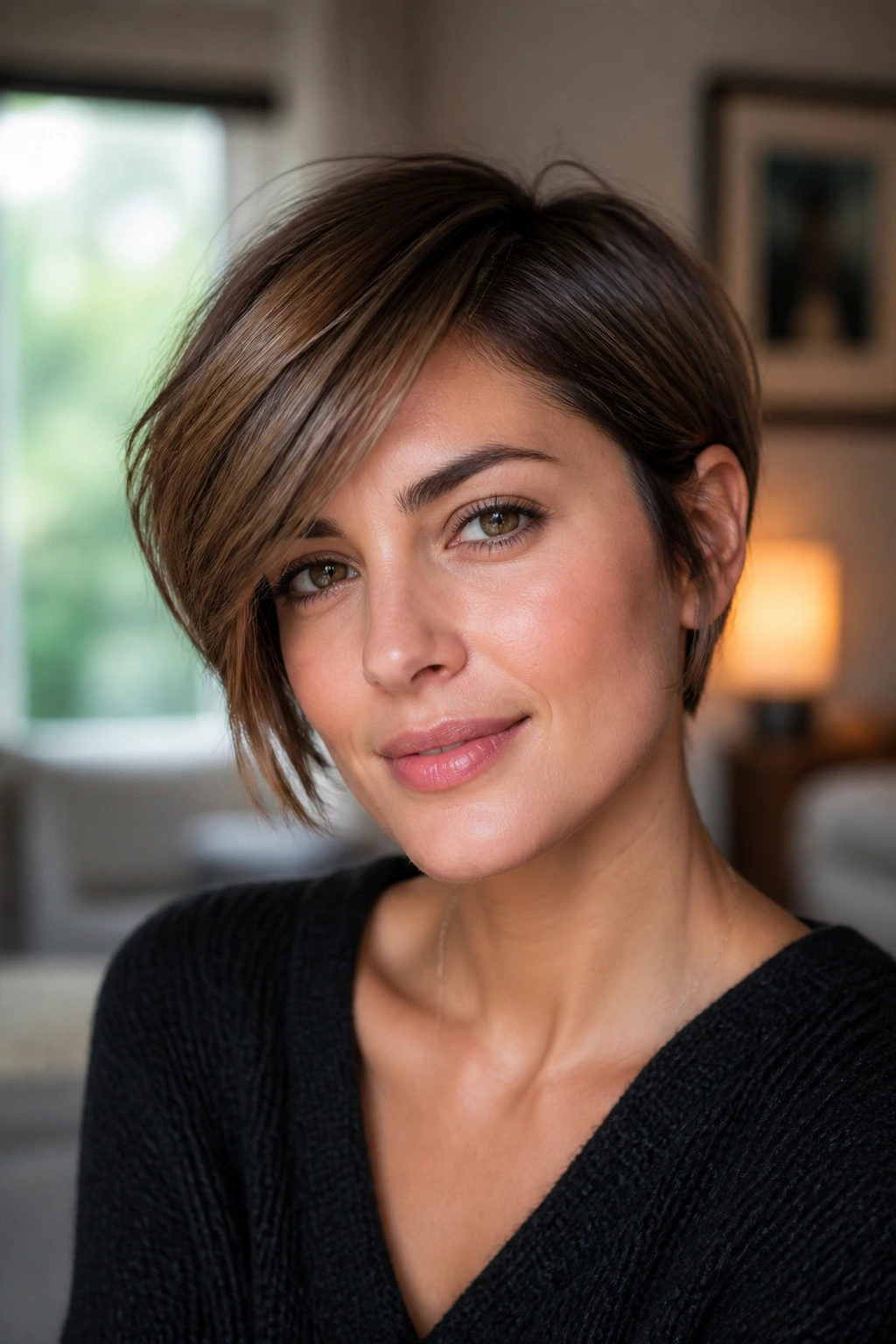
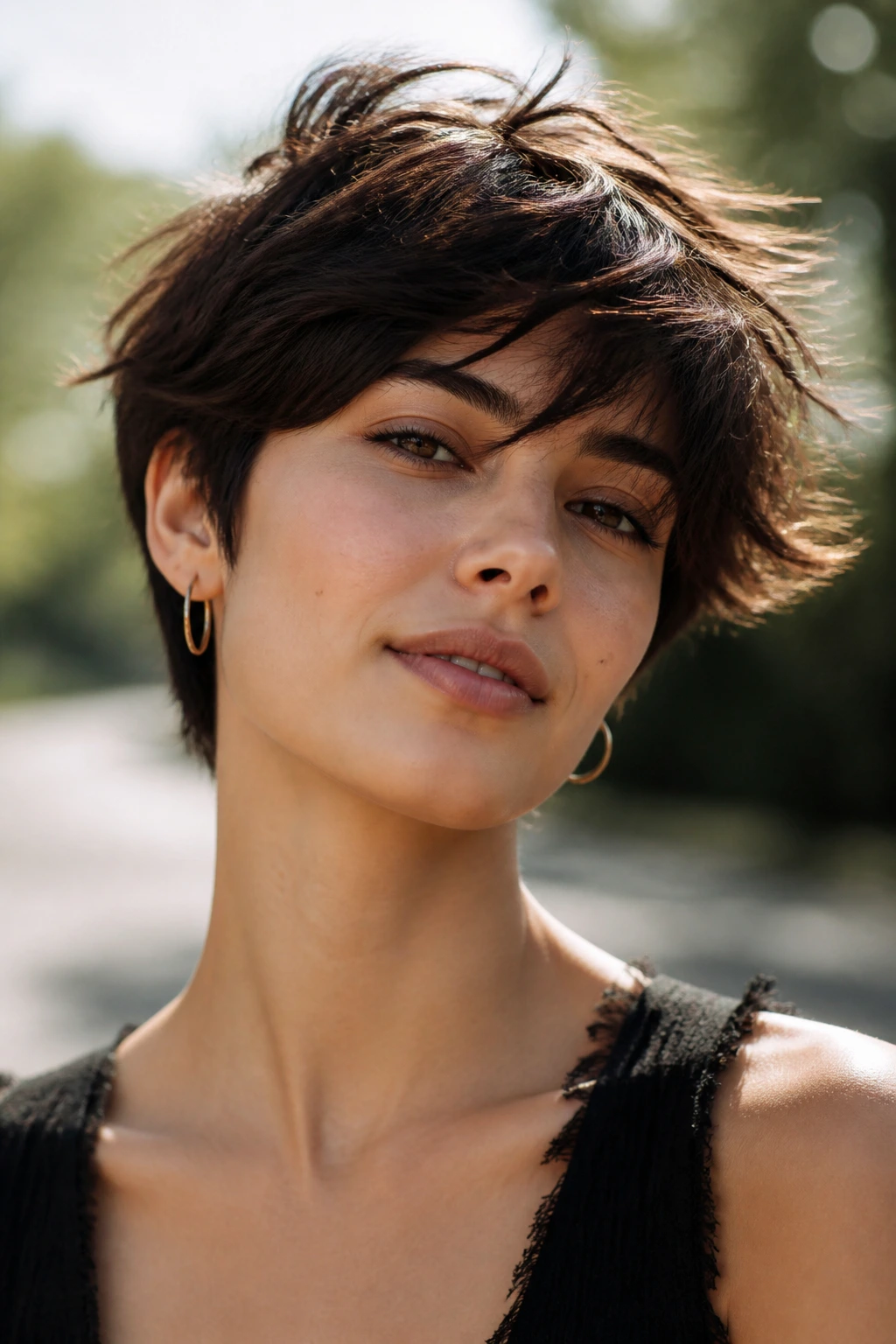
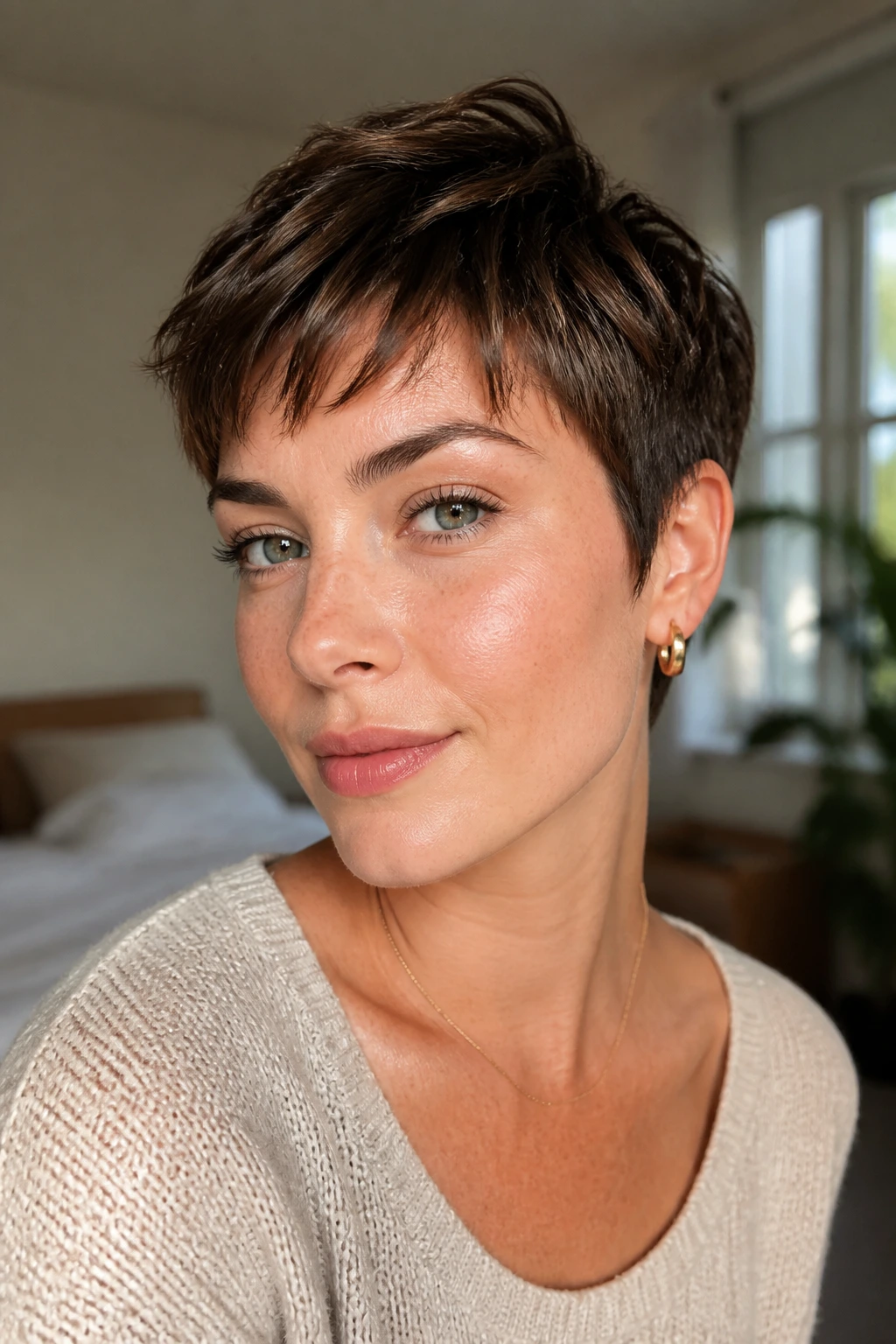
A soft pixie is one of those cuts that sounds tiny on paper and looks much bigger on the head. The fringe lands diagonally across the forehead, the sides stay close without going slick, and the crown gets just enough lift to keep the shape alive. It’s the kind of short haircut that can sharpen a round face, soften a square jaw, and keep a heart-shaped face from feeling too top-heavy.
Why it flatters so many faces
The side-swept fringe breaks up the forehead line, which helps long faces avoid that stretched look. Meanwhile, the softer side panels keep the cheekbones visible without exposing every edge of the jaw. If your hair is fine, this cut can look fuller than a longer style because the short layers stack up visually.
Best tweak: keep the fringe longer if your face is long, and a touch shorter if your forehead is small.
- Round face: ask for height at the crown and a fringe that angles down past one eyebrow.
- Square face: keep the top soft, not spiky, so the jaw doesn’t feel louder.
- Heart face: leave a little width near the temples to balance a narrower chin.
Pro tip: a pea-sized amount of matte paste, warmed in your hands first, is enough. Too much product turns this cut into a sticky helmet.
2. The Jaw-Length French Bob
This is the cut that makes people look put together without looking overworked. The line sits right at or just below the jaw, the ends are blunt enough to feel intentional, and the whole thing has that slightly undone, Paris-on-a-mild-day feel that comes from not over-styling it. The French bob is especially good when you want short hair that frames the mouth and cheekbones instead of hiding them.
The magic is the length. Too short and it can get severe; too long and it becomes an ordinary bob with less personality. Right at the jaw, though, it draws a clean border around the lower face and gives rounder faces a bit of structure while still softening angular ones.
How to wear it without it going boxy
A center part can look striking on oval and long faces, but a soft off-center part tends to be kinder on square and round shapes. If your hair bends easily, ask for a slight bevel at the ends so the bob curves under instead of sticking straight out.
This cut loves a little air-dry mousse and hates heavy oils. A dab of the wrong serum can make the ends droop and erase the point of the shape.
3. The Textured Chin-Length Bob
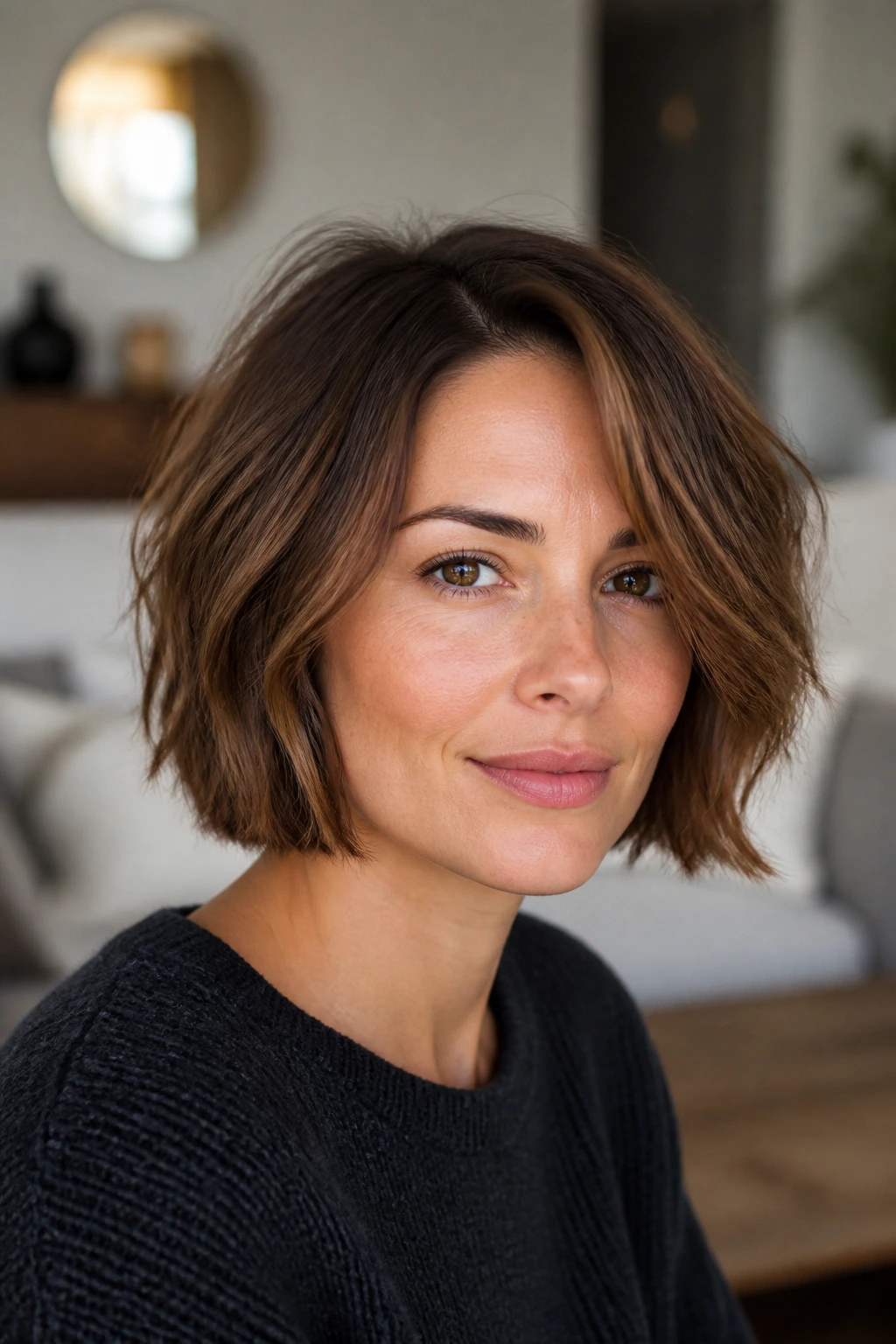
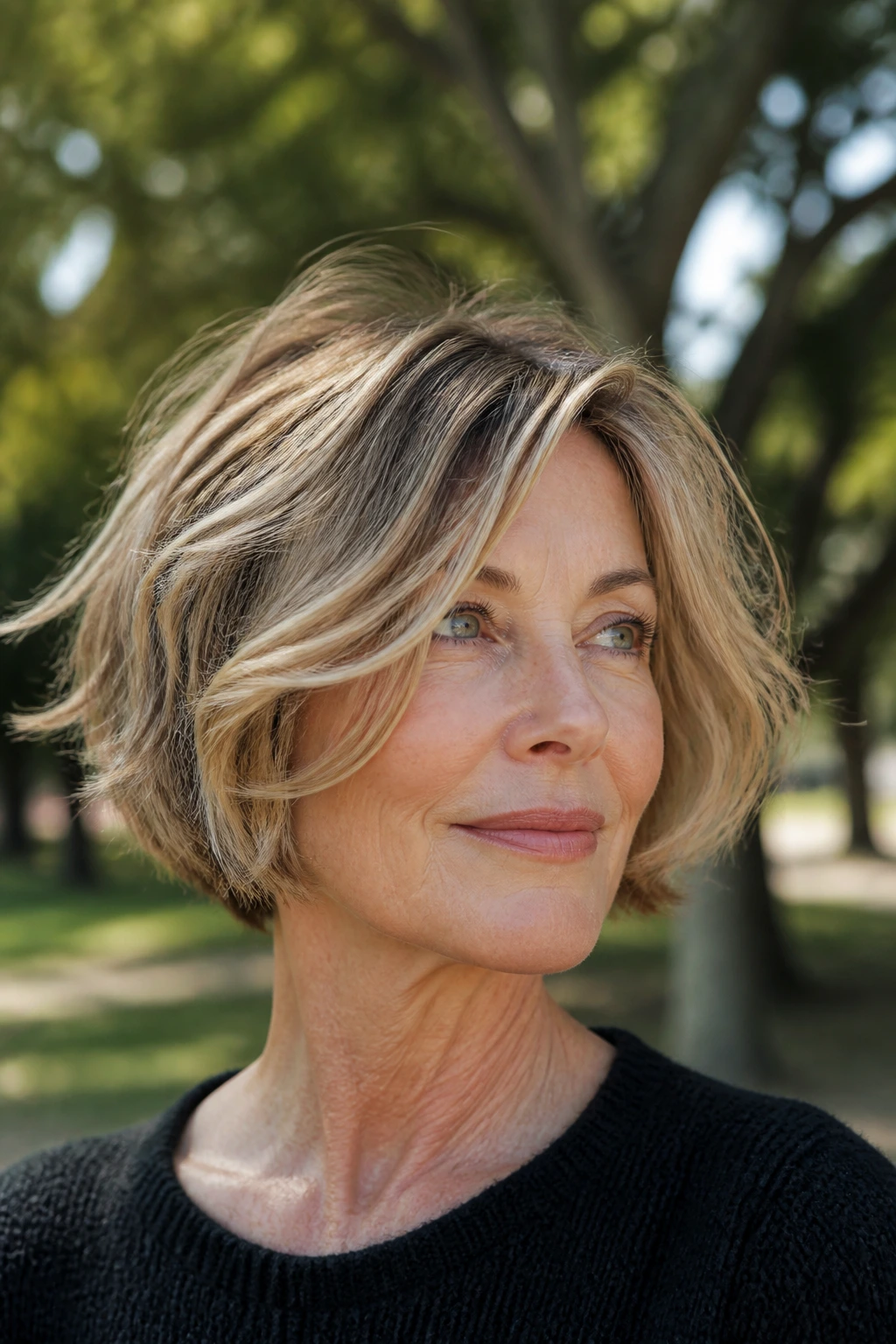
What makes a chin-length bob so useful is the way it sits just under the cheekbone line. It gives the face definition without pinning everything to one hard edge. On round faces, it can create the impression of more length. On square faces, the texture keeps the outline from reading too blunt.
The part that matters
If this cut is one-length and sleek, it can feel strict. Add soft internal layers and the whole thing loosens up. The ends move a little when you turn your head, and that movement keeps the bob from looking like a box pasted under the chin.
How to use it: part it slightly off-center, then tuck one side behind the ear. That tiny asymmetry changes the balance immediately.
- Fine hair gets lift from a round brush and a quick root-dry.
- Thick hair needs some weight removed inside the shape, not just at the ends.
- Wavy hair should be cut dry or nearly dry so the true bend shows up.
The chin-length bob is one of my favorite short hairstyles because it looks polished even when it isn’t perfectly styled. That’s rare.
4. The Bixie With Piecey Layers
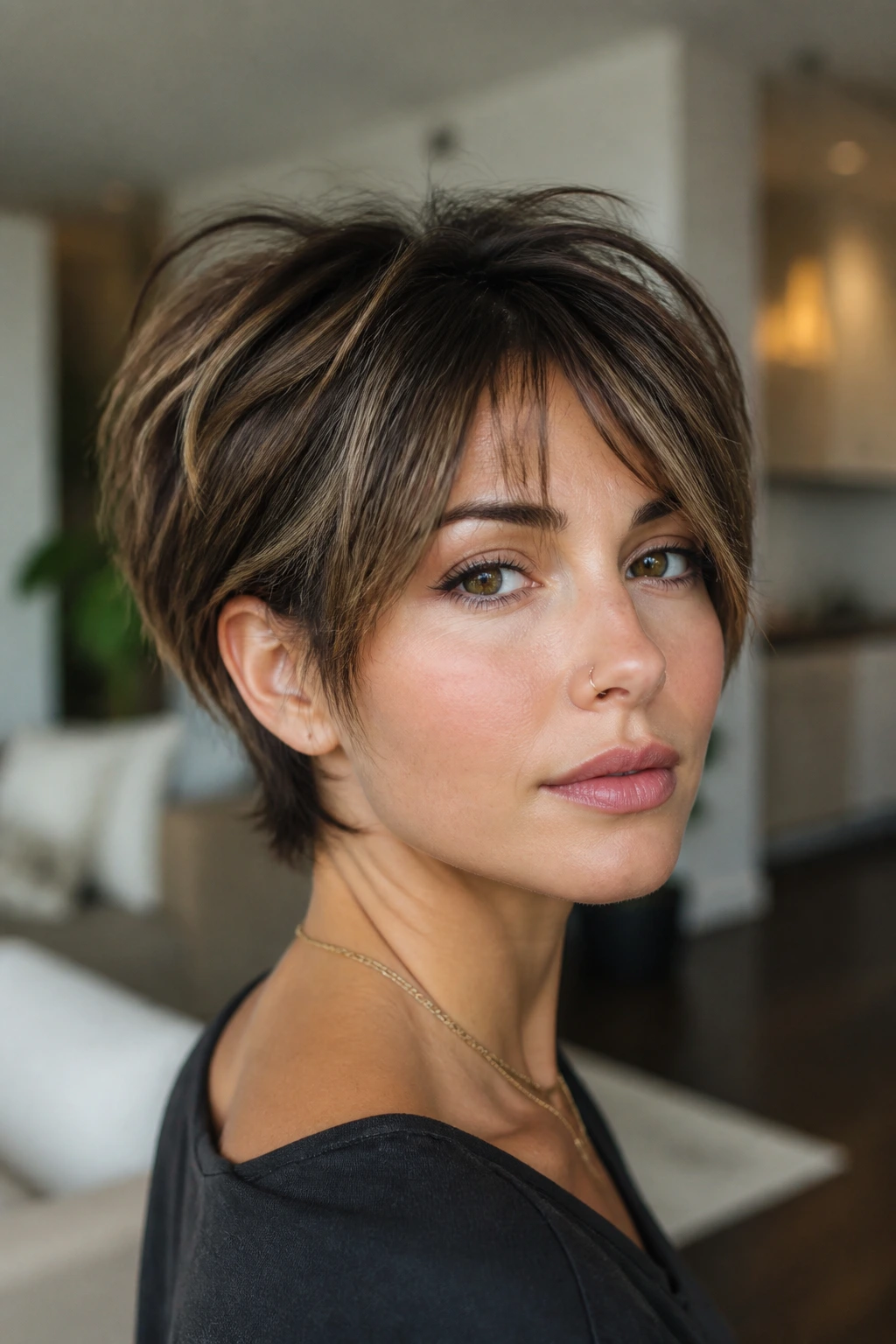
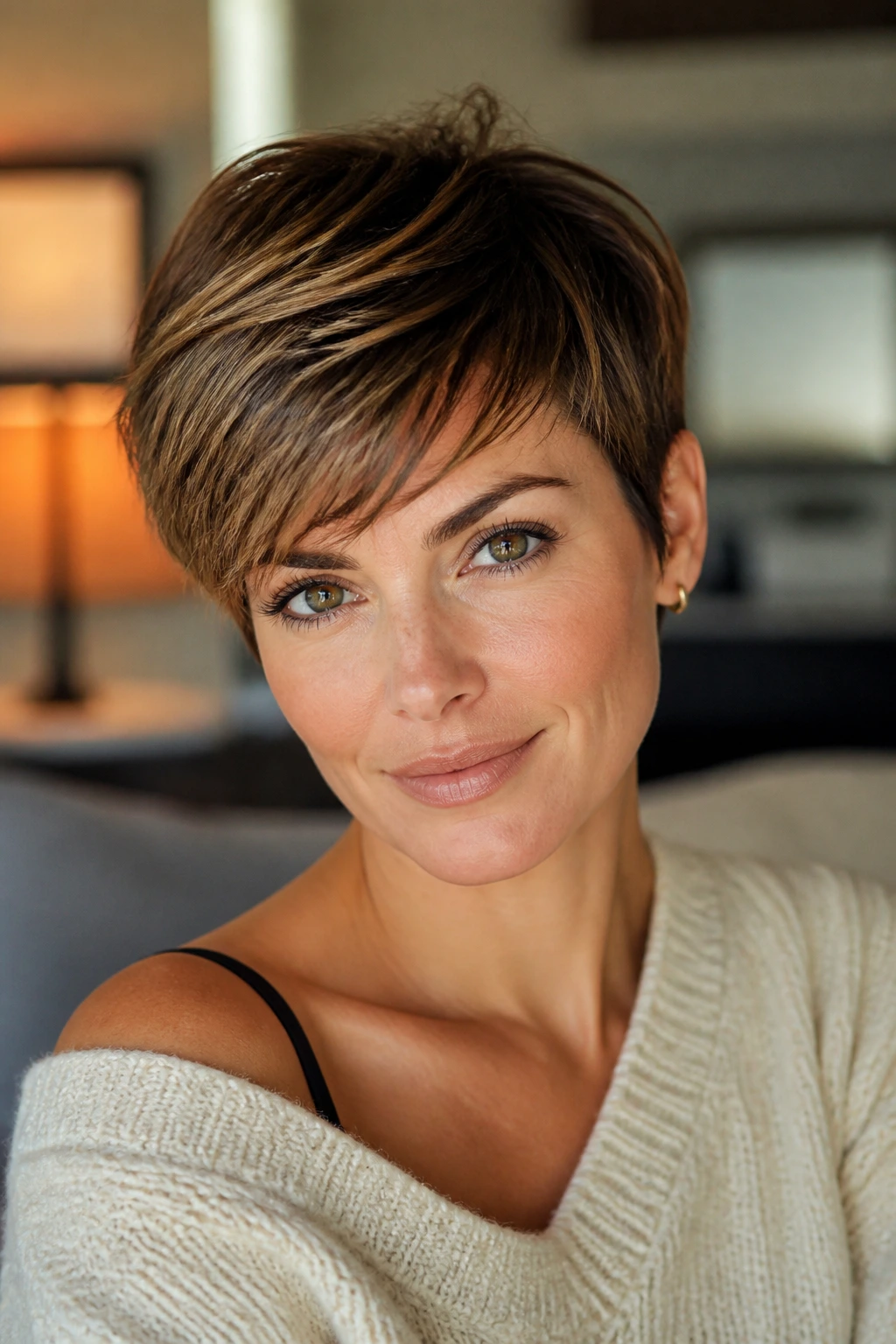
A bixie sits between a bob and a pixie, which sounds vague until you see one. The front keeps a little more length than a classic pixie, the back stays cropped, and the layers are chopped into soft pieces so the shape has movement. It works because it gives you the neck-grazing lightness of short hair without exposing every contour at once.
This is a smart choice for face shapes that need softness but also some lift. Heart-shaped faces like the extra width around the jaw. Long faces like the visual break the choppy fringe creates. Round faces can wear it too, as long as the top isn’t puffed up too high.
Best face-shape tweaks
- Keep the fringe longer and side-swept for a long face.
- Ask for slightly fuller sides if your chin is narrow.
- Leave the crown close to the head if your face is round and your hair is very thick.
The bixie is one of those cuts that gets better with a bit of mess. A quick scrunch with styling cream, then a rough blow-dry, is often enough.
5. The Curved Bob With Rounded Ends
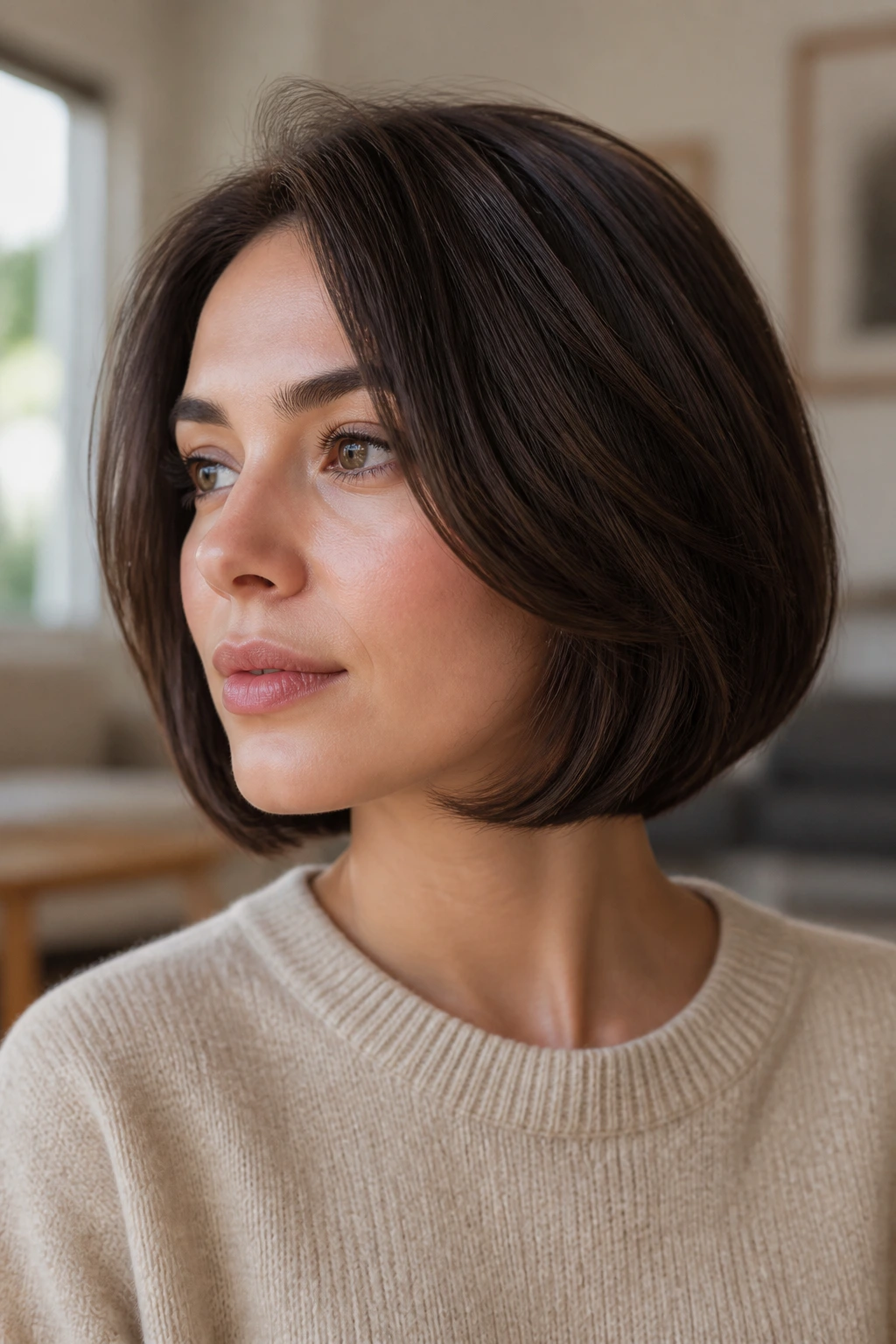
A curved bob has a softer silhouette than a sharp blunt bob. The hair angles inward toward the neck, which makes the cut feel gentle around the jawline and less likely to overwhelm smaller faces. It can be a lifesaver if you want short hair but don’t want the hard edge that some one-length cuts create.
The curve also helps square faces. Instead of stopping dead at the jaw, the ends bend in and blur that corner. Long faces can wear it too, especially if you add a full fringe or a side-swept bang to shorten the look of the forehead.
I like this cut best on straight to slightly wavy hair. Very curly hair can do it, but the curve has to be built around the curl pattern, not forced.
A little serum at the ends is enough. Not a slick, shiny layer. Just enough to keep the curve smooth and the outline clean.
6. The Asymmetrical Crop
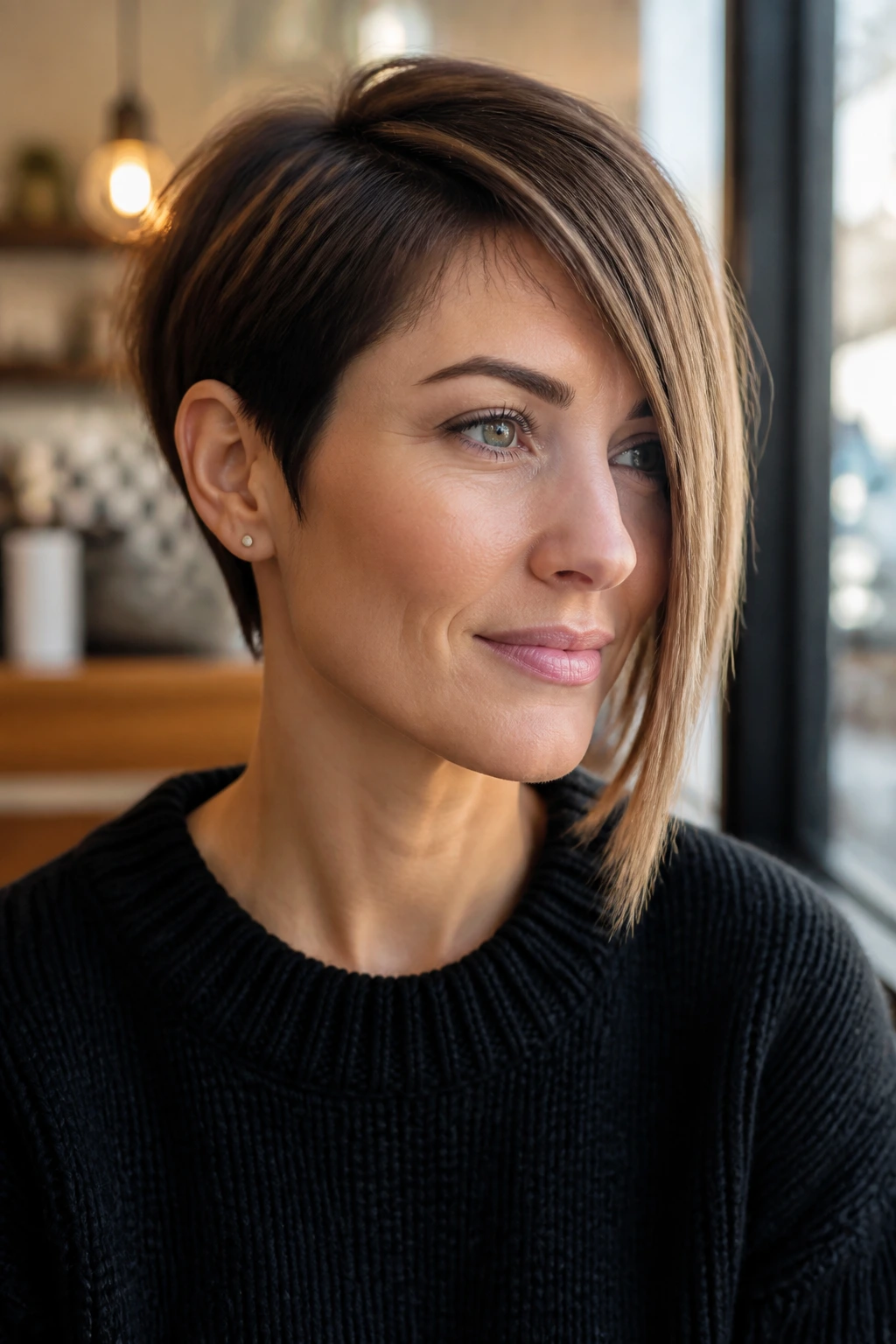
One side a touch longer. The other side tighter. That small difference does a lot of work. An asymmetrical crop pulls the eye diagonally, which is a useful trick if you want to soften roundness or make a fuller face look a little slimmer through the cheek area.
It’s also one of the few short cuts that feels modern without depending on a lot of styling. The asymmetry itself creates the interest. You don’t need to beat it into shape every morning.
Who it suits best
This one is excellent for square and round faces because diagonal lines tend to break up strong horizontals. It can work on long faces too, but then the longer side should not hang too far below the jaw. Keep the length controlled or the cut starts adding vertical length instead of balance.
If you want a little edge without going full undercut, this is the move. It has attitude. Not fuss.
7. The Shaggy Bob With Airy Ends

A shaggy bob is the opposite of stiff. The layers are light, the ends are broken up, and the outline has enough softness that it doesn’t sit like a block around the face. I reach for this shape when someone wants short hair but needs movement more than precision.
That movement is the reason it flatters so many faces. Round faces get vertical softness. Square faces get less boxiness. Heart-shaped faces get more fullness near the jaw if the layers are placed well. The cut isn’t trying to redraw the face; it’s just refusing to box it in.
What to ask for
Ask for ends that don’t stack too neatly and layers that start below the cheekbone if your face is very round. If your face is long, ask for more width at the sides and a fringe that breaks the forehead line.
A quick mist of salt spray and a scrunch is often enough. If you overbrush it, you lose the whole point.
8. The Classic Tapered Pixie
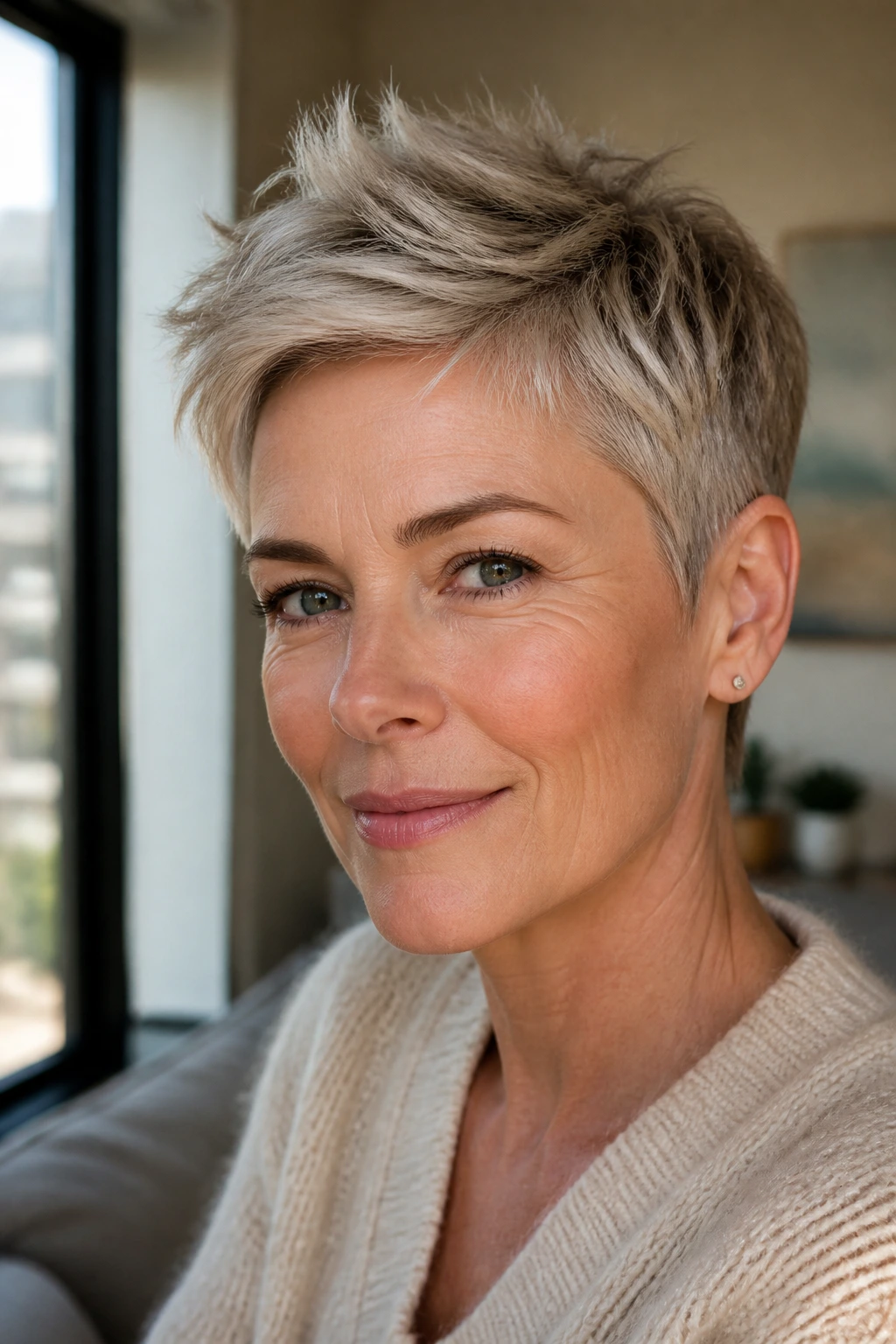
The classic tapered pixie is tighter at the nape and sides, with more softness on top. It sounds simple, and it is, but the shape can be brilliant when it’s cut well. The tapered back keeps the neckline clean; the top gives the face a little lift and openness.
This is the pixie for someone who wants short hair that still has a tidy outline. It can flatter a strong jaw because the sides don’t compete with it. It can soften a long face if the top is kept close enough to the head and the fringe is not too high.
The face-shape detail that matters
Oval faces can wear this almost any way. Heart-shaped faces usually look best with a bit more width at the temples. Round faces need restraint at the crown; otherwise the height can make the face feel shorter and wider.
A tapered pixie grows out cleaner than a lot of people expect. The nape stays neat for weeks. That’s one reason I keep recommending it.
9. The Curtain-Bang Crop
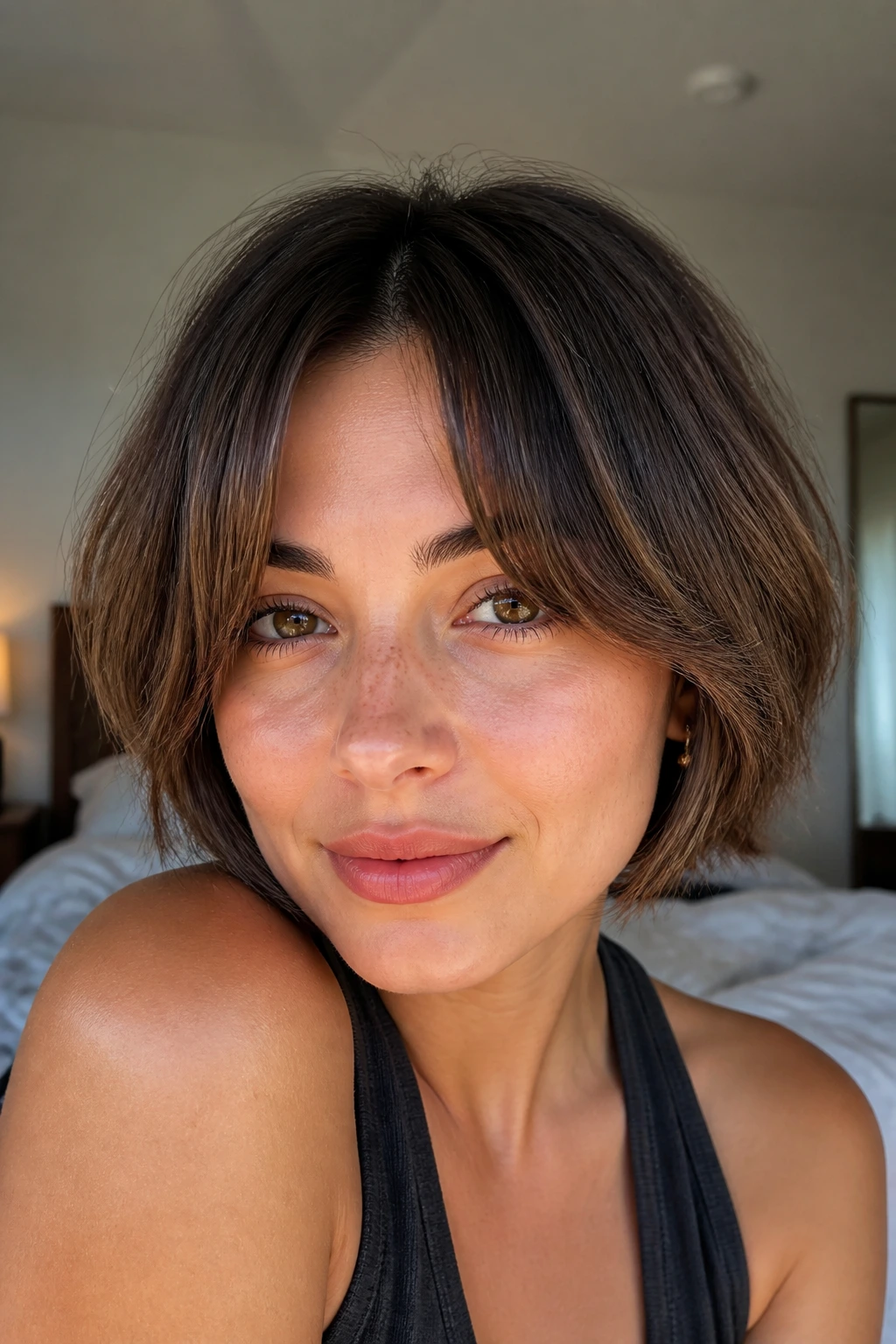
If you’ve ever wanted bangs but feared the regret phase, a curtain-bang crop is the safer version of the gamble. The fringe parts in the middle or just off-center and falls away from the face in soft pieces, which means it can shorten a long face, soften a square one, and keep a broad forehead from dominating the look.
The short length underneath matters. You get all the openness of a crop with a bit of framing through the front. It’s especially good when you want cheekbone emphasis without the commitment of a full bang.
How to wear it
Blow-dry the fringe away from the face using a round brush or just your fingers and a small vent brush. If you flatten it straight down, you lose the lift that makes curtain bangs so useful.
The best thing about this cut is that it changes its mood fast. Tucked behind the ears, it can look neat and tailored. Messed up with a bit of cream, it looks relaxed and lived-in.
10. The Stacked Bob With Lift at the Back
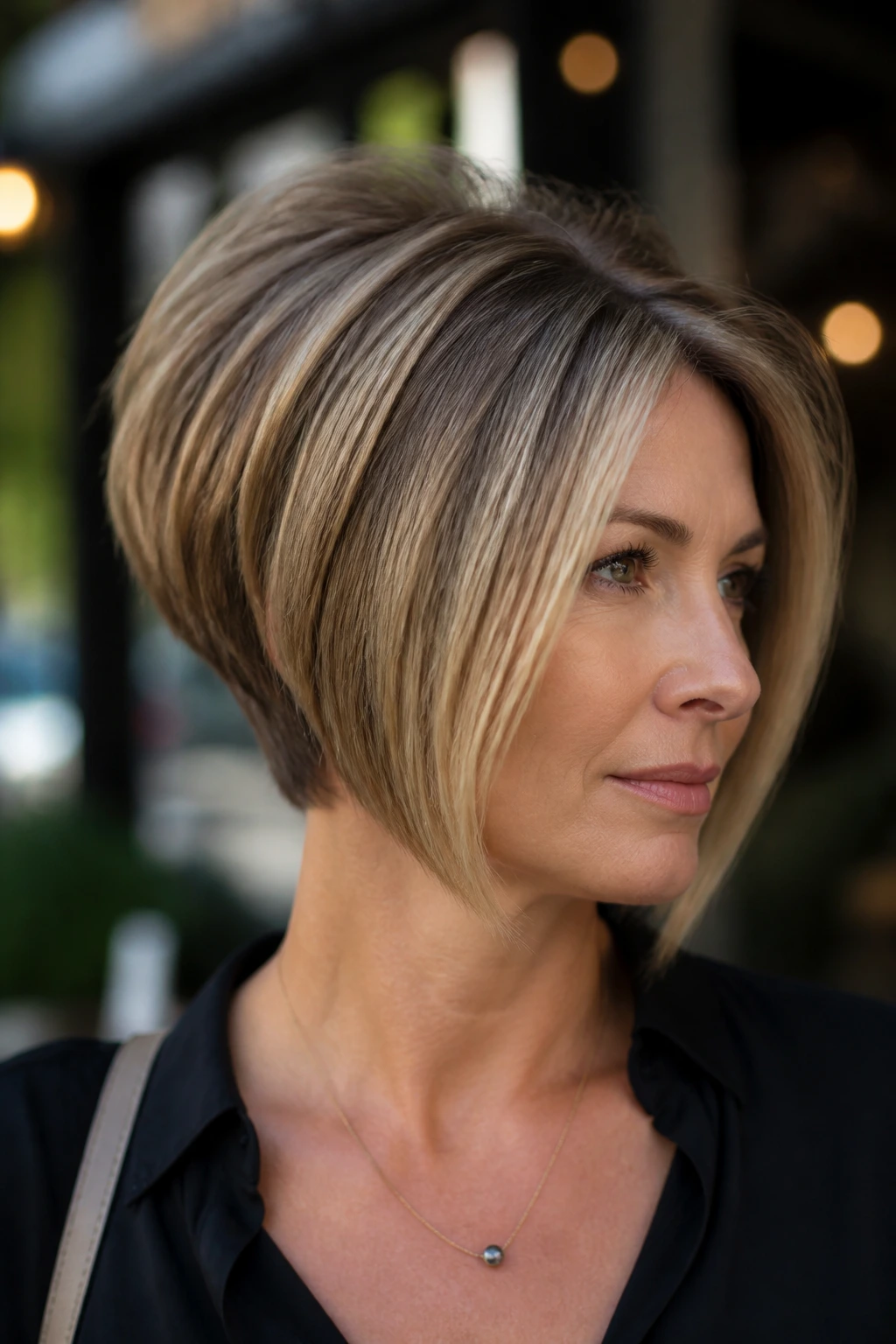
A stacked bob is all about built-in shape. The back is cut shorter and slightly layered so it rises away from the neck, while the front stays longer and sleeker. That difference creates a nice angle under the jaw, which can help soften a square face and slim a round one.
It also gives fine hair something a blunt cut often can’t: body. The back lift creates a fuller silhouette without needing a lot of teasing or product. If your hair tends to collapse flat by noon, this is worth a close look.
A useful caution
Too much stacking can get dated fast. The better version is subtle, with a smooth transition from the nape into the sides. You want shape, not a mushroom.
A side part helps a lot here. It keeps the front from feeling too symmetrical and gives the face a little diagonal movement.
11. The Wavy Jaw-Length Bob
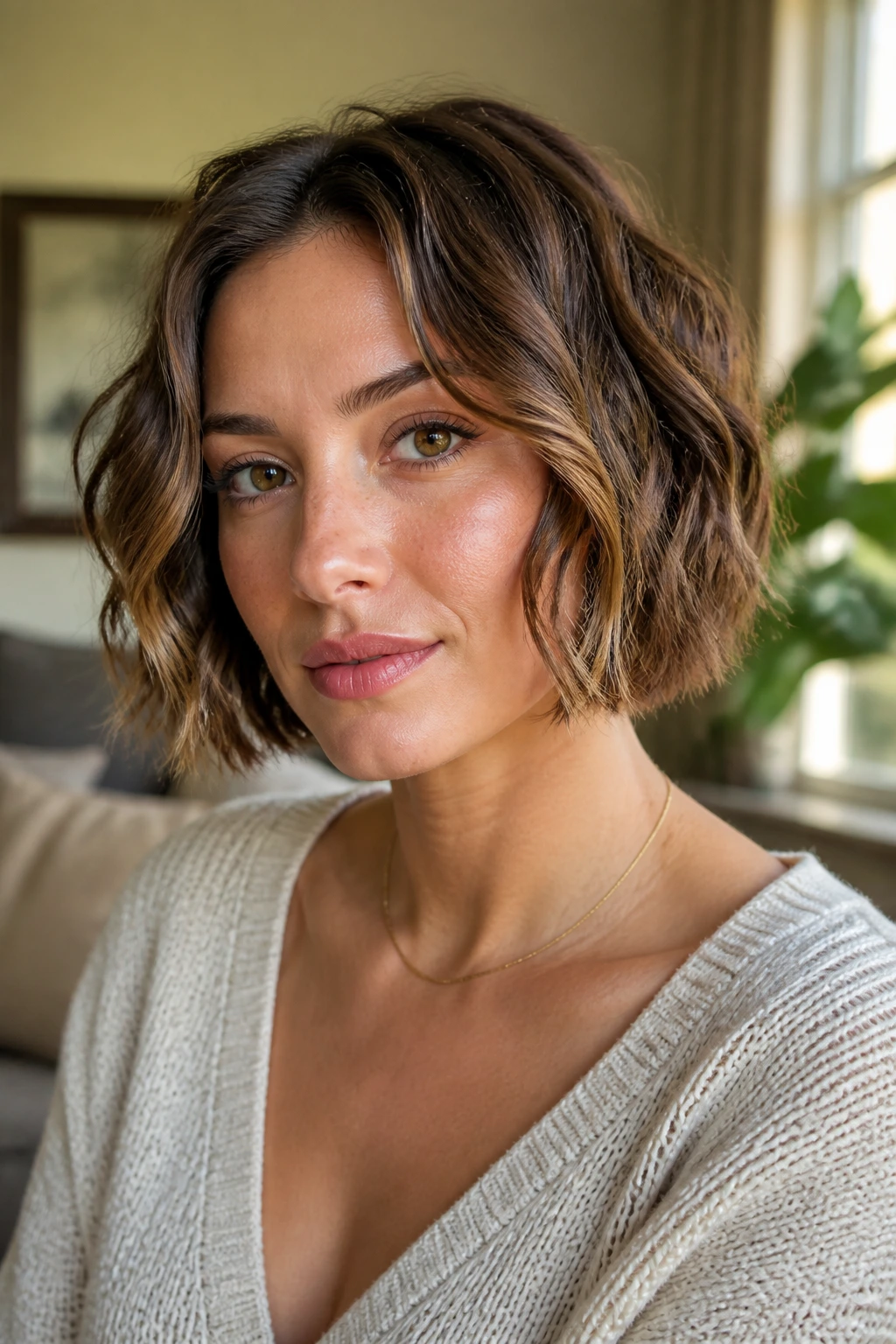
A wavy bob at the jaw has a casual energy that straight styles sometimes lack. The wave softens the perimeter, the jaw-length line gives the face a frame, and the whole cut looks especially good when the bend is irregular instead of too polished. That slight imperfection is the point.
This shape is friendly to round, heart, and oval faces because the wave adds width where the face needs it without building bulk. On square faces, ask for the wave to start lower, near the cheekbone and below, so it doesn’t widen the temples too much.
The biggest mistake with this cut is making it too neat. A little crunch from mousse or a loose bend from a curling iron works better than uniform curls. The goal is movement, not ringlets.
12. The Feathered Crop

A feathered crop uses light, wispy layers to reduce heaviness around the face. That makes it a strong option for thick hair and for faces that feel crowded by blunt edges. The softness around the temples and forehead can make a square jaw seem less dominant and a long face feel less stretched.
This is the haircut I’d pick for someone who hates the feeling of too much hair. It opens the neck, lightens the sides, and doesn’t cling to the face.
What makes it different from a pixie
A pixie often relies on shape and contrast. A feathered crop relies on air. The ends are softer, the layers are finer, and the whole thing moves when you turn your head.
That movement is why it works across face shapes. It blurs lines instead of drawing new ones.
13. The Rounded Afro Shape
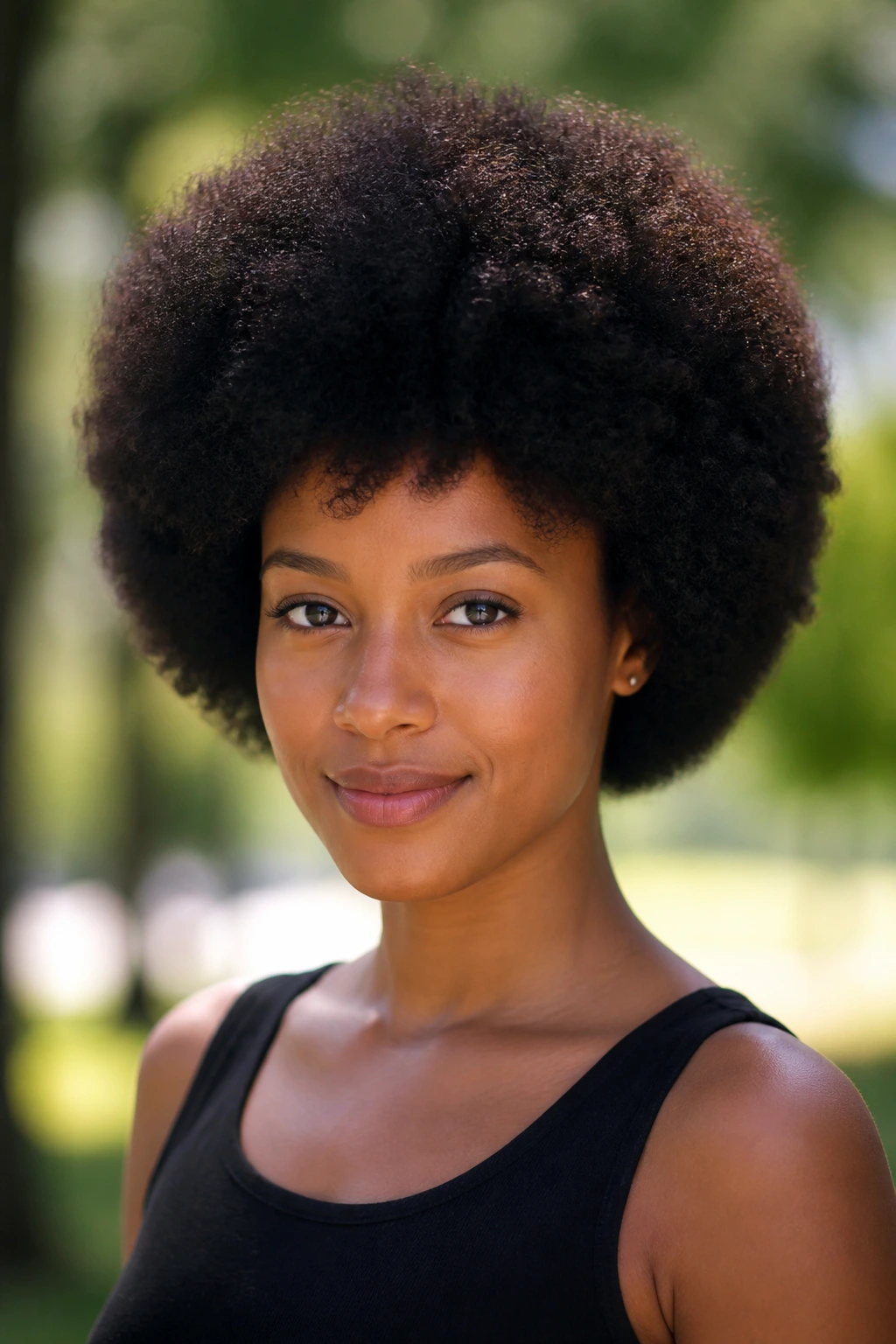
A rounded afro is one of the most face-shape-friendly short styles when it’s shaped with care. The silhouette is open and symmetrical, but it doesn’t have to be rigid. The volume sits where it should, the edges stay soft, and the outline can be adjusted to make the face feel fuller, longer, or more balanced.
For round faces, a little extra height helps elongate the look. For long faces, widen the sides a touch and don’t build too much vertical height at the top. Heart-shaped and square faces usually benefit from the softness around the temples and jaw.
A note on shape
This cut is all about moisture and regular reshaping. Dry, shrunken, uneven texture can make the silhouette look accidental. Defined coils or softly picked-out texture keep the form intentional.
A rounded afro doesn’t hide the face. It frames it. That’s why it can be so flattering.
14. The Curly Tapered Cut
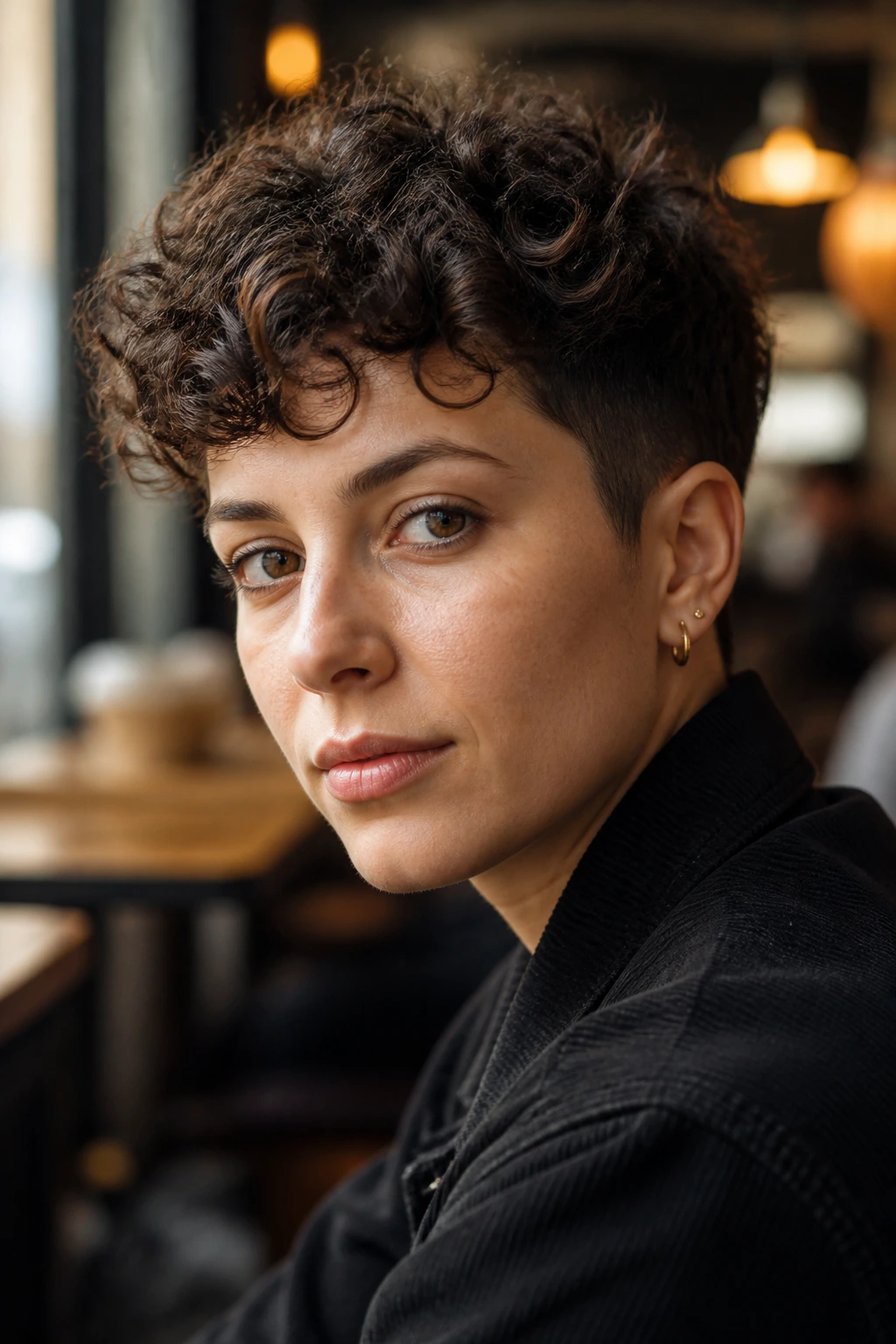
A curly tapered cut keeps the sides and back neat while leaving the top and crown full enough for the curls to do their thing. It gives structure without squeezing out texture, which is a bad trade on curly hair. The taper also helps keep the outline clean around the jaw and neck.
This is especially good for heart and square faces because the shape adds width where it helps and removes excess bulk where it doesn’t. Long faces can wear it too, but the top should stay rounded and not too tall.
The best curly cuts leave room for spring. If a stylist cuts curls too wet and too short, the dry result can jump up several inches. That’s why shape matters more than exact length with this one.
15. The Micro Bob
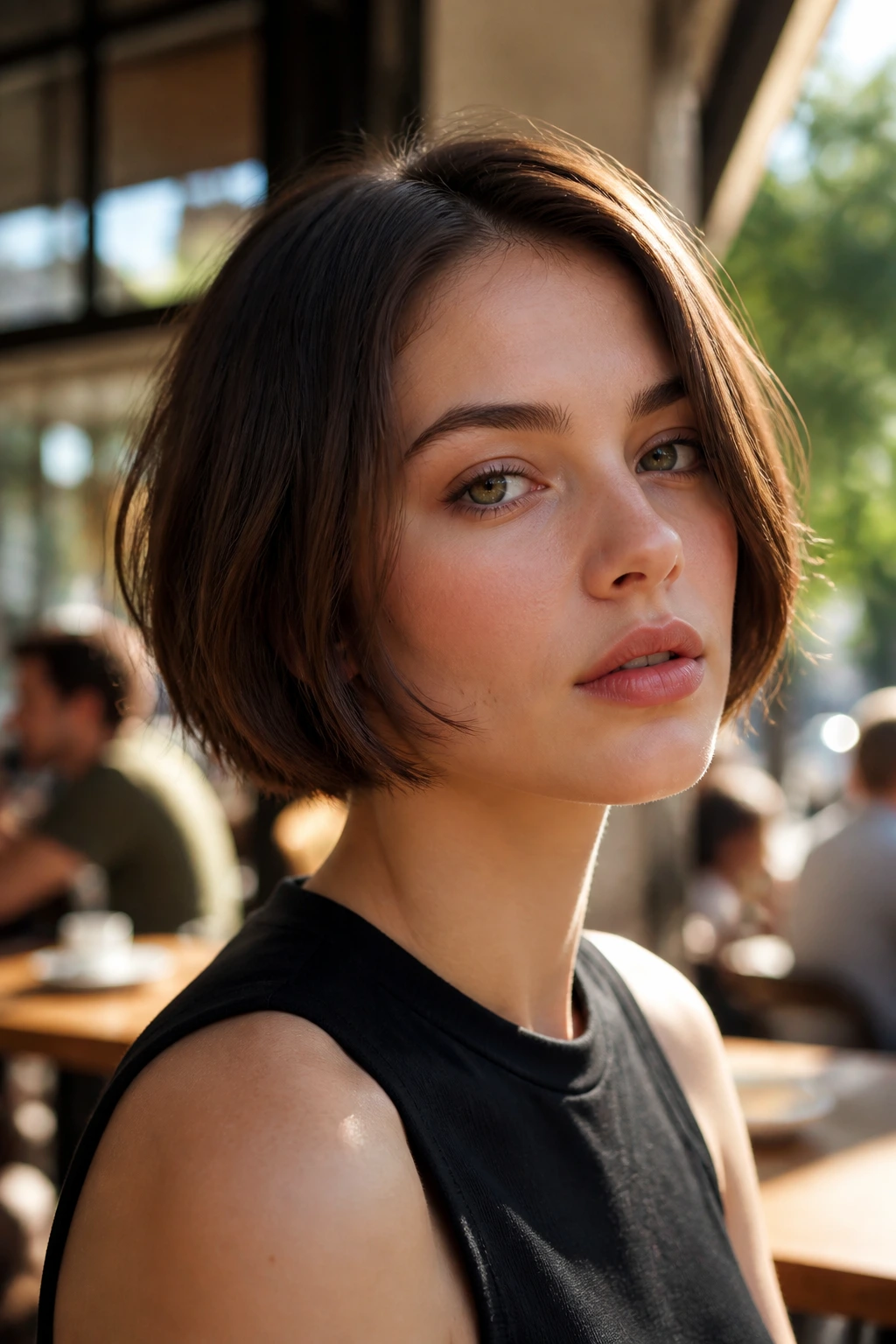
A micro bob sits shorter than a classic bob and often lands around the jaw or just above it. It sounds severe, and it can be if the lines are too hard. But with a soft part and a little bend in the ends, it becomes sharp in a good way — clean, face-opening, and oddly versatile.
It works especially well on oval and heart-shaped faces, and on round faces when the front pieces are left a touch longer. That tiny bit of extra length in front keeps the style from closing in on the cheeks.
How to make it softer
Keep the ends blunt, but don’t keep everything else blunt too. A small amount of texture at the crown or a tucked-behind-the-ear finish is usually enough to stop the style from feeling boxy.
This is not the cut for someone who wants zero maintenance. It looks best when the line is deliberate.
16. The Choppy Shag Pixie
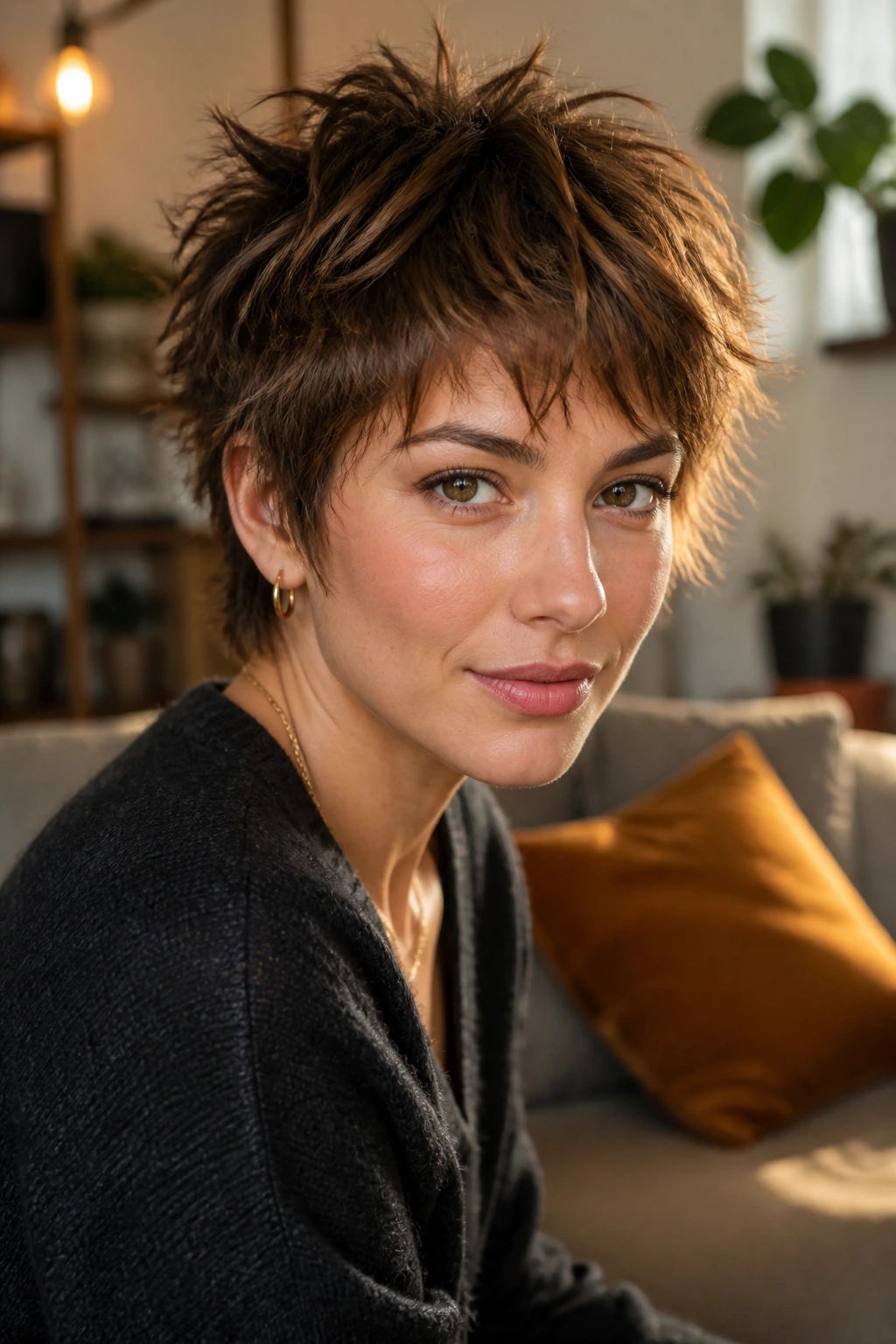
A choppy shag pixie blends shag layers with pixie length, and that’s a good thing if you want short hair that doesn’t sit flat. The layers create little pieces of volume around the top and sides, which can help balance a long face and soften angular features.
I like this cut on fine hair because it creates the look of density without much bulk. It also gives thick hair a place to break up, so the shape doesn’t turn helmet-like. If a classic pixie feels too neat and a shag feels too grown out, this sits nicely between them.
Best styling move
Use a small amount of texture cream on damp hair, then rough-dry with your fingers. Don’t overcomb it. The little irregularities are what keep it alive.
17. The Side-Parted Sleek Bob
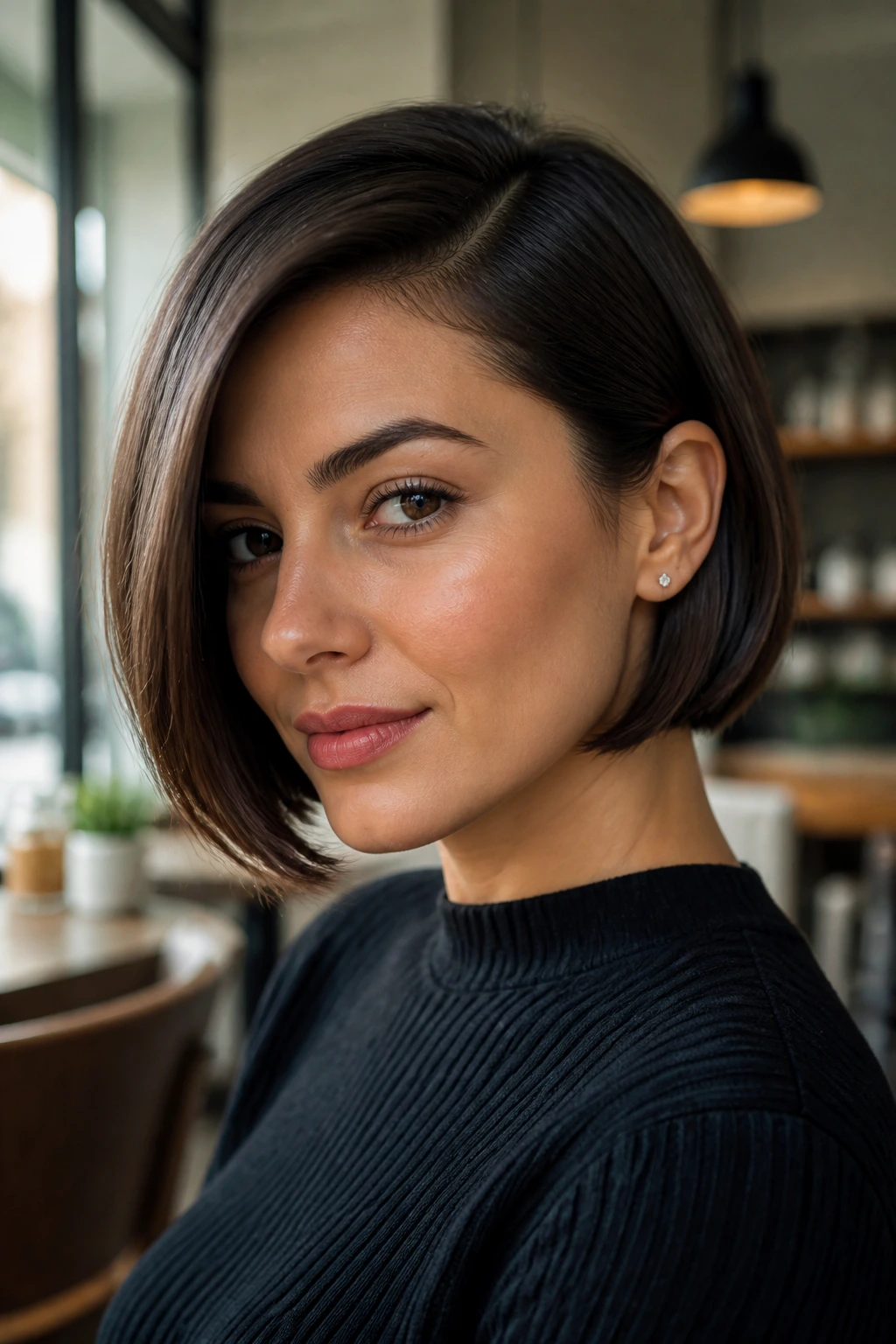
A sleek bob with a deep side part can be surprisingly flattering because it controls the visual weight of the cut. The part creates a diagonal line across the face, and the smooth surface keeps the silhouette elegant without looking fussy. It’s especially good for round and square faces, where diagonal movement helps break strong symmetry.
The front panel can tuck behind one ear while the other side falls closer to the cheek. That asymmetry does a lot of work. Long faces can wear this too if the bob sits at the jaw and doesn’t drop too far below it.
What to watch for
A sleek bob is honest. If your ends are uneven, you’ll see it. If your hair is fried, you’ll see that too. The style rewards good condition and a clean cut line.
A flat iron pass and a light anti-frizz cream are enough. Don’t pile on gloss products unless you want the style to go limp by noon.
18. The Ear-Length Crop
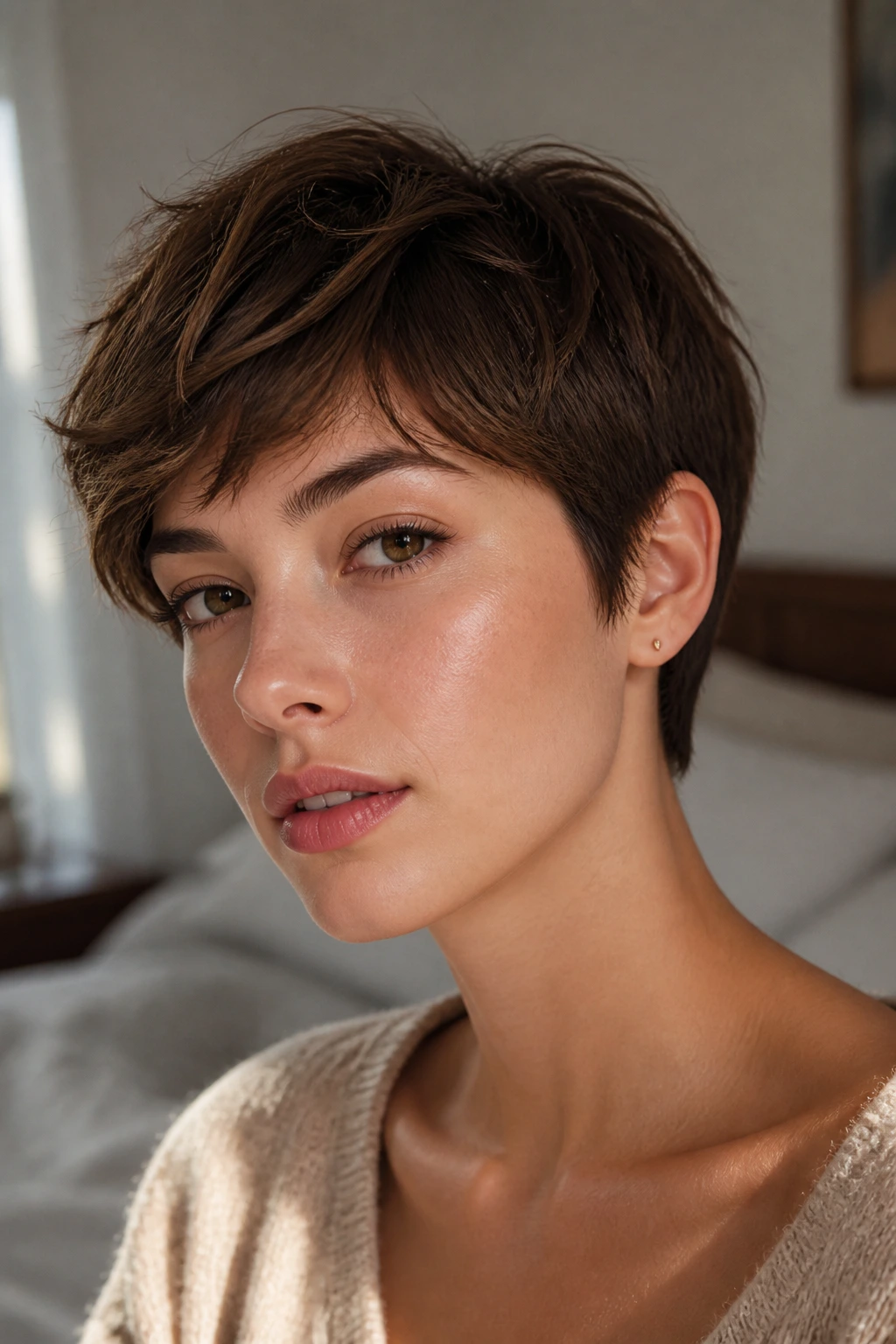
An ear-length crop can be bold, but it’s far from one-note. Because the shape stays compact, it can reveal the neck and jawline in a way that makes the face itself feel more open. On heart-shaped faces, that openness can be excellent. On square faces, a softer fringe or side sweep keeps the crop from looking harsh.
The trick is balance. Keep enough texture on top so the cut doesn’t sit like a cap. A little movement around the temples helps a lot.
This is one of the shortest styles in the group, and it only works if you like seeing your features. If you do, it’s hard to beat for clarity.
19. The Undercut Pixie-Bob
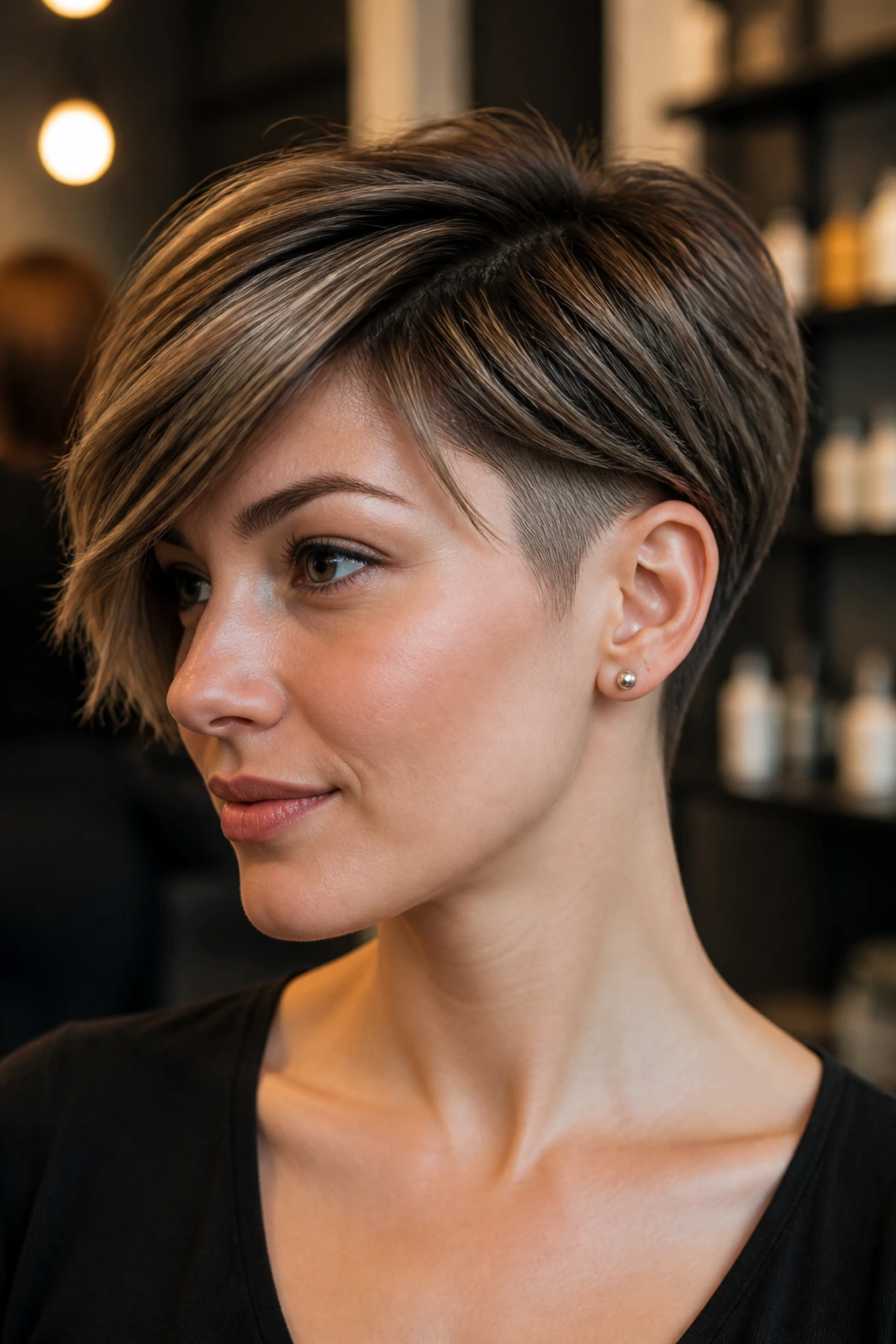
Part pixie, part bob, part practical rebellion. The undercut pixie-bob keeps one section — often the nape or one side — cut shorter underneath, while the top and front keep enough length to fall like a tiny bob. That hidden shorter layer removes bulk, which is useful for thick hair and for faces that need less width near the jaw.
The result is cleaner than it sounds. It can frame a round face with a longer front, sharpen a square face with controlled sides, and make a heart-shaped face feel more balanced by taking some weight away from the top.
Why people like this one
It grows out in stages, which means it stays interesting longer than some cleaner cuts. It also lets you keep the front soft while solving the bulk problem in the back.
A tiny undercut is a lot more wearable than people think. You don’t have to show it off for it to work.
20. The Soft Mullet for Short Hair
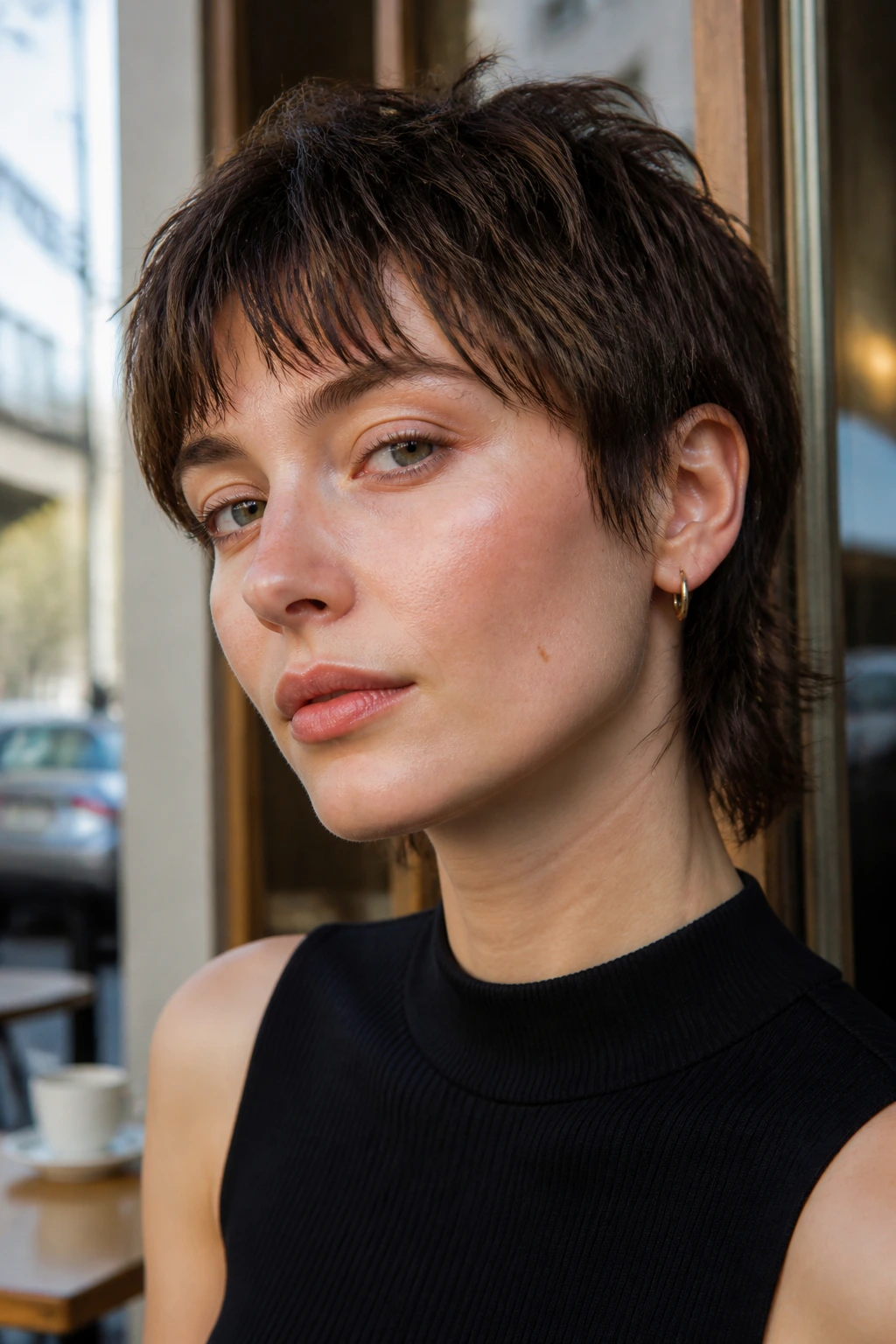
The soft short-hair mullet has a better reputation than it used to, and deservedly so. When the top and sides stay light and the back is only a little longer, the cut creates a flattering vertical line without feeling extreme. The front can soften the forehead, the back can thin out a thick neckline, and the whole shape has a kind of easy, undone charm.
It suits people who want movement more than polish. It’s especially good for square and round faces when the fringe is textured and the back isn’t too long. Long faces need a bit more side width so the silhouette doesn’t get too vertical.
What keeps this cut from looking dated is softness. No hard edges. No overdone feathering. Just a relaxed shape with enough difference between the front and back to feel deliberate.
Why Face Shape Matters Less Than the Cut’s Weight Line
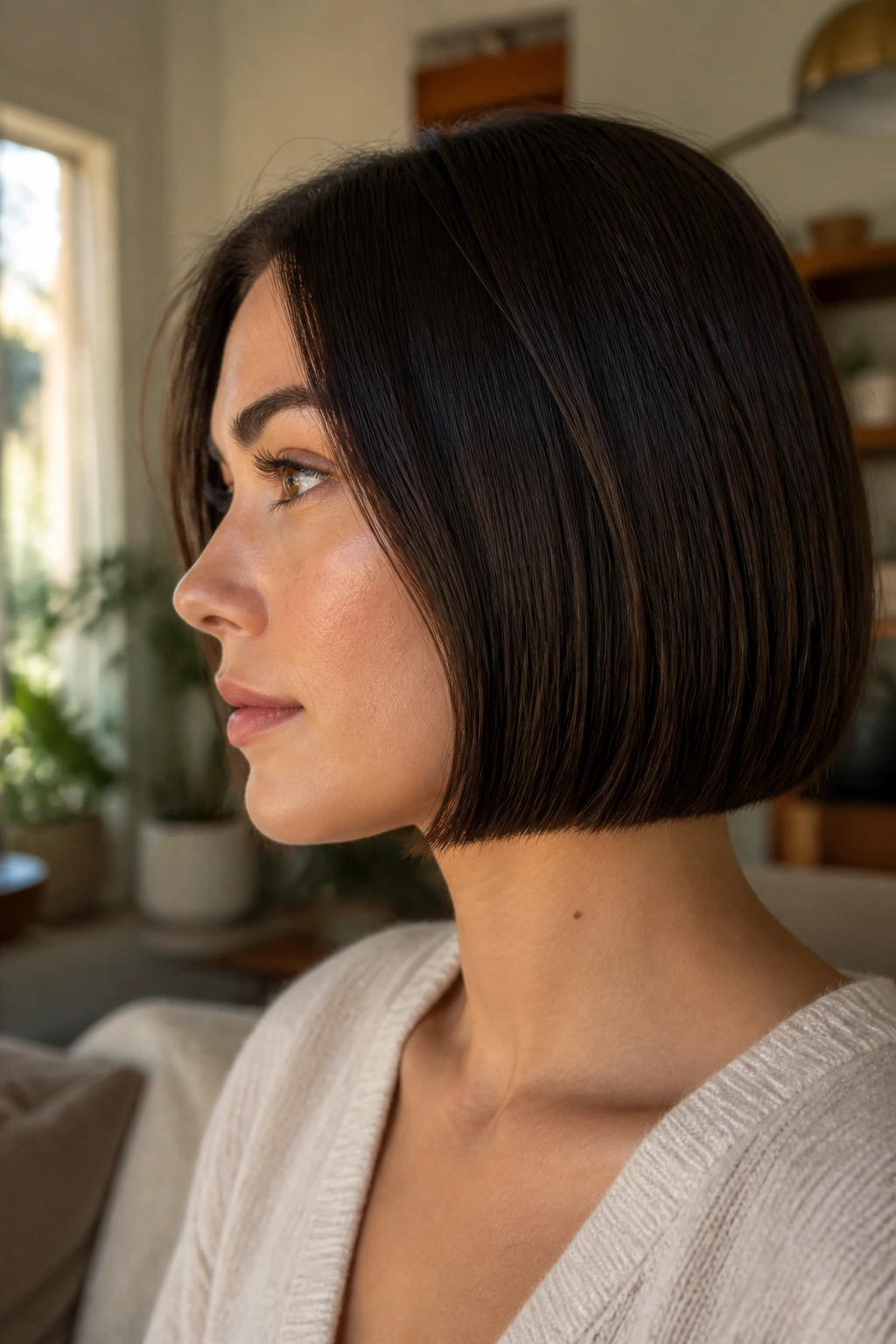
The biggest mistake in haircut advice is pretending face shape is the whole story. It isn’t. Hair density, curl pattern, cowlicks, neck length, and where your hair naturally wants to split all change the result. A round face can look leaner in a bob if the weight sits below the jaw. A long face can look balanced in a crop if the fringe breaks the forehead and the top doesn’t climb too high.
That’s why I keep coming back to the same idea: the weight line matters more than the label. Where does the cut get heavy? Where does it get airy? Where do the eyes land first? Those are the questions that decide whether short hair flatters you.
Oval faces have the most freedom, but that doesn’t mean they need no thought. Square faces usually look better when the edges soften a little. Heart-shaped faces tend to like width lower on the face, near the jaw. Long faces need shortening at the forehead and some width at the sides. Round faces benefit from angles, not just volume.
How to Brief Your Stylist Without Guessing at the Right Words
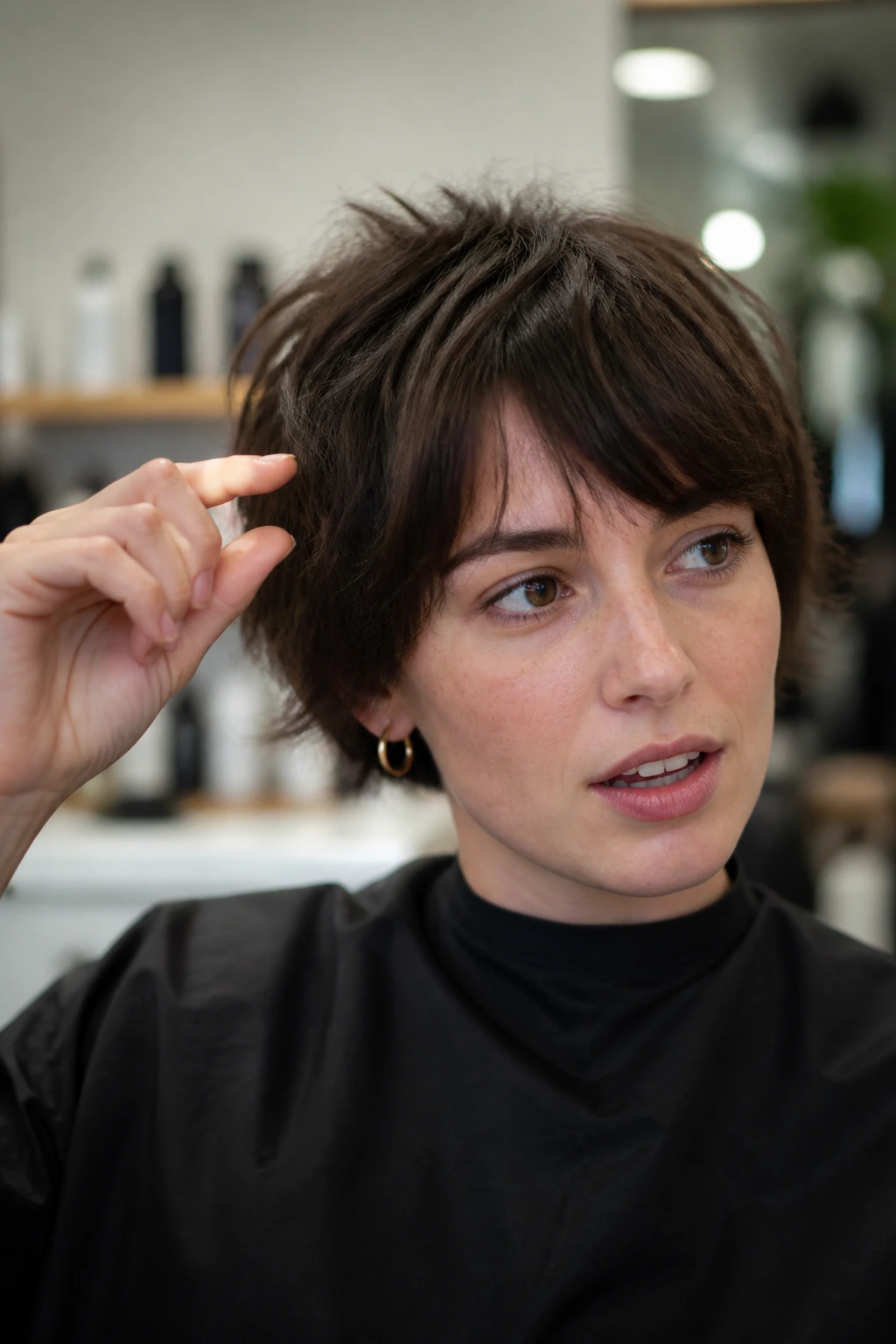
A good short haircut conversation is part reference photo, part plain English. Bring two or three photos, then say what you like in each one: the fringe, the jaw length, the texture, the way the back sits. Don’t just say “I want this cut.” Say which part matters.
Length line: tell them where you want the hair to hit — above the jaw, at the jaw, or just below it.
Texture: say whether you want piecey movement, soft ends, or a cleaner finish.
Face framing: mention the forehead, cheekbones, or jaw if that’s the area you want to balance.
Maintenance: be honest about styling. If you won’t blow-dry every morning, say so. A cut that needs a round brush every day is a different beast from one that air-dries well.
Stylists usually read body language pretty fast. If you keep touching the ends of a photo and saying “this part,” that’s a clue. Use it.
Best Products and Tools for Short Hair That Still Moves
-
Blow dryer with a concentrator nozzle: Helps smooth a bob, pixie, or crop without blasting the hair every which way.
-
Small round brush: Useful for curving a fringe, lifting the crown, or bending ends under on a bob.
-
Texturizing spray: Good for bixies, shaggy crops, and anything that should look piecey instead of stiff.
-
Light styling cream: Best for curls, waves, and soft pixies when you want control without crunch.
-
Matte paste or pomade: A pea-sized amount is enough for defining short layers and taming flyaways.
-
Wide-tooth comb: Handy for curly and wavy cuts so you don’t pull the shape apart.
-
Flat iron: Not mandatory, but useful if your short bob needs a clean edge or a quick bend through the front.
-
Diffuser attachment: A smart buy for curly crops and rounded afros when you want lift without frizz.
How to Keep Short Hair Looking Intentional Between Trims
Short cuts show growth fast. Faster than most people expect. A pixie can lose its shape in three or four weeks if the nape grows in thick, while a bob may stay tidy for six to eight weeks before the ends start flipping in weird directions. That’s not a flaw. It’s just the deal with short hair.
If your cut has a strong line — like a French bob or micro bob — plan on trims every 4 to 6 weeks. If it’s textured — a bixie, shaggy bob, or feathered crop — you can often stretch to 6 to 8 weeks before it stops looking deliberate. Curly cuts need shape checks, not just length checks, because shrinkage can hide grown-out edges until they suddenly look bulky.
Sleep matters too. A silk or satin pillowcase helps keep the ends from roughing up, and a loose pineapple or soft clip can save a curly crop from looking flattened the next morning. For sleek cuts, a quick pass with a damp brush and a touch of cream usually brings the shape back to life. Dry shampoo has its place, but on short hair it can also make the roots feel dusty if you keep piling it on.
Common Mistakes That Make Short Hair Look Off
The first mistake is cutting too much width into the wrong place. A round face with a bob that ends exactly at the widest part of the cheeks can look wider, not slimmer. The fix is simple: move the length a little below the jaw or add diagonal framing at the front.
Another one is going too high at the crown on a long face. Height sounds flattering until the face starts looking even longer. Keep the top soft and bring some visual weight to the sides instead.
Then there’s the blunt-fringe problem. A straight, heavy fringe can look sharp and stylish, but on a short face or a strong forehead it can swallow the features. A softer fringe, or one with a slight break in the middle, usually works better.
Skipping texture is a big one. A short cut without some movement can read as stiff, especially on thick hair. Even a tiny amount of internal layering changes the whole line.
And please, don’t ignore your growth pattern. Cowlicks at the crown, a strong side swirl, or a stubborn nape bend can undo a polished cut fast if the stylist doesn’t account for them. The wrong fight with natural growth always loses.
Ways to Adapt These Cuts for Different Hair Textures
Fine and straight hair: choose clean lines with subtle layers, like a French bob, micro bob, or tapered pixie. Too much shredding makes the hair look thinner at the ends.
Thick hair: go for cuts that remove bulk inside the shape, such as a stacked bob, undercut pixie-bob, or shaggy crop. Thick hair loves structure, but it hates being overstuffed.
Wavy hair: the best cuts are the ones that let the bend show up without forcing it into a uniform curl. A chin-length bob or bixie works well because the wave gives the haircut its own texture.
Curly hair: tapering and round shaping matter more than exact lengths. A curly tapered cut or rounded afro keeps the silhouette balanced while respecting shrinkage.
Low-maintenance styling: choose styles that still look good when they’re not freshly brushed — the bixie, shag bob, feathered crop, and side-parted bob do this well.
Shape Tweaks That Change Everything
-
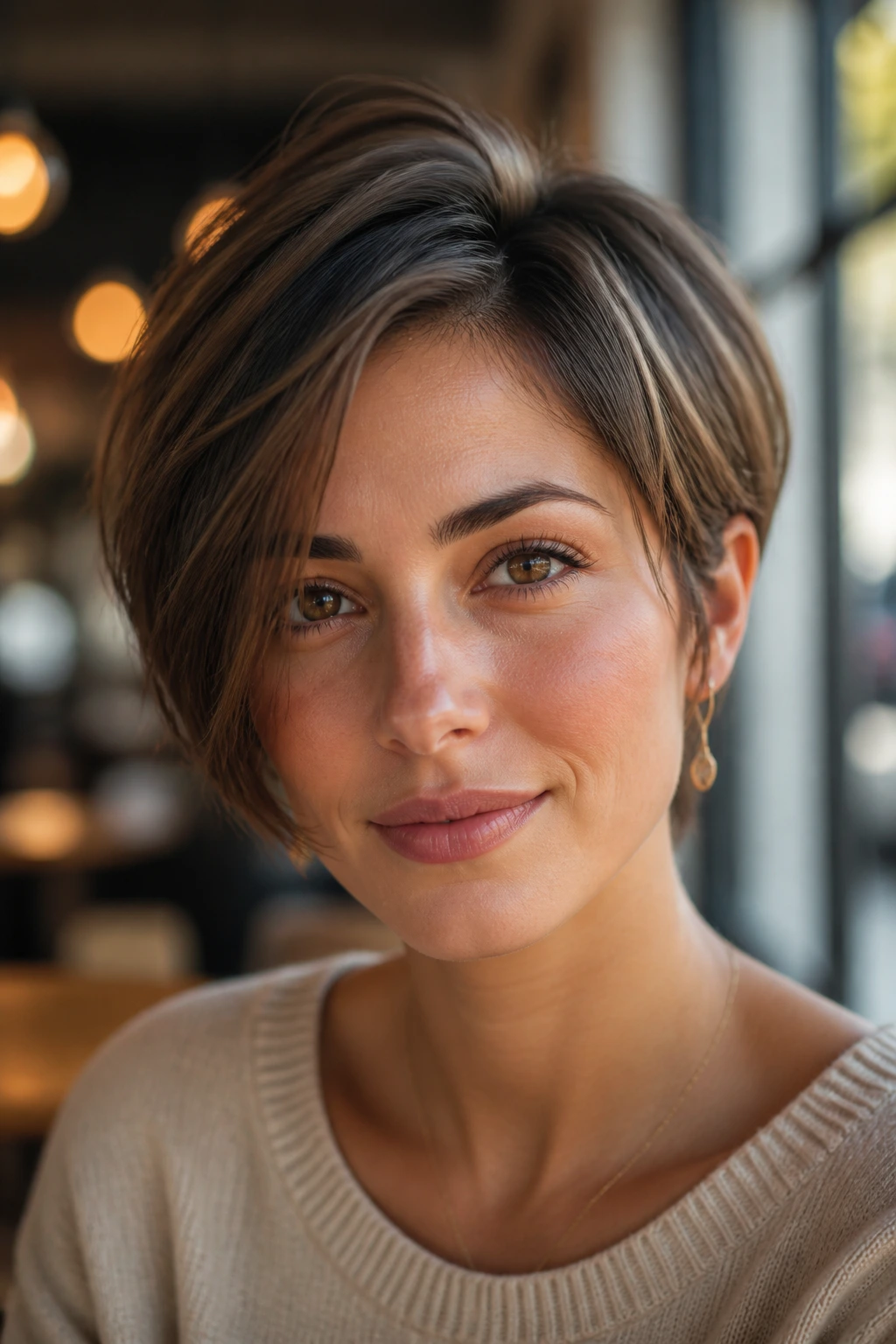
Longer front pieces: useful for round or square faces because they create a vertical line without taking away the short feel.
-
Off-center part: a small move, but it can soften symmetry and make almost any short cut look less rigid.
-
Shorter nape, softer top: keeps the neckline clean while preserving some movement up front.
-
Fringe that splits or sweeps: helps with long faces and high foreheads by breaking up the upper third.
-
Rounded perimeter: kinder on square jaws and sharp angles than a cut that ends in a hard shelf.
What to Ask For If You’re Not Sure Which Cut Fits You
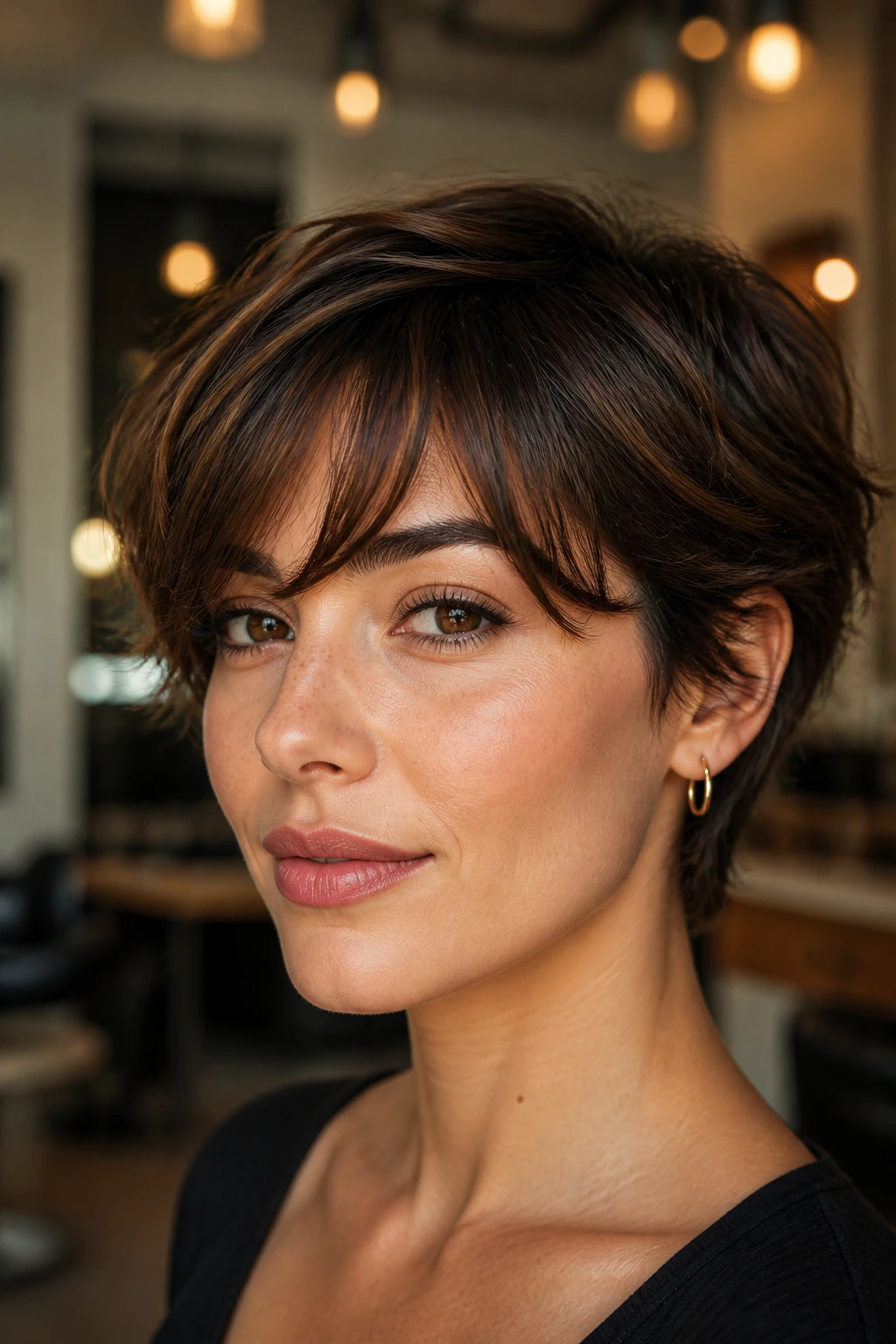
Ask for a short style with adjustable framing around the face. That phrase gives your stylist room to change the fringe, part, and front length based on your features and texture. Then ask them to show you where the weight will sit. Near the crown? At the jaw? Around the ears? That answer tells you almost everything.
If you’re nervous, start with a cut that can lean one way or another as it grows. A bixie, soft bob, or curtain-bang crop gives you more flexibility than a very sharp micro cut. And if you know you hate constant styling, say that out loud. No one should hand you a haircut that only works with a round brush and a prayer.
Frequently Asked Questions

Which short hairstyle flatters the most face shapes?
A soft pixie, chin-length textured bob, and bixie usually cover the widest range because they can be adjusted with fringe, parting, and front length. The real trick is not the name of the cut — it’s where the weight sits and how much softness you leave around the face.
Can a short bob work on a round face?
Yes, but the length needs care. A bob that ends exactly at the fullest part of the cheeks can widen the face, while one that lands at or just below the jaw tends to work better, especially with a side part or angled front pieces.
What short haircut is best for a long face?
Styles that break up the forehead and avoid too much height are usually the most flattering. Curtain-bang crops, French bobs, and soft pixies with fringe can shorten the look of the face without making the haircut feel heavy.
Is a pixie cut flattering on a square face?
It can be, if the top stays soft and the sides don’t get too harsh. A piecey fringe or gentle side sweep helps blur the jawline, while a spiky, over-lifted pixie can make angles feel sharper than you want.
Do curly short haircuts need different rules?
They do. Shrinkage changes everything, so the cut has to be shaped with the curl pattern in mind. Rounded afros and tapered curls usually flatter many face shapes because they keep the silhouette balanced while letting the curl form its own shape.
How often should short hair be trimmed?
Tighter cuts like pixies and micro bobs often need a trim every 4 to 6 weeks. Textured bobs and shaggy crops can usually go a bit longer, around 6 to 8 weeks, before the shape starts to blur.
What if my hair has a strong cowlick or weird growth pattern?
Tell your stylist before the first snip. Cowlicks at the crown or nape can change how a fringe falls or where a bob flips, and a good cut works with that pattern instead of trying to flatten it into submission.
Can I wear bangs with short hair?
Absolutely, and sometimes that’s the smartest move. Bangs can shorten a long face, balance a large forehead, or soften a square jaw, but the type matters — soft, split, or side-swept bangs usually travel better than blunt ones.
Which short haircut is easiest to style on busy mornings?
A textured bob, bixie, or feathered crop usually asks for the least fuss. They keep some shape even when air-dried, which is a better test of a haircut than how it looks in a salon chair under perfect lighting.
The Shape That Fits the Face You Have
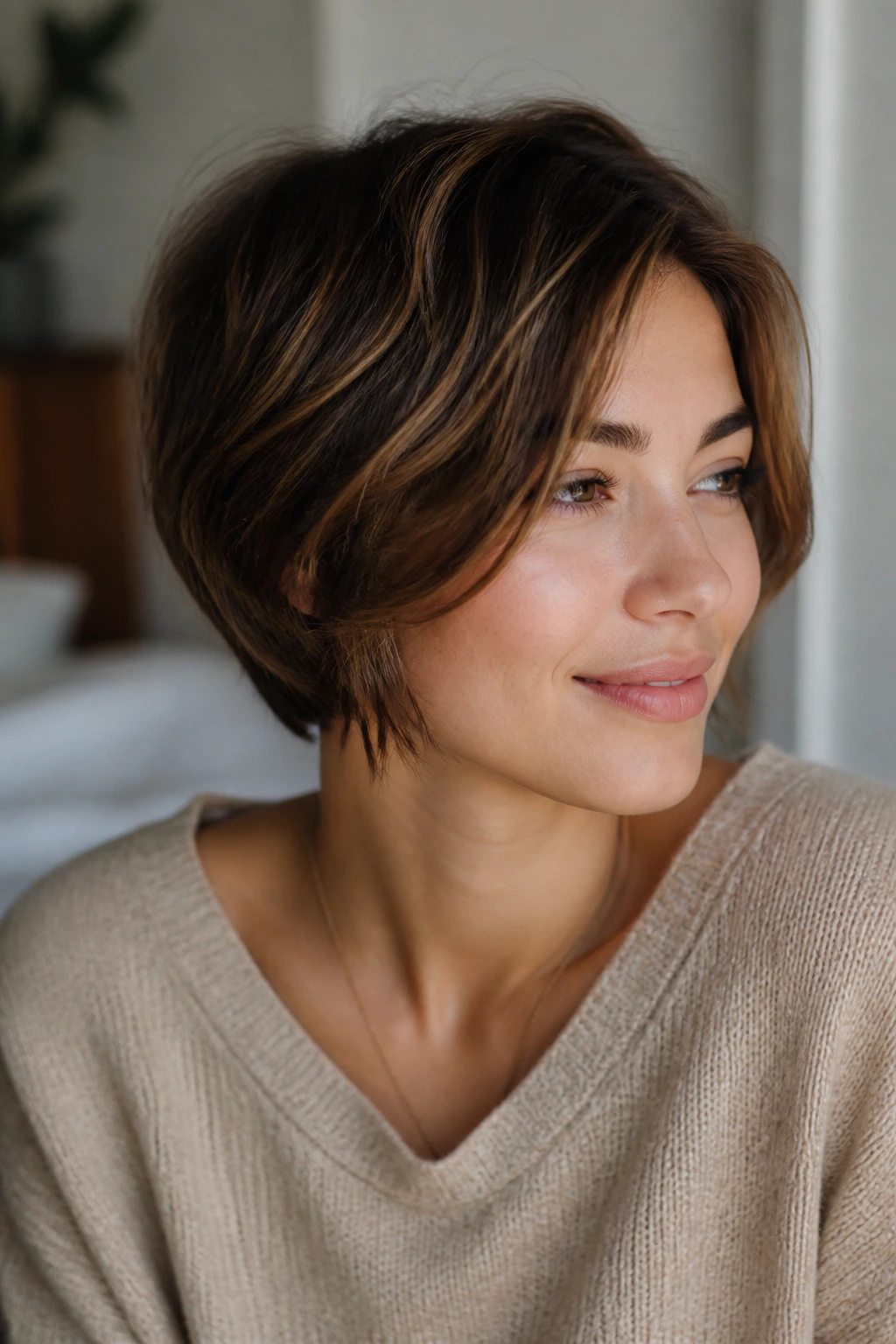
The right short haircut doesn’t hide your face. It gives it better framing. That’s the real difference between a cut that looks trendy in a photo and one that keeps making sense when you catch your reflection at noon, in a bad mirror, with no styling brush in sight.
If you’re choosing between several short hairstyles, don’t chase the shortest one or the loudest one. Chase the one that puts the weight in the right place, softens the right edge, and leaves your features doing what they do best. That’s the haircut that keeps paying off after the first day.
