



Shoulder-length straight hairstyles have a very specific kind of power: they look expensive before anyone has a chance to overthink them. At the collarbone, straight hair sits in that narrow band where the ends still move, but the shape stays sharp. Too short, and the line can turn severe. Too long, and the polish starts to sag. Right here, at shoulder length, you get the clean edge.
That’s why the shoulder length straight hairstyles people actually save tend to share the same quality: they look calm, deliberate, and tidy without looking stiff. A blunt lob glides over knit sweaters without snagging. A deep side part can make cheekbones look higher in a way that feels almost unfair. A low pony at this length lands in a sweet spot, too — not tiny and fussy, not heavy and slumped.
And there’s a practical bonus people don’t say enough. Straight hair at shoulder length is faster to iron, faster to blow-dry, and far less likely to collapse into a dull curtain halfway through the day. The cut does some of the work for you. Good length. Good lines. Not much drama.
Why Shoulder-Length Straight Hair Keeps Working So Well

- The ends stay visible: When straight hair stops around the shoulders or collarbone, the perimeter stays crisp instead of disappearing into your clothes.
- The shape is easy to control: A flat iron needs fewer passes on a lob than it does on longer hair, so the finish usually looks smoother with less effort.
- It plays nicely with parts: Center parts, deep side parts, and soft off-center parts all show up clearly on this length because the shape isn’t buried under extra weight.
- Accessories actually show: Clips, barrettes, and tucked styles don’t get lost in the length the way they can on long hair.
- It works for clean, grown-up styling: The cut can look polished at the office, then a little sharper with earrings or a lip color at night.
- It gives you range without chaos: You can wear it down, tuck one side, half-up it, or pull it into a low pony without fighting a ton of bulk.
1. The Center-Part Blunt Lob
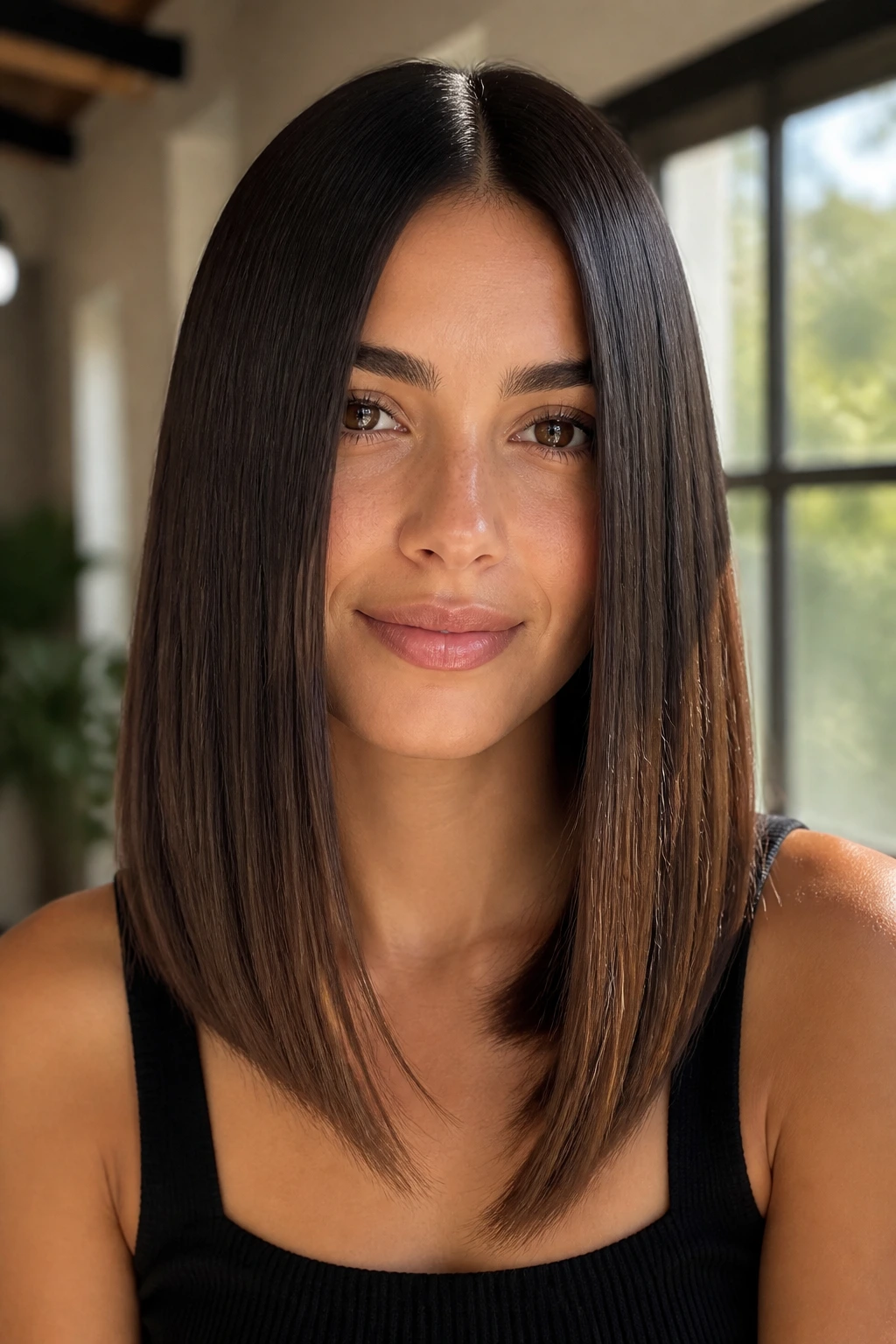
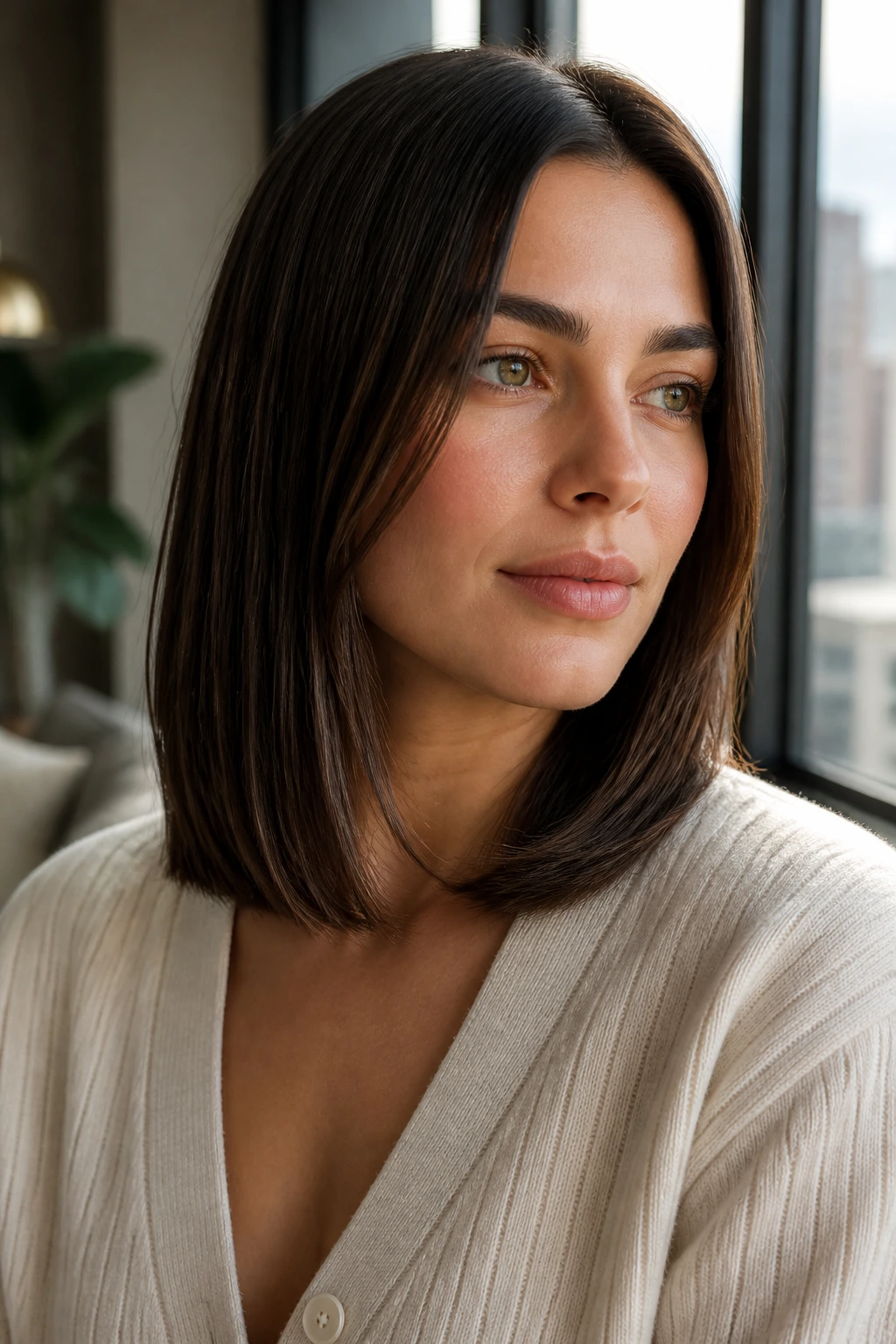
A center-part blunt lob is the plain white T-shirt of sleek hair — except it looks a lot more expensive than a T-shirt usually does. The line falls cleanly at the shoulders or just above them, and the middle part draws a straight path down the face that feels deliberate from the first glance. No fluff. No frill. Just a very neat frame.
Why it reads so polished
The blunt edge is the whole trick here. When the ends are cut in one clean line, light hits them evenly, and that makes the whole style look denser and smoother. It also means split ends stand out faster, which is annoying but useful; you notice when it’s time for a trim.
A center part can feel unforgiving if the cut is uneven or the roots are puffed up. So this style works best when you blow-dry the roots flat with a nozzle and finish with one slow pass of a flat iron. Keep the iron moving. The goal is a sheet-like finish, not a pinched look.
Best for
- Oval and heart-shaped faces that can carry a straight vertical line
- Fine to medium hair that needs structure
- People who like hair that looks clean even when the rest of the outfit is casual
My favorite detail: tuck both sides behind the ears for 10 minutes after styling. It helps the front hold that neat, face-skimming shape instead of puffing out at the cheek.
2. The Deep Side-Part Tuck
A deep side part changes the whole mood of straight shoulder-length hair in about five seconds. Suddenly the style has a little tension in it. One side falls clean and full, the other side gets tucked behind the ear, and the face opens up in a way that feels sharp rather than sweet.
This is one of those looks that does more than people expect. If your hair is a little flat at the crown, the deep part gives it lift without teasing. If your jawline feels soft and you want a bit more edge, the tucked side creates that line for you. It’s a small move. Big payoff.
The trick is not to make the part too extreme unless your hair naturally likes it. Start about two inches off center, then move it farther once you’ve seen how the roots behave. A little root spray or mousse at the part line helps the hair stay where you told it to.
3. Glass-Hair Shine on a Mid-Length Cut
Glass hair is not about having a lot of hair. It’s about having hair that looks so smooth it almost stops reading as individual strands. On shoulder-length straight hair, that finish can look especially clean because the length is short enough for the shine to stay even from root to end.
The shine is built, not guessed at. Start with heat protectant on damp hair, then blow-dry with a paddle brush or a round brush used like a paddle. Once the hair is dry, take very thin sections through a flat iron at a moderate heat — usually lower than people think they need — and finish with a drop of serum on the mids and ends only. If you touch the roots with heavy oil, the look goes limp fast.
What makes it different
- The surface reflects light in one smooth band
- The ends look sealed instead of fuzzy
- The style looks especially good in daylight and overhead indoor light
- It works best on hair that has been trimmed recently
A blunt or nearly blunt cut gives this style the strongest result. Layers can work, but they need to be subtle. If the ends are too wispy, the glass effect breaks apart.
4. The Curtain Bang Lob
Curtain bangs can soften straight shoulder-length hair without wrecking the sleek line you probably want in the first place. The bangs split at the center and sweep away from the face, so they don’t sit there like a hard curtain. They bend. They move. They make the cut look a little less severe.
This is a smart choice if you like straight hair but don’t love how a solid blunt fringe can shorten the face. The curtain bang opens the cheek area and keeps the eyes in focus. It also gives you a place to hide the first-day-of-haircut weirdness that happens when the front is a little too eager.
The best version of this style keeps the bangs smooth but not stiff. Blow them forward first, then wrap them gently around a round brush or bend them with a flat iron held diagonally. The rest of the hair should stay sleek and mostly straight, so the bangs don’t look disconnected from the length.
5. The A-Line Lob
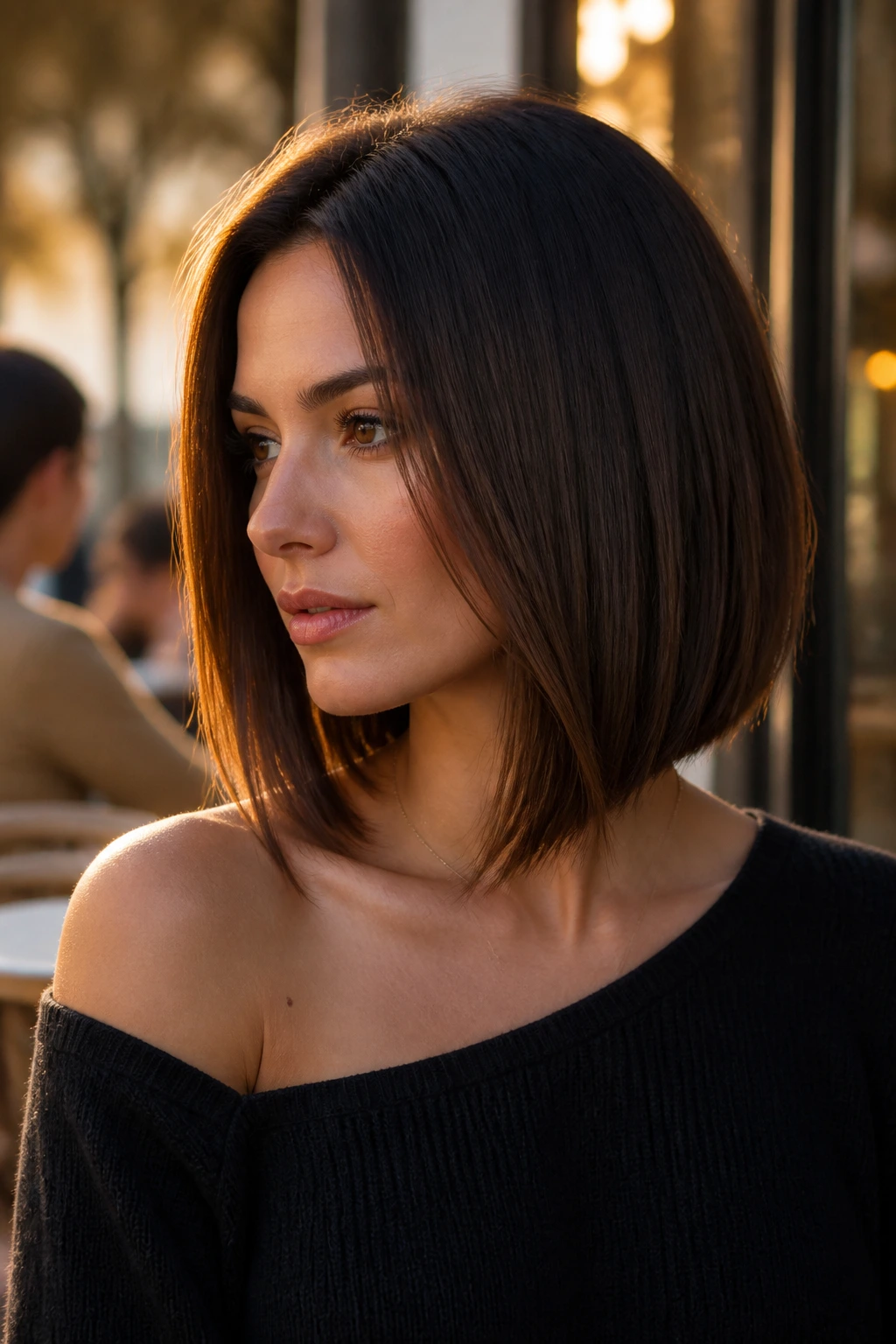
An A-line lob is one of the smartest shoulder-length straight hairstyles if you want the cut to do the shaping for you. The back sits a touch shorter, and the front angles down toward the collarbone. That means the front pieces skim the neck and jaw, while the back keeps the profile neat.
This is a sneaky good choice for thicker hair, because the angle takes some weight out of the back without making the ends look choppy. It also gives straight hair a little movement when you turn your head. You get that clean line from the front, but it doesn’t feel boxed in.
The styling is straightforward. Blow-dry with the head slightly tilted forward, then flat-iron the front pieces with a small bend toward the face. If you want the shape to read clearly, keep the ends tucked inward rather than flipping them out.
6. The Invisible-Layer Lob
Invisible layers are for people who want straight hair to lie flat but not look helmet-like. The cut removes bulk from the inside of the shape, so the outer line still looks blunt and clean while the interior moves a little more easily. That’s the part most people miss. The top can look polished, but the inside is doing the quiet work.
Thick straight hair benefits from this cut more than almost any other version in the list. Without internal removal, the shoulders can make the hair kick out or puff at the ends. With the right layering, the hair falls in a smooth sheet instead of a heavy block.
You won’t always see the layers in a mirror. Good. That’s the point. The style should feel lighter, dry faster, and sit closer to the neck without collapsing into flatness. Ask for internal shaping, not choppy pieces around the face.
7. The Sleek Low Ponytail
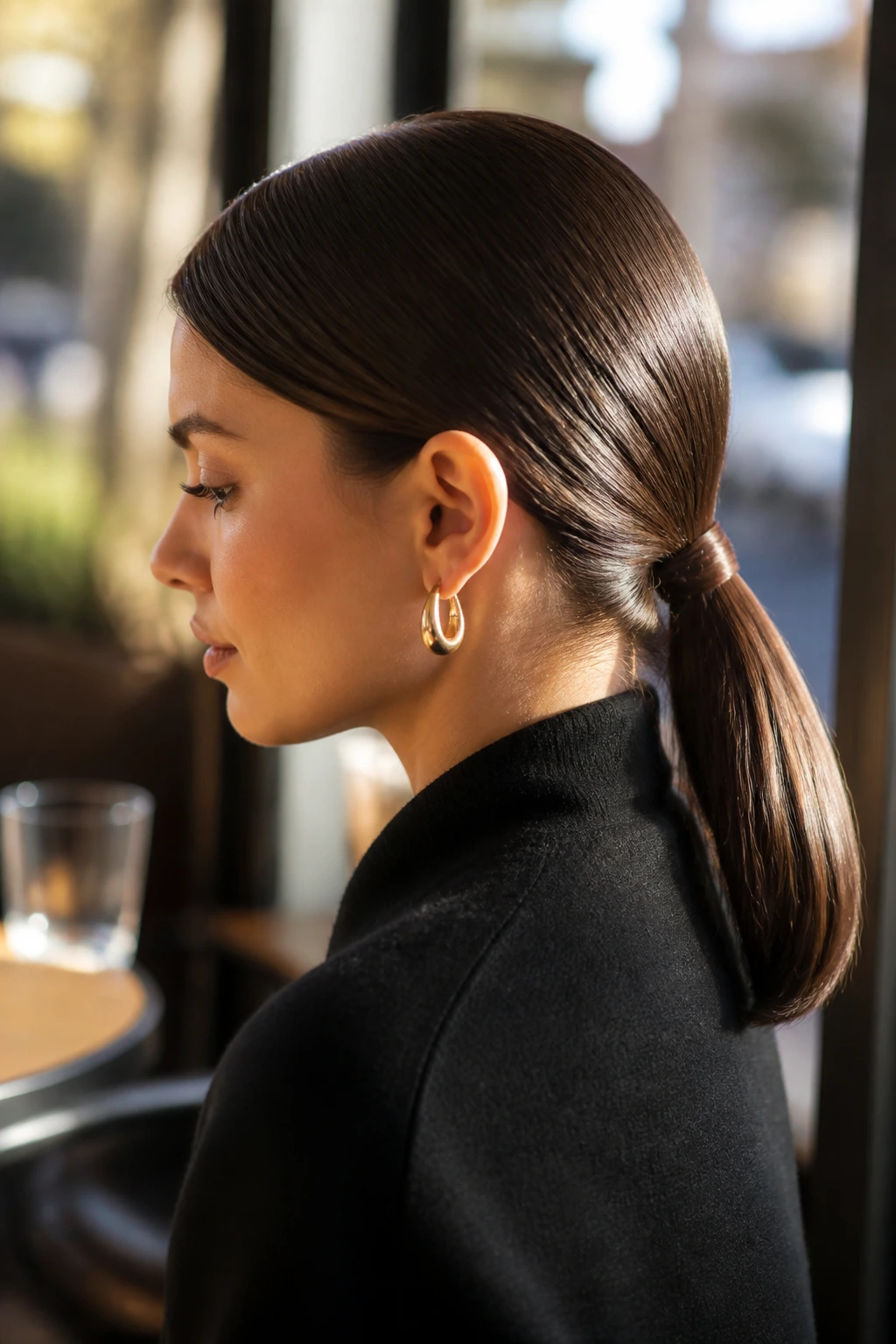
A low ponytail on shoulder-length straight hair has a special kind of restraint. It doesn’t need long lengths to look intentional. In fact, the shorter length can make it cleaner because the tail sits closer to the nape and doesn’t swing around like a rope.
The key is tension. Brush the hair back with a boar bristle brush or a dense paddle brush, keep the crown smooth, and tie the pony low and snug. Then wrap a small strand around the elastic and pin it underneath. That one step changes the mood immediately.
A low pony like this works well for sharp collars, big earrings, or a strong lip color. It gives the face room. And if your hair tends to frizz, the ponytail is often easier to keep sleek than wearing it down for an entire day.
8. The Half-Up Barrette Sweep
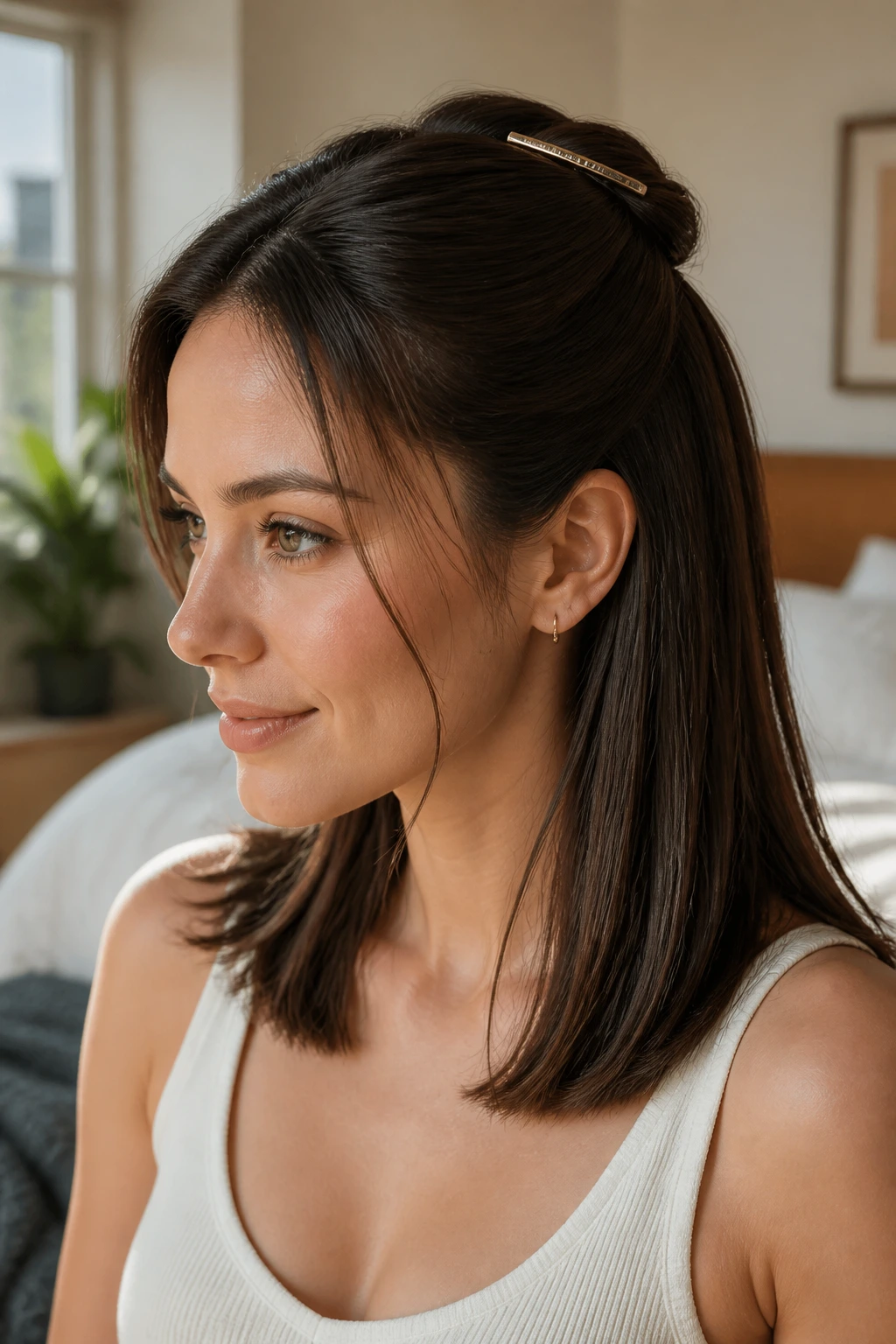
The half-up barrette sweep is what I reach for when straight hair needs one small upgrade and not a full restyle. You pull back just the top section, smooth it tight at the crown, and fasten it with a slim barrette or clip. The rest stays down, straight, and clean.
This style gives shoulder-length hair a little lift without changing the perimeter. That matters. If your ends are freshly cut, you probably want people to see them. A half-up barrette lets you keep the line and still clear the face.
How to keep it neat
- Smooth the top section with a fine-tooth comb before clipping
- Spray the roots lightly, not the whole head
- Choose a clip that grips, not one that slides
- Let a few front pieces stay loose if your face feels too exposed
It’s one of the easiest ways to make straight hair look planned instead of default.
9. The Polished Half-Up Knot
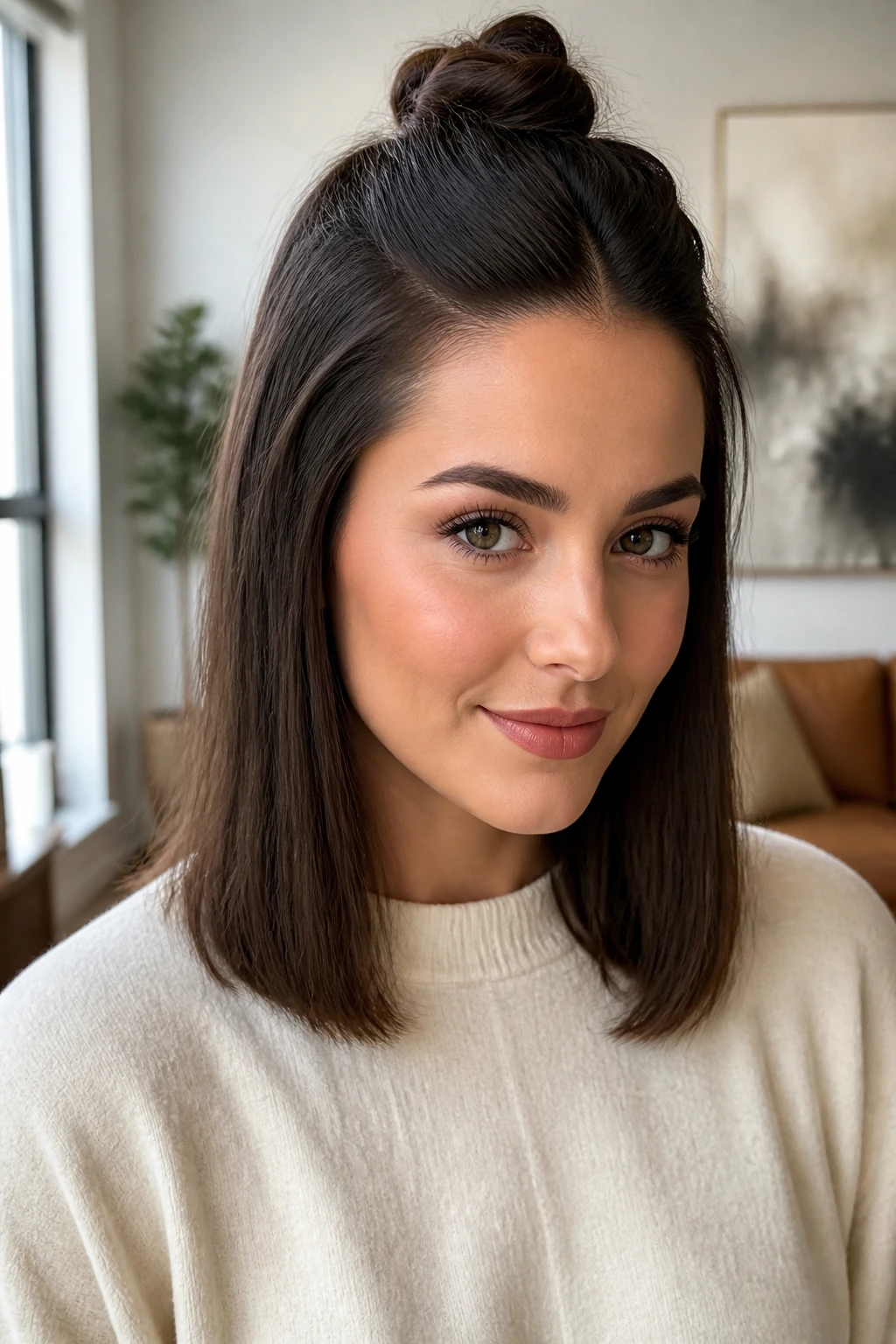
A tiny half-up knot sounds simple because it is simple. But it also gives shoulder-length straight hair a very specific shape: lifted at the crown, clean through the sides, and loose through the bottom half. The result feels neat without going formal.
The knot itself should stay small and tight. If you pull too much hair into it, the shape starts to sag and you lose the neatness that makes the style work. I like this best when the bottom half has been flat-ironed straight and the top section has just enough smoothing serum to control flyaways.
This is a good option when you want hair off your face but don’t want a ponytail. It also plays nicely with straight ends that are a little too blunt to curl. The knot gives the style a focal point, so the cut looks intentional even on second-day hair.
10. The Soft Bend at the Ends
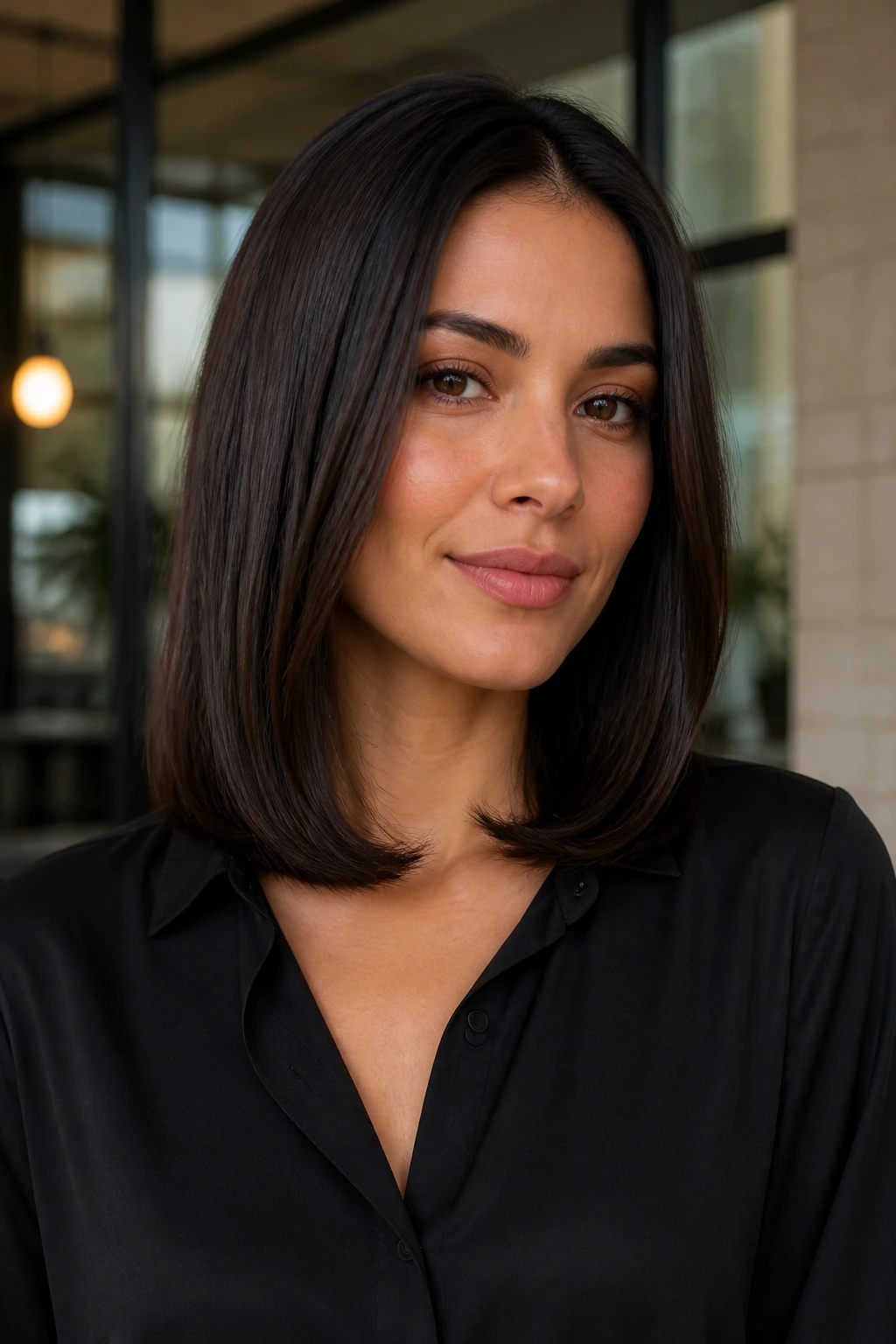
A completely straight finish can look sharp, but a soft bend at the ends often looks more wearable. The hair still reads as straight. It just doesn’t look ruler-flat. At shoulder length, that tiny inward curve or gentle outward roll keeps the ends from disappearing into your shirt.
I prefer this look on days when the outfit is crisp and the hair needs a little less severity. A button-down, a blazer, a simple tank — the bent ends make all of it feel finished. The bend should live only at the last inch or so. Anything more than that starts to look like an old-school blowout instead of clean straight hair.
Use a flat iron or round brush to turn the ends just slightly inward. One tiny twist. That’s enough. If you make the bend on every piece in the same direction, the style looks expensive in a very quiet way.
11. The Straight Lob With Full Fringe
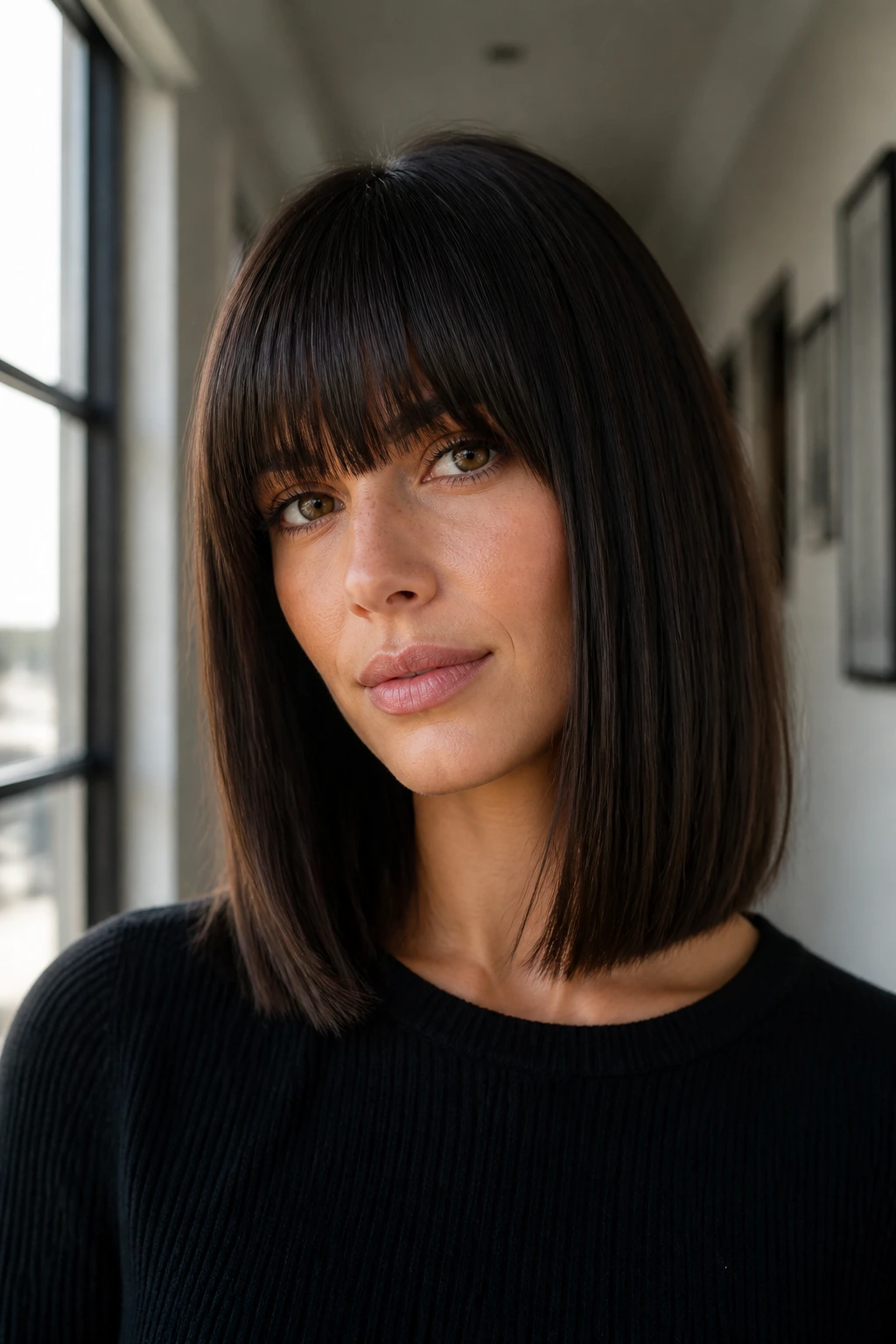
A full fringe changes the whole geometry of shoulder-length straight hair. The cut becomes more graphic, more focused, and a little more dramatic around the eyes. Done well, it looks sharp. Done poorly, it can look heavy, so the fringe has to be handled with care.
The rest of the hair should stay smooth and relatively simple. That keeps the bangs from competing with the length. I like this look when the fringe is cut blunt but not thick enough to block the eyebrows completely. You want a line. Not a blanket.
What to watch for
If your forehead is short or your hair grows forward fast, the fringe can need more maintenance than the length itself. Bangs show every cowlick. They also show oil first. But when they’re fresh, there’s nothing else in this list that frames the eyes as hard and clean.
A narrow round brush, a blow-dryer nozzle, and a very light hand are your best friends here.
12. The Side-Swept Front Section
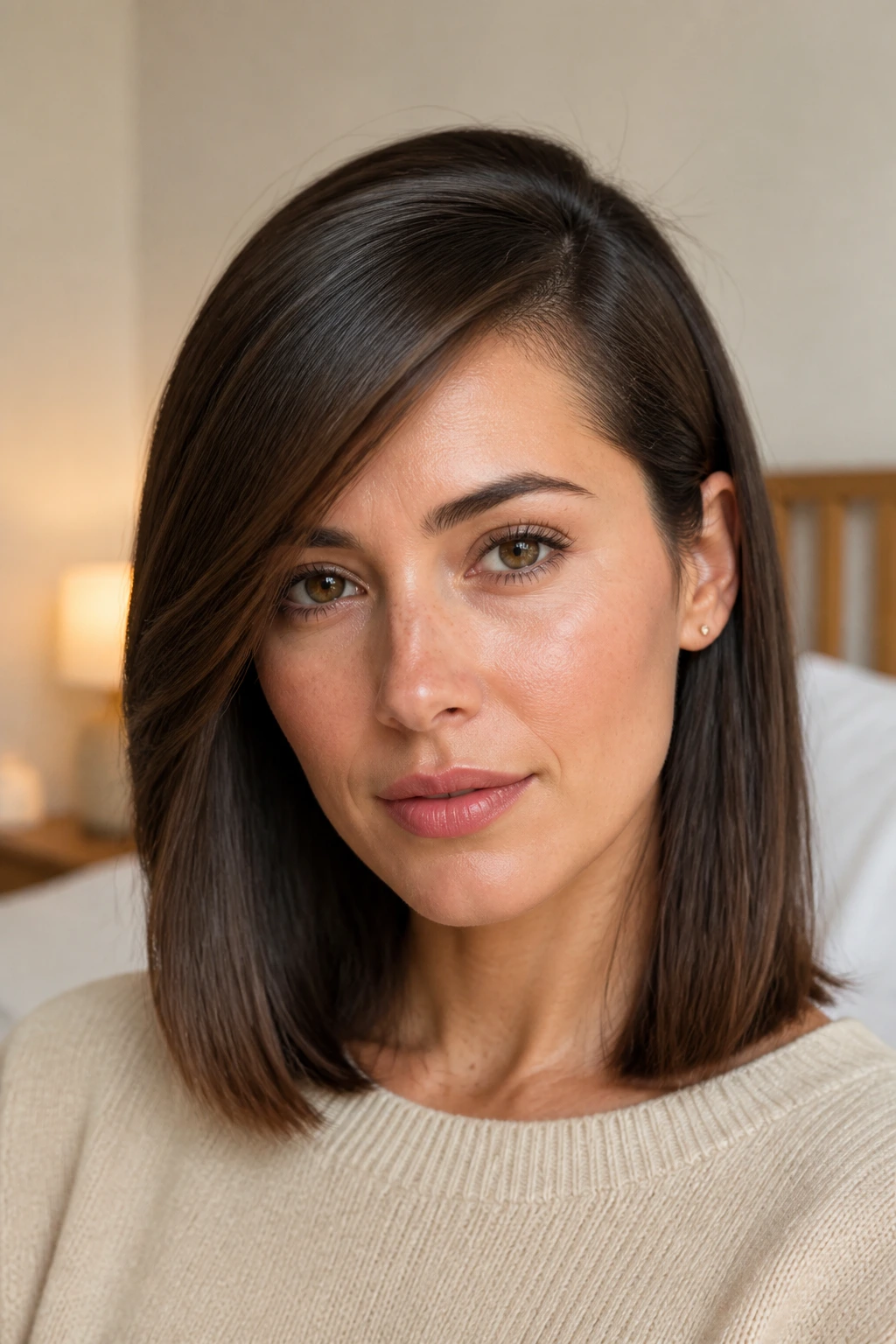
This style is the cleanest answer for anyone who wants straight hair but doesn’t want to wear a fully symmetrical part every day. Sweep the front section across the forehead, pin or tuck one side, and let the rest fall straight and still. The effect is subtle, but the face changes shape fast.
I like this when the roots feel a little flat and the crown needs a bit of movement. The sweep gives you the illusion of lift without backcombing. It also works nicely with a long face because the diagonal line softens the vertical stretch.
There’s one little trick here: the front section needs to blend, not sit on top like a separate piece. Smooth it with a brush first, then direct it across the forehead with the air from the dryer or the warm pass of an iron. If it feels too heavy, thin it slightly at the ends rather than cutting it shorter.
13. The Flip-Out Ends Lob

Flip-out ends can look retro, but on shoulder-length straight hair they also read as clean and bright. The silhouette is still straight through the length; the ends just kick out a little. That tiny flick keeps the cut from feeling too closed in.
This style loves a blunt perimeter. The cleaner the edge, the better the flip reads. I’d avoid over-layering here because the ends need enough weight to hold that outward bend. Too much texture and the style becomes fuzzy instead of sleek.
Use a flat iron to bend the last inch away from the face on both sides, or alternate the direction slightly for a looser finish. The result is one of those rare styles that looks polished and playful at the same time. Not goofy. Just a touch more alive.
14. The Wet-Look Straight Finish
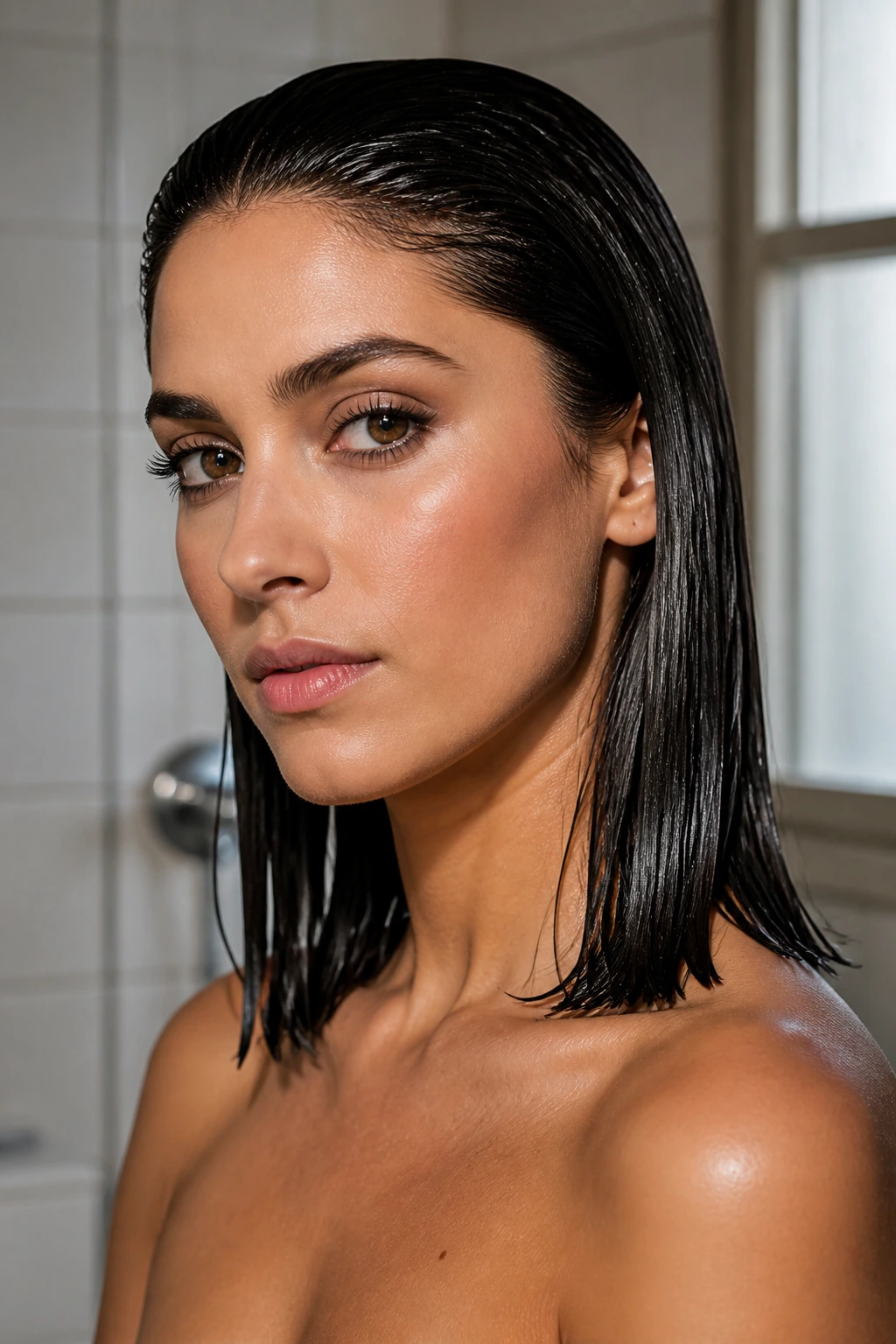
Wet-look straight hair is one of the boldest ways to wear shoulder length if you like a sharp finish that doesn’t pretend to be natural. The roots sit close to the head, the surface looks glossy, and the whole style has that sleek, editorial feel that either makes sense for you or absolutely doesn’t. No middle ground.
The good version relies on product placement. Apply gel or a gel-cream to damp hair, comb it through with a fine-tooth comb, and direct the hair into the shape you want before it dries. If you wait too long, the hair sets in the wrong direction and you get crunchy pockets instead of a smooth finish.
This works especially well when the weather is humid or the outfit is minimal. It gives the shoulder-length cut a clean edge and stops flyaways from stealing the show. Keep the makeup or clothing simple if you want the hair to stay the star.
15. The Ear-Tuck With Statement Earrings
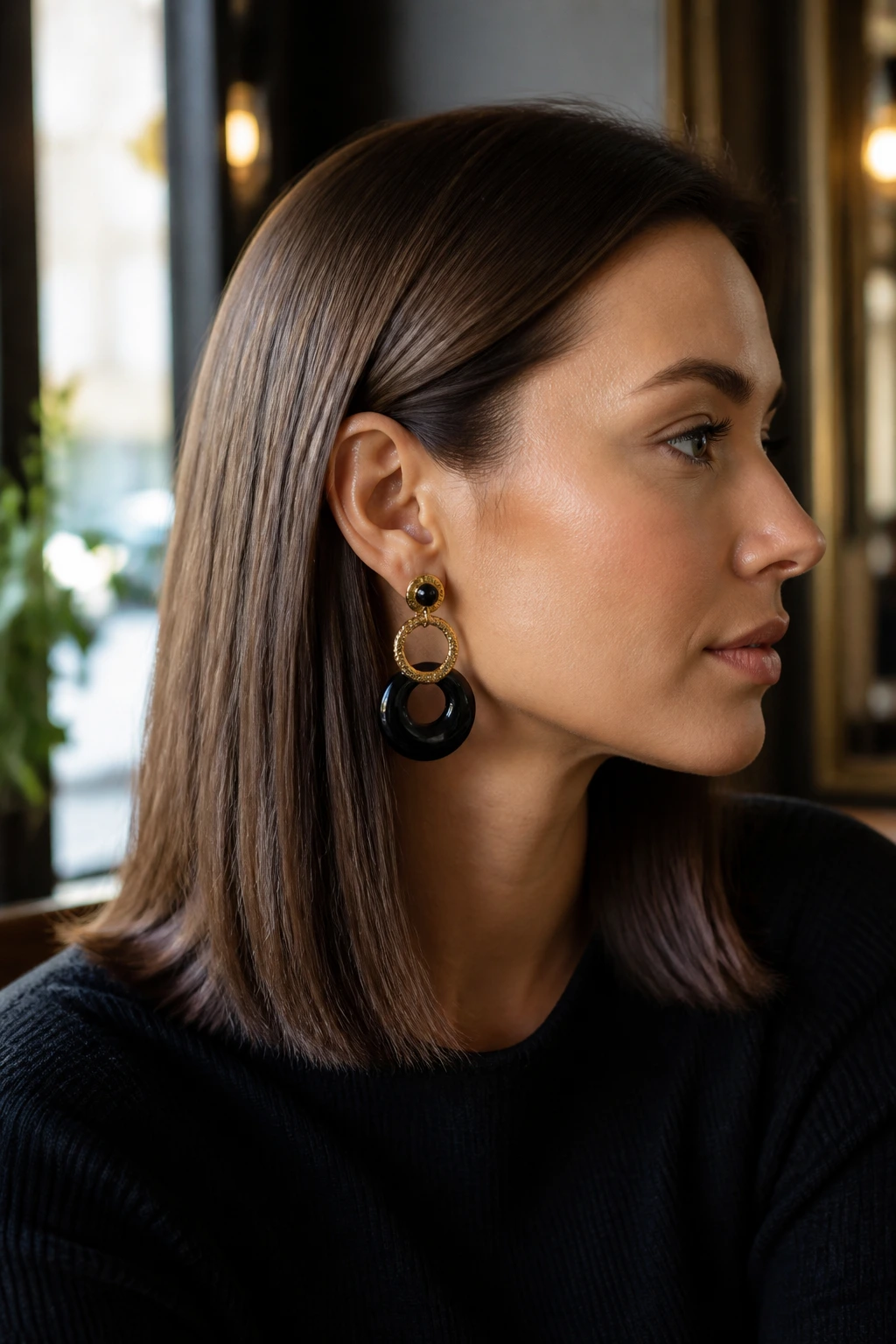
Sometimes the hairstyle is not the hair. Sometimes it’s the tuck. Shoulder-length straight hair tucked neatly behind one ear creates a line that frames the jaw and leaves room for earrings that actually deserve attention. You keep the length down, but one side becomes a stage.
The best part is how little hair you need to move. Straight hair loves this trick because it stays where it’s placed. A touch of serum on the tucked side helps keep it smooth, and a hidden bobby pin under the back section can stop the tuck from sliding out after lunch.
This is a useful choice when you want polish without looking overstyled. The hair still hangs loose, but the face gets a little architecture. If your hair naturally flips outward near the shoulders, this is a good way to control the front and let the ends do whatever they’re going to do.
16. The Braided Side Accent
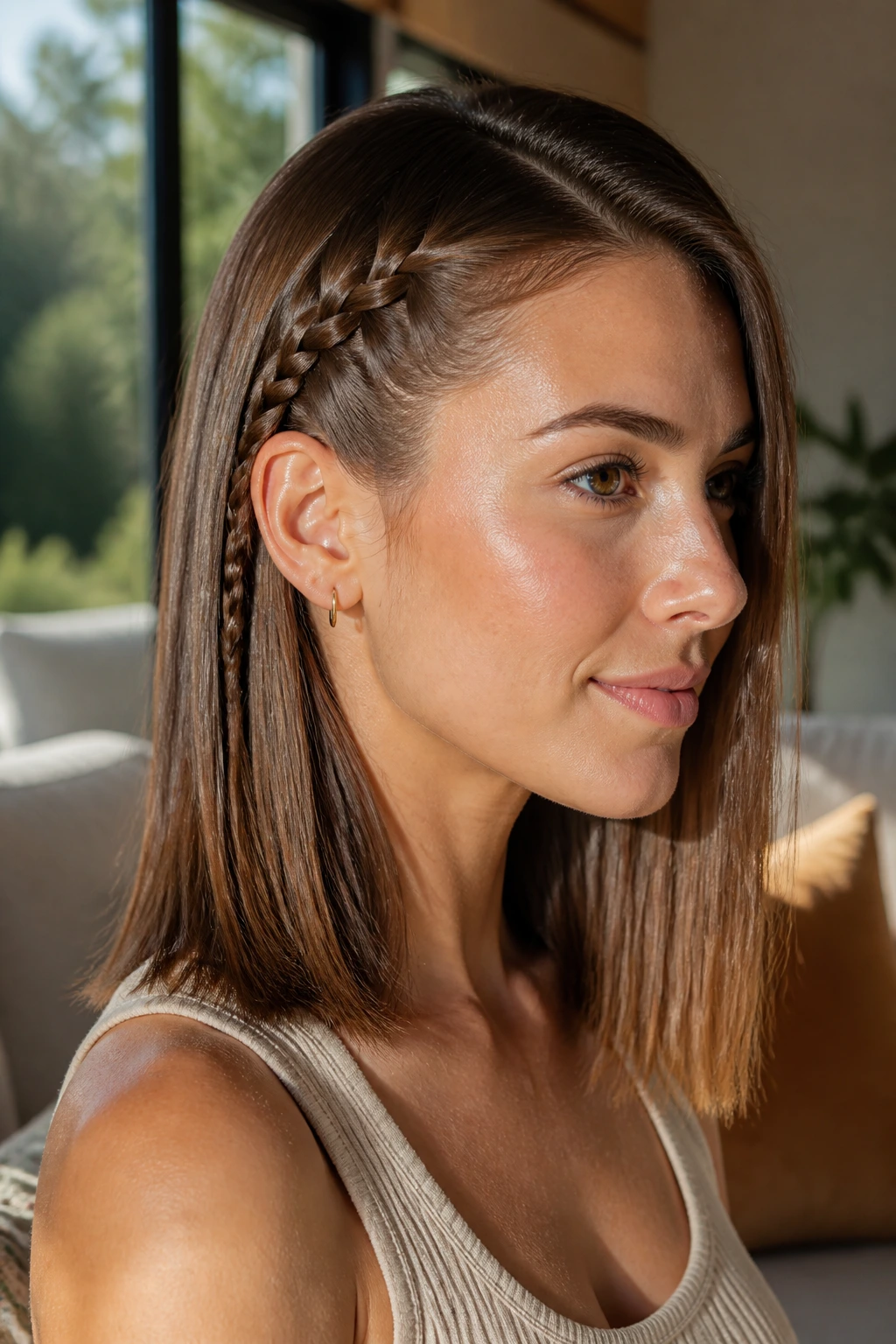
A thin braid along one side can make straight shoulder-length hair feel more deliberate without stealing the sleekness. The braid should stay narrow — almost decorative — so it doesn’t take over the shape. Think accent, not centerpiece.
This is a smart move if you like clean hair but want one small detail that keeps the style from looking too plain. The braid can start near the temple and disappear behind the ear, or it can run along the hairline and merge into the rest of the length. Either way, the straight finish underneath should stay smooth.
A braid like this also helps with hair that slips out of clips. The woven section creates grip. That sounds minor, but for fine straight hair, it matters. It gives the style a little structure without adding bulk.
17. The Low Knot With Loose Ends

Shoulder-length hair won’t always make a full bun without some pieces slipping out. Good. That gives the low knot its charm. Pull the hair into a low twist, fold it into a knot at the nape, and let a few ends remain visible. The result looks clean but not overcontrolled.
I like this style when the hair is a day or two past washing and the roots need a little taming. The knot pulls the finish together, and the loose ends keep it from feeling too severe. If you use a narrow elastic and pin the knot flat against the head, the style holds better than people expect.
This one sits in a nice middle ground between ponytail and chignon. It’s not formal, but it looks considered. And because shoulder-length straight hair doesn’t have enormous volume at the ends, the knot tends to stay compact instead of puffing outward.
18. The Polished Blowout With Feathered Ends
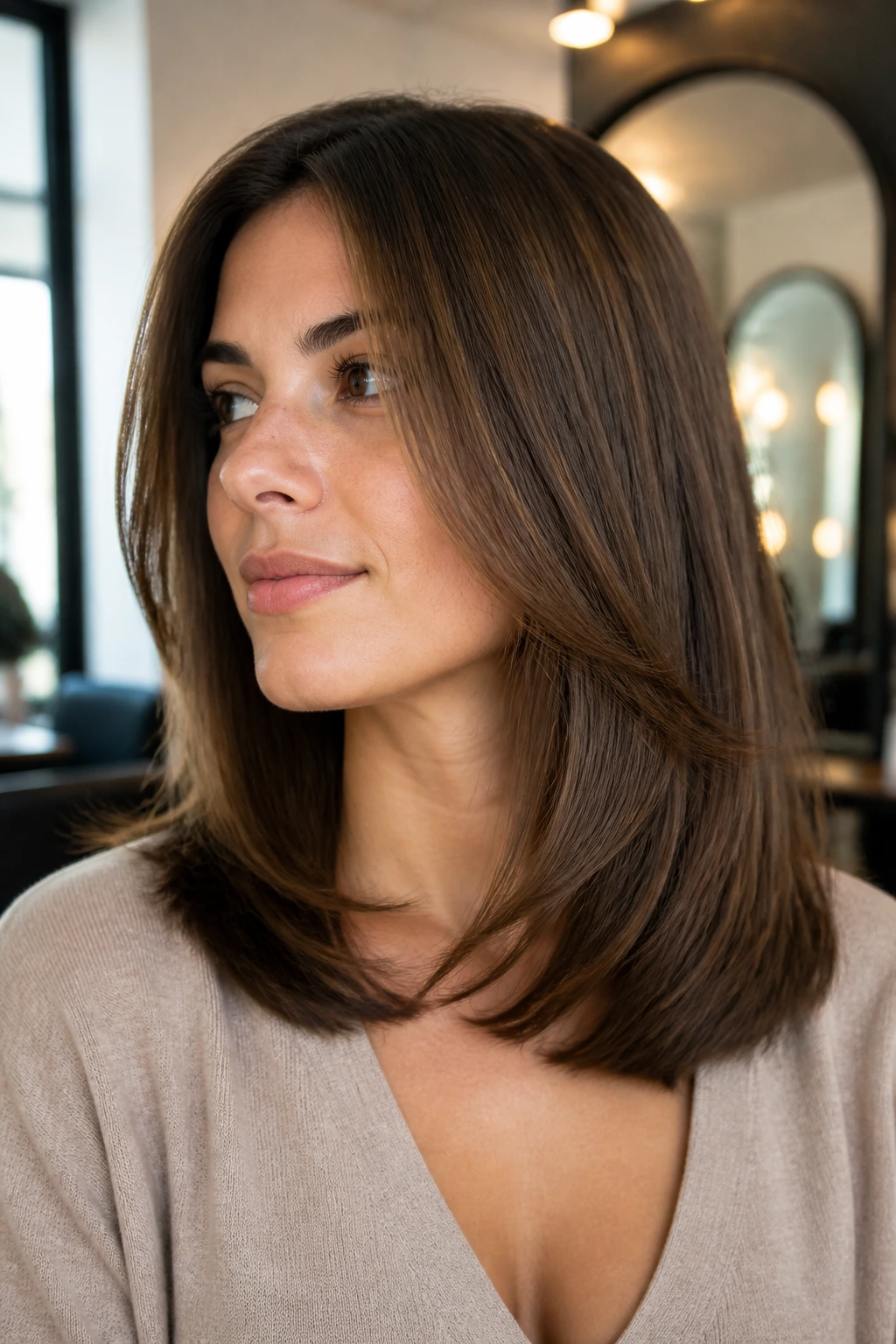
A polished blowout on shoulder-length straight hair gives you the smoothness of straight hair with just enough softness at the ends to keep it from looking cut with scissors and left there. The hair moves. The finish stays sleek. The shape feels a little friendlier than a severe blunt line.
This is the style I’d pick if you want straight hair that still has some swing around the shoulders. Use a round brush or a large paddle brush with a dryer nozzle, lifting the root and rolling the ends under or slightly away from the face. The key is control, not volume. You are not trying to build a pageant blowout.
Why it holds up
Because the ends are feathered lightly, the style keeps its shape when you turn your head or pull on a coat. It also grows out more gracefully than a hard blunt cut. If your hair tends to flatten at the top but puff at the ends, this is the version that makes the whole thing look balanced.
The Shape That Makes Shoulder-Length Hair Behave
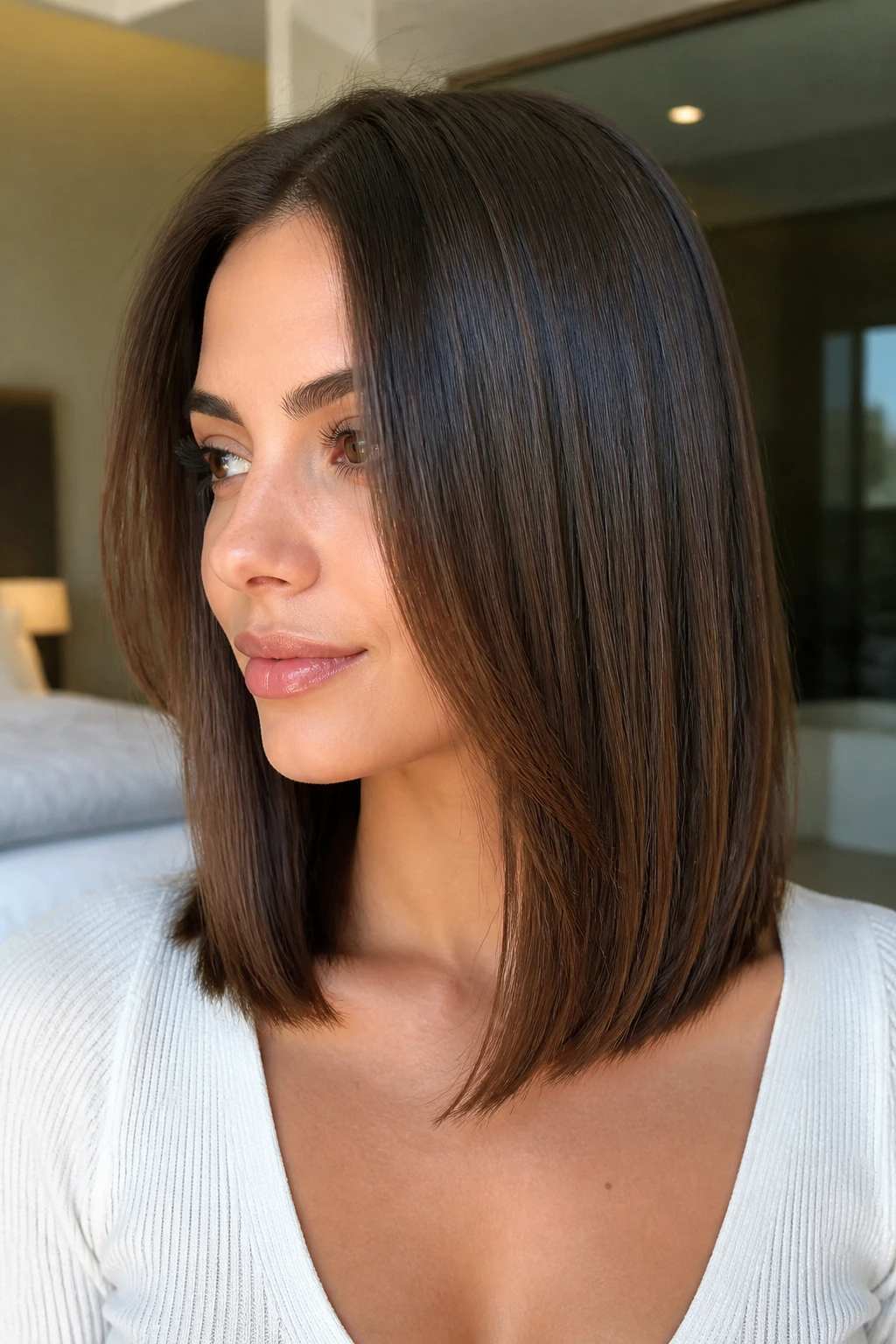
Shoulder-length straight hair works because the cut gives the style a stopping point. That sounds almost too simple, but it matters. Hair that lands around the shoulders keeps enough weight to look smooth, yet it isn’t so long that every pass of wind or humidity turns into a cleanup job.
The other advantage is line. Straight hair is at its best when the eye can follow it cleanly from roots to ends. Shoulder length gives you that line without asking the hair to carry too much bulk. A center part looks centered. A tuck looks intentional. A blunt end looks blunt. Nothing gets lost in the length.
And if you’ve ever noticed that a shorter straight cut feels sharper after a trim, that’s not in your head. At this length, a half-inch of split ends changes the whole mood of the style. Clean edges matter here more than they do on a layered long cut, which is why maintenance becomes part of the look instead of an afterthought.
The Tools That Actually Pull Their Weight
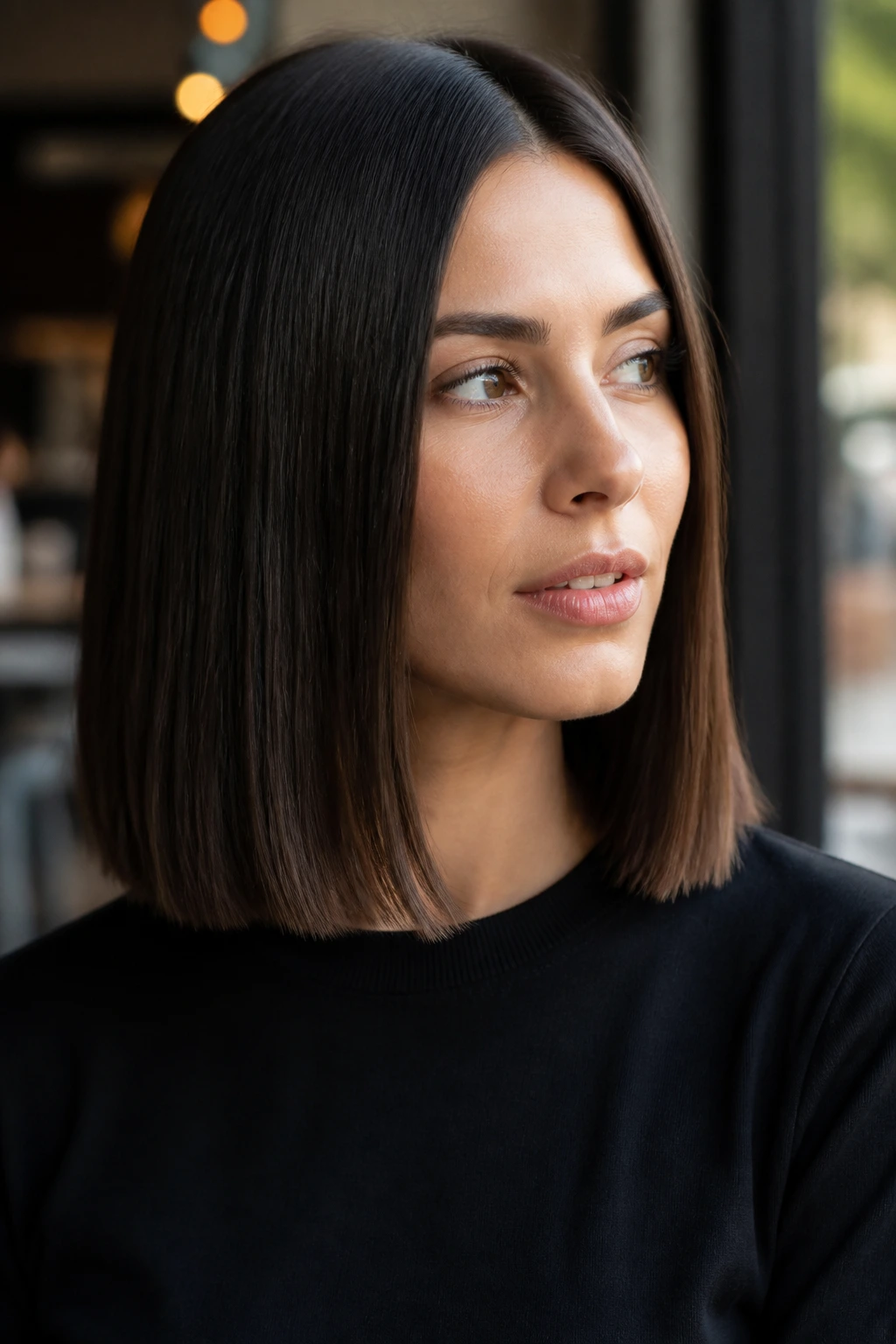
You do not need a drawer full of hot tools to make shoulder-length straight hairstyles look sleek. You need a small set of tools that work hard and don’t fight each other.
- Blow dryer with a concentrator nozzle: Directs airflow so you can smooth the roots instead of blasting the cut sideways.
- 1-inch to 1.25-inch flat iron: Best for straightening short sections and shaping tiny bends at the ends.
- Paddle brush: Helps stretch the hair smooth during blow-drying, especially on thicker textures.
- Fine-tooth comb: Useful for sharp parts, wet looks, and clean low ponytails.
- Boar bristle brush: Good for polishing the surface and pulling the crown flat without wrecking the part.
- Sectioning clips: Keep the top layers out of the way so you can work in thin, neat sections.
- Heat protectant spray or cream: Non-negotiable if you use hot tools more than once a week.
- Light serum or shine mist: A tiny amount on mids and ends gives the finish a smoother look.
- Small clear elastics and bobby pins: Needed for low ponies, tiny knots, and tucked styles that need a little hold.
How to Get the Cleanest Finish Without Fussing Forever
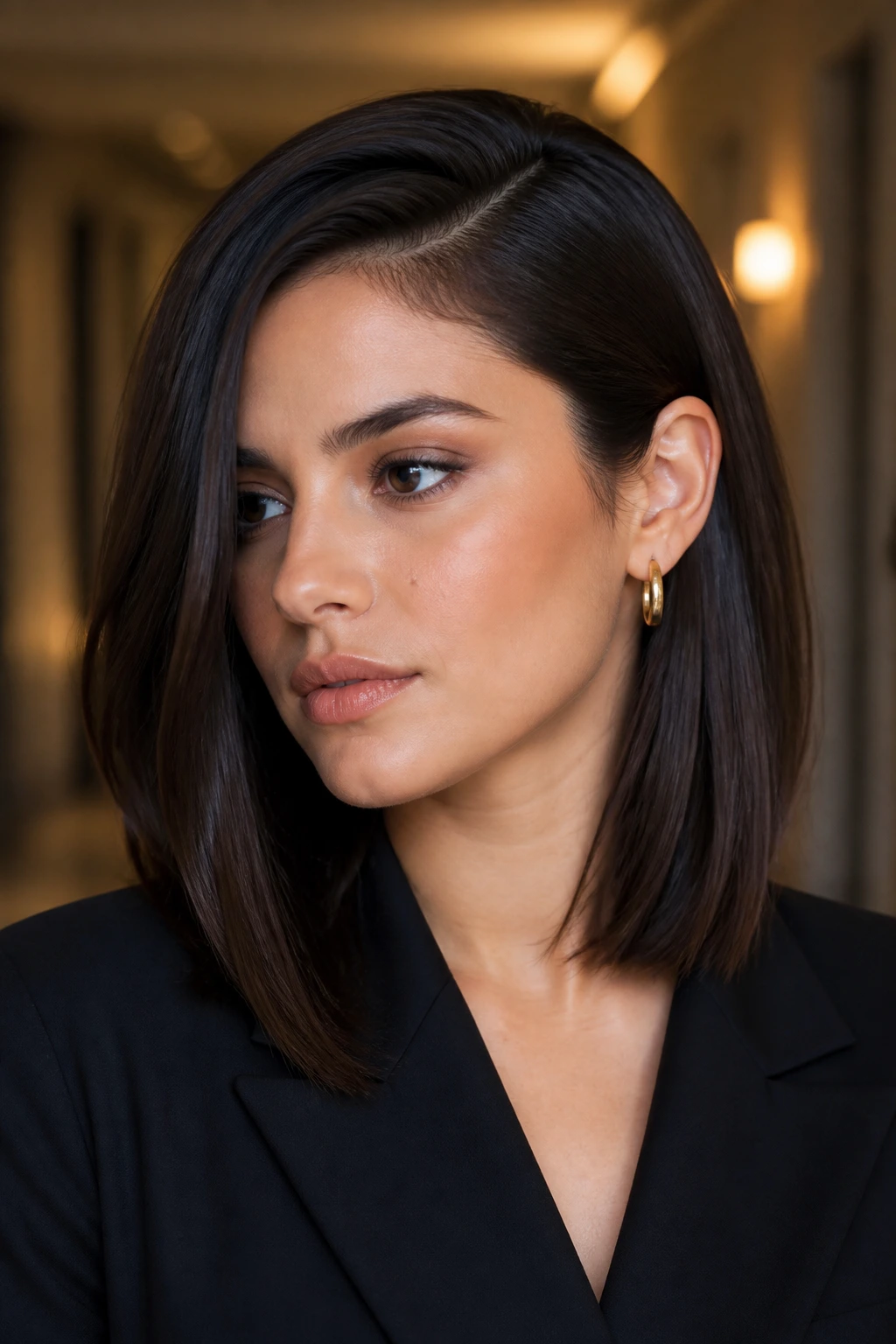
The fastest way to make straight shoulder-length hair look polished is to stop trying to style too much hair at once. Thin sections. That’s the whole thing. A flat iron can smooth a broad section, but it usually won’t smooth it evenly, and you end up with one shiny layer sitting on top of one frizzy one.
Prep matters more than most people think. Start with hair that’s fully dry. If it feels even slightly damp in the crown, the style won’t hold. Use heat protectant from roots to ends, then comb it through so you don’t leave a sticky patch in one spot.
Keep your iron temperature honest. Fine hair usually needs less heat than thick or coarse hair, and cranking it up just creates a hot-looking finish with dry ends. You want smoothness, not punishment. One slow pass is better than three hurried ones.
Root control comes first. If the top is flat in the wrong way or puffy in the wrong way, the whole style reads messy. Dry the roots in the direction they need to sit, then let the rest of the hair fall into place.
Finish with restraint. A pea-sized amount of serum is plenty for most shoulder-length cuts. Too much, and the ends separate into greasy strands by lunchtime. If you want more shine, add it to the surface lightly and stop there.
The Mistakes That Flatten a Sleek Style Fast
A sleek style can go from sharp to tired for reasons that seem tiny in the mirror and very obvious in daylight. The fixes are usually small too.
Using too much product at the roots is the first mistake. The hair looks sleek for an hour, then collapses into a greasy helmet near the part. Keep serum and oil away from the crown. Use them only where the hair actually needs slip.
Straightening in thick sections is another one. The outside layer may look fine, but the inner layer keeps its wave or bend, so the shape feels uneven. Work in narrow sections and keep the iron moving at a steady pace.
Skipping trims makes blunt shoulder-length cuts look ragged fast. Split ends do not hide at this length. They stick out. If the ends start looking see-through or fuzzy, the style has already lost some of its polish.
Ignoring the part line can wreck the whole shape. A crooked part or a part that’s too wide at one side makes straight hair look accidental. Use a comb. Check the line in a mirror. It matters more than people want to admit.
Forgetting about humidity is a classic trap. If the air is damp, the hair may need a smoothing cream or anti-frizz spray before hot tools, not after. Post-styling rescue products can help a little, but prevention is the cleaner route.
Variations That Shift the Mood Without Changing the Cut

You do not need a new haircut to change the feel of shoulder-length straight hair. A few tweaks do the job just fine.
The Soft Office Edit: Keep the cut blunt, but add a center part and a faint inward bend at the ends. It looks restrained in a good way and works well when you want clean hair that doesn’t feel severe.
The Weekend Tuck: Push one side behind the ear, add a slim barrette on the other side, and leave the rest loose. This version feels quicker and a little more casual, especially if the hair has natural shine.
The Strong Fringe Switch: Pair a straight lob with a full fringe or curtain bang if you want more face framing. The length stays the same, but the front creates a whole new silhouette.
The Thick-Hair Control Version: Ask for invisible layers and keep the surface smooth. This is the move for hair that turns bulky at the shoulders and needs the interior weight taken down a notch.
The Glossy Night-Out Finish: Use a bit more serum, flatten the part, and tuck both sides cleanly behind the ears. It’s the same cut, but the finish reads dressier with almost no extra effort.
Keeping the Length Sharp Between Wash Days
Shoulder-length straight hair looks best when the ends stay tidy. That means a little upkeep, not a complicated routine. For blunt cuts, a trim every 6 to 8 weeks keeps the line crisp. If you have light layers or a softer shape, you can sometimes stretch that to 8 to 10 weeks, but watch the ends. When they start turning wispy, the whole look softens.
Dry shampoo helps at the roots, but don’t overdo it. A light mist at the crown is usually enough to buy you one more day of clean-looking hair. If you use too much, the roots turn chalky and the straight style loses its shine. That’s the opposite of what you want.
At night, a silk or satin pillowcase keeps the surface smoother and cuts down on that weird ridge you get from sleeping with your head pressed into cotton. If the hair tends to bend badly overnight, a loose low ponytail with a soft elastic can help keep the ends from kinking.
Heat styling between washes should stay moderate. You don’t need to run the flat iron on full blast every morning. Spot-smooth the front pieces, fix the part, and leave the rest alone if it still looks clean.
Frequently Asked Questions
What shoulder-length straight hairstyle is best if my hair is fine?
A blunt lob with a center or slightly off-center part usually gives fine hair the most visual density. Avoid heavy layering, because it can make the ends look see-through. A little root lift at the crown helps more than piling on product.
Can shoulder-length straight hair look good on thick hair?
Yes, but the cut matters. Invisible layers or a soft A-line shape keep thick hair from ballooning at the shoulders. Without that internal shaping, the style can look bulky and harder to smooth.
How do I keep straight hair from looking flat at this length?
Give the roots some direction when you blow-dry, then switch the part or tuck one side if the top starts falling too close to the scalp. A tiny bend at the ends also keeps the shape from going limp. Flat doesn’t have to mean lifeless.
Do bangs work with shoulder-length straight hairstyles?
They do, but the fringe needs to match the rest of the cut. Blunt bangs create a sharper, more graphic look, while curtain bangs soften the front and give you more room to change the part. If you hate maintenance, bangs are the least forgiving part of the whole setup.
What’s the easiest style to do on busy mornings?
A tucked side with a clean part takes almost no time and still looks intentional. If the hair is already smooth, a barrette, a side tuck, or a low ponytail gets you out the door fast without losing polish.
How often should I trim shoulder-length straight hair?
Blunt edges usually need a trim about every 6 to 8 weeks. If the style has softer ends or face-framing pieces, you can often wait a little longer, but the line should still look tidy in daylight. Once the ends start fraying, the shape loses its whole point.
Can I wear these styles without heat tools?
Some of them, yes. The low ponytail, ear tuck, half-up clip, and braided accent can all work with air-dried hair if your texture already lies fairly smooth. For the glass-hair and blunt lob looks, heat styling makes a much bigger difference.
What if my hair flips out at the shoulders?
That usually means the ends need either a stronger blunt line or a small inward bend when you style it. Shoulder length is exactly where hair likes to kick outward if the weight isn’t balanced. A quick pass with a flat iron at the ends usually fixes it.
The Clean Line Is the Point
Shoulder-length straight hairstyles work because they understand restraint. They give you enough length to tuck, clip, part, and move, but they stop before the shape turns fussy. That’s why the same cut can look sharp with a deep side part on one day and soft with a low ponytail the next.
I like this length because it respects the hair’s natural behavior instead of fighting it all morning. You still need a good trim. You still need a tidy finish. But once the cut is right, the rest becomes easier than people expect.
And that, honestly, is the real appeal: a shoulder-skimming straight style can look finished with one clean pass and one honest part line. Keep the ends neat, keep the roots controlled, and the whole look stays ready for whatever the day throws at it.
