



Straight hair at medium length has a reputation for looking simple. It isn’t. The shape lives or dies on the cut line, the part, and what happens to the last inch of the ends when they meet your shoulders.
That’s why medium length straight hairstyles can look sleek and expensive in a way that longer hair often can’t manage without more work. At this length, you see the outline immediately. You see bluntness. You see density. You see where a face frame starts, where a part lands, and whether the ends were handled with a dull pair of shears or with some care.
That visibility is the advantage. It gives you room to look polished without pretending the hair did all the work by itself.
Why These Medium Length Straight Hairstyles Keep Paying Off
-
Shape shows fast: Straight strands at collarbone length reveal the haircut cleanly, so a blunt edge, a soft bend, or a tucked side reads right away instead of disappearing into a curtain of length.
-
Styling takes less wrestling: Medium length hair is long enough to tuck, pin, or clip, but short enough that a blow-dry or flat iron session usually stays under 20 minutes when the sectioning is clean.
-
Flat roots are easier to fix: A little lift at the crown goes a long way here, because medium straight hair doesn’t have the drag of very long hair pulling everything down.
-
Face-framing details matter more: Curtain bangs, side parts, long fringe, and cheekbone pieces actually show up at this length instead of getting buried.
-
The finish can change the whole mood: The same cut can read crisp, soft, sharp, or casual just by changing the part line, the end bend, or whether you tuck one side behind the ear.
-
It works with real life: If you need something that can move from office to dinner without a full restyle, medium length straight hair gives you more options than a very short cut and less maintenance than waist-length hair.
1. The Blunt Collarbone Lob
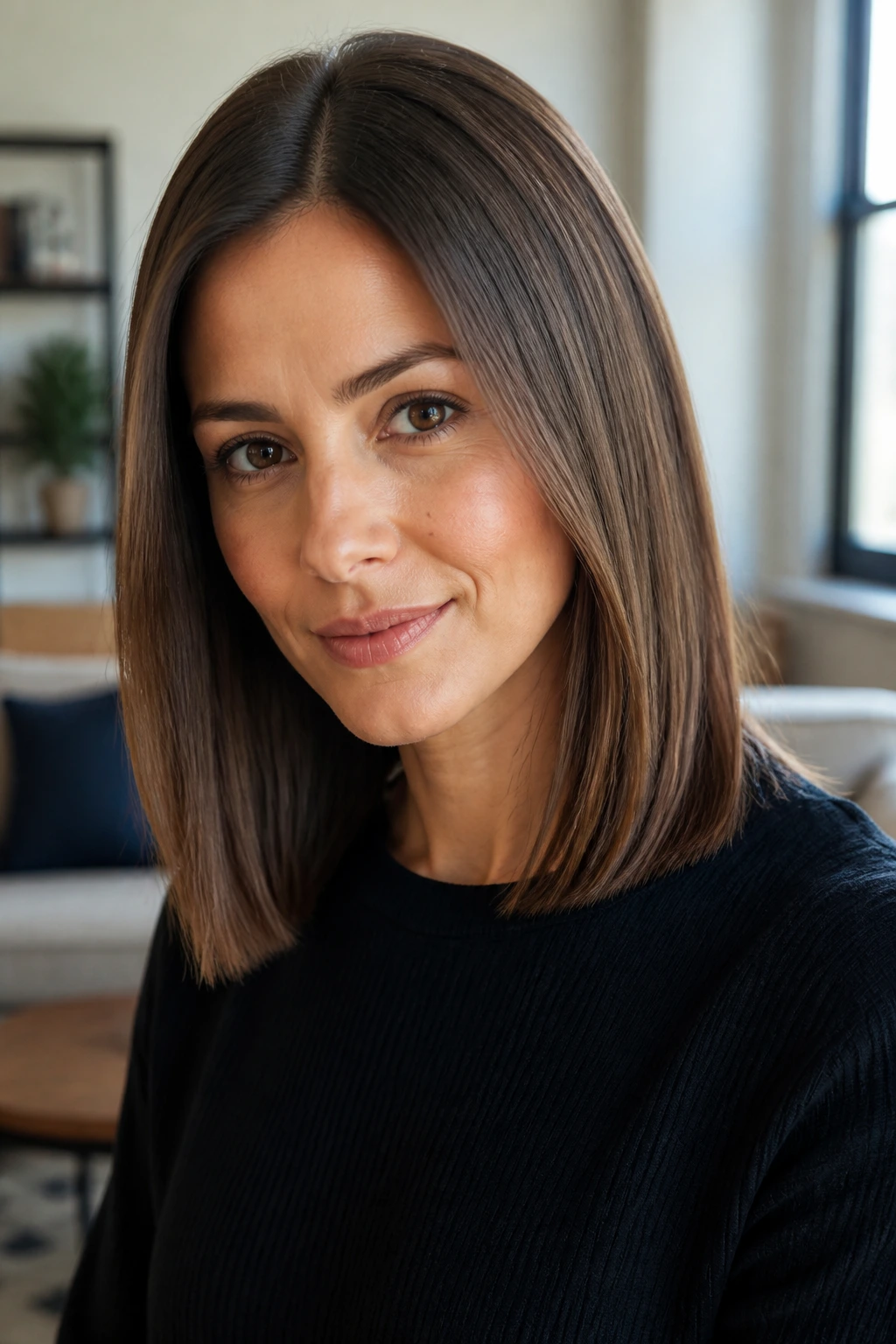
The blunt collarbone lob is the cleanest place to start because it does one thing well: it holds a line. The ends sit just around the collarbone, so the cut catches light without collapsing into your neck or flipping out in a messy way every time you move. On straight hair, that blunt edge looks deliberate. No filler. No fuss.
What Makes It Work
The blunt perimeter gives fine or medium-density hair a denser look because every strand lands in the same visual line. That matters more than people think. A shoulder-skimming cut with too much thinning can start to look wispy by day two, while a blunt lob keeps its outline even if you sleep on it slightly crooked.
I like this shape best with a center part or a shallow side part and the tiniest inward bend at the ends. Not a curl. Just a soft turn under, enough to stop the cut from looking boxy.
- Best for: fine hair, medium-density hair, narrow faces, and anyone who likes a sharp silhouette.
- Styling cue: finish with a flat iron bend on the last 1 inch only.
- Avoid: aggressive razoring at the ends; it breaks the clean line and makes the whole cut look tired fast.
Small tip: Ask for the front pieces to hit a touch lower than the back if you want the lob to sit cleanly on the shoulders instead of kicking outward.
2. Glass-Hair Center Part
Glass hair is not the same thing as flat hair. That’s the part people miss. The shine matters, yes, but the shape matters more: a straight center part, smooth lengths, and ends that lie so neatly they almost look painted on.
If your hair already falls straight with very little wave, this look is a gift. If your hair has a little bend, it still works, but you need sectioning, heat protectant, and a flat iron that closes without snagging.
The finish should feel sleek, not crunchy. I’m picky about this. Too much serum turns the roots greasy and the lengths slippery in a bad way. Use the smallest amount you can get away with, then add another half-drop only to the last two inches if the ends look dry.
How to Get the Right Finish
A fine-tooth comb is doing half the work here. Part the hair cleanly down the middle, blow-dry the roots in that direction, then pass the iron in slow, single movements from midshaft to ends. If the hair is healthy, the light should bounce off it in a soft line rather than in blotchy patches.
Key point: this look is strongest on medium-length straight hair because the length is long enough to show shine but short enough to stay controlled.
3. Side-Part Tuck-Behind-Ear
A deep or even moderate side part changes the whole mood of medium length straight hair. Add one tucked side, and the style suddenly has shape around the cheekbone and jaw instead of hanging evenly on both sides. It’s a small move. It does a lot.
This is one of those looks that feels casual until you realize how much it sharpens the face. The tuck exposes one ear, which gives room for a hoop, a stud, or no jewelry at all if you want the haircut to do the talking. The exposed side also helps balance heavier cheeks or a strong jawline because the eye gets pulled diagonally instead of straight across.
The trick is not to over-flatten the tucked side. Leave a little lift at the root, then slide the hair back with your fingers rather than pressing it hard against the scalp. A combed-back tuck can look severe. A finger tuck looks lived-in.
Best use case: days when you want straight hair to look cleaner without adding waves, curls, or extra styling time.
4. Curtain Bangs with Straight Ends
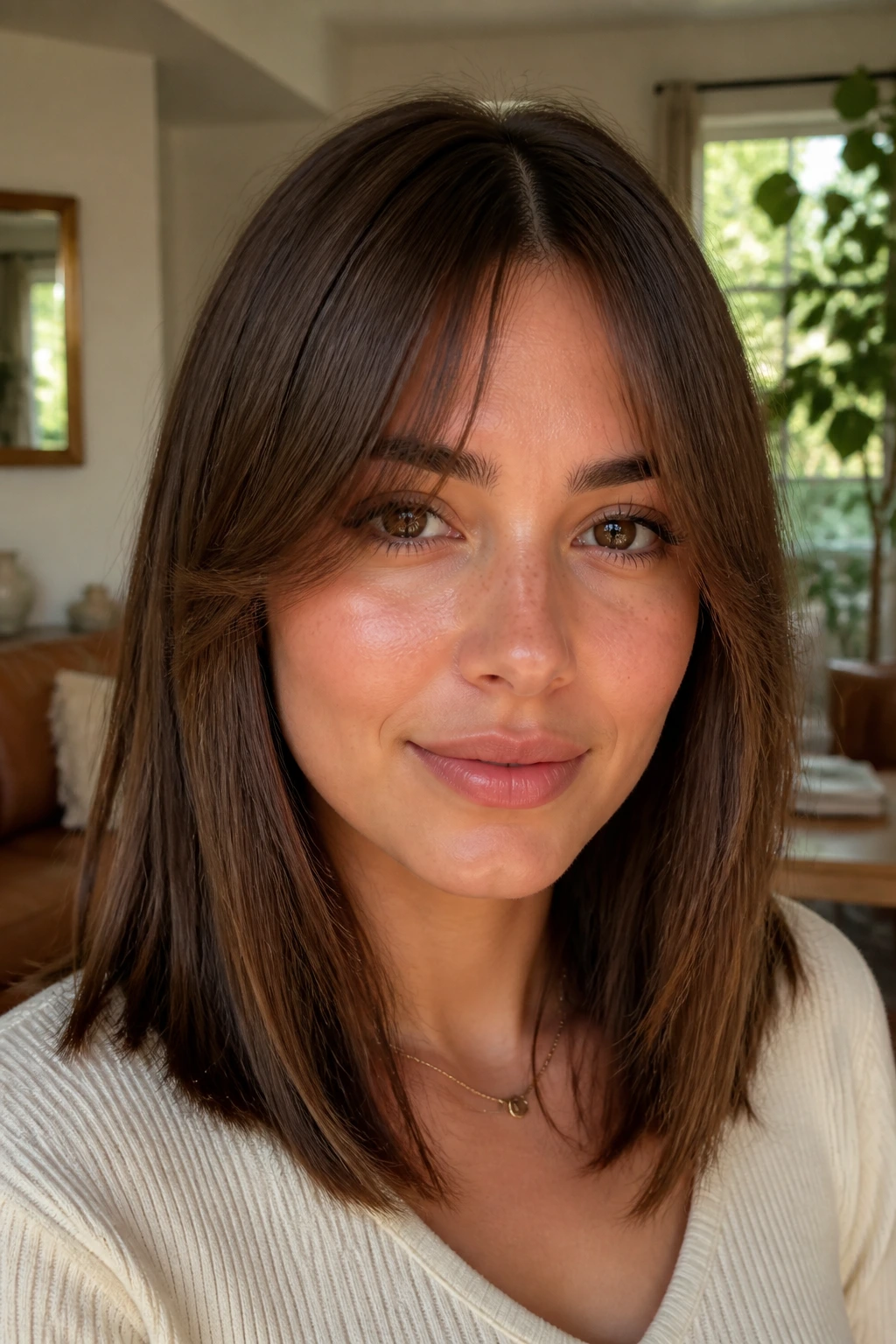
Curtain bangs on medium length straight hair can look soft in a way that blunt fringe never does. They split at the center, skim the cheekbones, and then disappear into the rest of the cut. The rest of the hair stays straight and tidy, which keeps the bangs from feeling too styled for a normal day.
They work because they add motion to the front of the face without forcing the whole haircut to become layered. That’s useful if you want softness but still care about a neat bottom line. The bangs should be beveled just enough to move away from the face; if they’re cut too short or too square, they can sit like a shelf.
What to Ask For
Ask for the shortest point to start around the brow or just below it, then taper into cheekbone length. That gives you room to blow-dry them open with a round brush or push them apart with a flat brush and a warm shot from the dryer.
A small warning: curtain bangs on straight hair need regular trim-ups if you want them to stay airy. Once they grow too long, they stop framing and start hanging.
5. Soft U-Shaped Midi
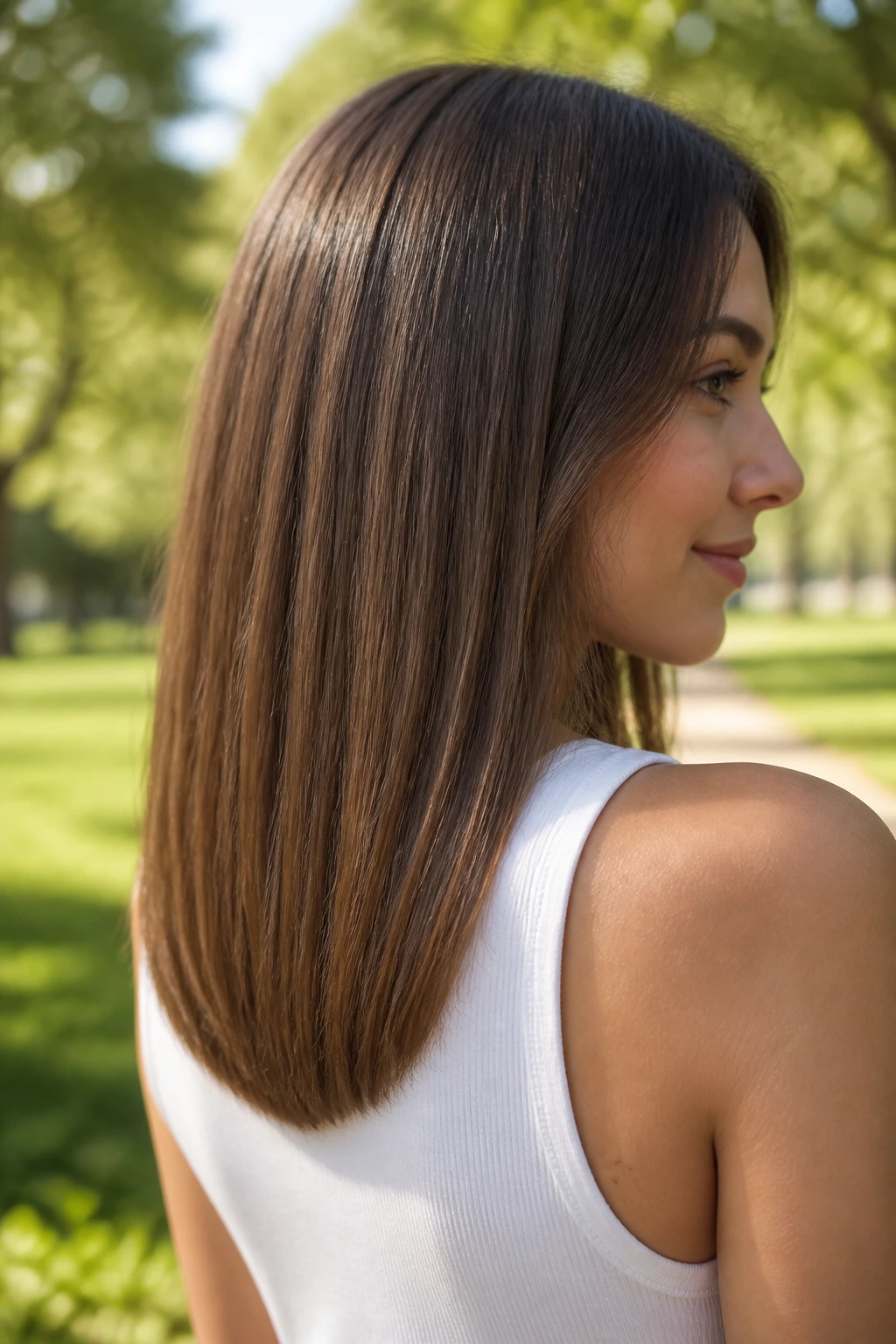
The soft U-shape is one of my favorite cuts for straight hair that needs movement but doesn’t want obvious layers. The center sits a little longer than the sides, so the outline curves gently instead of dropping in a hard line. It’s subtle. That’s the point.
This shape keeps the hair from looking like a ruler across the back, which can happen at medium length if the cut is too blunt and the density is thick. The U-shape eases that problem while still keeping enough weight at the ends to read polished.
Why It Flatters Straight Hair
Straight hair exposes geometry. A U-shape gives the eye a softer path to follow, especially when the hair is tucked behind the shoulders. It also plays nicely with a center part because the slight curve at the back creates balance even when the front is flat and clean.
If you want a little movement without losing the straight look, this is the cut I’d keep in the back pocket. It’s quiet. It doesn’t shout for attention, but it fixes a lot of small shape problems that show up in straight medium hair.
6. Angled Lob with Longer Front Pieces
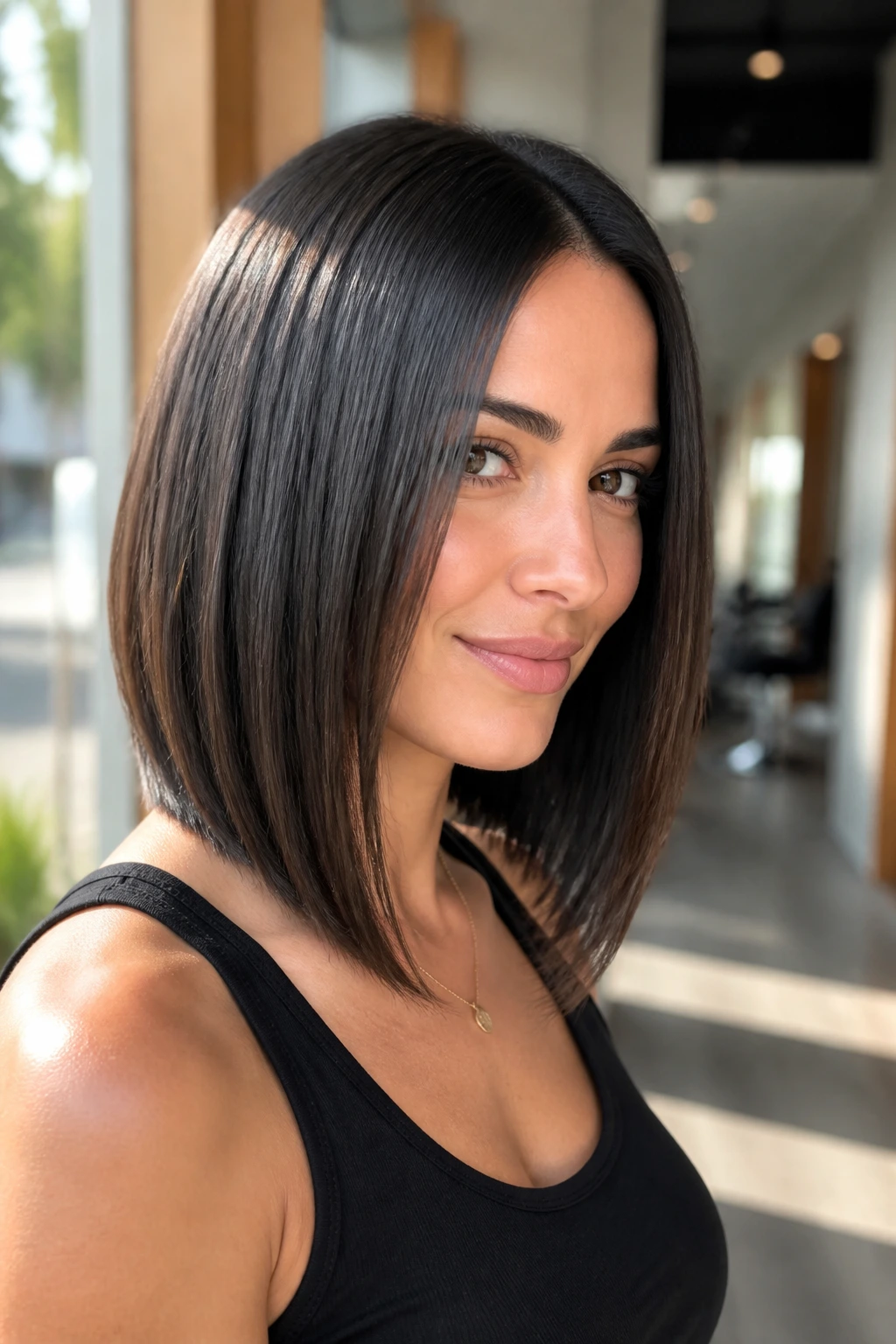
An angled lob gives you a bit of forward motion without committing to a dramatic A-line. The back sits a little shorter, the front drops longer, and the whole shape points the eye toward the collarbone and jaw. On straight hair, that angle reads fast.
The cleanest version is only slightly angled. Too steep, and it starts to look like a dated haircut from a mall salon. Too flat, and you lose the point of the shape. I prefer a gentle angle with the front pieces landing just below the collarbone so they can move when you turn your head.
This cut works especially well if your hair tends to flip outward at the ends. The longer front pieces give that flip somewhere to go without making the style feel messy. If your neck is one of your favorite features, this shape shows it off nicely.
Good match for: rounder faces, thicker straight hair, and anyone who wants a little edge without a sharp contrast.
7. Invisible-Layer Lob
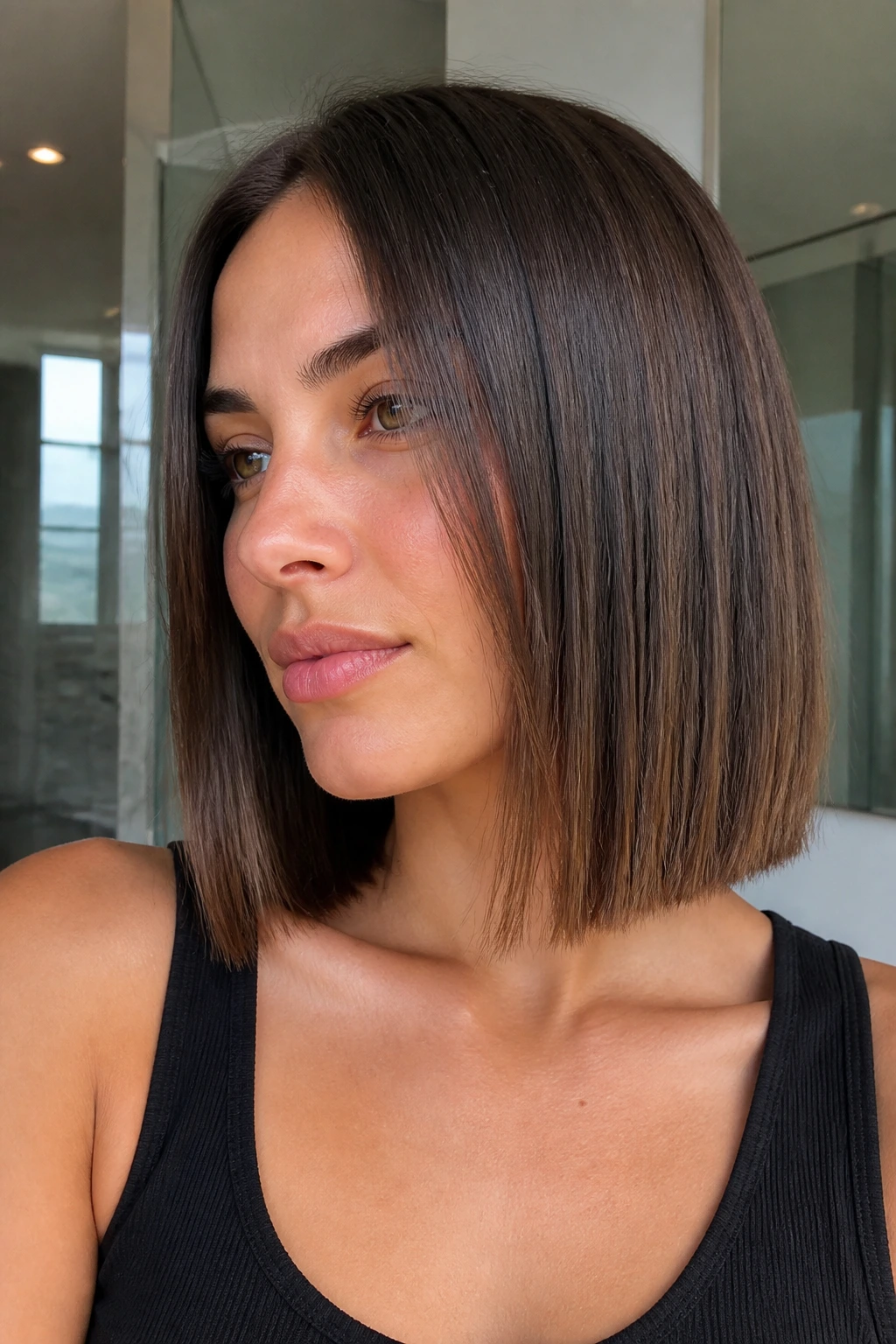
Invisible layers are the quiet fix for straight hair that feels too heavy but shouldn’t look thinned out. The outer line still reads like a lob, but the inside has a bit of movement removed from beneath the top layer. So from the front, you get shape. From the side, you get less helmet.
That balance matters on medium-length straight hair because visible layers can sometimes break the clean line too much. Invisible layers avoid that. The surface stays smooth; the bulk underneath gets taken out in a controlled way.
Why Stylists Reach for This
If your hair is dense, one-length cuts can puff at the bottom and feel bulky around the shoulders. Invisible layers let the hair lie closer to the body without losing the blunt feel that makes straight hair look crisp. I like this cut for people who want to tuck one side, blow it out smooth, and still have enough movement to avoid stiffness.
It’s a cut that behaves well on day two. That matters more than people think.
8. Feathered Face-Framing Layers
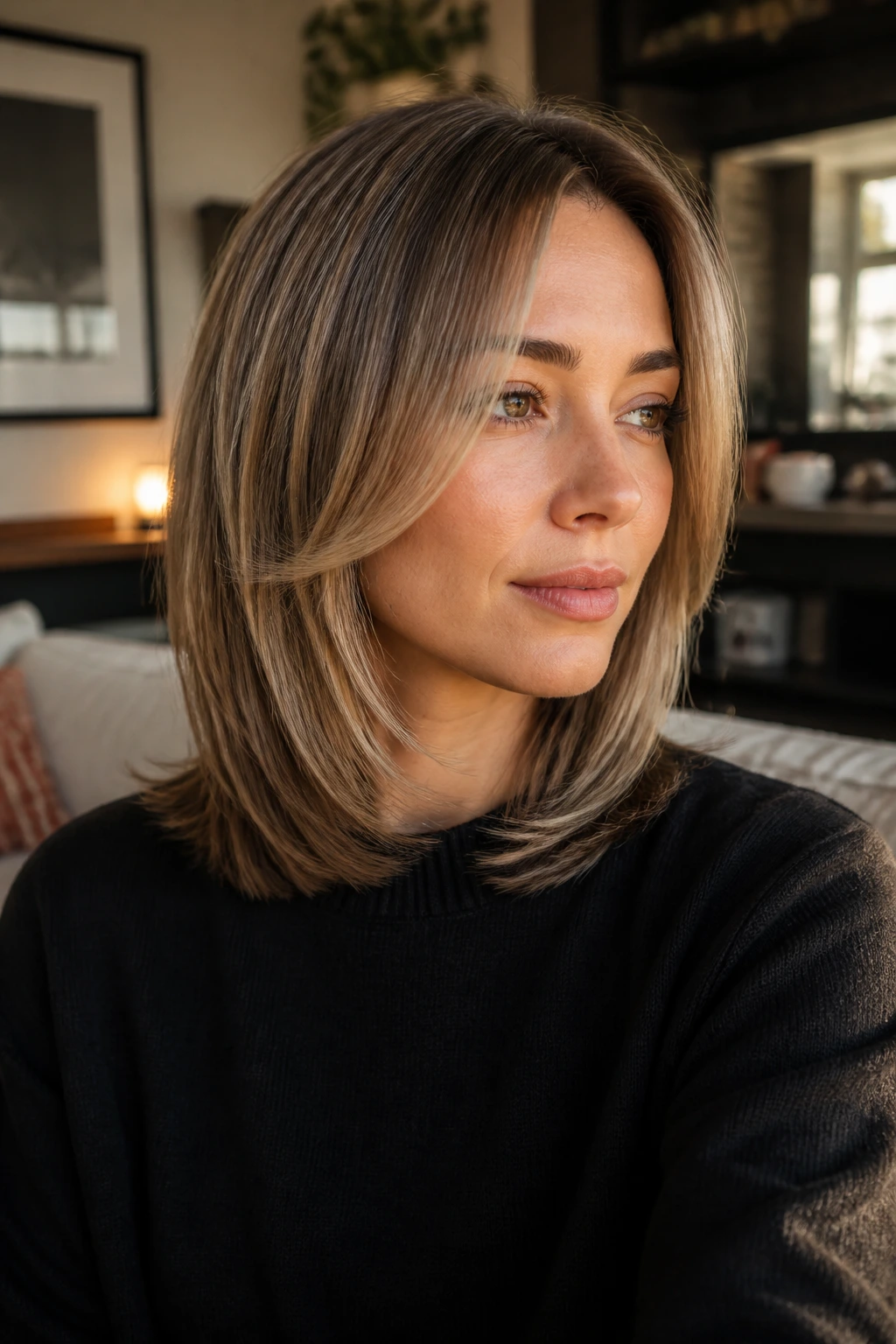
Feathered face-framing layers are the fastest way to soften medium length straight hair without changing the whole cut. They start somewhere around the cheekbone or jaw and taper down in a slimmer shape toward the ends. The rest of the hair can stay mostly straight and simple.
This look is useful when you want the face to feel lighter but don’t want curtain bangs or a heavy fringe. It also works well if you wear glasses, because the front pieces can move around the frames instead of sitting in a hard line against them.
- Short version: feathering keeps straight hair from feeling too severe.
- Best placement: cheekbone to jaw, depending on how much lift you want.
- Styling note: bend the very front piece away from the face, then let the rest fall straight.
The one thing I would avoid is over-feathering. Too much slicing can make straight hair look thin in photos and stringy in person. Keep the layers soft and intentional.
9. Deep Side-Part with Crown Lift
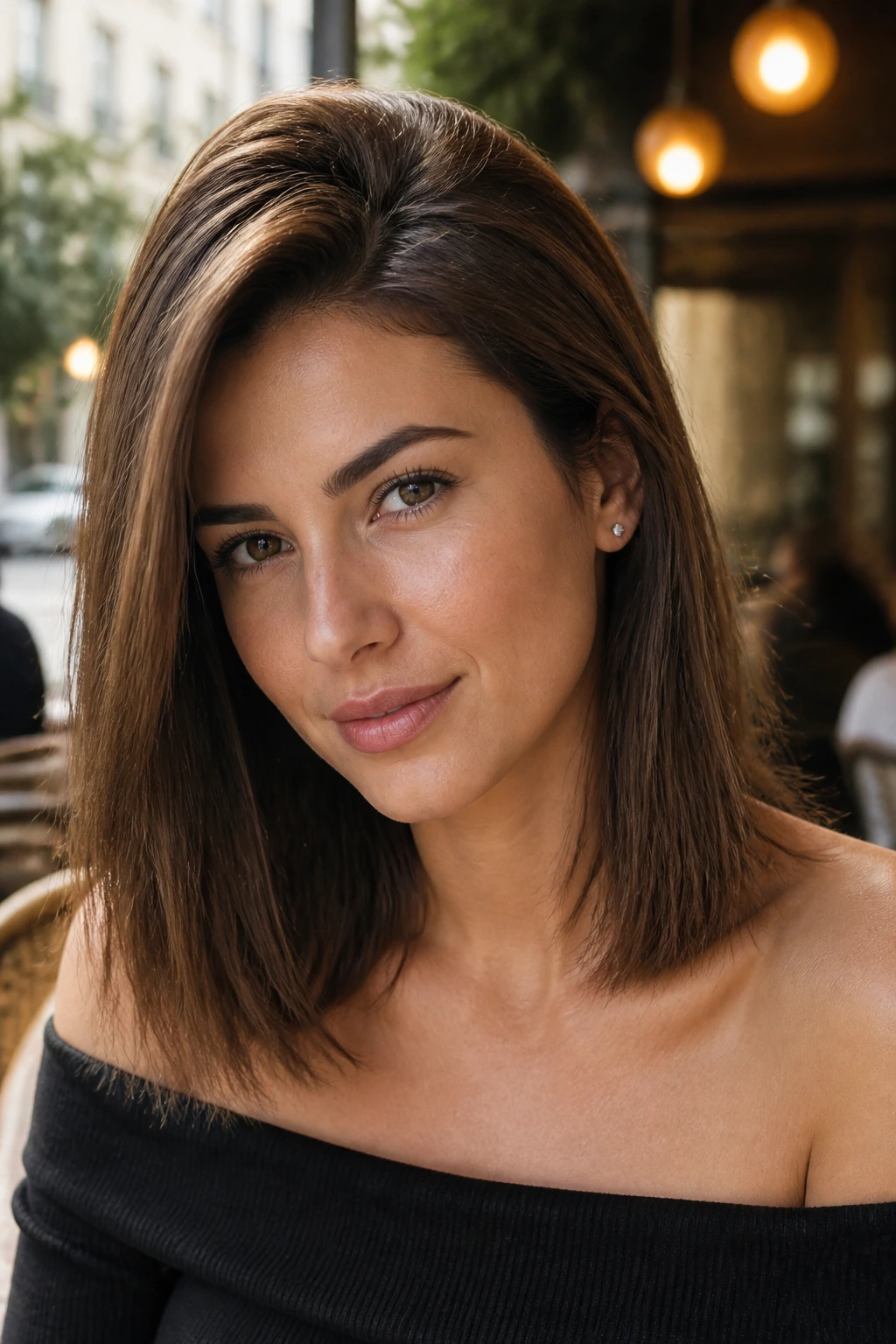
A deep side part changes the silhouette more than a new haircut sometimes does. On medium length straight hair, it creates a little height at the crown and more body on one side, which keeps the style from sitting too flat against the head. It’s a strong move when the hair itself is clean and smooth but needs a little energy.
The crown lift matters. Straight hair can cling to the scalp in a way that feels elegant on good days and limp on bad ones. A side part gives the roots a direction change, and that direction change adds lift where you need it most.
I like this look with slightly tucked ends or a blunt line. The contrast between volume at the top and smoothness through the lengths keeps the style from looking overdone. If you have a long face or want to shorten the visual length a bit, this is a smart trick.
How to Set It
Blow-dry the roots against the part first, then flip them back into place while they cool. That little maneuver makes more difference than another pass with the brush.
10. Claw-Clip Half-Up Sweep
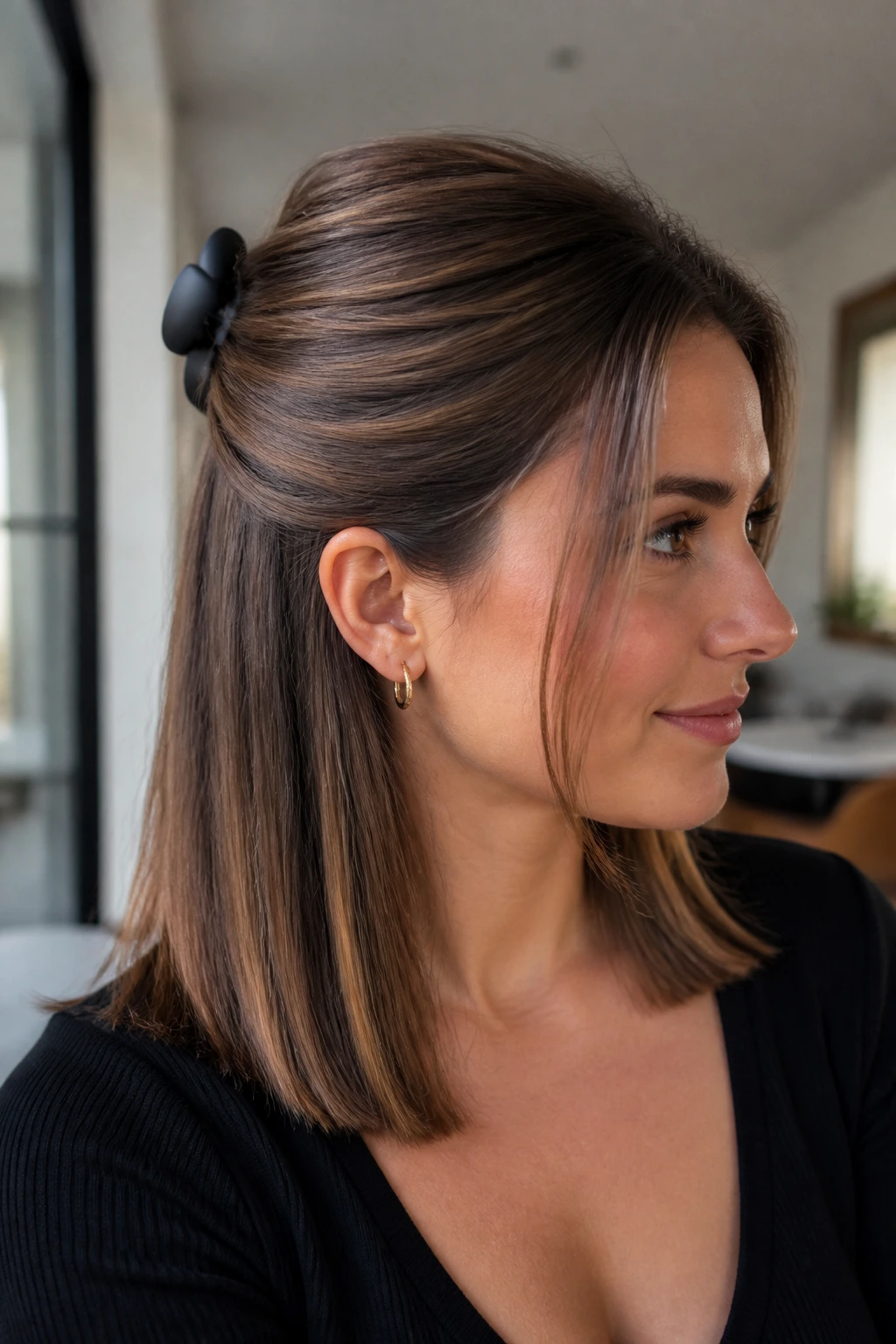
The claw-clip half-up is everywhere for a reason: medium length straight hair actually holds it well. At this length, the clip has enough hair to grab without slipping, but not so much weight that it drags the style down by lunch. The result looks put together even when the hair underneath is plain and smooth.
What makes this version nicer than a messy top knot is the sweep. Gather the top section from temple to temple, twist once, then clip it high enough that the back still falls in a clean line. Leave the bottom section straight and loose. The contrast is the whole point.
This is one of the best choices for second-day hair. The crown gets lifted off the scalp, the ends stay visible, and you get a little shape around the face without a full restyle. If your hair is very fine, keep the twist loose; if it’s thick, flatten the top section with your palms before clipping so the clip doesn’t fight back.
Tiny detail: a matte claw clip usually grabs straight hair better than a glossy one.
11. Wrapped Low Ponytail
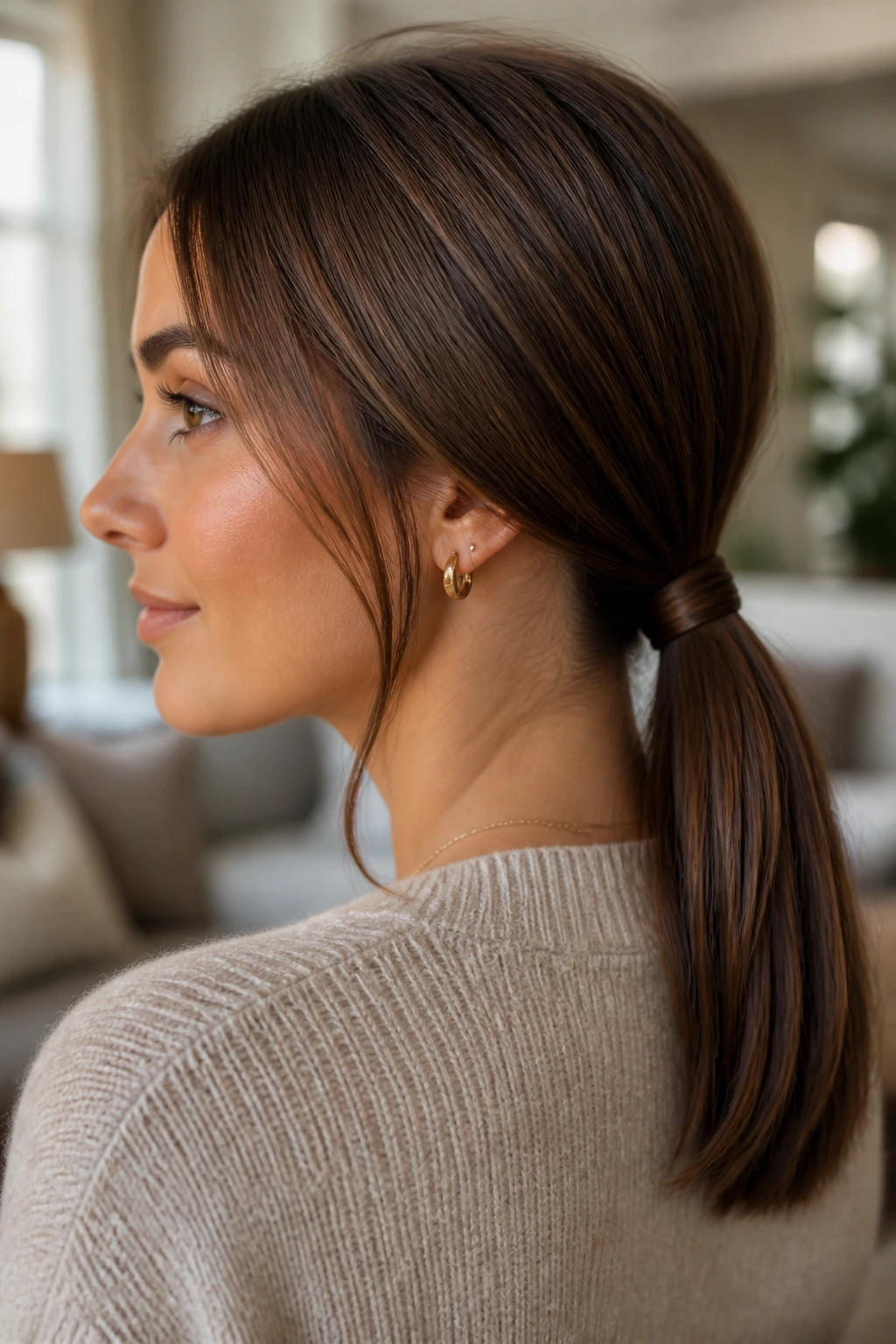
A low ponytail sounds ordinary until you wrap a small section around the elastic and smooth the top line. Then it becomes one of the most useful medium length straight hairstyles on the list. The hair sits close to the nape, which keeps the look neat, and the straight lengths make the ponytail look intentional instead of gym-bound.
This version works especially well when the front pieces are left just a touch softer than the back. A middle part keeps it clean, while a side part gives it a little more bend. Either way, the wrapped base is what makes it feel finished.
The ponytail should sit low enough that the ends still brush the upper back, not so low that it collapses into the collar of your shirt. If you have a strong jaw or a long neck, the line looks balanced fast. Add a pair of small earrings and the style stops feeling like a backup plan.
Sometimes simple is the point. This is one of those times.
12. Bendy-End Blowout
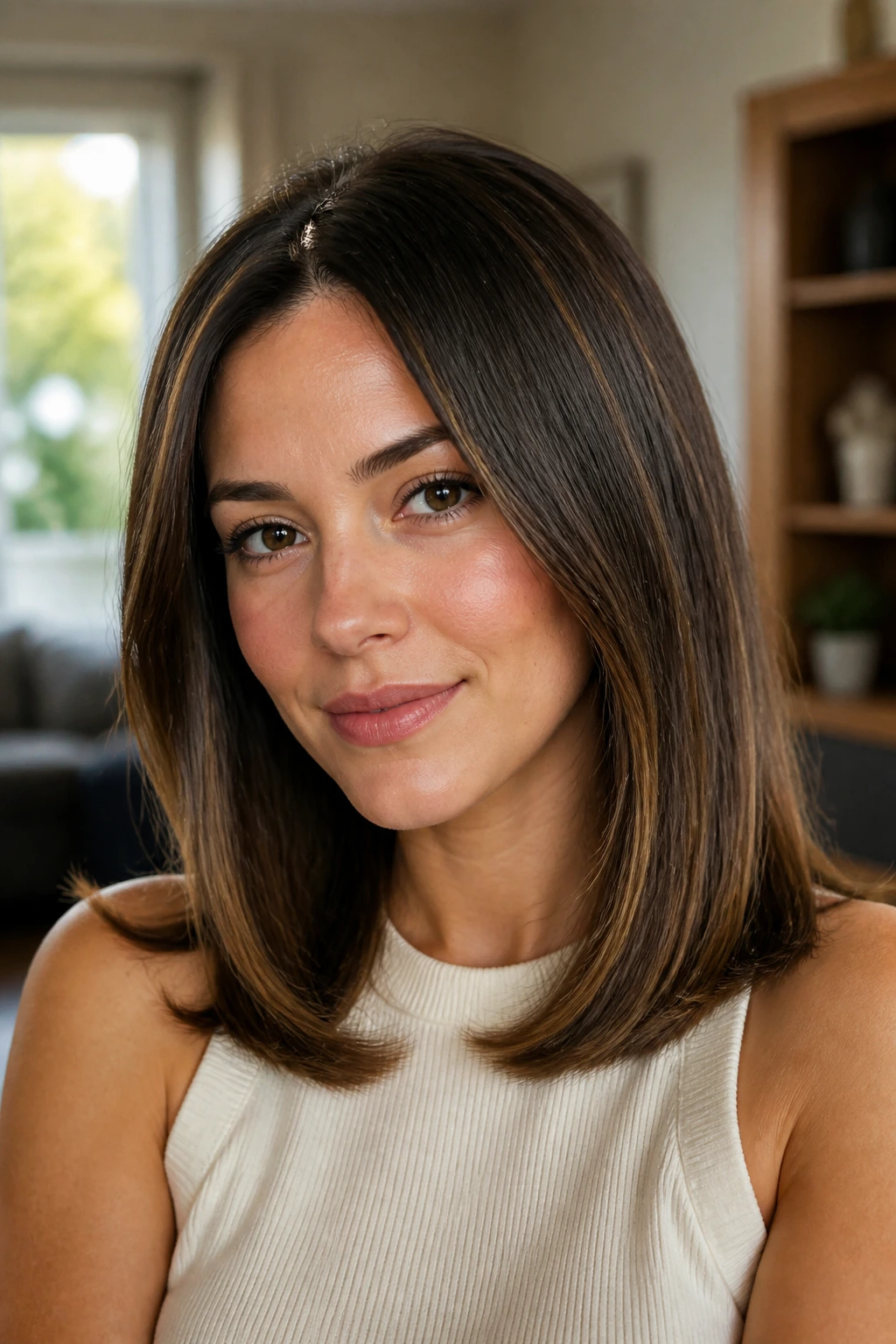
A bendy-end blowout is straight hair with a memory of movement. The lengths stay smooth, but the last inch or so turns under, kicks out slightly, or curves in a controlled way. That little bit of bend keeps medium length hair from looking too stiff, especially when the cut is blunt.
The reason this works so well is simple: the eye reads the line of the hair first, then the soft bend at the edge keeps the shape from stopping dead. It gives the style a little swing when you walk. Not curl. Swing.
How It Differs From a Flat Iron Finish
A flat iron finish can look almost severe when every section is pin-straight. The bendy-end version has a more relaxed feel, and it’s kinder to hair that gets dry at the ends because you’re not pressing the same section flat over and over.
Use a round brush or a flat iron with a slight wrist turn only at the bottom. Keep the turn the same on both sides if you want symmetry, or flip one side under and one side out if you like a slightly undone finish.
13. Long Fringe Midi Cut
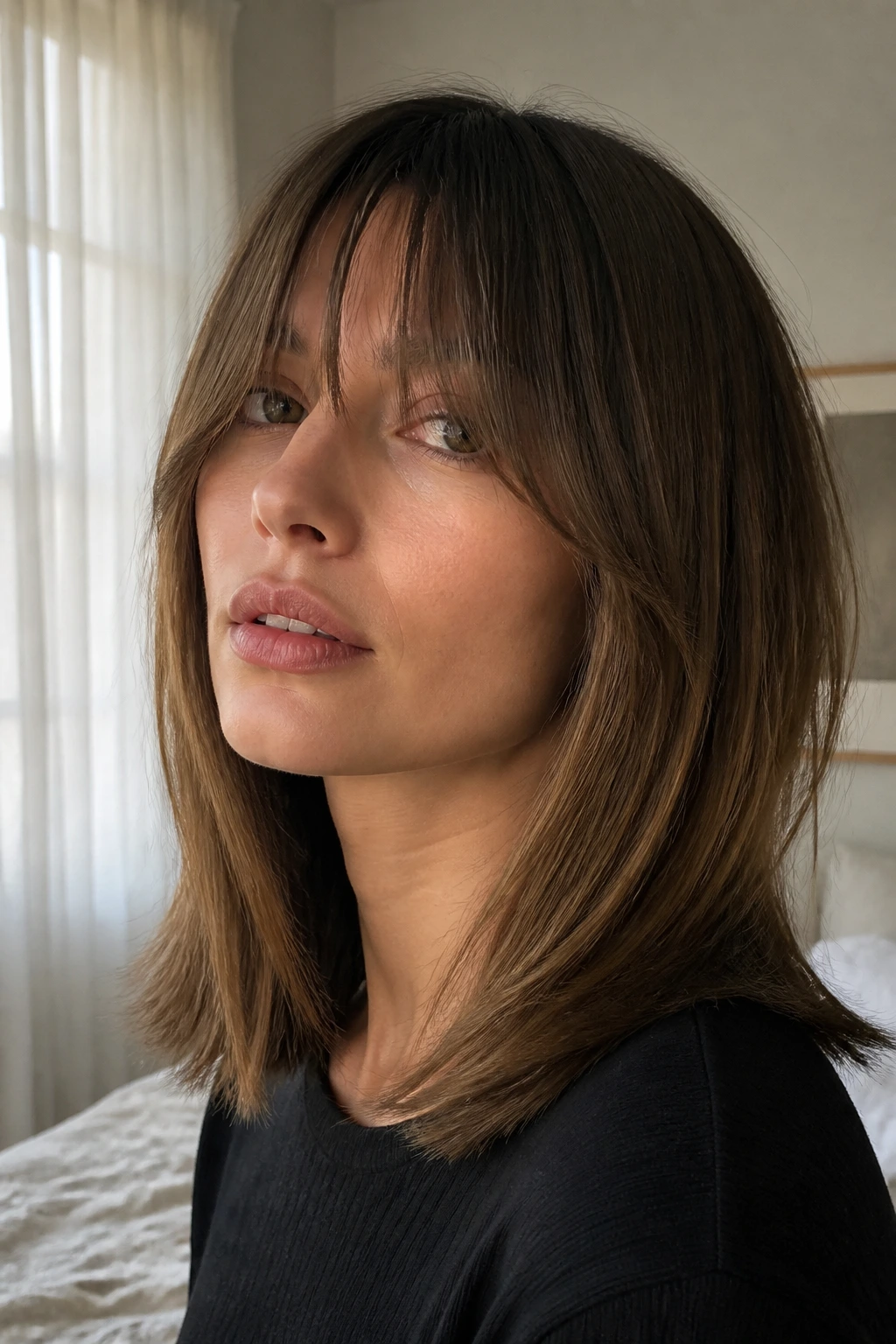
A long fringe gives medium length straight hair a face-first focus. It reaches into the brow or cheekbone area, then blends into the sides without shouting about itself. That’s a good thing. Straight hair can take a blunt fringe and make it look a little severe; a longer fringe feels softer and easier to live with.
This cut is a smart move if you want your forehead covered part of the time but not all the time. You can push the fringe apart, sweep it sideways, or let it sit in a loose curtain depending on the day. The rest of the cut stays simple, which keeps the fringe from becoming too precious.
I like this look when the hair has enough density to support the fringe without see-through gaps. Too thin, and the fringe can separate awkwardly. Too heavy, and it needs more heat styling than it should. The sweet spot is hair that lays smooth but still has enough body to hold the line.
14. Barrette-and-Tuck Look
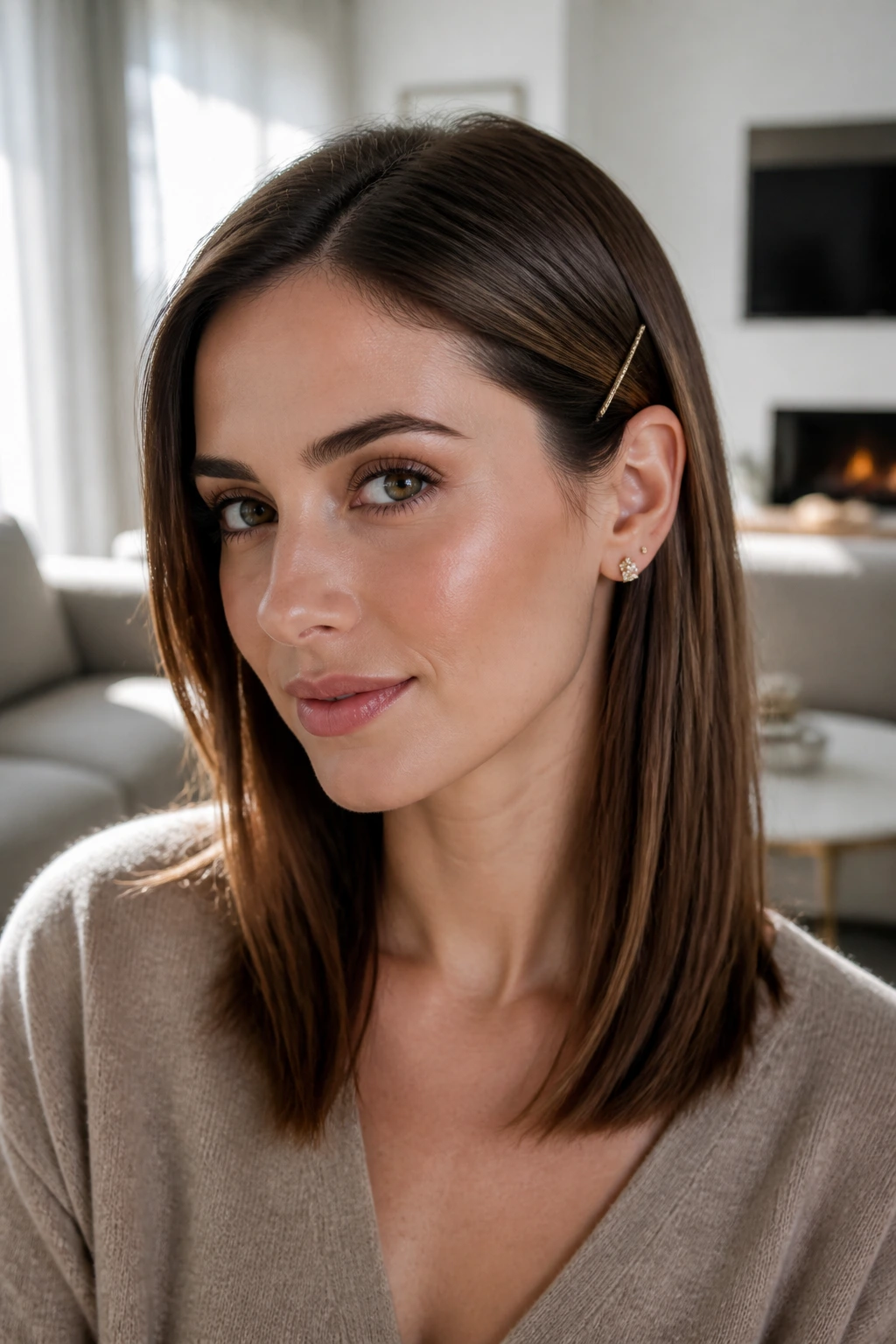
A barrette-and-tuck look takes a plain medium-length straight cut and gives it a little structure with almost no effort. One side gets tucked behind the ear and secured with a slim barrette or metal clip. The other side stays loose. It’s minimal, but it doesn’t feel accidental.
This style is good when you want to show off the cut without committing to a full updo. It also solves the problem of hair falling forward into your face while still letting the length stay visible. On straight hair, the barrette catches the light and gives the style a hard line that reads crisp from the front.
Why It Feels Better Than a Basic Pin
A basic bobby pin disappears. A barrette becomes part of the hairstyle. That matters when the rest of the hair is smooth and simple, because the accessory needs to do a little visual work. Choose one with a flat back if your hair is slippery; curved clips tend to slide on fine straight strands.
This look is especially good with a blazer, a knit top, or anything with a neckline that deserves room.
15. Wet-Look Straight Lob
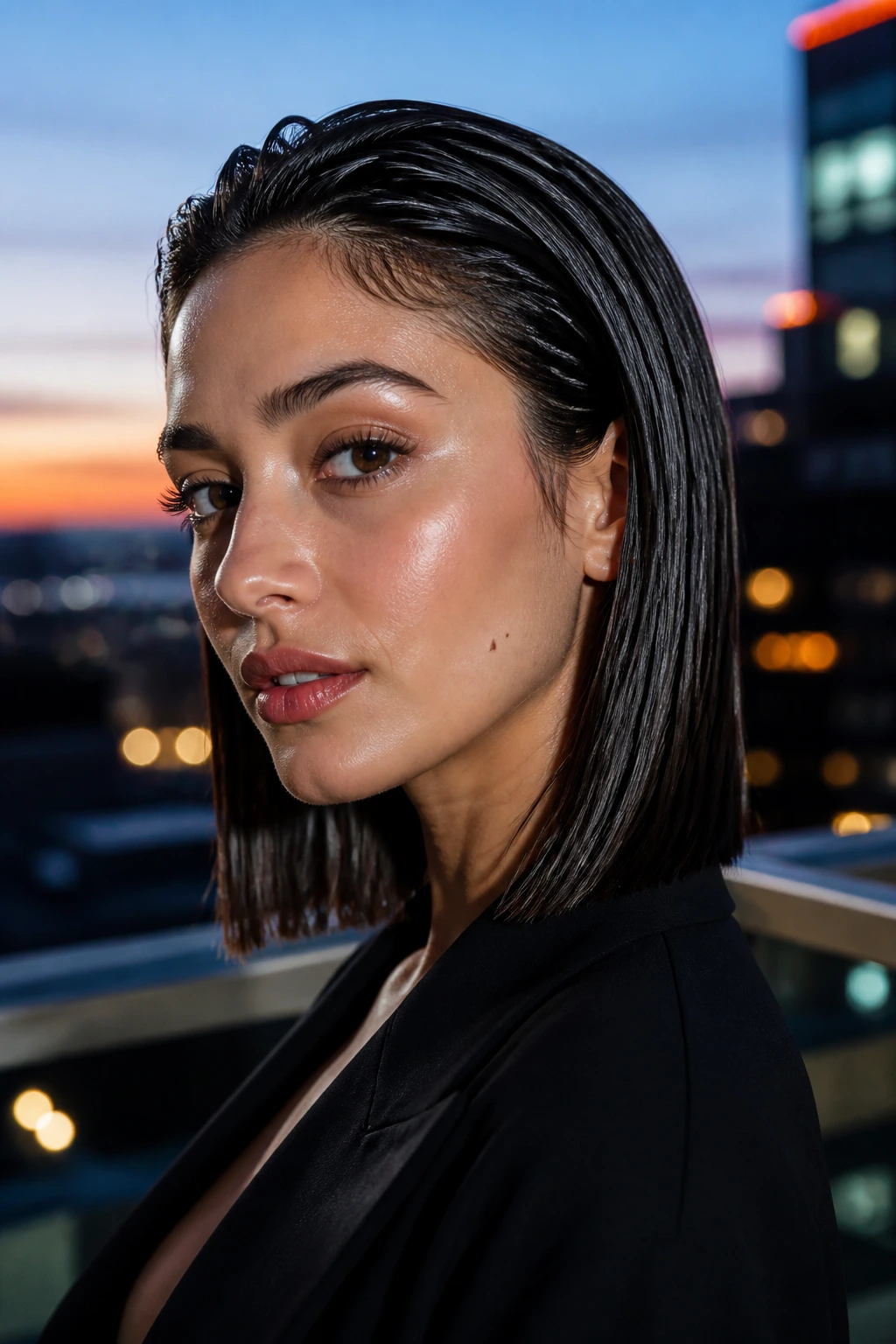
The wet look is not actually wet. At least, it should not be dripping. It’s a controlled sheen with the roots brushed back or parted deep and the lengths smoothed so the hair looks slick in a deliberate way. On medium length straight hair, the effect is sharp and a little dramatic.
What makes this look work is restraint. Use gel or a light-setting cream at the roots and upper midlengths, then keep the ends softer so they don’t turn into stiff sticks. A comb gives you the finish. Fingers give you the mood. Use both.
The cut underneath matters here. A blunt or nearly blunt lob gives the style its clean edge. If the haircut is choppy, the wet look can go messy fast, because every uneven section becomes visible. This style is strongest when the line underneath is disciplined.
Good for an evening out. Good for hot weather. Also good if you want straight hair to stop looking polite for one night.
16. Airy Texture-Spray Lob
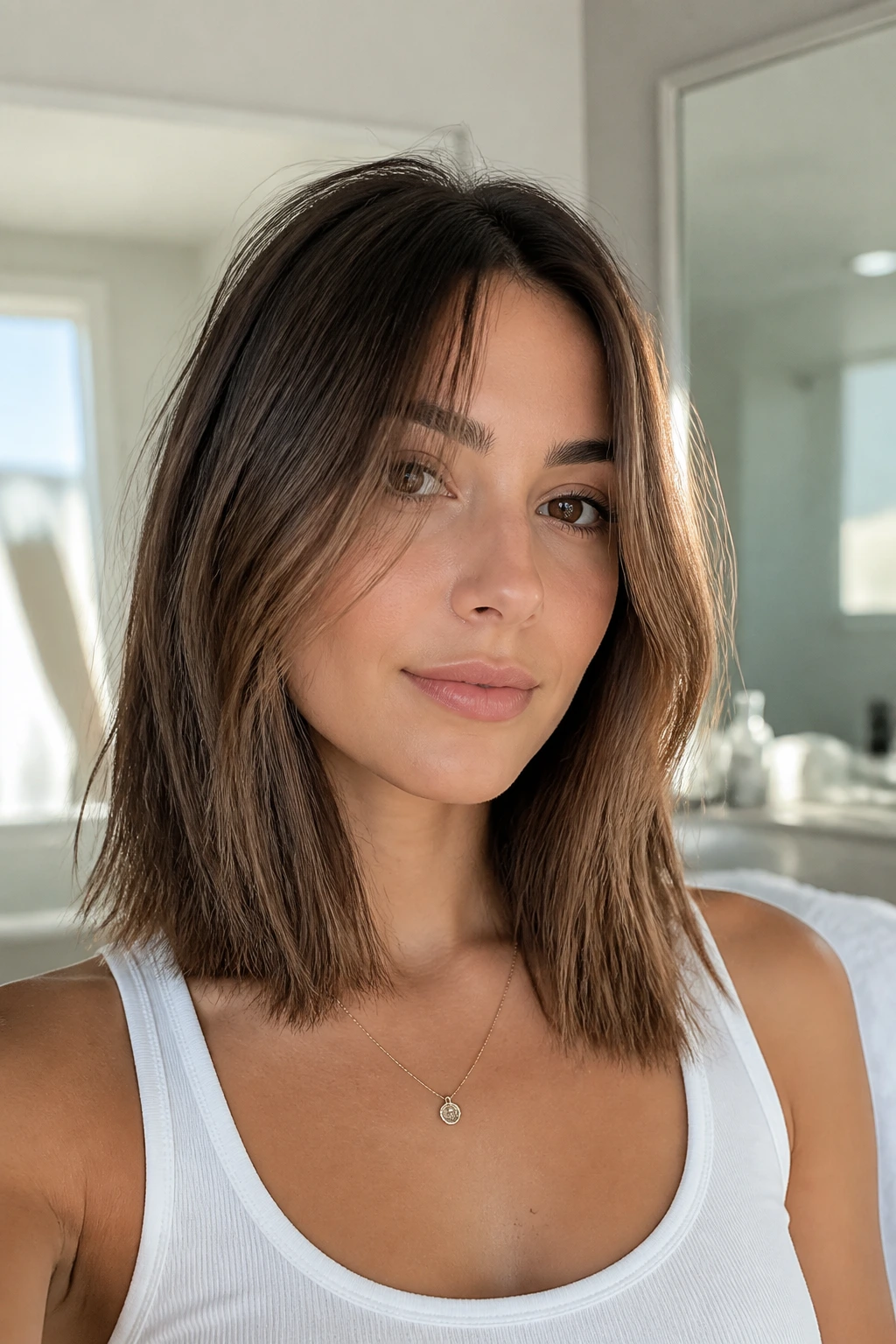
Airy texture spray on straight medium-length hair is a useful contradiction. You still want the hair to look smooth, but not so smooth that it becomes boring or flat. A light mist through the midlengths and ends breaks up the surface just enough to keep the cut from looking sheet-like.
This works best after a blow-dry or a quick flat-iron pass. Texture spray on wet or damp hair can leave it rough in the wrong places. On dry hair, though, it gives a little separation, especially around the front pieces and the last inch of the ends.
I prefer this when the hair has no natural wave but needs a bit of air. The style reads modern without turning into beach waves, which is a relief if you’re tired of every straight cut being pushed toward bendy texture. Sometimes smooth hair just needs a little grit.
Where to Spray
Focus on the lower half, not the roots. If you spray the crown, you risk dulling the shine that straight hair does so well.
17. Statement Headband Midi

A statement headband can rescue medium length straight hair faster than almost anything else. If the cut is clean and the hair is smooth, the band becomes the focal point while the rest of the hair stays quietly neat underneath. It’s one of the few accessories that can look intentional even on second-day hair.
The trick is choosing a band that suits the haircut instead of fighting it. Slim metal bands keep the look sharp. Padded fabric bands make it softer. Satin reads dressier, especially on straight hair because the texture contrast shows clearly.
This look is strongest when the ends stay visible under the headband. Don’t stuff all the hair back unless you want a very severe finish. Leave some movement at the sides or allow the front pieces to sit naturally around the band. That keeps the style from feeling like a costume.
If your straight hair tends to fall flat around the hairline, a headband also gives you a built-in shape fix. Not glamorous. Useful. Which is better, most days.
18. Smooth Center-Part Midi with Flip-Under Ends
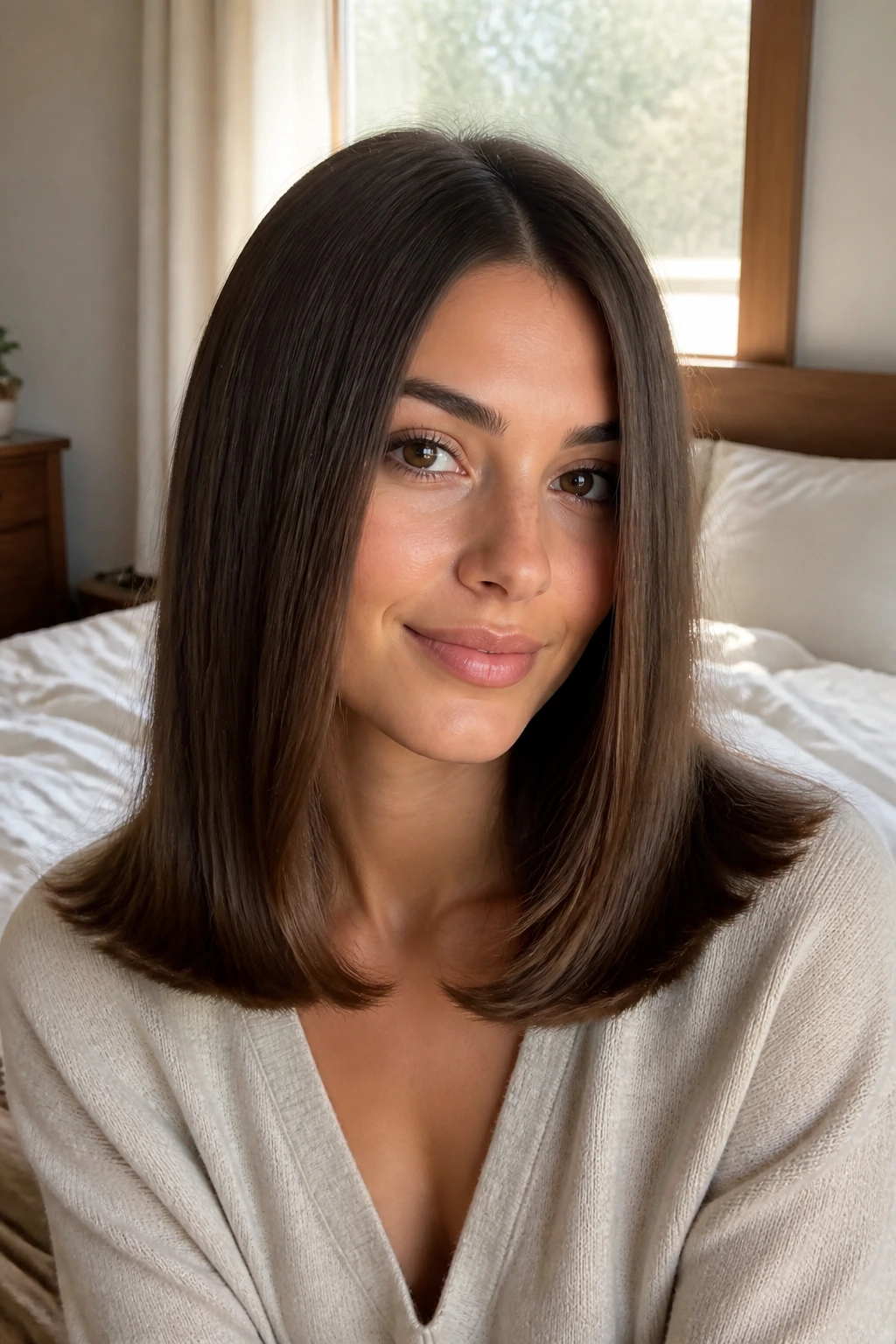
The smooth center-part midi with flip-under ends is the kind of hairstyle people underestimate until they see it in motion. The center part keeps everything balanced, the lengths stay straight and polished, and the ends turn under just enough to avoid the dead-straight, slightly severe feel that medium hair can pick up.
This is the look I’d call the quiet anchor of the whole list. It works on fine hair, thick hair, air-dried hair, blown-out hair, freshly trimmed hair, and hair that’s trying to behave itself at 8 a.m. It doesn’t demand much. It just needs the part to be clean and the ends to be smooth.
The flip-under at the bottom should be subtle. If it’s too round, the hair starts to look like it belongs in a much older decade. If it’s too straight, the shape loses warmth. Keep the bend soft, almost like the ends are resting instead of curling.
Why Medium Length Straight Hairstyles Keep Their Shape So Well
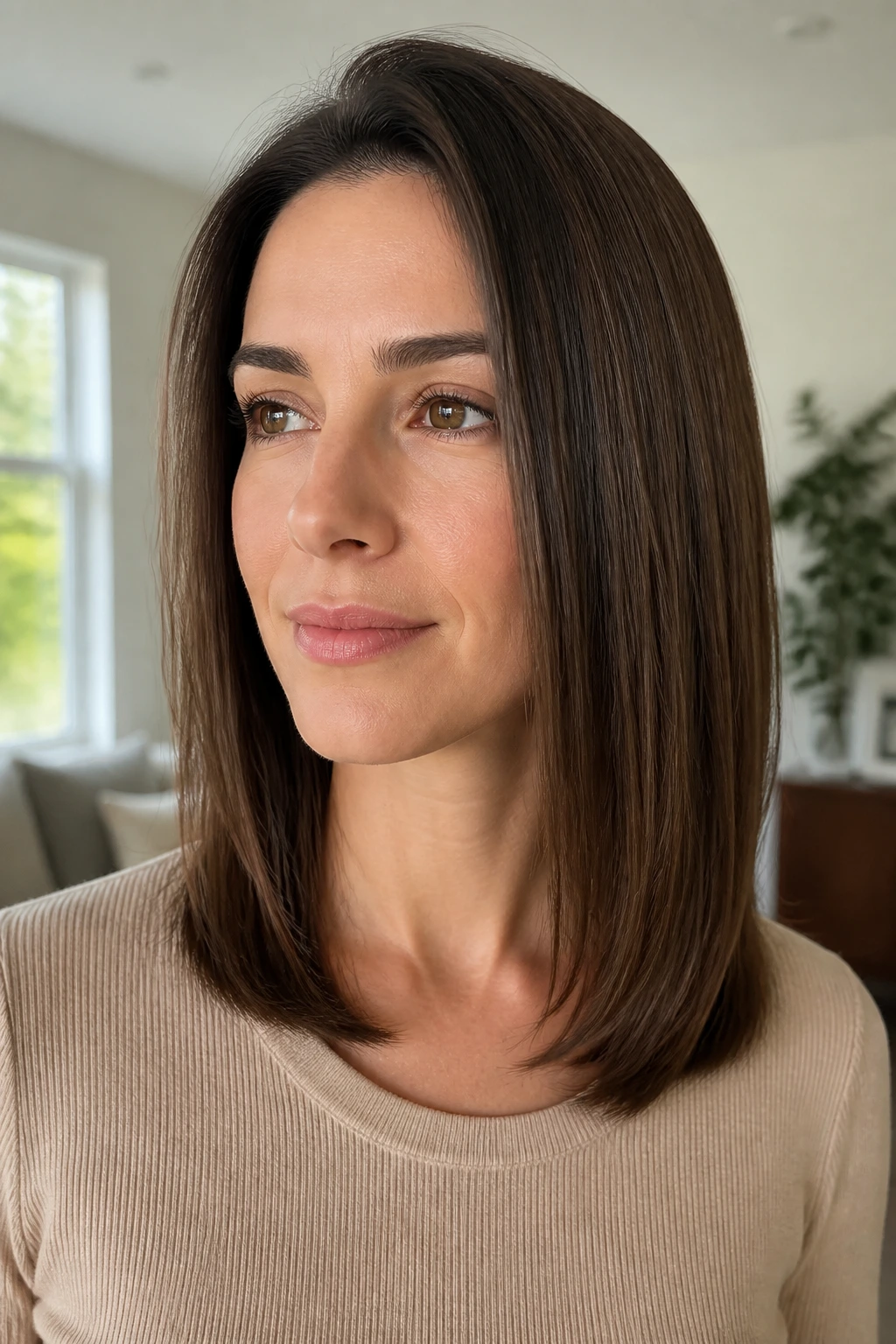
Medium length straight hairstyles sit in a sweet spot that long hair can miss and short hair can overcommit to. The length is heavy enough to hang cleanly, but not so heavy that the roots have to carry a huge amount of weight. That means cleaner lines, easier parts, and less drama when you move your head.
Straight hair also shows the haircut more honestly than wavy or curly hair does. A blunt edge looks blunt. A slightly angled cut looks angled. A face frame starting at the cheekbone actually shows up there instead of dissolving into texture. That honesty can be unforgiving if the cut is weak, but it’s a gift when the shape is good.
The Collarbone Zone Does a Lot of Work
The collarbone is one of those places where hair can fall, tuck, or flip without getting trapped. That gives medium length straight hair a bit of movement even when the strands themselves are smooth. If the ends graze the shoulders instead of sitting right on them, the style usually behaves better.
Why Straight Hair Needs a Cleaner Cut Line
Straight strands don’t hide damage, uneven weight, or a ragged perimeter. They show it. That’s why this length works best when the ends are trimmed clean and the stylist has paid attention to balance rather than overtexturizing the shape into nothing.
Essential Tools for Straight Medium-Length Styling
-
Blow dryer with a nozzle attachment: The nozzle keeps air focused so the cuticle lays smoother and the hair dries in the direction you want.
-
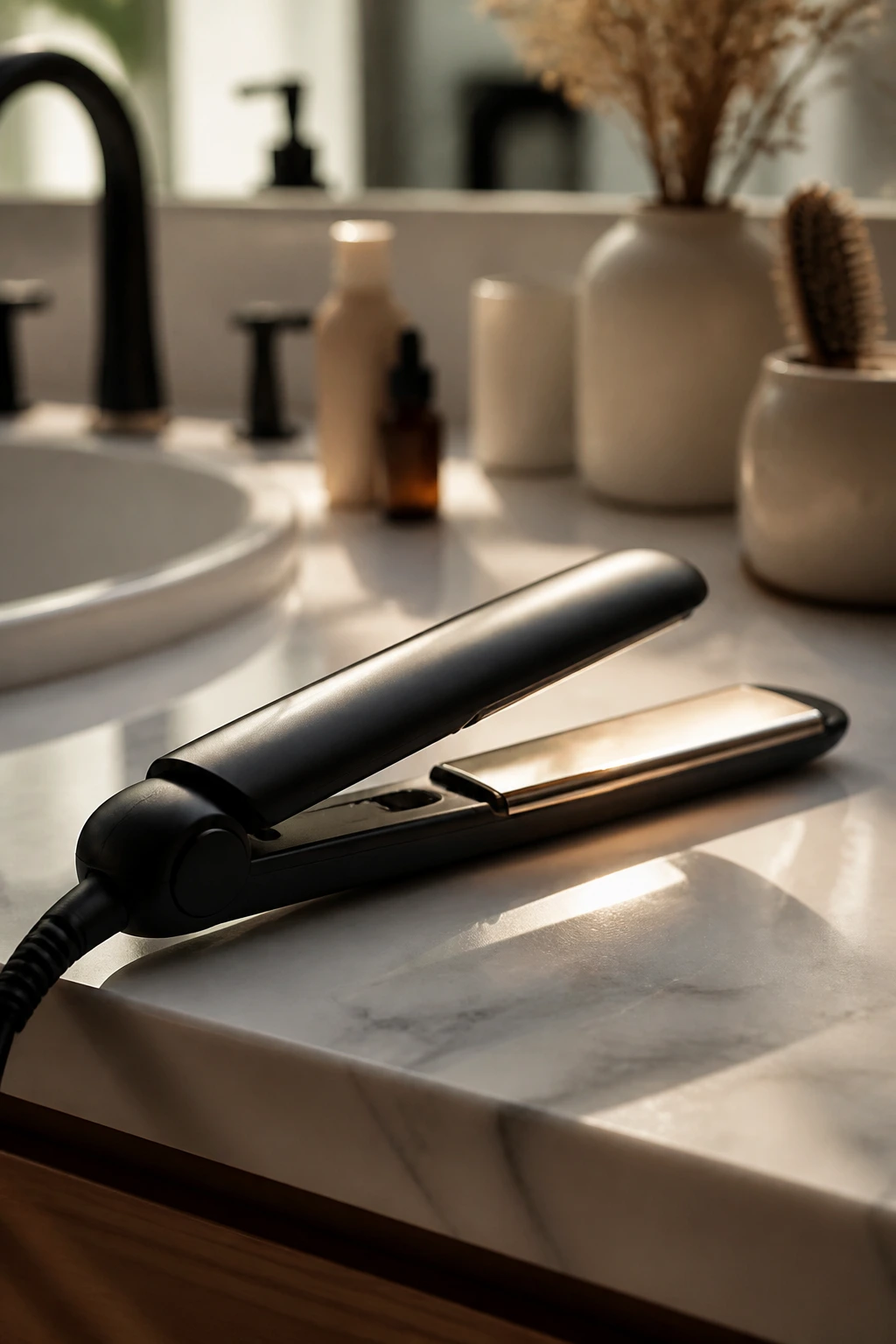
Flat iron with smooth plates: A 1-inch to 1.25-inch iron is the most flexible size for medium length hair because it reaches roots and still handles the ends cleanly.
-
Paddle brush: Best for smoothing the midlengths and keeping tension steady while you dry.
-
Round brush, medium barrel: Useful for a soft bend under or a little lift at the crown without turning the hair curly.
-
Fine-tooth tail comb: Essential for clean parts, sectioning, and slick finishes.
-
Sectioning clips: Keep sections out of the way and stop you from reworking the same piece twice.
-
Heat protectant spray or cream: Use it before any hot tool; straight hair shows heat damage fast on the ends.
-
Lightweight serum or oil: A small amount on the last two inches tames flyaways and gives shine.
-
Dry shampoo: Helps with roots that separate or flatten by day two.
-
Claw clip, barrettes, hair elastics, headbands, and bobby pins: These change the look fast and make medium length hair easier to wear on busy days.
Choosing the Right Cut, Product, and Part Line
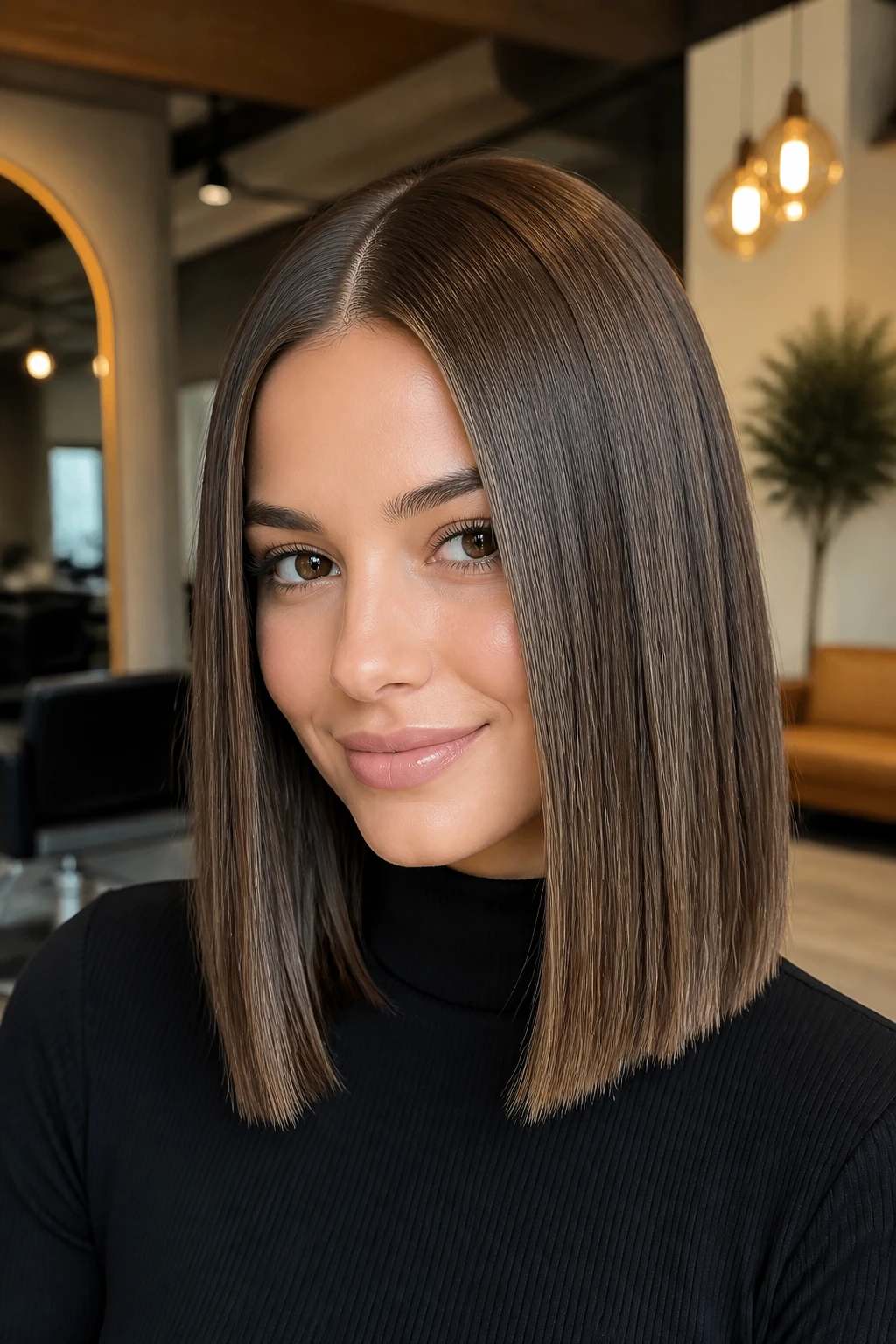
If your straight hair is fine, start with a blunt cut or a cut with invisible internal layers. Fine hair tends to look thinner when the ends are shredded too much, so the edge should stay clean. Heavy cream products can also flatten it, so a light blow-dry spray and a small amount of serum on the ends are usually enough.
Thick straight hair needs a little more shape control. A U-shape, a subtle angle, or hidden internal removal can stop the bottom from ballooning out at the shoulders. I would not over-thin thick straight hair just because it feels bulky in the chair; that often leaves the ends looking see-through and makes styling harder two weeks later.
The part line matters more than people think. A middle part reads calm and symmetrical. A side part gives lift. A deep side part creates drama and solves flat roots in a hurry. If your hair falls flat, don’t treat the part as an afterthought — it is part of the haircut, even when nobody says it out loud.
Product choice should follow the finish you want. For sleek looks, use heat protectant and a small amount of smoothing serum. For a softer, airier shape, use a light mousse at the roots before blow-drying and save texture spray for the ends. Heavy oils near the scalp usually make straight medium hair collapse.
How to Wear These Looks With Different Outfits and Occasions
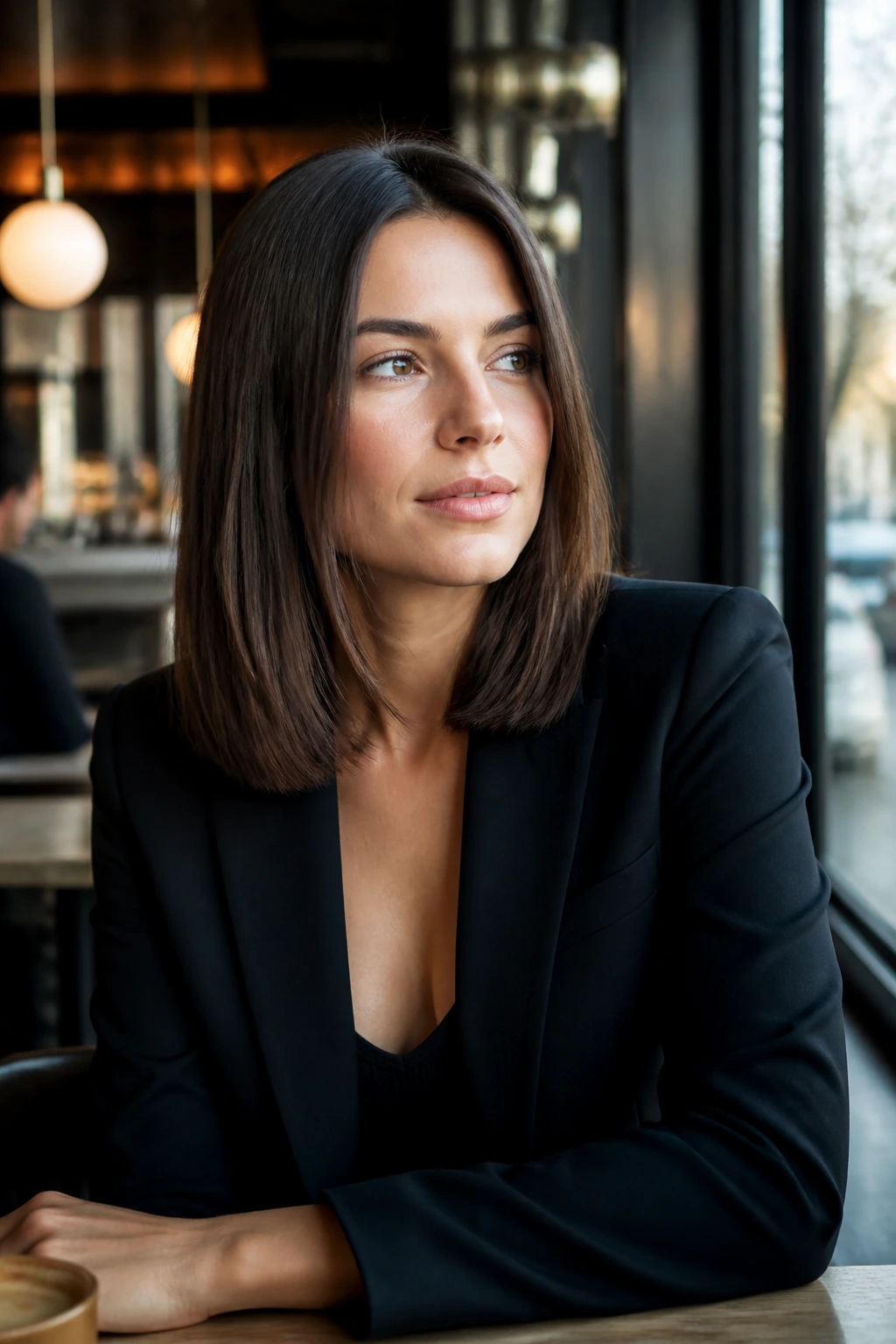
Presentation: Straight medium-length hair looks best when the outline is clean from the front and the ends are tidy at the shoulders. If you want the style to read sharper, keep the part precise and the finish glossy; if you want it softer, bend the ends and let a few front pieces move.
Accessories: Slim barrettes, small hoops, satin headbands, and claw clips all suit this length because they don’t drown the haircut. Large, bulky accessories can crowd the face and make the straight line feel smaller than it is.
Outfit Pairing: Collared shirts, crew necks, square necks, and turtlenecks each change how the hair lands. A blunt lob looks crisp with a blazer or button-down. Curtain bangs and face-framing layers sit nicely with softer knits and open necklines.
Occasion Fit: The glassy center-part look works when you want polish. A side tuck or barrette finish feels easier for daytime. The wrapped ponytail and wet look move the style into evening territory fast, without needing a whole new cut.
Extra Smoothness, Lift, and Shine That Don’t Look Overdone
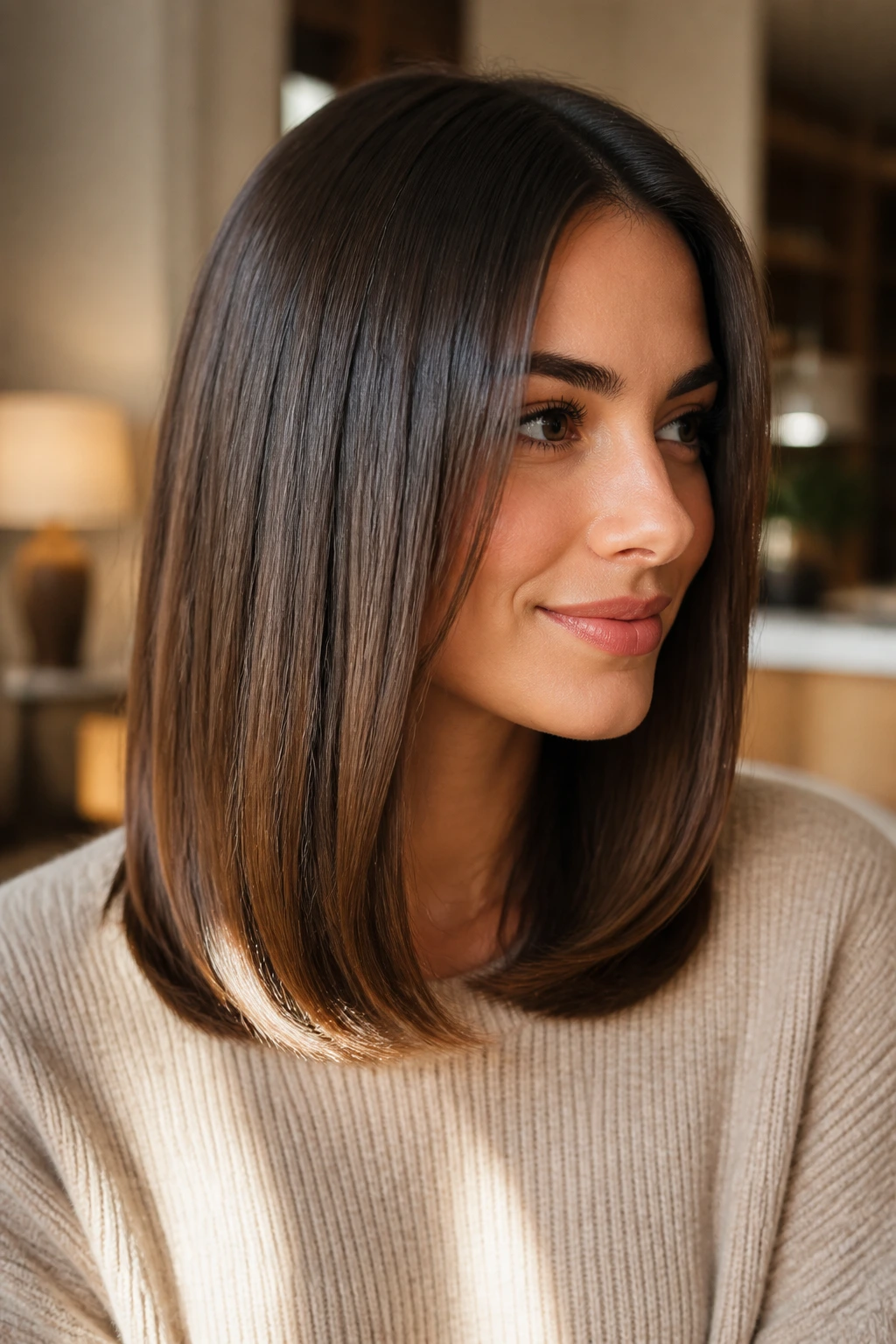
Smoothness: Start with a heat protectant that has enough slip to coat the midlengths, then use a small round brush or paddle brush to keep tension even while drying. A pea-sized amount of serum, rubbed between your palms, is enough for the last two inches. More than that and the hair starts to look heavy.
Root Lift: Clip the crown up with a couple of flat clips while the roots cool after blow-drying. That tiny pause gives the hair memory without making the whole style puff out. If you skip the cooling step, the lift falls much faster.
Shine: Shine spray works best as a finish, not a base. Hold it at arm’s length and mist lightly over the outer layer only. If you spray too close, straight hair can go from glossy to greasy in one pass.
Make-It-Yours: Fine hair usually likes lighter cream and less oil; thick hair usually needs a bit more smoothing product only on the lower half. If your hair gets fuzzy in humidity, keep the crown lighter and concentrate smoothing on the perimeter where the frizz shows first.
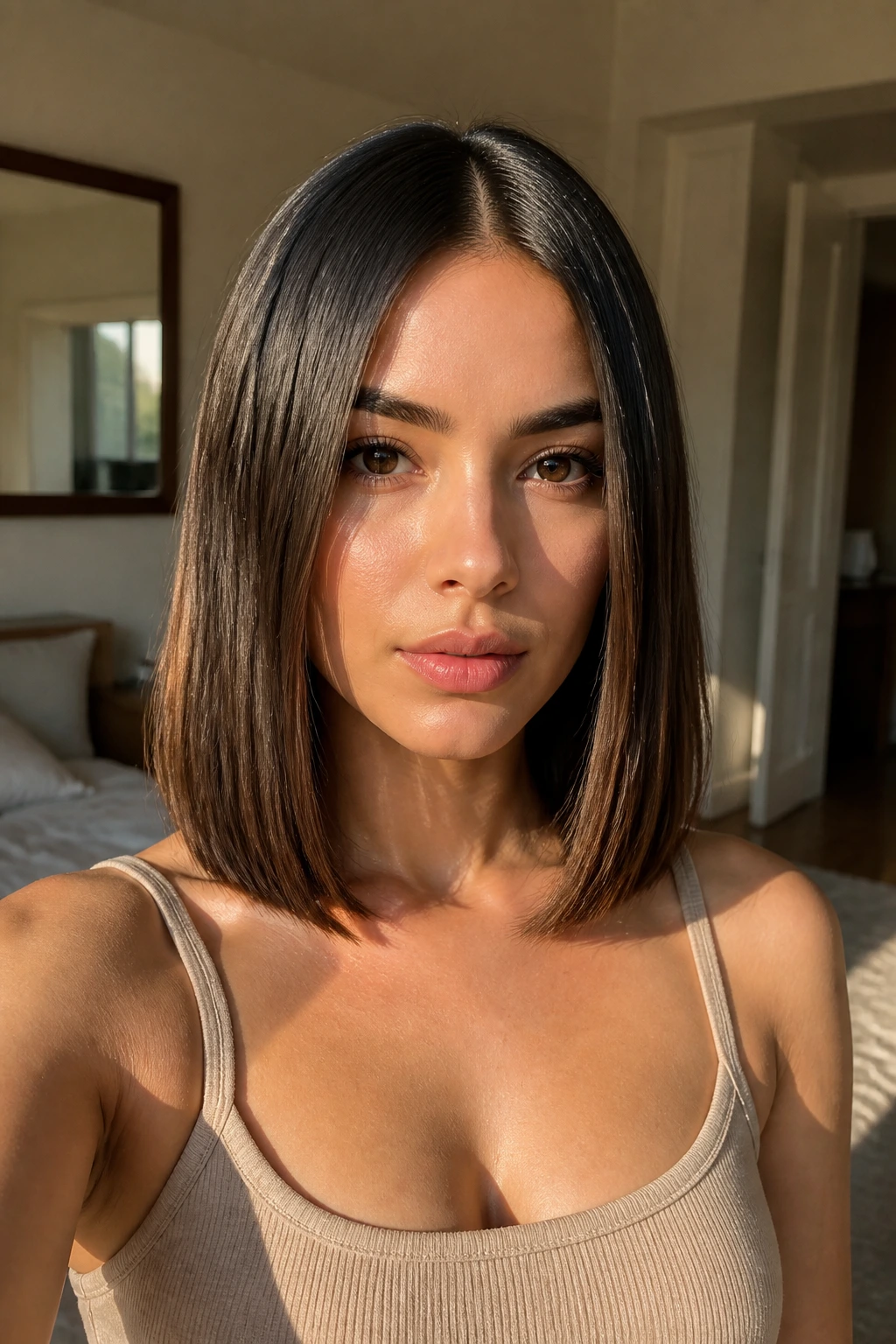
Common Mistakes That Flatten the Shape
-
Cutting too much texture into fine straight hair: The ends start to look frayed, and the whole cut loses density. Ask for a cleaner edge and only a little movement around the face if your hair is fine.
-
Parking the part in the same place every day: The roots compress, and the style goes flat on that side. Shift the part a half inch now and then or blow-dry against your usual part before settling it back.
-
Putting oil near the roots: Straight medium-length hair shows grease fast, especially under daylight. Keep oils on the ends and use dry shampoo at the roots if the top collapses.
-
Over-flattening the ends with a flat iron: The hair can start to look stiff and almost pasted on. Leave the last inch with a tiny bend so the line feels alive.
-
Letting split ends hang around: Straight hair makes splits obvious. Once the ends fray, the whole cut looks older than it is, so trim before the damage climbs.
Variations and Adjustments to Ask Your Stylist For
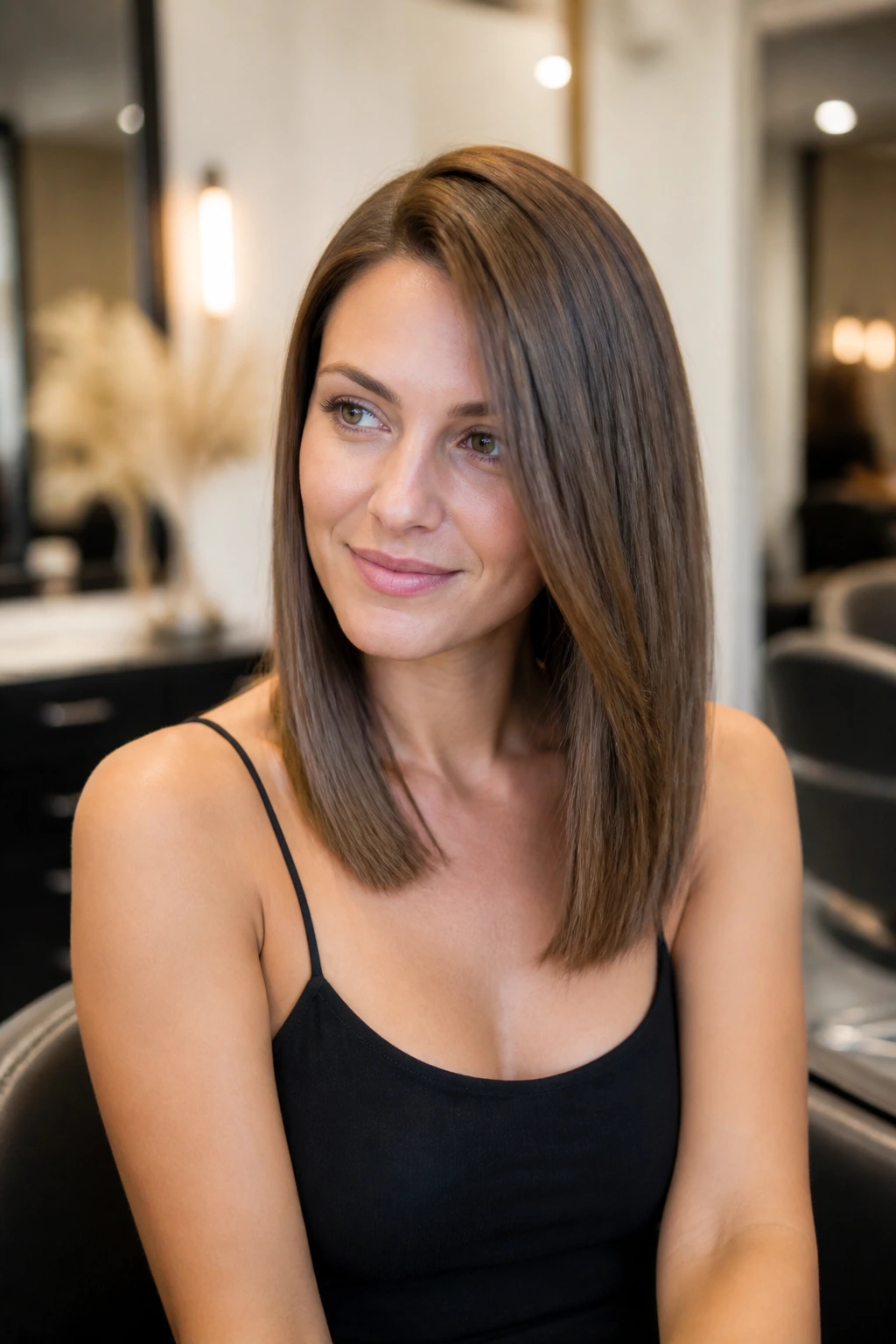
The Weight-Line Version: Ask for a blunt perimeter with only a whisper of internal movement. This suits fine straight hair that needs body at the ends more than it needs airy layers. The line stays crisp, and you still get a little swing.
The Soft Lift Version: Ask for a subtle angle from back to front and a side part that you can flip either way. This one helps hair that lies too flat at the crown and needs a little height without teasing.
The Face-Frame Version: Ask for longer front pieces starting around the cheekbone and blending down into the midlengths. It’s useful if you want the haircut to soften a strong jaw or balance a broader forehead.
The Air-Dry Version: Ask for a cut that works with your natural straightness, not against it. That usually means fewer visible layers, a clean edge, and no overtexturized ends that demand constant heat styling.
The Evening-Sleek Version: Ask your stylist to keep the outline blunt and the surface polished, then wear it with a center part and tucked sides. It’s the same haircut, but it reads sharper because the finish is cleaner.
The Low-Maintenance Version: Ask for medium length with enough weight in the bottom half to keep the hair from puffing out between cuts. This is the version for people who want it to still look neat when the styling day is not going well.
Keeping the Shape Fresh Between Washes
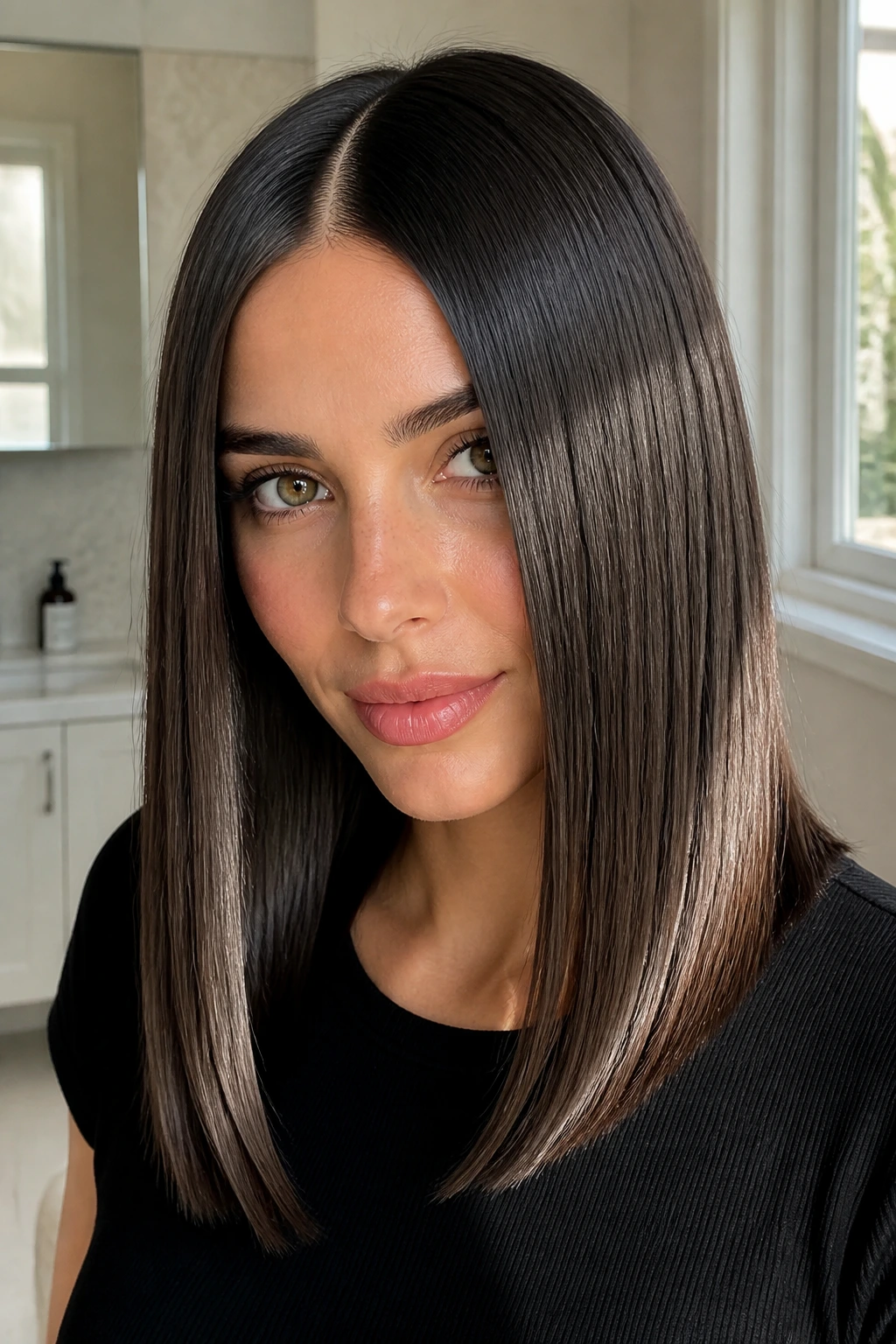
Medium length straight hair usually starts to show its second-day personality at the roots first. That’s normal. A little oil at the scalp and a slight bend at the ends can make the style look lived-in, but once the crown collapses, the whole silhouette goes soft. I refresh mine — or rather, the style I’d choose for myself — by working dry shampoo into the roots before brushing, not after. The brush spreads the product in a cleaner way.
If you sleep on one side, the tucked side may wake up with a dent. A quick pass with a flat iron on a low-to-medium heat setting, around 300°F to 350°F depending on hair thickness, usually fixes that in one or two sections. Don’t chase every strand. Just handle the pieces that frame the face and the parts that flare at the shoulders.
A silk or satin pillowcase helps because straight hair shows pillow marks faster than textured hair. It’s not fancy. It just reduces friction. If you want the style to last longer, keep the hair loosely tied or clipped very low, never tight enough to leave a line across the crown.
Trims matter too. A blunt lob usually needs a clean-up every 6 to 8 weeks if you want the edge to stay sharp. Layered versions can stretch a little longer, but once the ends start looking see-through, the whole style loses its strength.
Frequently Asked Questions
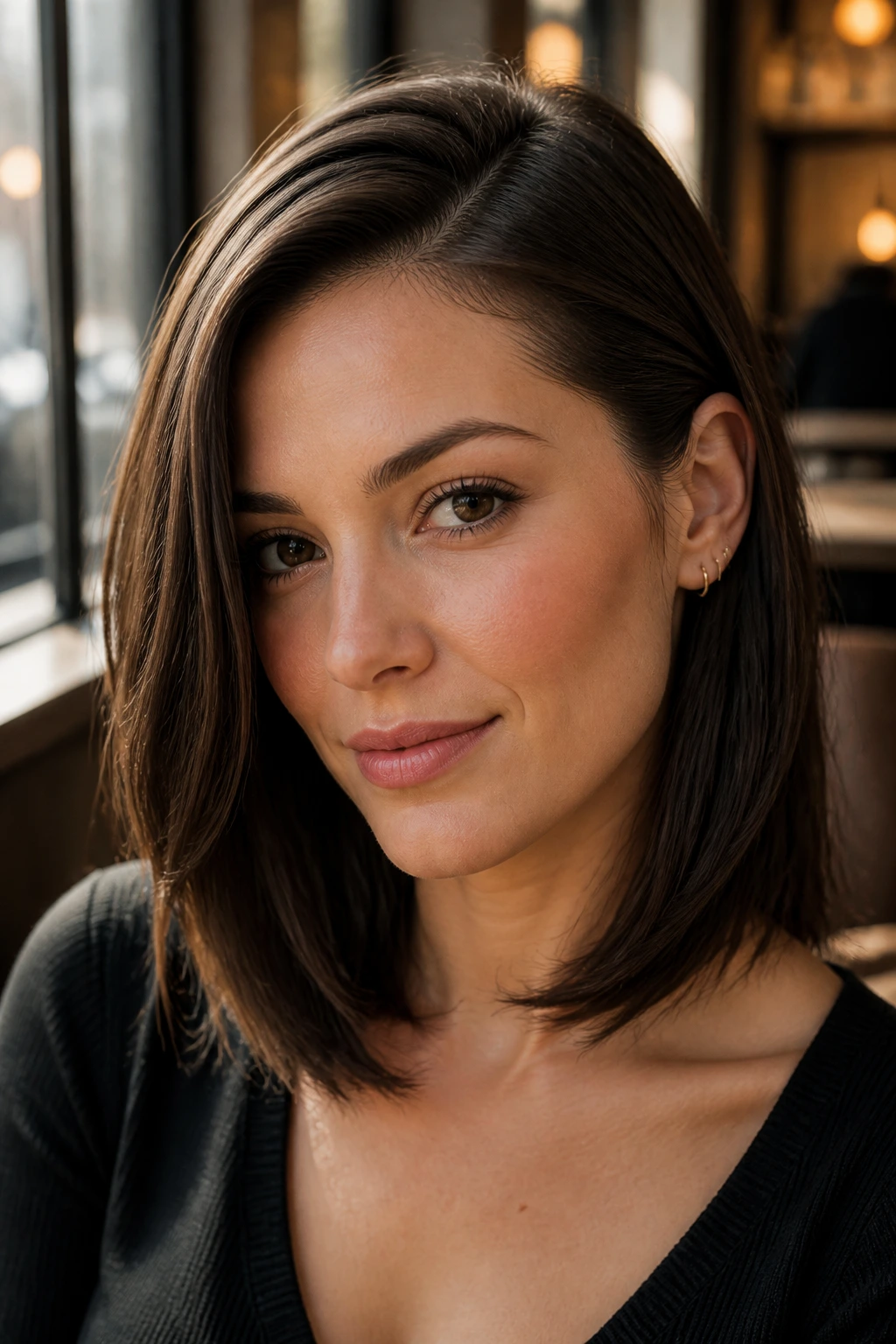
Which medium length straight hairstyle is best for fine hair?
A blunt collarbone lob or a smooth center-part midi usually gives fine hair the most visual density. The cleaner the edge, the thicker the hair tends to look, especially if the ends are kept tidy and not overthinned.
What works best for thick straight hair that puffs at the bottom?
An invisible-layer lob or a soft U-shape usually solves that better than a one-length cut with no internal shaping. You want enough weight to keep the ends from exploding outward, but not so much bulk that the hair sits like a shelf.
Do curtain bangs make straight hair harder to manage?
They do add one more styling step, but they also soften a straight medium-length cut in a way that can be worth it. If you keep them long enough to blend and trim them before they grow into your eyes, they stay useful rather than annoying.
How do I stop straight hair from flipping out at the shoulders?
That usually happens when the ends sit right on the widest part of the shoulder or when the cut is too blunt at one fixed point. Ask for a tiny bit of movement in the front or bend the last inch under with a flat iron so the edge clears the shoulder line.
Can these styles work on hair that’s naturally wavy or frizzy?
Yes, but you’ll need to decide how much of the wave you want to keep. A smoothing cream, a blow-dry with tension, and a heat-protectant finish can give you the straight look, while a little natural movement at the ends can keep the style from feeling too stiff.
Is a flat iron necessary for medium length straight hairstyles?
Not always. A good blow-dry with a paddle brush or round brush can create enough smoothness for many of these looks, especially the bent-end and tucked styles. A flat iron just gives more control when you want a sharper finish.
How often should I trim a straight medium-length cut?
If the cut is blunt, every 6 to 8 weeks keeps the edge clean. If the hair has soft layers or a more casual finish, you can often stretch it a bit longer, but split ends will show quickly on straight hair, so don’t wait until the bottom looks ragged.
What if my hair goes flat no matter what I do?
Switch the part, lift the roots while drying, and use less heavy product near the scalp. Straight medium-length hair usually needs root direction more than it needs more product.
The Shape That Keeps Working
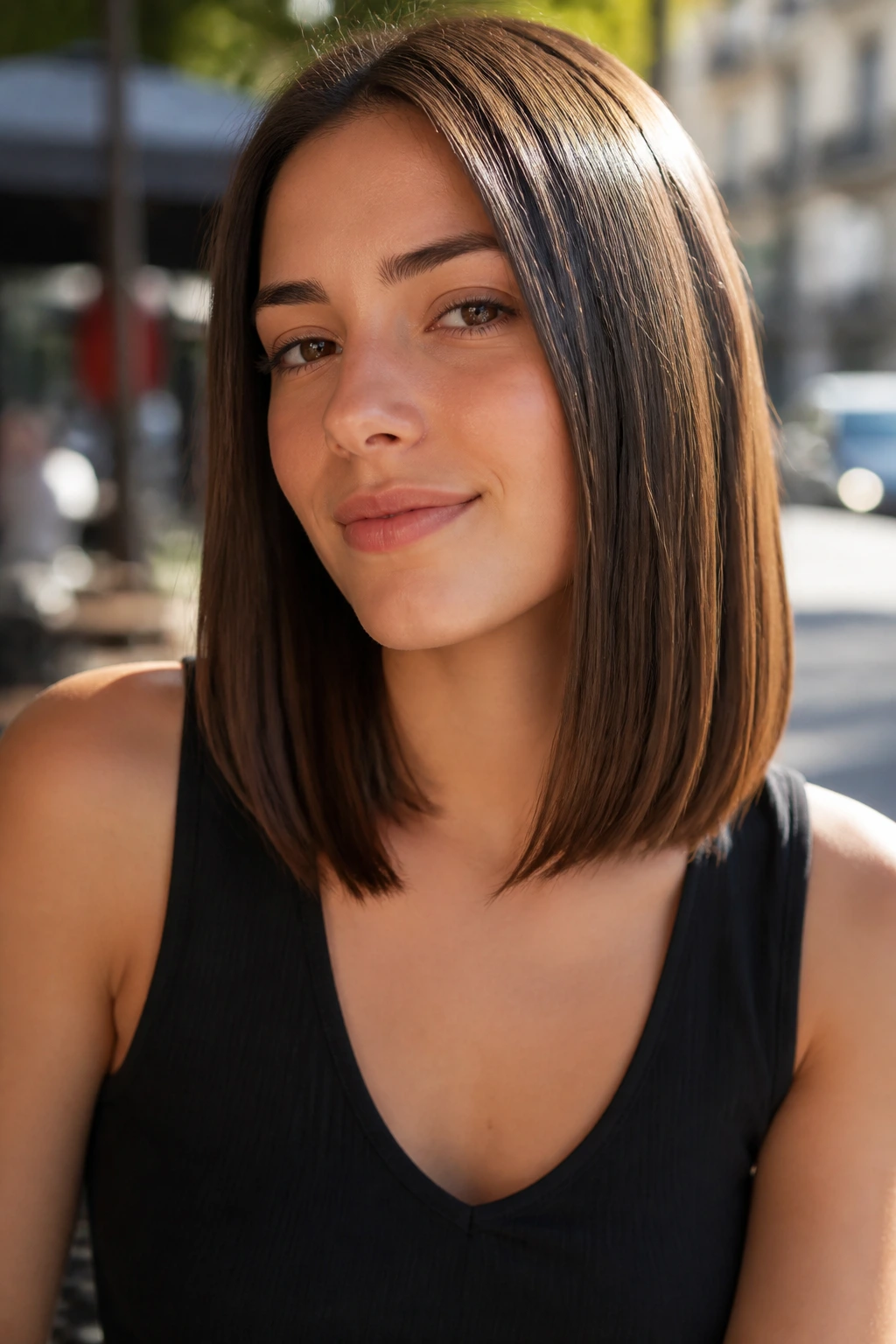
Medium length straight hairstyles hold up because they don’t hide behind texture. They depend on line, shine, and small adjustments that make a big difference in how the hair sits around your face and shoulders. That’s a good thing. You get options without needing a full styling marathon every morning.
Pick the version that fits your density first, then your part, then the finish you actually wear most days. The cut should do the heavy lifting, and at this length, it usually will.
