



Straight hair makes every cut honest. There’s nowhere to hide a crooked line, a bulky corner, or a layer that was snipped a little too high. With medium length, that honesty is useful. You’ve got enough hair to show shape, enough length to tuck, clip, or swing, and enough room to fix a bad cut without waiting forever for it to grow out.
That’s why haircut ideas for medium length straight hair can feel strangely high-stakes. One cut will look crisp and expensive with almost no styling. Another will lie there like a mop unless you fight it with a blow dryer every morning. The difference usually comes down to weight placement, where the ends land, and whether the front has enough movement to keep the whole thing from going flat by noon.
Straight hair also shows the small stuff. Cowlicks at the front. A part that drifts half an inch off center. Ends that kick out when the length lands exactly on the shoulder. People miss that in the salon chair, then spend the next month wondering why their “simple” cut feels fussy. It was never simple. It was just unfinished.
Why This Collection Feels Different on Straight Hair
-
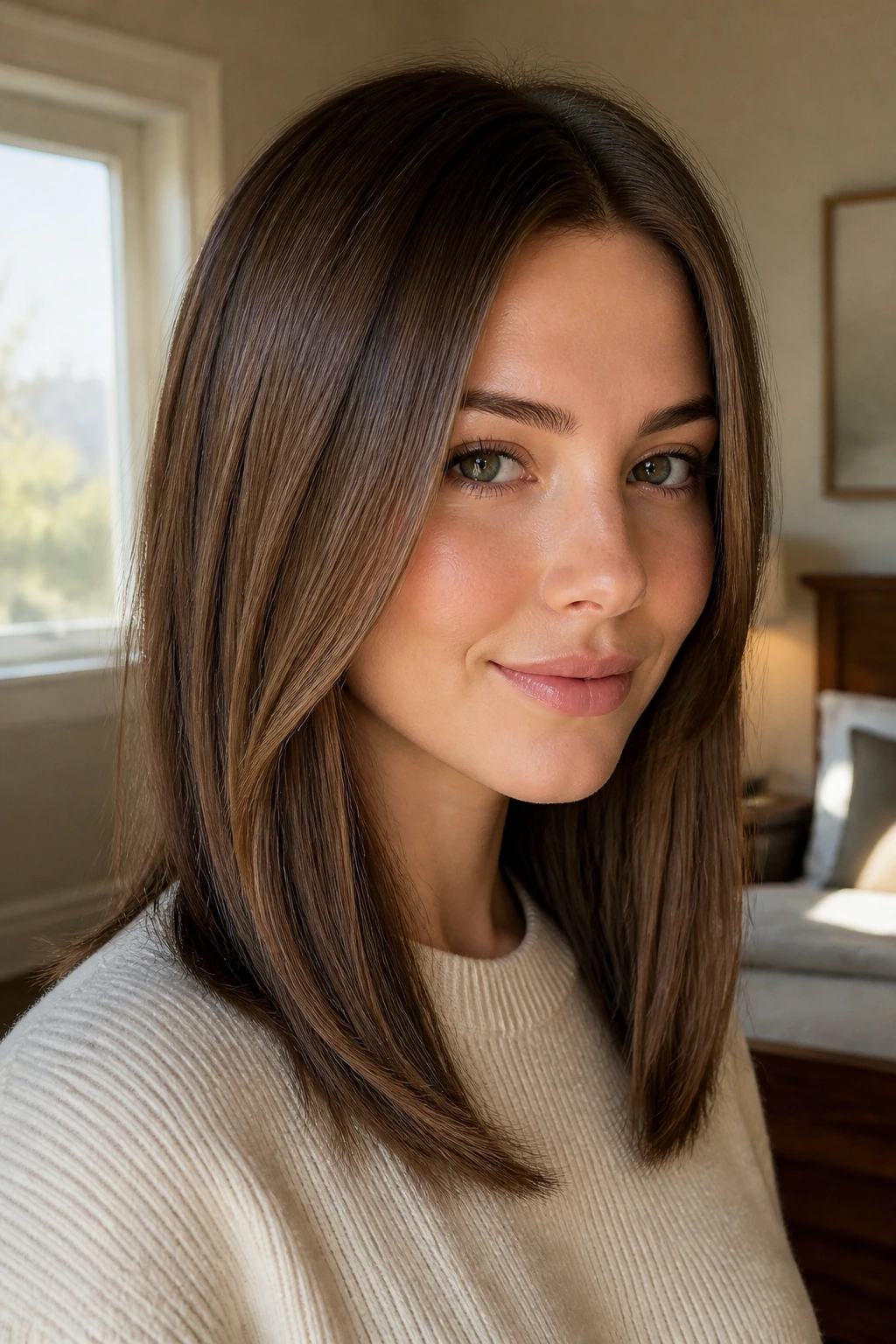
Straight hair reveals the outline first: A clean perimeter, a gentle angle, or a face frame shows up immediately, so these cuts lean into shape instead of pretending texture will save the day.
-
Medium length gives you room to breathe: You can still clip it up, tuck it behind the ear, or wear it sleek without the in-between length turning awkward overnight.
-
Not every cut needs layers: Some of the best straight-hair looks are blunt or nearly blunt, because the weight keeps the ends looking full instead of scraggly.
-
Bang choices matter more here: Curtain bangs, bottleneck bangs, and wispy fringe each change the face in a different way, and straight hair makes that difference easy to see.
-
The right cut can lower your styling time: When the line is placed well, you can get away with a quick blow-dry, a flat-iron pass on the ends, and call it done.
-
Fine, thick, flat, or dense all need different answers: A cut that makes fine hair look fuller can make thick hair puff up in the wrong places, so these ideas are grouped with that reality in mind.
1. The Blunt Lob with a Center Part
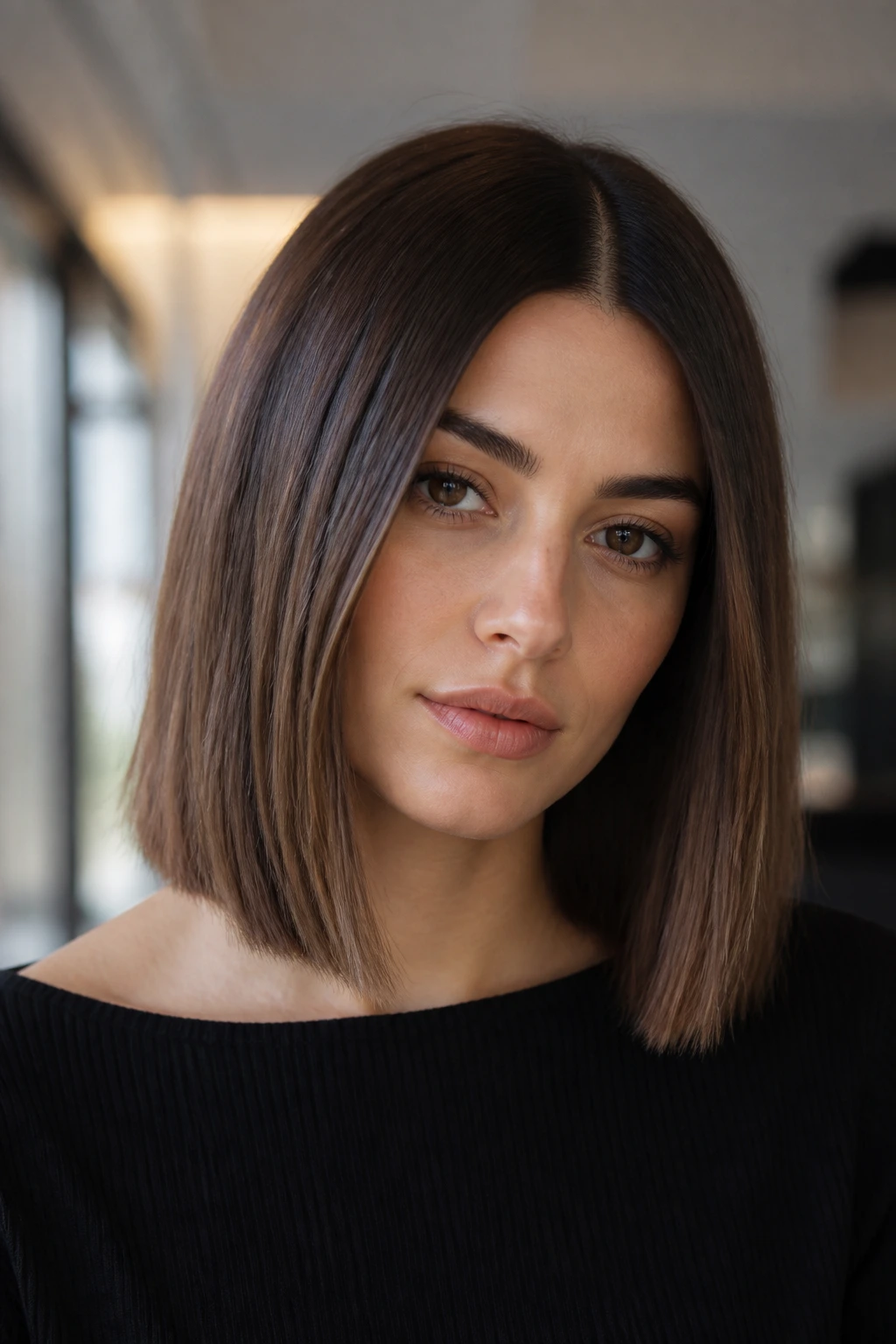
A blunt lob is the haircut straight hair was practically built for. The line is clean, the ends look full, and the whole shape lands with a kind of blunt confidence that never needs a lot of explanation. On medium-length straight hair, the cut usually hits somewhere between the jaw and the collarbone, which keeps it polished without turning severe.
Why It Works on Straight Hair
Straight hair shows off a blunt edge better than almost any other texture. When the perimeter is one solid line, the ends don’t disappear into frizz or waves. They sit there with purpose.
The center part matters here. It keeps the cut symmetrical and lets the lob fall in two even panels, which makes fine hair look denser and medium-density hair look sharper. If your hair has a habit of flipping out at the shoulders, ask for the length to sit a touch above or below that point. Shoulder-level is the trouble zone.
- Best for: fine to medium density, people who like a sleek look, anyone who wants a cut that grows out gracefully.
- Ask for: a blunt perimeter with minimal texture through the bottom.
- Avoid: too much point-cutting through the ends; it can make the line look wispy.
Pro tip: If your hair feels limp at the roots, a small amount of root lift spray at the crown does more here than extra layers ever will.
2. The Collarbone-Grazing Cut
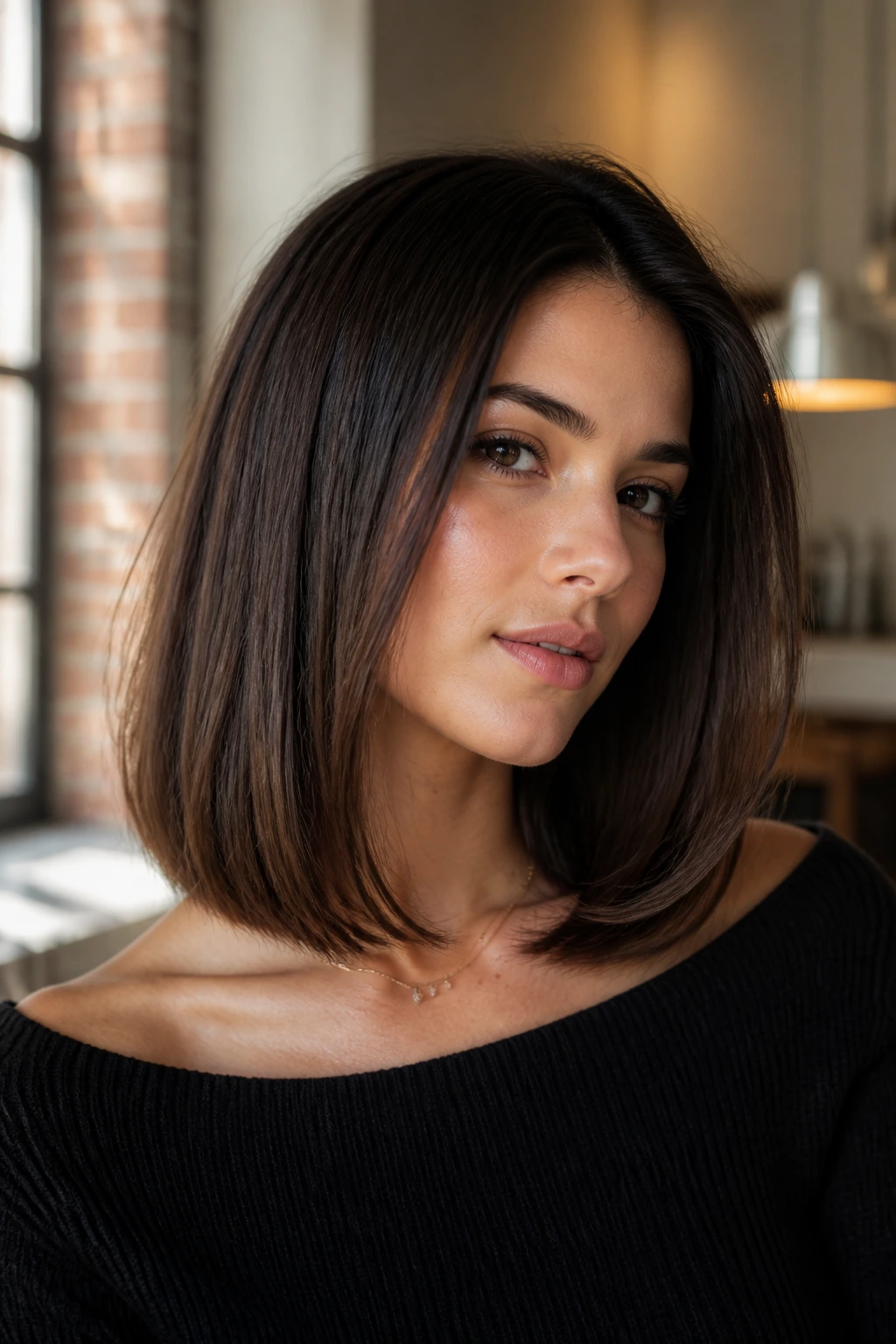
If you want a length that behaves, collarbone-grazing hair is hard to beat. It sits in that useful little space where the hair still swings when you move, but it doesn’t graze the shoulder so much that the ends kick out in every direction. It’s the cut I’d hand to someone who wants medium length without constant maintenance drama.
The collarbone is the secret. Hair that ends just there tends to fall forward and back in a way that looks intentional rather than accidental. You can wear it straight and glossy, tuck one side behind your ear, or pull it into a low knot without losing the shape.
This cut also has a nice habit of making the neck look longer. Not in a theatrical way. Just enough to matter when you want a cleaner line under a jacket or a crew neck.
What to Tell Your Stylist
Ask for the ends to sit right on or just below the collarbone, with the bottom kept tidy and the front lightly softened if you want movement. If your hair is thick, a small amount of interior removal can keep the length from feeling bulky. If it’s fine, stay closer to a one-length finish.
One warning: if you hate hair touching your collar when you bend forward, go a little shorter. That tiny adjustment changes everything.
3. Long Layers with Barely-There Movement
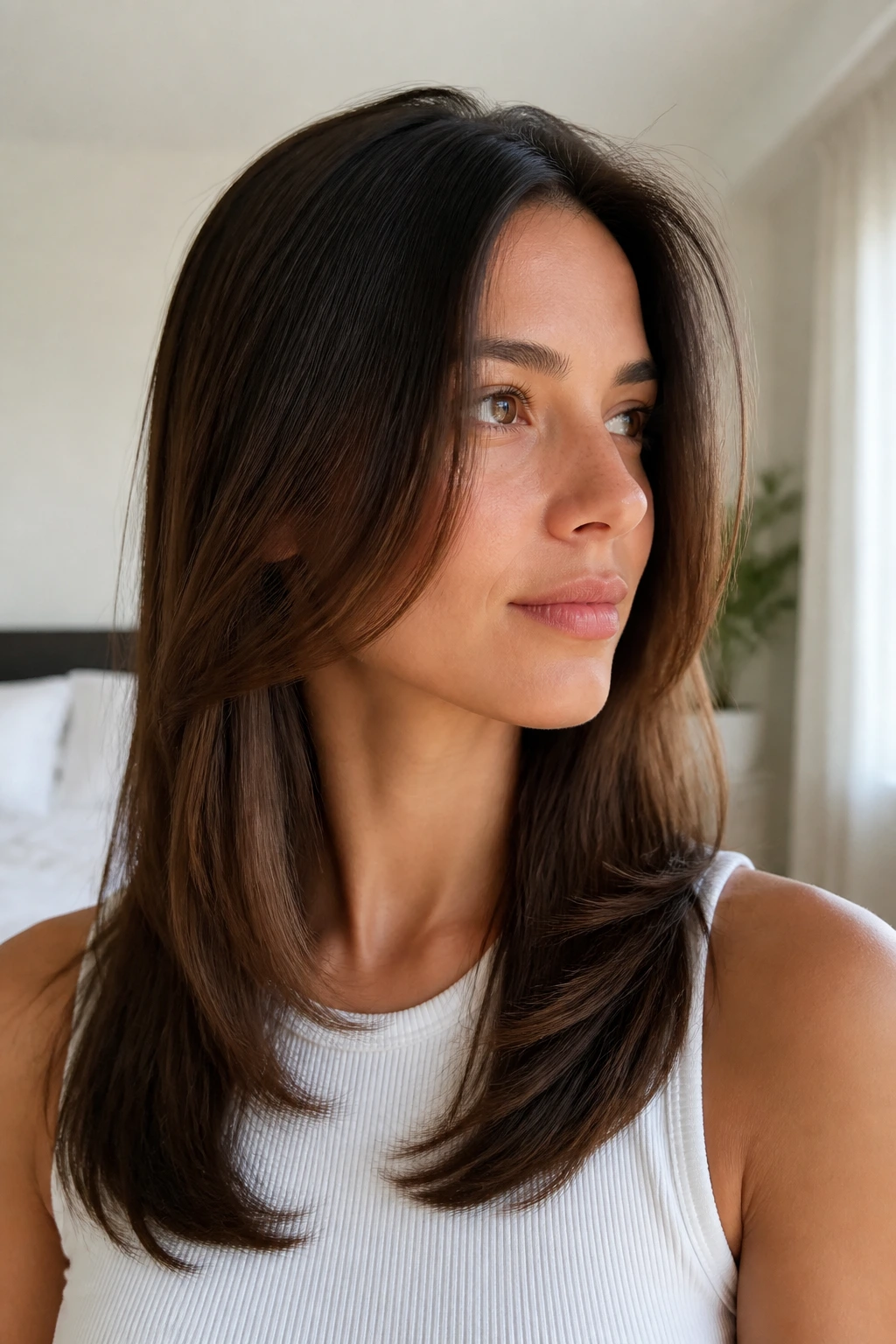
Long layers on straight hair can either look elegant or like the first step of a haircut someone abandoned halfway through. The difference is restraint. The best version keeps the outer line full while slipping in just enough internal movement to stop the hair from lying like a single flat sheet.
The Softest Way to Add Shape
Ask for layers that begin below the chin or even closer to the collarbone, depending on your density. On straight hair, layers cut too high show themselves immediately. You get steps, not movement. Nobody asked for steps.
A good long-layer cut keeps the ends looking thick and lets the front pieces fold inward a little when you blow-dry them with a round brush. It’s especially useful if your hair is medium-to-thick and you want shape without a shaggy finish.
What to Watch For
- Too many layers through the crown can make straight hair collapse.
- Very short layers near the top often fall flat by afternoon.
- A subtle bevel at the ends is usually enough.
One-sentence truth: If you like the idea of layers but hate looking overstyled, this is the safest place to start.
4. Curtain Bangs on Straight Medium Hair

Curtain bangs on straight hair have a specific personality. They open the face without trapping it, and they can make a medium-length cut feel looser right away. But they are not “wash and forget” bangs. Straight hair will happily show whether they were blown dry with intention or left to separate in sad little ribbons.
The sweet spot is usually somewhere between cheekbone and lip level, with the shortest point in the center and softer edges that blend into the sides. That shape gives straight hair a little bend without requiring a lot of product. A round brush, or even a quick pass with a large Velcro roller while the bangs cool, makes a bigger difference than people expect.
Why They’re Worth the Extra Minute
Curtain bangs work because they frame the eyes and narrow the forehead area without boxing the face in. On medium-length straight hair, they also keep the rest of the cut from feeling too serious. There’s a small bit of softness at the front, then the lengths do their clean thing.
If your hair grows fast around the brow, know this: bangs need more upkeep than the rest of the cut. Not a crisis. Just a fact.
5. Face-Framing Layers That Start at the Chin
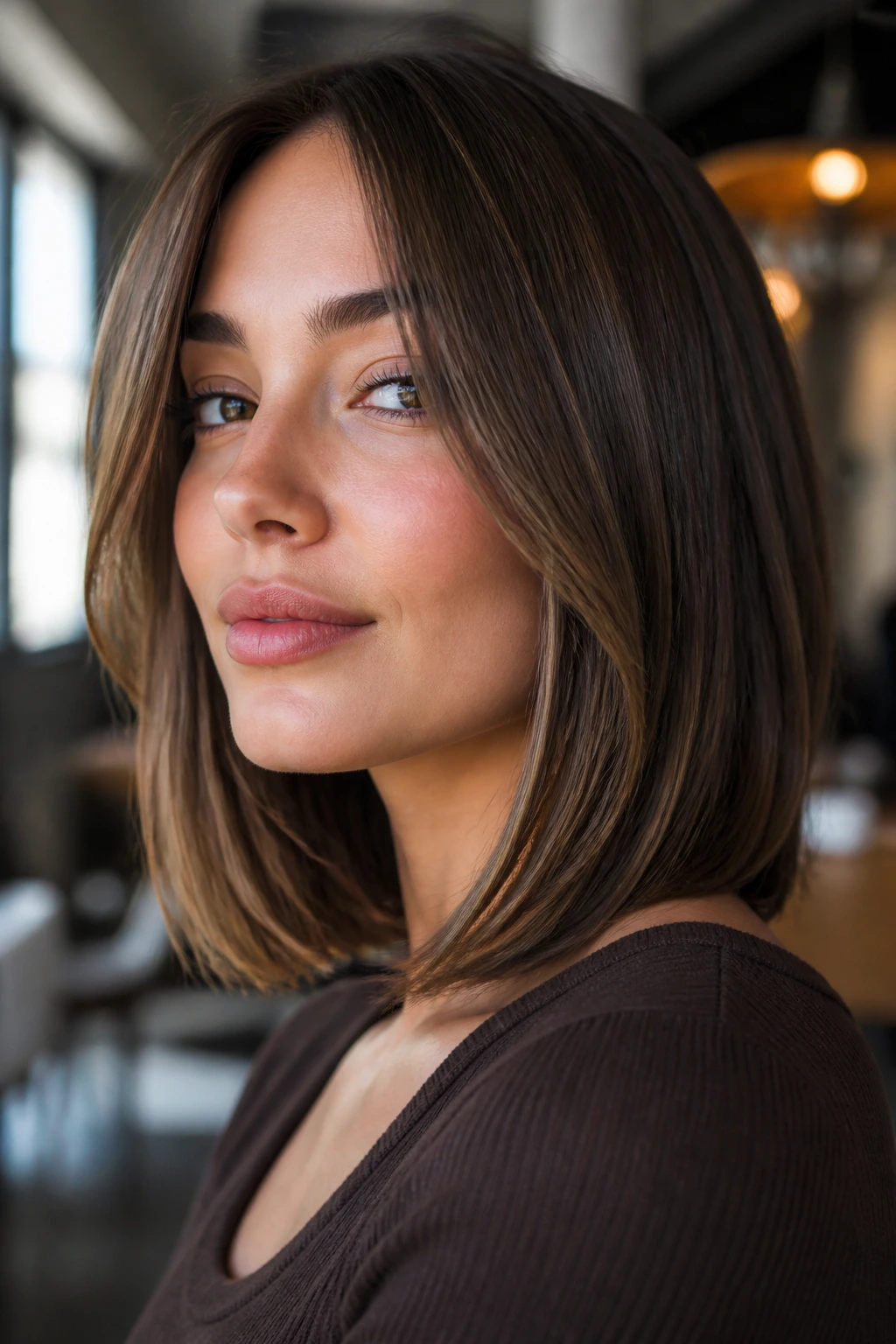
Face-framing layers are the quietest kind of haircut trick, and straight hair makes them easier to appreciate. A few shorter pieces around the face can change the entire mood of a medium-length cut without turning the rest of the hair into a layer festival.
The chin is a useful starting point. Layers that begin there can soften a square jaw, break up the line of a round face, or add movement around a long face without making the overall length feel chopped up. Lower than that, and the effect gets softer. Higher than that, and you start changing the silhouette more aggressively.
Best For
This cut is especially good if you wear your hair straight most days but want something that still looks alive when tucked behind one ear. The rest of the hair can stay blunt or lightly layered. The front just does enough work to keep the shape from reading flat.
There’s a nice practical side too. Chin-length face-framing pieces grow out more gracefully than shorter bangs, so you don’t end up in a salon every few weeks just to keep them from acting strange.
6. The Soft U-Shape Cut
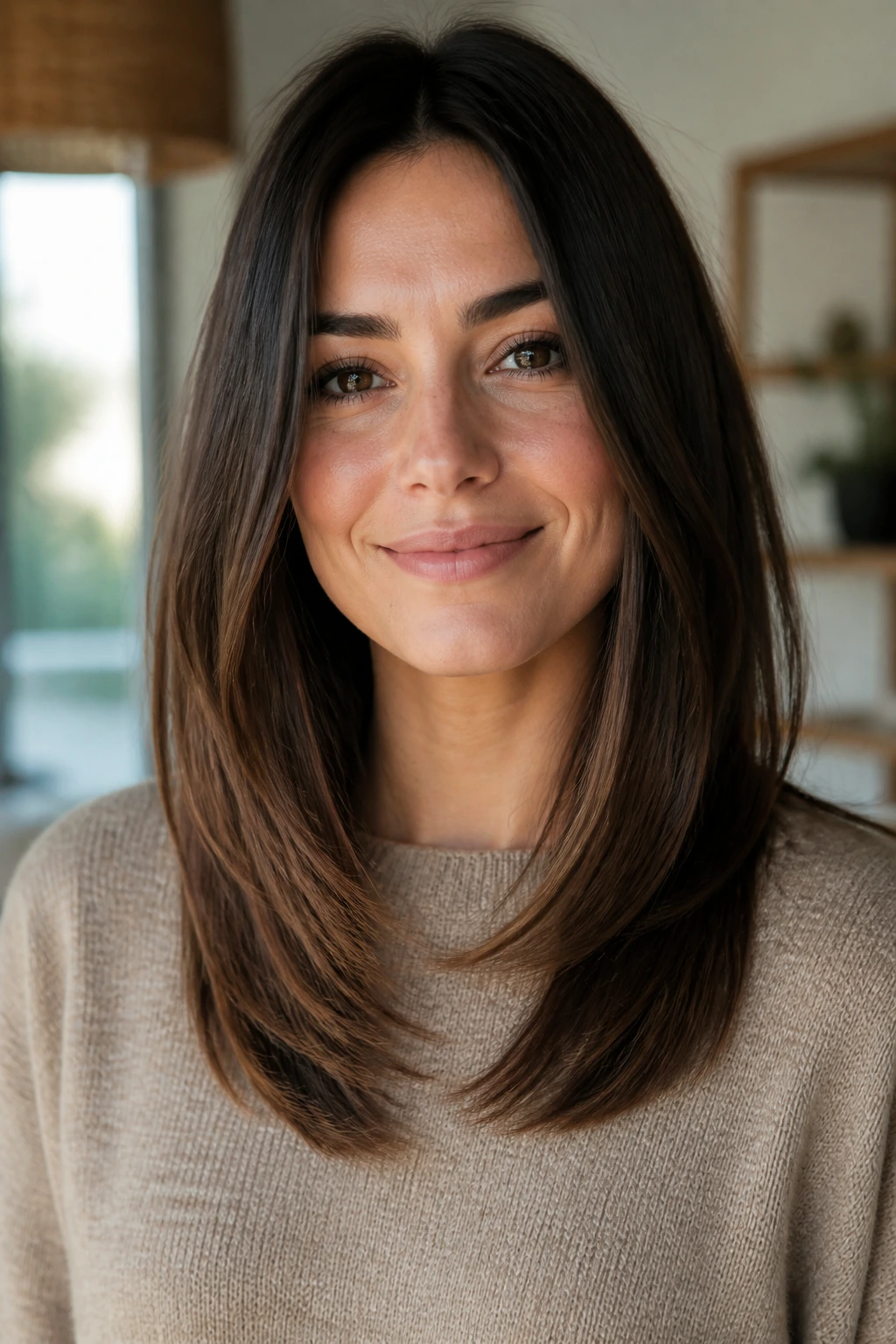
A soft U-shape is one of those cuts people describe badly because they picture either a dramatic curve or a line that’s been overblown by a curling iron. The good version is subtle. The center sits a touch shorter than the sides, and the outline dips gently instead of dropping into a V.
On straight hair, the U-shape gives movement without breaking the silhouette into obvious layers. It’s a very nice choice if you have medium-to-thick hair and want some softness around the back and sides while keeping the length looking full. The ends still look solid. They just don’t look stiff.
Why It’s a Smart Middle Ground
A blunt cut can feel too hard on some faces. Heavy layers can feel too scattered. The soft U splits the difference. It keeps the perimeter graceful and lets the hair fall in a way that follows the head rather than just hanging off it.
Ask your stylist to keep the curve shallow. A dramatic U can read dated fast. A small one just looks like the hair has shape, which is the point.
7. The Angled Lob with a Slight Forward Tilt
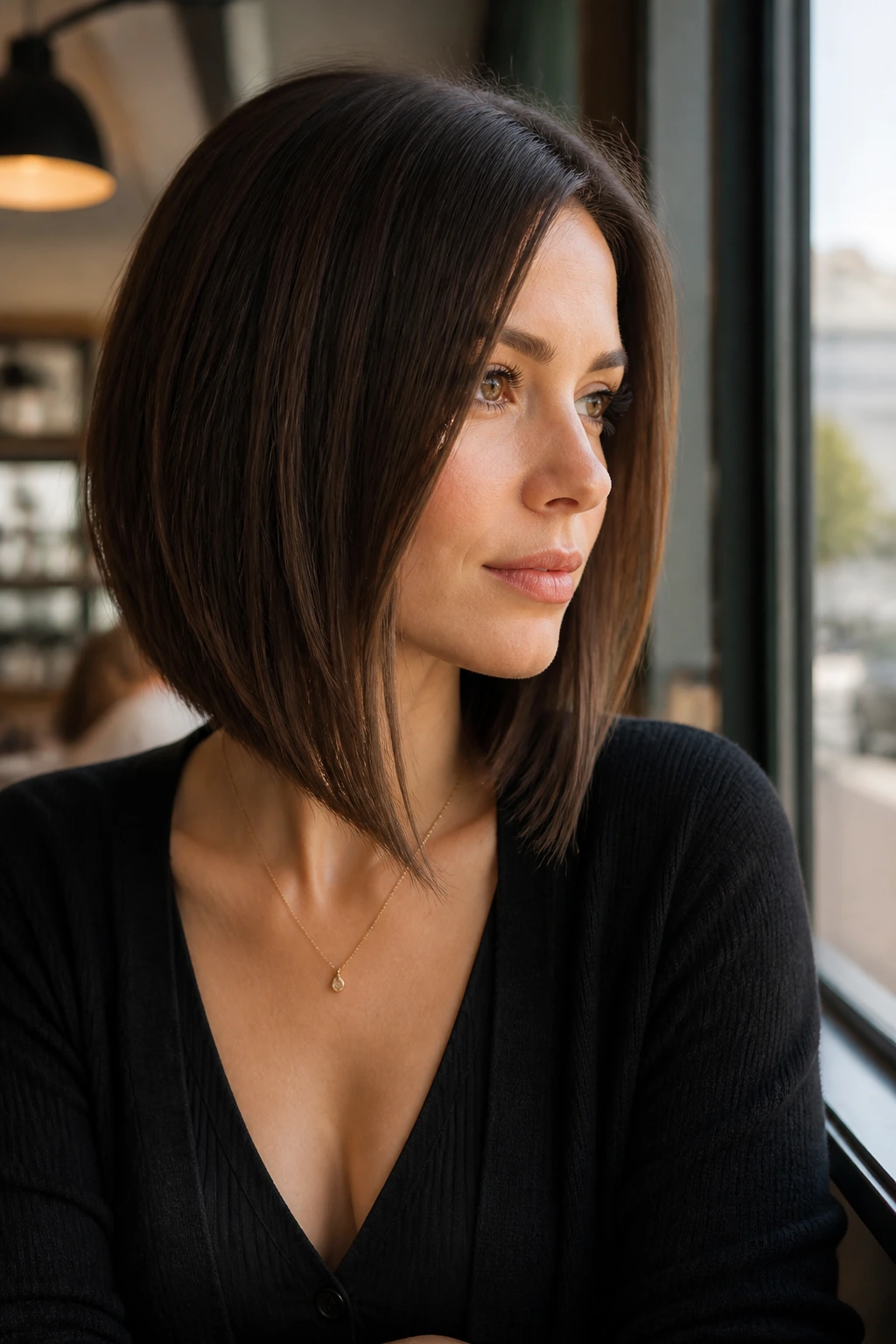
The angled lob is for people who want straight hair to do a little more without becoming fussy. The front sits longer than the back, usually by an inch or so, and that small change creates movement you can see immediately. It also gives the cut a bit of lift near the jaw.
The Angle Matters More Than the Drama
Keep the angle slight. A sharp front-to-back difference can feel heavy in the front and too short in the back, especially on medium-length straight hair. A gentle forward tilt looks modern because it’s believable. The eye notices the line, not the math.
This cut works well if you like the look of a lob but want your hair to frame the face a little more aggressively. It also handles ear tucks well, which matters more than people admit. Tucking one side changes the whole attitude of the cut.
If your hair is fine, a subtle angle can create the illusion of more length in front without losing density at the ends. If it’s thick, the angle can help the hair move instead of sitting like a block.
8. The Inverted Bob with a Longer Front
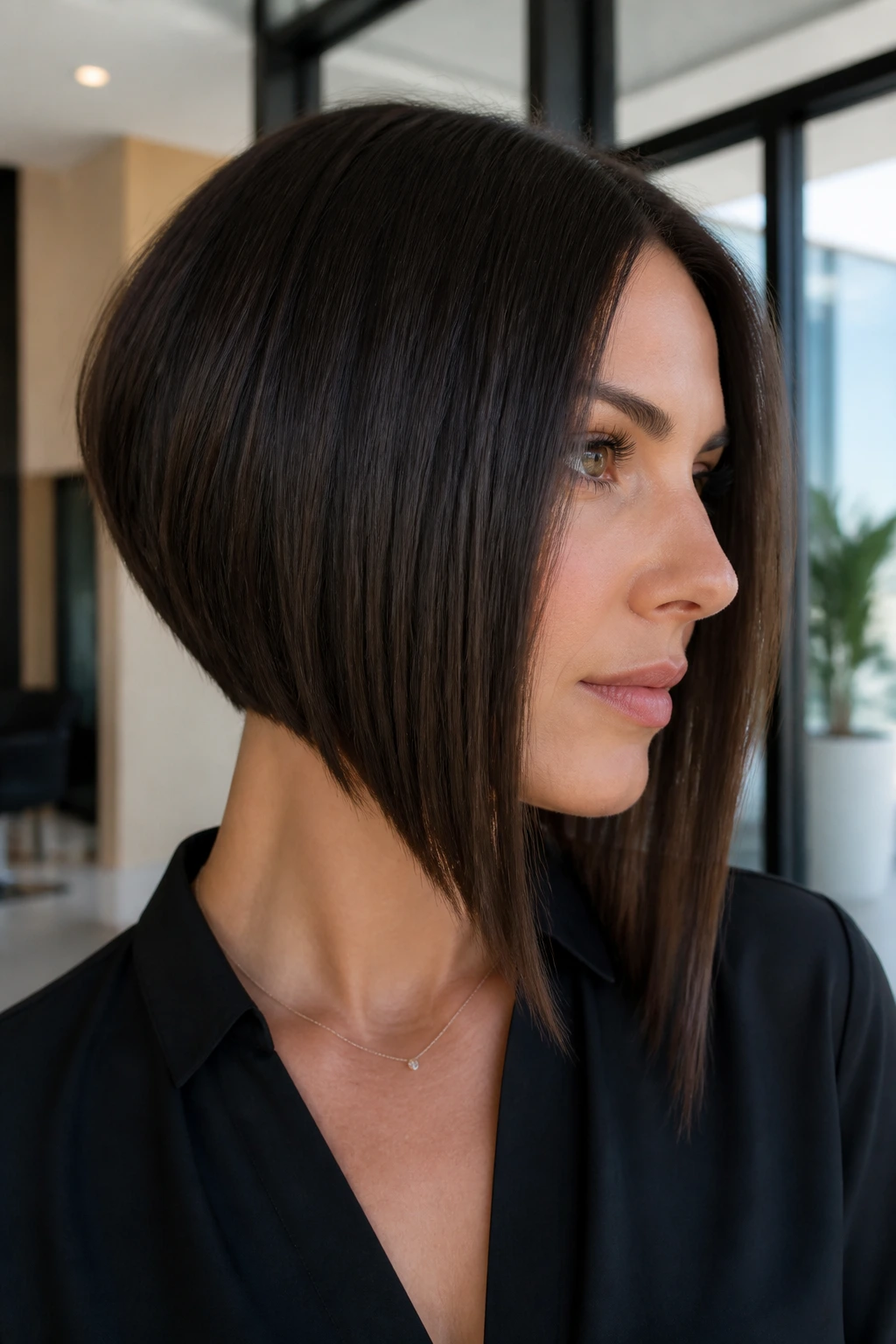
Here’s the thing about an inverted bob on medium-length straight hair: it can look incredibly crisp, or it can look like it was over-engineered. The version that works keeps the back shorter and stacked enough to give lift, while the front stays longer and soft enough to preserve the medium-length feel.
It’s a good cut if your hair falls flat at the crown and you want the back to carry a little more shape. Straight hair shows the stack clearly, which means the cut reads polished instead of hidden. You do need regular trims, though. The geometry grows out faster than a blunt lob.
What Makes It Different
Unlike a one-length bob, the inverted shape builds volume at the back without teasing or heavy product. That’s useful if you want your hair to look fuller from the side. It’s also a smart pick for people who wear structured clothes—blazers, high necks, sharper collars—because the silhouette echoes those lines.
If you air-dry and never touch a brush, this is not the easiest pick. If you like a clean blow-dry and don’t mind seeing the back stay tidy, it’s a very good one.
9. C-Cut Layers

A C-cut is one of those shapes that sounds technical until you see it on straight hair. Then it makes immediate sense. The layers curve around the sides of the face and the bottom of the cut in a way that creates a soft “C” effect when the hair falls.
Why It Looks Good on Straight Hair
Straight hair loves a curve it can hold. The C-shape gives the face a soft frame without scattering the ends into too many separate pieces. It’s less dramatic than a shag and less severe than a blunt lob, which is a nice place to be if you want polish with a little movement.
The layers usually start around the cheek or chin and fall outward and inward in a controlled arc. That helps the haircut feel lighter around the face while keeping the back dense. If the hair is heavy, this can make a huge difference in how the cut sits on the shoulders.
A good C-cut is not obvious from across the room. It’s the cut people notice when they’re standing next to you and the front pieces sweep in just the right way.
10. Bottleneck Bangs with Clean Ends

Bottleneck bangs are the more grown-up cousin of curtain bangs. They start narrow at the top, widen around the cheekbones, and blend into the rest of the haircut without a hard stop. On medium-length straight hair, that shape keeps the front interesting while the ends stay clean and tidy.
The reason they work here is balance. Straight hair can make blunt bangs look heavier than expected, especially if the hair is dense. Bottleneck bangs remove some of that bulk at the center and let the sides melt into the haircut instead of sitting like a separate piece.
A Good Salon Cue
Ask for the shortest part to sit just above or around the brow, then widen the shape toward the cheekbones. That gives you a little lift without committing to a full fringe that needs constant trimming.
They do need a blow-dry if you want them to curve correctly. A quick pass with a round brush and a bit of tension at the root keeps them from sticking straight down in a flat strip. Worth it. The face opens up in a way blunt fringe doesn’t manage.
11. The Deep Side-Part Lob
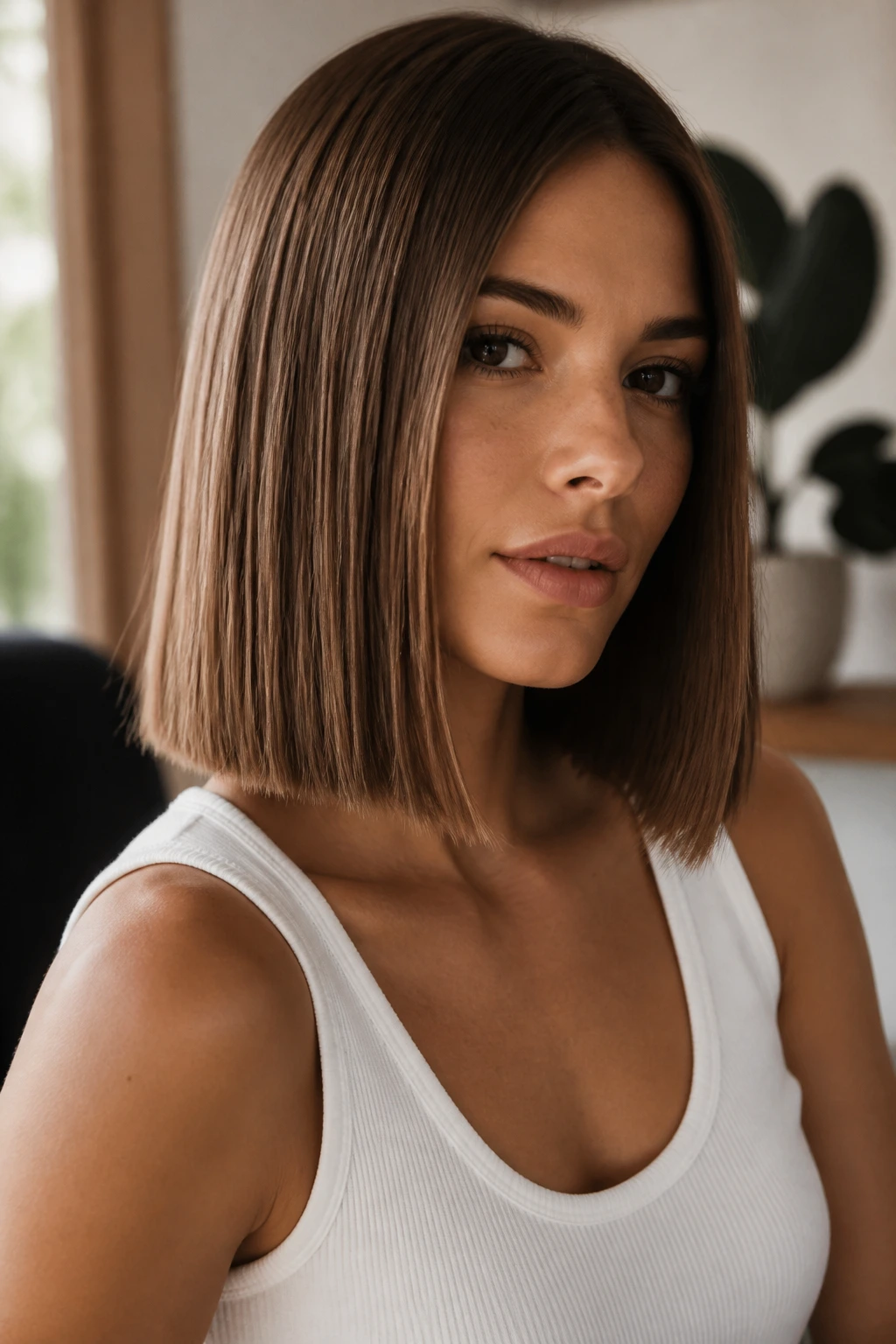
A deep side-part lob is what happens when you take a simple lob and give it some attitude. The cut itself can stay blunt or lightly layered. The real shift comes from moving the part far enough over that one side gets more lift and the other side falls with a soft sweep.
That move does a lot on straight hair. It creates volume at the root, breaks up symmetry, and makes the whole shape feel less expected. If your hair is fine and tends to split down the middle no matter what you do, this can be a useful reset. It also plays nicely with tucked ears and statement earrings, which I like more than I probably should.
Who It Suits
This cut is especially kind to round or square faces because the diagonal part pulls the eye upward and across. It’s also good for people who want to change their look without changing the actual length.
A deep side part is not a permanent decision. It’s a styling choice built on top of a smart cut. That means you can switch back to a center part on days when you want the hair to feel calmer.
12. The Feathered Mid-Length Cut
Feathered hair gets a bad reputation because people picture old-school layers flaring out like wings. That’s not the modern version. On straight medium-length hair, feathering should feel light and airy, with soft movement through the front and sides rather than dramatic swoops everywhere.
This cut works best when the stylist uses gentle slide-cutting or point-cutting near the face and keeps the rest of the shape controlled. The goal is motion, not fray. Straight hair can look especially nice with this approach because the layers catch light in a subtle way when you move.
Best Use Case
If your hair is thick and feels heavy by the end of the day, feathering can take out some of that weight without making the whole head look sparse. It’s also useful if you like a blowout but don’t want the haircut to rely on one specific styling method.
A feathered cut does need a good blow-dry to show its shape. If you’re strictly air-dry only, a softer layered cut may serve you better.
13. The Sleek One-Length Mid-Length Cut
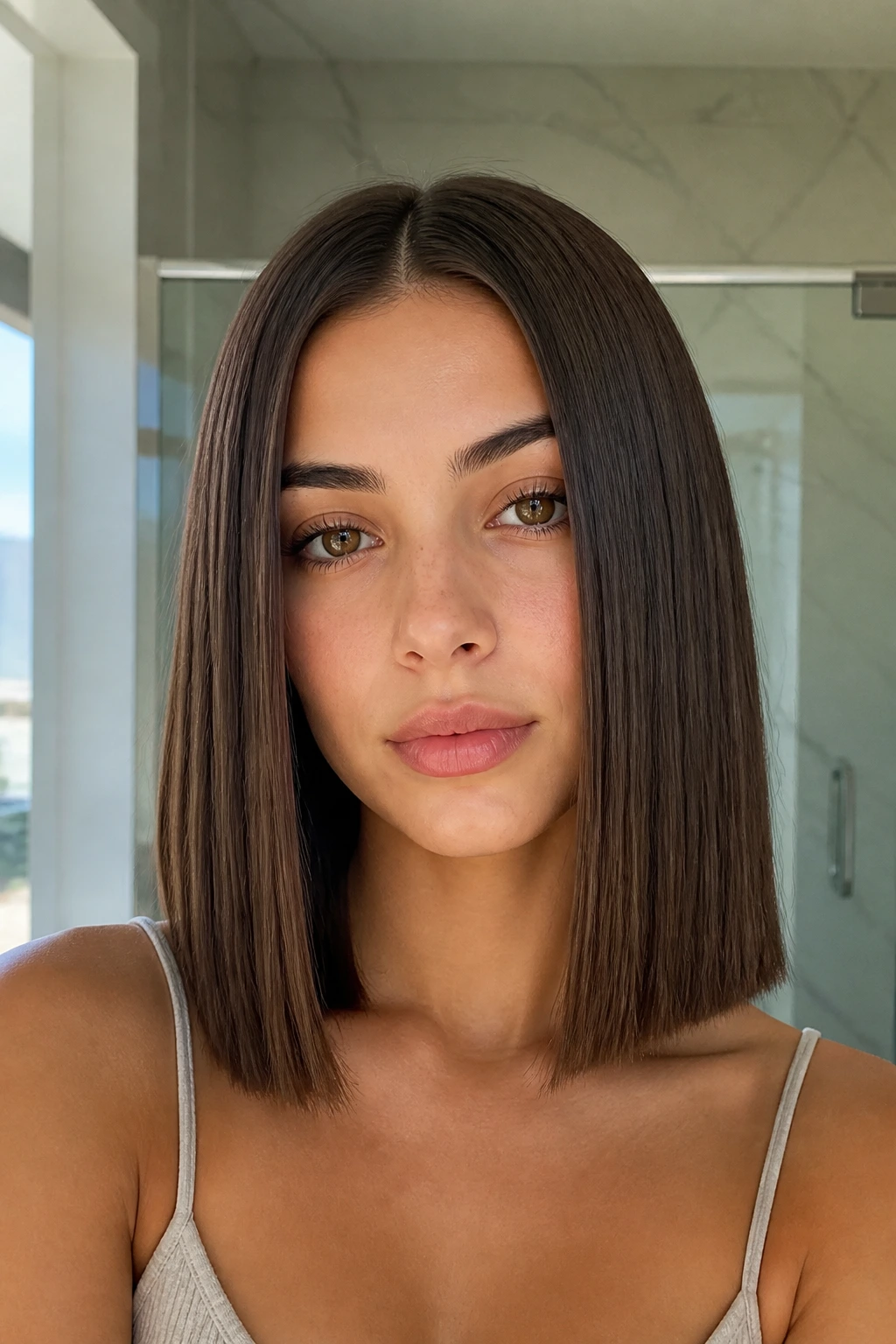
A one-length mid-length cut is the minimalist answer to straight hair. No layers fighting for attention. No internal shaping pretending to be casual. Just a solid, even line that makes the hair look thicker and cleaner than a heavily textured cut usually can.
This is one of my favorites for medium-length straight hair because it doesn’t apologize for being simple. If your strands are fine, the blunt edge gives them the appearance of more density. If they’re medium or thick, the weight helps keep the silhouette controlled and smooth.
The tradeoff is upkeep. A one-length cut shows split ends and irregular growth faster than a layered shape. That’s the price of crispness. If you like a cut that stays sharp, regular trims are part of the deal.
Why It Still Feels Fresh
The freshness comes from the line itself. Center part, off-center part, tucked ear, flat iron, air-dried with a little serum—this shape can go in a few directions without the haircut losing its identity. It’s a simple cut, but it’s not a boring one when the ends are kept tidy.
14. The Soft Shag for Straight Hair
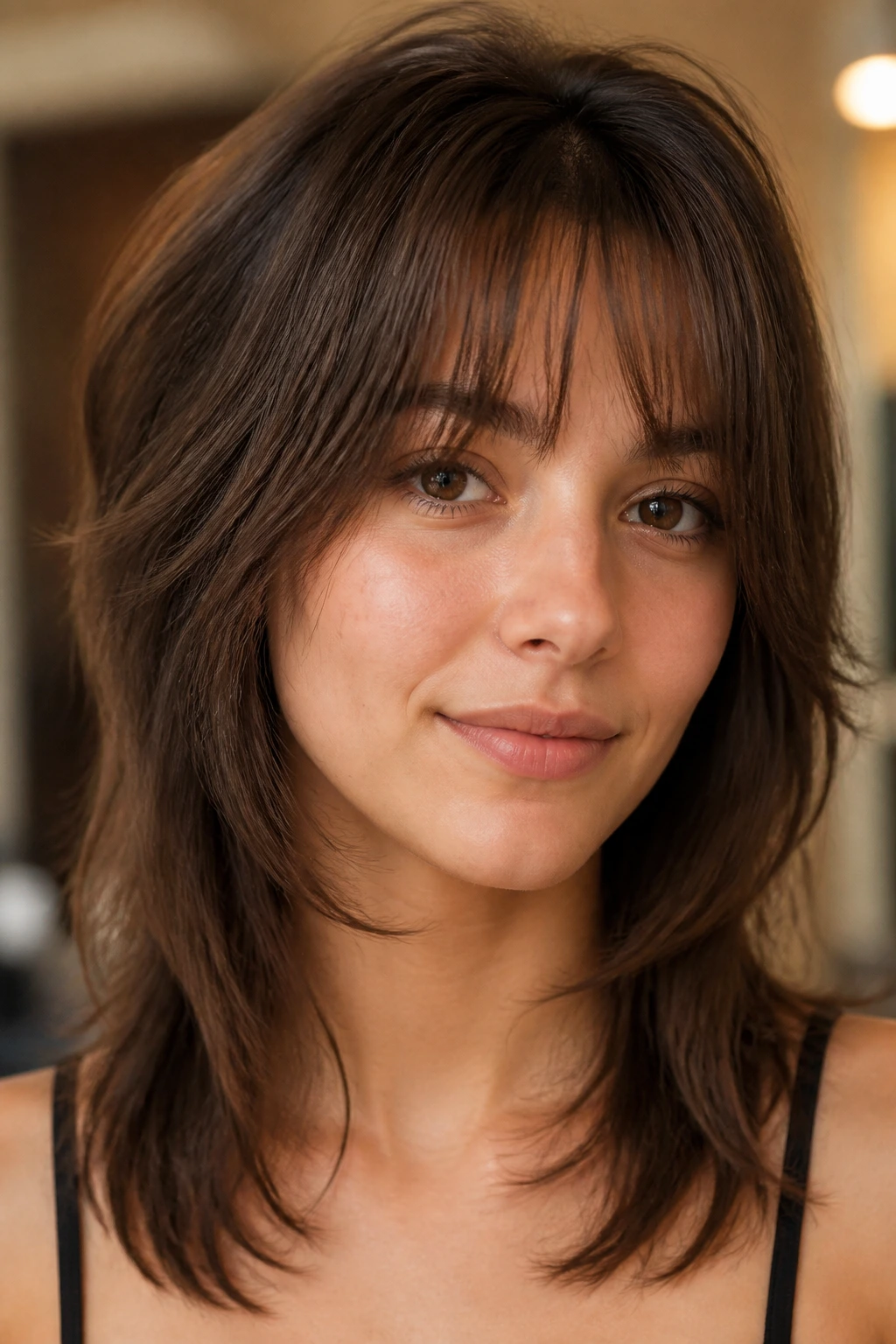
A shag on straight hair has to be handled with care. Too much layering and it turns stringy. Too little and it just looks like a layered haircut with a dramatic name. The version that works keeps the top layers longer, the fringe softer, and the overall shape wearable at medium length.
Think of it as a restrained shag. Long internal layers. A bit of bend around the face. Ends that still have enough weight to sit properly. Straight hair won’t give you the built-in texture of waves, so the cut has to create the illusion of movement without falling apart.
Good Match For
This is a strong option if you like a slightly undone feel but don’t want to spend 20 minutes with a round brush every morning. A little texture spray at the roots and a quick bend through the front can bring the whole thing to life.
If your hair is very fine, keep the layers longer and fewer. If it’s thick, the shag can be a relief. The trick is choosing enough shape to matter and not so much that the outline disappears.
15. The Rounded Shoulder-Length Cut
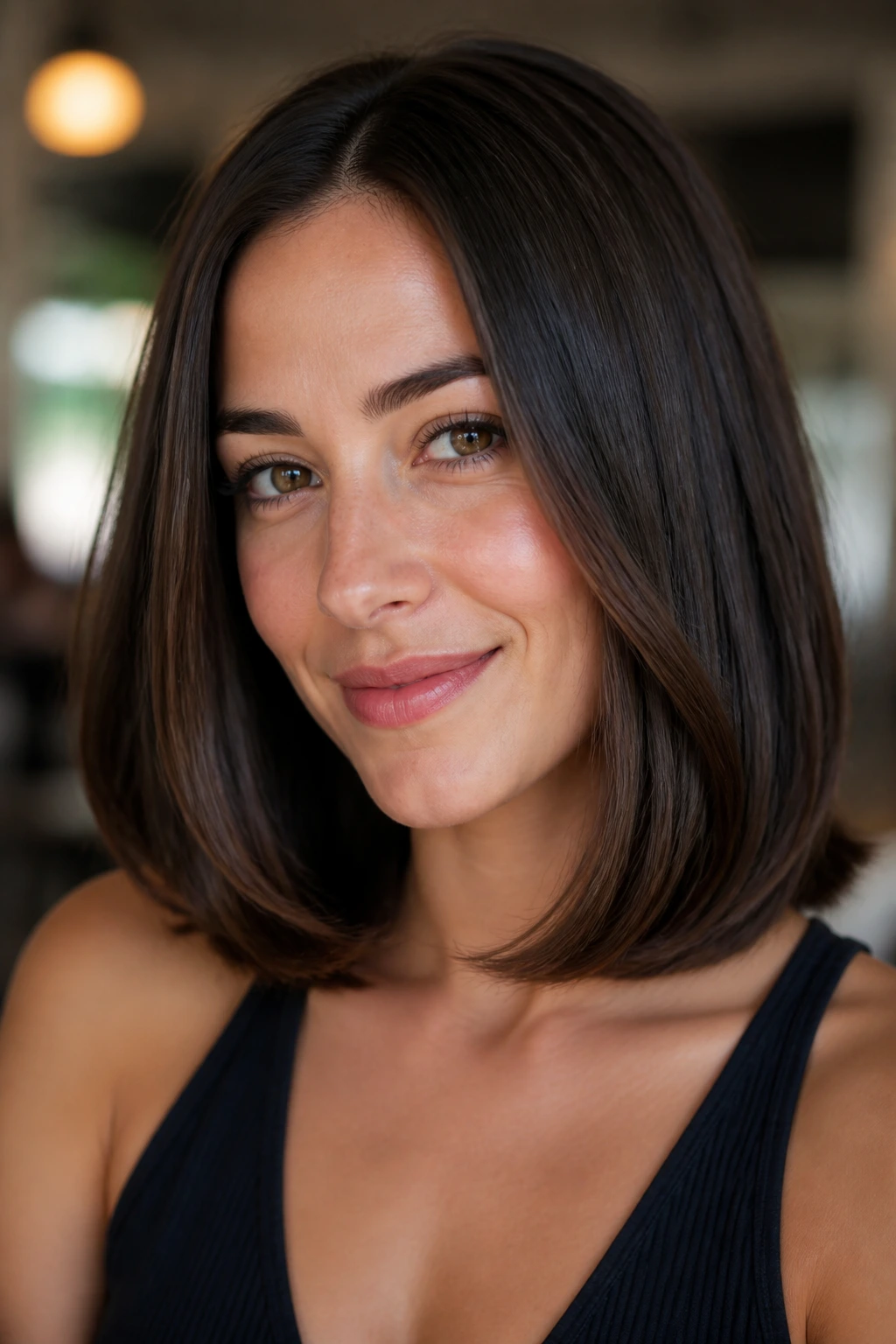
A rounded shoulder-length cut curves gently under instead of hanging in a straight line. That small bend keeps the hair from kicking out at the shoulders and gives medium-length straight hair a softer, more controlled finish. It’s the kind of cut that looks like someone meant it.
The rounded shape is useful if you wear your hair straight but want it to sit close to the head with a little natural movement at the ends. It’s a friend to blow-drying, especially with a medium round brush. The curve also plays nicely with thick hair, because it prevents the ends from feeling boxy.
What to Ask For
Tell the stylist you want the length to graze the shoulders with a soft inward bend and no harsh step lines. If your hair tends to flip outward, they may need to adjust the weight line slightly below the shoulder so the cut doesn’t fight your daily movement.
It’s not flashy. That’s why it works. A rounded shoulder-length cut looks calm even when the rest of your morning is not.
16. Wispy Fringe with Straight Lengths
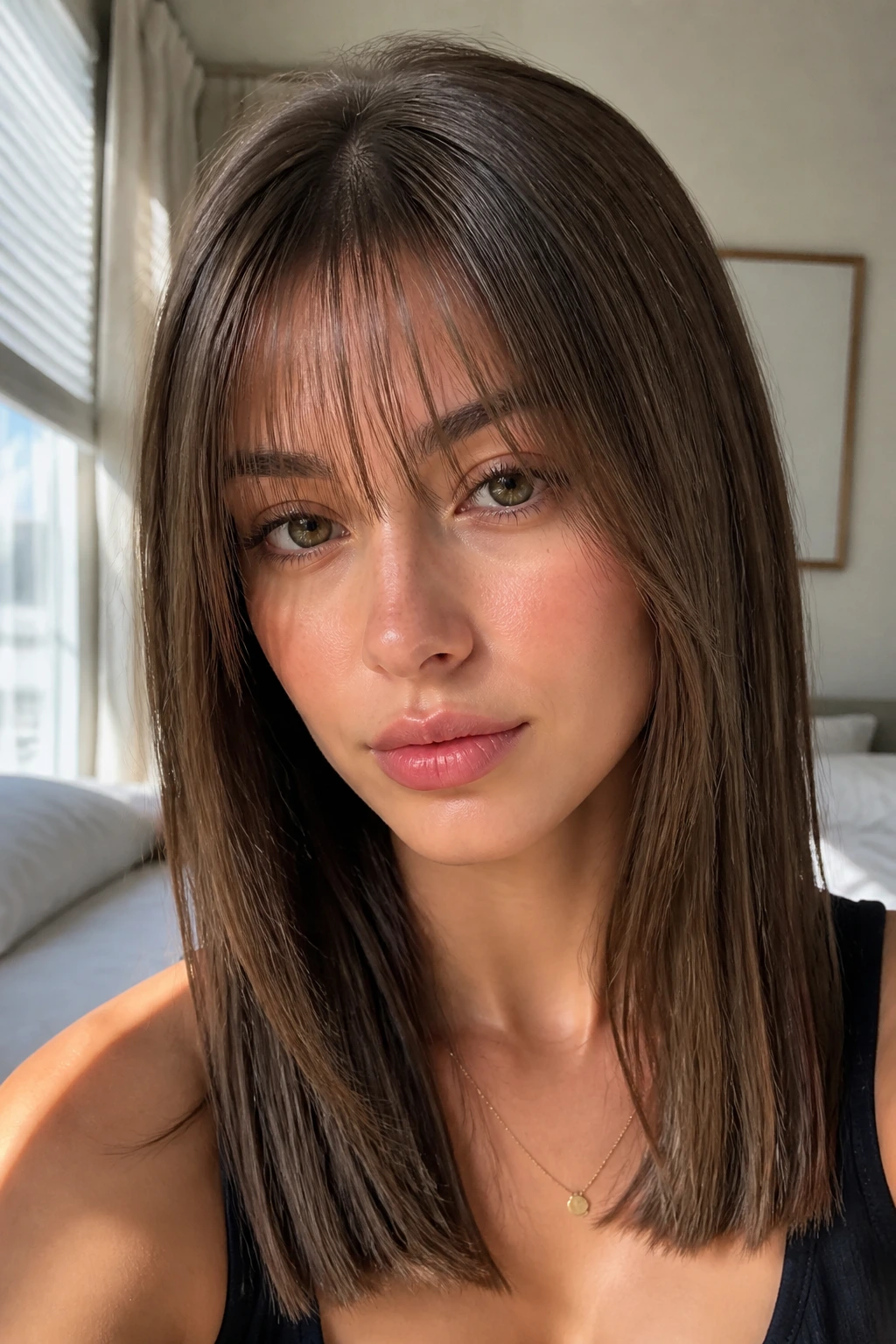
Wispy fringe on straight hair has a specific charm. It softens the forehead without creating a heavy block across the front, and it keeps the rest of the cut free to stay sleek and simple. This is a useful move if you like fringe but don’t want the upkeep of a full blunt bang.
The key is lightness. The fringe should be airy enough to separate a little, but not so thin that it looks accidental. On medium-length straight hair, that balance makes the face feel open while still giving you something interesting at eye level.
A Small Warning
Wispy fringe can behave badly if it’s cut too sparse or left too long. Straight hair will expose both mistakes fast. Ask for soft point-cutting and a length that hits somewhere between brow and lash line, depending on how much forehead you want to cover.
This cut looks especially good with a center part that breaks slightly in the middle. That little imperfection keeps it from reading too precious.
17. Razored Ends with a Polished Base
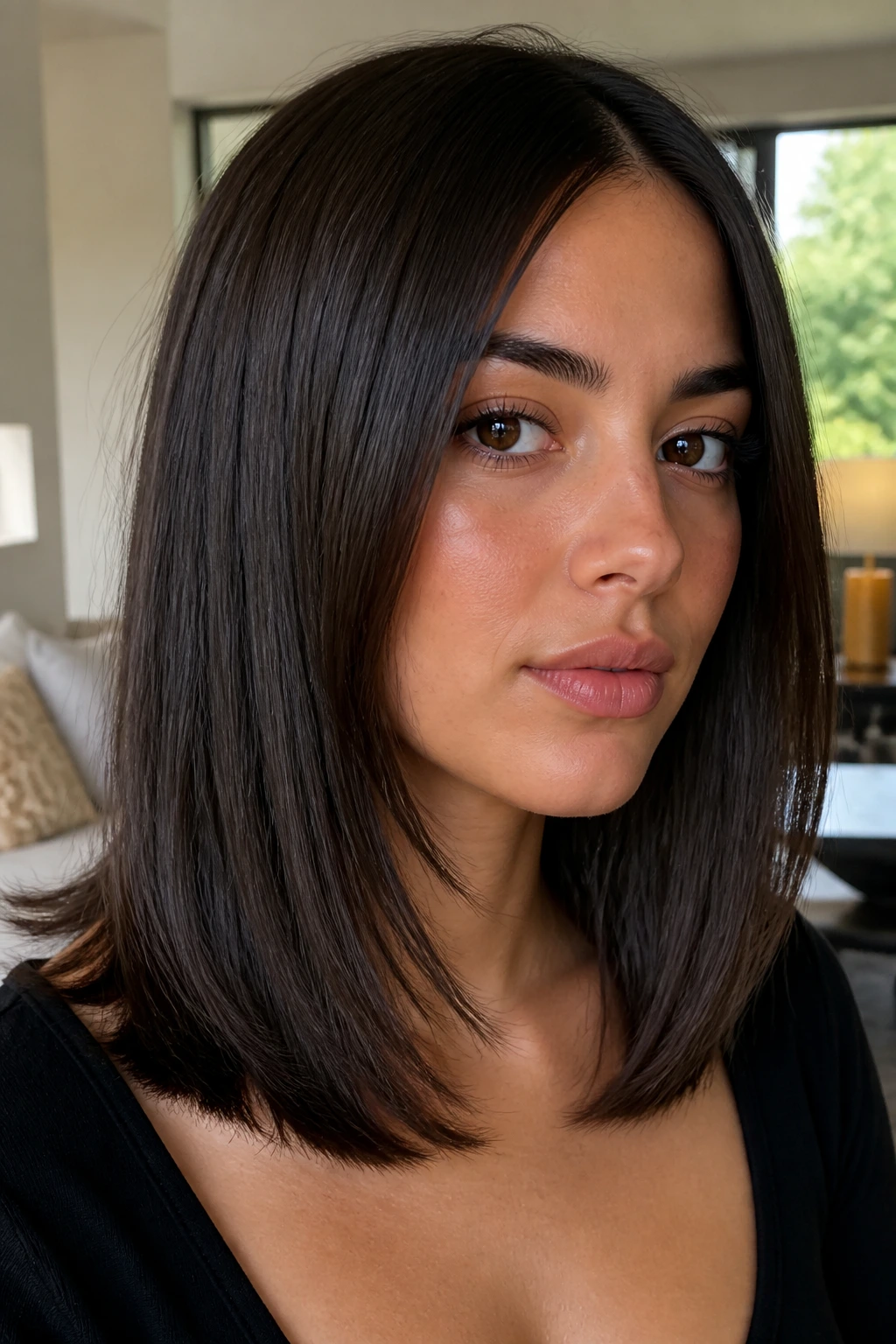
Razored ends can be beautiful on medium-length straight hair, but only when they’re used with restraint. The idea is to soften the ends and add movement, not shred the hair into a wispy edge that has to be rescued every morning.
On medium-to-thick hair, a razor can remove some of the blunt heaviness and create a lighter finish. The base still needs to look controlled. That’s the important part. Without a solid perimeter, the whole style can start to look thin, especially if the hair is naturally fine.
Where This Cut Shines
This is a good choice if you like a slightly lived-in finish and don’t want every strand to land in one perfect line. It can work well with a center part, a slight side part, or soft face framing.
Don’t let anyone razor the entire head just because your hair is straight. That’s how you end up with ends that look see-through in daylight. A little goes a long way here.
18. The Cheekbone-Grazing Layer Cut
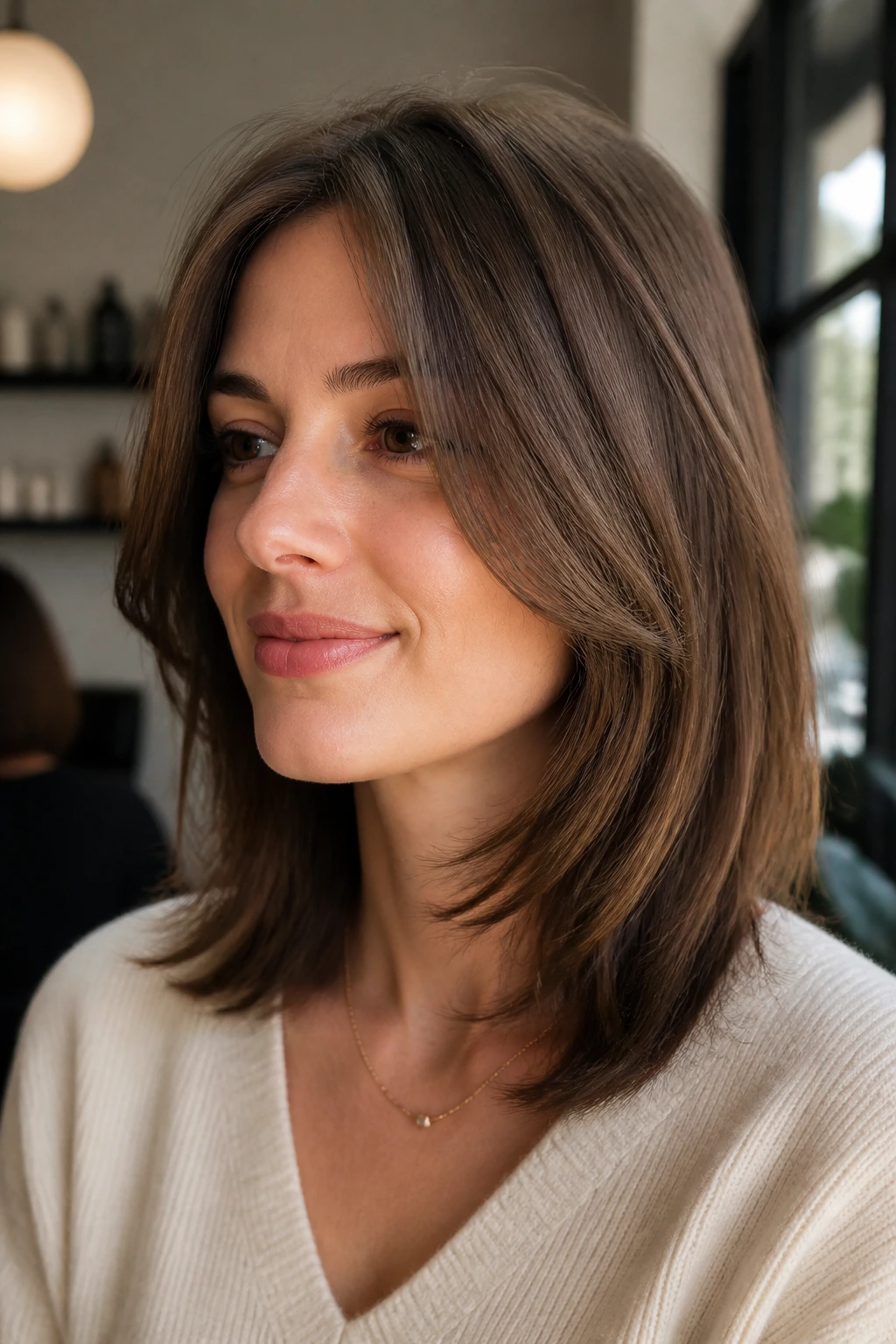
This cut does one thing very well: it puts motion where the face actually needs it. The shortest layers land around the cheekbones, which pulls attention upward and gives straight hair a frame that feels deliberate rather than heavy.
Where the First Layer Should Land
If the first visible layer starts too high, you get a choppy front. Too low, and the effect barely registers. Cheekbone level is the sweet spot for a lot of faces because it interacts with the eyes and the top of the jaw without crowding either one.
On straight medium-length hair, this approach can also keep the back from feeling overworked. The outline stays fairly clean while the front gains enough shape to soften the whole haircut. It’s a good compromise if you want layers but don’t want to commit to a full cascade.
This one especially helps if you wear your hair behind your ears often. The layers still show when the front is tucked, which is a nice little bonus.
19. Internal Layers That Keep the Outline Full
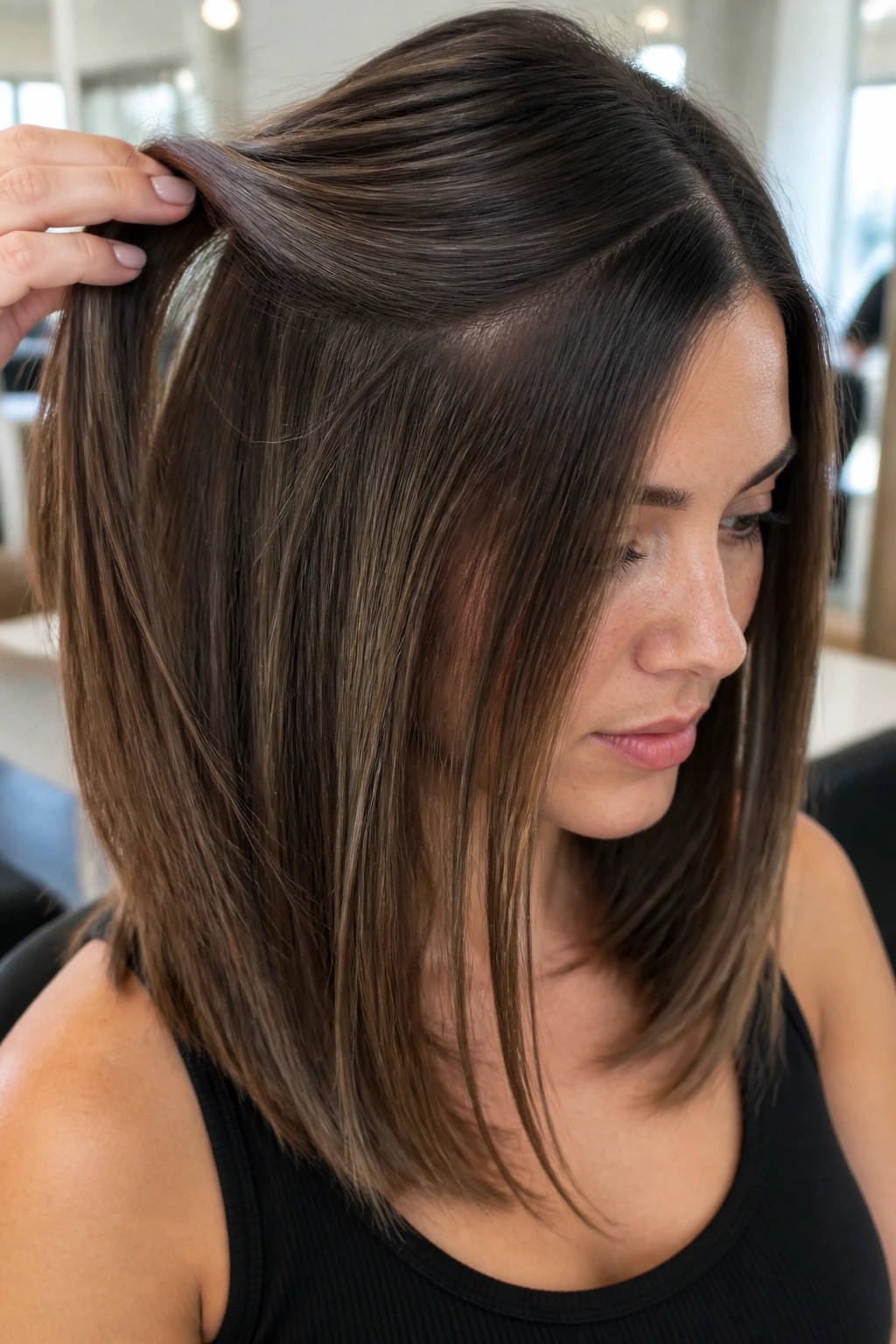
Internal layers are the hidden workhorses of straight haircuts. They remove bulk from inside the shape while leaving the outside line mostly intact. That means the hair can move without the perimeter losing its fullness, which is exactly what thick straight hair often needs.
This is one of the smartest options if your hair swells at the mids but still needs weight at the ends. The stylist can take some density out through the interior, then leave the bottom looking tidy. From the outside, the haircut still reads polished. Underneath, it feels lighter.
Why It’s Different from Visible Layers
Visible layers change the silhouette. Internal layers change the behavior. That’s the difference.
If your hair is thick, heavy, or stubbornly flat at the top but puffy at the bottom, ask for internal removal instead of a dramatic cut line. It can make styling easier without sacrificing length. Straight hair with internal layers often needs less product too, because the hair can settle instead of fighting itself.
20. The Tuck-Friendly Lob
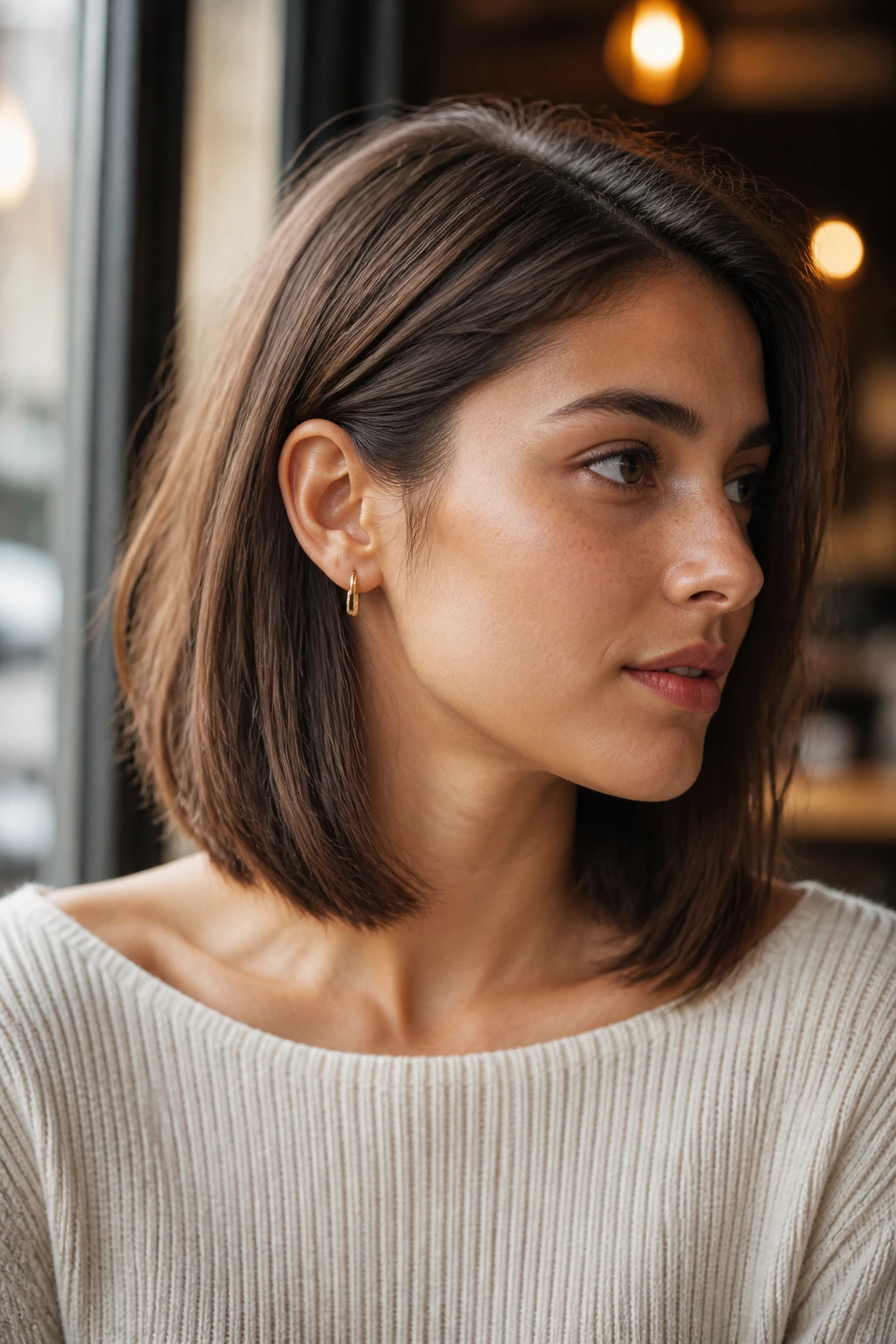
A tuck-friendly lob is exactly what it sounds like: a length that looks good both down and tucked behind the ears. That usually means sitting a bit below the jaw and above or just touching the collarbone, with enough weight at the ends to keep the shape from looking flimsy.
This cut is a little underrated. Straight hair can look static if it never gets broken up, and the tuck changes the posture of the haircut in one second. You can wear it sleek for work, then tuck one side behind a hoop earring or sunglasses and it feels different without any new styling.
It’s especially useful if you wear glasses, headbands, or earrings often. The hair doesn’t fight those accessories. It makes room for them.
If you like the idea of a clean lob but want more flexibility than a blunt line gives you, this is an easy place to land.
21. The French-Inspired Lob with Light Texture

A French-inspired lob is less about perfect polish and more about looking like your hair falls exactly where it should. On medium-length straight hair, that usually means a collarbone-skimming cut with a soft center or broken center part, a light bend at the ends, and just enough texture to keep the shape from feeling stiff.
It’s a nice choice if you want a haircut that reads relaxed without looking sloppy. The line stays neat. The ends aren’t overly thinned out. There’s just enough softness around the face to keep the whole thing from feeling too structured.
Why It Feels So Wearable
Straight hair likes a little disruption. Not too much. Just enough to avoid that helmet-like finish a blunt cut can sometimes create when the ends are too perfect and the root is too flat.
This cut usually looks best with a quick blow-dry or a light pass of a flat iron on the lower inch of hair to add a tiny bend. Nothing dramatic. The goal is a shape that looks lived in by real life, not by a curling wand.
Why Medium-Length Straight Hair Loves a Sharp Outline
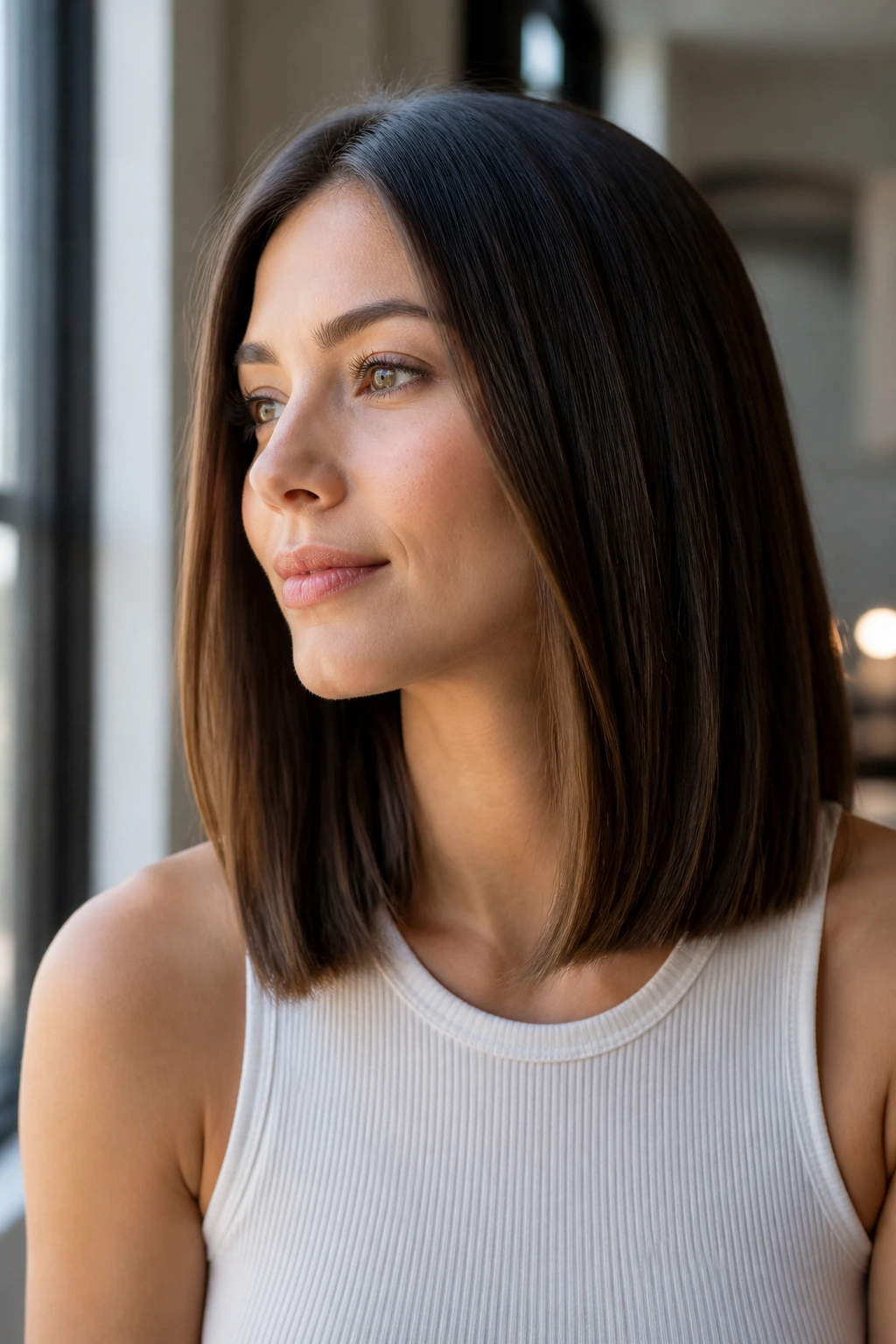
Straight hair shows the cut before it shows the styling. That’s the big thing people miss. With curls or waves, you can sometimes hide a weak perimeter under movement. Straight hair has no such mercy. If the line is off, the whole cut feels off. If the line is good, the hair looks expensive even when it was dried in a rush.
Medium length is where that honesty becomes useful instead of annoying. You have enough weight for a blunt edge to land cleanly, enough length for face-framing pieces to make sense, and enough room for layers to do actual work. Too short, and the options shrink fast. Too long, and the hair can start sitting there like a curtain with no plan.
The Shoulder Problem Nobody Warns You About
Hair that lands exactly on the shoulder often flips. Not always. But often enough to matter. That’s why so many medium-length straight cuts look amazing in the chair and a little weird the first time you wear them with a sweater. The ends need either a little clearance above the shoulder or enough length to sit past it. Tiny detail. Huge payoff.
Density Changes the Whole Story
Fine straight hair likes bluntness and small adjustments at the front. Thick straight hair usually needs internal removal or a softer curve so the shape doesn’t balloon. In both cases, the goal is the same: keep the outside line readable and the inside behavior manageable.
That’s the part that makes these cuts last in real life. Not theory. Not a perfect salon blowout. A shape that still makes sense after a commute, a hoodie, and two hours behind a laptop.
Tools That Make These Cuts Easier to Wear
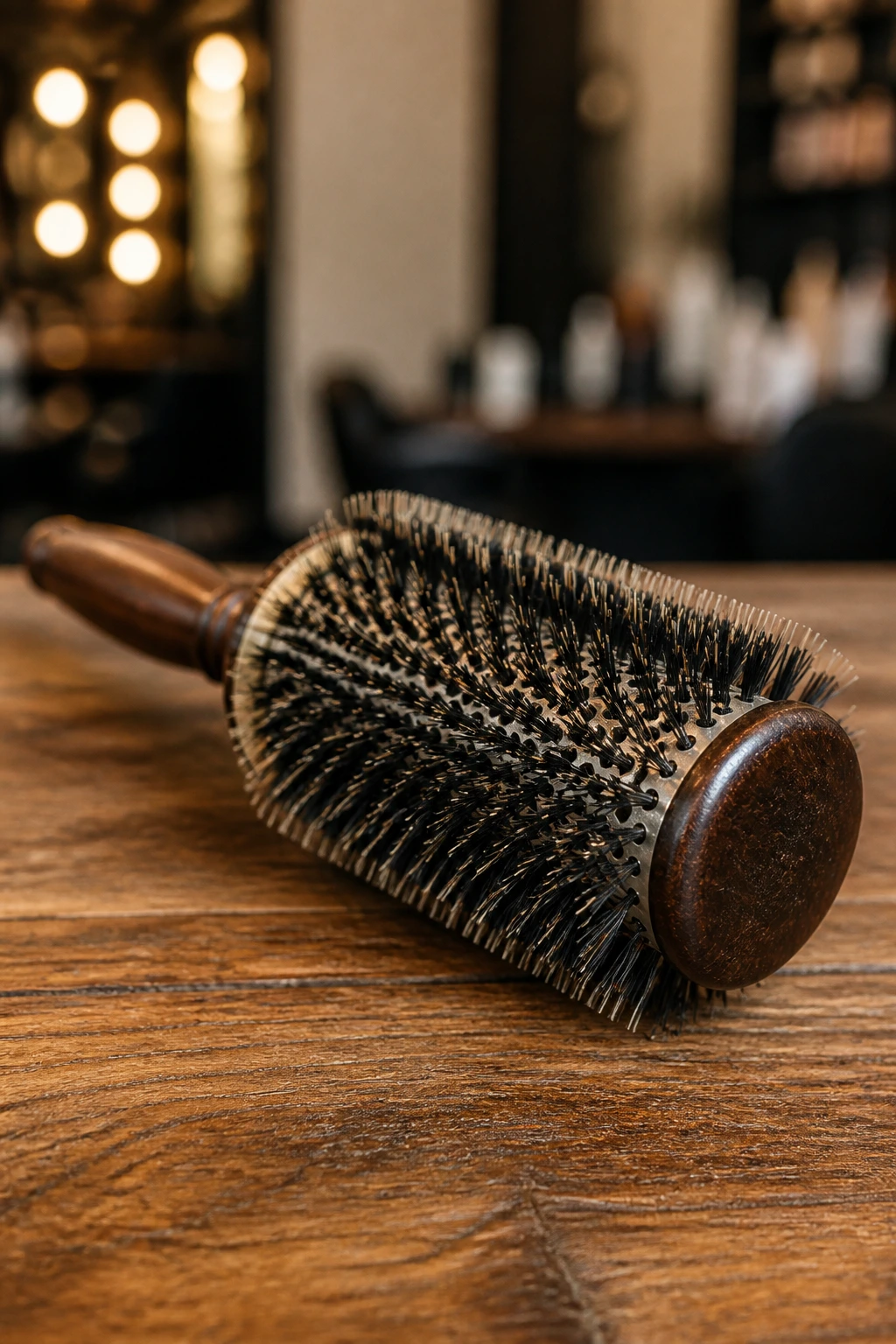
You do not need a shelf full of gadgets to keep medium-length straight hair looking good. You do need a few tools that help the cut show up the way it was meant to.
- A blow dryer with a concentrator nozzle: This helps direct the air along the hair shaft so the cut dries smooth instead of puffy.
- A medium round brush, around 1.5 inches: Useful for bending the ends under and shaping curtain bangs or rounded lobs.
- A flat iron with adjustable heat: Straight hair usually doesn’t need high heat; lower settings keep the ends from getting fried.
- A tail comb: Handy for clean parts and for lifting sections at the crown when you want a little root lift.
- Heat protectant spray: Non-negotiable if you use a hot tool more than once a week.
- Lightweight smoothing serum or cream: A pea-size amount on the ends can take a blunt cut from dull to polished.
- Dry shampoo: Especially useful for layered cuts and curtain bangs, which can go flat fast at the roots.
- A few duckbill clips: Great for setting face-framing pieces or bangs while they cool after blow-drying.
- A handheld mirror: Worth having if you’re checking the back of an angled or inverted cut.
- Reference photos: Not a tool in the literal sense, but absolutely the best thing you can bring to a salon visit.
How to Pick the Right Cut for Your Hair Density, Face Shape, and Routine
The best haircut idea is the one you’ll actually keep up with. Straight hair is not forgiving in the same way a textured head of hair can be. If your routine is low-effort, don’t ask for a shape that only works with a round brush and twenty minutes of patience.
Fine Hair: Blunt lobs, one-length cuts, and tuck-friendly lengths usually help most. Keep layers light and low so the ends don’t turn thin. A small root-lift product near the crown gives more result than adding a lot of texture.
Thick Hair: Soft U-shapes, internal layers, and feathered cuts can remove weight without sacrificing the outline. Thick straight hair tends to look best when the bottom still feels full and the top doesn’t collapse into a helmet.
Round or Square Faces: Angled lobs, cheekbone-grazing layers, and side parts can open the face and keep the cut from sitting too symmetrically. A little diagonal movement goes a long way.
Long Faces: Curtain bangs, bottleneck bangs, and rounded shoulder-length cuts help add width where you want it. Keep the sides soft and don’t overextend the front pieces too far downward.
Low-Maintenance Routines: If you want something that still looks good after air-drying or a five-minute blow-dry, stay closer to a blunt lob, collarbone cut, or French-inspired lob. The more complex the layering, the more styling the haircut usually wants.
One more thing. Bring photos that show the side view, not just the front. The front tells half the story. The side tells the truth.
Common Mistakes That Flatten Straight Medium Hair
The most common mistake is over-layering. Straight hair doesn’t need much encouragement to lose its shape, and too many short layers can turn the ends stringy by the time you reach the parking lot. If the haircut looks feather-light in the chair but thin at home, that’s usually the reason. The fix is to keep the layers longer and ask for more internal shaping than obvious steps.
Another one: cutting exactly at the shoulder and hoping for the best. Hair that lands there often flips outward or gets stuck on sweaters and coat collars. You’ll know it’s wrong because the ends keep kicking away from your neck. The fix is easy enough—go a touch shorter or a touch longer, not dead on the shoulder.
A third mistake is asking for bangs without talking about density. Straight hair makes sparse bangs look sparse. If the fringe is too thin, it separates into pieces and can feel like an afterthought. The fix is to match the fringe style to the front density and your willingness to style it every morning.
People also ask for razored ends when they really need shape. On fine straight hair, too much razor work makes the perimeter look soft in a bad way. On thick hair, it can help. The difference matters. Ask for technique based on your strand thickness, not on a photo alone.
And yes, ignoring the part line counts as a mistake. A center part and a deep side part can make the same cut behave differently. If your cowlick pushes one way, work with it instead of fighting it into obedience. Hair usually wins that battle.
Ways to Personalize a Medium-Length Straight Cut
The Fine-Hair Lift Edit
Keep the perimeter blunt, skip heavy layers, and add a shallow side part or curtain fringe only if you style the roots. This version gives the illusion of fullness without thinning the ends.
The Thick-Hair Debulk Edit
Ask for internal layers, a soft U-shape, or a gentle feather through the front third of the hair. The goal is to remove weight where the hair swells, not to shave off the outline that keeps the cut looking polished.
The Low-Effort Air-Dry Edit
Choose a collarbone cut, tuck-friendly lob, or rounded shoulder-length shape. These cuts need less heat because the line itself does most of the work.
The Bang-Forward Edit
Curtain bangs, bottleneck bangs, or a wispy fringe can change the whole mood of a straight medium cut without touching the rest of the length. Handy if you want a new look but do not want to commit to a dramatic chop.
The Polished Office Edit
A blunt lob, one-length mid-length cut, or deep side-part lob all look clean with minimal fuss. They read neat even when the styling is bare-bones.
Keeping the Shape Between Trims
Straight hair shows growth quickly, which is both annoying and useful. Annoying because split ends turn up sooner than you’d like. Useful because you can tell when the shape is starting to slide before it becomes a real problem.
Blunt cuts and one-length lobs usually look best with trims every 6 to 8 weeks if you want the line to stay crisp. Layered cuts can go a little longer, around 8 to 10 weeks, because the shape is less dependent on a razor-sharp edge. Bangs are the outlier. Fringe often needs a small trim every 3 to 5 weeks if you want it to sit the way it did on day one.
Wash routine matters too. If you use smoothing creams, oils, or dry shampoo often, a clarifying wash every 2 to 4 weeks can keep the roots from going limp and the ends from looking coated. Use a heat protectant whenever a flat iron or blow dryer touches the hair. Straight hair may not frizz the way curls do, but it can still look fried fast.
Sleep can mess with the shape more than people expect. A silk or satin pillowcase reduces that crushed, bent look at the ends. And if a cut relies on a center part, set the part while the hair is still damp so it dries in the right place.
Questions People Ask Before Choosing a Straight-Hair Cut
Do layers make straight hair look thinner?
They can, if the layers are cut too high or too many sections are removed from the ends. Longer, softer layers or internal layers usually work better because they keep the outline full while still adding movement.
Is a blunt cut better than layers for fine straight hair?
Often, yes. A blunt edge tends to make fine hair look denser and cleaner. If you want some shape, add only a few face-framing pieces instead of going heavy on layers.
What haircut is easiest to style on medium-length straight hair?
A collarbone cut or blunt lob usually wins here. Both can dry naturally with a little serum or smooth out quickly with a brush and a blow dryer.
Should straight hair get bangs?
Only if you’re willing to style them. Curtain bangs and bottleneck bangs are the easiest entry points because they blend better as they grow, while blunt fringe needs more maintenance and more attention to density.
How do I keep the ends from flipping out?
Don’t cut the hair exactly where it hits the shoulder. Go slightly above or below that point, then shape the ends with a round brush or a quick inward pass of a flat iron.
Can these cuts work if my hair is very thick?
Yes, but the technique matters. Thick straight hair often needs internal layers, a soft U-shape, or a controlled feather through the front to stop the bulk from sitting like a block.
What should I tell the stylist if I’m not sure?
Bring two or three photos of cuts you actually like, say how often you style your hair, and point out whether you want the ends blunt, rounded, or lightly layered. That gives the stylist something concrete to work with instead of guessing from the word “medium.”
Will a side part or center part change the haircut?
Not the cut itself, but it changes the way the shape falls. A center part makes symmetry and bluntness stand out. A side part adds lift and can soften a stronger jaw or a longer face.
The Cut That Makes Straight Hair Behave
The best medium-length straight haircut is the one that gives your hair a clear line and then gets out of the way. That can mean a blunt lob, a collarbone cut, a soft U-shape, or a fringe that only takes a minute to smooth into place. The common thread is control. Not stiffness. Control.
Straight hair tends to look best when the ends know where they belong. Once the outline is right, everything else becomes easier: the tuck behind the ear, the low bun, the quick blow-dry, the day when you do not want to think about your hair at all. That is the real win here.
Bring a photo, talk about where the shoulder sits on you, and be honest about how much styling you’ll actually do. The right cut will make itself obvious fast.
