



Straight hairstyles for long hair over 50 can look sharp, clean, and more modern than a lot of people expect. The catch is that long, straight hair shows everything. A blunt hemline can look crisp; a chipped one looks tired. A center part can feel sleek; a flat crown can make the whole shape sag. There’s very little room to hide behind texture.
Age changes the hair, but not in one neat, predictable way. Some strands come in finer. Some go wiry, especially around the temples and the front hairline. Gray pieces often feel coarser and drier, which means they reflect light differently and can fray at the ends if the cut is too thin. So the goal isn’t “making long hair youthful.” It’s making the line intentional.
That’s the sweet spot here. A smart straight style gives the length a reason to exist. It can look expensive with almost no fuss, or casual in a way that still feels finished. And when the shape is right, you do not need to fight your hair every morning—you just need to choose the right version of straight.
Why This Collection Is Different
-
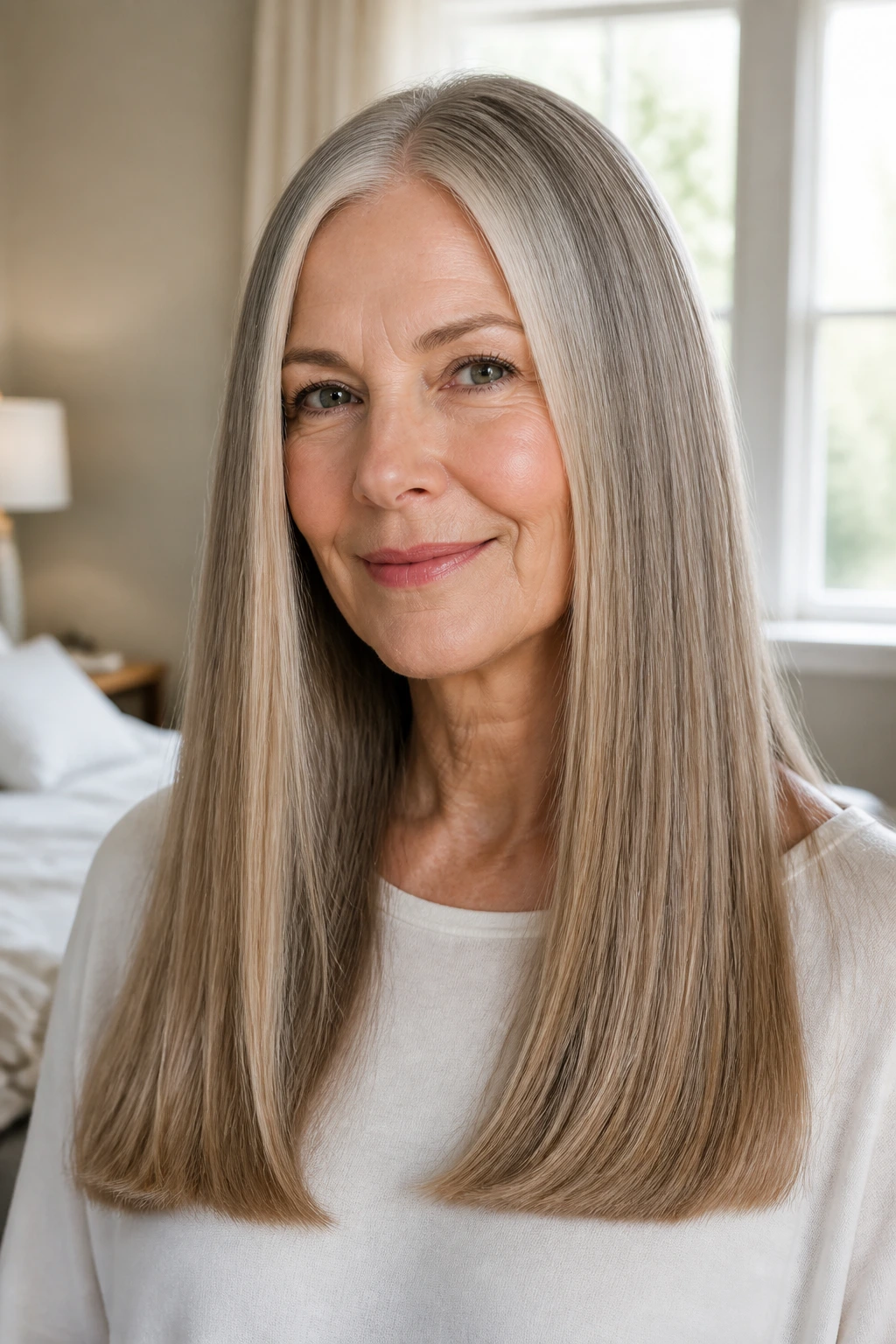
The line does the work: Long straight hair looks best when the hemline is clean and deliberate, because every uneven end shows up fast on smooth hair.
-
Small changes matter more than big ones: A 1-inch shift in the part, a face frame that starts at the cheekbone, or a tucked ear can change the whole mood without changing the length.
-
Fine hair and thick hair need opposite strategies: Blunt ends can make fine hair look denser, while invisible layers keep thick hair from turning into a heavy sheet.
-
Gray hair gets a real advantage here: Silver and salt-and-pepper strands catch light cleanly on straight styles, which makes gloss and a good trim pay off fast.
-
Most of these looks are low-drama: Once the cut is right, a paddle brush, a heat protectant, and a decent blow-dry can carry you farther than a stack of styling products.
1. Mirror-Straight Center Part
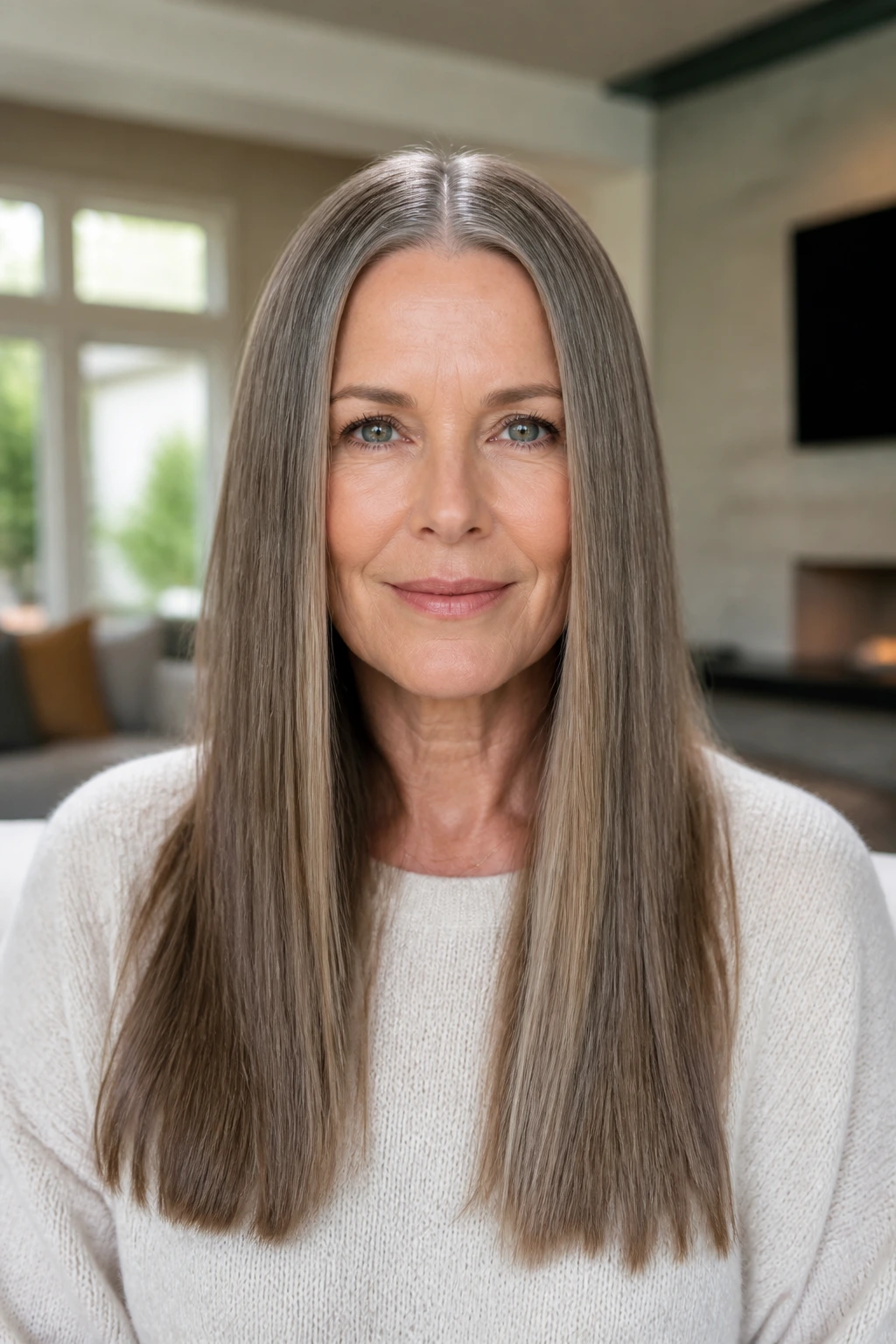
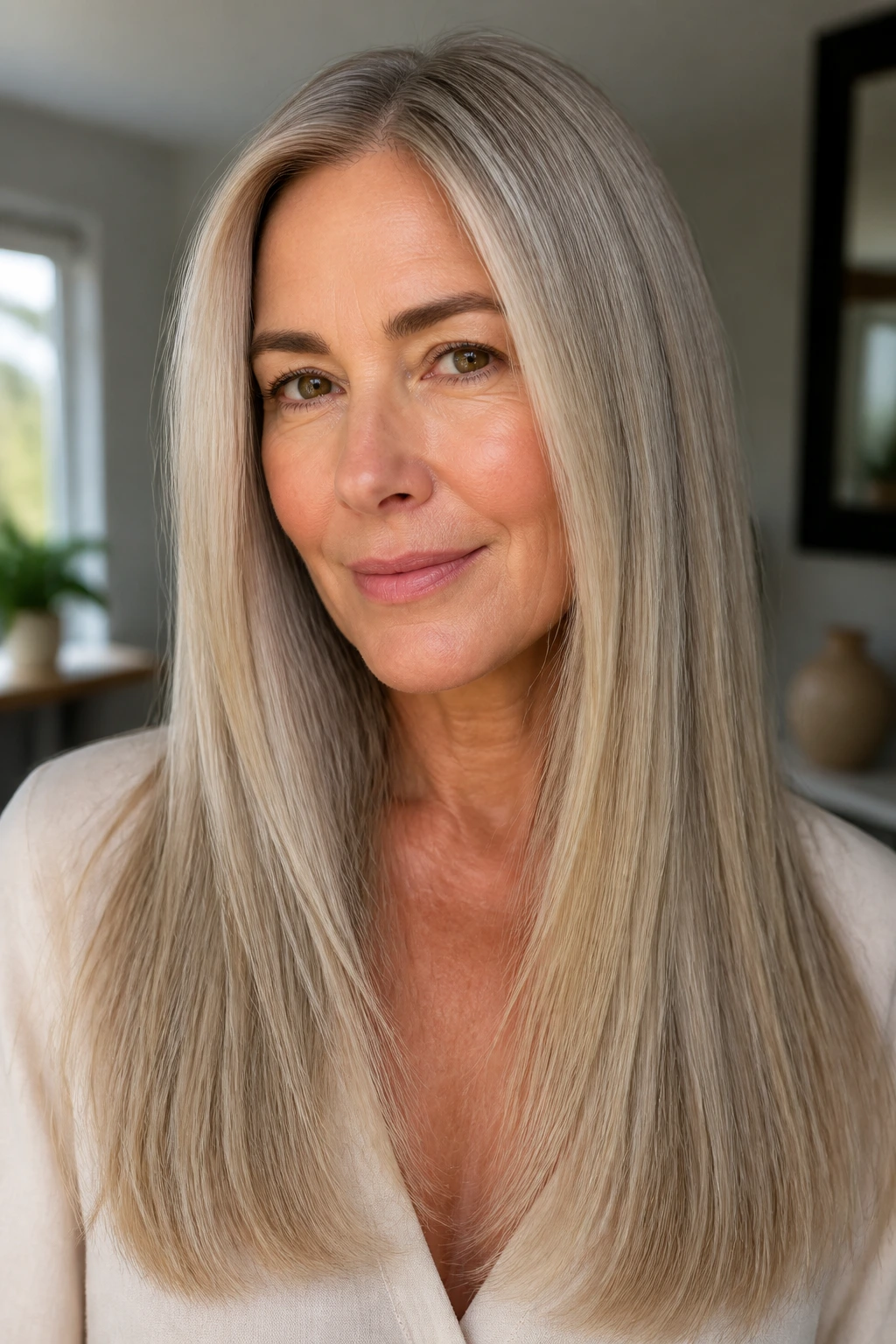
A clean center part is almost rude in how little it tries. That is exactly why it works. When the lengths are long, the line down the middle creates symmetry, and symmetry has a way of making hair look more deliberate than fancy layers ever do.
This version wants a blunt or slightly rounded hemline, not a shaggy one. If your hair bends easily, use a paddle brush and dry the roots flat first, then smooth the lengths in sections. The key detail is the finish at the ends: keep them sleek and together, not puffy or flipped in different directions.
A center part also gives silver strands a nice, even sheen. No big trick there. Just good shape, clean roots, and ends that look like they were actually cut by someone who cared.
2. Soft Side-Part Sweep
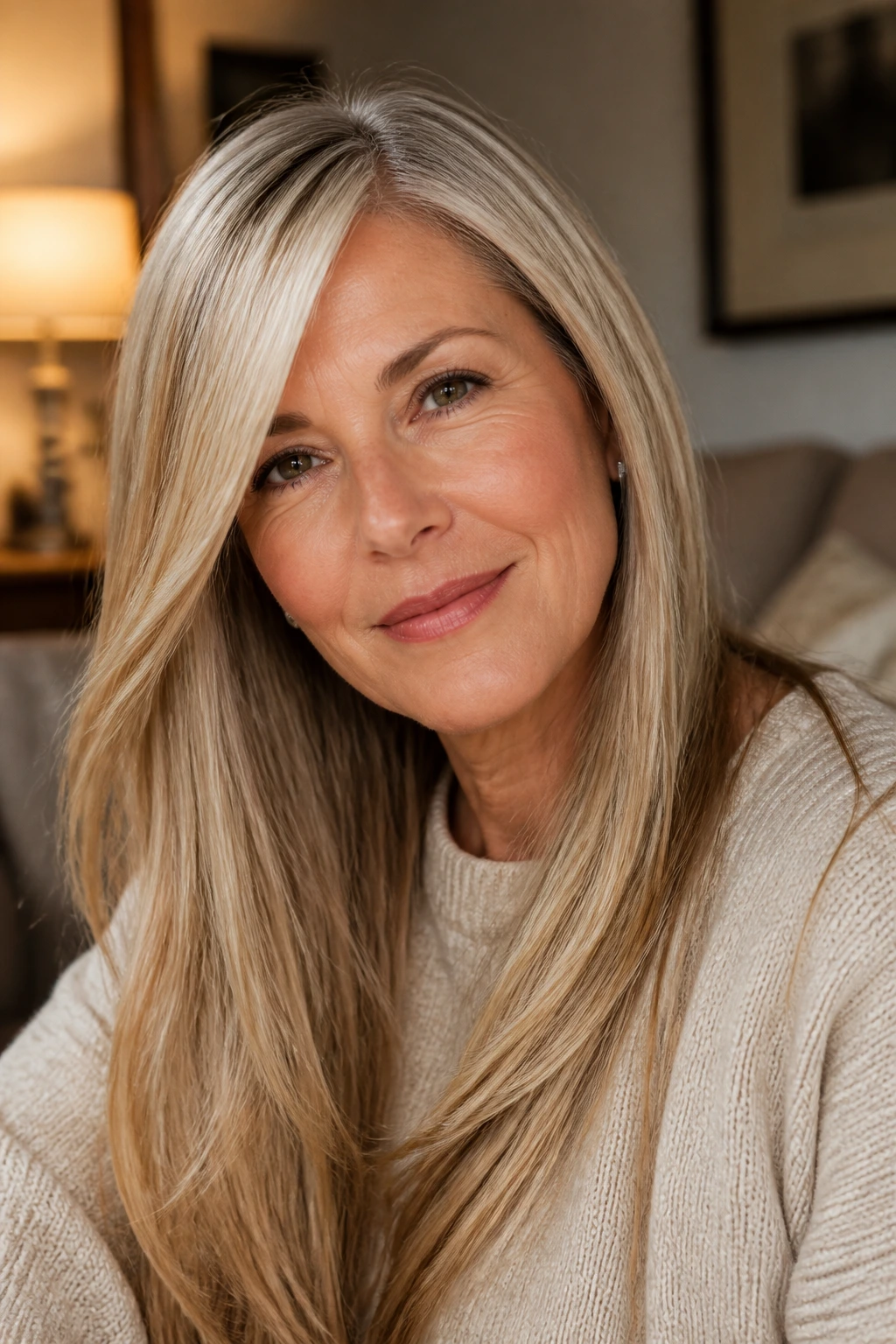
A soft side part is the easiest way to get a little lift without looking overstyled. It moves the eye diagonally instead of straight down the face, which can soften a strong jaw or balance a fuller cheek. On long straight hair, that angle matters.
What I like here is the looseness. You do not need a deep, dramatic part unless your crown is very flat. Shift it just enough—maybe an inch off center—and let the front sections fall in a gentle sweep. That little tilt gives movement without sacrificing length.
If your hair tends to collapse at the roots, dry the crown in the opposite direction first, then flip it back once it’s cool. The style lasts longer that way, and the lift feels built in rather than teased on.
3. Blunt Mid-Back Line
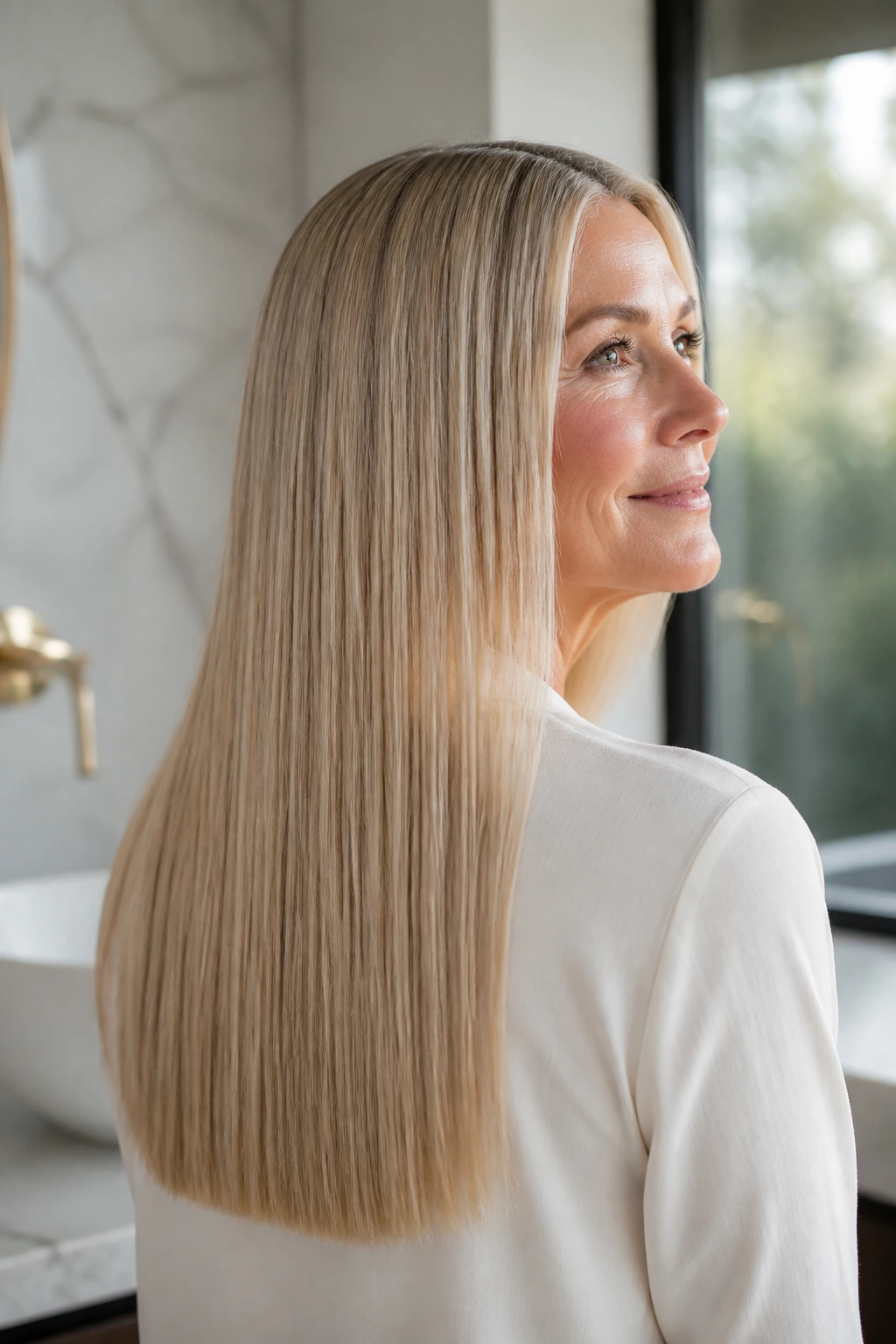
A blunt cut at mid-back length can make long hair look fuller in a way that is almost unfair. Fine hair, especially, gets a density boost from a straight, even edge because the eye sees one solid line instead of a wispy finish.
This is the cut I’d pick if the ends are looking thin but you are not ready to lose much length. Ask for minimal texturizing at the perimeter. Too much slicing at the bottom makes the whole shape look patchy when it’s straight, and that defeats the point.
It’s a blunt style, yes, but not a stiff one. Keep the blow-dry smooth, then use a tiny amount of serum on the last two inches only. That keeps the line glossy without making it look greasy.
4. Glass Hair Blowout
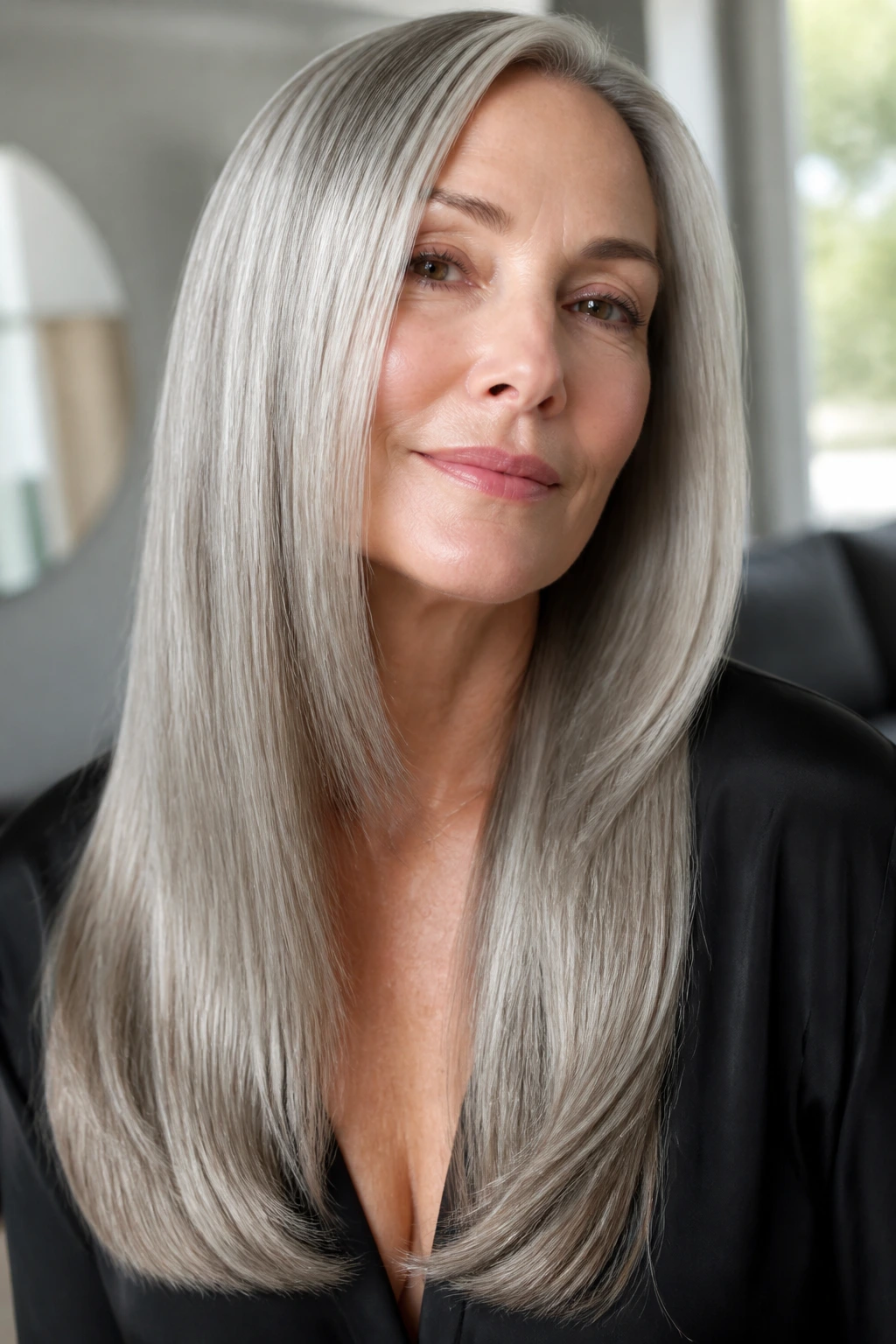
Glass hair sounds dramatic because it is dramatic. The look depends on a flat, reflective surface, which means the hair has to be dried well and finished with restraint. No fluffy roots. No dry-looking ends. No heavy product sitting on top of the hair shaft.
This style works best when the cut is already tidy. A one-length line or a very shallow shape underneath gives the shine something to bounce off. If your hair is coarse, a blowout with a concentrator nozzle and a round brush will tame the cuticle before the flat iron even comes out.
One pass with an iron is usually enough if the blow-dry was solid. Press the hair in small sections, keep the iron moving, and finish with a cool shot or a lightweight gloss spray. Anything thicker starts to look like oil, not shine.
5. Curtain Bangs with Long Straight Lengths
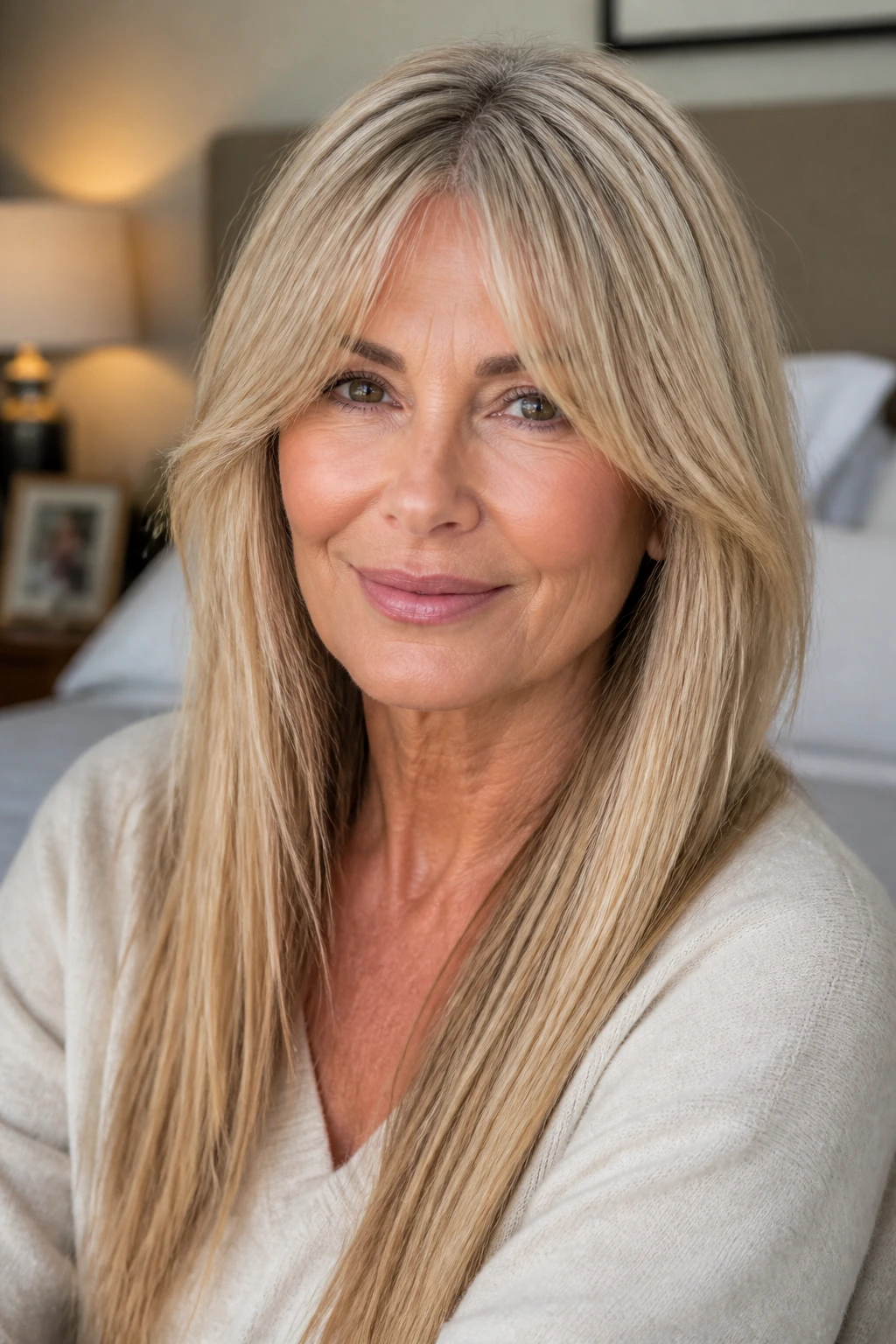
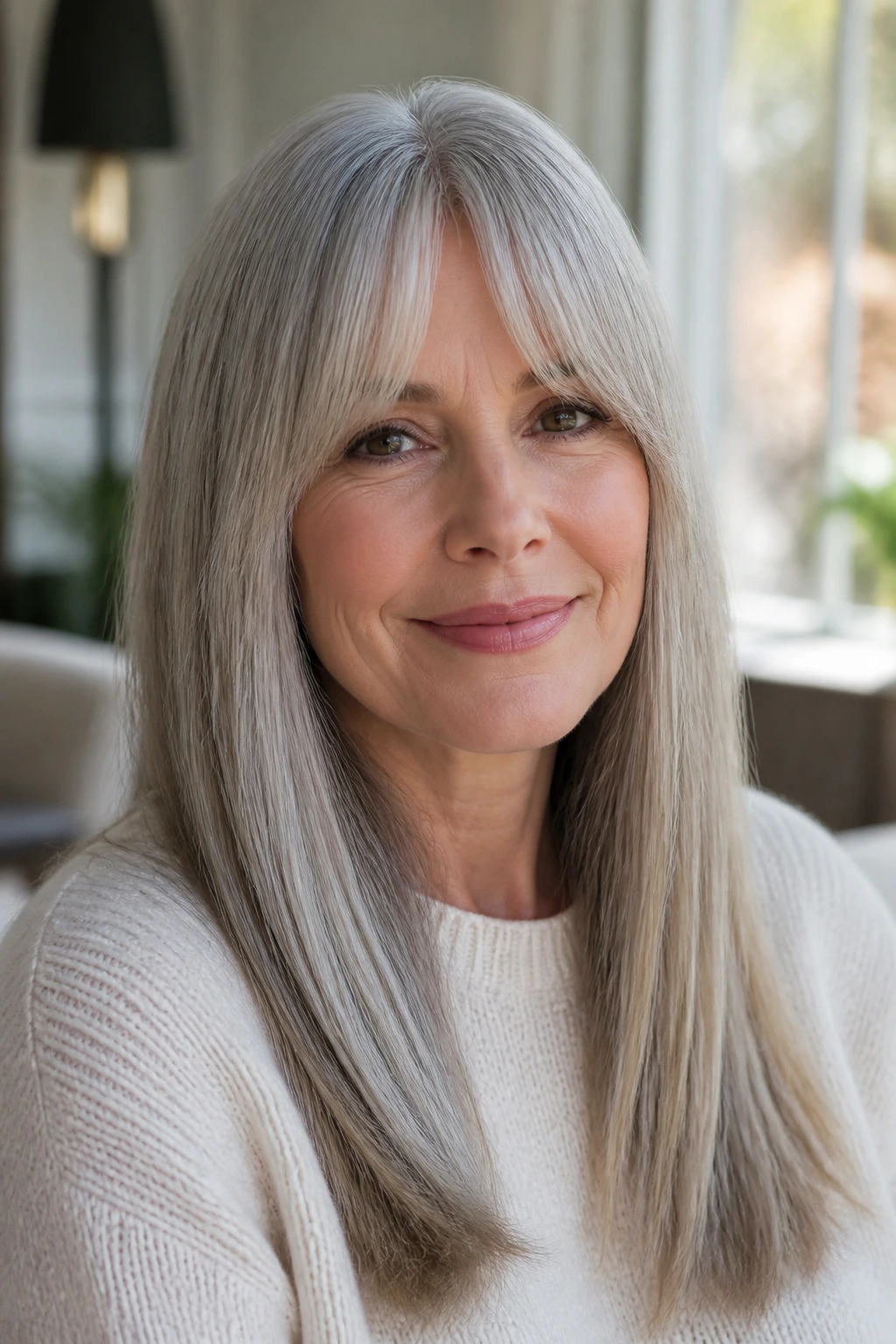
Curtain bangs can be the best friend of straight long hair because they soften the front without stealing the length. The split around the forehead opens the face, while the longer sides blend into the rest of the hair instead of hanging there like a separate idea.
The trick is the starting point. If the shortest part hits too high, the bangs can feel fussy. Let them begin near the eyebrow area and angle them down toward the cheekbone. That keeps the effect airy and easy to grow out, which matters if you do not want a trim every few weeks.
Blow them away from the face with a round brush, then let them settle. Do not curl them into hard bends. The softer they fall, the better they connect with the long lengths behind them.
6. Deep Side Part with an Ear Tuck
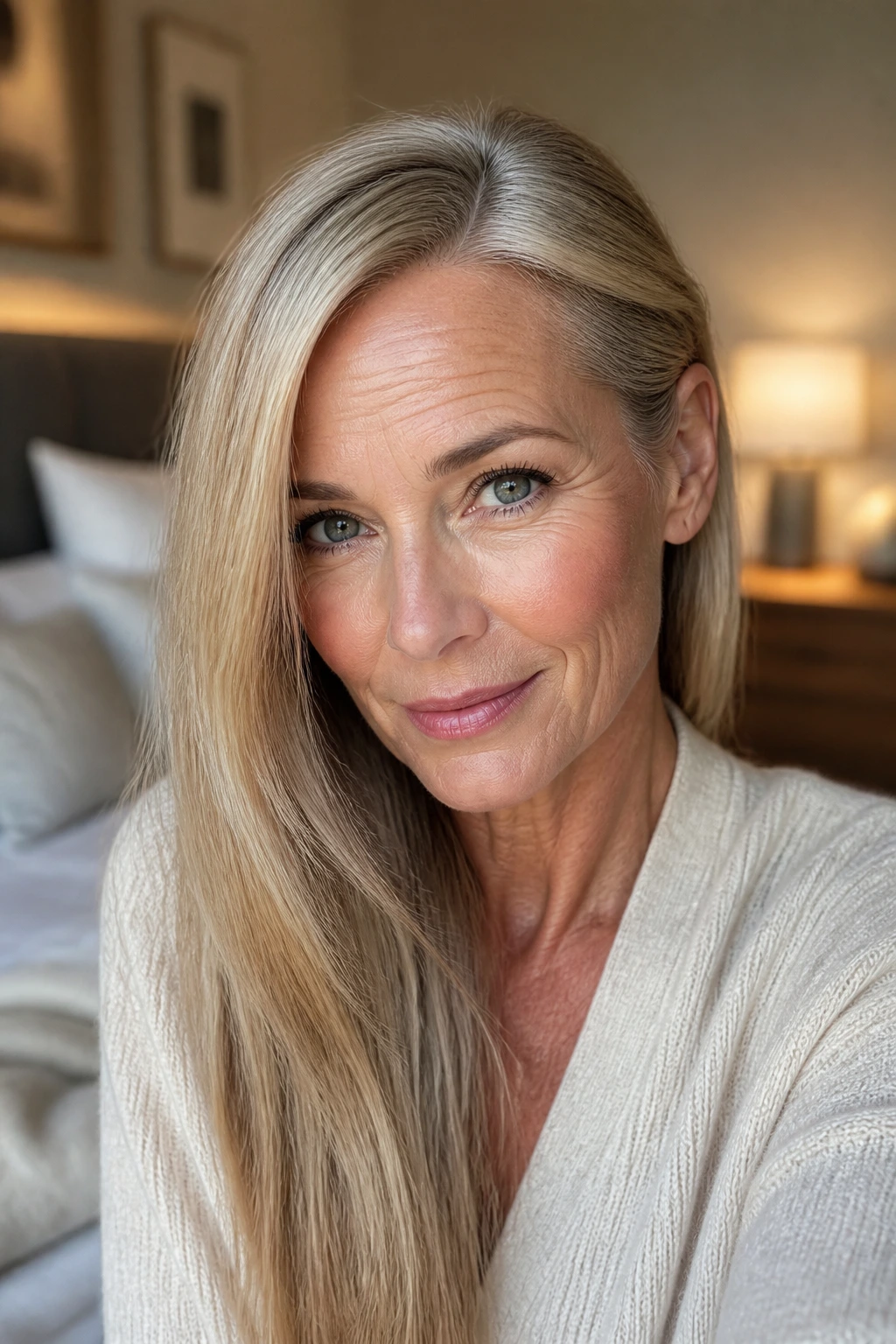
A deep side part gives long straight hair some tension, which sounds odd until you see it. One side gets height at the crown; the other gets tucked cleanly behind the ear. The result is simple, but it reads polished fast.
This is one of my favorite quick fixes for straight hair that needs a little more shape around the face. Tucking one side exposes the cheekbone and keeps the hair from sitting flat against the jaw. If you wear earrings, even better. The style gives them room to do their job.
Use a small amount of root spray on the lifted side and smooth the tucked side with a drop of serum. That balance keeps the part from looking lopsided in a sloppy way. It should feel intentional, not accidental.
7. U-Shaped Long Cut
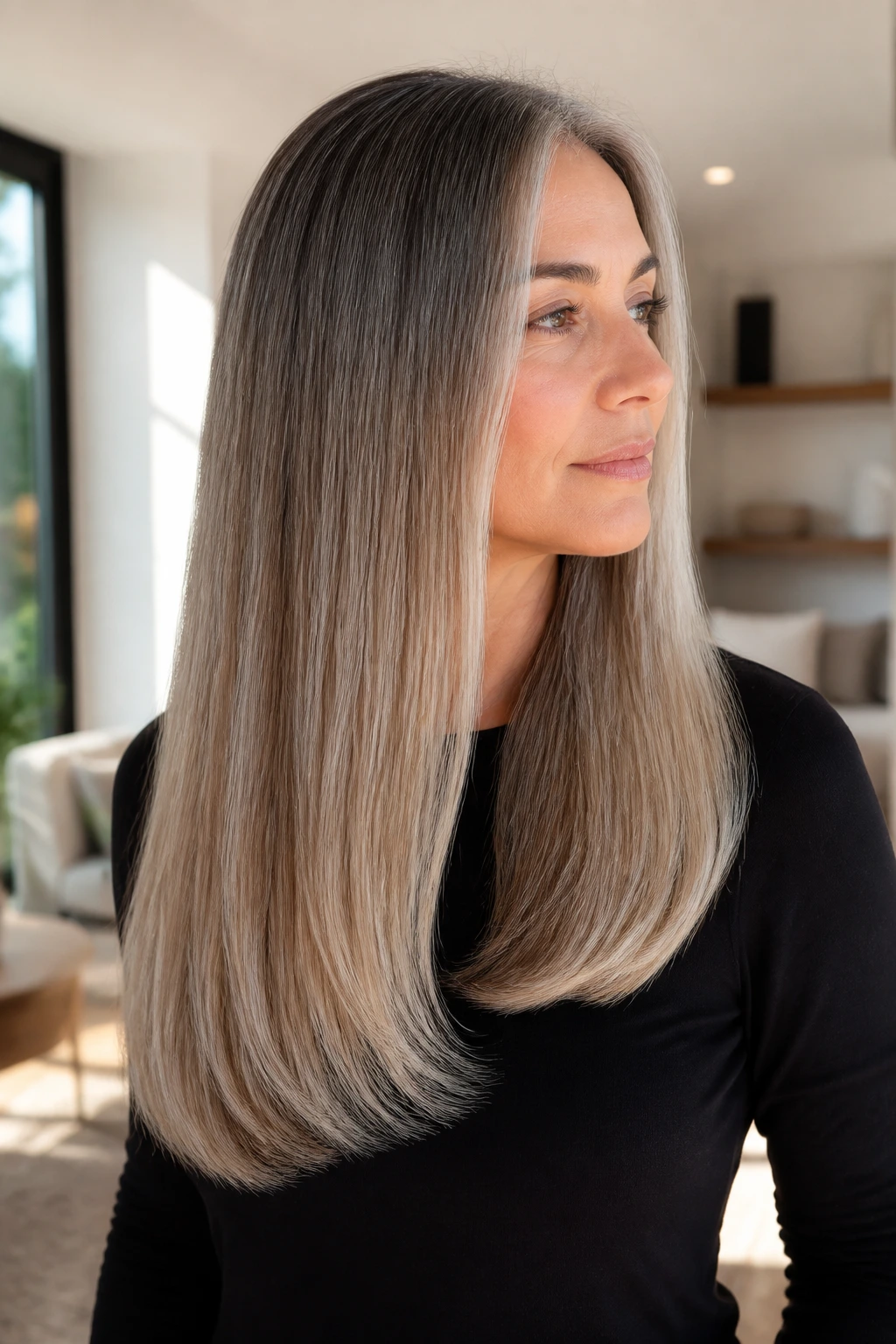
A U-shape is a quieter cut than a blunt line, and sometimes that’s exactly what long straight hair needs. The back stays longer, while the sides arc gently toward the front. The shape keeps the length from hanging like a heavy curtain.
Thick hair usually loves this cut because the softer front angle removes bulk without making the ends look hacked up. The eye still sees a long, continuous shape—just one with a little curve. That matters if you want movement but do not want obvious layers.
Ask the stylist to keep the U subtle. A sharp point can date the cut fast. A shallow curve feels more current and is easier to wear with a simple blow-dry.
8. Invisible Layers for Fine Hair
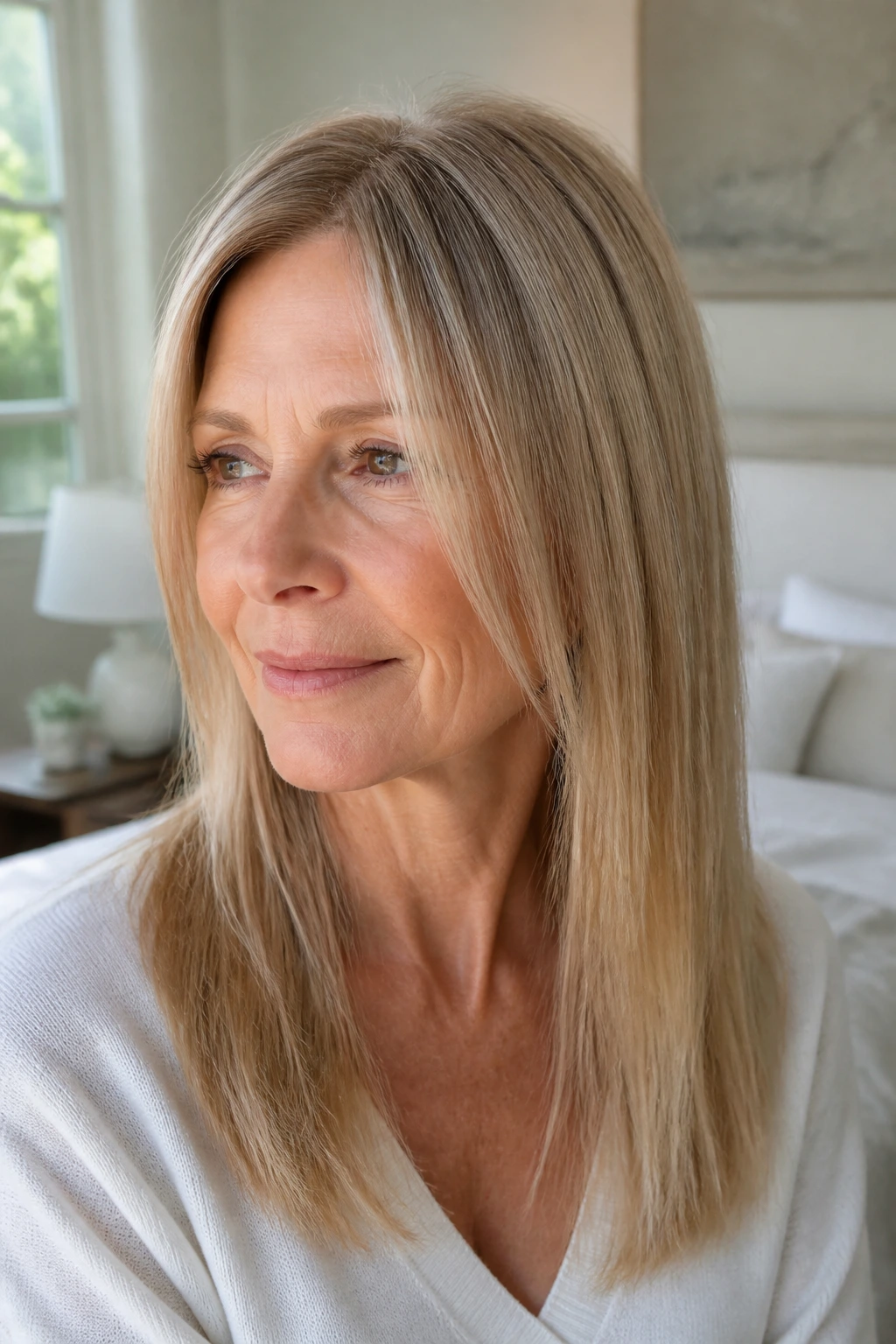
Invisible layers are the sort of cut people forget to talk about, which is a shame. They work by removing weight inside the hair, not at the perimeter, so the outside line still looks full and clean. Fine straight hair gets a lift from that.
The biggest mistake with fine hair is over-layering the surface. That’s how you end up with pieces that flip around and expose the scalp in odd places. Hidden layers keep the top looking solid while taking some drag out of the interior.
I’d ask for this if your hair falls flat at the shoulders or goes limp by noon. A small amount of root lift spray and a round brush at the crown can make the cut look twice as thick. No miracle. Just smart shaping.
9. Feathered Ends for Thick Hair
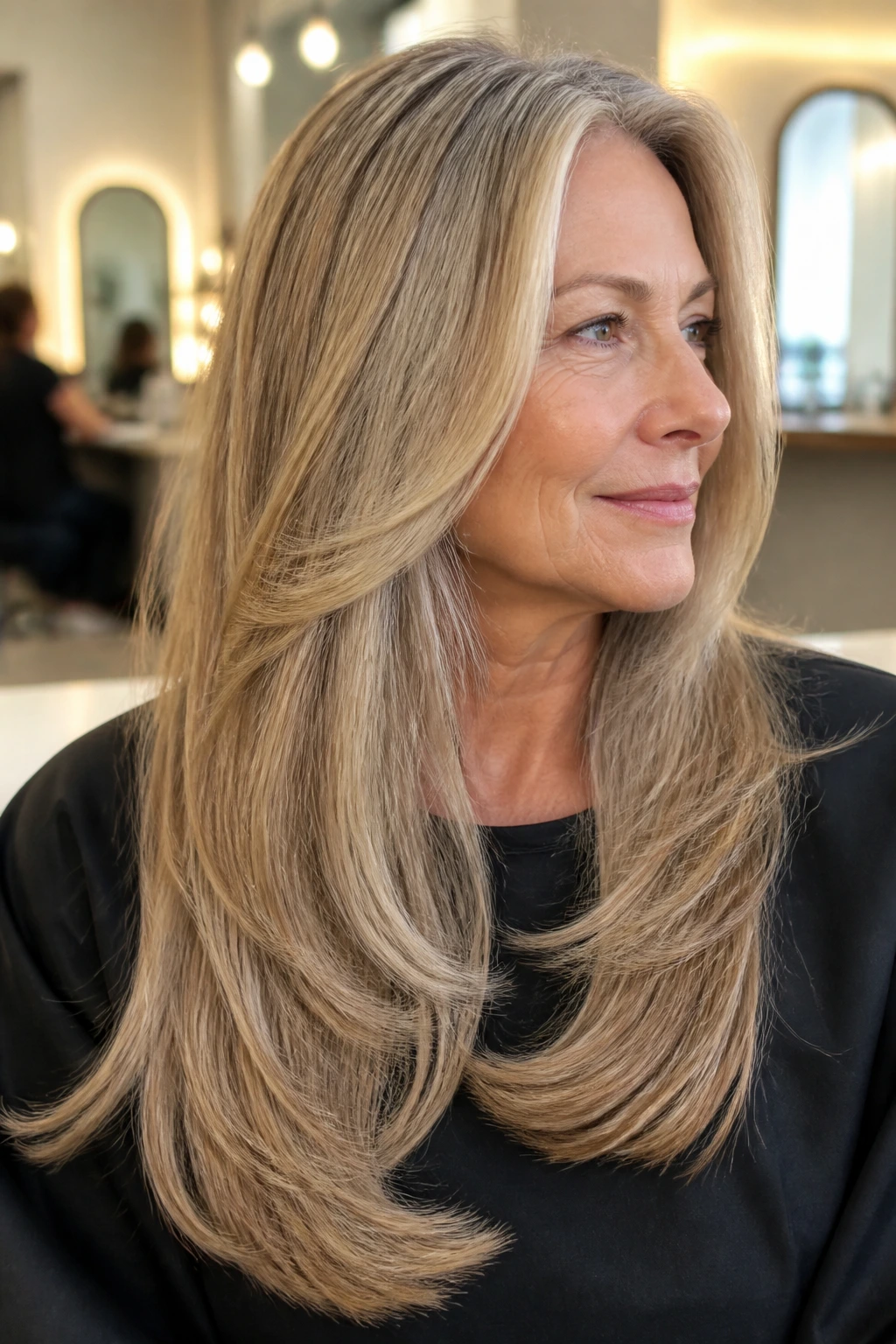
Thick, straight hair can turn into a hard wall if the ends are left too heavy. Feathered ends soften that edge so the hair moves instead of just hanging there. The style still looks long, but it breathes.
The point is not to thin everything out. Too much weight removal turns thick hair into stringy ends, and that looks worse on straight hair than on wavy hair. You want the cut to release some bulk, especially near the lower third, while keeping enough density to hold a line.
A smooth blow-dry helps the feathering show up. I like this one with a round brush that turns the ends under just a bit. It keeps the whole shape from looking boxy at the bottom.
10. Silver Gloss and a Clean Center Part
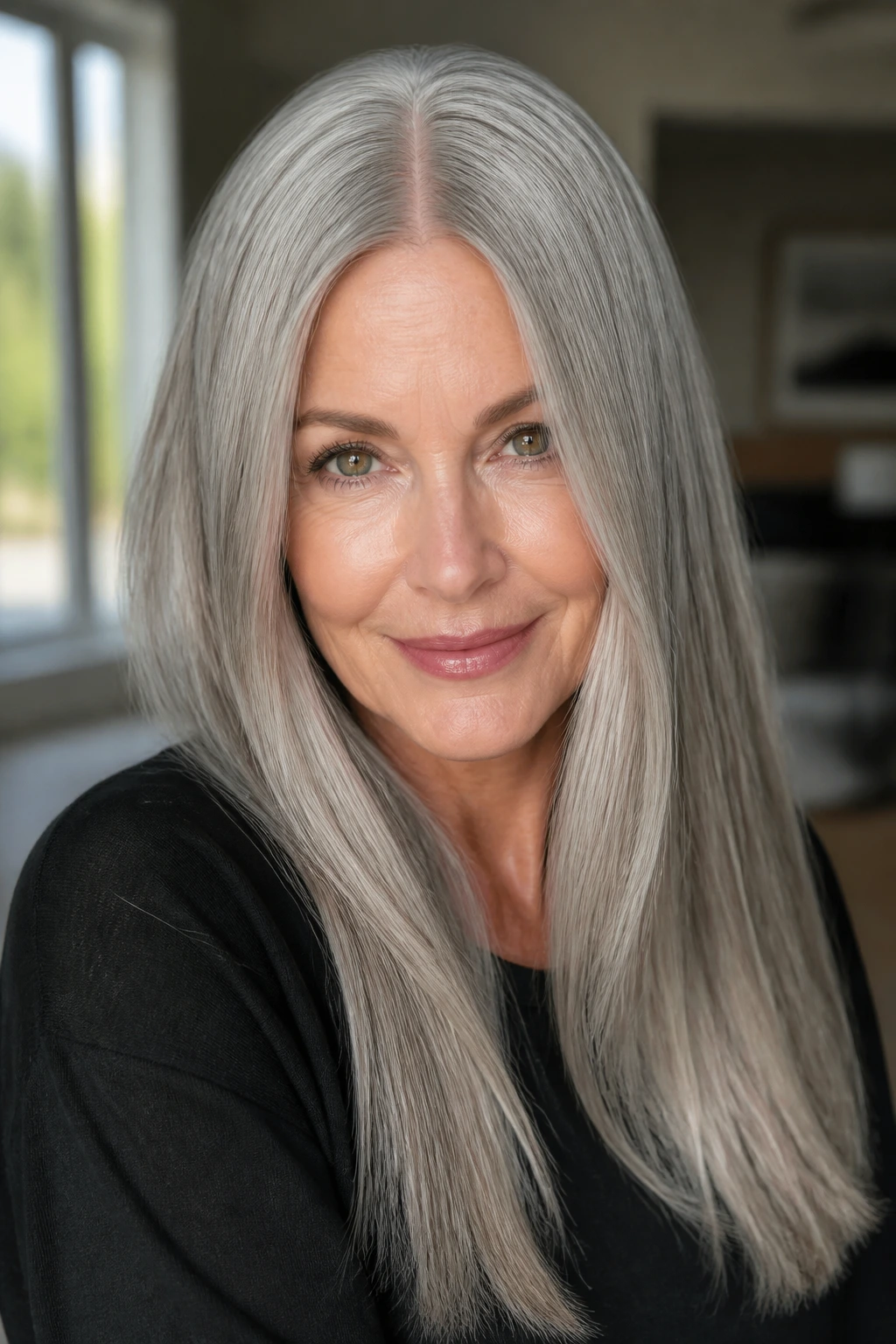
If you’ve gone silver, a straight style can show it off instead of apologizing for it. A glossy finish and a tidy center part make gray hair look deliberate, not like a phase you are waiting out.
The main thing with silver hair is moisture. Gray often feels drier and a bit rougher at the cuticle, so the shine needs help. A gloss treatment, a color-safe shampoo, or even just a lightweight smoothing cream can stop the strands from looking chalky after they dry.
This style is easy to wear because it doesn’t rely on tricks. Clean roots. Straight lengths. A bright, even finish. That’s enough.
11. Face-Skimming Side Fringe
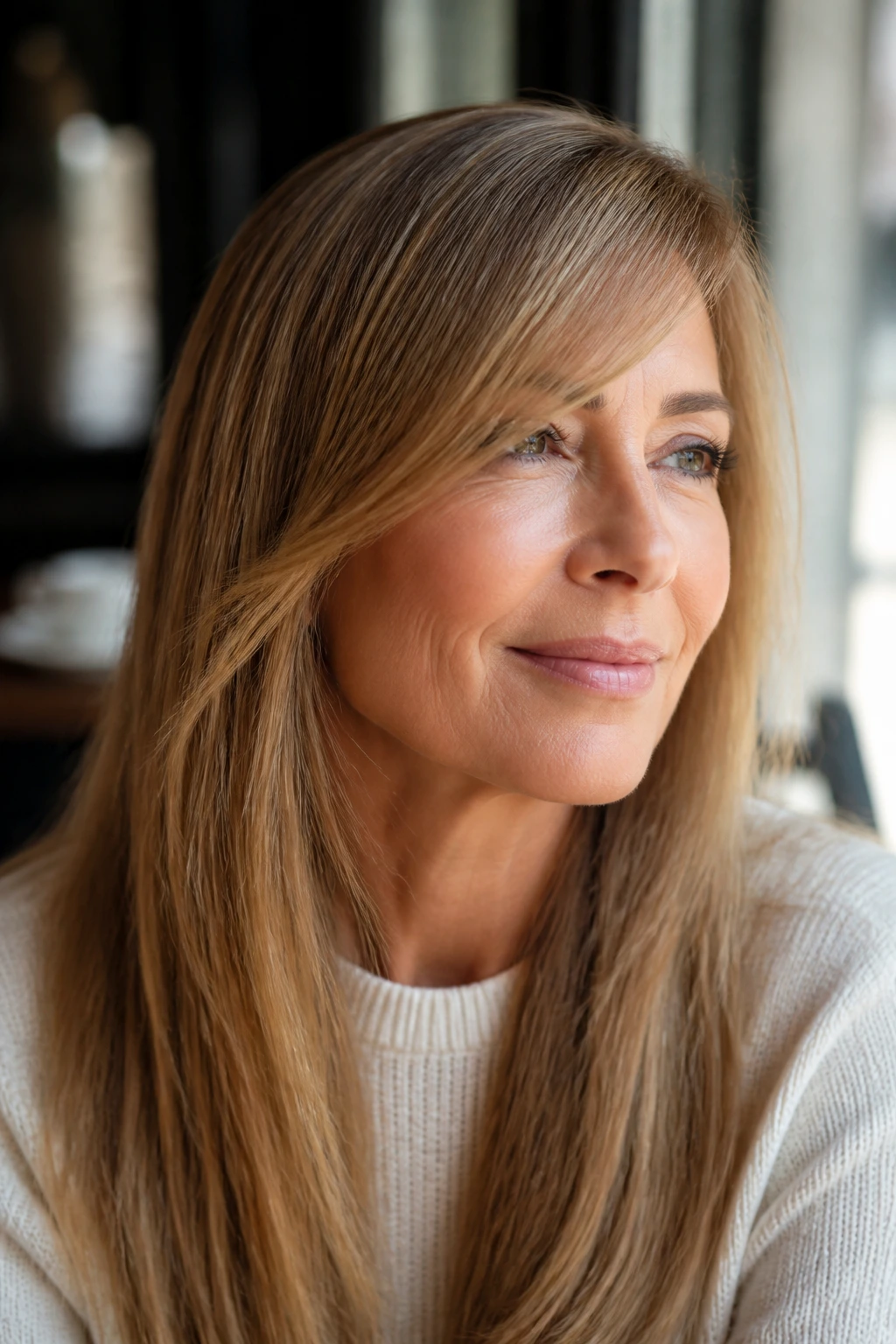
A face-skimming fringe can do a lot without making a big scene. It starts somewhere between the brow and cheekbone, then falls just enough to soften the forehead and frame the eyes. On long straight hair, that narrow strip of movement matters.
I like this for women who wear glasses or want a little softness around a stronger brow line. The fringe should move, not sit like a helmet. A quick blow-dry with a small round brush usually does it; no need to make the bangs perfect every day.
Keep the rest of the hair simple. If the fringe is doing the work, the lengths can stay clean and smooth. That contrast is part of the charm.
12. Collarbone-Starting Face Frame
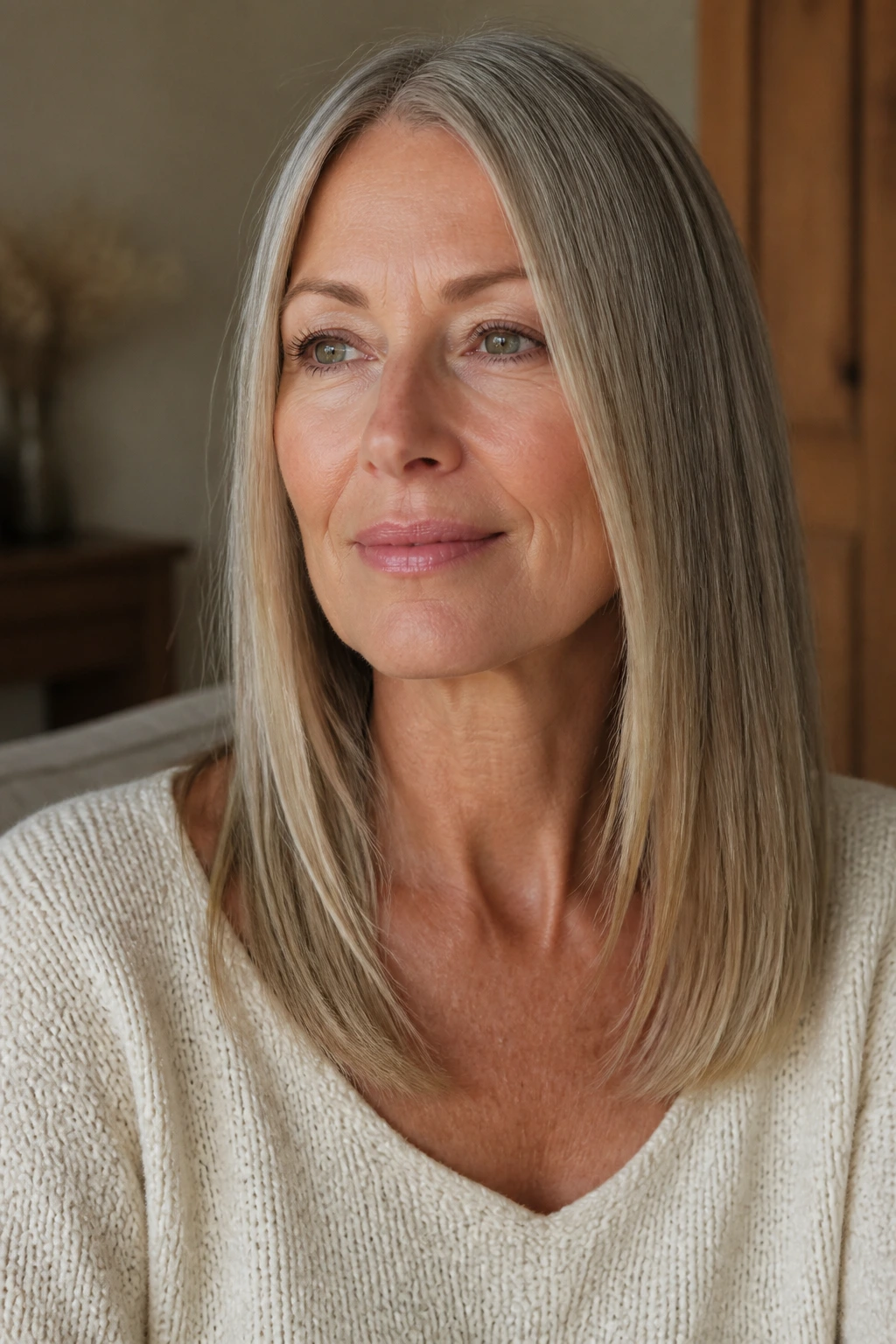
A face frame that begins around the collarbone creates a slow, graceful line from the front to the back. It’s one of the best choices for long straight hair because the front pieces break up the weight without making the cut feel layered in an obvious way.
This cut is useful when the hair is long enough to feel heavy but you do not want to lose inches. The collarbone point is low enough to keep the length intact and high enough to prevent the front from dragging the whole style down. It also plays nicely with straight hair because the line stays visible.
If you want subtle movement more than a style statement, this is it. The shape is there when you need it and almost disappears when you don’t.
13. Full Blunt Fringe
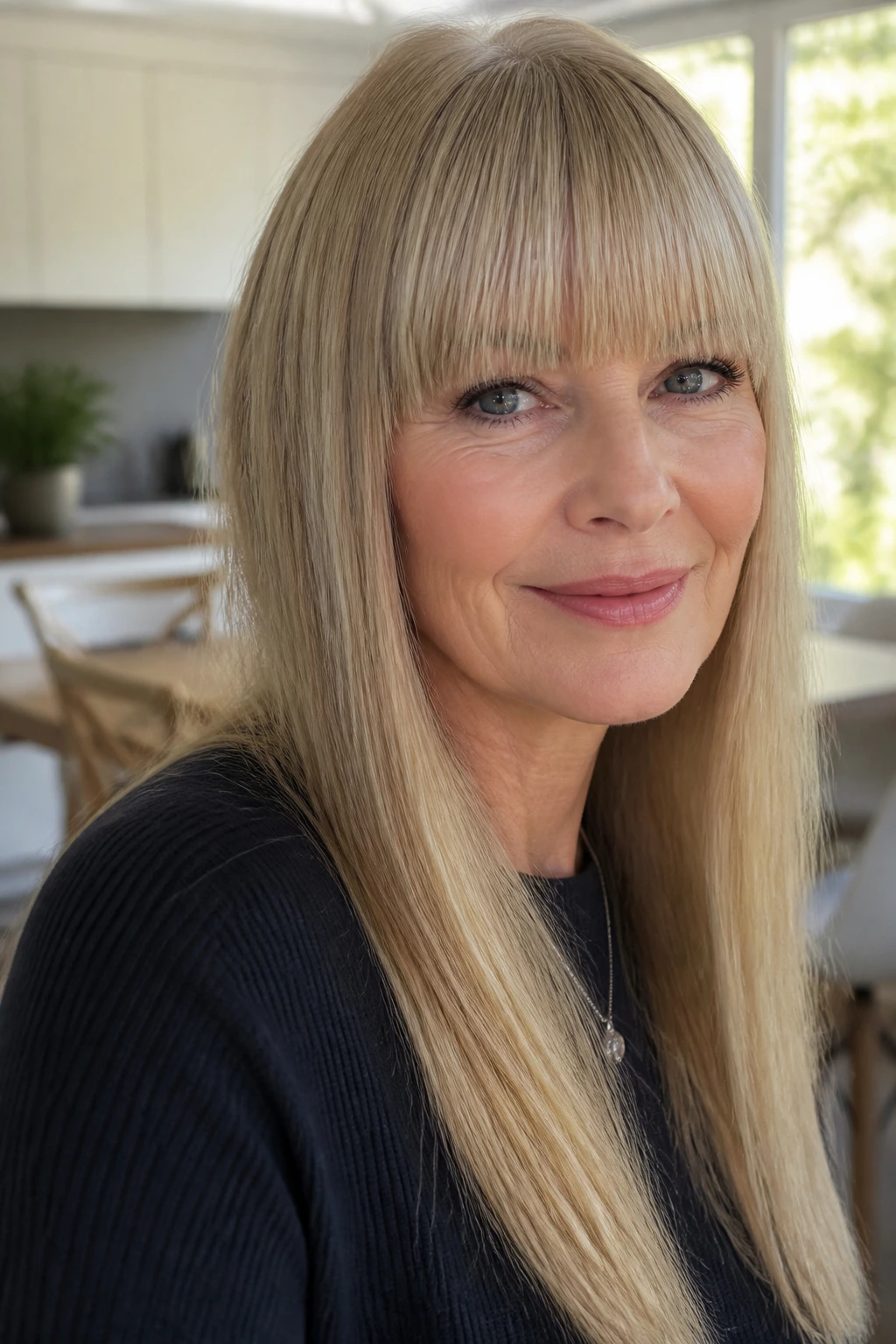
A blunt fringe brings a little attitude to long straight hair, and I mean that in a good way. The straight edge across the forehead sharpens the whole look, especially when the rest of the hair is long and smooth. It gives the face a frame instead of just a curtain.
This one asks for upkeep. Bangs grow fast, and once they hit the lashes they start to get annoying. A quick trim every few weeks keeps the line clean. If your forehead tends to get oily, use a tiny bit of dry shampoo at the roots of the fringe; too much product will make it separate in ugly little clumps.
The best version is not stiff. Keep the fringe full, but not heavy. That way it feels polished rather than severe.
14. Low Ponytail with a Wrapped Base
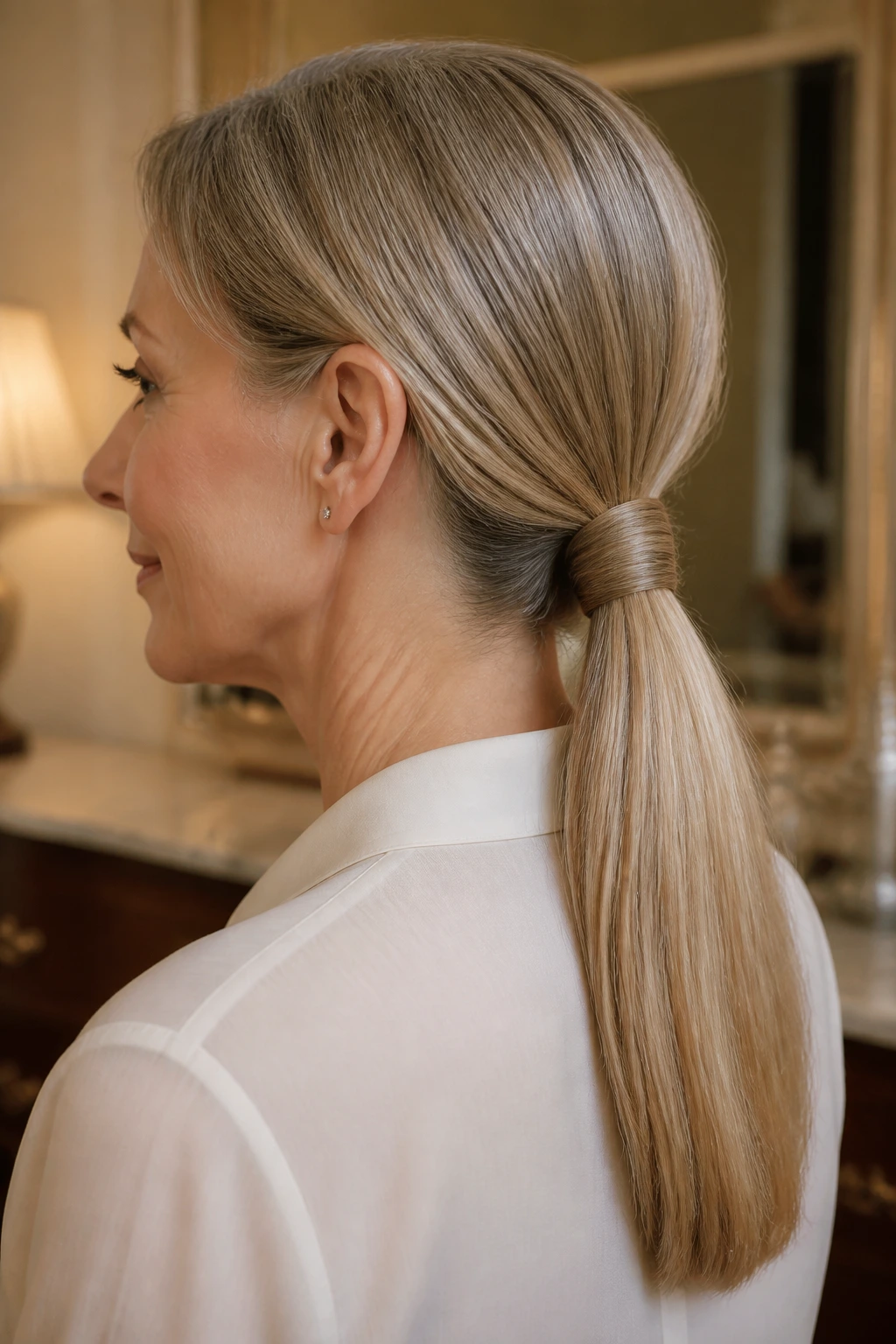
A low ponytail can look plain on the wrong day and elegant on the right one. The wrapped base is what changes the story. You hide the elastic with a small section of hair, and the whole thing suddenly looks thought through.
This works well with long straight hair because the length reads cleanly down the back. Pull the hair smooth at the crown, but not so tight that the temples flatten hard. Leave a whisper of softness around the face if you want the style to feel less formal.
A simple trick helps here: take a 1-inch strip of hair from under the ponytail, wrap it around the band, and pin it underneath. It’s a small fix, but it makes the finish look tidy without extra effort.
15. Half-Up Twist with Loose Length
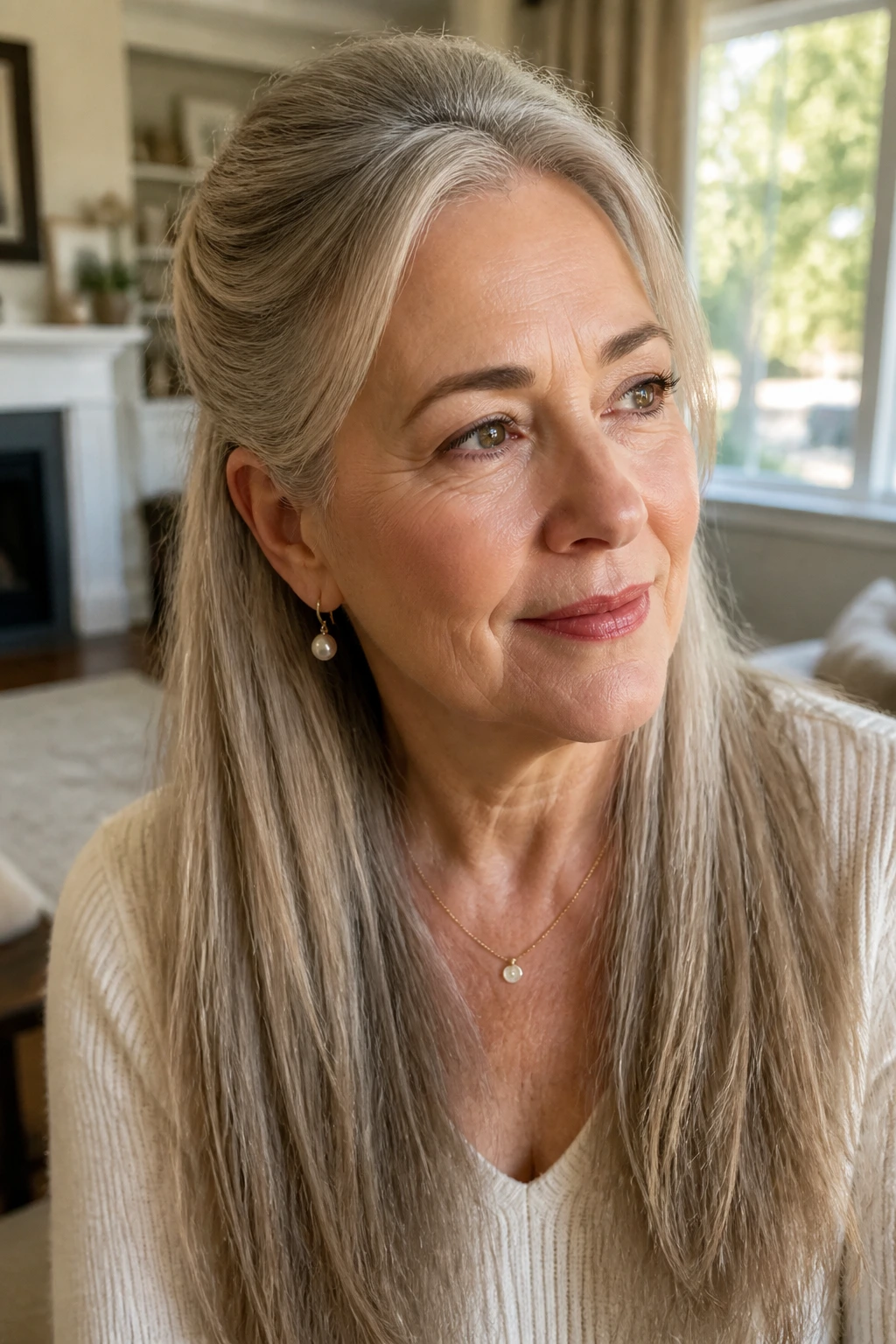
The half-up twist is one of those styles that quietly solves a bunch of problems at once. It clears hair from the face, shows off the length, and gives the crown a little lift without turning into a full updo.
For straight hair, the twist works best when the top section is loose enough to move. If you pull it too tightly, the top starts to look shiny and flat in a bad way. Leave the back loose and smooth the front with your fingers rather than a brush, so the shape feels soft instead of helmet-like.
I like this look when the hair is almost freshly washed and slightly too sleek. The twist gives it somewhere to go.
16. Low Chignon at the Nape
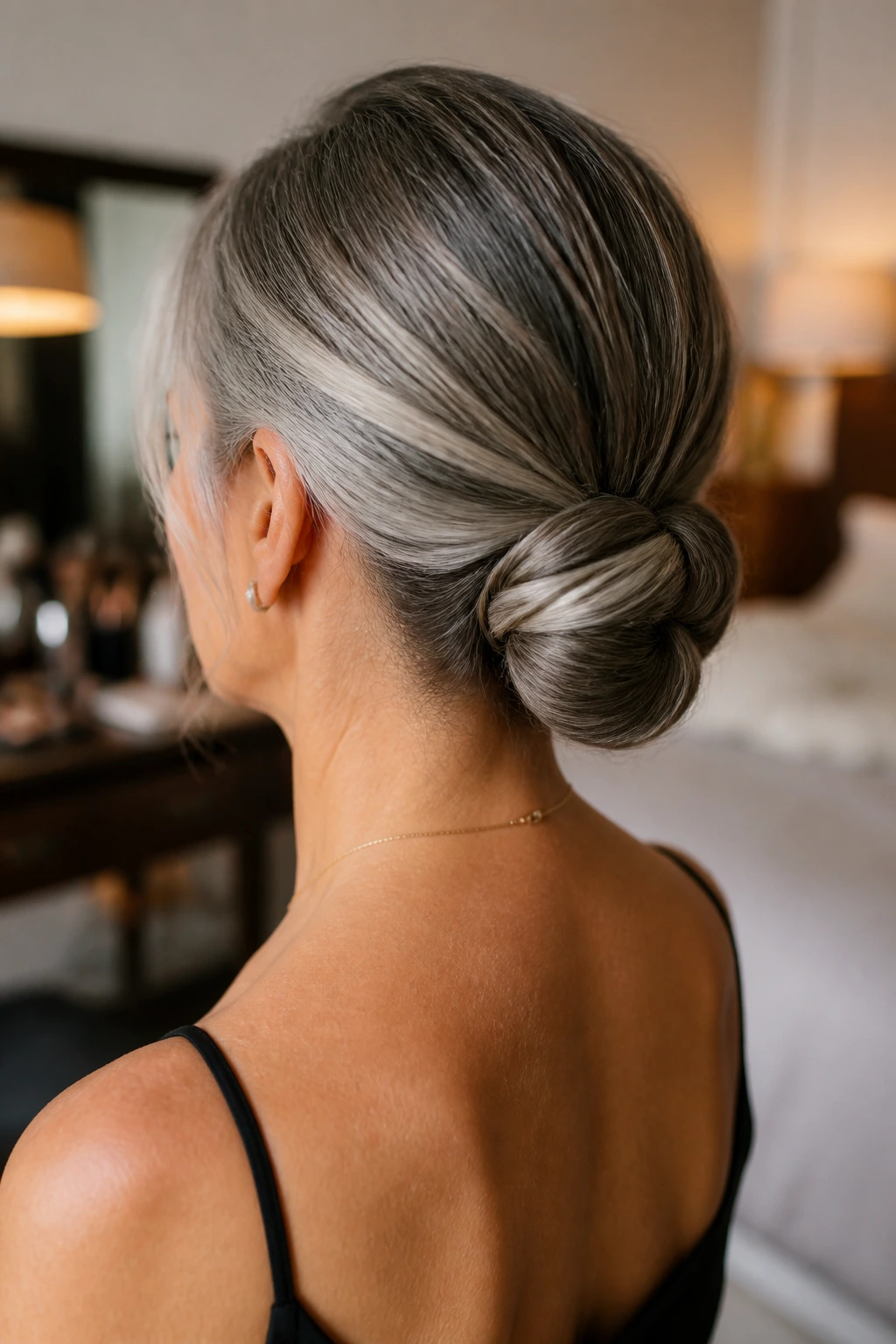
A low chignon is a straight-haired woman’s quiet formal style. It pulls the lengths into a knot at the nape, which keeps the finish sleek and the neckline clean. On long straight hair, that shape looks far more polished than a bulky bun piled high.
If your hair is slippery, use a little texture spray at the roots before gathering it. That gives the pins something to hold onto. Don’t overwork the surface, though. The smoothness is part of the appeal.
This is the style I’d reach for when the outfit already has enough going on. Pearls, a sharp collar, a dress with texture—those things pair well with a chignon because the hair stays calm and clean.
17. Silk Scarf Wrap
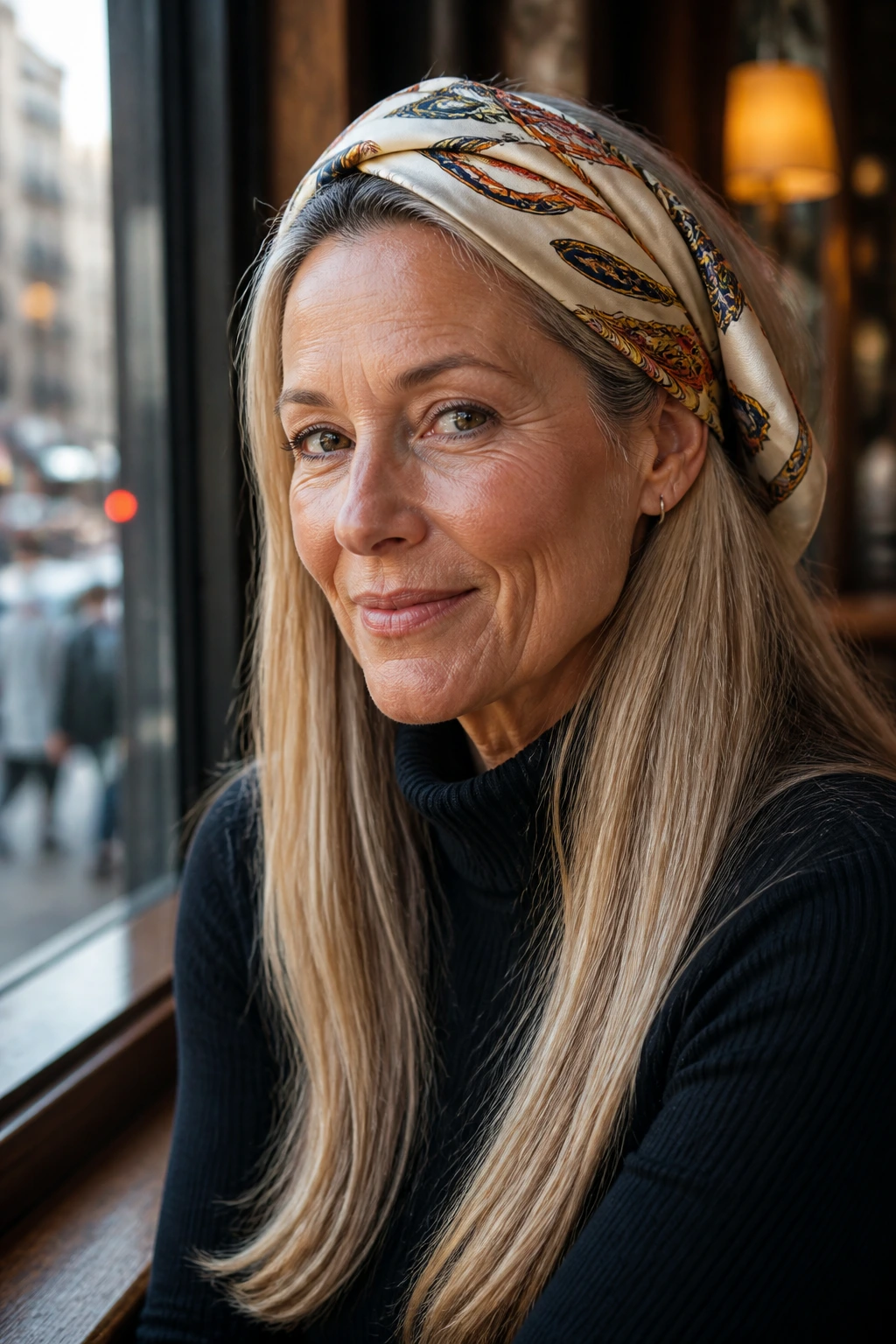
A silk scarf can rescue long straight hair on days when the ends need a break. Tie it around a low ponytail, wrap it at the crown, or knot it at the nape. The scarf gives the style color and shape without asking the hair to do all the work.
This is especially useful if you are growing out bangs or hiding roots between color appointments. Straight hair can look stark when the roots and lengths contrast hard, so a scarf softens that line. Choose a narrow one if your hair is fine; a wider scarf can overwhelm the head shape.
I also like this because it reads as personal, not fussy. One accessory. That’s it.
18. Money-Piece Highlights and a Flat-Iron Finish
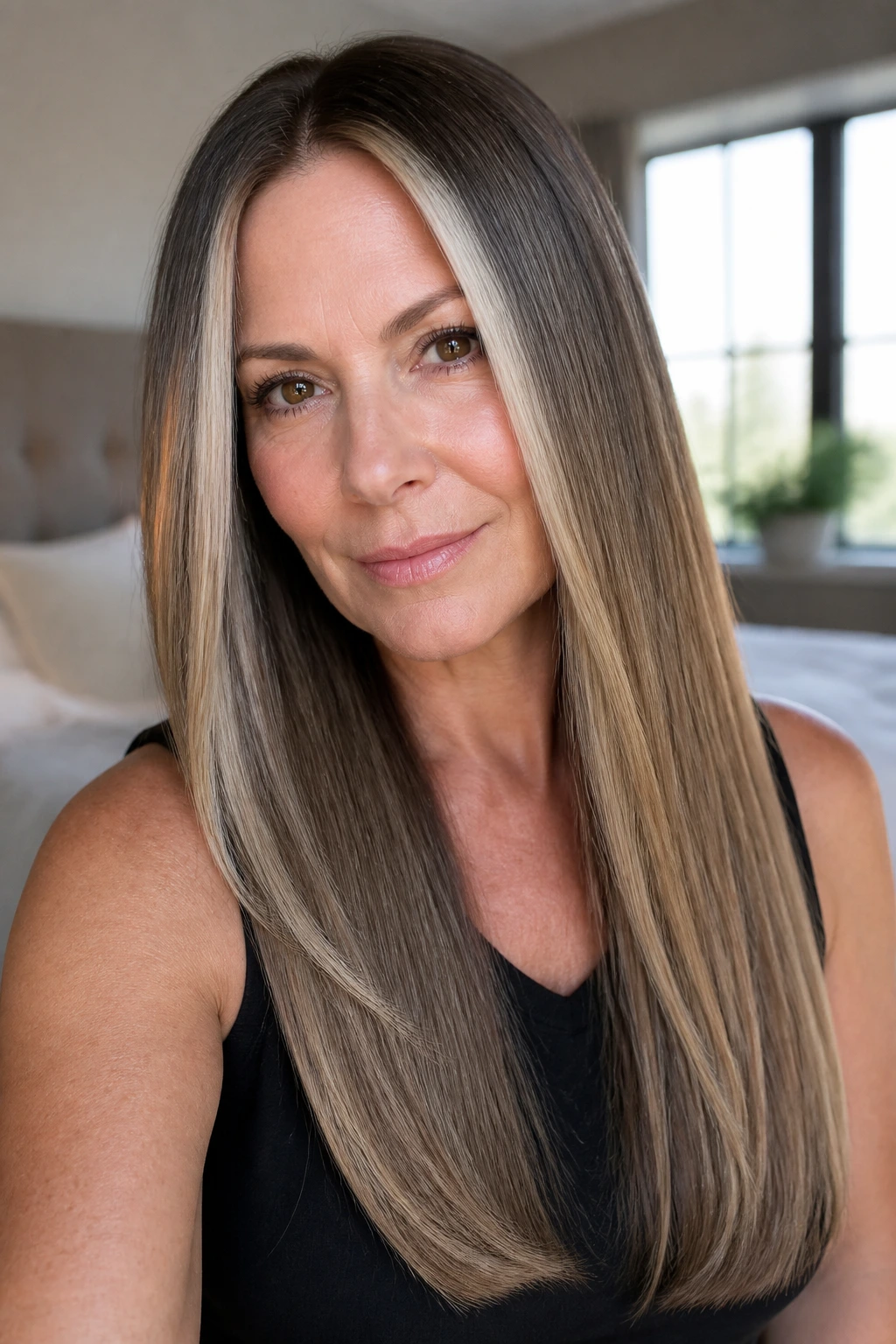
When straight hair is long, face-framing color can do the job that a hard cut sometimes can’t. Money-piece highlights brighten the front sections and pull attention toward the face, while the flat-iron finish keeps the whole thing crisp.
This style works best if the color is placed with restraint. You do not need heavy contrast. A few lighter pieces around the front edge are enough to sharpen the line and make long hair feel lighter near the face. On silver or salt-and-pepper hair, even a subtle gloss around the front can change the mood.
The flat iron matters because it keeps the highlighted sections smooth enough to show the color band cleanly. If the hair is frizzy, the brightness gets lost. Smooth hair makes the color read like design.
19. Subtle Flip-Under Ends
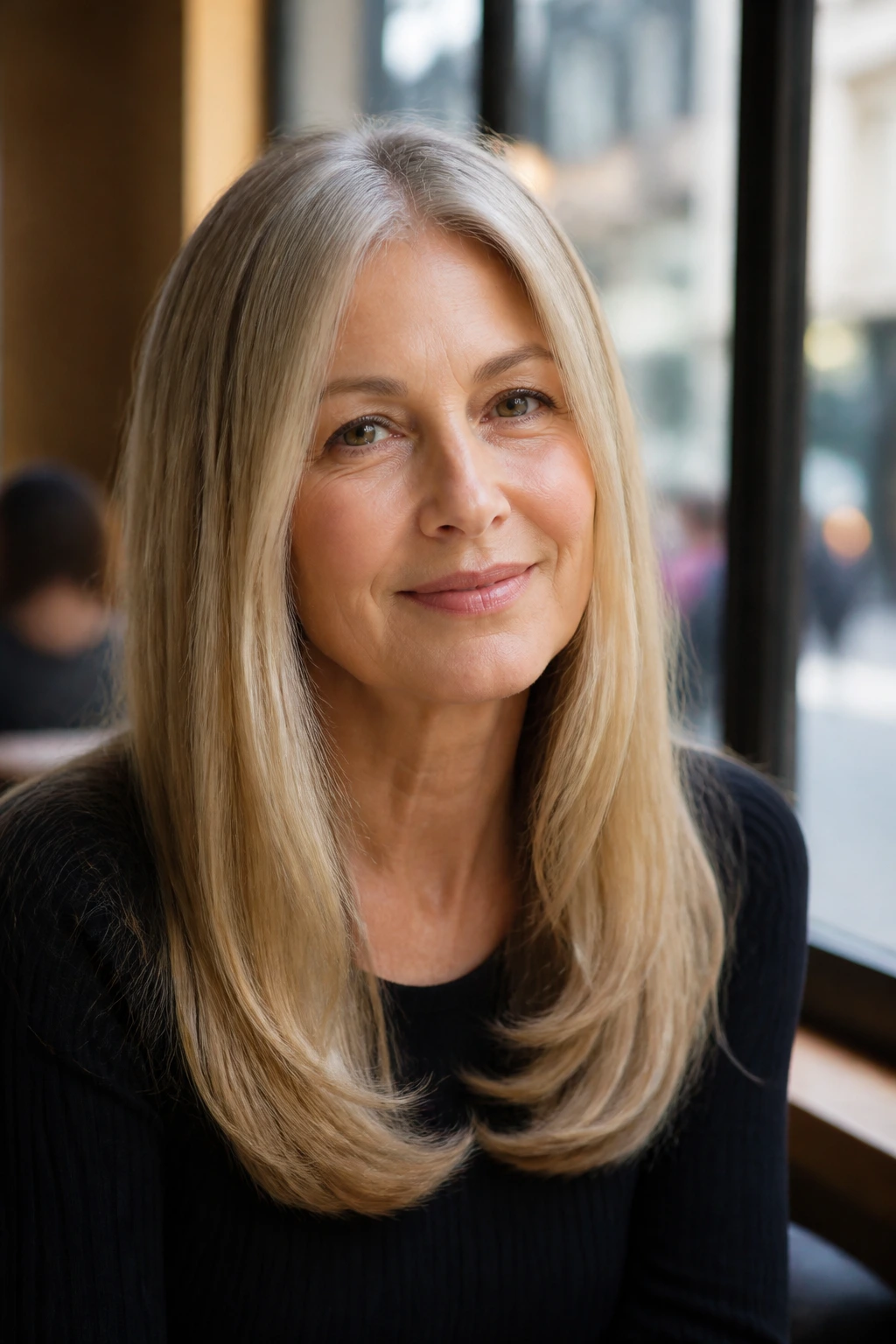
A slight flip under at the ends keeps long straight hair from looking too severe. It’s a neat little bend, not a curl, and it takes the edge off a plain blow-dry. The style works well when you want order without stiffness.
The trick is to turn the brush or iron just enough to round the last inch. Too much bend, and it starts to look dated. Too little, and the style loses its shape. A subtle undercurve hits the middle ground nicely.
This is a good everyday choice if your hair tends to kick out at the ends on its own. You’re not fighting the hair so much as teaching it where to land.
20. Razor-Soft Long Ends
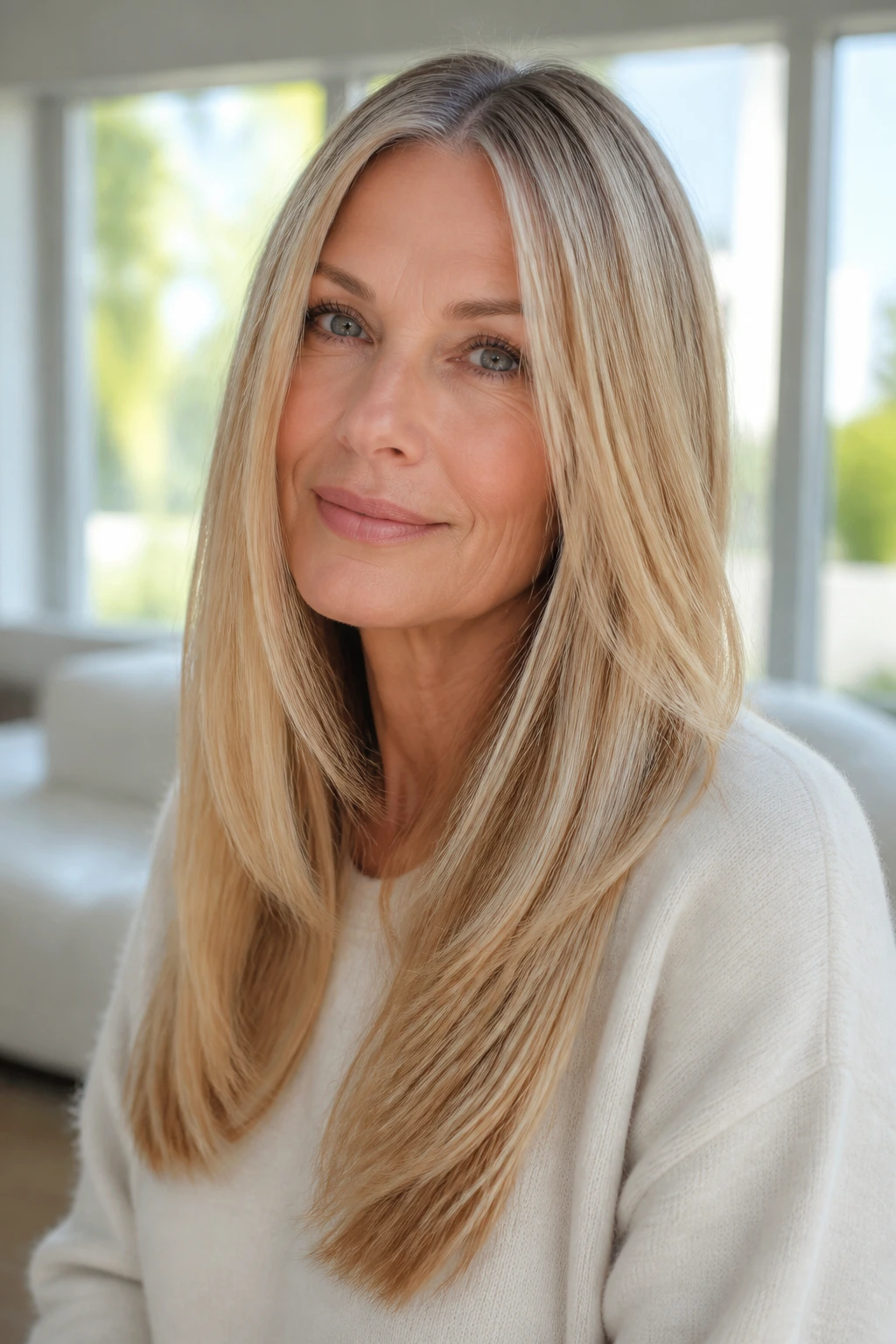
Razor-soft ends can be gorgeous on dense straight hair because they remove the slabby feeling that sometimes comes with long length. The result is airy, a little feathered, and less blocky at the bottom.
But this cut has a catch. On fine hair, too much razor work can leave the ends looking weak and see-through. So the texture has to match the hair. Thick or coarse strands usually benefit more than thin ones.
If you choose this shape, keep the styling simple. A smooth blowout with a paddle brush lets the softness show without adding frizz. It’s a quiet cut, but it has a nice swing when the hair moves.
21. One-Side Ear Tuck
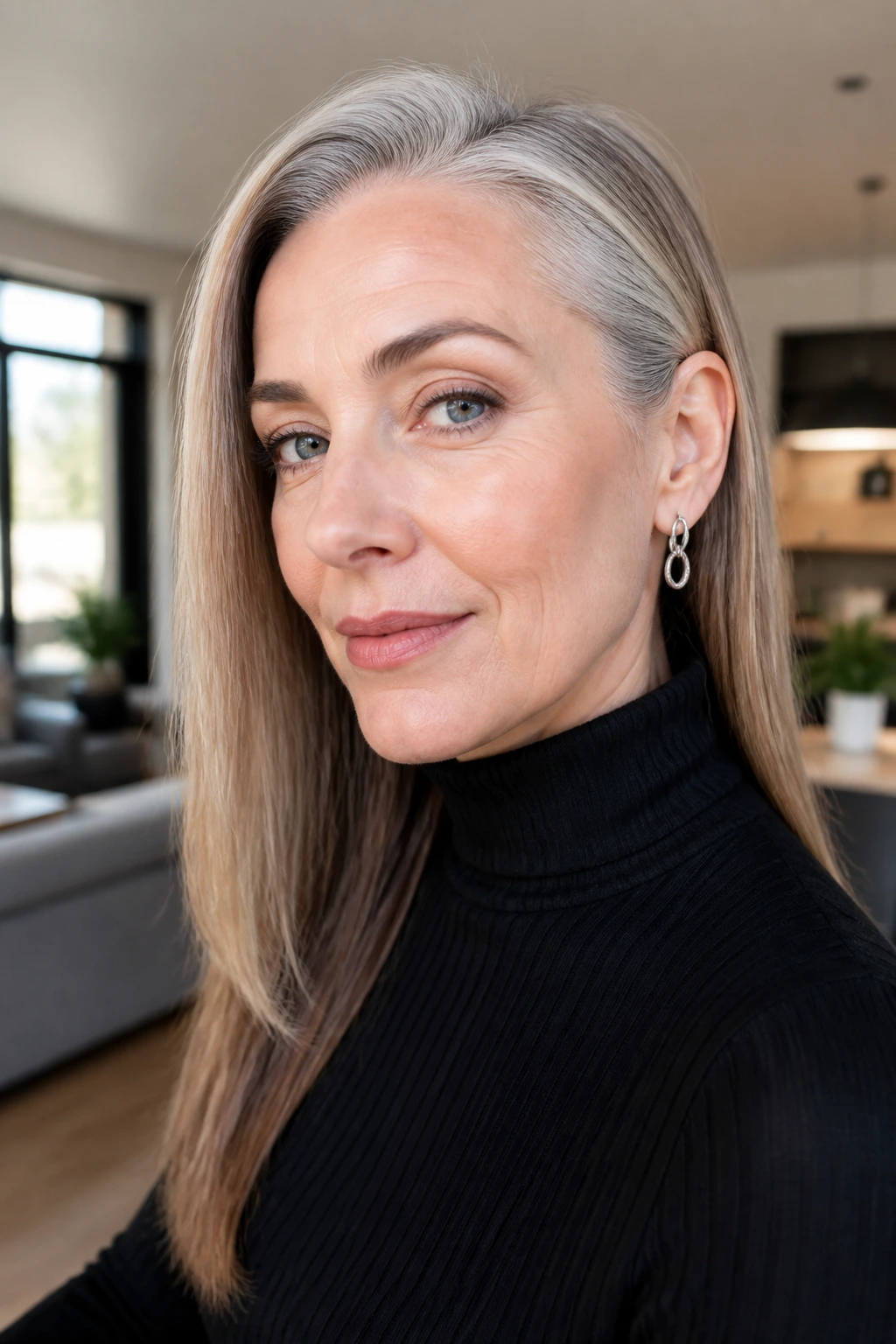
A one-side ear tuck is the definition of a low-effort polish move. You wear the hair straight and long, tuck one side neatly behind the ear, and let the asymmetry do the work. That’s it.
The style highlights the jawline and shows off earrings without needing an actual updo. It’s especially good on days when you want the length visible but do not want hair falling into your face all afternoon. If your hair is thick, a tiny pin hidden under the tucked section can keep it from slipping.
I prefer this with a clean side part or a centered part that leans slightly off to one side. Straight hair stays sleek; the tuck adds the shape.
22. Soft V-Cut for Long Hair
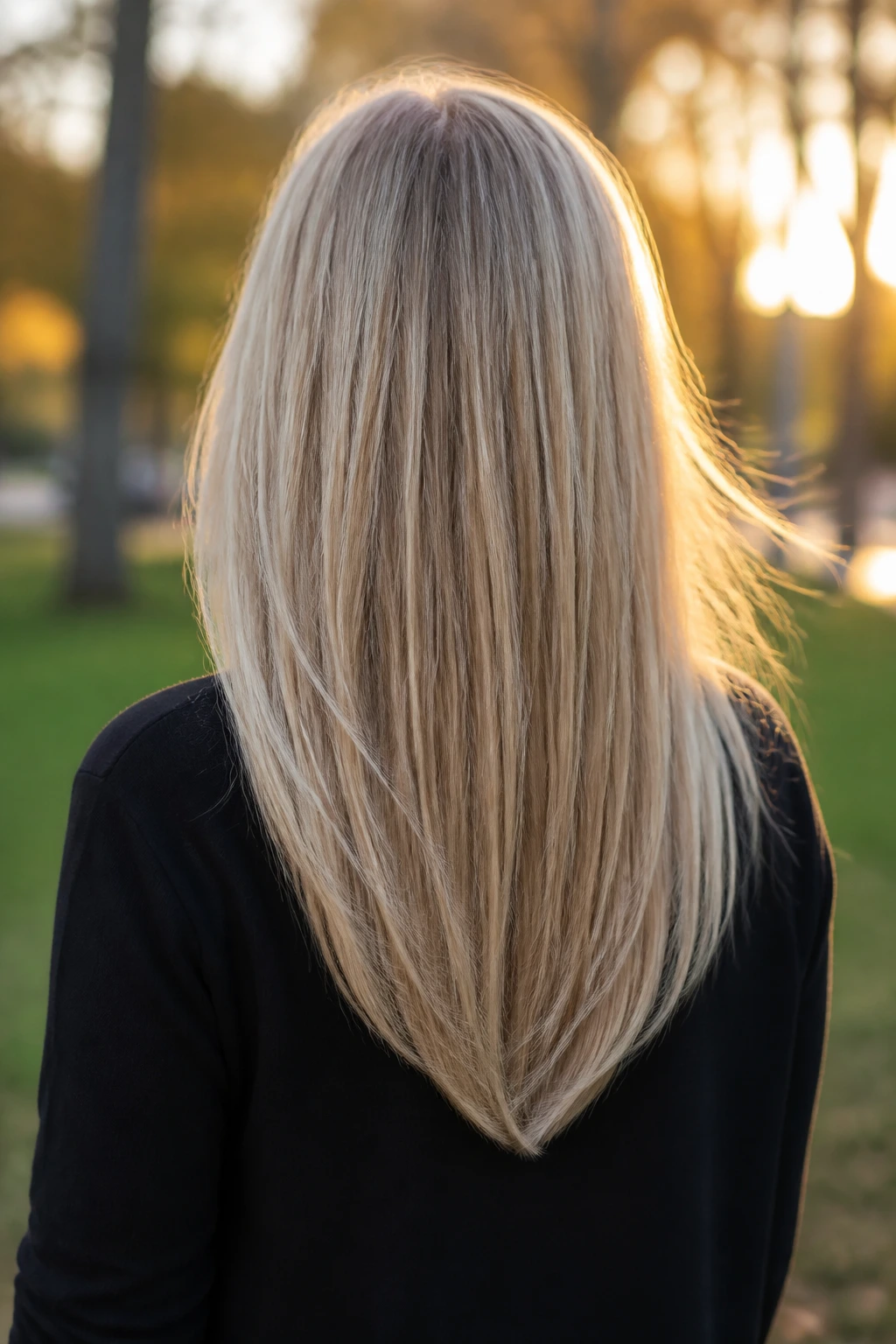
A soft V-cut gives the back a gentle point instead of a straight line or a blunt curve. It can be flattering on long straight hair because it elongates the silhouette and keeps thick lengths from feeling boxy.
The word “soft” matters. A sharp, dramatic V can look harsh if the hair is fine or if the point is too low. Keep the angle mild so the ends still look healthy and the shape holds together when the hair is worn down.
This is a good choice if you like length but want the cut to show from the back. It reads best in motion, especially when the hair has just enough swing to reveal that taper.
23. Braided Crown Accent
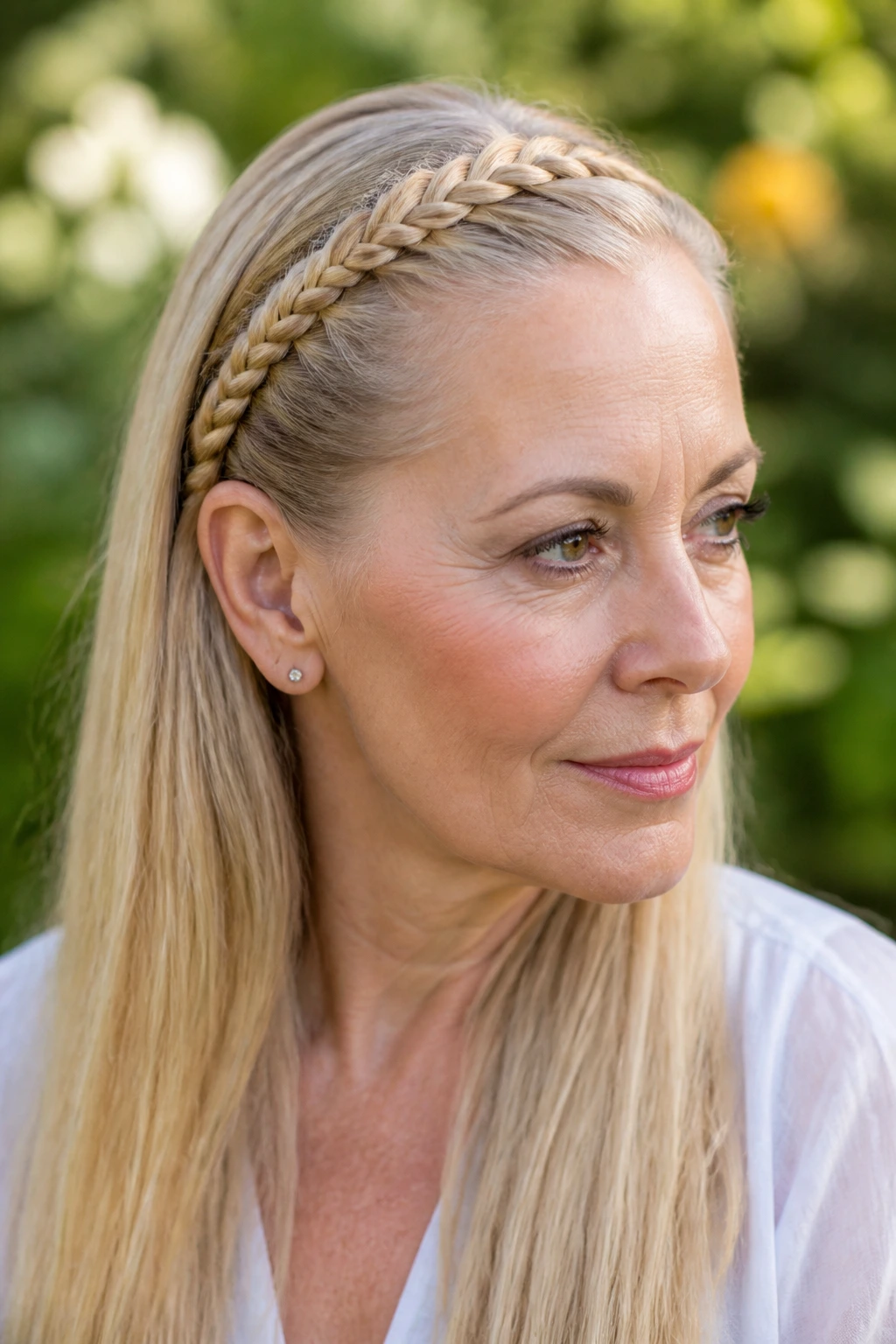
A braided crown accent gives straight hair some interest without taking away the length. A braid along the hairline pulls the front back cleanly, then the rest of the hair falls straight and smooth. It’s a nice mix of practical and pretty.
This style is helpful on windy days or when the front layers are in that annoying in-between stage. The braid keeps them in place and makes the style feel finished. If your hair is slippery, braid a slightly damp section or mist the front lightly with texture spray first.
You do not need a full halo braid for this to work. A short side braid tucked behind the ear is enough. Little details. That’s the whole game here.
24. Claw-Clip Twist
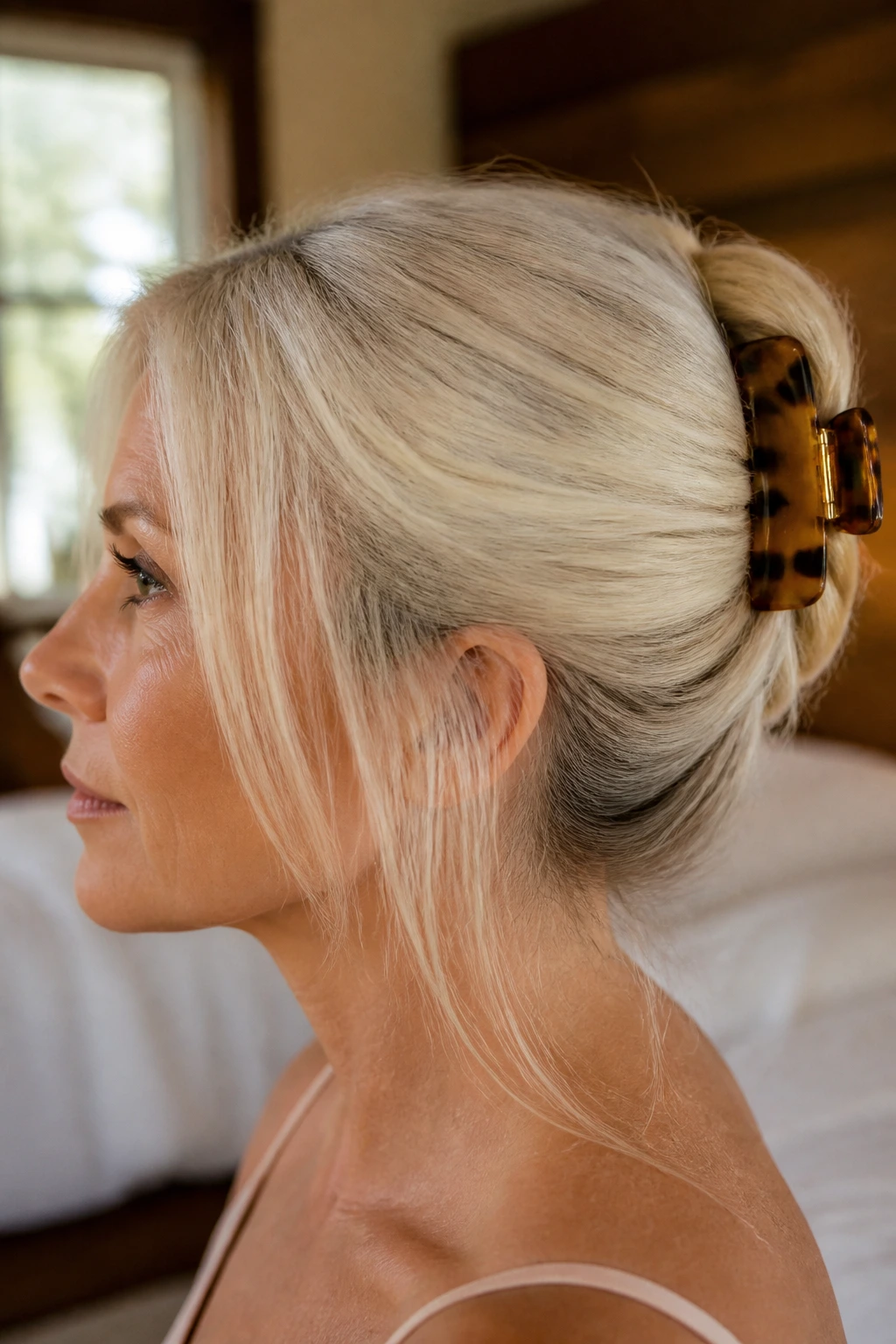
The claw-clip twist is the cleanest “I need my hair up right now” style for long straight hair. Twist the lengths once, fold them upward, and secure them with a large clip. If done neatly, it looks casual without looking lazy.
Straight hair can slip out of clips if the finish is too silky, so a bit of texture helps. A dry shampoo at the roots or a matte spray through the mid-lengths gives the clip something to grip. Leave the ends tucked in or fanned just enough to show the shape.
I like this one because it does not fight aging hair. If the ends are dry or the crown needs a break from heat, the clip gives you a polished hold and a day off from styling.
25. Root-Lift Straight Blowout
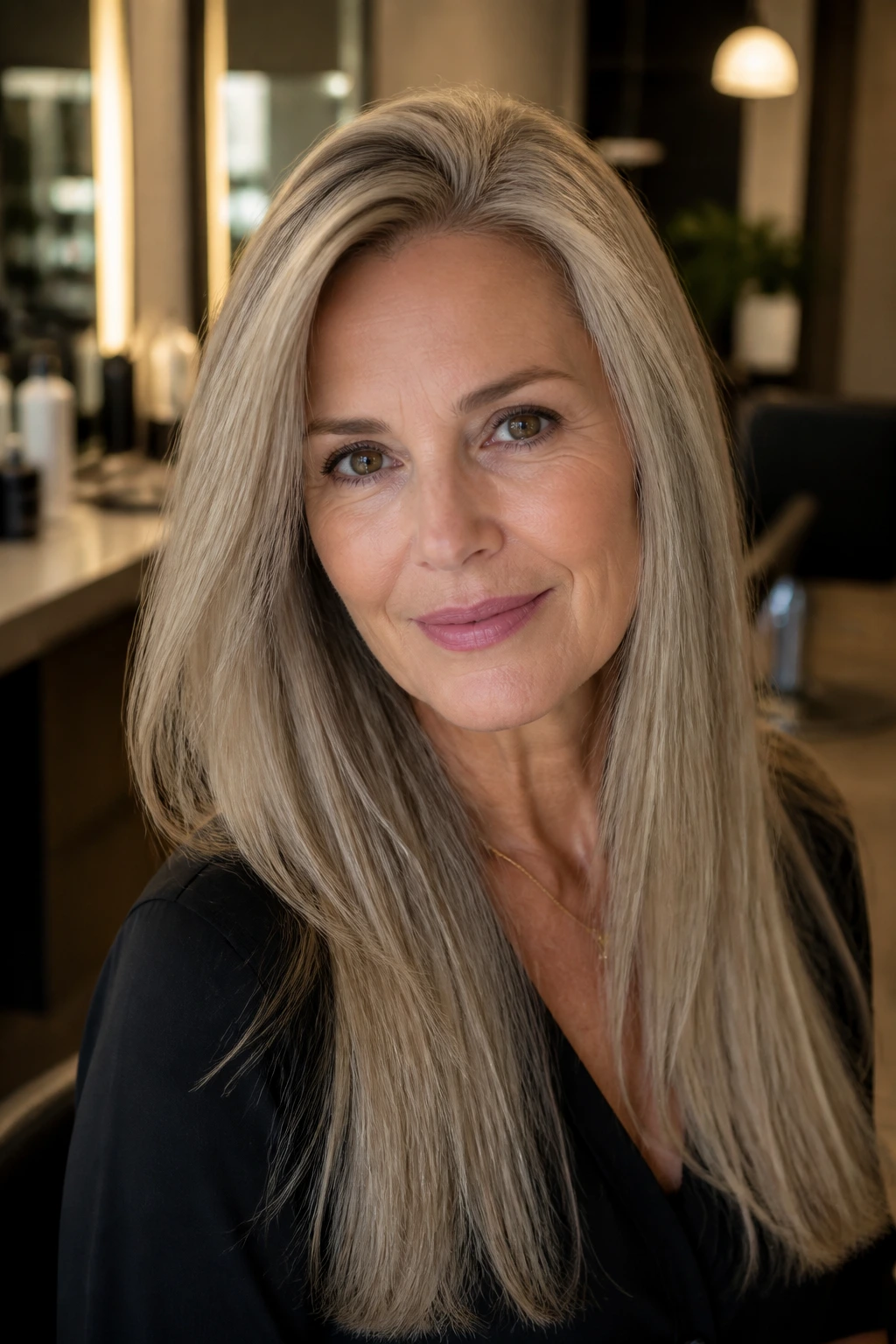
A root-lift blowout is the answer when straight hair starts to sit too close to the head. The length stays smooth, but the crown gets air. That small lift makes the whole style look healthier and more awake.
Use a round brush or a root-lifting clip at the crown while the hair cools. That cooling step matters more than people think. Hot hair forgets the shape fast; cooled hair keeps it. If you skip that part, the lift collapses by lunch.
This style is best when the ends are already in good shape. Once the crown has some body, the long lengths can hang cleanly without dragging the whole look down. It’s a simple fix with a big visual payoff.
26. Asymmetrical Part and Long Straight Lengths
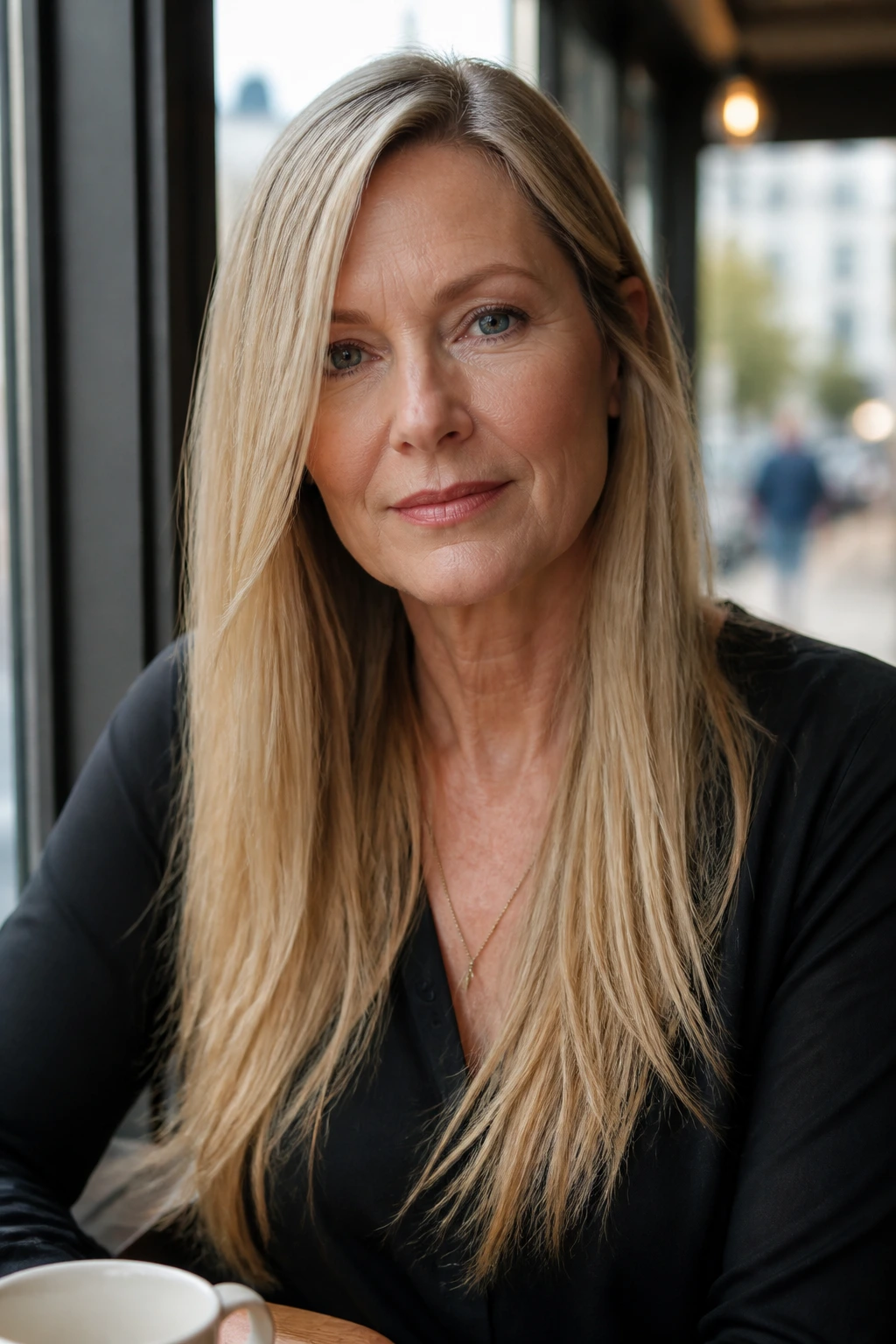
An asymmetrical part is a quieter cousin of the deep side part. It sits slightly off center, not dramatically to one side, which keeps the style calm but keeps it from feeling flat. On long straight hair, that tiny offset can change the whole face shape.
This works well if a center part feels too severe and a deep side part feels like too much. The asymmetry gives the front some motion while keeping the lines long and smooth. A little lift at the crown helps the part hold its shape, especially if the hair has a tendency to settle back into the same groove.
I’d call this the “easy compromise” style. Not boring. Not fussy. Just quietly better than a dead-straight middle line.
27. Barely-There Layers
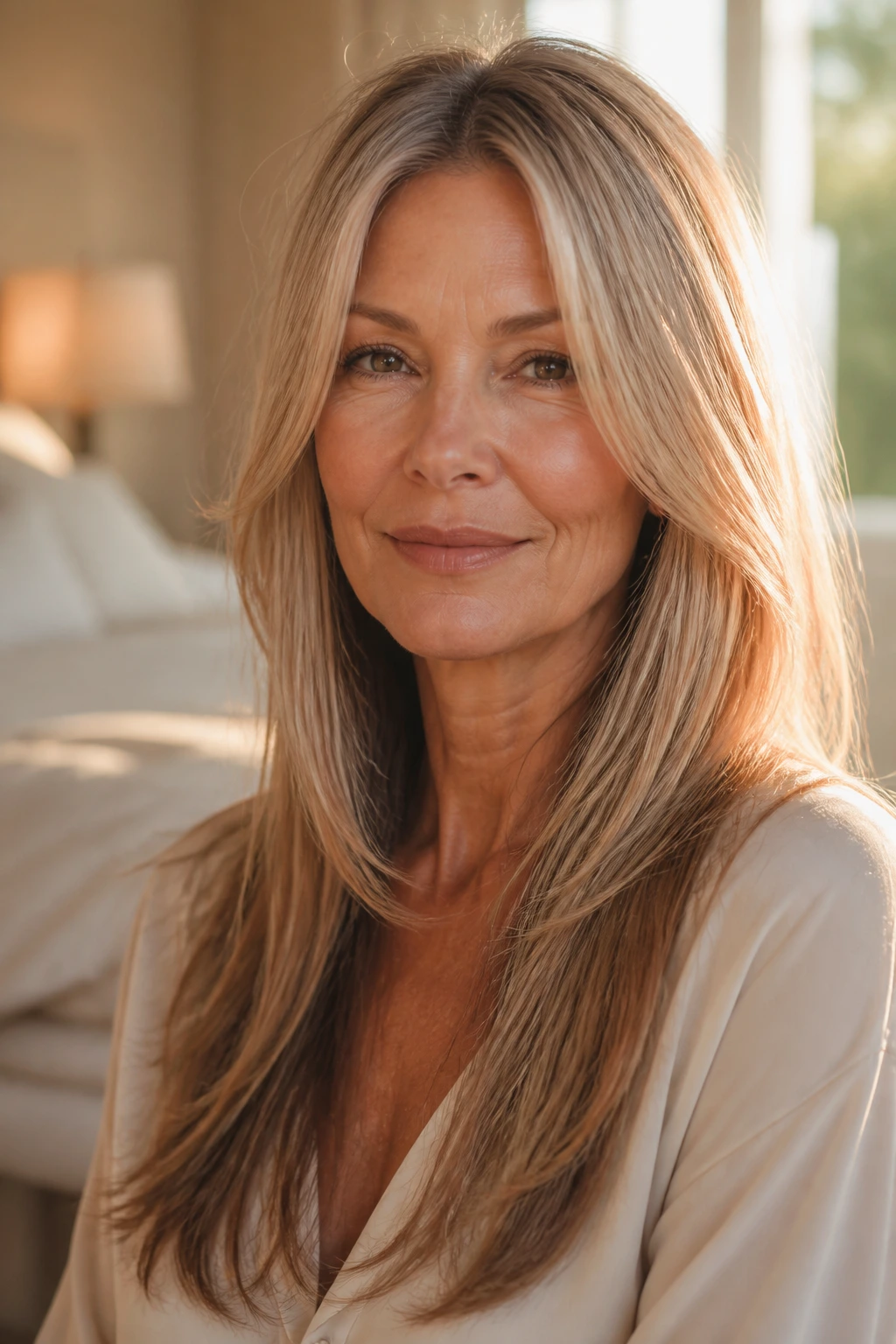
Barely-there layers are for women who want long hair to move without advertising the cut. The layers sit so softly that they do not break the outline, but they stop the hair from feeling too heavy at the sides.
This is a nice middle path if you have been told that layers will “fix” everything. They won’t. But a light layer can remove a little bulk, make the ends swing more naturally, and keep straight hair from drooping at the shoulders. That matters when the hair is long enough to feel weighty.
The best version keeps the perimeter strong. You want whisper-soft internal movement, not obvious steps. That balance is what makes the cut wearable.
28. Healthy-Ends-Only Straight Cut
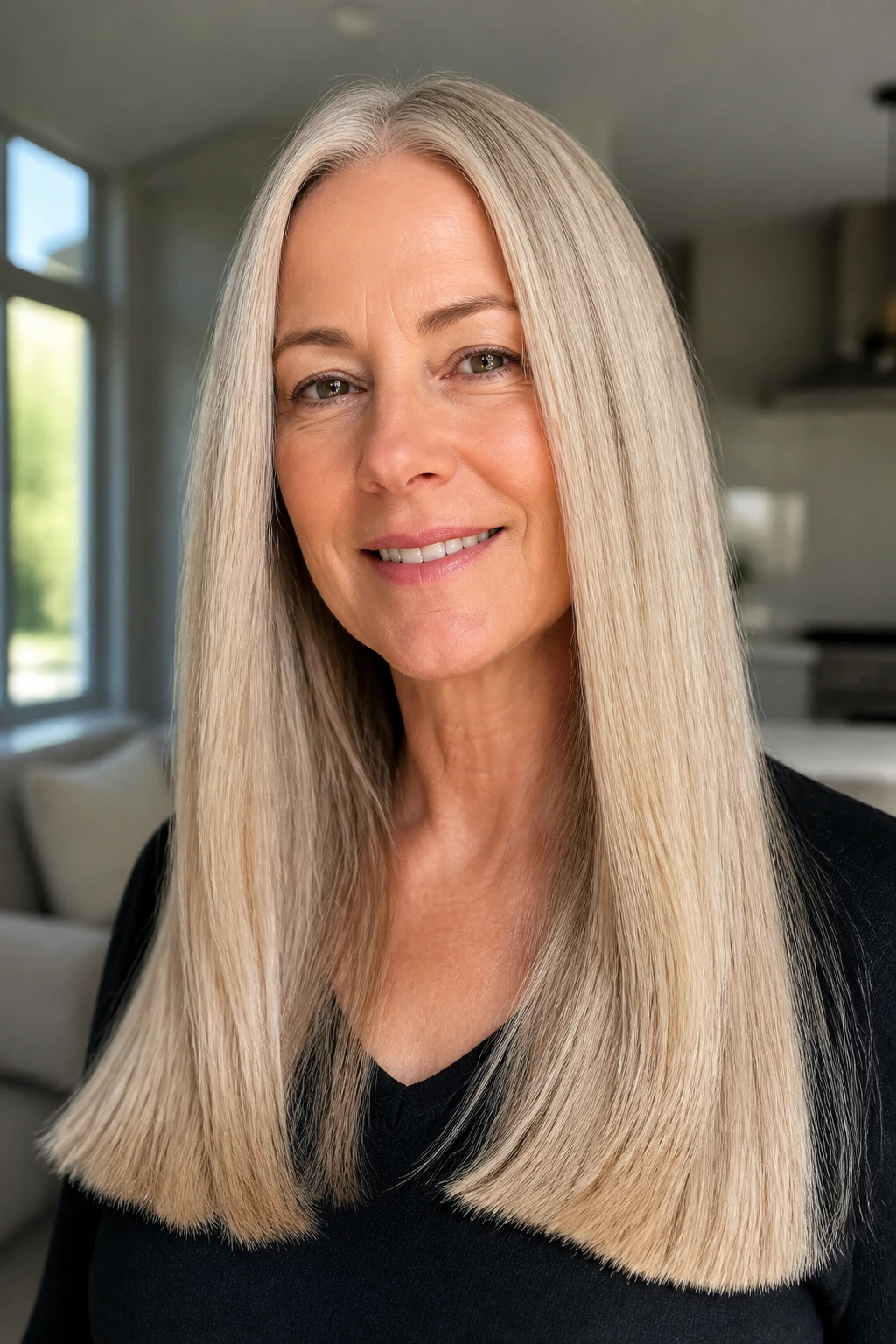
Sometimes the best straight hairstyle is the one that refuses to pretend damaged ends are part of the plan. A healthy-ends-only cut trims away the frayed bits, keeps the hemline clean, and lets the rest of the hair do its job.
This is especially smart if you wear your hair long and straight most of the time. Split ends show fast in that finish. Once the bottom starts to look dry, the whole style reads older and rougher than it really is. Cutting the bad bits off makes the length look richer, not shorter.
I like this as a reset. Not a dramatic change. Just a clean line, soft product on the ends, and hair that looks cared for instead of negotiated with.
Why Straight Hairstyles for Long Hair Over 50 Work Better With Shape
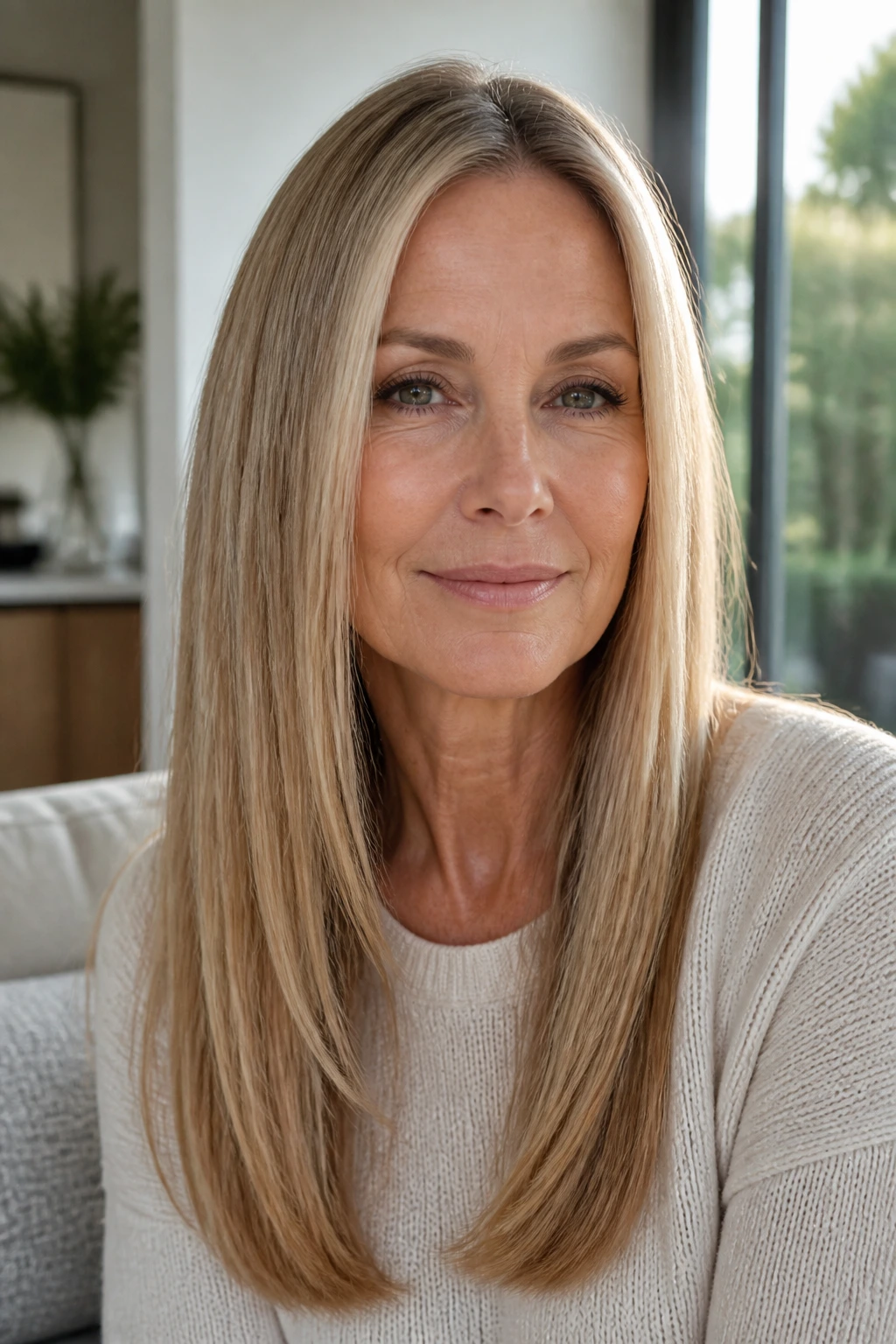
Long straight hair after 50 does not need more drama. It needs better geometry. The hair fiber may be a little drier, the crown may sit flatter, and the front may need more help than it used to. None of that means the length has to go. It means the cut has to carry more of the load.
A straight style shows every decision. That is the upside and the headache. If the hemline is blunt, the hair looks denser. If the front has a soft frame, the face opens up. If the roots have even a little lift, the whole look feels alive instead of pasted to the head. Those small choices are what separate “long hair” from “long hair that looks finished.”
And silver hair can be a gift here. Gray strands reflect light with a clarity that curls sometimes hide. A clean straight style lets that shine sit on top of the hair instead of disappearing into texture. The result is calmer, sharper, and usually easier to maintain than people expect.
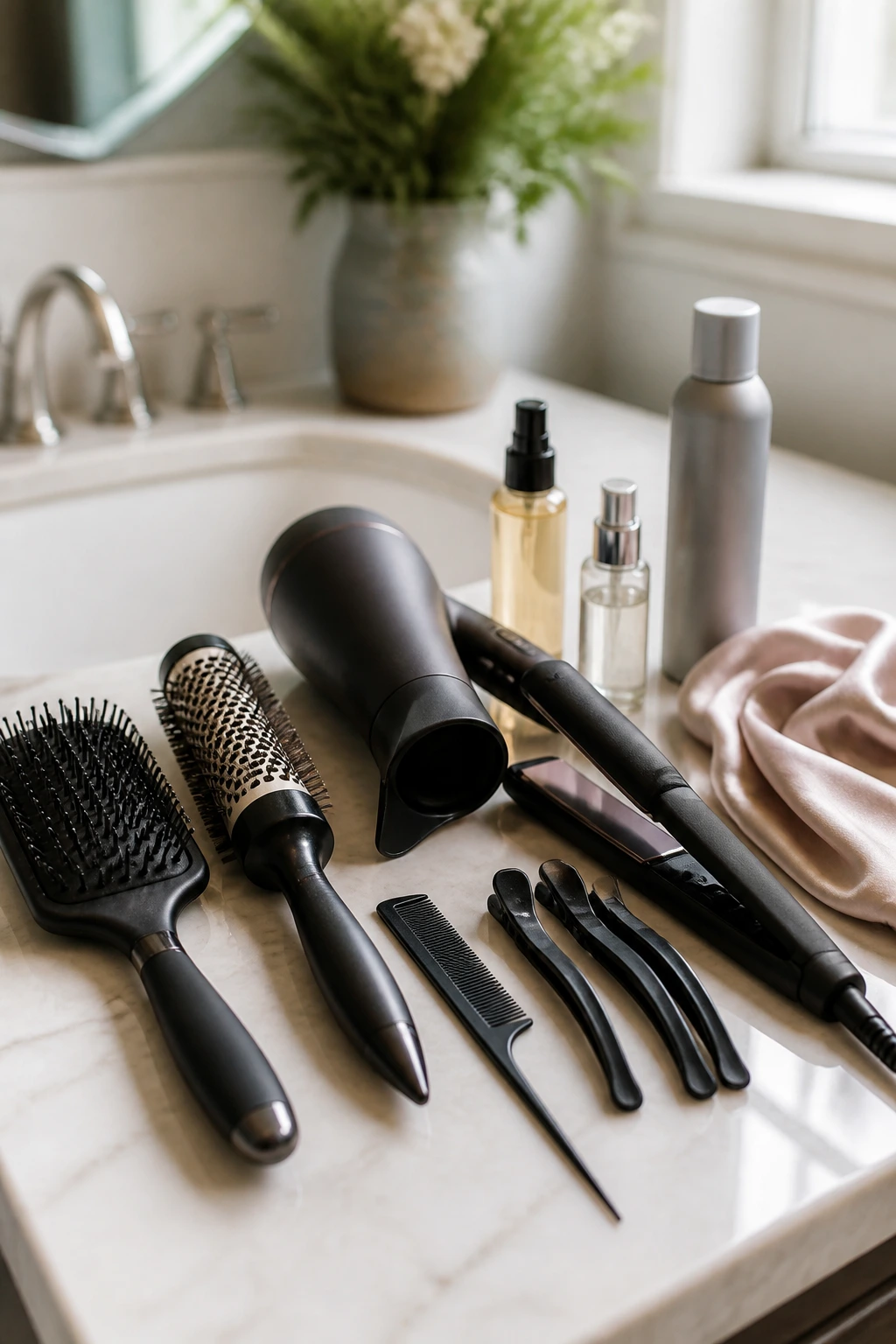
Essential Tools for Long Straight Hair
-
Paddle brush: Best for smoothing long lengths fast without creating too much bend at the ends.
-
Round brush, medium barrel: Useful for root lift, curtain bangs, and soft under-turns at the hemline.
-
Blow dryer with a concentrator nozzle: Directs the air so the cuticle lies flatter and frizz stays down.
-
Flat iron with adjustable heat: Worth it if your hair is fine, gray, or coarse; different textures need different temperatures.
-
Heat protectant spray: Use it before every hot tool, especially on the front pieces and the ends, where damage shows first.
-
Lightweight serum or gloss cream: A pea-size amount on mid-lengths and ends keeps straight hair shiny without grease.
-
Sectioning clips: Make the blow-dry faster and keep the crown from getting tangled while you work.
-
Tail comb: Handy for precise parts, clean sectioning, and smoothing the front before a clip or tuck.
-
Dry shampoo or root-lift spray: Helps flat crowns stay lifted between washes, especially on fine hair.
-
Silk scarf or narrow headband: Good for days when the hair needs a break but you still want the style to look intentional.
How to Choose Straight Hairstyles for Long Hair Over 50 That Match Your Hair
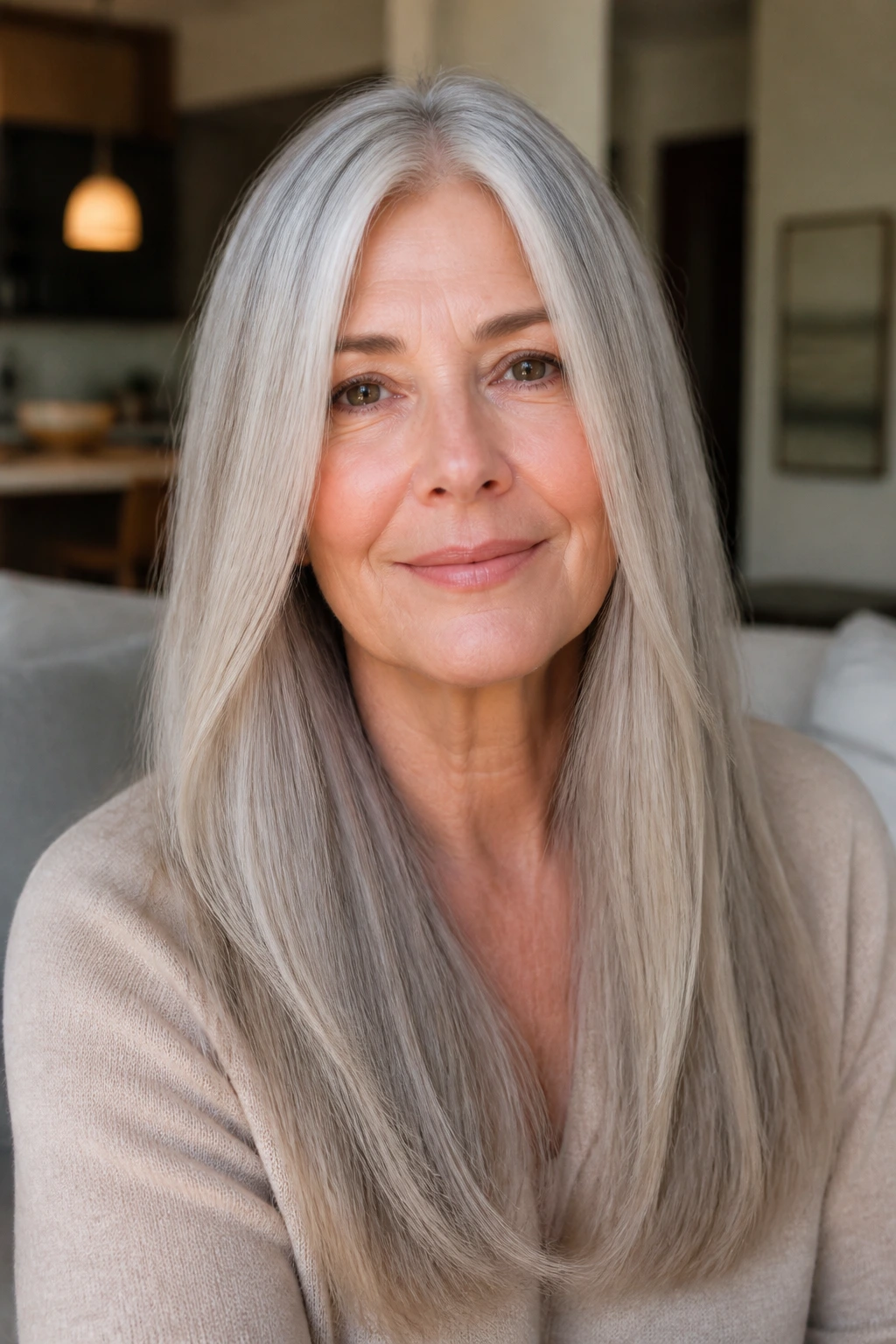
Fine hair needs structure, not softness everywhere.
If your hair is fine, choose blunt ends, invisible layers, or a soft center/side part with a little root lift. Too many obvious layers make the ends look thin, which is the opposite of what you want. A clean line at the bottom gives the eye something solid to read.
Thick hair usually needs release.
Dense hair can handle U-shapes, feathered ends, razor-soft texture, or a long V-cut with a light hand. The goal is to keep the hair from sitting like a sheet. Once the weight is managed, the style moves instead of puffing out at the sides.
Gray hair likes polish and moisture.
Silver, white, and salt-and-pepper strands often feel dry before they look dry. A gloss, a moisture mask, and a careful blow-dry matter more than a bunch of styling products. If the hair has a yellow cast, use a violet or blue-toned cleanser sparingly, not every wash.
Face shape still matters, but not in a rigid way.
A rounder face often likes a side part or a soft frame near the cheekbone. A longer face usually benefits from a fringe or a little width around the sides. Glasses can change the equation, too—if frames already take up space, keep the hair cleaner around the temples.
Ways to Wear These Looks From Morning to Evening
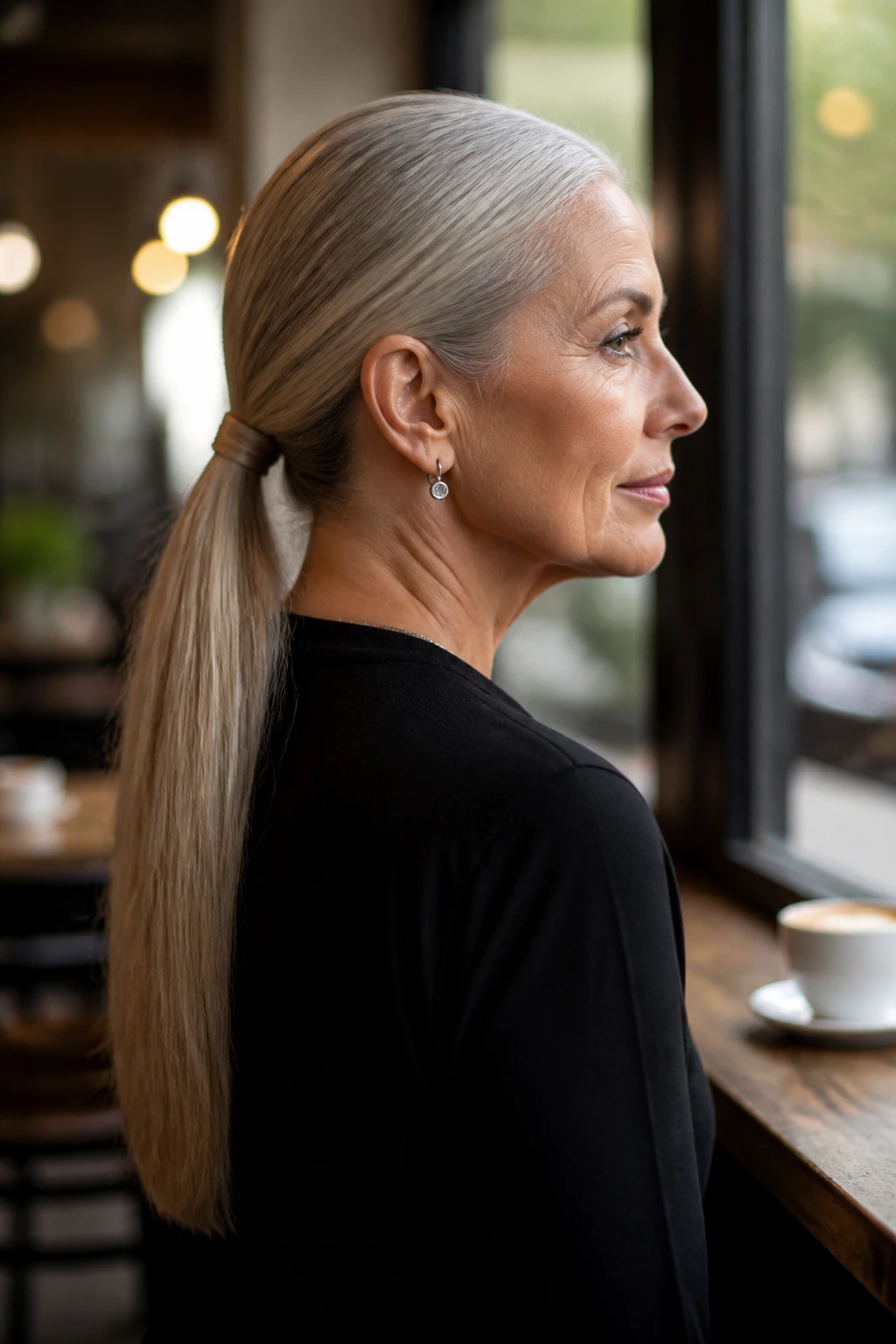
Everyday:
A mirror-smooth center part, an asymmetrical part, or a soft side sweep works best when you want the hair to stay out of the way and still look finished. A tiny drop of serum on the ends is enough. No need to drench the lengths.
Office or errands:
The ear tuck, the low ponytail with a wrapped base, and the claw-clip twist all feel neat without trying too hard. These styles hold up well if you’re moving around, and they keep the front from falling into the face. That matters more than people admit.
Dinner or dressier plans:
Go for the low chignon, glass hair blowout, or braided crown accent. Those shapes look intentional under indoor light, which is where straight hair can sometimes go dull if it’s not finished well. One strong shape beats ten little decorations.
Second-day hair:
Scarf wraps, half-up twists, and soft ponytails are the practical winners. A touch of dry shampoo at the roots and a smoothing pass on the top layer usually reset the look. The ends don’t need to be perfect. They just need to look cared for.
Extra Shine, Lift, and Polish Without Overdoing It
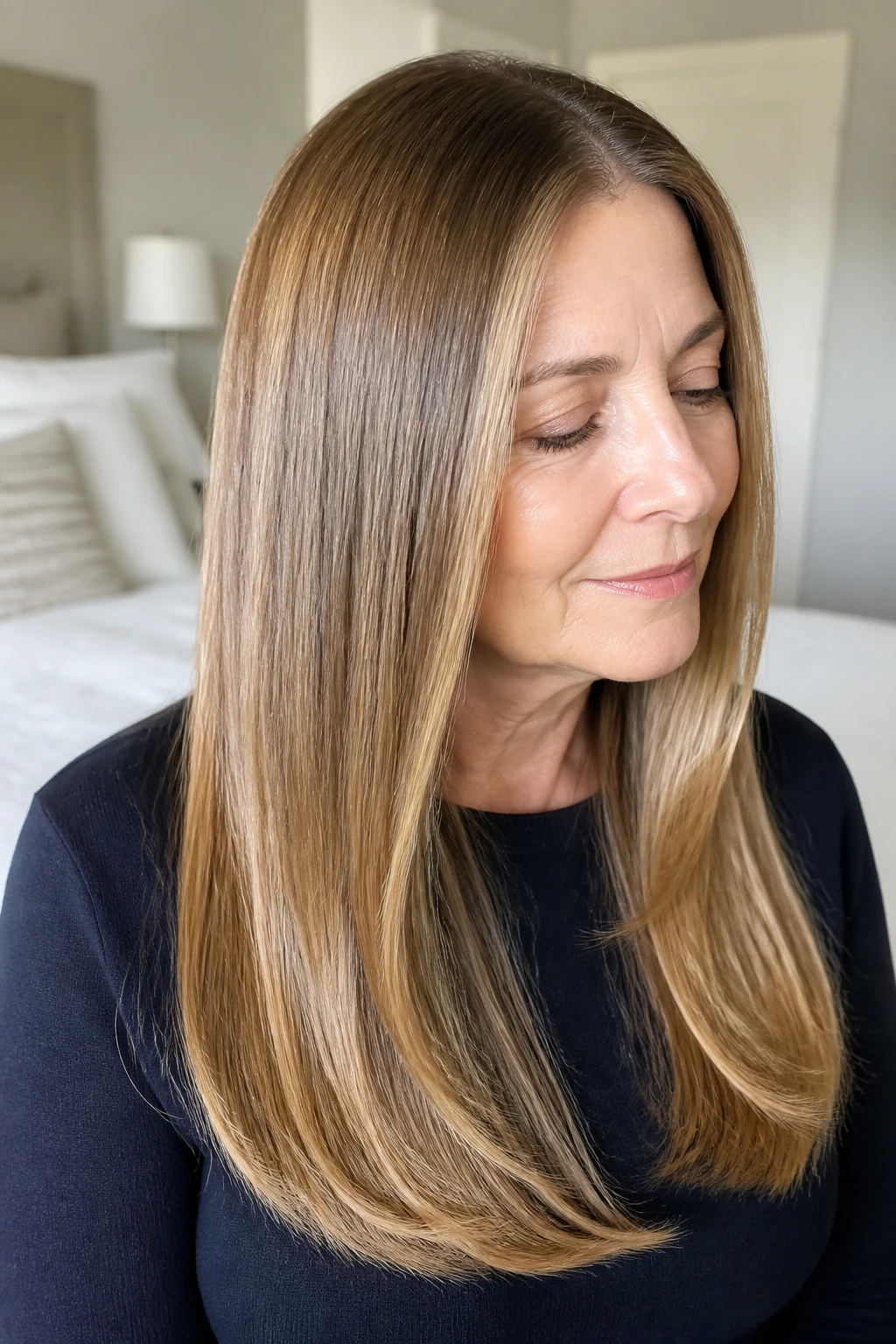
Shine Boost:
Use a lightweight serum only from mid-length to ends, and keep it off the roots. Straight hair shows too much product fast, especially near the temples and fringe. A little goes farther than people think.
Volume Boost:
Clip the crown while the hair cools after blow-drying, or set the roots with a large roller for 10 to 15 minutes. That small pause gives long hair a bit of body without messing up the straight line.
Part Refresh:
Move your part a quarter-inch every few days if the hair keeps falling flat in the same place. It’s one of the easiest ways to keep straight hair from developing a tired groove.
Accessory Move:
Choose narrow headbands, slim barrettes, silk scarves, or one good claw clip. Big, chunky accessories can swallow long straight hair; smaller ones tend to look cleaner and more grown-up in the best sense of that word.
Common Mistakes That Flatten Long Straight Hair
-
Cutting too many layers into fine hair: The ends start to look see-through, and the whole style loses density. Ask for a blunt line or very soft internal layers instead.
-
Using too much oil near the scalp: The hair looks slick at the top and limp by noon. Keep shine products on the lower half of the hair only.
-
Ironing every bend out until the hair looks dead: Straight is one thing; scorched and over-pressed is another. Use enough heat to smooth the cuticle, then stop.
-
Ignoring the crown: If the top sits flat, long hair can drag the face down. A little root lift or a better part fixes that faster than re-cutting the whole length.
-
Letting bangs grow too far before trimming: Fringe that hits the eyes or separates in odd pieces throws off the entire style. Bangs need more upkeep than the rest of the hair.
-
Keeping dry, frayed ends because you want to save length: Once the ends split, the style starts looking older and thinner than it really is. A small trim often makes the length look better, not shorter.
Variations and Easy Adaptations
Fine-Hair Rescue:
Choose a blunt hemline, a soft side part, and invisible layers only if the hair needs a little internal lift. Keep products light and focus on root volume. Heavy creams will sink the style.
Thick-Hair Tamer:
Go for a U-cut, feathered ends, or a soft V-shape that removes bulk without breaking the outline. This version keeps the hair sleek but stops it from sitting like one solid block.
Gray-Glow Finish:
Use a gloss or shine spray, a clean center part, and a moisture mask once a week if the hair feels rough. Gray strands look their best when the cut is crisp and the surface is smooth.
Fringe-Friendly Version:
Curtain bangs, side fringes, and blunt bangs all work with long straight hair, but they need regular trims. If you want the fringe to behave, blow-dry it first, before the rest of the head gets sweaty or flat.
Low-Heat Version:
Air-dry most of the way, then finish the top layer with a brush dryer or one careful pass of the flat iron. This keeps the ends from getting cooked every day, which long straight hair never enjoys.
Event-Ready Version:
Switch in a low chignon, wrapped ponytail, or braided crown accent. These styles hold shape under evening light and let the hair look finished even when the outfit is doing most of the talking.
Maintenance, Trims, and Heat Care
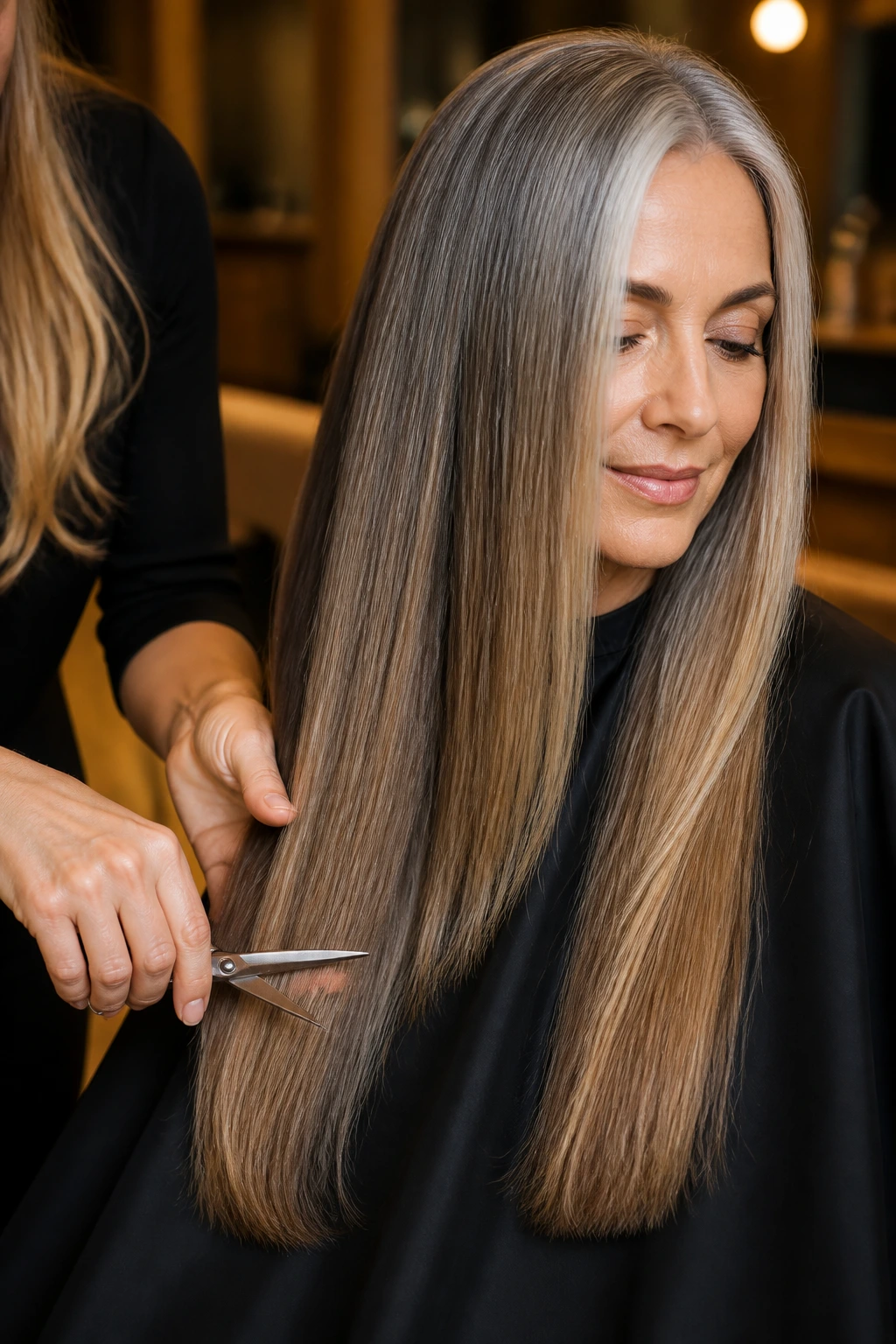
Long straight hair needs a rhythm. Not a strict one. A blunt cut usually looks best with a trim every 8 to 10 weeks, while softer shapes with face framing or invisible layers can sometimes stretch to 10 to 12 weeks before they start losing their line. Bangs need more attention—usually every 3 to 4 weeks if you want them to sit cleanly.
Wash-day habits matter too. If your hair is fine, too much conditioner at the roots will flatten the crown and make straight styles fall early. If your hair is coarse or gray, one weekly moisture mask can keep the ends from turning rough and fuzzy. Clarifying shampoo every 2 to 4 weeks helps clear off the film from serums and dry shampoo, which long straight hair picks up fast.
Heat needs a boundary. Keep the flat iron only as hot as the texture requires, and do not go over the same section again and again. One decent pass is better than three angry ones. Finish with a cool shot when you can, because cooling is what helps the shape settle.
Silk or satin pillowcases help more than most people expect. They cut down on friction, which means fewer bent ends in the morning and less need to re-iron everything before breakfast.
Questions People Ask About Long Straight Hair
Is long straight hair flattering after 50?
Absolutely, if the cut is doing something. A blunt line, a good part, or a face frame can make long hair look deliberate and modern instead of just long. The length is not the issue; the shape is.
Should I choose a middle part or a side part?
Pick the part that gives your roots the most life. A middle part can look very clean, but a side part often adds lift and softens the face. Try both in natural light and see which one makes the crown look fuller.
Do layers make straight long hair look thinner?
They can, if they’re too high or too many. Very soft internal layers are fine; obvious, choppy layers on fine hair usually reduce density where you need it most. Thick hair has more room to play.
Can I wear bangs if I wear glasses?
Yes, but the shape matters. Curtain bangs or a side fringe usually sit better with frames than a heavy blunt fringe, which can fight the glasses for space. Keep the bangs long enough to sit above or around the frames, not inside them.
How do I keep gray straight hair from looking dry?
Use a lightweight leave-in on the ends, not a heavy oil at the roots. A gloss treatment or color-safe shine product can help the surface look smoother, and a trim removes the frayed bits that catch the light in a bad way.
What if my ends flip out no matter what I do?
That usually means the cut and the styling direction are fighting each other. Ask for a subtler hemline or finish the ends with a gentle under-turn instead of trying to force them bone straight. Sometimes working with the bend is faster than beating it into submission.
How often should I style with heat?
As little as you can get away with. If the hair only needs a refresh, smooth the top layer or rework the front pieces instead of redoing the whole head. Long straight hair looks best when it isn’t punished every day.
What’s the easiest style if I’m short on time?
A soft side part, a one-side ear tuck, or a low ponytail with a wrapped base all take very little effort. They work because the shape is built into the hair or the finish, not dependent on a complicated routine.
The Shape That Keeps Working
Long straight hair after 50 has a bad reputation only because people keep cutting it or styling it as if one size fits all. It doesn’t. The best versions here are the ones that respect the texture, keep the ends clean, and use shape where it matters most—in the front, at the crown, and along the hemline.
That’s what makes these looks useful. They are not trying to hide age. They are trying to make the hair look cared for, sharp, and easy to live with, which is a much better deal anyway. When the cut is clean and the finish is light, long straight hair stops feeling like work and starts feeling like a habit worth keeping.
