



Medium-length hair has a sweet spot that longer lengths miss entirely. It is long enough to swing, tuck, clip, braid, and ponytail, but short enough that a straight finish still looks crisp instead of dragged down by its own weight. Straight hairstyles for medium length hair can read polished, sharp, soft, or a little bit cool depending on where the part sits and what happens at the ends.
That part matters more than people think. On collarbone-length hair, a half-inch bend at the tips can change the whole mood of a style, and a center part can make the same cut feel calmer, cleaner, and more deliberate than a deep side part. I keep coming back to medium length because it forgives small mistakes. A slightly uneven blowout? Still fine. A little frizz at the crown? Usually fixable with one quick pass and a brush.
The best straight styles for this length don’t fight the cut. They work with it. The hair can lie sleek against the head, skim the jaw, or swing just below the shoulders without turning into a limp curtain. That balance is the whole trick, and it opens up more options than most people expect.
Why These Straight Looks Work So Well on Mid-Length Hair
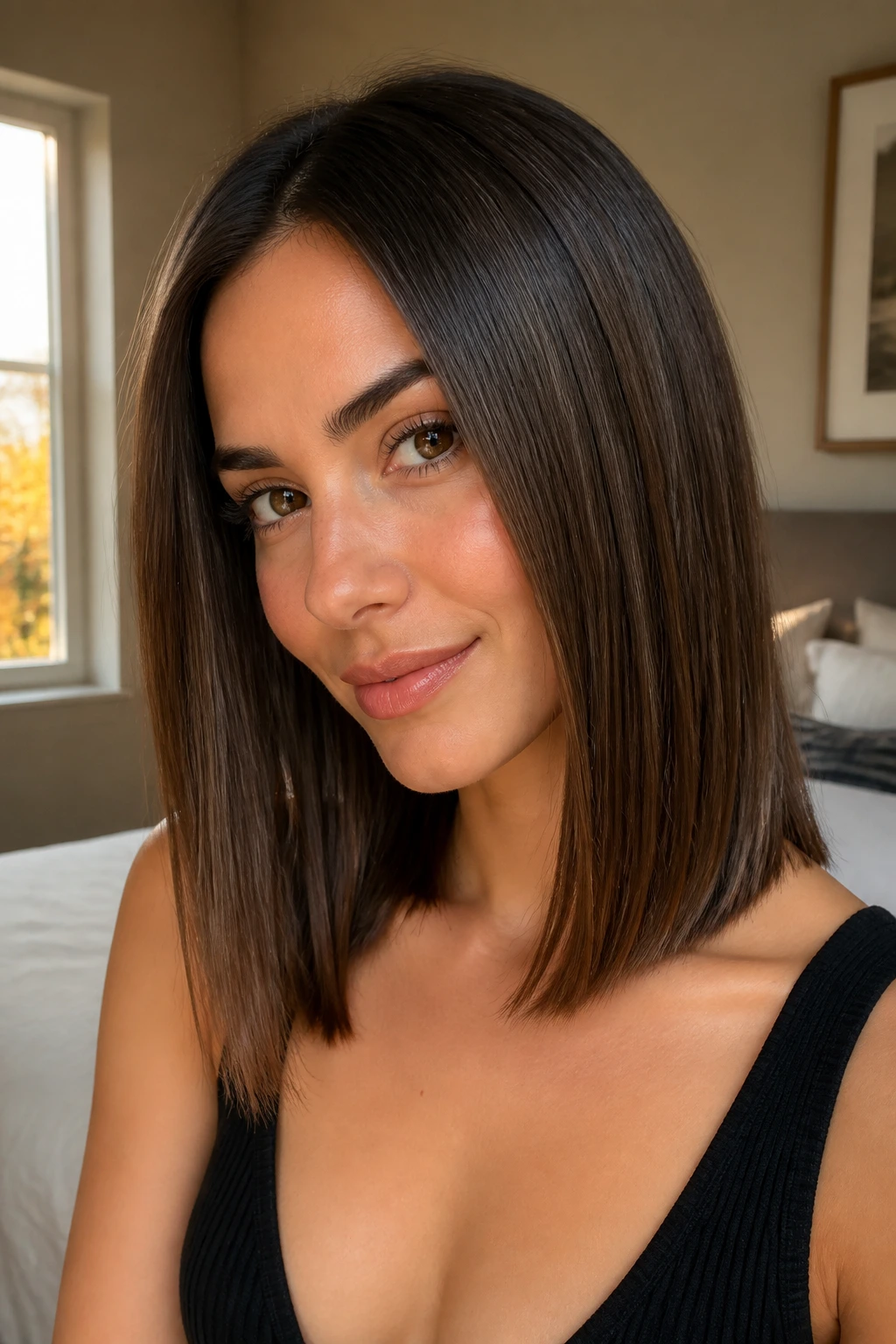
Length with shape: Medium hair gives you enough weight for a clean line, but not so much that the ends drag and separate by noon.
Styling time stays reasonable: A collarbone cut takes fewer passes with a flat iron than waist-length hair, which means less heat, less fatigue, and fewer fried ends.
Parts actually matter here: A center part, side part, or deep tuck changes the whole face frame on medium hair because the cut sits close enough to the face to show it.
Accessories behave better: Clips, barrettes, scarves, and earrings sit where you want them instead of vanishing into a wall of hair.
The finish can shift fast: One style can move from office-clean to dinner-ready with a tuck, a bend, or a different part line.
1. Sleek Blunt Lob
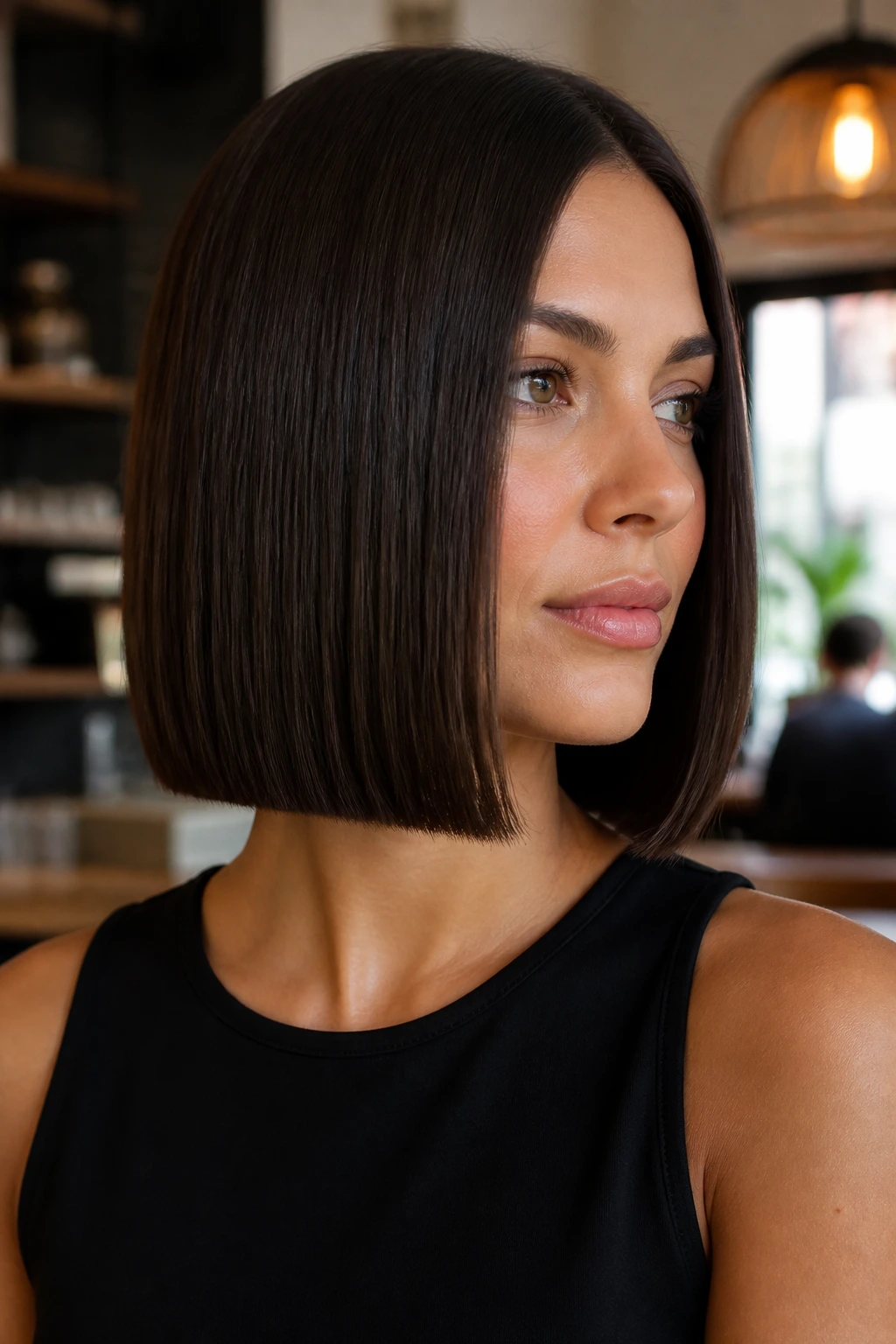
A blunt lob is the haircut that tells on bad technique and rewards clean ones. When it’s straight, the ends draw a hard line around the collarbone, and that edge looks especially good if the cut lands just above the shoulders. It’s one of those styles that can look expensive even when the outfit is just jeans and a black tee.
Why It Works
The blunt edge keeps medium-length hair from looking fluffy or over-layered. Straighten in 1-inch sections, then give the last half-inch a tiny inward bend so the ends don’t stick straight out like little shelves. If your hair is fine, this cut will still move; if it’s thick, the weight sits in the line and makes the whole shape look deliberate.
- Best tool: 1-inch flat iron
- Best part: center or slightly off-center
- Best finish: one drop of serum on the mids and ends
Pro tip: keep the iron moving. A blunt lob goes wrong when people clamp too long at the ends and leave a kink.
2. Center-Part Glass Hair
Center-part glass hair looks almost severe until you see it in motion. Then the shine catches the light and the whole style gets this smooth, mirrorlike finish that works especially well on medium hair because the length is not so long that it starts to collapse.
A paddle brush blow-dry helps, but the real difference comes from a slow, controlled flat-iron pass at about 320°F to 350°F, depending on hair density. Press each section flat, then comb through it while it cools. The hair should feel slippery, not coated.
If your ends are dry, skip heavy oils near the roots. Put the tiniest bit on the last 2 inches only, or the top will flatten fast.
3. Deep Side Part Tuck
A deep side part changes the face shape more than a new outfit does. Seriously. On medium-length straight hair, it creates instant lift at the crown and lets one side fall behind the ear, which gives the cut a quieter, more tailored feel.
I like this one when hair has been freshly blown out and needs a bit of personality without extra work. The tucked side keeps the ear visible for hoops or a small cuff, while the fuller side softens the cheekbone. If your hair tends to go flat, spray a little root-lift mist at the heavier side before you part it.
Best for:
- Fine hair that needs volume near the crown
- Square or round face shapes that like a longer diagonal line
- Days when you want the style to look intentional in five minutes
4. Collarbone Cut with Soft Ends
Not every straight style needs a hard, sharp edge. A collarbone cut with softly beveled ends has a gentler feel, and that slight curve inward keeps medium-length hair from sitting too stiffly against the neck. It’s a good choice when you want clean lines but not a razor-cut finish.
The trick is to smooth the top half first, then use the flat iron to wrap the ends around the plates for half a turn. Do not overbend them. The goal is a soft undercurve, not a curl. That tiny detail makes the style read polished instead of flat.
This cut looks especially good with knit tops, open collars, and anything that shows the neckline. The hair frames, not fights.
5. Face-Framing Layers with a Flat-Iron Bend
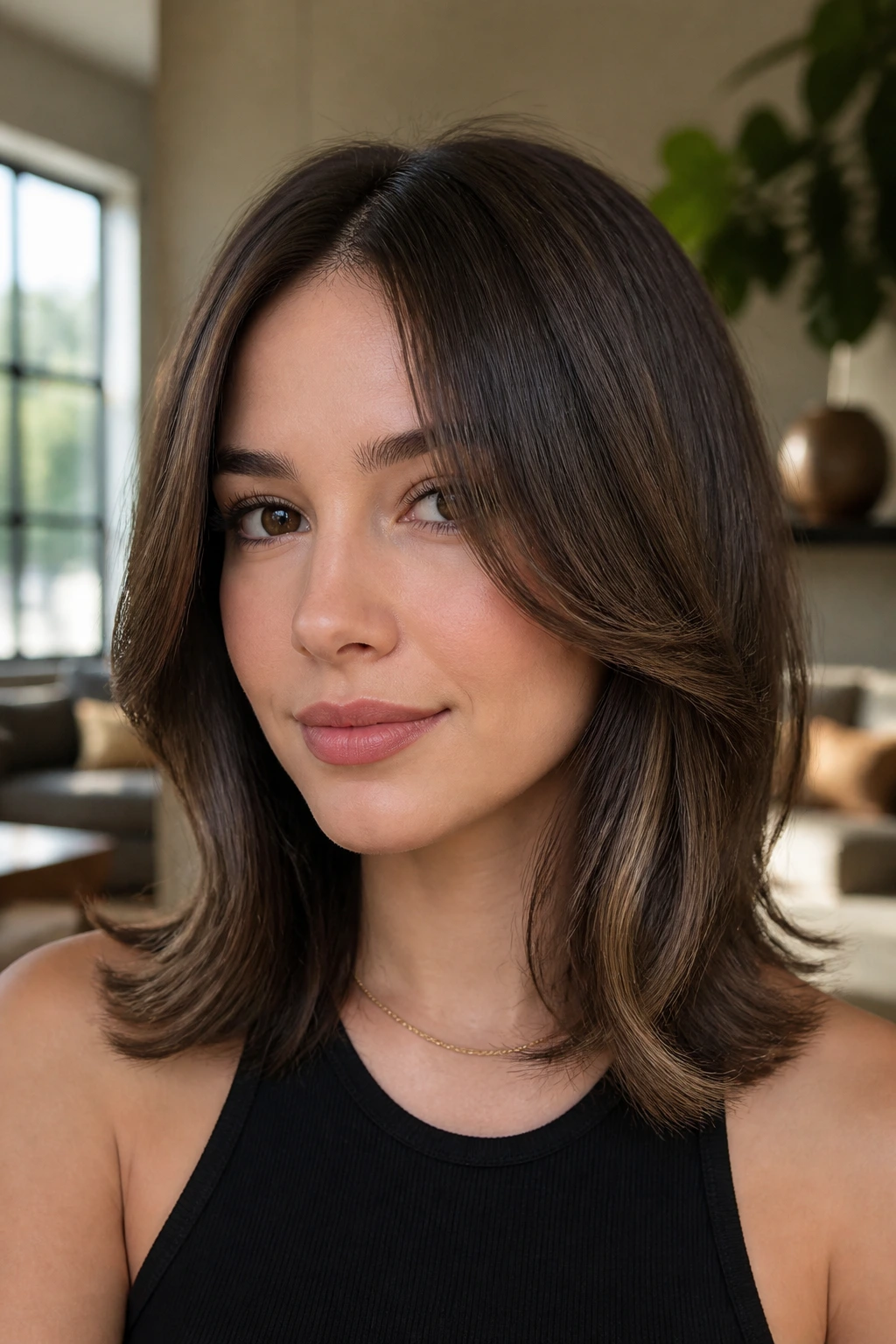
Layers can go wrong on straight hair when they get too chopped up, but face-framing pieces are a different animal. They add movement without breaking the shape, which is why I keep them near the top of any list for medium-length cuts.
How to style it
Straighten the main body first. Then take the front 2-inch sections on each side and bend them away from the face for just a second or two, creating a soft angle that starts at the cheekbone and lands around the jaw. That little curve helps the style open up around the eyes.
- Use: 1-inch iron or a smoothing brush
- Angle: bend away from the face, not under it
- Finish: a touch of lightweight cream on the front pieces only
Watch for this: if the front layers are too short, they can flip awkwardly. Keep the bend loose.
6. Flipped-Out Ends Lob
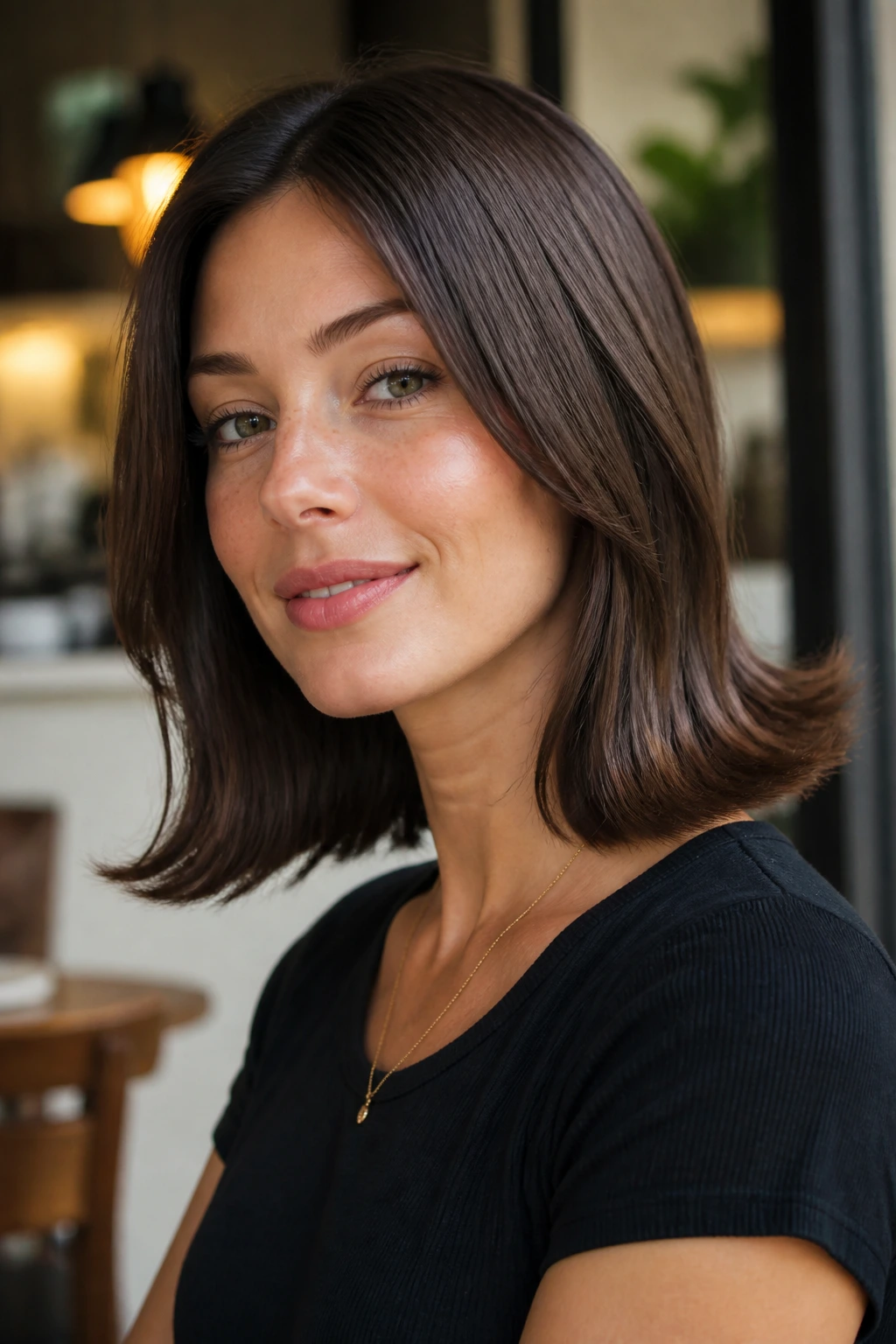
This one has a little ’90s energy, and I mean that in the best way. Flipped-out ends on a medium-length lob give the cut more motion, especially when the hair sits right at the shoulders and wants to catch on collars or jacket seams.
The style works because the ends move away from the neck instead of disappearing into it. Use a flat iron or a round brush, then flip the last inch or so outward. Keep the bend consistent on both sides, or the style starts looking accidental. And no, it doesn’t need to be a giant outward curl. A small kick is enough.
If your hair is thick, this is a smart way to break up a heavy outline. If it’s fine, just keep the flip soft so the ends don’t feel sparse.
7. Low Straight Ponytail
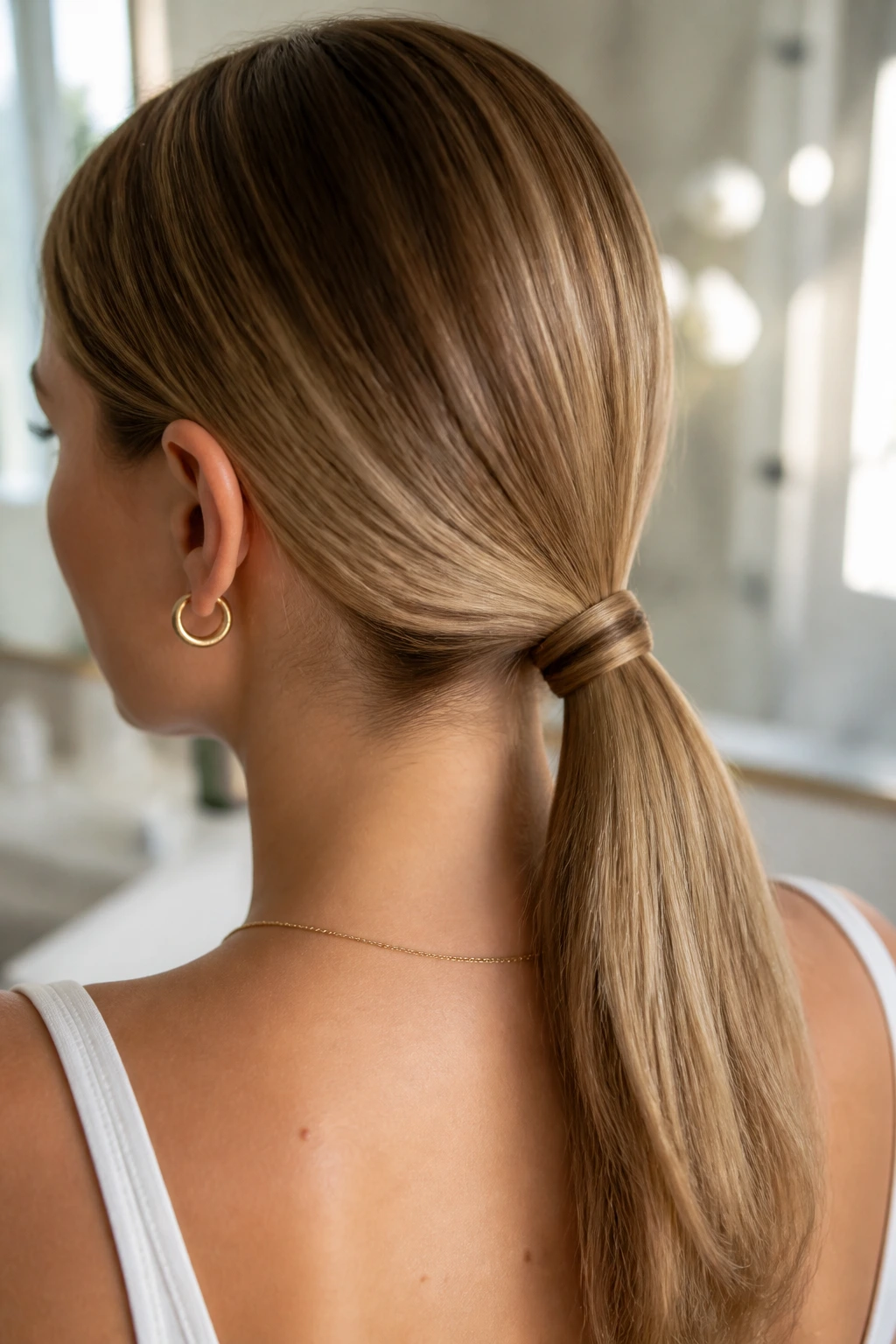
A low straight ponytail is one of the cleanest ways to wear medium-length hair when you want the front smooth and the back tucked away. Because the hair is not extremely long, the ponytail sits neatly at the nape and doesn’t drag your head down visually.
Smooth the hair with a brush and gather it low, then wrap a small strand around the elastic if you want it to look finished. The tail can be straight and glossy or left with a tiny bend at the end. I prefer the latter. It feels less rigid.
Quick styling notes
- Use a boar-bristle brush for the top
- Mist the crown lightly before gathering
- Keep the ponytail elastic close to the scalp so it doesn’t sag
8. Half-Up Knot with Straight Lengths
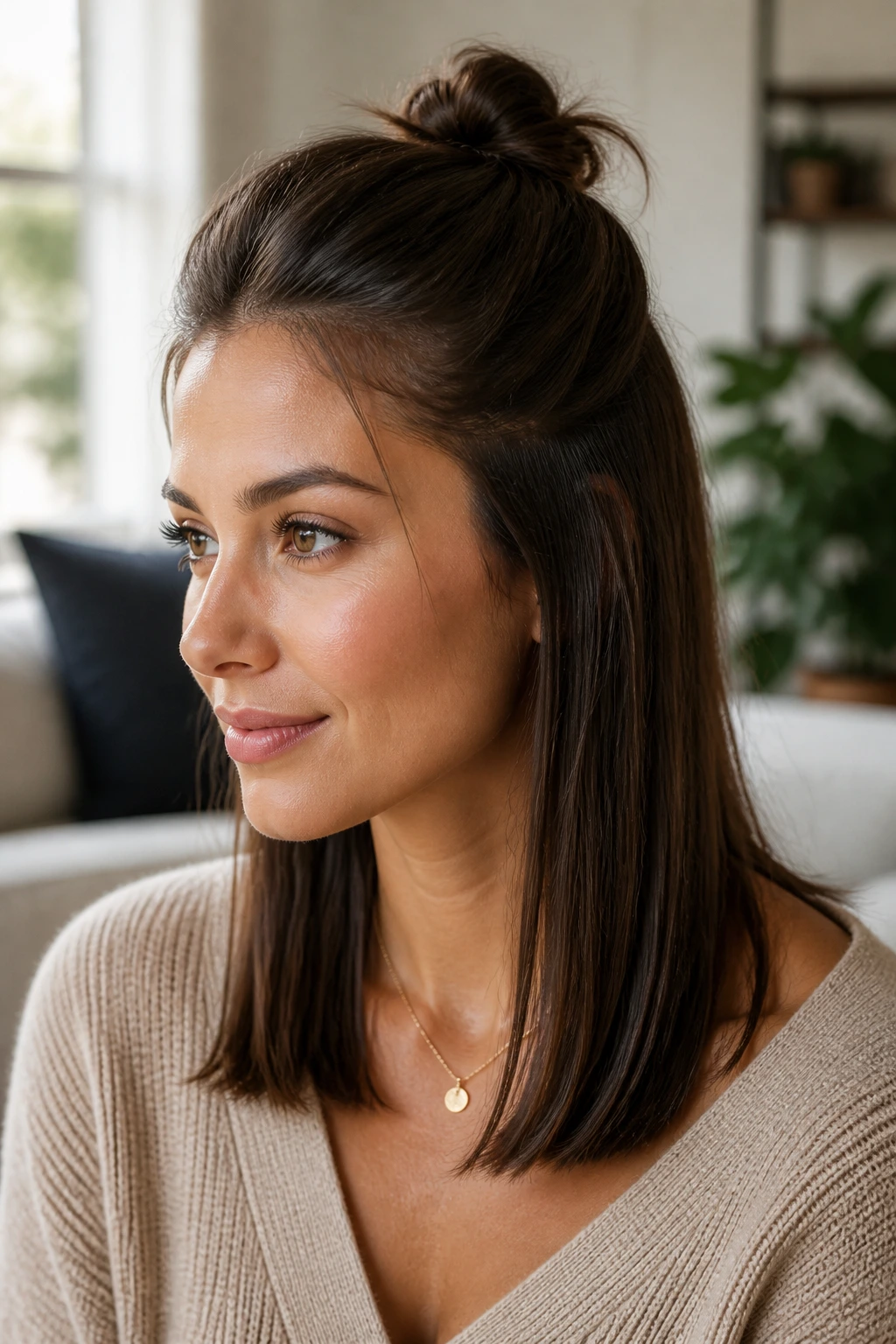
The half-up knot works because it leaves the lower half of the hair free to move while the top stays controlled. On medium-length straight hair, that contrast gives the style shape without needing much product.
Pull the top third of the hair back, twist it once or twice, and pin or tie it into a small knot at the crown. Let the lower section stay sleek and straight. If the hair is layered, leave a few front pieces loose so the knot doesn’t look too hard. The whole thing should feel easy, not overworked.
This is one of those styles that looks better when it is a little imperfect. If a few strands fall loose, leave them. That’s the point.
9. Claw-Clip Twist Half-Up
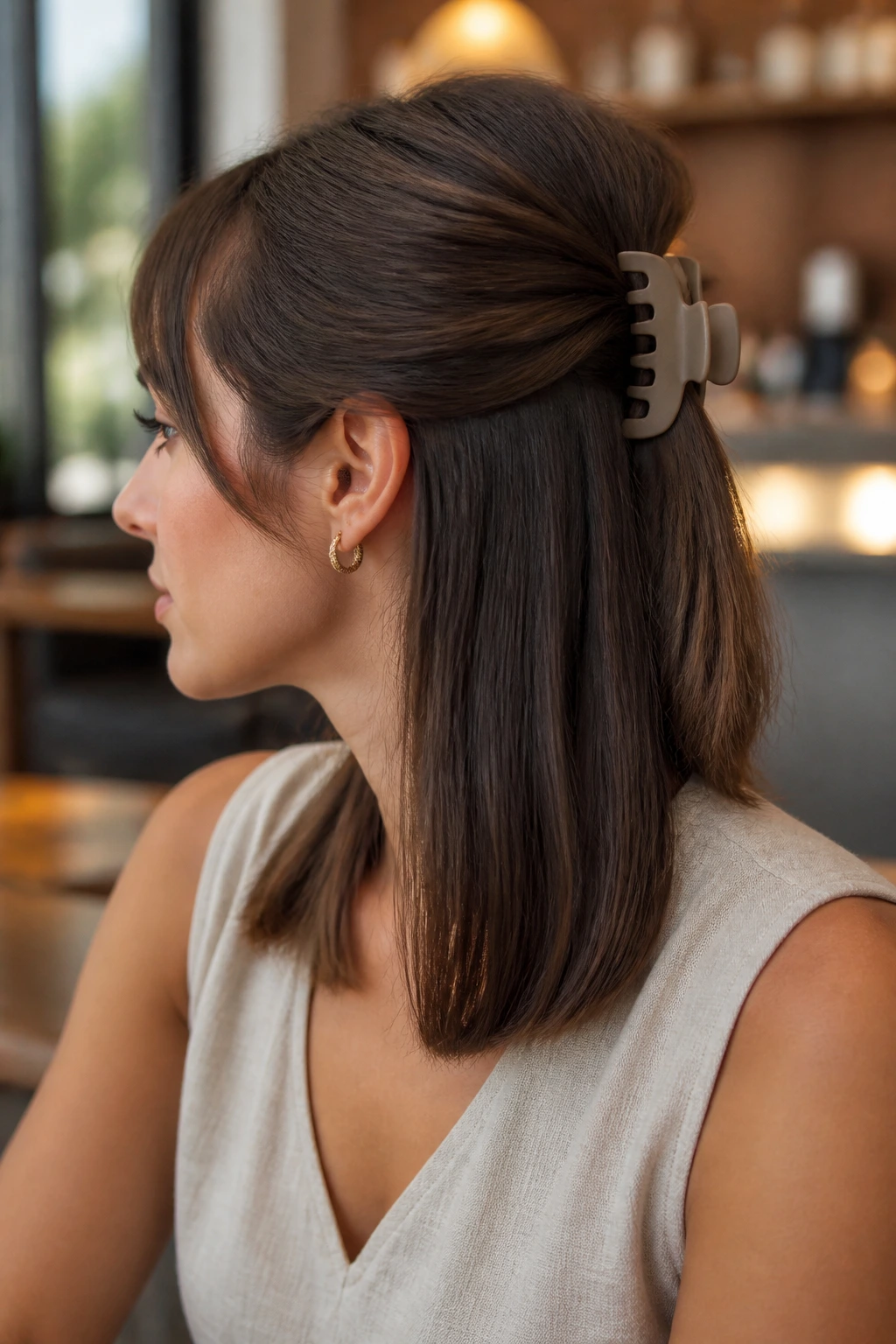
A claw-clip twist is what I reach for when I want to look put together without doing much. It suits medium-length hair especially well because the length is enough to gather, but not so long that the clip has to fight a heavy load of hair.
Twist the top half back, fold it once, and secure it with a medium claw clip. The lower half stays straight and smooth, which gives you a nice contrast between structure and movement. Use a matte clip if you want the style to read casual, or a glossy black one if you want it to feel sharper.
Small detail, big payoff: leave the twist slightly loose at the crown. Too tight and the style looks severe.
10. Curtain Bangs with Straight Mid-Lengths
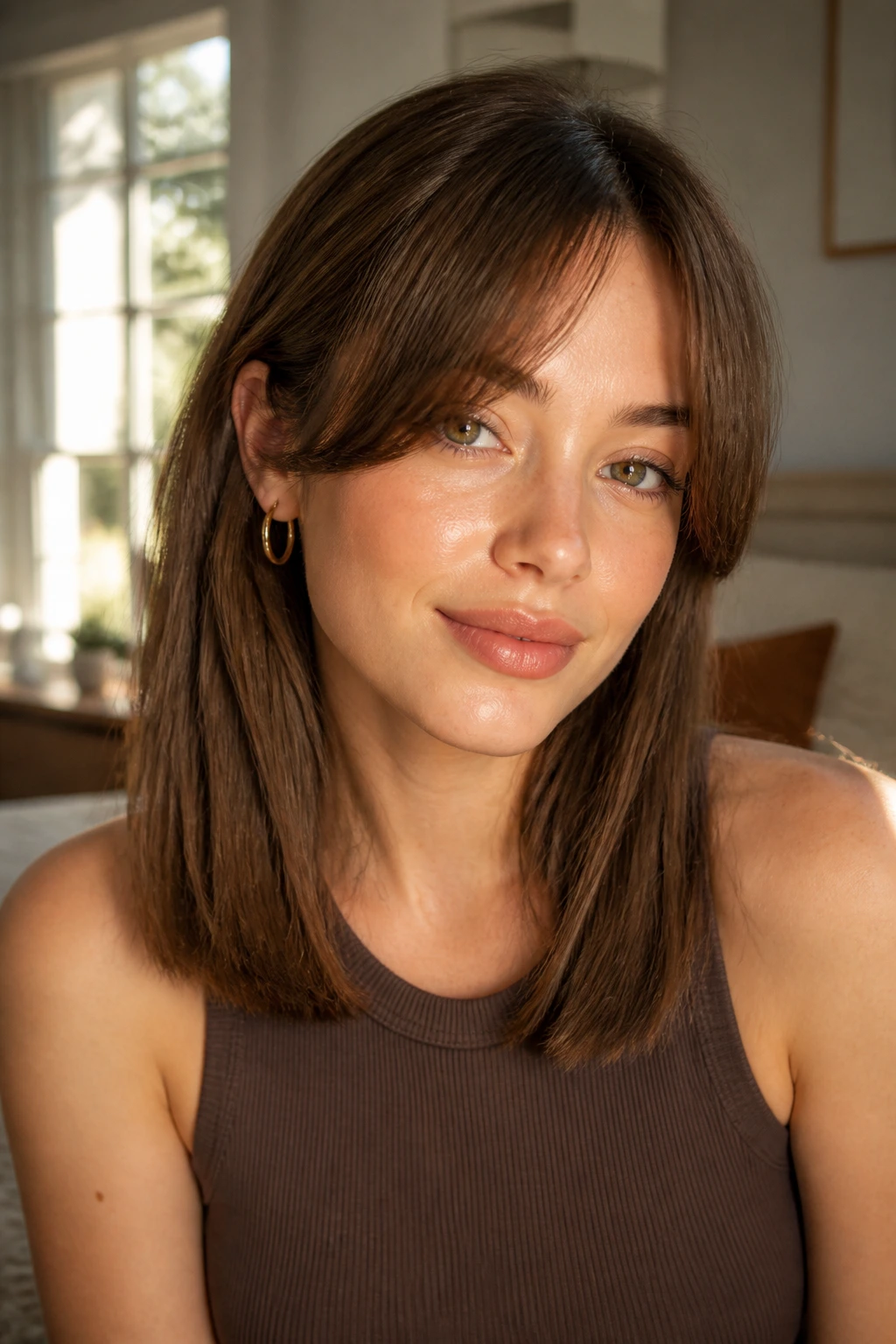
Curtain bangs change the mood of medium-length straight hair fast. They soften the forehead, push attention toward the eyes, and give the rest of the hair a frame that feels less flat than one long curtain from root to tip.
The key is keeping the bangs separated from the rest of the hair while you style. Blow them forward, then bend them away from the face with a round brush or the edge of a flat iron. The mid-lengths can stay straight and clean. That contrast between soft bangs and sleek body is what makes this look work.
If your bangs get oily fast, a tiny dusting of dry shampoo at the roots helps more than extra heat.
11. Side-Swept Fringe with a Smooth Finish
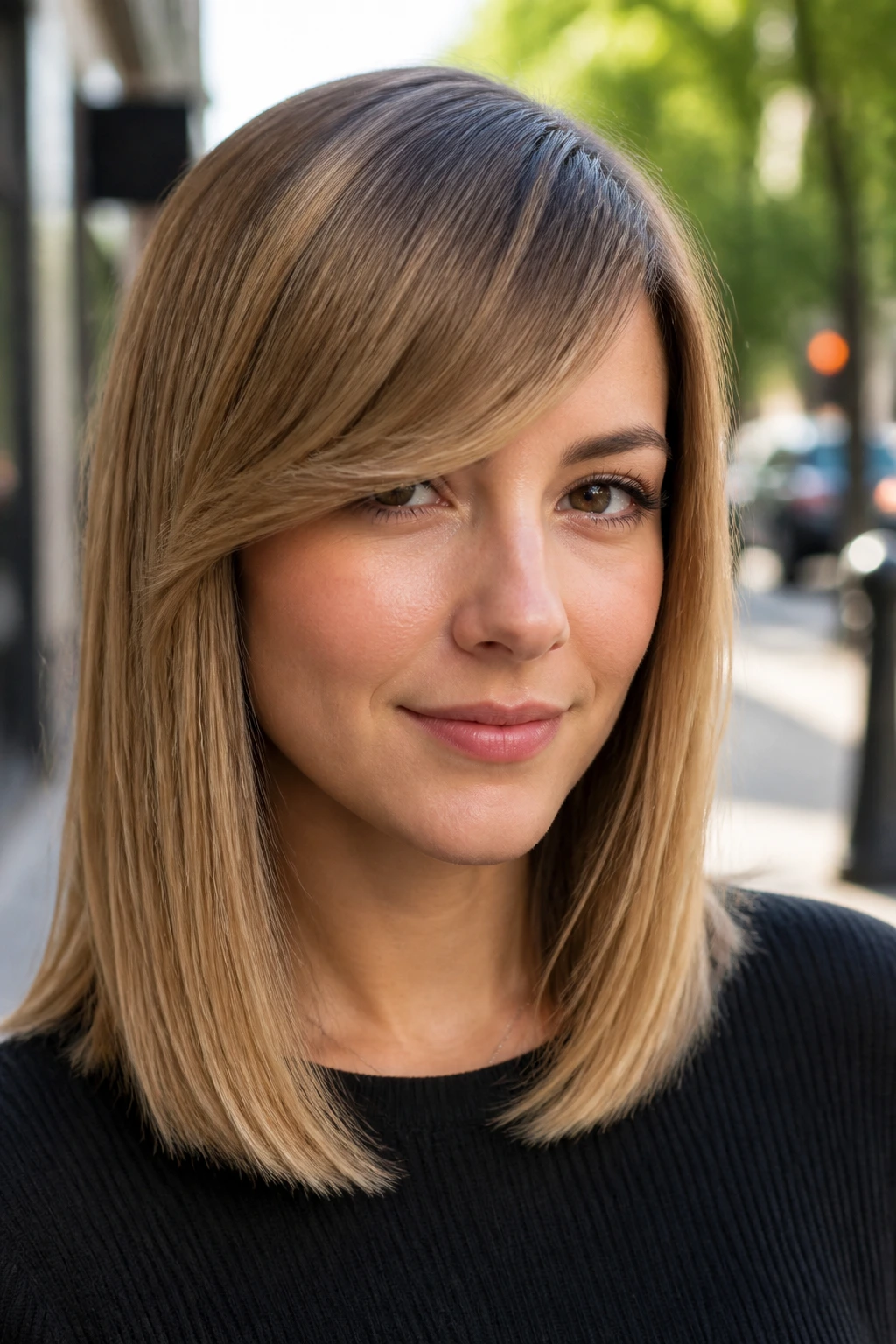
A side-swept fringe gives medium straight hair a softer entrance. Instead of a hard line across the forehead, you get a diagonal sweep that blends into the rest of the cut and keeps the style from feeling too symmetrical.
Best when you want movement without volume everywhere.
The fringe should sit flat enough to stay in place, but not so slick that it clings to the skin. I like to dry it in the direction you want it to fall, then press the rest of the hair straight and clean behind it. If the fringe is too short, it can split; if it’s too long, it starts acting like a curtain bang. That in-between length is the sweet spot.
Pair it with a tucked side or a blunt shoulder line. It gives the face some shape without crowding it.
12. A-Line Straight Cut
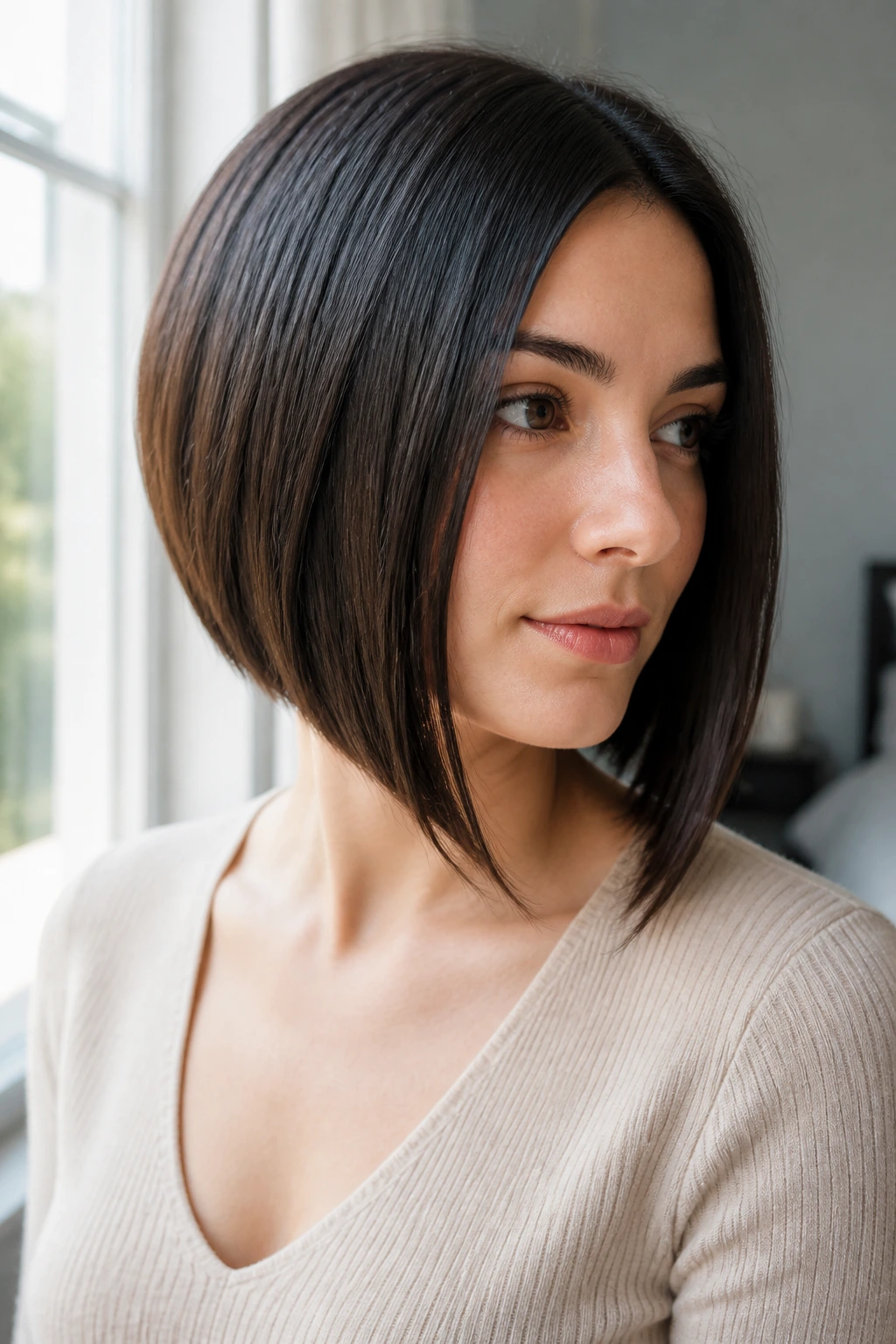
An A-line cut is a clean answer for anyone who wants the front pieces to sit a little longer than the back. On medium-length hair, that slant makes the style look sharper from the side and less boxy from the front.
Unlike a blunt lob, the A-line keeps a little forward motion. The front pieces skim the jaw or collarbone, while the back lifts just enough to show the angle. Straighten in the direction of the cut so the line stays visible. If you flip the hair around while styling, the whole point gets muddy.
This one is especially good with a deep side part, because the angle adds another line to the shape. Clean and slightly architectural. Not fussy.
13. S-Curve Ends with a Middle Part
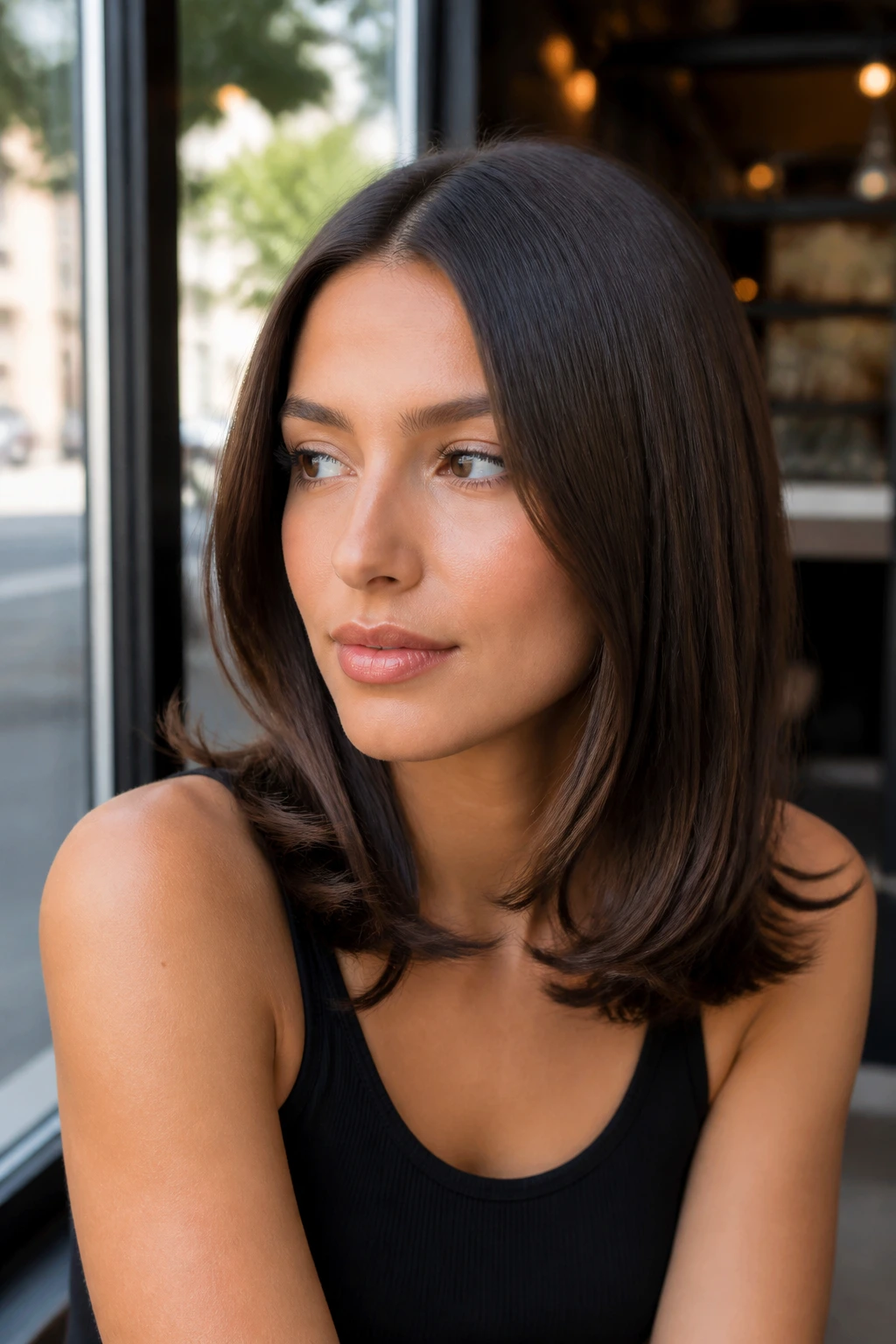
S-curve ends are a tiny detail that changes everything. The hair stays straight through the middle, then the ends bend just enough to make a soft S-shape, which keeps medium-length hair from looking too blunt or too flat.
I like this when the cut is growing out and needs some help behaving. A flat iron makes the first bend under, then a small counter-bend out at the very ends. It sounds fussy, but it takes seconds once you get the motion. The result is smooth, not rigid.
This style works best when the sections are not too wide. Around 1 inch is enough. Wider sections make the curve collapse before it cools.
14. Tucked-Behind-Ear Minimalist Look
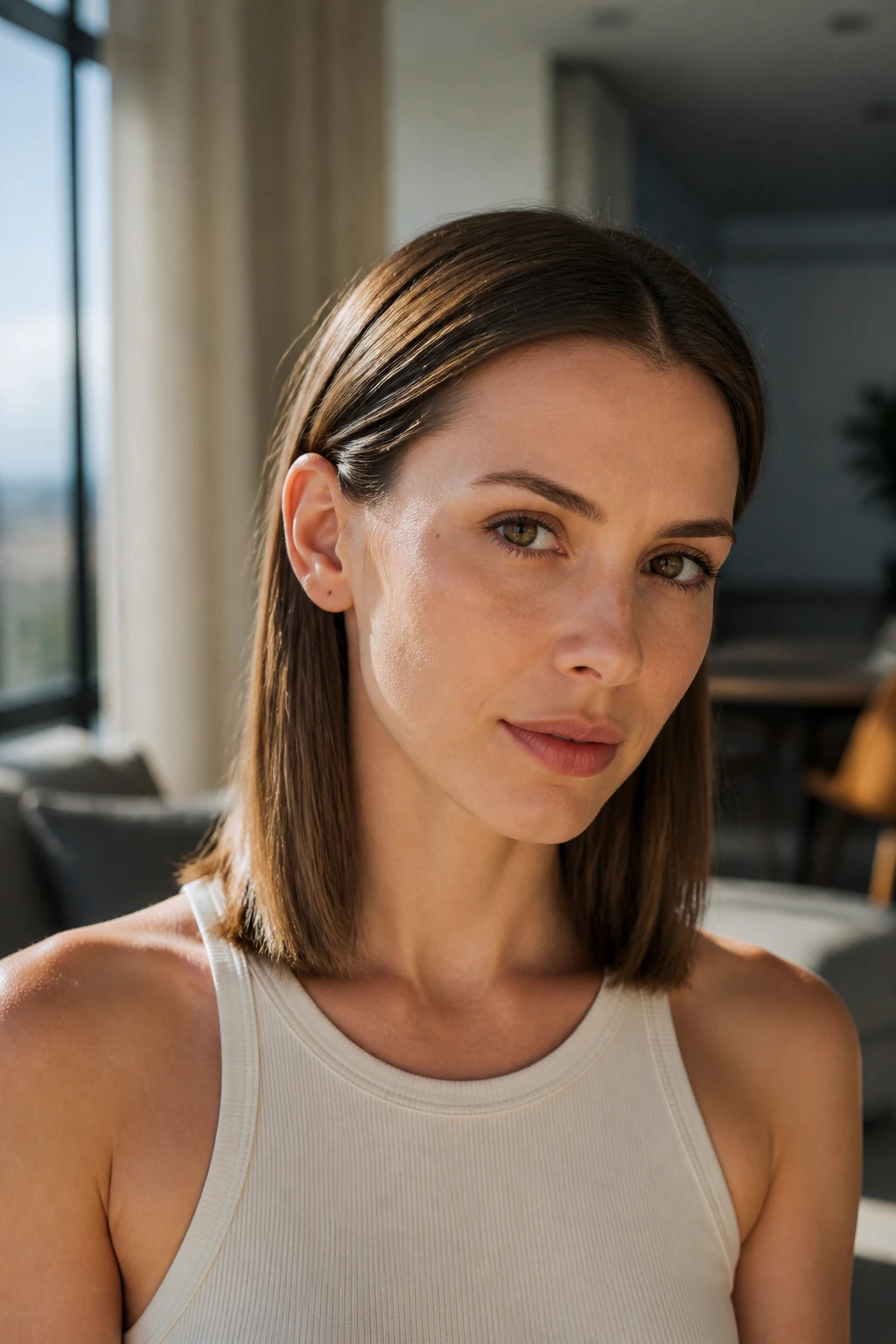
Some styles rely on shape. This one relies on restraint. Straight medium hair tucked behind both ears shows off cheekbones, earrings, and the clean line from temple to jaw, which can look striking on a haircut that sits right at the shoulders.
Use a flat brush to smooth the front sections back, then tuck them neatly and leave the rest hanging straight. If one side keeps slipping, pin it discreetly behind the ear with a small bobby pin under the hair. The whole look feels calm, almost severe in a good way.
It’s especially strong with high-neck tops or structured blazers. The hair stays out of the way, but the line stays visible.
15. Money Piece Straight Hair
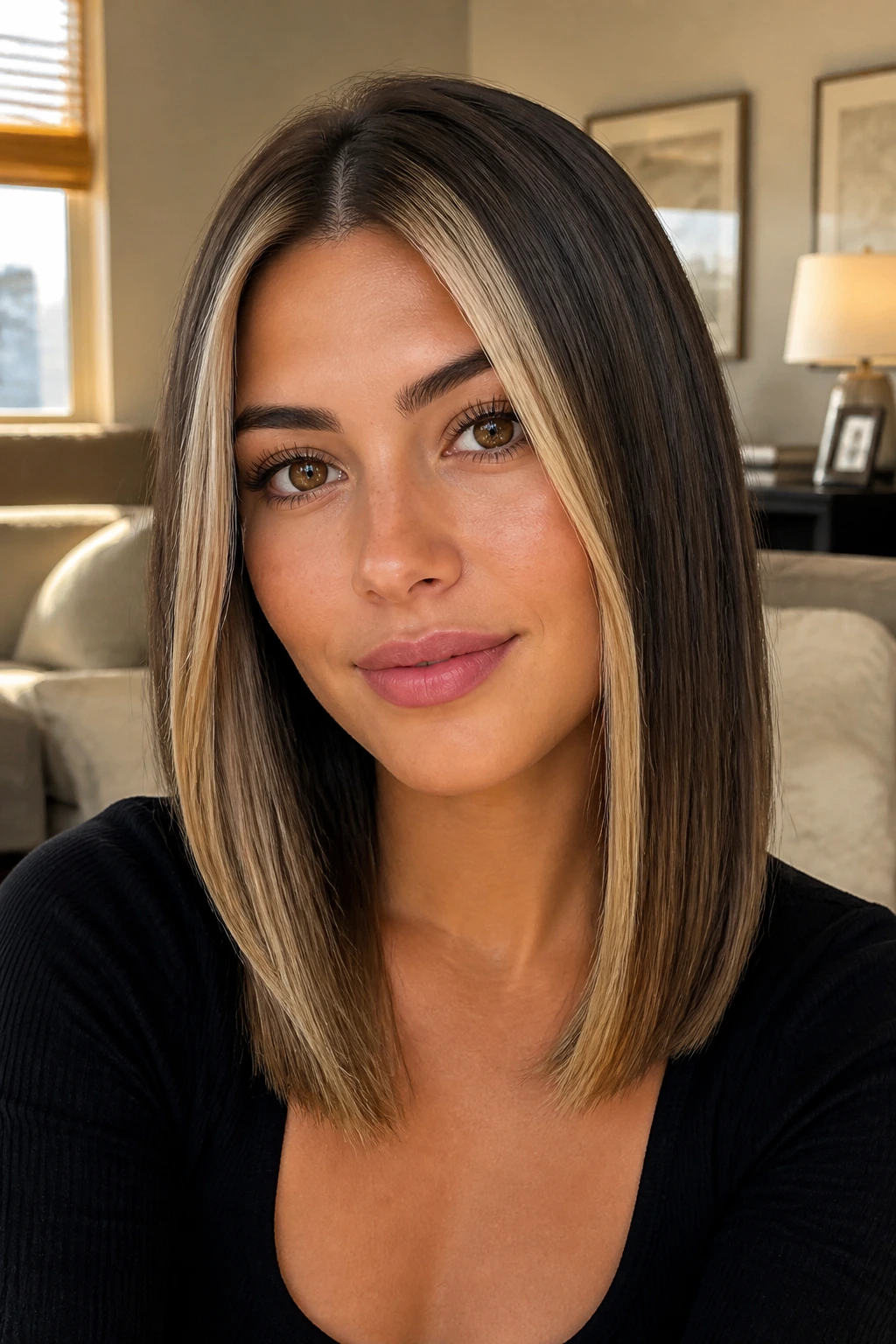
Money pieces are those brighter front sections that frame the face, and on straight medium-length hair they show up immediately. The lighter streaks break the outline of the cut, which keeps a simple straight style from looking too heavy.
I like this with a middle part because the bright pieces sit evenly on both sides and pull attention upward. Straighten them with a quick pass and then leave the rest smooth and clean. That’s enough. You don’t need curls or extra texture to make them noticeable.
A few things to keep in mind:
- Keep the front pieces sleek, not puffed up
- Use purple shampoo only if the lightened sections need it
- A tiny bit of shine spray helps the contrast read cleaner
16. Wet-Look Straight Finish
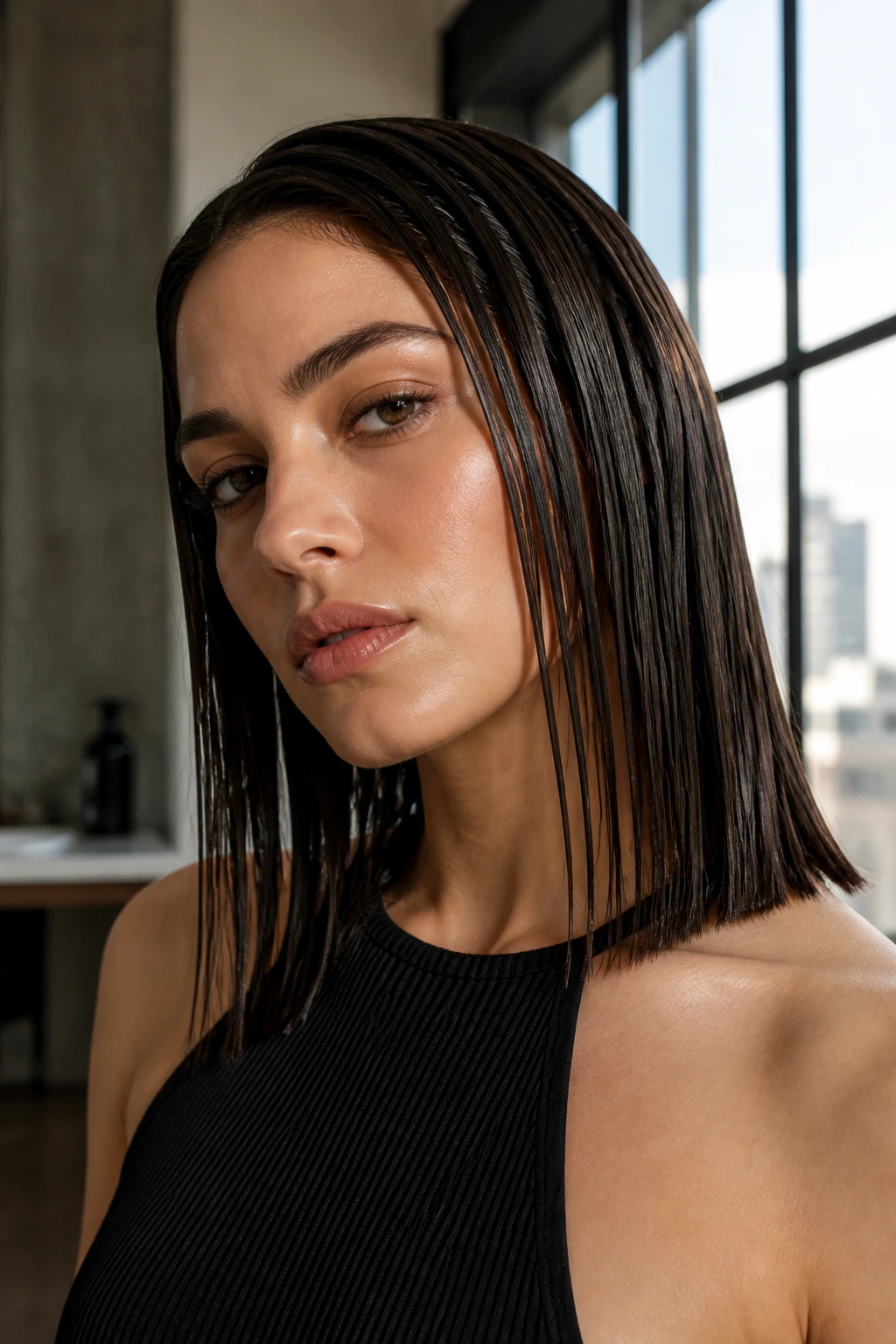
Wet-look straight hair has a slick, controlled surface that feels more runway than everyday, but on medium length it’s still wearable if you keep the product in check. Too much gel, and the hair turns helmet-like. Too little, and the style collapses halfway through the evening.
Start with damp hair or freshly smoothed dry hair, then work a small amount of gel or styling cream through the top and sides. Comb it flat. Let the lengths stay straight and separated, not crunchy. The finish should look glossy, not sticky.
I use this style when I want the haircut itself to do the talking. It pairs well with strong earrings and simple clothes because the hair already has enough drama.
17. Statement Barrette Side
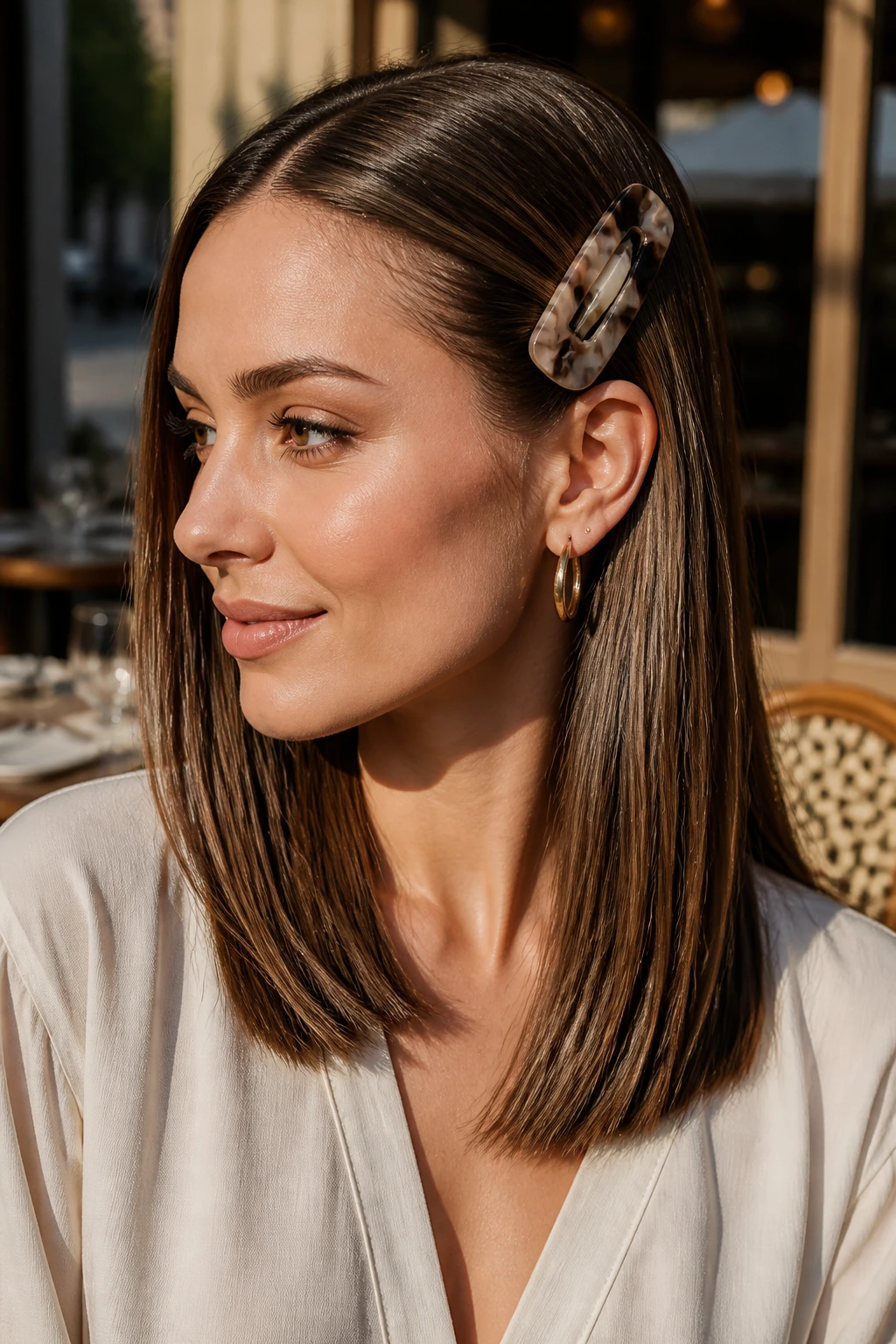
A single barrette can do more for medium straight hair than a pile of styling products. Place it above one ear, and the whole look shifts from plain to finished in one move. On straight hair, the barrette sits against the smooth surface instead of getting lost in texture.
This style works best when the hair is tucked slightly back on one side and left loose on the other. Use a medium or large barrette with some weight so it doesn’t slide. Thin, slippery clips tend to fail here. If the hair is extra silky, add a tiny mist of dry texturizing spray to the tucked section first.
That’s the whole move. Simple. Effective.
18. Braided Side Accent
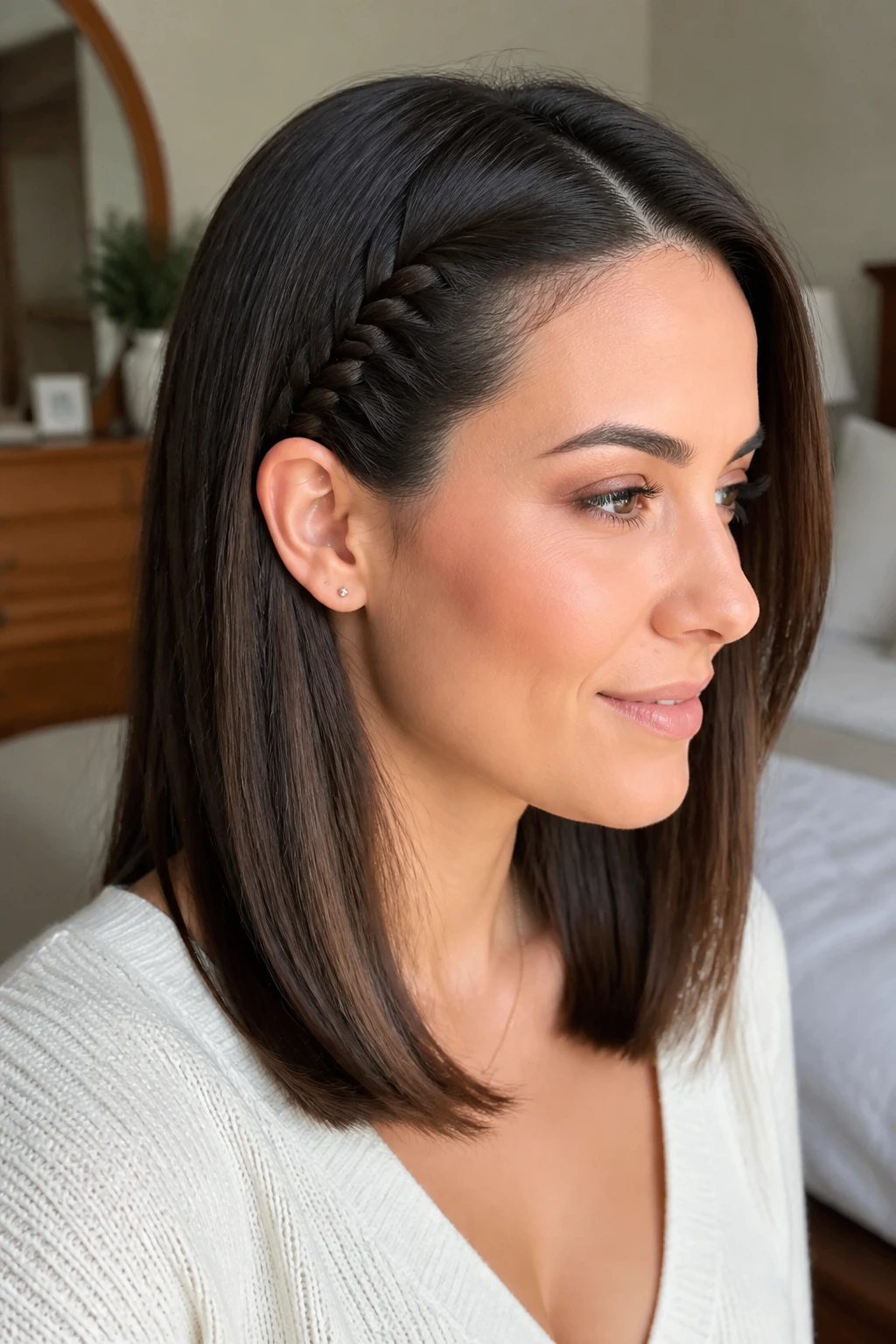
A braided side accent gives straight medium-length hair a little detail without asking for a full braid crown or a complicated updo. It is especially useful when the cut is clean but you want the style to feel less expected.
Braid a thin section near the temple and pin it back into the rest of the hair, or braid one side and let it disappear behind the ear. The straight lengths stay sleek, so the braid reads like an accent line rather than a main event. That contrast matters.
If your hair is layered, use a touch of light wax on the tiny front pieces before braiding. It keeps the short hairs from springing out and making the braid fuzzy.
19. Low Bubble Ponytail
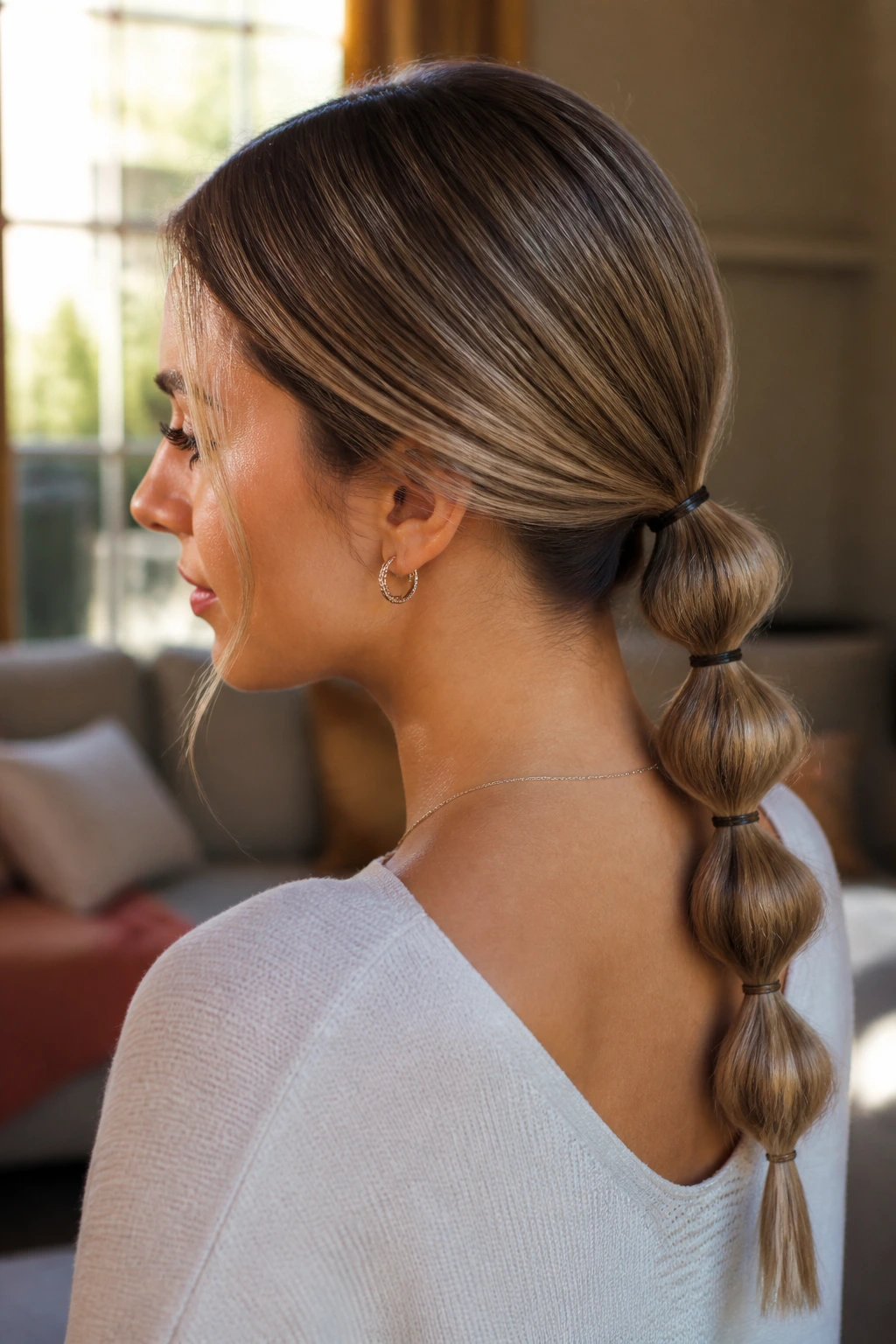
A bubble ponytail adds shape to medium-length hair without needing much actual length. That’s the charm of it. The hair is gathered low, then spaced with elastics so each section puffs slightly between ties.
It looks better on straight hair than on heavily textured hair because the sections stay crisp and visible. Tug each bubble gently with your fingers until it feels rounded, not stuffed. Don’t overdo it; the style falls apart fast if the bubbles get too big for the length.
Best use case
A low bubble ponytail is excellent when your hair feels plain and you want something that still reads tidy. It’s also a clever fix for second-day hair that needs a reason to be on your head.
20. Sleek Half-Up Ponytail
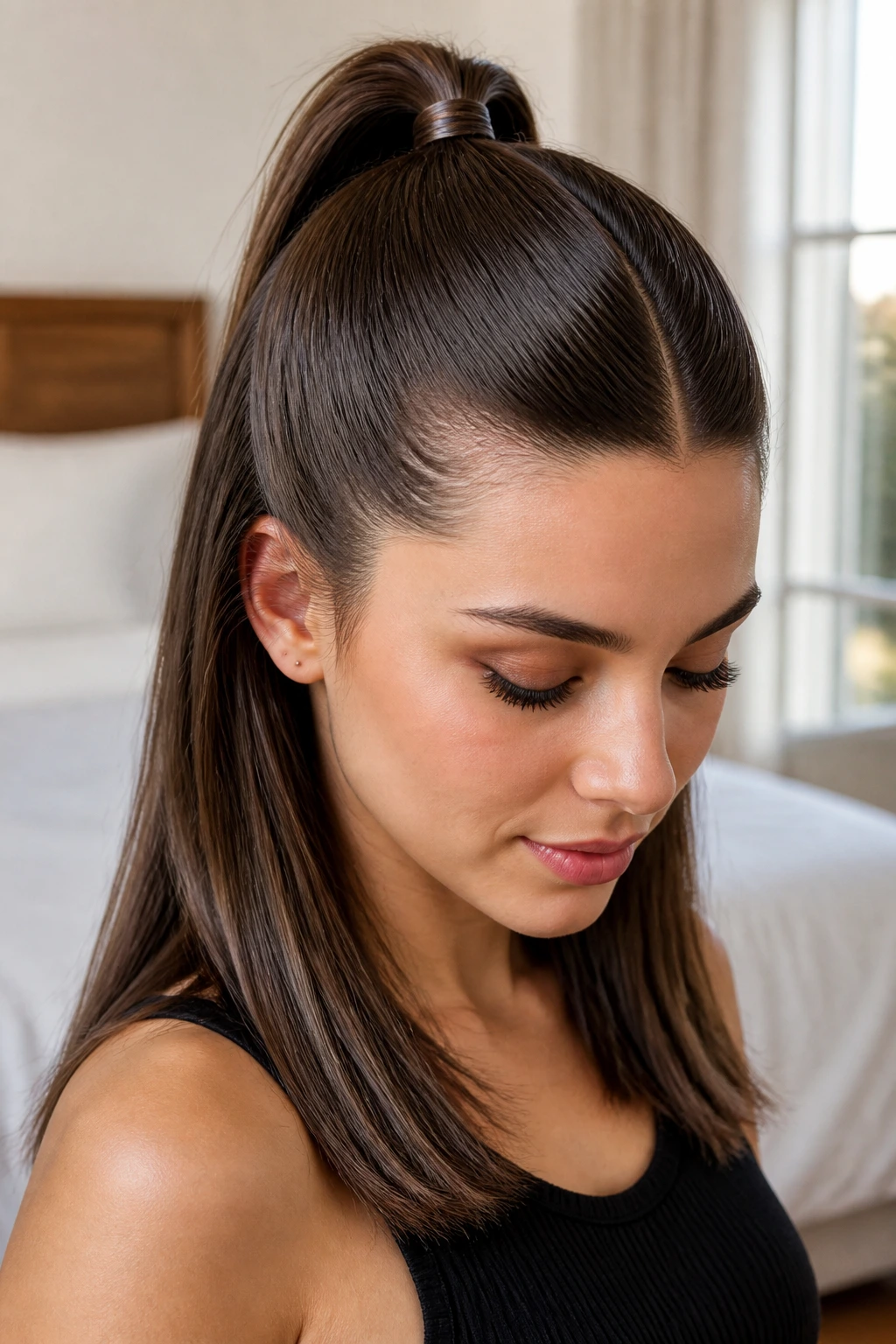
A half-up ponytail can get messy fast, so the version I like most is the sleek one. Pull the top section tight, keep the part crisp, and leave the lower section straight and free. Medium-length hair handles this better than long hair because the top doesn’t have to support a huge tail.
If you want it to look more polished, wrap a small strand around the elastic. If you want it casual, leave the elastic exposed and keep the tail flat. Either way, the style gives you lift at the crown without sacrificing the clean line of the lengths.
This one is especially good when the hair is freshly smoothed but not freshly washed. A little grip helps.
21. Root-Lift Blowout Straight
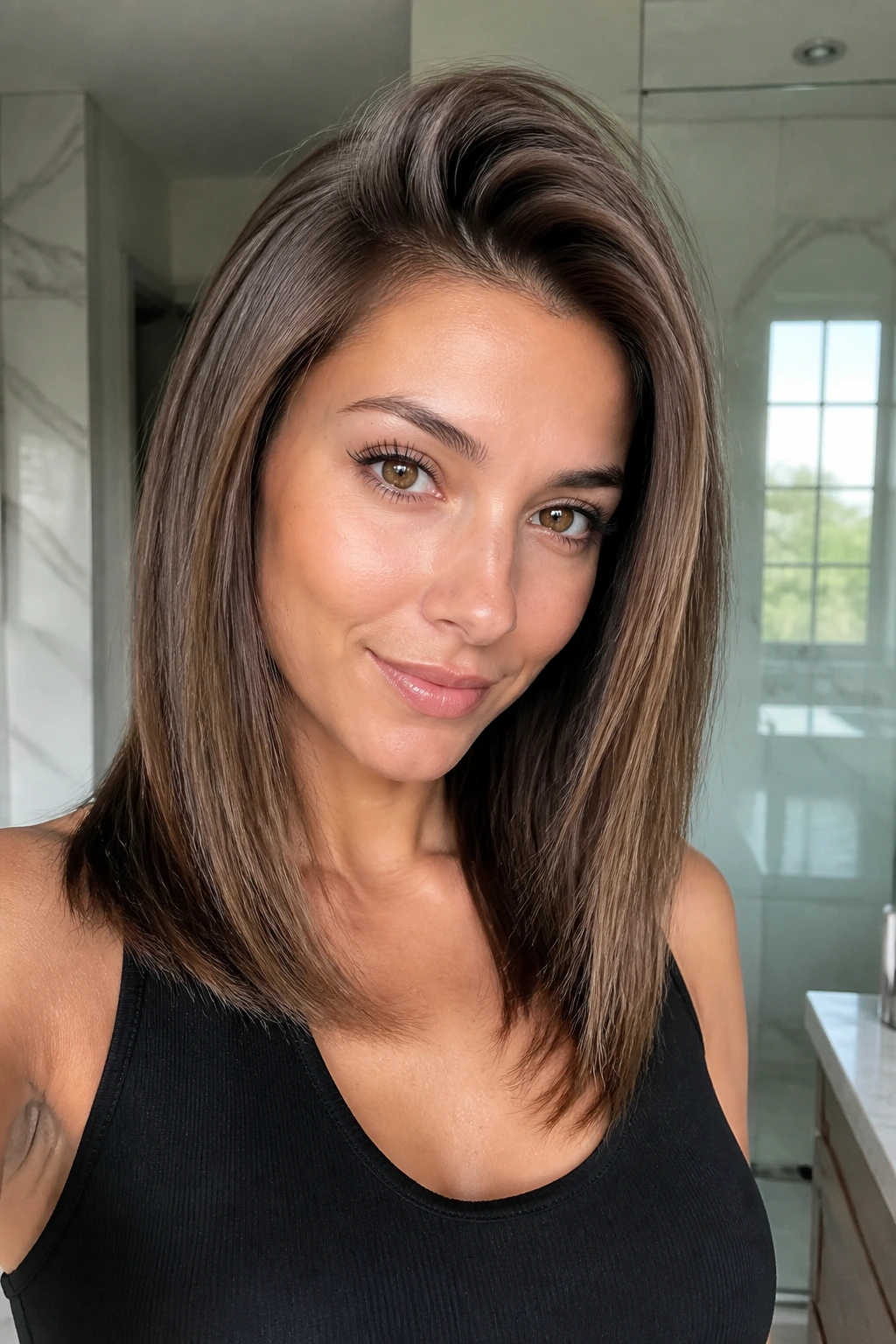
Straight hair does not have to mean flat hair. A root-lift blowout gives medium-length hair a little air at the crown, which stops the style from collapsing into the scalp.
Round brush the roots up and back while blow-drying, then chase the brush with the dryer nozzle for a few seconds before letting the section cool. That cooling step matters. It holds the lift. The lengths can stay straight and smooth, but the top gets a bit of body instead of laying plaster-flat.
If your hair tends to split at the part, flip it to the opposite side while it cools. Strange how much that helps.
22. Straight Shag Lob
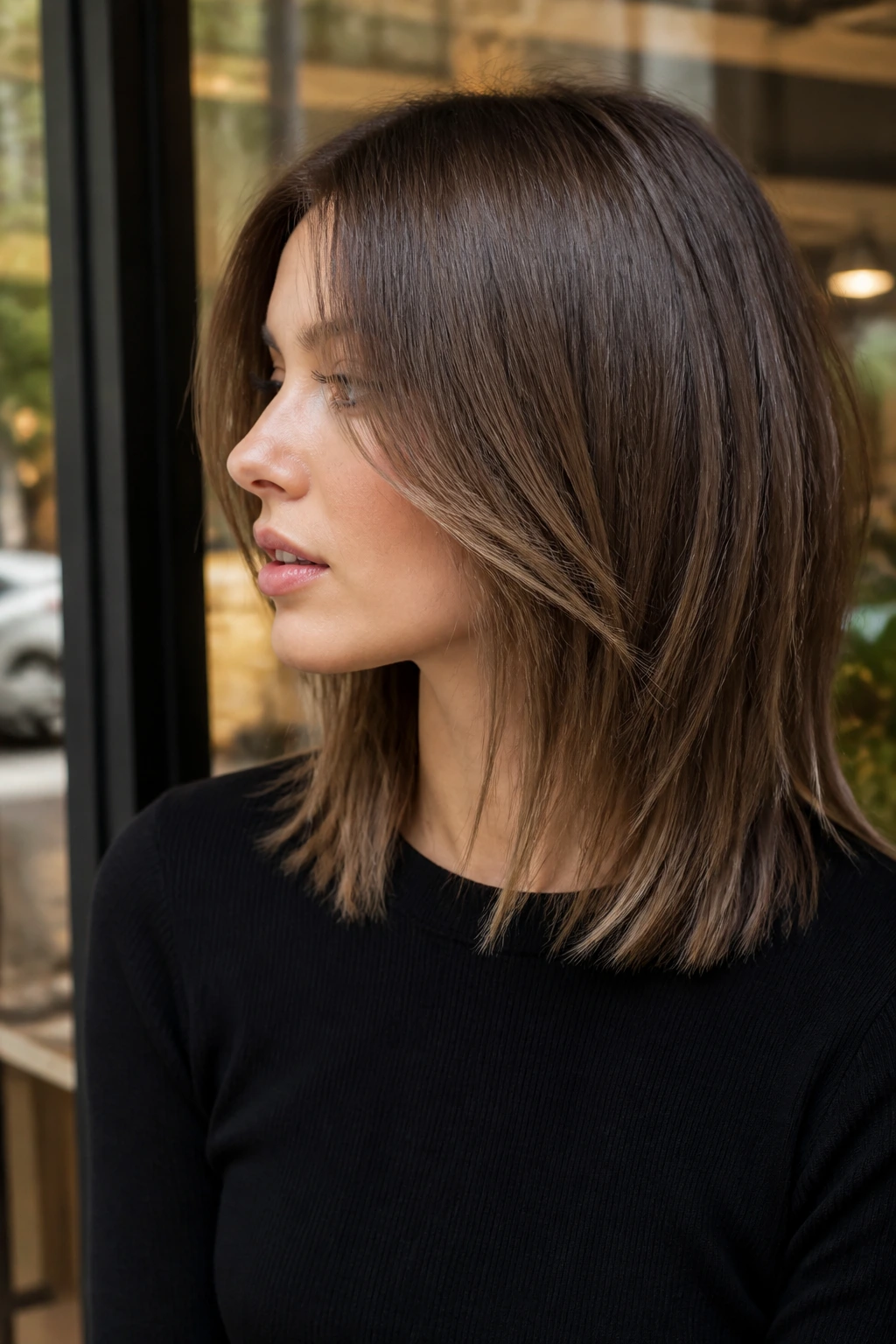
A straight shag lob is for people who like a little edge in their cut. It has choppier pieces through the middle and ends, but when it’s smoothed straight, the shape still feels light and lived-in rather than rough.
This is the opposite of a blunt lob. The line is broken on purpose. I like it because the texture gives the hair some motion even when it’s straightened with a flat iron and brushed through. If you have thick hair, this cut removes some visual bulk. If you have finer hair, keep the layers soft so the ends don’t look scrappy.
Do not over-style this one. It needs movement, not ironed stillness.
23. Rounded Underbend Lob
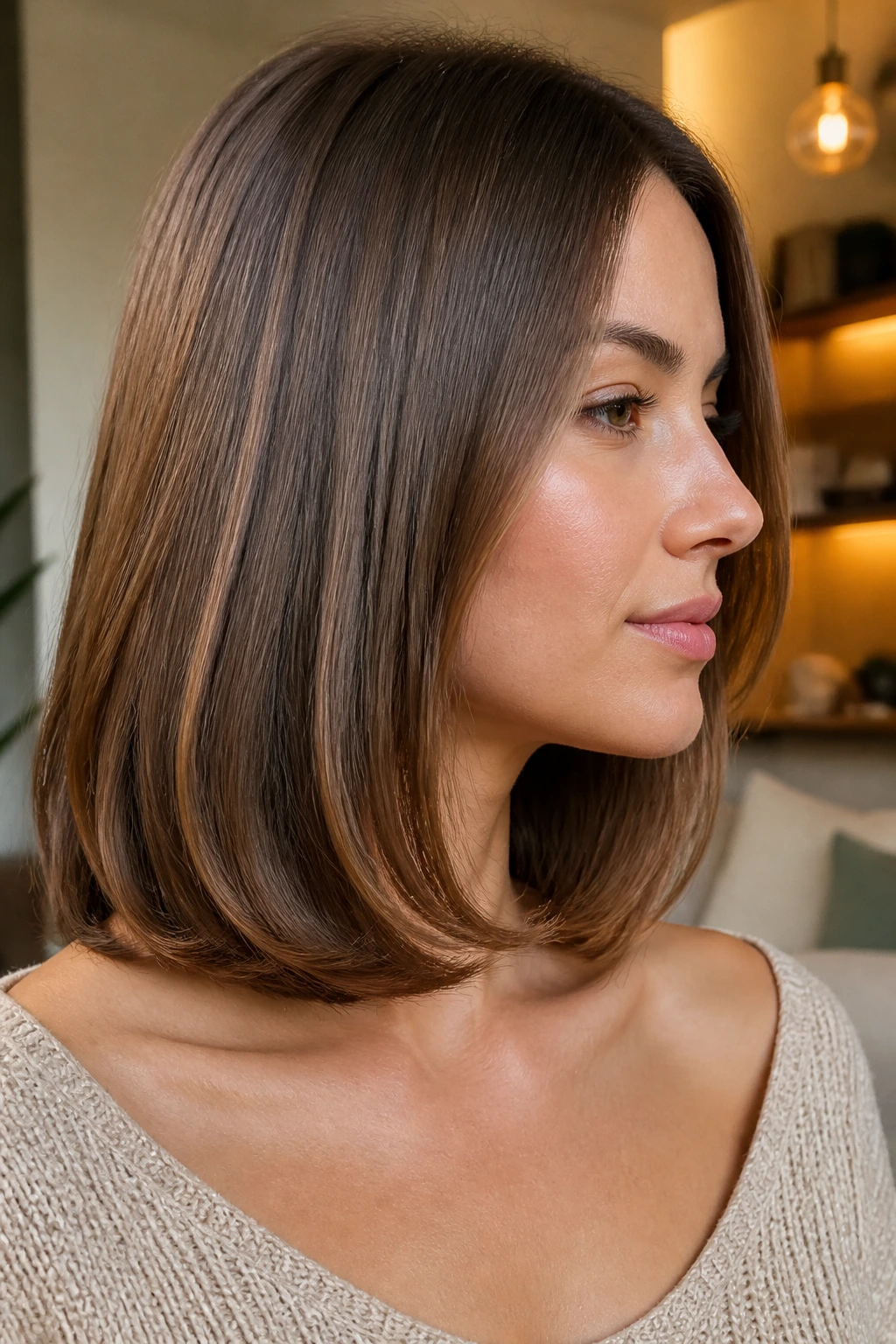
The rounded underbend lob is the style I’d pick for someone who wants straight hair but can’t stand sharp ends. The line stays smooth, yet the tips curve in a little, giving the cut a softer finish around the jaw and neck.
Use a round brush or the flat iron edge to roll the ends just under. The key is consistency. Every section should turn the same direction with the same small curve. If one side bends too much, the shape starts looking lopsided in profile.
It’s a nice option for workdays, dinner plans, or any situation where you want your hair to look done without making a big statement about it.
24. Scarf-Tied Straight Hair
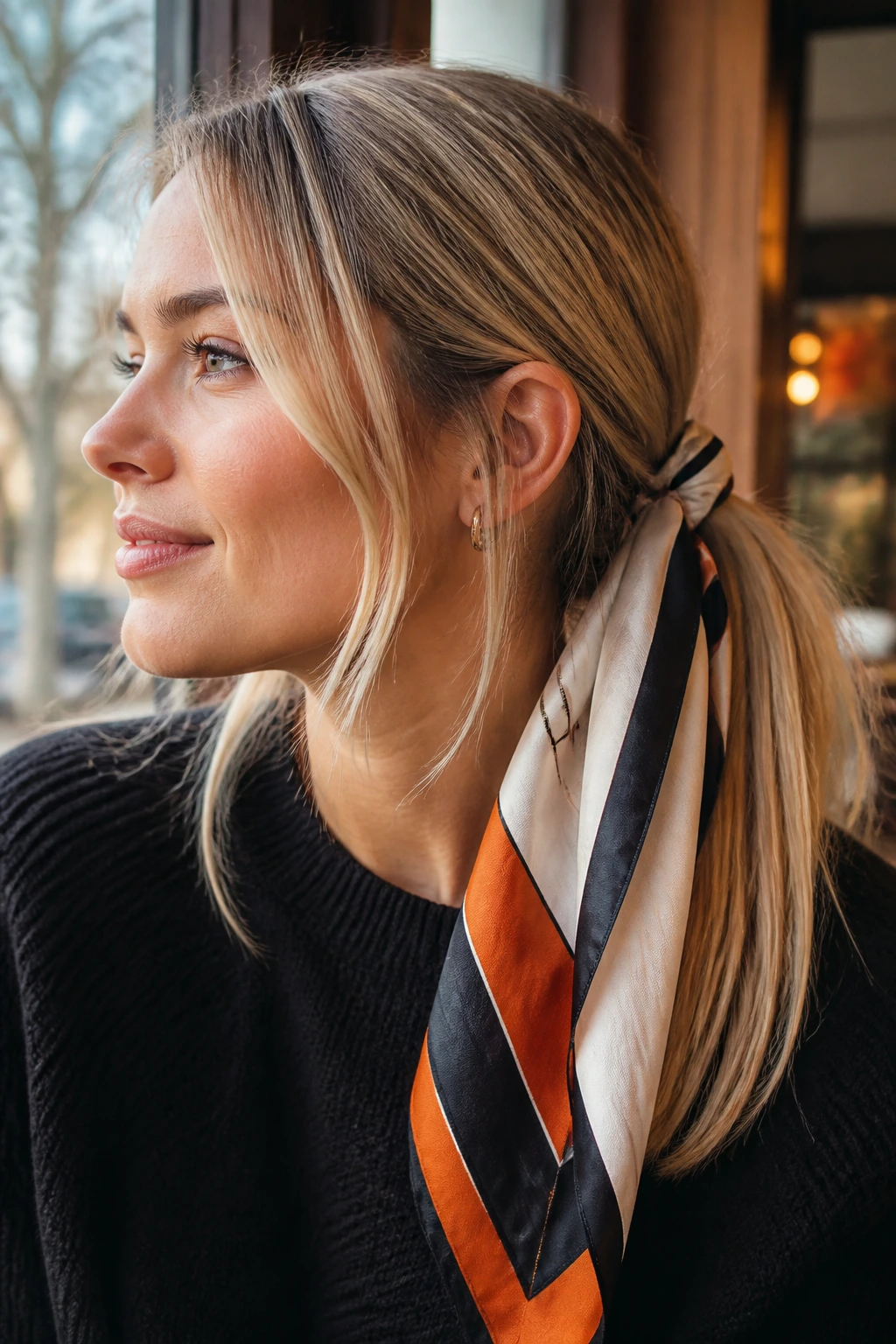
A scarf changes straight medium-length hair faster than another styling product does. Tie one around a low ponytail, wrap it near the crown, or knot it at the base of a half-up style. The clean straight texture gives the scarf a neat backdrop, so the print or color gets to stand out.
I like this when the hair is straight but slightly stale and needs a visual reset. A scarf can hide a greasy crown, cover a less-than-perfect section, and still feel intentional. Choose one that has some body; silky scarves slide around and need extra pinning.
The best part? You can take it off later and the hair underneath is usually still presentable.
25. Twisted Low Chignon
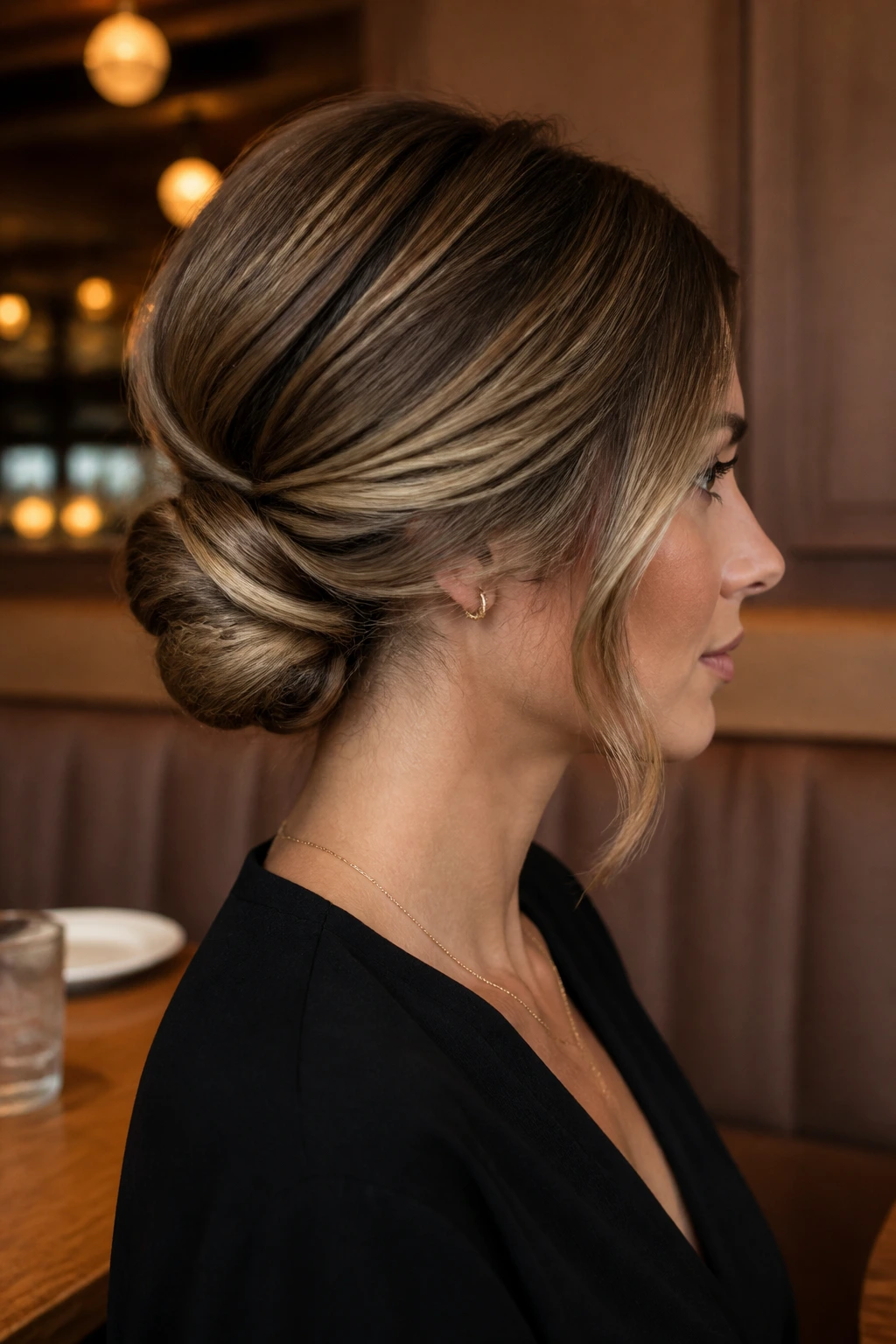
A twisted low chignon is one of the few updos that feels comfortable on medium-length straight hair without needing a mountain of pins. Twist the lengths, fold them low at the nape, and pin them in a compact knot.
Because the hair is straight, the finish looks smooth and tidy rather than fluffy. That makes it good for events, work dinners, and any day when you want your neckline clear. Leave one or two face-framing pieces out if the style feels too stern.
The chignon should sit low and slightly loose. Tight enough to stay. Loose enough to breathe.
26. Double-Tucked Middle Part
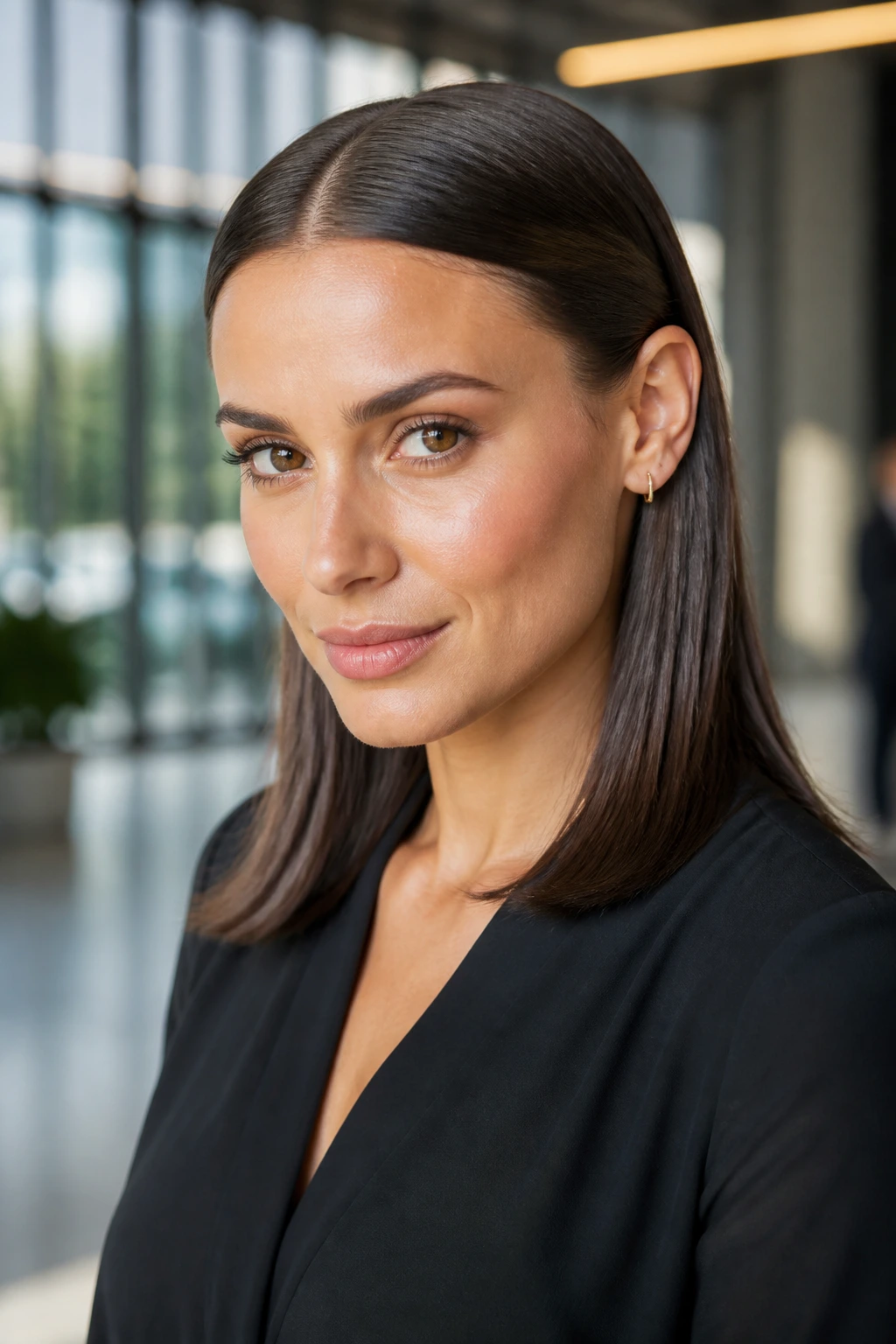
A middle part with both sides tucked behind the ears sounds basic, but on straight medium-length hair it can look unexpectedly clean. The symmetry is the point. It creates a sharp frame around the face and lets the hair fall in two straight planes.
Tiny details that matter
- Keep the part straight from forehead to crown
- Use a light-hold spray on the tucked sections
- Tuck one side a little tighter if your face is round and you want more length
This style works because it is not trying to do too much. That’s rare, and I appreciate it.
27. Micro Braid Accents
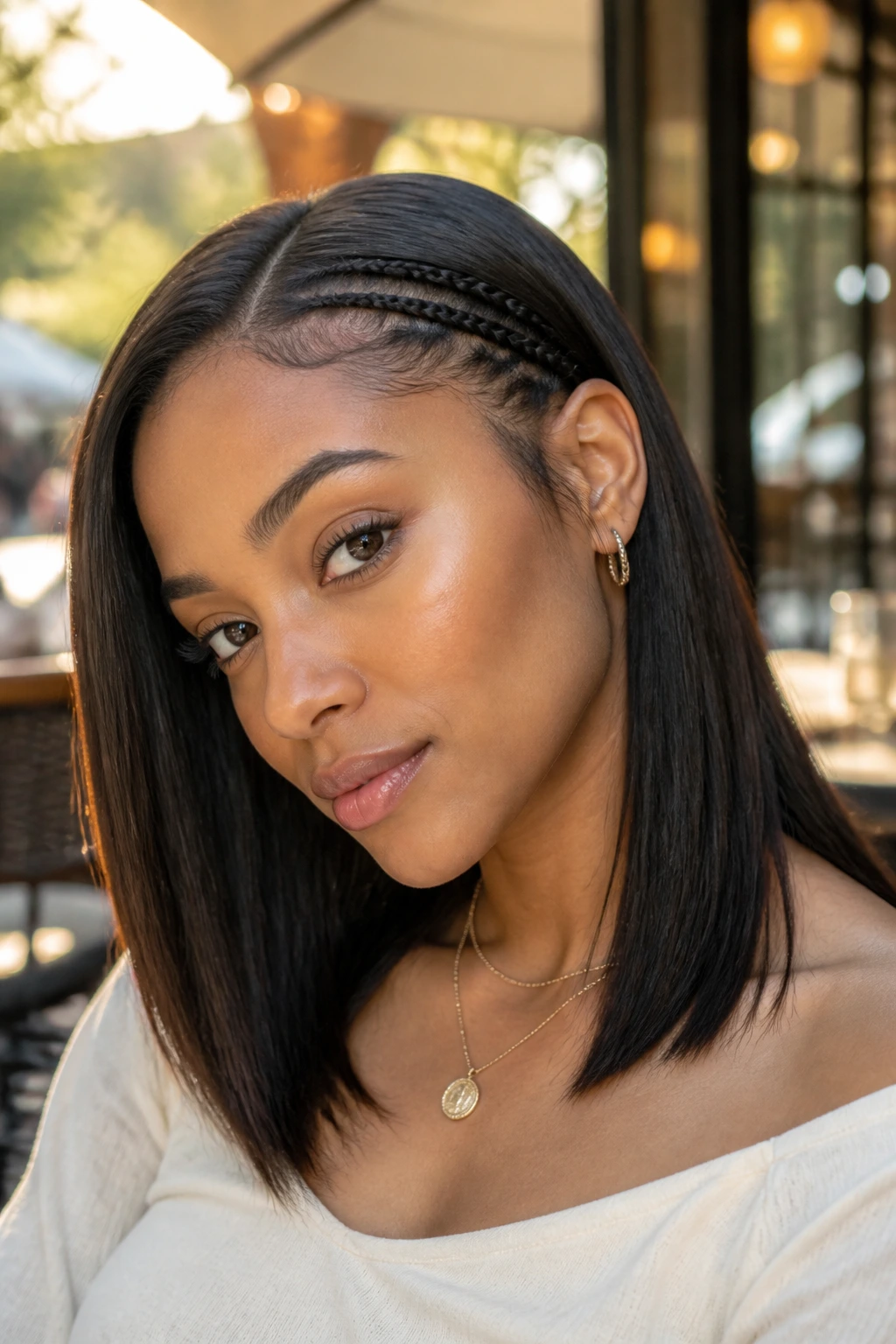
Micro braids near the hairline are a good answer when plain straight hair needs something small, not something loud. Add one braid on each side, or a single thin braid tucked into the front layer, and the whole cut gets more texture without losing its clean base.
Use clear elastics or tiny pins so the braid doesn’t shout. The straight lengths stay smooth, which keeps the look from sliding into festival territory unless that is what you want. If the front sections are too short, braid only the longer face-framing pieces and leave the rest alone.
This style is a nice compromise. It gives detail without changing the architecture of the cut.
28. Pinned-Back Crown
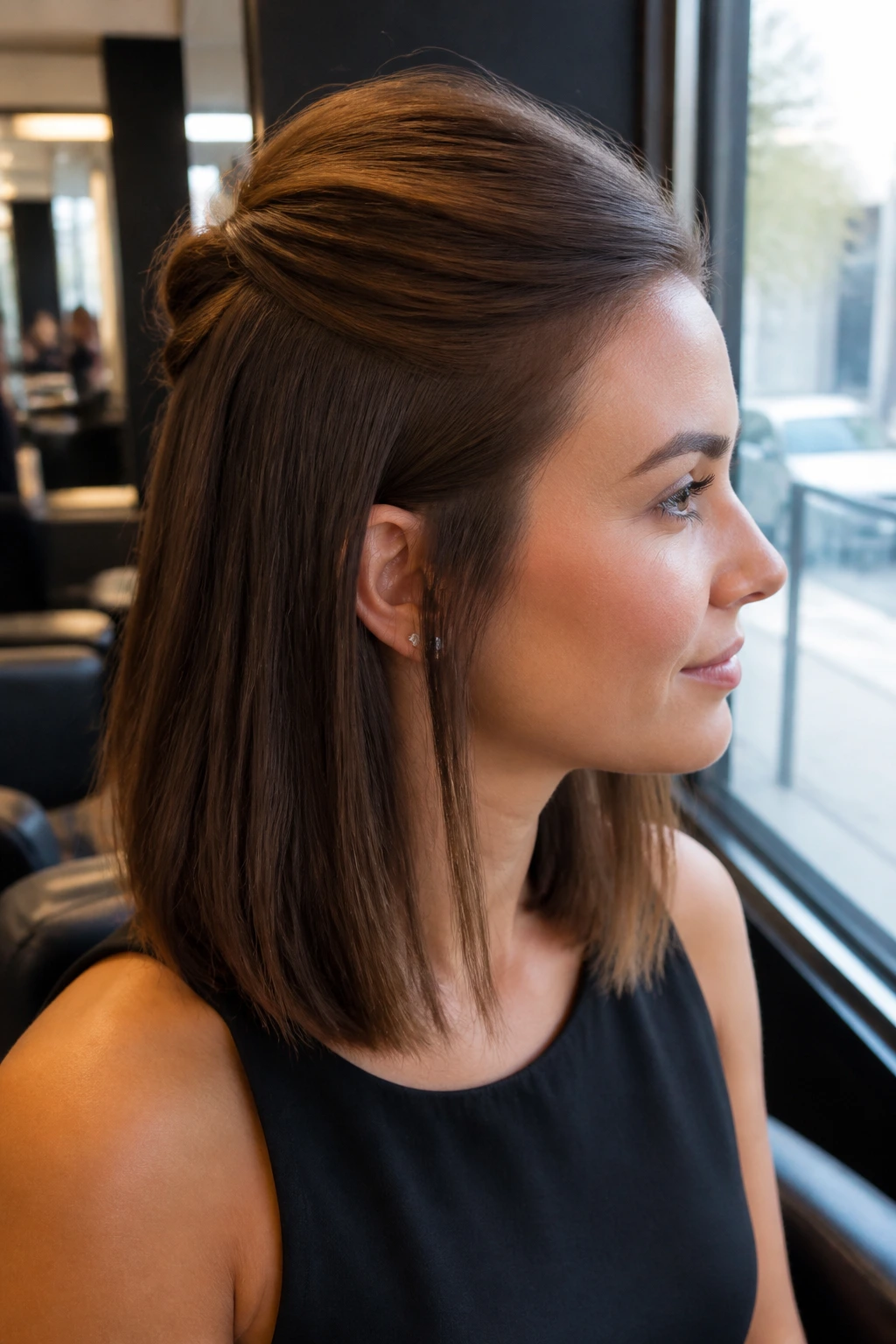
Pinned-back crown hair is what I recommend when you want the face open but you do not want a ponytail. Pull back the top inches at the crown, smooth them flat, and pin them discreetly while the rest stays straight and loose.
The beauty of this style is the lift. It gives the illusion of more height at the top of the head, which helps medium-length hair look fuller without teasing the daylights out of it. That teasing stuff has its place. This isn’t it.
If you want a softer finish, pull a few tiny pieces loose near the temples. If you want it cleaner, keep everything tight and use bobby pins that match your hair color.
29. Airy Layered Lob
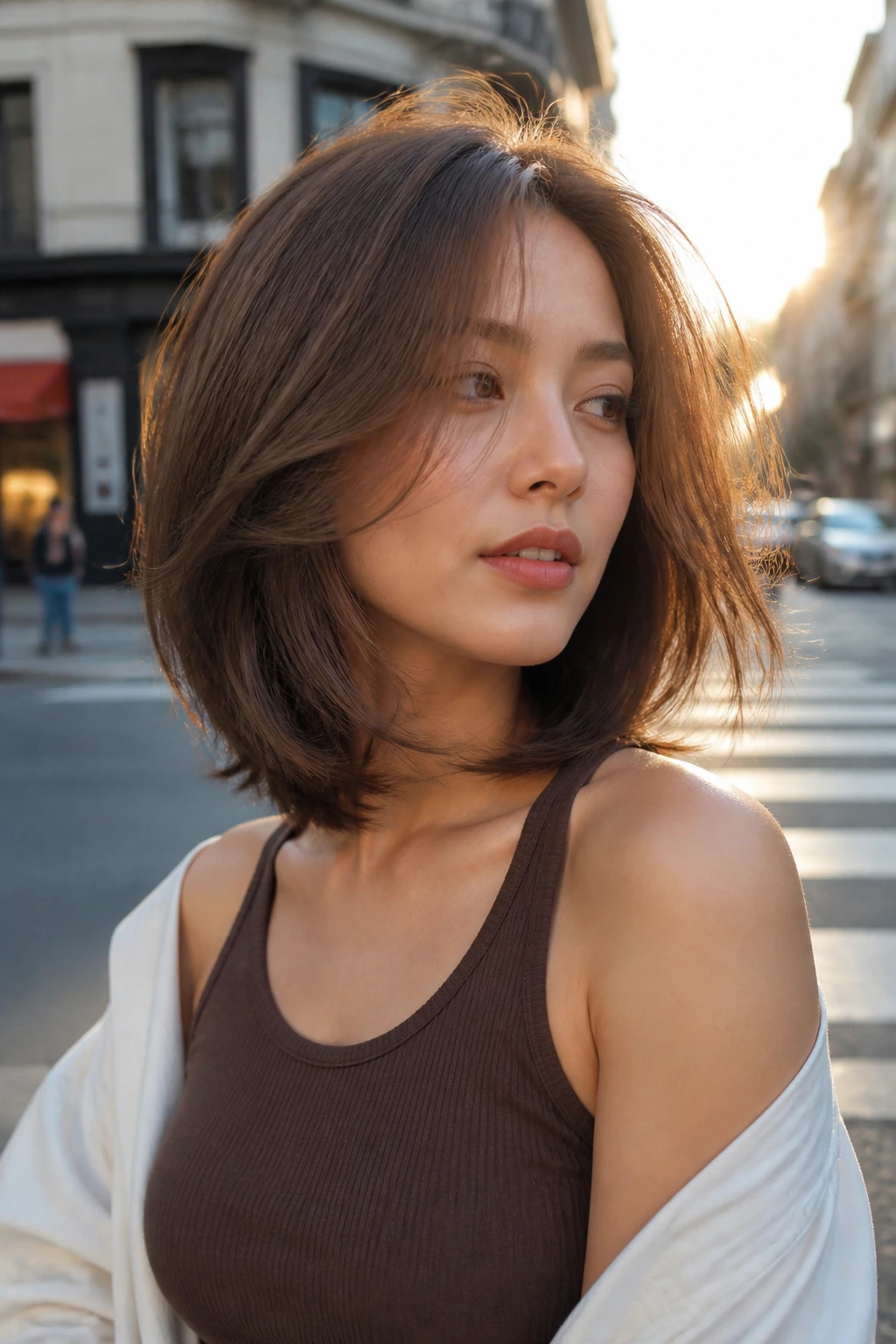
An airy layered lob is the straight style for people who hate the idea of a heavy, blunt edge. The layers keep the ends from feeling thick and boxy, and when the hair is smoothed straight, the whole cut still has movement.
This version sits somewhere between polished and casual. It is not super sleek, and that’s the charm. The layers create little shifts in the outline, so the hair moves when you turn your head instead of hanging in one flat sheet.
If your layers are fine, use a very light smoothing cream. Too much product will weigh them down and erase the airiness you wanted in the first place.
30. Feathered Ends
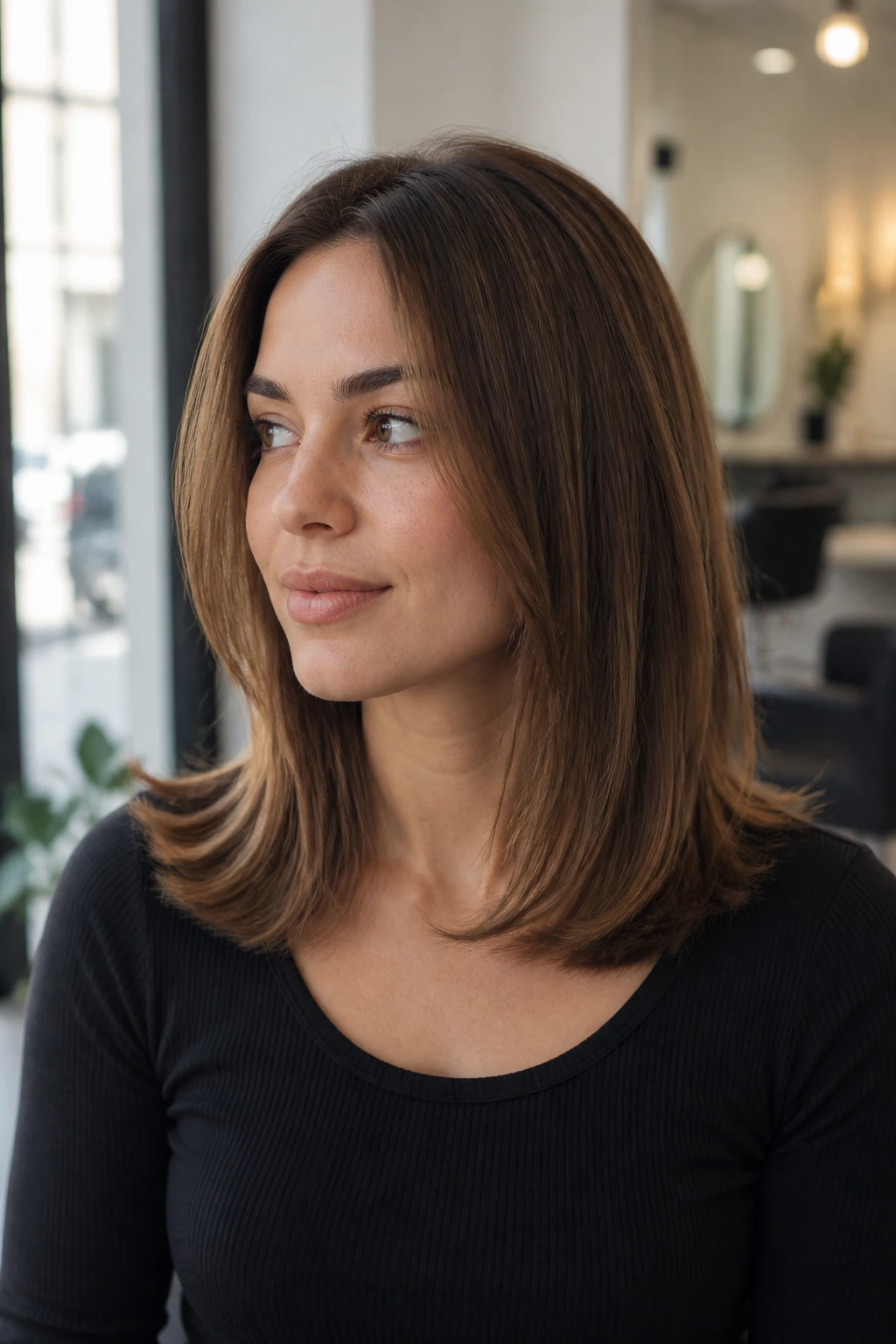
Feathered ends are different from flipped ends and softer than a blunt bevel. They taper outward slightly, almost like the cut was brushed into motion. On medium-length straight hair, that feathering keeps the silhouette from feeling hard.
I like this look on hair that has a little natural bend because it helps the ends land in a graceful way instead of sticking at a right angle. Use the flat iron with a gentle outward glide at the last inch. Do not make each piece identical or it starts looking overworked.
The style is subtle. That’s what makes it good. You notice the shape more than the styling.
31. Office-Ready Side Part Lob

This is the straight style that never looks like you tried too hard before a meeting. A side part adds lift, the lob keeps the shape tidy, and the straight finish stays professional without feeling stiff.
Brush the hair over to one side, smooth the top, and let the ends sit with a tiny bend under the jaw. If the lob is grown out, even better. A slightly lived-in cut reads less salon-perfect and more easy to wear, which helps during long days.
It’s a dependable style, and I mean that in the most practical way. No drama. No fuss. Just a clean line that survives real life.
32. Bone-Straight with Statement Earrings
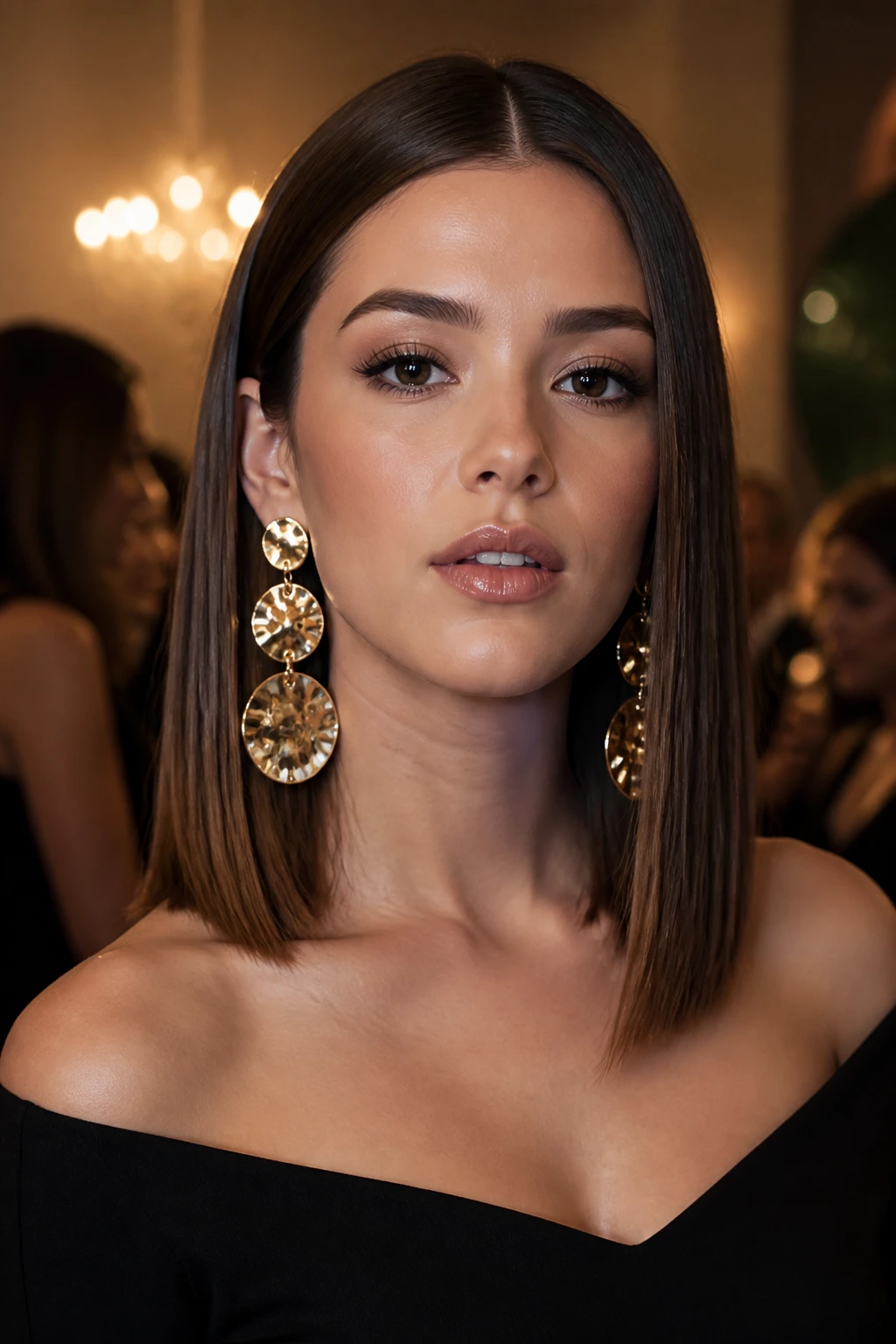
Bone-straight hair and bold earrings are a strong pair because the hair gets out of the way and lets the accessories do the talking. On medium-length hair, the straight line lands high enough to frame the jaw, which gives large hoops, drops, or sculptural pieces some room.
The trick is making the hair flat and glossy from root to tip, then choosing earrings with enough shape to stand up to the clean line. If the earrings are tiny, the whole look can feel underdone. If they’re too busy, they fight the hair. You want one clear idea.
This is the style I’d pick for dinners, events, or any day when you want the hair to behave and the jewelry to carry the personality.
The Straight-Style Sweet Spot
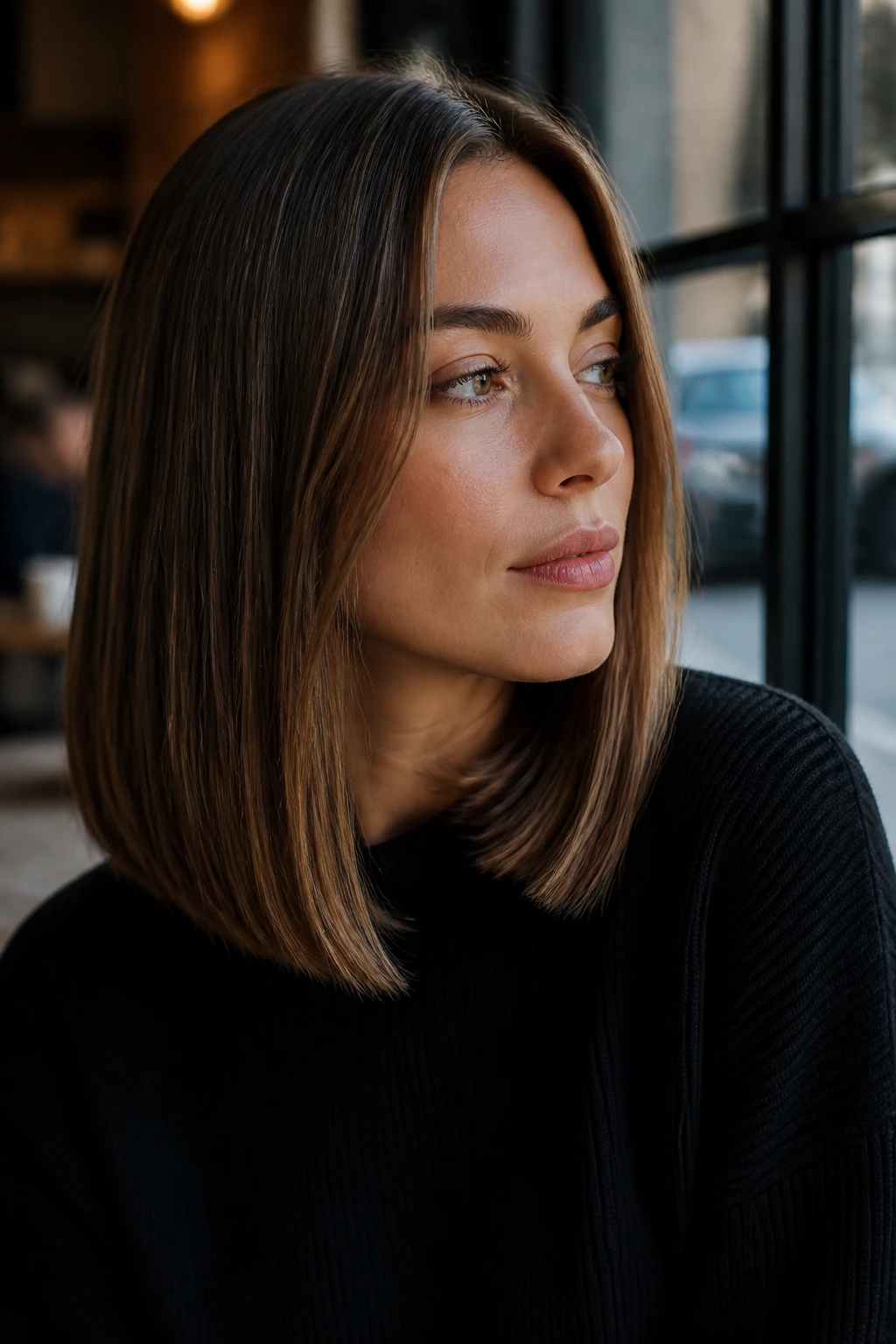
Medium-length hair earns its keep because it does not force you to choose between polish and motion. A sleek lob, a tucked side, a half-up knot, or a blunt glass finish all land differently on this length, and that is the fun of it. The same cut can look strict one day and soft the next.
The best part is how little it takes to move between those moods. Change the part. Bend the ends. Add a clip, a barrette, or a scarf. Straight hairstyles for medium length hair live in those tiny decisions, and tiny decisions are easier to make when the haircut already has good bones.
What Makes a Straight Finish Hold Better on Medium Hair
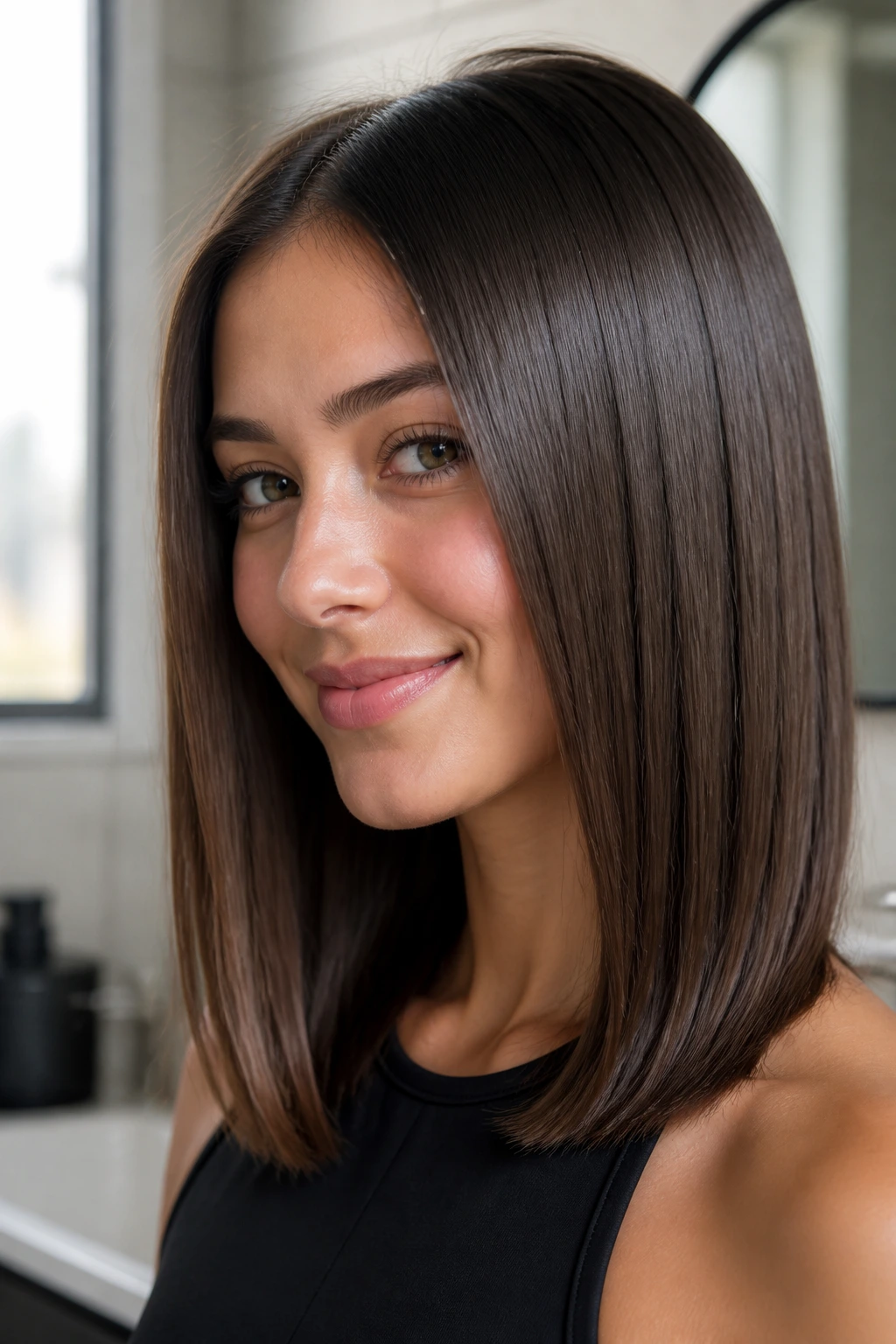
Medium length is forgiving, but it still needs a decent base. If the cut is one-length and heavy, the hair will fall in a clean line. If it has layers, the style gets more movement, but you may need a little more control at the crown and ends. That’s the trade.
The other thing people miss is tension. Straight hair looks better when the blow-dry and flat-iron passes are done with enough tension to smooth the cuticle, but not so much that the hair gets stretched thin. A brush that actually grips the hair matters here. So does section size. Smaller sections mean fewer passes, and fewer passes mean less heat damage. Simple. Not glamorous. Very useful.
Essential Equipment for These Hairstyles
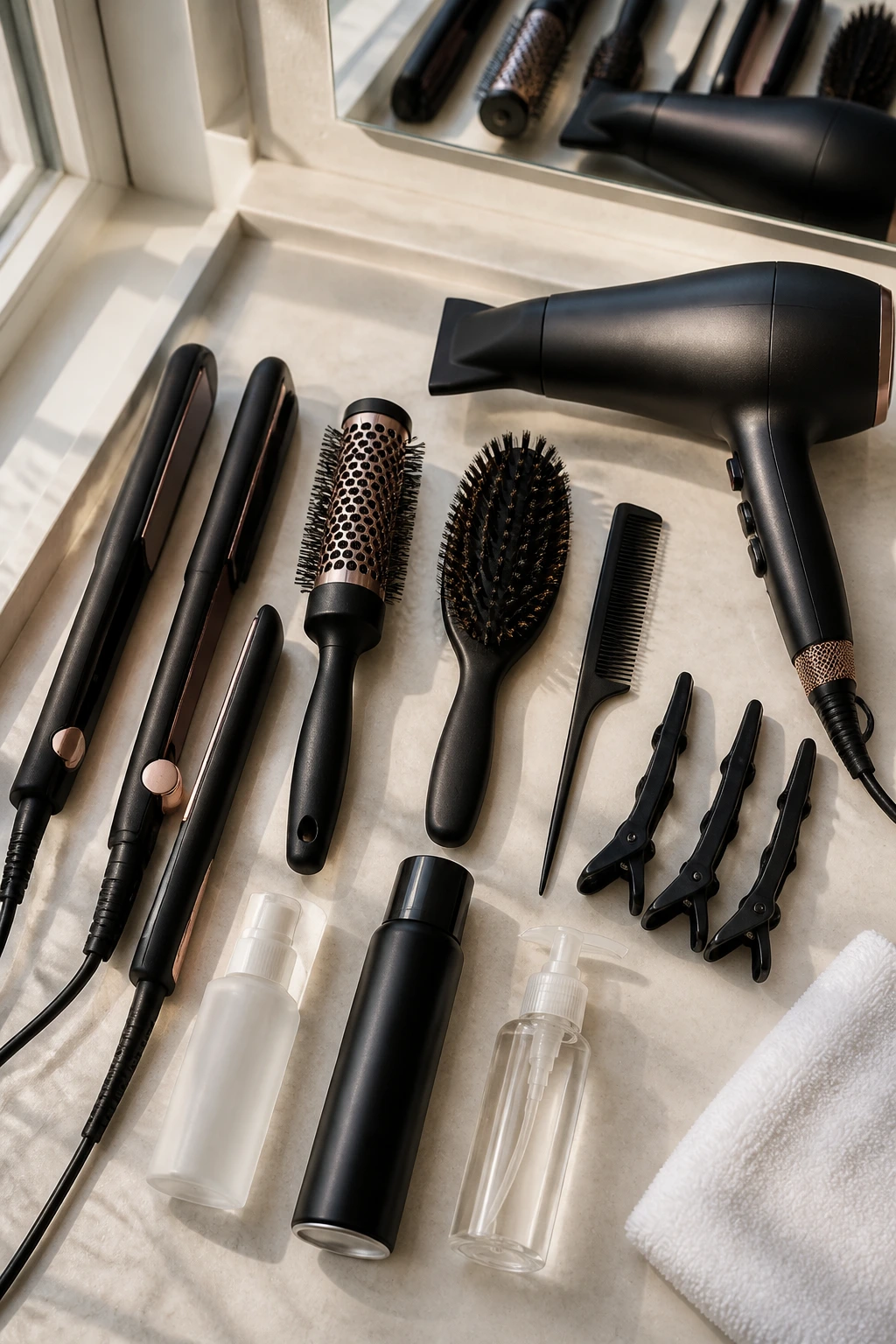
- 1-inch flat iron: Best for precise bends, smooth ends, and shorter sections near the face.
- 1.25-inch flat iron: Handy if your medium-length hair is thick or you want faster smoothing with fewer passes.
- Blow dryer with a nozzle attachment: Directs airflow and keeps the cuticle flatter while you dry.
- Round brush, 1.5 to 2 inches: Good for root lift, soft underbends, and shaping bangs.
- Boar-bristle brush: Helps gather sleek ponytails and smooth the crown without leaving rough marks.
- Rat-tail comb: Makes clean parts, neat tucks, and sectioning easier.
- Sectioning clips: Worth having if you want to keep straightening controlled instead of random.
- Lightweight heat protectant: Use it before any hot tool; spray or cream depending on your hair’s thickness.
- Flexible-hold hairspray: Keeps a side tuck or barrette in place without turning the hair stiff.
- Shine serum or finishing oil: Use a small amount on the last 2 to 3 inches, not at the roots.
Smart Shopping and Product Tips
The product aisle is full of shiny promises, and most of them are noise. For straight hair on medium-length cuts, I’d put the money into three things: a flat iron that heats evenly, a heat protectant that spreads thinly, and a finishing product that does not leave the hair greasy after an hour.
Ceramic plates are a safe bet if your hair is fine, color-treated, or on the drier side. Titanium heats fast and can be great for coarse hair, but it can also be unforgiving if you hover too long. If your hair is shoulder-length or just past it, a 1-inch or 1.25-inch iron usually covers the job better than a bigger tool. Bigger plates are faster on long hair, but here they can make the ends feel clumsy.
For product, look for heat protectants that actually mention smoothing or shielding, and make sure they don’t leave a sticky cast. Silicone-based serums can help straight styles glide, especially on the lower half of the hair. That said, a drop too much will flatten the top. Keep the heavy stuff away from the roots unless your hair is extremely coarse.
If you live with humidity, an anti-frizz spray is worth buying before a fancy finishing oil. Oils add shine. Anti-humidity formulas help the shape stay intact. Those are not the same thing, and mixing them up is how styles fall apart at lunchtime.
How to Wear These Looks
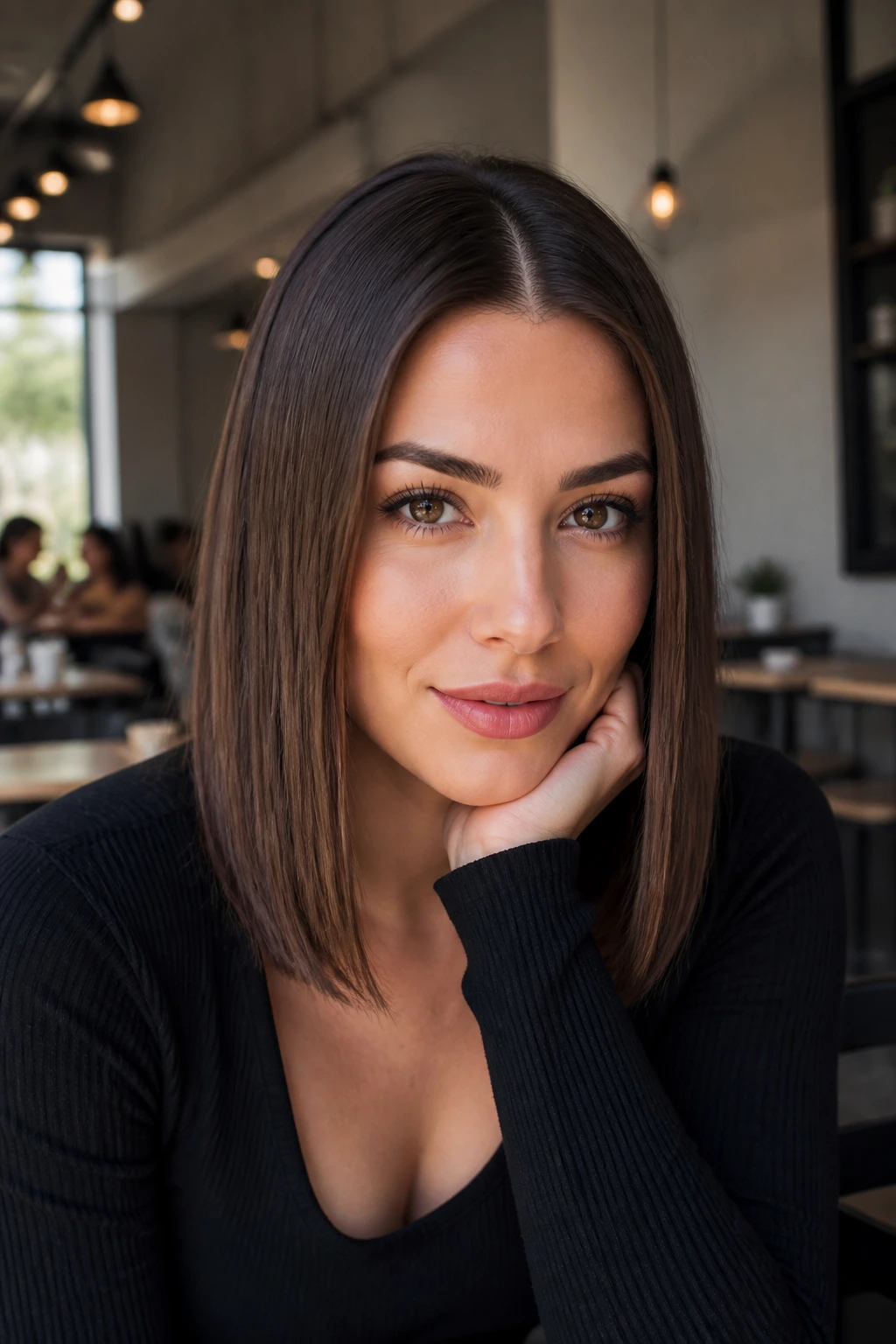
Presentation: Keep the outline clean and intentional. A straight style on medium-length hair reads best when the part is sharp, the ends are tidy, and one detail — a tuck, a clip, a bend, or a fringe — gives the eye somewhere to land.
Accompaniments: These styles play well with open collars, crew necks, turtlenecks, hoops, small cuffs, and structured jackets. Heavy necklaces can fight the hair; clean necklines usually make the line look sharper.
Portions: On medium hair, restraint wins. One styling cream the size of a pea, one light mist of heat protectant per section, and one finishing spray pass are usually enough. If you pile on product, the style loses its clean edge fast.
Beverage Pairing: Think of the mood like a strong coffee or sparkling water: clean, direct, and not overloaded. That same energy tends to suit the sharpest straight styles, especially the ones that lean minimalist.
Polish and Personal Touches
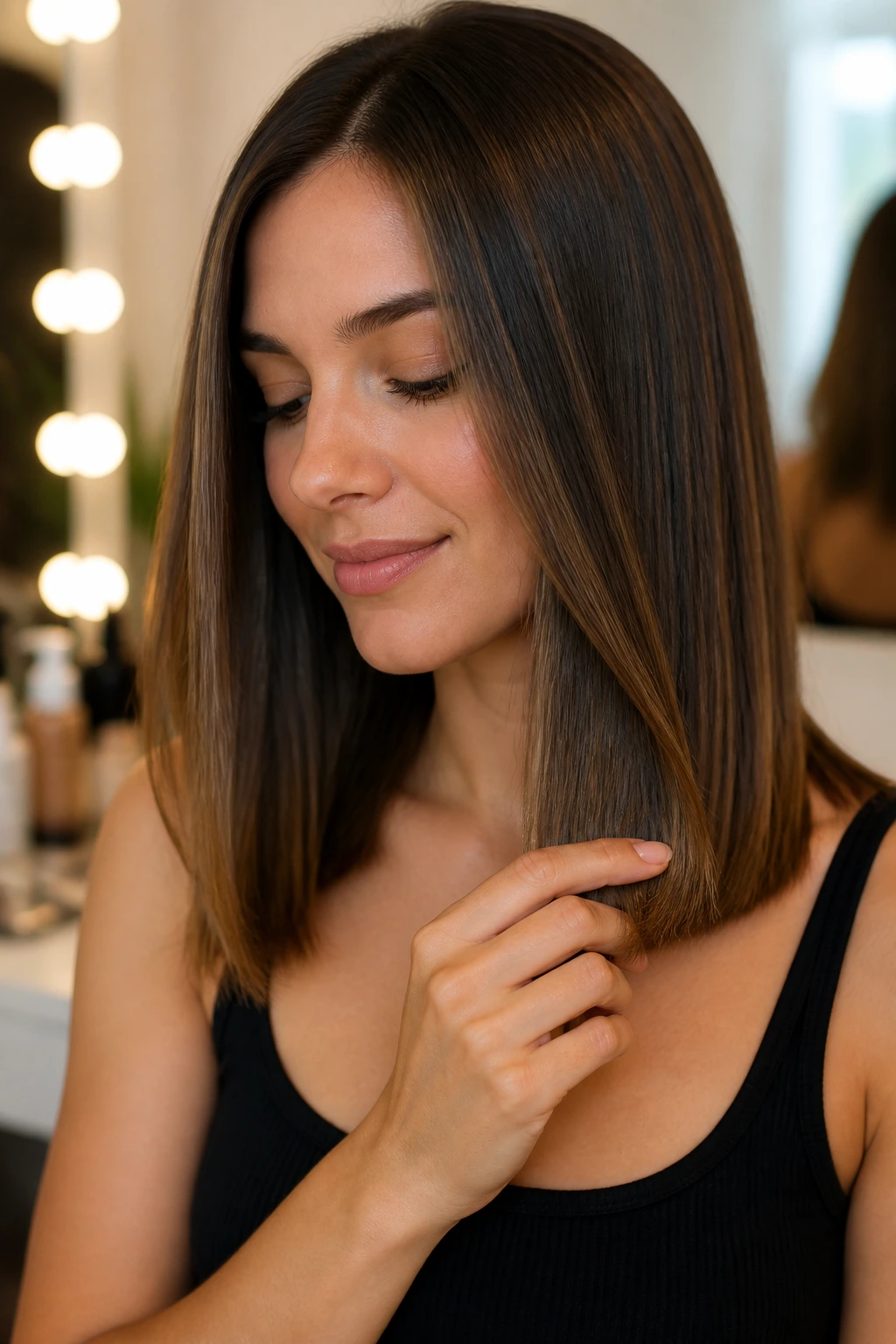
Finish Enhancement: A cool-shot blast from the dryer or one final pass with the flat iron on a lower heat setting can make the surface look smoother without adding more product. I like a tiny bit of serum rubbed between the palms and then tapped onto the ends.
Customization: If center parts feel too strict, move the part half an inch off center. If blunt ends feel too heavy, add a soft bend inward. If the style feels too plain, tuck one side or add a barrette. Small changes carry more weight here than people expect.
Serving Suggestions: Wear straight styles with a strong lip, bare face, or a simple liner depending on the mood. The hair already brings structure, so the rest can stay clean. For a softer look, leave one front piece loose and let it curve just a little around the cheek.
Make-It-Yours: Fine hair usually likes root-lifting mousse and lighter sprays. Thick hair usually wants a creamier heat protectant and a firmer brush. If your hair is color-treated, lower the iron temperature and keep the passes slow but limited.
What Trips Straight Styles Up
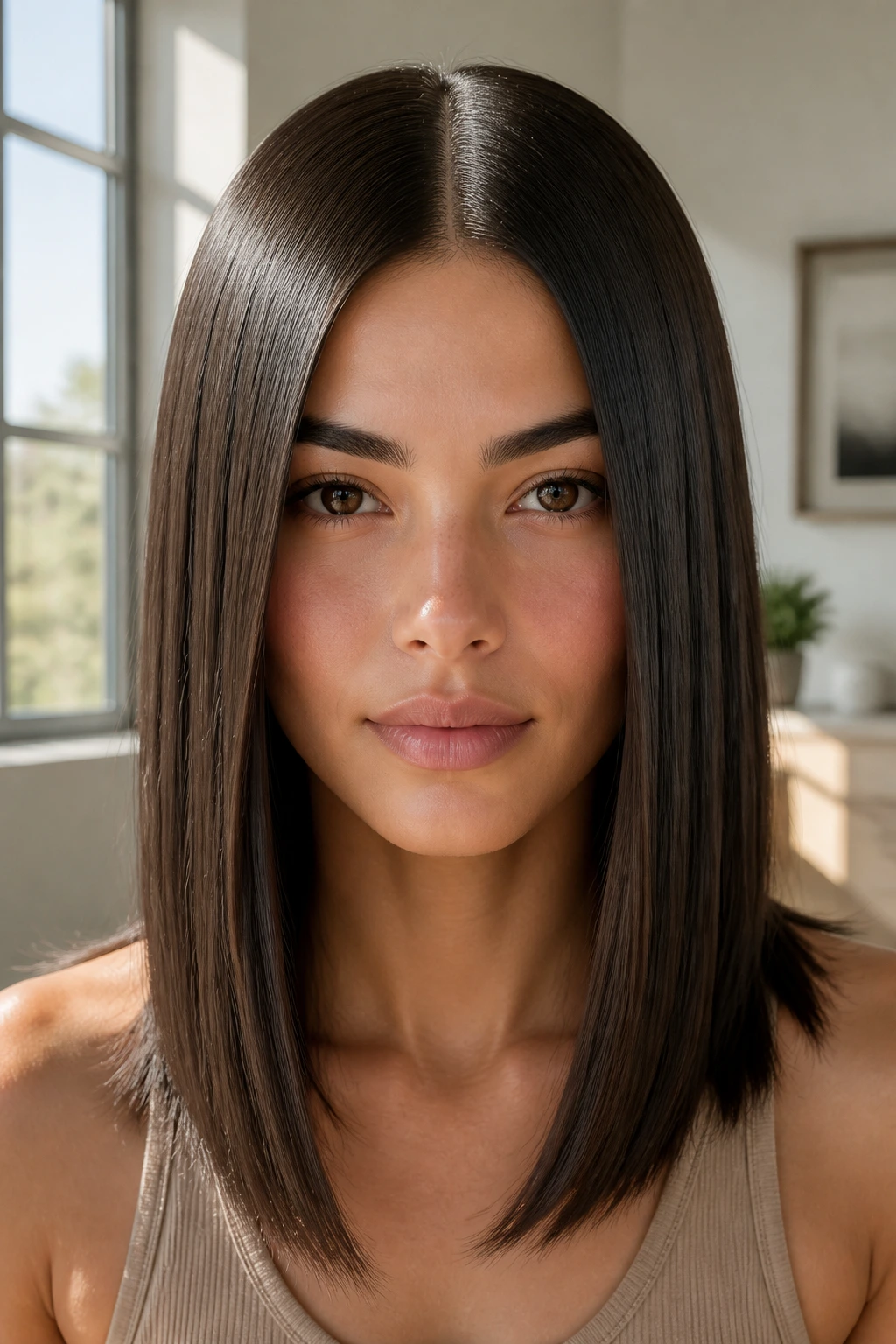
The first mistake is overloading the hair with oil or serum. Medium-length straight styles can absorb only so much before they start looking stringy near the ends and flat on top. The fix is simple: use less than you think, and start below the ears.
The second is using sections that are too wide. A flat iron can only smooth what it touches, and wide sections leave the inside rough even when the outside looks shiny. That’s why the top layer seems fine while the hair underneath frizzes back up an hour later.
Another common one: skipping the cool-down. Hair holds shape better when it cools in the direction you styled it. If you keep touching it, brushing it, or throwing it into a clip before it cools, you erase the work you just did.
And then there’s the part line. A crooked part can ruin a clean style faster than a bad product choice. Use a comb, not your fingers, if you want the finish to look sharp.
Make-Ahead, Storage, and Next-Day Refresh
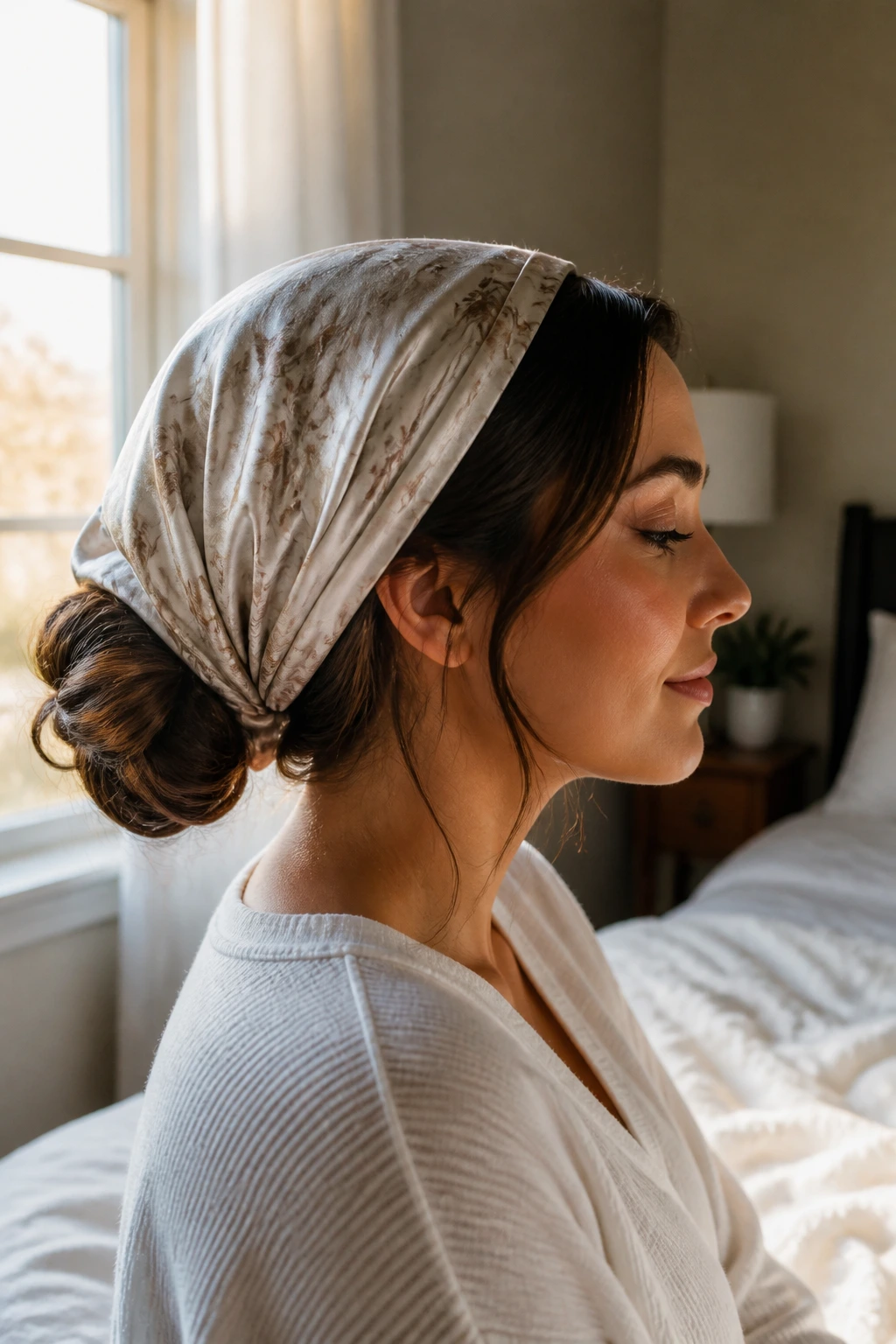
Straight medium-length hair usually looks best on day one, still decent on day two, and a little tired by day three unless you sleep on it carefully. If you want the style to last overnight, let it cool completely first. Then tuck it into a loose low bun, secure it with a silk scrunchie, or wrap it with a satin scarf so the top does not get crushed against the pillow.
A silk or satin pillowcase helps more than people think. It cuts down on friction, which means fewer bent ends and less crown frizz in the morning. If the style loses shape by the front pieces, rewarm only those sections with a flat iron at a lower setting, around 300°F to 330°F, instead of redoing the entire head.
If the roots get oily, dry shampoo should go on before the oil spreads, not after the hair is already heavy. Spray it at the roots, wait a minute, then brush it through. For ponytails, tucks, and clips, a little texture on day two can actually help the style stay put.
Variations and Adaptations to Try
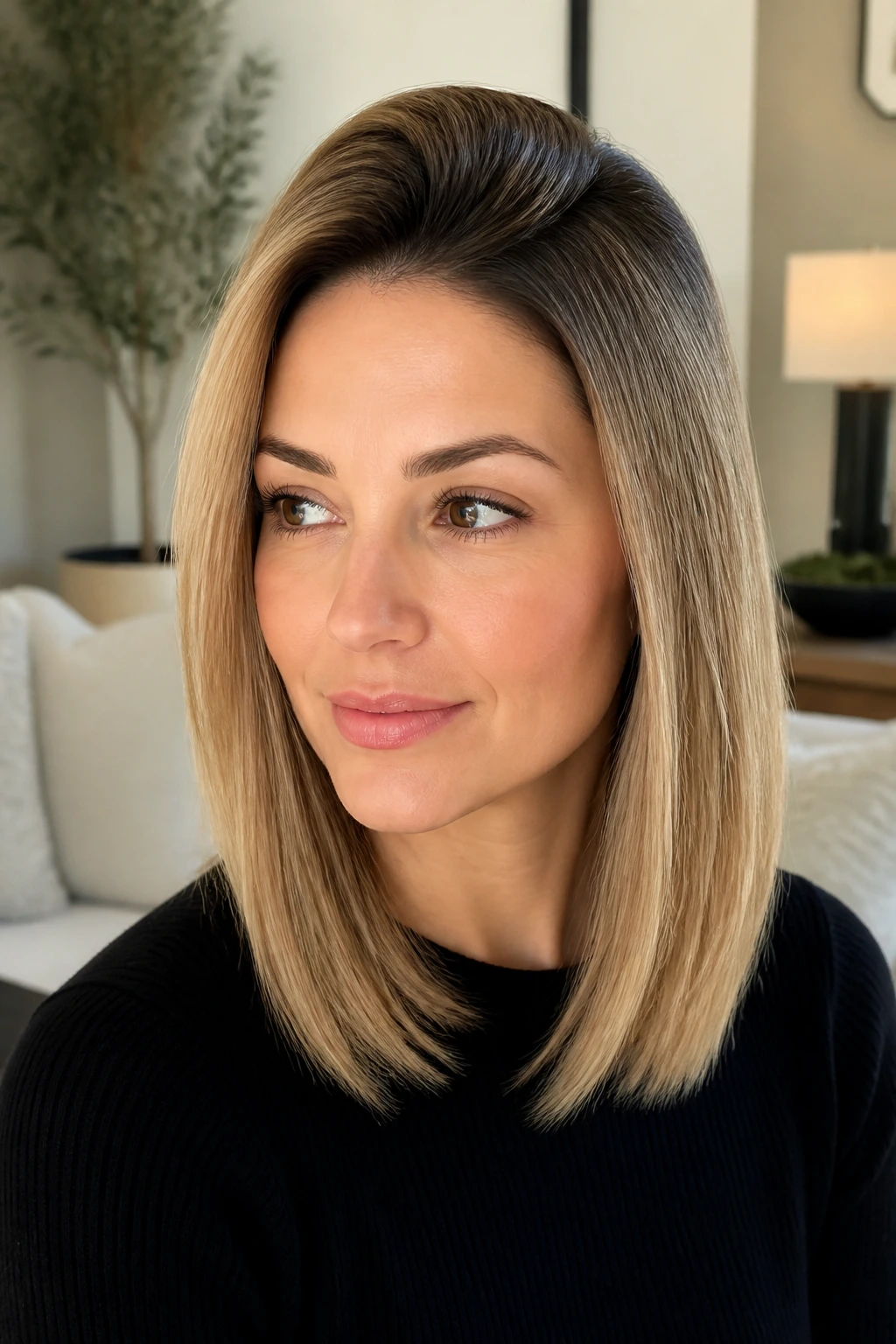
Fine-Hair Lift: If your medium-length hair is thin, build volume at the roots with a lightweight mousse and keep the ends blunt or slightly beveled. Heavy creams will erase the shape by noon.
Thick-Hair Control: For dense hair, use smaller sections, a slightly hotter iron, and a smoothing balm before blow-drying. Thick hair looks best when the surface is polished and the ends are trimmed regularly.
Curly-Root Straight Style: If your roots puff up while the lengths stay straight, dry the crown with tension first and finish with a flat iron only on the top 2 inches. That keeps the style smooth without roasting the ends.
Humidity Shield: On damp days, swap glossy oil for an anti-frizz spray or humidity-blocking mist. The shine may be a little lower, but the shape will last longer.
Accessory-First Styling: When the hair feels too plain, build the whole look around one clip, barrette, scarf, or cuff. Straight hair makes accessories read cleaner, so you do not need much.
Common Mistakes to Avoid
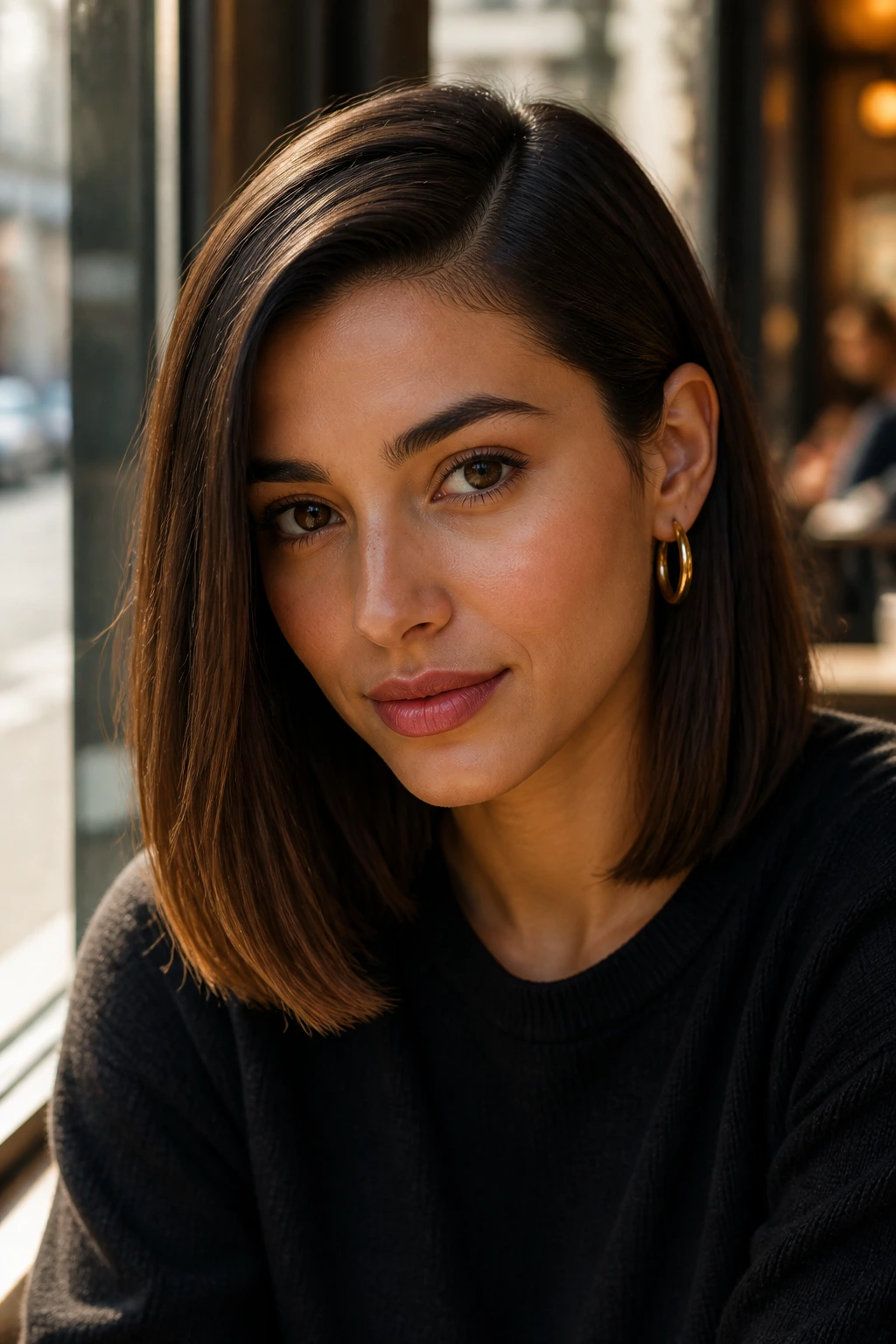
The biggest mess-up is flattening the hair so much that it loses all movement. Straight does not need to mean lifeless. Leave a bit of bend at the ends, or the cut can look sharp in a bad way.
Another is ignoring the cut itself. A blunt lob and a shag lob do not want the same finish. Force a shag into glass-hair territory, and the layers look chopped in an awkward way. Push a blunt cut too soft, and the edge disappears.
People also overdo the finish spray. Too much hairspray on medium-length hair makes the top stiff and the ends dusty. Use flexible-hold spray in a light mist, then stop. If you can smell it from across the room, you used too much.
Last one: styling over damp hair. Straightening hair that is not fully dry creates steam, and steam is not your friend here. It can make the strand swell, bend badly, and frizz later. Dry the hair first. Every time.
Frequently Asked Questions
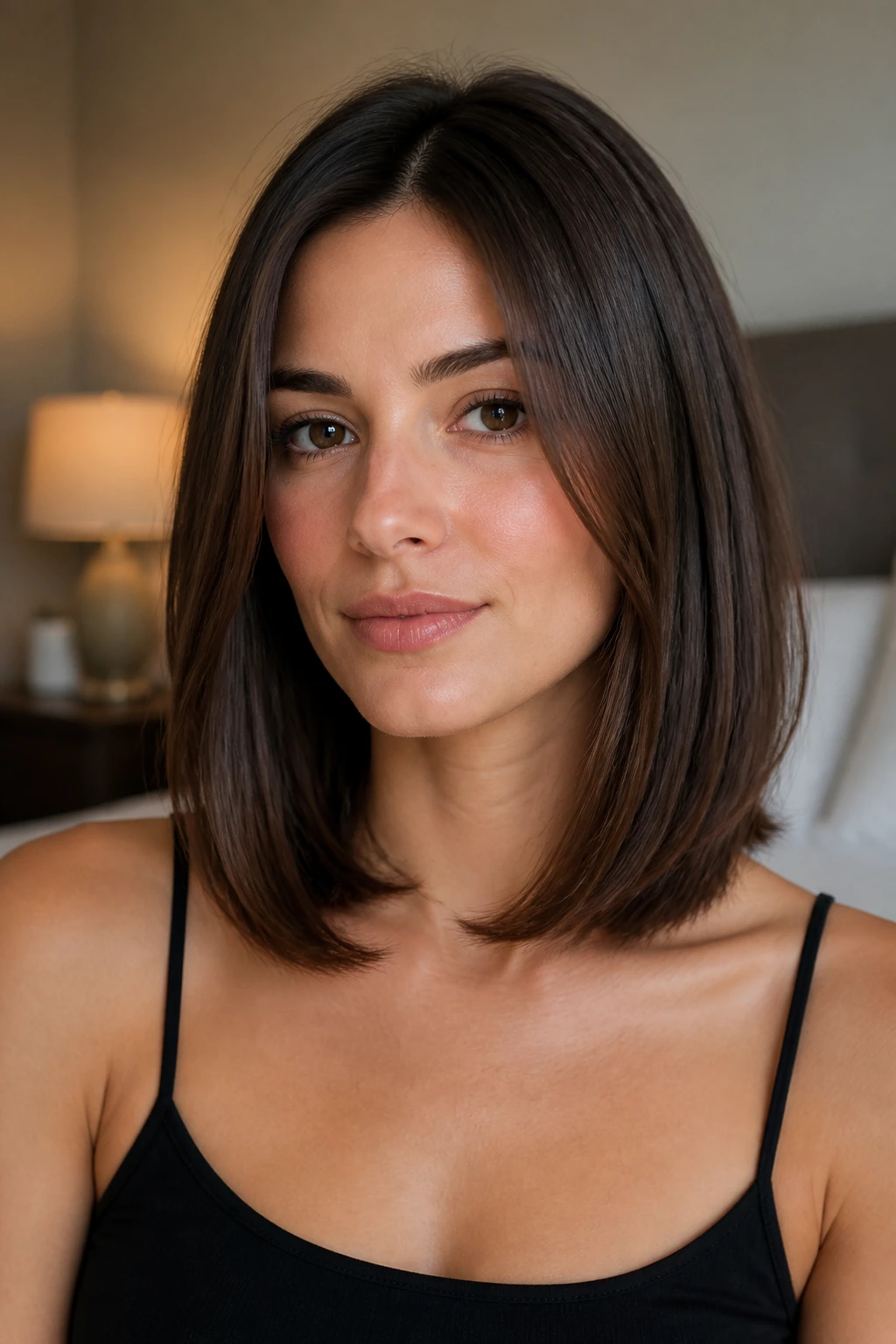
What straight hairstyle is easiest to wear on medium-length hair every day?
A blunt lob or a low straight ponytail is hard to beat. Both styles are quick, hold their shape, and do not require much product. If you want the cleanest daily option, a slight inward bend at the ends keeps the hair from looking too plain.
How do I keep straight medium-length hair from going flat at the roots?
Start with a root-lifting mousse or spray, then blow-dry with tension and let the roots cool before touching them. Flipping the part to the opposite side for a few minutes can also bring back lift without adding more product.
Can I straighten medium-length hair every day without frying it?
You can, but only if you use heat protectant and keep the temperature sensible for your hair type. Fine or color-treated hair usually does better below 350°F, while coarse hair may need a bit more heat. The fewer passes you make, the better.
What if my ends flip out when I want them straight?
That usually means the haircut or the flat-iron angle is working against you. Trim the ends regularly and use a final pass that directs the last inch downward or inward. If they still kick out, the hair may need a stronger blow-dry shape before the flat iron goes on.
Which flat iron size works best for medium-length hair?
A 1-inch iron is the most useful all-around choice. It handles bends, tucks, and small sections near the face better than a wider plate. A 1.25-inch iron is fine if your hair is thick and you want speed.
Are layers or blunt cuts better for straight styles?
Neither is universally better. Blunt cuts look sharper and cleaner, while layers add movement and keep the hair from feeling heavy. If you like minimal styling, blunt usually wins. If you want the hair to move a little more, layers help.
How do I make a straight style last through humidity?
Use anti-humidity spray, keep heavy oils off the roots, and let the hair cool completely before stepping outside. If the weather is damp, a style with a tuck, clip, or ponytail tends to hold better than loose hair worn fully down.
Can I wear straight medium-length hair with bangs?
Yes, and the trick is keeping the bangs styled separately from the rest. Curtain bangs, side-swept fringe, and blunt brows all work, but they need a different brush or quick iron pass than the lengths do. If you treat them like one big section, the front can go piecey.
What should I do if my straight style falls apart by midday?
Check the root first. If the crown is collapsing, the issue is usually too much product or not enough lift during the blow-dry. If the ends are frizzing, the hair may need a lighter serum and a cleaner flat-iron pass on smaller sections.
The Straight-Line Advantage
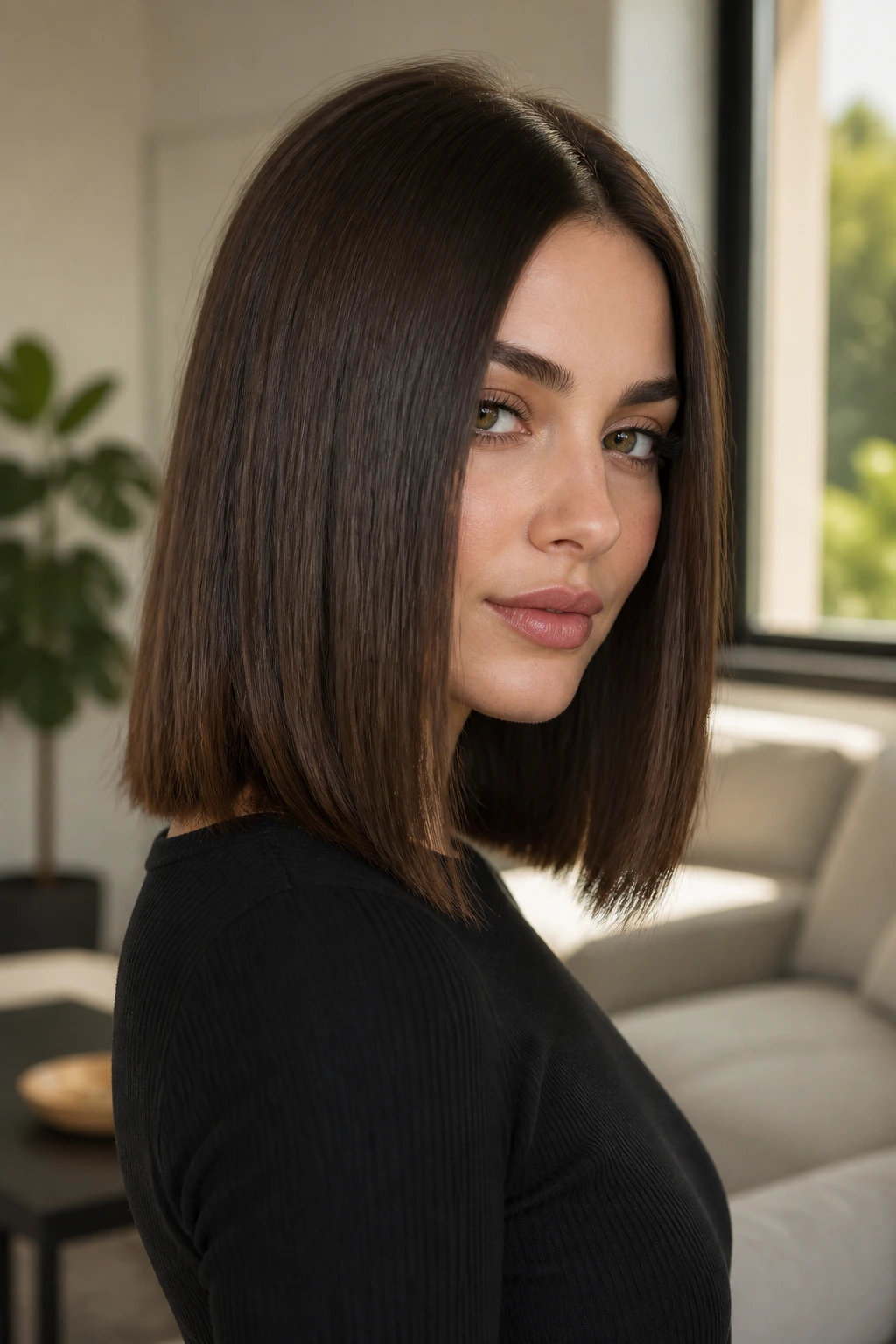
Medium-length hair gives straight styles room to look polished without turning precious. That’s the charm of it. You can wear a blunt lob on Monday, tuck one side on Tuesday, throw in a barrette on Wednesday, and switch to a low ponytail when the weather gets rude.
I like that this length doesn’t demand a single answer. It gives you shape, movement, and enough flexibility to keep things interesting without a dramatic restyle every time you leave the house. Pick the version that matches your mood, and let the cut do some of the work for once.
