



Short straight hairstyles have a way of telling the truth about a cut. If the line is clean, the whole style looks deliberate, almost tailored. If the ends are wispy or the part sits in the wrong place, you see that too. There’s nowhere to hide, which is exactly why these cuts can look so expensive when they’re done well.
That’s the part people miss. Straight hair on a short length does not need a circus of product or a lot of movement to look finished. It needs shape, clean edges, and a little discipline at the crown and nape. A blunt bob, a crisp pixie, a glossy mini lob — these styles do their best work when the silhouette is doing the talking.
And yes, short straight hair can be fussy in its own quiet way. One awkward cowlick, one over-thinned perimeter, one heavy serum on the ends, and the whole thing shifts from sleek to limp in about ten minutes. But when the cut and finish are right, the result has this sharp, calm presence that reads as polished without looking overworked. The styles below cover the full range, from tidy and minimal to slightly bolder shapes with more personality.
Why These Sleek Shapes Keep Working
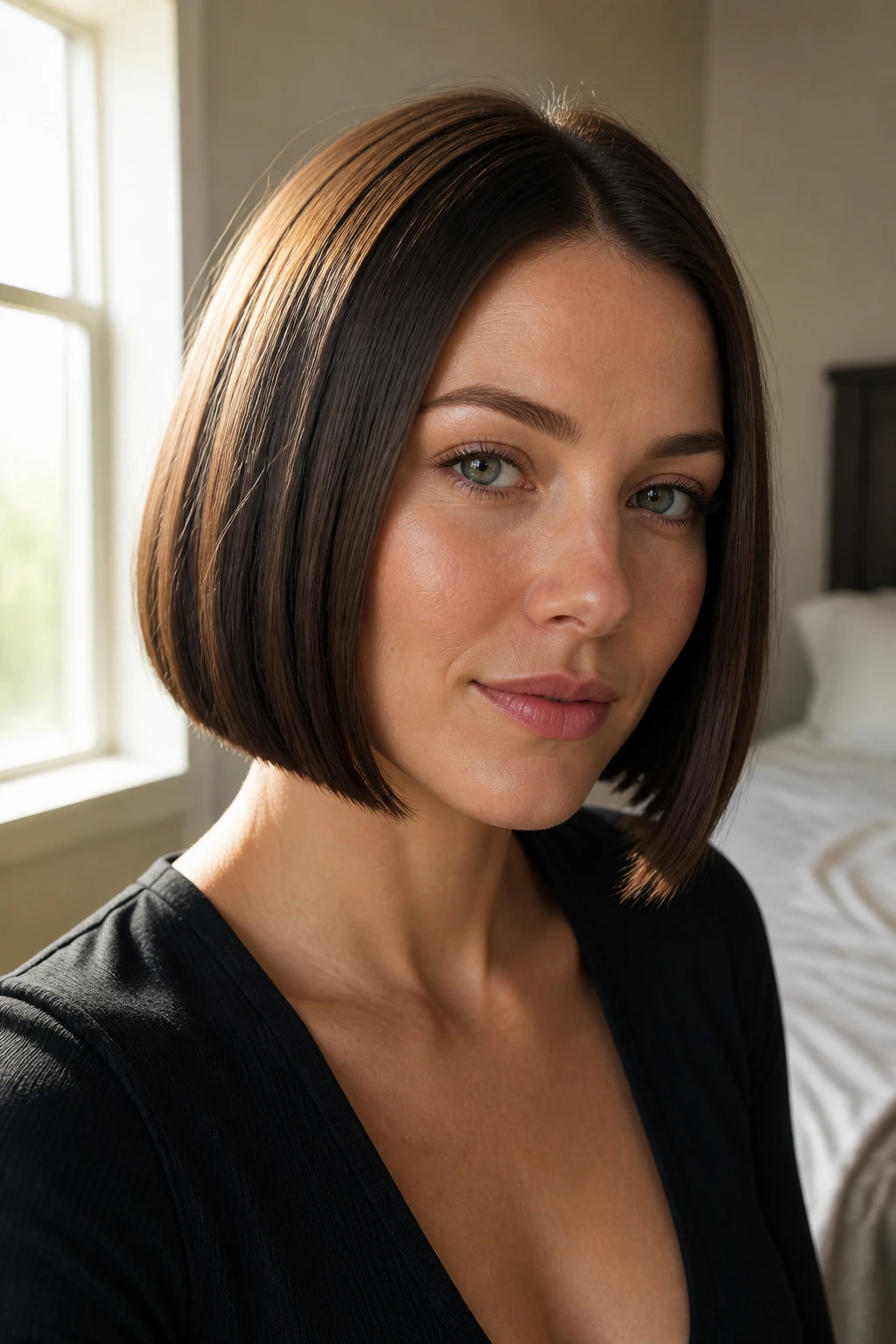
- The line stays visible: Straight hair shows the haircut instead of swallowing it, so a good perimeter on a bob or pixie actually matters here.
- They don’t need much styling time: Once the shape is built in, most of these looks need a quick blow-dry, a pass with a flat iron, or a dab of serum at the ends.
- They flatter glasses and earrings: Short, straight lengths leave room for frames, hoops, studs, and collar lines to do some of the visual work.
- They grow out in useful ways: Several of these cuts keep their shape as they get a little longer, which is handy if you don’t want a strict trim schedule.
- They suit fine hair and thick hair differently: The same haircut can look airy on finer hair and architectural on thicker hair, which gives you room to choose the version that fits your texture.
- They stay neat in humid weather better than softer cuts: A blunt edge and controlled finish usually hold together longer than airy layers that puff up and separate.
1. Chin-Grazing Blunt Bob
A chin-grazing blunt bob is the style that makes straight hair look purposeful with very little drama. The cut lands right around the jaw, so the edge feels crisp and the face gets a clean frame instead of a soft curtain.
What makes it work: the blunt perimeter gives fine straight hair a denser-looking edge, and that alone changes the whole mood of the style. It’s tidy, but not stiff. The trick is to keep the bottom line even and avoid too much internal thinning, because those airy layers can make the ends look hollow instead of polished.
Ask For This at the Salon
- Length: aim for the chin or just below it, depending on whether you want the jaw emphasized.
- Layers: keep them minimal, with soft internal shaping only if your hair is thick.
- Finish: ask for a blunt edge, not feathered ends.
- Styling note: a slight underbend at the very ends keeps the bob from flipping out too aggressively.
That little underbend matters more than people think. It keeps the haircut looking controlled even when you skip a full blowout.
If you wear this cut with a side part, it softens the line. If you wear it center-parted, it gets sharper fast. I like the center part best when the hair is very straight and the ends are freshly trimmed; the whole thing looks almost architectural, and that’s the appeal.
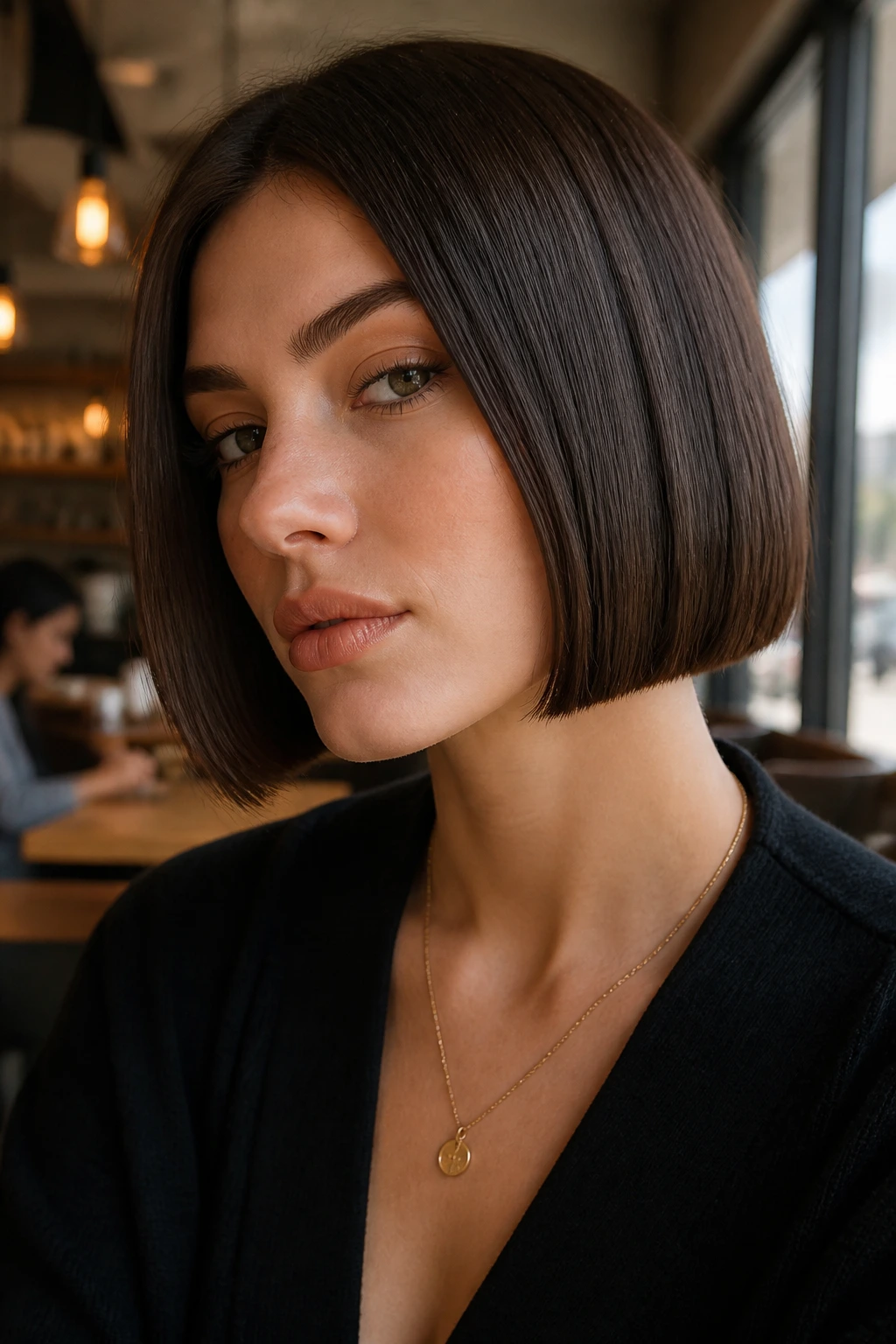
2. Center-Part Glass Bob
Want a short haircut that reflects light in a clean sheet instead of breaking into little flyaways? The center-part glass bob is the answer, and it works best when the hair is naturally straight or only needs a small amount of heat to lie flat.
This style depends on smoothness more than movement. The part is straight down the middle, the surface stays sleek, and the ends usually sit just at the jawline or a touch below it. If you use too much product, it can go greasy in a hurry. If you use too little, the crown puffs up and the effect is gone.
A clean blow-dry with a nozzle, a paddle brush, and a tiny amount of shine serum on the mid-lengths is usually enough. Then you can pass a flat iron over the surface in one deliberate direction, not back and forth like you’re ironing a shirt.
The visual payoff is sharp. The hair lies in a smooth sheet around the face, and the part line gives it that composed, almost sleek-edged look that reads as expensive without needing volume. It’s especially good if you have symmetrical features or like a cut that lets your earrings and makeup take center stage.
3. French Bob With a Soft Fringe
A French bob with a soft fringe has a little more personality than the blunt versions, and that fringe is doing a lot of the work. The cut usually sits around the cheekbone to chin area, with bangs that skim the brows or split just enough to avoid a heavy wall across the forehead.
Why the fringe matters: it breaks up the strong horizontal line of a short bob, which helps if your face feels long or you want the style to read less severe. The fringe should look light, not chopped bluntly across the forehead. That softness is what keeps the haircut from turning boxy.
A few things help this version stay polished:
- keep the fringe slightly longer at the temples
- dry it forward first, then sweep it into place
- use a small round brush or a flat brush to keep the bend subtle
- trim the bangs before they start covering the eyes, because they lose their shape fast
The best French bobs look like they were cut with confidence and styled with almost no fuss. There’s a reason they stay on the short straight hairstyle list: they give you line, but they don’t lock the whole face into one hard shape.
If you like a little movement at the front but want the back and sides to stay neat, this is one of the smartest choices in the bunch.
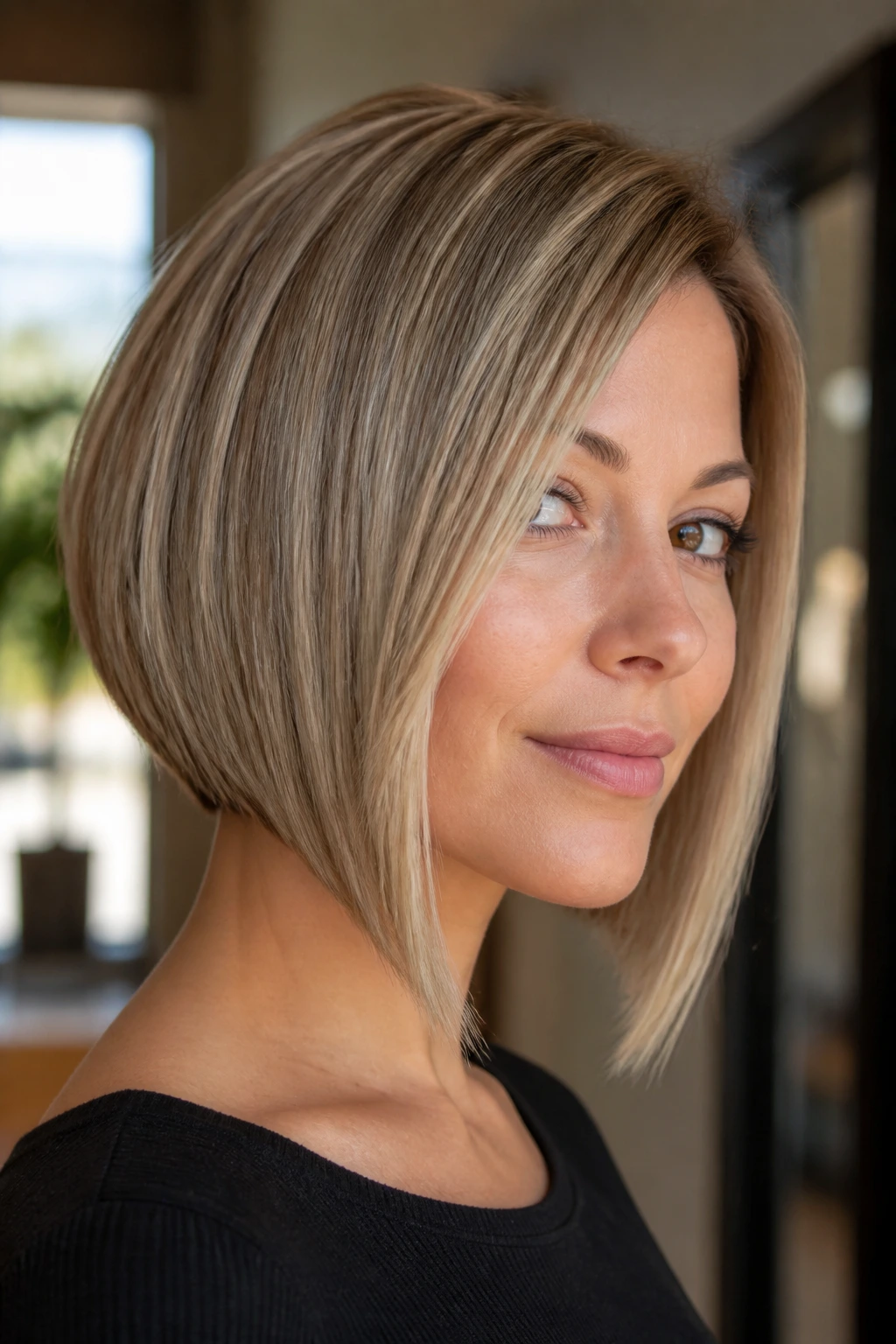
4. Angled A-Line Bob
The angled A-line bob cheats the eye in a useful way. Shorter in the back and longer in the front, it creates a diagonal line that makes the neck look longer and the jaw look a little more lifted.
That diagonal shape is the whole point. On straight hair, the angle shows up cleanly, which is why this cut can look so sharp when it’s trimmed well. If the front pieces are too long, though, the shape starts to sag and you lose the crisp edge that makes the haircut work.
Best When You Want a Little Structure
- Fine hair: the angle gives the illusion of more body toward the front.
- Thick hair: the shorter back helps remove some bulk where it stacks up.
- Round faces: the front length can elongate the silhouette.
- Square jaws: a softer angle can break up the width without hiding the bone structure.
I prefer this style when the nape is cut clean and the front is kept sleek, not curled under too much. Too much bend and it starts looking dated. A gentle inward curve at the front is enough. You want the shape, not the pageantry.
This is one of those cuts that grows out in stages. The angle gets softer as the front lengthens, which means you can stretch appointments a little longer than with a pixie. Handy. Not glamorous, just practical.
5. Tucked-Behind-Ear Bob
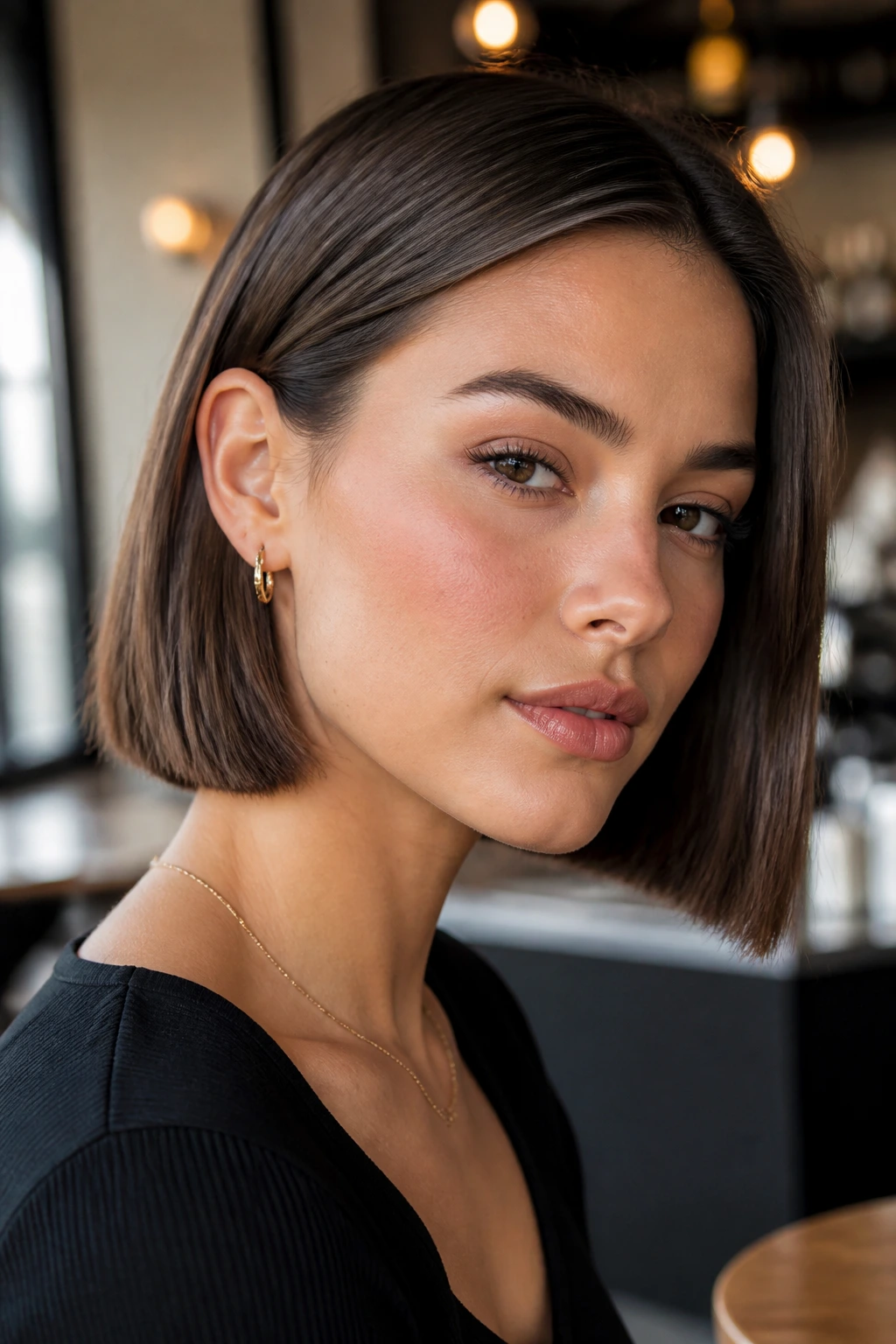
A bob tucked behind one ear does something small and weirdly powerful. The haircut is still short and straight, but the one-sided tuck shifts the whole mood toward clean, intentional, and a little bit sly.
The cut itself can be blunt, rounded, or slightly angled. What matters most is that the hair is long enough to tuck without fighting back. If the ends are too wispy, the tucked side looks stringy. If the hair is too heavy, the tuck can pull the whole shape awkwardly to one side.
This style is especially good if you wear statement earrings or glasses. The exposed ear gives your face a little breathing room, and the tucked side keeps the hair from swallowing your features. I like it with a deep side part, though a center part works if you want the look to feel more minimal.
It’s also the easiest way to change a bob without changing the cut. That’s useful on mornings when you’re tired of the usual shape. One tuck. Done. The style turns from plain to polished almost instantly, which is probably why so many short straight cuts end up living in this category whether people mean to or not.
6. Sleek Side-Part Pixie
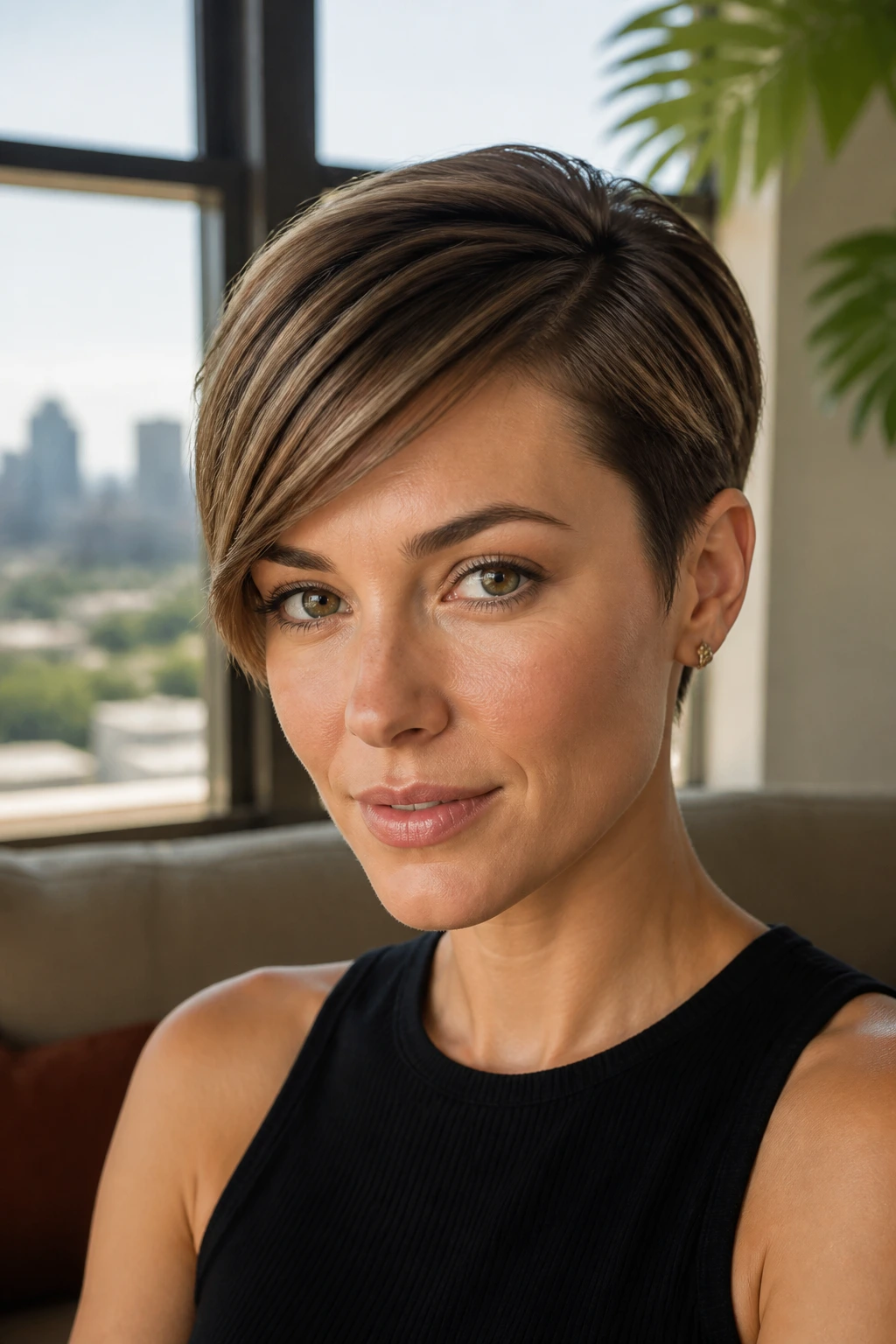
Can a pixie look polished instead of spiky? Absolutely. A sleek side-part pixie does it by keeping enough length on top to sweep across the head, while the sides and nape stay close and neat.
The part is the anchor here. It creates direction, and direction keeps short hair from looking fuzzy or random. If the crown is too short, the style becomes all texture and no shape. If it’s long enough to lay across the forehead or temple, it suddenly looks deliberate.
Styling Cues That Matter
- Blow-dry the top in the direction you want it to fall.
- Use a pea-sized amount of smoothing cream, not a blob.
- Keep the sides close to the head so the top has contrast.
- Finish with a flexible hairspray, not a shell-like spray that kills movement.
This is one of the better options if you want a short haircut that still feels grown-up and sharp. It frames the face in a clean way, and the side part gives it enough softness to wear with everyday clothes, not just dressed-up ones.
If your hair tends to stick up at the crown, dry that area first with the nozzle pointed down and the brush pulling the roots where you want them. A lot of pixie problems start there. Fix the root direction, and the rest behaves better.
7. Bixie With a Smooth Crown

The bixie sits between a bob and a pixie, and that in-between length is what makes it useful. It keeps more hair around the head than a classic pixie, but it’s still short enough to look neat and modern when the crown is smoothed down.
This style is a smart choice if you want short straight hair without the strictness of a full bob. The crown needs to stay controlled so the cut doesn’t puff outward. The ends can skim the ears and nape, but the top should lie close enough to the head that the shape reads cleanly from the side.
It’s especially kind to thick hair, because the slightly longer layers give you room to reduce bulk without going too short. Fine hair can wear it too, though in that case you want to be careful not to over-layer the top. The whole look can vanish if the crown gets thinned too aggressively.
I like the bixie because it doesn’t pretend to be something it’s not. It’s not a bob. It’s not a pixie. It sits in the middle and uses that middle ground to look smart, easy, and a little more relaxed than the stricter cuts. If you’ve ever wanted a haircut that feels polished without looking severe, this is one worth pinning to the mental file.
8. Collarbone Mini Lob
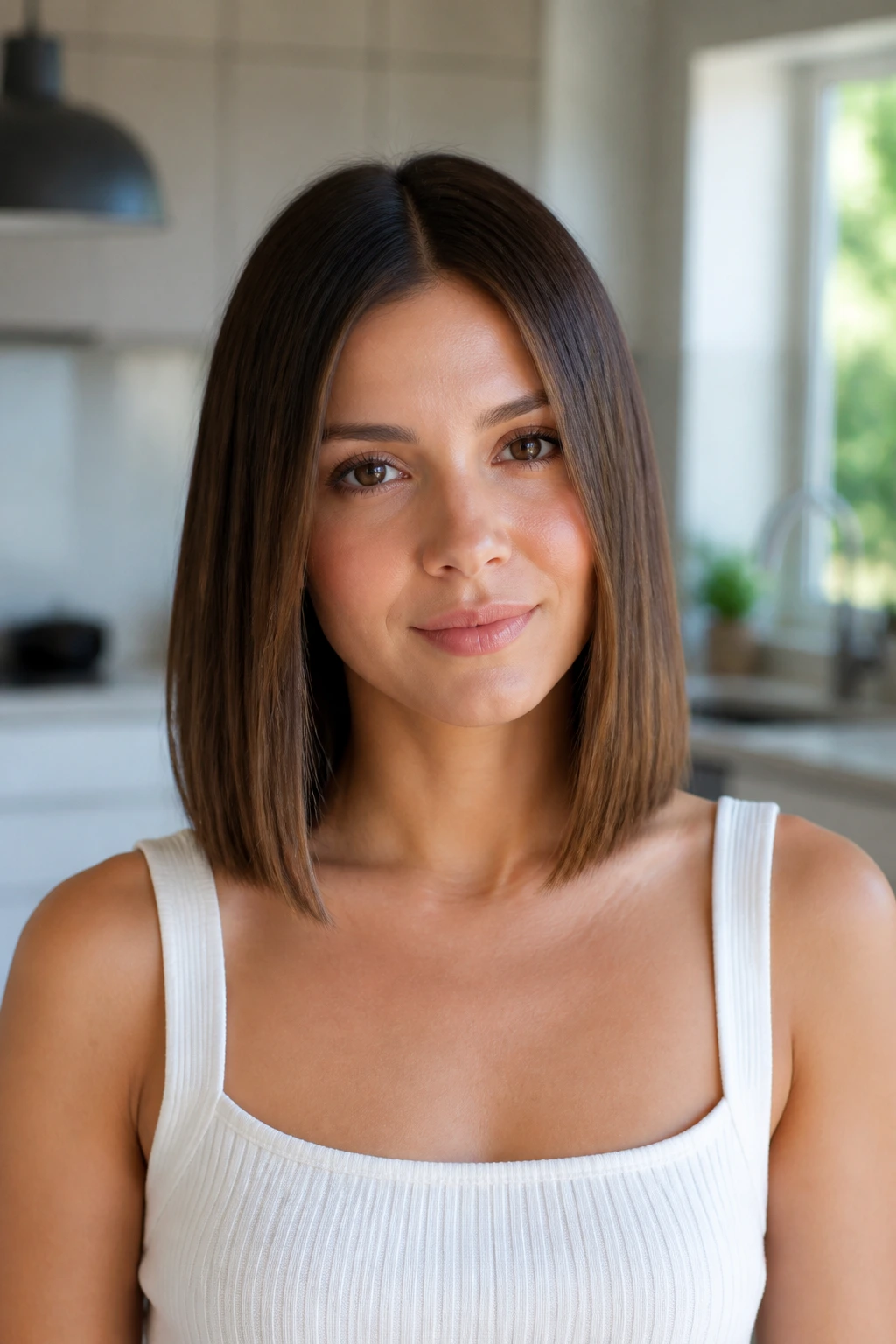
A collarbone mini lob gives you a little more length, which sounds modest until you realize how much easier it is to tuck, part, and smooth. It still reads as short, but the extra inch or two around the collarbone changes the styling options a lot.
This is the cut I think about when someone wants sleek polish but isn’t ready to commit to a jaw-length bob. The hair can swing a little, but not so much that it loses that clean outline. It also tends to be more forgiving if you’re growing out a shorter style. The shape doesn’t collapse the moment it gains half an inch.
A center part makes this version look calm and symmetrical. A deep side part gives it more lift and can help if one side grows flatter than the other. Either way, the ends should stay blunt enough to keep the line intact.
It’s not the flashiest style in the group. Good. That’s part of why it works. When the hair sits around the collarbone, it has enough length to move, but not so much that it turns into a shoulder-scraping compromise. It’s a clean middle point, and some days that’s exactly what you want.
9. Asymmetrical Bob
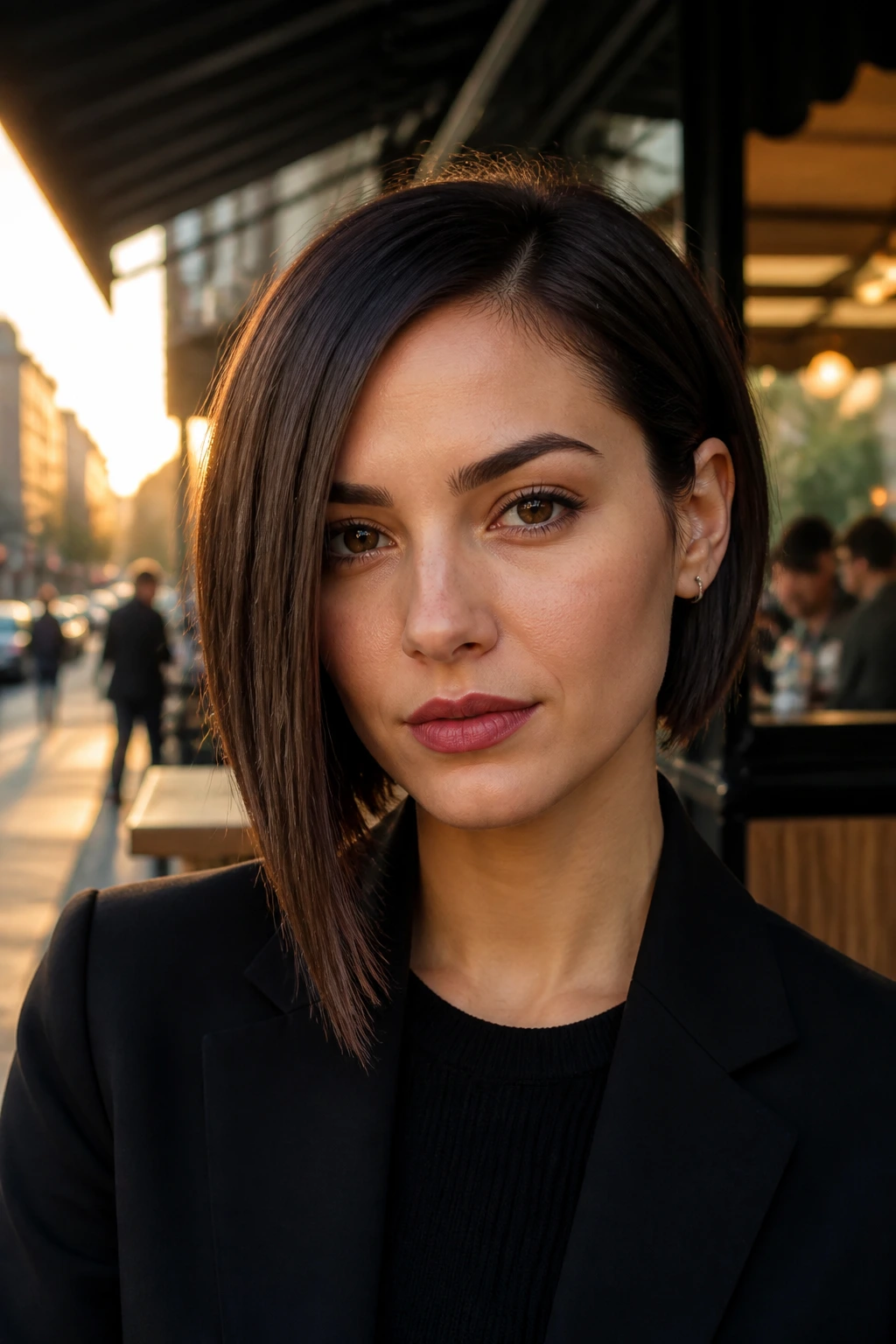
An asymmetrical bob is the cut for anyone who wants a straight hairstyle with a little edge built in. One side is noticeably longer than the other, and that unevenness creates tension in the shape without needing curls, layers, or color tricks.
The appeal is visual more than technical. Your eye keeps moving across the line because it doesn’t land evenly on both sides, which makes the haircut feel sharper. It can be dramatic or subtle. A small difference in length gives you quiet asymmetry; a bigger difference makes the whole shape feel more editorial.
This cut works especially well when the front pieces are smooth and the back stays neat. You don’t want frizz or flyaways competing with the line, because then the asymmetry looks accidental instead of designed. On very straight hair, the difference between sides shows up cleanly, which is exactly what you want.
If you wear one side behind the ear, the shape changes again. A tucked side can make the longer side look even longer, and that gives the style movement without actual texture. It’s a good option if you like clean geometry but don’t want your haircut to feel static. A little imbalance goes a long way here.
10. Pageboy Revival
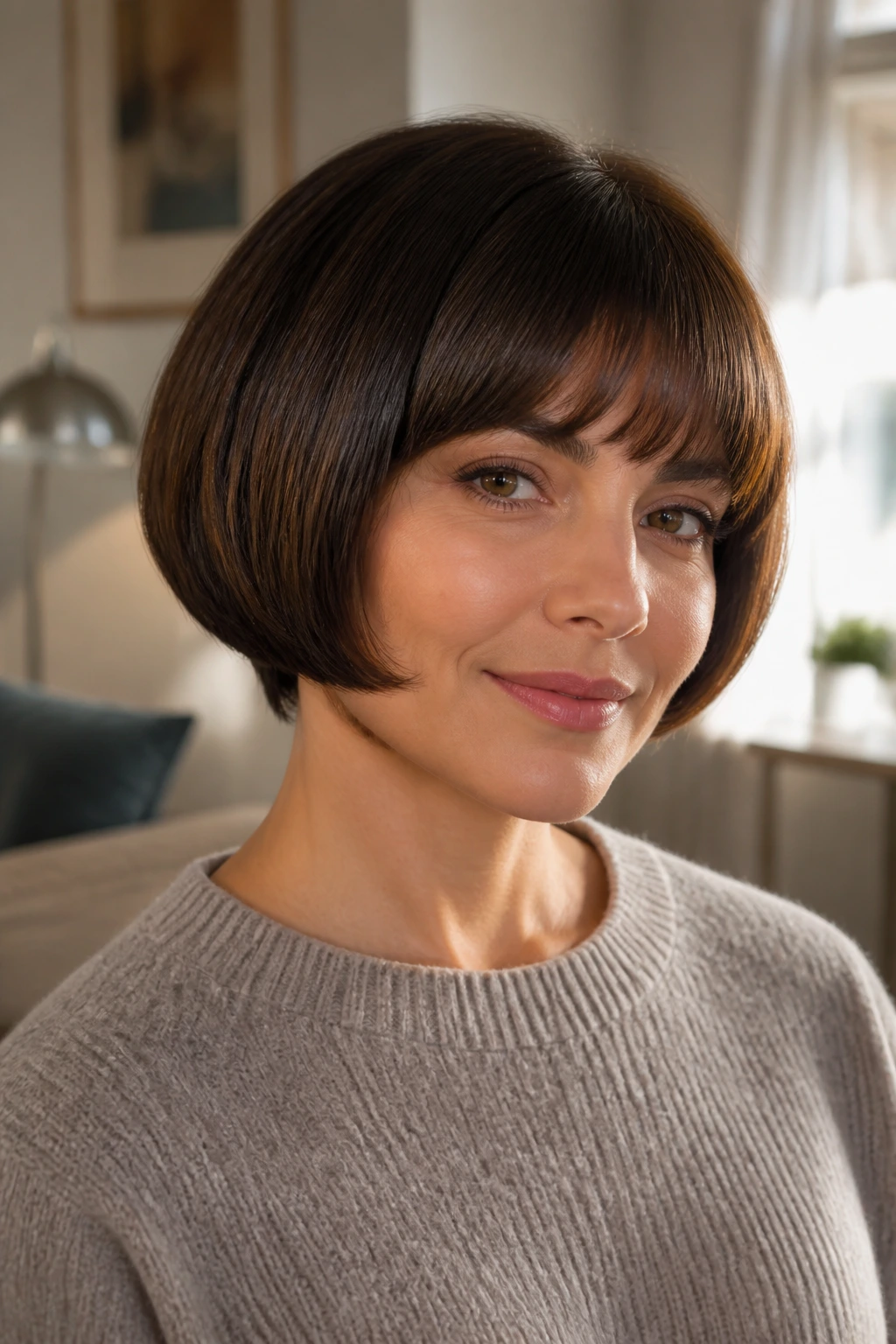
The pageboy comes with baggage, and that’s part of its charm. Old-fashioned sounds bad until you see the clean, rounded line hugging the head and realize that this cut is still one of the neatest ways to wear short straight hair.
The modern version should not feel costume-like. The back curves in gently, the sides follow the jaw or cheek, and the fringe — if you wear one — stays smooth instead of helmet-heavy. That roundness is what sets it apart from the more angular bobs. It has shape, but the shape is soft around the edges.
What Keeps It From Looking Stiff
- keep the nape clean and close
- avoid piecey ends at the perimeter
- use a round brush only to guide the curve, not to puff the hair up
- trim the fringe before it starts folding into your eyes
This cut works best when the hair is naturally straight or can be made straight without too much heat. It relies on the line, not the texture. If you let the ends flick out, the whole thing starts to look less like a pageboy and more like a haircut that needs a trim.
I’ve always liked this style on people who want polish without sharp angles. It’s tidy, a little retro, and much easier to wear than its reputation suggests.
11. Micro Fringe Crop
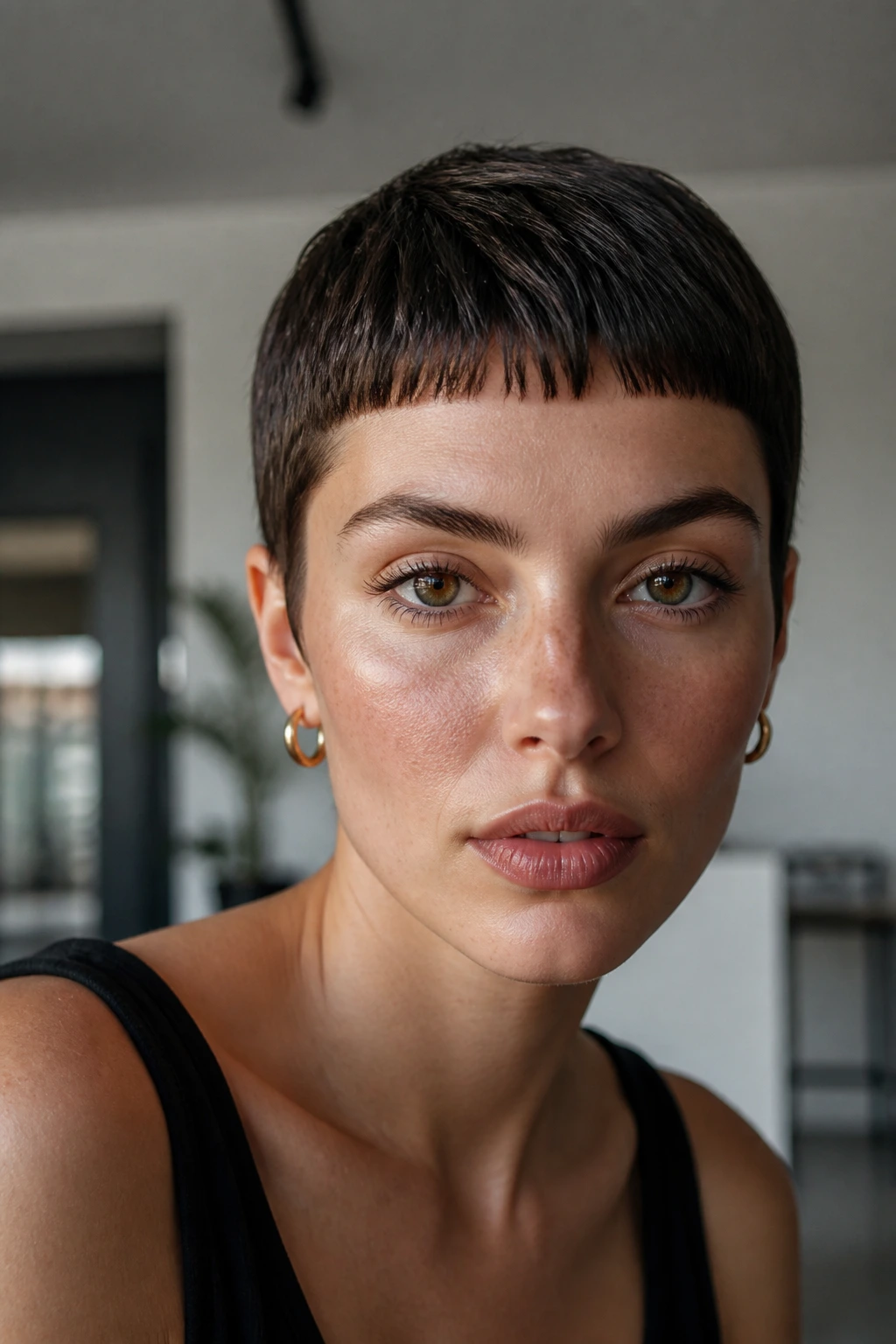
The micro fringe crop is the boldest style in this collection, and it depends on precision. The bangs are cut short — sometimes well above the brows — while the sides and top stay close enough to keep the overall shape controlled.
This is not a forgiving haircut. That’s the honest version. It demands regular trims, careful styling, and a willingness to let your forehead become part of the look. But when it works, it gives short straight hair a clean, graphic edge that stands apart from the softer bobs and lobs.
The micro fringe should be neat, not chopped badly. There’s a difference, and it matters. If the fringe is too blunt and the rest of the hair is too heavy, the cut can feel lopsided. If the hair around the temples is kept smooth and the crown is lightly controlled, the crop looks sharp instead of harsh.
I like this style most on people with strong brows or features that can handle a little openness at the top of the face. It also wears nicely with tiny earrings and simple necklines, because the haircut already does the visual work. You don’t need much else.
12. Rounded Blunt Bob
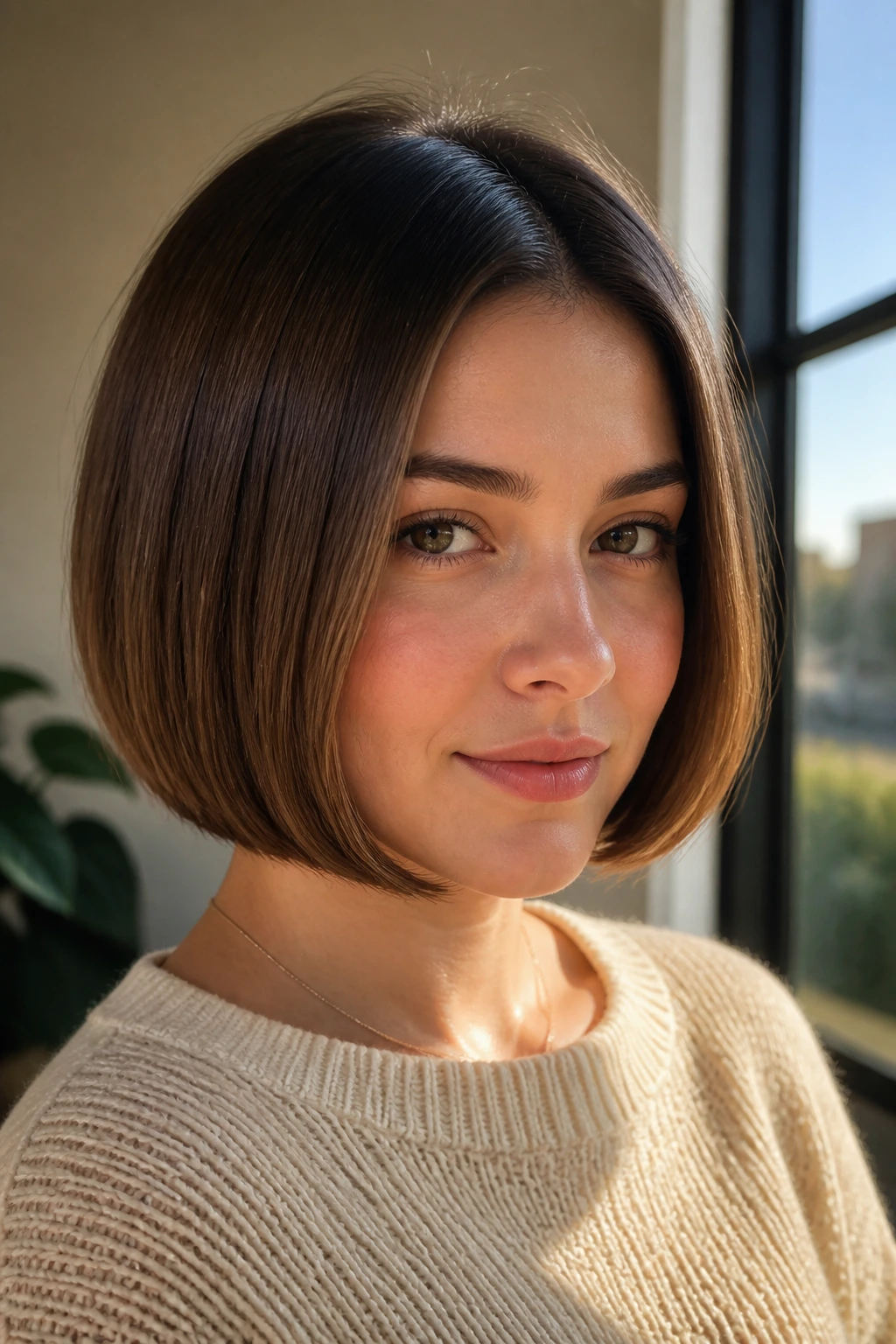
A rounded blunt bob keeps the perimeter clean but softens the silhouette just enough to avoid that boxy, heavy look straight hair can pick up at chin length. The ends curve inward slightly, which gives the haircut a small sense of movement without sacrificing the polish.
This shape is especially useful if your jawline is strong and you do not want a hard horizontal line sitting right on top of it. The rounded edge takes the pressure off. It still looks neat, still reads as short, still keeps the bluntness that makes straight hair look dense.
One thing to watch: too much curling under at the ends can make the bob feel dated. You want a hint of bend, not a tucked-in helmet. A flat brush and a blow-dryer nozzle usually give a cleaner result than a large round brush, which can push the shape too far.
There’s also a nice practical side to this cut. If one side flips a little during the day, the shape usually recovers better than a super-flat glass bob. That tiny curve buys you flexibility. Not much. Enough.
13. Center-Part Luxe Lob
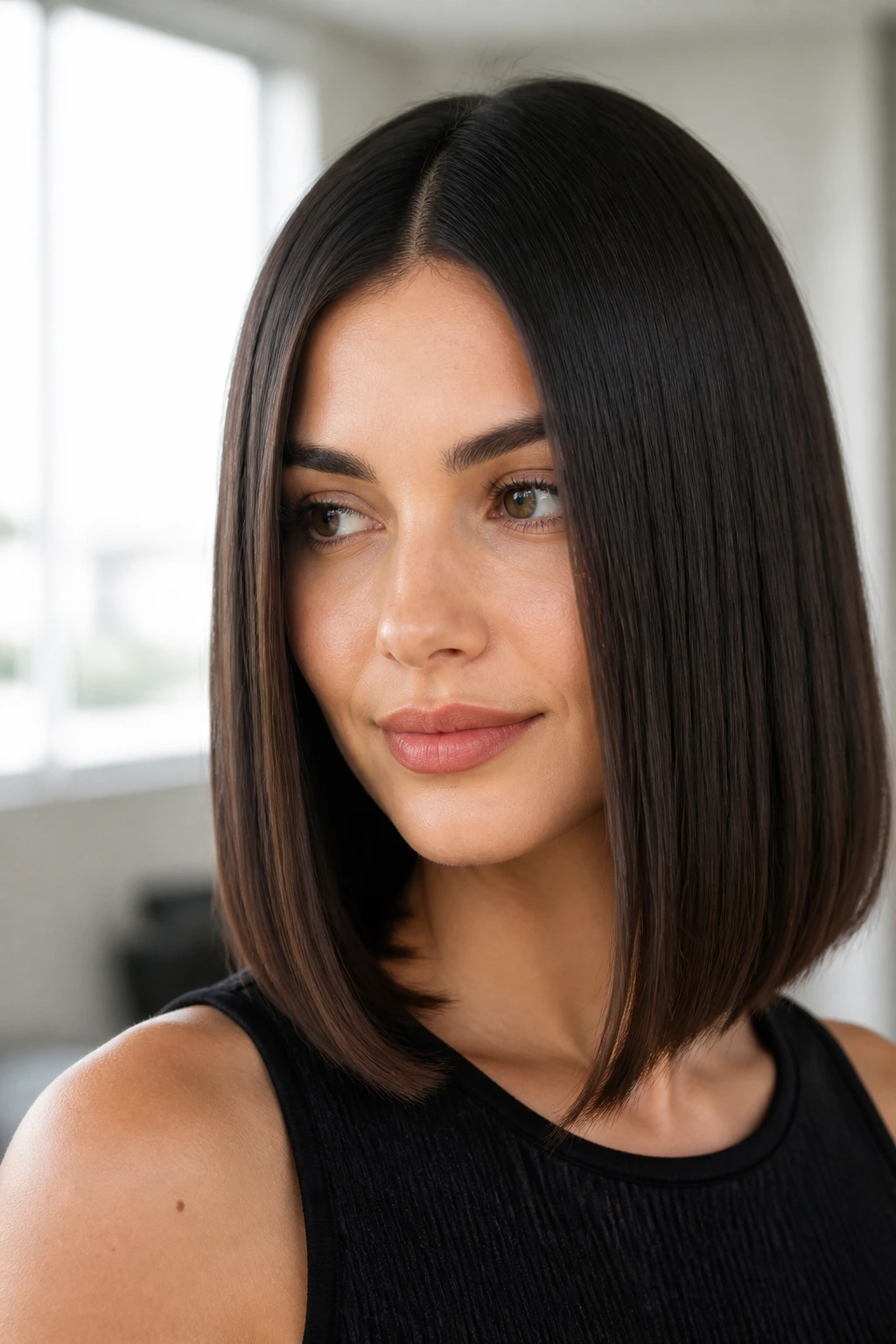
The center-part luxe lob is the long-leaning option for people who want straight hair to feel calm and expensive-looking without going all the way to a shoulder-length cut. The part runs down the center, the ends sit somewhere between the collarbone and the upper chest, and the silhouette stays clean from root to tip.
The word “luxe” gets overused, but here it earns its keep. This style looks polished because it avoids clutter. No heavy layering. No broken edges. No random texture pieces competing with the line. The hair falls in a smooth curtain on both sides, and the simplicity is the point.
Best Features for This Cut
- it flatters longer faces by widening the sides a little
- it works well with thicker straight hair because the extra length keeps weight in the cut
- it gives you enough hair to tuck, clip, or sweep behind the shoulder
- it still counts as short enough to keep styling time modest
If your hair is too fine for a full lob, ask for a blunt perimeter with just enough internal shaping to prevent a flat triangle. That’s the difference between sleek and limp. A little movement at the bottom is fine. A whole collapse at the sides is not.
14. Minimal Layered Bob
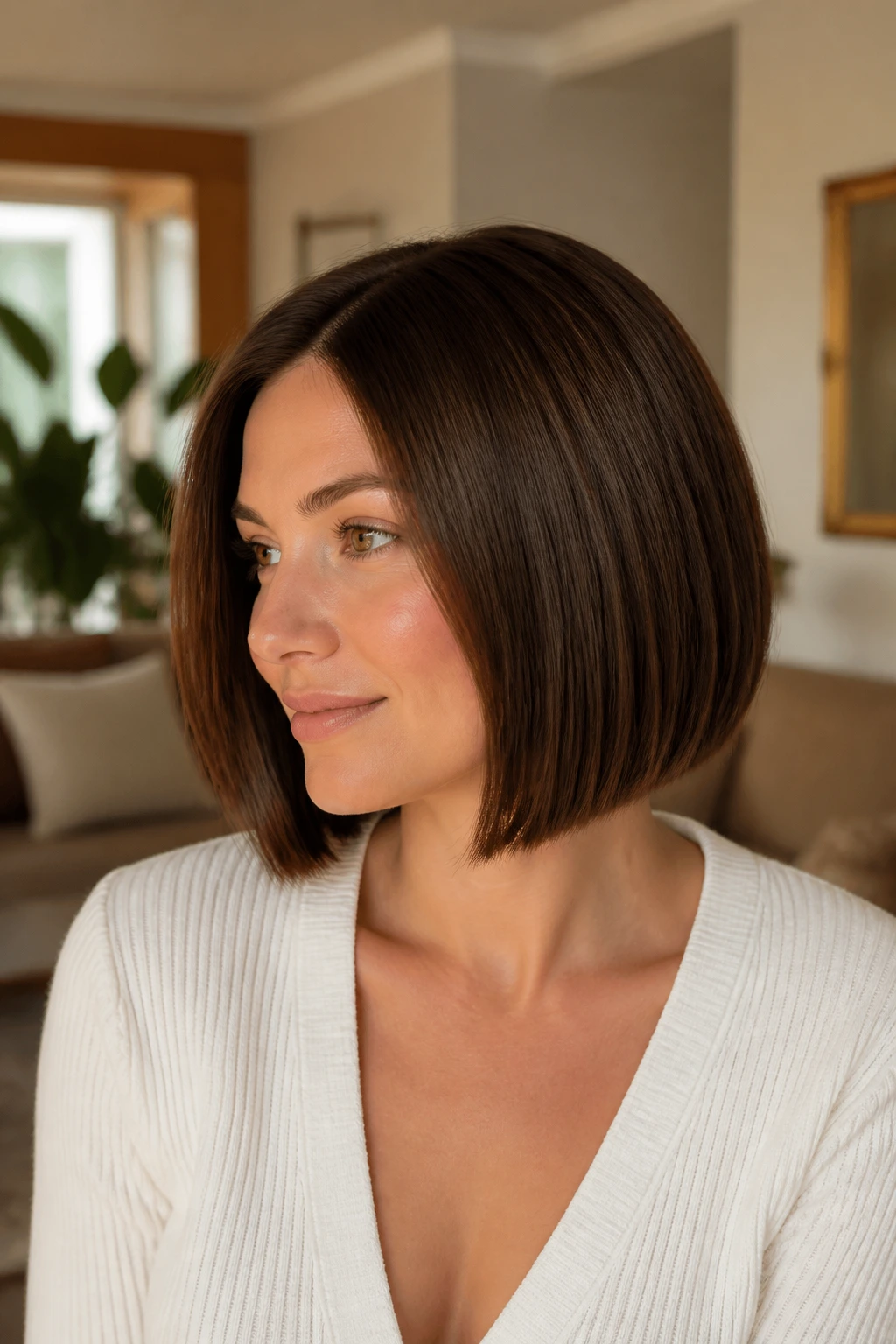
A minimal layered bob is for people who like structure but don’t want a harsh block of hair sitting around the face. The key word here is minimal. Not choppy. Not shaggy. Just enough layering to stop the cut from ballooning out at the ends.
Straight hair shows over-layering fast. You can see when the weight is gone, and you can see when the haircut has been thinned out too much. That’s why this version works best when the layers are internal and subtle, leaving the perimeter intact.
I prefer this style on thicker straight hair, where a little removal of bulk can make the shape lay better. On fine hair, too many layers can make the ends look frayed. If your hair already wants to lie flat, a blunt bob may do better for you. If your hair fights the head shape and stacks up at the sides, this version can settle it down.
The best version of this cut still looks clean from the front. You should notice the shape before you notice the layers. That’s the whole deal.
15. Wet-Look Crop
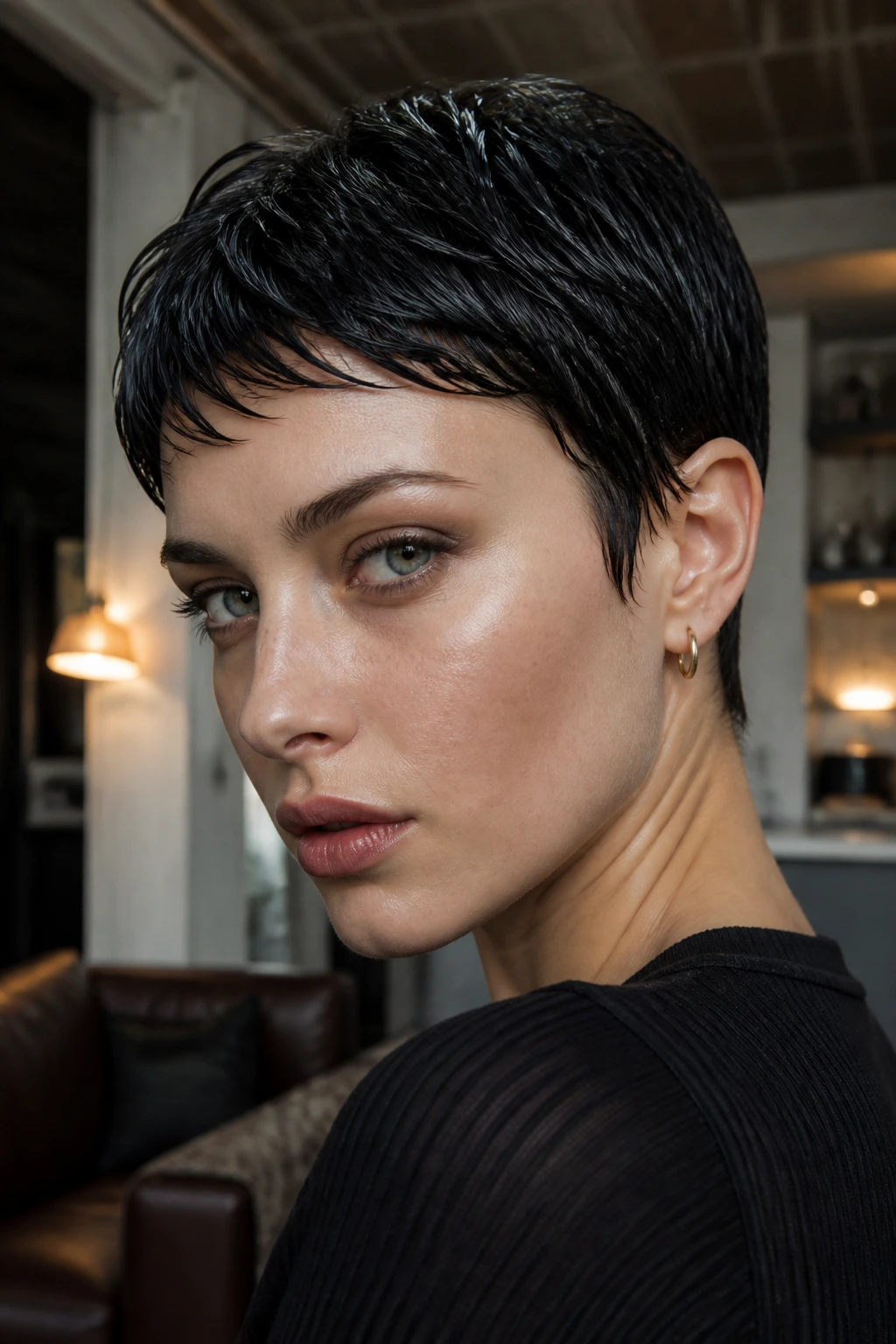
The wet-look crop is the shortest, glossiest style in the group, and it leans into shine on purpose. It’s the haircut you wear when you want short straight hair to look sleek in a more dramatic, editorial way.
The cut itself should already be neat — close at the nape, controlled on the sides, and not too bulky on top. Then the styling product does the rest. A wet-look gel or strong cream keeps the strands grouped together, giving that slick, defined finish instead of a fluffy one.
This style is at its best on a clean haircut. If the perimeter is uneven, the gel will showcase every bad snip. If the hair is too long, the shape can droop. If the top is too heavy, it gets helmet-y fast. Very little here is accidental.
That sounds strict, and it is. But if you like a style that reads as bold and polished in one shot, the wet-look crop gives you that. It’s especially good for nights out, sharp outfits, and anyone who wants a short haircut that says something before they do.
16. Curtain-Bang Bob
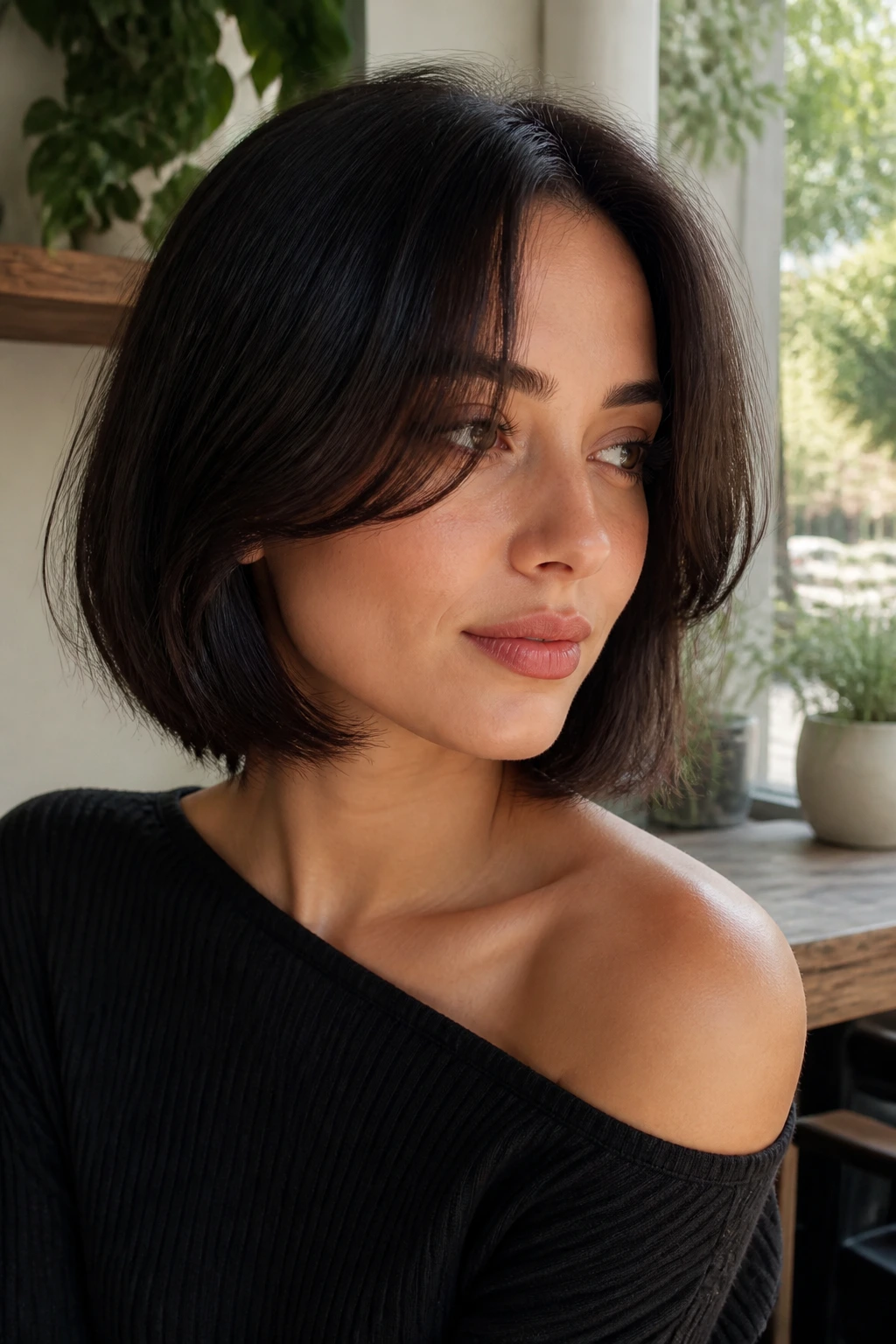
A curtain-bang bob softens straight hair without turning it into a loose, airy style. The bangs split away from the center and fall toward the cheekbones, while the rest of the bob stays neat and short.
This is a smart option if you want some face-framing shape but don’t like a full fringe sitting across the forehead. The curtain bang gives you movement where you need it and keeps the bob itself clean. It’s a subtle difference, but it changes the whole mood.
The bangs work best when they’re long enough to brush the cheekbone, not stop above the brows. If they’re too short, the face frame feels abrupt. If they’re too long and heavy, they stop behaving like curtain bangs and start acting like side pieces that need constant fixing.
I like this cut on people who want their short straight hairstyle to feel a little softer for everyday wear. It plays well with makeup, glasses, and earrings, because the bangs create motion near the eyes without blocking everything else. The rest of the cut can stay very simple. That balance is the reason this one keeps showing up.
17. Stacked Nape Bob
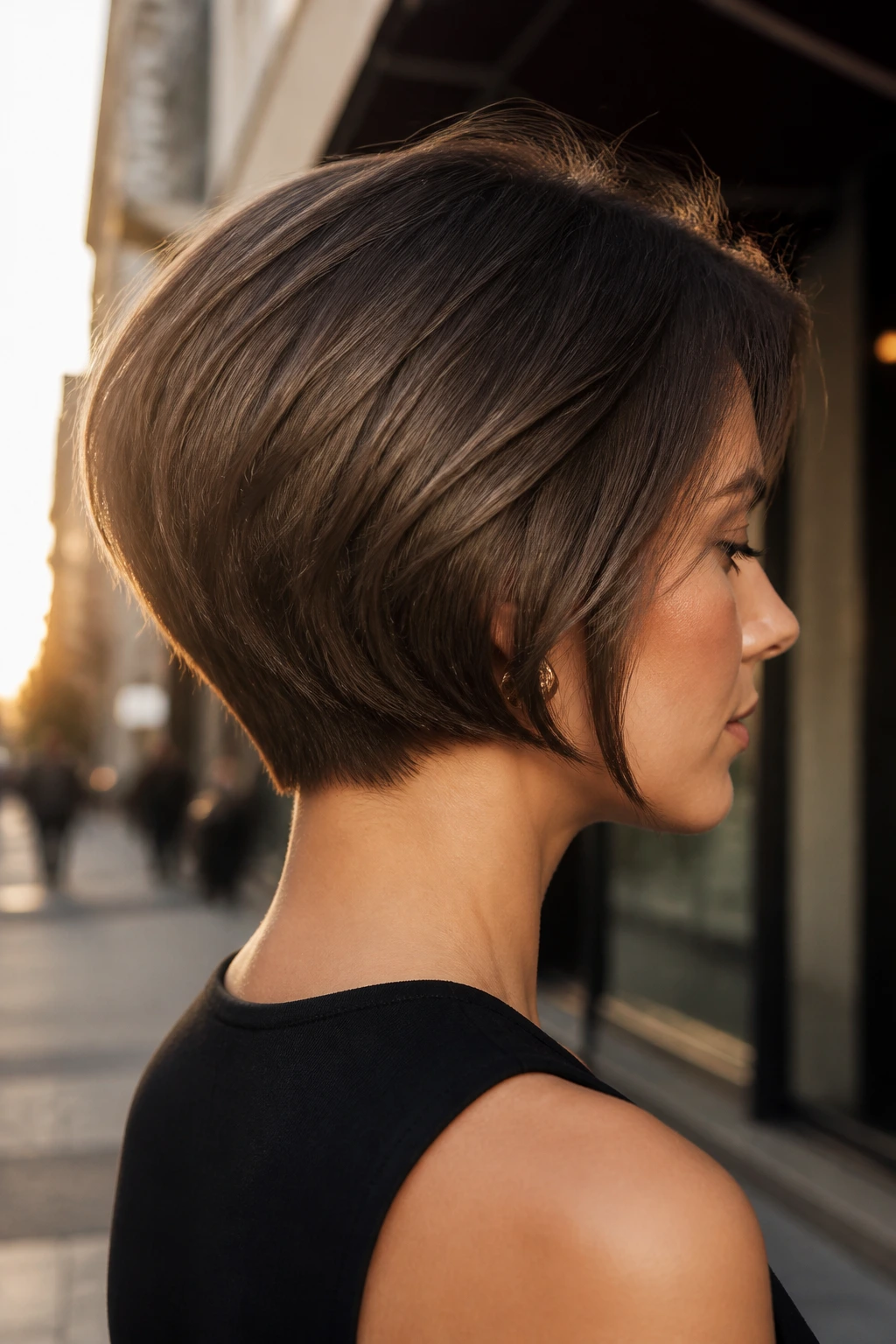
The stacked nape bob is all about the back of the head, which is not where most people look first — until they see a good version of it. The shorter layers at the nape create a gentle lift, and the result is a bob that looks shaped from every angle.
This cut needs careful hands. If the stacking is too heavy, the back gets bulky. If it’s too light, the shape disappears. On straight hair, the curve at the nape can look especially crisp, which is why this style feels so neat when it’s trimmed well.
A side view is where it really pays off. The hair lifts slightly off the neckline and then falls forward in a clean line, which makes the whole silhouette look more sculpted. It’s a great choice if you wear your hair tucked behind the ears on one side or like a bob that has some built-in structure without needing much styling.
This is one of the more maintenance-minded cuts in the collection. The back grows out fast. But if you like a short shape that looks finished from the back — and most people overlook that part — the stacked nape bob earns its keep.
18. Polished Box Bob
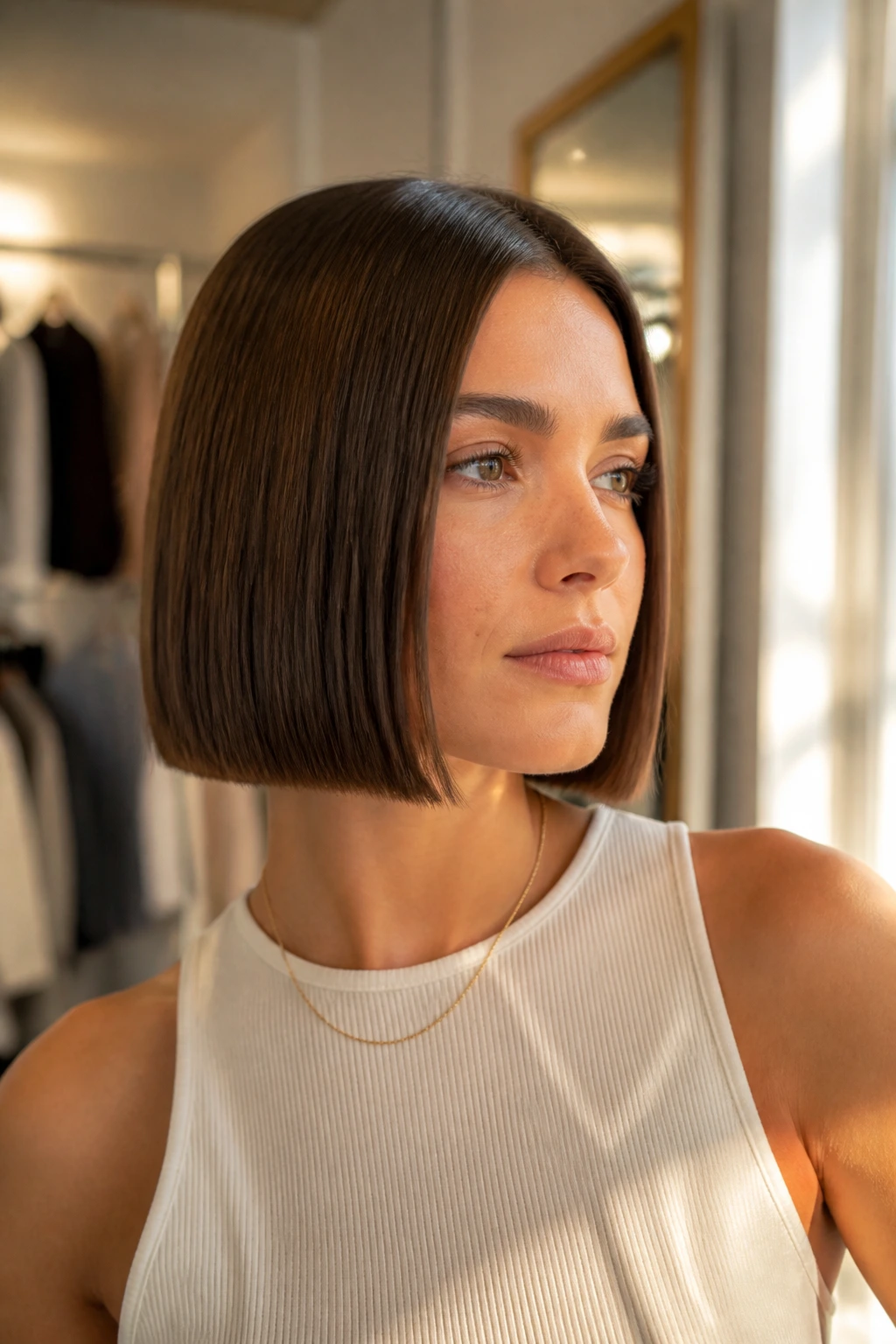
The polished box bob is the closest thing short straight hair has to a tailored suit. The sides stay straight, the bottom line stays blunt, and the silhouette feels intentionally square rather than rounded or soft.
That boxy shape is what makes it work. On straight hair, a box bob can look clean and surprisingly modern when the ends are trimmed accurately. The key is keeping the perimeter level and the surface smooth. If the hair bends outward at the ends, the cut loses its sharpness. If the crown gets too flat, the style can look heavy. Both are fixable, but the haircut needs the right base.
This one suits strong cheekbones, narrow faces, and anyone who likes a haircut with a defined edge. It can also work well with a deep side part if you want to soften the boxiness just a bit. But the main idea stays the same: the line is the feature, not a side effect.
I usually think of this as the most “finished” looking bob in the group. Not the most flexible. Not the softest. Finished. There’s a difference, and when the cut is clean, you can see it immediately.
Why a Sharp Cut Line Makes Straight Hair Look Polished
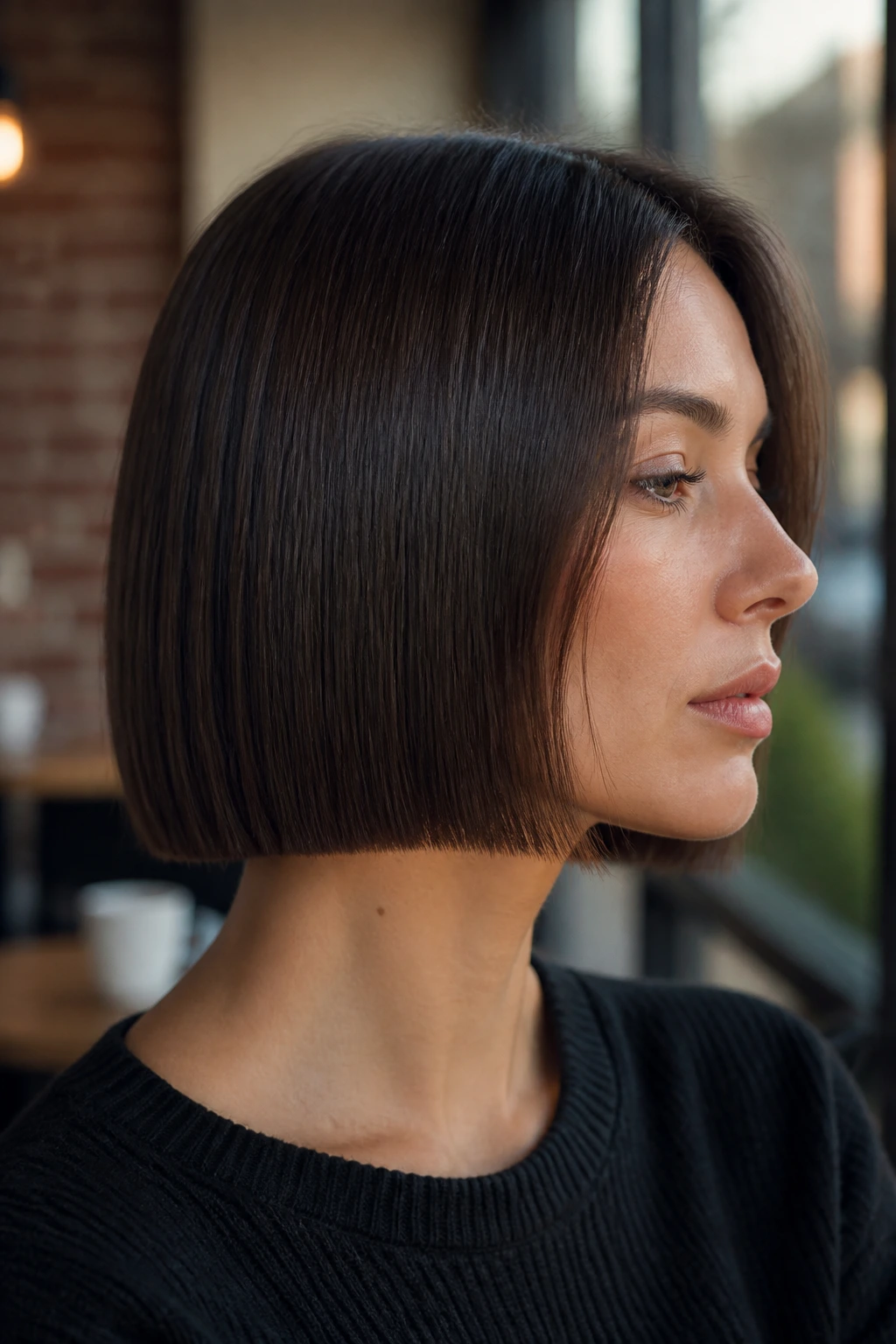
Straight hair doesn’t need help pretending to be straight. What it needs is a cut line that gives it purpose. That is why blunt edges, clean napes, and controlled bangs matter so much on short styles. Without them, the hair can look like it was simply shortened. With them, it looks designed.
The difference shows up fastest at the perimeter. A blunt line makes fine hair look fuller at the ends, which is where short cuts often lose their body. On thicker hair, the same blunt line keeps the silhouette from blooming outward into a triangle. Either way, the edge does the work.
Layers can help, but only when they’re used to remove bulk or guide the shape. Too many layers on straight hair tend to announce themselves too loudly. You can see the unevenness. You can see the thin spots. And once you notice that, the polish goes out the window.
A polished short cut also depends on how the hair falls at the crown and nape. If the roots lift in the wrong direction, the style starts to puff. If the nape is left too soft, the whole look loses its clean finish. That’s why the best short straight hairstyles are usually cut with a very clear idea of where the line starts, where it ends, and how much movement is allowed in between.
One more thing. Straight hair shows trimming mistakes faster than wavy hair does. A half-inch of difference at the perimeter matters. So does the angle of the part, the weight distribution, and whether the fringe was cut to match the rest of the shape. That’s not a complaint. It’s the reason these styles can look so sharp when they’re done properly.
Essential Tools for Sleek Short Hair
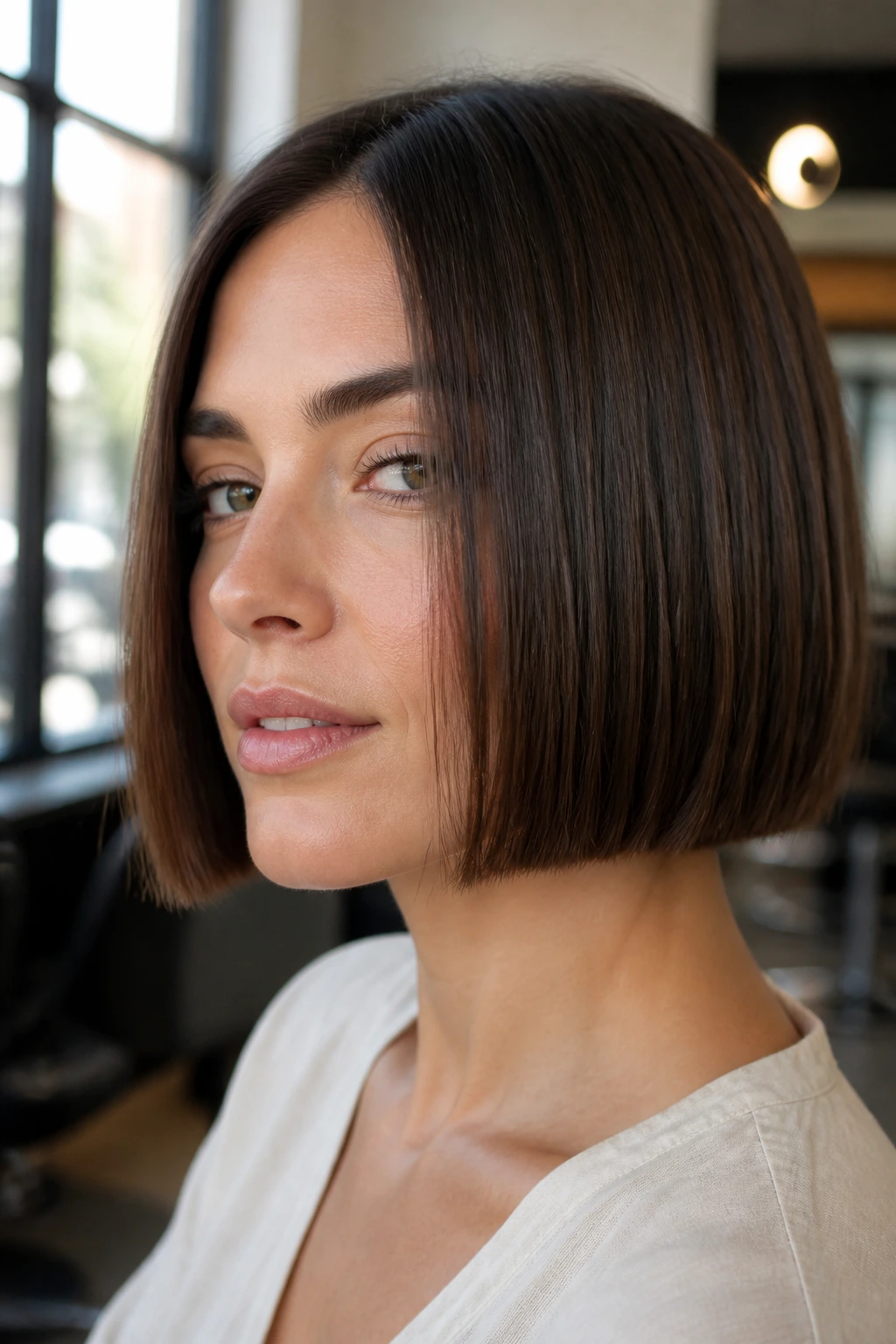
- Blow dryer with a concentrator nozzle: Directs airflow down the hair shaft, which helps keep the cuticle flatter and the surface smoother.
- 1-inch flat iron: The best size for short lengths; bigger plates are awkward near the nape and around the ears.
- Fine-tooth comb: Useful for clean parting, tension when flat-ironing, and keeping the fringe neat.
- Paddle brush or small boar-bristle brush: Paddle brushes are good for fast smoothing; boar-bristle brushes help polish the outer layer.
- Sectioning clips: Short hair still needs sections, especially if you’re working around a pixie crown or a bob that flips.
- Heat protectant spray: Use it every time you add heat; a light mist is enough if the hair is fine.
- Lightweight serum or gloss spray: Adds shine to the ends without making the crown collapse.
- Flexible-hold hairspray: Keeps the shape in place without freezing the hair into a helmet.
- Dry shampoo: Handy at the roots on day two or three, especially if the crown gets oily before the ends do.
- Tail comb: Good for adjusting a part, smoothing a side tuck, or getting the fringe to sit where it should.
Smart Product Picks for Shine, Hold, and Movement
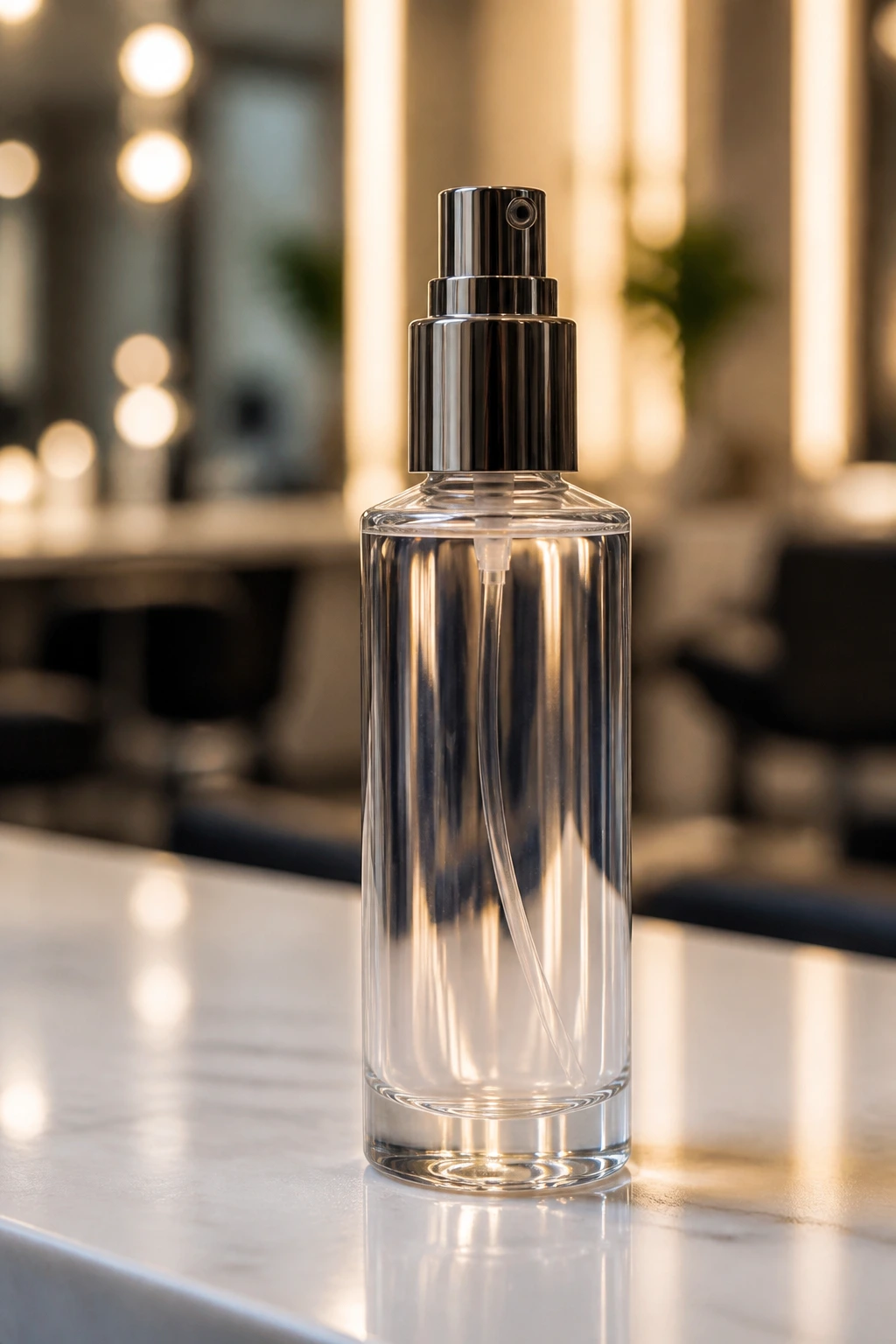
The best products for short straight hairstyles are the ones that help the cut stay visible. That sounds obvious, but a lot of people buy too much of the wrong thing. Heavy creams, thick oils, and sticky pastes can flatten the crown in a minute and make the ends look separated instead of sleek.
For fine hair, start with a light heat protectant spray and a small amount of mousse at the roots. You want lift where the hair tends to lie flat, not a heavy coating through the whole head. Fine hair does not need a butter-rich smoothing cream unless it’s very dry, and even then you should keep it to the last inch or two.
For thicker or coarser straight hair, a cream-based protectant and a silicone serum can work better because they coat the hair and help it lie down. That coating matters when the surface wants to puff. The goal is smoothness, not grease. If the product leaves your hands slick and the hair still feels dry, it’s probably too light for this texture.
Heat settings matter too. Fine or color-treated hair usually does better around 300°F to 330°F. Medium hair can sit a little higher, around 330°F to 365°F. Coarser hair often needs 365°F to 390°F, but I would still start low and test one section before cranking the iron up. High heat can make the ends look frayed long before the hair feels “done.”
Look for products that rinse clean and do not leave waxy residue. Short hair shows buildup fast. A sleek style with cloudy roots is just a dirty-looking style. That’s not polish. That’s product overload.
How to Wear These Styles With Glasses, Earrings, and Collars

Presentation: Keep the finish clean at the perimeter and let one feature lead. If the bob is blunt and sharp, a smooth side part or an ear tuck gives the eye a place to land. If the cut already has fringe or asymmetry, keep the rest of the styling quieter so the shape does not start competing with itself.
Accompaniments: Short straight styles love small hoops, bold studs, structured collars, and simple crew necks. A tucked bob shows off earrings fast. A center-part lob looks especially neat with a blazer collar or a smooth knit neckline. Thin wire glasses work well with a pageboy or French bob; chunky frames can pair nicely with a cleaner, more minimal crop.
Scale: Face shape and hair density matter more here than people admit. If your face is long, a French bob or curtain-bang bob can add width near the cheekbones. If your jaw is wide, a rounded blunt bob or mini lob can soften the edge without hiding it. Fine hair usually needs a blunt line to keep density at the ends, while thick hair can handle a little internal shaping so the style does not puff out.
Where It Fits: These cuts can be dressed up or down with almost no effort. A wet-look crop or polished box bob feels sharp enough for a black jacket and clean jewelry. A tucked-behind-ear bob or mini lob feels easier for everyday wear. The haircut does the heavy lifting, which is the nice part. You are not building the whole look from scratch every morning.
Small Styling Moves That Make a Big Difference
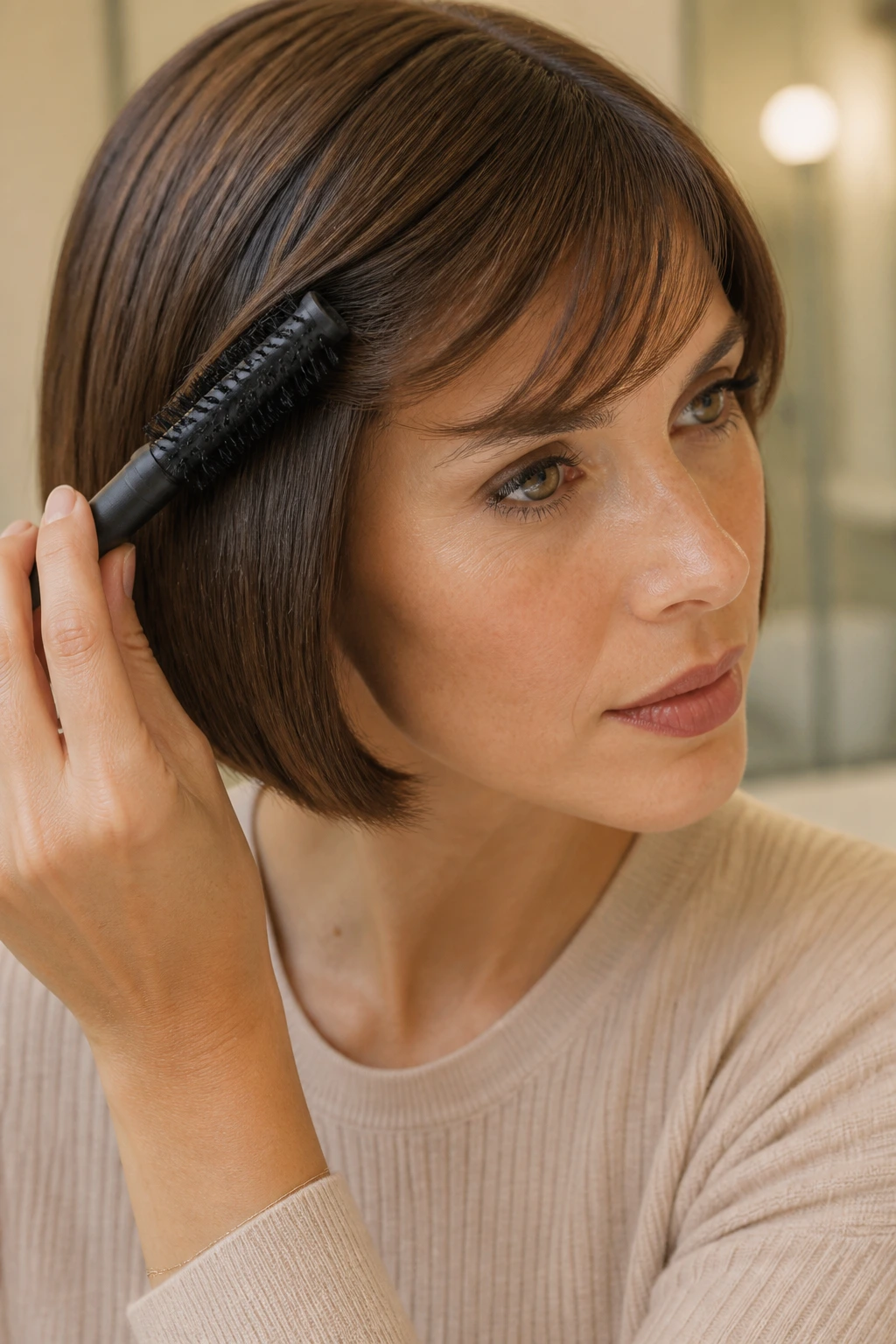
Shine Enhancement: Use a drop, not a drizzle, of serum. Warm it between your palms and skim it over the mid-lengths and ends only. If you put it at the roots, the whole style can go flat by lunch.
Root Lift: Blow-dry the roots in the opposite direction of the part first, then settle them back into place. That little detour gives the crown a bit of lift without turning the style airy or fluffy. It works especially well on bobs and pixies.
Shape Saving: Keep a mini flat iron or a small round brush around the hairline and fringe. Those are the spots that change fastest during the day. A quick pass around the front pieces is usually enough to reset the whole cut.
Texture Control: Use a touch of dry shampoo even if the roots are not oily yet, especially on very fine hair. It gives the cut something to grip without making the surface sticky. Too much, though, and you get a chalky look that kills the shine.
Make-It-Yours: If you want the style softer, leave a few millimeters of length around the temples. If you want it sharper, ask for a more defined neckline and a cleaner edge around the ears. Small changes there alter the whole mood more than extra product ever will.
How to Keep the Shape Between Washes
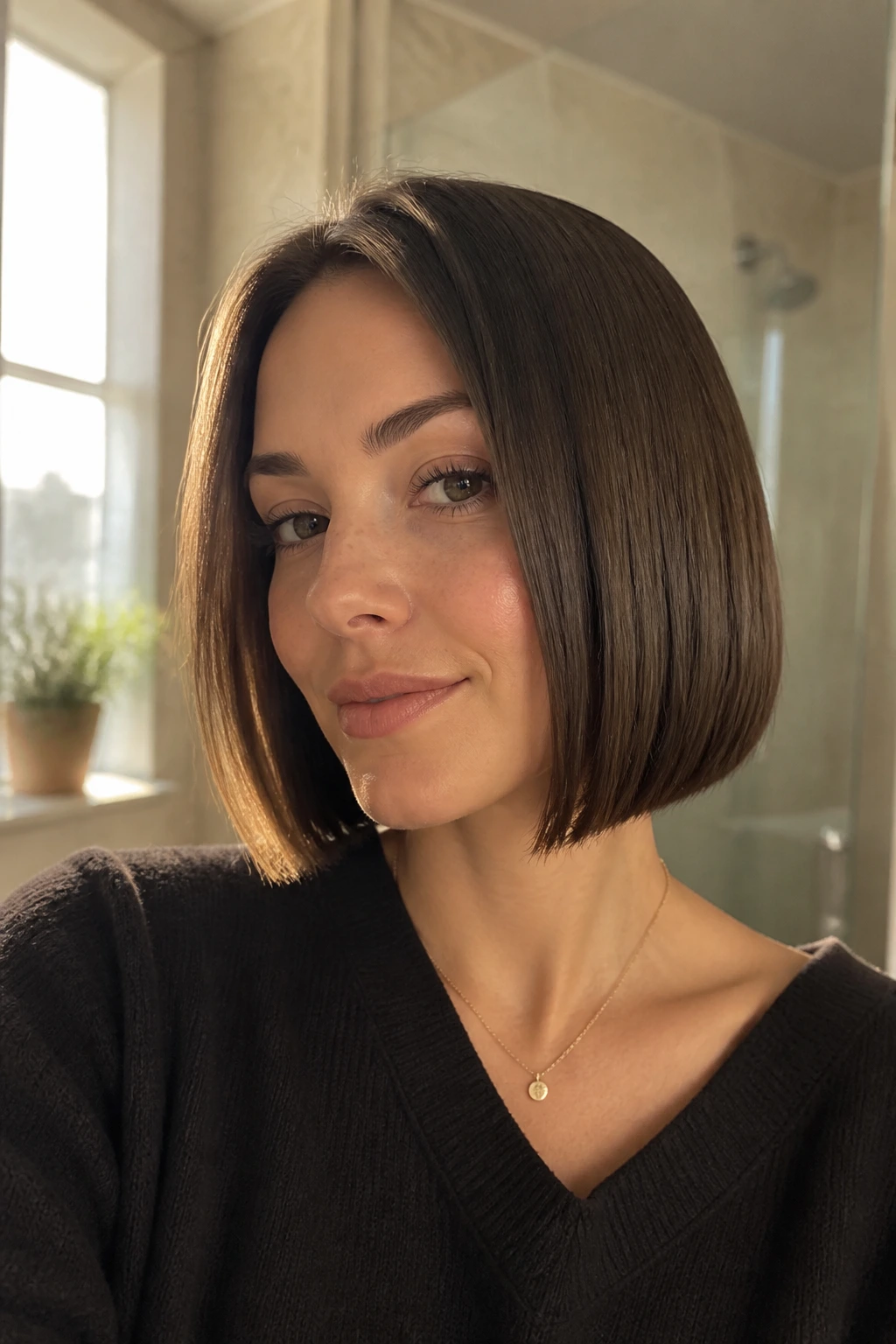
Short straight hairstyles usually hold their best shape for one to three days, depending on how much oil your scalp makes and how much heat you use. Bobs often need the least daily fuss if the ends stay blunt. Pixies and micro-fringe cuts tend to need more frequent touch-ups because the shorter pieces show every bend.
At night, a silk or satin pillowcase helps cut down on friction, which matters more than people think. If your hair bends awkwardly while you sleep, pin the fringe or top section loosely to the side with a soft clip. Don’t wrap it tight. You want to protect the line, not crush it.
For day-two hair, a small mist of water around the front and nape usually brings the shape back. Then you can re-dry those sections with a nozzle or a brush in under two minutes. That is often enough. You do not need a full wash every time the crown loses a bit of lift.
Trim timing depends on the cut. Pixies and micro fringe crops generally need shaping every 4 to 6 weeks. Bobs and short lobs can usually stretch to 6 to 8 weeks before the perimeter starts looking fuzzy or the ends begin to flip in a way that feels accidental. If your haircut has a strong angle or stacked nape, keep the appointments closer together; those shapes lose their definition faster.
Dry shampoo can help, but use it carefully. A little at the roots adds grip and soak-up power. Too much creates a dusty film that dulls the whole style. Short straight hair shows that mistake fast.
Common Mistakes That Flatten Short Straight Hair
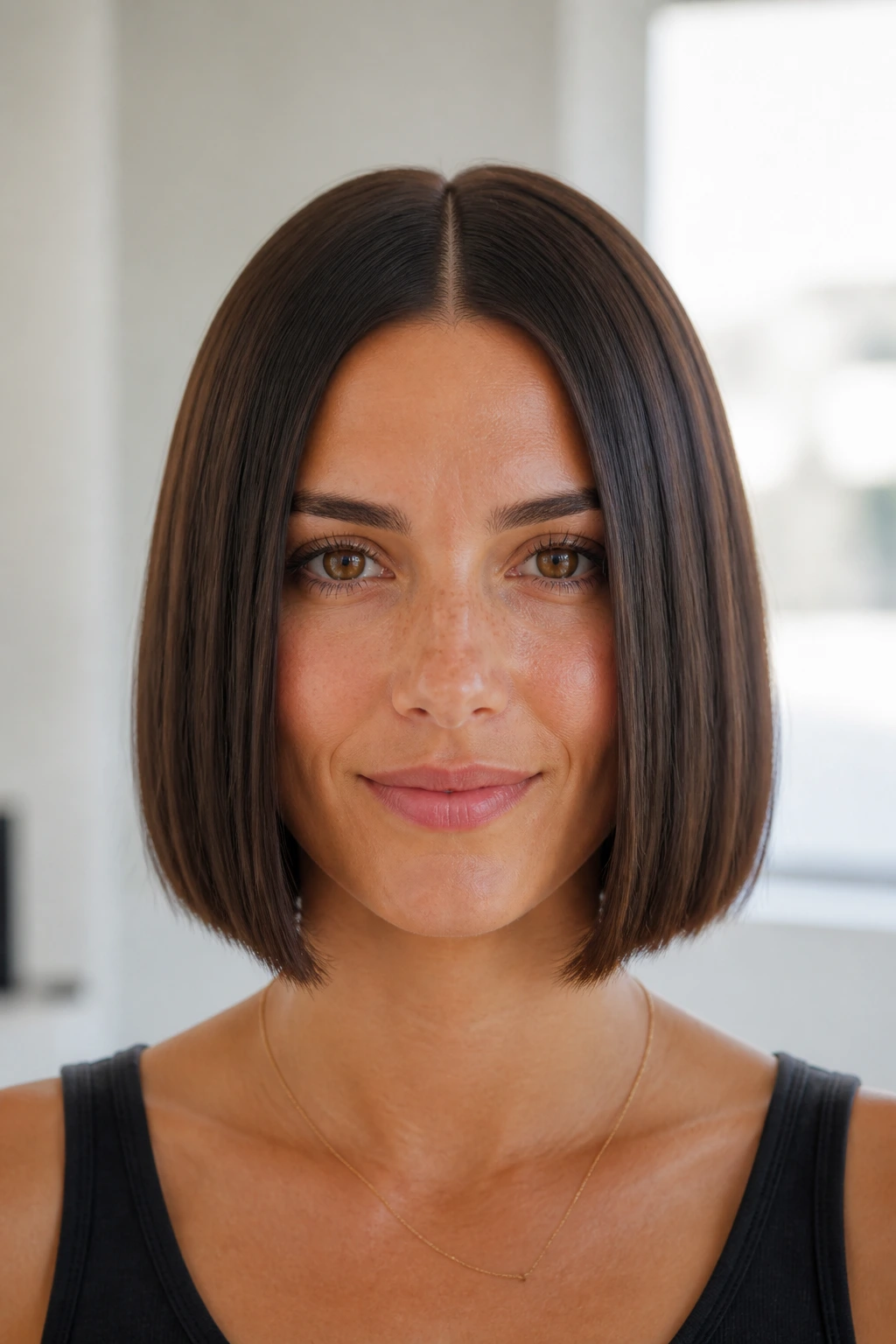
- Over-thinning the ends: The haircut starts to look wispy and see-through instead of clean. The fix is a blunt perimeter with only minimal internal shaping, especially if the hair is fine.
- Using too much serum or oil: The crown collapses, the ends separate, and the style starts looking greasy by midday. Keep shine products on the lower half of the hair and use a smaller amount than you think you need.
- Ignoring the way your hair grows at the crown: Cowlicks and swirl patterns can split a center part or lift one side of a pixie. Dry the root pattern first, then lay it into the final direction.
- Flat-ironing in giant sections: The outside looks smooth but the underneath stays bent or puffy. Work in smaller sections so the heat reaches the whole strand evenly.
- Waiting too long between trims: The line softens, the bob flips out, and the whole shape starts to lose intention. Short straight cuts depend on clean edges; once those blur, the style does too.
- Choosing a fringe that’s too short for your maintenance habits: Micro bangs look smart when they’re fresh and awkward when they’re grown out by half an inch. If you hate frequent trims, keep the fringe longer and softer.
Variations and Adaptations to Try

The Fine-Hair Version: Keep the perimeter blunt and the layers minimal, then rely on root spray and a round brush lift at the crown. This keeps the style looking fuller without stuffing it with heavy products that flatten the ends.
The Thick-Hair Control Version: Ask for subtle internal debulking near the back and sides, but keep the outer line clean. Thick straight hair can balloon if it’s left all one length, so a little hidden shaping keeps the silhouette close to the head.
The Low-Heat Version: If you want less heat, choose the collarbone mini lob or rounded blunt bob and let the hair air-dry 80 percent of the way before smoothing the front sections only. A light smoothing cream and a silk pillowcase do more work here than a pile of products.
The Sharp-Edge Version: Choose the box bob, asymmetrical bob, or wet-look crop if you like a stronger finish. These styles lean into line and shine, which makes them useful for anyone who wants a haircut that reads crisp from a distance.
The Grow-Out Version: A mini lob with curtain bangs or an angled A-line bob gives you the easiest transition when you’re moving away from a shorter cut. The shape keeps looking purposeful while the length creeps forward, which saves you from that awkward halfway stage.
The Softer Face-Framing Version: The French bob and curtain-bang bob both soften the front of the haircut without giving up the clean outline. If you want polished hair that doesn’t feel severe, this is usually the lane to stay in.
Frequently Asked Questions
What short haircut works best if my straight hair is very fine?
A blunt bob, a chin-grazing bob, or a collarbone mini lob usually works best because the solid perimeter gives fine hair more visible density. Avoid over-layering, since that can make the ends look thin and broken.
How do I keep short straight hair from looking flat at the crown?
Dry the roots in the opposite direction of your part first, then reset them into place with a brush or comb. A small amount of root lift spray at the crown helps too, but don’t use it through the ends or the style can look dry and stiff.
Do bangs make short straight hairstyles harder to maintain?
They do add maintenance, especially if you choose a micro fringe or a blunt fringe. A longer curtain bang is easier to live with because it grows out more gracefully and can be swept aside on busy mornings.
Can I wear these styles without heat every day?
Yes, but the haircut has to support that choice. A rounded bob, pageboy, or mini lob can air-dry neatly if your hair already lies mostly straight, while a wet-look crop or glass bob usually needs at least a little heat for the surface to look deliberate.
How often should I trim a short bob or pixie?
Pixies and micro fringe crops usually need trimming every 4 to 6 weeks. Bobs and lobs can stretch to 6 to 8 weeks, though the cleaner the line, the sooner you’ll notice when it starts to blur.
What should I ask my stylist for if I want a sleek finish?
Ask for a blunt perimeter, minimal texturizing at the ends, and a shape that matches your hair’s natural fall. If you know your crown swirls or one side lays flatter, mention that before the cut starts; that detail matters a lot on short straight hair.
Why does my bob flip out at the ends?
Usually the cut is either a little overgrown or the ends were dried with too much tension in the wrong direction. A quick trim often fixes the first problem, while a pass with a flat iron or a small round brush can settle the second one.
What if my hair is straight but thick and heavy?
Pick a shape with some internal weight removal, like a bixie, A-line bob, or minimal layered bob. The goal is to reduce bulk without shredding the edges, because heavy thinning shears can make straight hair fray at the perimeter.
Can I make these cuts work with glasses?
Yes, and some of them look better with glasses than without. A tucked bob, French bob, or rounded blunt bob leaves space around the frame and keeps the hair from fighting your glasses arms at the temples.
A Clean Line Goes a Long Way
Short straight hairstyles look their best when the line is clear enough to do the job on its own. That’s the thread running through all 18 styles here: the cut should earn its polish before the styling even starts.
If you want the easiest place to begin, the chin-grazing blunt bob and the collarbone mini lob are probably the least fussy options. If you want something sharper, the box bob, asymmetrical bob, or glass bob gives you a cleaner edge. And if you want a little more personality, the French bob, curtain-bang bob, or side-part pixie keeps the finish neat without flattening the whole look into one mood.
The nice thing about straight hair is that it rewards clarity. Once the outline is right, the style stops fighting you and starts looking composed. Keep the edge clean, keep the products light, and the haircut does the rest.
