



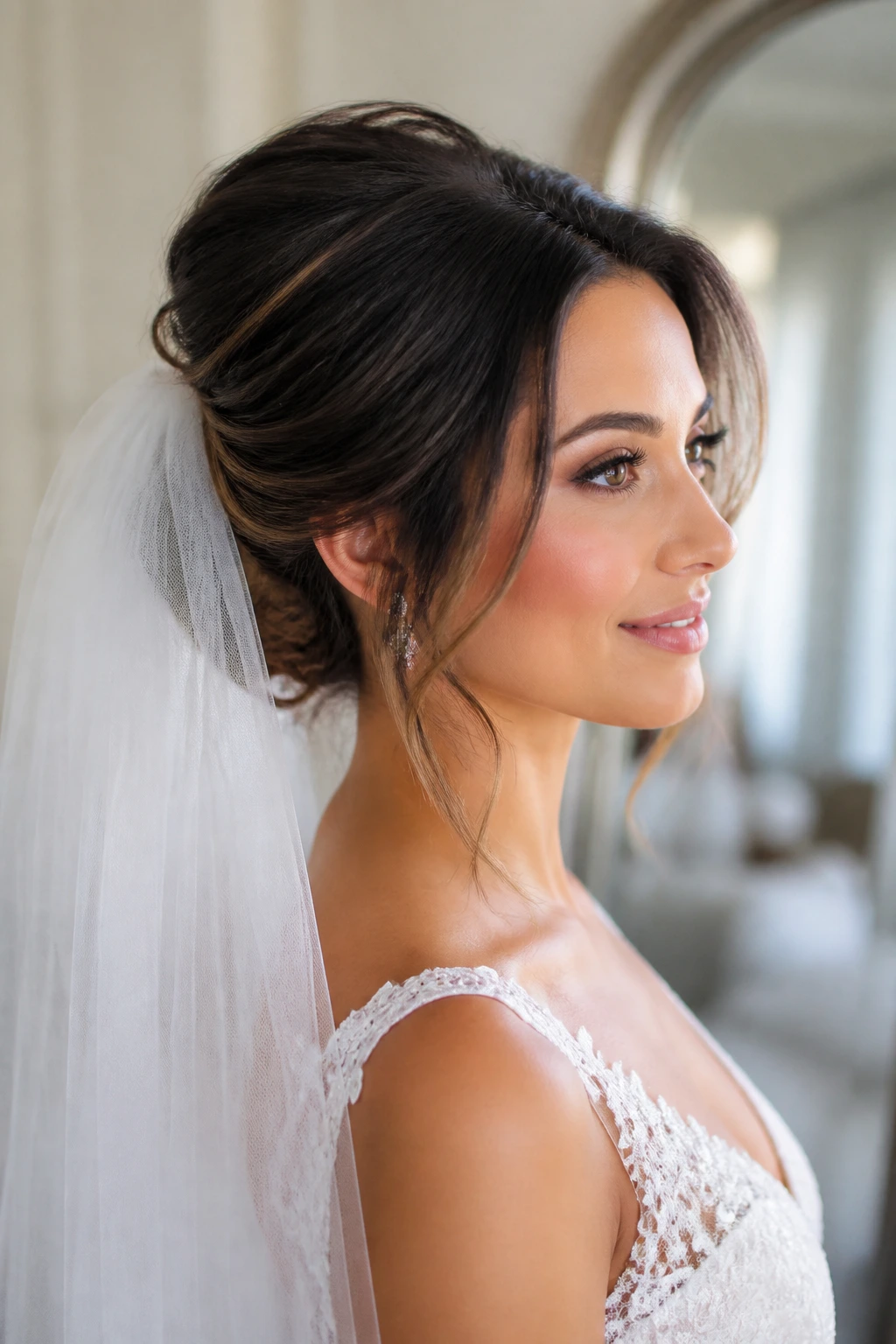
A bridal updo has one job that sounds simple and gets complicated fast: stay neat when the veil goes on, stay secure when the hugging starts, and still look soft enough in photos that you don’t look like you were assembled for a school recital. The best updos for brides do all three. They keep the neck open, show off a dress back, and give earrings or a hair vine room to do their work without a curtain of hair fighting them.
The styles that hold up best aren’t always the ones with the most spray. Usually, they’re the ones with the cleanest shape. A good stylist knows the difference between hair that’s merely pinned and hair that’s actually built — anchor points, section direction, hidden grips, the whole quiet architecture under the surface.
Some brides want glassy and smooth. Others want rope braids, twisted halos, or a loose knot that looks like it was put together by hand rather than stamped out of a catalog. Both can be right. The real question is which updo works with your hair texture, your neckline, and your tolerance for touch-ups once the day gets moving.
Why You’ll Love This Collection
-
Veil-Friendly Shapes: These bridal updos leave clean anchor points for comb veils, cathedral veils, and little pearl pins, which saves you from awkward re-pinning before the ceremony.
-
Built for Long Wear: A well-pinned wedding updo survives photos, dinner, and dancing because the structure sits close to the head instead of hanging on soft curls alone.
-
Hair-Texture Range: There are options here for fine hair, thick hair, straight hair, curls, coils, and everything in between, so you’re not forced into one “bridal” look.
-
Dress-Neckline Friendly: Low buns, twists, and chignons keep the shoulders and back visible, which matters when the dress has lace, buttons, illusion mesh, or a deep V.
-
Easy to Personalize: Add a veil, tuck in fresh flowers, slide in pearl pins, or keep the whole thing bare and polished. The silhouette stays the same; the mood changes.
1. Sleek Low Chignon
A sleek low chignon is the bridal updo I reach for when the dress has a clean line and the bride wants the hair to behave. It sits low at the nape, keeps the profile elegant, and gives a veil comb a solid place to live without crowding the bun.
The key is tension, not stiffness. Smooth the hair with a light cream, gather it low, and wrap the length into a compact coil that sits just off-center or dead center, depending on the neckline. Too much shine spray can make it look helmet-like. Too little prep, and tiny flyaways will start waving at everyone before the vows are done.
2. Soft Romantic Bun with Face-Framing Pieces
This one has a little more air in it. The bun stays low and loose, but two slim pieces around the face soften the shape and keep it from looking severe under bright ceremony lighting.
It works especially well with strapless gowns and sweetheart necklines, because the softness balances exposed shoulders. I like it when the face-framing sections are curled away from the cheeks with a 1-inch iron, then lightly brushed so they don’t look ringlet-y. The bun itself should still feel anchored — romantic, yes, sloppy, no.
3. Braided Crown Bun
A braided crown bun brings structure to a look that could otherwise feel too simple. The braid wraps the head first, then disappears into a bun at the back, so the style has texture from every angle.
This is a smart choice for brides who want something that looks detailed without piling on accessories. A crown braid also helps fine hair look fuller, because the braid creates its own visual width. If your hair slips easily, prep with dry shampoo at the roots before you start braiding. Slick roots and wedding pins do not get along.
4. French Twist with a Soft Finish
A French twist always looks like it knows the room. Classic, narrow, and a little formal, it’s the sort of style that sits well beside tailored gowns, long earrings, and a veil with a clean edge.
The soft finish matters. Pull a few whisper-thin pieces free at the temples, then smooth the twist so it still feels modern instead of lacquered into place. If your hair is layered, the twist may need a few hidden cross-pins down the spine to hold those shorter sections in line. That’s normal. That’s the job.
5. Textured Low Knot
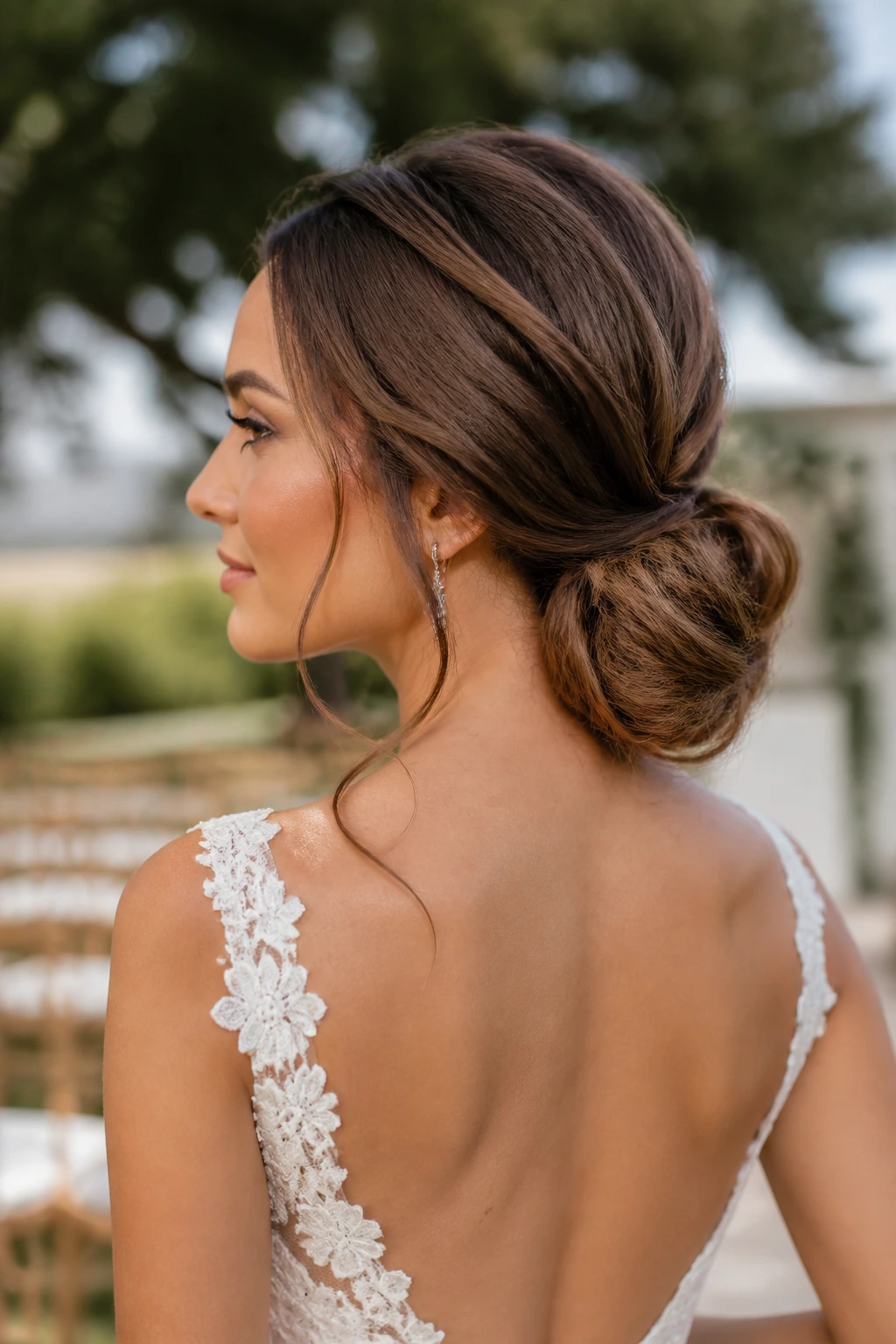
The textured low knot is for brides who like the idea of “undone” hair but don’t want anything actually undone by 4 p.m. The knot sits near the nape, but the surface has grip and movement, which makes it easier to pin and easier to soften.
It’s a good match for outdoor ceremonies, especially when the dress has lace or a back detail that deserves a little room. I’d keep the front slightly polished and let the back live with more texture. That contrast reads better in photos than a fully messy bun, which can collapse into a fuzzy shape if it’s overworked.
6. Center-Part Ballet Bun
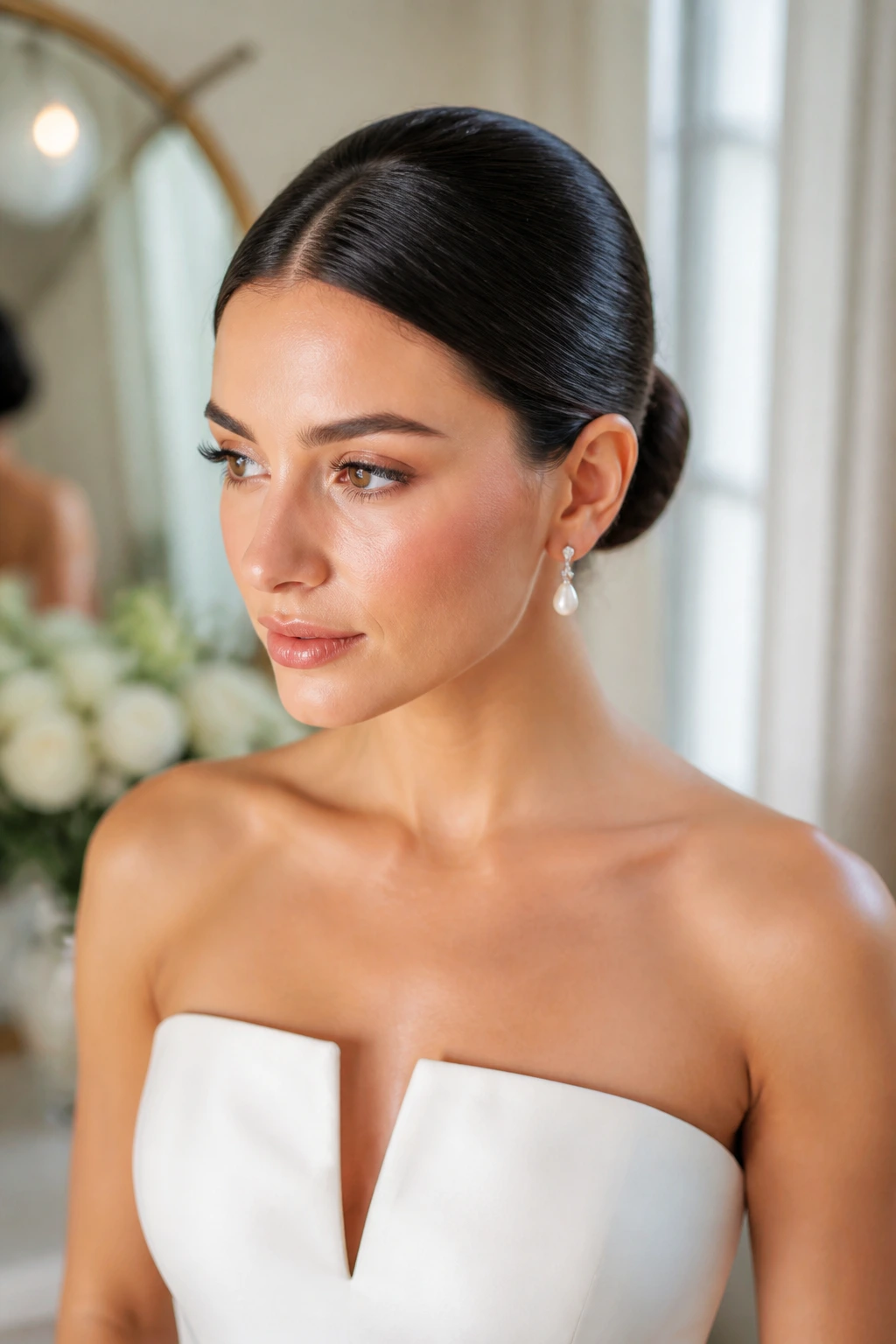
A center-part ballet bun brings a clean, intentional line through the face. It suits minimalist gowns, sharp necklines, and brides who want the hair to look controlled from front to back.
Don’t confuse ballet-bun sleekness with flatness. The crown should still have a bit of lift, especially if the face is longer or the dress has a lot of structure. A fine-tooth comb and a light smoothing cream do more here than a mountain of hairspray. Keep the bun compact, then pin it in a way that lets it sit tight against the head.
7. Side-Swept Chignon
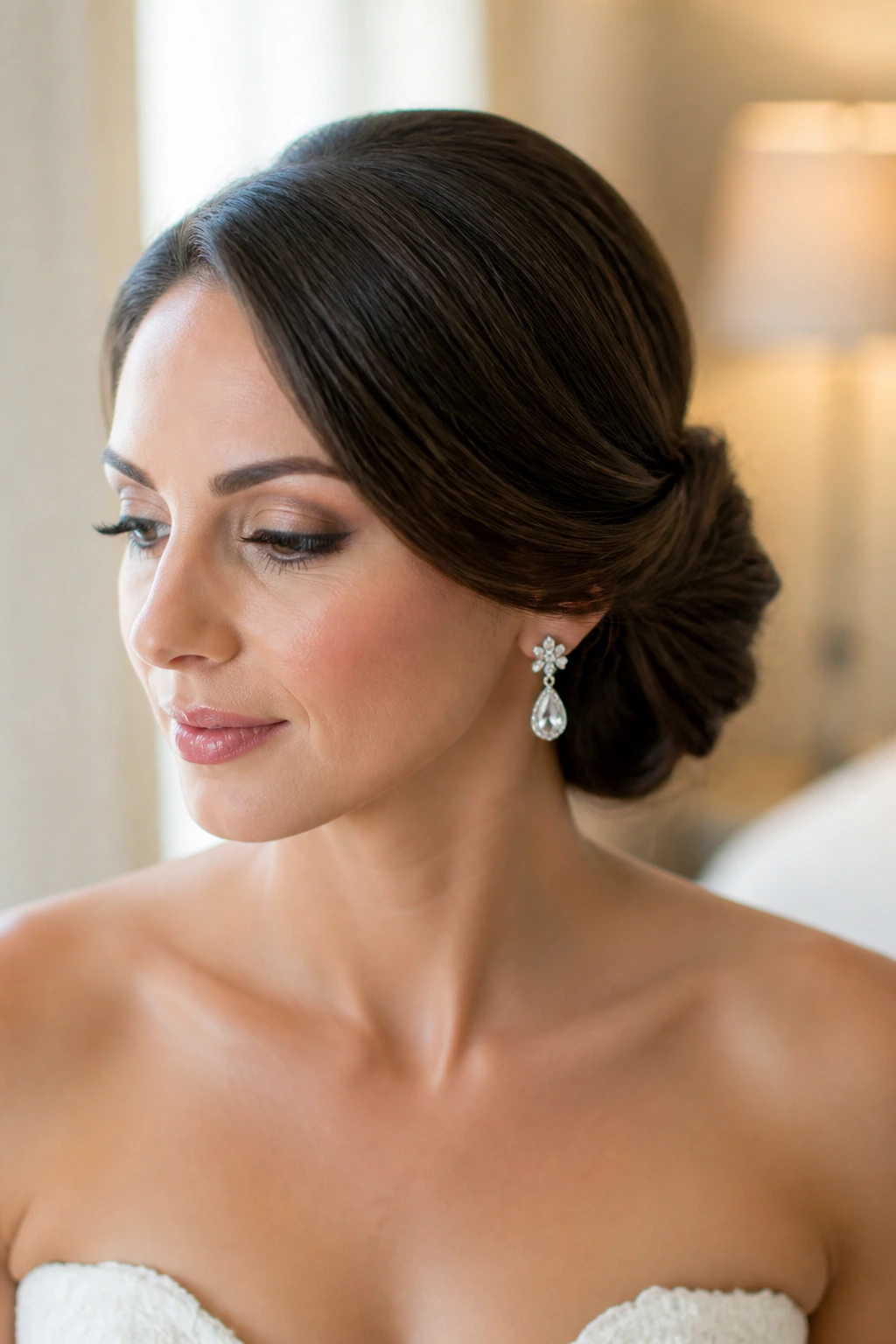
A side-swept chignon has more movement than a centered bun, and that slight asymmetry can be a gift. It draws the eye across the face and works beautifully with one-shoulder dresses or gowns with dramatic draping.
The trick is to keep the sweep visible without making it loose. A deep side part, a smooth sweep over one temple, and a tucked chignon just behind the ear give the style shape without fuss. If you like earrings, this is one of the best bridal updos for letting them show without competing with the hair.
8. Halo Braid Updo
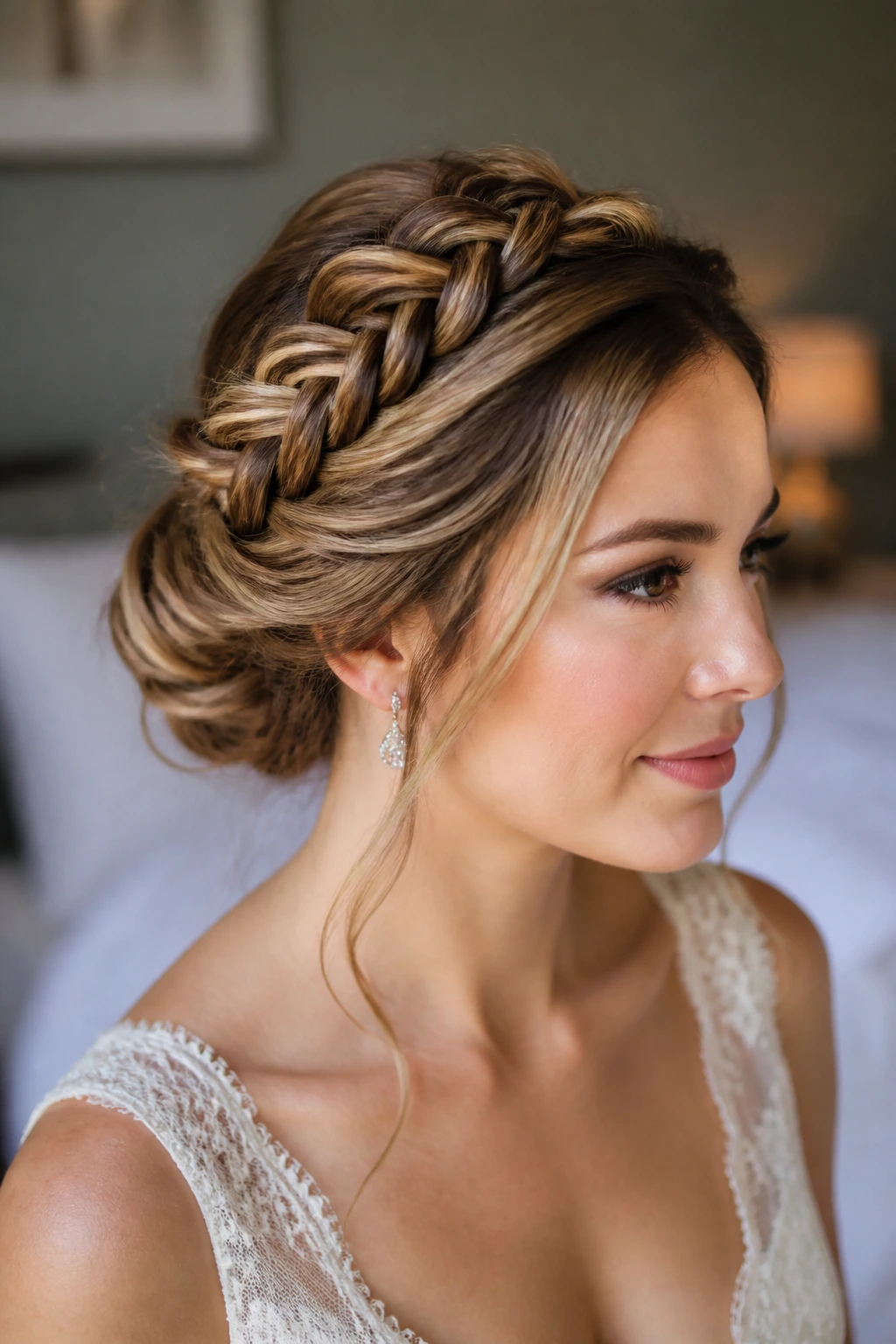
A halo braid gives you the softness of a braid and the security of a pinned style. The braid runs around the head like a crown, then hides its ends into a tucked bun or coil at the back.
It reads especially well on brides with thick hair, because the braid keeps the volume under control instead of adding more bulk where you don’t need it. For finer hair, a little backcombing at the crown helps the braid feel substantial. A halo braid can look medieval if it’s too tight. Loosen it just enough that the weave is visible.
9. Gibson Tuck
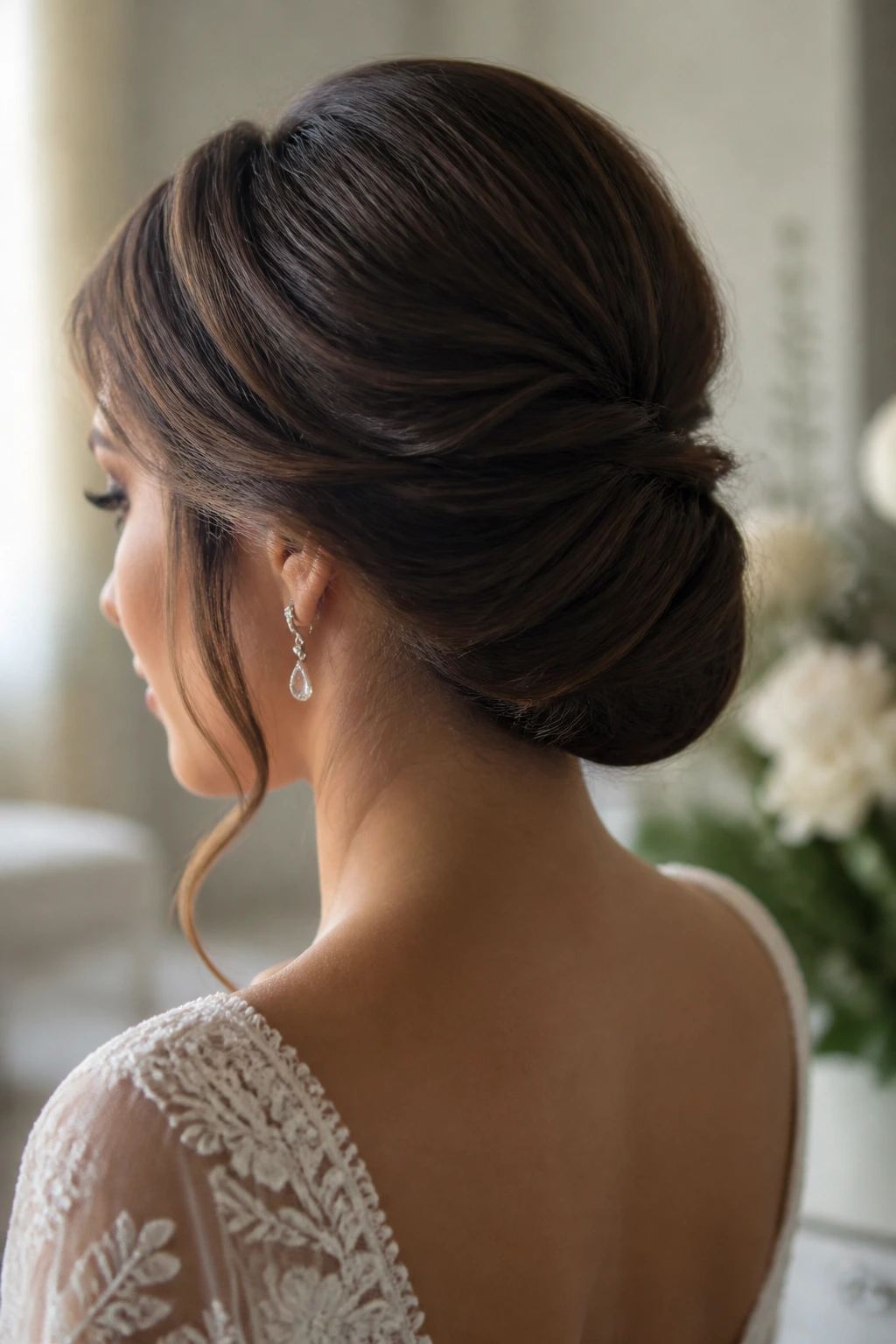
The Gibson tuck is the quiet overachiever of bridal hair. It rolls the length inward at the nape, creating a soft shell shape that looks refined without feeling stuffy.
It’s one of my favorite choices for vintage-inspired weddings because it has that old-world feel without requiring a face full of curls. If the bride has medium-length hair, the tuck often needs a few invisible pins hidden horizontally inside the roll. That’s the boring part. It’s also the part that keeps the style from unraveling halfway through the first dance.
10. Dutch Braid Bun
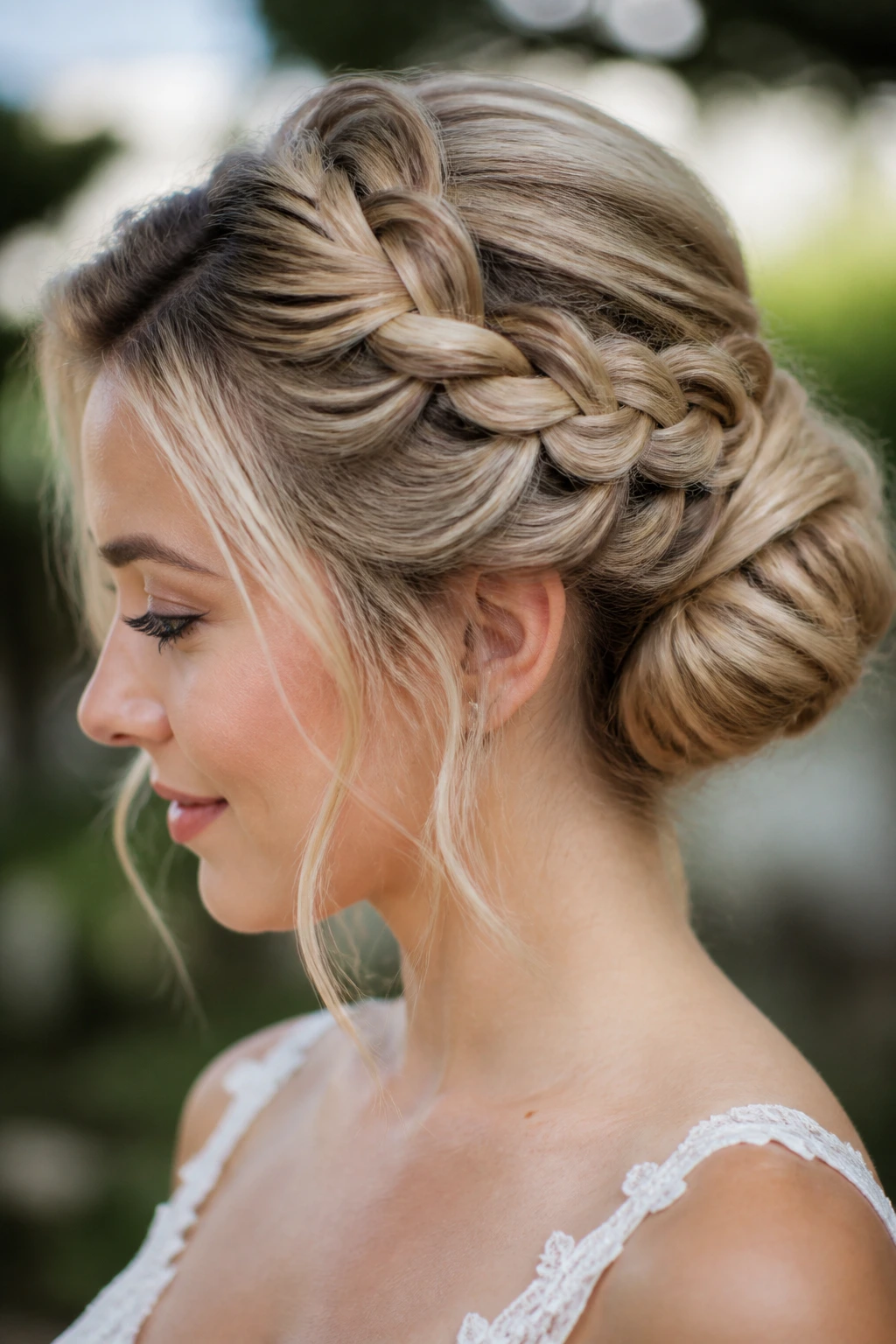
A Dutch braid bun gives you built-in texture and a little bit of edge. The braid sits raised on the surface rather than lying flat, so the style has more depth than a basic braid-to-bun finish.
This one works well when the ceremony is outdoors or the bride wants the updo to feel less formal. The braid can start at the hairline or from the crown, then feed into a low bun at the back. If the hair is very clean, a dry texture spray helps the braid hold without slipping apart while you pin it.
11. Teased Volume Chignon
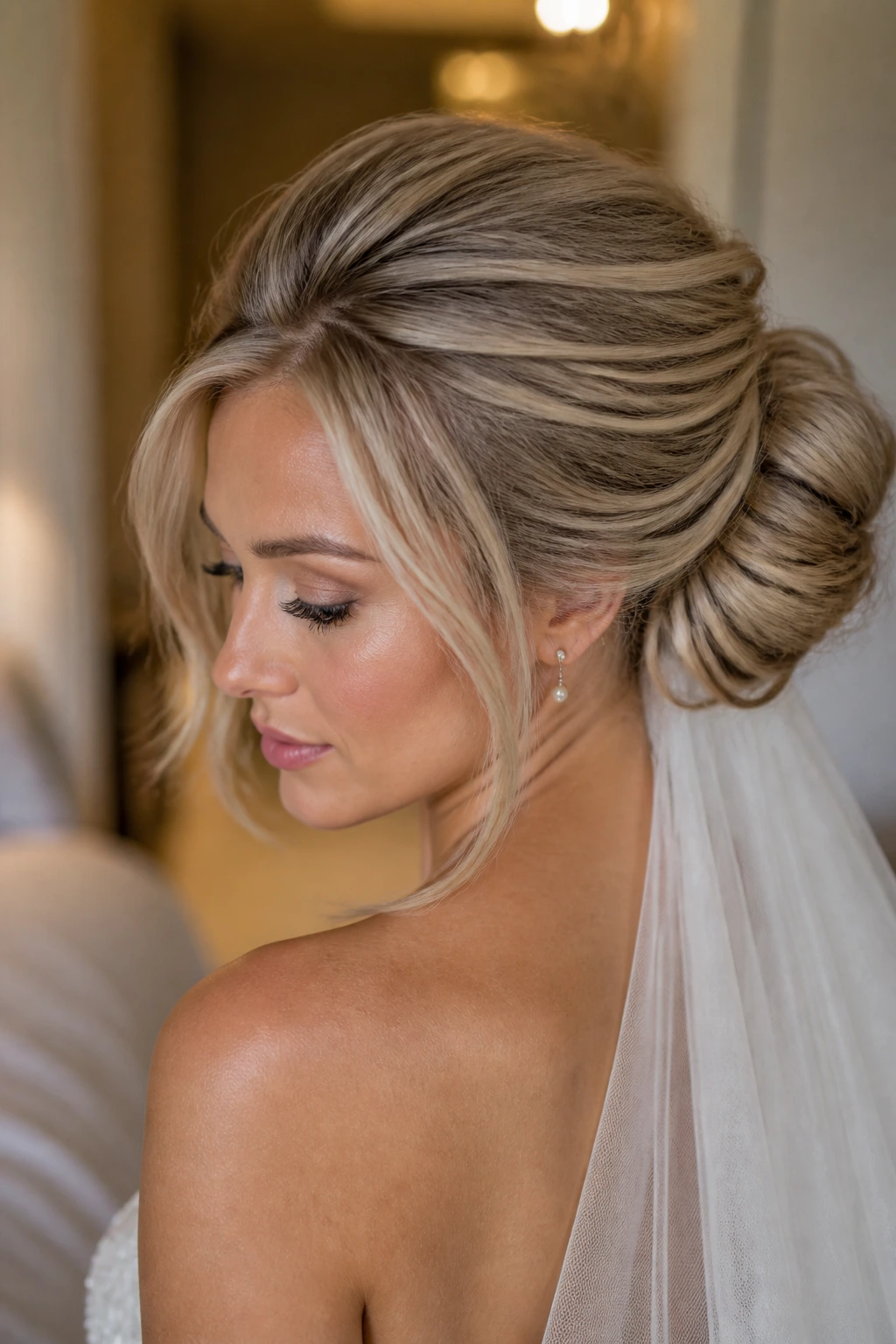
Sometimes the bride wants height. Not towering, not 1980s, just enough lift to balance a dramatic veil or a dress with a strong shoulder. A teased volume chignon does that job nicely.
The crown gets gentle backcombing before the length is swept into a chignon, which creates a soft mound at the top without making the style look stiff. Use a teasing brush, not a fine comb, or you’ll shred the hair and spend forever smoothing it back down. The finished shape should look full, not crunchy.
12. Curly Pineapple Updo
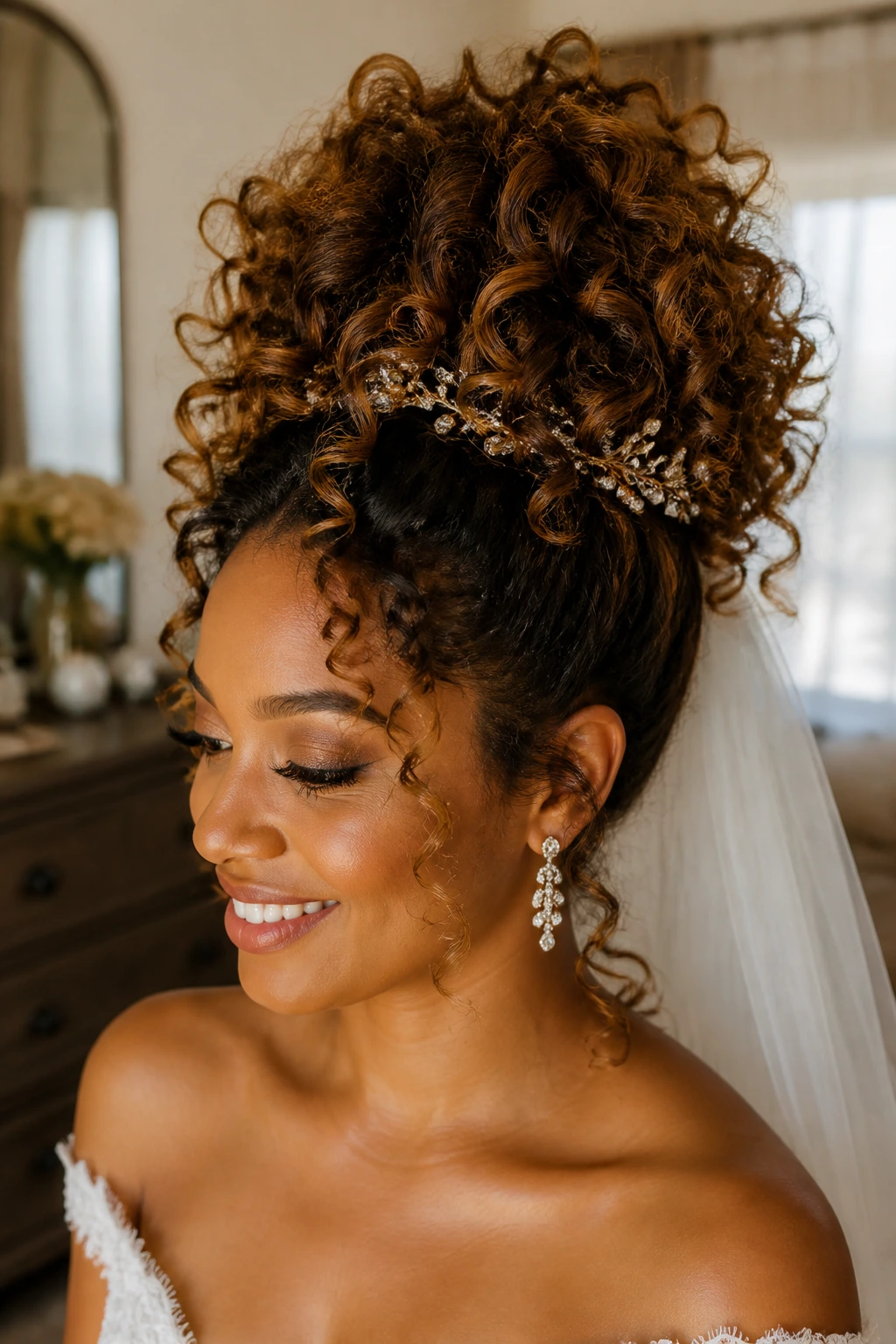
For brides with curls, the pineapple updo keeps the texture alive instead of flattening it into something unrecognizable. The curls are gathered high and loosely pinned so they keep their shape and bounce.
It’s especially good for natural or heat-styled curls that need room to move. A little curl cream or light gel at the crown can smooth frizz without killing volume. I like this style when the dress is simple and the hair gets to be the focal point. It’s honest hair. That counts for a lot.
13. Wrapped High Knot
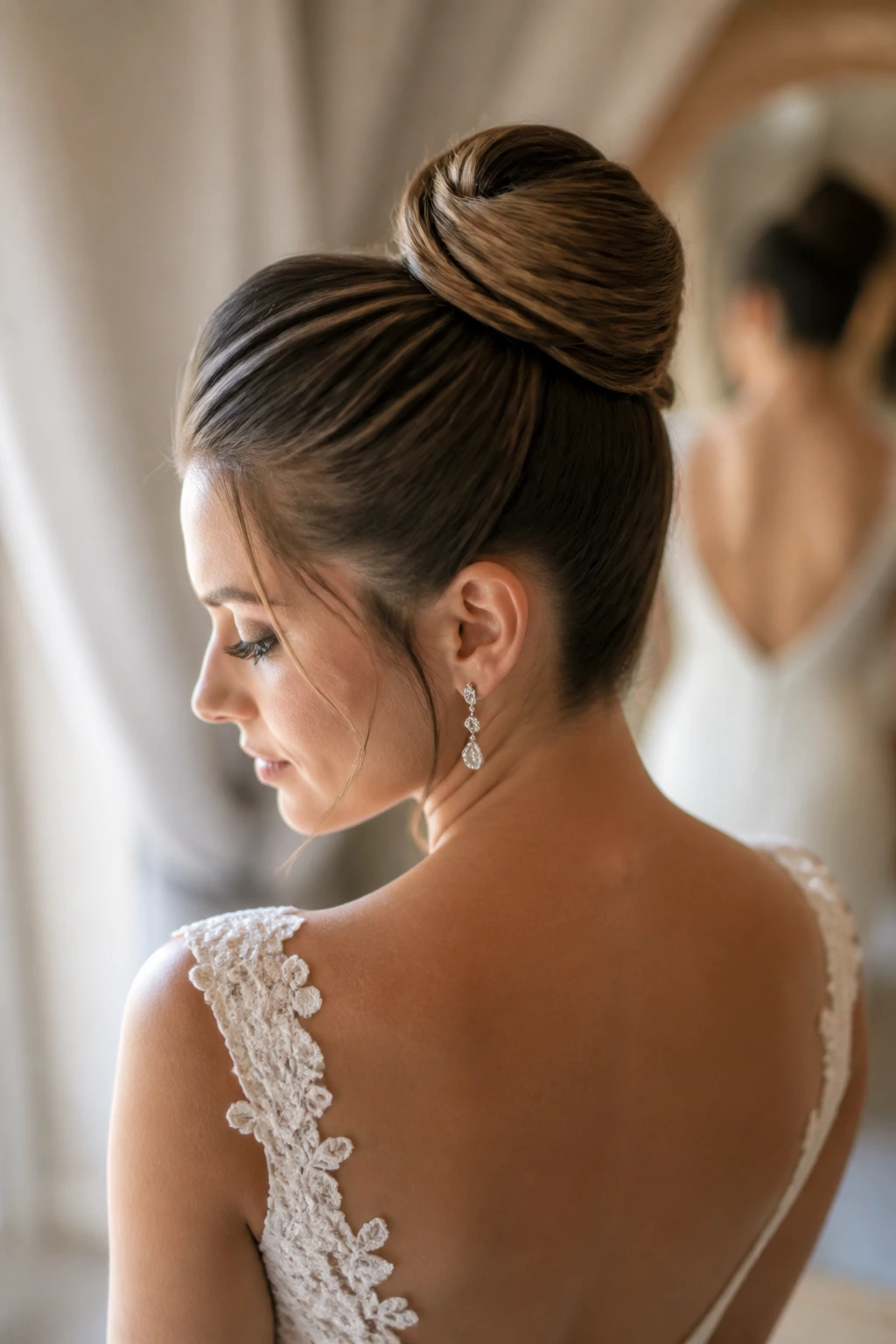
A wrapped high knot sits at the crown and gives the bride a lifted, slightly regal line. It opens the face, makes the neck look longer, and keeps the back of the dress completely visible.
This isn’t the style for someone who hates attention near the top of the head. It does draw the eye upward. But when the gown has a structured bodice or the bride wants a clean, modern profile, the high knot is hard to beat. Keep the wrapped sections smooth so the knot looks sculpted rather than rushed.
14. Veil-Ready Low Knot
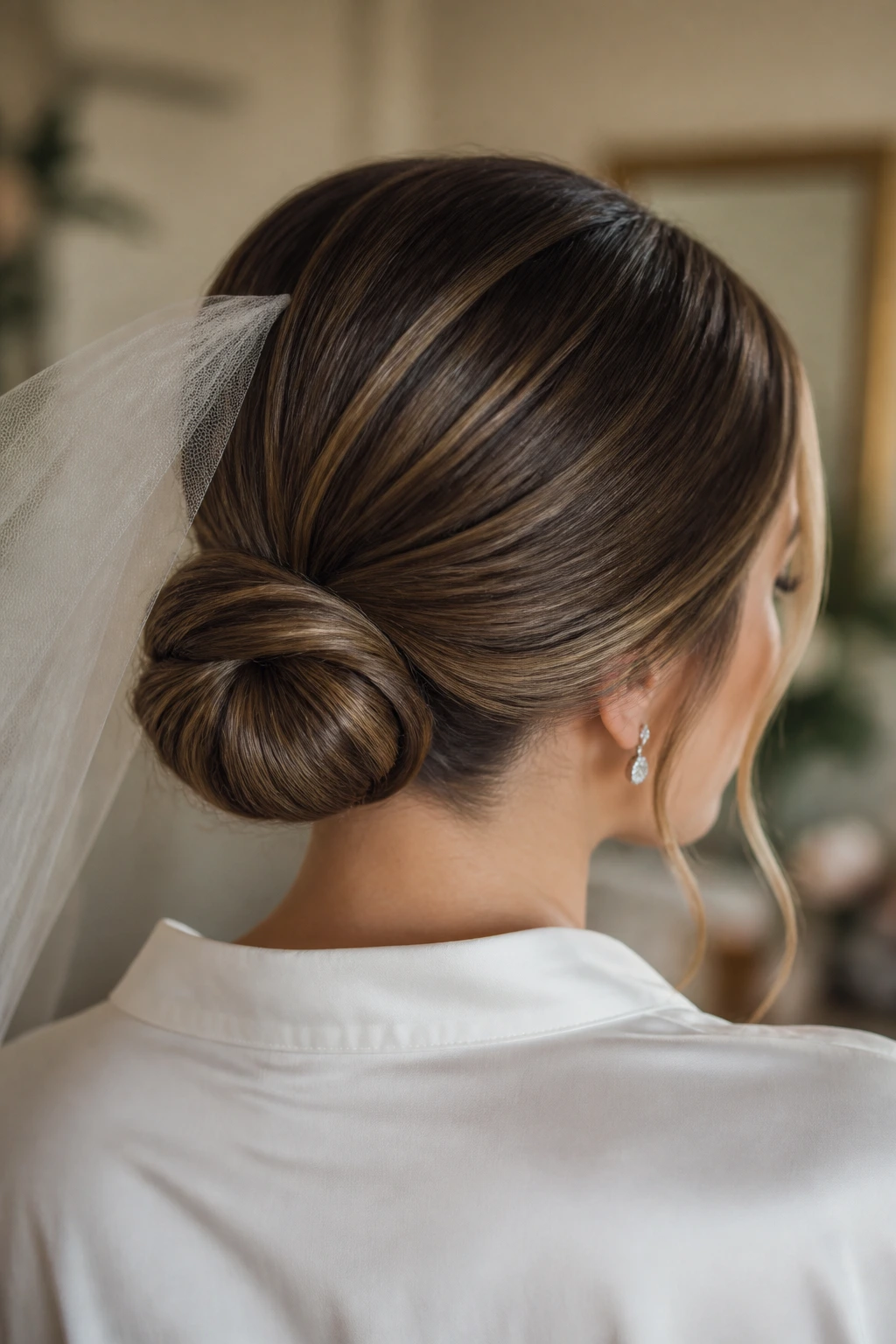
A veil-ready low knot is built around one thing: placement. The knot sits low and compact, leaving enough flat space above it for a veil comb to anchor securely.
This is the style I’d send to anyone worried about the veil pulling the bun sideways. The base should be pinned into the hair, not just the hair sprayed into shape. If you’re doing a two-layer veil, tell your stylist in advance so the knot sits at the right height. Once the dress is on, moving that anchor point gets annoying fast.
15. Pearl-Pinned Bun
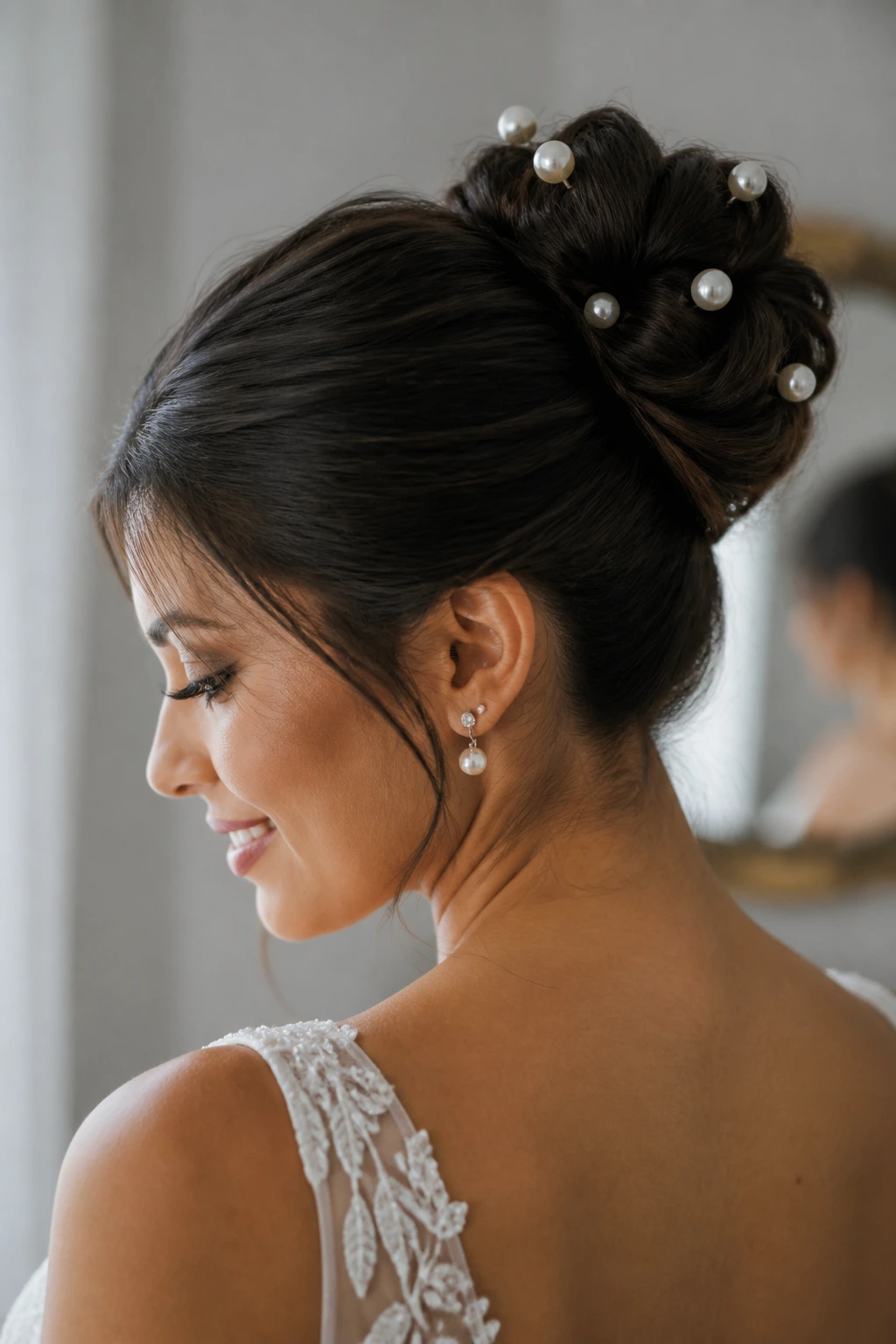
A pearl-pinned bun is what happens when a simple bun gets dressed up with restraint. Instead of heavy sparkle everywhere, the pearls sit in the hair like punctuation marks.
The bun itself can be low, middle, or slightly off-center, but the finish should stay clean so the pins don’t disappear into the texture. I like this best on brides who want jewelry in the hair but not a full vine. If the pearls are oversized, keep the bun smoother. Tiny pearls look better in a slightly looser knot.
16. Rope Braid Bun
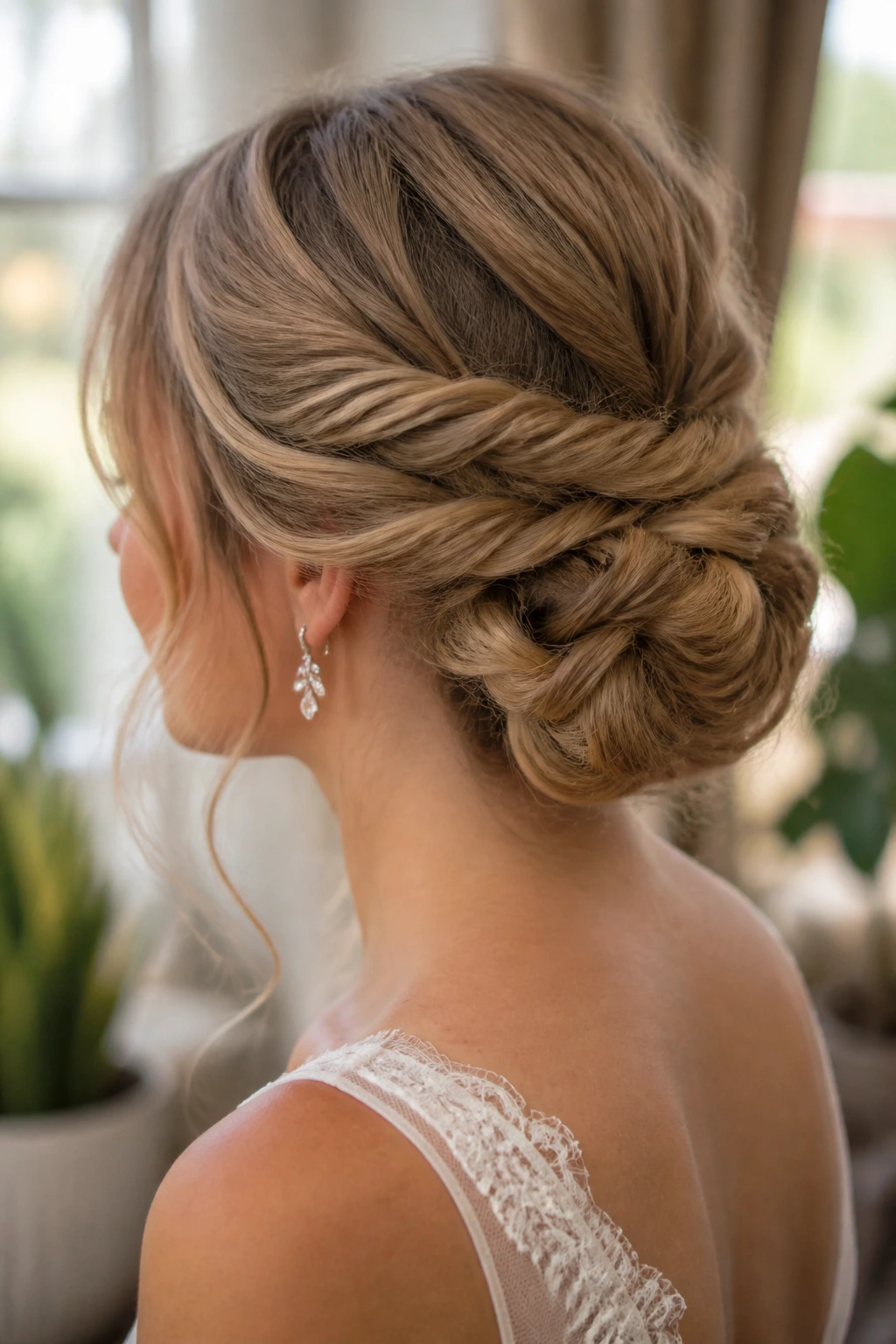
A rope braid bun brings twist and tension together in a way that looks more intricate than it sounds. Two sections are twisted around each other, then wrapped into a bun that feels layered and secure.
This is a smart choice for thick hair because the twist helps control bulk. It also holds well if the stylist has to work with hair that has a little slip from conditioner or smoothing cream. The finished shape can lean polished or relaxed depending on how tightly the braid is twisted. Tight twist, refined finish. Loose twist, softer result.
17. Sculpted Side Bun
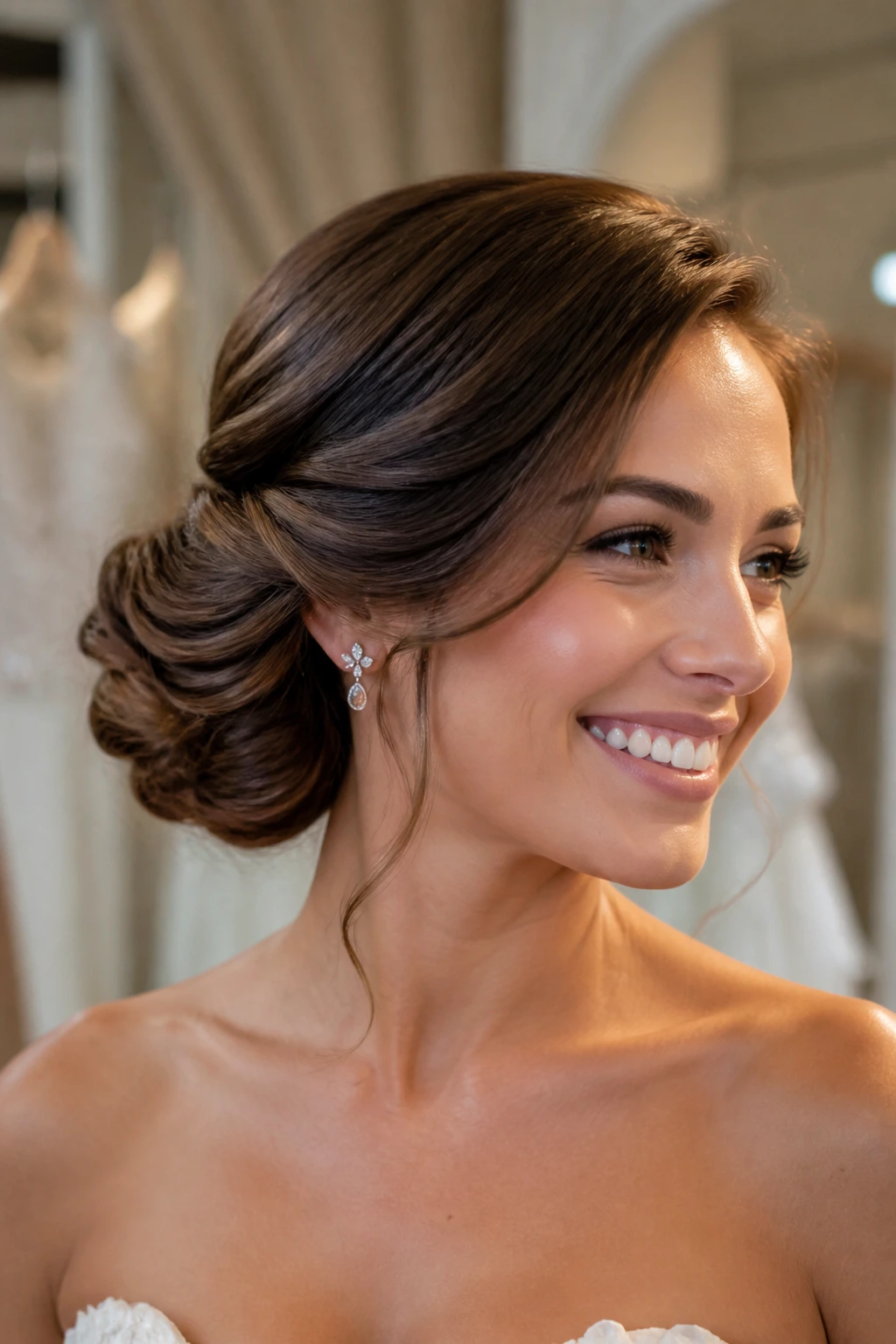
A sculpted side bun sits low and slightly to one side, which gives it a more deliberate, editorial feel than a center bun. The shape works well with asymmetrical necklines and gowns that already have movement in the drape or skirt.
I’d call this one a good option for brides who want the hair to feel designed, not just gathered. The pinning has to be hidden carefully, because the side view matters more here than it does with a centered bun. If the bun starts to spread, it loses the sculpted look fast. Keep the silhouette compact.
18. Loose Ballerina Knot
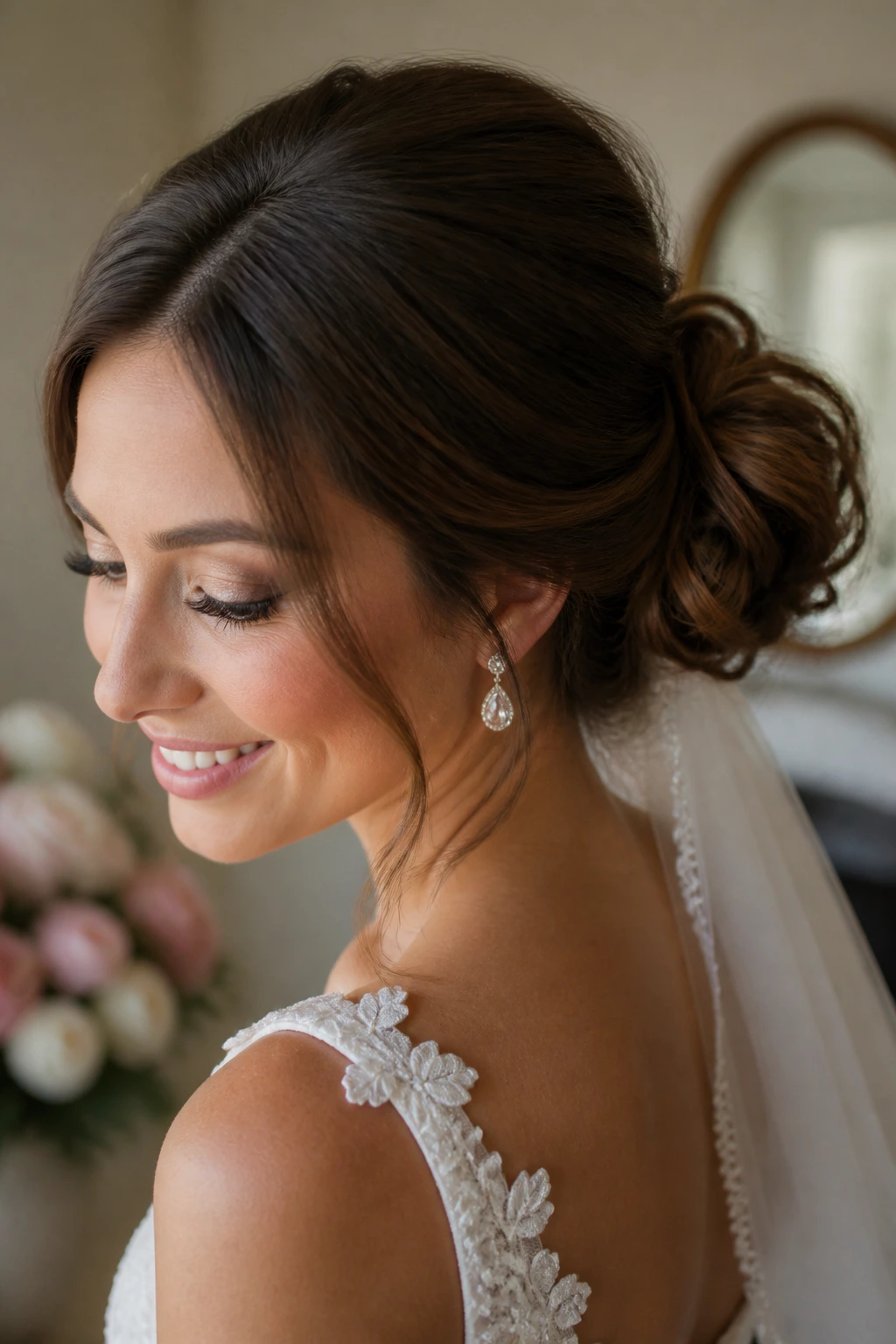
A loose ballerina knot gives you a balanced middle ground between a sleek bun and a messy updo. The shape is neat, but the edges are a little softer, which makes it feel friendlier on the face.
It works well for brides who want a classic shape with a bit less severity. A center part or soft side part can change the mood immediately. If the hair is very long, don’t let the knot get too wide; it starts to look heavy at the back. A smaller bun with a little lift at the crown reads better.
19. Woven Basket Bun
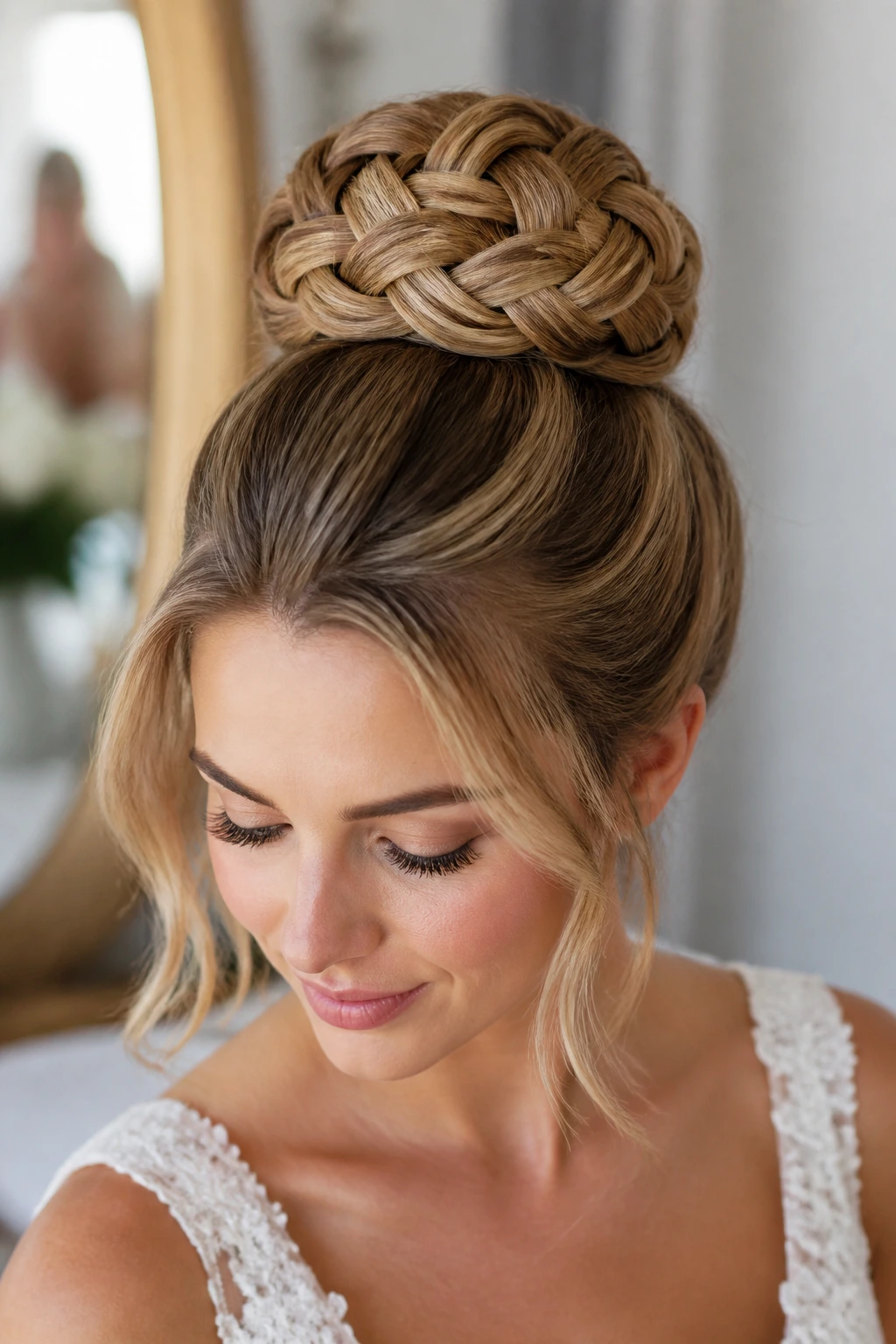
A woven basket bun has that hand-crafted look some brides love. Sections of hair are crossed and layered around the bun, creating texture that looks almost like fabric folds.
The style rewards patience. If you rush the weaving, the bun can look busy instead of elegant. Keep the surface smooth enough that the pattern reads clearly, and don’t bury every strand under hairspray. This is a good option for brides who want detail but don’t want braids to dominate the whole head.
20. Vintage Roll Updo
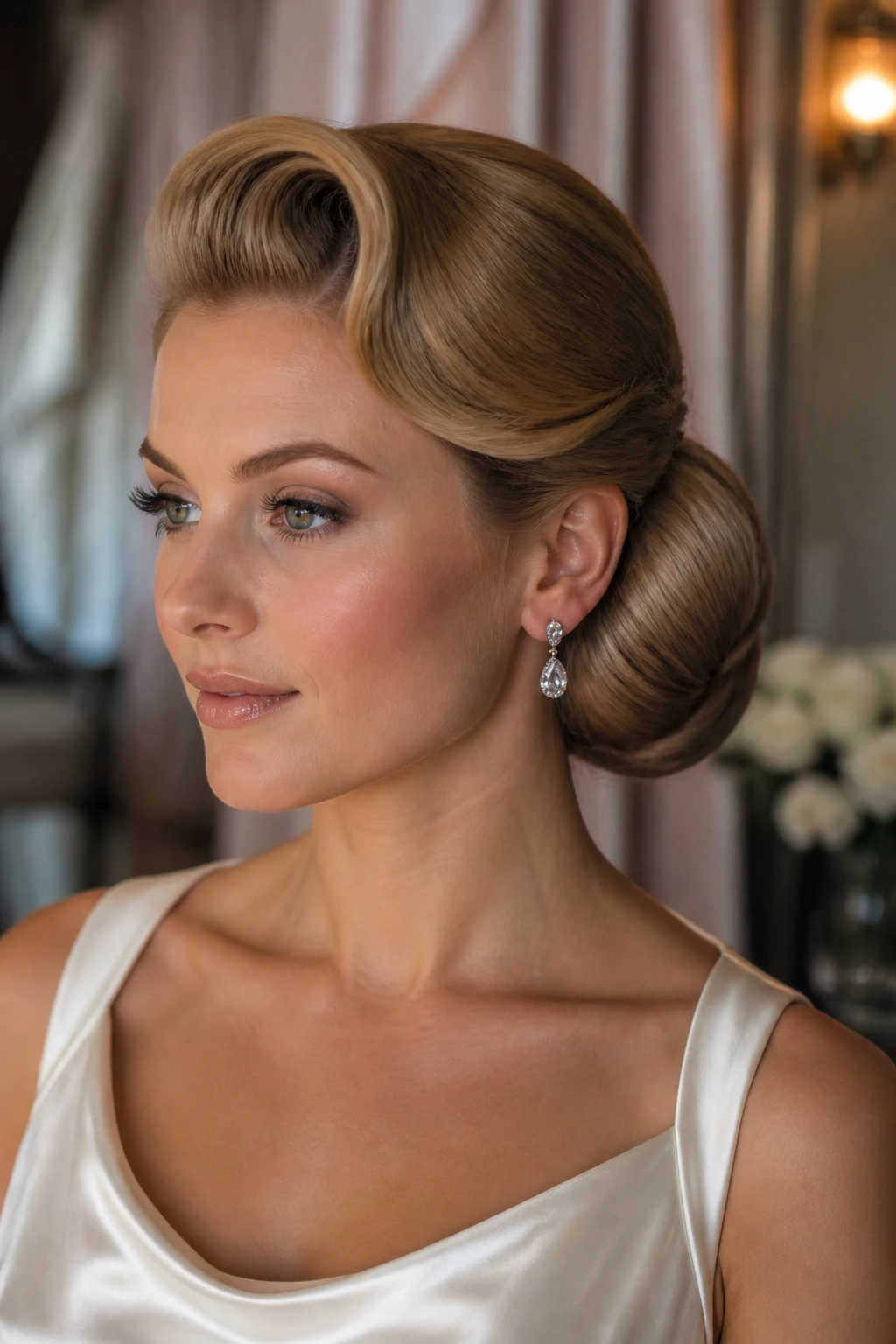
The vintage roll updo carries a little old-Hollywood drama. The front can include a wave, roll, or soft swoop before the hair is tucked into a low finish at the back.
It’s one of the best choices for satin gowns, red lips, and structured veils. The shape needs shine, but not a greasy one — more like healthy, controlled gloss. If the bride’s hair is layered, the roll may need a few hidden pins to keep shorter pieces from sticking out under bright lights. Old styles are unforgiving that way.
21. Bubble Braid Bun
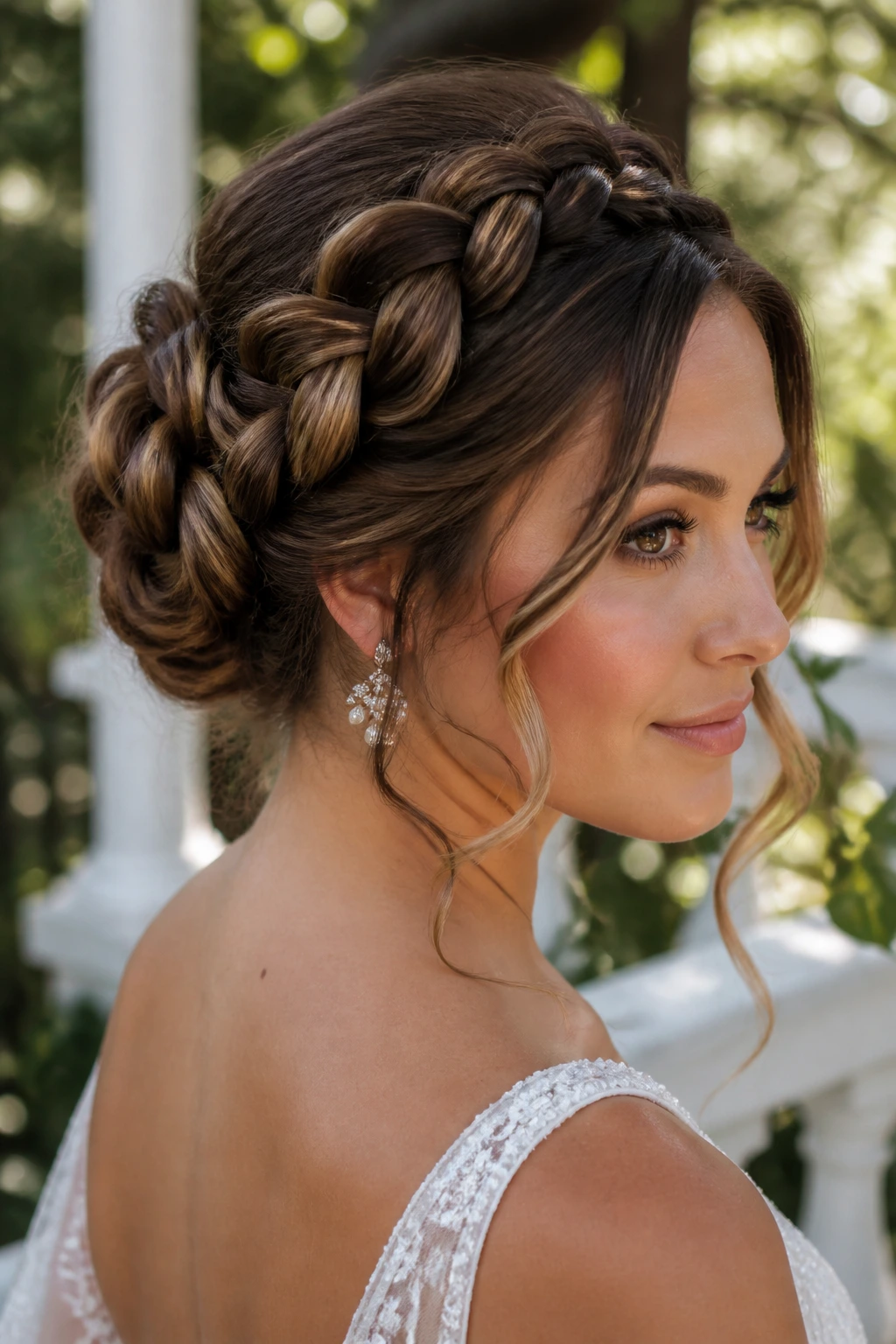
A bubble braid bun is a modern bridal updo with a bit of play in it. The braid is split into rounded sections before being wrapped or tucked into the bun, so the finish has built-in dimension.
This style is better than it sounds for brides who want something a touch less traditional. It can be softened with a few pulled-out face pieces or kept clean and glossy for a sharp look. The bubbles need to stay even. If one section gets too fat and the next one too thin, the whole style starts to look accidental.
22. Minimalist Center-Part Bun
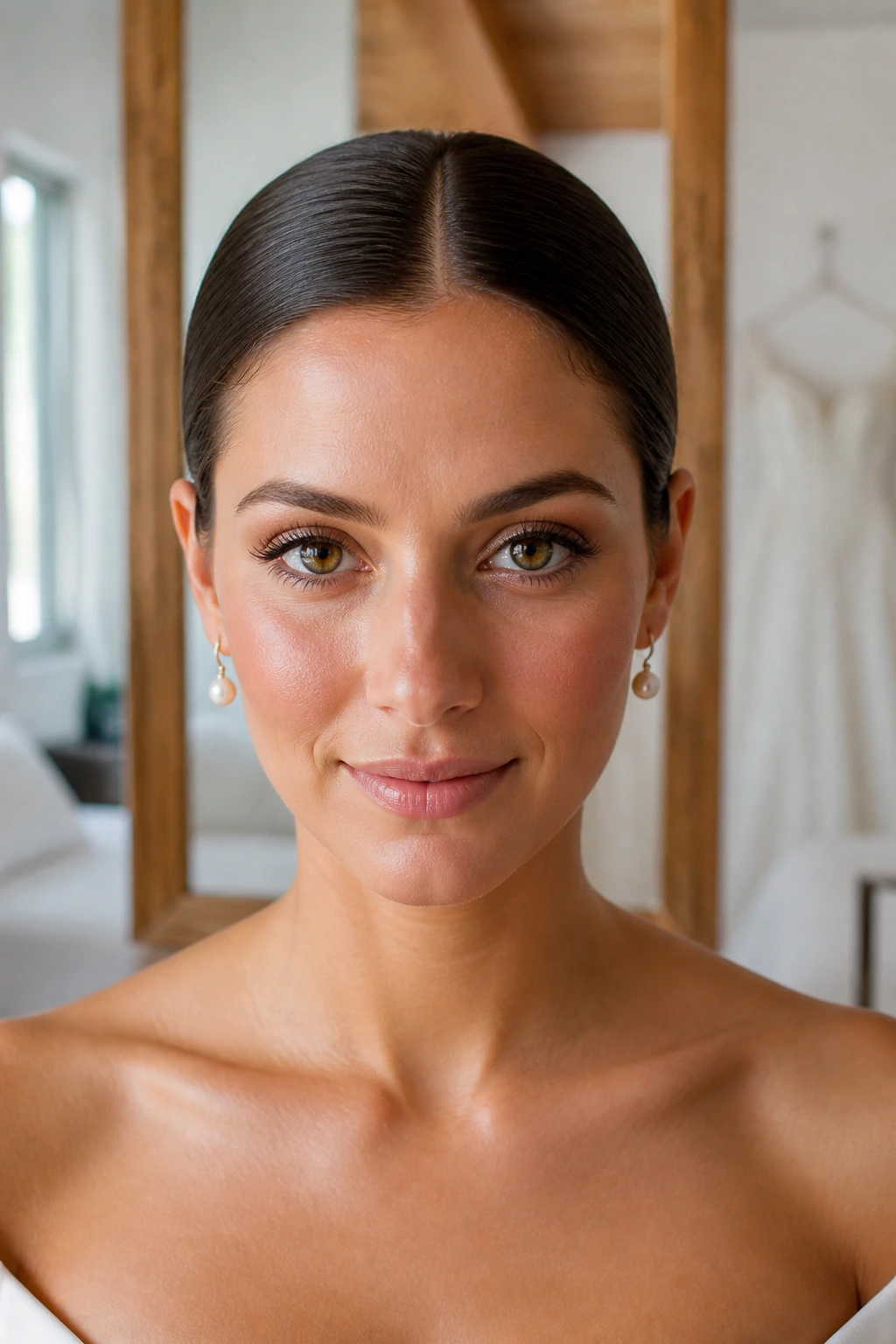
A minimalist center-part bun strips bridal hair down to the essentials. Clean part, low bun, controlled shape. No extra fluff.
That simplicity is the point. It gives the dress, makeup, and accessories room to breathe, which is exactly what some brides need when the gown already carries a lot of detail. The bun should sit tight enough that the center part stays straight all day, so use a tail comb and check the line from the front before you pin anything. Crooked part lines bother people more than they admit.
23. Crown Braid Into Bun
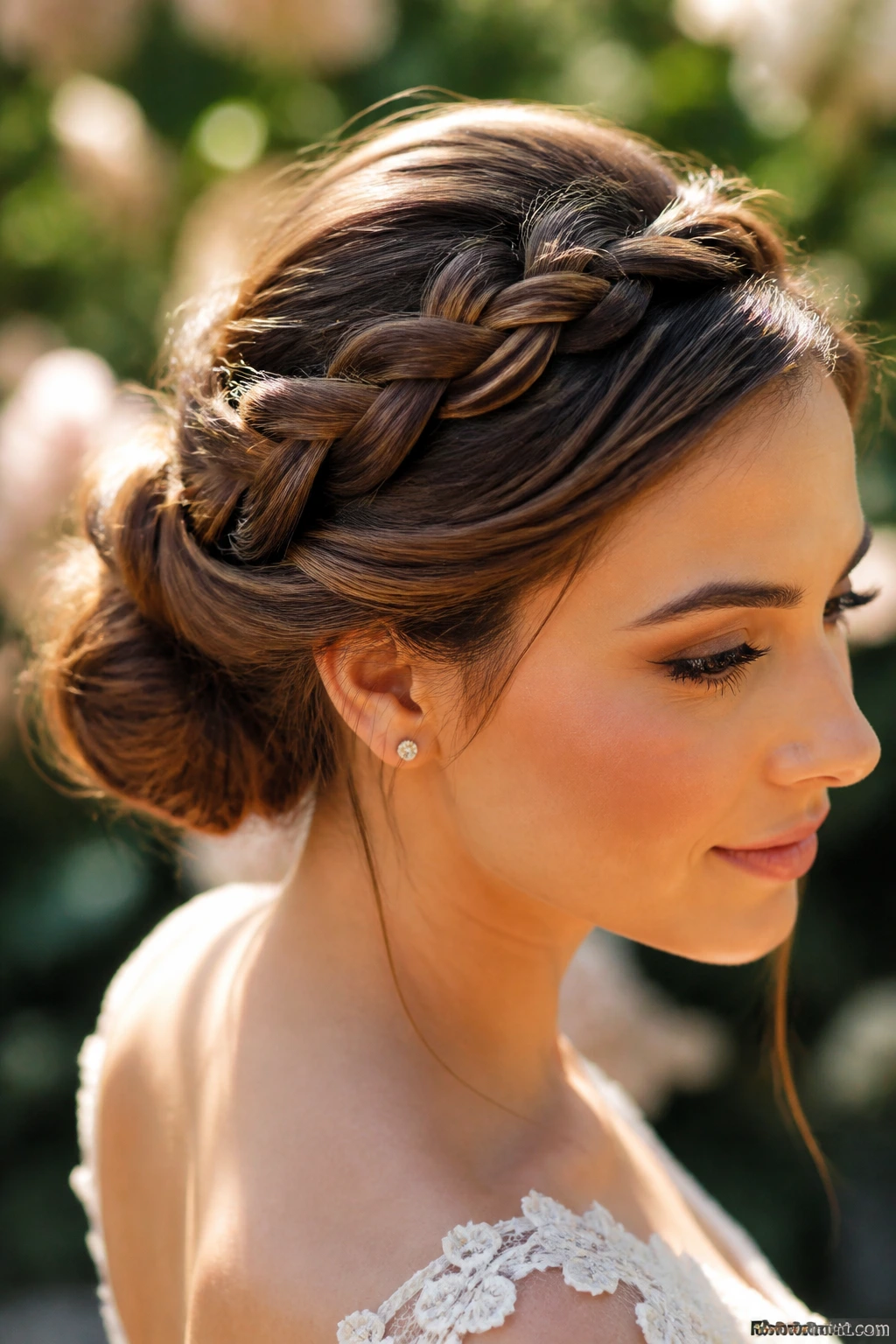
A crown braid into bun is one of the easiest ways to make a bridal updo feel fuller without adding fake drama. The braid wraps across the crown, then feeds into a bun at the nape or just above it.
It’s a forgiving choice for medium-length hair that needs help looking substantial. The braid creates the visual length, while the bun finishes the silhouette. If the bride wants this style for an outdoor ceremony, I’d keep the braid slightly loose so it doesn’t bite into the scalp or flatten uncomfortably by reception time.
24. Tousled Nape Bun
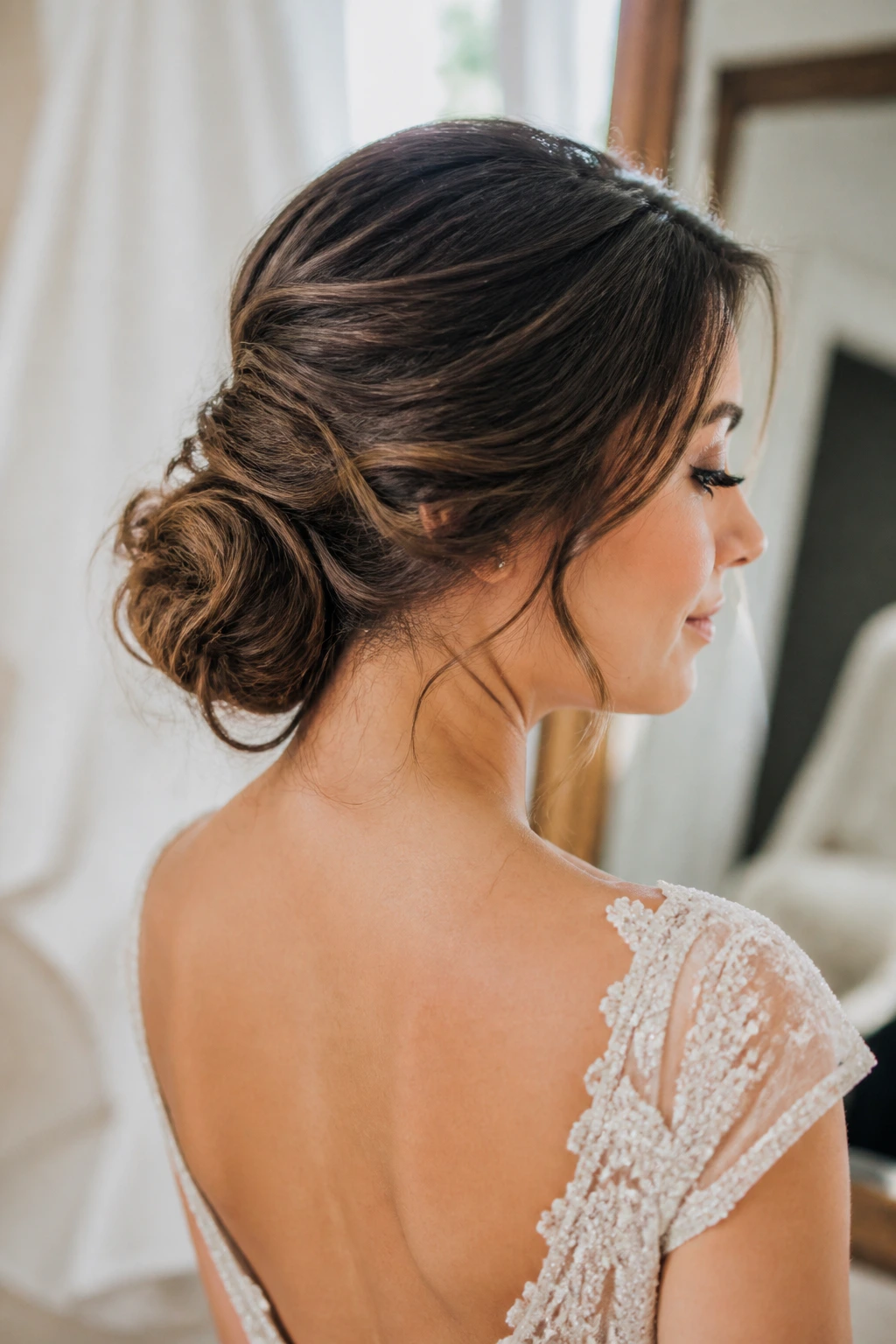
The tousled nape bun lives in that sweet spot between polished and relaxed. The bun sits low, but the surface has soft bends and a little air, which makes the style feel less formal without turning chaotic.
This is a nice match for brides wearing softer fabrics — chiffon, tulle, lace that isn’t too heavy. It also photographs well when the neck and shoulders need a little softness. The danger is over-teasing it into puffiness. Keep the tousle in the texture, not in the volume.
25. Rolled Low Updo
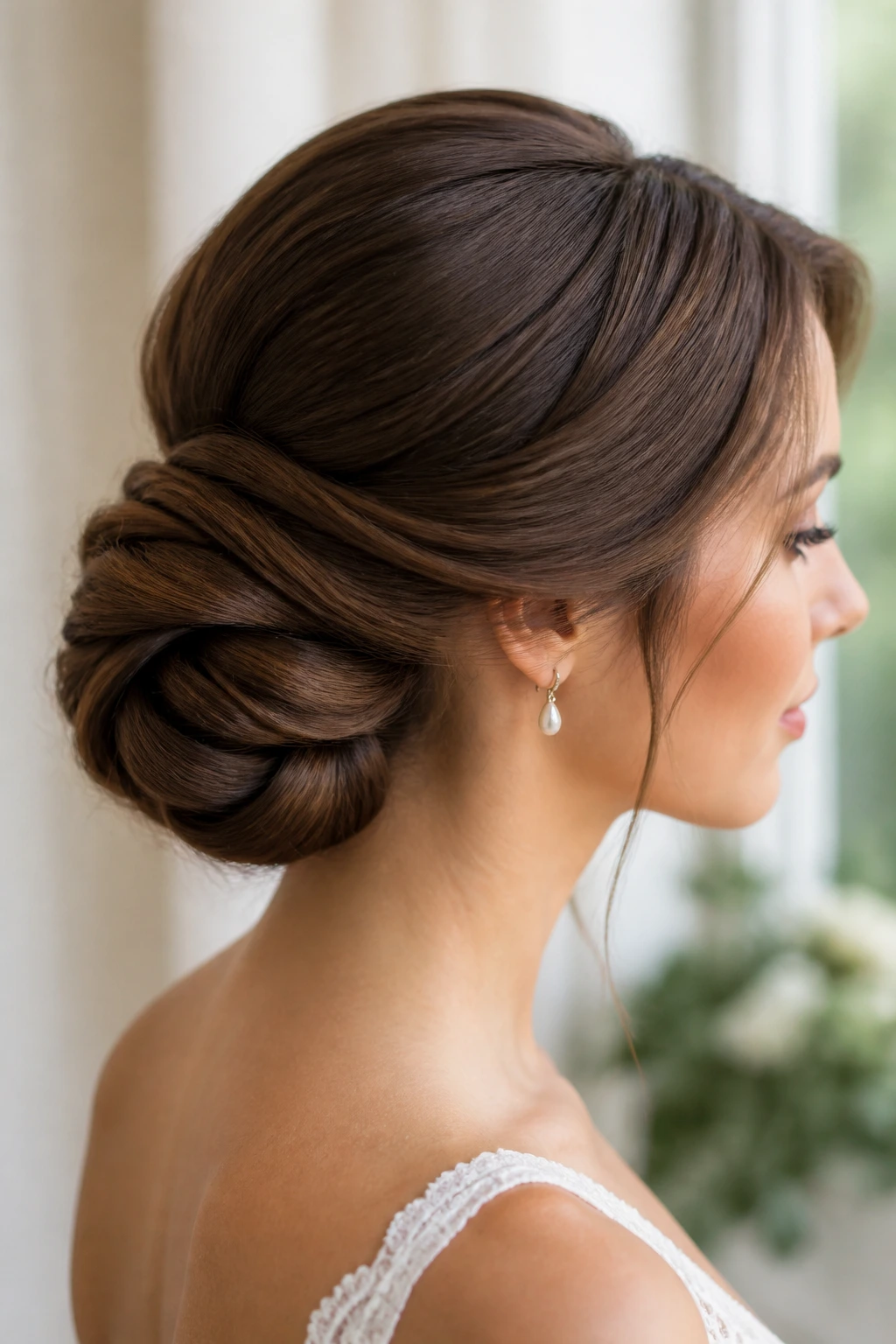
A rolled low updo works like a series of tucked sections instead of one single bun. The result feels smooth and tailored, with just enough surface detail to keep it from looking plain.
I like this on brides who don’t want braids but still want a bit of craft in the style. It’s especially good with finer hair because the rolled sections can be shaped to create the illusion of thickness. Use pins that match the hair color closely, since the style reveals more of the structure than a messy bun does.
26. Floral Garden Bun
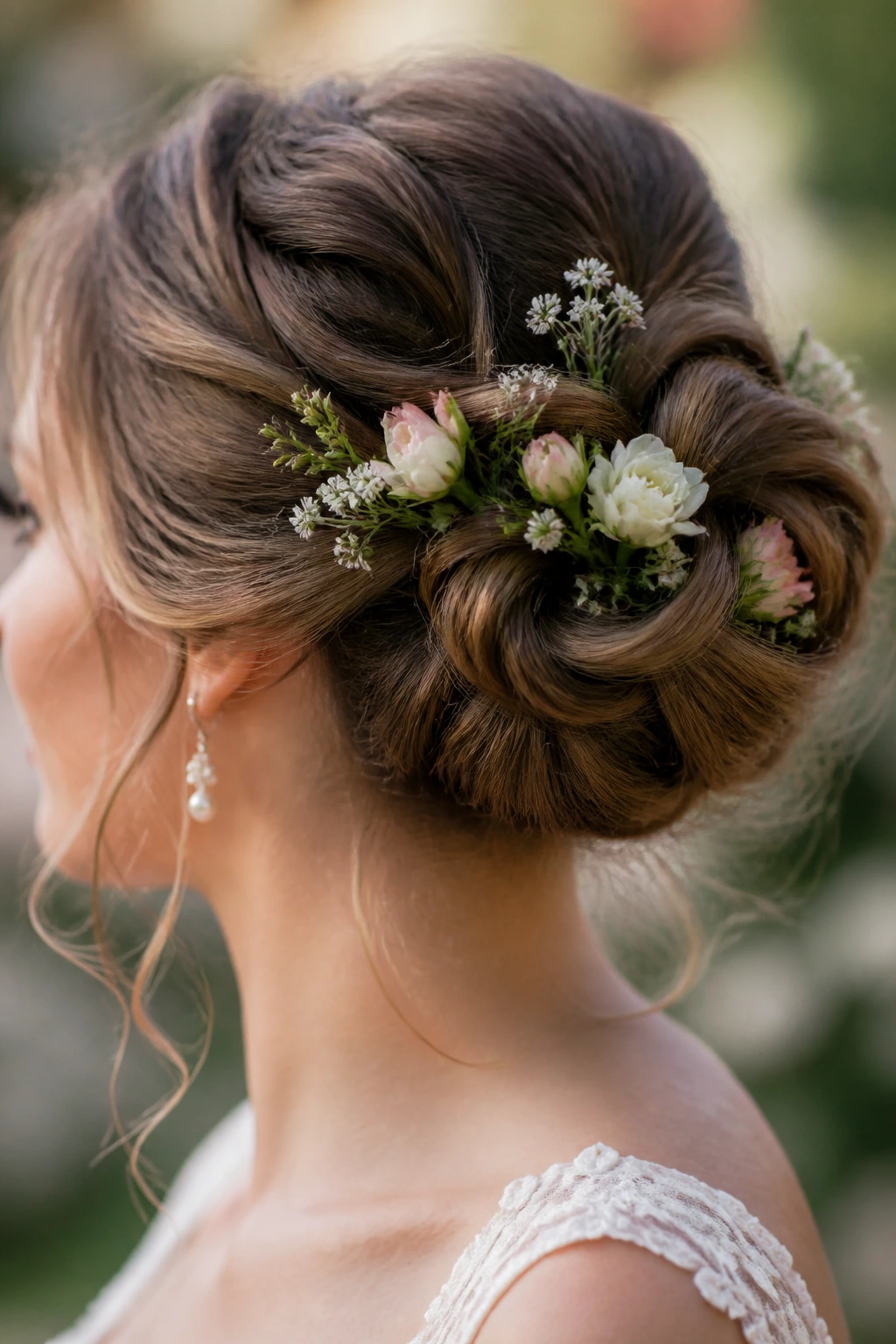
A floral garden bun leaves room for fresh flowers, which sounds obvious until you see how often flowers get squashed into styles with no space for them. This bun keeps the base clean and gives small blossoms, sprigs, or a tiny comb a clear home.
The flowers should look like they belong there, not like they were added as a rescue mission. I prefer it with small, fresh blooms rather than a whole bouquet welded into the hair. Keep the bun itself simple so the flowers stay the point. Too much detail in the bun competes with the petals.
27. Deep Side-Part Twist
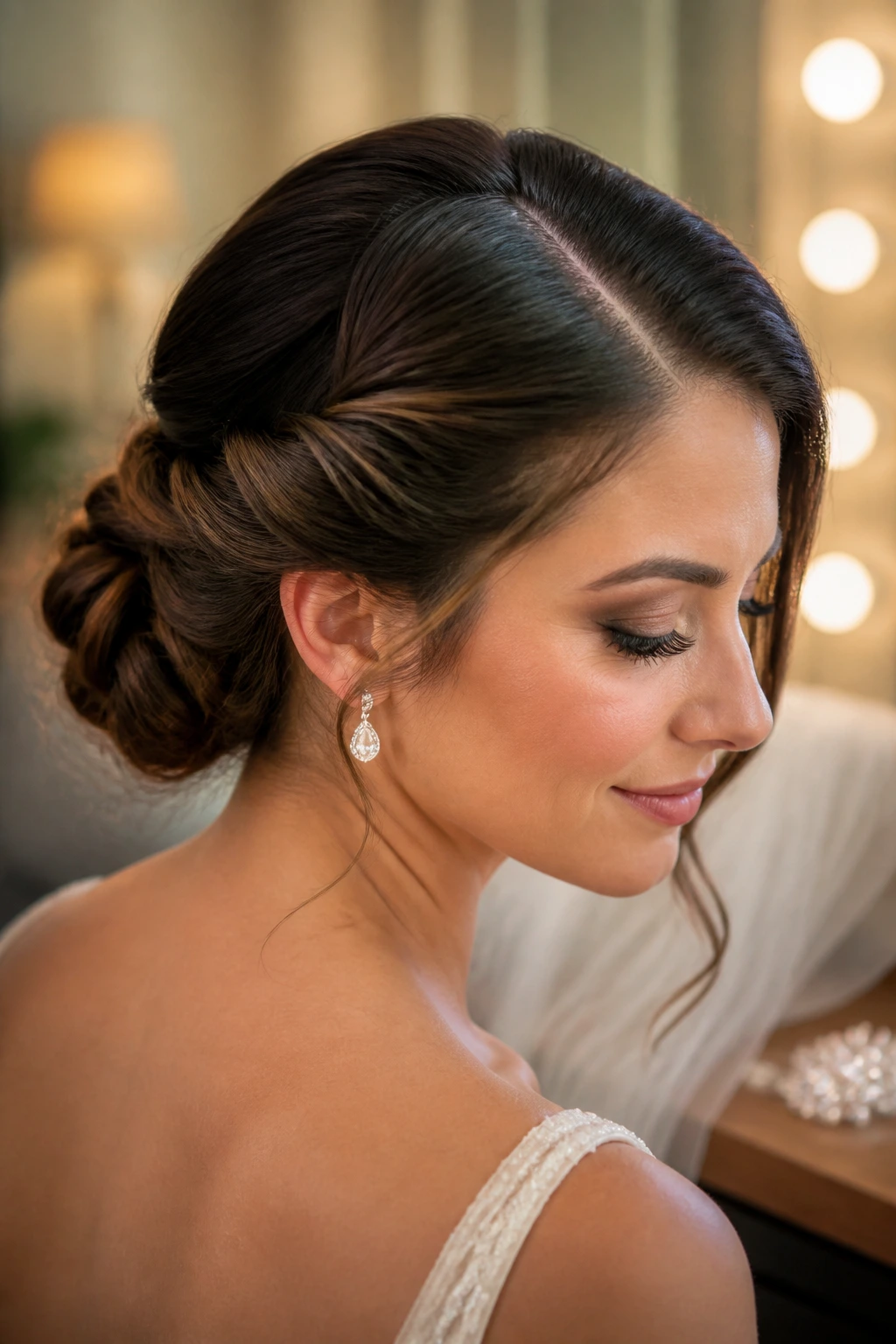
A deep side-part twist shifts the whole mood of the face. One side opens up, the other side tucks back into a twist or low knot, and the asymmetry gives the style movement before you even add earrings.
This is one of the better bridal updos for brides with strong cheekbones or a dress that already has visual drama. It also gives you a useful place to tuck one side of a veil or a decorative comb. If the part is too shallow, the look loses that sweeping effect. Commit to the side part.
28. Double-Twist Chignon
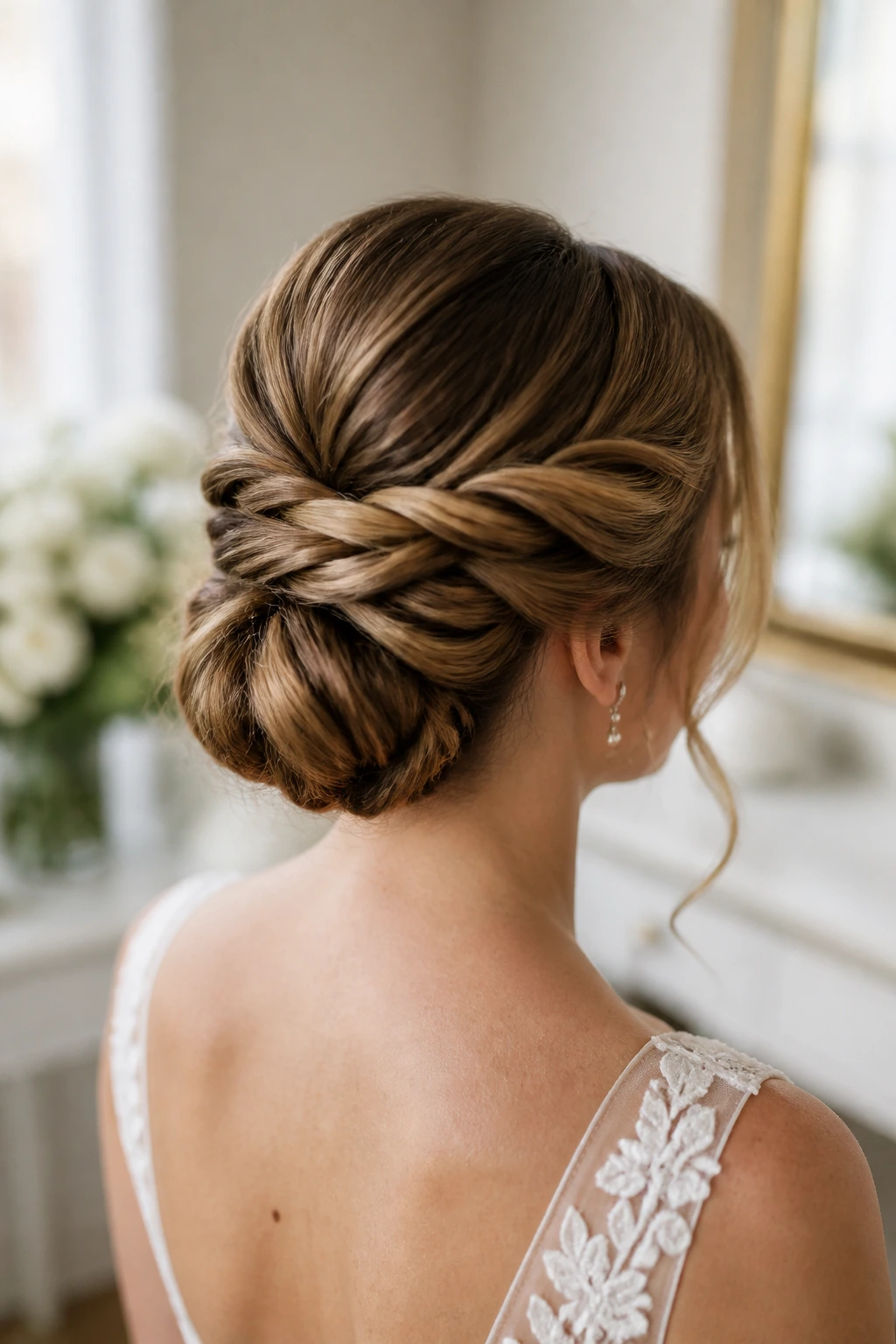
A double-twist chignon gets its shape from two twisted sections that cross before they gather into a chignon. It’s tidy, elegant, and a little more interesting than a standard bun.
The style is a good compromise for brides who want detail but don’t want visible braids. It keeps the back looking finished, which matters when the ceremony aisle leaves everyone staring at the back of your head. A little texture spray makes the twists hold their shape, especially if the hair was freshly washed and tends to slip.
29. Textured Top Knot
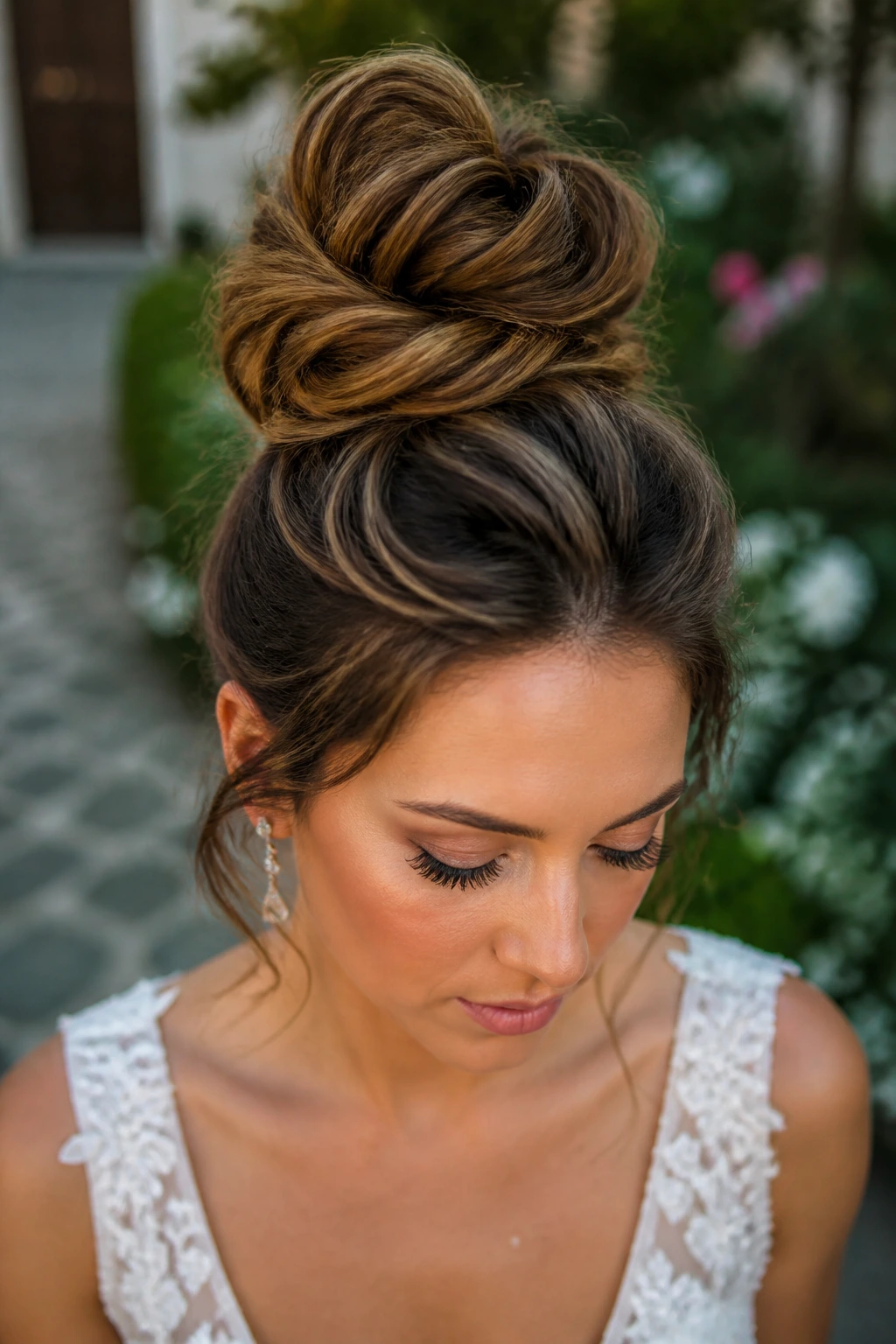
A textured top knot is the cousin of the high knot, but with less polish and more movement. It sits higher on the head, so it lifts the face and works well with simpler gowns or shorter veils.
Use this when you want the bridal look to feel relaxed but not casual. The knot should still be anchored tightly underneath, because the visible looseness is a styling choice, not a lack of structure. If the bride has very long hair, keep the knot from getting too big. A huge knot can swallow the whole silhouette.
30. Coiled Natural Hair Updo
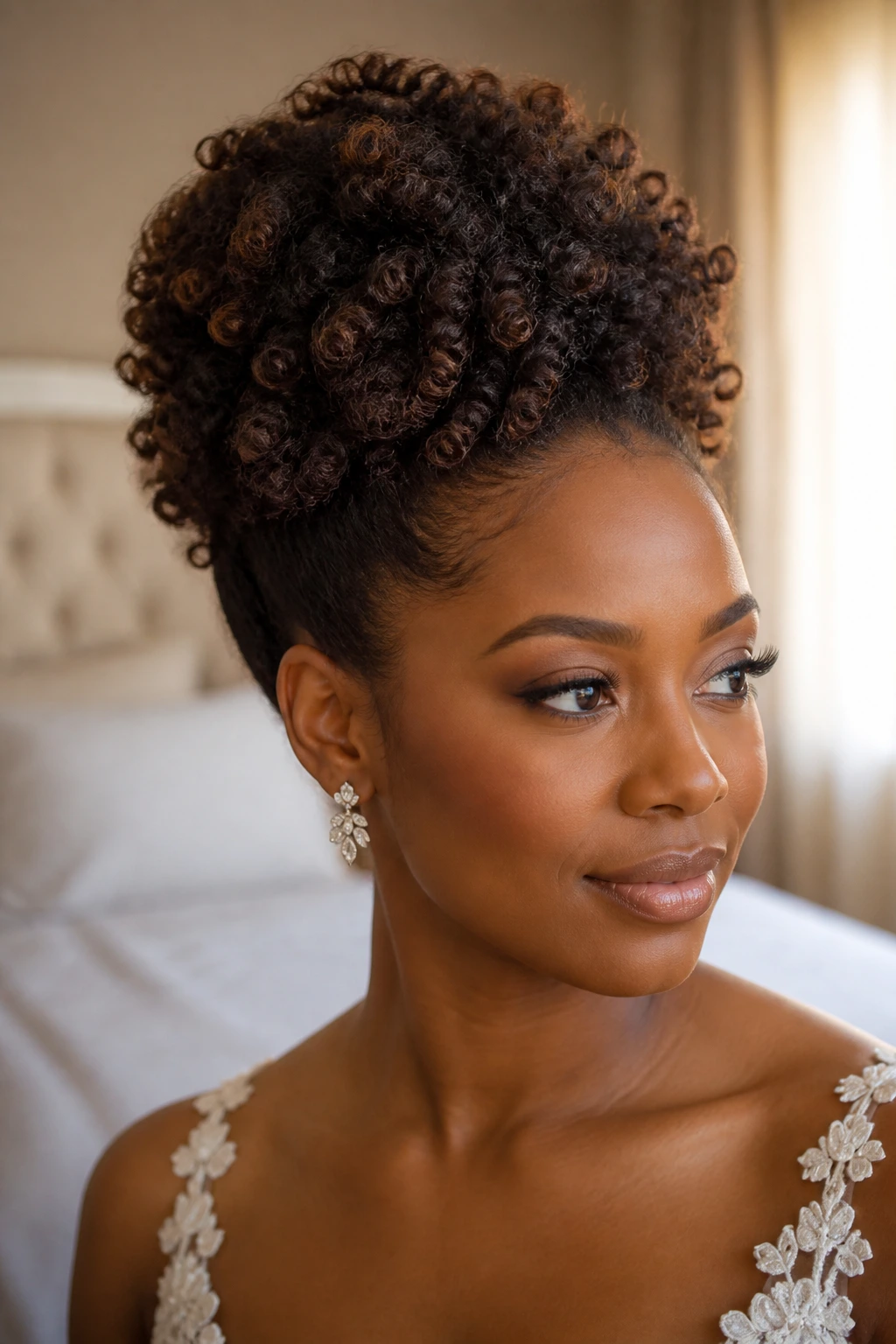
A coiled natural hair updo lets the texture stay visible instead of forcing it into something flatter. Coils can be pinned into a crown shape, a low bun, or a compact halo that shows off the curl pattern.
This is one of the most beautiful bridal looks when the shape respects the hair instead of fighting it. Moisture is the enemy and friend here — enough to keep the hair soft, not so much that the style puffs out by noon. A satin scarf during prep can help stretch the roots gently before the pins go in.
31. Satin-Sleek Knot
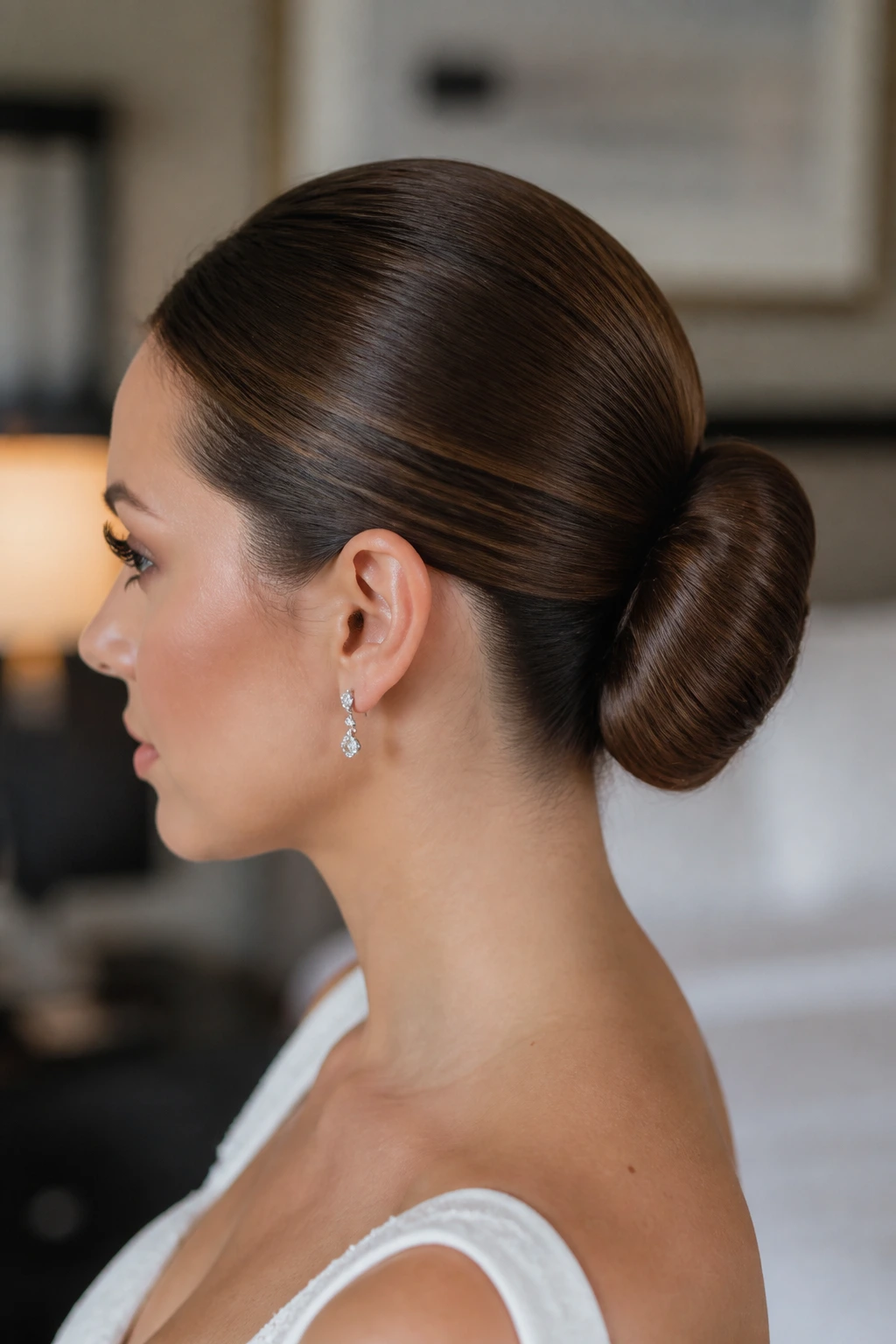
The satin-sleek knot is about finish. Not wet, not greasy, just smooth enough that the surface looks like it was pressed into place with care.
I like this style when the gown has crisp fabric or modern lines. It doesn’t need much decoration because the shine is the decoration. The trick is controlling frizz around the hairline and at the nape. If the hair is coarse, a light serum on the outer layer can calm it without making the whole style collapse.
32. Braided Low Crown Bun
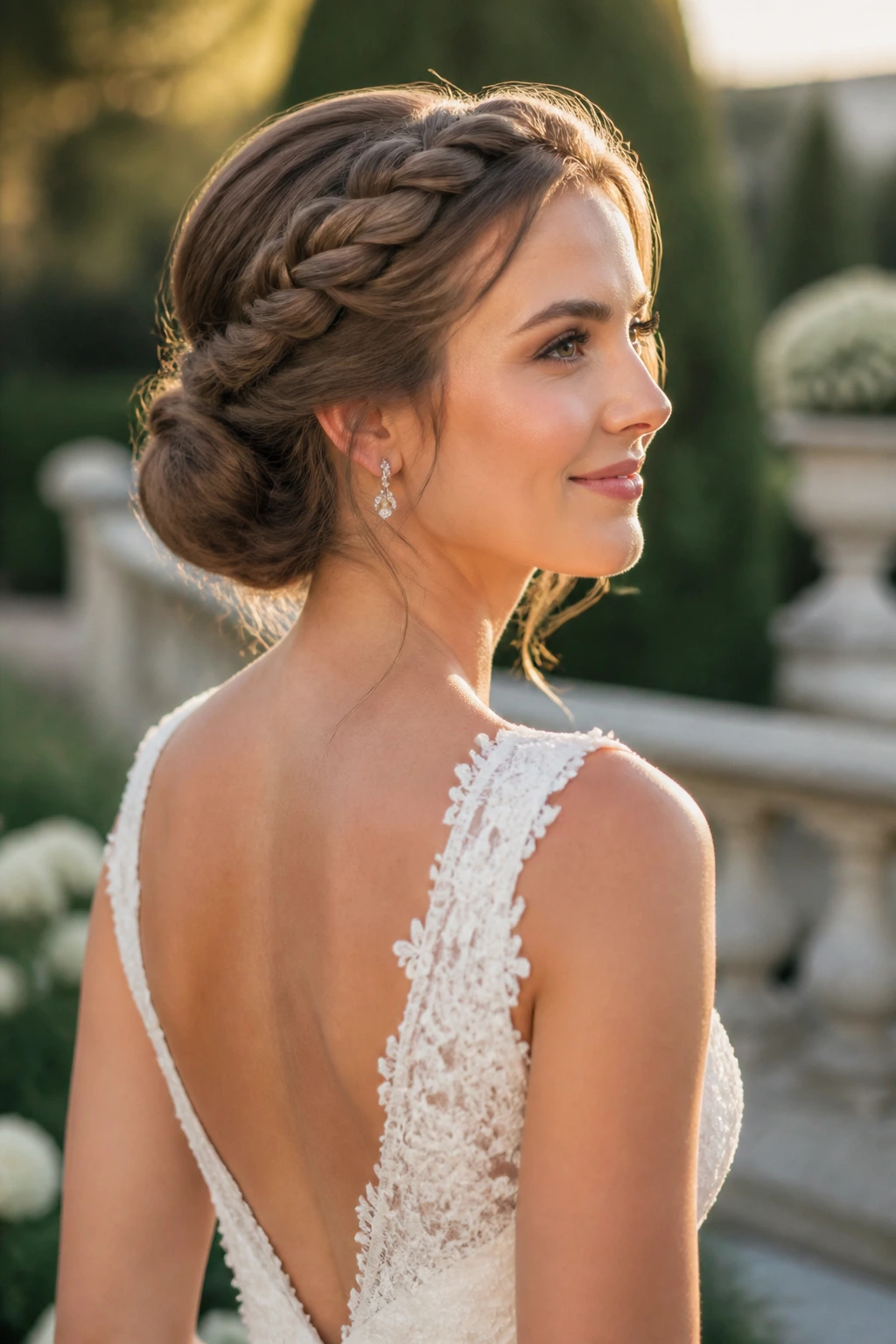
A braided low crown bun combines the fullness of a crown braid with the neatness of a low bun. The braid adds shape around the head, then everything narrows into a controlled finish at the base of the neck.
It’s a smart choice for brides who want a style that feels romantic from the front and polished from the back. If the braid is too tight, the crown can start to pull on the scalp after a few hours. Loosen the weave a bit, especially around the temples, so the style stays comfortable during portraits and dinner.
33. Shell-Inspired Soft Bun
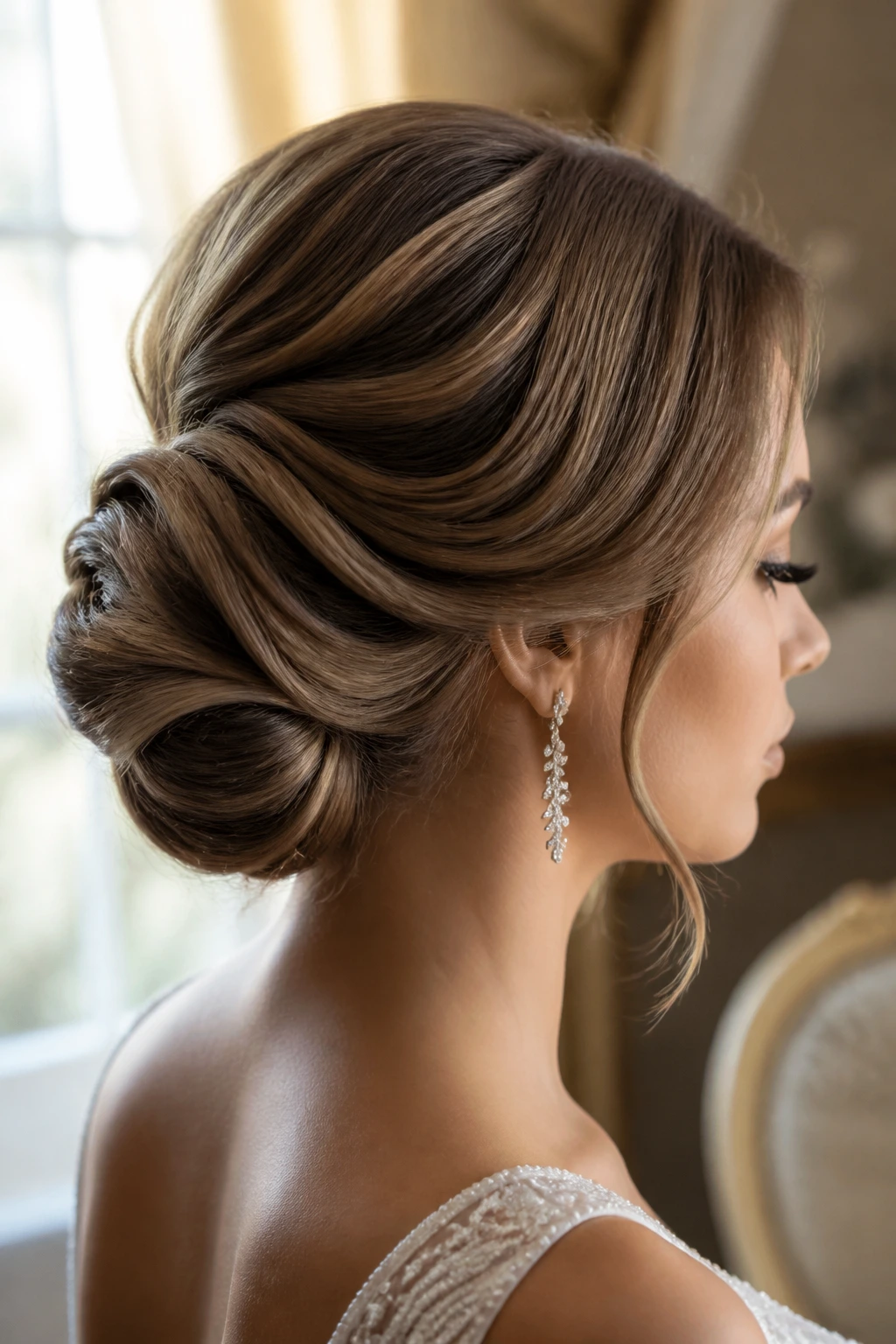
A shell-inspired soft bun has curved sections that fold inward, giving the hairstyle a gentle, layered shape. It’s a cousin of the Gibson tuck, but softer and often a little more modern.
This style works well with gowns that have movement in the fabric — silk, chiffon, anything that drapes instead of standing rigid. The shell shape adds interest without needing braids or heavy accessories. Keep the folds visible. If you blur them too much with spray, you lose the entire point of the style.
34. Shoulder-Length Pin-and-Roll Updo
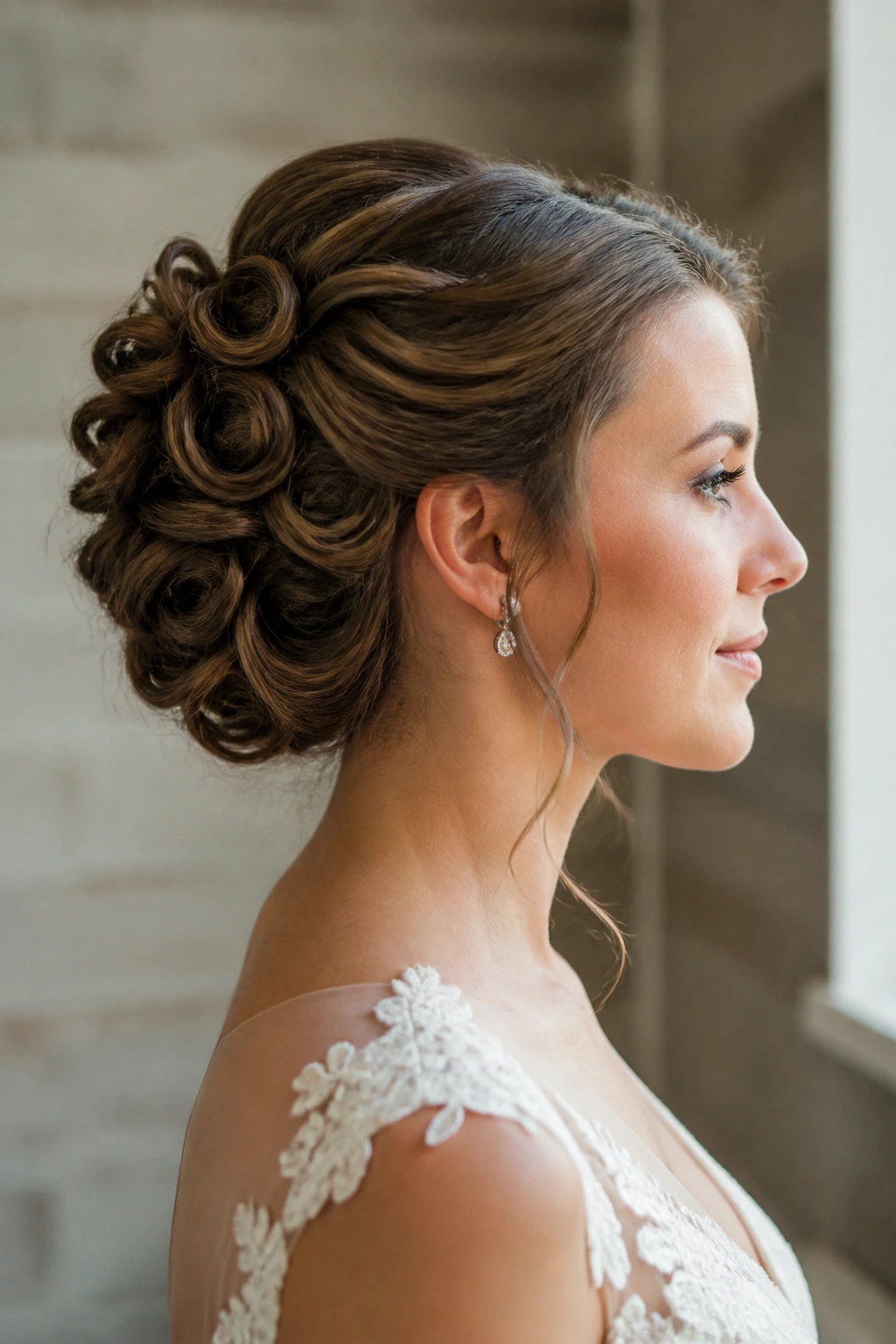
Shoulder-length hair doesn’t have to fake being waist-length to qualify as a bridal updo. A pin-and-roll style tucks mid-length hair into small rolls and loops, creating a finished shape without relying on extensions.
It’s one of the better options for brides who like movement but still want the neck clean. The rolls need to be tight enough that the style doesn’t unravel, yet soft enough that the hair still looks like hair and not a helmet. If the cut has layers, plan on a few extra pins tucked horizontally inside the rolls.
35. Ballroom Volume Updo
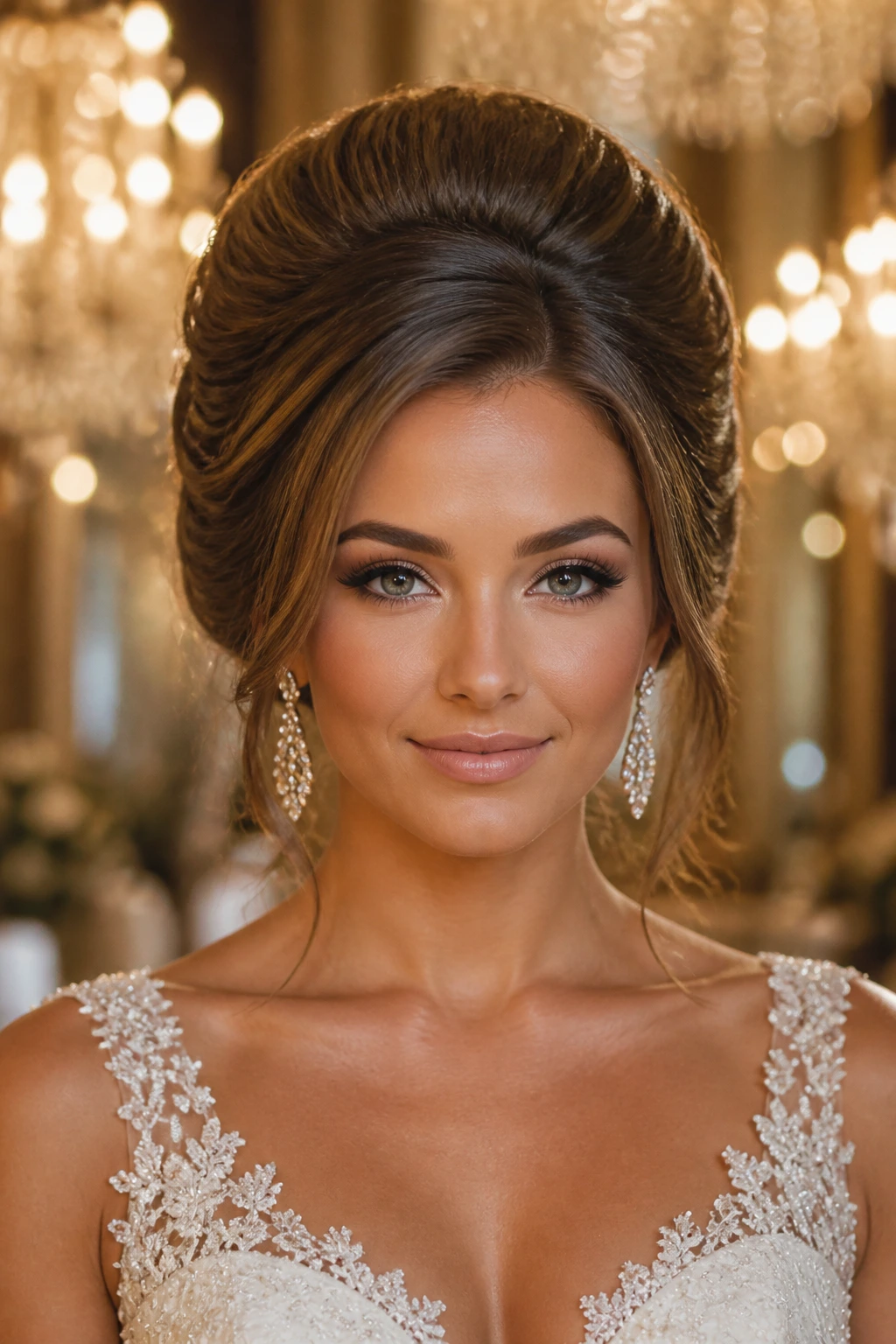
A ballroom volume updo is the grandest look in the bunch. It lifts at the crown, fills through the back, and gives the bride a formal silhouette that suits a full skirt, long train, or cathedral veil.
This isn’t a shy hairstyle, and that’s the appeal. It holds the room in a different way from a sleek bun. The trick is to keep the volume sculpted, not ballooned. Good padding and careful backcombing can create the height without making the back of the head look like it has been padded for a period costume.
What Makes a Bridal Updo Hold Through the Whole Day
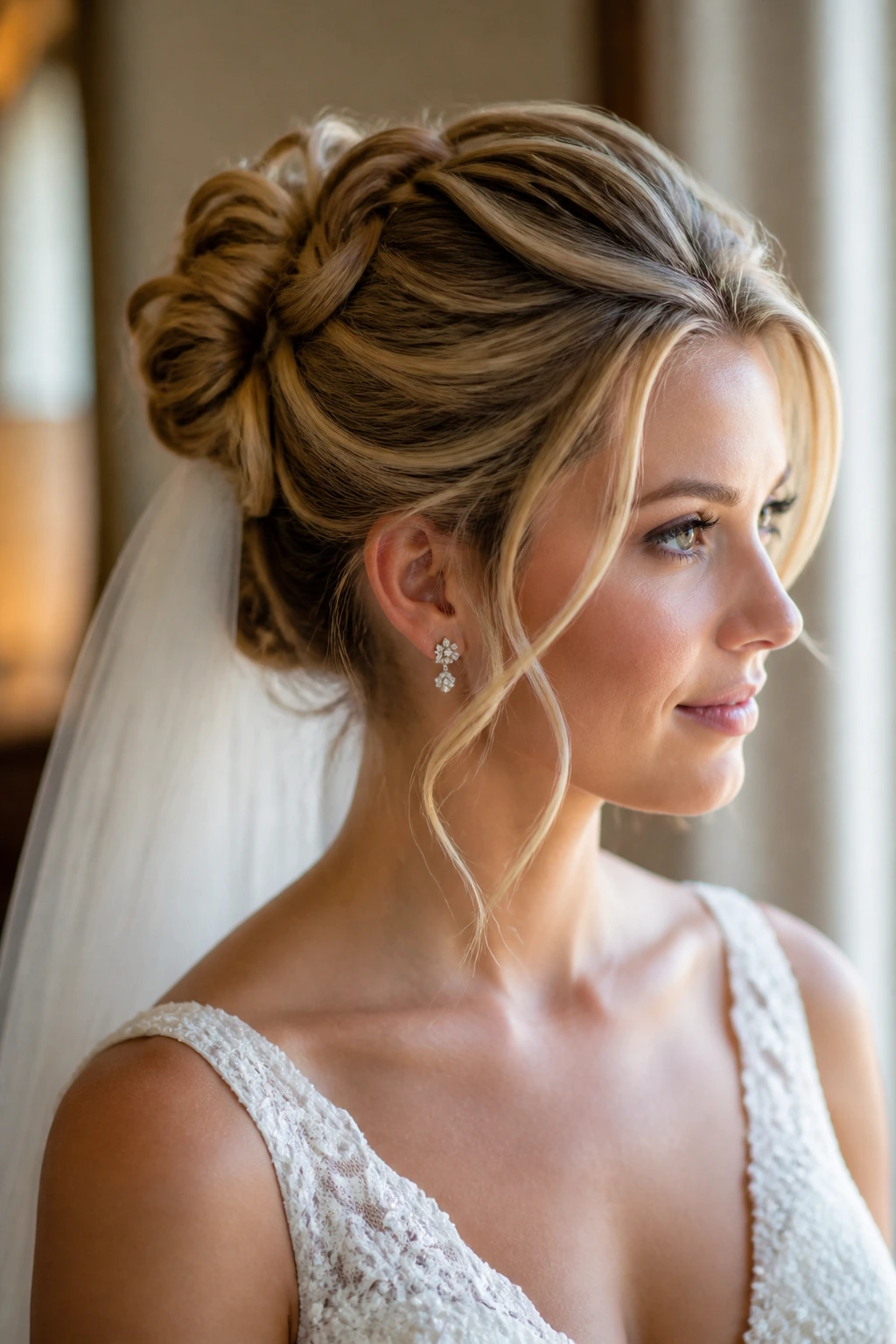
A wedding updo lasts because of structure, not because someone emptied half a can of spray on it. The hair needs grip at the roots, shape in the middle, and pinned support underneath. That usually means a little texture spray, a little teasing where needed, and a lot of careful pin placement that crosses the sections instead of stabbing straight down.
The day itself matters too. Hair that’s too clean tends to slide; hair that’s too dirty can look dull and hard to shape. Most stylists like hair with a bit of grit from the day before, plus a dry shampoo or texture spray at the roots. That gives bobby pins something to catch. Veils, combs, and flowers should be planned into the style, not added as an afterthought.
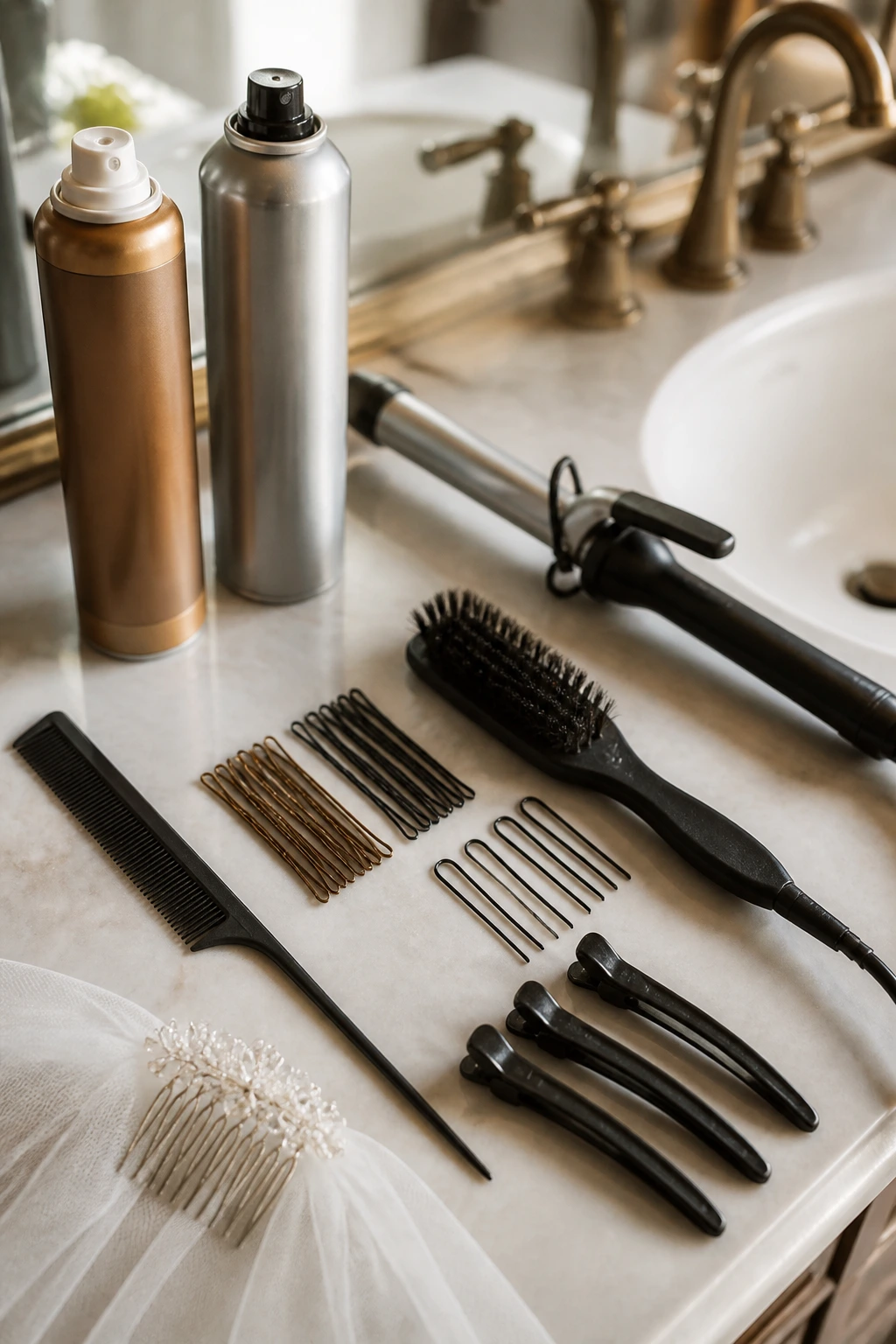
Essential Tools for These Styles
-
Tail comb: Needed for crisp parts, clean sections, and neat twist lines.
-
Bobby pins in two shades: A mix of hair-matched and darker pins hides better in different light.
-
U-pins: Best for buns, knots, and tucked styles that need hidden support.
-
Texturizing spray: Gives clean hair enough grip so braids and twists stay put.
-
Light hairspray: Holds the surface without turning the hair shell-hard.
-
Teasing brush: Useful for crown lift and volume at the base of a bun.
-
Sectioning clips: Keep layers out of the way while the stylist builds the shape.
-
Small curling iron or wand: Helps create soft pieces, bends, or support texture before pinning.
-
Veil comb or hair accessories: Bring them to the trial so the placement can be tested with the actual piece.
-
Hand mirror: Handy for checking the back before you leave the chair.
Smart Prep Before the Chair
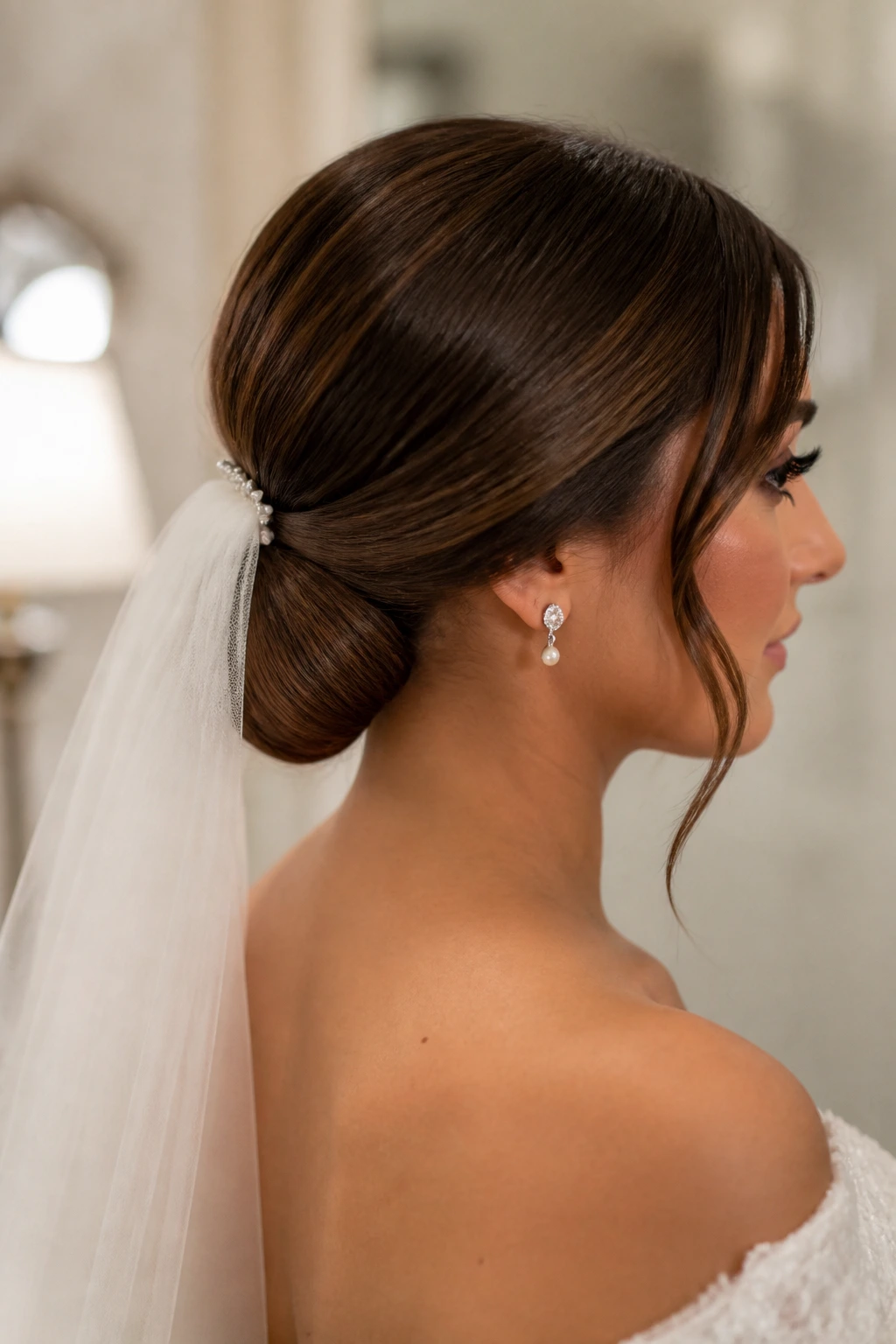
The best bridal updos start before the stylist touches a pin. Hair that was washed an hour ago is often too slippery, especially if it was followed by a rich conditioner or a heavy leave-in. Hair that’s at the “second-day with a little texture” stage usually cooperates better.
Bring photos of the dress, earrings, and veil, not just the hairstyle. A low-back gown wants a different balance than a high-neck lace dress, and a cathedral veil changes the whole pin strategy. If you wear extensions, bring them to the trial too. Hair color can look different under salon light, and you do not want to learn that on the wedding morning.
How to Get the Most Out of a Bridal Updo
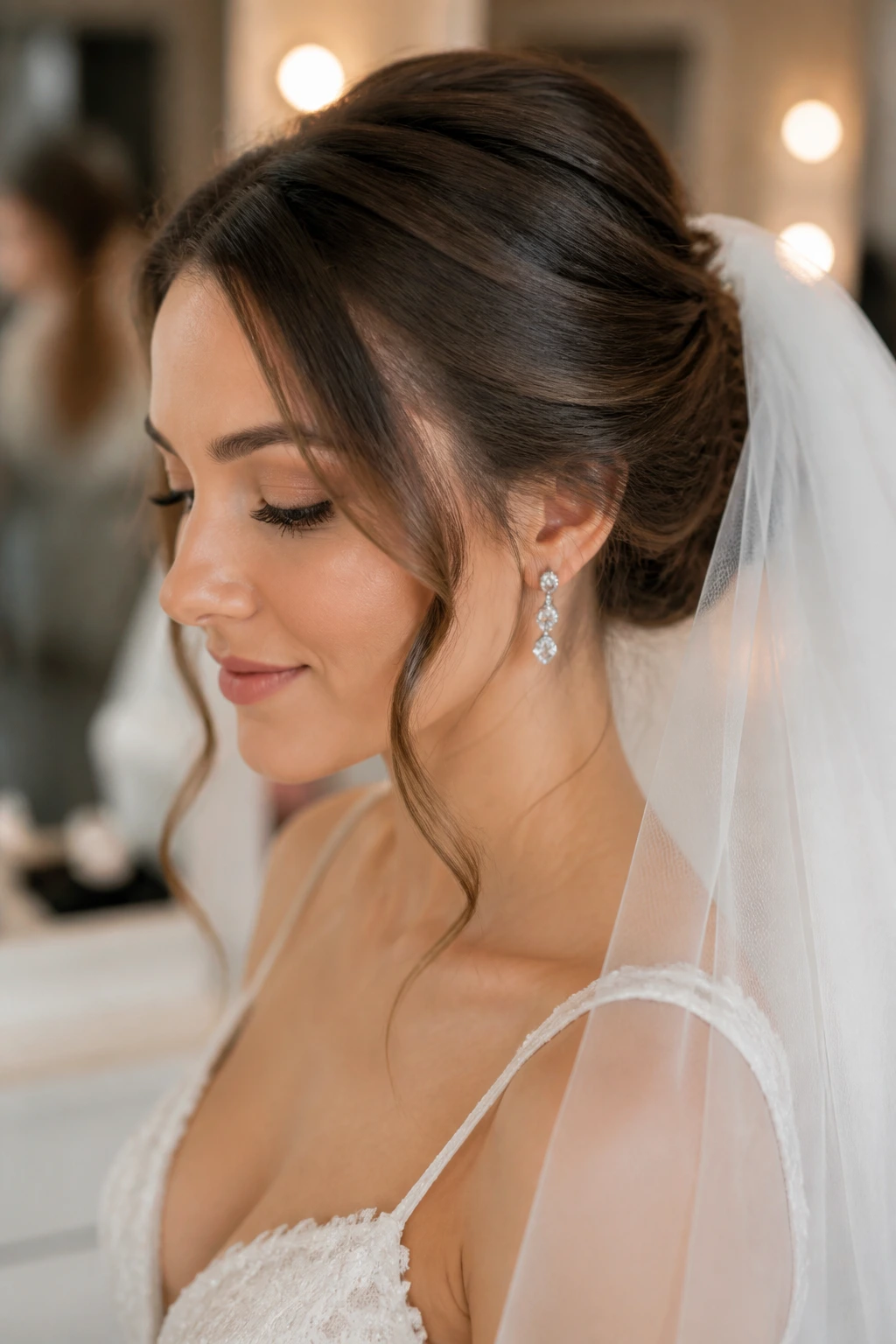
Dress Match: A sleek chignon or French twist pairs best with sharp necklines and dramatic fabric, while braids and soft knots make sense beside lace, tulle, and gowns with movement.
Veil Timing: Ask for the veil placement to be planned before the style is finished. A comb set too low can crush the bun; too high, and the weight pulls on the crown.
Face Softening: If you want softness, keep the face-framing pieces narrow and controlled. Two thick chunks near the cheeks can make even a refined updo look unfinished.
Photo Check: Take a back photo at the trial. The front may look perfect while the back shows a pin line, a crooked twist, or a bun that sits too low for the dress.
Weather Sense: For humid or warm settings, lean into tighter structure and fewer loose ends. Soft ends are charming until they puff.
Common Mistakes to Avoid
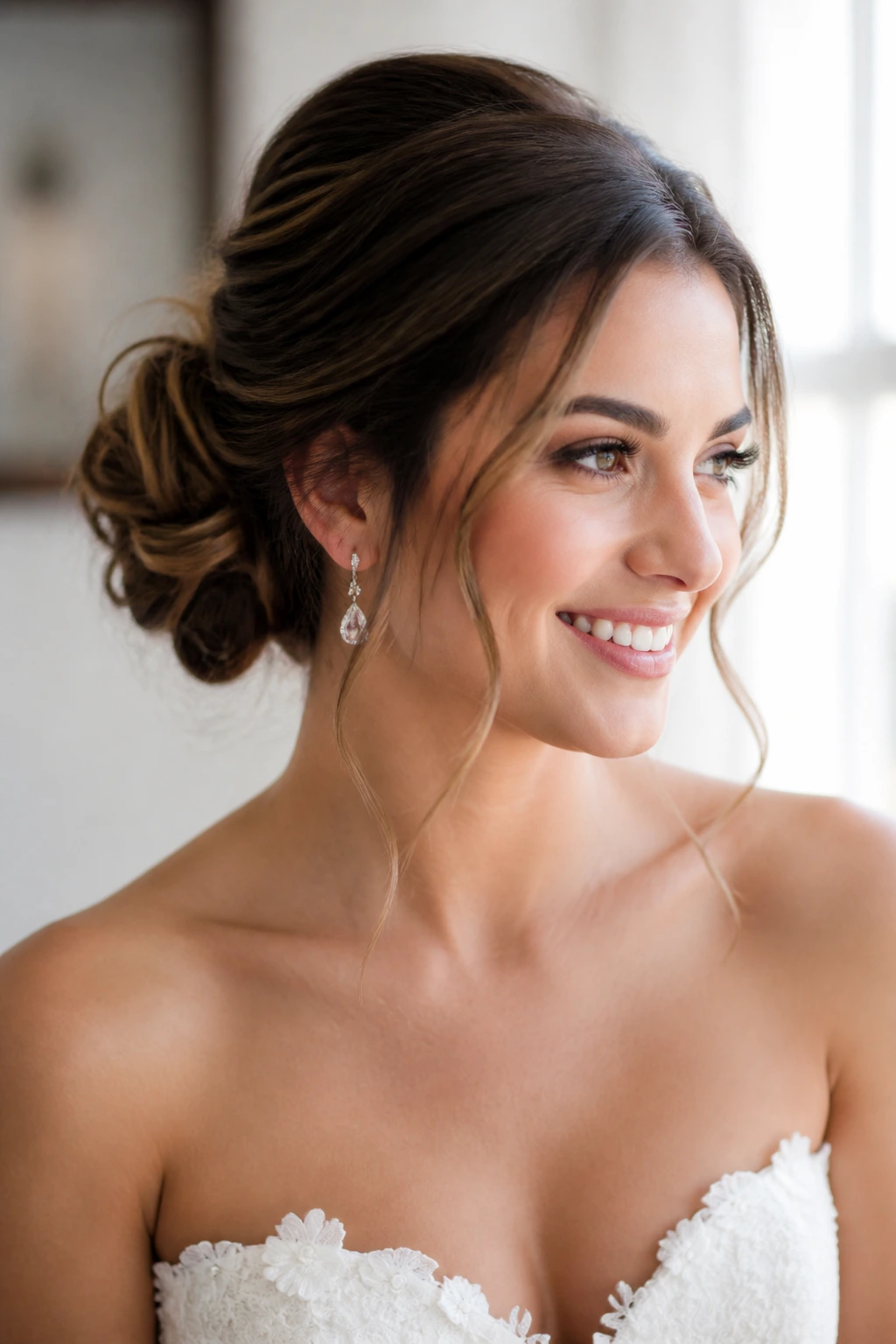
The biggest mistake is starting with hair that’s too clean and too soft. Freshly washed hair can slide out of pins, especially if it’s fine or silky. The fix is easy: prep the hair the day before, or add dry shampoo and texture spray before shaping anything.
Another problem is over-spraying. The hair gets stiff on top but still slips underneath, which is a miserable combination. If the style looks crunchy before the veil goes on, it will not feel better later.
Don’t forget the veil test. A style can look gorgeous until the comb is pushed in and the whole shape sags on one side. Try the veil at the trial, in the same spot, with the same earrings.
And please don’t skip a back view. Brides live in mirrors from the front. Guests see the back, and photos will too.
Variations and Alternatives to Try
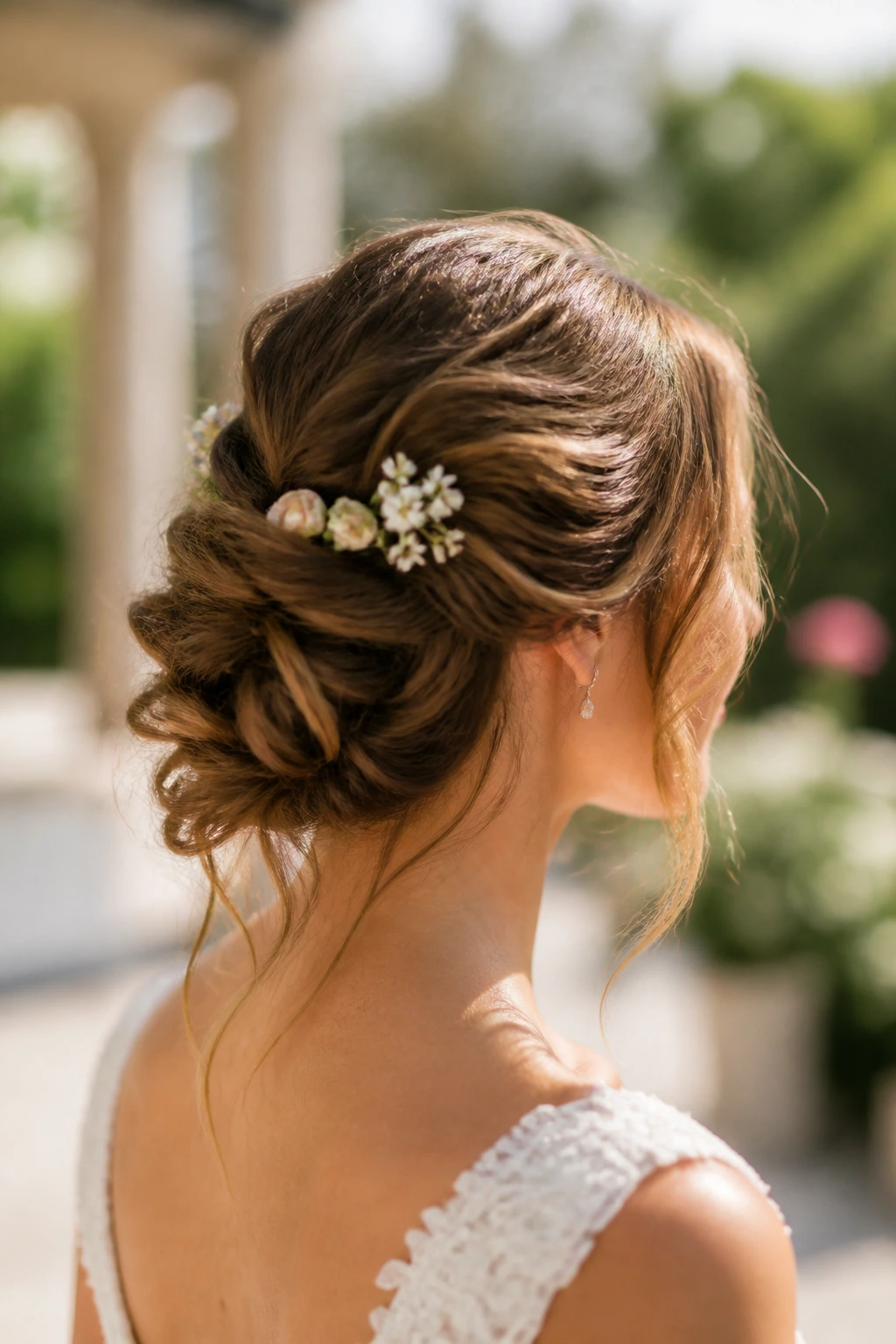
Minimalist Modern Bun: Strip the look down to a center part, clean low knot, and no visible accessories. It suits sharply cut gowns and brides who hate fussy hair.
Soft Garden Updo: Swap smooth sections for loose twists, a few face-framing pieces, and small flower pins. This version feels lighter and works well outdoors.
Braided Romance: Build the style around a crown braid, fishtail braid, or rope twist, then finish in a bun. It adds texture fast without needing huge volume.
Natural Texture First: Keep curls or coils visible and pin only the shape. This is the right move when the bride’s hair already has character and the goal is to protect it.
Short-Hair Lift: Use padding, hidden pins, and a tucked roll to create the look of an updo on shoulder-length hair. It’s a smart fix when the cut isn’t long enough for a full bun.
Keeping the Style Fresh Through the Day
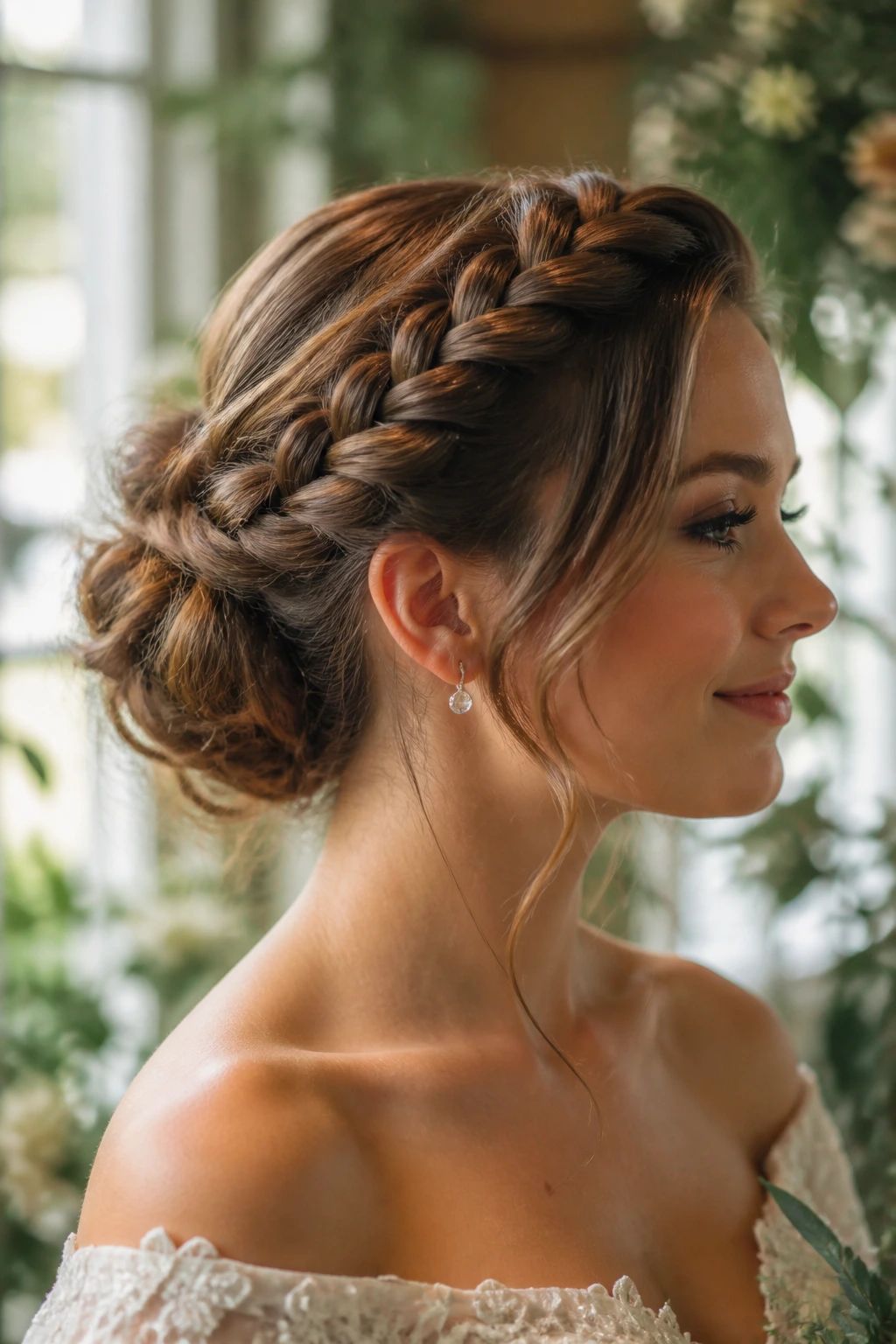
A bridal updo should be treated like part of the outfit, not a one-and-done styling trick. Keep a tiny touch-up kit with 6 to 10 bobby pins, a travel hairspray, a tail comb, and a few U-pins if the style is heavy. That’s enough for most fixes without dragging a whole salon’s worth of gear around.
If the veil comes off for the reception, have the stylist secure the exposed comb area with a decorative pin or two so the back doesn’t suddenly look unfinished. For styles with loose face pieces, a quick tap of hairspray on a toothbrush or spoolie smooths flyaways without hardening the whole section. If the event runs long and the air gets warm, a little blotting and one pin at the nape can save the style from drooping.
Frequently Asked Questions
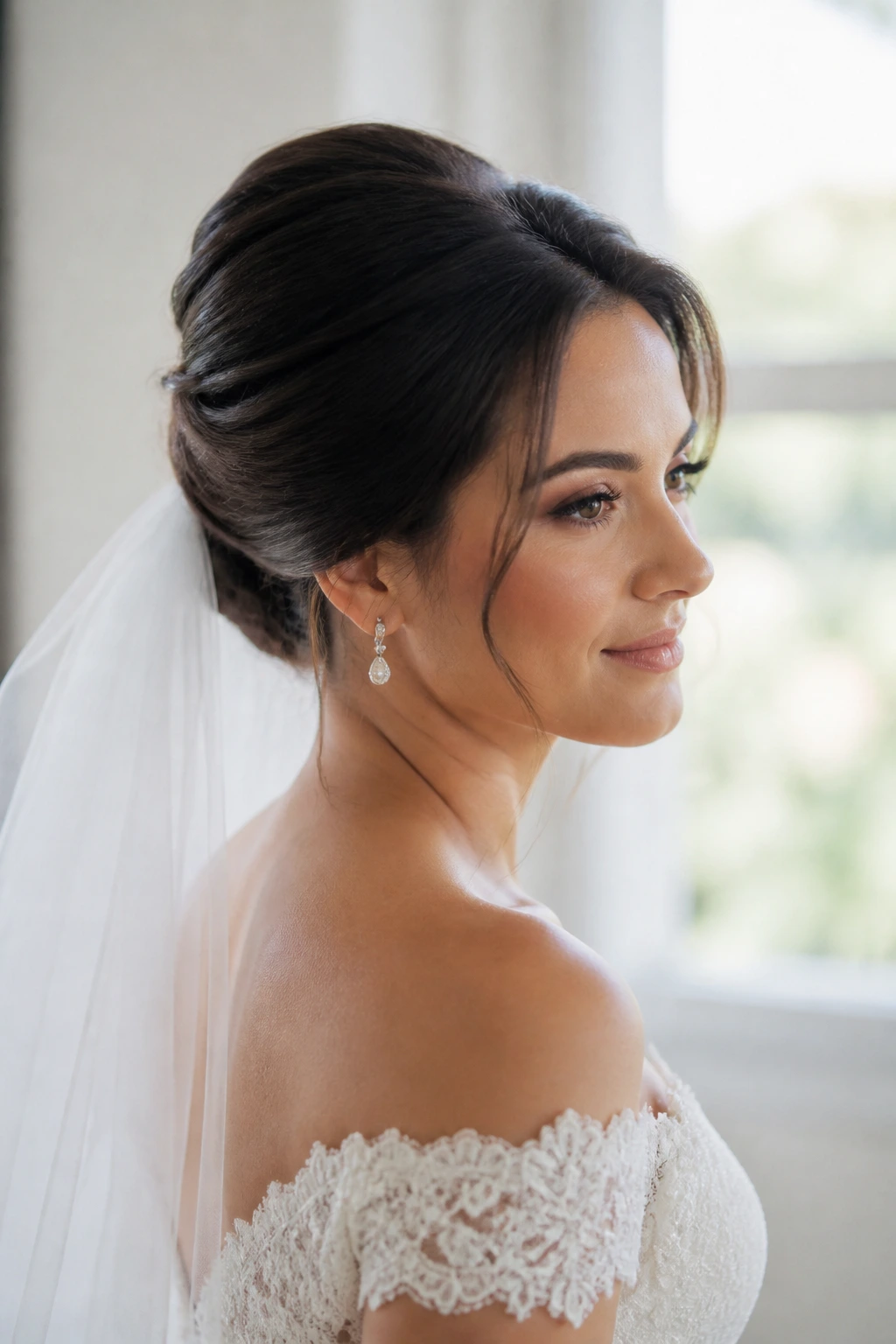
Should I wash my hair the morning of the wedding?
Usually, no. Hair that’s freshly washed tends to be too soft and slippery for an updo, especially if it’s fine or straight. A day-old base usually gives the stylist better grip, and a little dry shampoo can help if the roots feel too clean.
Can a bridal updo work on fine hair?
Yes, but it needs help from padding, texture spray, and good pin placement. Fine hair often looks fuller when the stylist builds small sections instead of one big bun, because the shape holds better and reads larger in photos.
What if I want to wear a veil?
Tell your stylist the veil type and where the comb sits. A low chignon, bun, or twist usually gives the veil a cleaner anchor point, while a high knot may need a different placement so the weight doesn’t tug.
How long should a bridal hair trial be?
Long enough to test the actual silhouette, veil, and accessories. If the trial only shows one angle, it’s not enough. The back, crown, and side profile all need a look, because those are the parts that give problems later.
Do curly-haired brides need to straighten their hair first?
Not unless they want that look. Many of the best bridal updos keep curls intact or shape them into a pinned style that respects the texture. Straightening can add time, heat, and extra dryness without improving the final result.
How do I keep an updo from falling apart while dancing?
The answer is hidden support. Pins should cross through the base in different directions, and the stylist should create anchor points under the visible sections. If a style is built right, a little movement won’t flatten it.
Can I wear a low bun if my dress has a high neckline?
Yes, and sometimes that’s the best choice. A low bun keeps the head shape clean so the neckline stays the focus, which is useful when the gown already has lace, beading, or a lot of texture near the collar.
What if I want to take the veil out later?
Ask for the veil area to be styled so it still looks finished after removal. A pearl pin, a small twist, or a braid running through the anchor point can keep the back from looking like something was yanked out. That little detail matters more than people think.
The Shape That Carries the Day
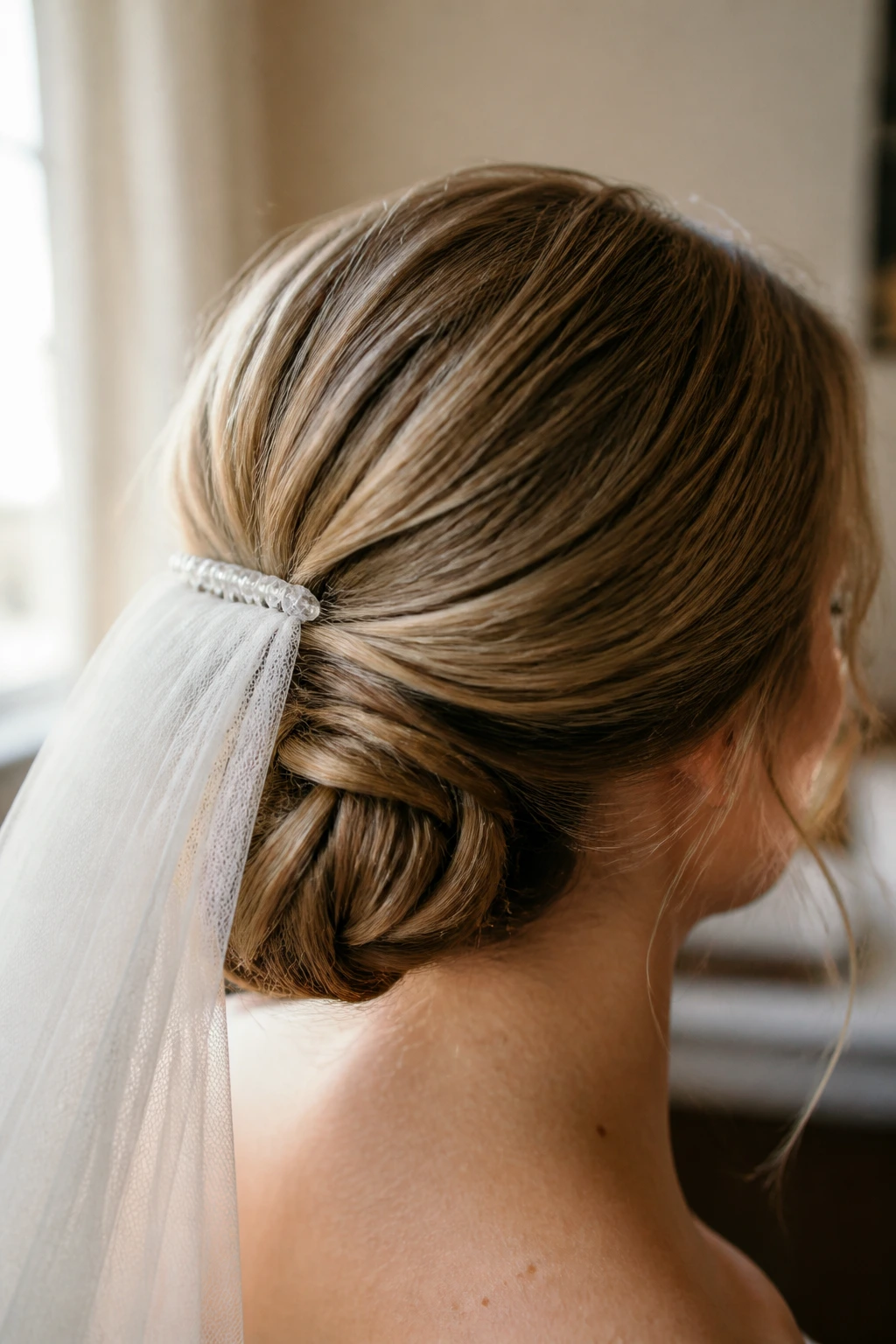
A bridal updo is one of those choices that looks simple from a distance and picky up close. The best version doesn’t fight the dress, the veil, or your hair texture. It works with them, which is why a low chignon, a braided crown, a French twist, or a soft knot can feel so different once everything else is in place.
Pick the silhouette first, then decide how polished, textured, or romantic you want it to feel. The difference between a forgettable wedding hairstyle and one that still looks good at the last dance is usually in the hidden part — the pinning, the prep, the placement of the veil comb, the stubborn little details that nobody notices unless they’re missing.
And that’s the real reason updos for brides keep coming back: they do the quiet work. They let the dress speak, hold the flowers, survive the weather, and stay standing when the night gets lively.
