



Bridesmaid hair gets complicated the minute it has to survive more than one room. It has to look tidy from the front, clean from the back, and calm enough to sit under an open neckline, a veil comb, or a ring of bobby pins that never stay where they’re told. A low ponytail handles that job better than most styles because it stays anchored at the nape, where the shape feels deliberate instead of fussy.
And it doesn’t have to look plain. Not even close.
The best bridesmaid low ponytails have a trick to them: a crisp center part, a soft wave through the tail, a ribbon tied close to the elastic, or a braid that starts almost invisibly and shows up only when someone turns. That’s the sweet spot for bridal-party hair. Everyone reads as coordinated, but nobody looks copied and pasted.
Why Bridesmaid Low Ponytails Work So Well Together
-
They sit under the dress details instead of fighting them. A low ponytail clears the back of a gown, leaves room for statement earrings, and doesn’t crowd a high collar or a halter strap.
-
They can match without looking identical. One bridesmaid can wear a sleek center part, another a wave-softened tail, and another a braid-wrapped base; the family resemblance comes from the low placement.
-
They hold up better through long events. Hair anchored at the nape moves less when people hug, lean, laugh, or wind gets involved near the ceremony chairs.
-
They work with almost any texture. Straight hair can go glassy, wavy hair can look soft and polished, and curly or coily hair can keep its shape while still sitting in the same visual lane.
-
They photograph cleanly from every angle. The back view matters more than people think, and a low ponytail gives the photographer a shape that stays readable from the aisle, the dance floor, and the table shots.
-
They’re easy to personalize. Change the wrap, the braid, the ribbon, or the parting, and the whole mood shifts without rebuilding the style from scratch.
1. Sleek Center-Part Satin Tie
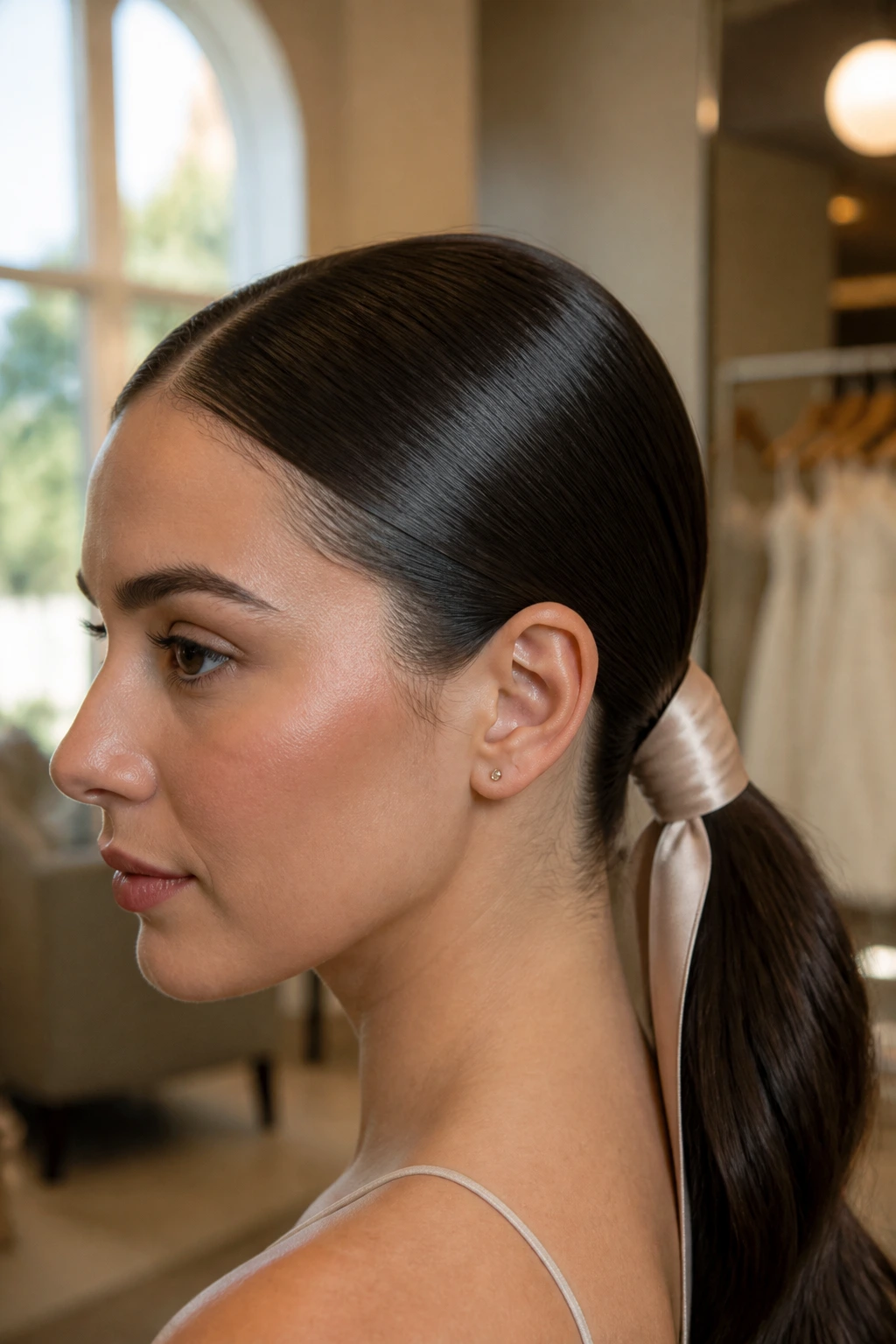
This is the low ponytail that makes bridesmaid hair look intentional before anyone gets close enough to inspect it. The center part draws a clean line through the crown, and the satin tie softens the finish just enough so it doesn’t feel severe. I like this version best when the dresses have structure — square necks, sharp seams, or an open back that deserves a neat frame.
Keep the crown smooth with a fine-tooth comb and a small amount of anti-frizz cream, then secure the ponytail right at the nape with a color-matched elastic. Wrap the base with a thin ribbon or a satin strip about 1 inch wide. If the hair is glossy enough, you barely need anything else. If it isn’t, don’t pile on more product; a little light spray at the ends is enough.
2. Soft Wave Wrapped Ponytail
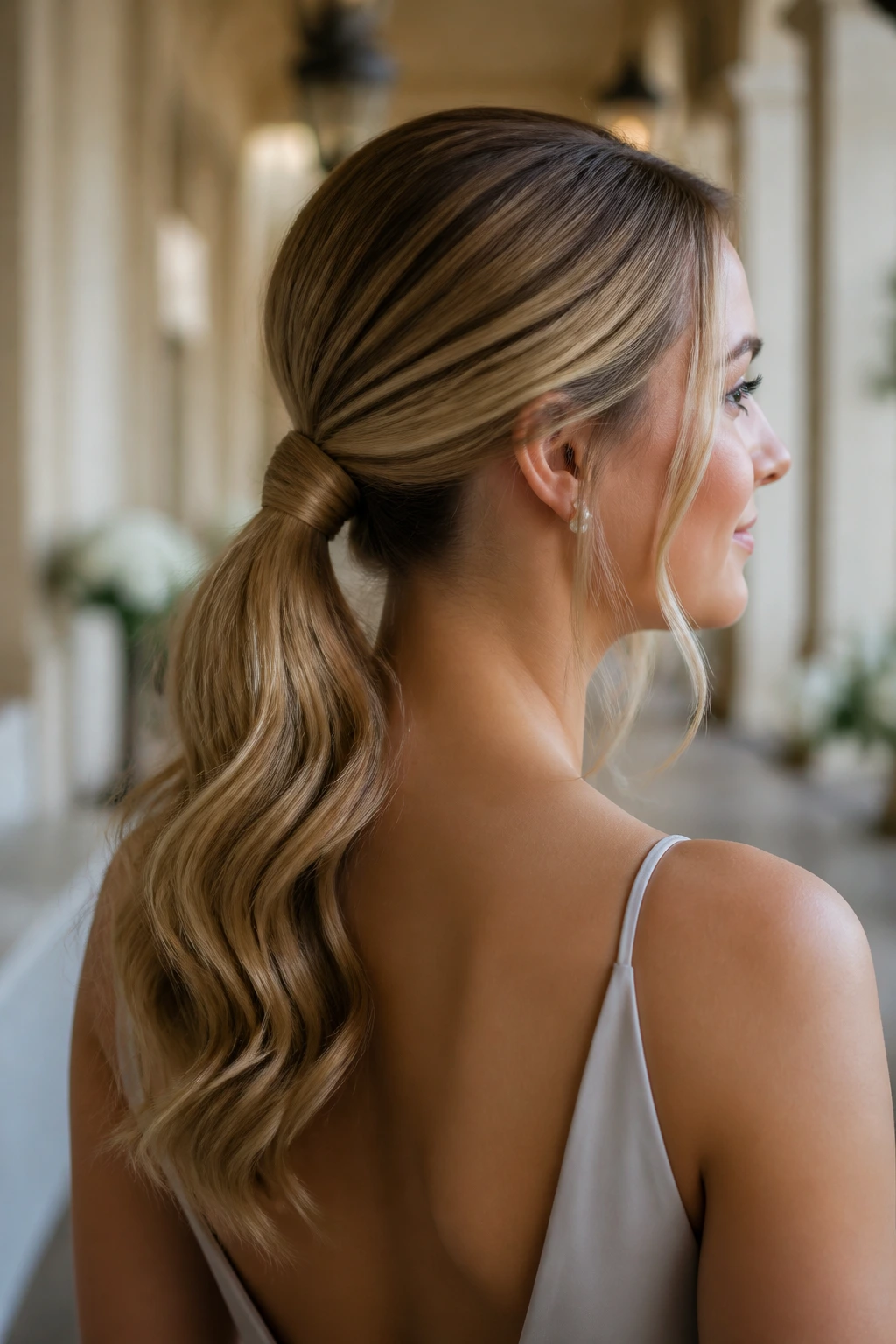
What if you want movement, but not loose hair everywhere? This is the answer. The crown stays controlled, the tail gets brushed into soft bends, and the wrapped base keeps the whole thing from drifting into casual territory. It’s the style I’d reach for if the bridesmaid dresses are floaty — chiffon, chiffon-like crepe, anything with a little swish.
Curl the mid-lengths and ends with a 1.25-inch curling iron, then brush the waves out once they’ve cooled. That gives the ponytail a loose, expensive-looking bend instead of tight curls that can read too prom-like. Leave the top smoother than the tail. The contrast is what makes it work.
3. Braided Crown Into a Low Ponytail
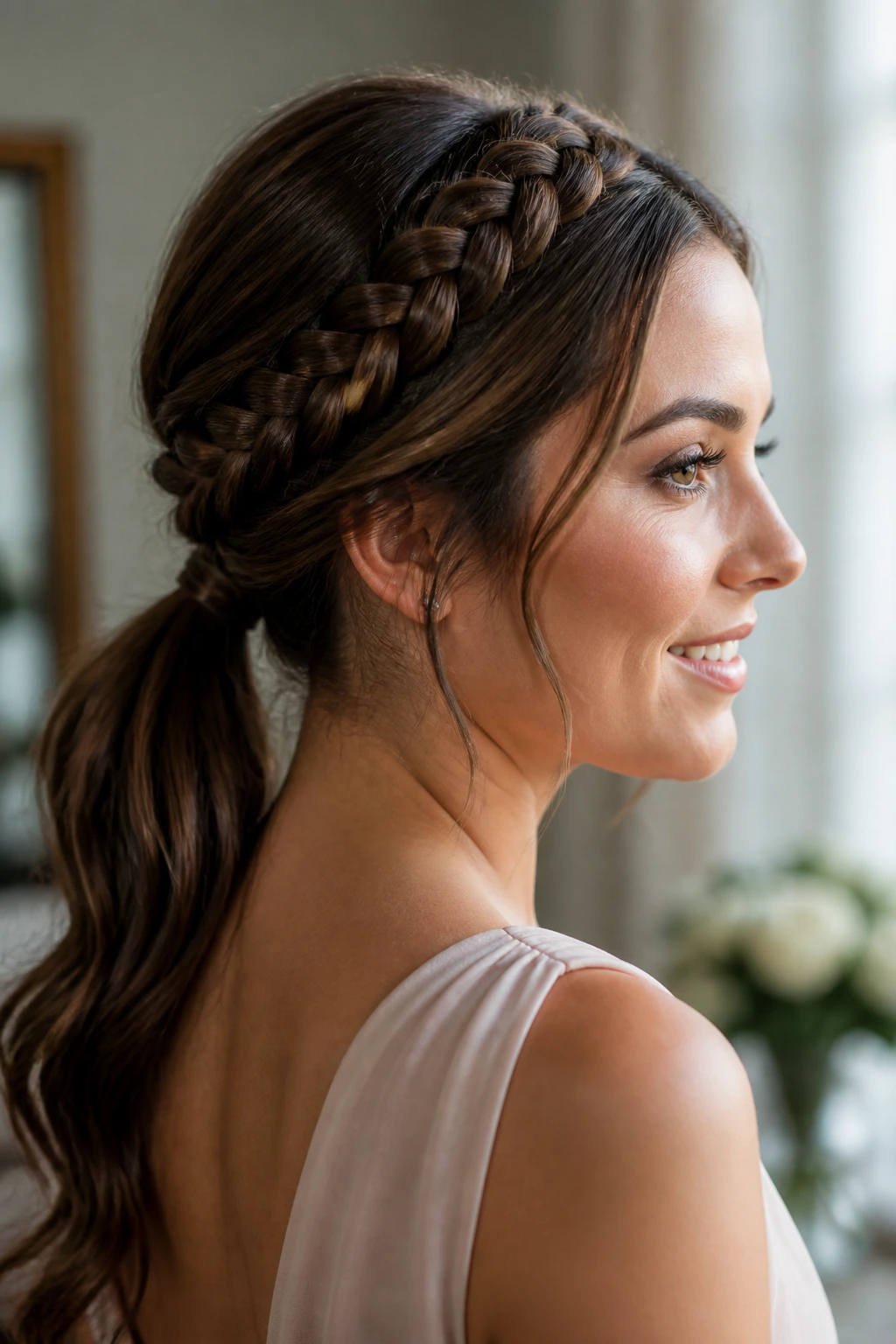
This style is the best friend of layered hair and slippery hair. A braid along the crown gives the front some grip, and once it folds into a low ponytail, the whole back feels more secure. It also buys you a little forgiveness if someone’s hair is fine and wants to escape the elastic by hour three.
Start a braid at one temple, follow the hairline or part, and pin it into the opposite side before gathering the rest at the nape. A few hidden pins under the braid will keep it from shifting.
- Best for: layered cuts, fine hair, and long ceremonies.
- Product note: use texturizing spray before braiding so the weave doesn’t slide apart.
- Finish: keep the tail smooth or add a soft wave at the ends.
4. Twisted Side-Sweep Ponytail
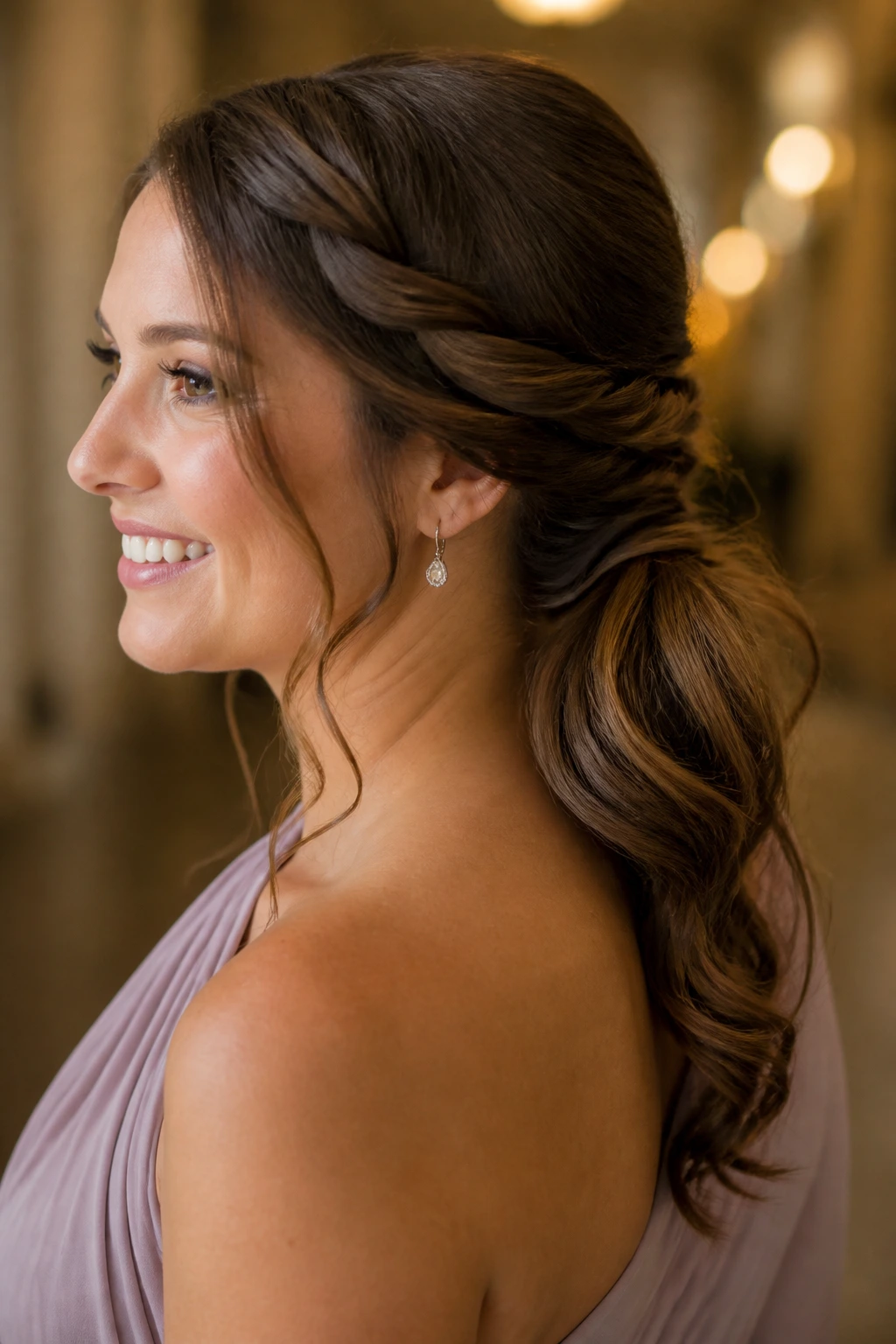
A side-swept low ponytail has a different energy from a centered one. It feels a little more dressed up, a little less expected, and it plays very nicely with one-shoulder gowns or necklines that already have a strong line. Two flat twists, one on each side, create that shape without making the style bulky.
Pull the front sections back loosely, twist them toward the nape, and let them meet just off-center. Secure with a small elastic, then wrap a piece of hair around the base so the join disappears. I like this version when a bridesmaid wants something polished but not severe. The soft diagonal across the head gives the face some lift without stealing the whole show.
5. Bubble Low Ponytail
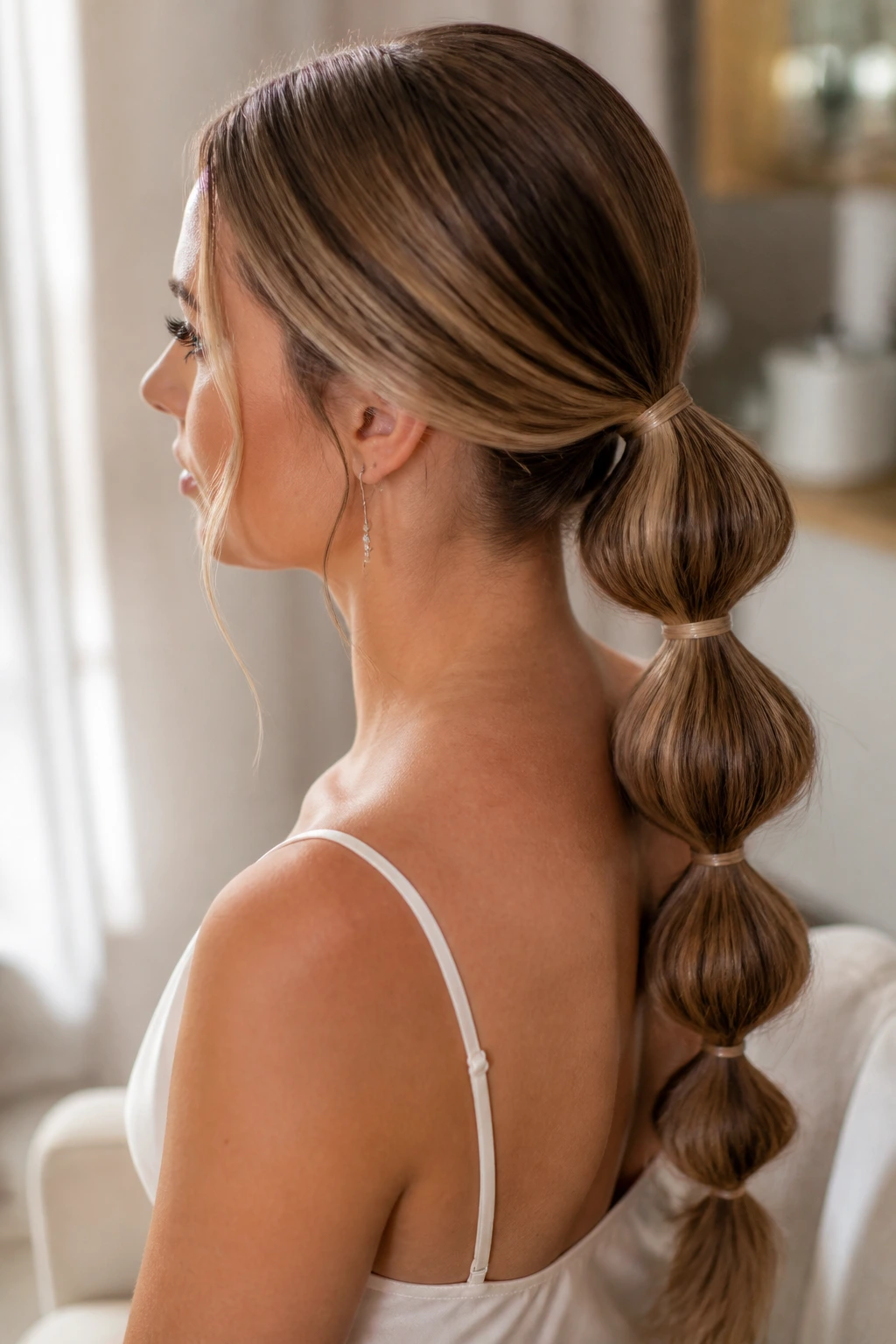
Bubble ponytails are underrated in bridal-party hair because they add shape without asking for a braid or a ton of length. The trick is spacing: small clear elastics every 2 to 3 inches down the tail, then gently puffing each section so it forms rounded, tidy bubbles. Done right, it looks modern rather than playful.
Use this one on medium to long hair, and keep the crown smooth so the bubbles feel like the point, not an afterthought. A little shine spray on the tail helps the sections read cleanly in photos.
Best for: bridesmaid lines that want a matched style with a bit of edge.
Avoid: over-puffing the bubbles on very fine hair; they can start to look lumpy instead of full.
6. Pearl-Pinned Center-Part Ponytail
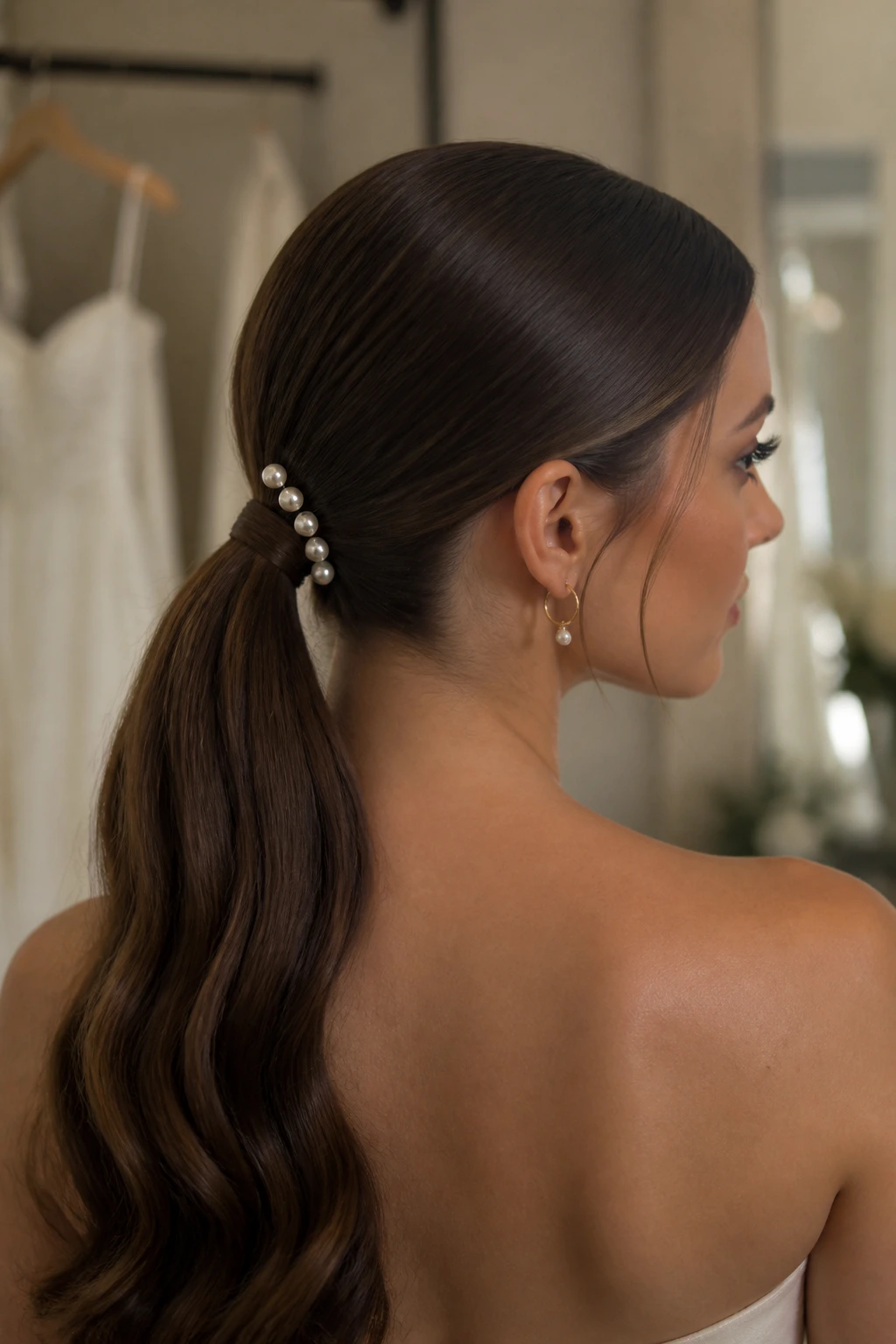
If the wedding jewelry leans pearl-heavy, this is the low ponytail that ties everything together without looking too precious. A sharp center part keeps the base clean, and a small row of pearl pins near one side of the elastic gives the back a little light-catching detail. It’s restrained, which is why it works.
Keep the ponytail smooth and low, then place the pins where they’ll show when the head turns slightly, not dead center where they can get lost in the elastic wrap. Use flat-backed pearl pins if possible; they sit better and won’t poke through the hair. This is one of those styles that looks simple from far away and much more considered up close.
7. Loose-Ended Textured Ponytail
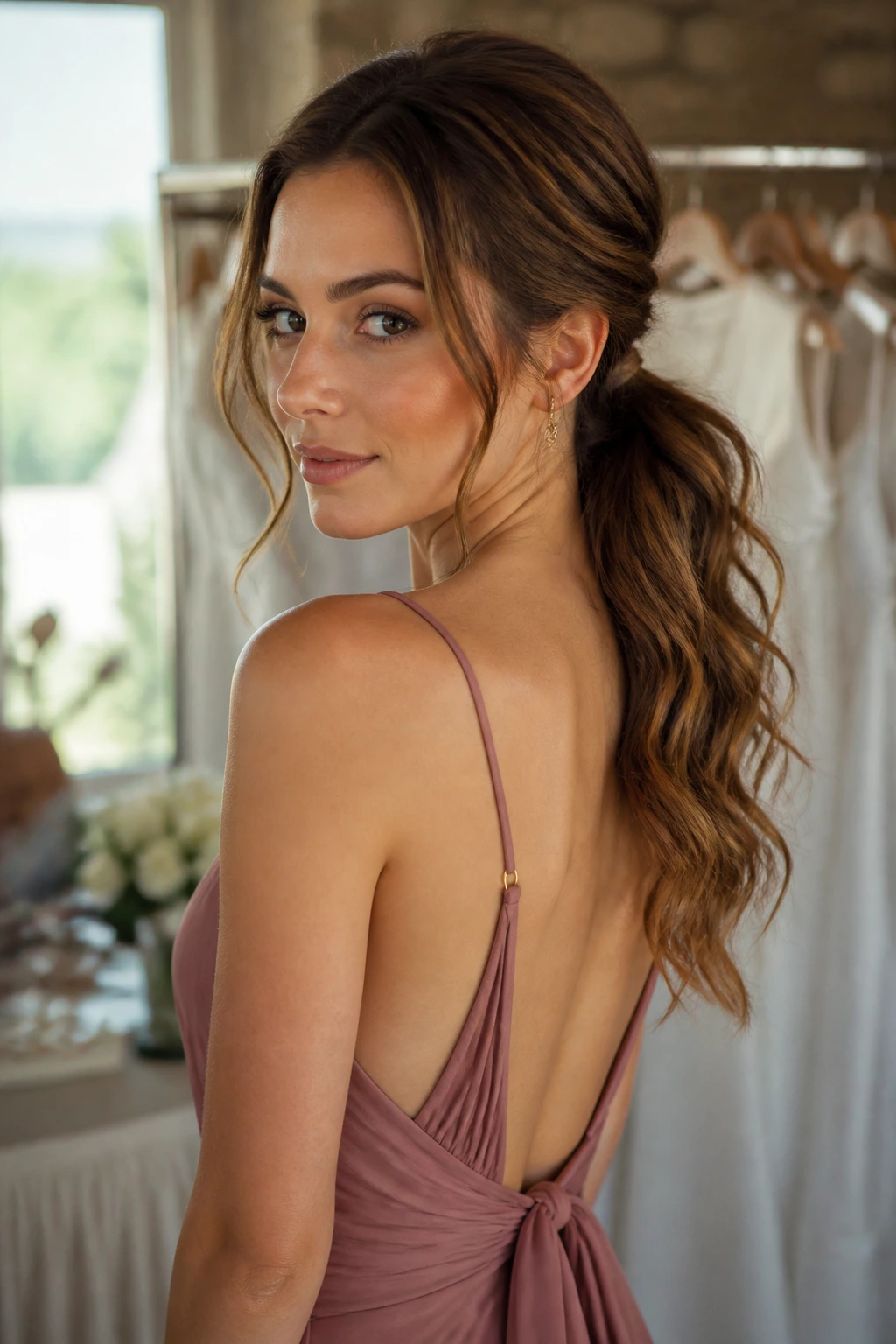
This is the bridesmaid ponytail for dresses that already do the talking. Lace bodices, beaded straps, dramatic sleeves — they don’t need hair competing with them. The crown stays softly polished, but the tail keeps a lived-in texture, with a few bent pieces and a little movement at the ends.
Use a medium curling iron to create loose bends only through the lower half of the hair, then rake the curls apart with your fingers instead of a brush. Leave a couple of face-framing pieces out if the lineup wants a softer look. The style reads relaxed, but not unfinished. That’s the line to keep.
8. Rope-Braid Low Ponytail
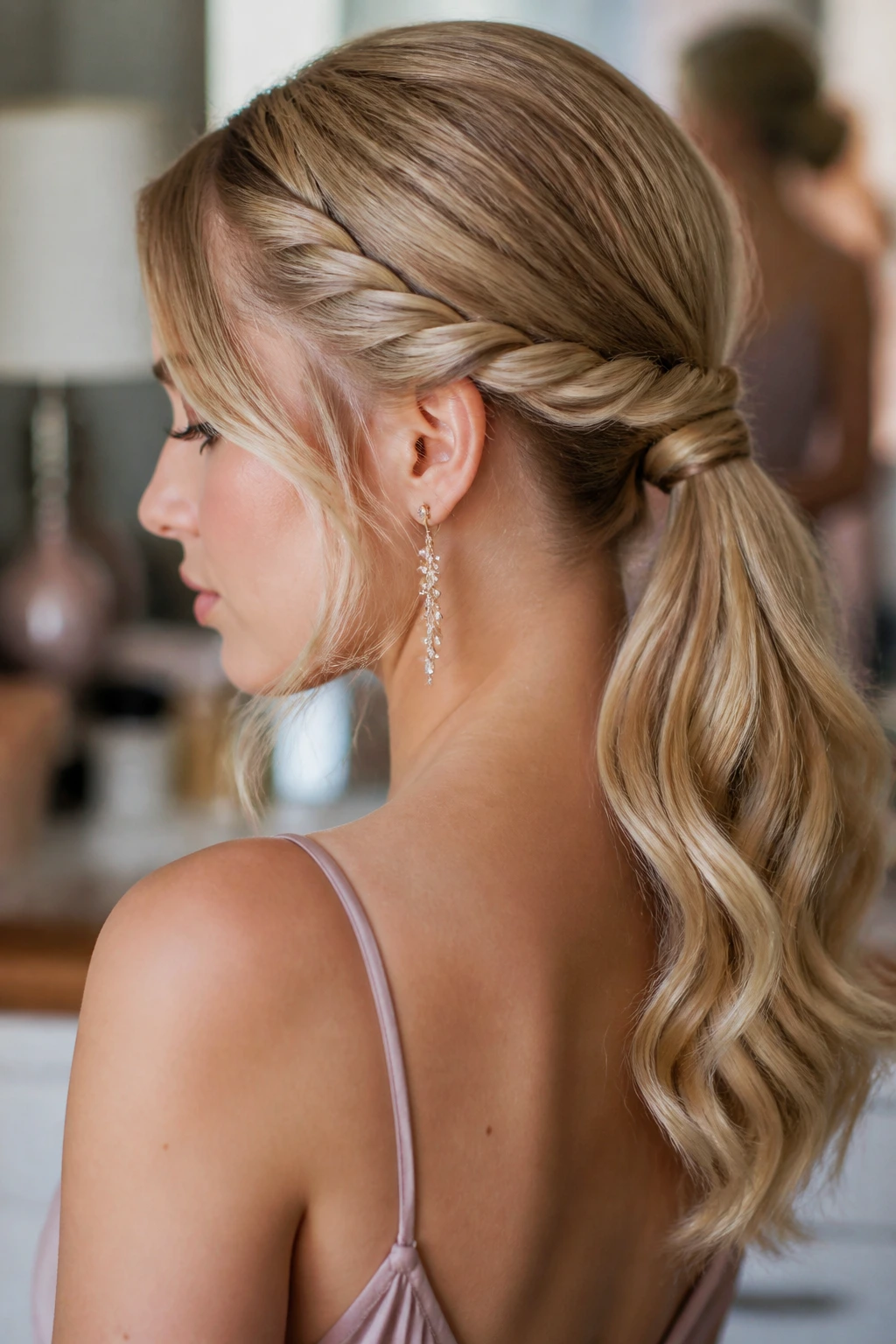
Rope braids give you a cleaner line than a standard braid and usually take less time, which is not a small thing when there are several bridesmaids waiting for chairs. Split the tail into two sections, twist each section in the same direction, then cross them around each other in the opposite direction. That’s what keeps the twist from loosening.
It’s especially good on medium-thick hair, where the braid-like texture can look intentional instead of skinny. A mist of flexible spray before twisting helps the sections hold their shape.
Why I like it: it brings detail to the tail without adding bulk at the crown.
Watch for: silky hair that wants to unwind; it needs more texture spray than you think.
9. Floral Pin Scatter Ponytail
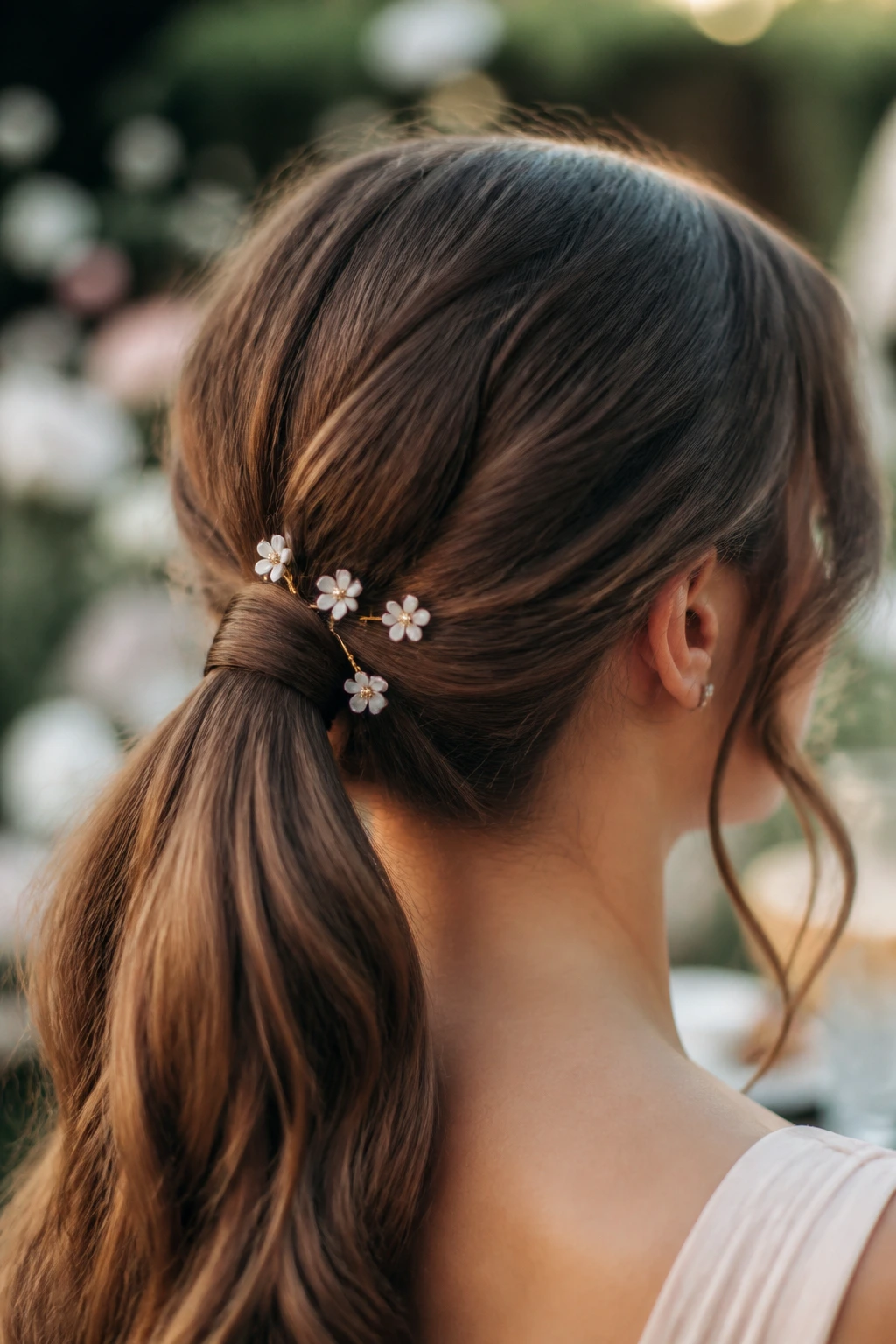
A single oversized flower can take over a low ponytail. A scatter of tiny floral pins does the opposite. The look stays light, and the flowers feel like part of the styling rather than a separate accessory. I’d use this when the bouquets are loose and the whole bridal party leans garden-party instead of black-tie.
Keep the ponytail base wrapped neatly, then tuck in three to five small floral pins where the hair bends or folds near the elastic. If the flowers are fresh, ask for sturdy stems or pinned sprays that won’t wilt before portraits are done. Faux flowers can work too, especially if the petals match the bouquet shape instead of the exact bouquet color.
10. Half-Braided Low Ponytail
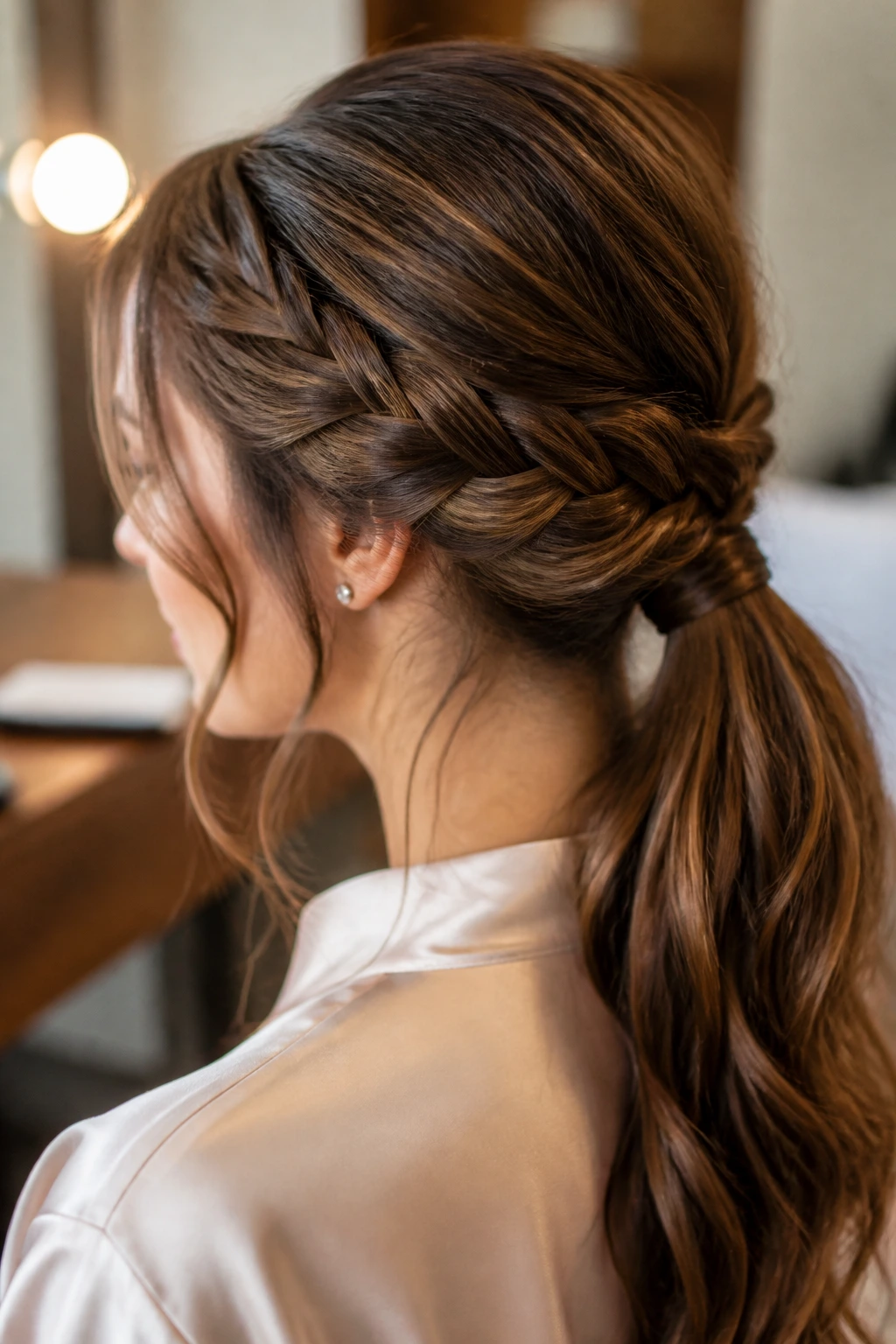
A half-braided low ponytail gives you security at the top and softness at the bottom. That split is useful. The braid keeps layers from slipping out at the crown, while the tail stays free enough to move in photos and on the dance floor. It’s one of the easier ways to make a simple ponytail feel more styled.
Braid the upper section from the temples or just above the ears into the nape, then gather the rest into a low elastic. The tail can stay straight, waved, or curled at the ends. If the hair is prone to puffing in humidity, this is a smart choice because the braid does some of the control work for you.
11. Deep Side-Part Low Ponytail
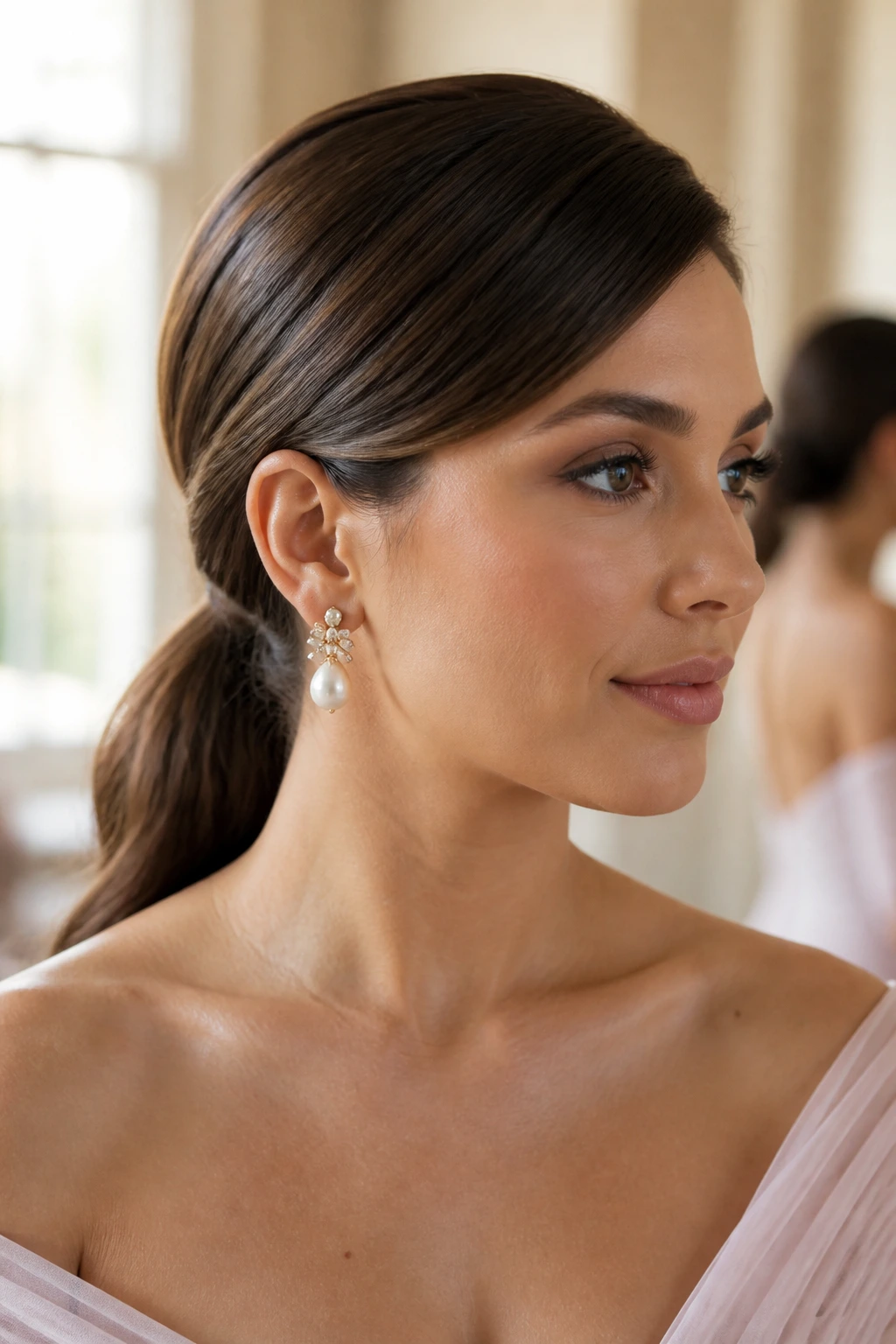
A deep side part changes the whole mood of a low ponytail. The style suddenly feels more deliberate, a little more tailored, and a lot better if the bridesmaid is wearing strong earrings or a dress with a pronounced shoulder line. It also gives you a nice place to create lift without moving the ponytail itself.
Brush the heavier side over lightly, pin it flat if needed, and let the tail sit centered or slightly off-center depending on the neckline. I like a side part when the makeup is a touch more defined; the hair and face balance each other better. Keep the part clean and avoid over-smoothing the root area, or it can look pasted down.
12. Knotted Low Ponytail
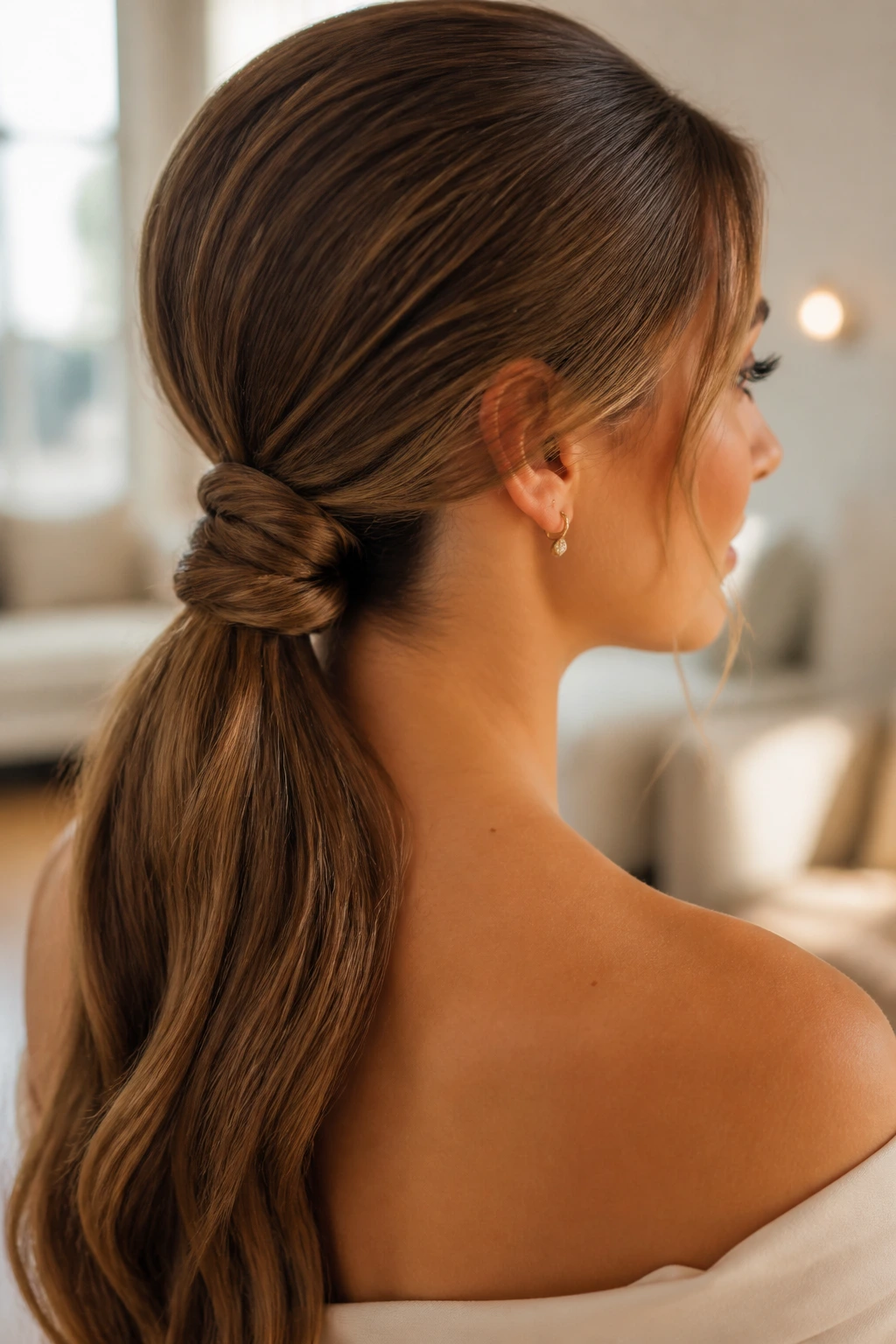
If you’re tired of seeing the same braid-and-wrap combo everywhere, the hair knot is a nice change. It creates the same sense of structure, but the lines feel cleaner. The shape looks especially good when the tail itself is left smooth and glossy, because the knot becomes the main detail.
Split the hair into two sections, knot them once at the nape, and pin the ends underneath before securing the rest into a ponytail. Use a few tiny pins if the hair is silky; knots can loosen more than people expect. This style works well on straight or slightly wavy hair, and it gives off a polished, modern finish without needing extra decoration.
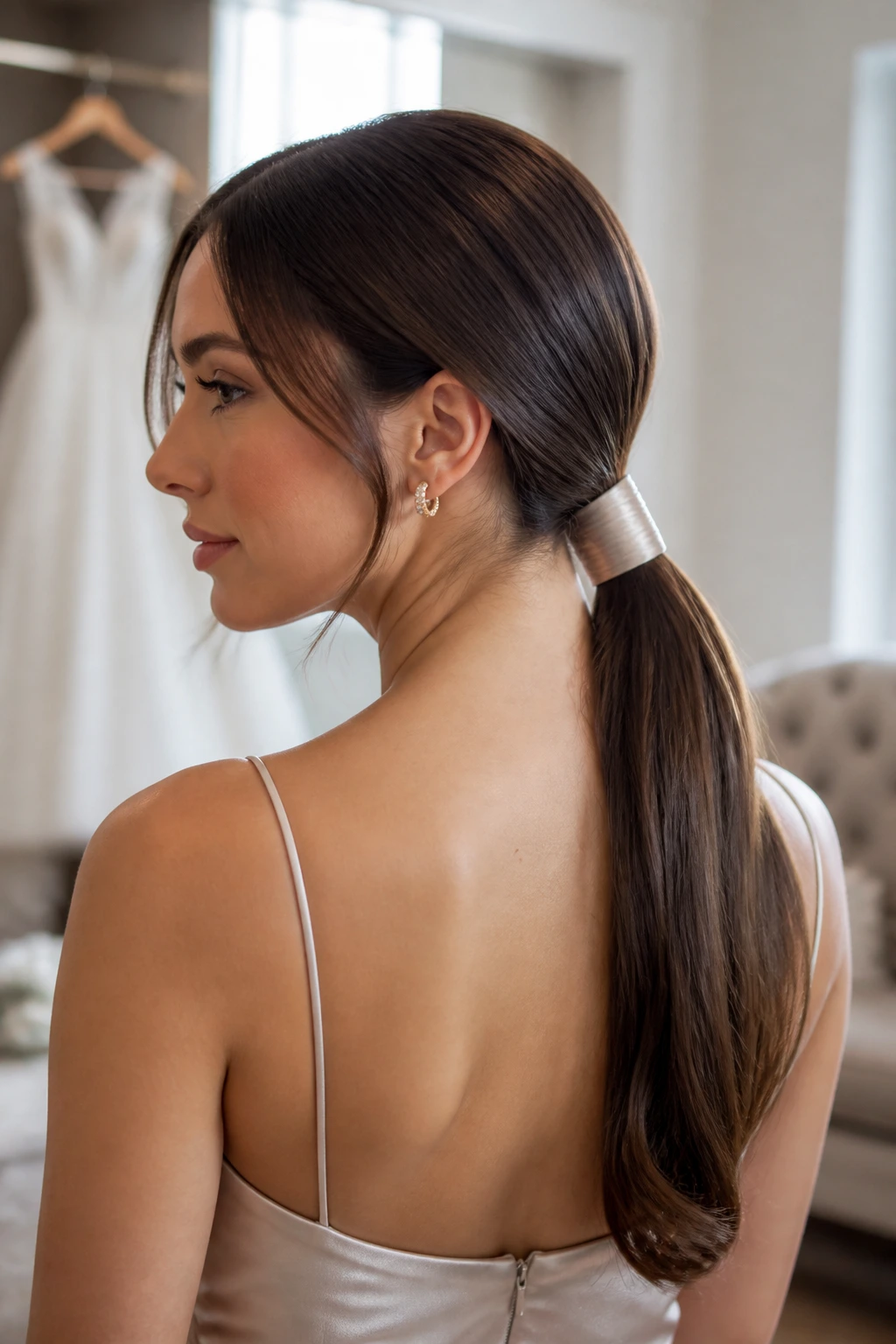
13. Metallic Cuff Ponytail
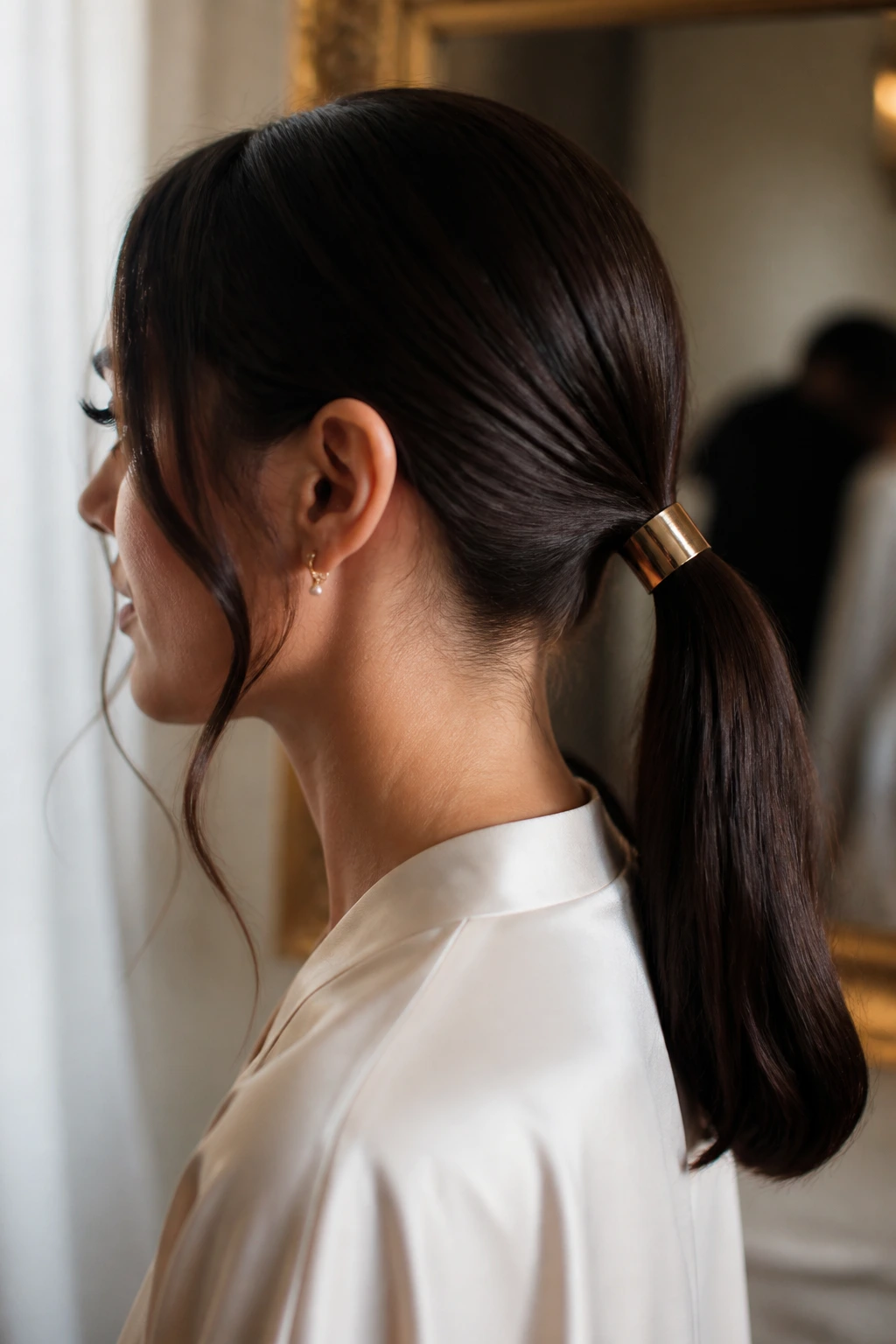
One slim metallic cuff can do more for a low ponytail than a pile of little clips. Gold reads warm, silver reads sharp, and both look deliberate when the rest of the hairstyle stays clean. This is the bridesmaid version of minimal jewelry: one strong note instead of a scatter of extras.
Keep the base sleek, wrap it once, and slide the cuff into place so it hides the elastic without crushing the ponytail flat. The cuff should sit snug, not tight enough to pinch the hair. I’d keep the rest of the style simple — straight tail, soft wave, or a barely bent end — so the accessory gets room to breathe.
14. Curled-Ends Low Ponytail
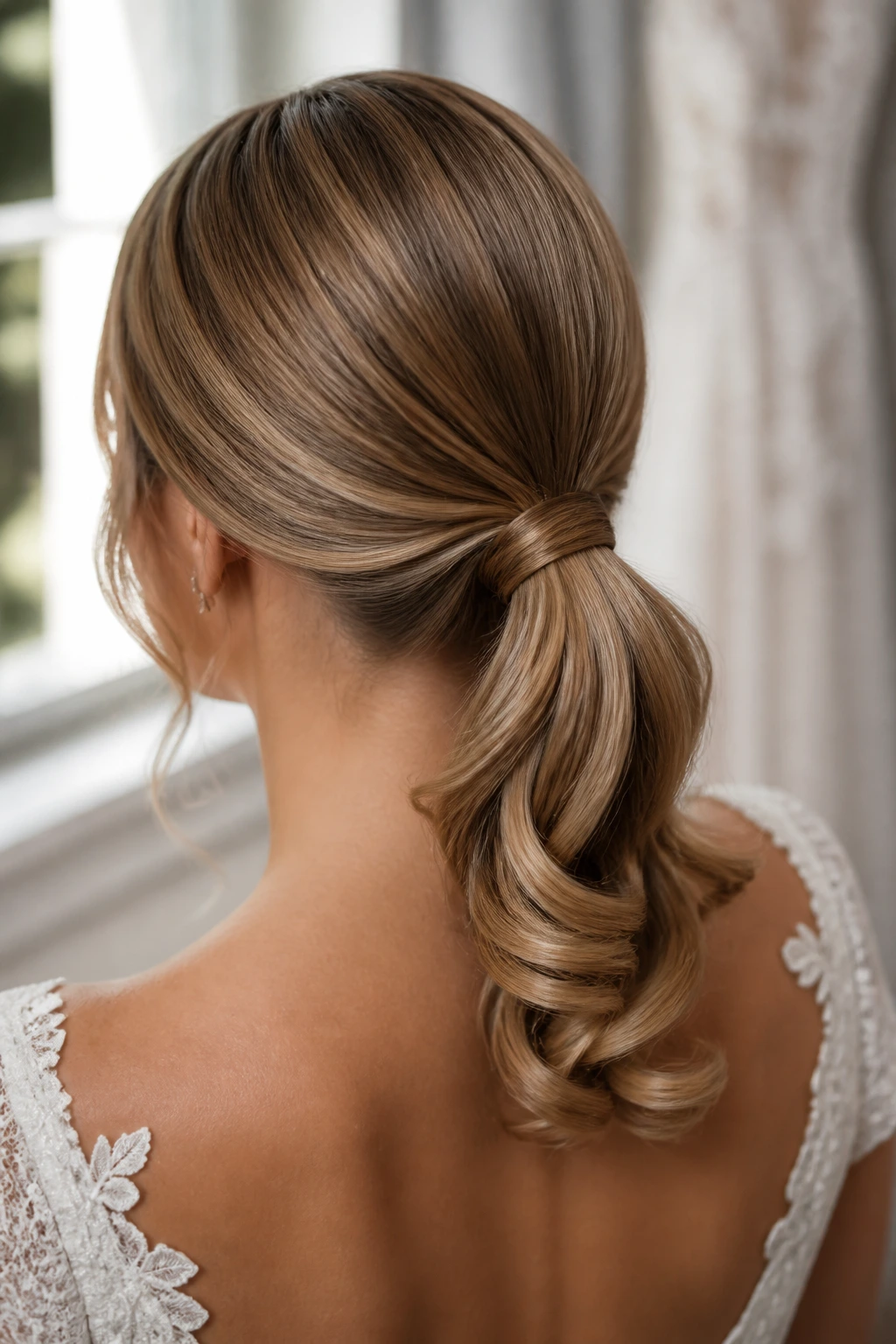
This one is all about contrast. The crown stays smooth and the tail ends curl just enough to give the back some life. It’s a good match for lace, tulle, or beaded gowns because the hair doesn’t compete with the dress texture; it just echoes it at the ends.
Use a 1-inch curling iron or wand and focus only on the bottom third of the ponytail. That keeps the style from tipping into too much volume. A soft wrap around the base finishes the look cleanly. If a bridesmaid has medium-length hair, this style can make the tail look fuller than it actually is, which is a nice trick in photos.
15. French Braid Into Low Ponytail
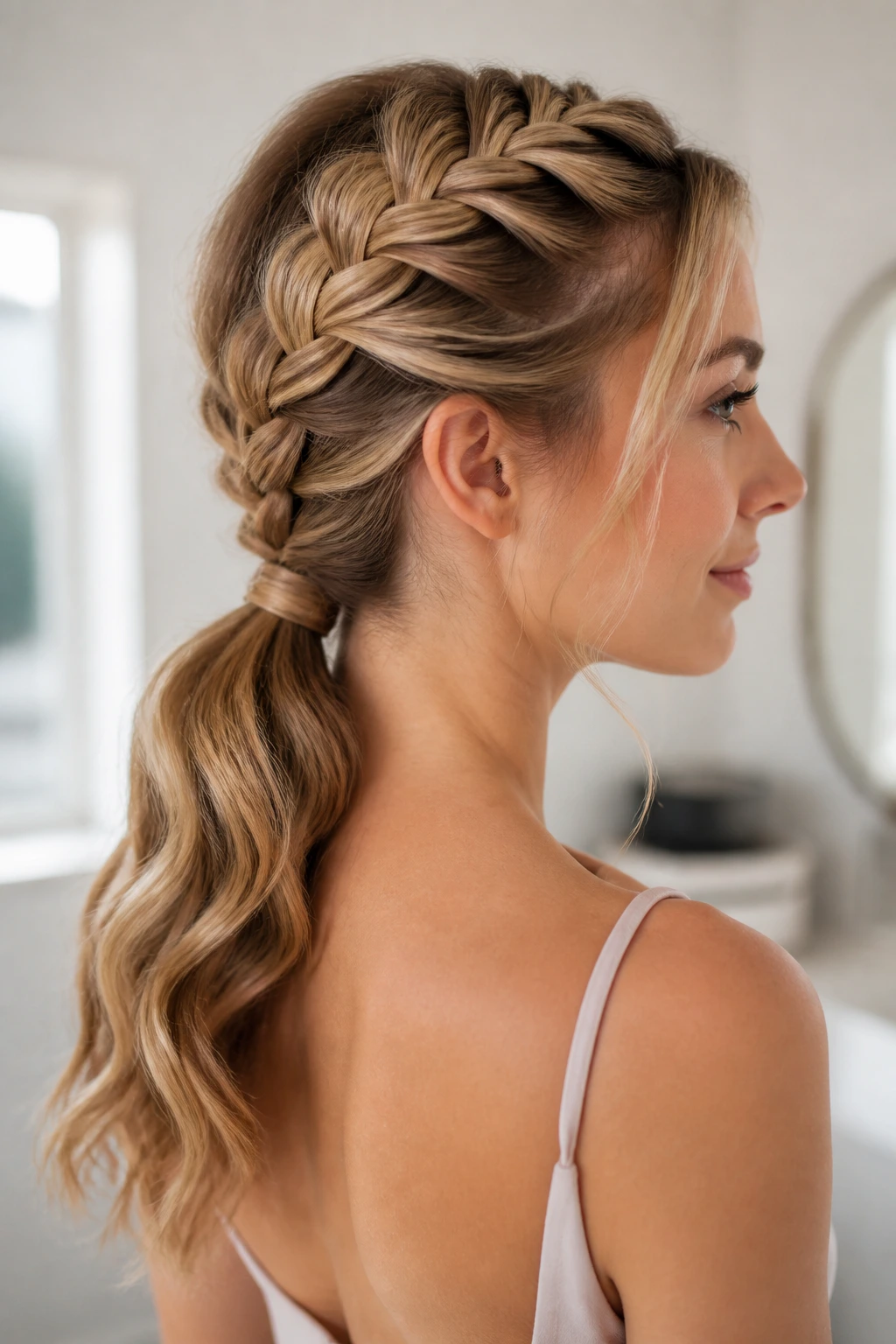
If you want the most secure option in the lineup, start with a French braid. It keeps the top of the head controlled, especially on long or heavy hair, and it won’t unravel halfway through the reception because someone hugged too hard. Practical? Yes. Boring? Not if the braid is done cleanly and the tail has a polished finish.
Braid from the crown down to the nape, then tie the remaining hair into a low ponytail. Pancake the braid a little if you want it wider and softer.
- Works best for: thick hair, windy venues, and long event schedules.
- Style note: keep the tail smooth for a formal look, or wave the ends if the dresses are softer.
- Avoid: starting the braid too far back, which makes the whole thing feel flat.
16. Undone Chignon-Pony Hybrid
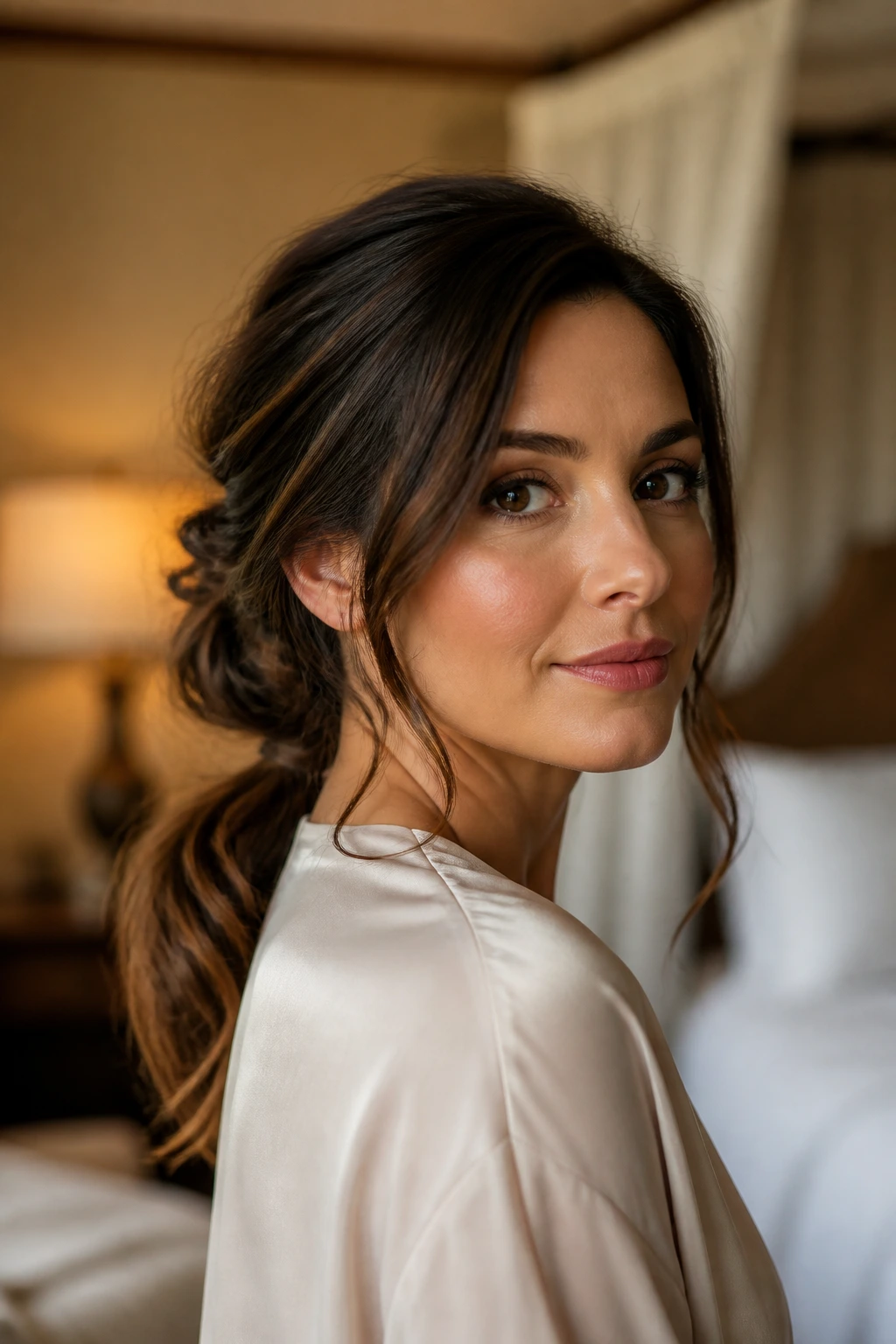
This is what happens when a ponytail and a low knot meet halfway and decide not to argue about it. Part of the tail is tucked under itself, part of it still hangs, and the back ends up looking sculpted without going full updo. I love this for silk dresses or anything with a heavy drape, because the hair doesn’t fight the fabric.
The trick is to make the tuck feel casual on purpose. Secure the ponytail, fold the length under once, and pin it so the shape stays open at the bottom. Let a few ends peek out if the hair is long enough. The result sits somewhere between romantic and tailored, which is a nice place for bridesmaid hair to live.
17. Velvet-Bow Low Ponytail
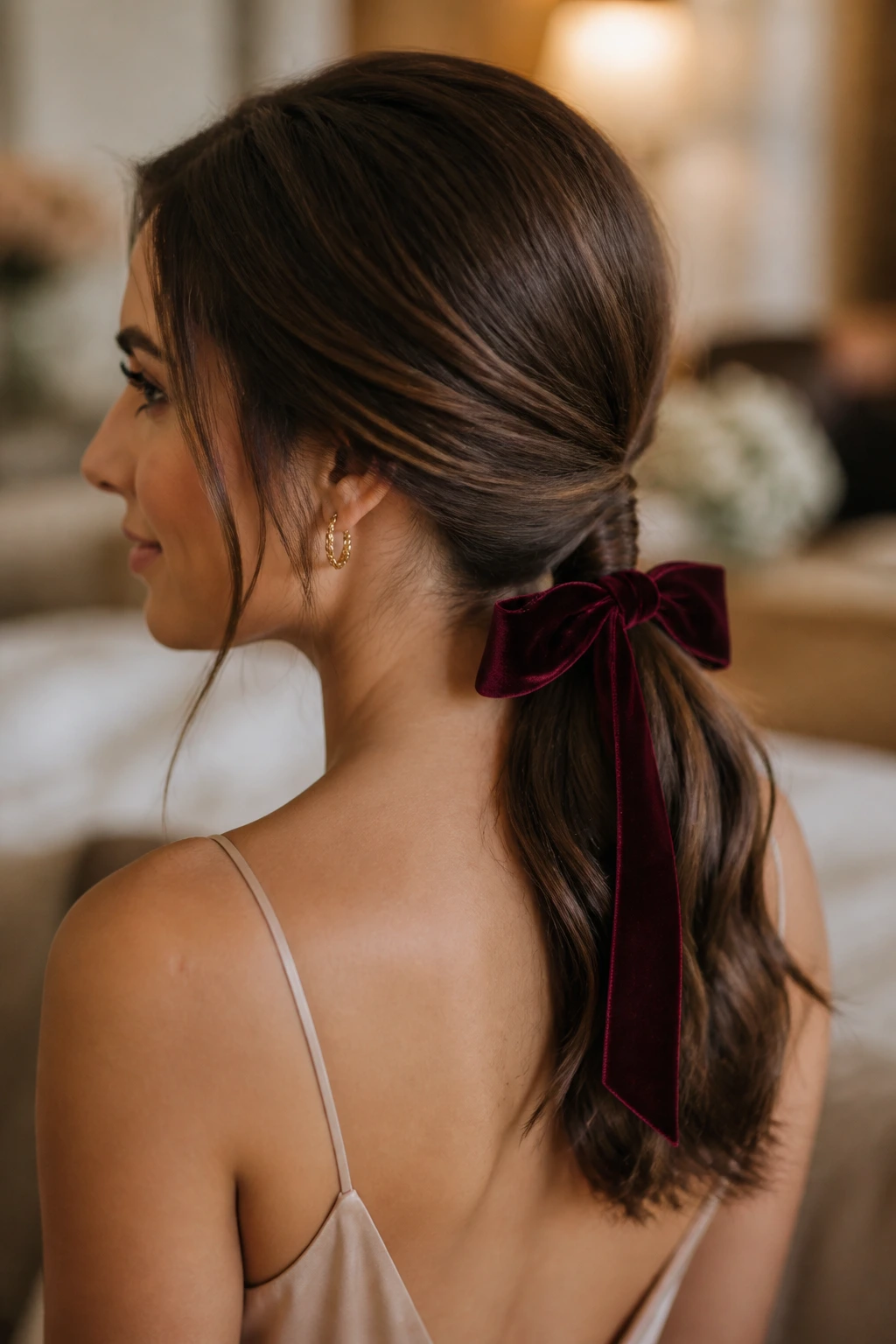
A velvet bow changes the whole temperature of a low ponytail. Satin can look sleek, ribbon can look soft, but velvet has body, so the base suddenly feels richer and less sweet. That matters if the dresses are simple and need one strong accessory to keep them from fading into the background.
Pick a narrow ribbon, usually around 1 to 1.5 inches wide, and tie it at the nape so the bow sits just below the elastic. If the hair is extra long, let the tails of the ribbon fall a little shorter than the ponytail so they don’t tangle. This style feels especially strong in darker jewel tones, cream, or black.
18. Hollywood Wave Ponytail
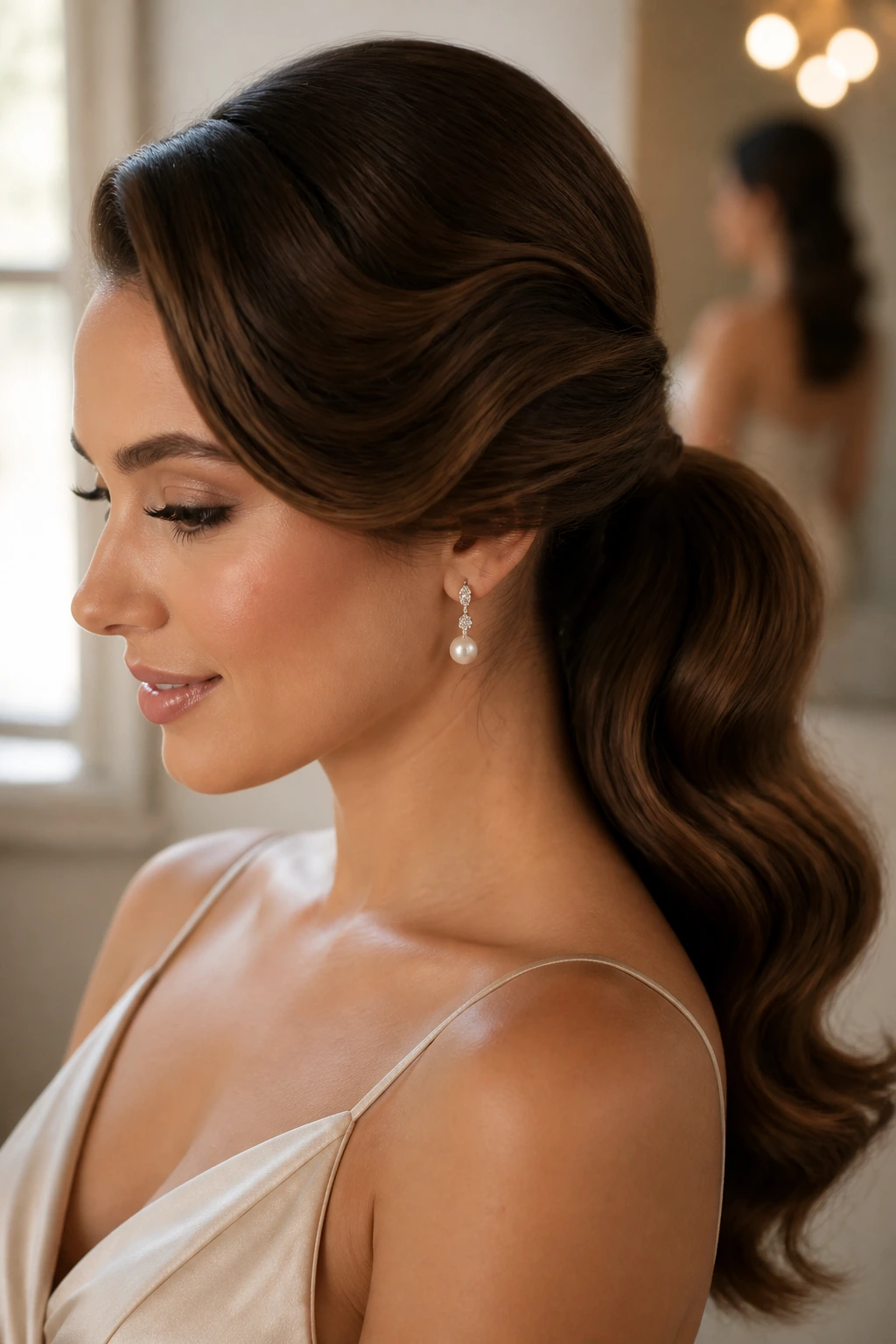
This is the glamorous cousin in the group. The crown has that smooth, side-swept wave you see on old-school evening styles, but the hair still gathers low enough to keep the neckline clear. It gives you movement without giving up control. That’s a useful trade when the bridesmaids are wearing fitted dresses and the hair needs to keep up.
Shape the front section into a deep, soft wave before gathering the rest into a low ponytail. Curl the tail in broad sections so the ends fall with a polished bend instead of a tight spiral. Use shine spray lightly, not all over. Too much and the style starts looking sticky in bright light.
19. Wet-Look Low Ponytail
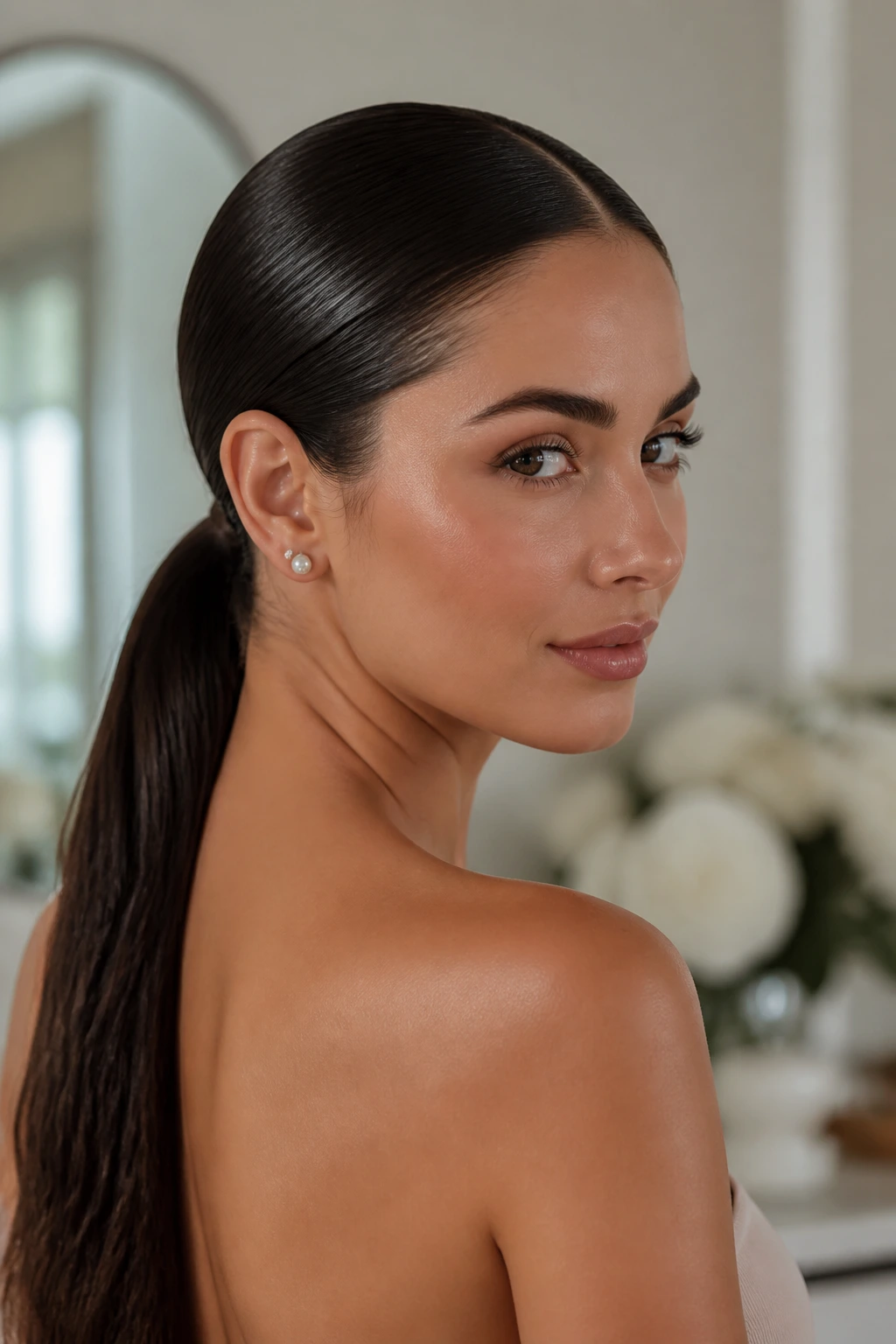
The wet-look ponytail has a sharp edge, and that edge is the point. It keeps the hair close to the head, emphasizes the face, and lets the dress or makeup do the heavy lifting. On the right bridal-party lineup, it looks clean and expensive without needing any extra decoration.
Use gel or styling cream at the crown, comb the hair back with a fine-tooth comb, and smooth the tail so it stays glossy without frizz. The product should look intentional, not greasy. That line is easy to miss. This style works best when the rest of the look is modern — sculptural gowns, bold earrings, or a very crisp bouquet. If the venue leans rustic, this may feel a little too sharp.
20. Tucked-In Low Ponytail
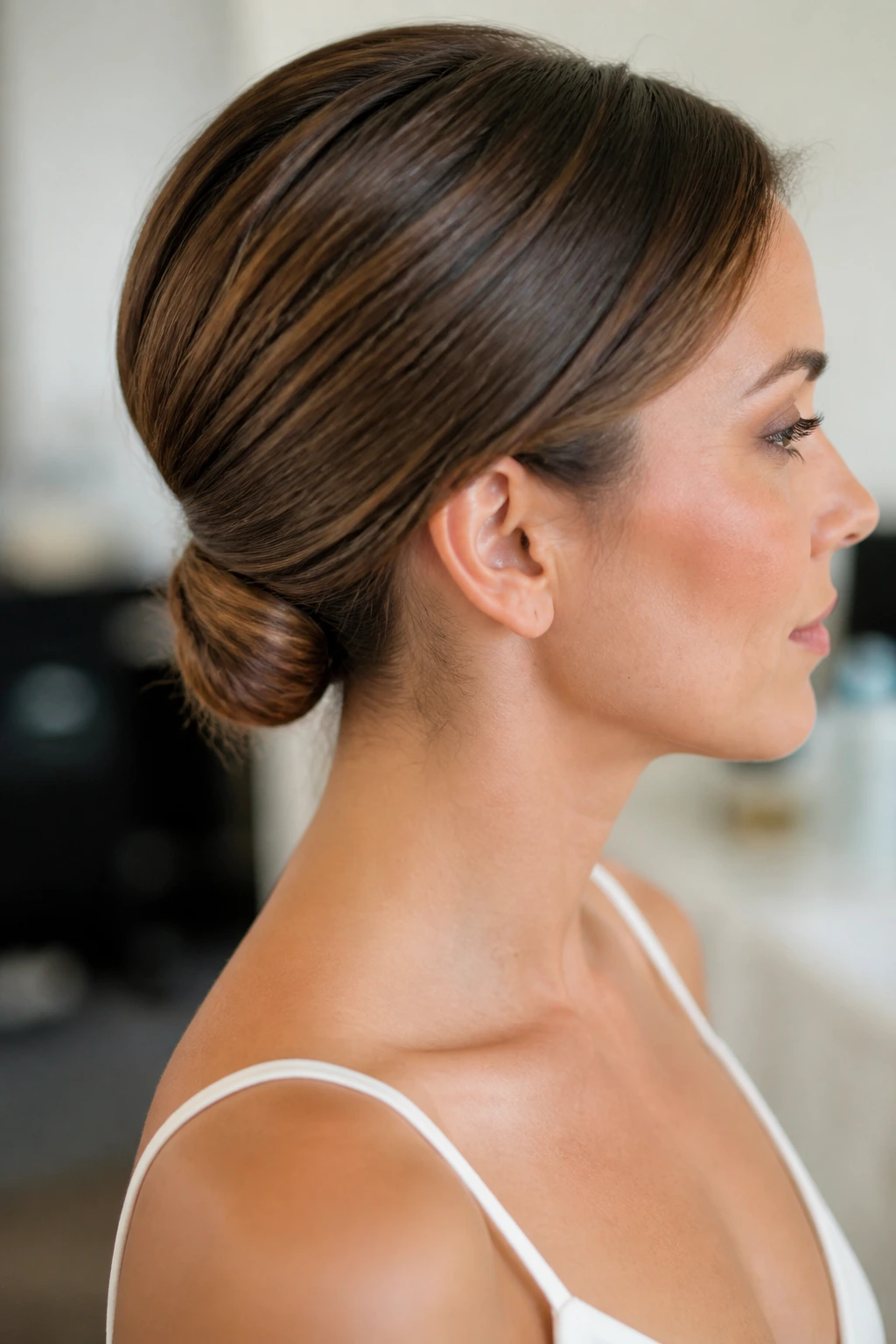
A tucked-in low ponytail sits closer to the neck and reads almost architectural. Instead of swinging long, the tail folds under itself and is pinned into place, so the silhouette stays compact. That makes it a strong choice for shorter hair, or for bridesmaids who don’t want a long tail brushing the back of a dress all evening.
Build a normal low ponytail first, then fold the length under and pin through the middle and the underside. Use enough pins that the fold doesn’t spring back when the head turns. A clean center or soft side part both work here. I like this one with high necklines because the hair stays out of the way but still feels styled.
21. Face-Framing Lived-In Ponytail
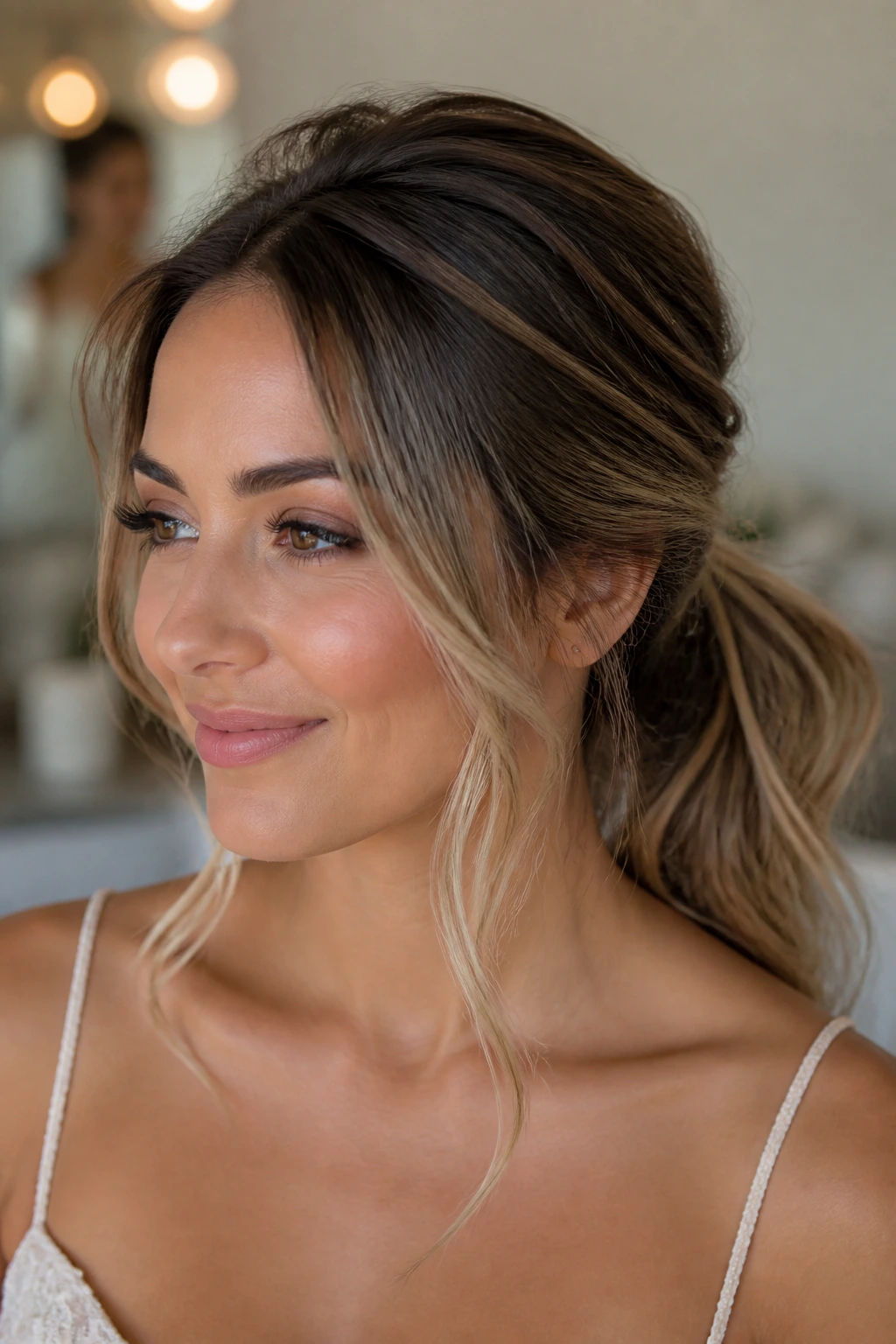
Some bridesmaids want hair off the face without losing all softness around it. This is the compromise. The ponytail stays low and gathered, but a couple of front pieces are left out and bent away from the cheeks. The result feels gentler, especially on people who don’t like the severe look of a slicked-back style.
Don’t overdo the face-framing pieces. Two slim sections are enough. Curl them lightly and let them sit around the cheekbones or jawline, not across the mouth or eyes. The tail itself should stay a little textured, because ultra-smooth lengths can make the front pieces look disconnected. This style works well on medium-length hair and dresses with softer necklines.
22. Ribbon-Woven Low Ponytail
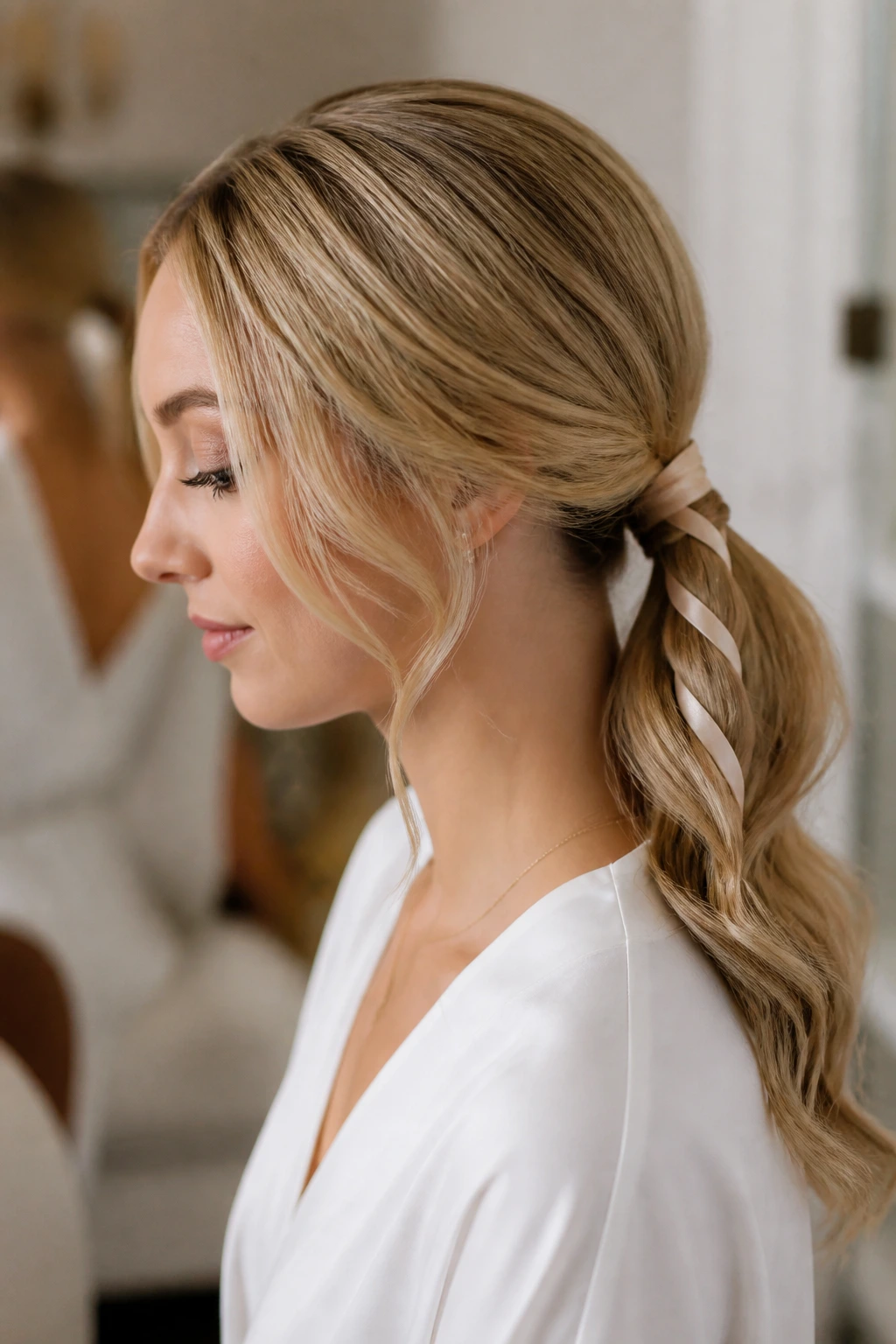
Ribbon weaving is a nice way to introduce color without asking every bridesmaid to wear the same hair accessory. A narrow ribbon can be threaded through a braid or wrapped lightly through a sectioned tail, and the result feels coordinated without being rigid. That’s the useful part: one family, different execution.
Choose a ribbon that lies flat — satin, grosgrain, or silk all work — and keep the width modest, usually under 1/2 inch if it’s woven through the hair. If the dresses are a muted tone, a ribbon in the bouquet color can bring everything together fast. If the lineup already has strong accessories, keep the ribbon thin so it doesn’t compete.
23. Double-Twist Low Ponytail
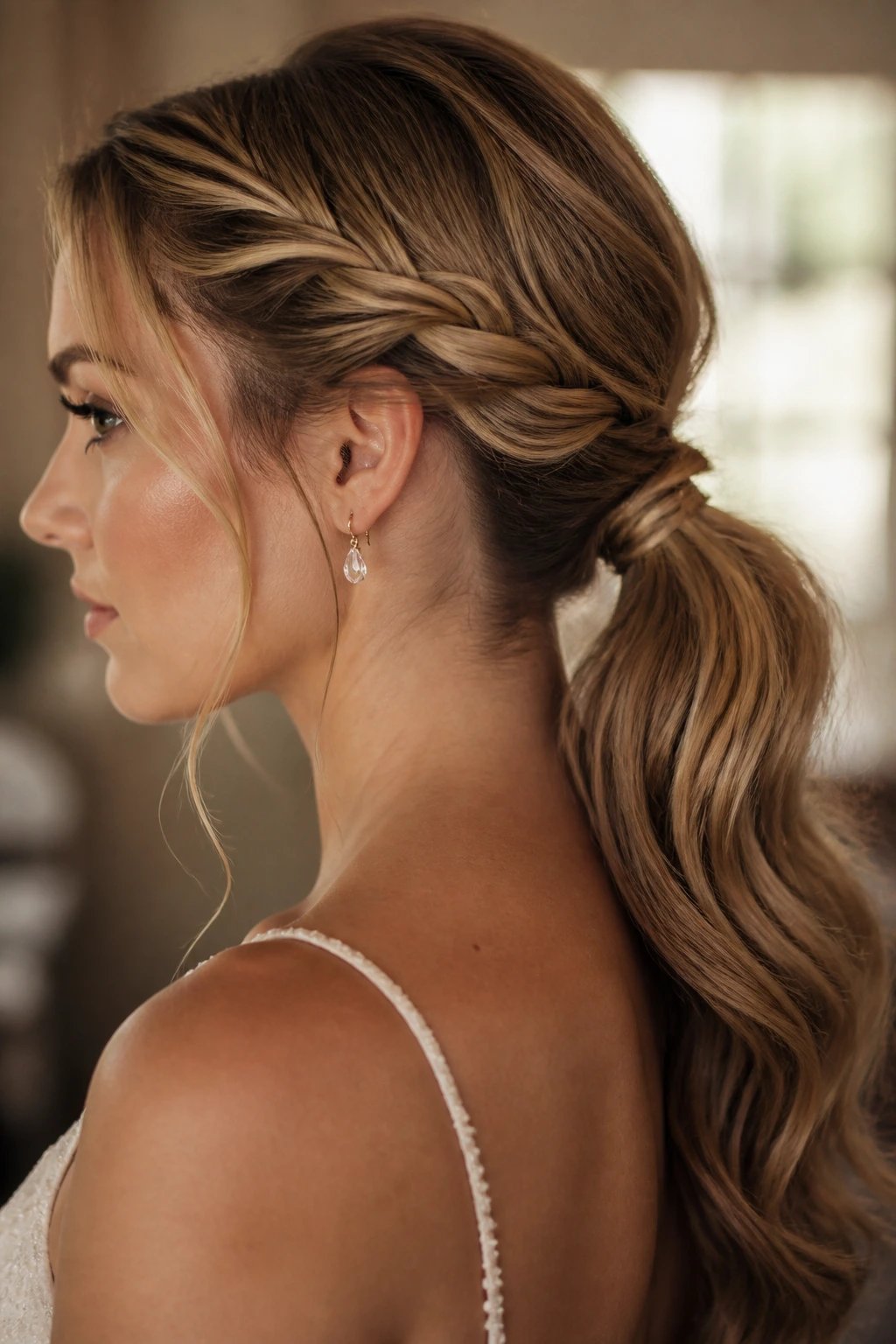
Two twists give you more lift than one, but they look less obvious than a braid. That’s why this style works so well for fine hair that needs shape without crowding the back of the head. Twist from each temple back toward the nape, join the sections, and secure them before gathering the rest into a low ponytail.
A light mist of texture spray helps the twists hold their grip. If the hair is very layered, pin the twist ends before they disappear into the elastic so they don’t pop back out later.
Best for: bridesmaids who want texture but not too much detail.
Avoid: twisting too tightly at the temples; it can create a pulled look that doesn’t soften well in photos.
24. Minimalist Straight Low Ponytail
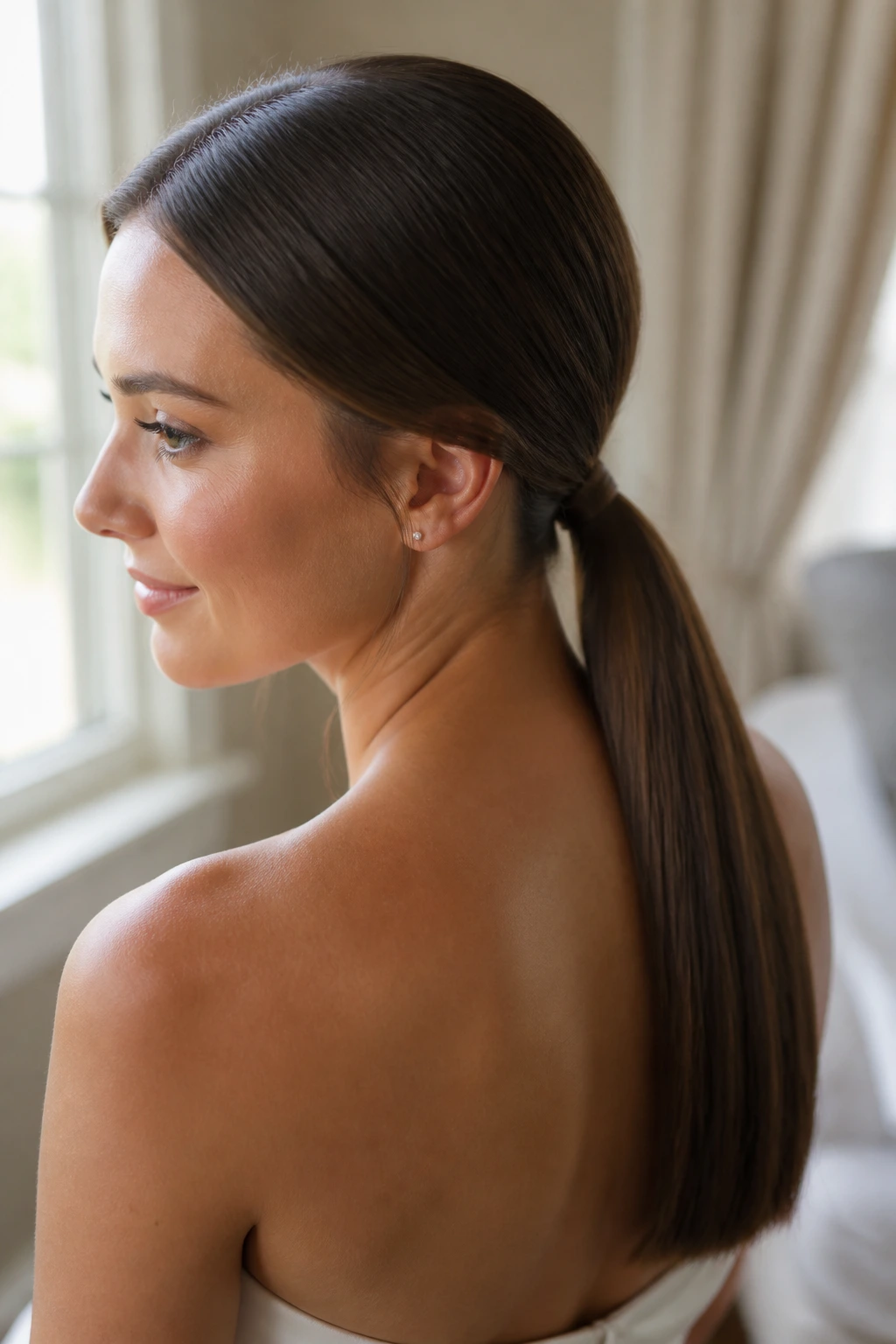
When the dress already has embroidery, beading, or a dramatic necklace, restraint usually wins. A straight low ponytail with a hidden elastic and almost no decoration gives the rest of the outfit room. It’s a strong look, not a boring one, because the clean line from crown to tail does real visual work.
Flatten the hair with a flat iron in small sections, then smooth the crown with a lightweight cream or serum. Keep the tail blunt or slightly beveled at the ends so it doesn’t fray out in light. This is one of the best low ponytails for modern bridal parties because it looks expensive from the back without trying to steal attention.
25. Gilded Hairpin Ponytail
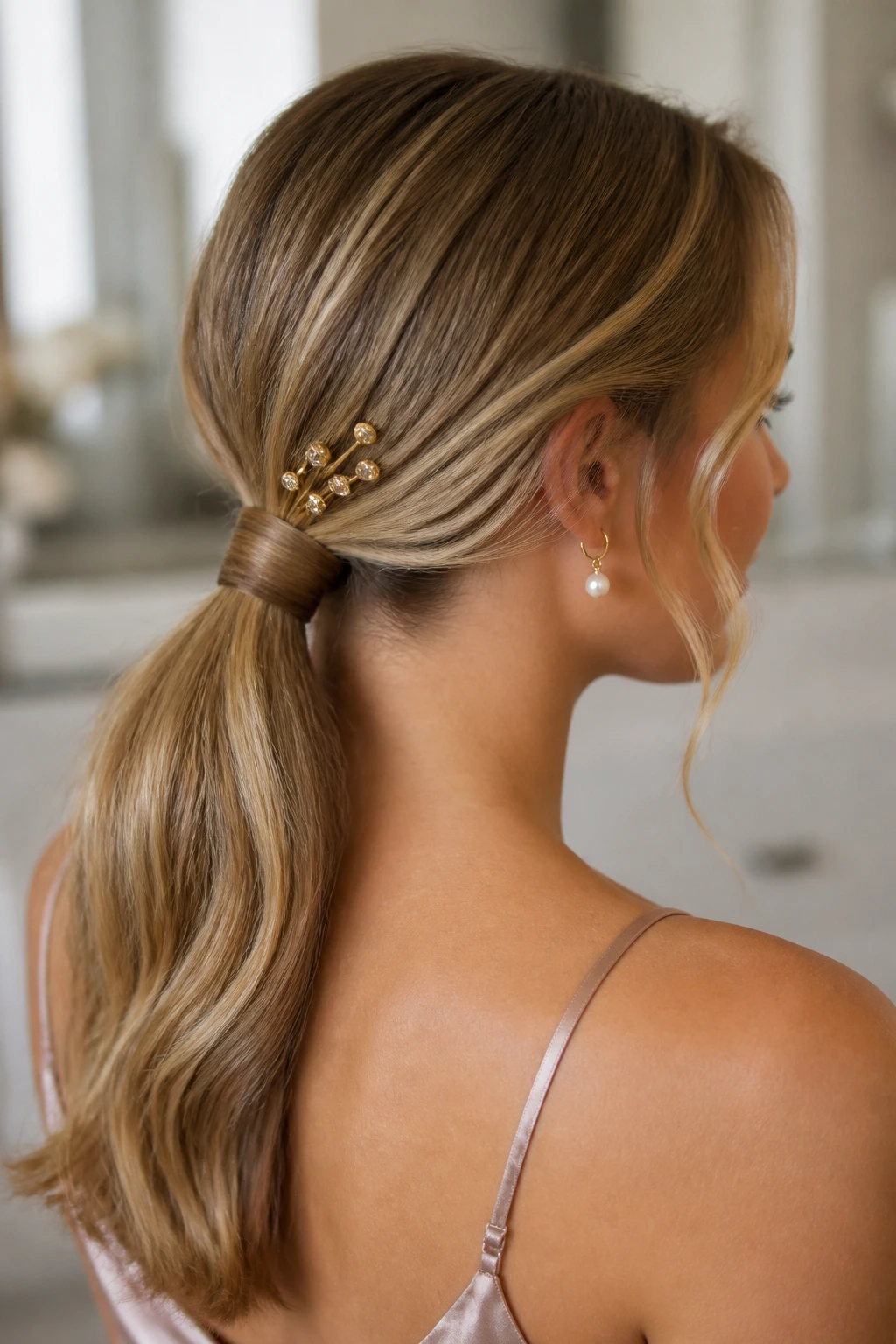
A few small gold pins can do what one giant accessory cannot: they move with the hair. That little shift matters in photos. The pins catch the light as the bridesmaid turns her head, and the ponytail keeps its low shape instead of getting crowded by something oversized.
Use three to five pins around the wrapped base or slightly off to one side. Keep them clustered enough to look intentional. If the jewelry is already warm-toned, gold pins make the styling feel coherent. If the dress is simple, the pins can become the one detail that keeps the back view from feeling empty. Too many, though, and the look gets noisy fast.
26. Braided Accent with Loose Curls
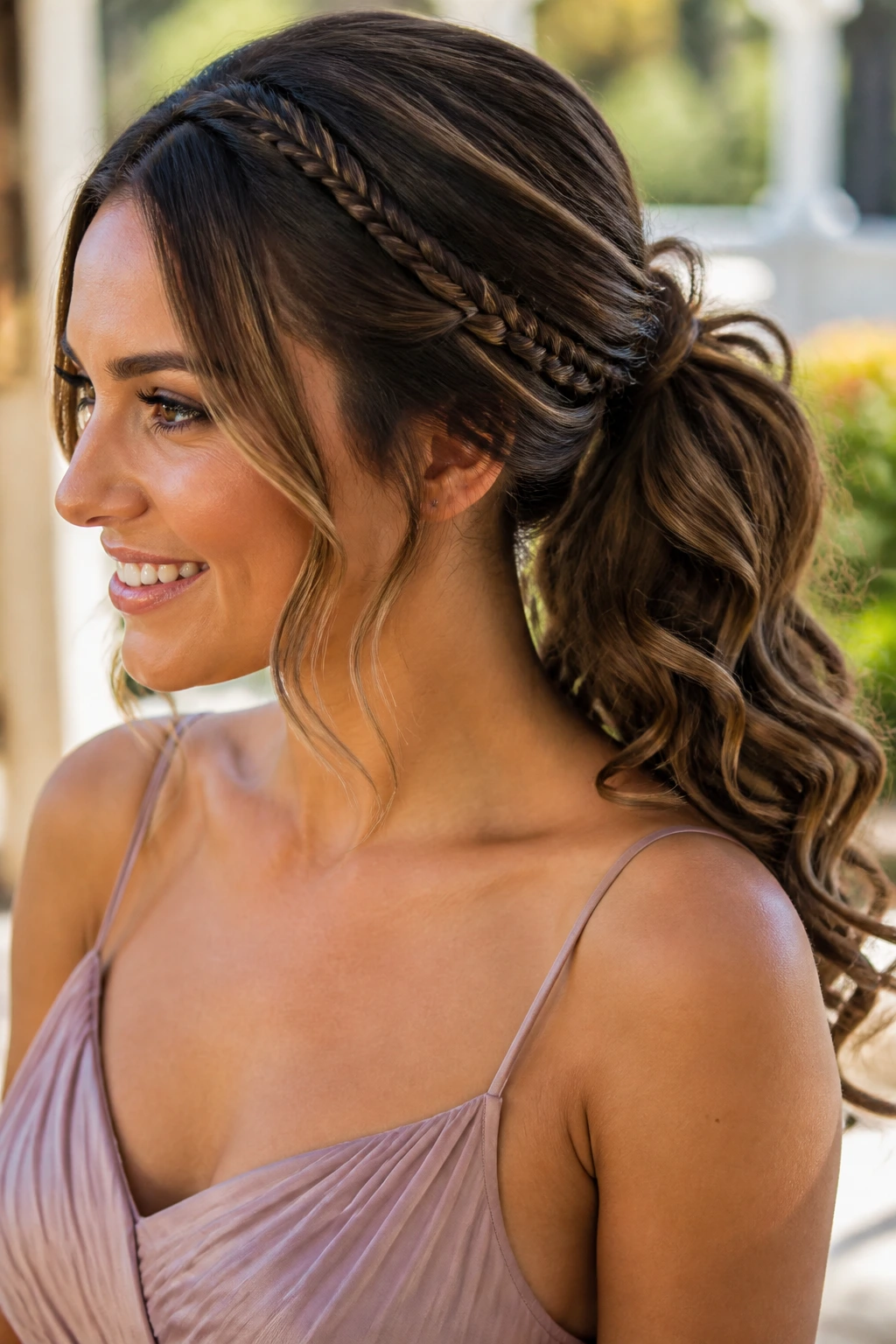
A skinny braid tucked into a low ponytail is one of the easiest ways to add dimension without changing the whole structure. It shows up most when the hair moves, which is exactly when you want detail to show. The tail stays soft, the braid gives the eye something to catch, and the overall effect stays light.
Make the braid narrow, almost hidden, and place it near the hairline or along one side of the tail. Curl the rest of the lengths in loose bends so the braid doesn’t feel too hard-edged. This works well on medium to long hair, especially if the lineup needs one style that reads romantic without becoming fussy.
27. Veil-Friendly Low Ponytail
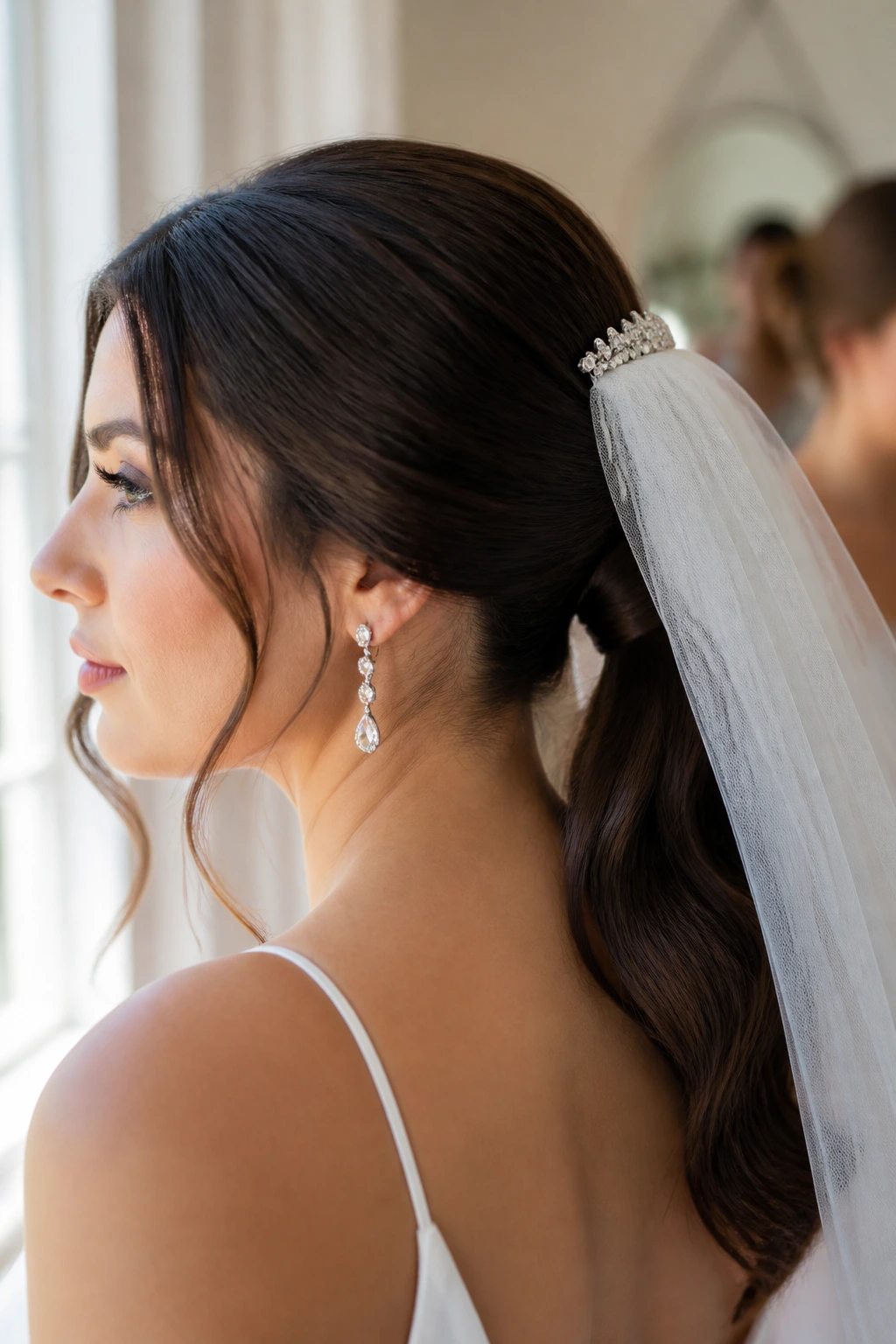
Not every bridesmaid wears a veil, but the ones who do need a base that won’t fight the comb or pull the fabric out of place. A veil-friendly low ponytail sits flat at the crown, keeps the anchor below the veil line, and leaves enough clean space for the accessory to rest properly. That’s the point. No wrestling.
Set the ponytail low enough that the veil comb can grip the hair above it without pinching the tail base. Avoid bulky wraps right where the veil sits, because they create pressure and slip. If the event includes both veils and uncovered bridesmaid styles, this is a useful shared direction: low, smooth, and stable.
28. Voluminous Wrapped-Base Ponytail
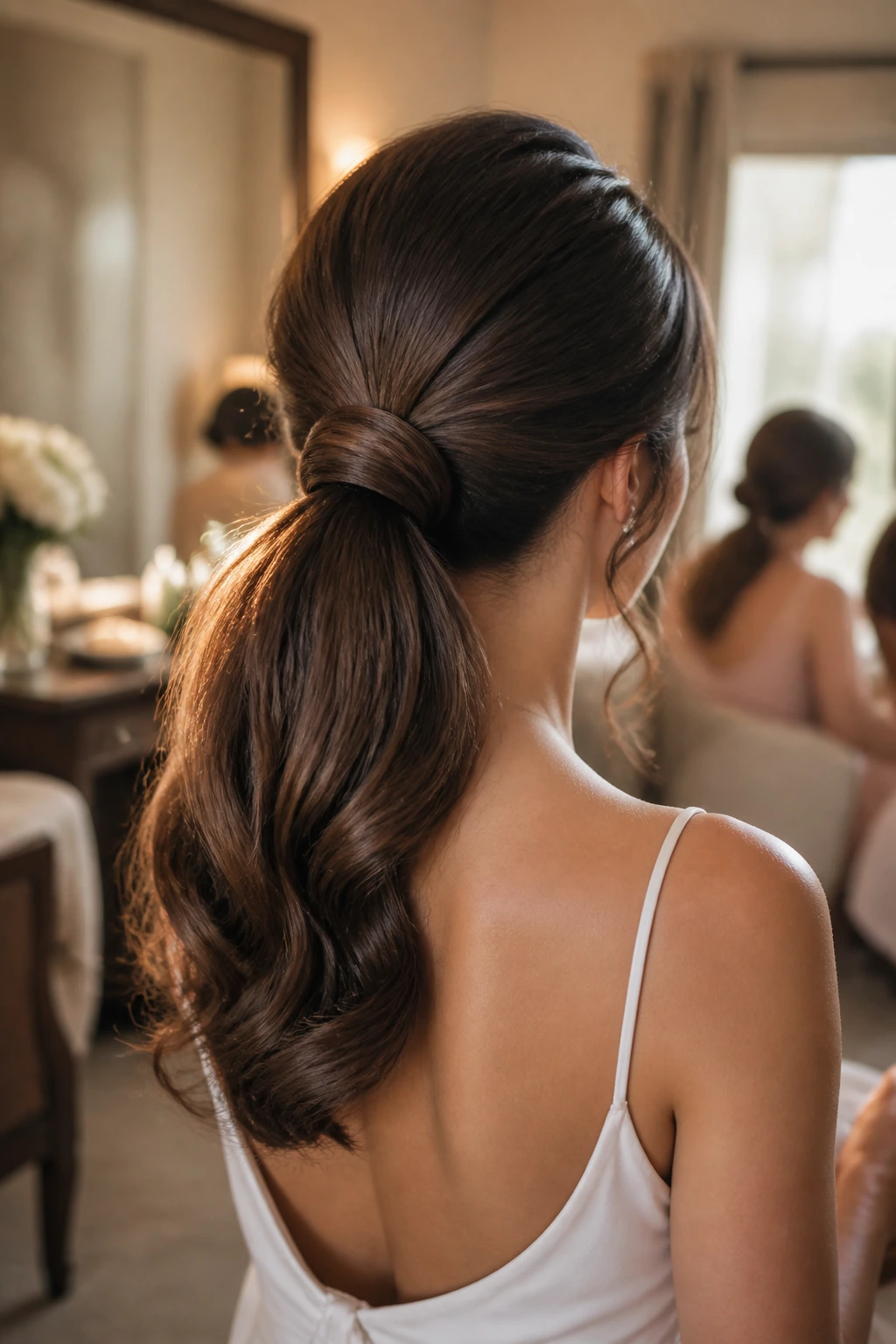
A little lift at the crown changes everything. Without it, some low ponytails can look too flat, especially on hair that’s fine or freshly blow-dried. A voluminous wrapped-base ponytail keeps the low placement but adds enough shape to make the silhouette read fuller from the back.
Backcomb only the crown section lightly, then smooth the top layer over it so the teasing disappears. Don’t build a mountain. A small rise is enough. Wrap the base with a thick strand of hair, and pin it tightly underneath so the lift doesn’t collapse halfway through dinner. This style works especially well with wider necklines and bridesmaids who want a little more shape than a plain ponytail gives.
29. Side-Anchor Low Ponytail
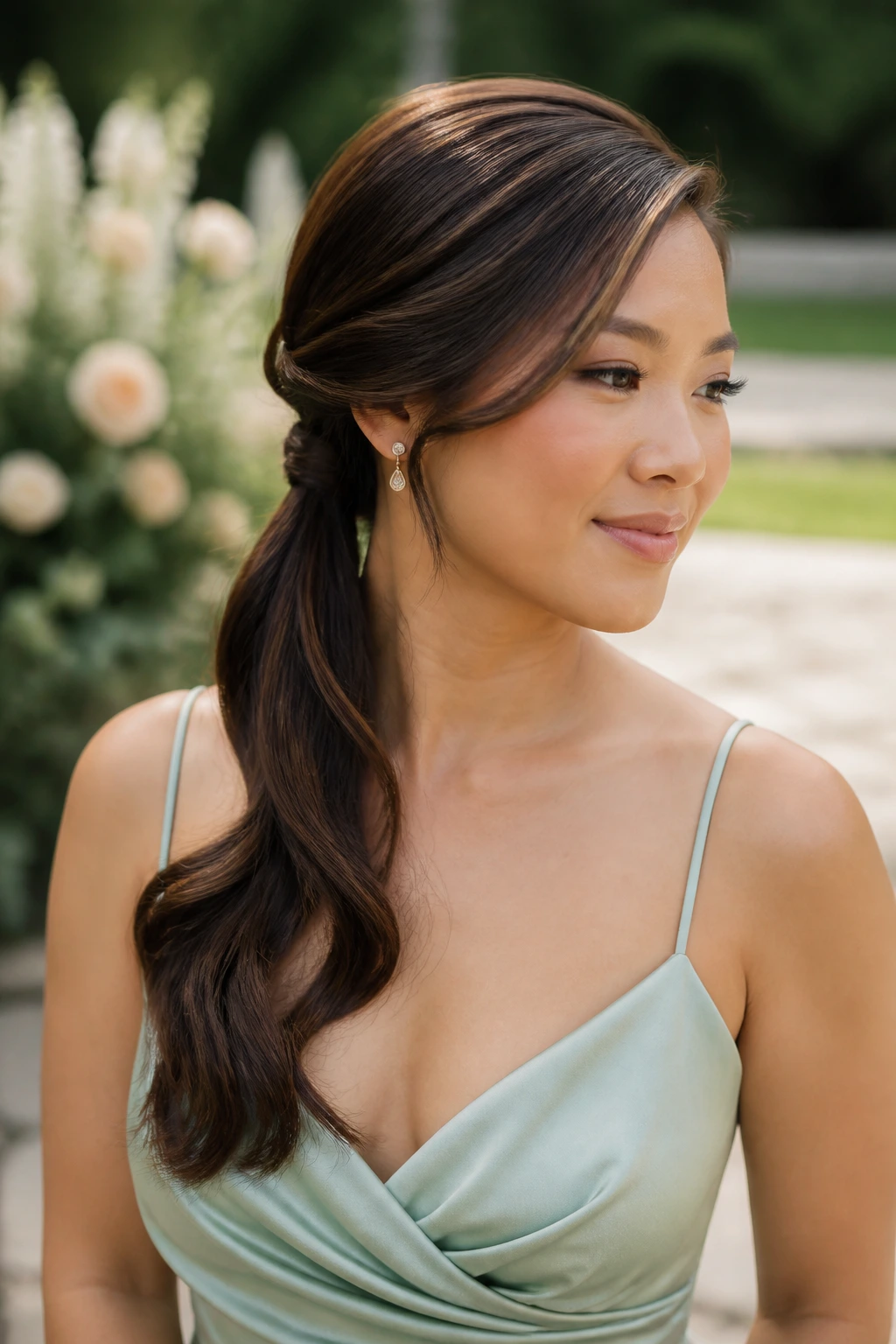
This version shifts the tail just enough to one side that it feels fresh without becoming a side ponytail. The asymmetry is subtle, which makes it useful for one-shoulder dresses, angled necklines, or outfits with a strong seam that needs a little breathing room. It also keeps the back from feeling too symmetrical when the rest of the lineup leans uniform.
Anchor the elastic just behind one ear or slightly off the center line, then let the tail sweep over one shoulder or down the spine depending on the dress. A loose side sweep at the front helps balance the shape. I’d use this if one bridesmaid needs a style that doesn’t mirror everyone else exactly but still belongs in the same visual family.
30. Soft Messy Low Ponytail
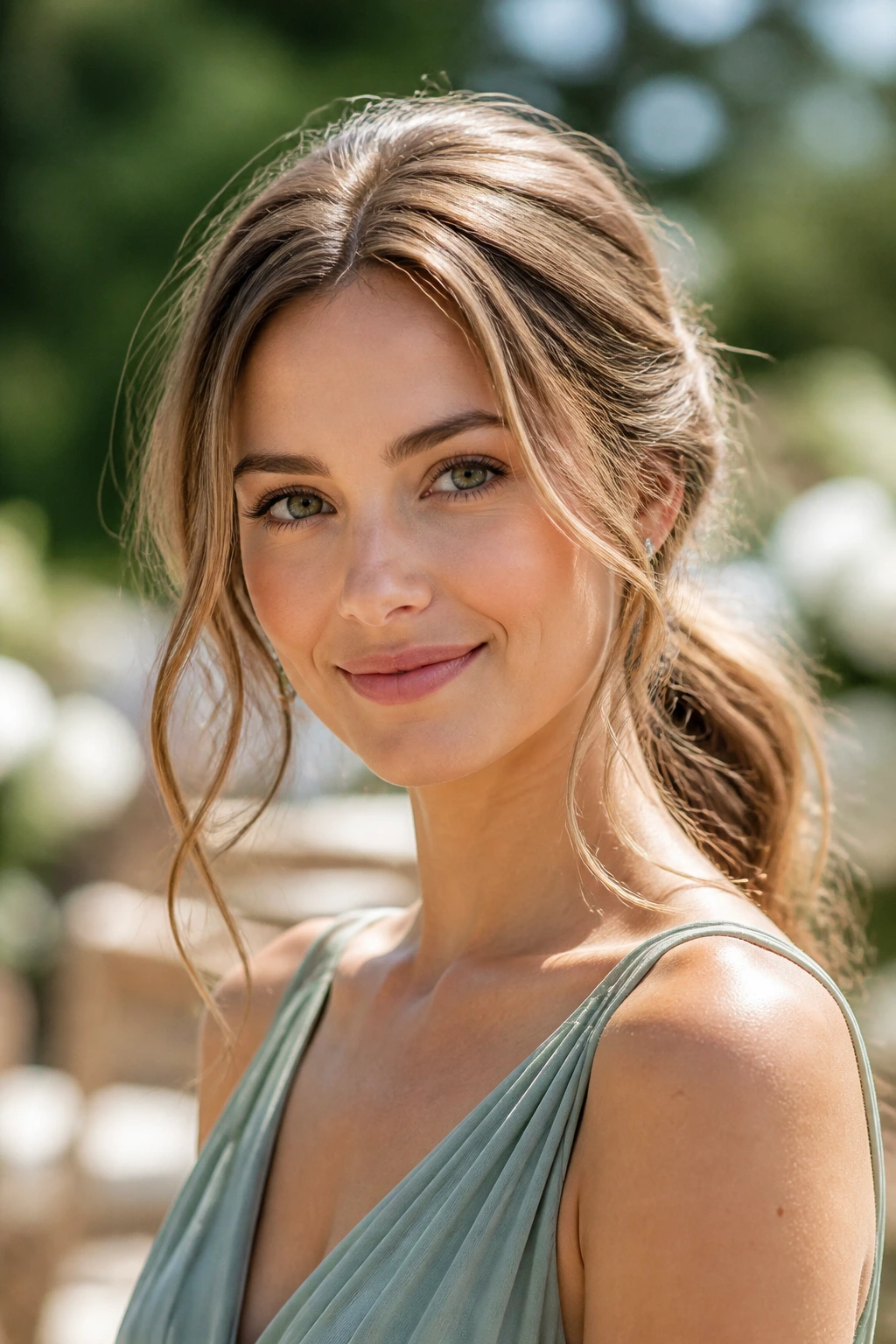
“Messy” has to be handled carefully here. Too messy and it looks unfinished. Just enough and it looks soft, relaxed, and deliberate. That’s the line. A soft messy low ponytail uses finger-combed waves, a little root texture, and a loosened wrap to create movement without losing the low silhouette.
This version works well for outdoor ceremonies, softer fabrics, or bridal parties that don’t want every strand pinned to the millimeter. Let the crown stay controlled, but don’t flatten every wave.
- Texture cue: the hair should move, not collapse.
- Best tool: flexible-hold spray instead of stiff lacquer.
- Good pairing: boho dresses, relaxed bouquets, and lighter jewelry.
31. Red-Carpet Sleek Ponytail
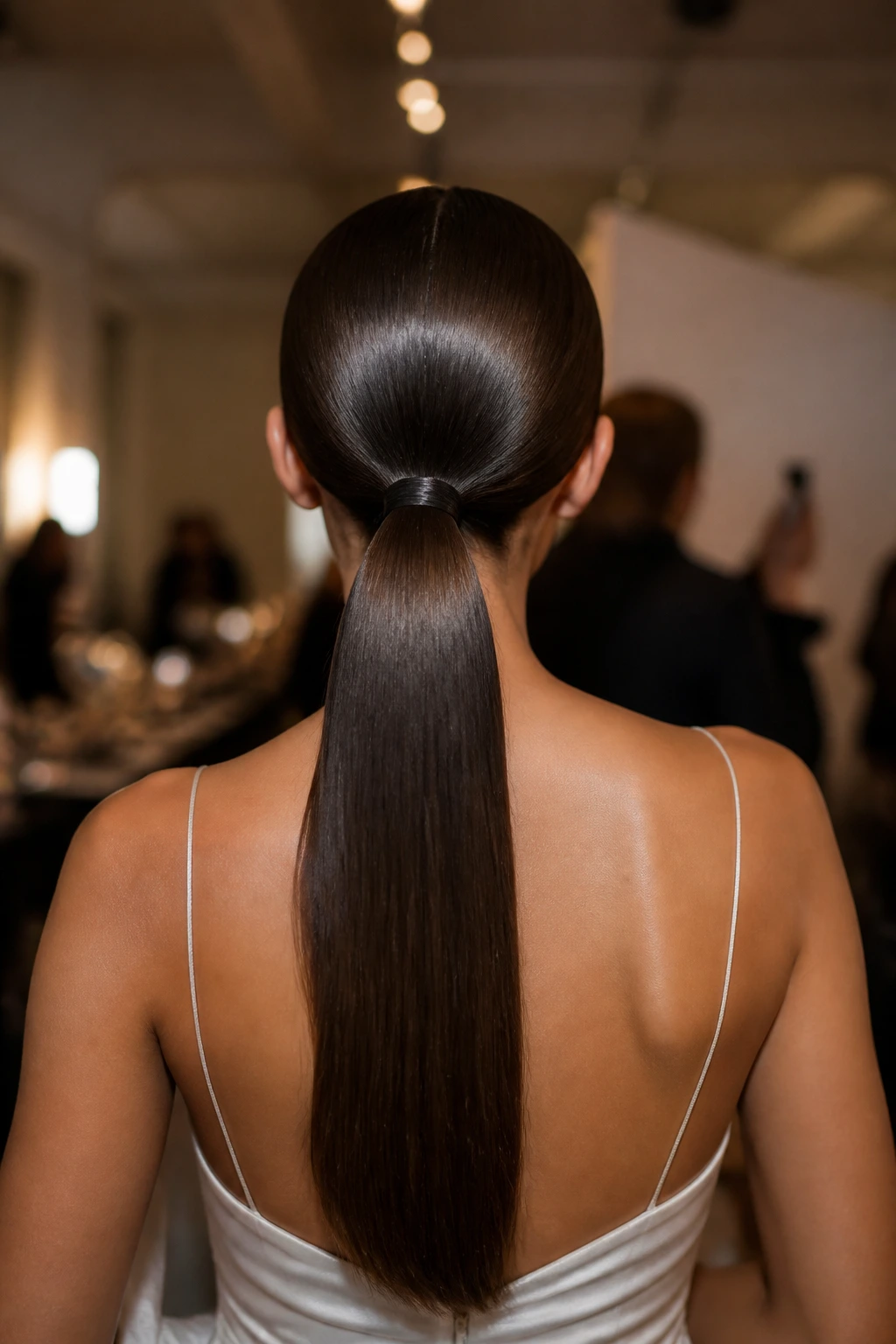
This is the strongest choice when the whole lineup wants a sharp, polished back view. The crown stays glassy, the elastic disappears, and the tail falls in a single clean line. There’s no fluff here. It’s a bold, clean shape that works especially well if the dresses are satin, crepe, or anything with strong tailoring.
The prep matters more than the styling trick. Blow-dry smooth, flat iron in narrow sections, then brush the hair back with a dense comb before tying it off. Use a tiny bit of serum only on the lengths and ends. If you put too much at the roots, the style starts looking oily under bright indoor lights.
32. Pearl-Scatter Low Ponytail
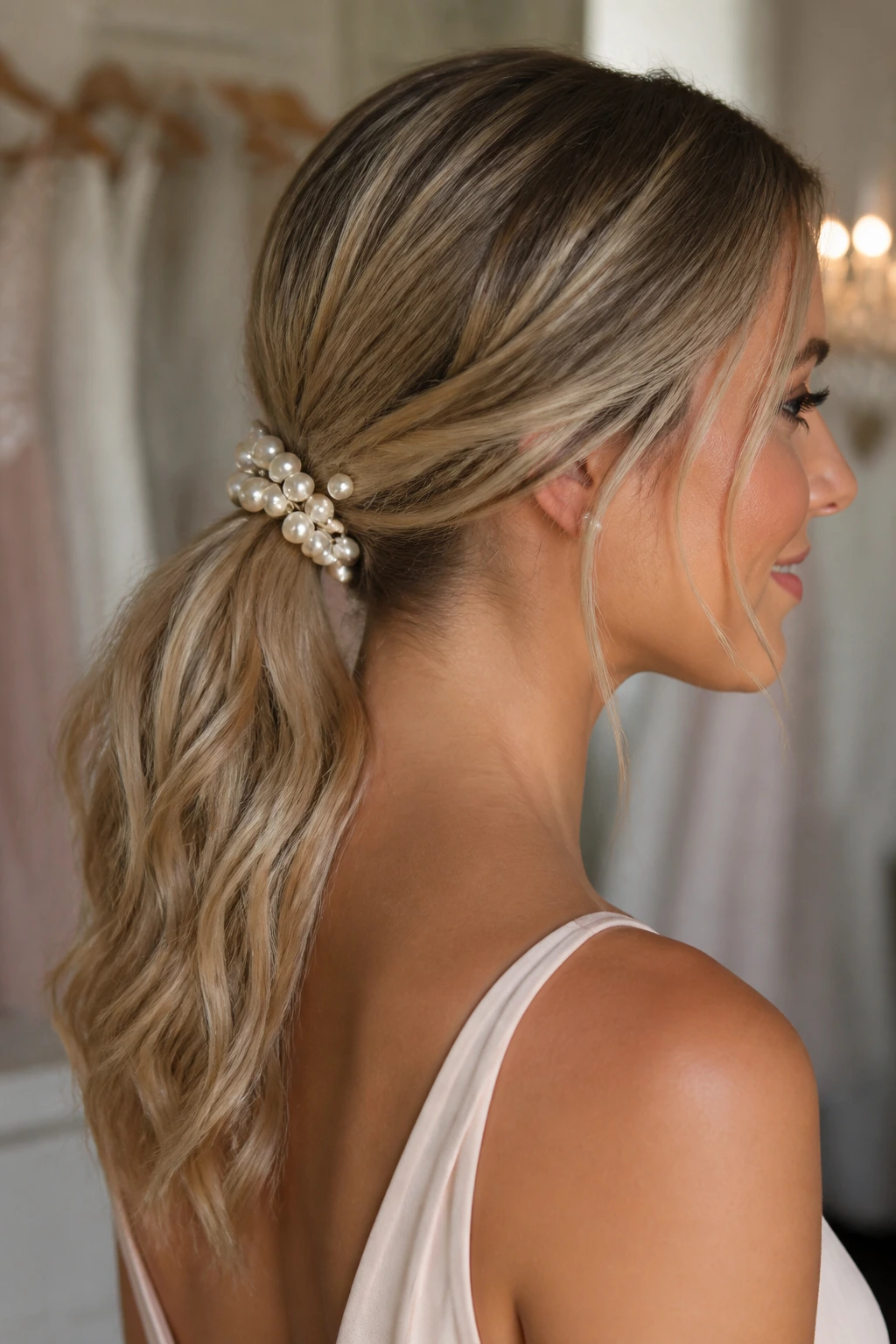
Pearls don’t need to be loud to work. A scatter of small pearl pins placed around the base of a low ponytail gives the hair a gentle shimmer that feels easy to match with pearl earrings or a simple necklace. The look is especially strong when the dresses are plain and the accessories need one quiet detail to echo.
Keep the pearls clustered enough to look arranged, not sprayed randomly. Three at the base and one slightly higher up is often enough. If the bridesmaids are wearing different hairstyles but need a shared thread, pearl pins are useful because they can live inside sleek, wavy, or braided ponytails without changing the shape.
33. Micro-Braid Low Ponytail
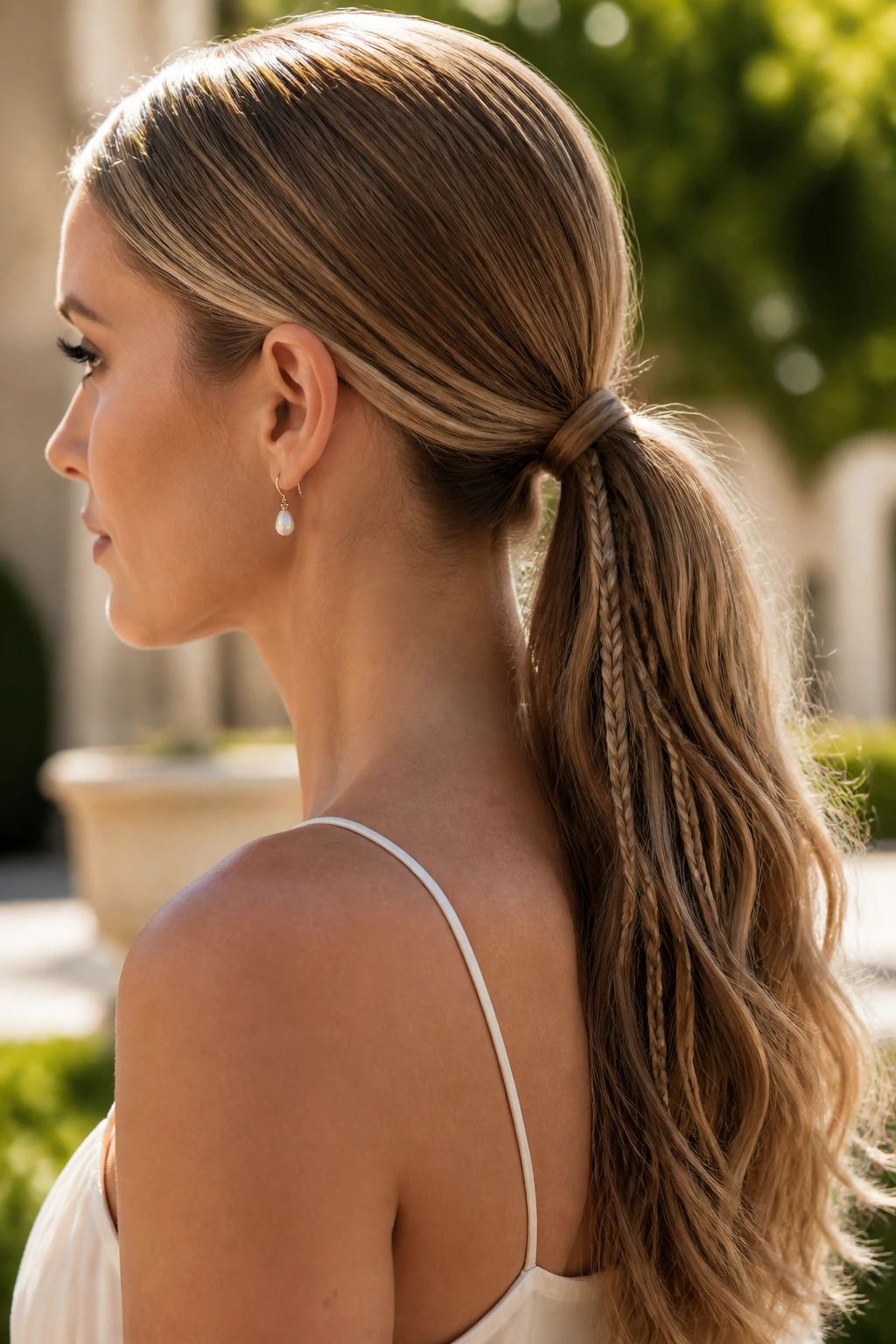
If you want detail that shows up closer than the aisle, micro-braids are the move. A few tiny braids woven into the tail add texture without changing the silhouette. They also help fine hair look fuller, because the eye reads the braid pattern as density.
Make two or three very thin braids in the tail or along one side, secure the ends with clear elastics, and let the rest of the hair fall smooth or softly waved. A light spray of texture powder before braiding helps the strands stay separate. This is a smart choice when the bridal party wants something subtle but not blank from the back.
34. Romantic Knot-Wrap Ponytail
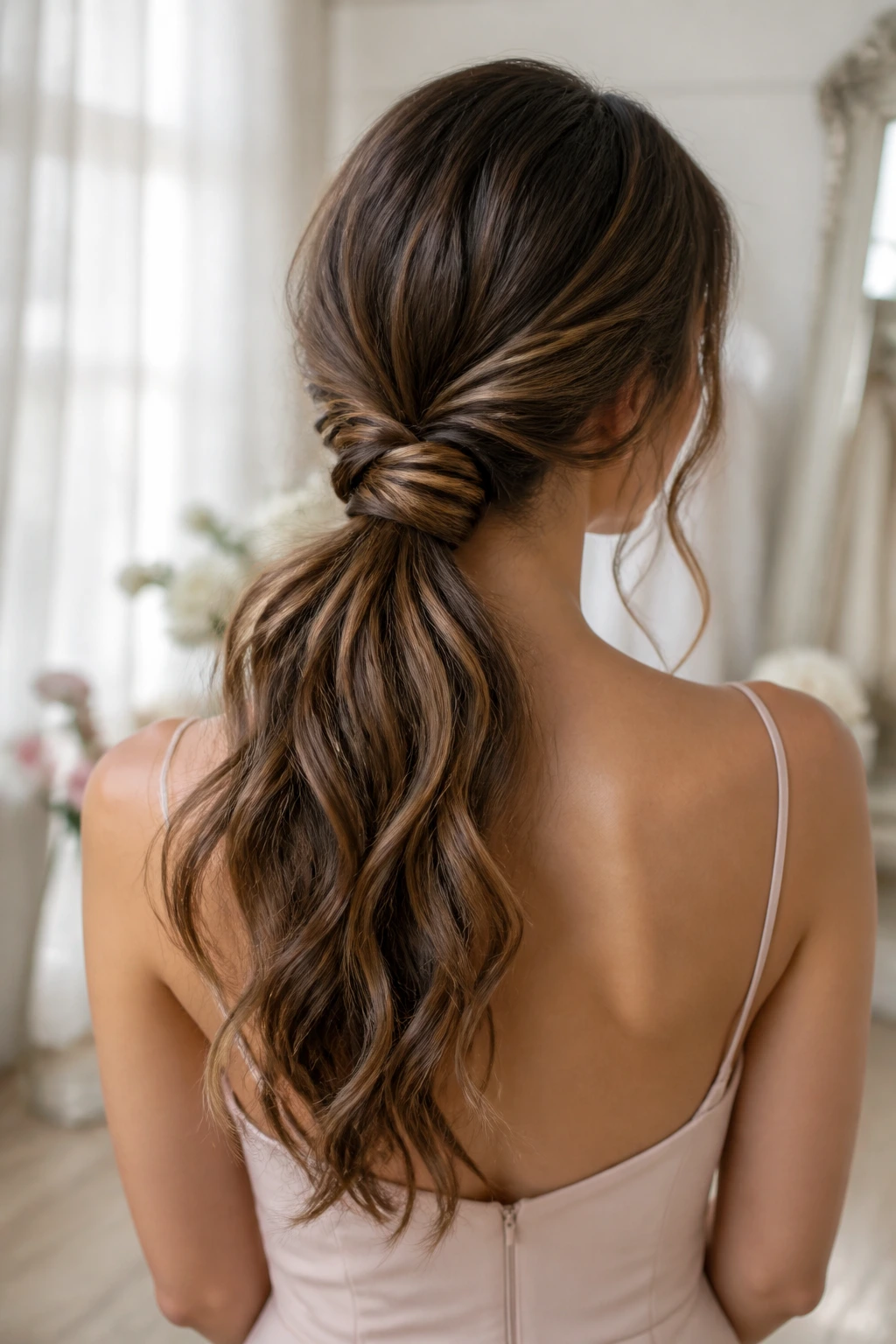
This style sits right between an updo and a ponytail, which is exactly why it feels romantic without turning stiff. A loose knot at the nape gives the back some shape, and the remaining length falls like a ponytail instead of disappearing into a full bun. It’s a nice choice for bridesmaids who want hair off the neck but still visible down the back.
The knot should look soft and slightly undone, not like a sailor’s knot. Pin the fold underneath so it holds, then let the tail spill out with a little bend through the ends. It works especially well with satin, lace, or dresses that have a curved back detail. The whole look reads polished from far away and more interesting up close.
35. Side-Swept Tendril Ponytail
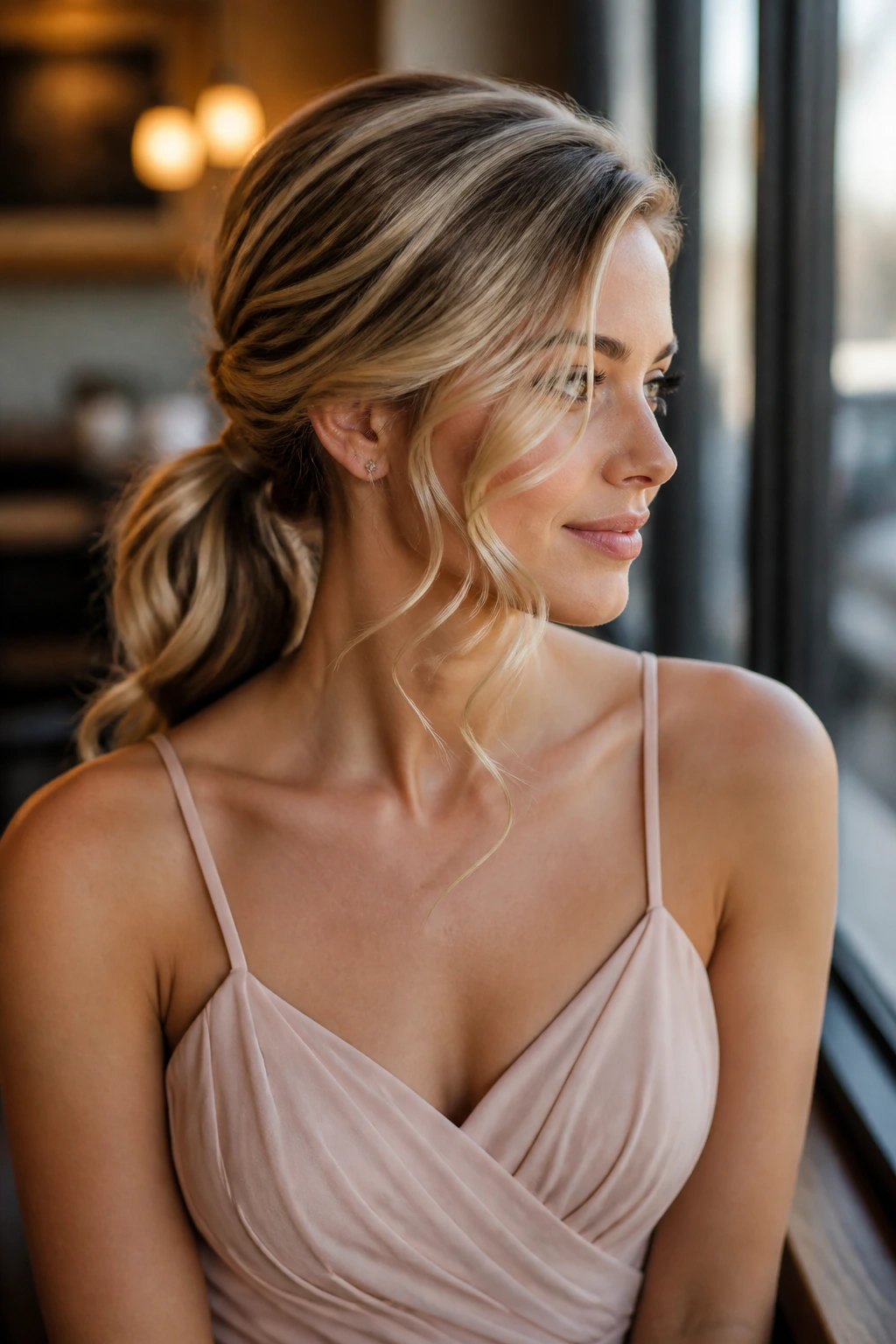
This is one of the easiest ways to soften a low ponytail without changing its structure. Sweep a few longer tendrils across one side of the face, curl them away from the cheeks, and leave the rest of the ponytail low and smooth. It gives the style movement and keeps the face from feeling too exposed.
I like this when the dress neckline is open and the makeup leans soft rather than sharp. The tendrils should feel deliberate, not like pieces that escaped. Keep them slim enough that they won’t frizz apart by the time the photos start. If the lineup wants a gentle, romantic shape, this one does the job without much drama.
36. Modern Noir Low Ponytail
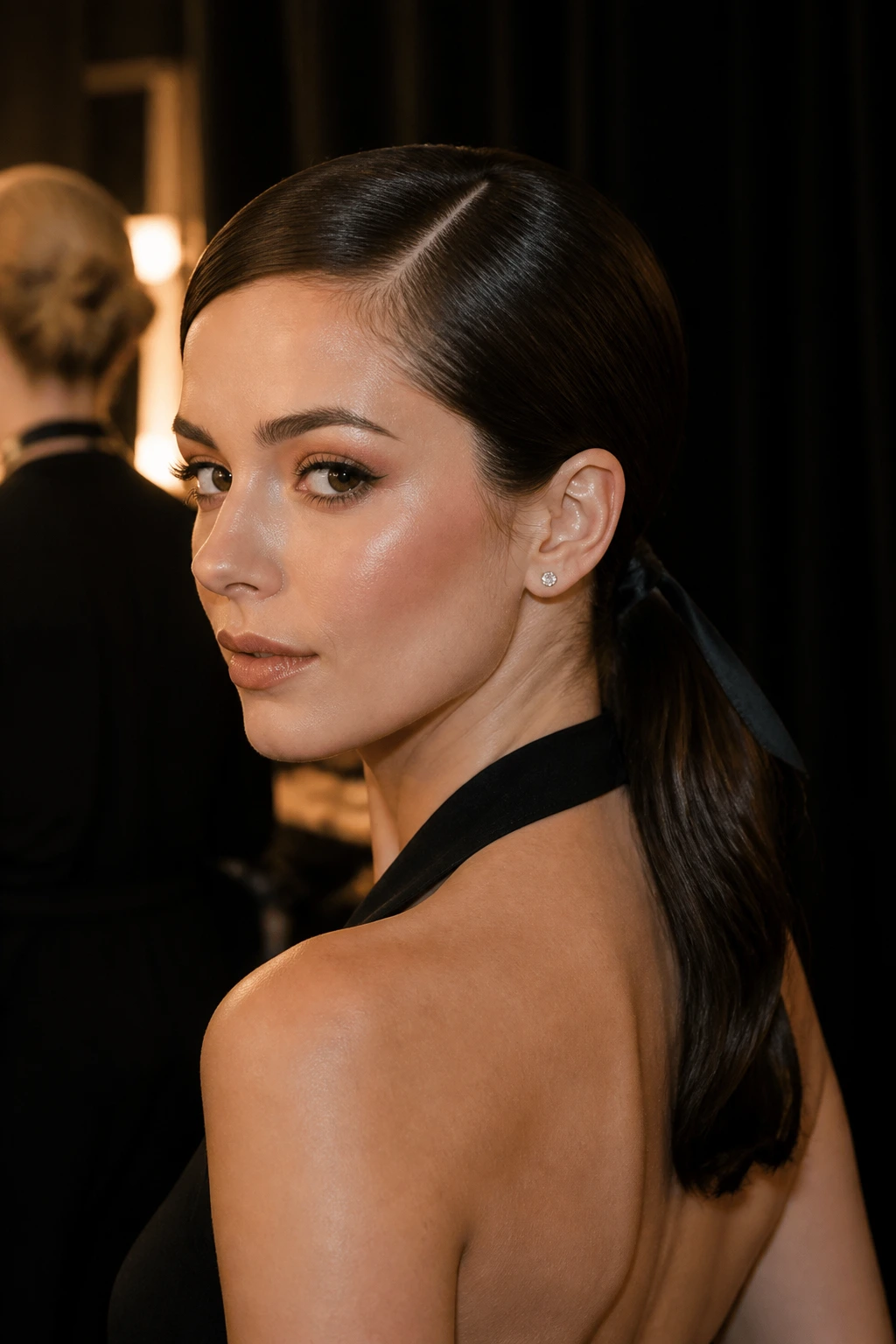
The modern noir version is for bridal parties that want a darker, cleaner edge. Think deep side part, sleek crown, narrow black ribbon or matte cuff, and a tail that falls straight or just slightly bent. It has less sweetness than pearls or florals, and that’s why it works so well with evening dresses and bolder makeup.
Keep the finish tight at the crown and controlled through the lengths. This style needs contrast to work, so the accessory should stay slim and the lines should stay clean. It’s a strong choice for black-tie settings, especially when the rest of the styling already leans sharp and pared back.
37. Boho Twisted Low Ponytail
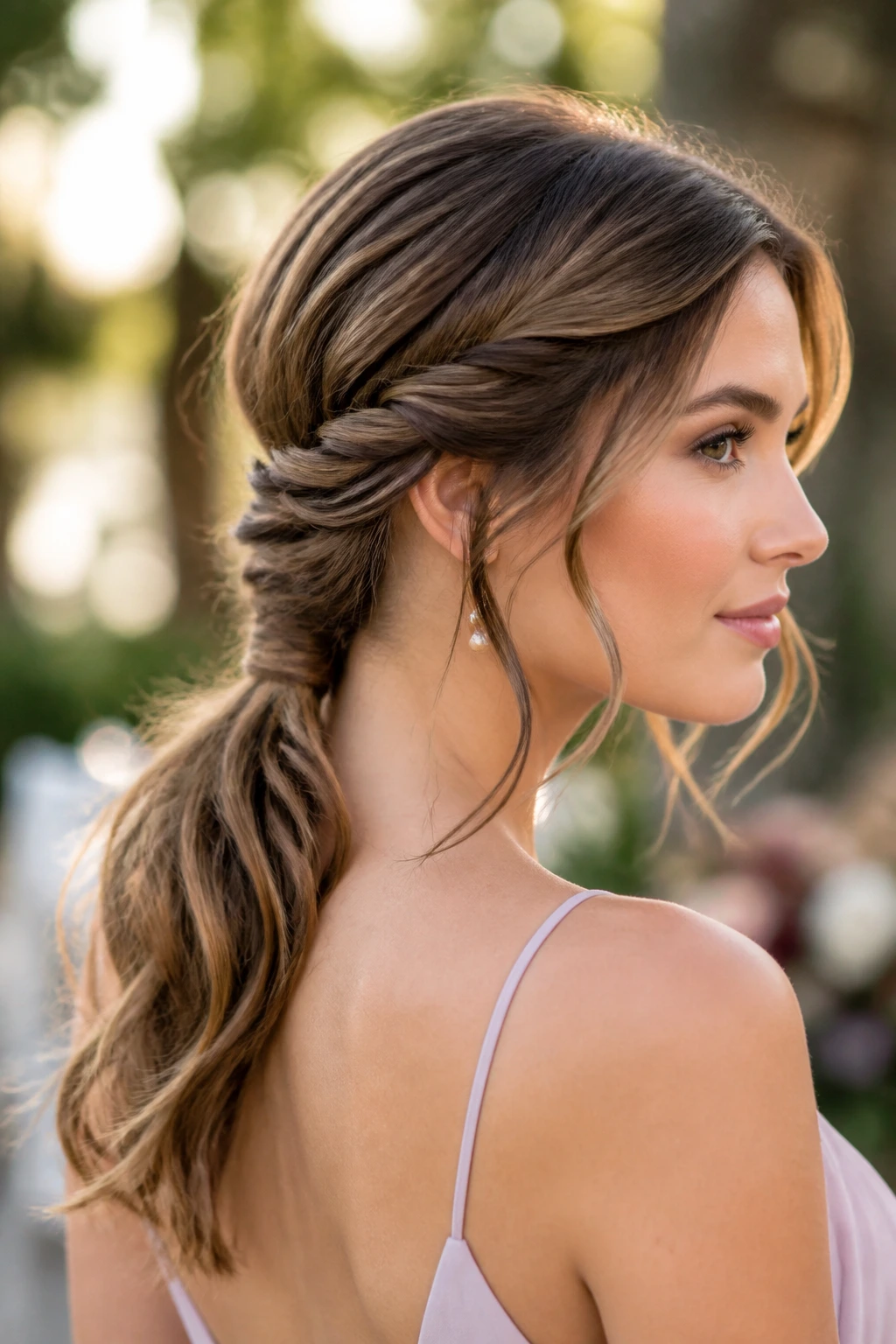
This one is all about texture that looks soft from a distance and more interesting up close. Two loose twists, a few pulled pieces, and wavy lengths create a low ponytail that feels relaxed without losing shape. It’s a good middle ground for outdoor ceremonies, especially when the bridal-party dresses are simple and the bouquets are fuller.
Start with textured hair, add the twists at the temples or just behind them, and pin them into the nape before gathering the rest. Flexible spray is better than hard spray here; you want movement. If the hair is fine, twist the sections more tightly before loosening them slightly after pinning. That keeps the style from falling flat too fast.
38. Glossy Long-Length Low Ponytail
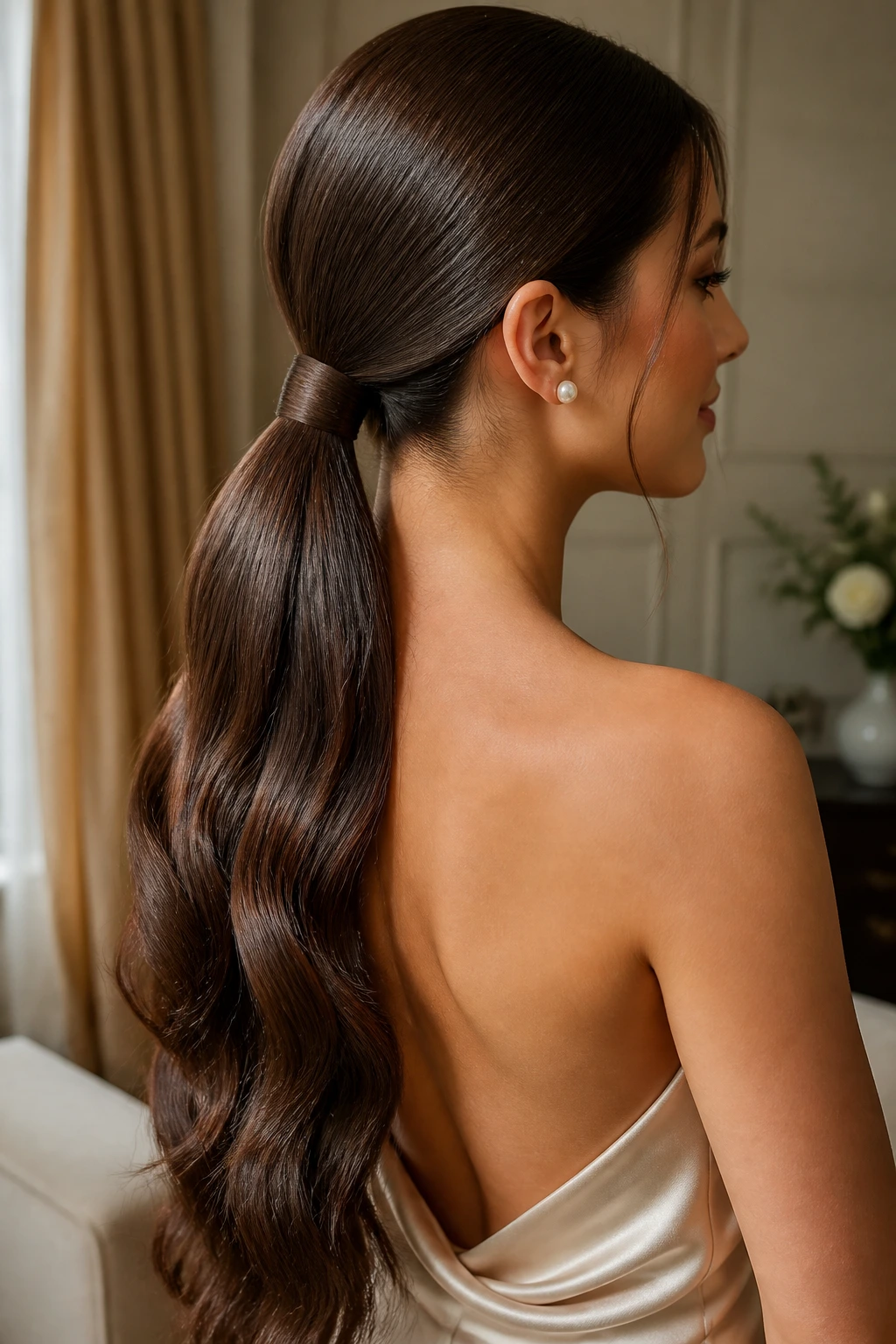
When the lineup wants one high-impact shape, long, glossy lengths do the heavy lifting. This is the ponytail that looks longest, fullest, and cleanest when the hair reaches the back of the dress in a smooth line. With clip-in extensions or naturally long hair, the low anchor and wrapped base create a finish that reads dramatic without being complicated.
Blend extensions carefully at the nape if you’re using them, then smooth the tail so the join disappears. A flat iron pass and a light gloss spray on the ends can help the lengths read uniform in photos. This is not subtle. It’s the style I’d save for the most formal settings, especially when the dresses are simple enough to let the hair take one step forward.
Why the Low Ponytail Holds the Whole Bridal Party Together
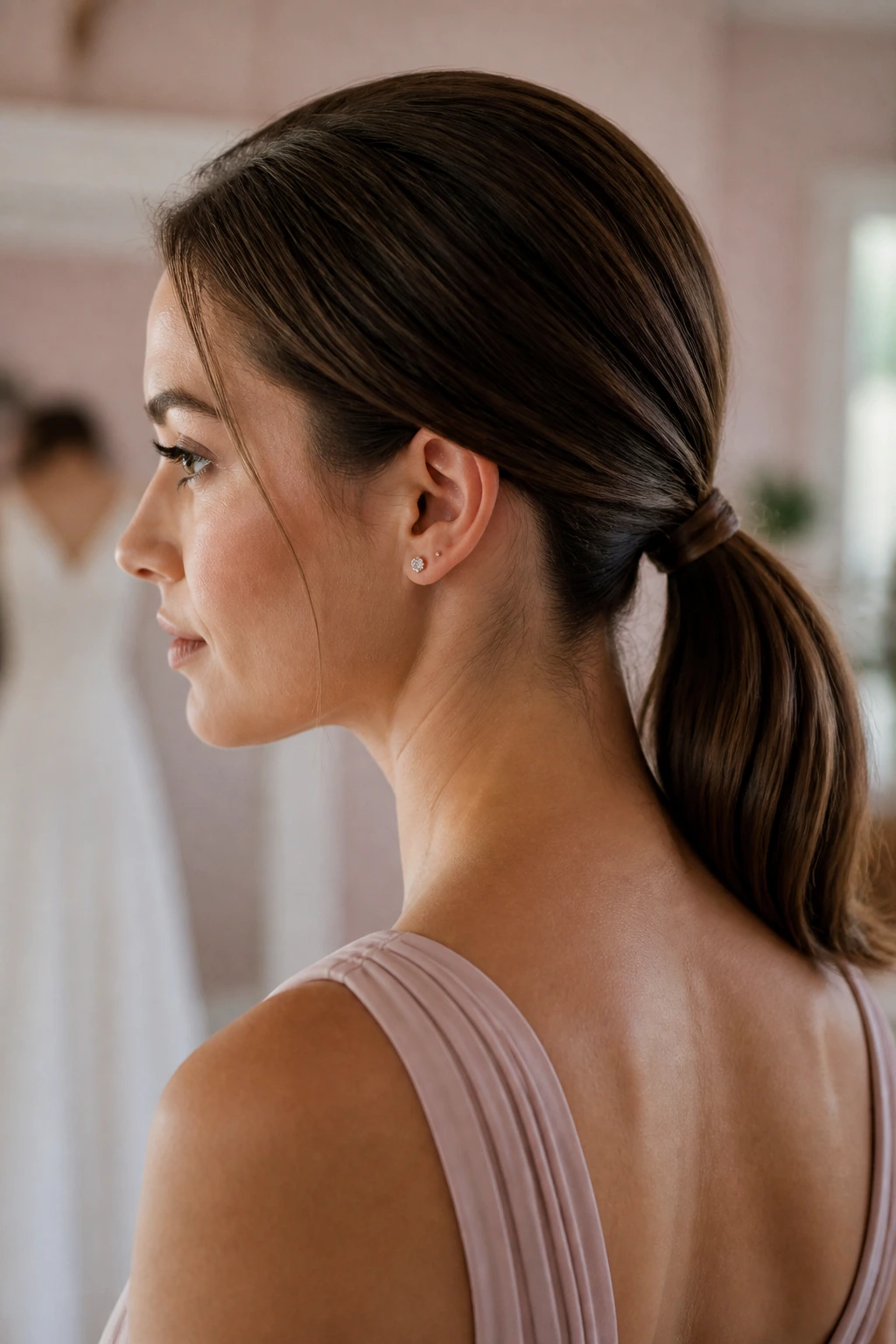
Low ponytails work for bridesmaids because they don’t fight the dress, the jewelry, or the person wearing them. That sounds simple, but it’s the whole job. A hairstyle for a bridal party has to survive hugs, movement, heat, a hundred camera angles, and at least one person turning her head too fast while someone adjusts a boutonniere. A low ponytail stays calm through that.
The other reason they work is flexibility. You can keep the base identical across the line and let the details shift: a braid for one bridesmaid, a ribbon for another, a sleeker crown for the person in the boldest dress. The shape stays in the same visual lane, but the texture changes enough that nobody looks like a copy of the person standing next to her.
That is the part I like most. It gives everyone a little room.
The Brushes, Pins, and Products That Actually Matter
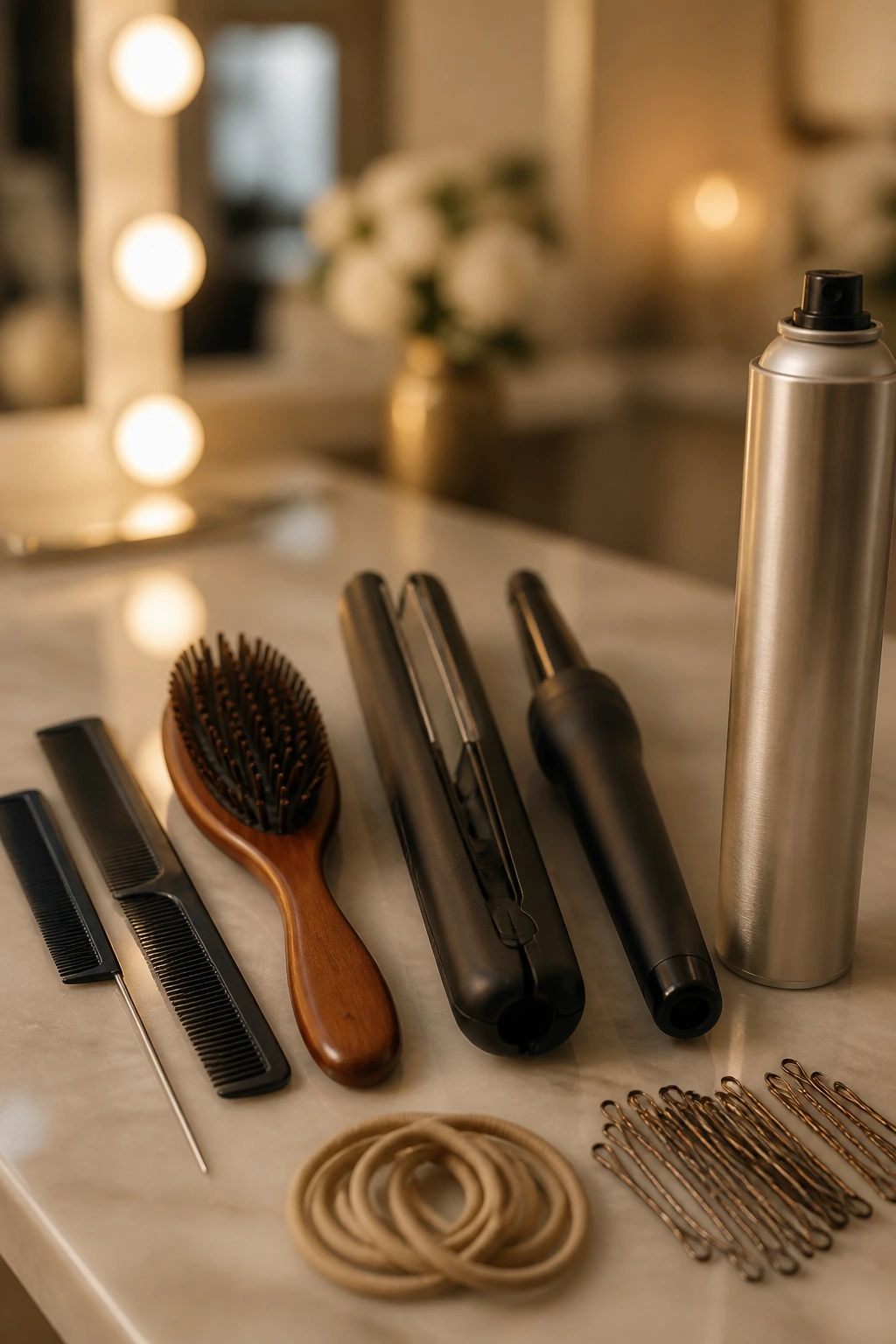
A bridesmaid ponytail can look polished with a surprisingly small toolkit, but the tools need to be the right ones. A fine-tooth comb gives you the clean parting and crown control that a regular brush can’t manage. A tail comb helps separate the sections around the nape without making the whole head puffy. And if the hair is being smoothed into a sleek shape, a boar-bristle brush is worth keeping close.
Heat tools matter too. A 1-inch flat iron handles the sleek styles, while a 1.25-inch curling iron or wand gives you the soft waves, curled ends, and brushed-out bends that make low ponytails feel dressed up. Flexible-hold hairspray is the product I’d reach for most often. It keeps hair in place without turning the tail into a helmet.
- Fine-tooth comb: best for clean parts and smooth crowns.
- Tail comb: useful for sectioning twists, braids, and wraps.
- Boar-bristle brush: helps flatten flyaways without adding static.
- 1-inch flat iron: good for straight, sleek finishes.
- 1.25-inch curling iron or wand: makes soft waves and bent ends.
- Color-matched elastics: easier to hide than bright clear ties on dark hair.
- Bobby pins in two shades if needed: hair-colored pins disappear faster than silver ones.
- Flexible hairspray: keeps the style movable instead of stiff.
- Texturizing spray or dry shampoo: gives grip to fine or slippery hair.
- Ribbon, pins, cuff, or pearl pieces: pick one family and stay there.
Smart Hair-Prep and Product Picks Before the Wedding
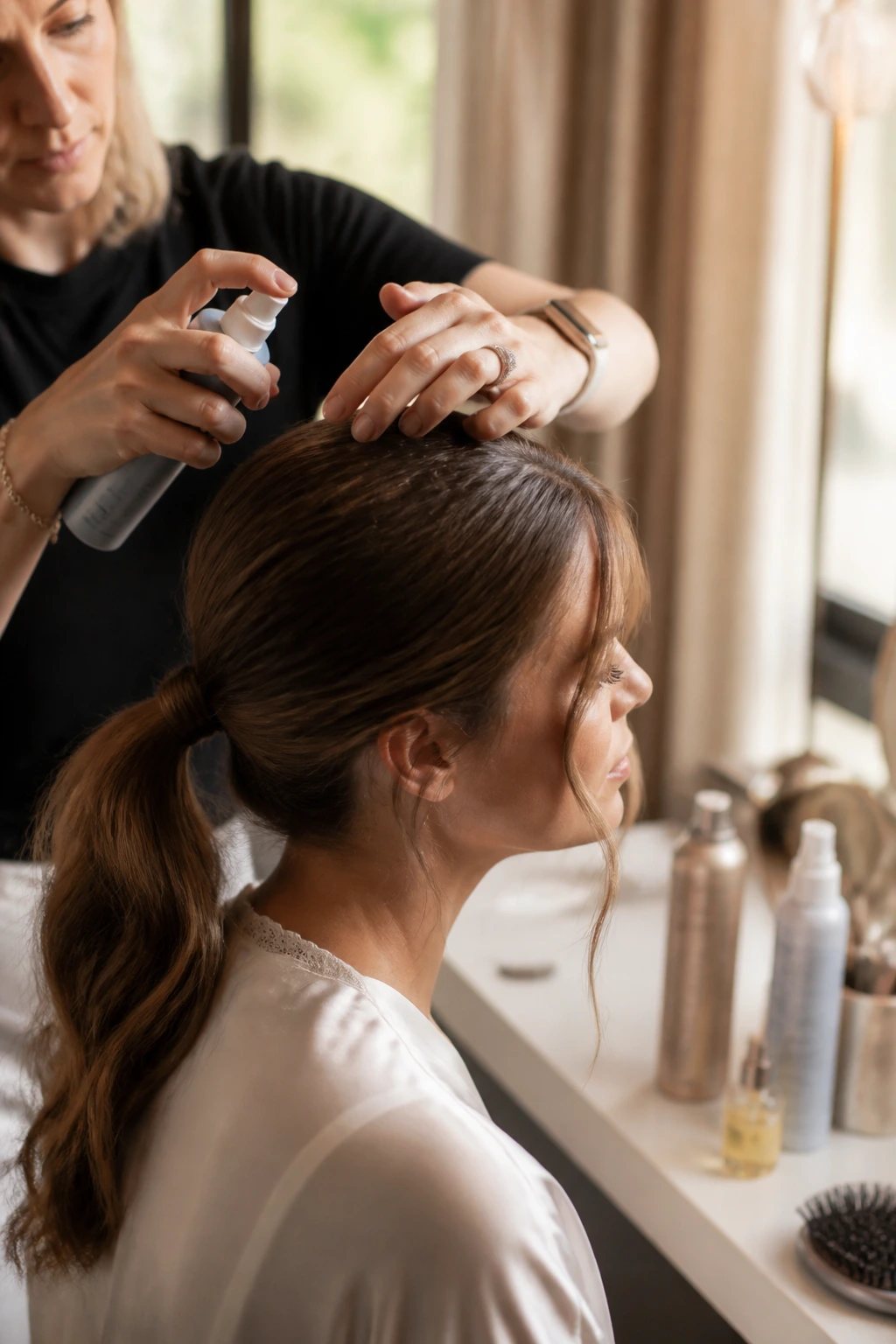
The smartest product choice is usually the one that fixes the actual problem, not the one with the loudest label. Fine hair needs grip, so dry shampoo, texture spray, and a slightly rougher elastic matter more than a heavy serum. Coarse or frizz-prone hair usually needs a smoother cream at the mid-lengths and ends, plus a stronger pin setup at the nape. If you don’t match the product to the hair type, the style will fight you before the vows start.
Shopping for accessories takes the same kind of discipline. Pick elastics that match the hair color as closely as possible; black, brown, and blonde tones all behave differently under flash and indoor lighting. Ribbon should lie flat, not curl at the edges unless you want that on purpose. If you’re choosing pins, buy more than you think you need and test whether the heads are flat enough to sit under the hair without poking out.
Hair prep matters more than the finish coat. Most low ponytails behave better on hair that isn’t freshly washed, because day-two texture gives the crown something to hold. If the hair gets oily fast, dry shampoo at the roots the night before can help. If it’s dry or coarse, a small amount of smoothing cream through the lengths keeps the tail from puffing apart when the room warms up.
Clip-in extensions are worth buying only if the shade match is close and the texture match is believable. A mismatched extension shows at the nape before it shows anywhere else. That’s the spot people forget to check.
How to Wear These Low Ponytails With Dresses, Necklines, and Jewelry
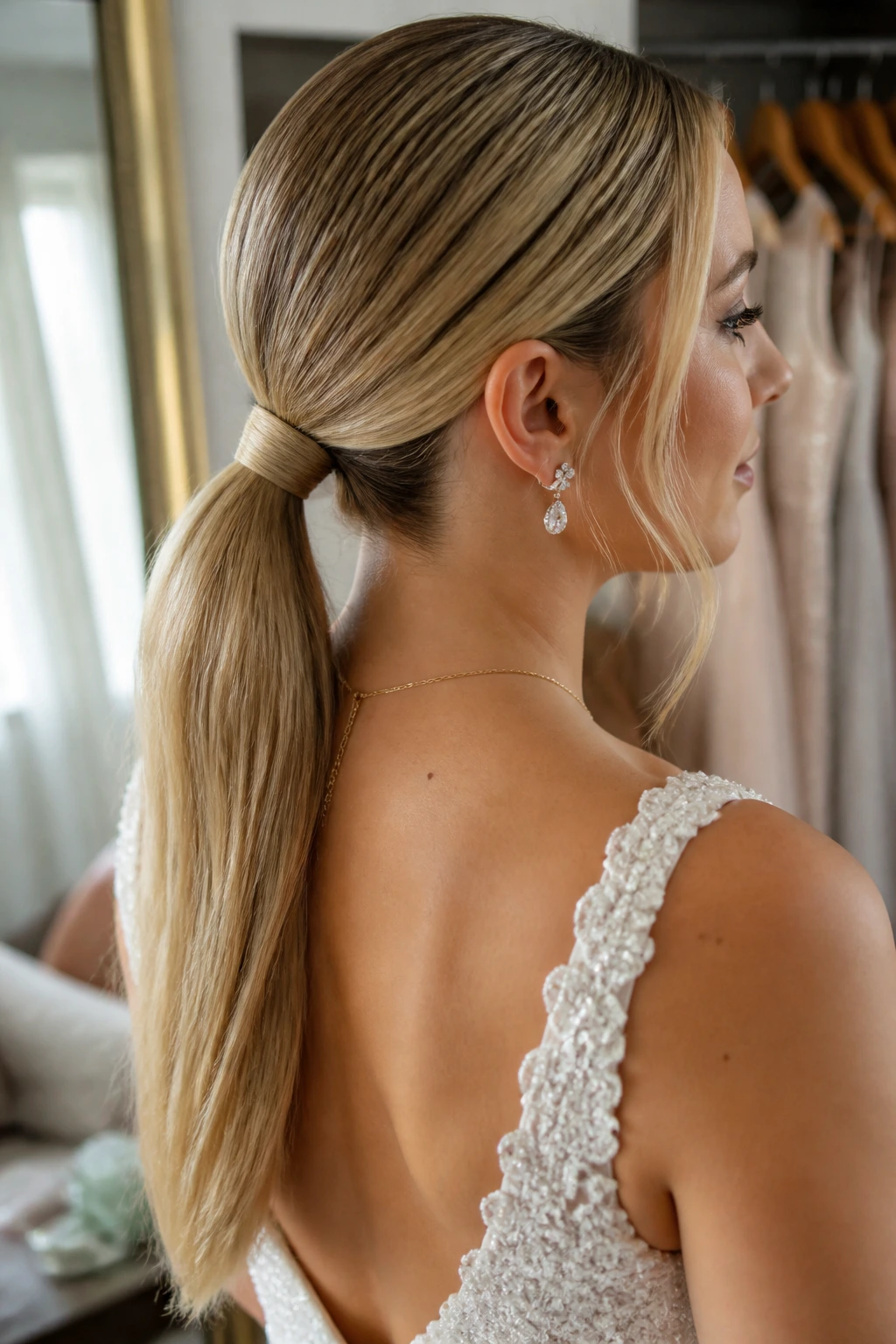
Presentation: Keep the ponytail centered and low when the dress has an open back, a dramatic seam, or a clean square neckline. If one shoulder is bare, shift the ponytail slightly to the opposite side so the shape doesn’t compete with the cut of the dress.
Accessories: Pearl pins, ribbon, metallic cuffs, and small floral pieces each send a different message, so pick one lane for the whole group or one lane per variation. If the jewelry is bold, keep the hair cleaner. If the dress is plain, the accessory can do more work.
Balance: Heavy beading, ruffles, or lace usually want a sleeker ponytail so the outfit doesn’t feel crowded. Simpler dresses can handle braided textures, wave-softened tails, or a little crown volume. The hair should support the dress, not wrestle it for attention.
Photo Notes: If the photographer will shoot from behind, keep the wrapped base tidy and avoid placing tendrils where they’ll break the line of the dress. A ponytail that looks fine in a mirror can look busy in photos if the back is cluttered with too many pins or loose pieces.
Extra Styling Touches That Make the Hair Feel Intentional
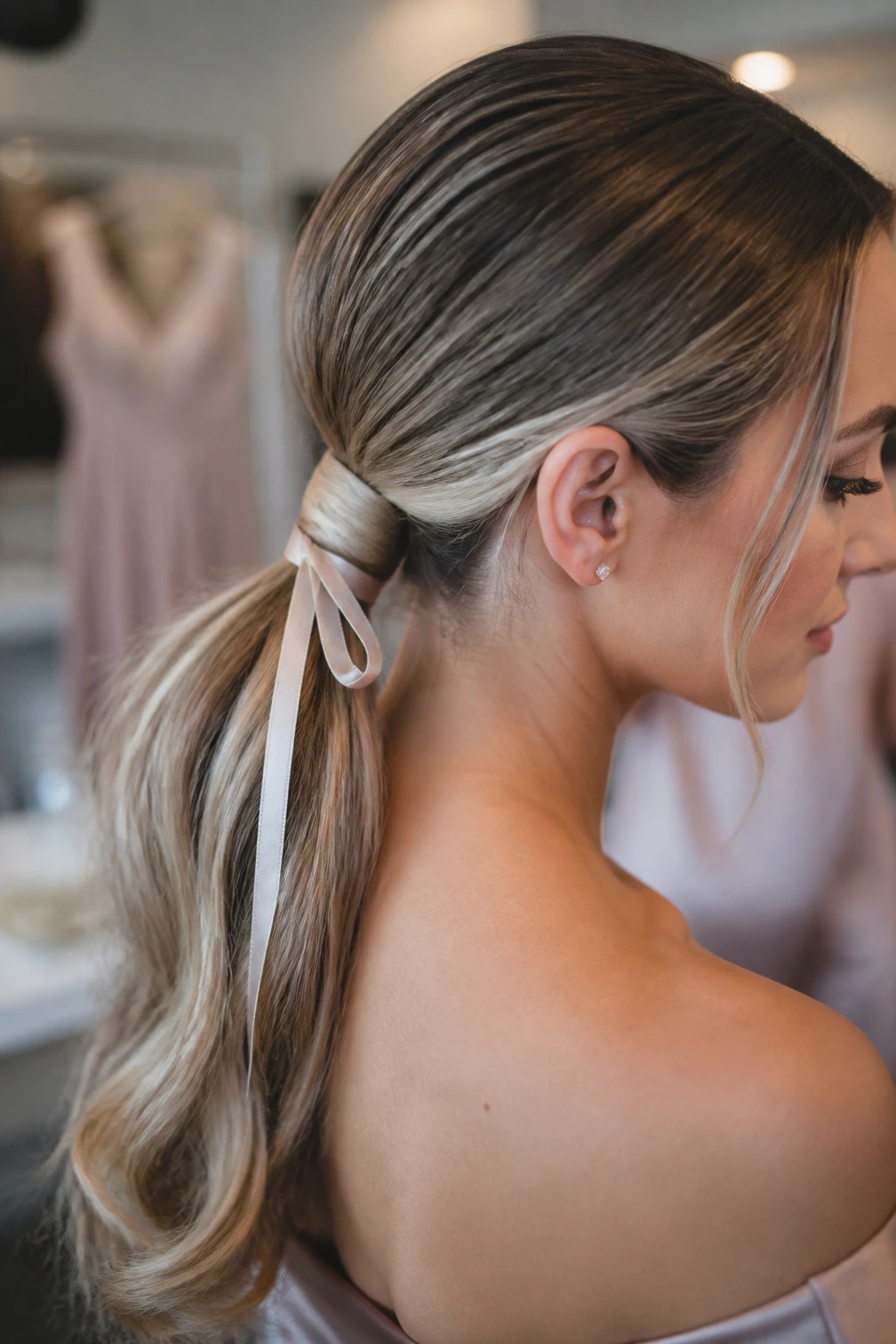
Texture Boost: A quick mist of dry texturizing spray through the crown before the ponytail goes up gives the hair something to hold onto, especially if it’s very fine or freshly smoothed. Don’t spray the ends first. The root area is where the style either stays put or slides.
Customization: Change the part, the wrap, or the tail finish to match the dress rather than the bouquet. A deep side part works well with strong necklines, while a center part usually feels cleaner with symmetrical gowns. If the lineup wants a little variation, shift the accessory rather than rebuilding the whole shape.
Finishing Touches: Wrap the elastic with a strand of hair, a ribbon, or a thin braid so the base doesn’t look like an afterthought. A small amount of shine spray on the lengths can help the hair read polished in photos, but keep it away from the roots unless you want that slick finish on purpose.
Make-It-Yours: For curly or coily hair, keep the natural texture where it shines most and shape the base, not the curl pattern. For straight hair, a bend through the tail ends keeps the style from looking too hard. For fine hair, work with a little extra fullness at the crown; for thick hair, focus on control at the nape so the ponytail doesn’t mushroom out.
Make-Ahead, Day-Of Maintenance, and Touch-Up Guidance
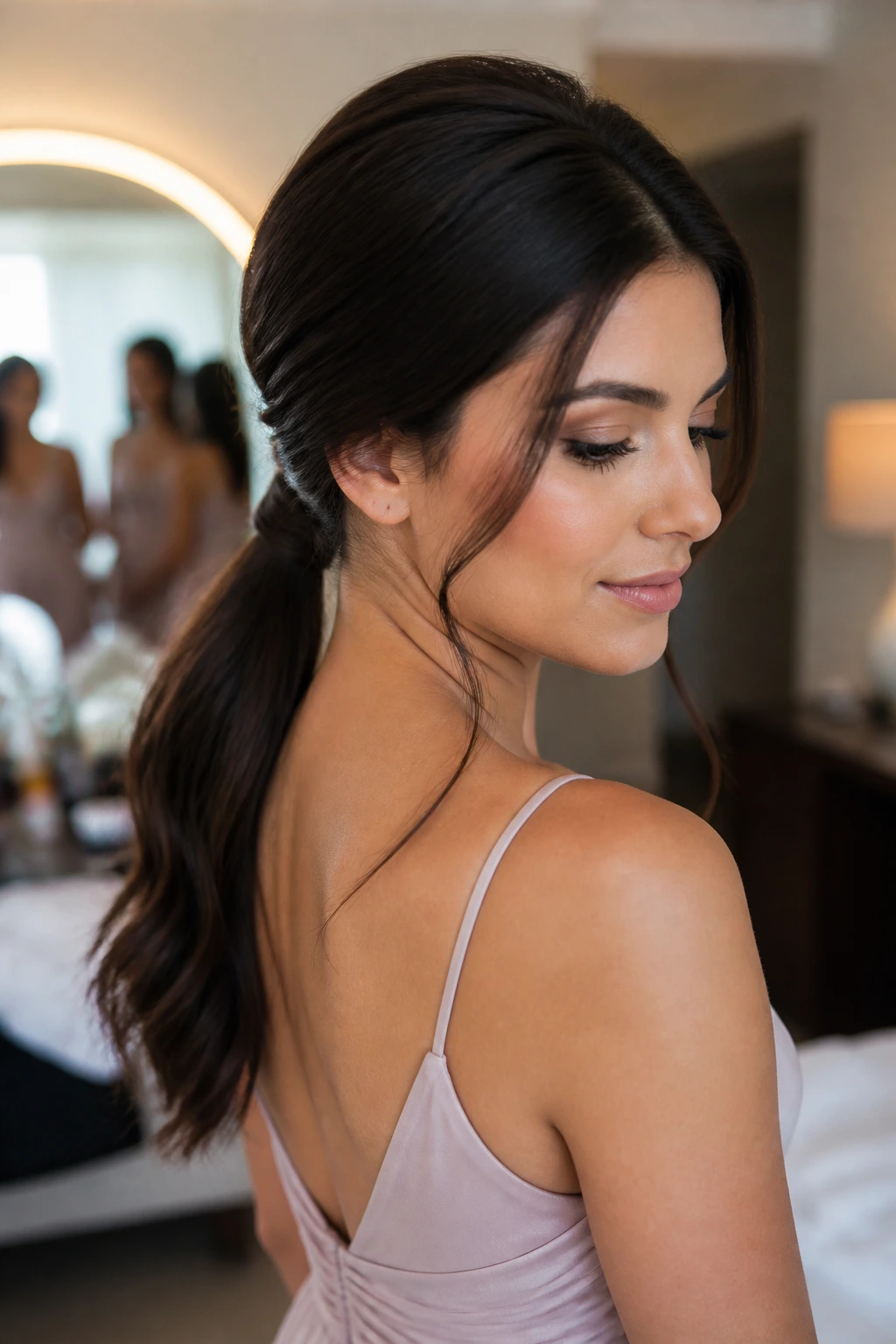
The best low ponytails for bridesmaids start before the wedding morning. If the hair gets washed the night before, it usually holds better than freshly washed hair that’s too soft and slippery. A loose braid or silk wrap overnight can keep the hair smooth without flattening the roots. If you’re doing a curled style, prep the waves ahead of time so they have time to cool and set before the ponytail is gathered.
On the day itself, build in a little breathing room. Sleek styles usually need the crown and part cleaned up last, right before the elastic goes in. Textured ponytails can be started earlier, but the finish should wait until after dressing so collars and jewelry don’t disturb the shape. If the weather is humid or windy, keep a small kit nearby: a few bobby pins, a spare elastic, a travel spray, and a tail comb.
During the event, don’t keep re-touching the hair. That’s how a good ponytail becomes frizzy. Smooth once, pin once, spray once. If a flyaway appears later, tuck it back with a fingertip and a tiny bit of product rather than reworking the whole crown. If the ponytail starts to sag, lift from underneath near the elastic and repin the base instead of tugging the top. That preserves the shape and saves time.
Ways to Adapt the Look for Different Hair Types and Wedding Settings
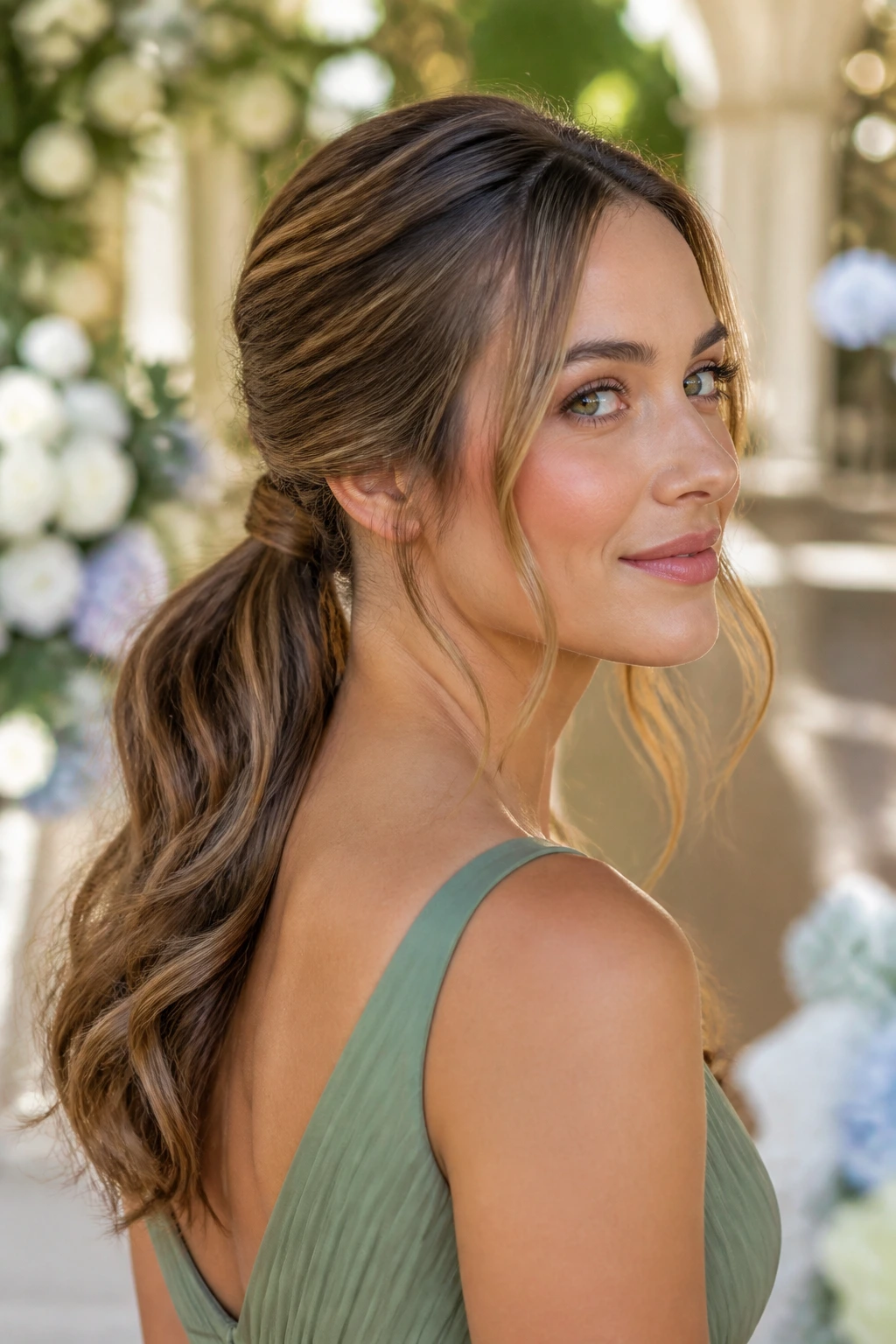
Fine-Hair Volume Version: Add a little root powder or dry shampoo, then backcomb lightly at the crown before smoothing the top layer over it. Use a smaller elastic and at least two hidden pins under the wrap so the base doesn’t slide. This version works best when the tail is curled or waved, because straight fine hair can look sparse fast.
Curly-and-Coily-Friendly Version: Keep the natural texture visible and shape the ponytail where the hair naturally gathers. Use a strong elastic, smooth the edges with a light cream, and let the tail stay full instead of trying to force it flat. That preserves the look of the curl pattern and avoids the crushed, half-fought finish that never photographs well.
Short-Length Faux Ponytail: If the hair doesn’t reach a full low tail, tuck and pin the ends under a small extension piece or a hidden wrap. The goal is to keep the base low and believable, not to pretend the hair is longer than it is. This option is especially useful when bridesmaids need the same family of styles but have different cut lengths.
Windproof Outdoor Version: Prioritize braid, twist, or rope structures at the crown and use extra pins at the nape. Flexible spray beats hard spray outdoors because the hair needs hold without looking brittle when the wind hits. A cleaner shape at the base also helps the style survive being touched, turned, and photographed from all sides.
Black-Tie Finish Version: Keep the crown smooth, the part clean, and the accessory narrow — a cuff, a thin ribbon, or a tiny line of pins. Strong lighting exposes rough product placement fast, so the finish has to be neat. This is the version I’d choose if the dresses are sleek and the venue wants a more formal mood.
Mistakes That Make Low Ponytails Look Flat or Messy
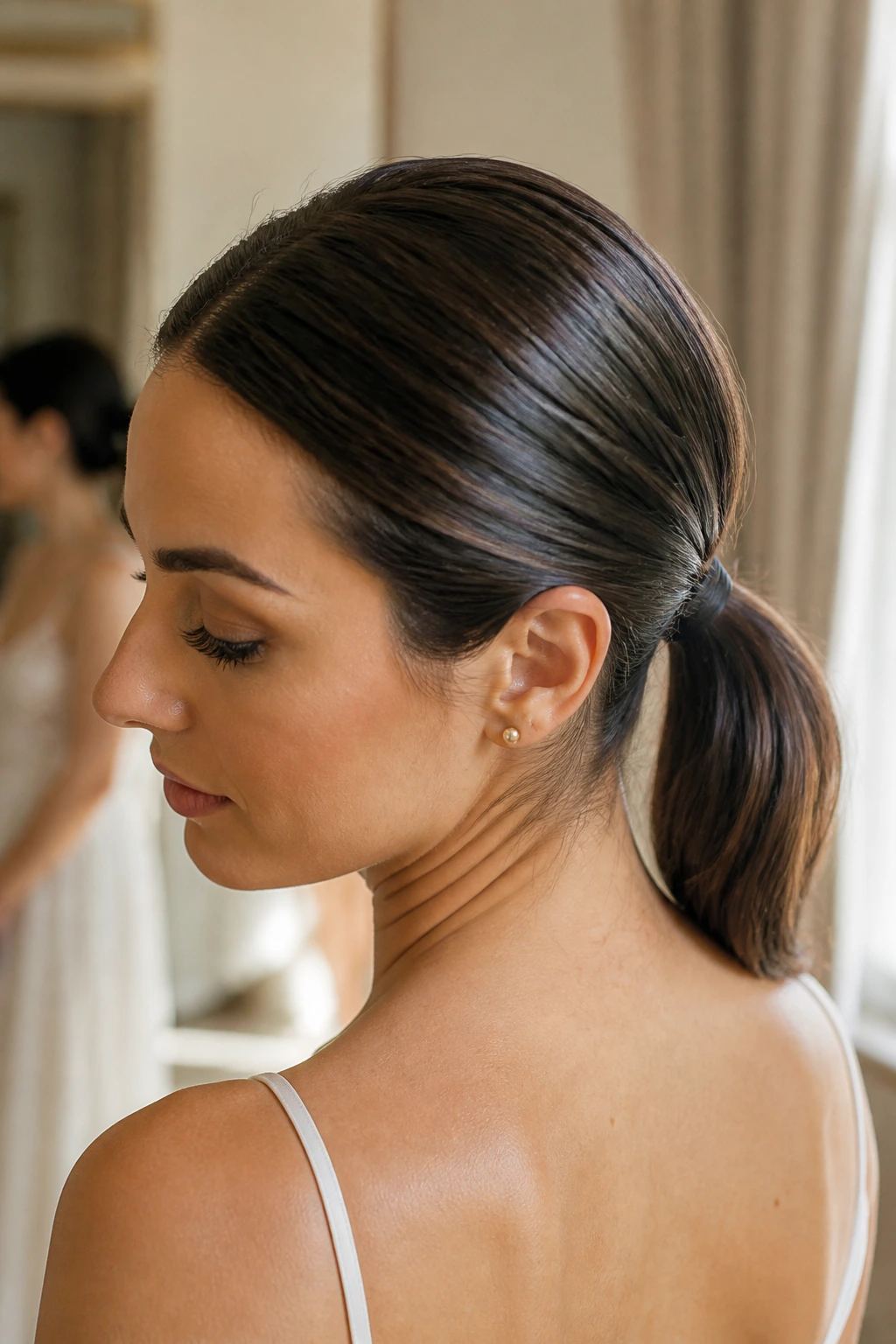
The first mistake is placing the ponytail too high. It seems minor, but once the elastic rises above the nape, the style stops reading as a low ponytail and starts feeling like a mid-ponytail that couldn’t make up its mind. The fix is simple: anchor lower than feels natural, then check the shape in a mirror from the side and back before committing.
The second mistake is overloading the crown with product. Too much serum or cream makes the roots separate, and under indoor lighting that can look greasy within an hour. Use the smallest amount that smooths the hair, then stop.
Another common problem is ignoring the dress neckline. A ponytail that looks lovely with a strapless gown can fight a halter or a high collar. Match the placement and the shape to the dress first, accessory second. That order saves a lot of panic.
Big bows, oversized flowers, and piles of pins can also crowd the style. One accessory family is enough. More than that and the back starts looking busy instead of coordinated.
Finally, people often forget to secure the underneath. A low ponytail that only feels tight from the top will sag once the ceremony starts. Use hidden pins where the base folds and sits against the neck.
Questions Bridesmaids Ask Before They Sit in the Chair
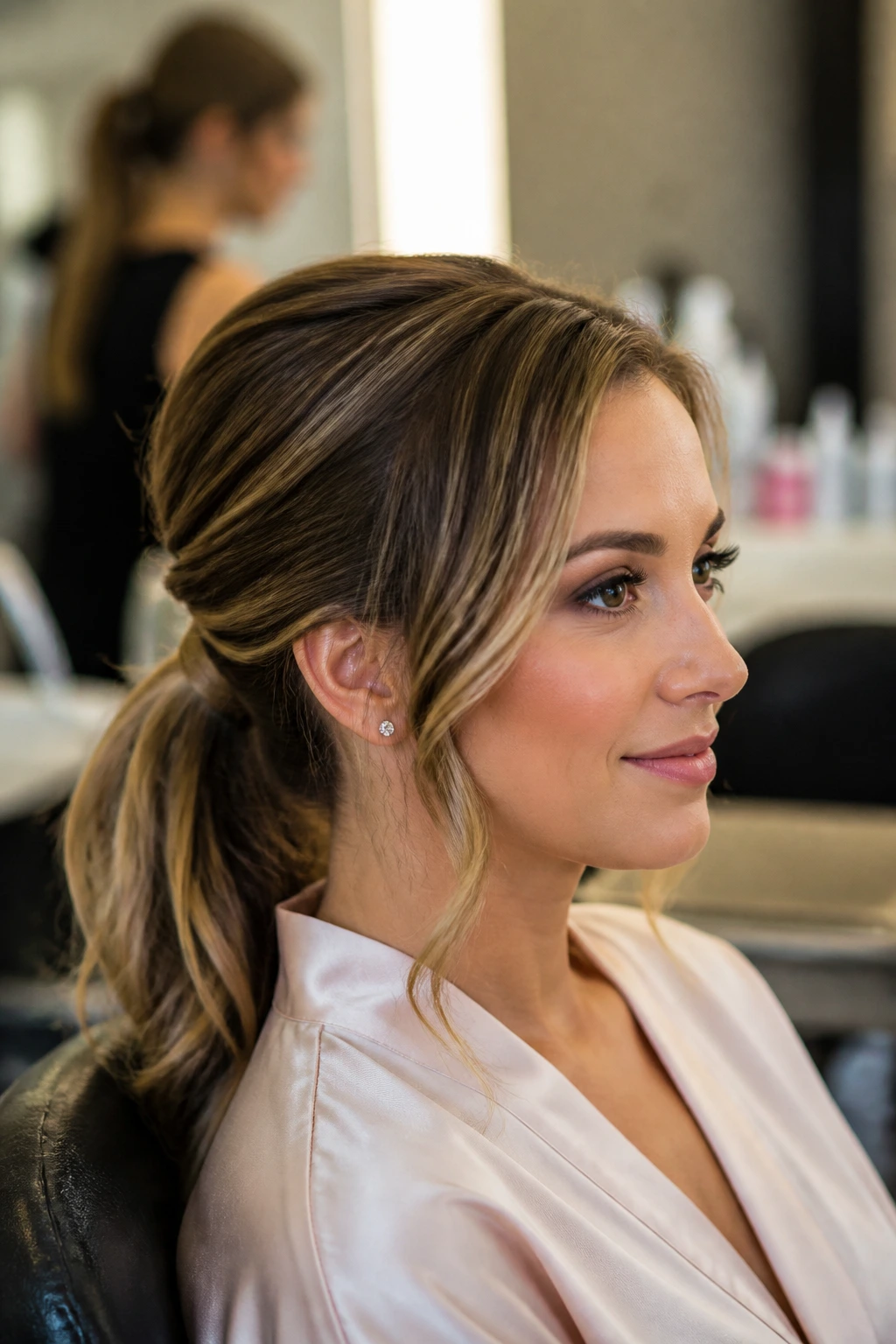
How do you make a low ponytail look formal enough for bridesmaids?
The crown has to be intentional. A clean part, a controlled base, and one strong finish — ribbon, braid, cuff, or pins — make the difference between “I threw my hair back” and “this was styled.”
Can bridesmaids with very different hair lengths still match?
Yes, and they shouldn’t try to match by force. Keep the parting, base placement, or accessory family consistent, then let the tail length and texture vary naturally. That’s usually the cleaner choice.
What keeps flyaways down without making the hair stiff?
Use a flexible spray after the style is done and a tiny amount of smoothing cream or serum before you start. Hard spray can be useful on humid days, but if you use too much, the crown starts to look crunchy instead of smooth.
Should the hair be curled before or after the ponytail goes up?
For most low ponytails, curl before gathering so the waves blend better through the tail. If the style is sleek, straighten first and only bend the ends after the ponytail is secured.
Will a low ponytail work on curly or coily hair?
Absolutely. The trick is not flattening the texture into something it isn’t. Shape the base, smooth the hairline as needed, and let the ponytail keep its natural body.
How early should the style be done on the wedding day?
Sleek versions can be done fairly close to dressing time, while wave-heavy styles need a little more room so the curls can cool and set. If the lineup is large, start earlier than feels necessary; hair always takes longer when dresses and makeup are in the mix.
What if one bridesmaid hates tight hair?
Give her a softer version with a lower tension base, a few face-framing pieces, or a looser wrap. She can still stay in the same style family without dealing with a pulling sensation at the crown.
Can extensions be added without the ponytail looking fake?
Yes, if the shade and texture match closely and the attachment point is hidden at the nape. The trick is blending, not just length. If the extension is too glossy or too thick, it will show before the rest of the style does.
A Low Ponytail That Keeps the Lineup Looking Put Together
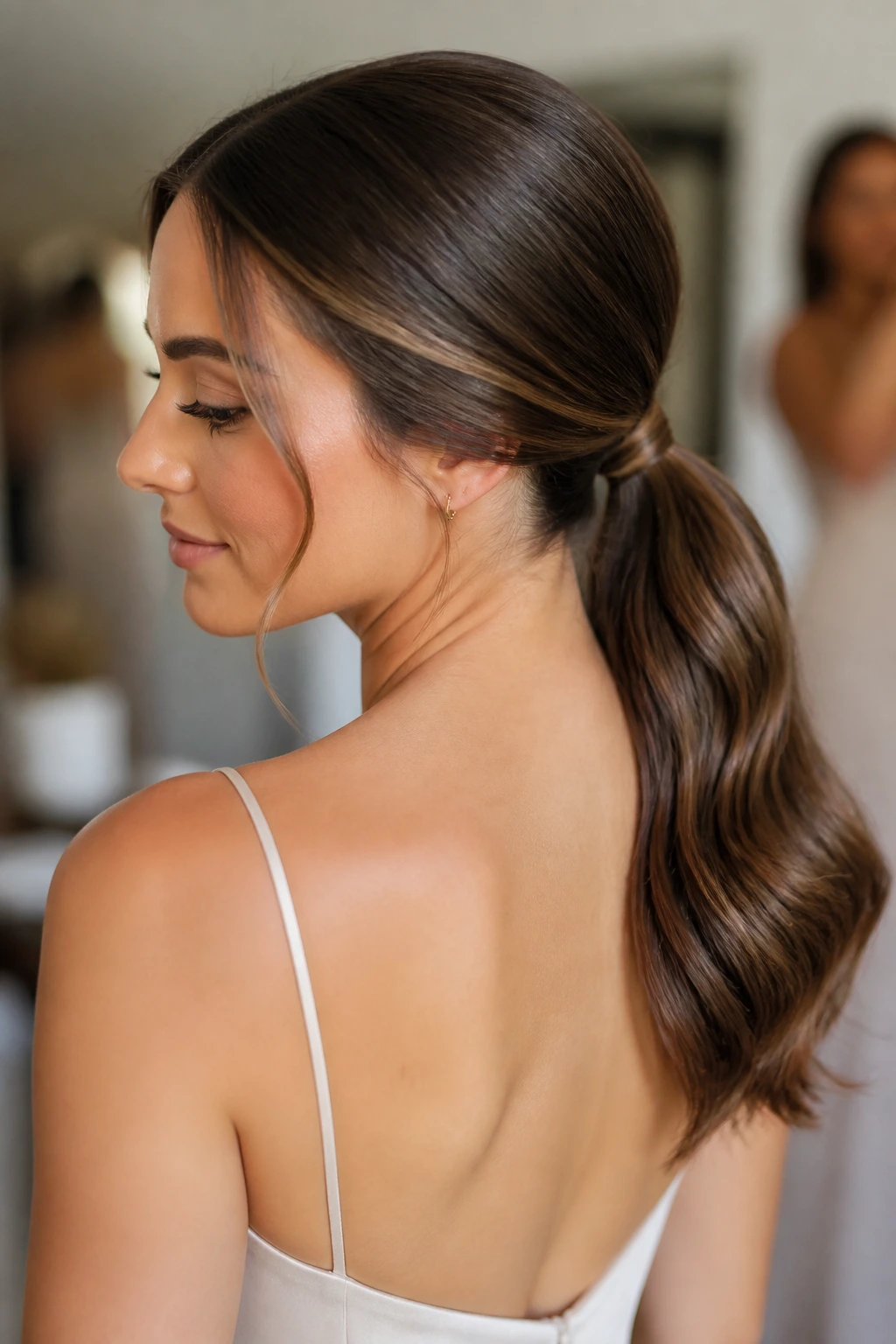
A good bridesmaid low ponytail doesn’t need to shout. It just needs to sit where it belongs, hold its shape, and give the dress enough room to do its job. That’s why this style keeps coming back. It’s flexible enough for pearls, ribbons, braids, and clean minimal finishes, but the core idea never changes: low, calm, and polished from the back.
If I had to choose one reason these styles work, it’s this: they make coordination look easy without making everyone identical. That’s the sweet spot for bridal-party hair. Pick one base shape, change one detail, and the whole lineup suddenly feels considered instead of forced.
