



Medium-length hair has a sweet spot that long hair never quite reaches and short hair can’t fake: it can be pinned, tucked, twisted, or left loose without looking overworked. That’s why work hairstyles for medium length hair are worth getting right. Shoulder-grazing strands can look crisp at 8:30 a.m., fall apart by lunch, or land in that awkward middle zone where nothing seems intentional unless you know how to handle the length.
The trick is not forcing medium hair to act like a bob or a waist-length mane. It’s about using the length you have. A collarbone cut can sit beautifully in a low knot. A layered lob can hold a soft twist better than a heavy ponytail. Even a plain straight style reads as polished when the part is clean, the ends are bent, and the front sections stay put instead of swinging into your face every time you open a laptop or turn toward a meeting room.
Some office hairstyles feel fussy. Others look too casual the second you walk past a mirror. The styles that work on medium-length hair usually live in the middle: neat, fast, and not so rigid that they make you look like you borrowed your hair from a corporate stock photo. That balance matters. A lot.
Why These Styles Work Better Than They Look On Paper
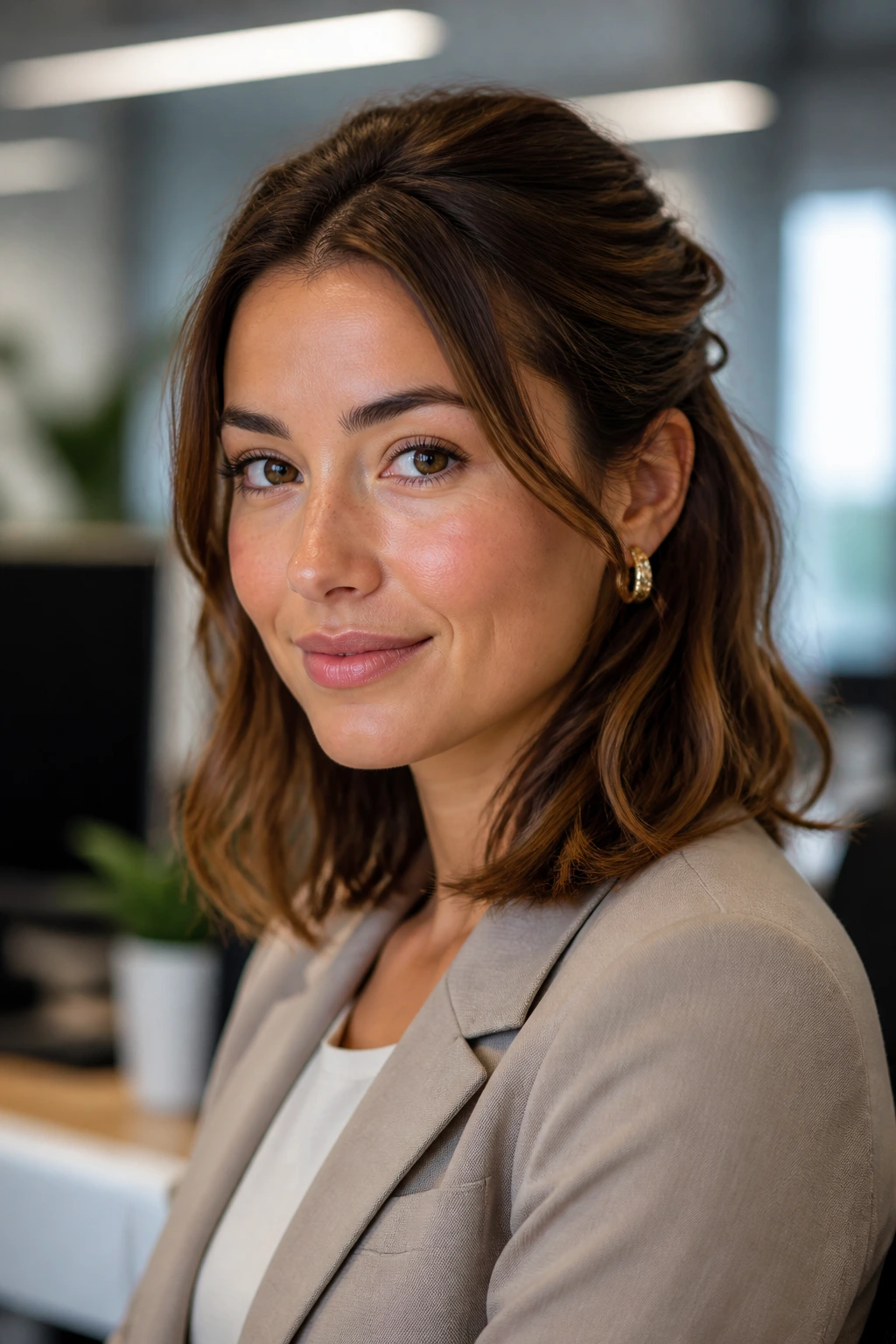
- Medium length gives you just enough grip: shoulder-skimming hair is light enough to twist and pin, but long enough to stay anchored when you secure it well.
- They survive movement better than loose hair: a low knot, tucked ponytail, or pinned-back crown stays calmer through typing, commuting, and the constant forward bend toward a desk.
- They play well with second-day texture: a little grit from dry shampoo or yesterday’s wave helps pins hold and stops the style from slipping.
- They adapt to dress codes: the same cut can read sleek for a presentation or softer for a relaxed office, depending on how tightly you smooth the front.
- They don’t need a salon blowout: most of these looks take 5 to 12 minutes, a brush, a few pins, and maybe one hot tool if you want extra polish.
- They make layers behave: medium cuts often have face-framing layers, and these styles keep those pieces from falling straight into your eyes by 10 a.m.
1. Low Sleek Knot
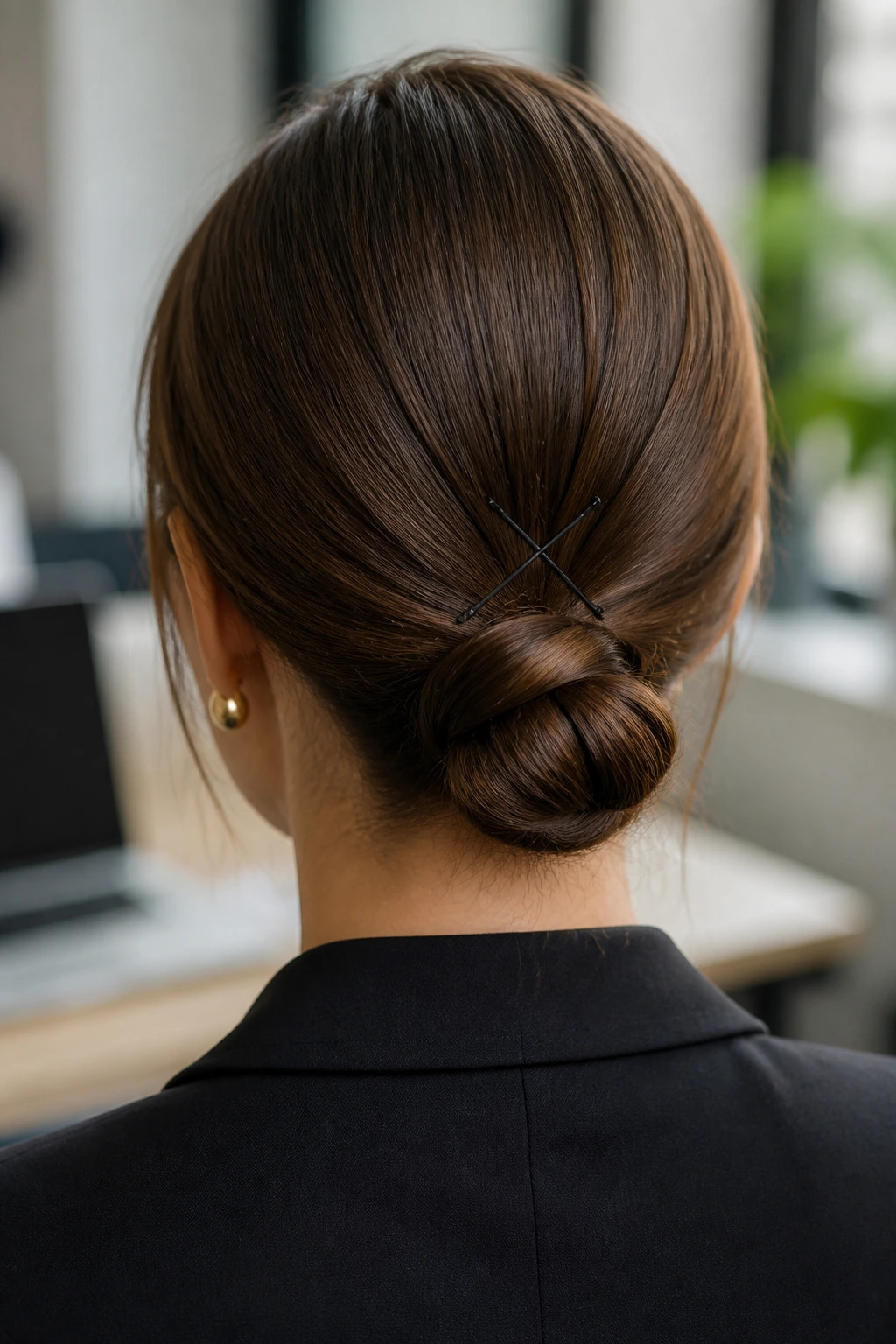
A low sleek knot sits where medium hair wants to behave best: right at the nape, where the weight of the hair helps it stay put. It looks clean from the front, which matters more than people admit. If the part is neat and the crown lies flat, the whole style reads as deliberate even when you put it together in six minutes before leaving the house.
The best version starts with a small amount of smoothing cream through the mid-lengths, not the roots. Gather the hair low, twist once, coil it into a small knot, and pin it tightly with two crossed bobby pins. That cross-pin move is the difference between “held all day” and “why is this falling out during the first meeting?”
Why it works on medium hair
Medium hair gives the knot enough thickness to feel full without dragging itself loose. Very long hair can be heavy. Very short hair can escape. This length lands in the middle, which is exactly why the knot stays neat when you keep it low and compact.
A one-sentence warning: do not place this too high or it starts to puff and split apart.
2. Soft Side-Part Blowout with Bent Ends
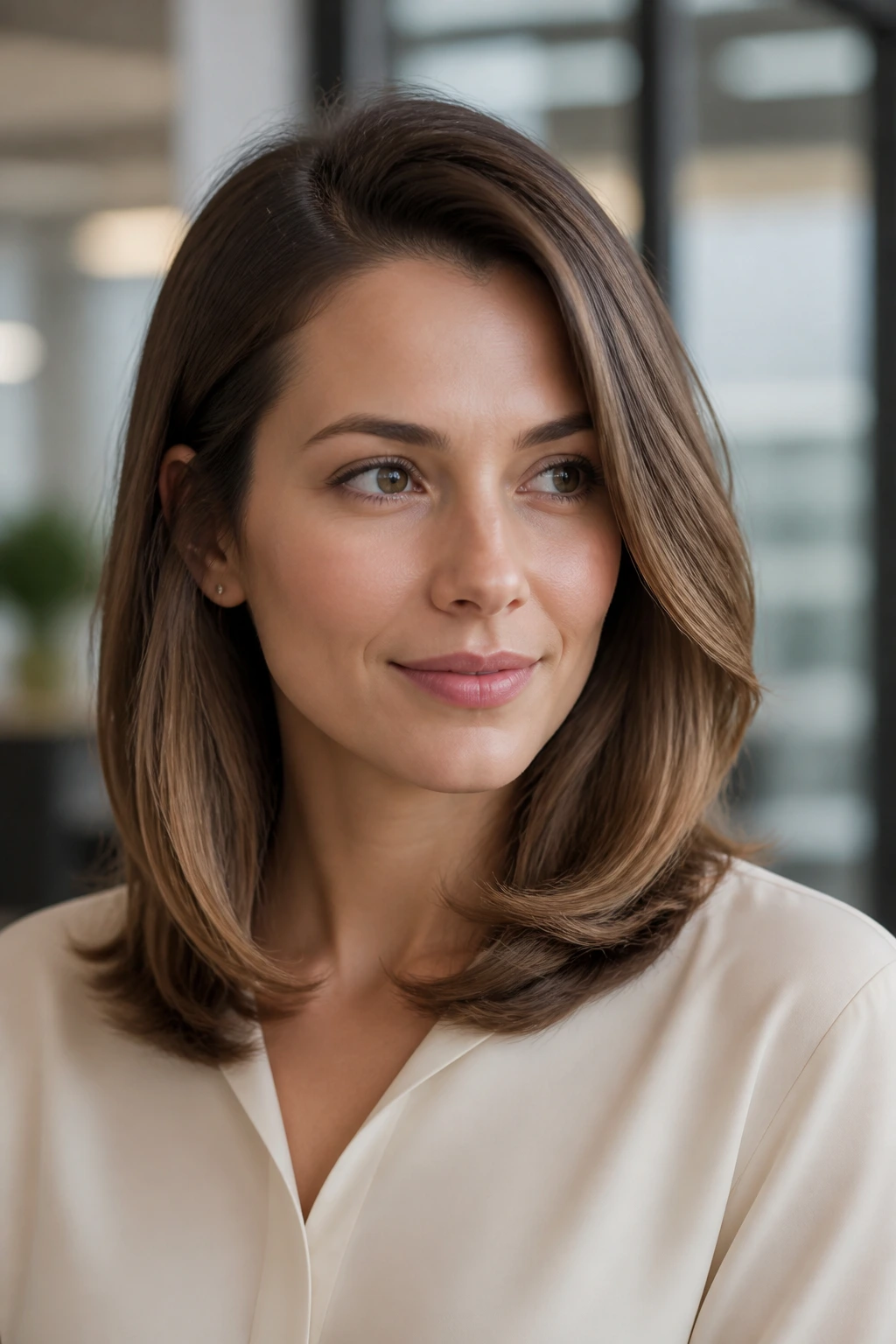
Want your hair down but still office-appropriate? This is the answer I reach for first. A soft side part and slightly bent ends make medium hair look finished without making it look rigid, and the shape works especially well on layered lobs that need a little direction.
Use a round brush or a flat iron to curve the ends under just enough to remove the blunt, unfinished look. You do not need a full curl. You want movement, not bounce. A light mist of heat protectant and a cool shot at the root keep the shape from collapsing before lunch.
The side part matters more than people think. It shifts the eye, gives the top a bit of height, and stops the style from reading flat and center-heavy. That little change can make a shoulder-length cut look sharper with almost no extra effort.
Best for
- Client-facing days
- Blunt lobs that need shape
- Medium hair that falls flat at the crown
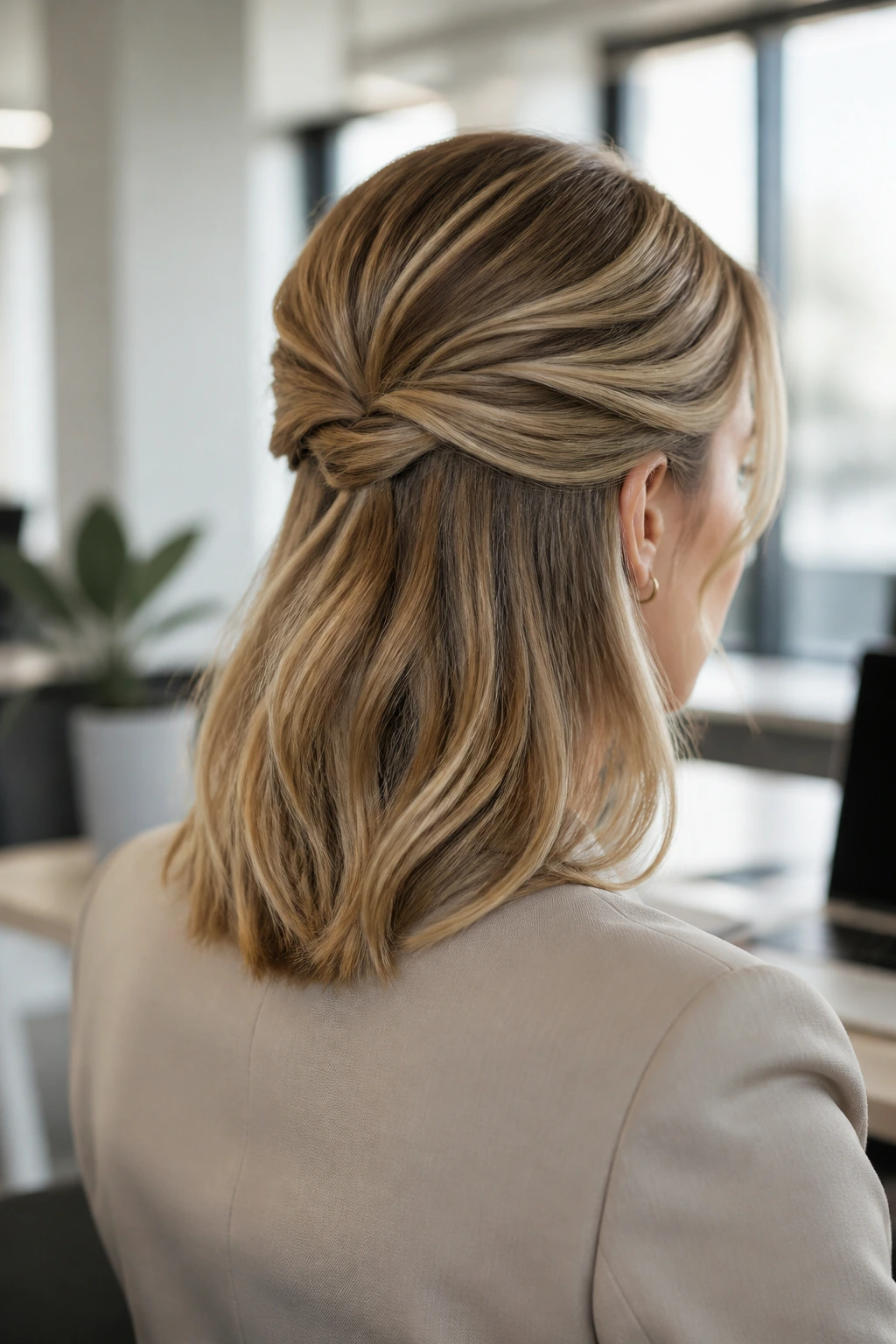
3. Half-Up Twist with Hidden Pins
This one is the quiet hero of medium-length hair. You twist back two small sections from the temples, cross them at the back of the head, and pin them under the top layer so the hardware disappears. The result is polished without looking severe, which is a nice thing to have when you’re heading into a day full of screens and fluorescent lights.
The hidden pin trick keeps the style from looking like a rushed half-up ponytail. Instead, it reads as smooth at the front and light at the back. That helps a lot if your hair is layered, because the lower half still moves while the top stays under control.
If your hair is fine, tease the crown just a touch before pinning. If it’s thick, use two pins on each side and angle them upward into the twist.
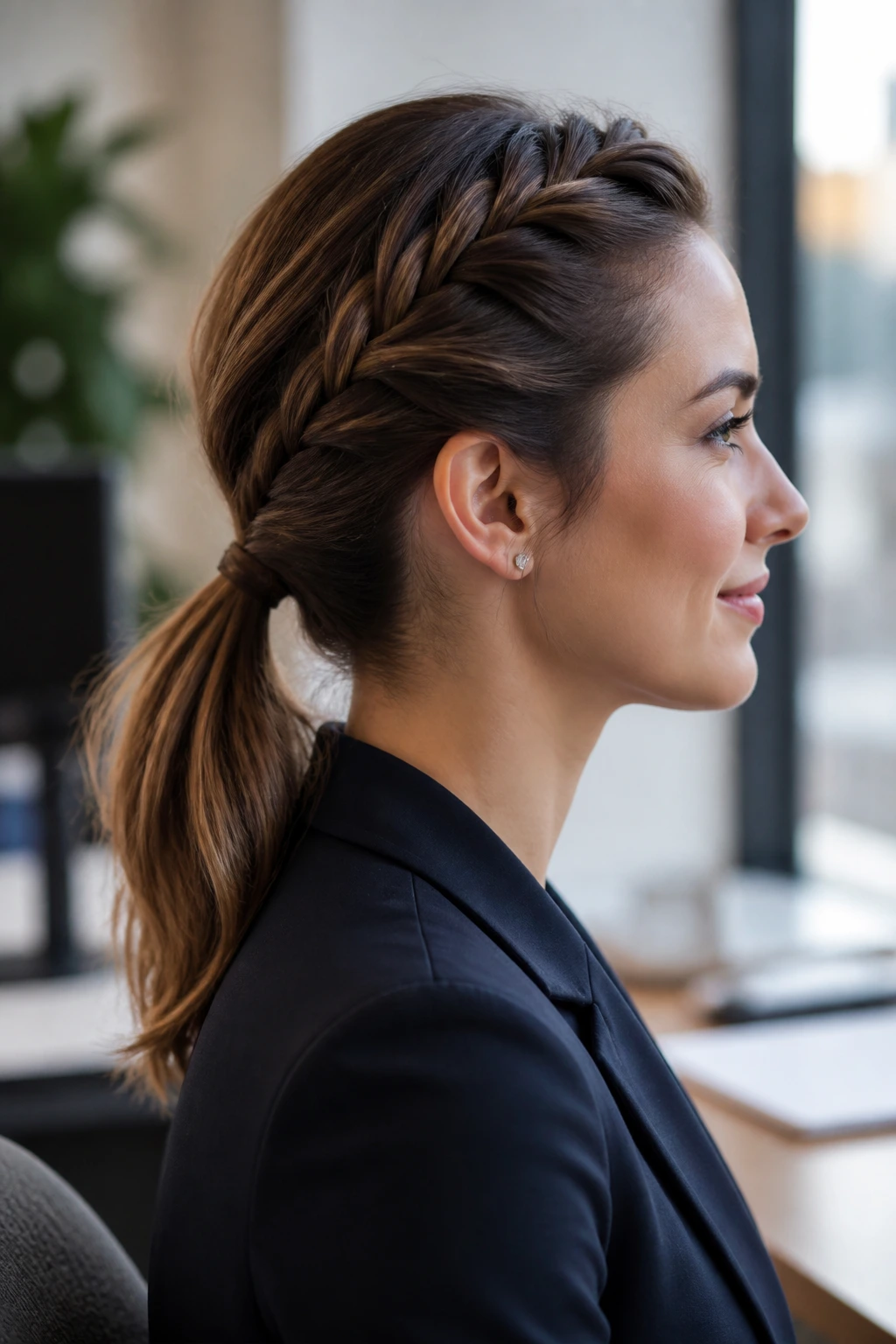
4. French Braid into a Low Ponytail
This style earns its place because it solves two problems at once. The braid keeps the front neat, and the low ponytail keeps the length from snagging on your chair, scarf, or bag strap. On medium hair, the braid usually lands at a flattering point without needing a huge amount of hair to look full.
Start the braid near the hairline or just off center if you want a softer look. Braid back toward the crown, then secure the rest in a low ponytail. A small wrap of hair around the elastic makes it look more finished, and it only takes a few extra seconds.
The style is especially useful on humid days or when your hair is due for wash day and no longer wants to lie flat on its own. A braid adds grip. That matters.
What to watch for
- Braid it too tight and the whole style can look severe.
- Stop the braid too low and the transition into the ponytail looks awkward.
- Skip the wrap and the elastic stays visible, which cheapens the look fast.
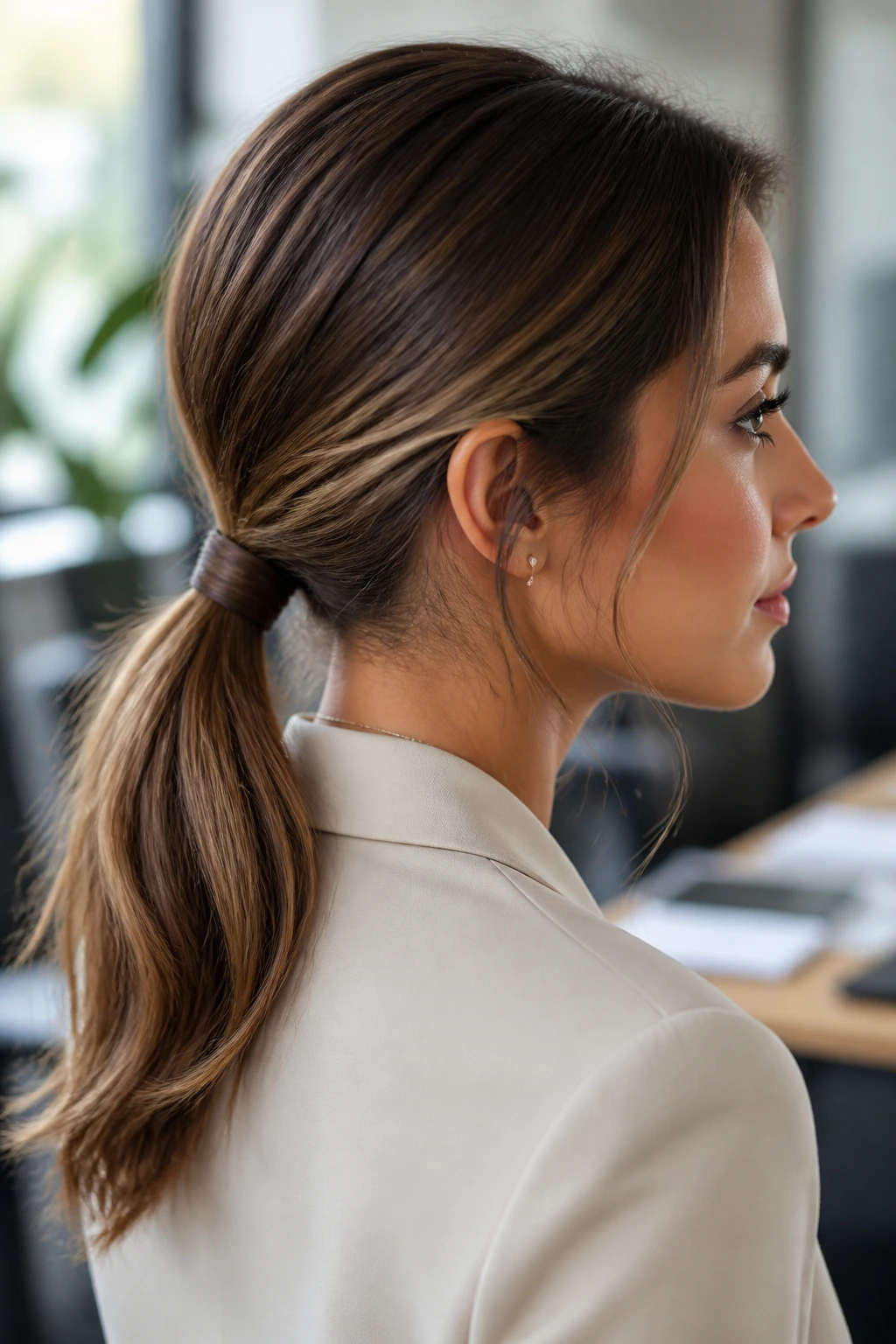
5. Wrapped Low Ponytail
A plain ponytail can look too casual at work. A wrapped low ponytail fixes that with one small move: hide the elastic with a strand of hair. It’s the kind of detail that makes a hairstyle look planned instead of accidental, and medium-length hair has just enough length to do it cleanly.
Place the ponytail at the nape, not halfway up the back of the head. Mid-height ponytails on medium hair often puff out in a weird way and make the ends look shorter than they are. Low keeps the line elegant and keeps the weight centered.
After securing the ponytail, take a 1-inch strip from underneath, wrap it around the elastic, and pin it underneath with a small bobby pin. A little hairspray on the wrap before you pin it helps it stay smooth.
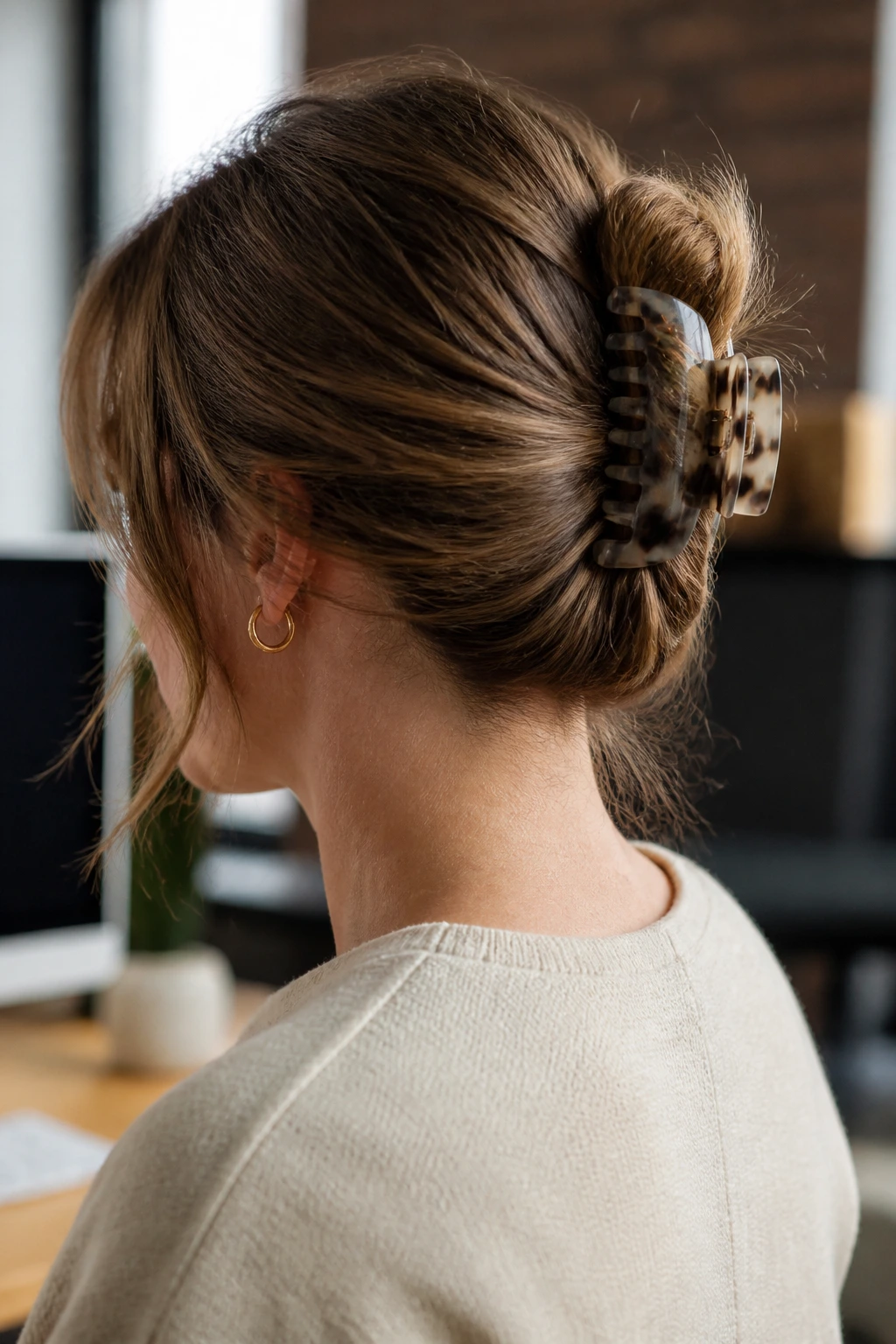
6. Soft Claw-Clip Twist
Medium-length hair and a medium claw clip make a very sensible couple. The twist should feel loose, not yanked tight. Gather the hair as if you’re making a low French twist, fold it upward, then clamp the clip so the ends fan out a little or tuck neatly depending on how much length you have.
This style works because it keeps the neck clear and doesn’t need perfect symmetry. That makes it useful for creative offices, long desk days, or the morning after a blowout when you want your hair up but refuse to make it look like an emergency.
Use a clip with enough grip for your hair density. A tiny clip on thick hair will slide. A giant clip on fine hair can swallow the style and make it sag.
Tiny adjustment that helps
If your hair is slippery, rough up the roots with dry shampoo before you twist. That one step gives the clip something to hold.
7. Straight Lob with One Side Tucked
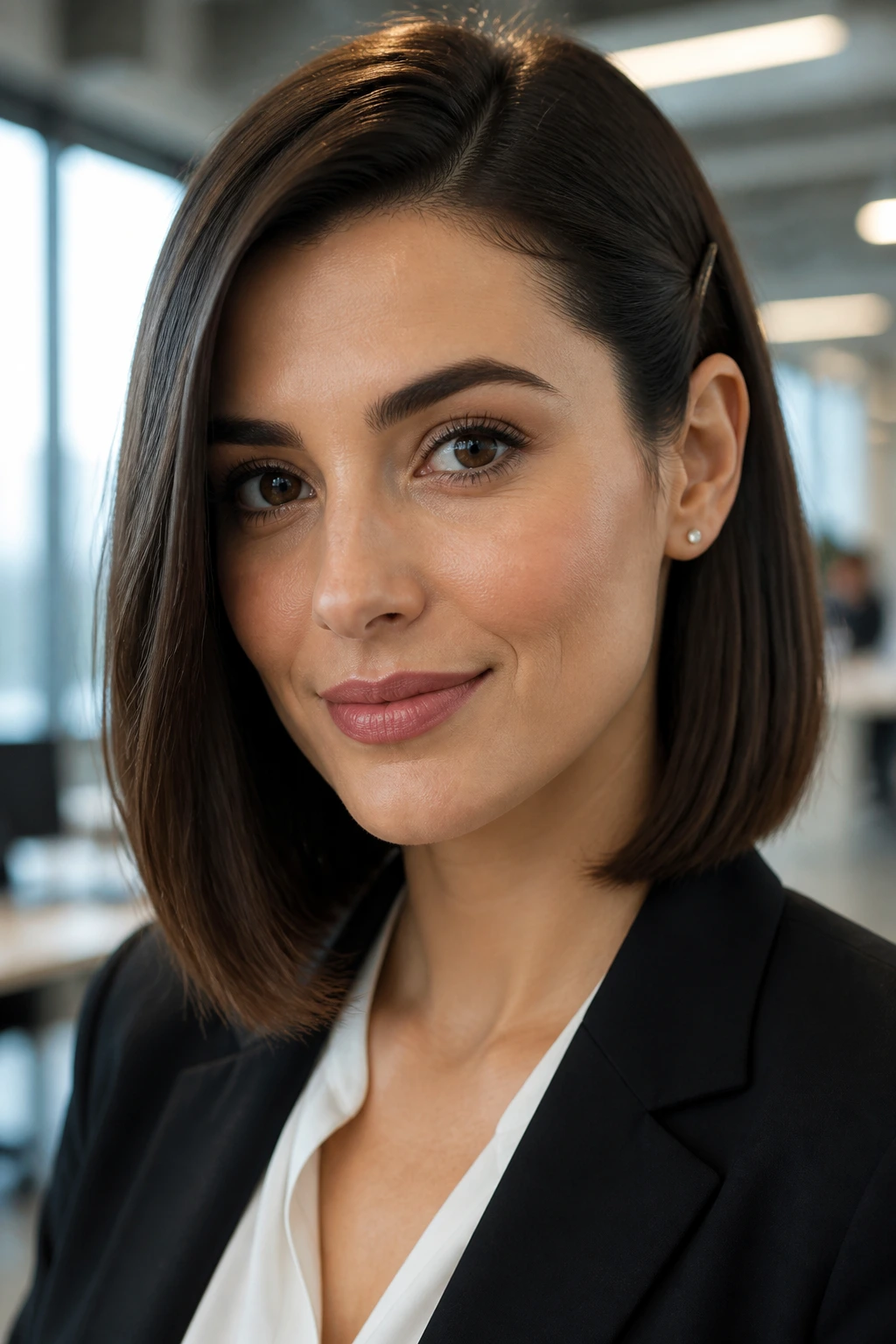
There’s something blunt and clean about a straight lob with one side tucked behind the ear. It’s the simplest hairstyle in the bunch, and it still looks work-ready because the shape is controlled. The tuck keeps hair off your face, shows off a pair of earrings if you wear them, and makes a medium cut look sharper than it sounds on paper.
Flat iron the hair in small sections if needed, then bend the ends under just slightly so they don’t stick out like ruler-straight edges. Tuck one side behind the ear and secure it with a small clear pin if your layers are short. If your office is more relaxed, a single barrette above the ear does the job and gives the style a little personality.
This look is best when the hair is smooth but not stiff. You want shine, not helmet hair.
8. Braided Crown Half-Up
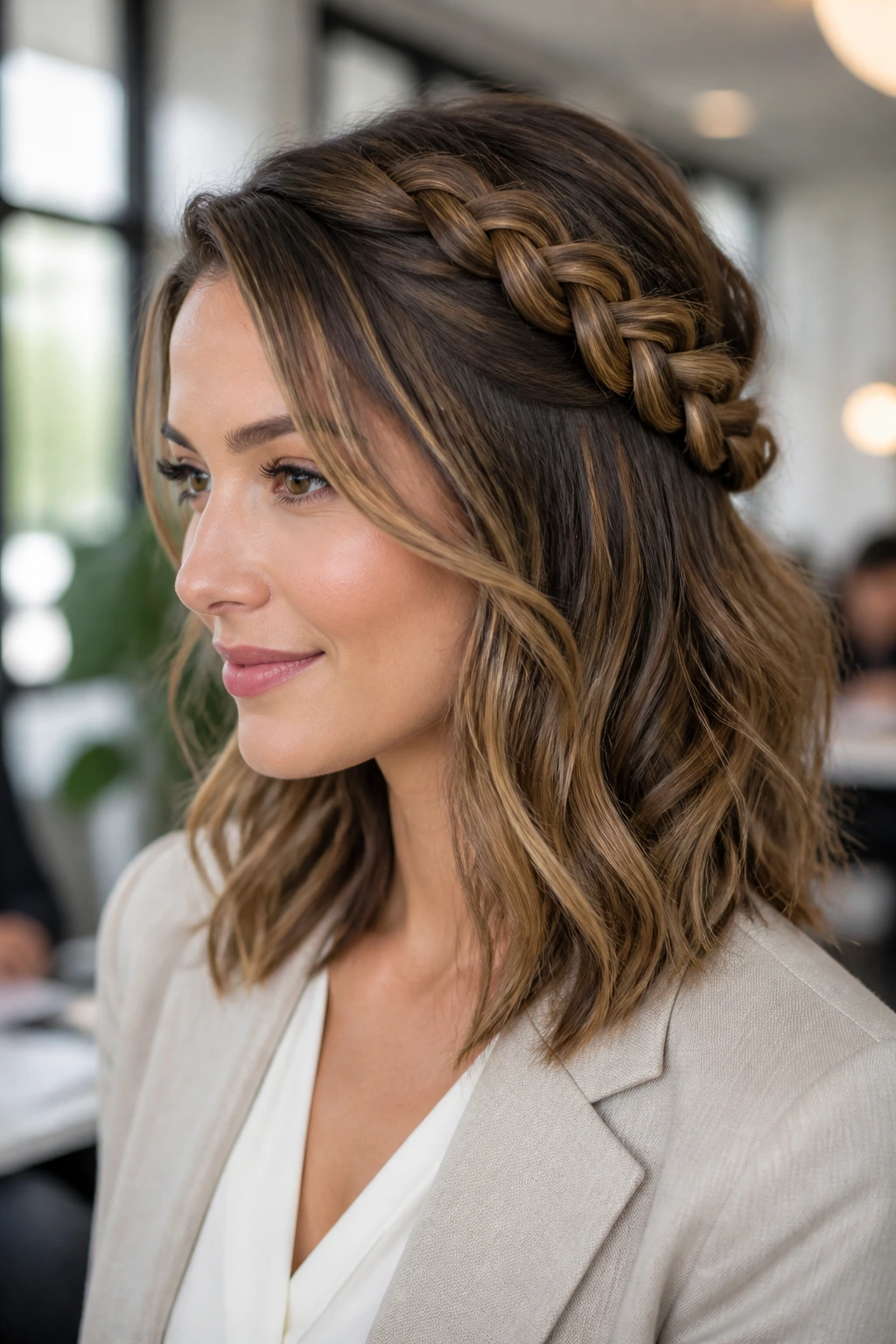
A braided crown half-up gives medium-length hair enough detail to feel styled without taking the whole length away. You braid a section from each side of the head, pull them back, and pin them where they meet. The remaining hair stays down, which helps the style feel softer than a full updo.
It’s one of the better options when you want to keep face-framing layers under control without hiding all the length. Fine hair benefits because the braid creates the illusion of thickness. Thicker hair benefits because the braid distributes weight across the head instead of pulling in one place.
Keep the braid slightly loose. A braid pulled tight against the scalp can look severe and can also give you that “my scalp is unhappy” feeling by mid-afternoon.
Pro move
Loosen the outer edges of the braid with your fingers before pinning. Not too much. Just enough to make the crown look fuller and less stitched-on.
9. Polished Low Bun with Face-Framing Pieces
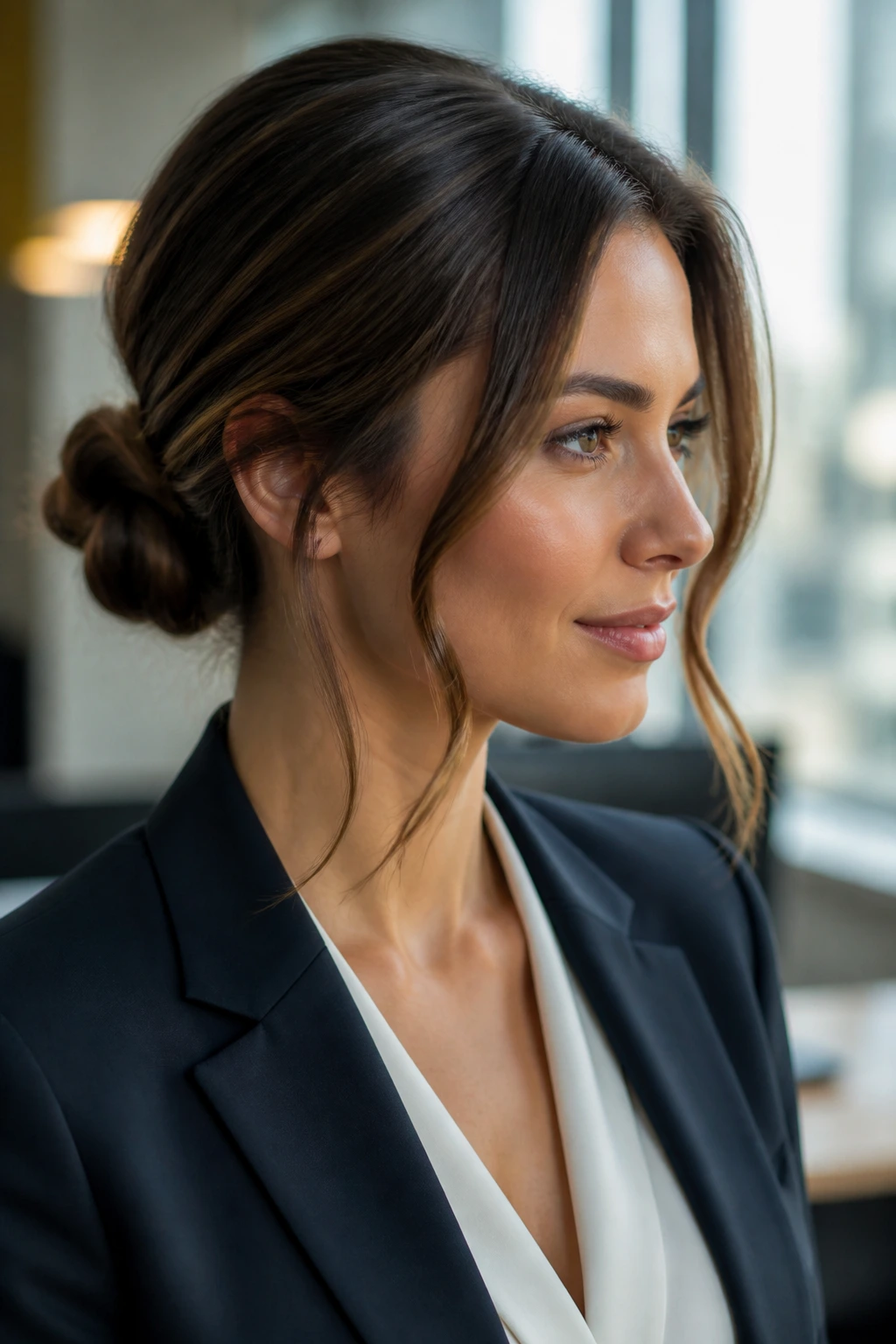
This is the style I’d pick for a presentation, a formal office, or any day when you need your hair to look like it cooperated. A low bun at the nape keeps medium-length hair tidy, and two thin face-framing pieces soften the front so it doesn’t look harsh.
The trick is keeping the bun small and smooth. If you try to build it too big, medium hair can start to collapse or split at the base. Gather the hair low, twist it into a compact coil, and pin it in a circle with bobby pins that match your hair color. Then leave out two narrow front pieces, curl them under slightly, and let them fall around the jaw.
That tiny bit of softness keeps the style from turning severe. It also works well with blazers and high collars, which can make a bigger bun look crowded.
10. Bubble Ponytail
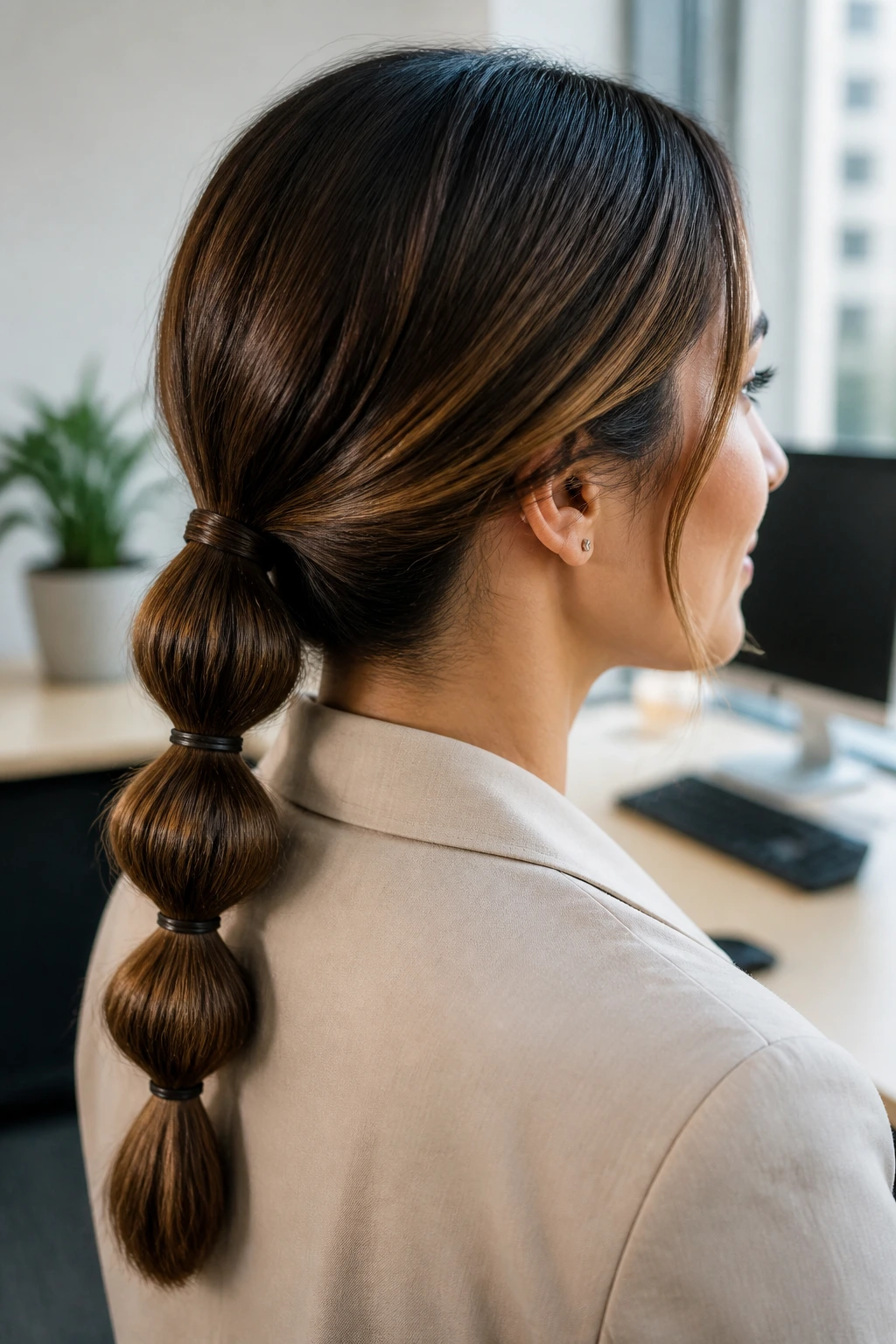
A bubble ponytail sounds playful, but on medium-length hair it can look unexpectedly clean and modern. Start with a low or mid-low ponytail, then add small elastics every 2 to 3 inches down the tail. Gently tug each section into a rounded bubble so the spaces between elastics puff out a little.
The reason it works for work is simple: it controls the length without pretending the hair is something it isn’t. A medium ponytail can look plain. The bubble effect gives it shape. It also keeps the ends from flopping around, which is a small blessing on days when you’re moving between meetings.
Use clear elastics or skinny matte ties if you want it to read more polished than sporty. If your hair is very layered, mist the tail lightly with texturizing spray first so the bubbles hold their shape.
Quick note
Keep the bubbles even. Crooked spacing makes the style look accidental.
11. Rope-Braid Low Ponytail
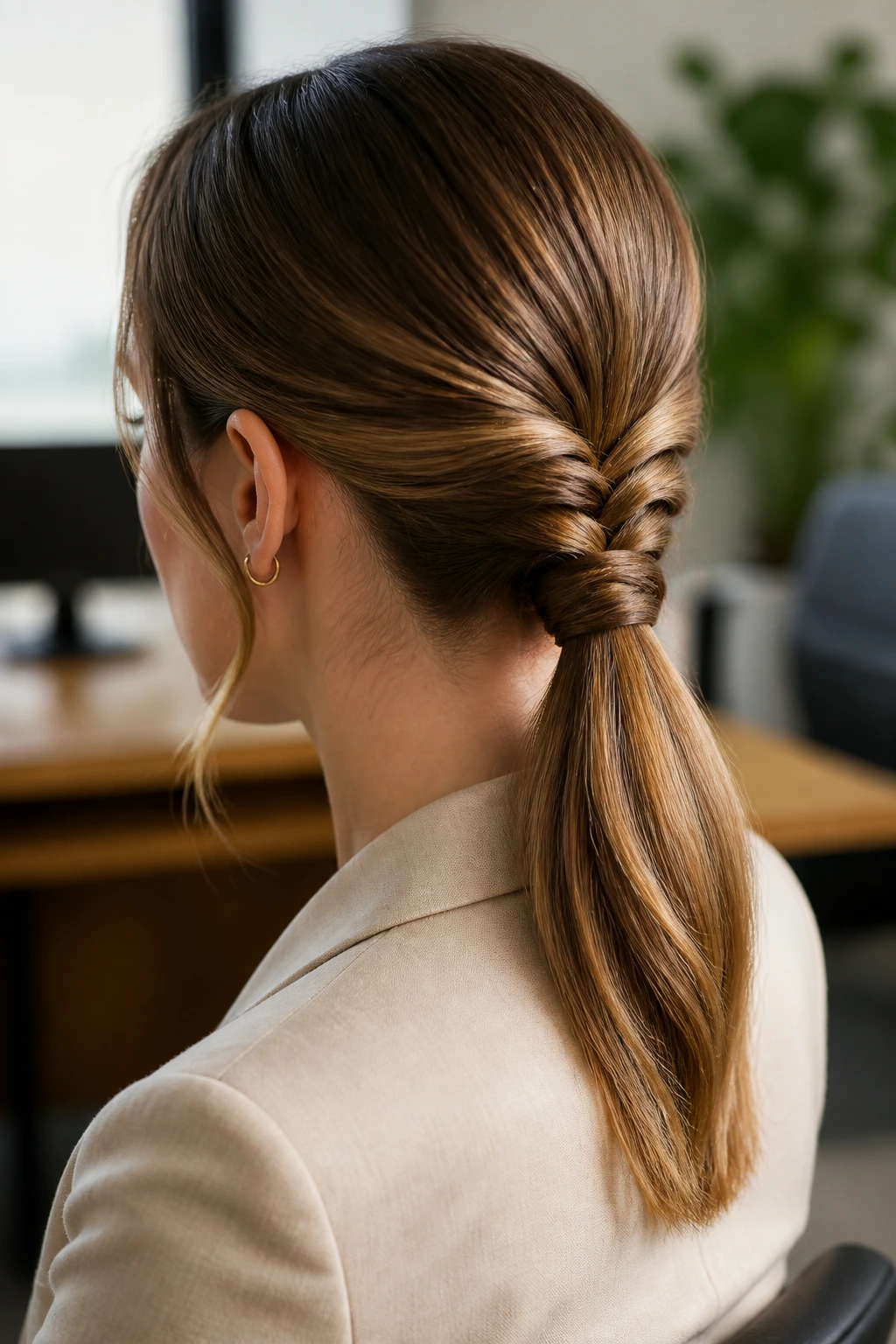
The rope braid is one of those styles people skip because it sounds fancier than it is. You divide the ponytail into two sections, twist each section in the same direction, then wrap them around each other in the opposite direction. It gives medium hair a neat, textured finish that looks more intentional than a standard ponytail.
It’s especially useful on second-day hair, because the twist grips better when the hair has a little texture. On freshly washed hair, add dry shampoo at the roots and a touch of styling cream through the ends so the sections don’t slip apart while you twist.
The final look is clean, a little architectural, and easy to wear with a collar or scarf. It’s one of the best office styles when you want detail without braids.
12. Deep Side-Part Waves
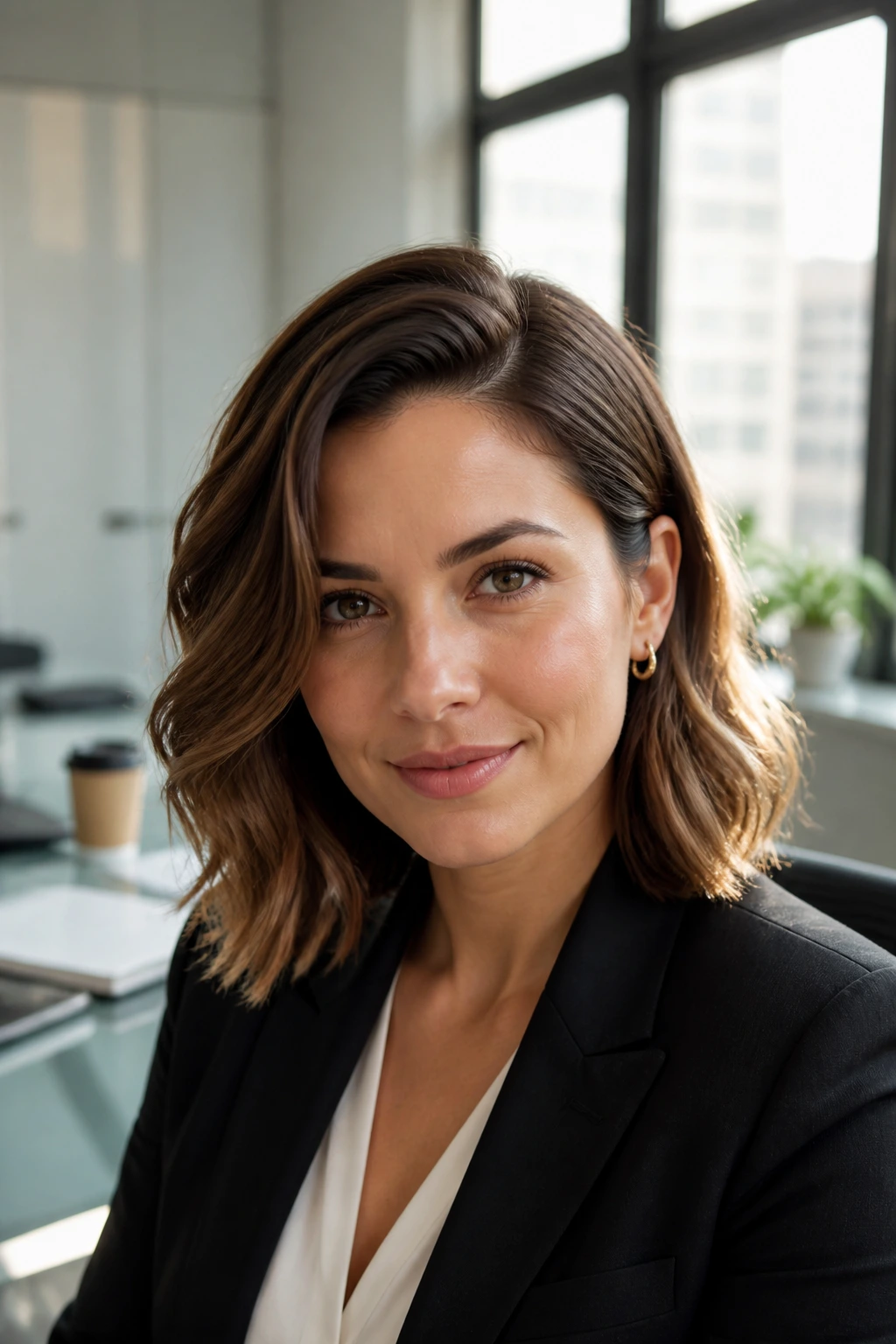
A deep side part and soft waves can make medium-length hair feel dressed up without looking formal. The shape works because the part gives height near the top, and the waves fall in a controlled bend instead of loose beachy chaos. That distinction matters. Beach waves can drift into weekend territory fast. Soft waves with a side part stay in the office lane.
Use a 1-inch curling iron or wand, leaving the ends slightly straighter so the wave doesn’t get too round. Brush the curls out once they cool. Then move the part lower than you normally would. The result looks calm, not fussy.
This style suits collarbone cuts especially well because the waves land around the jaw and collarbone, which frames the face nicely under bright office lighting.
13. Mini Half-Up Knot
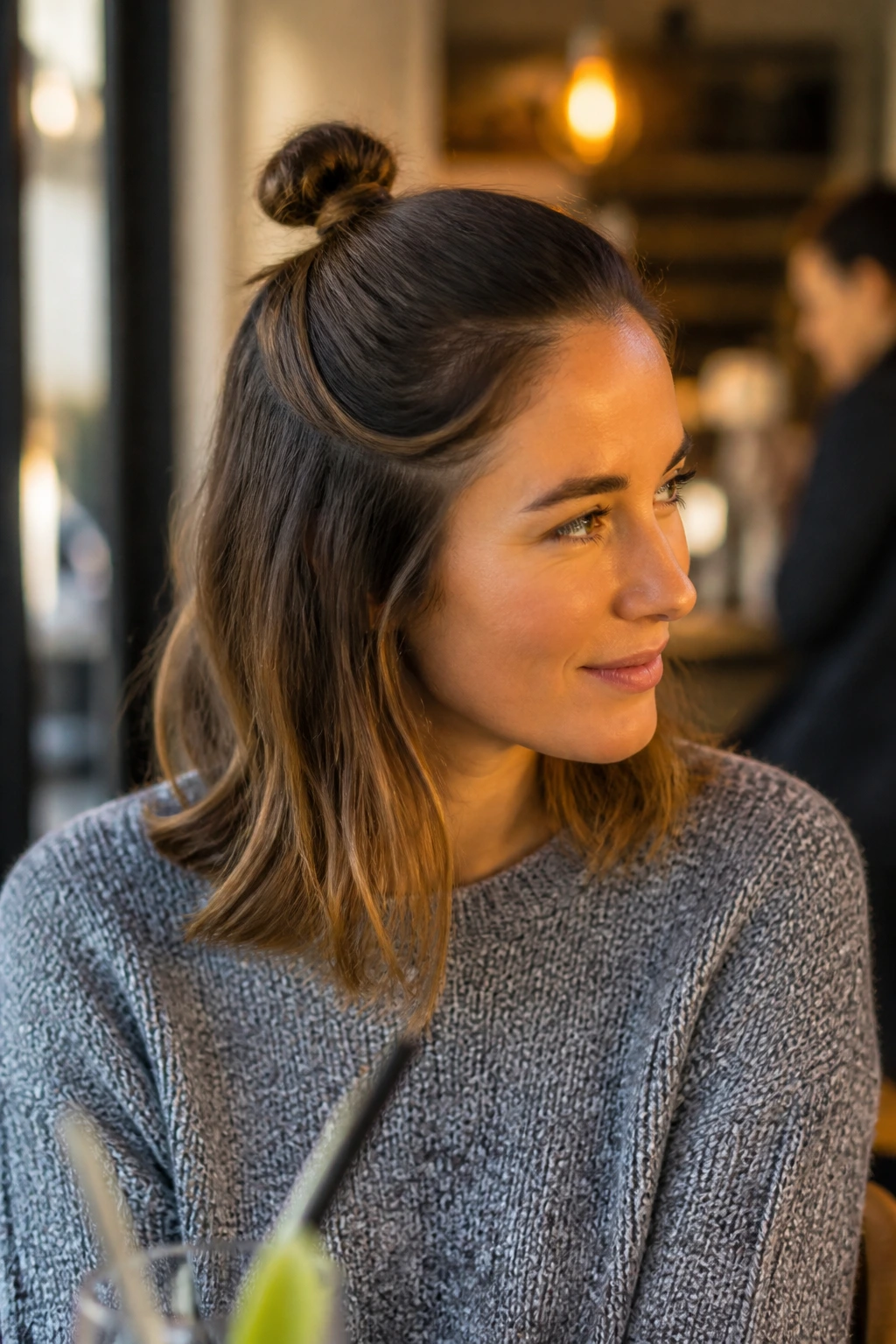
This is the style for the day your hair feels like it wants to hang in your face but you don’t want it all up. Pull back just the top third of the hair, twist it once or twice, and secure a tiny knot at the crown. The rest of the hair stays loose.
Medium-length hair does this well because there’s enough length in the upper layer to make a small knot without needing a lot of pins. The style is fast, and it keeps bangs, layers, and shorter face pieces from falling into your eyes when you lean over a keyboard or scribble on paper.
It’s not the most formal look in the list. That’s fine. It’s useful for casual offices, remote calls, and days when you want the top neat but the ends free.
Keep it from looking messy
Use a small clear elastic under the knot. A loose twist without a base elastic tends to unravel in weird little pieces by lunchtime.
14. Pinned-Back Crown Volume
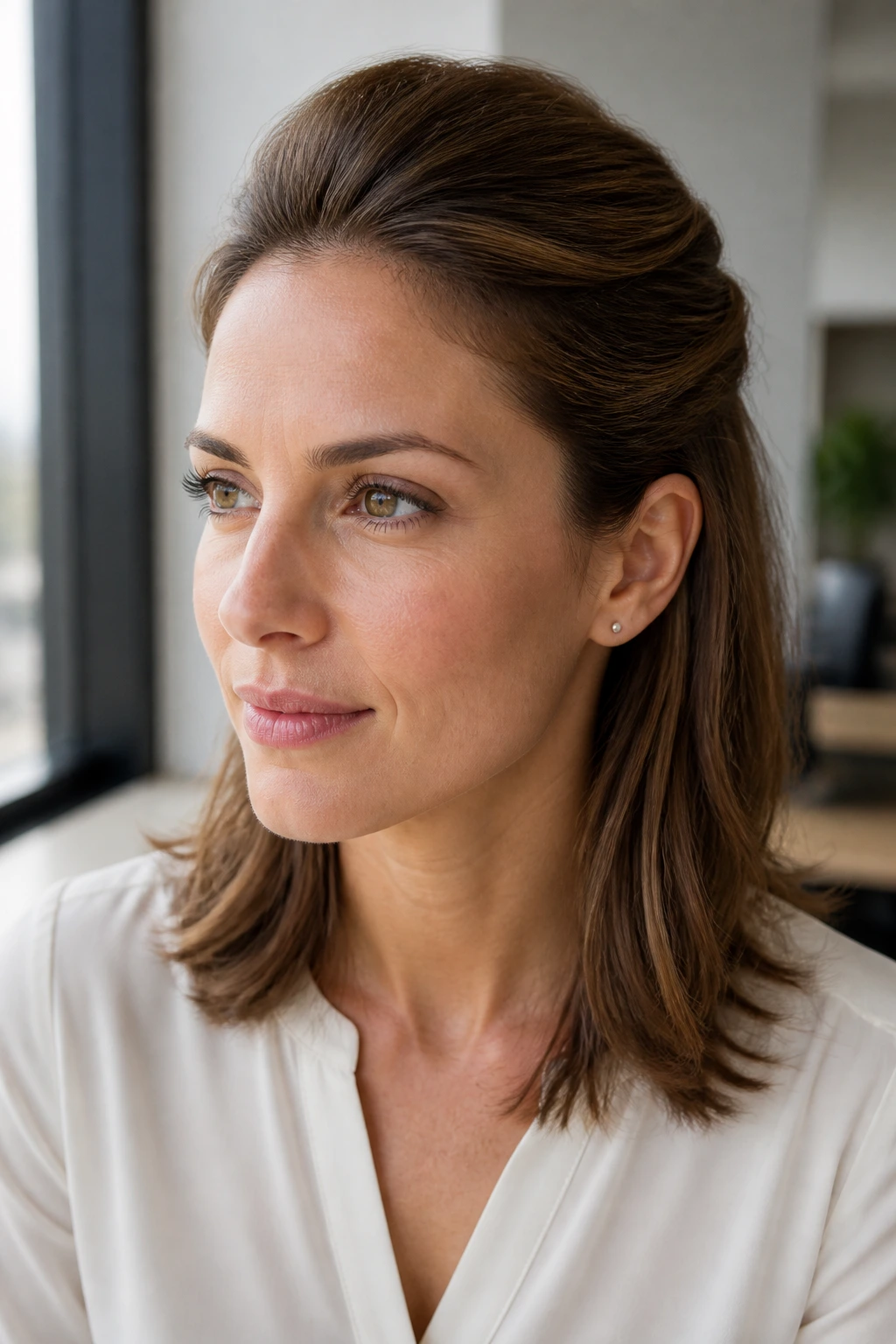
A little height at the crown changes everything. Pinned-back crown volume gives medium hair shape at the top while leaving the lengths down, so you get lift without committing to an updo. It’s a good choice for fine hair that tends to lie flat or for anyone whose cut has grown out a bit and needs structure.
Tease the crown lightly with a tail comb, smooth the top layer over it, and pin back the sides just behind the temples. A barrette can work here too, especially if you want the look to feel slightly more finished. The key is keeping the lift soft rather than poofy.
This style is one of the easiest ways to look awake when you’re not. It opens the face, keeps the front tidy, and doesn’t require heat if your hair already has a bend.
15. French Twist Lite
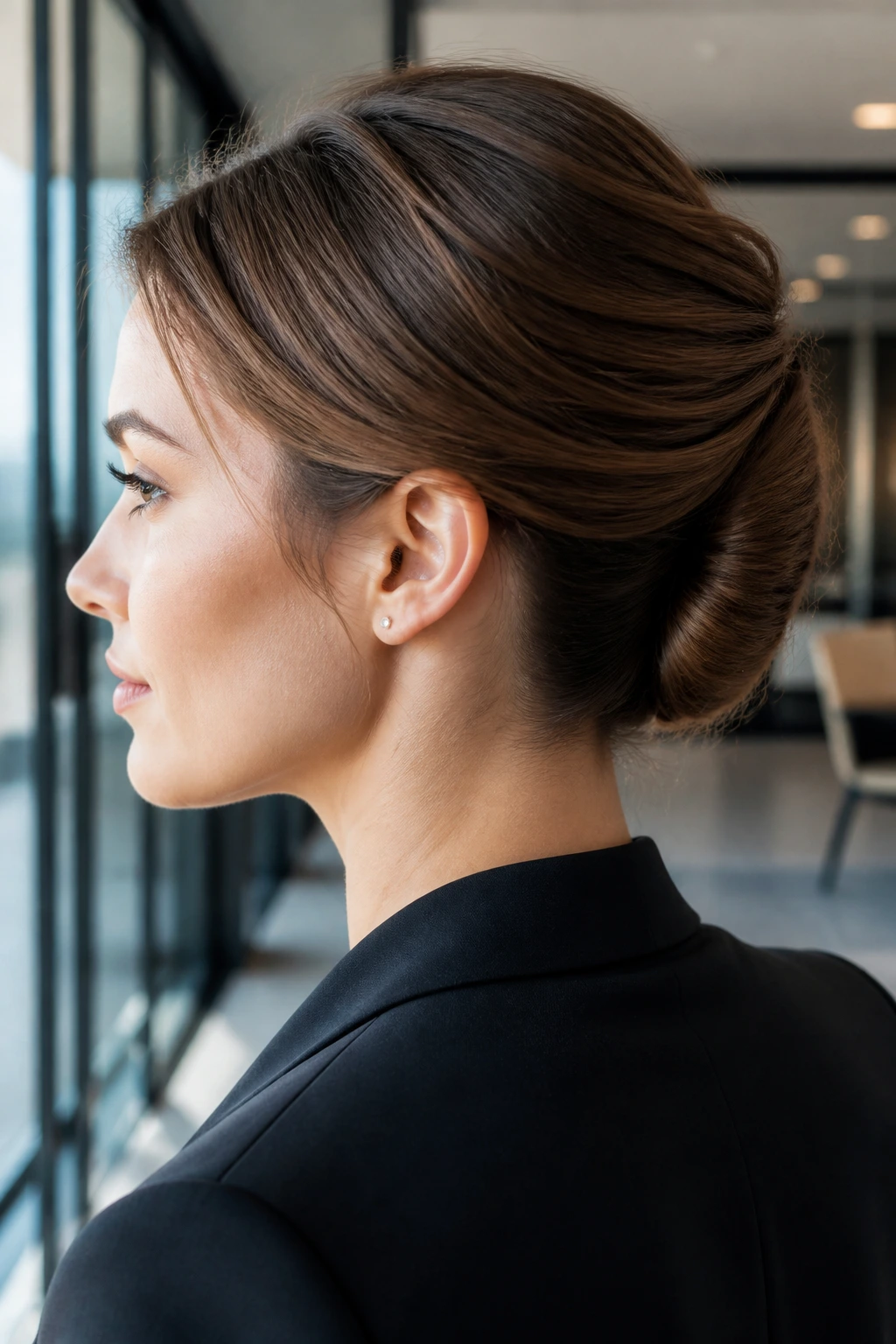
A full French twist can feel intimidating on medium hair, but a lighter version works beautifully when the length is just right. Instead of forcing every strand into a strict vertical roll, you gather the hair low, twist it upward, and pin the ends inside the fold so the shape stays narrow and controlled.
This style reads as dressy without being stiff. That makes it a smart move for interviews, presentations, or days when you want to look a little more put together than your regular bun. Medium-length hair is usually the ideal length for this lighter version because it has enough body to hold the fold without hanging too heavily.
Use texturizing spray first. Smooth hair can be stubborn here. A little grit makes the twist stay where you put it.
16. Headband Tuck with Smooth Ends
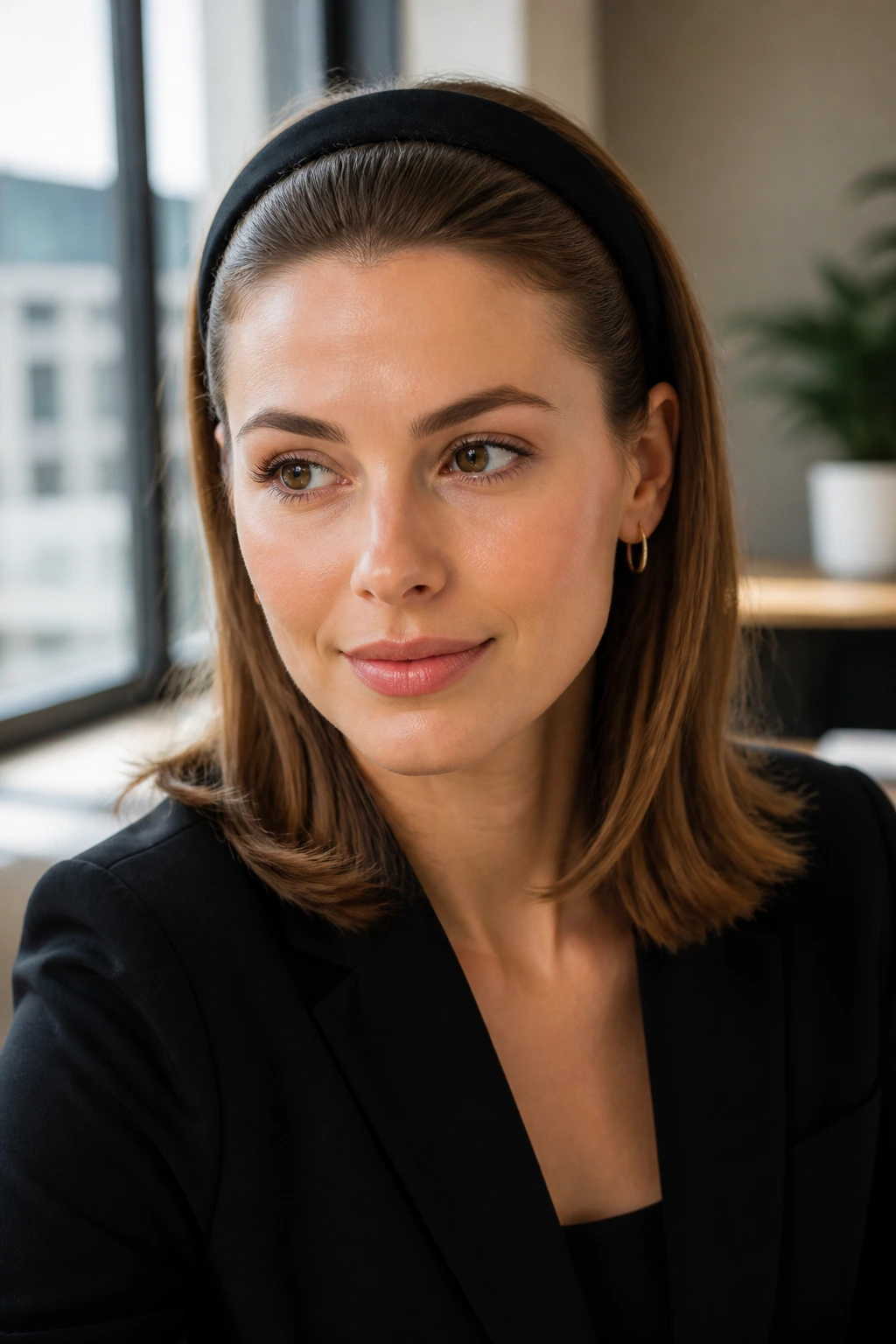
A good headband can save a whole morning. With medium-length hair, a smooth headband tuck keeps the front controlled while letting the ends stay loose or lightly tucked under depending on your length. It’s especially handy on days when the hair around your face is doing its own thing and refusing to behave.
Choose a headband with enough grip that it won’t slide backward after ten minutes. Slide it on, smooth the front sections into place, and tuck the ends behind the band or let them fall neatly over the shoulders. If you want the look to feel less schoolyard and more office-friendly, pick a matte band in black, tortoiseshell, or a color close to your hair.
The style works because it frames the face without asking much from the rest of the hair. Simple. Efficient. No drama.
17. Sleek Straight Length with Ear-Loop Tucks
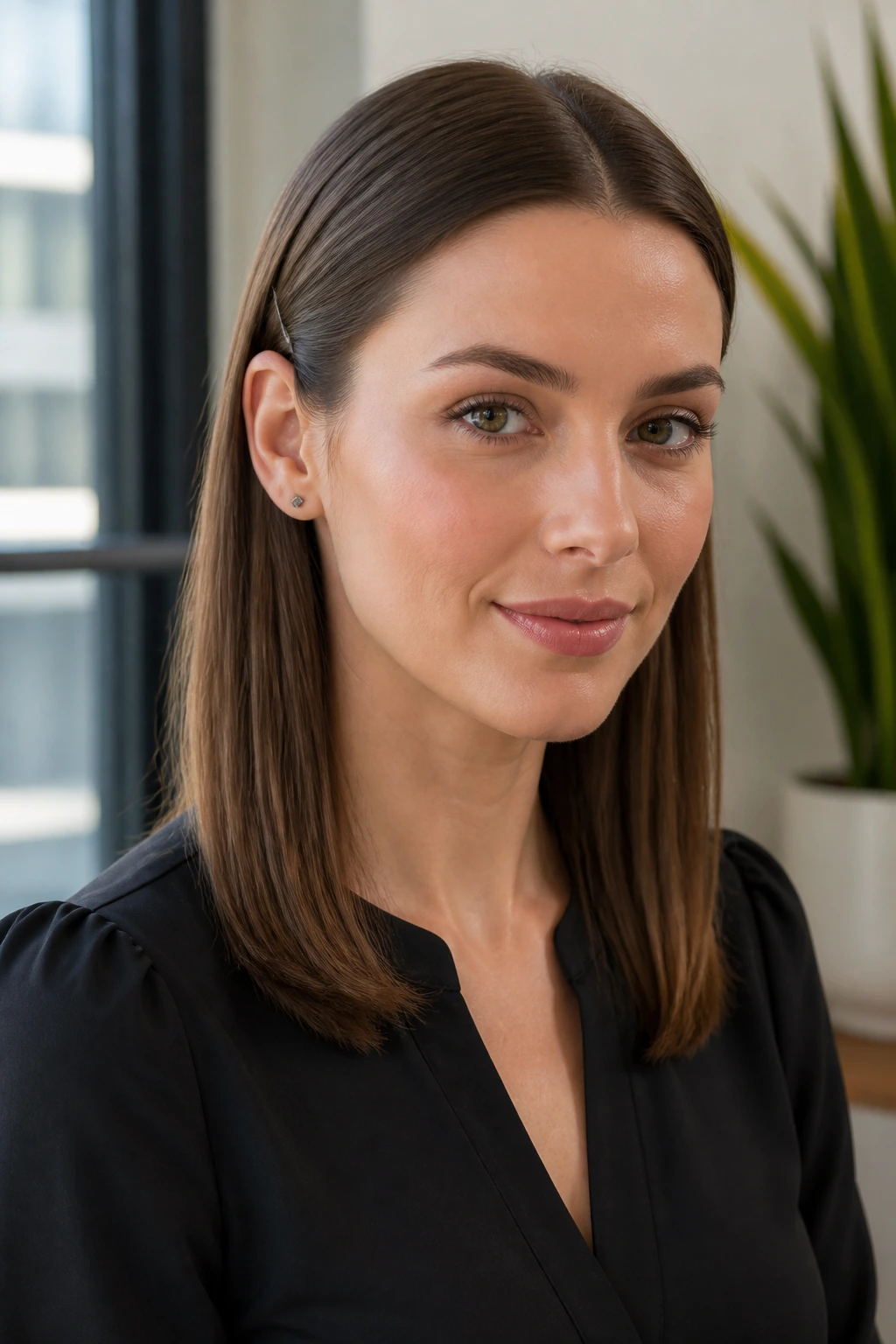
Sometimes the cleanest answer is to keep the hair down and make the front behave. Sleek straight length with ear-loop tucks does exactly that. You straighten the hair, tuck both sides behind the ears, and secure the front pieces with tiny pins or decorative clips placed just above the ear line.
That keeps the face open and the style polished, while still showing off the length you have. It’s especially good for blunt medium cuts, since the sharp line at the ends looks intentional against a simple part and a smooth finish.
If your hair is layered, keep the tucked sections small. Large front pieces tend to pop out and make the whole thing feel unstable. Tiny pins disappear better than most people expect, especially when they match the hair.
18. Side Twists into a Low Knot
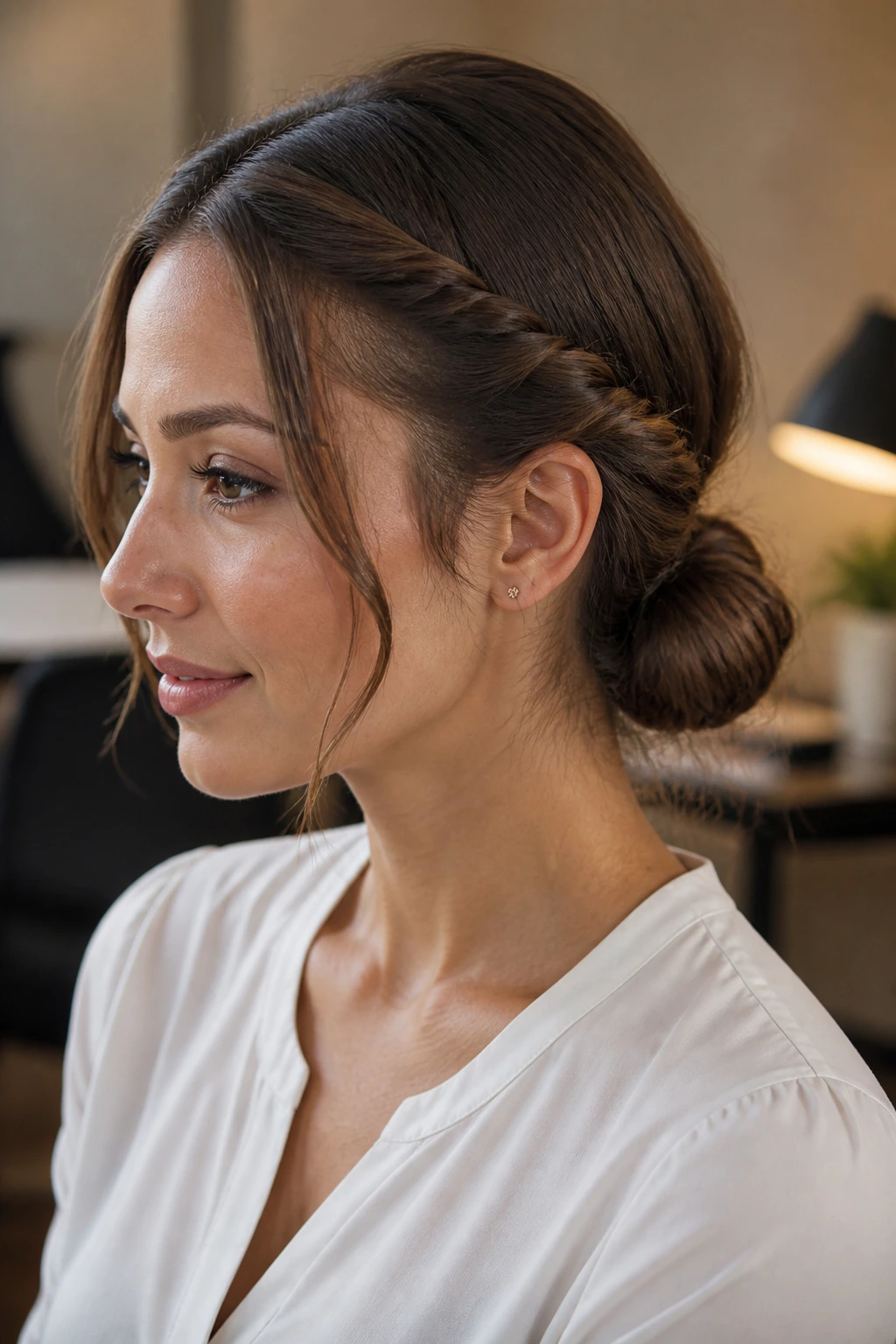
This one gives you detail without needing braid skills. Twist a small section from each temple back toward the nape, join the pieces, and fold the rest of the hair into a low knot. The twists frame the face and keep the top tidy, while the knot at the bottom keeps the length under control.
Medium hair makes this style easy because the twists aren’t too heavy to pin and the knot doesn’t sprawl. It’s a nice compromise for days when a full bun feels too strict and loose hair feels too chaotic. I also like it for hair that’s just a little grown out, because the twists hide uneven layers better than a plain ponytail does.
Use two pins on each side of the twist. One pin almost never feels like enough.
What Makes Work Hairstyles for Medium-Length Hair Hold Up So Well

Medium hair has a practical advantage that gets overlooked. It’s light enough to twist, but not so light that it slides out of every pin you own. That balance gives you more options than a very long cut, which can drag styles down, or a very short cut, which often needs stronger shaping to stay contained.
Layers change the game. A blunt medium cut usually holds sleeker styles better, while layered hair tends to shine in twists, half-up looks, and anything that uses texture as part of the design. Thick hair wants space and a stronger clip. Fine hair wants grip, a little dry shampoo, and less hair at the crown so it doesn’t collapse under its own weight.
The part people skip
Your cut decides a lot.
If your hair hits the collarbone, it can usually do low buns, wrapped ponytails, and twist-based styles with almost no trouble. If it sits closer to the shoulders, you’ll often get better results from half-up styles, tucked looks, and low knots that use the full length without forcing it. That little adjustment saves more bad hair days than any expensive product.
Essential Tools for These Looks
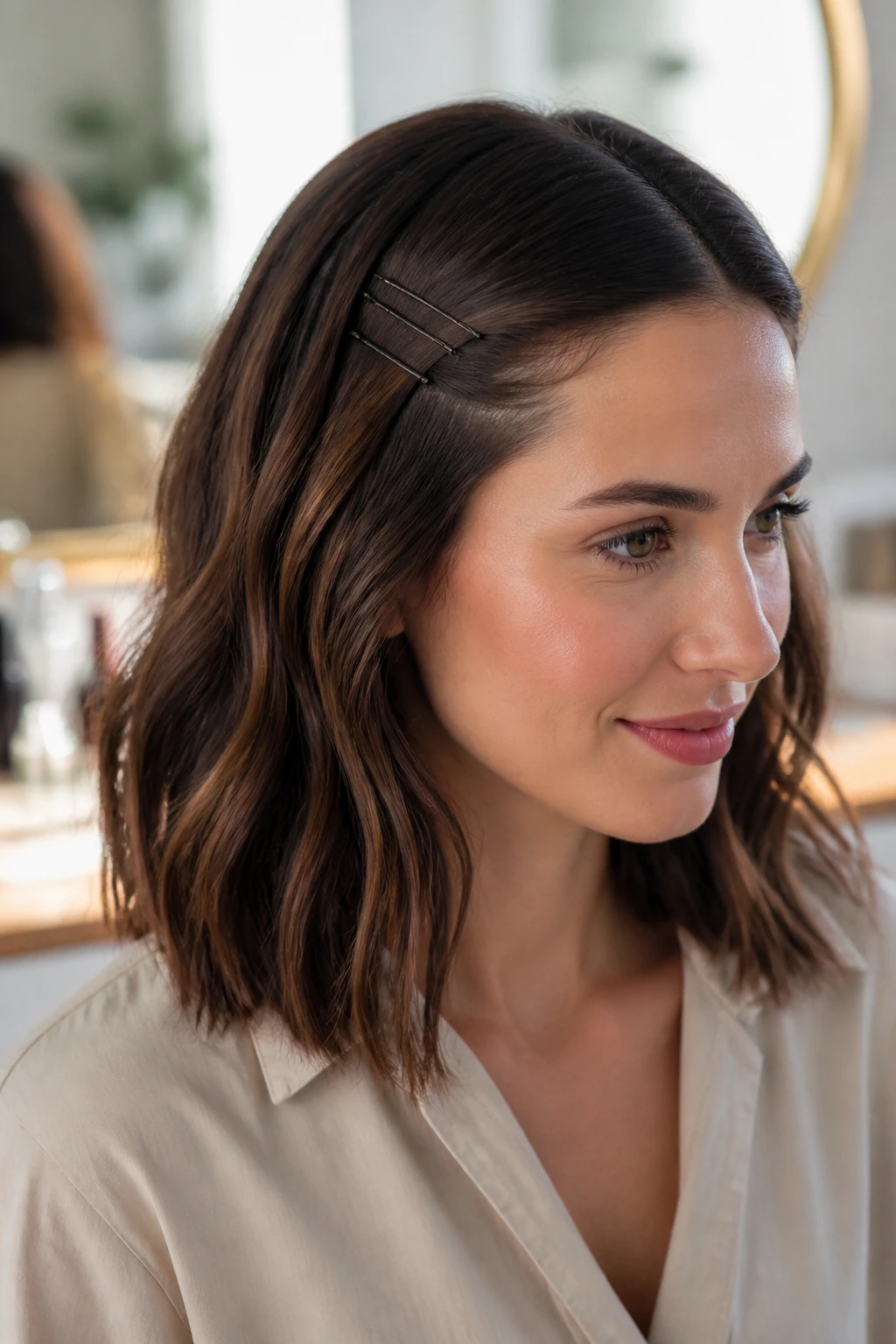
You do not need a drawer full of gadgets, but a few things make these office styles easier.
- Tail comb: Best for clean parts, sectioning, and lifting a little crown volume without wrecking the whole style.
- Boar-bristle or smoothing brush: Good for flattening flyaways and giving ponytails that neat, glossy surface.
- Wide-tooth comb: Helpful on textured or wavy hair when you want to separate curls without pulling them apart.
- Bobby pins in two sizes: Small pins hide better in half-ups; larger ones hold thicker twists and buns.
- Clear elastics or matte hair ties: Clear elastics vanish in wrapped ponytails and braided styles.
- Medium claw clip: The right size clip matters more than the brand name. Too small and it slips; too large and it swallows the shape.
- Dry shampoo: Adds grip at the roots and keeps day-two hair from looking flat.
- Texturizing spray: Gives braids, twists, and buns enough hold to stay put through a commute.
- Light-hold hairspray: A fine mist controls flyaways without turning the style stiff.
- Flat iron or curling wand: Optional, but useful for bent ends, soft waves, and smoother face-framing pieces.
Smart Prep That Saves You Ten Minutes
The easiest work styles usually happen before the styling step even starts. Dry shampoo at the roots gives medium hair something to cling to, and it helps the crown keep shape instead of sinking flat by 11 a.m. If your hair is freshly washed, a little texturizing spray at the mid-lengths does the same thing without making the ends crunchy.
Letting hair cool before you touch it matters more than people want to hear. If you curl, bend, or wave the hair and then pin it while it’s still warm, the shape often loosens faster. Give it a minute. Or five. That tiny pause is the difference between a soft bend and a style that droops before the coffee gets cold.
Three habits that save time
- Keep a small kit in your desk drawer: two bobby pins, one elastic, a travel spray.
- Part your hair the same way most mornings so you’re not fighting it from scratch.
- Choose one “default” style for each hair mood: sleek, loose, or pinned.
How to Keep Your Style Looking Fresh All Day
Most office hairstyles fail in the same places: the crown goes flat, the front pieces start slipping, or the back gets frizzy after a commute. The fix is usually small. A light dry shampoo refresh at lunch can bring the roots back to life without building up too much product. Aim it at the scalp, wait a minute, then brush lightly.
Carry a comb or a folded travel brush if your hair tends to separate around the part. One quick pass is usually enough. If a style uses pins, check the nape after your commute and again after lunch; medium-length hair often loosens there first because that’s where collars and coats rub against it.
Maintenance by style
- Sleek buns and ponytails: Smooth the top once more around midday with clean hands and a drop of serum on the ends.
- Braids and twists: Tug the outer edges gently if they flatten, then add one pin where the structure started to loosen.
- Loose down styles: Re-bend the front pieces with your fingers and tuck them behind the ear again instead of redoing everything.
Common Mistakes That Make Work Hair Fall Apart
The biggest mistake is choosing a style that fights your cut. If your layers are heavy and you try to force a strict slick bun, pieces will pop free. If your hair is blunt and dense, a tiny half-up knot may feel too small to hold the length. Match the style to the haircut, not to the photo you saved somewhere three months ago.
Too much product causes trouble fast. Heavy creams at the roots flatten medium hair and make pins slide. Oils belong on the ends, not the crown. Same with hairspray: one light mist is useful. Three dense coats turn the hair stiff, which can make the style crack when you move.
Tightness is another problem. A style that starts with a headache rarely looks better later. If your scalp feels pulled at the temples, loosen the front a little and pin the structure farther back.
And then there’s the clip problem. Using the wrong size claw clip is a disaster waiting to happen. Too small, and the twist slips out. Too big, and it sits like a plastic claw on top of the hair instead of holding anything.
Easy Variations for Different Dress Codes
The Sharp Office Edit: Keep the hair sleek, the part straight, and the flyaways under control. This version leans into wrapped ponytails, low knots, and tucked styles, and it’s the one I’d pick for interviews or formal meetings. The lines stay clean. The finish stays calm.
The Relaxed Desk Day Version: Loosen the front a little, leave a few face-framing pieces out, and use softer texture at the crown. Half-up twists, claw-clip styles, and side-part waves fit here. The hair still looks deliberate, but it doesn’t feel overdone.
The Heat-Free Morning: Braids, twists, side tucks, and low buns do most of the work here. Start with damp-dried hair or day-two texture, add dry shampoo, and let the shape come from pins and elastics rather than hot tools. It’s a smart choice when your cut already has a little wave or bend.
The Fine-Hair Fix: Use smaller sections and less hair in each twist so the style doesn’t collapse under its own weight. Pinned-back crown volume, a wrapped ponytail, and a low knot with hidden pins usually give the best lift. Heavy claws and giant buns tend to overwhelm fine medium hair.
The Thick-Hair Control Plan: Use stronger pins, one extra elastic, and styles that break the hair into sections. French braids into ponytails, rope braids, and low buns hold better than loose, airy styles. Thick medium hair can look beautiful at work, but it usually needs a firmer grip.
Frequently Asked Questions
Which work hairstyle lasts the longest on medium-length hair?
Low buns, wrapped ponytails, and French braids into ponytails usually last the longest because they anchor the hair close to the head. If your hair is very smooth, add dry shampoo or texturizing spray first so the style has something to hold onto.
What if my hair is freshly washed and too slippery?
That’s when a little grit helps most. Use dry shampoo at the roots and a light mist of texturizing spray through the mid-lengths, then wait a minute before styling. Freshly washed hair often needs more pins than day-two hair.
Can layered medium hair still do buns and ponytails?
Yes, but the layers need help. Use a wrapped base, crossed pins, or a braided section to catch the shorter pieces so they don’t fall out around your neck. A slightly looser, softer finish usually works better than a tight, severe one.
Are claw clips professional enough for work?
In the right size and color, they can be. A matte black or tortoiseshell claw clip looks far more office-friendly than a neon one, and a neat twist reads cleaner than a loose pile of hair. The clip itself isn’t the problem; the shape is.
How do I keep bobby pins from sliding out?
Insert them with the wavy side facing the scalp and push them into the direction of the style’s tension, not against it. A little dry shampoo or texture spray before pinning helps too. If a pin still slips, the section is probably too silky or too thick for that one pin.
What’s the fastest style if I only have five minutes?
The wrapped low ponytail is hard to beat. A low knot and a soft claw-clip twist are close behind. Both take a little less precision than braids and still look like you meant to do something with your hair.
Can I make these styles work with curly or wavy medium hair?
Absolutely. In fact, twists, low buns, and half-up styles often hold better on textured hair because the strands grip each other. The trick is to decide whether you want to smooth the texture down or let it stay visible, then use pins that match that choice.
How do I keep a style from flattening after my commute?
Touch up the crown with a small lift of your fingers, not a full brush-through. If the front has gone limp, mist the roots lightly with dry shampoo and flip your part back into place. You usually do not need to rebuild the whole style.
Desk-Ready Hair, No Drama
Medium-length hair gives you more room to work with than people expect, and less to fight than long hair brings to the table. That’s why these styles matter. They don’t ask for a perfect blowout or a bathroom full of products. They ask for the right twist, the right pin, and a little honesty about what your cut can actually do.
Pick three. That’s the real win. One sleek option for formal days, one soft down style for regular office hours, and one fast updo for the mornings that run away from you before you’ve had a sip of coffee. Once you know which ones your hair holds best, work mornings get easier in a very ordinary, very useful way.
