



Hair that lands around the collarbone has a useful trick: it gives glasses room to breathe. The frames stay visible, the temples don’t disappear into a wall of hair, and your face gets shape without getting crowded. That’s why shoulder length hairstyles for women who wear glasses often look more intentional than hair that goes much longer or sits much shorter.
The sweet spot is real. Shoulder-length hair can skim the jaw, curve under a chin, tuck behind the ears, or fall into soft waves that stop just where your frames begin. If you’ve ever had your hair fight with your glasses—fringe in the lenses, bulk at the temples, flat roots on top—you already know the problem. The right cut solves it before you even pick up a brush.
And the best part? You do not need one “perfect” style. Some frames want blunt ends. Some want movement near the cheekbones. Some need a fringe that stops above the brow, while others look best with a side part and a little lift at the crown. The details matter here, and the details are where the good hair days live.
Why These Styles Work With Glasses
Frame space matters: Shoulder-length hair keeps the sides open enough that your glasses don’t get buried, especially if you wear thicker acetate frames.
Balance is the whole game: A cut that hits near the collarbone can soften strong frames or give structure to thin wire ones without making your face look boxed in.
You can control the temple zone: With the right layers, the area around your ears stays light instead of puffing out against the arms of the glasses.
The styles are adjustable: Most of these looks can be air-dried, blown smooth, or rough-dried with texture, which means you can change the mood without changing the cut.
They age well between trims: Shoulder-length hair grows out cleanly. That matters when you wear glasses every day, because awkward in-between lengths are the fastest way to make a cute cut look fussy.
1. The Clean Blunt Lob
A blunt lob is the haircut version of a well-made white shirt. Crisp. Simple. No nonsense. When it stops right at the collarbone or just above it, the line of the hair looks neat next to glasses, especially rectangular or cat-eye frames that already bring strong shape to the face.
The reason this works so well is the contrast. Glasses draw a hard line across the eyes, and a blunt edge below the chin gives the rest of the face a clean finish. There’s no frizzed-out layering near the temples, no extra puff to fight with the arms of the frames. If your hair is fine, this cut also gives the illusion of density because the ends stay full.
I like this style most with a center part and a flat iron pass that bends the ends under by half an inch. Not curled. Just turned. That tiny movement keeps the style from looking severe.
If you want one haircut that can go from office-sharp to weekend easy with almost no drama, this is the one I’d put at the top of the stack.
2. Curtain Bangs and Floating Layers
Can bangs and glasses live in the same zip code without a fight? Yes, if the fringe is soft enough and the layers are placed with some thought. Curtain bangs are the most forgiving option because they part around the center and move away from the lenses instead of slamming straight into them.
The best version starts with bangs that graze the brow but don’t sit in it. Anything too short tends to look choppy with glasses, and anything too heavy can press into the frame line. Keep the shortest point around the bridge of the nose, then let the sides sweep out past the cheekbones. The rest of the haircut can stay shoulder length with airy, slide-cut layers.
Why It Stays Friendly to Frames
The fringe creates a soft frame inside the frame, which sounds fussy until you see it in the mirror. It isn’t. It just gives the eyes a little softness and keeps the forehead from feeling bare.
Ask for the longest face-framing pieces to land around the mouth or just under the cheekbone. That keeps the front light, and light is what glasses like. Heavy front pieces make the whole style feel crowded.
3. The Wavy Side-Part Lob
A deep side part changes everything. It gives shoulder-length hair a little lift at the crown, and that lift keeps the top of the face from getting visually pinned down by glasses. The shape is especially nice with round or oval frames, which already soften the face.
The styling is simple enough to live with. Add a bend with a 1-inch curling iron, leave the ends a little straighter than the mid-lengths, then rake the waves apart with your fingers. That mix of polish and slack keeps the style from looking too formal. You want movement, not pageant hair.
Best frame matches:
- Round frames, because the side part adds angular balance.
- Thin metal frames, because the waves give the hair enough presence to hold its own.
- Oversized frames, if the wave is loose and not too fluffy.
Watch the volume: If you pile too much wave near the temples, the glasses start to feel buried. Keep the bigger bend from the cheekbone down.
4. The Airy Shoulder Shag
A shag can go wrong fast when it’s too chopped or too dry at the ends. A good shoulder-length shag, though, has just enough mess to look modern without turning into a triangle. For glasses wearers, that matters. You need movement around the eyes and cheeks, not a helmet of texture.
This cut works because the layers break up the width around the sides of the face. The top stays a little softer, the ends stay feathered, and the fringe—if you wear one—can live as a wispy curtain or bottleneck shape. With glasses, a dense fringe can feel like too much fabric in a small room. A shag with air in it fixes that.
I’d choose this style if your hair has some natural wave or if you don’t mind using a diffuser. The texture gives the cut its personality. Without it, the whole thing can collapse. That’s the catch. But when it’s done well, it gives off that easy, slightly undone look that lets frames stay visible instead of fighting for attention.
5. The Tucked-Behind-the-Ears Straight Cut
Here’s the quiet winner for people who wear glasses every day: a straight shoulder cut that looks good when tucked behind the ears. It sounds plain. It isn’t. The magic is in how it opens the face and lets the frames become part of the style instead of an interruption.
The ends should hit right at the shoulders or just below them, with enough weight to lie flat. No bulky layers at the temples. No chopped front pieces that keep springing out and poking the frame arms. When the hair is smooth, the glasses sit cleanly on top of the look, almost like they were planned together.
If you have straight or slightly wavy hair, this is a low-drama option that still looks polished. A small bend at the ends—nothing fancy—keeps it from feeling severe. And if your hair tends to puff out around the ears, a smoothing cream the size of a pea on damp hair helps more than people expect.
6. Soft Curls With Face-Framing Pieces
What if your hair wants more shape than a straight cut can give? Go with soft curls and keep the front pieces intentional. This style is especially good for women who wear glasses because the curls create body below the frame line while the front stays light enough to show the frames off.
The trick is not to curl every strand into the same size ringlet. That usually looks too set. Use a 1-inch barrel or a brush dryer, then leave the mid-lengths a bit looser than the ends. The face-framing pieces should start around the cheekbone and melt into the shoulder length, not stop bluntly at the jaw.
This one flatters most frame shapes, but it really shines with oval or softly squared glasses. The curls echo the curves without turning the whole face into a blur of softness.
My favorite detail: leave the ends around the temples less polished than the rest. A little irregularity there keeps the style from bunching around the glasses.
7. Flipped-Out Collarbone Ends
The flipped-out end is having a lovely practical moment, and I’m glad it is. When shoulder-length hair kicks outward just a little at the ends, it keeps the line away from the neck and lets glasses remain the obvious focal point. That tiny flip adds lift without stealing the show.
The move is easy. Blow-dry with a round brush, then flick the last inch or so outward with a flat iron or a medium barrel brush. You do not want a big retro flip unless you love that look. A small, clean curve is enough. It keeps the shape lively and prevents the hair from hugging the face too closely.
This style is especially good if your frames are large or heavy. Straight hair can sometimes make those frames look more severe. A soft outward turn gives the whole face a little motion, like the style is exhaling.
8. Bottleneck Bangs and a Feathered Lob

Bottleneck bangs sit in that useful middle ground between curtain bangs and a full fringe. Shorter in the center, longer at the sides. For glasses, that shape is gold if you want fringe without constant lens contact.
Pair them with a feathered lob and the whole look starts to move. The layers should be soft enough that they don’t balloon at the cheeks. Think of the haircut as a loose outline, not a stacked shape. The bangs can brush the top edge of the frames without swallowing them.
What Makes It Different
The fringe draws attention to the eyes, but the feathered sides keep the haircut from looking boxed in. With thick frames, this balance matters even more because the frames already add weight near the center of the face.
If your hair is dense, ask for internal debulking rather than heavy exterior layers. That keeps the cut from puffing out around the temple area and lets the glasses sit in a cleaner pocket of space.
9. The Deep Side Part With Crown Volume

A deep side part changes the whole mood of shoulder-length hair. It lifts one side, softens the other, and gives glasses a little stage instead of letting them sit flat against the face. This is one of my favorite tricks when the haircut itself is simple but the hair needs more life.
You can wear it with straight hair, loose waves, or a brushed-out bend. What matters is the root lift at the part. Clip the top section while it cools after blow-drying, or use a round brush to direct the hair away from the face. The volume should sit at the crown, not at the temples. That’s the useful part.
This style plays especially well with rectangular and square frames because the side part softens all those straight lines. It also helps if your hair tends to lie close to the head and make your glasses look heavier than they are.
10. The Half-Up Knot With Loose Tendrils

If you like hair off your face but don’t want a full updo, the half-up knot is the move. It clears the top of the cheeks, gives the glasses room, and keeps the back length visible so the haircut still reads as shoulder-length.
The best version is a small knot, not a tight topknot. Pull only the crown section back, twist it once or twice, and pin it loosely. Leave two pieces out near the ears, and let a couple of front tendrils fall toward the frames. Those loose bits soften the edges of glasses that might otherwise feel a little hard.
This works for busy days, but it also works when you want the hair to look deliberate with very little effort. If your frames are thick, keep the knot low and slightly messy. If your frames are thin, you can pull the knot a bit tighter and still keep the balance.
11. The Low Ponytail With a Lifted Crown
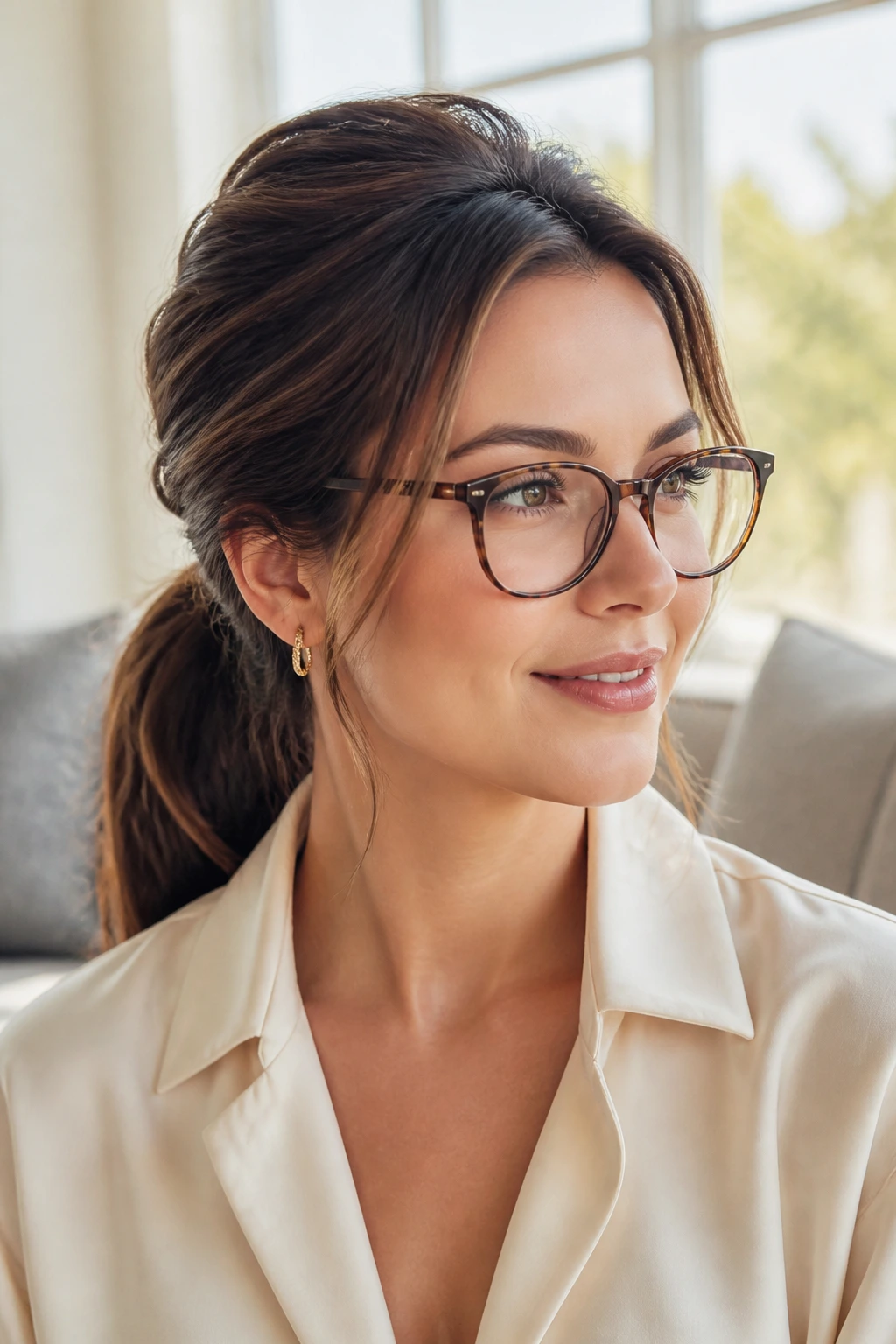
A low ponytail is not boring when the crown has shape. In fact, for glasses wearers, it can be one of the cleanest ways to keep the face open while still showing enough length to feel styled. The key is to avoid slicking everything flat.
Start with a little root lift at the crown, then gather the hair low at the nape. Don’t yank it tight across the temples. That pulls the frame arms into the scalp and leaves marks behind the ears. Instead, keep the sides softly brushed back and let a few fine strands fall free if the finish starts to look too severe.
This style works especially well on hair that sits at the shoulders because the ponytail still feels substantial. On longer hair, the look can drift into standard territory. At shoulder length, it stays neat and light.
12. The Modern Wolf Cut at the Collarbone
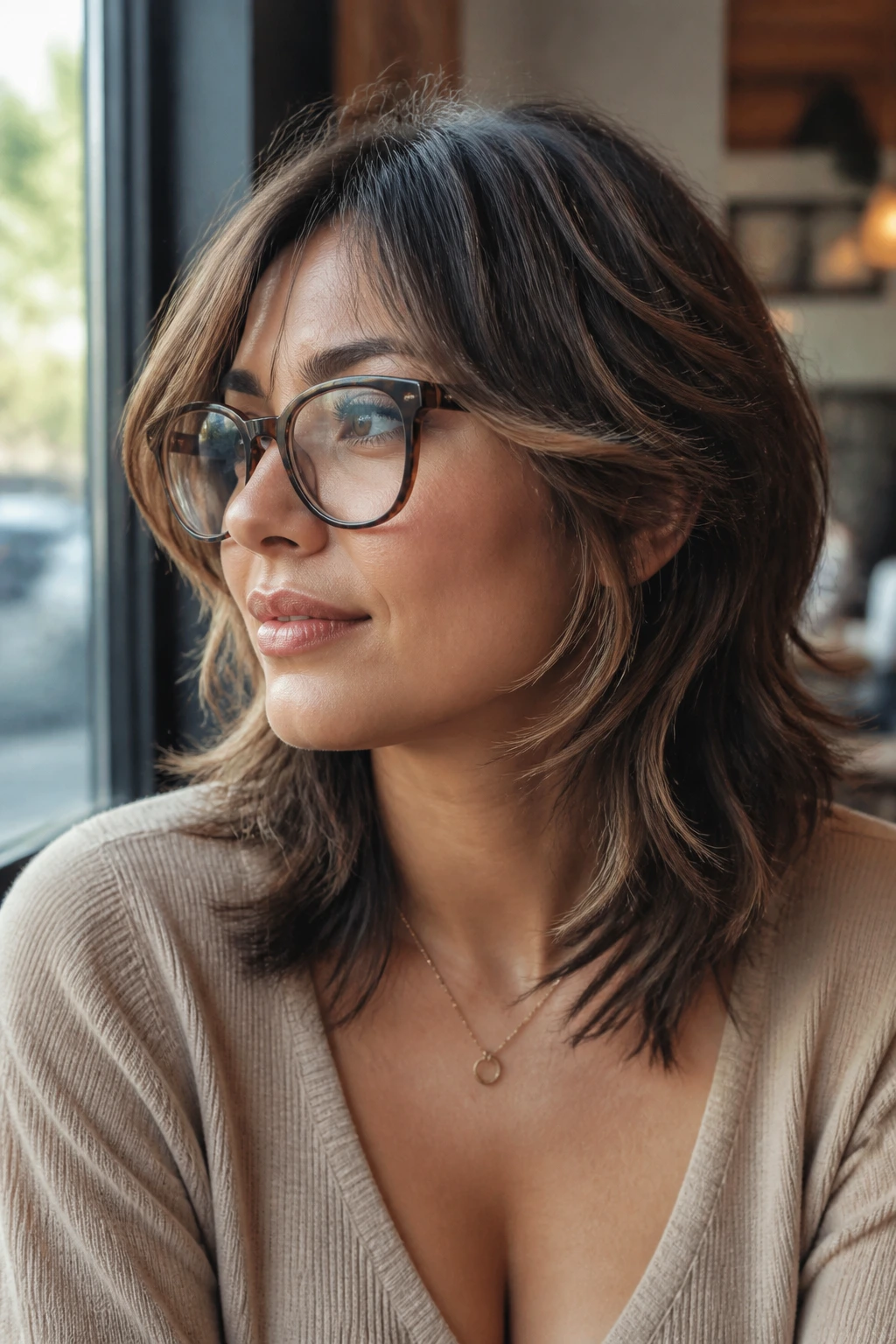
A collarbone wolf cut is not for someone who wants tidy. It is for someone who wants edge, motion, and a haircut that can take a little sweat, a little mess, and still look like it meant to happen. With glasses, the shape can be fantastic because it lifts weight away from the cheeks and keeps the top softer.
The layers should be broken up, not hacked. That distinction matters. You want the hair to feel feathered around the crown and longer through the ends so the glasses don’t fight a blunt wall of hair. The fringe can be cheekbone length or longer, depending on how much face you want to open.
Why it works: the wolf cut creates internal movement, which keeps the sides from looking puffy under frames. If your face is round or heart-shaped, that vertical movement can be useful. If your hair is very fine, though, you’ll want to be careful. Too many short layers can make the ends look wispy and thin.
13. The Full Fringe With a Sleek Shoulder Cut
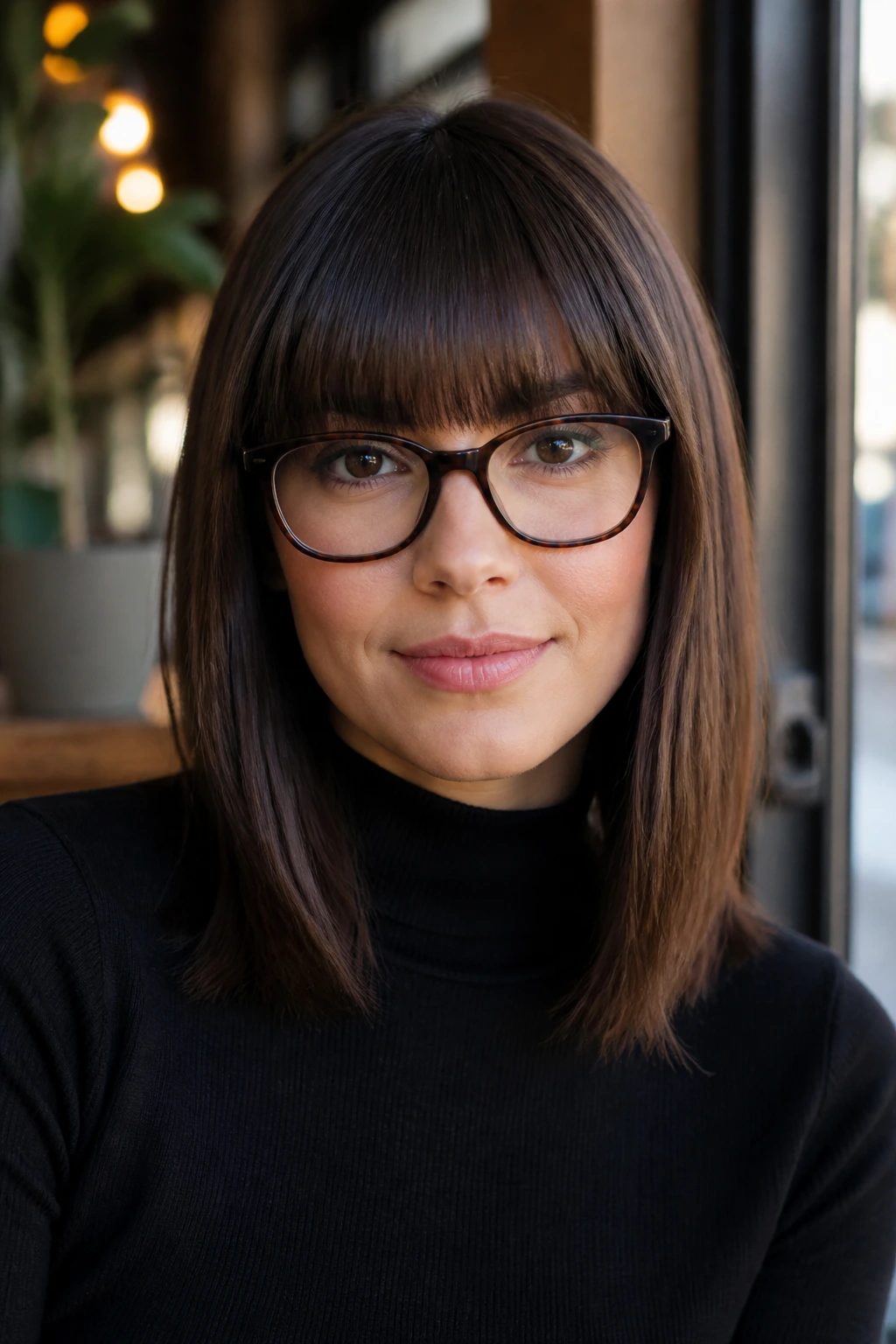
A full fringe and glasses can get messy fast, but not if the fringe is cut with restraint. The sweet spot is a brow-skimming bang that stops just above the frames or brushes them lightly. Anything shorter starts to feel abrupt, and anything too thick makes the whole face disappear behind hair and lenses.
Keep the rest of the cut sleek and shoulder length. That contrast keeps the fringe from turning into the whole story. Smooth ends, clean lines, and a bit of shine are what make this version work. The fringe gets the attention; the rest of the hair stays quiet.
This is a strong choice for women with straight hair and medium to thick frames. It also suits people who like a little drama in the front but don’t want all-over volume. You will need trims more often than with other styles. Bangs are needy. That’s the truth.
14. The Rounded Blowout Layers
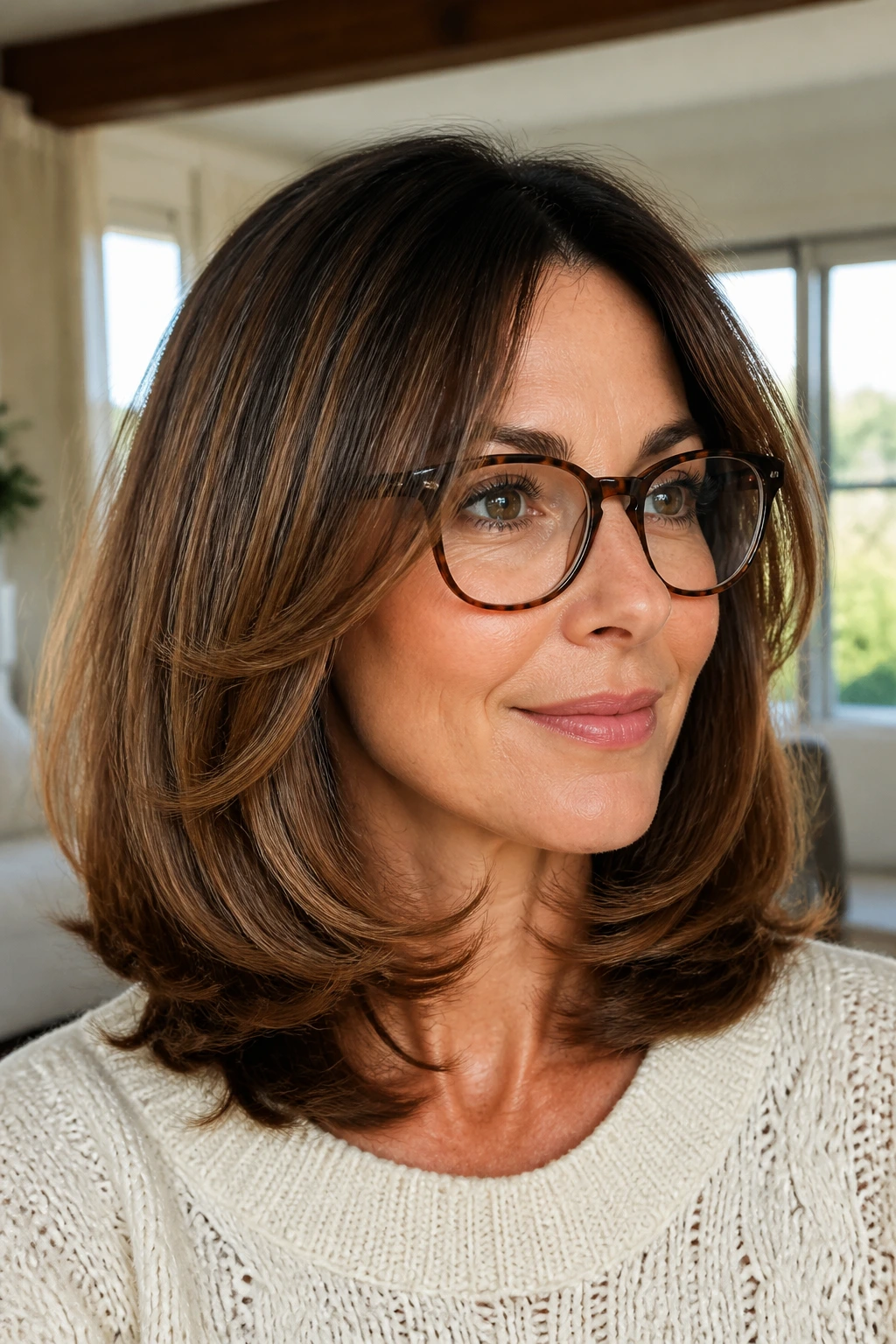
If you like hair that feels bouncy without looking over-styled, rounded blowout layers are a solid pick. The shape curves under the chin and away from the temples, which keeps the glasses from getting swallowed by the cut. There’s a reason this style keeps showing up on shoulder-length hair: it gives shape where you can see it.
The blowout should start with root lift, then move into smooth, round ends. A 1.25-inch round brush and a dryer nozzle make a difference here. Don’t rush the front sections. Those are the ones that sit closest to the frames and need the most care. If you rush them, the hair buckles around the glasses and loses that clean curve.
This style is especially flattering if your face needs a little softness near the jaw. The rounded layers create that without looking fluffy. Big difference.
15. The Braided Crown With Loose Ends
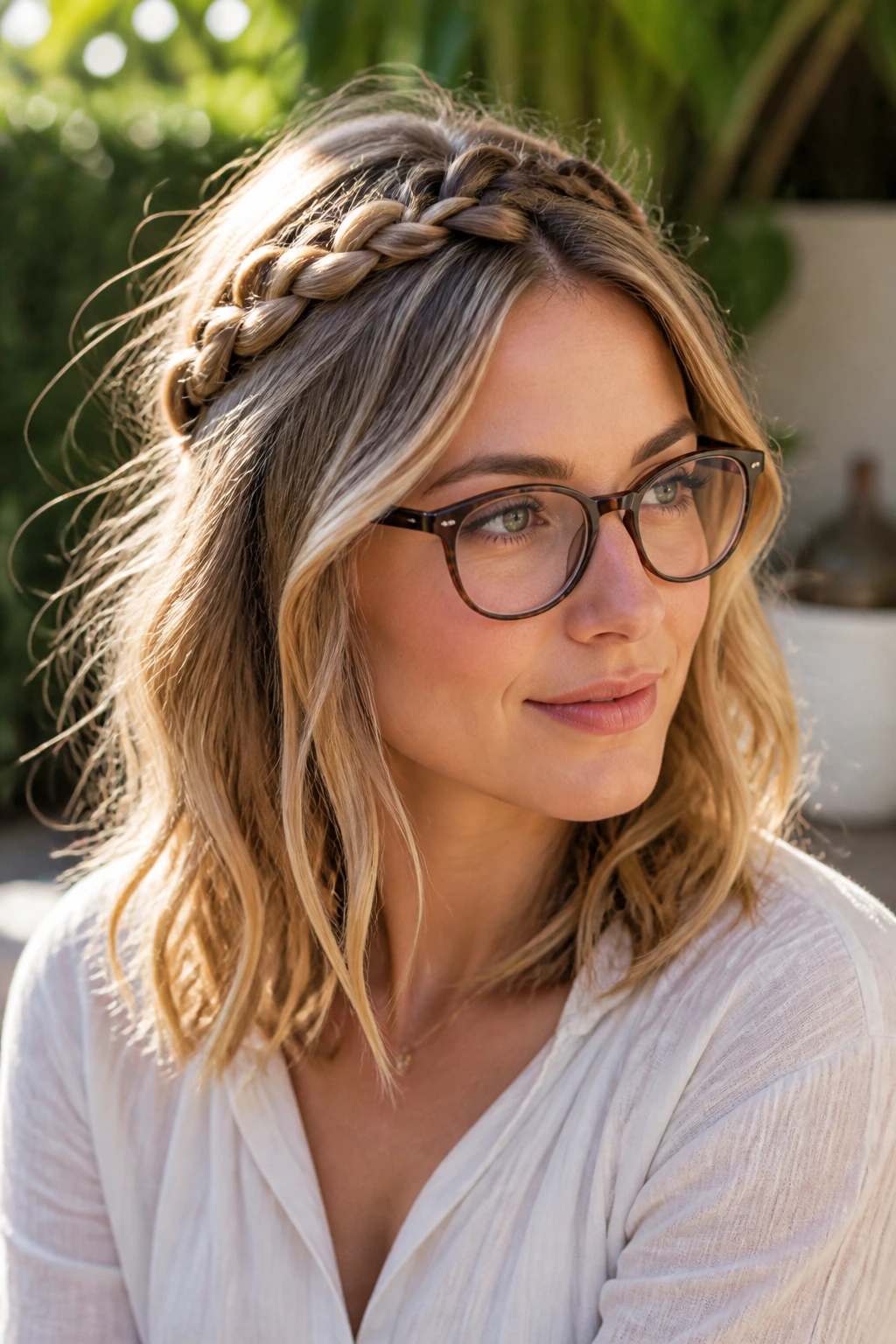
What if you want the hair mostly back but still want the length to show? A braided crown with loose ends does that neatly. The braid pulls the front hair away from the glasses, which is useful on warm days, busy days, or days when your hair keeps falling into your face for no good reason.
Keep the braid loose enough that it doesn’t flatten the top of the head. If it’s too tight, the style can look severe and pull attention straight to the frame line. A soft braid across one side or a small crown braid that feeds into the rest of the hair usually looks better on shoulder-length cuts than a full, tight wrap.
The loose ends matter. Let them wave a bit, or wrap only the front section and leave the back hanging. That keeps the hairstyle from reading too formal.
16. The Side-Swept Fringe and Light Texture
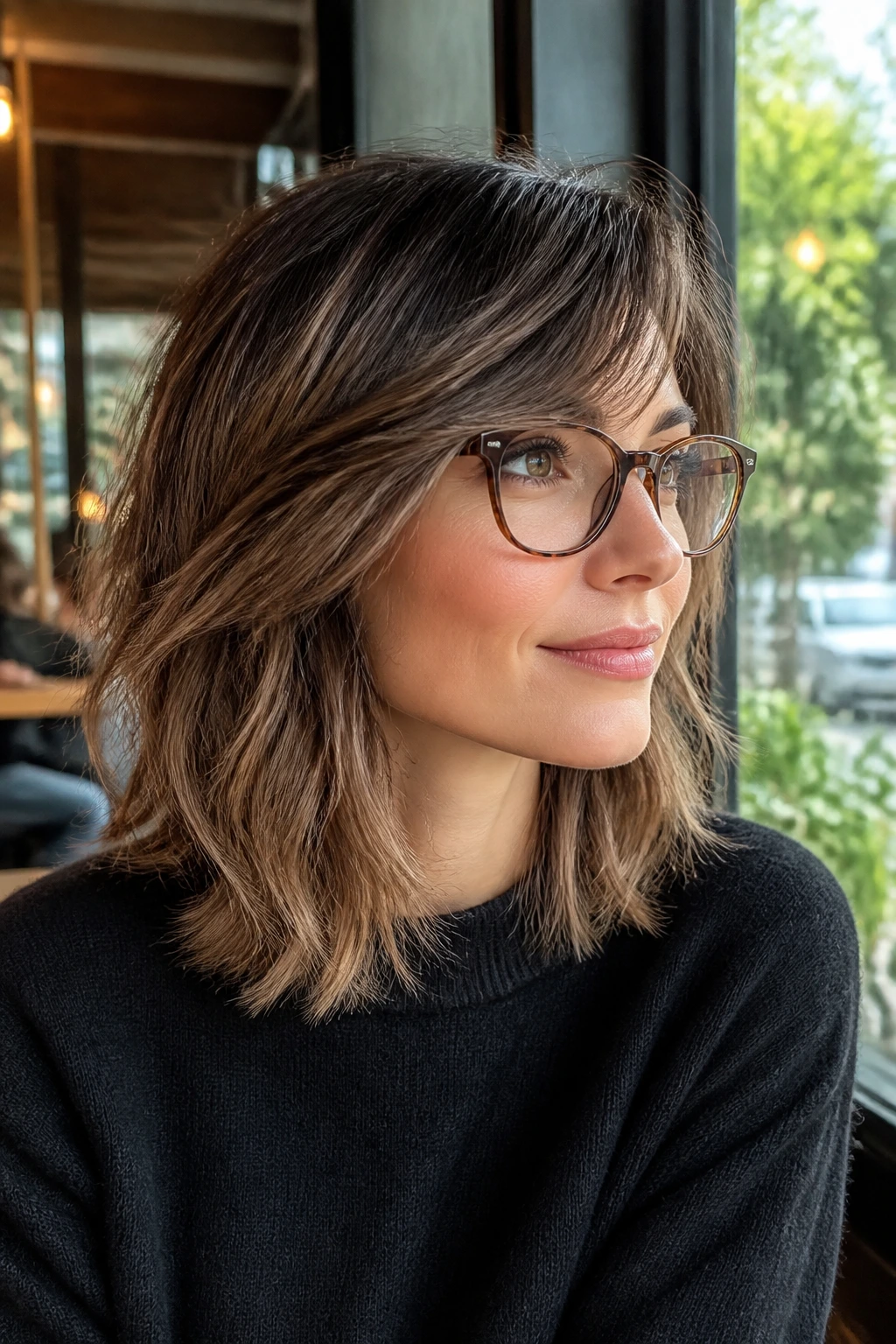
A side-swept fringe is one of the easier ways to soften glasses without committing to a full bang. It opens one side of the face, helps the frames feel less square, and gives shoulder-length hair a slightly romantic shape without becoming fussy.
The fringe should be long enough to move away from the eyes. Short side bangs tend to stick to the frame arm and get annoying fast. Keep the texture light through the rest of the cut, with loose bends or soft layers through the mid-lengths. You want the fringe to feel like part of the haircut, not a separate event.
This style does especially well with oval, round, or geometric frames. The diagonal line of the fringe adds motion and keeps the face from looking too symmetrical. If you have a strong jaw or broad forehead, that diagonal can be a nice little fix.
17. The Polished Clip Twist
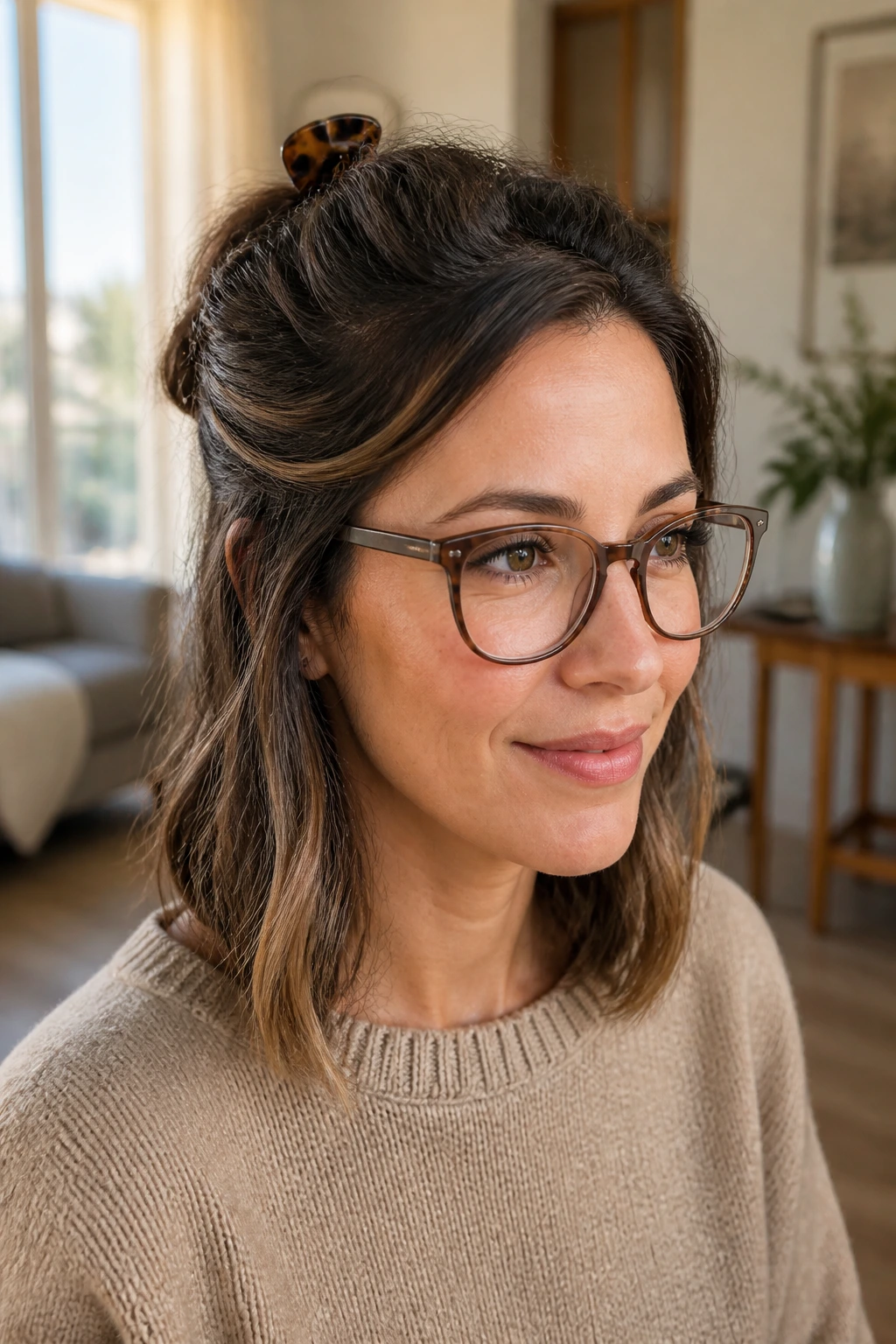
Some days call for a style that gets your hair off your glasses in ten seconds and still looks finished enough to leave the house. A polished clip twist does that job. It works because the sides are gathered away from the temple area, which keeps the frames clean and visible.
Twist the hair back at the sides, lift it slightly at the crown, and secure it with a medium clip. Don’t pinch it too tight. A little looseness at the top keeps the style from looking severe. The shoulder-length ends can be tucked into the clip or left to spill out underneath, depending on how neat you want the finish.
This is one of those styles that looks better if the hair has some texture. Freshly washed, slippery hair can be hard to clip. Day-two hair usually behaves better and gives the twist more grip.
18. Soft Waves With Invisible Layers

You know those styles that look almost simple until you notice how well they sit? This is one of them. Soft waves with invisible layers keep the silhouette smooth, but the internal cut removes enough weight that the hair doesn’t balloon around the glasses.
The best version uses long layers cut so quietly you barely spot them at first. Then the waves fall in a clean curve from cheekbone to shoulder. It feels easy, not messy. That matters. Too much texture around glasses can turn into a puffed halo. Invisible layers stop that while keeping the line soft.
This style is especially good if you like volume but hate the feeling of hair touching your lenses. The waves create shape lower down, away from the eyes, which is exactly where the balance needs to happen.
The Shape That Gives the Frames Breathing Room

Shoulder-length hair earns its place because it gives you room to move. The frames stay visible, the ends don’t tangle in the temples quite as much, and the cut can swing from crisp to soft without much fuss. That combination is harder to find than it looks.
The real win is control. You can tuck, wave, flip, braid, or smooth these styles depending on the frame shape you wear and the amount of time you want to spend in front of a mirror. A good shoulder-length cut doesn’t fight the glasses. It makes them part of the look.
Essential Tools for These Hairstyles

- Hair dryer with a nozzle attachment: Helps you direct the air away from the frame line and smooth the front without blasting everything flat.
- 1-inch curling iron or wand: Best for loose bends and soft waves that stop at the shoulders instead of turning into ringlets.
- Medium round brush: Good for blowouts, flips, and crown lift, especially if your hair collapses near the roots.
- Flat iron with rounded edges: Useful for quick bends, tucked-under ends, and smoothing bangs that sit near the top of the frames.
- Heat protectant spray: Keeps ends from feeling crispy, which matters more with shoulder-length hair because the bottom few inches show a lot.
- Light mousse or volumizing foam: Gives body at the roots without making the temple area sticky.
- Texture spray or dry shampoo: Adds grit to second-day hair so clips, braids, and half-up styles hold better.
- Small snag-free elastics: Better for ponytails and half-up knots because they don’t pull at the sides around the glasses arms.
- Bobby pins and a medium clip: Handy for twisted styles and quick fixes when one side keeps slipping into the frame.
- Tail comb: Makes clean parts and neat sections, which matter more than people think when glasses already add a strong horizontal line.
Why Shoulder-Length Hair and Glasses Work So Well Together
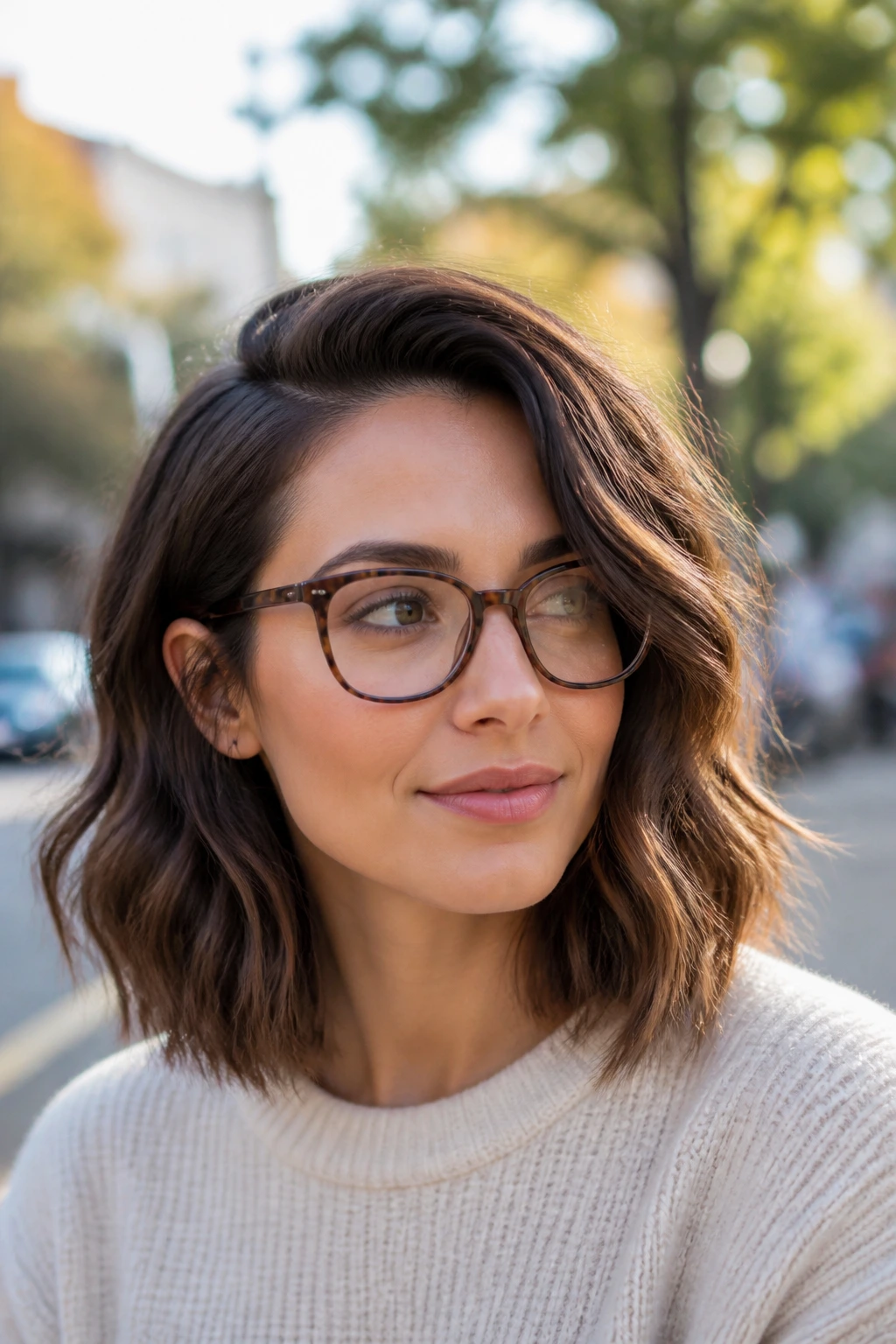
The shoulder line is a useful stopping point. Hair that goes much longer can start competing with the outline of the glasses, especially if the frames are thick or sit low on the nose. Hair that is much shorter can leave the face feeling bare unless the cut is very deliberate. Shoulder length gives you the middle lane.
That middle lane is where the style options live. You can build volume above the frames, softness around the cheekbones, or movement below the jaw. You can tuck one side and leave the other loose. You can wear a fringe, or skip it and let a side part do the work. The haircut becomes flexible instead of stubborn.
There’s also a practical reason this length keeps winning. It’s easy to tie back when the lenses fog, easy to clip out of the way during makeup, and easy to shape around the arms of your glasses without spending twenty minutes on styling. That matters on real mornings, not just in salon photos.
How to Style Them on a Normal Morning

Frame Fit: Put your glasses on before you decide where the front pieces should sit. The temple arms change the shape more than people expect, and a style that looks fine without glasses can sit crooked once the frames are on.
Time-Saver: If you have ten minutes, dry the roots first and leave the ends a little rough. Shoulder-length hair looks better with a little natural movement than with a perfectly flat finish that presses against the face.
Pro Move: Use the flat iron only on the last two inches of the hair if you want a quick tidy look. That’s enough to stop the ends from flipping into the lenses without turning the whole head into a salon blowout.
Cost-Saver: You do not need every styling gadget under the sink. A decent dryer, one brush, and a light texture spray will cover most of these styles. The rest is sectioning. Boring, yes. Useful, absolutely.
My honest preference: if you wear glasses daily, keep the front lighter than you think you need. Heavy front layers are charming for about ten minutes and then they start poking at the frames all day.
Common Mistakes That Fight Your Frames

The first mistake is cutting bangs too close to the glasses. You’ll know it happened if the fringe keeps brushing the lenses and leaving little streaks of product on the glass. The fix is simple: ask for longer front pieces that can move above the frames or part around them, not sit dead on top.
Another problem is too much width at the temples. This happens when layers start right at the cheekbone and puff outward near the earpieces. The shape can look lovely from behind a salon chair and frustrating in real life. Ask for weight removal lower down or softer interior layers so the side zone stays light.
Heavy styling cream is another sneaky one. It sounds helpful until your hair starts slipping against the arms of the glasses and losing all hold by noon. Use less than you think, and keep it off the roots.
And then there’s the classic mistake of ignoring the frame shape. Thick square frames usually need softer hair movement, while thin wire frames can handle a cleaner, sharper haircut. If the style and the frames both shout at once, the face gets lost in the noise.
Variations and Alternatives to Try

The Soft-Edge Everyday Version: Keep the length at the collarbone, skip the strong fringe, and add only a small bend through the ends. This one works if you want your hair to disappear into the background and let bold frames do the talking.
The Frame-Forward Side Sweep: Push more hair to one side and build a little lift above the opposite temple. It’s a good pick for rectangular glasses because the diagonal line softens the shape without turning the cut into a dramatic side look.
The Curly Glasses-Friendly Version: Use natural curl or a diffuser and leave the side layers long enough to avoid puffs at the earpieces. The goal is shape below the frames, not volume right beside them.
The Sleek Minimalist Version: Blow the hair smooth, tuck it behind the ears, and keep the ends blunt. This is the one for people who want the glasses to stay front and center and don’t want to fuss with curls or fringe.
The Soft Dress-Up Version: Add a small braid, a clip twist, or a half-up knot before events. It keeps the sides clean, which helps if your frames are decorative and you don’t want the hair fighting for attention.
Keeping Shoulder-Length Hair Fresh Between Washes

Shoulder-length hair tends to show its age in the front first. The roots flatten, the ends turn fuzzy, and the area around the glasses arms picks up oil from skin and frame contact. That means maintenance matters more than people think.
Most shoulder-length styles look best with a wash every 2 to 4 days, depending on your hair type and how much product you use. If your hair is fine, dry shampoo at the roots on day two can keep the crown from collapsing. If your hair is thick, a light mist of water on the front pieces and a quick re-bend with a brush or flat iron is usually enough to reset the shape.
Trim the ends every 8 to 10 weeks if you want blunt lines to stay crisp. Layers can stretch a little longer, but once the front pieces start hitting the glasses in the wrong spot, the whole style feels off. That’s not vanity. That’s geometry.
At night, clip the front pieces loosely away from the face or sleep on a silk pillowcase to cut down on frizz at the temples. And clean the frame arms regularly. Hair oils transfer to the sides of the glasses, and then the sides of the hair pick it right back up the next day. Annoying. Very real.
Questions People Ask Before They Cut Their Hair

Will shoulder-length hair make my glasses stand out too much?
Not if the cut has some movement. A blunt line can frame thick glasses nicely, while layers or soft waves keep lighter frames from disappearing into the hair. The trick is matching the hair’s weight to the frame’s weight.
Are bangs a bad idea with glasses?
No, but the wrong bangs are a headache. Heavy, short fringe tends to hit the top of the frames and stay there. Longer curtain bangs, bottleneck bangs, or a side-swept fringe usually sit better because they move around the lenses instead of sitting on them.
What if my hair flips out at the ends?
Use that on purpose. A tiny outward bend can make the cut look sharper around glasses, especially if the frames are large. If you hate the flip, wrap only the last inch of hair under with a round brush while drying.
Do layers make hair easier to wear with glasses?
Often, yes. Layers remove bulk near the cheeks and temples, which helps the frame arms sit cleanly. The catch is that too many short layers can puff out around the ears, so the placement needs to be careful.
Can curly hair at shoulder length work with glasses?
Absolutely. Curly hair looks especially good when the shape stays fuller below the frame line and lighter near the temples. A good cut keeps the sides from expanding into the earpiece area.
What if my glasses sit low on my nose?
Keep the fringe higher or softer, and avoid front pieces that land directly on the bridge. You want the hair to stop just above or beside the frame line so the whole look stays open.
Should I bring my glasses to the salon?
Yes. Bring the pair you wear most often, because frame width, temple thickness, and bridge height all change where the hair should fall. A cut that looks perfect without glasses can sit wrong the second you put them on.
How often should I restyle shoulder-length hair during the day?
Usually once is enough. A quick finger rake, a touch of dry shampoo, or a small re-bend at the ends can reset the look if the sides flatten. If you’re restyling more than that, the haircut may need a better shape around the temples.
The Cut That Leaves Room for the Frames
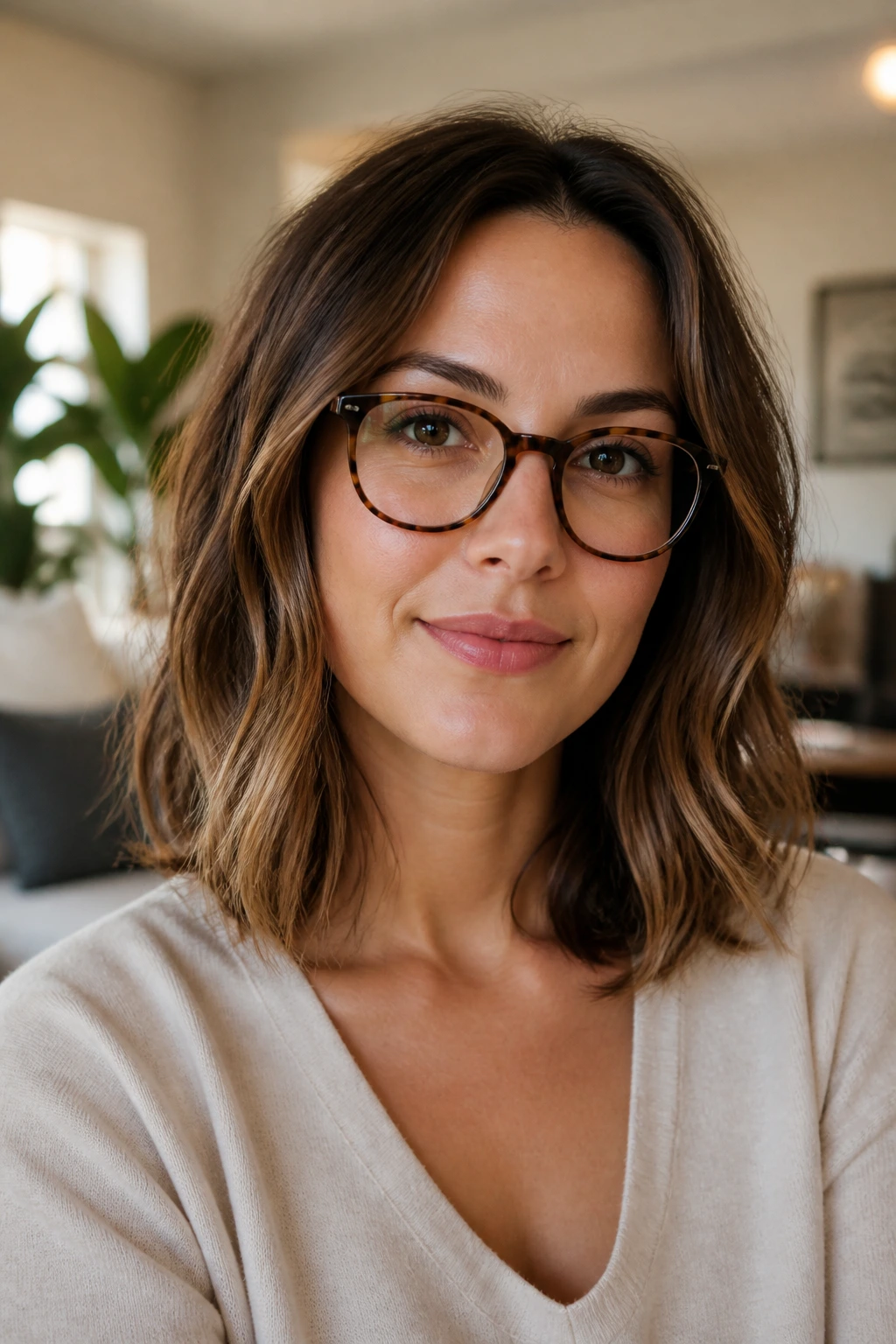
The nicest shoulder-length hairstyles for women who wear glasses do one simple thing well: they make room. Room for the frames. Room for the eyes. Room for the hair to move without sticking to the earpieces or collapsing into the lenses.
That room is what keeps these styles feeling polished instead of fussy. You can keep them sleek, airy, textured, or a little undone. The exact shape changes, but the goal stays the same—clean lines where the glasses sit, and enough softness everywhere else to keep the face alive.
If you’re choosing your next cut, bring your glasses into the conversation early. Not after the fact. The best versions of these styles are the ones that were planned with the frames in mind, and once you see that balance in the mirror, it’s hard to go back.
