



Blonde gets tricky the minute the air turns dry. The same shade that looked glossy in warm weather can start reading a little hollow under gray daylight, especially if the ends are porous and the toner has faded faster than you expected. That’s why winter blonde hair works best when it has shape: a root shadow, a beige glaze, a pearl finish, or just enough depth to stop it from turning into one flat sheet of light.
I’ve always thought the best cold-weather blondes are not the palest ones. They’re the shades that hold their nerve. A good winter blonde sits next to a wool coat, a black knit, or a camel scarf and still looks deliberate instead of washed out. It can be icy, creamy, smoky, or honeyed, but it needs control. Brass creeps in fast. So does chalkiness.
The 19 looks below lean into that. Some are high-maintenance and dramatic, which is fair if you love a sharp blonde. Others are softer, rootier, and far easier to live with when your schedule is packed and your hair is fighting indoor heating. The common thread is balance: enough brightness to feel blonde, enough depth to survive the season, and enough tone to keep the whole thing from looking tired.
Why These Winter Blondes Hold Up When the Temperature Drops
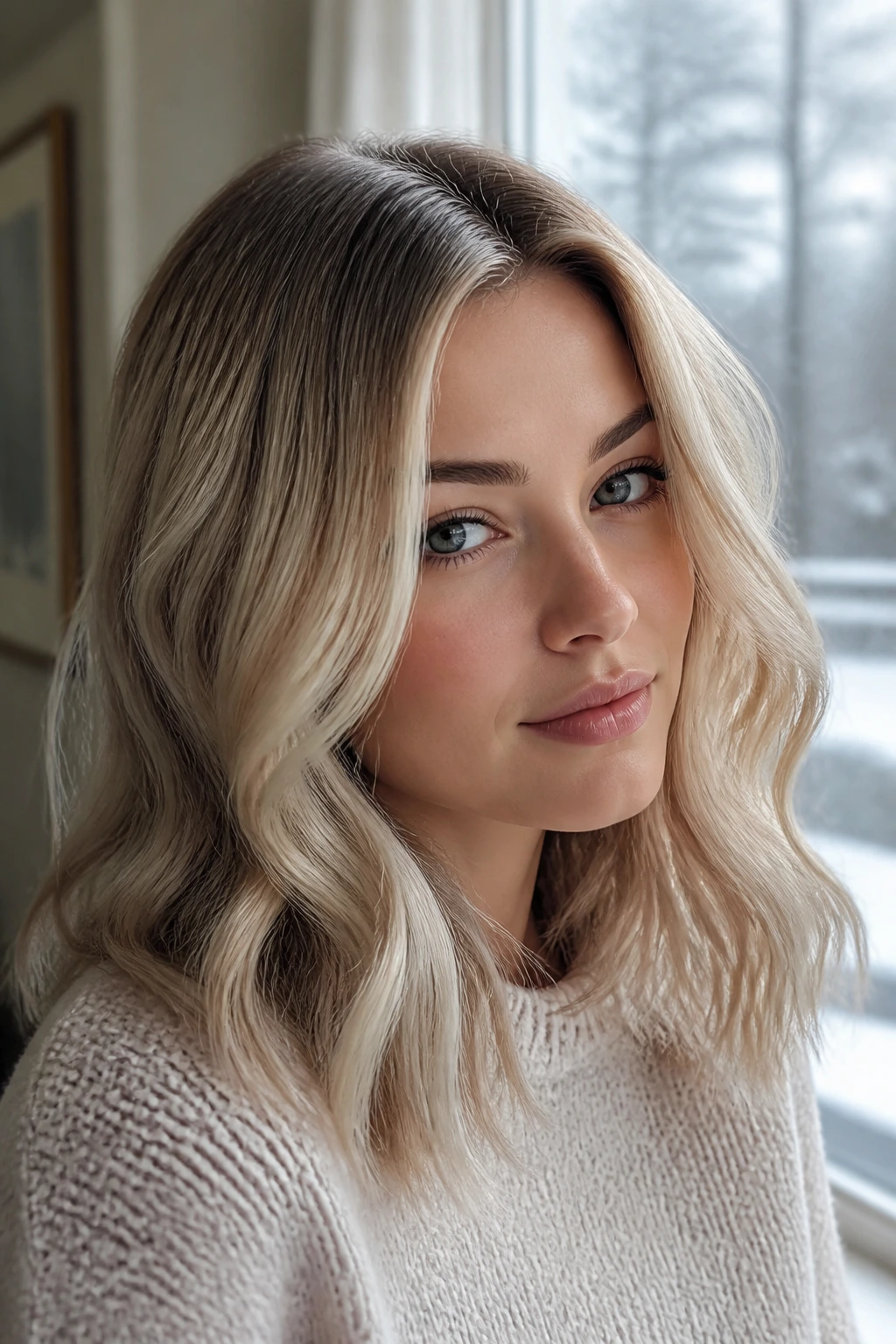
-
Cooler daylight changes everything: Winter sun tends to flatten color, so blondes with beige, pearl, or smoky tones keep their shape instead of reading yellow or dull.
-
Root depth buys you time: A soft shadow at the scalp makes grow-out less obvious, which matters when you’d rather stretch appointments past the four-week mark.
-
Contrast matters more than brightness: A little brightness near the face can do more than an all-over pale blonde, especially when your clothes are dark and your skin looks paler in cold weather.
-
Tone is the real star: The difference between a flattering winter blonde and a sad one is usually the gloss, not the lift. Pearl, beige, and mushroom tones behave better than raw yellow.
-
These shades work with real hair: Fine hair, thick hair, curls, and bob cuts all need different placements. The best winter blondes respect the haircut instead of fighting it.
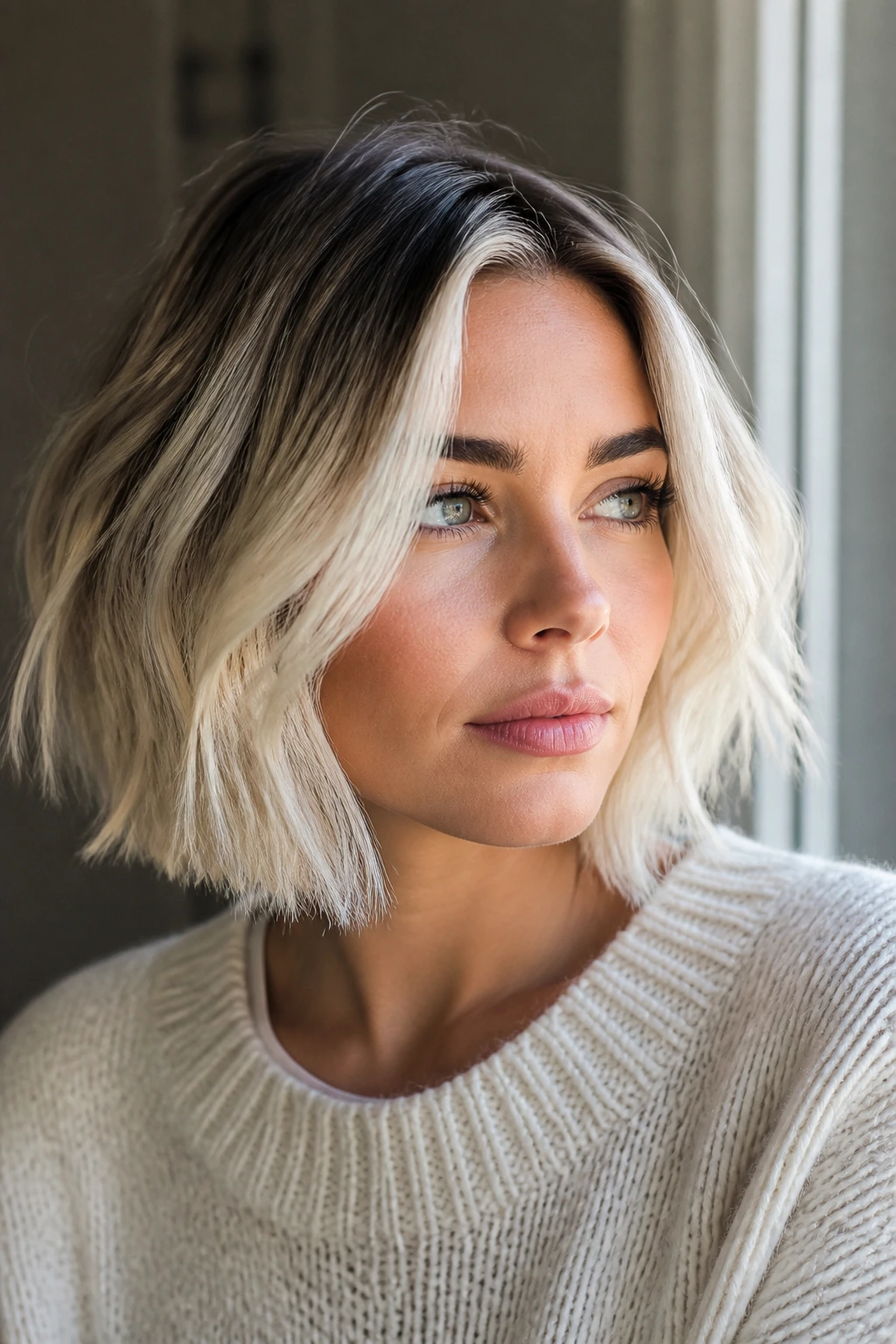
1. Icy Pearl Bob
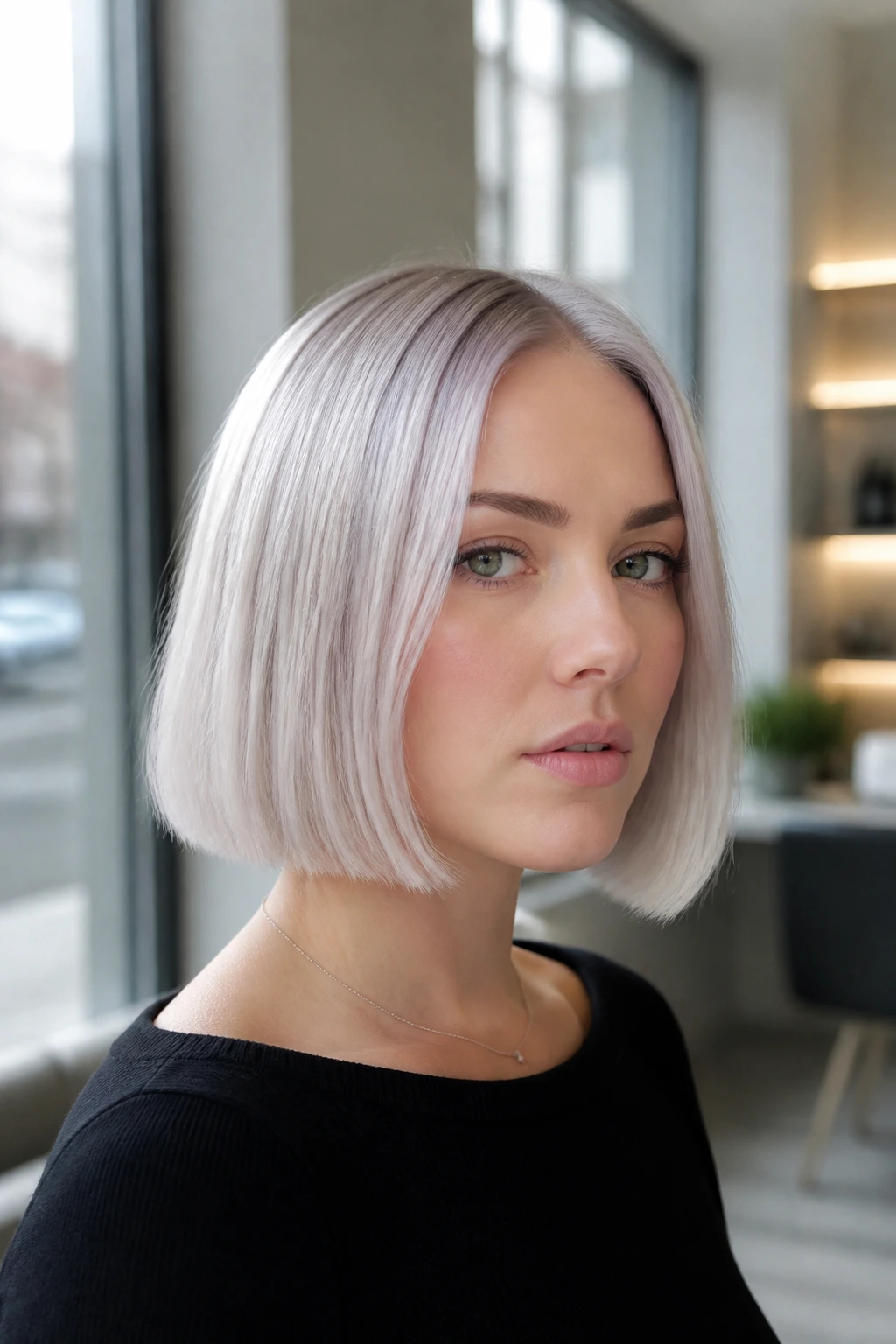
A blunt bob in icy pearl blonde has a very particular energy: crisp, clean, and a little bit expensive-looking without trying to be delicate. The trick is that “icy” does not mean raw white. It means lifted to a pale level and then softened with a pearl-violet glaze so the finish has sheen instead of that brittle, over-bleached look.
Why it works in winter
A bob shows off tone more clearly than long hair, which is why this cut is such a smart canvas for a winter blonde. The short length keeps the pale shade from overwhelming your face, and the blunt line gives the whole style structure when everything else — coats, scarves, collars — starts piling up around it.
Quick notes
- Best on hair lifted to about level 9 or 10
- Ask for a pearled gloss, not a stark silver toner
- Looks strongest with a clean center part or tucked-behind-the-ear styling
- Needs a refresh every 4 to 6 weeks if your hair pulls warm fast
Pro tip: Leave a whisper of depth at the root, even if it’s only ½ inch. That tiny shadow keeps the bob from turning helmet-like.
2. Beige Blonde Lob with Root Shadow
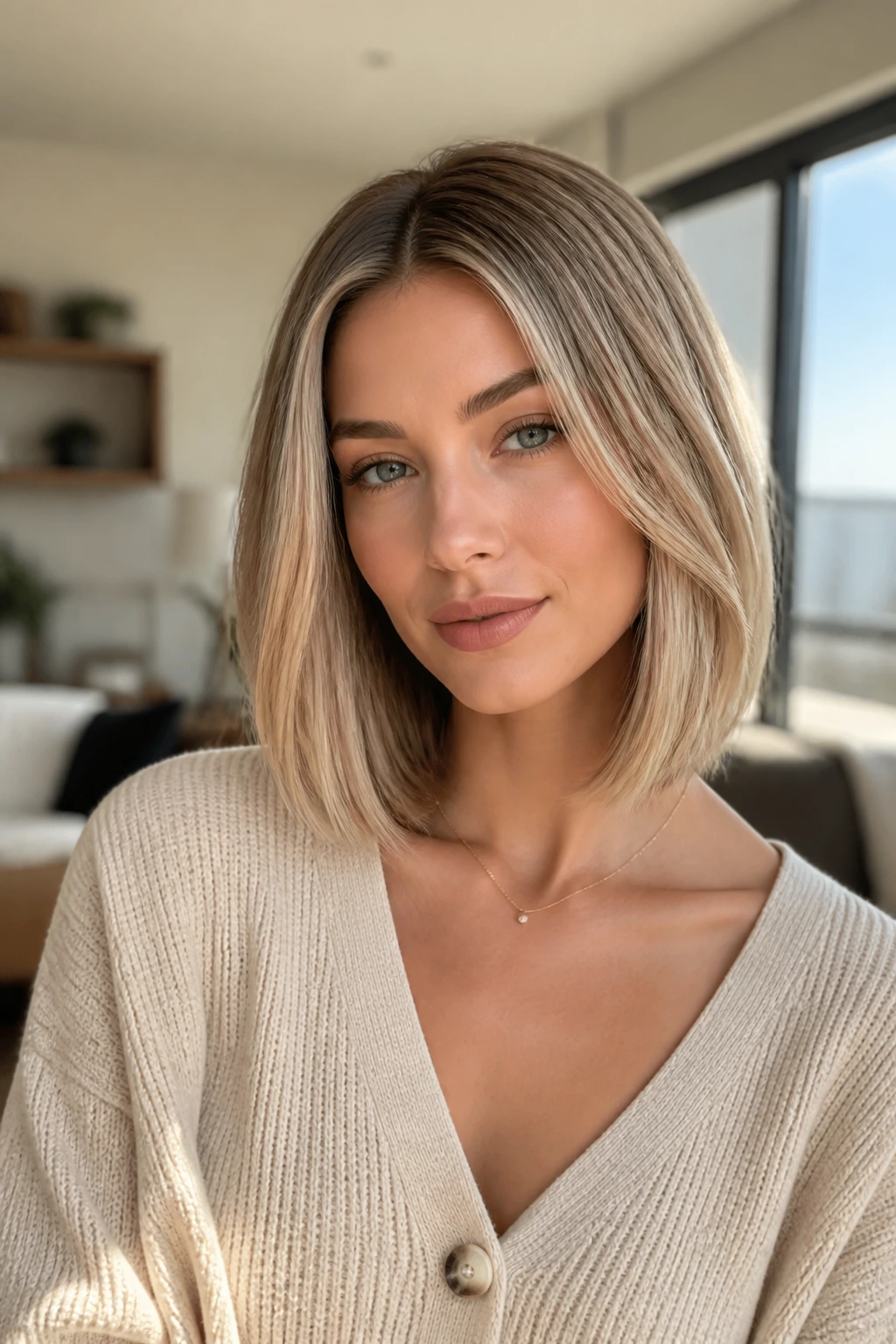
This is the winter blonde for people who want to look polished without babysitting their color every other week. Beige blonde sits between gold and ash, which gives the hair a soft, expensive beige finish instead of the bright, sunny tone that can feel out of place when the weather turns cold.
The root shadow is doing a lot of work here. It blurs the line of regrowth, but it also gives the color some breathing room. Without that darker root, beige blonde can look a little flat on longer hair. With it, the whole lob moves.
The cut matters, too. A collarbone lob gives the blonde enough length to show off the gradation from root to midlength to end, and it’s one of the easiest cuts to wear with loose bends. Straight and sleek works. So does a soft wave with the ends flipped outward just a touch.
If your hair is naturally dark blonde or light brown, this is one of the least punishing ways to go lighter for winter. It’s not a dramatic blonde. That’s the point.
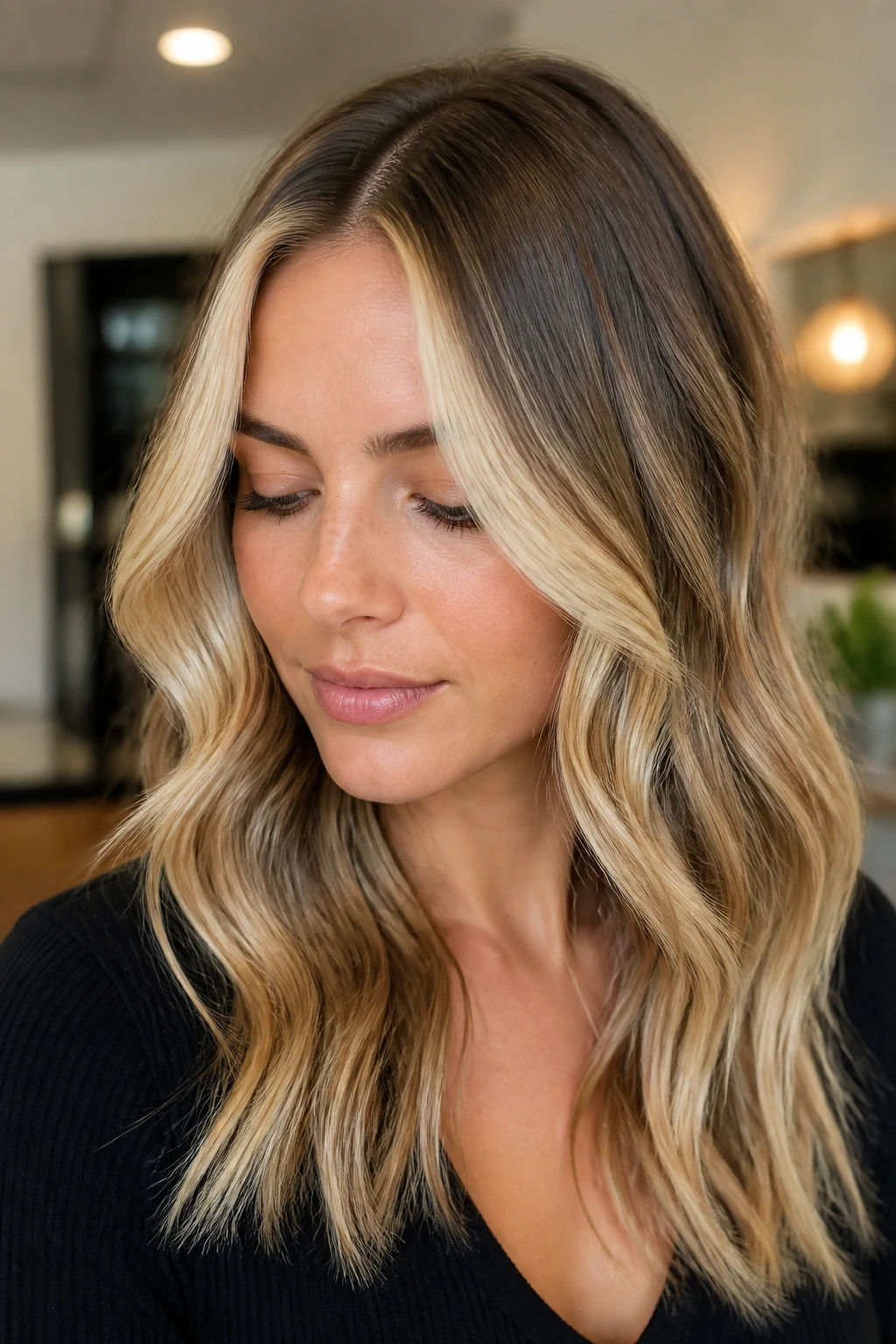
3. Champagne Balayage Waves
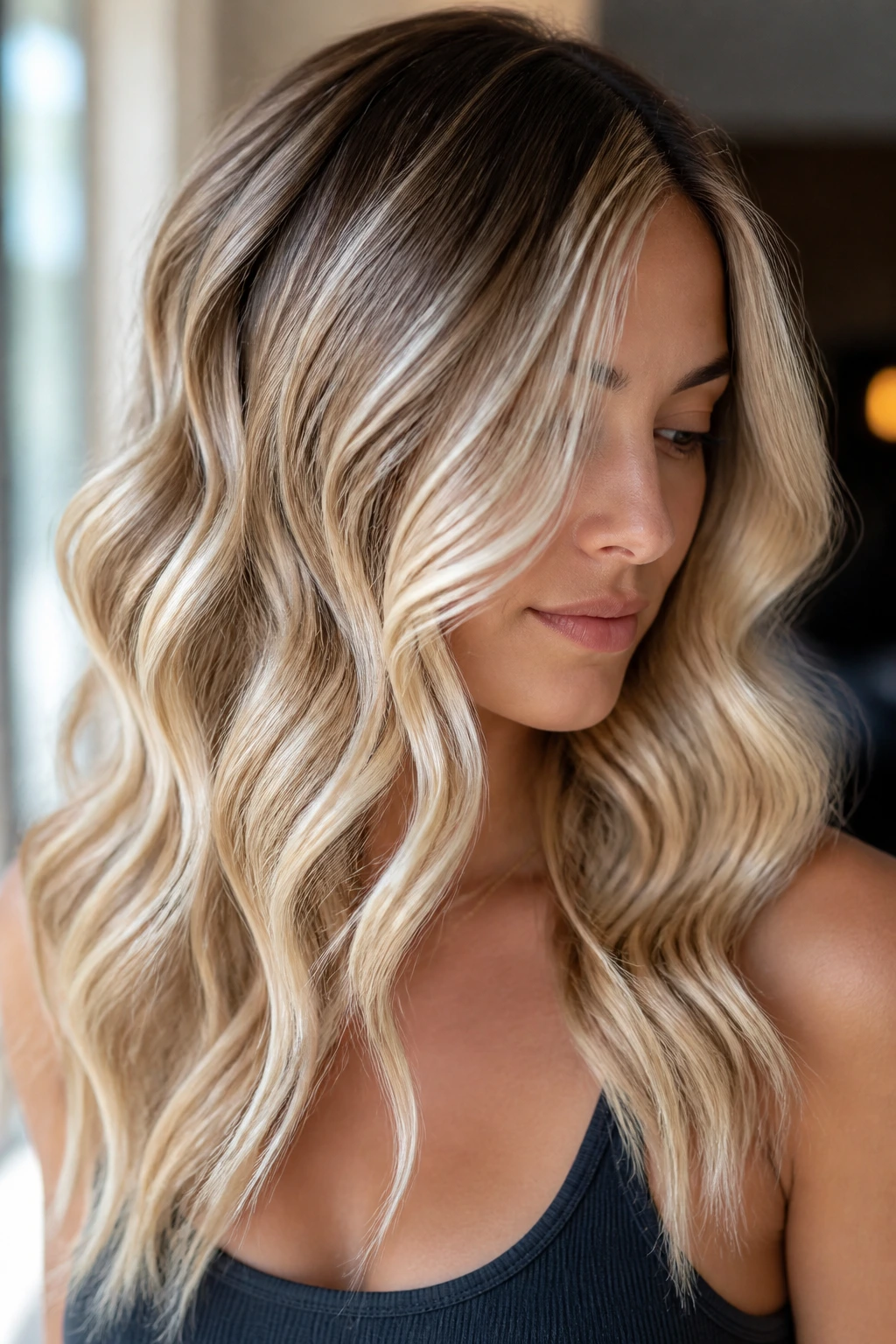
Why do some blondes suddenly look richer the moment they’re bent into a wave? Because movement breaks up the color. Champagne balayage uses that to its advantage. Instead of one solid blonde blanket, you get ribbons of pale gold-beige that flash through the hair as it moves, which keeps the shade from going dull in flat winter light.
What to ask for
Ask for hand-painted balayage through the midlengths and ends, plus a champagne gloss that leans more beige than yellow. If your base color is medium brown, leave the root deeper so the brightness starts below the part and feels softer.
How to wear it
Loose waves are the obvious choice, but the secret is not making the wave too neat. A little bend from a 1-inch iron or a wide curling wand keeps the ribbons visible. Too much curl and the color starts blending into itself.
Best for: hair that needs dimension, not a dramatic lift.
Watch for: if your ends are porous, champagne can fade warm faster than you expect. A gloss every few weeks keeps the tone from drifting into banana territory.
4. Buttercream Money Piece
The money piece gets overdone when it’s too bright and too chunky. Buttercream version? Much better. The front sections are lifted just enough to frame the face, then toned into a creamy, soft yellow-beige that looks warm instead of brassy. It’s the kind of blonde that wakes up a winter face without forcing the rest of the hair to do all the work.
This look is especially useful if you’re not ready to go lighter everywhere. The front takes the hit, which means you get impact where people actually look first. Around the cheekbones. Around the eyes. Near the part line, where a little brightness can change the whole read of a cut.
- Best on: layered haircuts, lobs, long bobs, and curtain bangs
- Ask for: two to four face-framing highlights on each side, then a buttery gloss
- Skip if: you hate visible upkeep at the hairline
- Pairs well with: soft waves and a center part
A blunt bright strip with no melt is what makes this look feel dated. Keep the transition soft and it stays fresh.
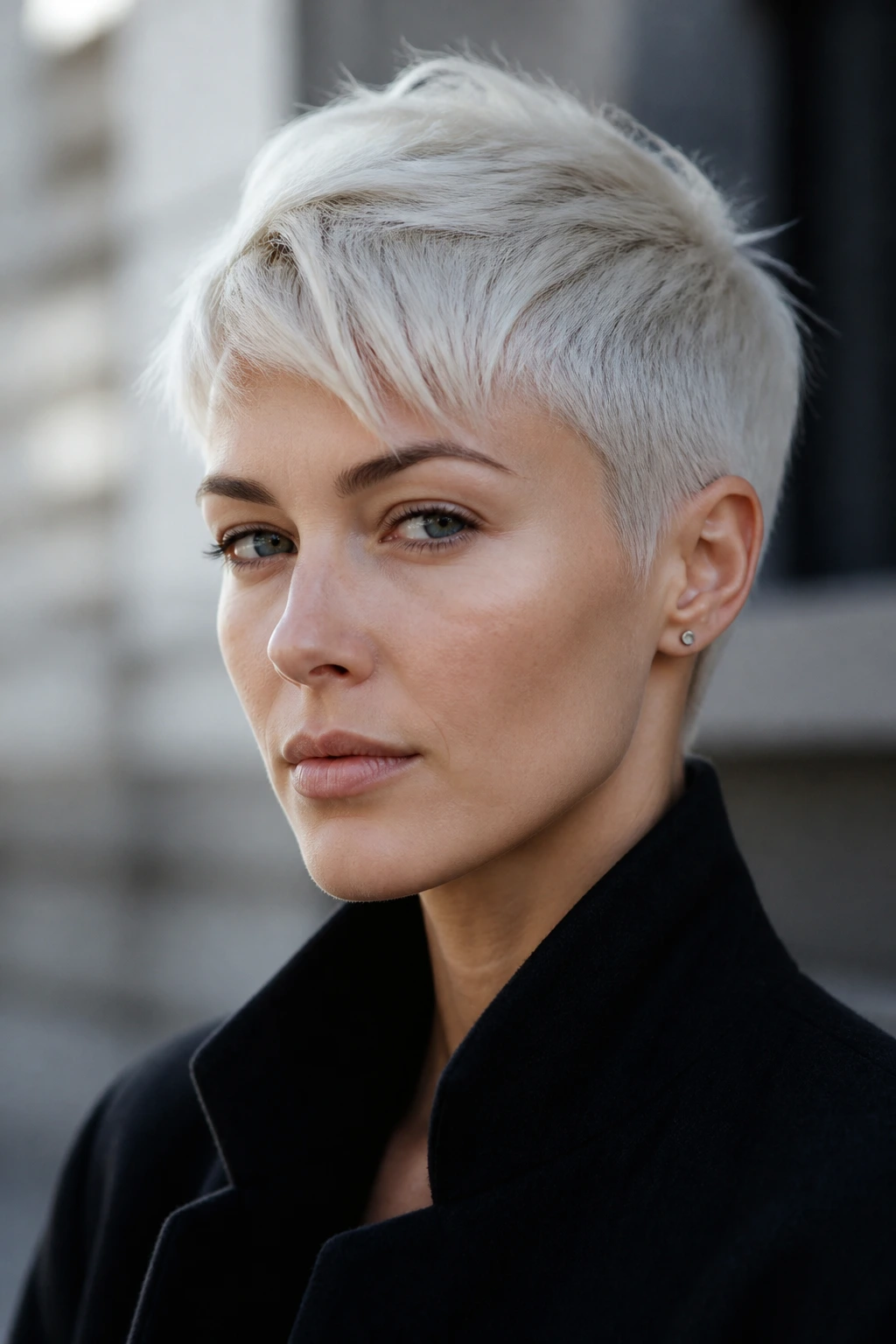
5. Nordic Platinum Pixie
Short hair can carry a very pale blonde better than people think. A pixie in Nordic platinum looks sharp because the cut gives the color a hard edge, and that edge matters in winter. Long hair in the same shade can sometimes look fragile; a pixie reads deliberate, almost architectural.
The payoff is in the simplicity. You don’t need layers of color to create movement because the crop itself does that work. The texture on top, the slightly shorter sides, the way the fringe breaks across the forehead — all of it gives the platinum some shape. Without shape, platinum just sits there.
This is not a low-effort color, though. It asks for solid lifting, careful toning, and a willingness to keep brass in check. Still, the shorter length helps. Regrowth doesn’t travel as far, and trims keep the overall silhouette clean even when the color starts to soften.
If you like strong lipstick, cool jewelry, or sharply cut coats, this one has real bite. It can look icy. It can look expensive. It can also look a little severe if you skip hydration, so keep a mask nearby.
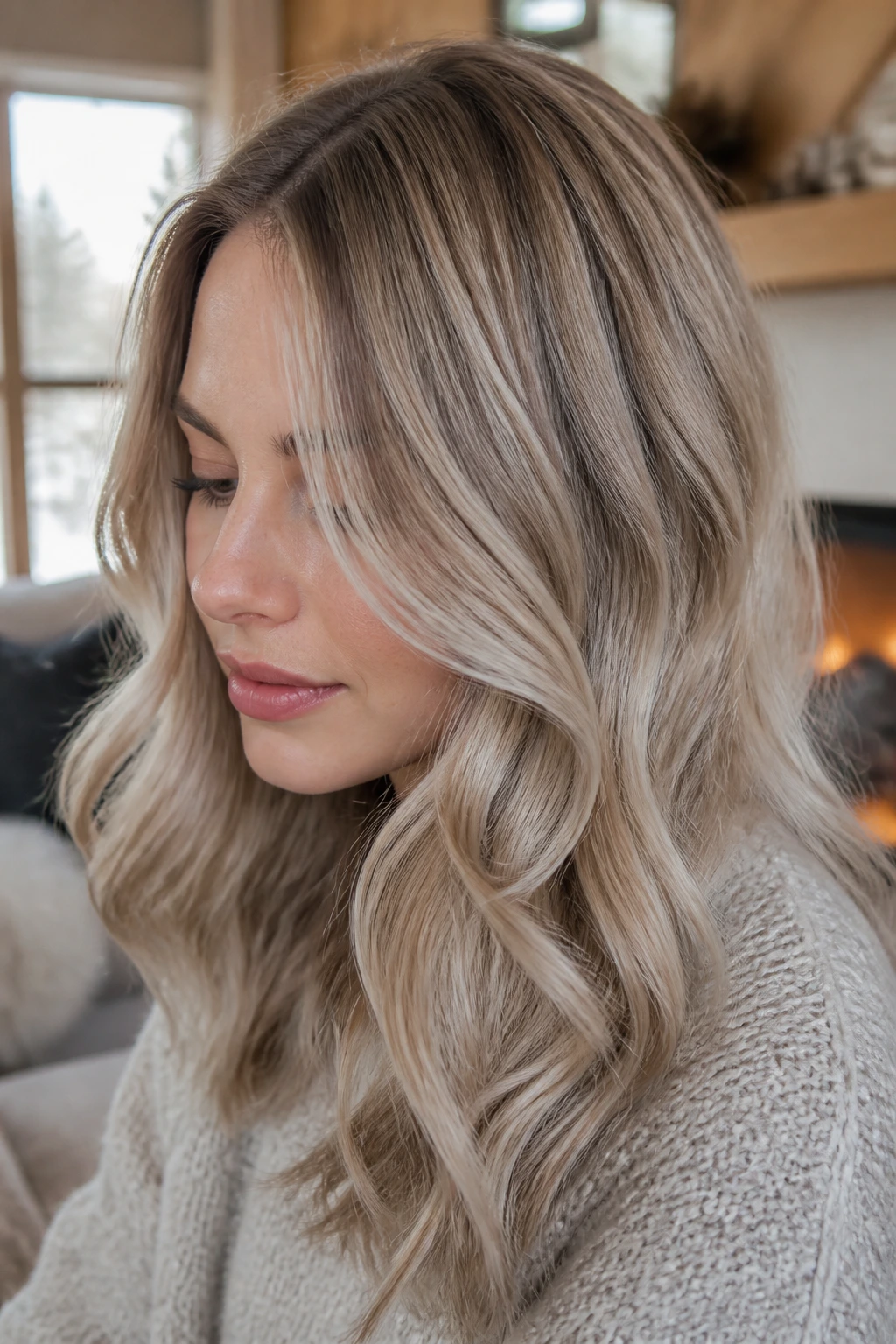
6. Smoky Mushroom Blonde
Mushroom blonde is what happens when ash blonde grows up and gets a little darker around the edges. It sits in that gray-beige zone that some people ignore because it sounds understated on paper, but in person it has a quiet depth that works extremely well in winter. The color looks especially good when the light is weak and the clothing palette gets darker.
Unlike a bright champagne blonde, mushroom blonde does not rely on shine alone. It uses lowlights, root depth, and cool beige tones to build dimension. That’s what makes it feel rich instead of muddy.
Who it flatters
Cool and neutral skin tones usually love this shade. So do people with naturally darker blonde or light brown hair who want to go lighter without losing the grounded feel of their base.
How to ask for it
- A neutral-to-cool beige glaze
- Soft lowlights through the midlengths
- A root that stays slightly deeper than the ends
- No heavy gold toner
My honest take: this is one of the best winter blondes for thick hair. The color doesn’t need to do all the work; the texture helps.
7. Honey-Glazed Layers
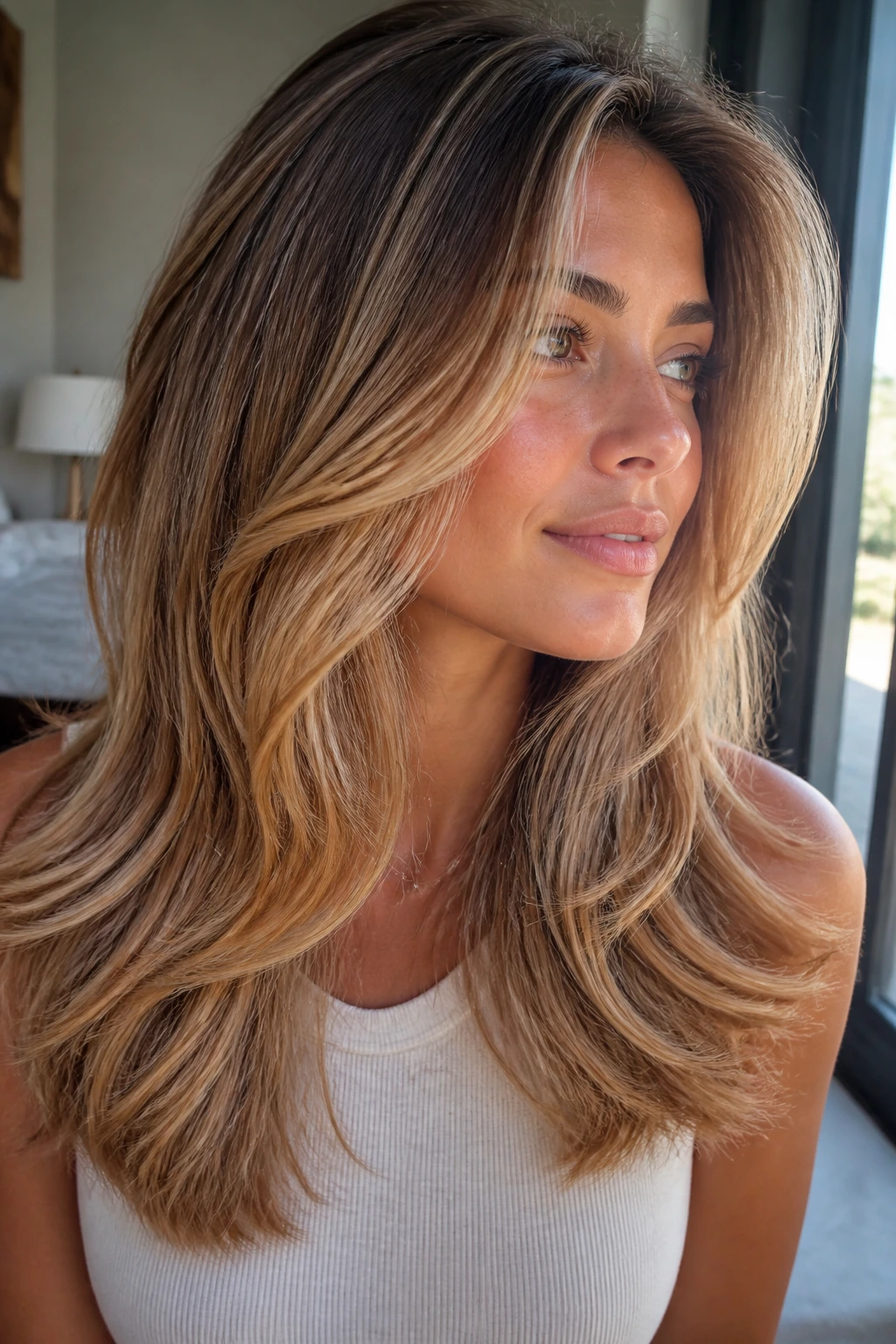
Warm blondes can work in winter. They just need control. Honey-glazed layers keep the color golden, not orange, and that little distinction matters a lot once the skin starts looking paler under indoor light. Honey has enough warmth to keep the hair lively, but it still reads blonde when it’s placed in ribbons rather than painted on like a solid block.
The best version is layered. The cut gives the honey tones places to catch light and shadow, which is what keeps the color from turning too flat or too yellow. On long hair, a layered honey blonde moves in a way that one-length hair often doesn’t. You see the color twice — once in the top layer, once through the ends.
What keeps it from getting brassy
- Ask for a gold-beige gloss, not a heavy copper toner
- Keep the root one shade deeper than the mids
- Add a few cooler pieces near the part if your skin runs pink
- Use purple shampoo sparingly, maybe every third or fourth wash
Honey works because it gives winter hair warmth without making it look fried. That’s a narrow line, but it’s worth walking.
8. Vanilla Cream Curtain Bangs
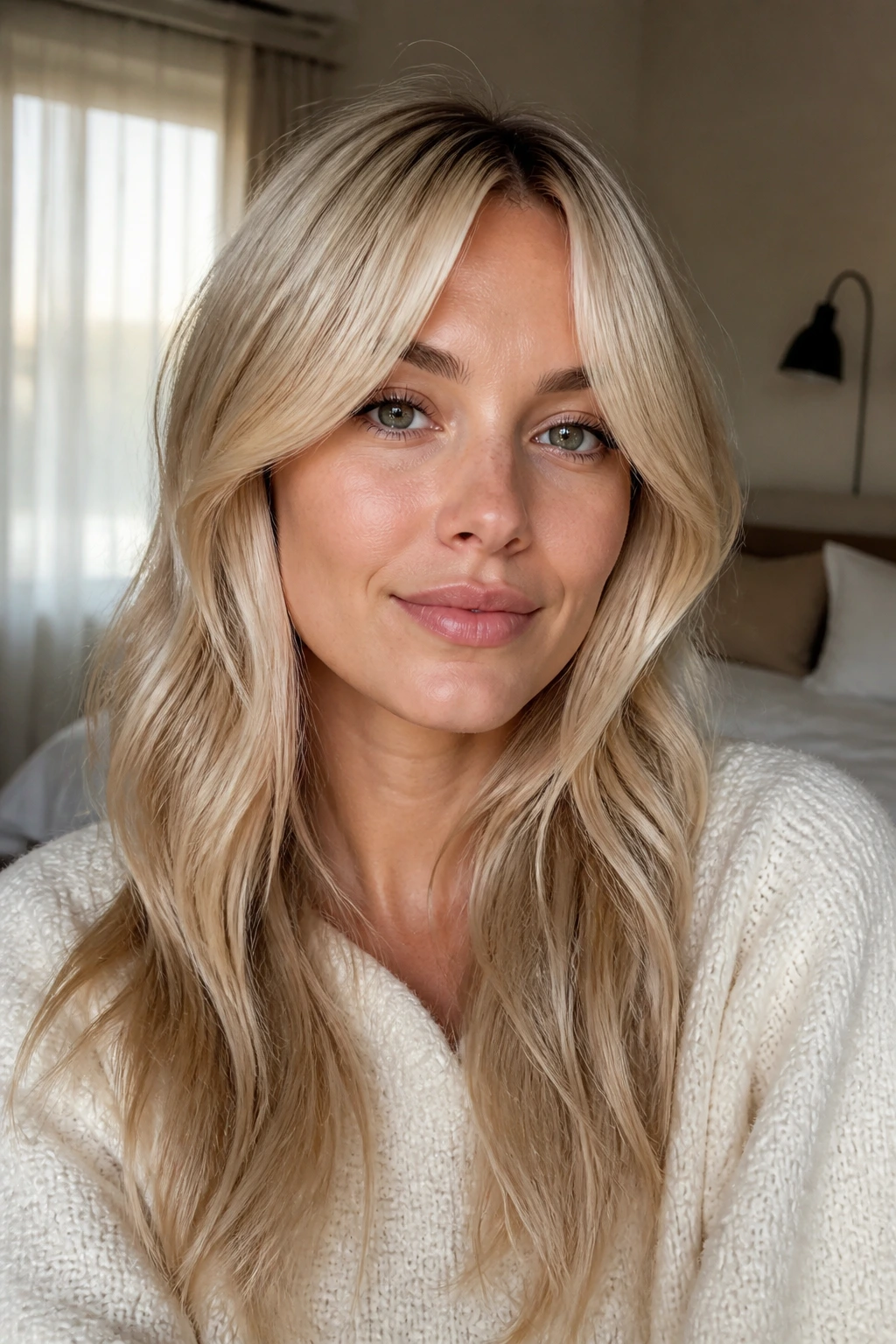
Curtain bangs are already good at softening a face. Put them in a vanilla cream blonde and they become the brightest, most useful part of the cut. This shade is creamy rather than icy, which means it reflects light without throwing a harsh white line across the forehead.
The reason this works so well in winter is simple: bangs sit close to the skin. If they’re too dark, the whole style can feel heavy. If they’re too pale and flat, they can look disconnected. Vanilla cream lands in the middle, which gives the fringe a soft glow and keeps the rest of the hair from needing too much brightness.
Ask your colorist for face-framing brightness that fades gently into the sides, then keep the bangs a touch lighter than the rest. Not stripy. Just lifted enough to read as the focus.
If your hair is fine, this shade can make the fringe look thicker. If your hair is dense, the cream tone breaks up the weight around the face. Either way, it’s a smart way to get blonde impact without committing to an all-over light blonde.
9. Toffee Bronde Melt
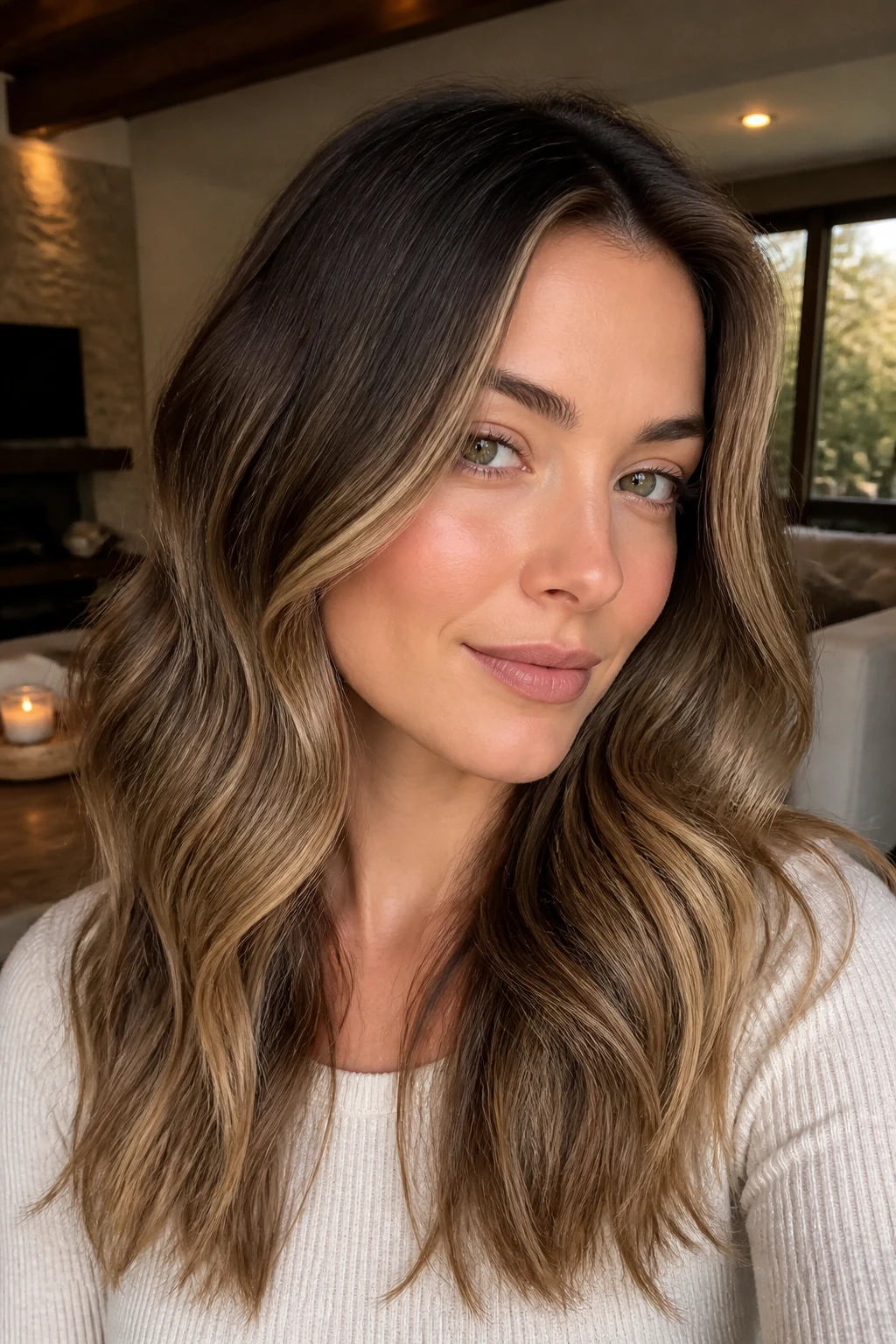
A good bronde does one thing better than almost any other winter shade: it lets brunette roots stay visible without looking unfinished. Toffee bronde melt layers light toffee ribbons through a darker base, then softens the whole thing so the color moves from brown to blonde without a visible stop.
That melt is the whole point. Hard contrast can be beautiful, but winter often asks for something softer. Coats, scarves, and darker fabrics tend to make stark color feel louder than it does in summer. Toffee bronde sits quietly in the middle and still looks expensive.
You’ll like this if you want lighter hair but don’t want to sit in the salon every month. The grow-out is forgiving because the root is part of the design, not a problem to fix. Keep the ends glossy, keep the ribbons warm rather than orange, and the color holds its shape for a long stretch.
It also works nicely on long layered cuts. The movement in the cut keeps the brown and blonde from blending into one muddy note.
10. Frosted Face-Framing Highlights
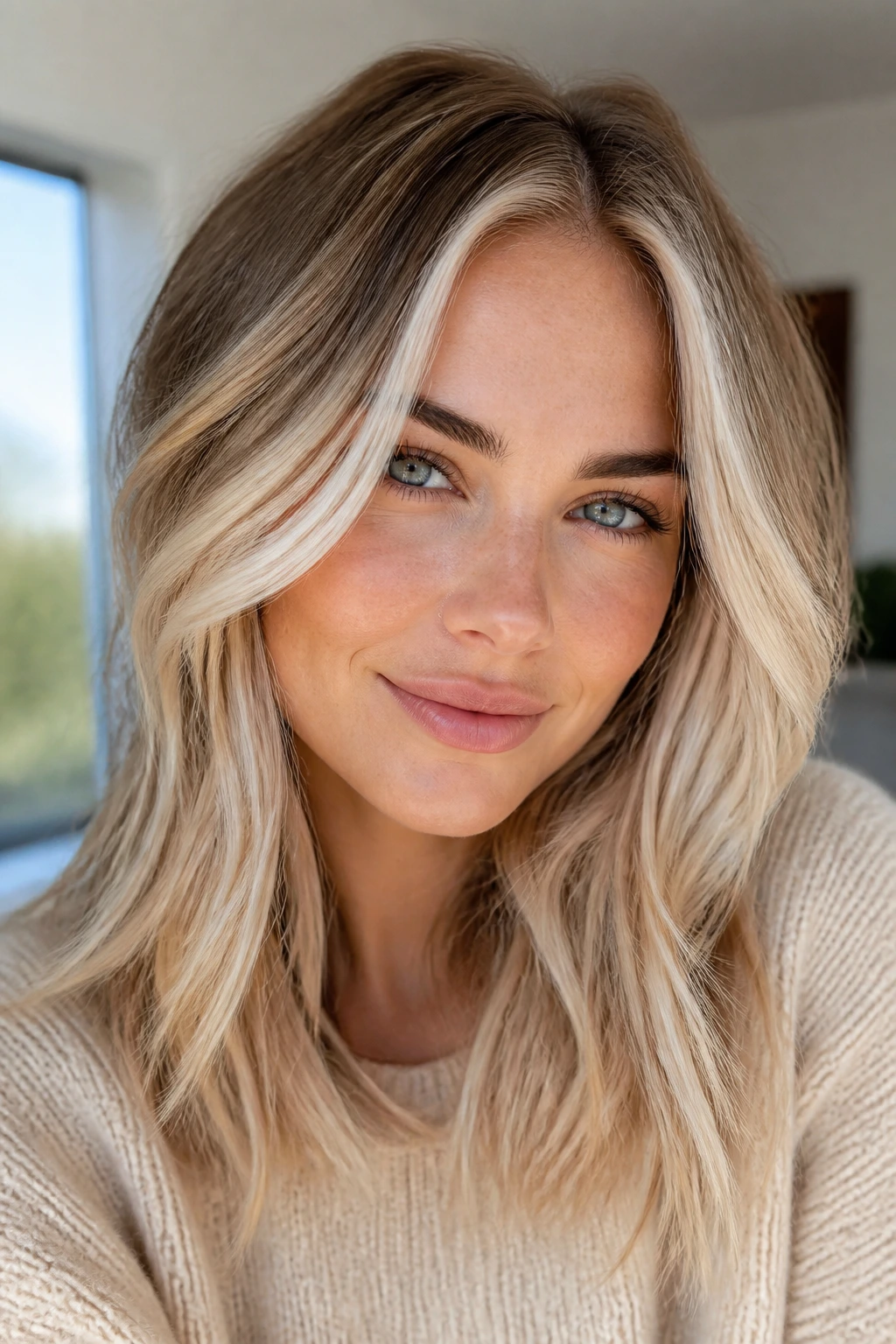
Do you want blonde without committing the whole head? Then face-framing highlights are the sensible move, and winter is a good time for them. Frosted pieces around the face can brighten the skin in a way that feels immediate, especially if the rest of the hair stays closer to its natural base.
The placement matters more than the amount of hair lifted. A few carefully painted pieces at the temples, around the cheekbones, and just at the front part can change the whole mood of a cut. You do not need a full head of blonde to get that effect.
The front-light trick
A slightly brighter front frame works because it draws the eye where the haircut lives — around the face, not the ends. That’s useful with winter makeup, which often runs a little cooler and more matte. The lighter pieces keep the style from disappearing beside a dark coat or a heavy turtleneck.
Best for: anyone testing blonde for the first time.
Keep in mind: if your hair is dark brown, a cool frosted highlight may need a subtle toner so the pieces don’t turn orange as they grow out.
11. Pearl Ash Blonde with Soft Ends
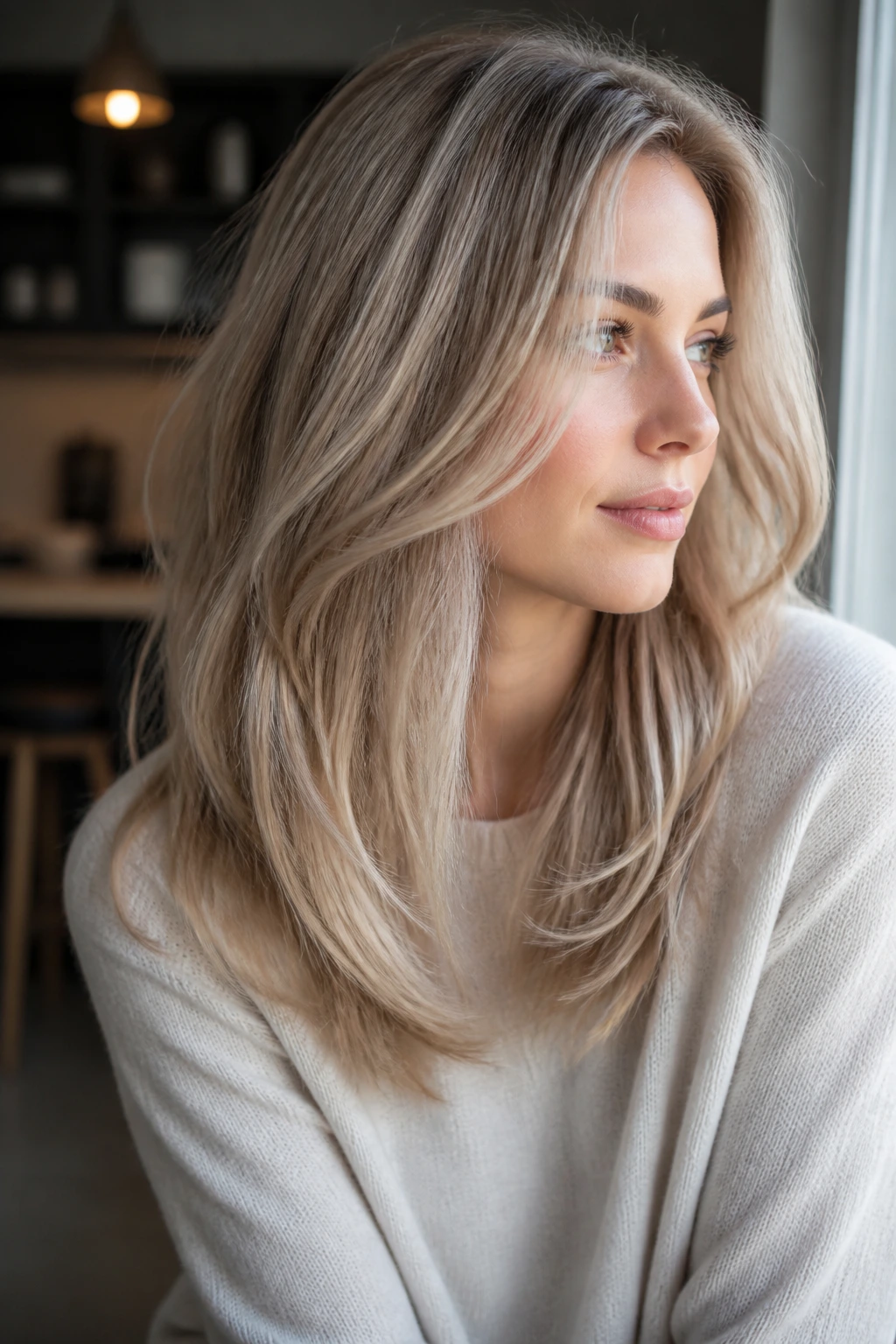
Pearl ash blonde is one of those shades that looks delicate until you see it in motion. Then it gets interesting. The pearl tone gives it sheen; the ash keeps it from drifting warm; the softer ends stop the shade from feeling chalky. Together, they make a winter blonde that reads calm instead of harsh.
I like this shade on mid-length hair because the softer ends give the color a little blur. A hard line at the bottom can make ash blonde feel brittle. Slightly diffused ends look better, especially when the weather is dry and the hair needs all the visual softness it can get.
There’s also a practical side. Ash tones can grab unevenly on porous hair, and pearl helps smooth out that problem. If your midlengths tend to drink toner too fast, this is a smarter route than going straight silver.
The style pairs well with a loose blowout or soft bends. Very straight hair can make ash blonde look severe. A little movement keeps it human.
12. Beige-Blonde Shag
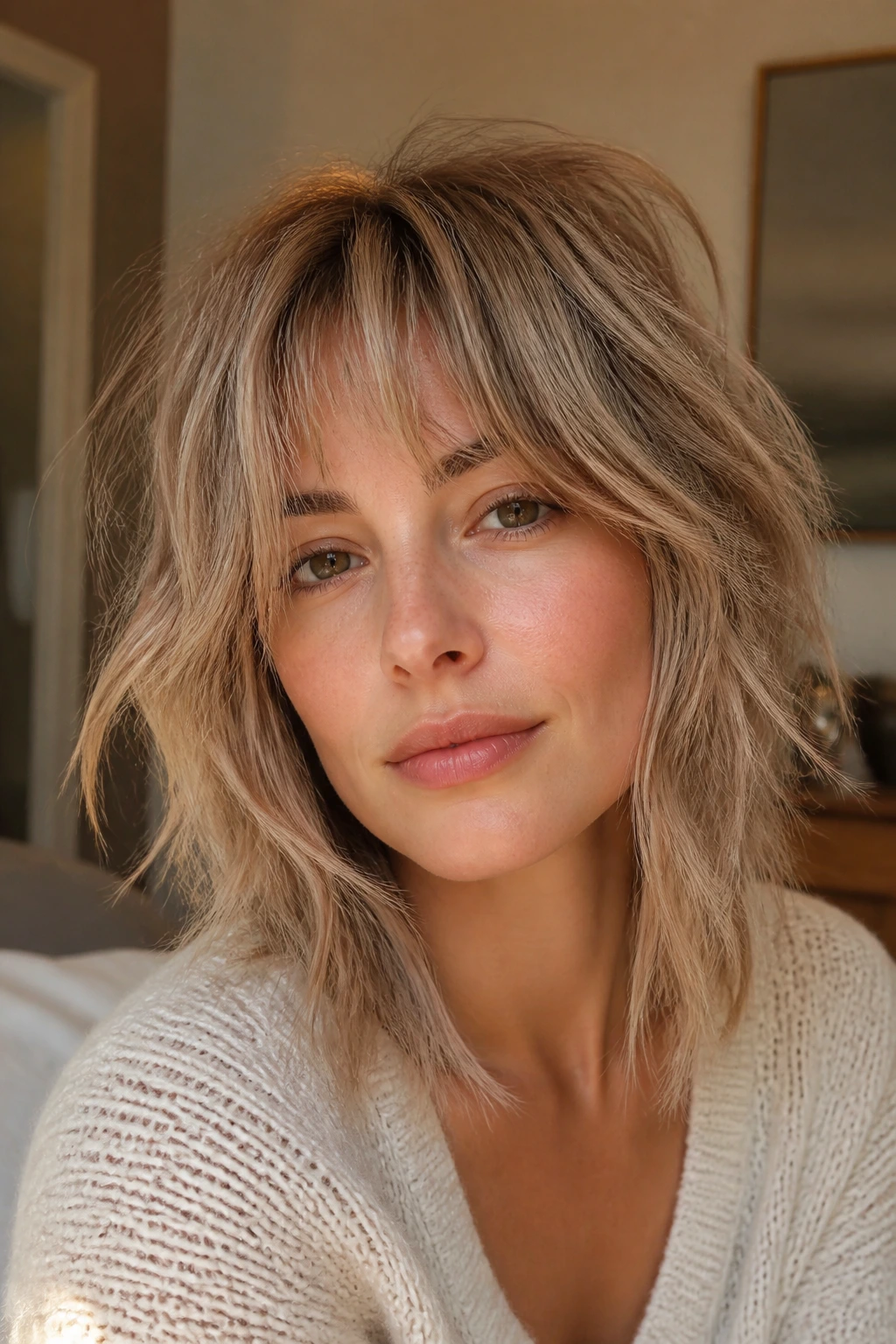
A shag cut changes the whole story of blonde. Instead of a smooth, reflective curtain of color, you get choppy ends, light layers, and piecey movement that lets beige-blonde tones show up in fragments. That’s useful in winter because the cut creates texture even when the hair itself feels a little dry.
Compared with a sleek lob, the shag has more personality and less fuss. You do not need perfect shine for it to work. In fact, a touch of dry texture often helps the layers separate so the beige ribbons can be seen. If your hair has a natural wave, this may be the easiest blonde style to live with because the shape and the color support each other.
Ask for soft layers around the crown, shorter pieces around the face, and a beige gloss that stays neutral rather than gold. Too much gold and the cut can start looking warm in a way that fights the shag’s edge.
Best for: wavy hair, medium density, and people who hate flattening irons.
Not ideal for: very fine hair that already struggles with volume.
13. Vanilla Latte Balayage
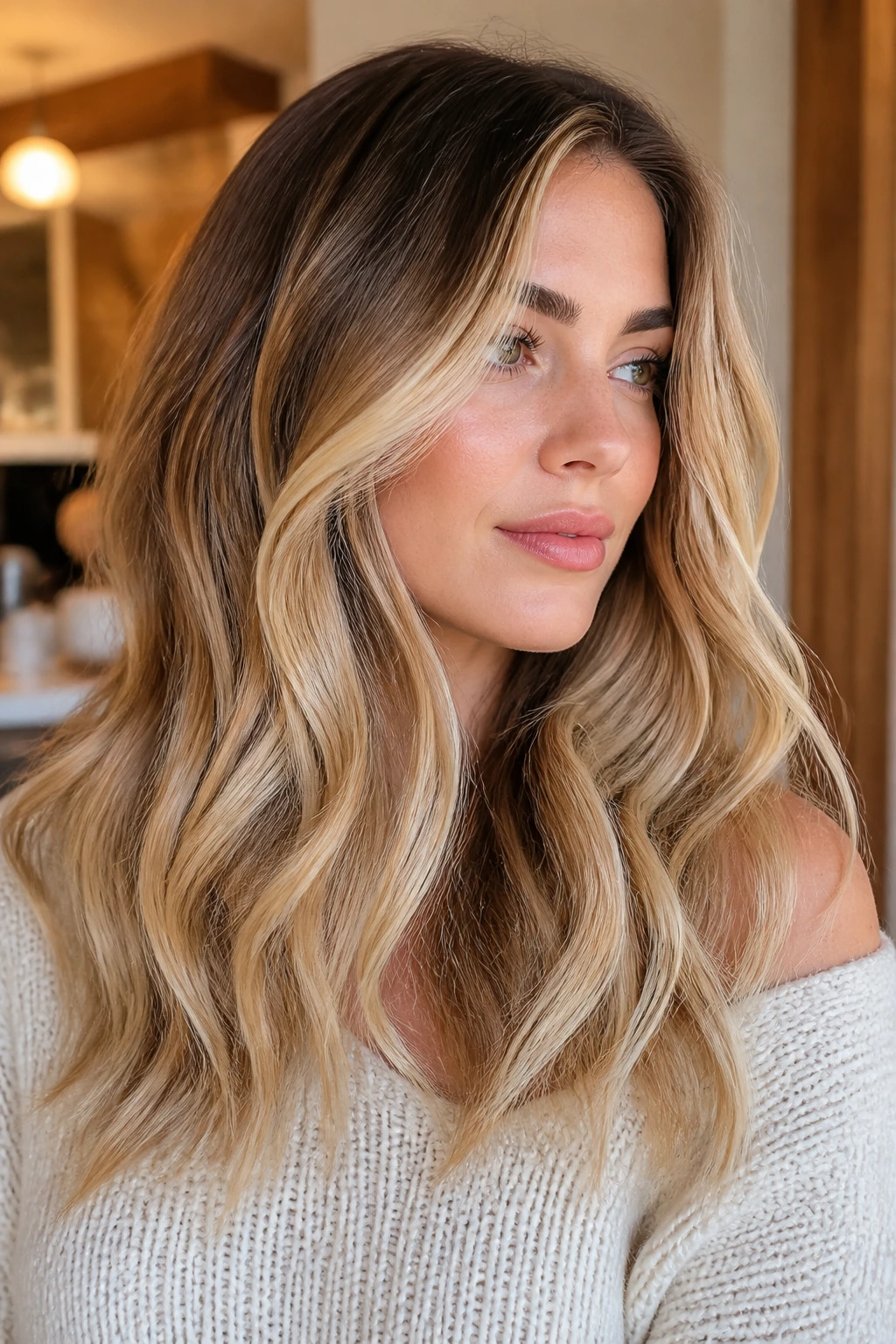
This is the blonde for people who want depth to stay visible. Vanilla latte balayage mixes creamy blonde ribbons with a softly shaded base, so the hair looks layered rather than stripped. The name sounds cozy because the color really is: milky, beige, and just warm enough to feel soft under winter light.
I reach for this look when a client wants blonde but doesn’t want the maintenance bill that comes with going very pale. Balayage placement lets the color live through the ends while the top stays grounded. The result is polished without being fussy. Good hair, not precious hair.
The best part is how well it sits with darker winter wardrobes. Black sweaters and navy coats can make ultra-pale blonde look a little disconnected. Vanilla latte has enough depth to sit beside those colors and still feel connected to the person wearing it.
If you want a low-drama blonde that still looks intentional in photos, this is a strong pick. Keep the gloss creamy, not buttery, and the whole style stays in that refined lane.
14. Silver-Butter Blonde Curls
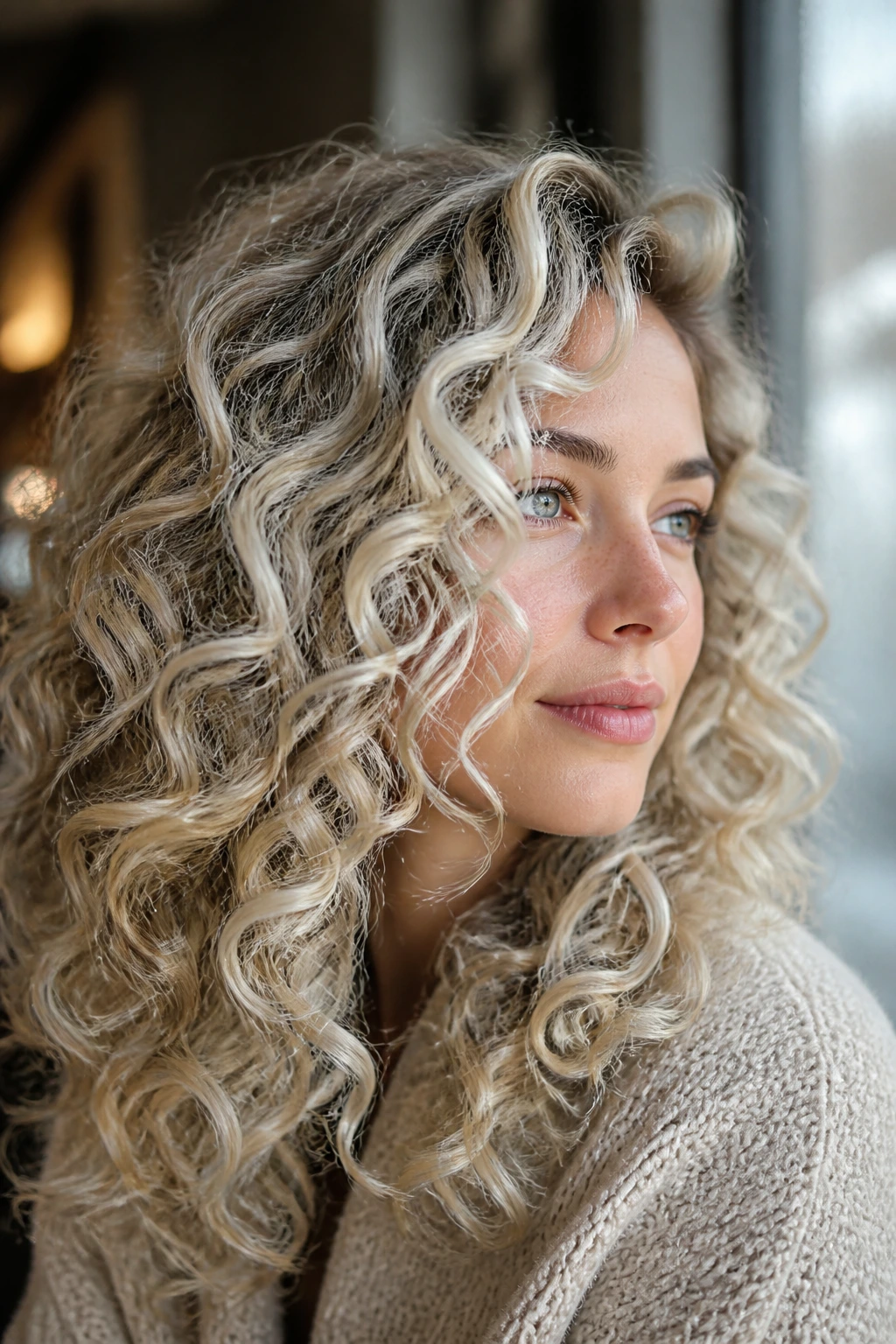
Curly hair needs a different blonde strategy. The curl pattern eats light, so you often need more contrast than you would on straight hair. Silver-butter blonde works because the cooler silver pieces lift the shape, while the buttery pieces stop the curls from looking flat or metallic.
This is one of the few winter blondes where mixed tone is a feature, not a compromise. The curls do the blending for you. A solid single-tone blonde can disappear inside a dense curl pattern, but silver-butter highlights catch along the bends and make the shape readable from across the room.
What to tell your colorist
Ask for strategic lightening on the outer curve of the curl, not just the surface. The placement should follow the curl’s movement so the highlight shows when the hair springs back. That tiny detail matters more than chasing a brighter blonde.
A little warmth in the mix helps keep the silver from looking icy in a bad way. The goal is shimmer, not frostbite.
15. Soft Champagne Bob
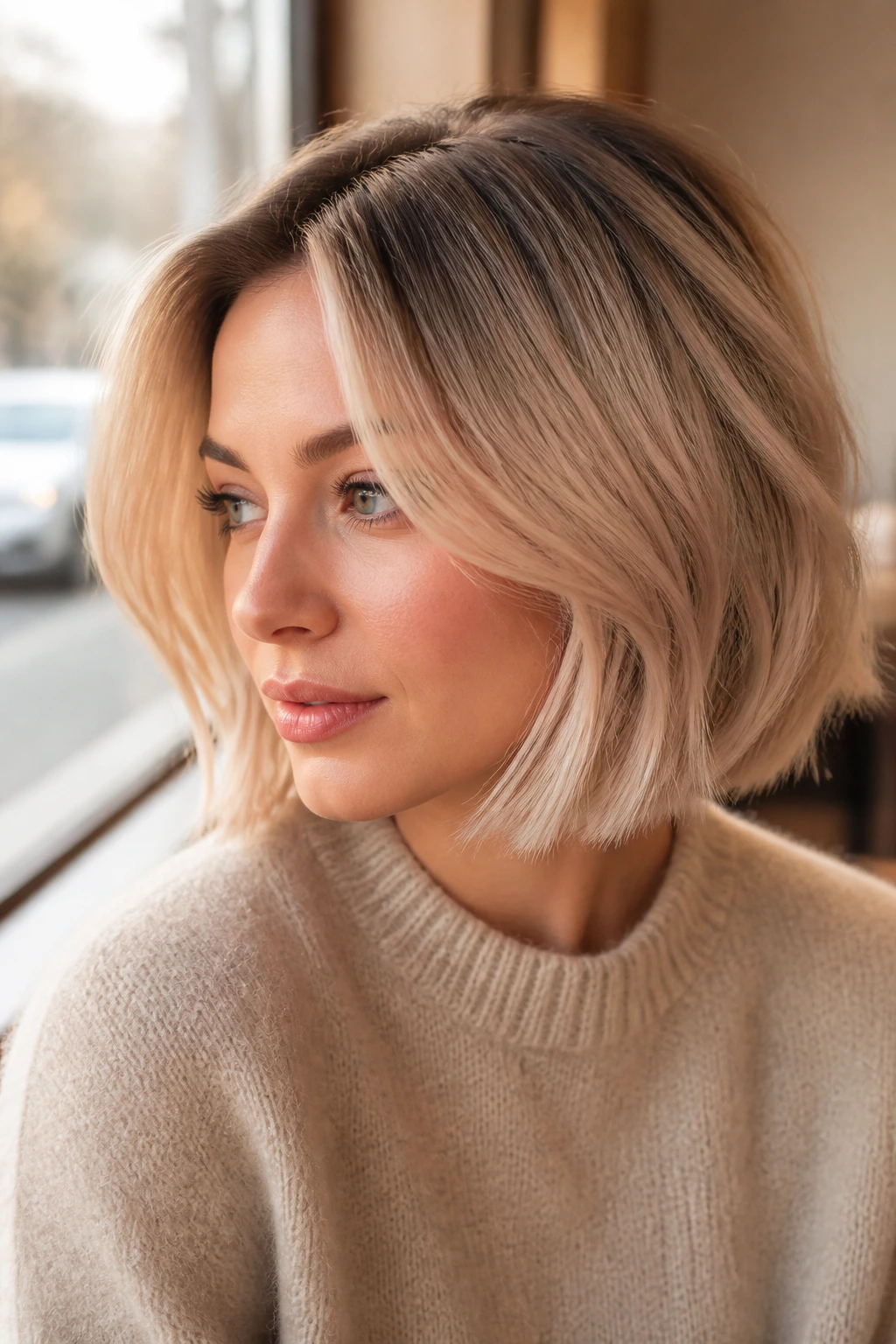
A bob in soft champagne blonde has a different mood from icy platinum. It’s lighter than beige, warmer than pearl, and far easier to wear with everyday makeup. The color has enough glow to wake up the face, but it does not shout for attention every time you pass a mirror.
The cut helps. A bob is already tidy, so a soft champagne tone keeps the style from feeling severe. The best version has a gentle root fade and a gloss that leans creamy rather than gold. That combination gives the hair a polished surface without making it look like the sun got stuck in it.
What the gloss does
The gloss is doing two jobs: it cools down any yellow that sneaks in, and it gives the cut that smooth, reflective finish people mistake for natural shine. On a bob, that matters more than on long hair because there’s nowhere for bad tone to hide.
If your skin tends to look pink in winter, champagne blonde is one of the kinder shades. It brings warmth without pulling orange.
16. Toasted Almond Ribbon Blonde
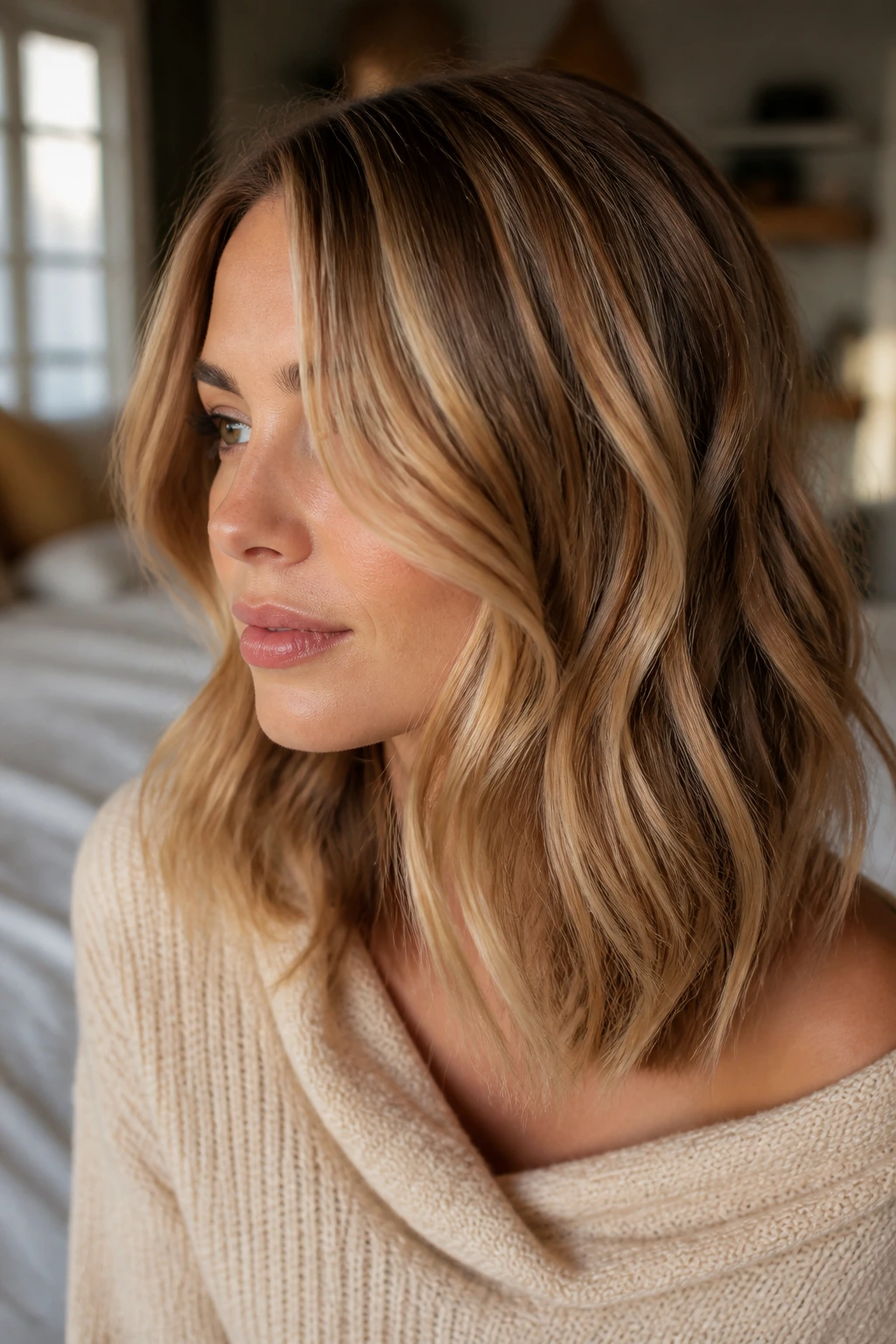
Can blonde look wintery and still feel warm? Absolutely. Toasted almond ribbon blonde gets there by weaving soft beige-gold ribbons through a deeper almond base. The result is lighter than brunette, darker than a classic blonde, and very easy to live with when you’re not in the mood for high contrast.
The texture of the hair matters here. On straight hair, the ribbons read clean and subtle. On waves, they pick up movement and create the kind of depth that keeps the style from feeling flat. I prefer this look on shoulder-length cuts or long layers because the ribbons need room to stretch.
It’s also a good bridge shade if you’re growing out darker roots or moving from brunette toward blonde in stages. The almond note keeps things grounded, and the blonde pieces brighten the overall effect without forcing a big leap.
Ask for more ribbons near the surface and fewer near the ends if you want the color to stay soft. Too much blonde at the bottom can make the melt feel disconnected.
17. Snowlight Platinum with Shadow Root
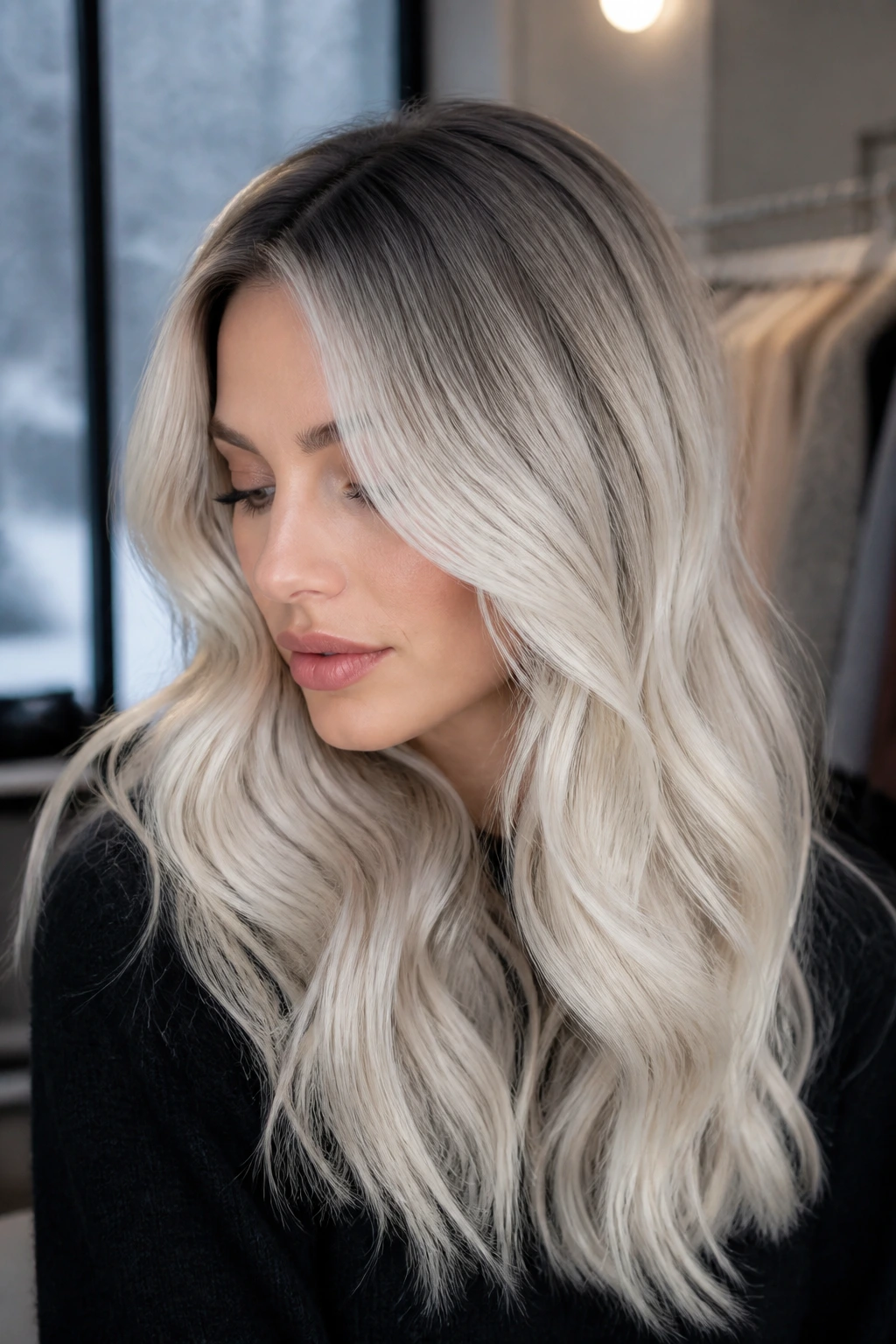
There’s no hiding with this one. Snowlight platinum is for people who like pale blonde that announces itself from the first glance. The shadow root is what saves it. Without that darker base, the color can look harsh in winter light and grow out in an ugly, obvious stripe.
The best version feels almost frosted, but not dry. That’s a fine line. You want the ends light enough to read as platinum, then softened just enough with a cool gloss so the finish has sheen rather than a flat white cast. On longer hair, the shadow root gives the eye something to land on before it gets to the brightest part.
This shade works best when the haircut has some movement. Long layers or a sleek lob keep the growth line from looking blocky. It also benefits from regular masks because platinum shows dryness faster than almost any other blonde.
If you’ve ever loved the look of pale white-blonde but hated the maintenance panic, this is the version worth considering. The root shadow is not a cheat. It’s the whole reason the color keeps breathing.
18. Frosted Caramel Balayage
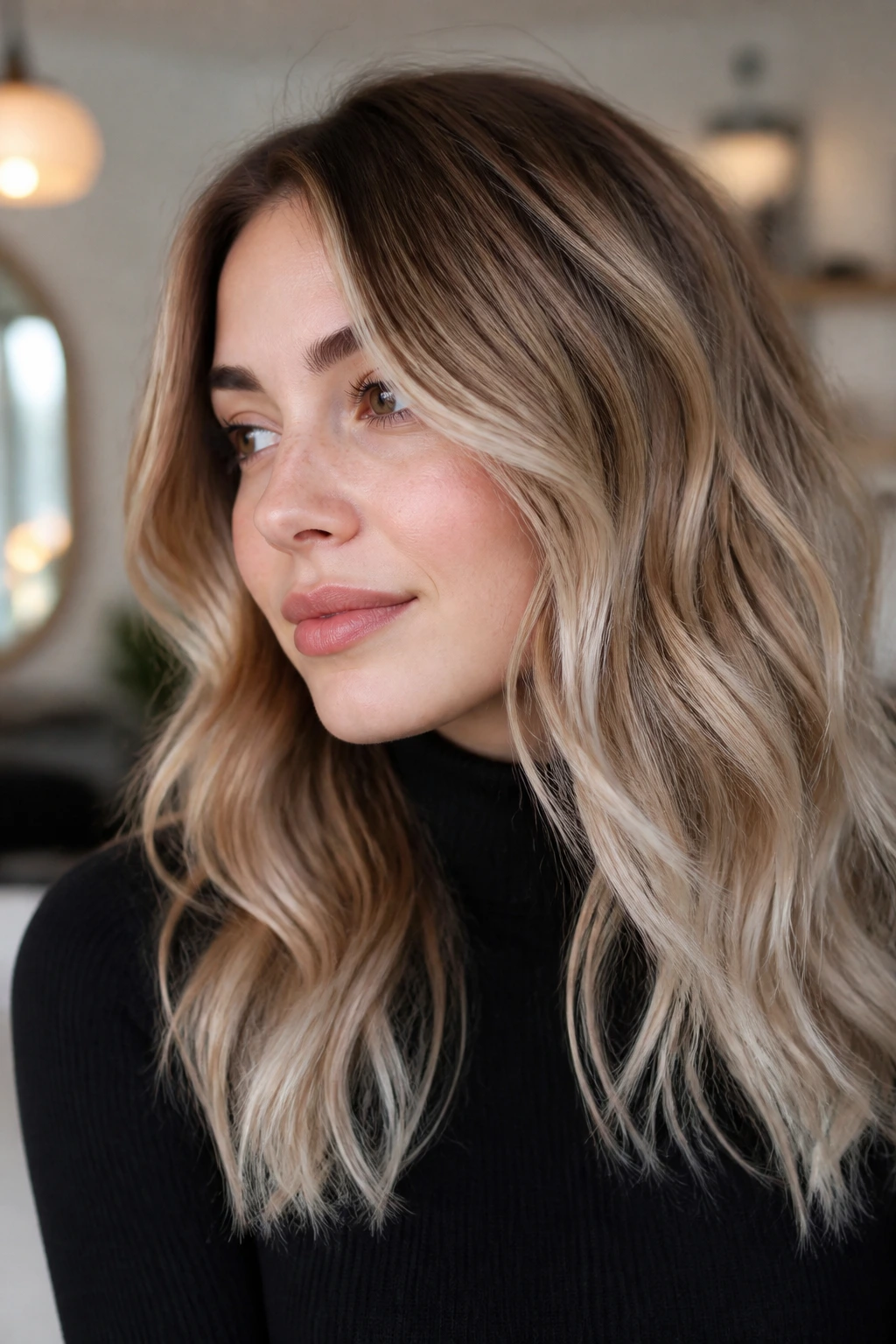
Frosted caramel balayage takes the warmth of caramel and cools it down just enough to fit winter. That subtle frosted finish stops the color from looking sticky or too sweet. It’s a useful choice if your base is medium brown or dark blonde and you want dimension without pushing into high-lift territory.
The contrast here is gentler than in a classic blonde highlight job. Pieces are painted so the caramel sits in the midlengths and ends, with cooler overlay tones keeping the overall look balanced. The result is depth first, blonde second. That matters when you want the color to feel grown-up instead of loud.
This is also one of the most forgiving options for people who wear a lot of black, navy, or charcoal. The warm base keeps the hair from disappearing, and the frosted tone prevents the whole thing from looking red or coppery under indoor bulbs.
If you’ve tried warmer blondes before and found them too orange on your hair, ask for a toner that cuts the heat. Small adjustment. Big difference.
19. Linen Blonde Babylights
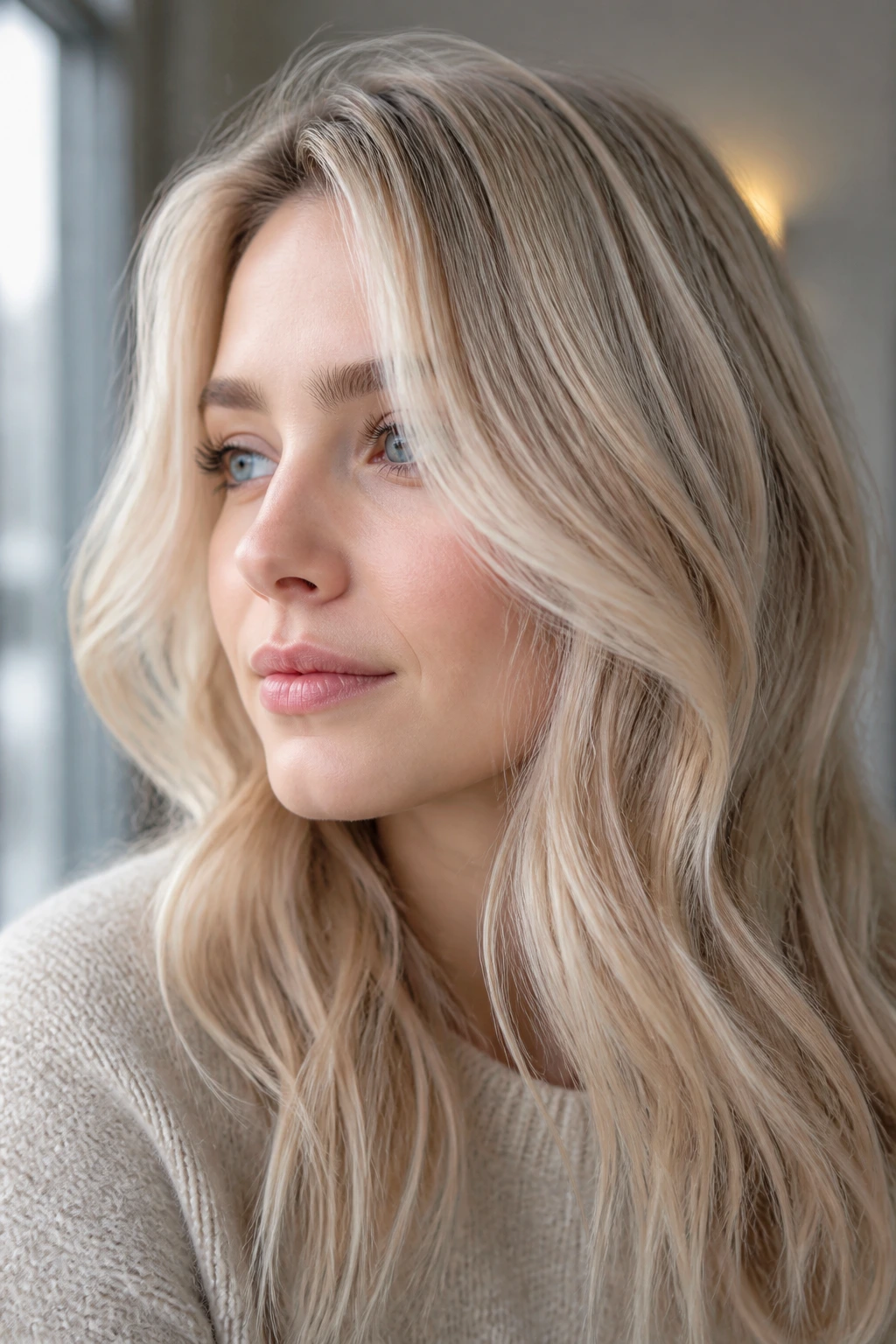
Linen blonde babylights are for the person who likes a whisper rather than a shout. The pieces are so fine they almost blur into the base, which gives the hair a soft, woven look. The color sits in that pale beige zone where it feels light but not bleached to death.
This is one of my favorite winter options for fine hair because the micro-lightening creates depth without making the ends look sparse. Babylights also age well. They grow out softly, and they don’t leave you staring at a sharp stripe at the part line three weeks later.
Why the micro-placement matters
Very thin highlights mimic the kind of brightness hair gets naturally when light hits it in different places. That’s the whole advantage. You get shimmer, not blocks.
- Best on medium or fine hair
- Ask for fine foils or micro-babylights
- Pair with a neutral beige toner
- Refresh the tone every 6 to 8 weeks if your hair is porous
If you want a blonde that looks gentle in winter and still has enough contrast to show movement, this is the quiet winner.
Why Winter Light Changes Blonde Shade
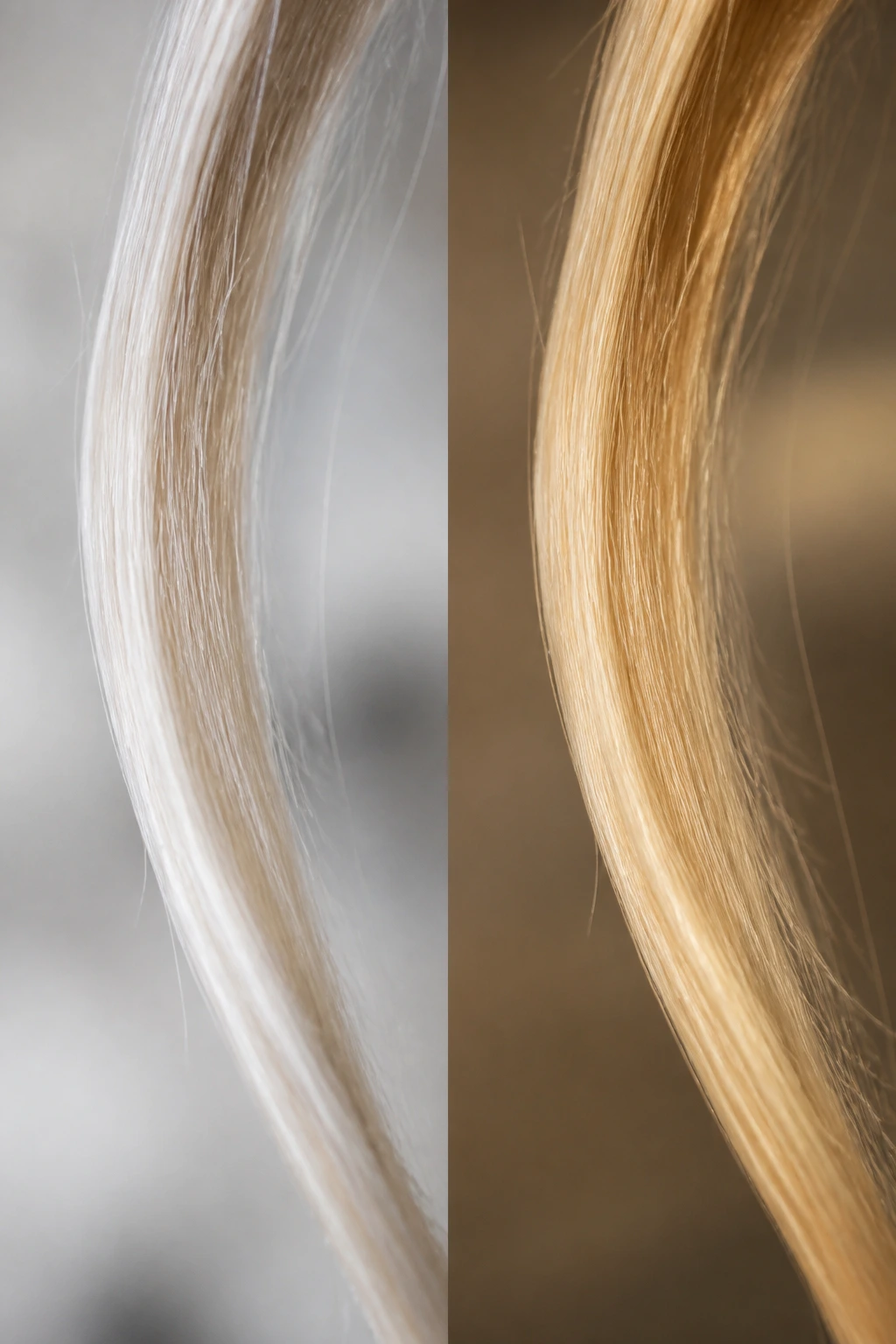
A blonde that looks bright in one room can look flat in another. That’s not a flaw in the colorist’s work. It’s the lighting. Winter daylight is often cool and diffuse, which can make very pale or very yellow blondes lose their shape. Indoors, overhead bulbs do their own damage — some push brass, some wash out tone, and some do both at once.
That’s why neutral and cool shades matter more when the weather turns. Beige, pearl, ash, mushroom, and soft champagne all have a little resistance built into them. They don’t panic under bad light. Warm shades can work too, but they need clean placement and the right gloss or they drift orange fast.
Hair texture changes the effect as well. A smooth bob throws a sharper reflection, so tone reads more clearly. Curls scatter light and need stronger contrast to avoid disappearing. Fine hair usually benefits from babylights or soft ribbons because the color looks fuller when it isn’t chopped into large stripes. Thick hair can take deeper roots and more visible dimension without looking heavy.
One more thing. Winter clothes are dark. That changes the whole frame around your face. A blonde that looked balanced with summer cotton suddenly sits next to wool, leather, and heavy knits. That’s why the best cold-weather blondes usually have one of three things: depth, shine, or a bright front frame. Without one of those, the shade can lose the fight.
What to Ask For at the Salon
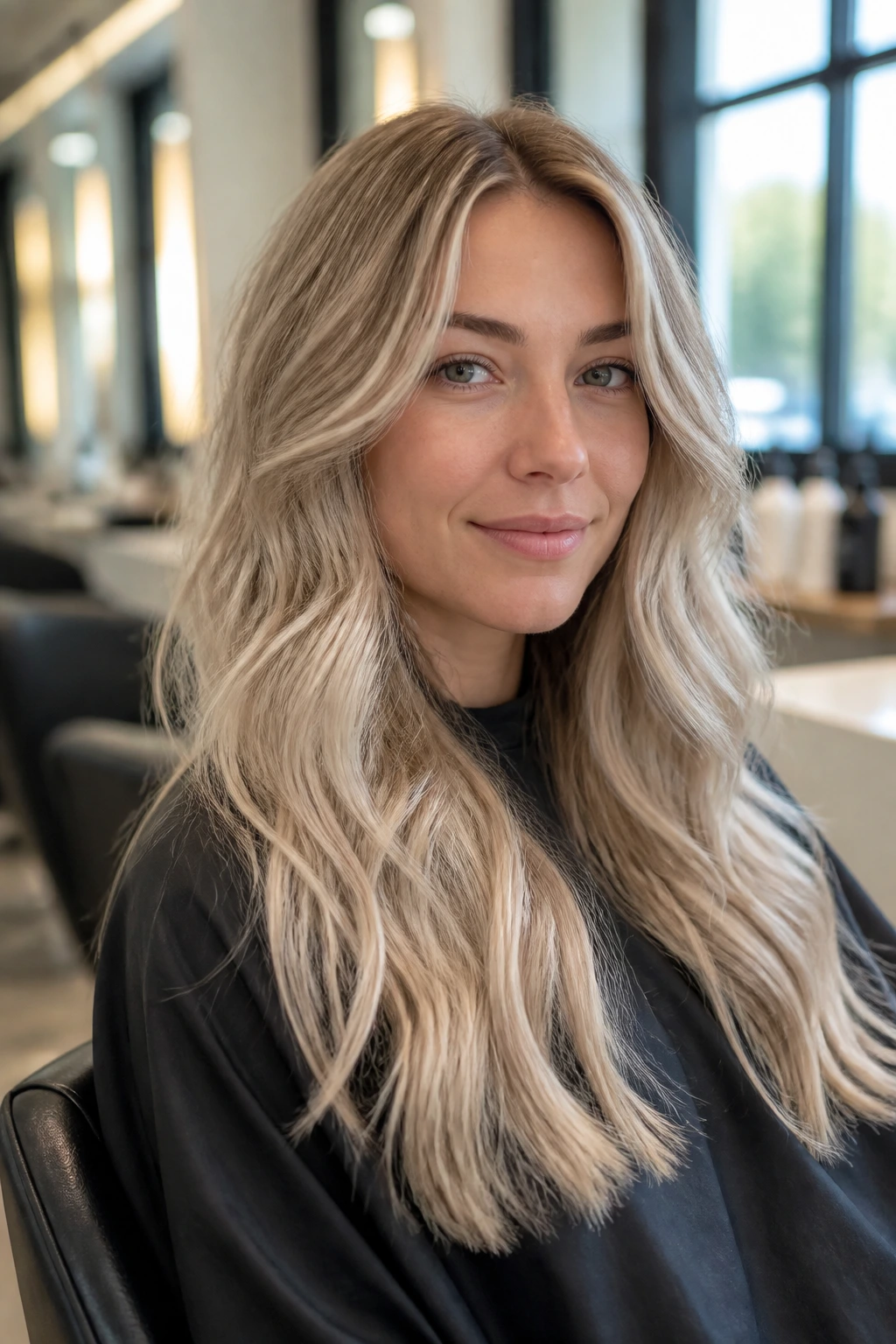
The best blonde conversations start with tone, not with the word “blonde.” That sounds obvious, but people walk in asking for light hair and walk out with a color that’s too warm, too flat, or too expensive to maintain. Bring photos, yes, but also say what you want the hair to do.
If you want low maintenance, ask for a root shadow, balayage, or babylights. If you want more drama, ask for face-framing brightness or a fuller lift through the ends. If you want the blonde to look winter-friendly, use words like beige, pearl, champagne, smoky, or mushroom. Those words tell the colorist you care about tone, not just brightness.
Tell them how often you’ll sit in the chair. Seriously. That matters. A beautiful icy blonde that needs constant toning is a bad fit if you can only make it in every couple of months. A softer blonde with deeper roots may look more expensive for longer because the grow-out doesn’t start screaming at you after two washes.
Also mention your styling habits. If you heat-style a lot, the ends may need a gentler lift. If you air-dry, your colorist may want to place highlights differently so the shade still has movement when the hair dries on its own.
Essential Tools for Blonde Care
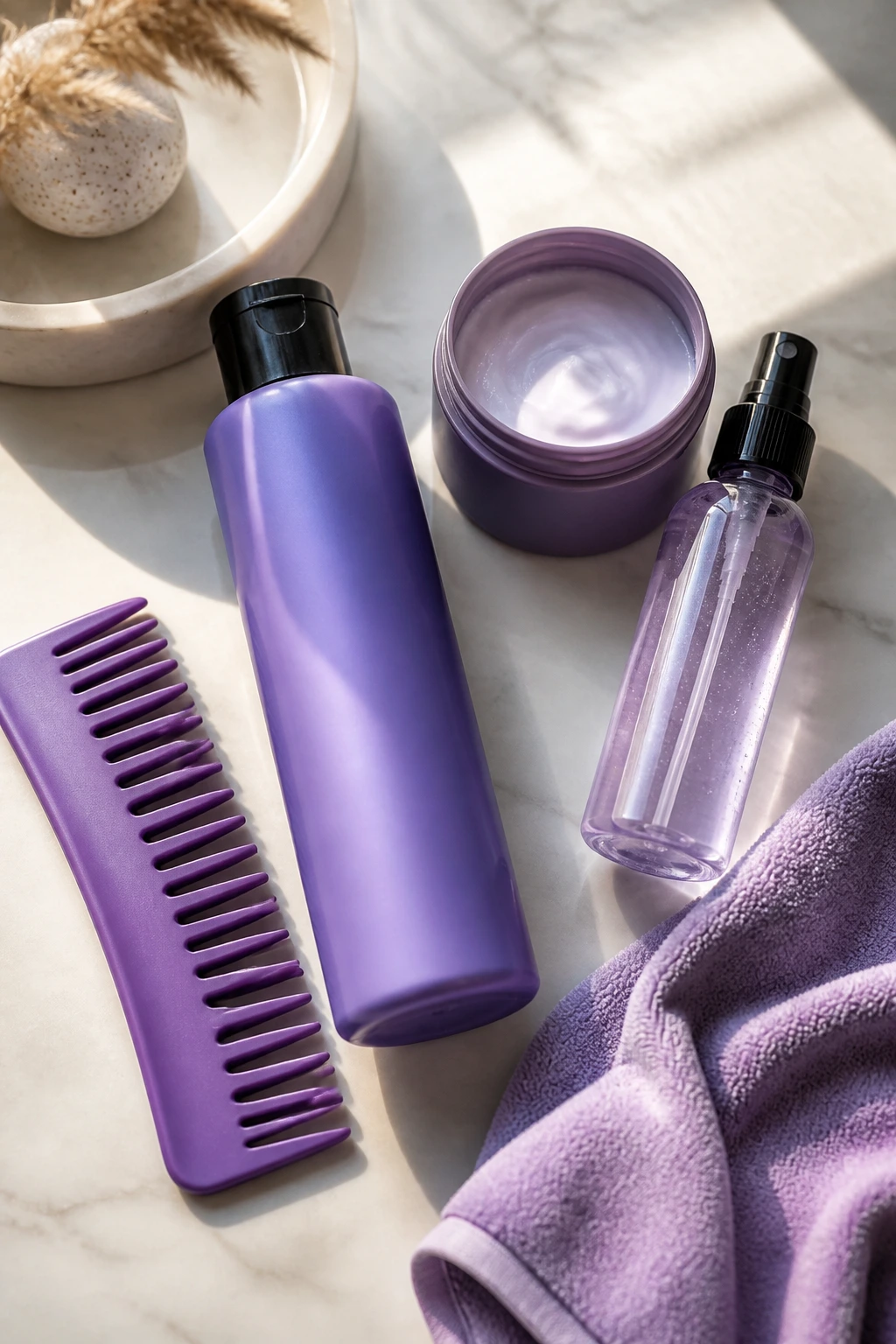
- Color-safe shampoo: Use a sulfate-free formula if your blonde fades quickly; harsh cleansers strip toner faster than people expect.
- Purple or blue shampoo: Purple helps yellow blondes; blue is better when your hair tends to pull orange or copper.
- Deep-conditioning mask: Pick one with slip and moisture so the ends stop looking rough between glosses.
- Heat protectant spray: Blonde hair shows heat damage fast, especially on pale ends and face-framing pieces.
- Wide-tooth comb: Less breakage, less snapping through wet blonde hair, which is often more fragile after lightening.
- Microfiber towel or cotton T-shirt: Rough towels can rough up the cuticle and make blonde look fuzzy.
- Shower filter: Optional, but useful if your water is hard and your blonde keeps getting dingy.
- Bond-repair treatment: Handy if your hair has been lightened more than once and feels stretchy when wet.
- Root clip or sectioning clips: Makes toning masks and at-home treatments easier to apply evenly.
- Glossing appointment schedule: Not a tool, technically, but it belongs on the list because a blonde without a gloss plan tends to wander warm.
Smart Shopping for Shampoo, Toner, and Masks
A blonde is only as tidy as the products you use on it. That doesn’t mean buying everything labeled “blonde.” Half of those bottles are too strong for porous hair and too weak for yellowing hair. You need the right kind of help for the problem in front of you.
If your blonde turns yellow, reach for a purple shampoo with a gentle formula and use it once every few washes, not daily. If your blonde slides orange or copper, a blue-toned shampoo is usually the better call. On very pale blondes, use either one sparingly. Over-toning is real, and it can leave hair looking dusty or violet-gray.
For masks, look for ingredients that actually smooth the hair shaft — things like ceramides, amino acids, and light oils. Heavy butter-rich masks can be too much for fine blondes and leave the hair limp. If your hair is coarse or highly bleached, a richer mask can help, but keep it off the roots unless the scalp is dry.
Glosses and toners should be chosen with the salon in mind. Beige glosses keep winter blondes soft. Pearl glosses calm yellow without making the hair look flat. Ash glosses are useful when warmth keeps creeping back in, but they can make porous hair go smoky too fast. The answer isn’t “cooler is better.” The answer is matching the toner to the hair’s actual behavior.
How to Wear These Shades in Real Life
With a sharp haircut:
Icy bobs, soft champagne bobs, and Nordic platinum pixies look strongest when the cut is crisp. The shape carries the color, and the color carries the cut. If the line is blurry, the blonde starts looking accidental.
With waves and layers:
Champagne balayage, toffee melts, and vanilla latte ribbons need movement. A loose wave or a layered blowout breaks up the color so the different tones can show up. Too much stiffness makes the hair read as one note.
With makeup:
Cooler blondes often look better with a little definition in the brows and lashes, because pale hair can pull the face out of focus. Warmer blondes can handle softer brow tones and peachier blush. Nothing dramatic. Just enough contrast so the hair doesn’t do all the work by itself.
With winter clothes:
Black, charcoal, navy, and camel all change how blonde reads. Pale shades pop against dark fabric. Soft beige and mushroom shades feel more blended and calm. If your wardrobe is mostly dark, a brighter front frame or a gloss with more sheen can keep the hair from vanishing into the coat rack.
Additional Tips and Color Boosters
Tone First, Brightness Second: A level 10 blonde with bad tone can look worse than a level 8 blonde with a good gloss. If you can only fix one thing, fix the tone.
Keep the Root Deliberate: A root shadow is not a mistake. It gives the color shape, buys you time, and keeps the blonde from turning into a high-maintenance line of demarcation.
Use Heat Less Often Than You Think: Blonde hair shows heat damage fast. If you can air-dry just the ends or use a lower setting on the dryer, the color stays smoother longer.
Think in Ribbons, Not Blocks: Especially for winter, the nicest blondes usually have movement built in. Micro-babylights, face framing, and soft balayage all look better than one broad stripe of light.
Make It Yours: If your skin looks pink in cold weather, keep some warmth in the blonde. If you go sallow easily, add pearl or beige so the color doesn’t turn muddy beside your face.
Mistakes That Make Blonde Look Dull
Going too yellow and calling it warm.
Warm is not the same as brassy. If the hair starts to look like banana peel under bathroom light, the toner has drifted too far. Ask for beige or honey-beige, not strong gold.
Lifting too high with no root depth.
Blonde from scalp to ends can look expensive in a photo and tiring in real life. Without some depth, the hair may feel flat, especially in winter clothes.
Overusing purple shampoo.
A little goes a long way. Too much can leave porous blonde hair gray, dull, or faintly lavender. Use it like a correction, not a daily soap.
Ignoring the haircut.
A shade that’s perfect on a bob may look limp on long, heavy hair. A shag can make beige blonde look cool and modern; the same tone on a blunt waist-length cut may need more contrast.
Skipping moisture because you’re afraid of weight.
Dry blonde hair loses shine fast. Use lighter masks if your hair is fine, but do not skip conditioning altogether. Dry ends make even the best tone look tired.
Not telling the colorist how often you’ll come back.
A high-maintenance platinum is a bad fit if you want a 10-week salon gap. Be honest. The color should fit the calendar, not the other way around.
Variations and Alternatives
The Low-Maintenance Melt
If you love blonde but hate frequent touch-ups, lean toward rooty balayage, bronde melts, or babylights with a soft shadow root. These grow out quietly and still look finished at week eight or ten.
The High-Contrast Winter Blonde
Prefer a bolder look? Choose platinum bobs, bright money pieces, or a frosted front frame against a deeper base. The contrast gives the color edge, but it also demands tighter upkeep.
The Warm-Skin Rescue Version
If cool blondes make your complexion look drained, move toward honey, vanilla latte, or soft champagne. These shades add color back to the face without swinging into orange.
The Curly-Hair Adaptation
Curls need placement that follows the curl pattern, not random striping. Silver-butter, frosted caramel, and fine babylights tend to work better because the contrast shows inside the curl rather than sitting on top of it.
The Grow-Out-Friendly Brunette Bridge
If you are shifting from brunette to blonde, toffee bronde and mushroom blonde are easier transitions. They let you see lightness without forcing a stark line or a major maintenance plan.
How to Keep the Color Fresh Between Appointments
A winter blonde can stay clean-looking for weeks if you treat it like a finished color, not a one-time event. The first job is washing less often than you think you should. Two to three washes a week is plenty for most blondes, and dry shampoo can handle the in-between days without turning the root dusty.
Glossing matters more than people admit. A salon gloss every 4 to 8 weeks keeps beige, pearl, and champagne shades from sliding yellow or muddy. Platinum and high-lift blondes often need the shorter end of that range. Rootier balayage can usually stretch farther because the color design is doing some of the work.
Use purple shampoo when the blonde starts looking tired, not as your default shampoo every wash. If your hair is porous, leave it on for a short time — often 1 to 3 minutes is enough. Longer can be too much. Follow with a moisturizing mask once a week if the ends feel rough or your fingers snag when the hair is wet.
Heat styling should be gentle. A protectant spray before every blow-dry or curling pass is not optional on pale hair. Keep tools around 300°F to 350°F if your hair is already lightened. Higher heat can make the cuticle rough, and once the cuticle starts to rough up, the color loses that clean shimmer that makes winter blondes look good in the first place.
If you can only visit the salon occasionally, choose looks with a built-in root shadow, babylights, or balayage. Those shades age more gracefully. They don’t punish you for living your life.
Frequently Asked Questions
Which winter blonde is easiest to maintain?
Beige blonde with a root shadow, toffee bronde, and babylights are usually the easiest. They grow out softly and don’t demand constant toning at the root.
Will icy blonde work if my natural hair is dark?
Yes, but not in one casual appointment unless your hair is already light. Dark bases often need staged lightening, and the condition of the hair matters as much as the target shade. A shadow root can make the final result look better while giving you some breathing room.
How do I keep blonde from turning brassy in winter?
Use the right shampoo for the type of brass you get, then get a gloss before the tone goes too far off track. Beige and pearl tones tend to behave better than strong gold if brass is your usual problem.
Is a root shadow a sign that the blonde is grown out?
No. When it’s done on purpose, a root shadow gives the blonde shape and makes the color look more expensive. Grown-out roots look accidental; a shadow root looks planned.
Can curly hair wear these blonde looks?
Absolutely. Curls often need stronger placement and more contrast, not less. Silver-butter, caramel balayage, and fine babylights can all work well when the highlights follow the curl pattern.
What if my blonde looks flat indoors but bright outside?
That usually means the tone is too light or too one-note. Ask for more beige, pearl, or lowlights so the hair has depth under cooler indoor bulbs.
How often should I tone winter blonde hair?
Many blondes need a gloss every 4 to 8 weeks, depending on porosity and how much brass shows up. High-contrast icy shades usually need more regular upkeep than softer beige or bronde looks.
Can I do a winter blonde without bleaching everything?
Yes. Face-framing highlights, balayage, and bronde melts can create the blonde effect without full-head lightening. That’s often the smarter route if you want dimension but don’t want to sacrifice too much condition.
What should I avoid if my hair is fragile?
Skip aggressive platinum lifts and heavy over-toning. Soft beige, champagne, and babylight placements usually give you a lighter look with less stress on the hair.
The Blonde That Still Works Under a Wool Hat
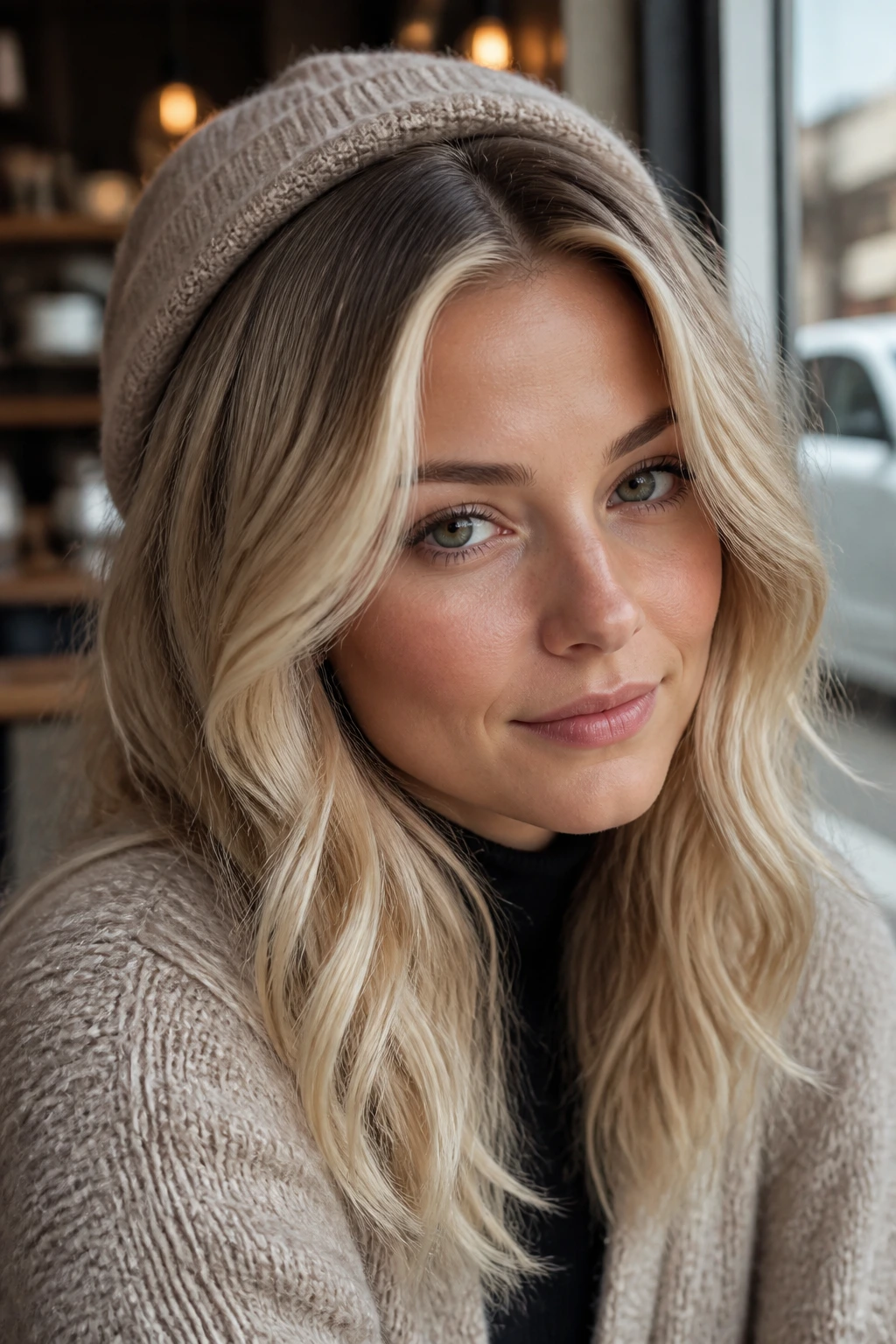
Winter blonde hair works best when it has more than brightness. It needs tone, shape, and a little common sense. A beige root shadow, a pearl gloss, a buttery front frame, or a smoky bronde melt can all survive cold weather better than a one-note pale blonde that’s fighting every scarf and sweater you own.
That’s the real test. Not whether the color looks pretty in a salon chair, but whether it still looks intentional after two days of dry air, static, and indoor heat. Pick the blonde that keeps its line, keeps its tone, and keeps a little depth at the root. That’s the shade that will still look good when you pull off your hat and step back into the cold.
