



Thin hair has a way of exposing bad color choices in a hurry. One chunky highlight, one muddy toner, one too-light slice around the part, and the whole head can start looking airy in the wrong way.
That’s why balayage looks for thin hair live or die on placement. The best versions don’t scatter blonde everywhere like confetti. They tuck brightness where the eye wants lift, leave enough depth behind it to keep the hair reading fuller, and use a soft root shadow so the scalp doesn’t shout through every part line. A few fine ribbons around the temples will do more than a whole panel of pale ends if the hair is sparse.
The styles below lean warm, cool, smoky, beige, honey, copper, and pearl. Some work better on bobs. Some love long layers. A few are built for straight strands that tend to lie flat, which is where balayage can either rescue the shape or flatten it further. The difference is rarely the blonde itself. It’s the map.
Why These Balayage Looks Work for Thin Hair
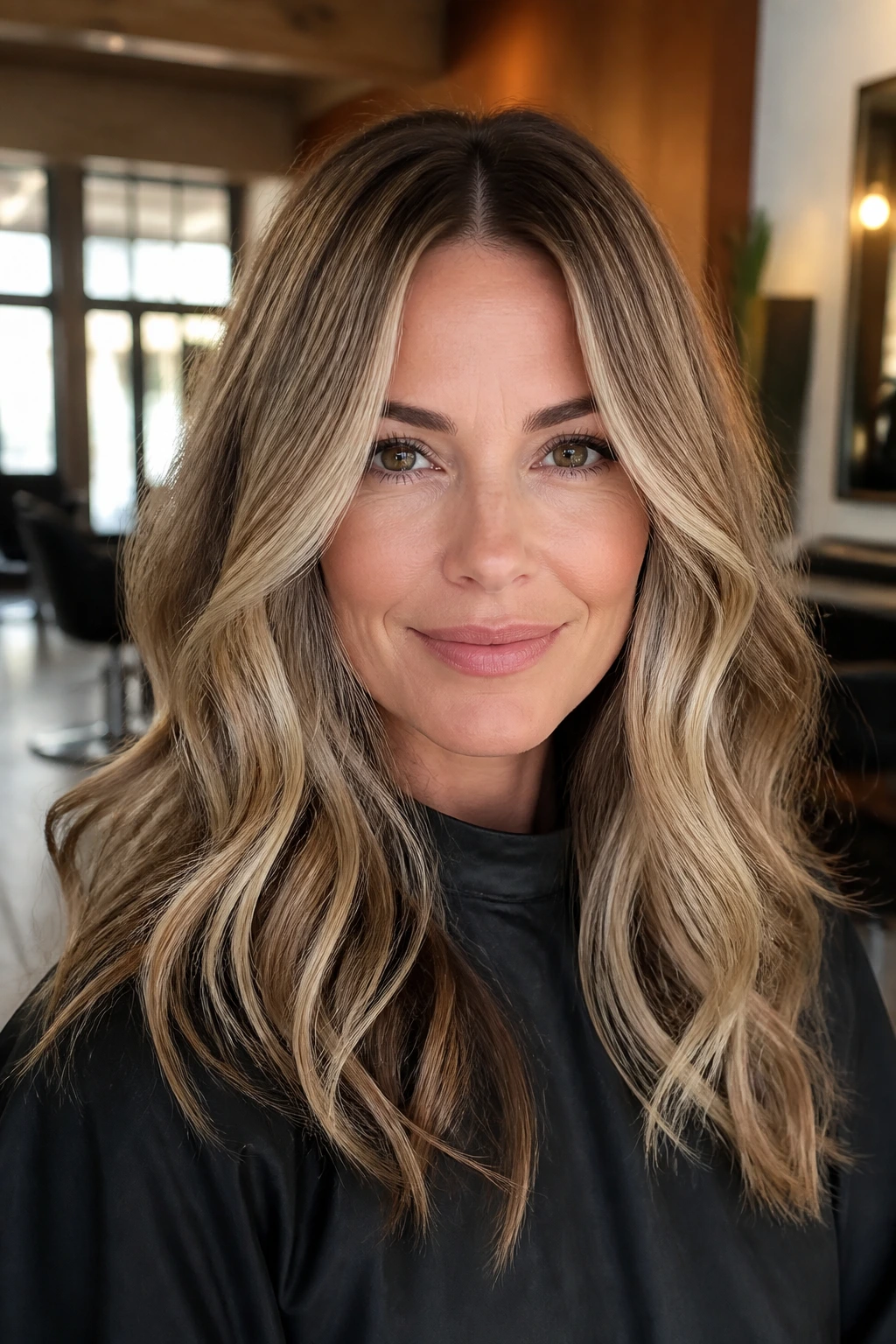
- They keep depth at the root: A slightly darker root stretch makes the hairline look denser, especially when the scalp shows through at the part.
- They use fine ribbons instead of big slices: Micro-painted pieces read like texture, not stripes, which is exactly what thin hair needs.
- They put brightness where the eye lands first: Temples, cheekbone level, and the top layer catch light without exposing every end.
- They grow out with less drama: Softer blends mean you’re not fighting a hard line six weeks later.
- They leave room for movement: Waves, bends, and even a blunt blowout show balayage better when the color isn’t overworked.
- They work across many densities: Fine strands and low-density hair do not need the same placement, and these looks make that distinction useful.
1. Soft Mushroom Bronde
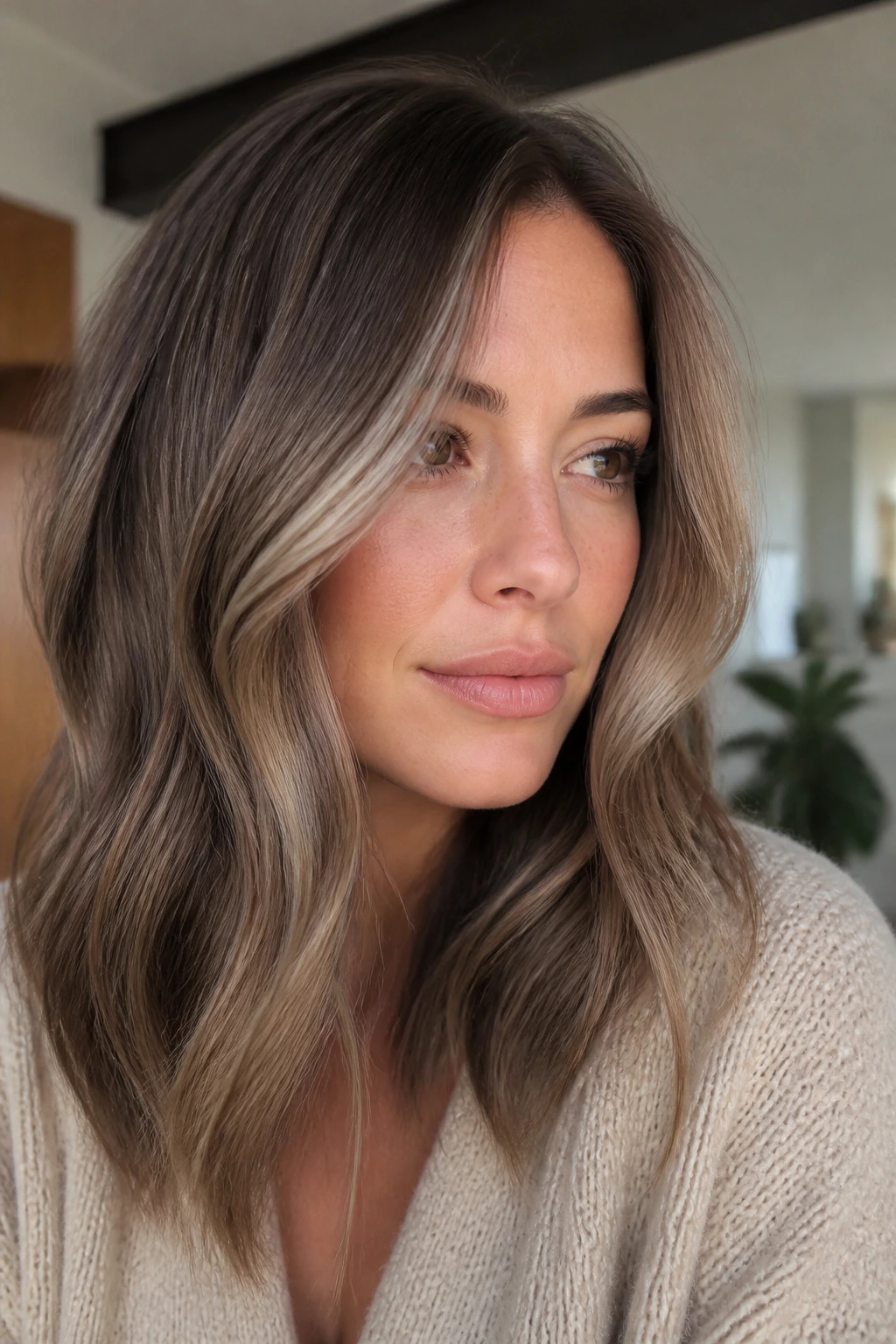
Soft mushroom bronde is the color I reach for when someone wants dimension without the sugar-rush brightness that can make thin hair look wispy. The base sits in that cool taupe-brown zone, then the balayage moves through beige and muted blonde instead of gold. It feels calm. Expensive, even when the haircut is simple.
The trick here is to keep the lightest ribbons on the upper layer and around the face, then leave the underneath a shade or two deeper. That little pocket of darkness gives the illusion of bulk. If the hair is straight, ask for a soft bend at the ends so the color doesn’t fall flat and disappear.
Why It Works on Fine Strands
Mushroom tones soften the contrast between root and length, so the scalp does not look stark. The cooler finish also helps if your hair pulls orange after lightening; you get the brightness without the brass.
What to Ask For
- Level 5 to 6 base
- Fine beige-taupe balayage ribbons
- A demi gloss rather than a permanent blonde
- Slightly deeper underneath layers
2. Vanilla Ribbon Balayage
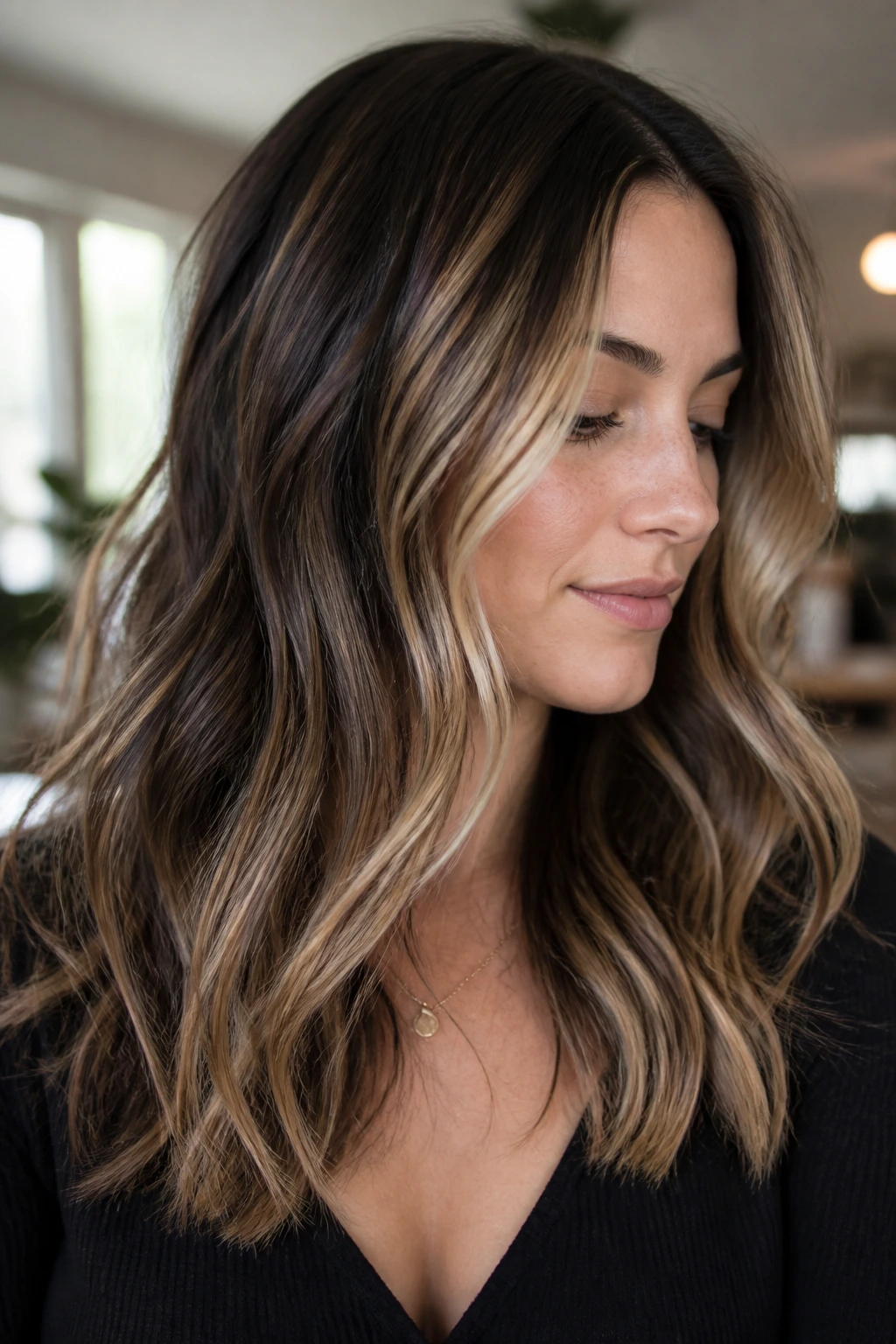
Vanilla ribbon balayage looks airy, but it only works on thin hair when the pieces stay narrow. Wide blonde panels turn stringy fast. Narrow ribbons, painted with a gentle hand, create movement that looks like more hair is actually there.
I like this one on medium brunettes who still want a soft blonde finish. The root stays warm-neutral, the mids lift to creamy beige, and the ends stop just shy of white. That last part matters. If the ends go too pale, thin hair starts showing every rough edge.
Best Styling Move
Loose waves with a 1-inch iron are enough. You don’t need a pageant curl. A soft S-bend makes the vanilla pieces look layered instead of pasted on.
Keep It From Going Flat
Use a lightweight volumizing spray at the roots and a pea-sized leave-in on the ends. Heavy oils make vanilla blonde look limp by lunchtime.
3. Caramel Veil on Chocolate Brown
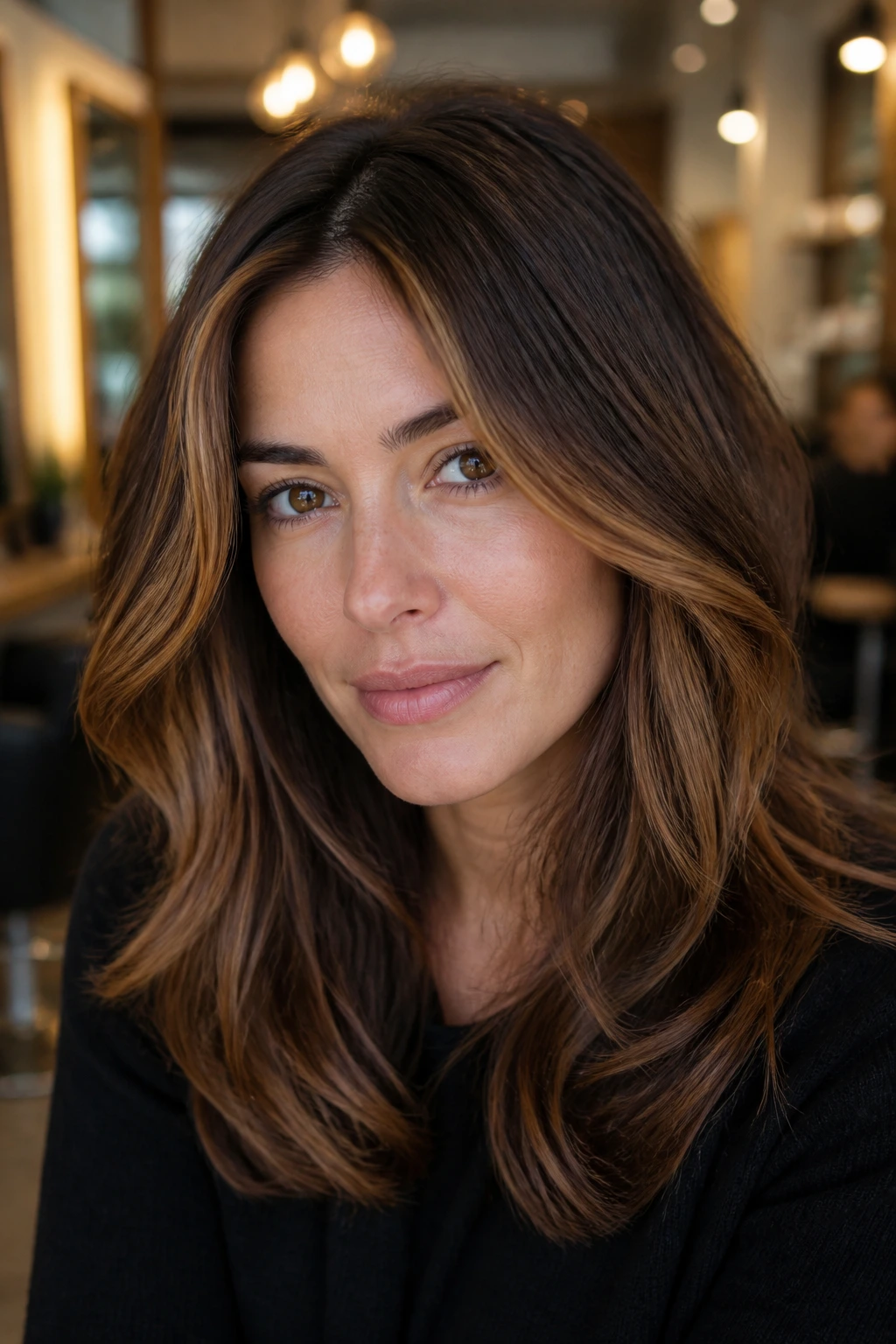
Caramel on chocolate brown is one of the safest balayage looks for thin hair because it adds warmth without blasting the whole head lighter. The effect is more like light moving through woven fabric than obvious streaks. You still see brunette, which is the point.
This look works especially well if your hair has a fine strand diameter but decent density. The caramel sits on the surface and around the face, while the darker chocolate underneath keeps the lengths from feeling see-through. If you’ve ever walked out of the salon with blonde ends that made your hair look frayed, this is the correction.
What Makes It Different
The warmth matters. Caramel reflects light fast, so the hair looks glossy even when the density is average at best.
Styling Note
A blowout with a round brush makes the caramel catch on the curve of the hair. Straightened to a sharp line, it can lose some of that softness.
4. Face-Framing Money Piece
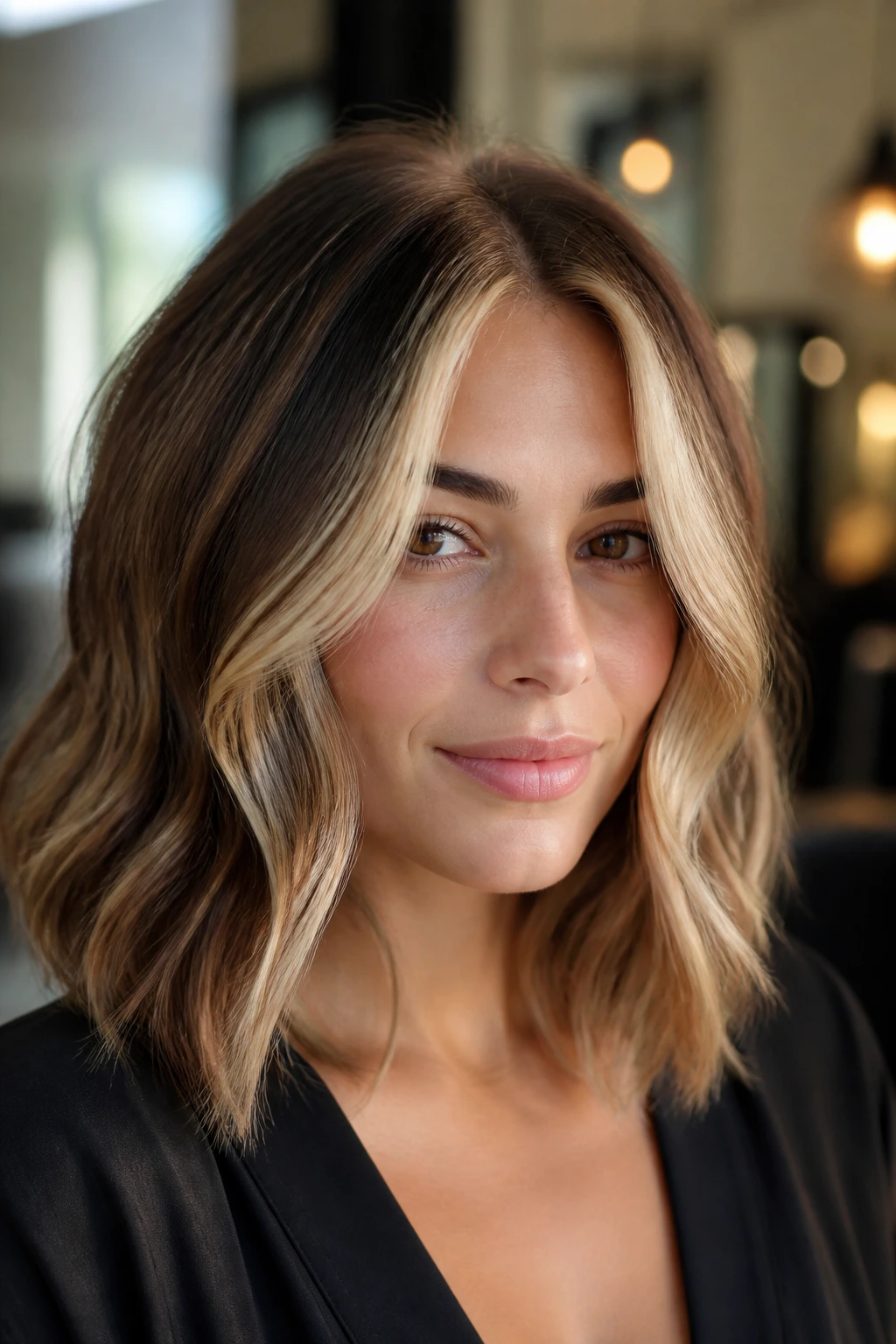
A money piece can rescue thin hair in one appointment if it’s done with restraint. The bright sections sit at the hairline, usually from the part down past the cheekbones, and the rest of the hair stays quieter. That gives you lift where people look first, without bleaching every inch of the head.
This is the look for someone who wants a visible change but doesn’t want to commit to a full blonde life. Keep the money piece one to two levels lighter than the rest of the balayage, not five. Too much contrast makes the front look like a separate wig line. Nobody needs that.
Best Pairing
Curtain bangs, long layers, or a collarbone-length cut all make this work harder. The pieces have room to blend instead of hanging like disconnected strips.
Pro Detail
Ask your colorist to soften the inner edge of the money piece with a feathered brush. Hard lines are the enemy here.
5. Rooty Beige Blonde
Rooty beige blonde is the quiet overachiever in the bunch. The root stays deeper, the mids are a soft biscuit-beige, and the ends are bright enough to lift the whole head without turning the hair brittle-looking. It’s a good answer when you want blonde, but not the kind that shows every sparse spot.
This shade is especially kind to thin hair because the root shadow acts like an optical anchor. The eye reads the top as fuller, then follows the beige sweep downward. If the blonde is too icy or too white, the illusion breaks. Beige keeps it believable.
How to Wear It
Wear it with a loose wave or a low, brushed-out bend. The root stretch looks strongest when the hair moves a little.
Avoid: full-volume teased roots. They make thin hair look like it’s trying too hard.
6. Smoked Hazel Balayage
Smoked hazel balayage is for people who like brown hair with a little mystery. The lighter pieces sit in a hazelnut and ash mix, not gold, and the whole head reads as dimensional rather than bright. It’s an especially useful look on hair that tends to look flat in indoor light.
I like this one because it doesn’t ask thin hair to pretend it’s denser than it is. It works with the base. The darker pieces stay visible, and the lighter hazel ribbons create a soft break in the surface so the hair catches light in patches instead of one uniform sheet.
Quick Style Cue
A side part helps. So does a bend at the mid-lengths. The movement lets the hazel pieces peek through without needing high contrast.
Best For
Brunettes who hate brass and don’t want constant toning. The hazel range usually grows out more politely than a cooler ash blonde.
7. Honey Wheat Waves
Honey wheat waves are a warmer answer for thin hair that looks a little pale or drained when left brown. The honey sits between gold and beige, which means the color looks bright without getting loud. On wavy hair, it catches the peaks of the wave and leaves the valleys darker. That’s where the fullness comes from.
This look is better than straight-up blonde when the ends are fine. Honey gives the illusion of softness and thickness at the same time. If your hair pulls red or orange, ask for a cooler honey-beige blend so it doesn’t skew brassy after a few washes.
What to Ask Your Colorist
A soft root tap, honey mids, and lighter face-framing pieces. Nothing chunky. Nothing frozen in place.
8. Espresso Melt with Soft Ends
An espresso melt keeps the top dark and glossy, then lets the ends lighten just enough to avoid a heavy curtain effect. Thin hair often looks best when it still has some darkness in it, and this is one of the cleanest ways to do that. The finish feels rich, not flat.
The melt matters more than the lightness. If the transition is smooth, the eye sees depth. If the transition is blunt, the hair starts looking sliced. I prefer this look on longer hair, where a deep root and softer ends can give the impression of a thicker sheet of color.
Style It Like This
Use a smoothing cream at the mids and a soft wave through the bottom third. The contrast shows better when the ends move.
Watch For
If your ends are already fragile, keep the lightening only one or two levels below the root. You want a melt, not a fade-out.
9. Pearl Blonde Whisper
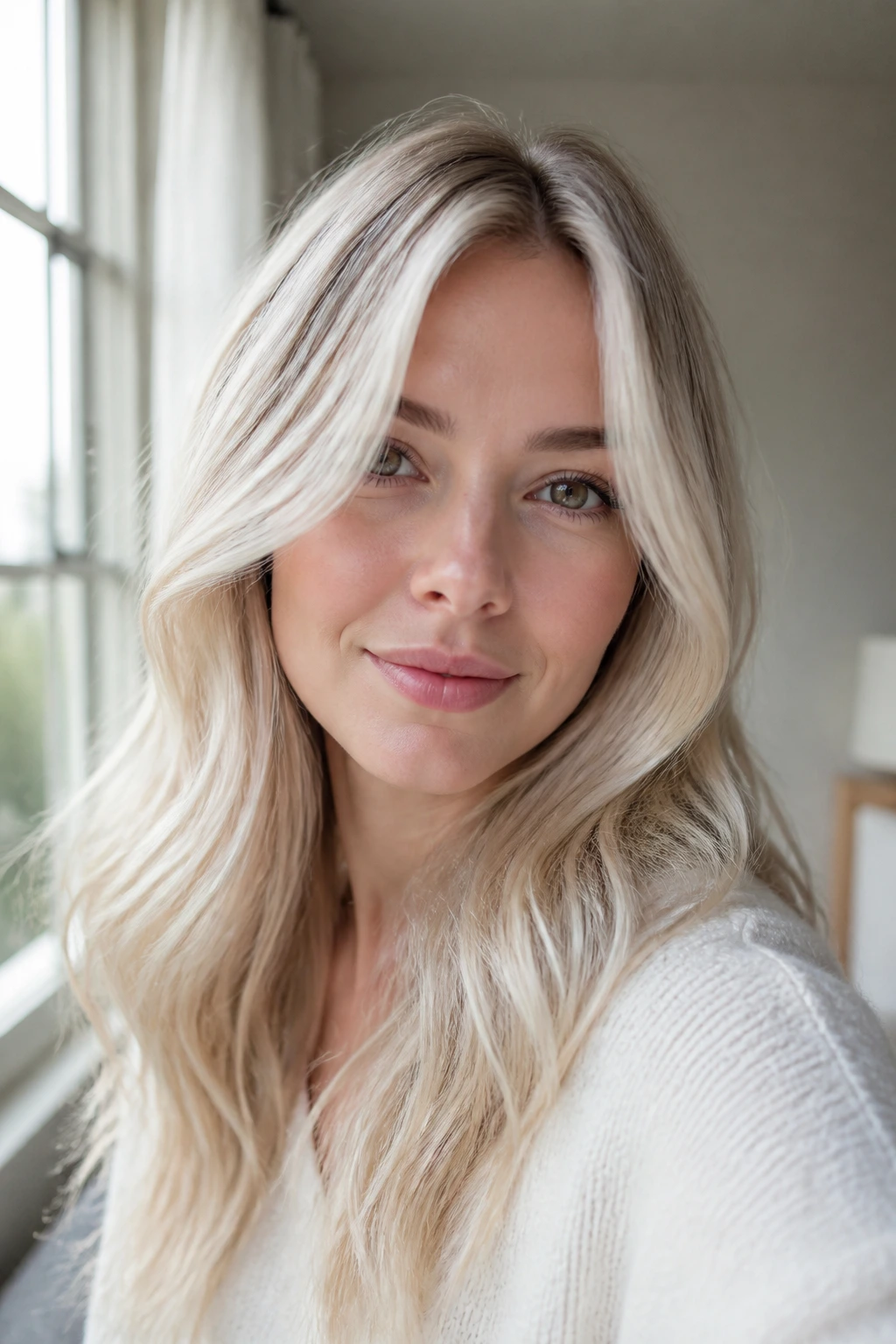
Pearl blonde whisper is pale, but it should never look chalky. The trick is a translucent, cool-beige tone that sits somewhere between ivory and soft silver. On thin hair, that translucent quality keeps the blonde from looking dense in the wrong way or harsh against the scalp.
This one suits lighter brunettes and dark blondes most naturally. On a darker base, it can work, but the grow-out needs a gentler hand. I like pearl blonde because it shines best under movement. Still life? It can go flat. A brushed-out wave or even a tucked-under blowout gives the color something to do.
Good Match
A blunt lob, a softly layered collarbone cut, or shoulder-length hair with a deep side part. Pearl looks sharper when the cut has a clear edge.
10. Strawberry Blonde Glaze
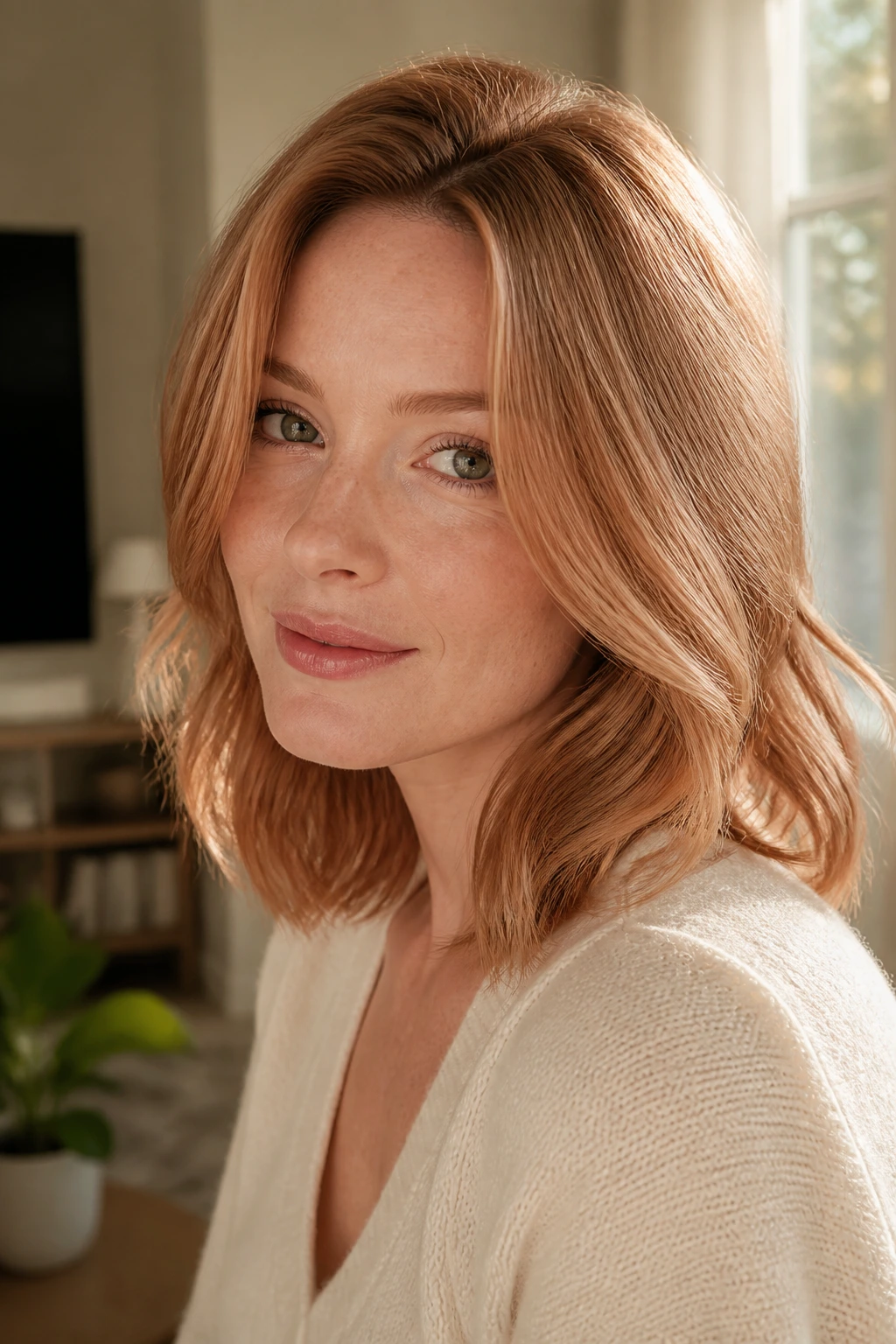
Strawberry blonde glaze is softer than copper and warmer than rose gold. That makes it a smart choice for thin hair that needs warmth but not a full red commitment. The glaze adds a faint blush over blonde or light brown pieces, which keeps the hair from looking washed out.
The best version stays sheer. If it gets too opaque, the glow disappears and the hair starts reading as a single color. I’d use this on fine hair that has a little natural wave because the color looks richer when light moves across it. A flat iron finish can work too, but it needs a touch of bend at the ends.
One Thing to Know
Red and pink tones fade faster than beige. Plan on gloss maintenance sooner than you would for mushroom or caramel.
11. Copper Penny Ribbons
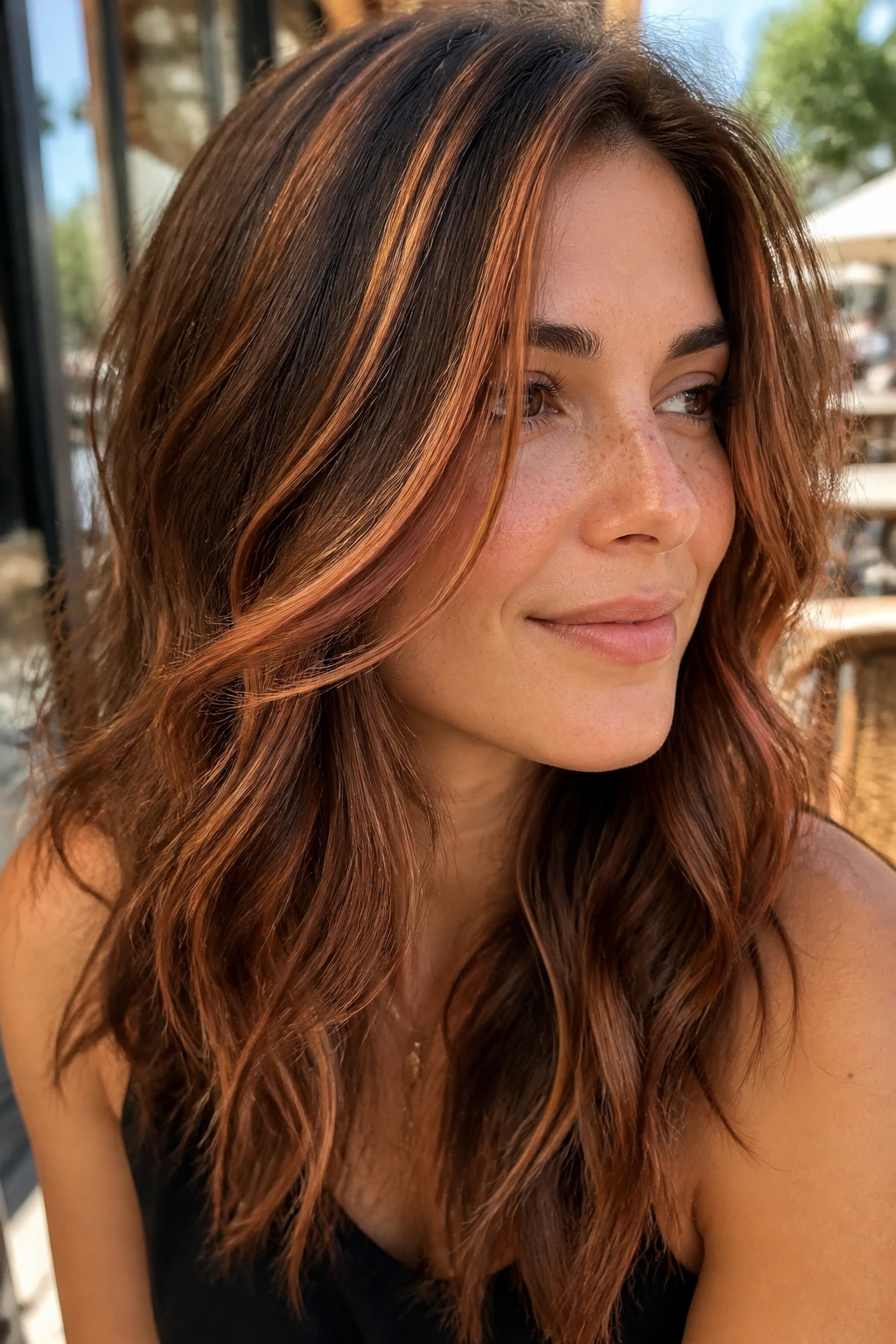
Copper penny ribbons are for anyone who wants warmth with some bite. Copper can look chunky fast on thin hair, so the key is to paint it in narrow threads and keep the base deep enough to hold the shape. Done well, it looks like strands of lit wire woven through brown hair.
This look works best when the cut has layers. Copper catches on the edges of the layers and makes the hair appear fuller than a single flat plane ever could. It’s also a nice choice if the face needs more color near the skin. Just keep the strongest copper near the front and soften the back.
Styling Tip
Copper loves shine. A lightweight glossing spray makes a bigger difference here than extra hairspray.
12. Toffee Contour Layers
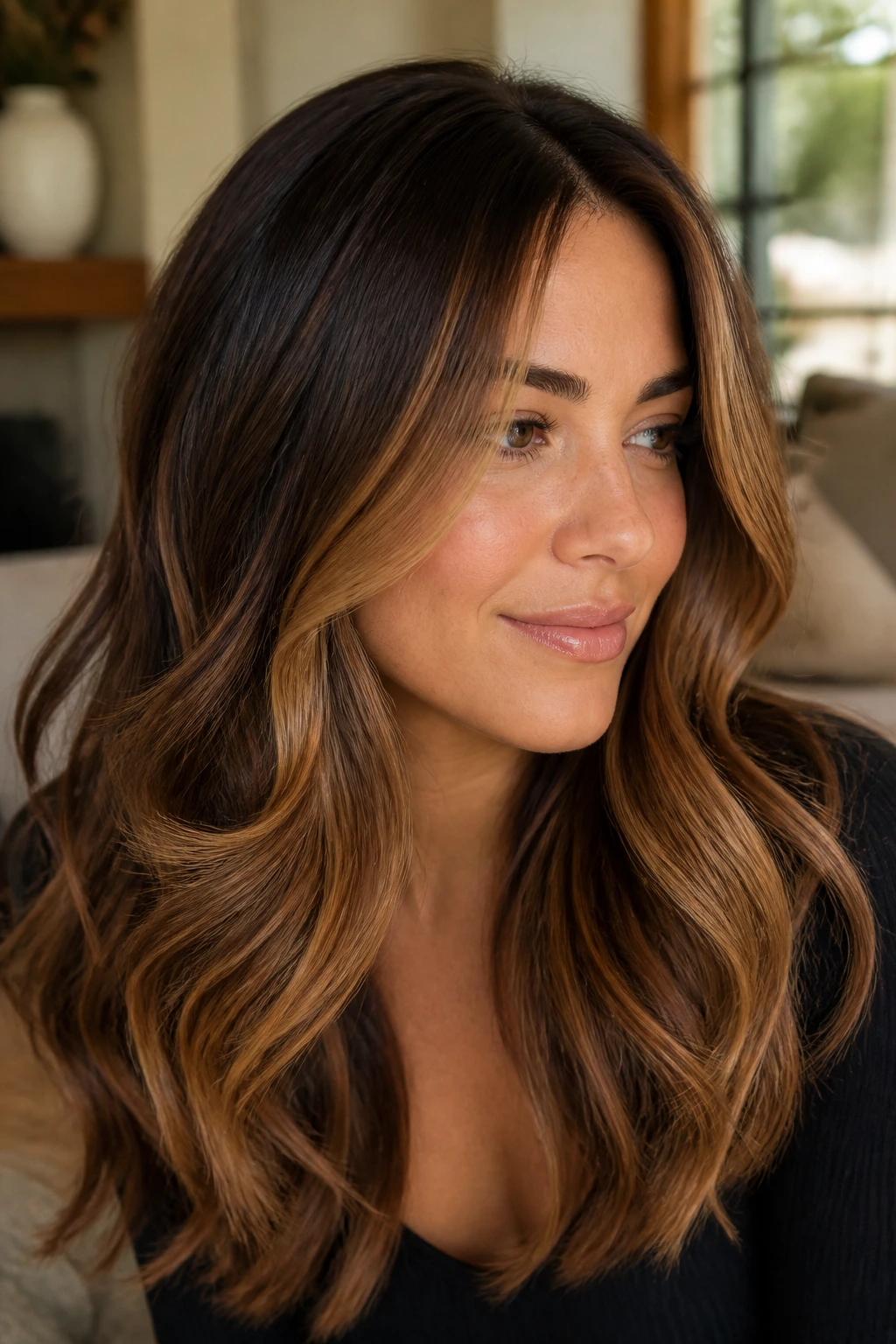
Toffee contour layers are the colorist’s version of cheek contour for hair. The lighter toffee pieces sit around the perimeter of the face, then fade into softer ribbons through the layers. Thin hair likes this because it puts the brightest spots where the cut already has shape.
I’d ask for this on medium brown hair that needs a little depth without becoming too dark. The toffee should be warm enough to glow, but not orange. If the hair is straight, add a soft curl at the ends; if it’s wavy, leave the texture a bit loose so the contour doesn’t look painted on.
What Makes It Useful
The layers do some of the work. Color plus shape beats color alone on thin hair, every time.
13. Ash-Brunette Babylights
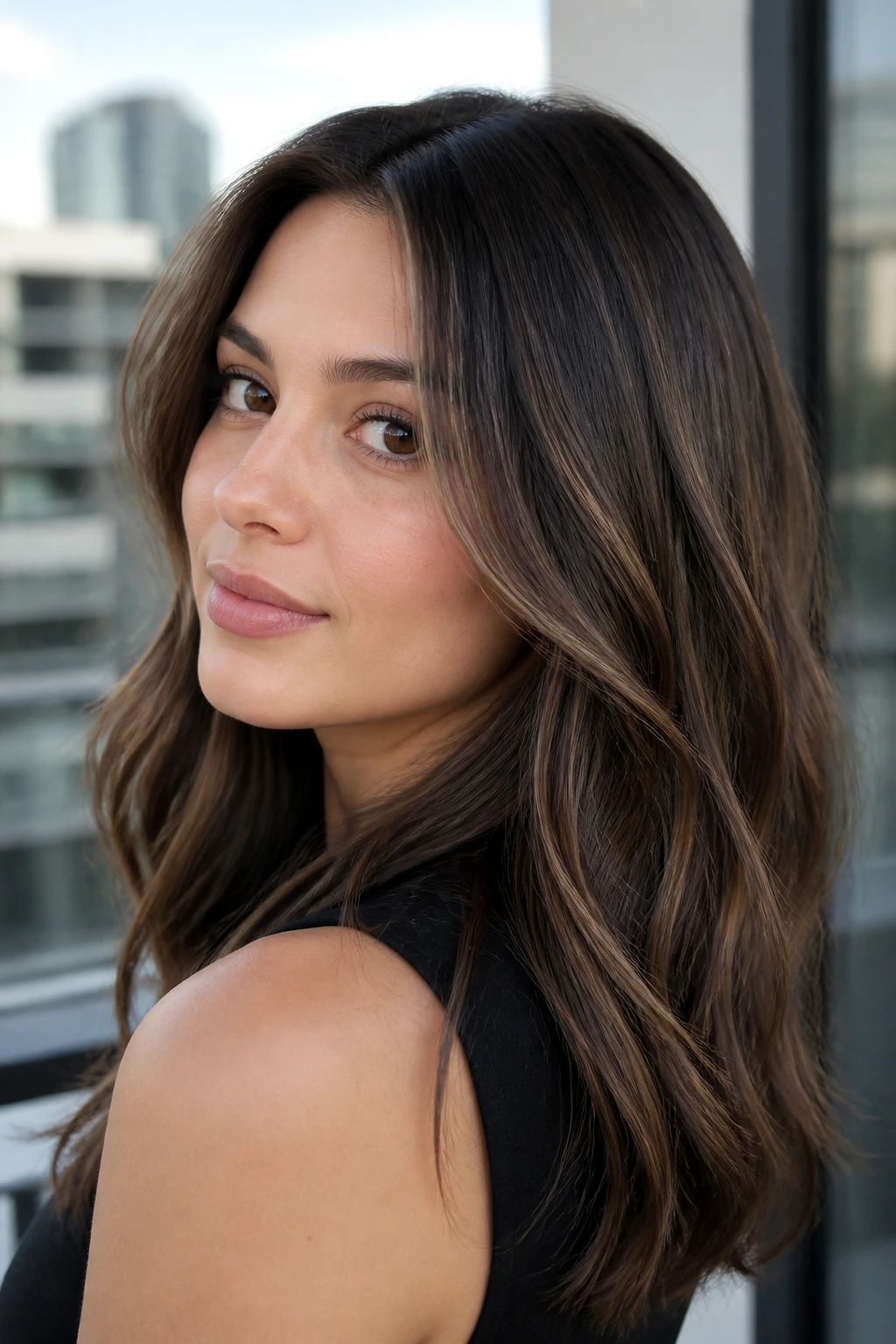
Ash-brunette babylights are tiny, almost whisper-thin light strands through a brunette base. On thin hair, that tiny scale is the whole point. You get sparkle without building thick color blocks that can expose the scalp or the part line.
This look is ideal if you want dimension but hate warmth. The ash tone keeps the brunette cool and modern, while the babylights give the hair a little density through texture. It’s subtle enough that people notice the shine before they notice the color change. That’s usually the sweet spot for sparse hair.
H3: How to Wear It
A slight bend at the mids and ends keeps the babylights from disappearing. Straightened pin-straight, they can blur into the base too much.
14. Biscotti Balayage Bob
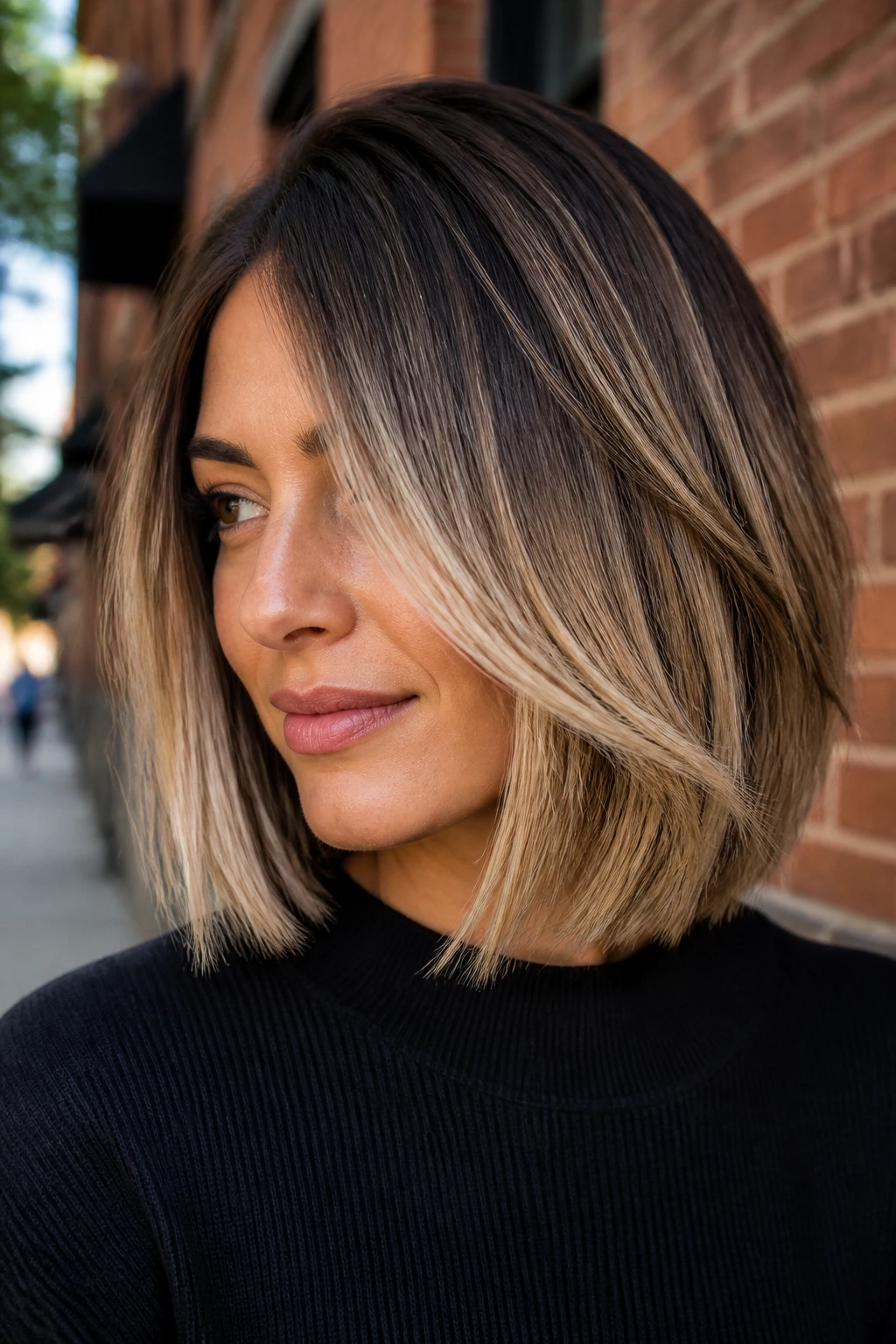
A biscotti balayage bob has enough softness to keep a short cut from looking hard. The color is a mix of cream, beige, and light brown, usually painted in narrow pieces around the outer surface of the bob. That gives the cut movement without making the ends look stringy.
Short thin hair is tricky. Too much lightness and the bob loses its edge; too little and it looks heavy. Biscotti lands in the middle. It gives the cut a little lift at the cheekbone and jawline, which is where a bob needs help most.
Best Cut Match
A blunt bob with tiny internal layers, or a slightly angled lob. The color shows best when the line of the haircut is clean.
Keep It Fresh
Because shorter hair is cut more often, the color can afford to be a touch brighter than on long lengths. It still needs soft blending at the root, though.
15. Icy Vanilla on Dark Blonde
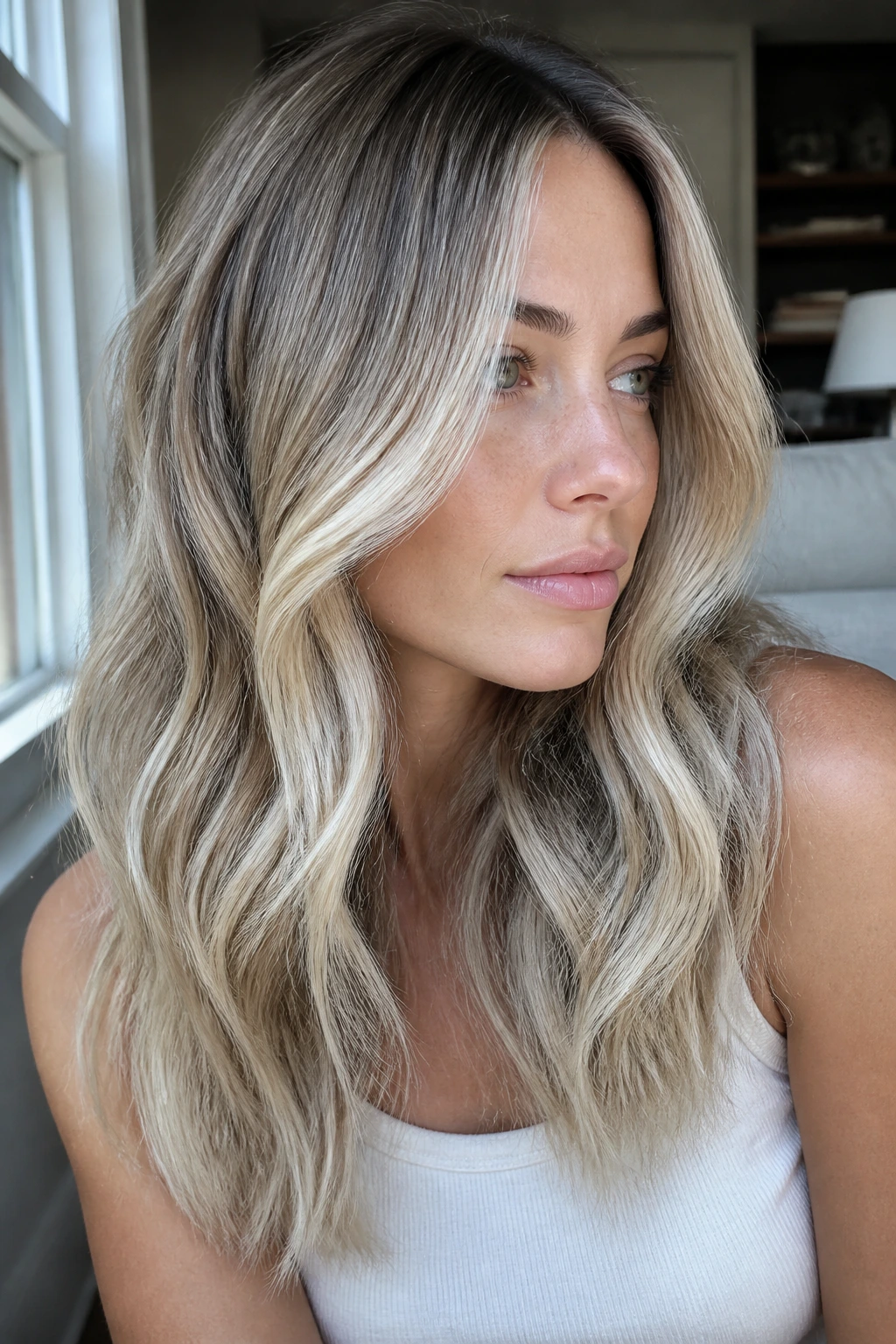
Icy vanilla on dark blonde is for someone who wants a cooler, brighter finish without marching all the way to white blonde. The base stays a dark blonde or light brown, then the balayage lifts to a creamy icy vanilla that reflects a lot of light. Thin hair can take this well if the pieces stay fine and the root remains grounded.
I’m picky about this look. If the toner is too blue or too silver, the hair can start looking dull instead of crisp. The best vanilla finish has brightness at the edge and softness in the middle. It feels clean, not washed out.
Good Pairing
Waves. Always waves. The movement gives the pale pieces something to cling to.
16. Cinnamon-Sugar Dimension
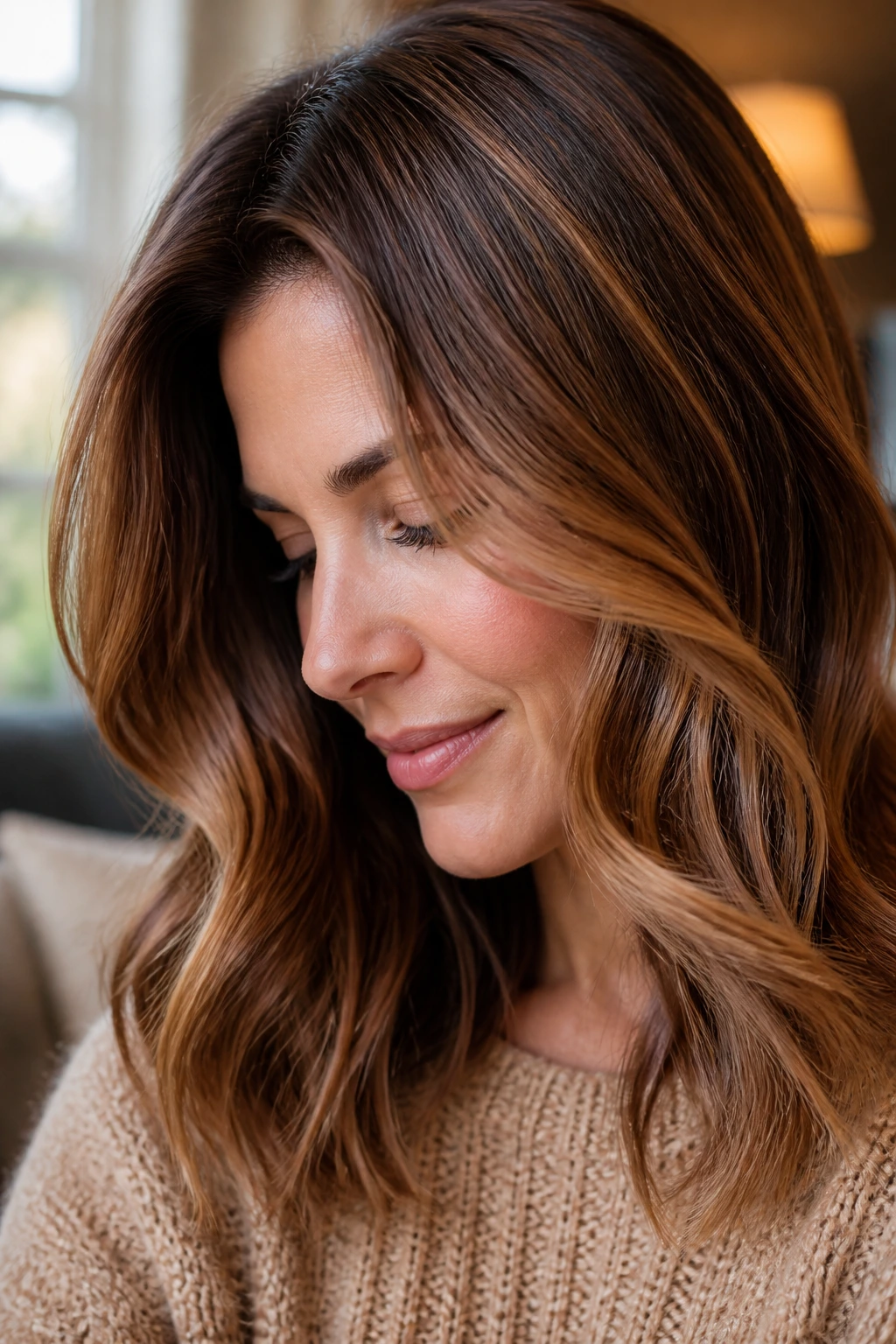
Cinnamon-sugar dimension brings warmth in a way that still looks layered, not one-note. Think light brown base, cinnamon ribbons, and a soft golden sprinkle through the mids. On thin hair, that mix helps the strands appear denser because the eye keeps landing on alternating tones.
This is one of those looks that changes depending on the light. Indoors, it reads brunette. In daylight, the cinnamon pieces wake up and the hair looks more textured. That’s a good thing when you want dimension that doesn’t rely on a big blonde shift.
Practical Note
Ask for the lightened pieces to stay mid-shaft, not just at the ends. Mid-length brightness creates a fuller-looking body line.
17. Sandy Bronde with Shadow Root
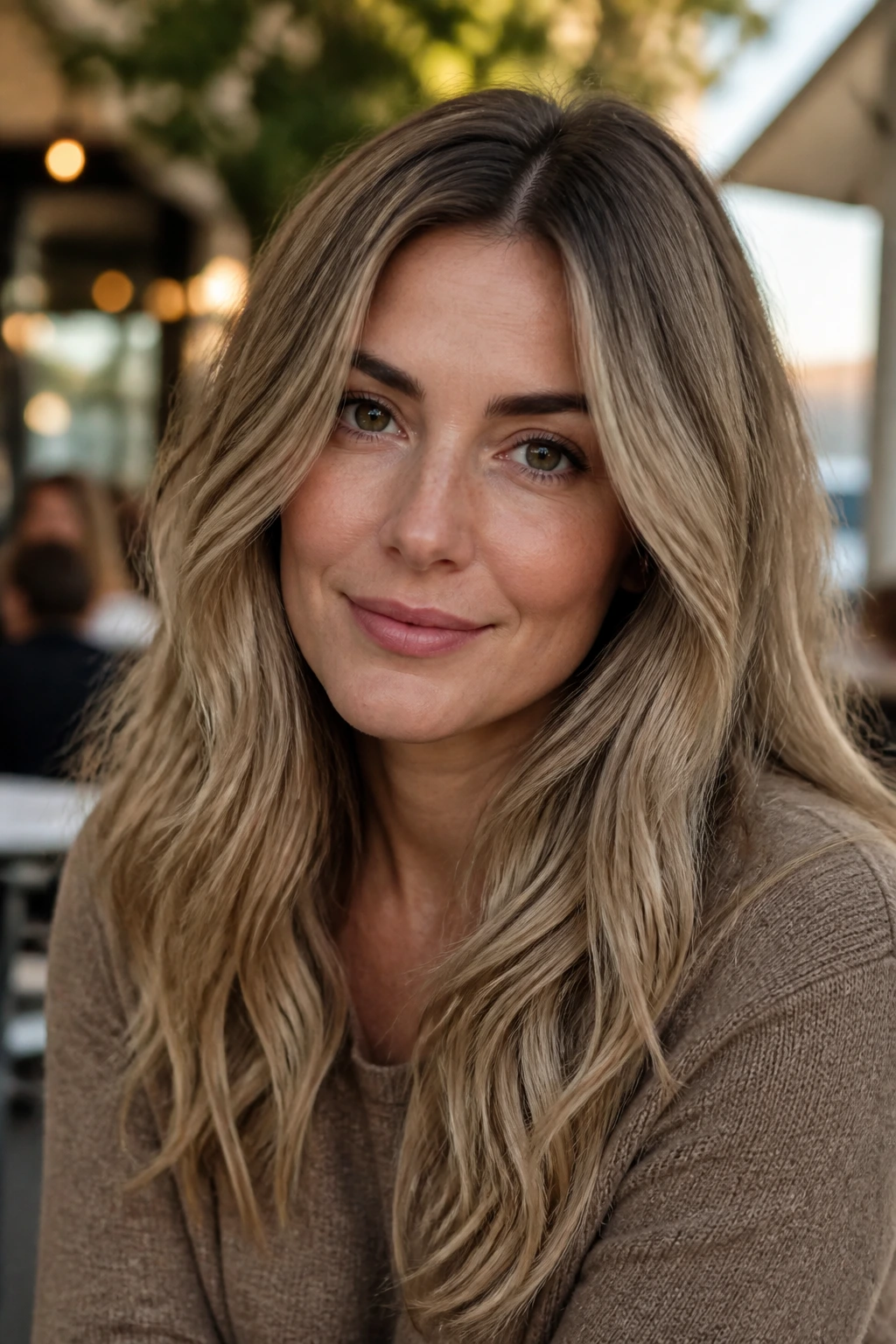
Sandy bronde with a shadow root is a reliable answer for anyone who wants low-maintenance color that still looks deliberate. The root is deeper, the mids are sandy beige, and the ends stop before they turn dry or hollow. Thin hair often needs this kind of structured softness.
The shadow root keeps the scalp from looking exposed, which matters more than people admit. If your part is wide or your crown is sparse, an even blonde from root to end can make the gap stand out. Sandy bronde avoids that problem by leaving the top a little darker and the lightness on the move.
Best For
Medium to long hair with a little bend. The sandy tones can go flat if the cut is one-length and very straight.
18. Champagne Glow Layers
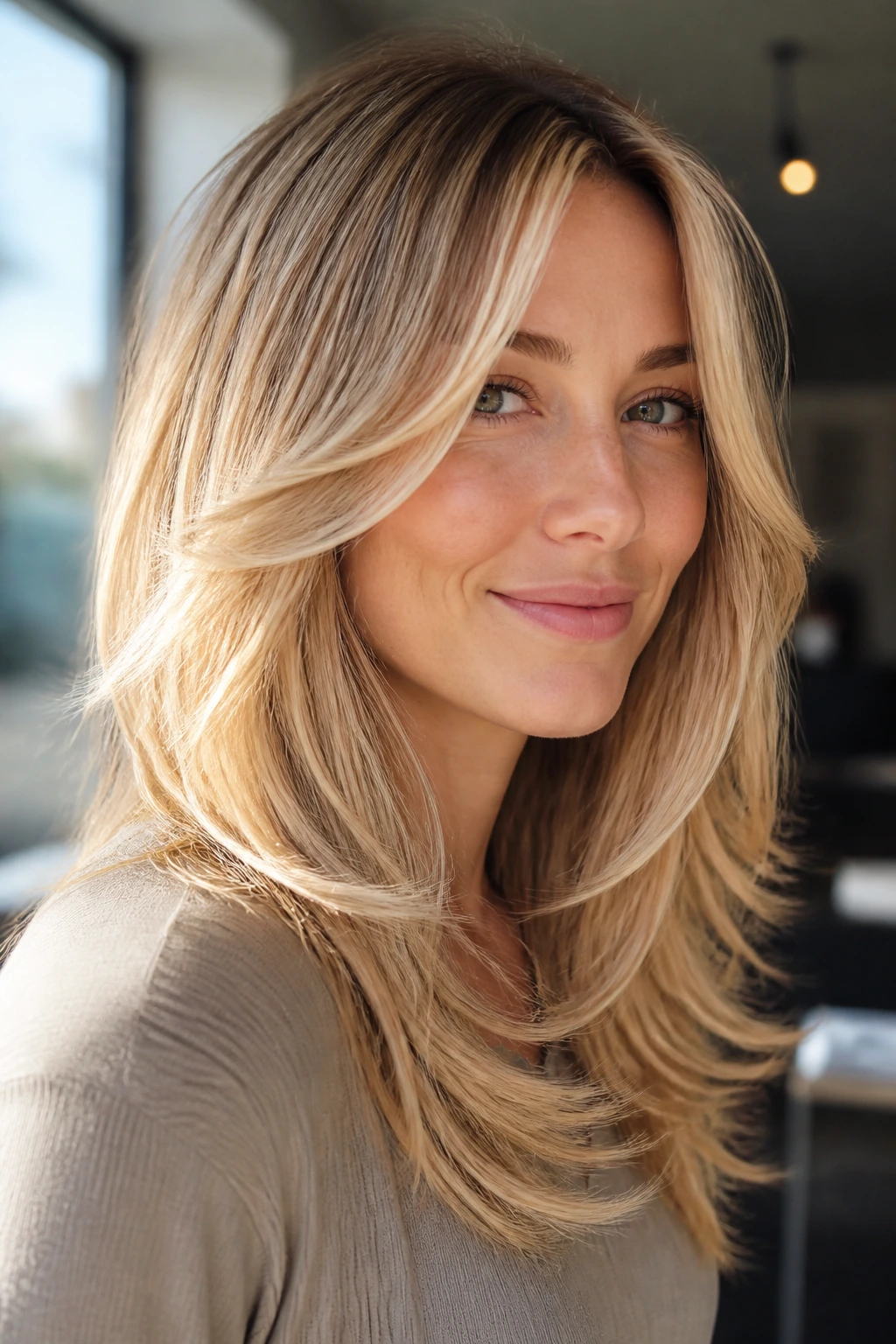
Champagne glow layers are brighter than beige, but warmer than platinum. On fine hair, that matters because pure platinum can show every tiny dry edge, while champagne softens the finish and keeps the hair looking polished. The color sits beautifully on layered cuts, where each tier catches a different amount of light.
I like this on hair that already has some lightness or on brunettes willing to lighten carefully in stages. It’s not the look for damaged ends. If the hair is in decent shape, though, champagne can make it look cleaner and more lifted than deeper brown alone.
Styling Move
Blow-dry with a round brush, then pin the front pieces while they cool. That little bit of set helps the glow stay visible.
19. Chestnut Ribbon Curls
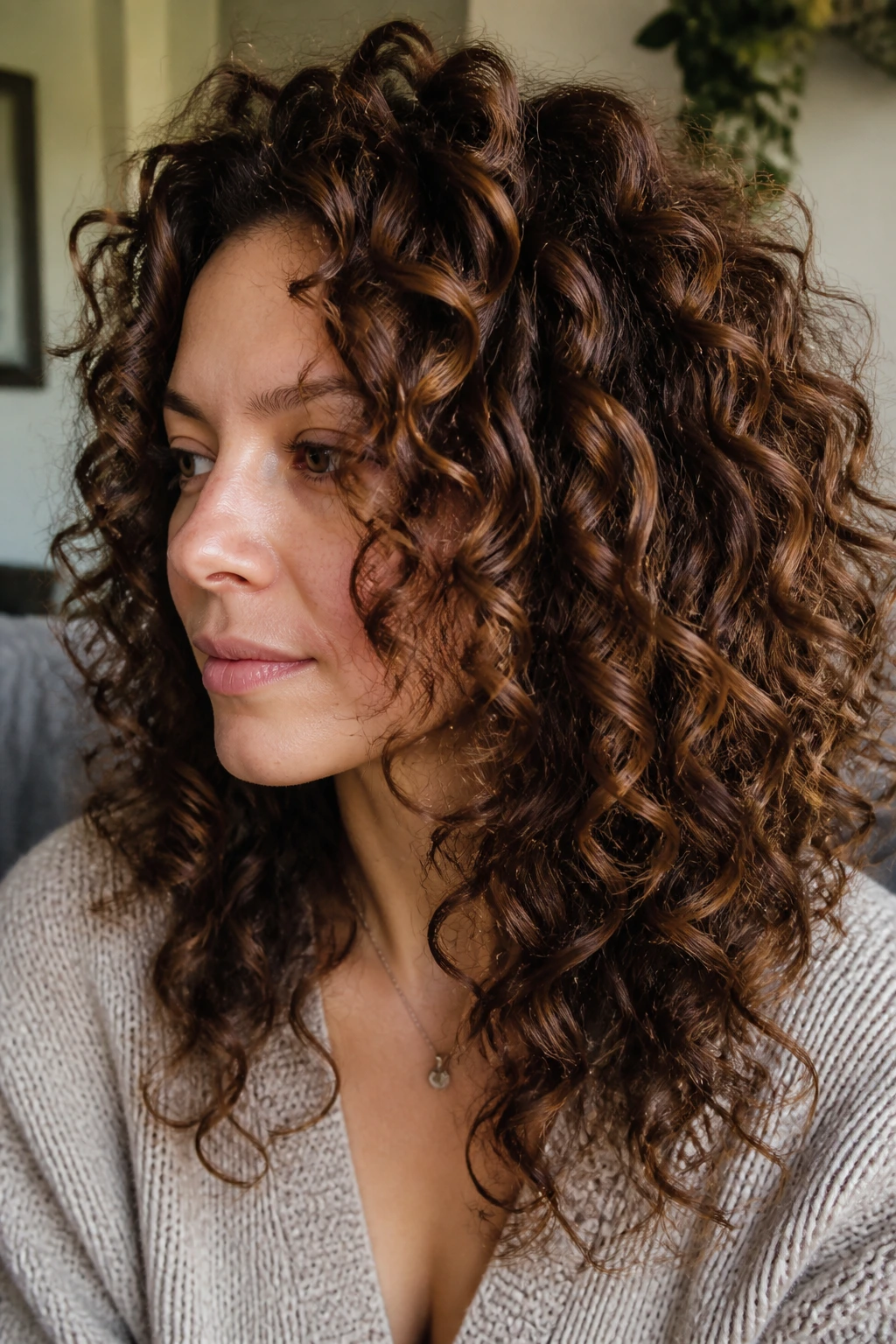
Chestnut ribbon curls are made for textured hair that needs depth more than brightness. The color threads through the curl pattern, so each curl group looks more defined without losing the natural body. Thin hair with a curl pattern often needs exactly that: definition, not a bleach festival.
The chestnut tone is warm, rich, and forgiving. It does not scream for attention, which is good. A curl that’s painted too light can look hollow at the center, but chestnut ribbons keep the shape grounded and full. Ask for the lighter pieces to sit on the outer curve of each curl clump, not every single strand.
How It Reads Best
Let the curls dry mostly on their own, then diffuse at low heat. The dimension looks deeper when the curl pattern stays intact.
20. Bronze-to-Gold Melt
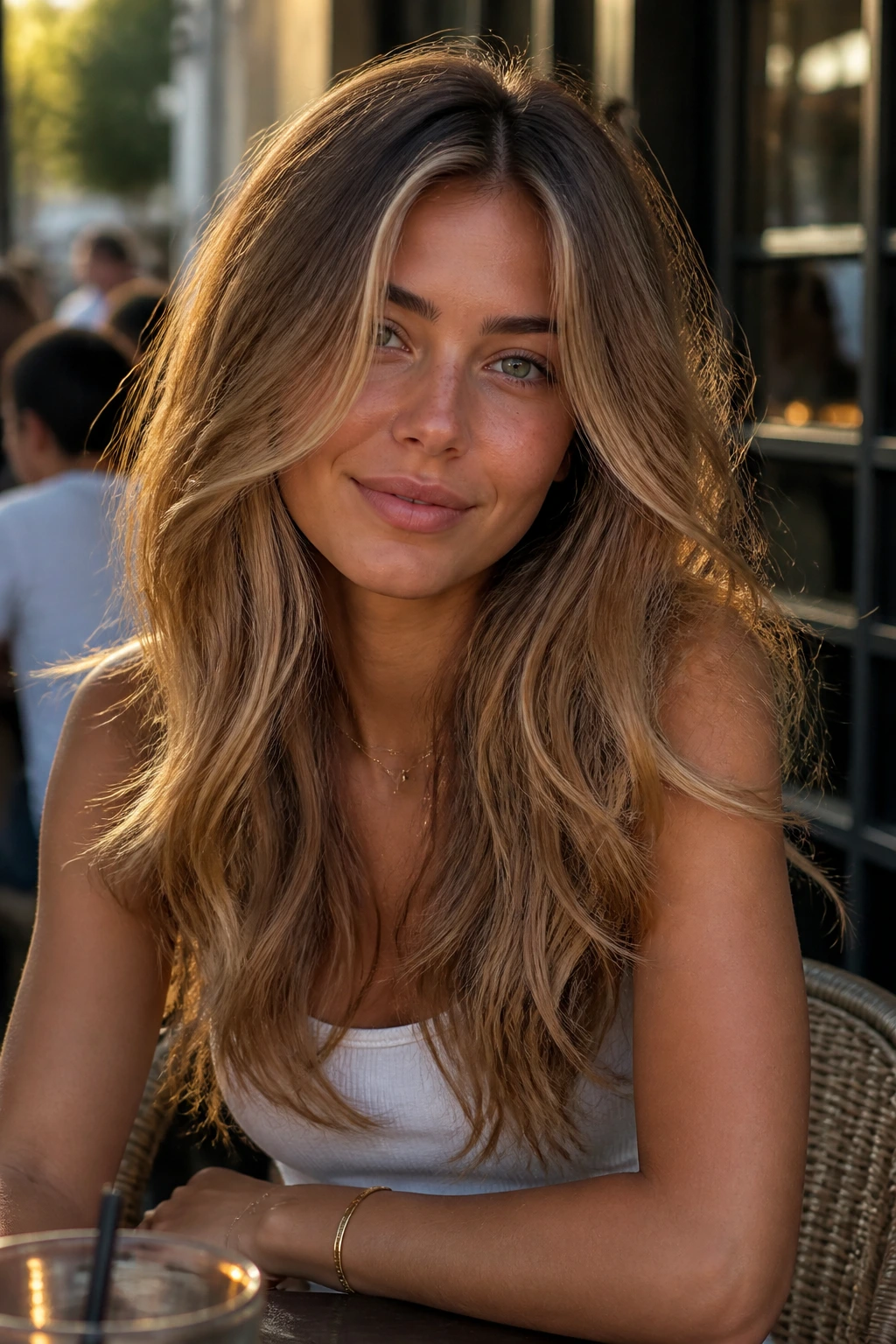
Bronze-to-gold melt gives you a gradual lift from a deep metallic brunette into a softer gold finish. On thin hair, the bronze base is doing more than the gold. It holds the shape and gives the eye something dense to read before the brighter pieces take over.
This works especially well when you want warmth but not red. Bronze keeps the color grounded, gold keeps it alive. If the transition is too abrupt, the hair can look two-toned in a bad way. The melt needs to be slow and soft, with the brightest gold living mostly through the mid-lengths and face frame.
Best On
Long layers or a wavy lob. The movement helps the bronze and gold separate in a good way.
21. Mocha Melt with Curtain Bangs
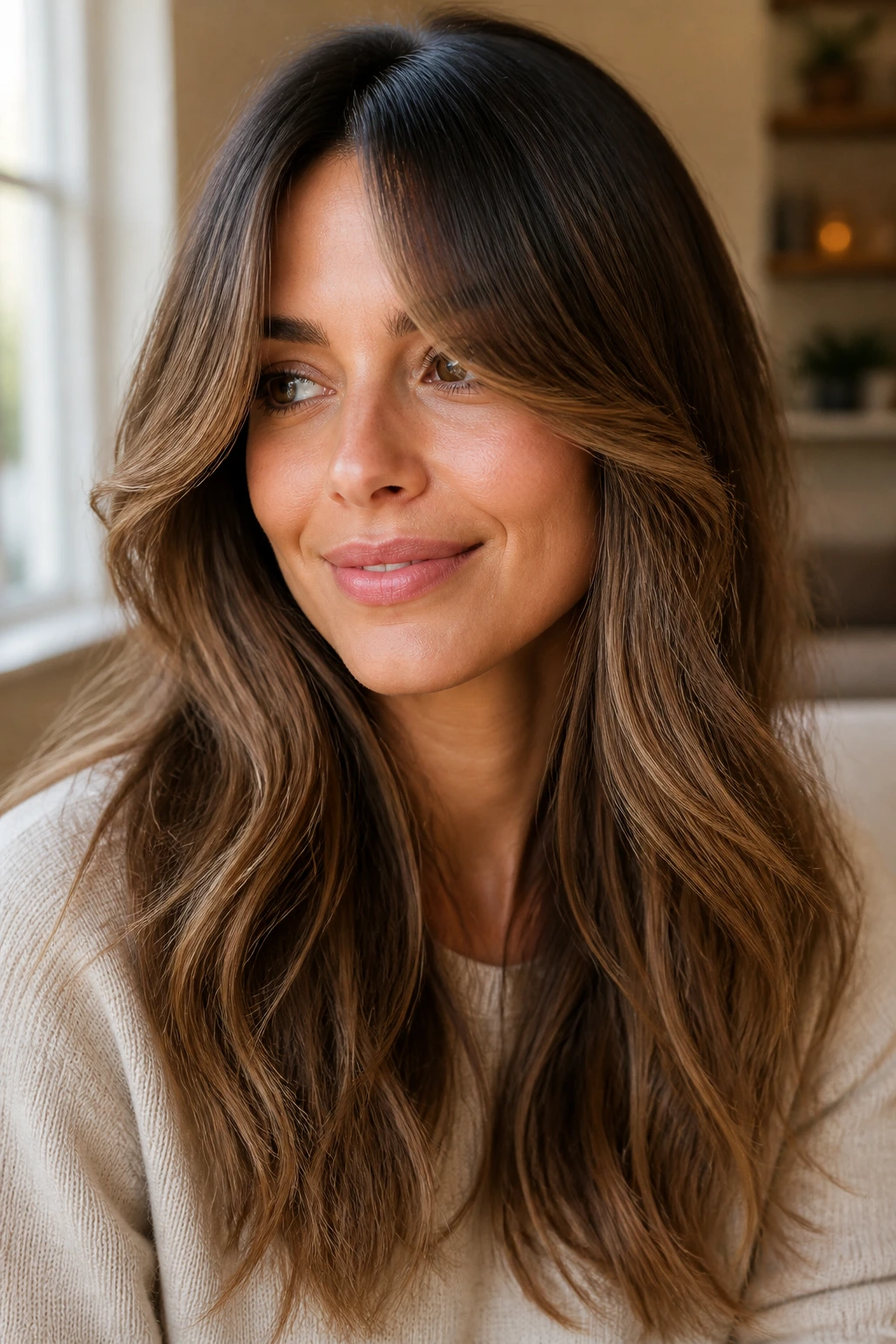
Mocha melt with curtain bangs is one of my favorite choices for thin hair because the bangs pull focus straight to the face and the color keeps the rest of the head from looking heavy. The mocha base is deep, the balayage is subtle, and the whole thing stays soft enough to grow out without a hard edge.
Curtain bangs do a lot here. They break up the forehead area, which is useful when the crown feels sparse or the part is wide. The color should be lightest around the bang edges and cheekbone area, then melt back into a darker mocha through the lengths.
A Small Warning
Don’t over-lighten the bang area. A bright, chunky curtain fringe can look disconnected from the rest of thin hair.
22. Soft Auburn Wash
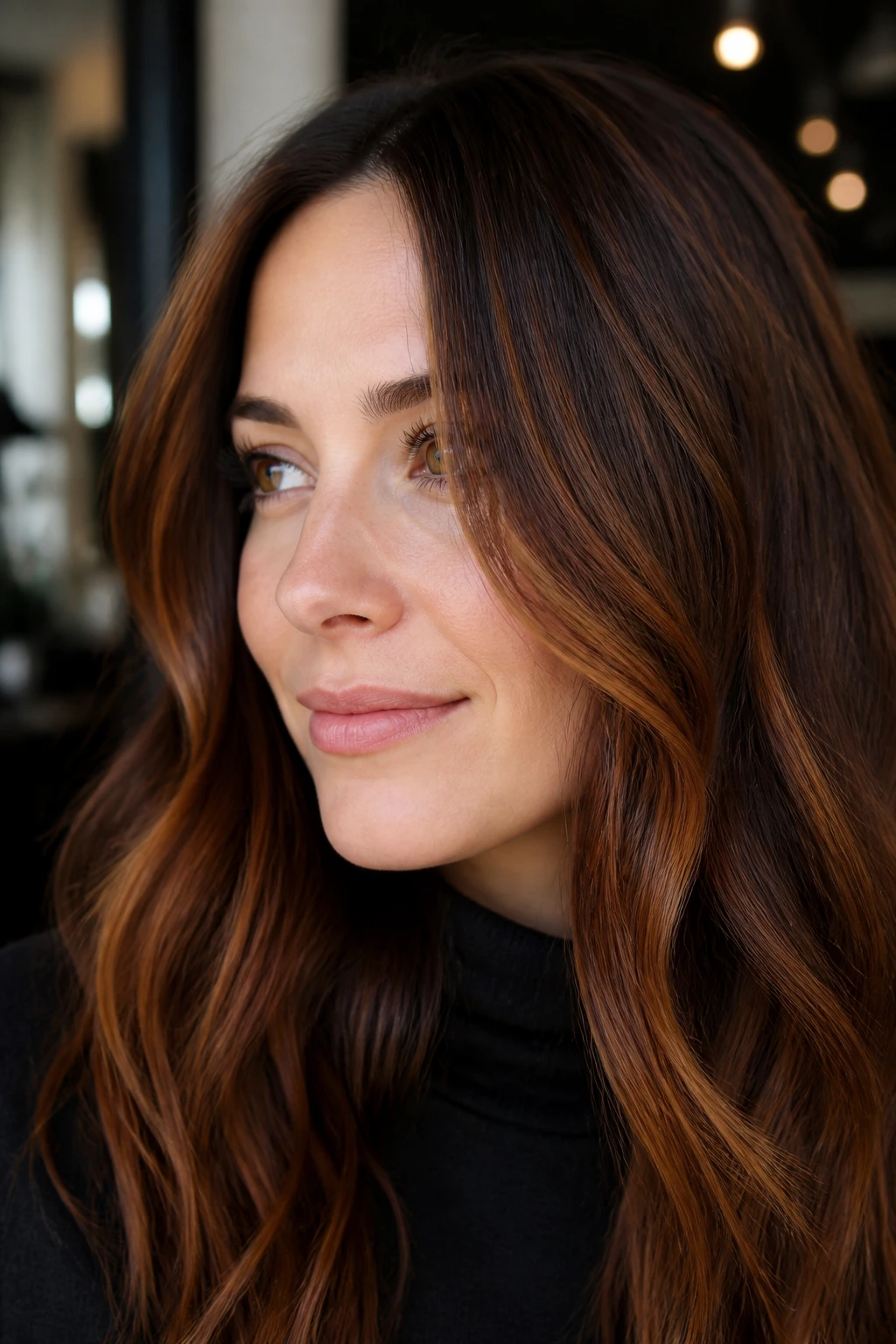
Soft auburn wash is a whisper of red-brown rather than a full copper statement. It’s a strong fit for thin hair because auburn reflects warmth without needing a lot of pale lightness, and that means less damage on the ends. The result is dimensional, but still grounded.
I like this on natural brunettes who want a change that feels seasonal in spirit but not tied to a moment. The best auburn wash is translucent. You should still see brunette under it. If it covers too much, the hair can look like one block of color, which is the opposite of what thin hair needs.
Styling Note
A soft wave or loose braid-out helps the auburn catch more than one tone. Flat ironed straight, it can disappear faster than you’d expect.
23. Smoky Beige Pixie Grow-Out
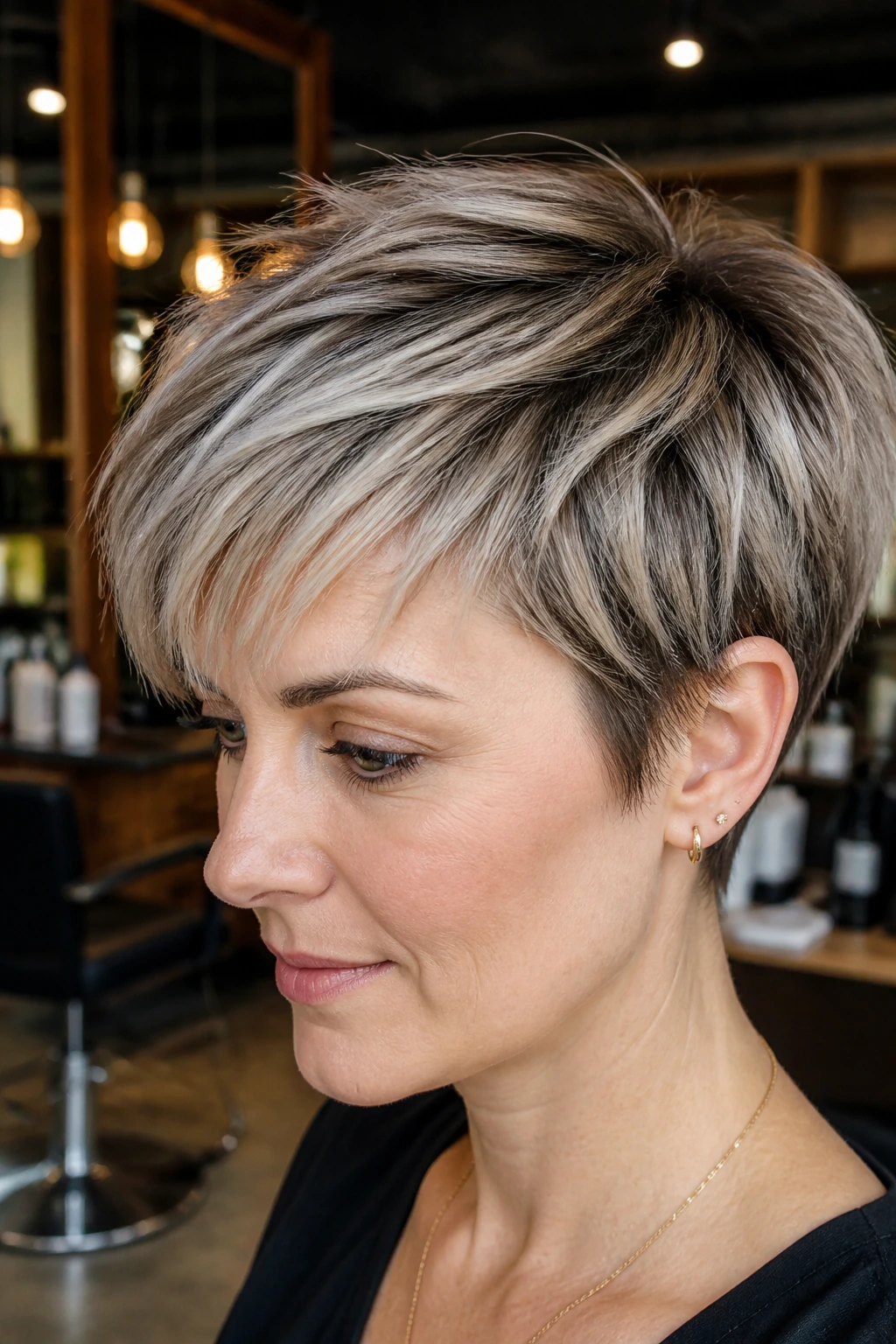
Smoky beige on a pixie or short crop is an underrated move for thin hair. Instead of trying to fake fullness with big blonde pieces, the color adds a smoky beige veil that makes the short cut look intentional as it grows. The root stays a touch deeper, which is kind to sparse hairlines.
Short hair needs clean color placement. Too much contrast on a pixie can look stripy in seconds. This look avoids that by keeping the lightest pieces on the top layers and softening the fringe area. It’s one of the few colors that can make grow-out look deliberate instead of awkward.
Good Fit
If you trim every 4 to 6 weeks, this color stays neat. Let it drift much longer and the shape gets fuzzy.
24. Almond Milk Balayage Lob
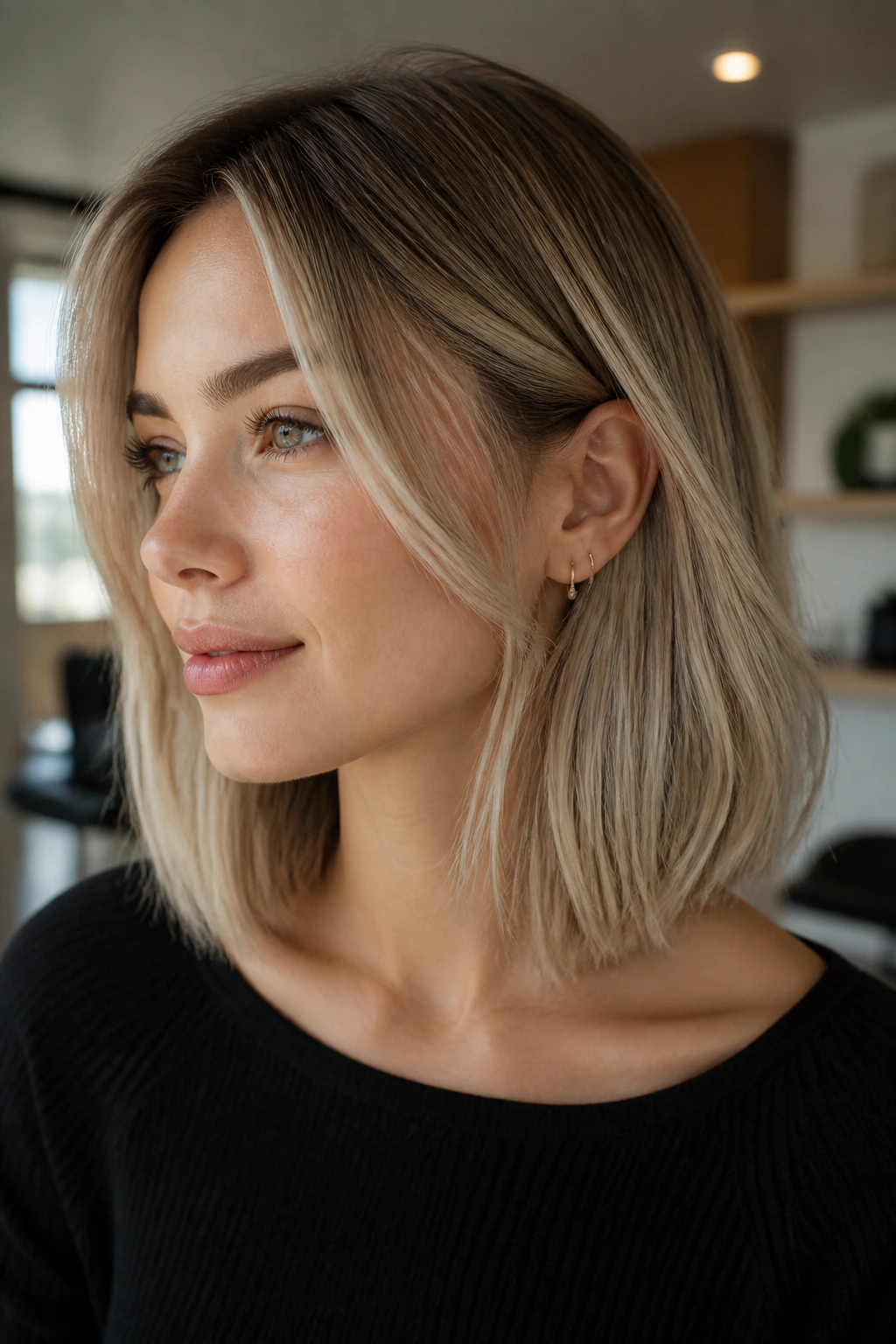
Almond milk balayage on a lob is soft, creamy, and easy to wear. The light pieces sit in a pale almond-beige range, while the base stays muted and darker enough to give the cut definition. Thin hair tends to love a lob because the ends are blunt enough to look thick, and this color preserves that edge.
The lightness should live on the surface, not buried deep inside the cut. That keeps the lob from turning busy. If the hair is very fine, ask for face-framing pieces and a few crown ribbons only. That’s usually plenty.
Best Styling Move
A tucked-behind-the-ear finish makes the front pieces obvious and the rest feel fuller. Small trick. Big payoff.
25. Sunkissed Layered Shag
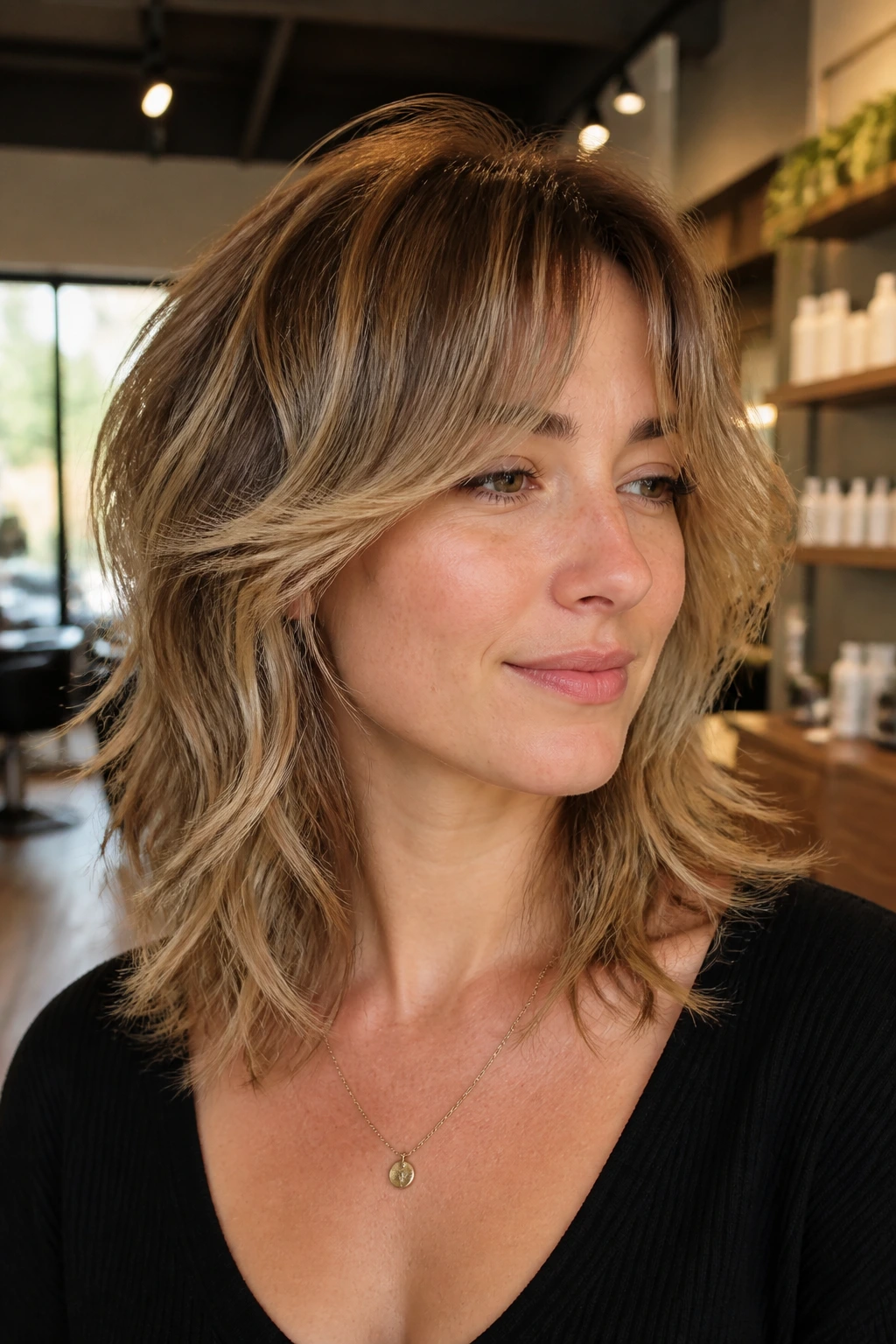
A layered shag with sunkissed balayage gives thin hair motion that straight, one-length cuts can’t always deliver. The color should be scattered, not even, with the lightest bits landing on the outer edges of the layers. That keeps the shape alive when the hair swings.
This is one of the few looks where a little messiness helps. The shag cut already brings texture, so the balayage just needs to support it. Keep the tones warm beige or light honey unless your hair naturally leans cool; otherwise the whole thing can lose that lived-in feel and start looking streaky.
H3: Best Styling Products
- A light mousse at the roots
- A texture spray through the mids
- A soft paste on the ends if they need separation
26. Walnut Brown Dimension
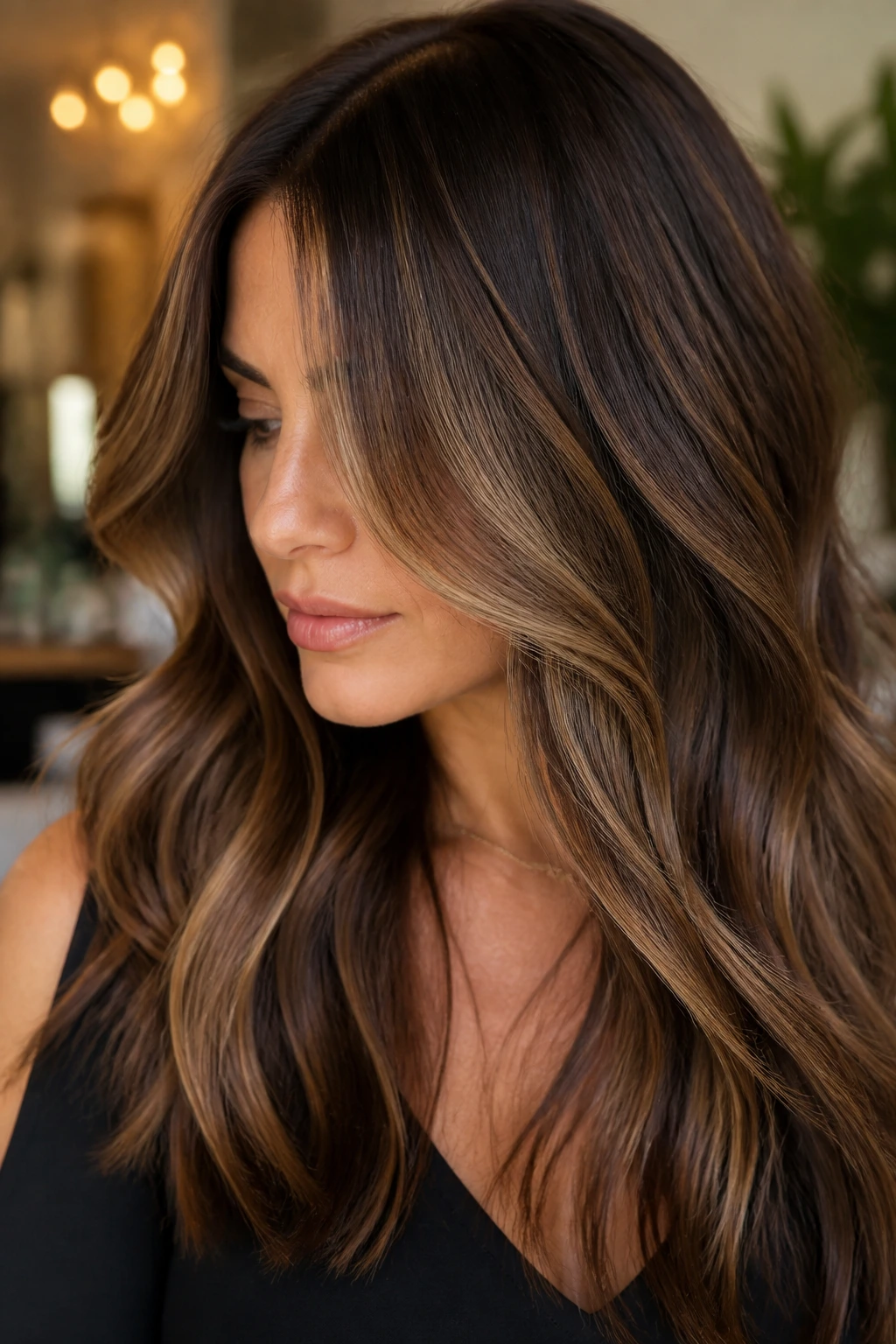
Walnut brown dimension is for people who want brunette richness without heavy darkness. The walnut tone sits between espresso and chestnut, then the balayage adds a few lighter ribbons that stop the color from swallowing the hair shape. On thin hair, that depth is a gift.
The key is restraint. Too many lights and the walnut loses its depth; too little and the color turns flat. A few ribbons near the cheekbones, a little lift at the crown, and a darker underlayer are enough to make this work. It’s one of the most elegant low-contrast options in the whole set.
Who It Suits
Anyone with naturally medium-dark brown hair who wants polish more than brightness. It also helps if your hair is a bit porous and doesn’t love heavy bleaching.
27. Rose Gold Tint on Light Brown
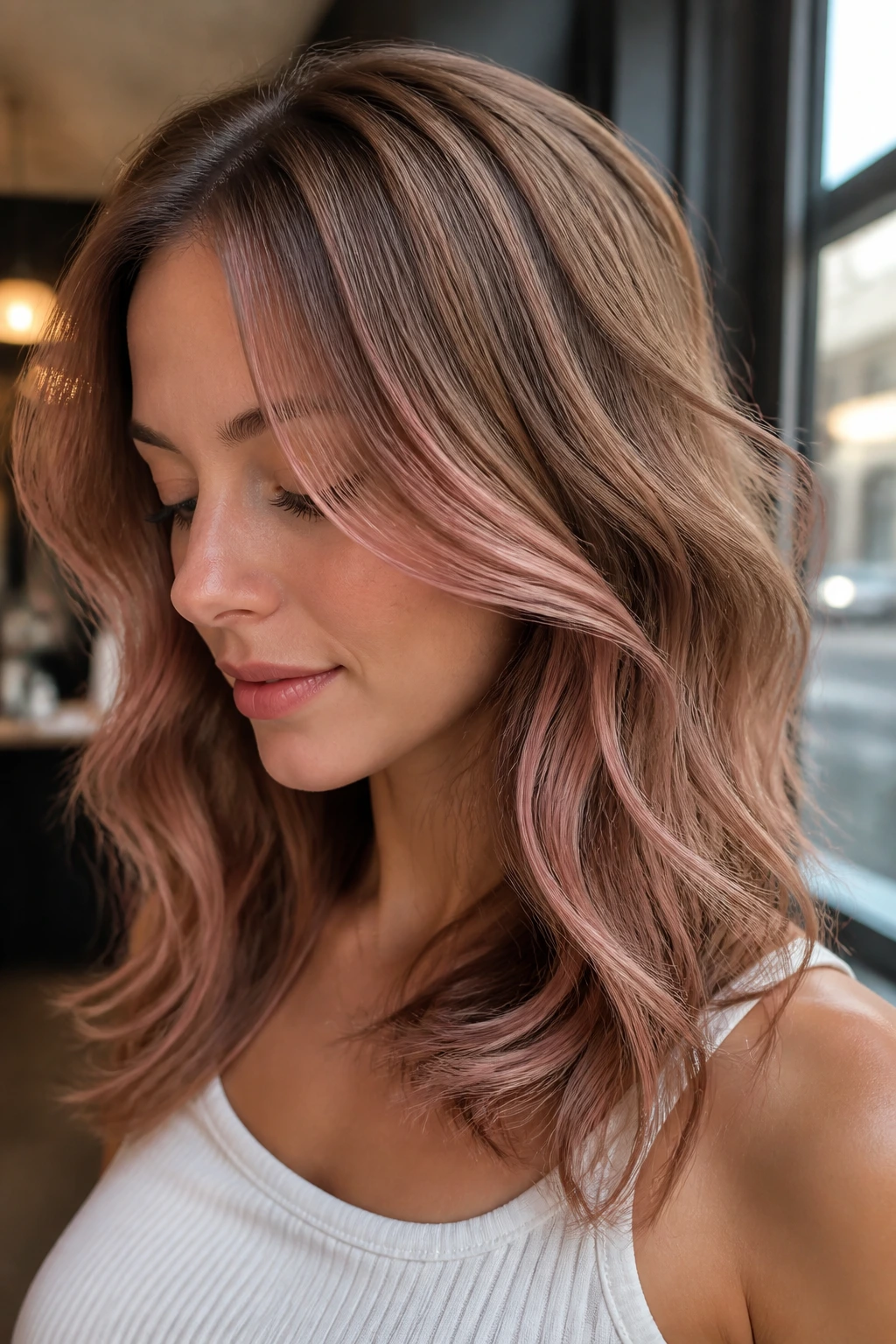
Rose gold on light brown should be treated like a tint, not a full color takeover. Thin hair benefits from that sheer approach because the rose hue adds warmth and sheen without flooding the hair with pigment. The result is soft, delicate, and a little unexpected.
This look is nicest when the base is already around light brown or dark blonde. On darker hair, the rose can get muddy or need too much lifting. Keep the pink side muted, leaning more blush than bubblegum. That keeps it adult, wearable, and less likely to fade weirdly.
A Good Styling Pair
A loose blowout or large-barrel wave. Rose gold looks best when the surface moves and reflects light in small shifts.
28. Platinum Peekaboo Balayage
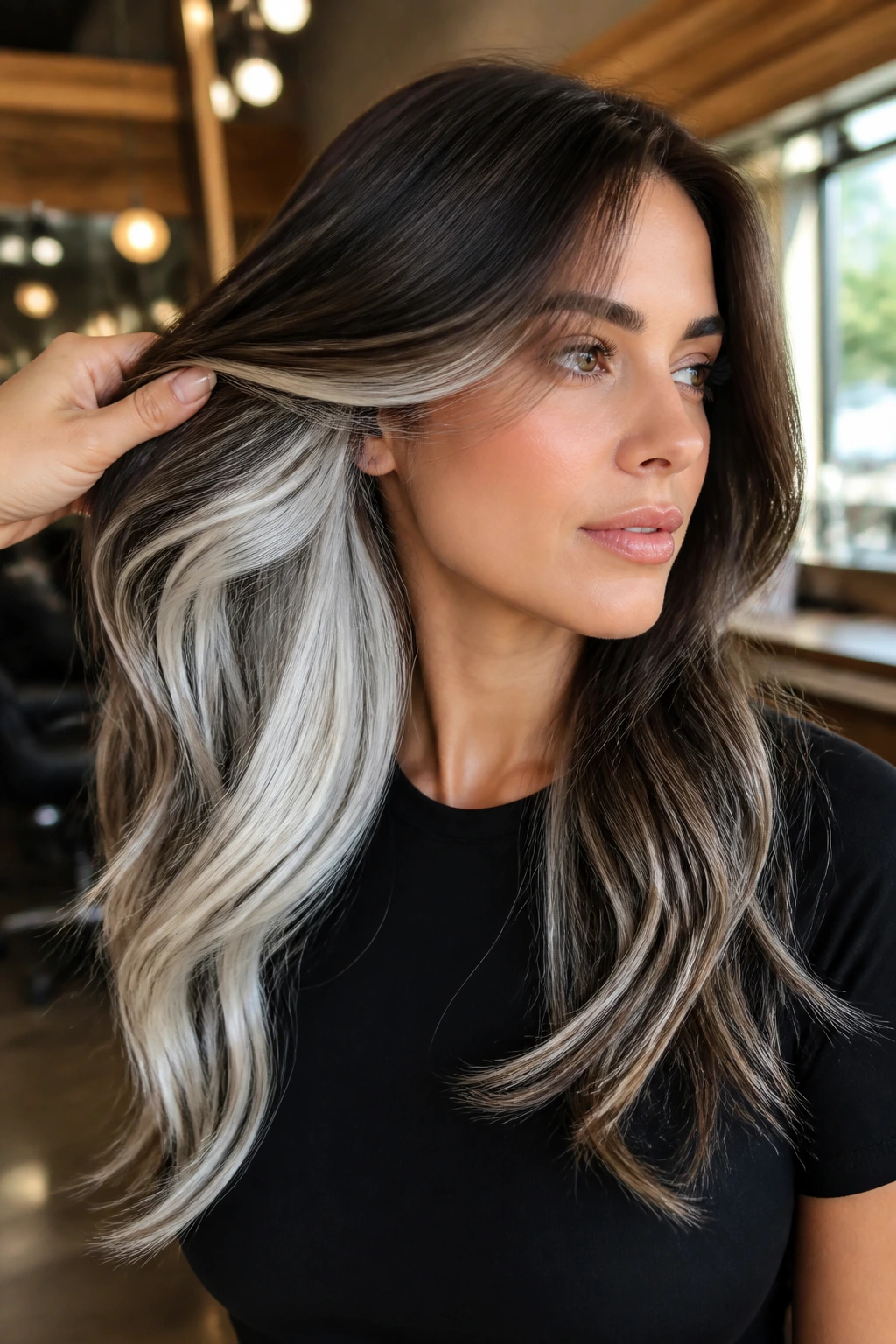
Platinum peekaboo balayage is for someone who wants drama without committing the whole head to platinum. The brightest pieces sit underneath or in the interior layers, so the top still looks dense and controlled. That’s a smart move for thin hair because the structure on top stays intact.
I like this look on layered cuts where the underside can flick out a little. You get flashes of platinum when the hair moves, but the scalp line doesn’t get overexposed. It’s more interesting than an all-over platinum finish, and frankly easier to wear if your hair is fragile.
Keep It Honest
The platinum pieces need maintenance. If they go yellow or dry, the whole peekaboo effect loses its punch fast.
29. Honeyed Root Stretch
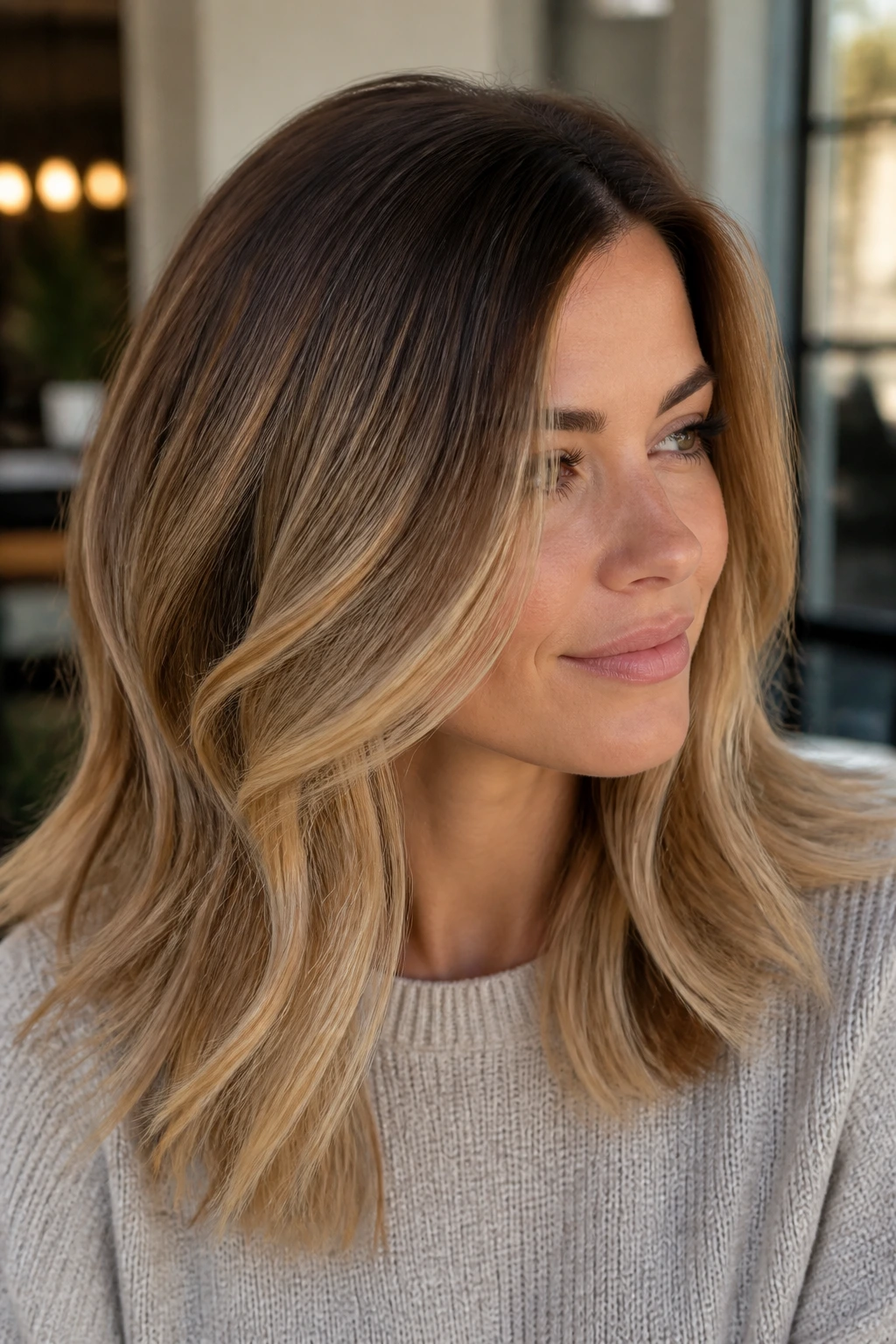
A honeyed root stretch is one of the best ways to soften grow-out on thin hair while still keeping the color bright. The root stays deeper for density, then honey tones spread through the mids and ends like a warm glaze. The eye sees length and body instead of a hard demarcation line.
This look is friendly to brunettes who want lighter hair but do not want to visit the salon every few weeks. The stretch hides a lot. It also gives you room to let the color shift a little over time, which thin hair often handles better than constant full re-lightening.
Small Detail, Big Difference
Ask for the root stretch to be feathered through the first few inches, not painted in a block. That makes the grow-out softer from day one.
30. Dark Chocolate with Silver-Beige Threads
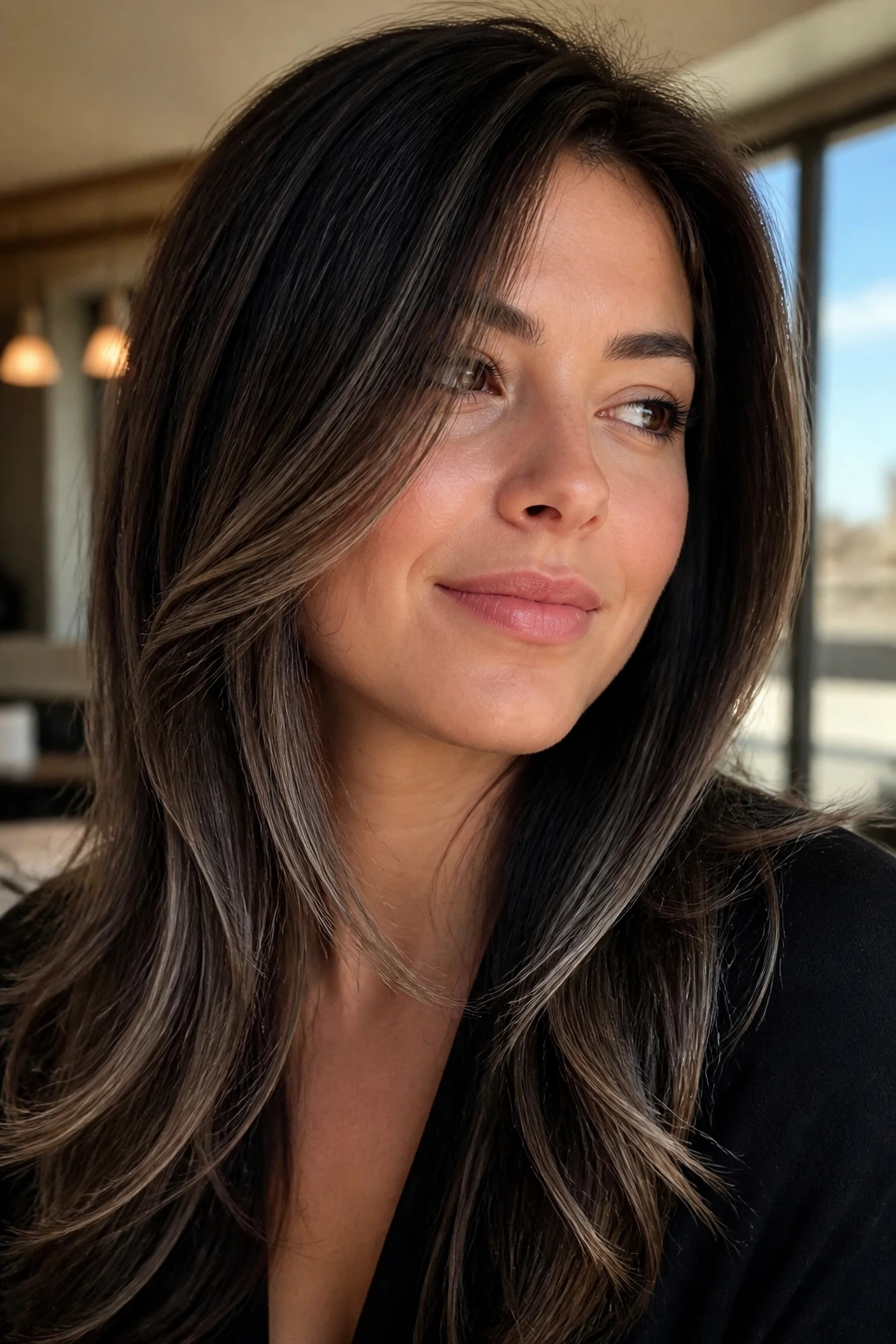
Dark chocolate with silver-beige threads is cooler and more modern than a standard brunette balayage. The chocolate base holds the density, while the silver-beige threads give the hair just enough movement to keep it from feeling heavy. Thin hair usually needs that balance.
I’m fond of this one on straight or slightly wavy hair. The contrast is subtle, so the cut has to do some of the work. If you have a blunt perimeter, even better. The threads will show up along the edge and make the ends look thicker than they are.
Watch the Tone
Too much silver can look dull. Silver-beige is the safer lane because it still reflects warmth from the skin.
31. Buttery Face Frame on Long Layers
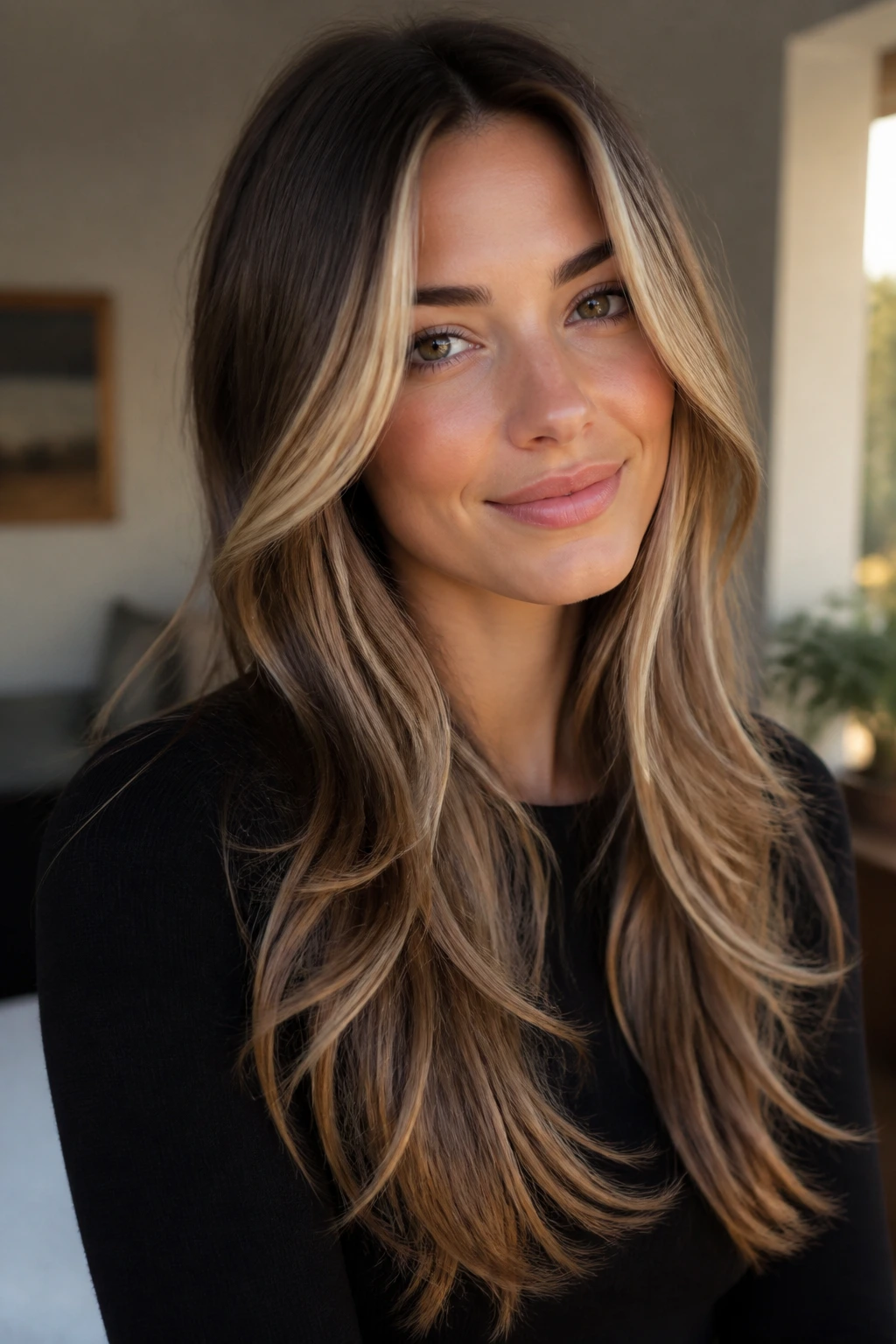
Buttery face-framing pieces can do a lot for long thin hair, especially when the rest of the lengths stay closer to the natural base. The buttery tone is warm, soft, and brighter around the face, which gives the haircut structure without bleaching every inch. The long layers keep the lightness from pooling at the bottom.
This is a good “I want to notice a change, but I still want to look like me” option. The face frame should be the brightest area, then the rest of the balayage can stay quiet. Thin hair benefits from that hierarchy. Bright front, calm back.
Styling Tip
Curl the front pieces away from the face. It opens the color and keeps the layers from collapsing inward.
32. Tawny Edge Balayage
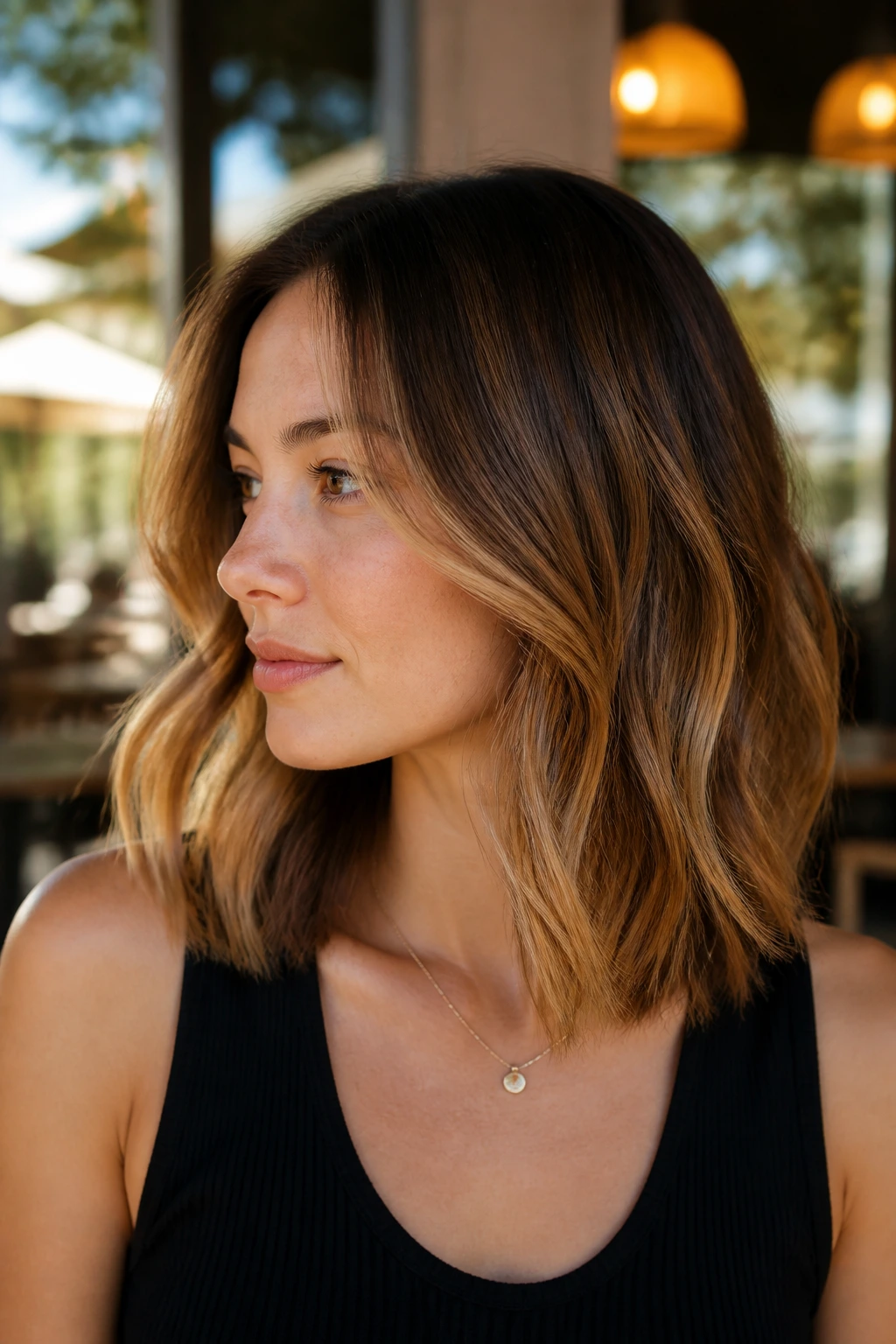
Tawny edge balayage leans warm, earthy, and a little sun-faded in the best sense. The tawny tone sits between golden brown and soft amber, then the lighter pieces trace the outer edge of the haircut instead of flooding the whole head. That edge placement is exactly why it works on thin hair.
You get definition where the eye follows the outline of the hair. On a bob, that means the perimeter. On longer layers, it means the bottom curve and the pieces around the face. Keep the lightness restrained, and the hair looks fuller because the shape reads cleanly.
Best For
People who want warmth but hate orange. Tawny gives you glow without the pumpkin effect.
Why Balayage Placement Matters So Much on Thin Hair
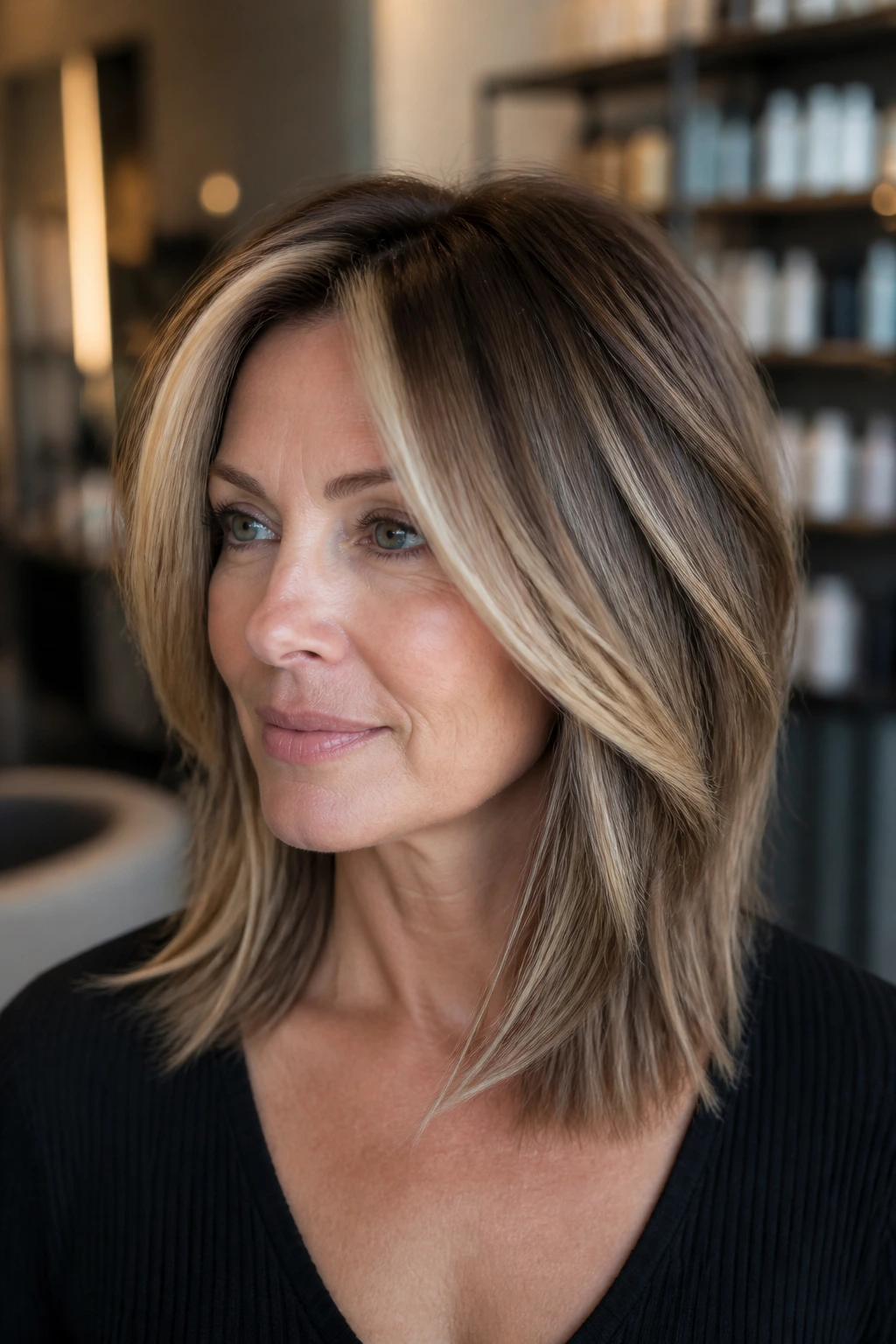
Thin hair does not need more blonde everywhere. It needs smarter light placement.
That sounds fussy, and maybe it is, but hair color is one of those places where fussy pays. If the lightest pieces are dumped into the ends, the hair can start looking see-through. If the lightest pieces sit at the crown and around the face, the hair reads fuller because the eye keeps landing on the denser-looking top layer first. That’s the whole trick.
A good balayage on thin hair also leaves enough negative space. The darker base, the shadow root, the little pockets of brunette between ribbons — those gaps matter. They stop the color from looking like one thin curtain of pale strands and give the shape some air.
If you only remember one thing, make it this: brightness needs a border. Without that border, thin hair can look washed out instead of dimensional.
Essential Tools for Balayage Appointments and At-Home Styling
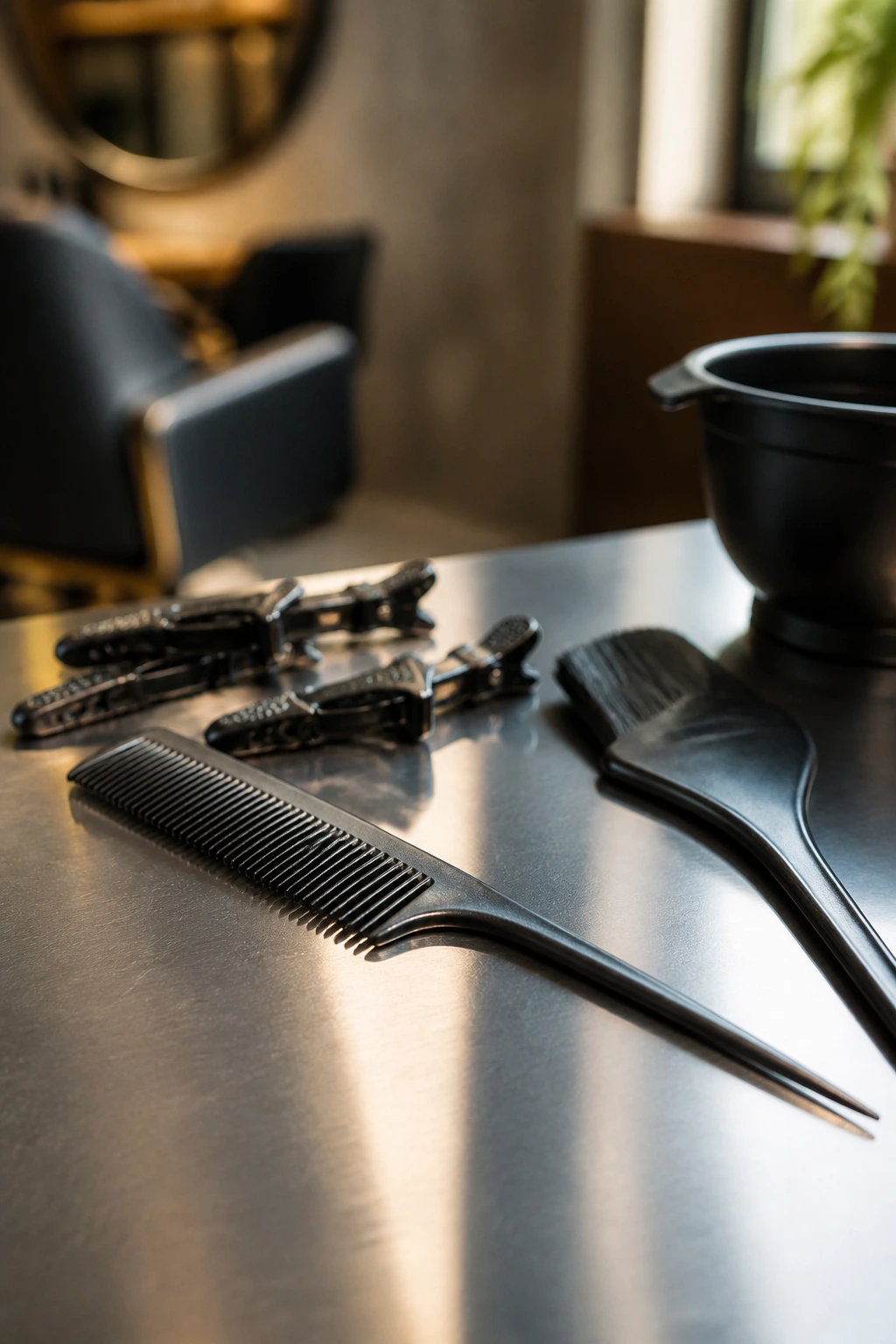
- Tail comb: Helps section thin strands cleanly so the painted pieces stay fine, not chunky.
- Sectioning clips: Keep the top layers out of the way; thin hair tangles faster when you’re working close to the scalp.
- Balayage board or paddle: Gives long pieces support while painting and keeps the saturation even.
- Tint brush: A narrow brush is better than a wide one for soft ribbons on sparse hair.
- Color bowl and measuring scale: Useful if you mix toner or gloss at home; small color shifts matter on thin hair.
- Gloves: Non-negotiable for protecting your hands during root smudge or toner application.
- Wide-tooth comb: Good for gently distributing conditioner or mask without snagging fragile ends.
- Heat protectant: Thin hair usually gets styled more often, and that adds up fast if you skip this.
- Round brush or vent brush: Lets you lift the roots while smoothing the surface so the color shows.
- Lightweight dry shampoo: Useful on day two or three when the roots start collapsing.
Smart Shade Choices for Fine, Thin, or Sparse Hair
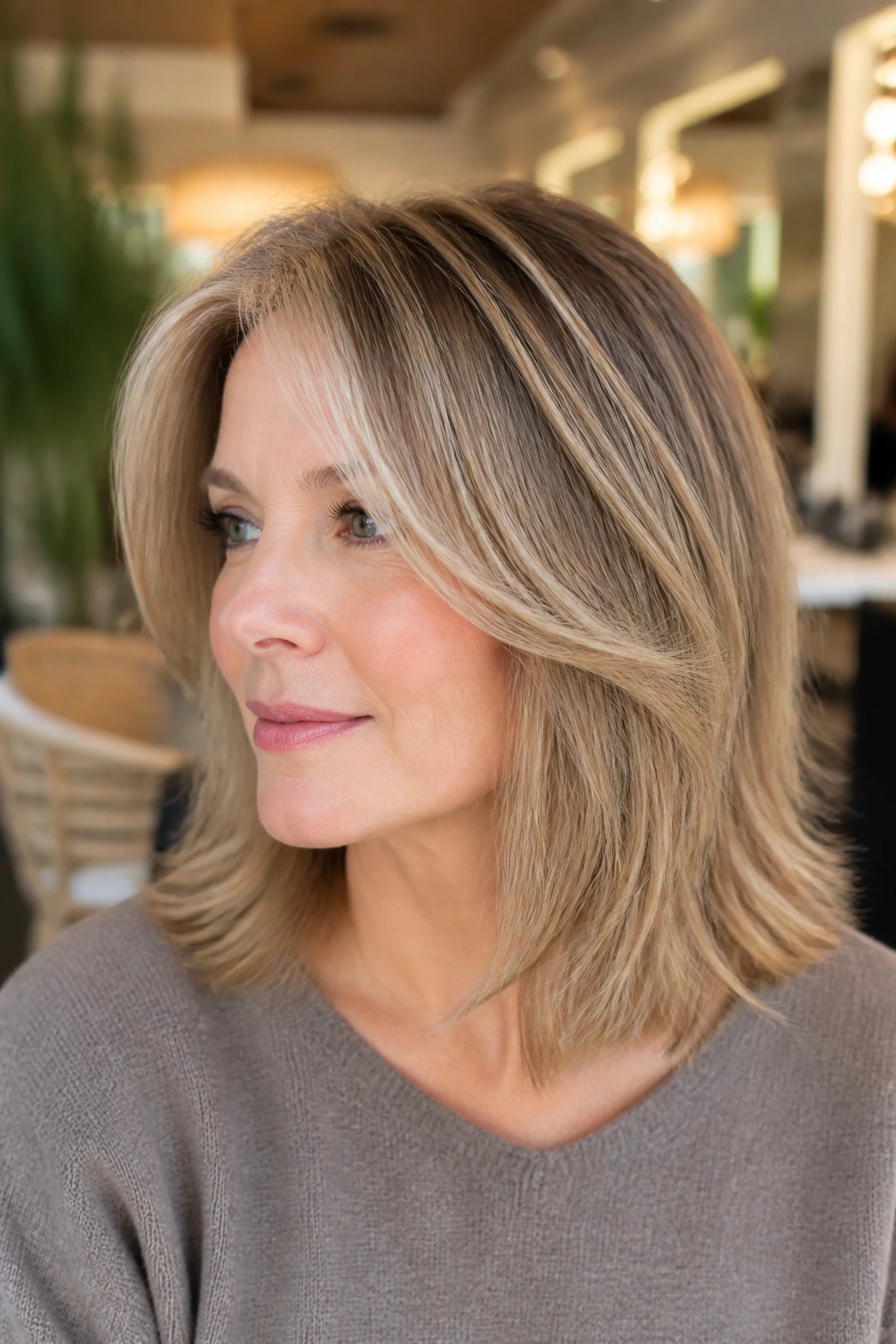
The best balayage shade for thin hair is rarely the brightest one in the bowl. It’s the one that still leaves the hair with a base, a middle, and an edge. Those three pieces make the head read fuller from across the room and cleaner up close.
If your natural level is dark blonde to light brown, beige, mushroom, honey, and soft caramel usually behave better than extreme platinum. They look bright without stripping all the life out of the ends. On darker brunettes, a rooty mocha or walnut base with lighter surface ribbons usually beats an all-over lift. You keep the density, which is the part people forget about when they chase blonde.
Cool tones can work well if your hair pulls orange or red, but go easy on the ash. Too much ash and the color starts looking flat, chalky, or a little gray around the edges. Warm tones can be just as dangerous if they turn brassy. Beige is the safest middle ground for a lot of people because it softens both problems.
If you’re doing this in a salon, ask for fine ribbons, a soft root shadow, and a demi gloss. If you’re trying to maintain color at home, stay in the gloss and toner lane and leave the serious lightening to someone with a steady hand. Thin hair is not the place to freestyle bleach.
How to Wear These Looks Without Flattening the Hair
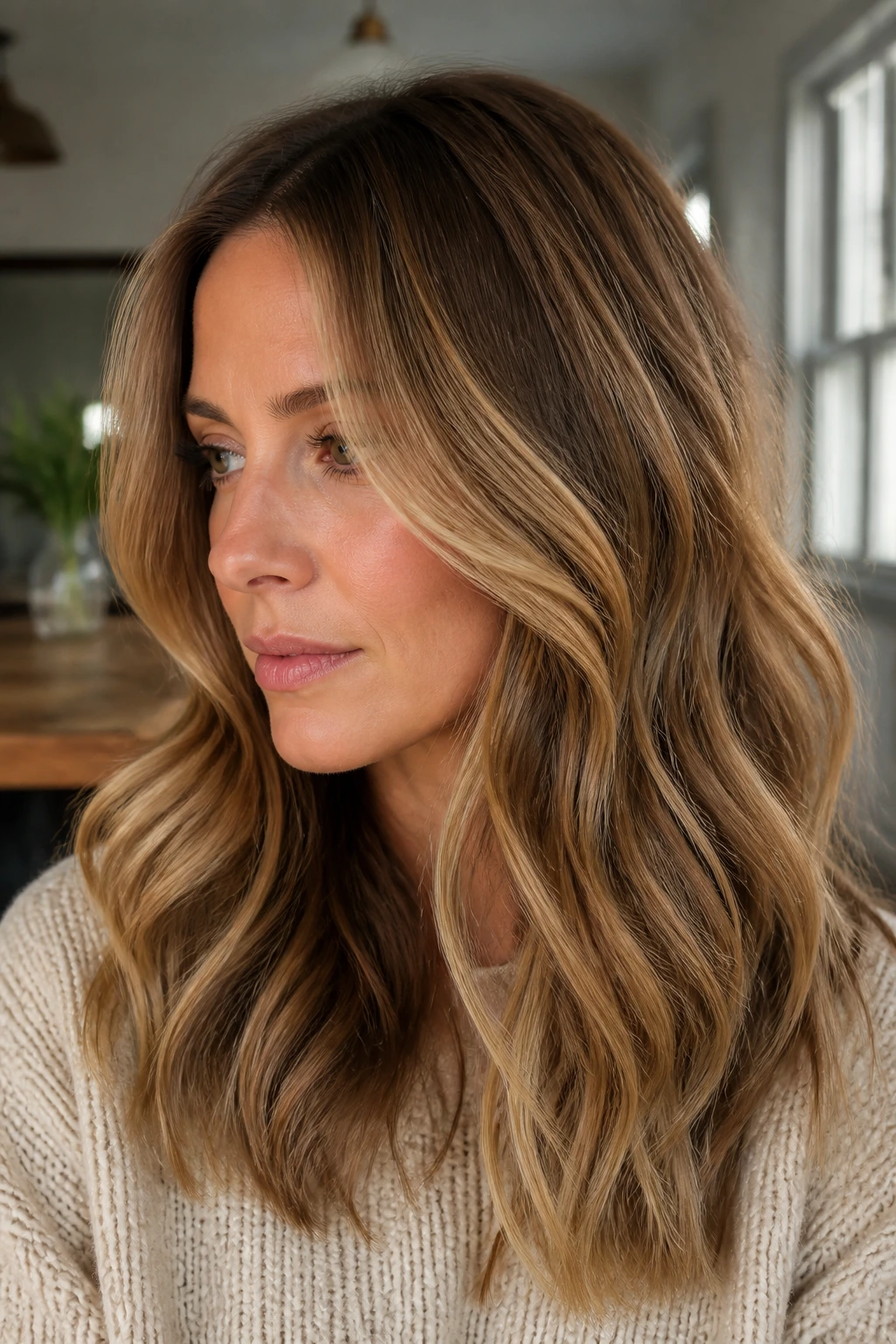
Presentation: Thin hair usually looks best with movement at the mids and ends, not stiff curl. A soft wave, a round-brush blowout, or a loose bend from a flat iron helps the balayage show without making the cut feel overworked.
Cut Pairing: Long layers, a blunt bob, a lob, or curtain bangs can all help, but they need clean edges. Too many short internal layers can make the color look scattered in a bad way, especially if the hair is already sparse.
Portions: Ask for the brightest pieces around the hairline, crown, and upper layer. Keep the underlayer a touch deeper. That ratio matters more than people think, because the top layer is what gives the illusion of bulk.
Refresh Schedule: Gloss every 4 to 6 weeks if you want beige, pearl, or honey tones to stay clean. For deeper brunette balyage, you can often stretch farther, but the ends still need moisture and the root shadow needs occasional refinement.
Extra Dimension Boosters and Styling Tricks
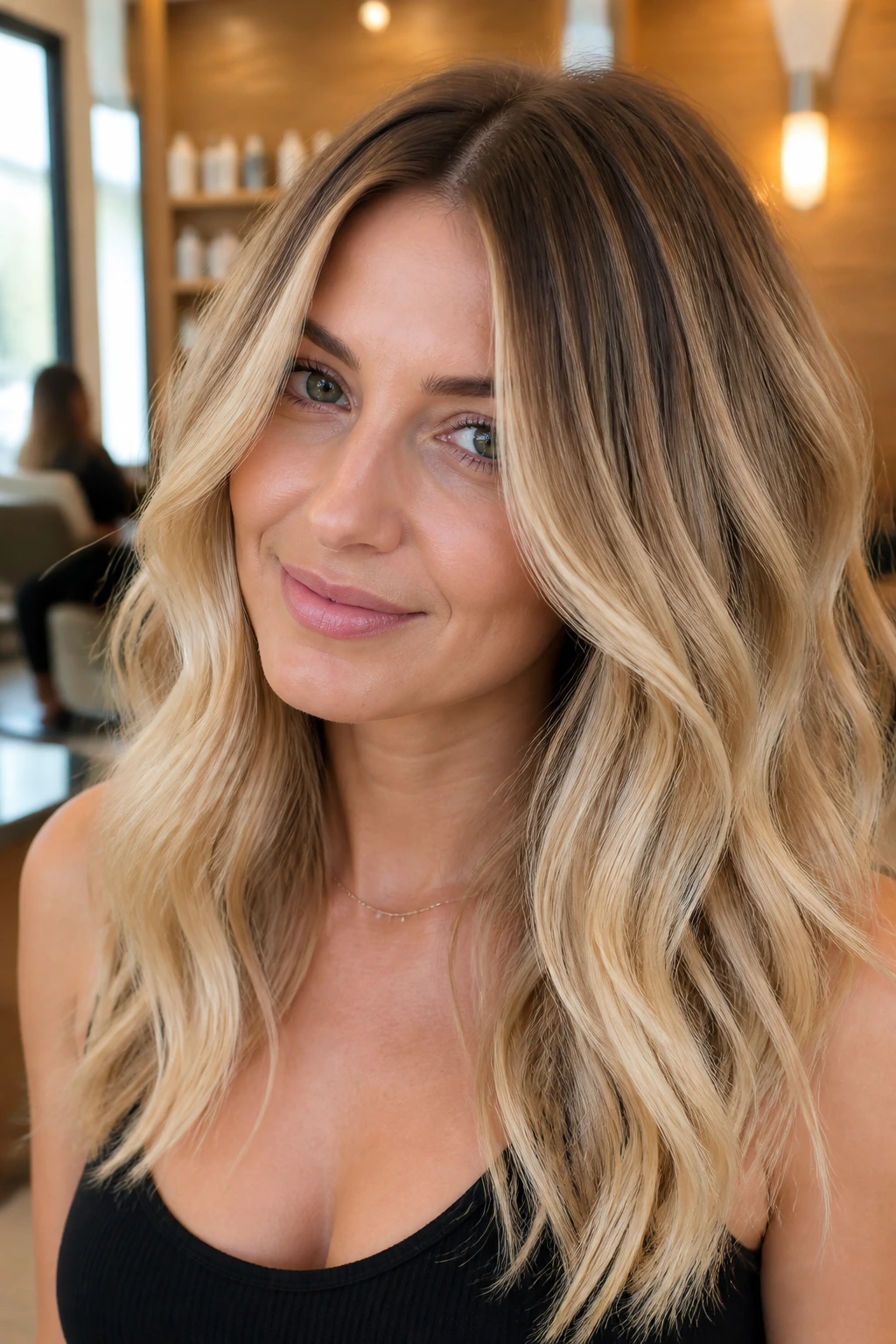
Color Enhancement: A clear or demi-permanent gloss can wake up dull balayage in 10 minutes flat, and it’s kinder to thin hair than another round of aggressive lightening. If the blonde looks dry, the gloss usually fixes the look faster than more pigment does.
Customization: Ask for face-framing brightness if your hairline is the first place you lose density. Ask for underside peekaboo lightness if the top is fragile and you want movement without exposing the crown. Small placement changes matter more than dramatic formula changes.
Styling Move: Bend the top layer away from the face, then leave the lower half softer. That little asymmetry makes the color look layered instead of puffy or overdone. On straight hair, a one-inch iron is usually enough.
Make-It-Yours: Warm-leaning people can choose honey, caramel, copper, or tawny. Cool-leaning people tend to look better in mushroom, smoky beige, pearl, or silver-beige threads. If you can’t decide, beige almost never fights the skin.
Keeping the Color Fresh, Glossy, and Healthy Between Visits
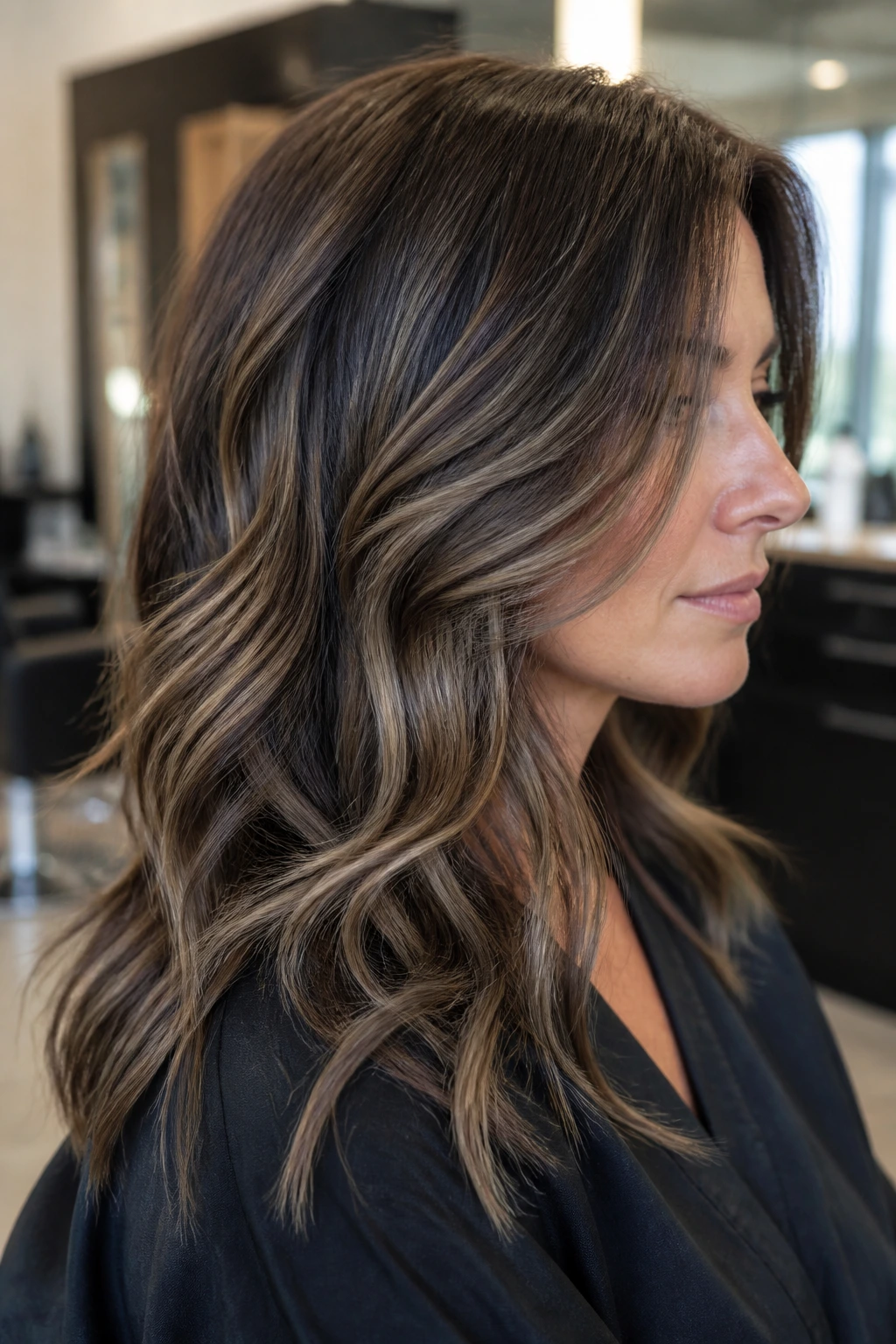
Thin hair can look tired fast if you wash too often or rough it up with hot tools. I usually tell people to wash two or three times a week, not every day, and to use a sulfate-free shampoo that won’t strip the toner out of the lighter pieces. If the roots get oily, use dry shampoo at the crown and around the part before the hair gets visibly greasy.
For very light looks like pearl, vanilla, or platinum peekaboo, purple shampoo once every 7 to 10 days is enough. More than that, and the color can start looking dull or smoky in the wrong way. Beige and honey shades usually need less toning and more moisture, so a lightweight mask every week helps more than a purple bottle.
Heat protection is not optional. Thin hair tends to be styled more often because people are trying to fake body, and that’s exactly how the ends get frayed. Use a protectant before blow-drying or ironing, then keep the iron around the mid-shaft and ends rather than sizzling one spot repeatedly.
Trim every 8 to 10 weeks if the ends start to look stringy. That sounds frequent, but on thin hair, a tiny trim can make the color look richer because the shape becomes cleaner. If the cut is blunt enough, even a softly faded balayage will read thicker.
Variations and Adaptations to Try
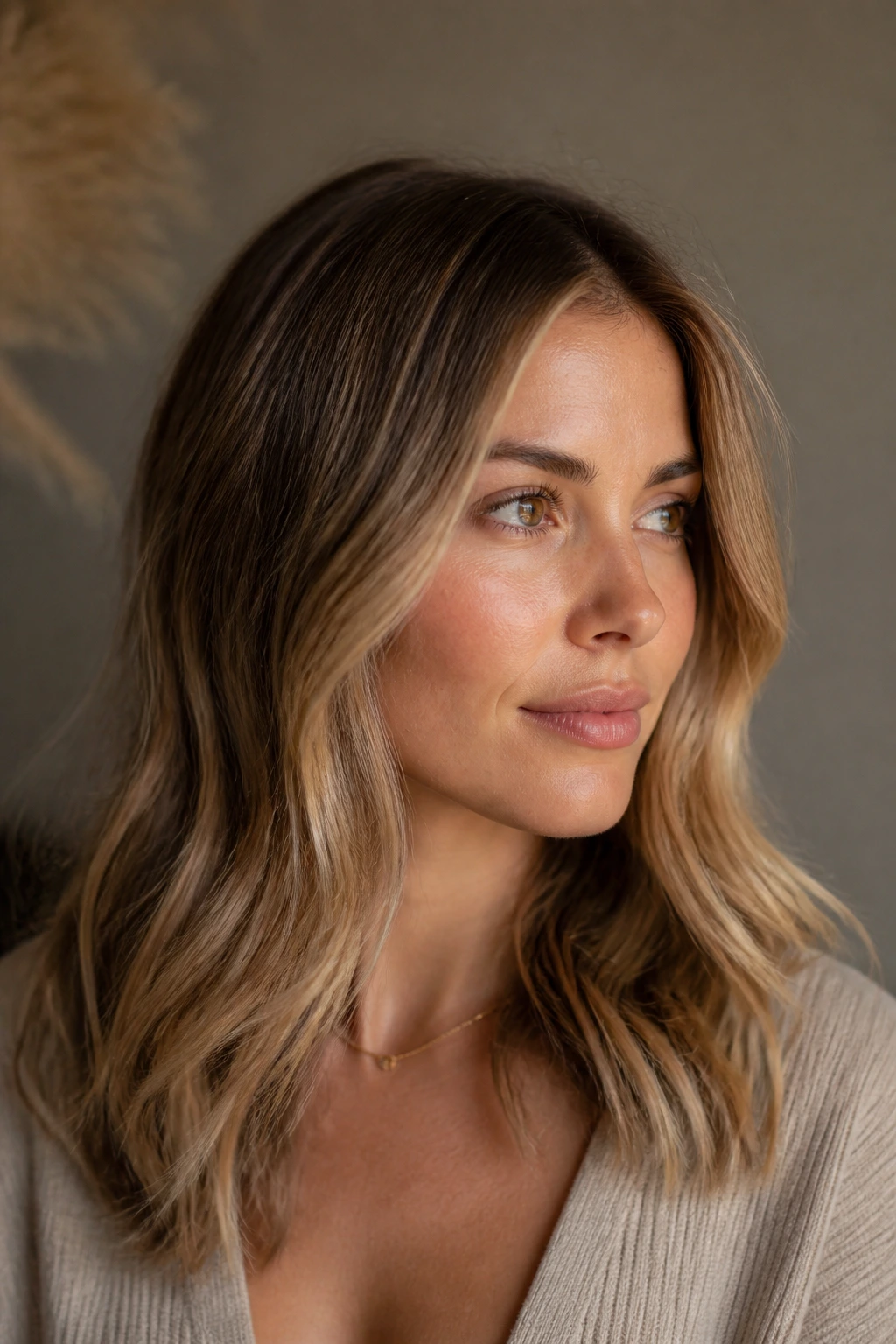
Barely-There Baby Lights: This version uses tiny light pieces woven through the crown and hairline instead of broad balayage strokes. It’s a good choice for very fine hair that needs texture more than brightness.
Chunk-Free Money Piece: Brighten only the front pieces, but keep the lightness soft at the inner edge. That gives a visible change without turning the front of the hair into a disconnected stripe.
Warm Honey Sweep: Swap cool beige for honey and caramel if your skin looks better with warmth. This works well on brunettes who want shine and movement but not a dramatic blonde shift.
Cool Mushroom Melt: Choose taupe, ash-beige, and smoky brown if brass shows up fast in your hair. This version grows out slowly and usually stays polished longer between salon visits.
Curly Halo Balayage: Paint the outer ring of the curls and leave the interior mostly dark. That keeps curl clumps defined and stops thin curly hair from looking hollow at the center.
Short Crop Soft Lift: On pixies and short crops, use soft beige ribbons on top and around the fringe. The top reads fuller, and the grow-out looks intentional instead of awkward.
Common Mistakes That Make Thin Hair Look Flat
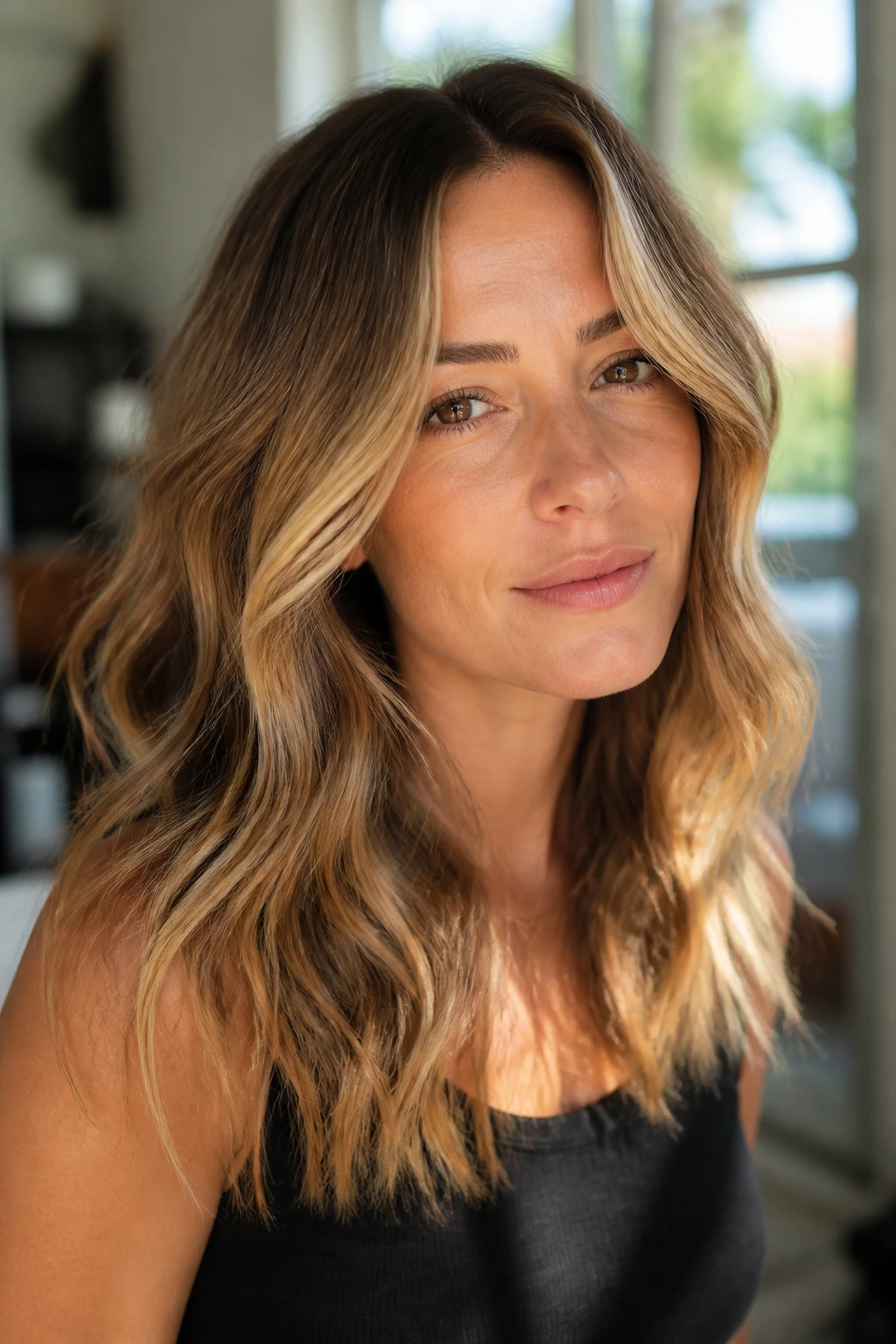
- Too much contrast at the ends: If the ends are much lighter than the root, thin hair can look frayed. The fix is a softer melt and a deeper mid-shaft.
- Chunky sectioning: Big panels of blonde show every gap in sparse hair. Ask for fine ribbons or babylights instead.
- Over-toning with ash: A hair that was meant to be beige can start looking gray and dull. Use a gentler gloss or a warmer toner mix.
- Skipping the haircut: Color cannot rescue a limp, uneven shape. A blunt line, long layers, or a tidy lob helps the balayage read fuller.
- Bleaching fragile ends twice: If the ends are already light and dry, a second aggressive lift will make them look thinner, not brighter. Keep the lightening controlled and feed the ends with conditioner and bond care.
- Using heavy oils as styling cream: The hair gets shiny for an hour, then collapses. Thin strands need lightweight products that don’t coat the shaft too thickly.
Frequently Asked Questions About Balayage on Thin Hair
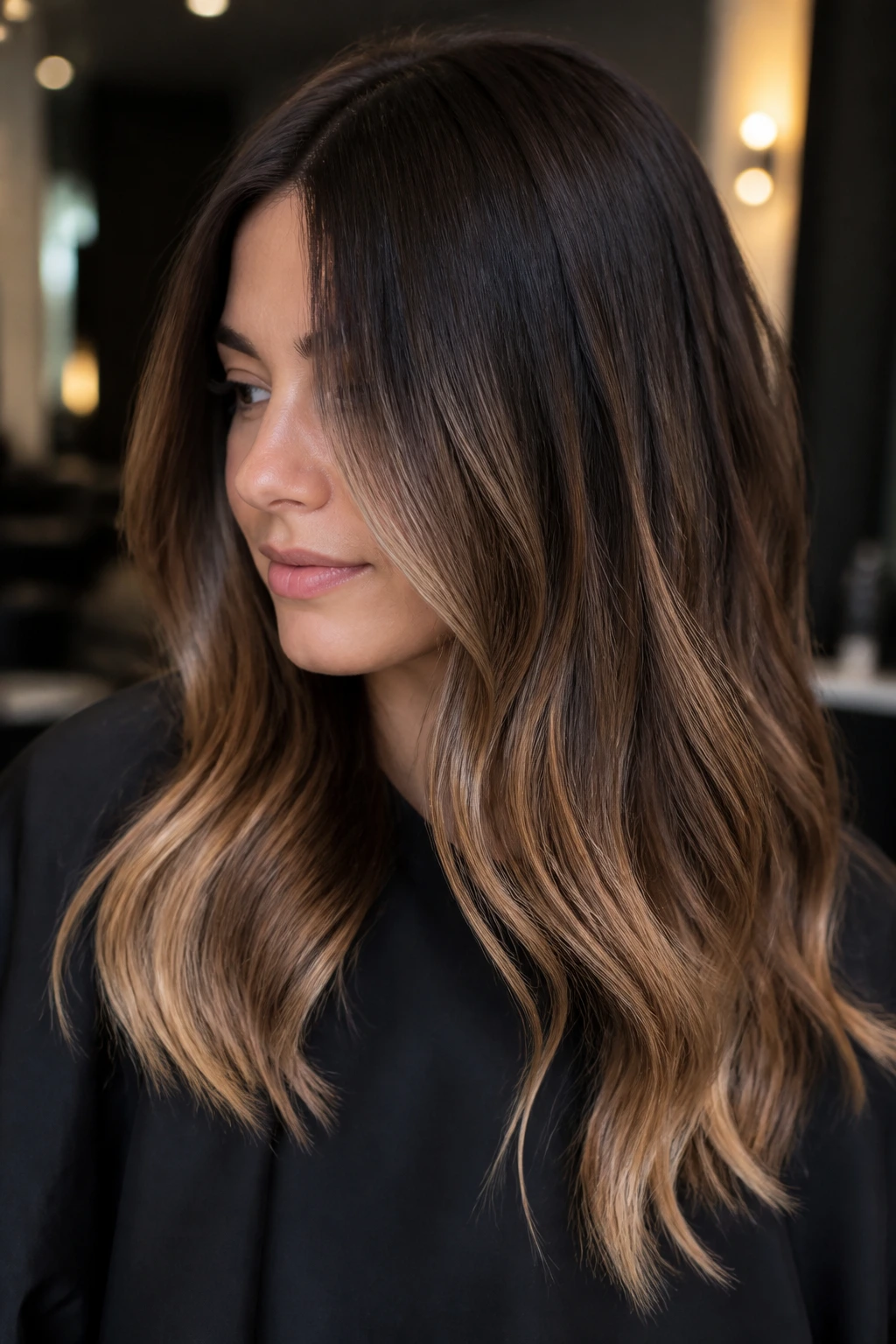
Is balayage actually good for thin hair?
Yes, when the placement is fine and the root stays a little deeper. Thin hair usually looks better with soft ribbons and shadowing than with a blanket of light blonde.
What balayage colors make thin hair look thicker?
Beige, mushroom, caramel, honey, and walnut tones usually help most because they keep contrast soft. Very pale blonde can work too, but only if the root shadow and haircut are doing part of the job.
Should I get highlights or balayage if my hair is thin?
Balayage is usually the safer bet if you want softness and a longer grow-out. Traditional highlights can look beautiful, but chunkier placement can make thin hair look more separated unless the foil work is very fine.
How often should balayage be refreshed on thin hair?
Glosses often need a refresh every 4 to 6 weeks, while the lightening itself can sometimes stretch 3 to 4 months or longer. If the toner looks muddy or brassy, refresh the gloss before you reach for more bleach.
Can balayage damage fine hair?
It can, especially if the lightening is repeated too aggressively or the ends are already fragile. Fine hair usually does better with a gradual lift, a bond-building routine, and fewer overlapping sessions.
Can I do balayage on straight thin hair?
Yes, but the placement needs to be softer and more deliberate because straight hair shows everything. Fine ribbons around the top layer and a little bend at the ends usually look better than broad, bright streaks.
What if my balayage looks stripey?
That usually means the sections were too wide or the contrast is too hard. A gloss can soften the tone, but if the placement is the issue, a color correction or a root smudge may be needed.
Do I need layers with balayage on thin hair?
Not always, but some shape helps the color do its work. A blunt lob, soft long layers, or a tidy bob can all support balayage well as long as the cut isn’t too shredded.
A Softer Finish That Still Reads Full
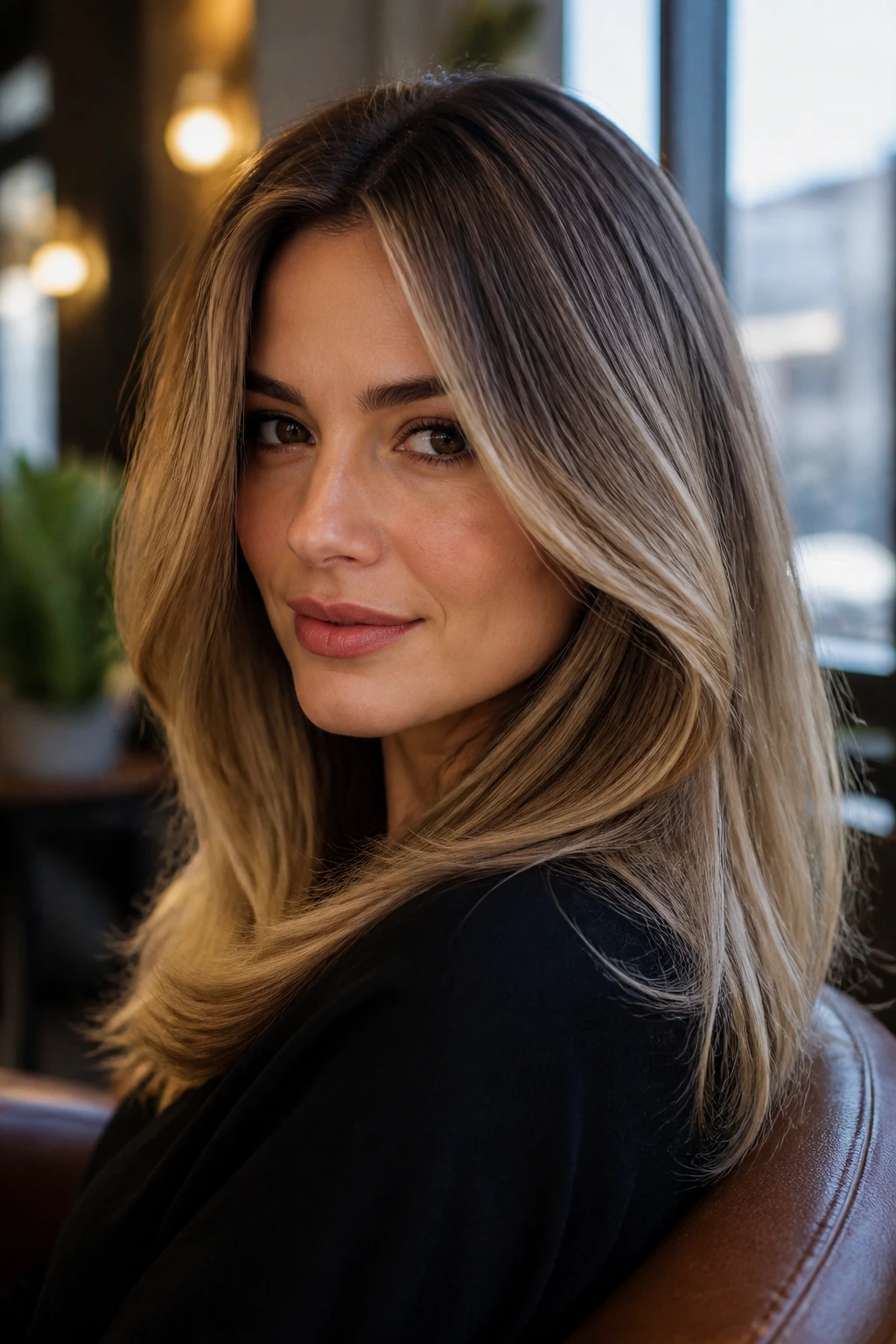
Thin hair does not need more color in every direction. It needs color that understands where the eye lands, where the scalp shows, and where the ends start to fray if you push them too hard. That’s why the best balayage looks for thin hair are the ones that use restraint like a design tool, not a compromise.
If you’re sitting in a chair with a colorist, ask for softness first and brightness second. That order matters. The right ribbons, the right shadow, and the right gloss can change how full the hair looks before you’ve even picked up a brush.
And if you’re choosing between two looks, pick the one that leaves some darkness behind the light. Thin hair usually looks richer that way.
